
Milwaukee in the 1890s was a city in the middle of a transformation. Its population was climbing fast, new neighborhoods were taking shape, and the skyline was changing year by year. German immigrants had given the city a distinct cultural identity, breweries lined the river, and industry was expanding in every direction. The decade produced some of the most dramatic changes the city had ever seen — in its architecture, its transportation, its waterfront, and the daily rhythms of its people.
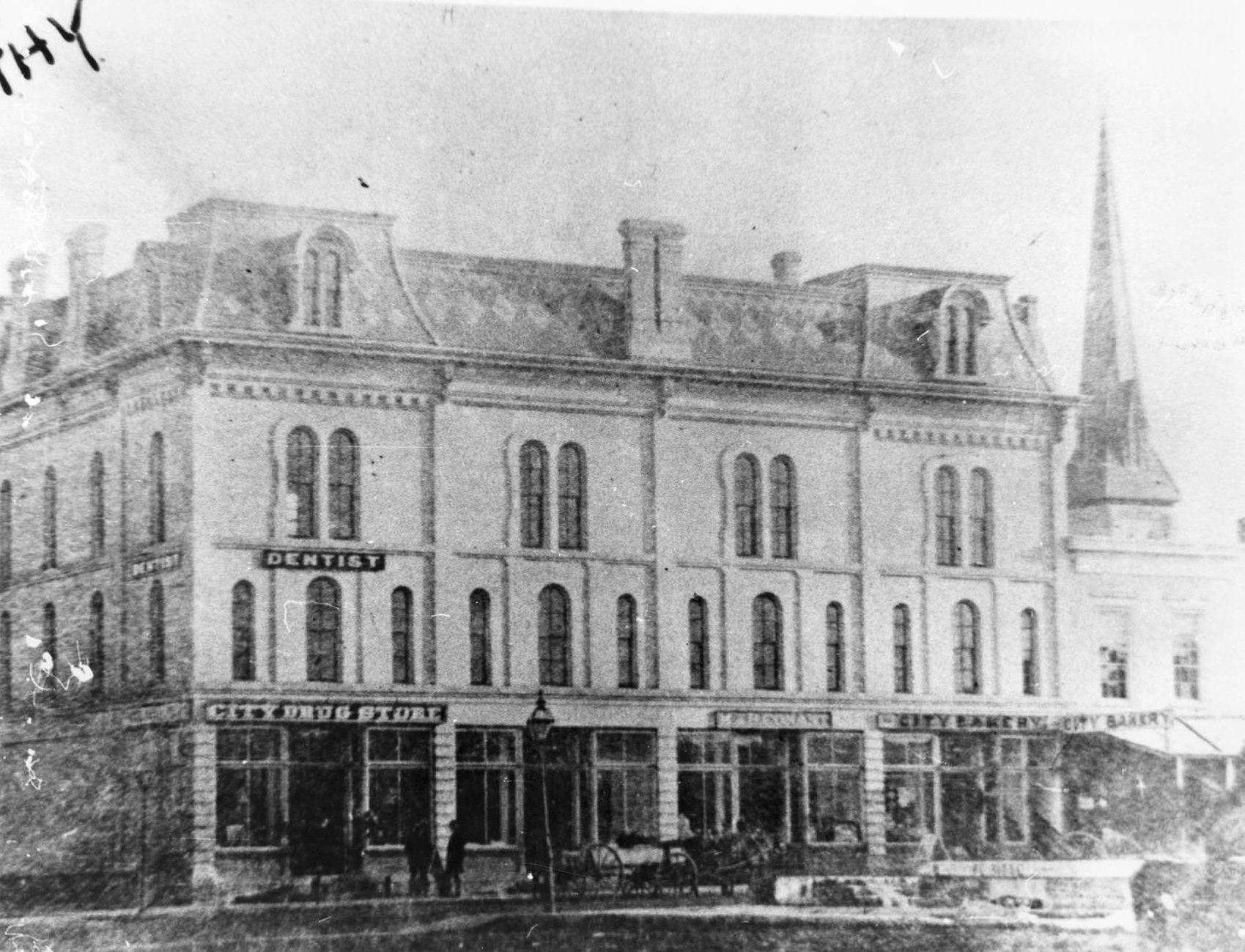
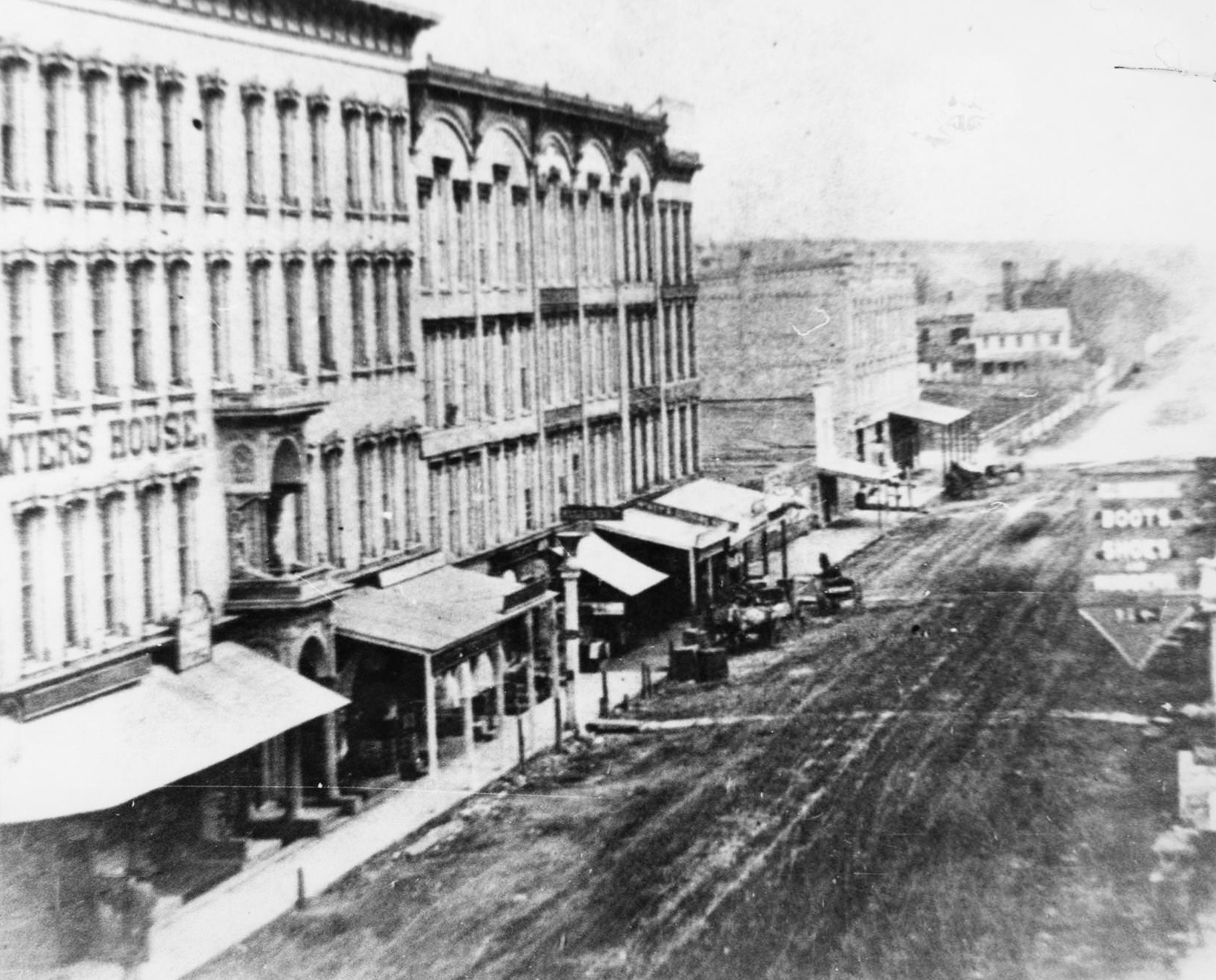
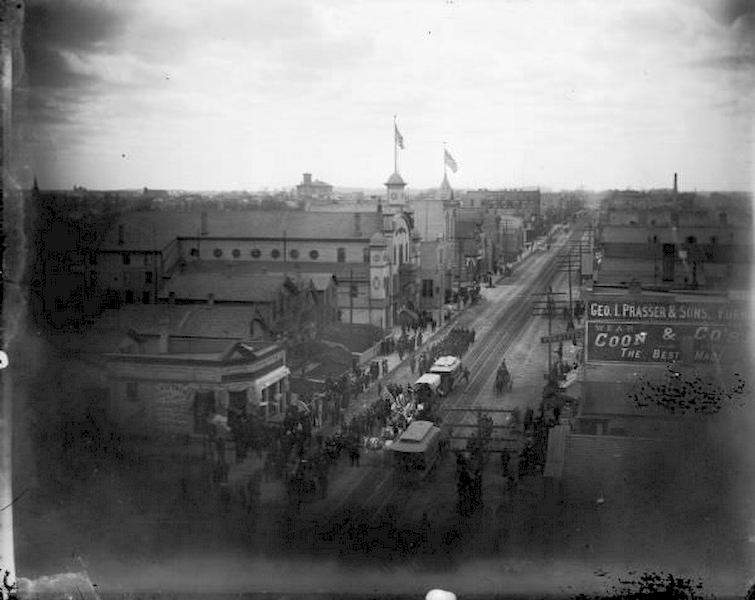
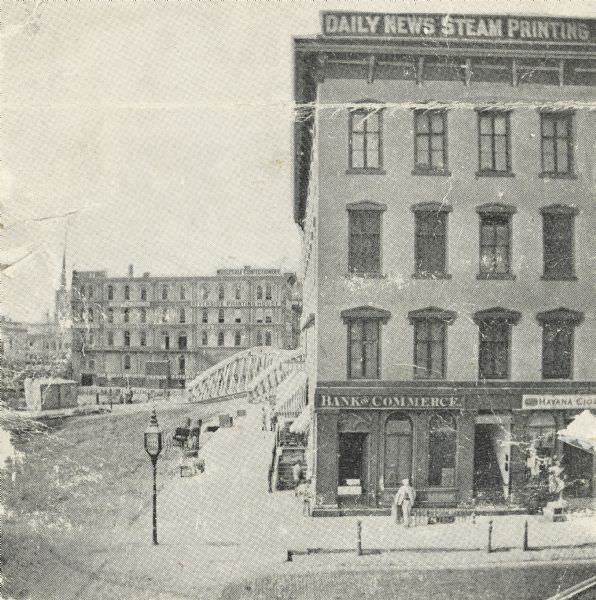
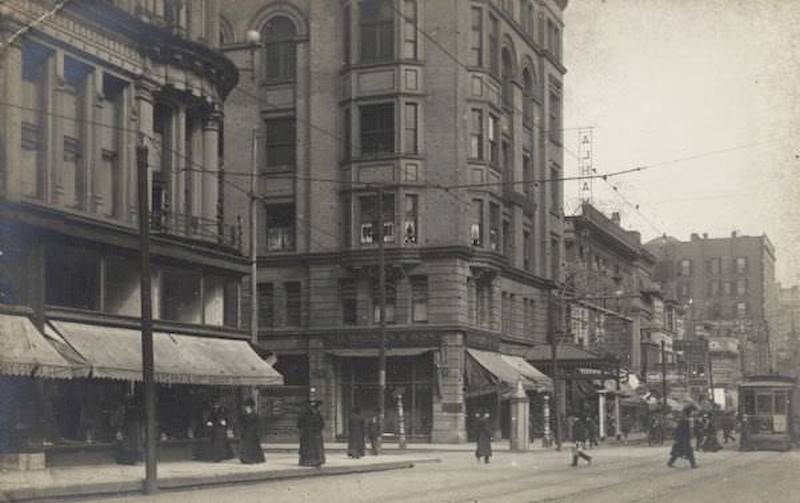
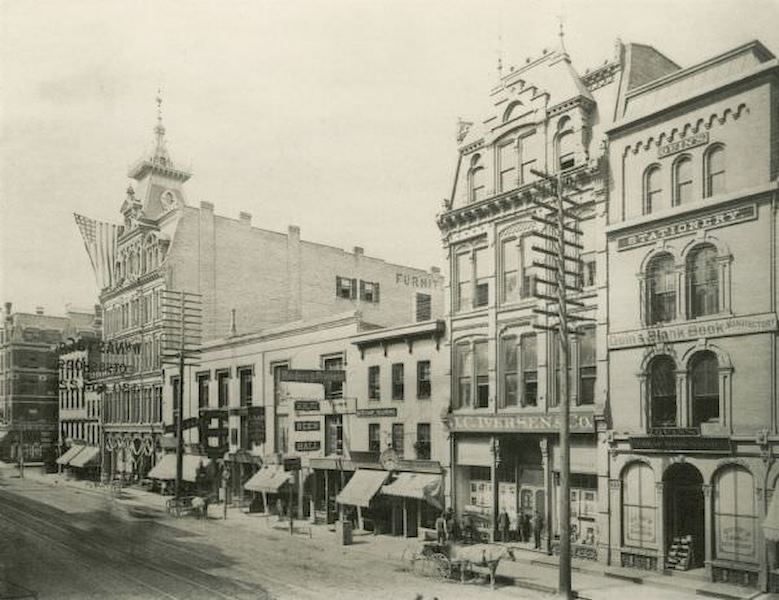
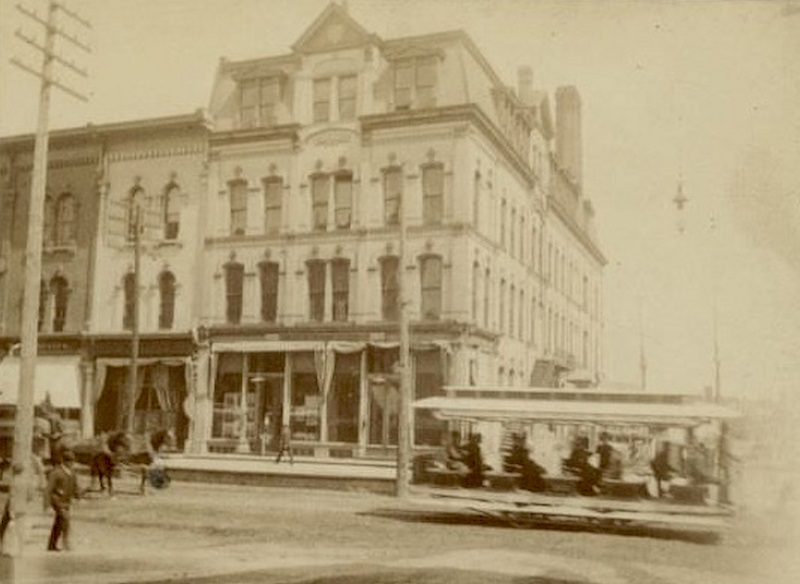
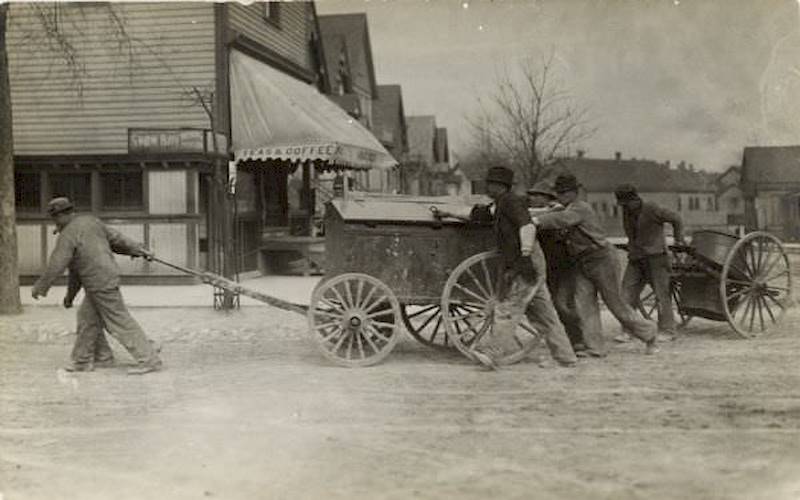
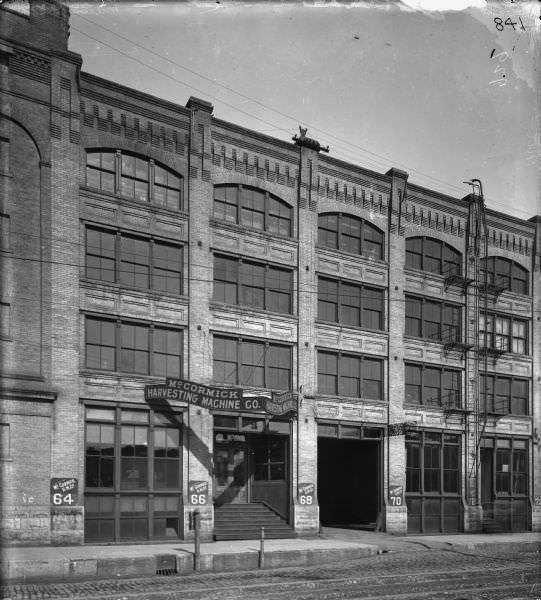
The streets of Milwaukee in 1890 were a busy mix of horse-drawn wagons, pedestrians in formal dress, and the early signs of modern infrastructure. Telegraph wires ran overhead while women in long skirts and hats walked the wooden sidewalks. Merchants, lawyers, and tradespeople operated side by side in brick storefronts that had gone up quickly as the city grew through the 1880s.
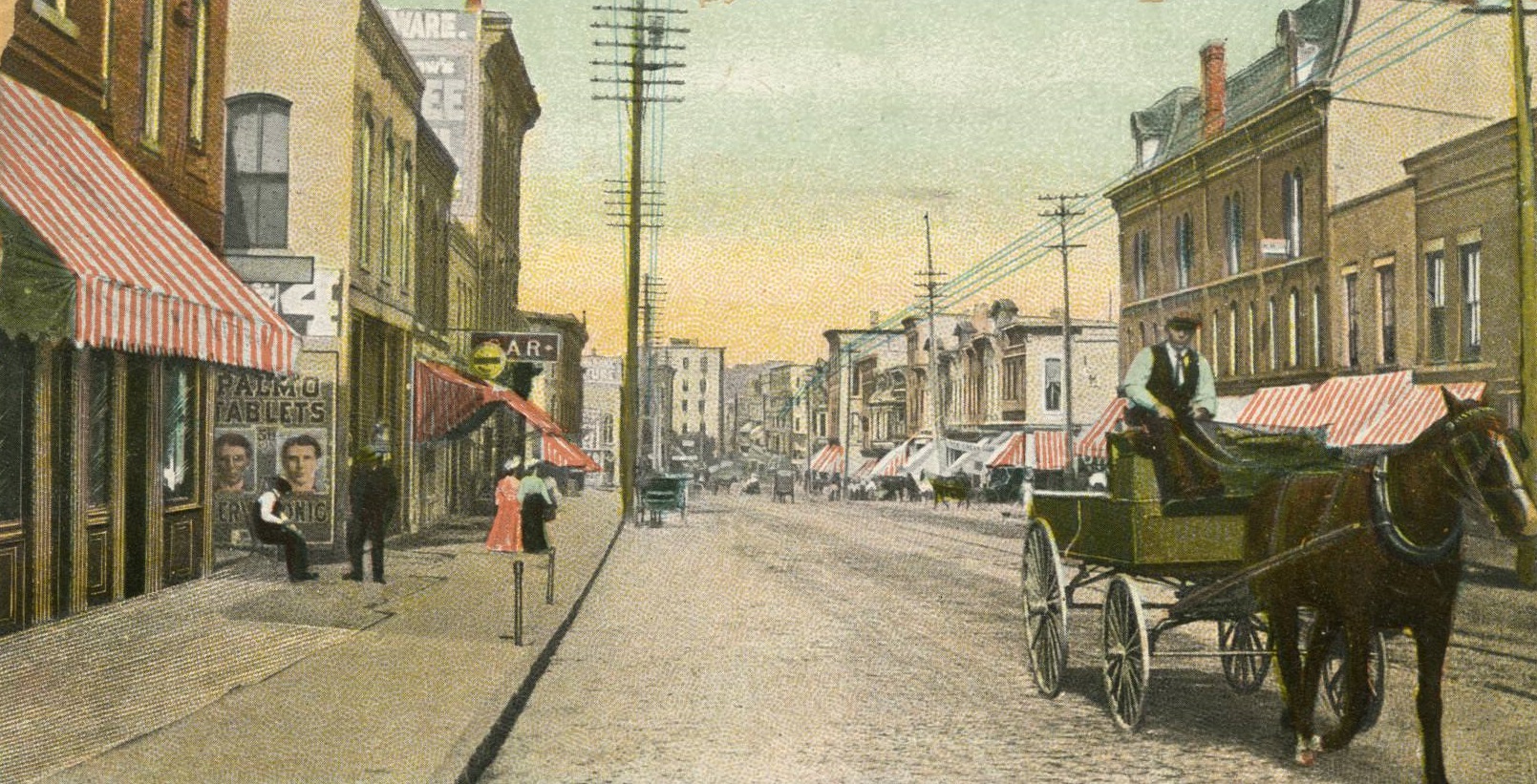
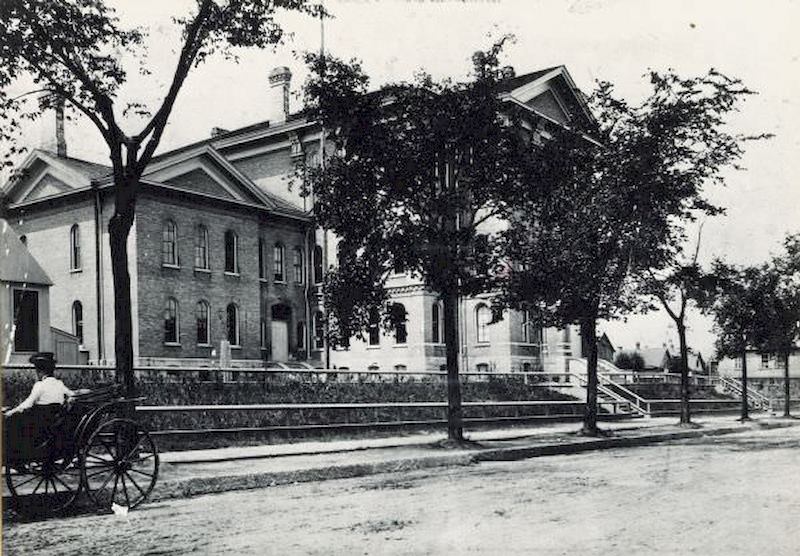
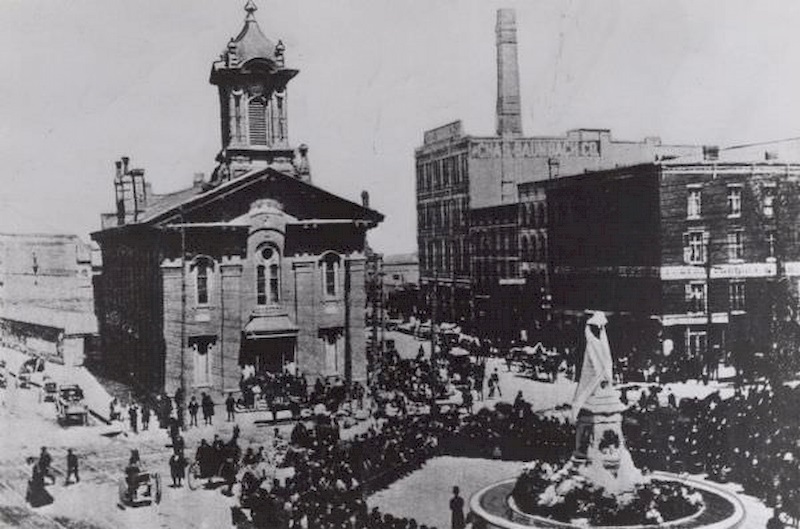
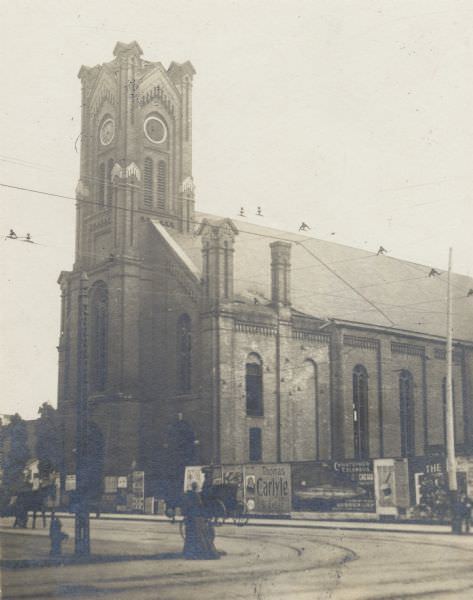
Churches were a central part of neighborhood life throughout the city. St. George’s Church on Milwaukee Street was surrounded by its pastor’s residence, a home for the sisters, and a school hall — all built close together on the same block, forming a small religious campus within the larger urban landscape.
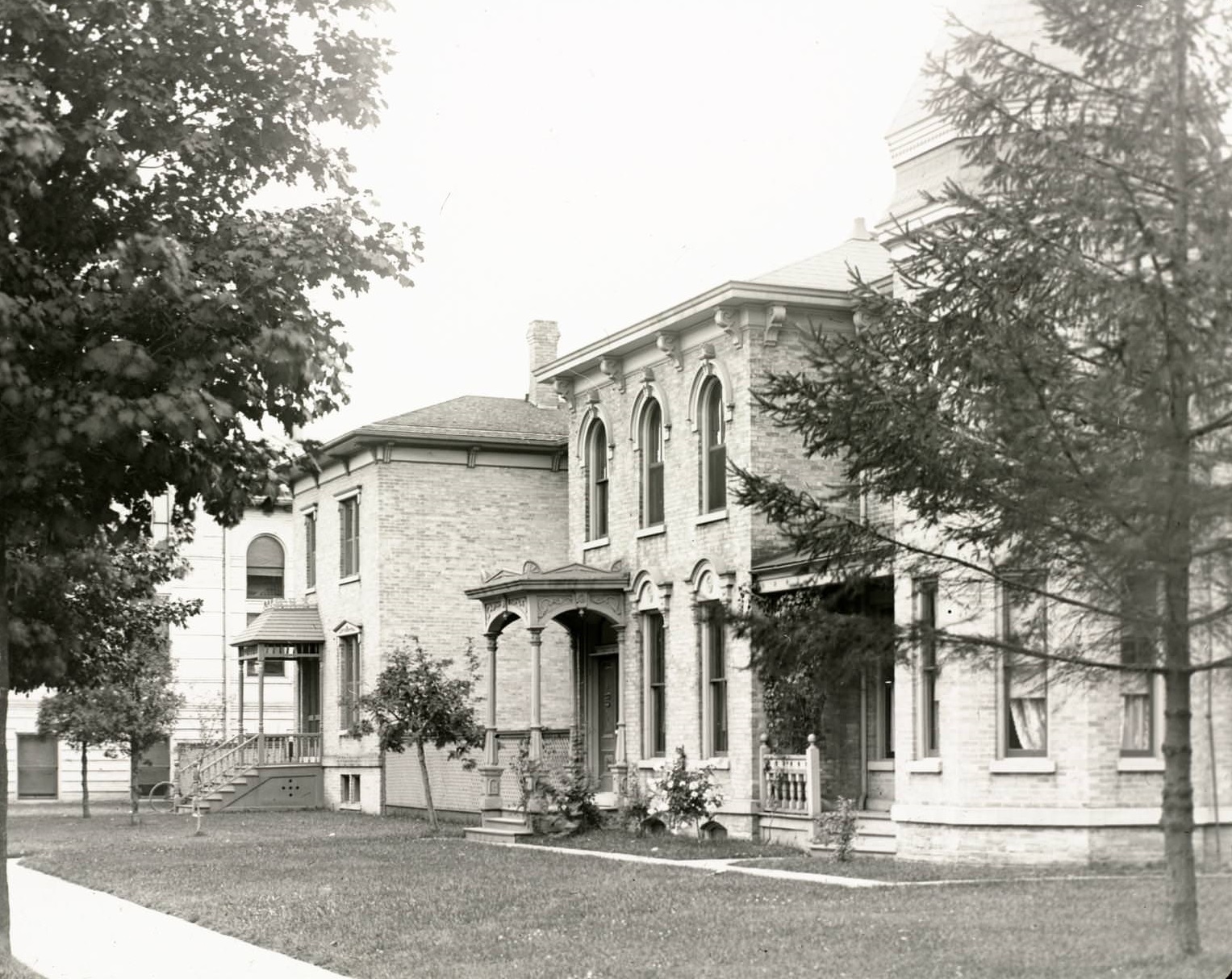
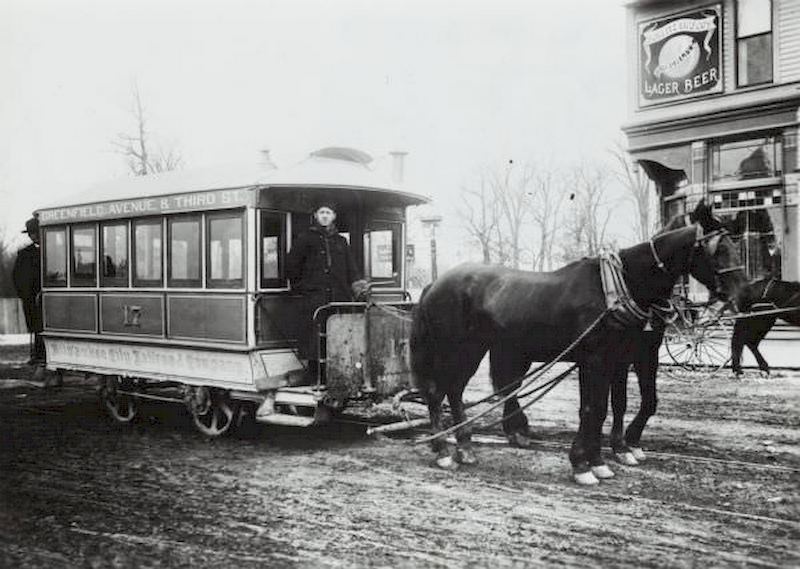
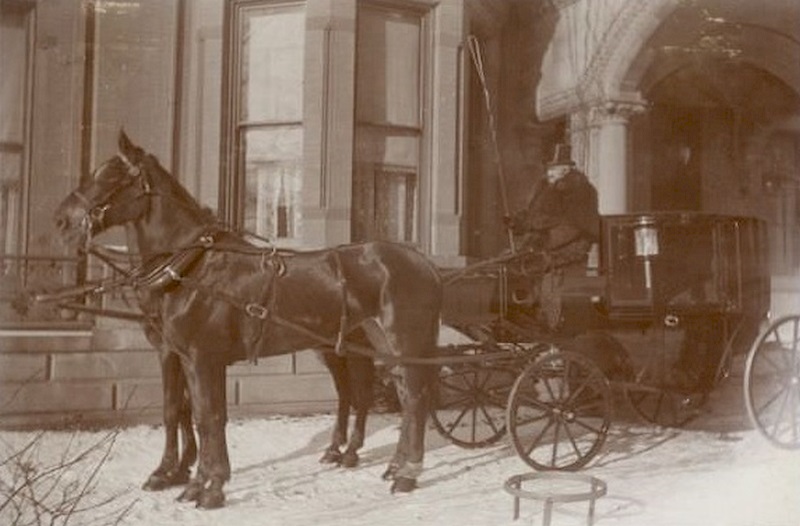
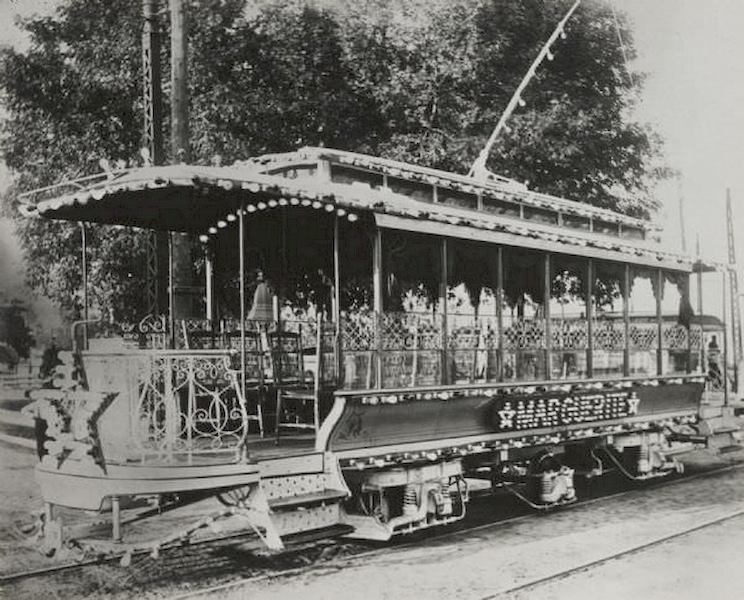
Getting around Milwaukee in 1890 meant either walking, hiring a horse-drawn carriage, or riding the city’s street railway. The Milwaukee City Railroad Company ran horse-drawn trolleys on multiple lines, including the Greenfield Avenue and Third Street route. These trolleys were a common sight on the main avenues, threading through traffic alongside private carriages.
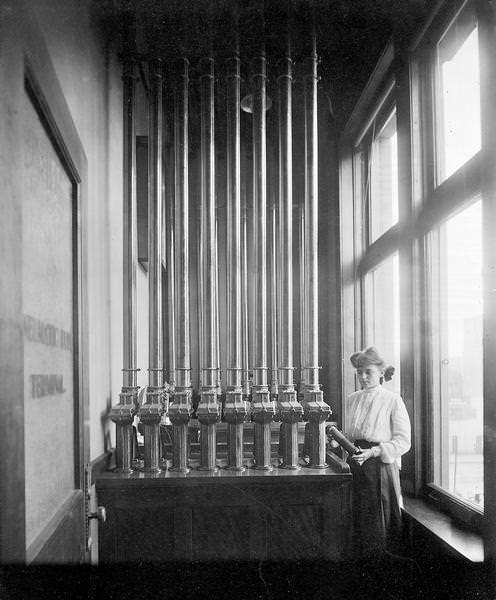
Technology was also making its way into the city’s workplaces. The Milwaukee Electric, Railway, and Light Company used pneumatic tube communication systems to send messages between departments — a high-tech solution for the era that kept operations running efficiently across large facilities.
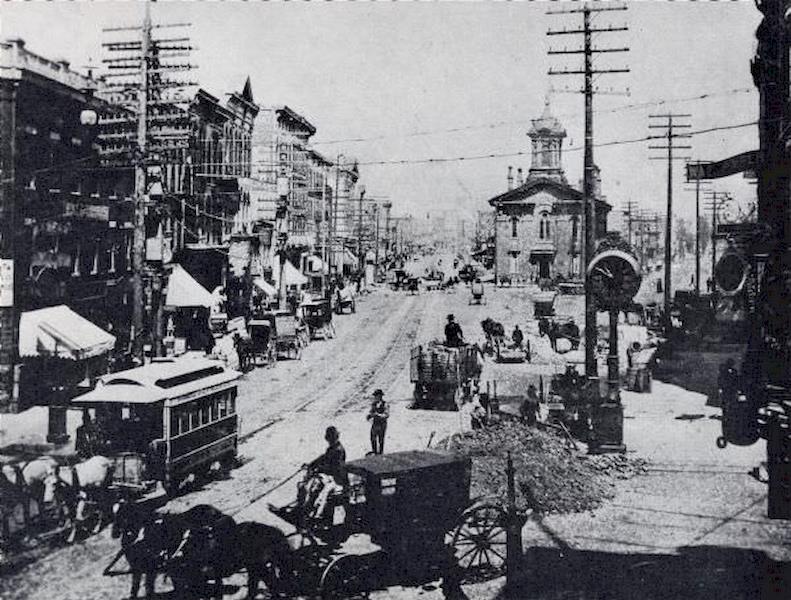
City Hall Square in 1890 was already the commercial and civic heart of Milwaukee. Electric power poles lined the streets, horse-drawn carriages and trolleys moved along the avenues, and a large clock stood on the sidewalk as a practical landmark for passersby. The buildings crowding the square reflected the ambitions of a city that had grown from a small settlement into a regional powerhouse in just a few decades.
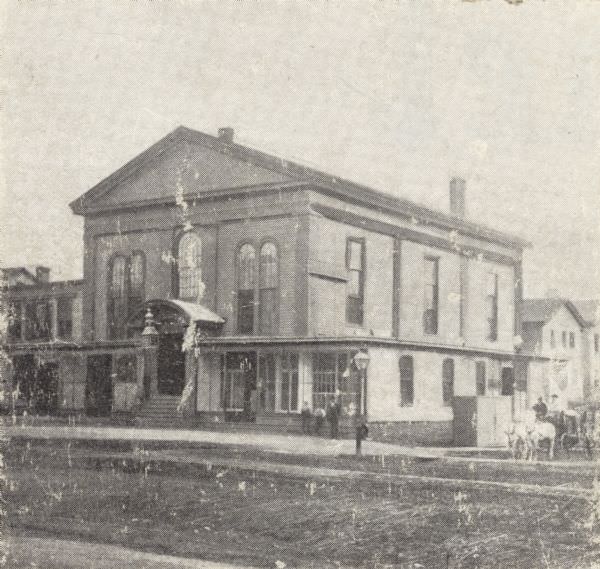
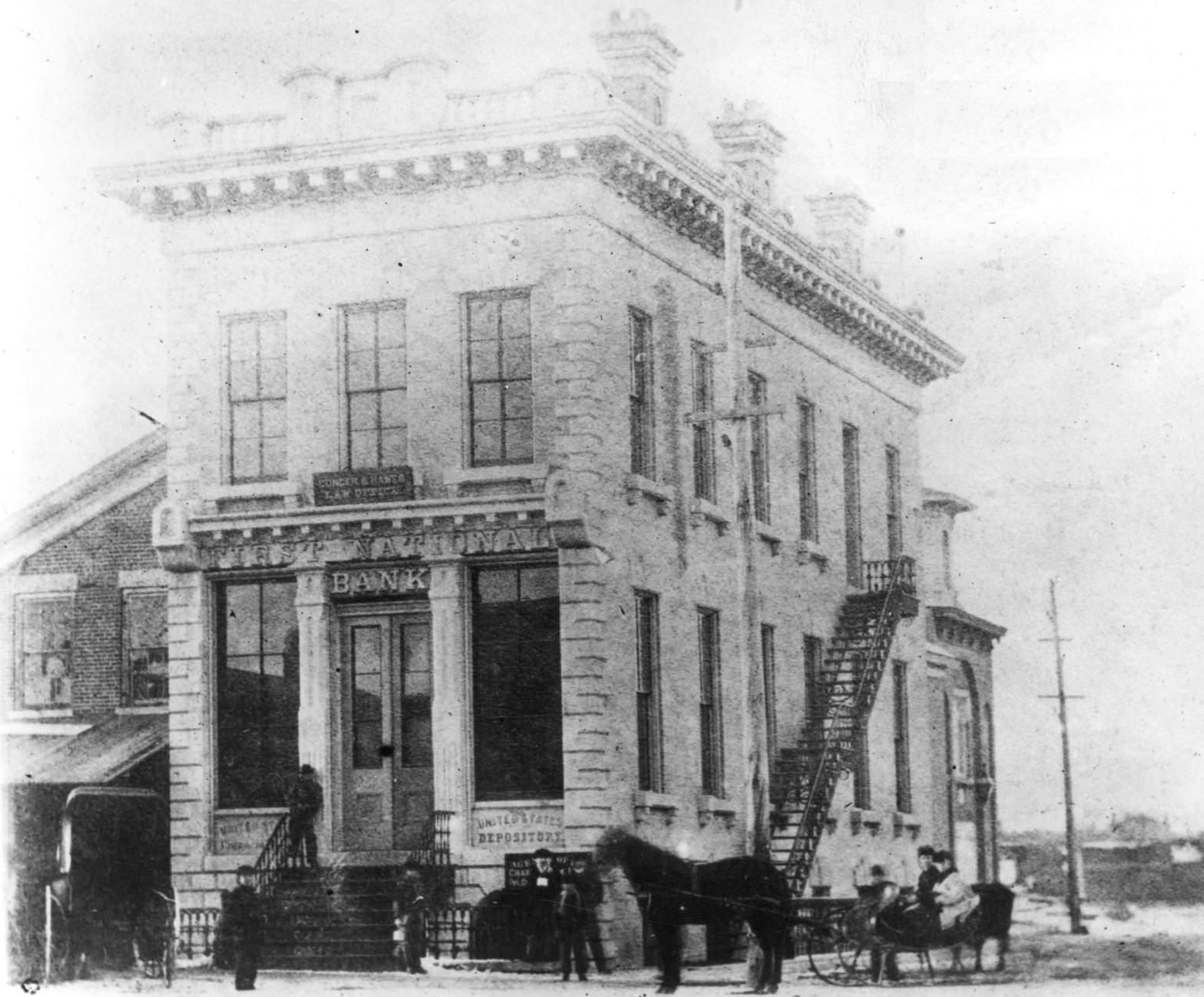
Banking was central to Milwaukee’s commercial life. The First National Bank operated with the added prestige of serving as a United States Depository — a sign visible right on the front of the building. Sleek horse-drawn sleighs parked outside the bank on snowy days, and law offices like Conner and Hawes occupied the floors above.
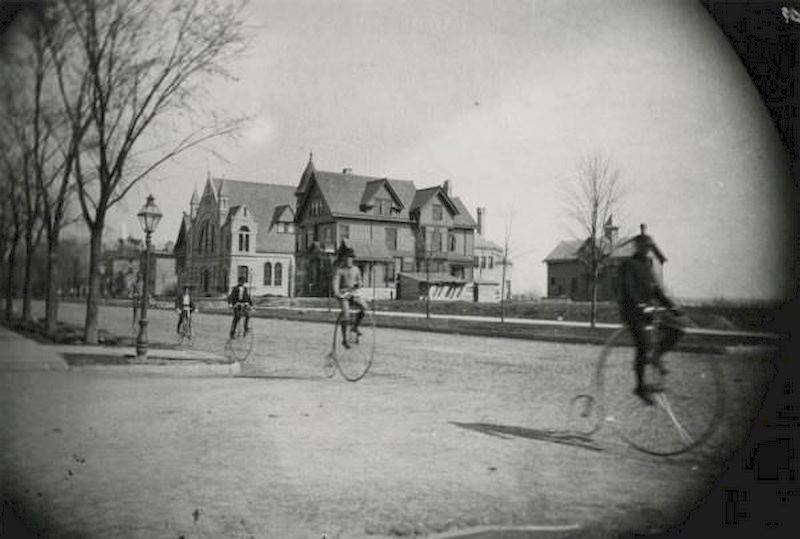
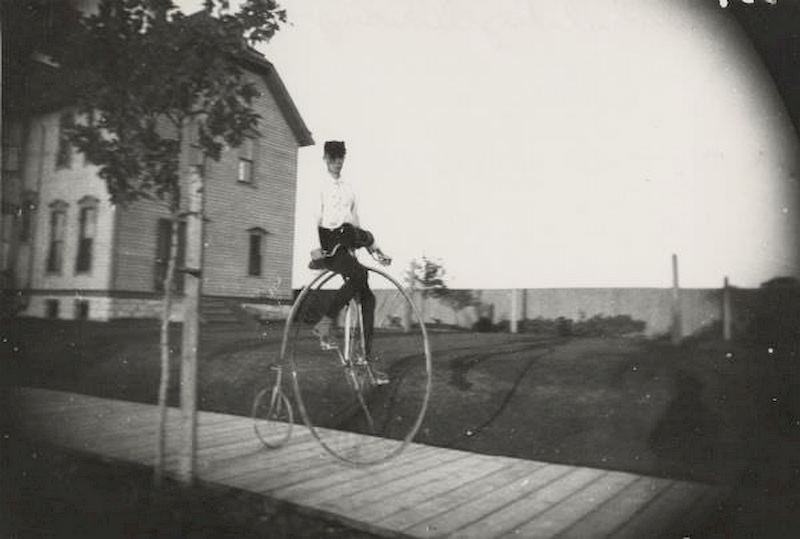
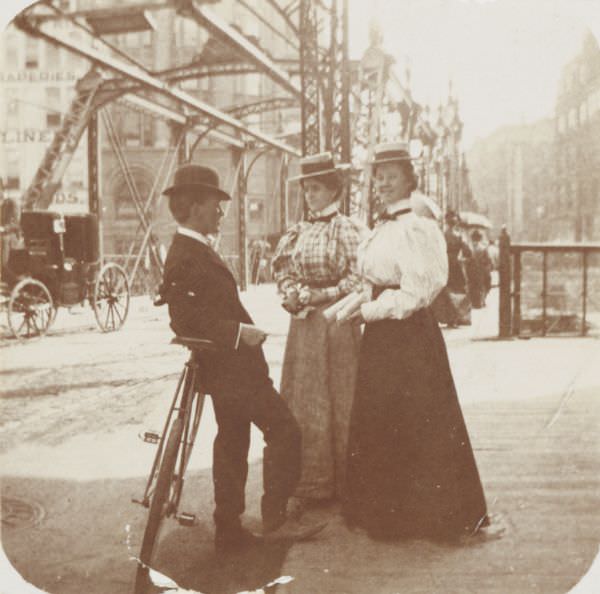
Leisure and curiosity went together on Milwaukee’s sidewalks. High-wheel bicycles, also called penny-farthings, were a fashionable mode of transport for young men in the early 1890s. The Grand Avenue Congregational Church formed a recognizable backdrop for groups of riders who gathered near the city’s main commercial corridor.
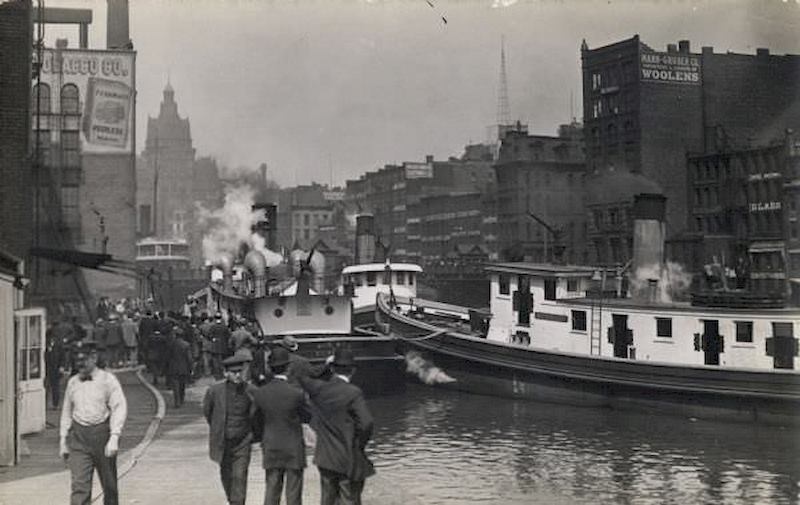
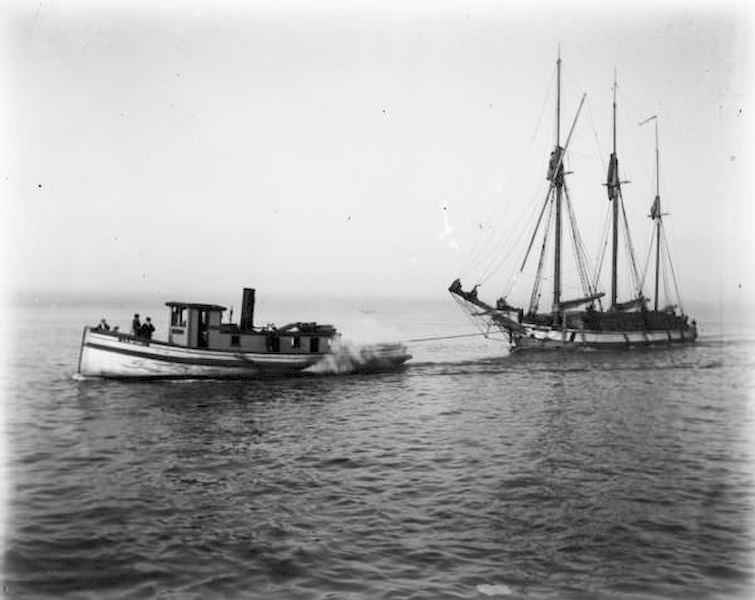
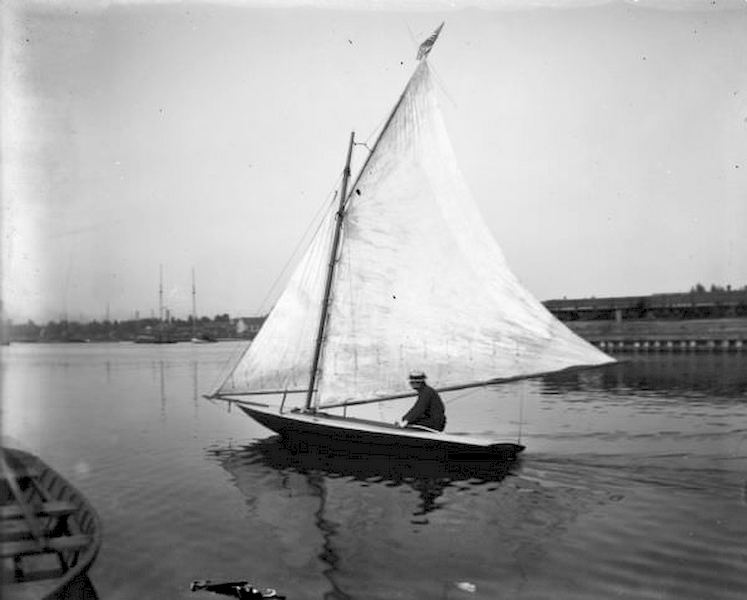
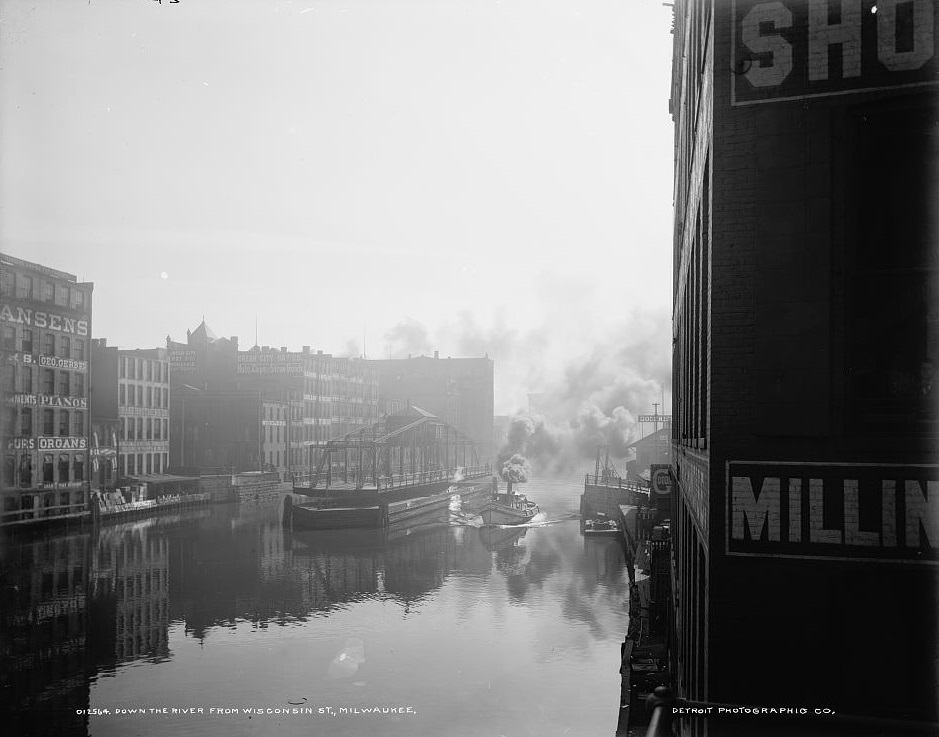
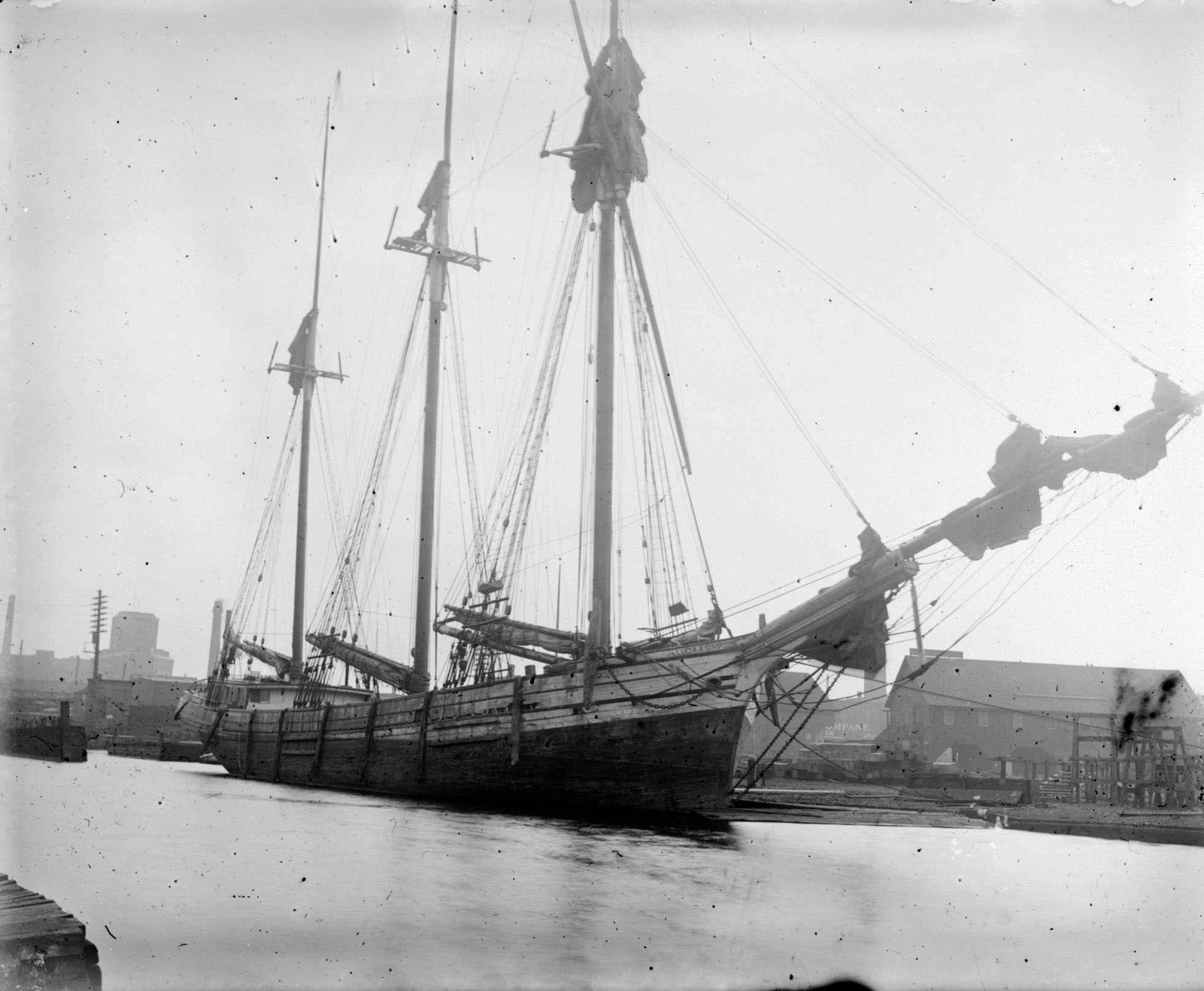
The harbor was one of Milwaukee’s most vital arteries. Schooners, tugboats, and steamships moved goods and passengers through the port regularly. The two-masted schooner Kate Howard, owned by Captain Harry Roffenor and hailing from Holland, Michigan, made repeated trips to the ports along Lake Michigan throughout the early 1890s. The Kate Howard was eventually lost somewhere between Milwaukee and Kenosha in the late 1890s.
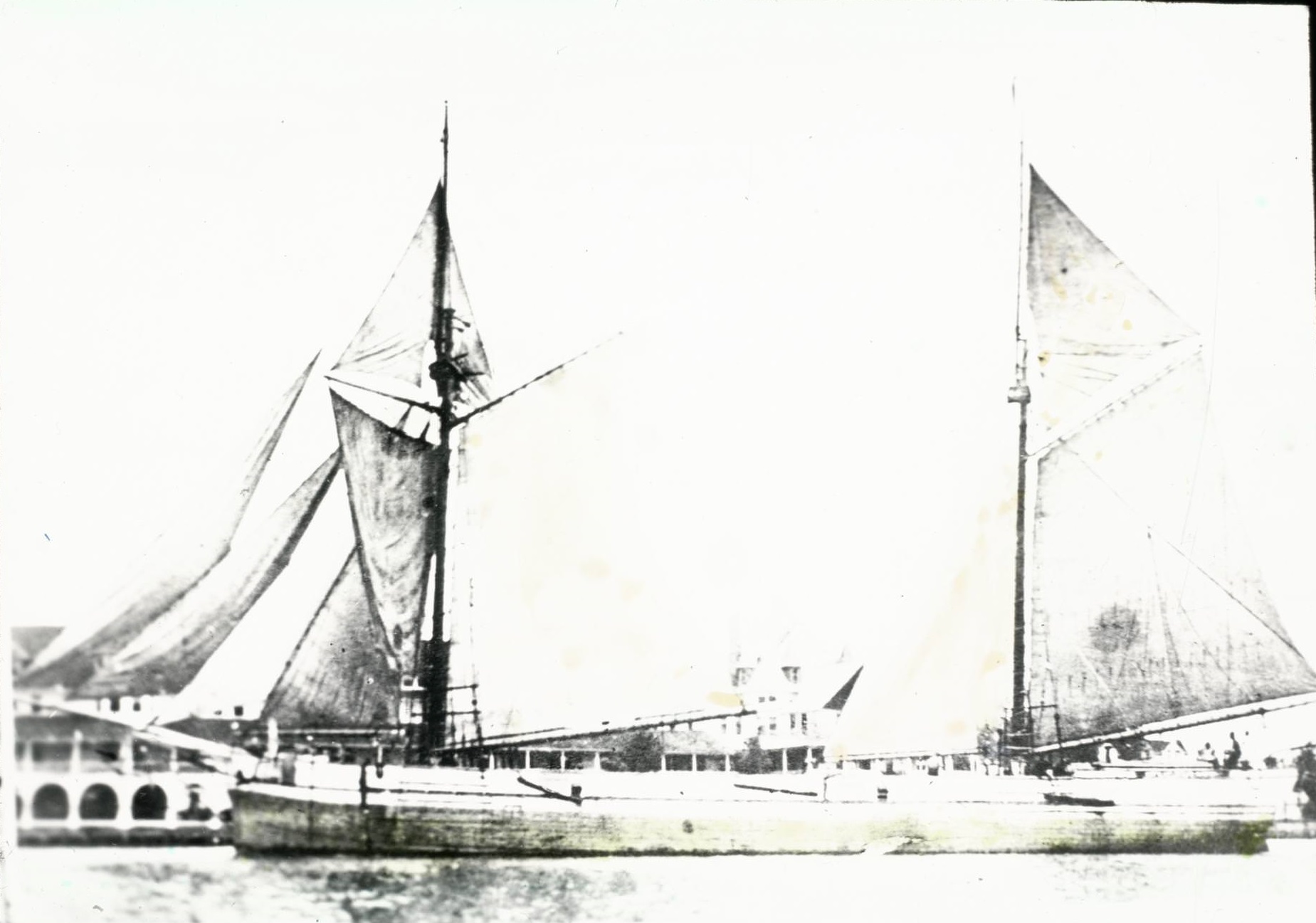
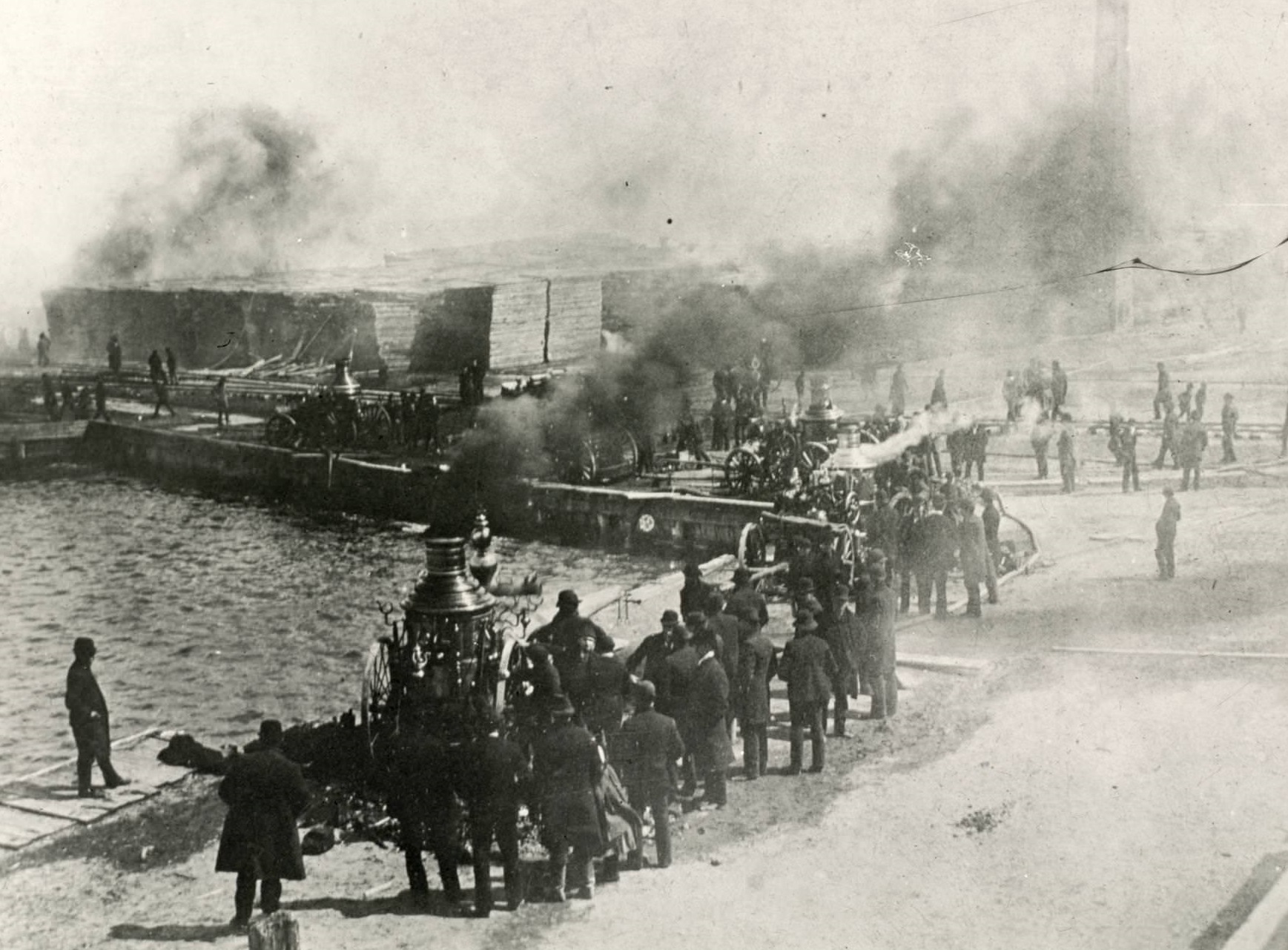
Fire was a constant danger in the 1890s, and Milwaukee’s industrial districts were especially vulnerable. On April 19, 1892, a major fire tore through the Simmons Company plant, spreading to the Kenosha Lumber Company and destroying hardwood lumber stockpiles belonging to the Bain Wagon Company. Steam fire engines from Milwaukee, Racine, and Waukegan were deployed to pump water directly from the harbor in an effort to stop the blaze.
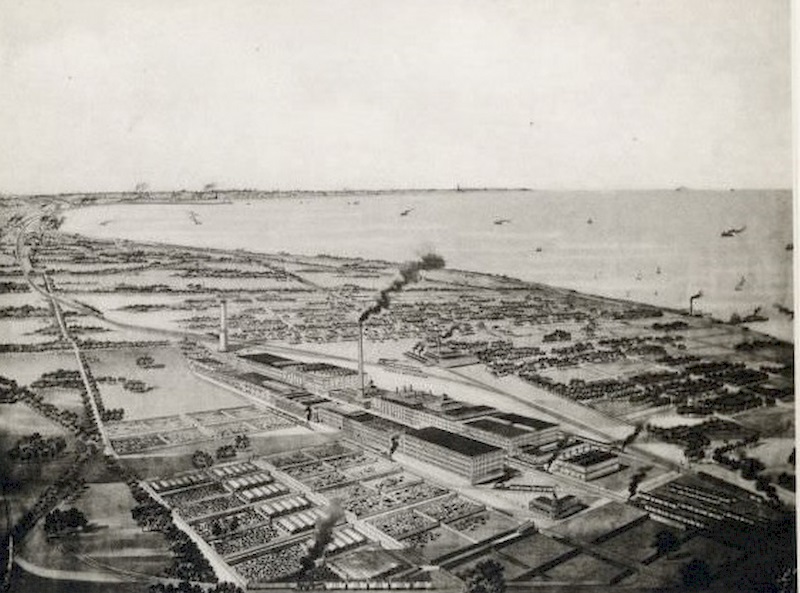
The Illinois Steel Company was another dominant industrial presence in the region by 1892. The area that would become Cudahy — incorporated in 1895 — was already taking shape around large meatpacking operations. A bird’s-eye view from 1892 captured the Cudahy packing houses and stockyards laid out across the landscape, showing just how much industrial development was driving the formation of new communities south of Milwaukee.
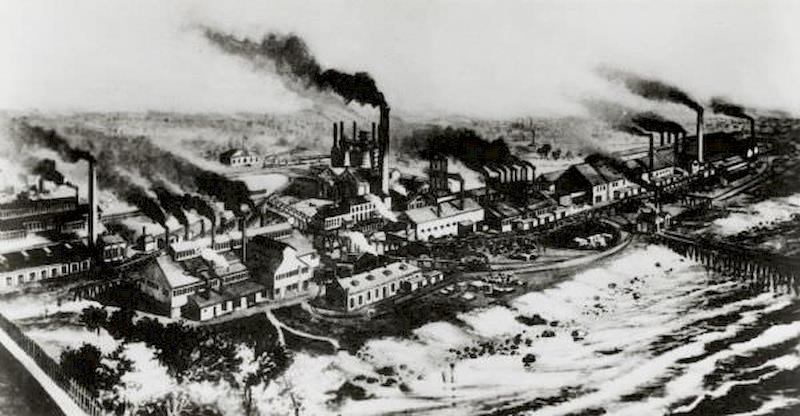
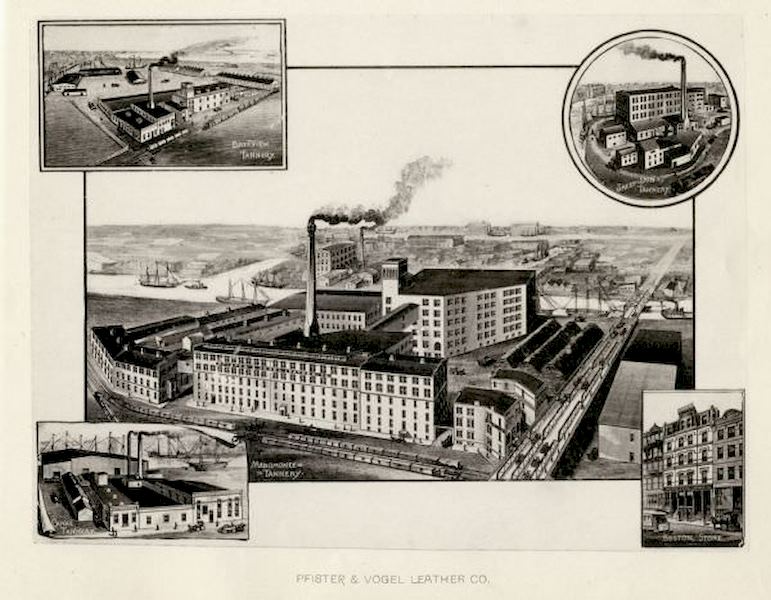
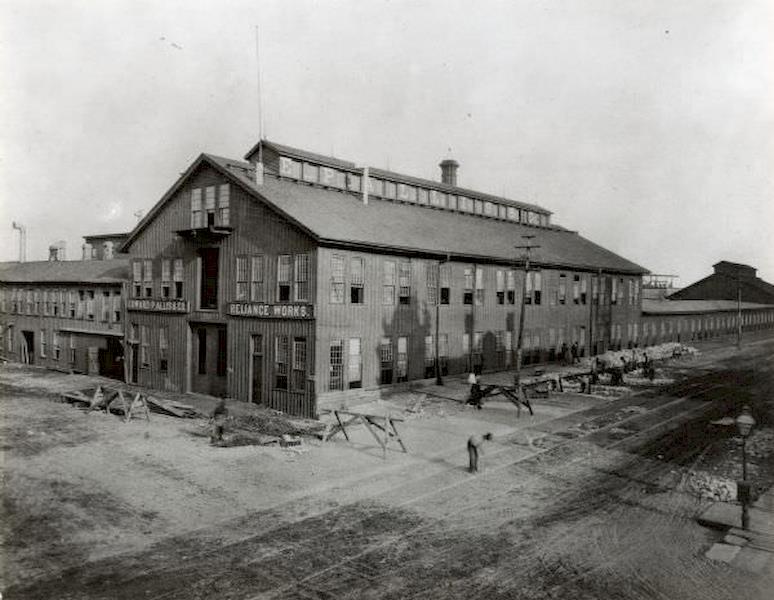
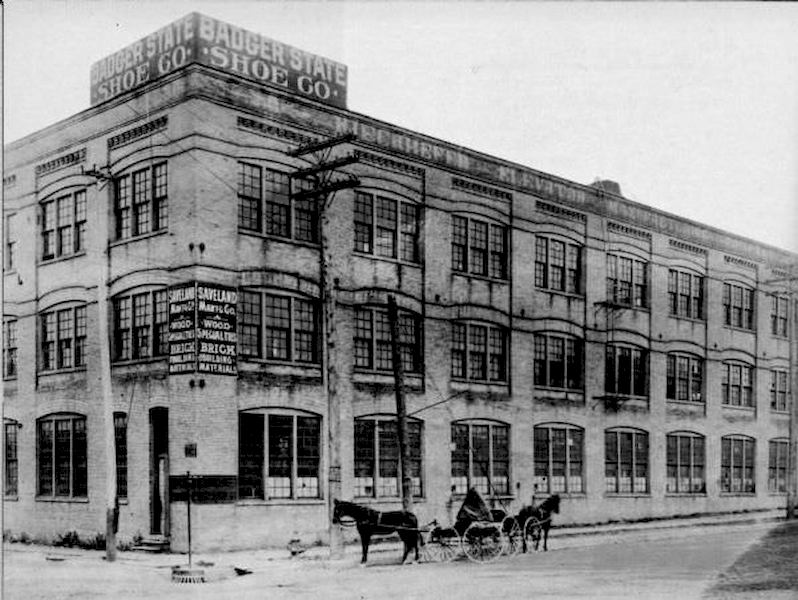
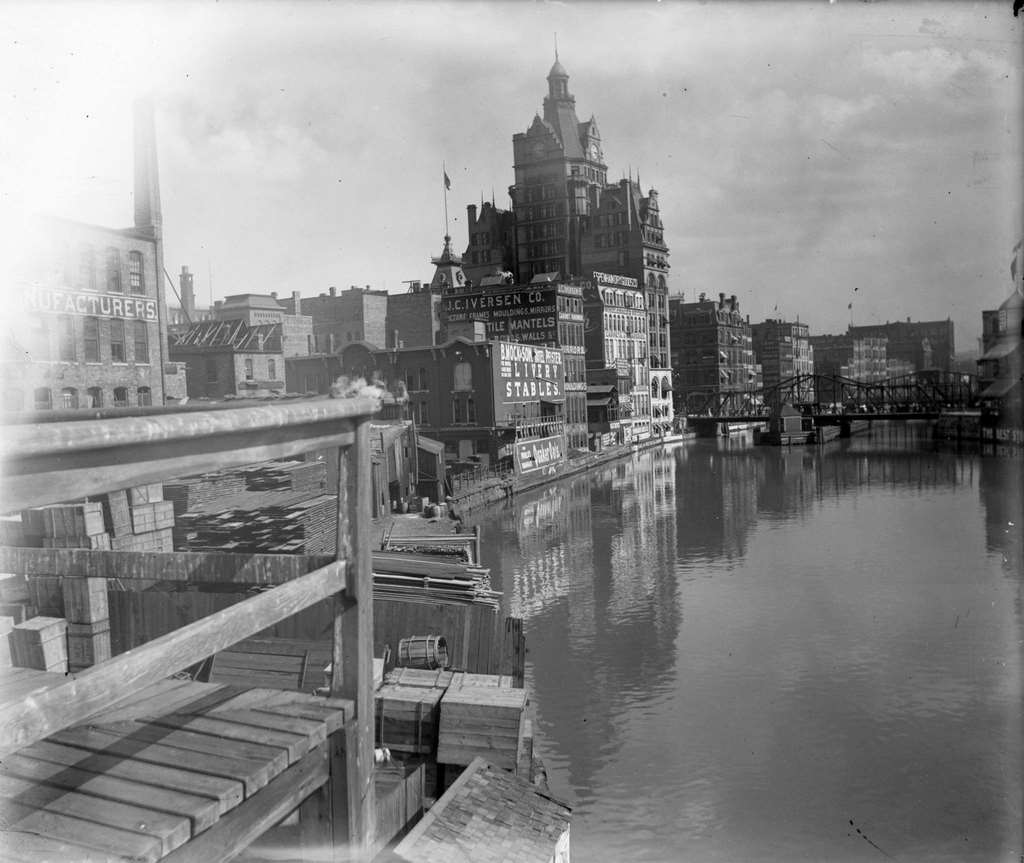
Milwaukee’s leather industry was among its most significant manufacturing sectors. The Pfister and Vogel Leather Company operated the Menomonee Tannery, a sprawling facility along the Milwaukee River with a railroad running alongside it. By 1892, the company also ran the Bay View Tannery, a Sheep-Skin Tannery, and a Canal Tannery, and maintained a retail presence as far away as Boston.
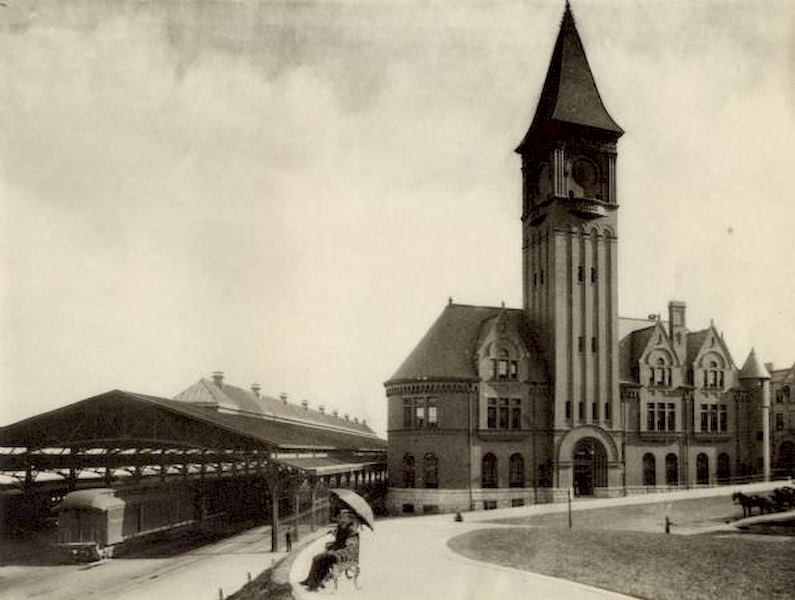
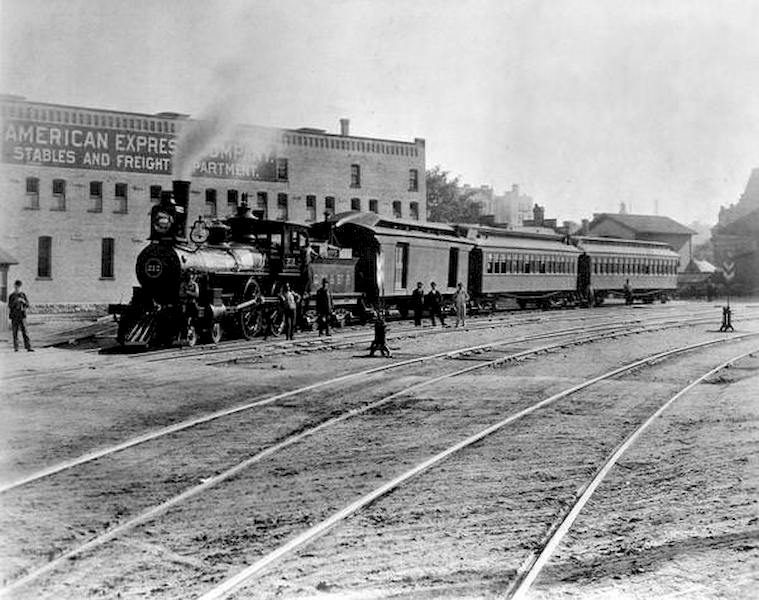
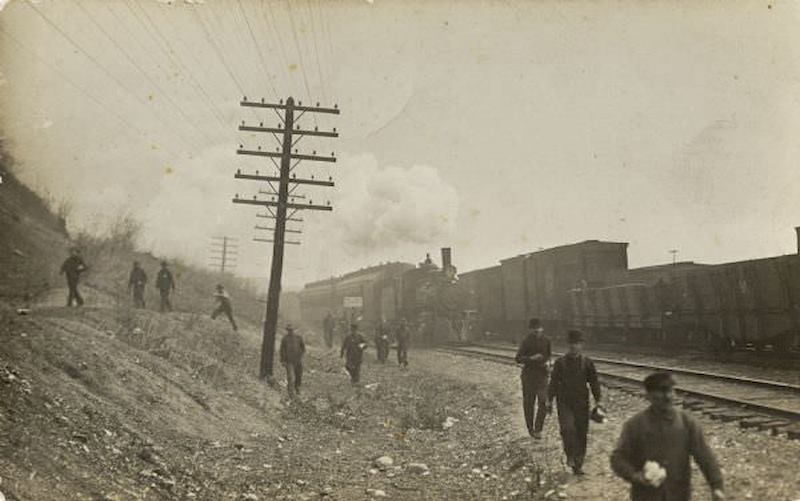
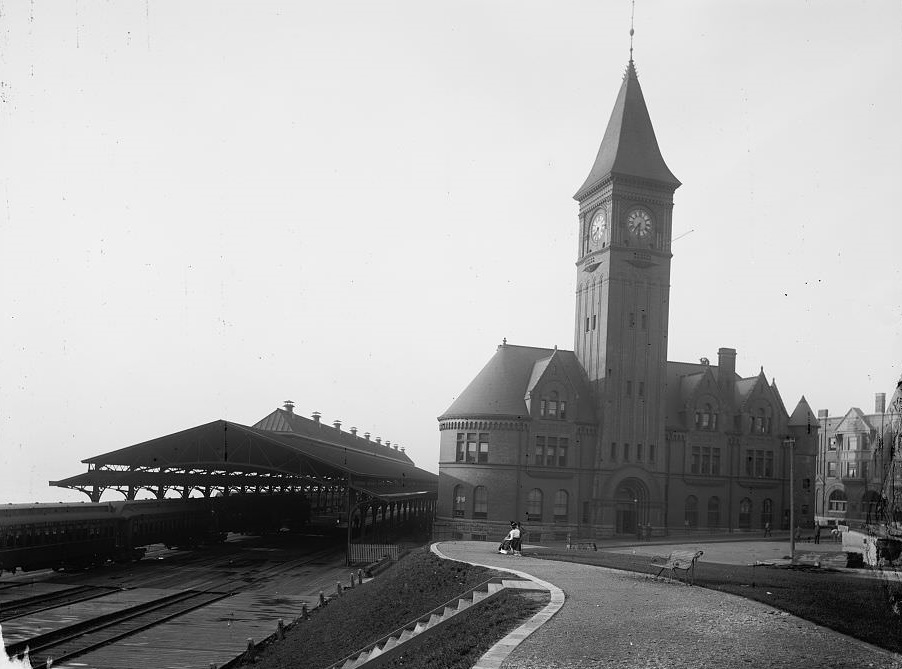
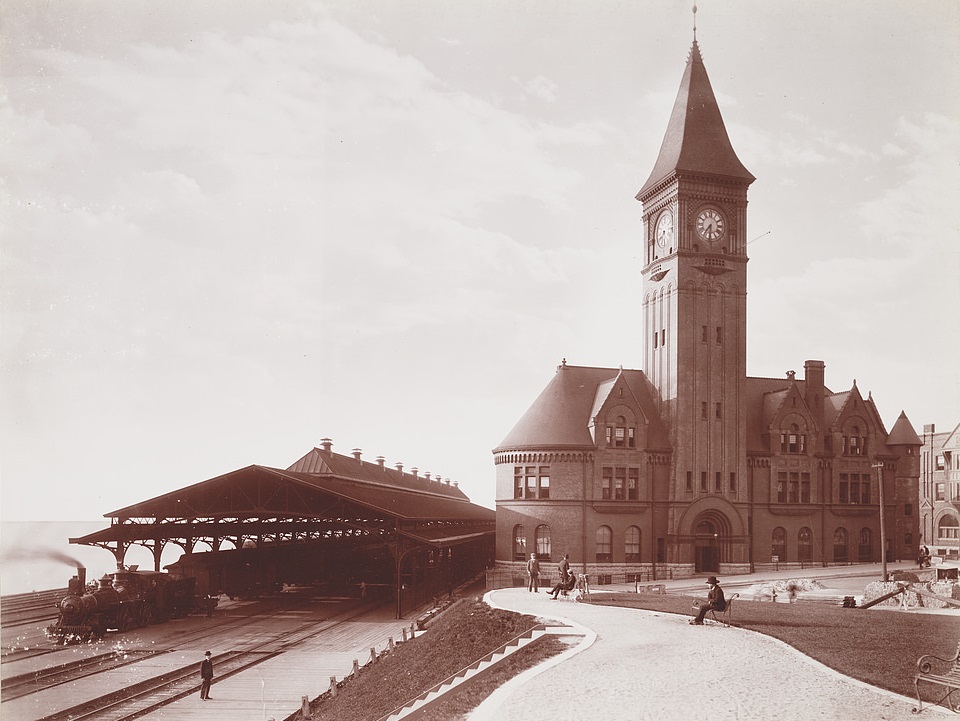
The Chicago and Northwestern Railway station was a key gateway into Milwaukee. Trains arriving from Chicago brought passengers, commerce, and news from the rest of the country. Engine #212 of the Chicago, Milwaukee & St. Paul Railway — nicknamed the Waukesha Scoot — served Union Depot as a local connector, linking Milwaukee to the surrounding region.
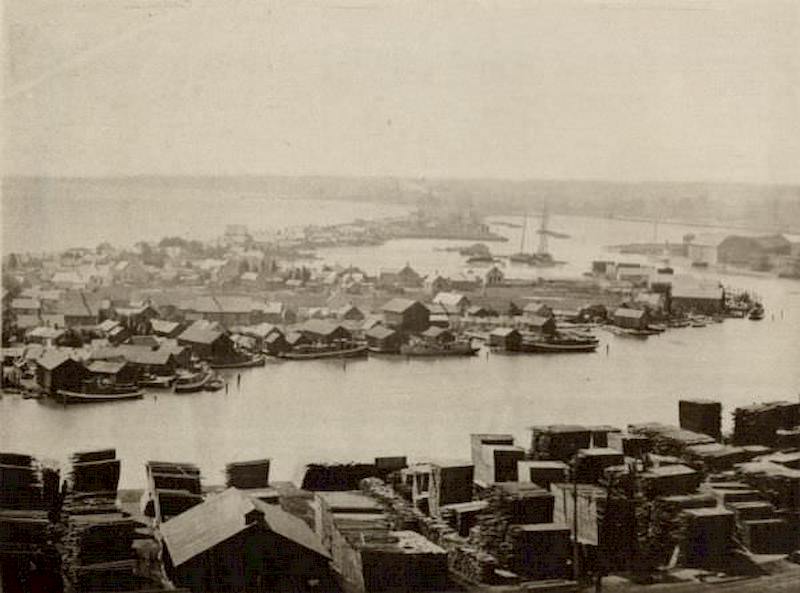
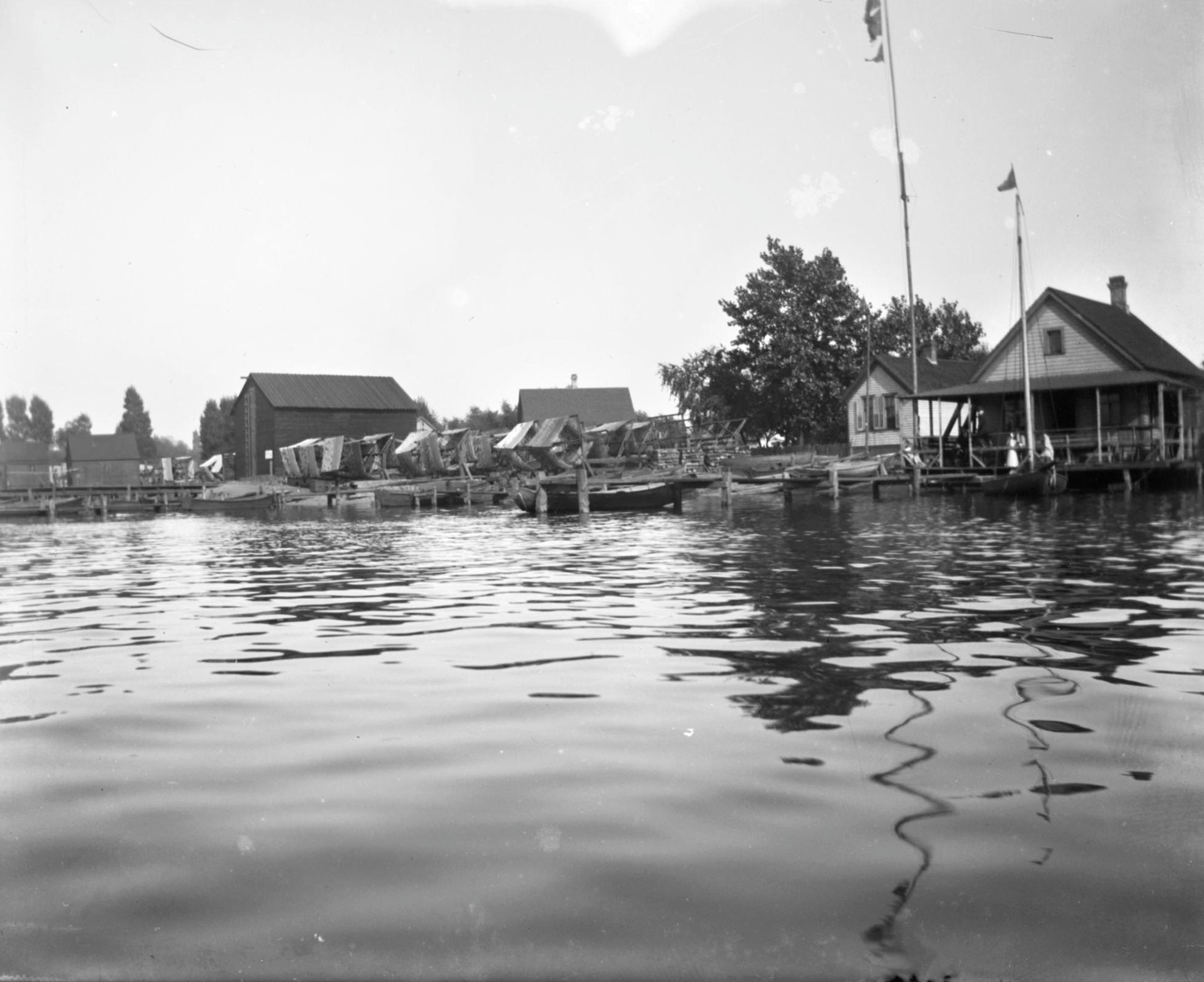
Jones Island, a narrow spit of land at the mouth of the Milwaukee River, was home to a tight-knit fishing community. Families lived in modest houses along the shoreline, fishing nets dried on reels near the water, and small boats bobbed in the harbor. It was a world apart from the brick commercial blocks of downtown, yet it sat just minutes from the city center.
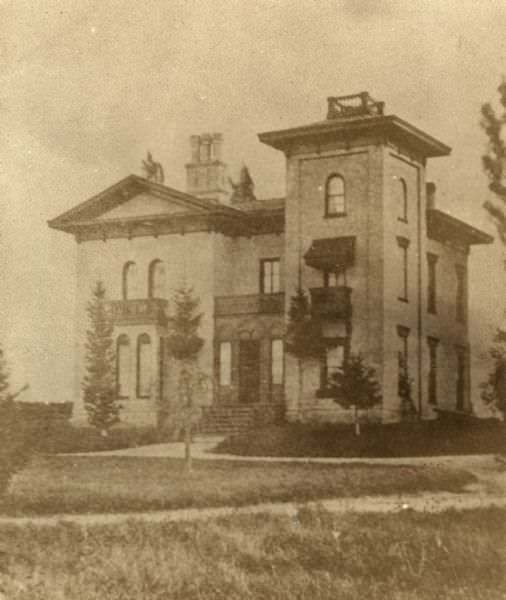
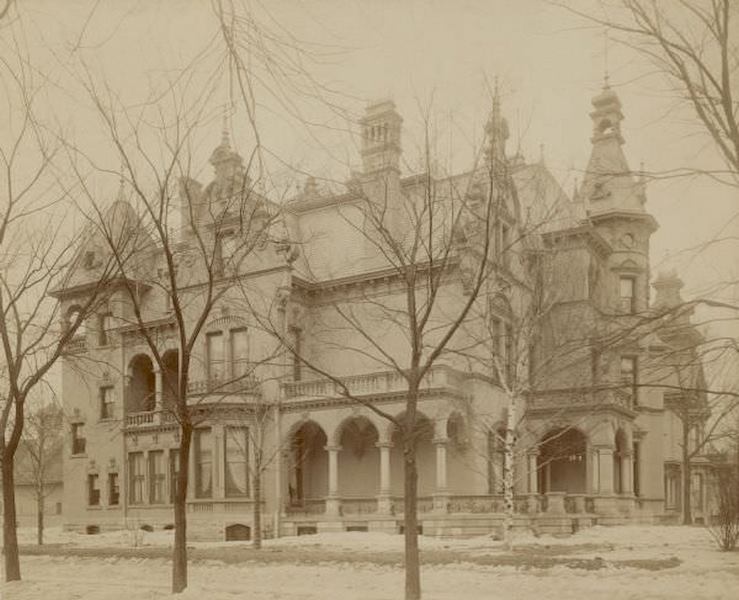
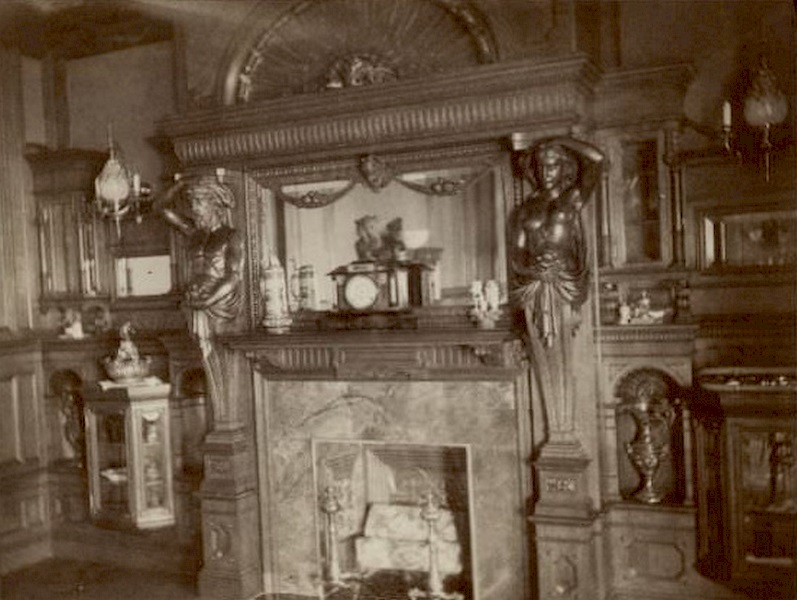
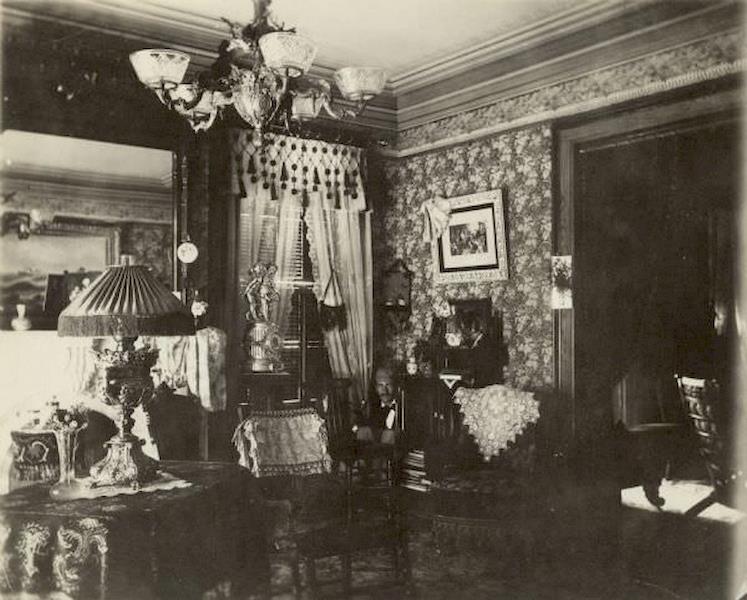
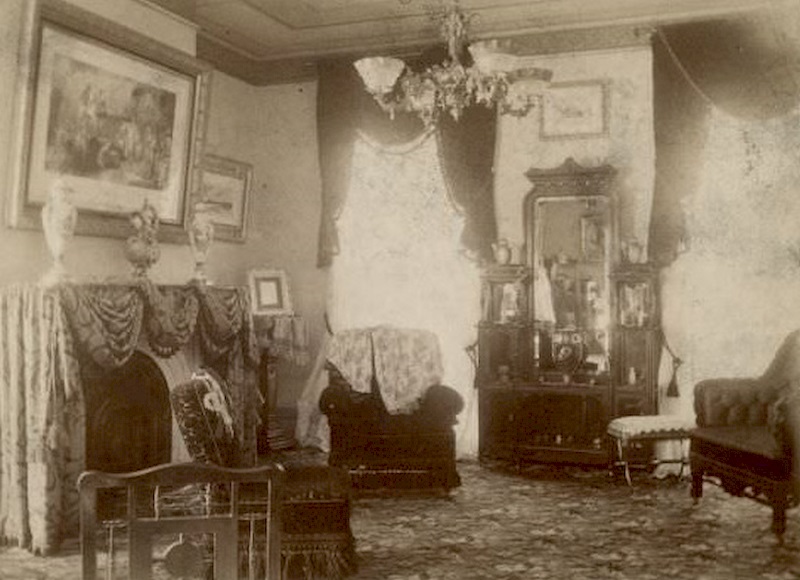
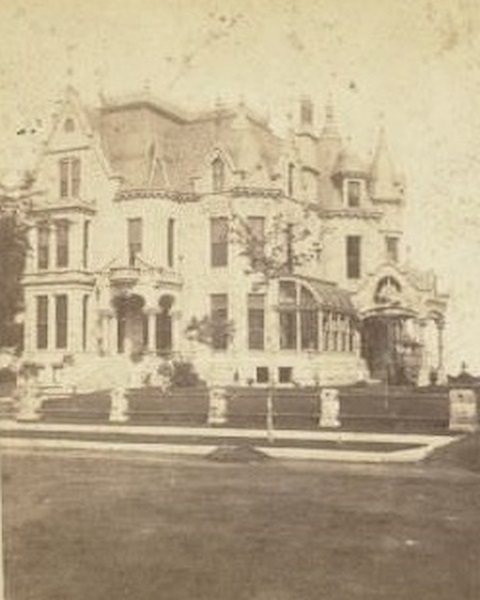
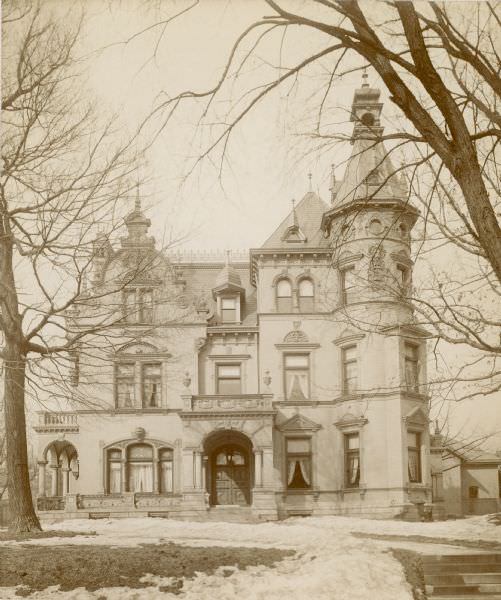
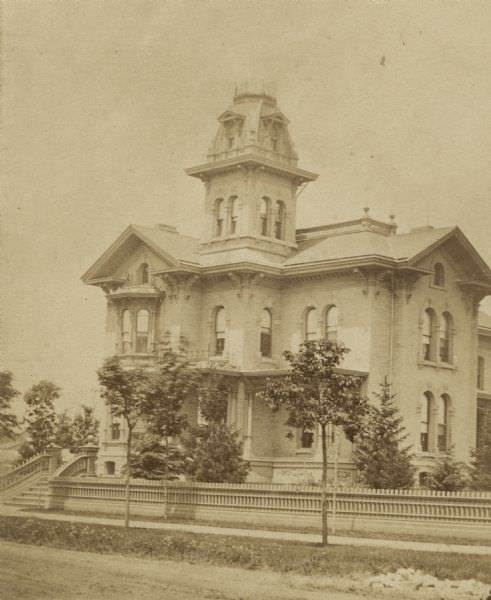
Wealthy Milwaukee residents built large, elaborate homes that reflected their fortunes. George Brumder, a prominent German-American publisher, constructed a striking three-story brick Queen Anne-style home on Grand Avenue with a turret, multiple porches, Flemish-style gables, and plaster ornamentation. The interior matched the exterior in grandeur — ornate Victorian furnishings, gas-lit chandeliers, fireplaces flanked by carved figures, and walls hung with paintings filled every room.
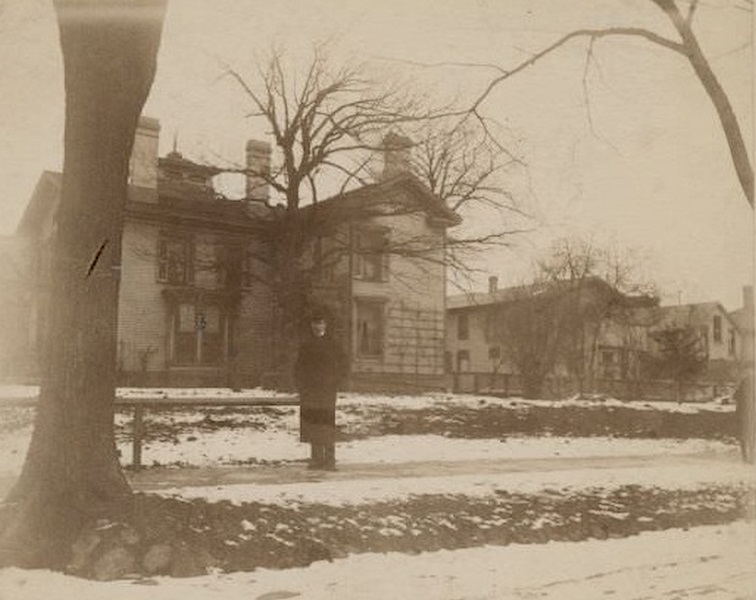
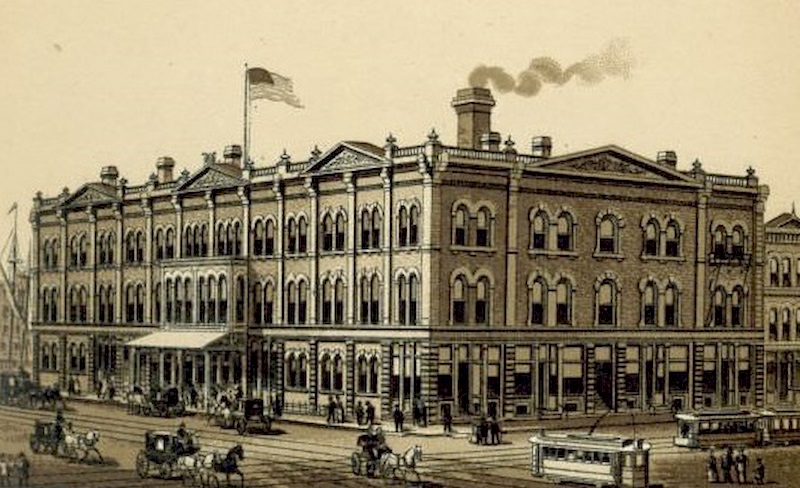
East Wisconsin Avenue was one of the city’s most prominent streets. By 1893, the Hotel Pfister had risen along its length — a luxury hotel that quickly became the address of choice for visiting dignitaries and well-heeled travelers. Men and women strolled the sidewalks outside in their finest clothes, and the avenue served as Milwaukee’s social promenade.
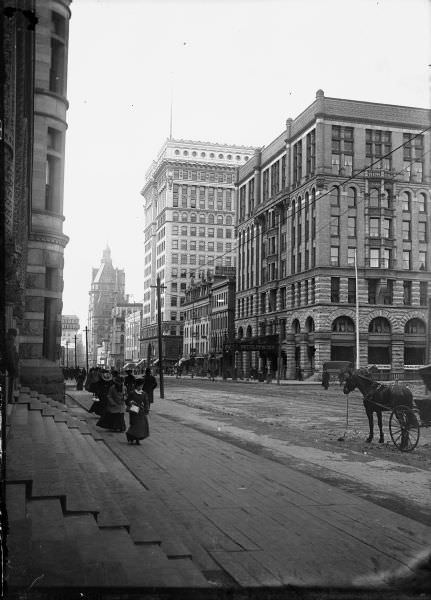
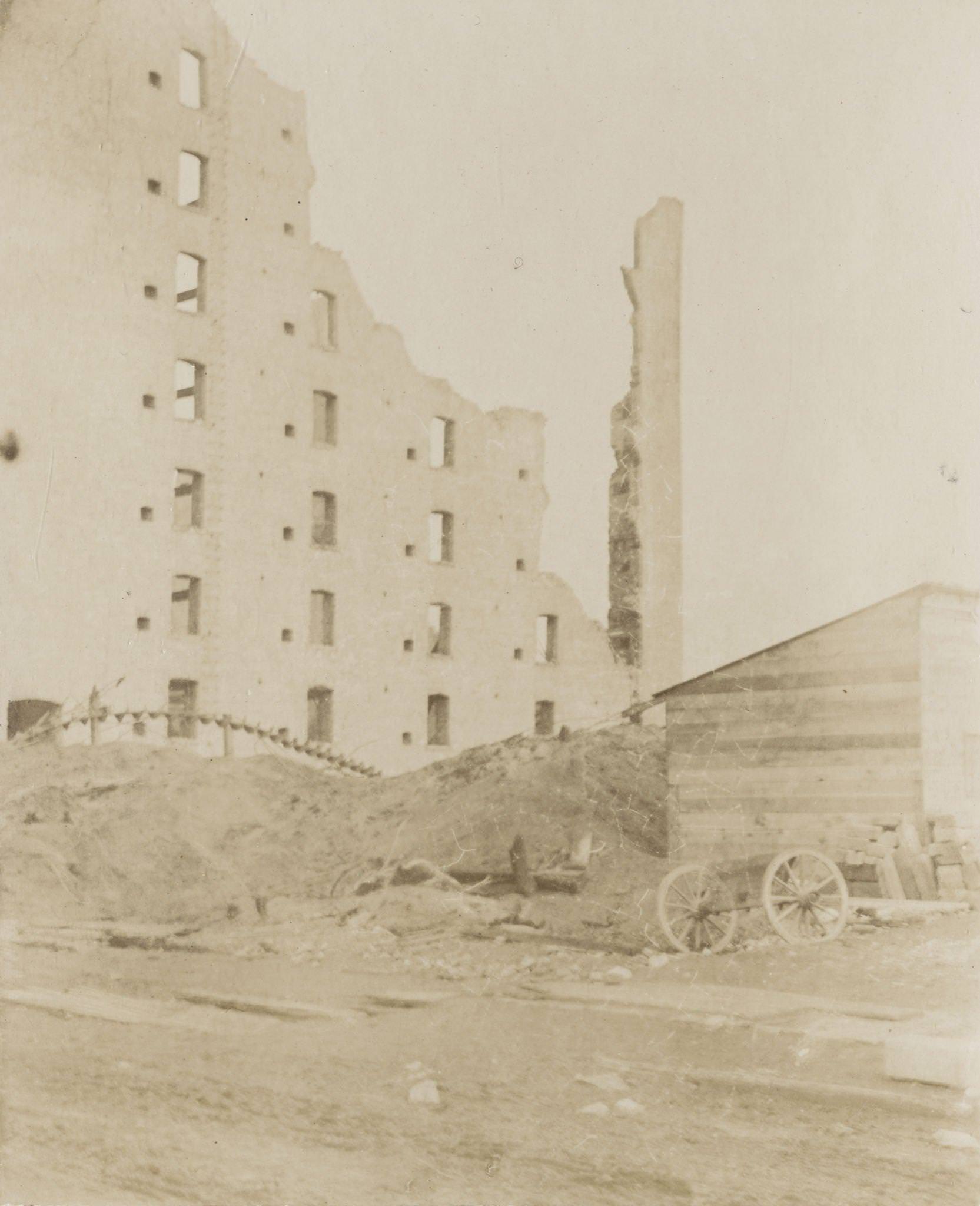
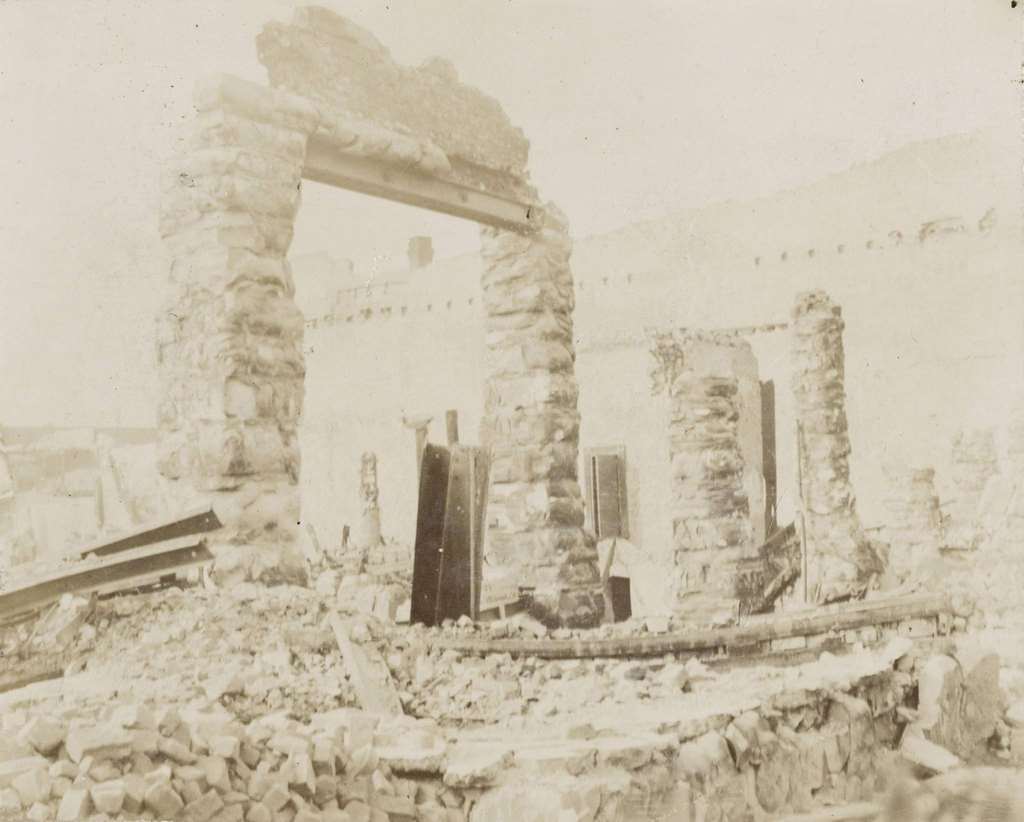
The 1893 fire in Milwaukee’s Third Ward was one of the most destructive events of the decade. The blaze leveled blocks of the neighborhood, leaving behind charred ruins that stretched across what had been a dense residential and commercial district. The fire displaced many of the Irish immigrant families who had lived there.
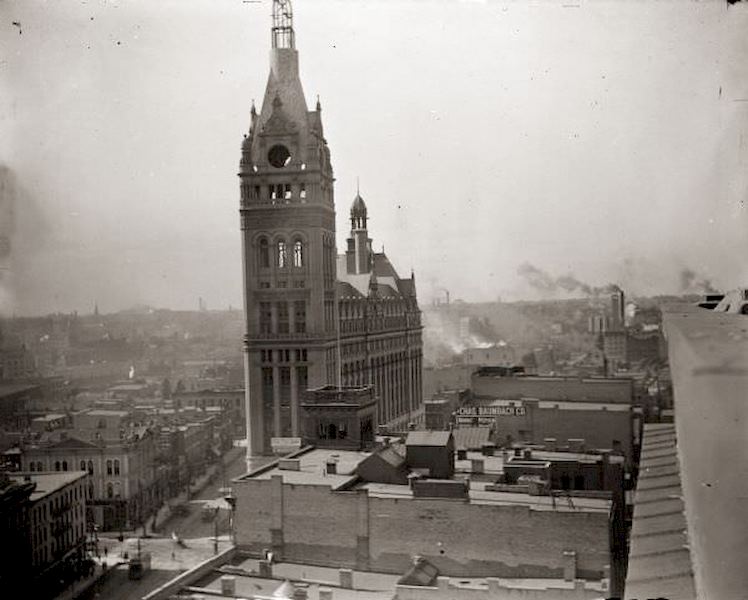
Milwaukee City Hall was completed in 1895 and stood as a remarkable architectural achievement. At 393 feet tall, it was the tallest habitable building in the world at the time of its completion. Only non-habitable structures like the Eiffel Tower and the Washington Monument were taller. Philadelphia City Hall surpassed it as the tallest government building when it was completed in 1901.
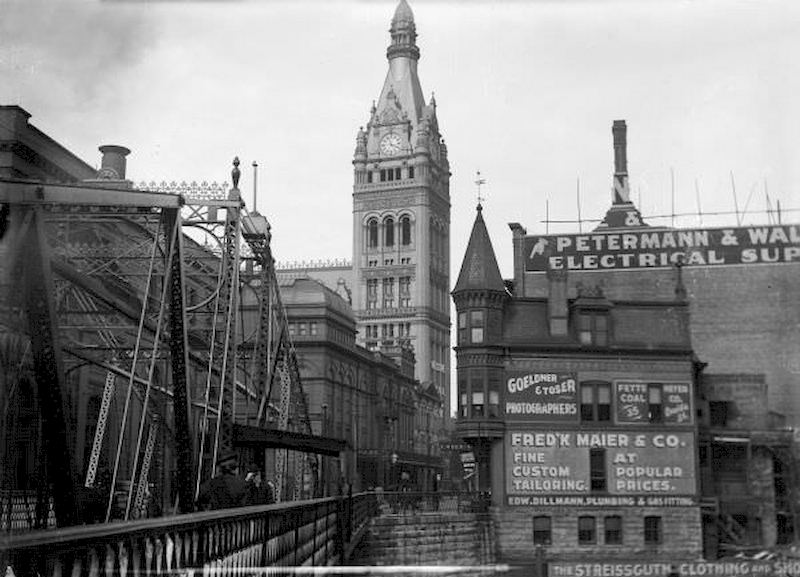
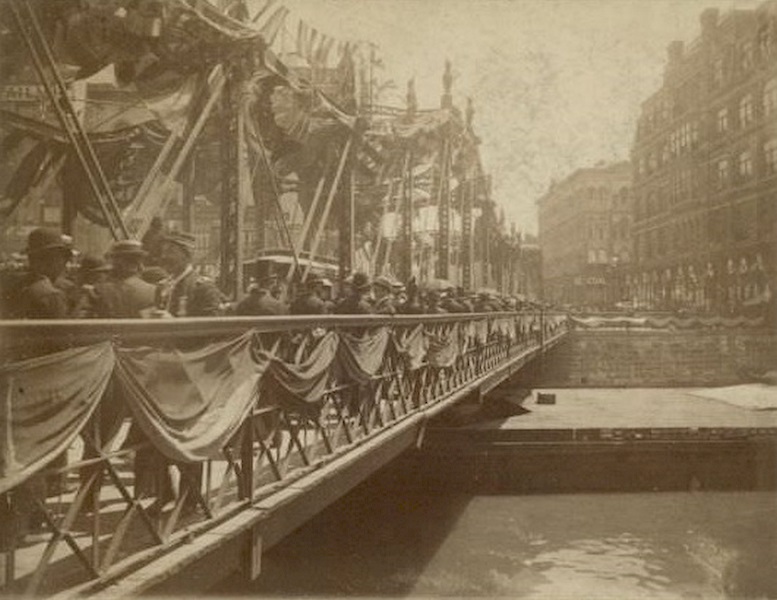
The Grand Avenue Bridge in 1895 was draped in bunting and banners and packed with pedestrians. Streetcars pushed through the crowds, and multi-story commercial buildings lined the far side of the river. The view captured the energy of a city that had firmly established itself as a major Great Lakes metropolis.
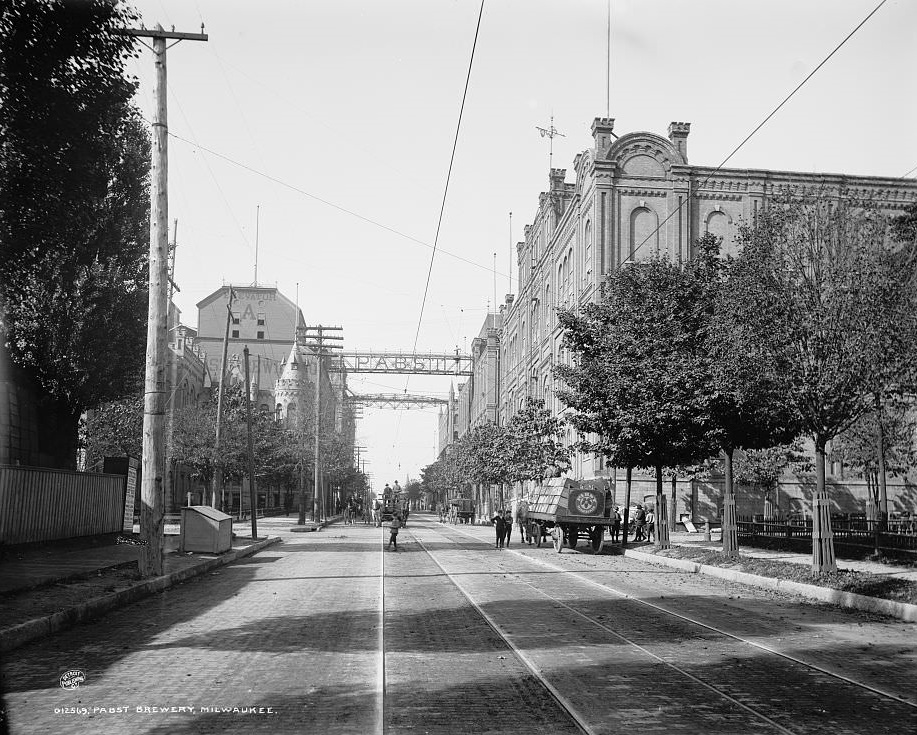
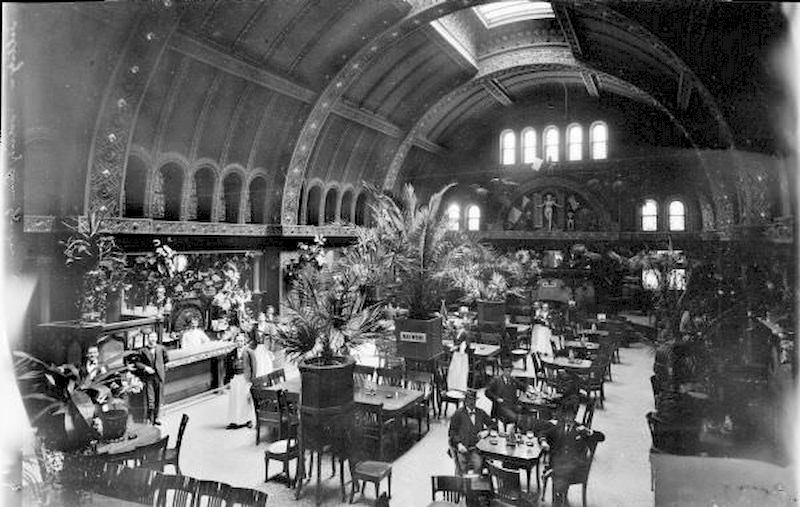
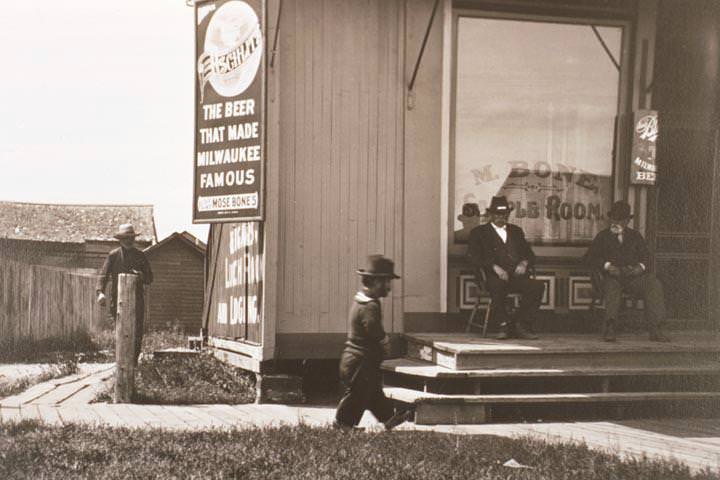
Milwaukee’s brewing industry was inseparable from its identity. The Pabst Brewery was one of the city’s largest employers and most recognized institutions. In 1896, the Schlitz Palm Garden opened on July 3rd, borrowing the concept of the German beer garden and bringing it to life in Milwaukee with a level of opulence that made it one of the most popular destinations in the city.
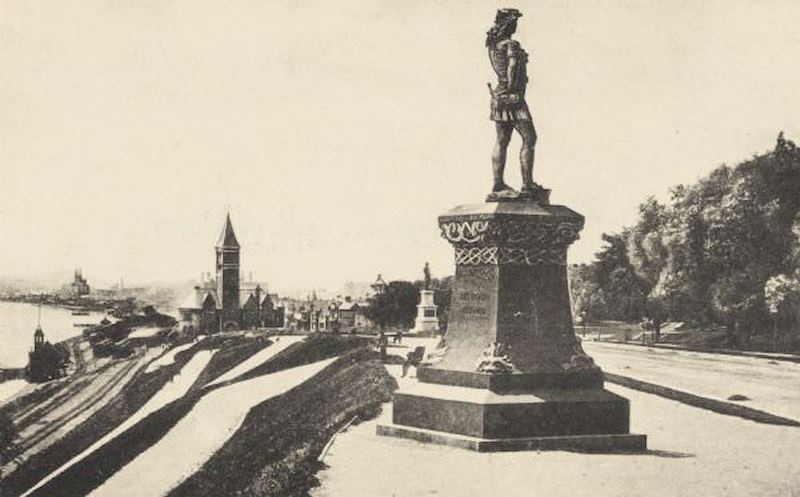
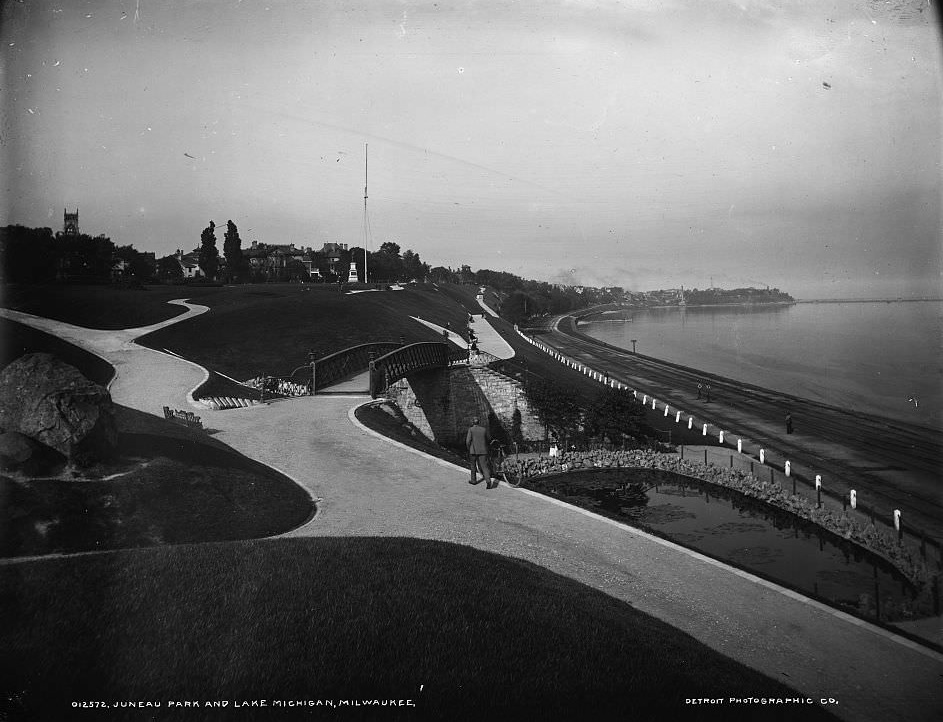
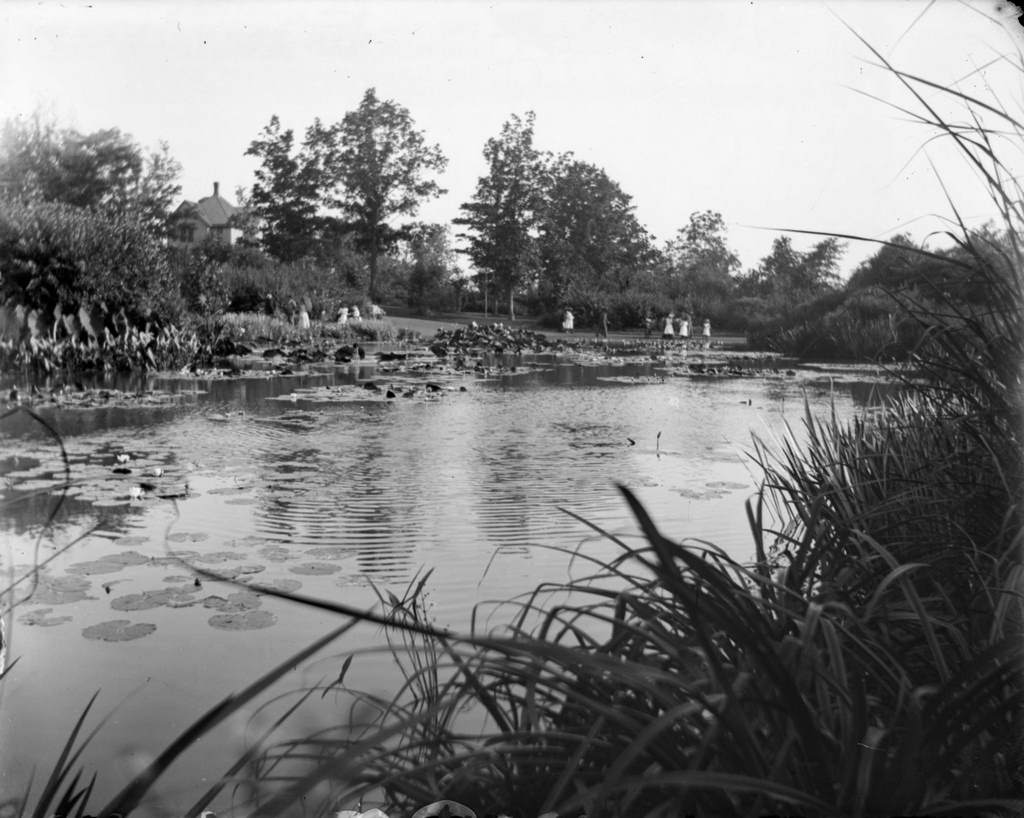
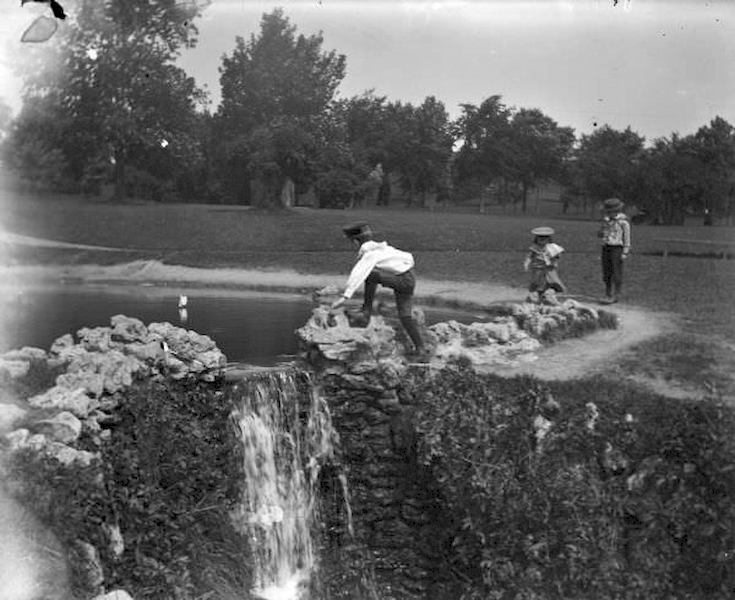
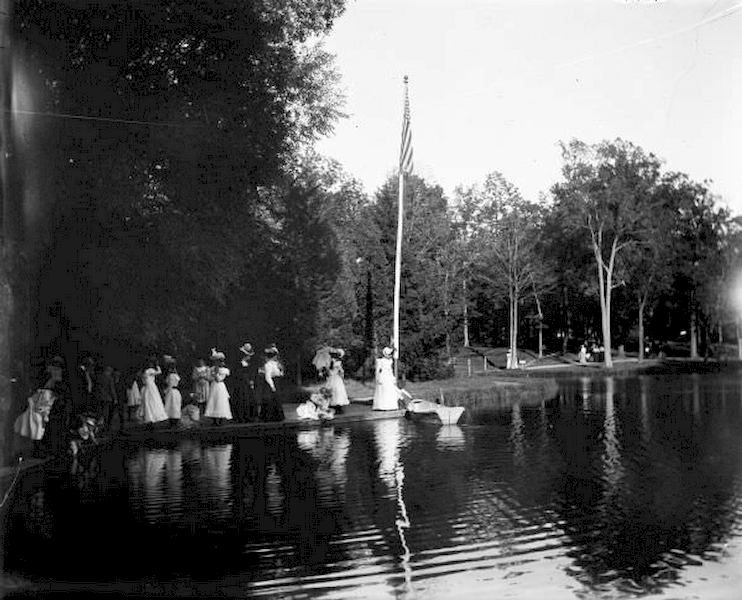
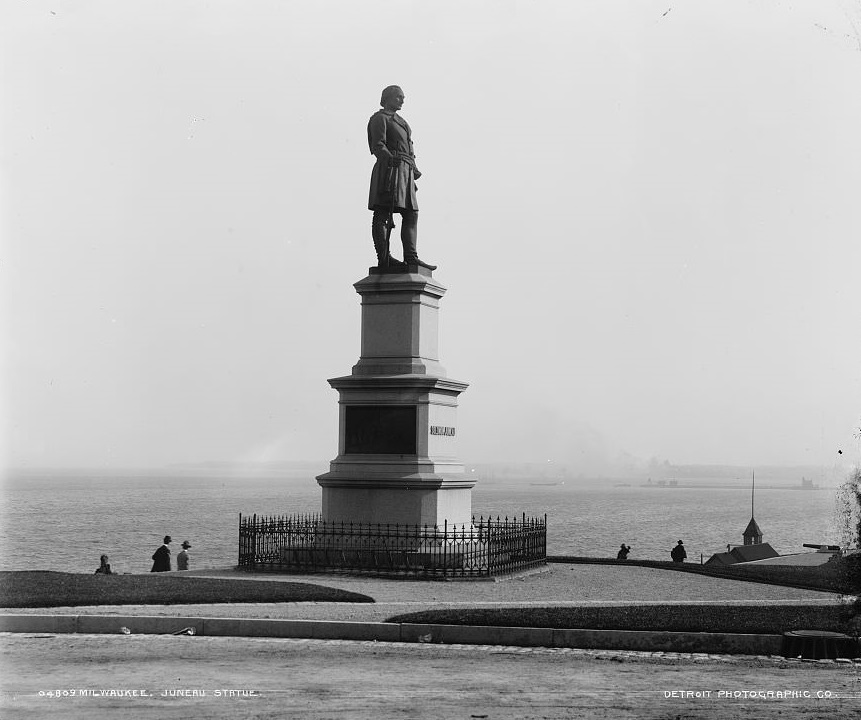
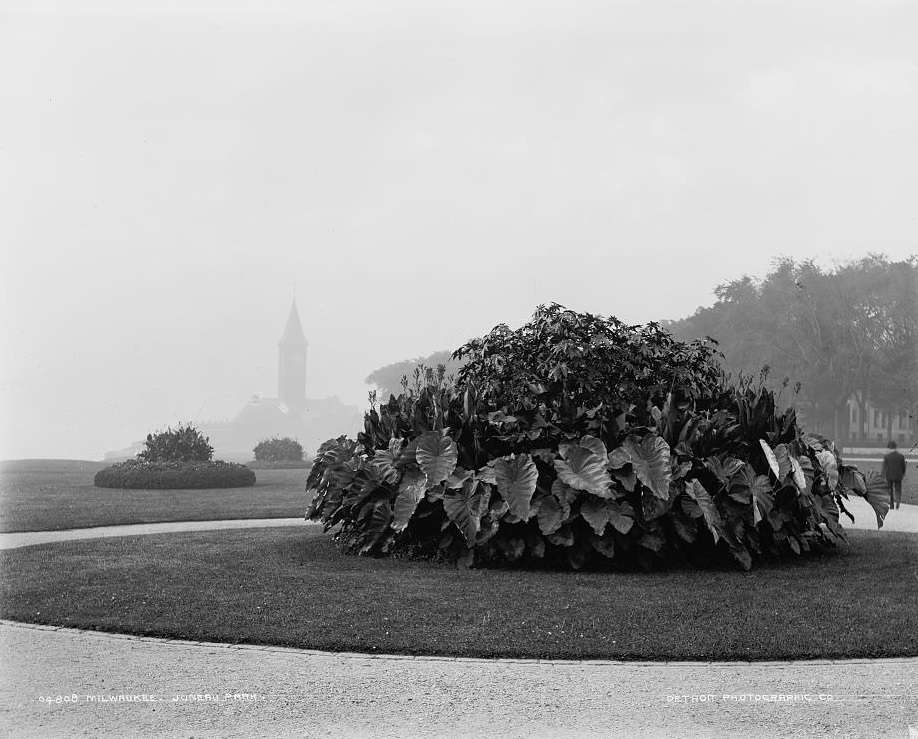
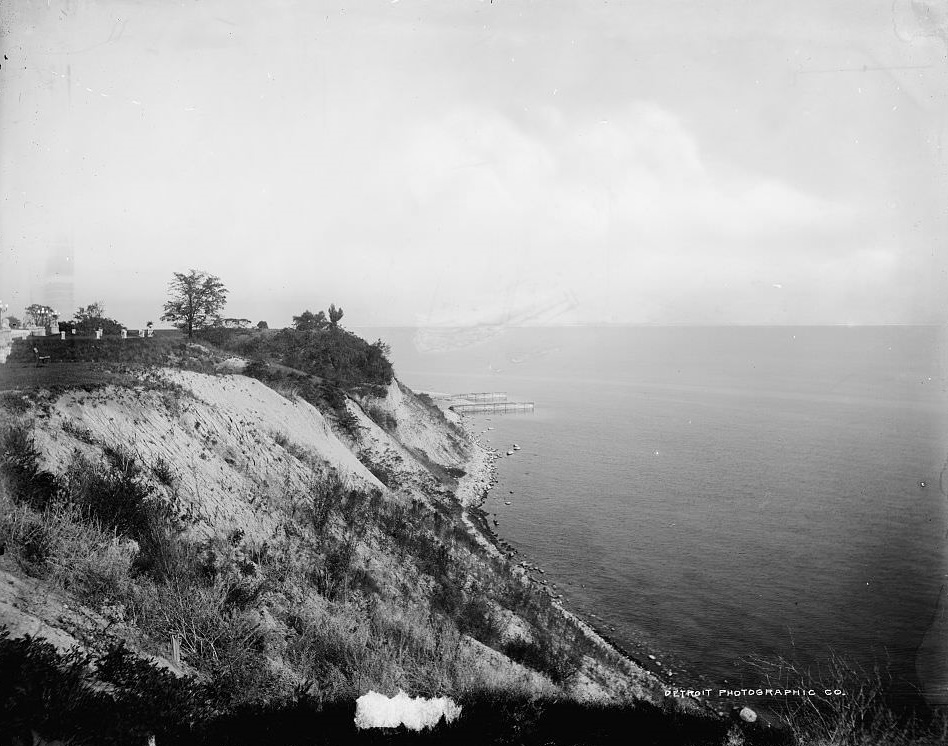
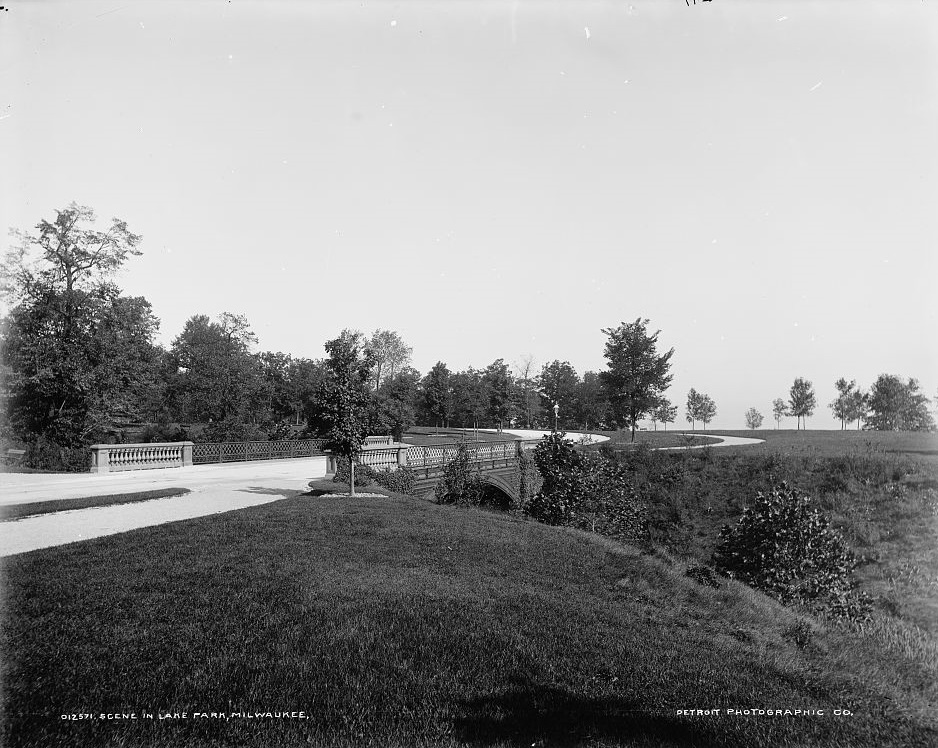
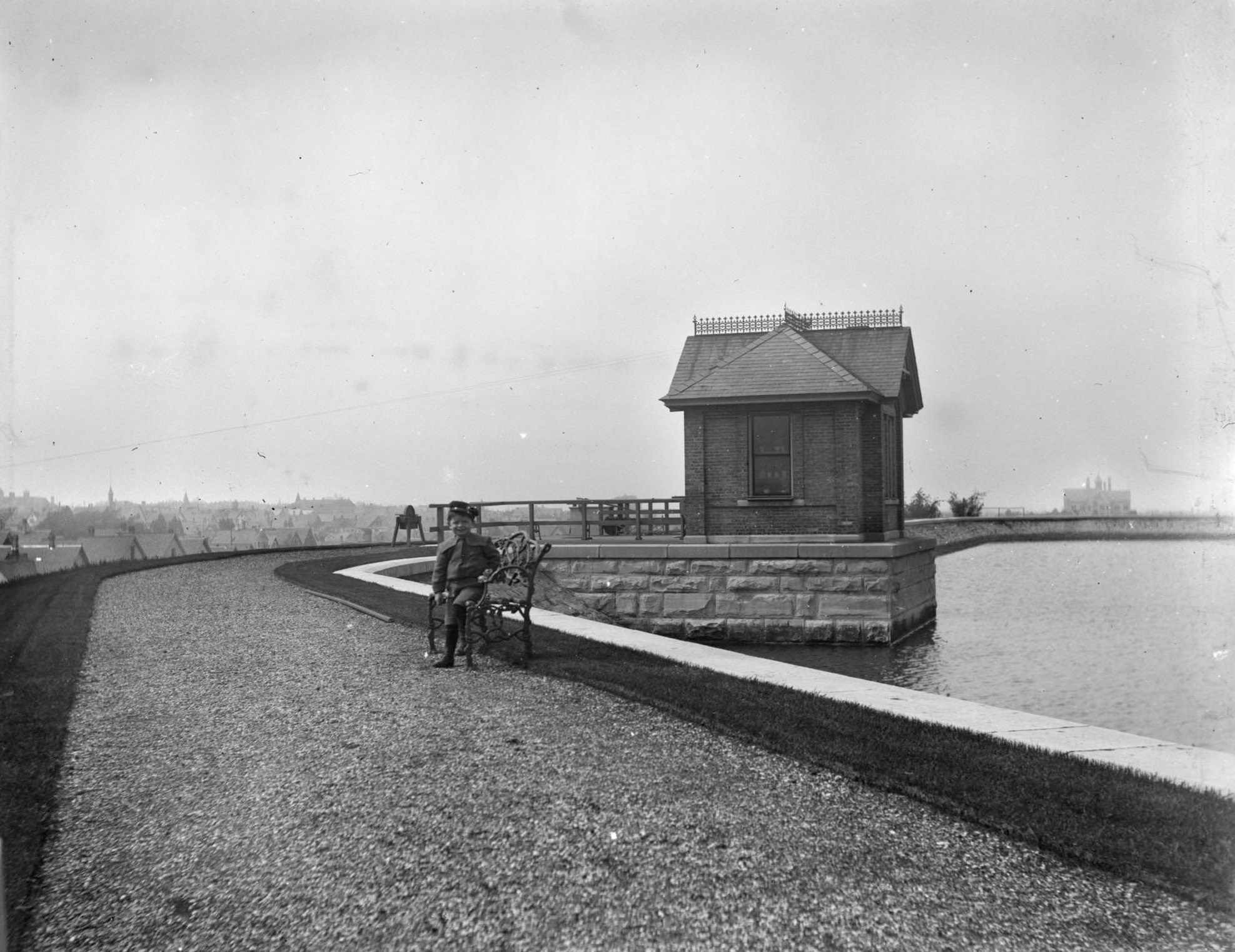
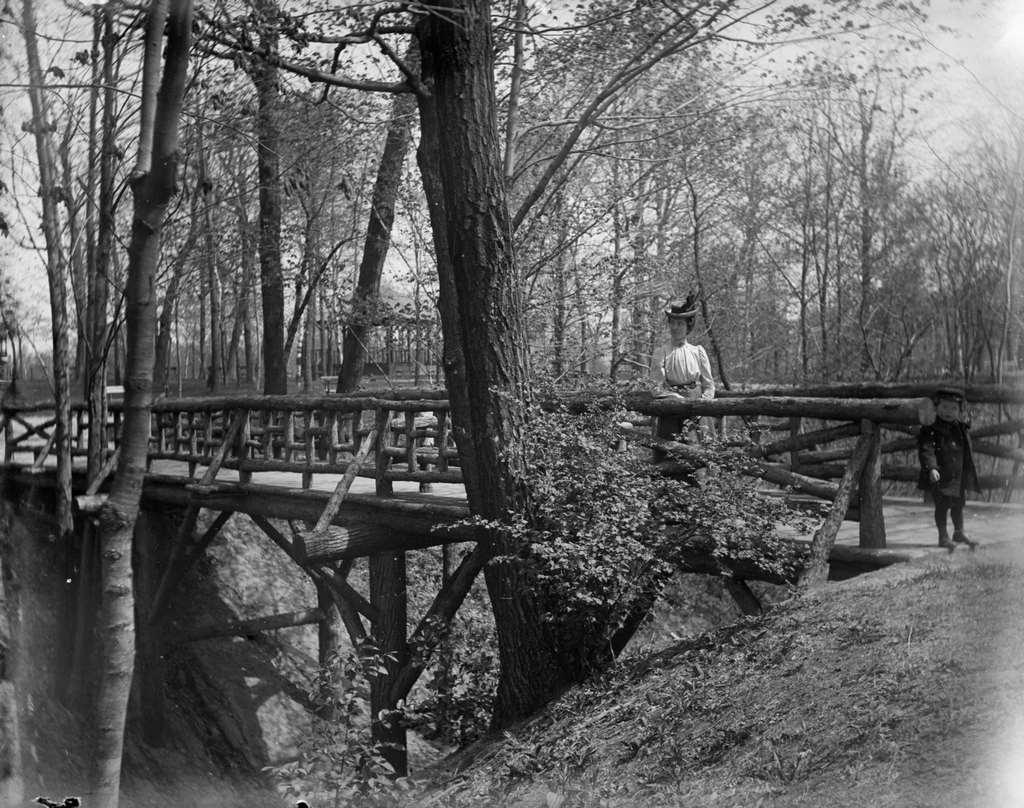
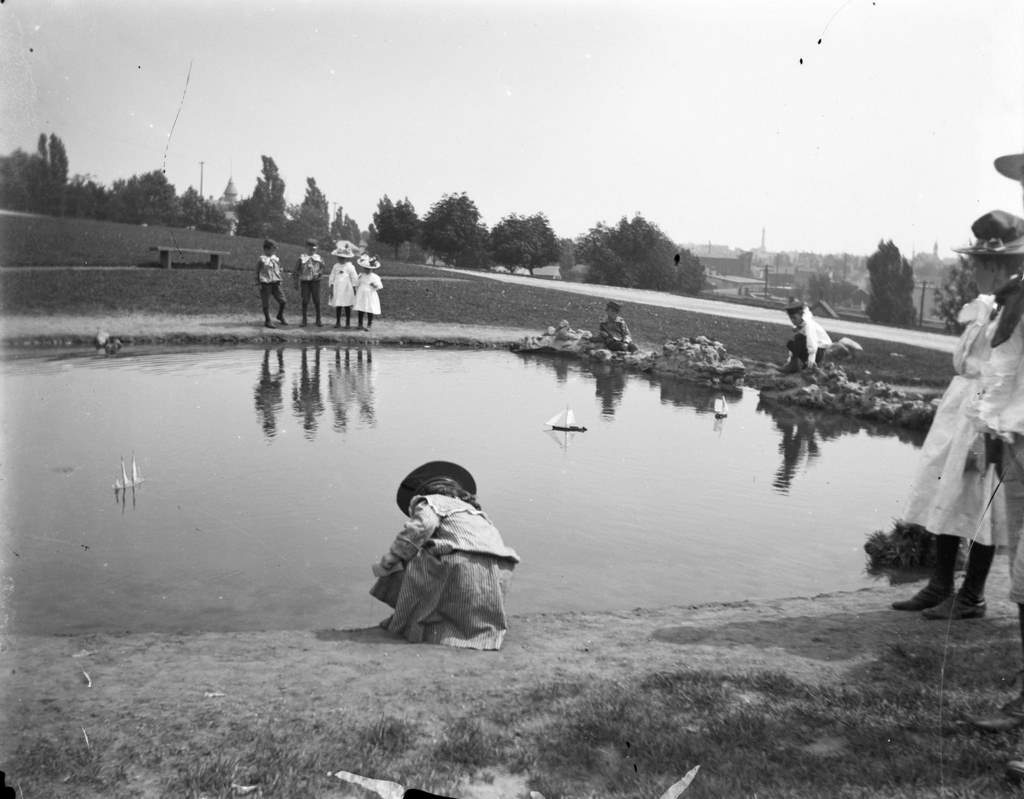
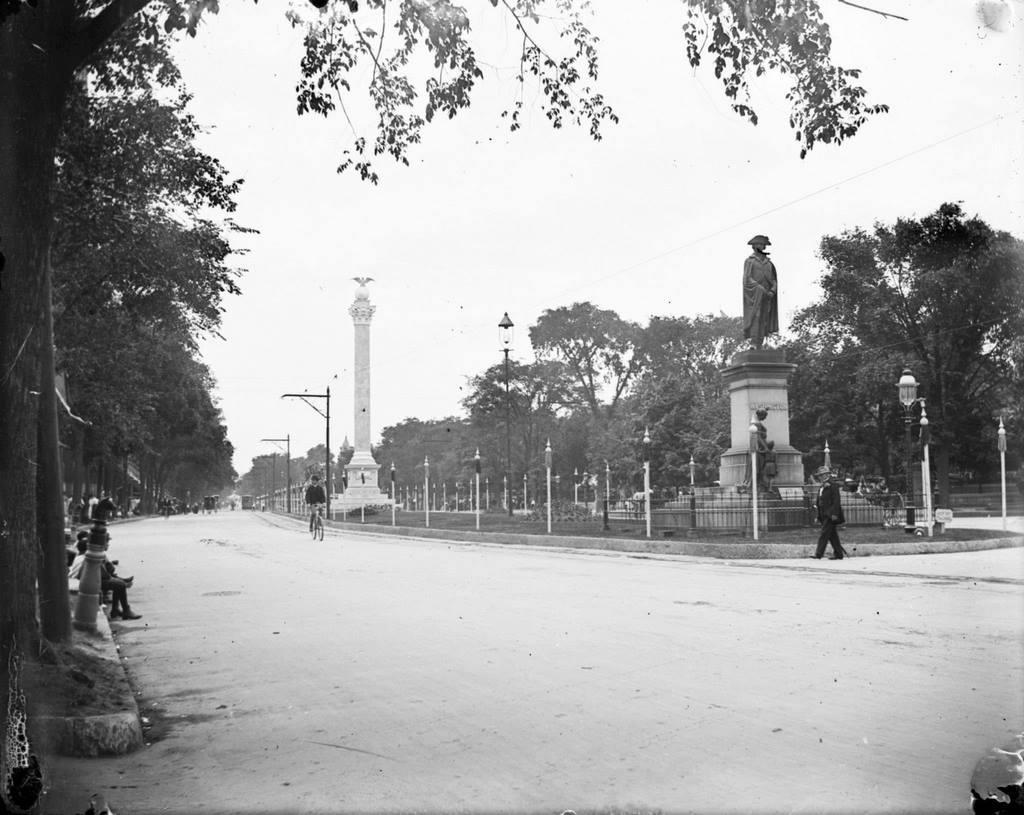
Milwaukee’s parks offered residents a retreat from the dense urban environment. Juneau Park, situated near the lakefront, featured monuments and open green space overlooking Lake Michigan. Lake Park and Reservoir Park drew families on weekends, while Humboldt Park’s lily pond provided a quieter kind of escape in the warmer months.
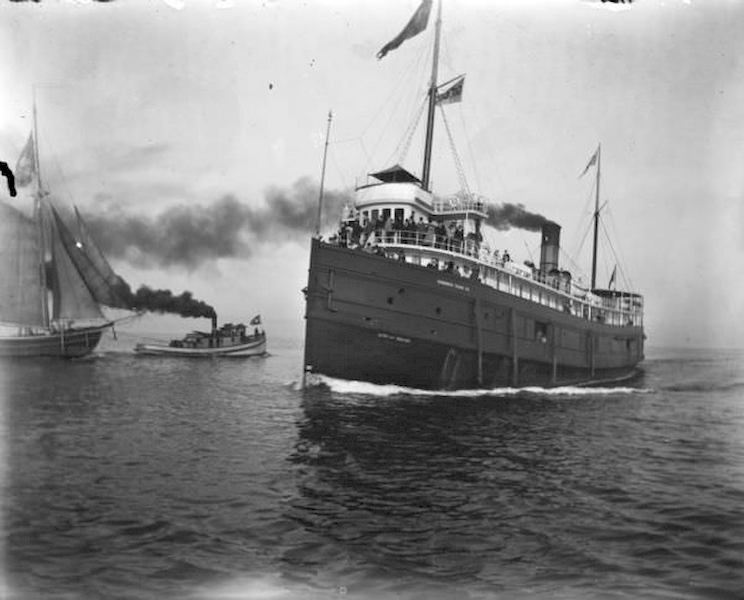
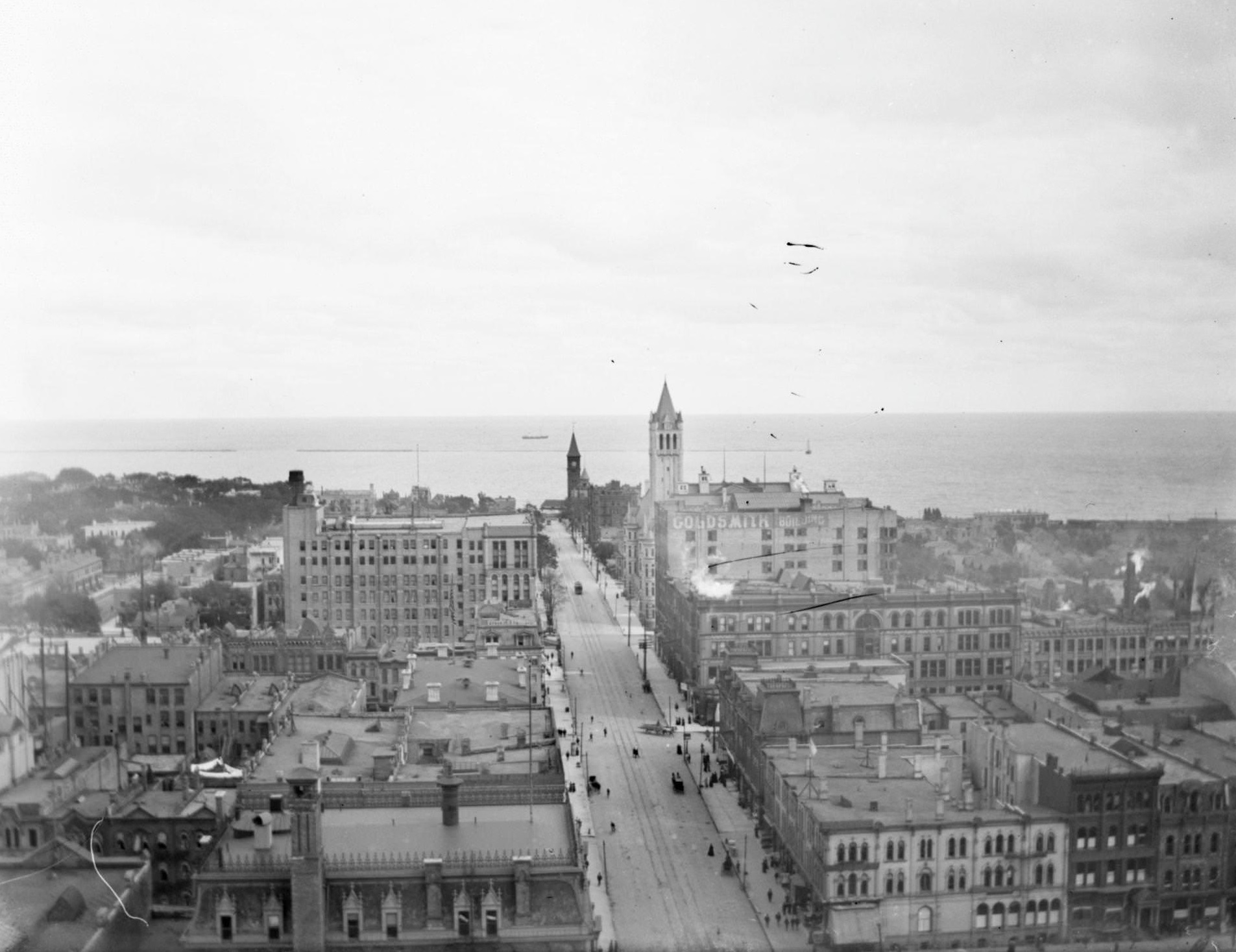
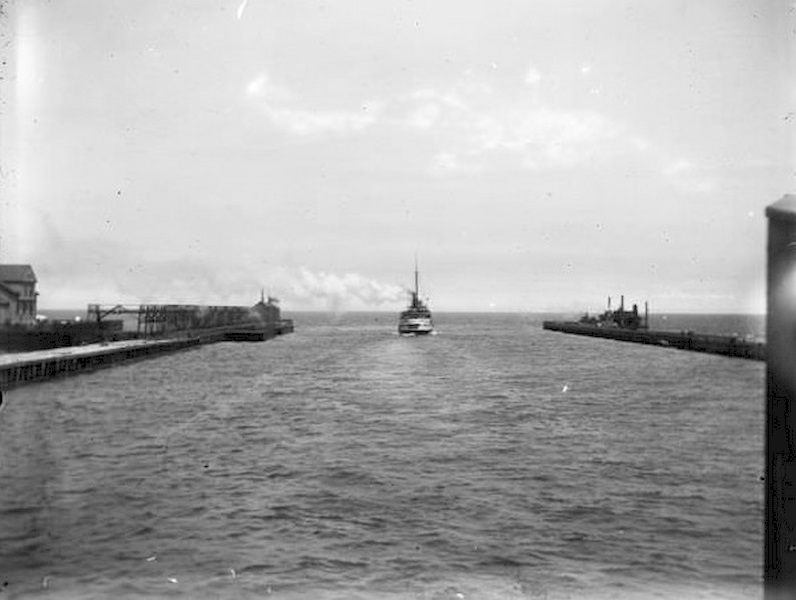
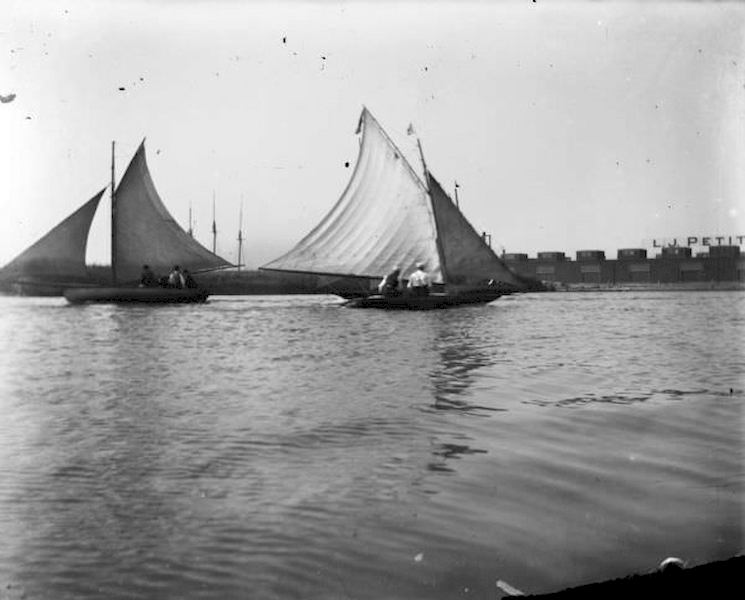
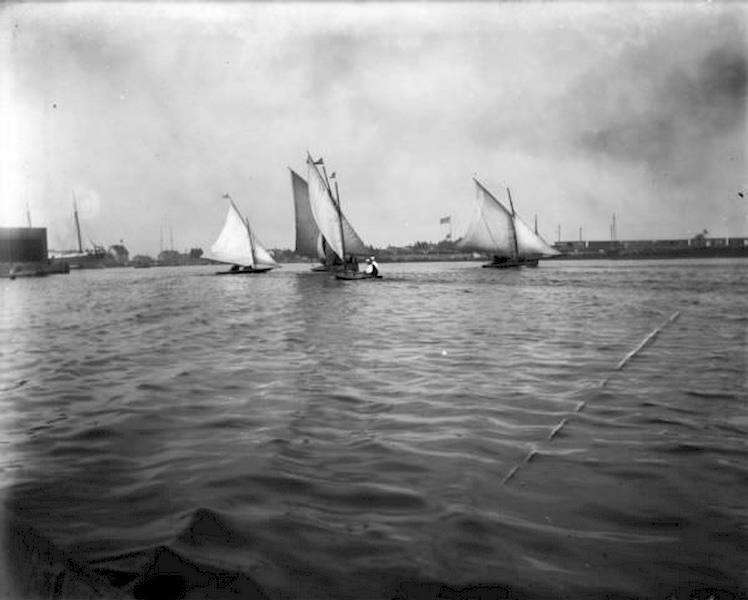
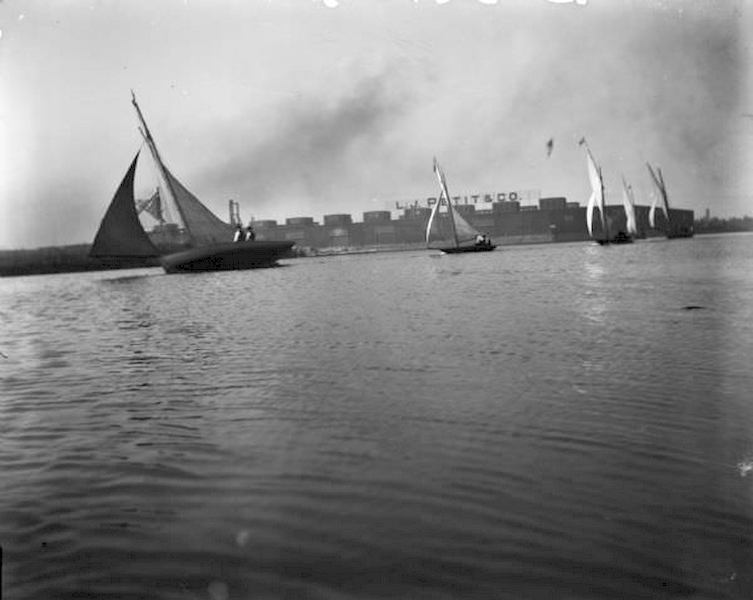
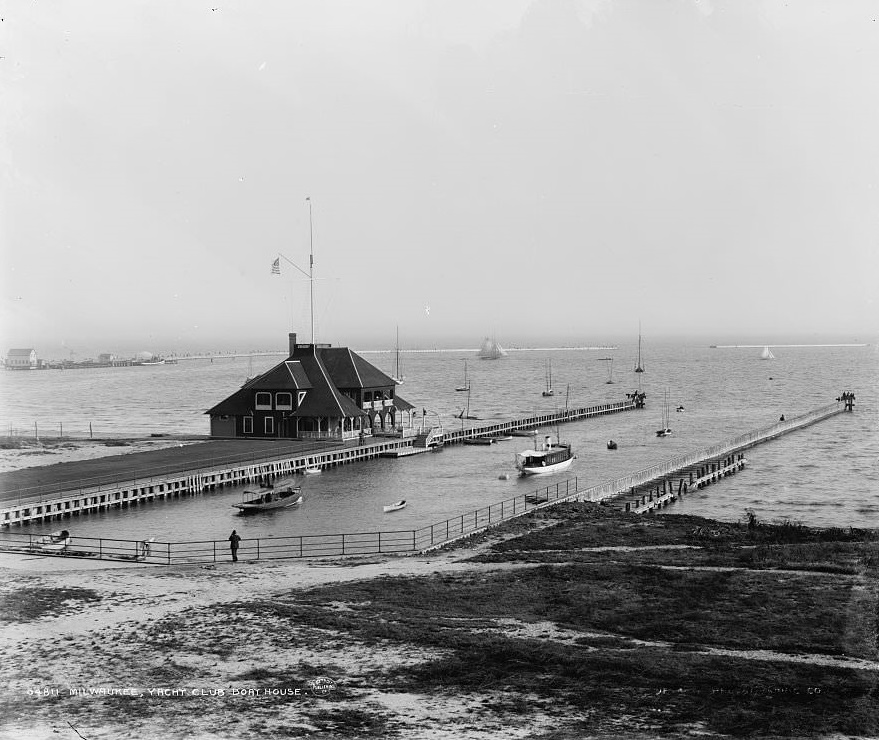
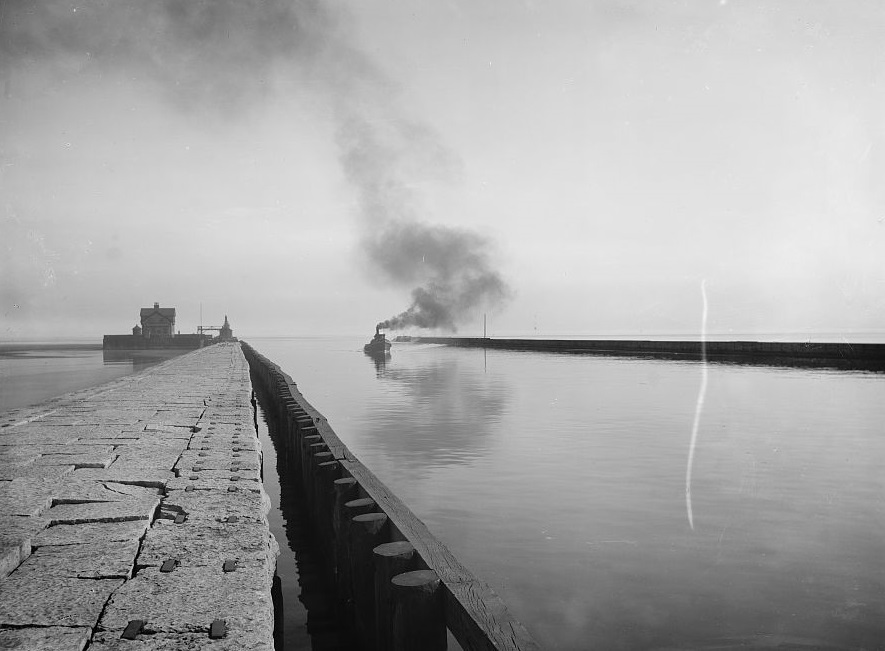
Milwaukee’s harbor remained one of its defining features through the end of the decade. Sailboats, steamships, and tugboats shared the water. The City of Racine, a large steamship, regularly brought passengers into Milwaukee Harbor. From the top of the Pabst Building, the view down East Wisconsin Avenue stretched all the way to the bay and out to the horizon of Lake Michigan — a reminder of how deeply the city’s fortunes were tied to the water.
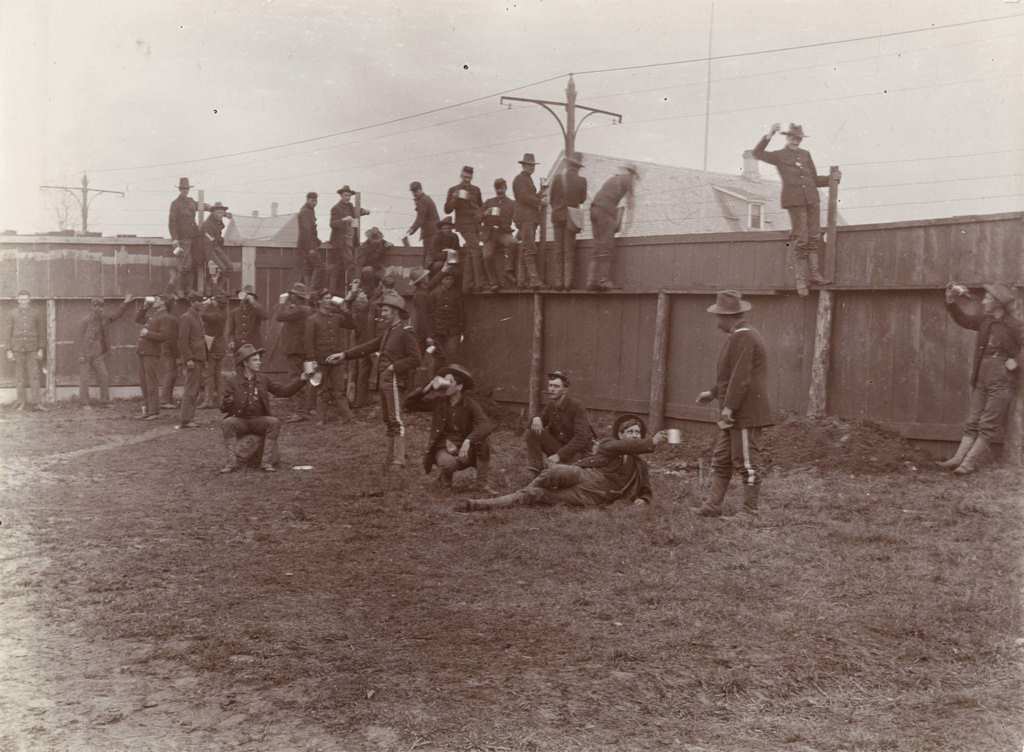
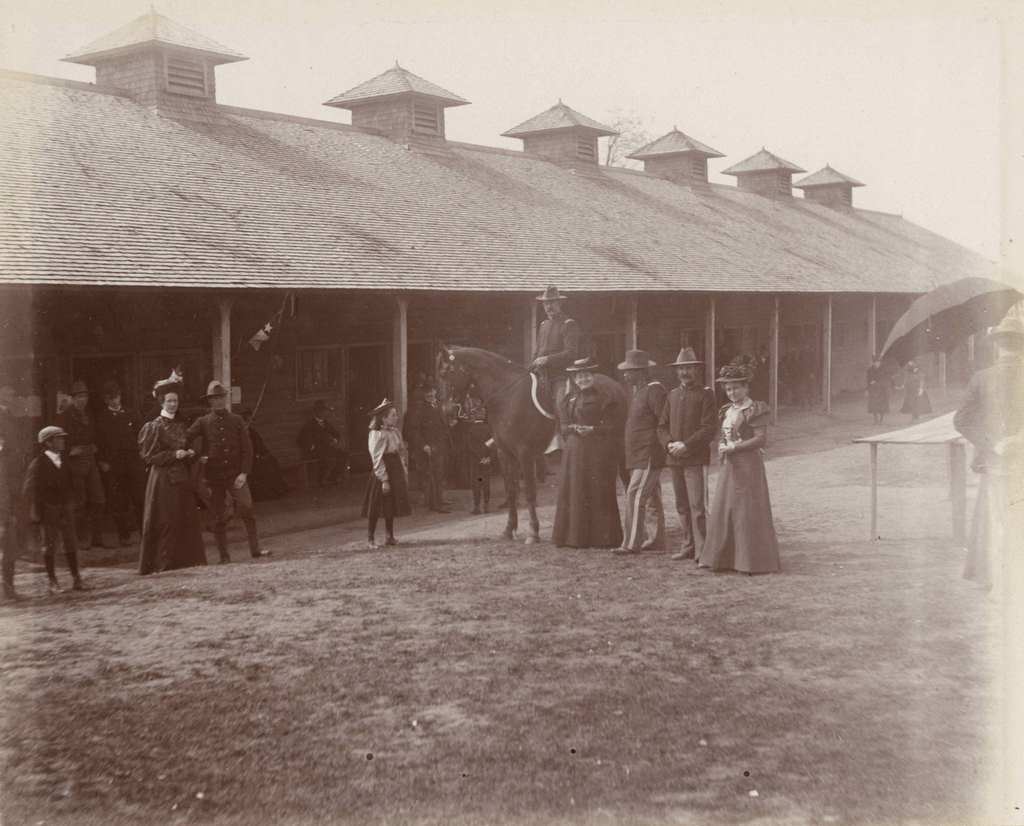
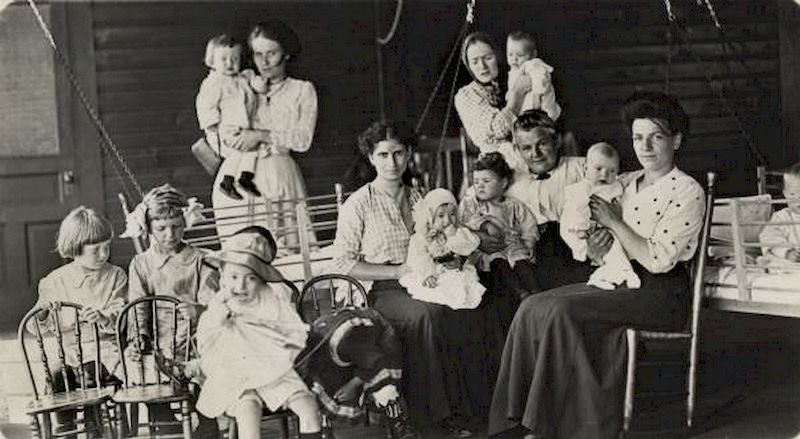
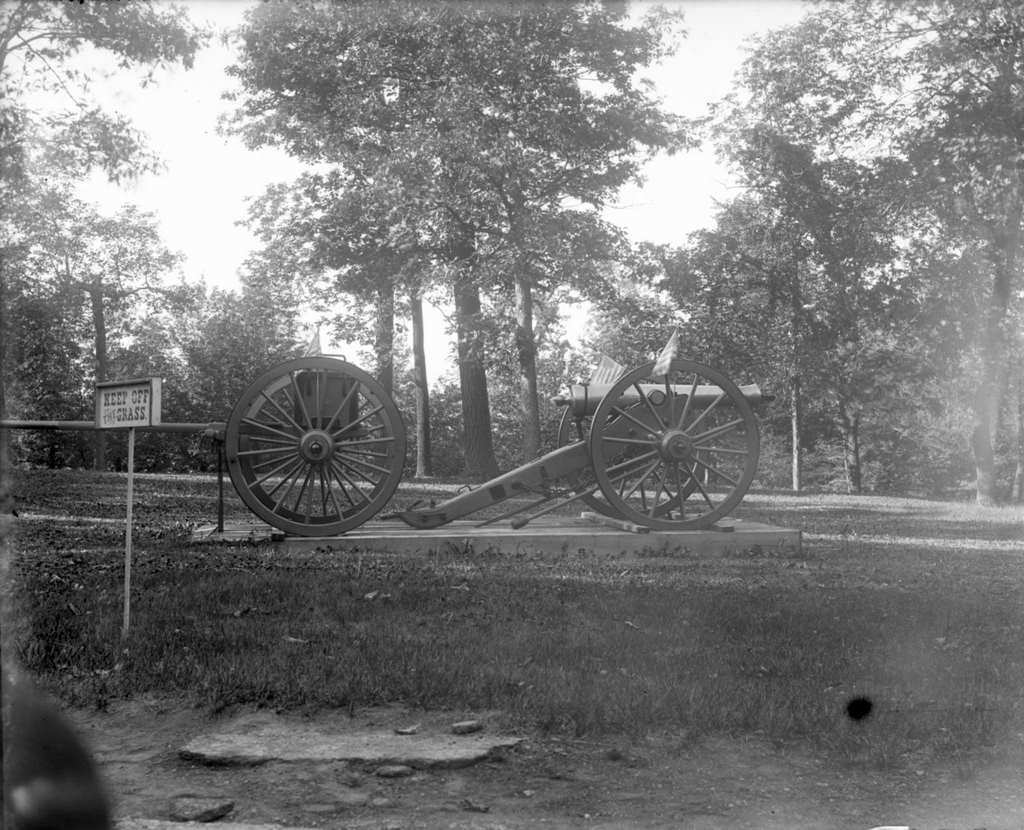
The Spanish-American War of 1898 brought military life to Milwaukee. Soldiers from Company A, 3rd Regiment gathered at Camp Harvey within the city. Women and children visited the camp, and a cannon at the nearby Soldiers Home was decorated with American flags during the summer of 1898. The war touched everyday life in ways large and small across the city.
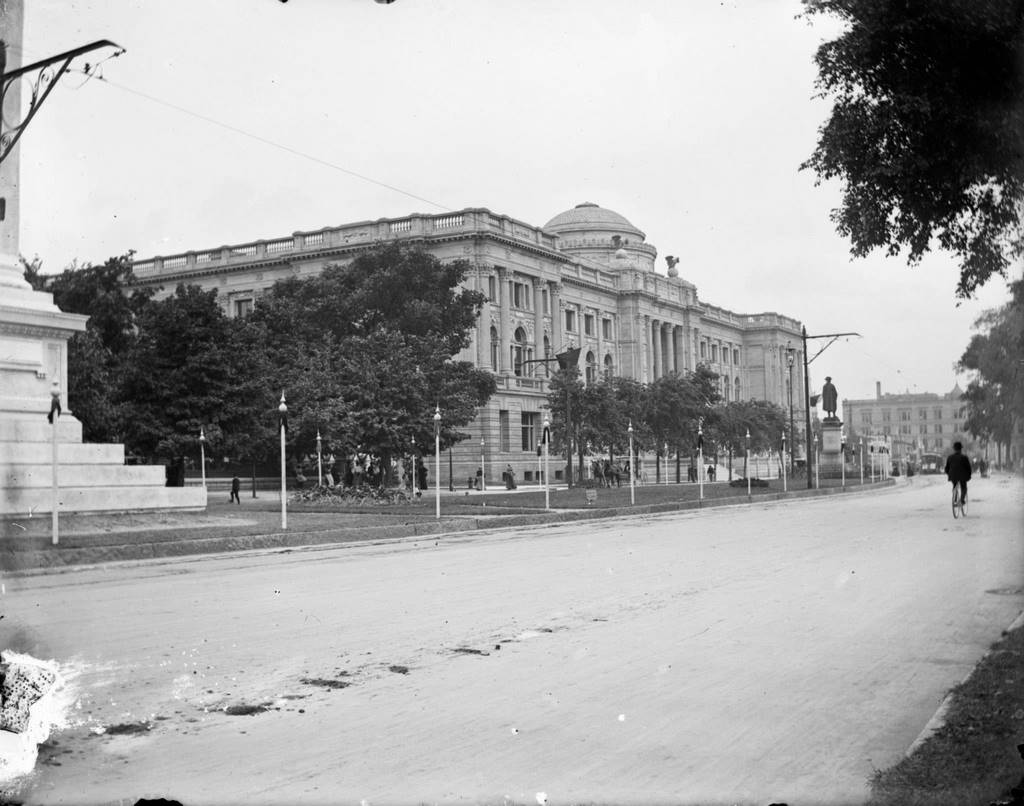
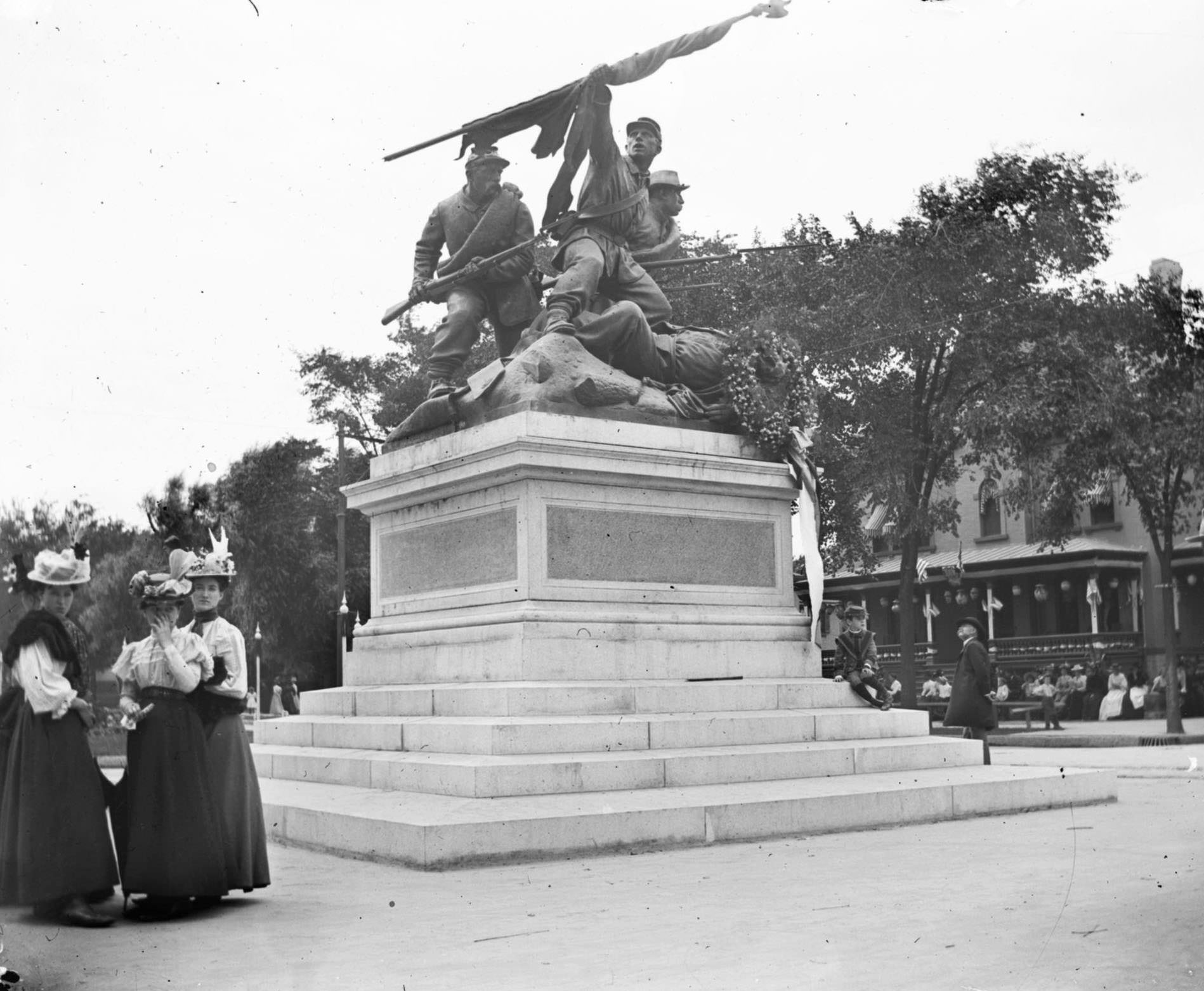
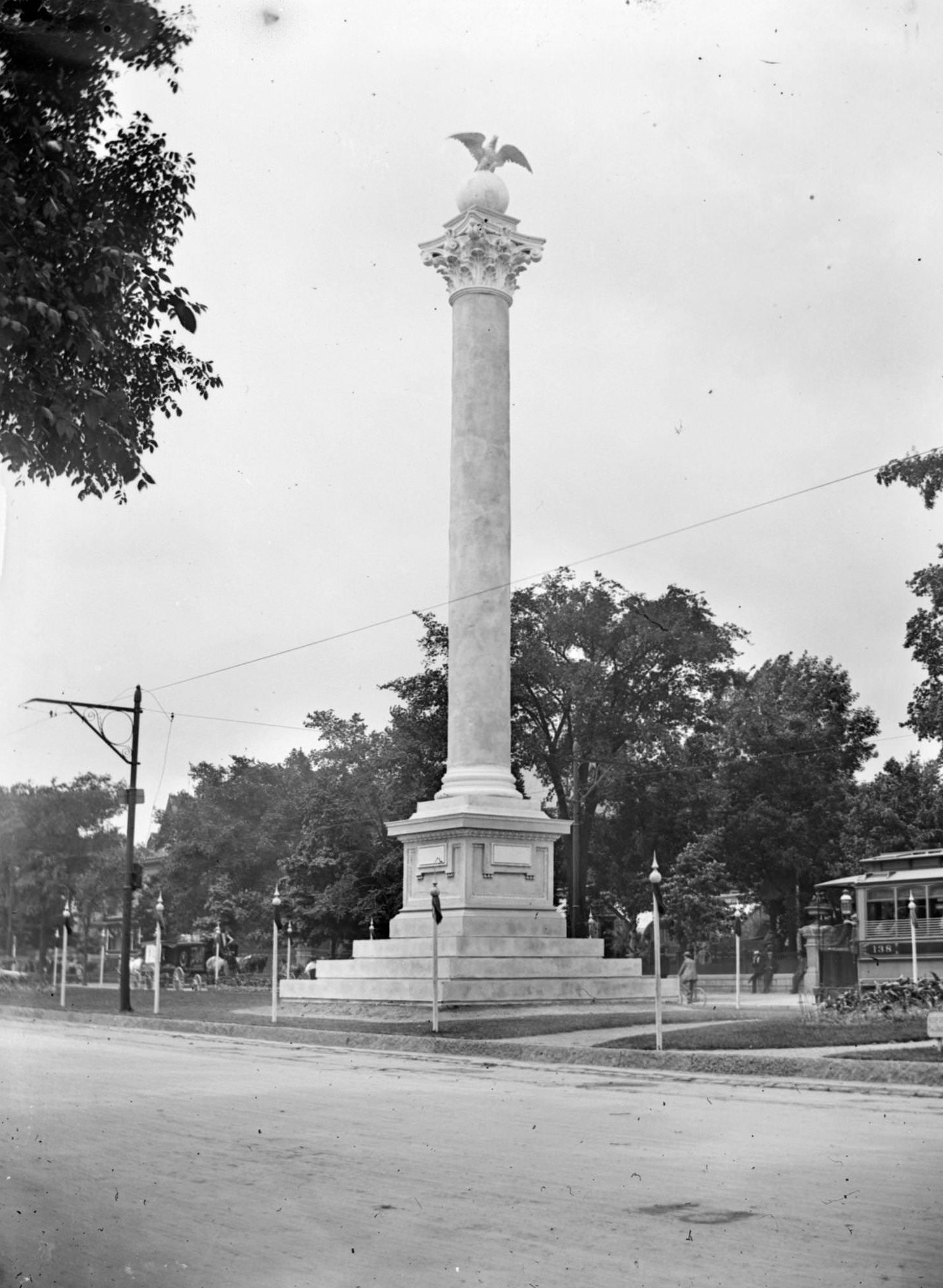
Milwaukee’s public library on Grand Avenue stood as a symbol of the city’s investment in education and civic culture. Nearby, the Court of Honor on the median of West Wisconsin Avenue featured a series of monuments including a statue of George Washington, a tribute to Civil War soldiers called ‘The Victorious Charge,’ and the Midsummer Festival Monument. These public spaces lined one of the city’s most traveled corridors.
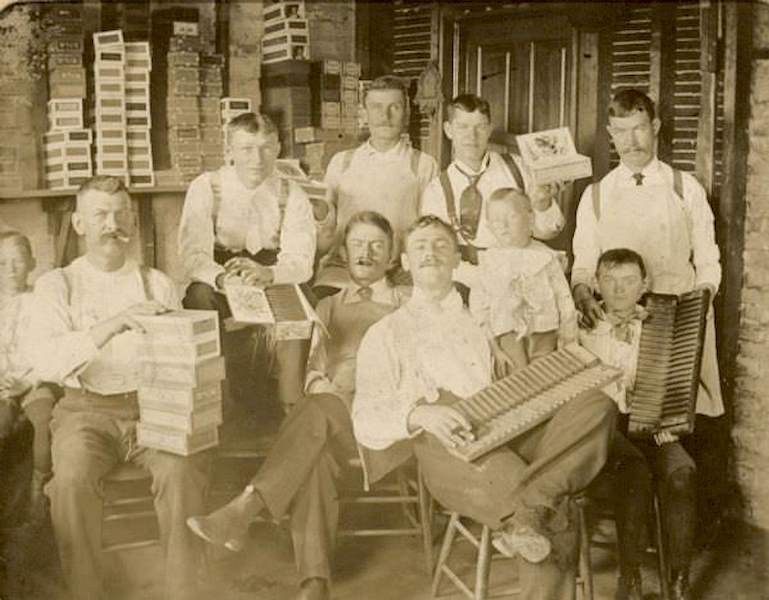
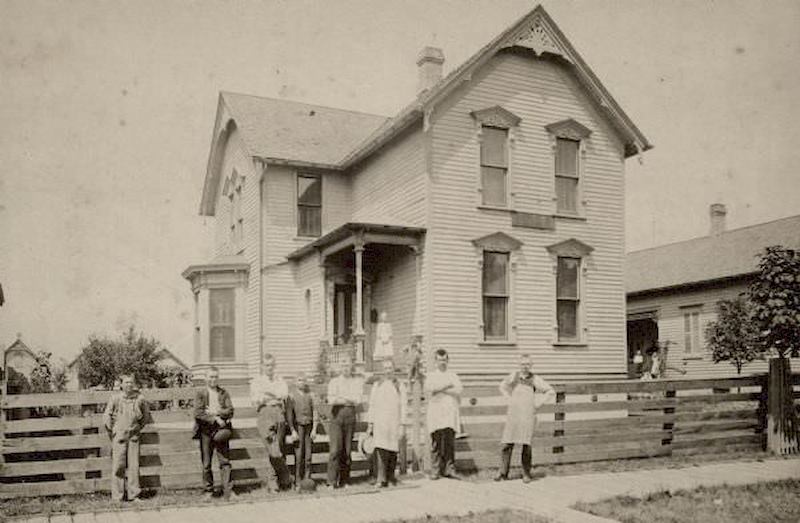
Workers in Milwaukee’s cigar industry were a visible part of the city’s economy. The Willms cigar factory employed dozens of workers who posed proudly with cigars and cigar boxes for photographs. Home-based cigar production was also common — the Willms household itself was depicted with workers present, reflecting how manufacturing and domestic life often overlapped for Milwaukee’s working-class immigrant families.
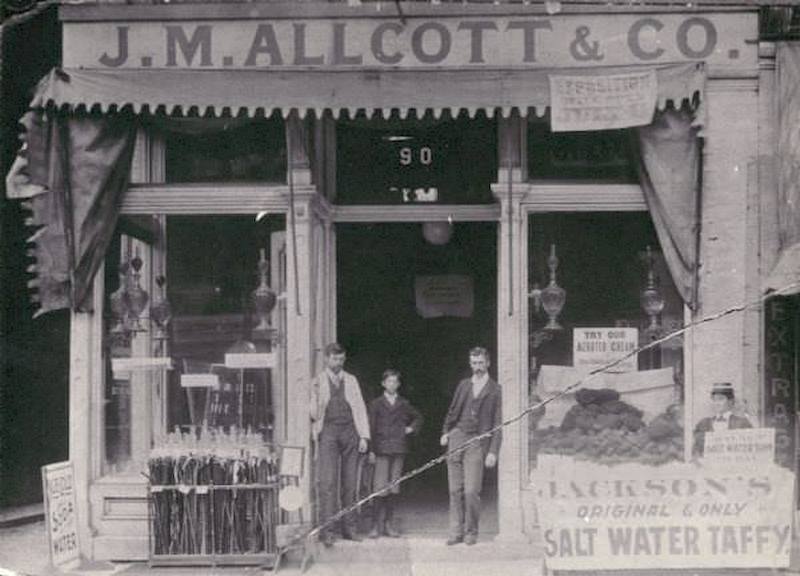
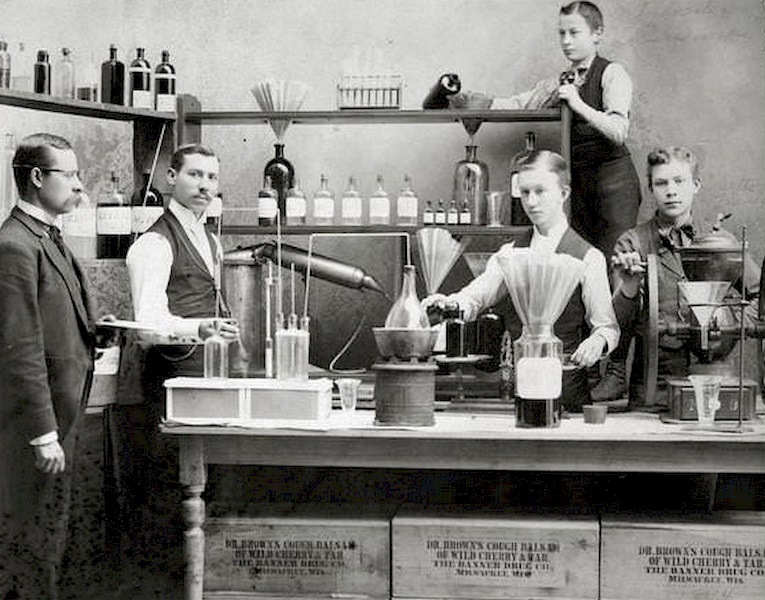
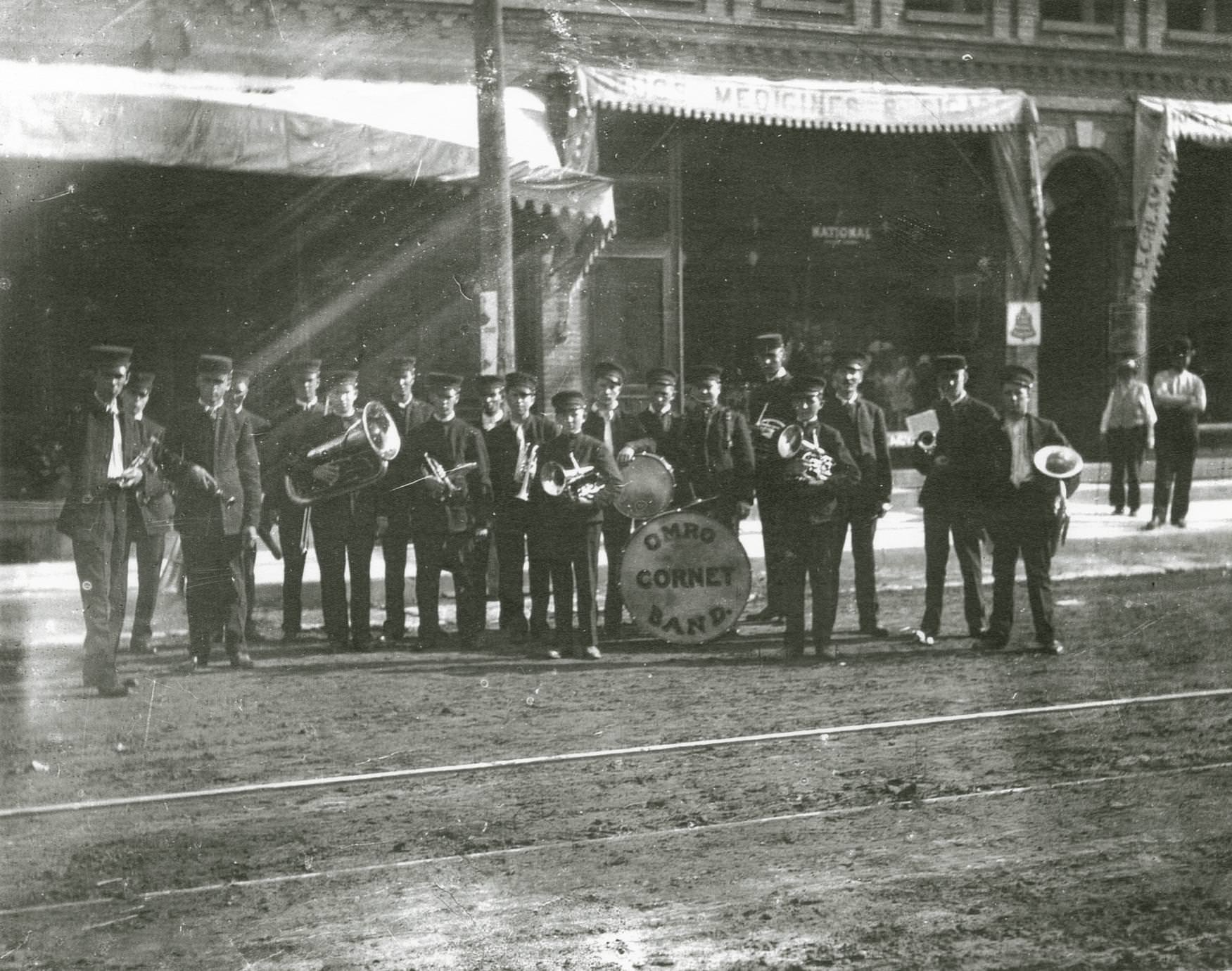
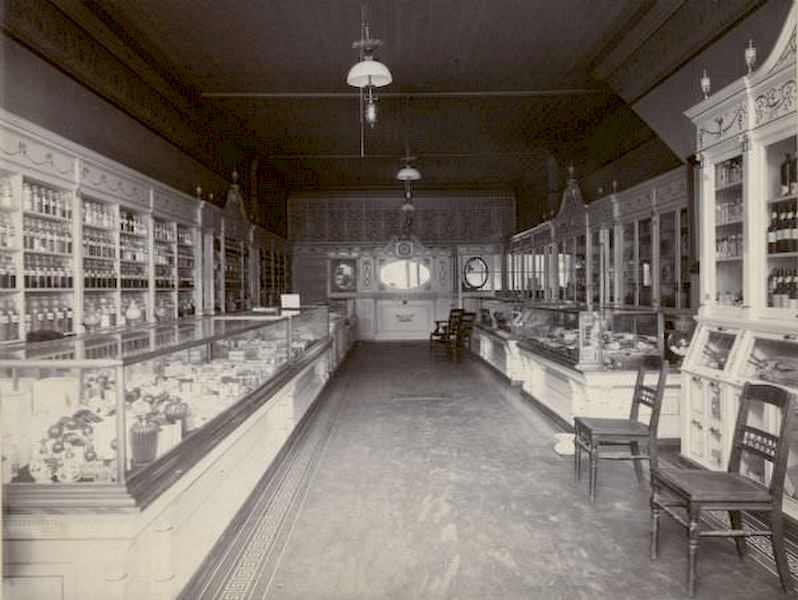
Drug and pharmaceutical businesses were a growing part of Milwaukee’s commercial landscape by the mid-1890s. Kienth Drugs and Medicines at 608 Mitchell Street produced remedies like Dr. Brown’s Cough Balsam on-site, with workers posing in front of pharmaceutical equipment to document the process. Drugstores like J.M. Alcott & Company offered a wide range of goods and served as neighborhood gathering points.
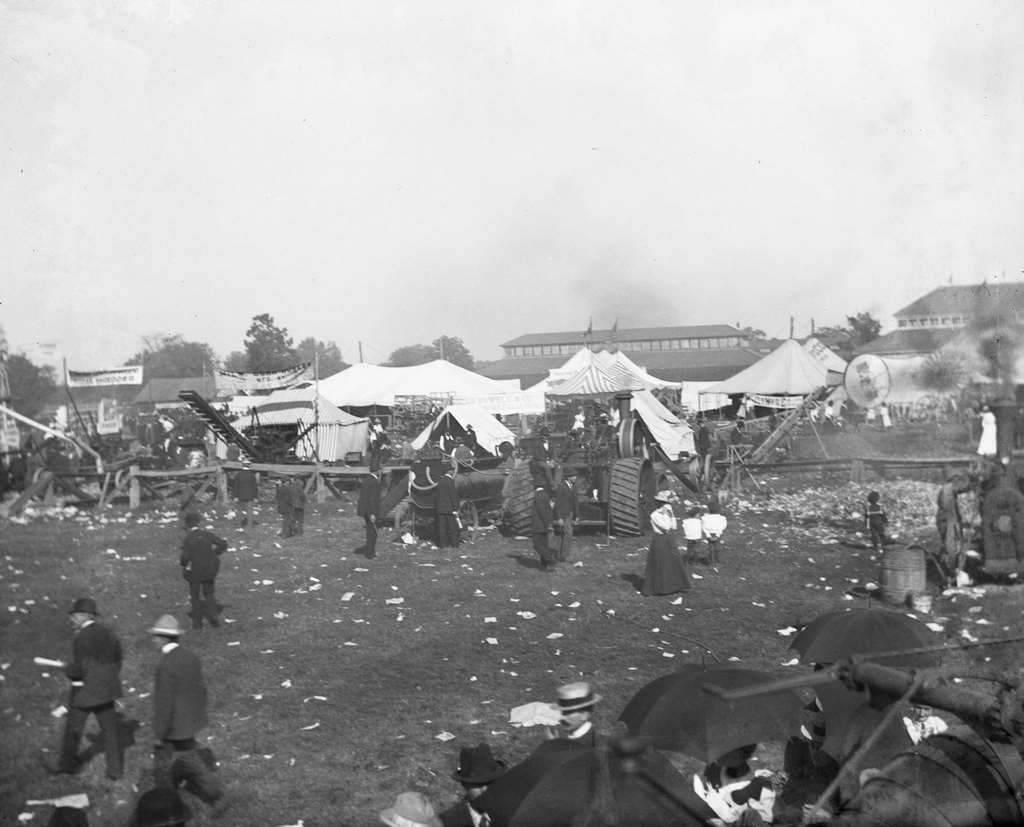
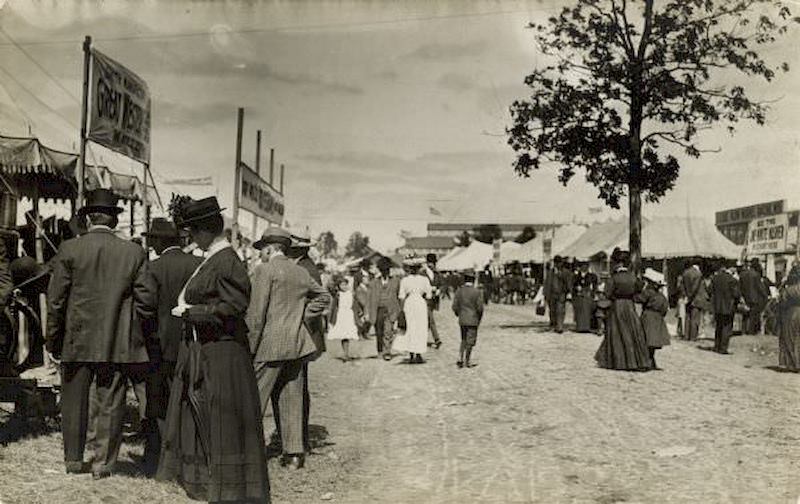
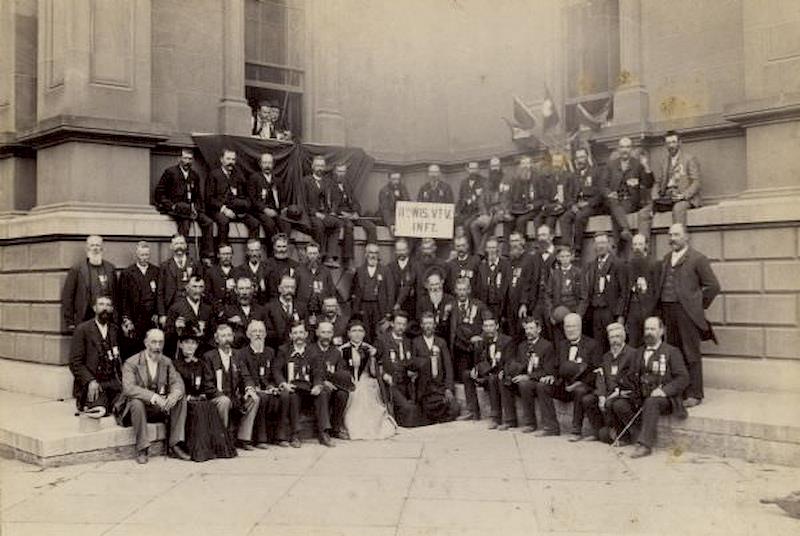
Parades and public gatherings were a regular part of Milwaukee’s social calendar. National Avenue saw crowds lining the streets as marchers moved west, with flags and signs decorating the surrounding buildings. The Wisconsin State Fair drew enormous crowds to the city at the close of the decade, bringing residents together from across the region.
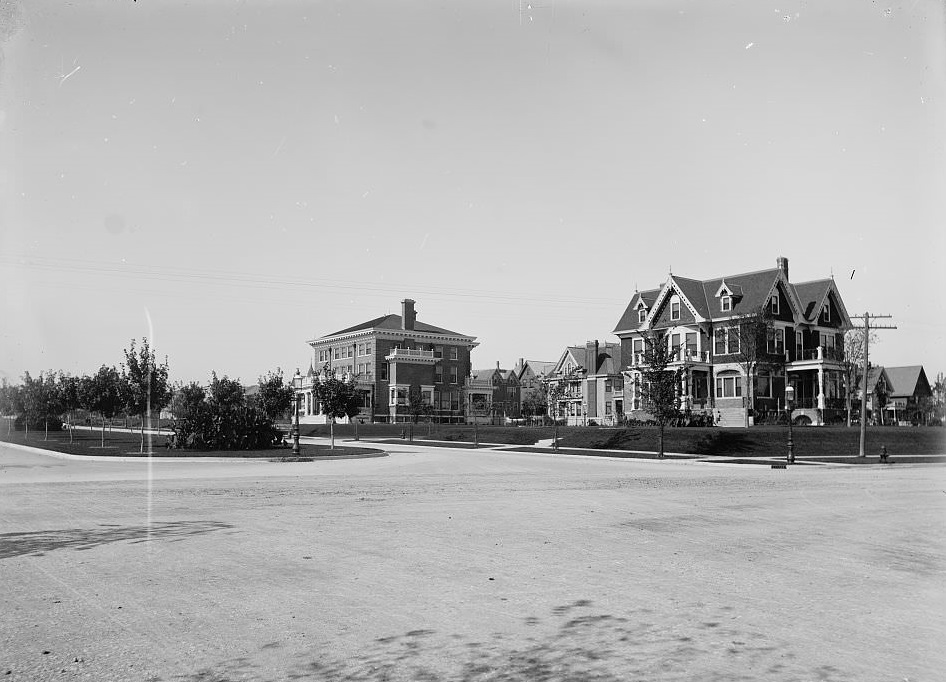
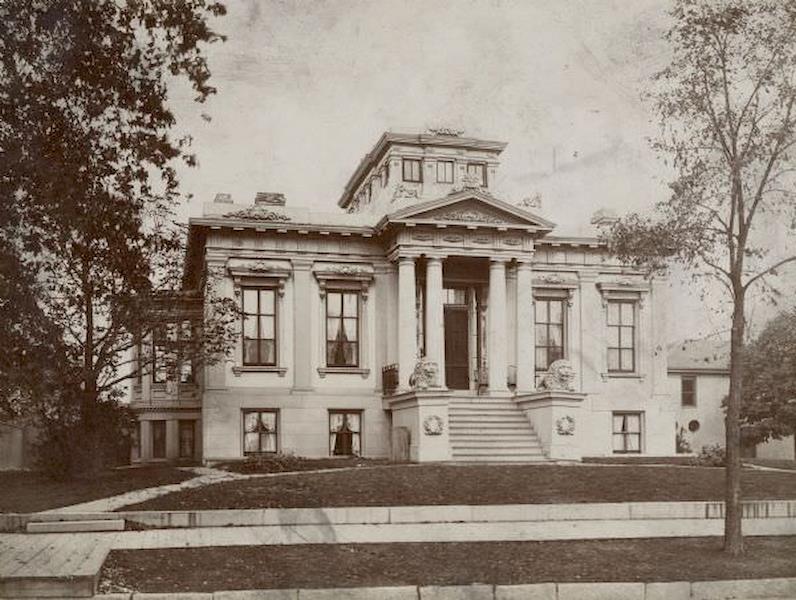
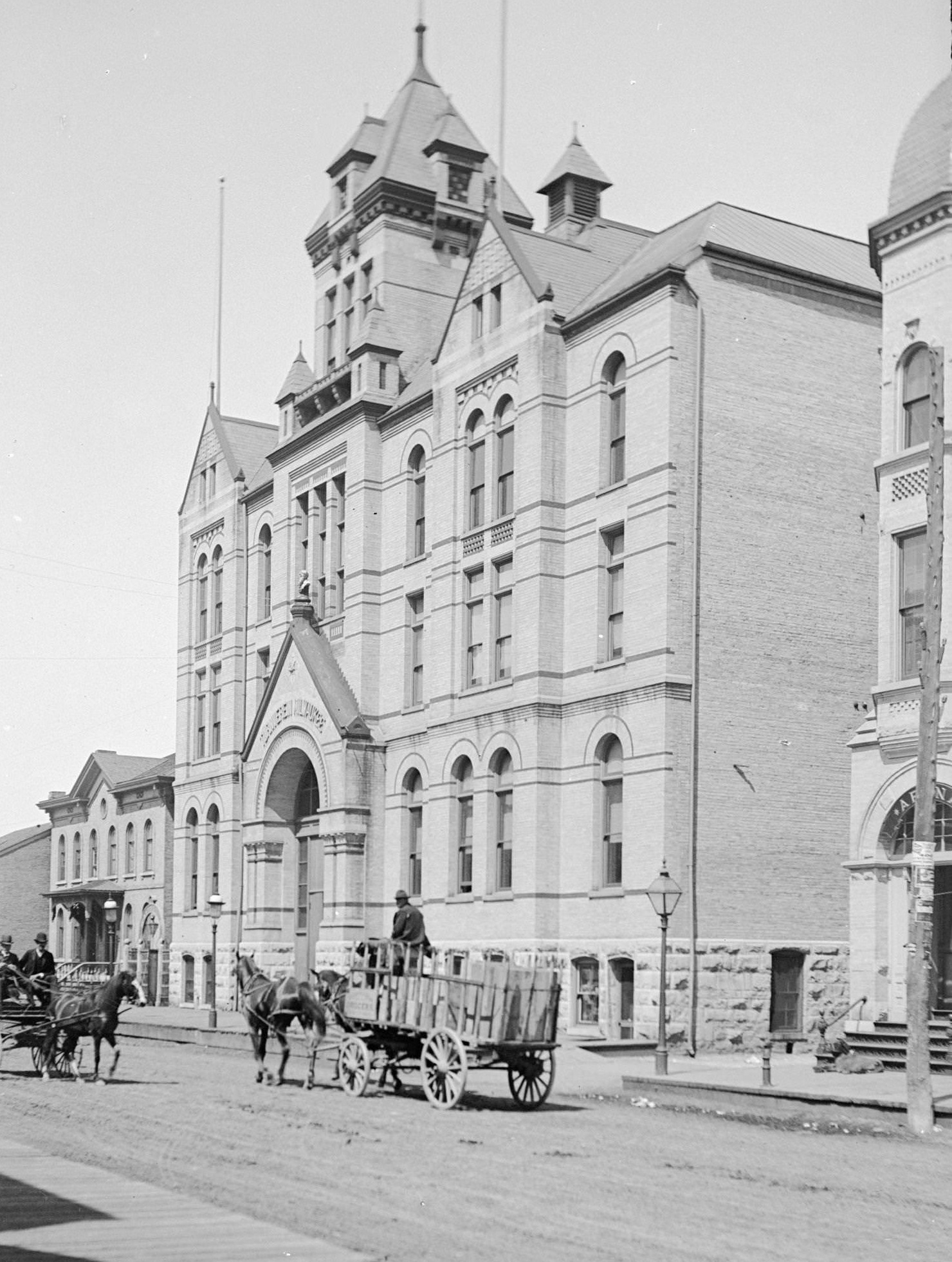
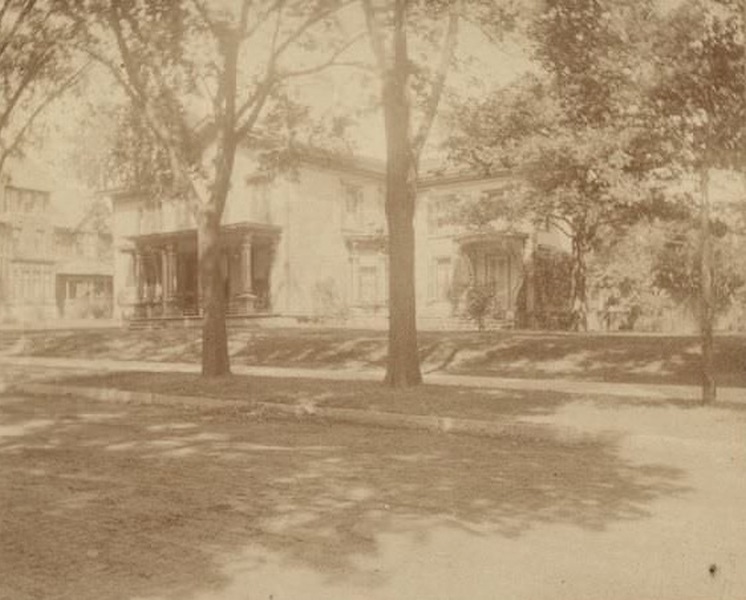
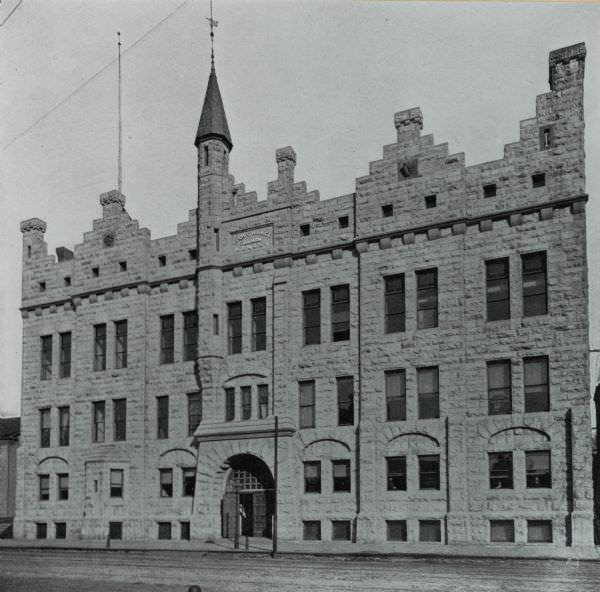
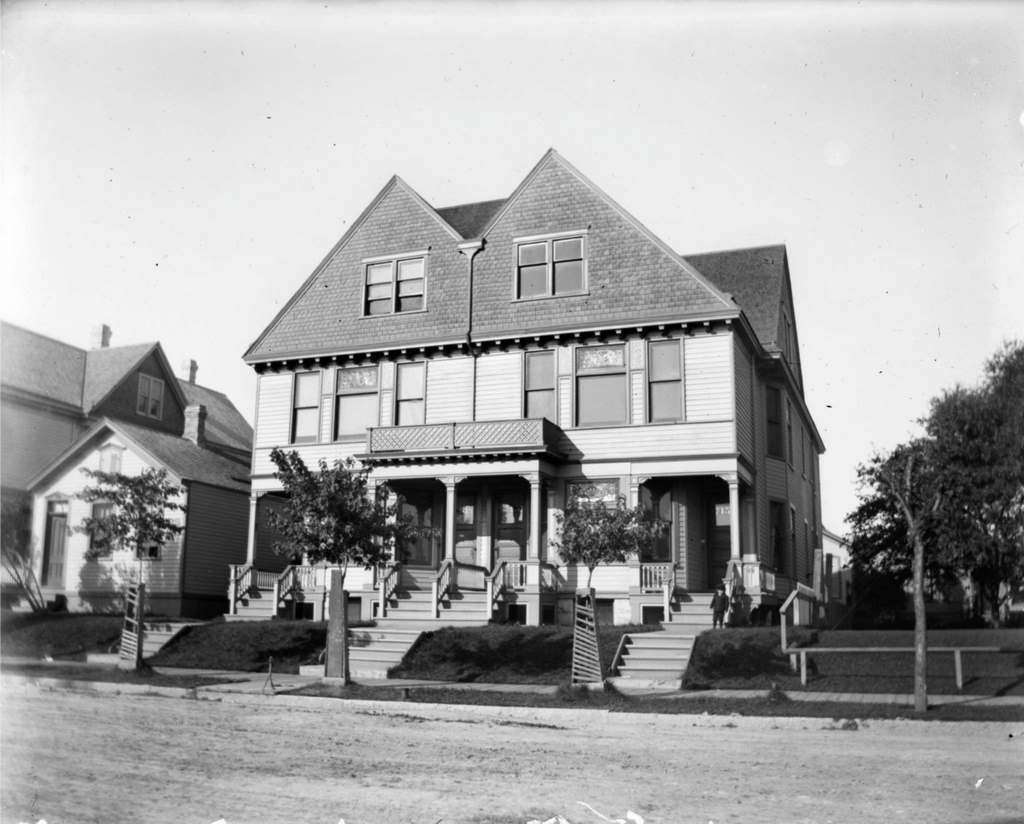
Residential life across Milwaukee ranged from modest family homes to grand mansions. Newberry Boulevard was lined with substantial houses that reflected the prosperity of its residents. Banker John Johnston’s home at 645 Franklin Place, known as the Lion House, was among the most recognized private residences in the city. Turner Hall, a cultural center tied to the city’s German athletic and civic tradition, anchored the community with horse-drawn wagons rolling past its facade well into the end of the decade.
By the end of the 1890s, Milwaukee had incorporated several surrounding communities. Whitefish Bay, South Milwaukee, and Wauwatosa all became independent villages in 1892. Cudahy followed in 1895, North Milwaukee in 1897, and East Milwaukee — later renamed Shorewood — joined them as well. The city and its suburbs had grown into a network of distinct communities, each with its own identity, but all connected to the larger metropolitan fabric that Milwaukee had built over the previous decade.
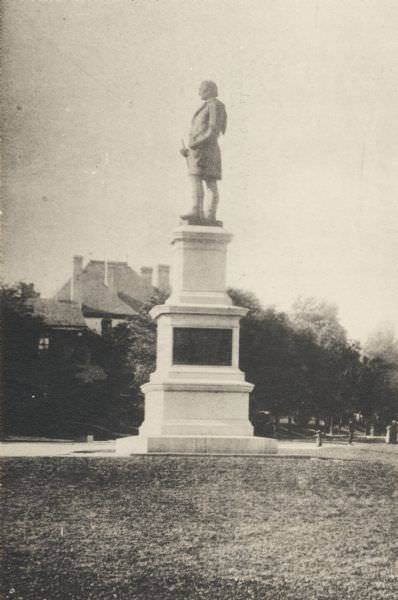
![Leif Ericsson [sic] statue, Milwaukee, 1890s](https://www.bygonely.com/wp-content/uploads/2022/10/Milwaukee_historic_photos_311.jpg)
![C & NW Ry. [i.e. Chicago and North Western Railway] Station, Milwaukee, 1890s](https://www.bygonely.com/wp-content/uploads/2022/10/Milwaukee_historic_photos_312.jpg)





Milwaukee and Jackson St don’t intersect. And Several of these photos are Janesville.
the captions also seem to be placed wrong and even mixed up. They should be above each photo.
Born and raised in Milwaukee and I never heard of Camp Harvey. I need to do some research on this.