

Milan has long stood as Italy’s most powerful economic engine. As the country’s leading financial center, it drives manufacturing, commerce, and trade in ways no other Italian city matches. Nestled within reach of northern lakes, Alpine valleys, and mountain ranges, it pairs natural beauty with relentless urban energy. By the start of the 1980s, Milan was already a city on the move — and the decade would push it further, faster, than almost anyone had predicted.
Throughout the 1980s, Milan transformed at a remarkable pace. Its stock exchange saw its market capitalization grow more than five times over, drawing investors and financial institutions from across Europe. Tourism surged as the city built a global reputation, and Milan cemented its status as one of the world’s leading fashion capitals. The runways, the boutiques, the design studios — all of it converged in a decade that redefined what the city stood for on the world stage. These photographs, taken between 1980 and 1984, capture that Milan before it fully became the polished metropolis of today.
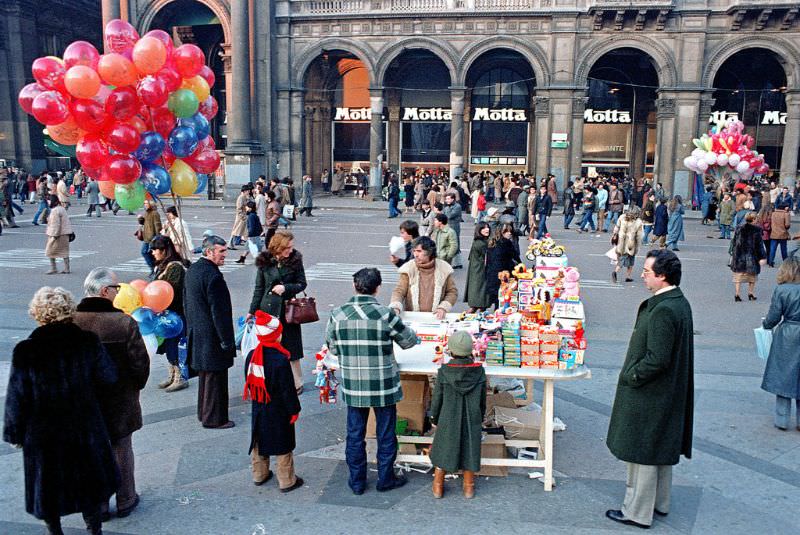
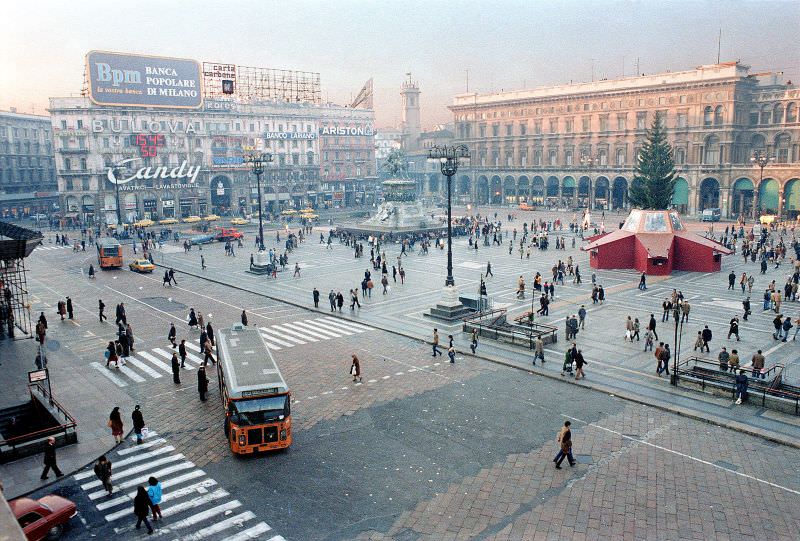
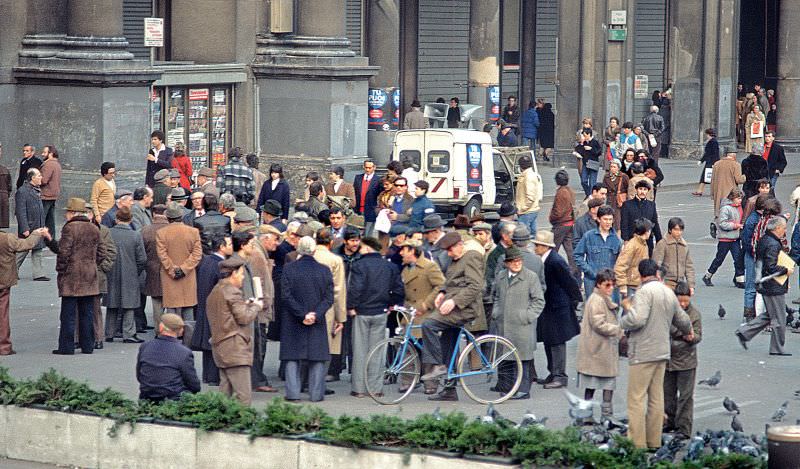
No place defined Milan’s public life more than Piazza del Duomo. The massive Gothic cathedral anchoring the square — the Duomo di Milano — took nearly six centuries to complete, and by the 1980s it remained the undisputed heart of the city. The piazza buzzed daily with commuters, tourists, vendors, and protesters alike. It was a stage for everything Milan had to say about itself.
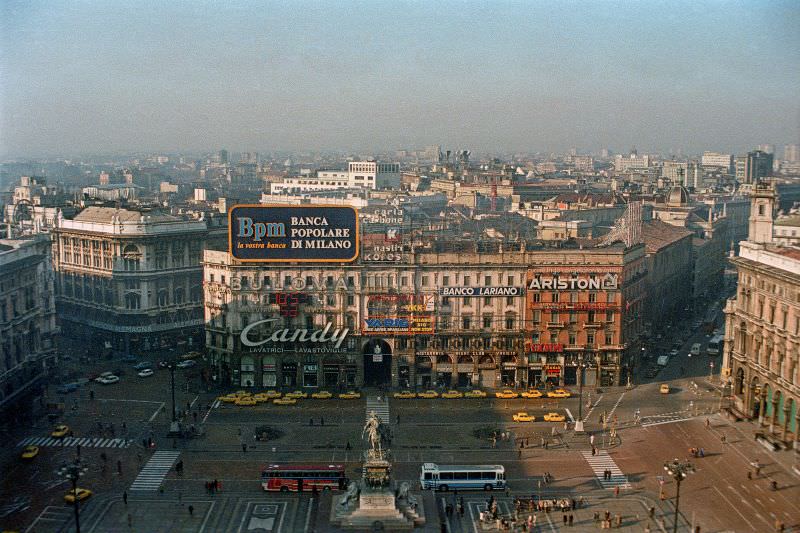
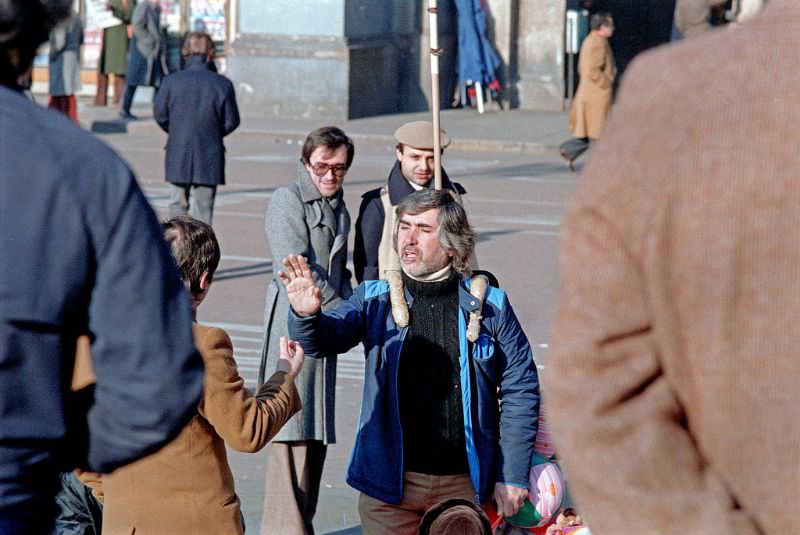
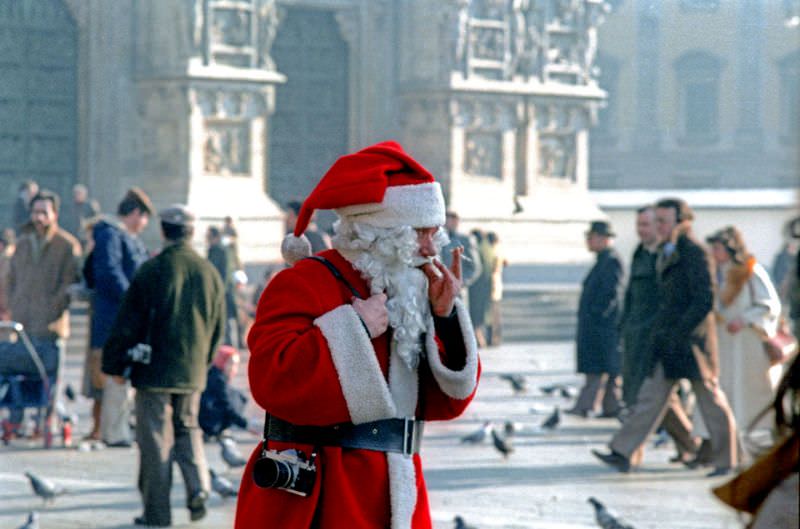
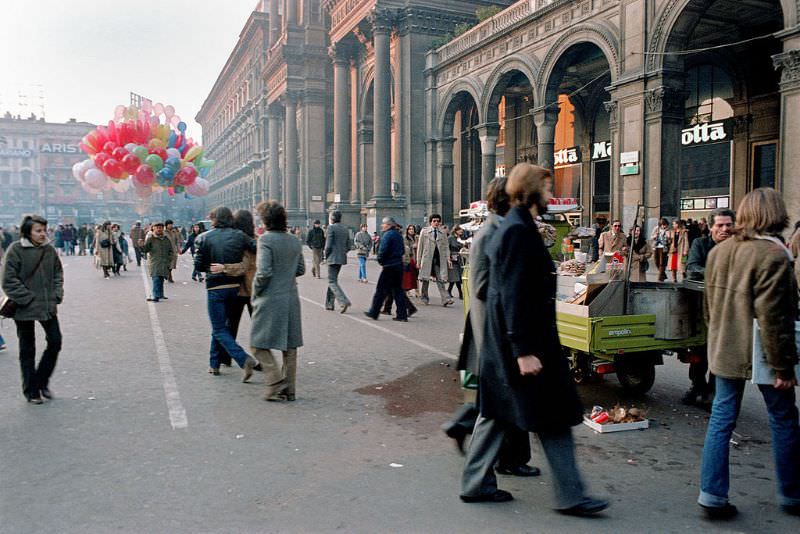
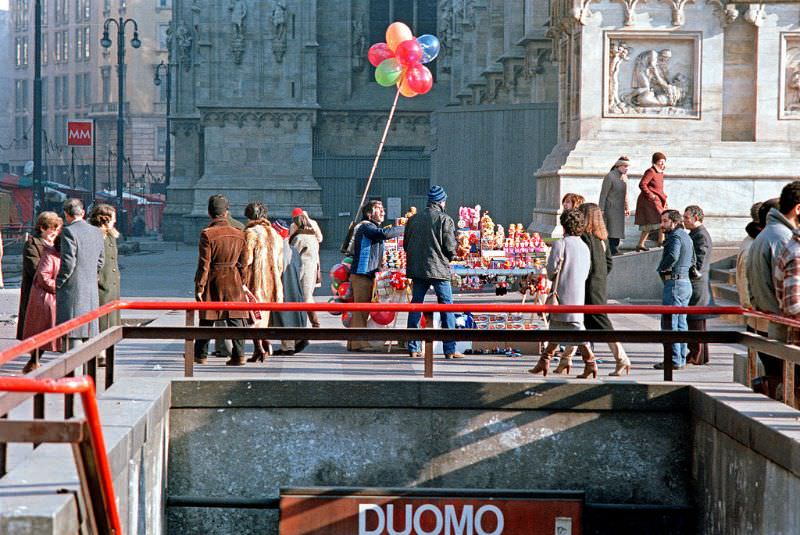
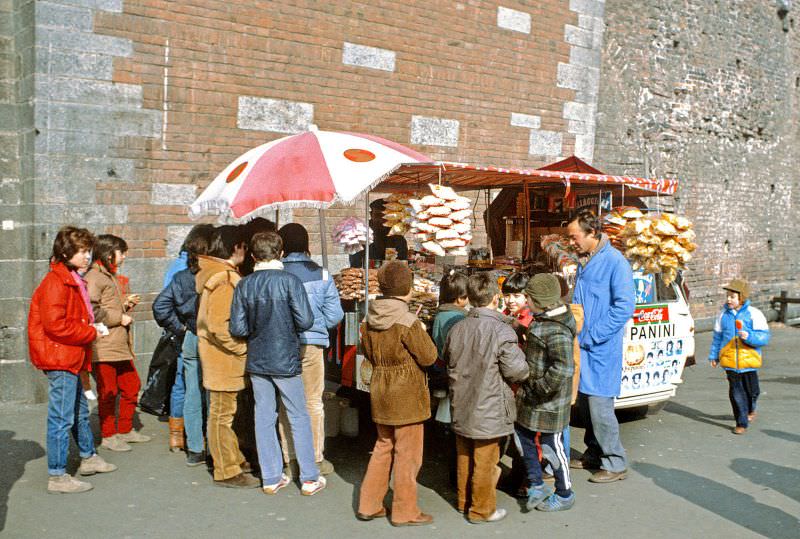
Street vendors were a fixture of the piazza in these years. Among the most recognizable were the balloon sellers, whose carts added color to the cathedral’s grey stone backdrop. Not all of them had a friendly disposition — as this next photograph makes clear.
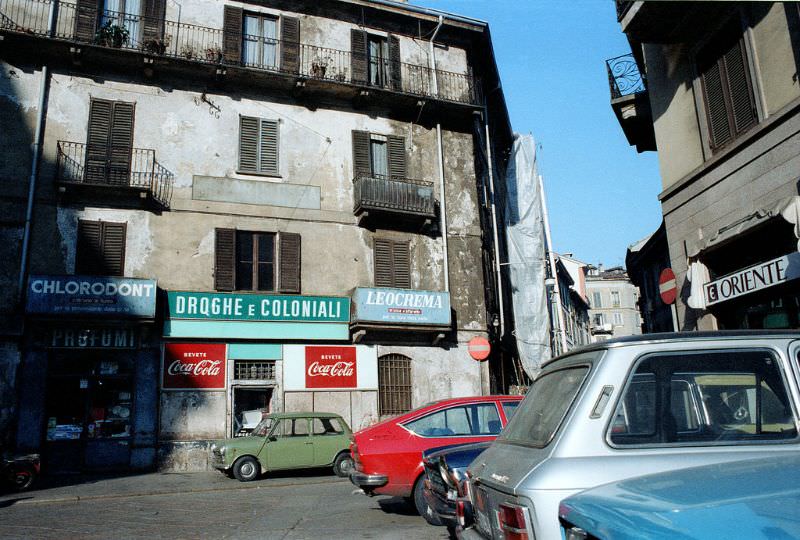
Away from the grand squares, the Brera neighborhood offered a quieter, more intimate side of the city. Known for its art galleries, cobblestone streets, and café culture, Brera attracted artists, intellectuals, and anyone looking to escape the commercial pace of the center. In 1980, it already had the character of a district that knew its own worth.
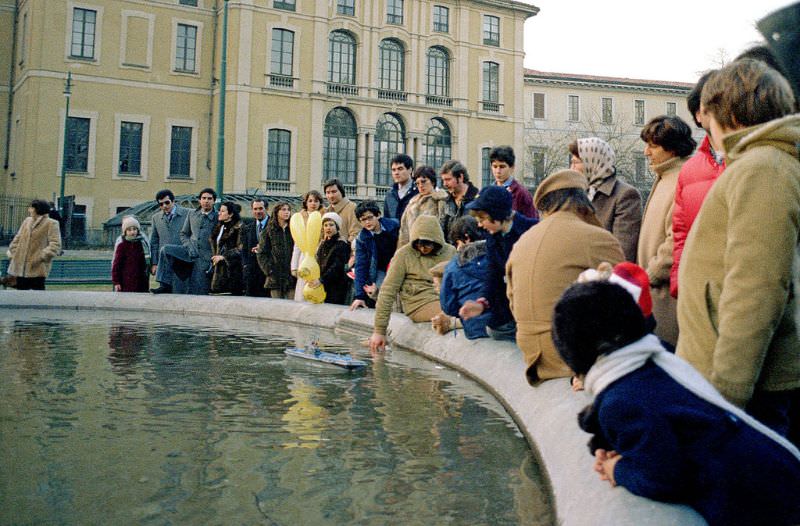
Milan’s green spaces gave residents room to breathe in an otherwise dense urban environment. The Giardini Pubblici — the city’s oldest public park — served as a gathering place for families, retirees, and children across all seasons.
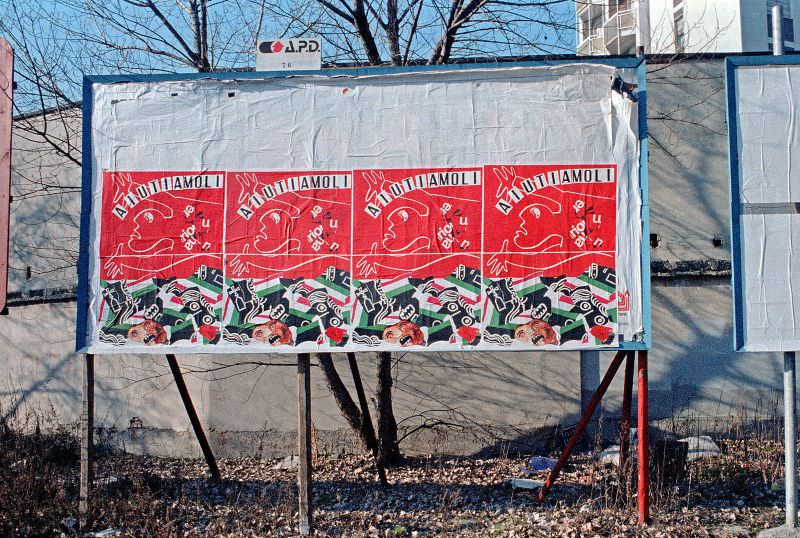
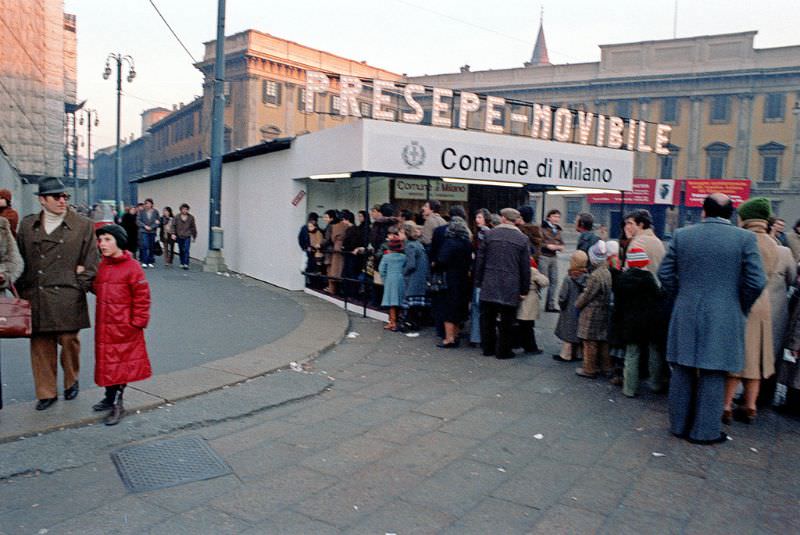
The year 1980 also brought tragedy to Italy. On November 23rd, a powerful earthquake struck the Irpinia region in Southern Italy. The disaster killed nearly 3,000 people and left 300,000 more without homes. The scale of the destruction prompted relief efforts across the country, including in Milan, where public appeals for aid appeared on the streets.
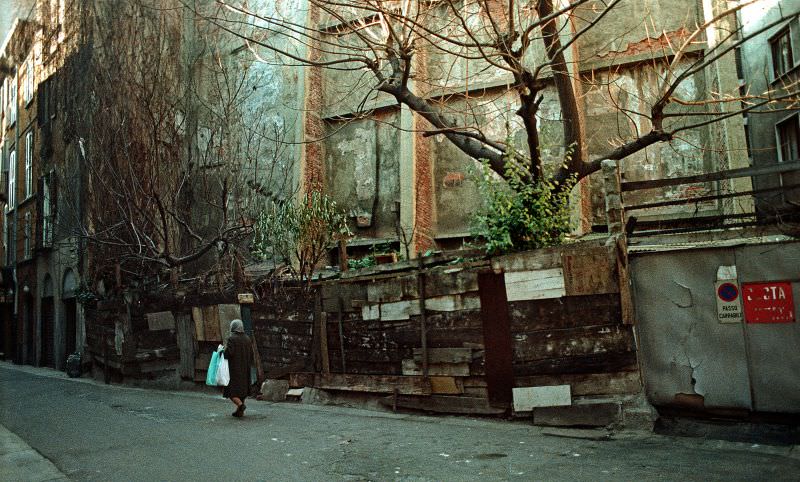
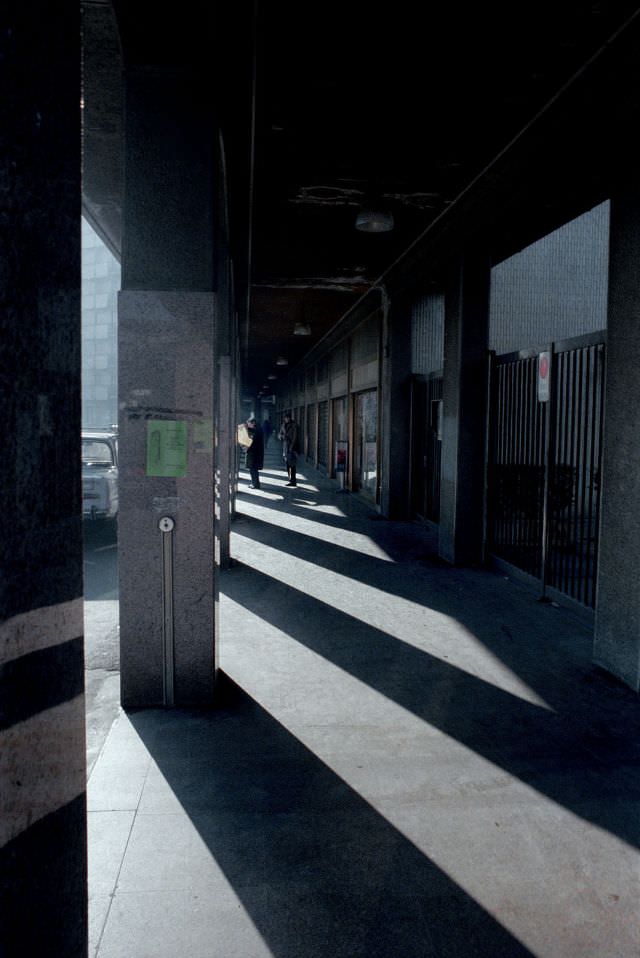
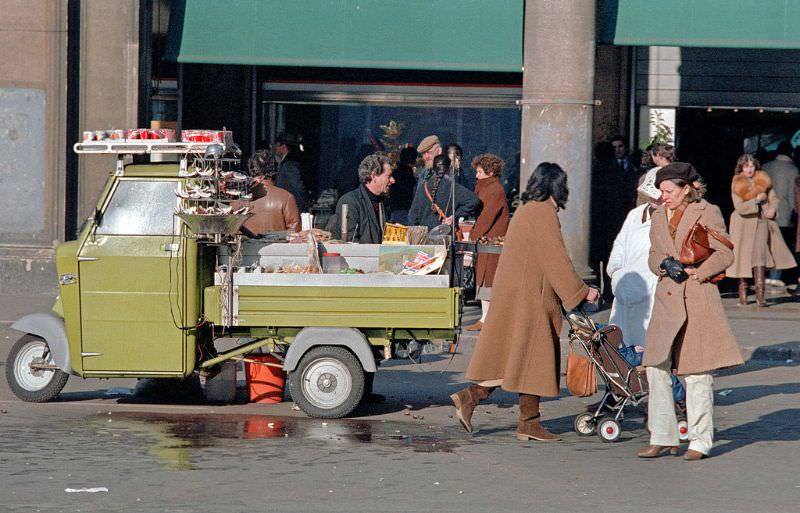
Milan’s streets in 1980 reflected a city navigating its own identity — part old European metropolis, part modern industrial powerhouse. Everyday life played out on these streets: shoppers, workers, cyclists, and pedestrians sharing the same tight corridors between buildings.
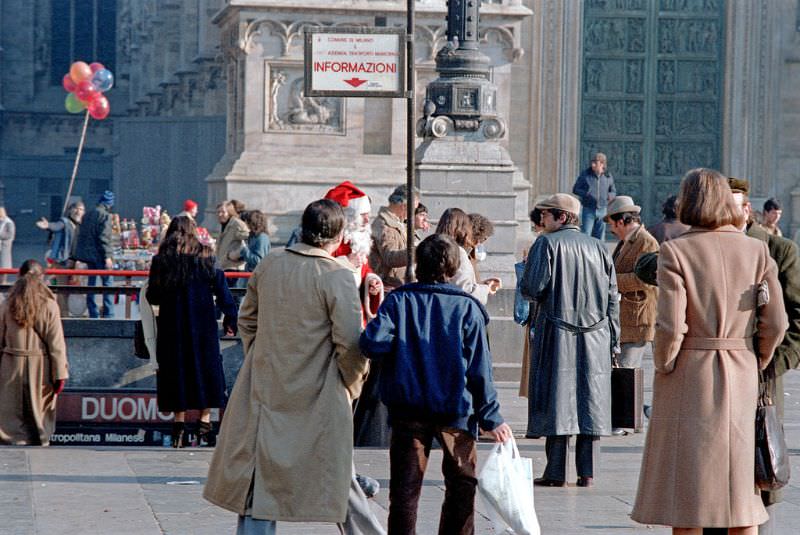
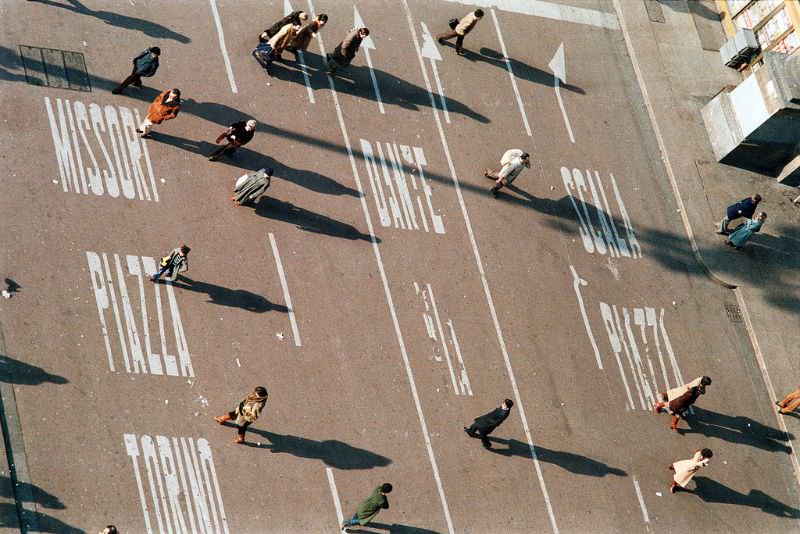
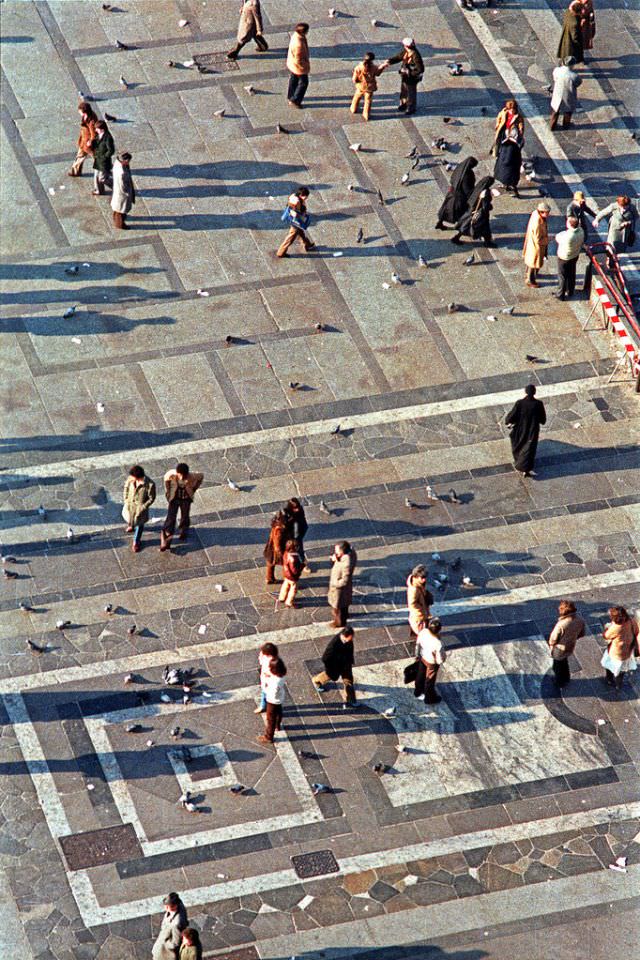
The Piazza del Duomo appeared in photographs again and again throughout the decade — not by coincidence, but because it genuinely was the city’s focal point. Pigeons, tourists with cameras, and locals cutting through the square filled the space at every hour of the day.
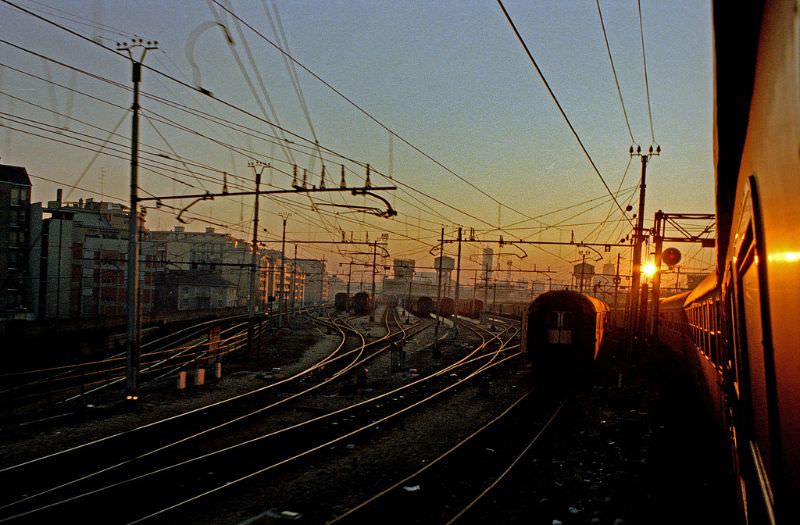
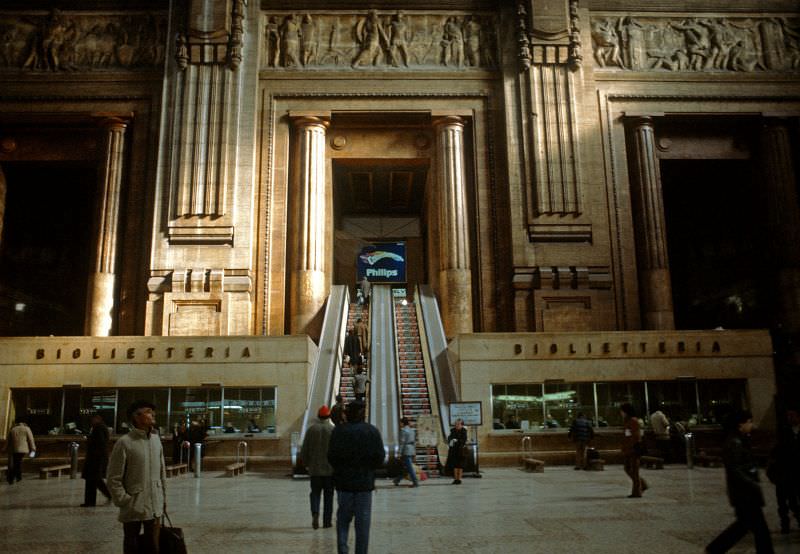
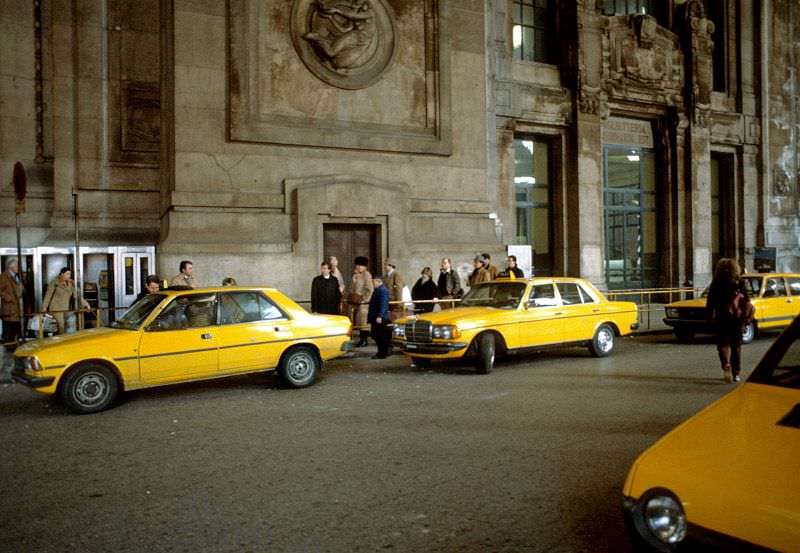
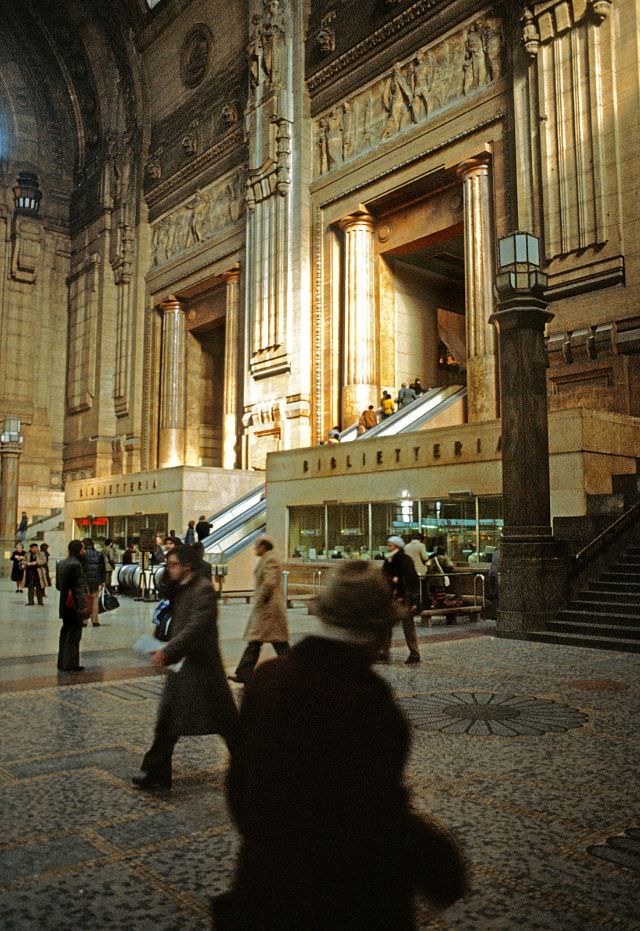
Milan’s Stazione Centrale was — and remains — one of the most striking railway stations in Europe. Built in the Fascist-era monumental style, its vast stone facade and enormous arched hall processed thousands of travelers daily. In 1980, it was the main gateway into the city for visitors arriving from across Italy and Europe.
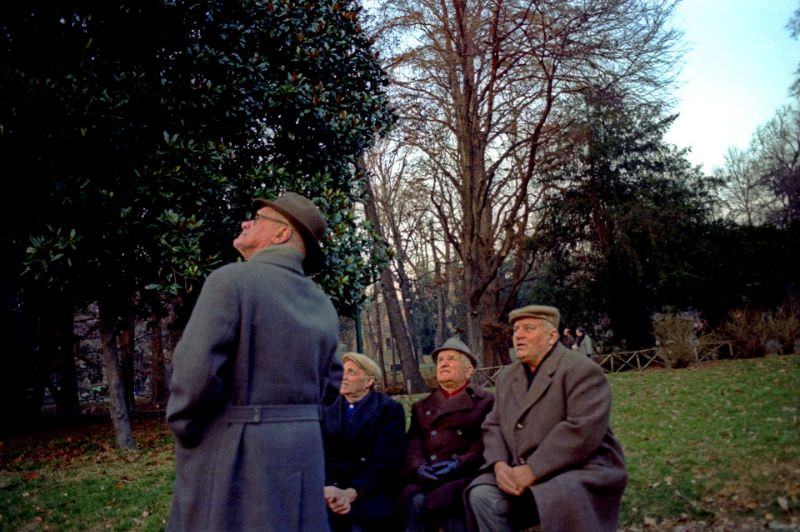
By 1981, the Giardini Pubblici continued to draw Milanese residents looking for a pause in their day. Men gathered on benches, reading newspapers or talking, in scenes that had likely changed little over the previous few decades.
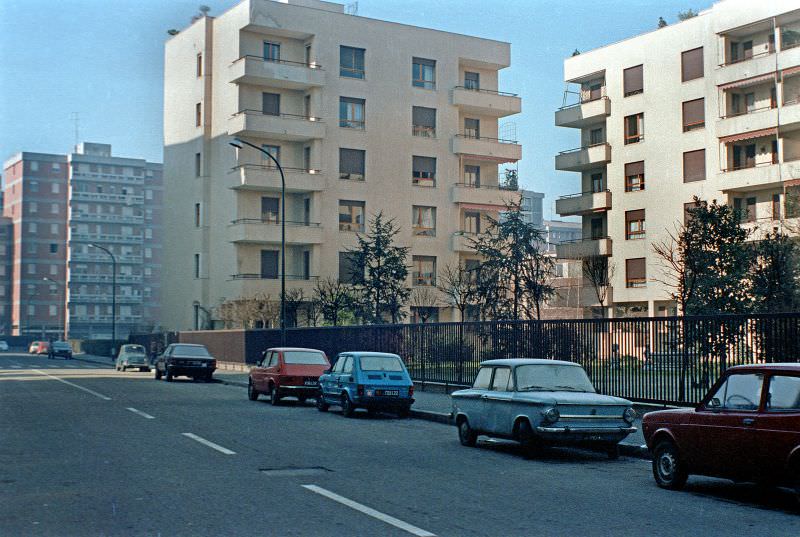
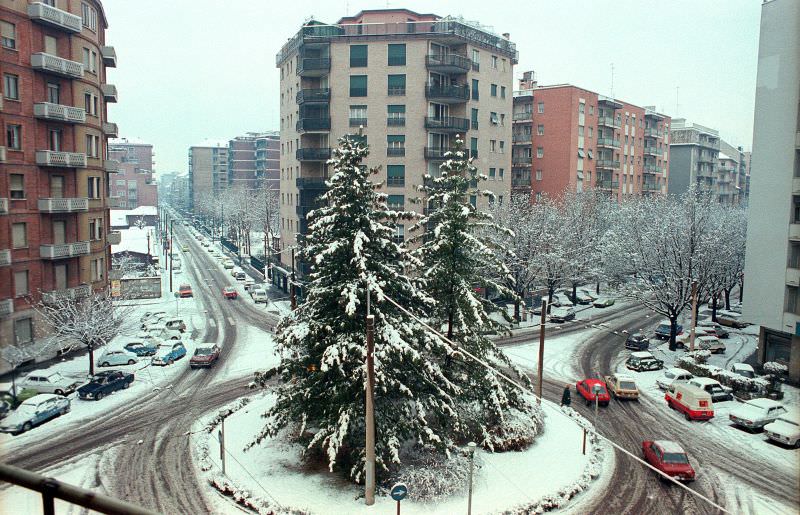
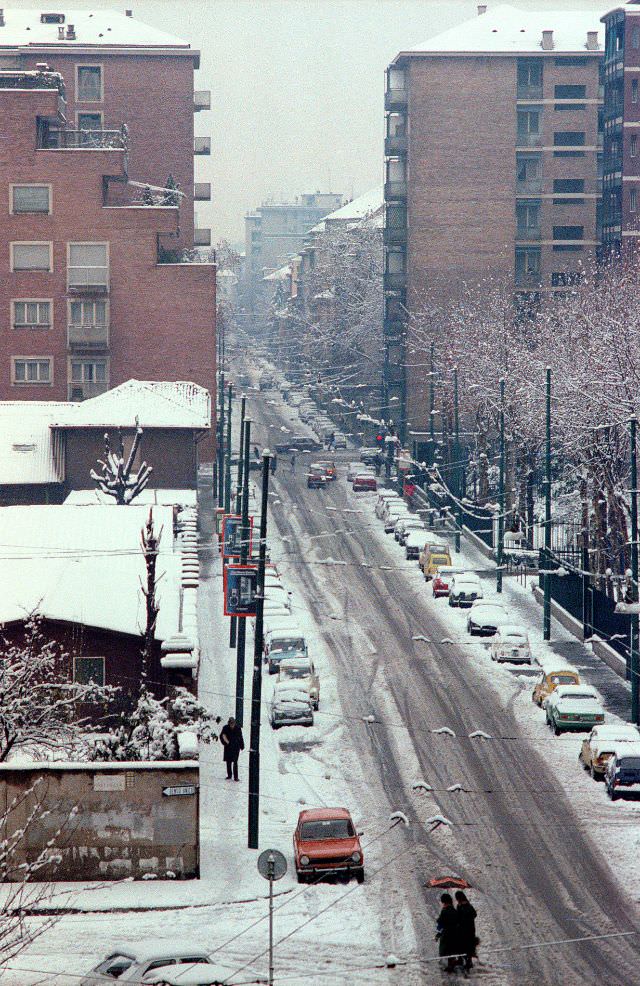
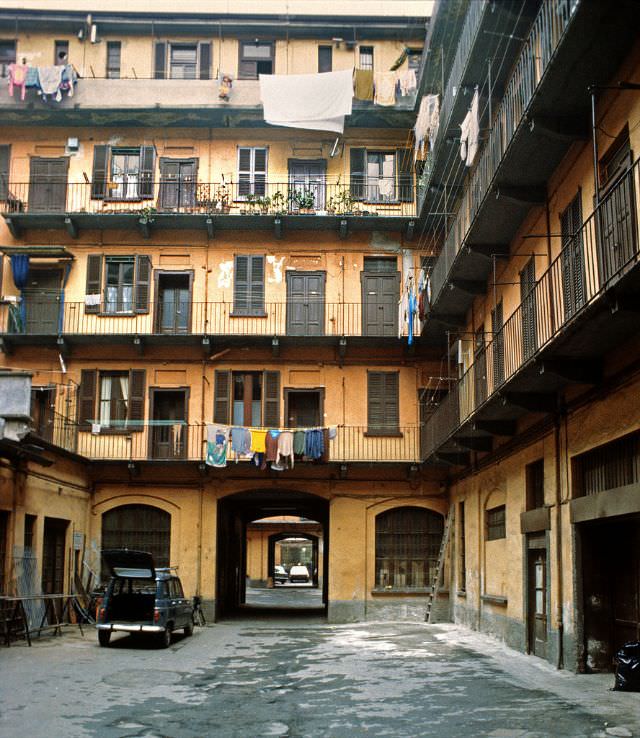
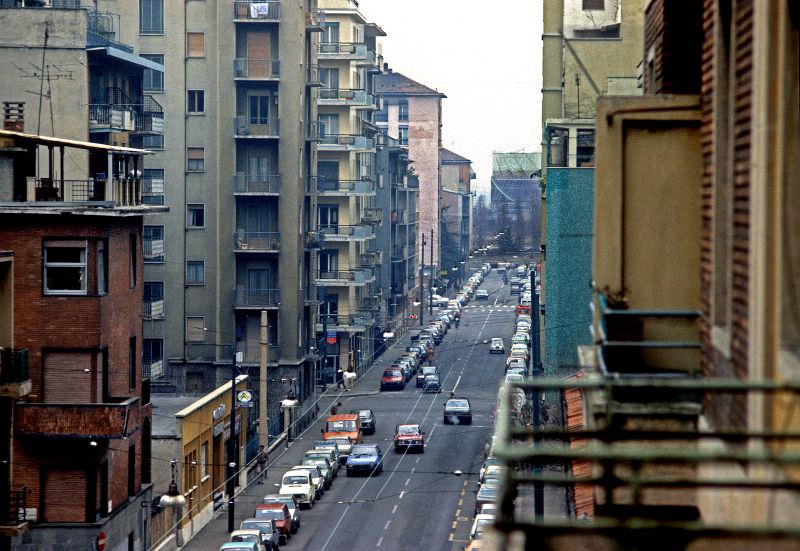
Beyond the famous landmarks, Milan’s residential neighborhoods had their own rhythm. Piazza Adigrat and streets like Via Sismondi reflected the working fabric of a real city — apartment blocks, parked cars, corner shops, and the orderly bustle of a Tuesday morning.
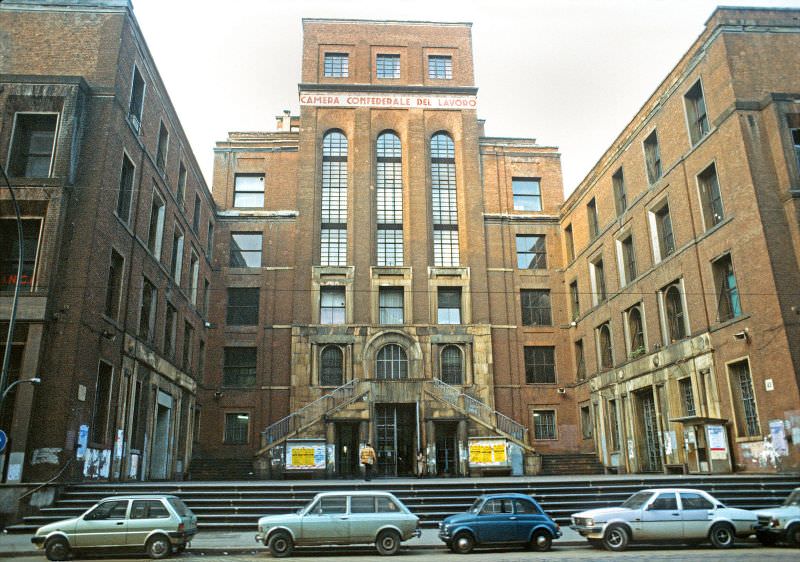
The Camera del Lavoro — Milan’s main labor union headquarters — was a politically active institution in the 1980s, a decade marked by labor disputes and economic restructuring across Italy. Its presence on the city’s map spoke to the organized working-class power that shaped Milan as much as its banks and fashion houses did.
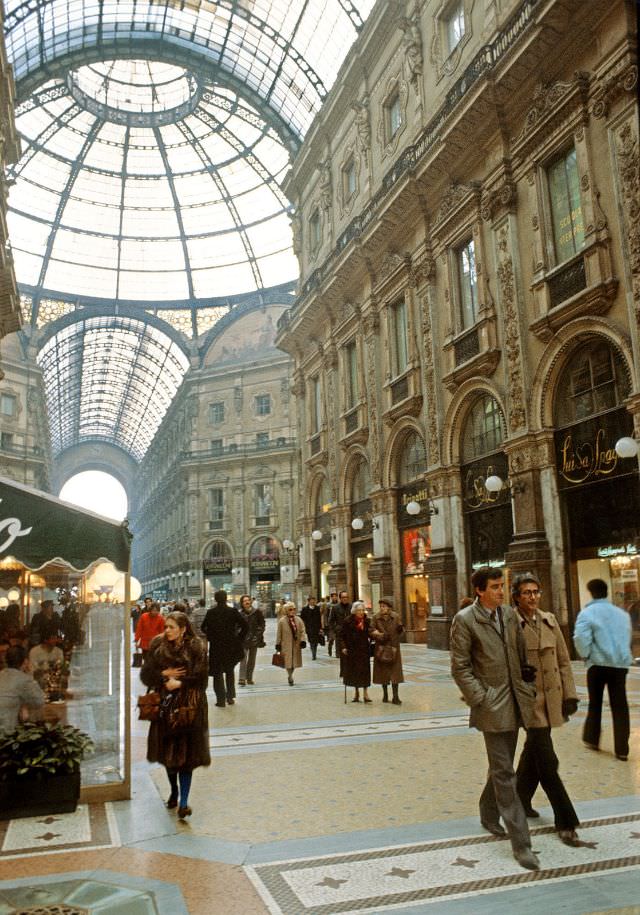
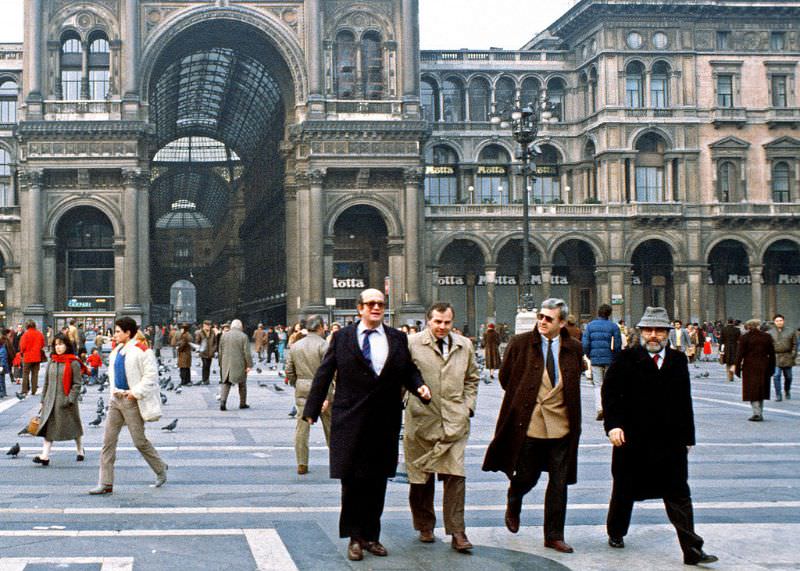
The Galleria Vittorio Emanuele II — the ornate, glass-roofed shopping arcade connecting Piazza del Duomo to Piazza della Scala — was one of Milan’s most beloved gathering spaces. By 1983, its cafés and boutiques drew a steady crowd of shoppers and sightseers under its iron-and-glass canopy.
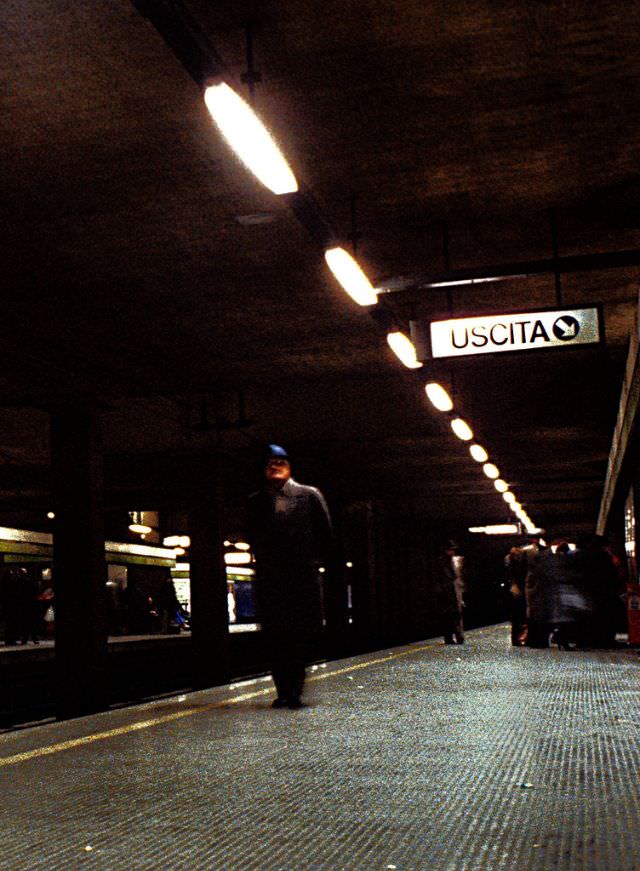
Getting around the city relied heavily on the Metro, Milan’s underground rail network. The system had expanded through the 1960s and 1970s, and by 1983 it moved enormous numbers of commuters efficiently beneath the city’s congested streets.
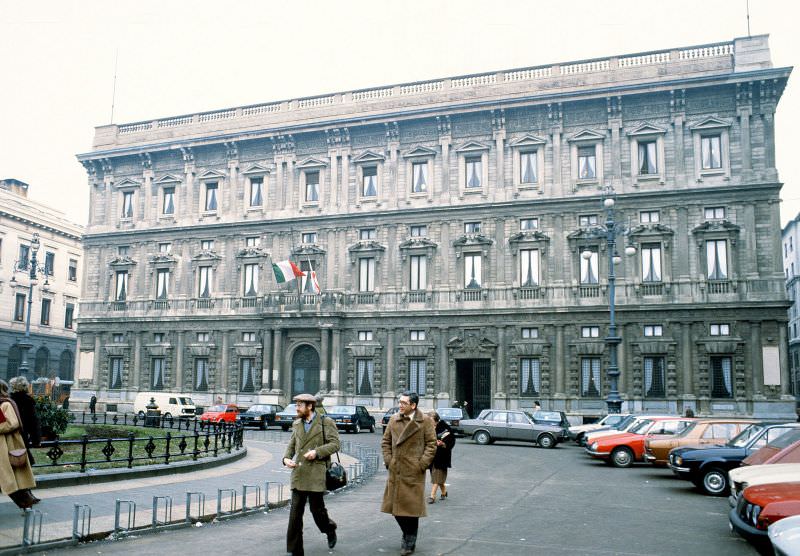
Palazzo Marino, Milan’s Renaissance-era city hall, sat just steps from the Duomo on Piazza della Scala. It served as the seat of municipal government and remained one of the city’s most elegant historic buildings, its courtyard and facade largely unchanged since the 16th century.
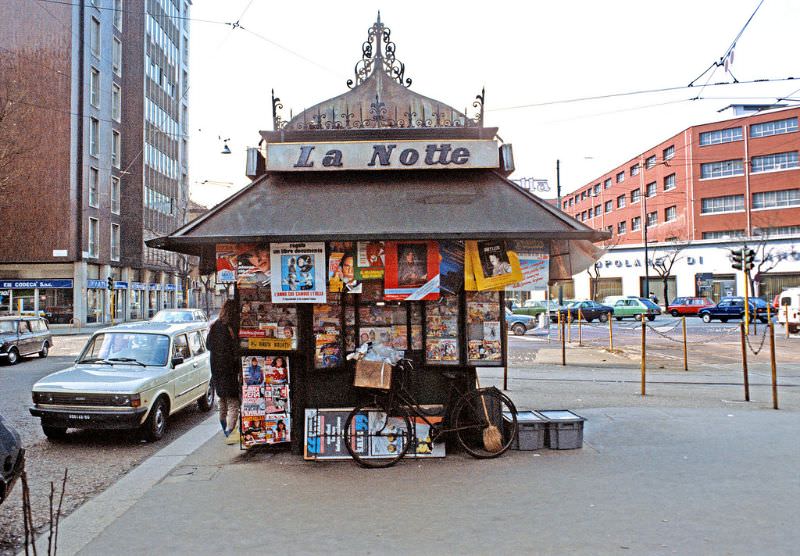
Newsstands were a constant feature of Milan’s streetscape. Stocked with dailies, magazines, and periodicals, they served as informal community hubs where people stopped, read headlines, and kept pace with a rapidly changing Italy.
The Piazza del Duomo in 1983 looked much as it had three years earlier — and yet always slightly different. The faces changed, the fashions shifted, and the political banners came and went. The square absorbed all of it without changing its fundamental character.
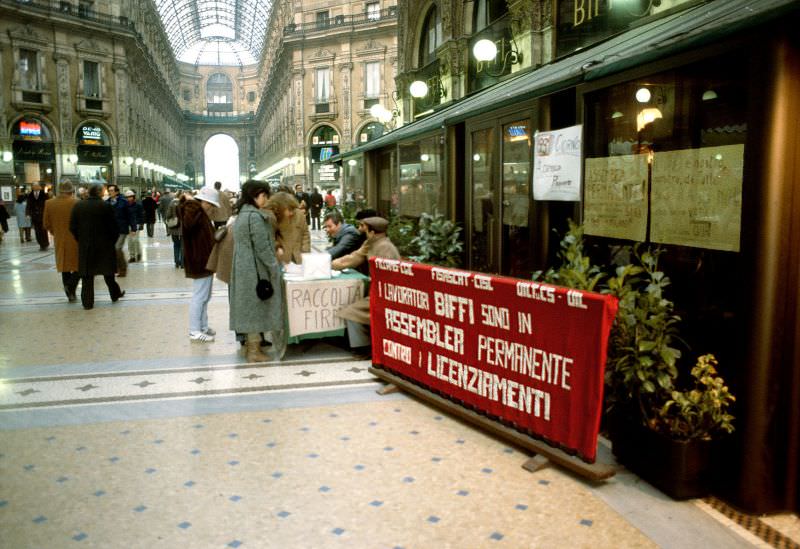
Labor activism was visible inside the Galleria too. A picket at the Biffi café in 1983 brought workers’ grievances directly into one of the city’s most upscale public spaces — a reminder that the wealth accumulating in 1980s Milan was not without friction.
Sforza Castle — the 15th-century fortress built by Francesco Sforza — anchored the northwestern edge of the city center. Its red-brick towers and wide moat had survived wars, occupations, and centuries of change. By 1983, it housed several of the city’s major museums and remained a popular destination for both residents and visitors.
Stazione Centrale appeared in multiple photographs across the early 1980s, reflecting just how central it was to the city’s daily functioning. The station’s grand interiors and external approach roads were a constant theater of arrivals and departures.
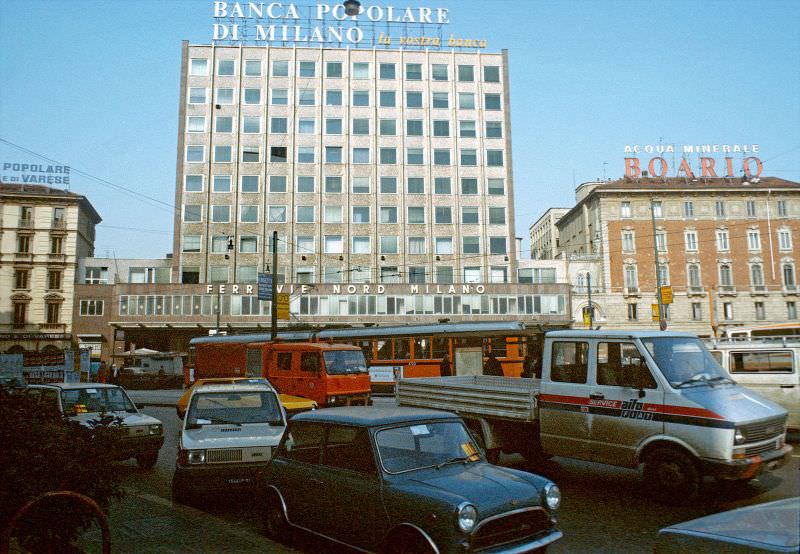
Stazione Nord, Milan’s second major rail terminal, handled regional trains and commuter lines connecting the city to the towns of Lombardy. It occupied a quieter but equally vital role in keeping Milan connected to its surrounding region.
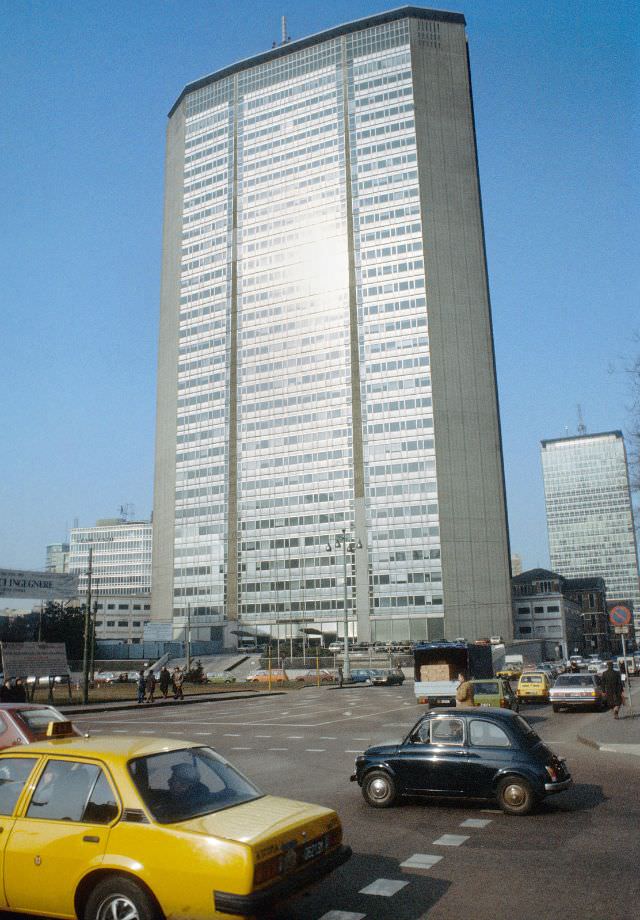
Standing above much of the city’s skyline in 1983 was the Pirelli Tower — the tallest building in Milan at the time and the city’s first true skyscraper. Completed in 1958, it was designed by architect Gio Ponti and engineer Pier Luigi Nervi. Its slender form and tapered ends made it an architectural landmark studied worldwide.
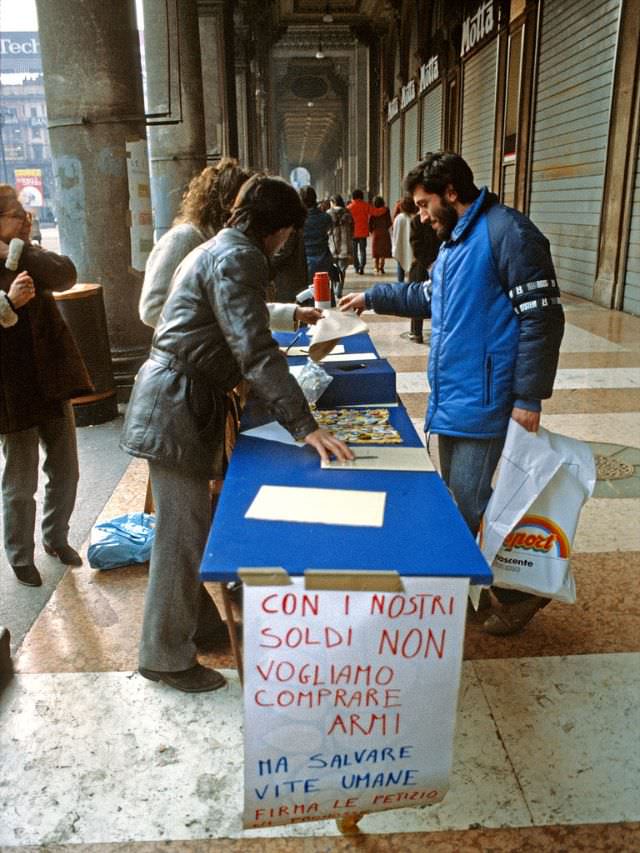
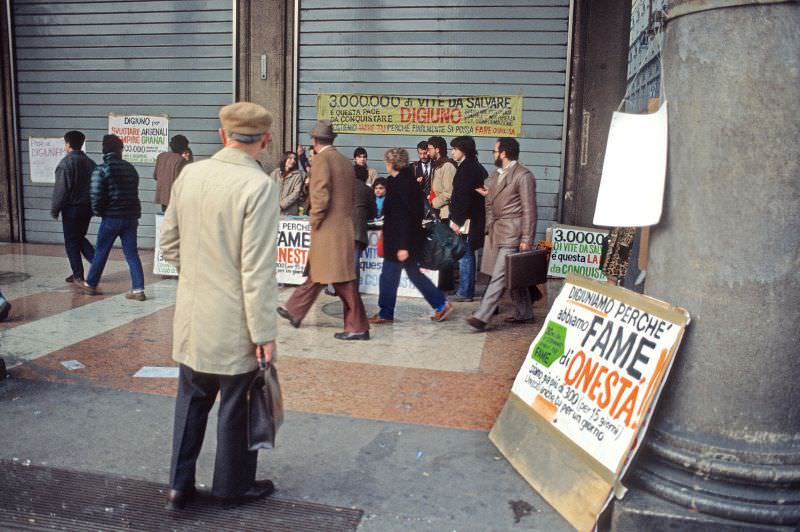
By 1984, the Piazza del Duomo was also the site of hunger strikes staged by peace activists. Groups demonstrating against nuclear armament and military conflict in various parts of the world used the high-visibility square to draw public and press attention to their cause.
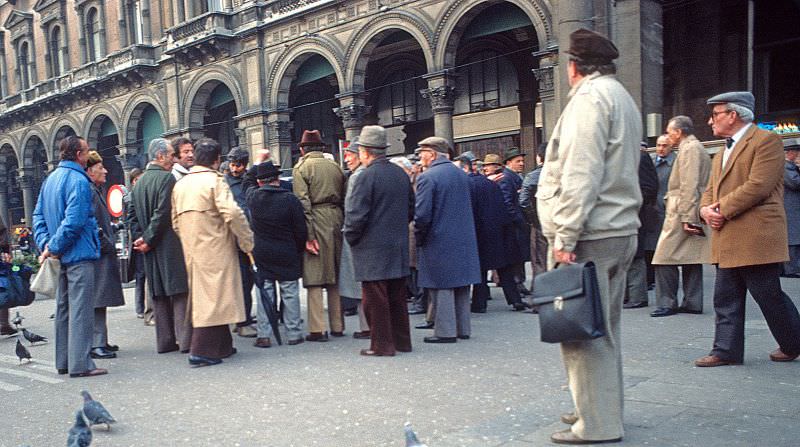
The final photographs from 1984 return once more to the Piazza del Duomo — the square that defined the decade’s visual record of Milan more than any other single location. Each image adds another layer to the portrait of a city that was wealthy, contested, beautiful, and alive.

6 Comments