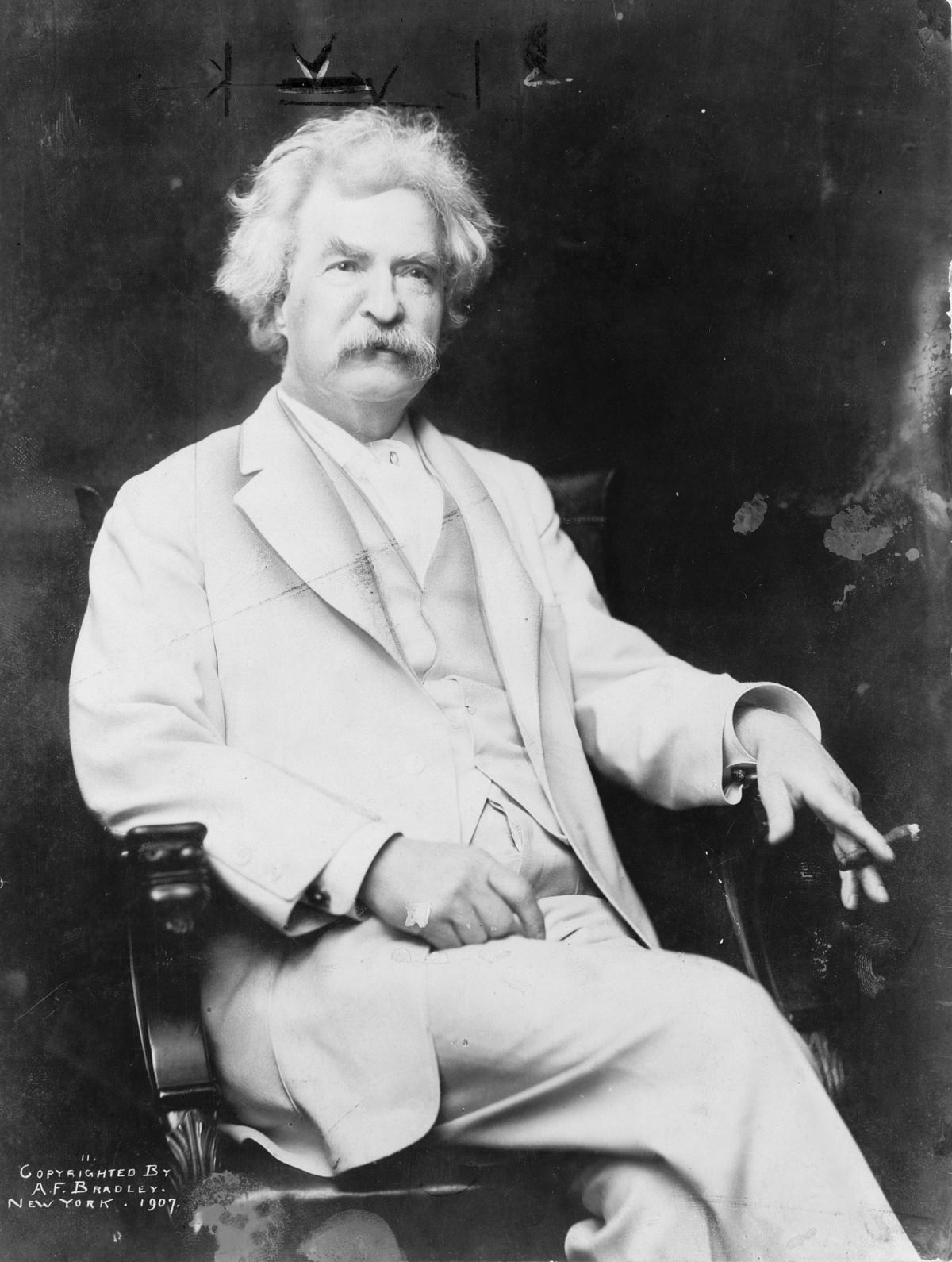
In 1907, photographer A.F. Bradley sat down with one of America’s most recognizable figures — Mark Twain, born Samuel Clemens — and produced a series of portraits that would become among the most reproduced images in American literary history. Twain was in his early seventies at the time, already a celebrated author and lecturer whose fame had spread across the globe.
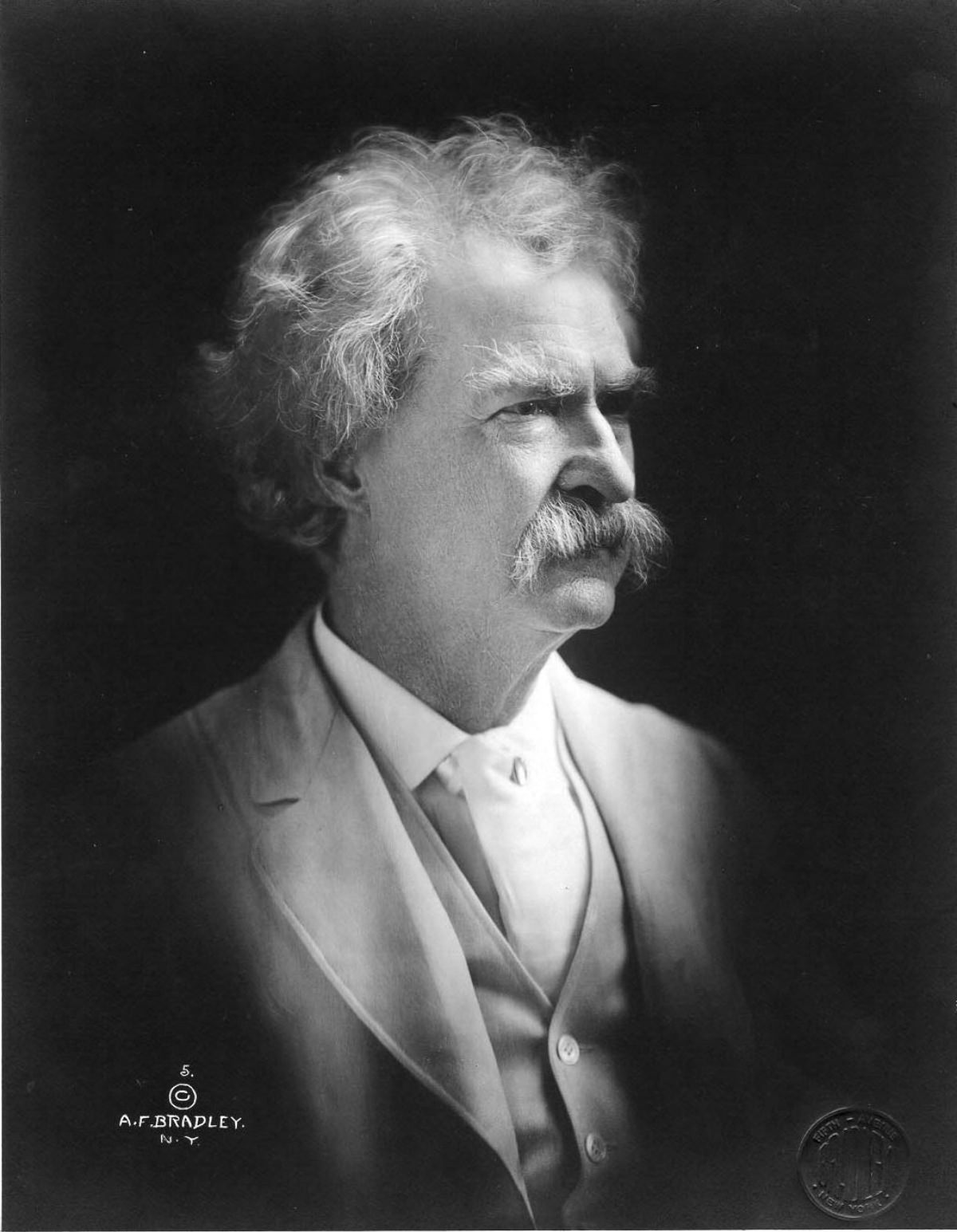
The sessions took place at Stormfield, Twain’s home in Redding, Connecticut. He had the house built following the death of his wife, Olivia, in 1904. It was a personal retreat, and that private setting gave Bradley unusual access to the man behind the public persona. The resulting photographs reflect something more intimate than a standard studio sitting.
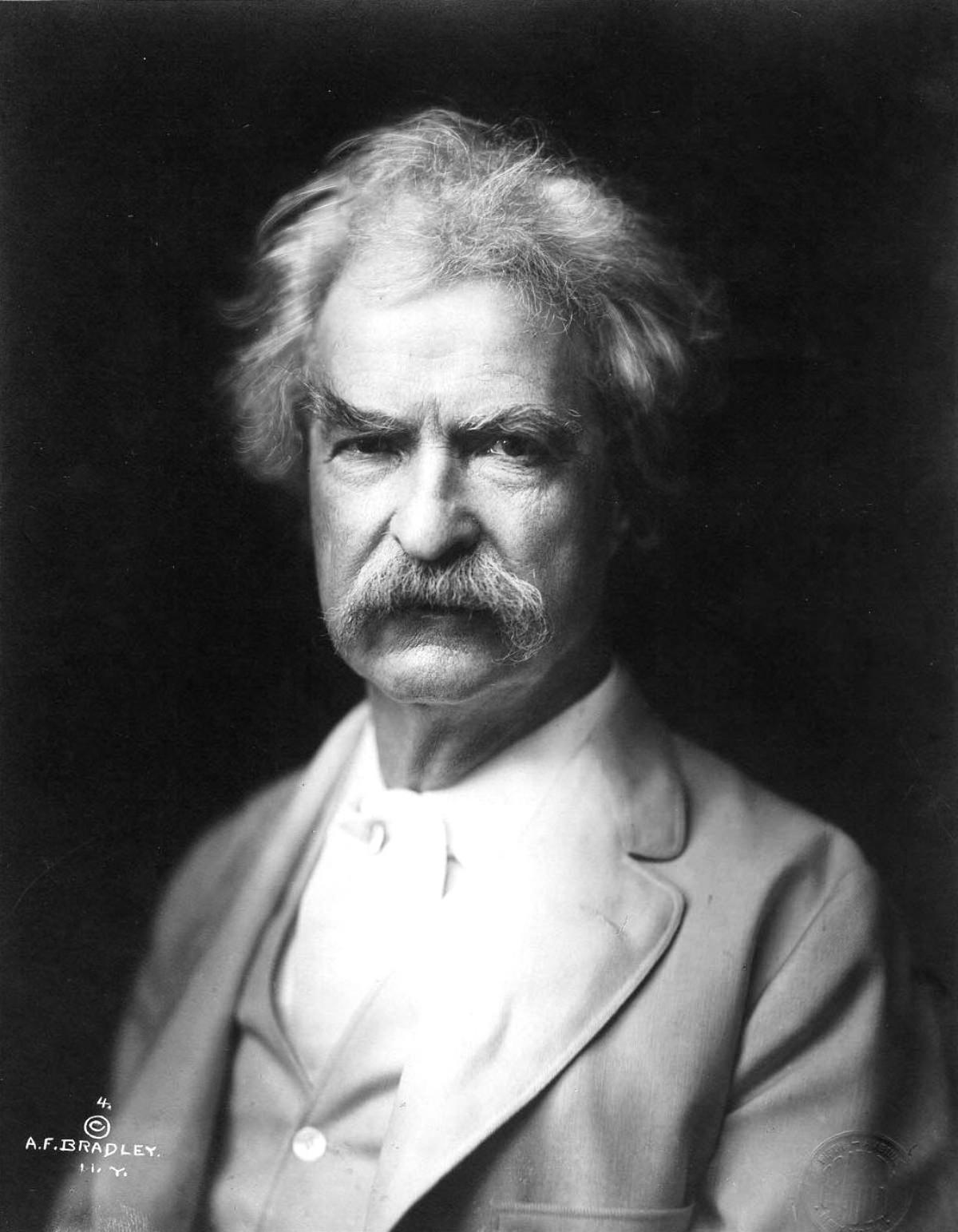
Bradley captured Twain across a range of poses and moods. Some images show him staring directly into the lens with a firm, unflinching expression. Others catch him in quieter, more reflective moments. One portrait features Twain with a cigar fixed in his mouth — a detail closely associated with how the public knew him. Together, the photographs present a full-bodied picture of the man: sharp, self-assured, and unhurried.
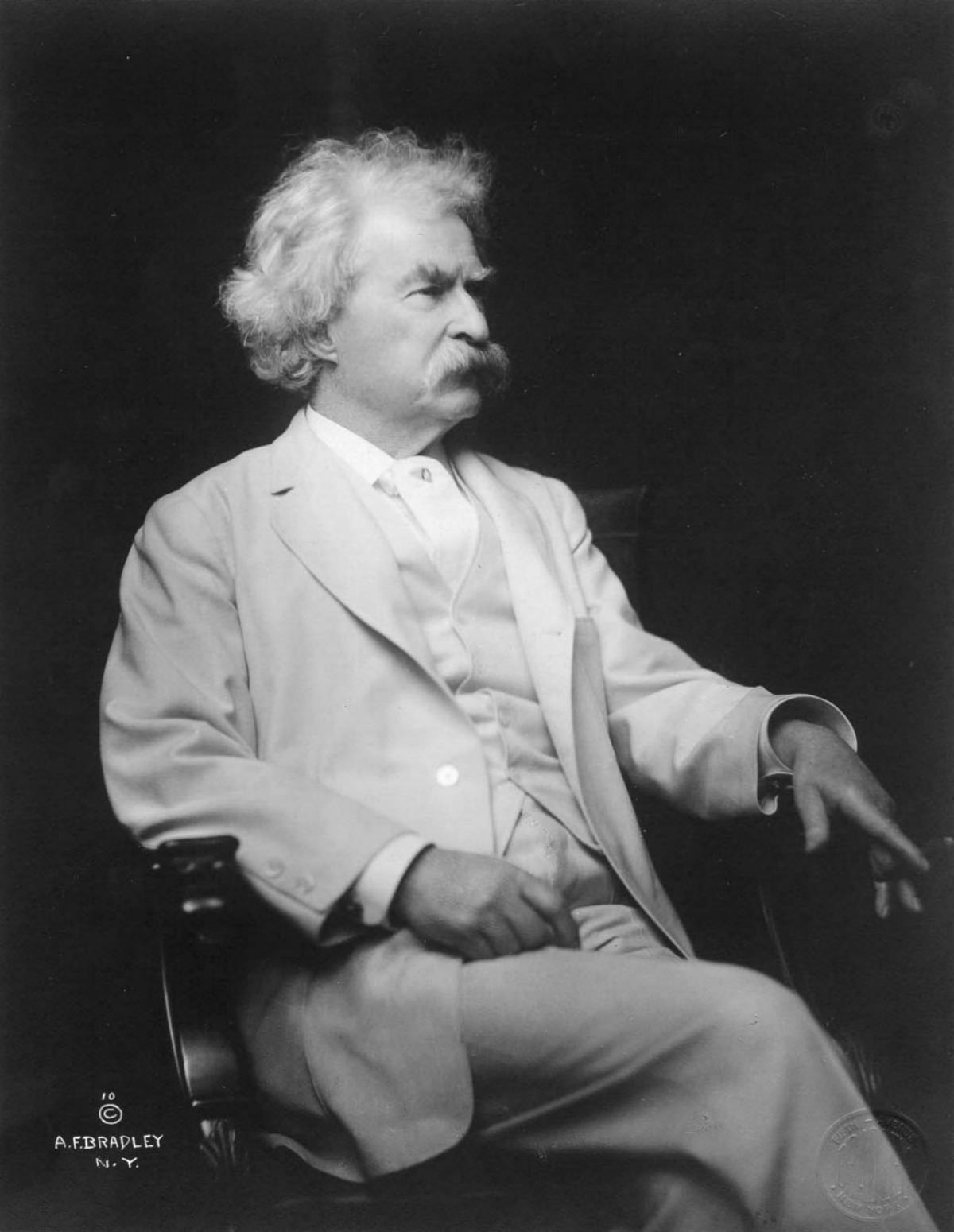
Despite their quality, these portraits were not taken for public release. They were made for private use and remained largely unseen during Twain’s lifetime. After his death in 1910, the images were made available to the public for the first time. From that point forward, they circulated widely — appearing in books, magazines, and countless other publications — cementing their place as the defining visual record of Twain in his final years.