
Los Angeles is not a city people associate with snow. Palm trees, sunshine, and warm winters define it. But on January 10, 1949, all of that changed — at least temporarily. A powerful storm swept across Southern California and dumped snow across the Los Angeles Basin in amounts the city had never seen before and has not seen since. The San Fernando Valley received nearly a foot of snow over three days. More than half an inch blanketed the Civic Center. The Rose Bowl, by one account, looked like “a dishpan full of milk.” For a city entirely unprepared for winter weather, the storm created equal parts wonder and chaos.
On the 50th anniversary of the storm, journalist Cecilia Rasmussen wrote about it in the Los Angeles Times, capturing both the absurdity and the novelty of the event. An Alhambra hardware store posted a sign reading “Snow Plows for Rent — Hurry!” A snowman turned up in Eagle Rock wearing a sombrero. The city of Reno, Nevada — amused at Los Angeles’s predicament — sent the city a snow shovel. These details tell you everything about how unprepared, and yet how good-natured, Angelenos were in the face of their freak winter.
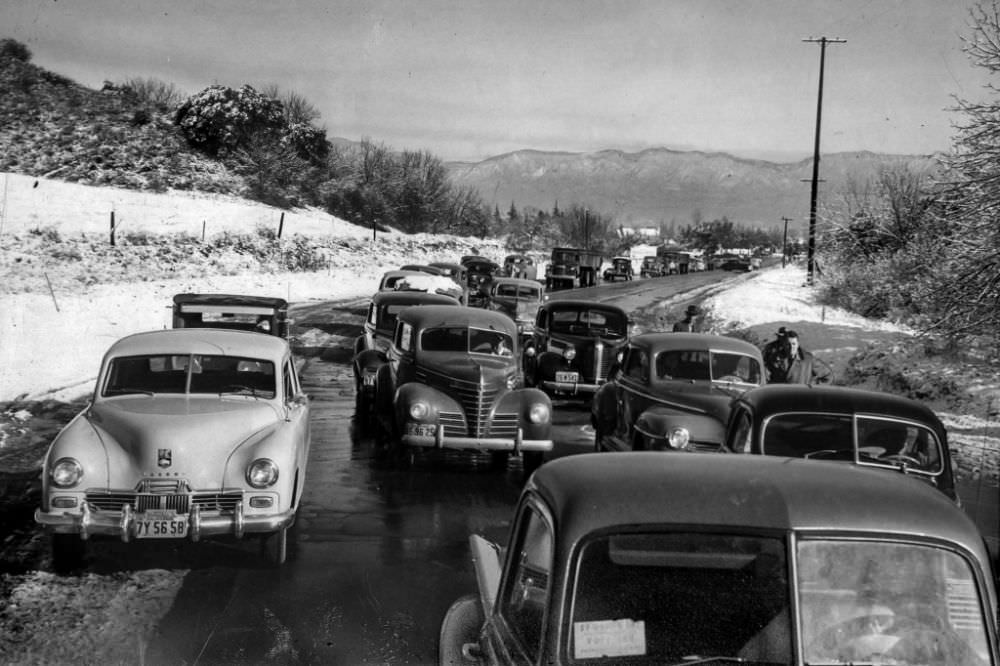
The roads were a mess. Ice formed on streets across the Valley and the surrounding communities, turning ordinary commutes into dangerous crawls. Drivers on Sepulveda Boulevard in Sherman Oaks had no choice but to sit and wait for the ice to melt before attempting to navigate over the hill toward Beverly Hills. This was not a city with snowplows, salt trucks, or any real infrastructure for frozen roads. People simply stopped and waited.
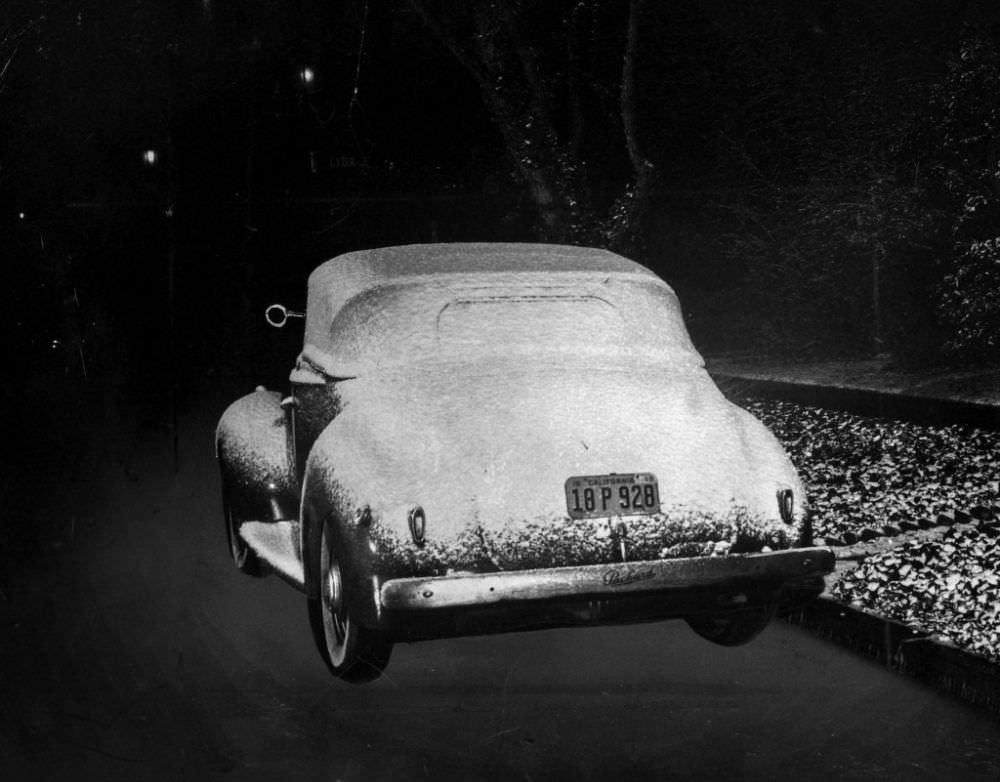
Near Pasadena, the scene was just as surreal. Cars parked near the Rose Bowl sat buried under a thick white coat. The Rose Bowl itself — a venue famous for sunny January football games — was unrecognizable. For residents of the area, the sight of snow resting on familiar streets and landmarks was genuinely disorienting. Many had lived in Southern California their entire lives without ever seeing anything like it.
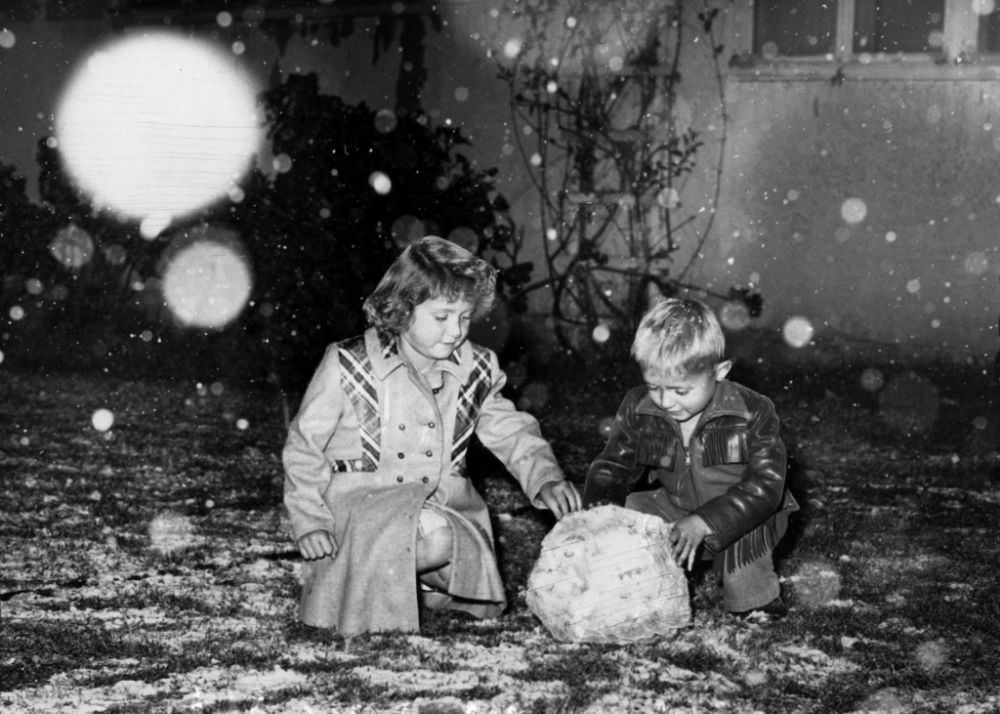
For children across the region, January 1949 was a once-in-a-lifetime experience. Patricia and James Perkins of Riverside encountered snow for the very first time. They were far from alone. An entire generation of Southern California kids had grown up without ever touching the stuff. The storm gave them something to remember for the rest of their lives — and most of them never got another chance to experience it in their own backyard.
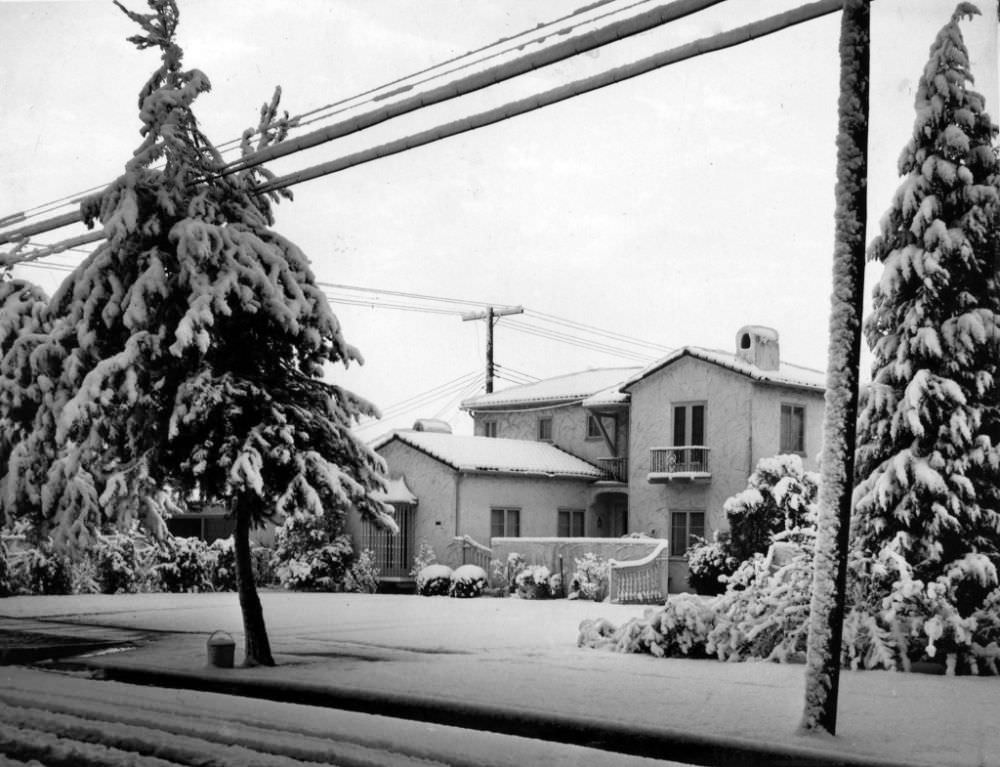
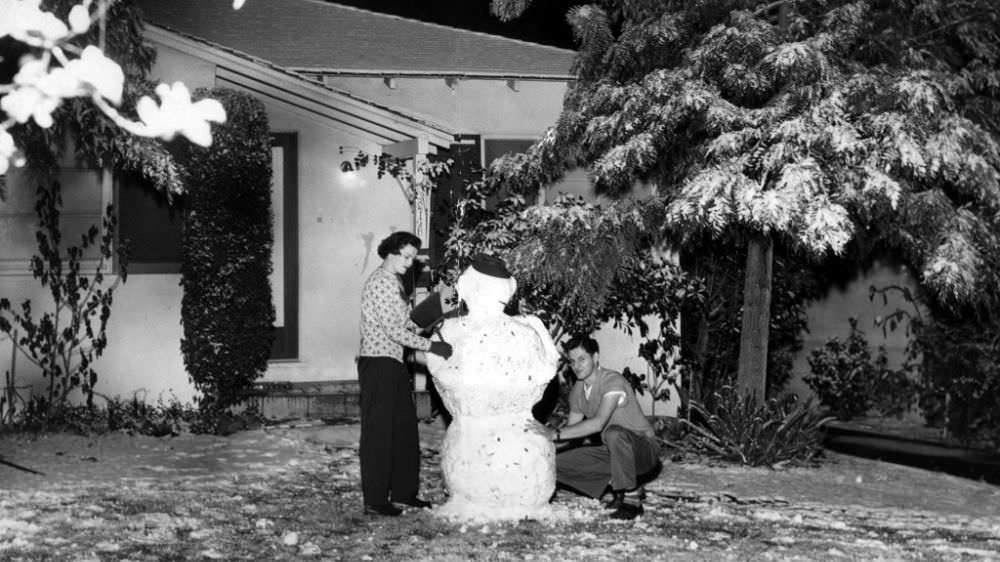
In the foothill communities north of Los Angeles, the snowfall was heaviest. Glendale’s Verdugo Woodlands neighborhood saw homes completely blanketed. Nearby in Montrose, Mr. and Mrs. Harvey Tibbals made the most of the moment — they built a snowman in front of their La Crescenta Avenue home. Scenes like this played out across dozens of neighborhoods. People who had never built a snowman in their lives suddenly had both the material and the motivation to try.
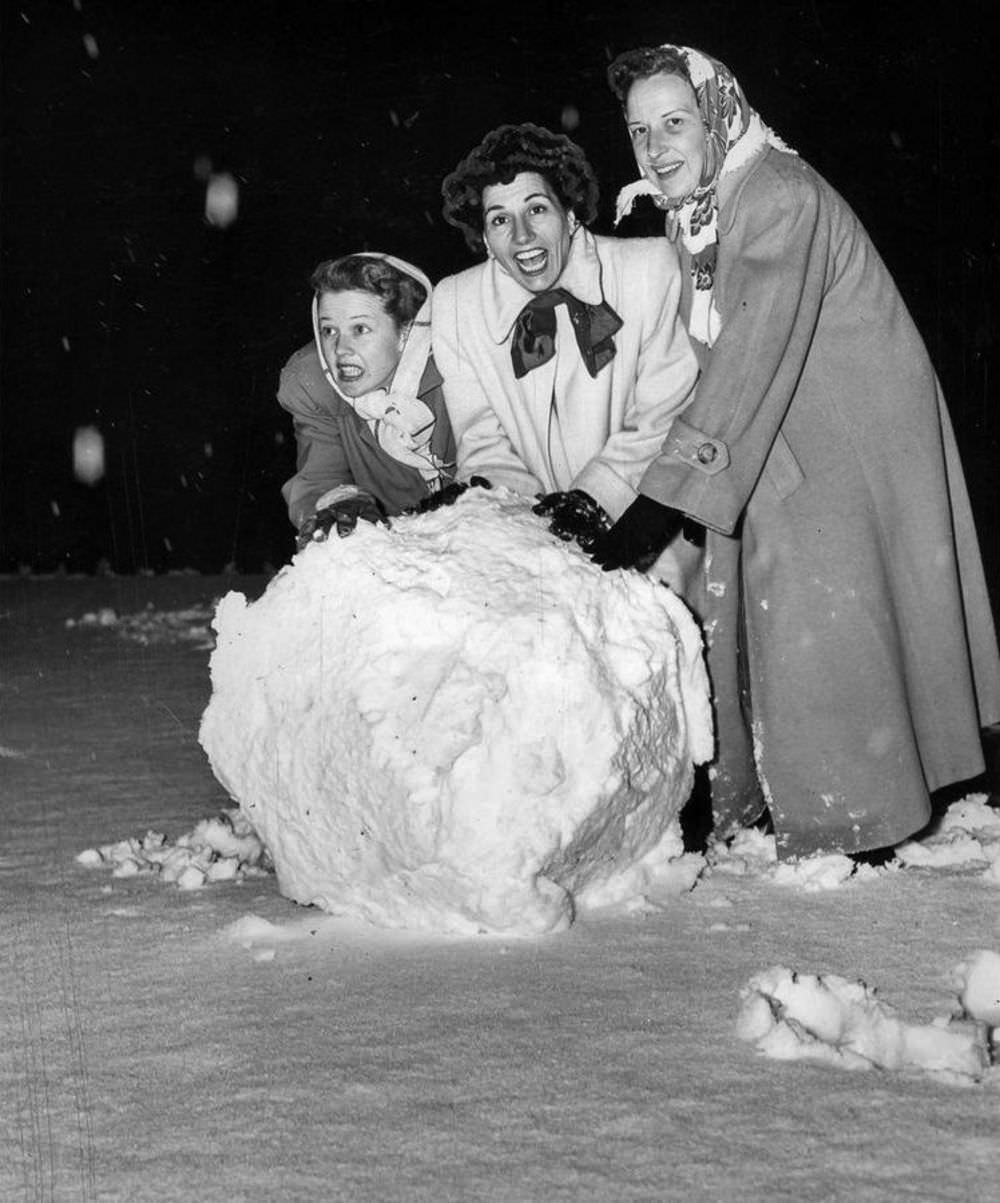
Even in Bel-Air, one of Los Angeles’s wealthiest neighborhoods, residents abandoned their usual routines to play in the snow. Women rolled an enormous snowball through a front yard, doing what people do when snow falls unexpectedly — they go outside and enjoy it. The storm erased the usual boundaries of daily life across the city, and for a few days, nearly everyone was doing the same thing.
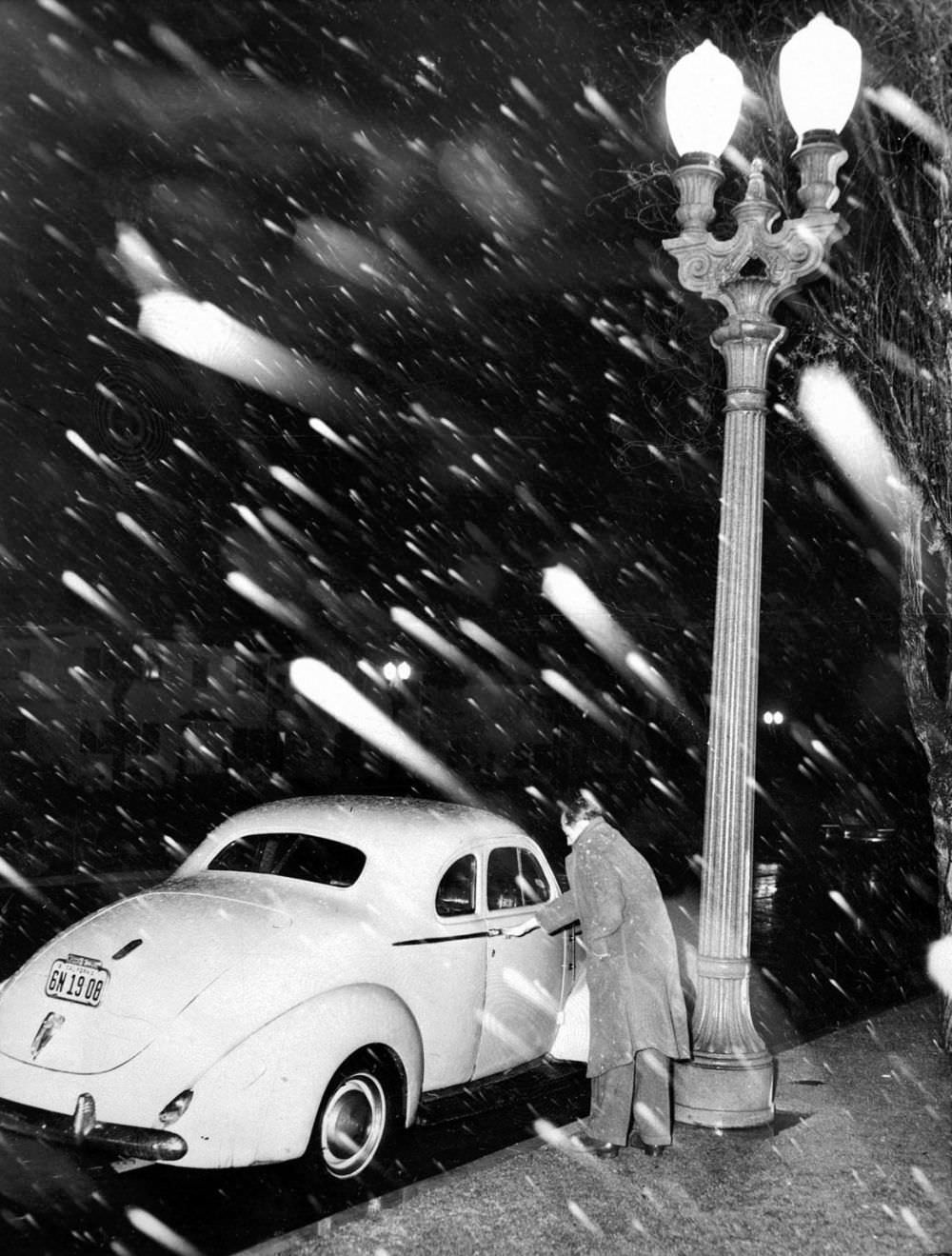
The snow did not stop at the foothills. It reached deep into the city itself. South Los Angeles — typically one of the warmer parts of the basin — saw snow falling on Santa Barbara Avenue near Crenshaw Boulevard. Photographs from this part of the city are especially striking because the surroundings are so unmistakably urban. Snow on a South L.A. street corner was not something anyone had a frame of reference for.
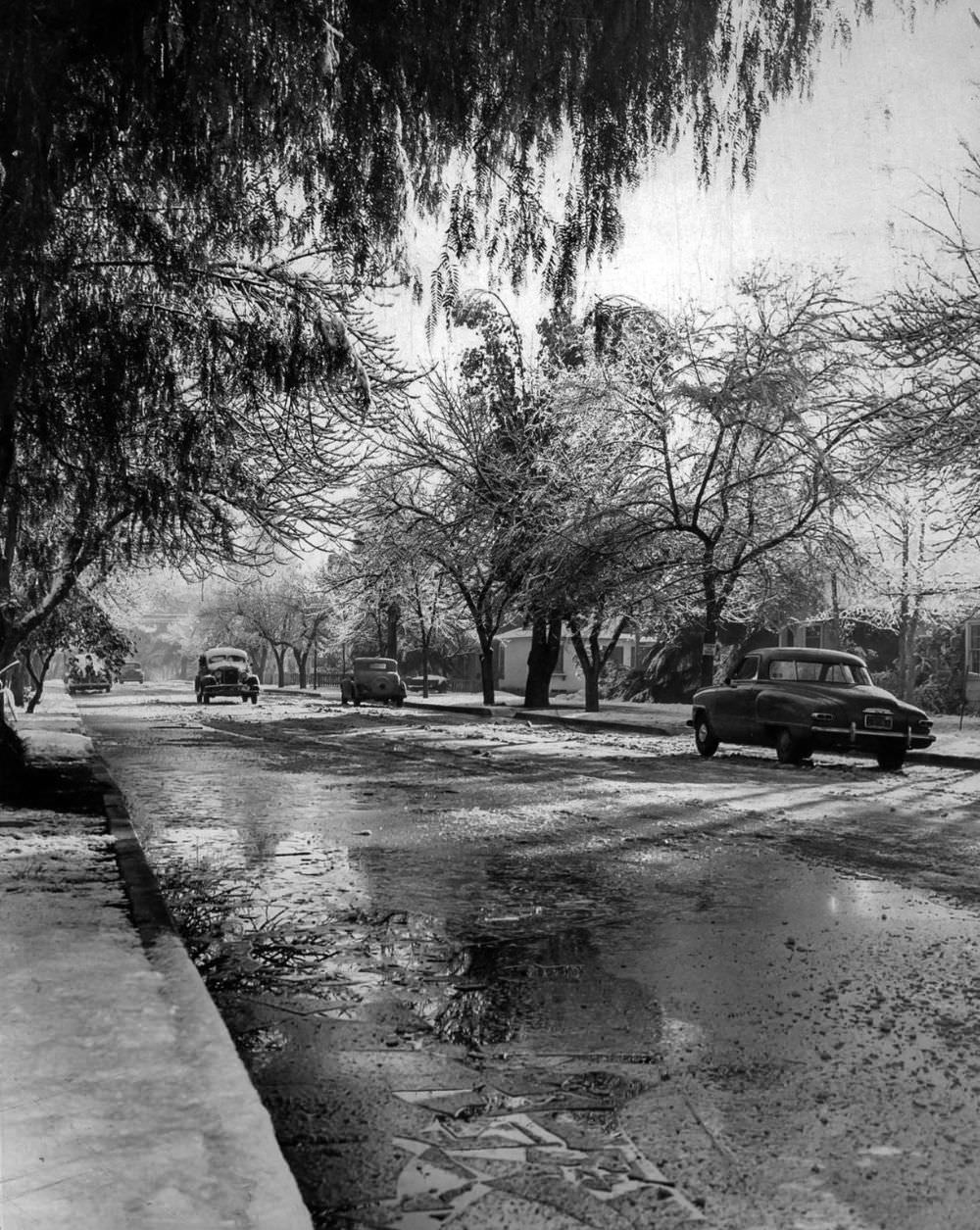
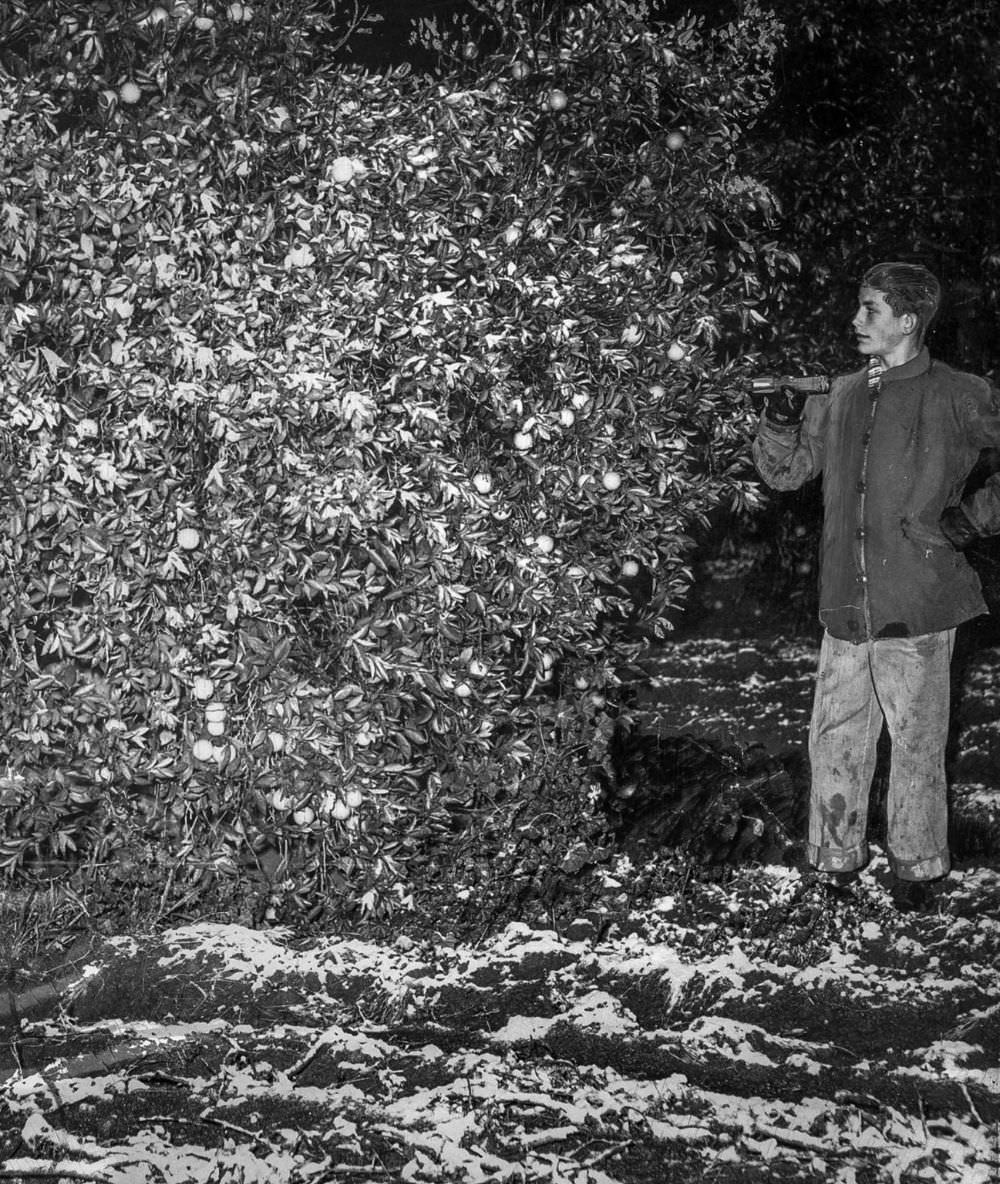
The San Fernando Valley bore the brunt of the storm on the ground level. In Van Nuys, ice on Gilmore Street forced every driver to slow to a crawl. The Valley’s flat grid of roads became treacherous, and the lack of any winter driving experience among local motorists made things worse. Meanwhile, in Riverside, the storm created a different kind of concern. A man stopped to examine snow resting on citrus trees — a sight that alarmed growers throughout the region, as frost and snow can devastate citrus crops quickly.
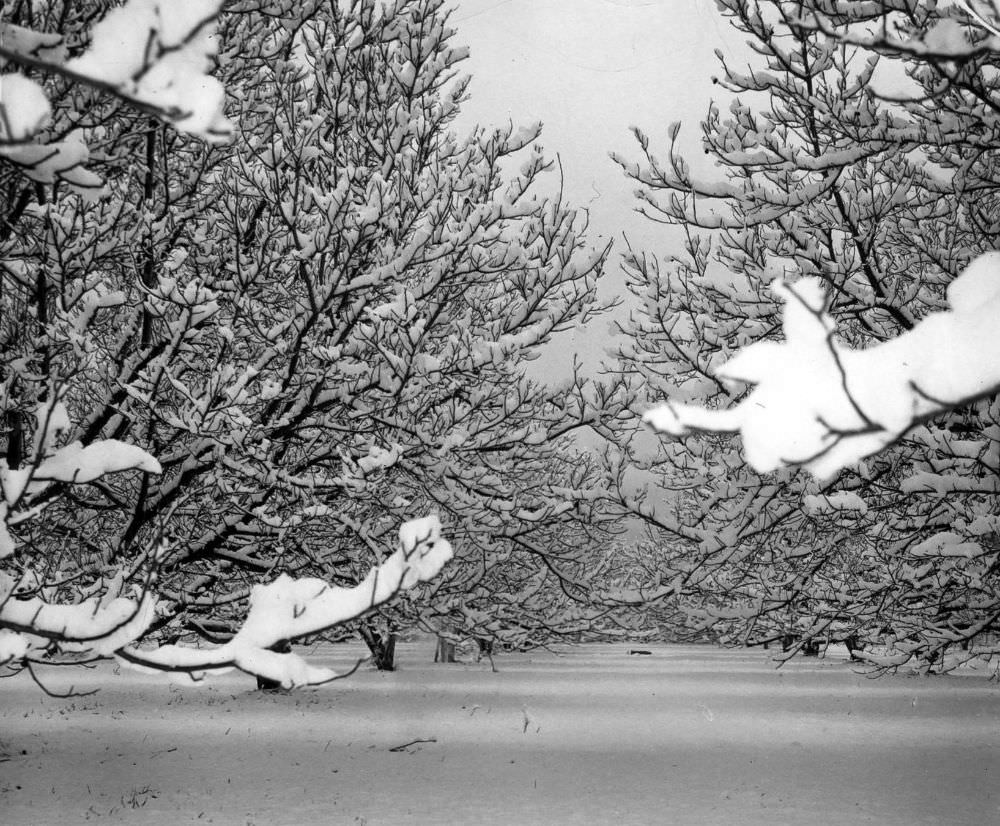
Agriculture across the Valley was transformed overnight. A walnut orchard on North Hazeltine Avenue in Van Nuys sat buried under snow, looking more like rural Vermont than the San Fernando Valley. The contrast was striking enough that photographers made a point of capturing it. Southern California’s agricultural landscape, usually defined by dry heat and irrigated rows of crops, suddenly looked like something from a completely different part of the country.
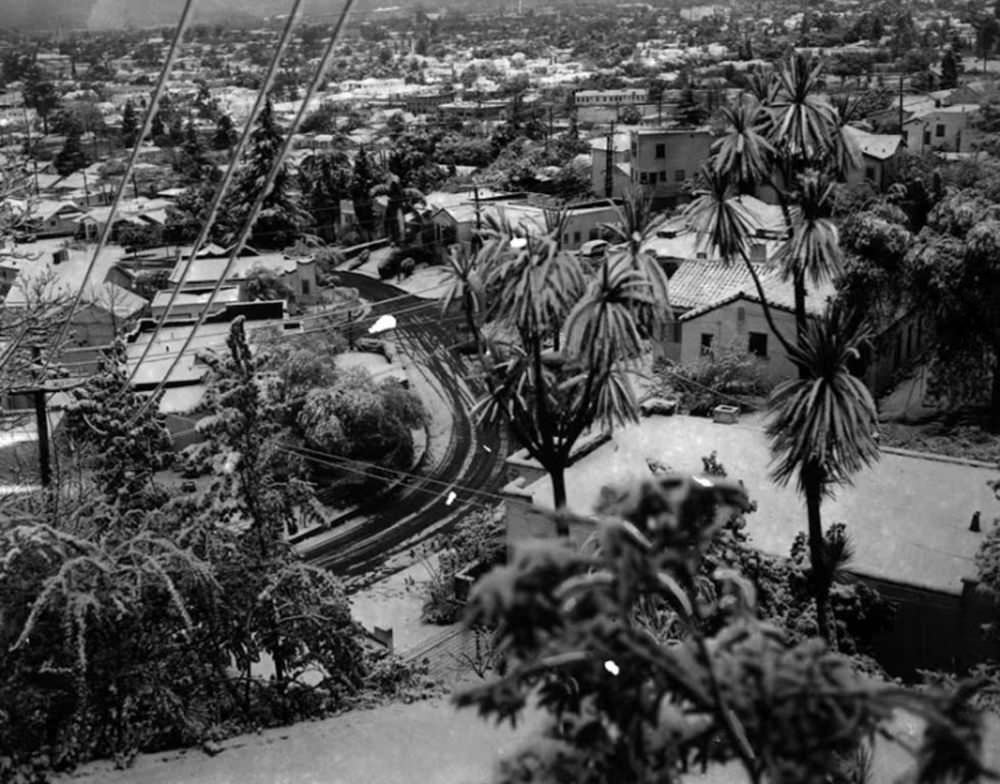
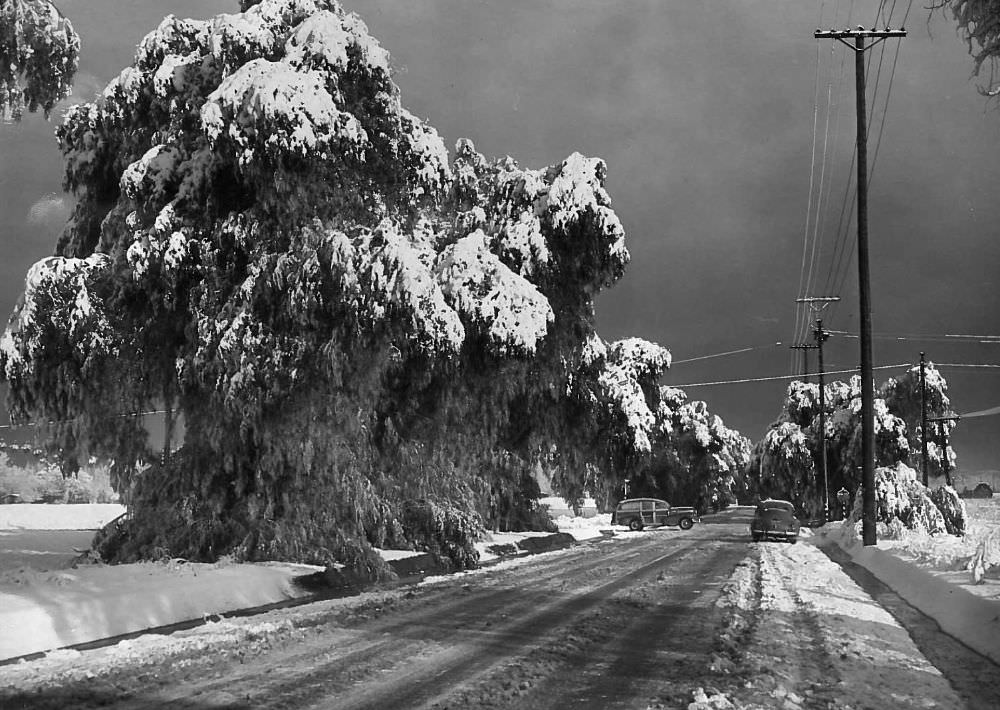
On the morning of January 11, residents in Glendale woke up and looked out their windows to find their streets and yards completely white. In Canoga Park, at the western edge of the San Fernando Valley, the transformation was equally total. These were neighborhoods that had never been designed with snow in mind — no sloped roofs built to shed it, no heated sidewalks, no salt bins on the corners. The snow simply settled in and stayed.
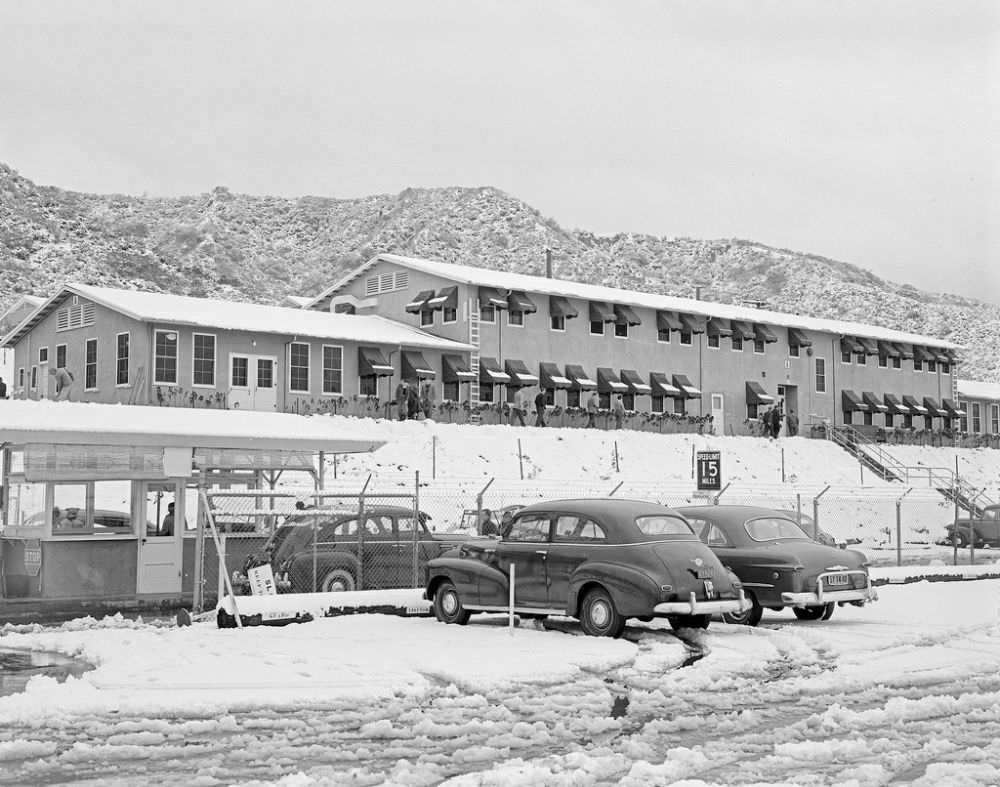
Even the Jet Propulsion Laboratory in Pasadena, nestled against the rocky chaparral foothills, was not spared. The facility — which had been formally established just a few years earlier in 1944 — sat under a layer of snow with the dry, scrubby hills rising behind it. The image is a sharp contrast: a cutting-edge scientific institution surrounded by the kind of weather it was never built to deal with.
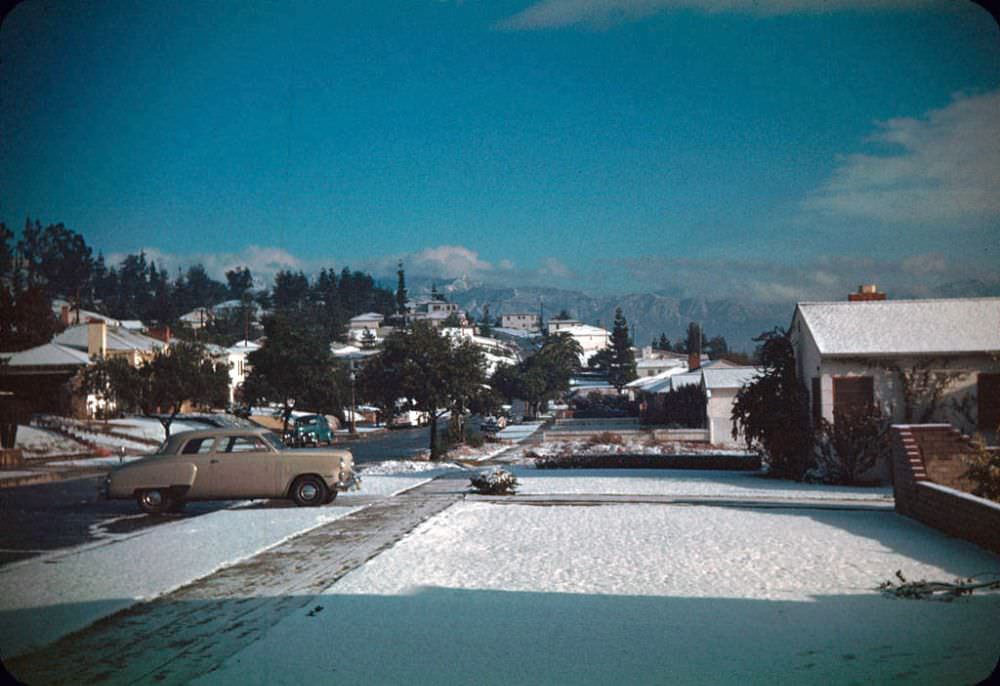
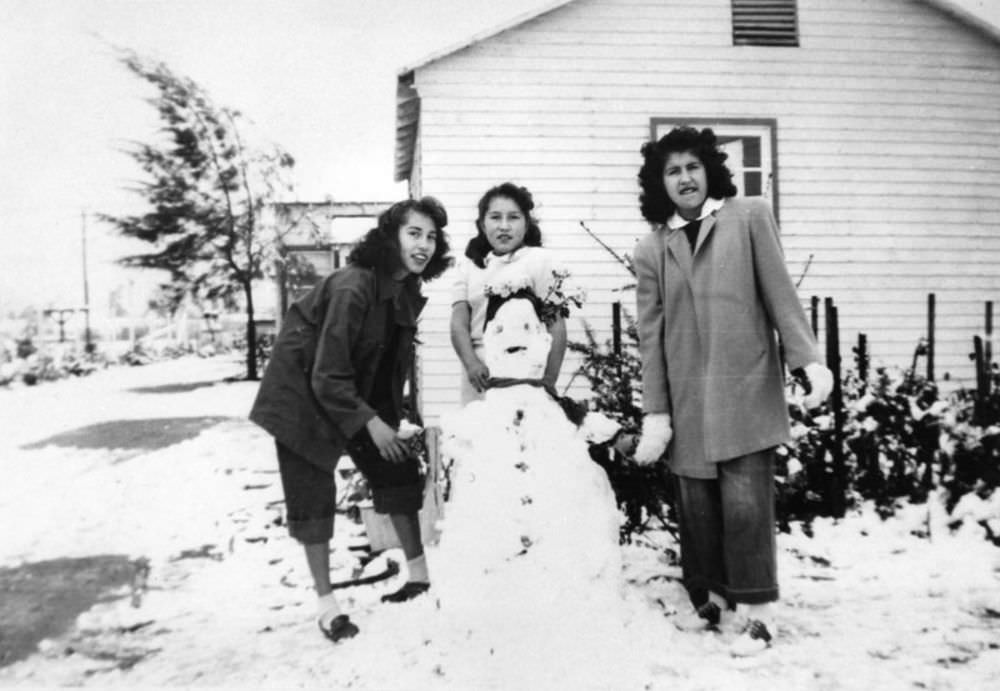
Across the San Gabriel Valley, communities like Monterey Park were blanketed just as thoroughly as the areas to the north. And in North Hollywood, residents took to their yards and streets to do what the snow demanded — build things. Women constructed a snowman in the neighborhood, joining what had become a citywide pastime over those three extraordinary days. Snowman-building was reported across dozens of communities, from the beach-adjacent west side all the way out to the foothills.
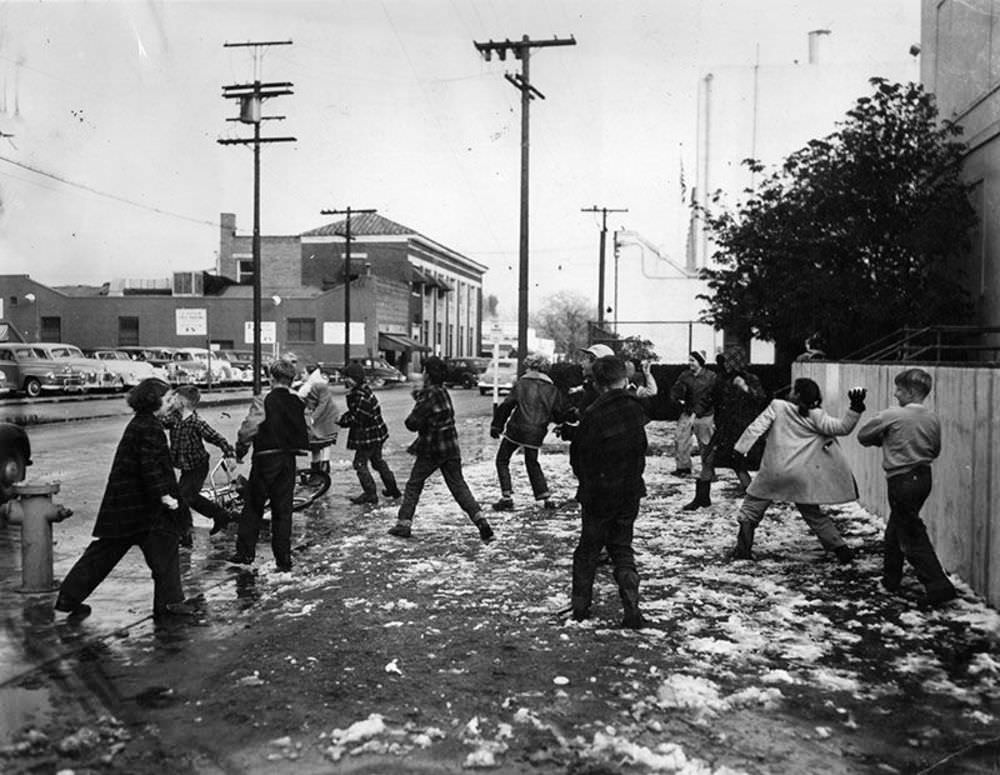
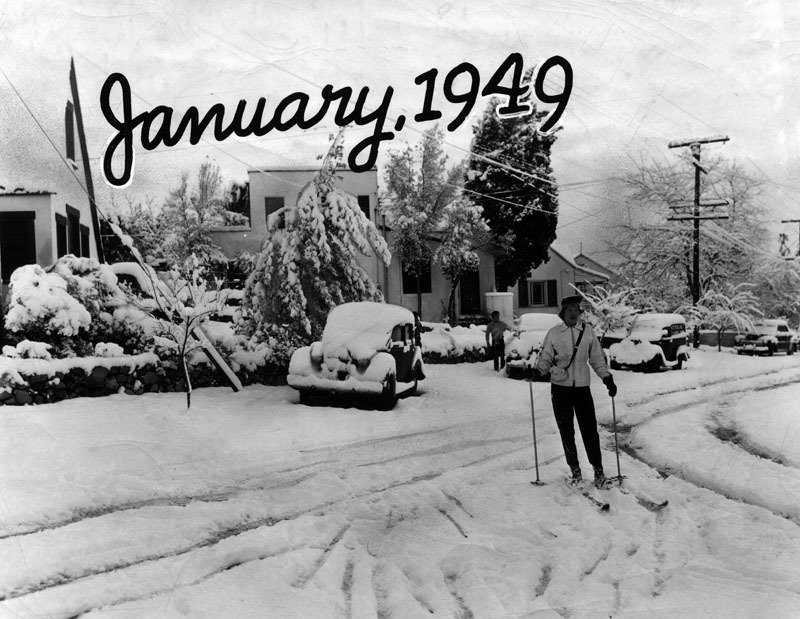
The snow brought out a spirit of play that cut across age groups. Snowball fights broke out on Valley streets, with people using the unpacked powder that had settled on lawns and sidewalks. In La Crescenta — where the snowfall was heavy enough to stick for days — some residents went further. They actually skied. On a residential street in a Los Angeles suburb, people strapped on skis and made the most of a situation that would likely never come again. They were right.
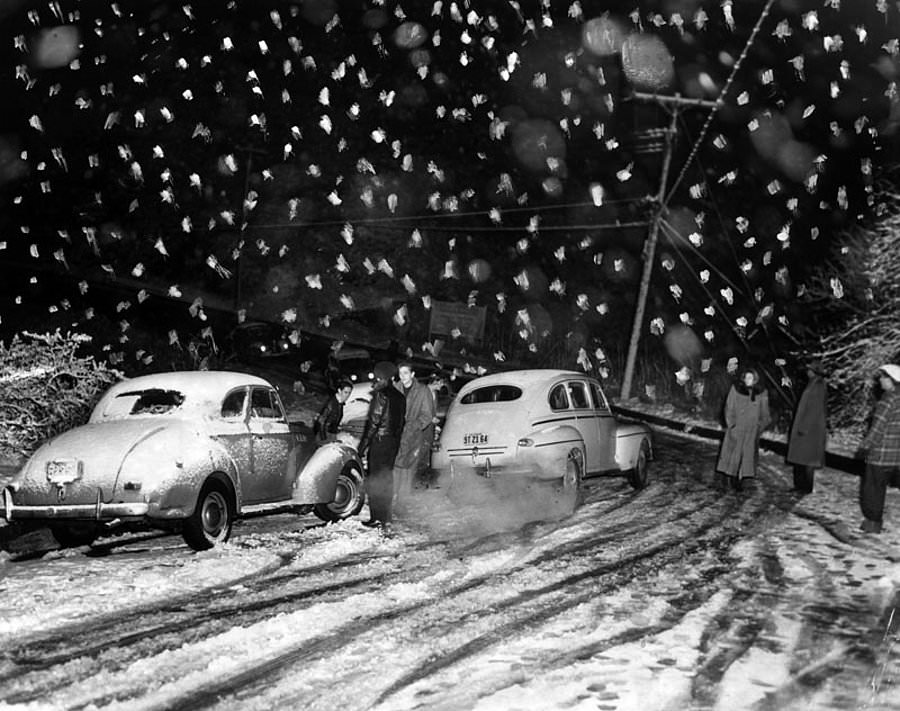
Not everyone was having fun. In Coldwater Canyon, the mountain pass connecting the San Fernando Valley to Beverly Hills, motorists stalled out on the icy road. The canyon roads were never designed for snow, and without chains or winter tires, cars simply stopped moving. Scenes like this played out across every canyon and hill road in the city during the storm’s peak days.
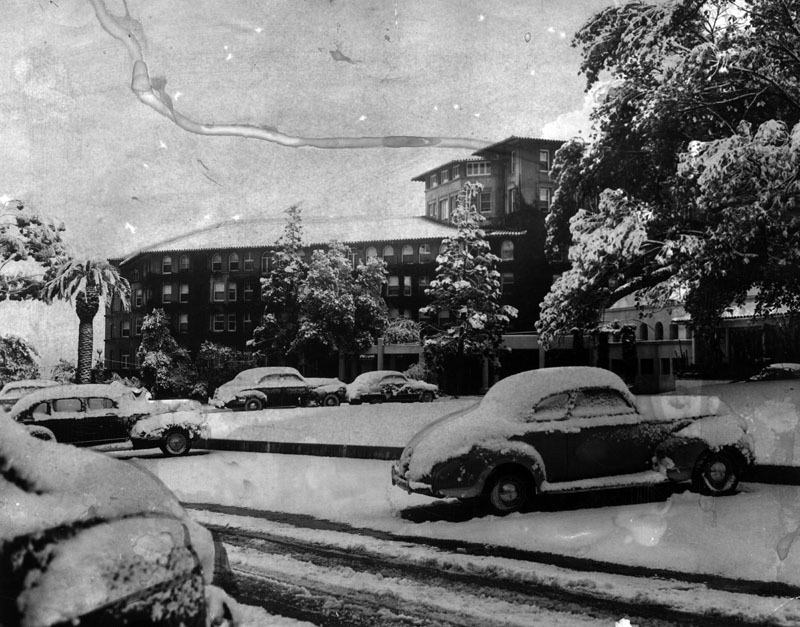
Perhaps no single image from the 1949 storm captures the moment’s irony better than the snow-covered Huntington Hotel in Pasadena. The hotel’s own slogan — “Where sunshine spends the winter” — was posted right there on the property while snow piled up on the grounds around it. It was the kind of coincidence that writes its own caption. Pasadena had built its entire identity around mild, sunny winters, and for three days in January 1949, that identity was buried.
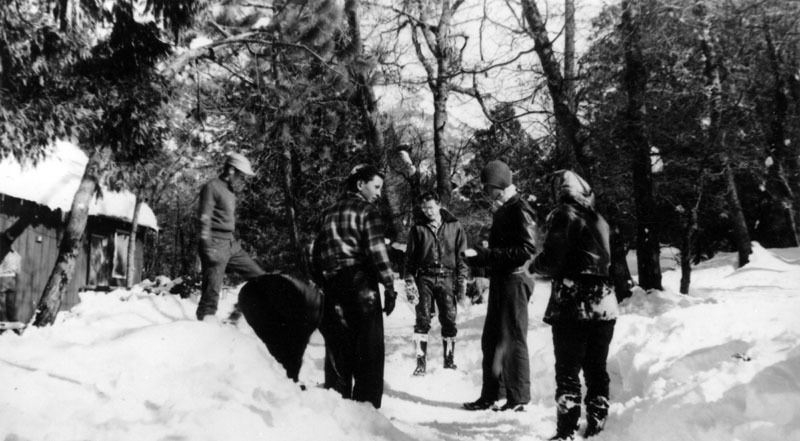
Los Angeles city parks became gathering spots during the storm. Families and neighbors who had no idea how to handle snow figured it out together — throwing it, packing it, sliding through it. The 1949 storm was the last time the city saw snowfall of any real significance. Minor dustings were recorded in 1957 and 1962, but nothing approached what fell that January. Every year since, the conditions that made a storm like that possible have grown less and less likely. These photographs are what remain of the days when Los Angeles looked like somewhere else entirely.




