On May 10, 1940, German forces launched a surprise attack on the Netherlands — a country that had declared itself neutral in World War II. The assault was swift and brutal. One day after German bombers leveled the city of Rotterdam, the Netherlands signed its surrender. What followed was five years of occupation that touched every part of Dutch life, from food on the table to freedom of movement.
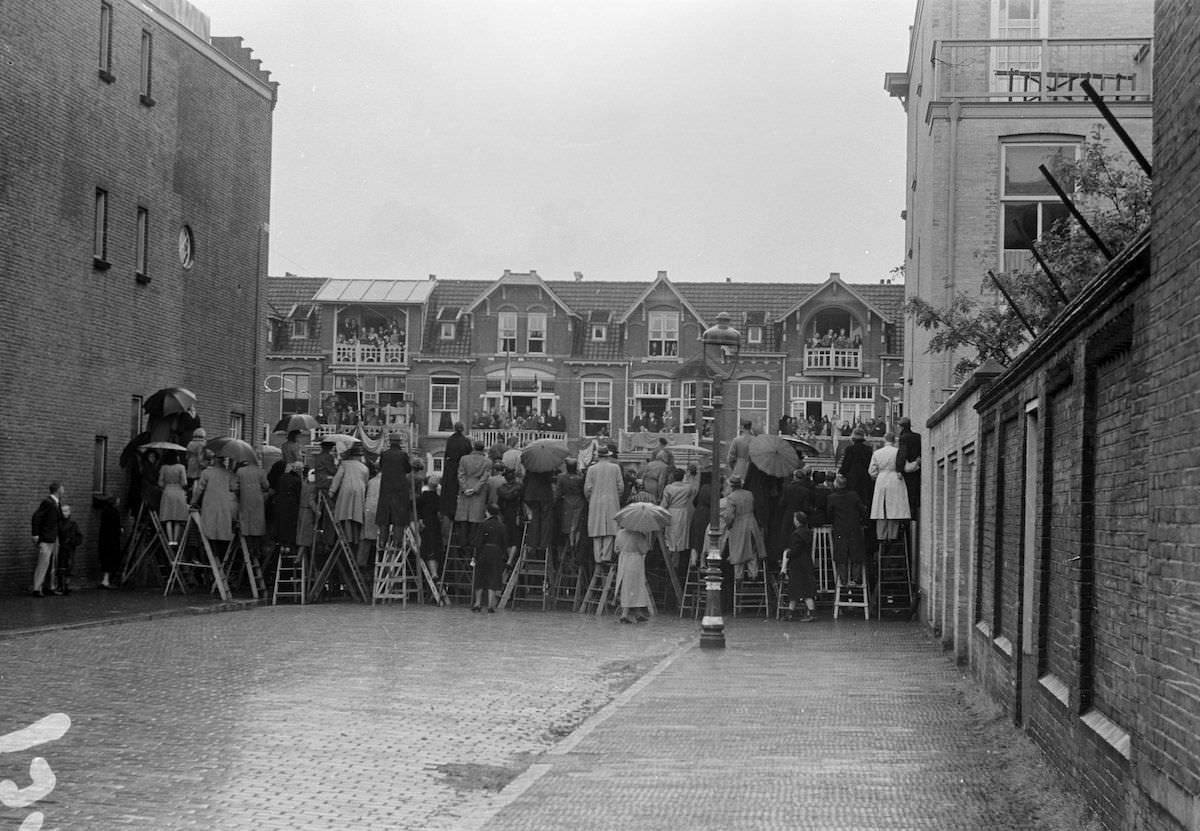
The occupation brought with it shortages, reprisals, and fear. Dutch citizens were subject to German authority, and resistance came at enormous personal risk. Yet resistance did form — in quiet acts, underground networks, and, for one photographer, in secret images captured on microfilm.
Menno Huizinga was a Dutch photographer working undercover as a spy for the resistance. Beginning in October 1944, he photographed the consequences of the German occupation across The Hague, using microfilm to keep his work hidden. He was a member of the Ondergedoken Camera — the “Hidden Camera” — a group of photographers who took illegal photos throughout the occupation. Most of Huizinga’s work centered on his hometown of The Hague, where the effects of German rule were impossible to ignore.
In September 1944, Dutch railway workers walked off the job in a coordinated strike backed by the Dutch government-in-exile. The goal was to slow German troop movements and support the Allied advance. The strike failed to achieve its military aim, and the Germans responded with collective punishment. They placed an embargo on all inland shipping, cutting off food supplies to cities across the western Netherlands, including The Hague.
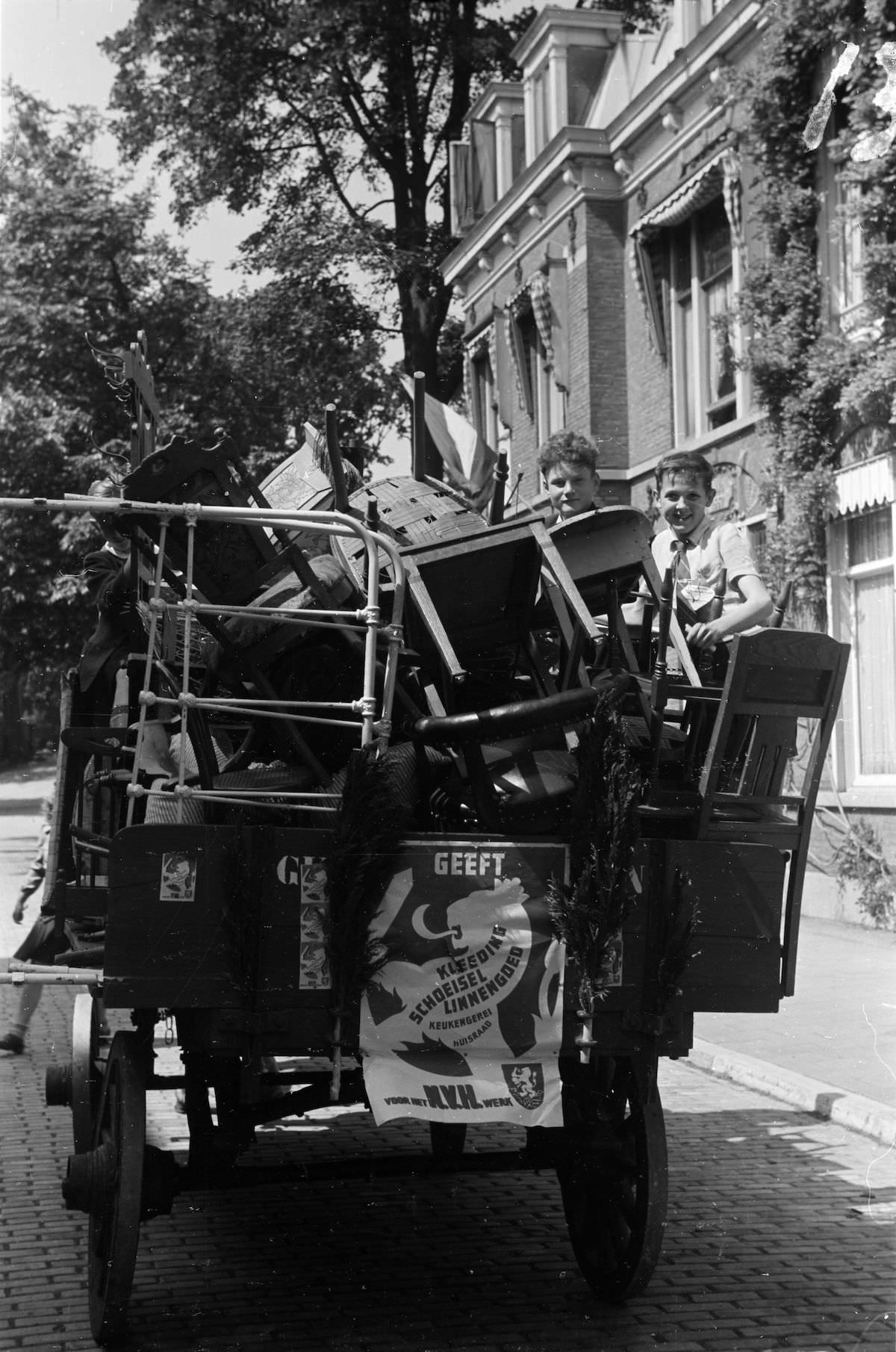
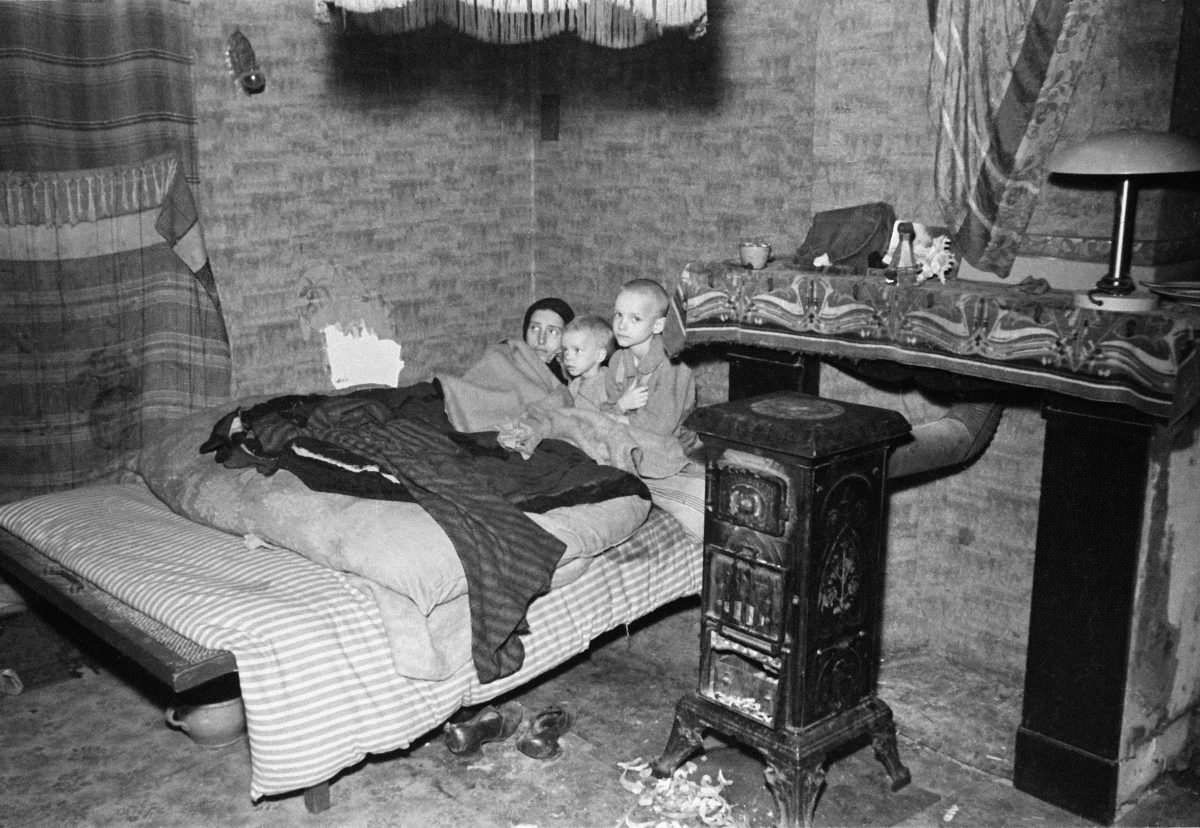
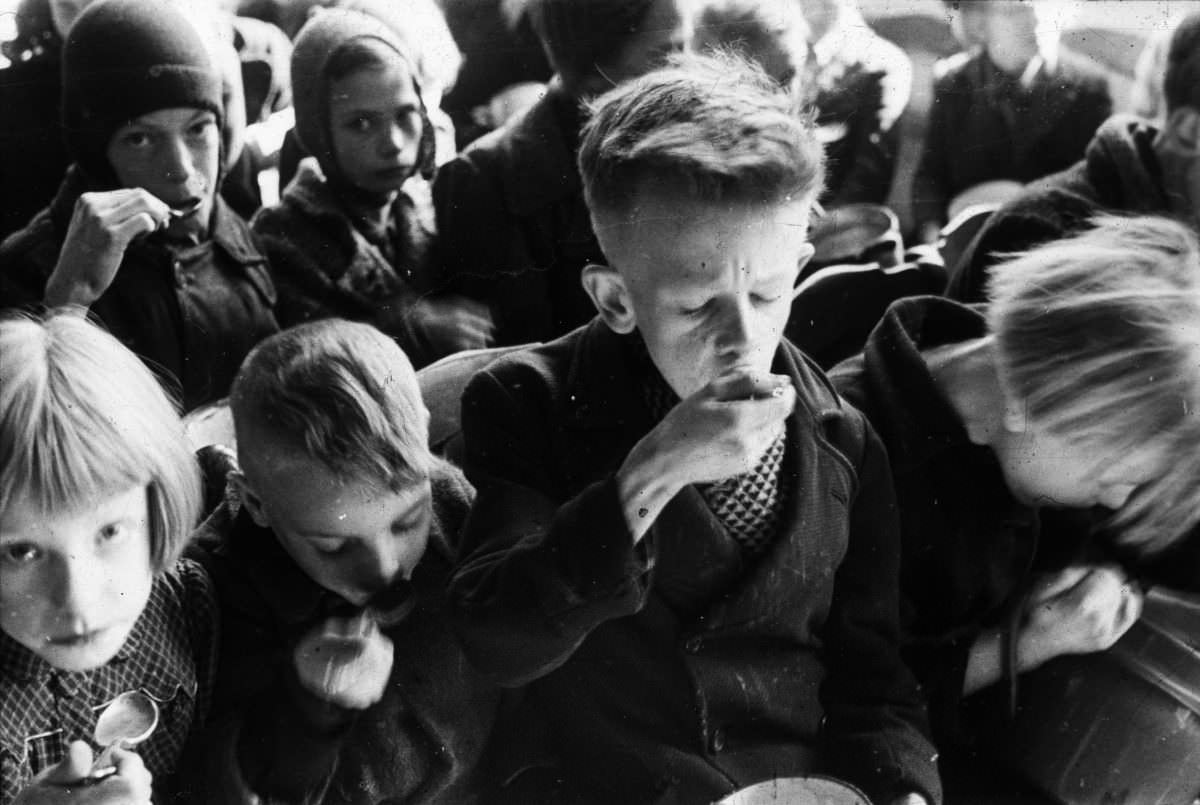
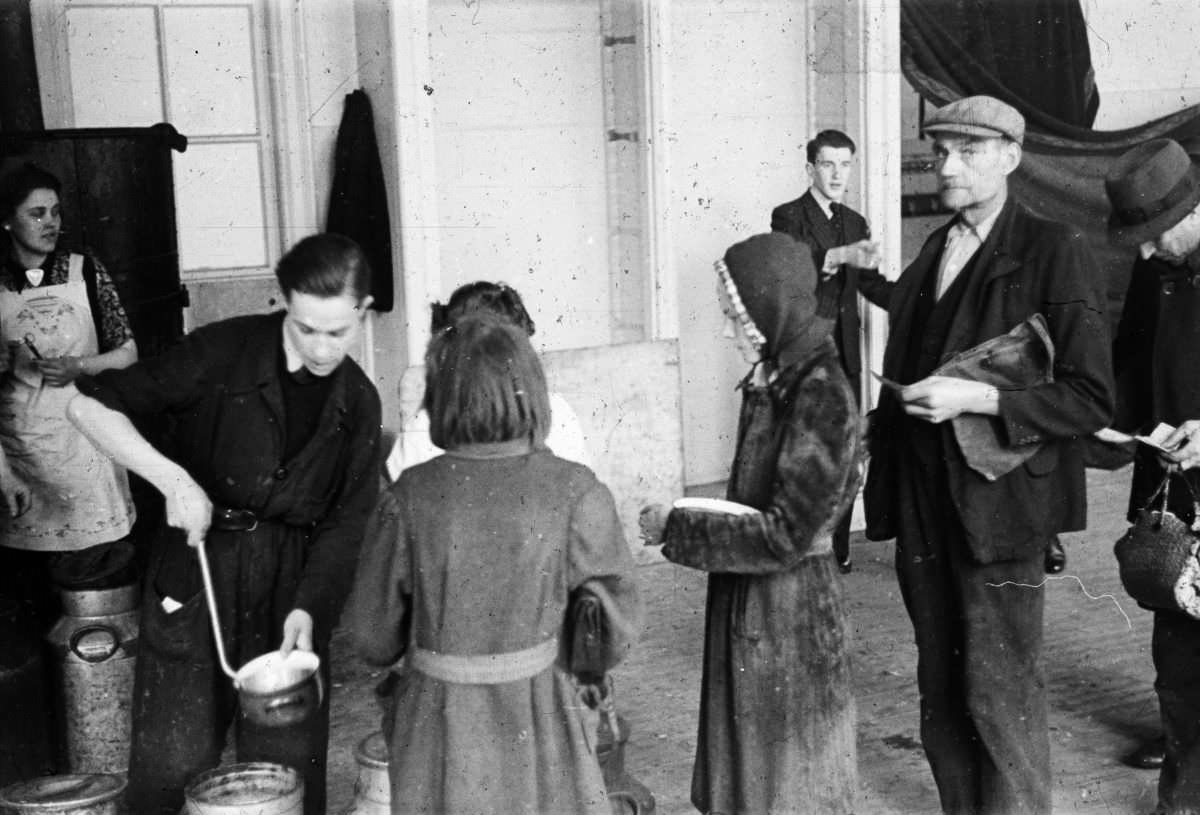
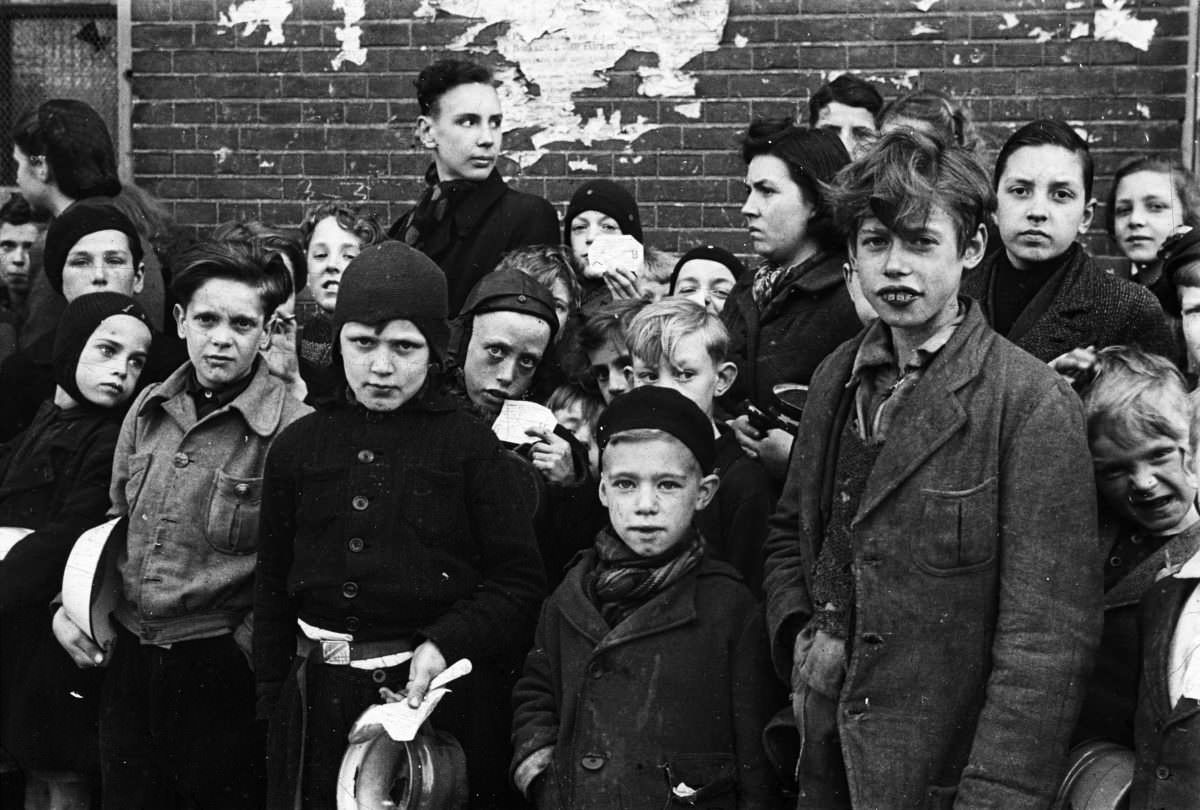
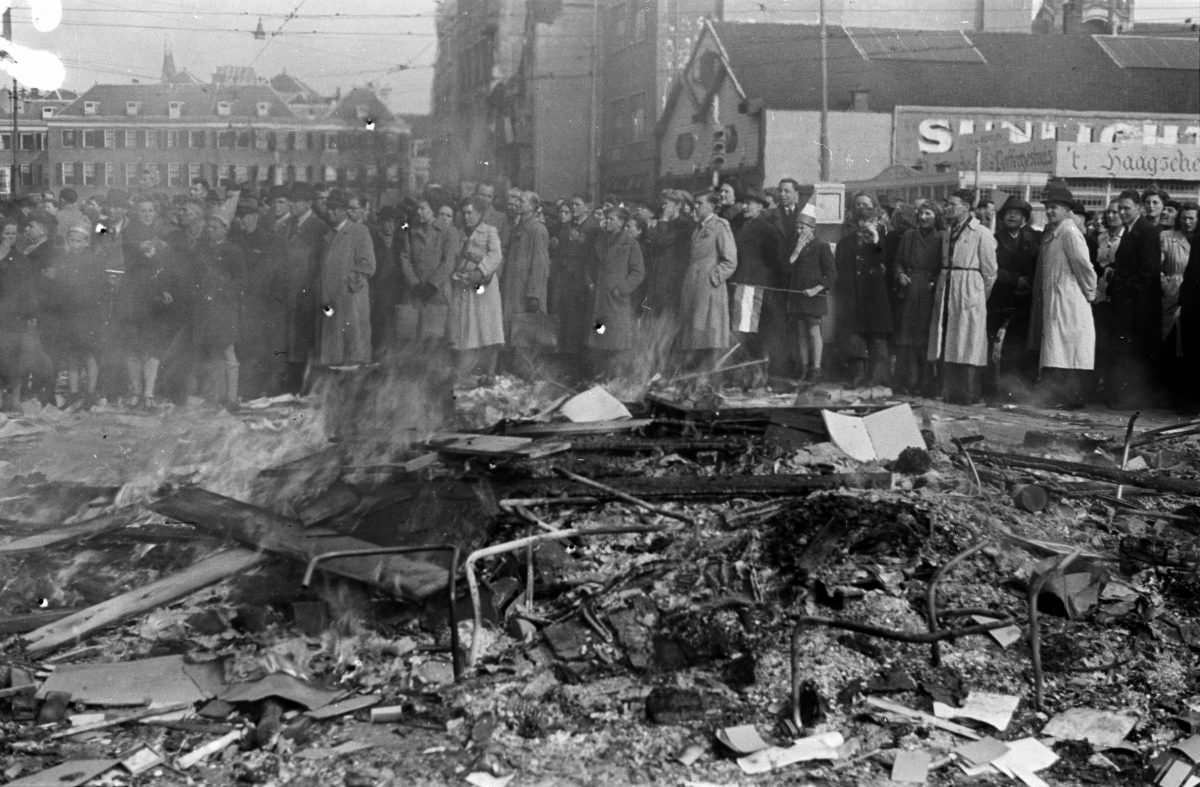
The result was the Hunger Winter of 1944–1945. Farm produce could not reach urban populations. Rations dropped to starvation levels. More than 20,000 Dutch people died of hunger. Children stood in lines for small portions of supplementary food. Families burned furniture for warmth. The streets of The Hague became a record of quiet desperation.
Huizinga captured these scenes at great personal risk. Photographing the occupation without German authorization was illegal and punishable by arrest or worse. His images document not only the hunger but also the physical destruction that German forces and the war itself brought to Dutch neighborhoods.
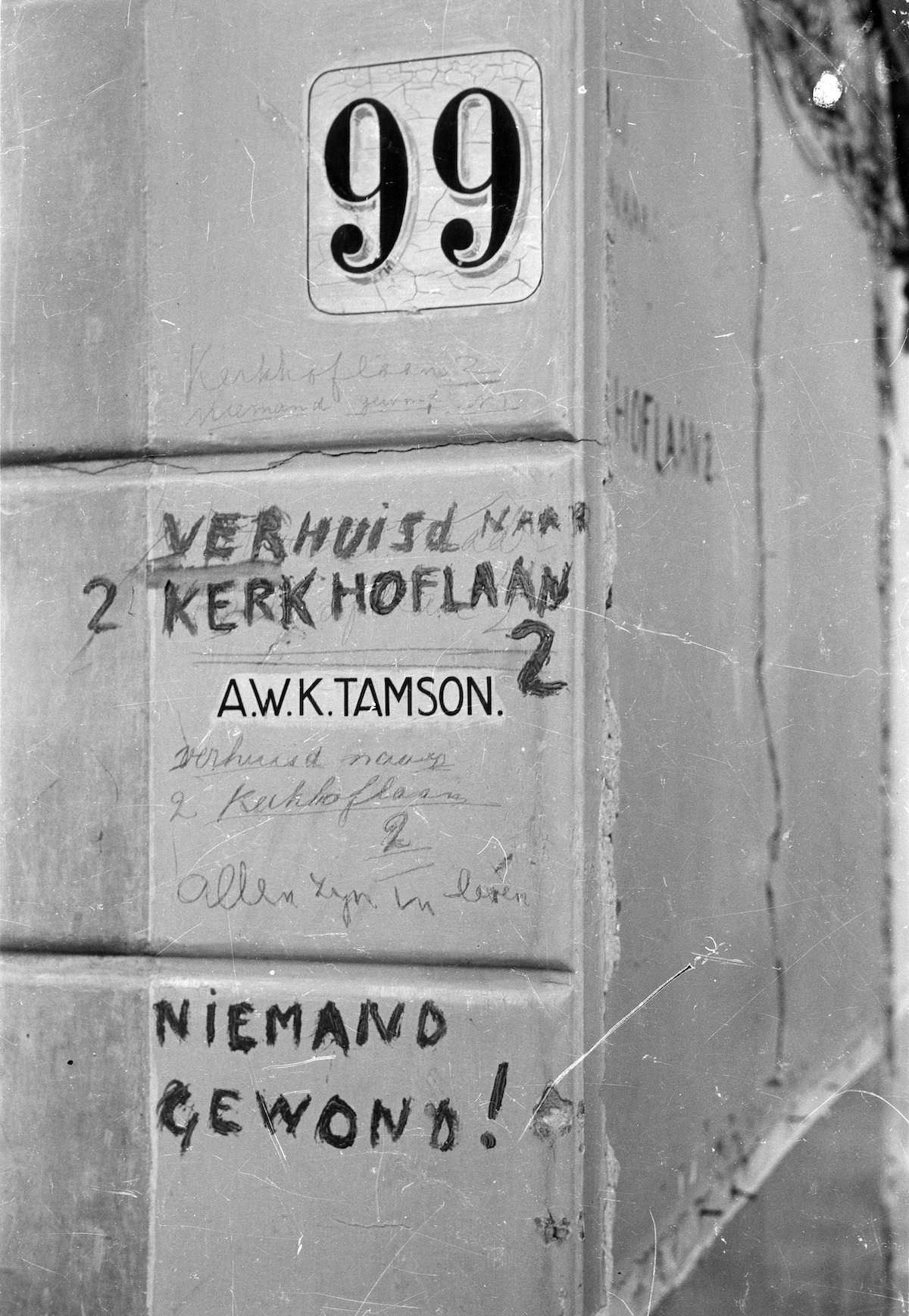
Tamson, were not injured, but the house was severely damaged. At 8:15 am in the morning of January 25, a V2 crashed in a residential area of the Archipelbuurt. The houses at Riouwstraat 96 to 120 were destroyed, resulting in 10 deaths. Menno Huizinga was part of the Hiding Camera and illegally took photos during the occupation.
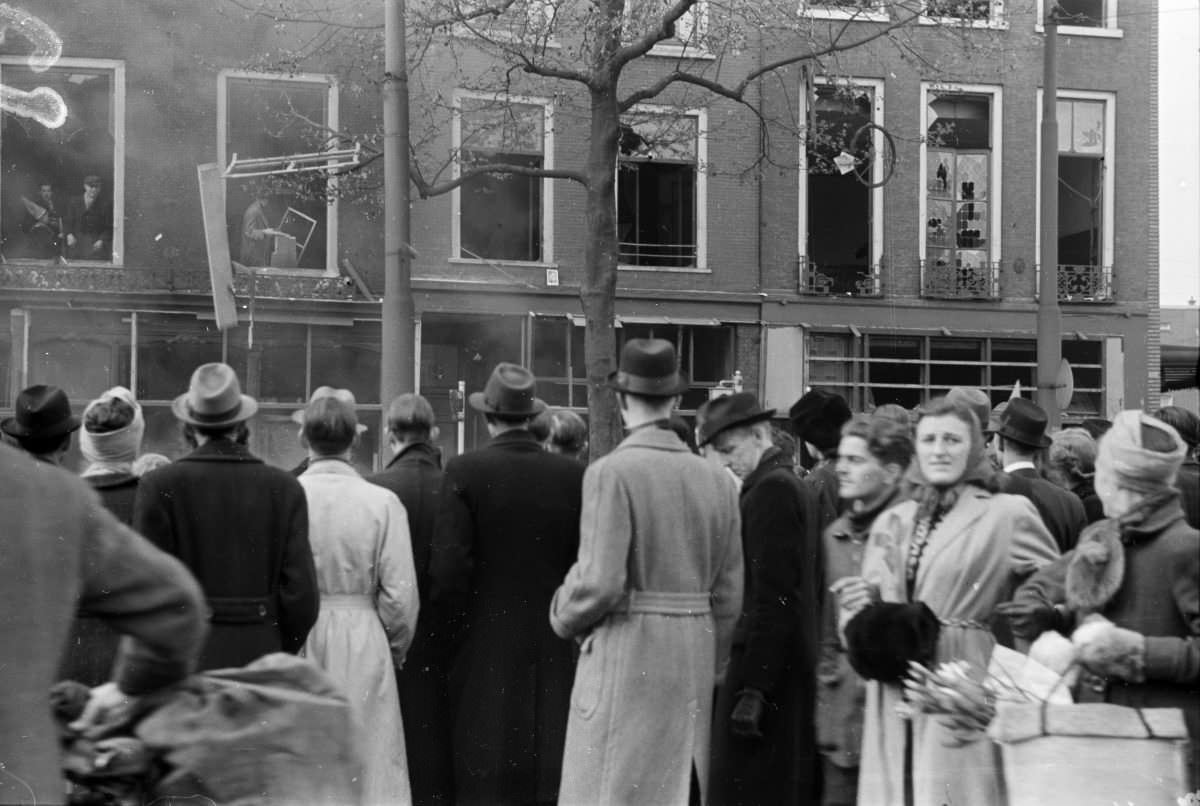
On January 25, 1945, a German V2 rocket struck the Archipelbuurt neighborhood of The Hague at 8:15 in the morning. The impact destroyed homes along Riouwstraat 96 to 120 and killed ten people. Huizinga photographed the aftermath, including the inscription left beside the front door of one surviving house at number 99, where the Tamson family had escaped with their lives but lost their home to severe damage.
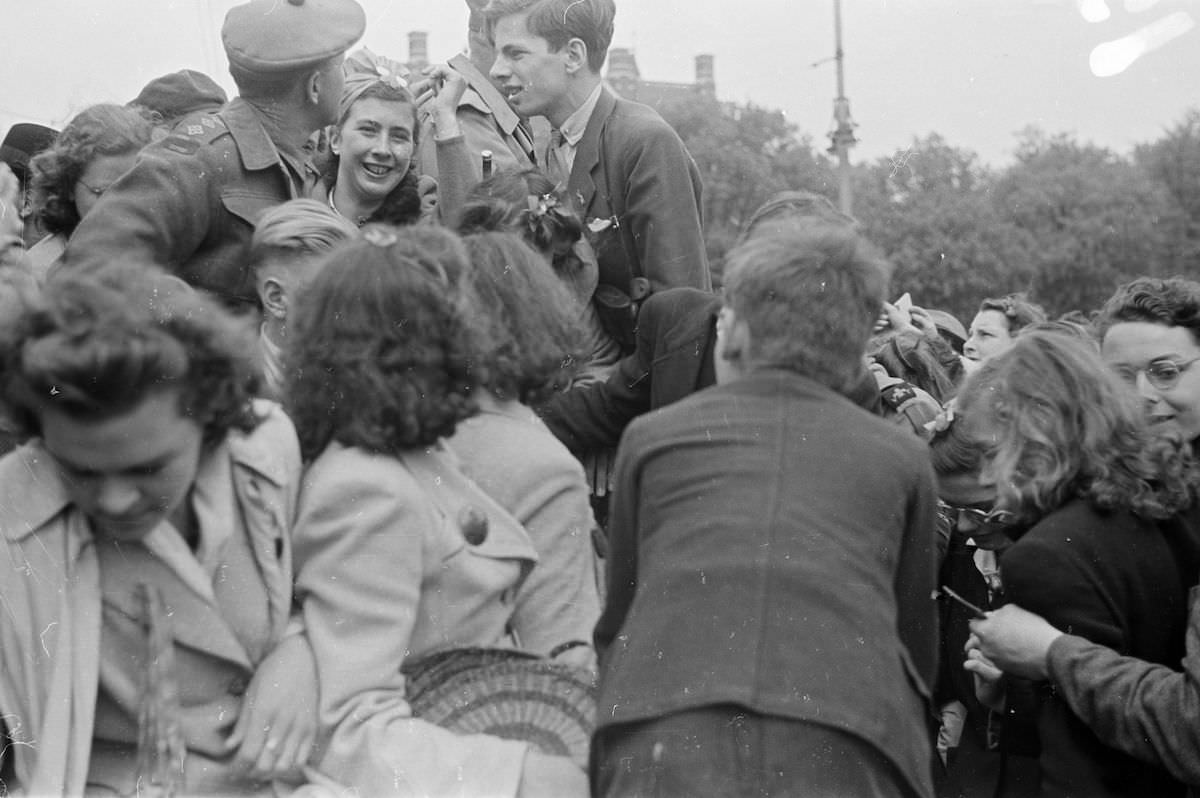
By early May 1945, the German grip on the Netherlands was finally breaking. Germany surrendered control of the Netherlands on May 5, 1945. The total cost of the occupation was staggering — more than 205,901 Dutch men and women had died of war-related causes over five years.
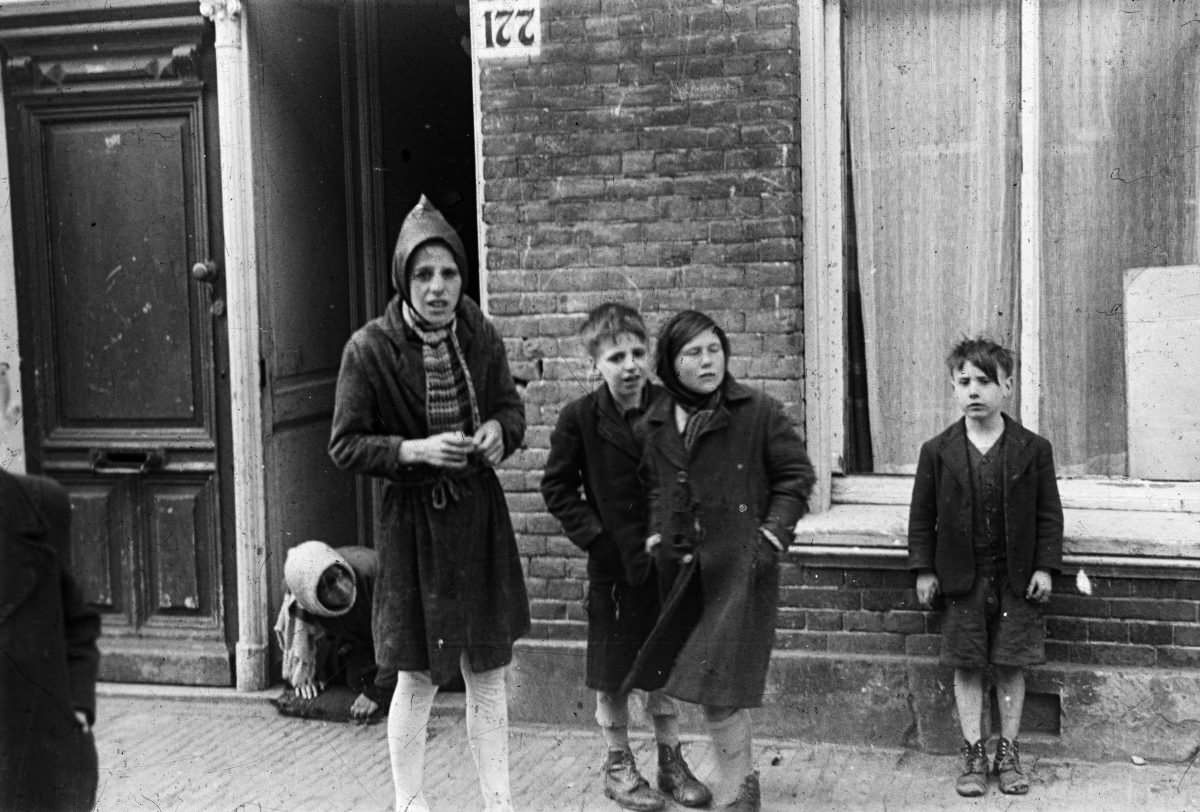
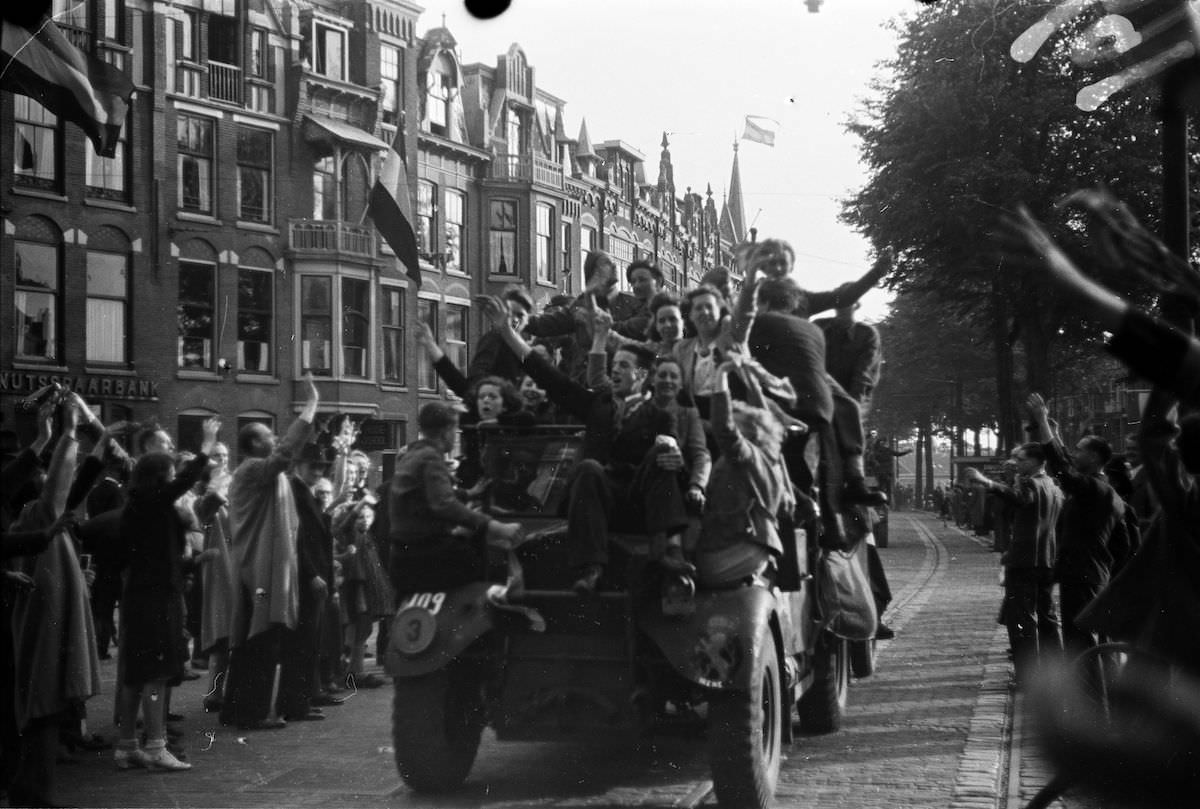
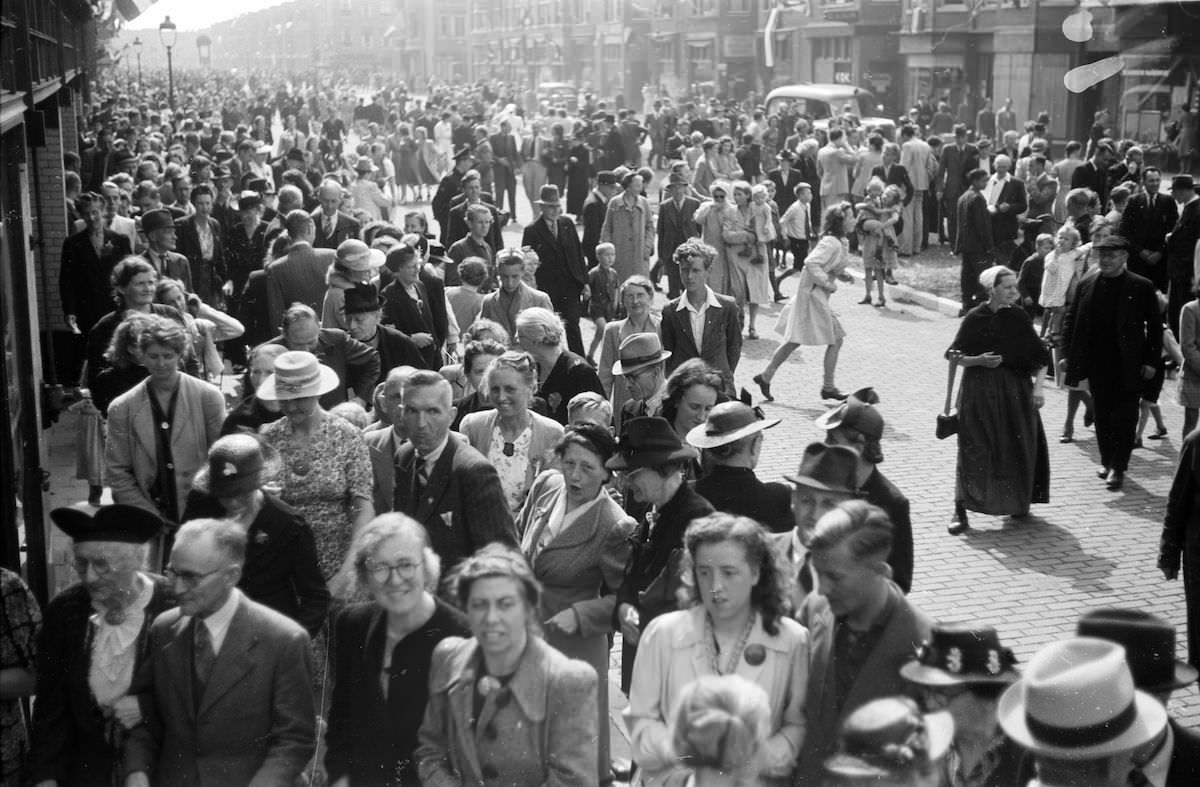
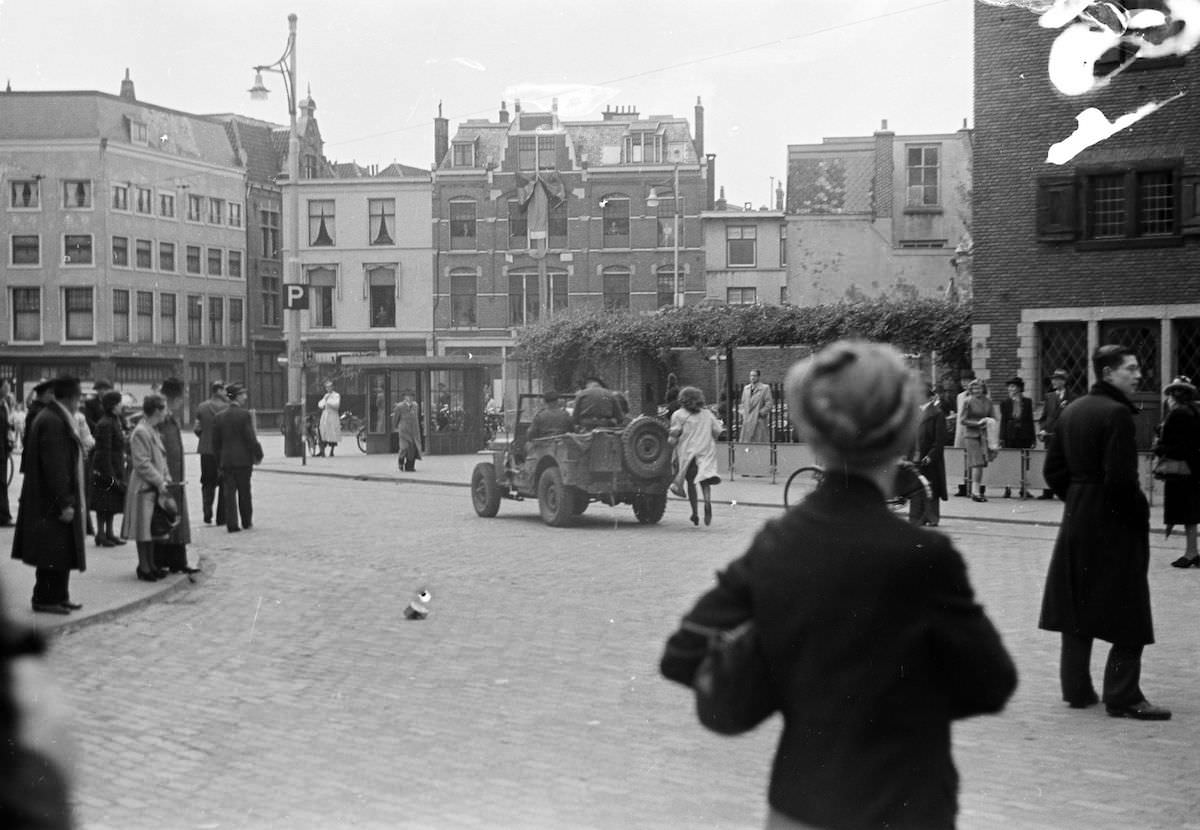
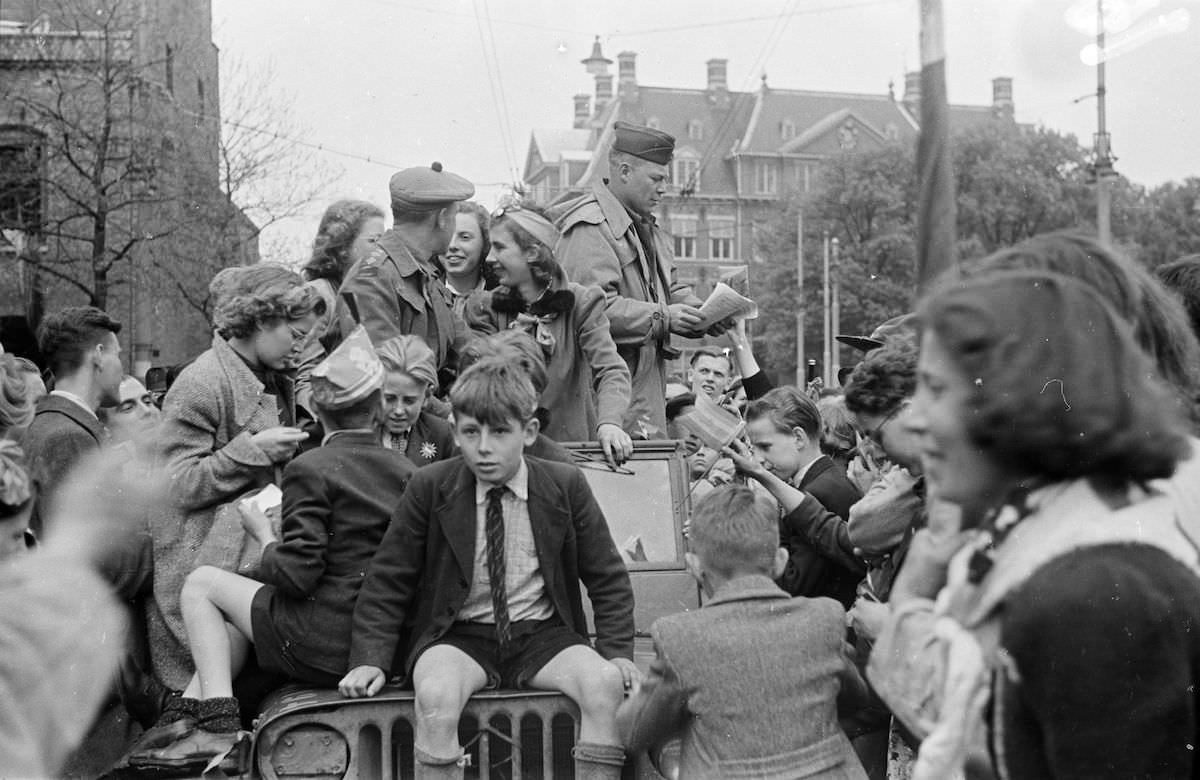
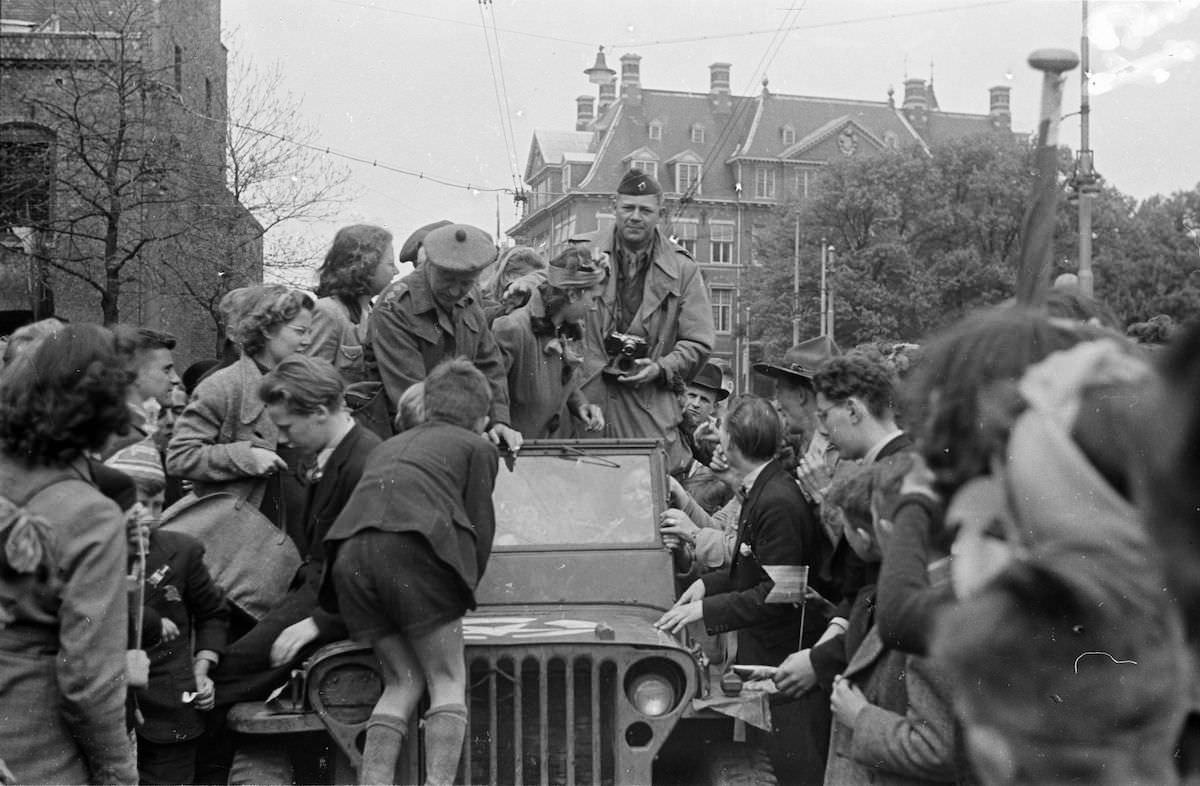
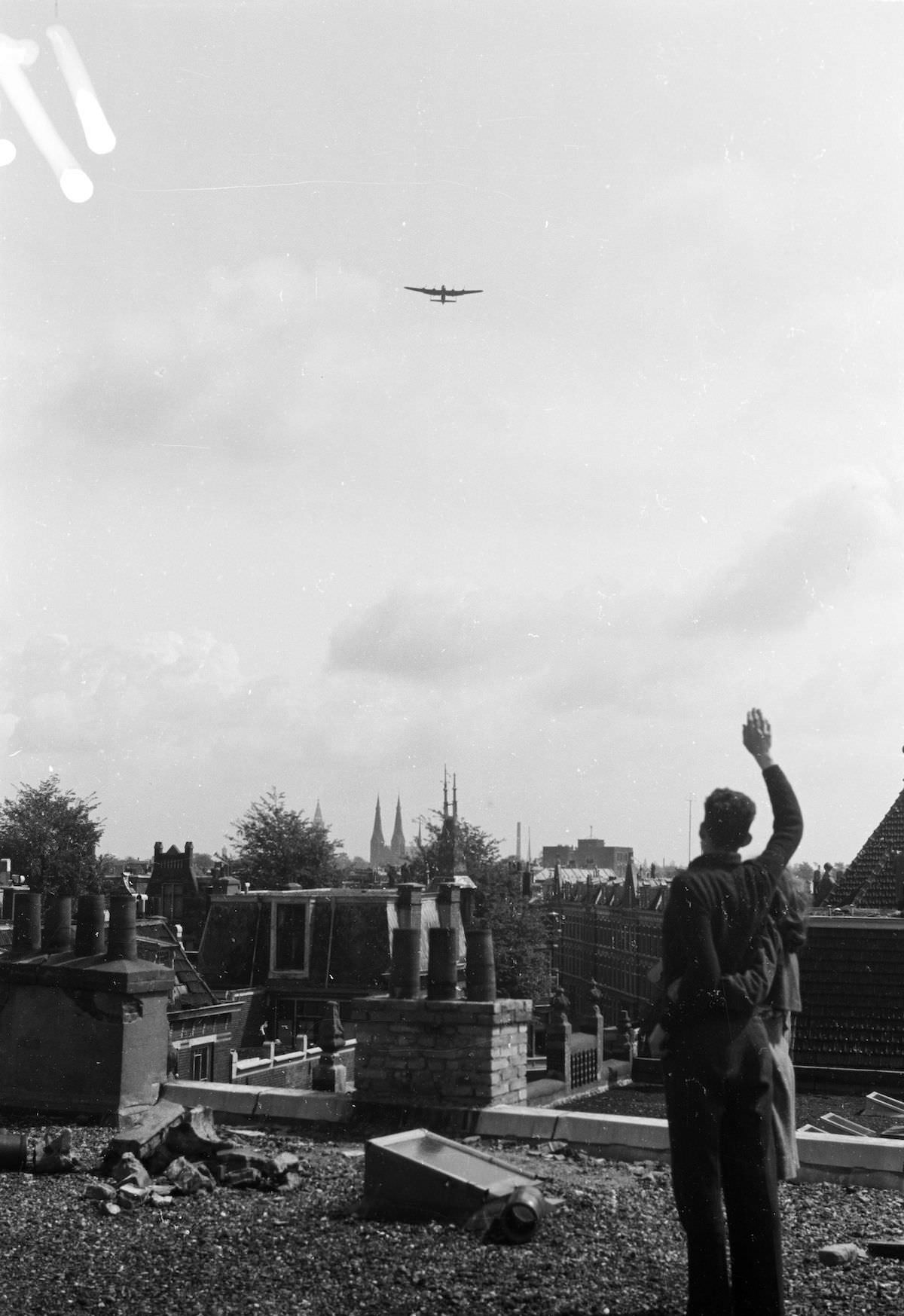
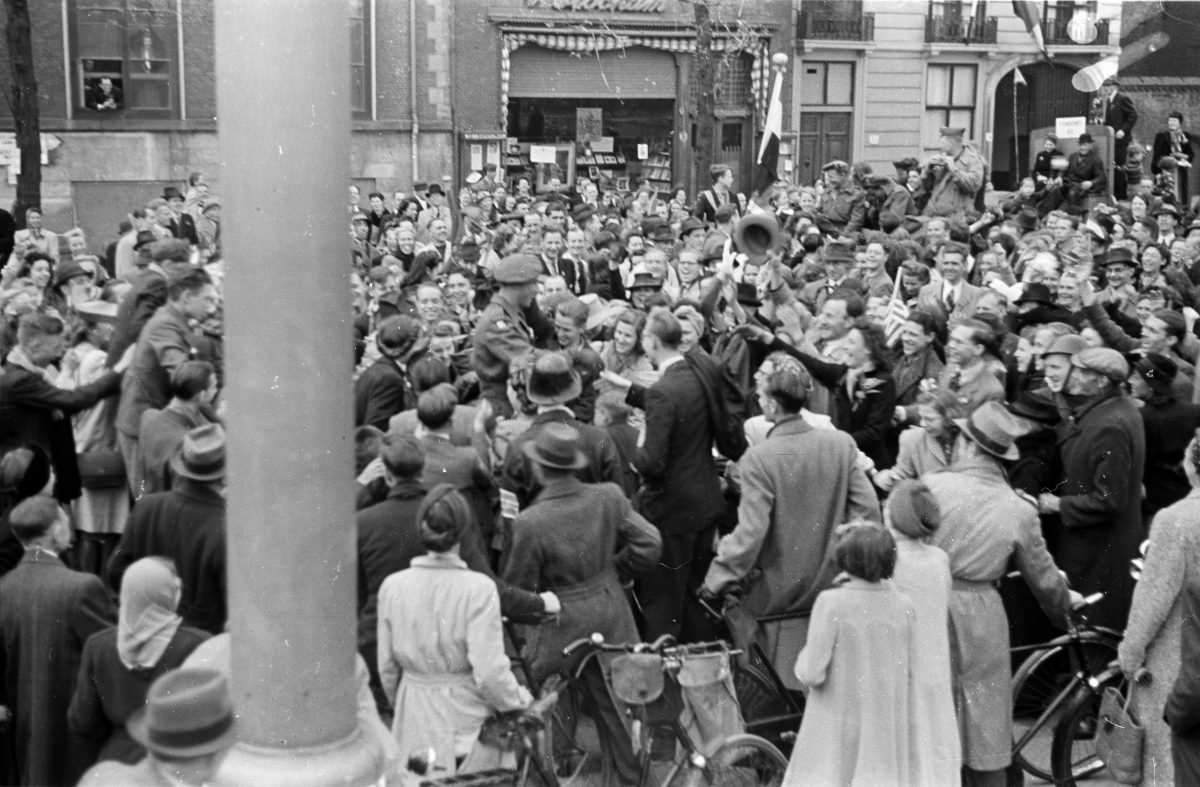
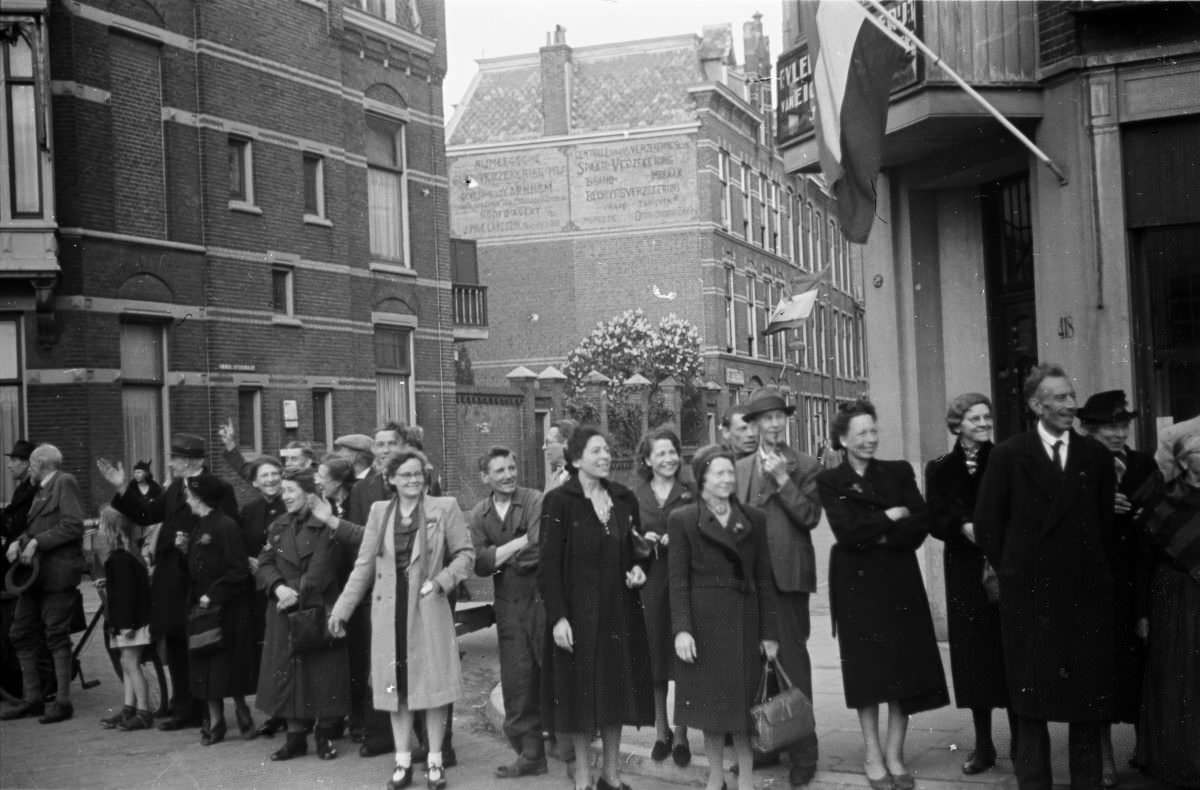
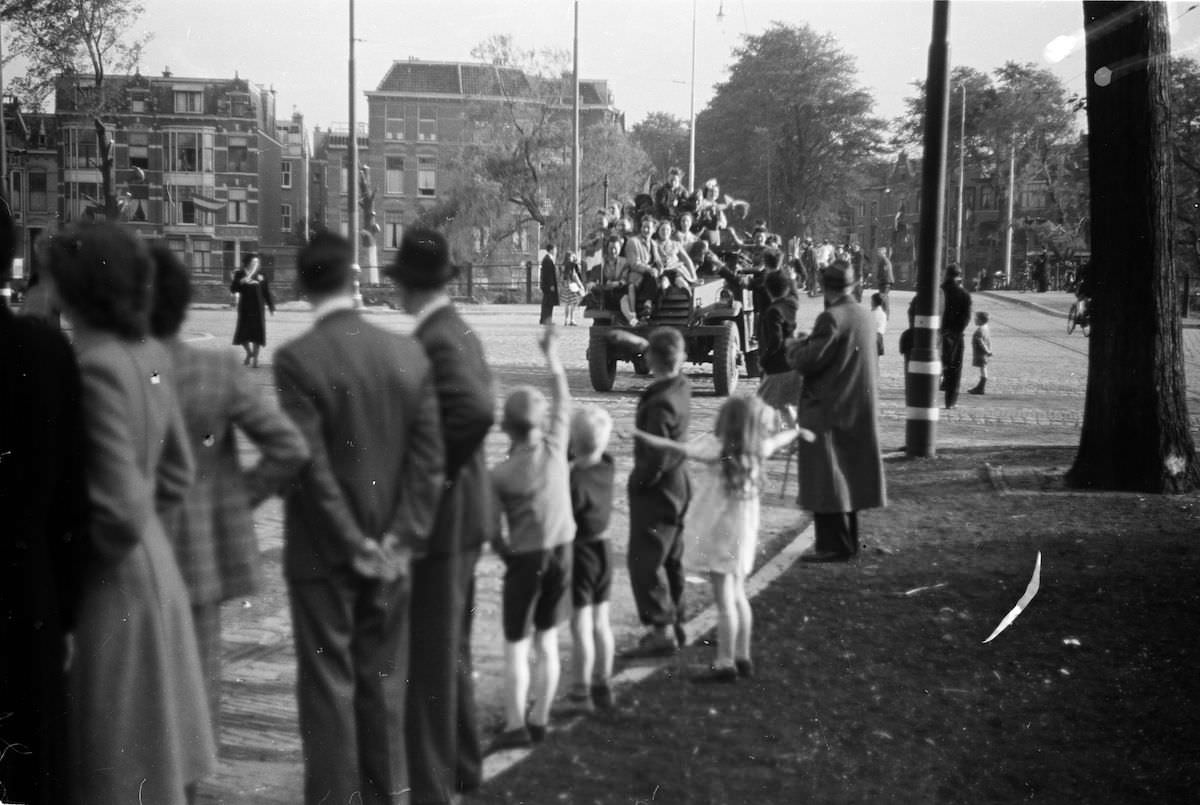
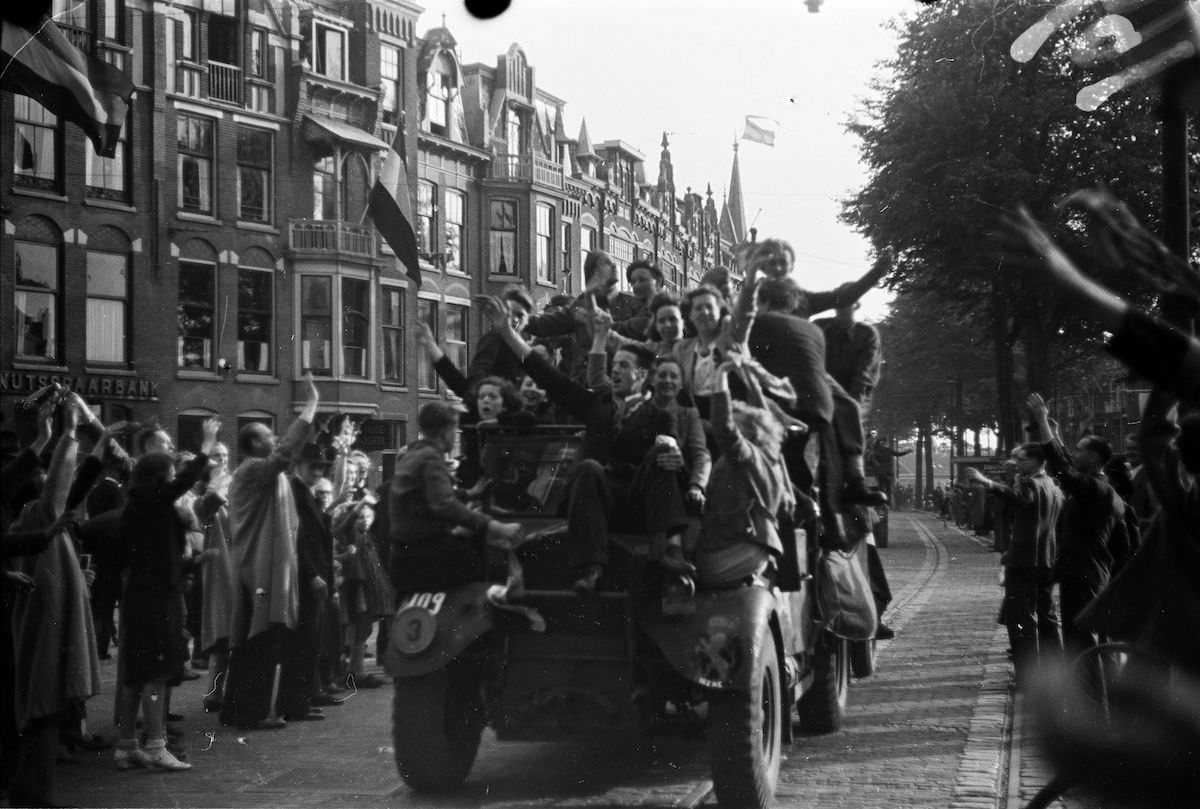
When liberation came, the streets of The Hague erupted. Canadian soldiers who arrived on May 6 were met by enormous, celebrating crowds. Huizinga was there with his camera, now no longer hidden, documenting the release of five years of fear and suffering in a single outpouring of joy.
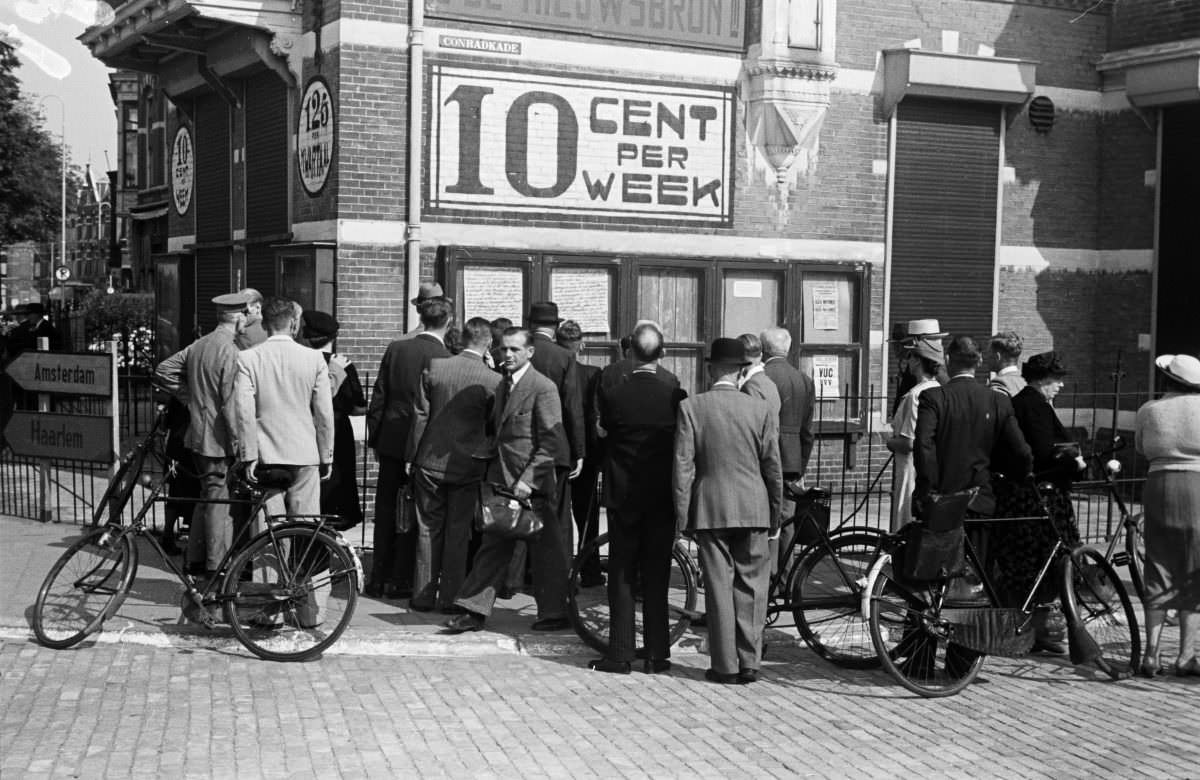
News spread rapidly through the city. People gathered in the streets to read handwritten bulletins posted on walls, hungry for information after years of German-controlled media. Small moments of normalcy — a girl holding a bowl of butter, children receiving food — carried the weight of everything that had been denied.
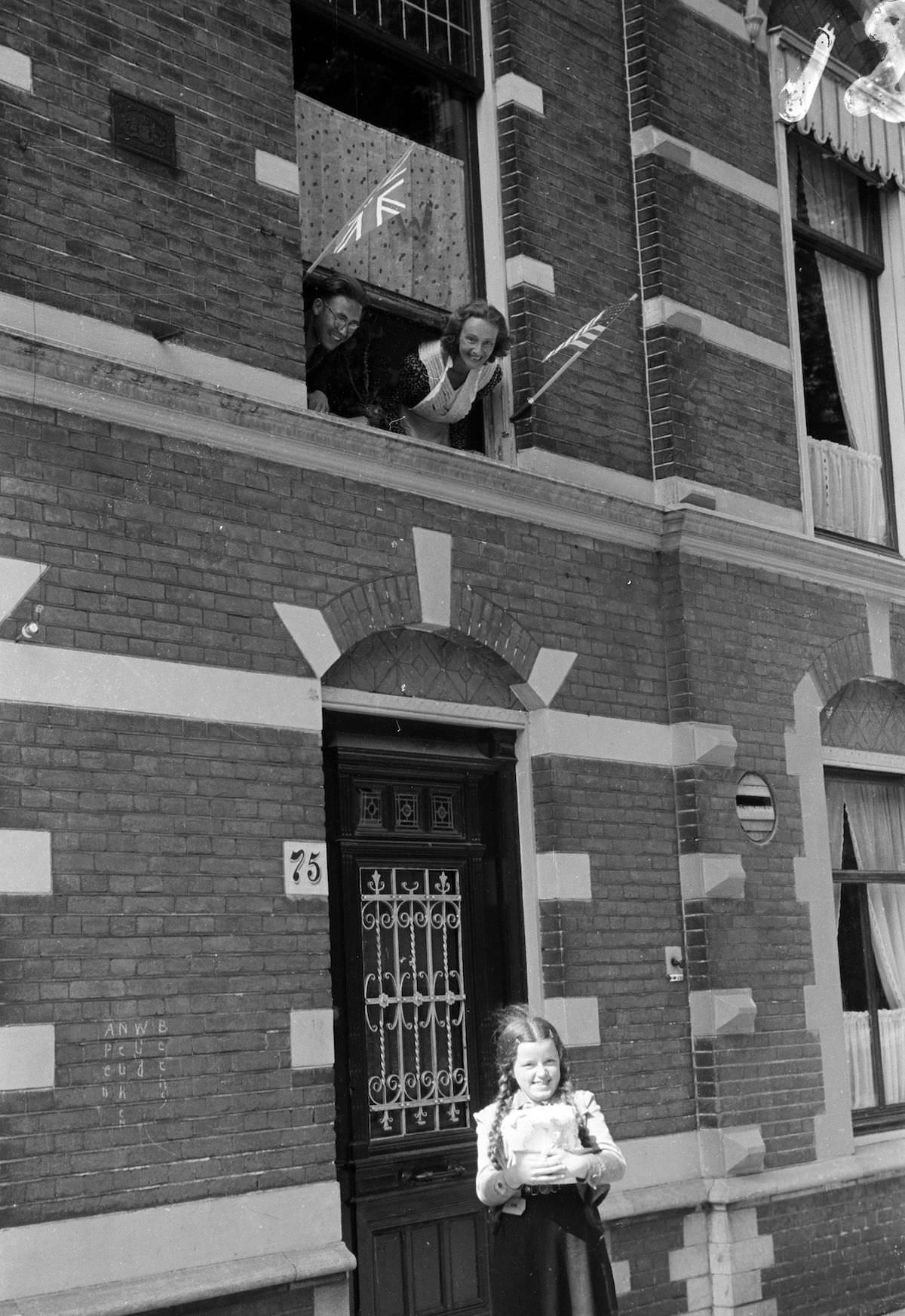
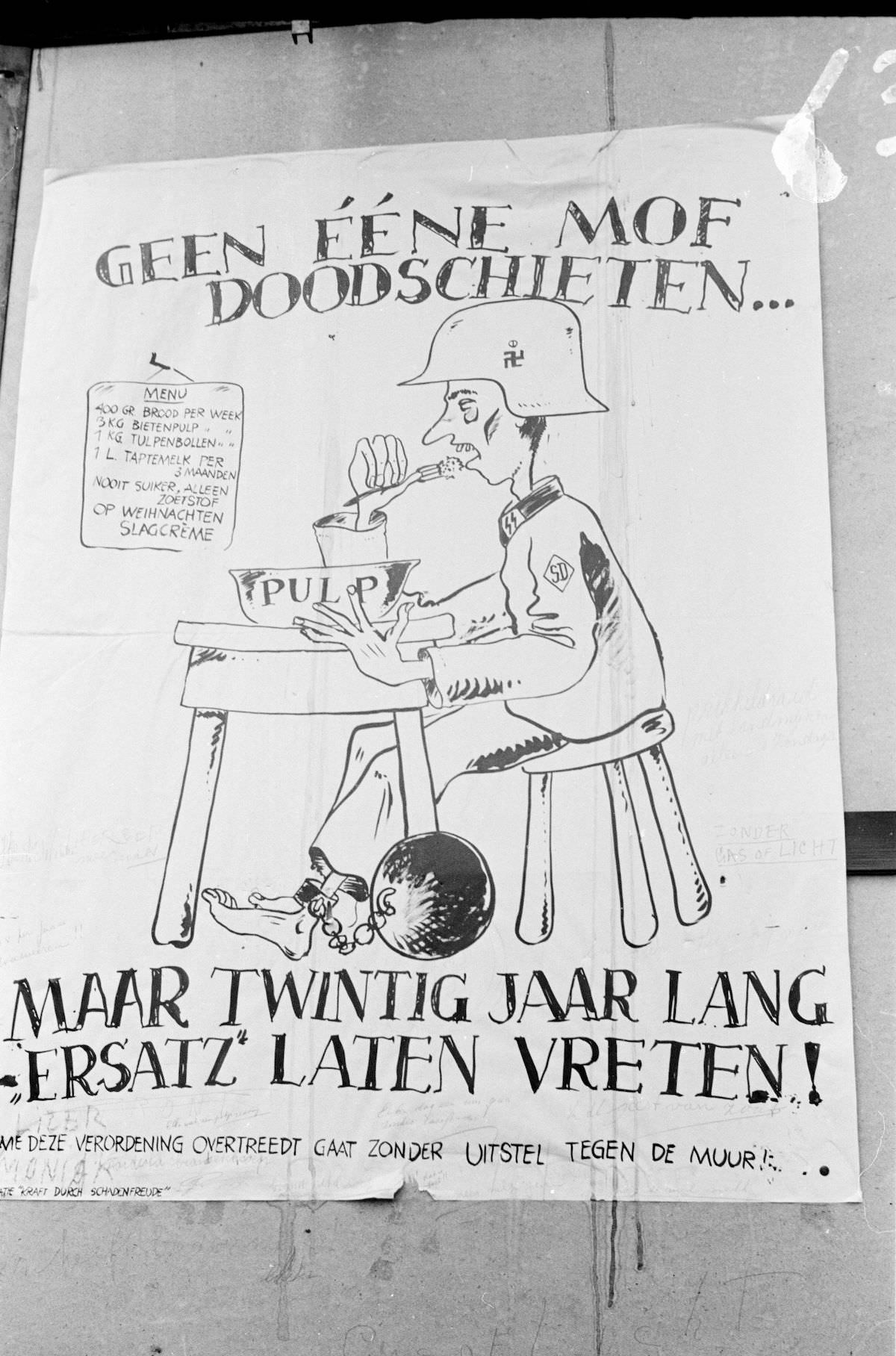
Public anger at the occupiers also came into the open. On the Buitenhof, cartoons mocking the Germans for the hunger they had caused were posted openly in the street — something that would have meant arrest or death just days earlier.
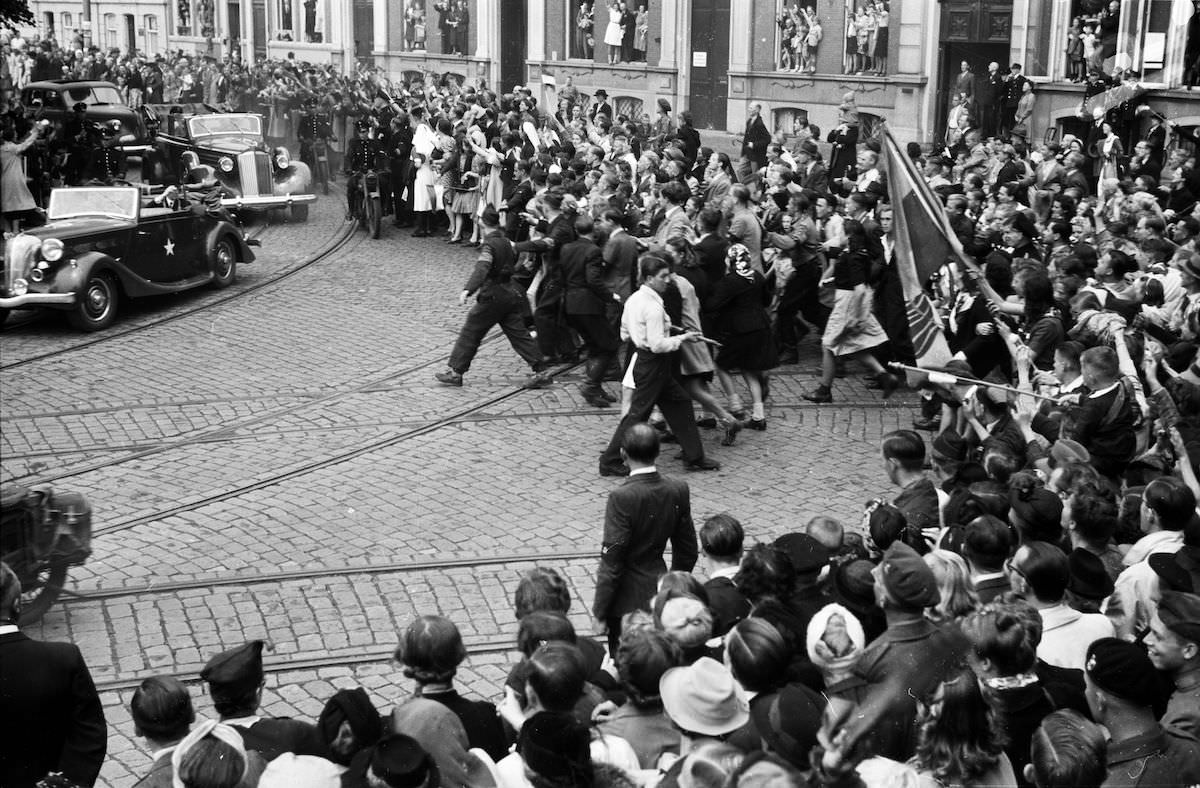
Queen Wilhelmina, who had led the Dutch government-in-exile from London throughout the war, returned to The Hague. Her entry into the city was a defining moment of the liberation — a symbol that Dutch sovereignty, suppressed for five years, had been restored.
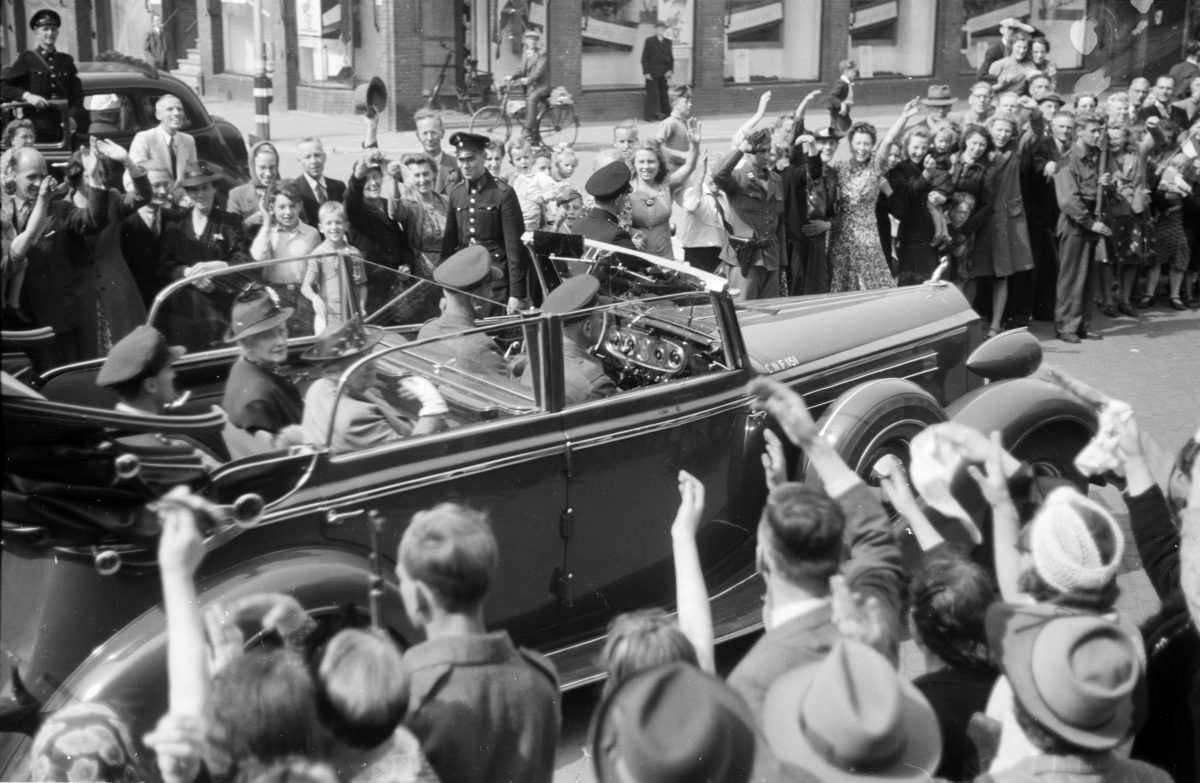
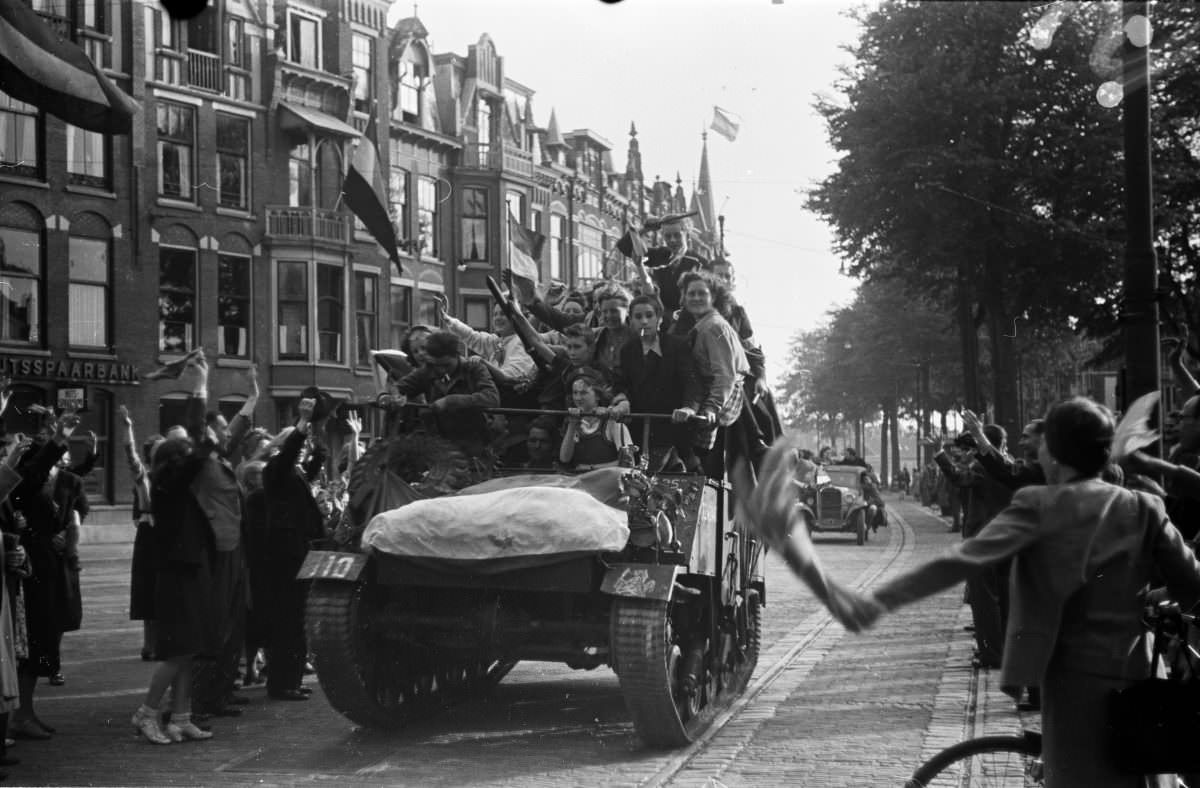
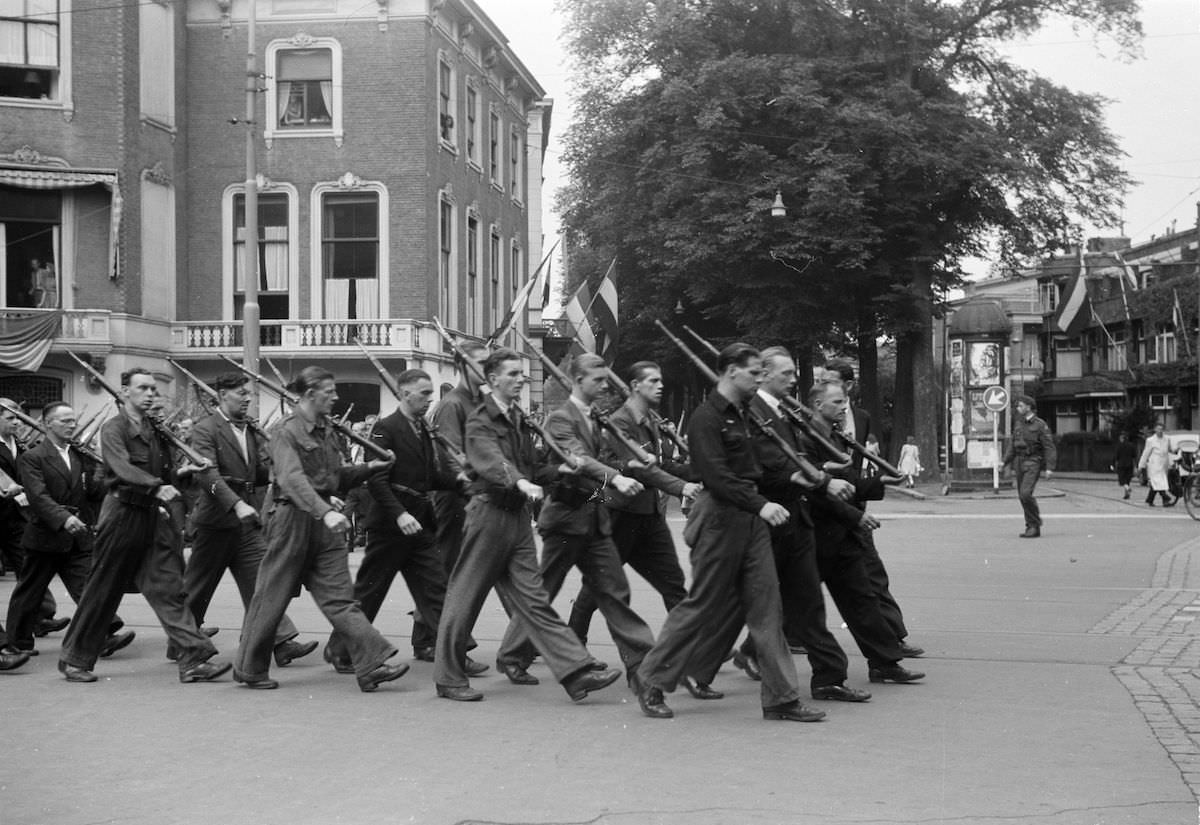
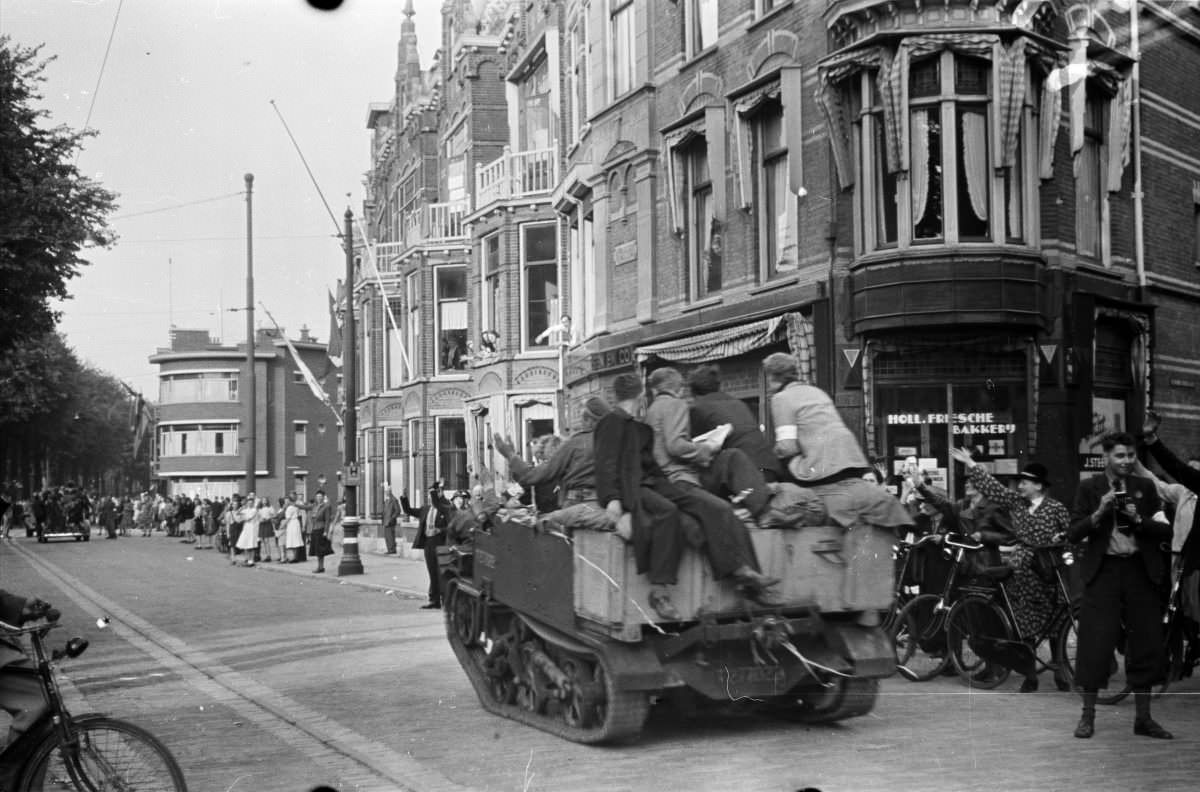
On May 8, 1945, the Princess Irene Brigade — a Dutch military unit that had fought alongside the Allies — entered The Hague. At the corner of Groot Hertoginnelaan and Obrechtstraat, crowds pressed in around their vehicles in the early evening, cheering with a force that matched the depth of what they had endured.
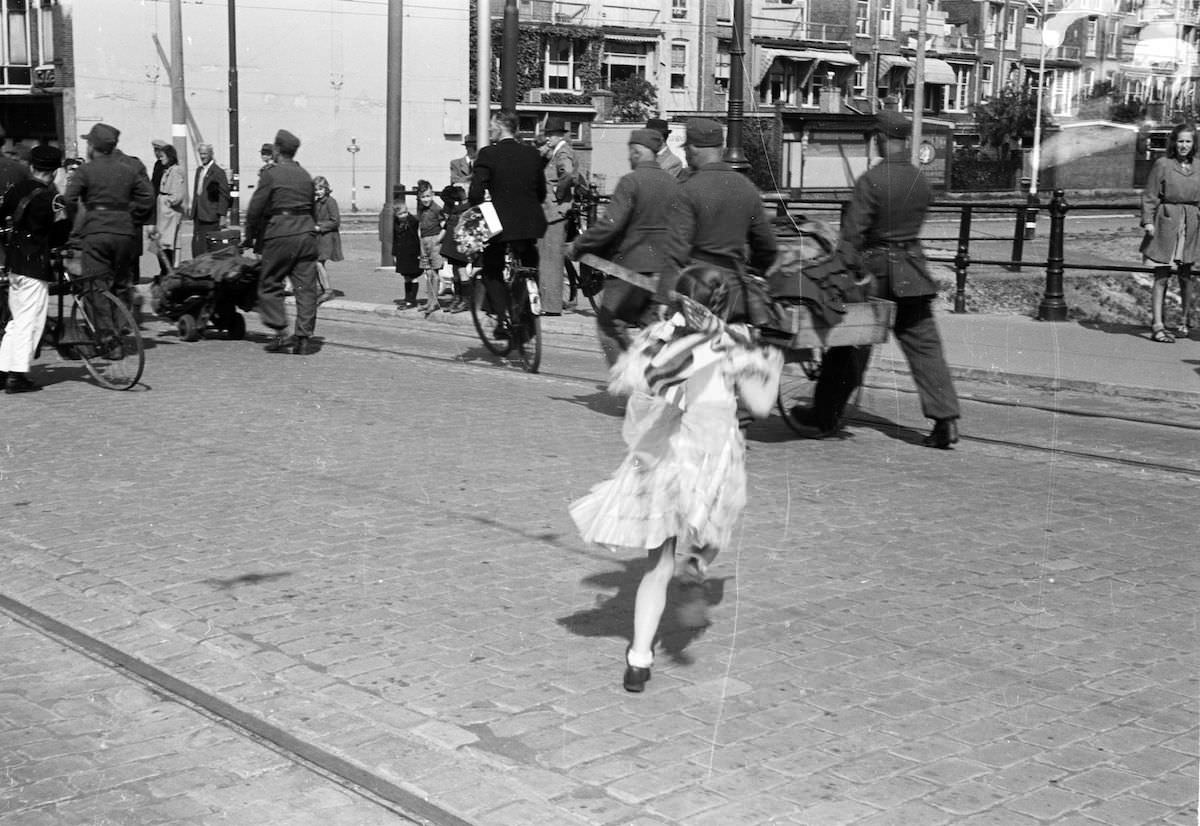
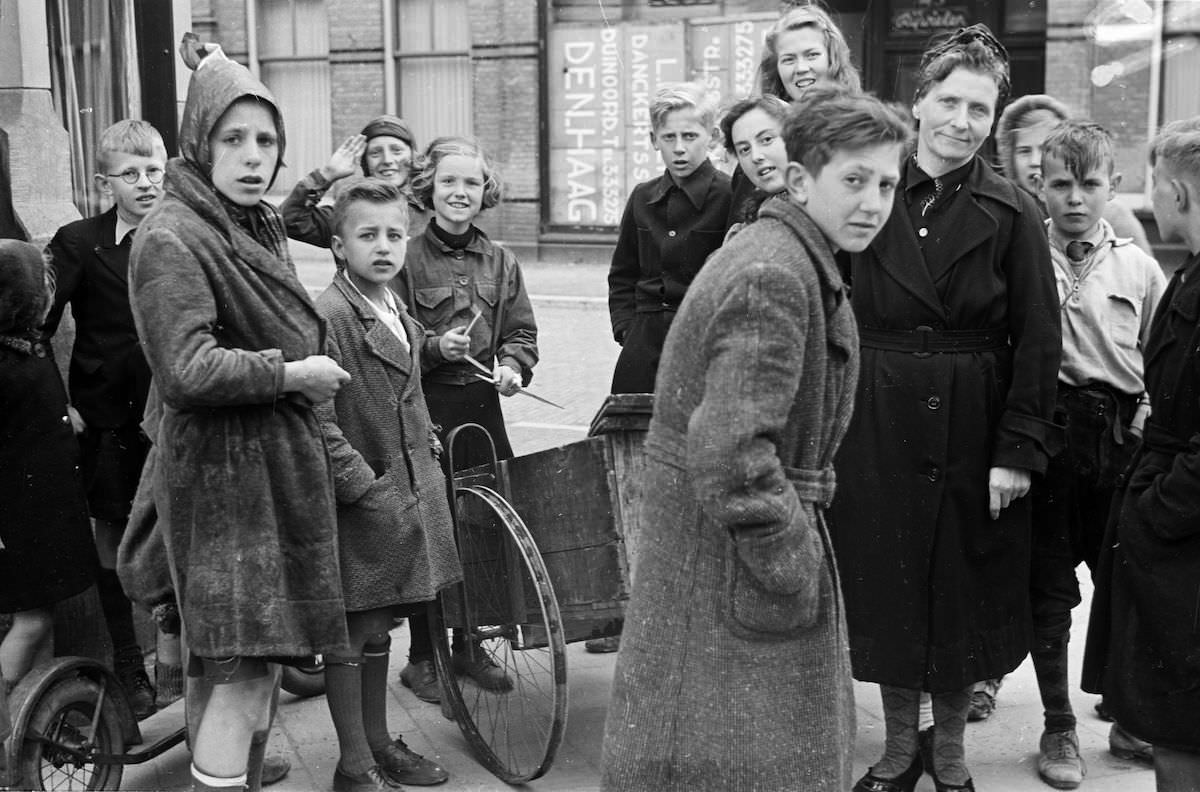
Huizinga photographed all of it — the soldiers, the crowds, the anger, the relief. His collection, now held at the NIOD Institute for War, Holocaust and Genocide Studies, stands as one of the most complete visual records of what The Hague looked like under occupation and during the days of liberation.