Stunning Vintage Photos of Les Halles, Paris in the 1960s, before its Demolition
803 Views
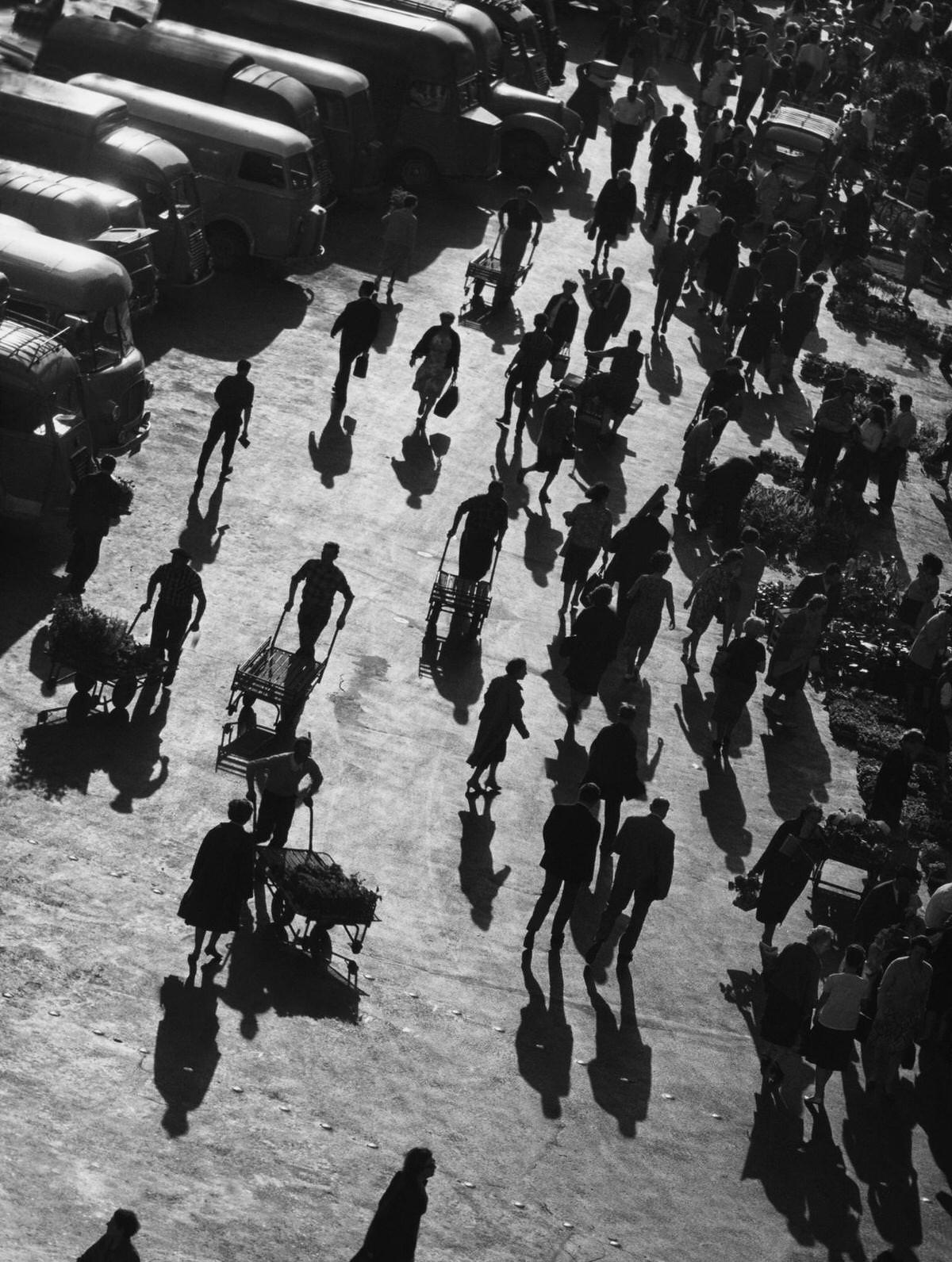
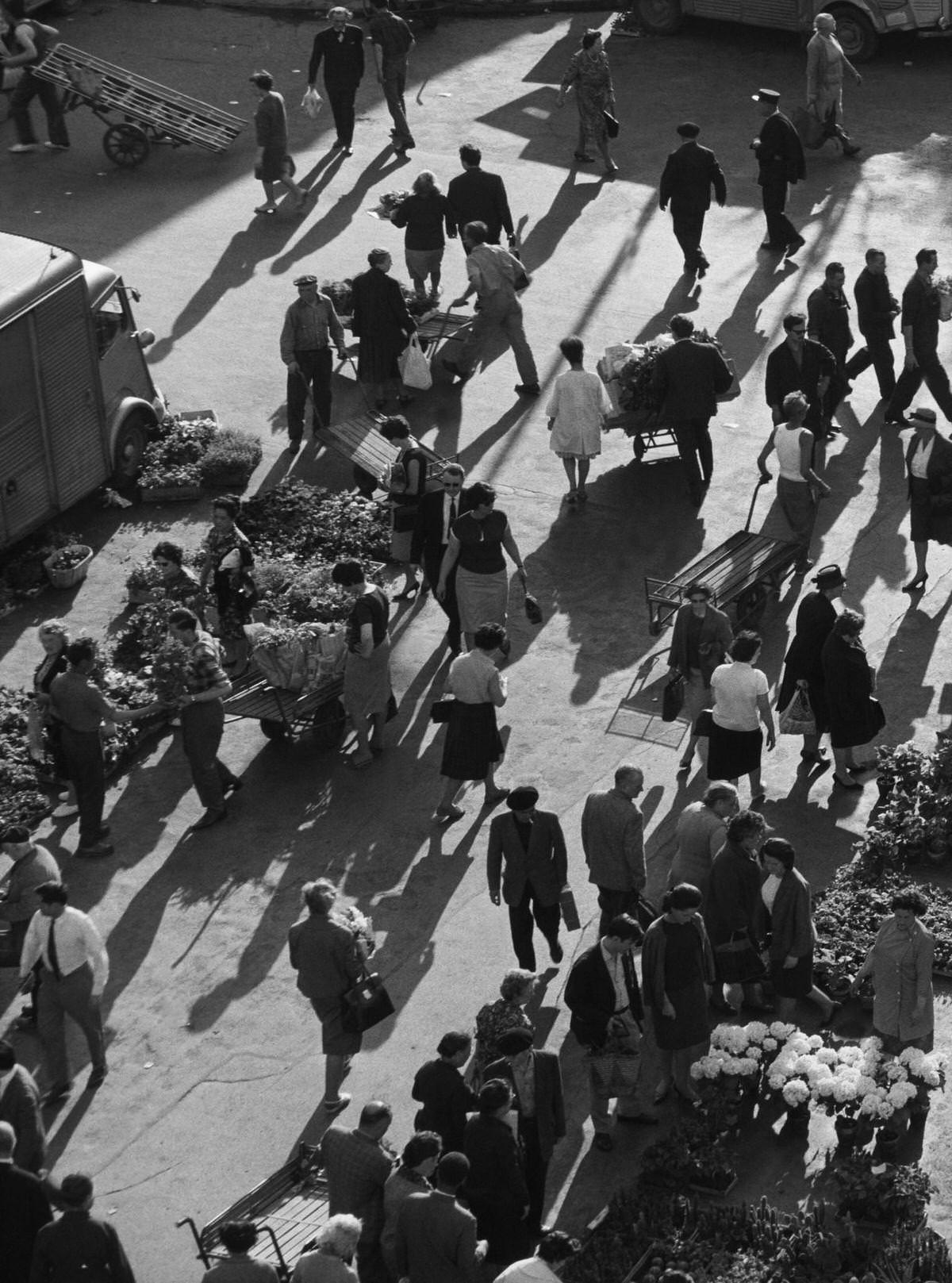
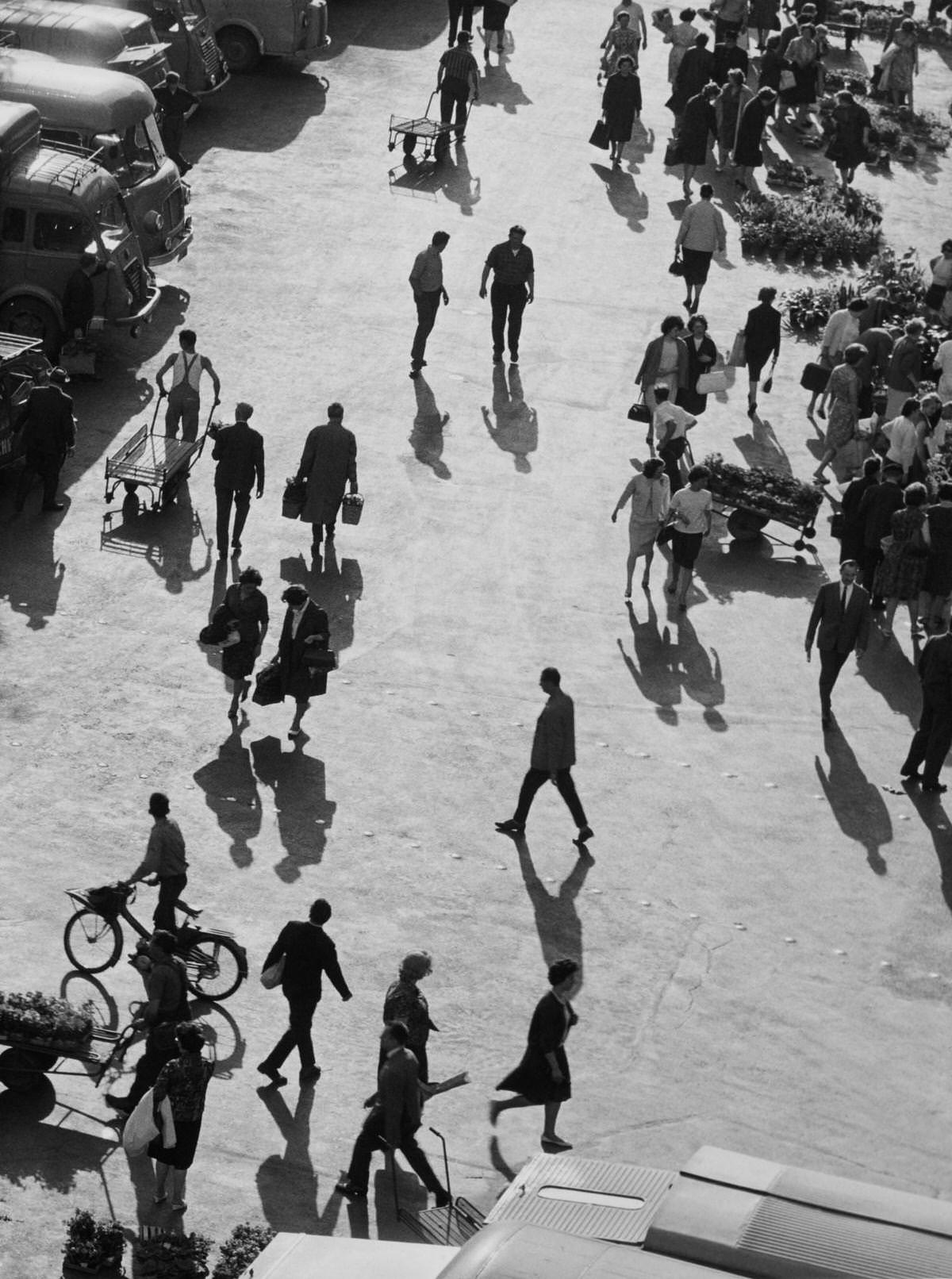
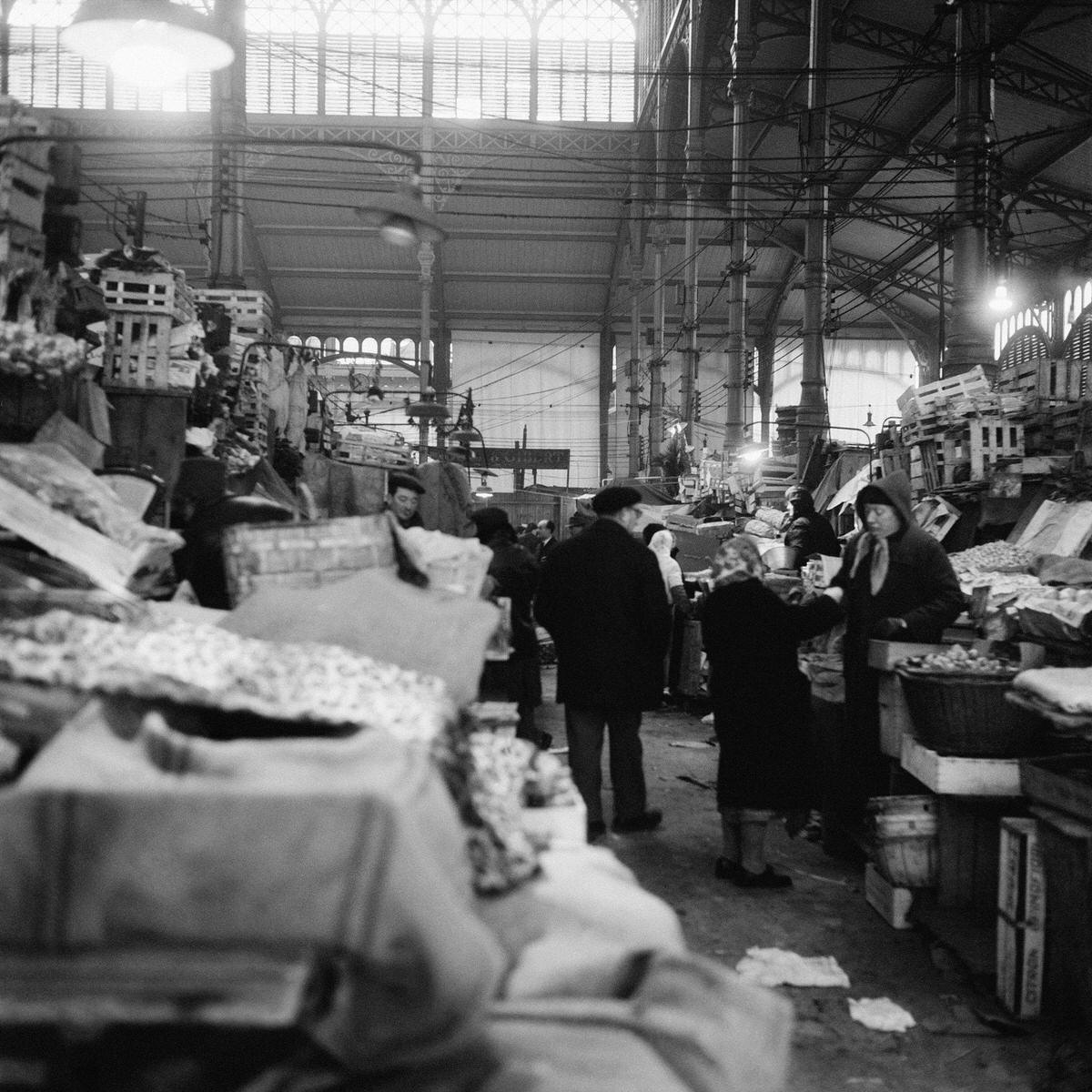
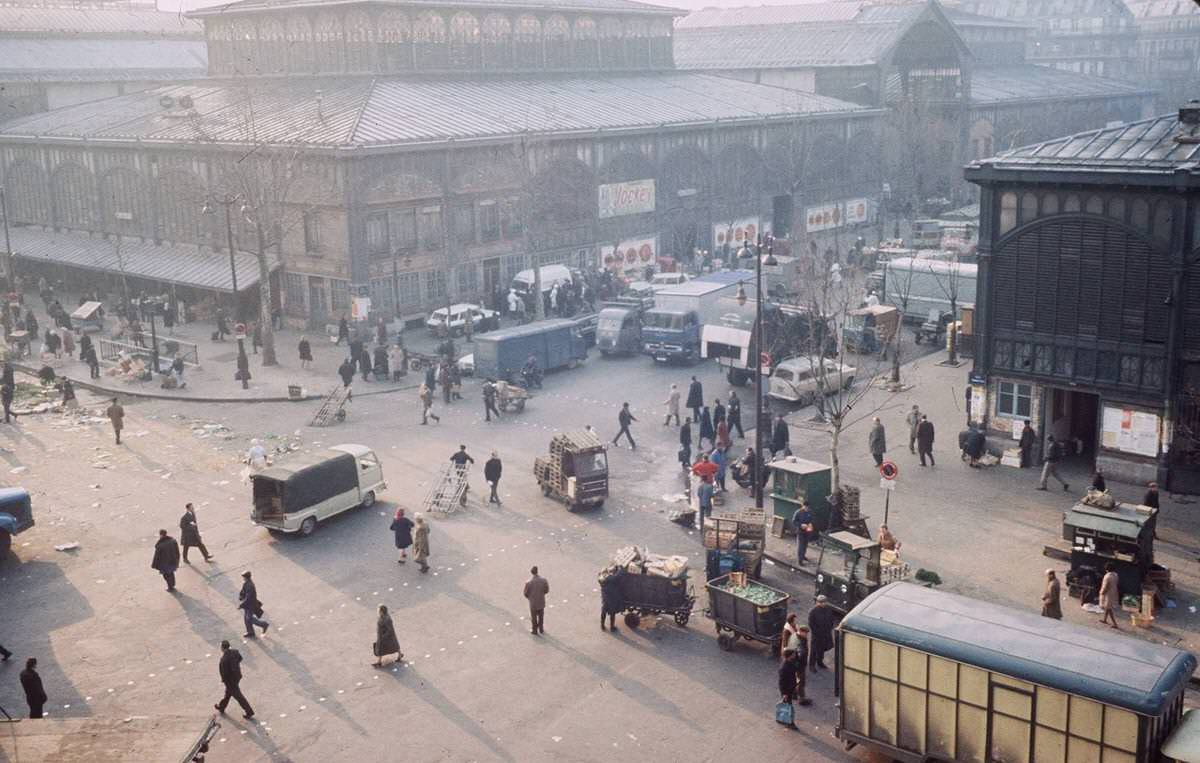
For centuries, Les Halles was the beating heart of Paris. It was the city’s central wholesale food market, a sprawling complex of iron-and-glass pavilions packed with butchers, flower sellers, fruit vendors, and fishmongers. The market’s roots stretched back to the 12th century, when wholesale trading of fresh produce first took hold on that spot in the city center. By the mid-20th century, it had grown into one of the largest fresh food markets in all of Europe.
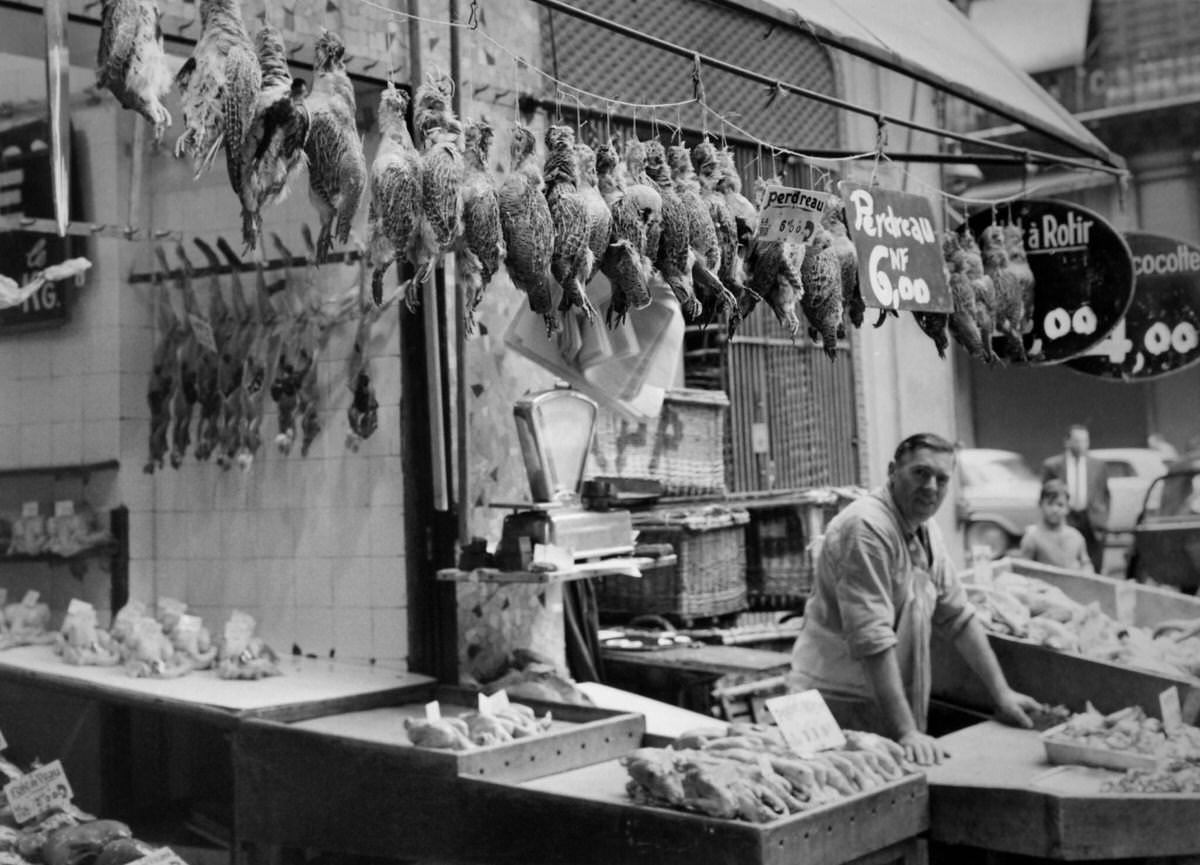
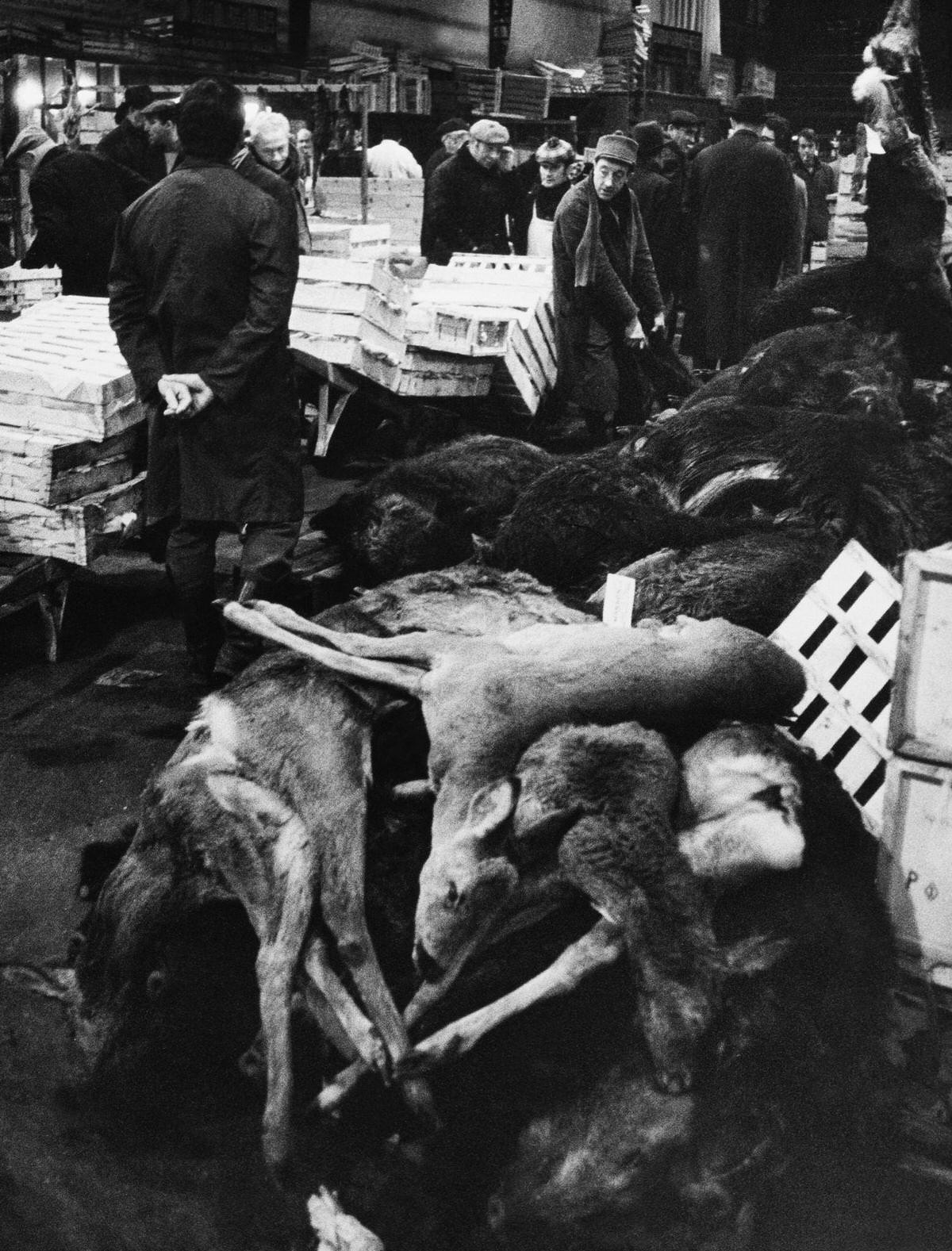
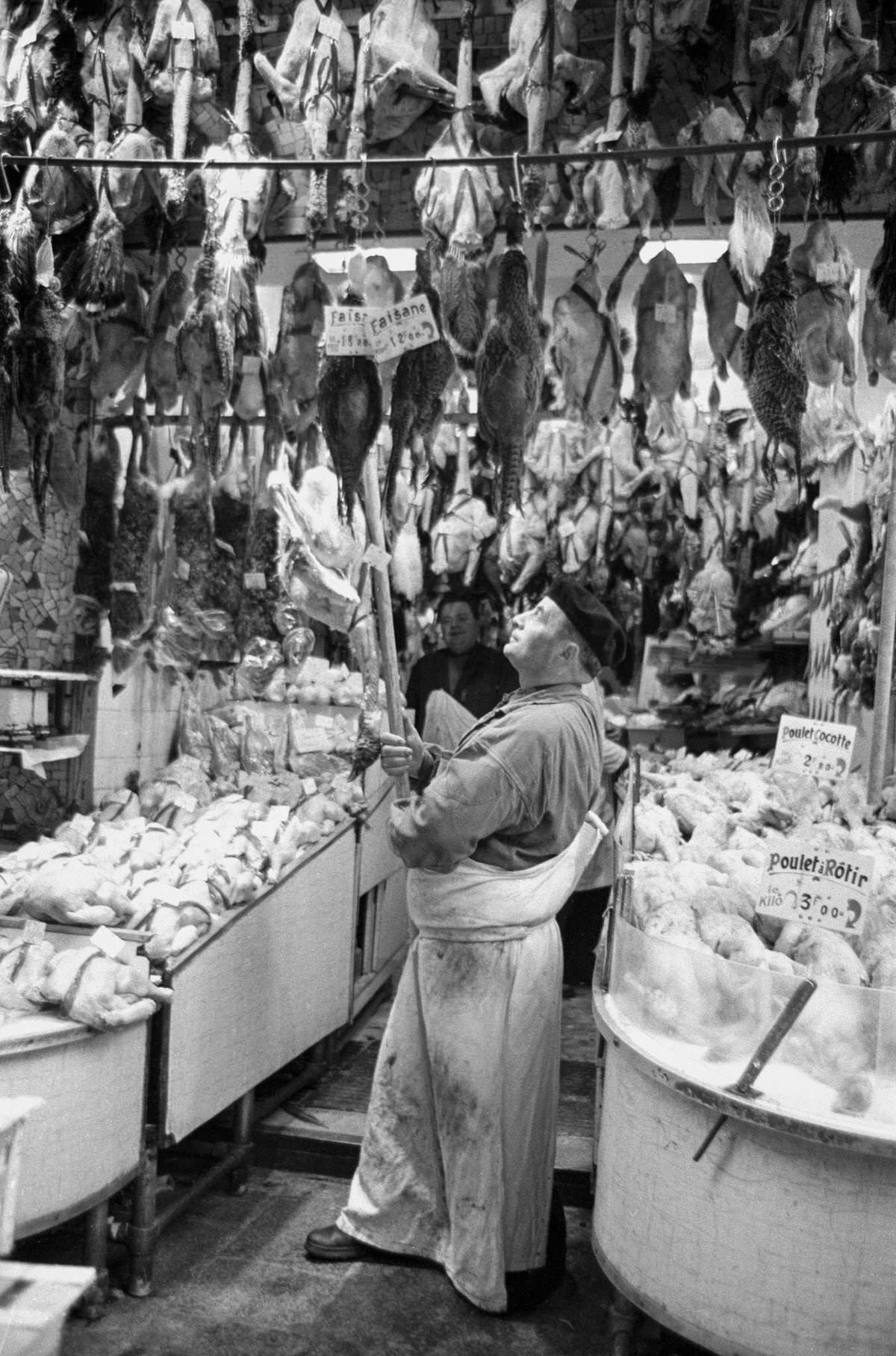
After the opening of the hunt, game is sold by a butcher in a stall in Les Halles on September 6, 1960
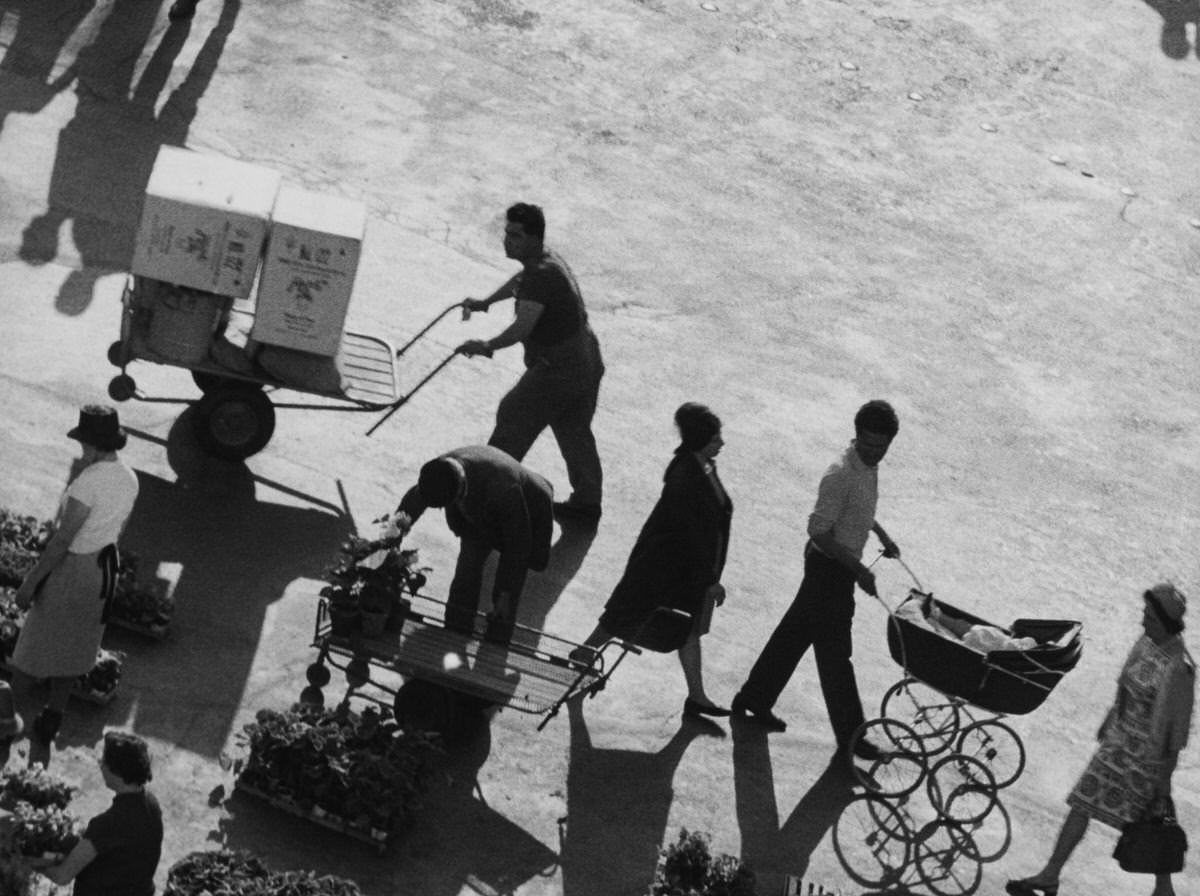
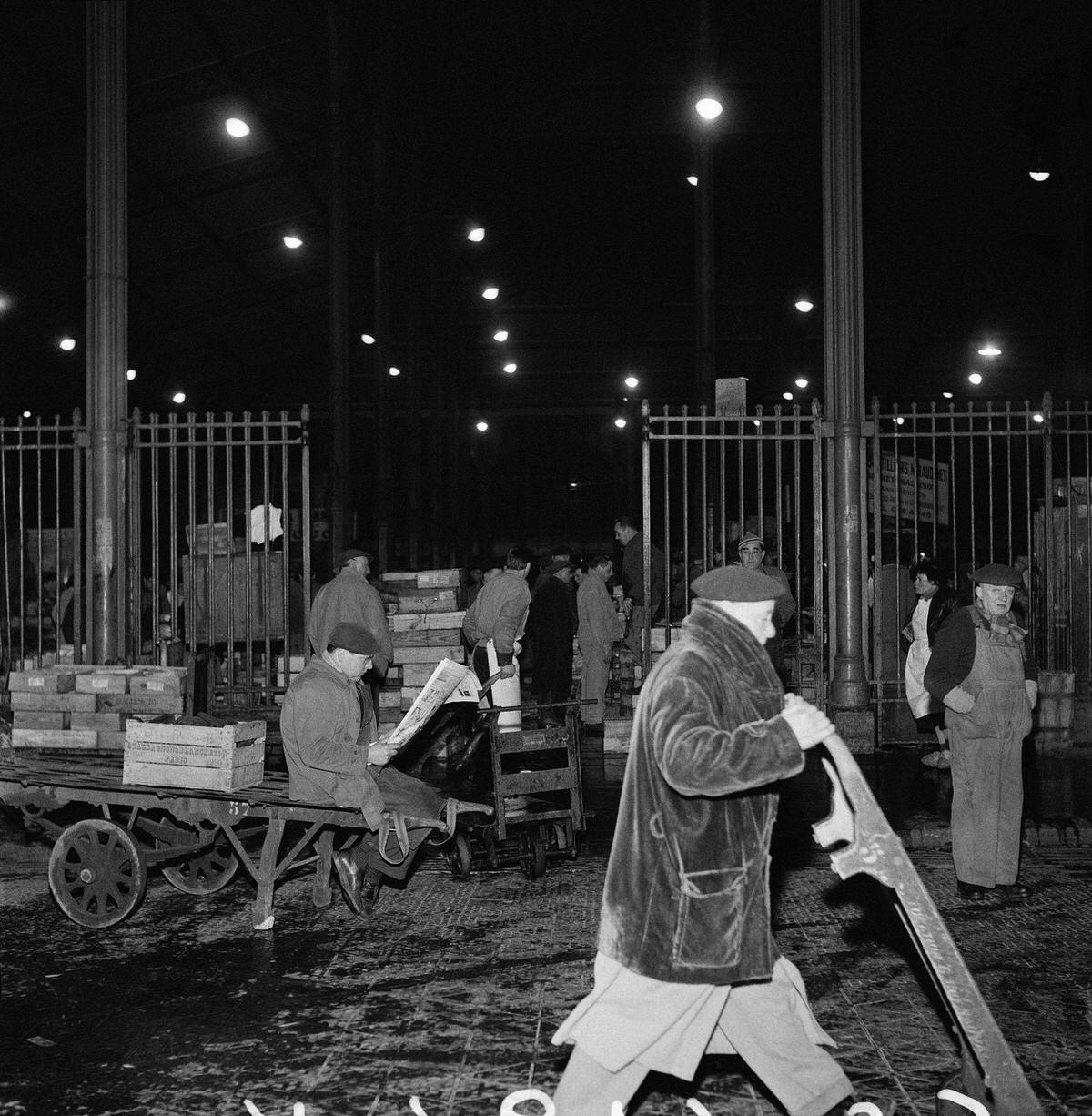
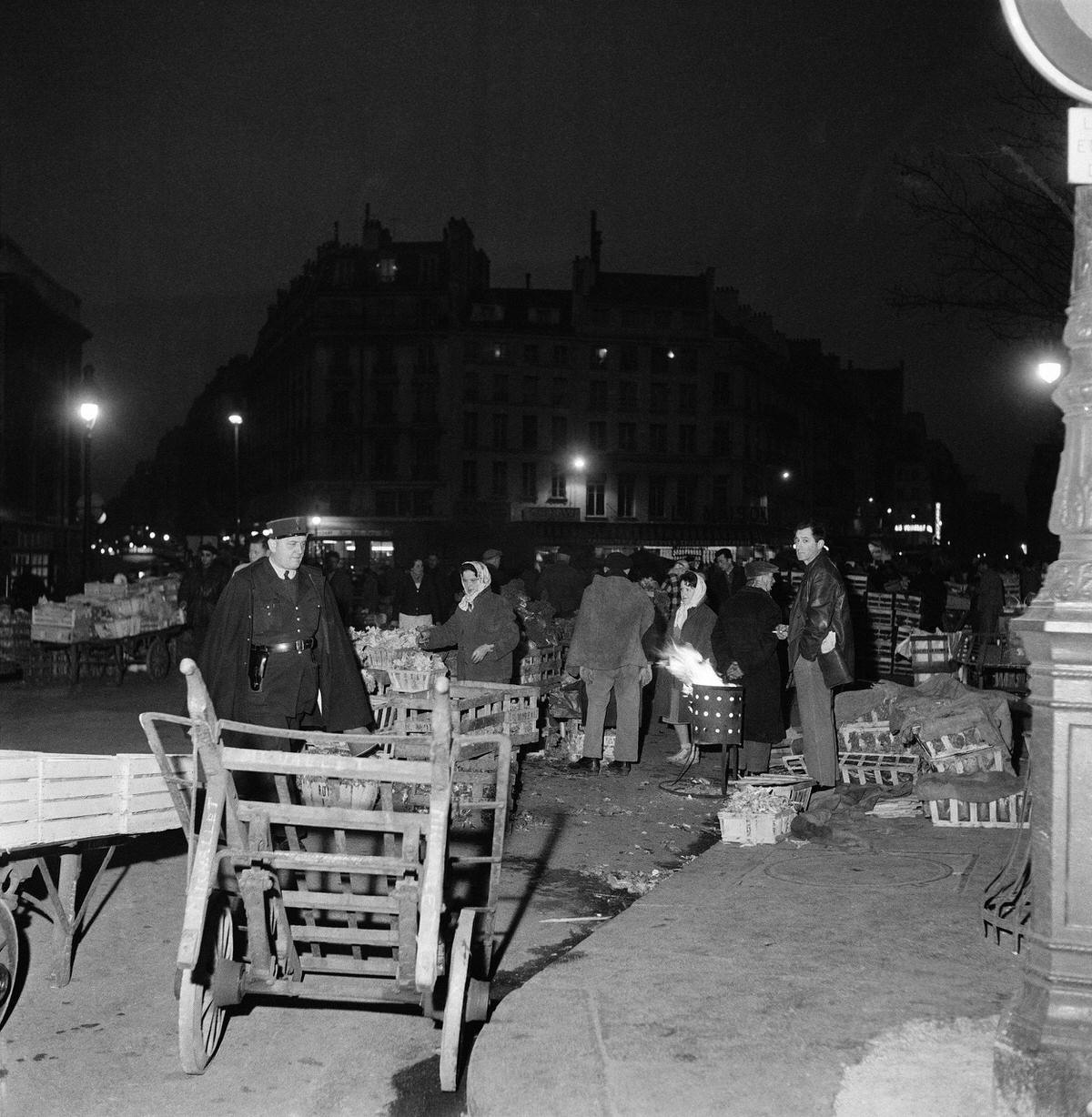
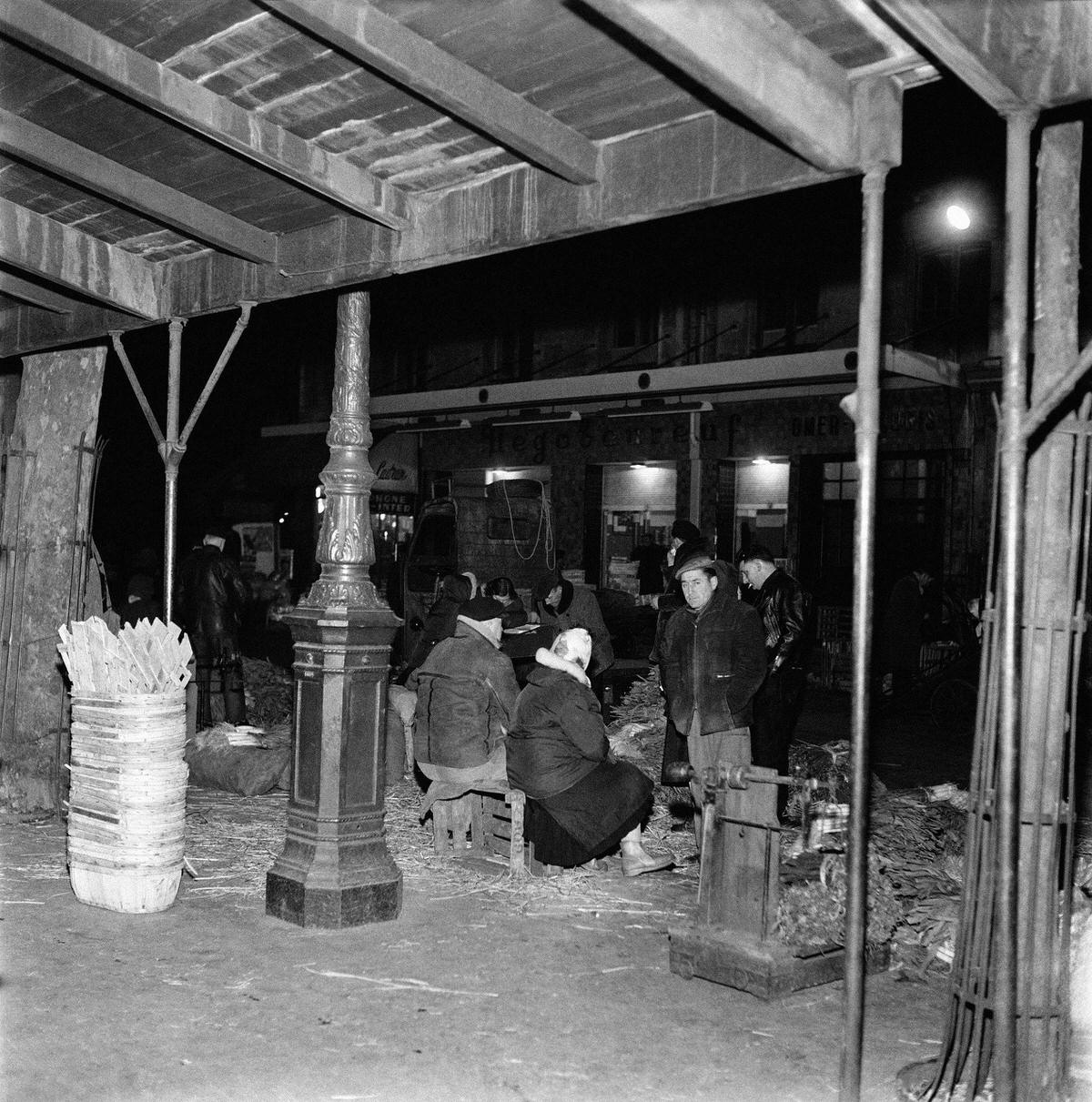
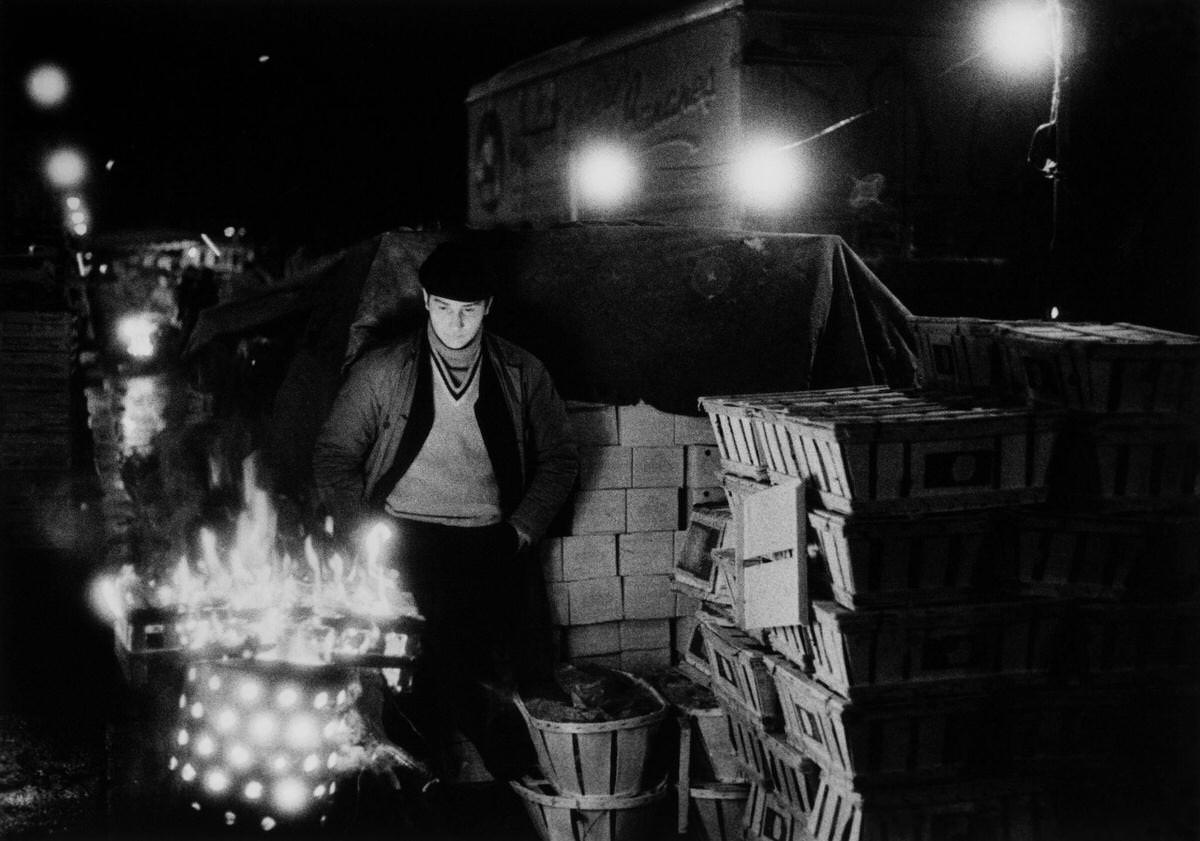
The market operated around the clock. Deliveries arrived through the night, and by the time most Parisians were waking up, the stalls were already in full swing. Workers known as the “Forts des Halles” — the strongmen of the market — carried enormous loads of carcasses, crates, and produce on their backs. The pre-dawn hours were defined by the rumble of trucks, the clatter of wooden crates, and the glow of the first stalls lighting up under iron canopies.
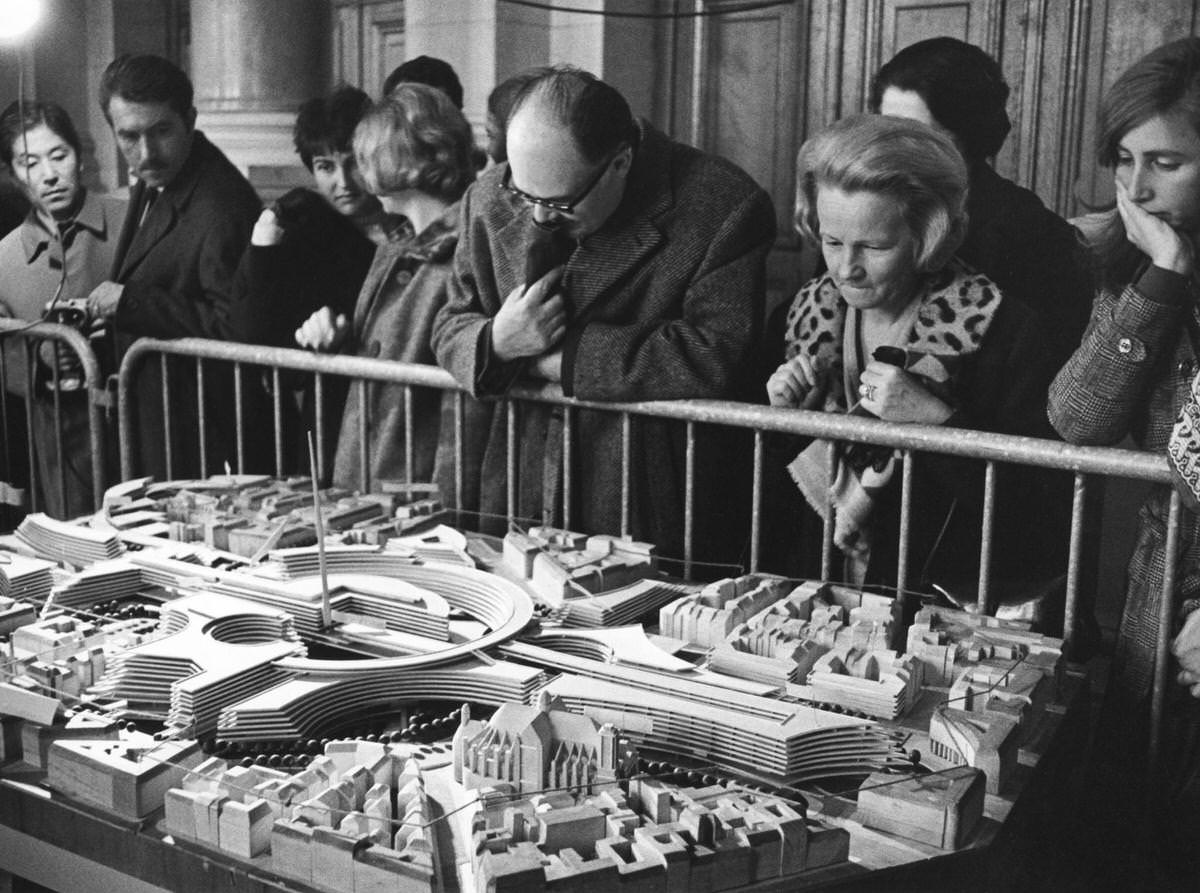
Parisians observing the model of an architectural project for the Les Halles shopping center in Paris, 1960
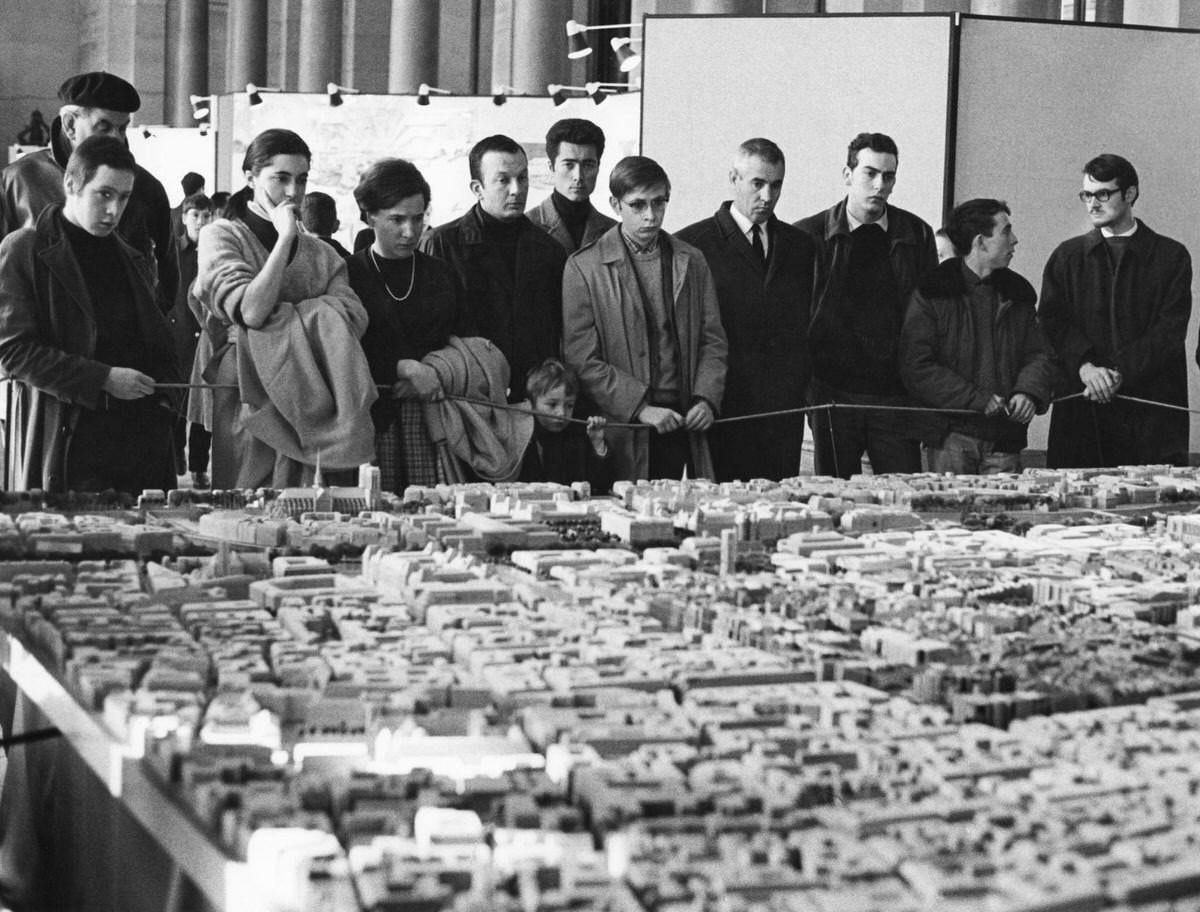
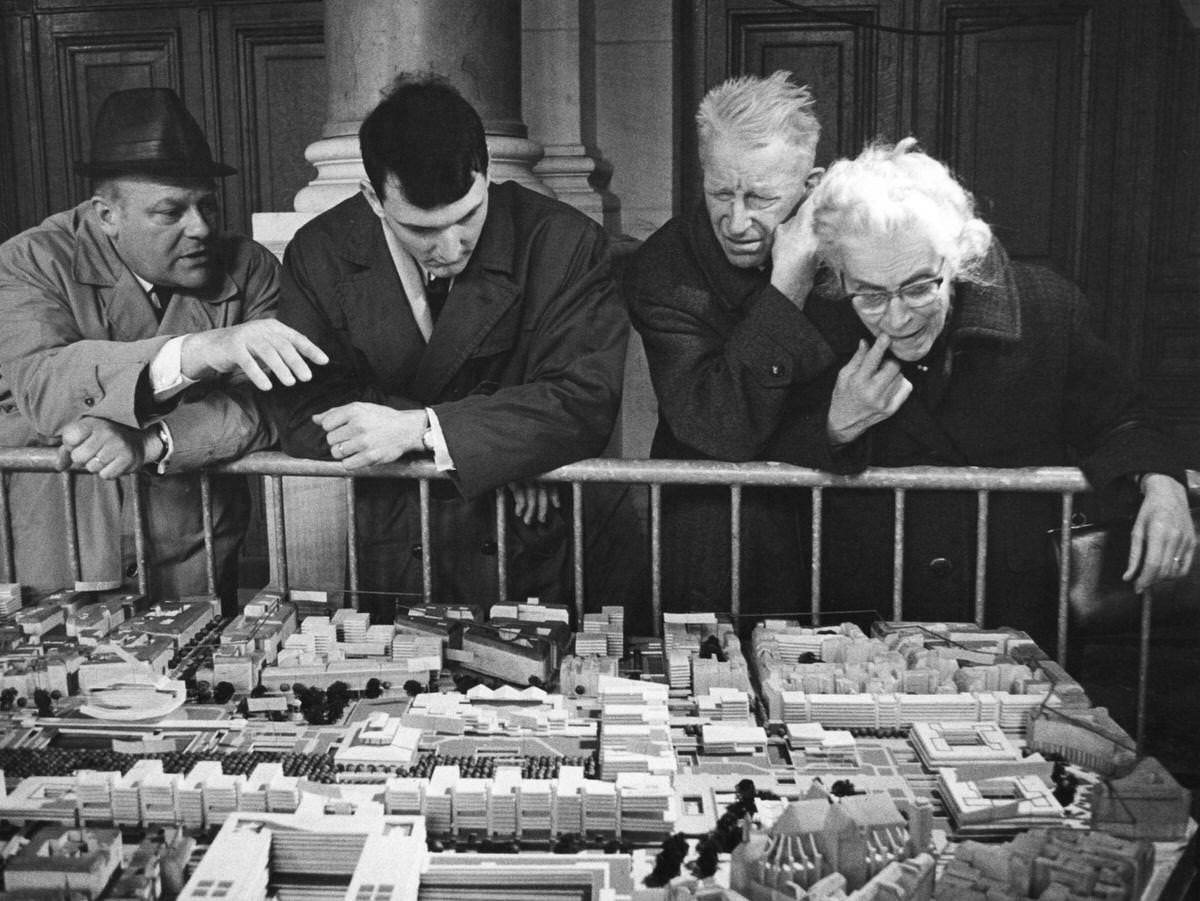
Model of an architectural project for the Halles de Paris, 1960s
Model of an architectural project for the Halles de Paris, 1960s
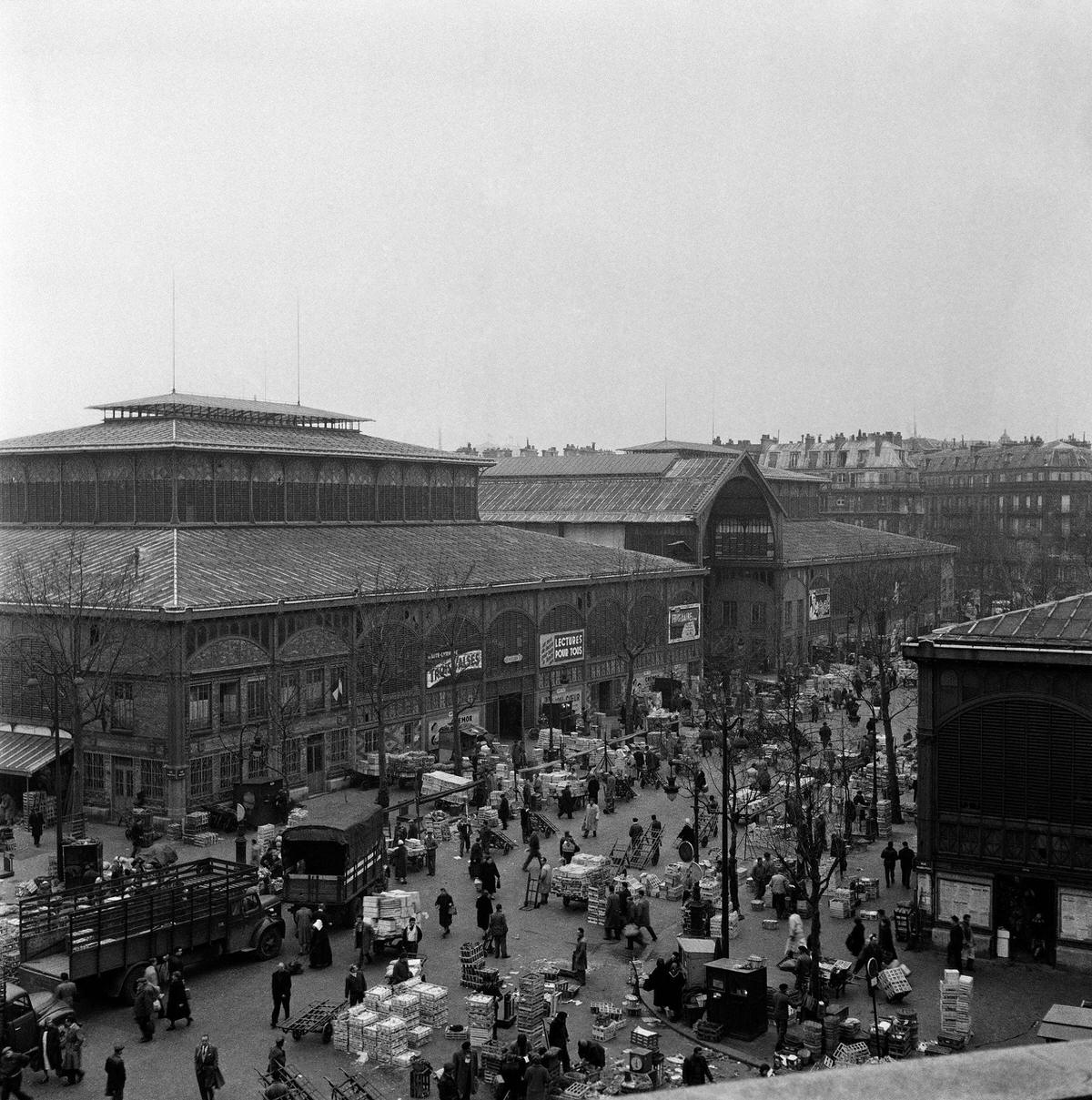
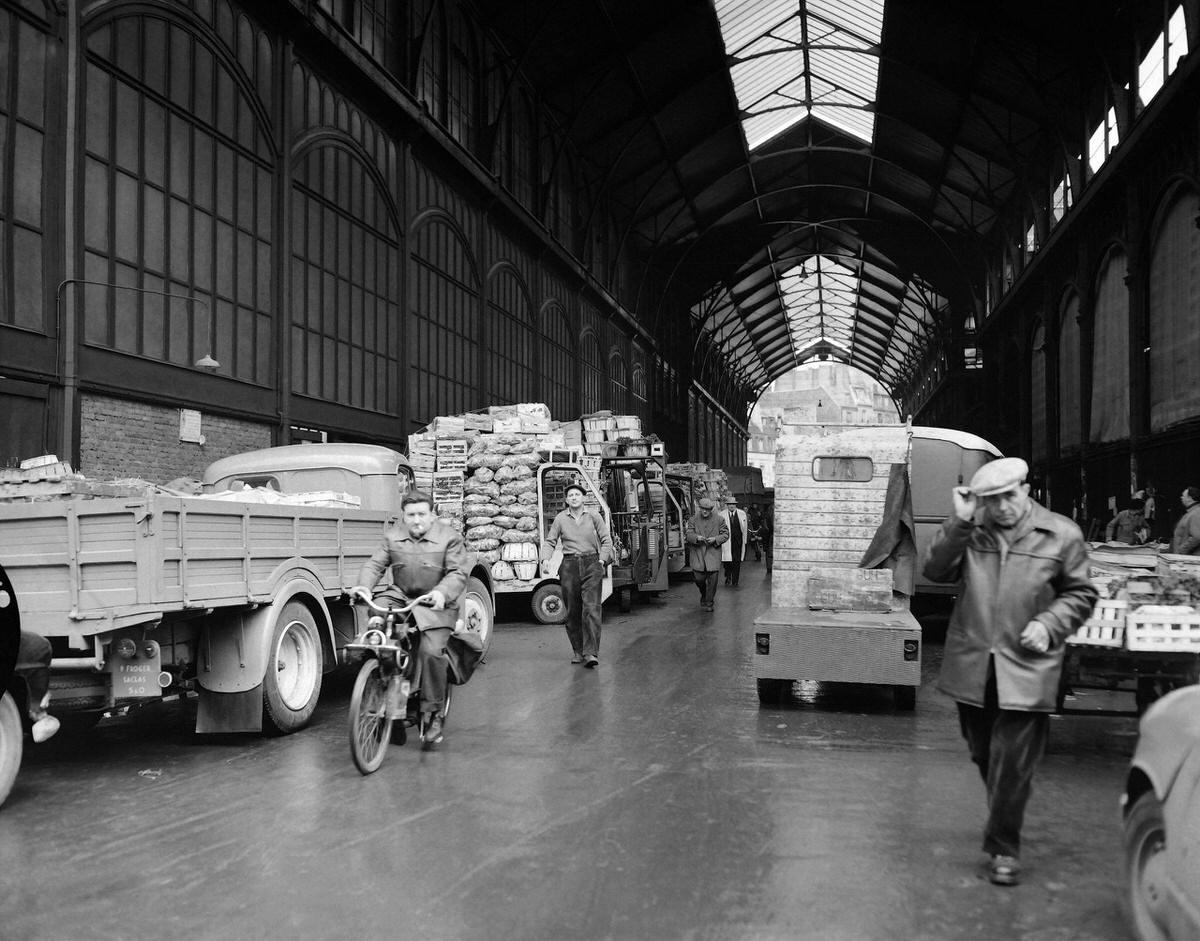
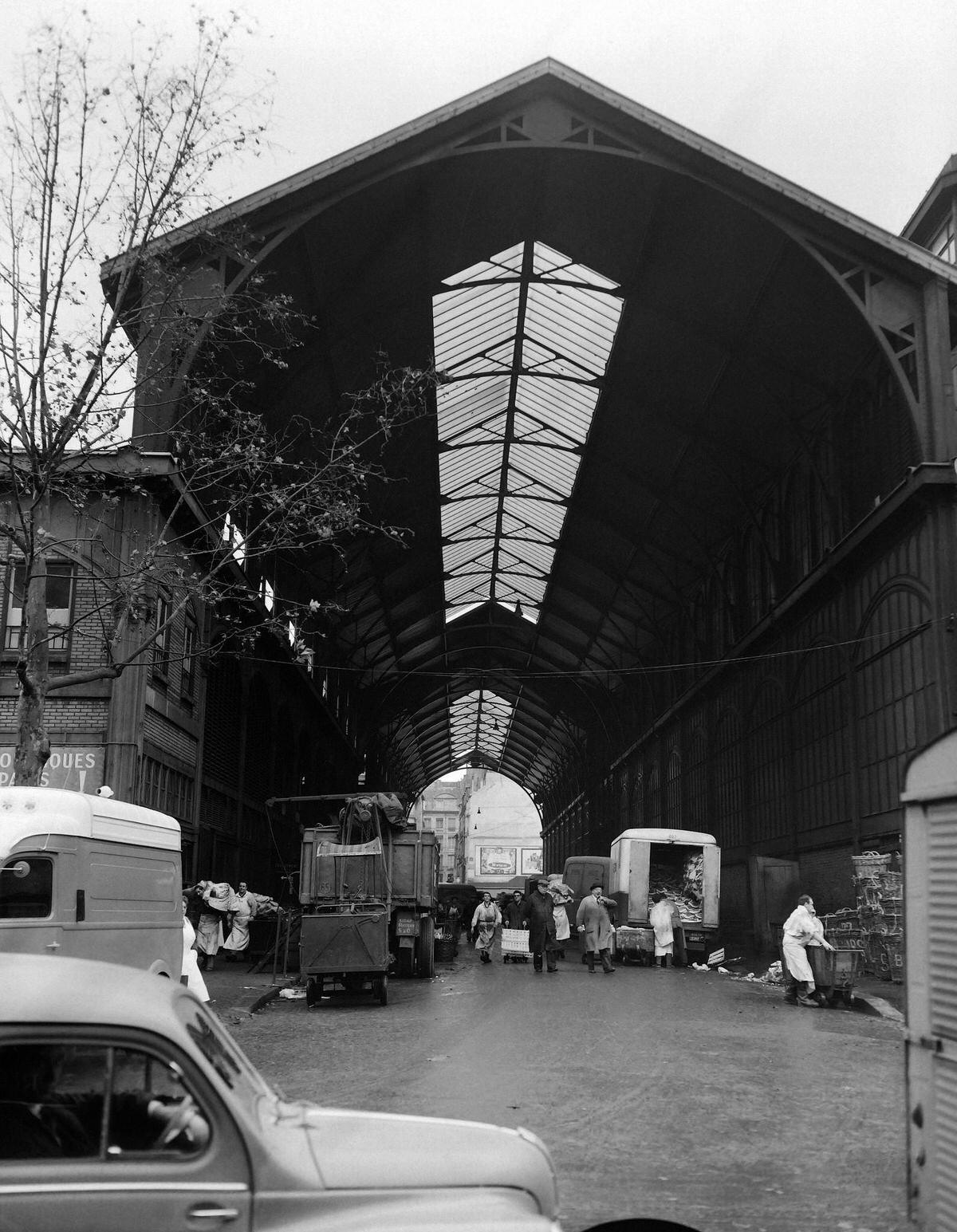
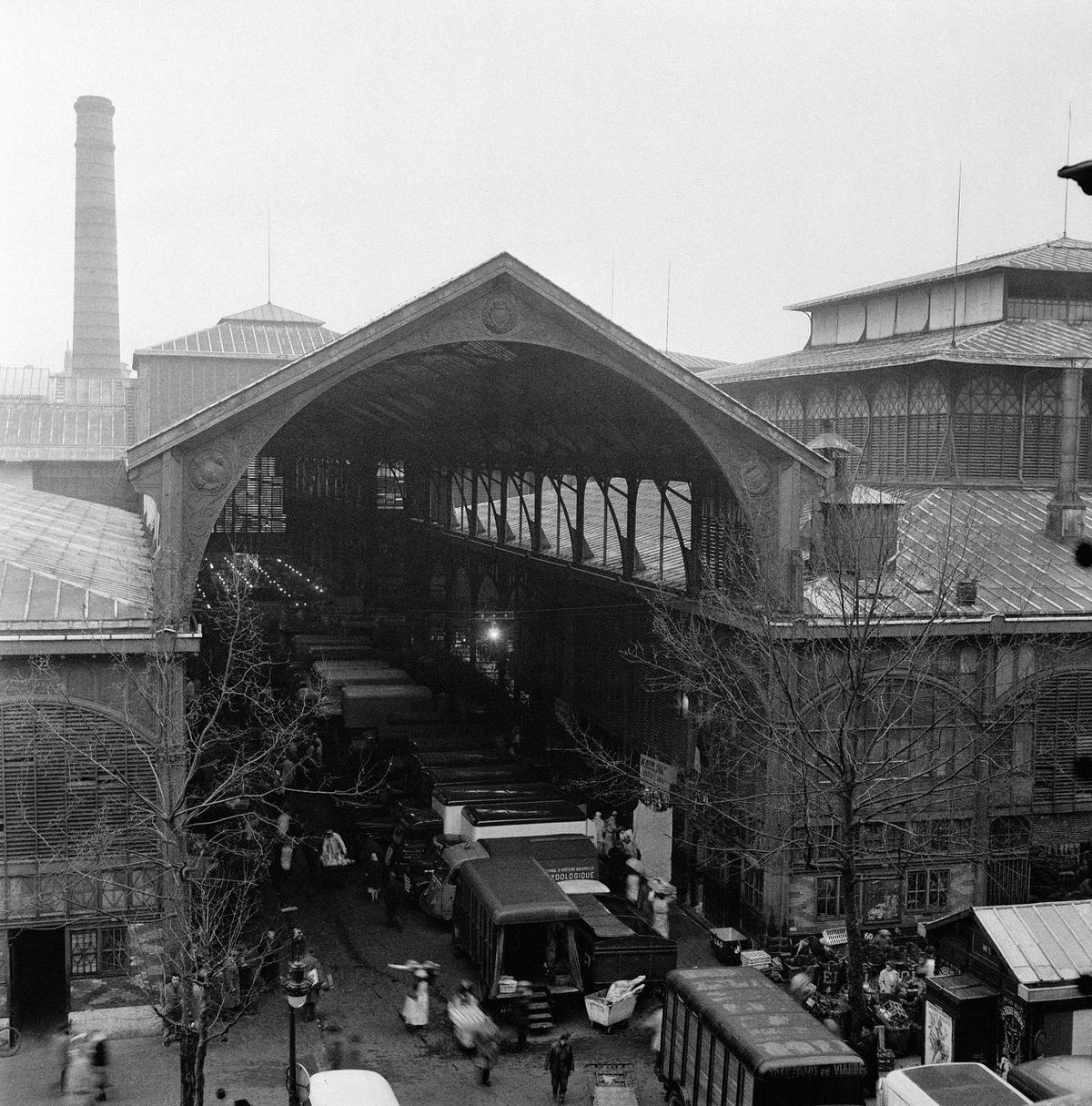
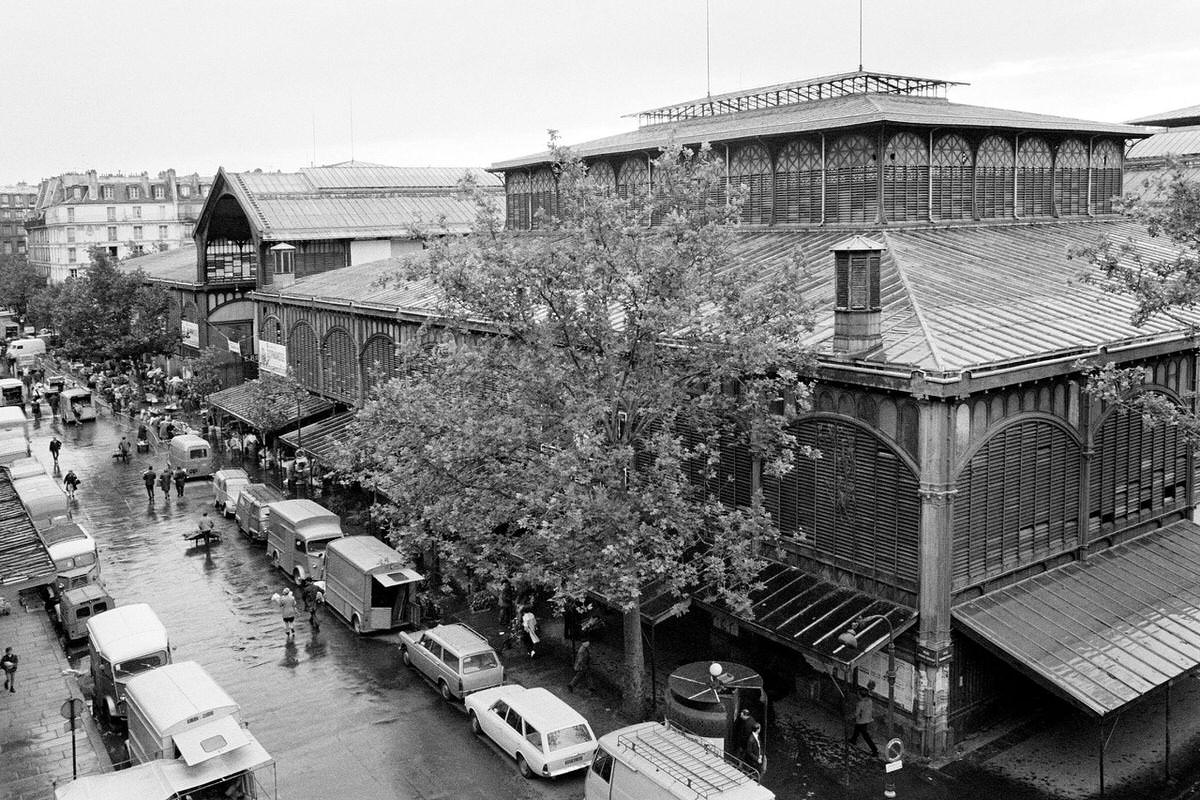
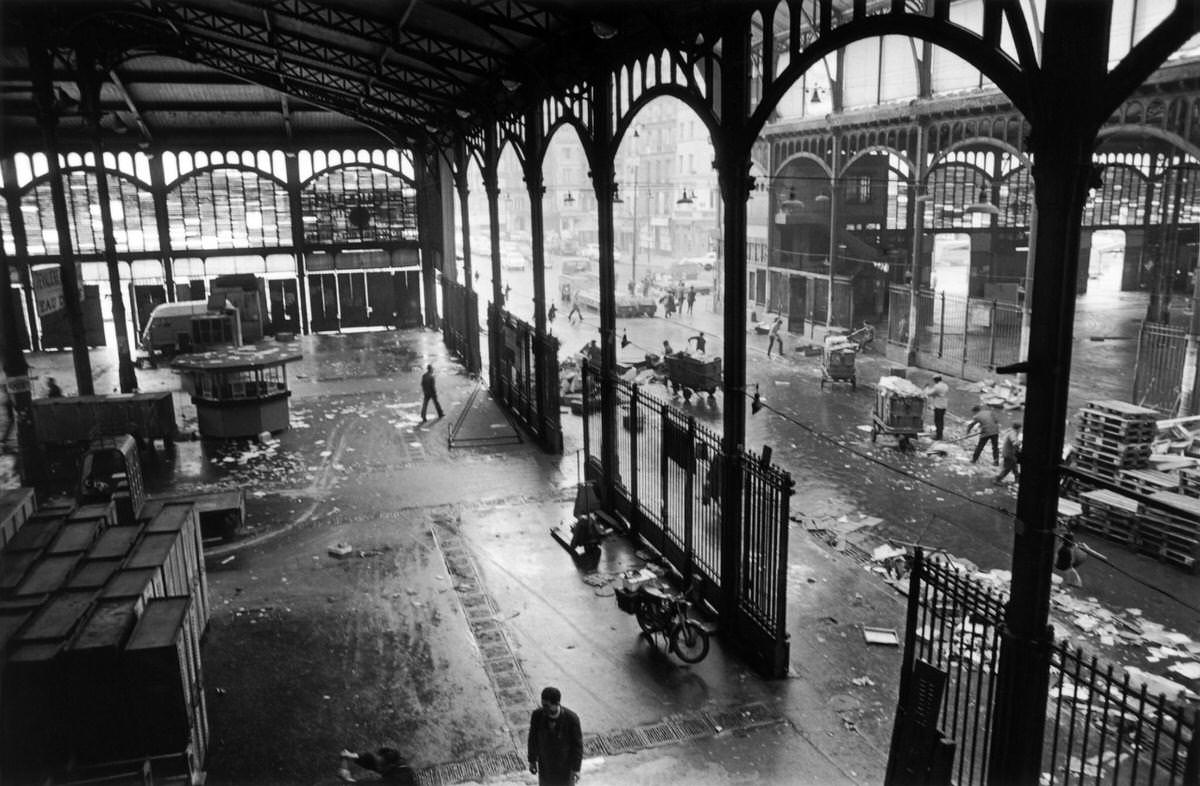
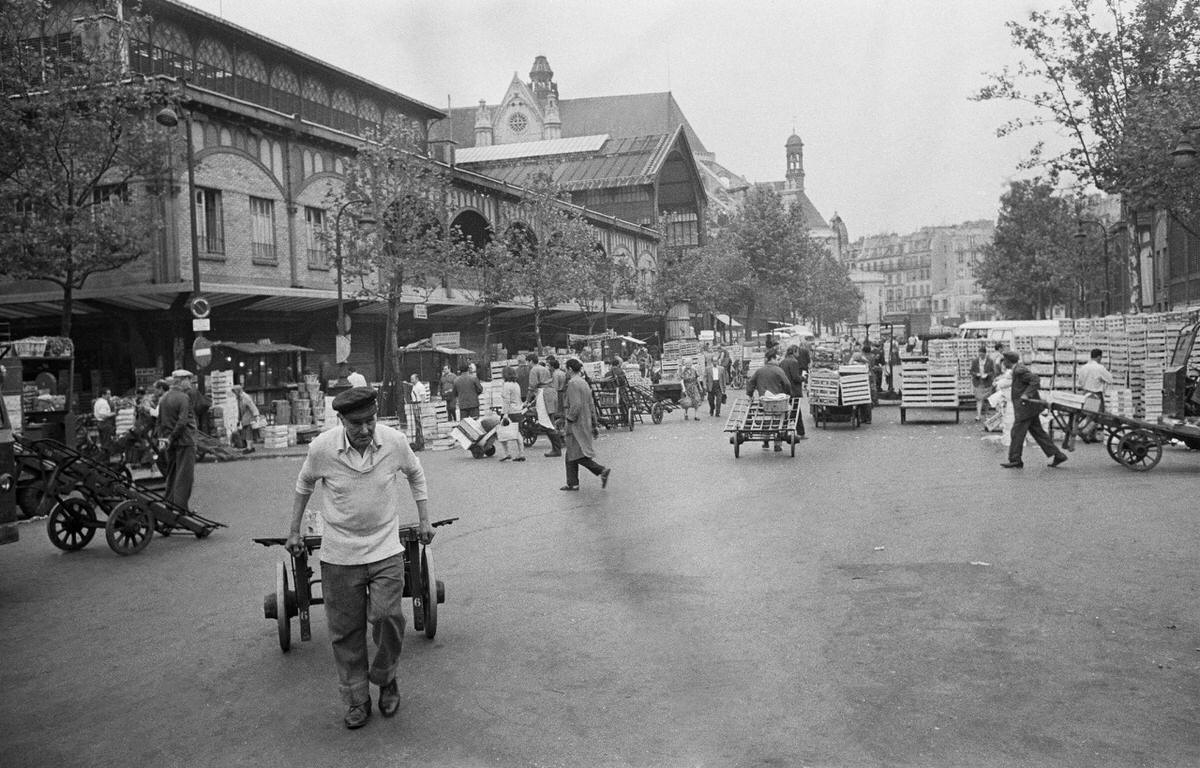
The pavilions themselves were architectural achievements. Designed by Victor Baltard in the 1850s, the twelve cast-iron structures were light, airy, and functional. Each one housed a different category of goods — meat in one, fish in another, flowers and vegetables in others. The design was celebrated across Europe as a model for market architecture. By the 1960s, however, those same structures had become a bottleneck at the center of a rapidly modernizing city.
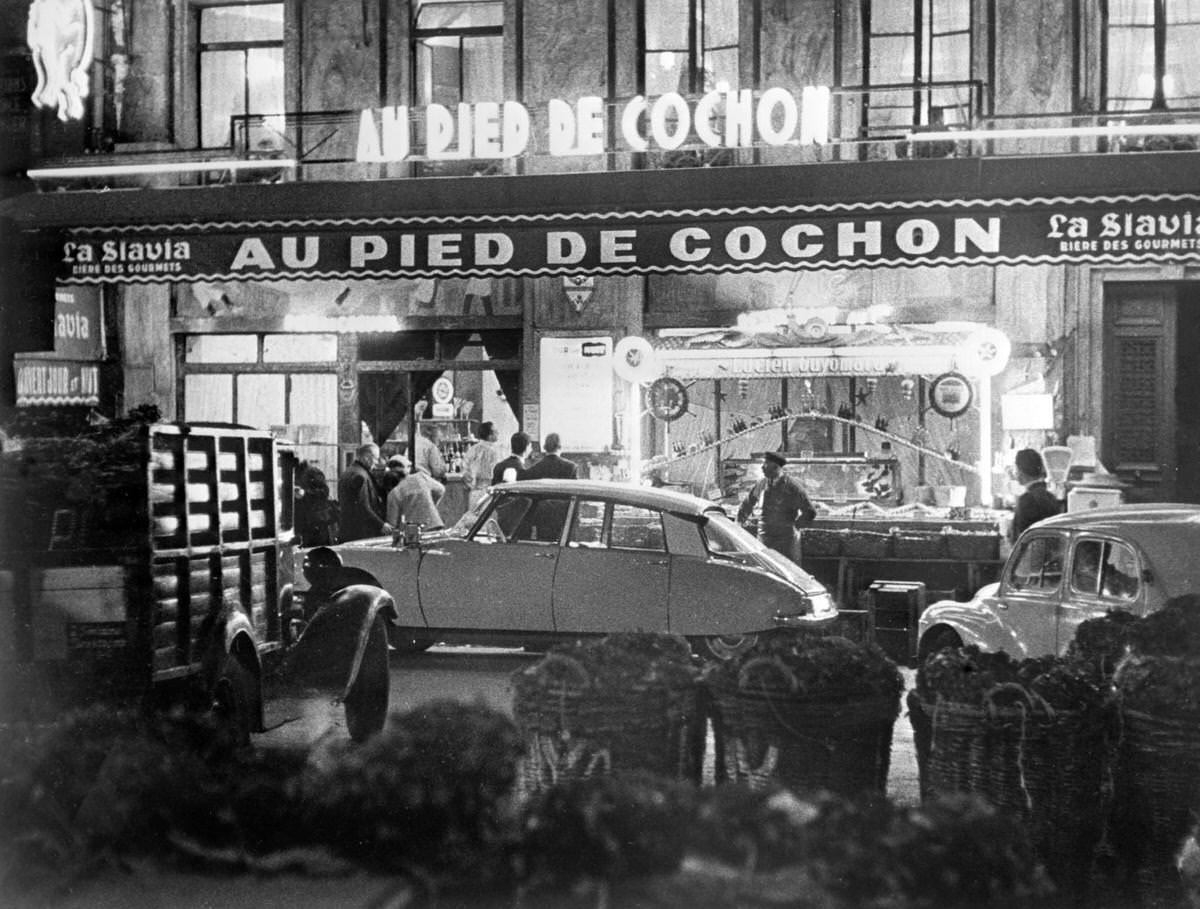
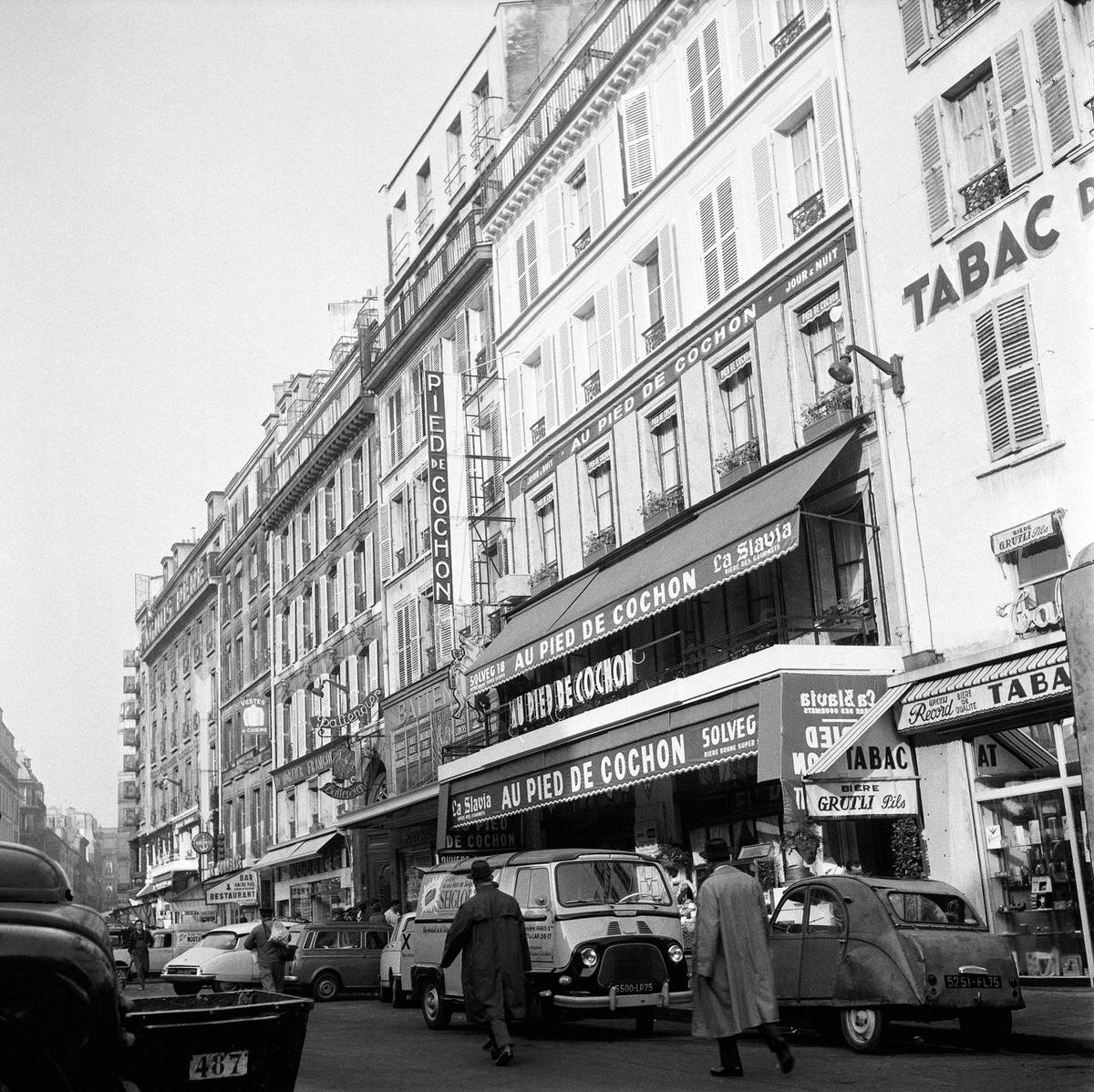
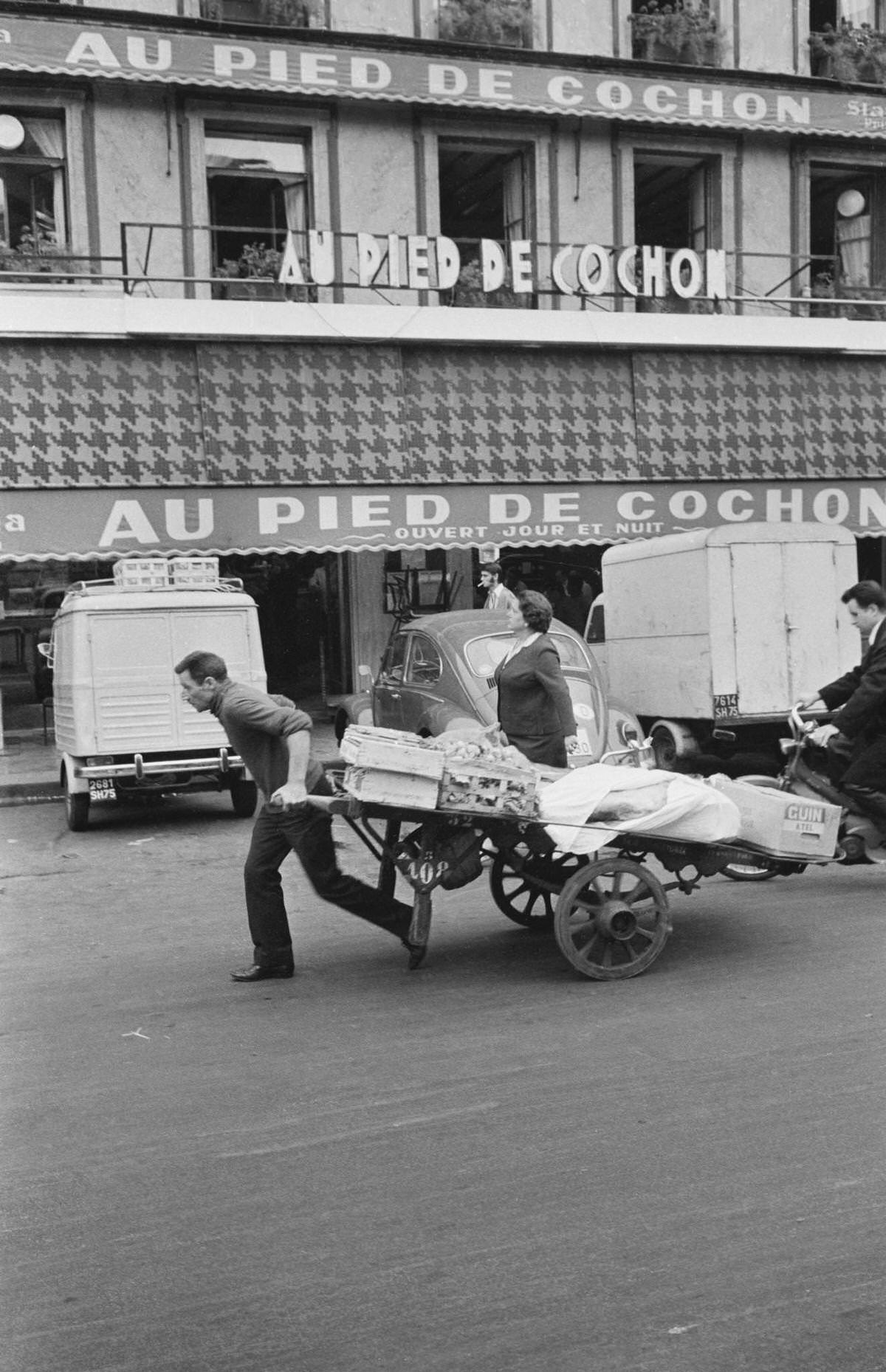
Les Halles in Paris – Restaurant “Au Pid de Cochon”, 1960s
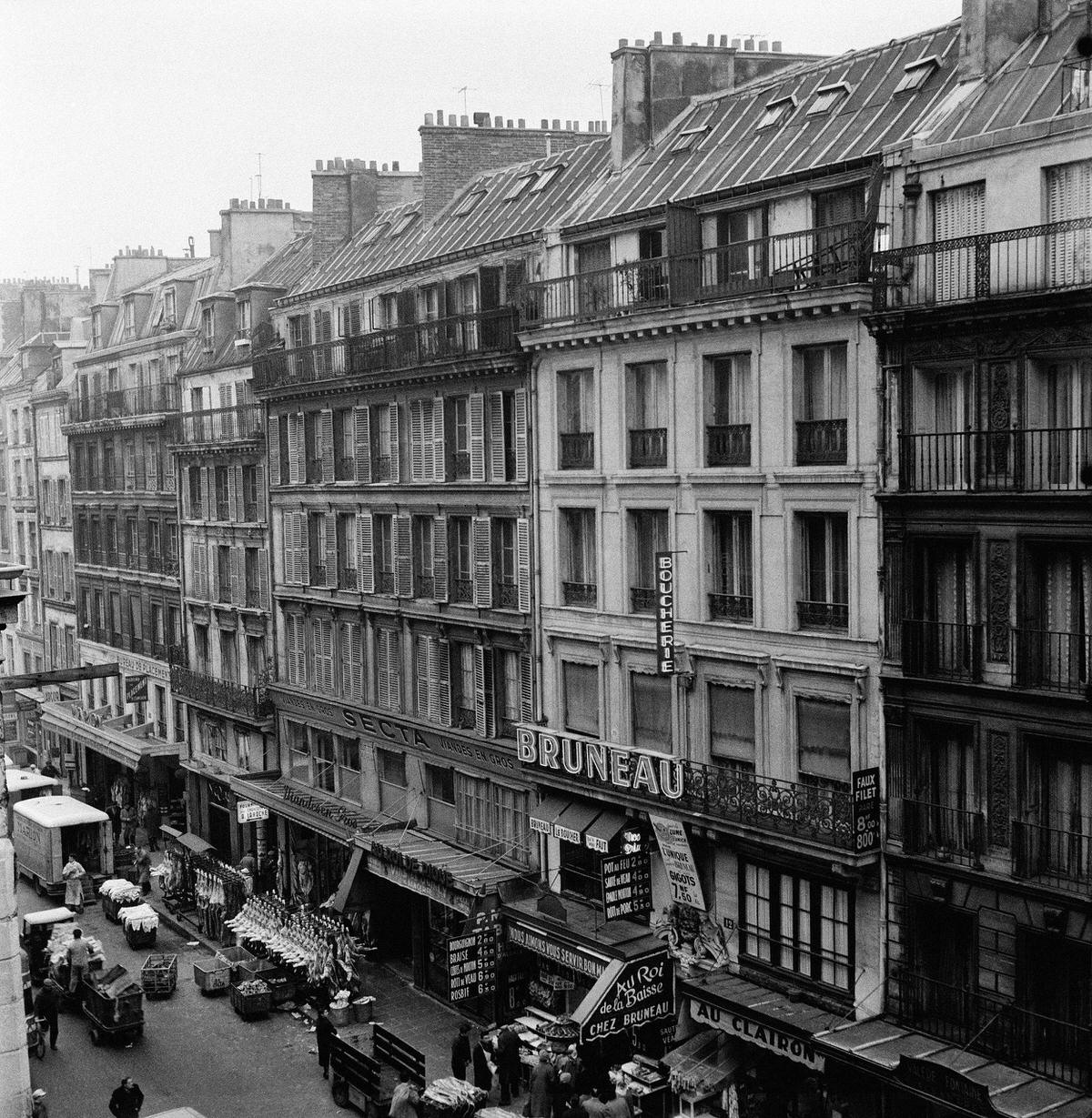
Les Halles in Paris, 1960s
Les Halles in Paris, 1960s
Les Halles in Paris, 1960s
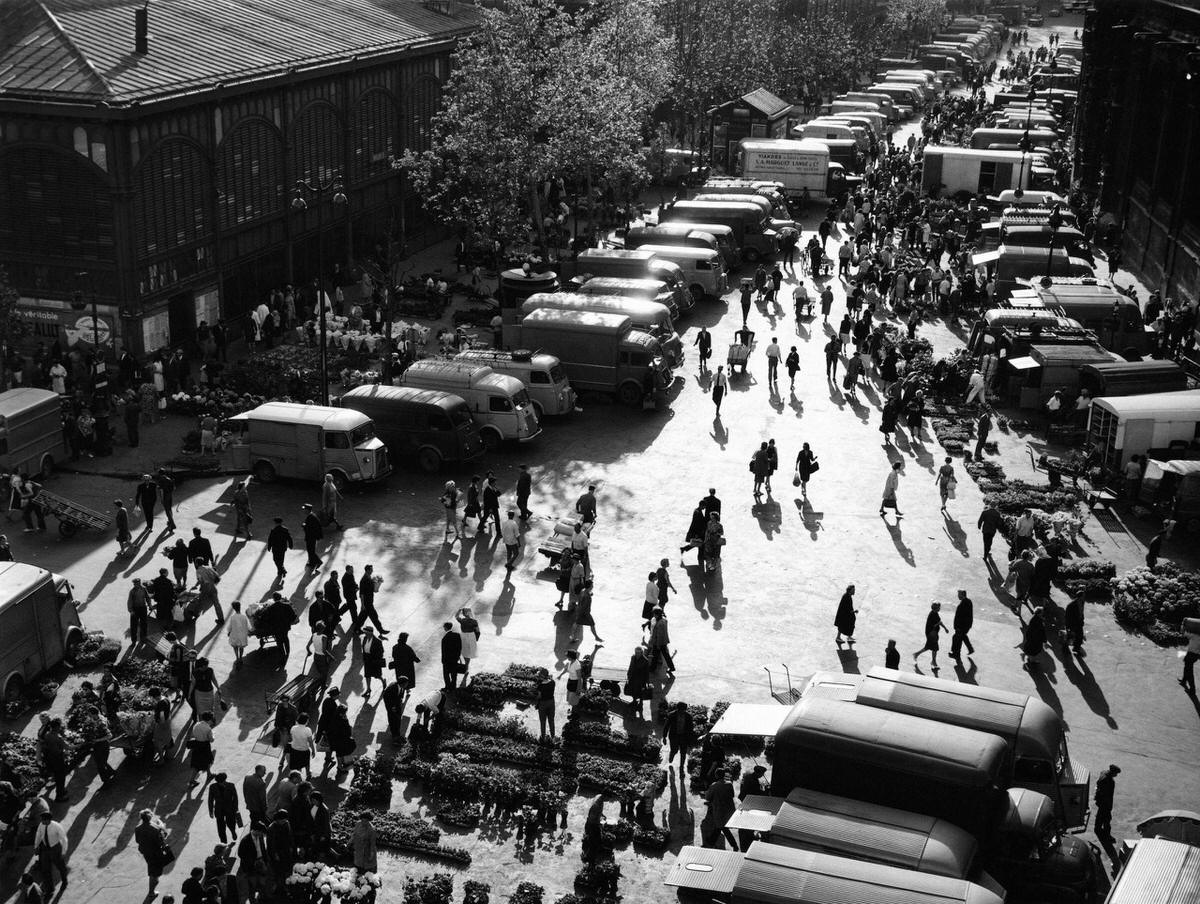
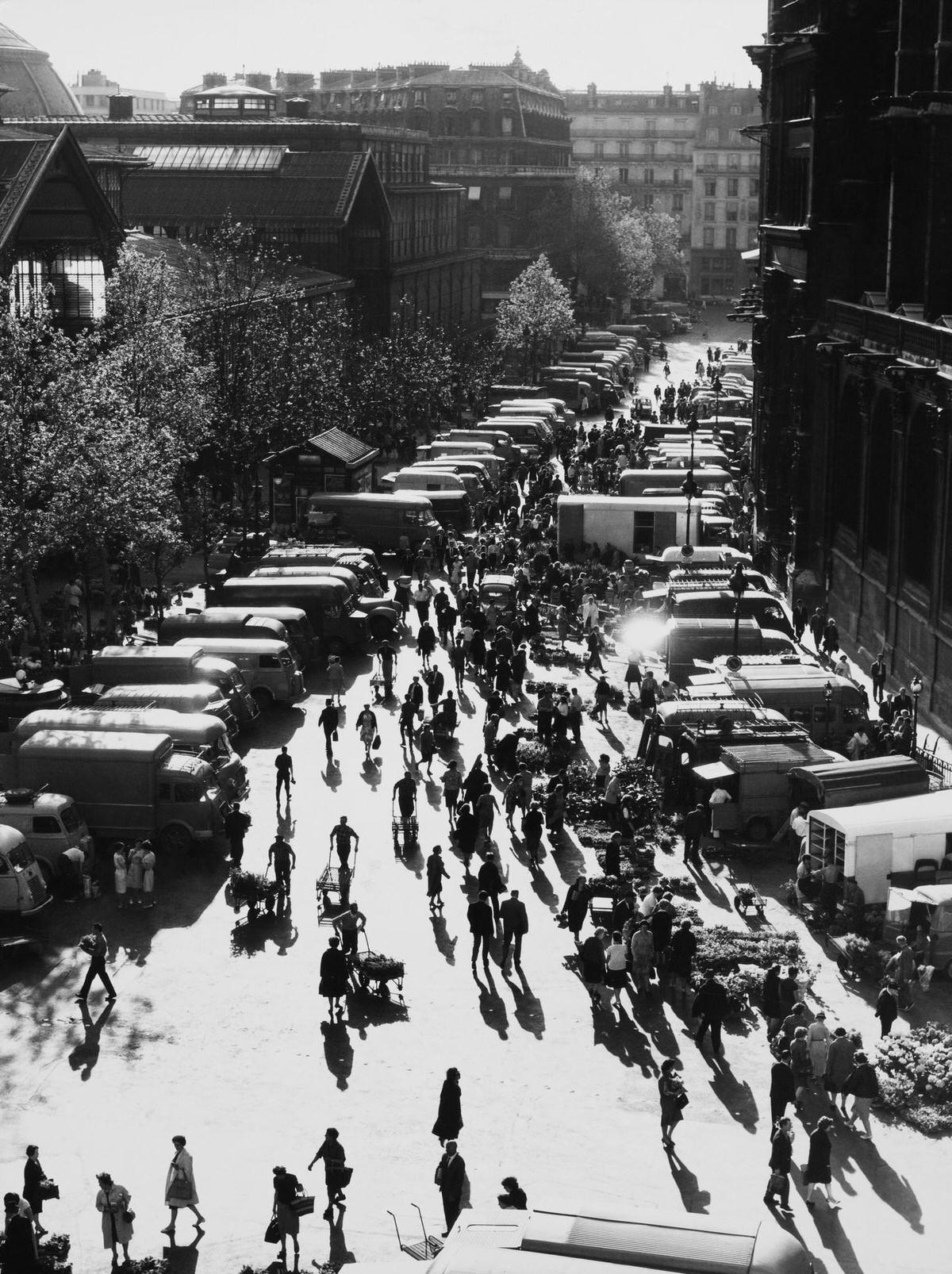
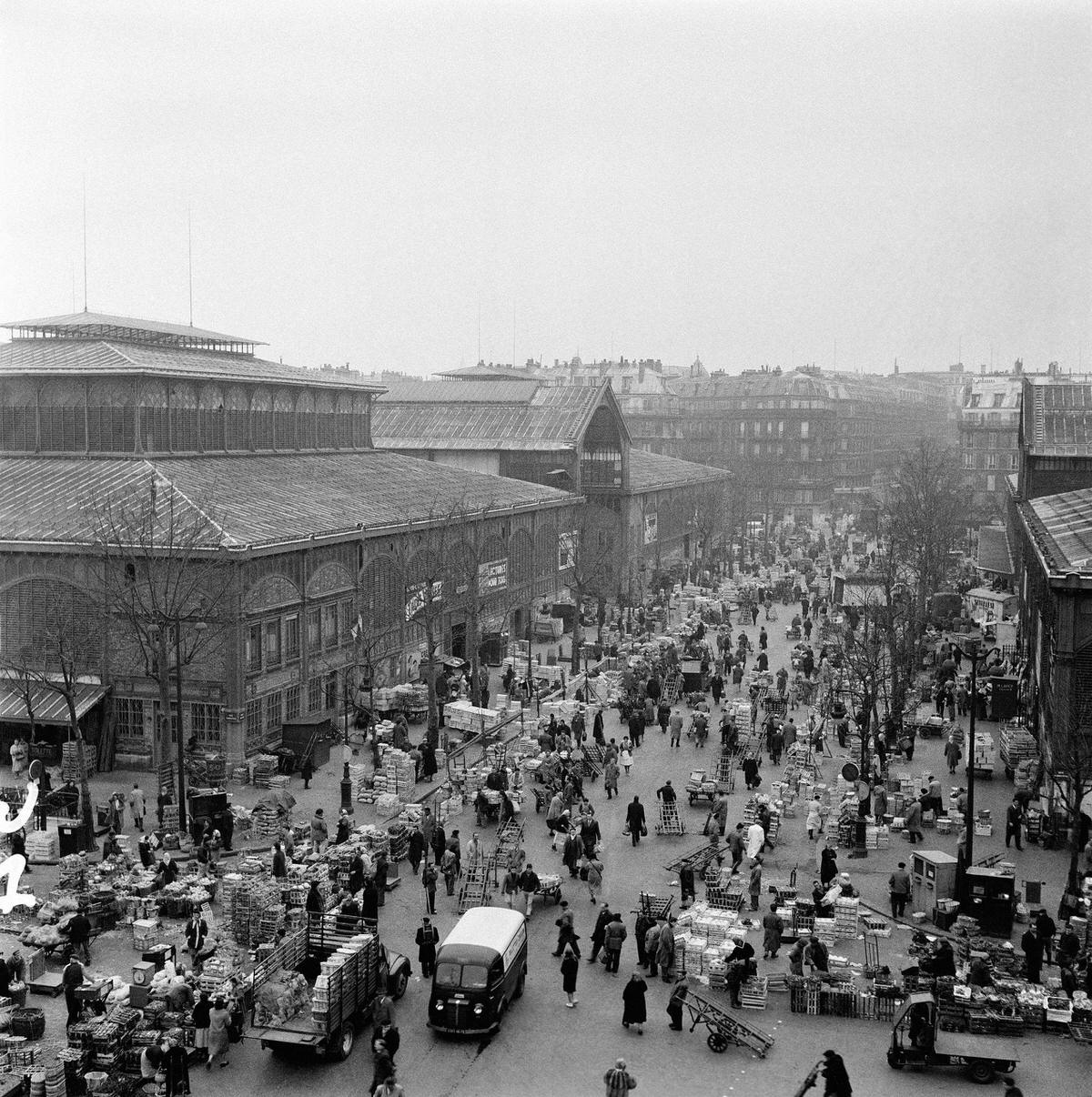
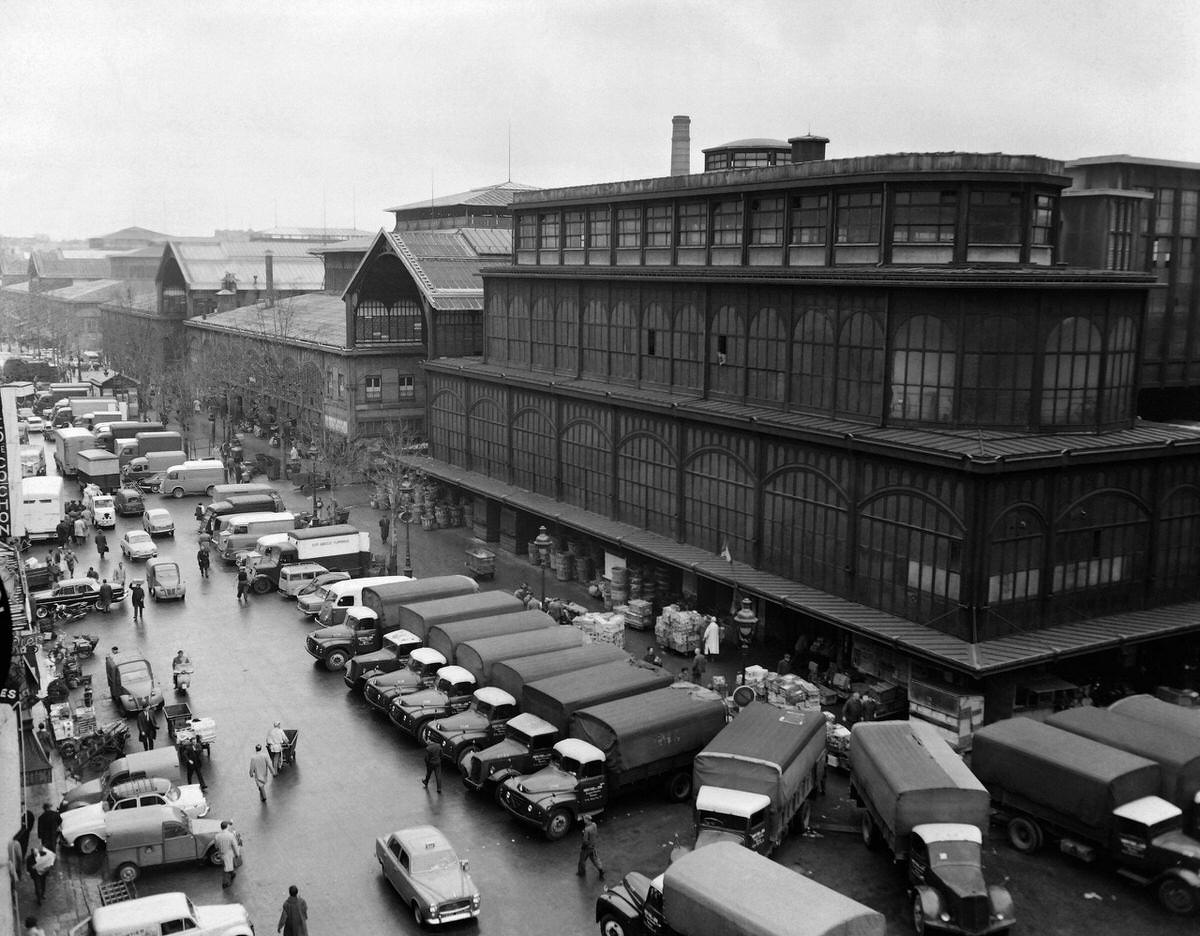
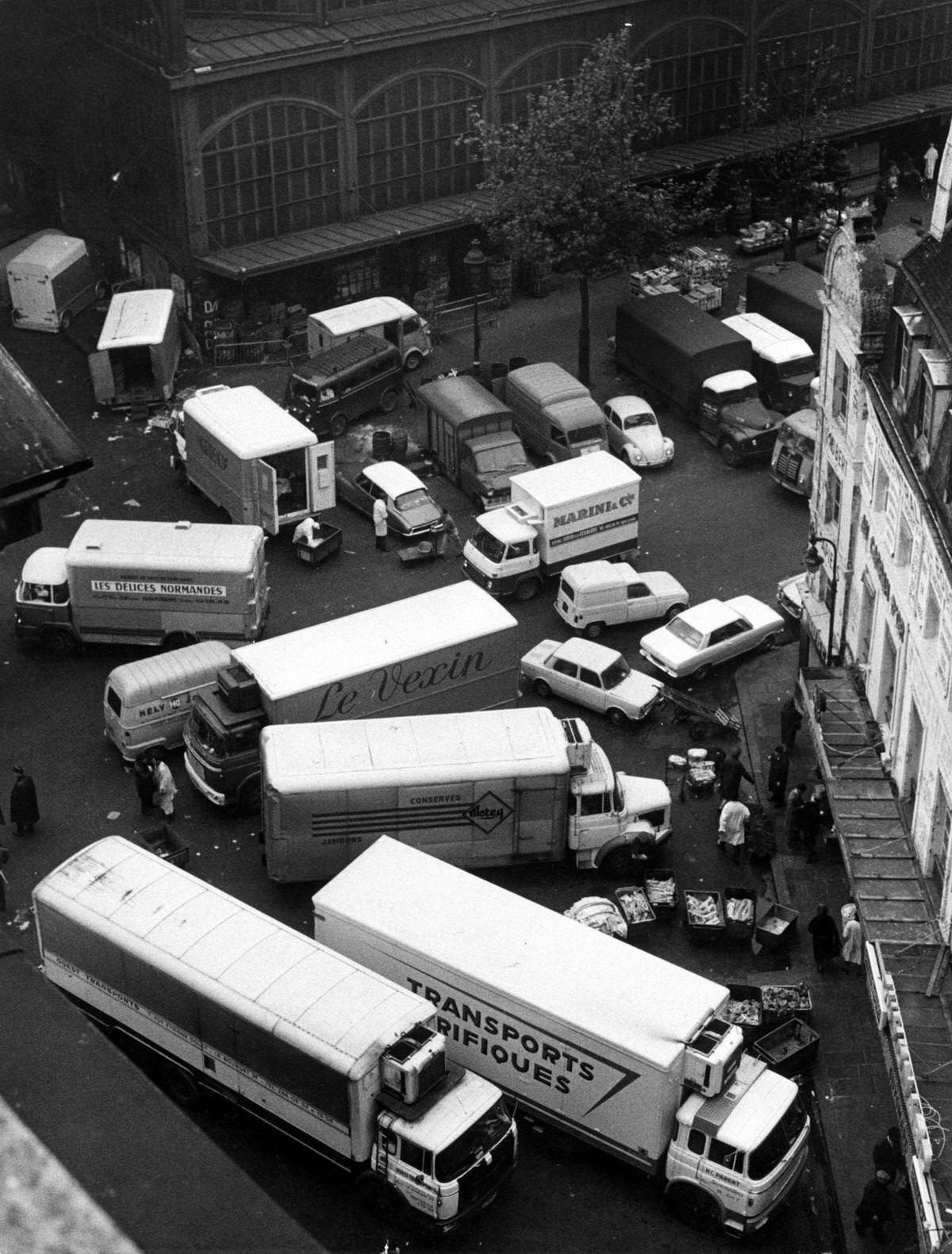
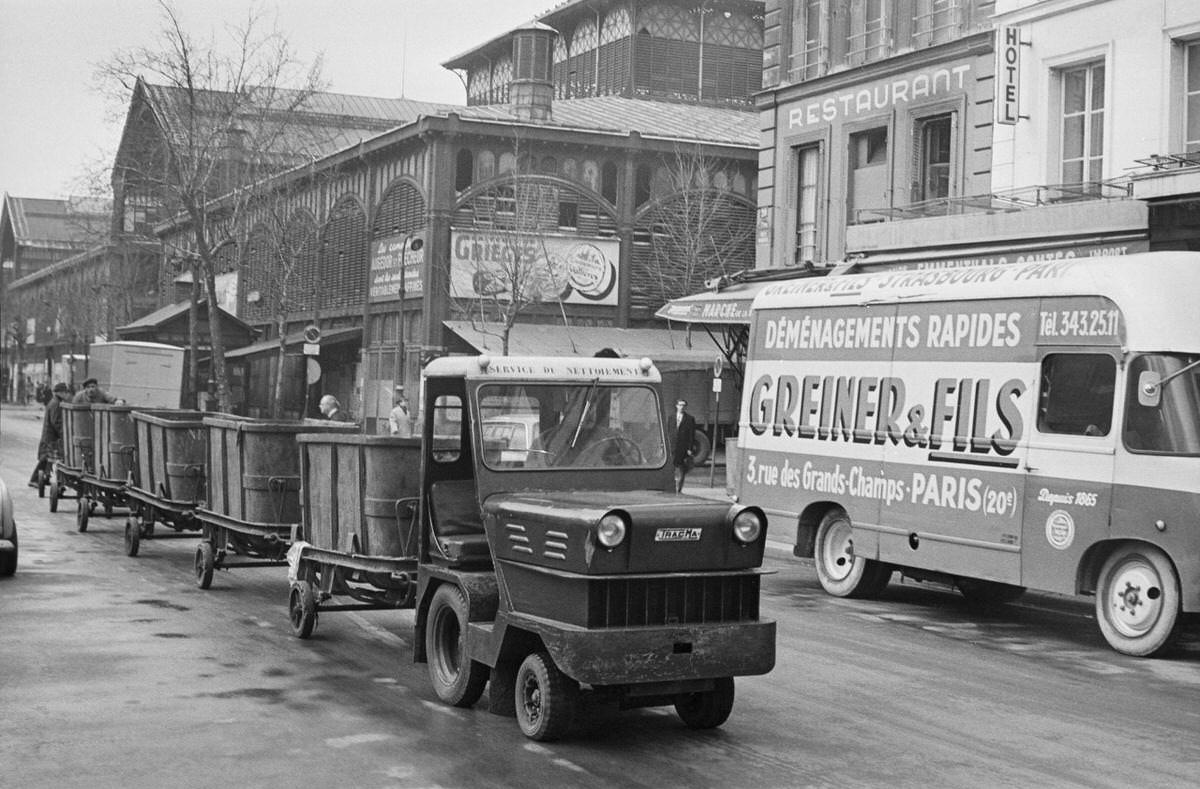
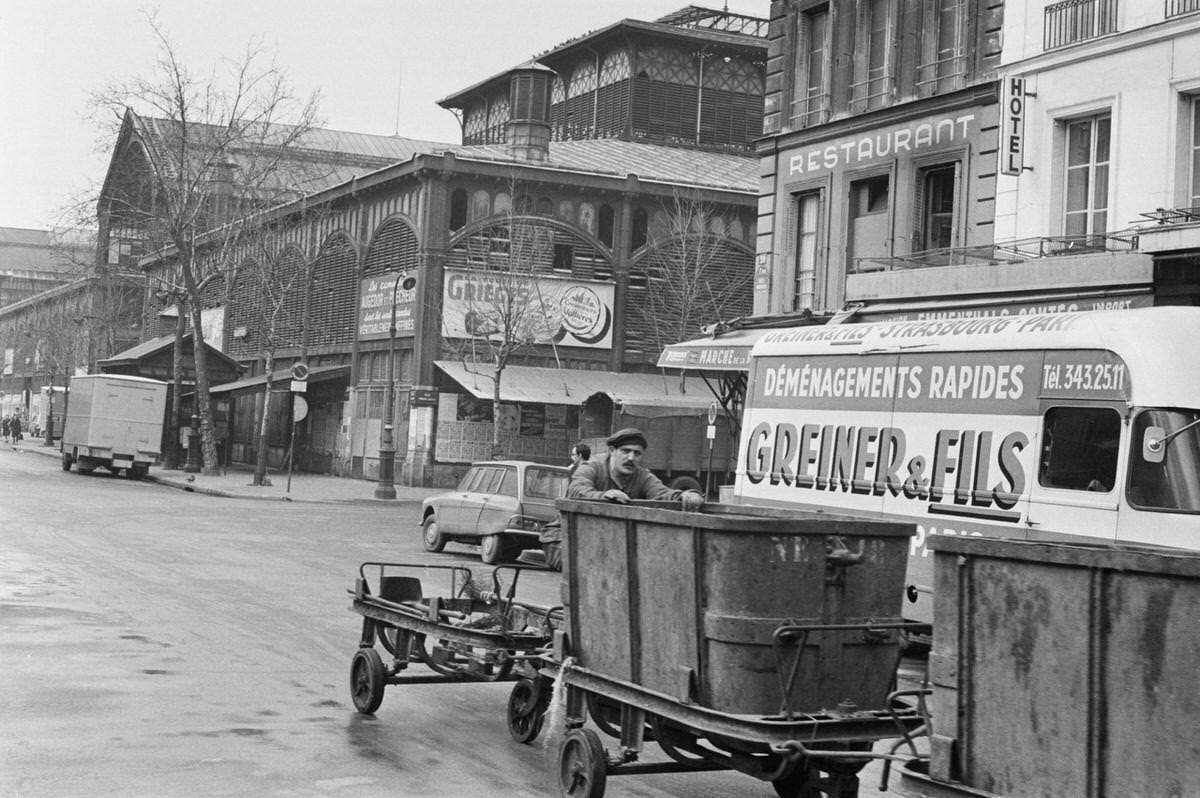
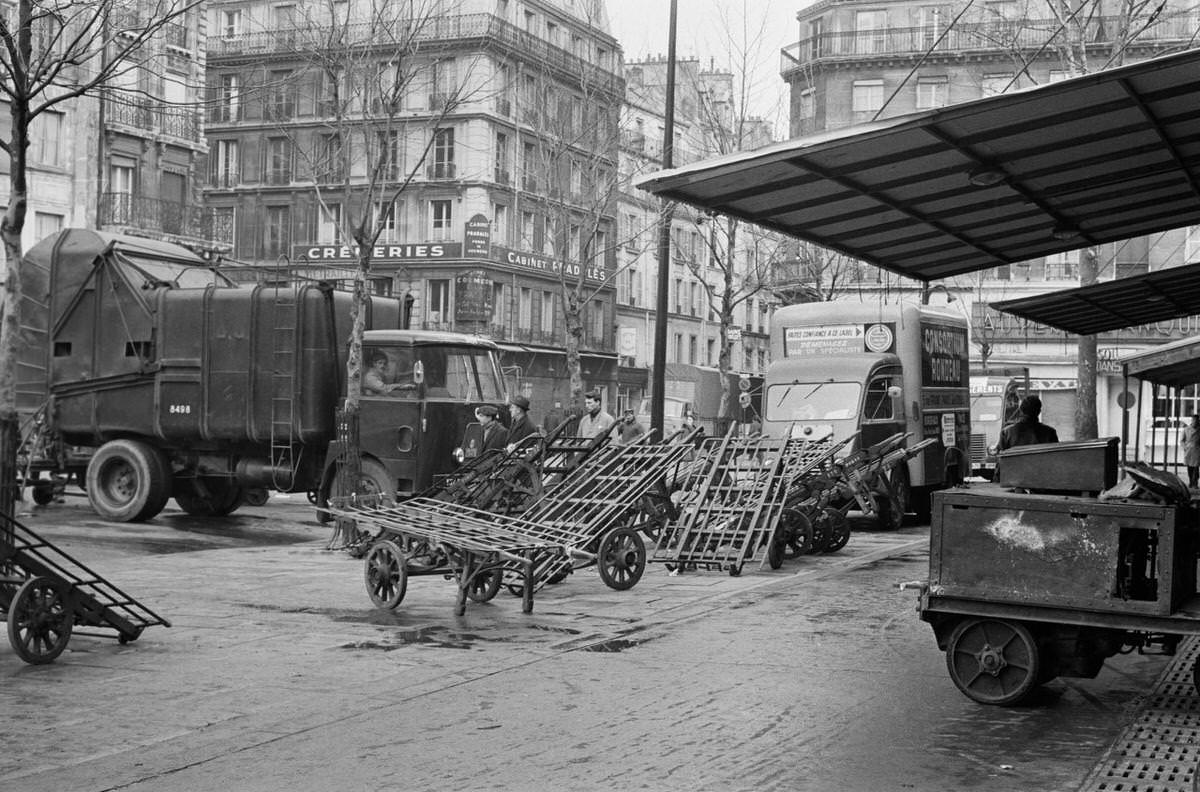
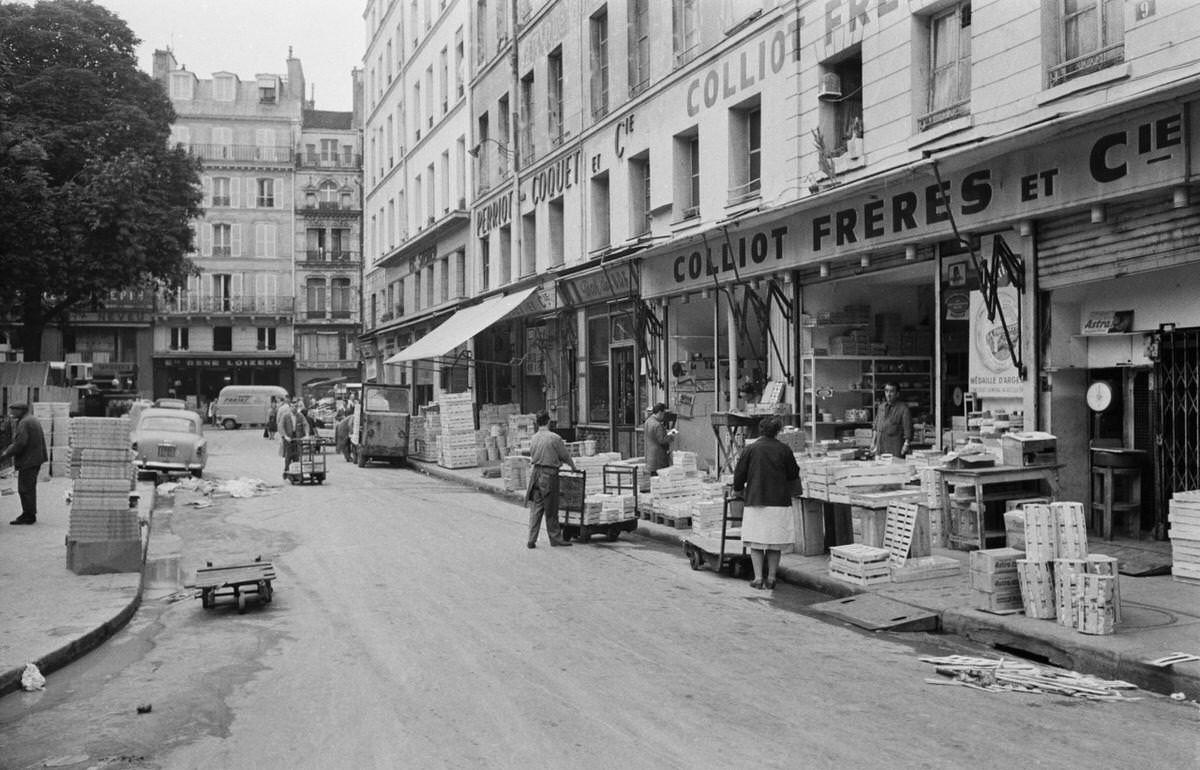
Traffic congestion at Les Halles was severe. Hundreds of delivery trucks funneled into the narrow streets surrounding the market every night, creating gridlock that stretched deep into the city center. The roads were not built for this volume of vehicles, and the problem only worsened as freight demands grew. City planners identified the site as a problem to be solved, and by the early 1960s, it was earmarked for demolition.
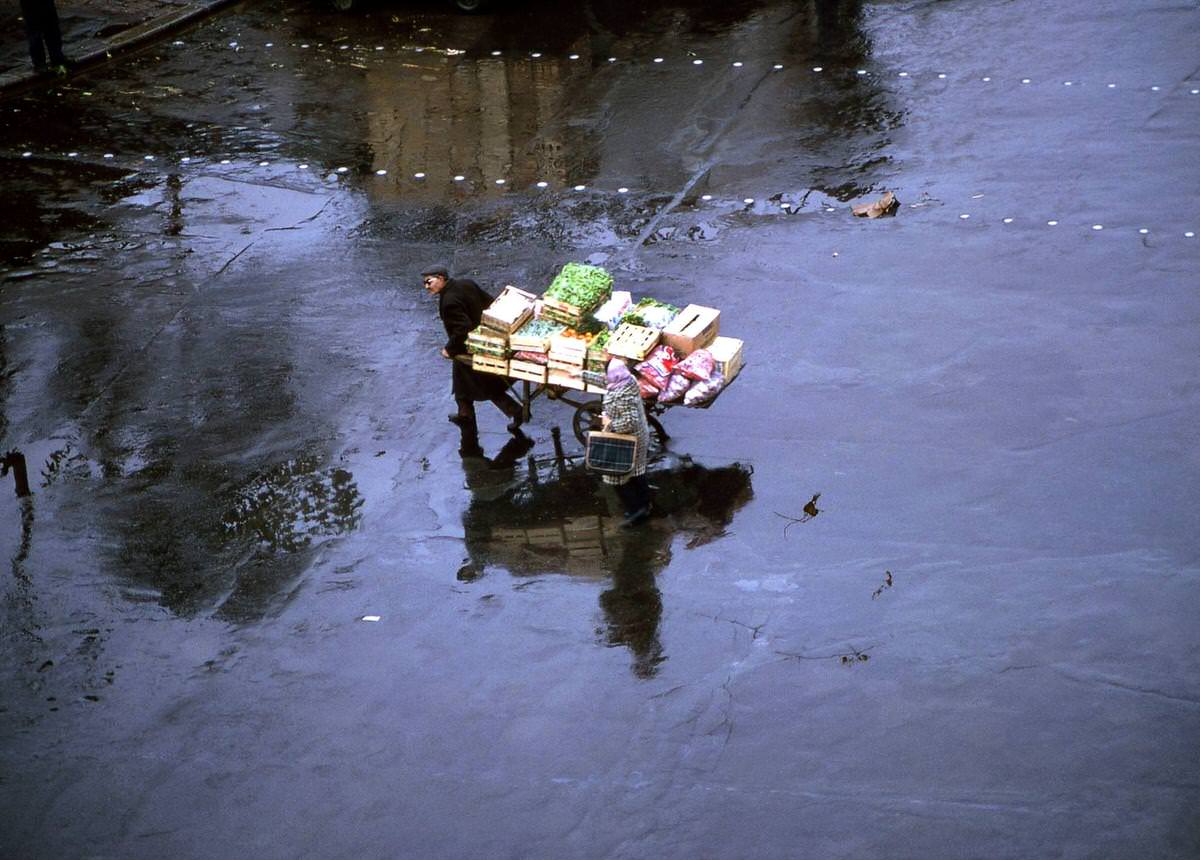
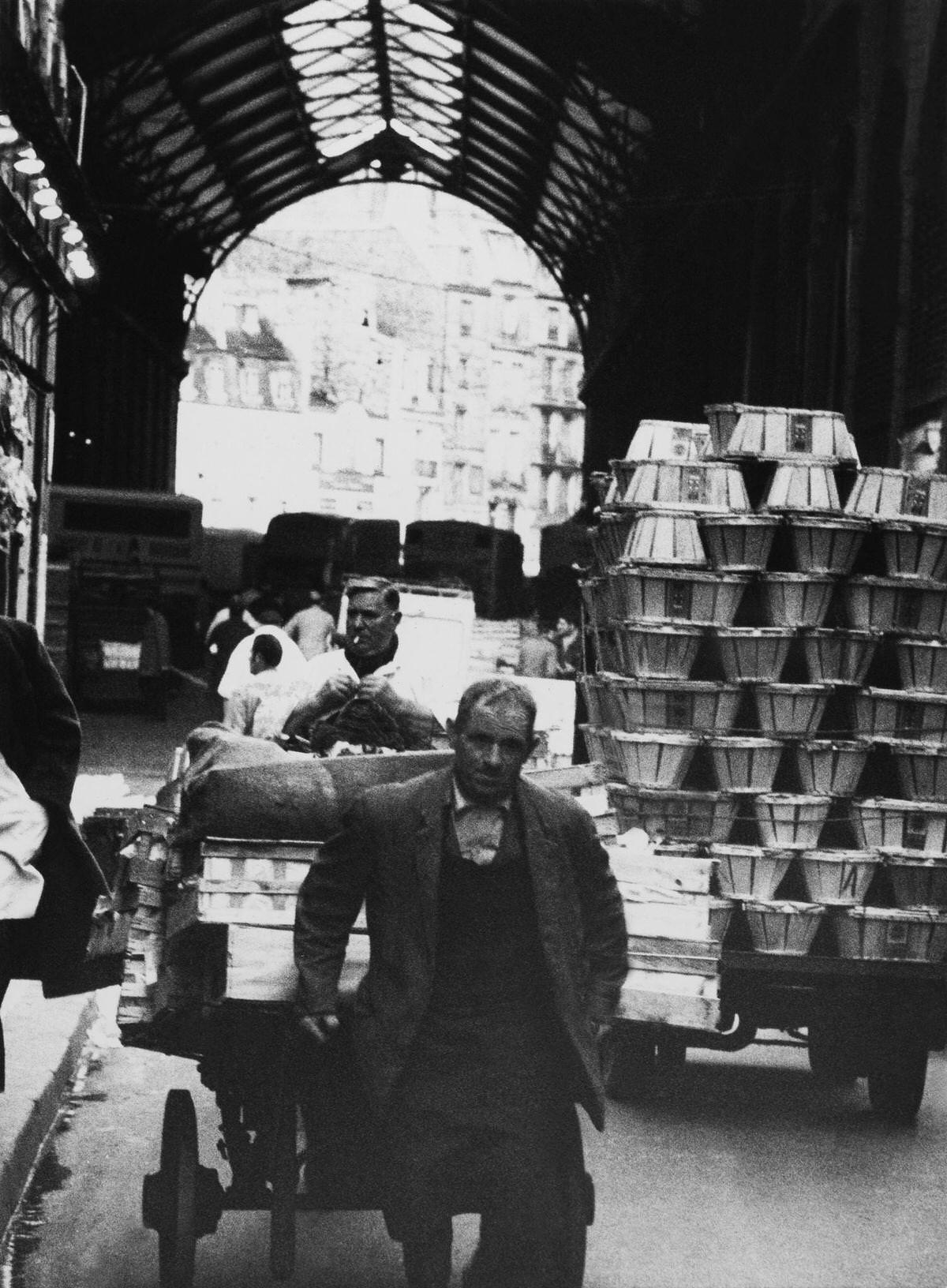
Delivery tricycle in Les Halles, which was historically the traditional central market of Paris, 1960s
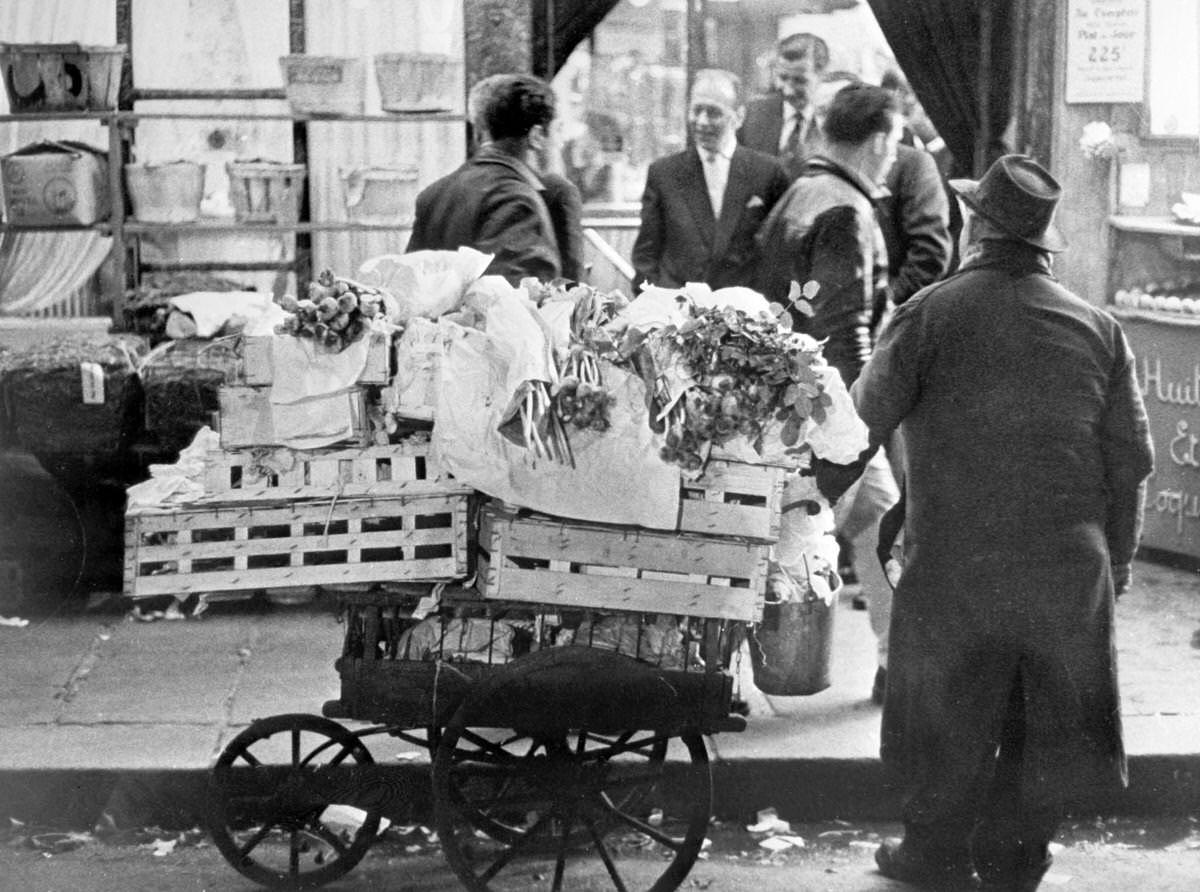
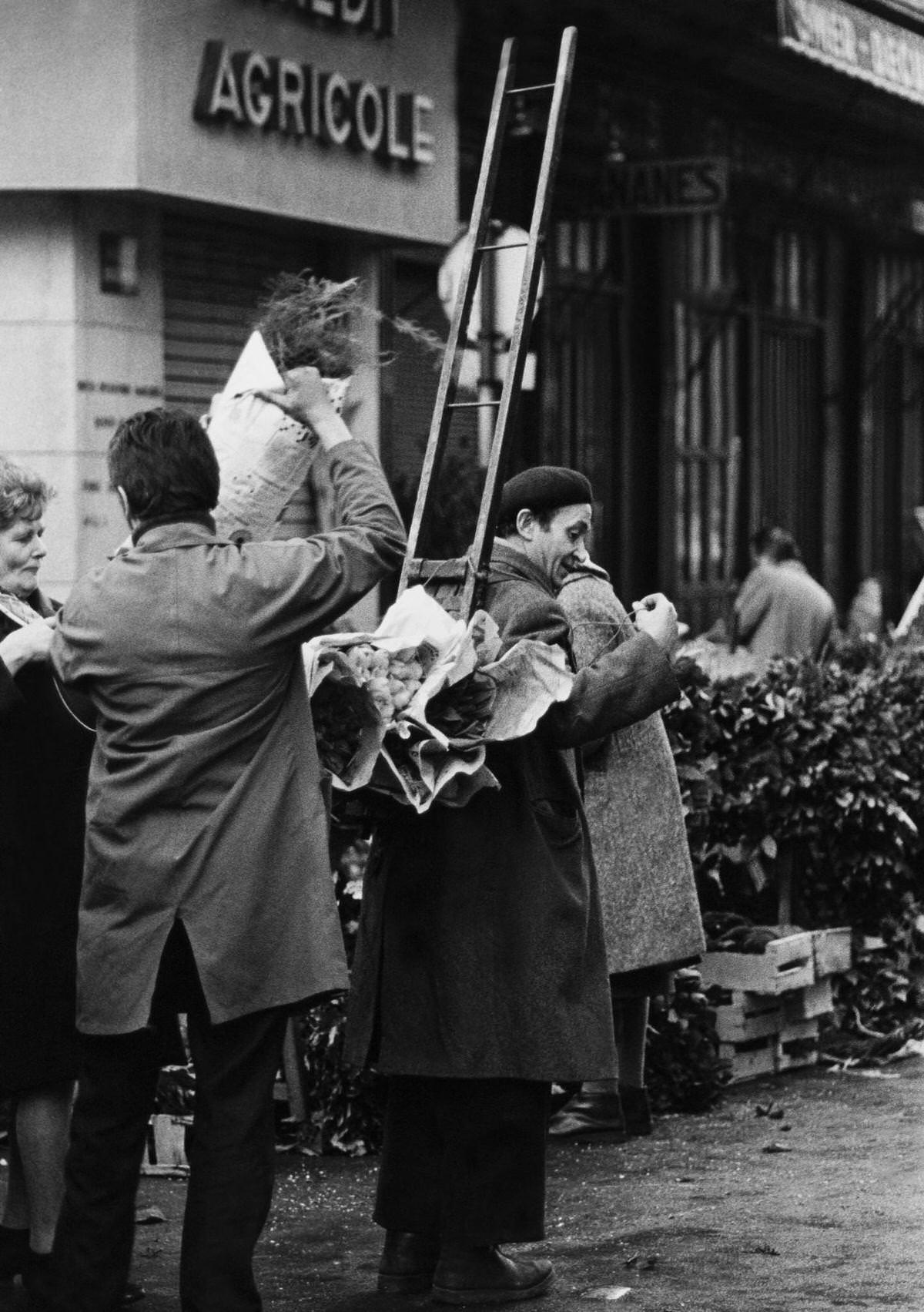
The Halles of Paris, Farmers near the Bank of Farmers, 1960s
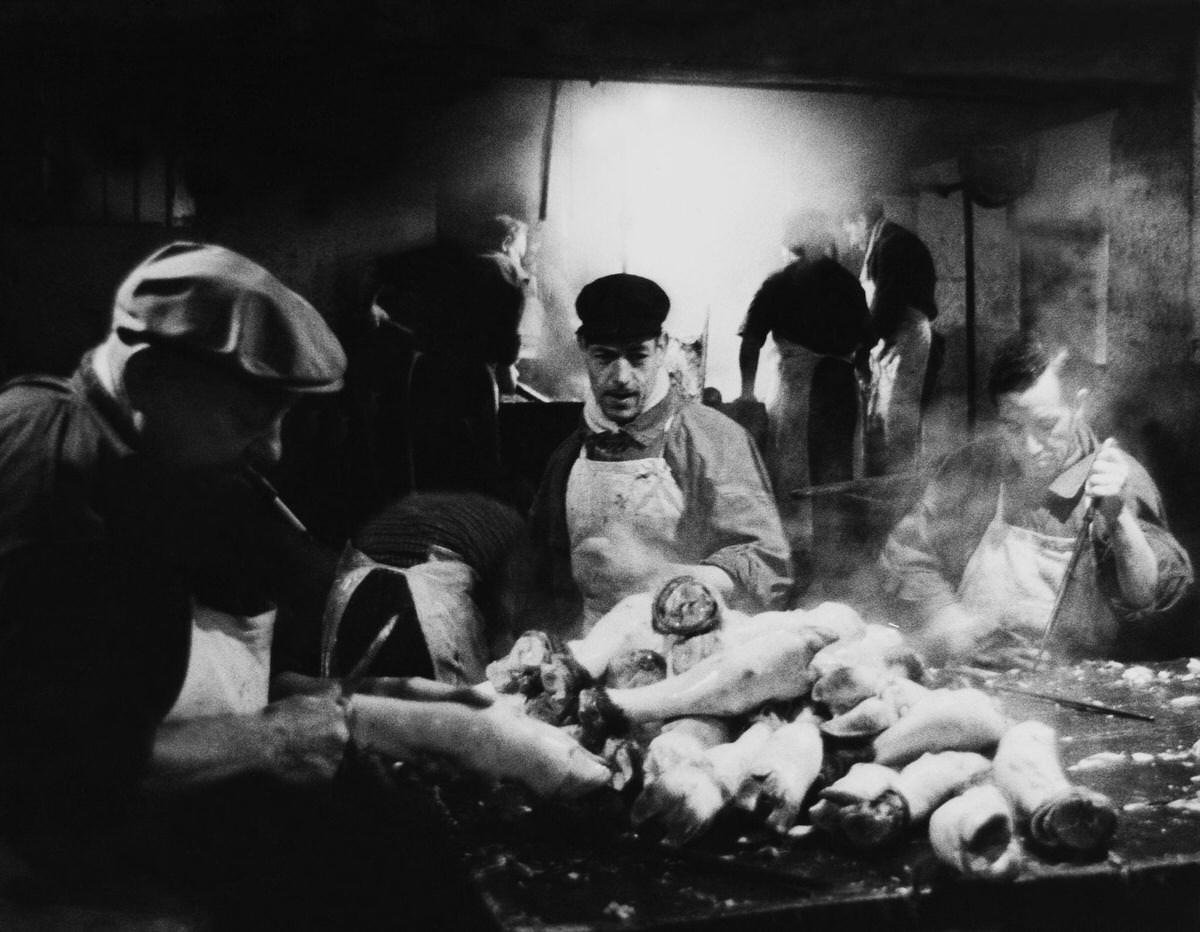
The Halles Of Paris, Pork Foott in Sanval Street, 1960s
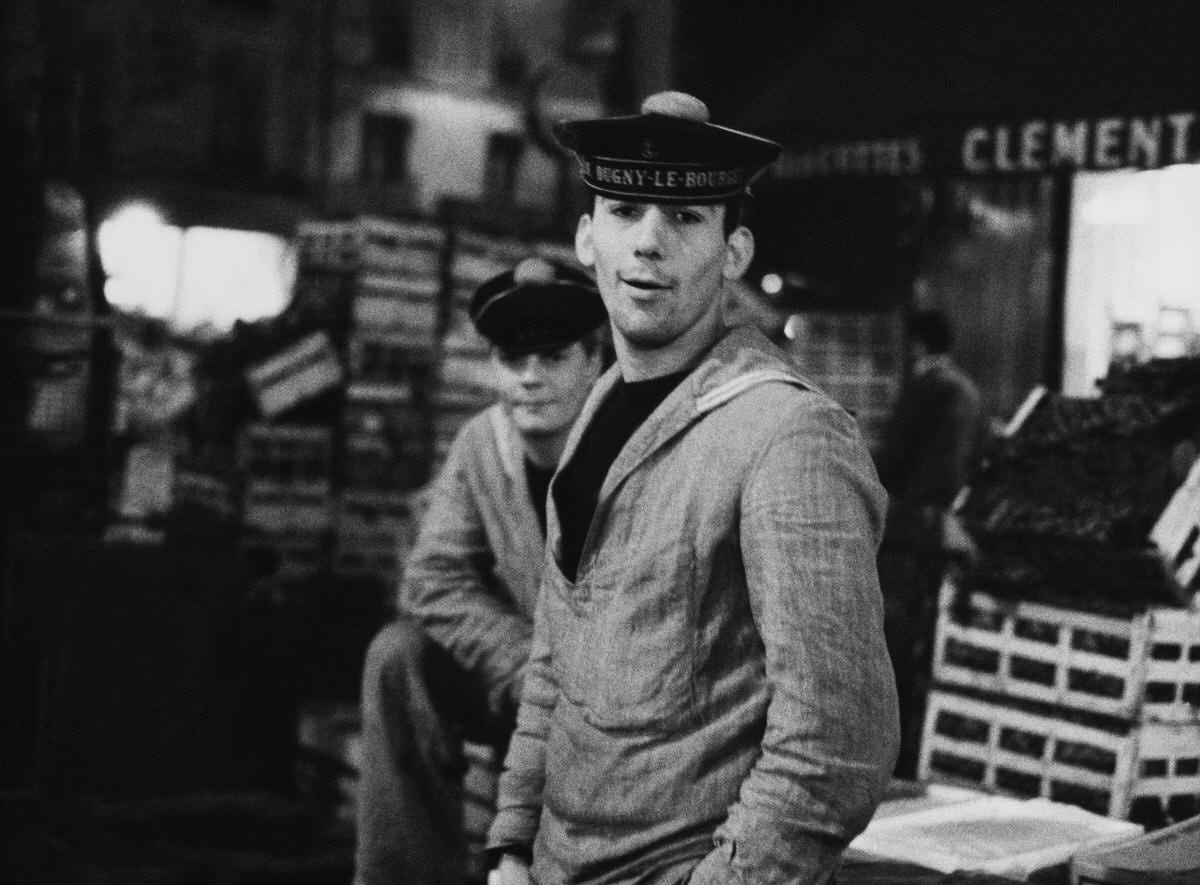
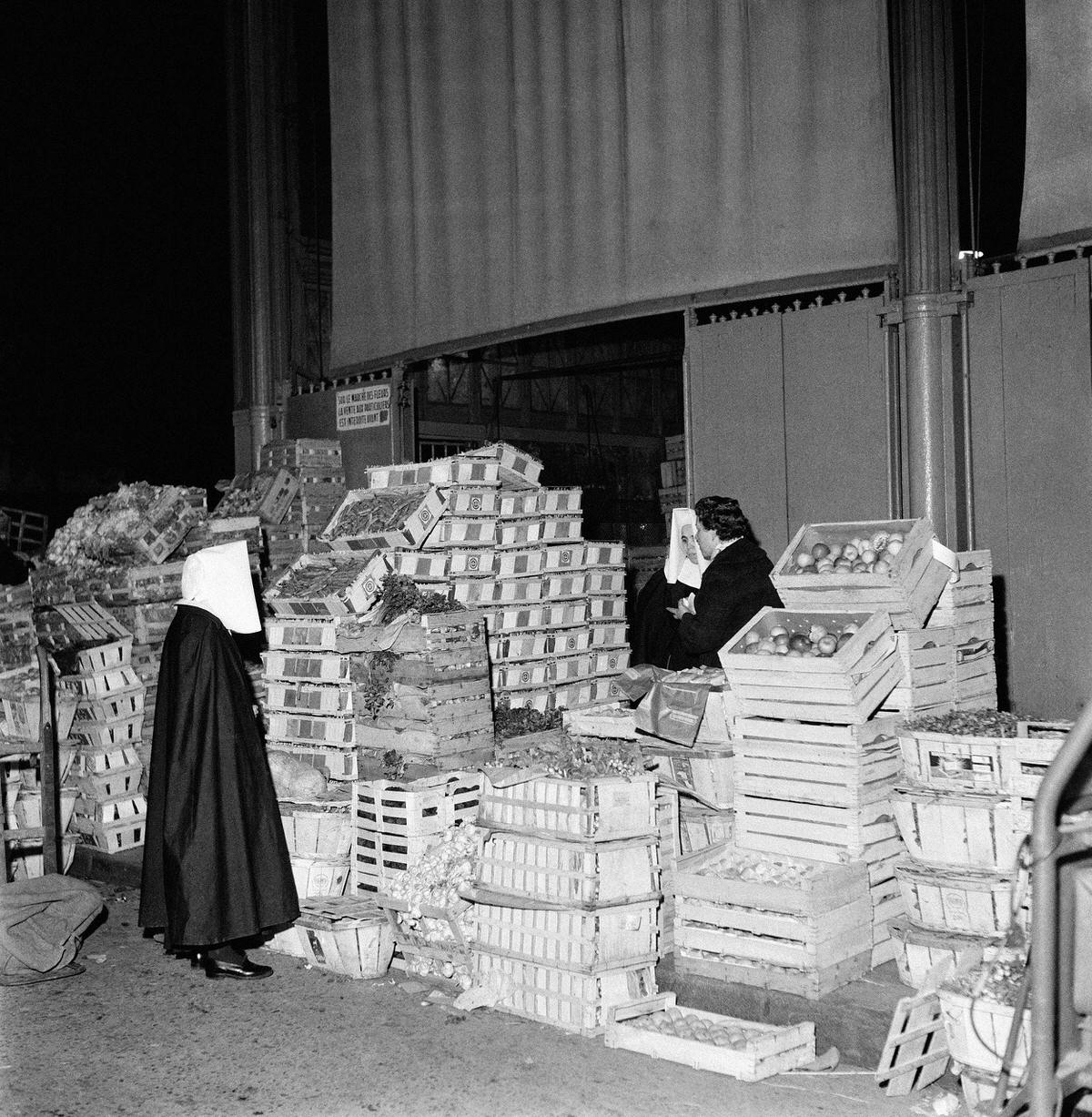
The French Navy in The Market of Les Halles, 1960s
Beyond the logistics, Les Halles was a living neighborhood. Restaurants and bars clustered around the market catered to workers pulling all-night shifts. The most famous of these was Au Pied de Cochon — literally “The Pig’s Foot” — an establishment that served onion soup and hearty food through the early morning hours to butchers, porters, and late-night revelers alike. The streets around the pavilions were filled with a mix of wholesalers, small traders, and ordinary Parisians doing their daily shopping.
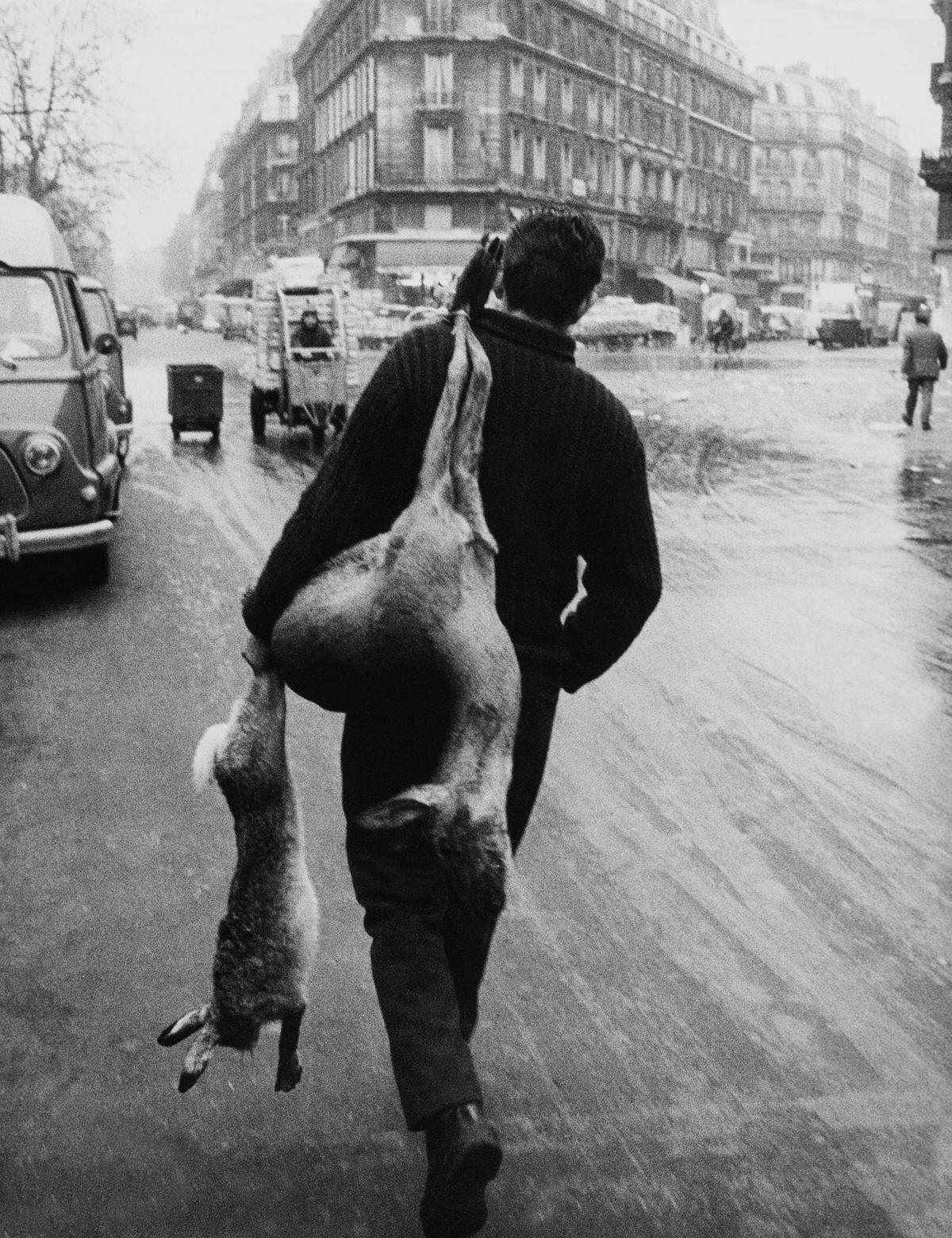
A Good Hunting, The Halles , 1960s
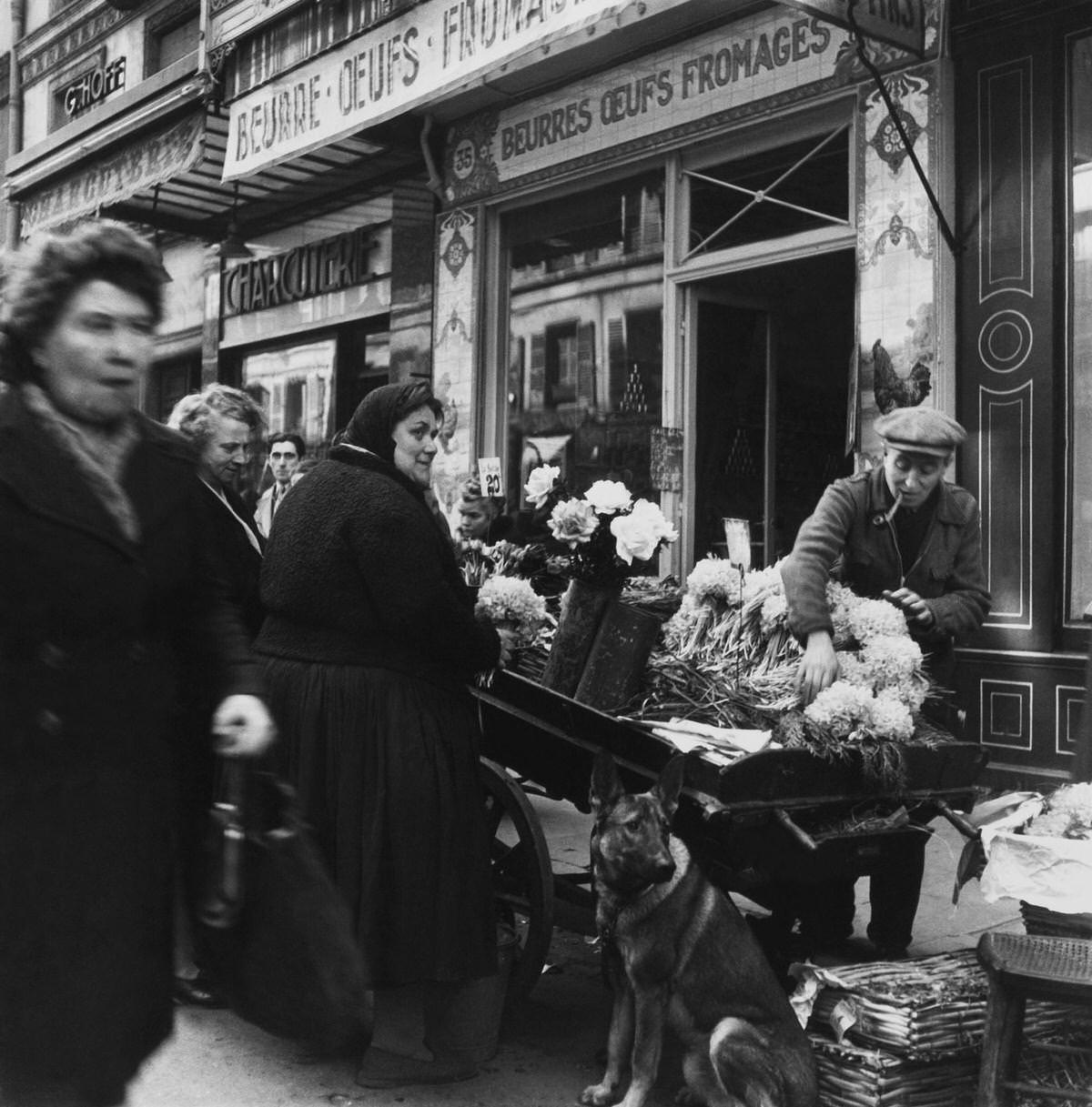
A Wholesaler of Flowers, Les Halles, 1960
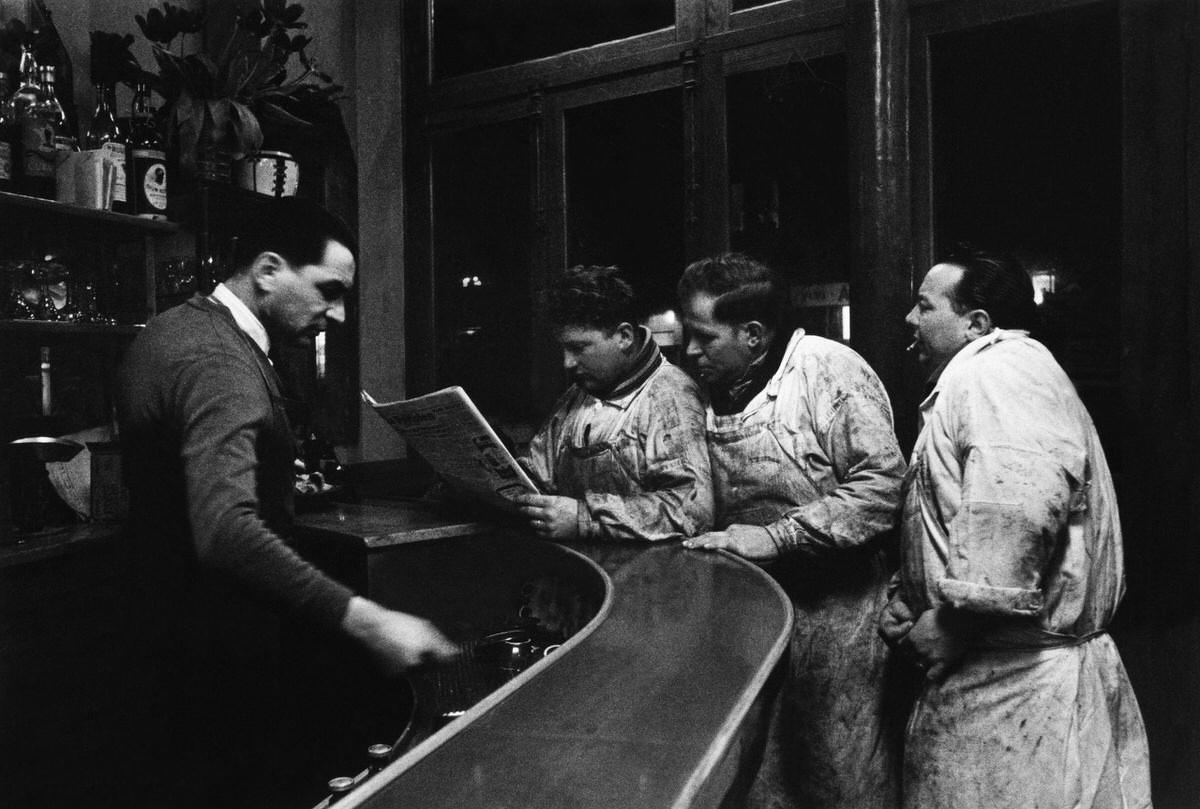
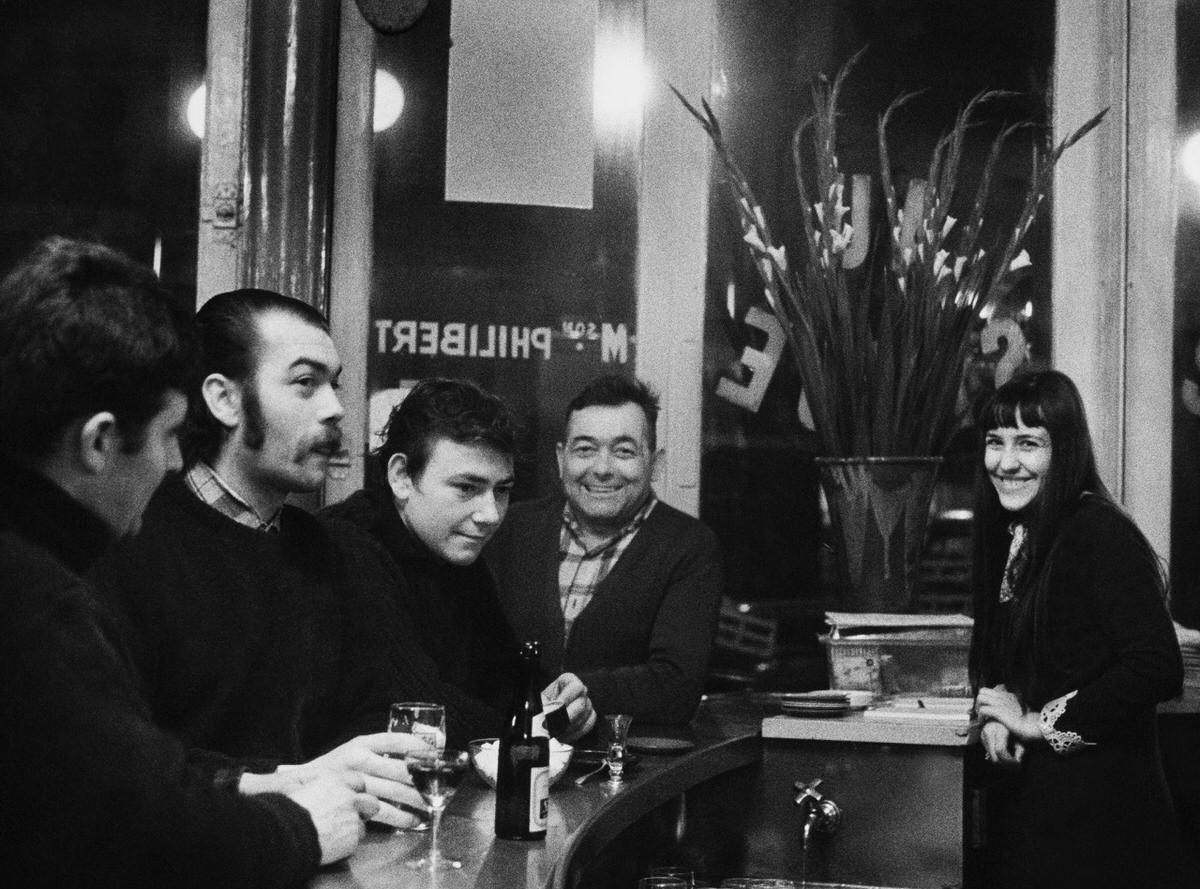
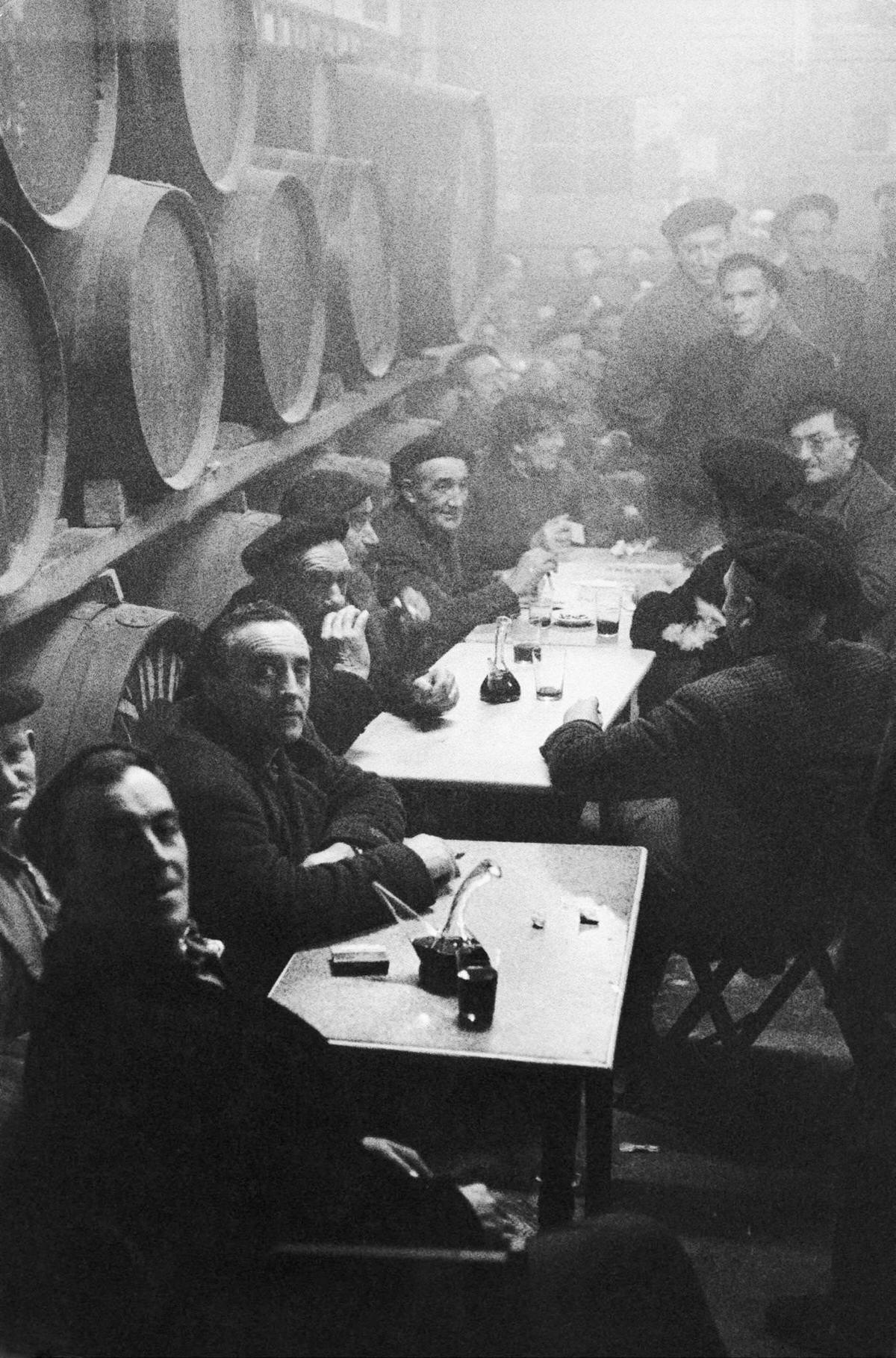
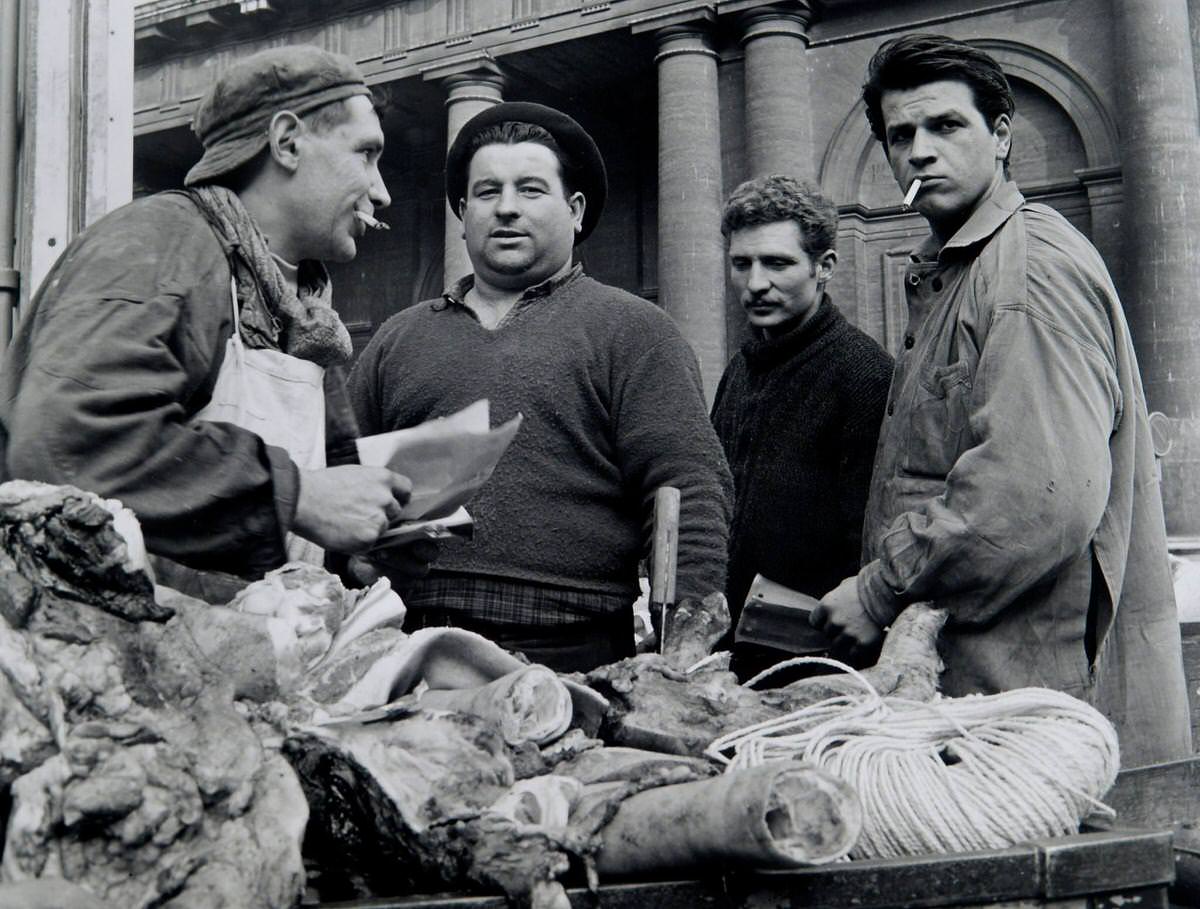
Butchers at the Bar, Les Halles, 1960s
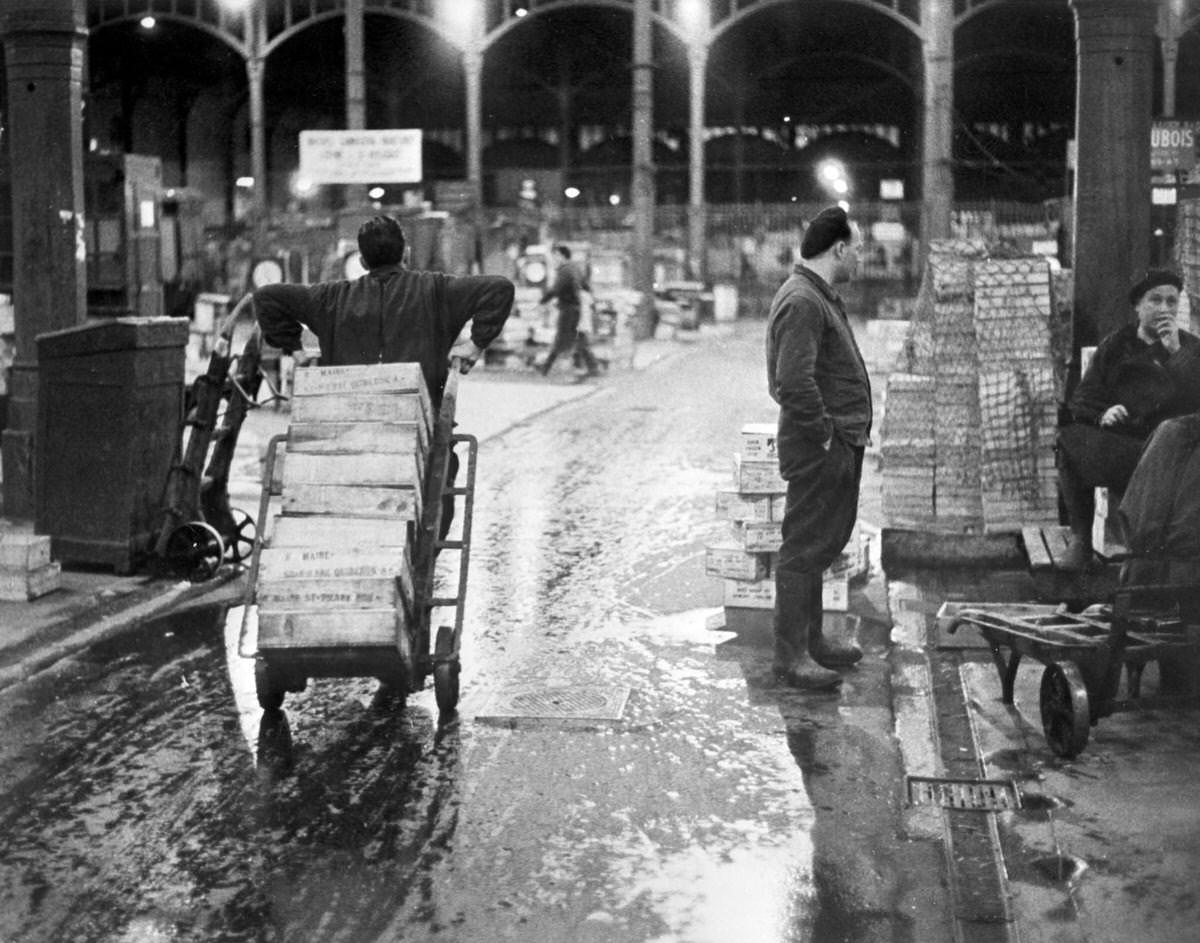
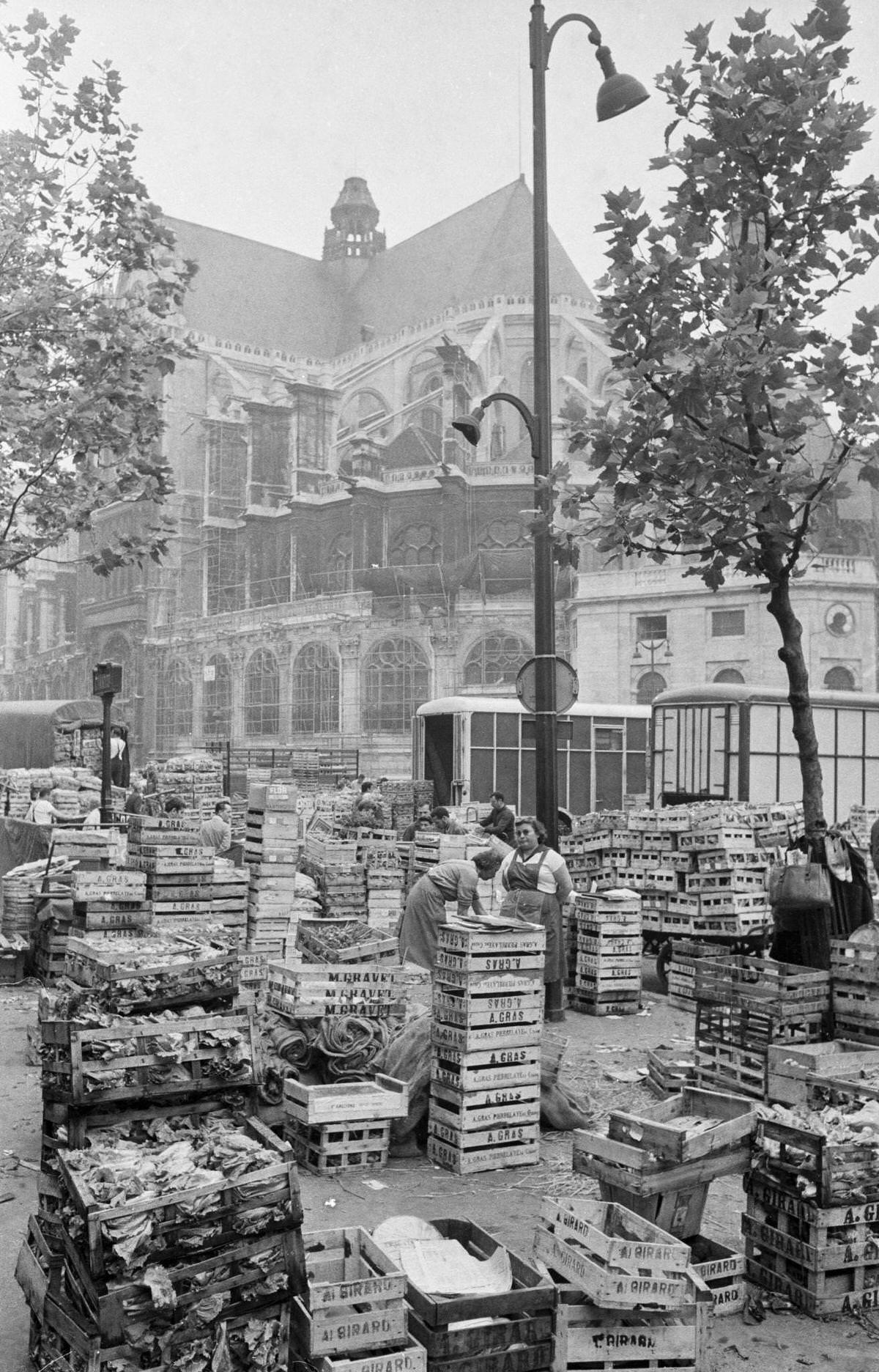
Wooden Trays Waiting for the vans, Les Halles, 1960s
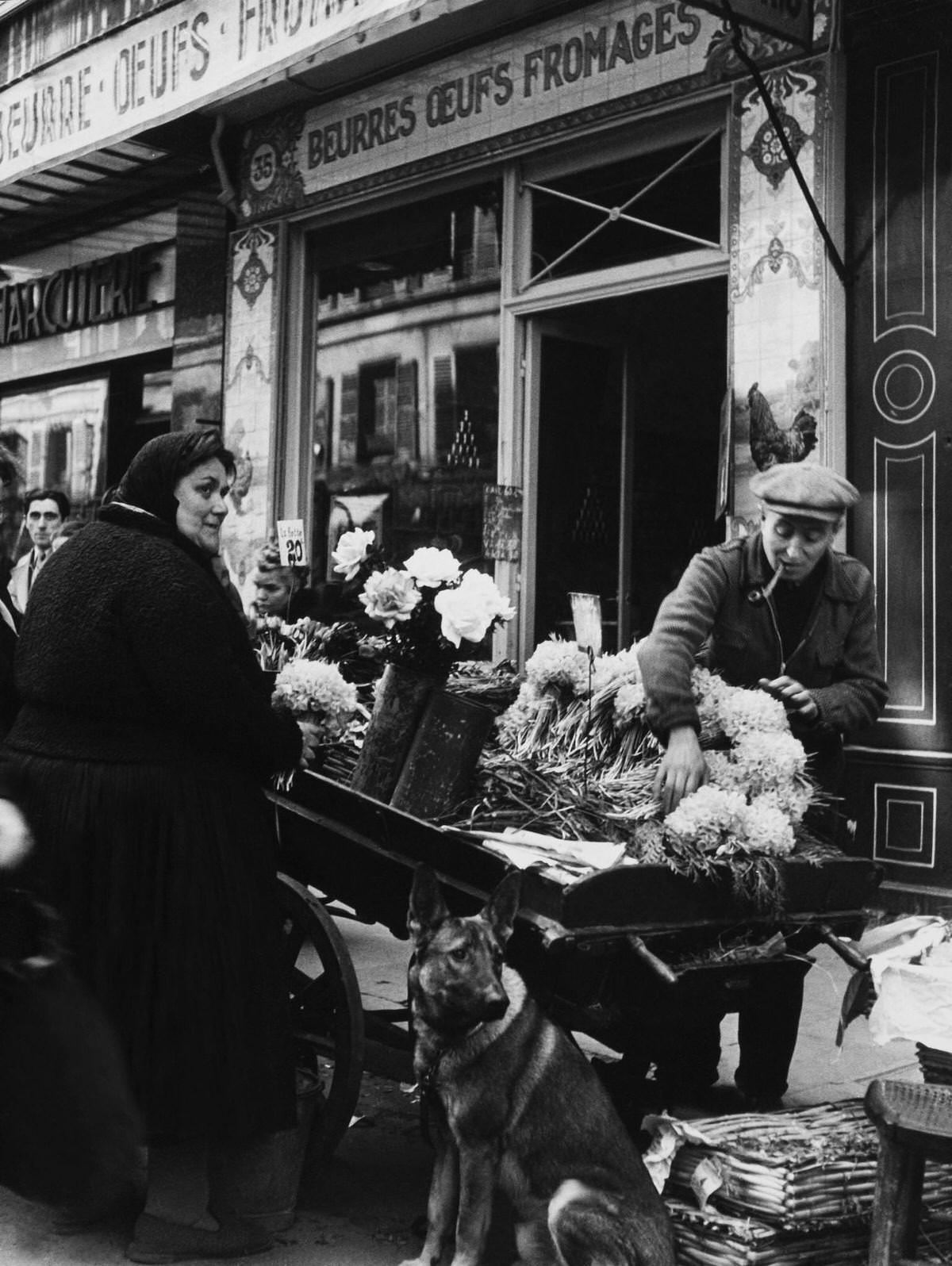
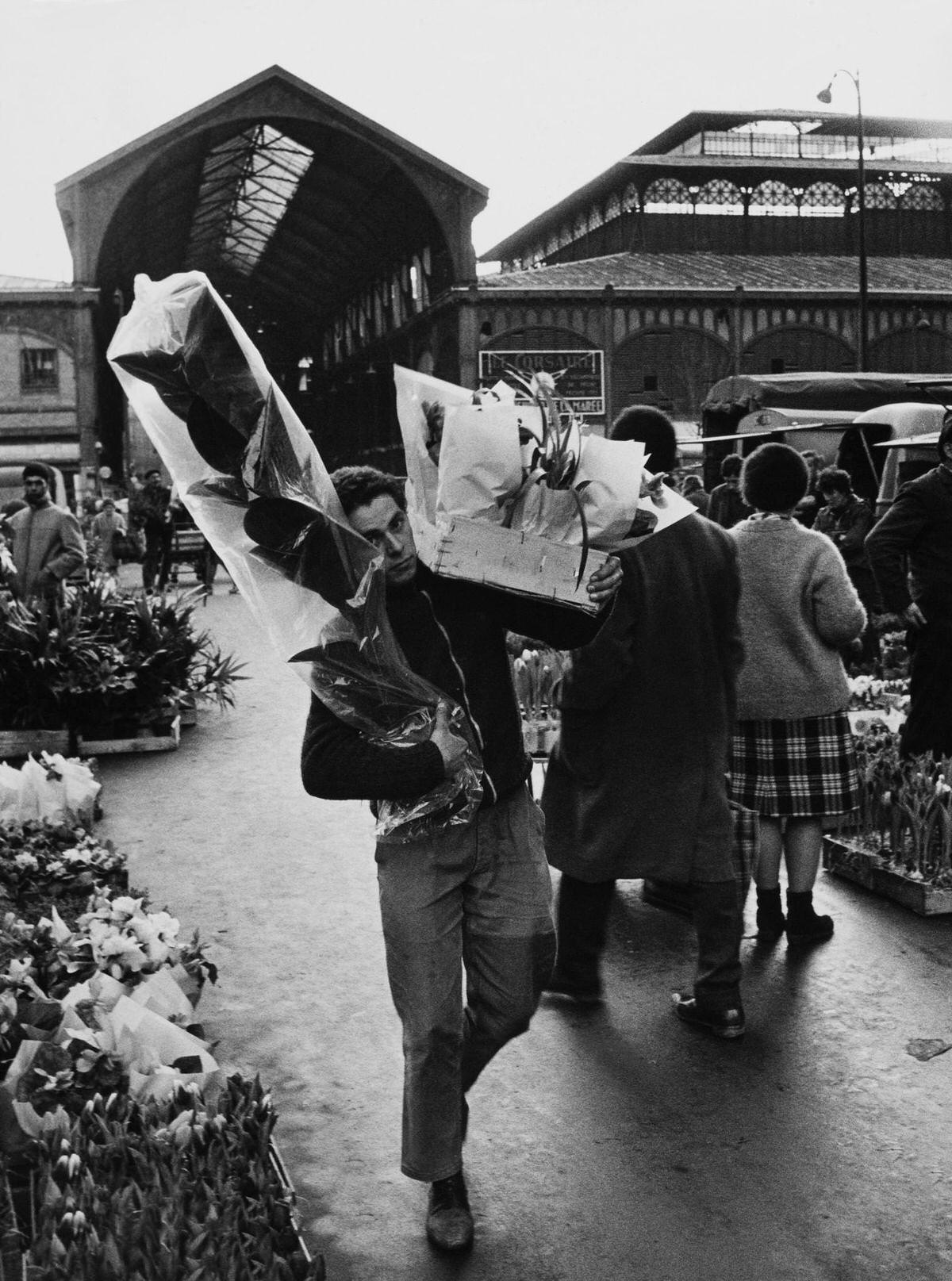
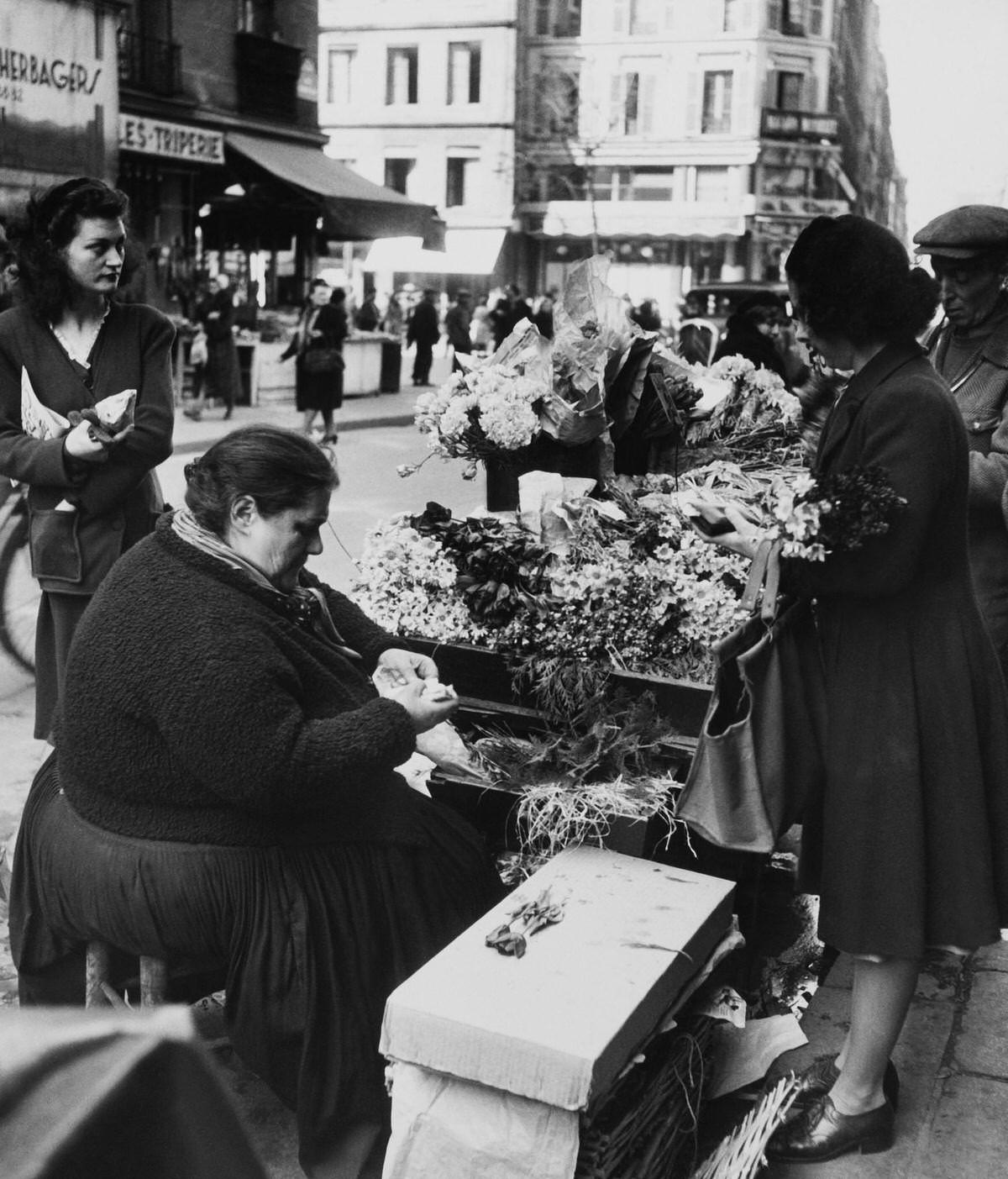
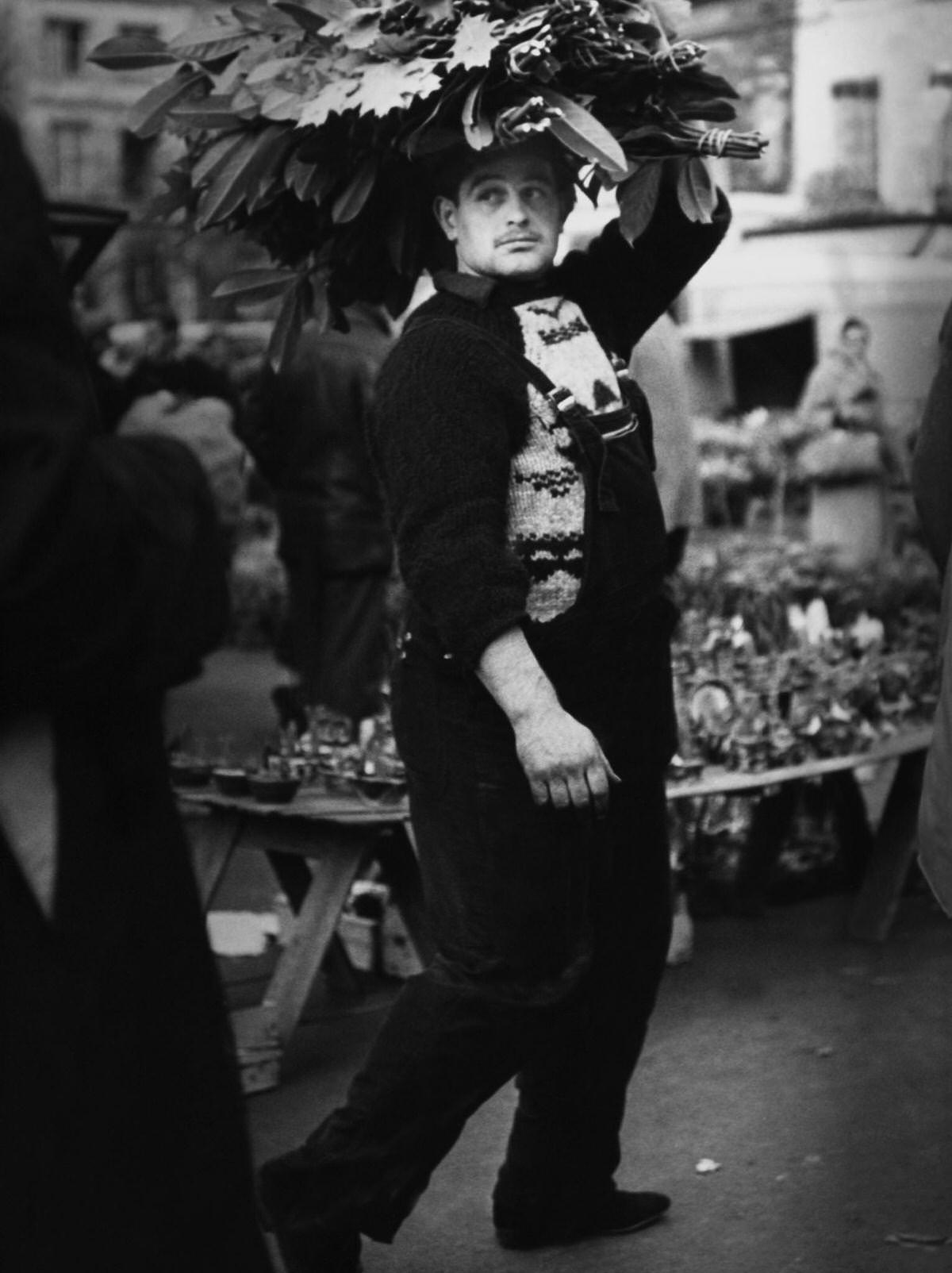
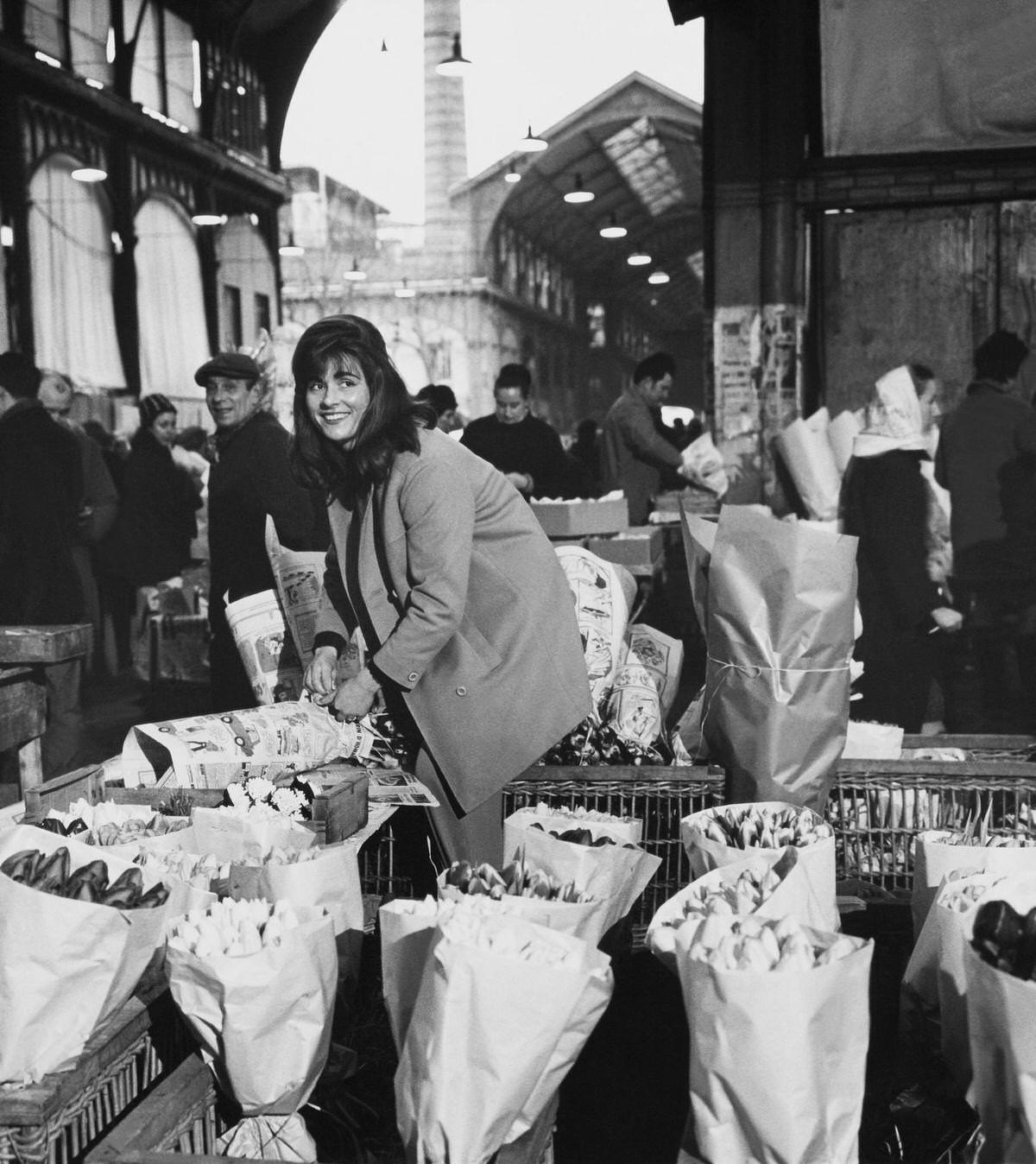
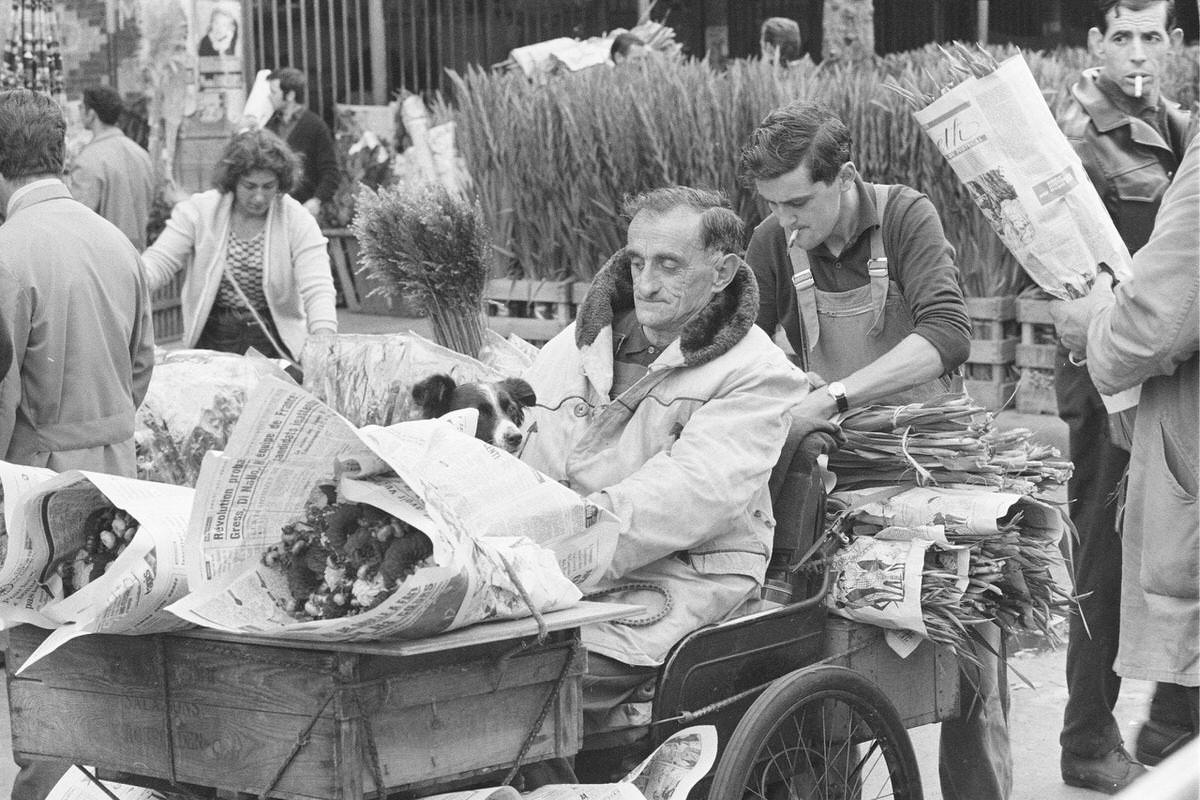
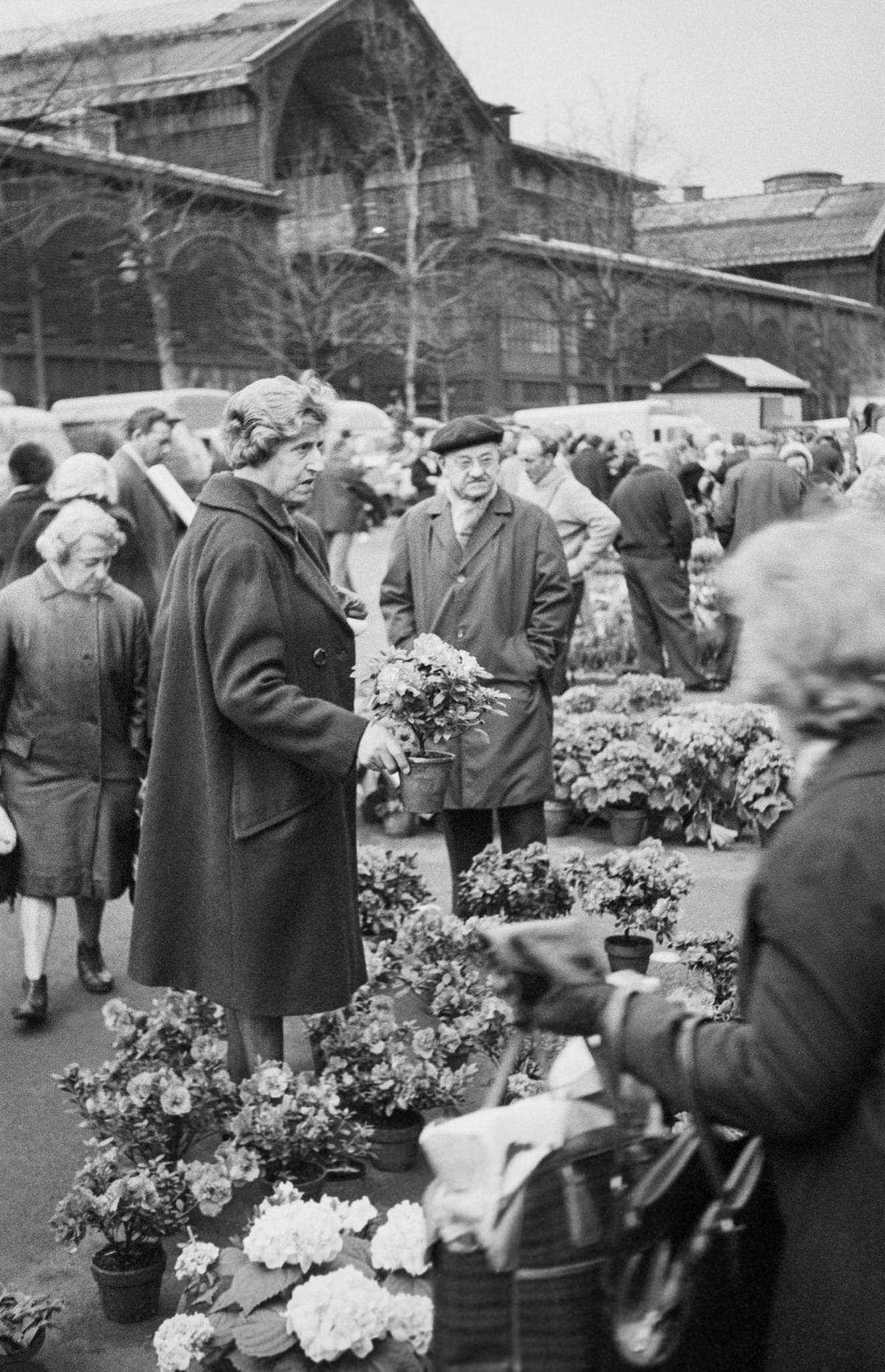
The flower market was one of the most visually striking parts of Les Halles. Wholesalers operated on a massive scale — enormous bundles of cut flowers stacked from floor to ceiling, vendors carrying armfuls of bouquets through crowded aisles. Flower stalls added color and fragrance to a market that could otherwise be overwhelming in its rawness.
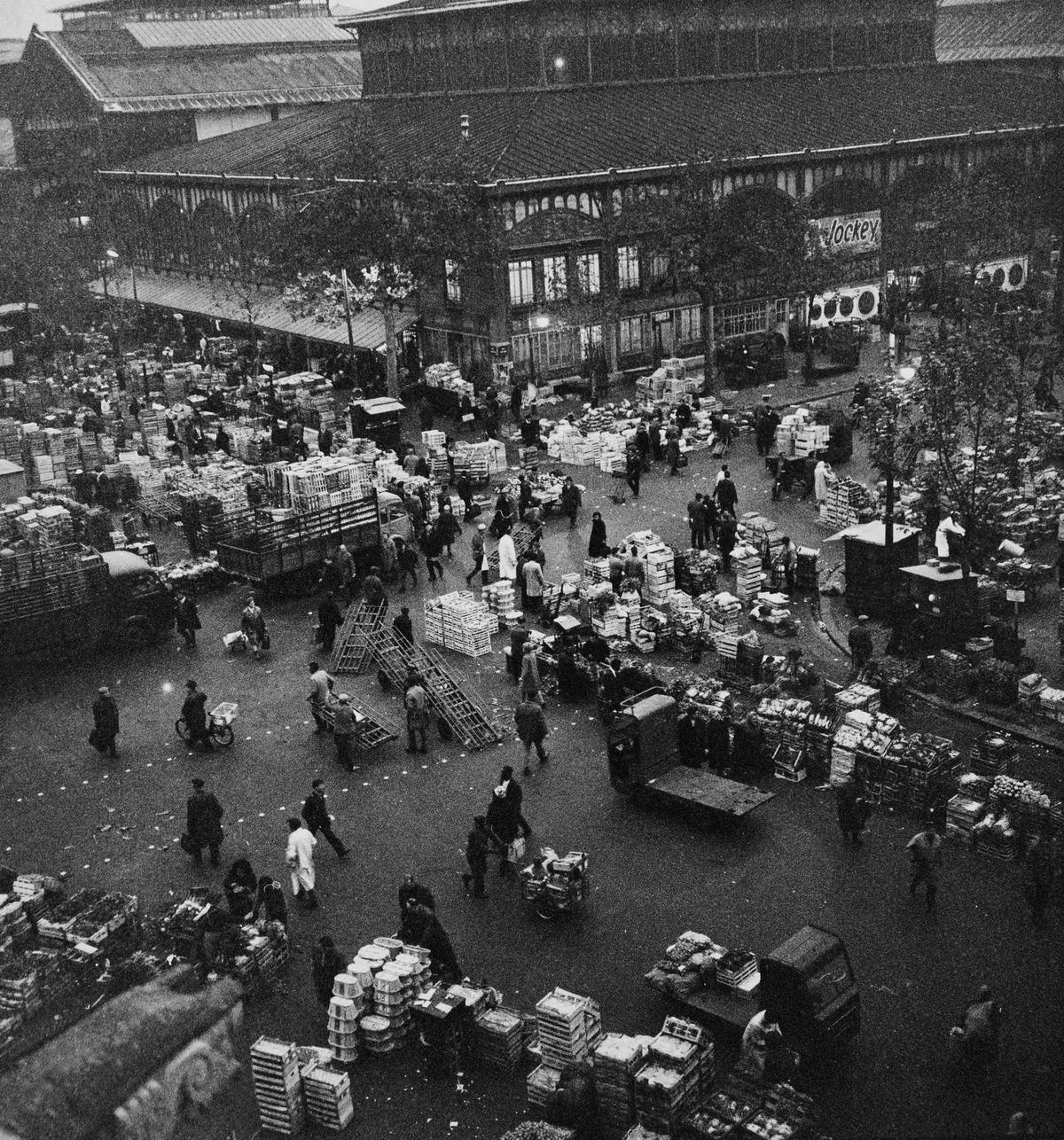
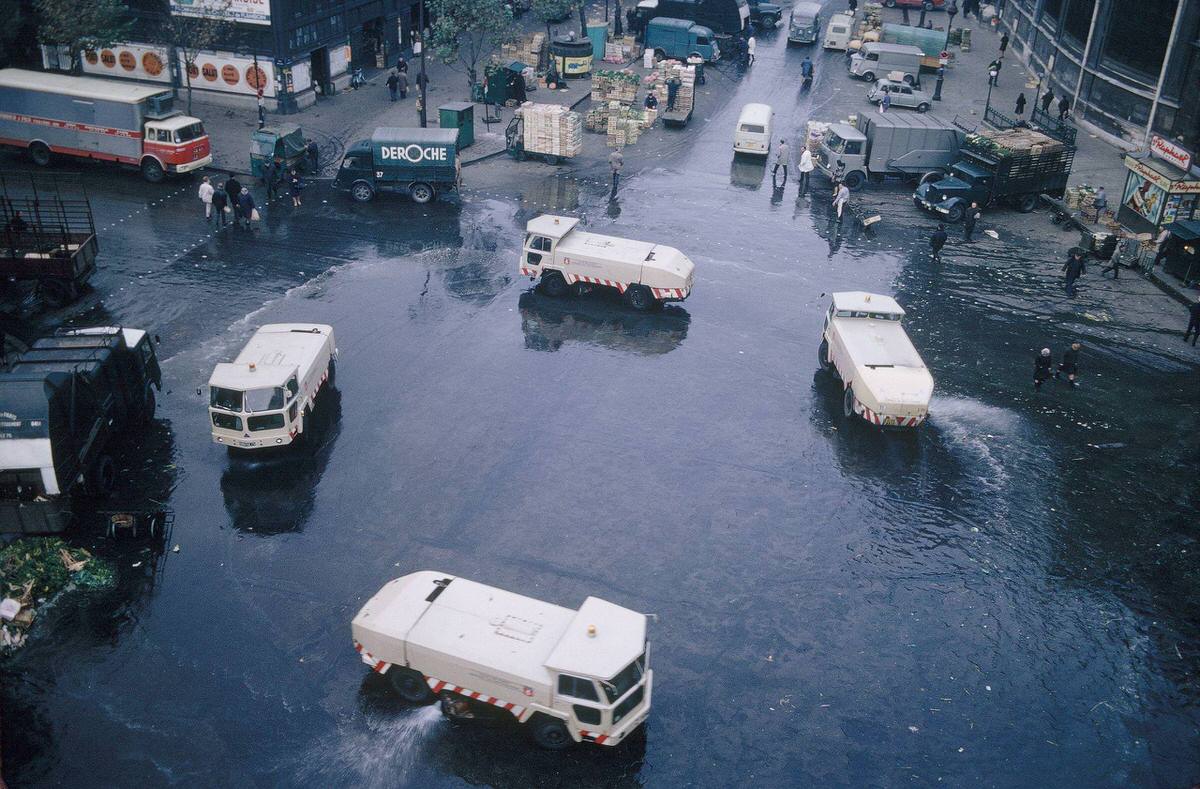
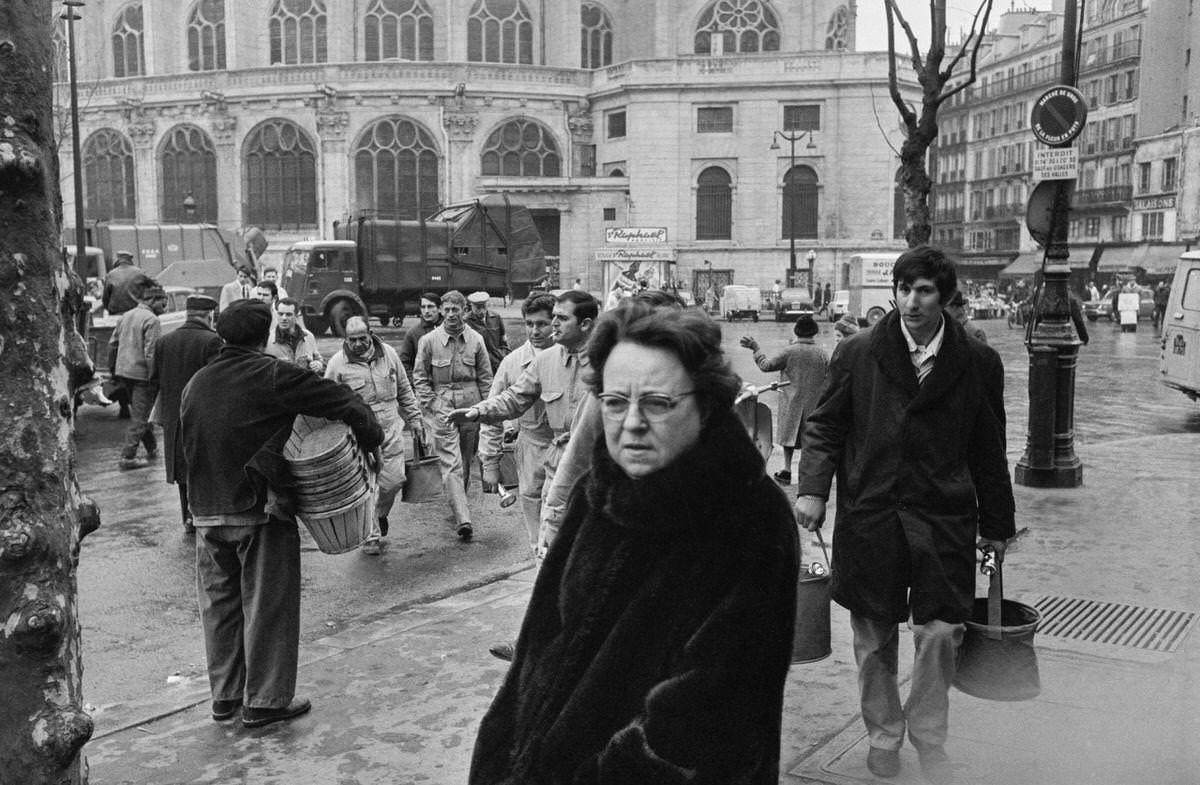
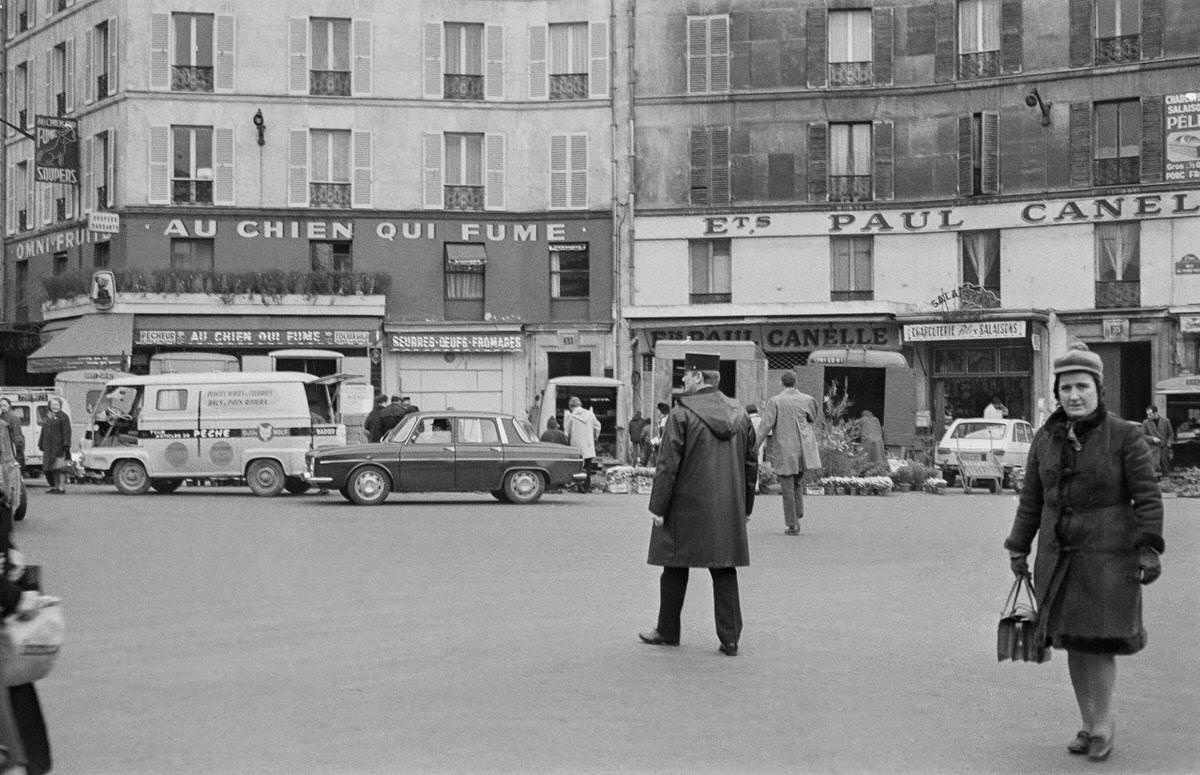
Animation on the Crossroad, Les Halles, 1960s
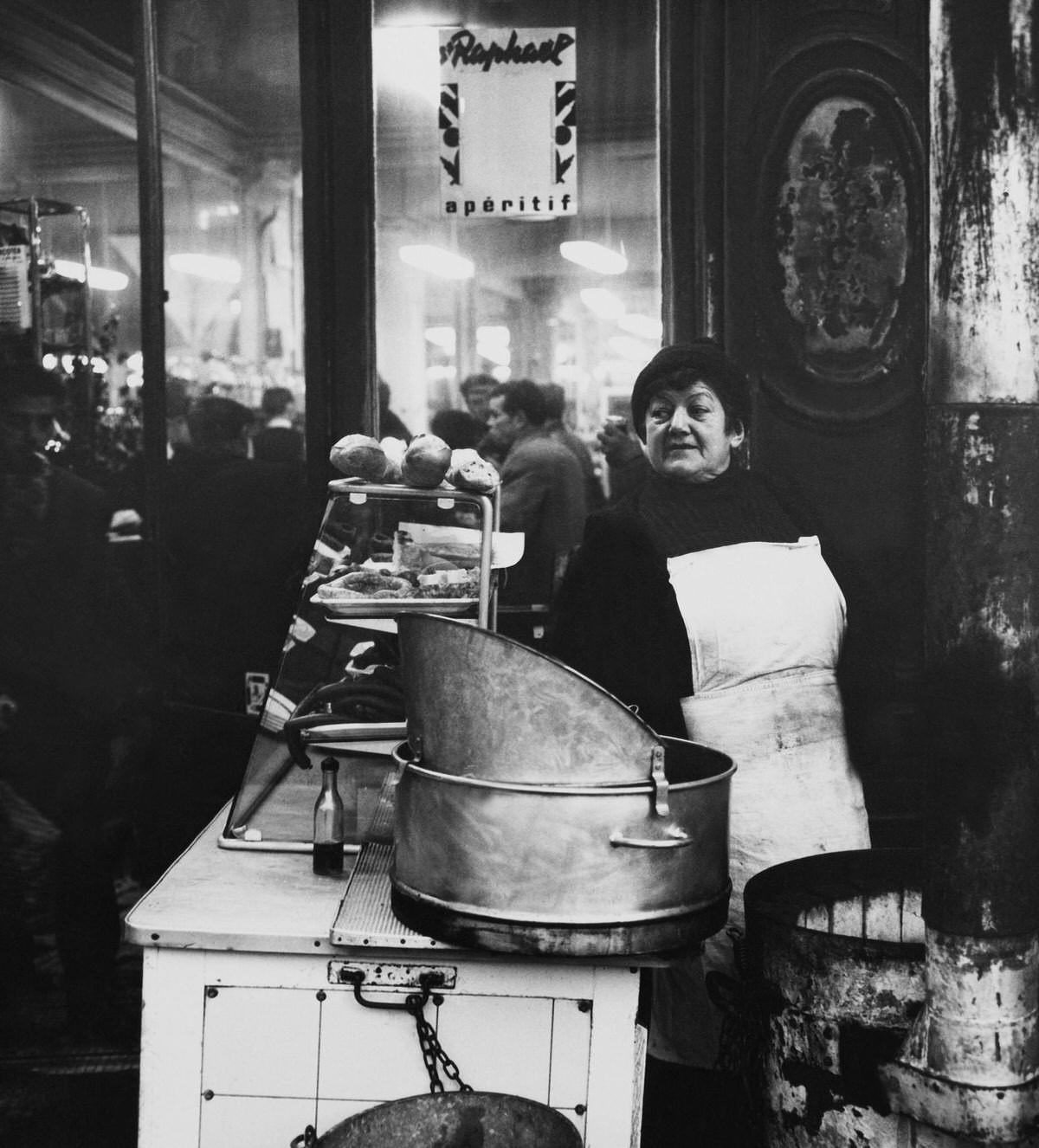
A Portrait of a Traditional Sandwiches and Chips Seller, Les Halles, 1960s
Les Halles, at the Bar, 1960’S
A Stall of Flowers, Les Halles, 1960s
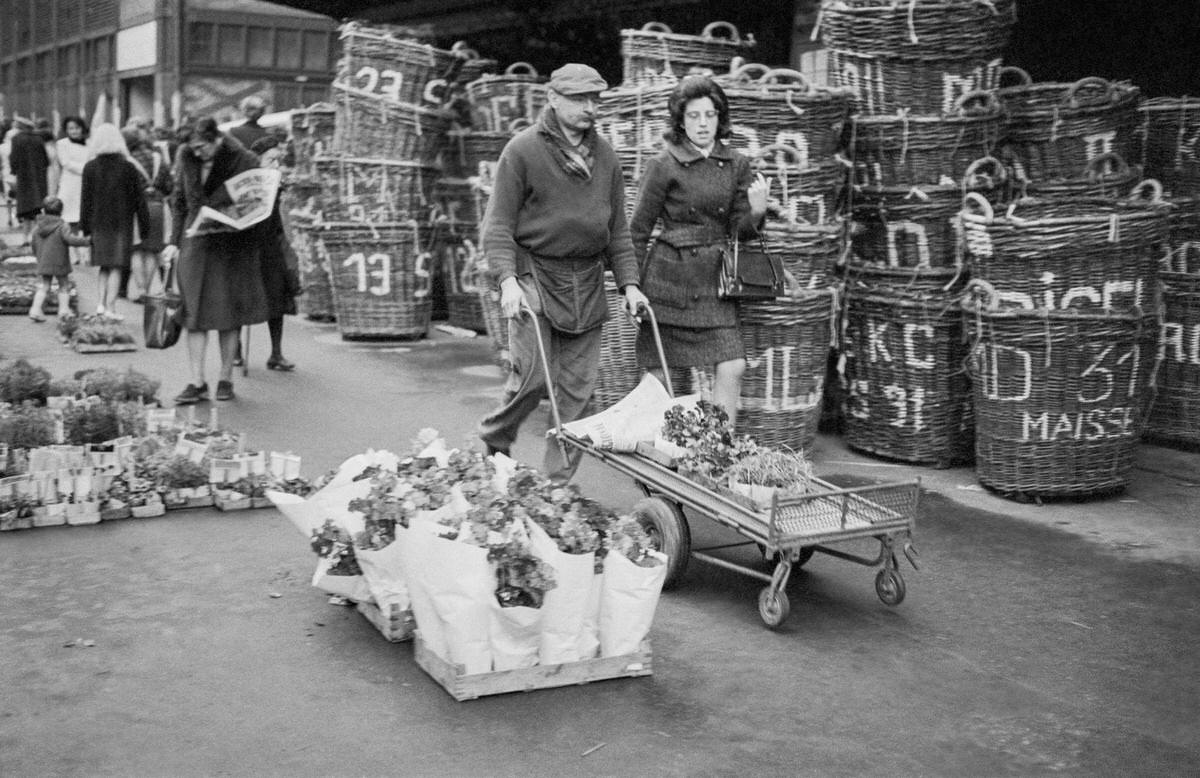
A Man Carrying some bouquets of Flowers, 1960s
A Big Wholesaler of Flowers, Les Halles, 1960s
A Traditional Wholesaler of Flowers, Les Halles, 1960s
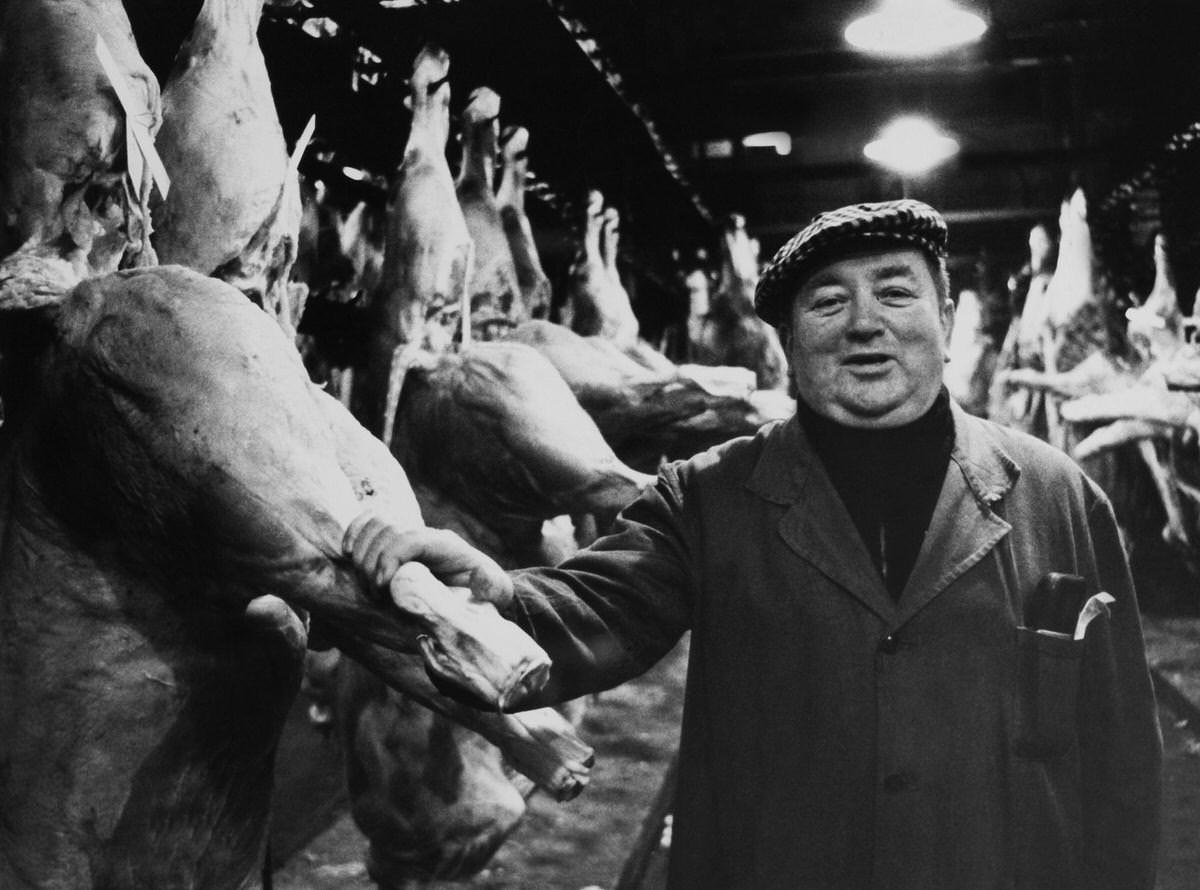
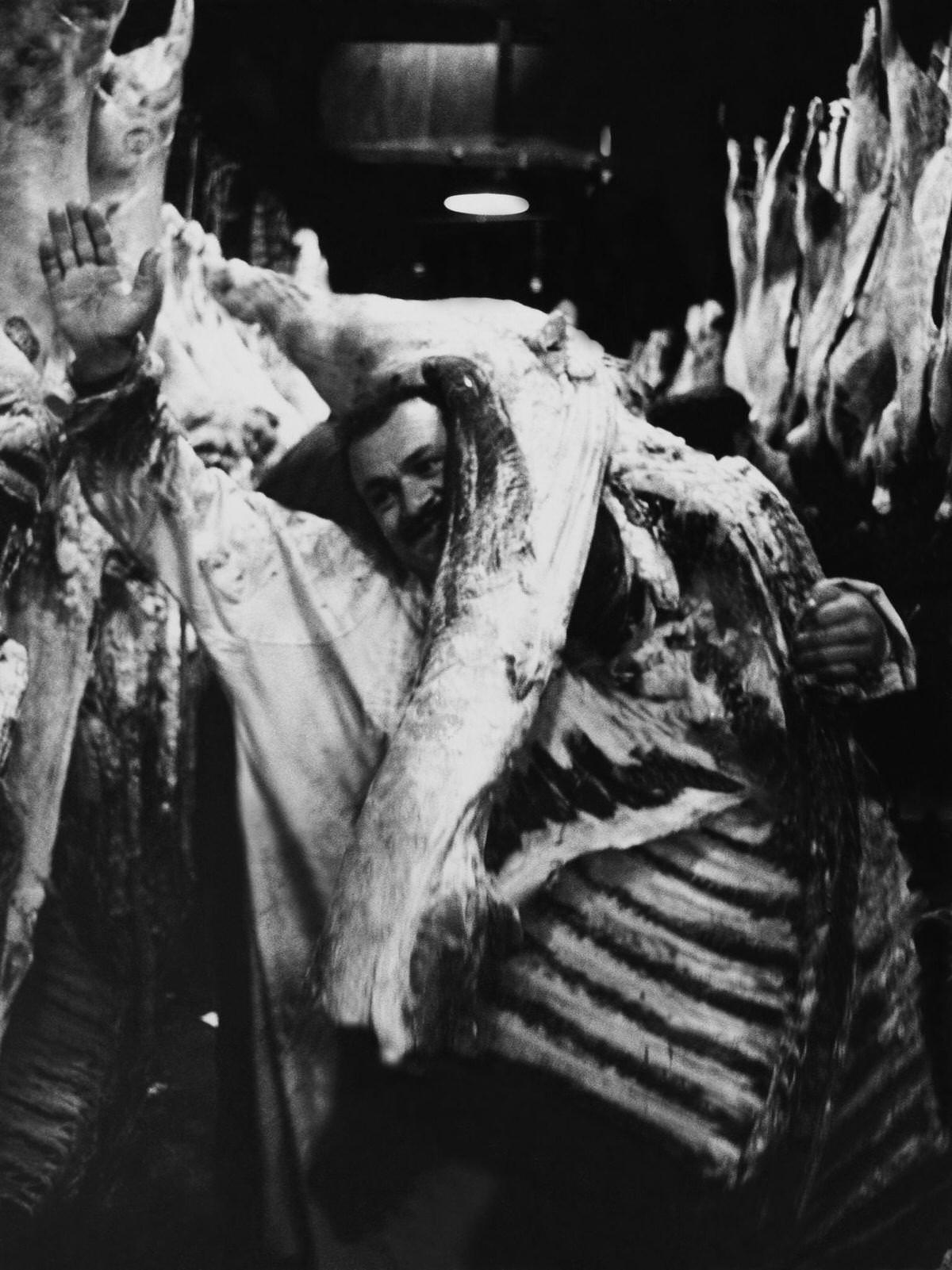
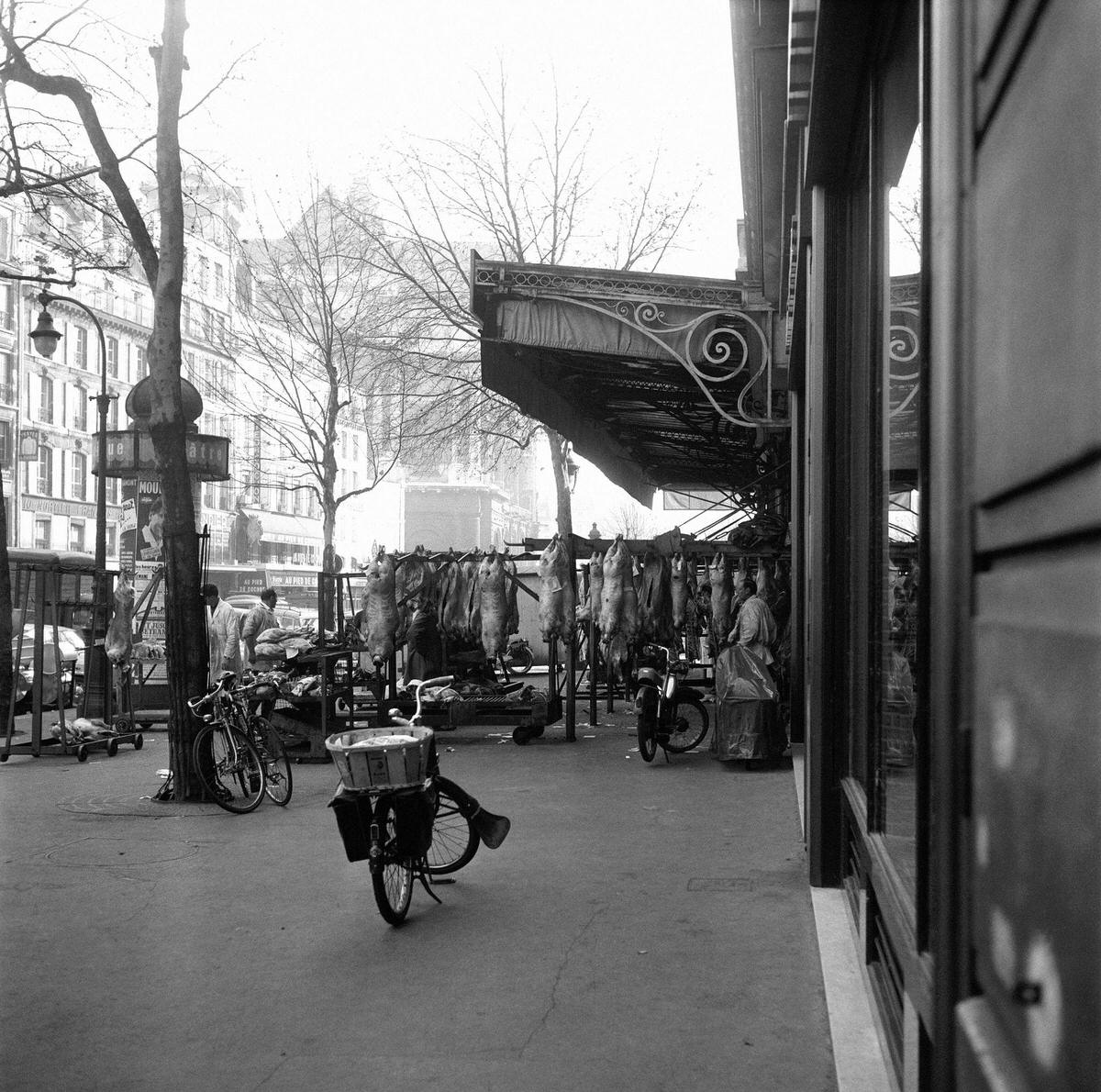
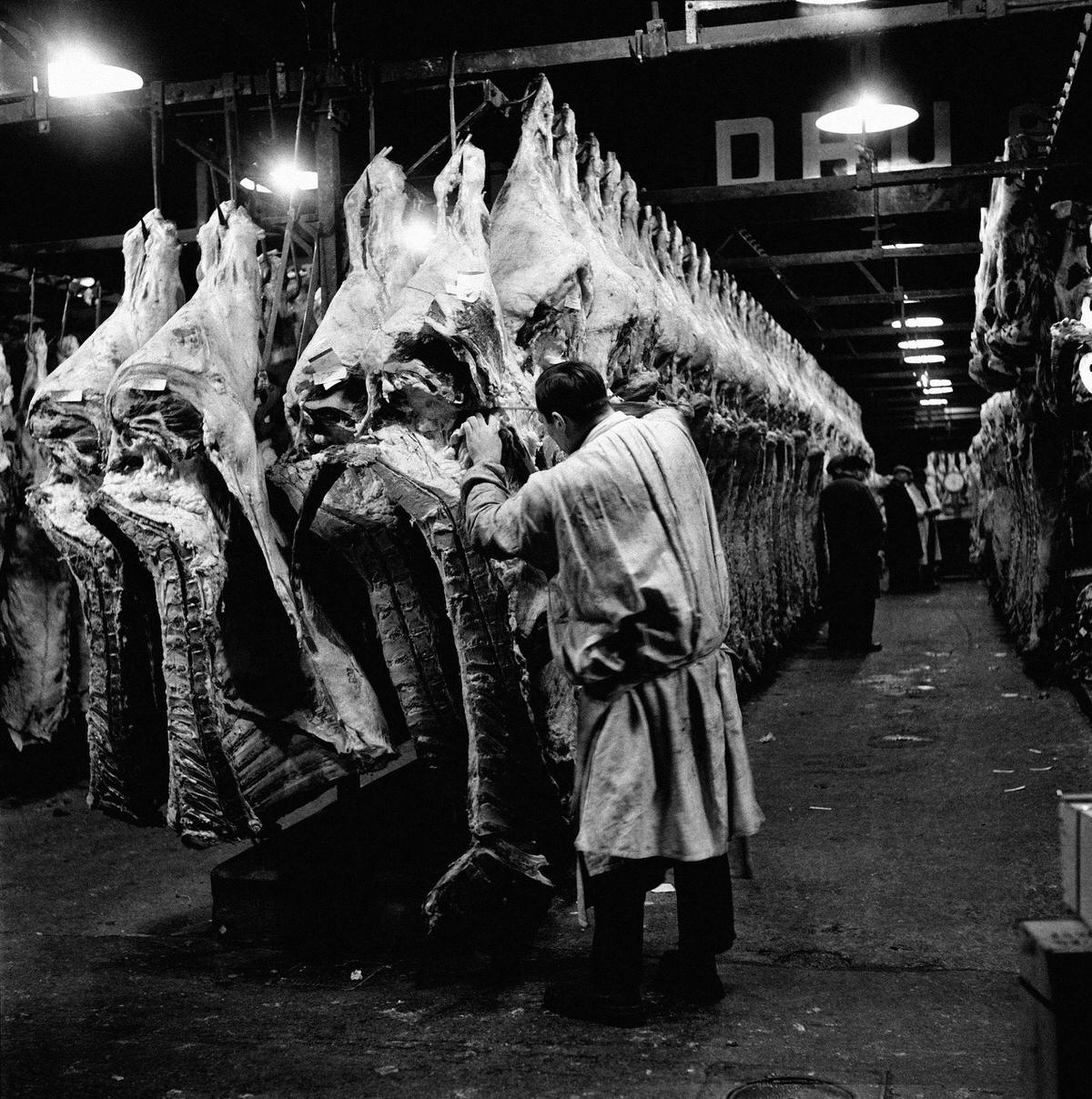
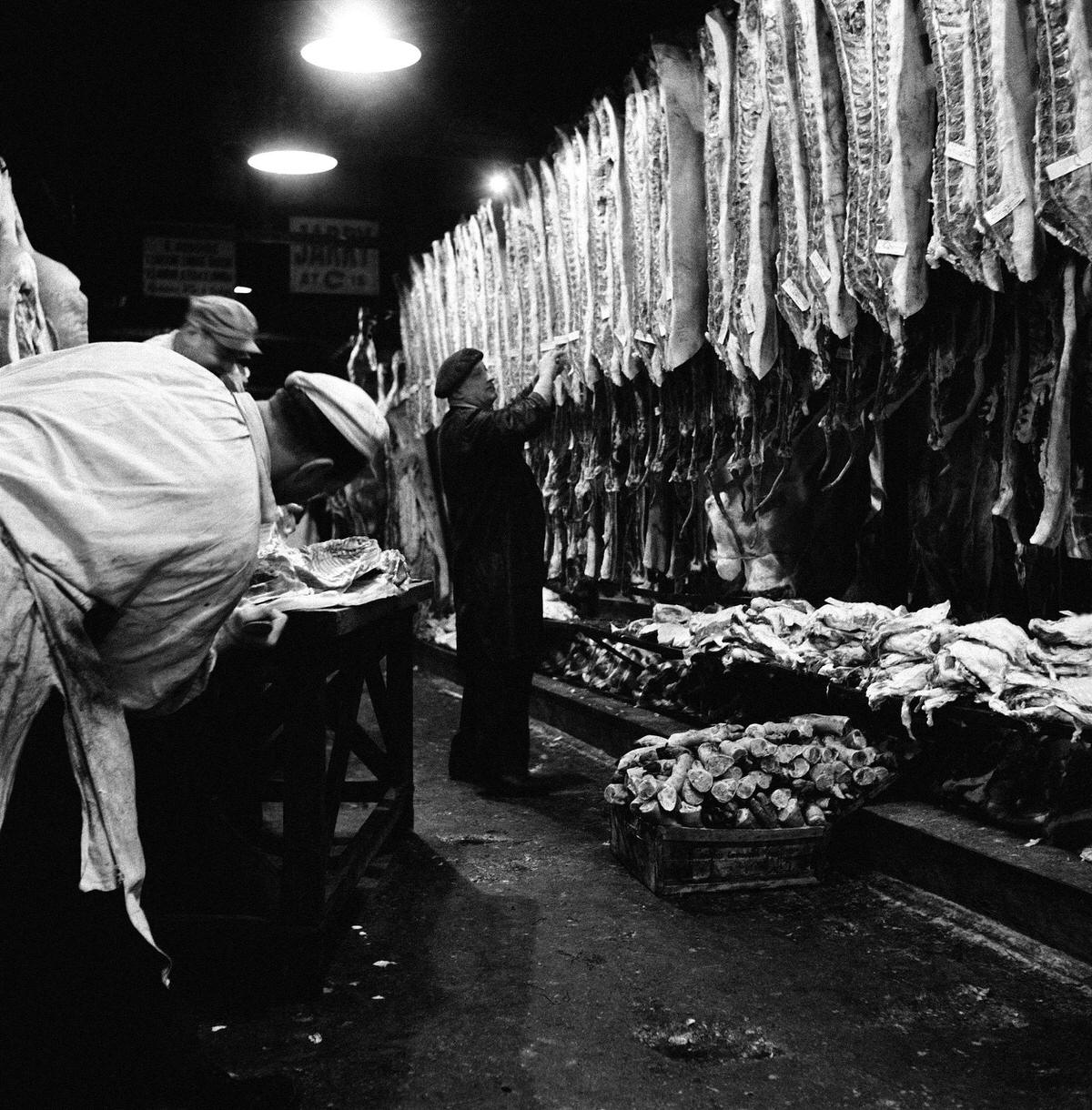
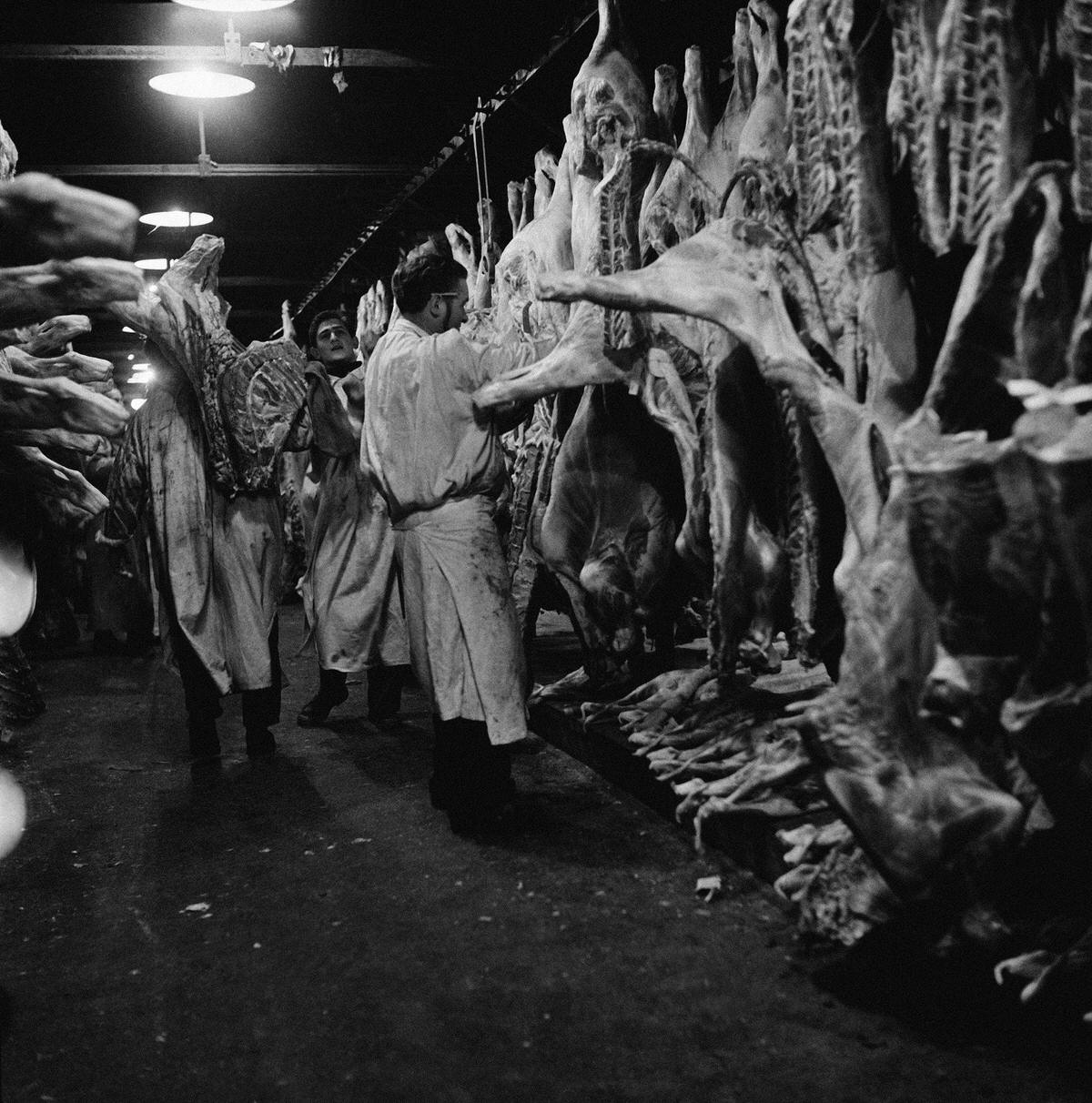
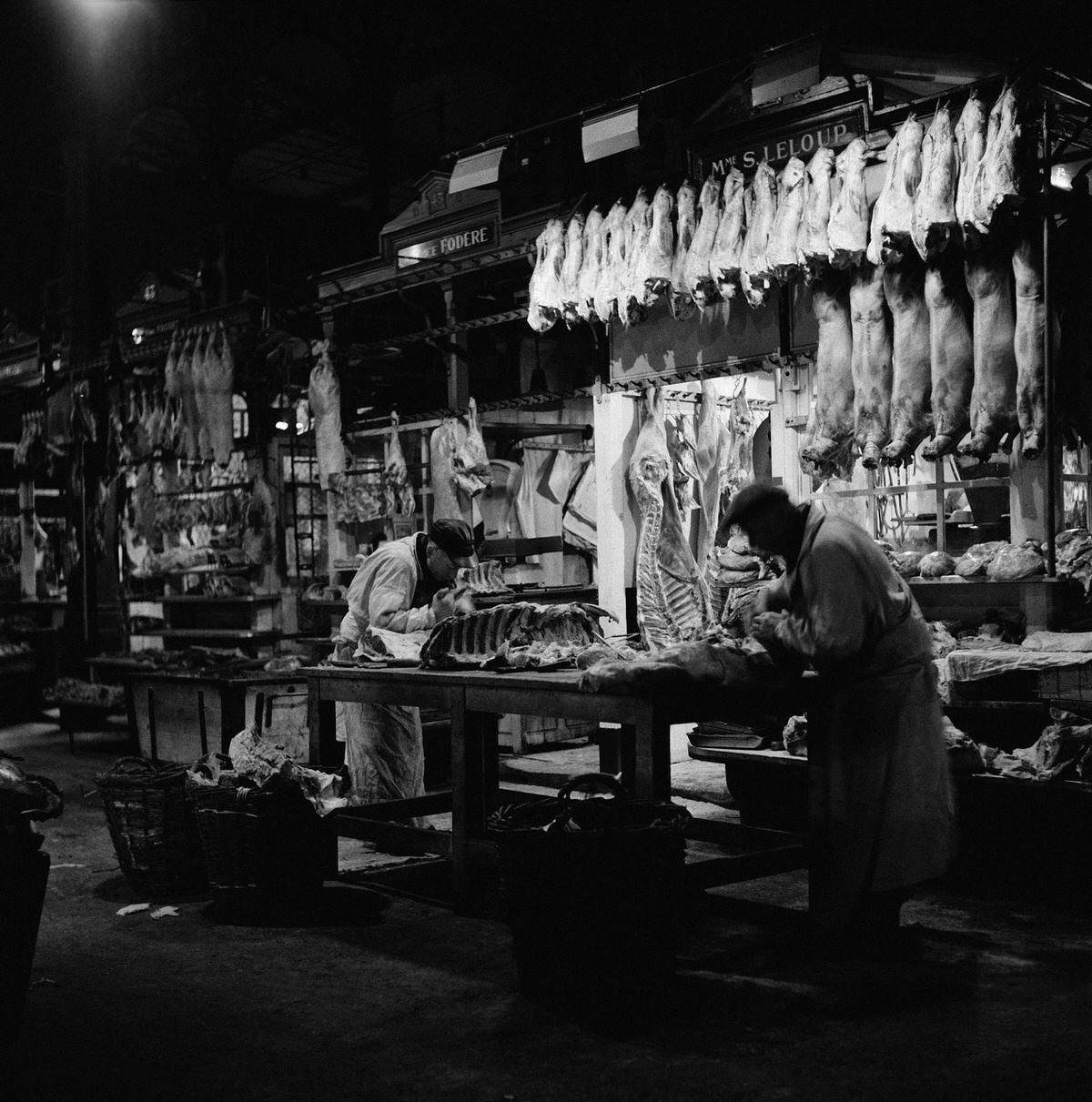
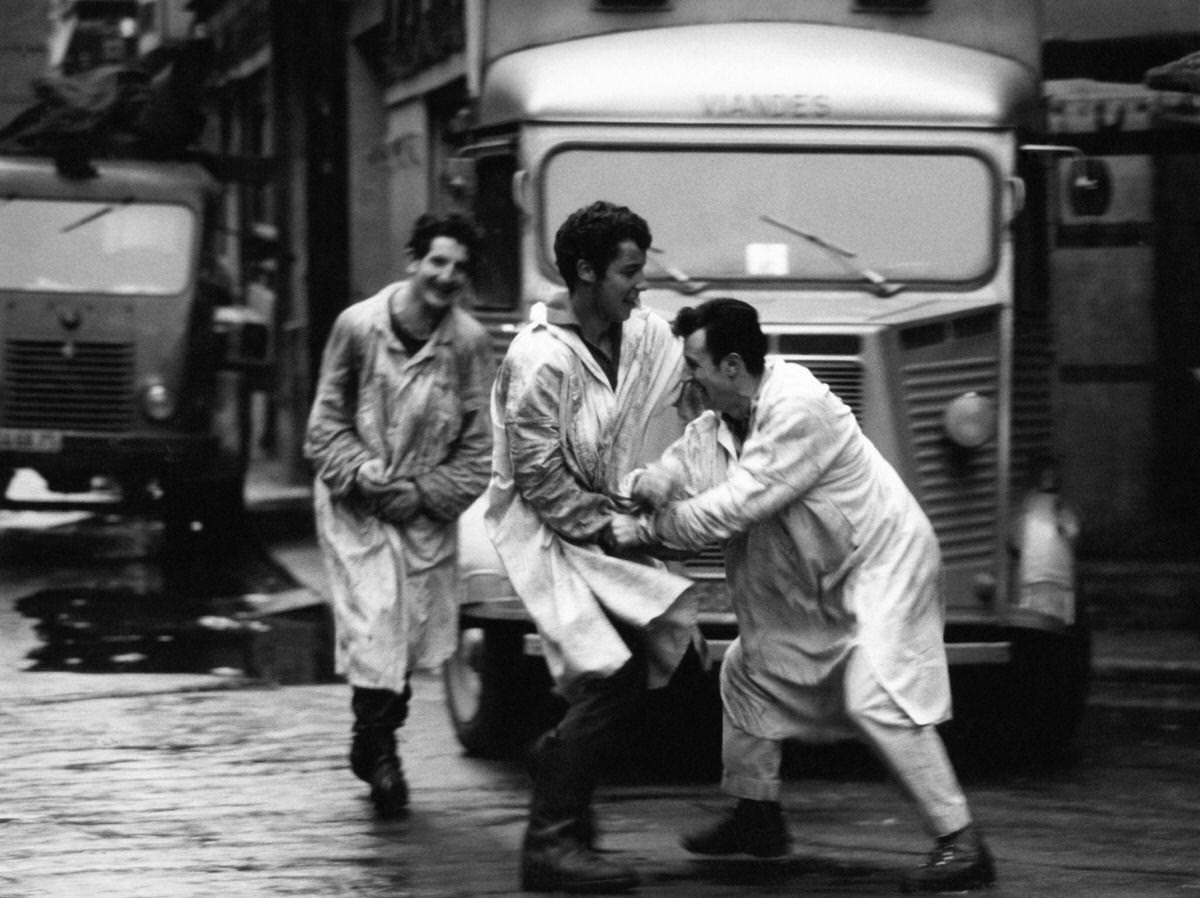
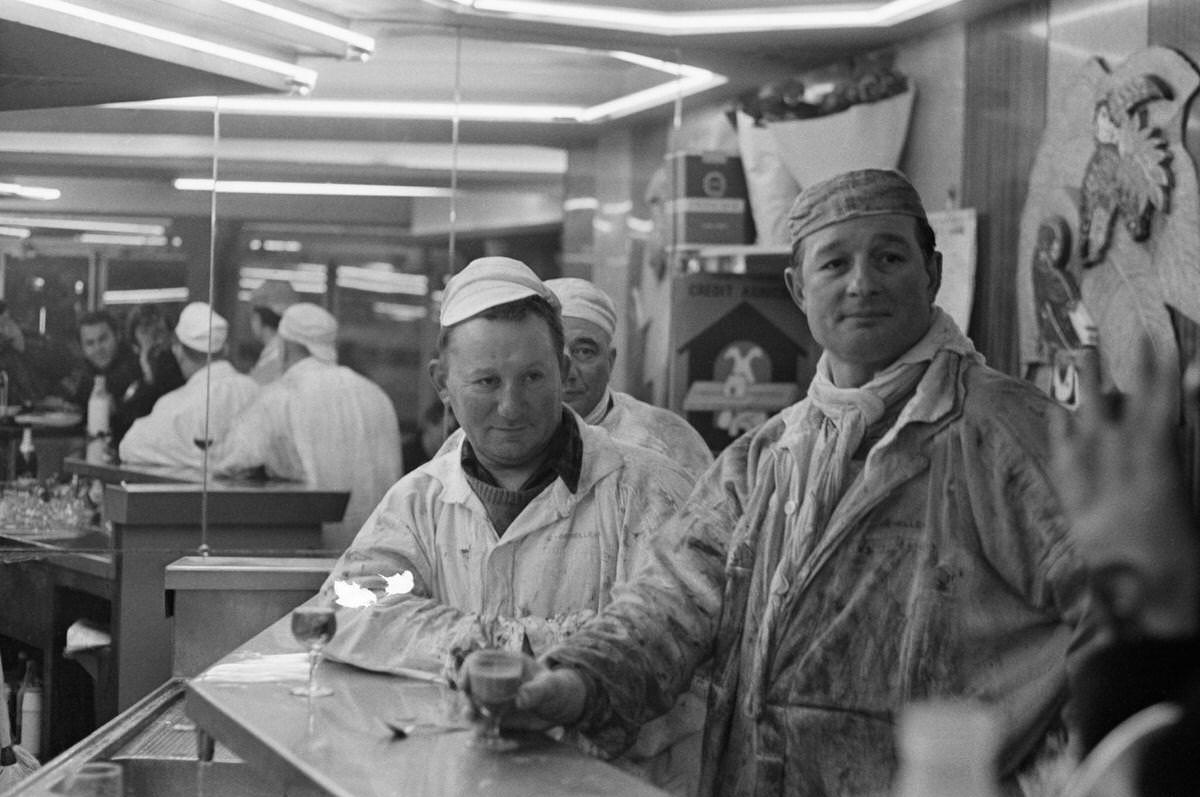
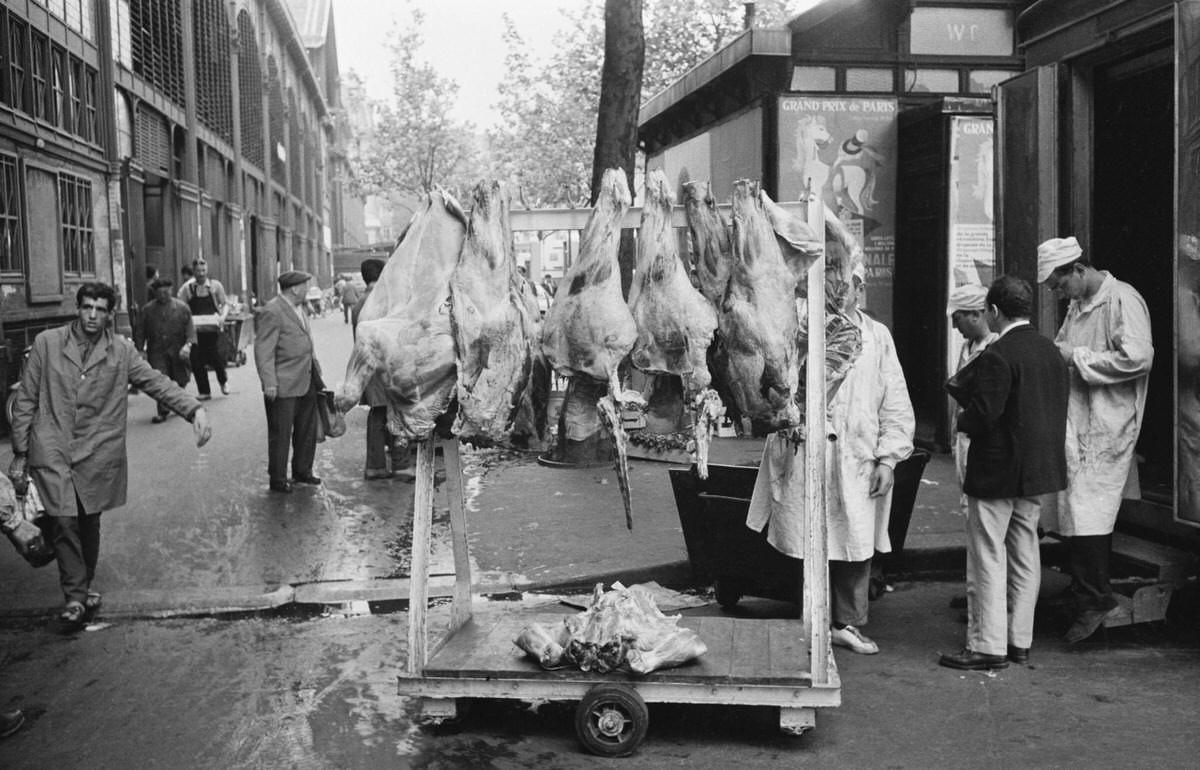
The meat pavilions were a world apart. Wholesalers stood surrounded by rows of hanging carcasses — beef, pork, game — under bright lights in the early morning cold. The hunting season brought its own spectacle to the stalls, with pheasants, rabbits, and other game laid out for buyers. Butchers worked through the night and gathered at nearby cafés when trading slowed, still in their blood-stained aprons.
Paris Hunting, Les Halles, 1960s
Les Halles, opening at Dawn, 1960
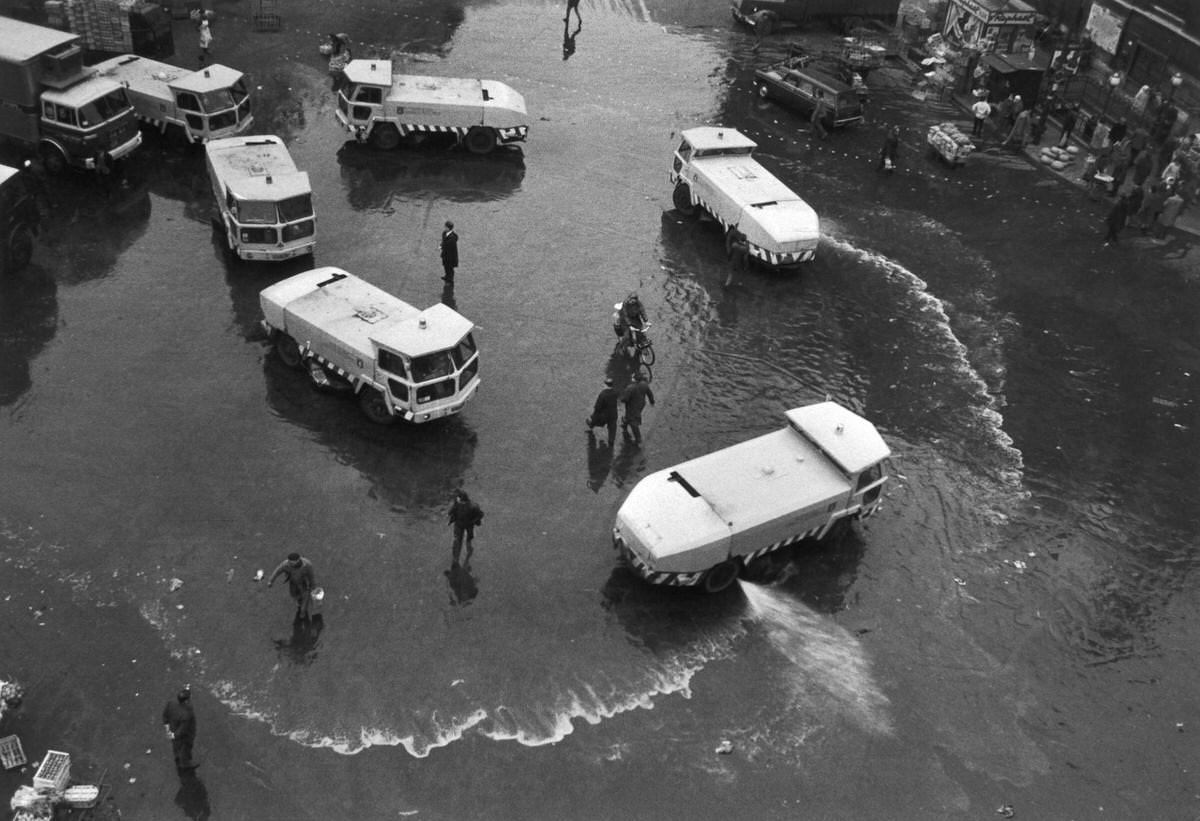
Halles Of Paris, The Vans Street, Les Halles, 1960s
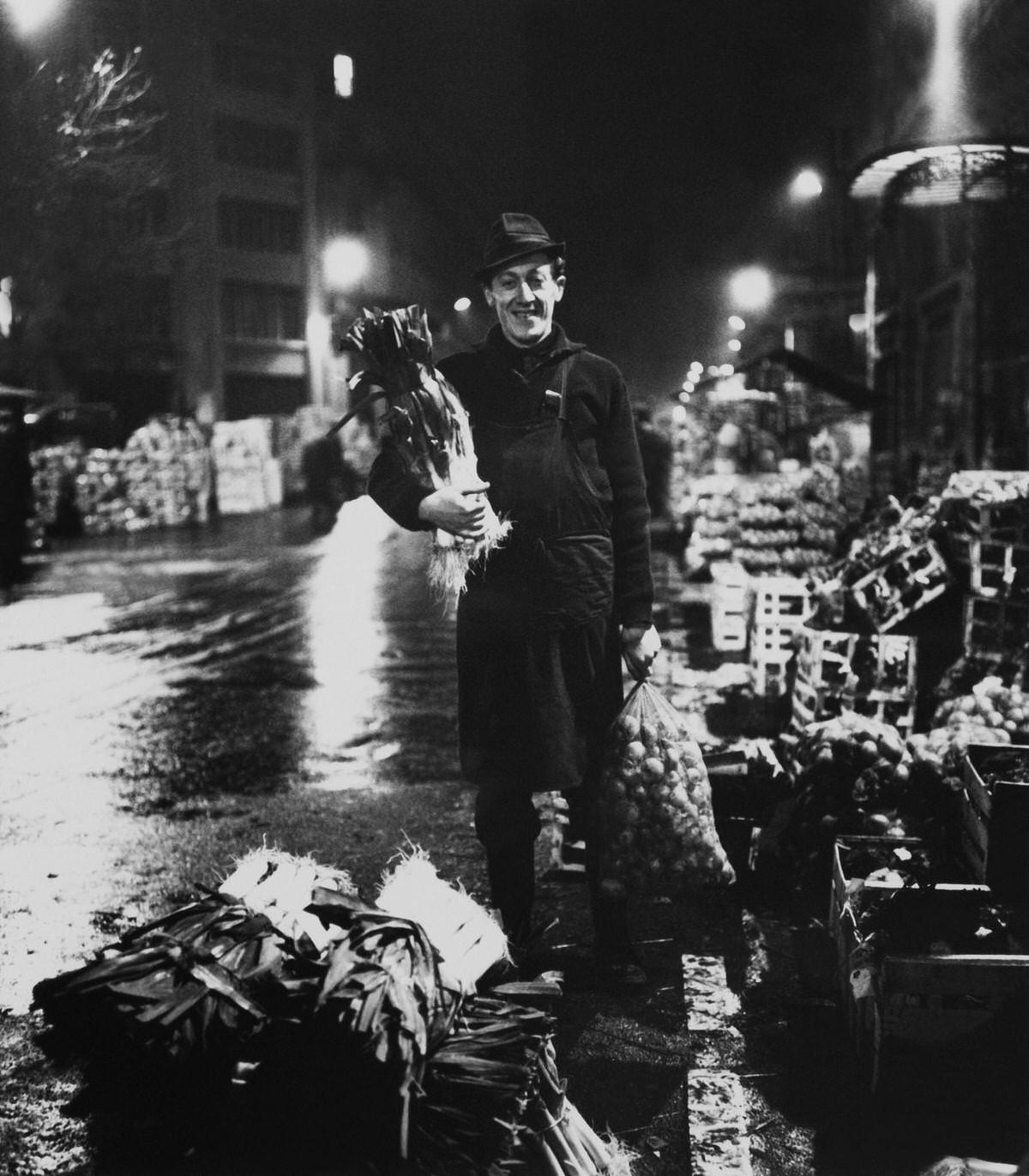
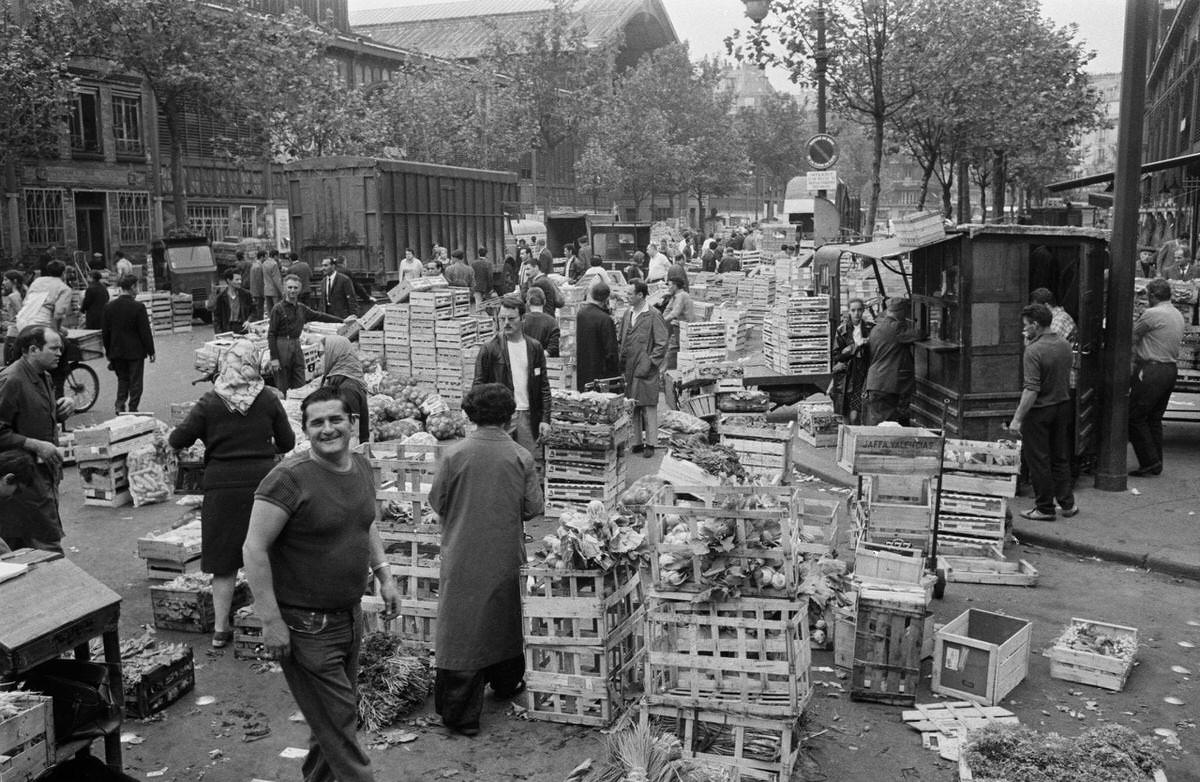
Halles Of Paris, A Wholesaler of Fruits and Vegetables, Les Halles, 1960s
The Traditional Market, Les Halles, 1960s
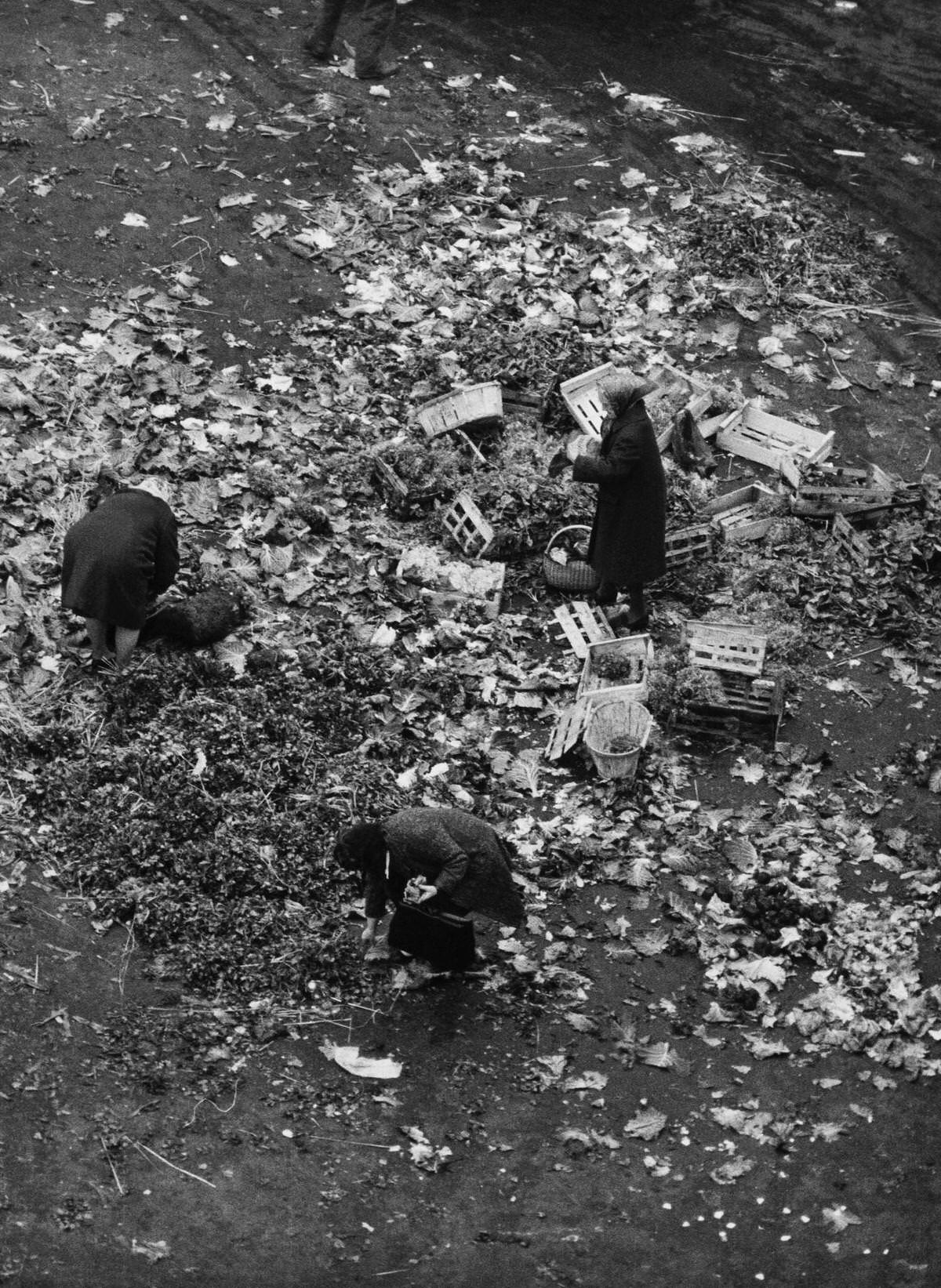
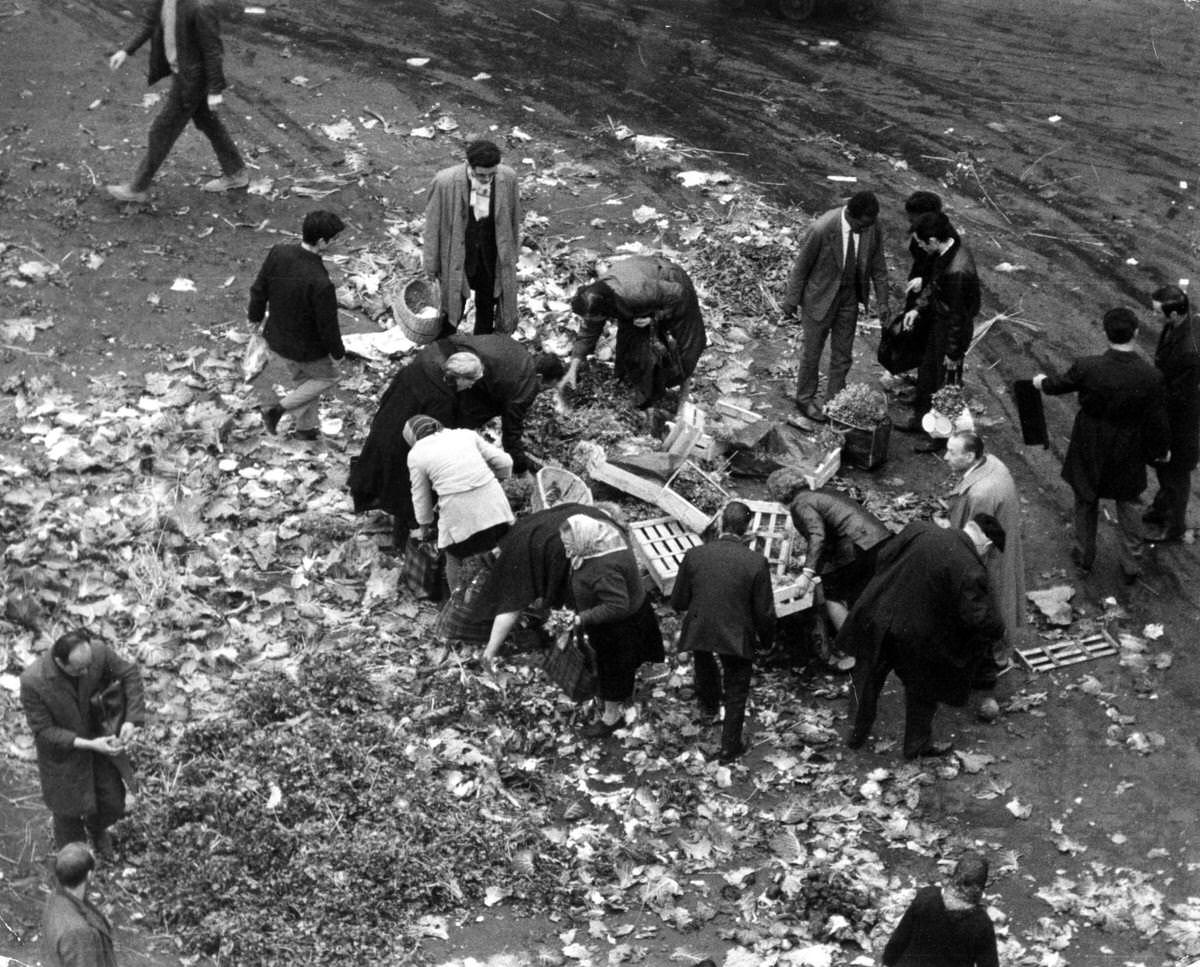
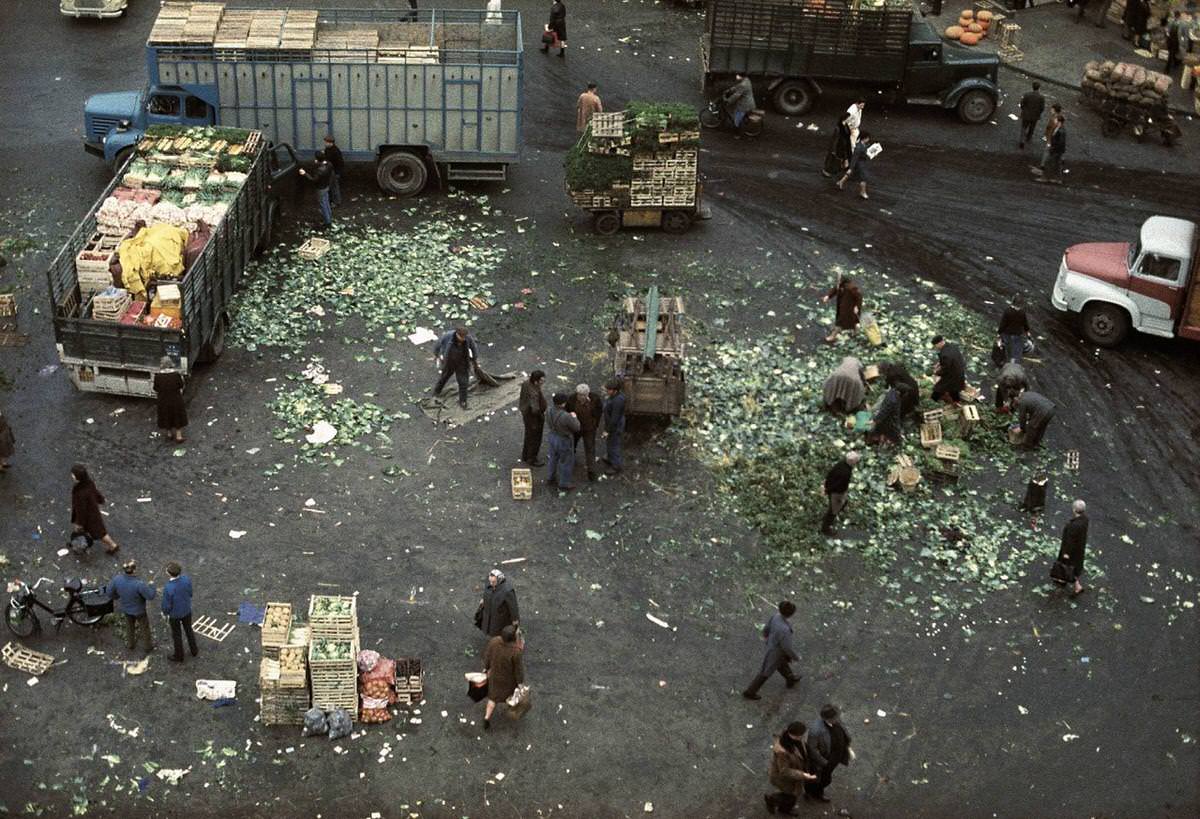
The Poor Collecting Remains, Les Halles, 1960s
Once trading wound down each morning, the market’s margins became visible. People with very little money picked through what was left behind — bruised fruit, discarded vegetables, scraps of food that wholesalers would not bother to pack up. This was a routine part of life around Les Halles, and it underlined just how central the market was to the daily rhythms of Paris at every level of society.
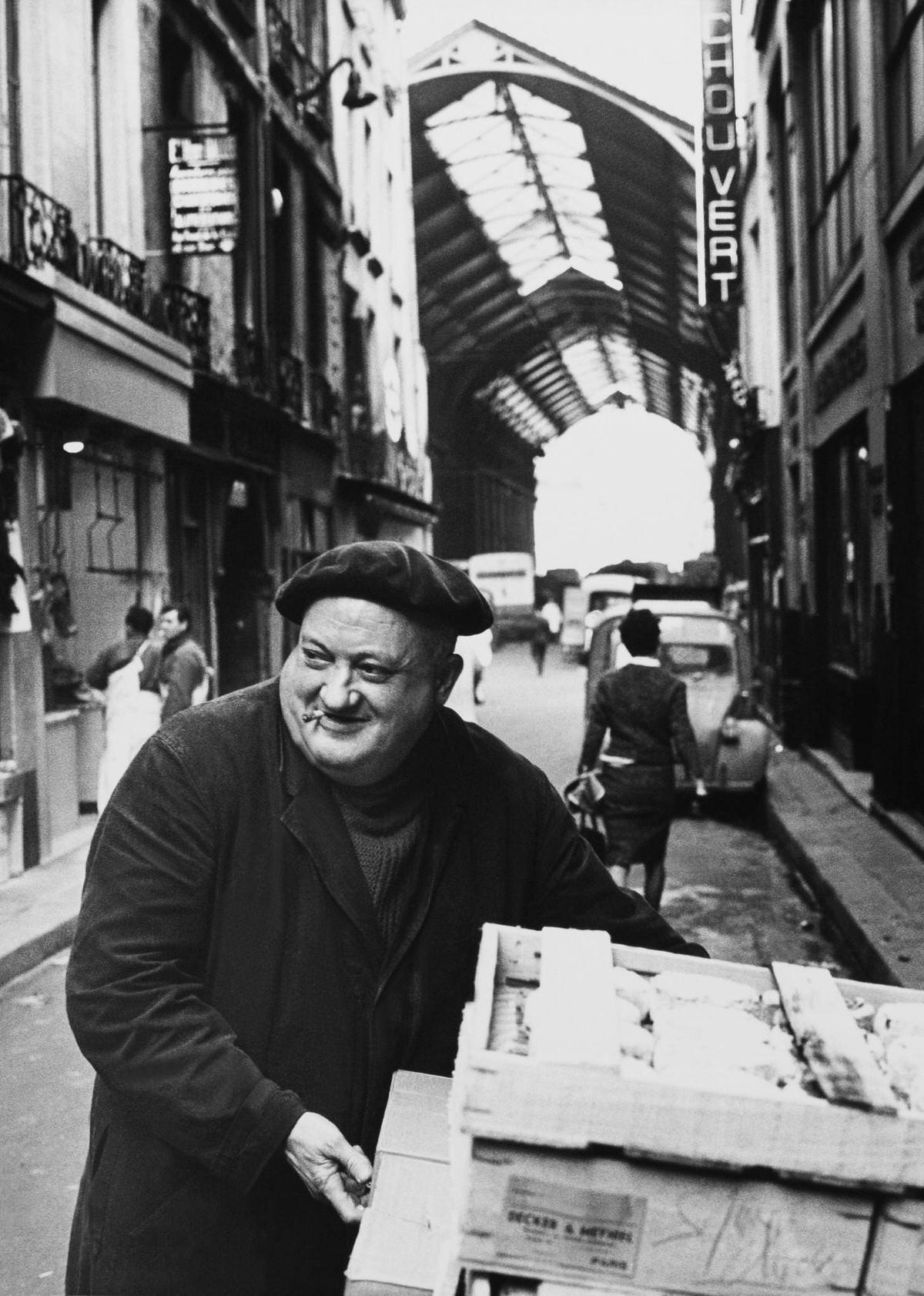
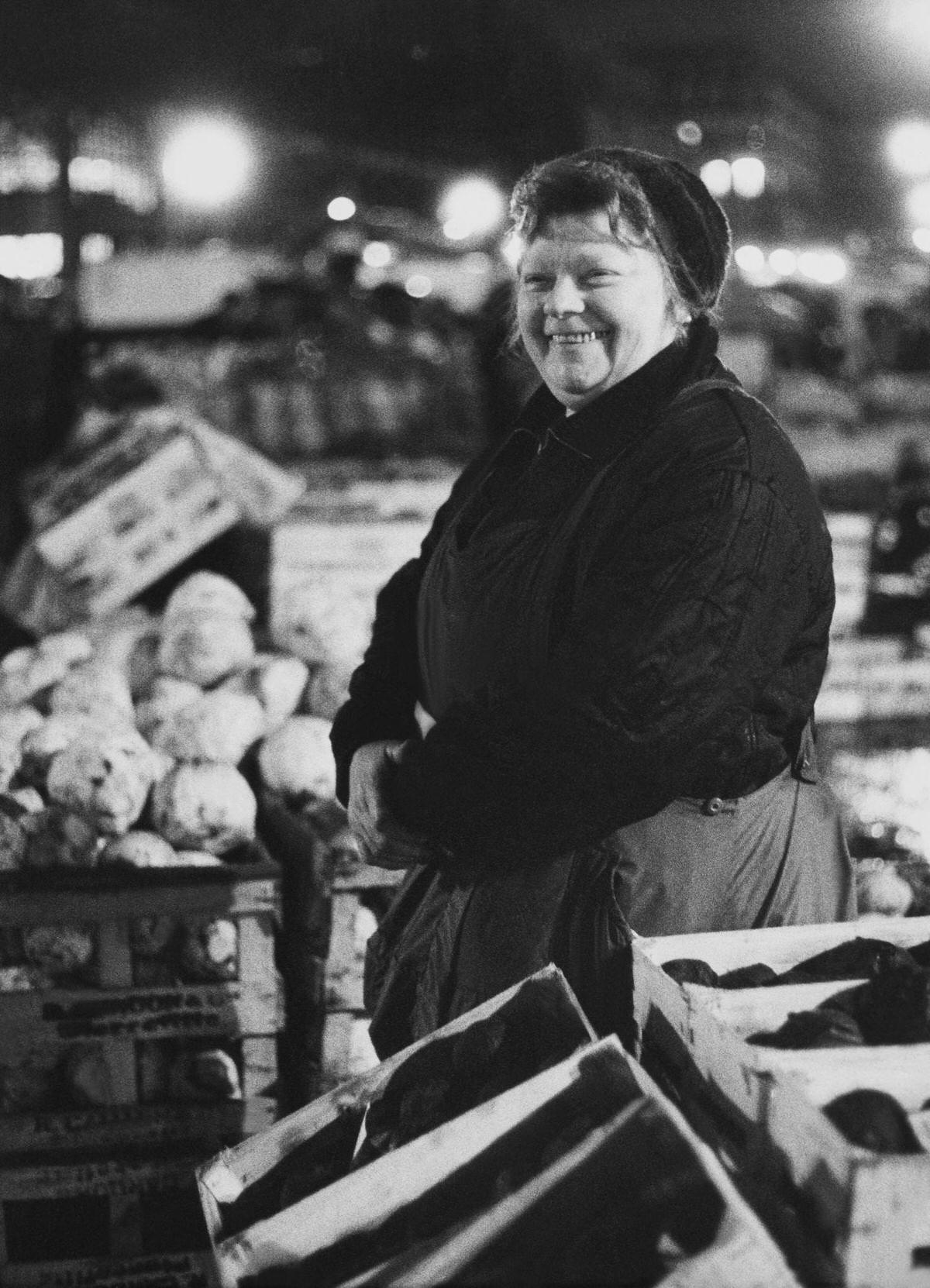
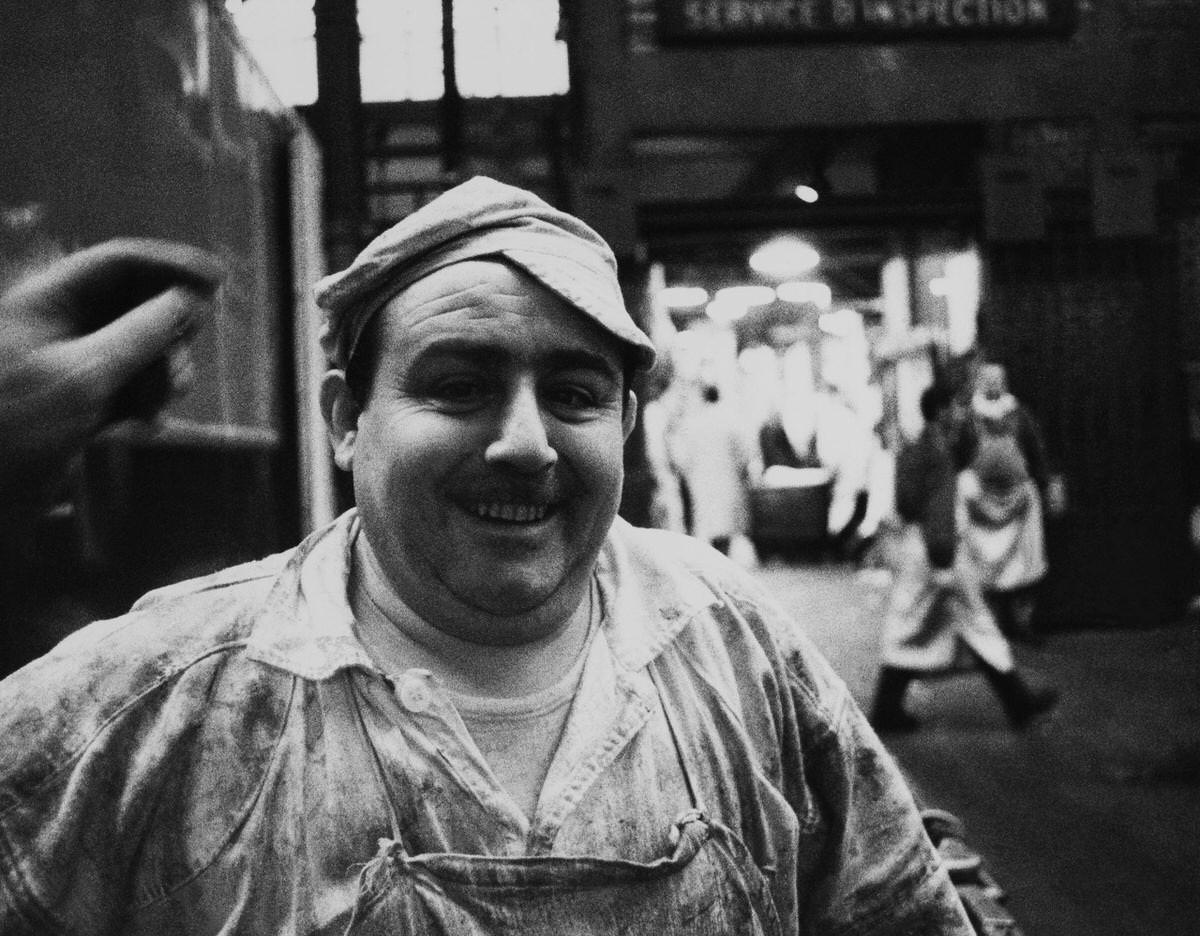
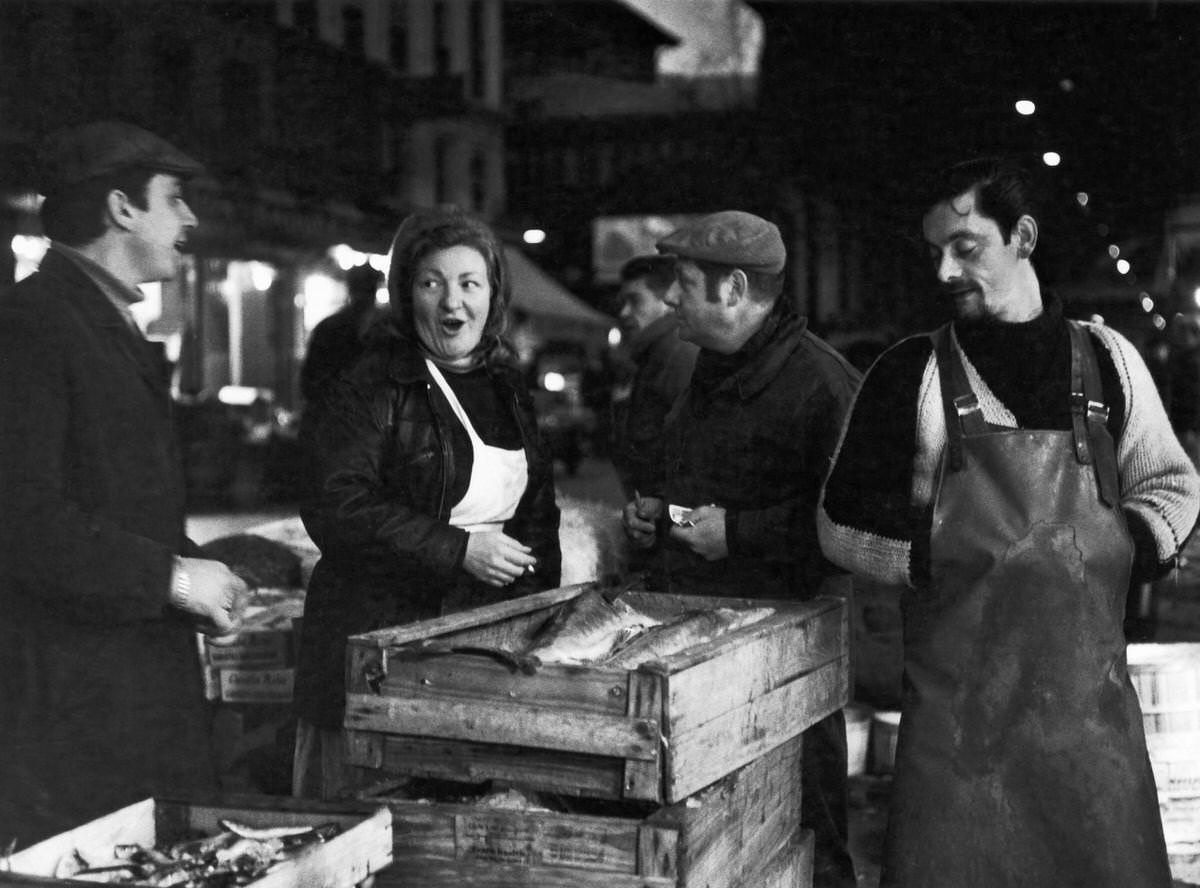
Les Halles, Portrait of a Wholesaler Smiling, Les Halles, 1960s
Les Halles, A Wholesaler in the Middle of his Carcasses, Les Halles, 1960s
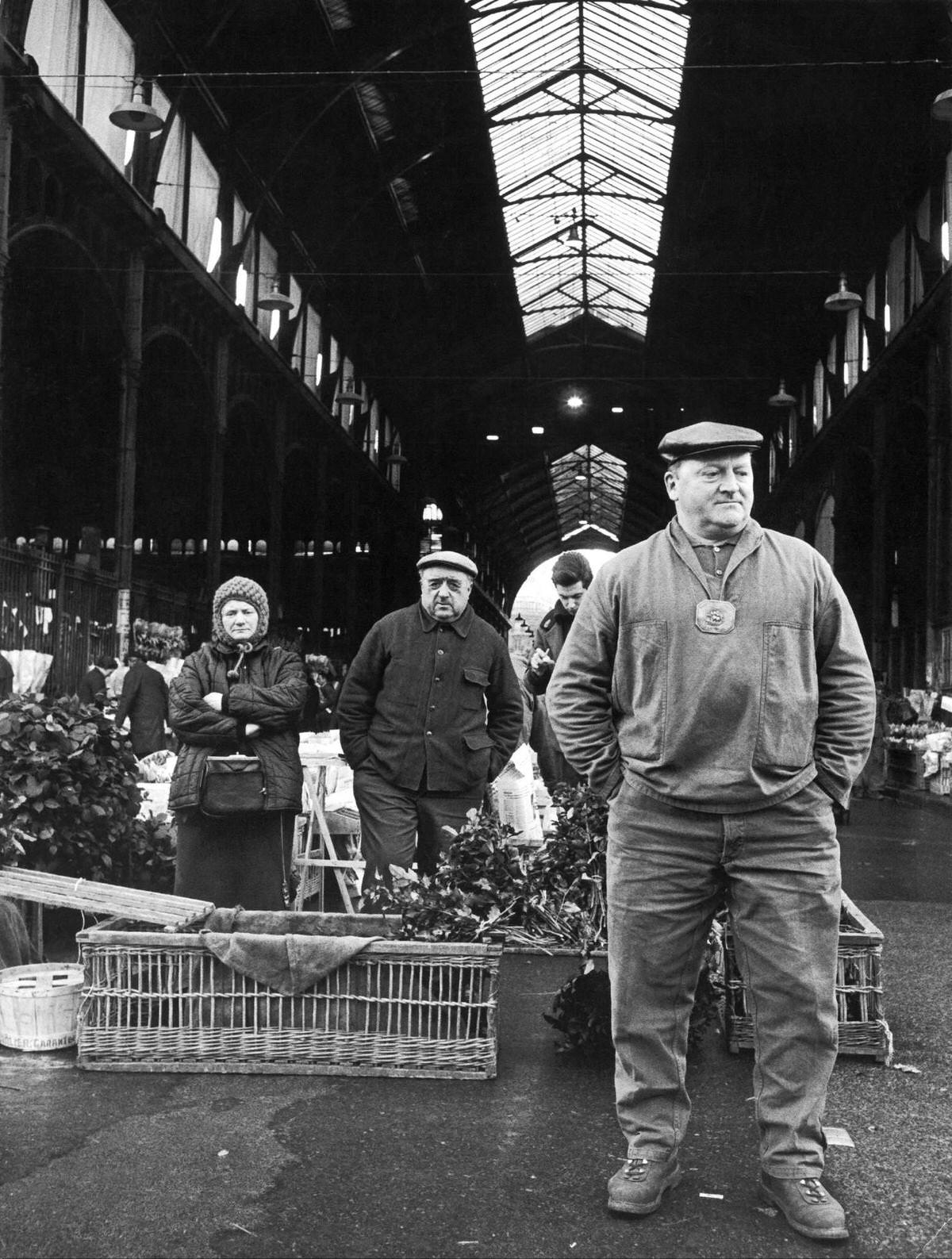
A Wholesaler waiting for the opening, Les Halles, 1960s
A Wholesaler Smiling, Les Halles, 1960s
The Opening Market, Les Halles, 1960s
The Flowers Market, Les Halles, 1960s
Purchase of Flowers Giving Merry, Les Halles, 1960s
A Wholesaler Smiling, Les Halles, 1960
A Very Good Arrangement, Les Halles, 1960s
The Halles of Paris, 1960
Flower Market pf Les Halles, 1960,
The Wholesalers Job, Les Halles, 1960s
The Flowers Market, Les Halles, 1960s
The Pushchairs and their Various Uses, Les Halles, 1960s
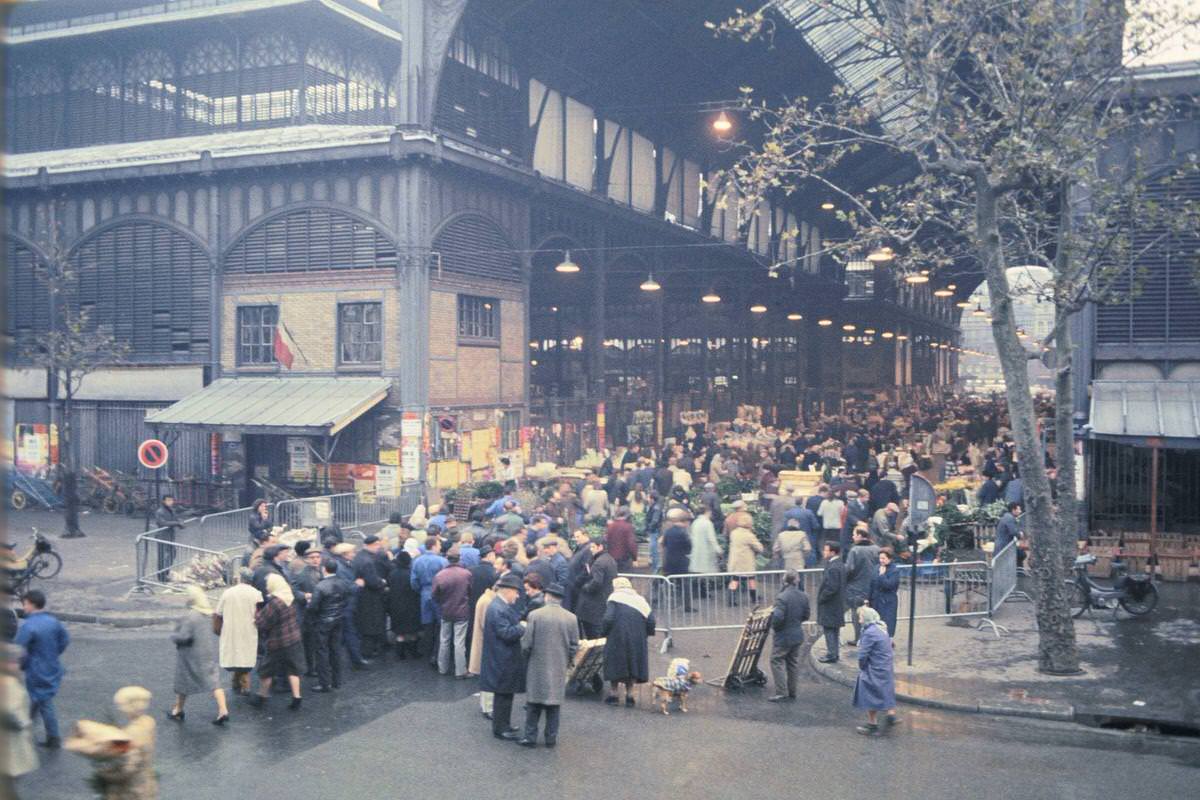
The Crowd Arriving, Les Halles, 1960s
Portrait of a Wholesaler Smiling, Les Halles, 1960s
Wholesalers Putting away Goods, Les Halles, 1960s
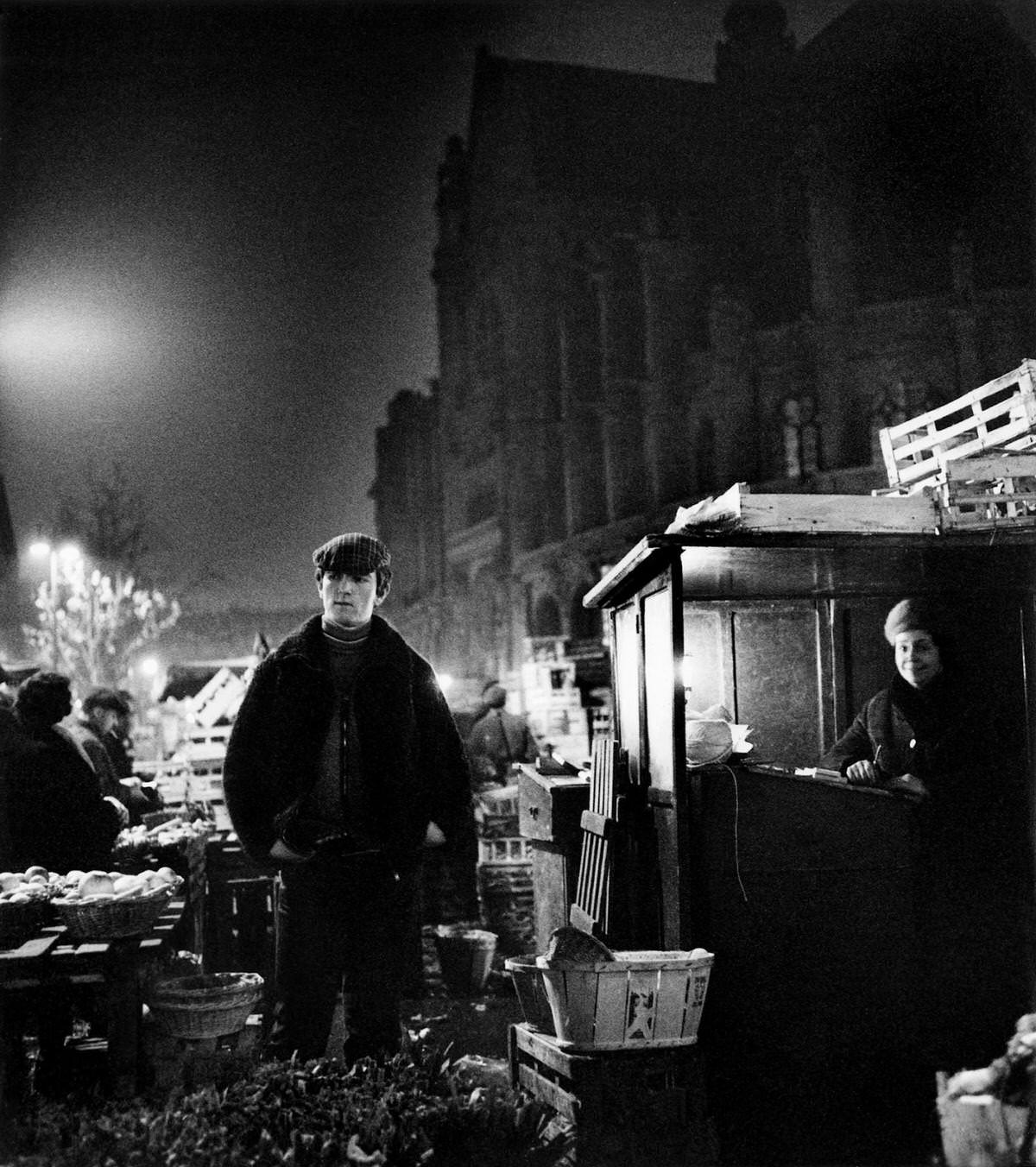
The First stalls lighting up, Les Halles, 1960s
A Happy Butcher, Les Halles, 1960s
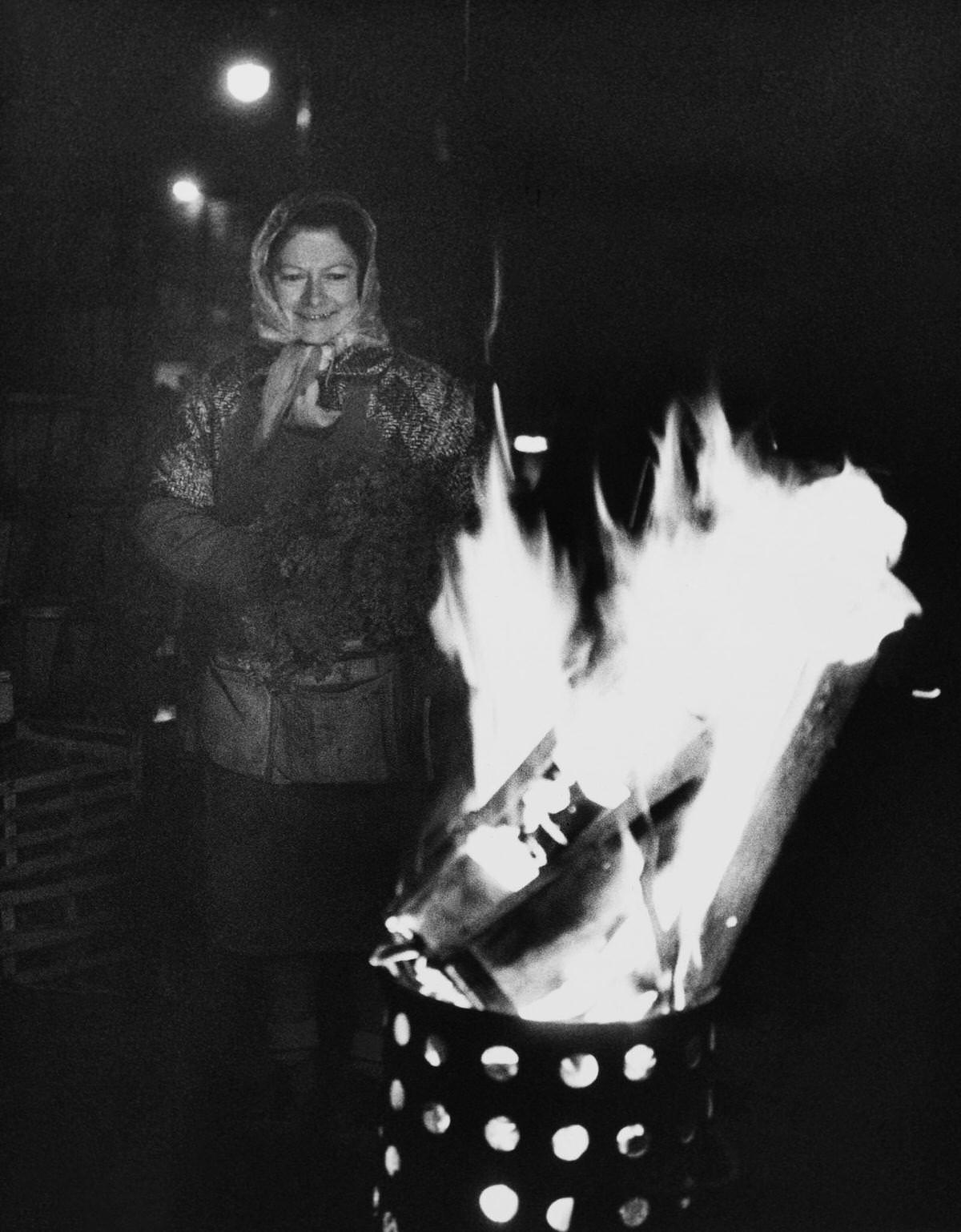
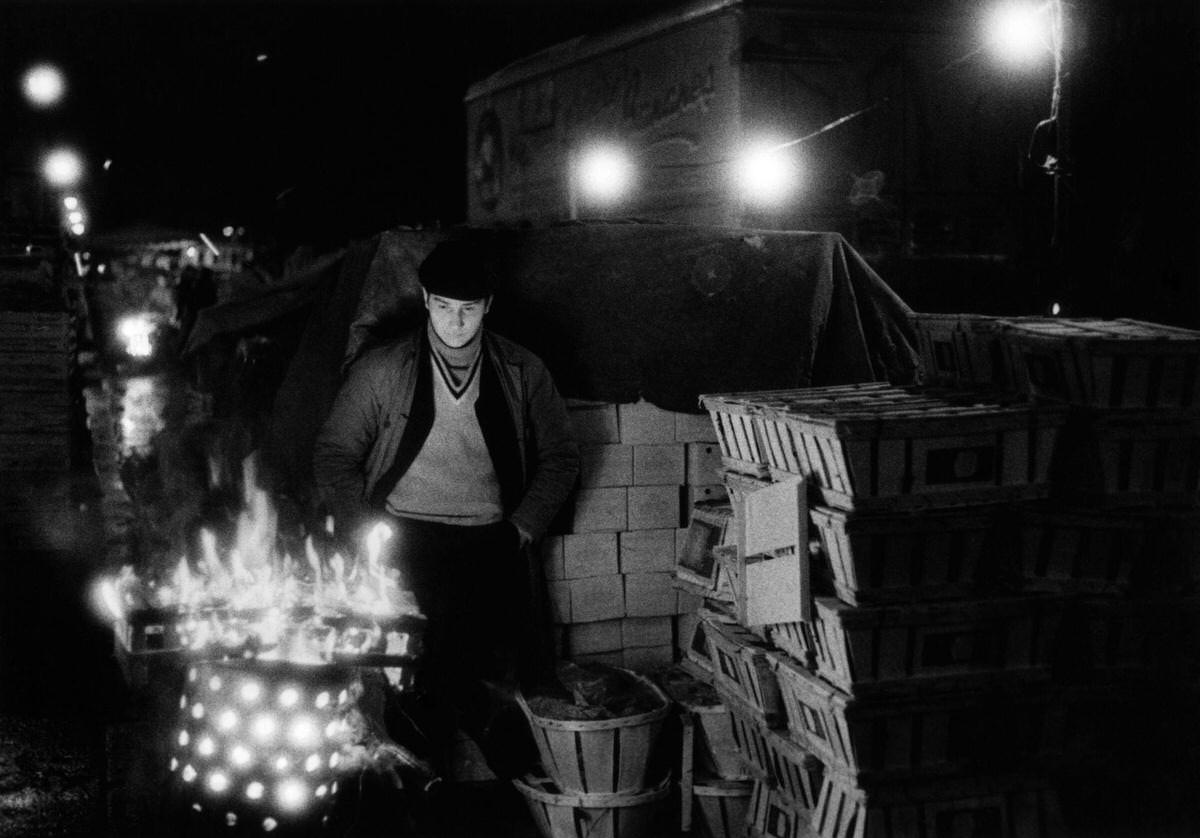
A Woman Warming up in front of a fire, Les Halles, 1960s
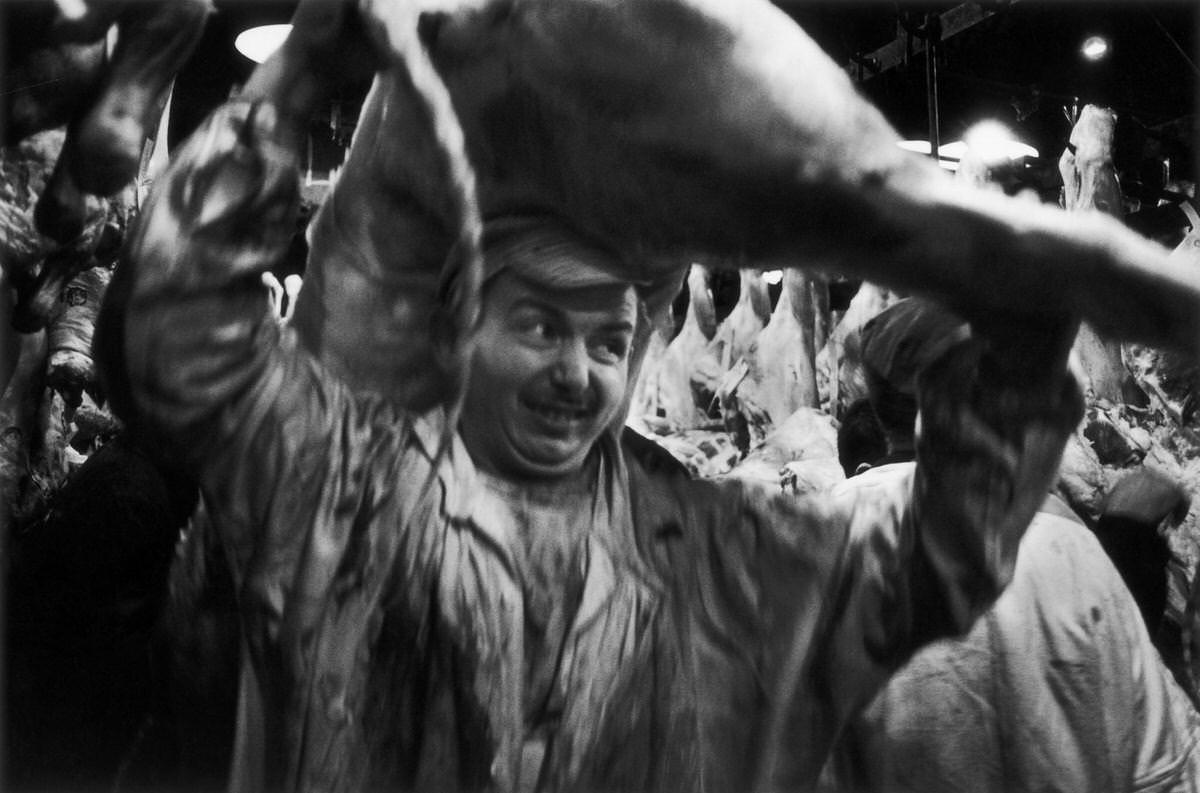
Wholesaler Carrying Cow Carcasses, Les Halles, 1960s
The Goods Arrival, Les Halles, 1960s
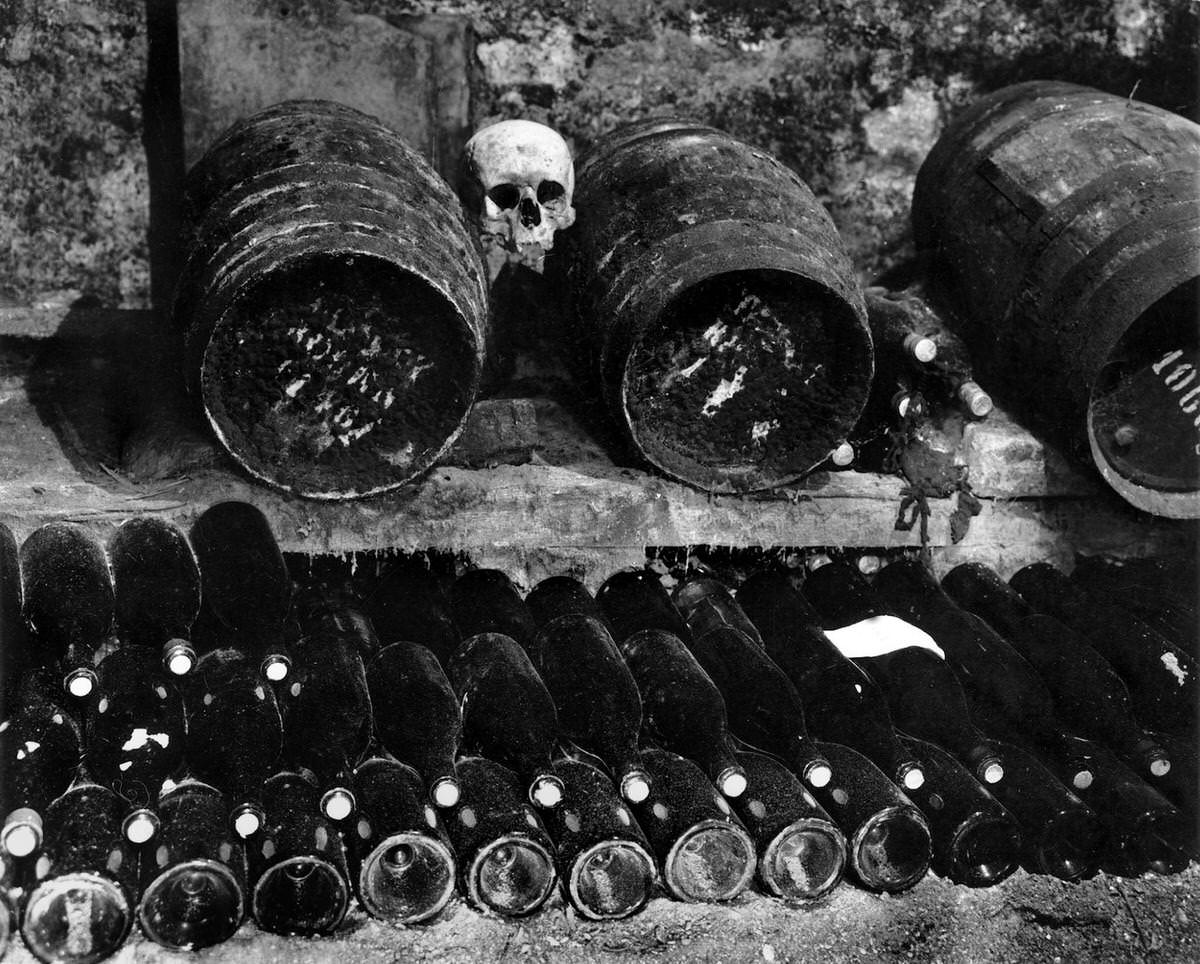
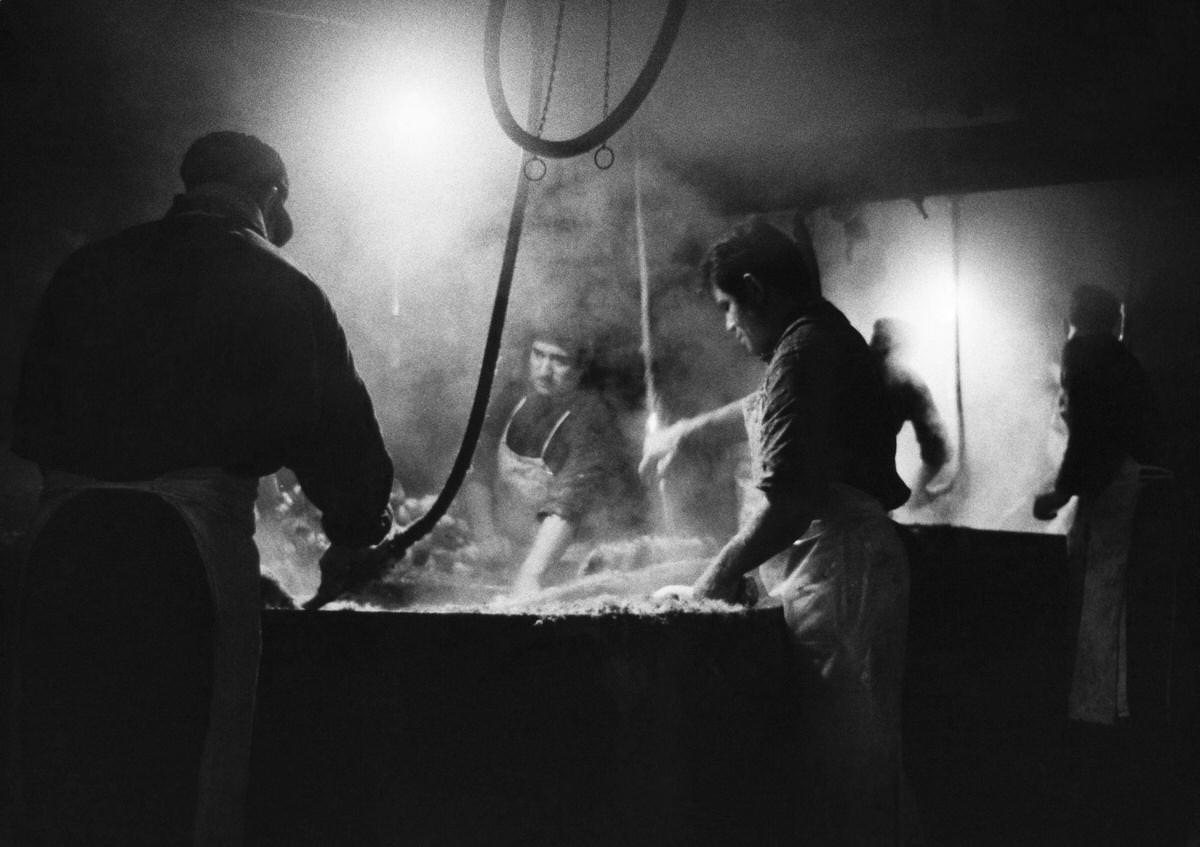
Inside the Wine Cellar, Les Halles, 1960s
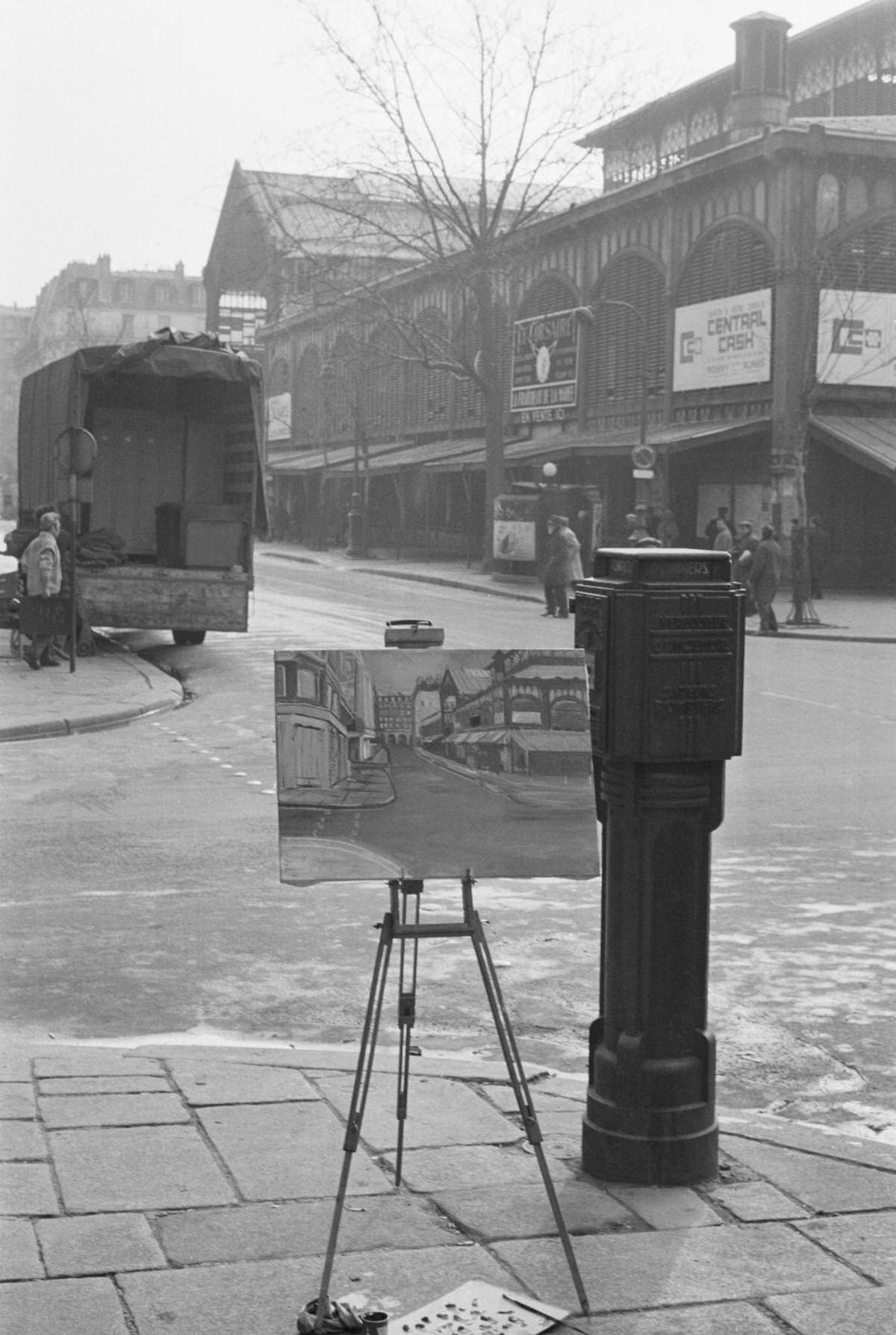
By the mid-1960s, photographs of Les Halles captured a market that was both thriving and under threat. The vegetable stalls in the early morning light, the men loading trucks on the Rue Montmartre, the wine cellars and cheese vendors — all of it was happening against a backdrop of political decisions already made. The site was to be cleared. The question was only when.
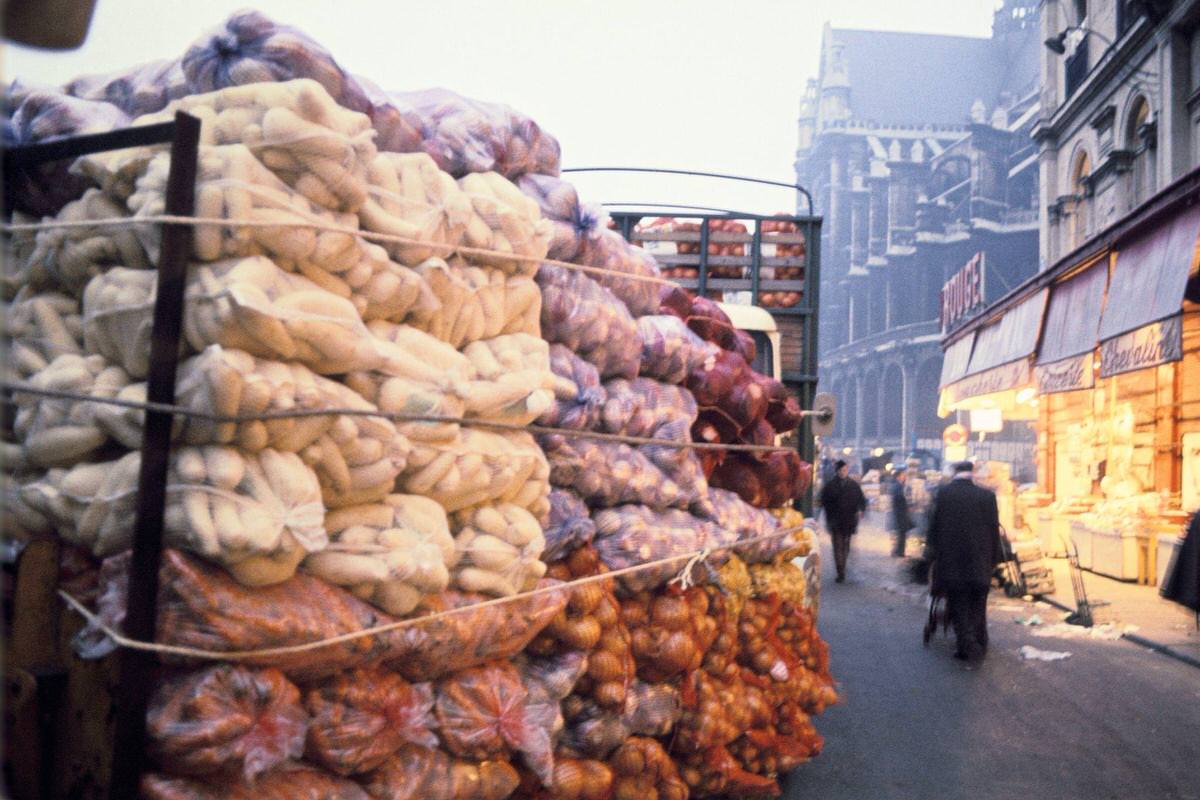
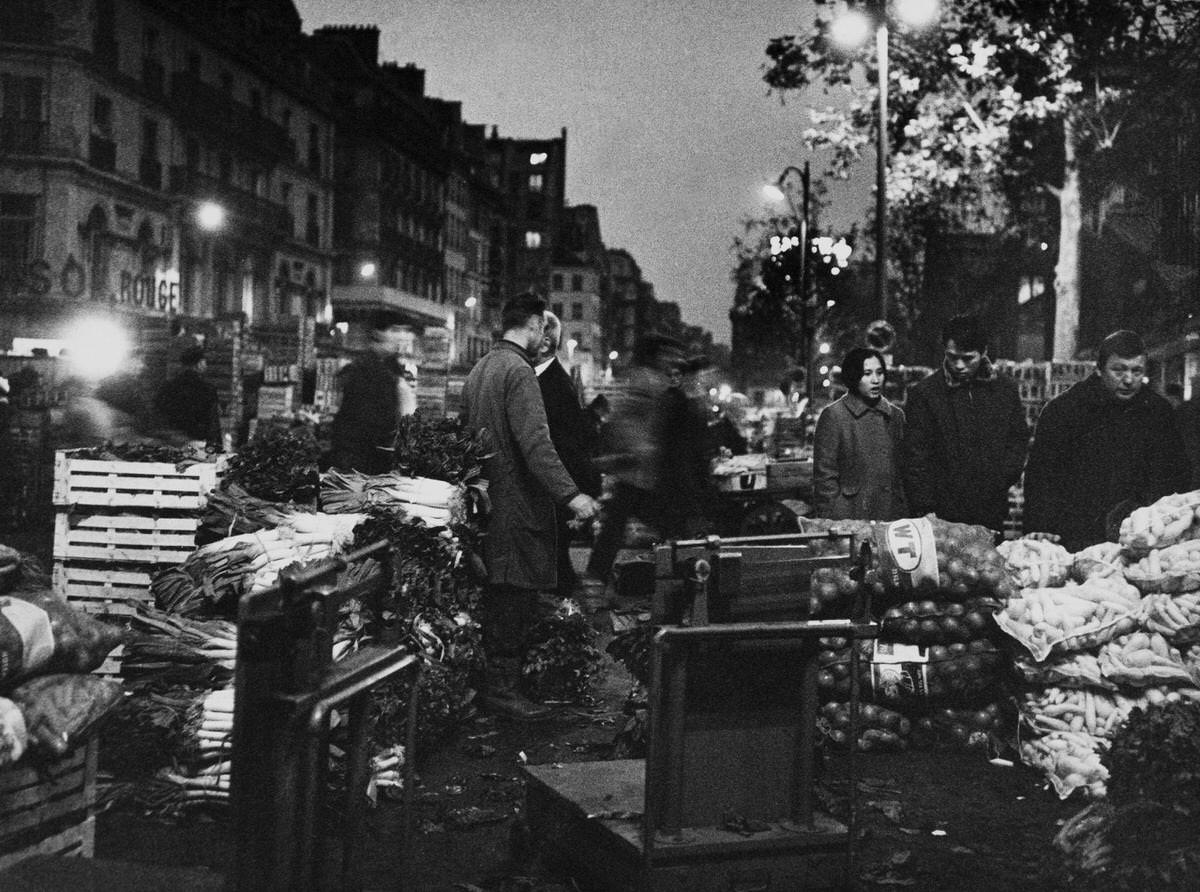
Les Halles in the Morning, Vegetables Stall, August 1965,
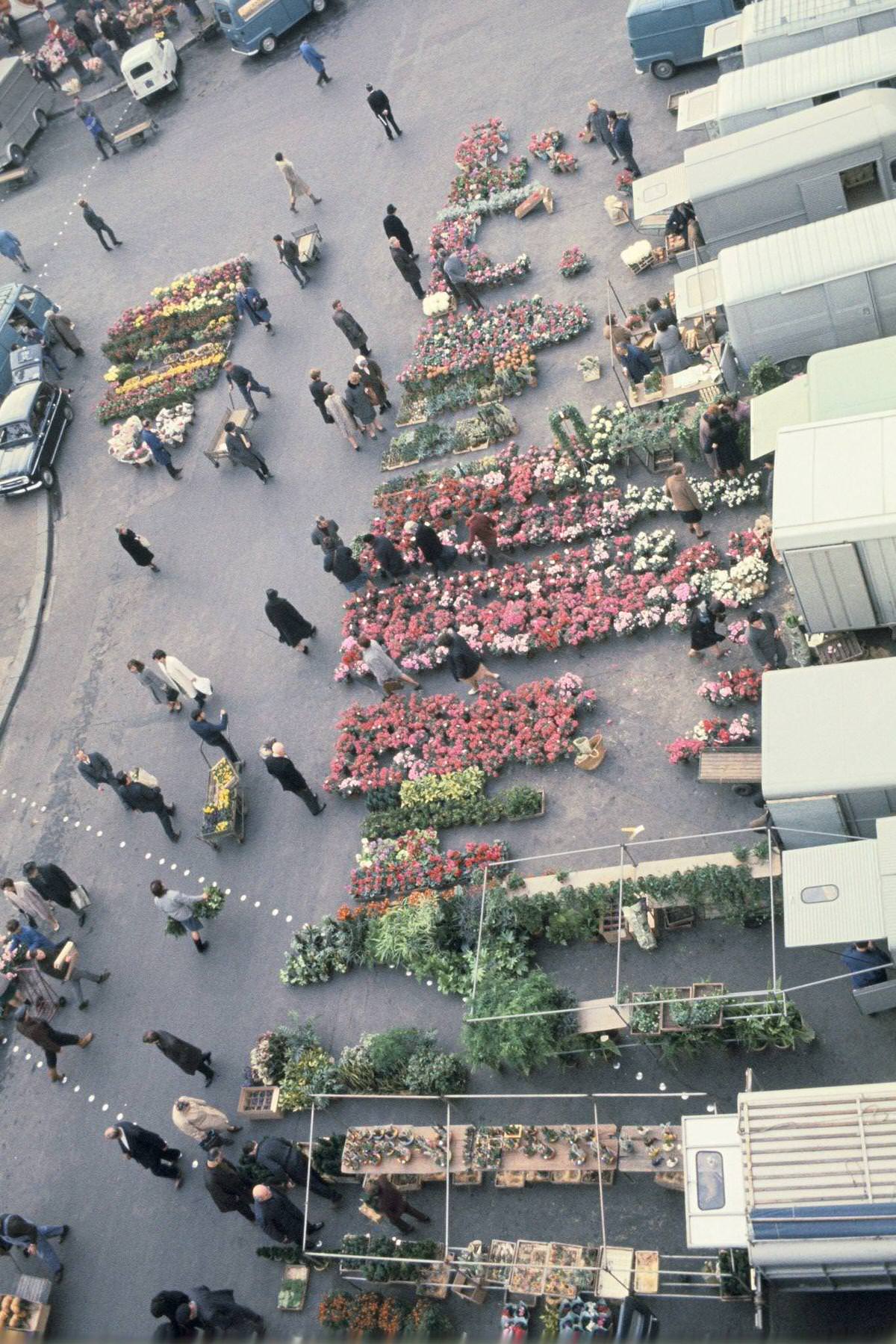
Flowers in Les Halles, which was historically the traditional central market of Paris, on October, 1964 in Paris
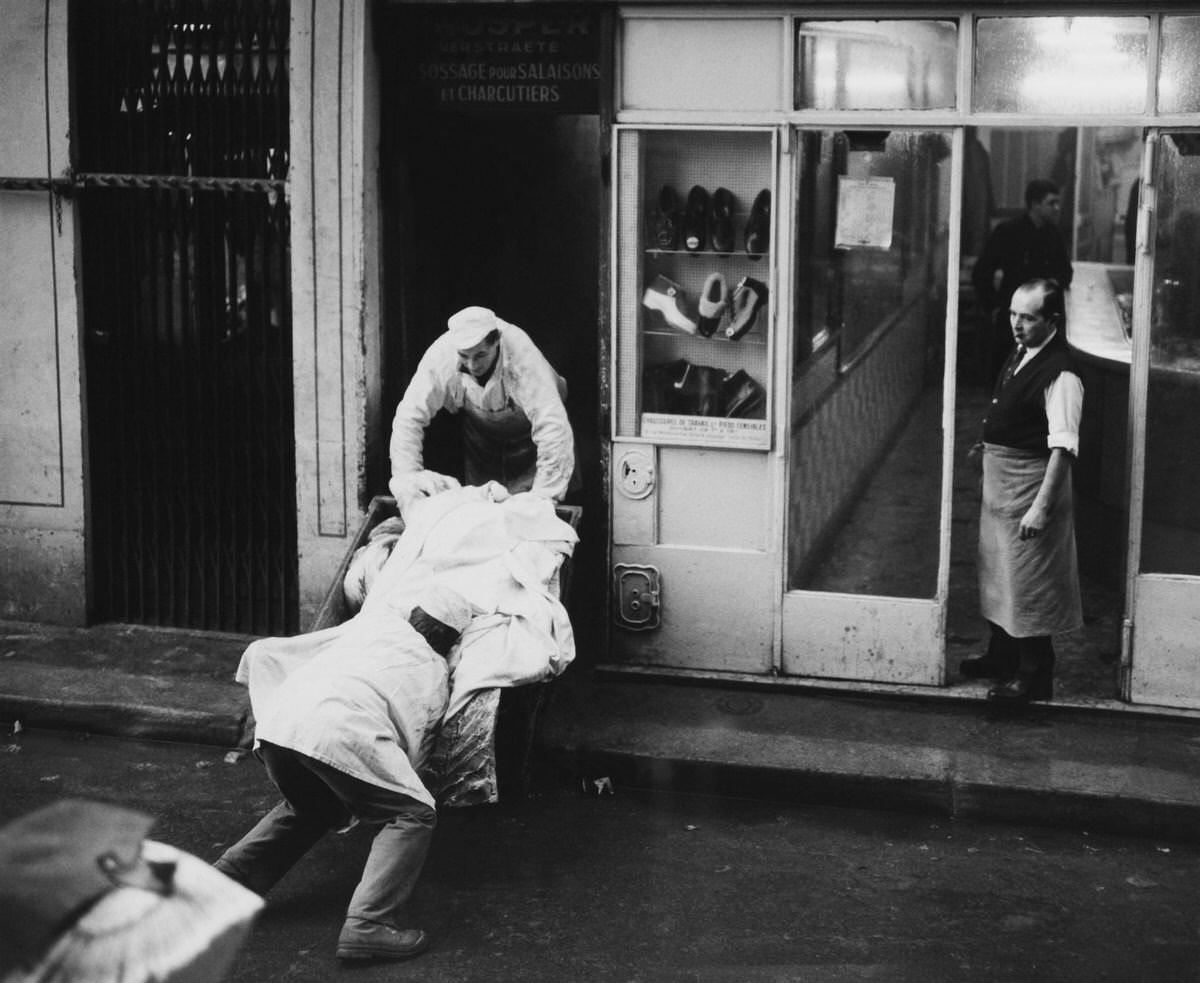
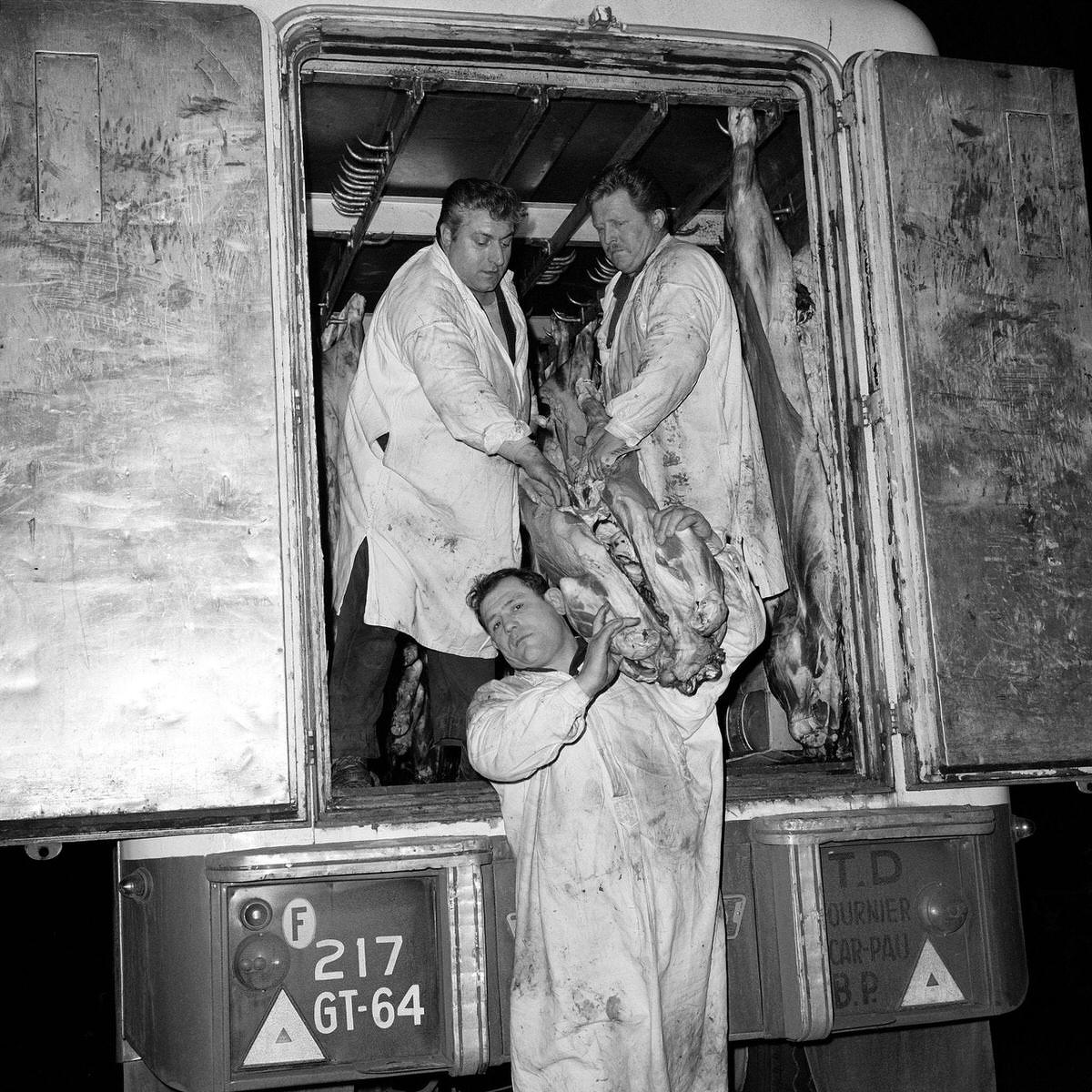
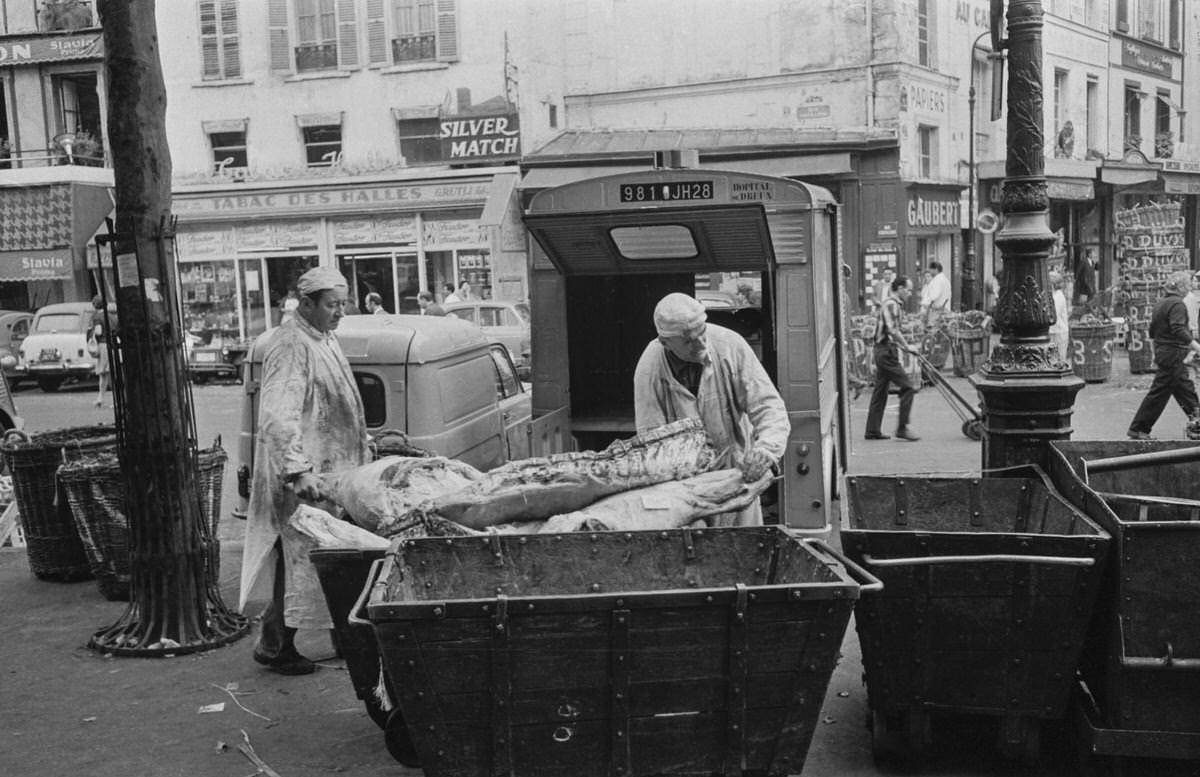
Unloading of carcasses by the butchers of Les Halles, Les Halles, 1964
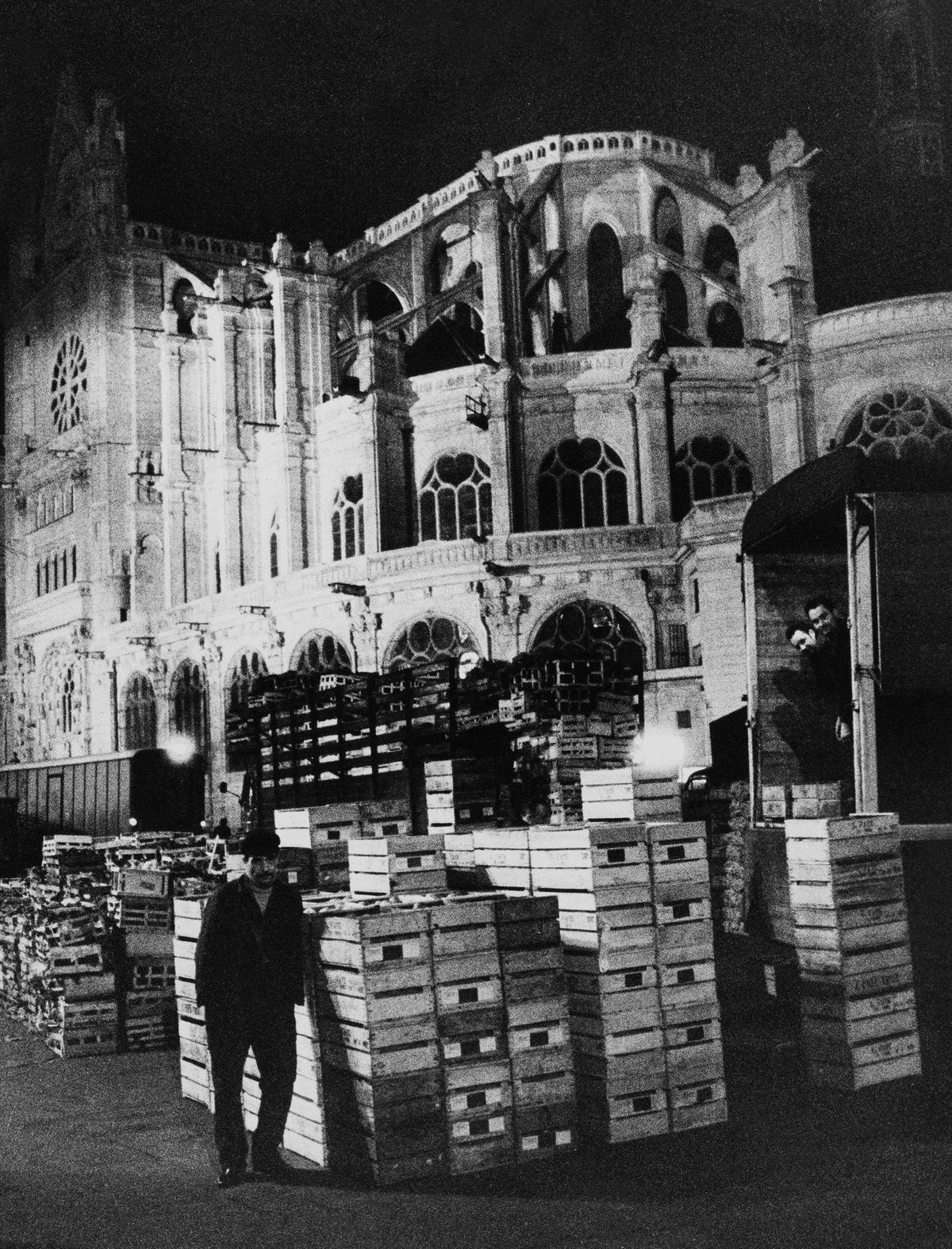
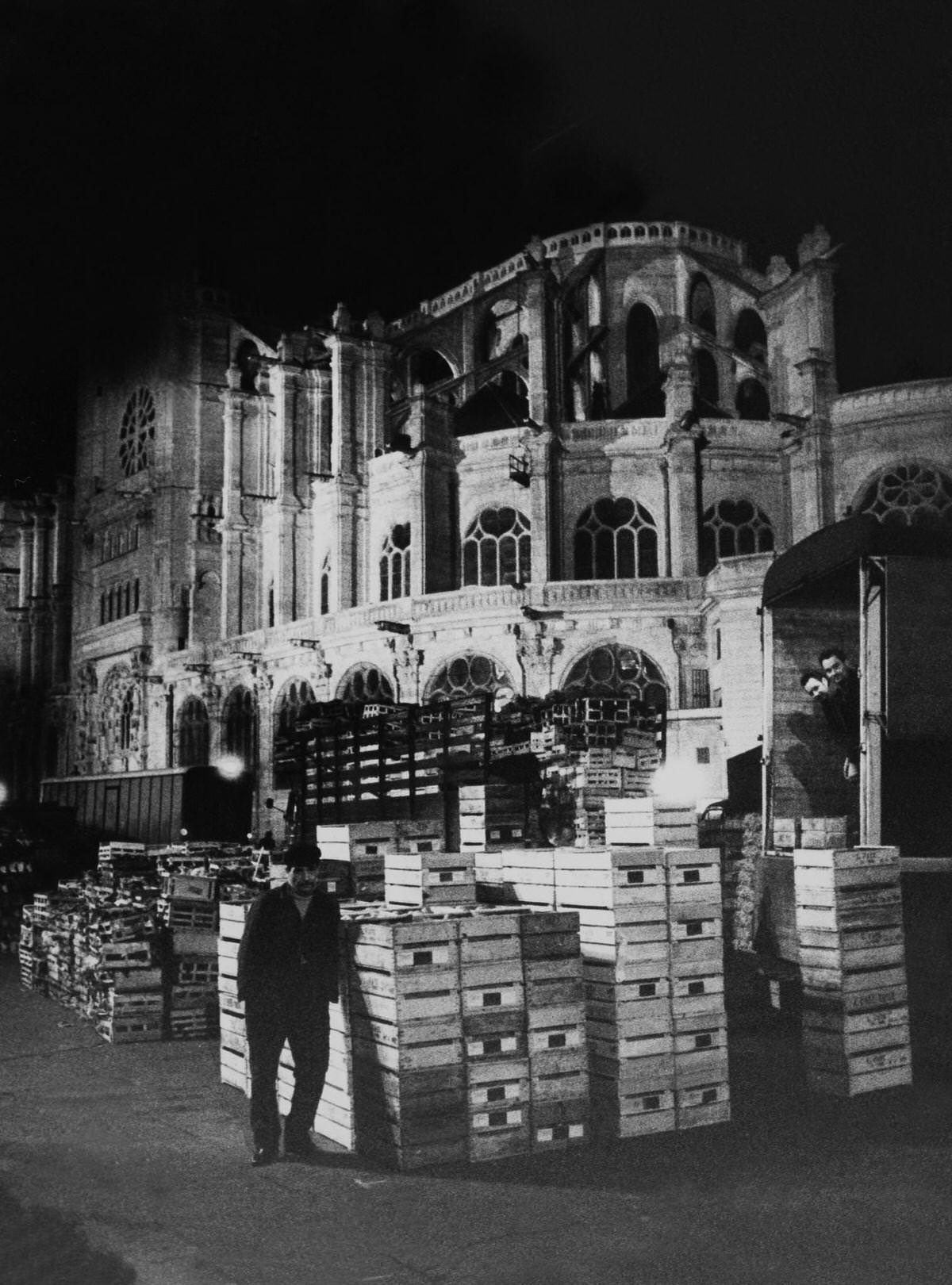
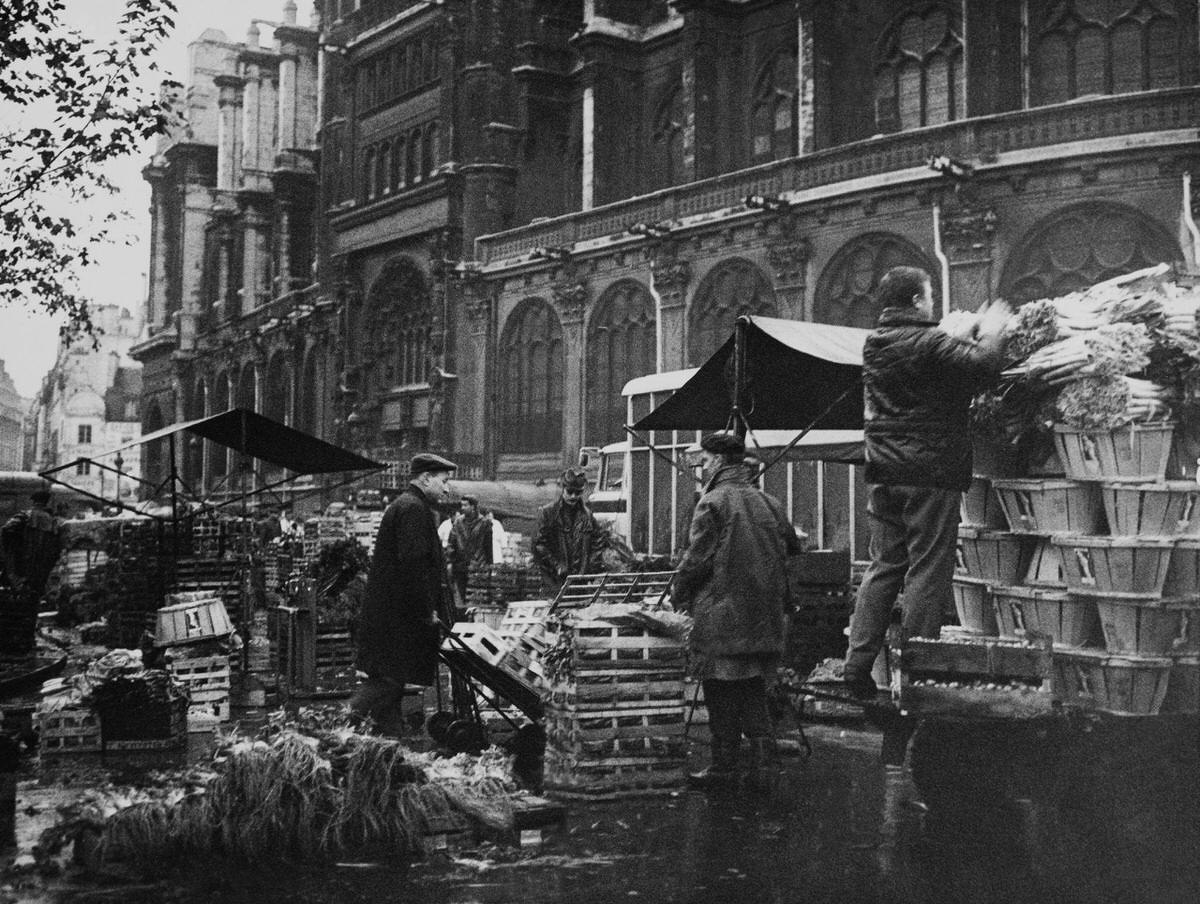
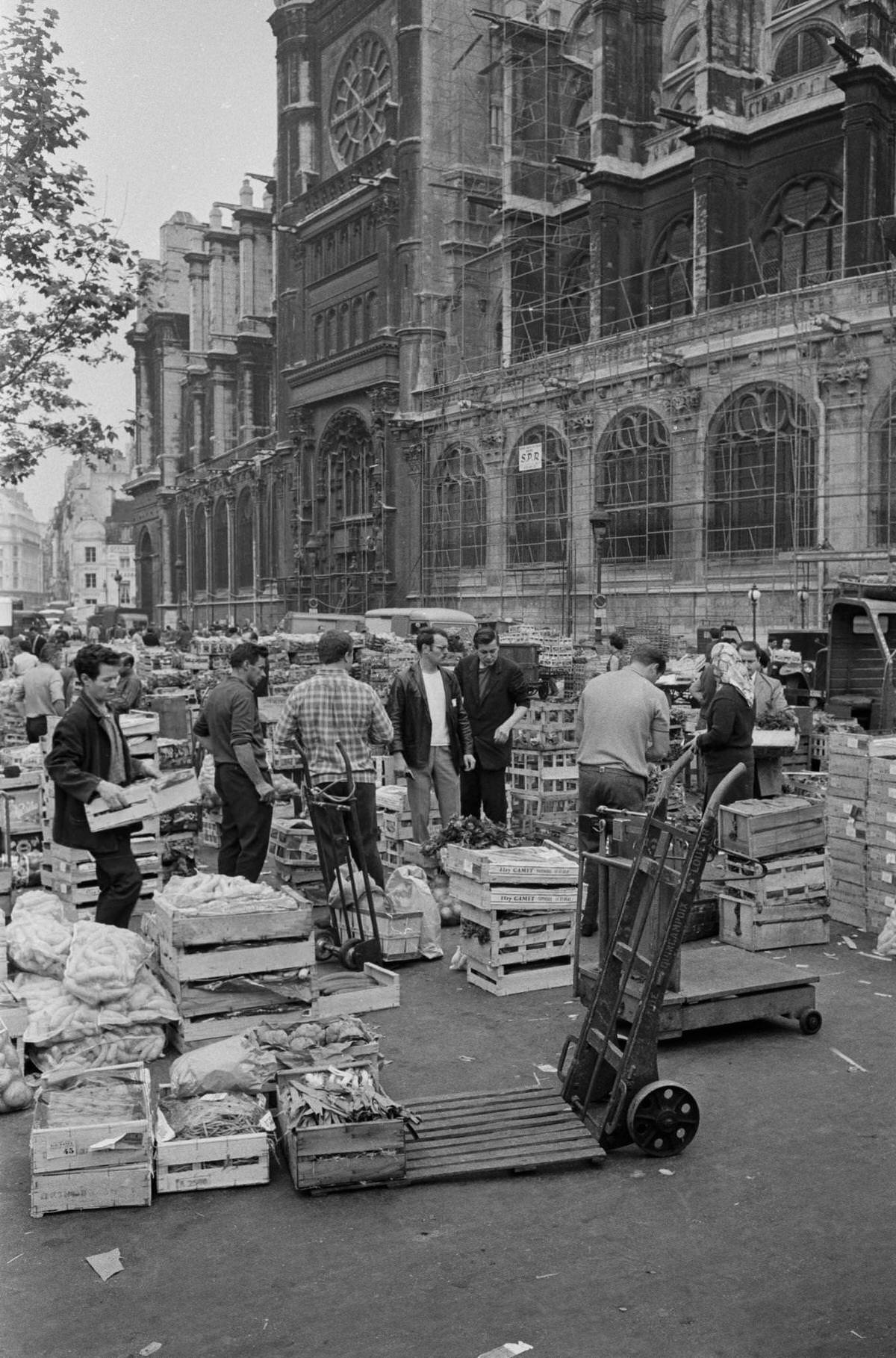
Butcher at Les Halles in front of church St. Eustache, Les Halles, 1964
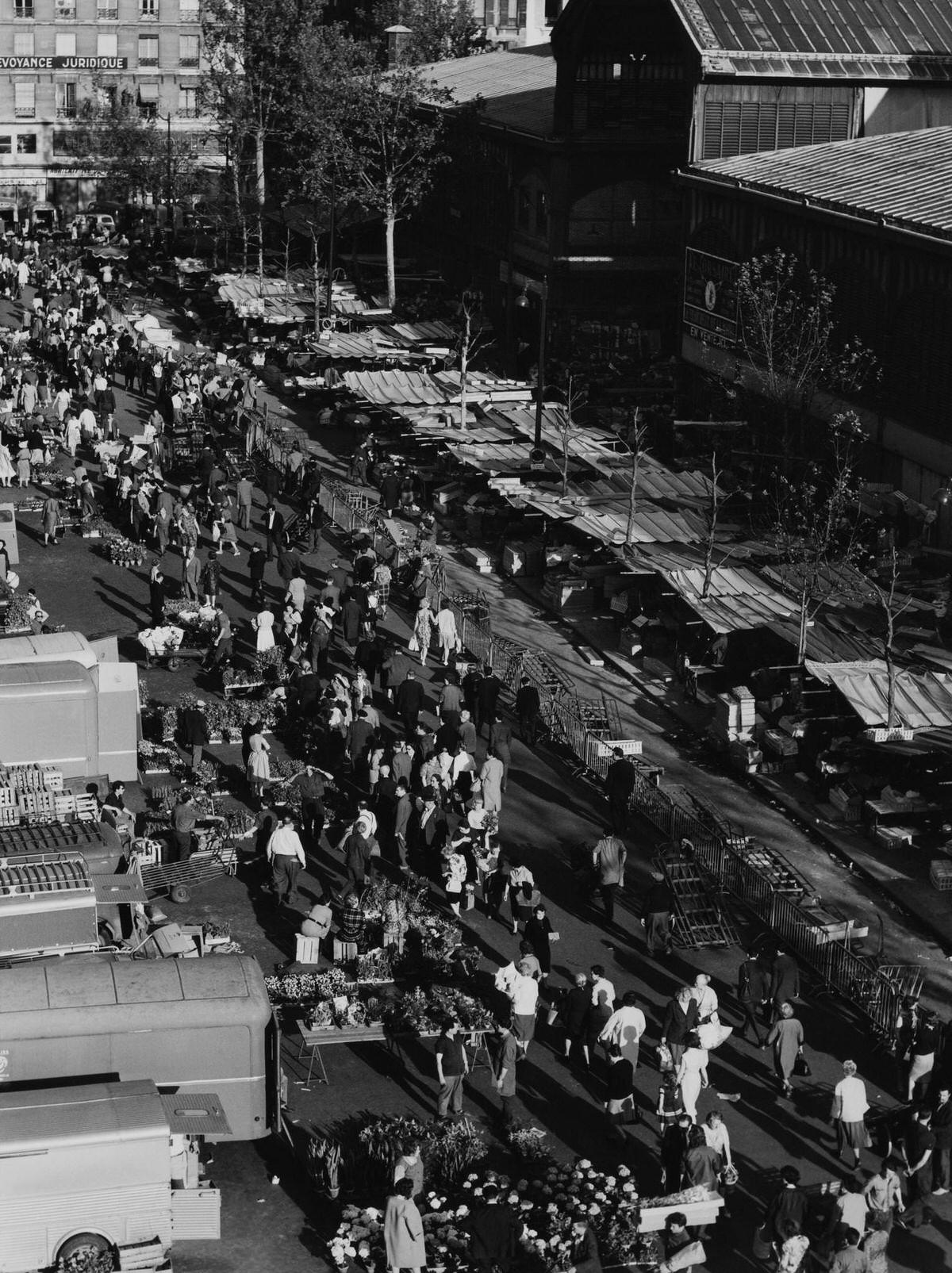
Spring day at Les Halles, which was historically the traditional central market of Paris in 1964 in Paris
Les Halles quarter in spring, 1964 in Paris
The Saint Eustache Area, Les Halles, 1964
The Neighbourhood of Les Halles, 1964
The Neighbourhood of Les Halles, 1964
The church of Saint-Eustache loomed over the market from the northeast — a Gothic structure that had watched over Les Halles since the 16th century. Butchers posed for photographs in front of it. Its presence in so many images from this period gives a sense of how tightly the market and the surrounding neighborhood were woven together. Streets, cafés, warehouses, and religious buildings all pressed up against the iron pavilions.
Famous restaurant ‘Au Pied de Cochon’ in the neighbourhood of Les Halles, on November 14, 1963
The Neighbourhood of Les Halles, 1963
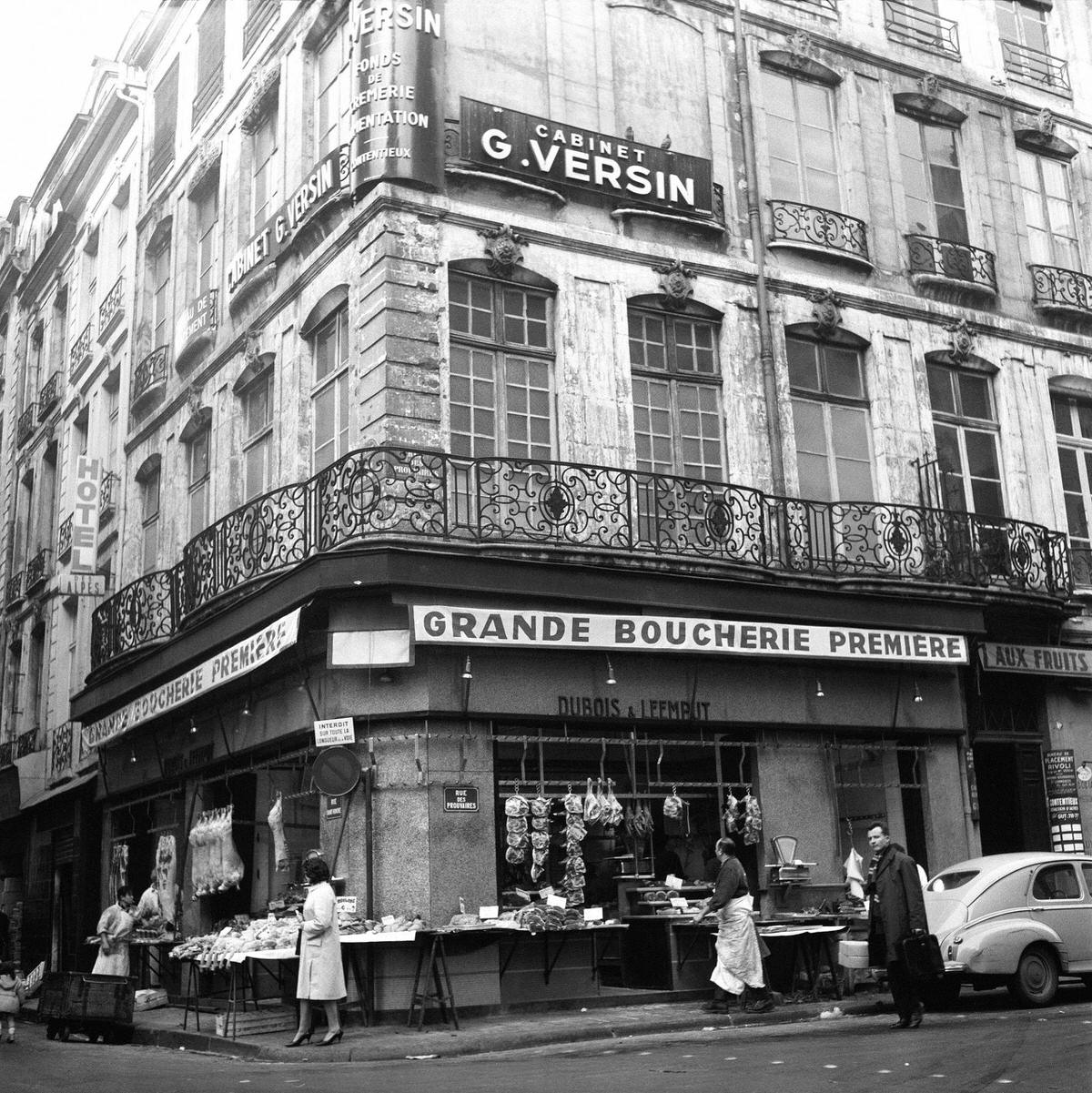
Pork Meat Stall, Les Halles, July 1963,
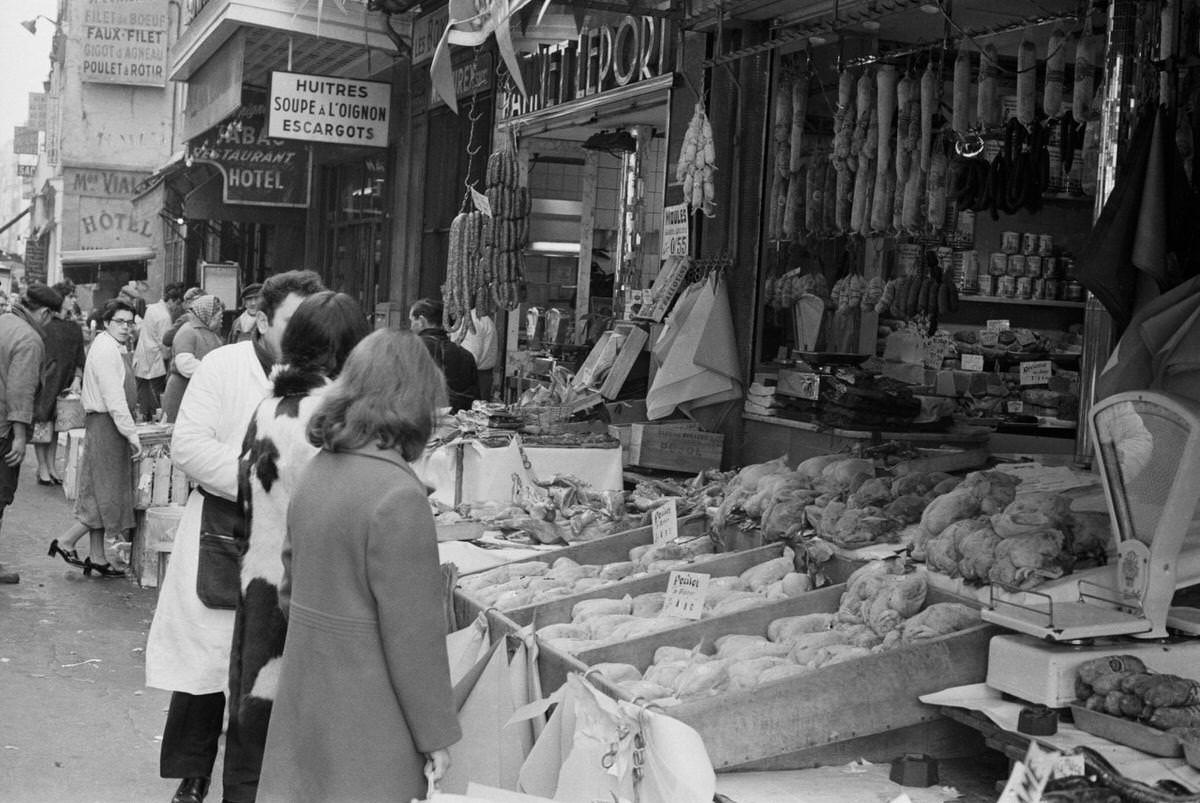
People shopping at Paris Les Halles Central Market, 1960s
Les Halles, 1963
Market of Les Halles in Paris, 1962
Market of Les Halles in Paris, 1962
Market of Les Halles in Paris, 1962
Market of Les Halles in Paris, 1962
Les Halles in Paris, on February 22, 1962.
Market of Les Halles in Paris, 1962
Market of Les Halles in Paris, 1962
Market of Les Halles in Paris, 1962
Market of Les Halles in Paris, France, on February 22, 1962.
Les Halles in Paris, France, on February 22, 1962.
Market of Les Halles in Paris, France, on February 22, 1962.
Market of Les Halles in Paris, on February 22, 1962.
Market of Les Halles in Paris, on February 22, 1962.
Market of Les Halles in Paris, 1962
Market of Les Halles in Paris, 1962
Market of Les Halles in Paris, 1962
Market of Les Halles in Paris, 1962
Market of Les Halles in Paris, 1962
Market of Les Halles in Paris, 1962
Market of Les Halles in Paris, 1962
Market of Les Halles in Paris, 1962
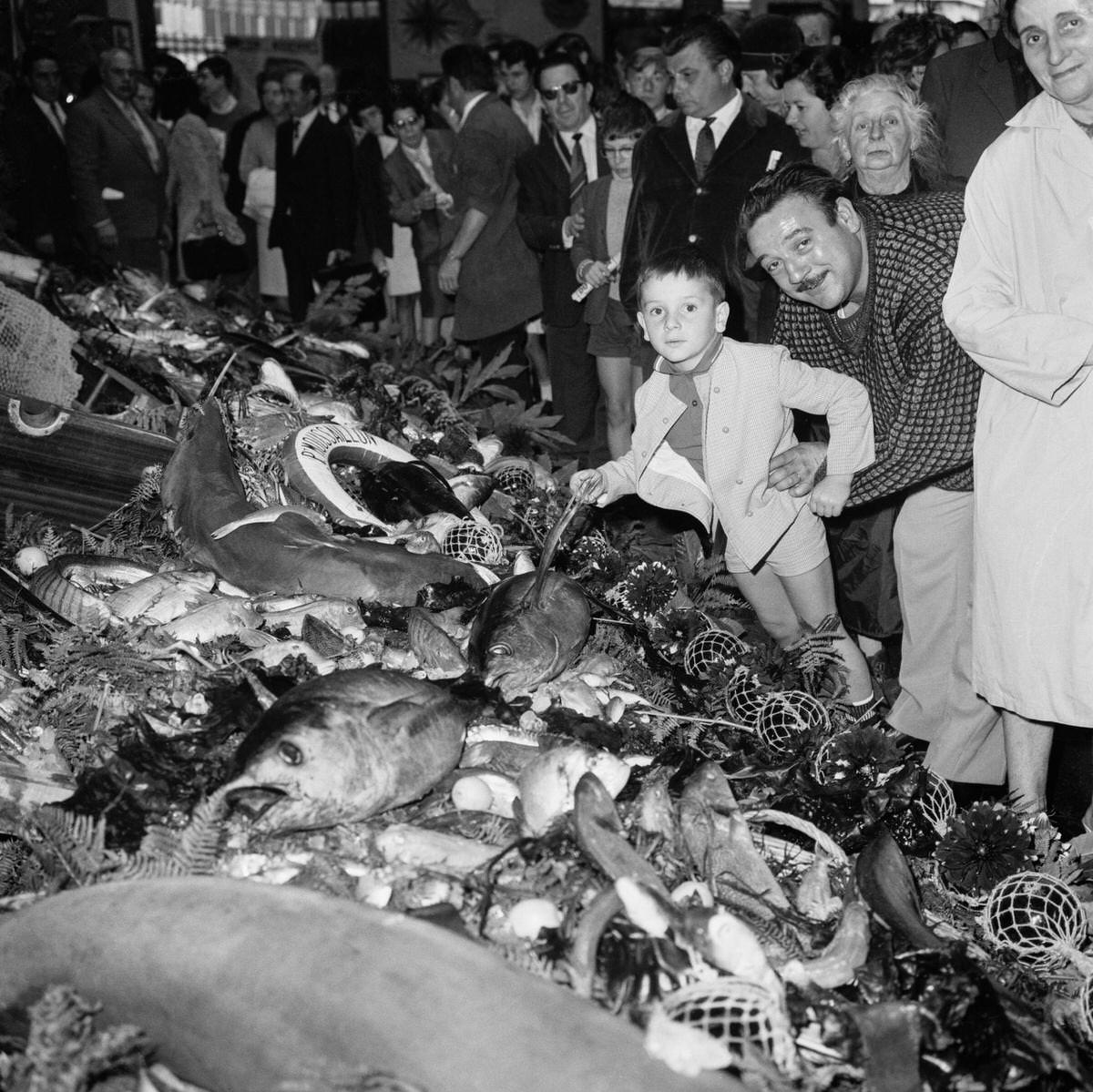
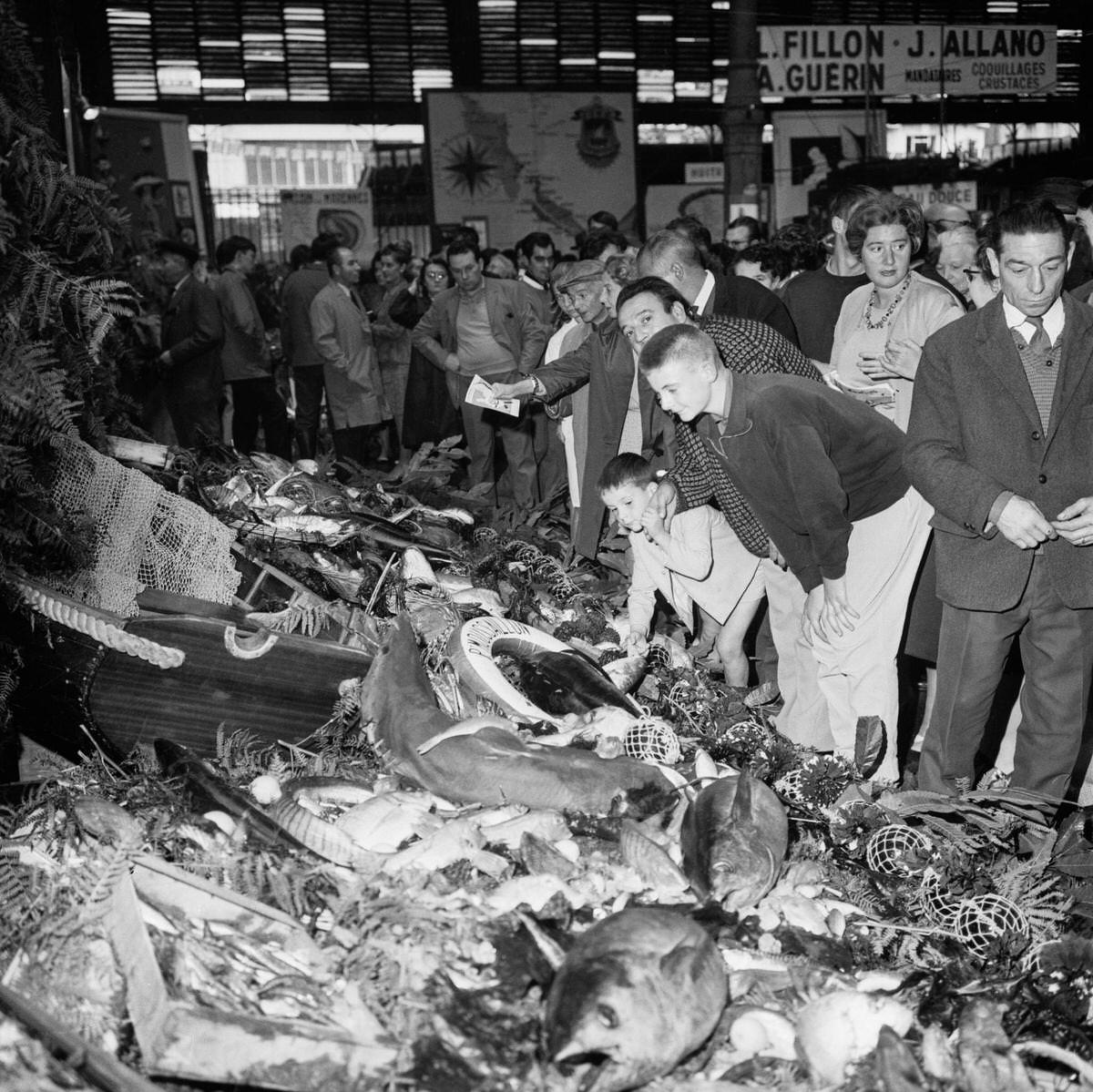
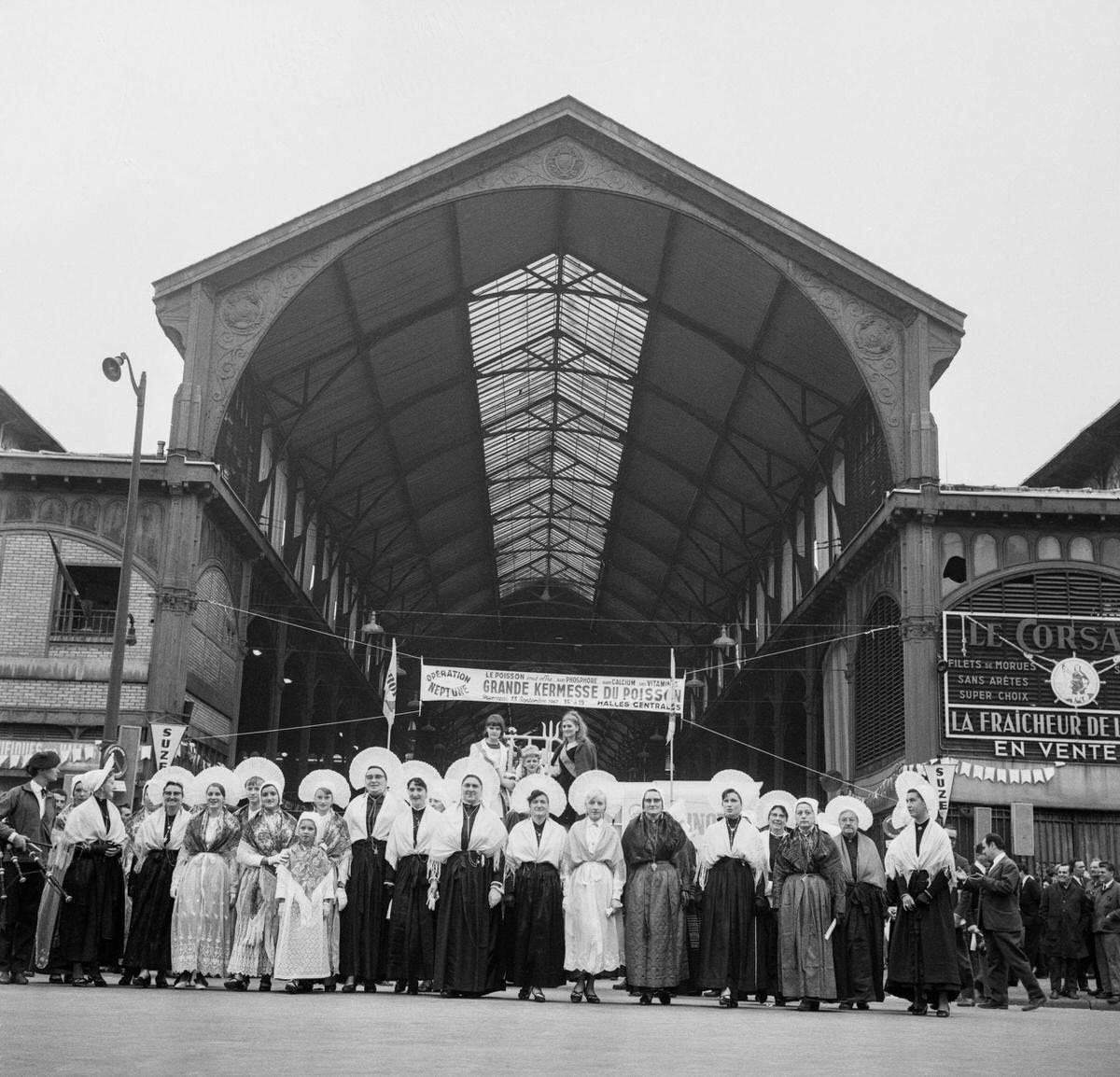
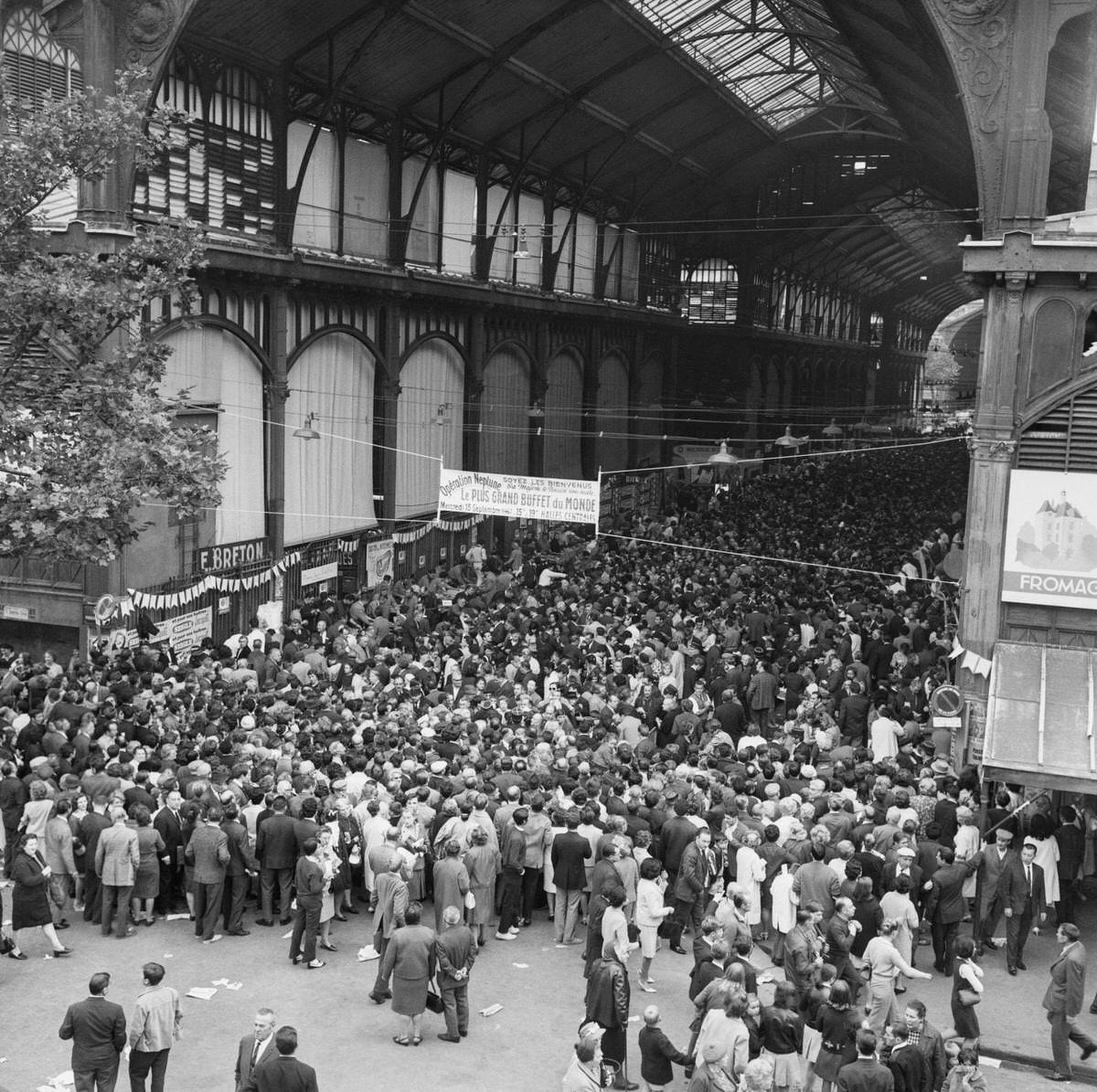
The late 1960s brought a visible shift. Photographs from 1967 and 1968 show the market at its most crowded and most chaotic. In 1967, Les Halles hosted a grand fish fair, drawing large crowds to see an enormous display of fish and seafood laid out in an elaborate artistic arrangement — billed as the largest buffet of its kind in the world. Fishermen’s wives posed outside the pavilions for photographers. Market porters played up for the camera. The atmosphere was festive, but the market’s days were numbered.
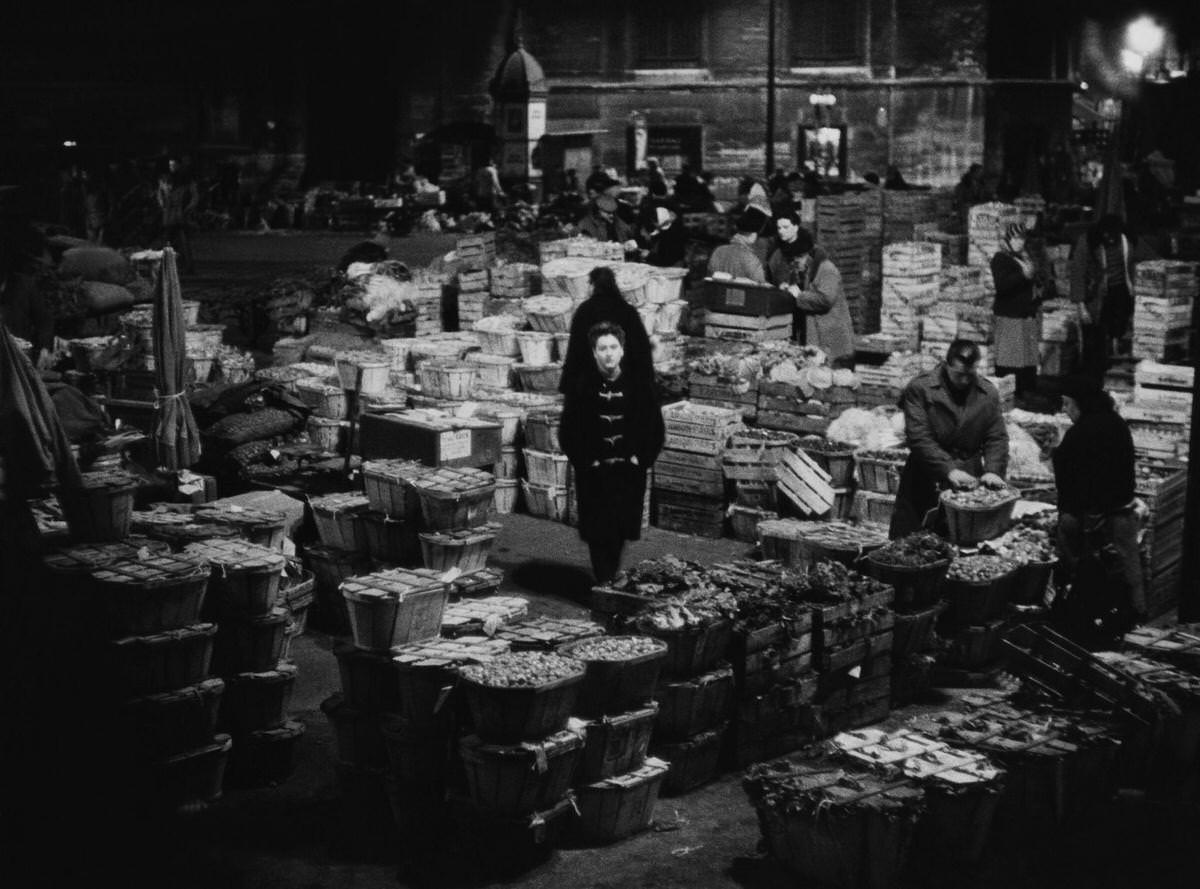
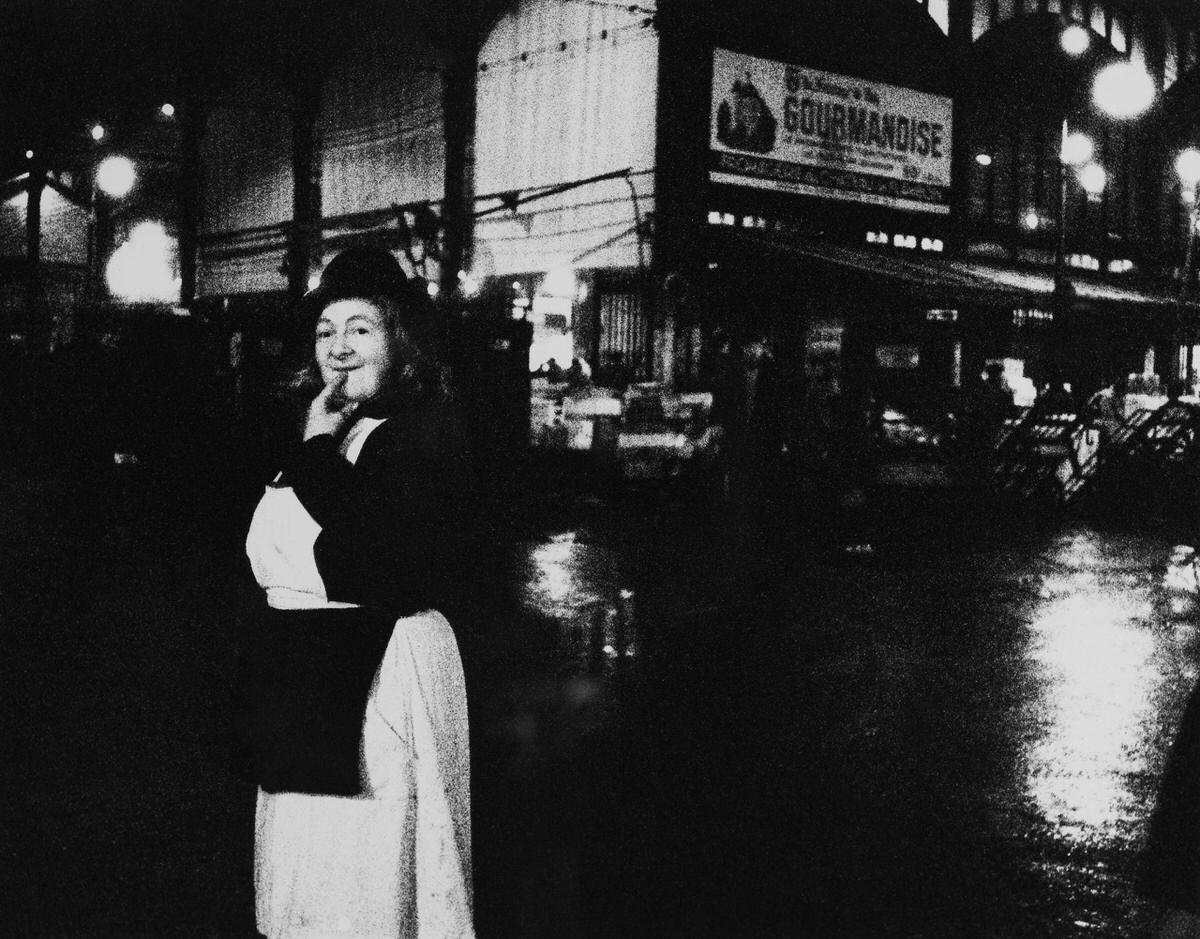
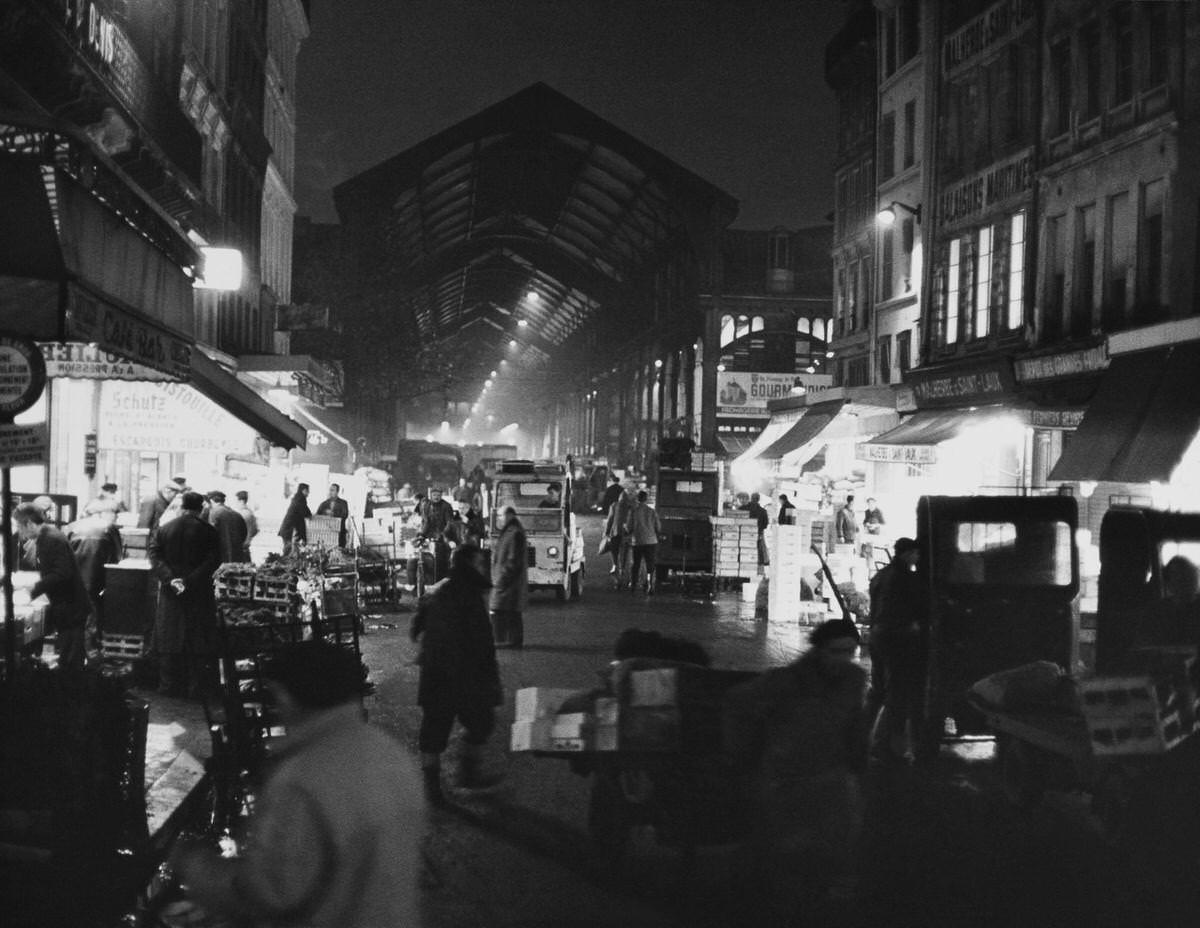
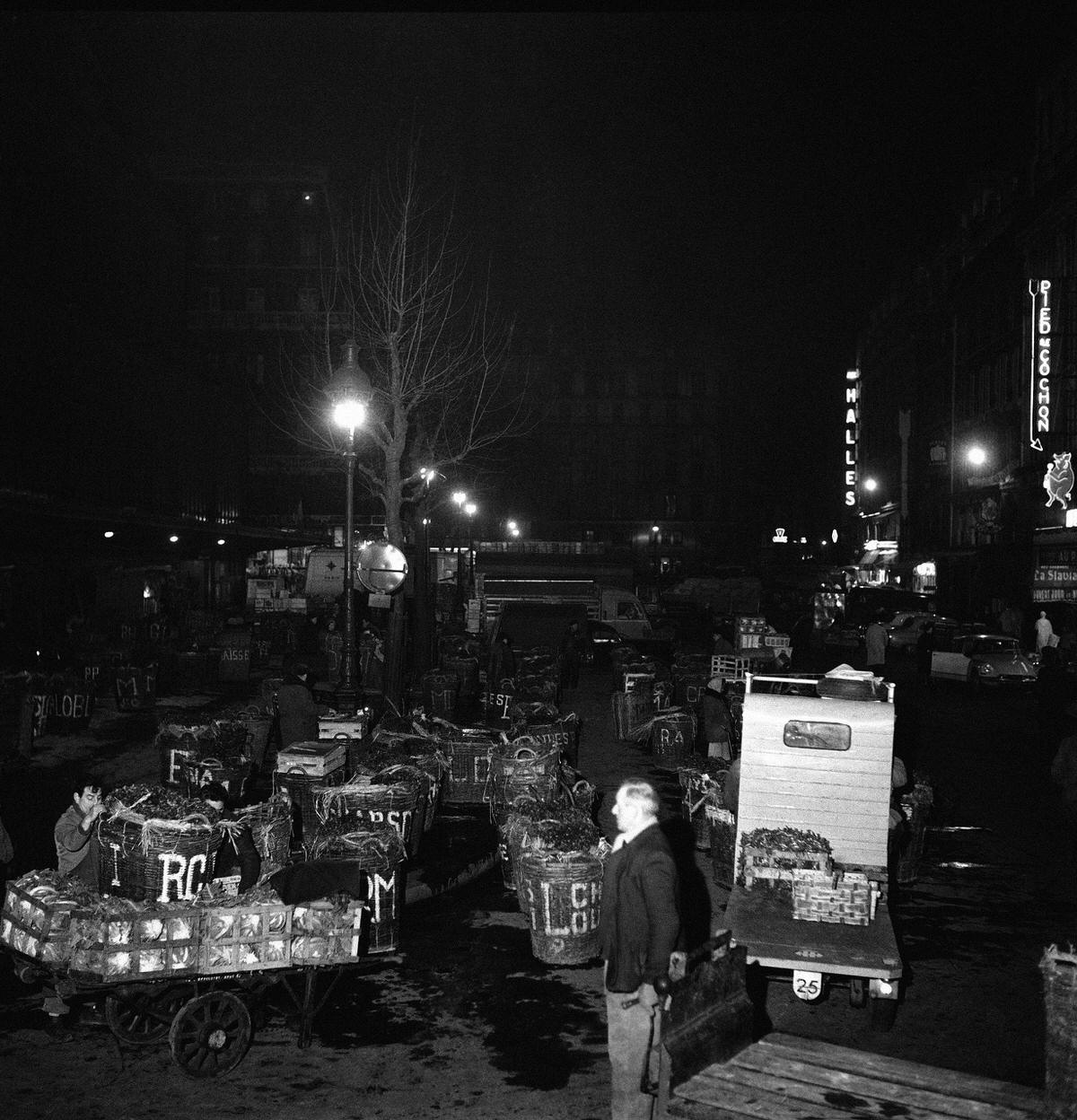
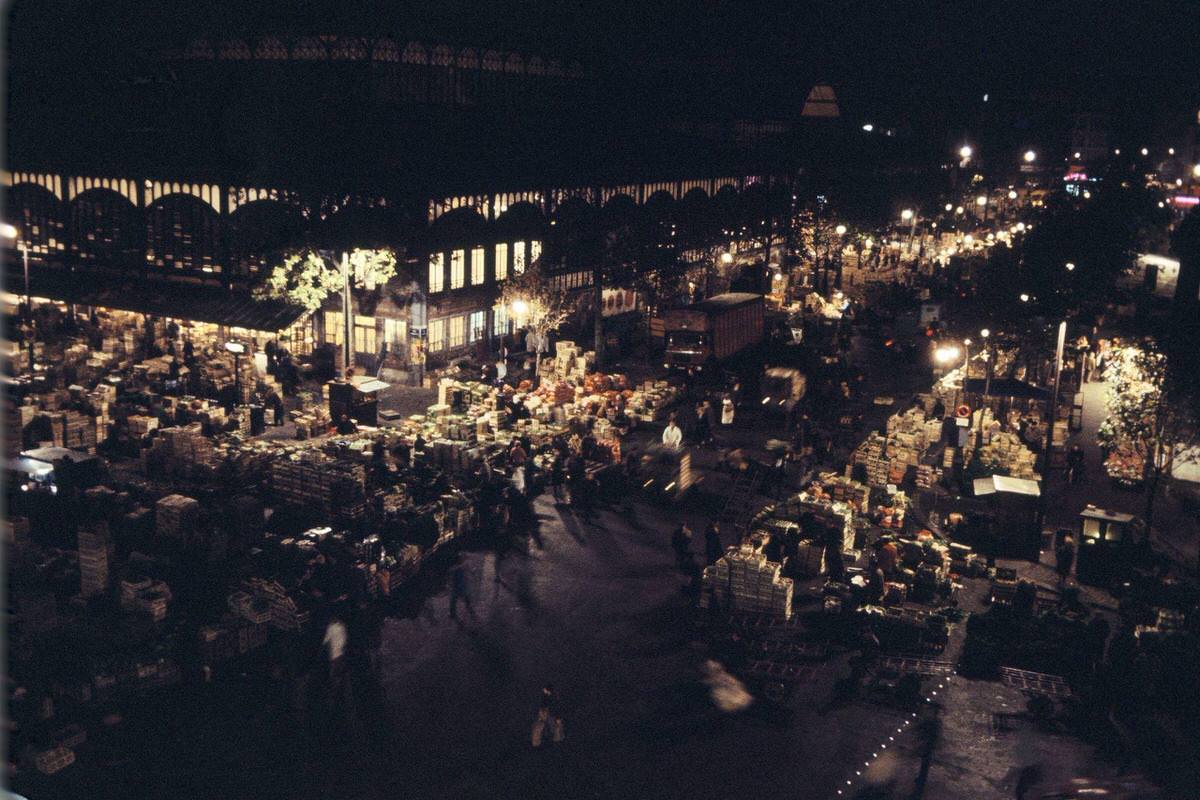
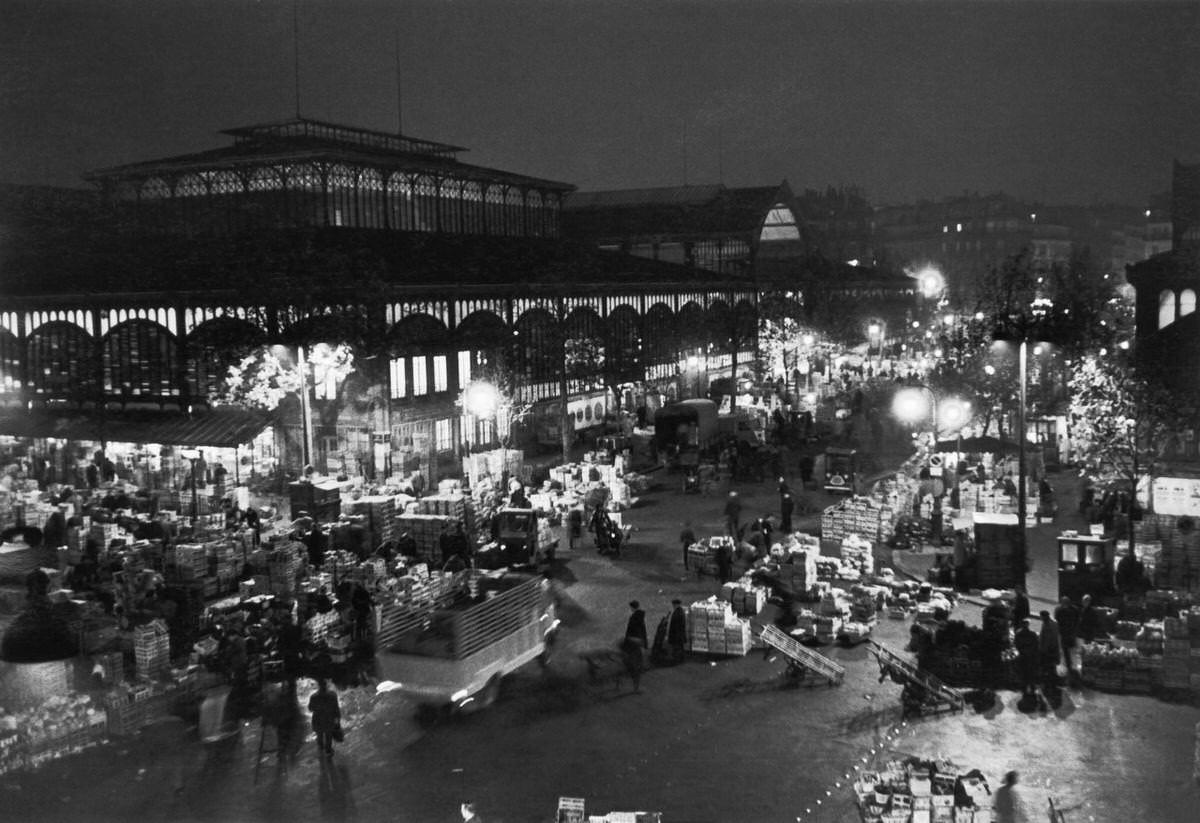
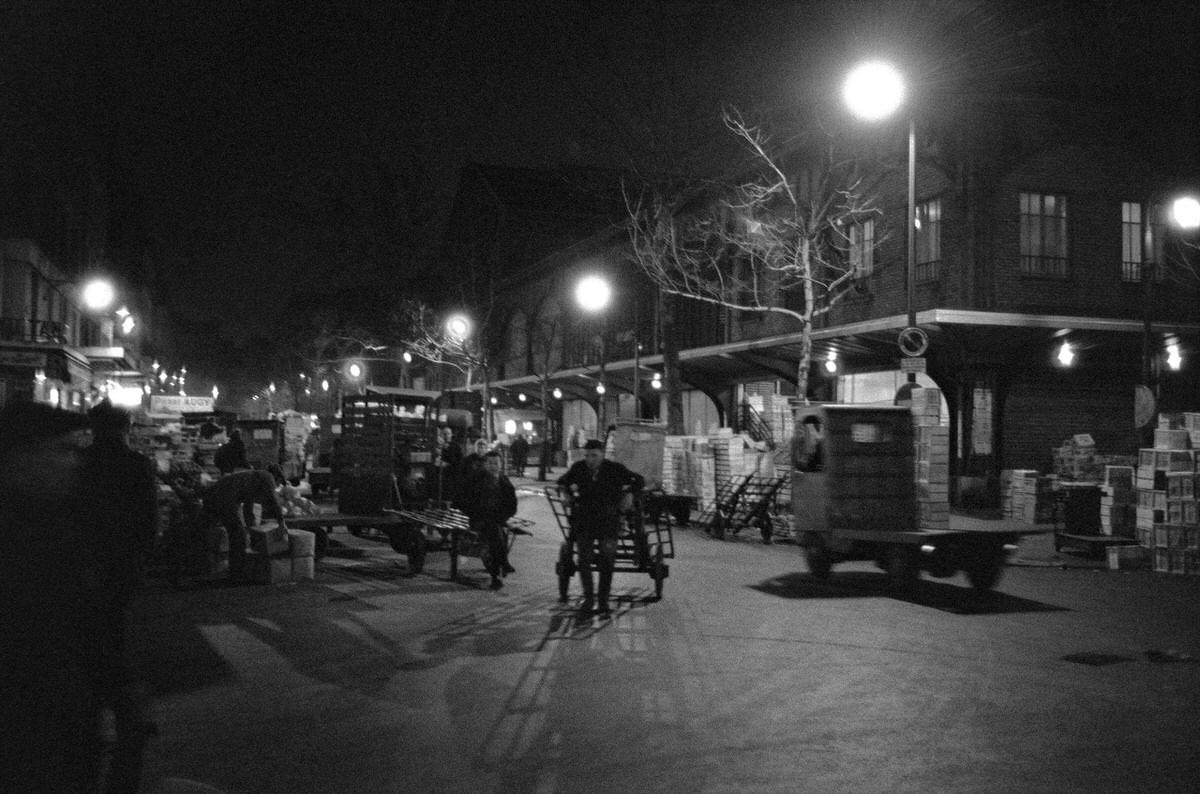
Les Halles at Night, 1968,
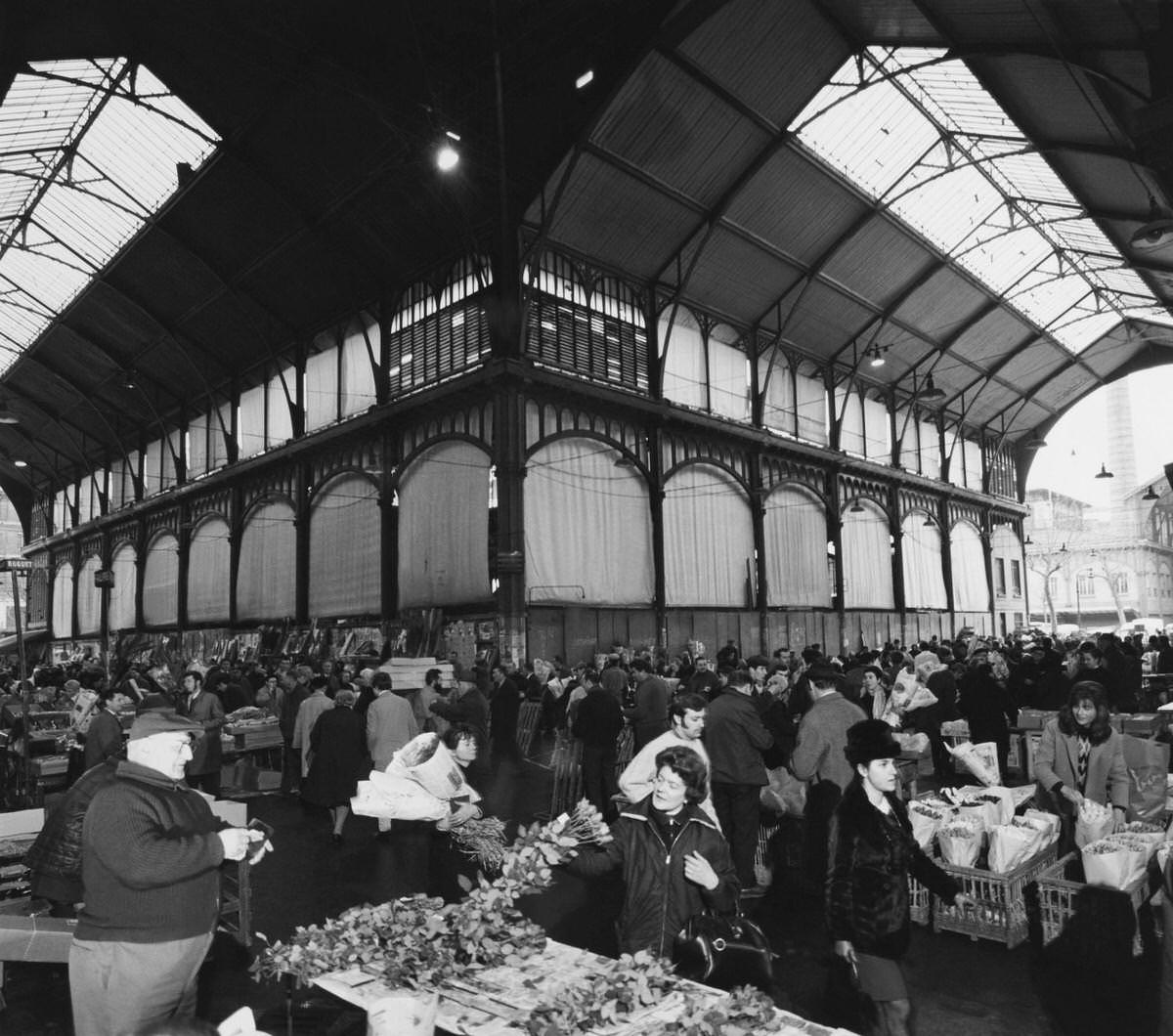
Halles Of Paris, Crowd in Les Halles, 1968
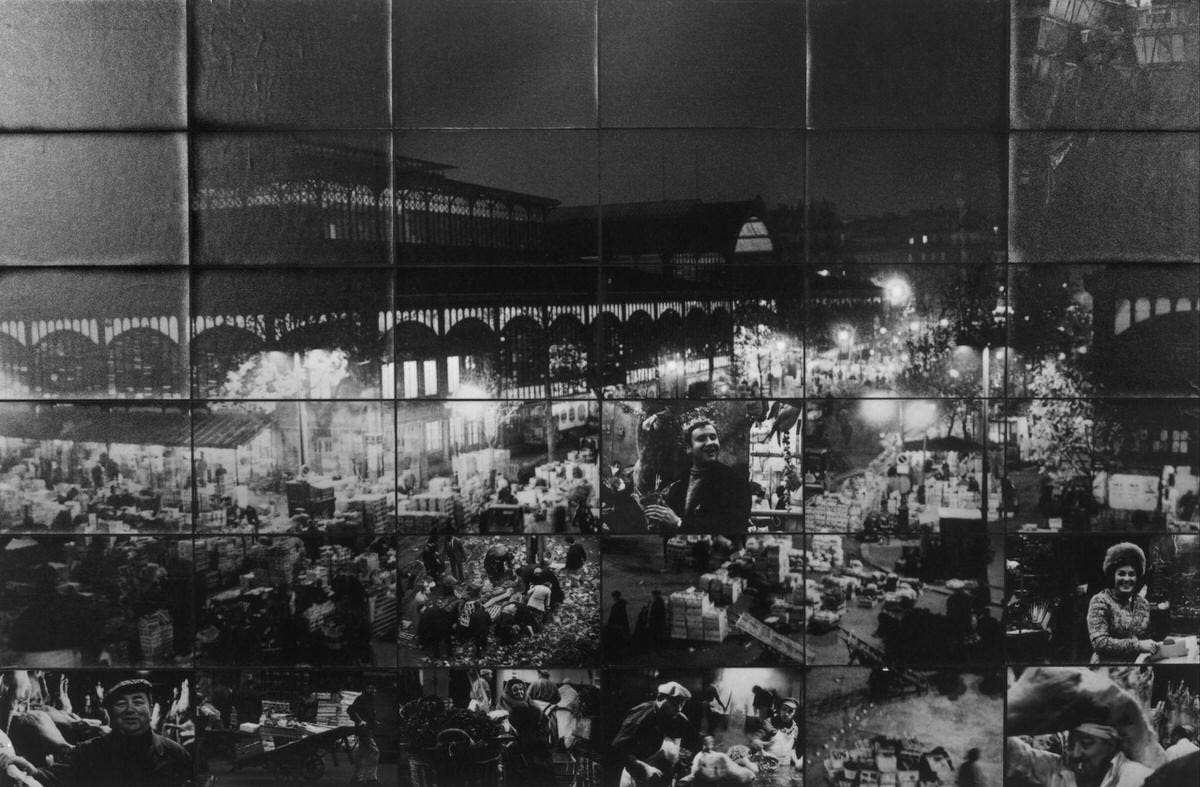
Les Halles Montage, 1968
The Halles, 1968
Les Halles, December 1967
The Halles of Paris, November 1967
Detached house of flowers, The Halles, 1967
Detached house of flowers to the market of Les Halles in Paris, 1967
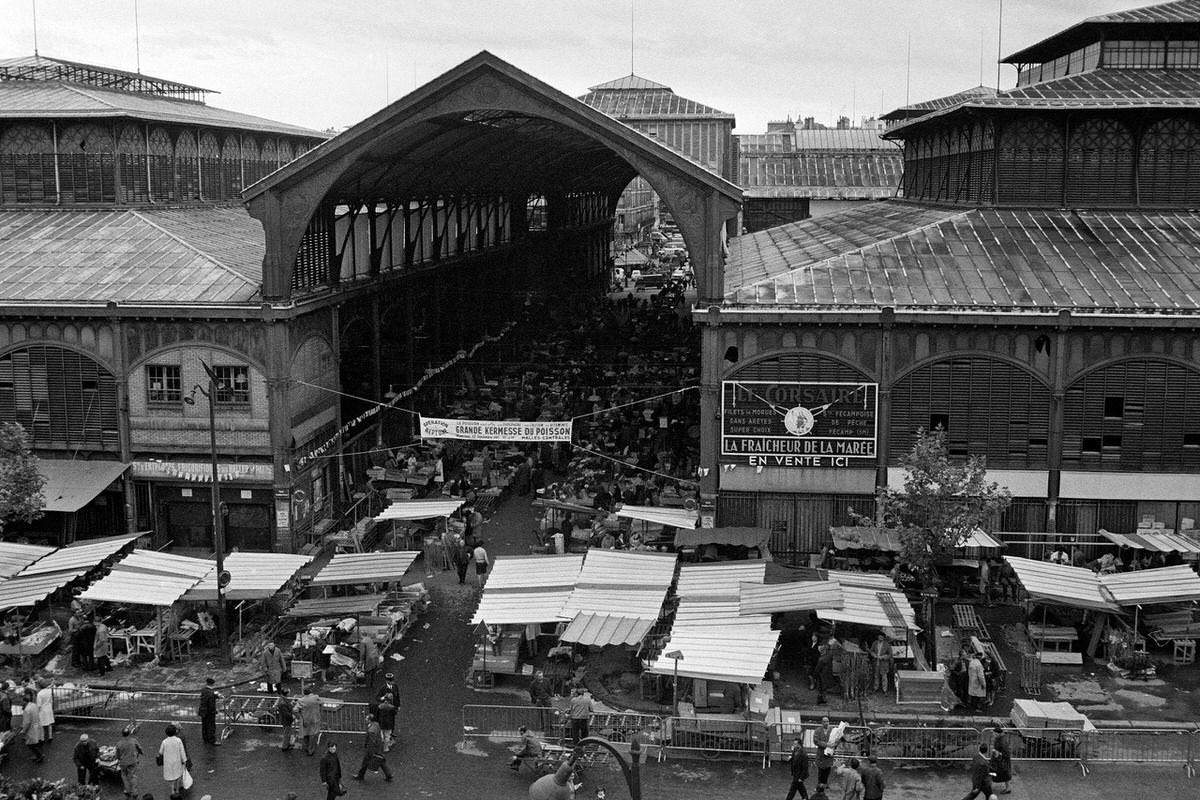
The Les Halles of Paris during the big fair of the fish, 1967
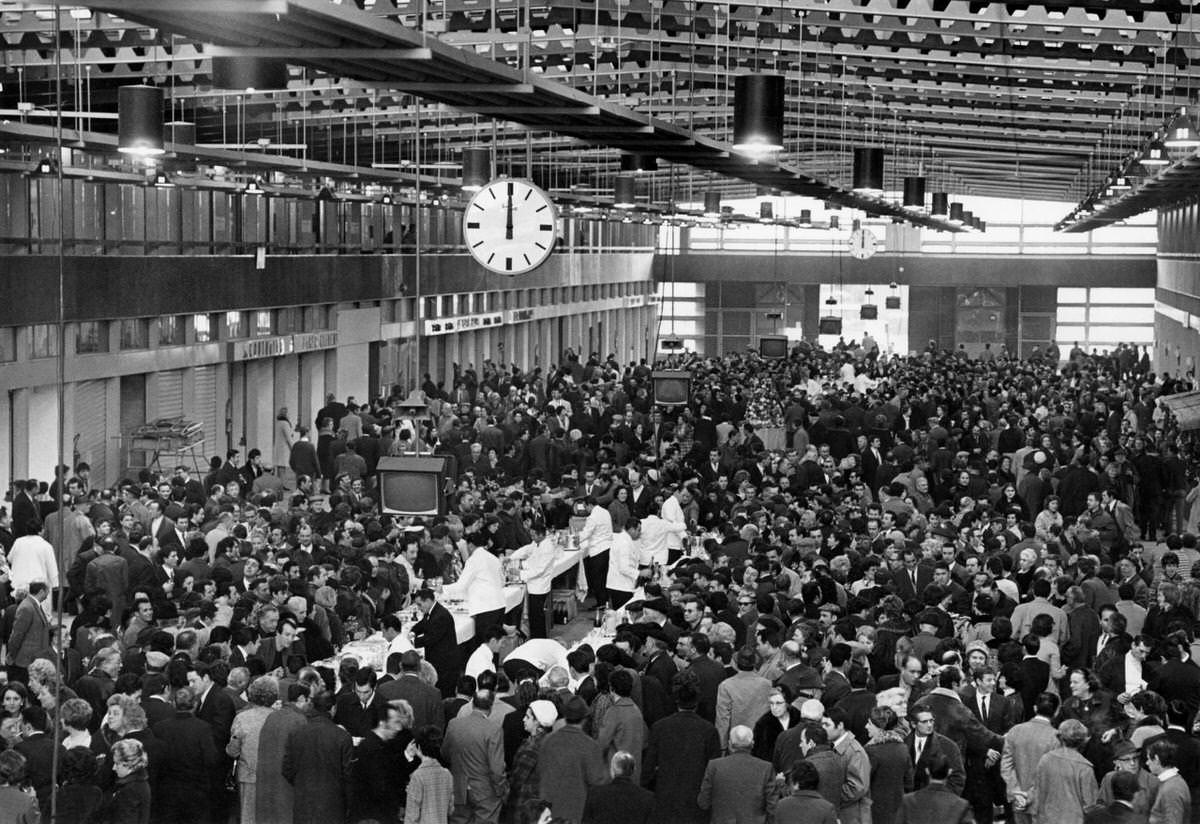
The crowd admires the largest buffet in the world where fish of all kinds are artistically presented for the great fish fair, in Paris, 1967
The crowd admires the largest buffet in the world where fish of all kinds are artistically presented for the great fish fair, in Paris, 1967
Fishermen’s wives photographed in front of Les Halles for the great fish fair, in Paris, 1967
General view of the crowd at Les Halles for the great fish fair, in Paris, 1967
Les Halles, 1967
The End of The Les Halles, 1967
The Halles Market by Night, September 1967
Market porters playing up in Les Halles, which was historically the traditional central market of Paris, those men were called ‘Forts des Halles’, 1967
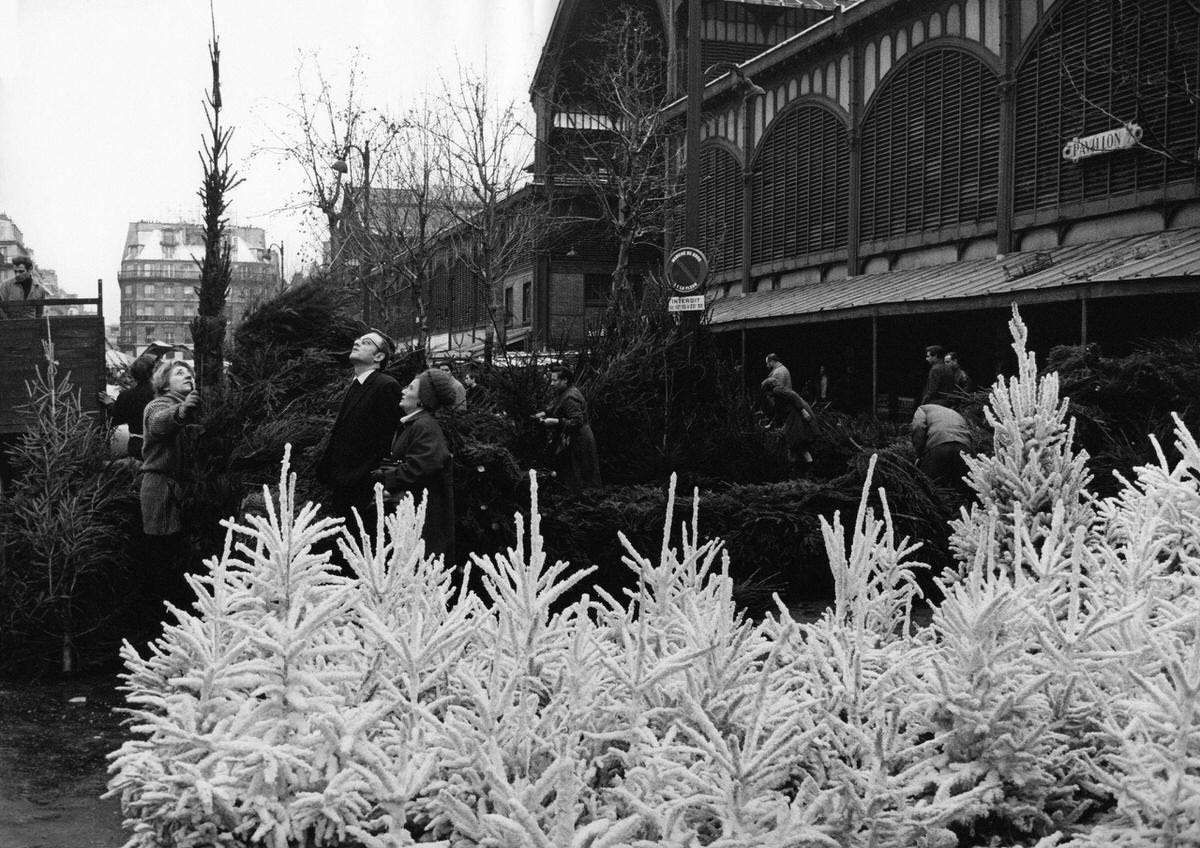
White Christmas trees at flowers hall in Les Halles, which was historically the traditional central market of Paris, in 1967
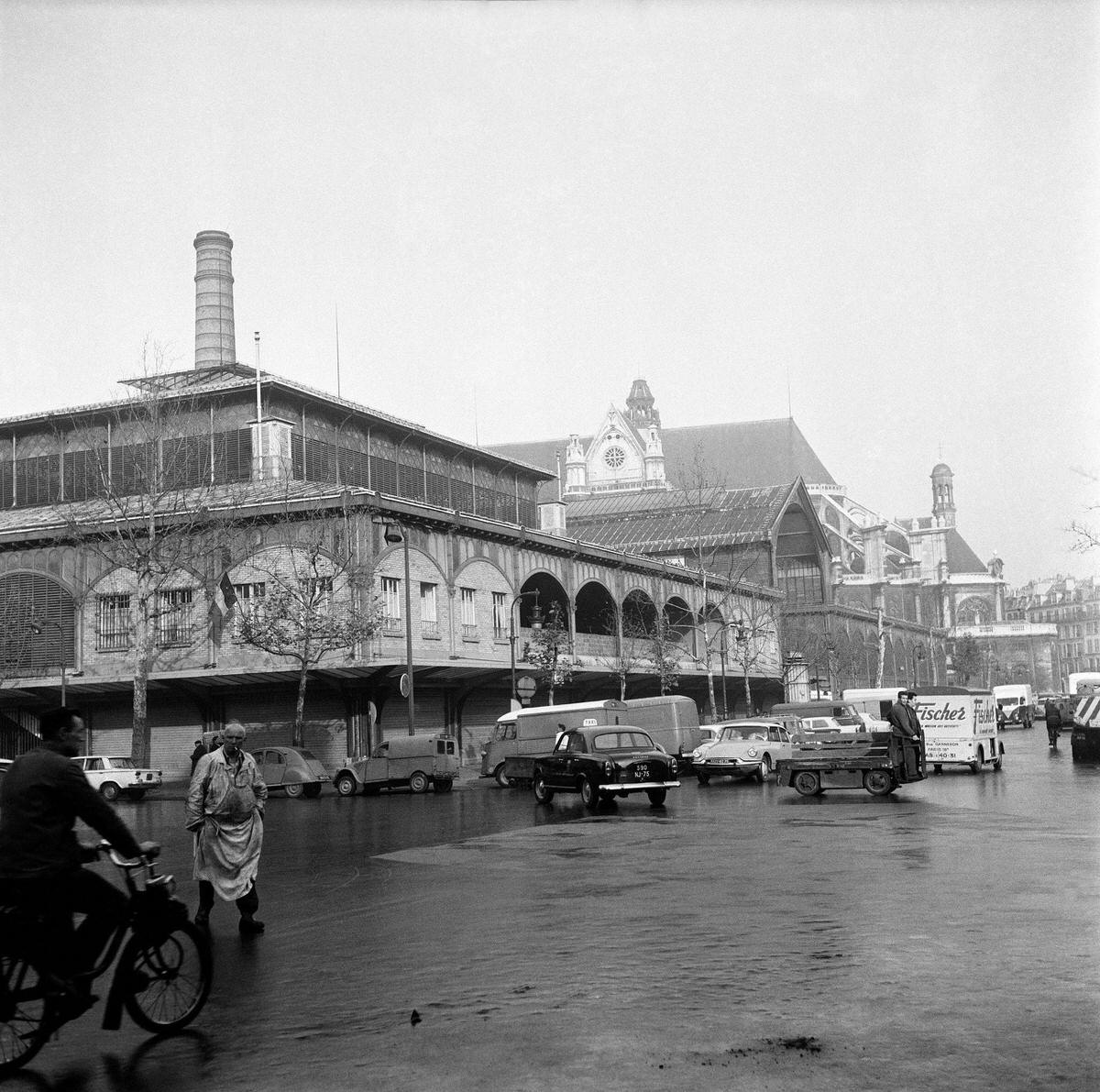
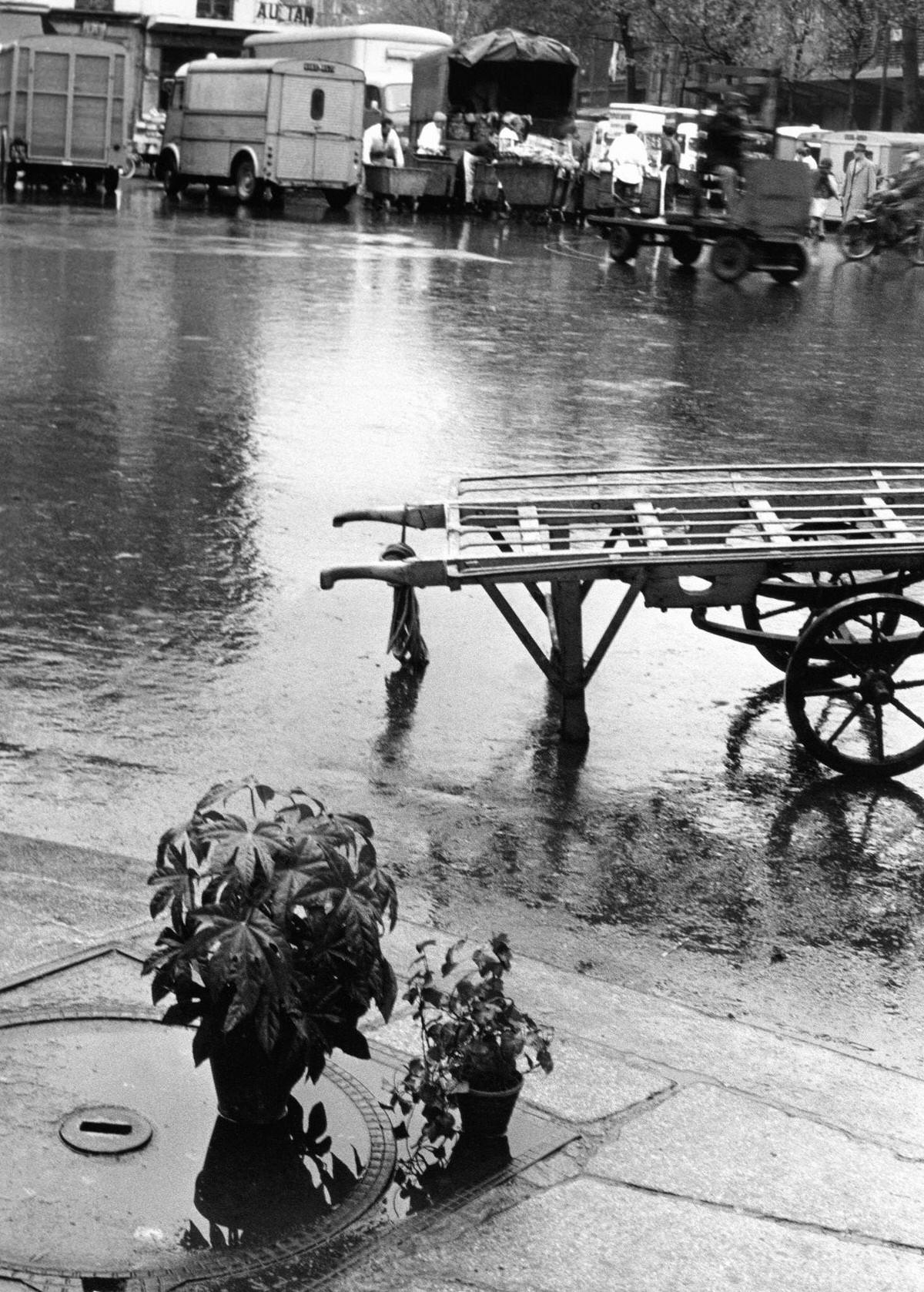
Rainy day on Les Halles, which was historically the traditional central market of Paris in 1967 in Paris
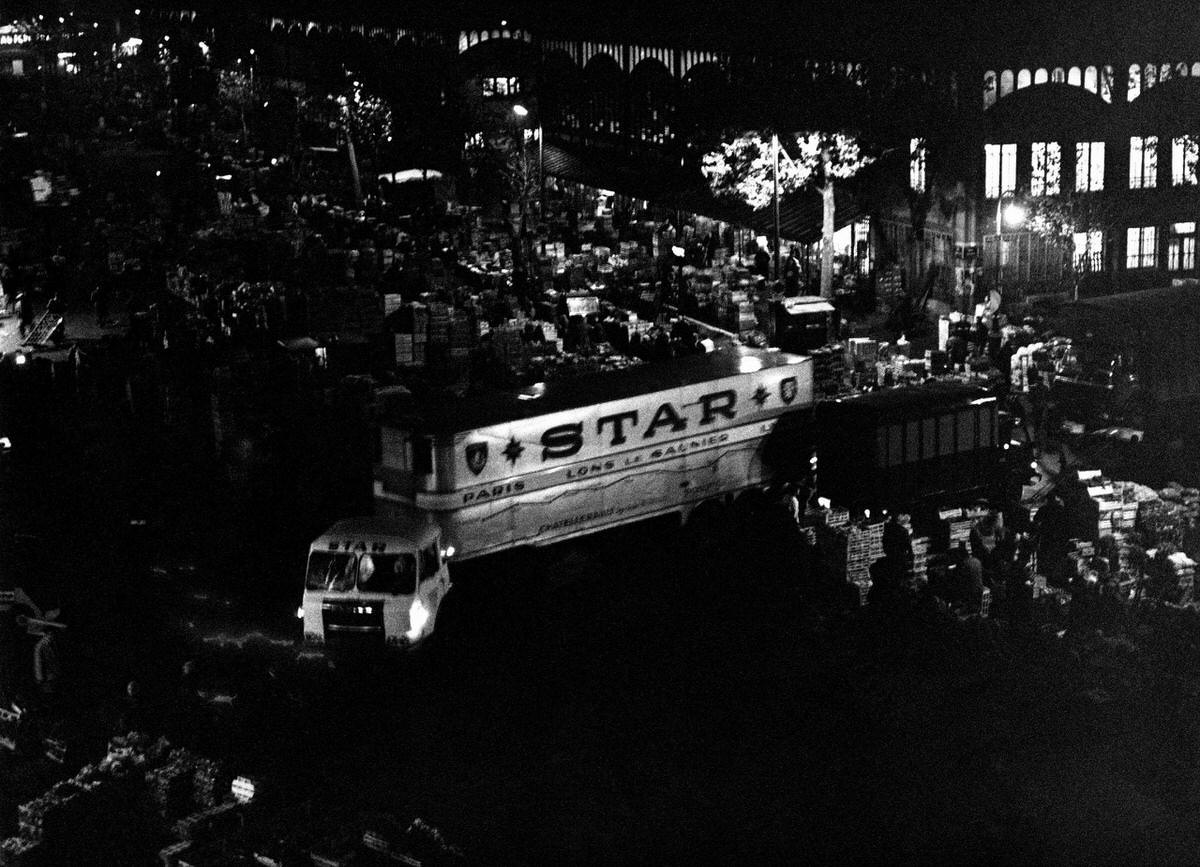
Les Halles at night, 1967
At the end of market in Les Halles some people are searching for some goods to salvage, Les Halles, 1967
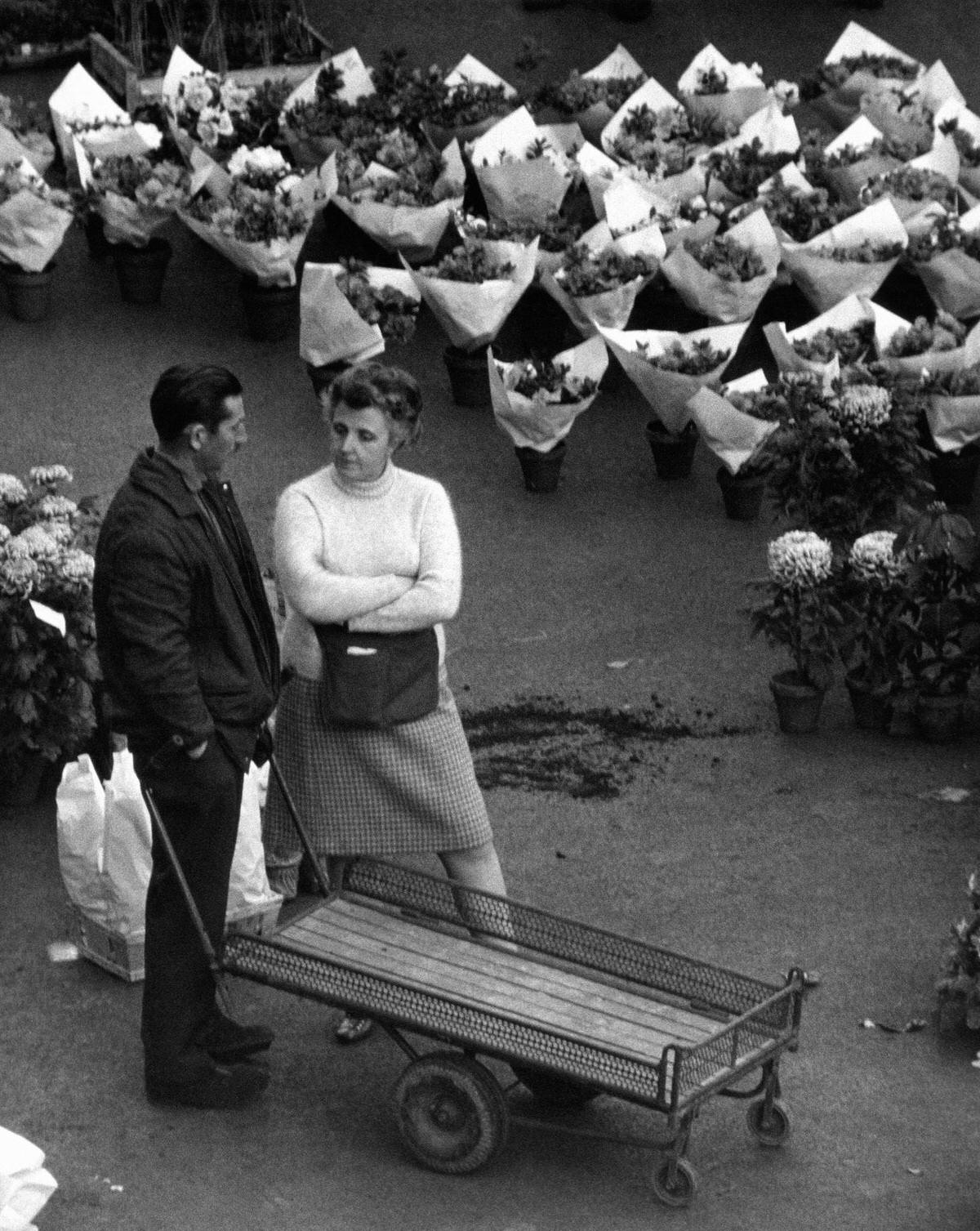
A woman and a man speaking surrounded by bunches of flowers in Les Halles, 1967
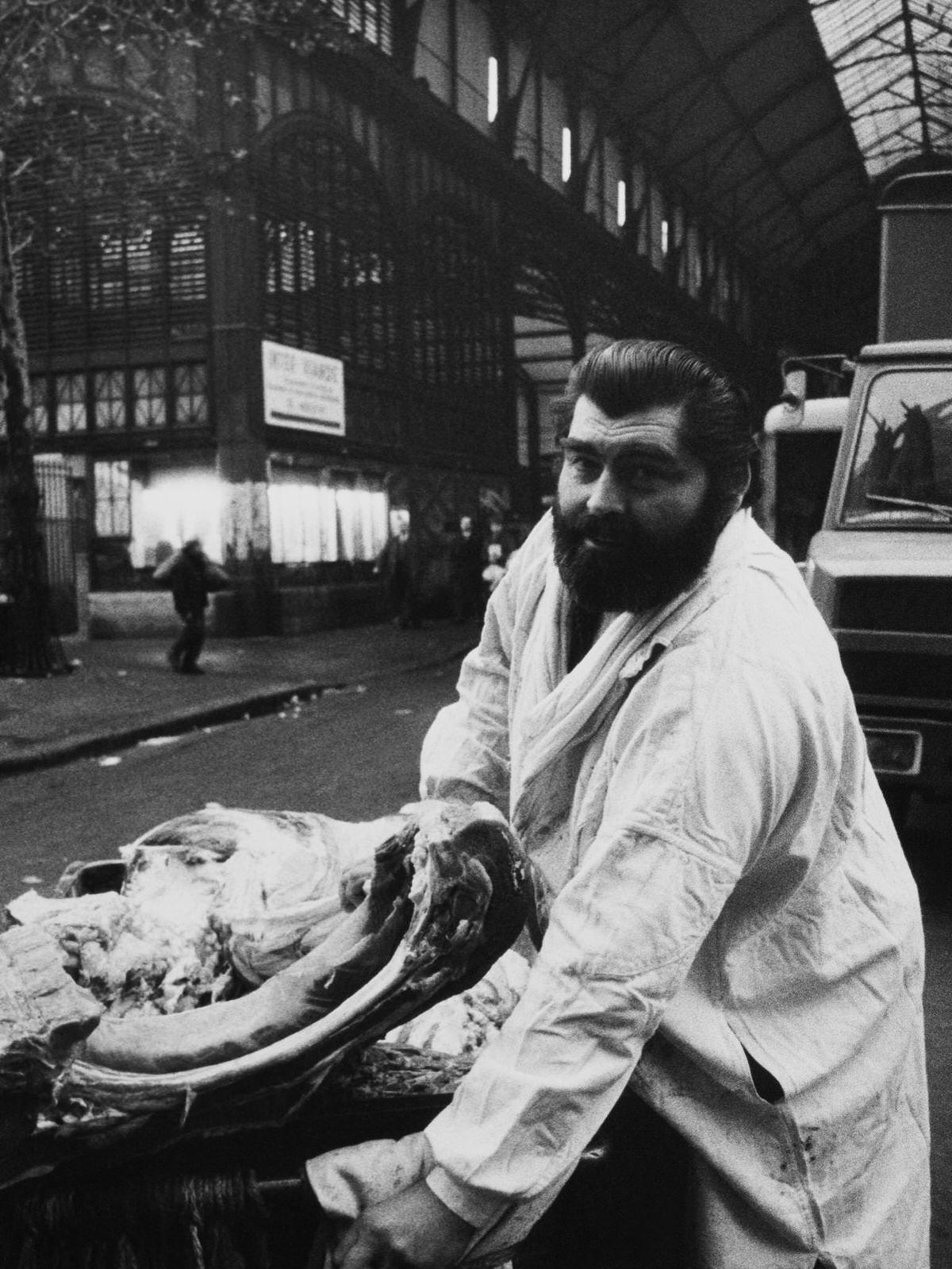
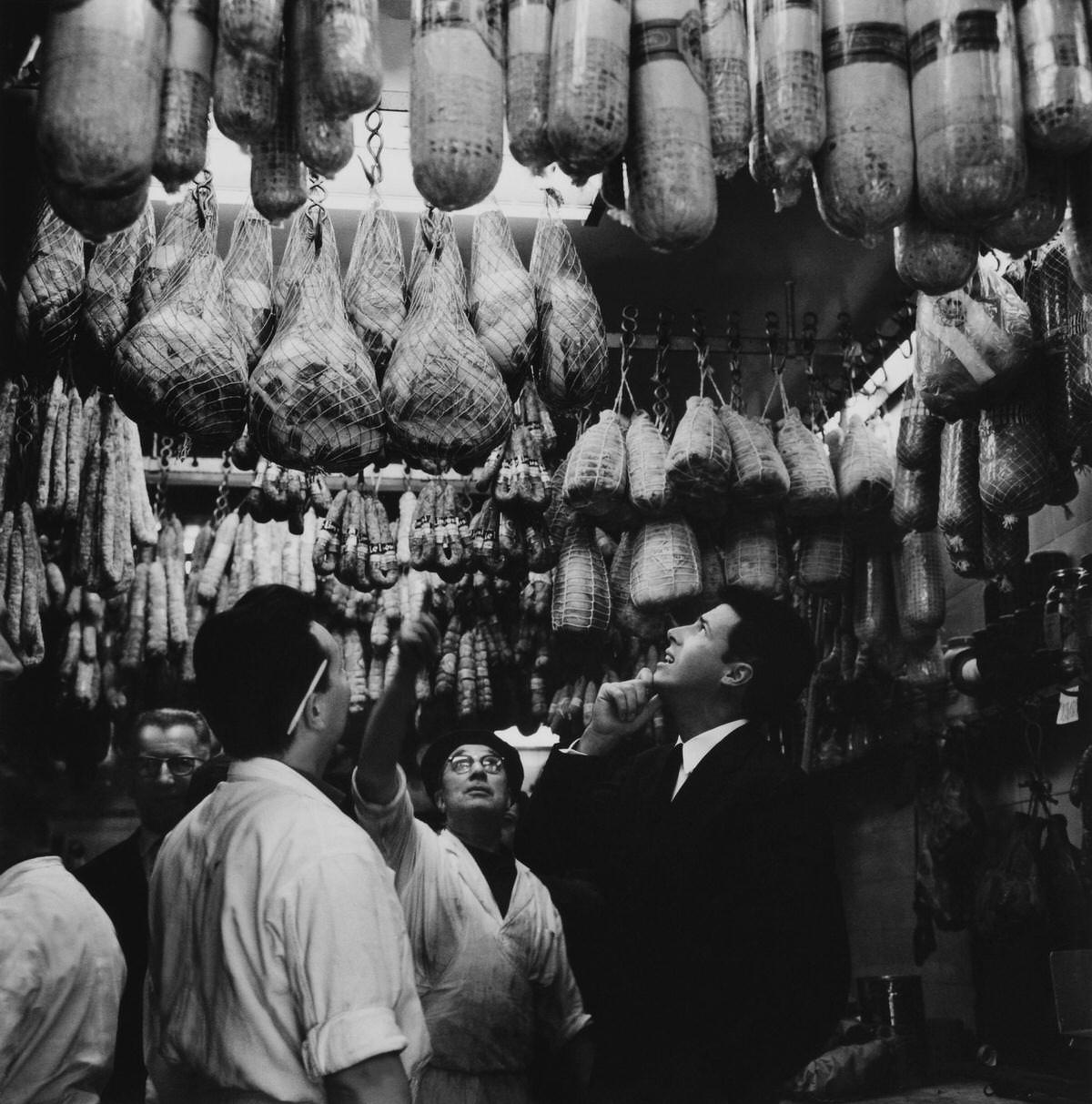
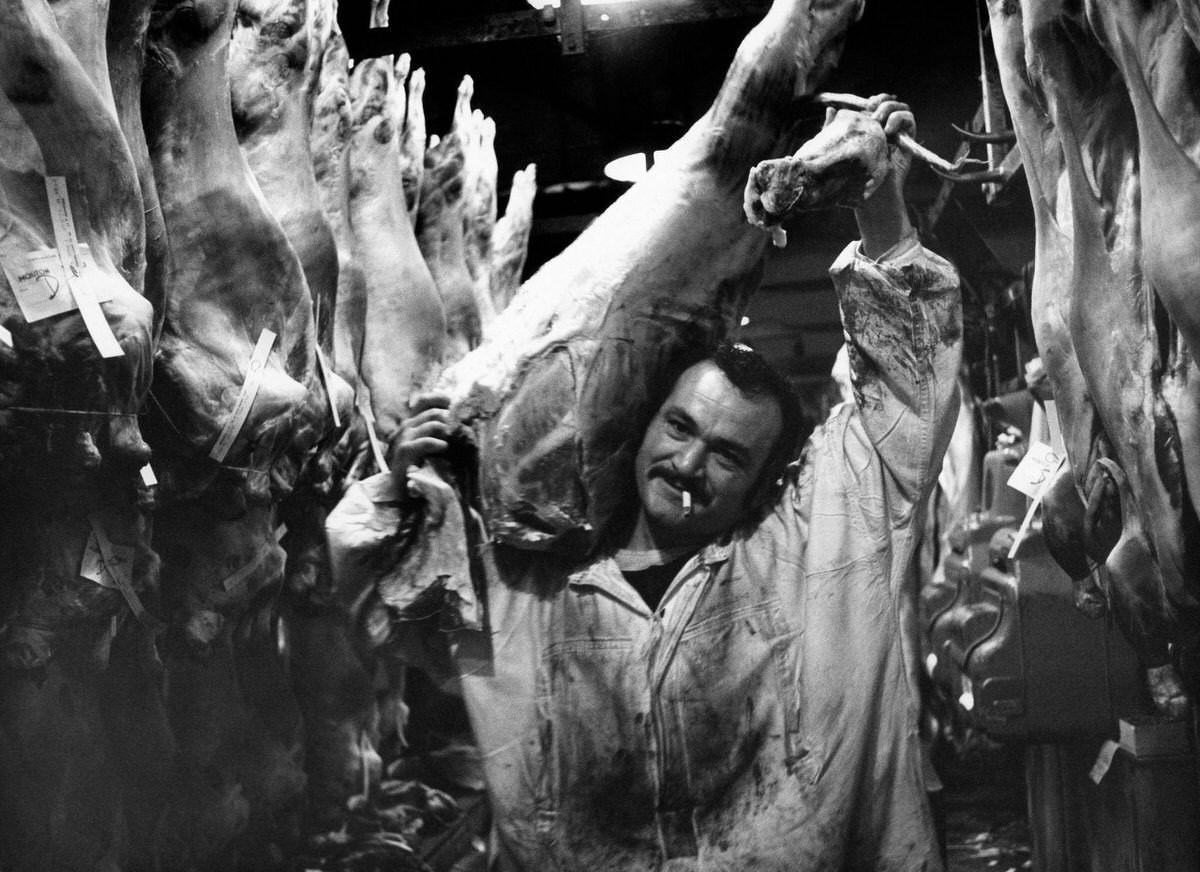
Market porter in the meat hall of Les Halles, 1967
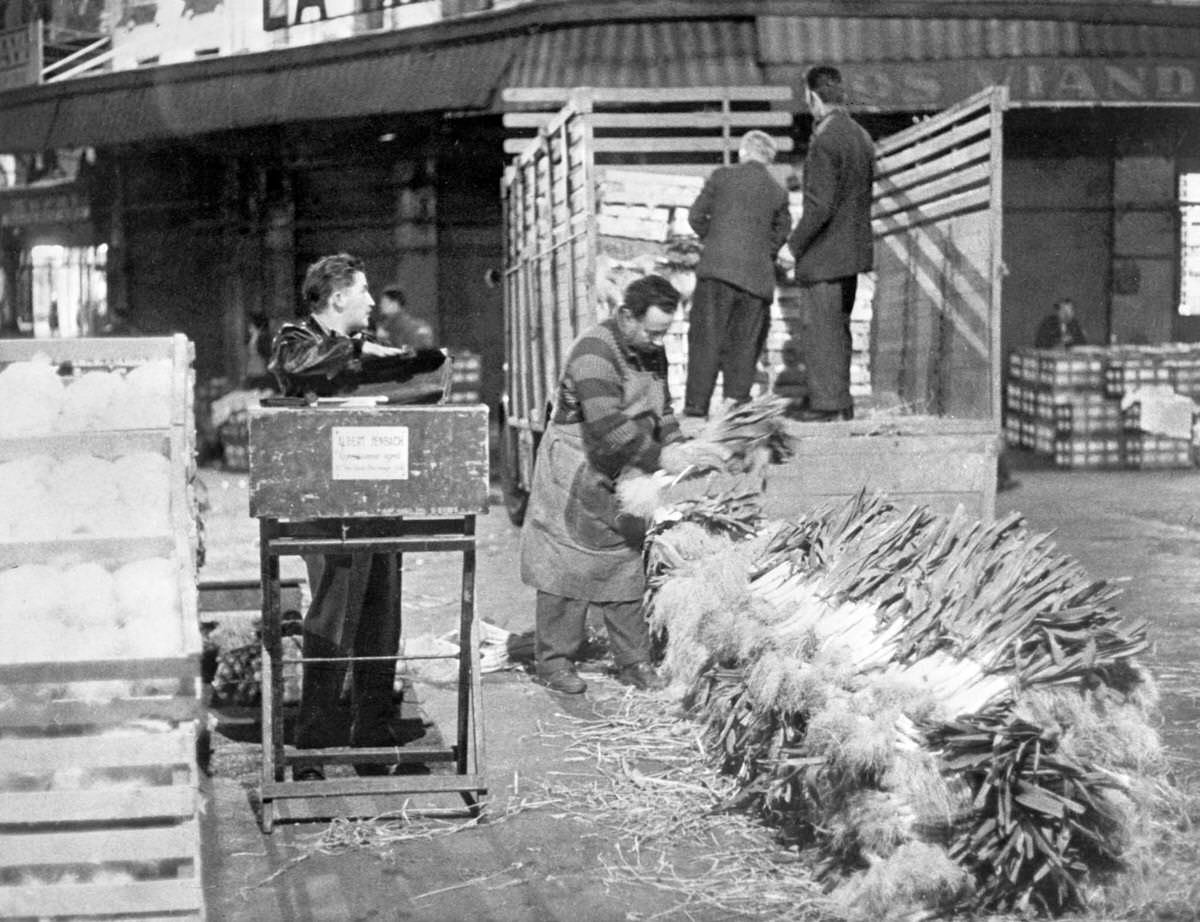
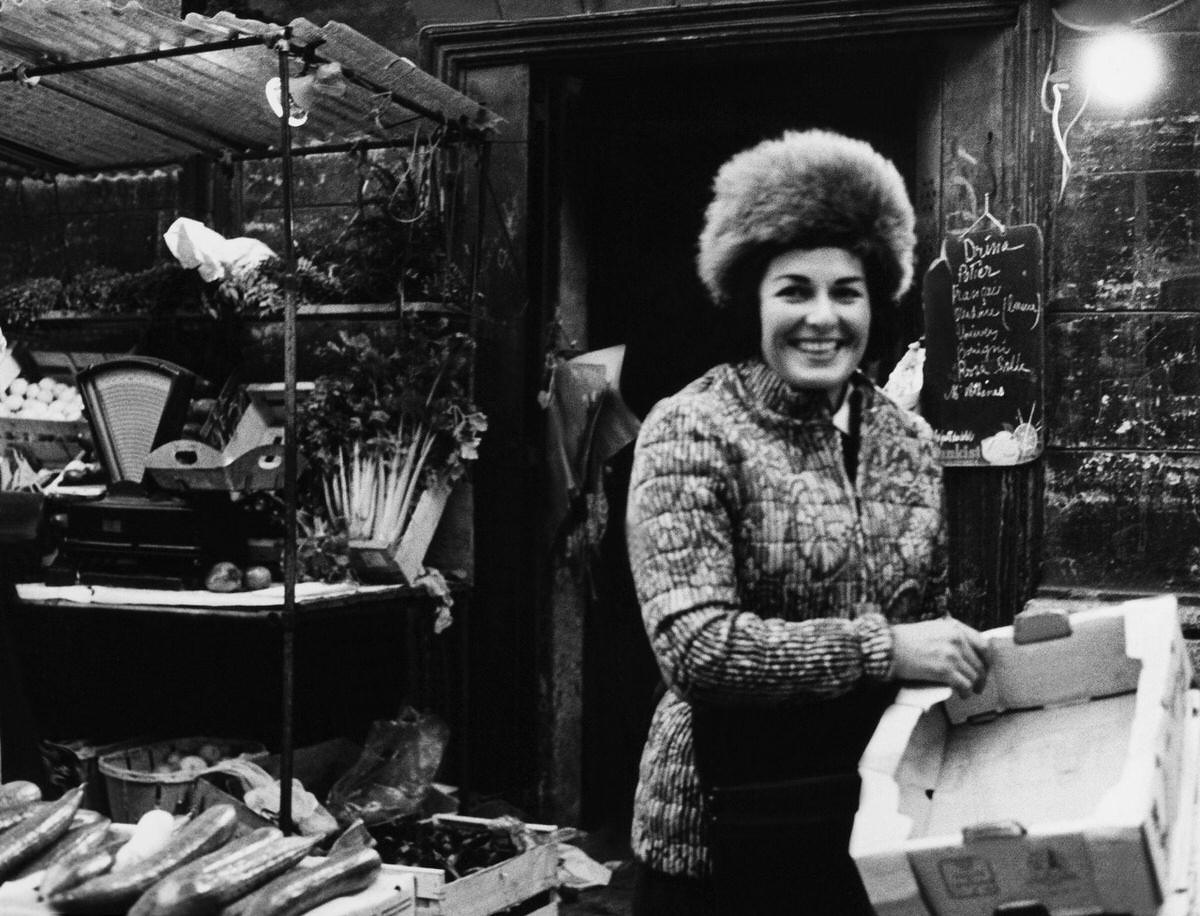
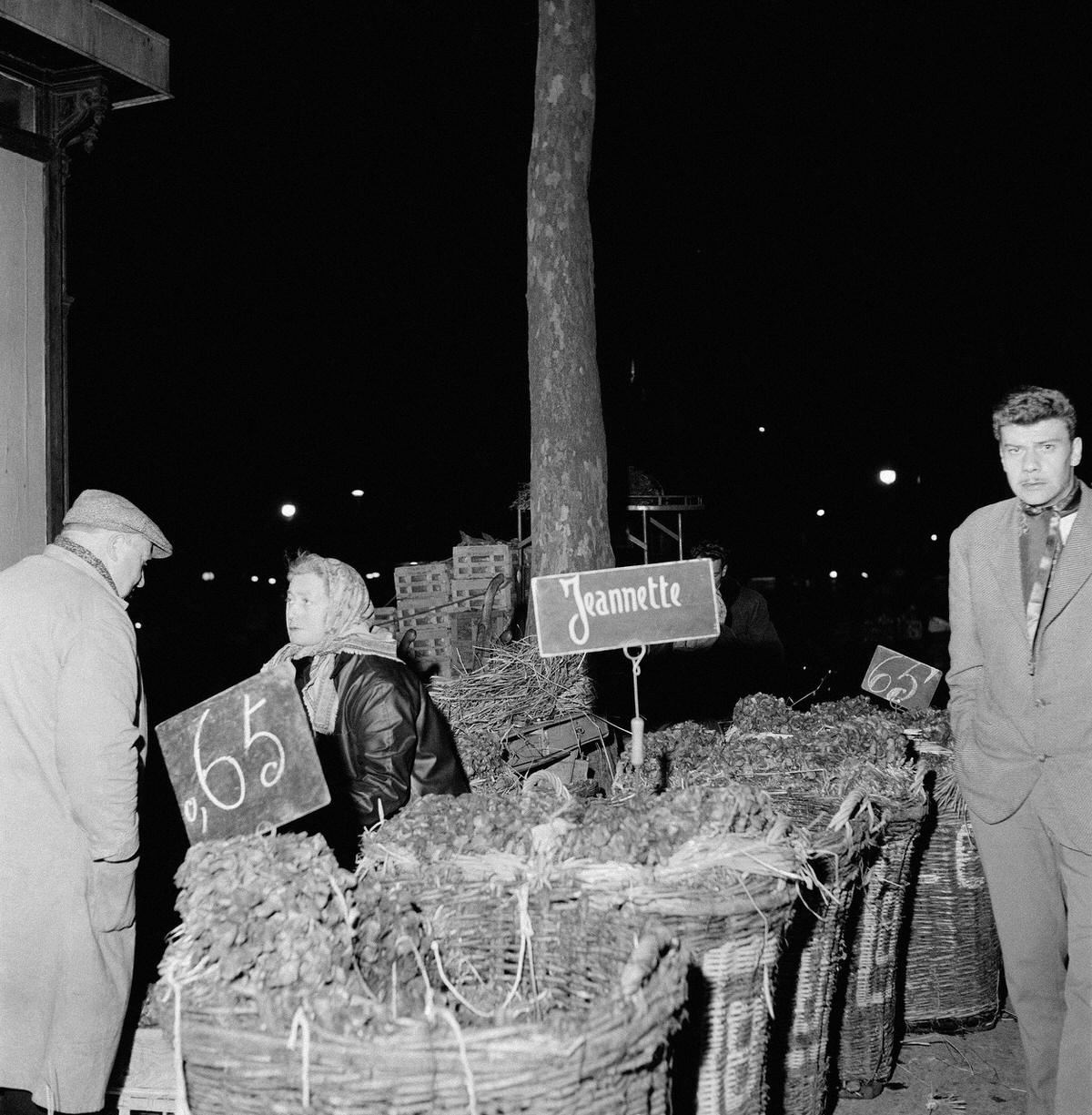
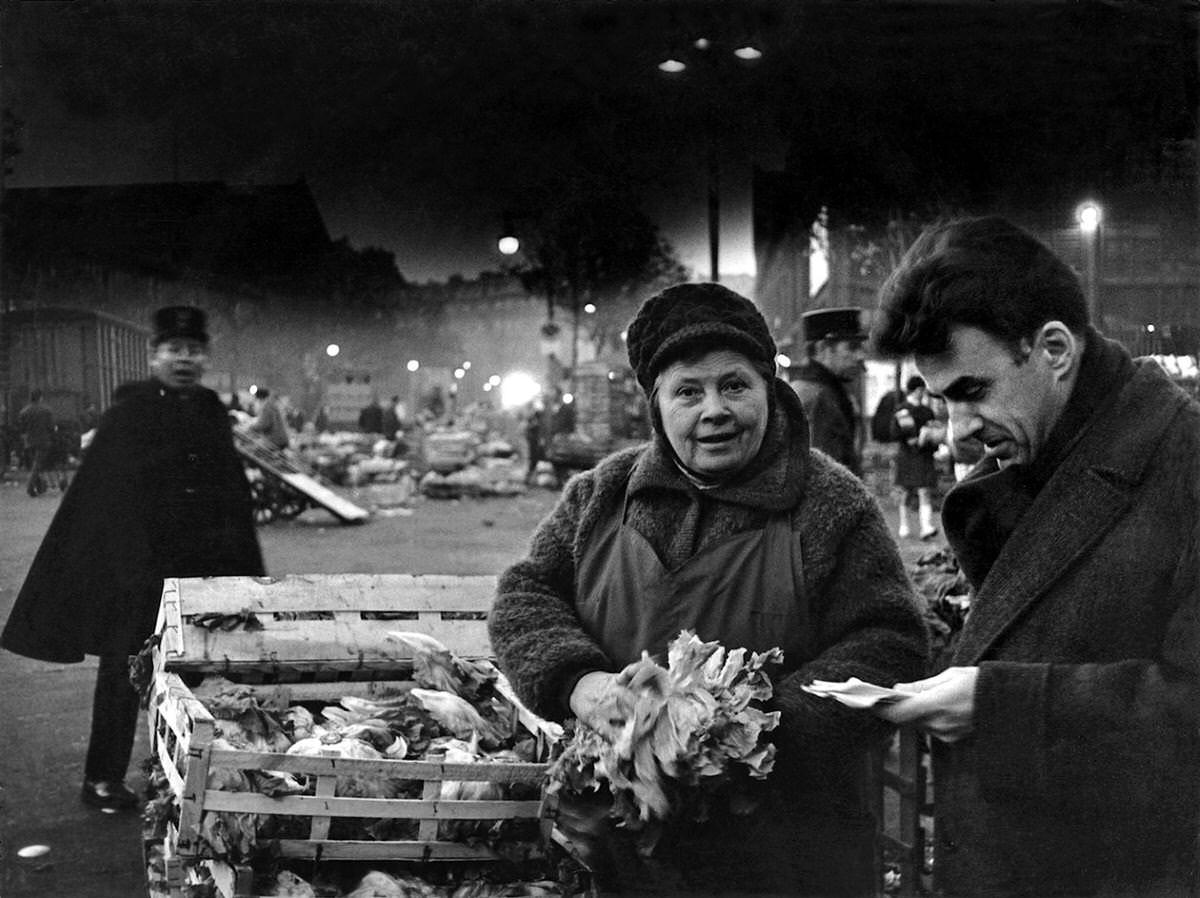
A salad stallholder in Les Halles, 1967
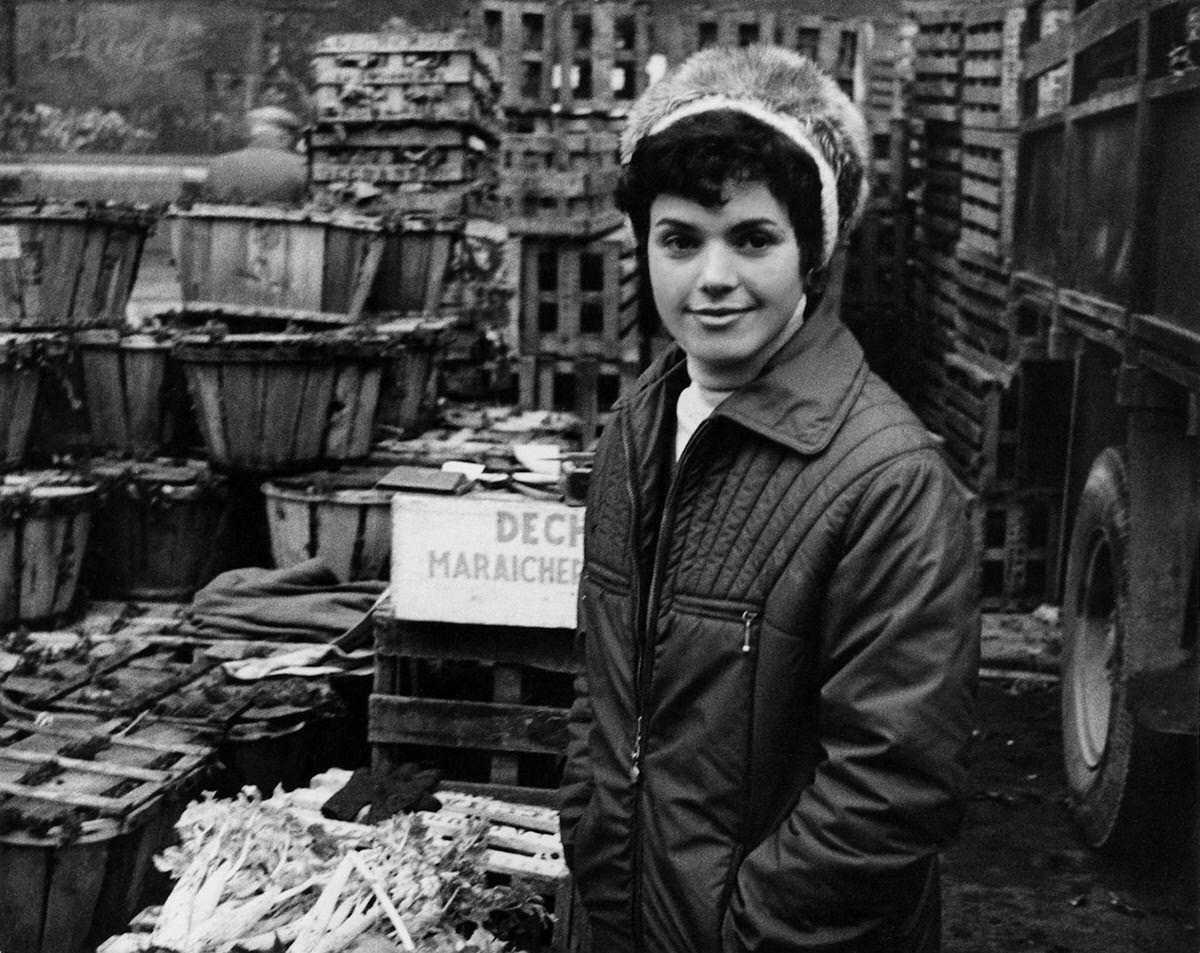
Market gardener in Les Halles, which was historically the traditional central market of Paris, 1967
The cellar of the innocents is the basement of Jean Settour’s bar in the district of Les Halles, 1967
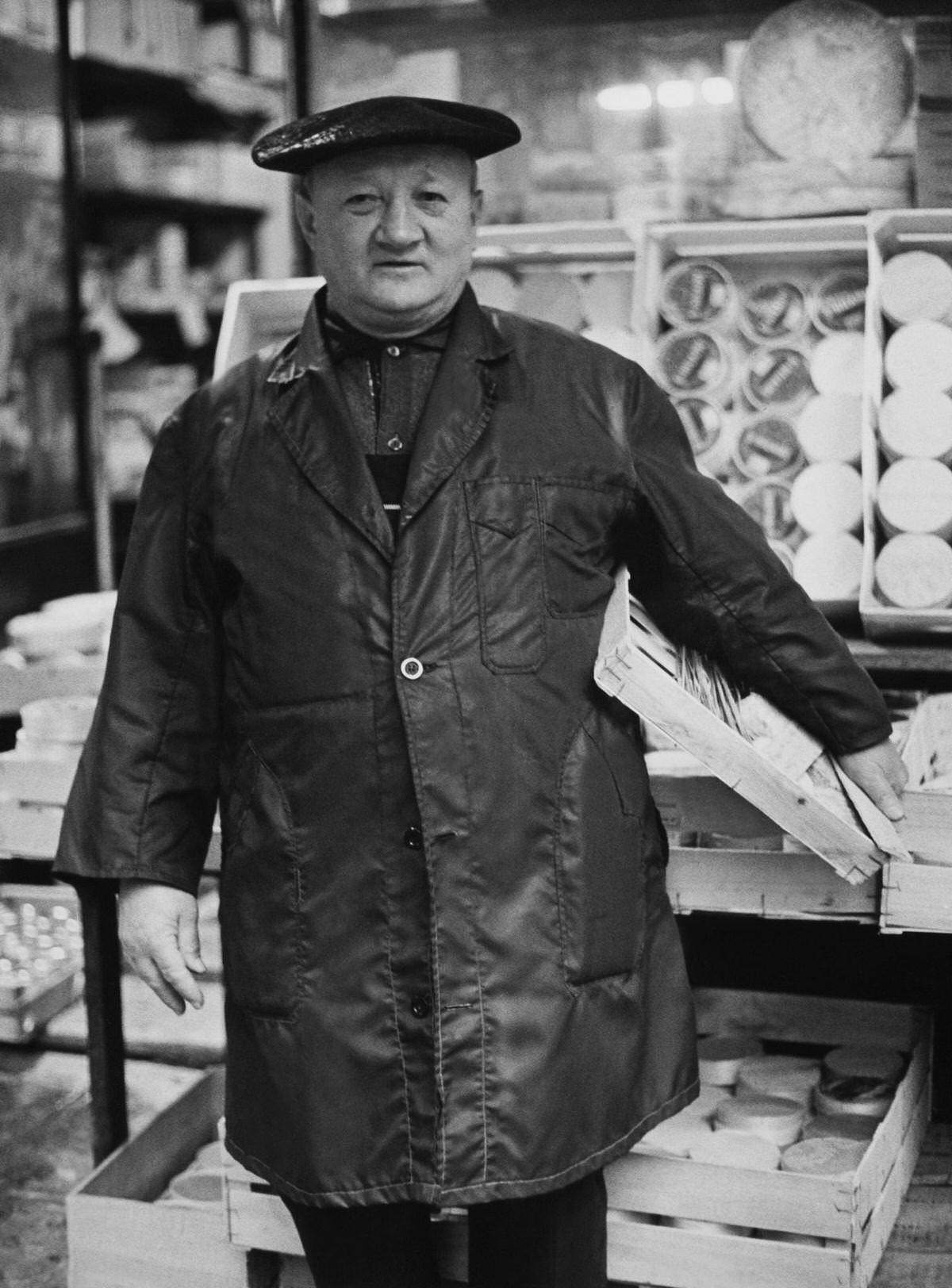
A Traditional Cheesemarker in Front of his Stall, 1967
Les Halles, Meat Pavillion, 1967.
Loading of the Truck, Les Halles, 1967
Les Halles, 1967.
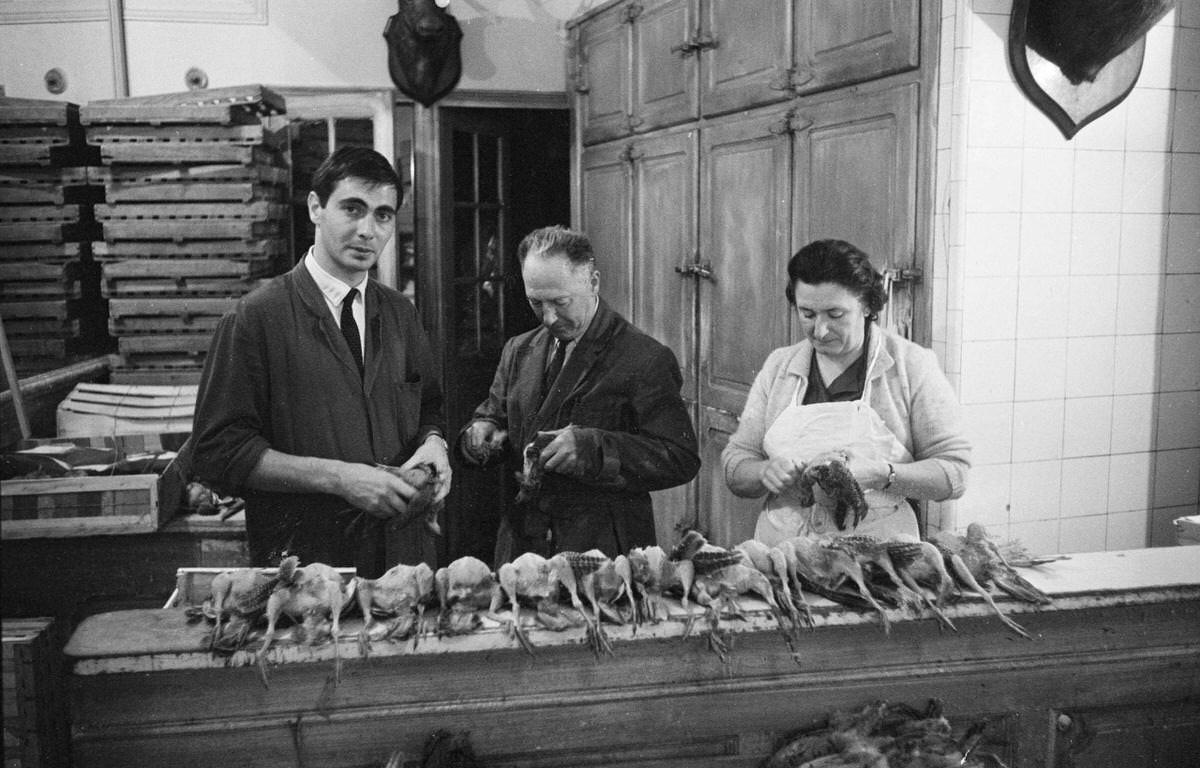
The game and poultry markets added their own seasonal rhythms to Les Halles. Autumn brought displays of freshly plucked game birds. Workers plucked the first partridges of the season in 1966 while live turkeys and dressed poultry hung in long rows for buyers. The scale of the operation was staggering — this was not a neighborhood market but a wholesale engine that fed an entire metropolitan region.
A display of turkeys and poultry, Les Halles, 1966
Halles employees pluck the first partridges slaughtered this season, in Paris, 1966
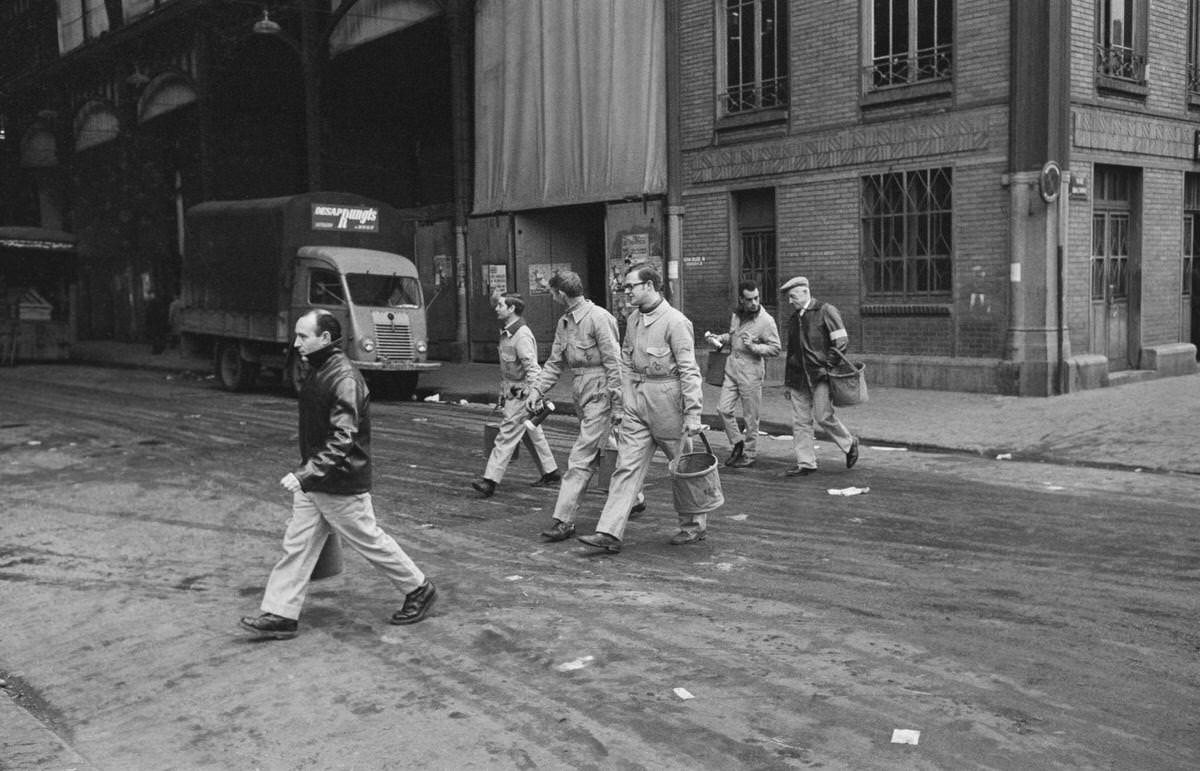
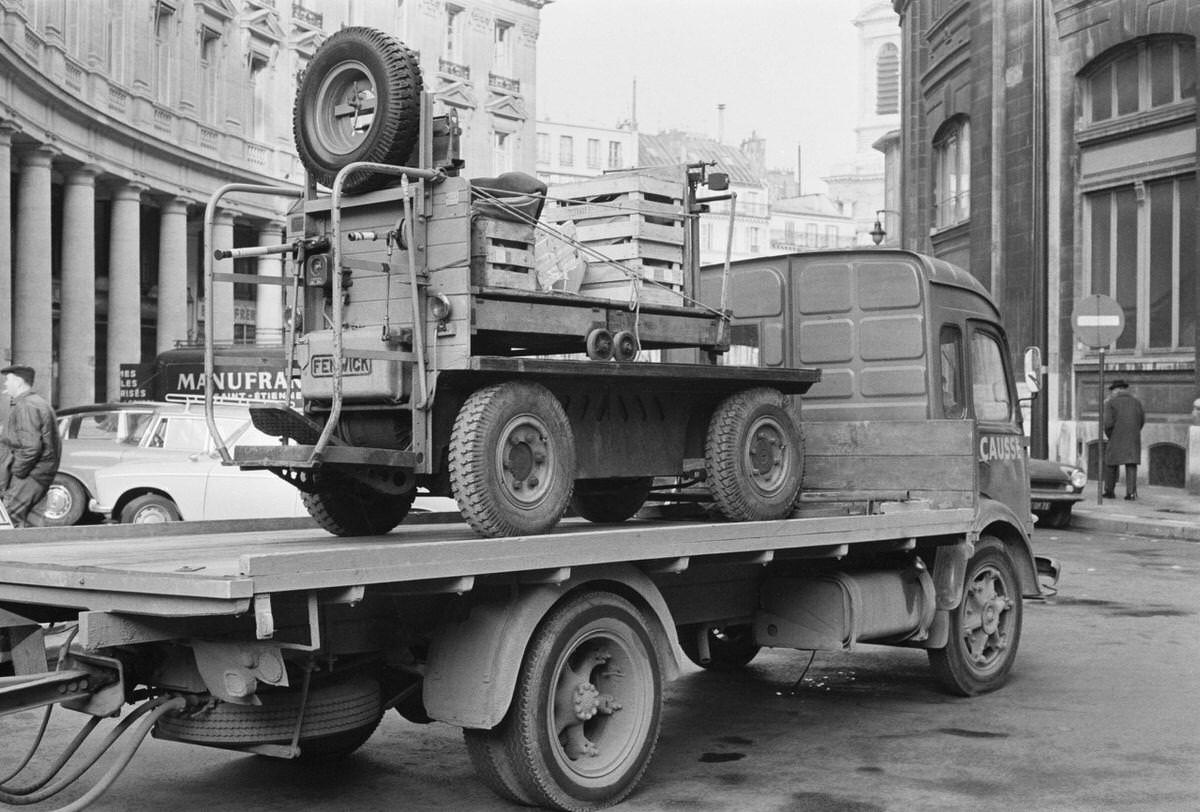
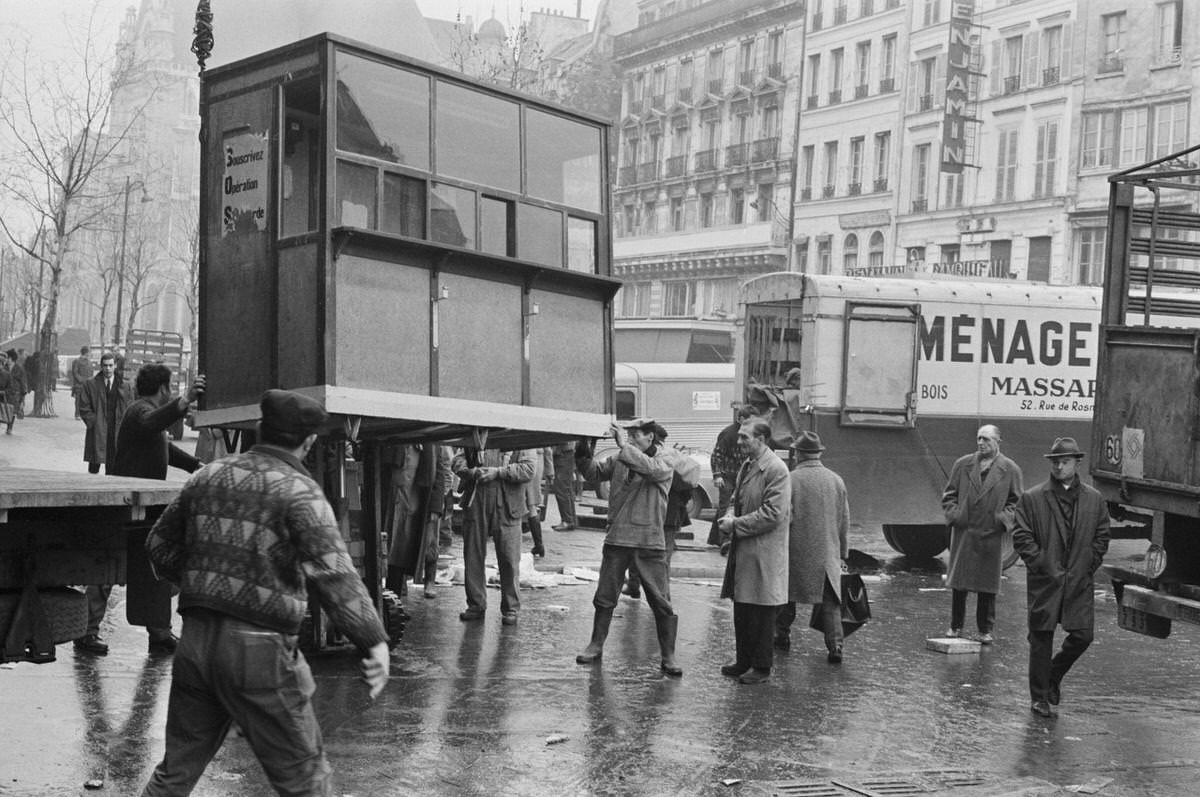
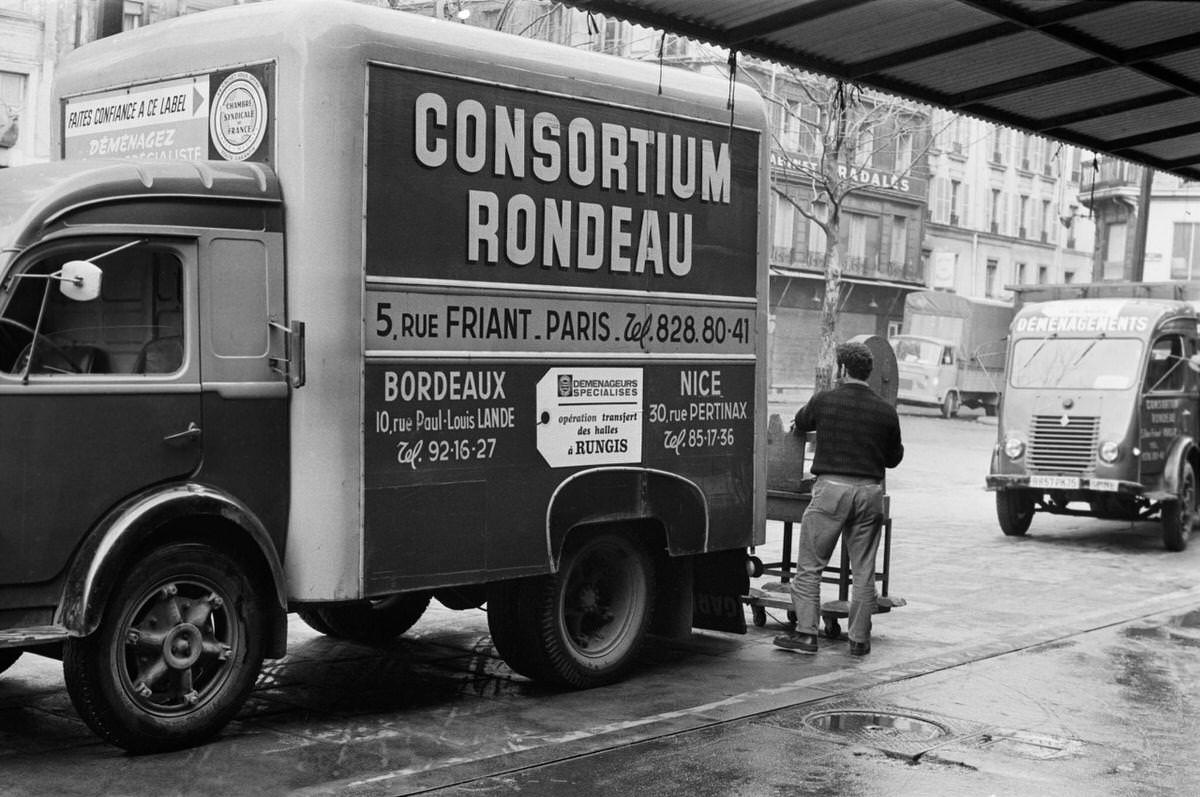
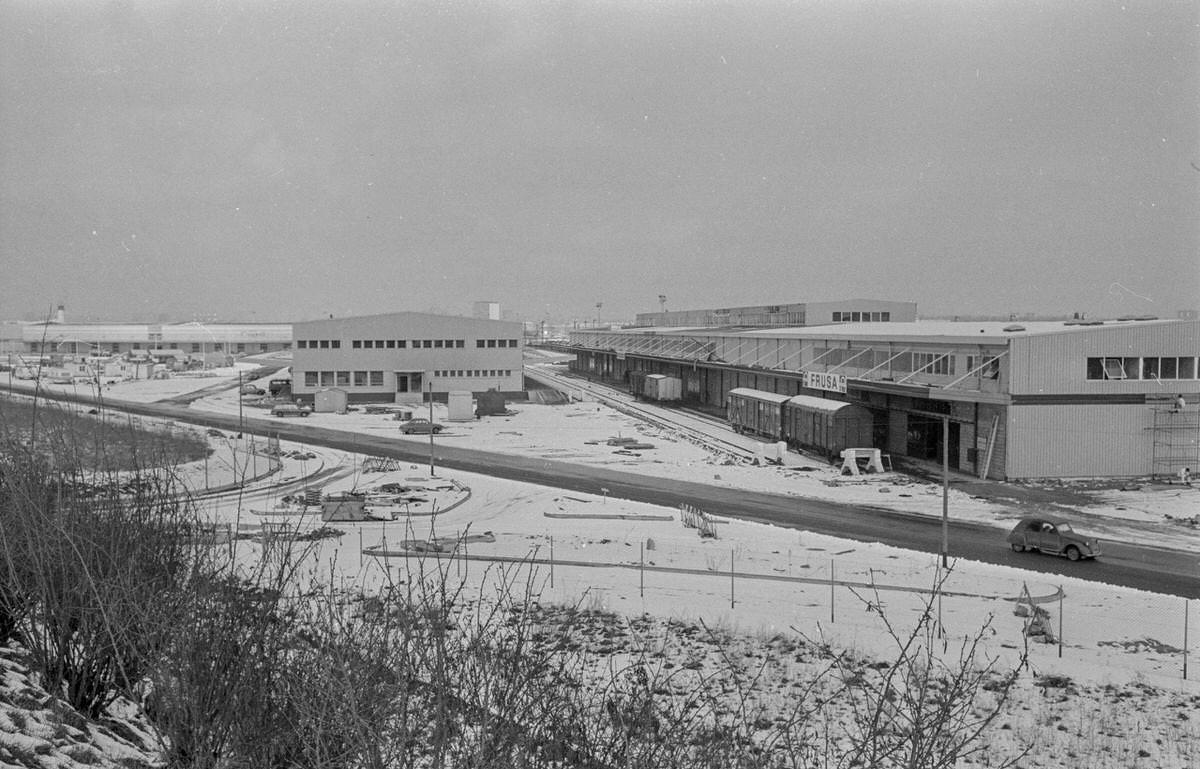
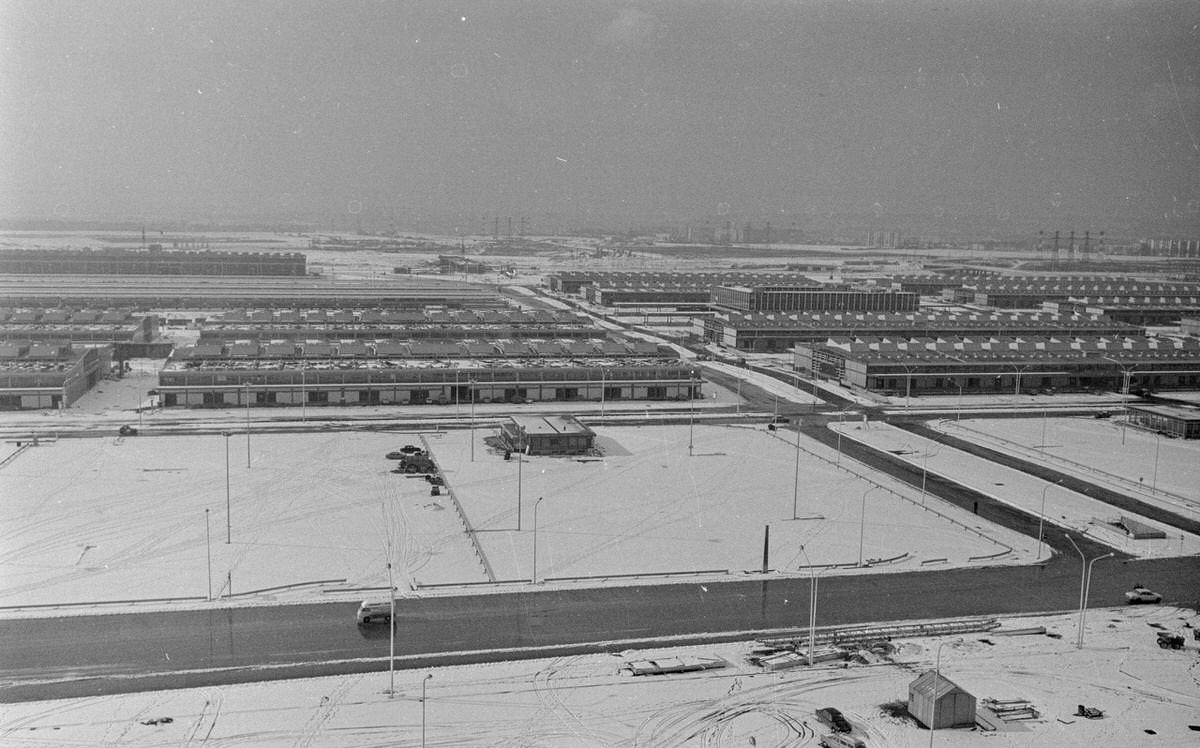
The end came in stages. The fruit, flower, and vegetable markets moved to the new wholesale facility at Rungis — a suburb south of Paris — in 1969. The move was large, logistically complex, and definitively final. Wholesalers loaded up cash registers, produce, and equipment. Pest control teams moved through the emptied warehouses. The butchers stayed on at Les Halles for a few more years, but the market’s character had already been broken. The wholesale market at Rungis officially replaced Les Halles entirely in 1973.
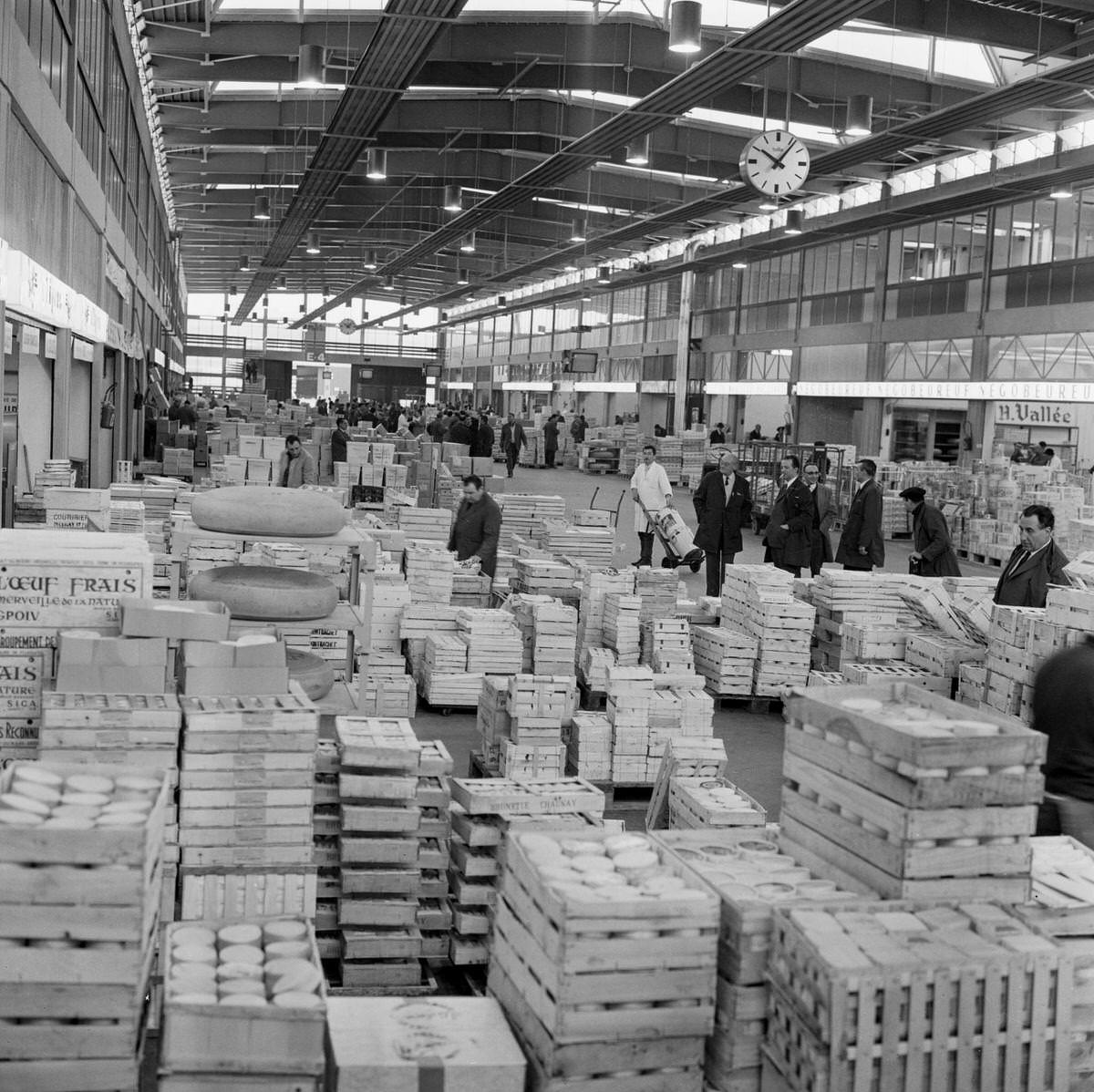
View of the interior of the BOF (Butter, Eggs, Cheese) pavilion in the Rungis halls, 1969
Following the move from Les Halles to Rungis, teams proceed to exterminate warehouses in Paris, France, on March 1, 1969.
Wholesalers from Les Halles move to Rungis in Paris, 1969
Moving from Les Halles in 1969
Wholesalers from Les Halles move a cash desk here for Rungis in Paris, 1969
Wholesalers from Les Halles move to Rungis in Paris, 1969
Moving from Les Halles, 1969
Following the move from Les Halles to Rungis, teams carried out the extermination of warehouses in Paris, 1969
A brazier on the last morning of the wholesale market of Les Halles before its dismantlement, on March, 1969
Removal and dismantlement of Les Halles before the wholesale market is being relocated in Rungis on March, 1969
The Last Morning with a Wholesaler, Les Halles, 1969
Butchers at the cafe during the move from Les Halles to Rungis in Paris, France, February 28, 1969.
Wholesalers from Les Halles move to Rungis in Paris, 1969
Commerce in the Les Halles district of Paris in France, 1969
Wholesalers from Les Halles move to Rungis in Paris, 1969
The streets of the Les Halles district, 1969
Inauguration of the Rungis new fruits and vegetables hall of the Paris wholesale market on February 24, 1969
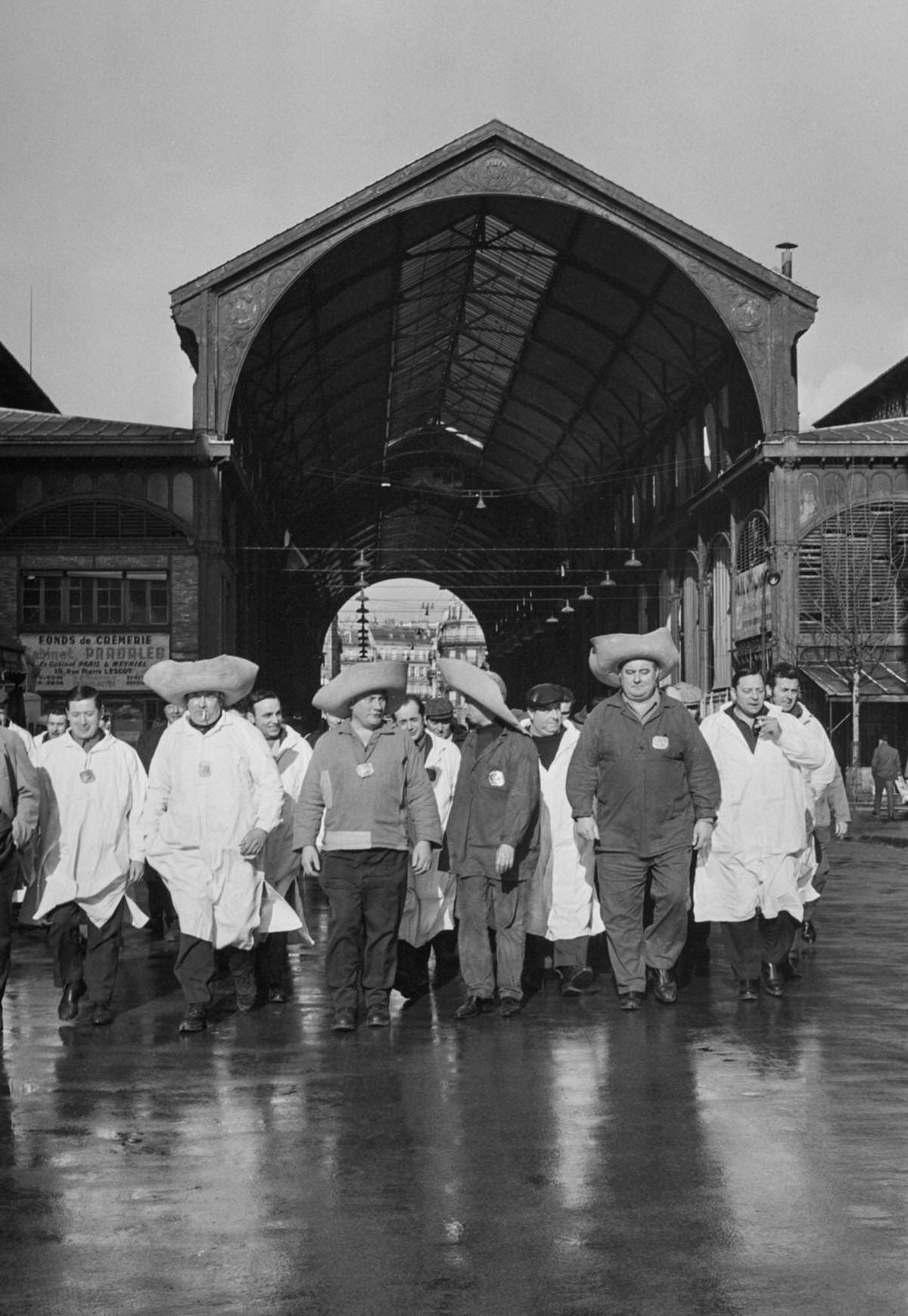
The Forts des Halles — the market’s legendary porters — staged a silent protest after the transfer was announced. Their specialized work had no direct equivalent in the new facility at Rungis, and their “reconversion” into other roles was deeply resented. These men had defined the physical labor of Les Halles for generations, and they were being made redundant by a modernization plan that had no place for their particular skills.
The Halles district, shortly before their destruction after the transfer of the market they housed to Rungis, 1969
The ‘forts of Les Halles’ silently demonstrate against their ‘reconversion’ after the transfer of Les Halles to Rungis, 1969
The new Halls of Rungis, 1969
The warehouses of the new Rungis halls, 1969
The flower market at Les Halles in Paris, 1969
Street scene in Les Halles in Paris, 1969
The flower market at Les Halles in Paris, 1969
Les Halles in Paris, 1969
The new Paris wholesale market in the close suburb which replaced the former Halles in the center Paris in 1969
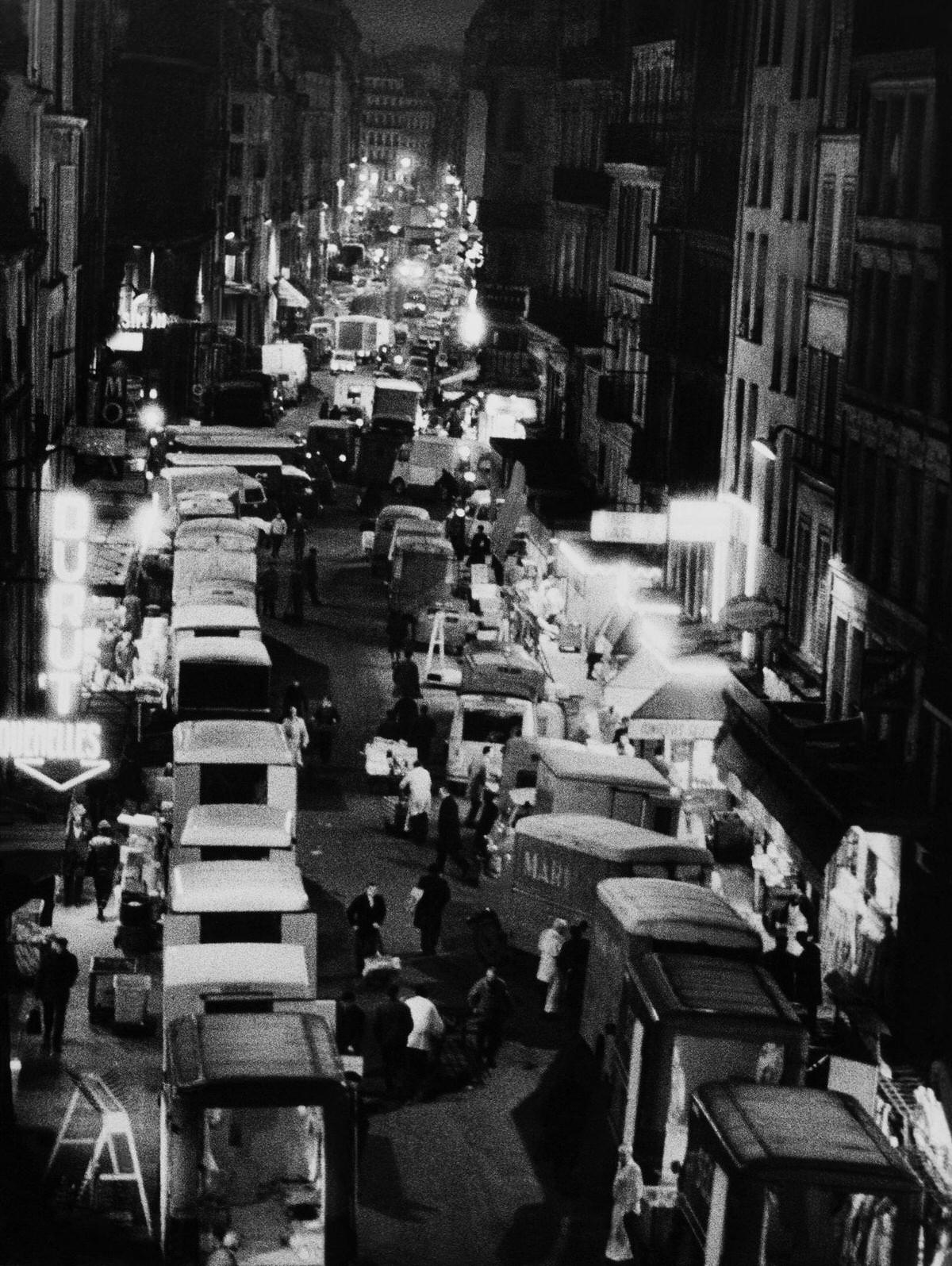
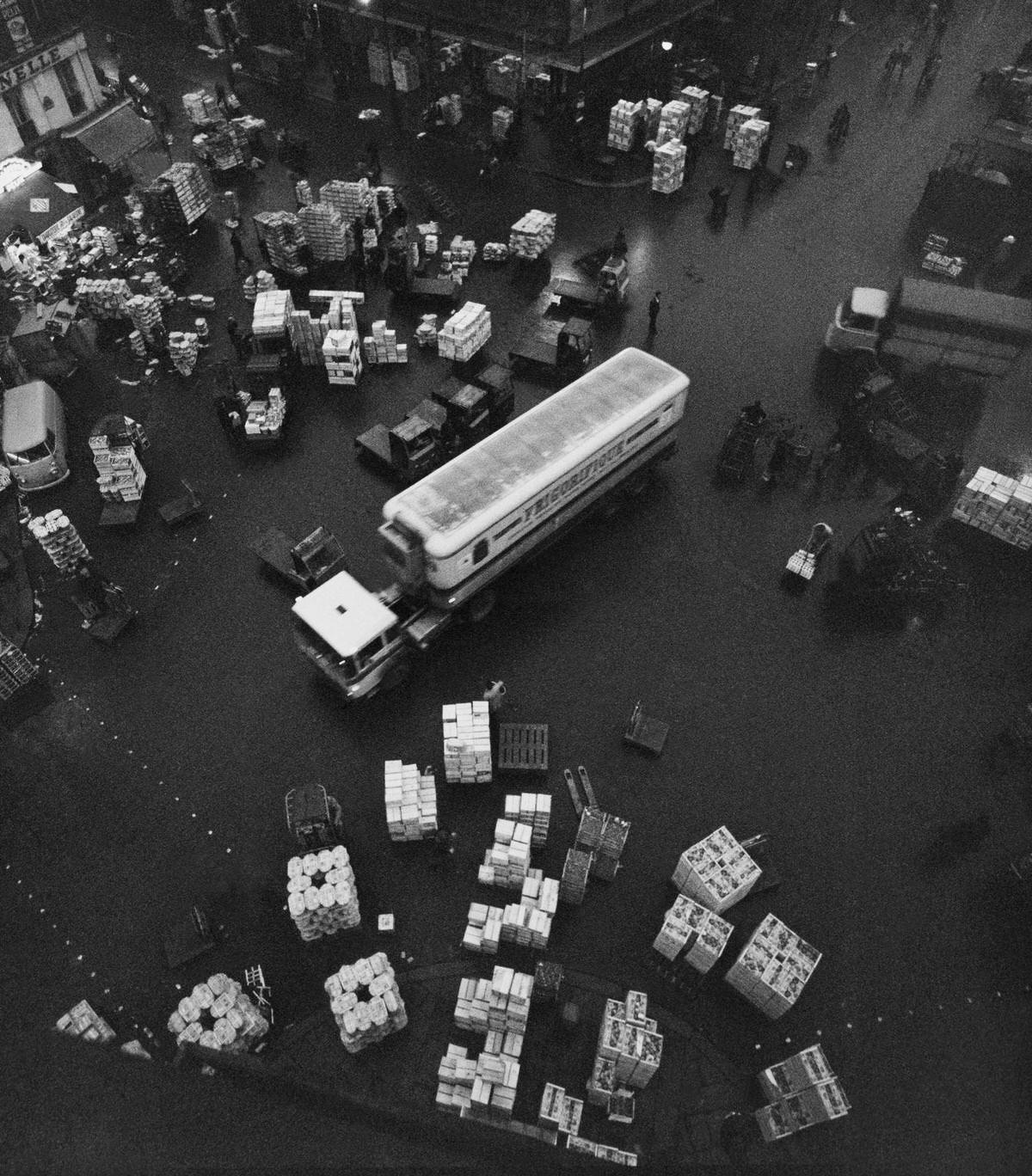
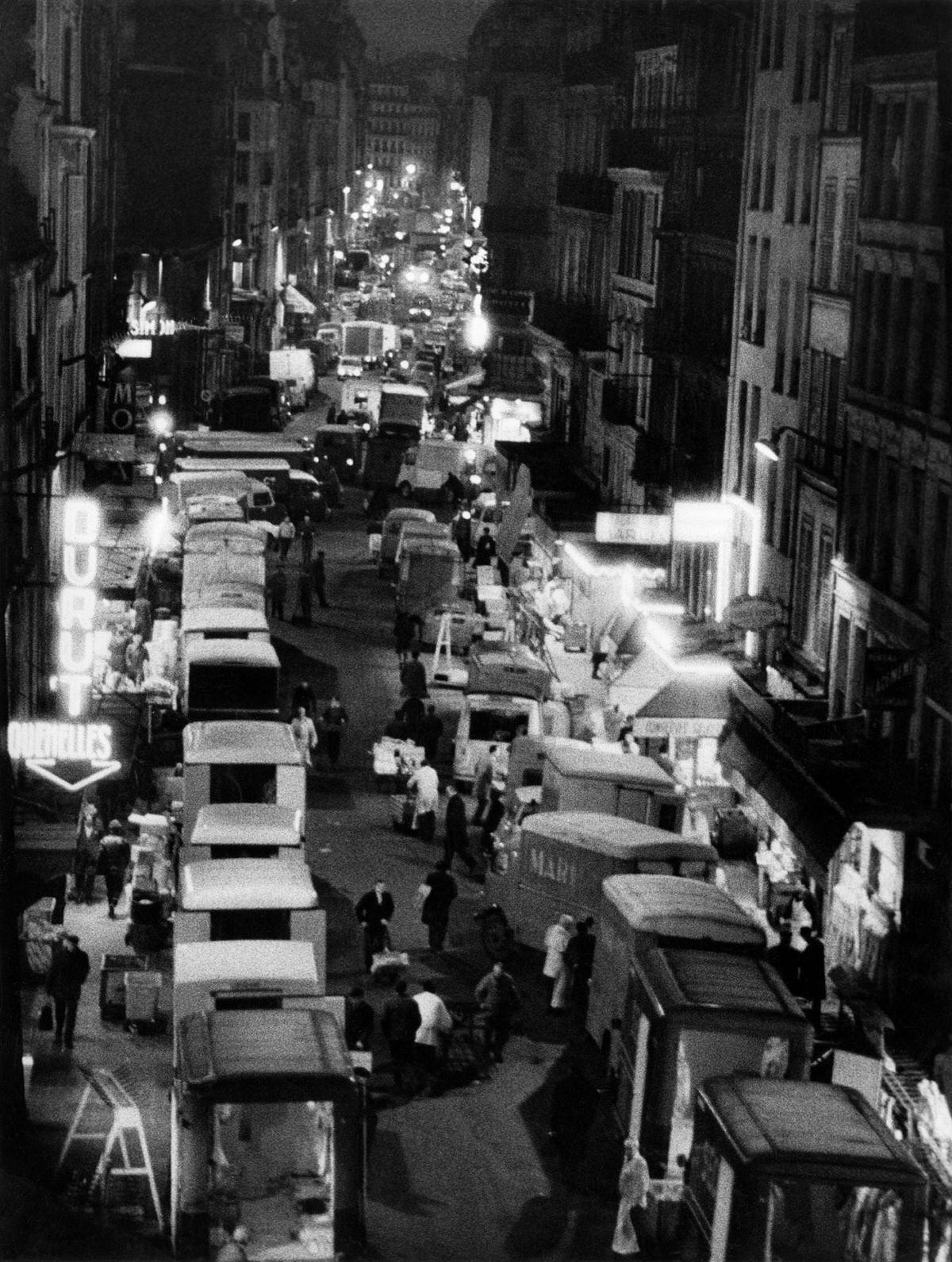
The trucks at night Rue Montmartre in the district of Les Halles, 1969
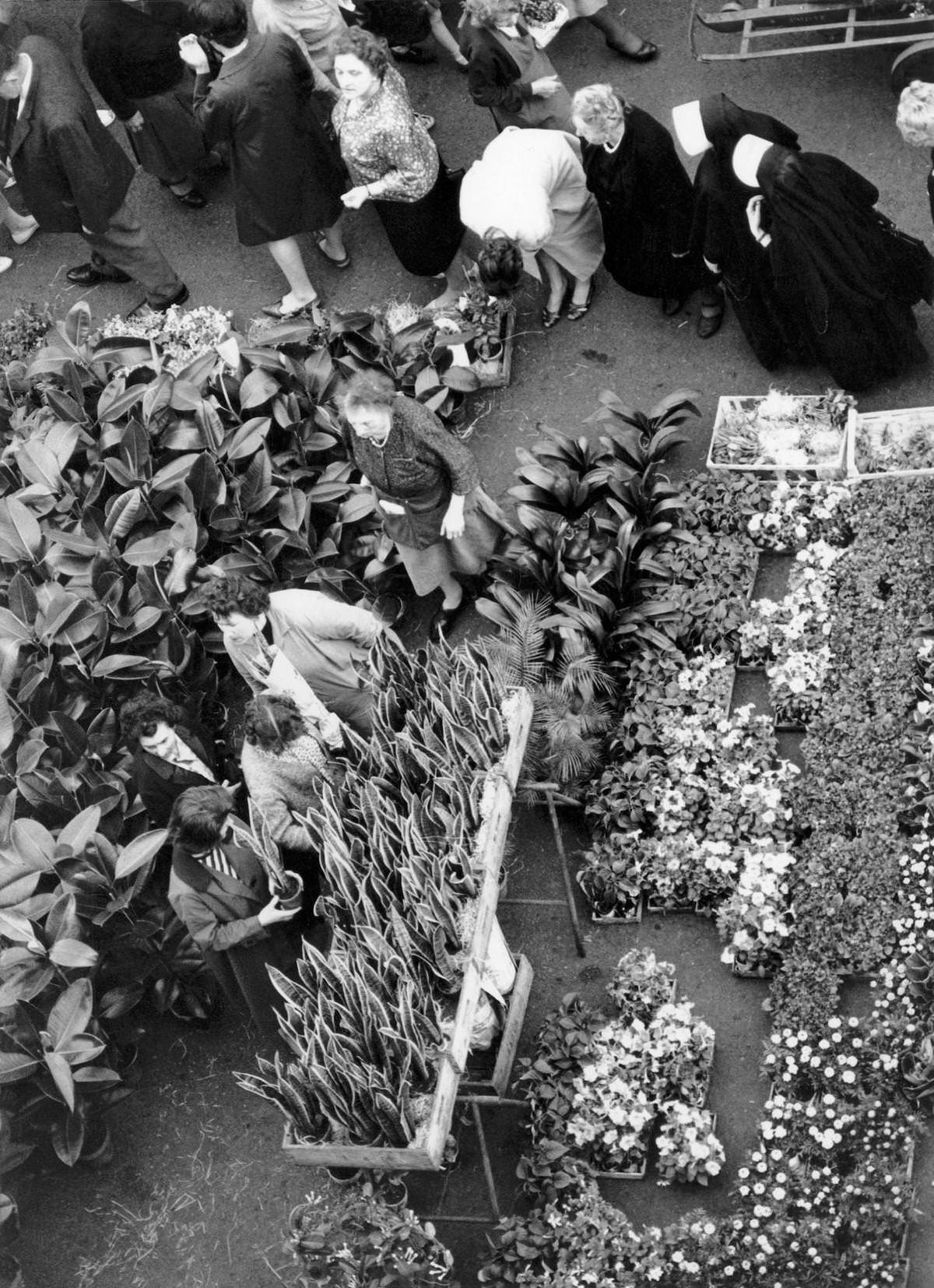
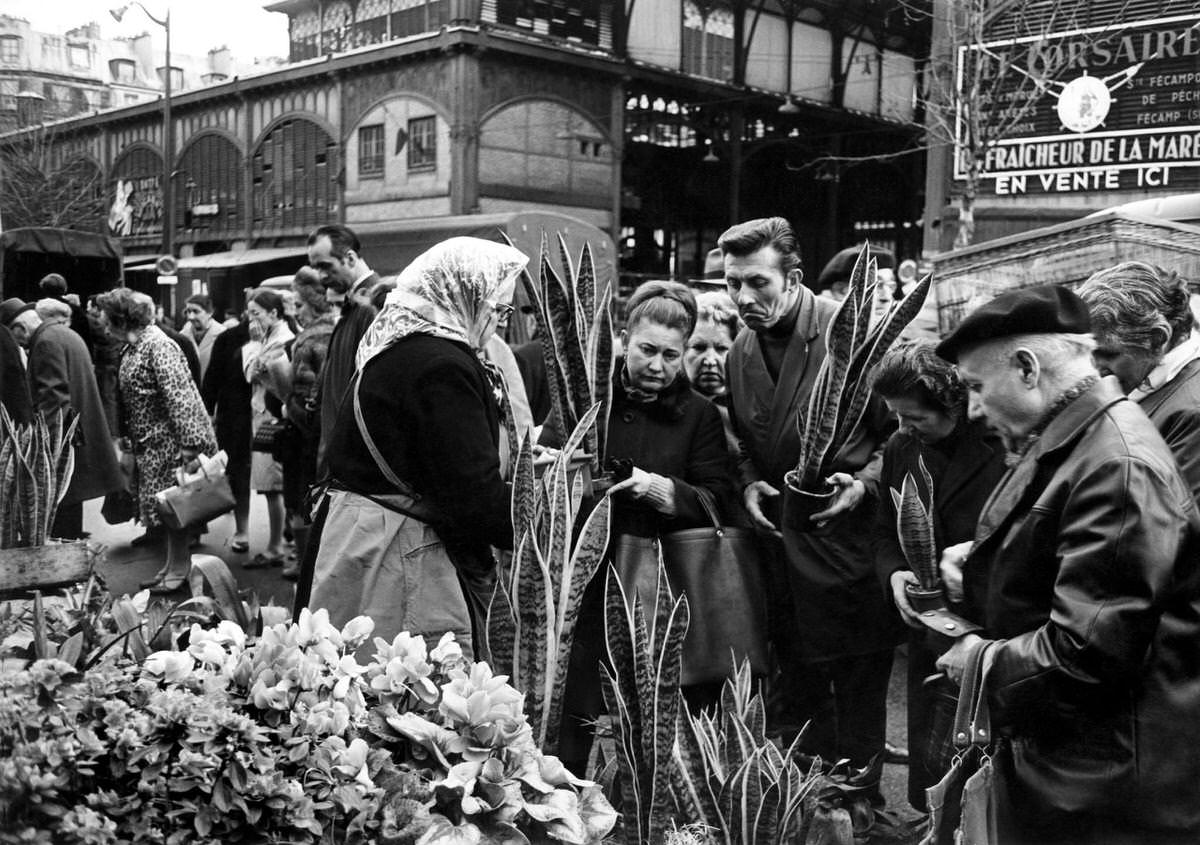
House plants stallholder outside Les Halles, historically the central market of Paris, 1969
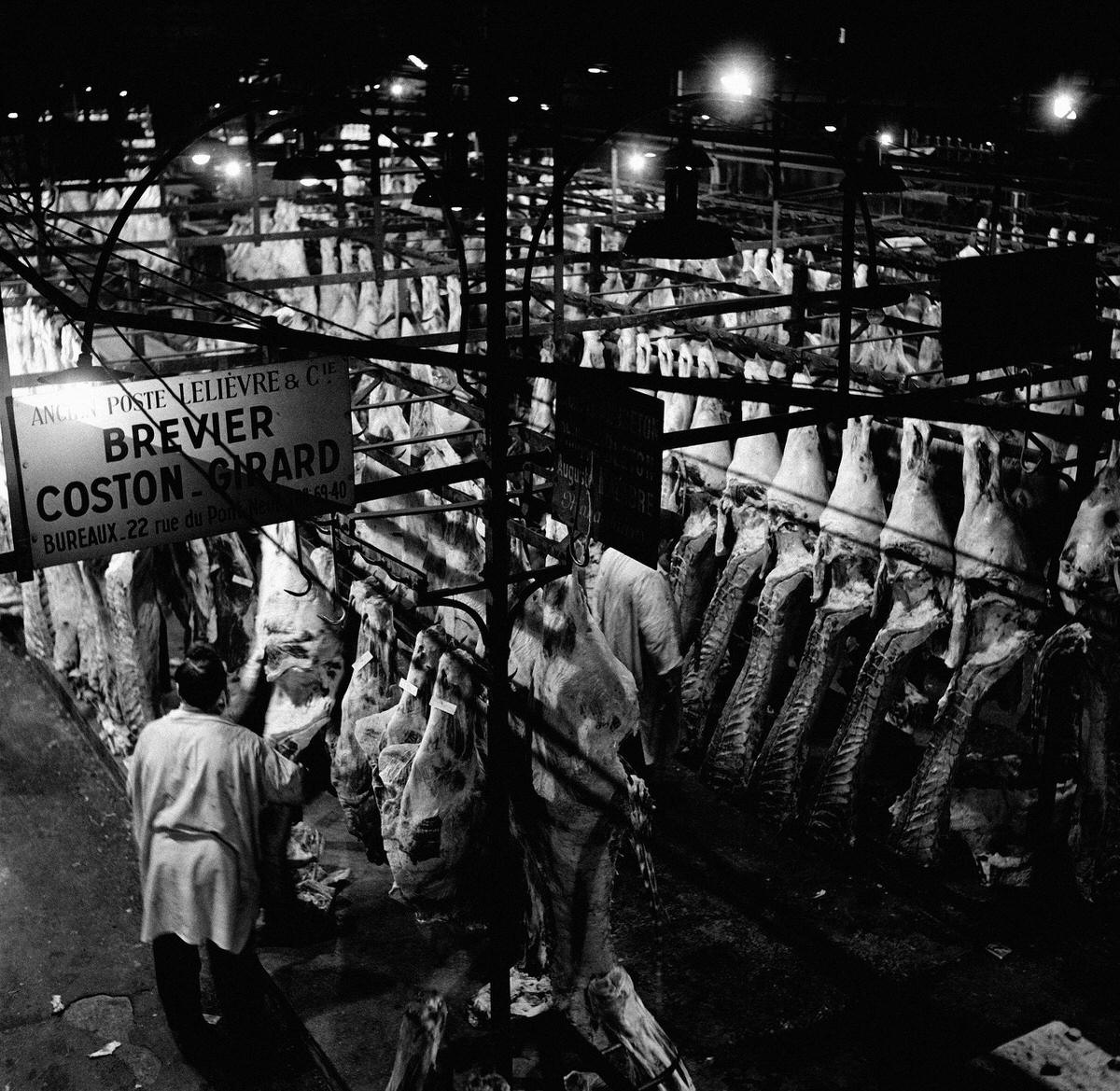
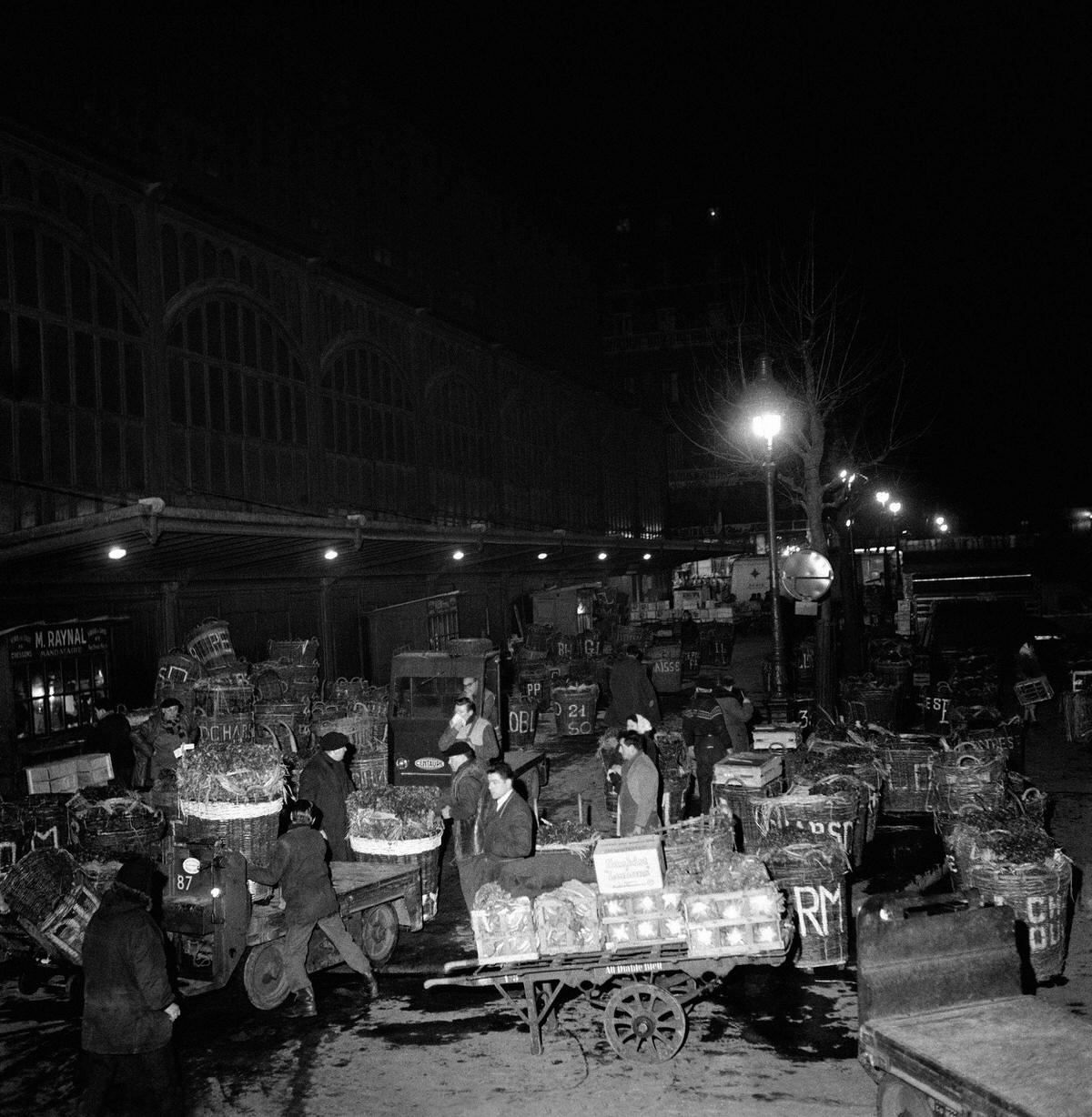
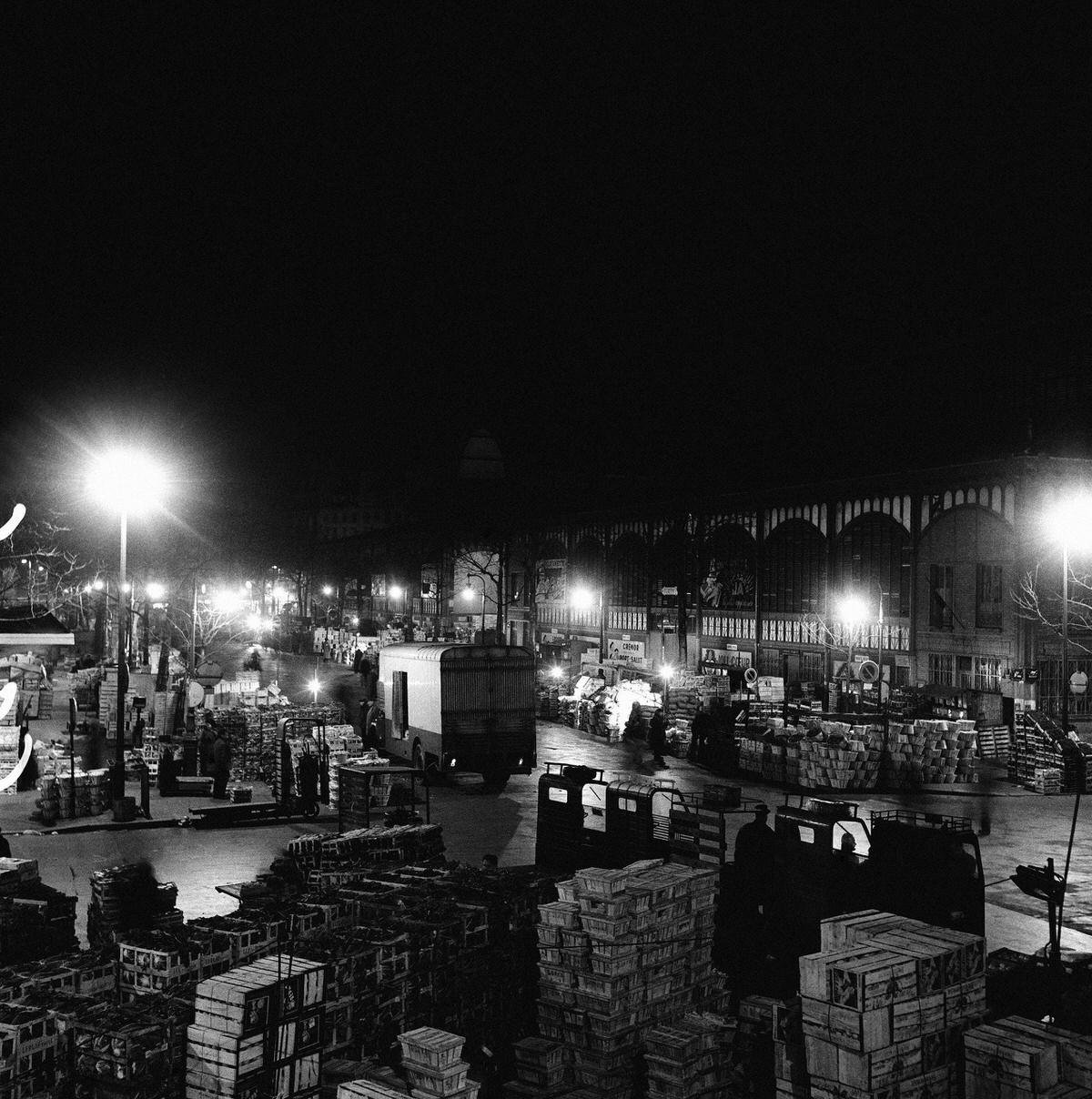
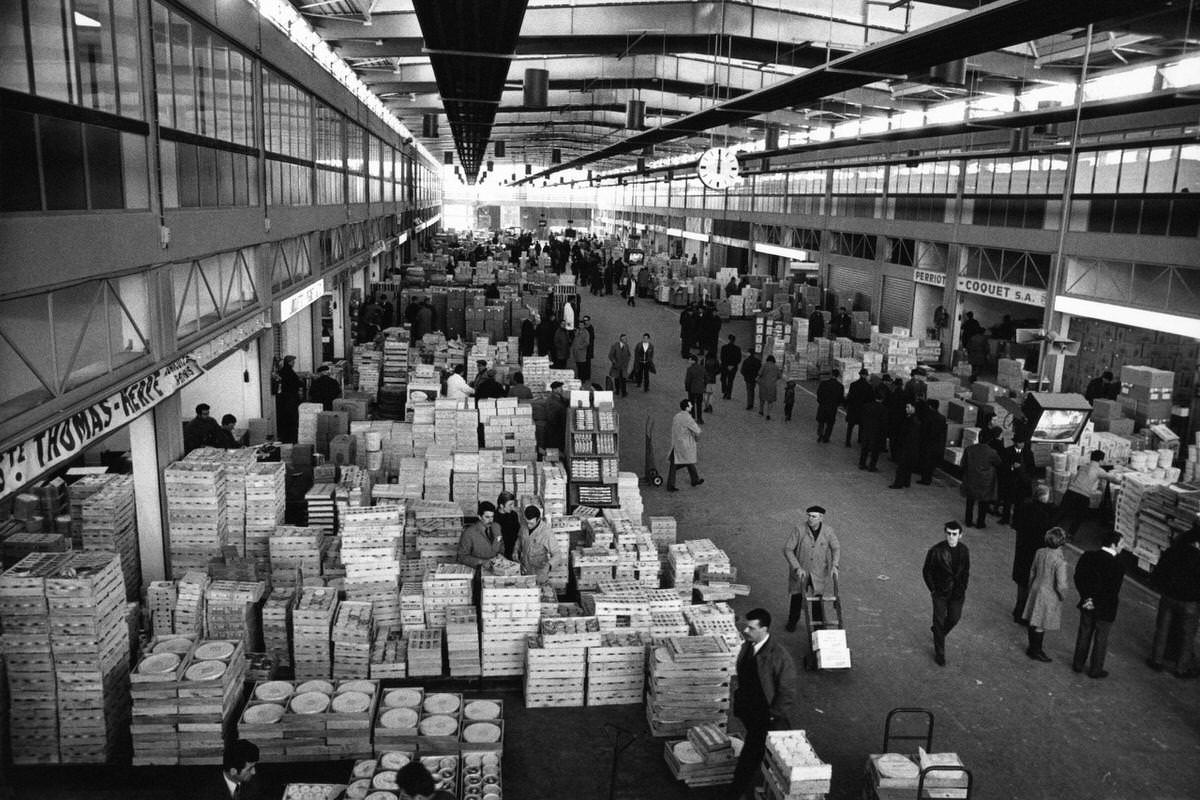
The photographs taken in 1968 capture Les Halles in its final years of full operation. Night scenes show carcasses being unloaded under floodlights. Stacks of wooden crates filled the aisles. Trucks lined the surrounding streets, engines running in the cold. Fish stalls, vegetable deliveries, wine cellars — every corner of the market was still functioning at full intensity, even as the demolition plan moved forward.
At night in Les Halles on October, 1968 in Paris
The famous restaurant ‘Au Pied de Cochon’ in the Les Halles district of Paris, 1968
Delivery of carcasses to the butcher’s pavilion in the halls of Paris, 1968
Delivery of carcasses to the pavilion of the butcher’s market in Paris, 1968
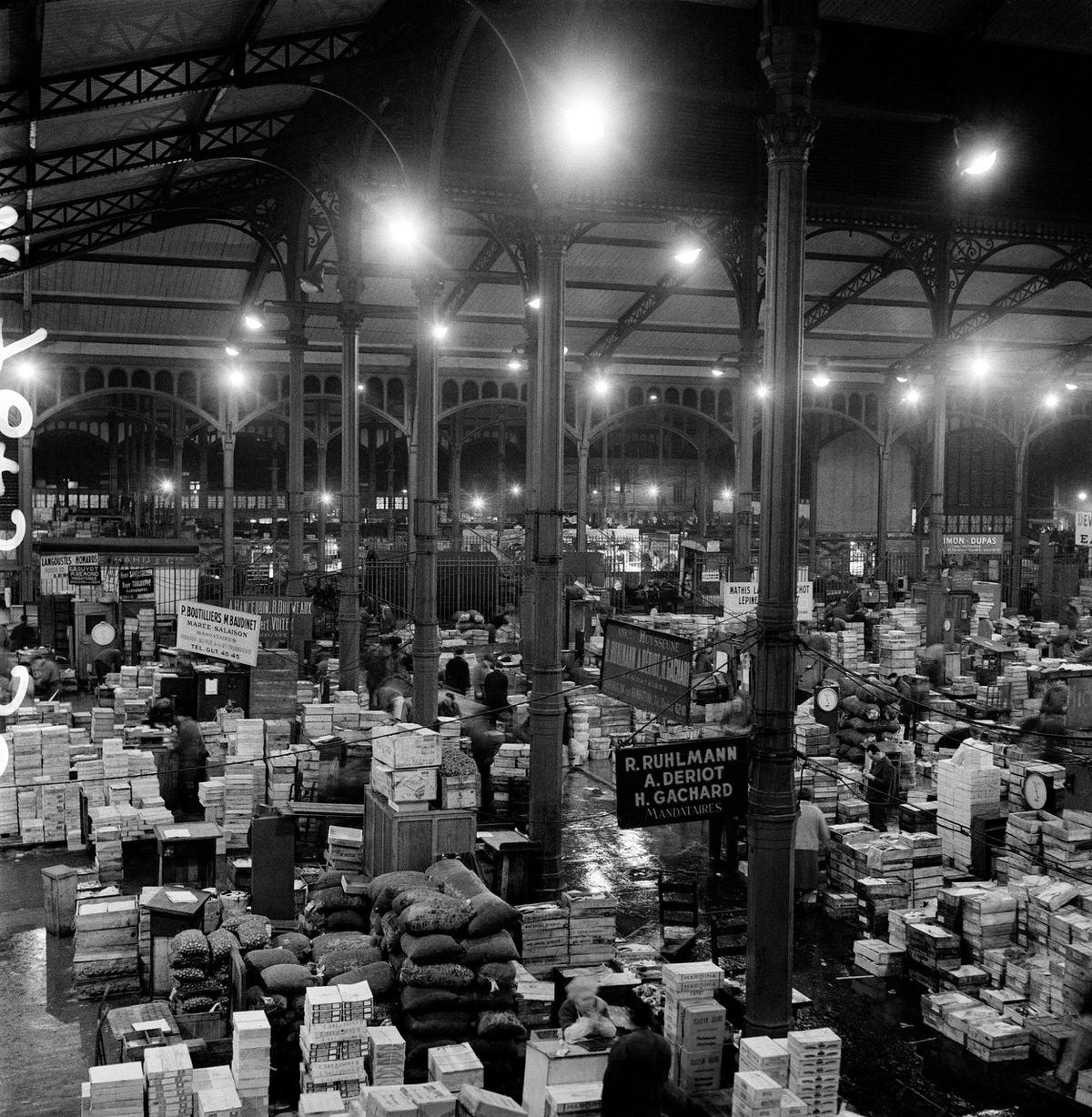
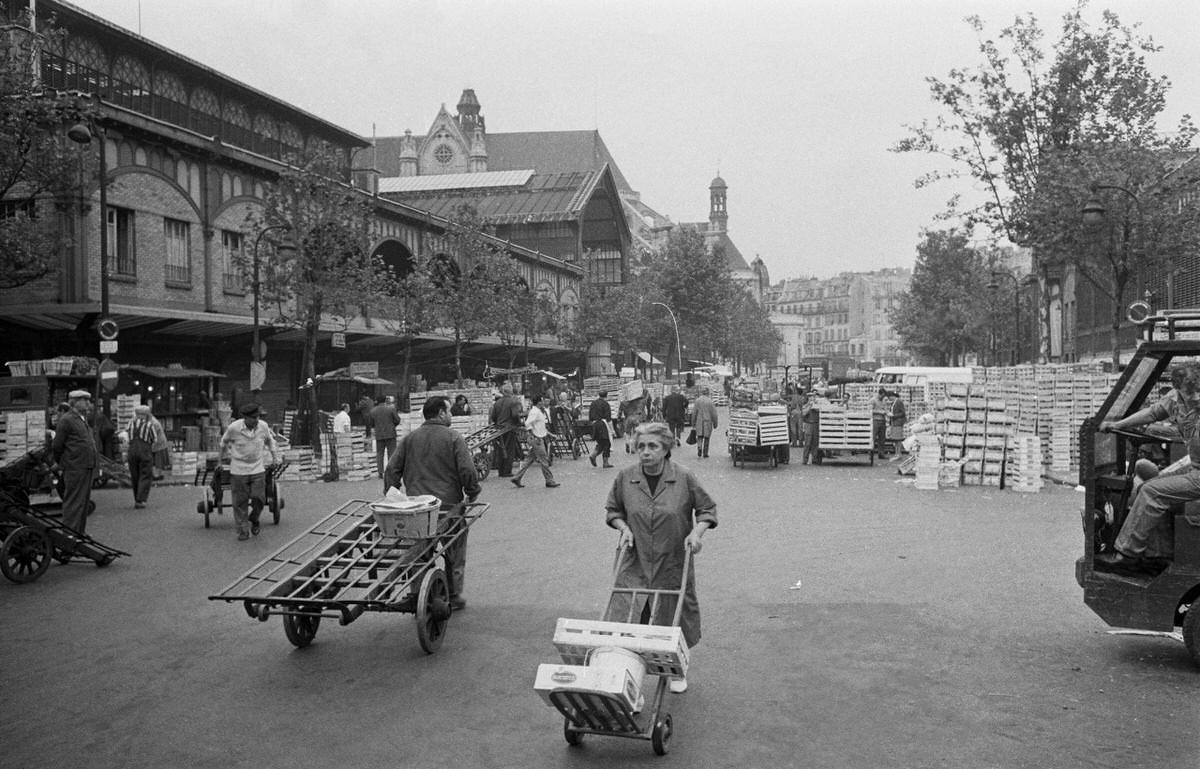
General view of the halls of Paris, 1968
Delivery of fruits and vegetables to the halls of Paris, 1968
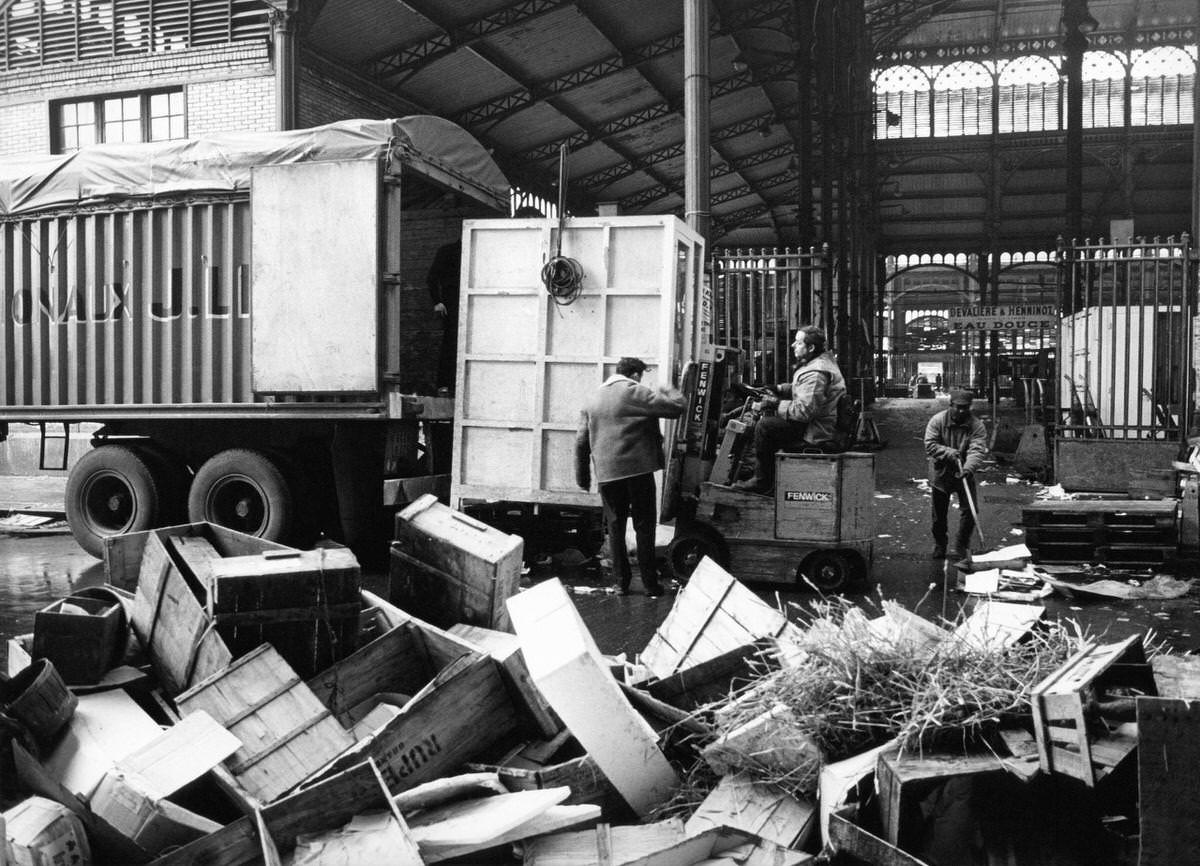
Piling up of crates in the halls of Paris, 1968
General view of the halls of Paris, 1968
Piling up of crates in the halls of Paris, 1968
General view of the halls of Paris, 1968
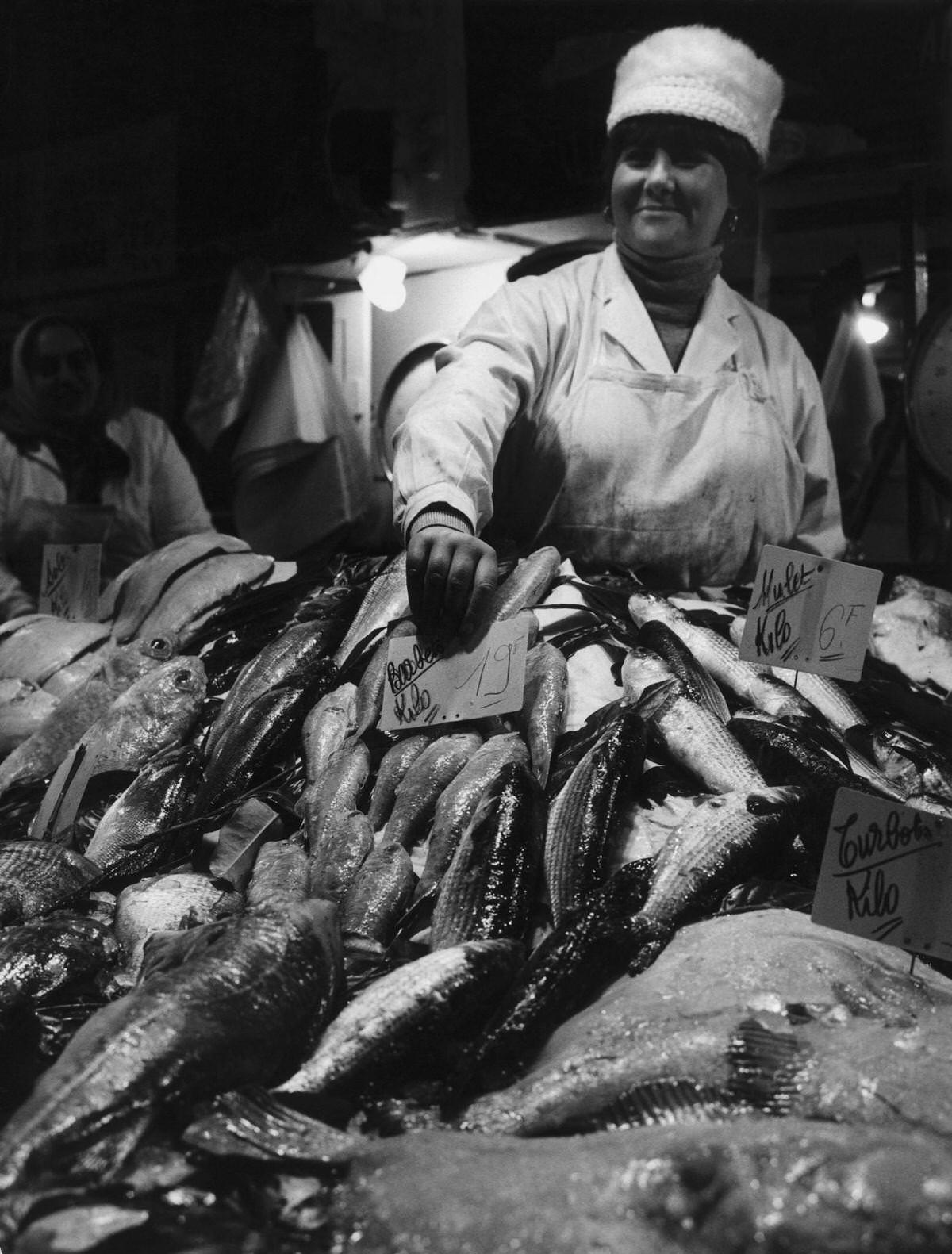
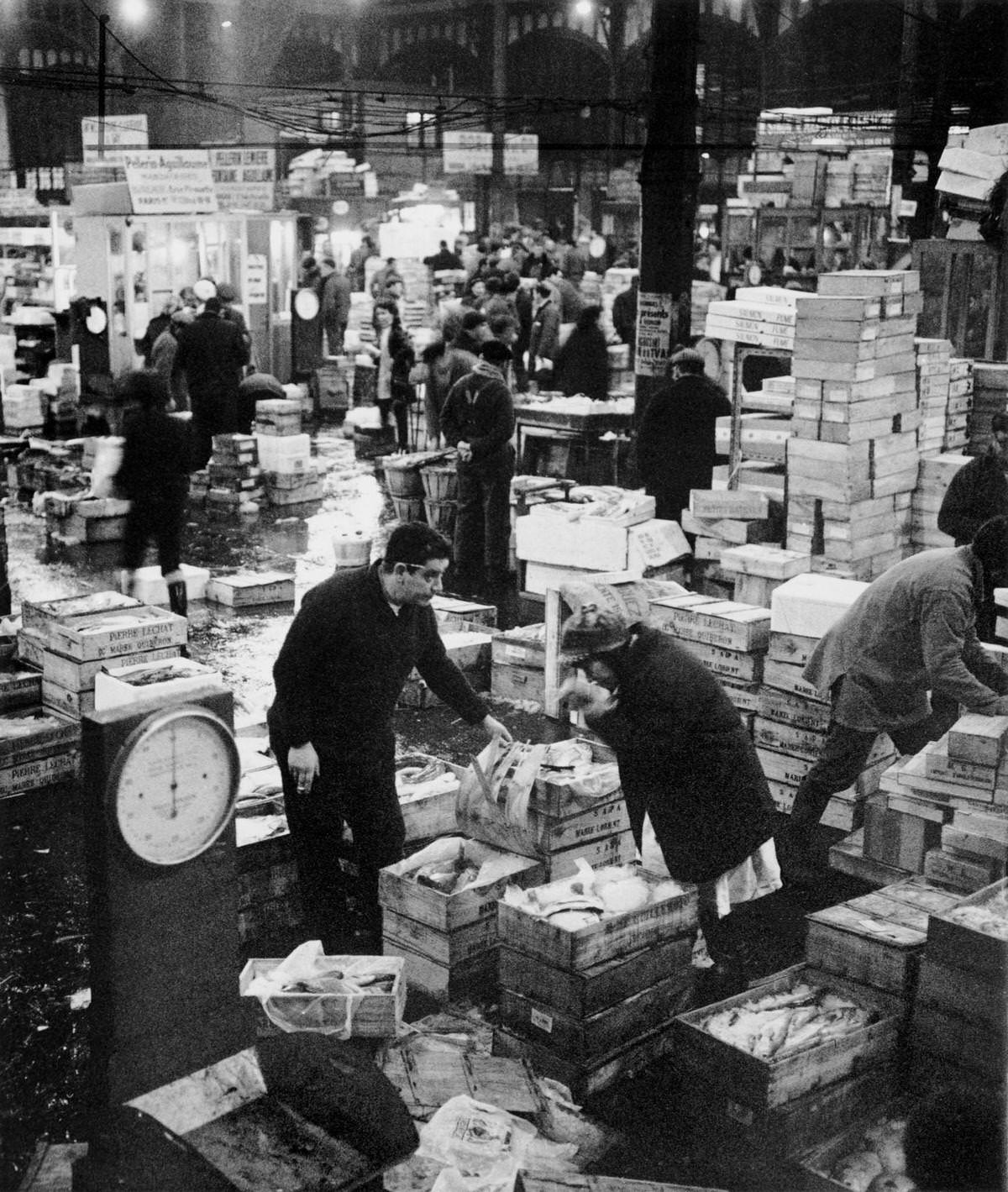
Fish market in Les Halles, 1968
The Halles of Paris, 1968
After the market closed, demolishing Baltard’s iron pavilions left an enormous void in the earth beneath central Paris. That hole became the Forum des Halles — a multi-level underground shopping mall with a metro station at its core. Of the original twelve pavilions, only one was preserved. The Pavillon Baltard was dismantled and reassembled in Nogent-sur-Marne, a suburb east of Paris, where it still stands today and functions as a concert hall, classified as a national monument.