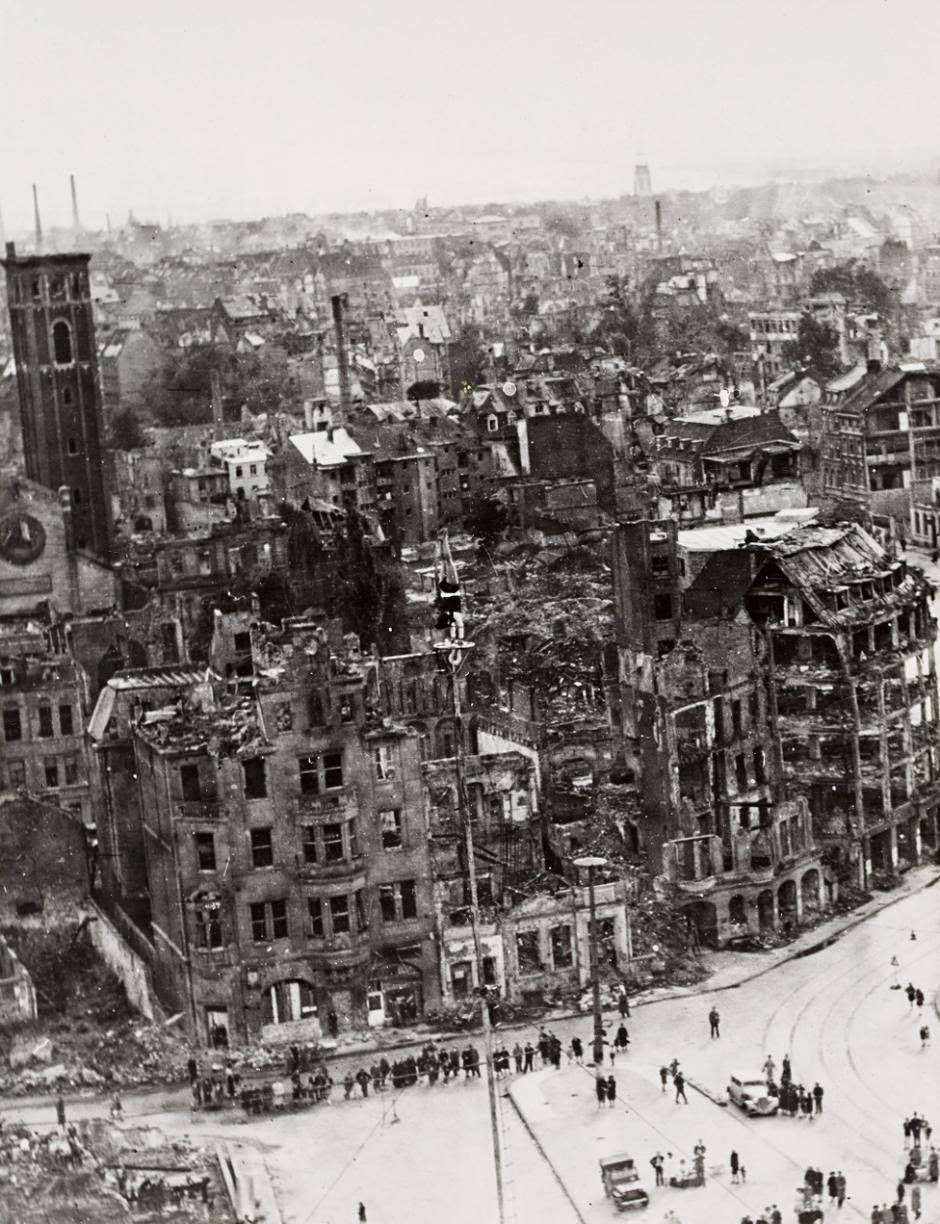
By 1946, Cologne was one of the most destroyed cities in all of Germany. Years of Allied bombing raids had reduced much of the city to rubble. Streets that were once lined with shops, homes, and public buildings were now filled with broken stone and ash. The famous Heumarkt — a large public square in the heart of the city — was no exception. Its surroundings had been gutted by the war, leaving behind a landscape that barely resembled the bustling city center it had been just a decade earlier.
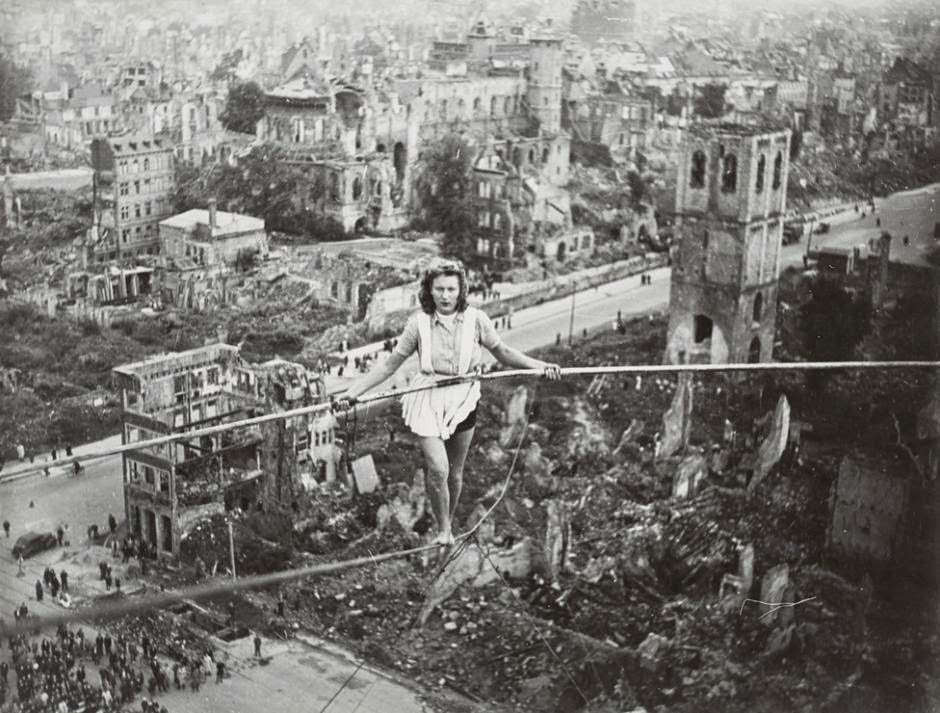
Into this setting came an unexpected sight: a traveling circus troupe had rigged a high wire above the open square. The performers — trained high-wire artists — strung their rope between supports and began putting on a show directly above the war-scarred ground below. There was no grand theater, no polished stage. The crumbled buildings and cleared debris served as the backdrop.
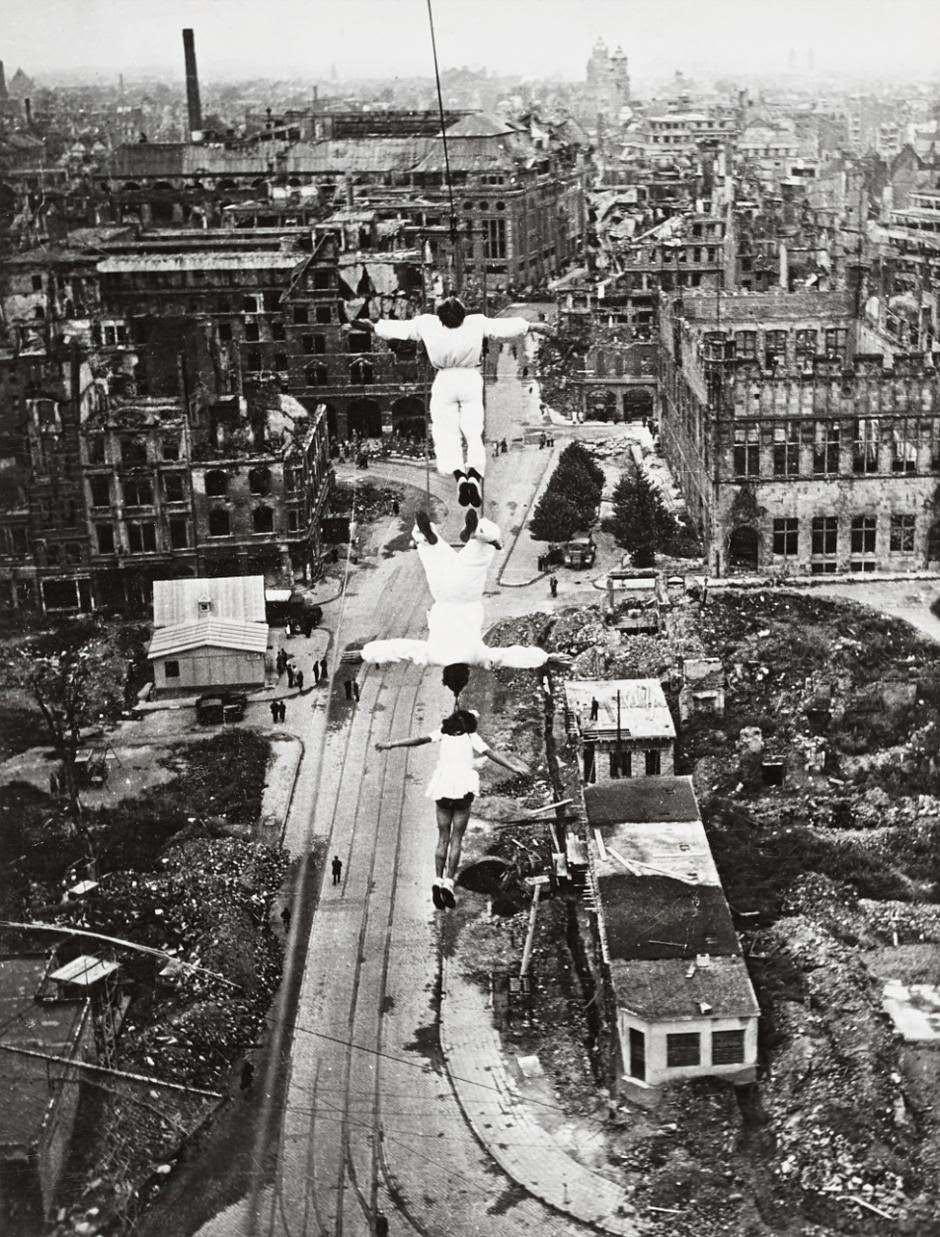
Photographs taken at Heumarkt during this time show the performers working the wire with skill and precision. They balanced, walked, and executed acrobatic tricks at height, their bodies framed against the open sky. Below them, the ruined cityscape stretched out in every direction — a sharp contrast to the spectacle playing out overhead. The images are striking precisely because of that contrast: life and performance suspended above destruction.
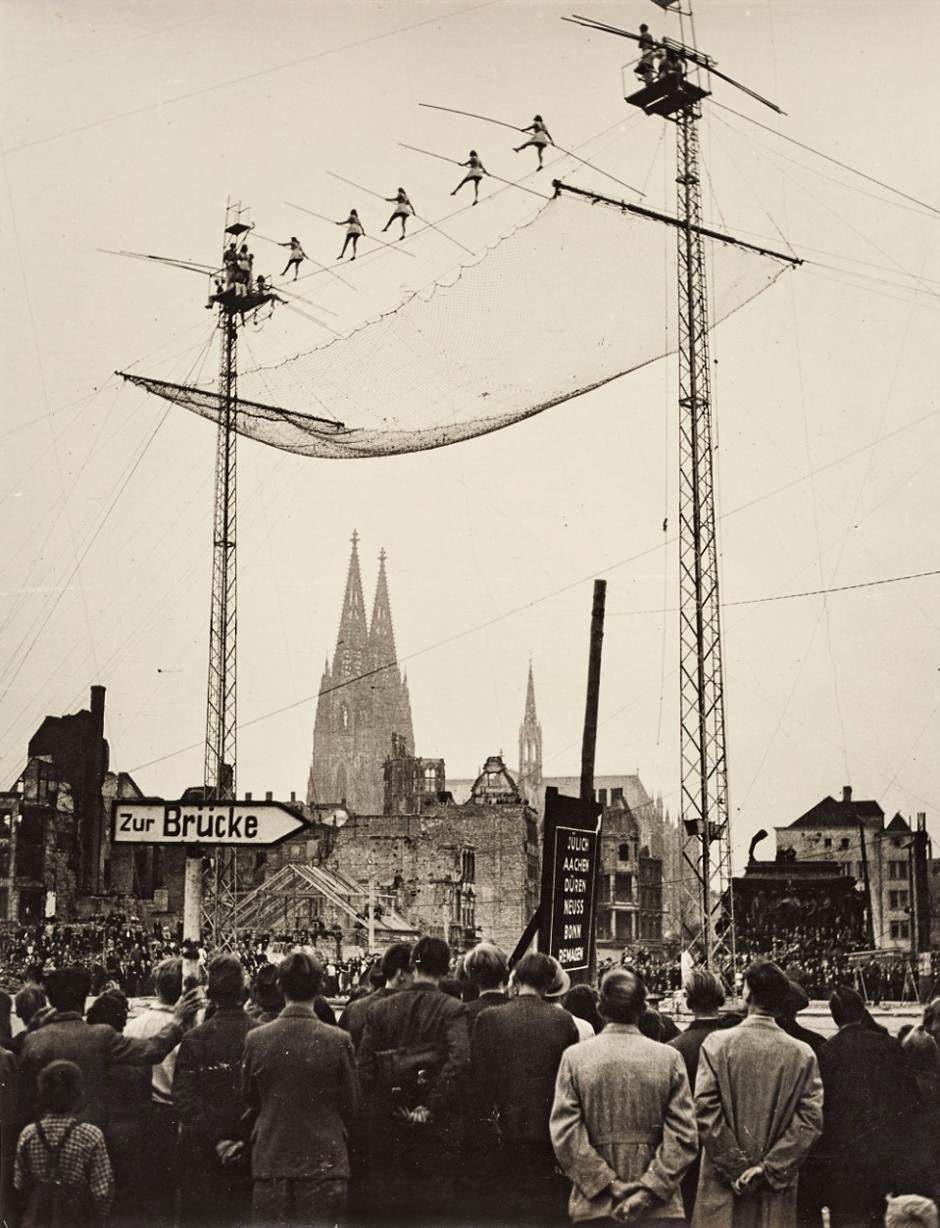
Crowds gathered to watch. Men, women, and children stood in the square, faces turned upward. For people who were living through severe food shortages, housing crises, and the psychological weight of defeat, this kind of public entertainment was rare. Cologne’s residents in 1946 were doing the daily work of clearing rubble by hand, often searching through the remains of their own homes. A circus performance, even a makeshift one, pulled people out of that grind for a short time.
The high-wire act itself demanded total concentration. A single lapse in focus meant a fall. The performers had to block out everything — the noise of the crowd, the unsteady world around them — and commit entirely to each step. That kind of discipline was on full display at Heumarkt, and the crowd watching from below understood what they were seeing. These were not amateur performers stumbling through tricks. They were trained artists doing serious, dangerous work in front of a live audience in an open-air ruin.
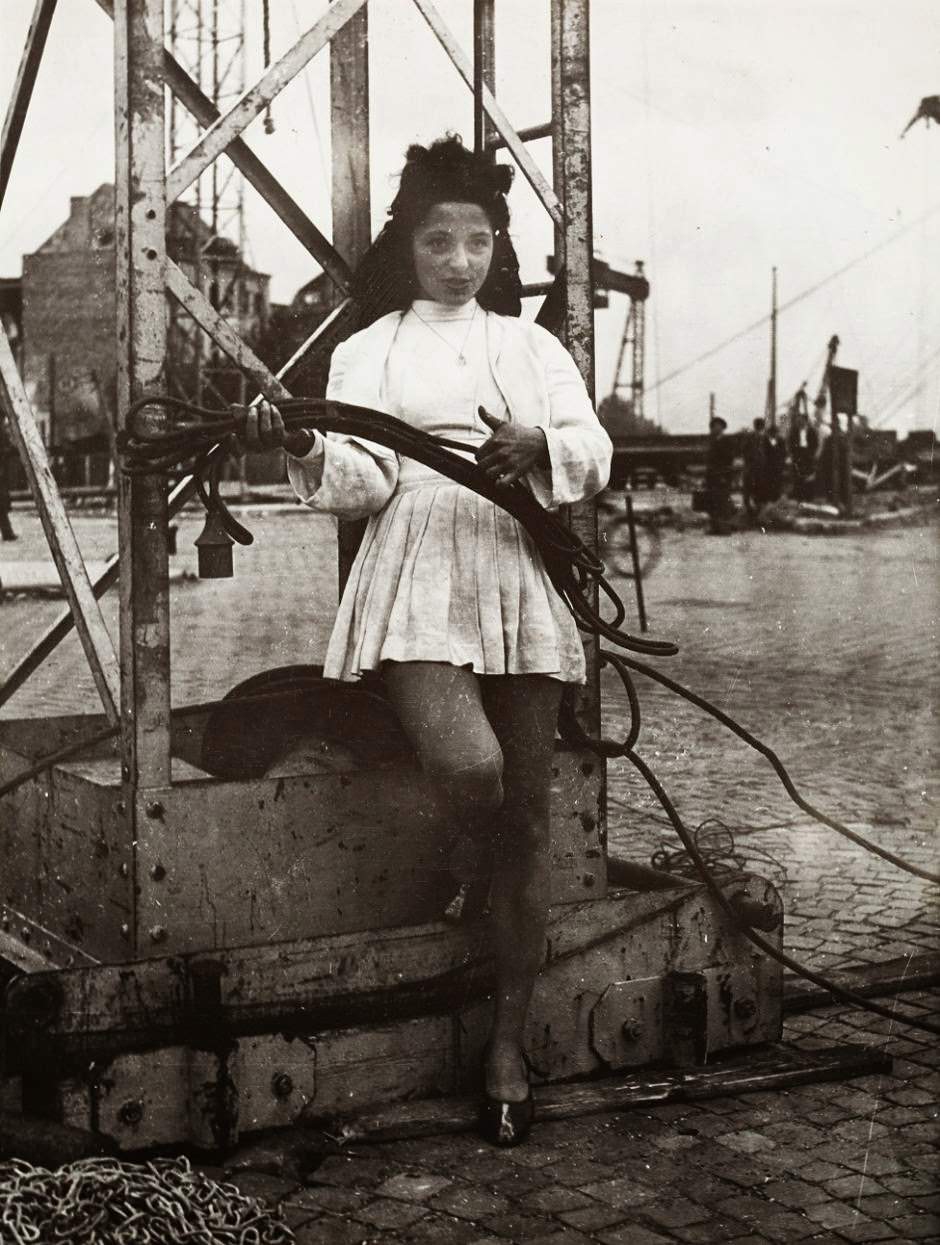
Circus performances in post-war Germany were not uncommon. Traveling troupes moved through cities precisely because traditional entertainment venues had been destroyed. Heumarkt, with its open space, was a natural gathering point. What made the 1946 Cologne performance stand out was the setting itself — the scale of the destruction surrounding it was extraordinary even by post-war German standards. Cologne had lost an estimated 90 percent of its city center to bombing. Performing there, in that square, in that year, placed the act in a context unlike almost anywhere else in Europe at the time.