In 1969, the hallways of American high schools were anything but ordinary. LIFE magazine called it an era of “freaky new freedom,” and the clothes students wore every day proved the point. The civil rights movement, women’s liberation, and the sounds of R&B, soul, and rock and roll weren’t just reshaping politics — they were reshaping wardrobes. For teenagers that year, getting dressed was a deliberate act. What you wore told the world exactly where you stood.
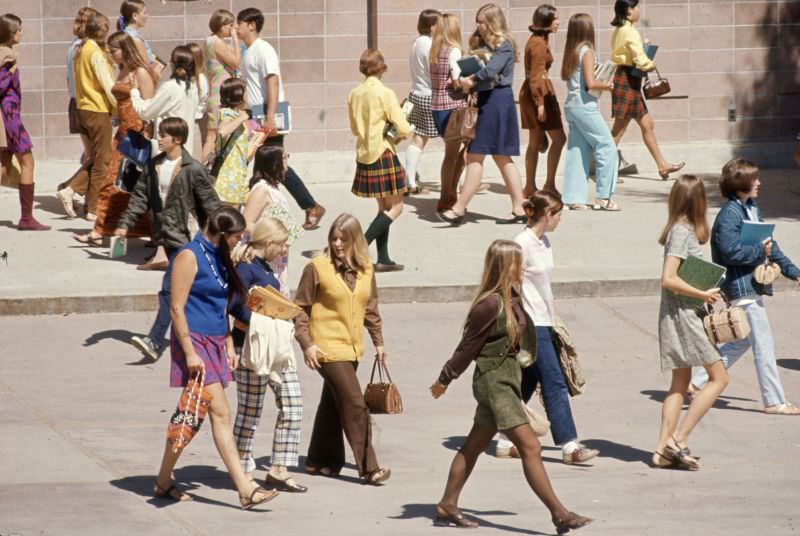
Two major style camps dominated high school fashion in 1969. The mod movement, imported from London, brought geometric prints, bold colors, and sharp silhouettes. On the other end, the counterculture offered tie-dye, fringe, and flowing fabrics rooted in the hippie ethos of peace and anti-establishment values. Many students didn’t pick just one lane — they blended both with confident, creative abandon.
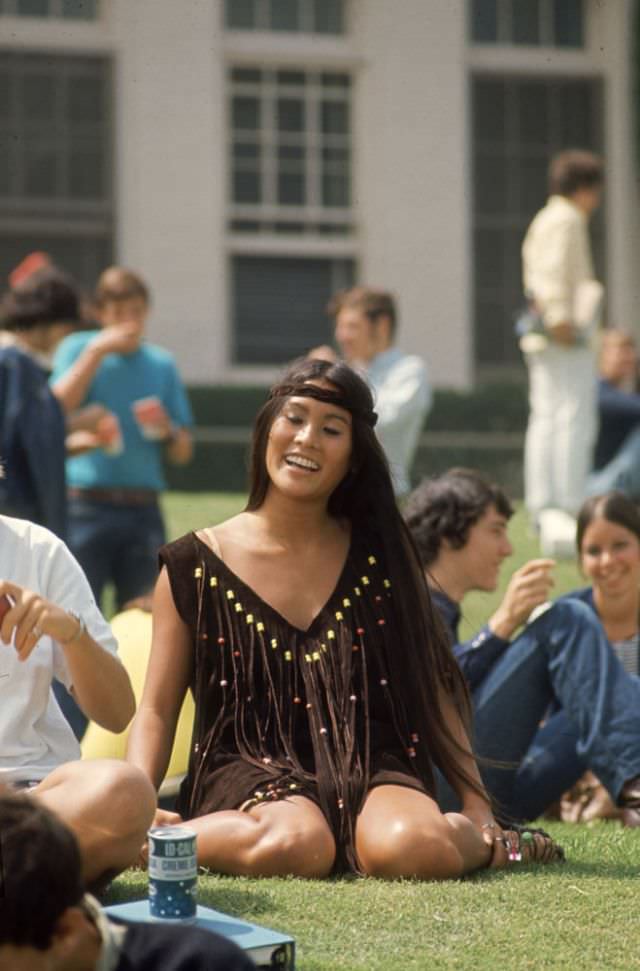
Beverly Hills High School was a particularly rich scene for student fashion. Some students, like Rosemary Shoong, didn’t just wear trends — they sewed them. Making your own clothes was a statement of personal investment in self-expression, not just a budget decision. Her peers at Beverly Hills High brought an equally sharp sense of style to campus every day.
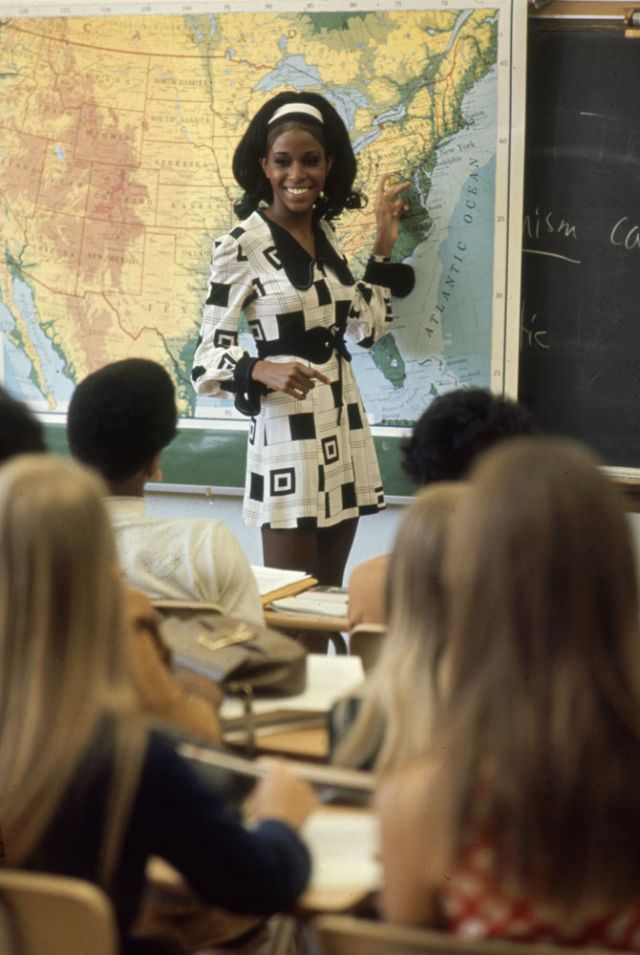
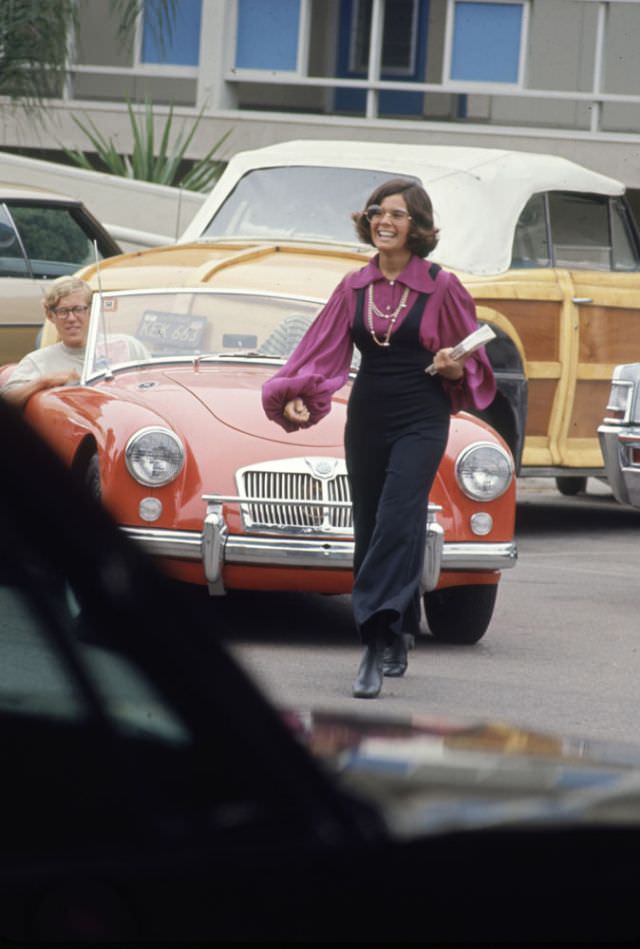
Teachers weren’t immune to the era’s fashion energy either. Bold prints weren’t reserved for students alone — faculty members who embraced the moment wore them just as proudly.
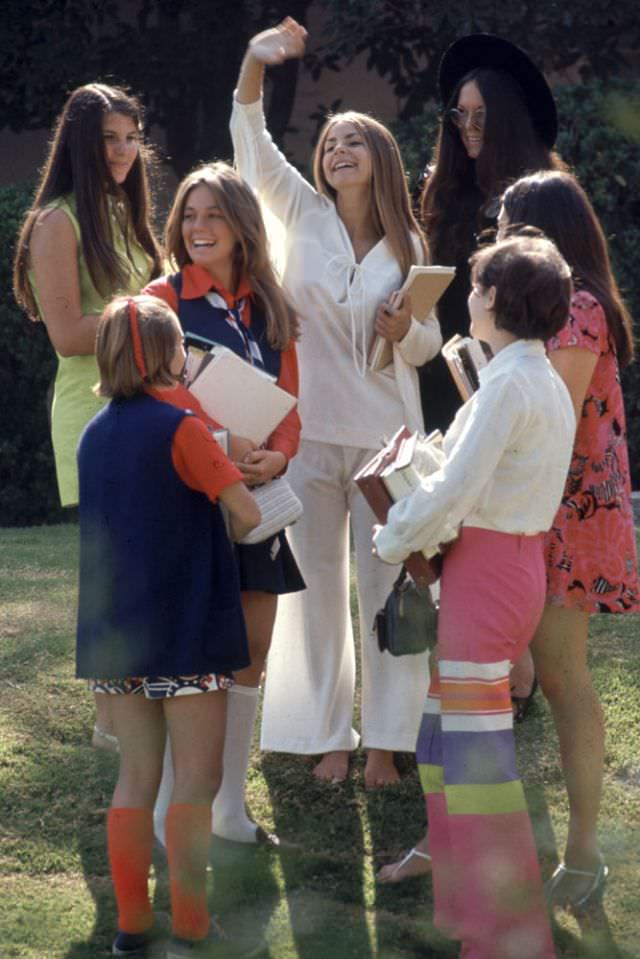
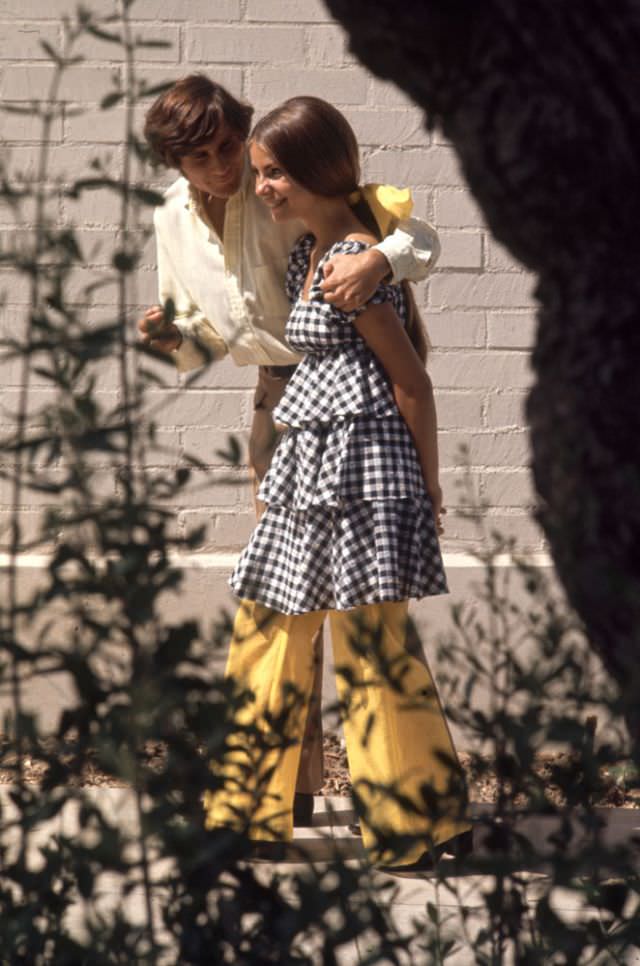
At Beverly Hills High, mixing patterns and silhouettes was standard practice. Checkered fabrics, tiered hemlines, and layered looks reflected a generation that treated fashion as an experiment rather than a rulebook. Students walked the campus with the kind of ease that only comes from wearing exactly what you want to wear.
Further down the California coast, students at Corona del Mar High School leaned hard into hippie fashion. Fringed vests, beaded accessories, and loose, earthy clothing were the hallmarks of a look that rejected postwar conformity in favor of something far more personal and expressive.
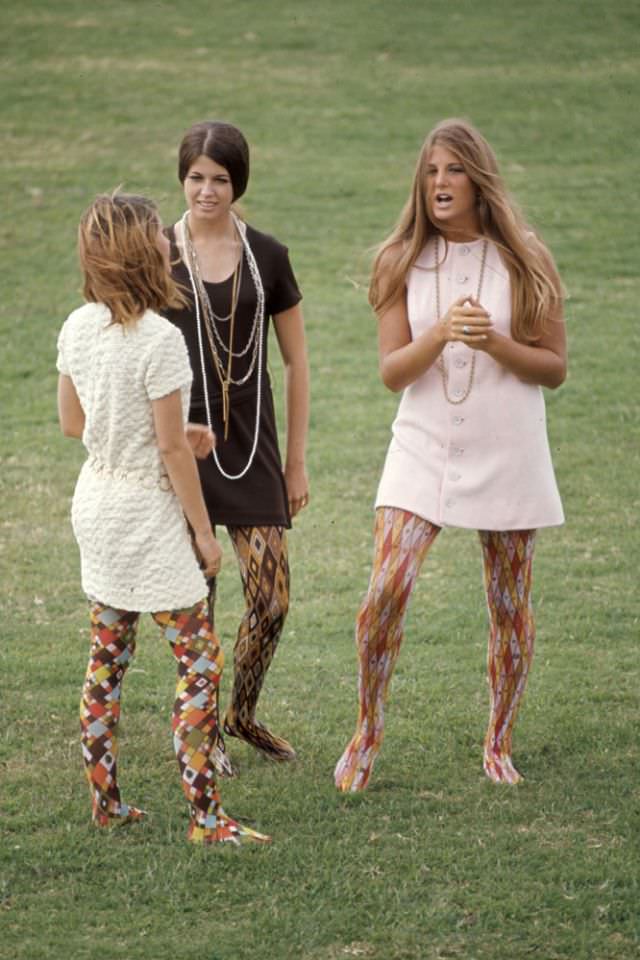
The miniskirt was one of the decade’s most contested garments. By 1969, it had moved from London boutiques to American school hallways, and it wasn’t going anywhere. In Southern California, the “Mini Jupe” skirt turned a simple walk across campus into a fashion moment.
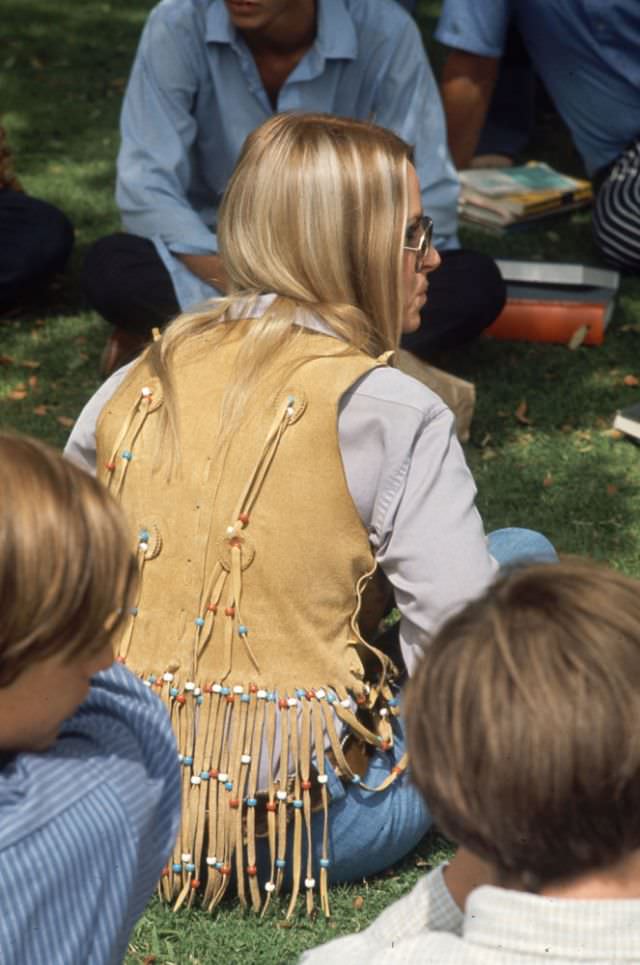
Alongside the miniskirt, the buckskin vest became a staple of the counterculture wardrobe. Rooted in Native American and frontier aesthetics, it was adopted by the hippie movement as a symbol of back-to-the-earth values. Southern California students wore it as naturally as any other layer.
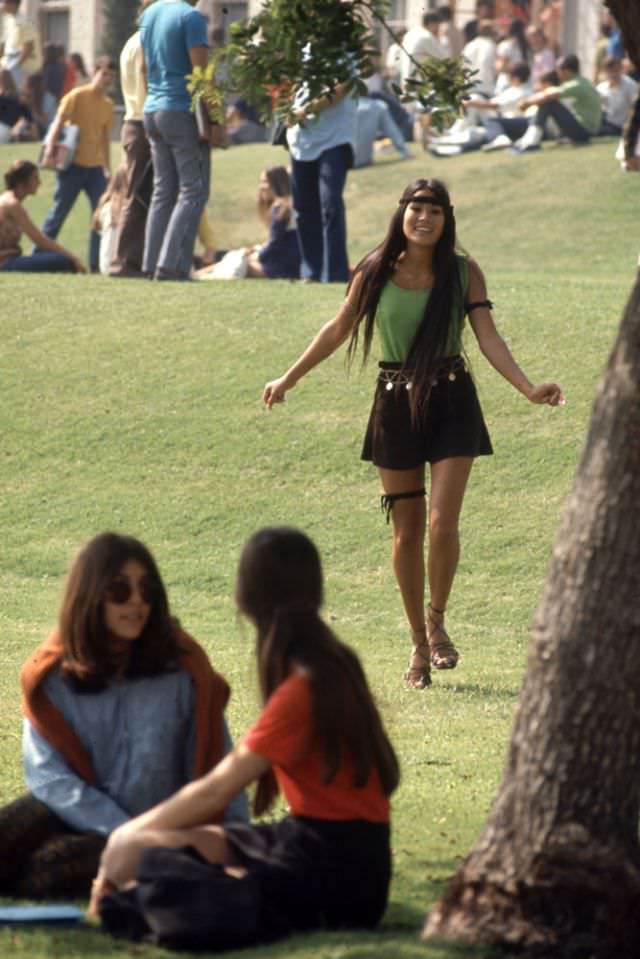
Across Southern California, groups of students collectively embodied the range of hippie fashion — from headbands and wide-leg trousers to layered jewelry and patchwork fabrics. These weren’t costumes. This was daily life in 1969.
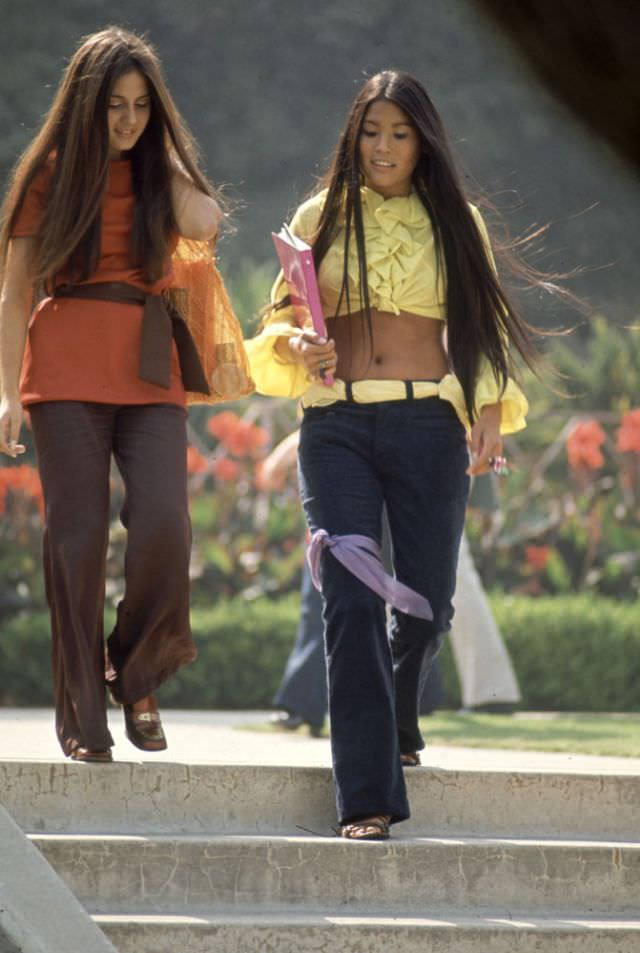
The fashion energy wasn’t confined to California. In Denver, Colorado, students put their own spin on the era’s trends. Nina Nalhaus showed that a well-tailored wool pant and a handmade jacket could hold their own against any coastal look — with practicality built in for the colder Rocky Mountain climate.
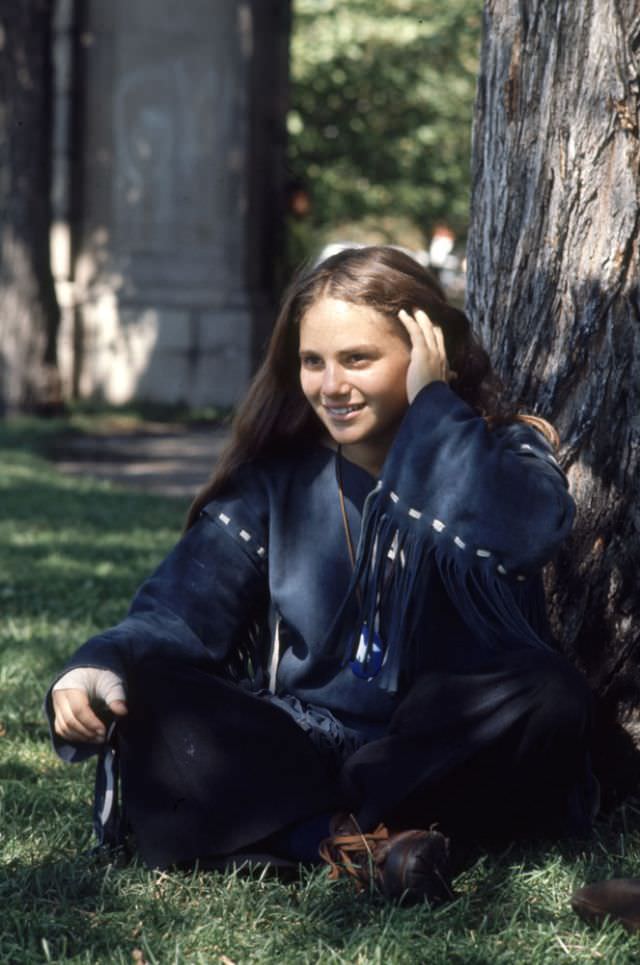
Bell-bottoms were the era’s most iconic silhouette, and by 1969 they had fully taken over. In Newport Beach, high schooler Lenore Reday wore a bell-bottomed jump suit that, according to LIFE, stopped traffic. That wasn’t an exaggeration — it was a testament to how much fashion had become a public spectacle.
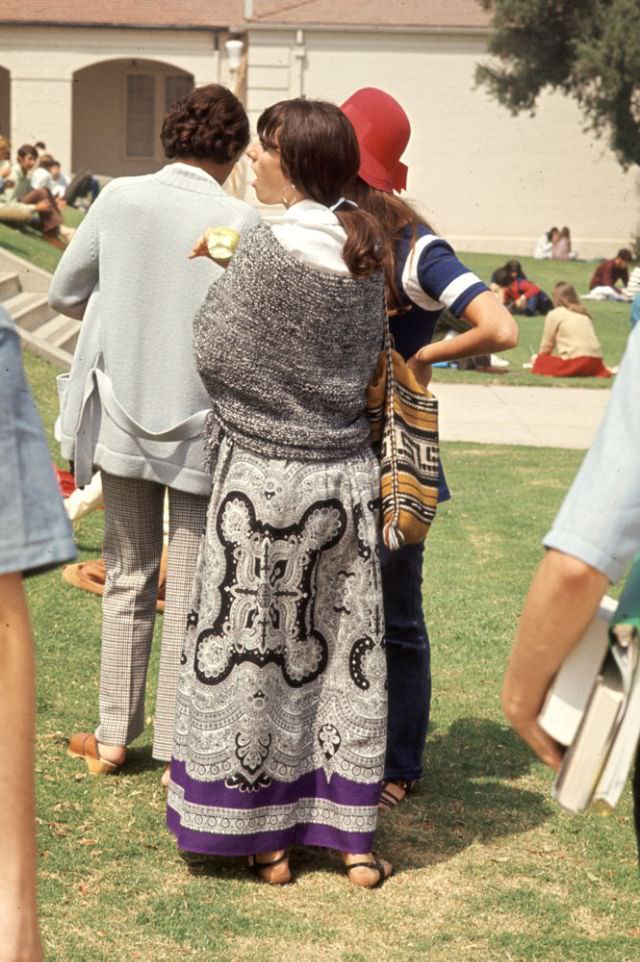
Not every student chased the newest trend. Some looked backward for inspiration. Tapestry skirts and wool shawls pulled from an older, almost Victorian aesthetic found a new home in the counterculture, where vintage and handcrafted clothing carried just as much weight as anything sold in a boutique.
LIFE photographer Arthur Schatz documented these students across multiple California schools and beyond, building a visual record of a generation in motion. His photos don’t just show clothing — they capture the confidence behind the choices.
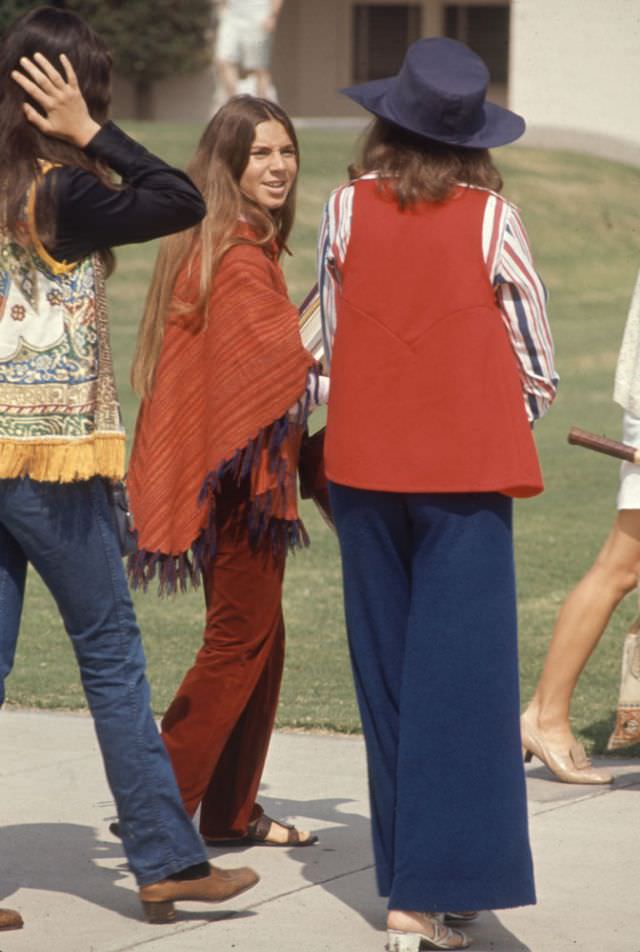
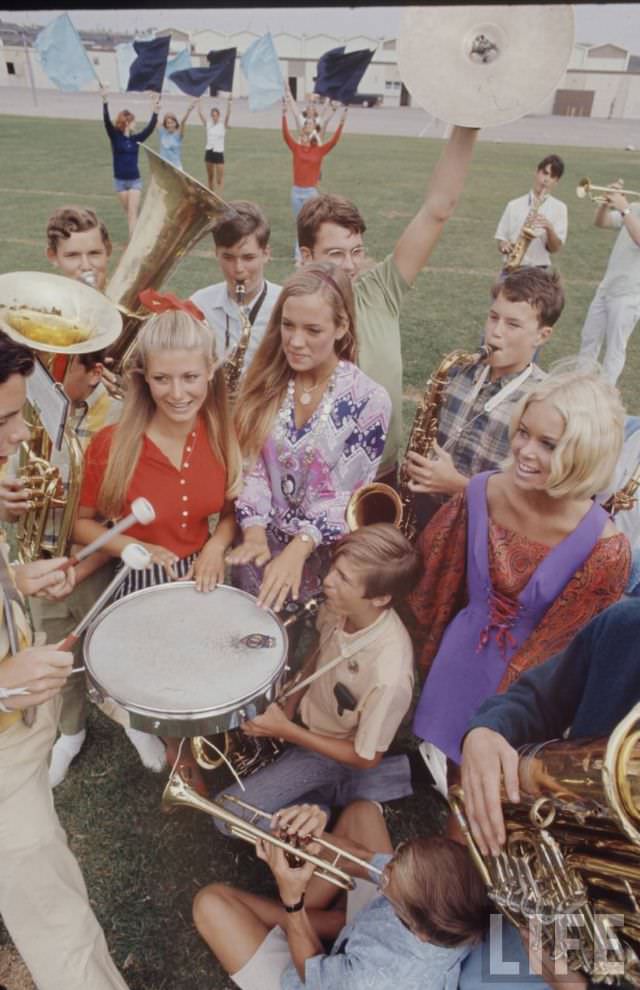
What Schatz’s lens captured again and again was variety. No two students dressed the same way. Some leaned into structured, tailored looks; others went for maximum freedom of movement. The common thread was intentionality — every outfit was a decision, not a default.
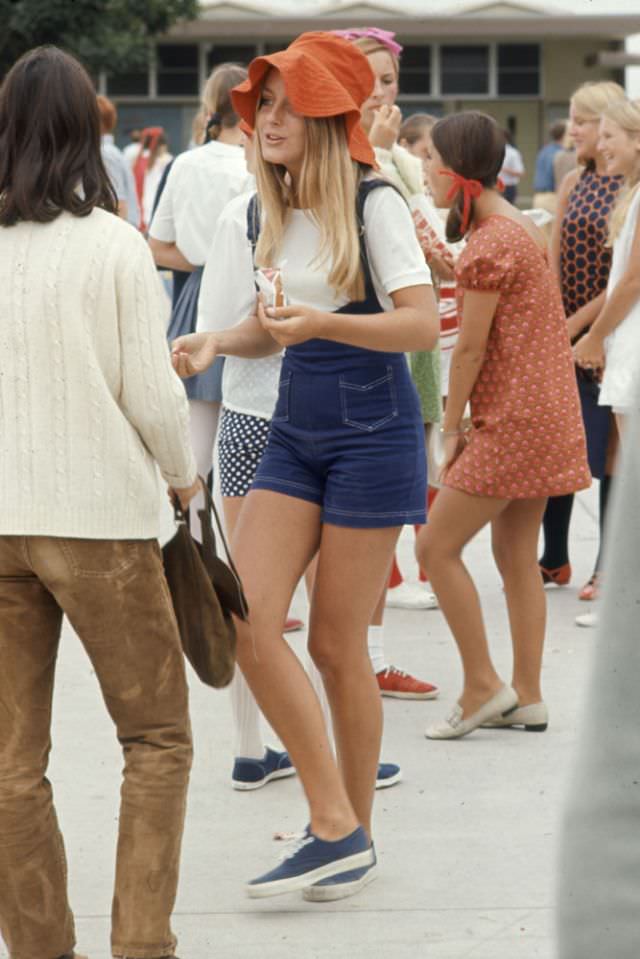
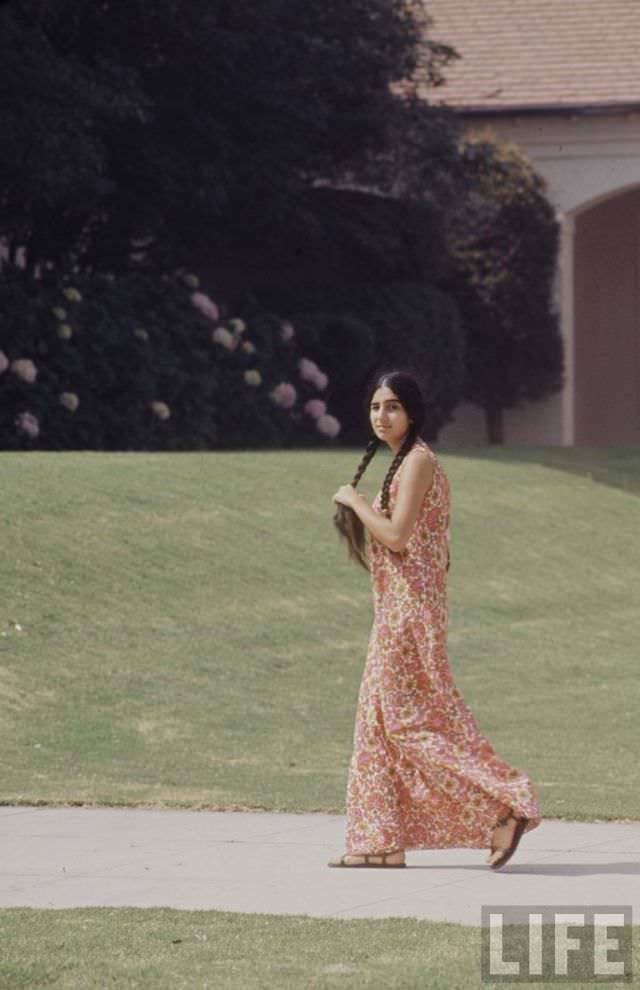
Bell bottoms paired with boots appeared in Schatz’s photos repeatedly, and for good reason — it was one of the era’s most complete looks. The wide flare of the trouser leg complemented the height of a boot, creating a silhouette that was both dramatic and functional.
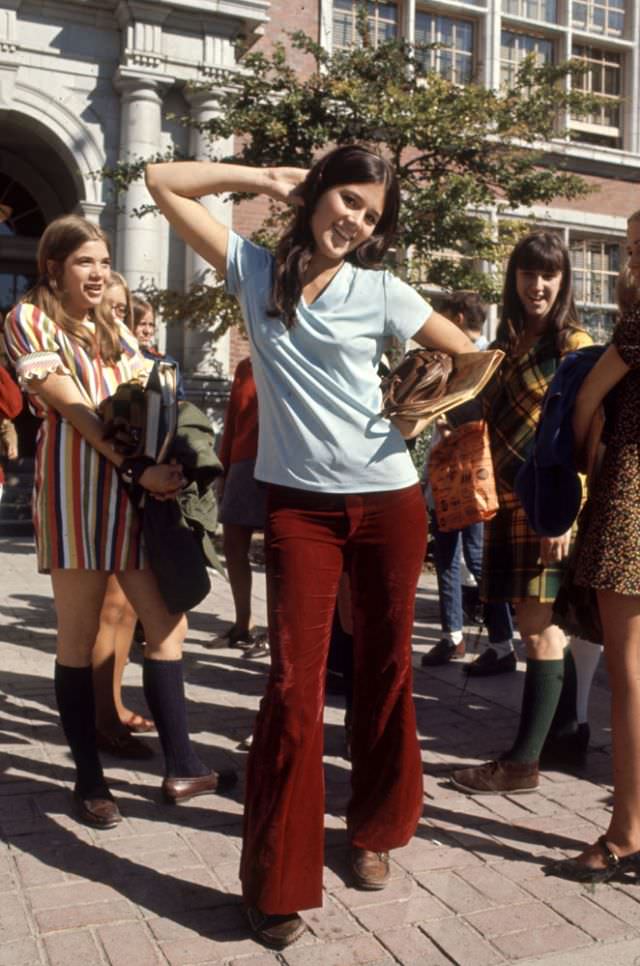
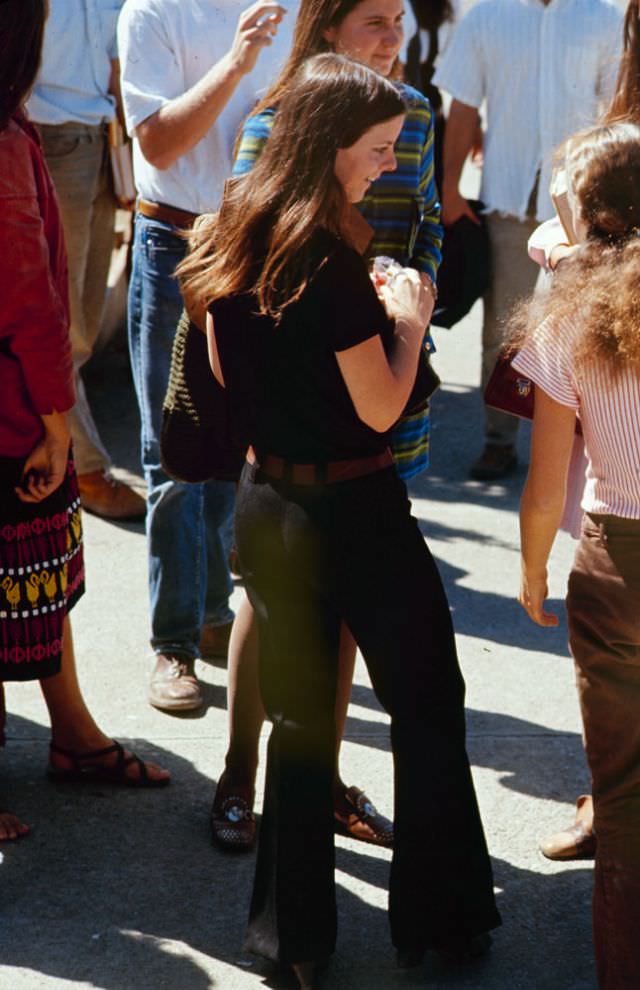
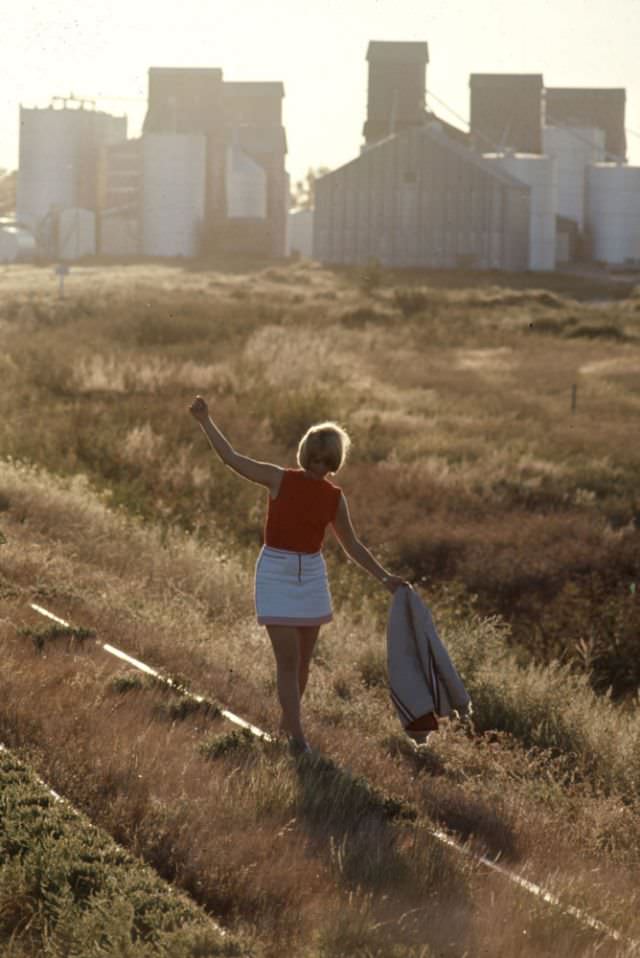
Thousands of miles from the California beaches, a Kansas high schooler made the same statement as her coastal peers. The miniskirt crossed every regional boundary in 1969. Geography didn’t determine what students wore — the culture did.