In 1896, the Boston Woven Hose and Rubber Company had a problem that most businesses never face: their product was too big to show off in a storefront. Their solution was just as oversized as the tires they were trying to sell. They built a fully functional giant tricycle — eleven feet tall, weighing over a ton, and requiring eight grown men just to make it move.
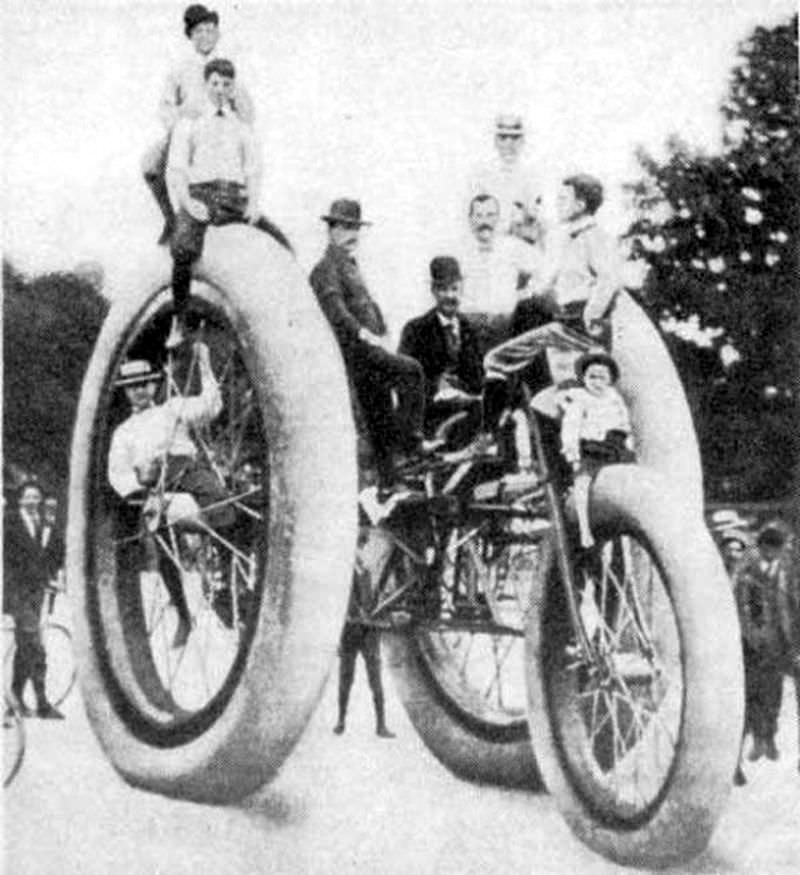
The machine was designed specifically to promote the company’s “VIM” brand tires. It was built entirely at the company’s factory in Cambridge Port, Massachusetts. The man behind the design was John Dewolfe, the company’s mechanical expert, who worked from his own plans to bring the enormous machine to life. Every part of it was fabricated in-house, making it a genuine feat of in-house engineering for its time.
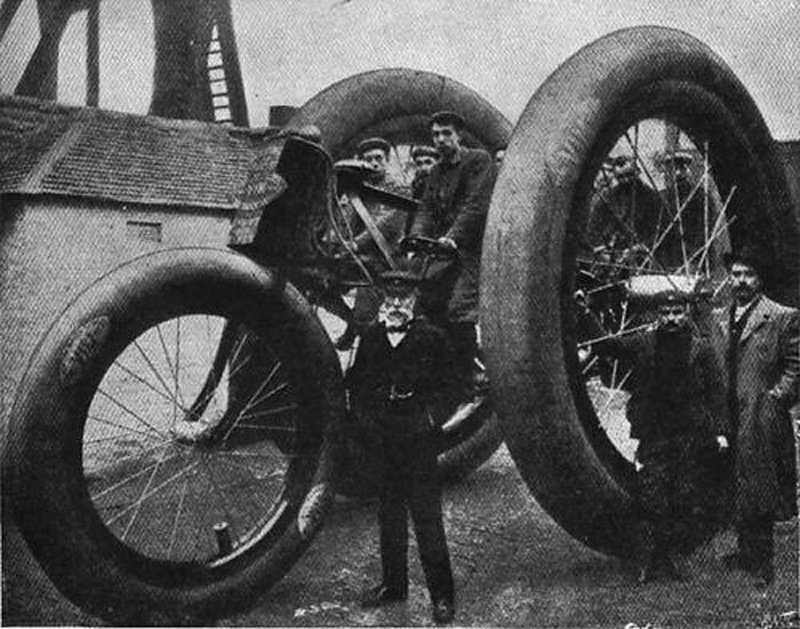
Previous attempts by other builders to construct oversized bicycles and tricycles had all ended in failure, mostly due to poor construction. Dewolfe’s design was different. The machine was built with the structural logic of a locomotive, incorporating two gearboxes in its drivetrain. That mechanical approach gave it the strength to actually function under real-world conditions rather than simply collapse under its own weight.
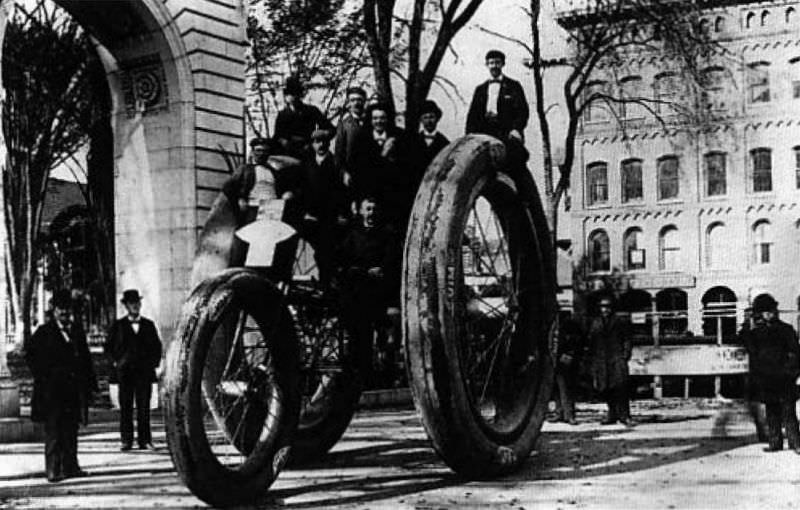
The two large rear wheels measured eleven feet in diameter — that measurement also being the height of the entire machine. The tires mounted on those wheels had a cross-section of sixteen inches when fully inflated, giving them a bulk that most people of the era would never have seen on any vehicle. The smaller front wheel, which handled steering, had a diameter of six feet and a cross-section of nine inches. All three tires were standard VIM models pulled directly from the company’s regular product line, each featuring the brand’s signature pebble tread.
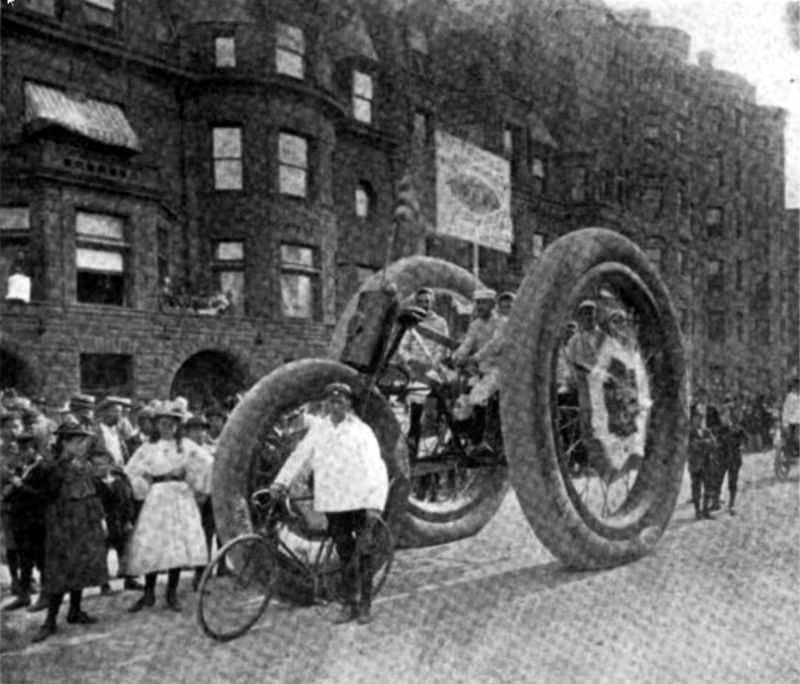
The numbers behind the machine are striking. The tricycle itself weighed 1,453 pounds before anyone climbed aboard. The eight men needed to operate it added approximately 1,120 pounds. That brought the total operating weight to 2,573 pounds — well over a ton of moving machine rolling through the streets on rubber tires. Getting it up to speed required a coordinated effort from all eight riders working in sync, much like a crew on a large rowing vessel.
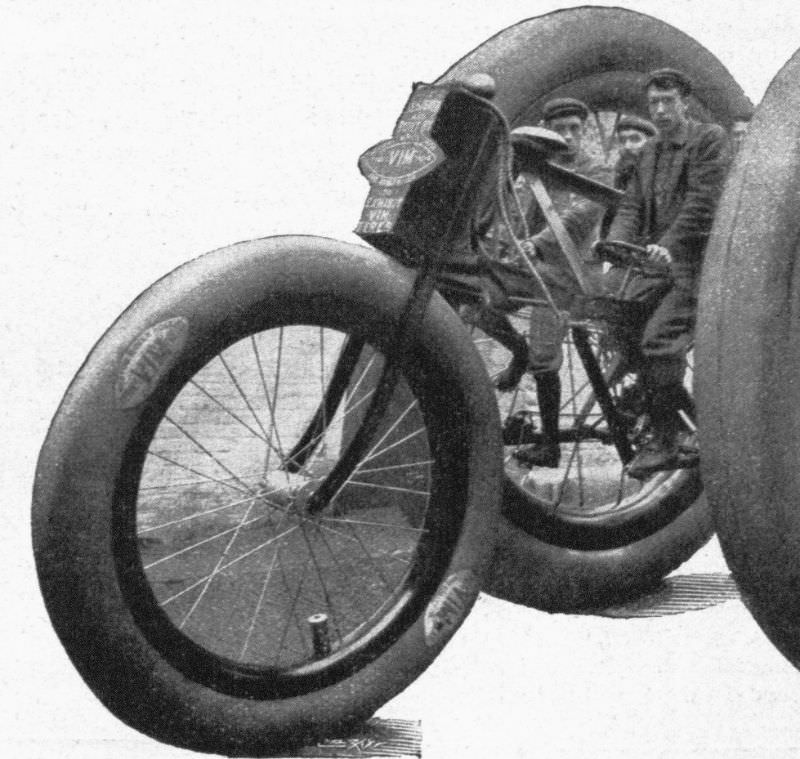
The tricycle proved itself in practice before it ever became a public spectacle. It was tested at cycling meets near Boston and was ridden for several miles on public roads around the city. Those outings confirmed that Dewolfe’s design held up under full load and real riding conditions. By the time it appeared at promotional events, the machine had already demonstrated it was not just a novelty built to sit still — it could actually be ridden.
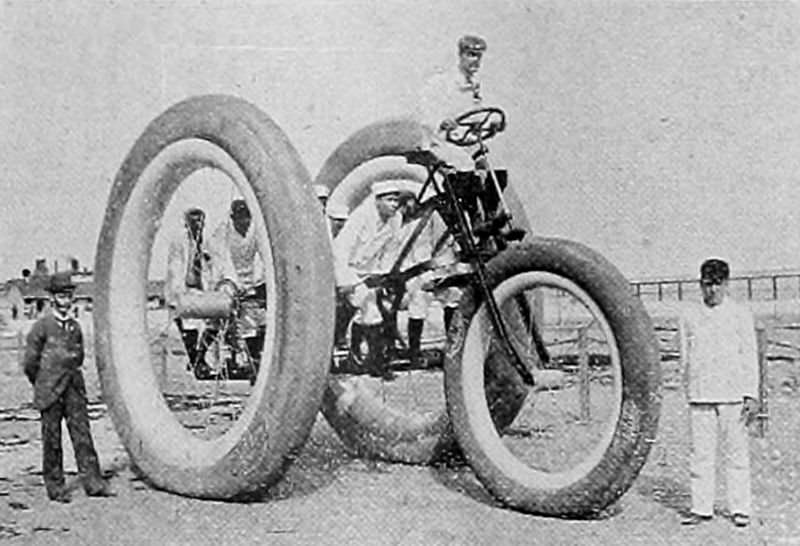
As a marketing tool, the giant tricycle was hard to ignore. A machine standing eleven feet tall, rolling through the streets with eight riders and bearing the VIM name on its tires, drew exactly the kind of attention that no newspaper advertisement could match. The Boston Woven Hose and Rubber Company had turned their product into the spectacle itself, and in 1896, that was a remarkably direct way to make a brand impossible to forget.