Throughout history, hunters have searched for ways to kill more game with less effort. Most weapons get better by becoming more precise. The punt gun went in a completely different direction — it got bigger. Much bigger. The result was one of the most destructive firearms ever used in America, a weapon so effective that it nearly wiped out entire duck populations along the Eastern Seaboard before the federal government stepped in to stop it.
The punt gun emerged in the early 1800s, born out of a booming demand for two things: meat and feathers. City markets across the United States needed a steady supply of wild game, and the fashion industry’s appetite for feathered hats meant that waterfowl were being hunted at an industrial scale. Standard hunting rifles, firing one shot at a time, simply couldn’t keep up. Hunters needed something that could take down an entire flock in a single pull of the trigger.
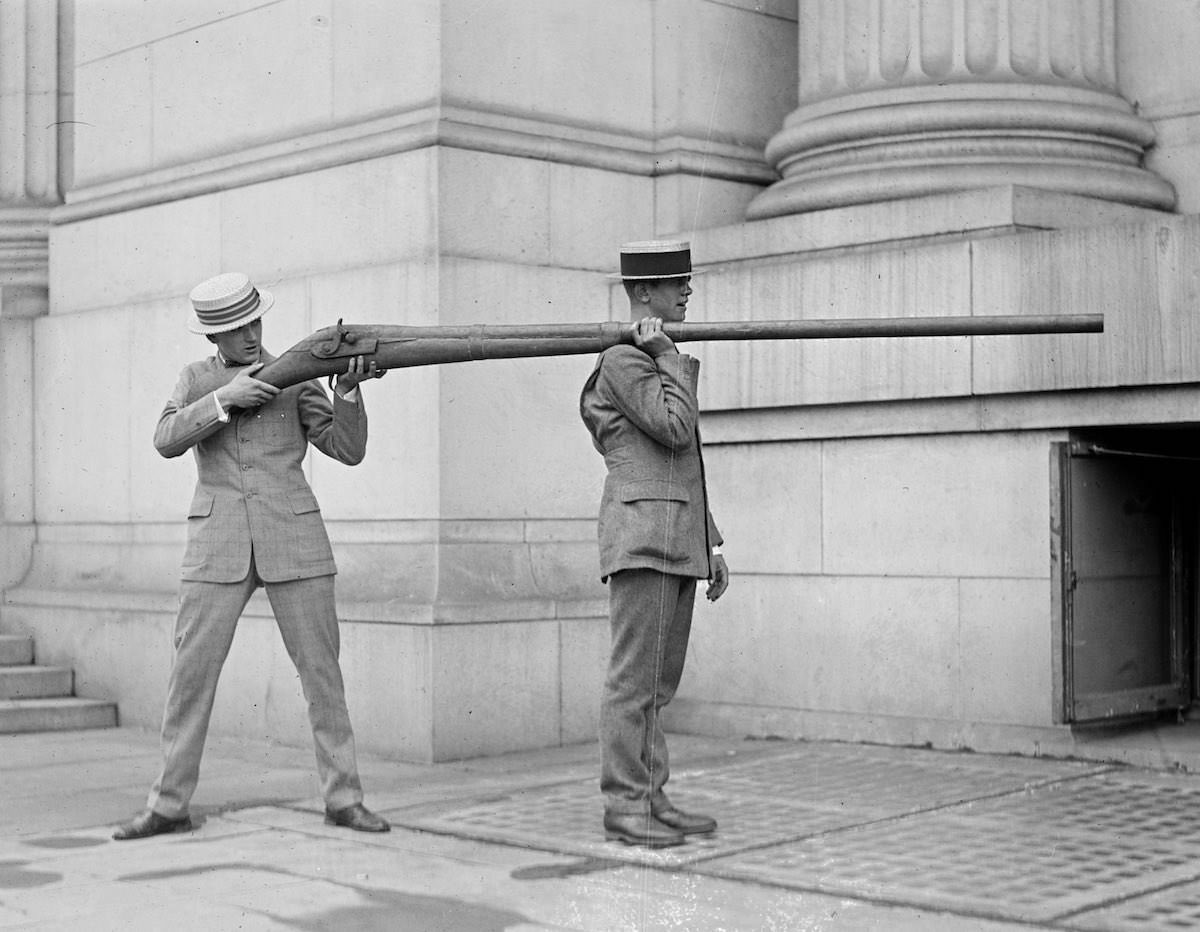
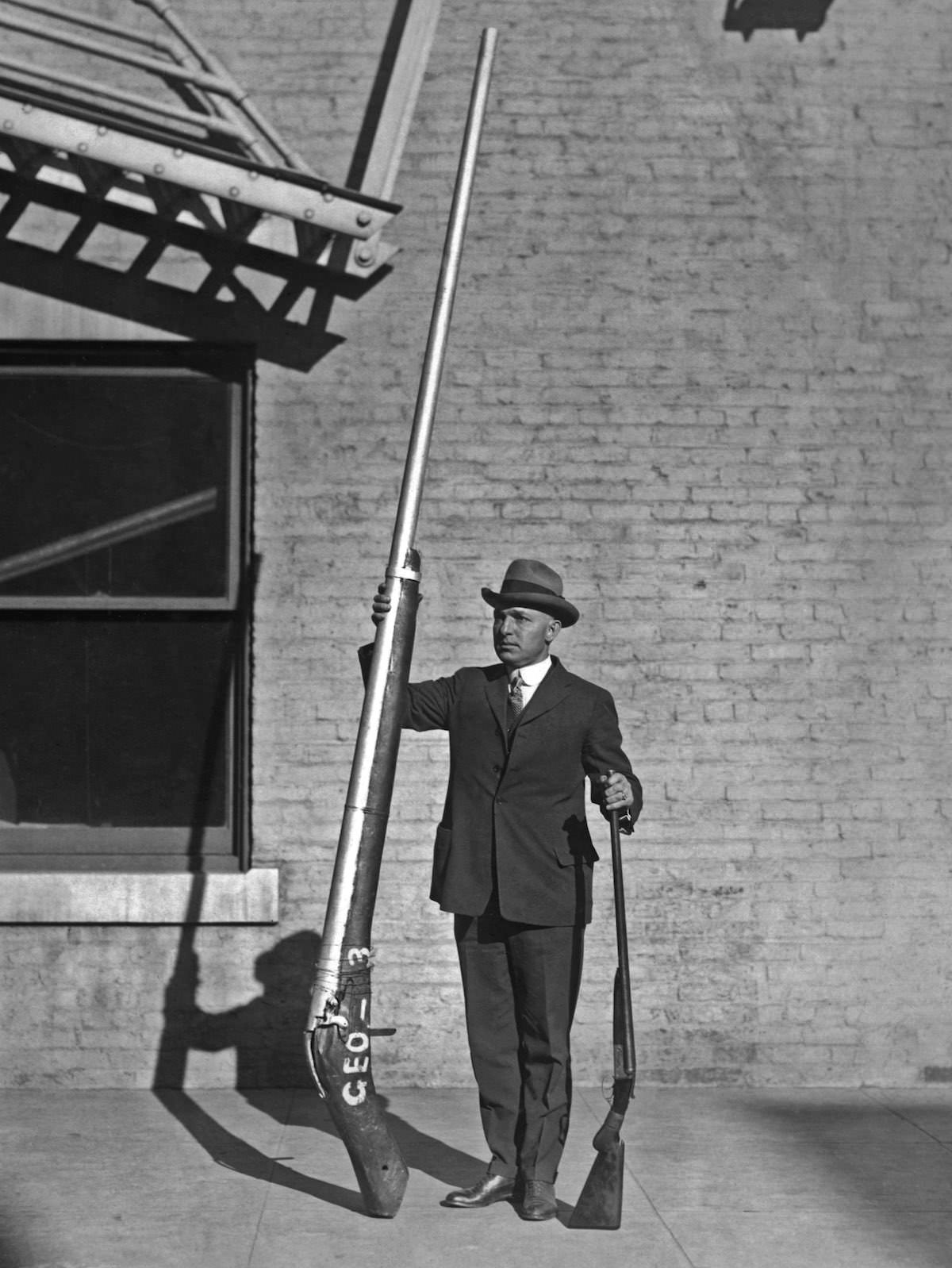
The punt gun was custom-built for mass killing. A single-barrel model measured over eight feet long and stretched more than two inches in diameter. It loaded with over a pound of shot per firing and could kill 50 to 90 waterfowl with a single blast, leaving their bodies floating on the water for hunters to collect. The gun resembled a massively scaled-up version of a standard hunting rifle. A double-barreled version also existed, but it delivered less power than the single-barrel design and was far less common among commercial hunters.
One man alone could not carry or fire a punt gun on his own. The weapon was far too large and heavy to shoulder like a conventional rifle. Instead, hunters had to build an entirely new kind of vessel around the gun itself.
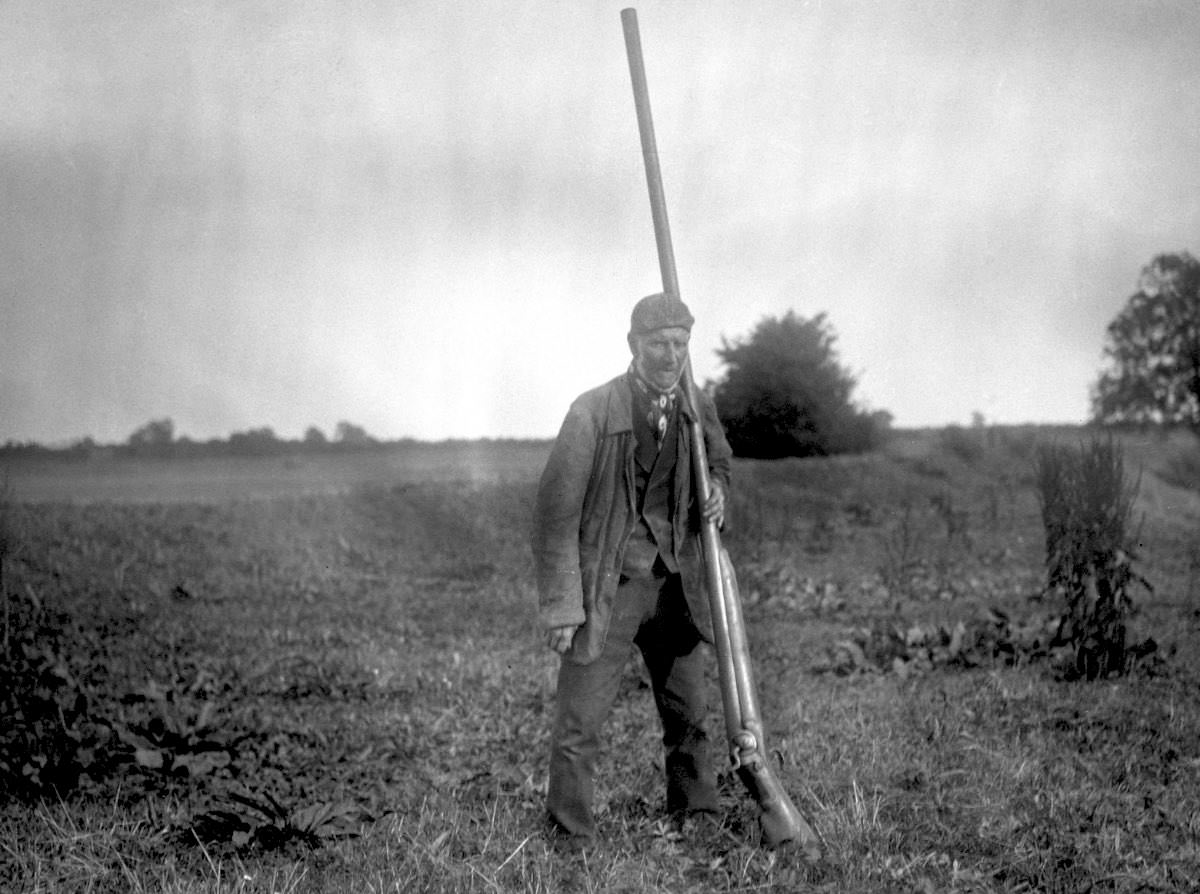
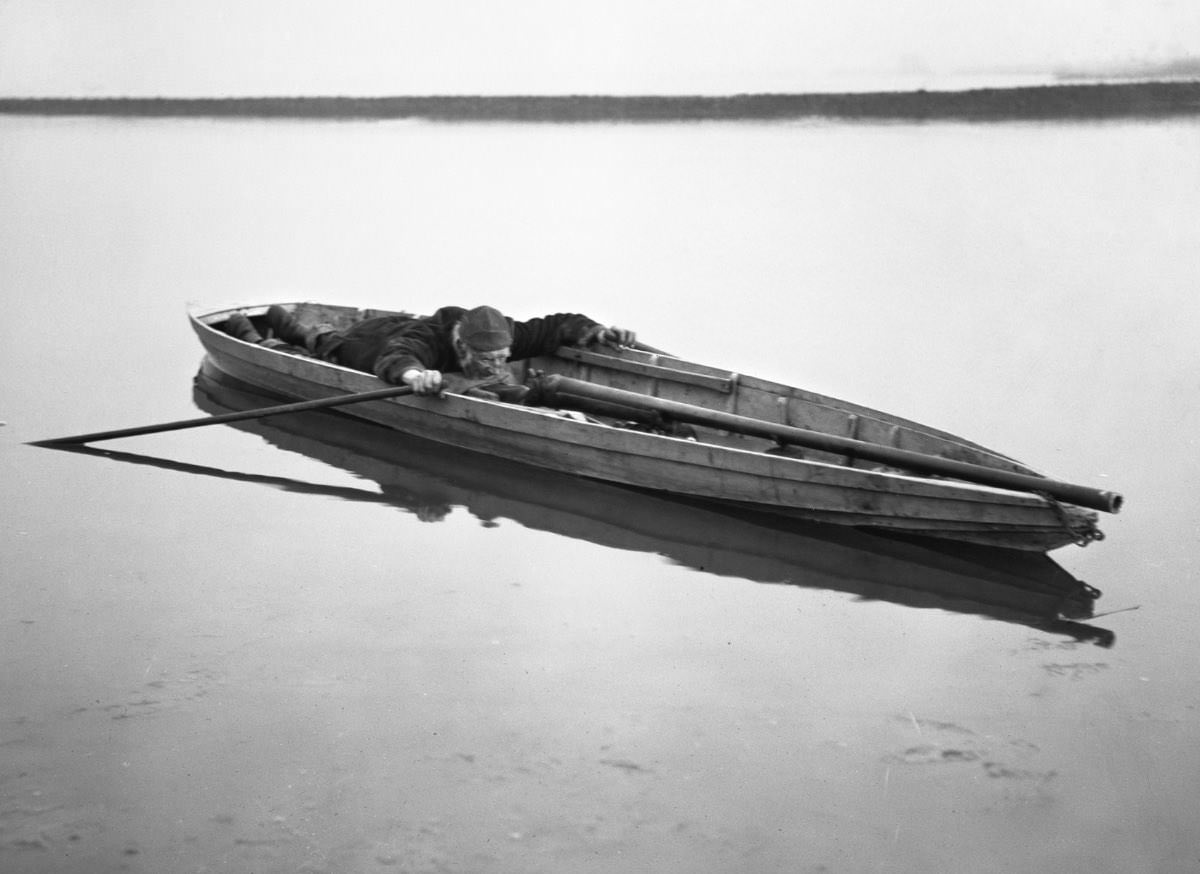
The boats designed to carry punt guns were called punts — long, narrow, flat-bottomed skiffs with just enough room for one man and one gun. The punt gun was mounted directly to the hull, aimed forward, and fired while the boat sat low in the water. When the trigger was pulled, the recoil was so violent that the blast sent the entire boat sliding several feet backward across the surface of the water. This wasn’t a minor kick — it was a full-body jolt that hunters had to brace for every single time.
Hunters quickly figured out that working alone still left efficiency on the table. The real money came from teamwork. Groups of eight to ten punt boats would fan out and quietly surround a flock of resting waterfowl on the water. Then, on signal, every hunter fired at once. A coordinated volley from a ring of punt guns could kill 500 birds in under a minute. The birds had no warning and nowhere to flee. The hunters would then paddle through the floating carcasses, scooping them up by the hundreds to sell at market. This was not sport hunting — it was industrial-scale harvesting of wild animals.
The scale of the killing was staggering. Ducks, geese, and other waterfowl that had once filled coastal marshes and inland lakes in enormous numbers began disappearing at a visible rate. The punt gun was so efficient that hunters could strip an area nearly clean of birds in a single season. Market hunters flooded cities with cheap waterfowl, making the business highly profitable and encouraging even more hunters to take up the practice. The more effective the weapon proved, the harder it became to walk away from the money it generated.
By the late 1800s, waterfowl populations across the United States had dropped to alarming levels. The U.S. government recognized that market hunting, powered by weapons like the punt gun, was driving species toward collapse. Between 1900 and 1918, Congress passed a series of federal laws targeting commercial hunting. The Lacey Act of 1900 banned the interstate transportation of illegally taken game. The Migratory Bird Treaty Act of 1918 went further, making it illegal to hunt migratory birds for commercial purposes. Together, these laws effectively banned the punt gun and the punt boat as commercial tools. Market hunting was over.
Today, fewer than 100 punt guns are believed to exist in the entire world. In the United States, they are rare collector’s items, sought after by firearms enthusiasts drawn to their bizarre size and violent history. They are not legal for hunting in any U.S. state.
In the United Kingdom, punt guns survived in slightly larger numbers and took on a ceremonial role. Fewer than 50 remain in active use across the country, and where they are permitted, strict regulations apply — barrel sizes must be smaller, and ammunition loads are tightly controlled. These guns appear most visibly during royal celebrations. Queen Victoria herself requested a punt gun salute for her Diamond Jubilee in 1897, establishing a tradition that has continued through every coronation and jubilee since. When Queen Elizabeth II celebrated her own Diamond Jubilee in 2012, the occasion was marked with a 21-punt gun salute — a rare moment when these once-devastating weapons fired not in the service of slaughter, but in honor of a monarch.