

Russel Sorgi, a photographer for the Buffalo Courier-Express in Buffalo, New York, was returning from a job assignment on May 7, 1942. When Sorgi decided to follow the police cars, he was passed by them as he took a different route than usual. At 530 Main Street, Russell Sorgi noticed a woman “sitting on a ledge outside an eighth-floor window” near the corner of Genesee and Pearl Streets.
According to Sorghi, “I snatched my camera from the car and took two quick shots as [the woman] seemed to hesitate… As quickly as possible I shoved the exposed film into the case and reached for a fresh holder. I no sooner had pulled the slide-out and got set for another shot than she waved to the crowd below and pushed herself into space. Screams and shouts burst from the horrified onlookers as her body plummeted toward the street. I took a firm grip on myself, waited until the woman passed the second or third story, and then shot.”
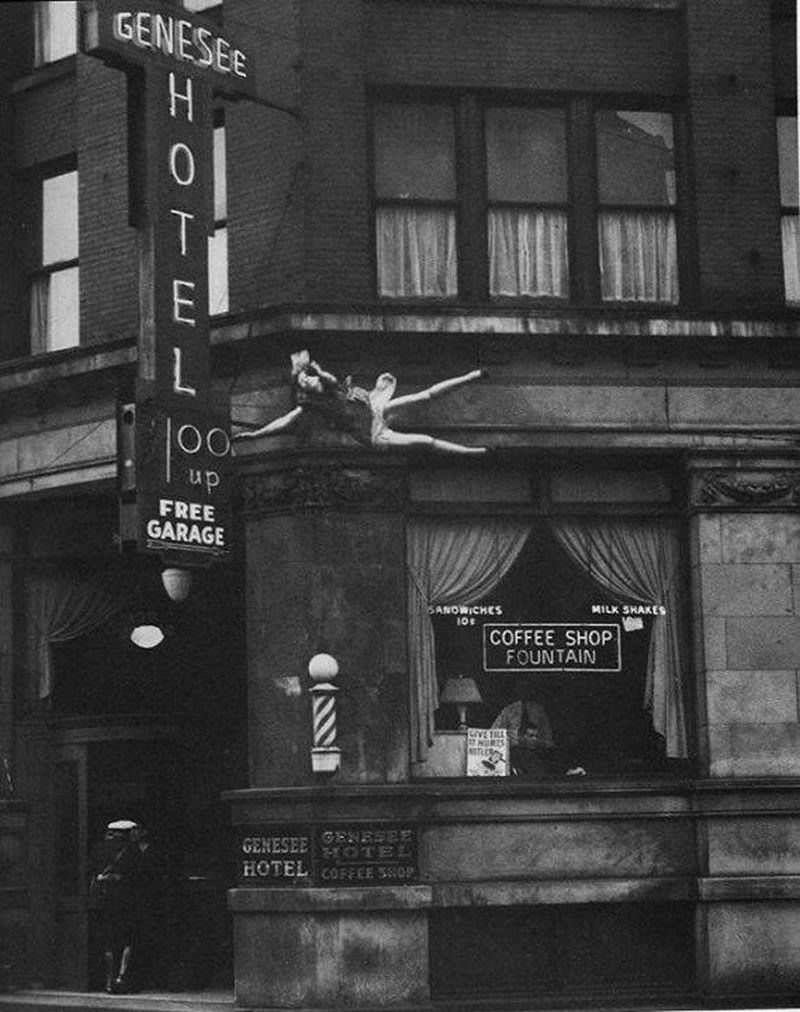
Ms. Miller claimed that the woman was from Chicago and checked into the hotel under the name “Marry Miller.” In the hotel’s communal women’s restroom, she locked the door and stepped out onto the ledge through the window. Mary Miller, a Buffalo resident who lived with her sister, had booked into the Genesee Hotel after informing her sister she was visiting relatives in Indiana.
Mary Miller is not well known, but what is known is that her sister was shocked at her suicide. Mary Miller was not married at the time of the photo, which was titled “The Despondent Divorcee.” Mary Miller did not have a marriage and was never married. One of the most disturbing aspects of her case is that there is no known motive for the suicide, no note was ever found and she waved to the crowd before taking her life.
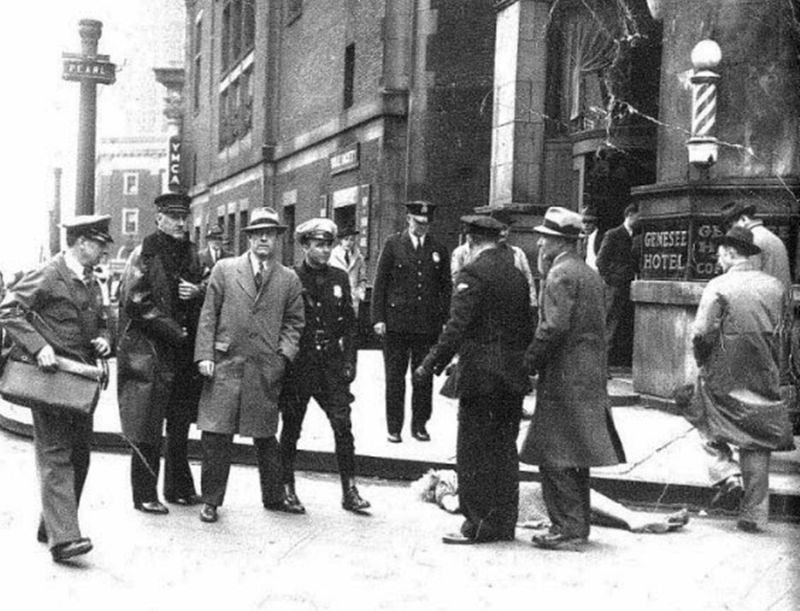
The body of Mary Miller, surrounded by investigators. “She waved to the crowd below… her body plummeted toward the street.”
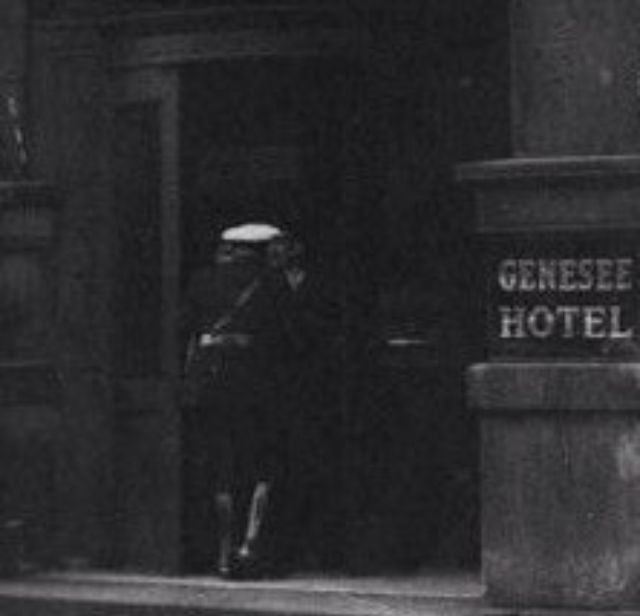
The picture was also published in the New York Times and LIFE magazine on May 8, 1942. It appears a policewoman entered the building in an attempt to reach Mary Miller before she could commit suicide; perhaps seeing the officer enter the building prompted Mary to jump before she could be deterred.
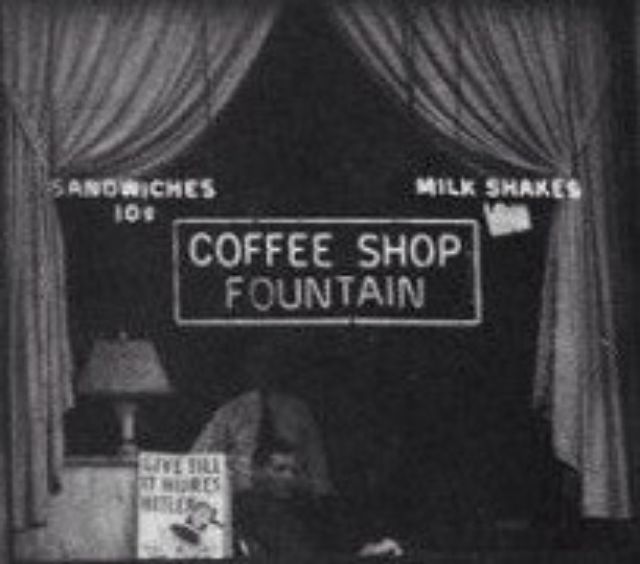
The photo is not only intriguing because it shows suicide in progress. During 1943, world war II was raging, and most men were serving in the military. Women were still apprehensive about entering the workforce. One of the first women to work in law enforcement in Buffalo was the policewoman running inside the Genessee Hotel. Two men in a coffee shop are pictured next to a propaganda sign, displaying the words “Give until it hurts Hitler,” while seemingly unaware of the panic present on the street outside.
Room rates at the Genesee Hotel were advertised as “$1.00 and up” per night (but you had to share a bathroom, of course), and sandwiches at the downstairs coffee shop cost only 10 cents. The Genesee Hotel was built in 1882 but has since been demolished.
“The Despondent Divorcee” photo, more accurately known as “The Genesee Hotel Suicide,” was used in a psychological study. According to the study, 96% of participants in the study failed to notice Mary Miller falling to her death upon first viewing the photo.
In 1942, Sorgi probably used a Graflex Speed Graphic camera, which was used almost universally for newspaper photography. An SLR was taken with a 5″ by 4″ sheet film, which accounts for the incredible detail in this photograph. A 35mm SLR camera could take up to 36 images before reloading, but Sorgi removed each exposed slide and reloaded the camera before taking a new shot. He waited for just the right moment to capture this shot, or he would have been too busy reloading the camera. The two “establishing shots” he took must have seemed like a massive risk to him.
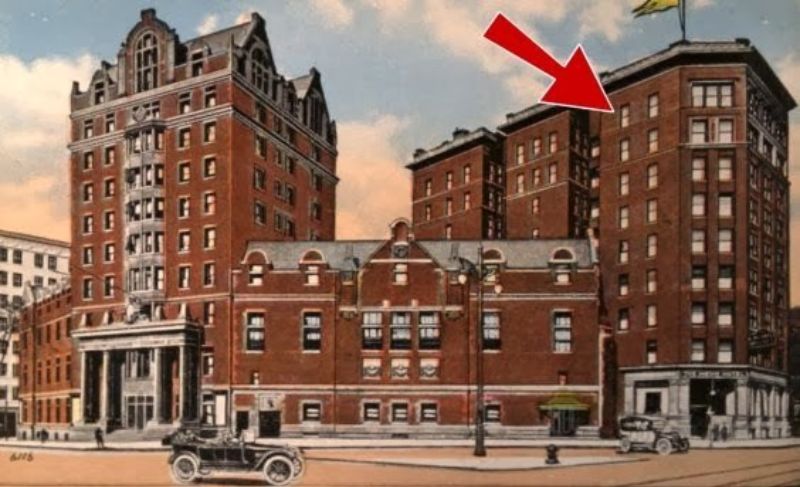
Postcard of the Genesee Hotel showing the window from which Mary Miller jumped.

It’s haunting how life goes on around her despite her impending death. The deliveryman ducks into the hotel. There is a need for coffee at the table by the window. Waiter looks out the window obliviously.
Life goes on despite tragedies, despite some families forever affected by something everyone will forget later that day. Last week, I had a great example of this as I drove home from work. On the highway, there was an accident in the other lane that caused traffic to slow down. Upon passing the scene, I saw that a car had completely slammed into the concrete wall on the left side of the road at a 45 degree angle. Although it was nighttime, I could see the driver’s body draped over the steering wheel, illuminated by the emergency vehicle lights. The image was truly haunting, and I felt like throwing up the whole way home. About 5 minutes later, on the radio, a traffic advisor reports the accident, offers alternate routes, and then reminds us of a local show taking place that night. Her life was just taken away in an instant, her family’s lives will all be turned upside-down, and to the rest of the world at that moment, it was just an inconvenience.
When I pass accidents, I try to say a prayer; you never know how badly someone has been hurt.
It makes me sad to see an ambulance flying down the road. There is a good chance that someone’s life, and those closest to them, have just taken a turn for the worse. it especially hits me in the mornings when I drive to work. It’s like, well, someone’s day started out terrible.
The photo was used in a psychological study, and 96% of the subjects didn’t even notice her at first glance.
She looked like an extrusion in the wall, like a gargoyle, except for her legs.
I agree. I had to look at the photo three times before I understood it. At first, all I saw was building decoration.
Suppose it is shown in a flipbook of a hundred other photos, or something like that? Honestly, I’m skeptic.
We recognize images like this because we’ve seen them before, things like 9/11’s falling man, and other pictures, even posted on subs similar to this prime our brains to recognize it. However, if this has never happened to you before, your mind may just block it out.
There was a gallery of photos of people falling to their deaths at the Art Institute in Chicago a few weeks ago. There were about 30 pictures like this. There were most likely unidentified people among them.
It looks like it’s really windy and she’s holding onto the sign.
Before she died, she must have realized she did not want to die/feel pain and made a feeble attempt to grab hold of something…
The majority of suicide attempt survivors realize that they don’t have to commit suicide to solve their problems.
I saw this in the documentary about the Golden Gate Bridge jumpers. There was an interview with a young man who survived a jump. He was a young man in his 20s who had lived with anxiety, depression, and inability to socialize, so he was completely alone and couldn’t bring himself to do anything with it, so he jumped. The second he let go and realized there was no turning back, he regretted it instantly, he said in the interview. He was lucky to have survived. His life turned around after that.
An excellent documentary. If anyone is interested, it’s called The Bridge. The seal pushed him to the surface of the water, if I recall correctly.
Her legs look so skinny.
Beforehand, she surely thought about her existence and pain and how death was, in the end, the best choice. In 1942, she ended her being and the world went on without a hitch. In 2014, we are considering her and her choice, feeling things like she might have felt at times in her own life. We could all be her, and we could all be her.