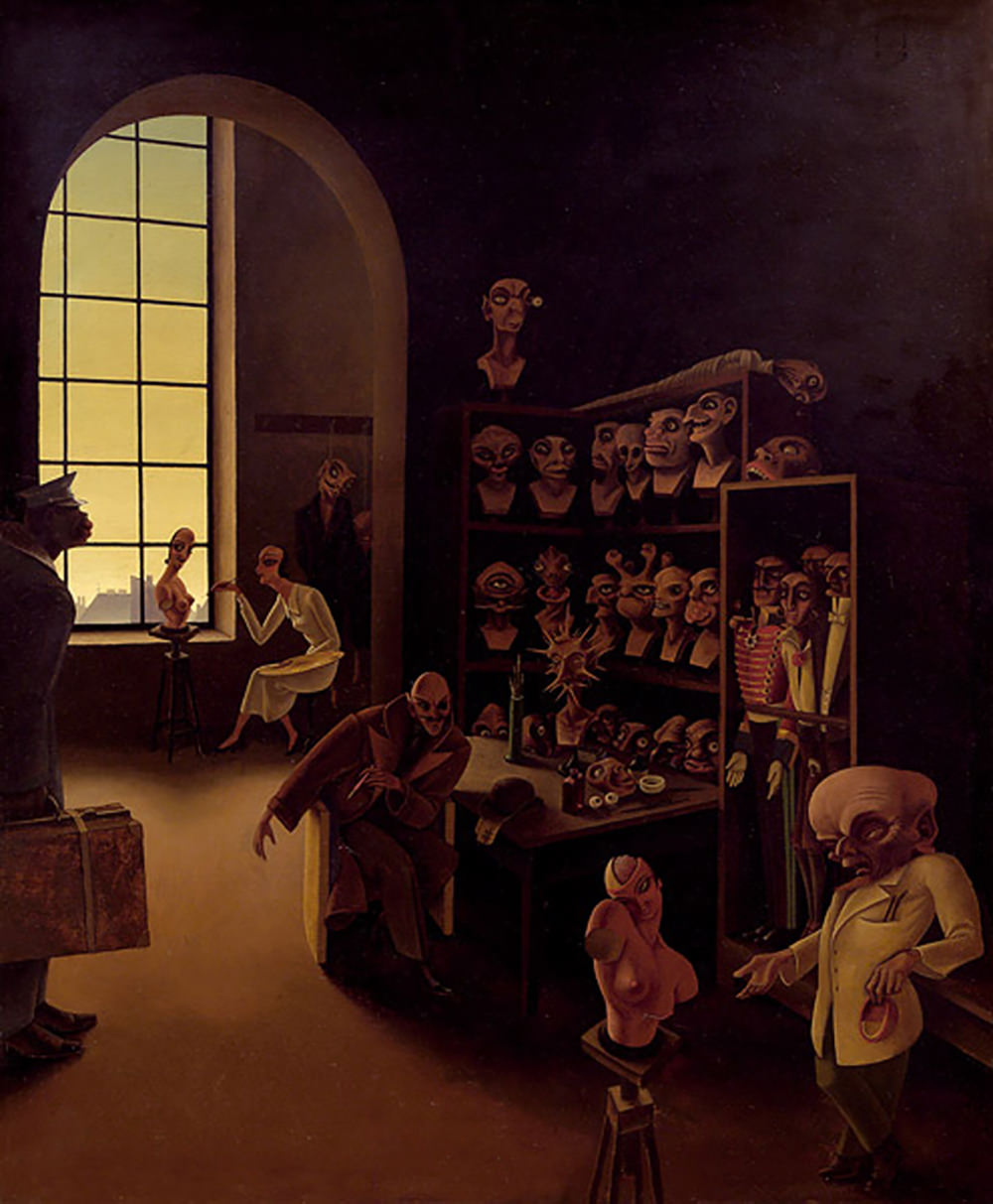
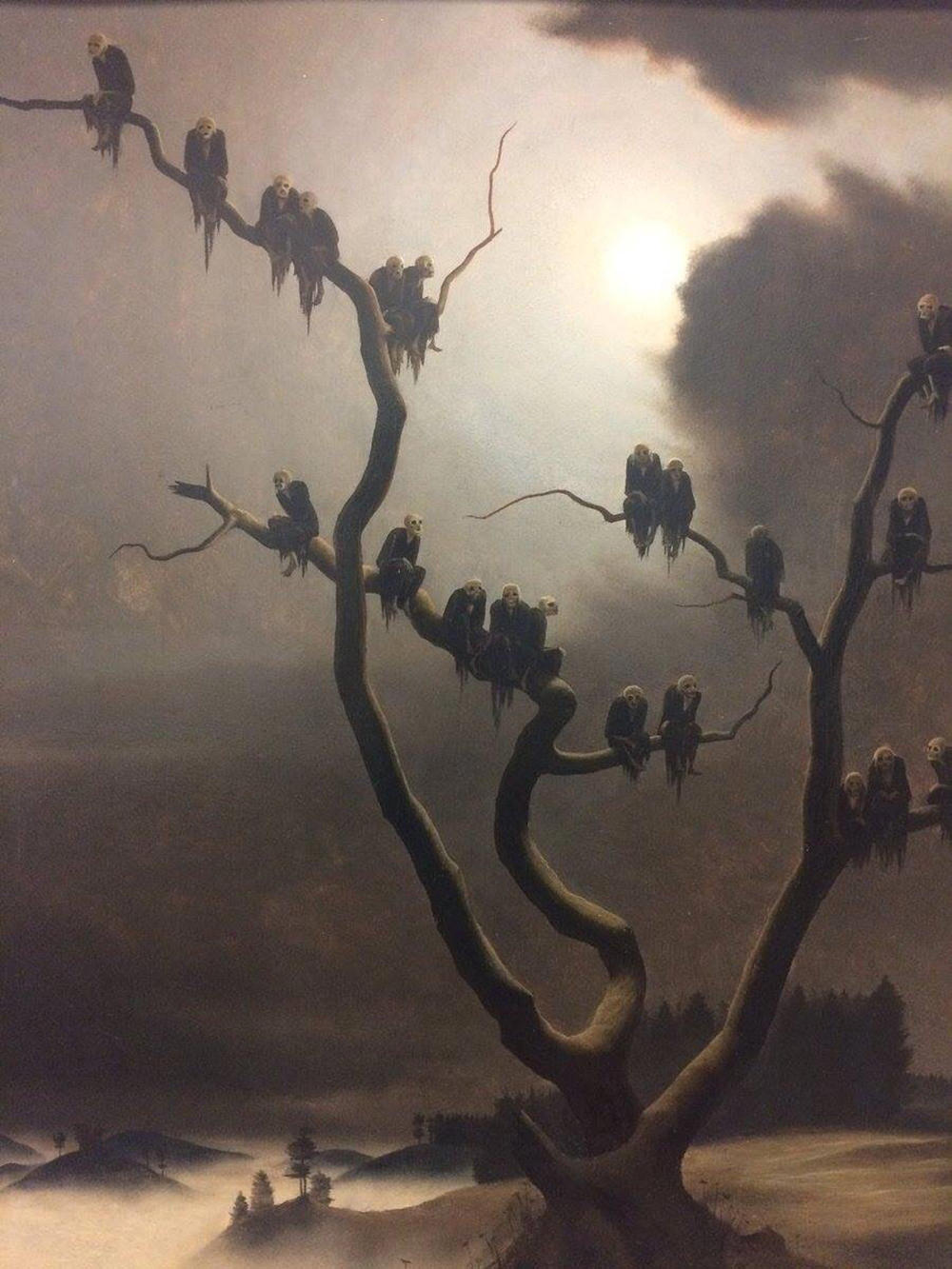
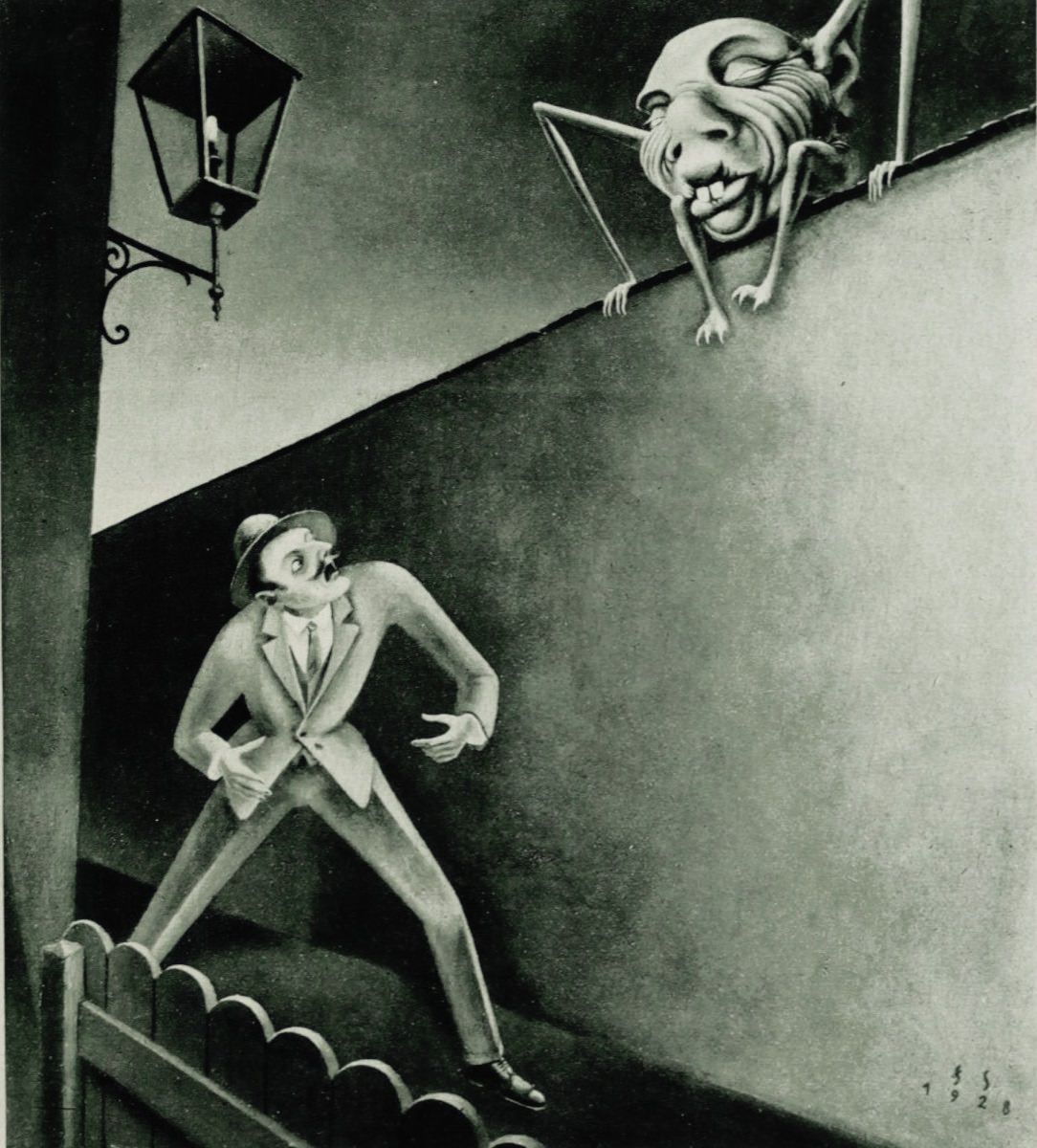
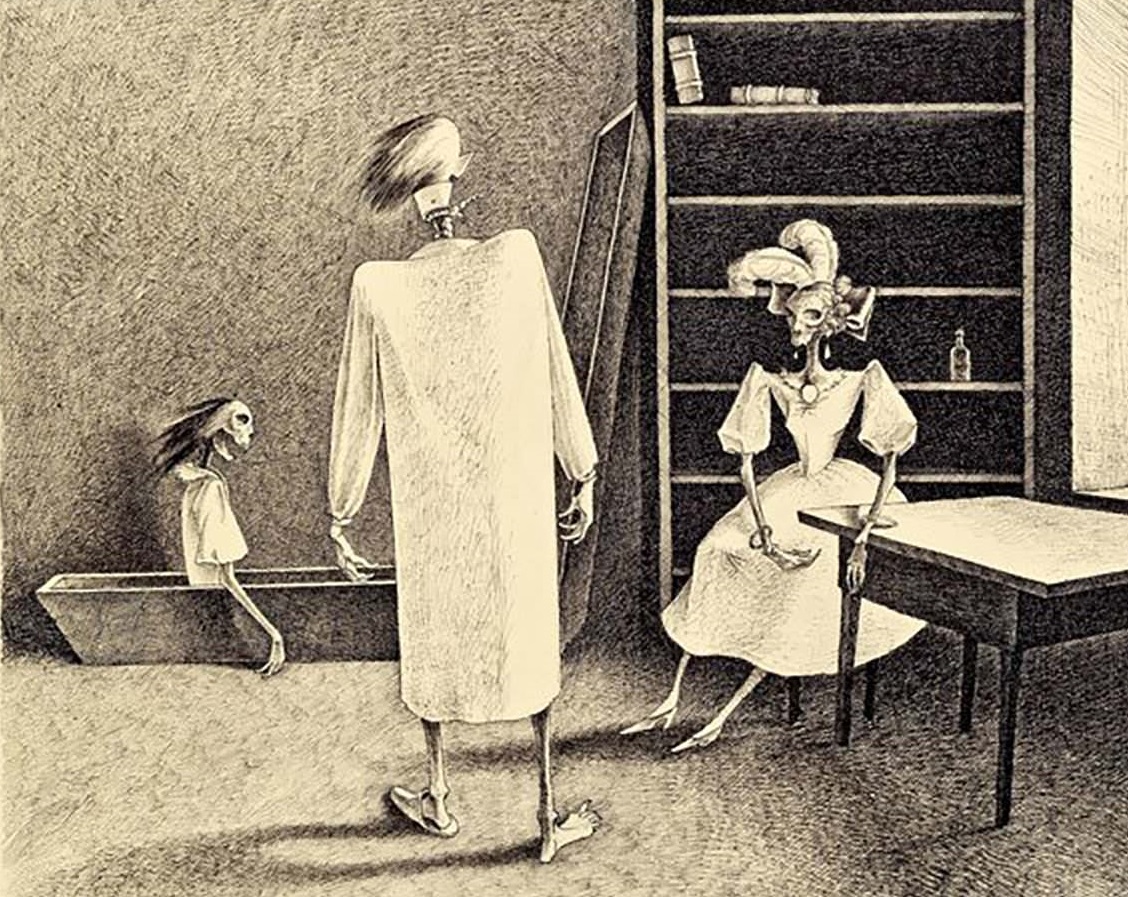
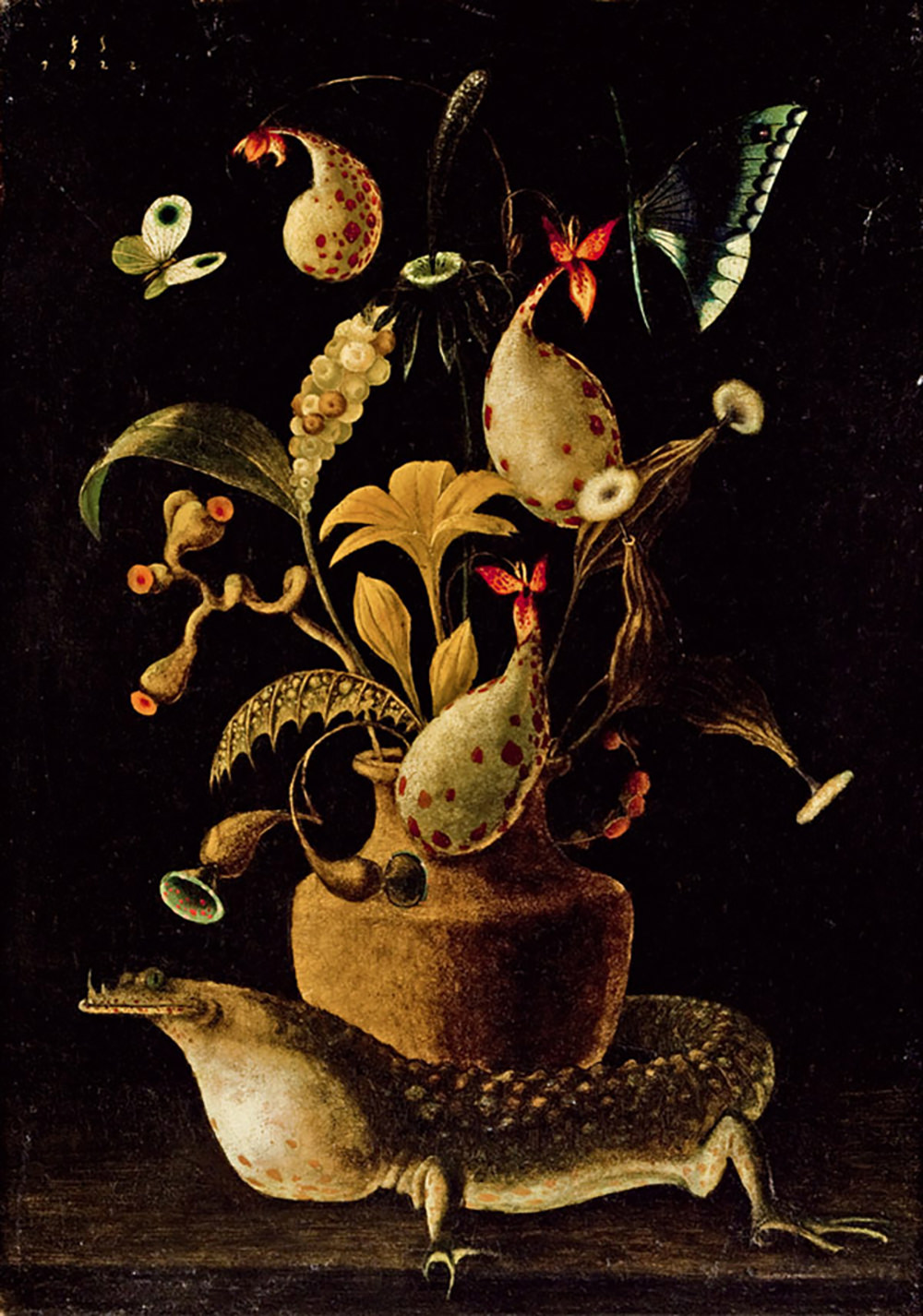
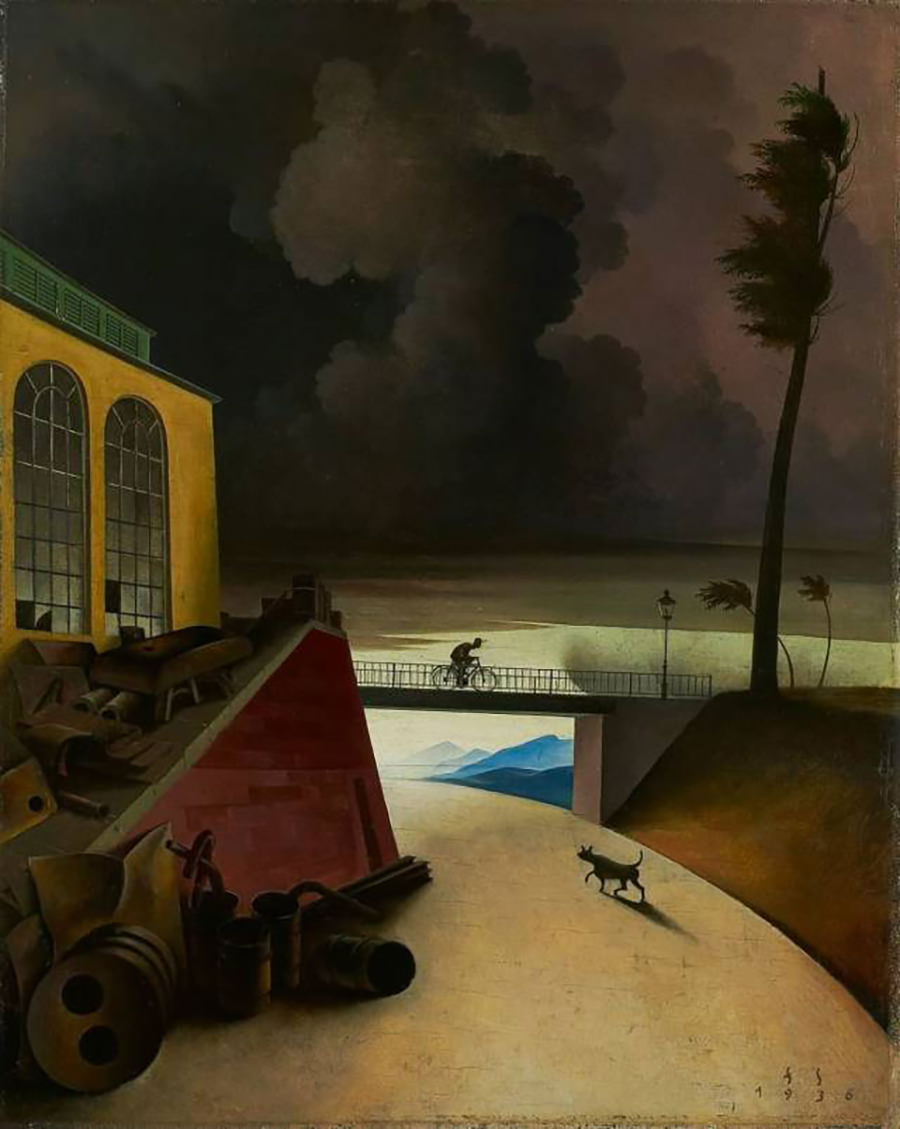
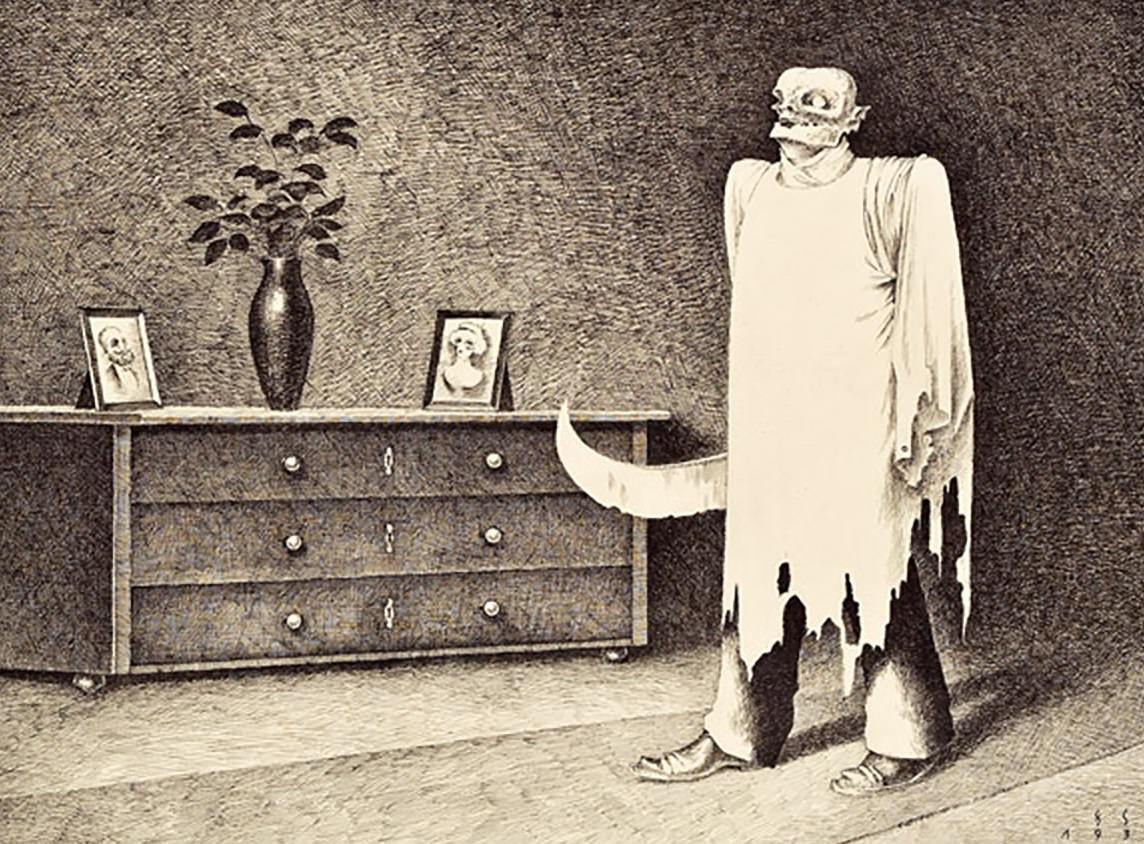
Austrian artist Franz Sedlacek (1891–1945) painted a world that felt almost real — until you noticed the monsters. His canvases placed hooded figures on bare winter branches, lurking creatures in the shadows of ordinary streets, and desperate lone figures fleeing into dark forests. The horror was never far from the familiar.
Sedlacek trained as a chemist and held a doctorate, making him one of the more formally educated artists of his era. His scientific background didn’t soften his imagery — if anything, it gave his nightmarish scenes a precise, clinical quality. Every grotesque detail was rendered with careful, deliberate craft.
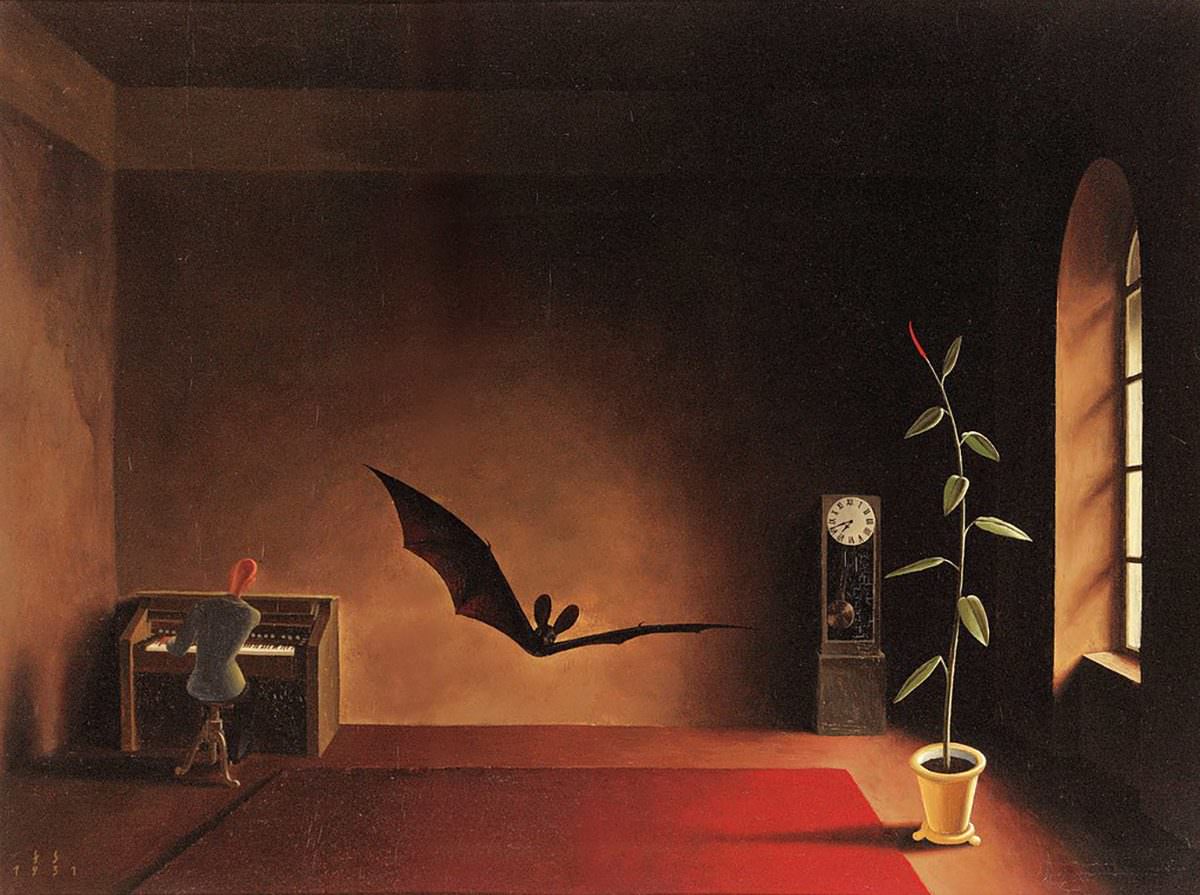
His work carried a dark wit alongside its terror. Creatures weren’t just threatening — they were sometimes absurd, even comic. This unsettling mix of humor and dread made his paintings harder to dismiss than straightforward horror.
Sedlacek served in World War I and witnessed trench warfare firsthand. That direct exposure to mass death and human brutality appears throughout his art — in the anxiety of fleeing figures and in skies that always seem to promise something terrible.
In the 1930s, Sedlacek joined the Nazi Party. He became a member of a regime responsible for systematic mass murder — a fact that sits uneasily alongside his art. When Germany drafted him into the Wehrmacht in 1939, he rose to the rank of captain.
He fought across multiple fronts — Poland, Norway, and the Eastern Front at Stalingrad. Each posting brought him deeper into the war’s most brutal theaters.
Sedlacek vanished during the Battle of Torun Fortress in Poland. Whether he was killed in combat, captured, or disappeared by other means was never confirmed. He was officially declared dead in 1972, nearly three decades after his disappearance.
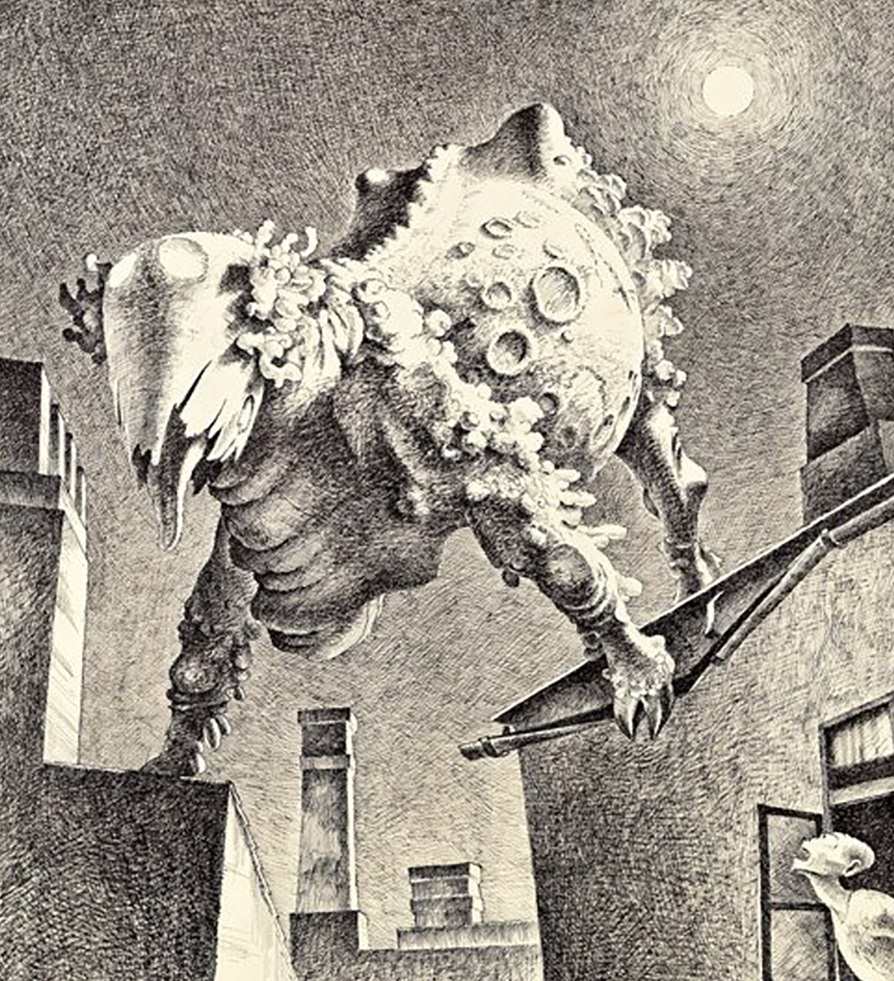
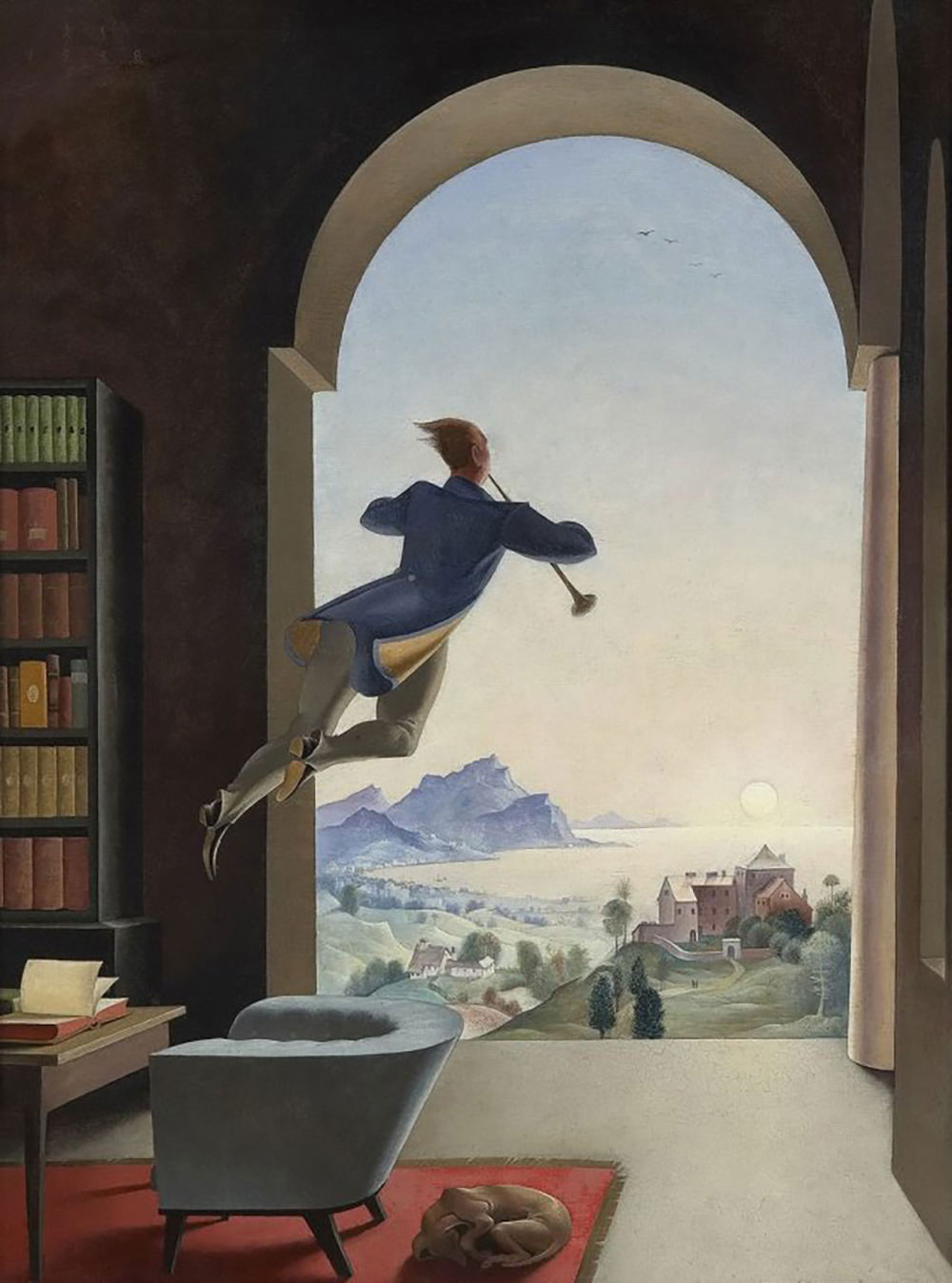
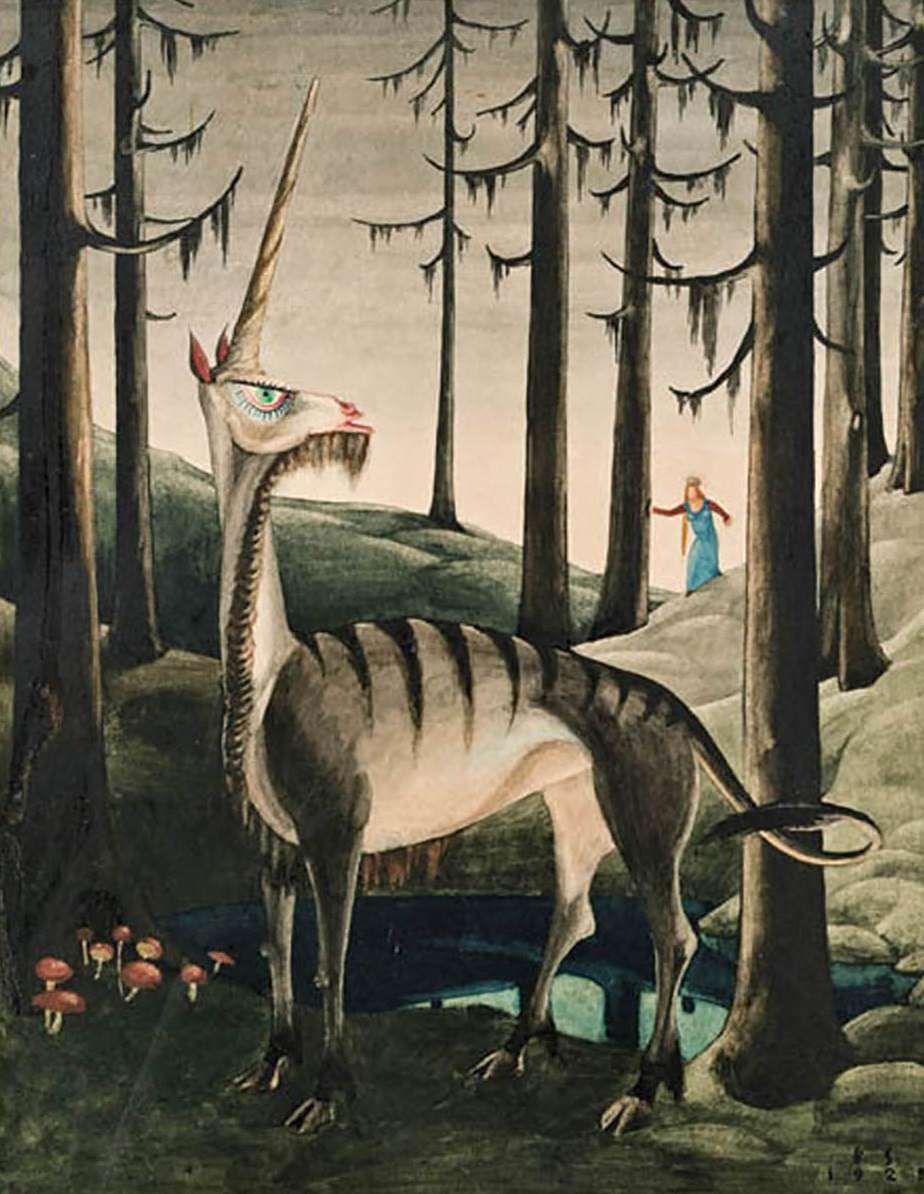
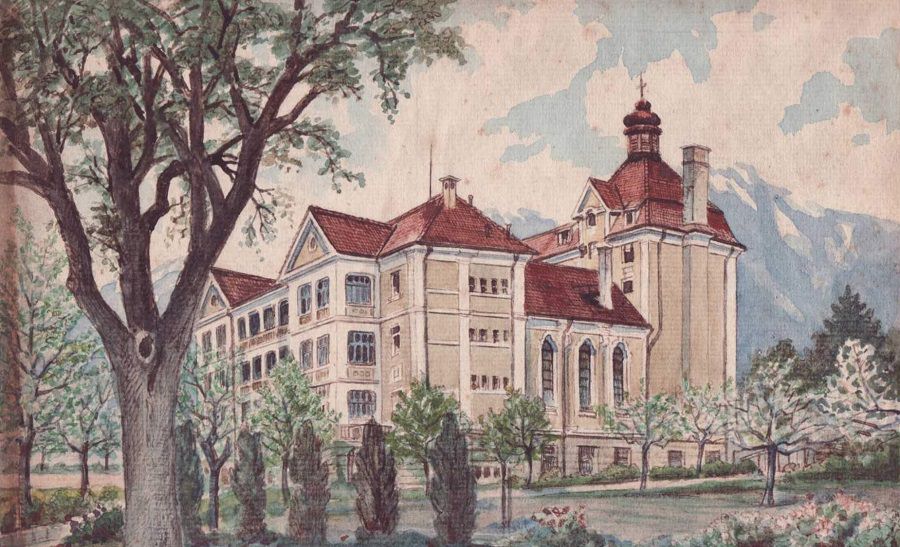
His earliest works, like those from 1913, already showed a sharp eye for the strange tension between ordinary settings and unsettling presences — a thread that ran through his entire career.
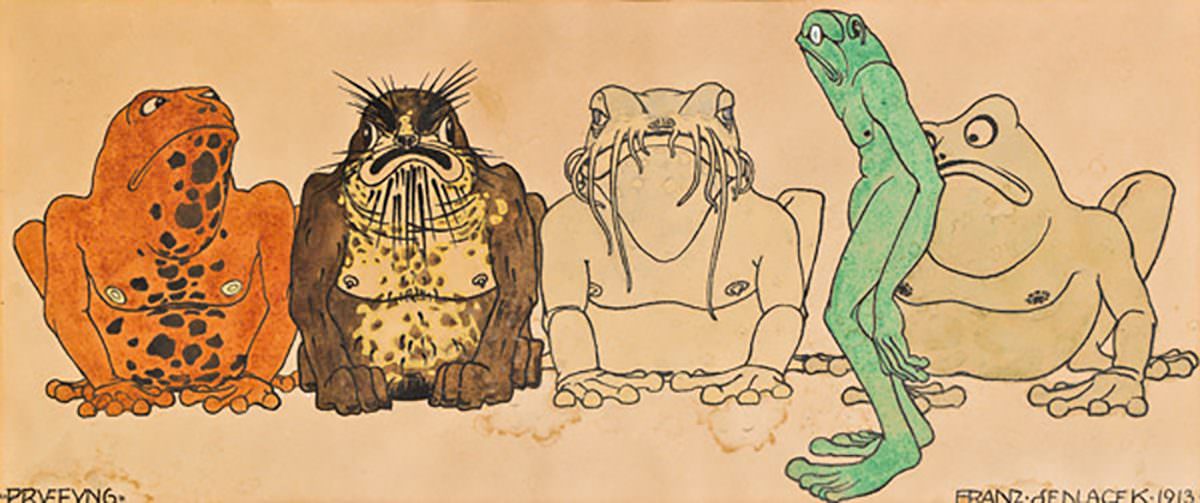
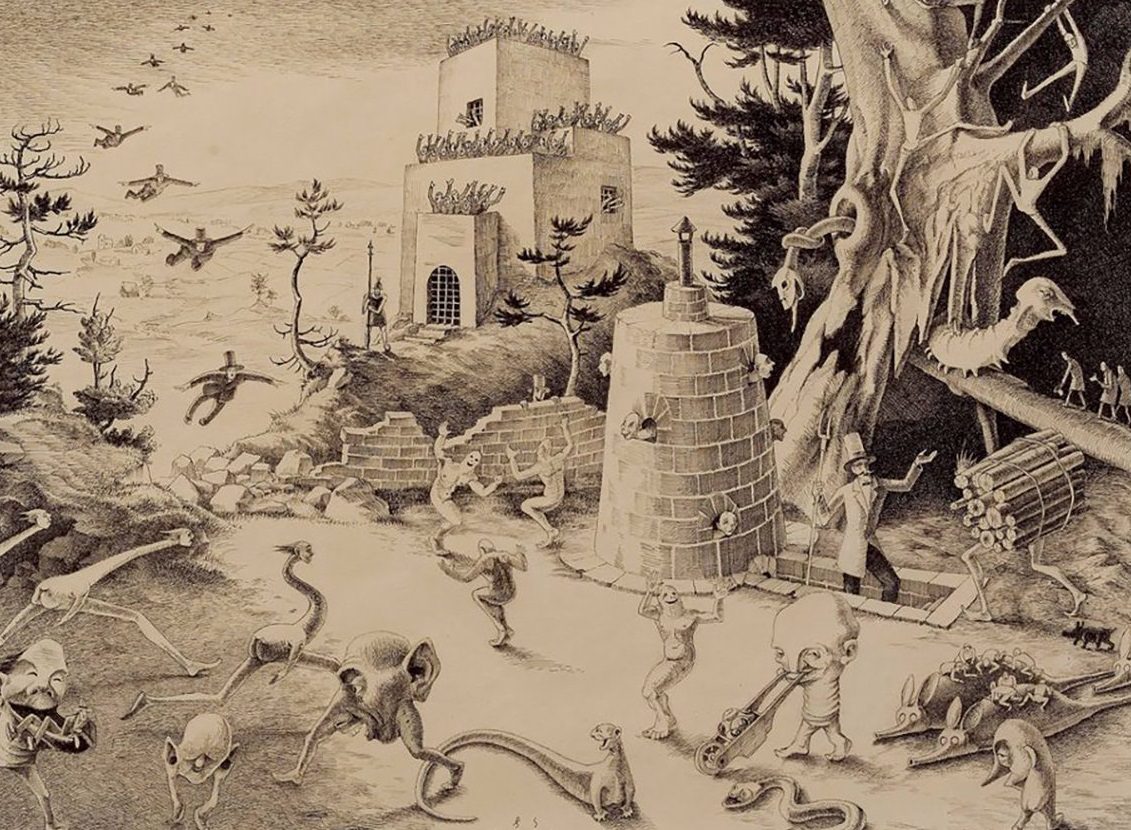
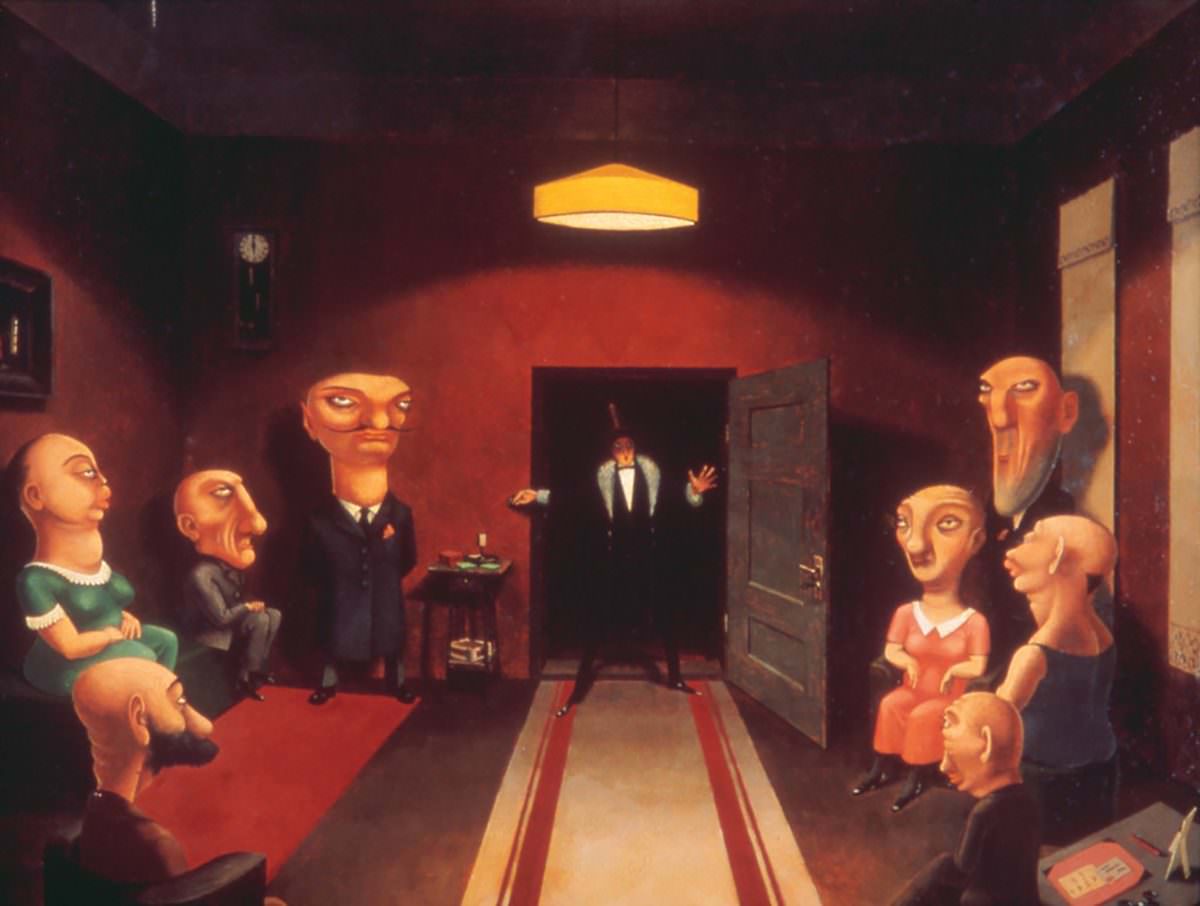
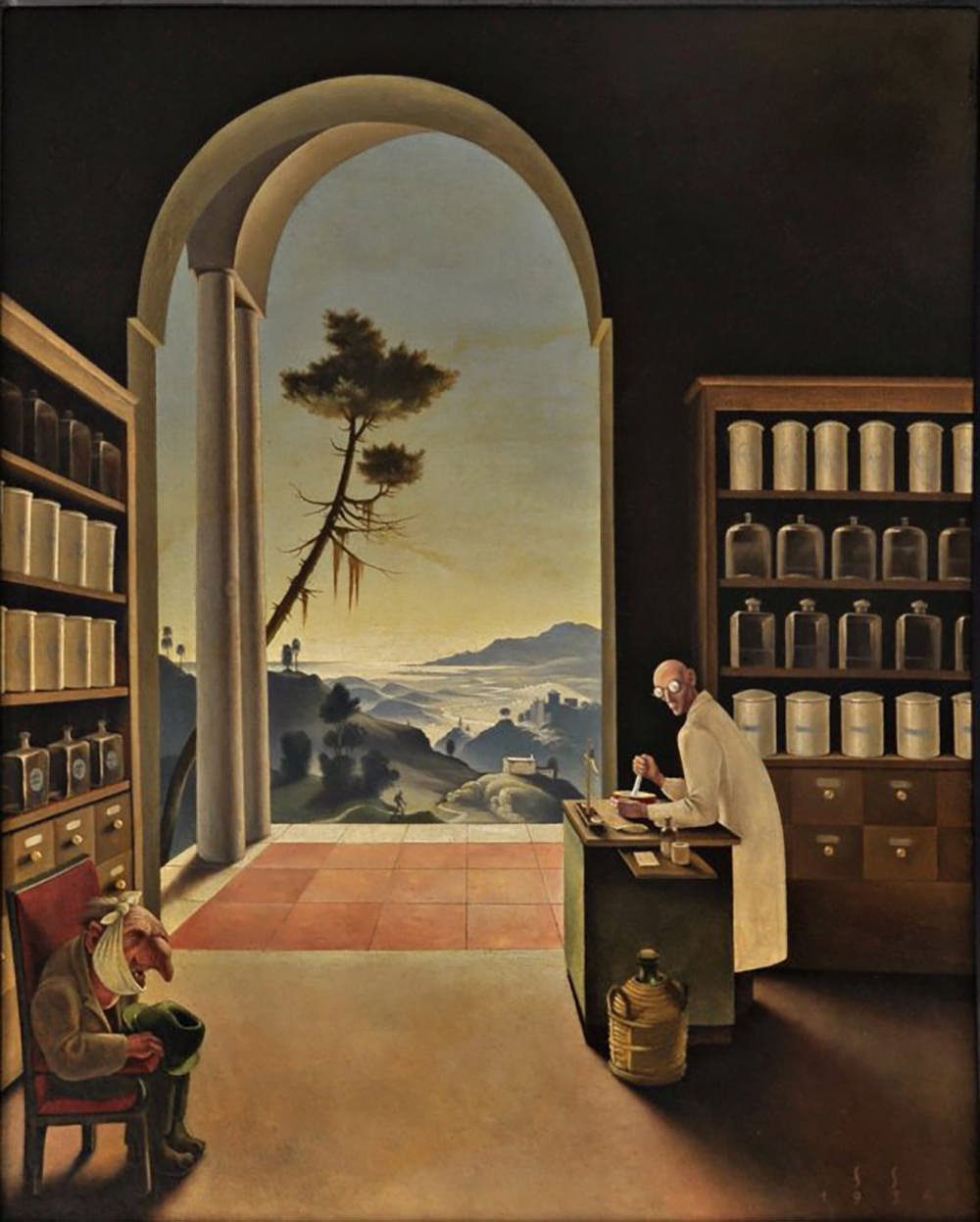
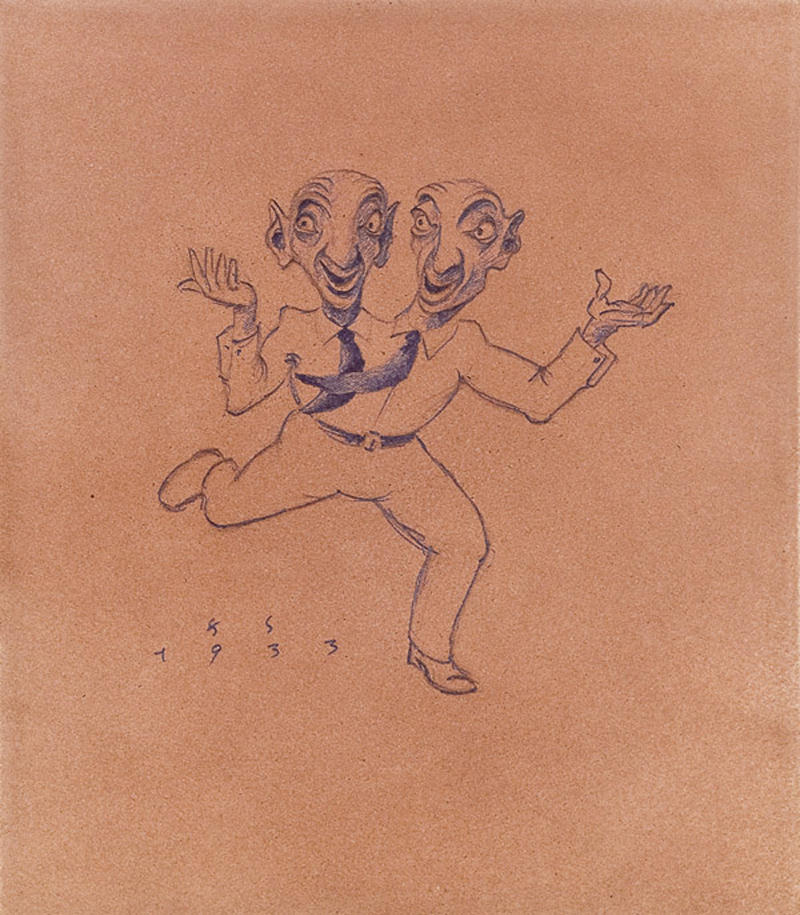
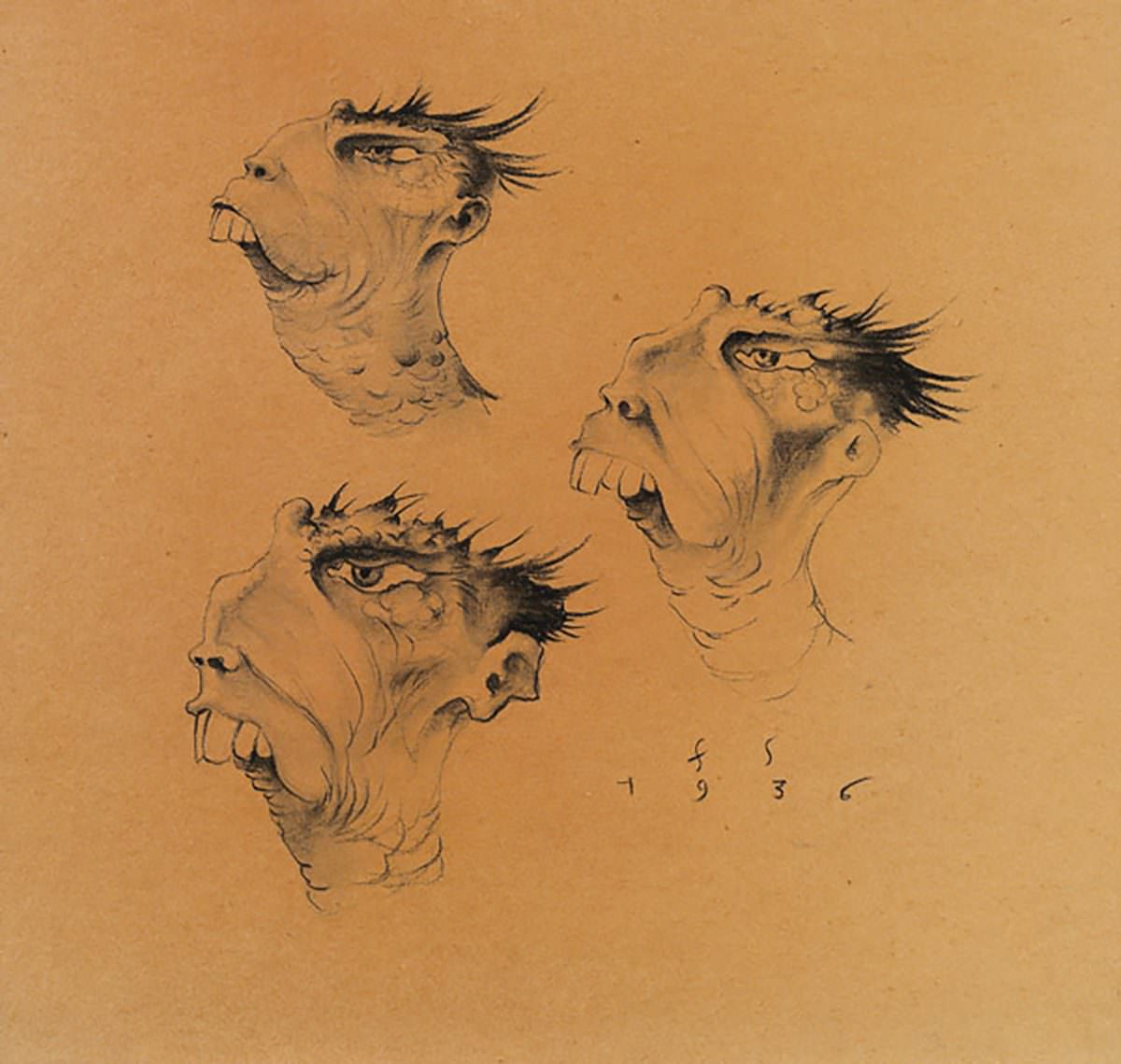
His studio works reveal an artist who studied the grotesque methodically — treating monstrous forms the way a scientist might catalog specimens. The result was imagery that felt both invented and disturbingly real.