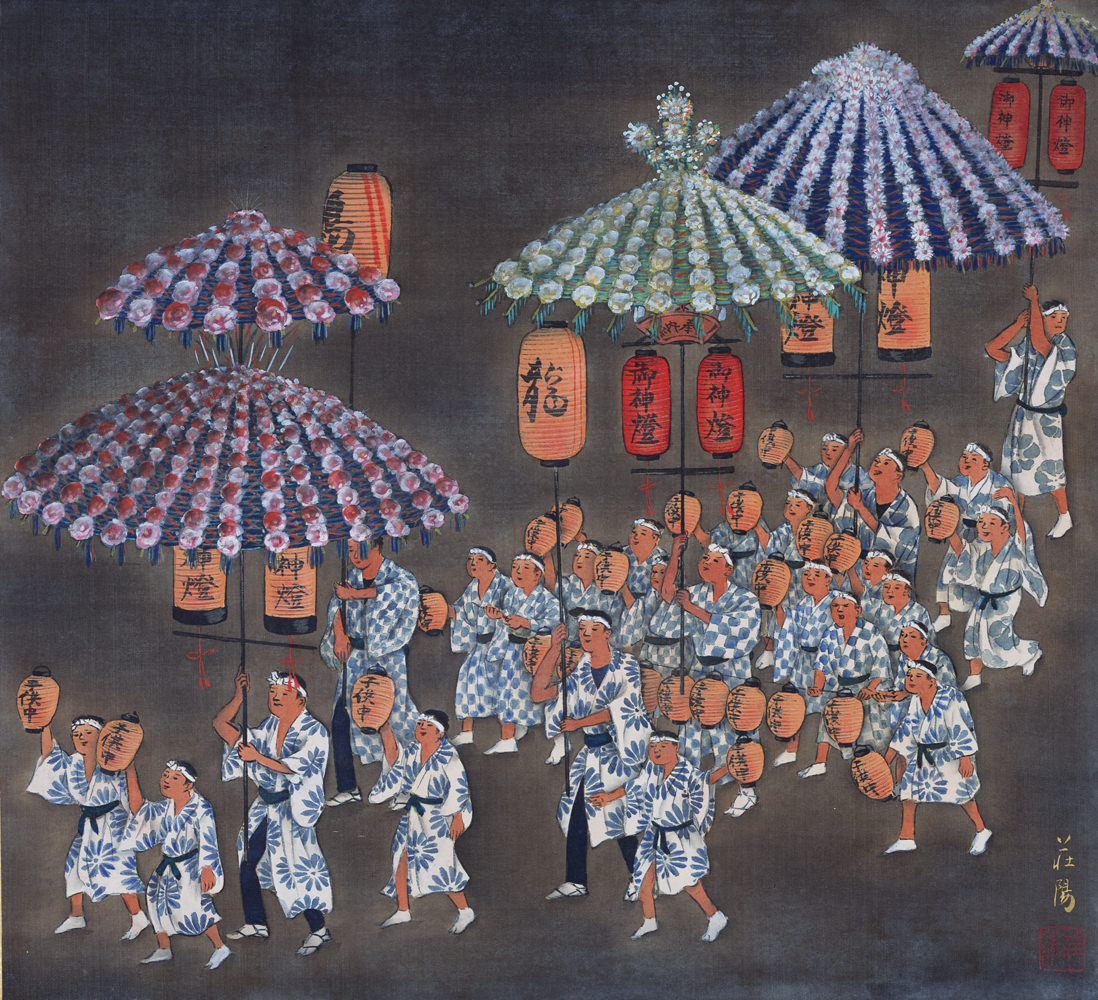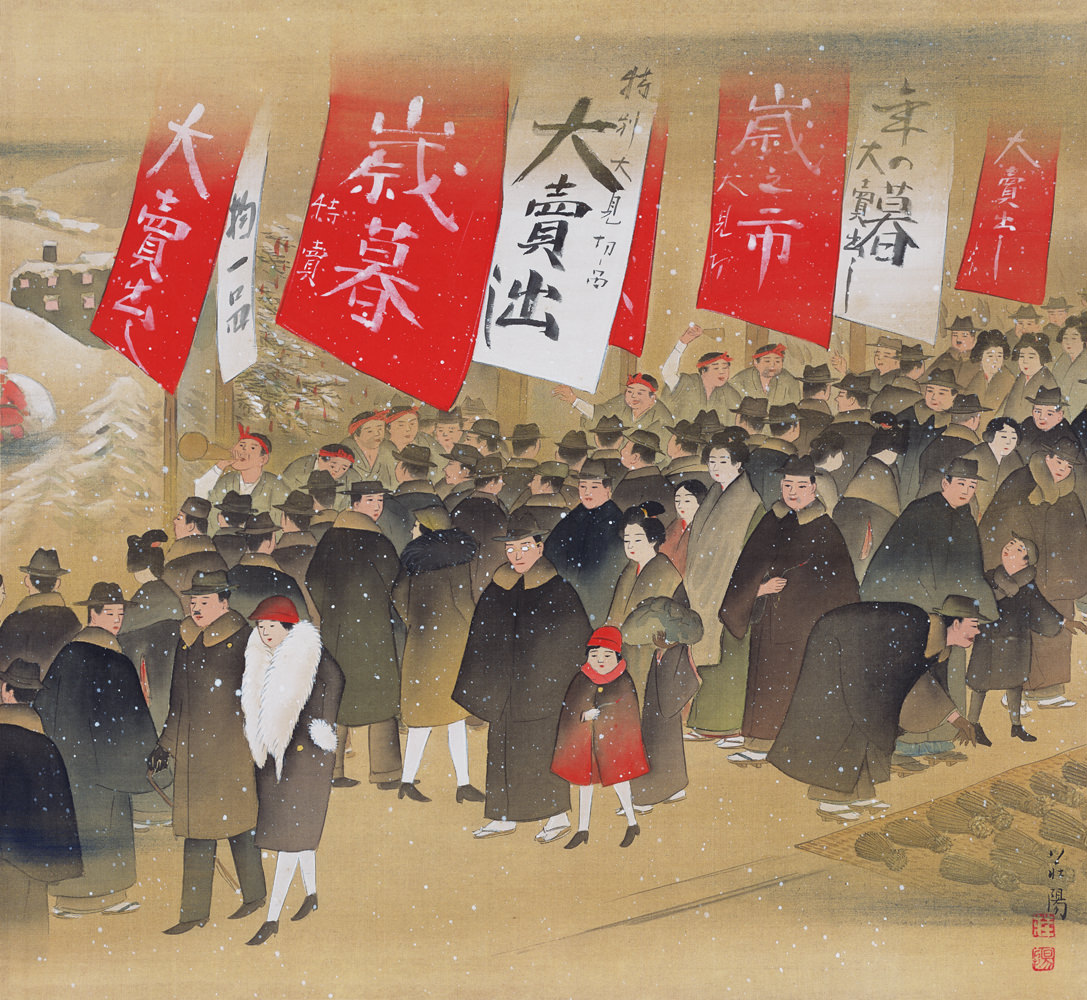
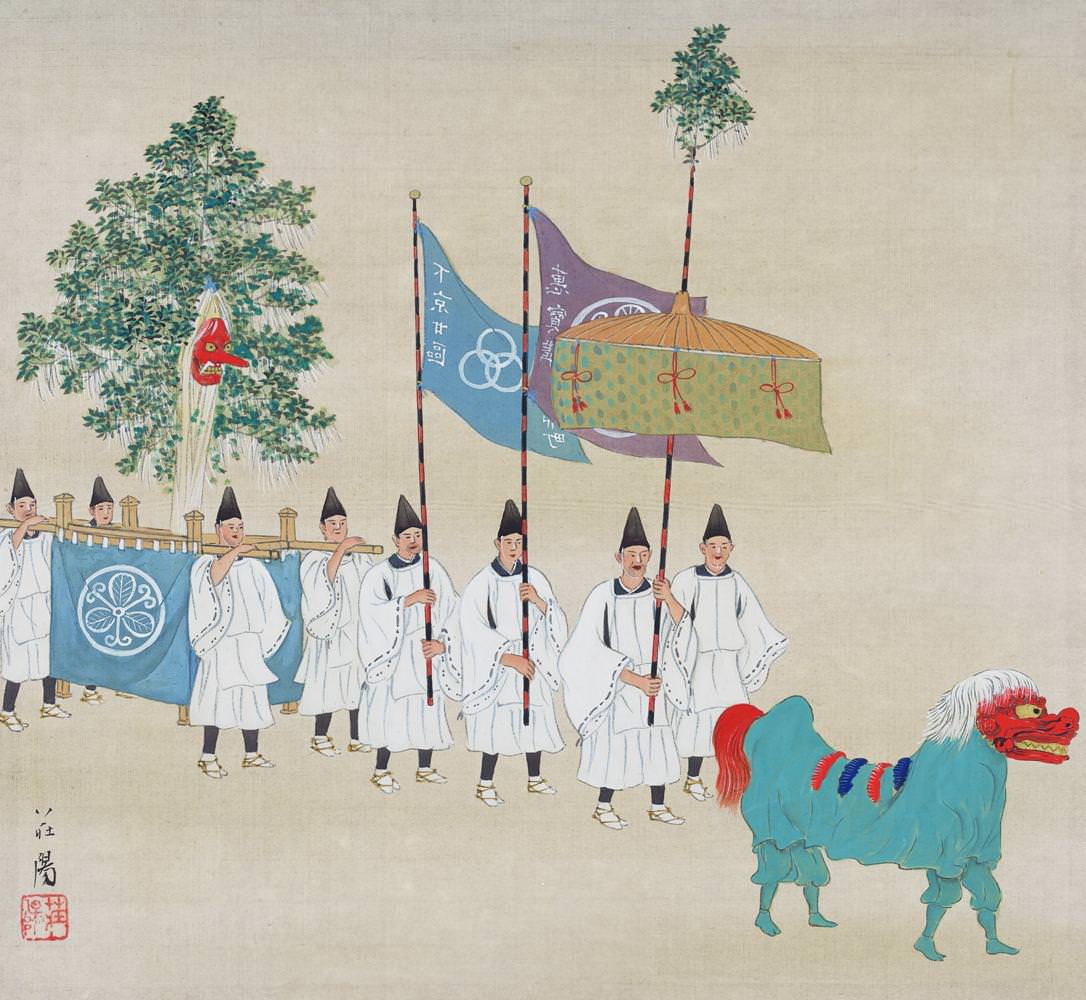
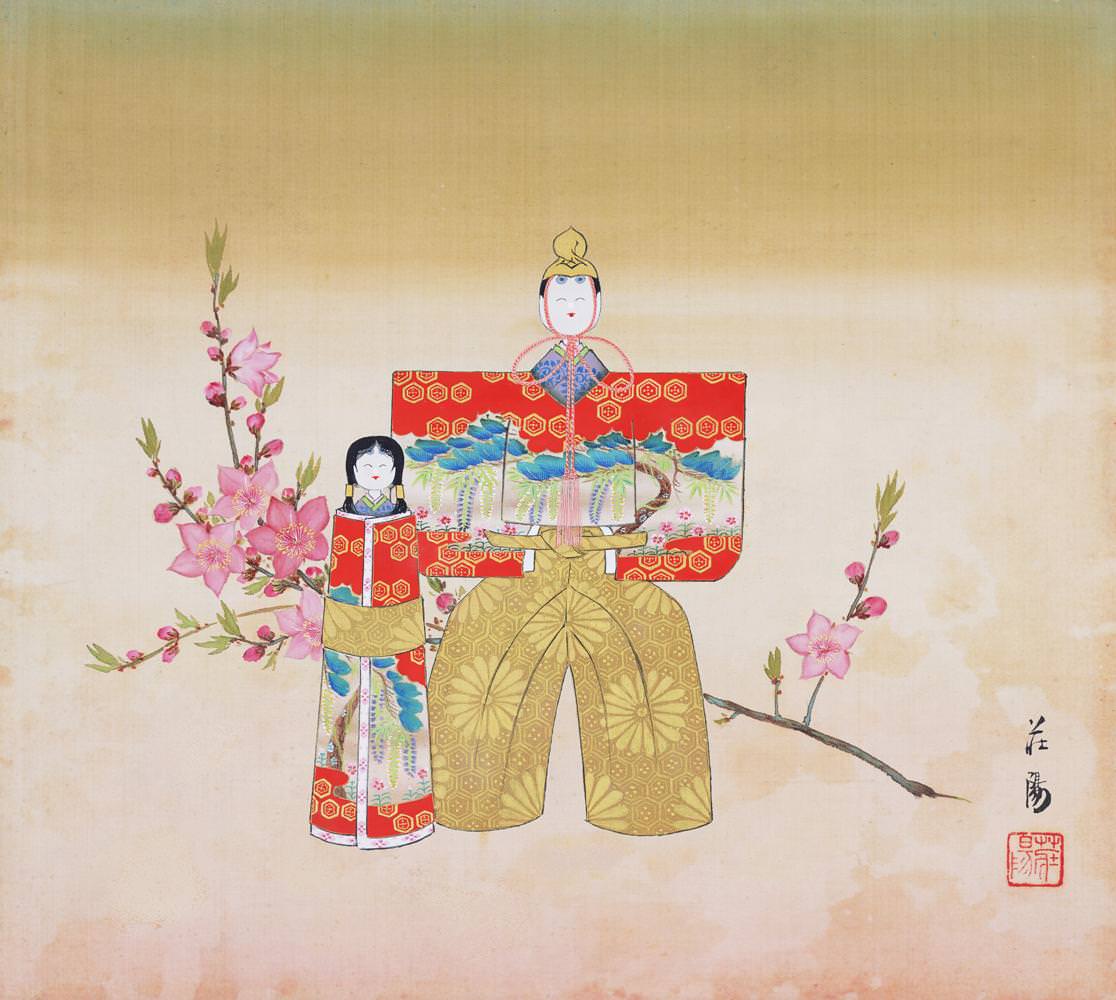
In the 1920s, someone assembled a remarkable album unlike any photo book of the era. Instead of photographs, its pages held delicate silk paintings — each one a vivid record of a festival from Kyoto, Japan. At that time, Kyoto was widely called Miyako, a word meaning “capital.” The city had held that title for over a thousand years, and its festivals reflected every layer of that long history.
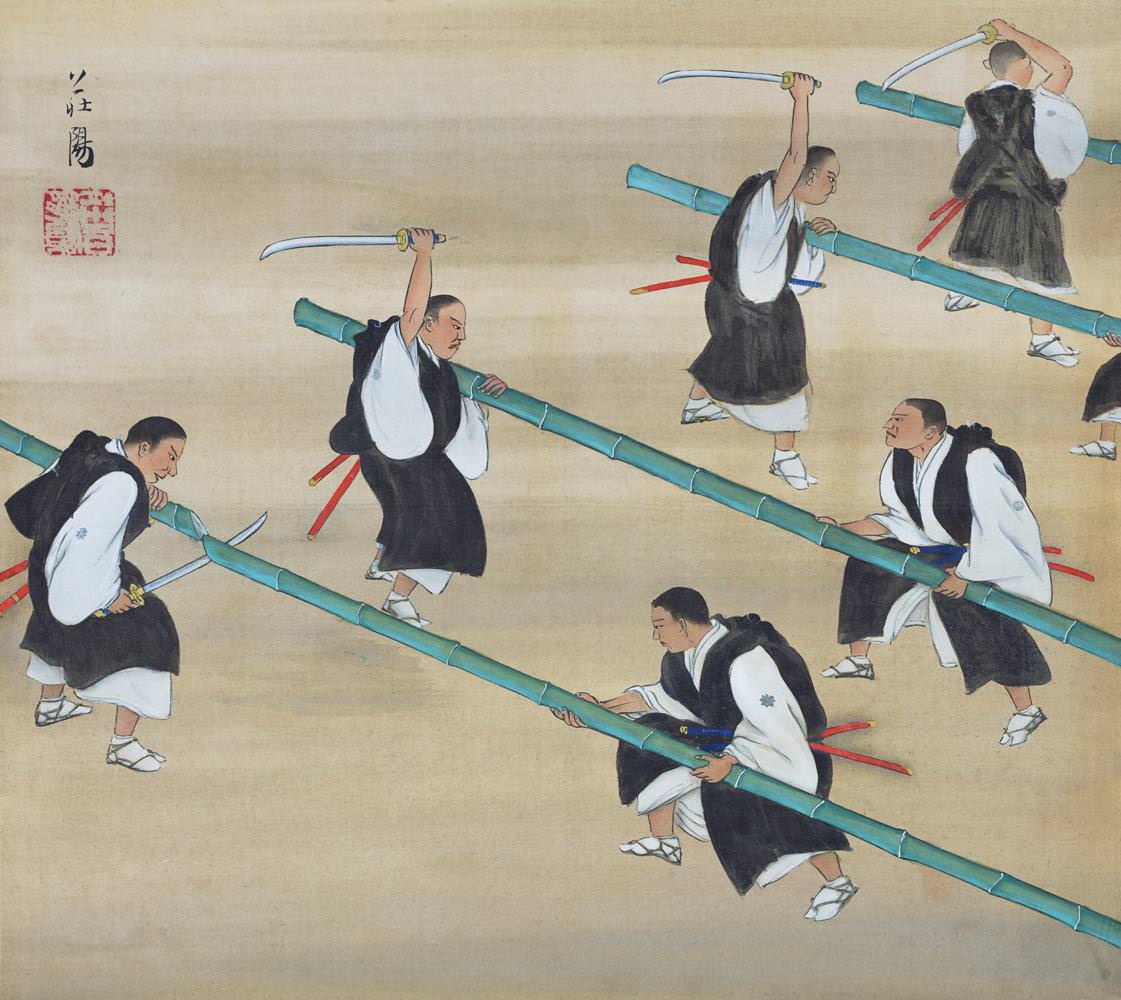
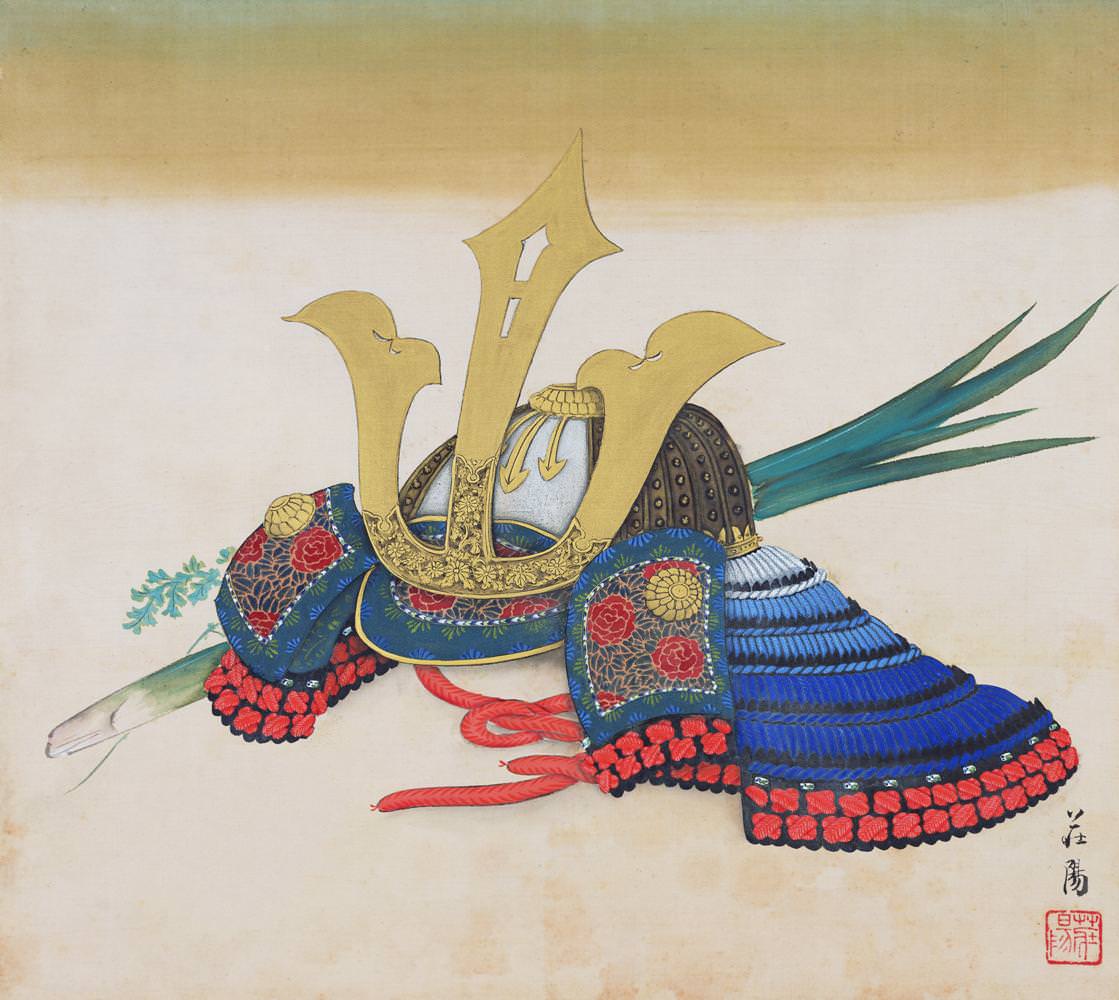
Silk was not a casual choice of material. It gave artists a surface that could hold fine detail and rich color simultaneously. The painters used this to their advantage, building scenes full of texture — brocade robes, lacquered floats, and the glow of paper lanterns against a dark sky. Light and shadow were handled with precision, giving each scene a sense of real atmosphere rather than flat illustration.
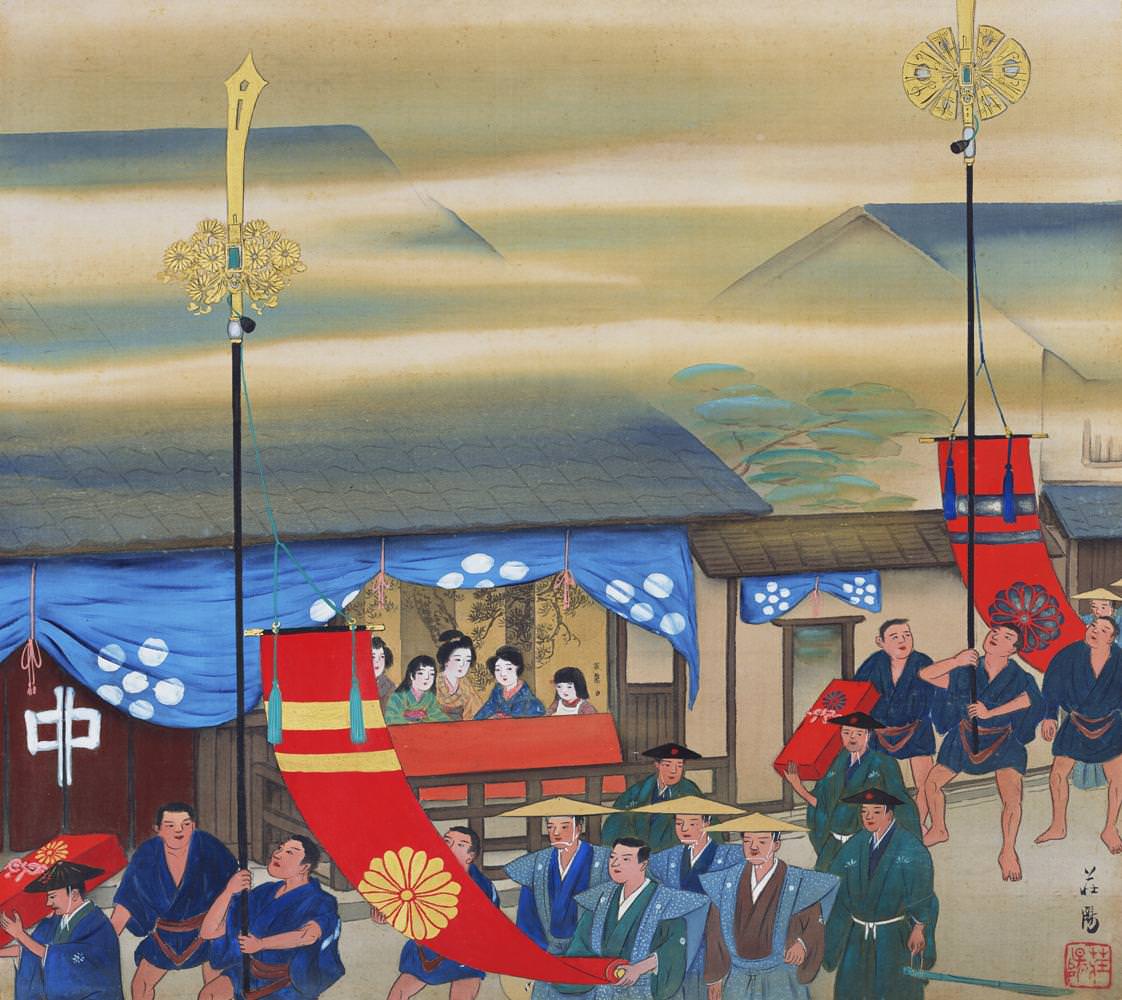
The Gion Matsuri appears among the paintings. It is one of Kyoto’s most celebrated festivals, featuring enormous wooden floats called yamaboko that were pulled through the city streets by teams of men. The paintings capture the sheer scale of these floats, decorated with imported textiles and intricate carvings that took craftsmen months to complete.
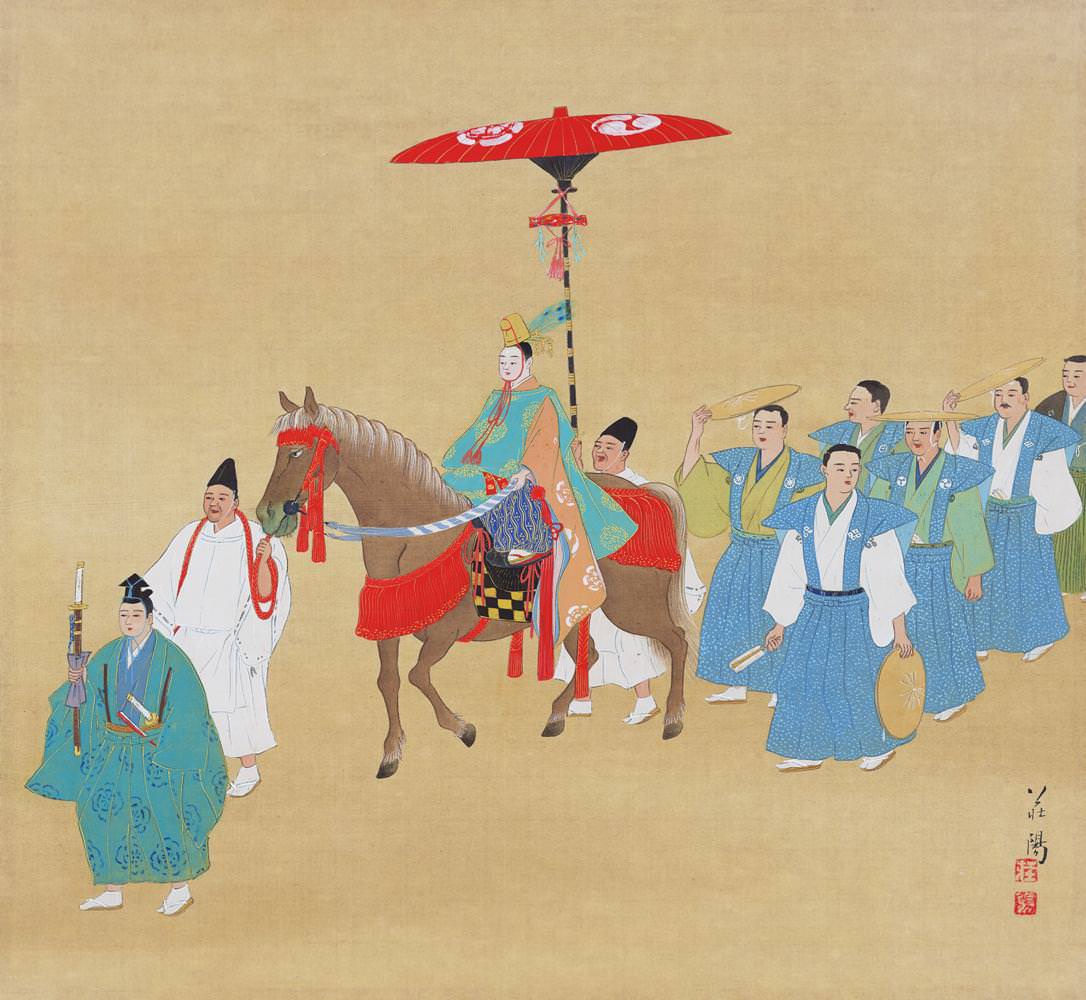
Nobles in full court dress appear in several paintings, seated on horseback with their horses adorned in ceremonial gear. These figures connect the festivals directly to Japan’s imperial tradition. Kyoto had been the seat of the emperor for centuries, and its public celebrations carried the weight of that royal heritage in every detail of costume and ritual.
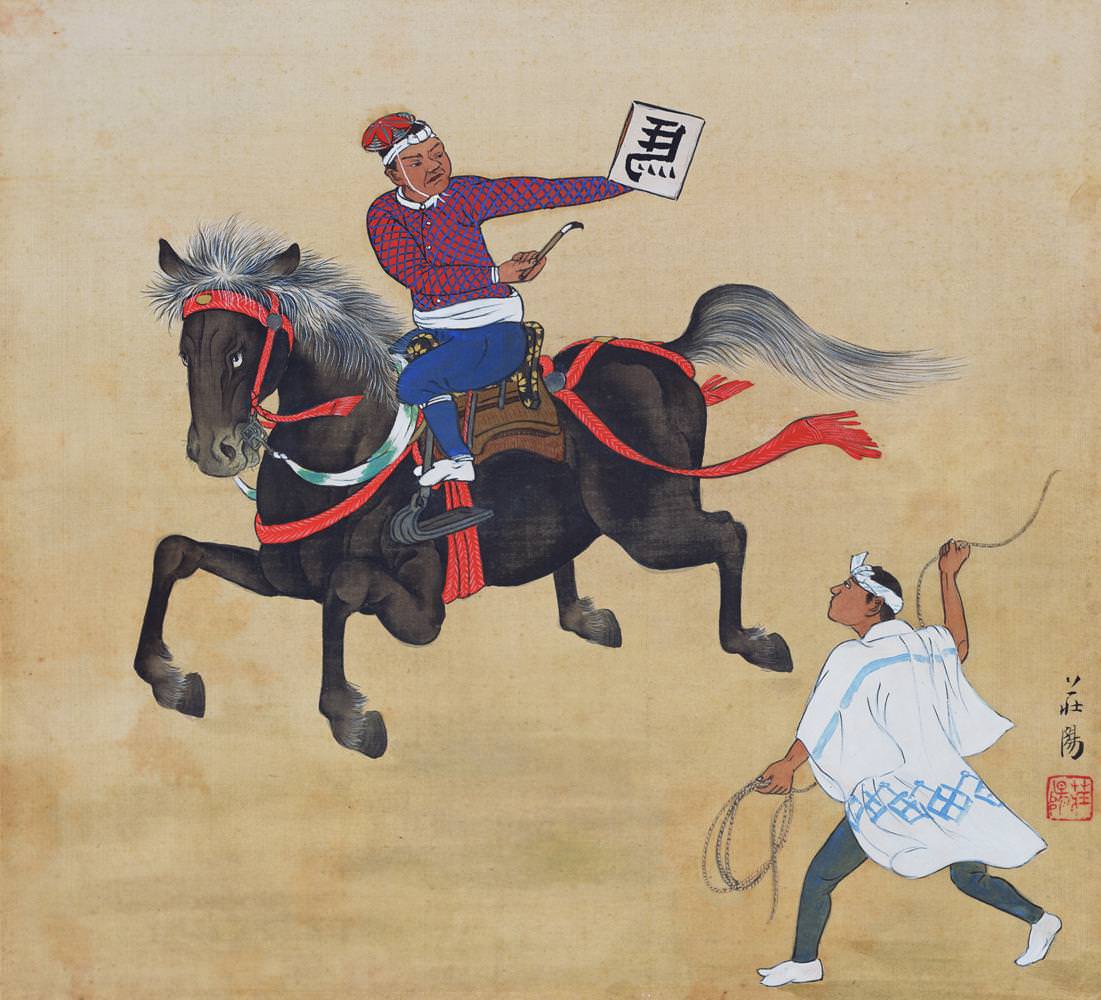
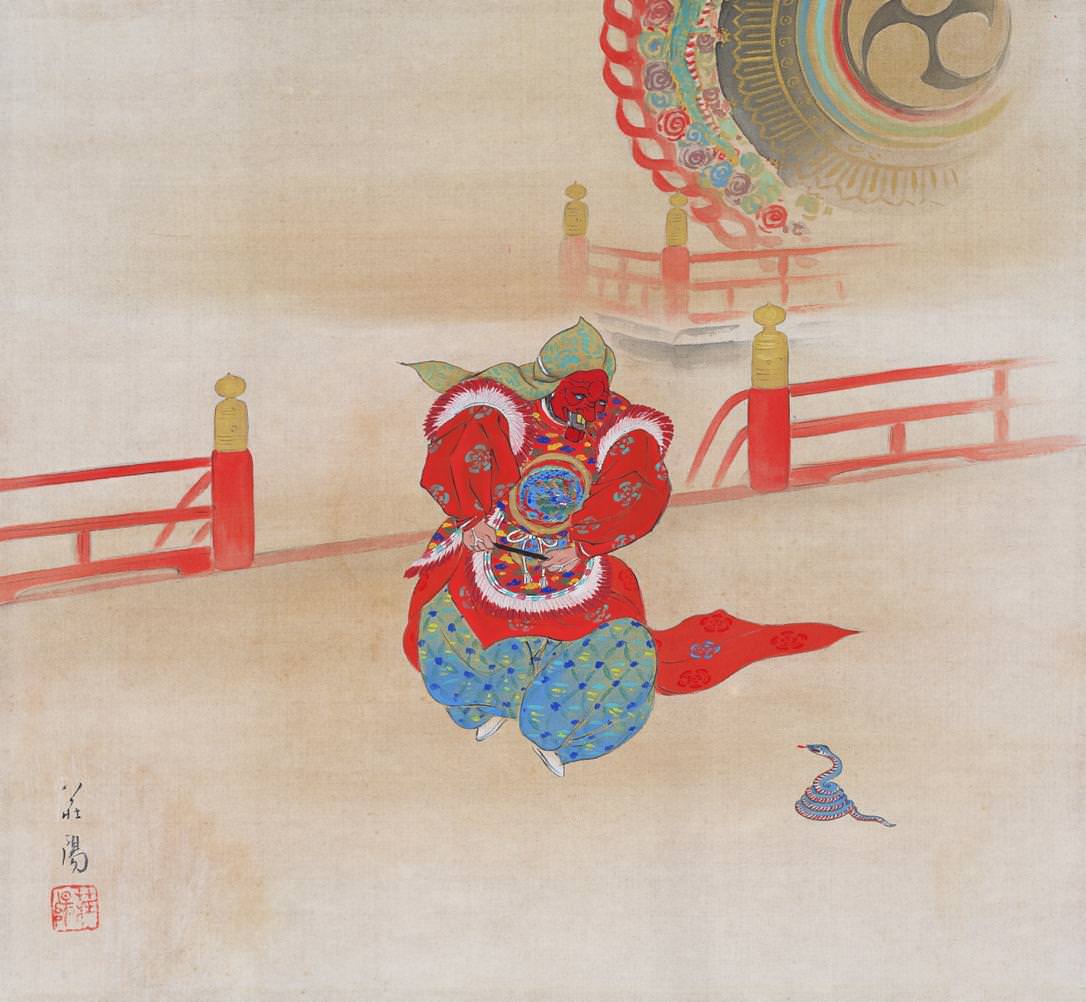
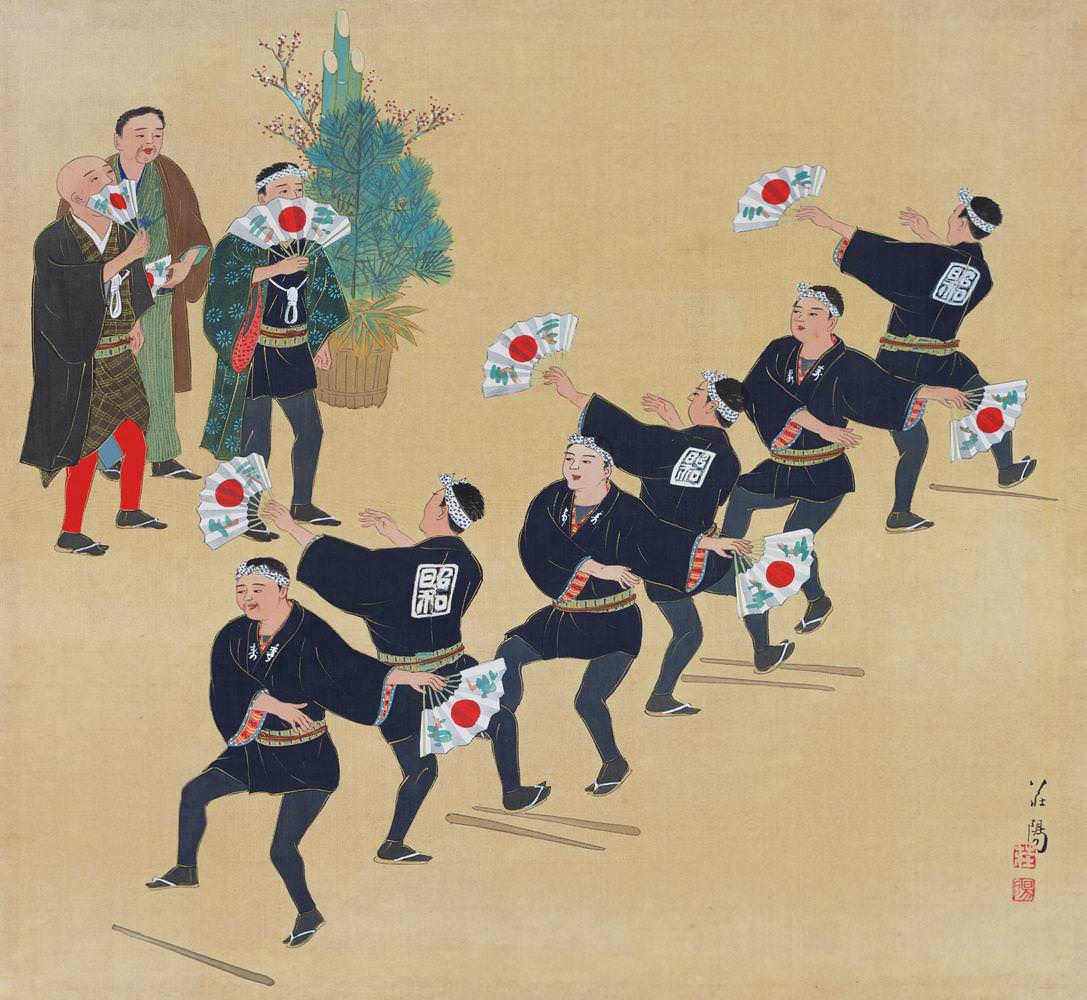
The clothing recorded in these paintings is historically precise. Artists painted the layered robes of court aristocrats, the plain cotton garments of festival workers, and the decorative accessories that marked each person’s social rank. This level of detail makes the album a reliable visual document of early 20th-century Japanese material culture.
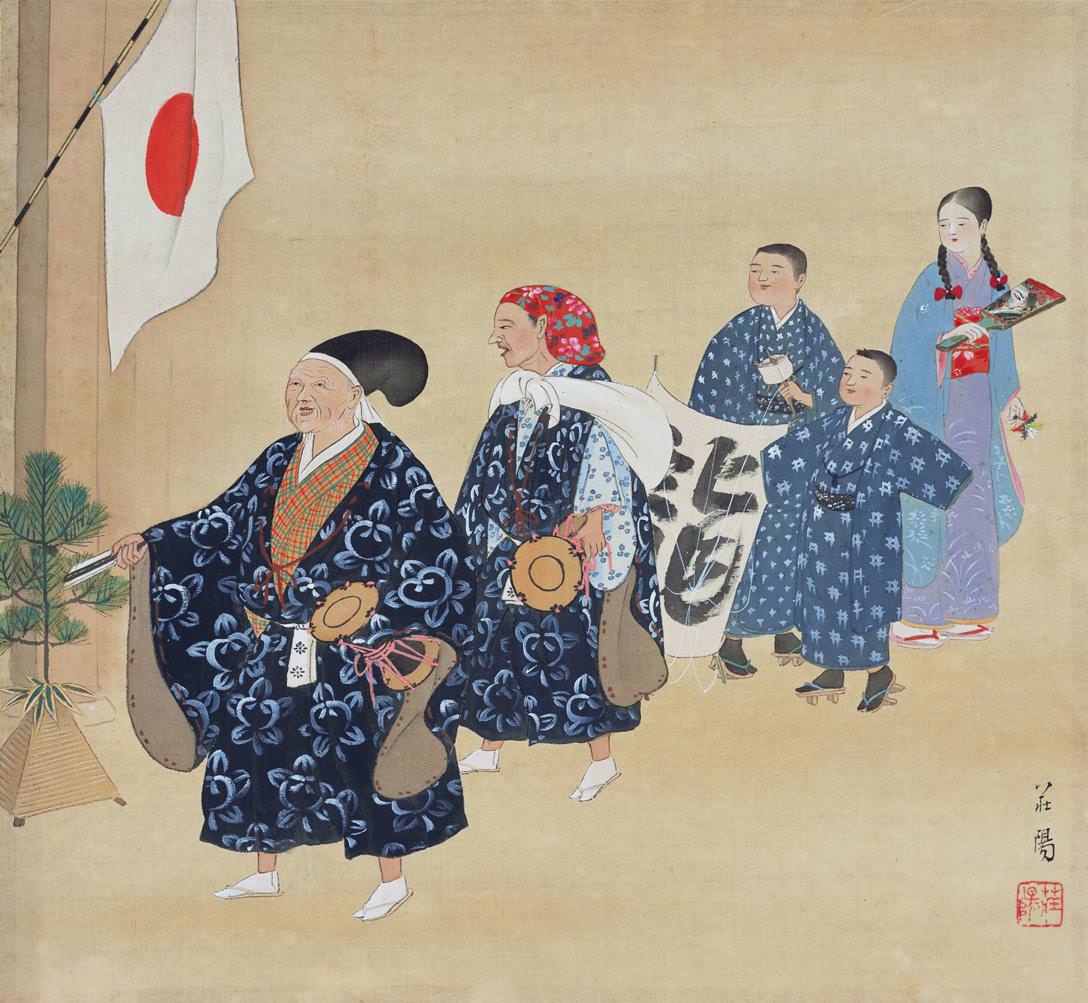
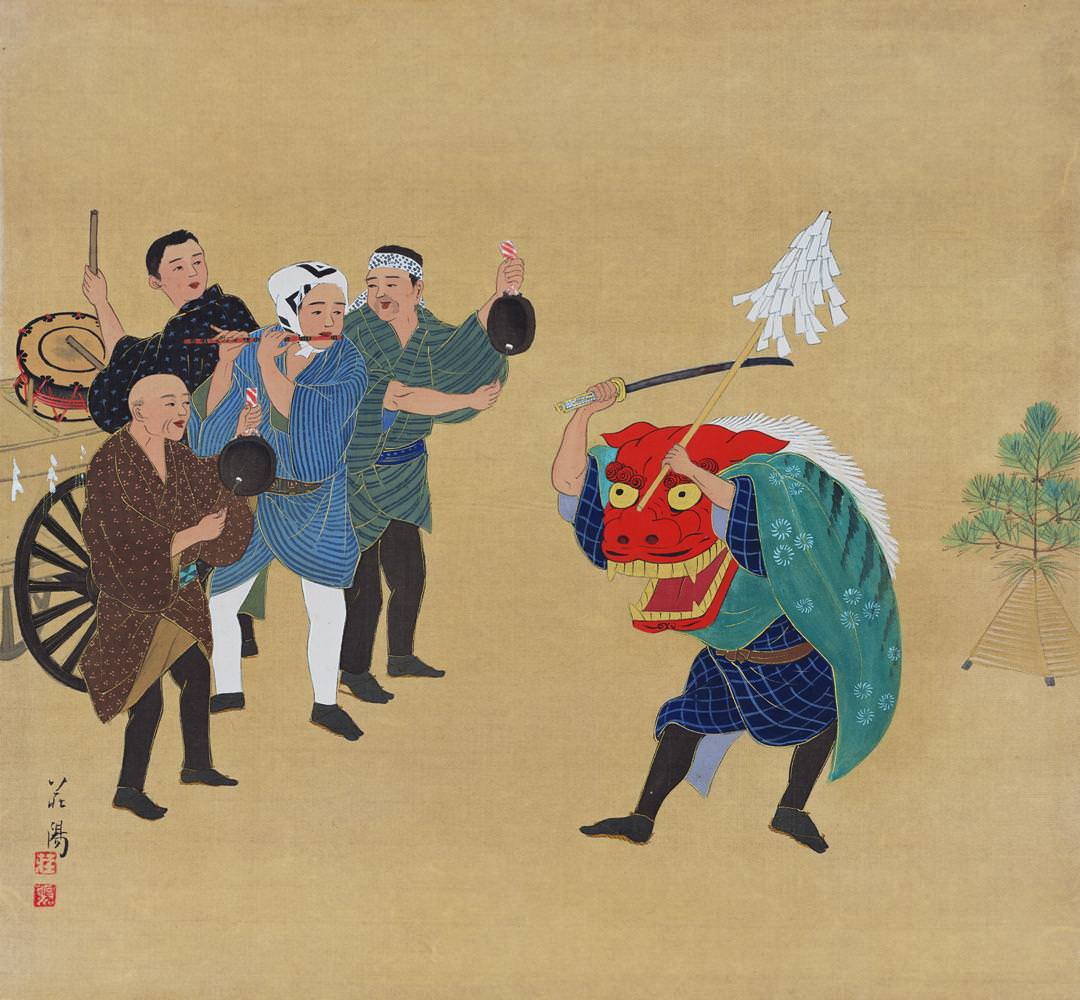
Musicians and dancers fill the margins and foregrounds of many scenes. Some carry drums or flutes; others move in choreographed steps tied to specific shrine traditions. Their expressions — captured in paint on silk — range from focused concentration to open celebration.
Evening processions appear in multiple paintings, the darkness of the night sky broken by rows of lanterns. These night scenes required the artists to work with a limited palette while still conveying movement and crowd energy. The warm amber of lantern light against deep indigo backgrounds is one of the most visually striking features across the entire album.
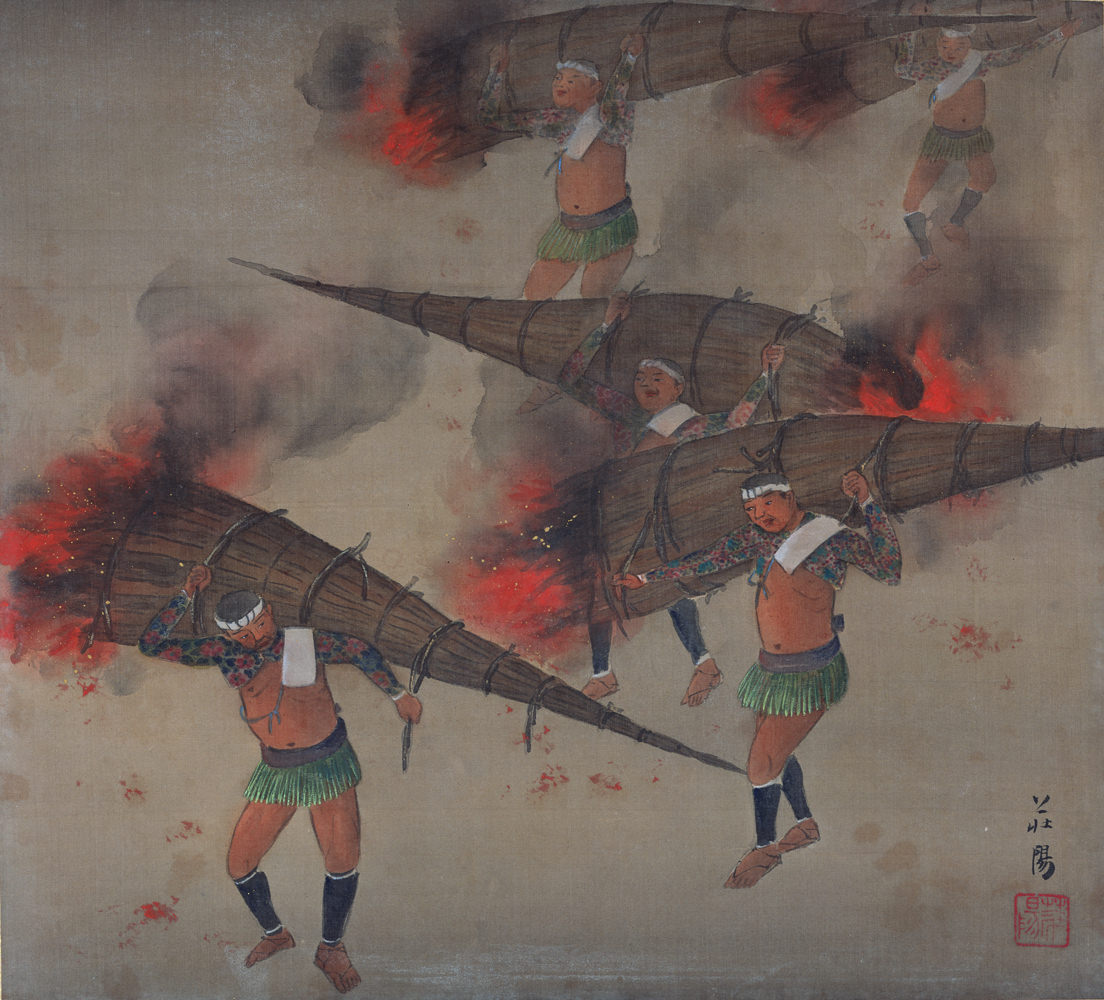
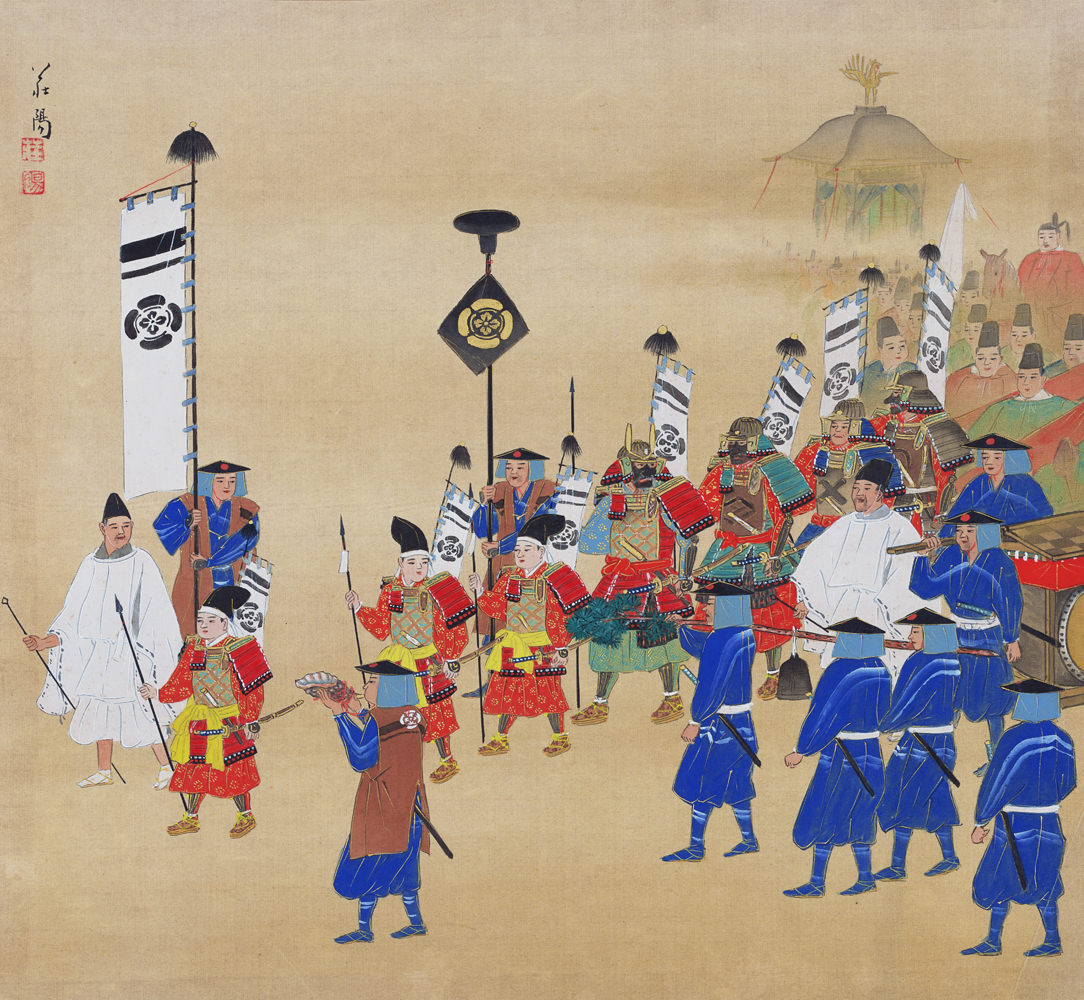
Temple architecture frames many of the outdoor scenes. Curved roof lines, stone lanterns, and torii gates place each festival within a specific sacred geography. Viewers familiar with Kyoto’s shrines and temples can identify the locations from these architectural details alone.
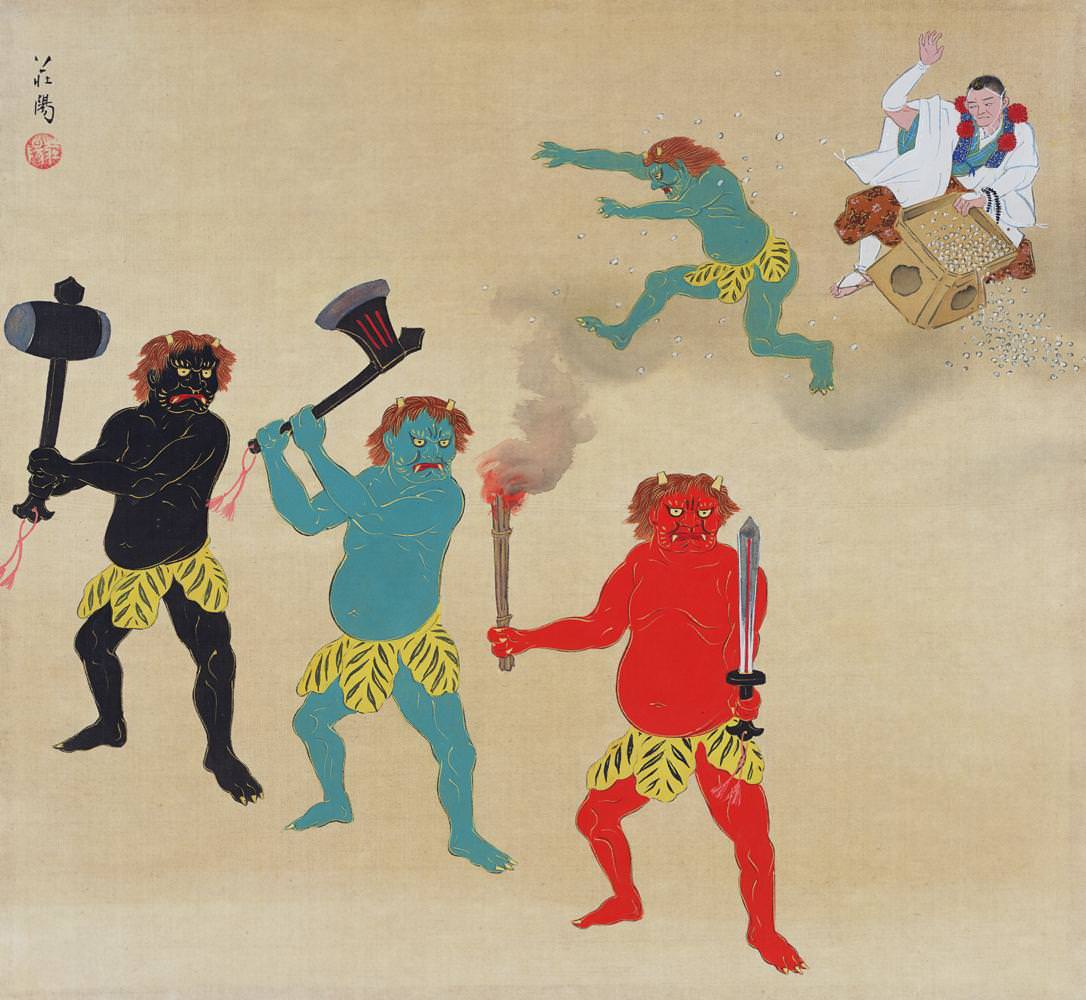
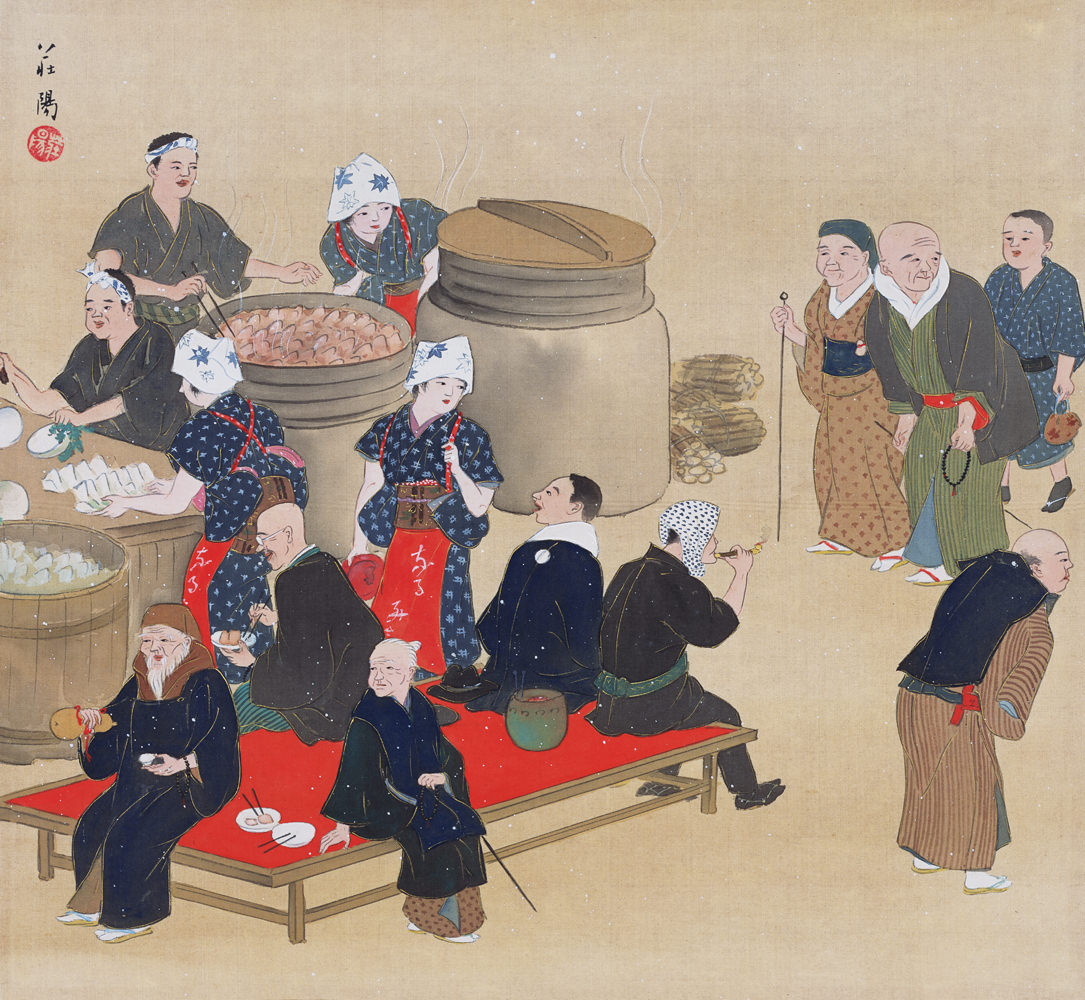
Crowd scenes are handled with careful attention to individual figures. Rather than painting faceless masses, the artists rendered specific people — a child looking upward, a vendor at a stall, a priest carrying a ritual object. Each figure adds a layer of human detail that prevents the paintings from feeling like simple pageantry records.
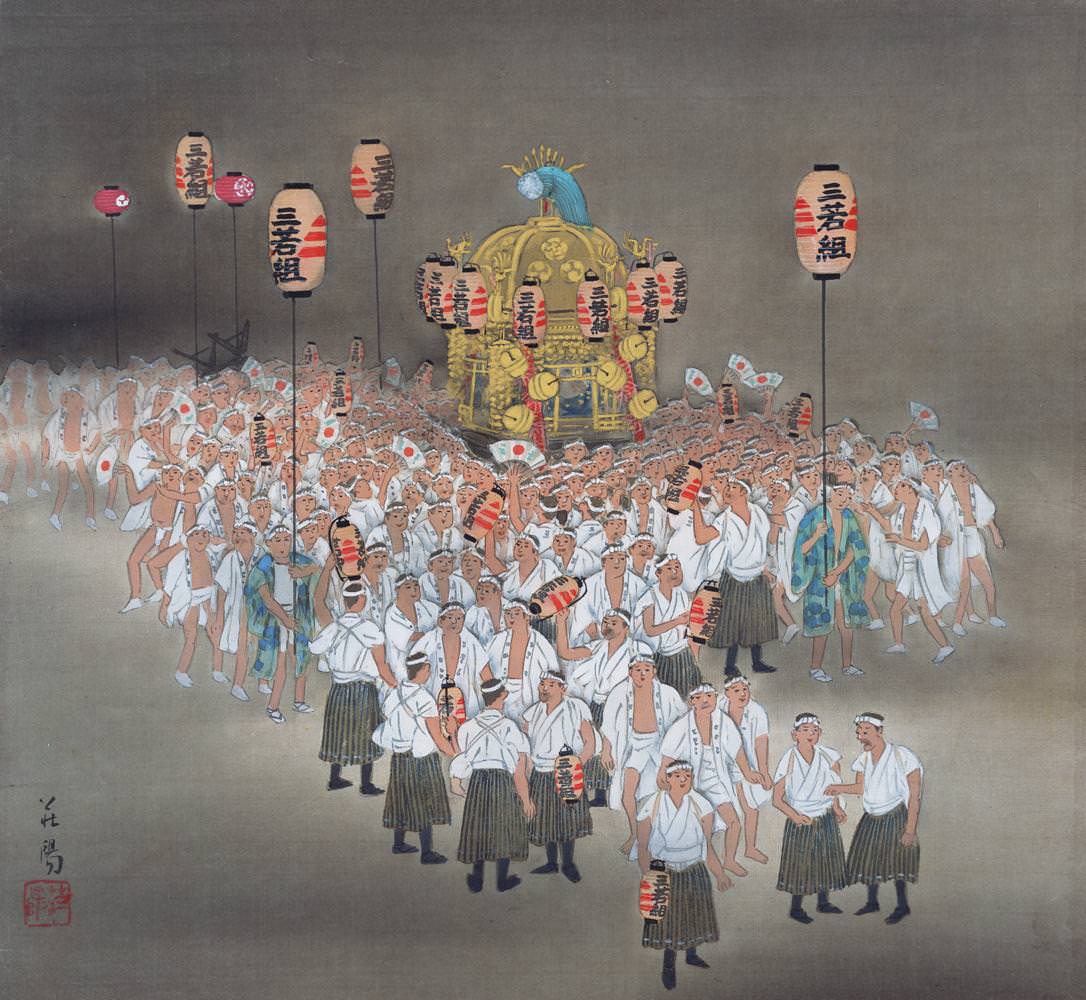
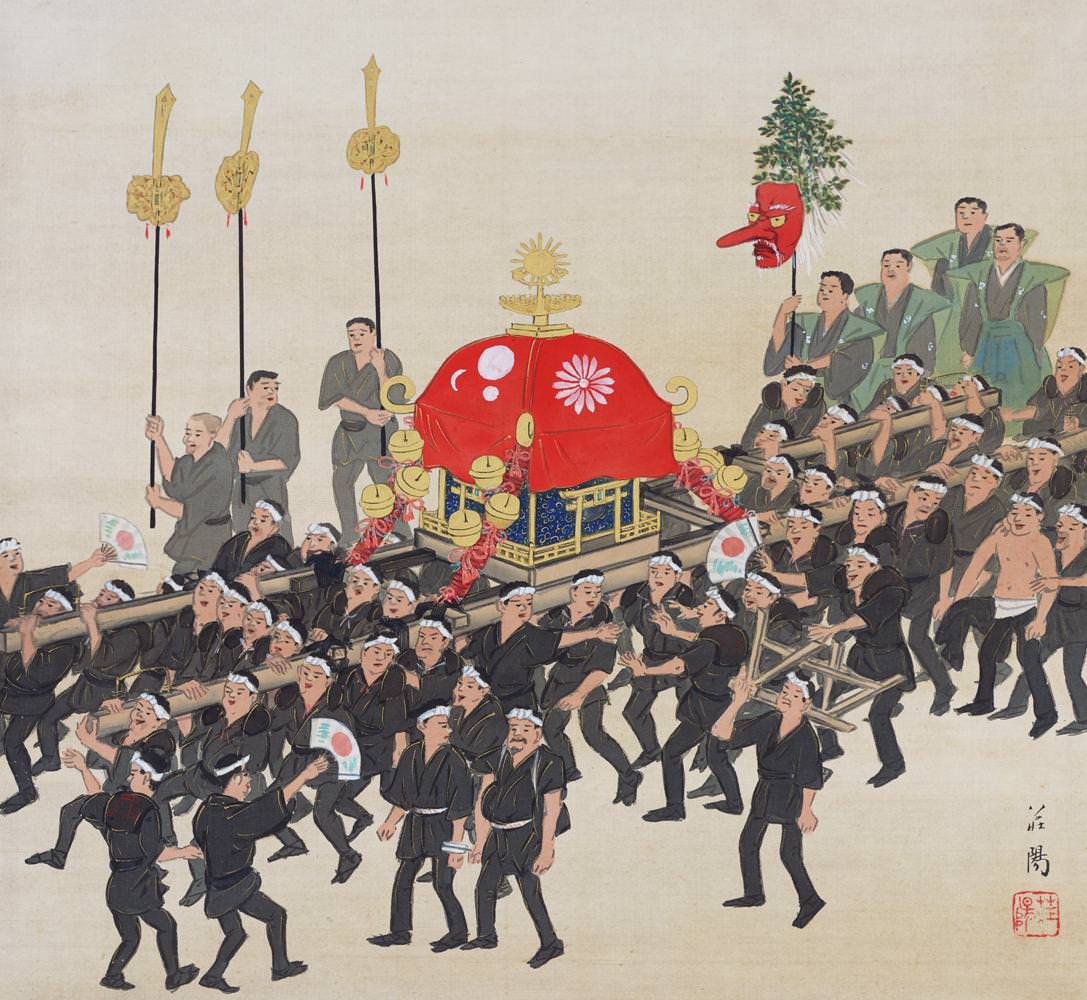
The album spans multiple festivals across what appears to be different seasons of the Kyoto calendar. Spring blossoms appear in the background of some scenes; summer heat is conveyed through the thin fabrics worn by festival-goers in others. This seasonal range suggests the album was designed as a comprehensive survey of Miyako’s ceremonial year.
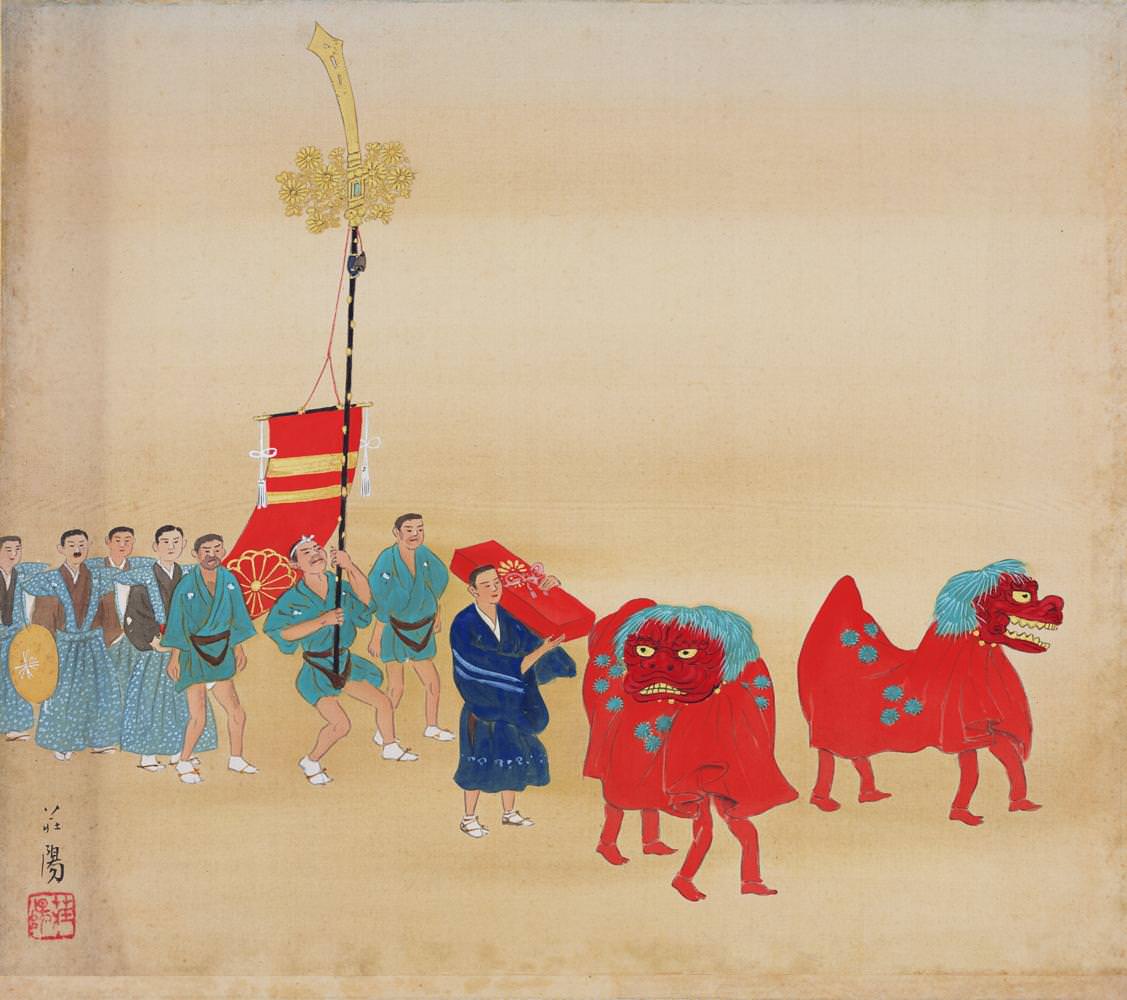

Taken together, these twenty-one paintings form one of the most detailed visual records of 1920s Kyoto festival life that survives today. Each painting is both an art object and a historical document, preserving the sights of a city that took enormous pride in its ancient ceremonial traditions.