
in

Vintage Photos of Downtown New York from the Roaring Twenties to the Gritty Seventies

Downtown New York has never stood still. From the jazz-soaked streets of the 1920s to the raw, unfiltered energy of the 1970s, the area transformed decade by decade — sometimes dramatically, sometimes quietly. These vintage photographs capture that evolution in striking detail. The 1920s were a period of bold ambition. Wall Street hummed with money, and new skyscrapers reshaped the skyline almost every year. One of the most surreal sights of that era came in 1928, when a German zeppelin drifted past Lower Manhattan.
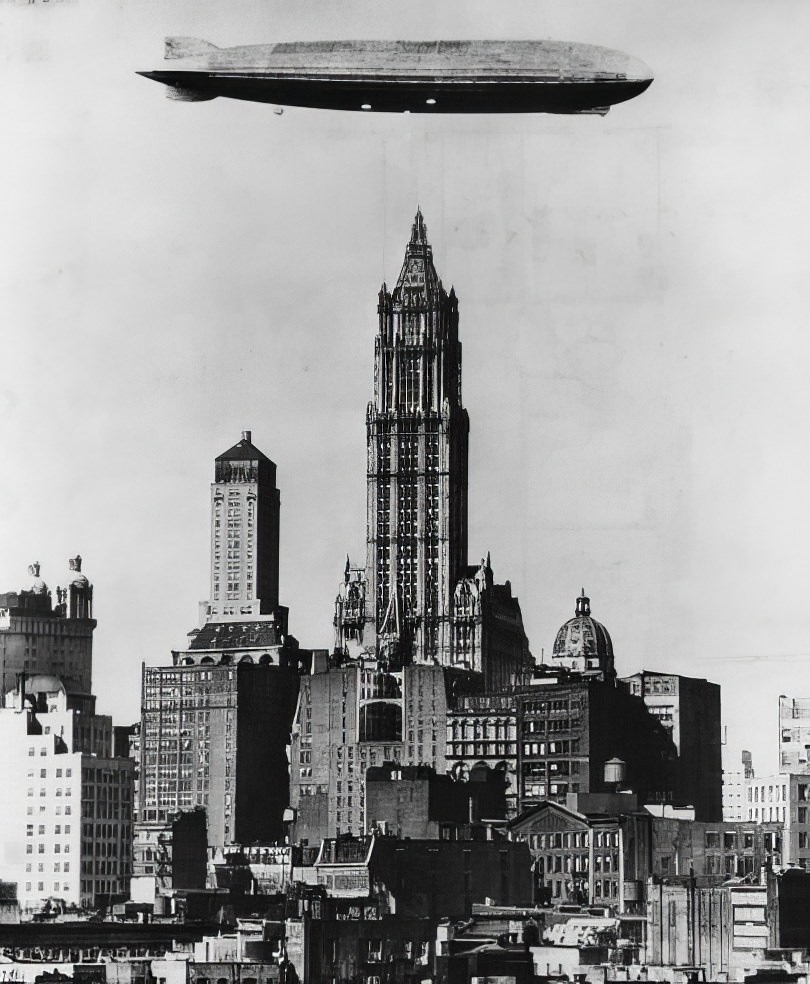
A German zeppelin appears to float above the Woolworth Building in 1928

By the late 1930s, the Great Depression had tested New York’s limits, but the city pushed forward. Construction kept going, and the waterfront stayed busy. Aerial photography from 1937 and 1939 shows a skyline already thick with towers, surrounded by rivers that served as the city’s commercial arteries.
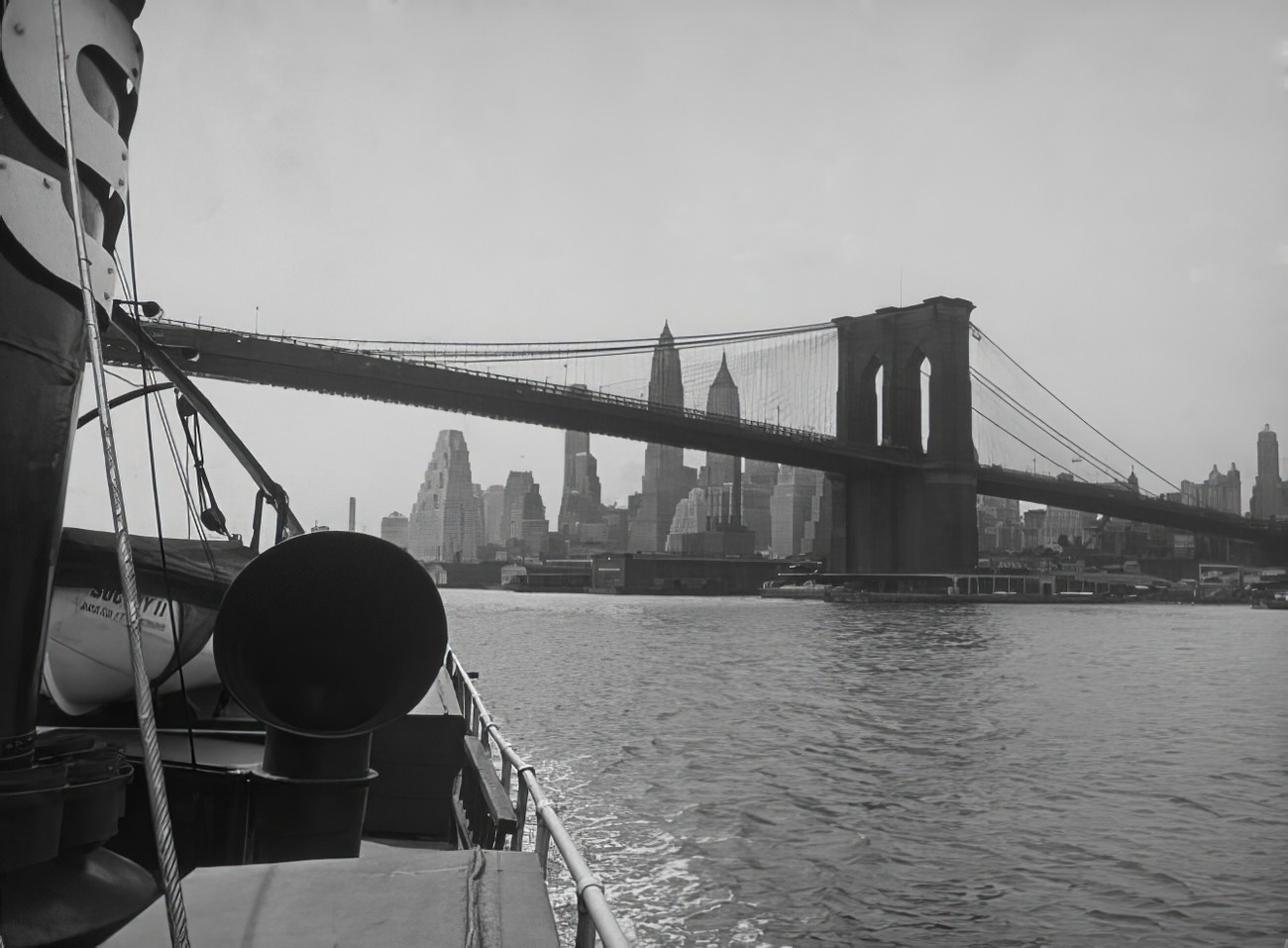
The Brooklyn Bridge and the Lower Manhattan skyline seen from the East River, 1937
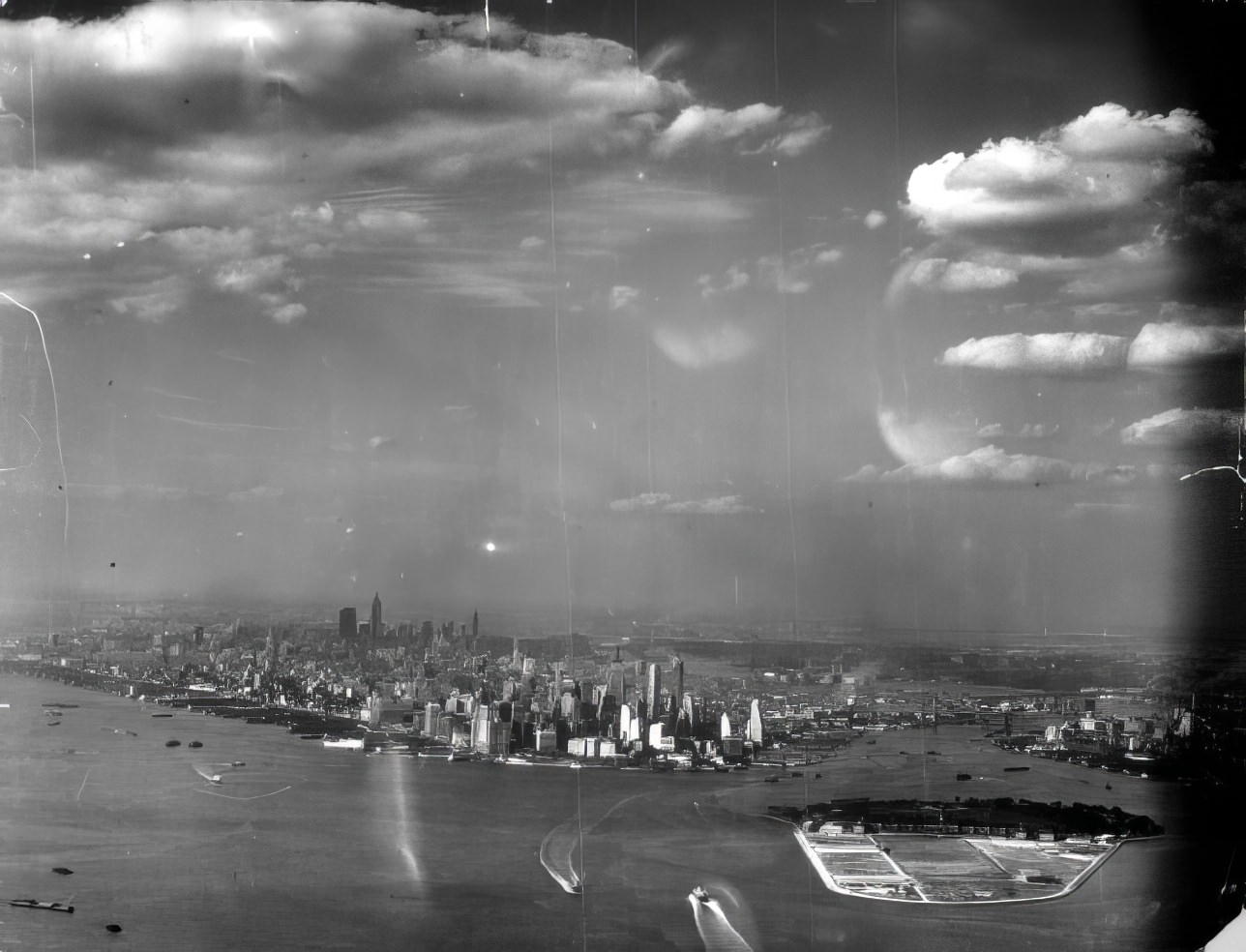
An aerial view, from the south, of Lower Manhattan, Governor's Island, the harbor, the Hudson and East Rivers and New York City's surroundings, 1939
An aerial view, from the south, of Lower Manhattan, Governor’s Island, the harbor, the Hudson and East Rivers and New York City’s surroundings, 1939

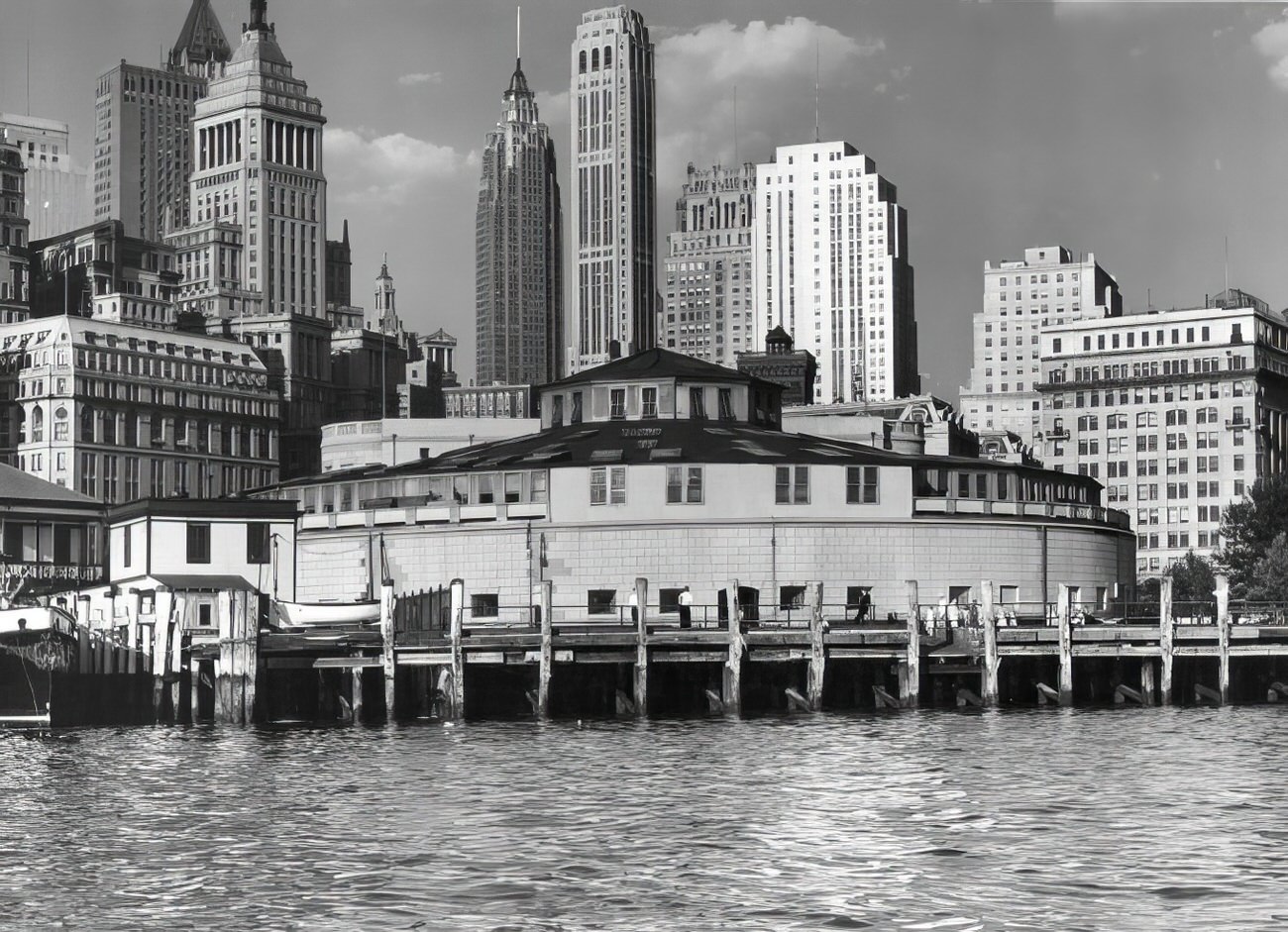
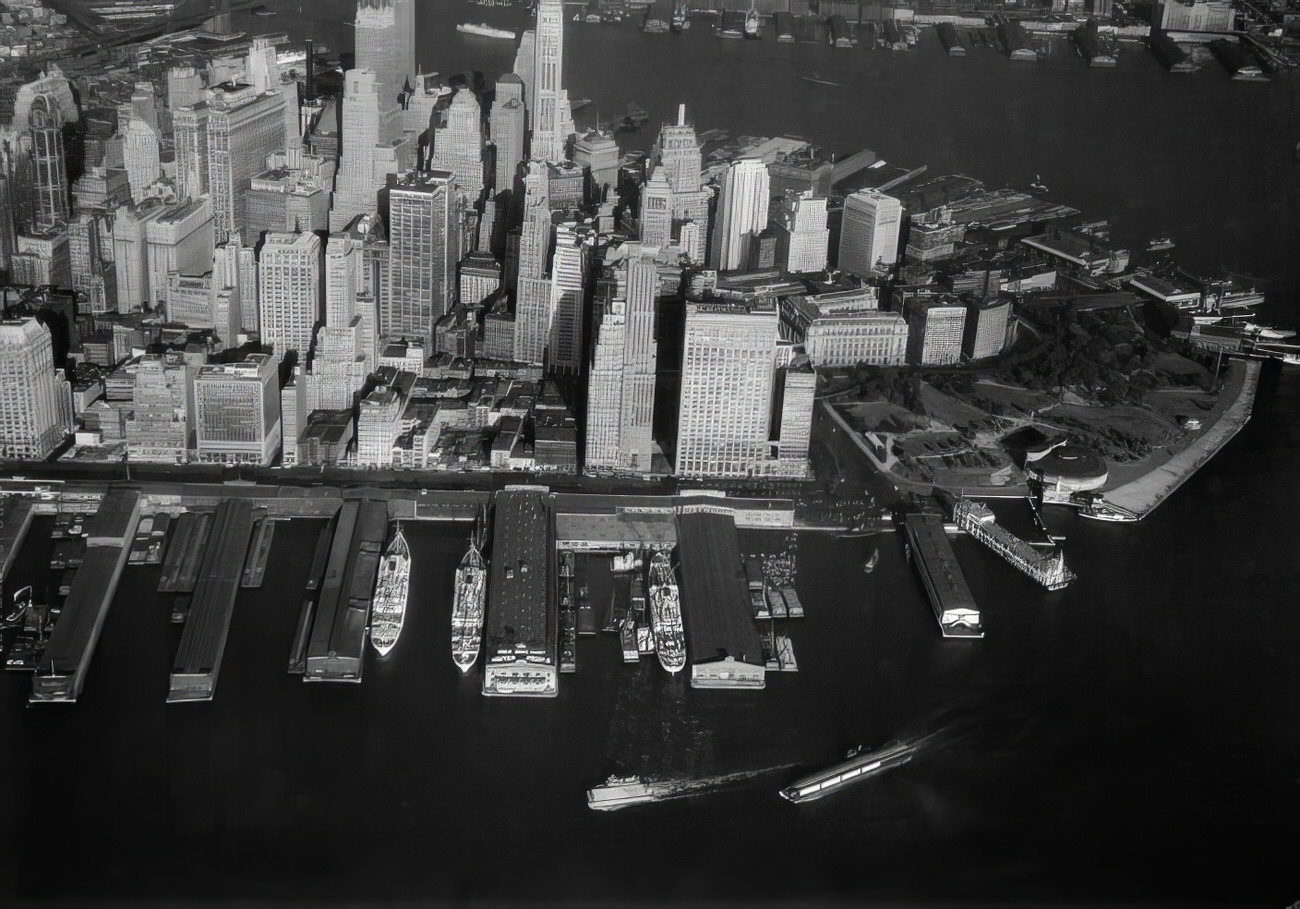
In 1939, the Statue of Liberty stood as she always had — a landmark framing a skyline that was growing taller by the year. Battery Park, at Manhattan’s southern tip, anchored the waterfront and housed the New York Aquarium before it later moved to Coney Island.
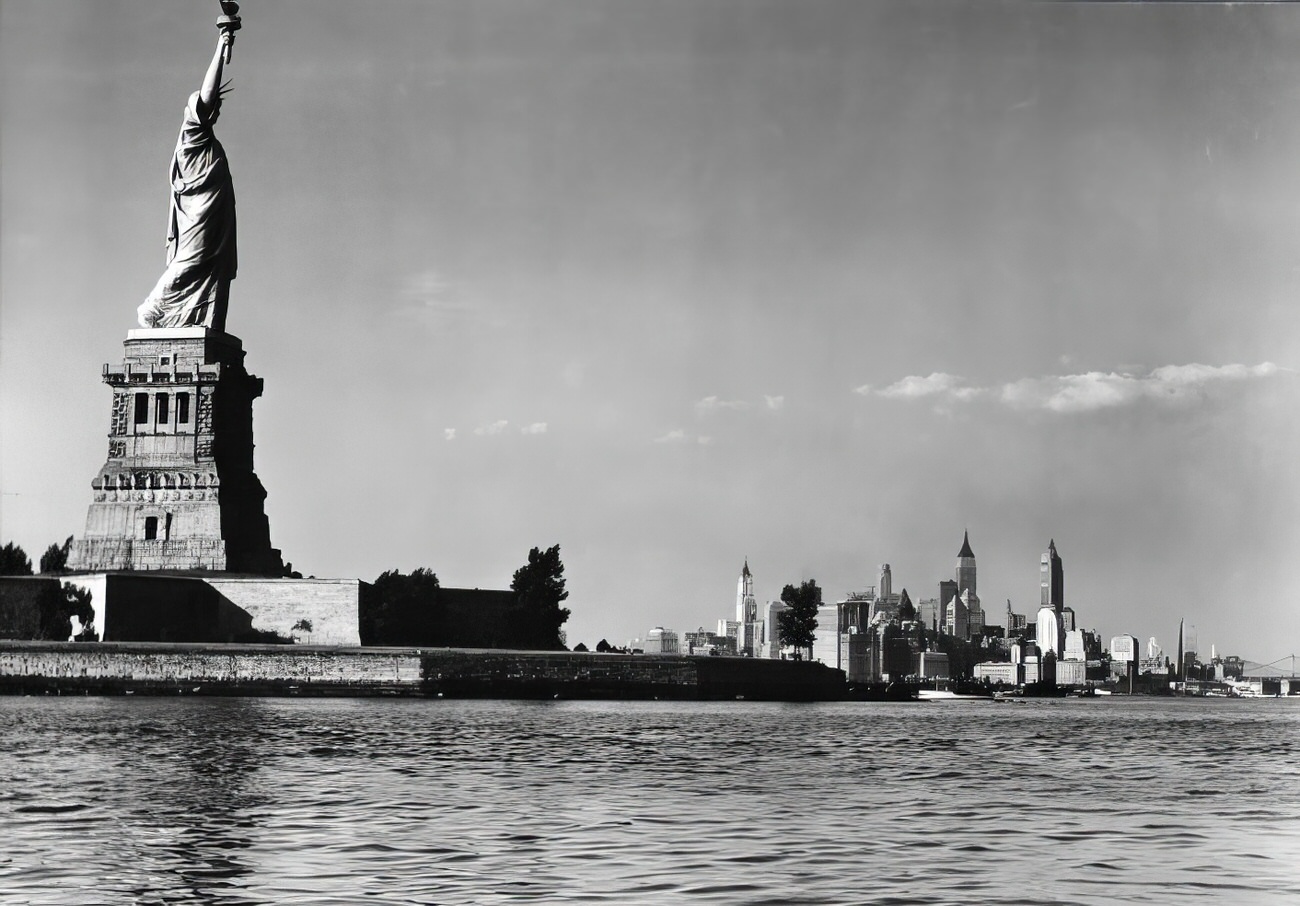
The Statue of Liberty and the New York skyline, 1939
Aerial view of the Lower West Side of Manhattan, Battery Park and the waterfront, 1939
The New York Aquarium in Battery Park, 1939. The aquarium currently resides in Coney Island, Brooklyn

The 1940s brought World War II, and New York’s ports became critical to the Allied war effort. Freighters loaded and unloaded supplies along the waterfront while the city’s factories ran at full capacity. Viewed from Brooklyn’s Hotel Bossert — known as the “Waldorf-Astoria of Brooklyn” — Lower Manhattan in 1943 looked steady, even as the war raged overseas.
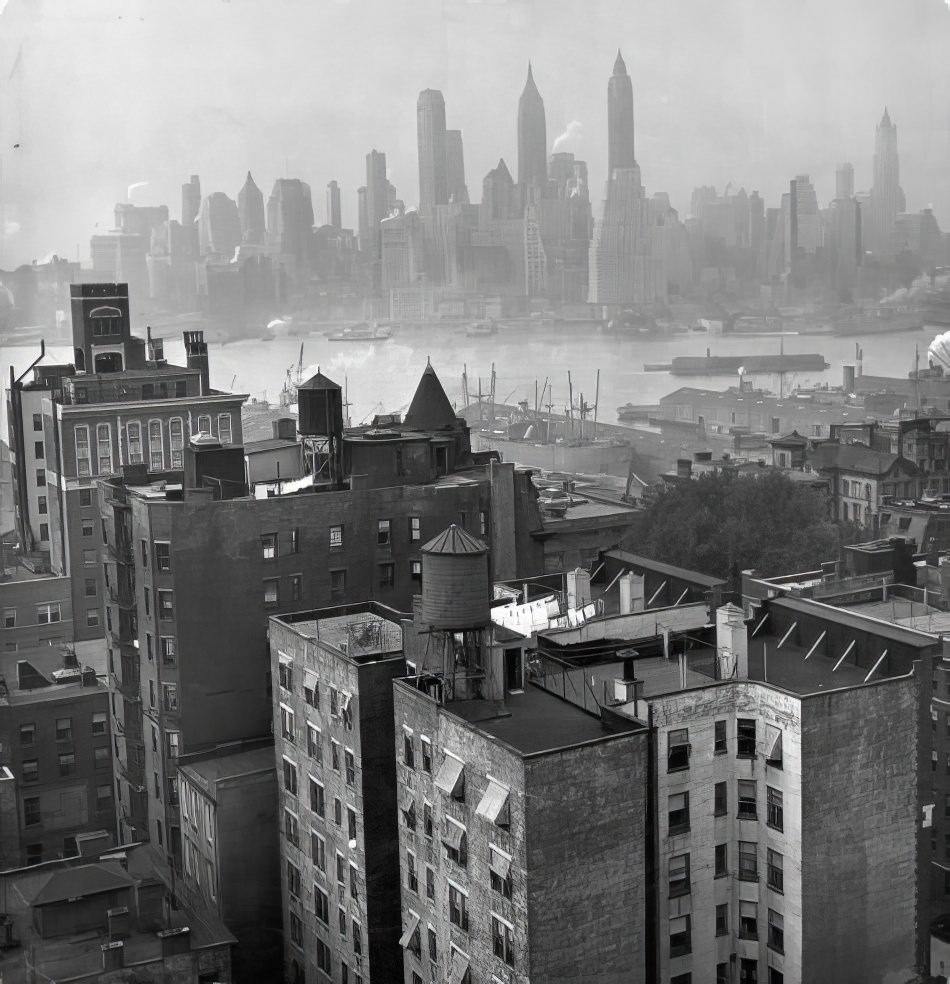
View of the Lower Manhattan skyline as seen from the roof of the Hotel Bossert ("the Waldorf-Astoria of Brooklyn") on Montague Street in Brooklyn, 1943
View of the Lower Manhattan skyline as seen from the roof of the Hotel Bossert (“the Waldorf-Astoria of Brooklyn”) on Montague Street in Brooklyn, 1943
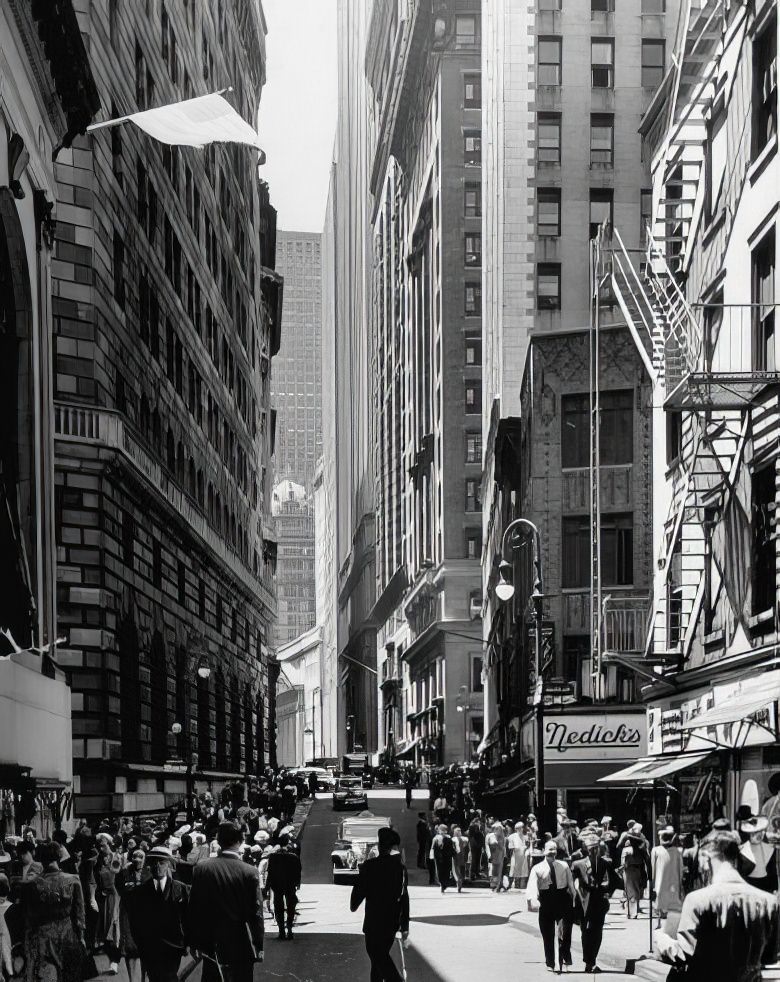
Pedestrians walk down Nassau Street past the Federal Reserve Building, 1944. The New York Stock Exchange can be glimpsed at the foot of the image.

When Germany surrendered in May 1945, New Yorkers flooded the streets. Confetti and streamers buried the headstones of Trinity Church’s cemetery at the foot of Wall Street. The celebration was uncontained — joyful chaos spilling into every corner of Lower Manhattan.
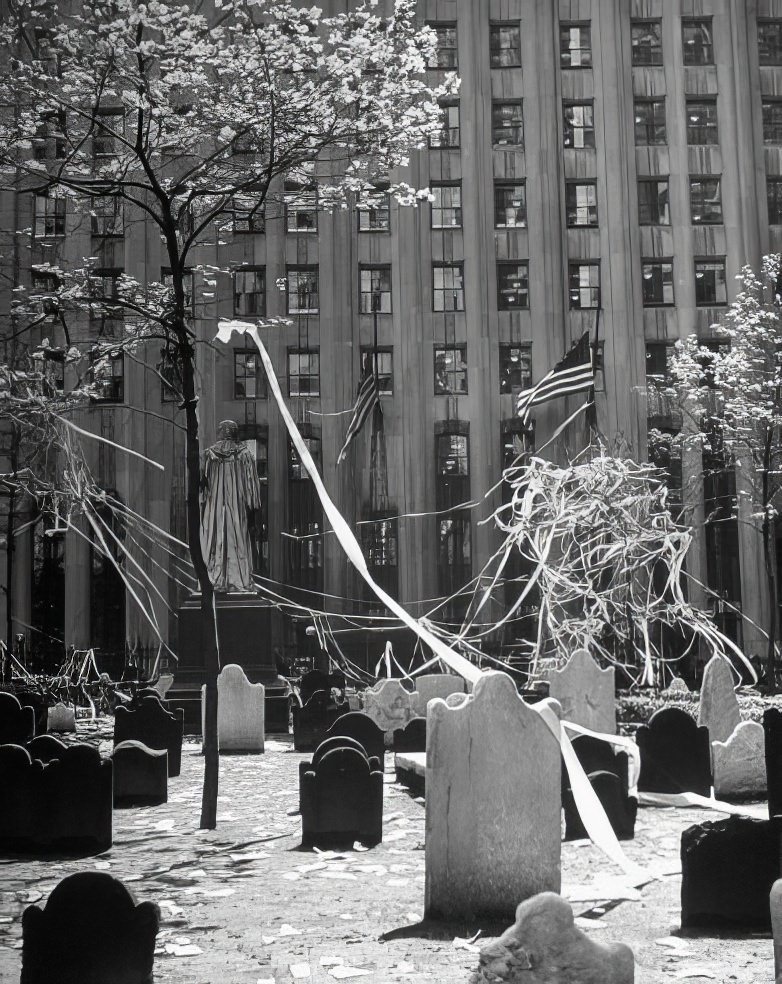
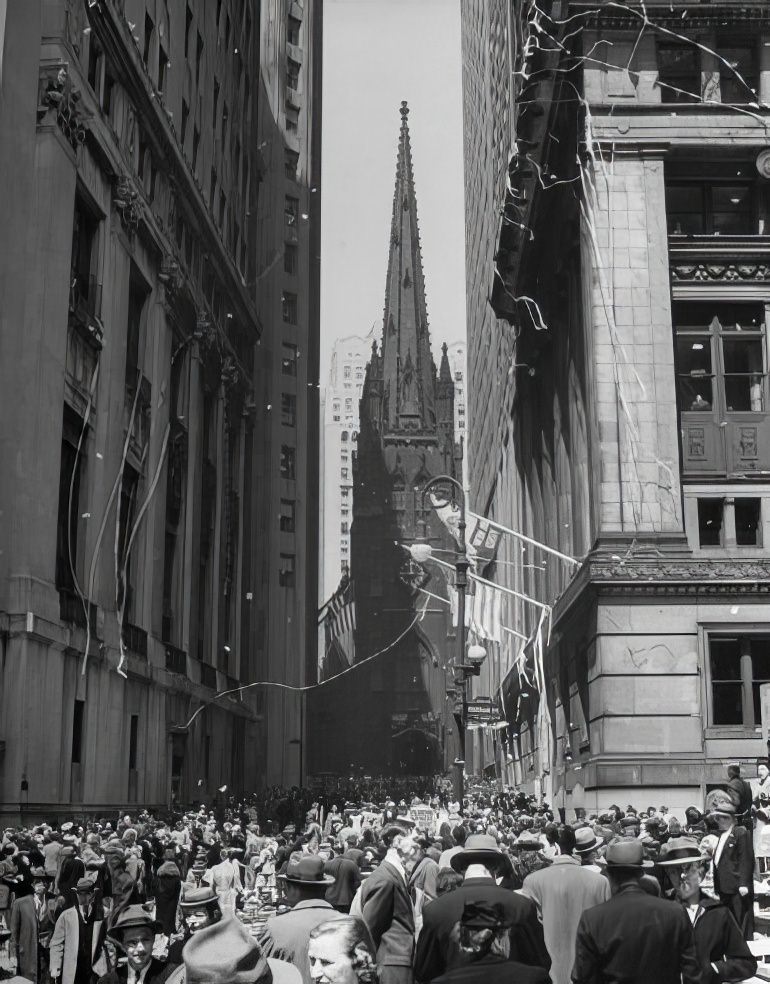
Tangled streamers and confetti thrown by people celebrating the end of the war in Europe litter headstones and the grounds of Trinity Church's venerable cemetery at the foot of Wall Street, 1945.
Tangled streamers and confetti thrown by people celebrating the end of the war in Europe litter headstones and the grounds of Trinity Church’s venerable cemetery at the foot of Wall Street, 1945.
Celebrating the end of the Second World War in Europe, Lower Manhattan, 1945
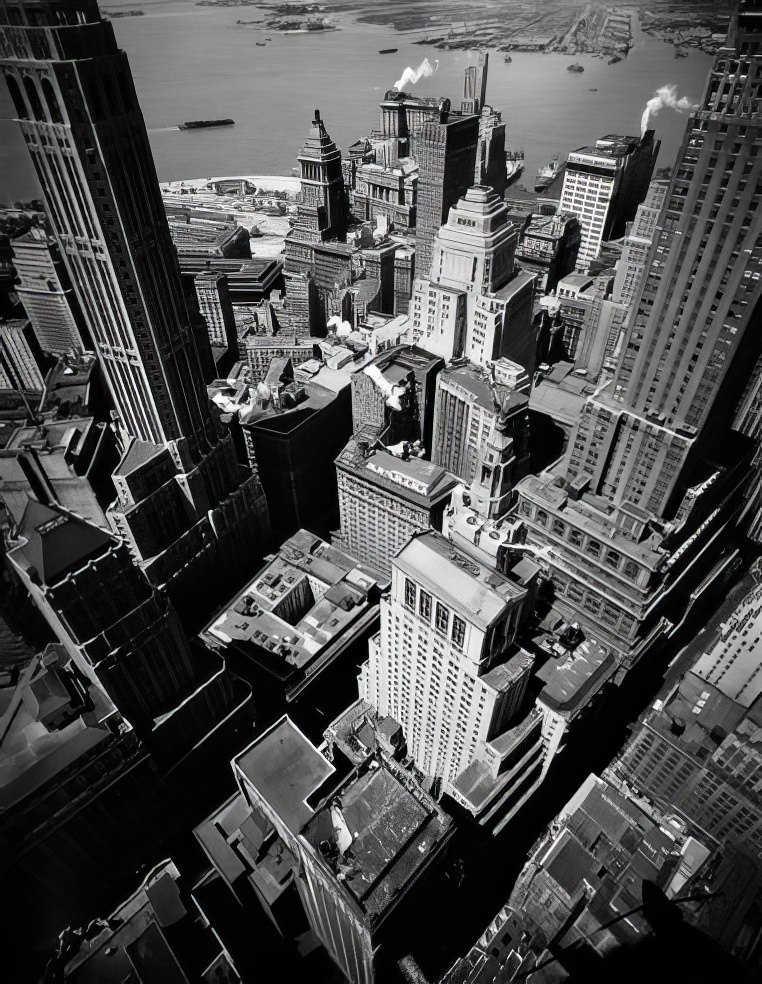
Birds-eye view of Lower Manhattan looking southeast towards Battery Park with Ellis Island beyond and the New Jersey waterfront in the distance, 1945.

The postwar years brought a different kind of energy. Freighters filled the East River, dockworkers unloaded goods from around the world, and the harbor hummed with commerce. Views from Staten Island, New Jersey, and Brooklyn all told the same story: a city that had survived the war and was ready to grow.
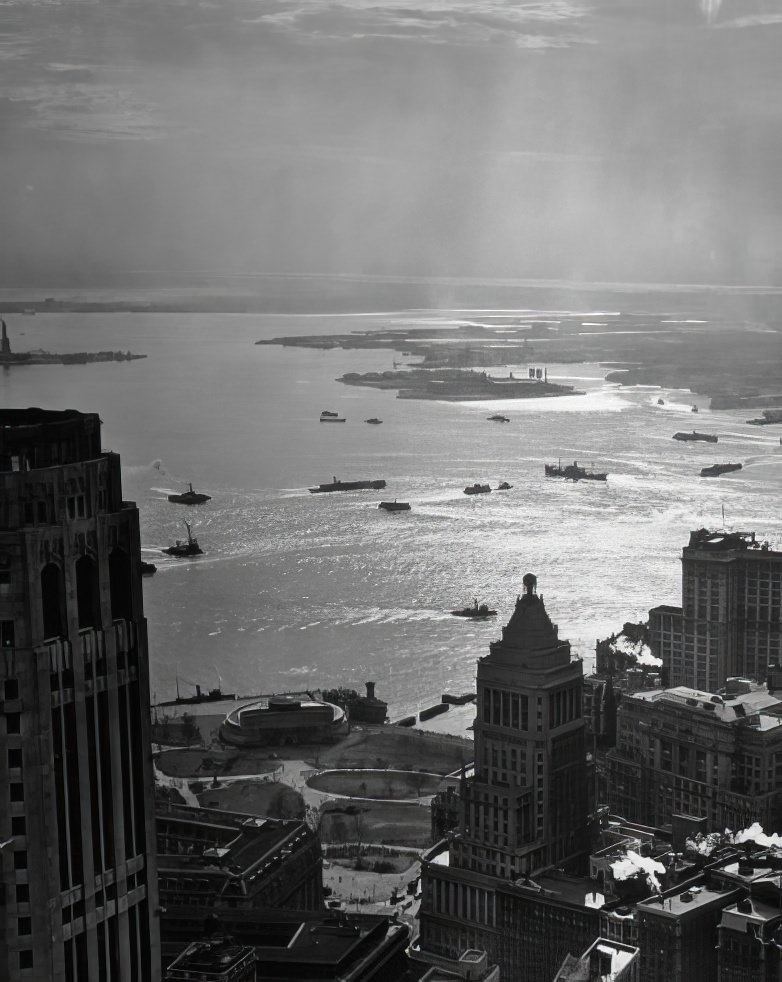
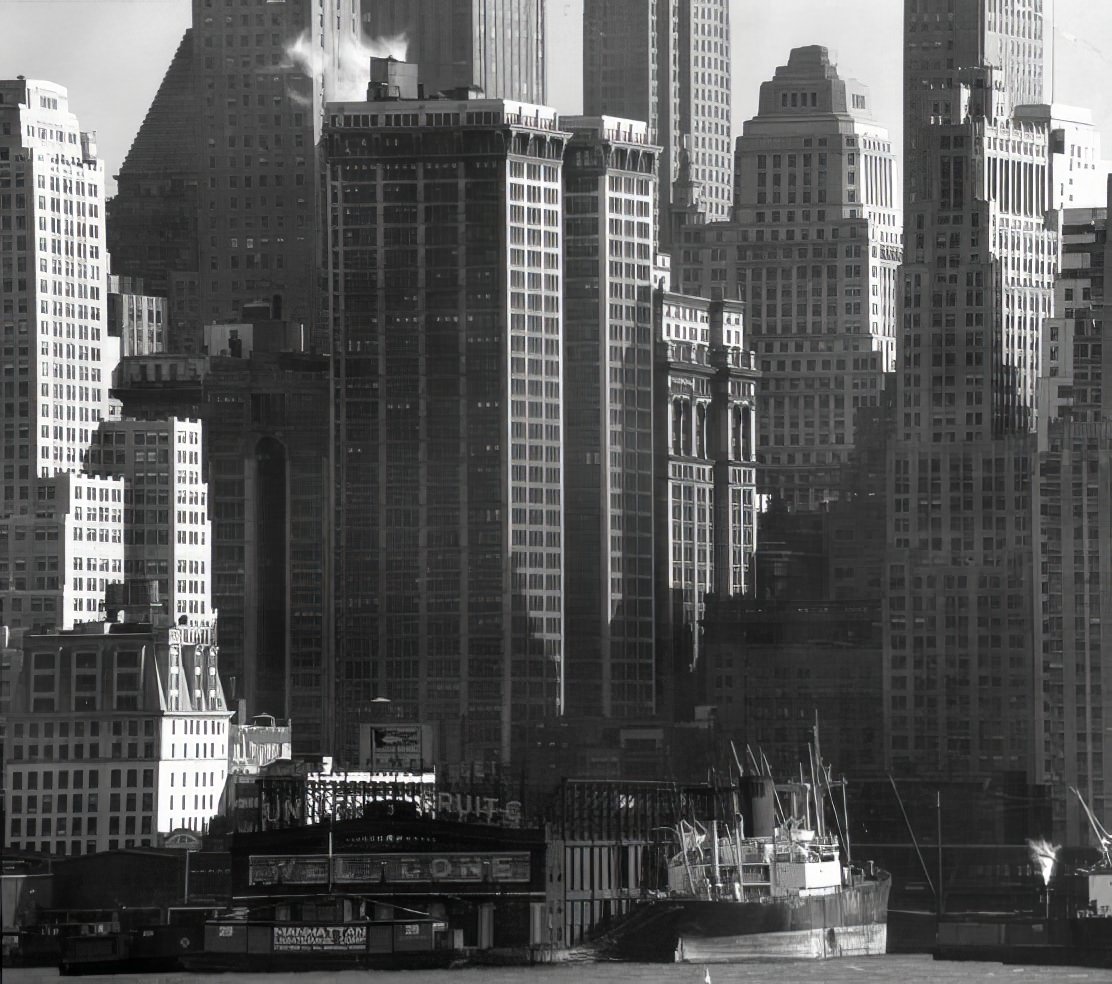
An aerial view of Battery Park and out across the sunlit waters of New York Harbor, 1946
Lower Manhattan as seen from across the Hudson River, 1946
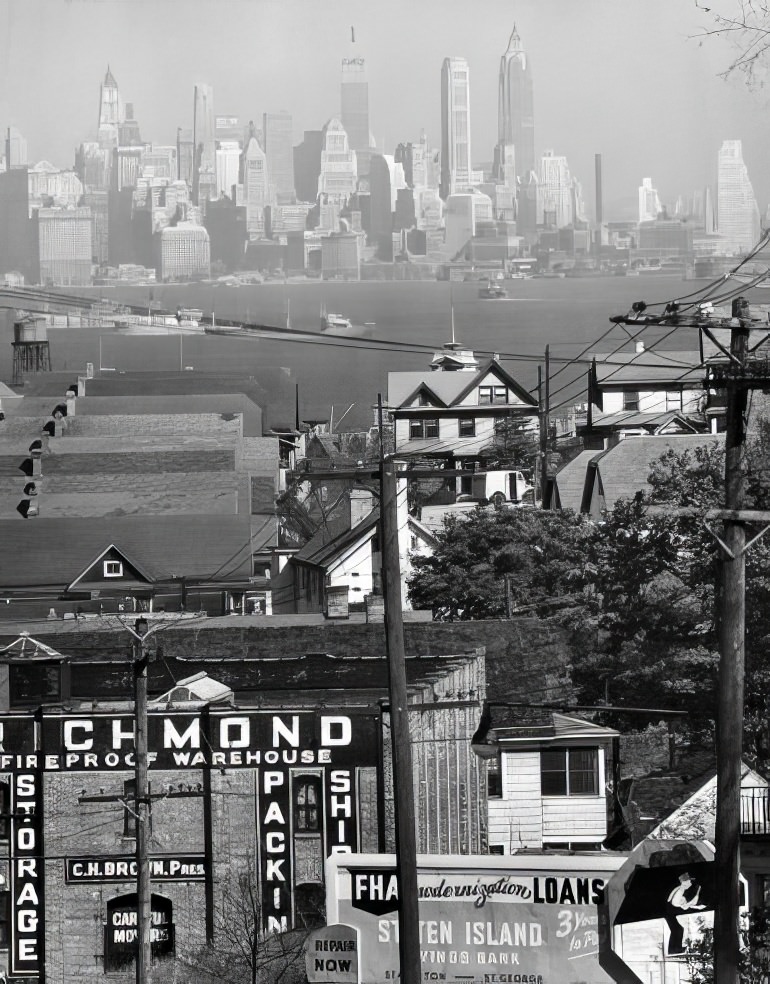
Lower Manhattan and beyond as seen from the rooftop of a building on Staten Island, 1946
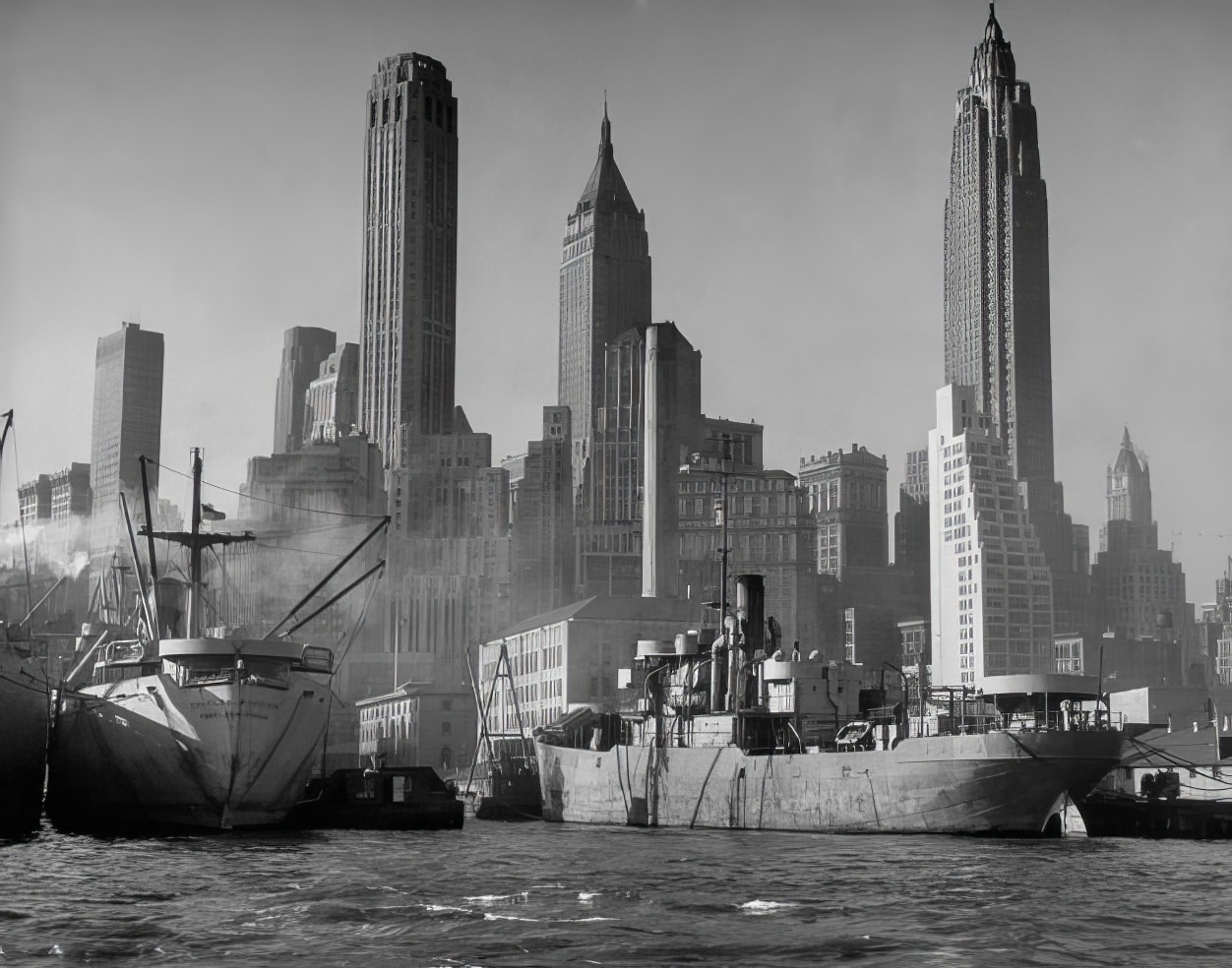
Freighters in the East River, 1946

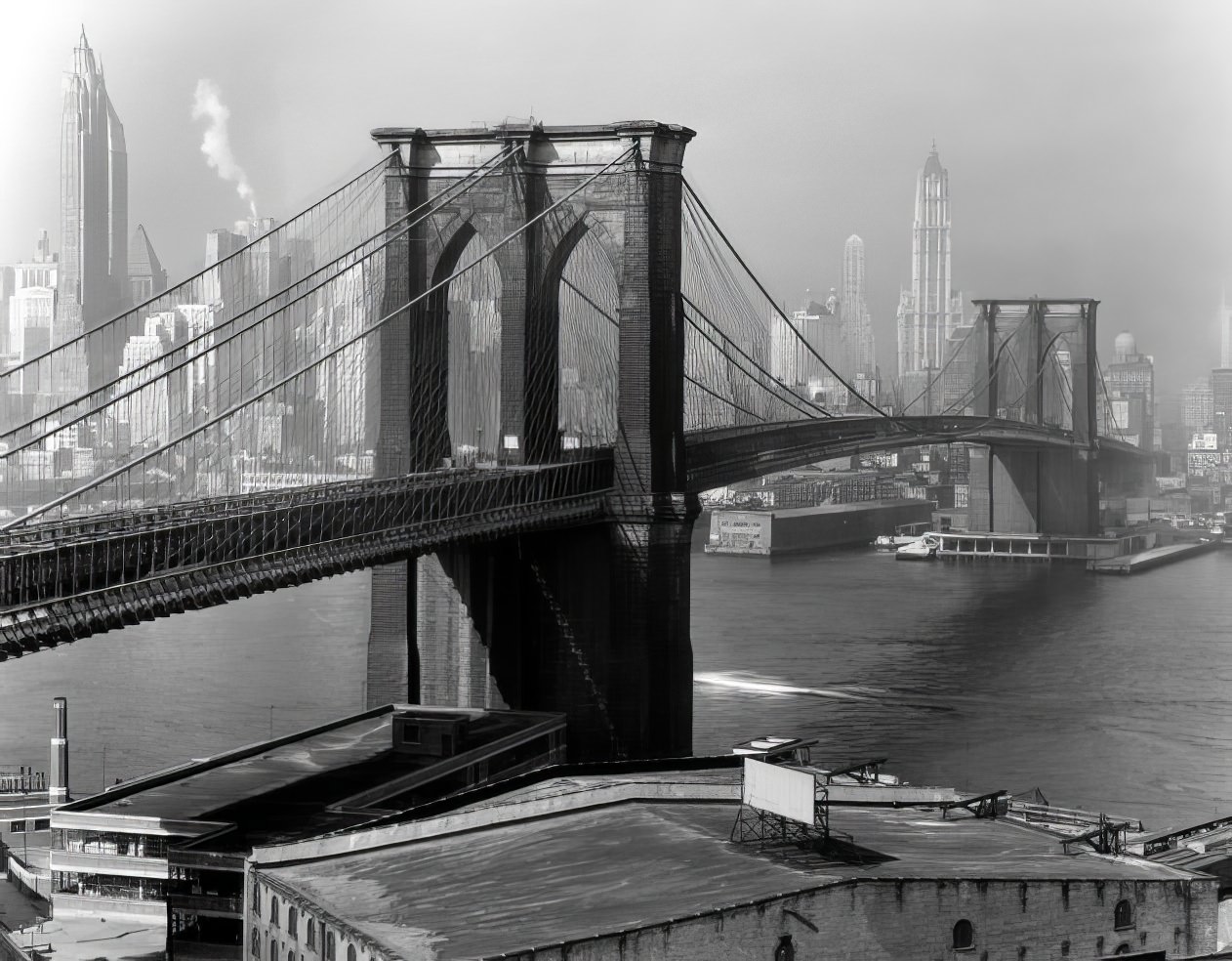
The Brooklyn Bridge remained one of the most dramatic ways to approach Manhattan. Photographs from 1948 show its cables arching toward a skyline that had changed little since the 1930s — but not for long. By 1949, dockworkers were still unloading coffee at Brooklyn piers, with the towers of Lower Manhattan rising across the water.
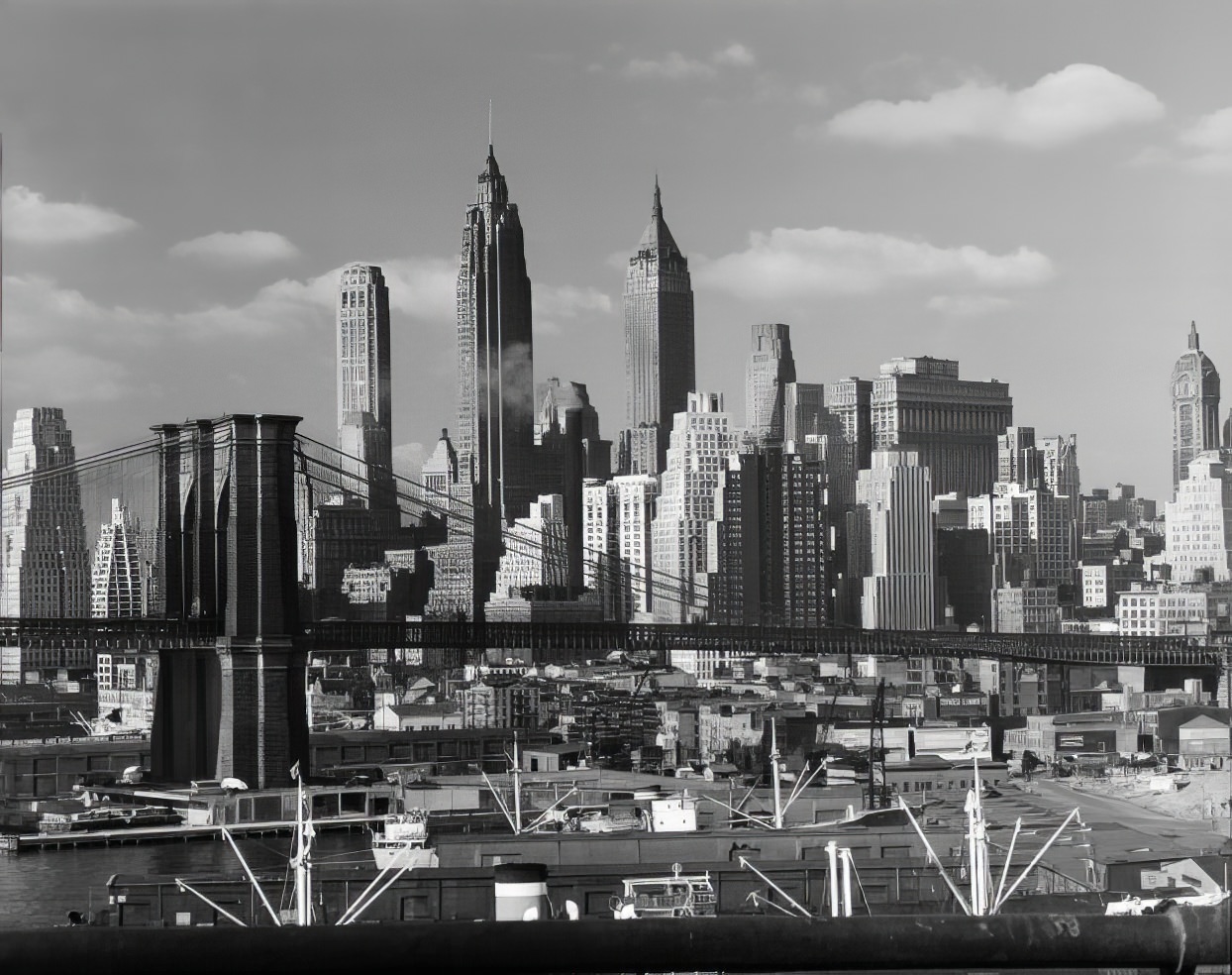
The Brooklyn Bridge and, beyond, the skyline of Lower Manhattan, 1948
The Brooklyn Bridge arches toward Lower Manhattan, 1948
Men unload coffee at a Brooklyn dock with Lower Manhattan visible in the background, 1949

By 1950, the city could disappear entirely into a thick morning fog. That same quiet skyline, barely visible through the haze, would be unrecognizable within two decades. Trinity Church — one of the oldest landmarks on Wall Street — stood photographed in 1962, still flanked by towers that dwarfed it, just as they had since the early twentieth century.
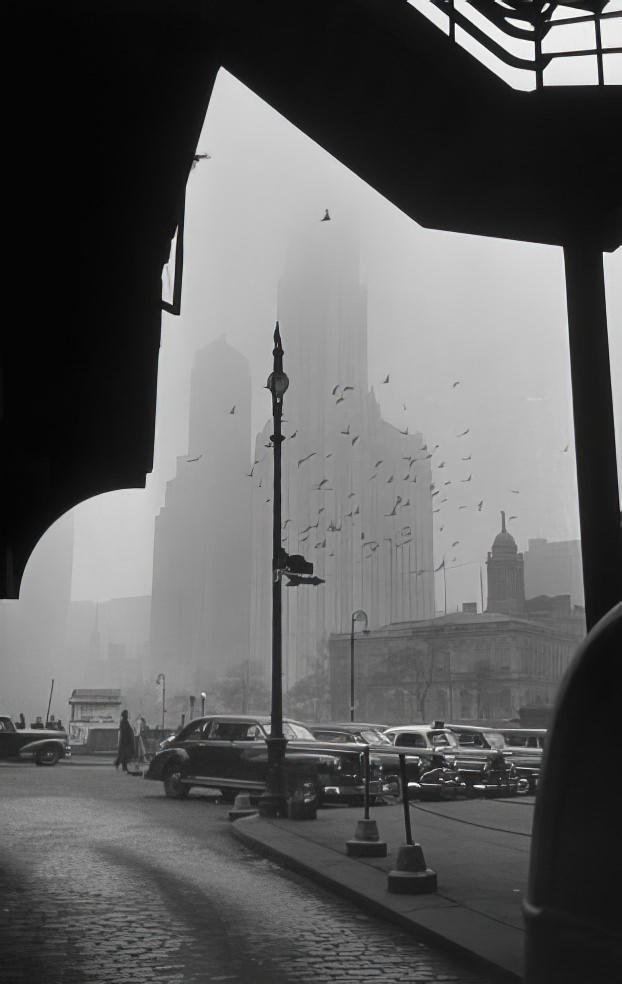
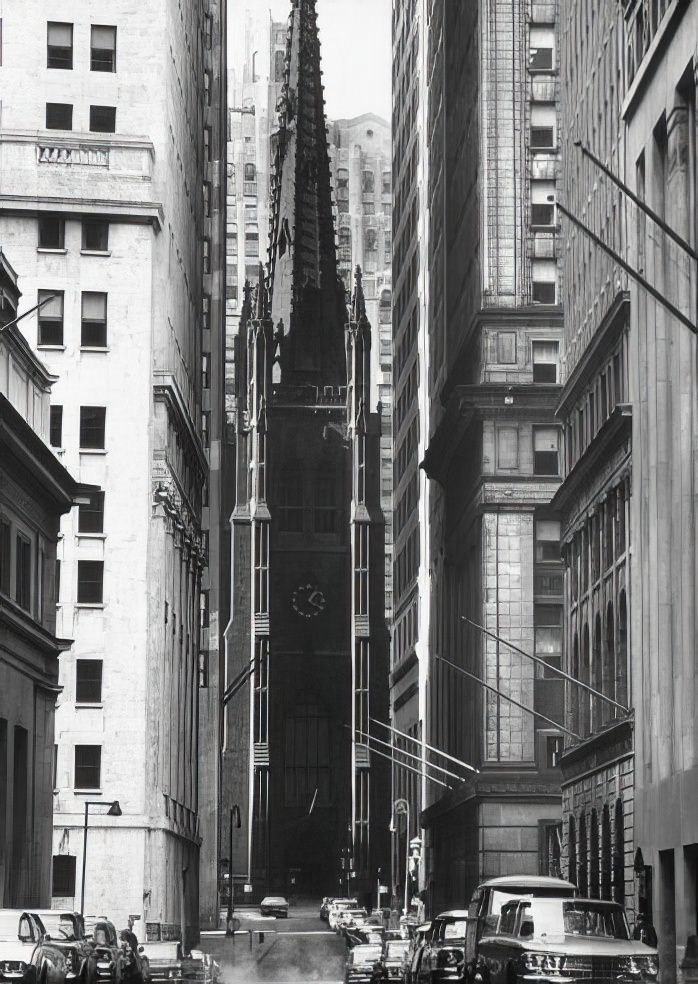
Lower Manhattan in the fog, 1950
Trinity Church, Lower Manhattan, 1962

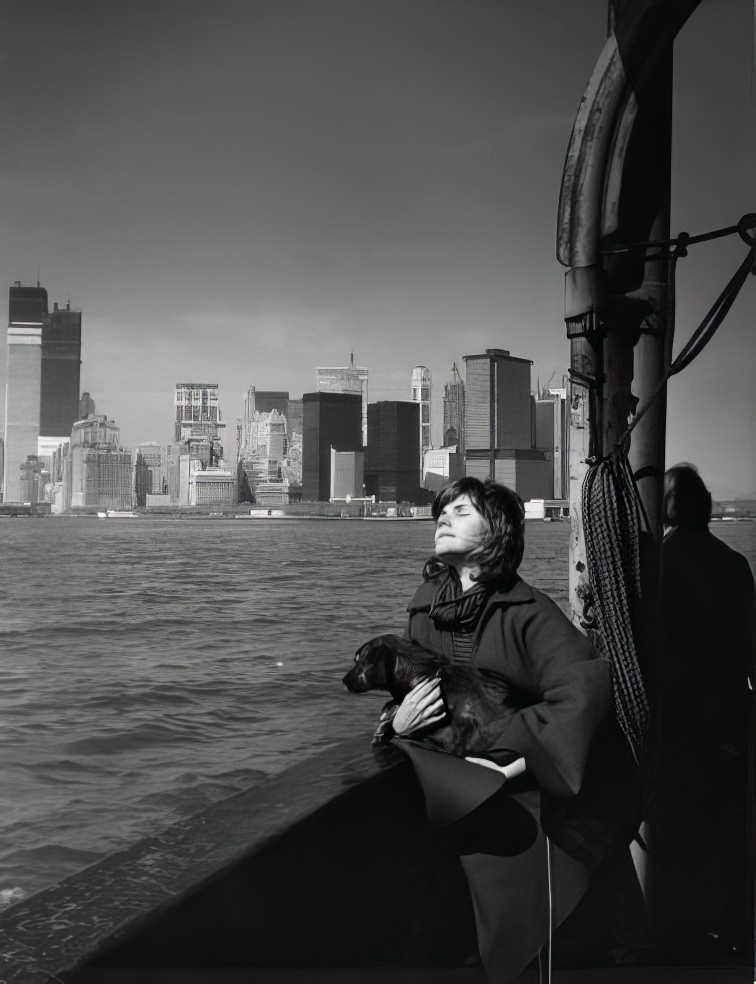
The single biggest change to downtown New York’s skyline came with the World Trade Center. By 1971, the Twin Towers were nearly complete, dominating the southern tip of Manhattan in a way nothing had before. Seen from the Staten Island Ferry that same year, they rose above the harbor like two massive columns redefining the entire waterfront.
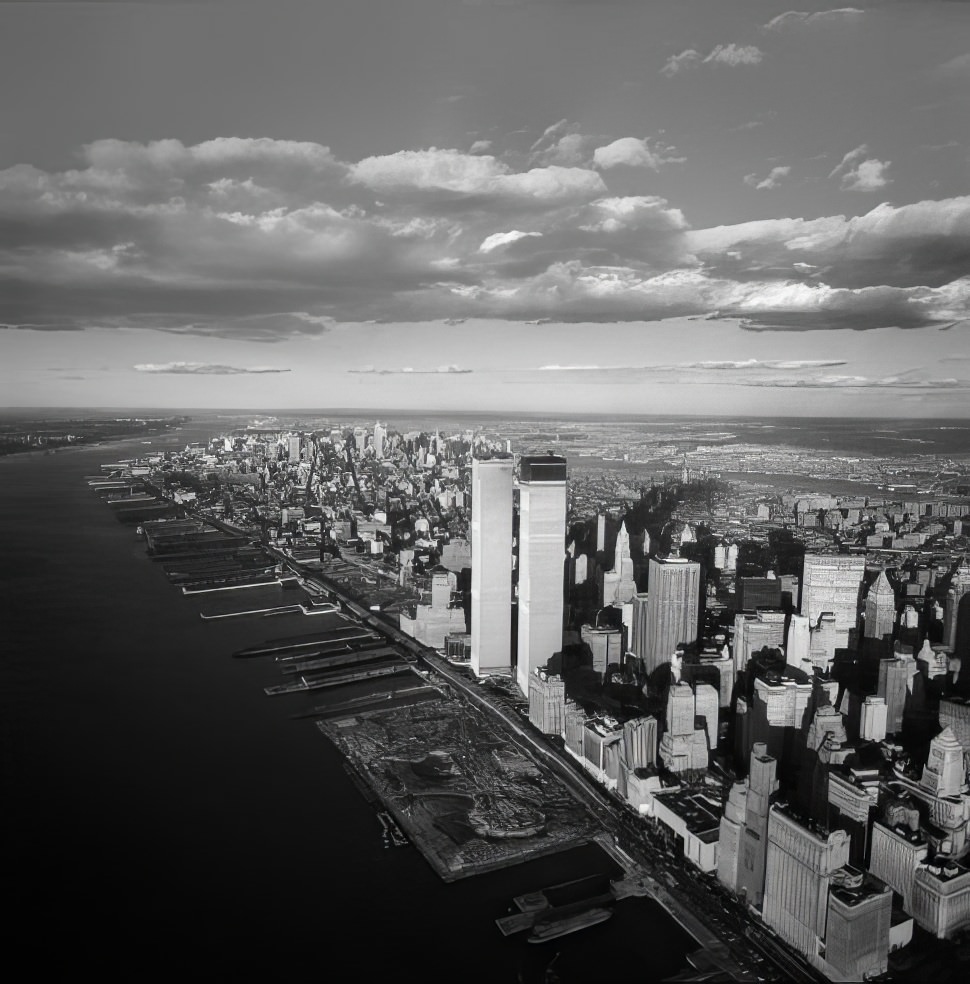
Aerial view of Manhattan with the new, nearly completed World Trade Center's Twin Towers dominating the southern rim of the island, 1971.
Aerial view of Manhattan with the new, nearly completed World Trade Center’s Twin Towers dominating the southern rim of the island, 1971.
Aboard the Staten Island Ferry with the Twin Towers rising in the background, 1971

Photographer Alfred Eisenstaedt captured the towers from across the East River in 1983, framing them beneath the arch of the Brooklyn Bridge. It remains one of the most iconic images of the New York skyline ever taken.
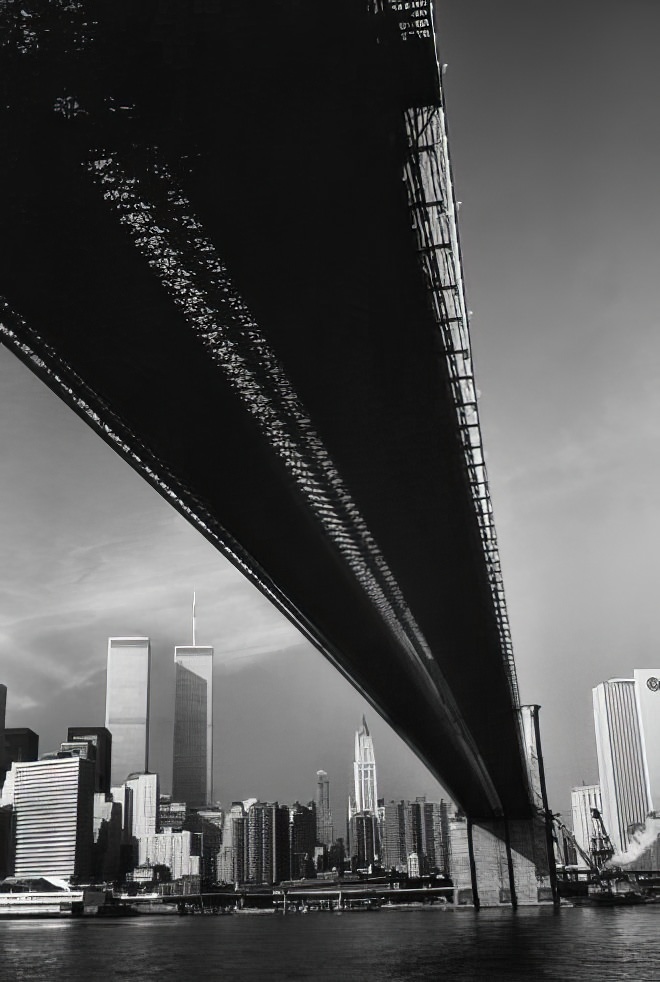
Alfred Eisenstaedt's 1983 portrait of the Twin Towers, taken from across the East River and beneath the Brooklyn Bridge
Alfred Eisenstaedt’s 1983 portrait of the Twin Towers, taken from across the East River and beneath the Brooklyn Bridge
Vintage Photos of Downtown New York from the Roaring Twenties to the Gritty Seventies
Enjoyed this post? Get new ones in your inbox.
Avatar of Kevin Clark

Written by Kevin Clark

Kevin Clark is a historian and writer who is passionate about sharing the stories and significance behind historical photos. He loves to explore hidden histories and cultural contexts behind the images, providing a unique insight into the past.

Leave a Reply

Your email address will not be published. Required fields are marked *