

Death was everywhere in Victorian England. Infant mortality was staggeringly high, diseases that are easily treated today killed thousands every year, and public mourning was woven into the fabric of daily life. Against this backdrop, a practice emerged that strikes most modern viewers as deeply unsettling: photographing the dead. Known today as post-mortem photography, it was a common and widely accepted custom throughout the 19th century, particularly during Queen Victoria’s reign from 1837 to 1901.
Photography itself was brand new. In the early decades of the medium, having a photograph taken was a rare and costly event — something reserved for weddings, christenings, or other major milestones. Many families went their entire lives without a single portrait of a loved one. When someone died, especially a child, there was often nothing left to remember their face by. Post-mortem photography filled that void. It gave grieving families a tangible image to hold onto, something to pass down through generations.

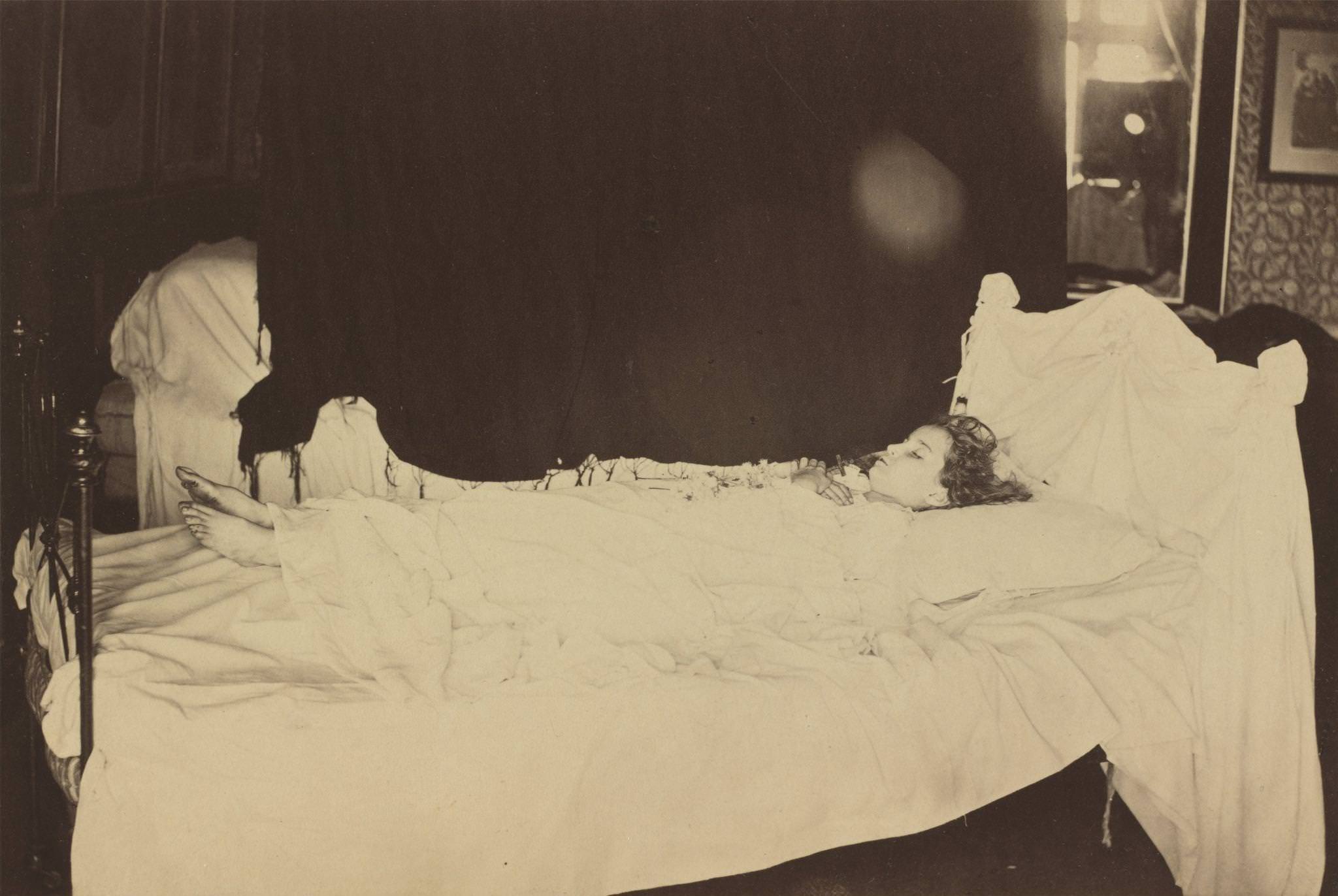
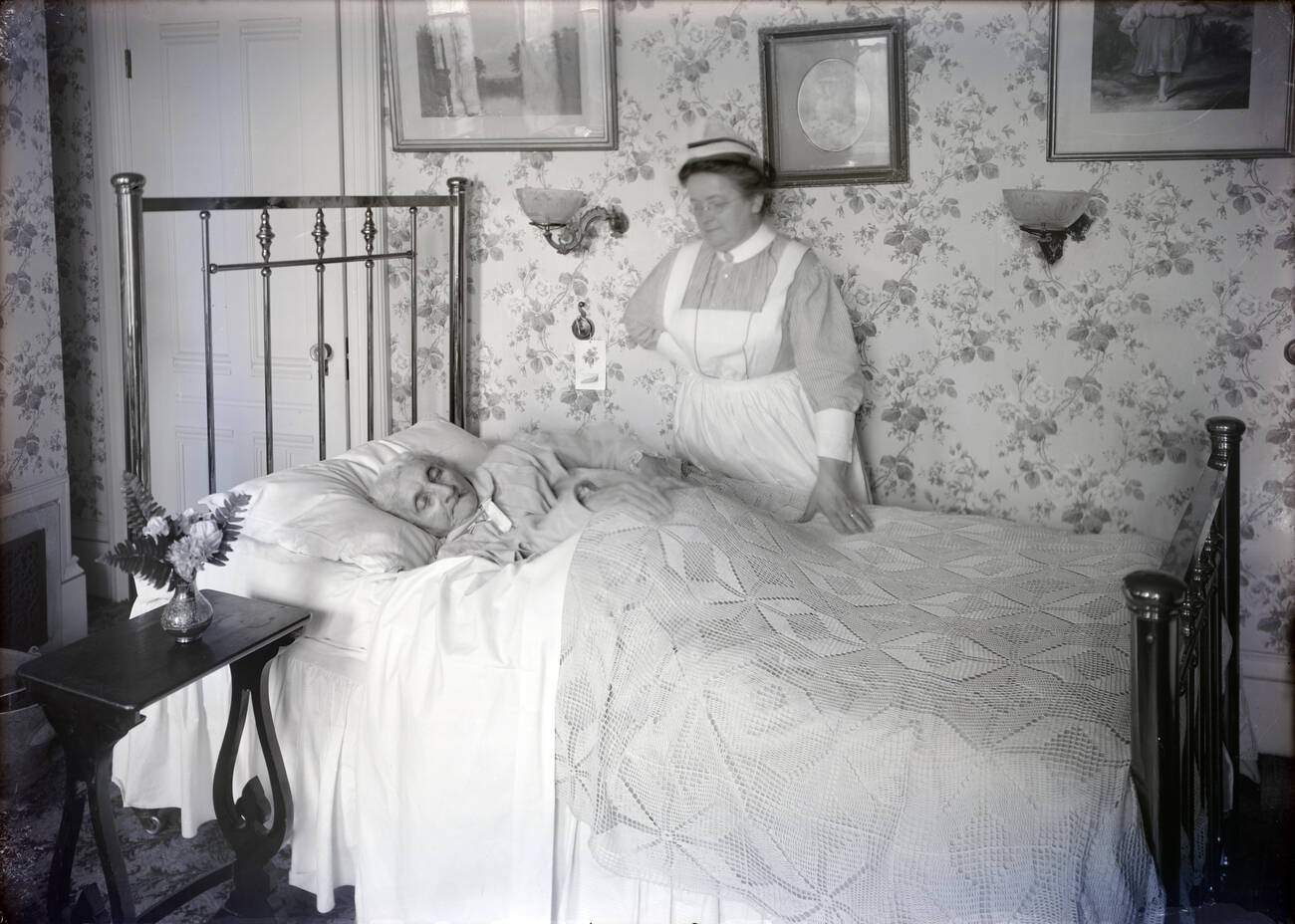
The photographs were taken in a variety of settings. The simplest were “deathbed portraits,” in which the deceased was photographed exactly where they lay, often surrounded by flowers and religious objects. More elaborate sessions involved propping the body upright in a chair or against a stand, dressing them in their finest clothes, and arranging the scene to suggest an ordinary moment in life. The goal was always the same: make the deceased look as natural and alive as possible.

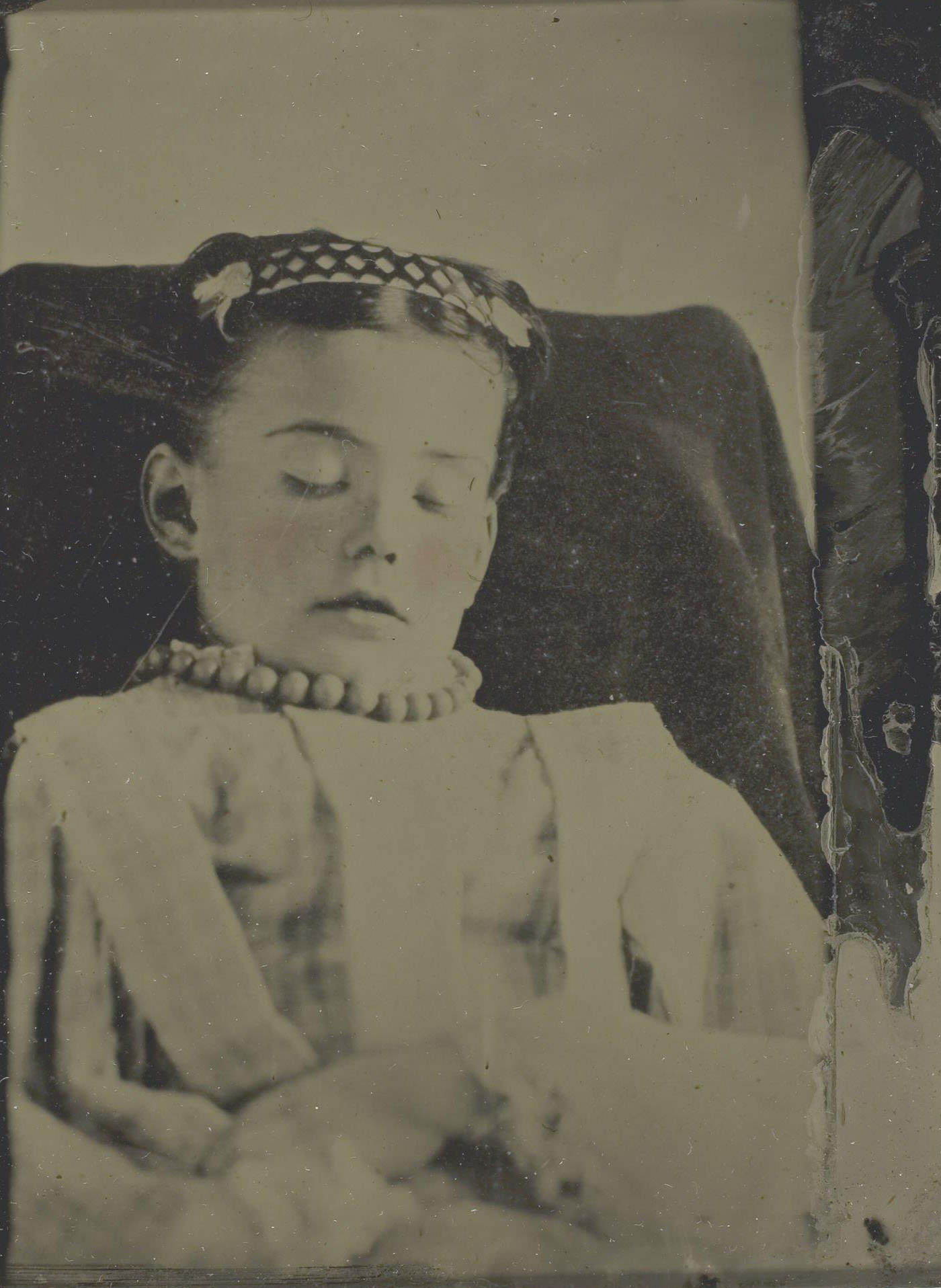
Photographers developed specific techniques to achieve this lifelike appearance. Metal rods and specially designed stands were used to hold bodies upright, then carefully hidden behind furniture, drapery, or cushions. In some cases, the eyes of the deceased were painted directly — a thin layer of color applied to the closed eyelids to suggest open, living pupils. The cheeks and lips were rouged to add color and warmth to skin that no longer had any.


Children were among the most frequently photographed subjects, in large part because child death was so common. A baby or young child might die before any photograph had ever been taken of them. Post-mortem portraits were, in many cases, the only image a family would ever have. Photographers sometimes posed children as though sleeping peacefully, tucking them into beds or chairs with their eyes closed and hands folded. Personal objects — toys, books, a favorite hoop and stick — were placed nearby to reflect who the child had been in life.


One of the more striking techniques involved painting the eyes directly onto the photograph after it was developed, rather than on the body itself. A photographer would take the portrait with the eyes closed, then use ink or paint to draw open eyes onto the image. The results were often uneven and gave the subject an unnervingly blank stare — an effect that reads as deeply eerie today, even if it was intended to bring comfort at the time.


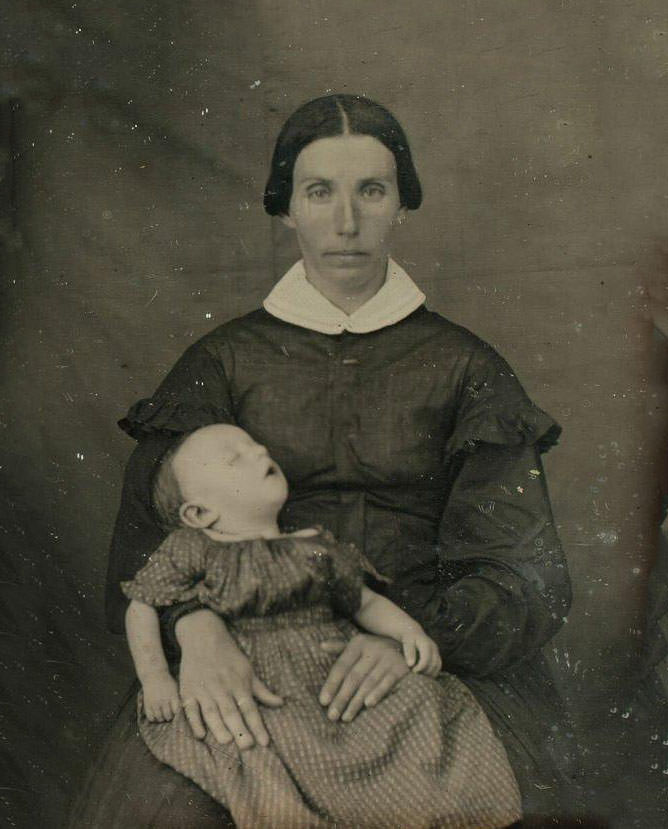
Family members were frequently included in the photographs alongside the deceased. A husband would hold his dead wife. Parents would cradle a dead infant. Siblings would stand on either side of a deceased brother or sister. These group portraits made the photographs look, at first glance, like ordinary family pictures. In many cases, the only clue that something is wrong is the stillness of one figure compared to the slight blur of the living — a result of family members moving slightly during the long exposure times that early cameras required.


The practice was not limited to ordinary families. Public figures and notable individuals were also photographed after death. William T. Anderson, a Confederate guerrilla fighter during the American Civil War, was photographed after he was killed in 1864. Confederate cavalry commander General Turner Ashby was similarly documented after his death in battle. Emperor Maximilian I of Mexico was photographed following his execution by firing squad in 1867. Even Edgar Allan Poe, who died under murky circumstances in 1849, was captured in a post-mortem image.


Photography also served legal and scientific purposes in the context of death. If someone died under suspicious circumstances, a photograph of the body became documentary evidence. If someone died of a rare or unusual disease, photographs of their condition and appearance helped medical professionals study and record it. In this sense, post-mortem photography was a practical tool as much as it was an emotional one.


Photographing infants who died shortly after birth — or mothers who died in childbirth — was especially common. A baby who never lived long enough to be captured in any other way could still be given a permanent image. These photographs were sometimes the only proof that the child had existed at all. Families kept them in albums, displayed them on walls, or stored them as private keepsakes. In some documented cases, mothers refused to part with the photographs for years, or at all.


As photography technology advanced, so did the format of post-mortem portraits. Cabinet cards — small photographs mounted on stiff cardboard backing — became widely used from the 1860s onward. These could be mass-produced, allowing multiple copies of the same image to be printed and mailed to relatives across the country or even overseas. A family in Iowa could send a cabinet card of a deceased child to grandparents in New York, giving distant relatives a final image of someone they had never met or had not seen in years.


The practice was not universally accepted, even at its height. Critics argued that photographing the dead was disrespectful and violated the dignity of the deceased. Some religious communities believed it conflicted with proper mourning customs. Others raised concerns about the psychological toll on the living — that being forced to look at photographs of dead family members prolonged grief rather than easing it. These debates ran alongside the practice throughout the Victorian era.


The cost of the practice also limited who could access it. Professional photographers charged significant fees, and the process was time-consuming. Elaborate sessions involving props, painted eyes, and hidden metal supports required skilled photographers and additional labor. This meant that post-mortem photography was largely a privilege of the middle and upper classes through much of the Victorian period, though it became more accessible as technology improved and prices dropped.


By the 1880s and 1890s, the practice was already in decline. The invention of faster photographic film and the introduction of smaller, handheld cameras made photography far more spontaneous. Families no longer had to wait for formal, expensive sessions to capture a loved one’s image. Casual snapshots taken throughout a person’s life meant there was rarely a shortage of photographs when someone died. The whole reason post-mortem photography had existed — the absence of any other image — was disappearing.


Changing attitudes toward death and mourning also played a role. As the Victorian era gave way to the Edwardian period and beyond, public displays of grief became less socially common. Mourning shifted inward and became a more private matter. Photographing the dead in elaborate, posed settings no longer fit the new cultural mood, and the demand for such portraits dried up accordingly.



Hi there, I enjoy reading through your post. I wanted to write a
little comment to support you.
I’m very pleased to find this website. I
want to to thank you for your time for this particularly wonderful read!!
I definitely enjoyed every little bit of it and I have you bookmarked to look at new stuff in your
web site.
Every weekend i used to pay a quick visit this website, because
i wish for enjoyment, since this this web site conations genuinely pleasant funny information too.
I am now not sure the place you’re getting your information,
however great topic. I needs to spend some time studying more or working out more.
Thank you for magnificent info I was looking
for this information for my mission.
You lost me with Lewis Carroll’s photo. As it he was pretty much alive in there. Most of the rest are fake and misplaced, I can testify that more of them are not dead so I think your info is not serious at all, just copying and pasting from other dubious sites. Sorry but your research is not serious.