Red Dust, released in 1932, is one of Hollywood’s most electric pre-Code romantic dramas. Directed by Victor Fleming, the film is based on Wilson Collison’s 1928 stage play and was adapted for the screen by John Lee Mahin. It stars Clark Gable, Jean Harlow, and Mary Astor in a story set on a rubber plantation in Southeast Asia.
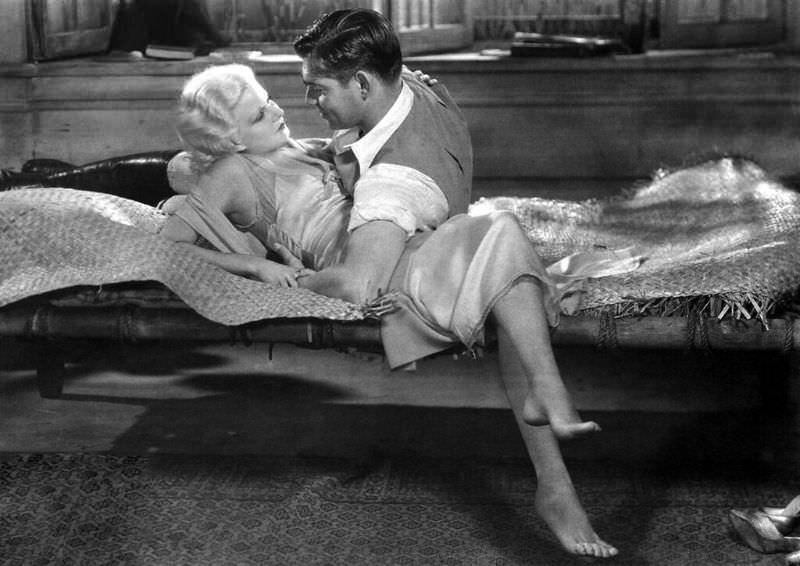
Gable plays Dennis Carson, the tough, no-nonsense plantation owner. Despite being written as a stubborn, headstrong man’s man, Gable brings enough charm to make Carson genuinely likeable on screen. He holds the film together, keeping the tension between the three main characters taut from start to finish.
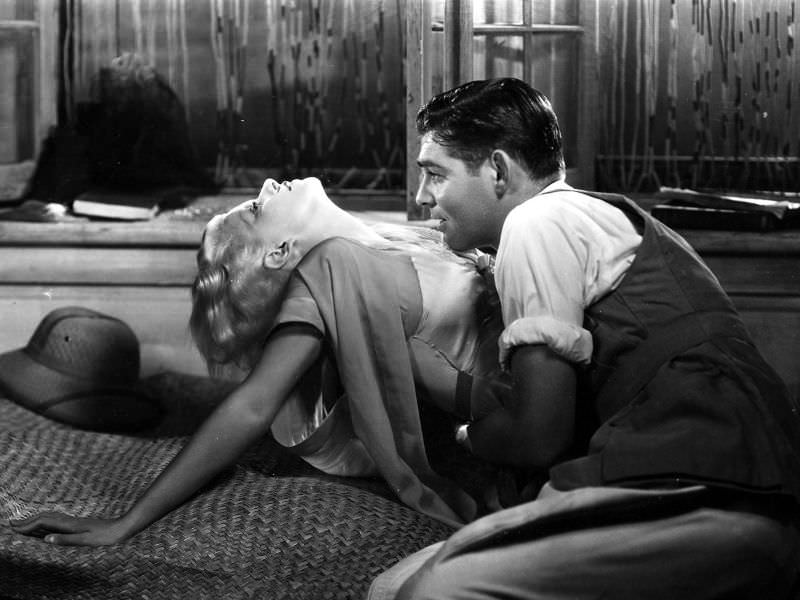
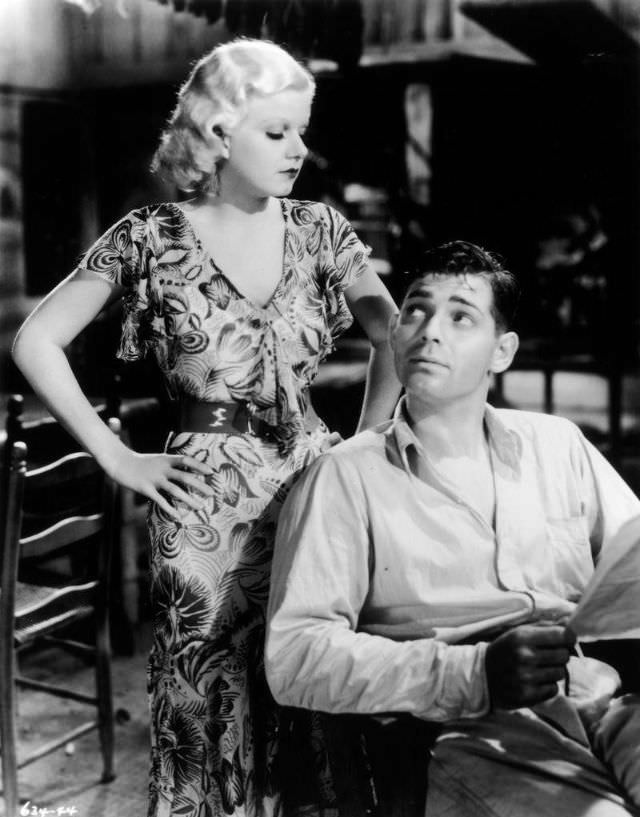
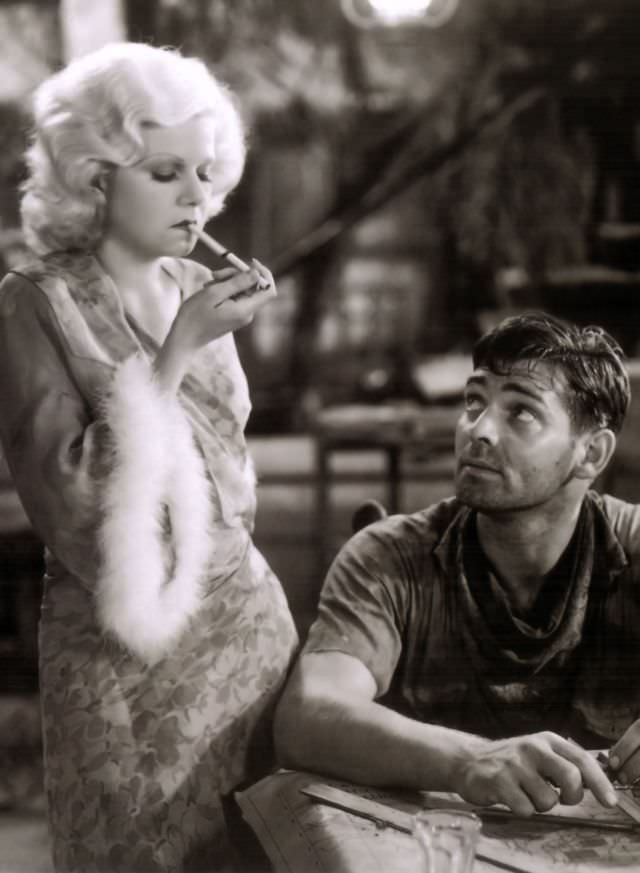
Jean Harlow plays Vantine, a good-natured prostitute who ends up staying at Carson’s plantation. At first, Carson pays her little attention, but the two gradually fall into a warm, believable romance. Their chemistry is one of the film’s greatest strengths.
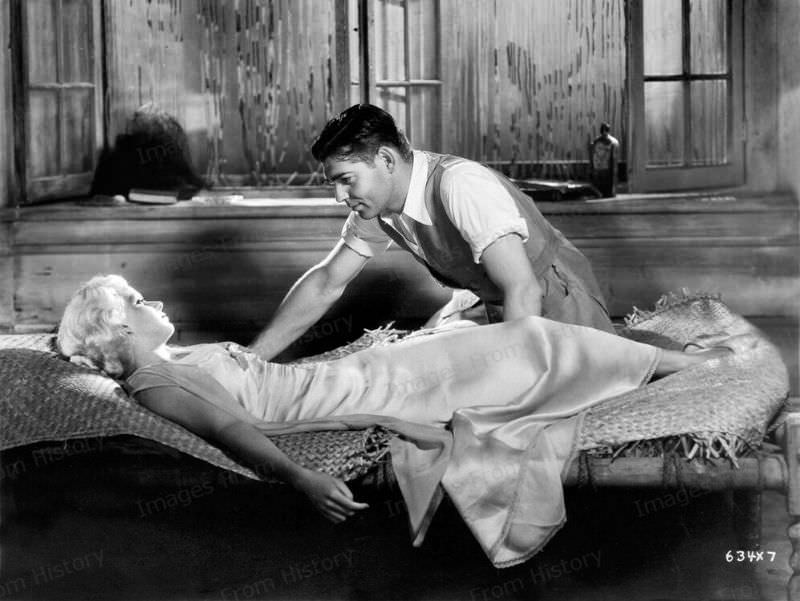
Harlow’s performance in Red Dust marked a real turning point in her career. Compared to her earlier roles, she showed far more range and confidence here. Her platinum blonde look carried both sex appeal and a kind of girlish innocence, a rare combination that made Vantine easy to root for.
Mary Astor plays Barbara Willis, the wife of a surveyor named Gary Willis, played by Gene Raymond. When Gary falls ill and is forced to recover at the plantation, Barbara and Carson find themselves in close quarters. The sexual tension between them builds quickly and becomes a central conflict in the story.
Barbara’s husband is portrayed as dull and out of place on the plantation, which makes her attraction to the rugged Carson feel natural within the story’s logic. The triangle between Carson, Vantine, and Barbara drives most of the film’s drama.
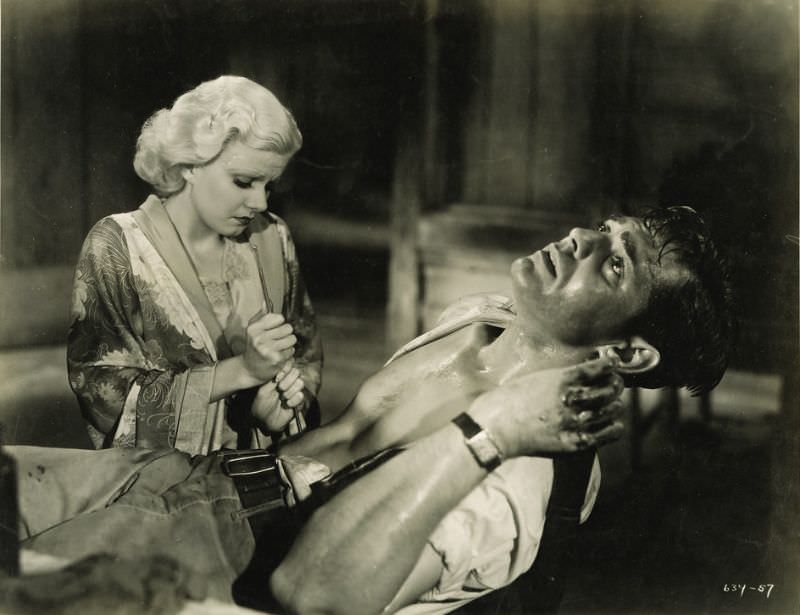
As a pre-Code film, Red Dust was free to deal openly with topics that would soon be banned under the Hollywood Production Code, enforced strictly from 1934 onward. Vantine’s occupation is stated plainly. The physical desire between characters is shown without much restraint.
One of the film’s most talked-about scenes involves Harlow bathing in a rain barrel while trading sharp jokes with Gable. The scene is playful, suggestive, and perfectly captures the tone of their relationship throughout the film.
Harlow had already appeared in films like Hell’s Angels (1930) and The Public Enemy (1931), but Red Dust showed audiences and studio executives what she was truly capable of as a comedic and dramatic performer. Her timing, in particular, was sharp and natural.
Gable, too, was on the rise in 1932. Red Dust came out the same year as Strange Interlude and Possessed, and it helped solidify his standing as one of MGM’s top leading men. His roughness on screen felt genuine rather than performed.
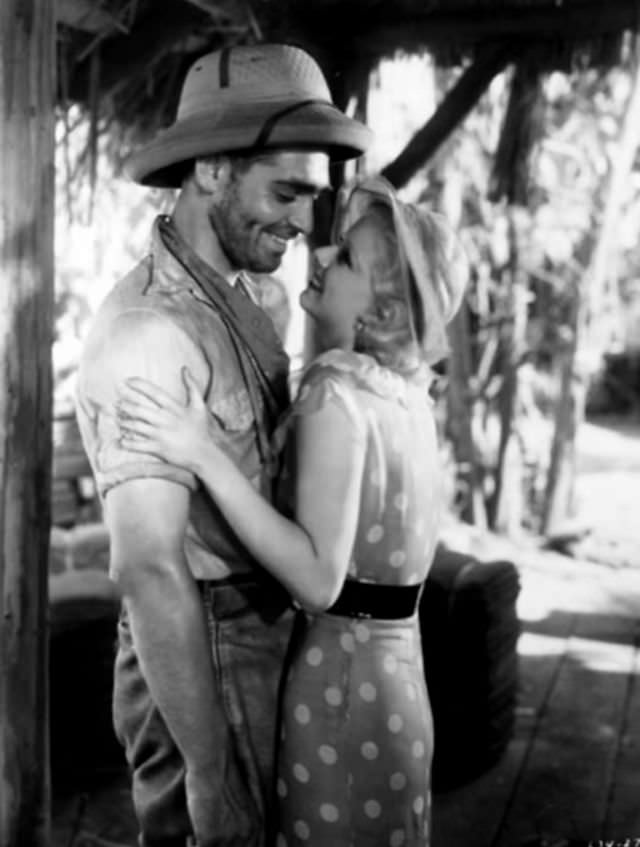
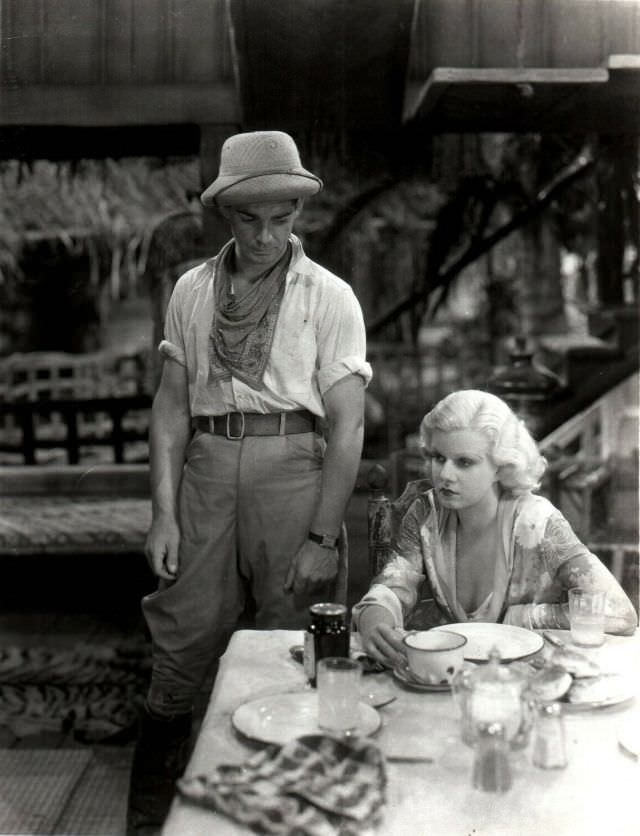
The plantation setting gave the film a steamy, isolated atmosphere. The tropical backdrop reinforced the idea that normal social rules did not apply here, which made the film’s romantic entanglements feel less scandalous and more inevitable.
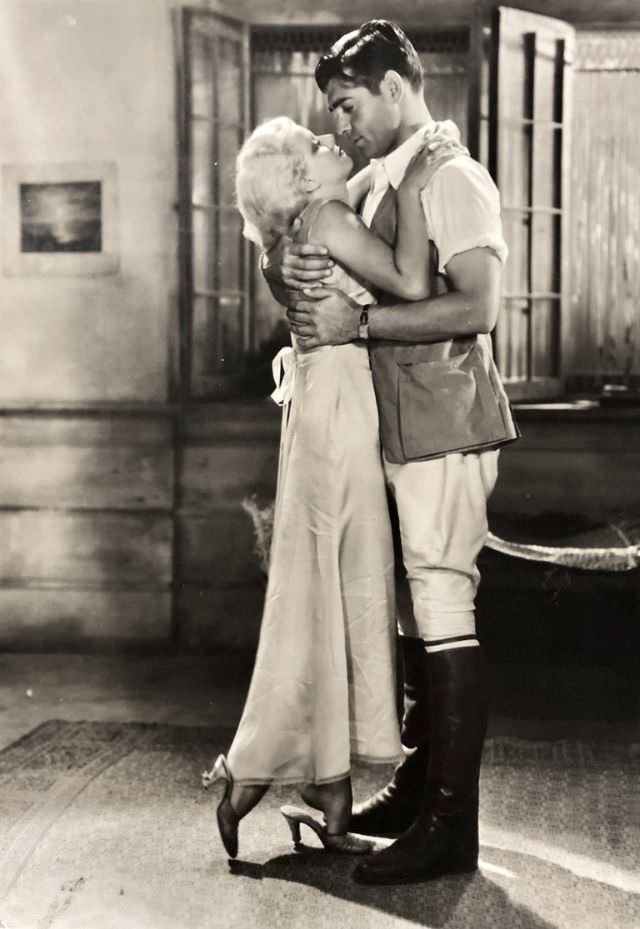
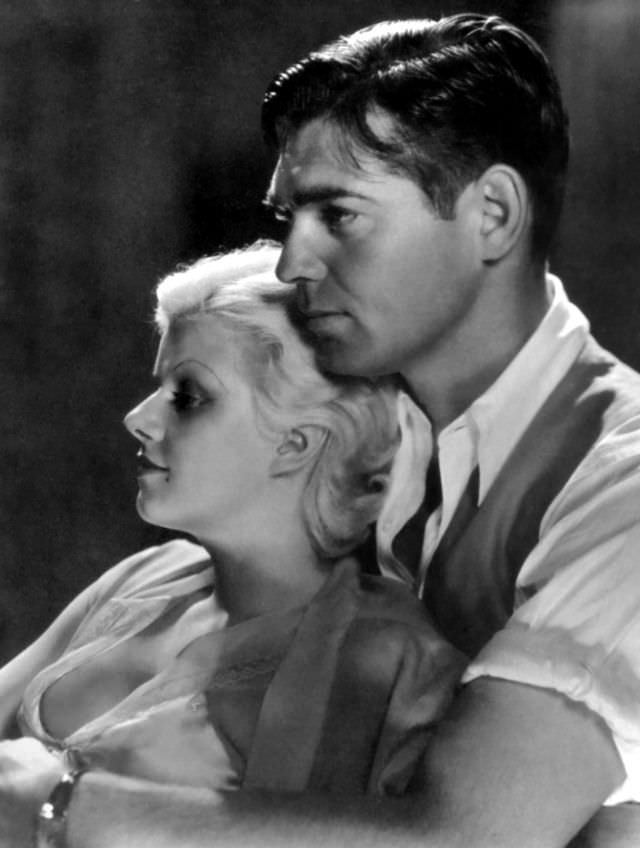
Harlow and Gable would go on to make five films together in total, a pairing that MGM clearly recognized as box office gold. Their ease with each other on screen made every scene feel unforced.
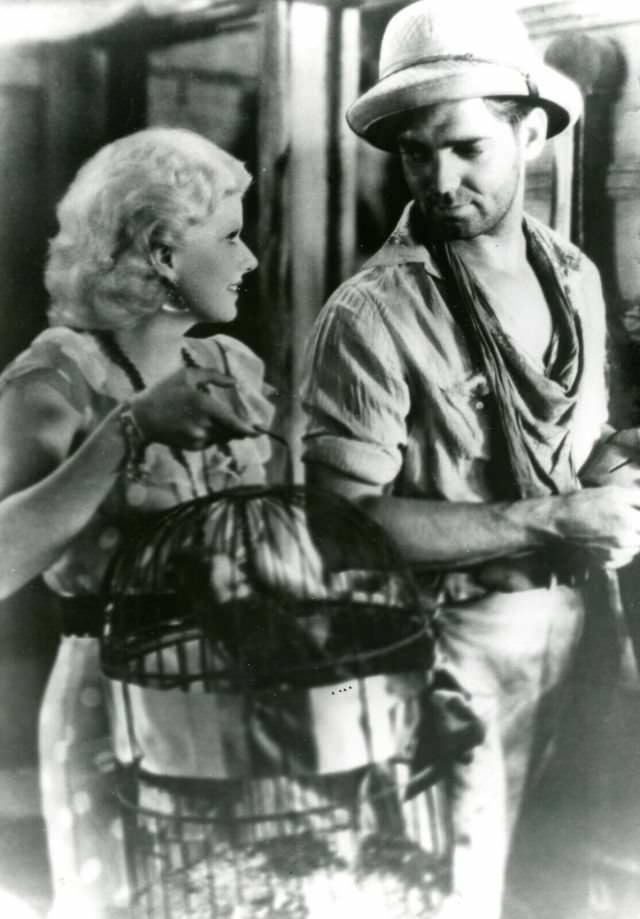
Mary Astor brought polish and restraint to the role of Barbara, which worked well as a contrast to Harlow’s looser, livelier Vantine. The two women represented very different worlds, and the film used that contrast deliberately.
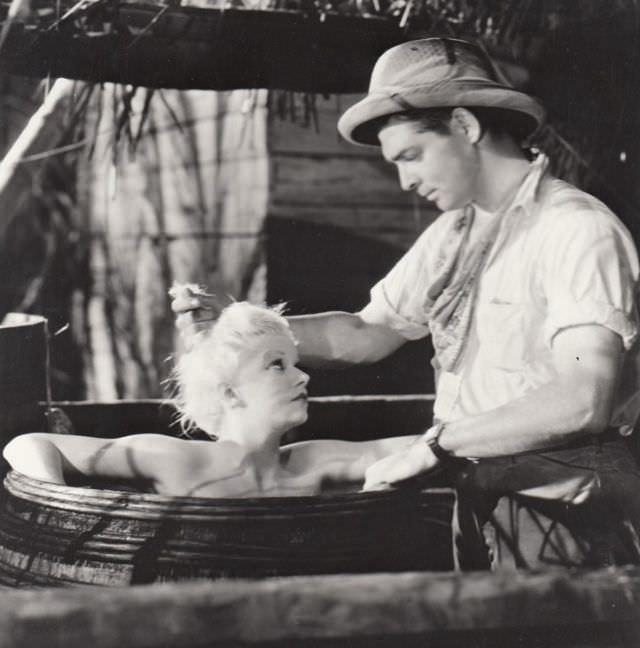
Screenwriter John Lee Mahin kept the dialogue sharp and the pacing tight. The script gave Harlow plenty of room to deliver her lines with wit, and she made the most of every opportunity. Her comedic instincts were a key part of what made Vantine so memorable.
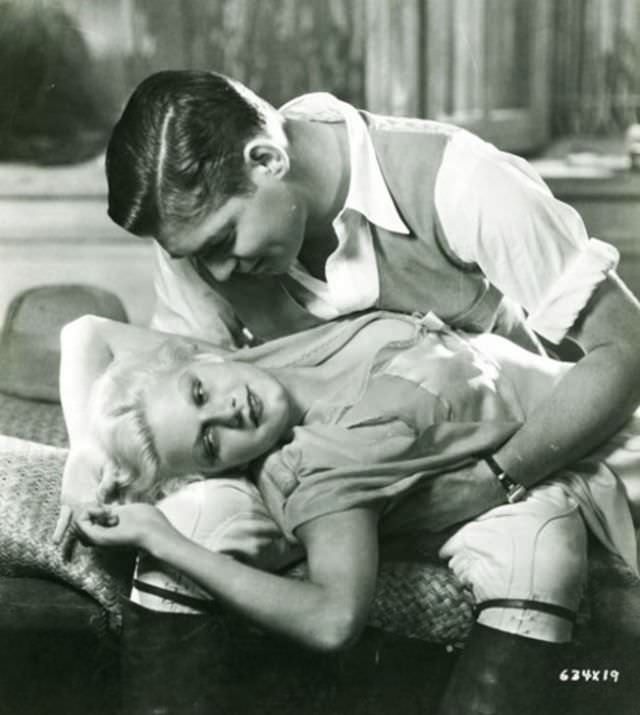
The film was a major commercial success for MGM. Audiences responded strongly to its bold subject matter and the star power of its three leads. Studios took notice of how well Gable and Harlow worked together.
Gene Raymond’s role as Barbara’s husband was intentionally understated. His character exists mainly to create the situation that puts Barbara and Carson together. He served his narrative purpose without overshadowing the main trio.
Victor Fleming’s direction kept the camera close to his actors, letting their expressions carry much of the drama. Fleming had a reputation for getting strong performances from his casts, and Red Dust is a good example of that skill.
Red Dust was later remade as Mogambo in 1953, also directed by John Ford, with Gable again in the lead role alongside Ava Gardner and Grace Kelly. The remake shifted the setting to Africa but kept the basic story structure intact.
The 1932 original, however, has its own distinct energy that the remake never fully matched. Much of that energy comes from Harlow, whose performance feels alive in a way that is hard to replicate.
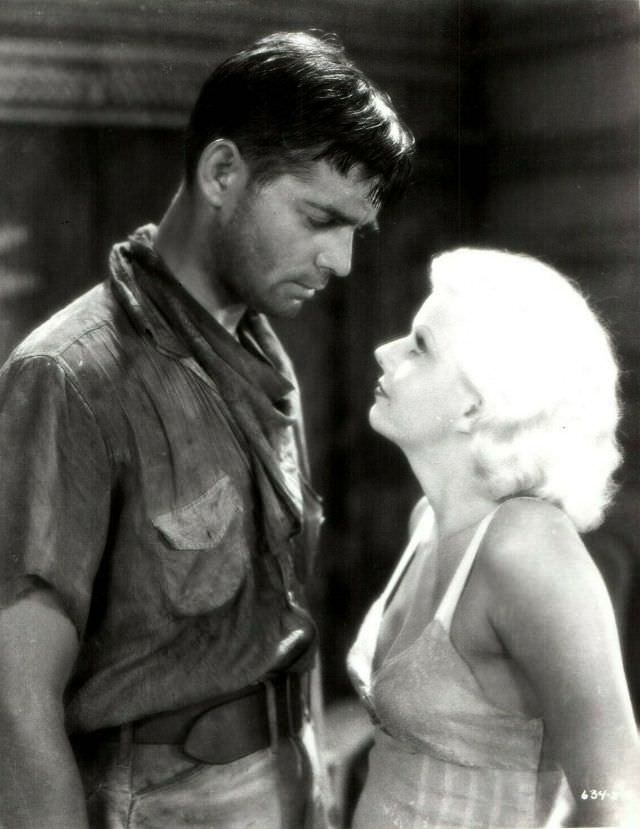
Harlow was just 21 years old during the filming of Red Dust. Her youth, combined with her natural screen presence, gave her performance an edge that older, more calculated actresses might have missed.
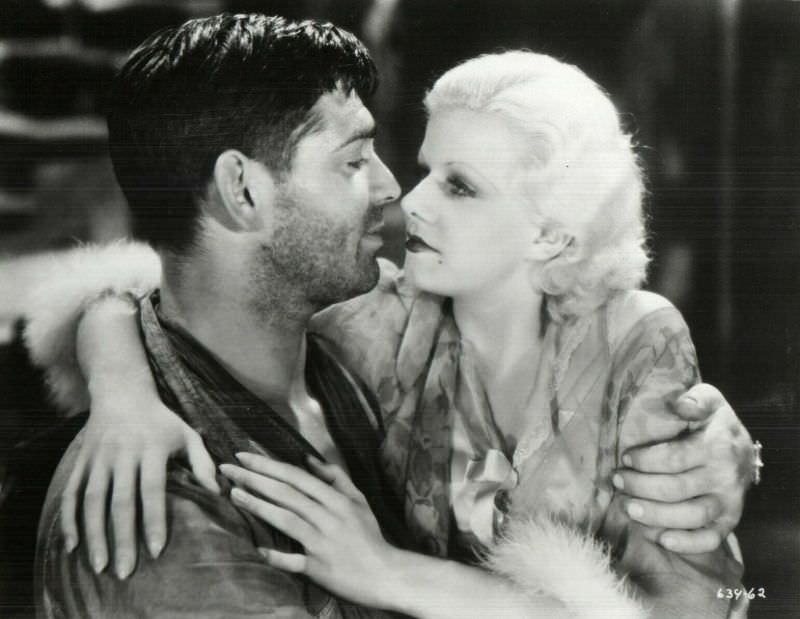
Gable was 31 at the time of filming. He brought a physical authority to Carson that anchored the film’s more chaotic moments. When Carson made a decision on screen, the audience believed it.
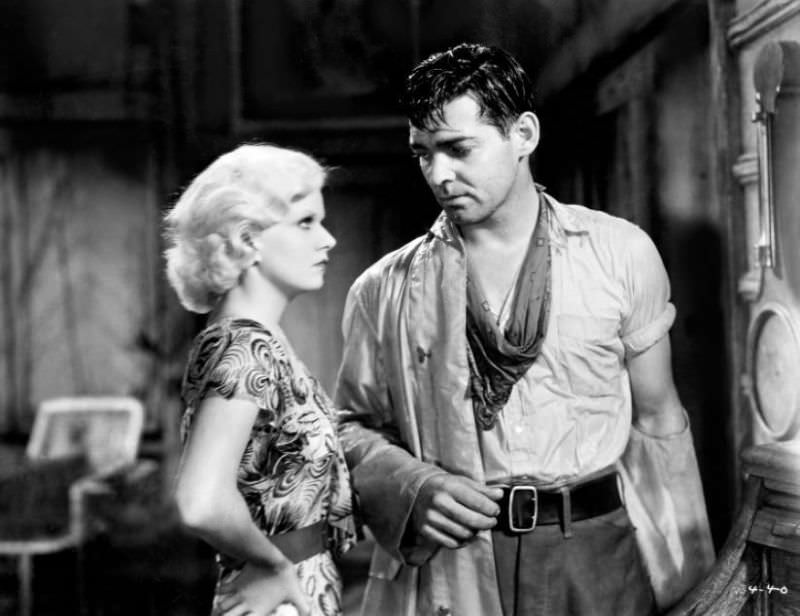
The film’s frank treatment of desire and morality was typical of pre-Code Hollywood, a period when studios operated with far fewer restrictions. Red Dust pushed those boundaries as far as most films dared to go at the time.
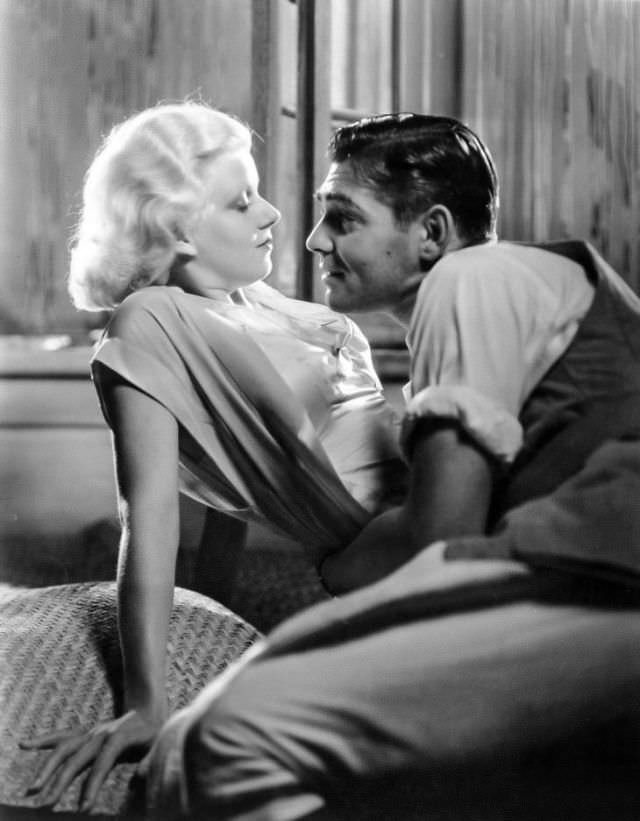
In 2006, the Library of Congress selected Red Dust for preservation in the United States National Film Registry, recognizing it as culturally, historically, and aesthetically significant. It remains one of the defining films of the pre-Code era.
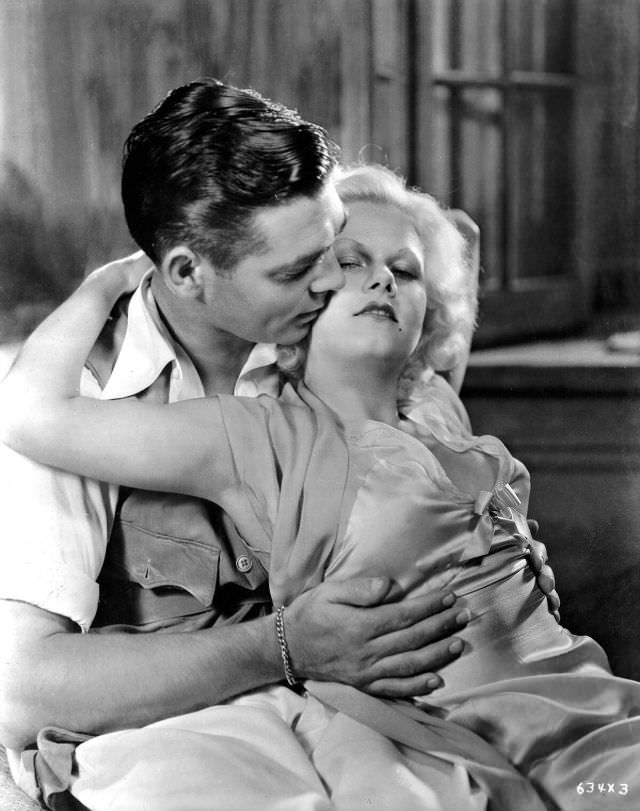
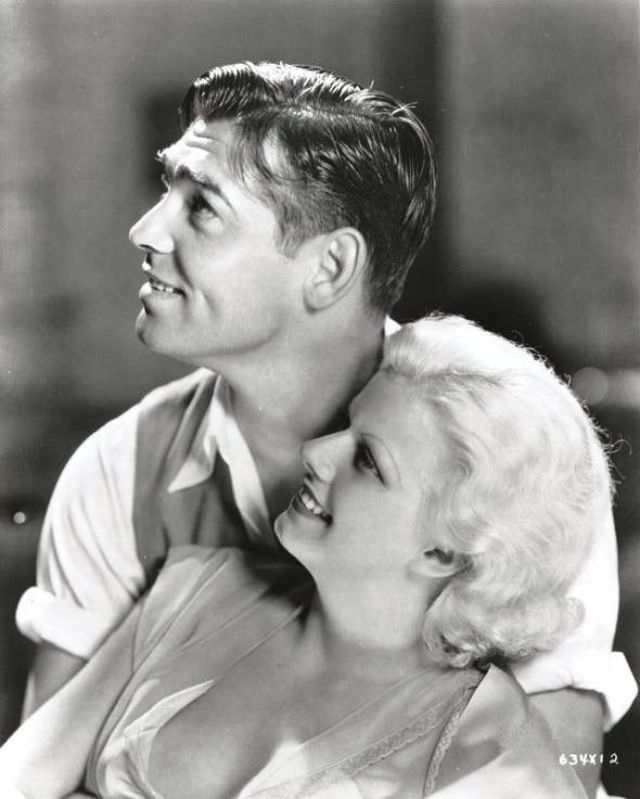
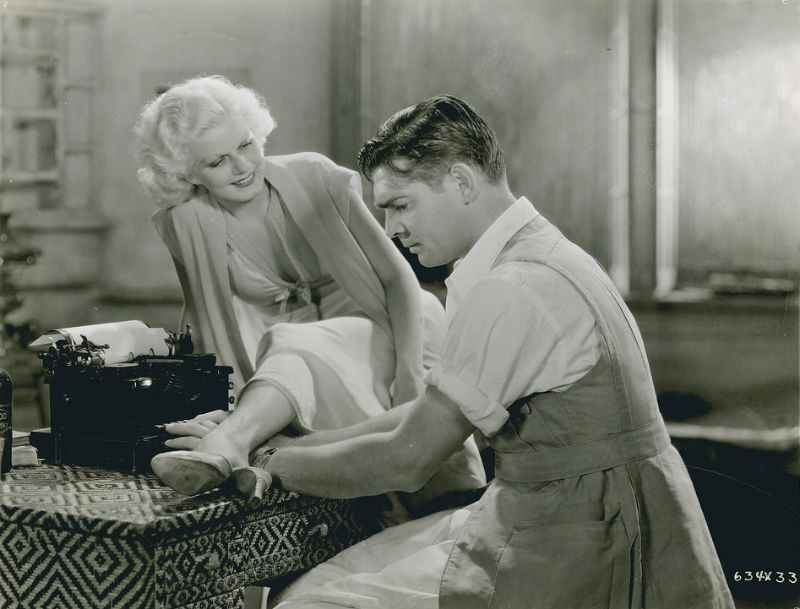
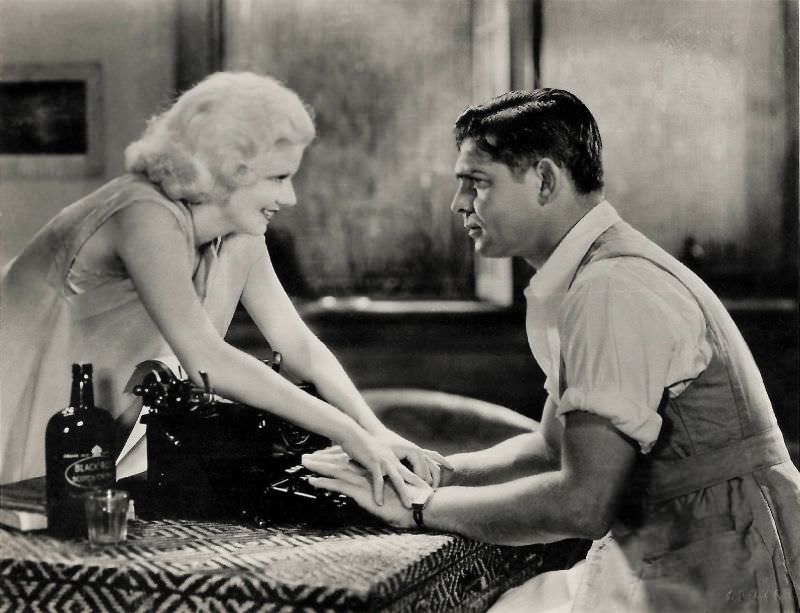
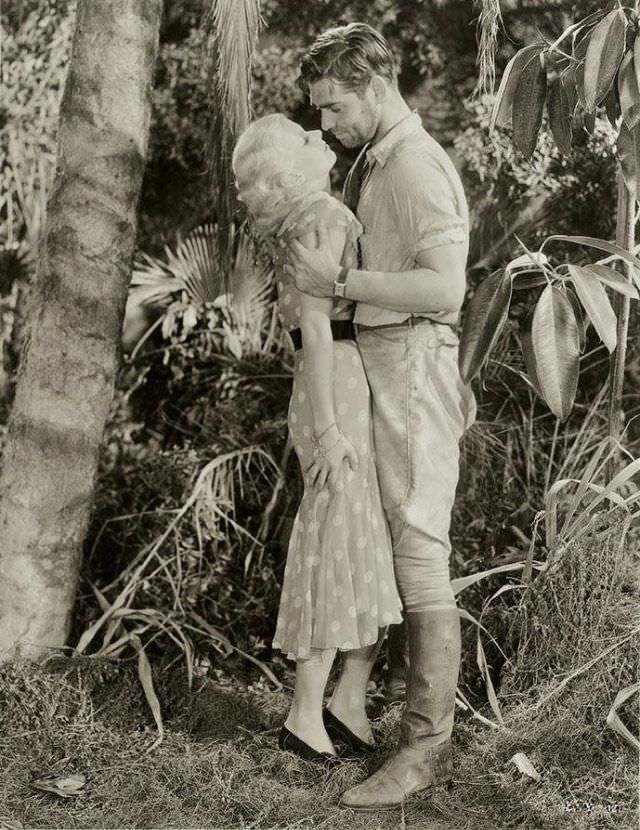
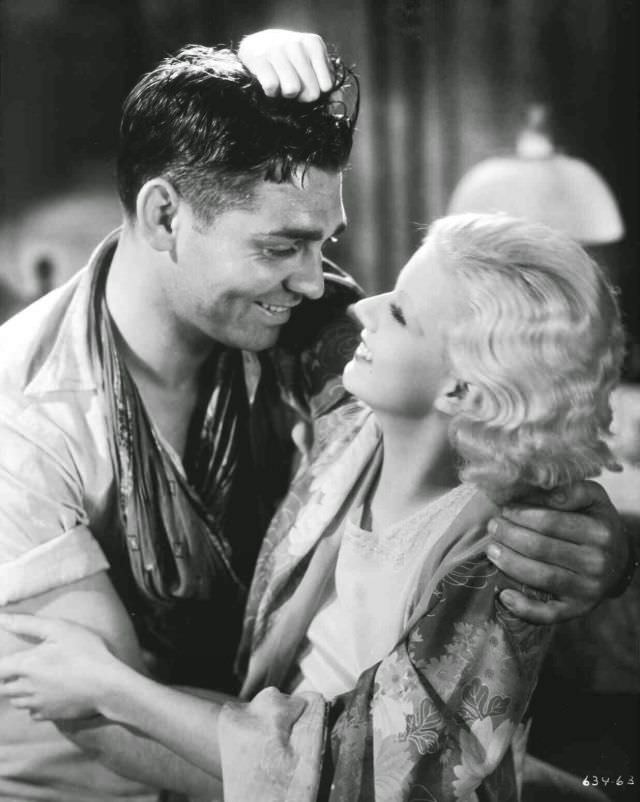
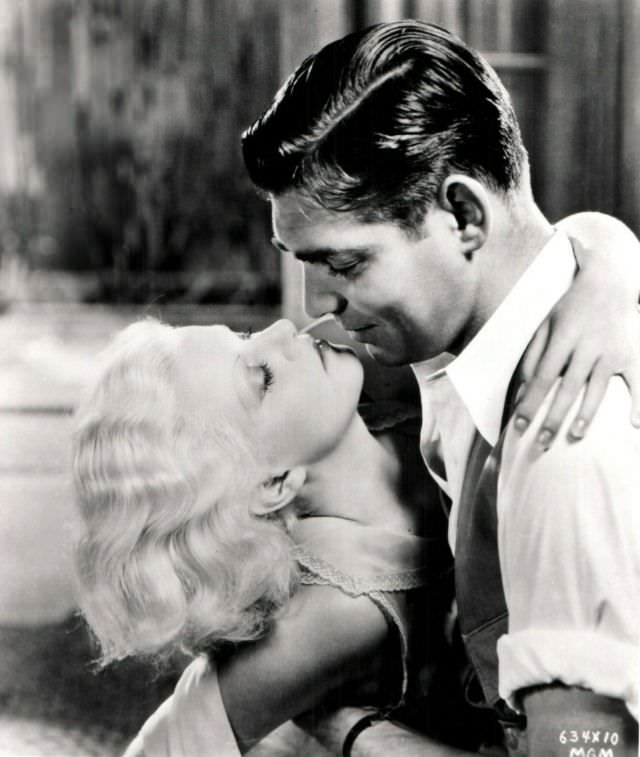
The on-set photographs from the production capture Harlow and Gable in a relaxed, confident mood. The comfort between them in those images mirrors what comes through so clearly in the finished film.
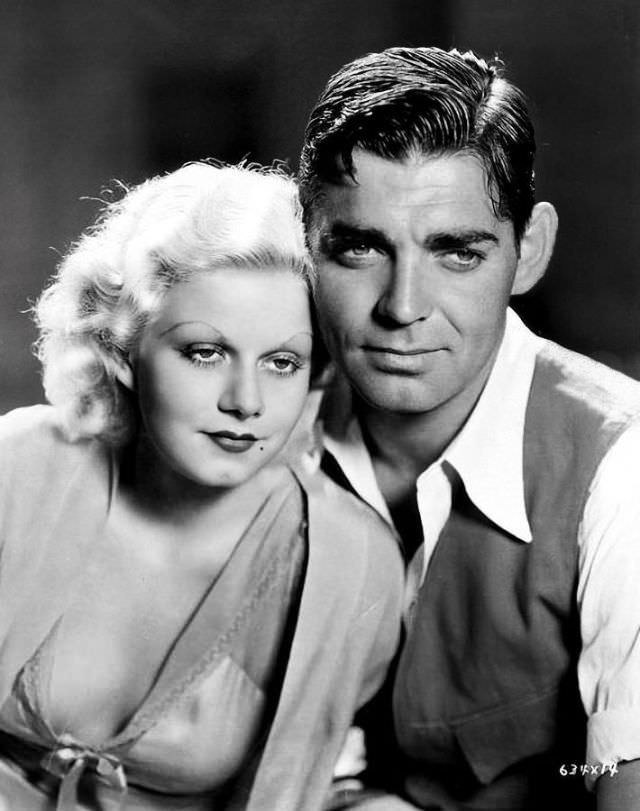
Red Dust stands as a strong record of two major Hollywood stars at a defining moment in their careers. The film caught Harlow growing into her full talent and Gable cementing his status as one of the screen’s great leading men.