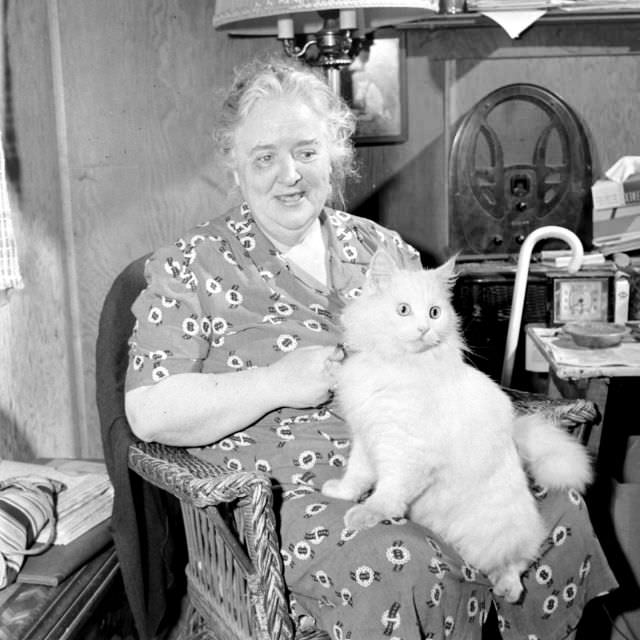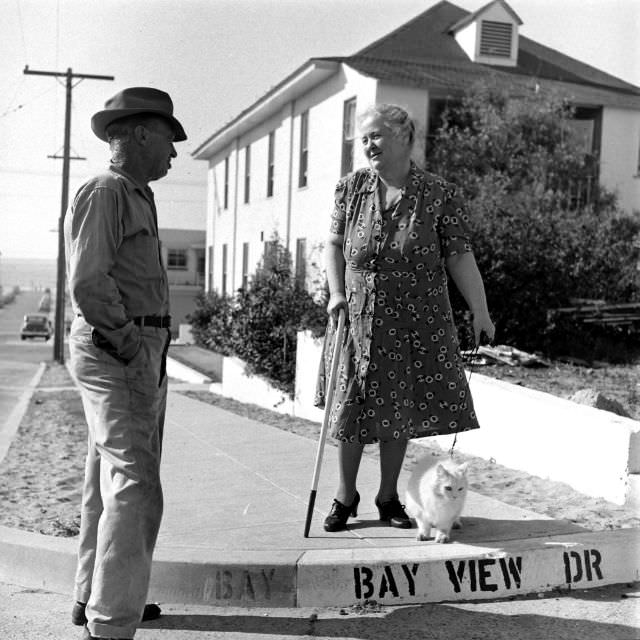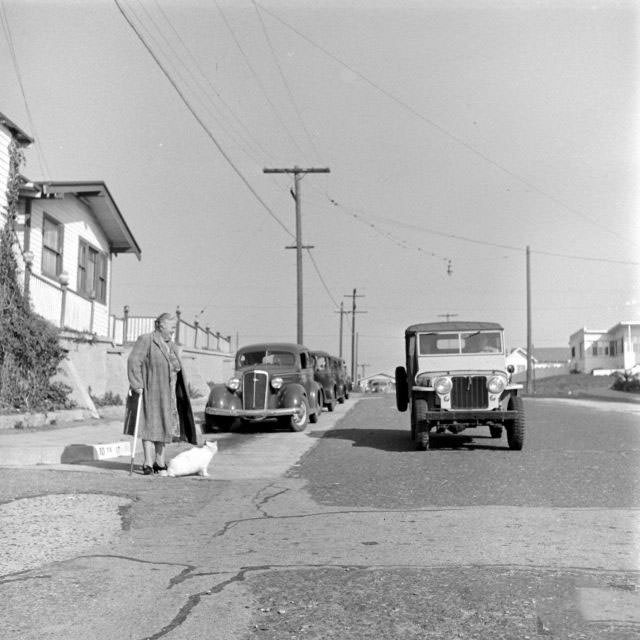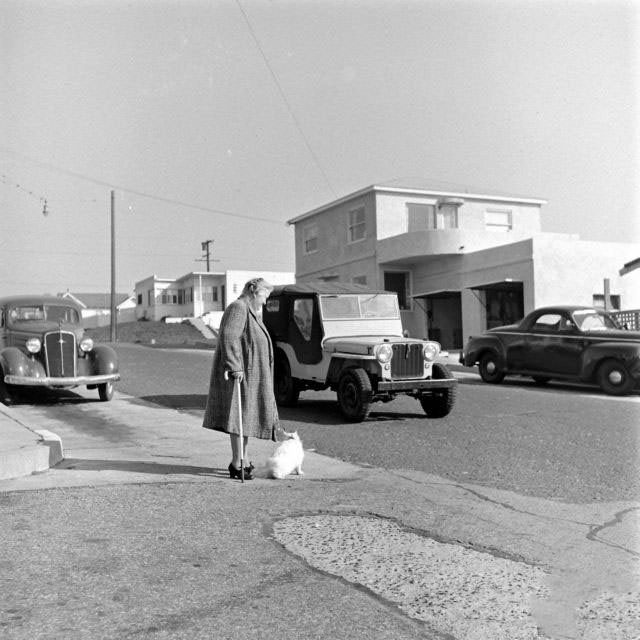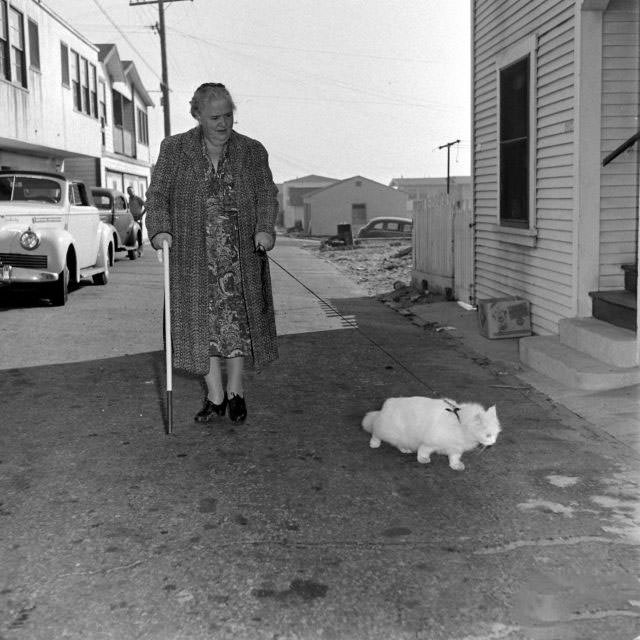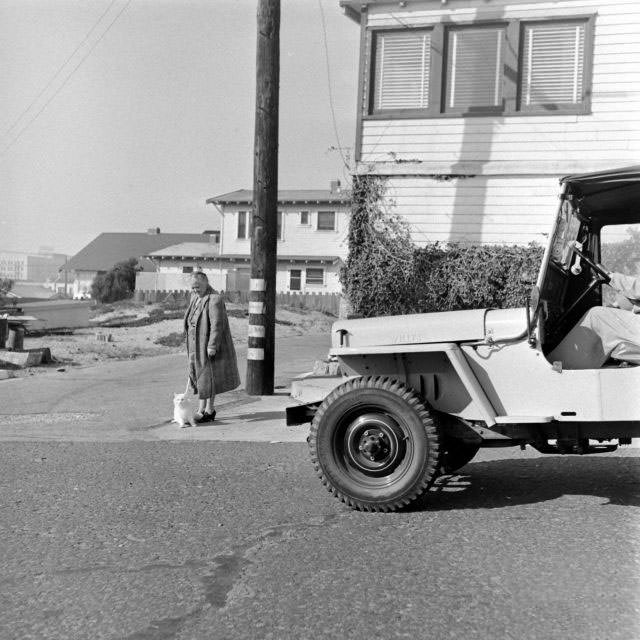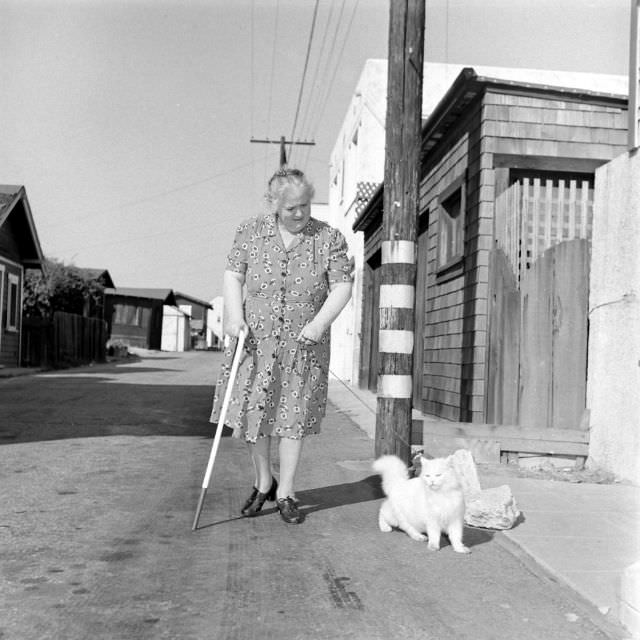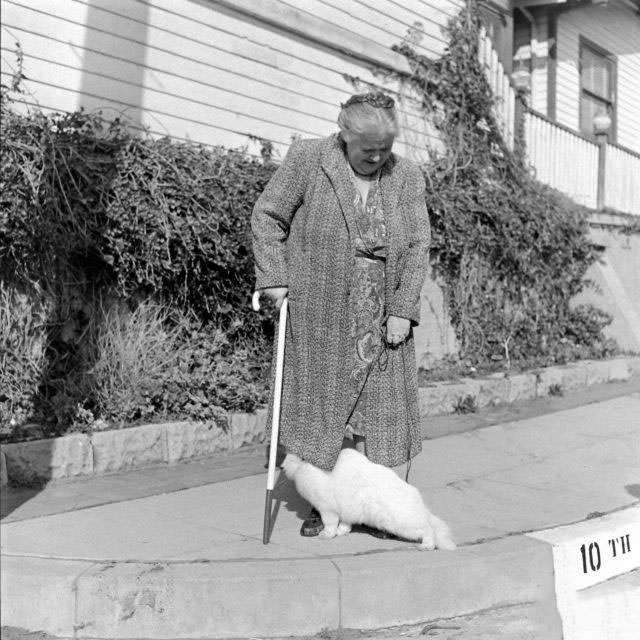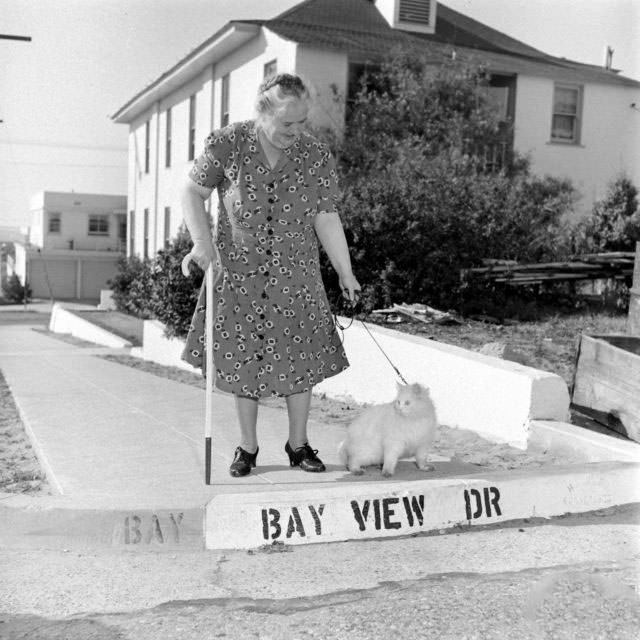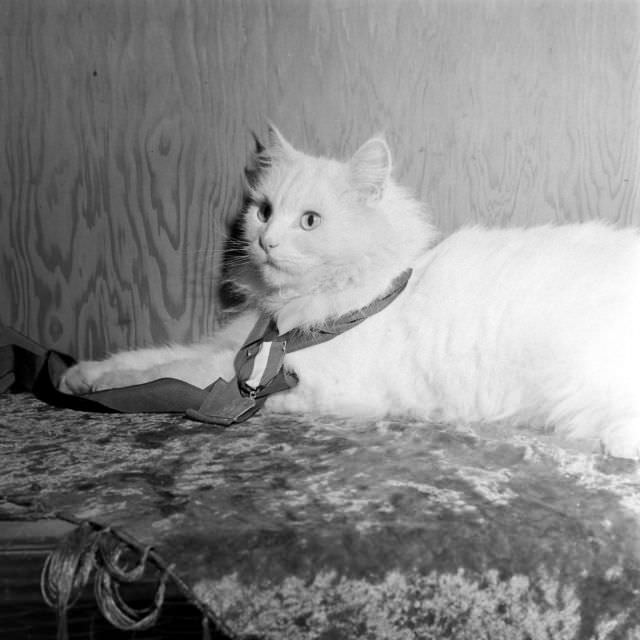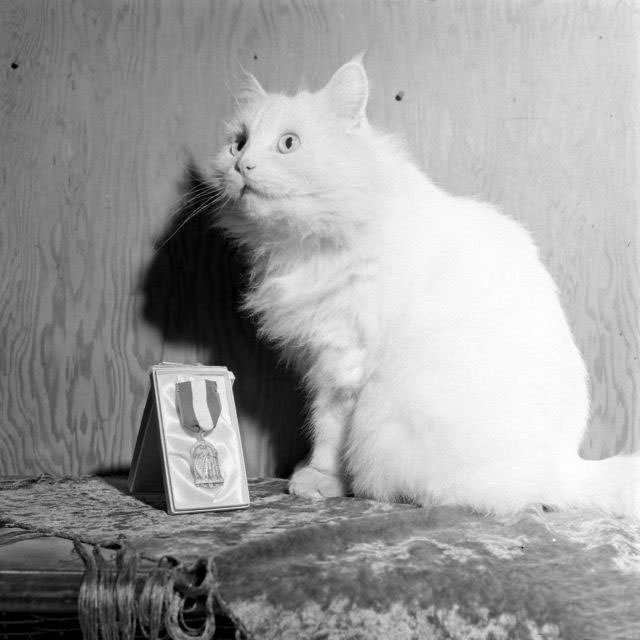

In the world of service animals, we are quite accustomed to the sight of trained dogs aiding the visually impaired. But in the late 1940s, an unconventional duo garnered attention: Carolyn Swanson and her seeing-eye Persian cat, Baby. There might have been several reasons for Carolyn’s unique choice. She might have been allergic to dogs, frightened, or perhaps just too attached to Baby to consider a dog instead. To document this special bond, LIFE Magazine sent a photographer in 1947, resulting in a captivating series of photographs that, for reasons unknown, never saw the light of day in the magazine’s pages.
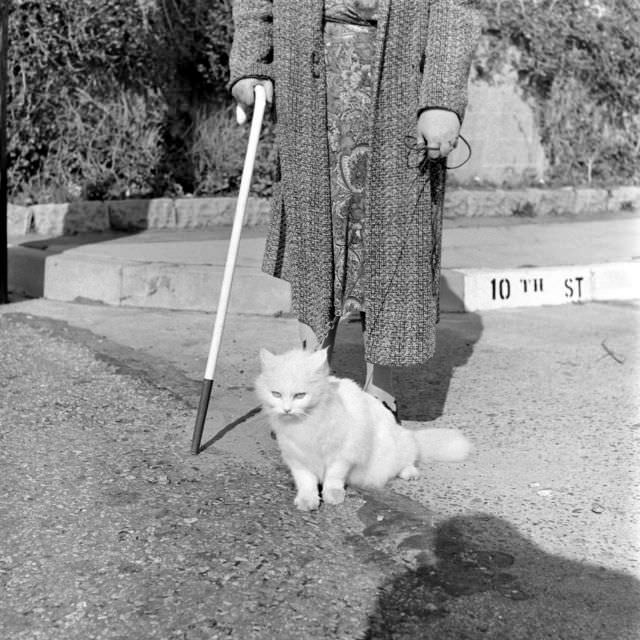
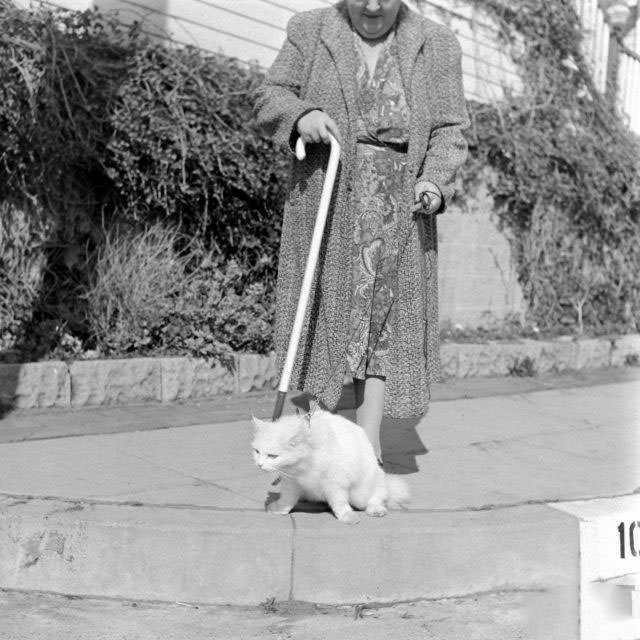
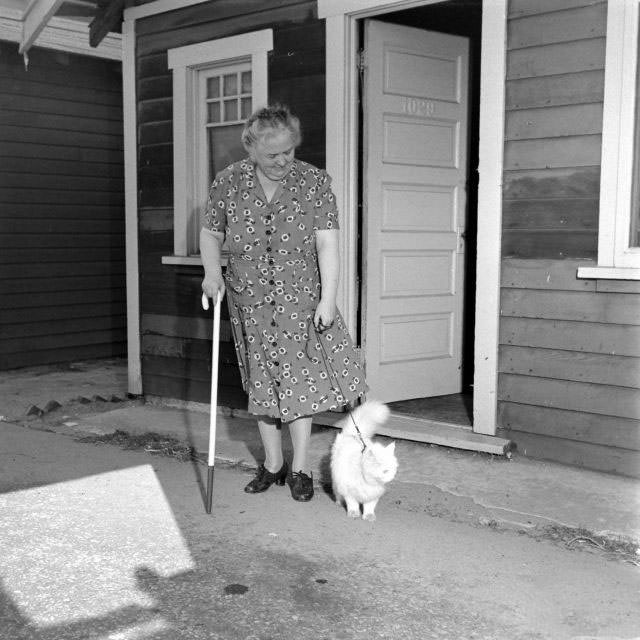
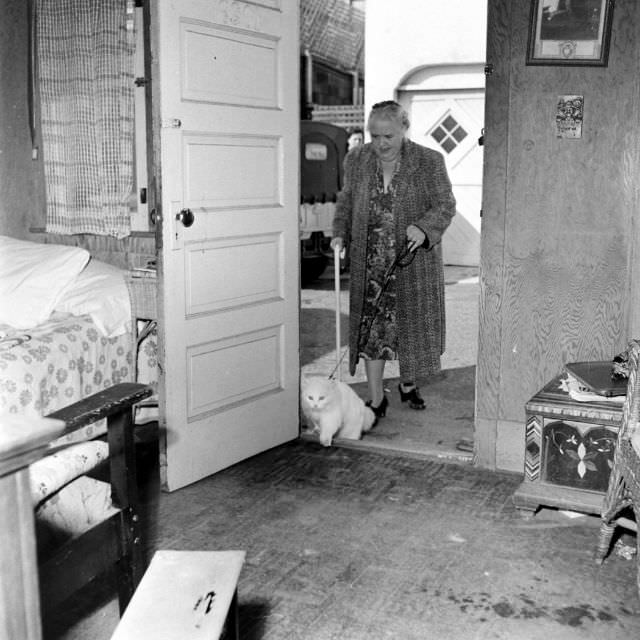
Carolyn kept Baby on a short leash, a necessary precaution to prevent a potential dash at the sight of a squirrel or any other distraction. In return, Baby dutifully guided Carolyn across busy streets, helped her navigate door thresholds, and offered companionship that transcended species. This uncommon relationship showcased how trust and companionship could develop in the most unexpected places.
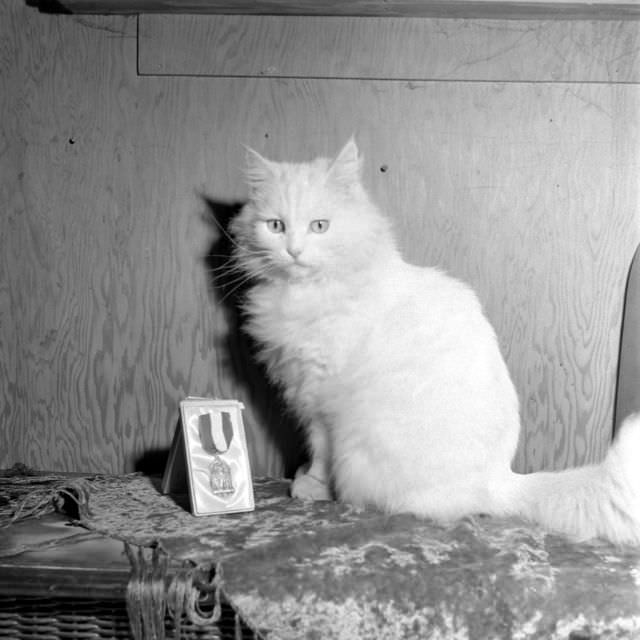
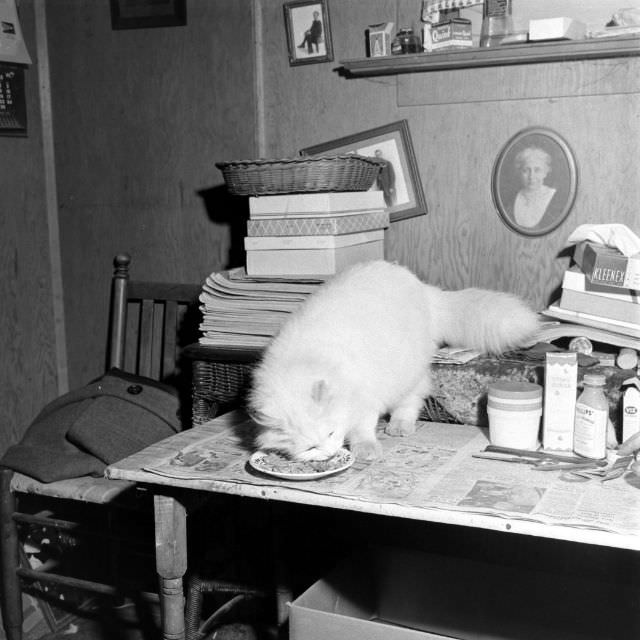
The local community recognized Baby’s unwavering devotion to Carolyn. A local newspaper report proudly announced that Baby had received a medal in honor of his “faithful devotion to his blind mistress.” Stoic as ever, Baby posed with his shining medallion, a beacon of his unwavering service. Yet, it seemed that Baby cherished a simpler reward: a generous serving of his favorite cat food.
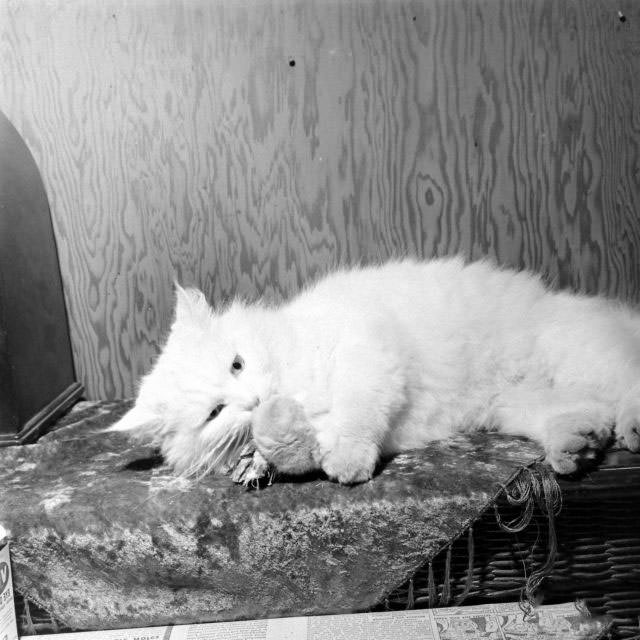
A Persian cat leading the way for a visually impaired woman may be unconventional, but it represents the limitless possibilities of love, trust, and service. In an era where dogs dominated the service space, Baby stands out as a pioneering feline, challenging our perceptions and showcasing the potential in every pet to become a trusted companion.