By the time the United States entered World War II, German submarines were tearing apart Allied supply lines across the Atlantic. Cargo ships carrying food, fuel, weapons, and equipment were being sunk faster than they could be replaced. The answer to this crisis came not from a naval base or a weapons factory, but from a sprawling shipyard on the edge of Baltimore Harbor.
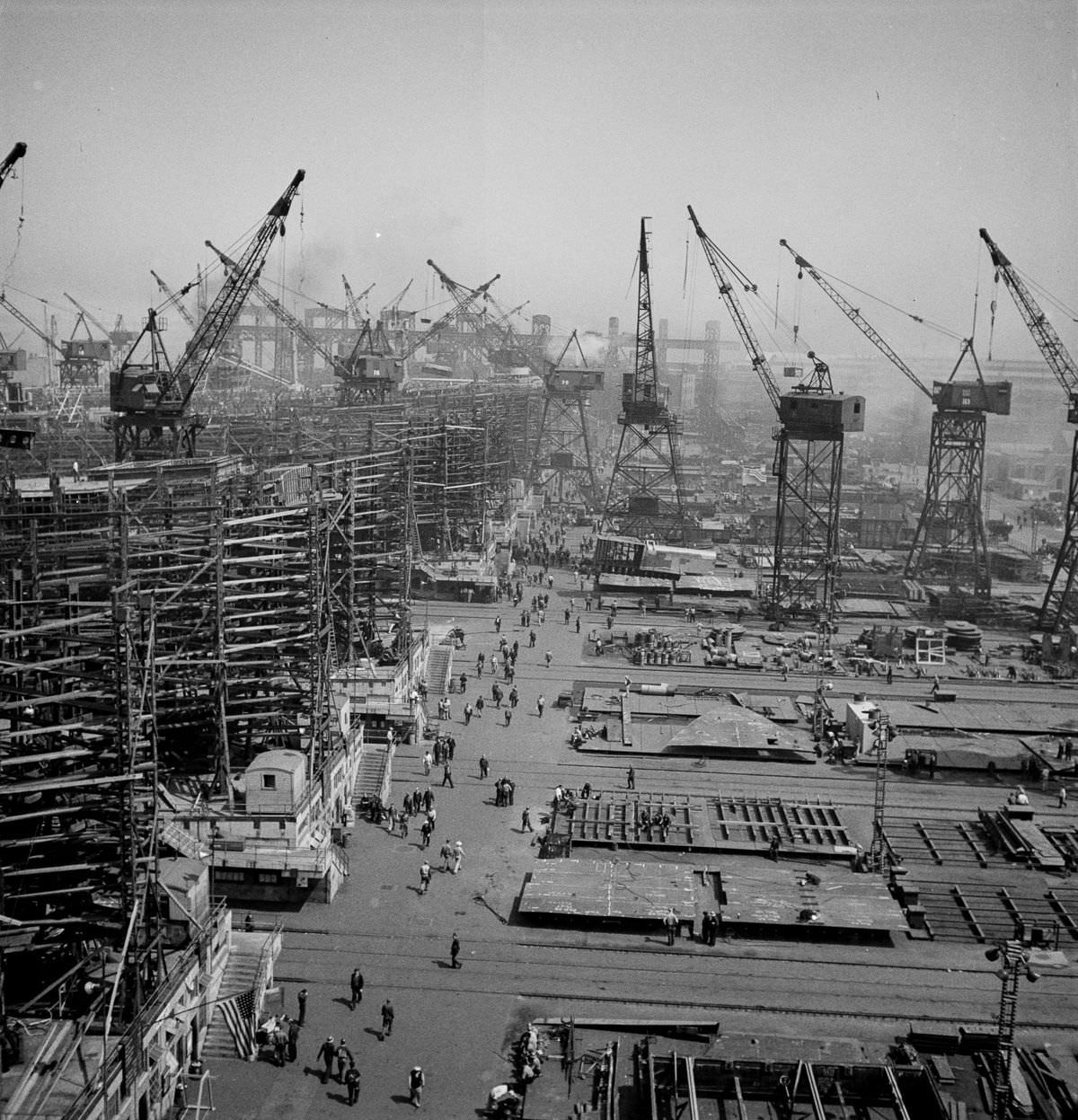
In February 1941, the U.S. Maritime Commission established the Bethlehem-Fairfield Shipyard as part of a nationwide emergency shipbuilding program. The goal was straightforward: build affordable cargo ships as fast as possible, both for American use and to supply Britain. Within months, the yard employed 27,000 workers and was running around the clock.

The ships built here were called Liberty ships. Each one was designed to carry over 10,000 tons of cargo, though wartime demand regularly pushed that number even higher. The design was deliberately simple — welded steel hulls rather than riveted, with standardized parts that could be fabricated off-site and assembled quickly on the ways. Speed of production was the entire point.
On September 27, 1941, the first Liberty ship rolled out of Bethlehem-Fairfield. She was the SS Patrick Henry, and her launch marked the opening of one of the most productive shipbuilding runs in American history. Over the following four years, the yard completed 384 Liberty ships, 94 larger and faster Victory ships, and 45 amphibious landing craft.
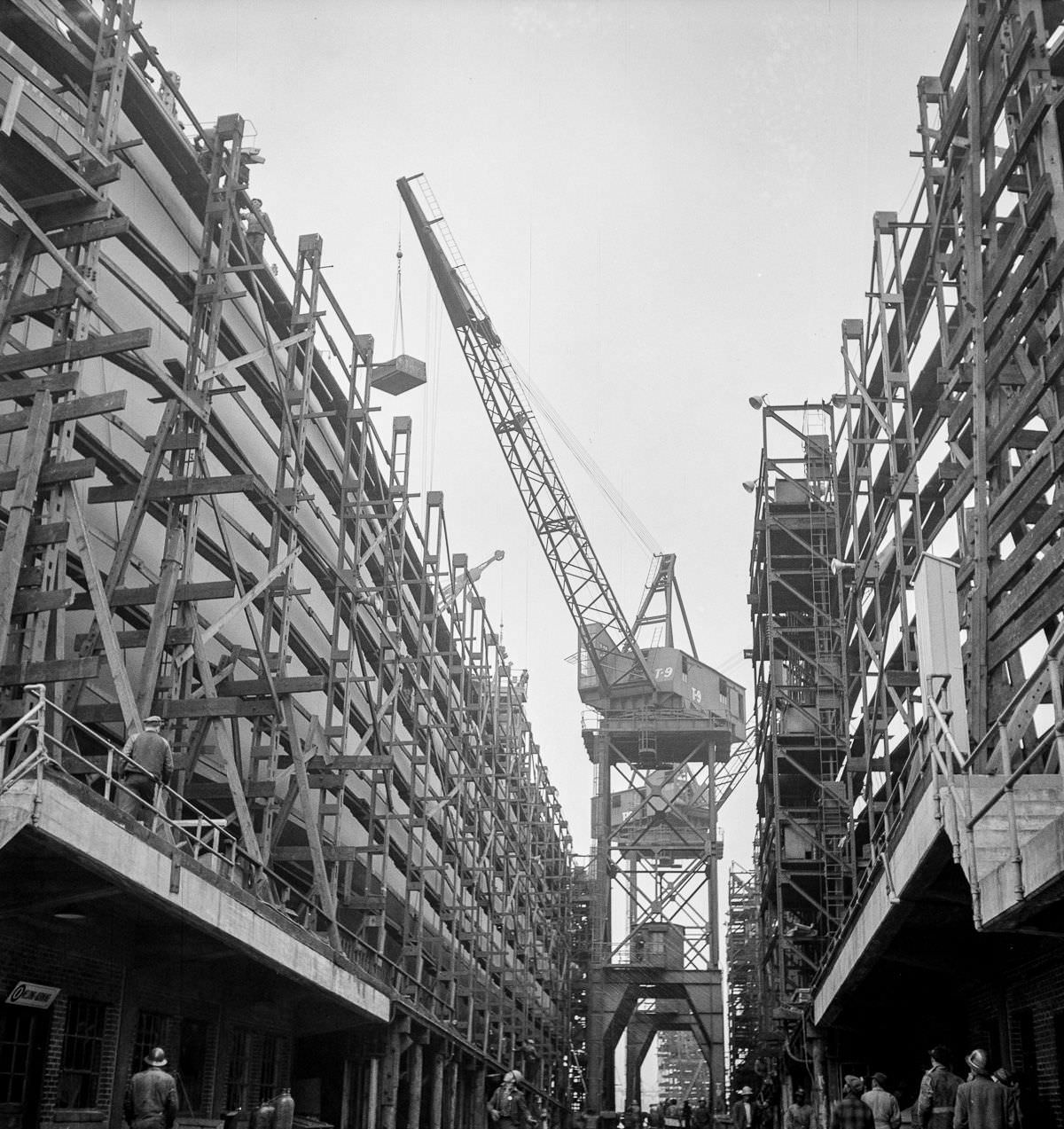
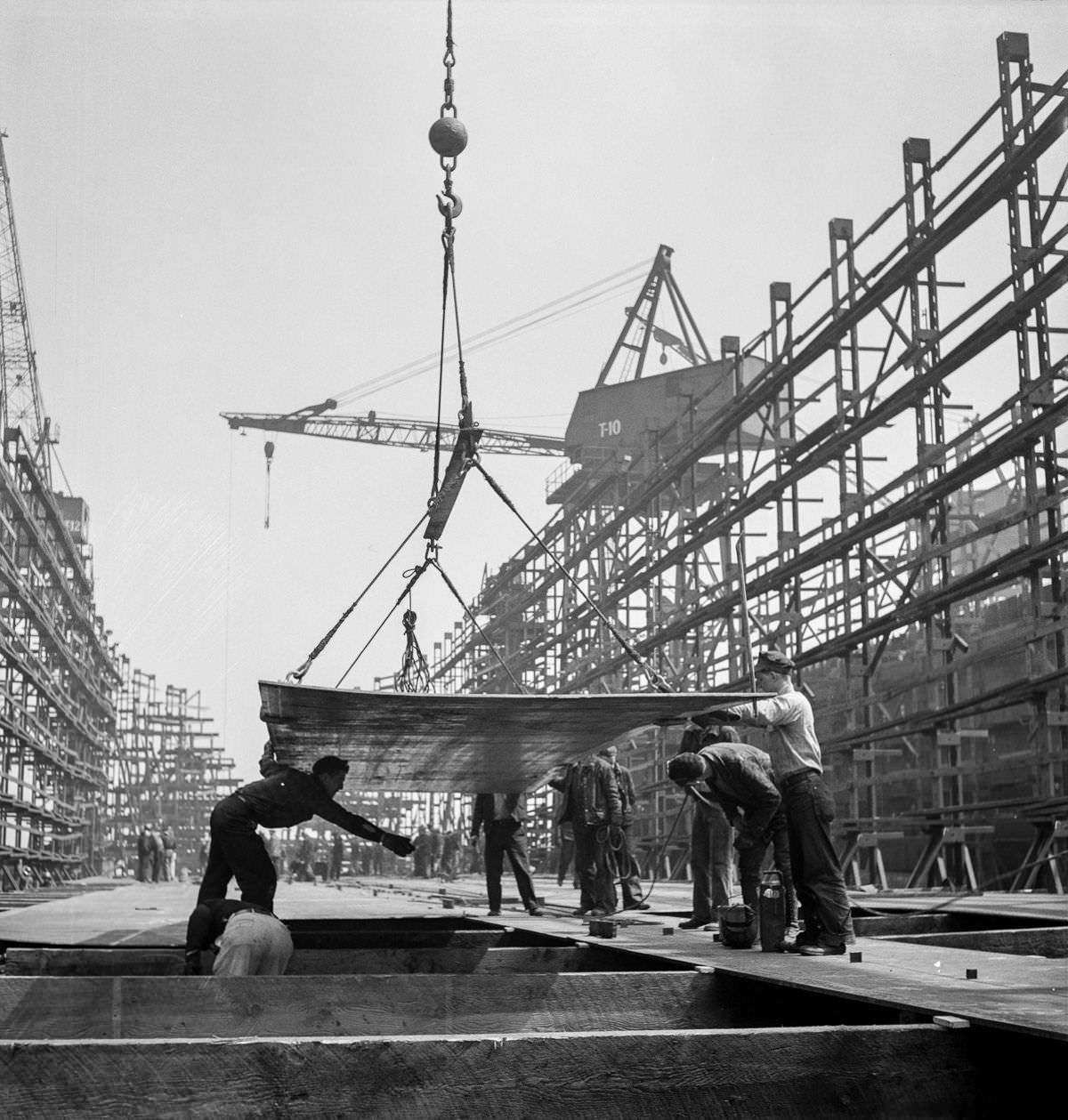
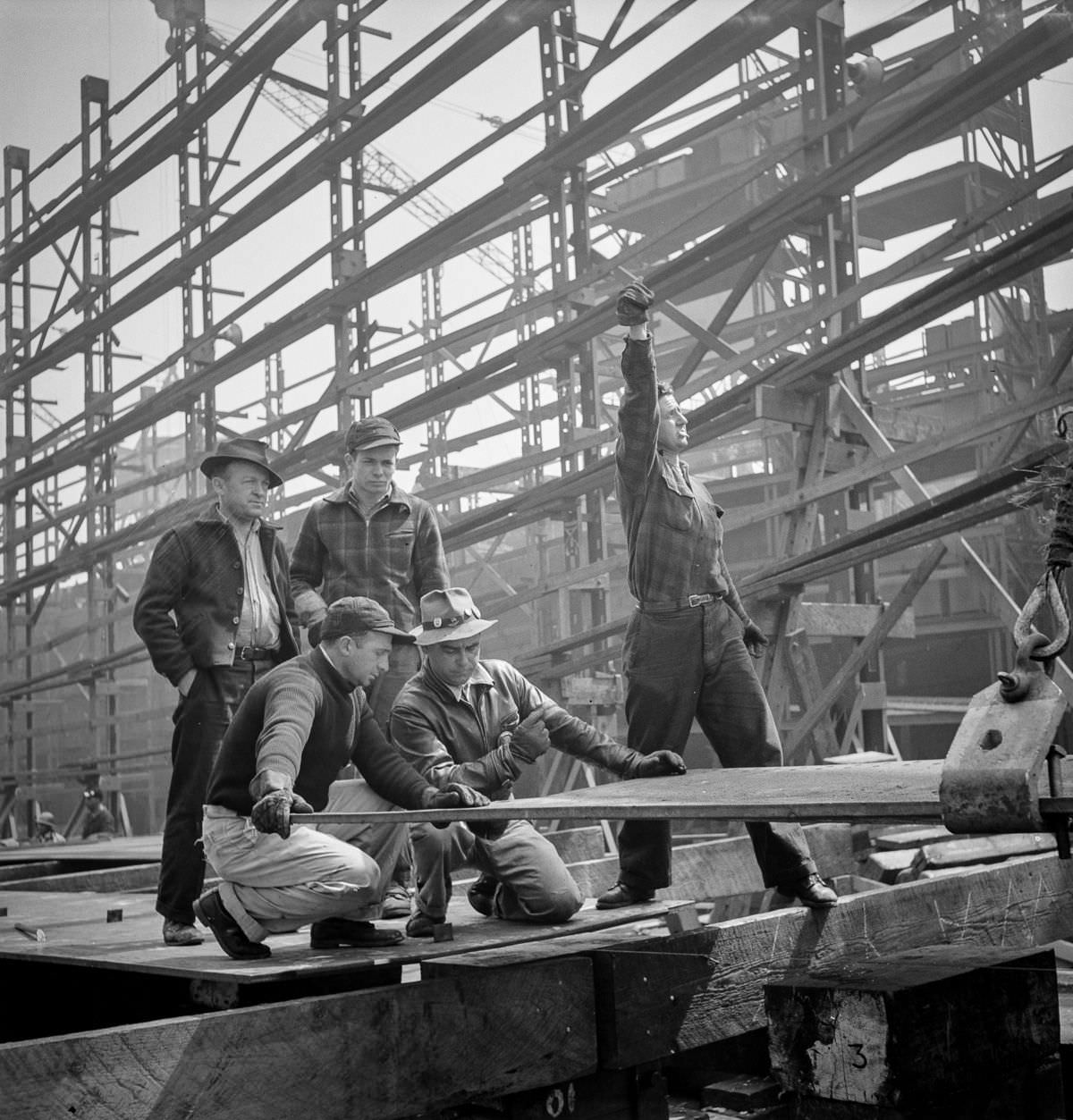
The construction process moved in stages. Work began at the bottom of each hull, with crews erecting keel sections and bottom shell plates before the ship took any recognizable shape. Every stage required coordination between dozens of different trades — welders, pipefitters, chippers, riveters, and riggers all working the same hull at different levels.
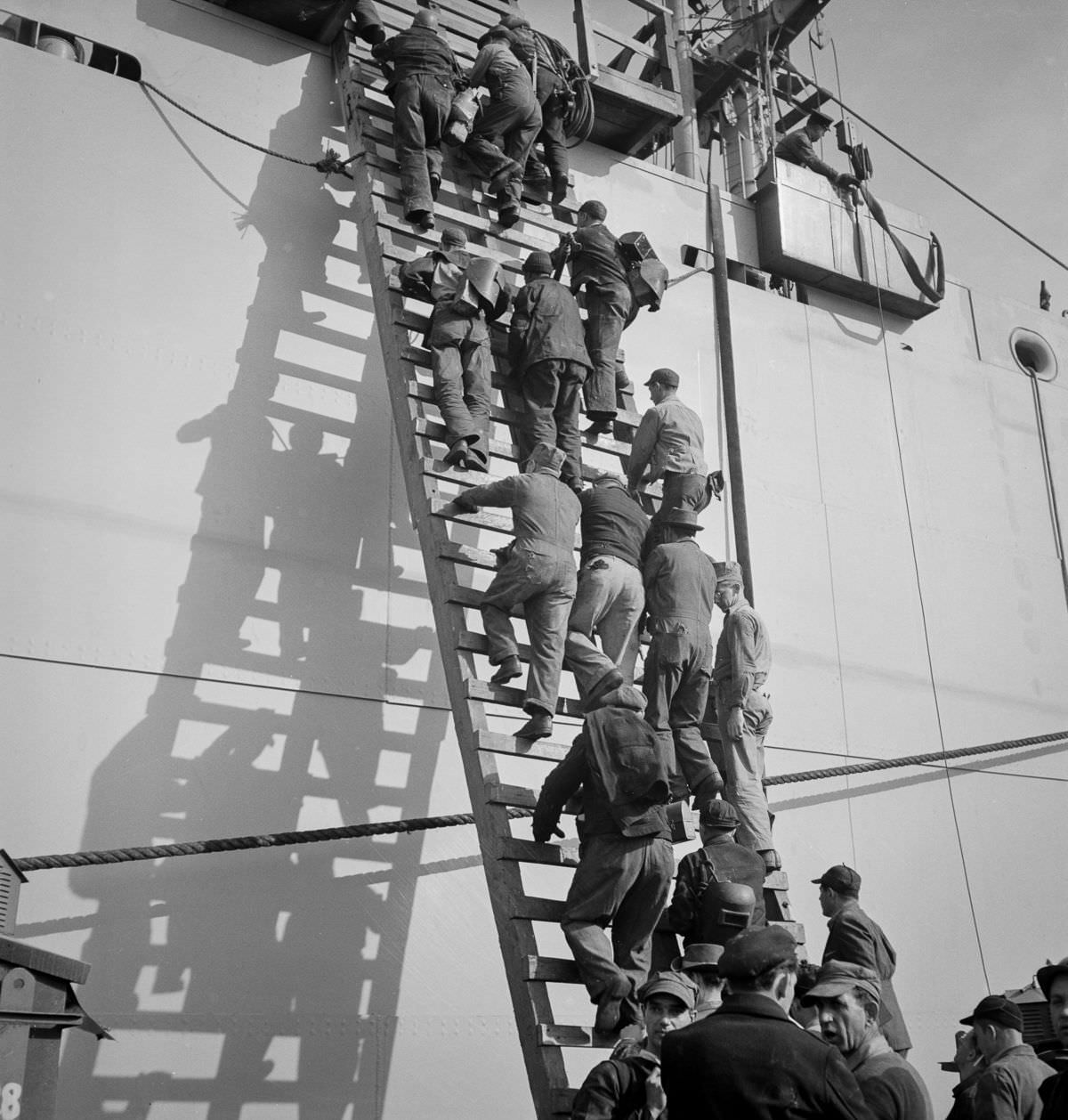
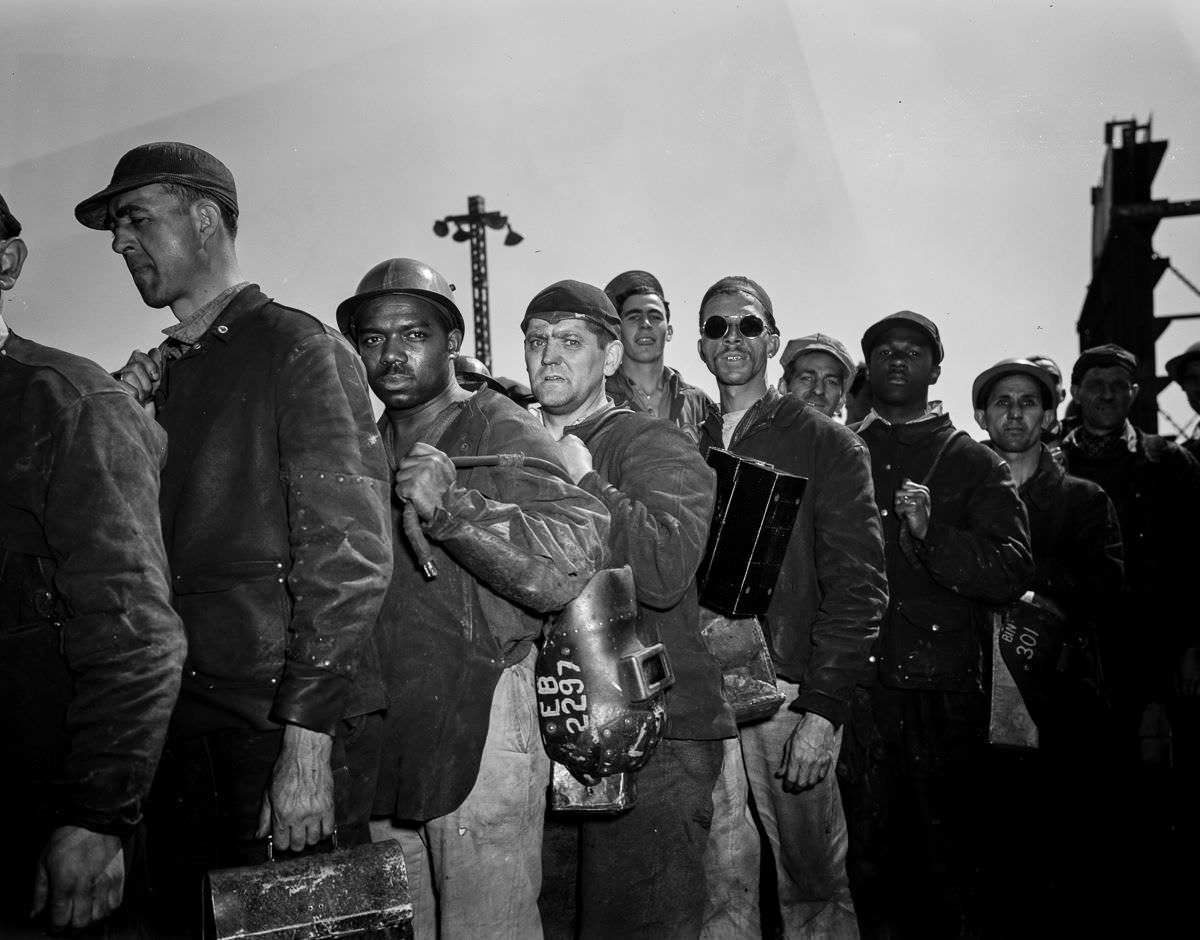
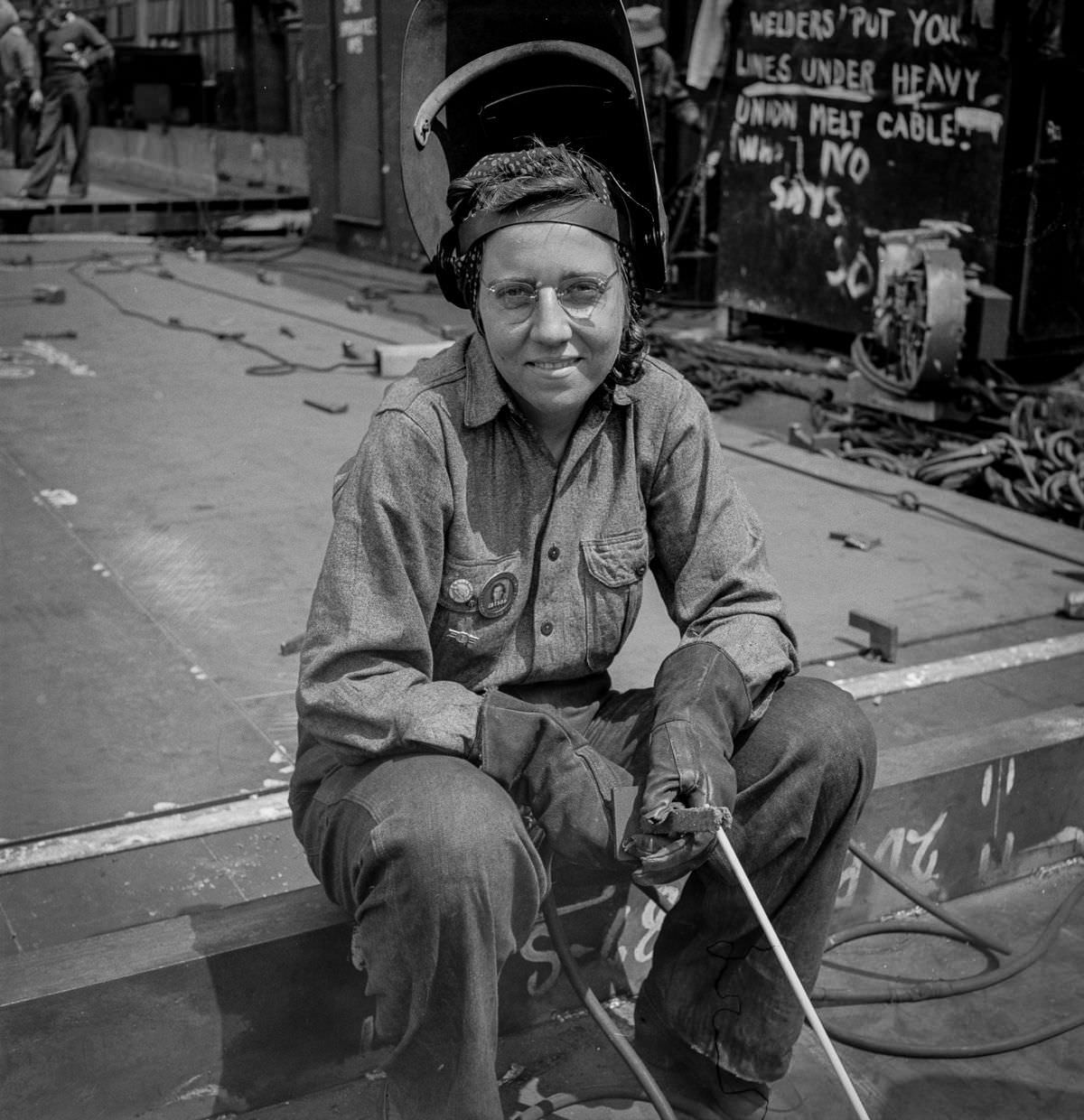
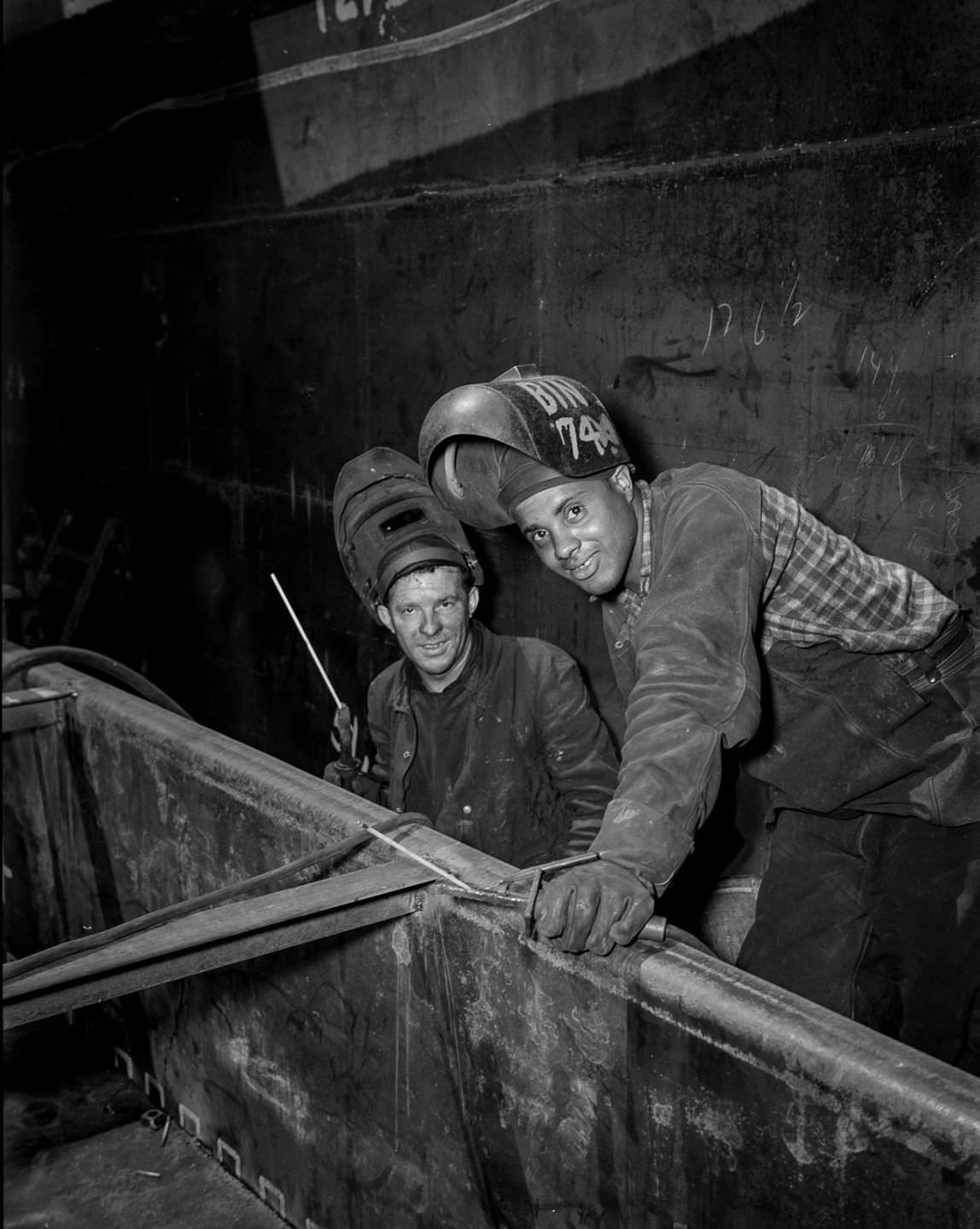
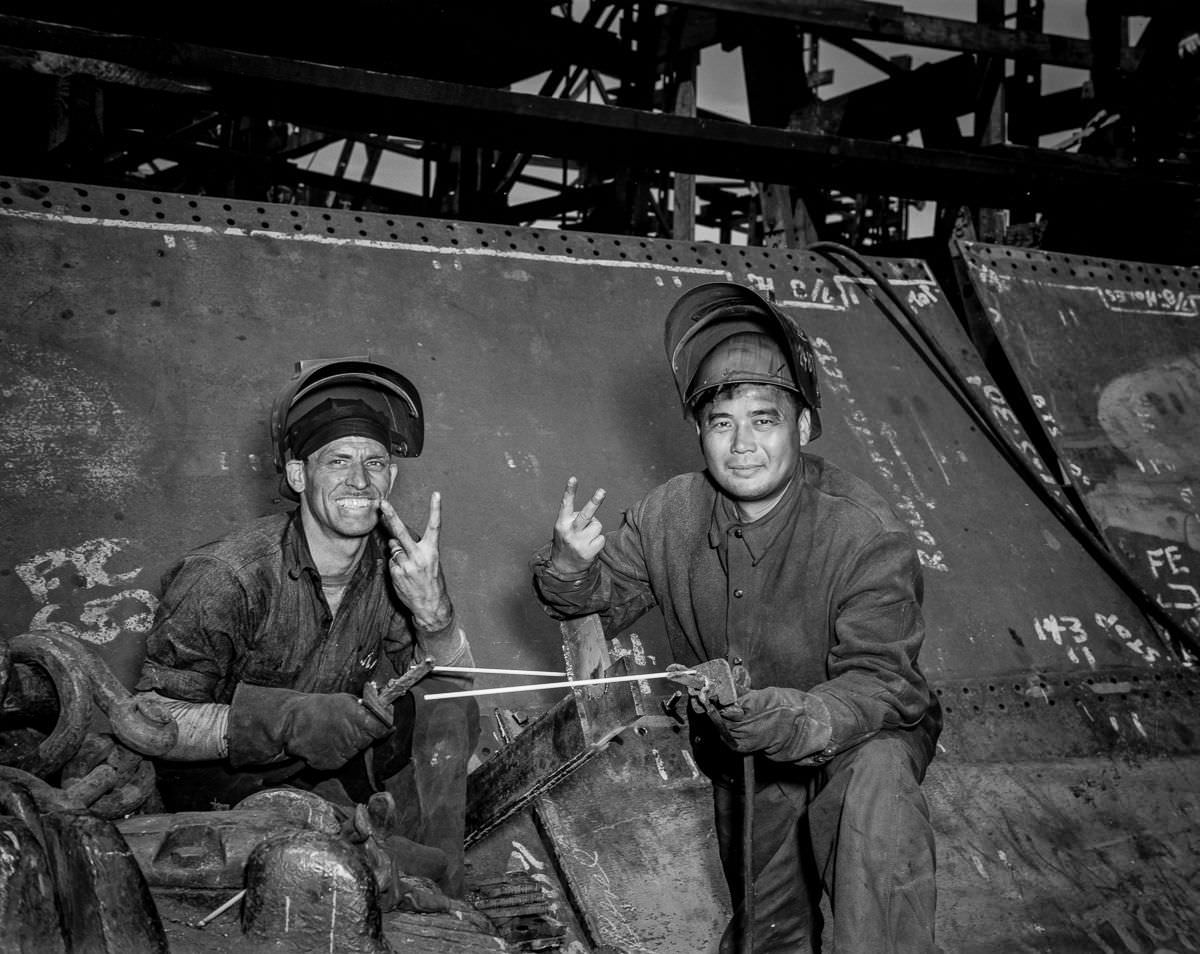
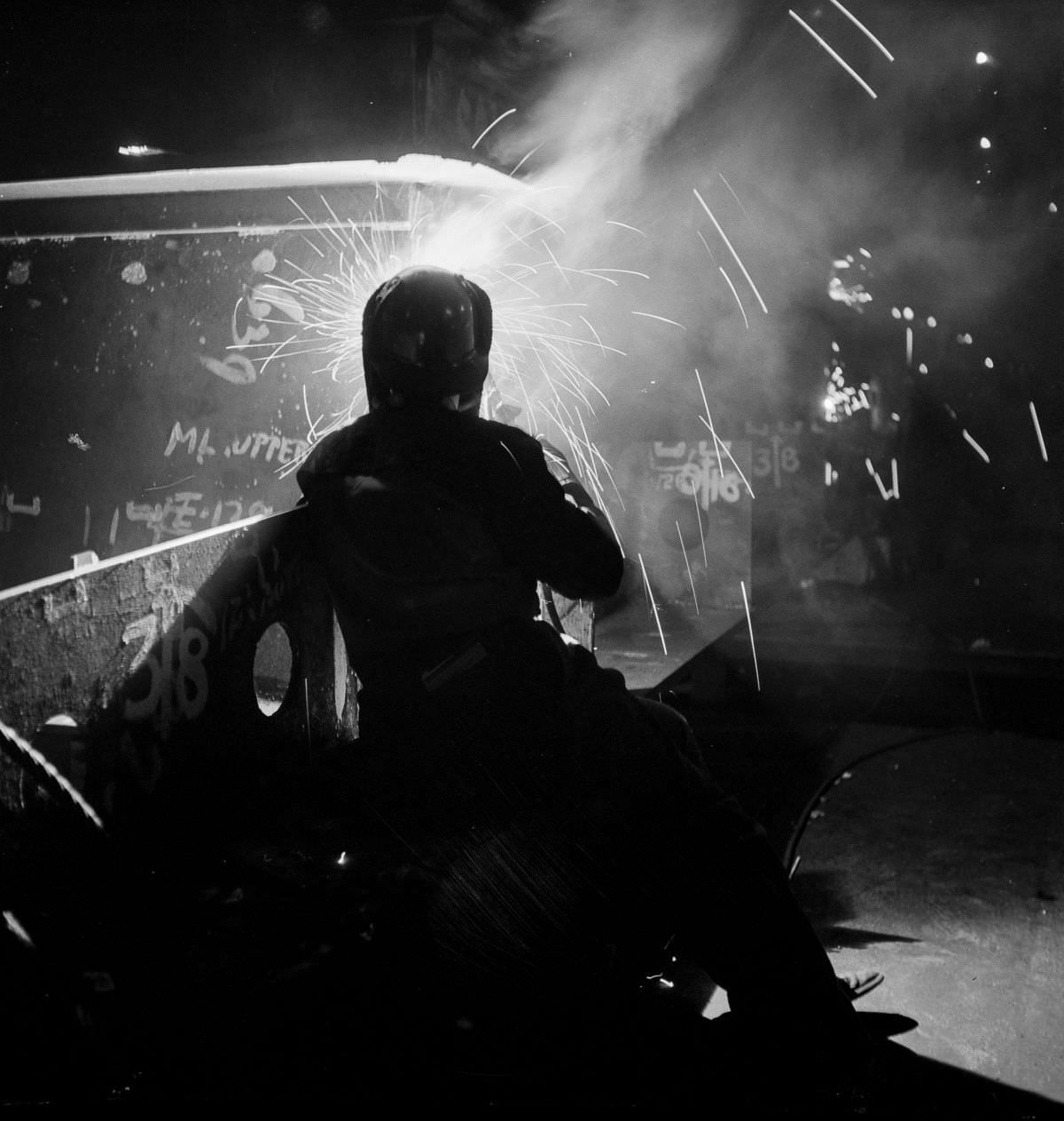
Welding was the backbone of the entire operation. Traditional shipbuilding relied heavily on rivets, but Liberty ships used electric arc welding almost exclusively. This method was faster and required less skilled labor to learn, which made it ideal for a workforce that had been rapidly hired and trained from scratch.
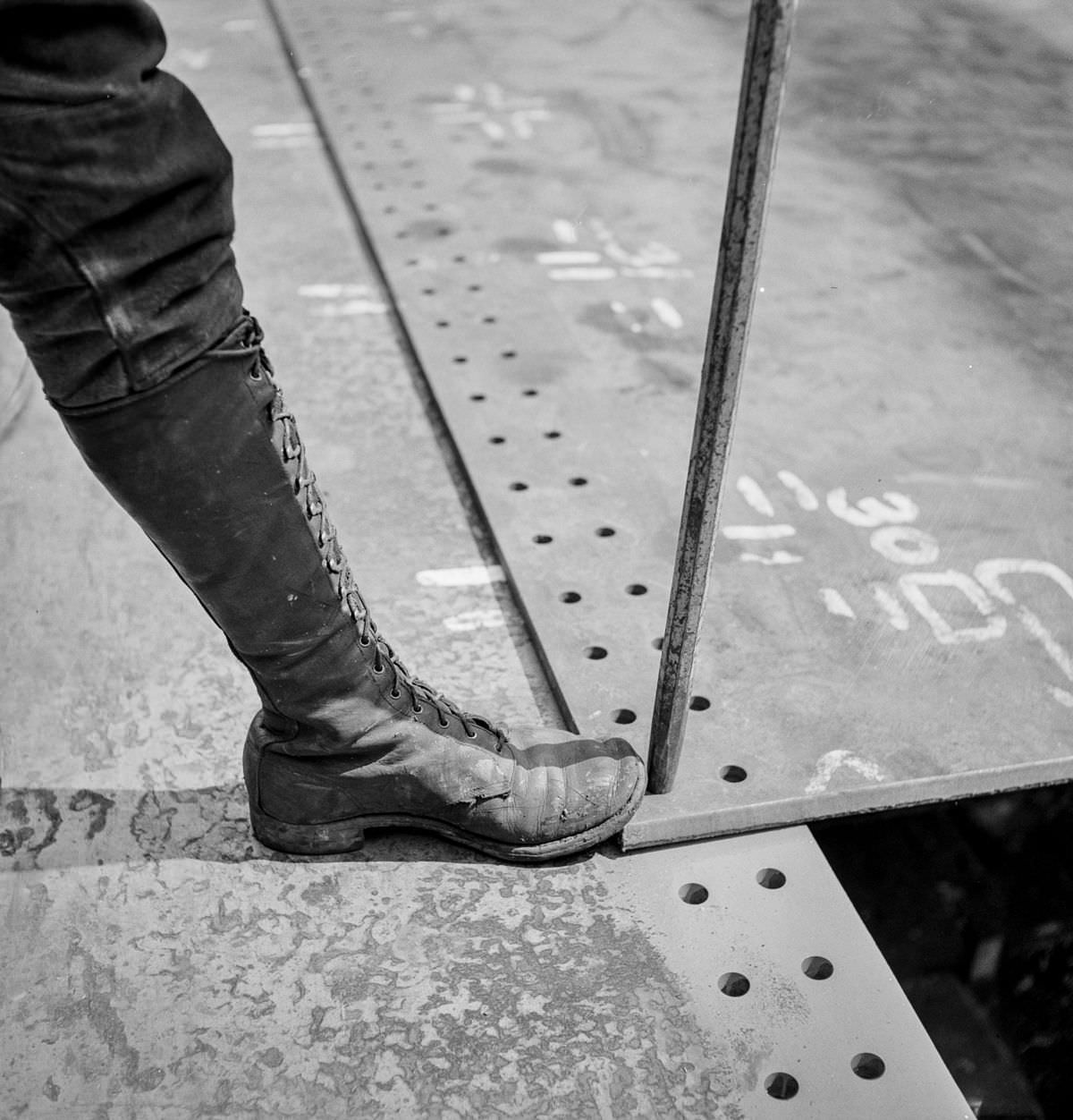
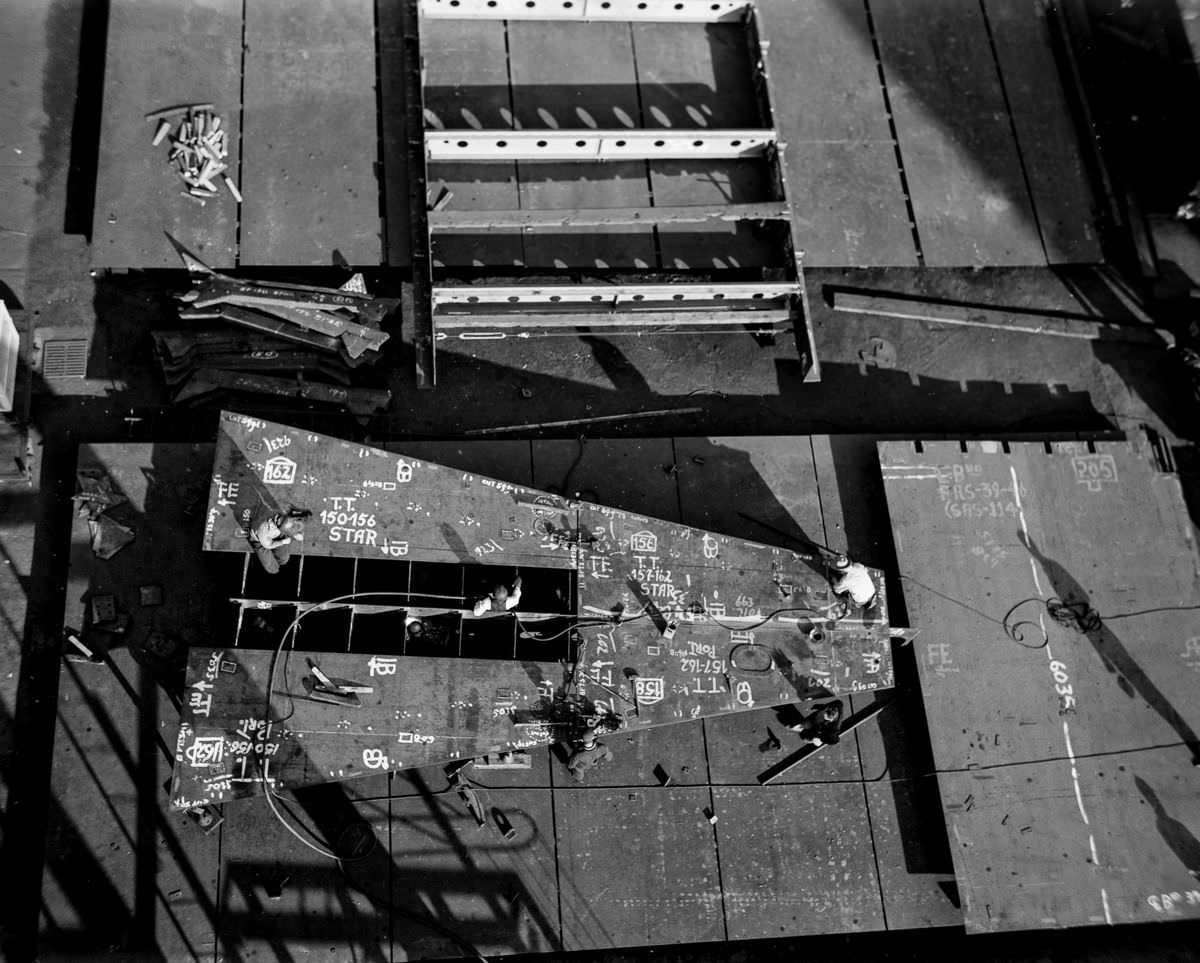
The early stages of a ship’s construction took place flat on the ground. Bottom shell plates were positioned and welded together before any vertical structure rose above them. Keel sections were laid out, squared, and secured while crews simultaneously prefabricated other components in separate areas of the yard to be installed later.
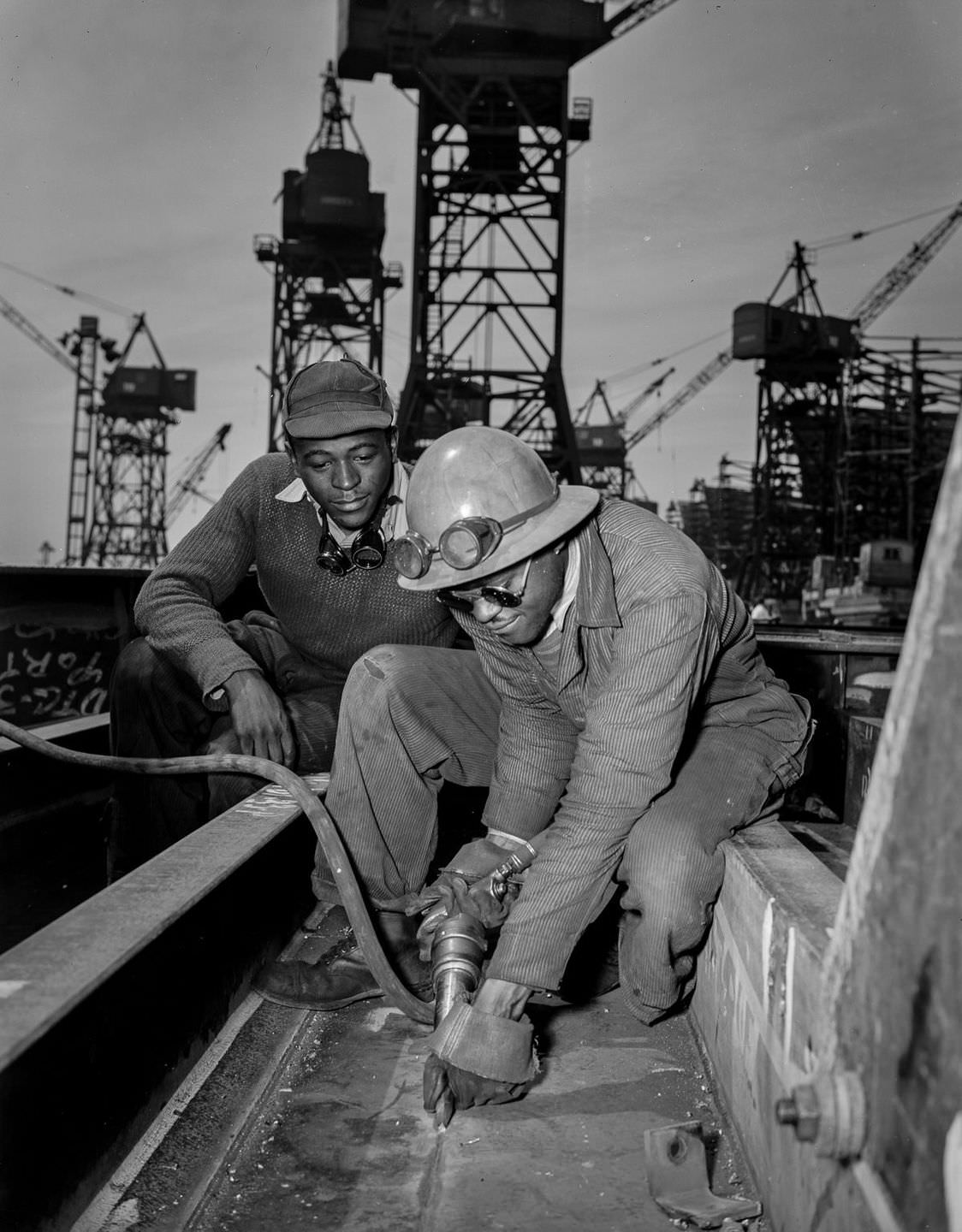
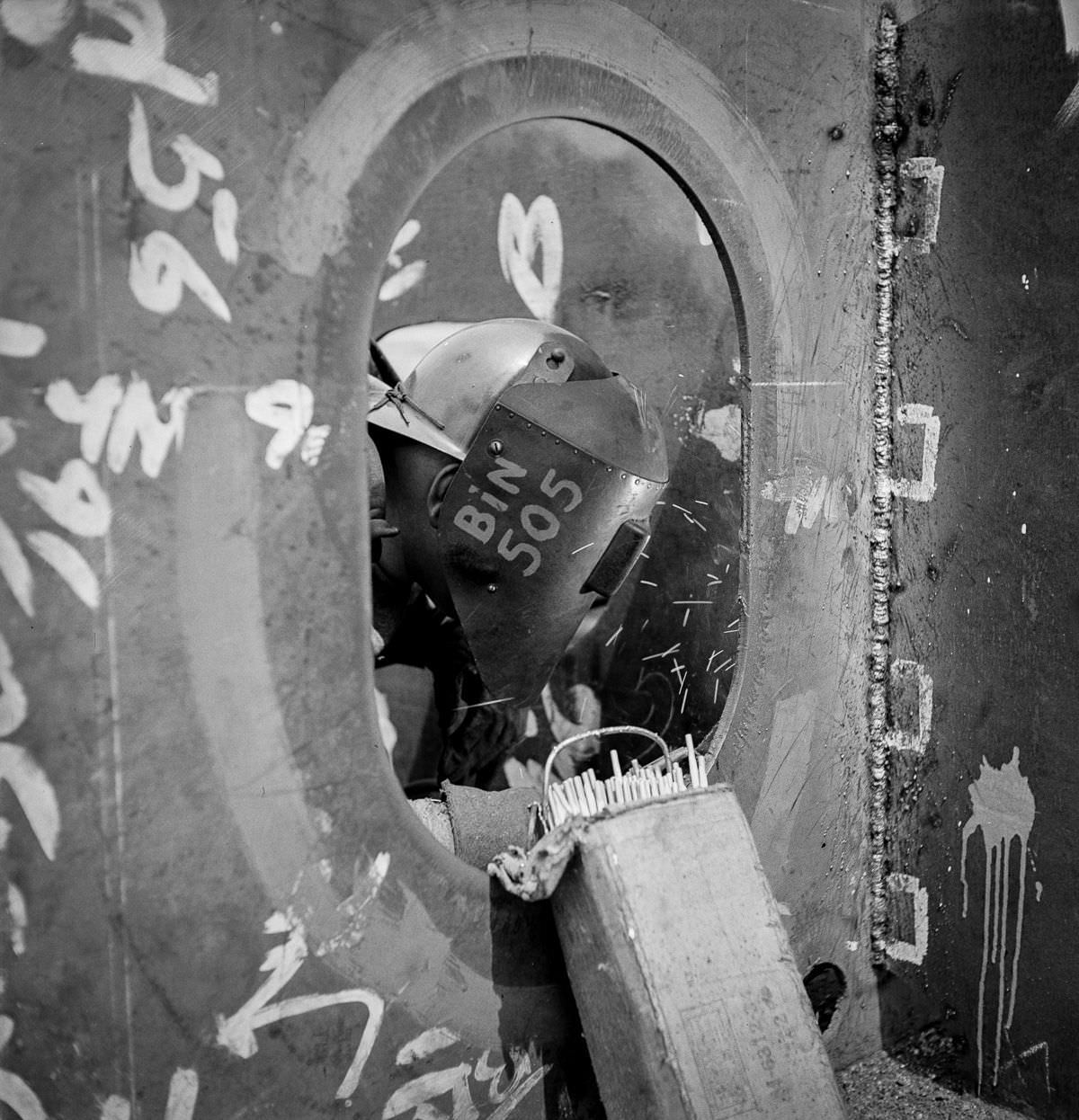
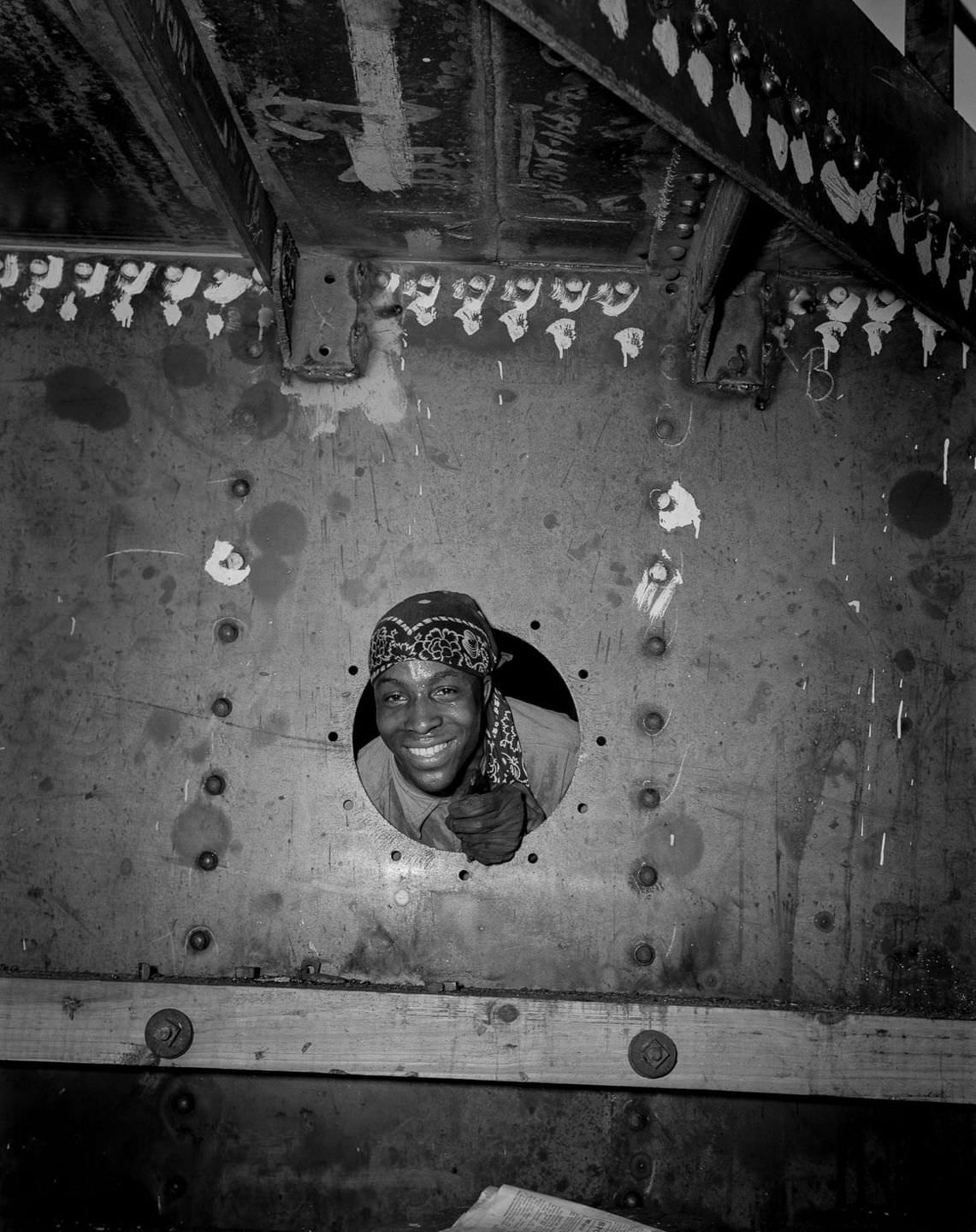
One of the most closely documented ships built at Bethlehem-Fairfield was the Liberty ship Frederick Douglass. Photographers captured her construction from the first steel laid on Way No. 8 all the way through to launch. The images show the reality of the work — men in confined spaces, chipping excess metal from welds, tightening bolts with pneumatic wrenches deep in the hull, and welding in positions that required both strength and precision.
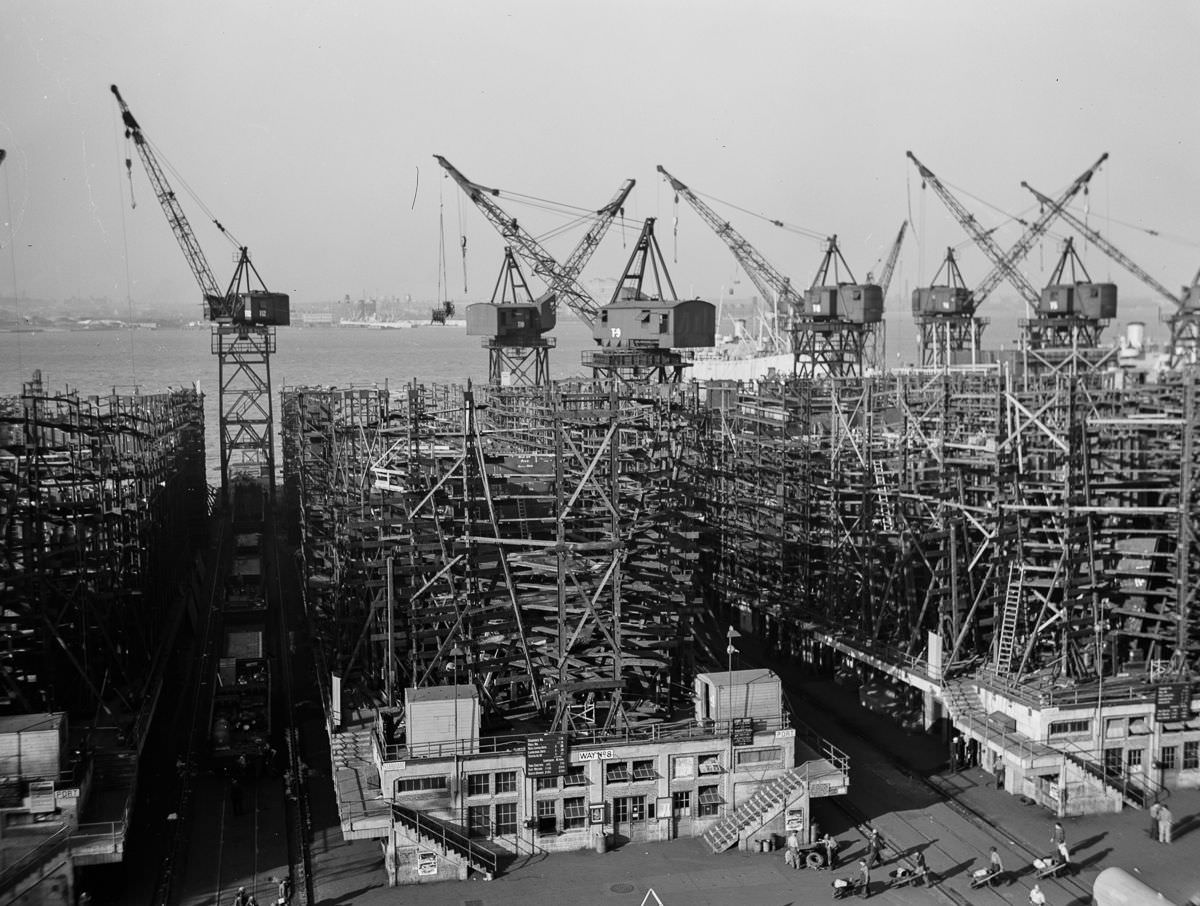
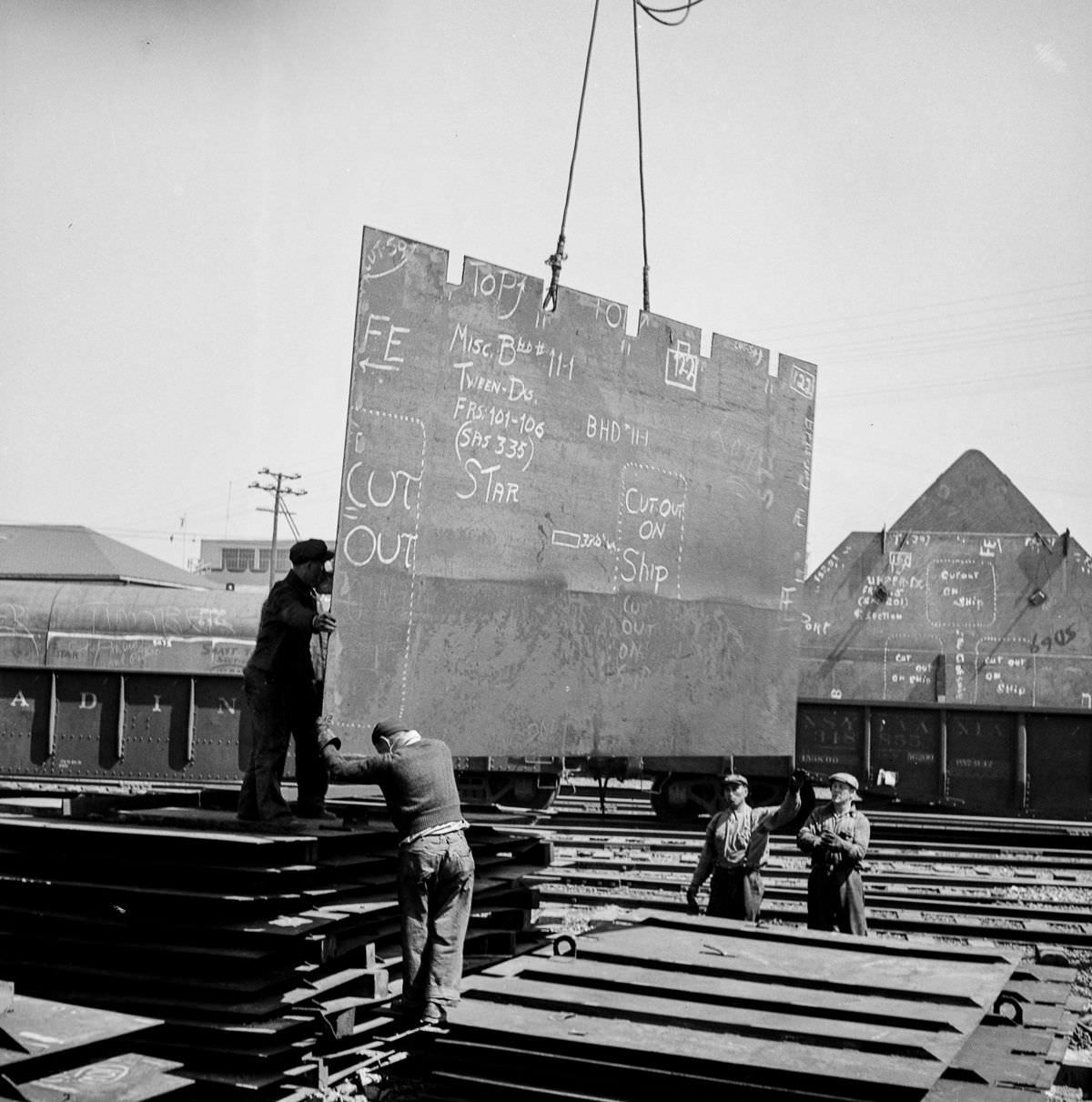
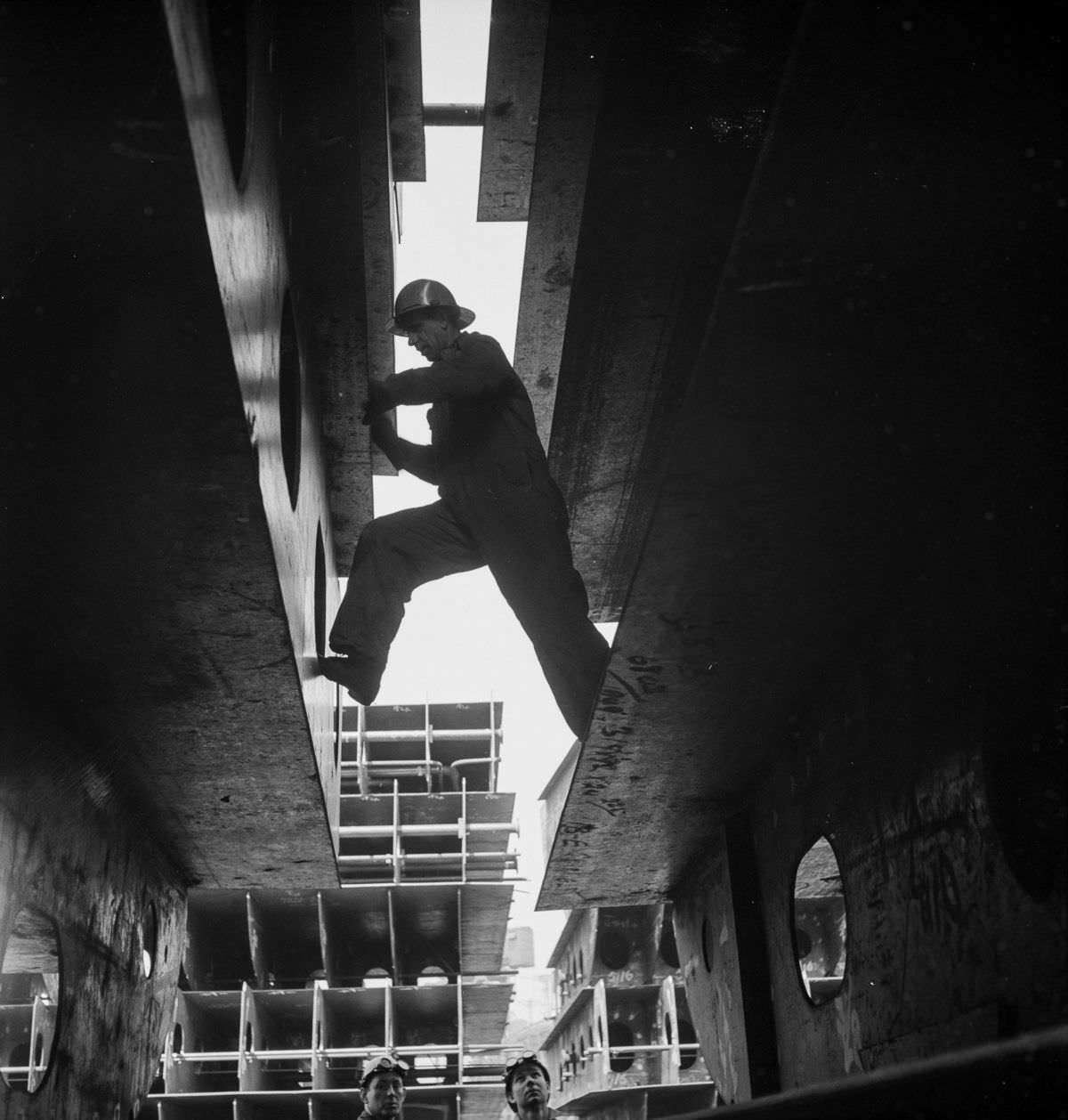
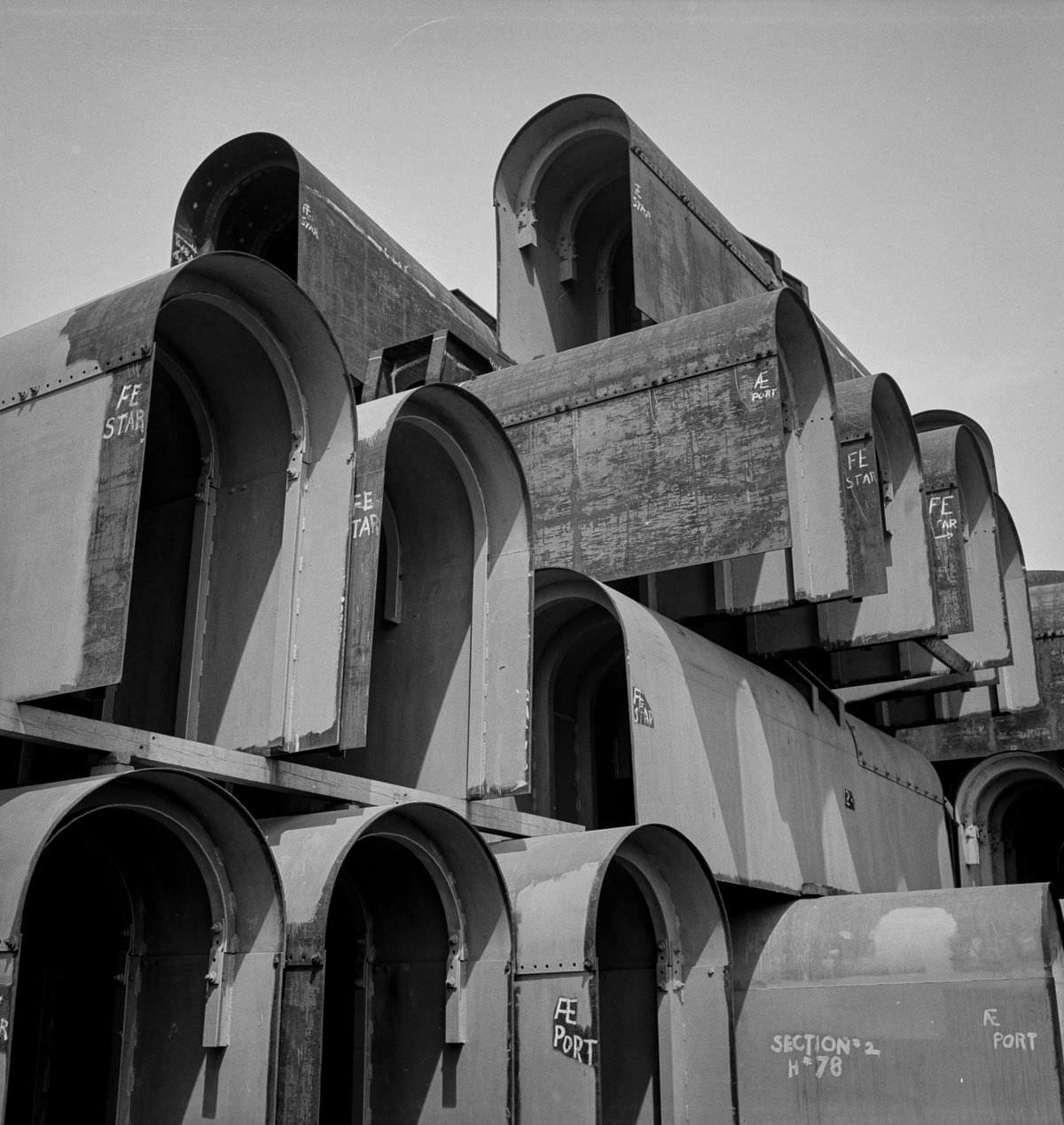
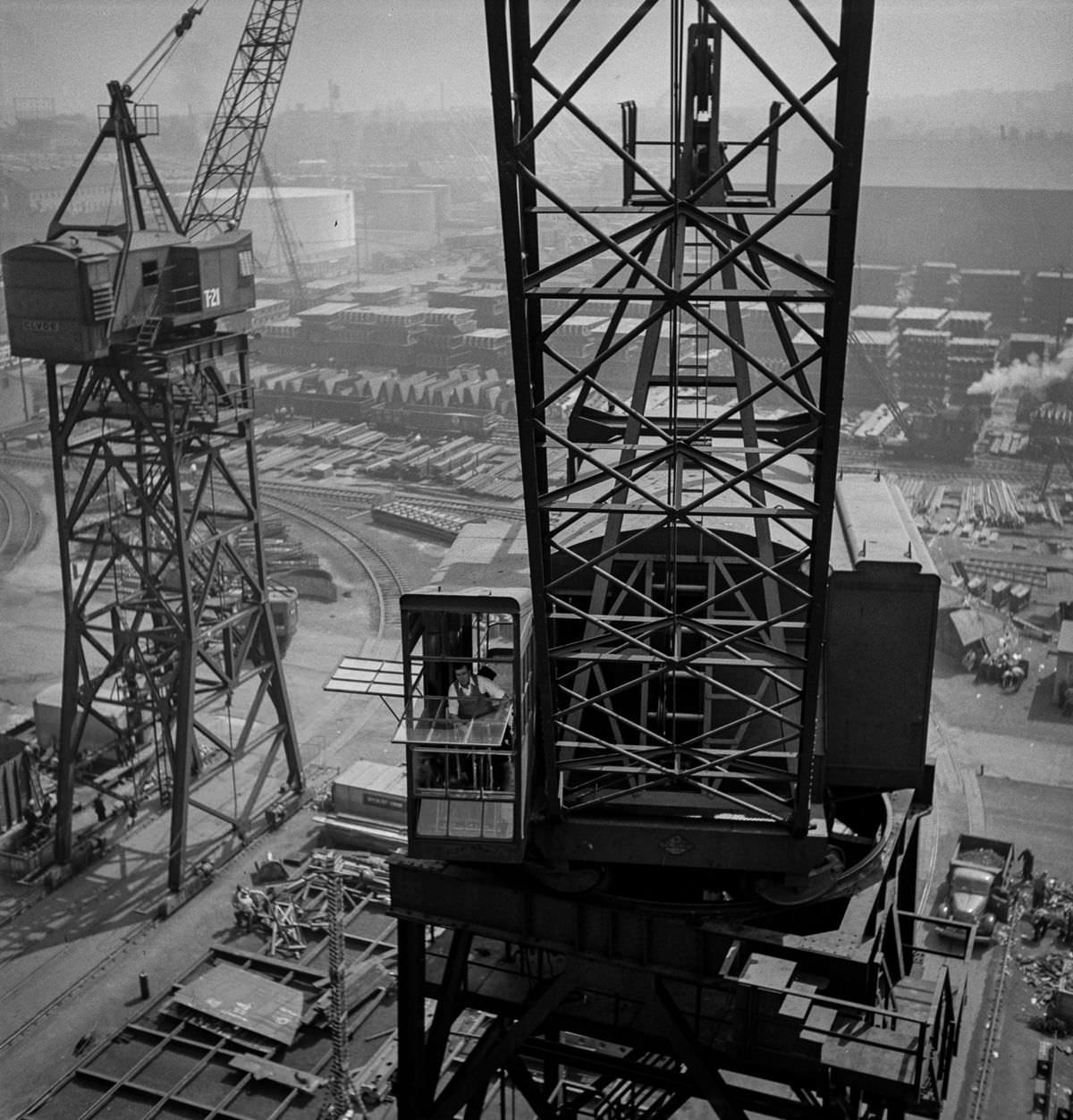
The stockyard and prefabrication areas were just as important as the building ways themselves. Bulkheads, shaft alley sections, and hull plates were cut, shaped, and stored in organized lots before being moved to the active construction sites. This assembly-line approach allowed workers on the ways to install components rather than fabricate them on the spot, which kept the pace fast.
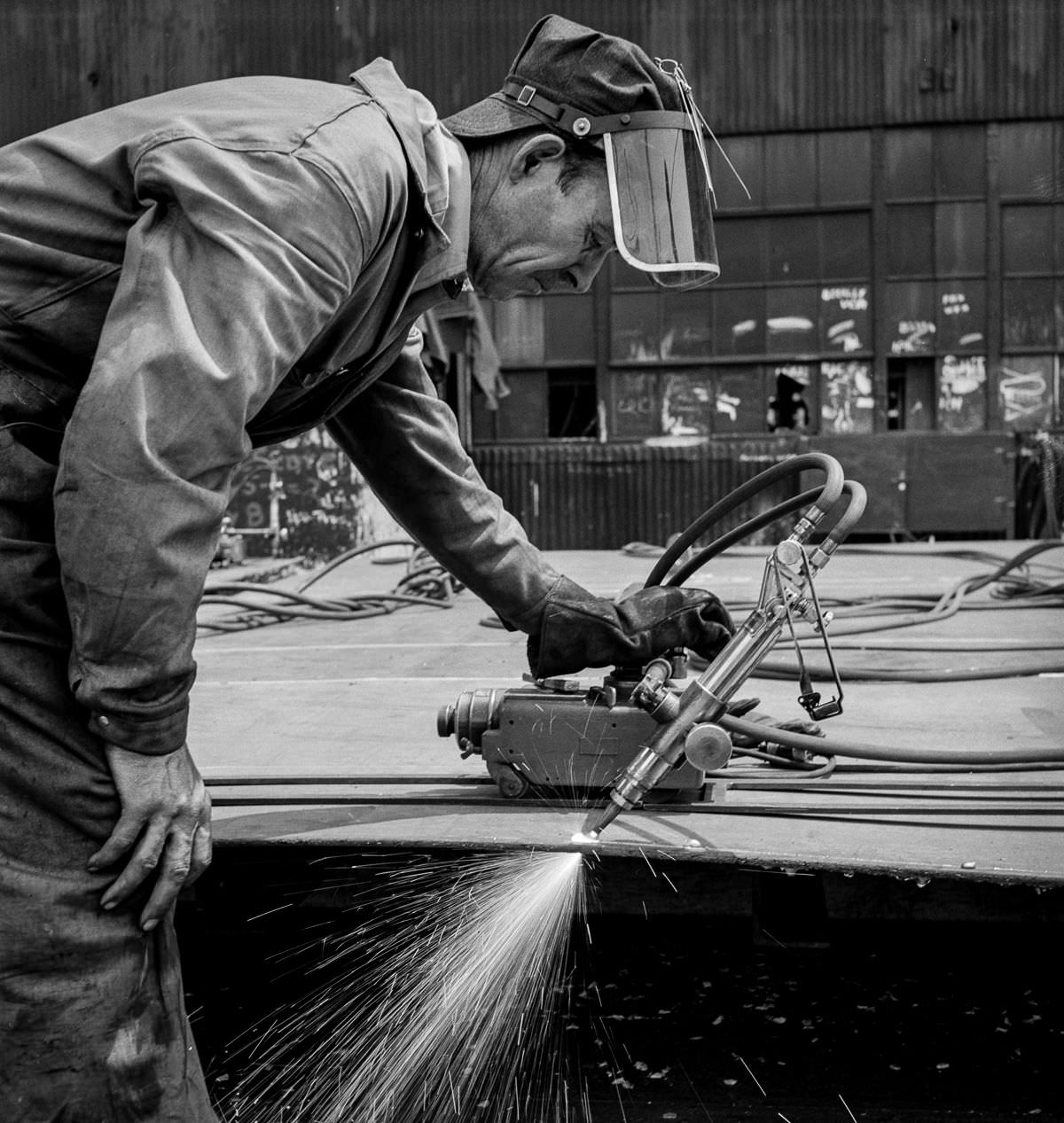
The workforce at Bethlehem-Fairfield was enormous and diverse. Many of the 27,000 employees had no prior shipbuilding experience when they were hired. Women, Black workers, and others who had been shut out of industrial jobs before the war filled roles at every level of the yard. The war’s labor demands opened doors that had long been closed.
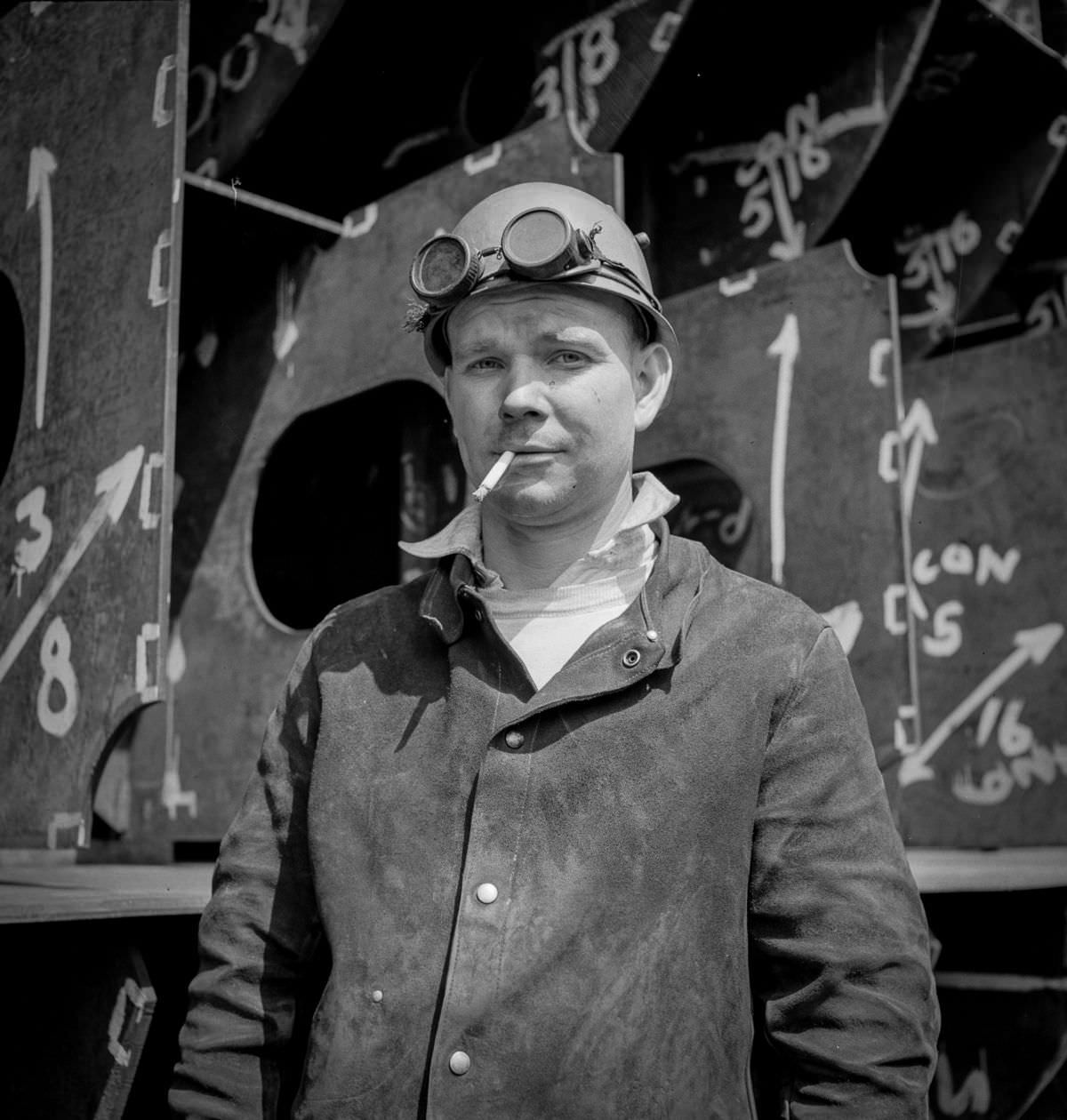
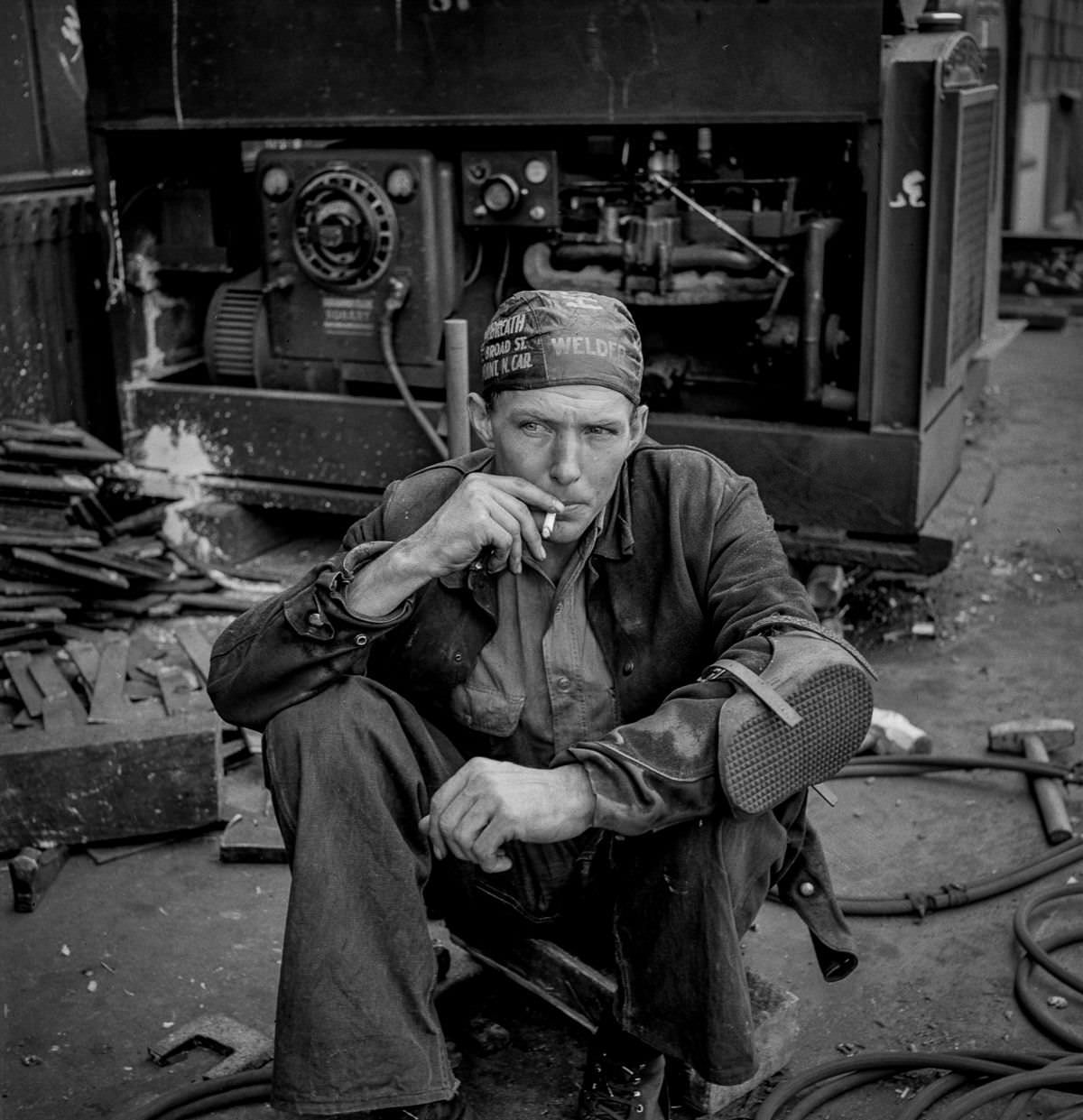
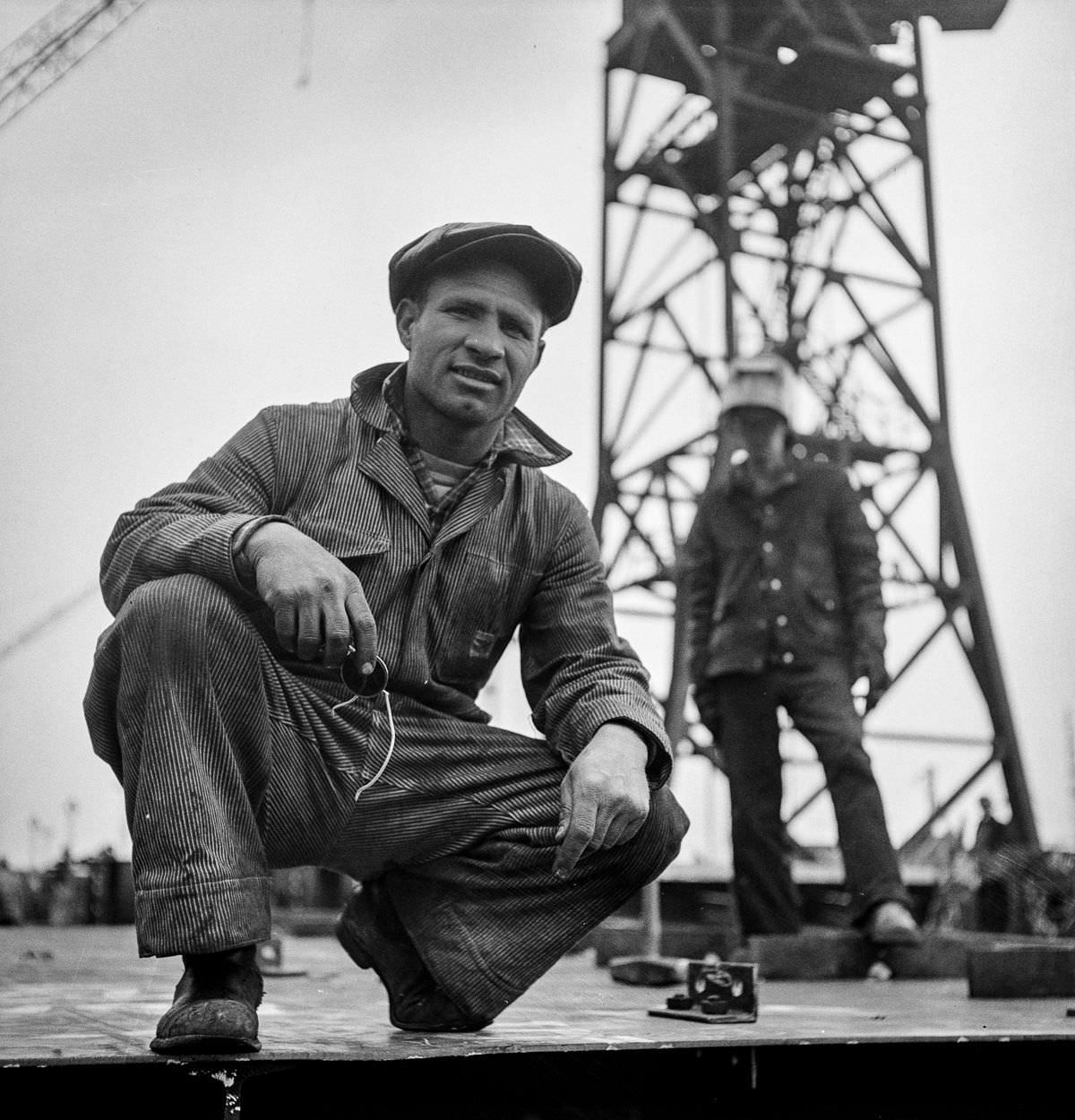
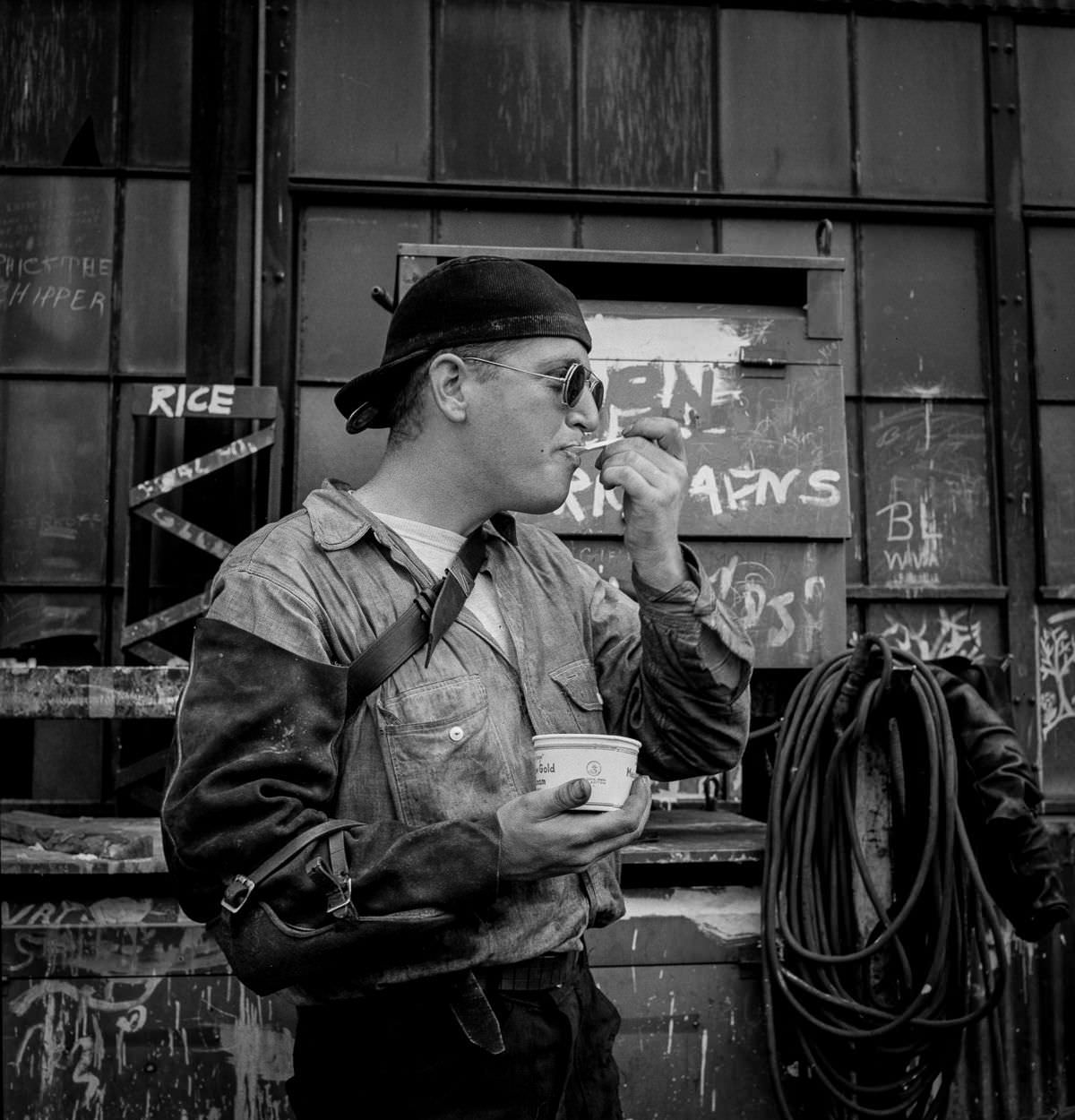
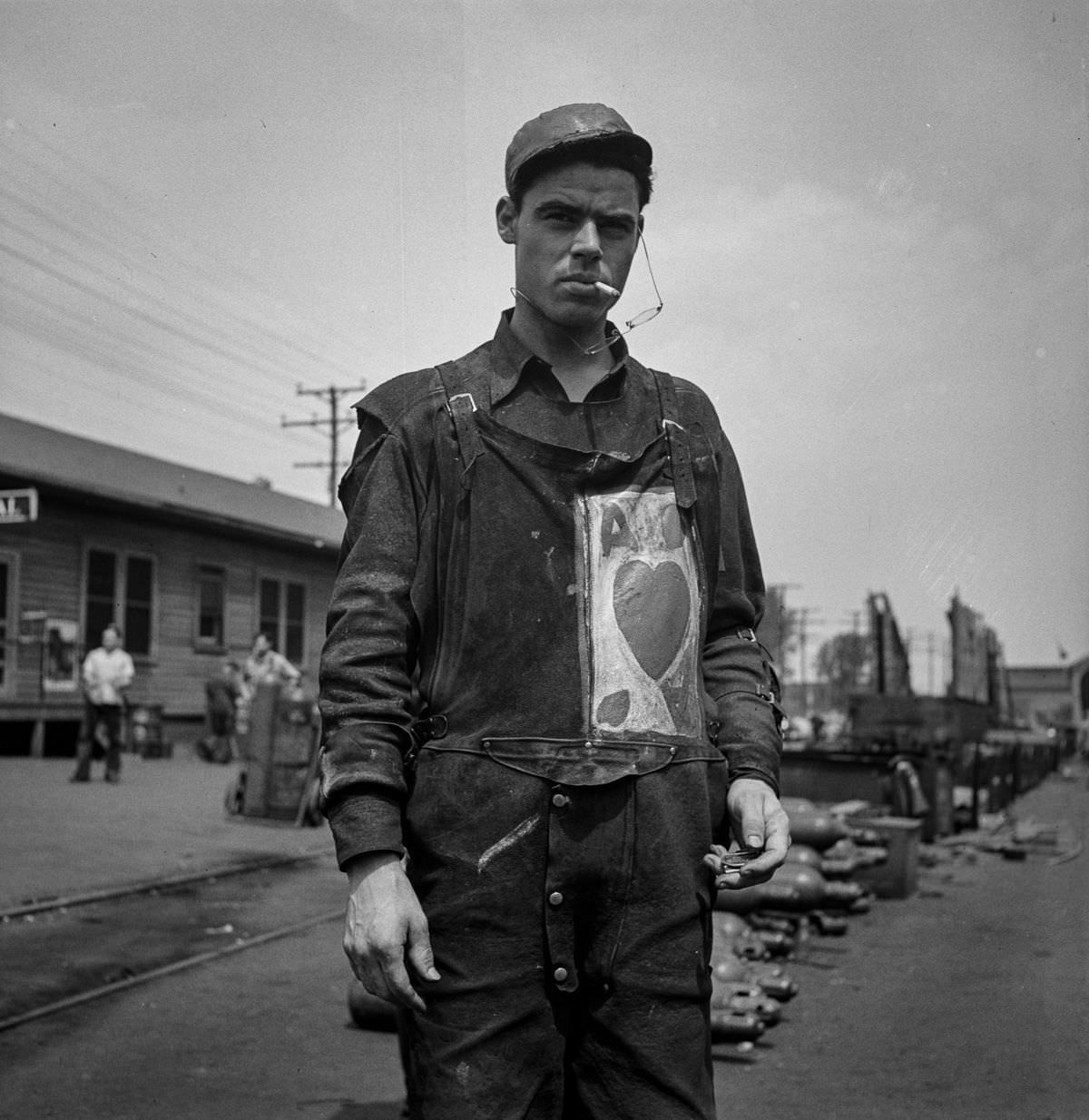
Life inside the yard had its human moments alongside the industrial grind. Workers posed for photographs, ate ice cream during breaks, and showed off war bonds they had purchased. A welder’s lunch break, a pipefitter’s portrait, a man with a personal monogram stitched into his work overalls — these details show a workforce that had its own culture and sense of identity, even in the middle of a massive production machine.
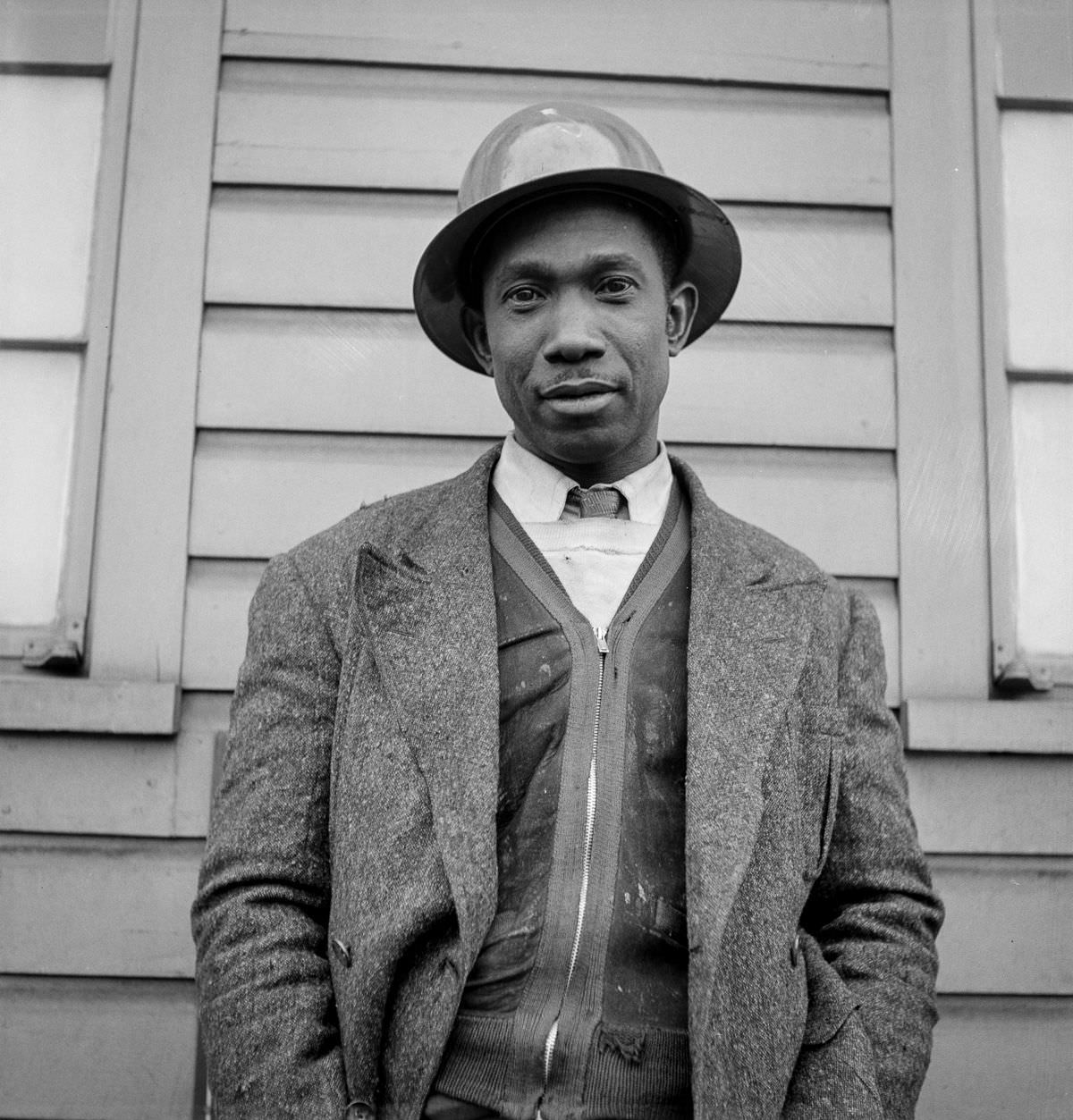
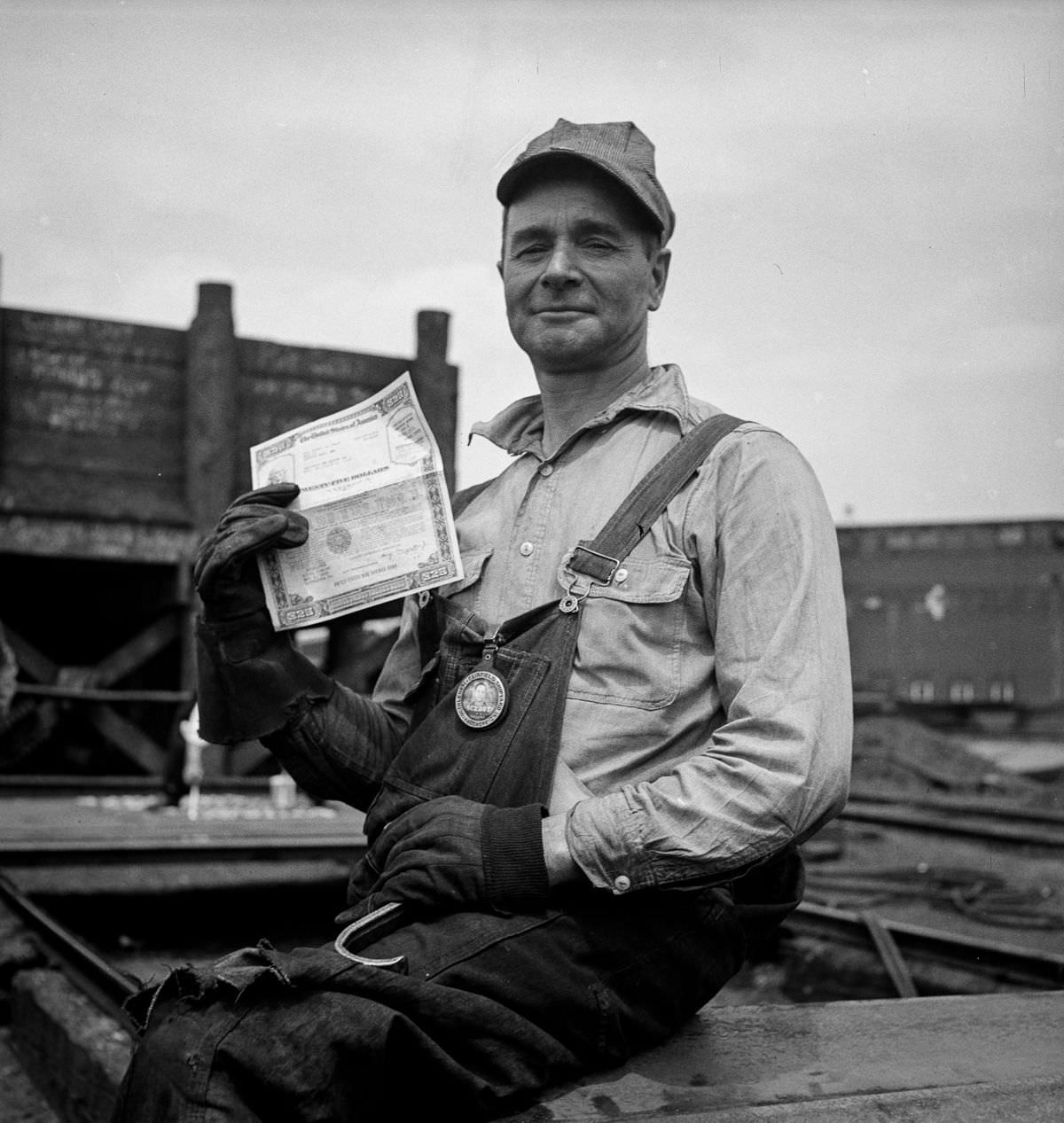
Night shifts kept the yard running after dark. Welders worked under floodlights, their arcs flashing against the dark hulls of half-built ships. The yard never fully stopped. Shift changes moved thousands of workers in and out of the gates at all hours, keeping the ways occupied and the progress continuous.
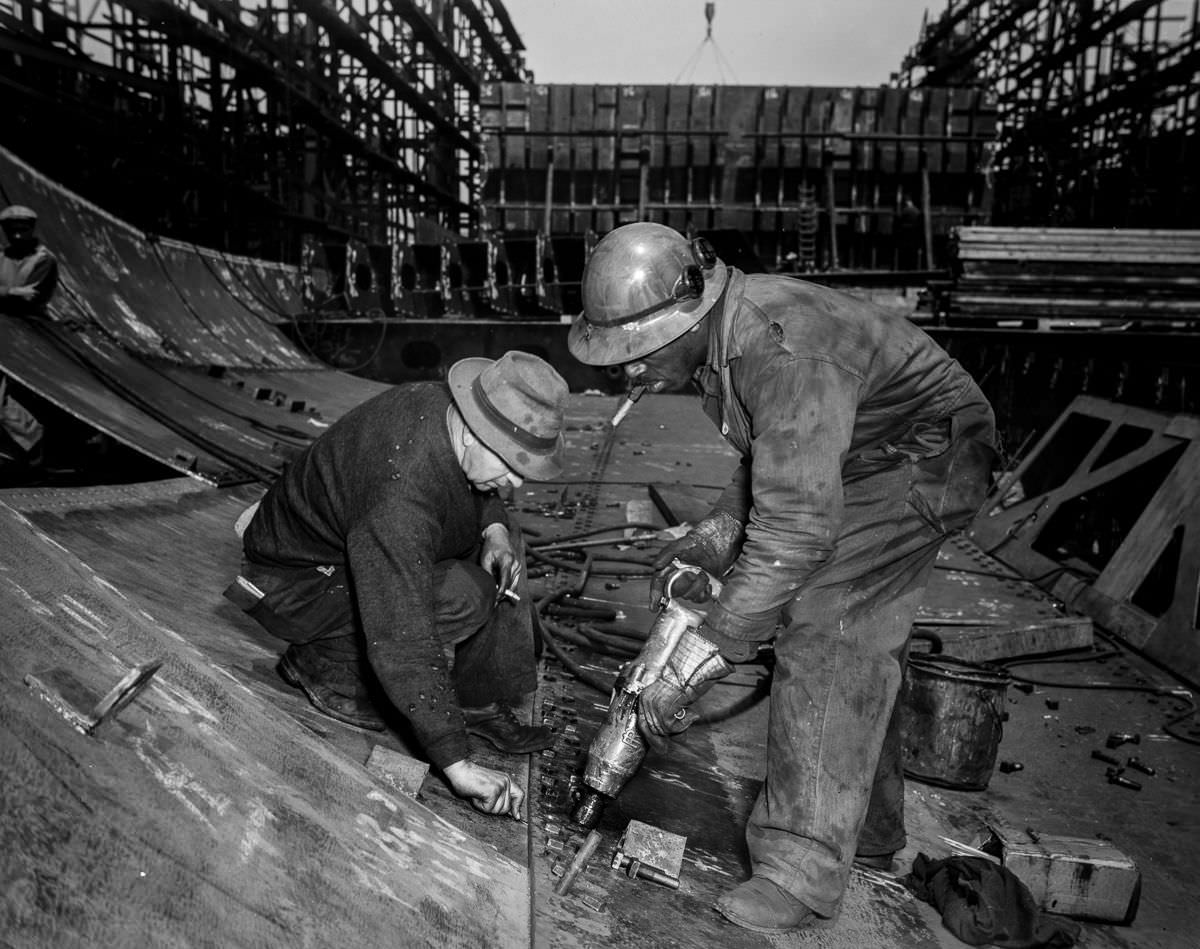
As each ship neared completion, the pace of specialized work intensified. Rod welders laid down final structural seams. Crews bolted internal fittings into place in the tight lower sections of the hull. Every trade converged on the same vessel in the final days before launch.
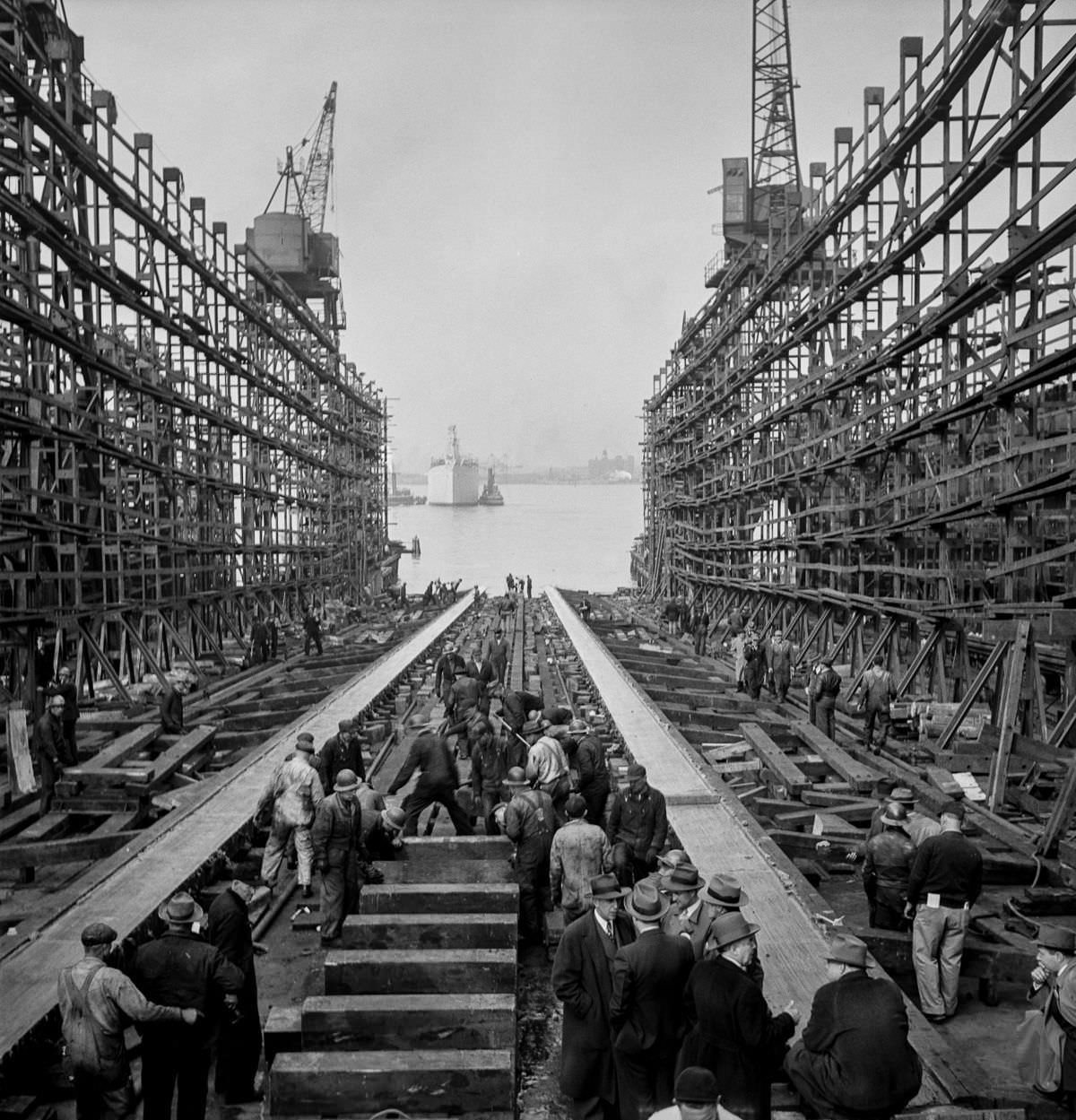
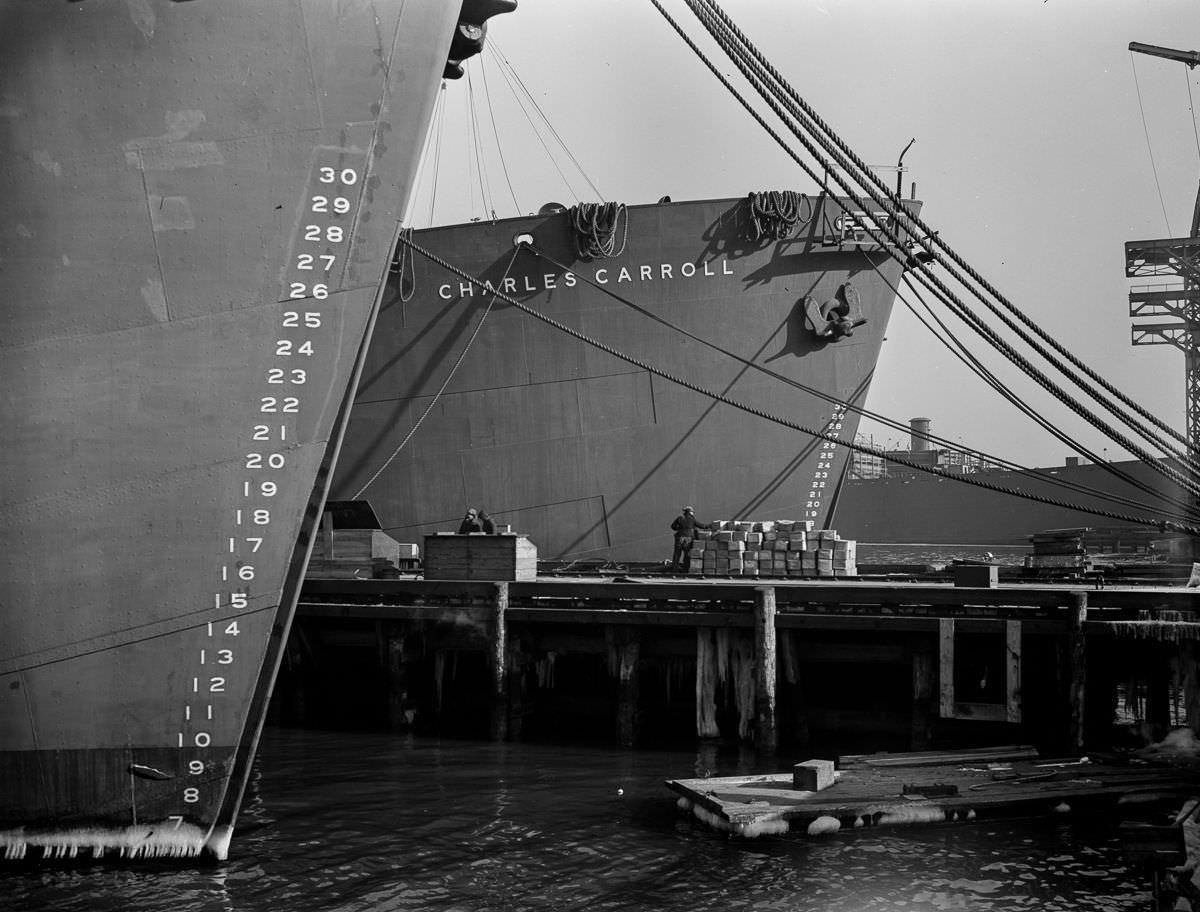
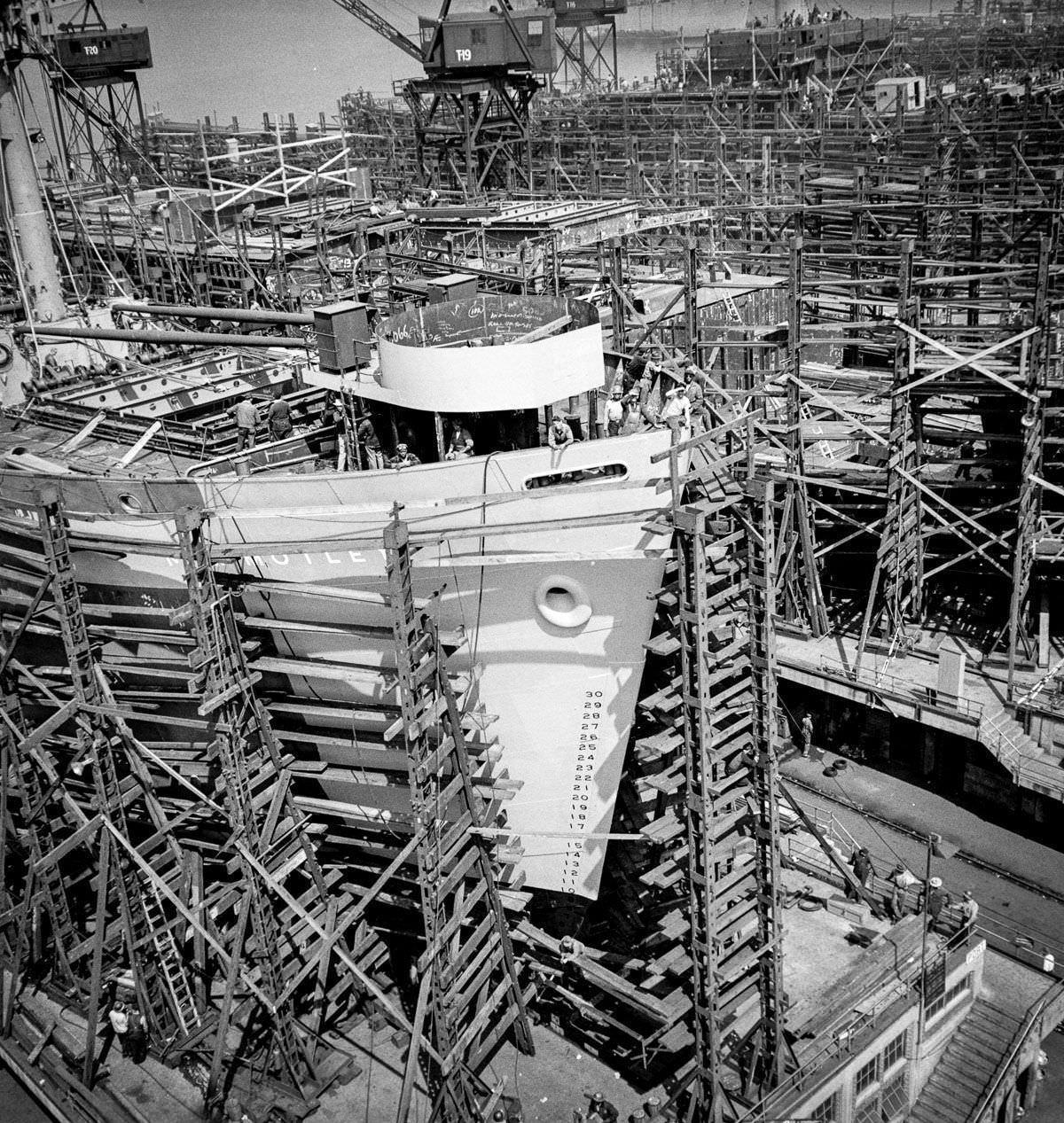
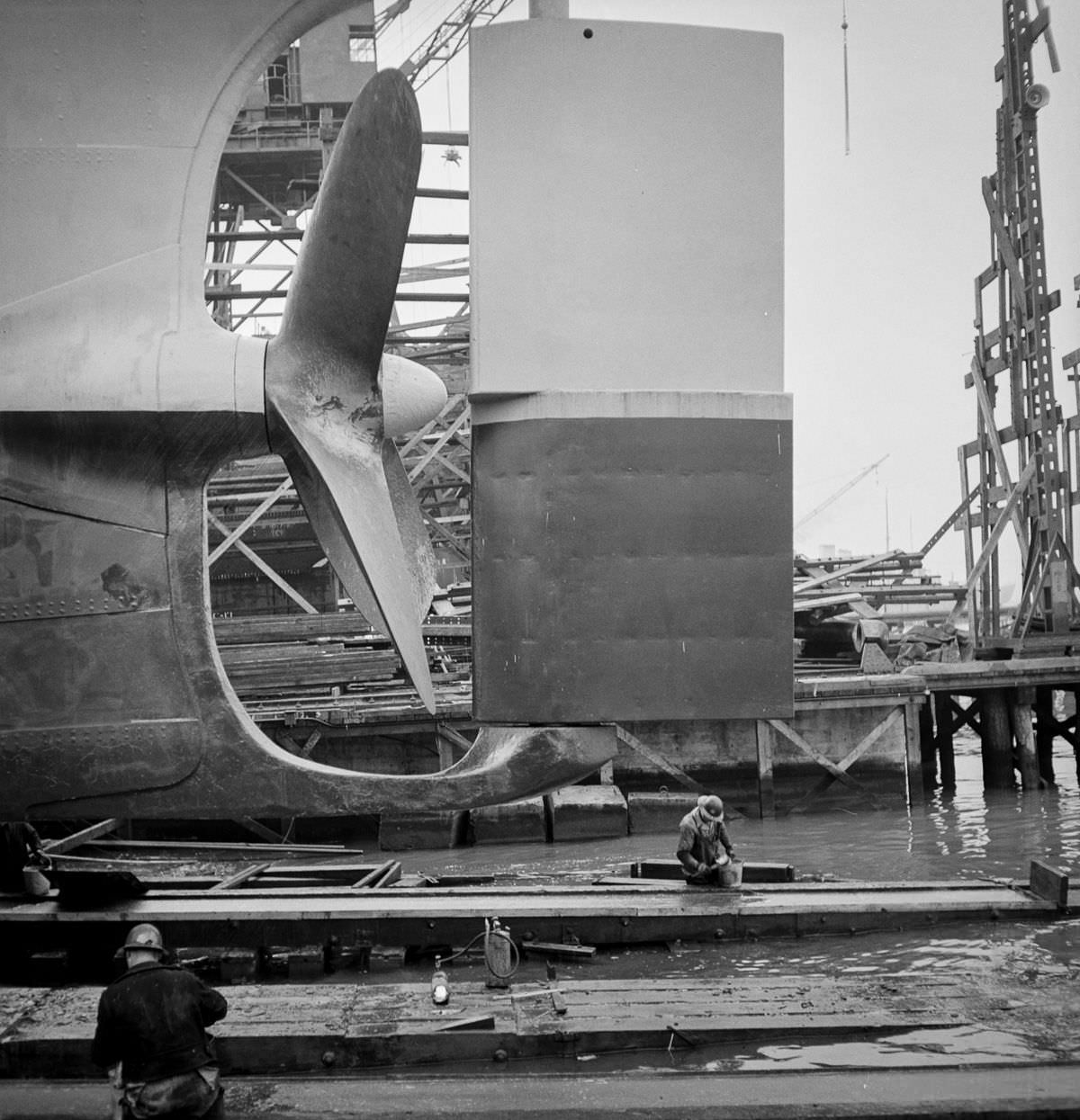
Launch days were events. Crowds of workers gathered along the ways to watch each ship slide into the harbor. Before the launch, crews greased the outboard end of the way so the hull would move cleanly into the water. The bow of each vessel, freshly painted and fitted, loomed above the crowd for a few final moments before the ceremony began.
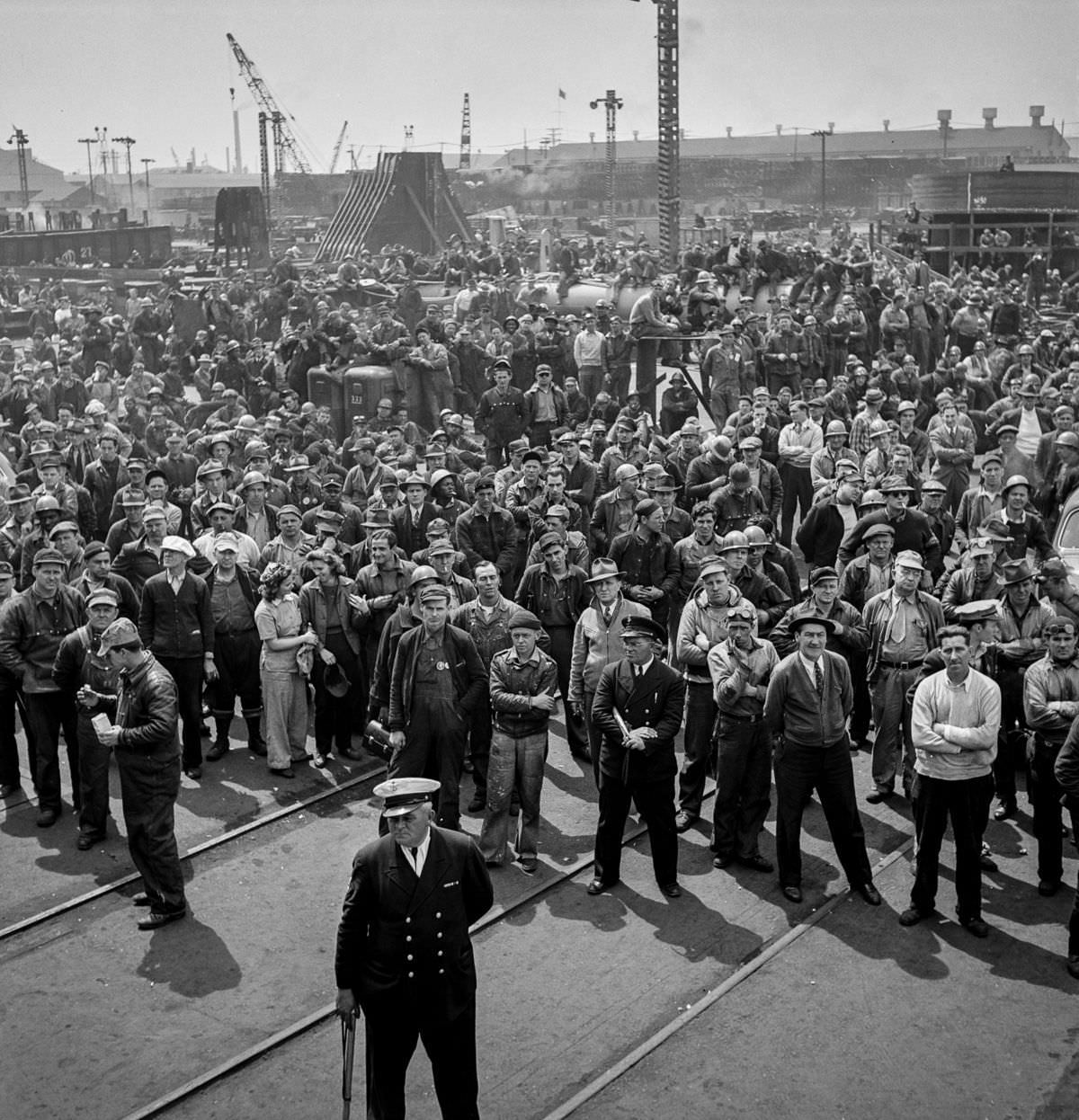
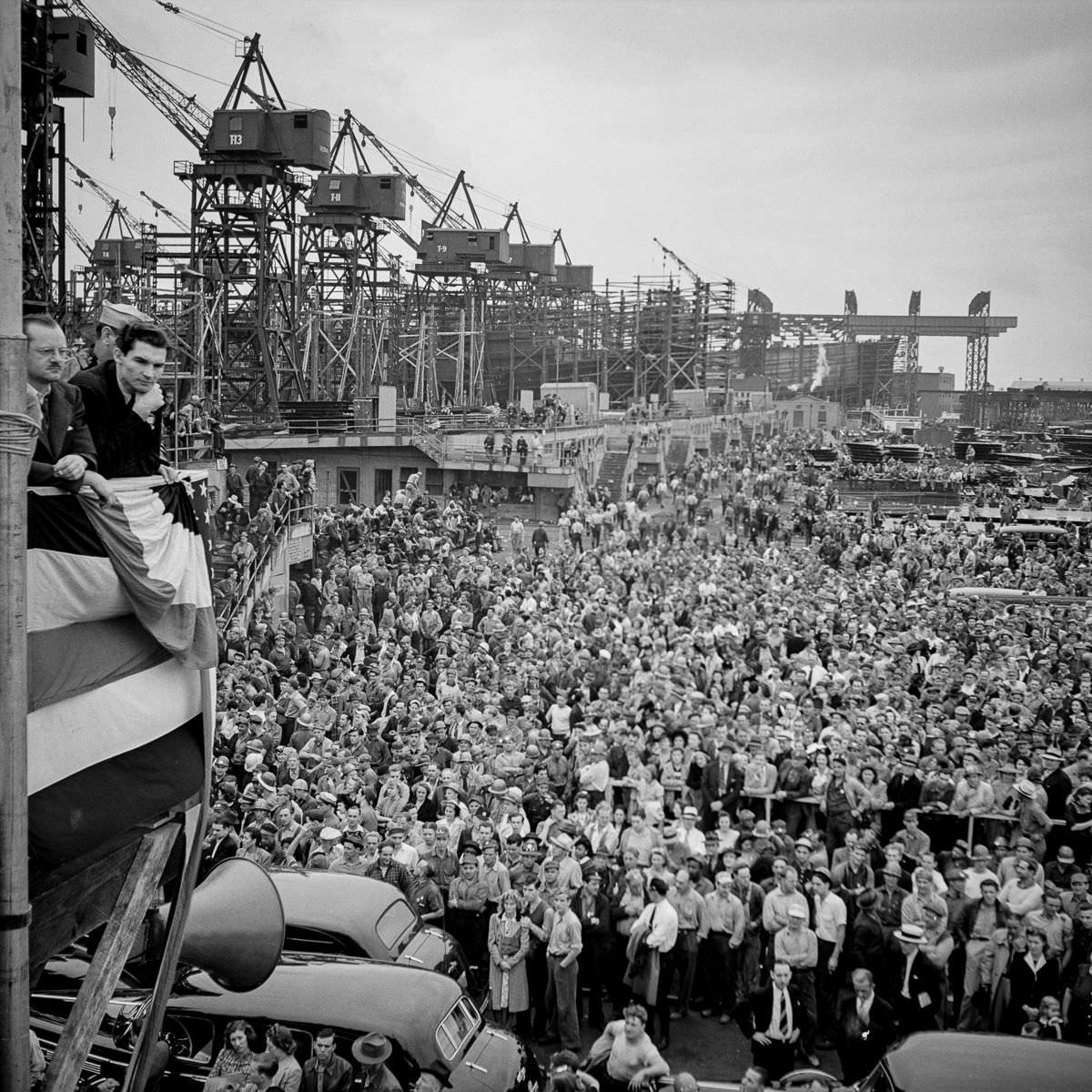
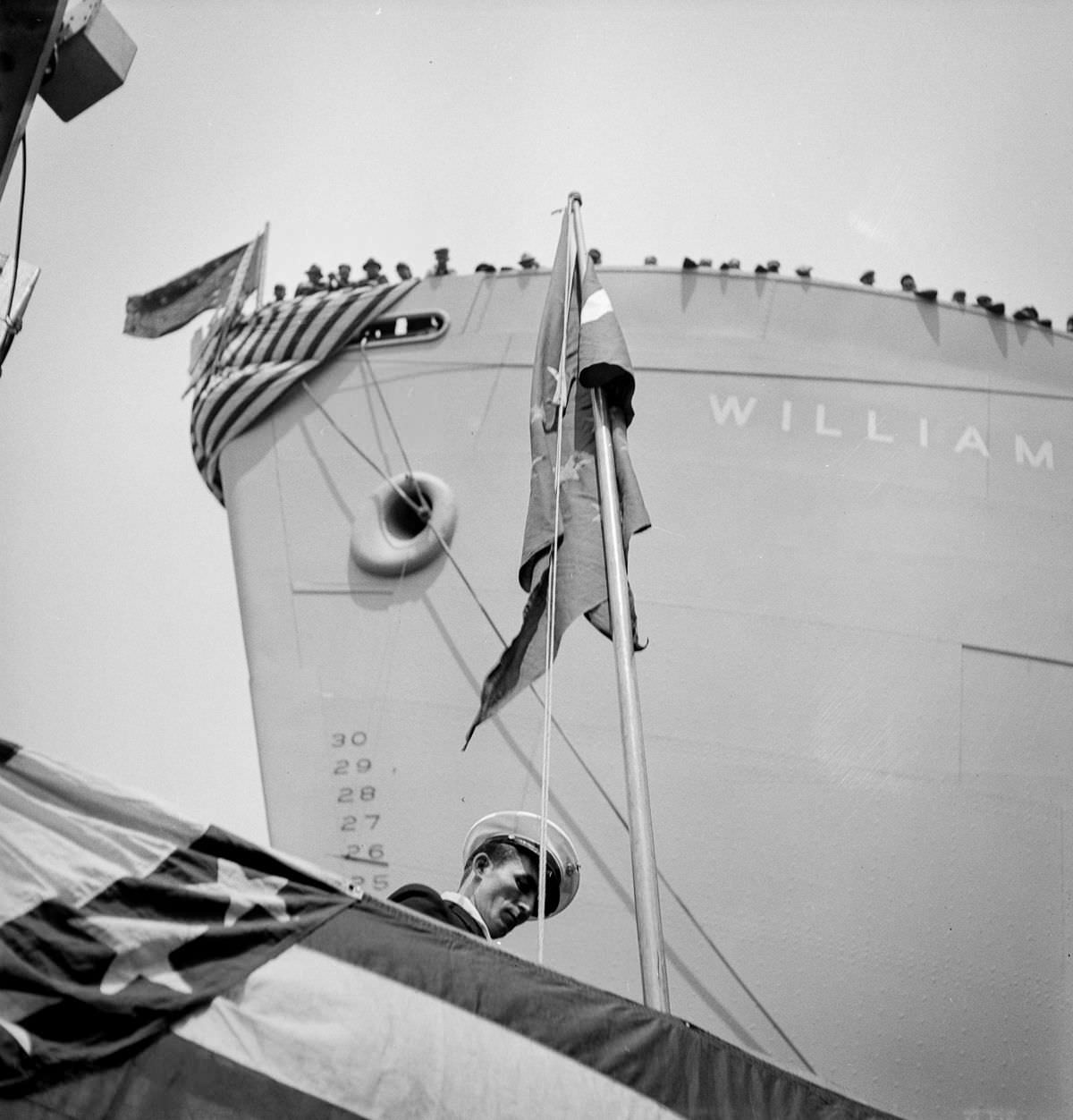
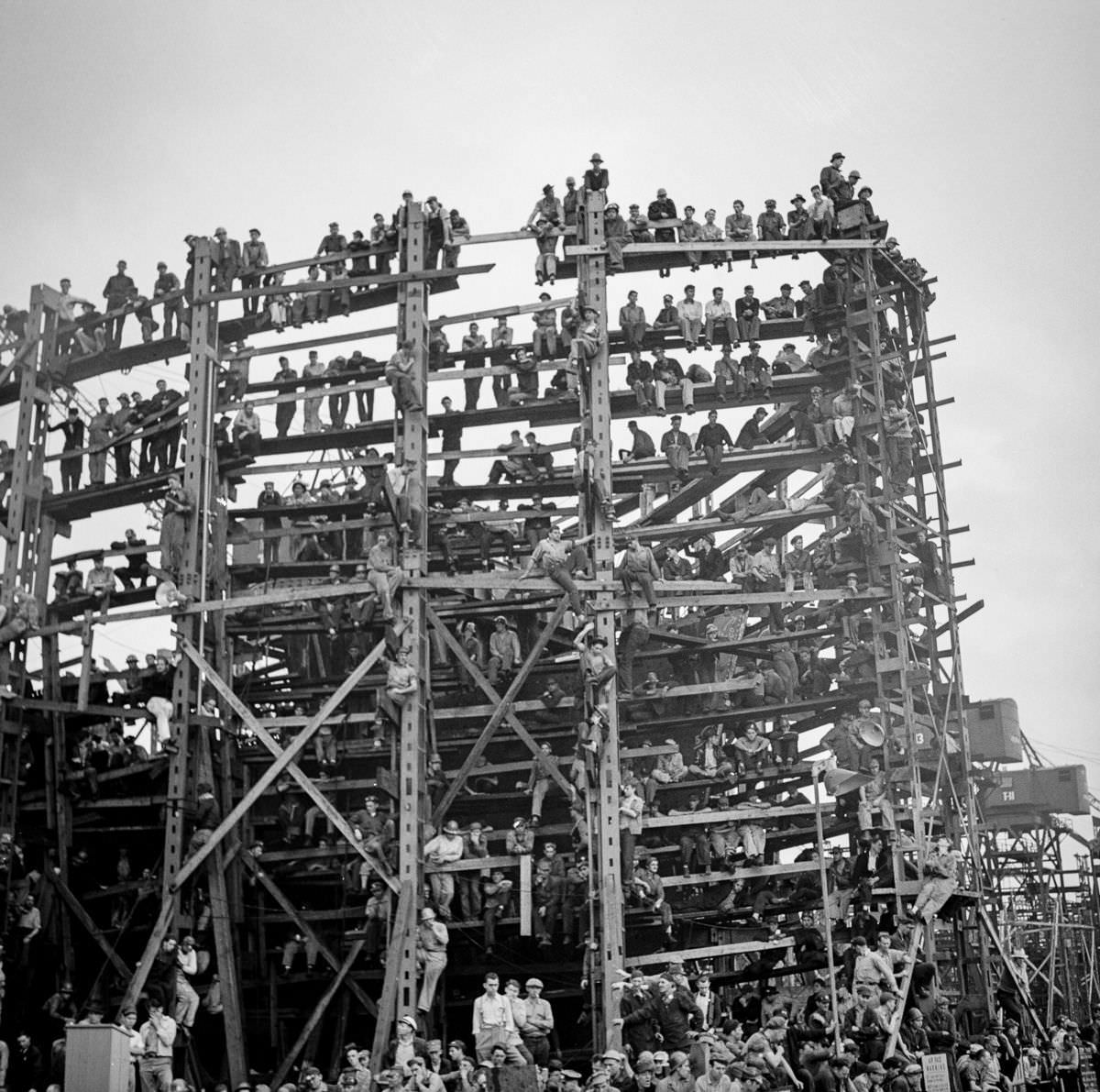
Among the ships launched from Bethlehem-Fairfield was the SS John W. Brown, which entered the water to cheering workers and then moved on to serve in the war. She is one of only two Liberty ships that remain in operation today, preserved as a working museum ship in Baltimore — the same city where she was built.
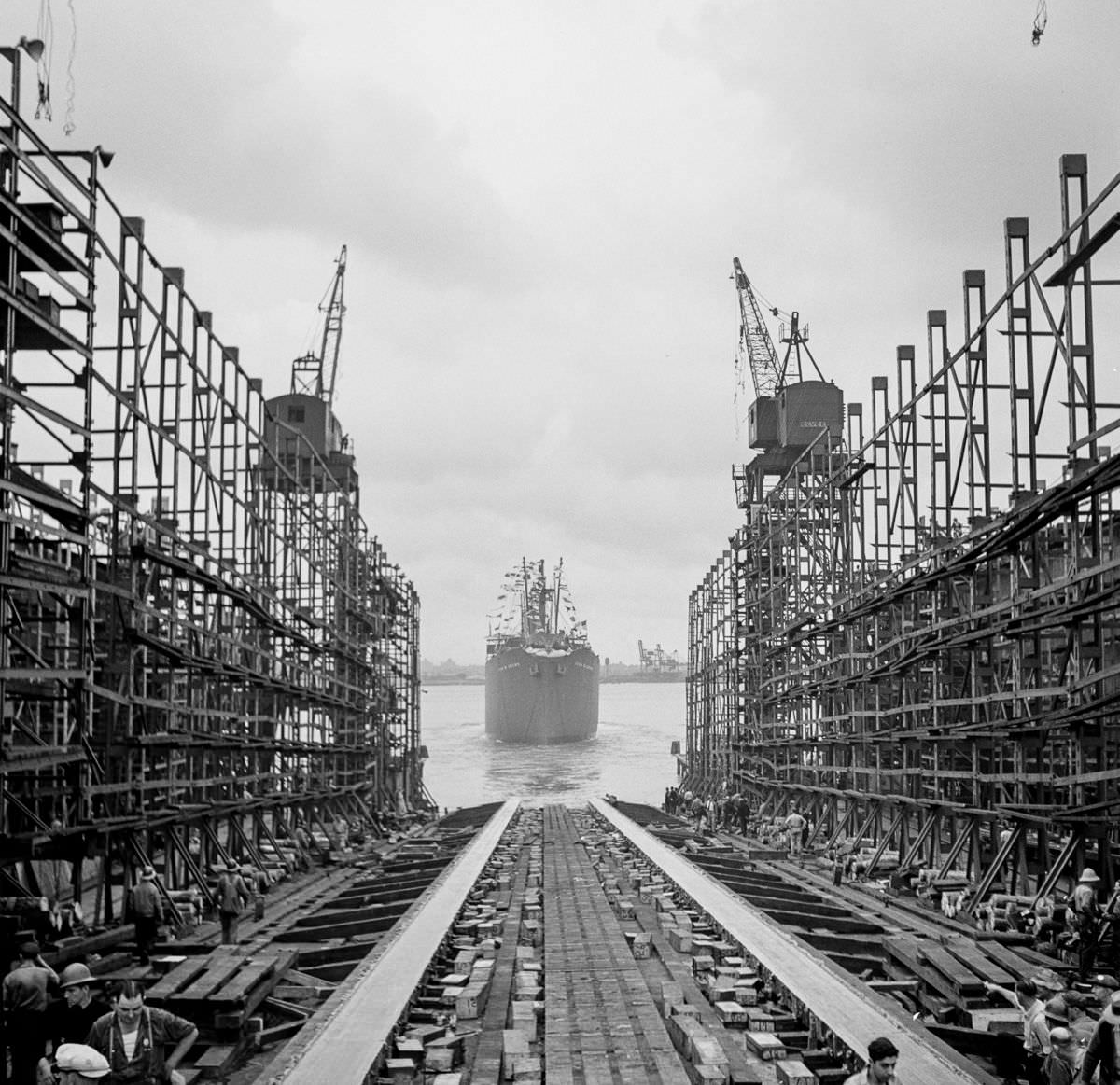
The moment a ship hit the water, the way was already being prepared for the next one. Workers flooded back onto the now-empty slipway and began setting up for another keel. The cycle started immediately — steel on the ground, a hull taking shape, another ship headed to sea.