Havana’s Colon Cemetery opened in 1876 in the city’s Vedado neighborhood. It was built to replace the older Espada Cemetery in the Barrio de San Lázaro district. Named after Christopher Columbus, the cemetery quickly became known for its grand, intricately carved stone memorials. Families of means spared no expense marking their dead, and the grounds filled with elaborate mausoleums and sculpted monuments. But beneath that grandeur, the cemetery operated on a system that was strictly practical—and had a grim endpoint for the poor.
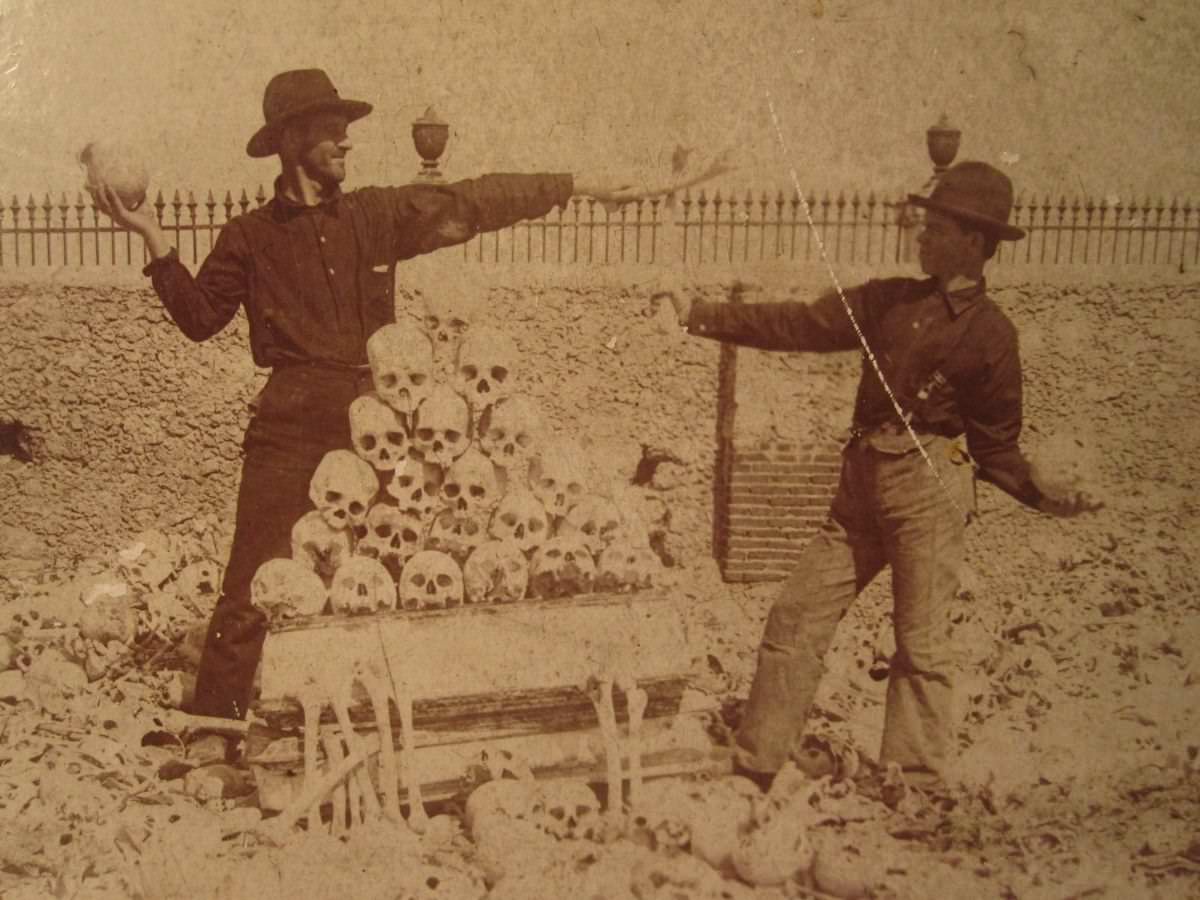
Burial plots at Colon Cemetery were not purchased outright—they were rented. A grave cost $10 for a set rental period of five years. When that period ended, the family had a choice: pay to renew, or lose the plot. If no one came forward to claim the remains, cemetery workers removed the bones and threw them into a large open pit on the grounds. This pit became known as the “boneyard.” Over the years, it grew into a massive, 30-foot-deep heap of unclaimed human remains, stacked up from decades of expired rental agreements.
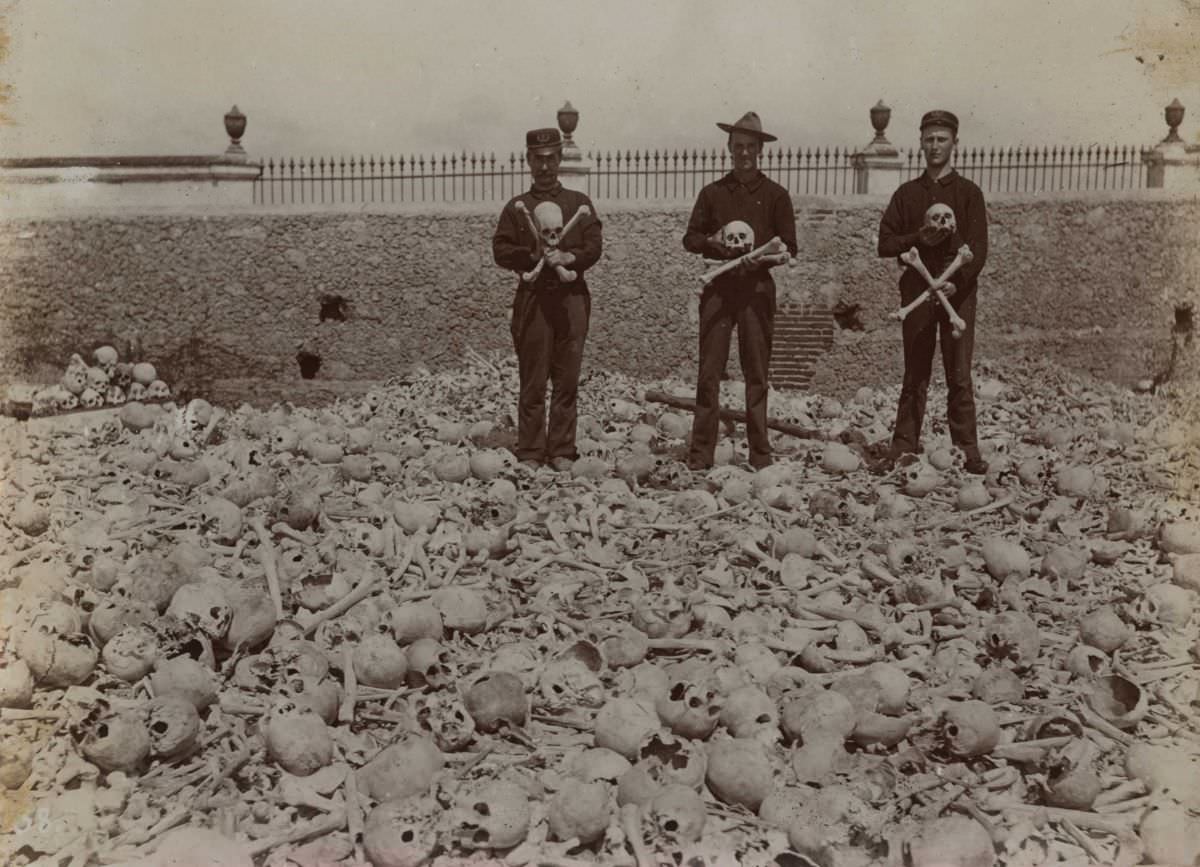
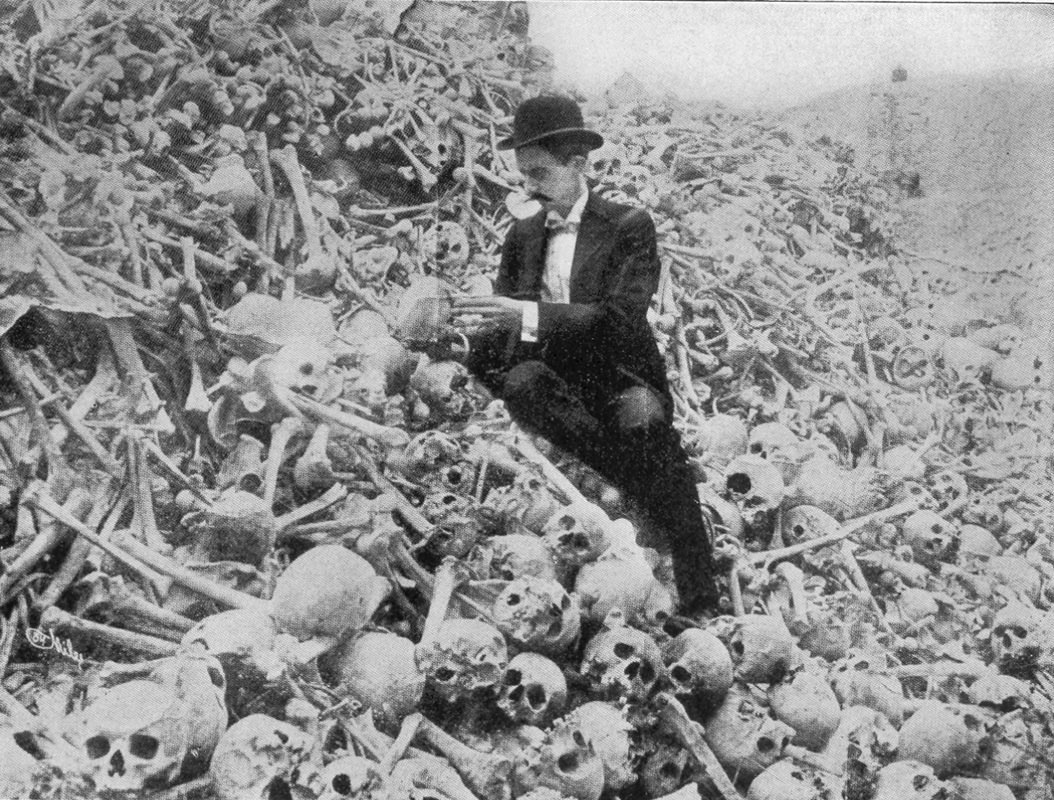
During the 1890s, American soldiers were stationed in Cuba as part of the U.S. military presence on the island. Some of those soldiers discovered the boneyard at Colon Cemetery and treated it as a source of dark entertainment. They climbed into the pit, pulled out skulls and loose bones, and carried them through the streets of Havana. Soldiers were photographed standing on top of the bone pile, holding skulls up in the shape of the traditional skull and crossbones symbol, grinning for the camera.
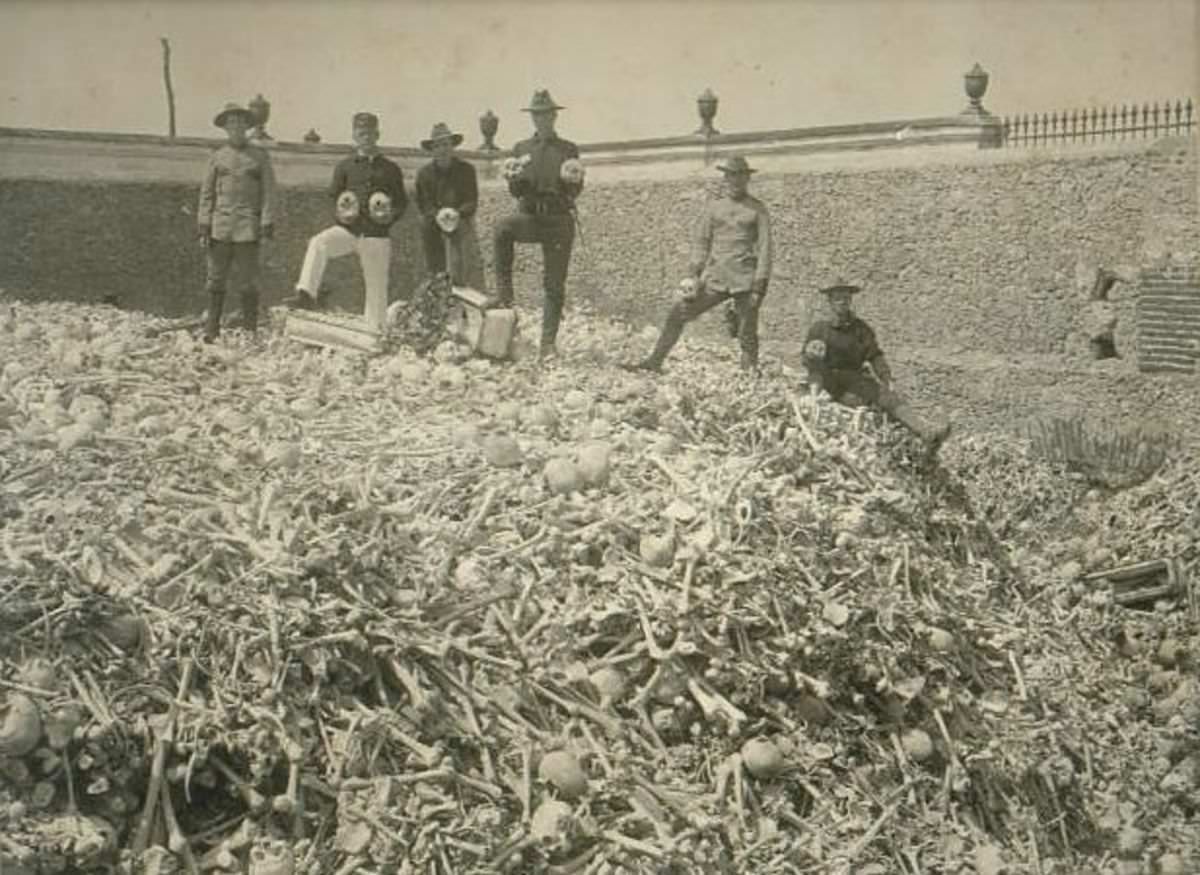
The photographs taken at the boneyard were not kept private. Photographers sold them commercially as souvenir postcards, which soldiers bought and mailed back to family and friends in the United States. These were packaged and marketed the same way ordinary travel postcards were—as mementos of a place visited during service abroad.
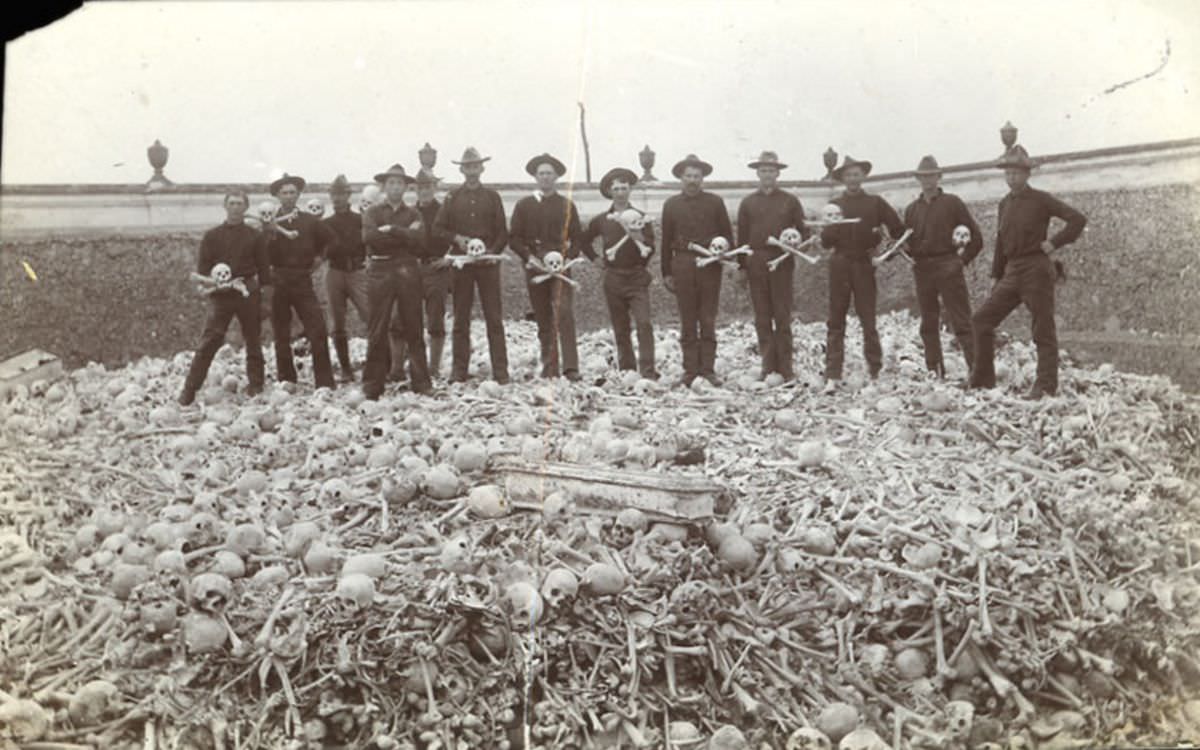
The behavior eventually drew the attention of military leadership. General Brooke, the commanding officer, ordered the soldiers to stop removing bones from the pit entirely. He then directed that the boneyard be covered over, ending access to the pile. The order brought the practice to a halt, but not before the photographs had already been taken, printed, and distributed widely as postcards.
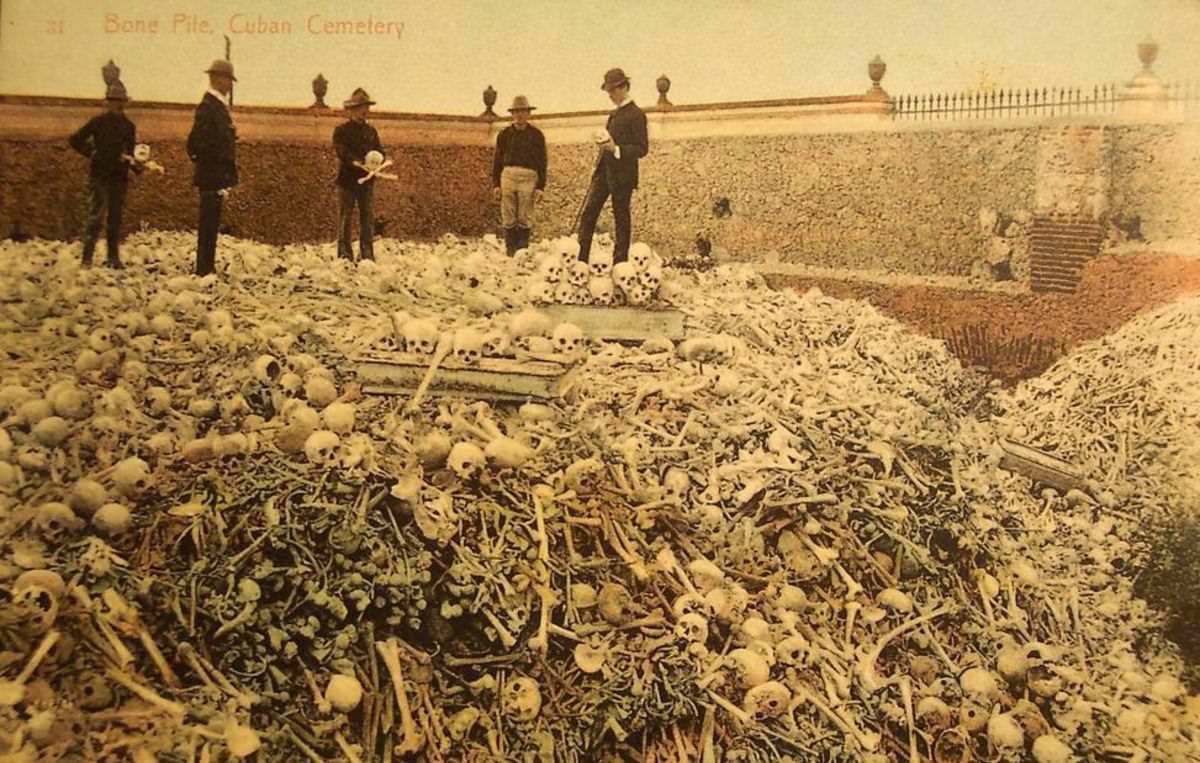
The Colon Cemetery itself remained a functioning burial ground and continued to receive Havana’s dead long after the boneyard was sealed. Its rental system persisted, keeping the cemetery cycling through new occupants while the older unclaimed remains stayed buried beneath the covered pit. The ornate monuments above ground stood in sharp contrast to what had accumulated below.
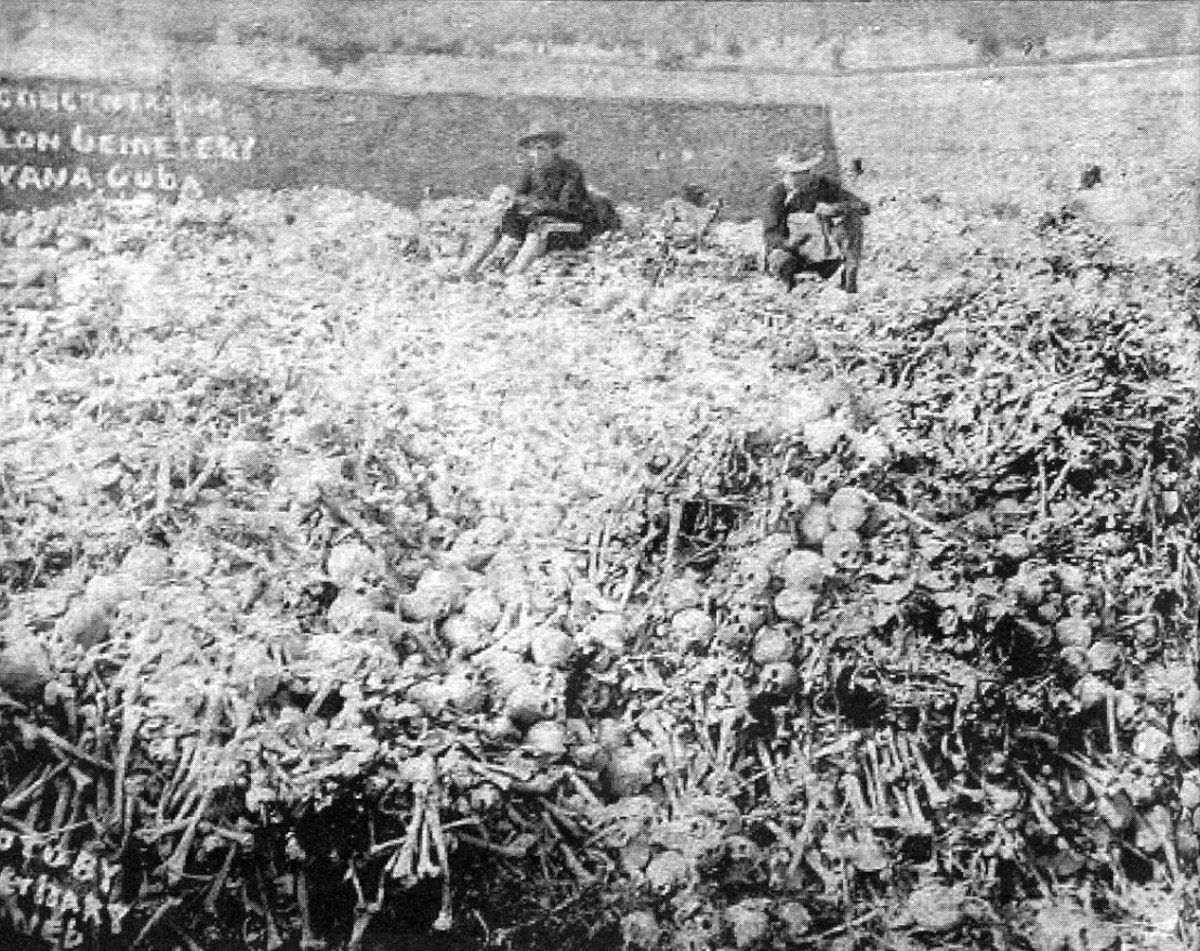
The surviving postcard photographs from Colon Cemetery’s boneyard are among the more unsettling examples of souvenir culture from the early American military presence in Cuba. They document soldiers posing openly with human skulls in a public cemetery, with those images then packaged and sold through ordinary commercial channels. The photographs exist today as a factual record of what took place at the pit before General Brooke’s order shut it down.