

Victorian homes from the late 19th century were a world apart from what we live in today. Every room was a statement. Furniture was heavy and oversized, walls were layered with pattern, and every surface held something worth looking at. The style was warm, dramatic, and unapologetically bold — the opposite of the clean, minimal spaces many people favor today.
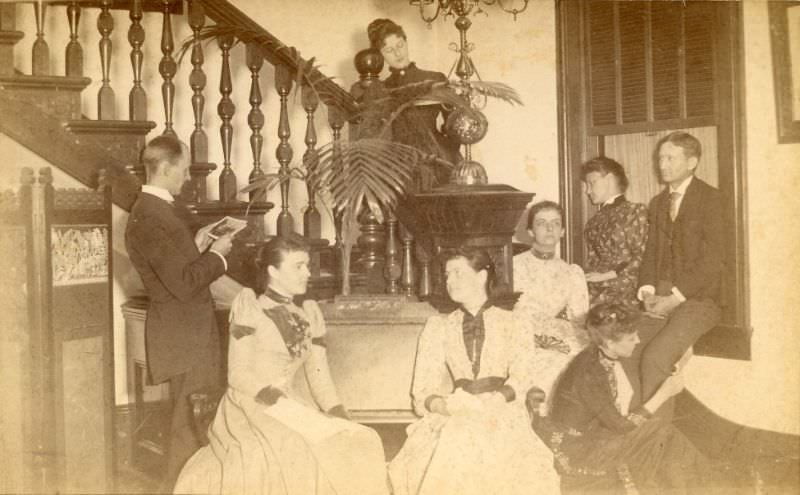
The staircase was one of the most important features in a Victorian home. Grand banisters, turned spindles, and rich woodwork made even a simple trip upstairs feel like an event. Families gathered on and around these staircases, treating them as a natural gathering point within the home.
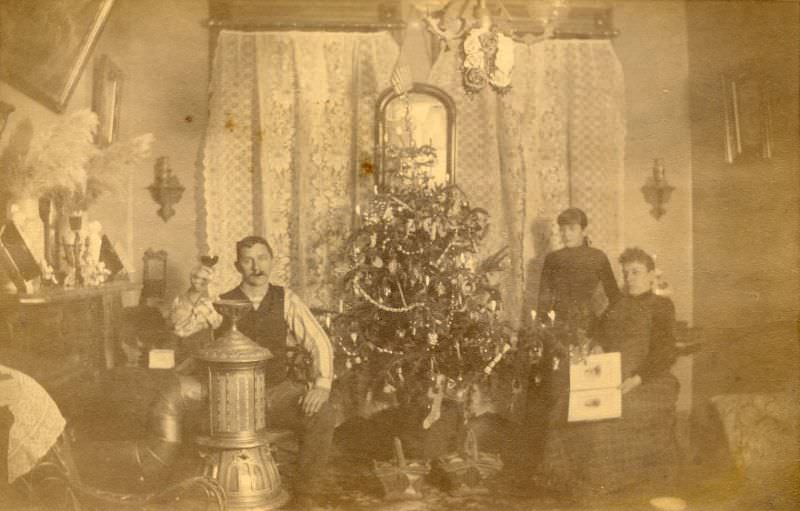
Christmas was a major celebration in Victorian households. The tradition of decorating an indoor tree became widely popular during this era, largely inspired by Queen Victoria and Prince Albert. Families would crowd around elaborately decorated trees, draped in candles, glass ornaments, and handmade trinkets.
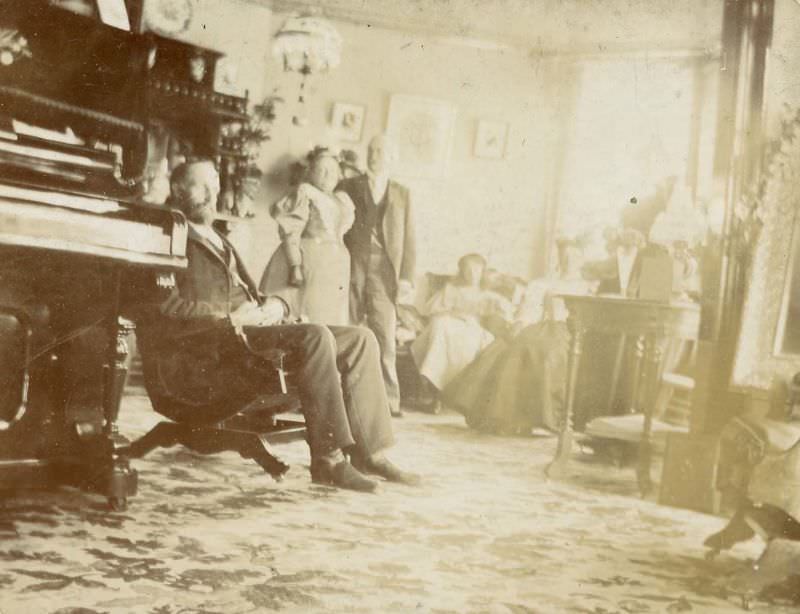
Music was central to Victorian family life. A parlor piano was considered a mark of refinement and social standing. Families who owned one made it a centerpiece of the room — both literally and socially. Evening gatherings often revolved around singing, playing, and listening together.
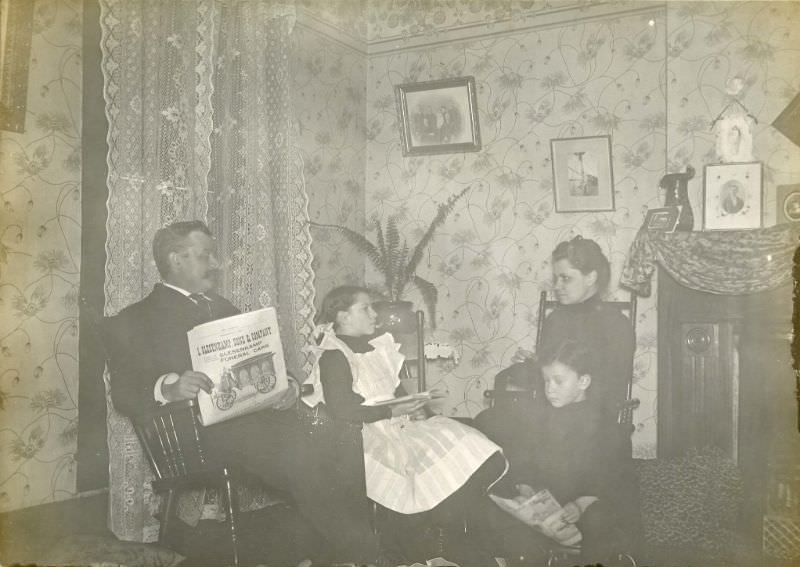
Corners of Victorian rooms were rarely left bare. Carefully arranged chairs, small tables, and reading lamps created cozy nooks where family members could settle in with a book or newspaper. Reading together in the same room, each person absorbed in their own material, was a common evening routine.
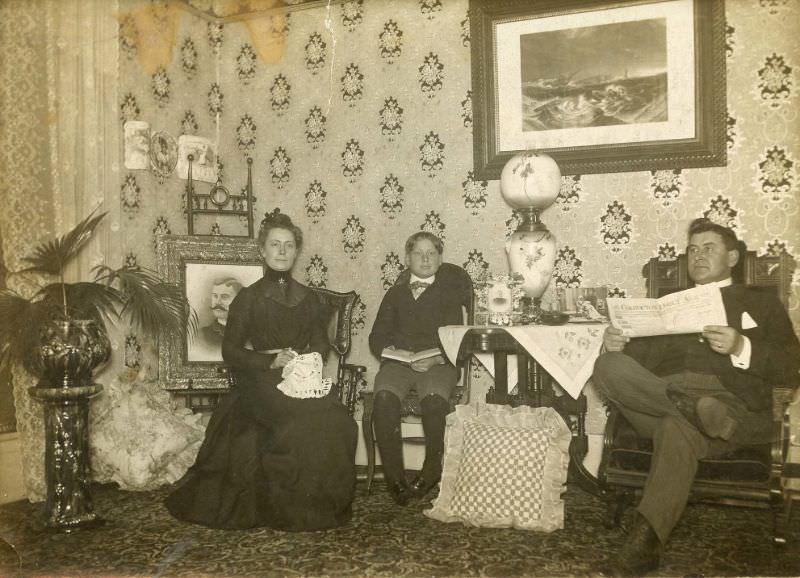
Victorian interiors were layered with texture. Persian rugs covered hardwood floors. Heavy drapes framed the windows. Upholstered furniture in rich fabrics like velvet and brocade filled every available space. The result was a room that felt full, lived-in, and deeply personal.
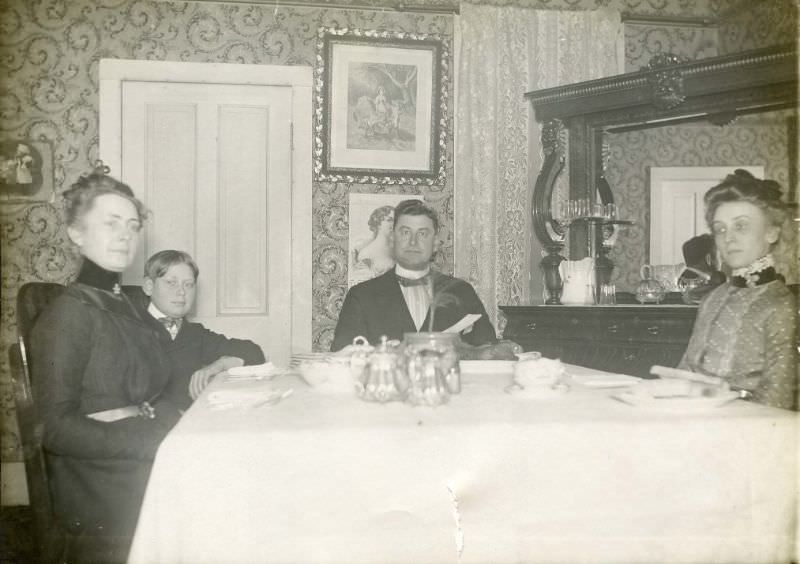
The dining room was treated as a formal space in Victorian homes. Long tables set with fine china, silver cutlery, and crystal glassware were standard for middle- and upper-class families. Meals were structured events, and the dining room reflected the family’s status and taste.
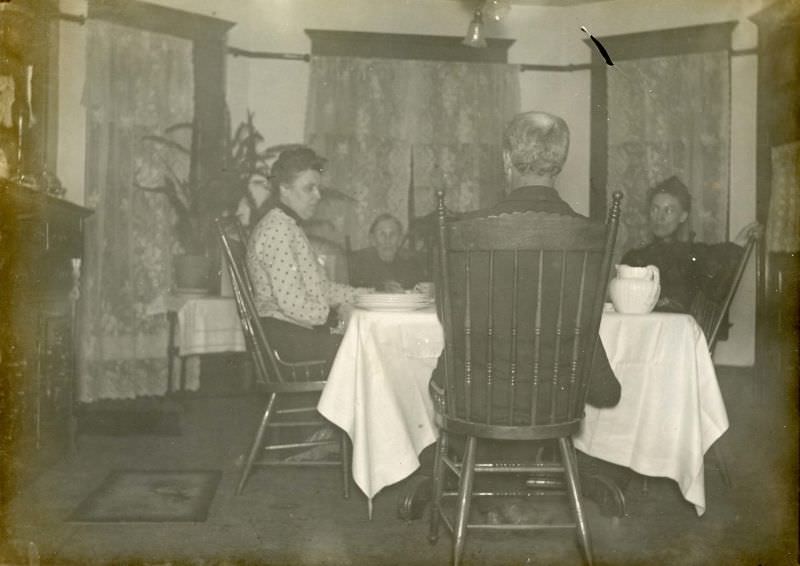
Victorian dining rooms were often decorated with dark wood furniture, ornate sideboards, and walls covered in rich wallpaper or wood paneling. Portrait paintings and mirrors were common on the walls. The overall effect was one of formality and elegance.
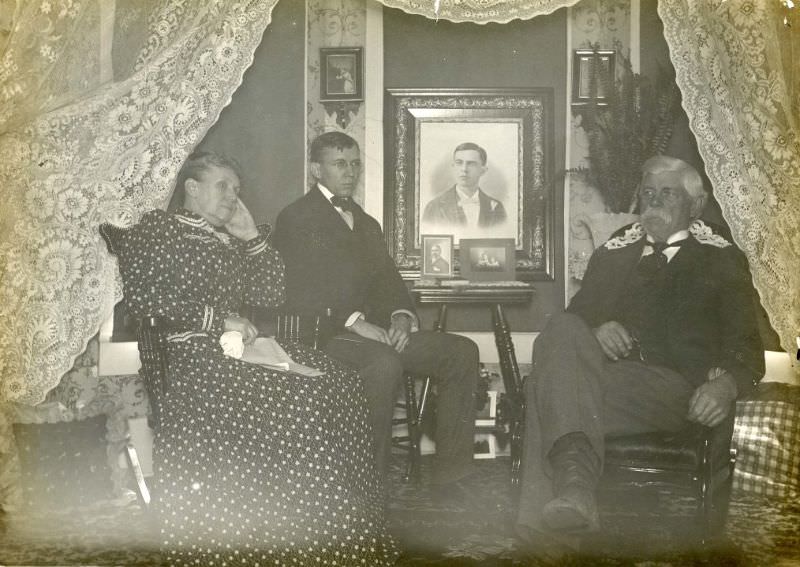
Lace curtains were a hallmark of Victorian window dressing. They softened natural light while still allowing a view of the street outside. For many families, lace curtains were a practical display of respectability — delicate enough to signal refinement, but always pristinely white and well-kept.
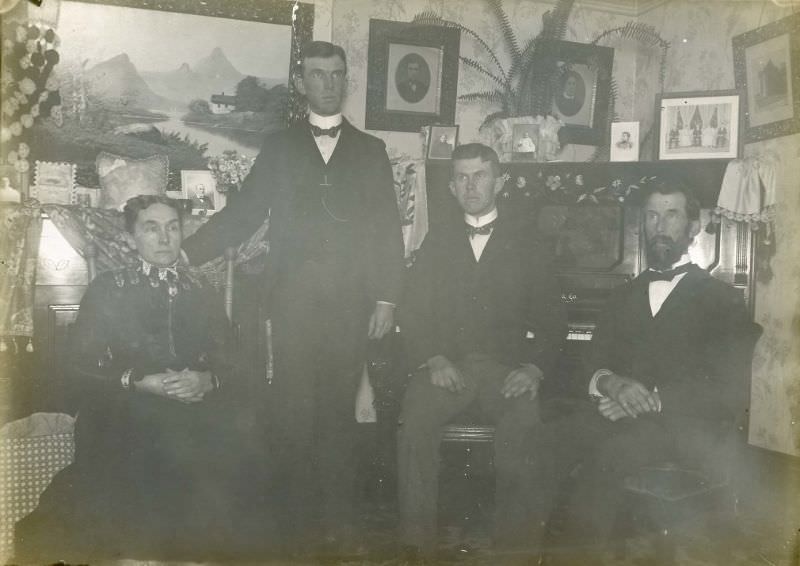
Pianos appeared in Victorian homes of all sizes, from grand instruments in the parlors of wealthy families to smaller upright models in more modest households. The piano represented culture and education. Parents encouraged their children — especially daughters — to learn to play from a young age.
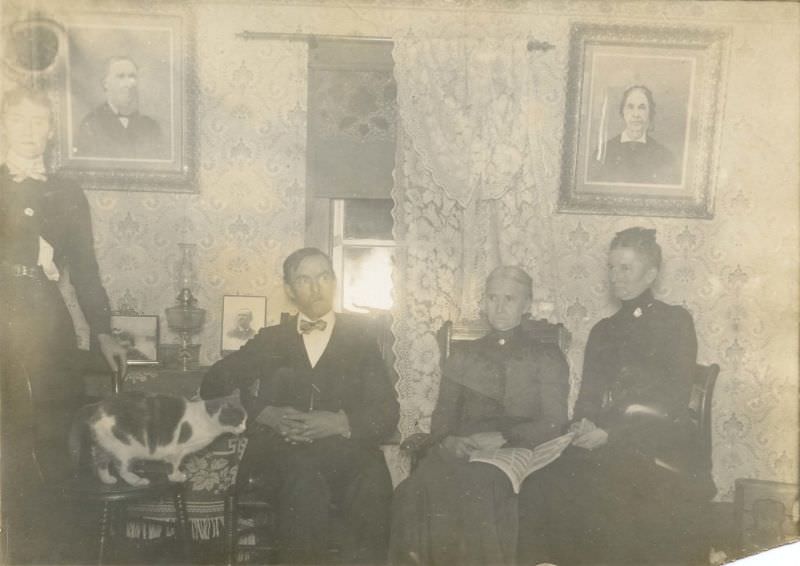
Windows in Victorian homes were large and often dressed in multiple layers — lace sheers beneath heavy outer drapes. Natural light was valued, but privacy was equally important. Families frequently posed or gathered near windows, the light making for natural and flattering settings within the home.
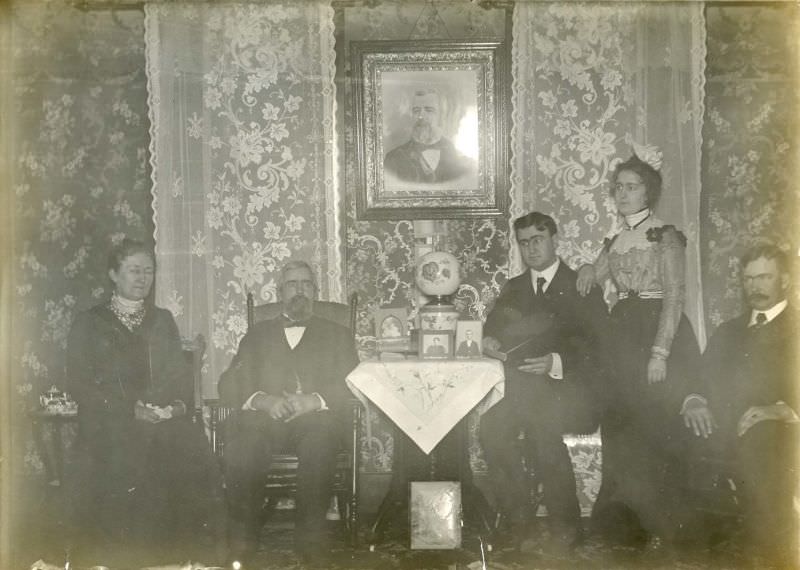
Victorian furniture often drew from earlier design periods. Gothic revival, Renaissance revival, and Rococo revival styles all showed up in the same era — sometimes even in the same room. Pieces were built for grandeur, with carved wood details, tufted backs, and curved legs that made even everyday chairs look impressive.
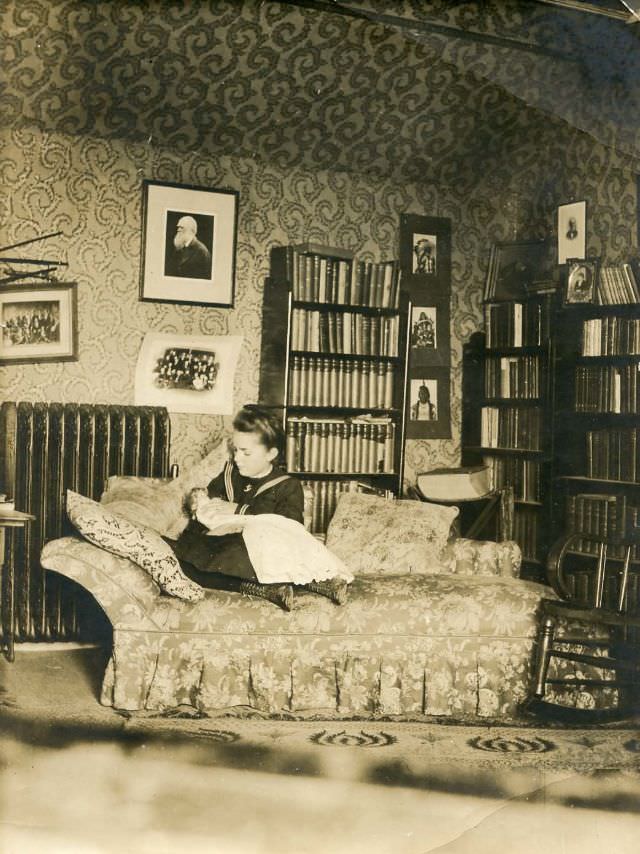
Children in Victorian households were expected to behave according to strict social norms, but their personal spaces told a different story. Dolls, toys, and picture books filled their rooms. A child posed with a beloved doll on a cushioned sofa captures the quieter, more personal side of Victorian domestic life.
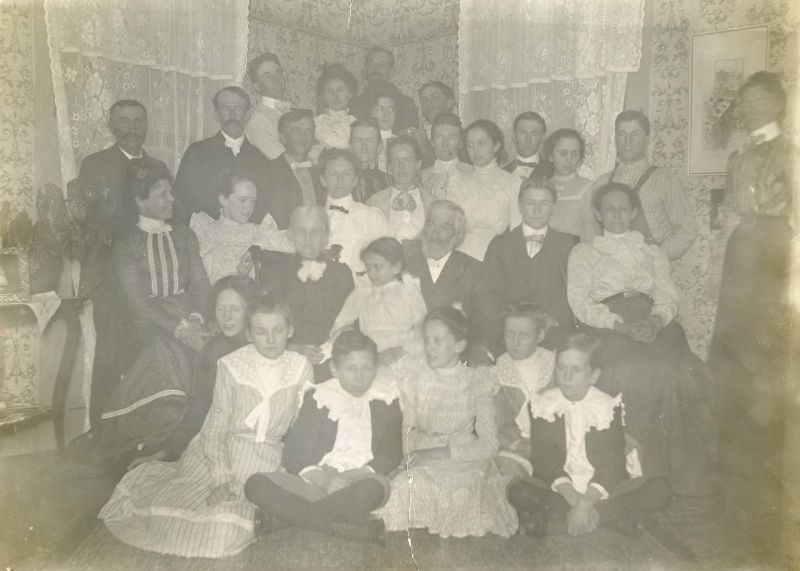
Large families were common in the Victorian era, and homes were designed to accommodate them. Extended family members — grandparents, aunts, uncles — often lived under the same roof. Crowded corners filled with relatives of all ages were a typical sight in Victorian households.
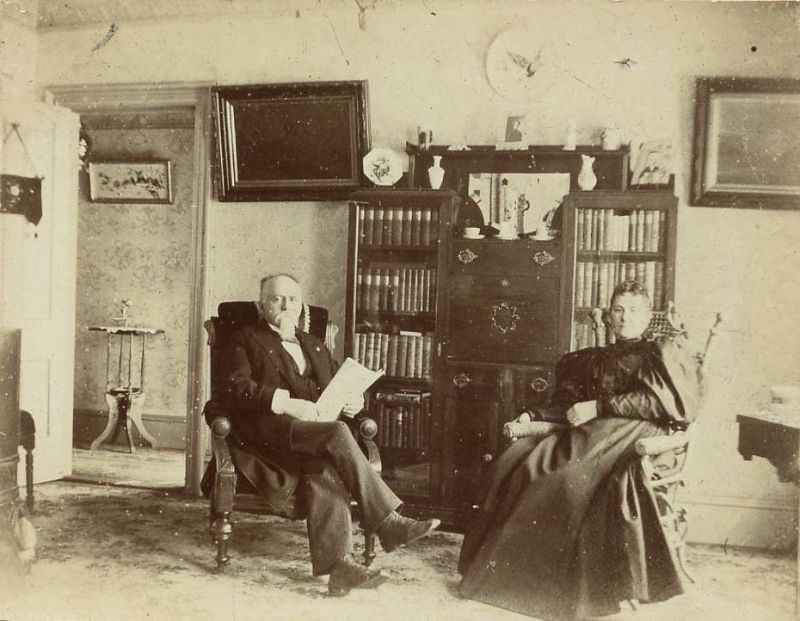
A well-stocked bookcase was a point of pride in Victorian homes. Books signaled education and intellectual ambition. Couples who read and studied together were seen as cultivated. Built-in or freestanding bookcases lined with leather-bound volumes were a fixture in parlors and studies alike.
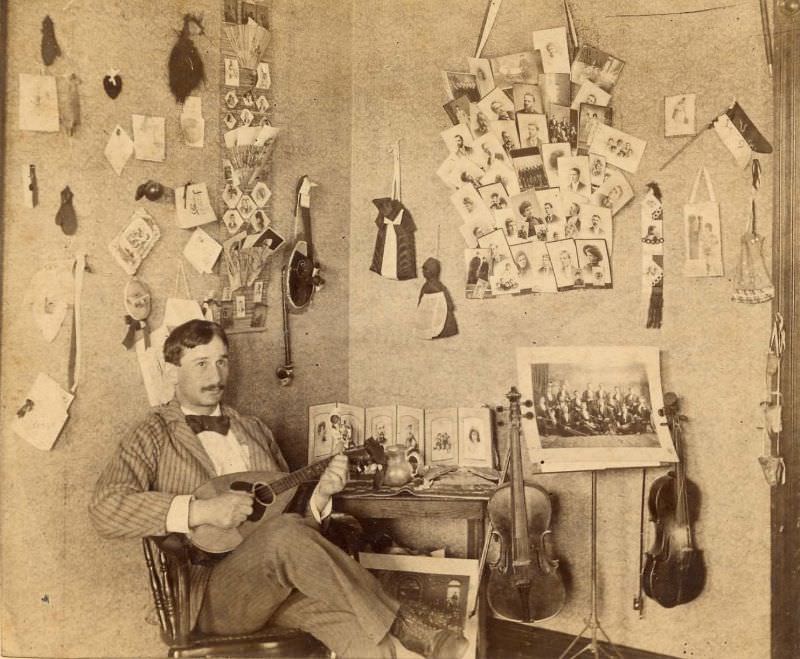
While the piano dominated Victorian musical culture, string instruments like the mandolin, guitar, and violin were also widely played. A man with a mandolin in a well-furnished room reflects the era’s deep appreciation for home-based entertainment. Music-making was a social skill, not just a hobby.
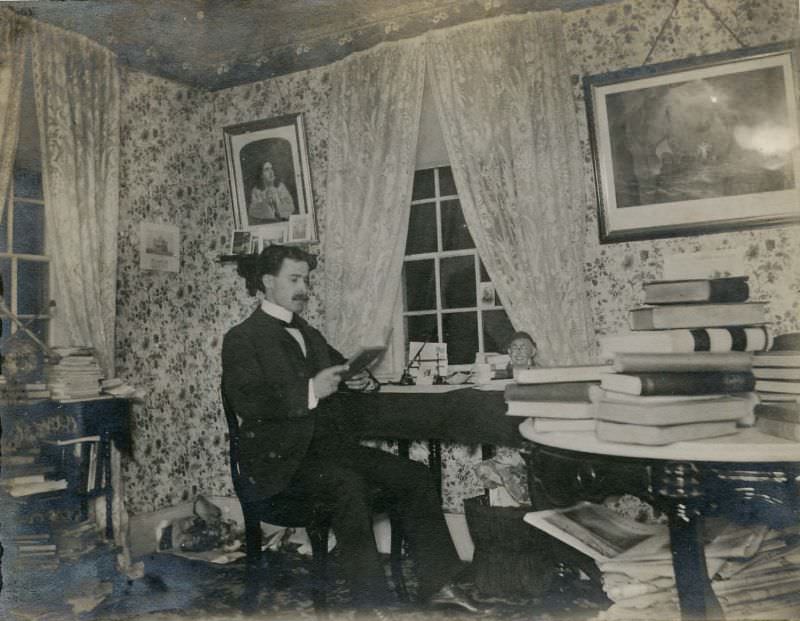
Reading by natural light was a practical necessity in an age before electric lighting became widespread. Victorian men and women positioned their chairs near windows during the day to make the most of available light. These quiet reading moments were built into the daily rhythm of household life.
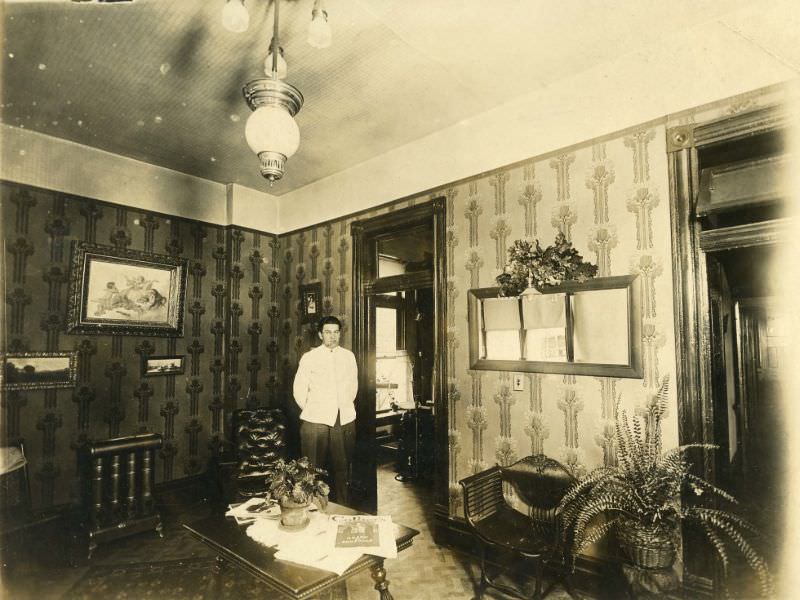
Victorian men’s fashion was formal by modern standards. Dark suits, waistcoats, and polished shoes were standard dress even at home. A man standing in a Victorian room surrounded by heavy furniture and layered decor illustrates how inseparable personal style was from the era’s interior aesthetic.
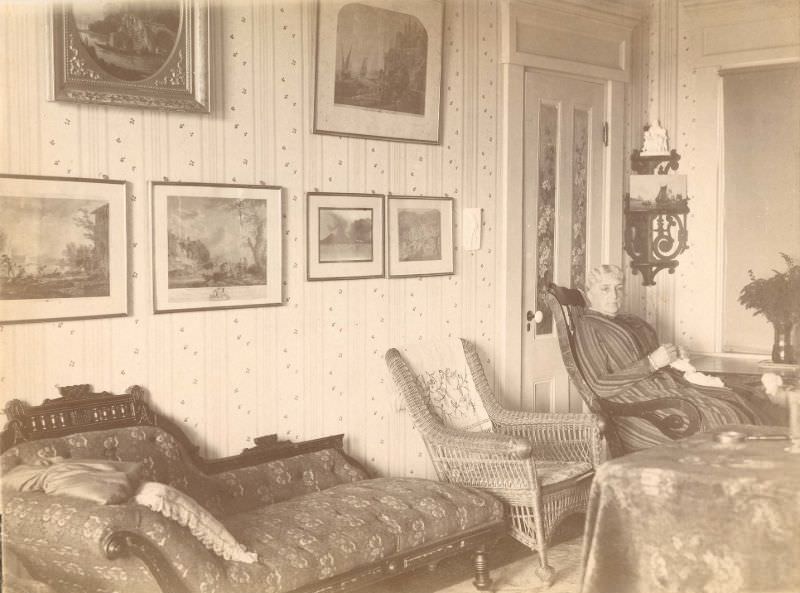
The rocking chair held a special place in Victorian domestic life. Associated with rest, age, and comfort, it was often positioned near a window or fireplace. Elderly women in particular were frequently photographed in their rockers — a symbol of their central, respected role within the family home.
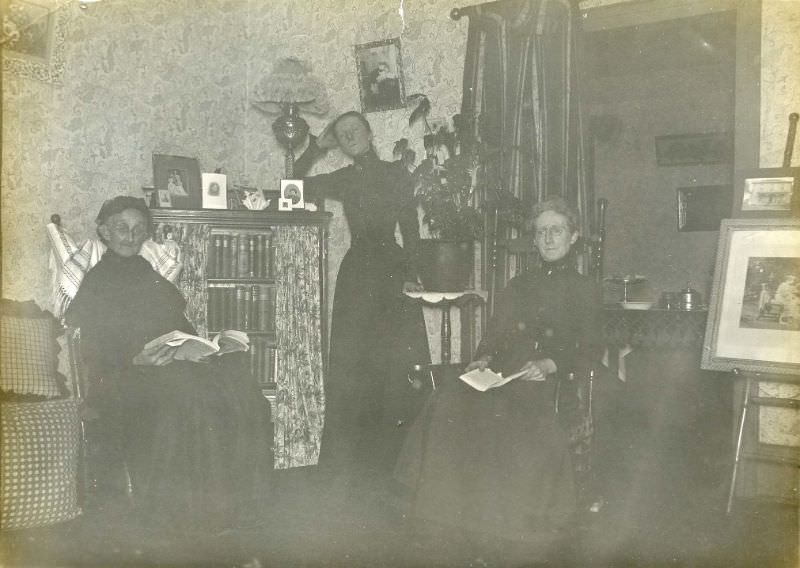
Women in Victorian households spent a great deal of time together in shared domestic spaces. Sewing, reading, conversation, and needlework filled the hours. Three women gathered in a corner of a richly decorated room reflects how social and domestic life overlapped for Victorian women on a daily basis.
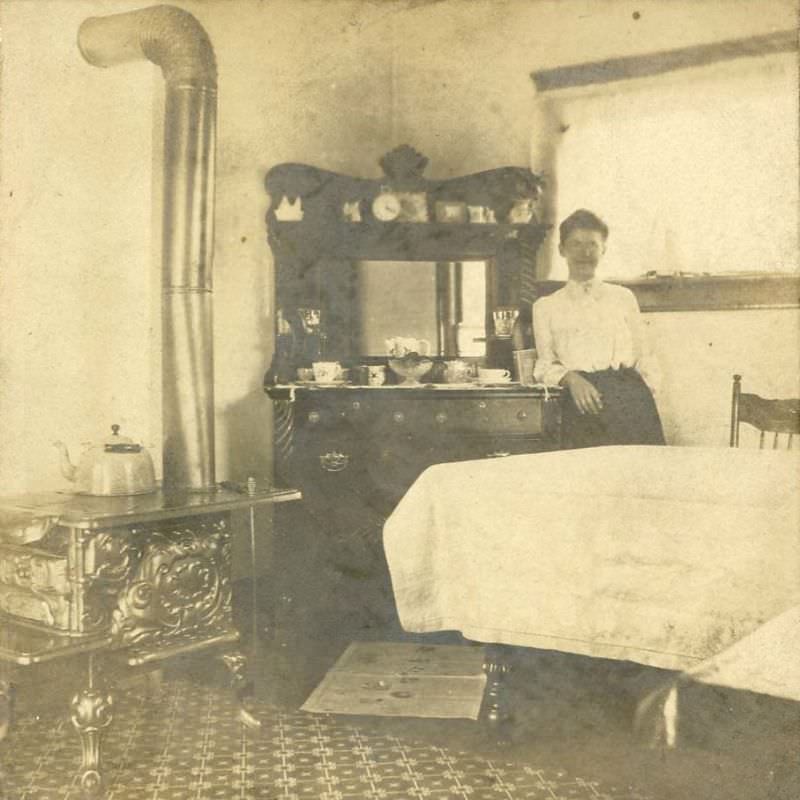
The sideboard was one of the most functional and decorative pieces in a Victorian home. Used to store and display china, silverware, and decorative objects, it was a staple of the dining room. Its heavy carved wood construction and generous surface area made it a natural focal point in the room.
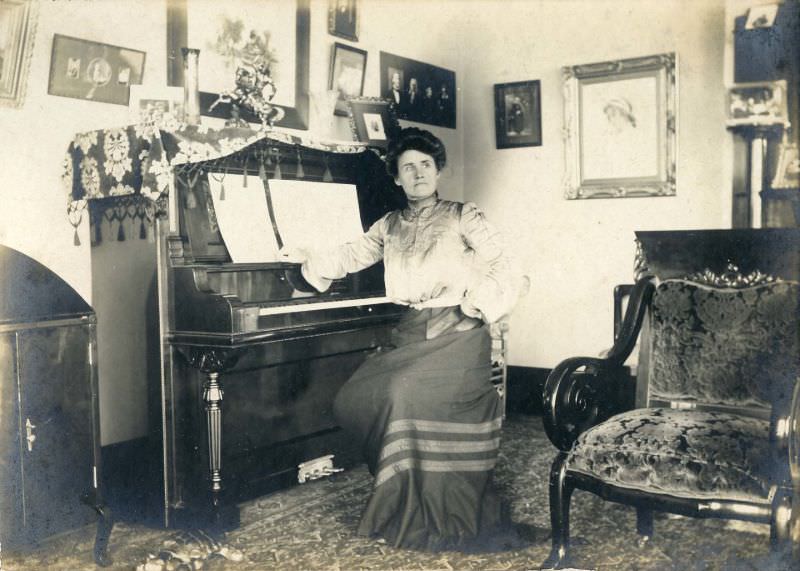
For Victorian women, playing the piano was more than a pastime — it was a social expectation. Accomplished playing demonstrated good breeding and proper education. A woman seated at a piano in the living room was a familiar and admired scene in middle- and upper-class Victorian households.
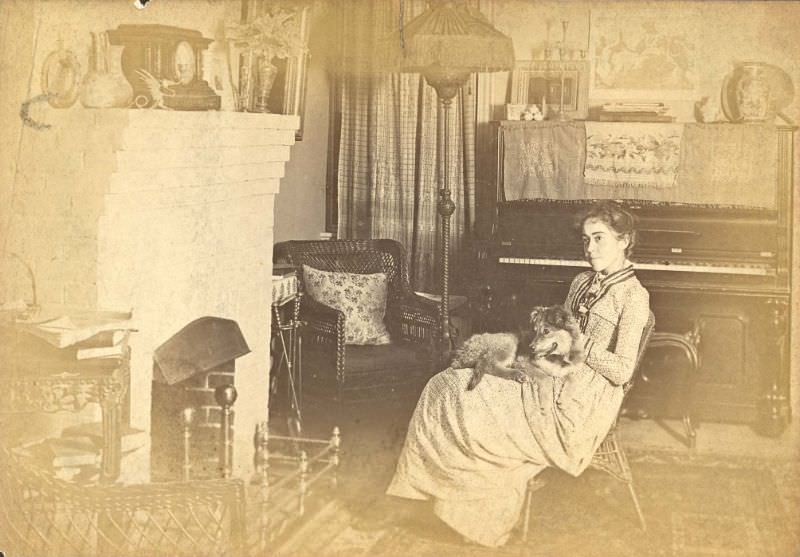
The fireplace served as the heart of the Victorian home. Mantels were decorated with clocks, candelabras, framed photographs, and ornamental figurines. A woman seated by the fire with a dog in her lap captures the warmth and comfort that Victorians worked hard to create within their domestic spaces.
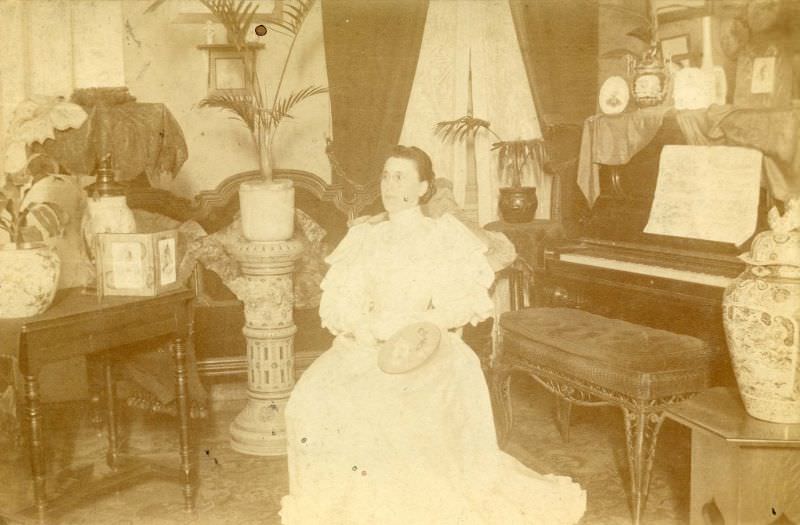
Even when not actively playing, the piano served as a backdrop for daily life in Victorian homes. Women often read, conversed, or simply sat near the instrument. Its presence in a room elevated the surrounding space, reinforcing the cultural values the Victorians attached to music and refinement.
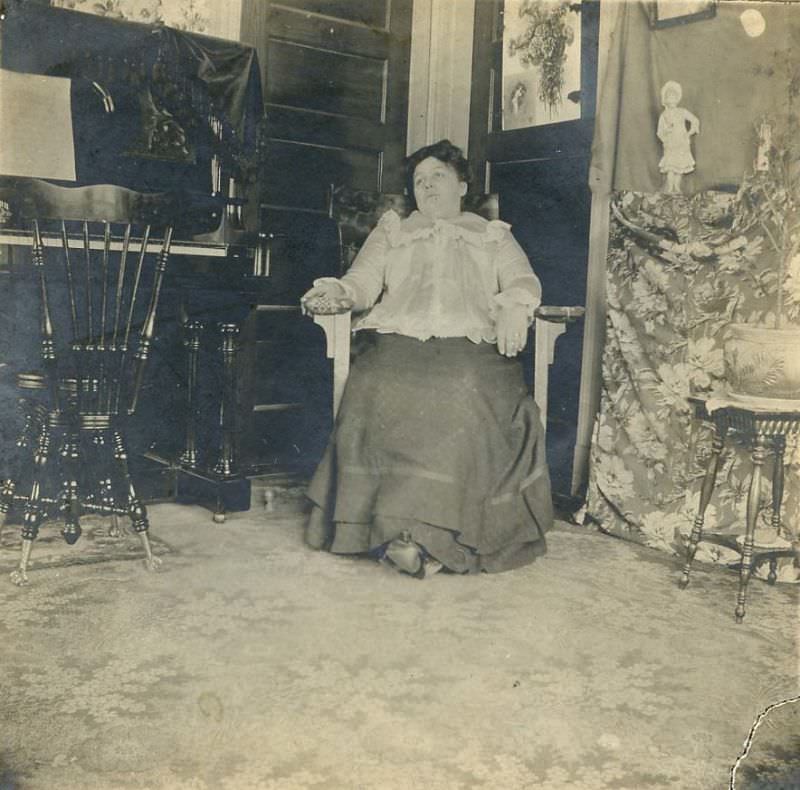
Victorian rooms were designed to feel full and complete in every corner. Potted plants, small sculptures, framed artwork, and upholstered furniture filled spaces that might be left empty in a modern home. A woman seated in a carefully arranged corner illustrates how intentional and detailed Victorian decorating truly was.
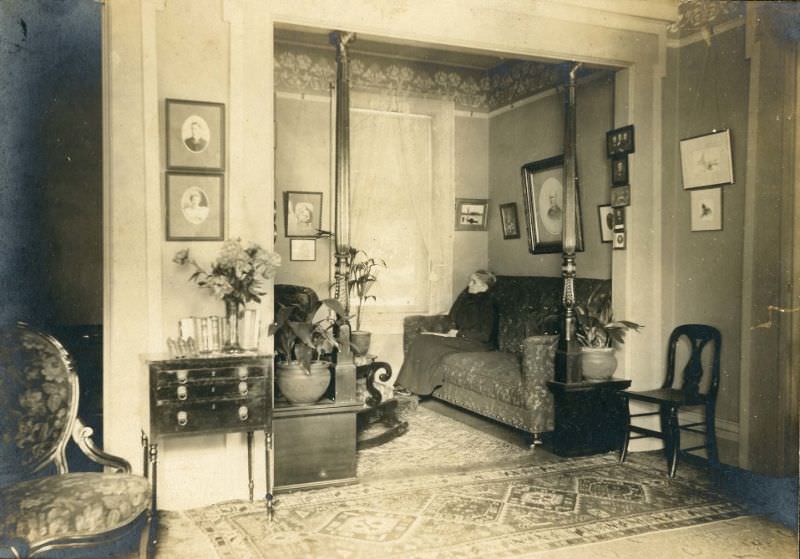
Alcoves were a distinctive architectural feature in many Victorian homes. Built-in shelving, window seats, and curved niches added character and function to rooms. These tucked-away spaces were popular spots for reading, sewing, or quiet reflection — private moments carved out within busy family households.
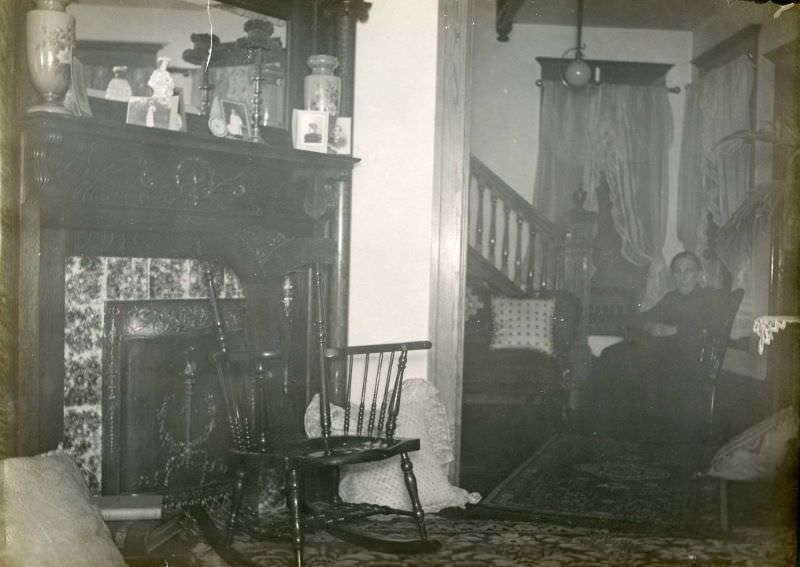
Rocking chairs appeared throughout the Victorian home — in parlors, bedrooms, and on covered porches. They were practical and comfortable, built in the same ornate style as the rest of the furniture. Carved wooden frames and cushioned seats made them as decorative as they were functional.
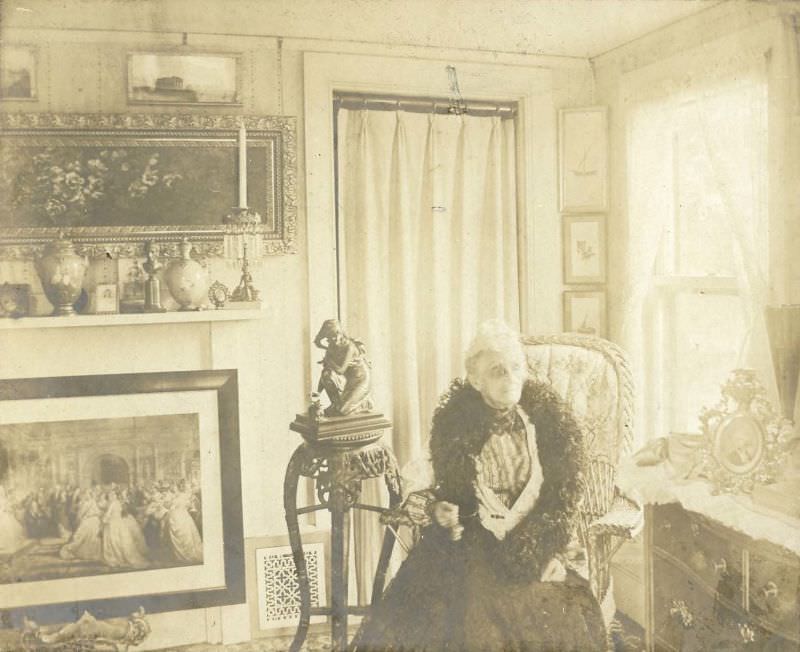
Wicker furniture became fashionable in Victorian homes during the latter half of the 19th century. Lightweight and easy to move, wicker chairs and settees were popular in sunrooms, porches, and informal sitting areas. Their natural material offered a textural contrast to the heavy upholstered pieces found throughout the rest of the house.
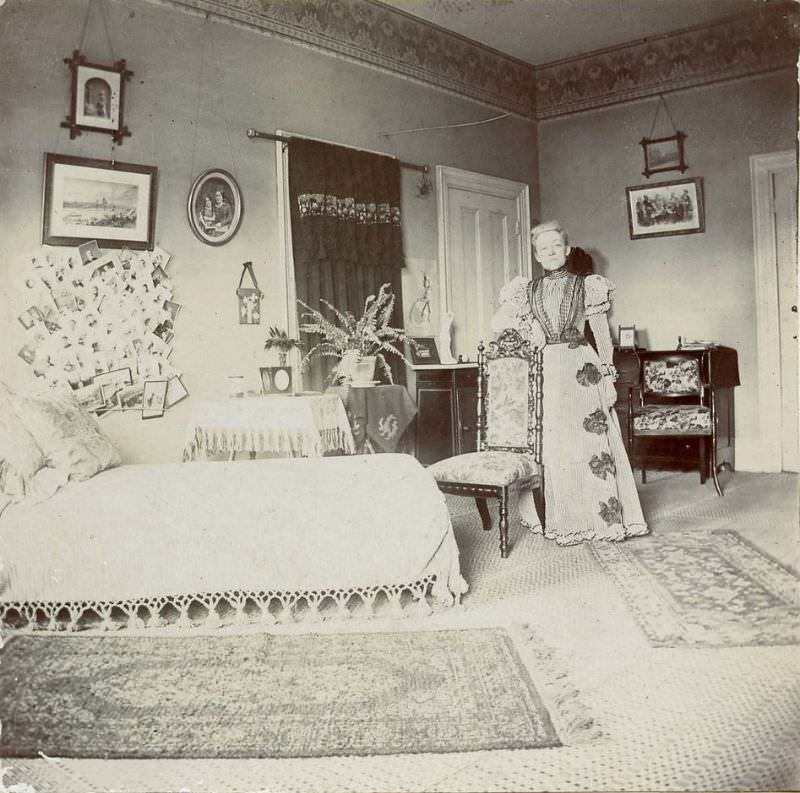
Victorian women’s fashion — with its structured corsets, full skirts, and high collars — was designed to project poise and decorum. Standing upright in a well-furnished room was a deliberate posture, reinforcing the social expectations placed on women of the era. The room itself, with its ornate details, served as an extension of personal identity.
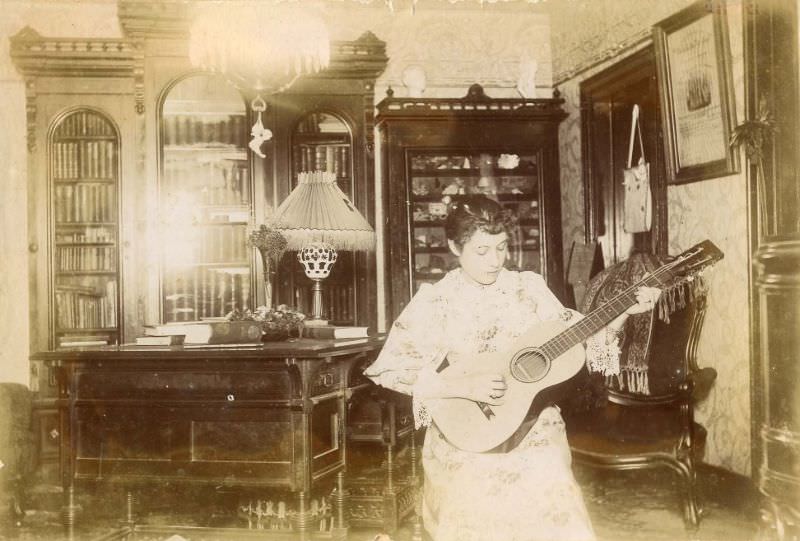
The guitar was a popular instrument among young Victorian women, viewed as more intimate and portable than the piano. Playing the guitar in a domestic setting carried a certain romantic quality that fit the era’s aesthetic sensibilities. It was both a genuine pastime and a socially approved way for young women to express themselves.
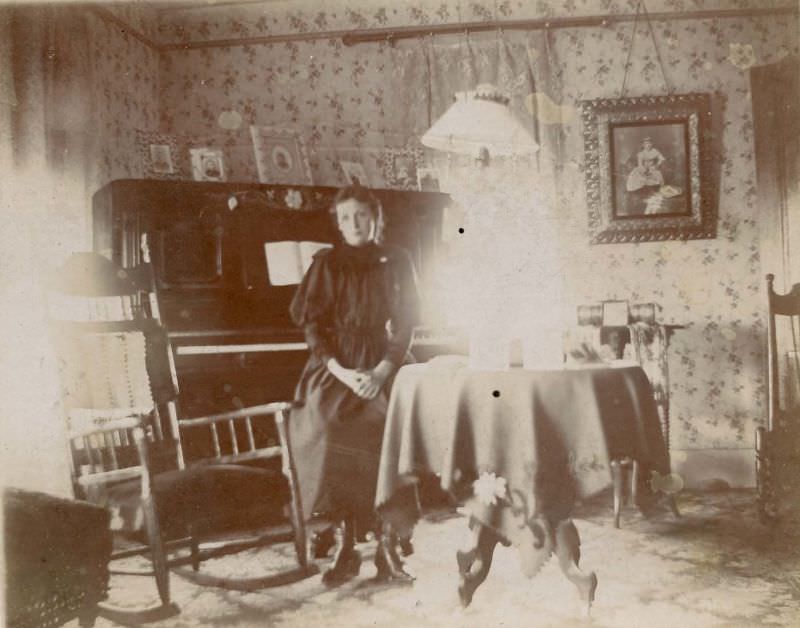
Girls began piano lessons early in Victorian households, often as young as five or six years old. By the time they were young women, playing well was expected. A young woman at the piano, surrounded by the layered decor of a Victorian parlor, represents the careful upbringing and cultural priorities of the era.
