When soldiers shipped out to the Western Front during World War I, they left behind more than their civilian lives. They also left behind their beards. The reason was straightforward and life-or-death: a beard prevented a gas mask from sealing tightly against the face. Poison gas was a very real threat in the trenches, and a poor seal on a gas mask could mean death. Facial hair was not worth the risk.
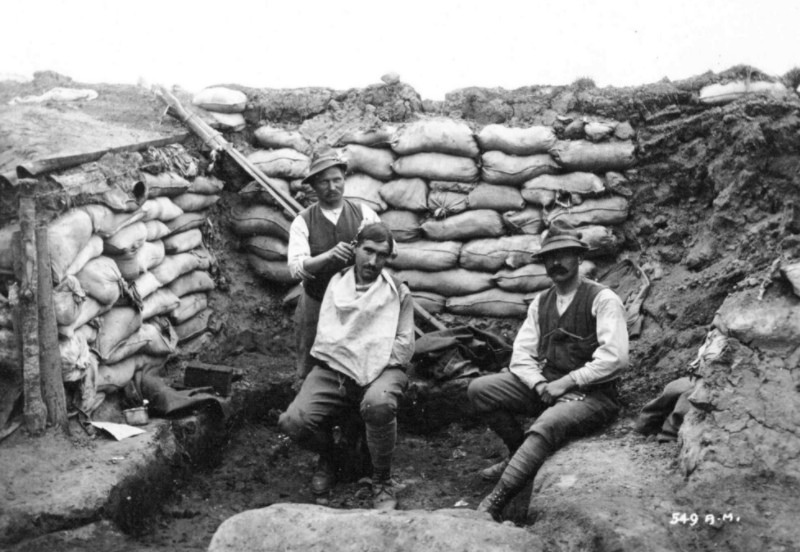
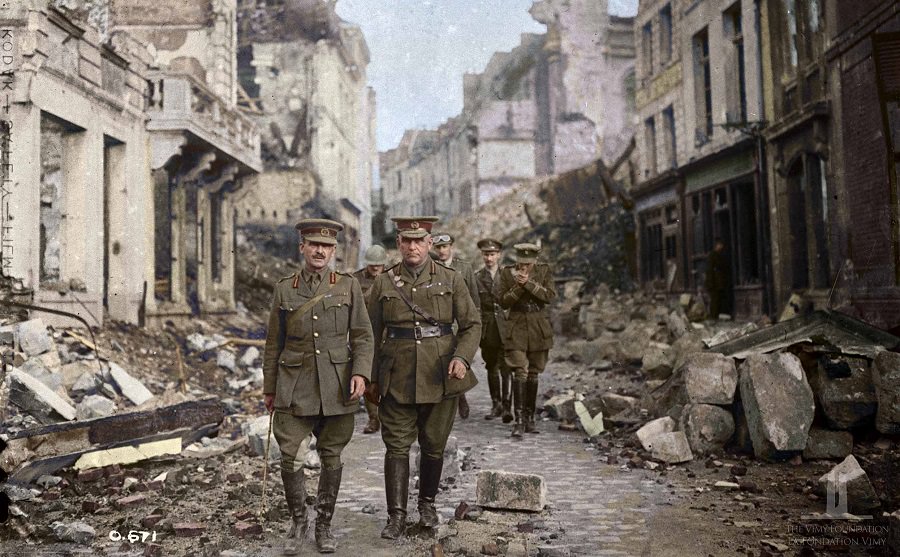
That did not mean soldiers went without any facial hair at all. The mustache survived — and even thrived — on the Western Front. A neat, well-trimmed mustache was a mark of military bearing, and officers in particular wore them as a point of pride. Clean-shaven faces paired with a sharp mustache became the standard look for men in uniform by 1918.
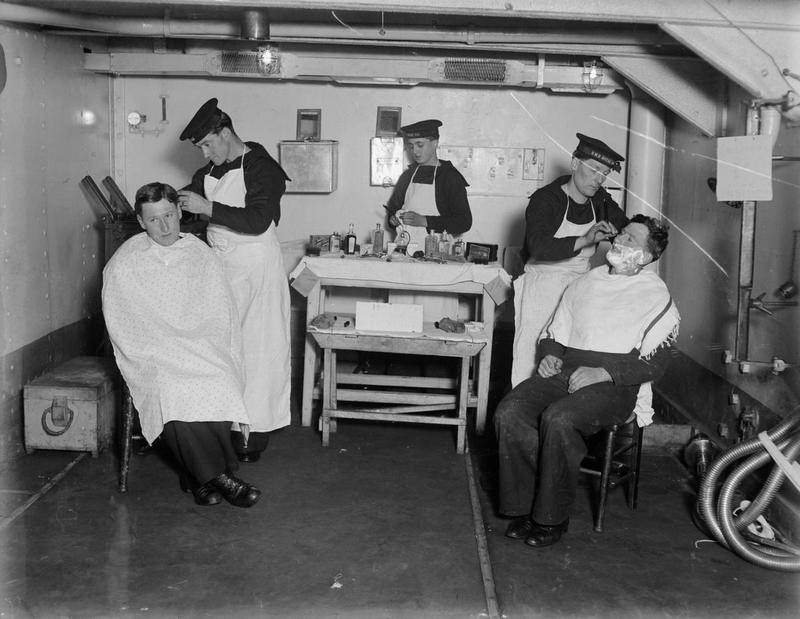
Hair on top of the head was another matter entirely. Lice were a constant plague in the trenches. These tiny insects spread rapidly in cramped, dirty conditions and caused relentless itching and skin infections. Long hair made the problem far worse. Keeping hair short was one of the few practical ways soldiers could fight back against infestations that were otherwise nearly impossible to control.
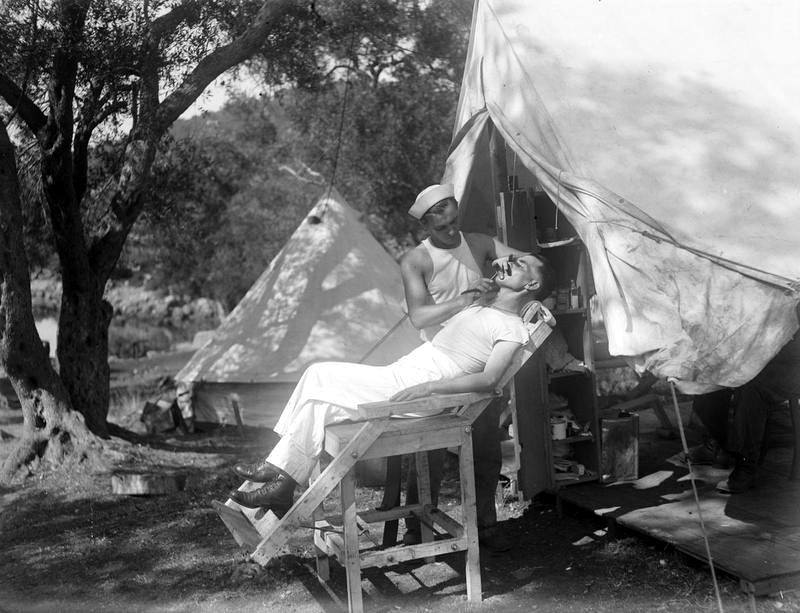
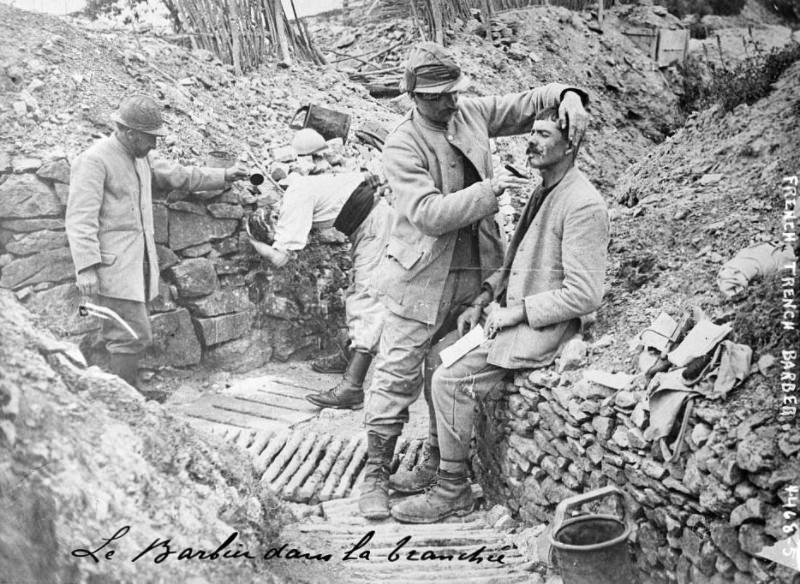
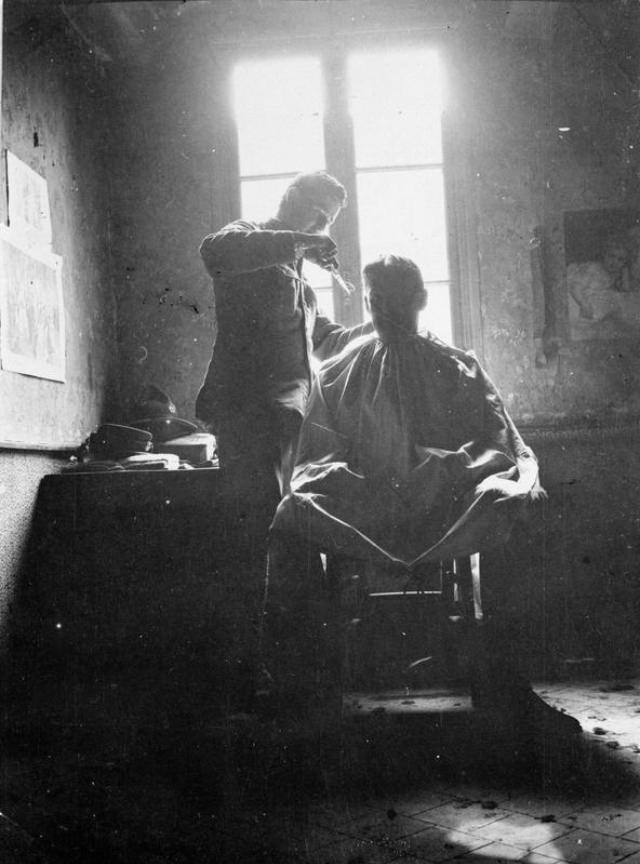
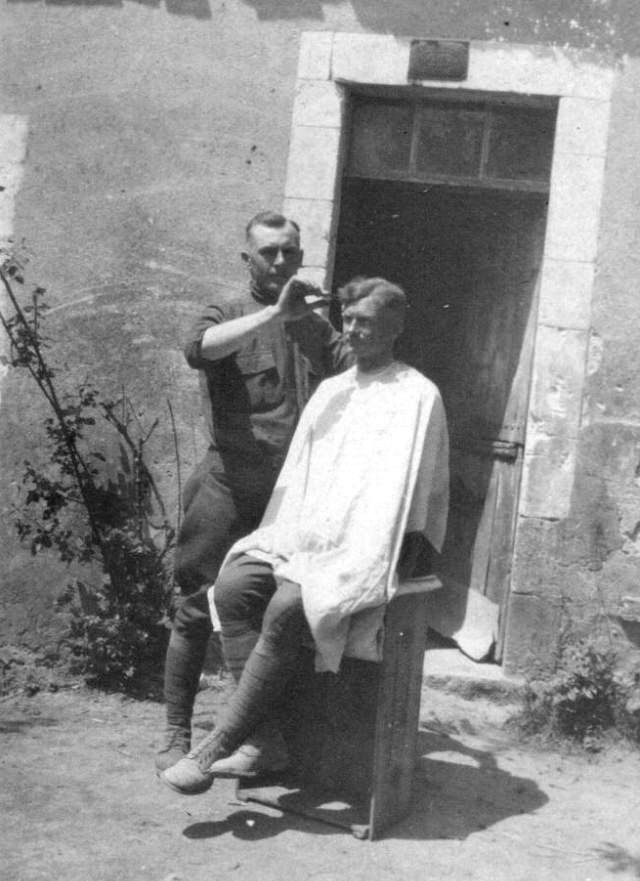
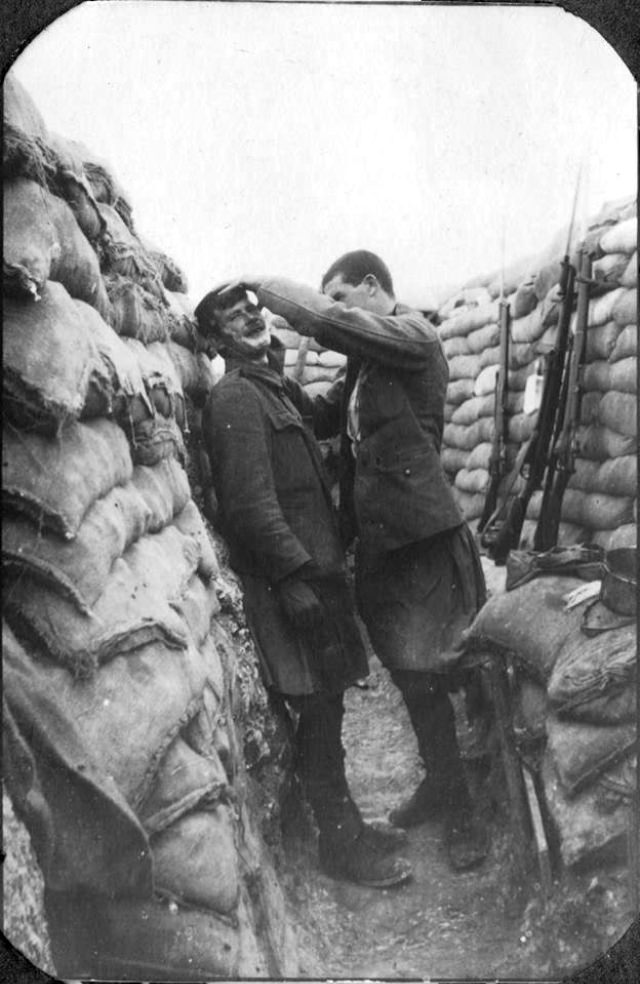
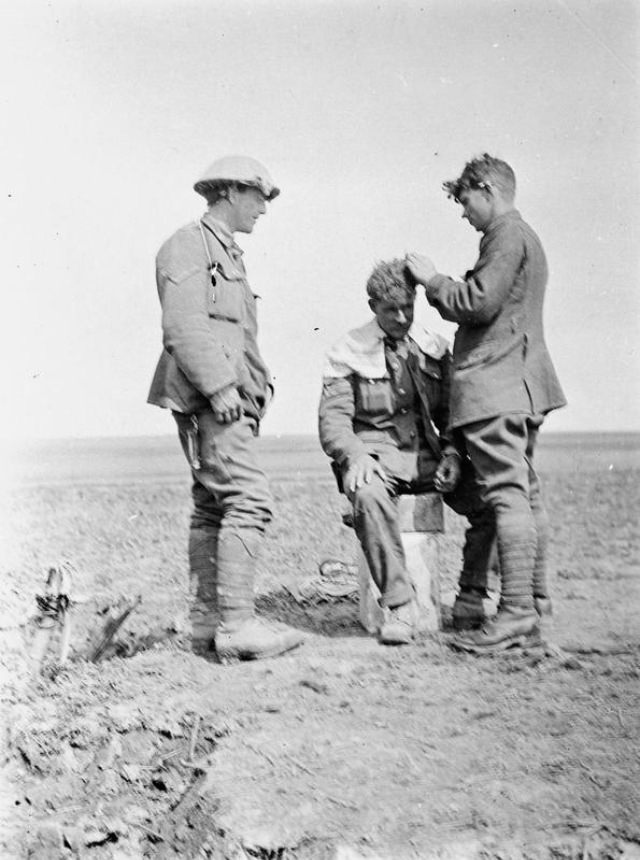
Barbers became an essential part of military life. Whether working in a rear camp, a makeshift tent, or a bombed-out building behind the lines, barbers kept soldiers trimmed and regulation-ready. A haircut was one of the few small comforts available during a war defined by misery. The act of sitting down for a shave or a cut offered a brief return to ordinary life.
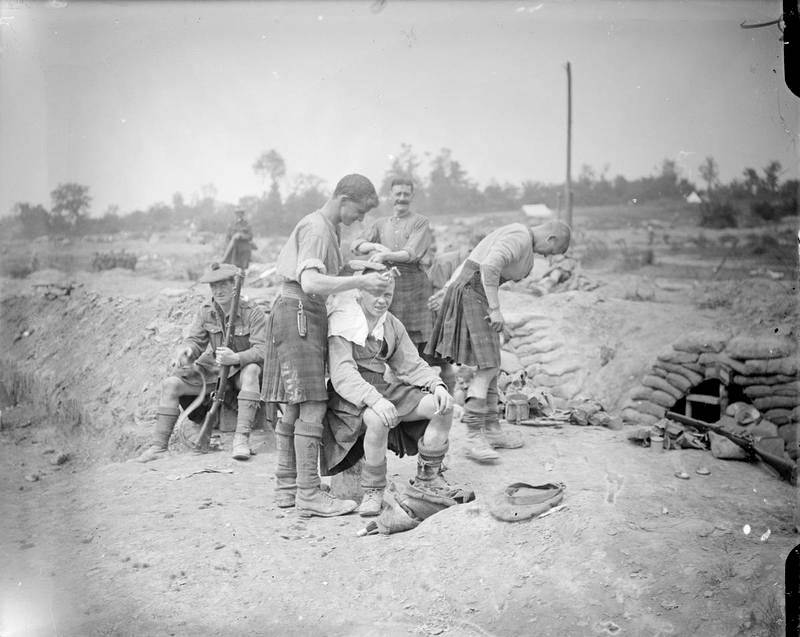
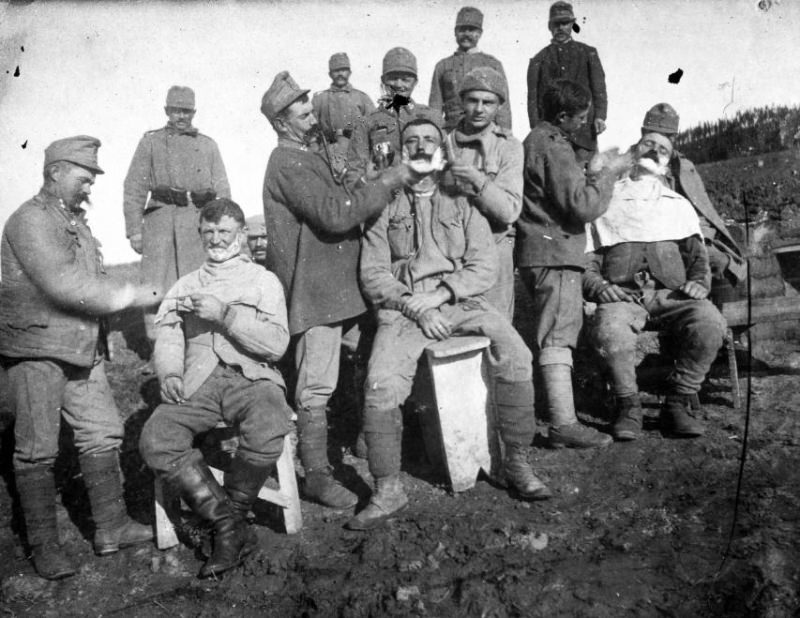
Photographs from the period show soldiers getting haircuts in a wide range of settings. Some sat in chairs outdoors, in open fields or courtyards. Others were tended to inside crude shelters. The barber’s tools were basic — clippers, razors, and a steady hand — but the results mattered. A clean-cut soldier was a soldier ready for inspection, ready for orders, and ready to fight.
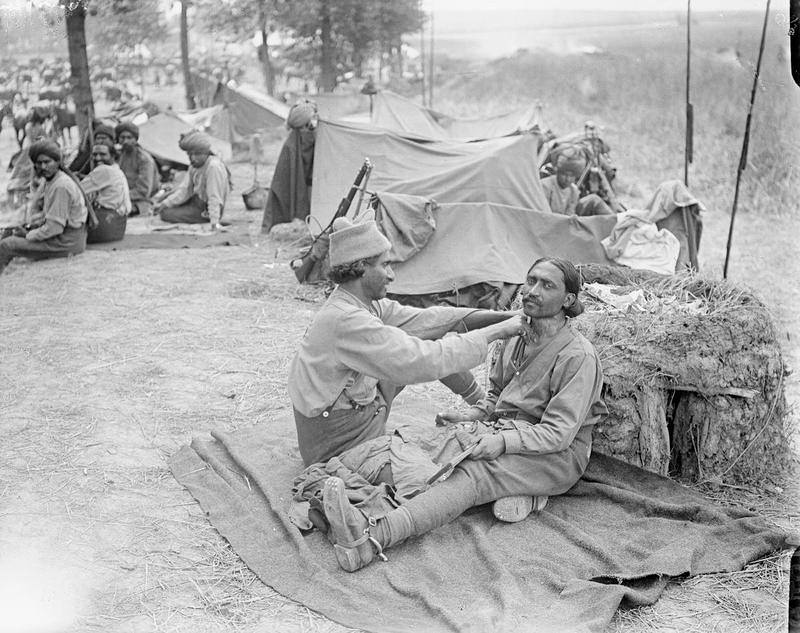
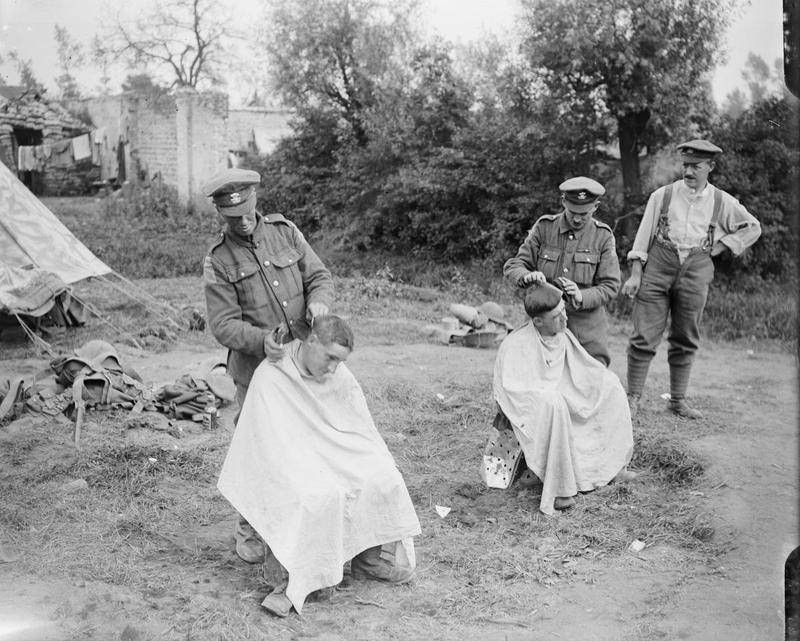
Officers set the standard in appearance as much as in command. By 1918, the typical officer wore a close-cropped cut, a trimmed mustache, and a high-collared uniform jacket. The high collar was a defining feature of officer dress — it gave a sharp, formal silhouette, though it also restricted side-to-side movement. For officers not buried in mud, the look was polished and precise.
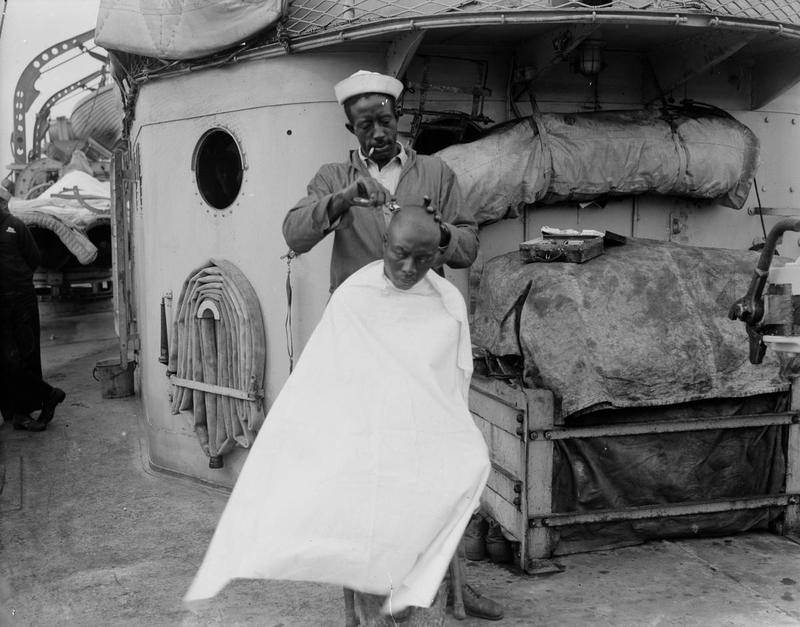
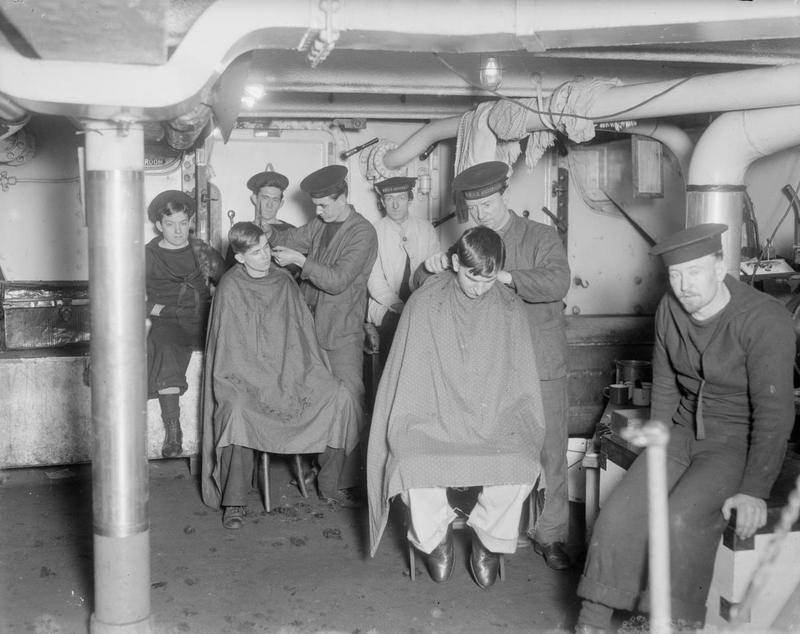
Enlisted men followed the same grooming standards, though their haircuts were often less precise and their razors shared among many. In the trenches, hygiene was difficult to maintain at the best of times. Still, the military enforced grooming rules strictly. A soldier with an unkempt appearance could face discipline, even when living conditions made cleanliness nearly impossible.
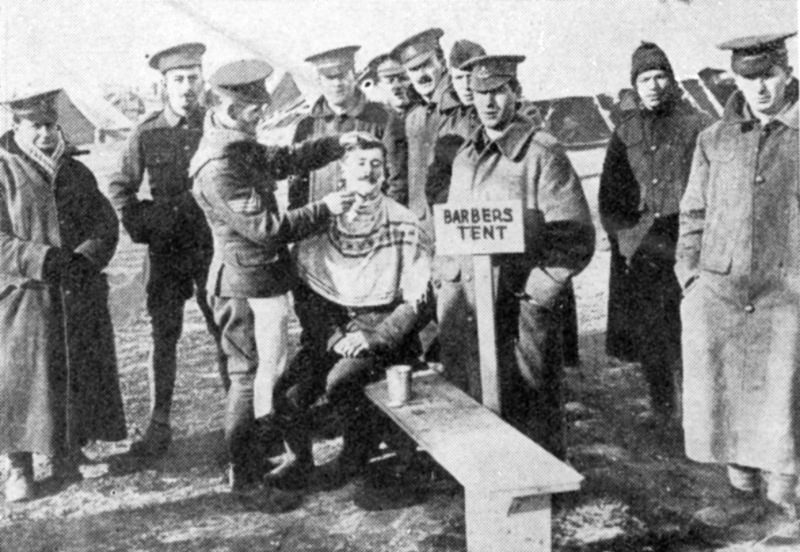
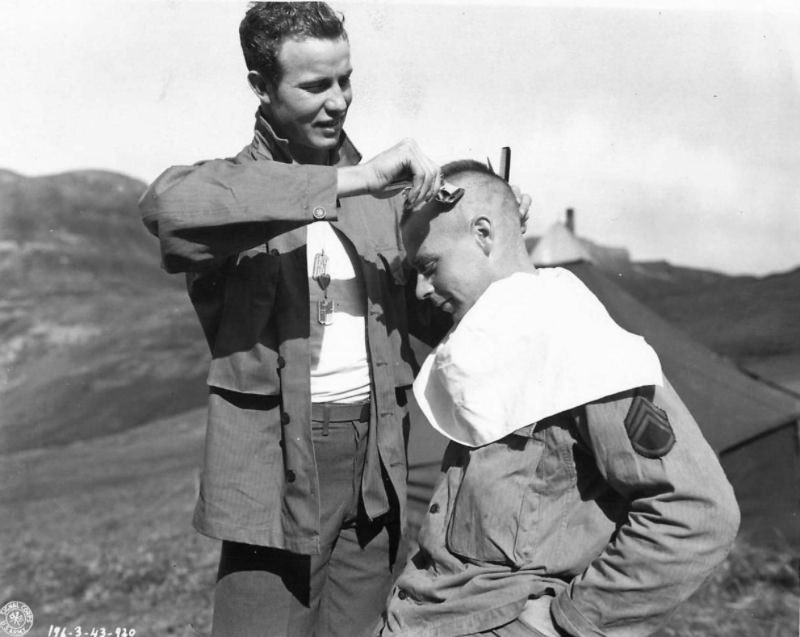
The gas mask requirement reshaped military grooming permanently. Before the war, full beards were common among soldiers of many nations. After the widespread introduction of chemical weapons in 1915, armies across the Allied and Central Powers had to adapt. Shaving became a military necessity, not merely a matter of personal preference or regulation.
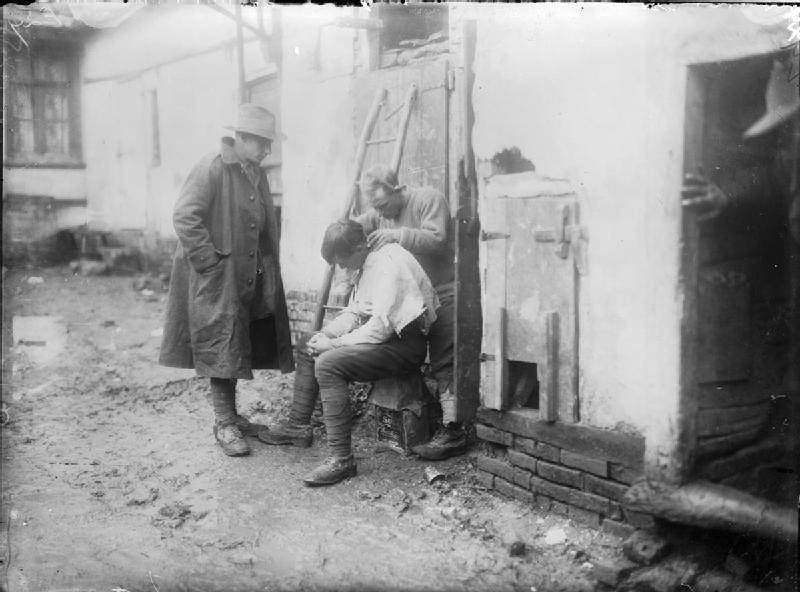
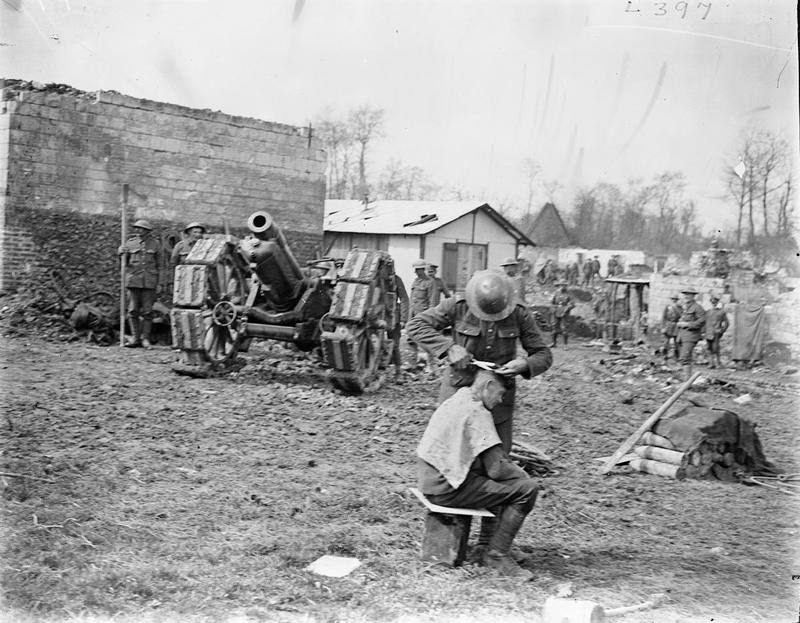
Trench life was relentless and brutal, but moments like a haircut or a shave broke the routine. Soldiers waited their turn, talked, and rested. These snapshots of ordinary activity in an extraordinary setting reveal how men held on to daily habits even while living in the shadow of constant danger.
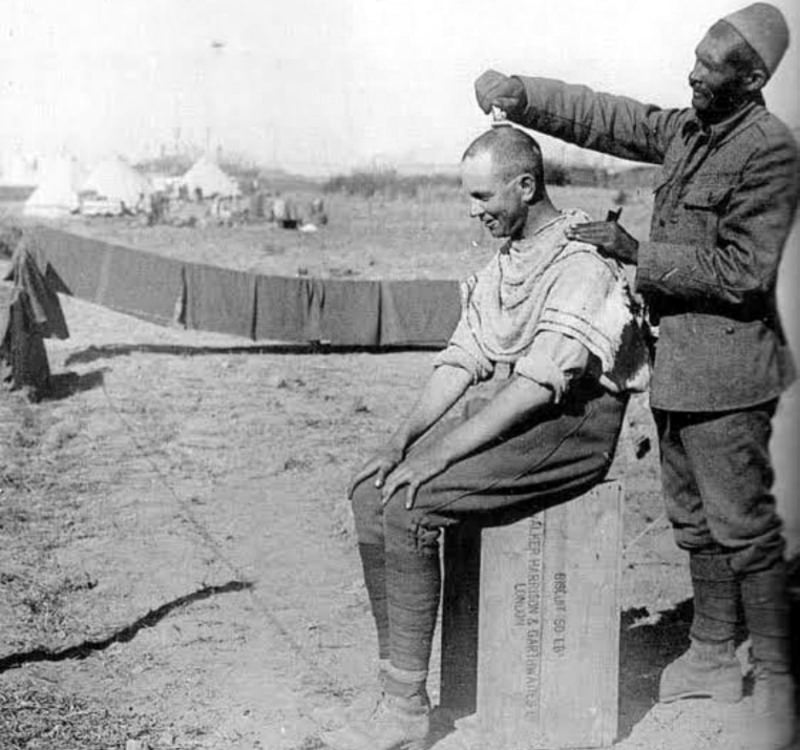
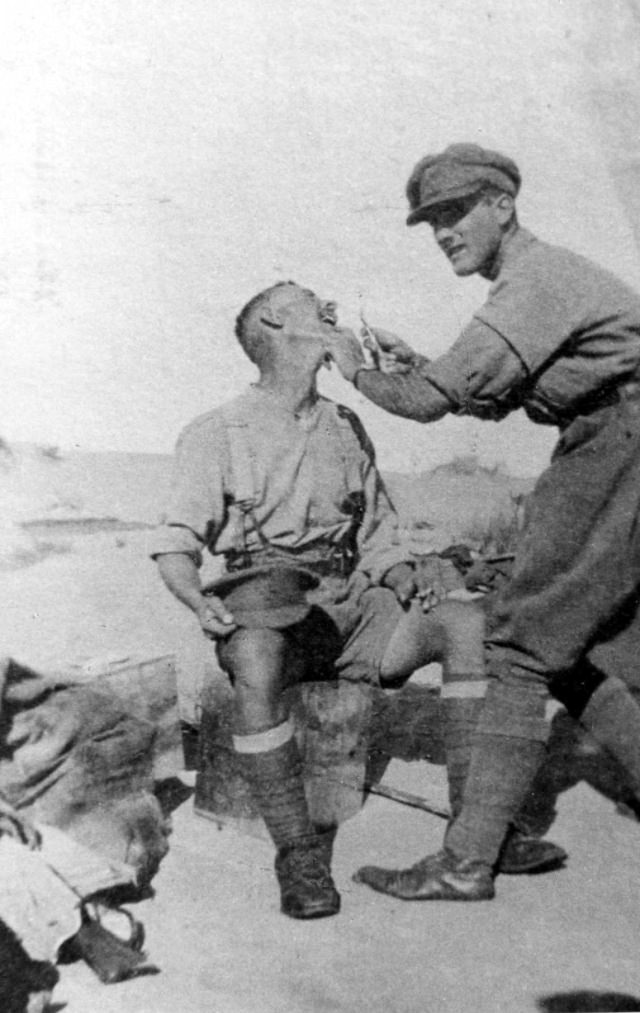
The photos that survive from this era capture something easy to overlook — the mundane moments between battles. A soldier sitting still while a barber works around him looks, for just a moment, like any man on any street corner. The war is still there, in the uniforms, in the rough surroundings, and in the expressions on their faces.
Grooming in World War I was never just about appearances. It was tied directly to survival — from the gas mask seal that a beard would break, to the lice that short hair helped control. Every clip of the scissors and every stroke of the razor served a purpose on the Western Front.