When World War I began in 1914, millions of men left their civilian jobs to join the military. The gap they left behind was enormous. Governments and industries needed workers fast, and women answered that call in numbers never seen before.
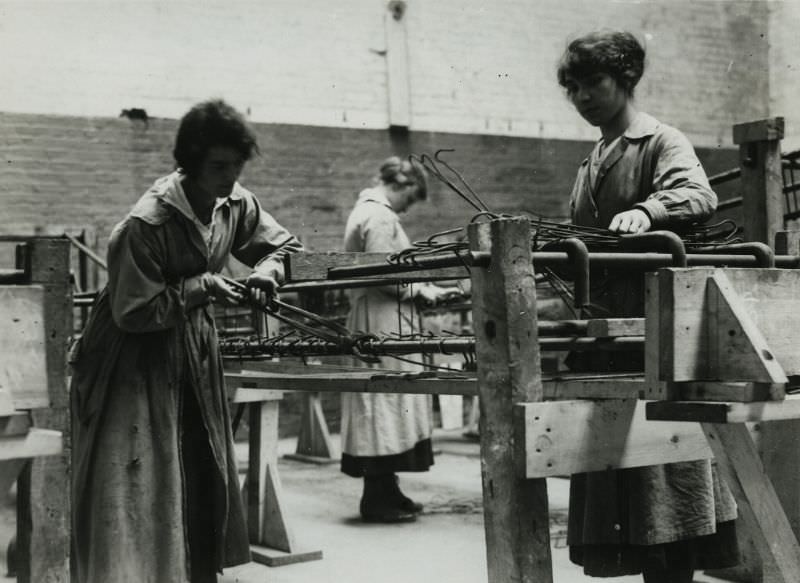
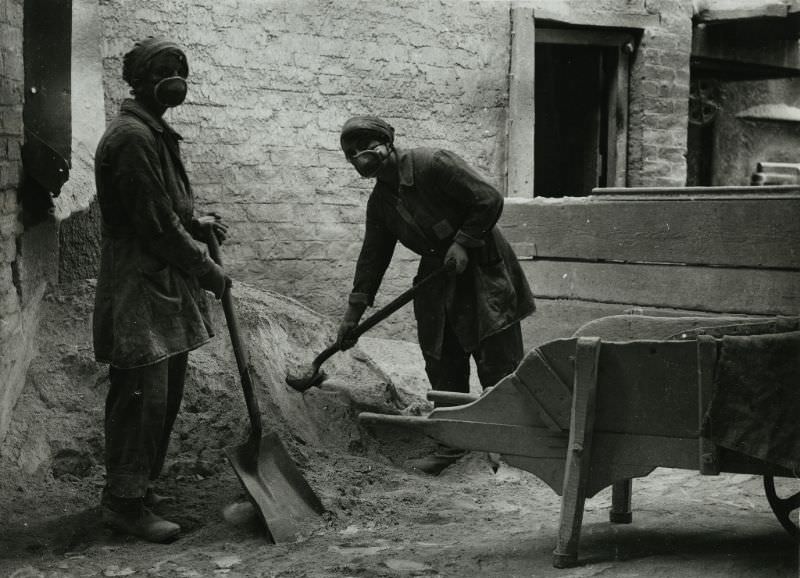
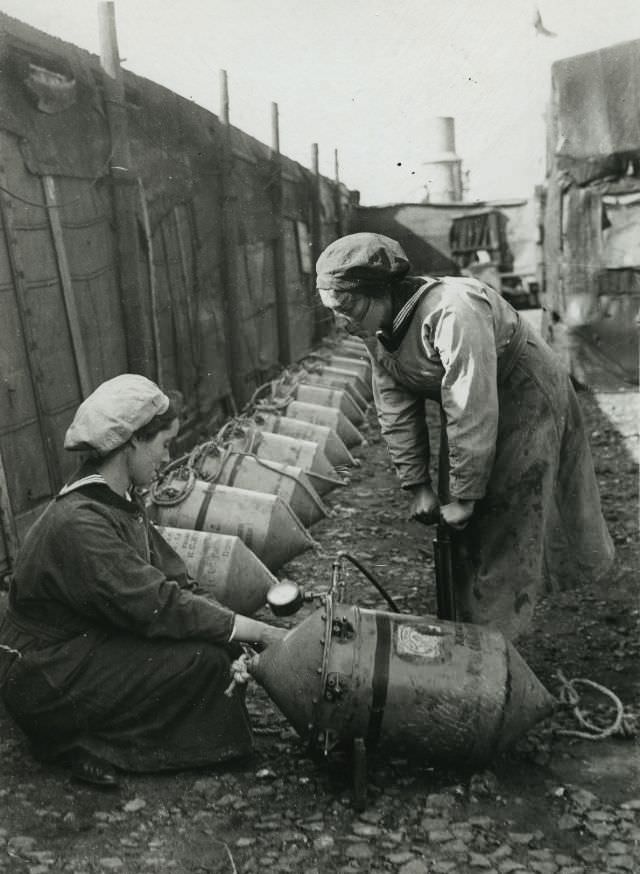
Workers preparing for the construction of concrete ships.
Munitions factories became one of the most important workplaces for women during the war. They assembled shells, packed explosives, and produced bullets, airplane parts, and artillery rounds around the clock. The work was physically demanding and often stretched across long shifts with few breaks.
A woman working in an armaments factory during World War I.
The dangers were real and serious. Exposure to TNT turned workers’ skin yellow, earning them the nickname “Canaries.” The chemical caused severe internal damage and, in some cases, death. Beyond health risks, the constant handling of volatile materials made factory explosions a genuine and recurring threat.
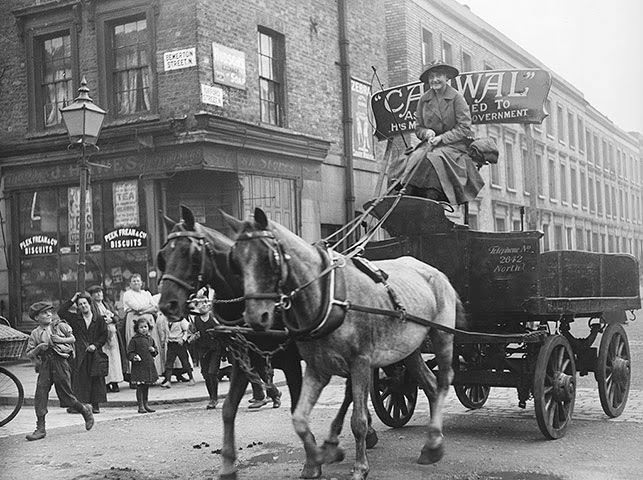
A woman driving a wagon and horses in north London during World War I, 1916.
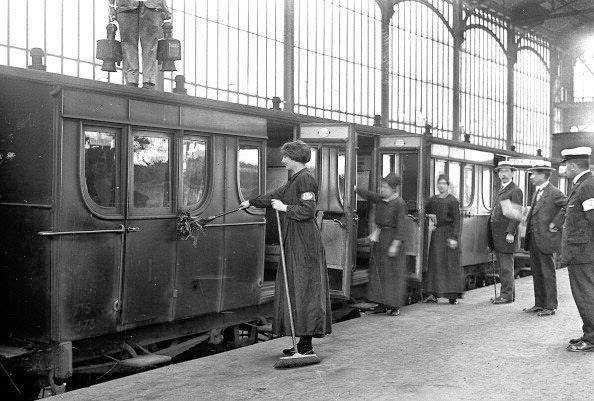
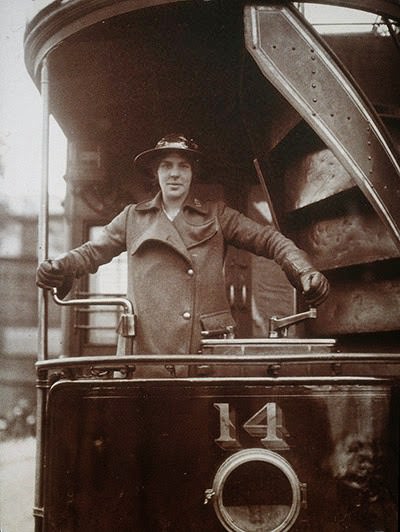
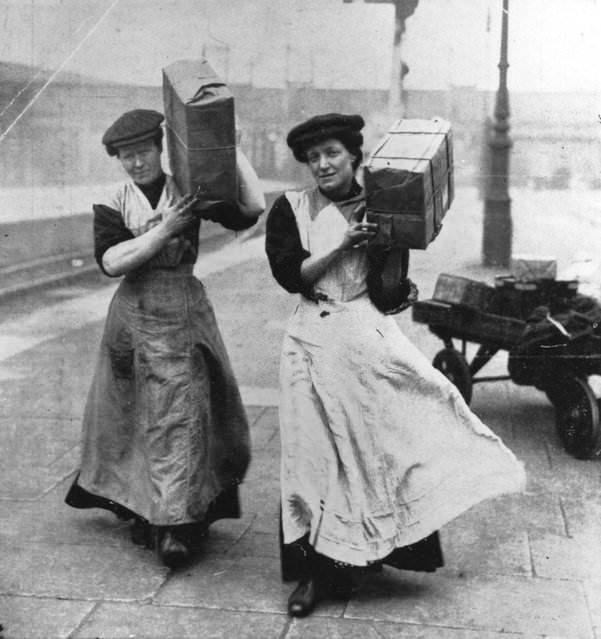
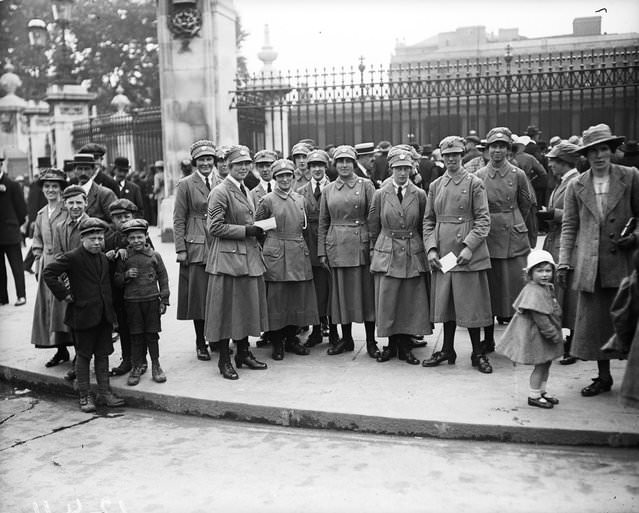
Outside the factories, women took over public transportation. They drove trams, operated buses, and worked as railway employees — jobs that had been exclusively held by men before 1914.
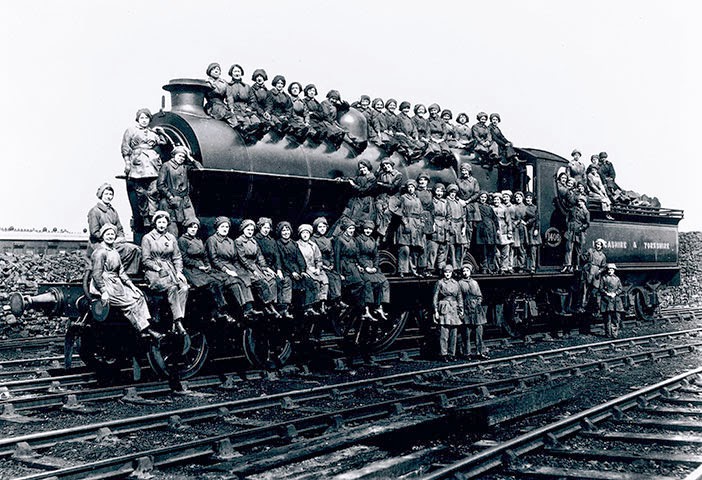
Women railway employees during World War I.A woman tram driver during World War I, 1916.
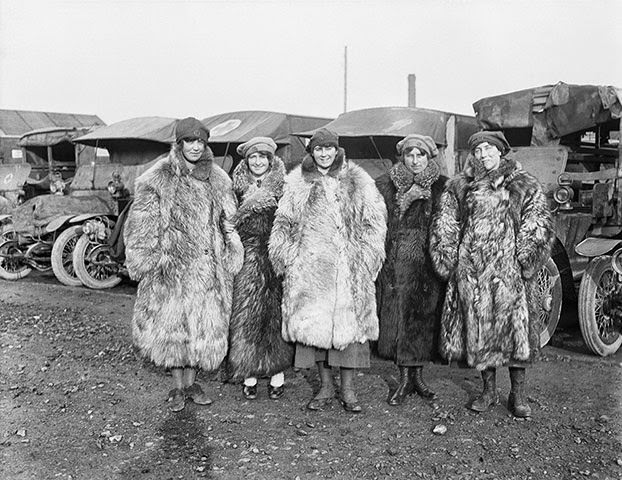
Near the front lines, women served as nurses caring for wounded soldiers in overcrowded and difficult conditions. Others volunteered as ambulance drivers, transporting injured men directly from the battlefield — a role that placed them dangerously close to active combat.
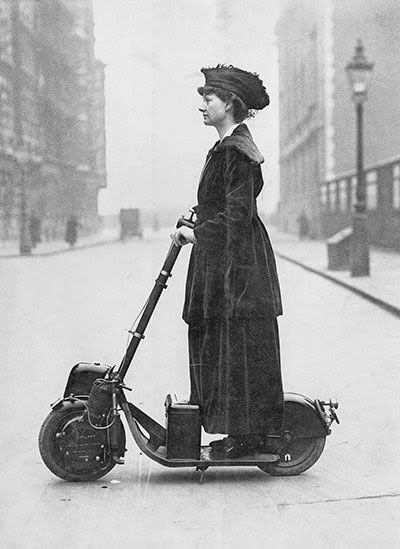
Five women ambulance drivers of the First Aid Nursing Yeomanry in Calais during World War I, 1917.Lady Florence Norman, a suffragette, on her motor-scooter travelling to work in London, 1916.
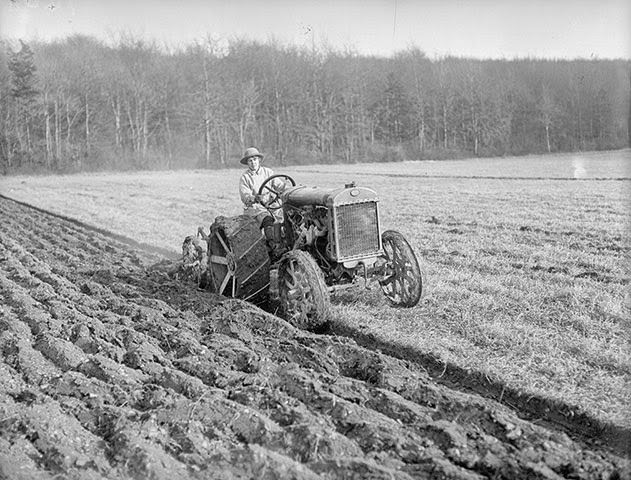
The Women’s Land Army put women to work in the fields of Britain and the United States. They plowed, planted, and harvested crops to feed both the civilian population and troops overseas. The physical labor matched anything done by the men they replaced.
A woman “land girl” driving a tractor, 1918.
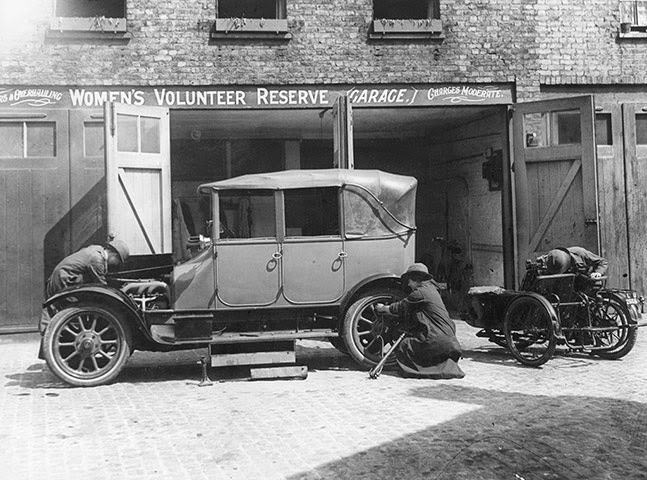
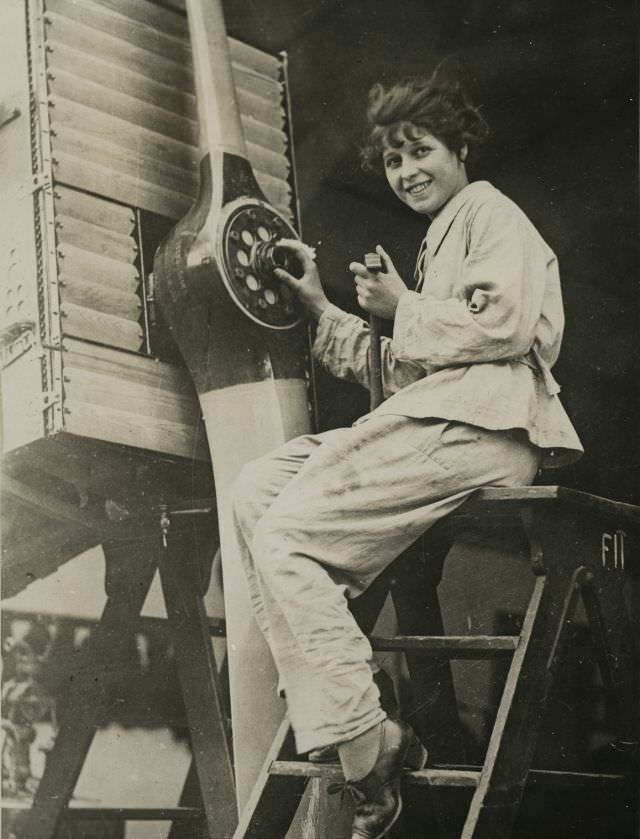
Women also took on technical roles, including vehicle maintenance. Mechanics at volunteer garages kept the cars, trucks, and vans running that the war effort depended on.
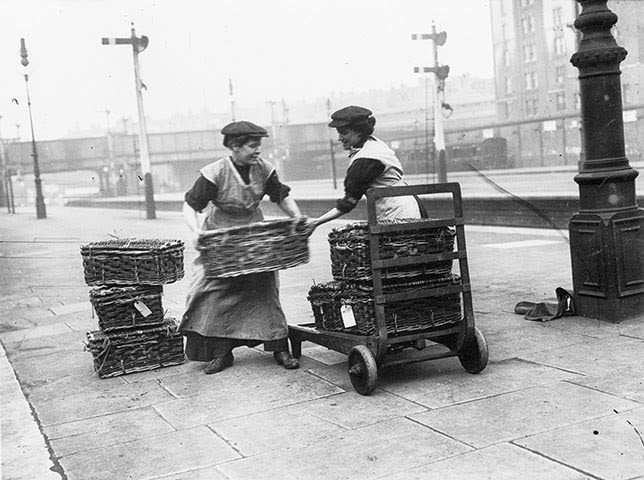
A woman mechanic repairing a car at a Women’s Volunteer Reserve garage.Two women porters at Marylebone station in London loading wicker baskets, 1914.
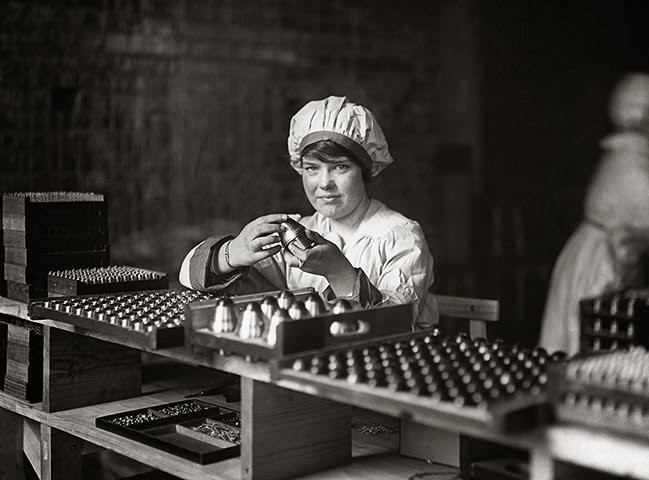
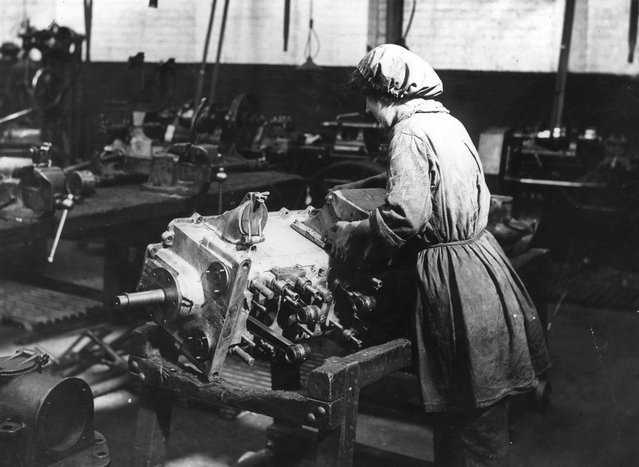
Inside munitions plants, assembly line work was constant. Women operated heavy machinery and welded components for weapons and vehicles. Factories like Vickers ran large-scale operations staffed almost entirely by female workers.
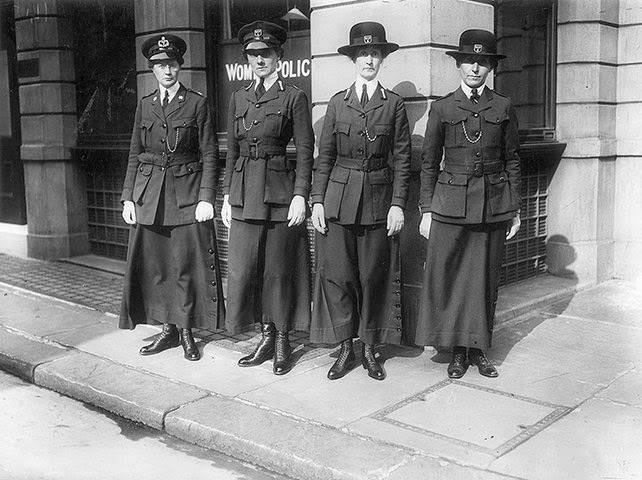
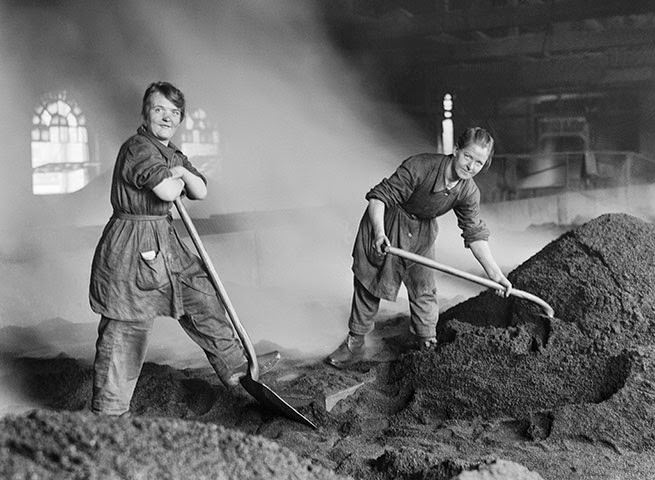
A woman assembly line worker at a munitions factory during World War I, 1917.Members of the women’s police service during World War I.Women workers feeding a charcoal kiln at a Scottish sugar refinery during World War I.
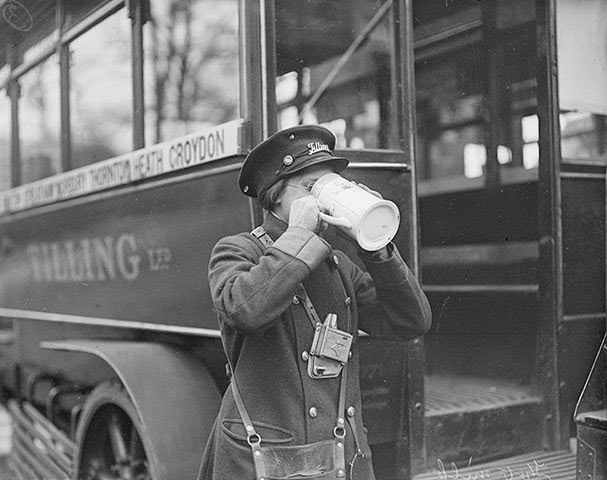
Public transit roles extended beyond trams and railways. Women worked as bus conductors on city routes, collecting fares and managing passengers — a visible sign of how dramatically the workforce had changed.
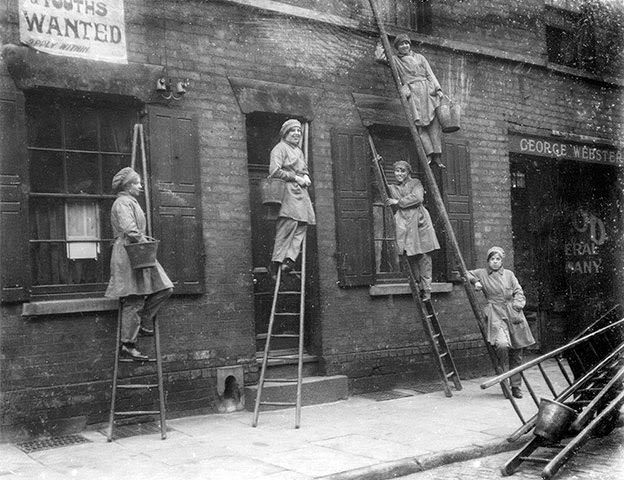
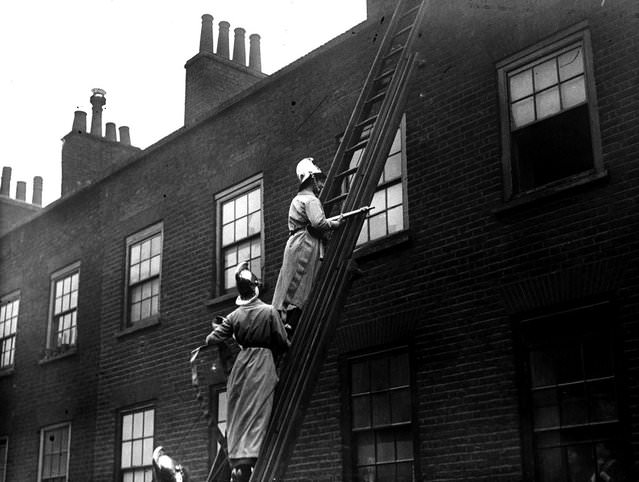
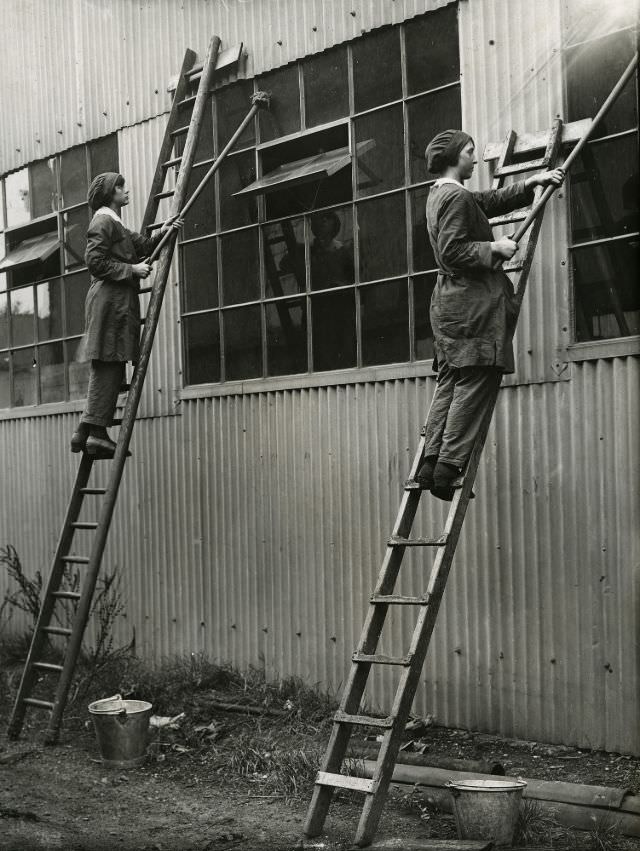
A woman bus conductor with a drink beside her bus in south London, 1916.Women window cleaners working in Nottingham during World War I, 1917.Workhouse women watching firefighting training, 1917.
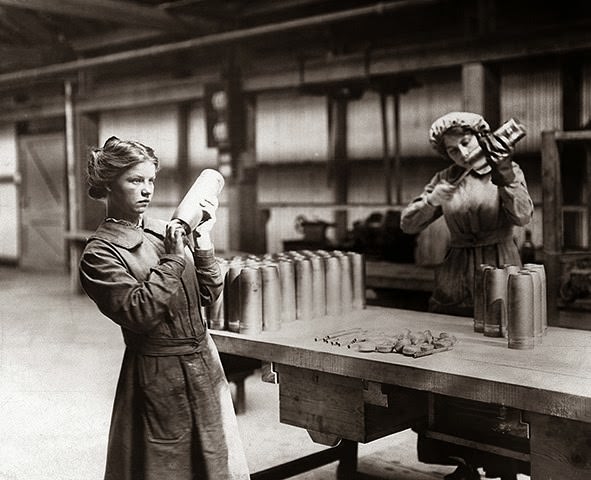
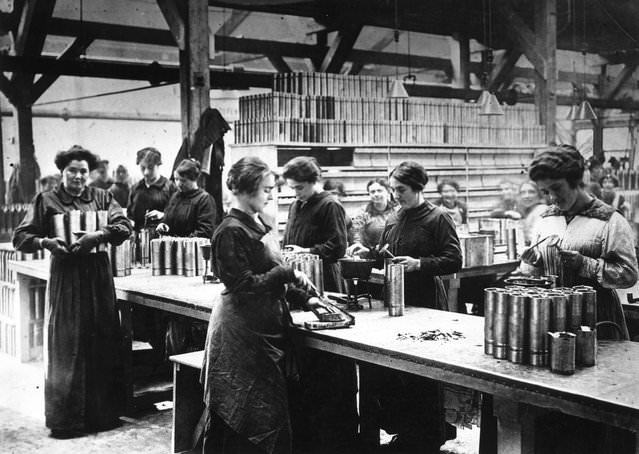
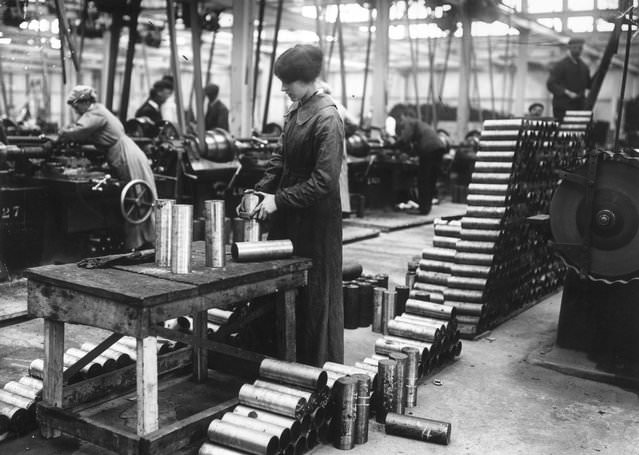
Shell production was one of the most critical tasks in the entire war effort. At Vickers munitions factories, women worked in coordinated assembly lines, handling artillery shells from raw casing to finished round.
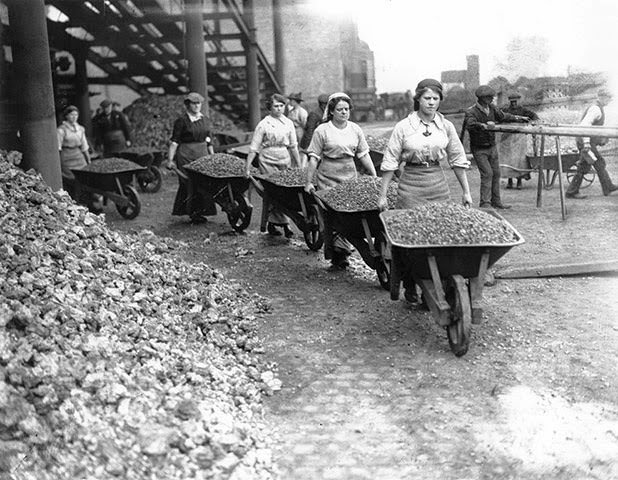
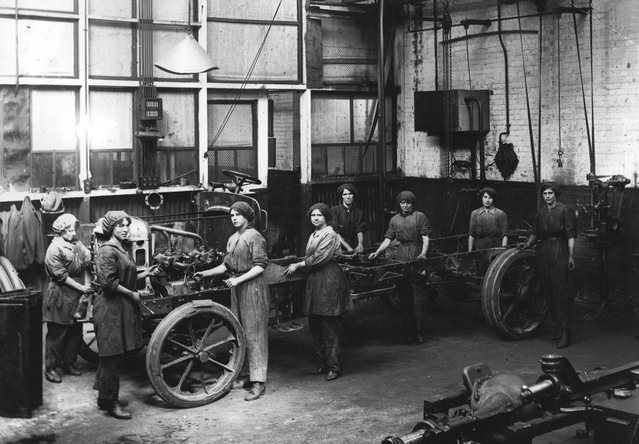
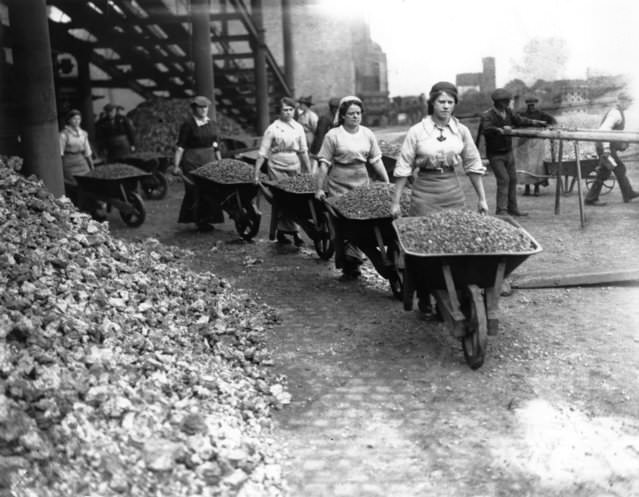
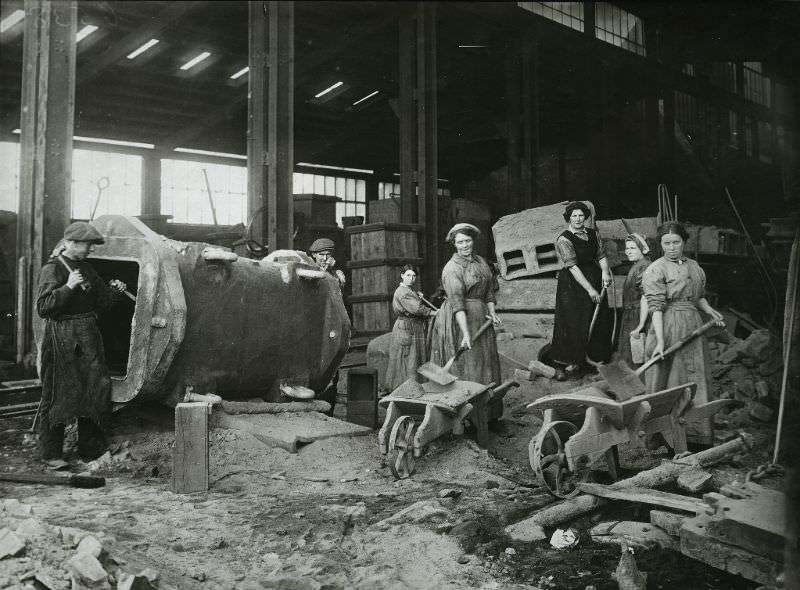
Women workers assembling artillery shells at a Vickers munitions factory during World War I.Female construction workers pushing wheelbarrows in Coventry during World War I.Female workers at an engineering factory during World War I, 1917.
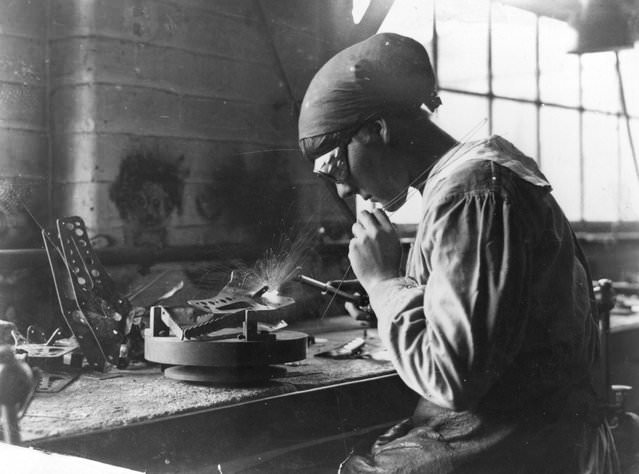
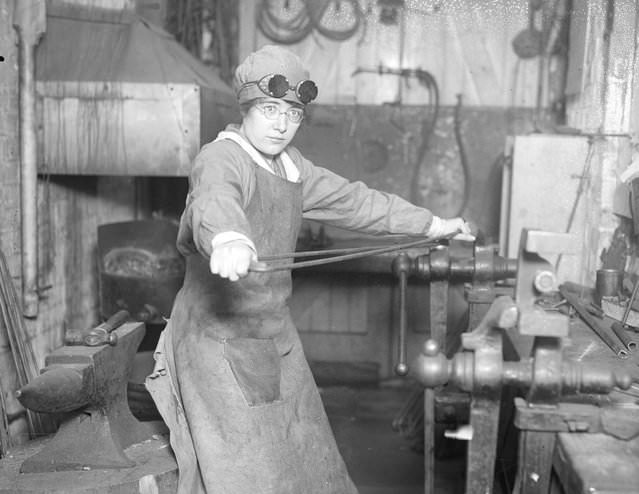
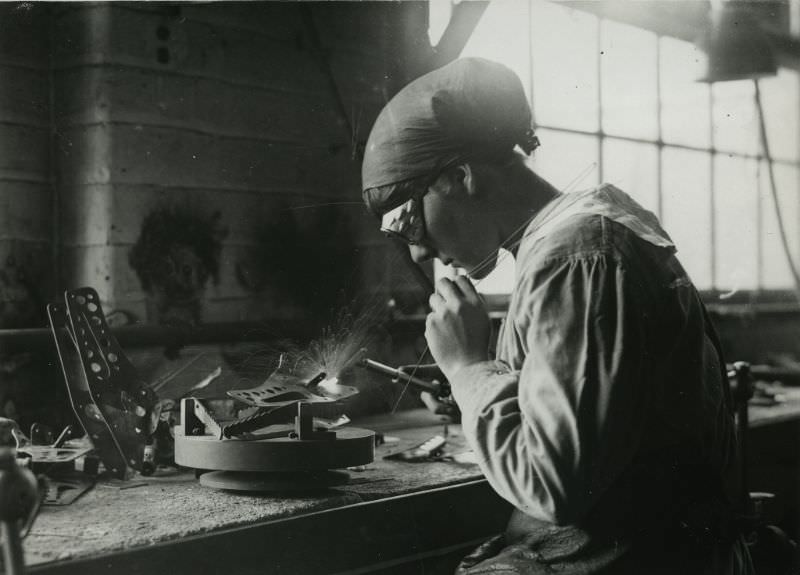
Welding was another skill women took on in armaments factories. Joining metal components required both precision and physical endurance under harsh workshop conditions.
A woman munitions worker welding in an armaments factory, 1915.Women munitions workers in Paris, 1916.Two women replacing male porters at Marylebone Station, London, during World War I, 1915.
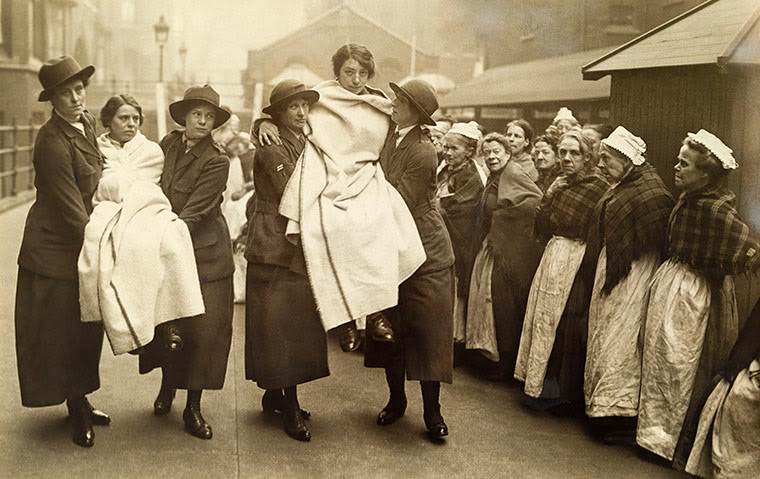
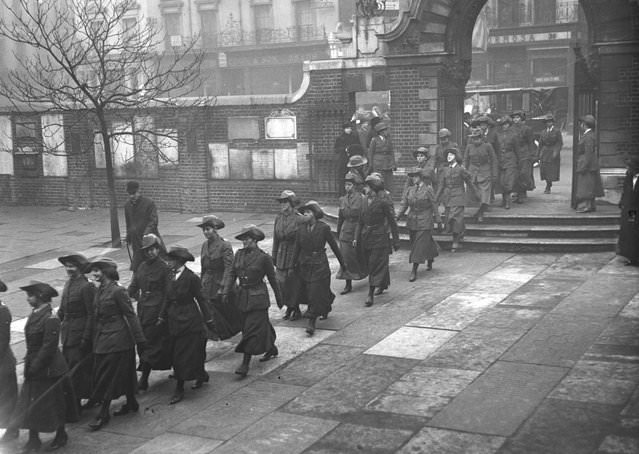
Ambulance driving wasn’t limited to individuals. Organized parades and corps of women drivers operated across the front, coordinating medical evacuations under fire.
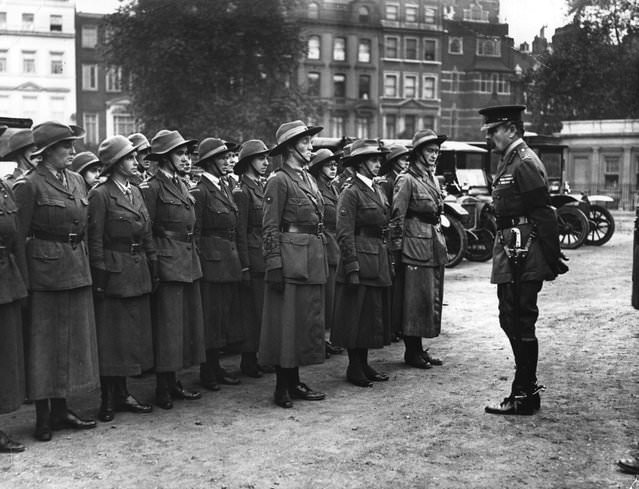
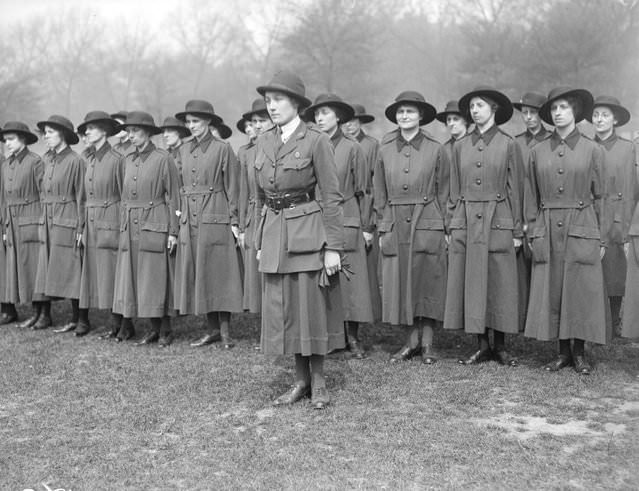
A parade of women ambulance drivers during World War I, 1915.Members of the Women’s Fire Brigade with their Chief Officer, 1916.The Women’s Reserve of the British Army National Motor Volunteers being addressed by an officer, 1916.
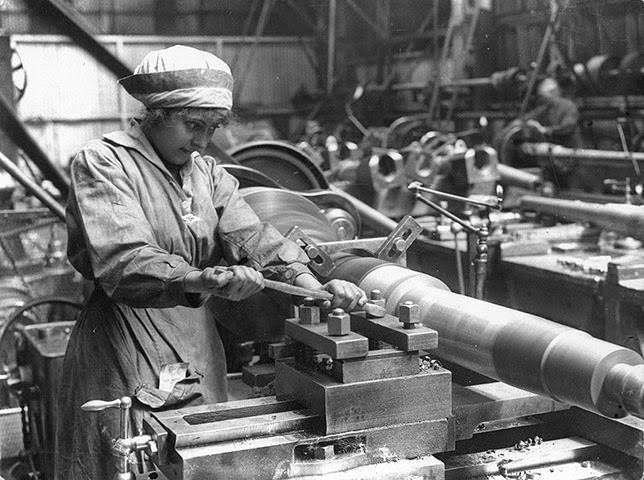
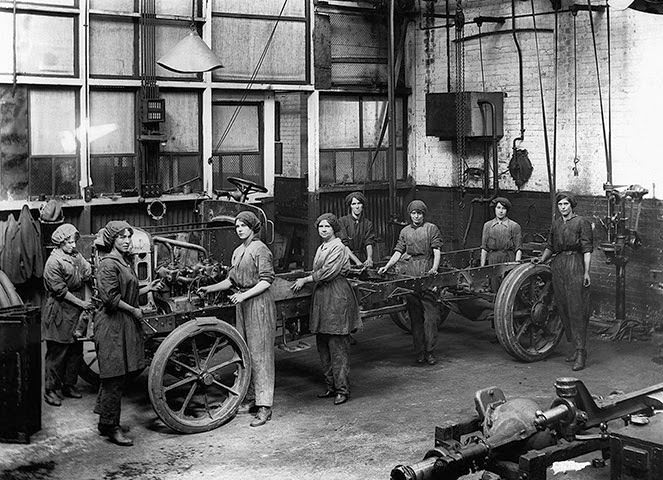
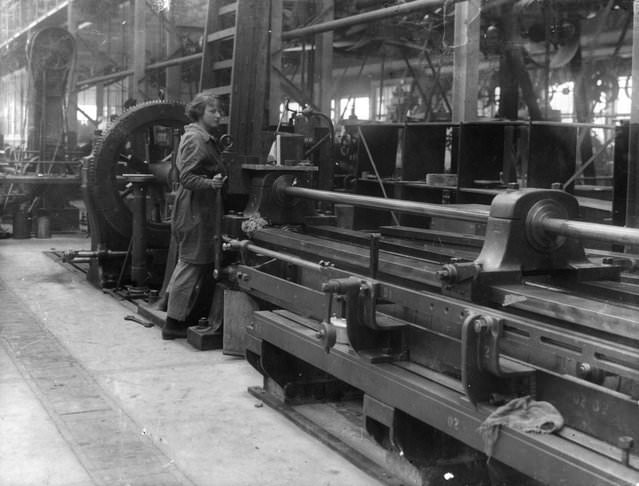
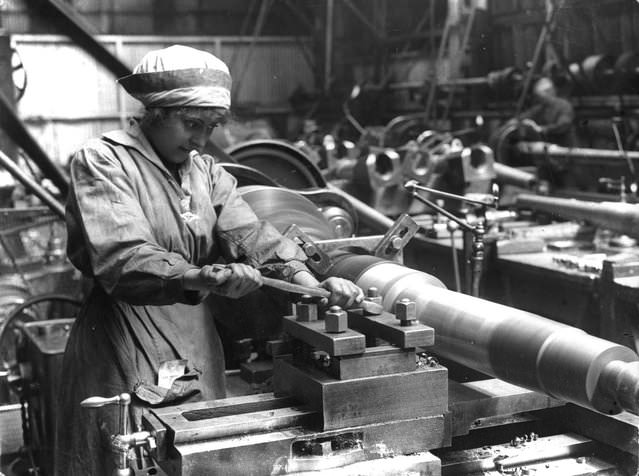
Engineering shops across Britain employed women in large numbers by 1917. They operated lathes, managed tooling, and performed work that required training previously reserved for male apprentices.
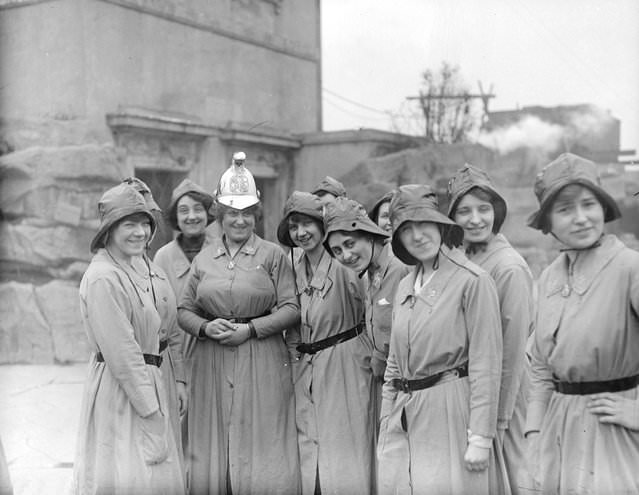
Women war workers in an engineering shop, 1917.Women munitions workers in a Vickers factory making shell cases, 1915.A woman working on an engine in an engineering shop, 1915.Members of the Women’s Fire Brigade on a fire drill, 1916.
The Women’s Land Army drew recruits from cities and towns who had never worked farmland before. By 1918, land girls were a common sight across rural Britain, operating machinery and managing livestock.
A member of the Women’s Land Army in WWI, 1916.Women’s Army recruits drilling, 1917.
Medical supply work extended beyond nursing. Women at depots like the Kensington War Hospital supply facility shaped and fitted physical aids, including steel knee splints, for wounded soldiers returning from the front.
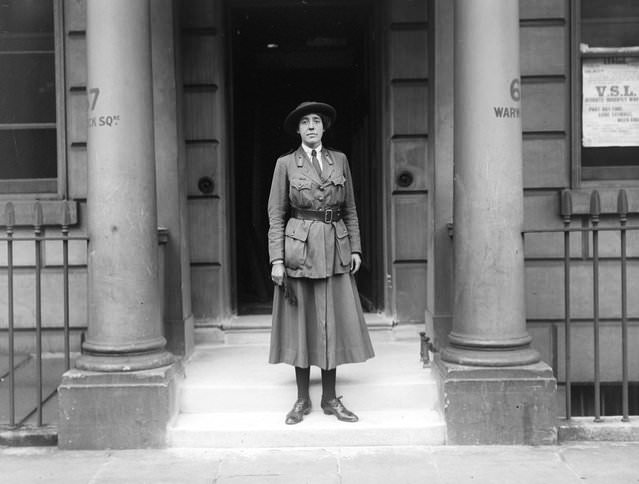
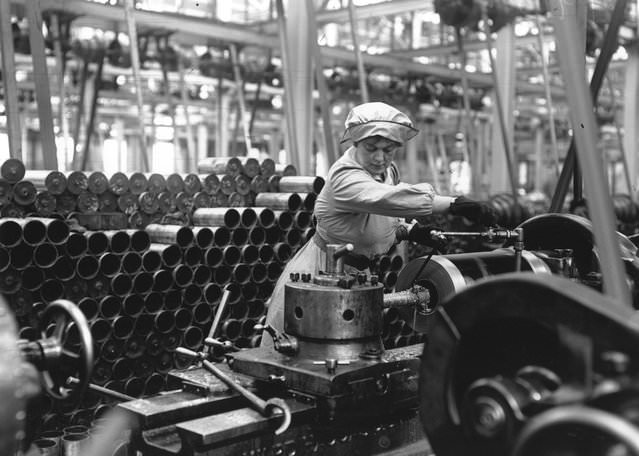
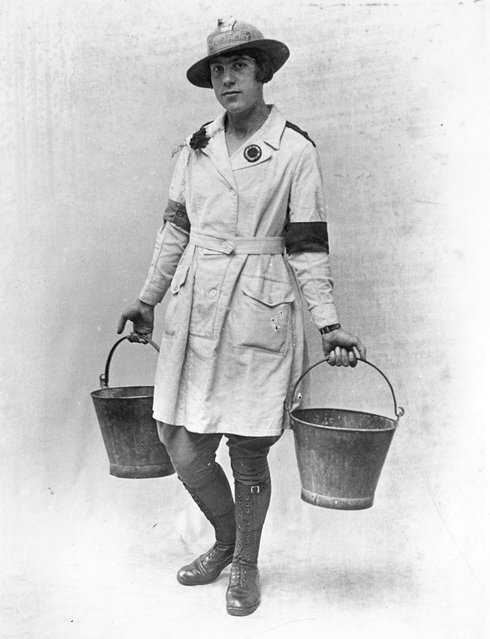
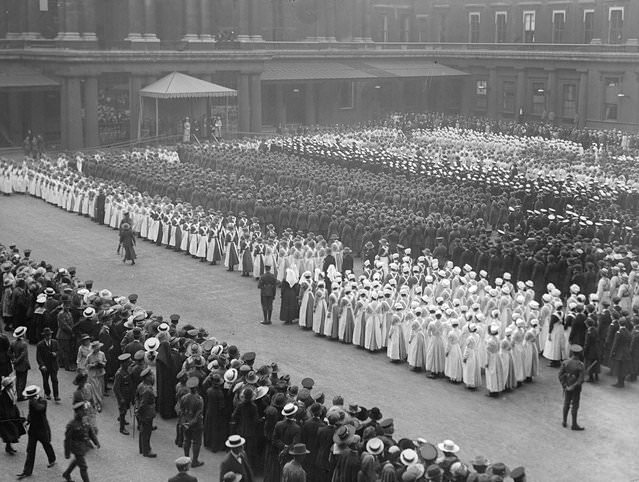
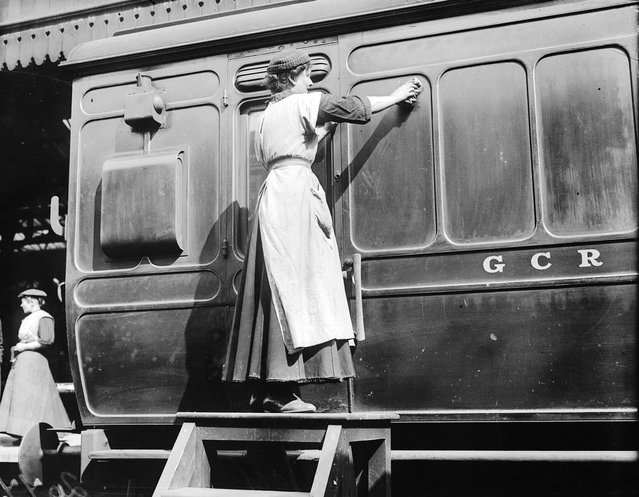
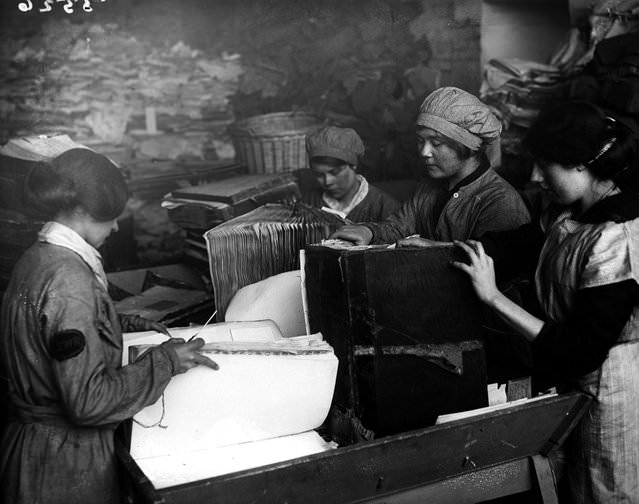
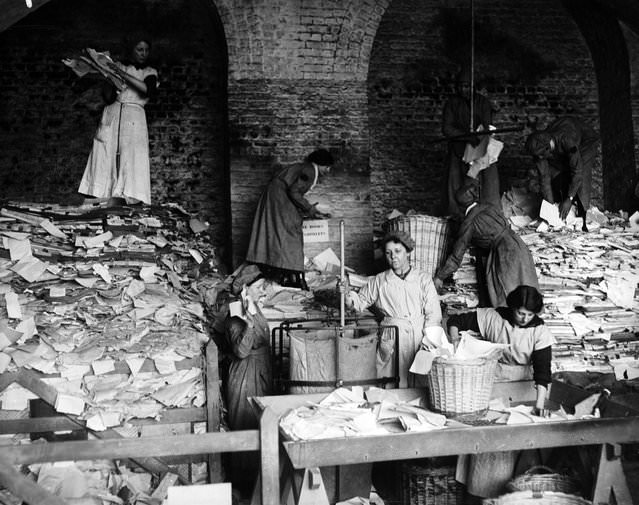
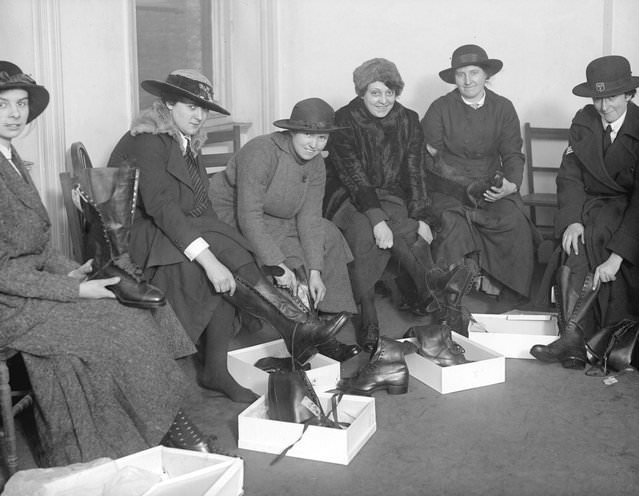
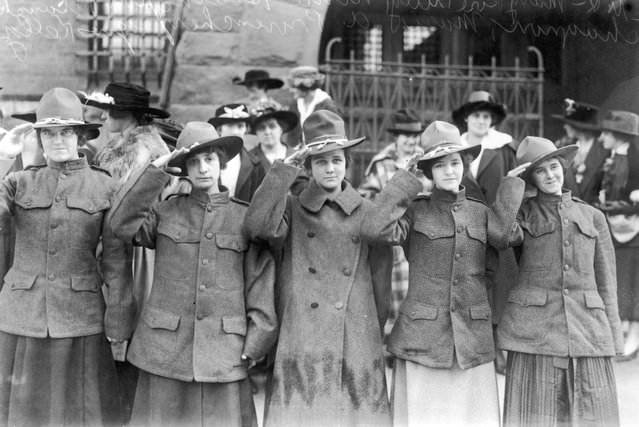
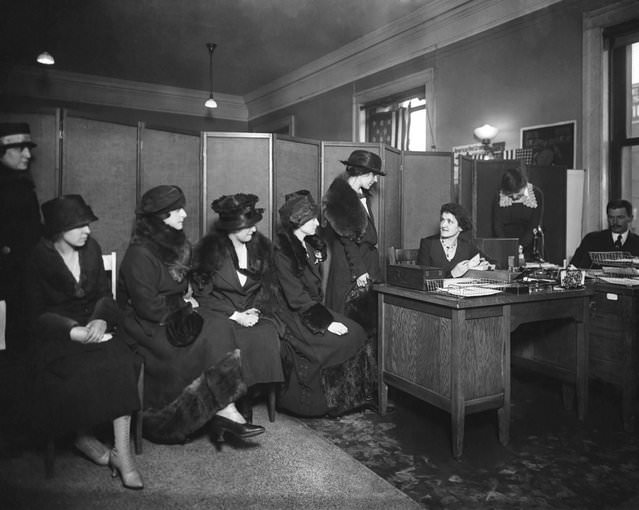
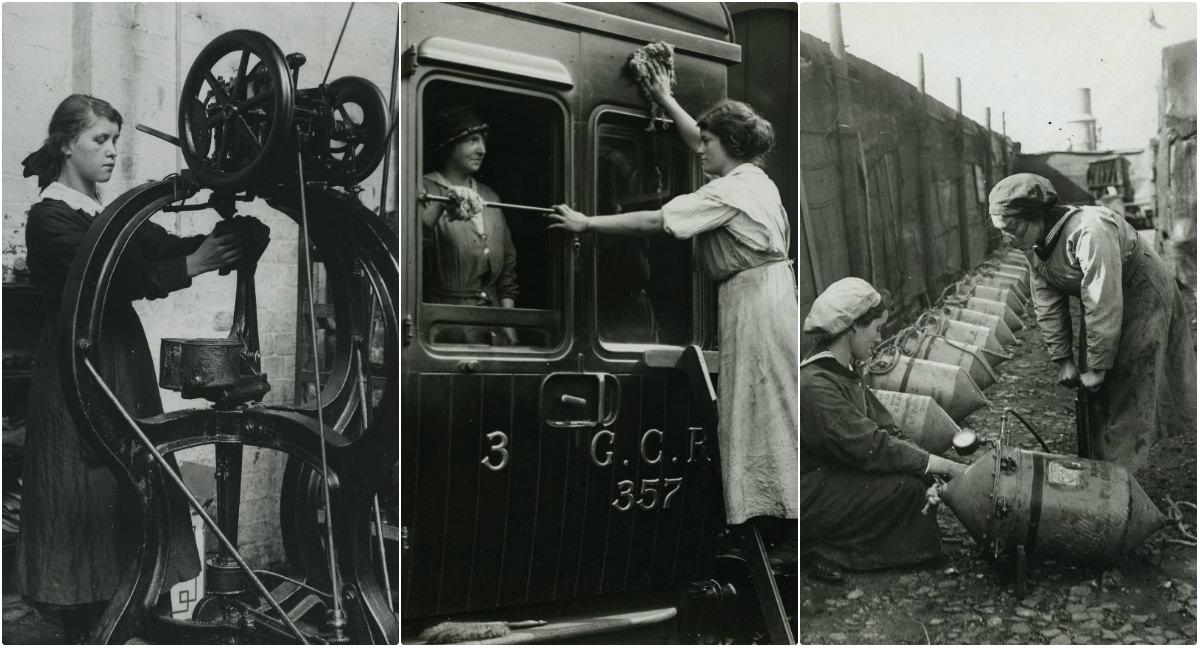
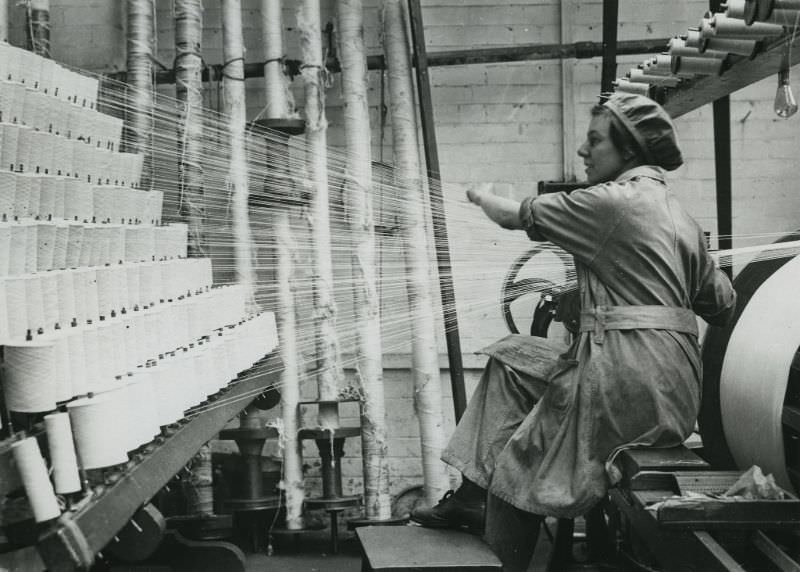
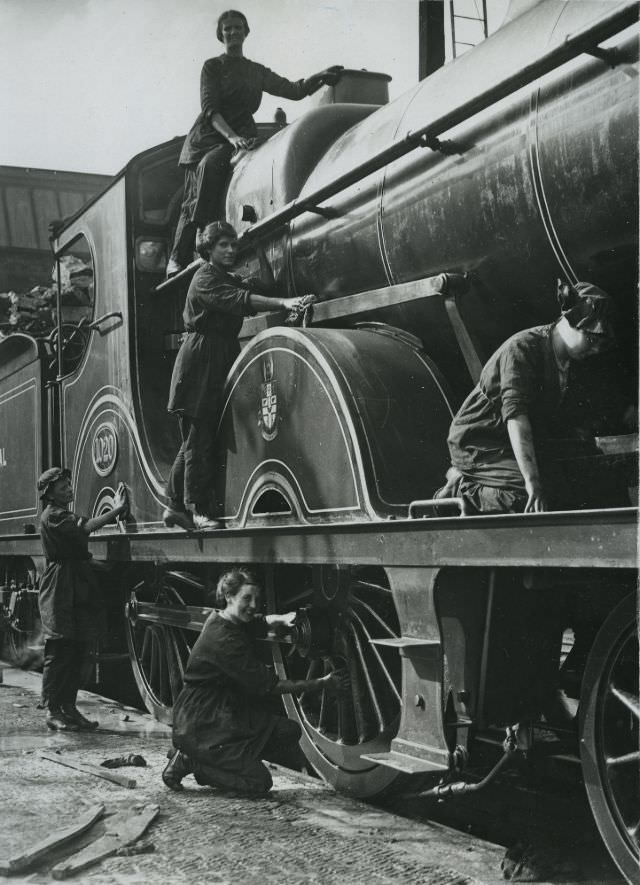
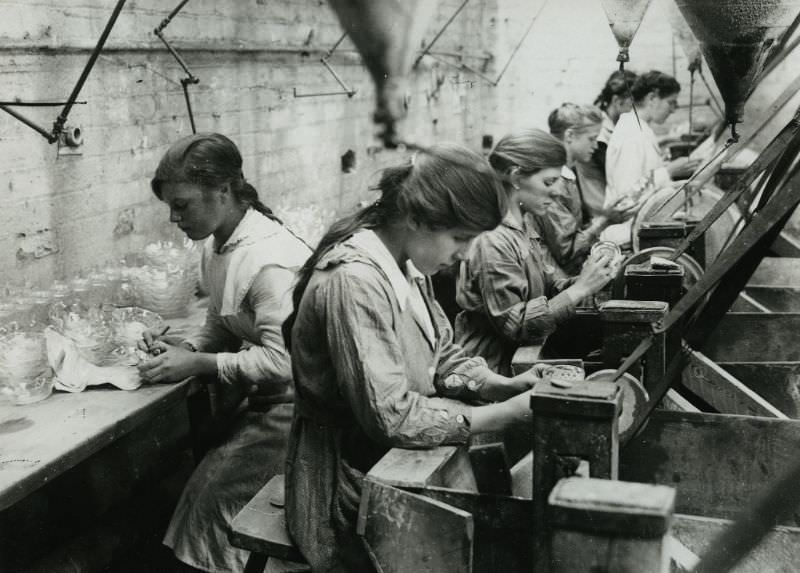
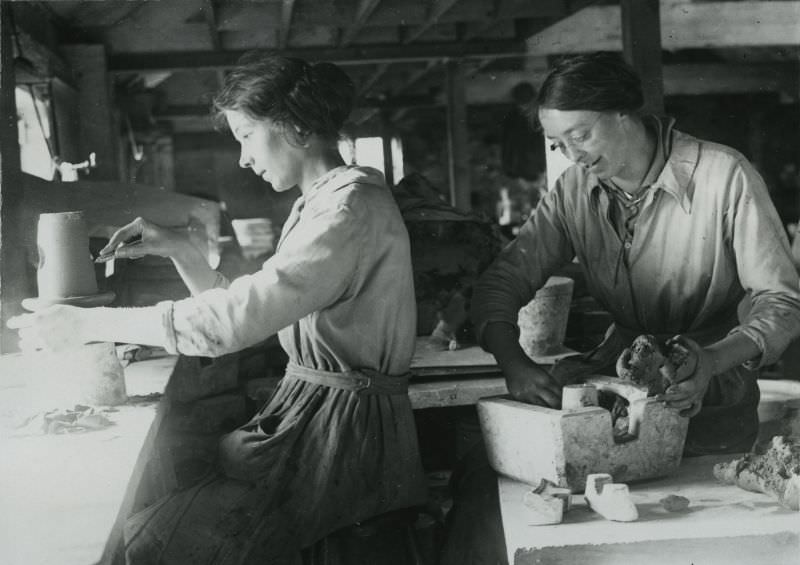
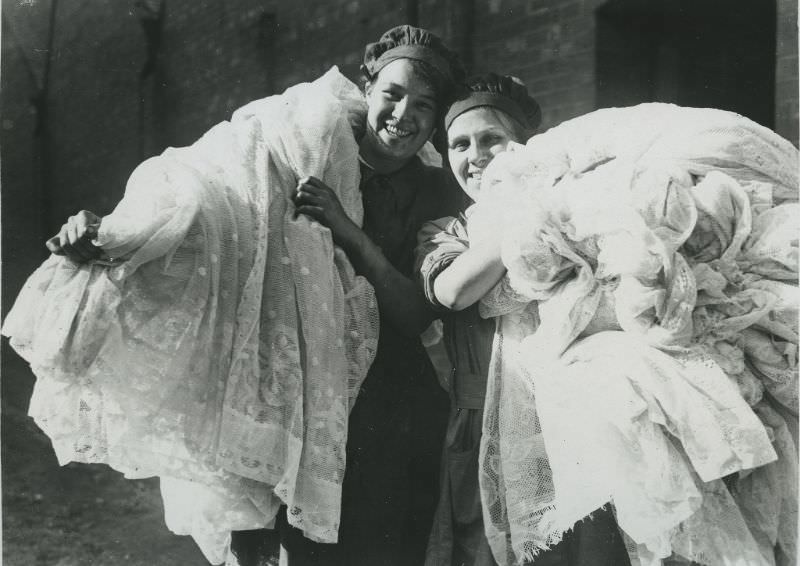
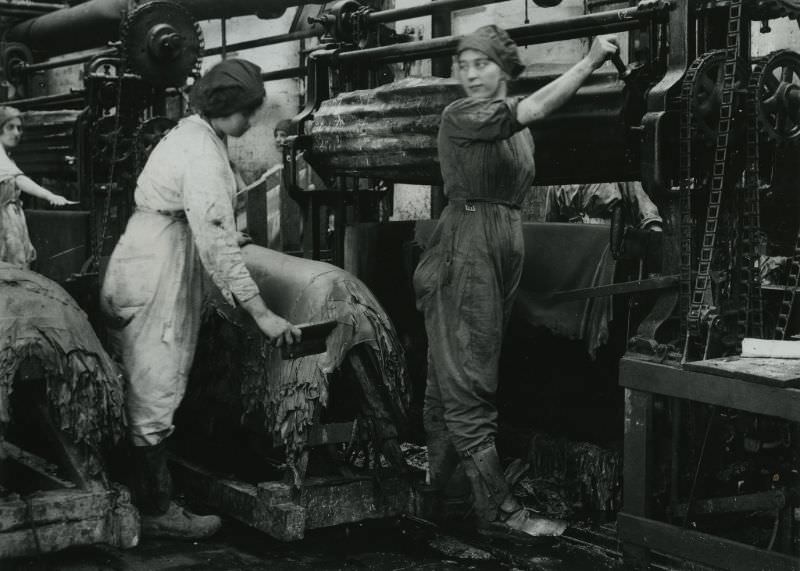
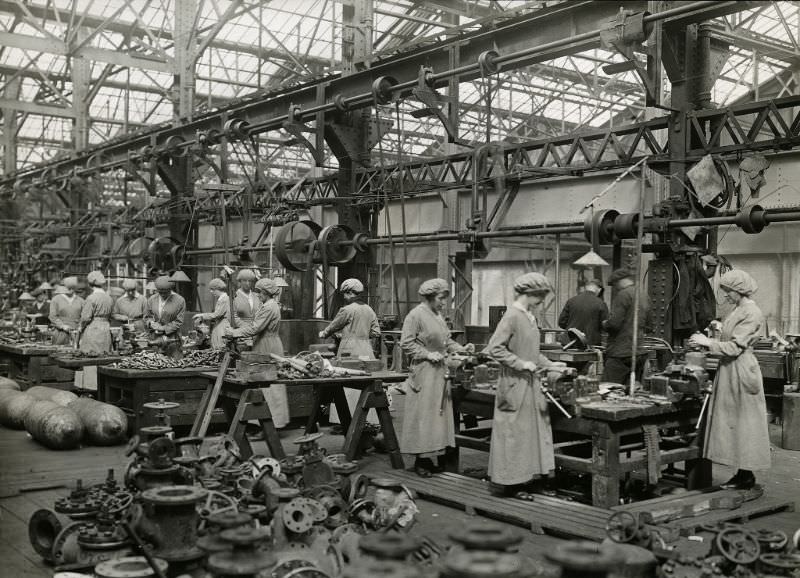
A woman shaping a steel knee splint at the Kensington War Hospital supply depot, 1917.A young woman in an armaments factory in WWI, 1916.Women war workers marching to Buckingham Palace, London, 1918.Miss D. Milman of the Women’s Service League outside 67 Warwick Square, 1918.Members of the Women’s Royal Air Force at Buckingham Palace, London, 1919.A woman porter at Marylebone Station cleaning a carriage, 1914.A woman munitions worker operating a machine in an armaments factory during World War I, 1915.Women navvies pushing wheelbarrows in Coventry during World War I, 1917.Women pulling apart old ledgers for the London & South West Railway, 1917.Women sorting paper for the London & South West Railway, 1917.A woman at work in an armaments factory, 1914.Women police at a munitions works trying on new boots, 1917.Young women from Lowell, Massachusetts, forming America’s first Women’s Death Battalion, 1917.Women waiting to ask about American Red Cross nursing positions, 1918.British women’s work during WWI.British woman winding cotton at a lace factory in Nottingham.British women aeroplane workers near Birmingham welding frame tugs for planes.British women cleaning a locomotive in the Midlands.British women glass workers in a factory in Lancashire.British women glass workers.British women in a glass factory cutting shop near Birmingham.British women moulding and finishing stoneware taps at terra cotta works in Leicestershire.British women working in a lace factory in Nottingham.British women working in a tannery in Nottingham.General view of a brass fittings shop.
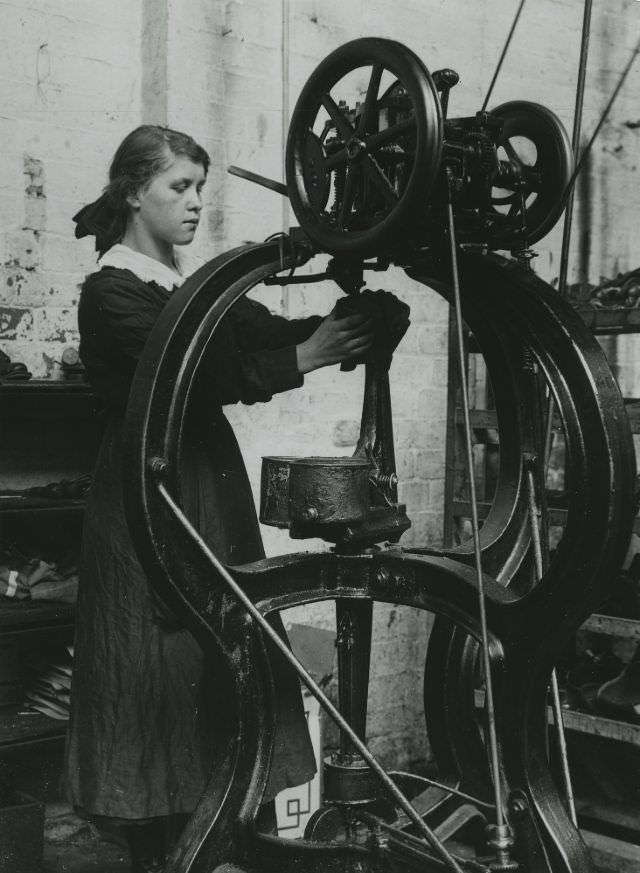
A girl operating a stitching machine in a Leicestershire boot factory.
A mechanic.
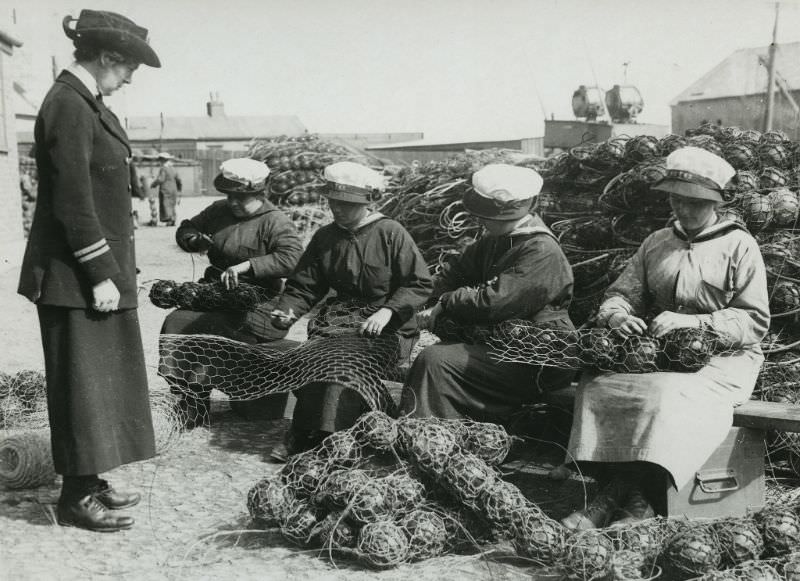
Mine net workers wiring floats together.
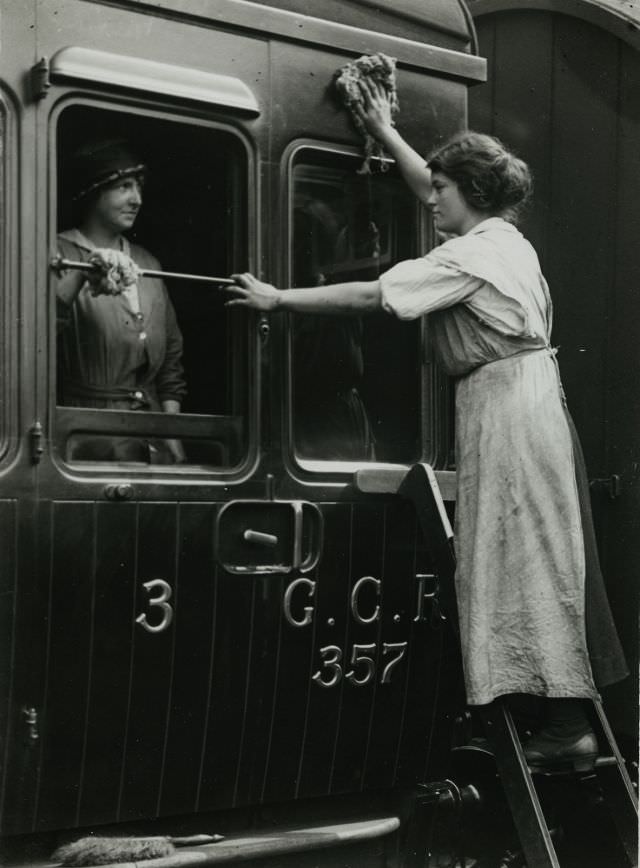
Railway workers cleaning carriages.
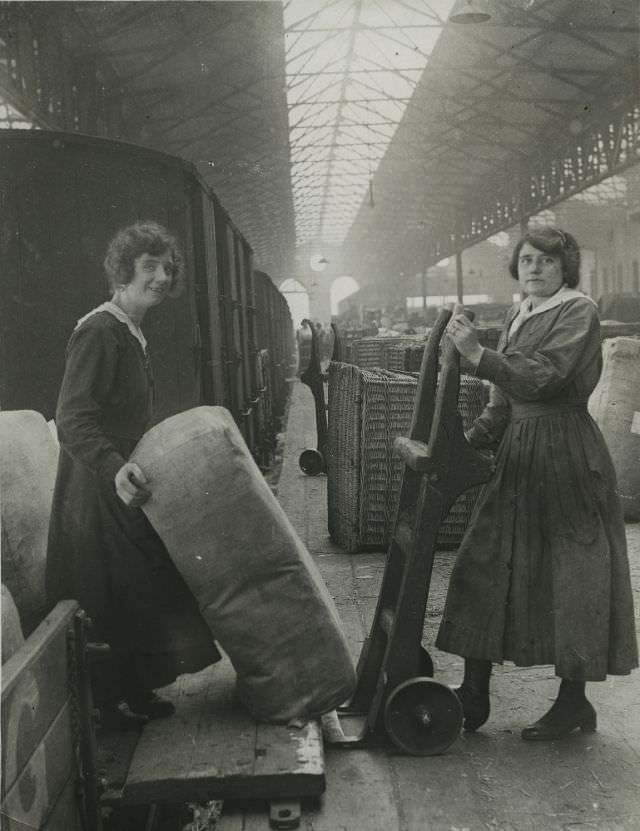
Railway workers unloading goods from a train.
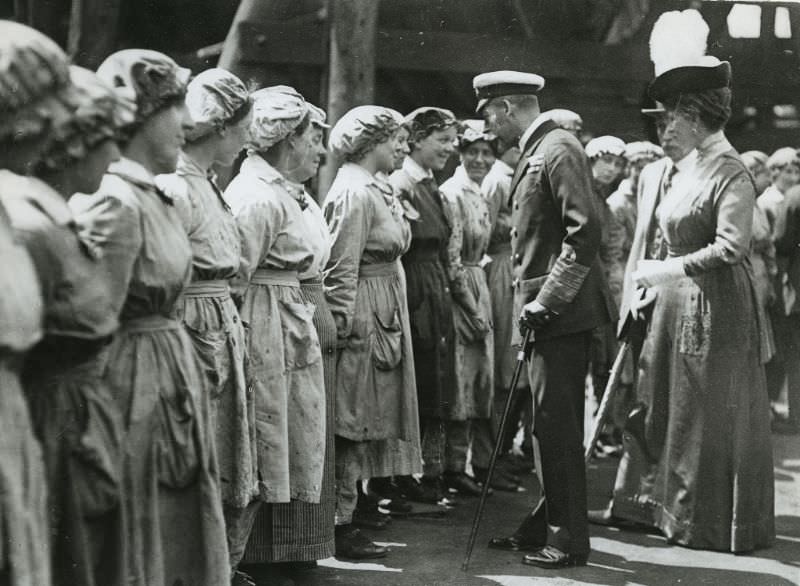
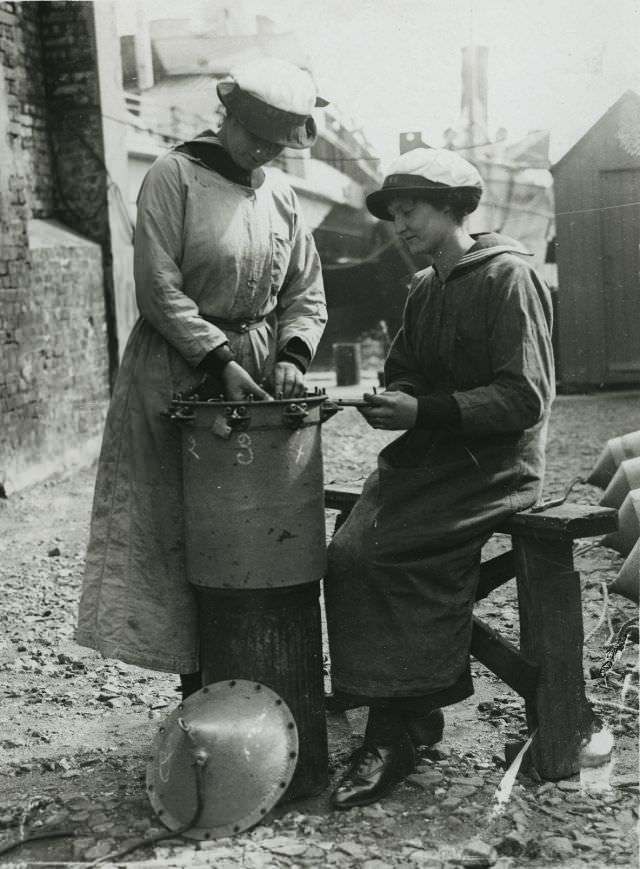
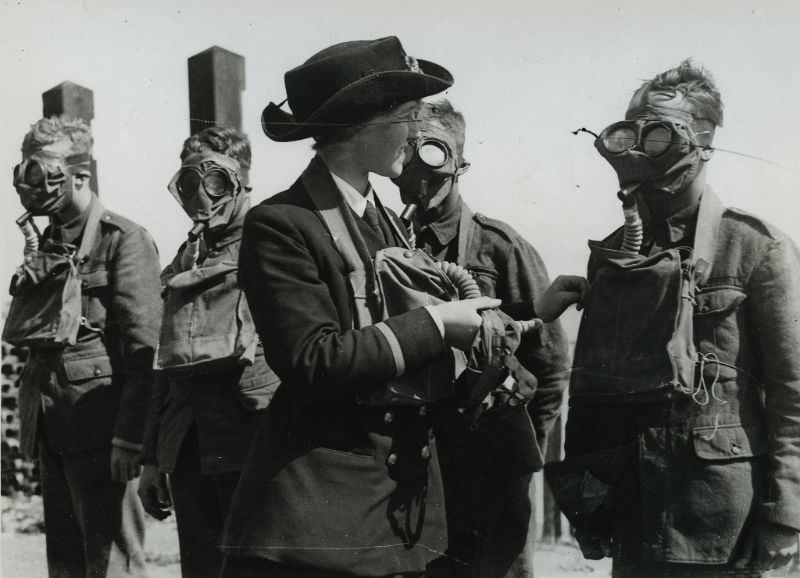
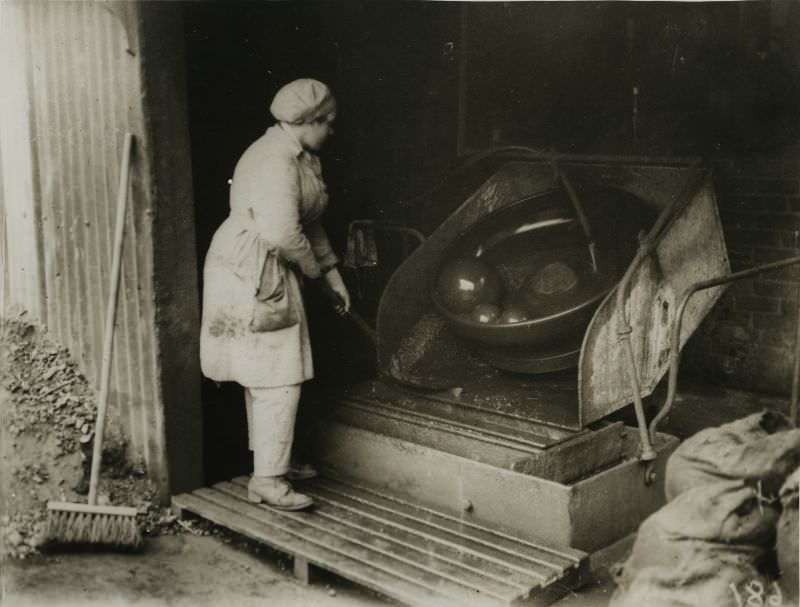
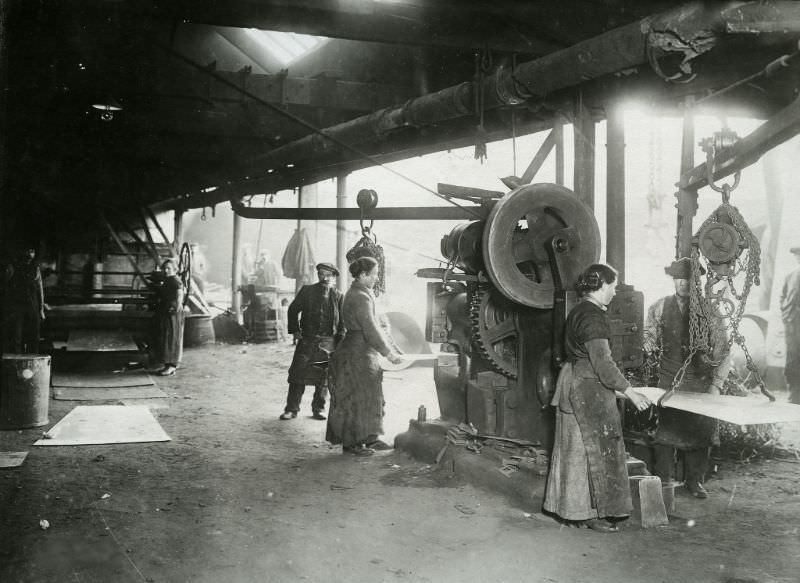
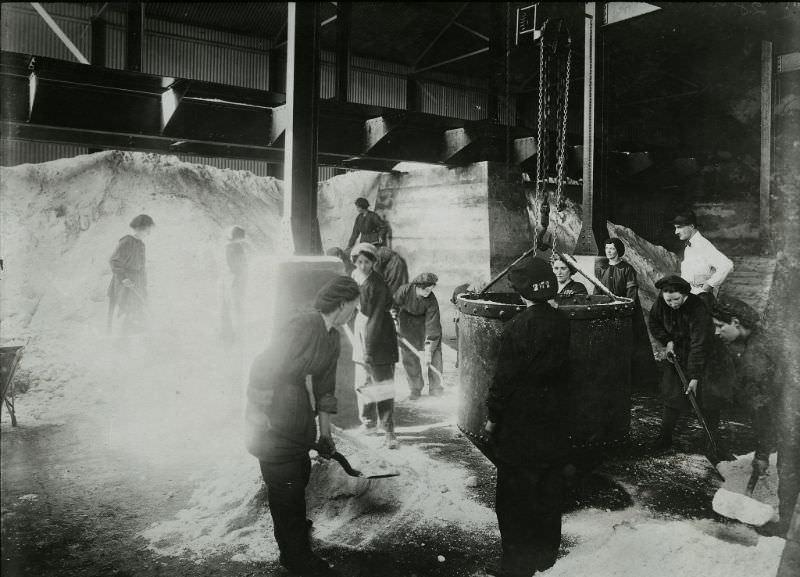
The King chatting to munitions girls.W.R.N.S. fitting a mine.W.R.N.S. instructor at respirator and mask drill.Working a machine to extract metal from rubbish.Women assisting at a punching and shearing machine.Women cleaning windows.Women engaged in labouring work in a dressing shop.Women loading nitrate of soda into a skip.Women testing a mine with air pressure.
Andrew Thompson is an archaeologist and historian who specializes in the study of war and conflict. He writes about the brutal history of warfare, including the World Wars and other significant conflicts. Through his work, he aims to deepen our understanding of the human cost of conflict and inspire us to work towards a more peaceful future.