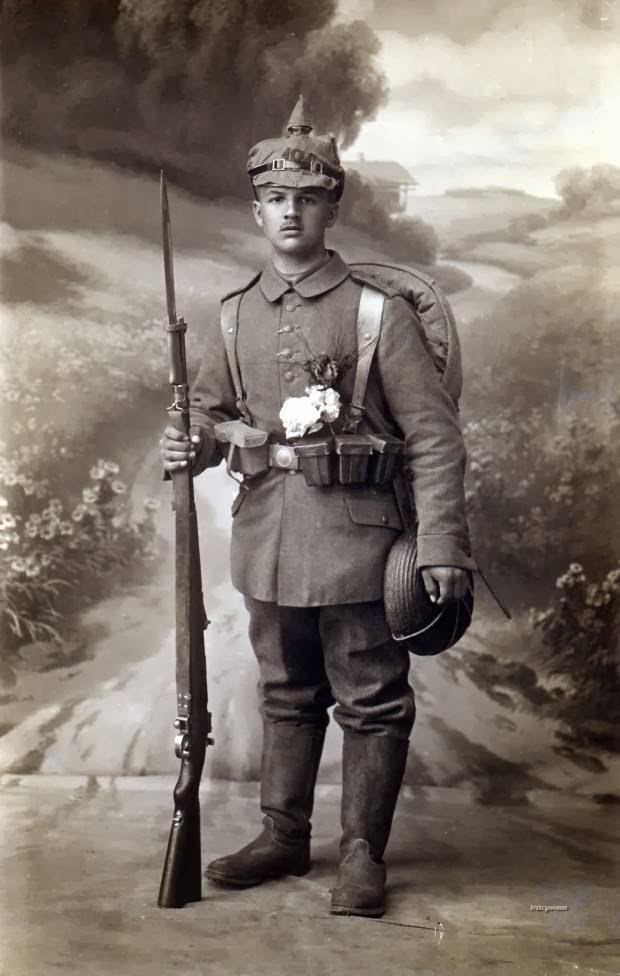
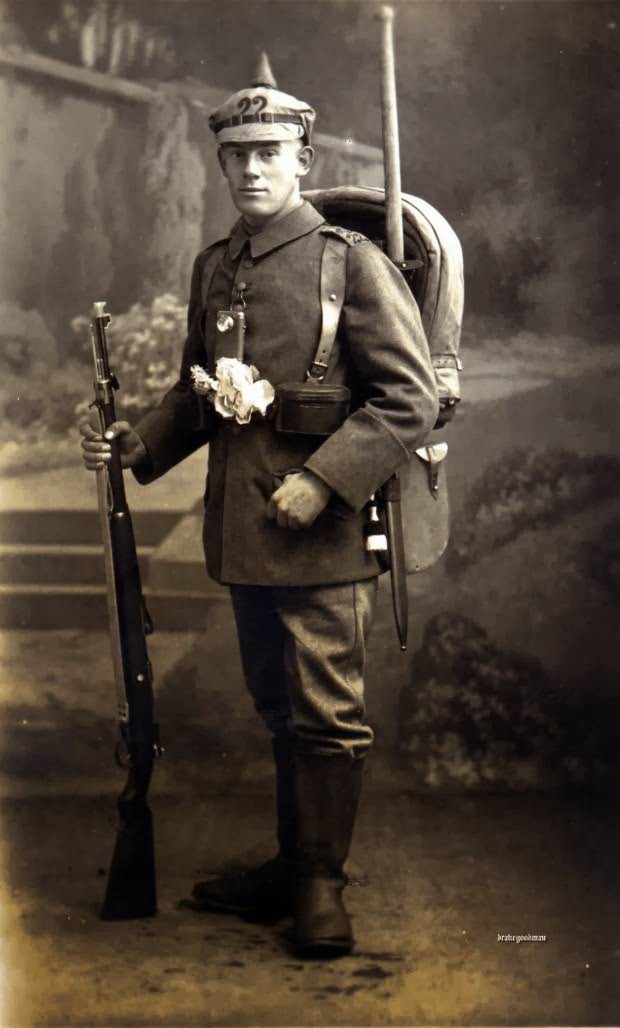
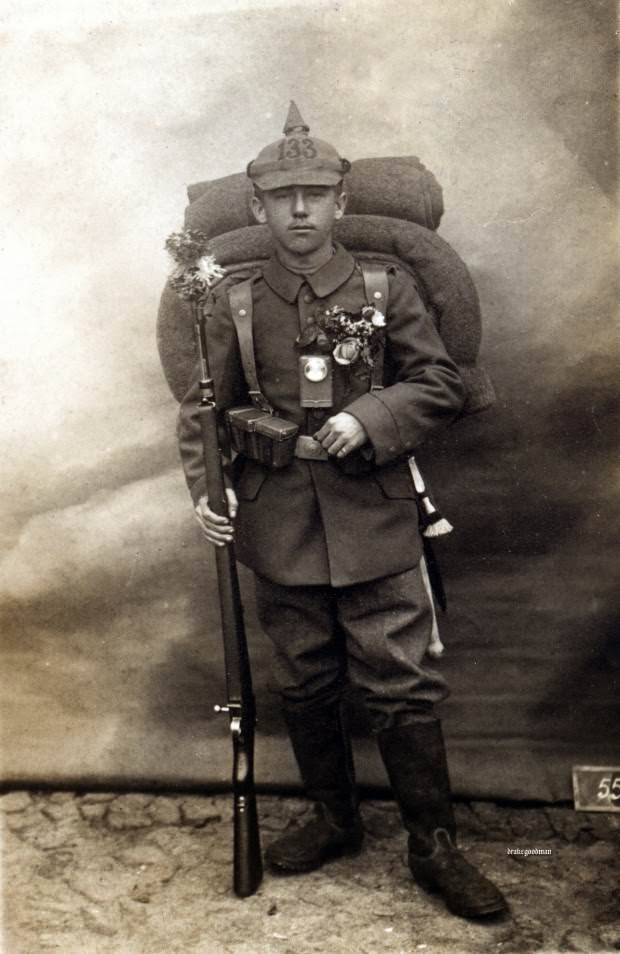
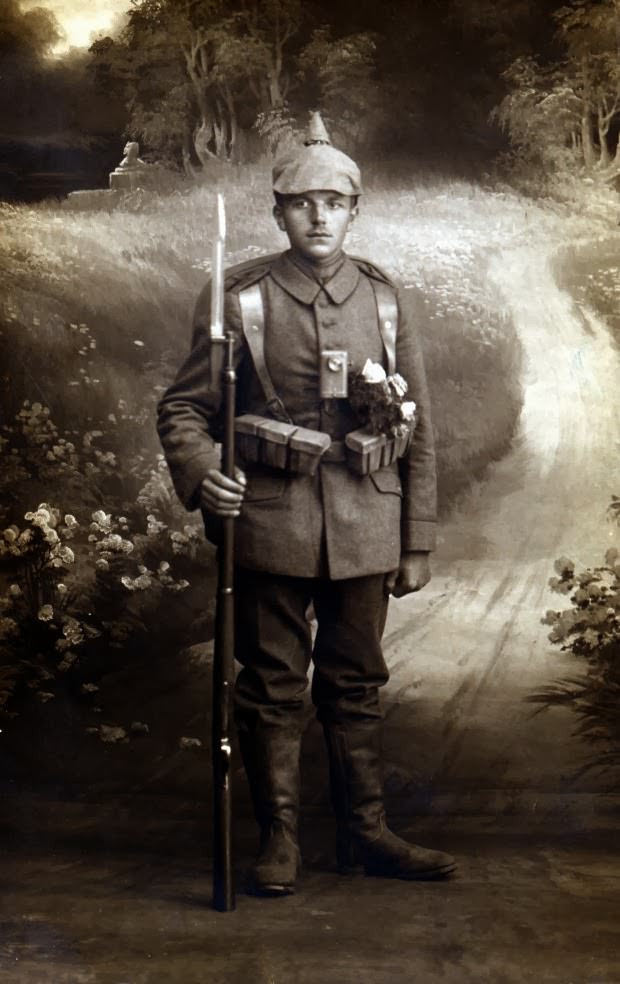
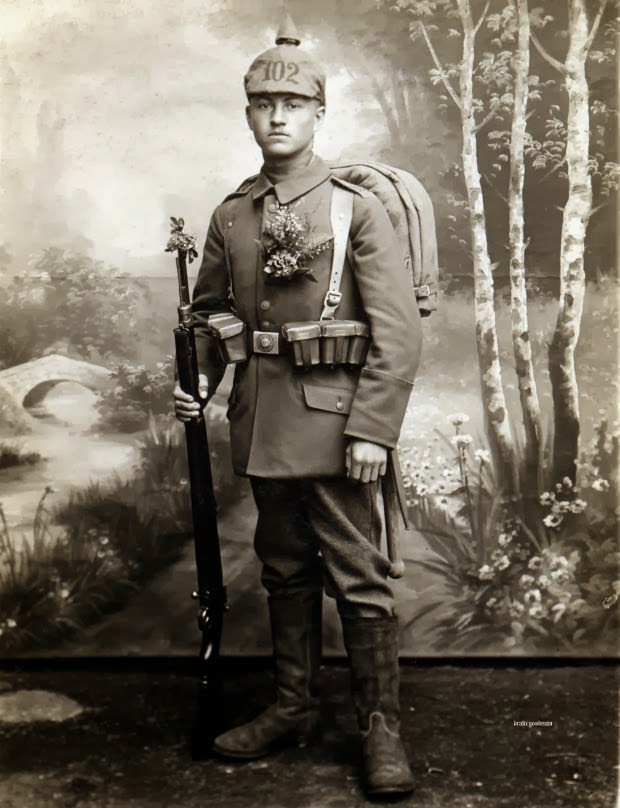
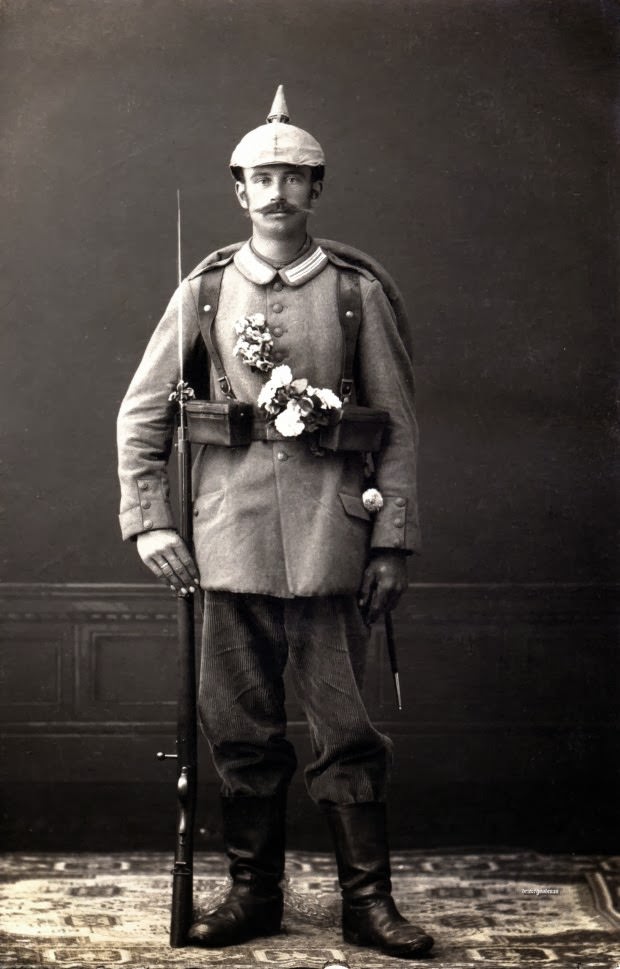
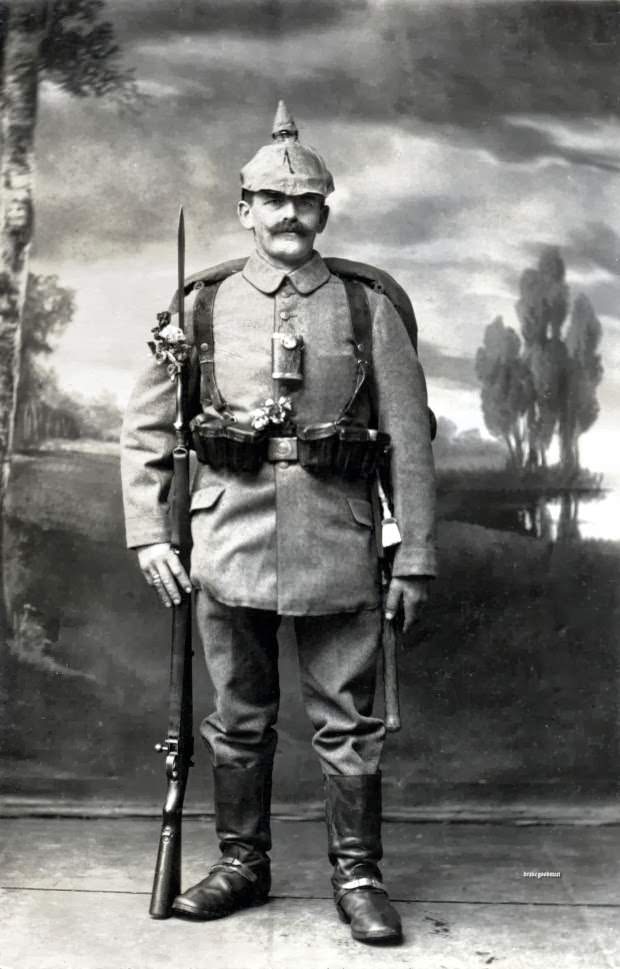
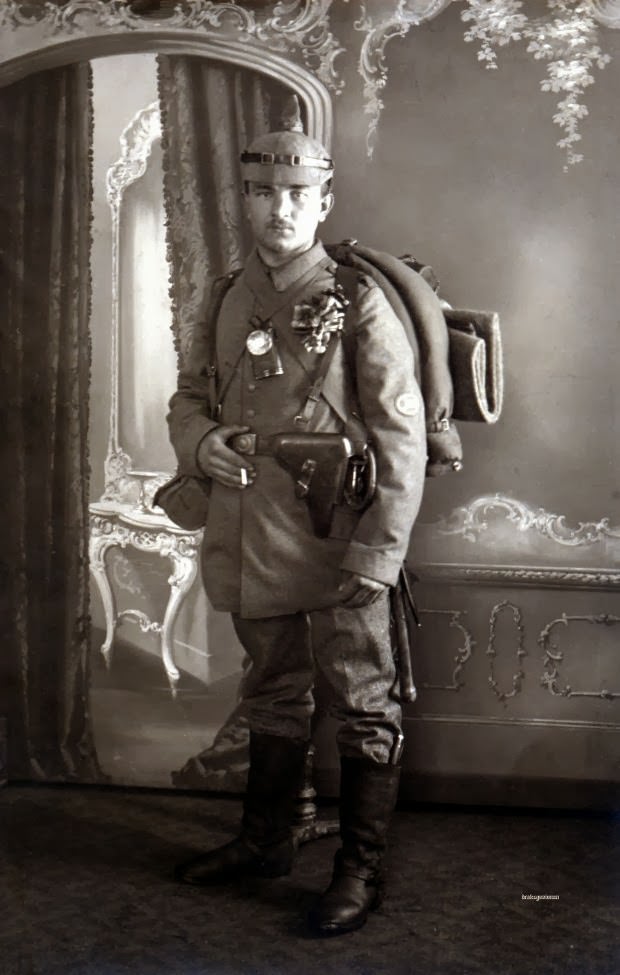
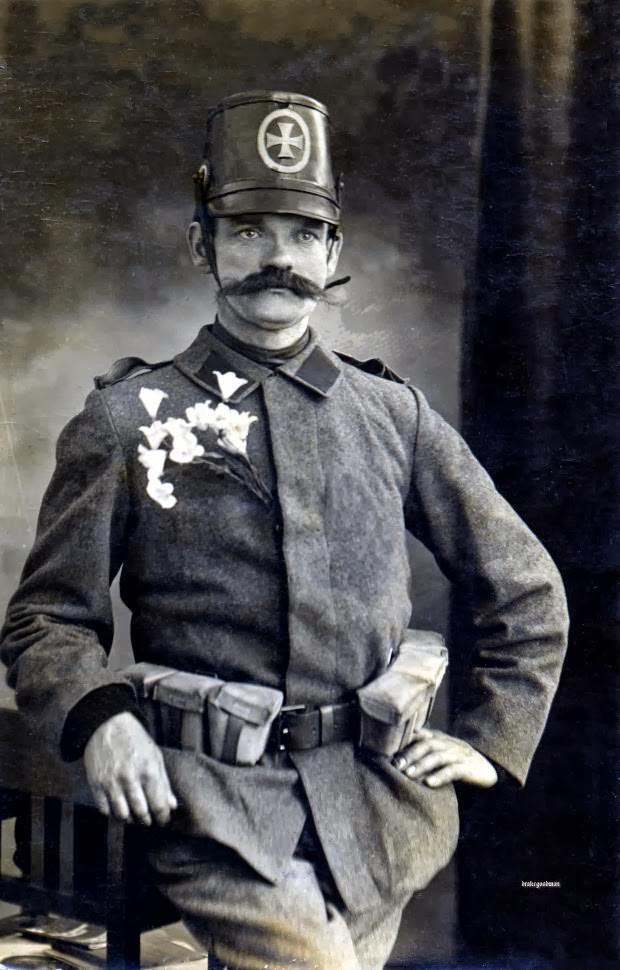
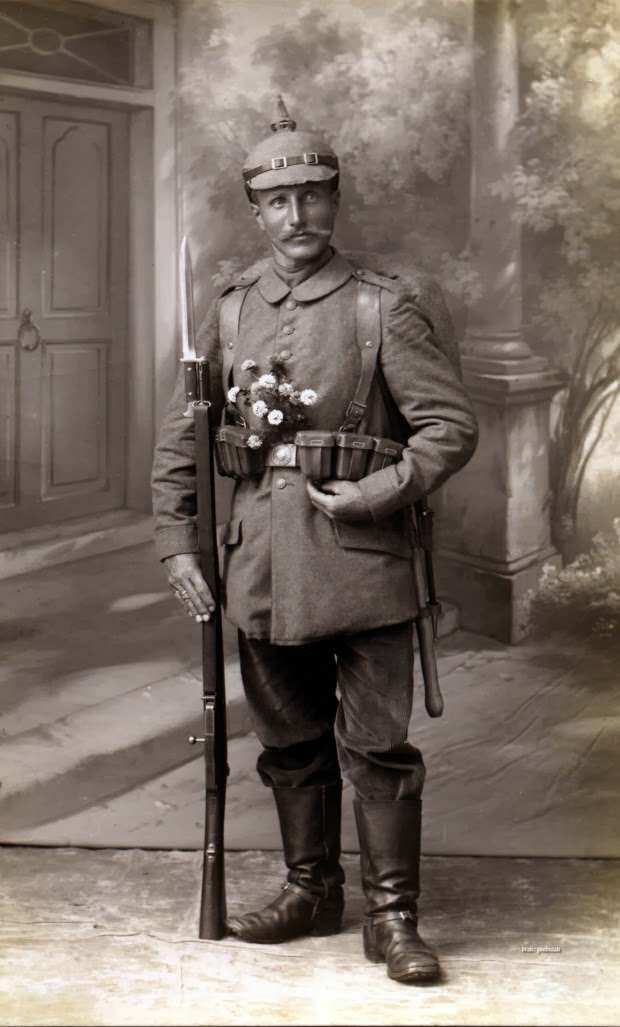
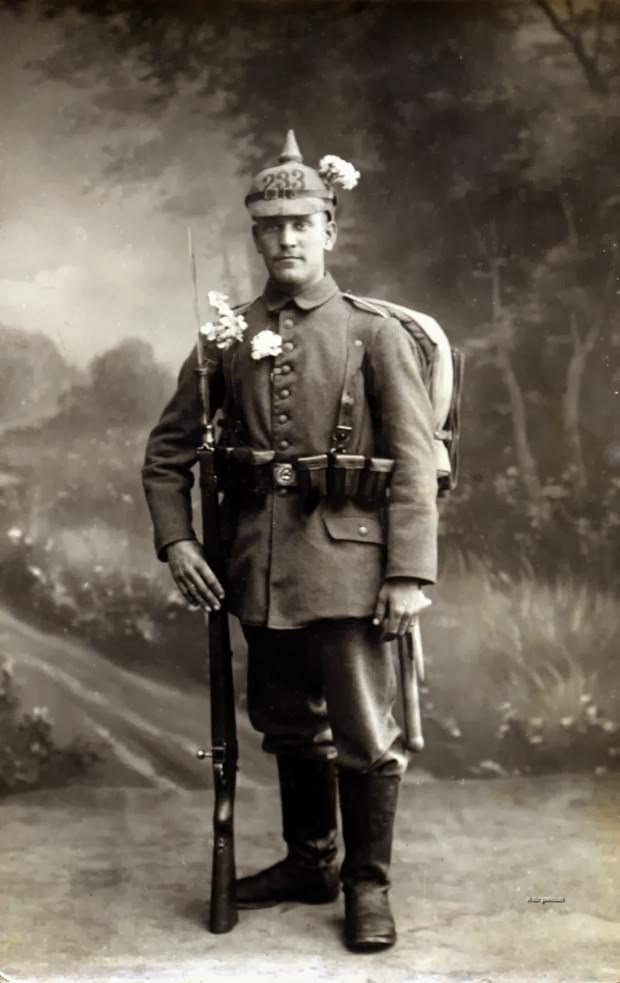
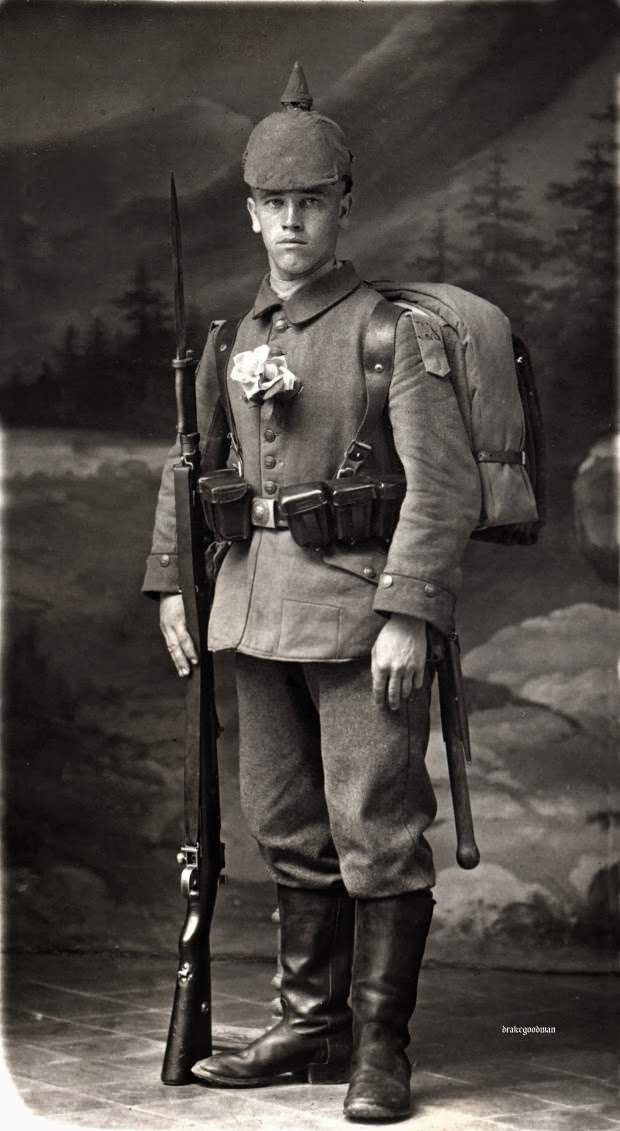
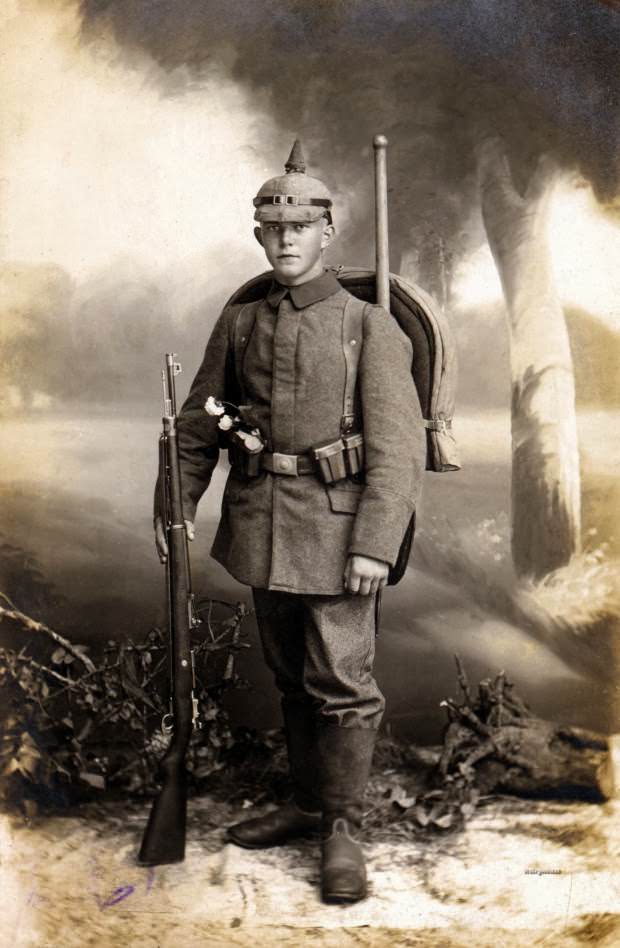
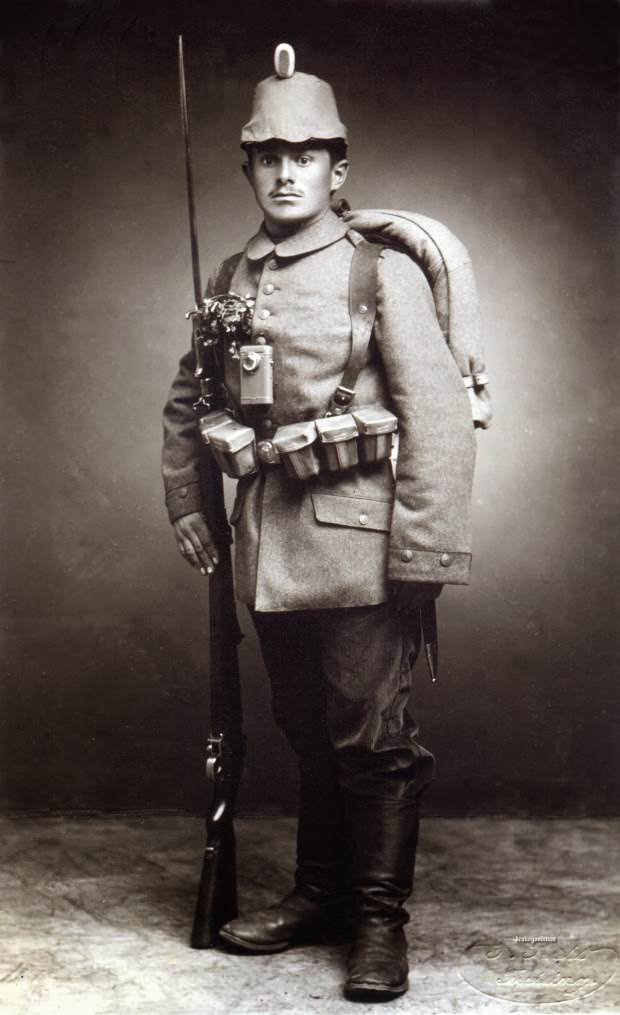
During World War I, German soldiers made a point of visiting photography studios before heading to the front or during brief periods of leave. These formal sittings produced some of the most personal and striking military portraits of the era. The soldier would arrive in full uniform — tunic, trousers, boots, cap or helmet — with medals and badges carefully displayed. The photographer arranged the pose, adjusted the lighting, and set the soldier against a painted backdrop or plain curtain.
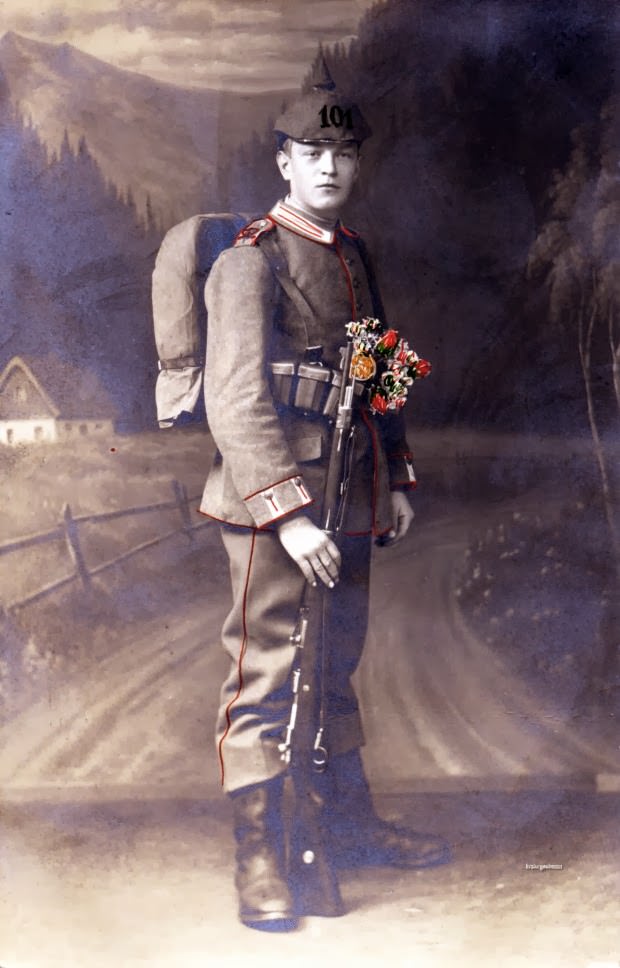
Many of these men were in their late teens or early twenties. Their expressions range from stiff determination to quiet pride. What makes so many of these portraits stand out is a simple, unexpected detail: flowers.
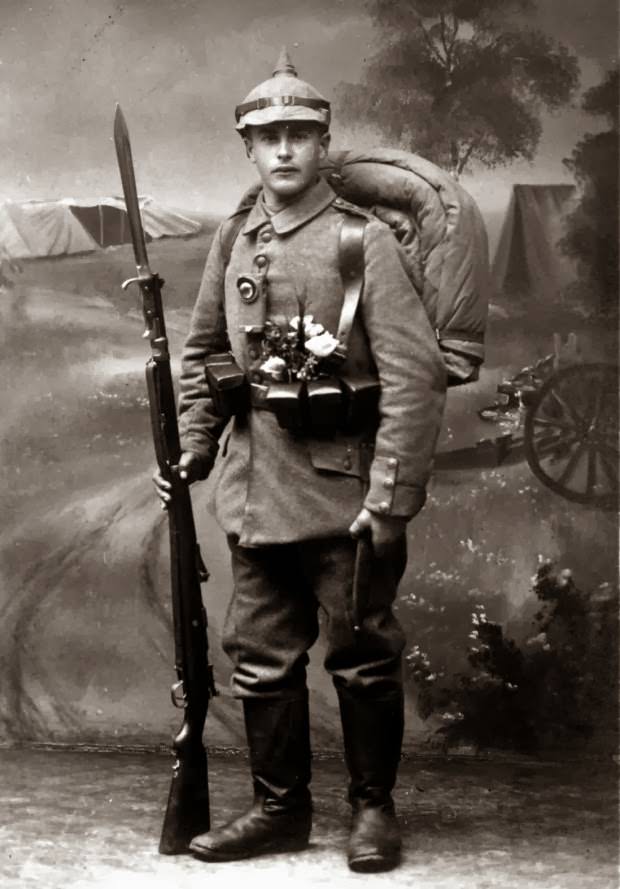
Some soldiers hold a single bloom between their fingers. Others carry a small bouquet, tuck a flower into their belt, or pin one to their tunic. The types of flowers vary — roses, wildflowers, simple garden blooms — suggesting they were personally chosen or locally available rather than studio props.
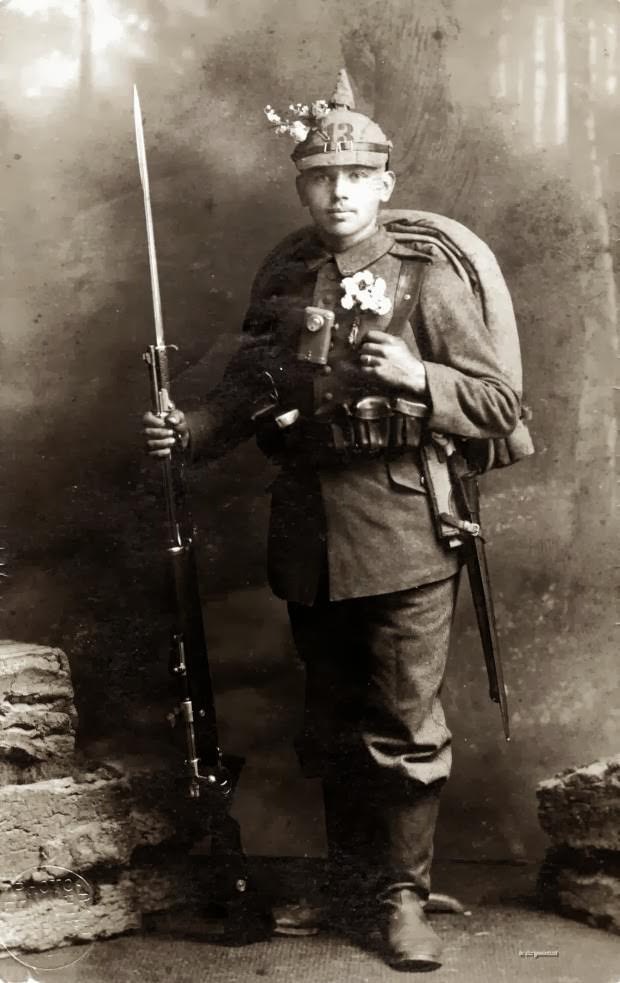
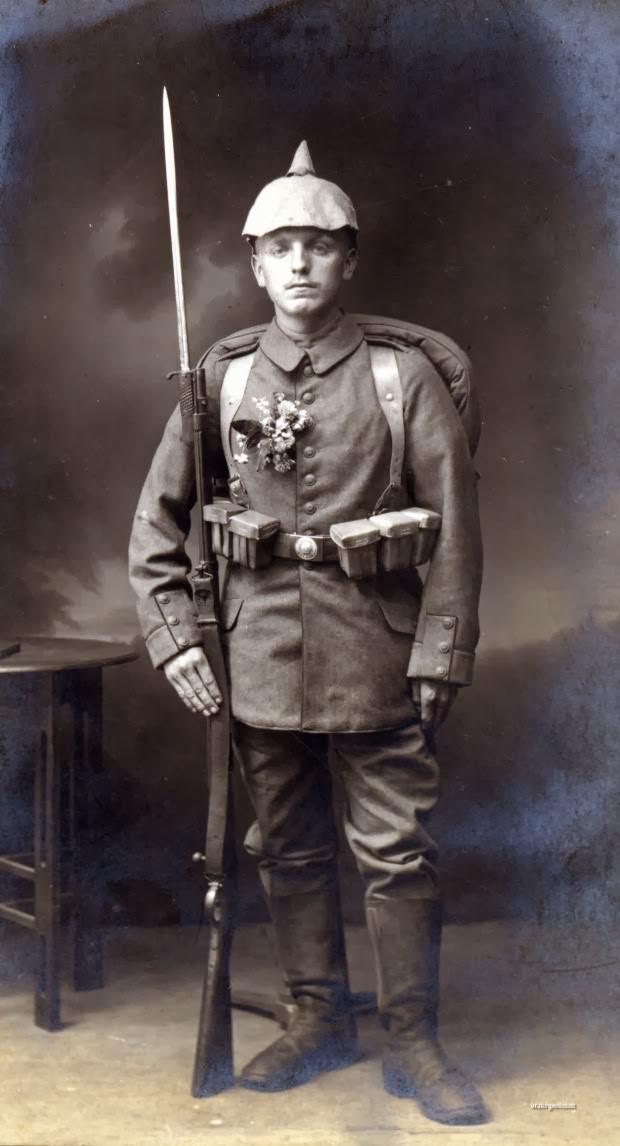
Flowers placed against a military uniform create a sharp visual contrast. They are symbols of life, beauty, and personal affection — everything the front lines were not. For a soldier about to leave home, a flower often represented a direct connection to the people he was leaving behind.
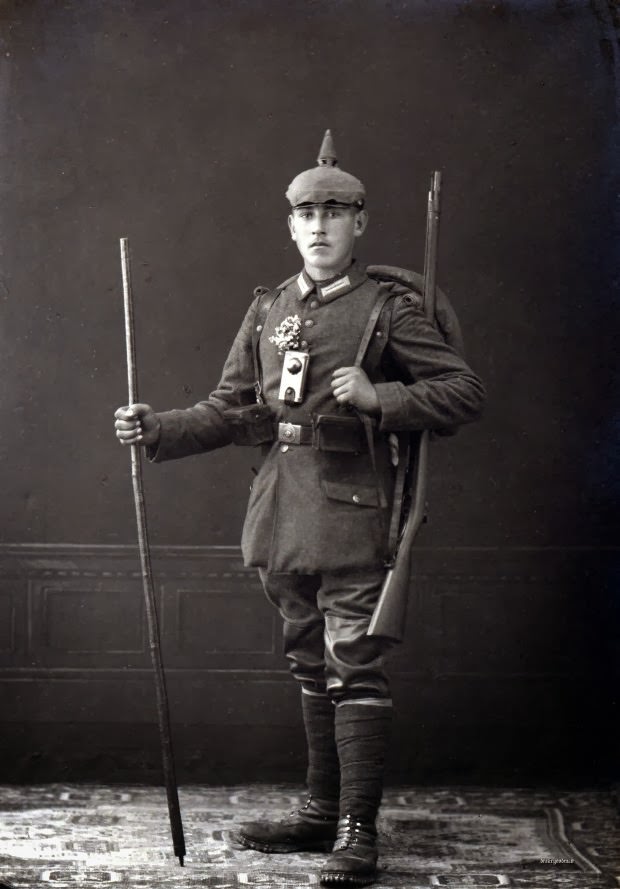
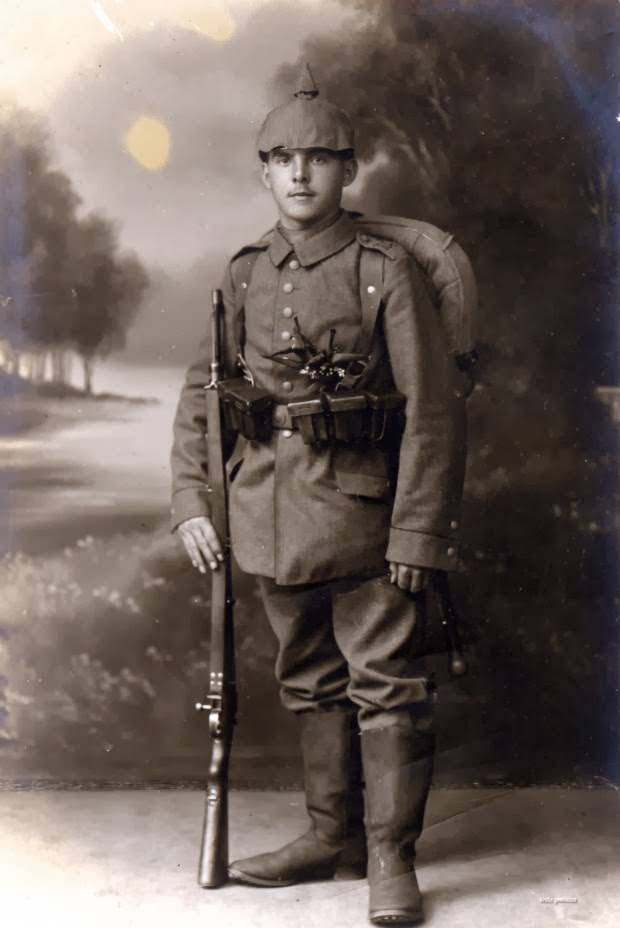
Many of these flowers were gifts. A girlfriend, wife, mother, or sister would press a bloom into a soldier’s hand as a token of love and remembrance before he departed. Carrying it into the portrait studio meant carrying it into the permanent record of his image.
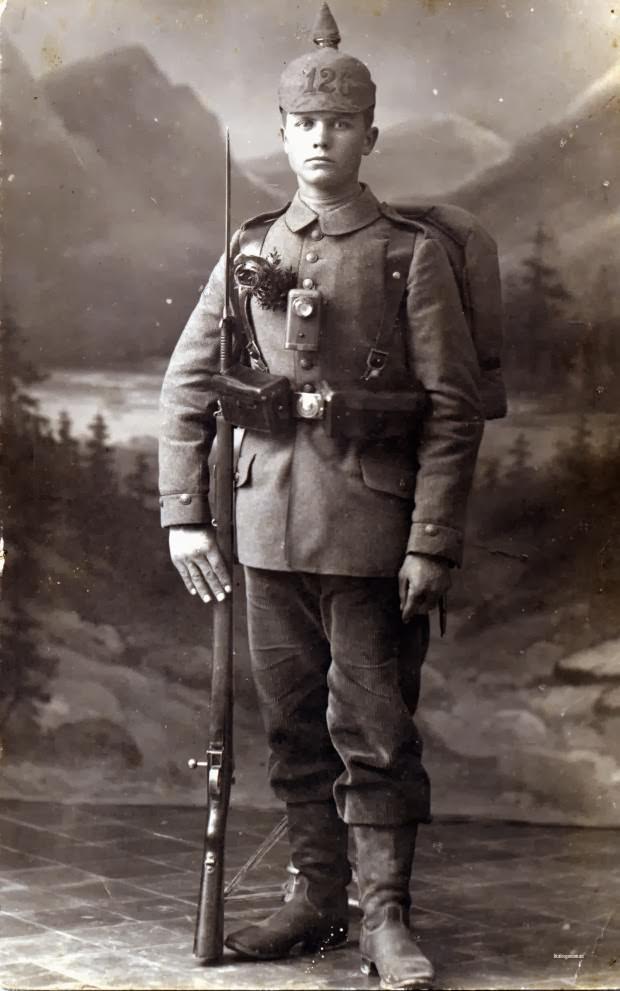
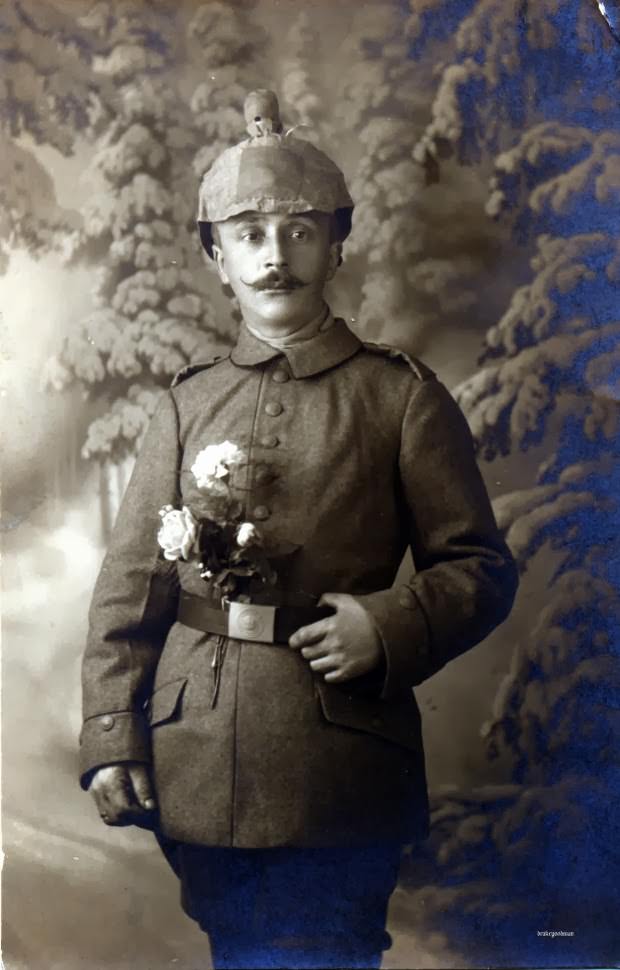
The studio itself was a controlled, indoor space — very different from the chaos of military life. Artificial lighting, fixed backdrops, and careful posing gave each portrait a formal, composed quality. These were not casual snapshots. They were deliberate records of a man in uniform at a specific moment in time.
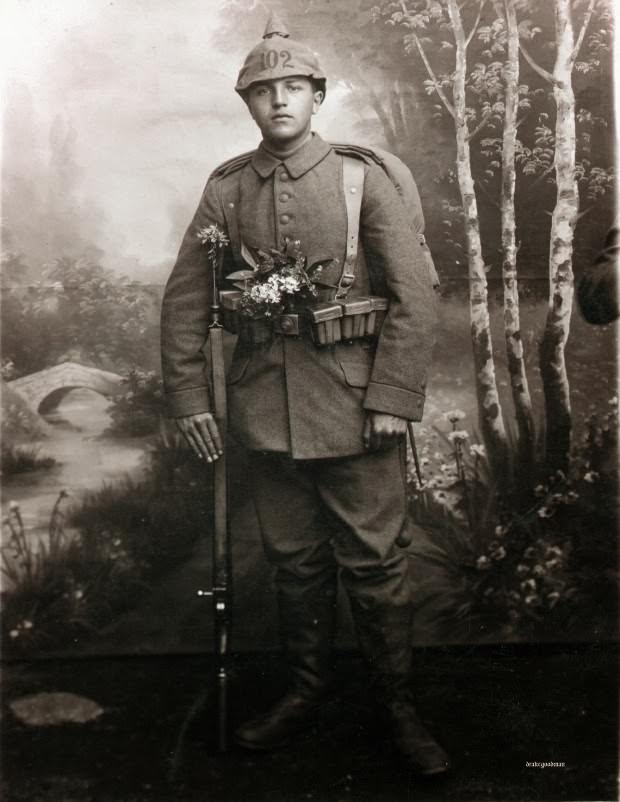
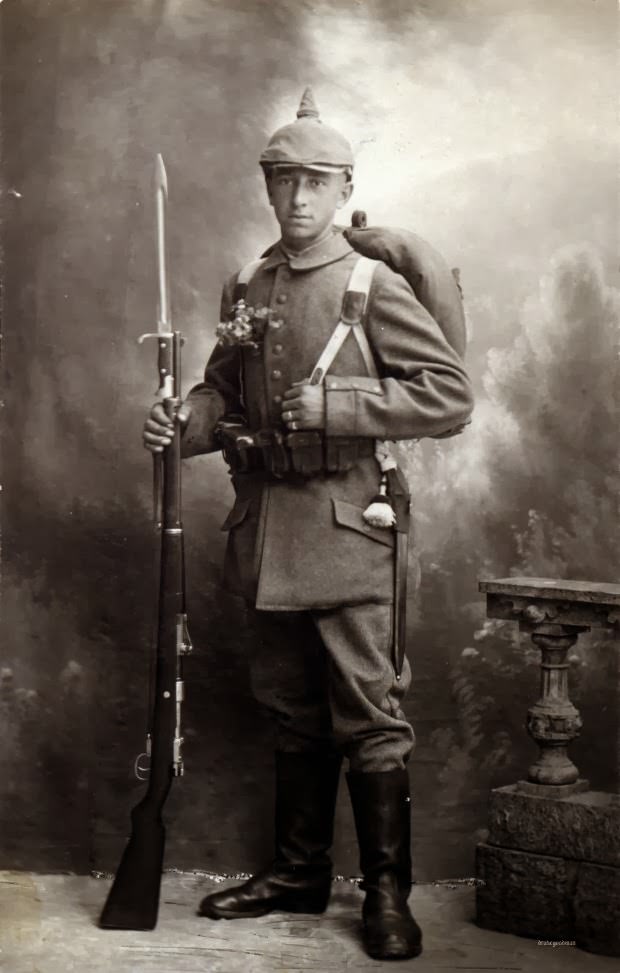
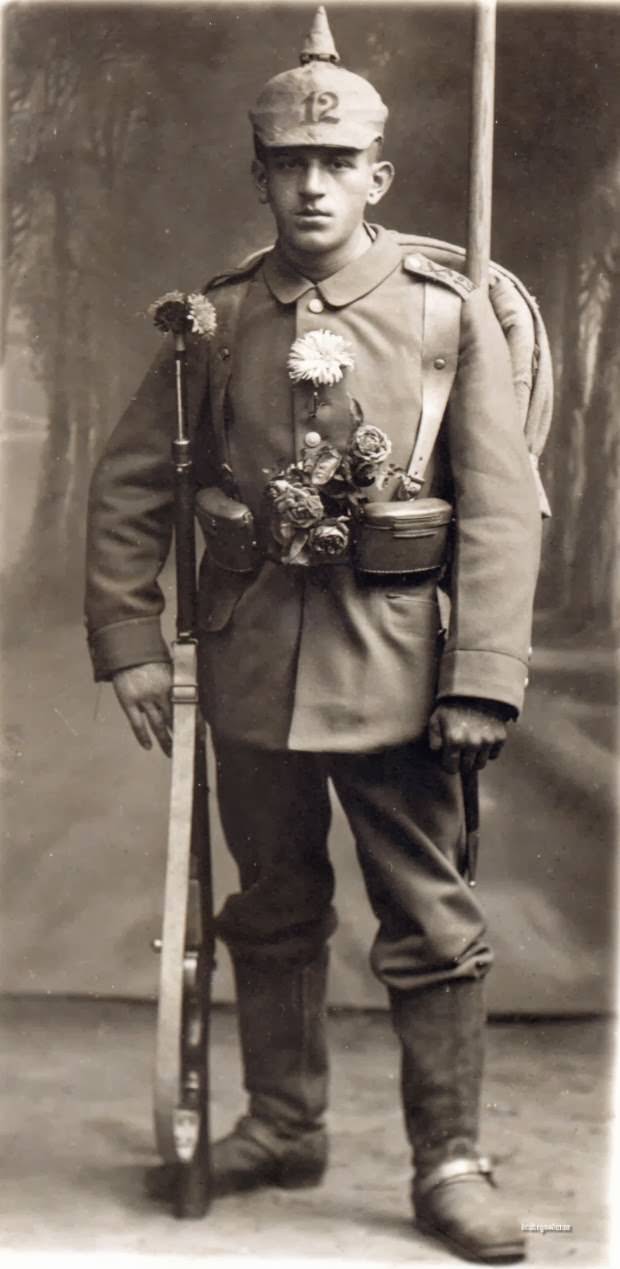
Belts, buckles, weapons, and full gear appear in many of the portraits, emphasizing the soldier’s military role. Yet the flower — small and fragile beside all that hardware — pulls the eye immediately.
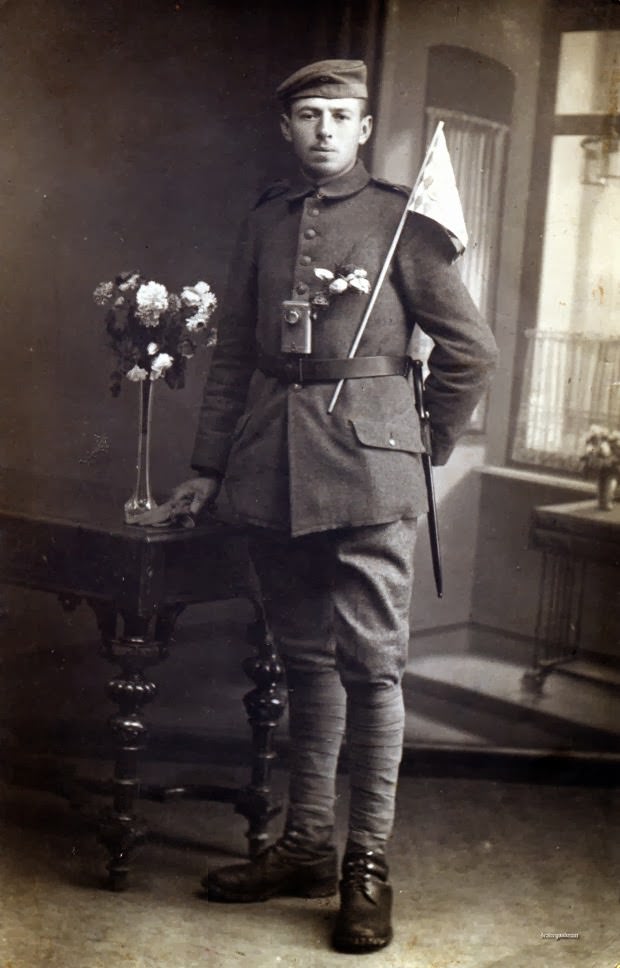
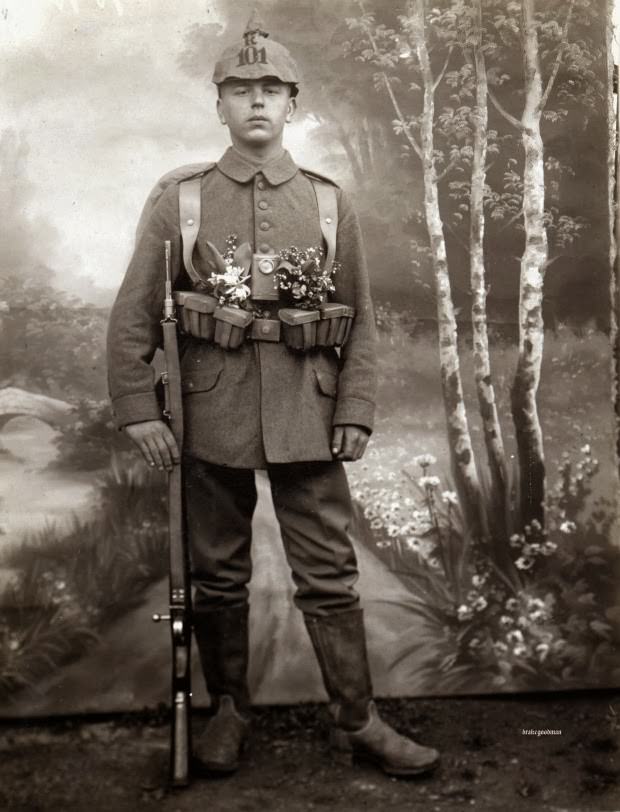
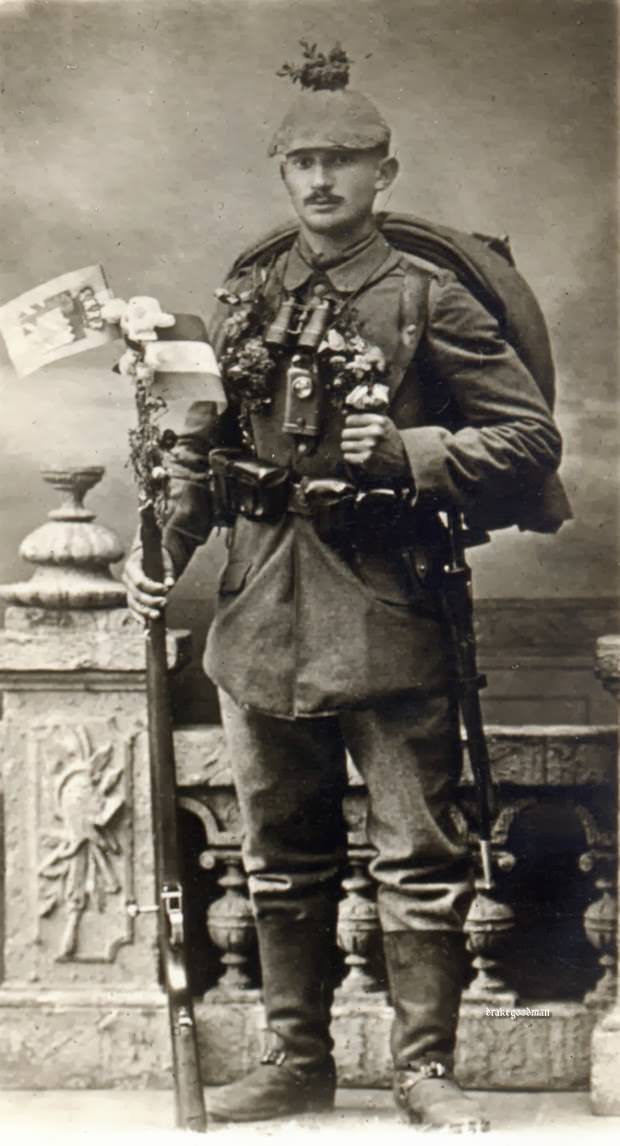
Across dozens of these portraits, the practice appears again and again, across different units, different ranks, and different regions of Germany. It was clearly a widespread custom rather than an isolated quirk.
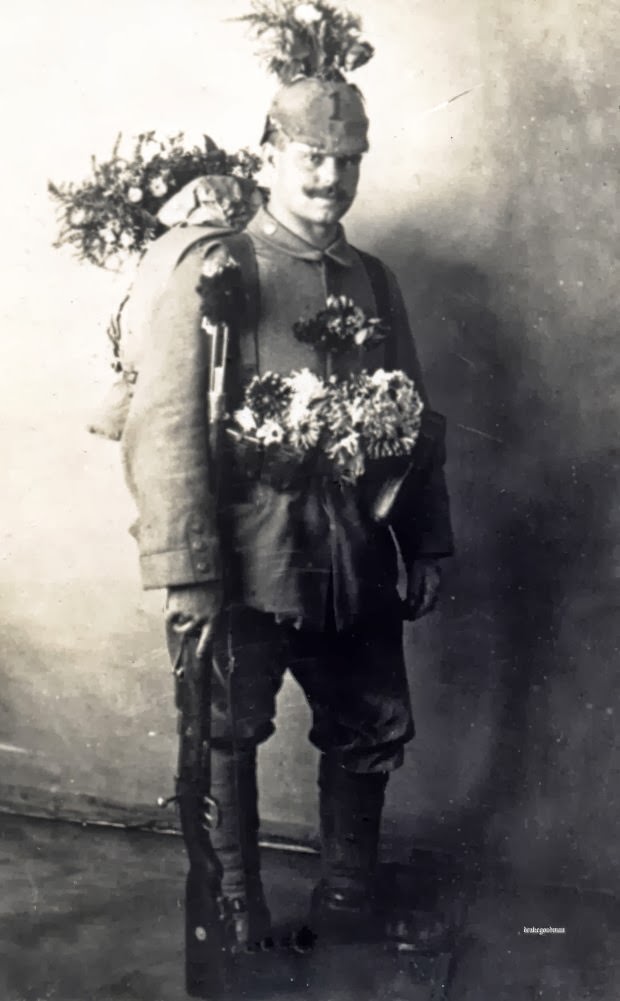
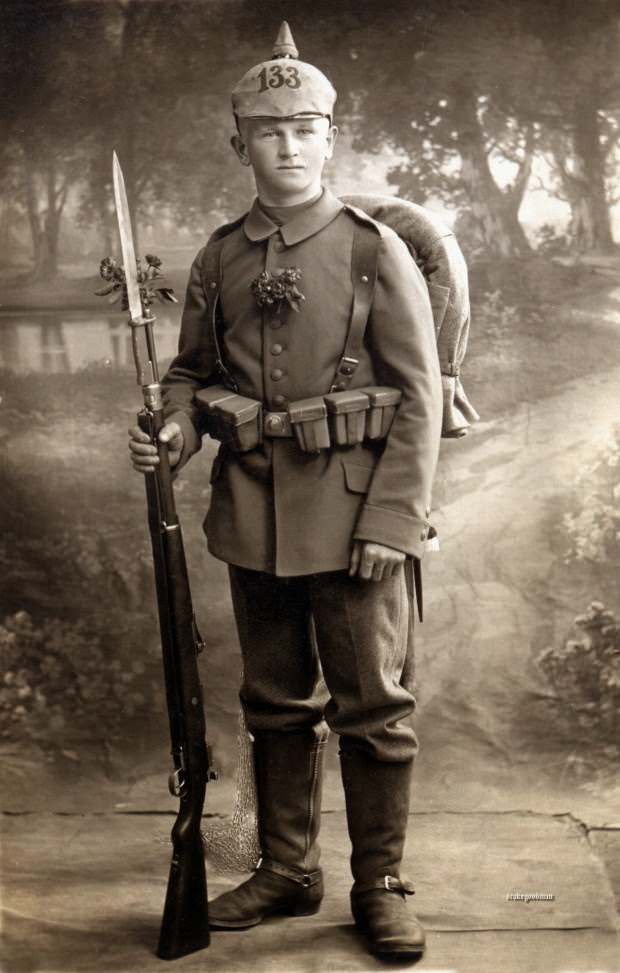
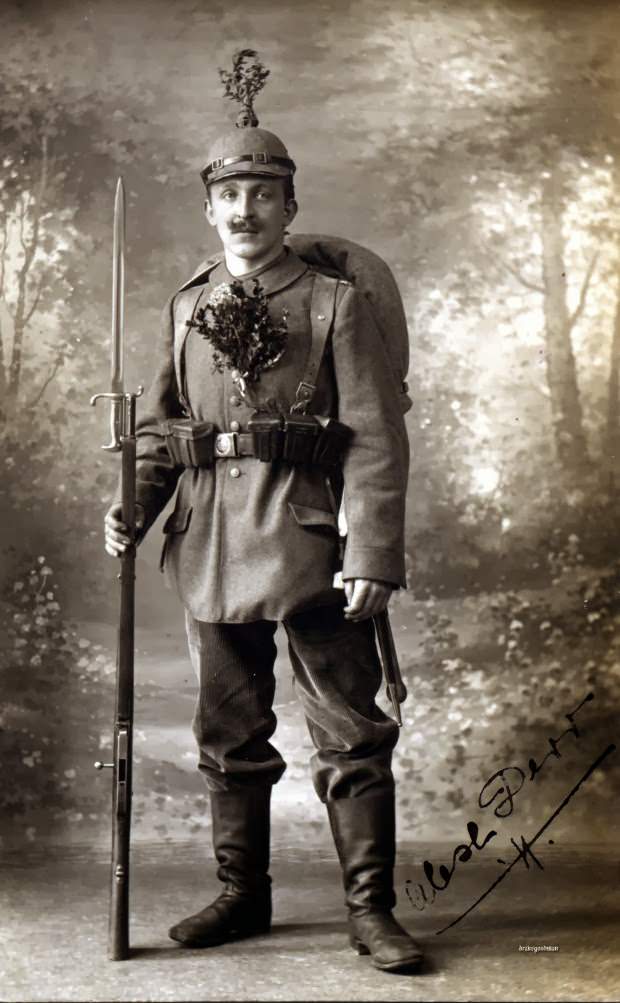
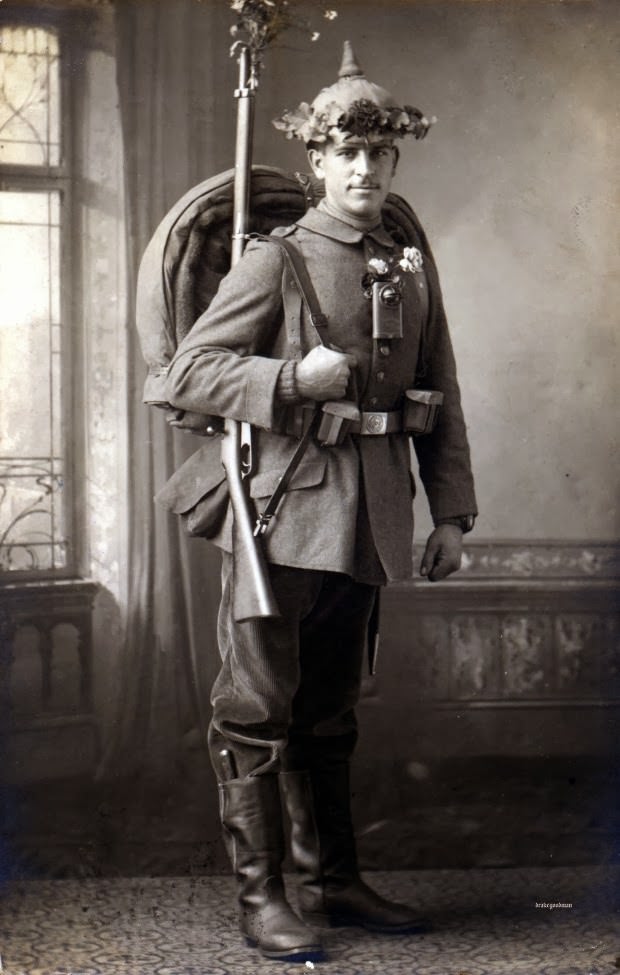
The portraits document young men at a precise turning point — uniformed, decorated, and holding something soft and living before stepping into a war that would reshape Europe entirely.