Oldsmobile was one of the longest-running automobile brands in American history. Ransom E. Olds founded the company in 1897, and over the next 107 years, it produced more than 35 million vehicles. In 1908, Oldsmobile became the second brand — after Buick — to join the newly formed General Motors. From that point on, it grew into one of GM’s flagship nameplates, consistently pushing the industry forward.
The brand racked up a string of firsts. In 1926, Oldsmobile introduced chrome-plating on its vehicles. Then in 1940, it launched the Hydra-Matic — the first fully automatic transmission offered on a mass-market car. These weren’t small steps. They helped define what the modern automobile would look like for decades. On April 29, 2004, the final Oldsmobile rolled off the assembly line at the Lansing Car Assembly plant in Michigan, closing the book on a 106-year run.
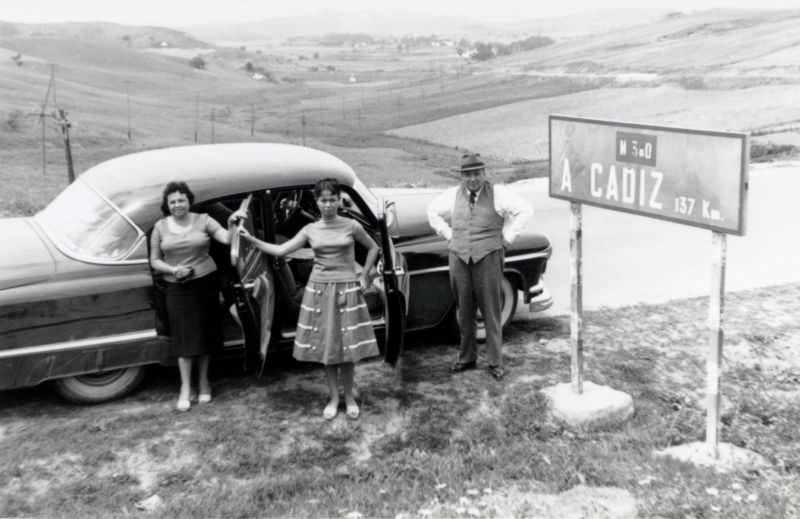
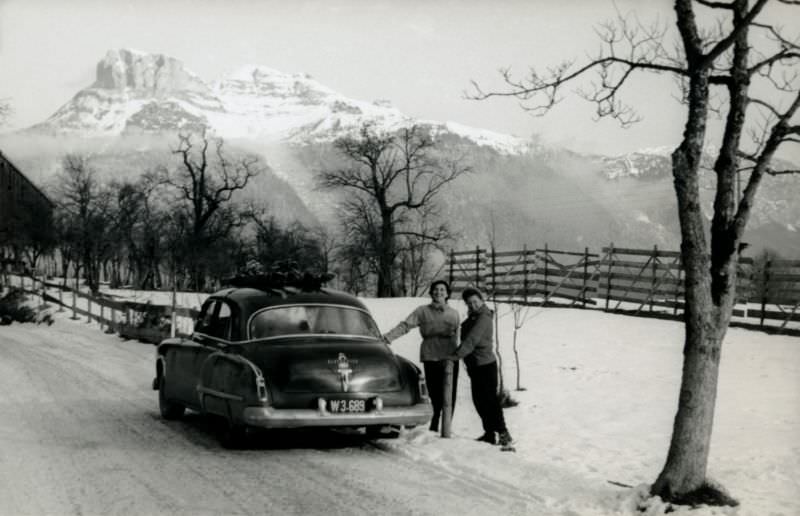
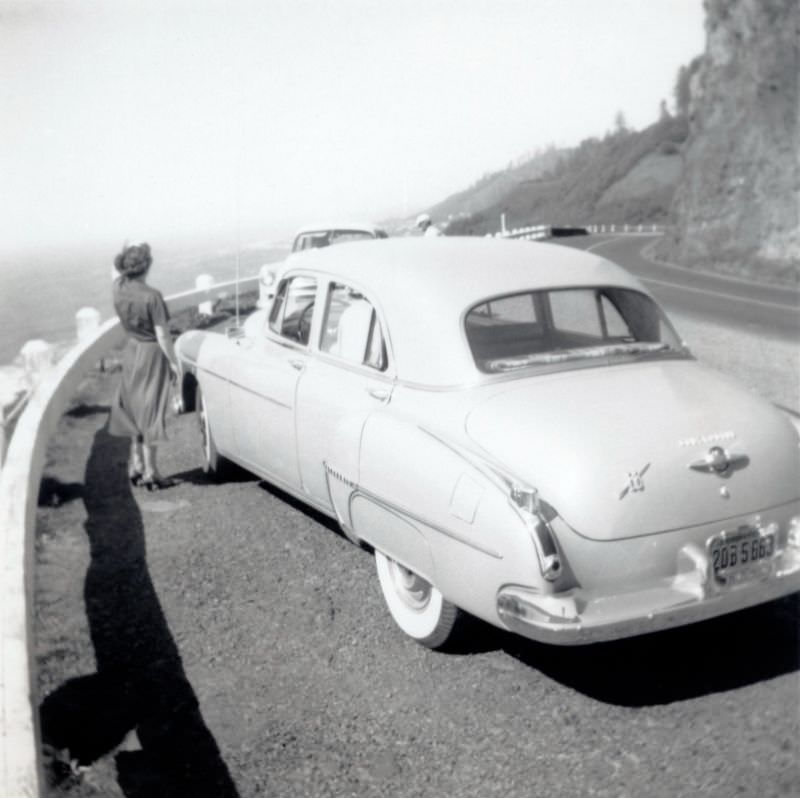
The photos below capture something more personal than factory milestones. They show real people — mostly women — proudly posing beside their Oldsmobiles from the 1930s through the 1950s. Each photo is a small window into everyday life: the clothes people wore, the roads they drove, and the pride they took in their cars. These aren’t showroom shots. They’re snapshots from driveways, country roads, and family outings.
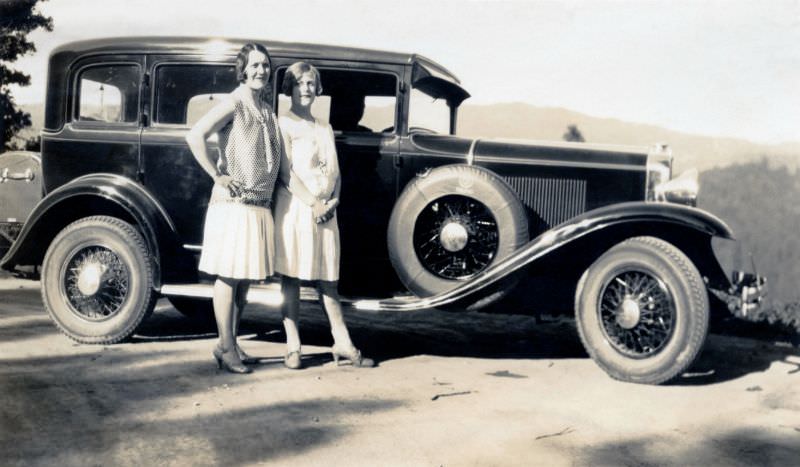
By 1930, Oldsmobile’s cars were already drawing attention as stylish machines worthy of showing off. The Viking Eight — a short-lived premium model — sat at the top of the lineup and attracted buyers who wanted something more refined. These early photos from the 1930s often feature rural backdrops: dirt roads, open fields, and gravel lanes. The cars were still relatively new to the countryside, and having one was a genuine statement.
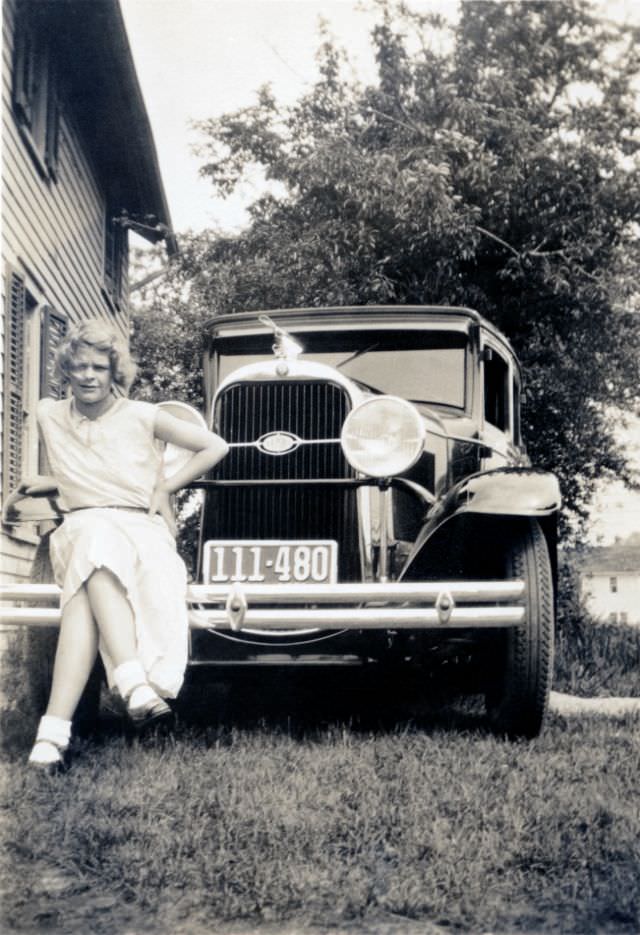
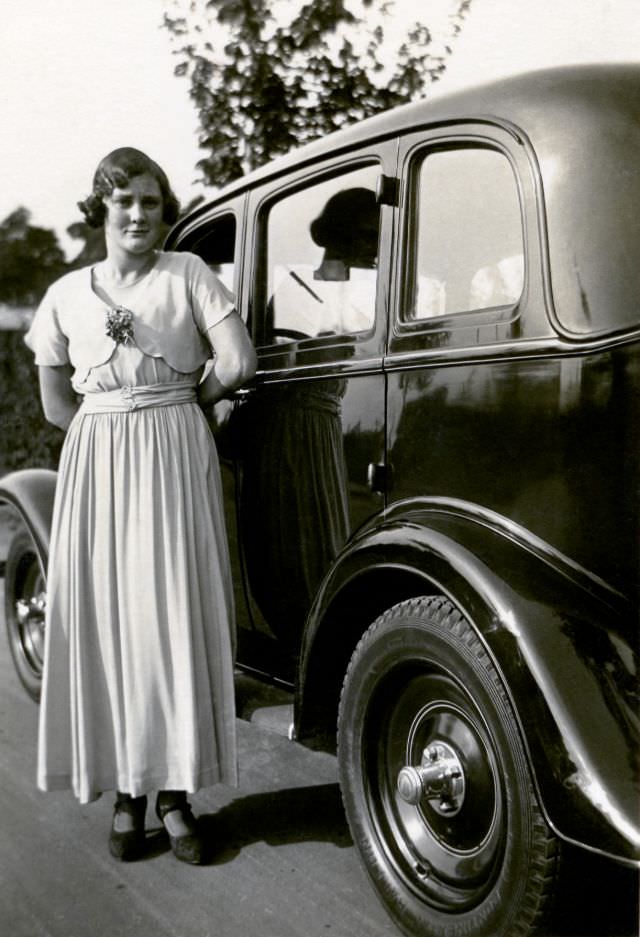
Oldsmobiles weren’t just popular in the United States. This 1934 photo taken in Nuremberg shows how far the brand’s reach extended. American cars held a certain allure in Europe during the interwar period — they were bigger, bolder, and more mechanically advanced than most European models of the era. Posing beside one was its own kind of status symbol.
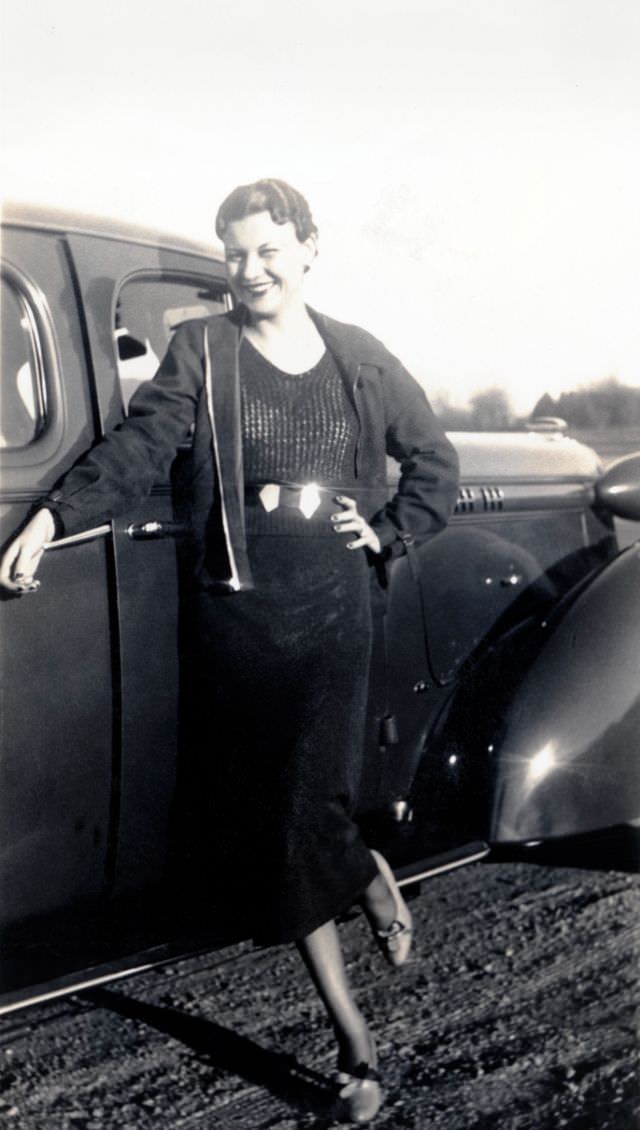
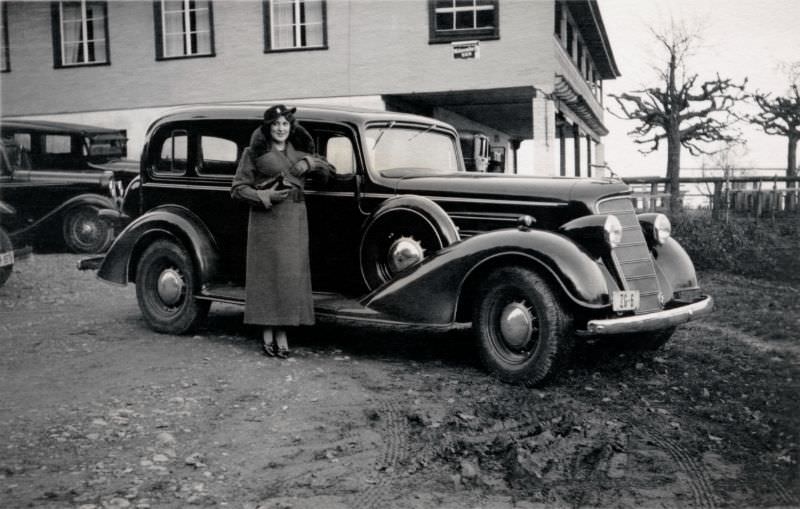
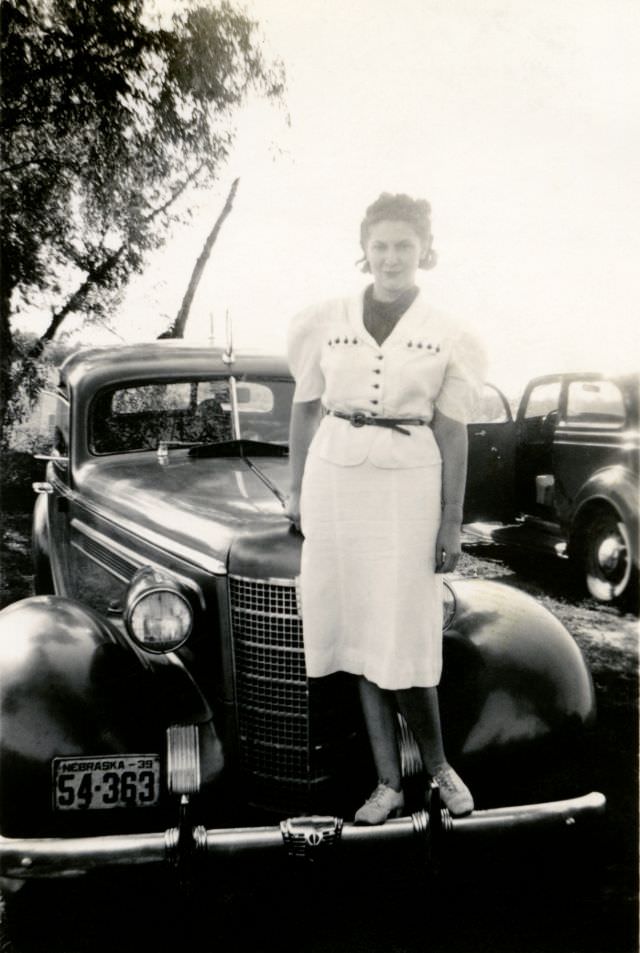
The late 1930s were a strong period for Oldsmobile’s design. The Eight series featured longer bodies, sweeping fenders, and a more streamlined look compared to the boxy styles of the early decade. Women photographed with these cars often dressed to match the occasion — fur-collared coats, ankle-length gowns, and polished shoes were common. The car and the outfit together made for a complete picture of mid-century aspiration.
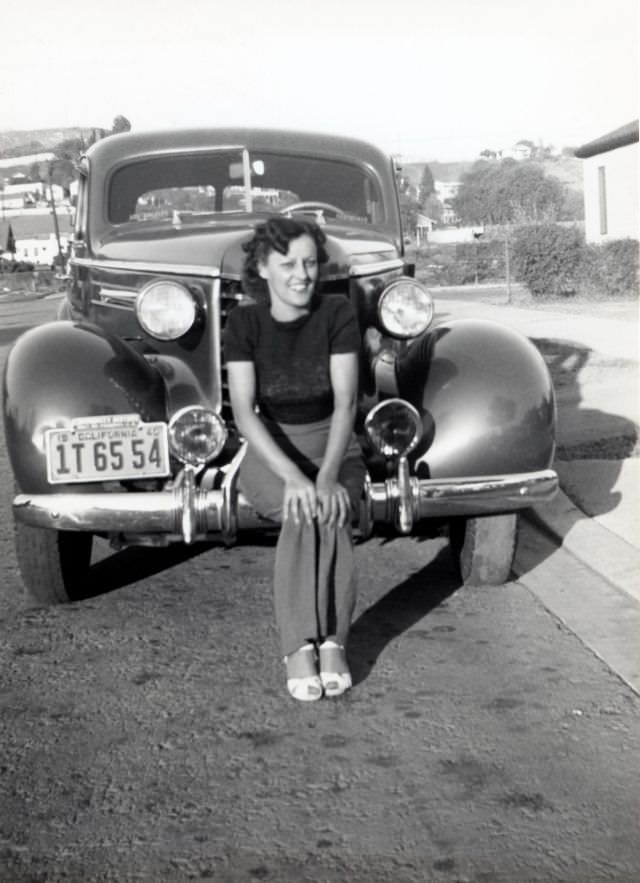
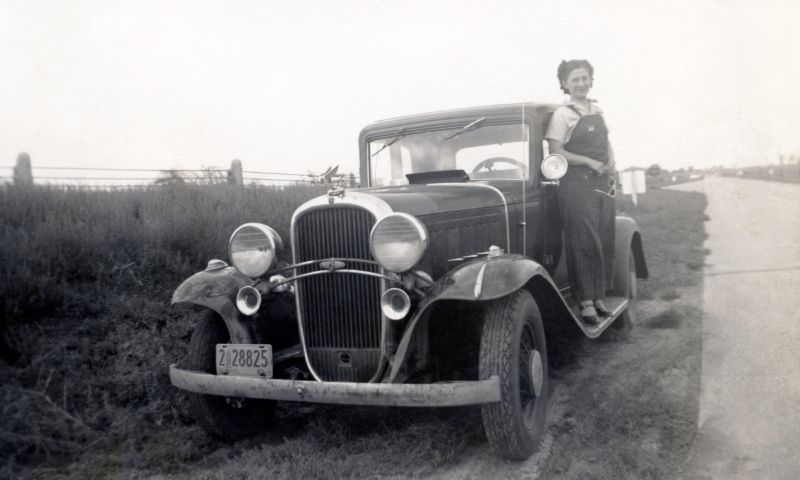
Not every photo from this era shows a formal pose. This shot of a young woman in bib overalls leaning on the running board of a 1932 Oldsmobile Eight is a refreshing contrast to the more dressed-up images. Running boards — the metal steps that ran along the sides of pre-war cars — were a practical feature, but they also became a natural place to perch for a photo.
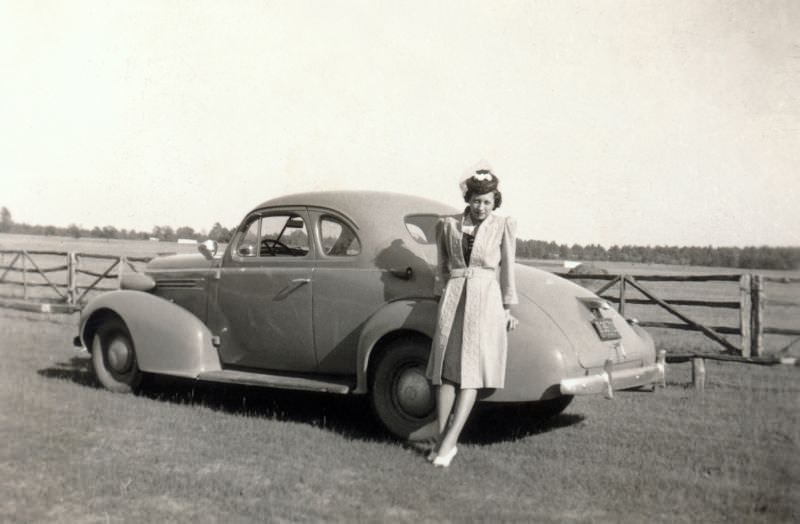
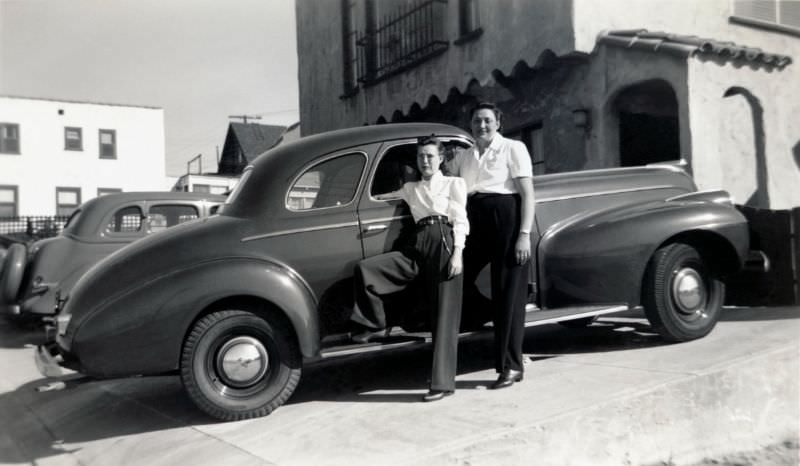
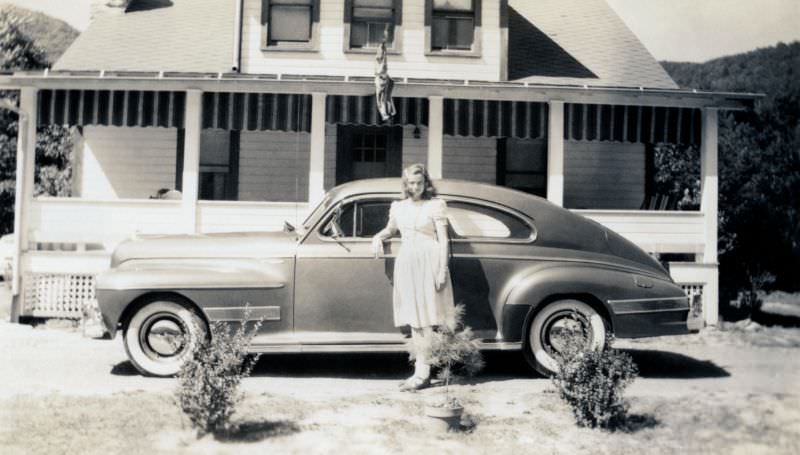
The 1940 Oldsmobile Club Coupe represented exactly the kind of vehicle the brand became famous for — comfortable, well-appointed, and attainable for the growing American middle class. It was also the year Oldsmobile debuted the Hydra-Matic automatic transmission as a factory option. Drivers no longer needed to operate a clutch pedal, which made the car significantly easier to drive, especially in city traffic.
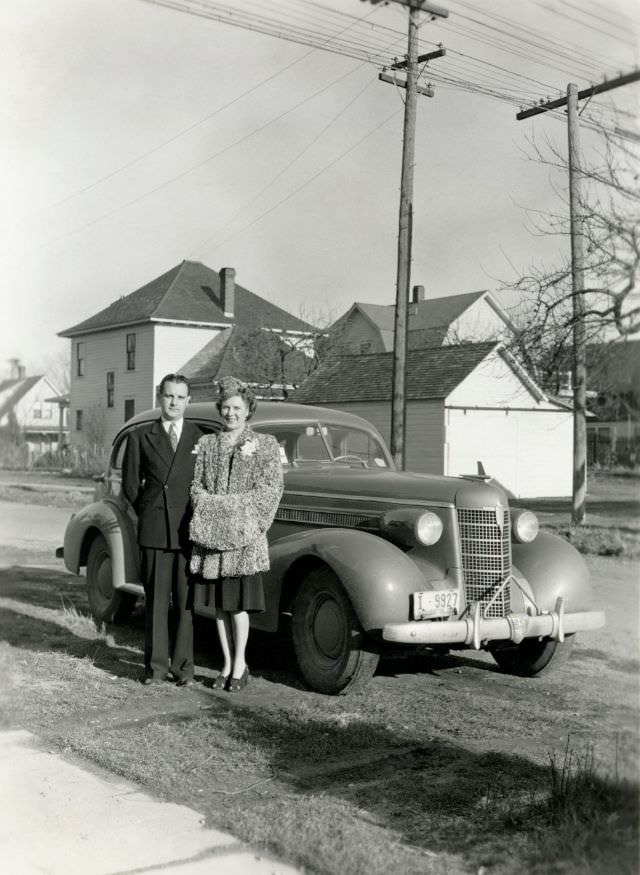
With civilian car production halted from 1942 to 1945 due to World War II, photos of pre-war Oldsmobiles wearing 1942 license plates — like this one from Washington state — represent the last batch of cars Americans bought before the factories switched to war production. Many of those cars had to last families well into the late 1940s simply because there was nothing new to buy.
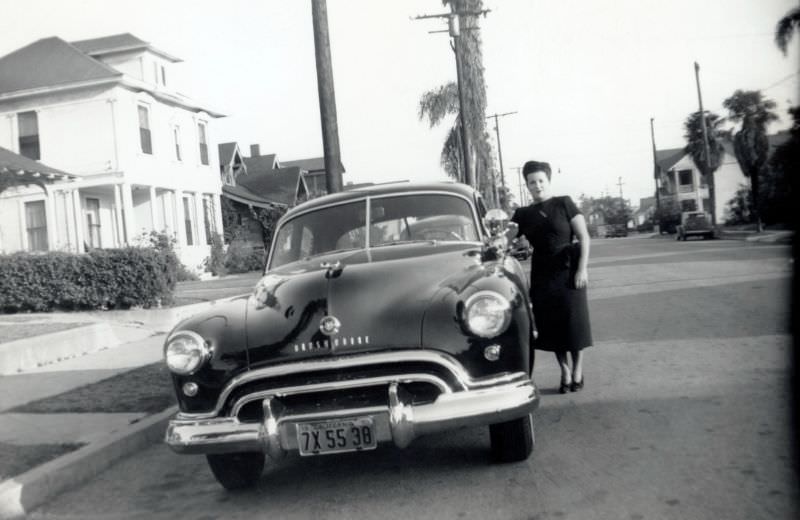
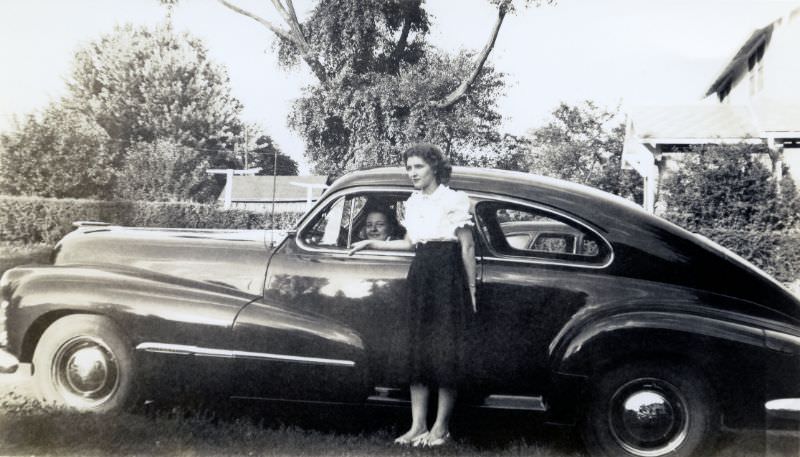
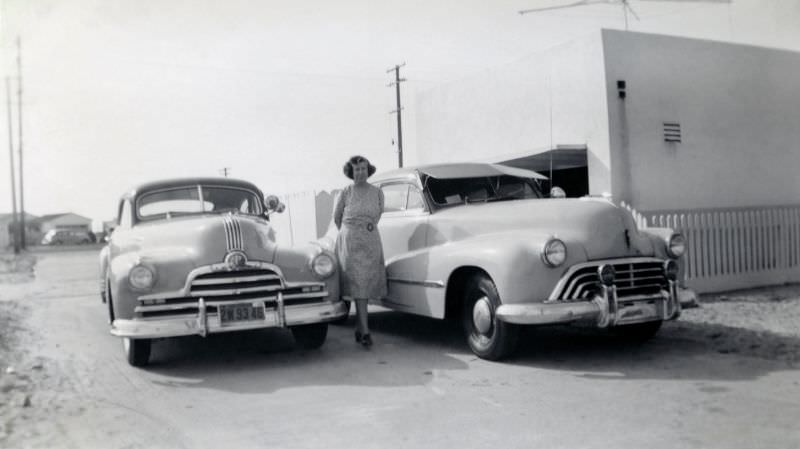
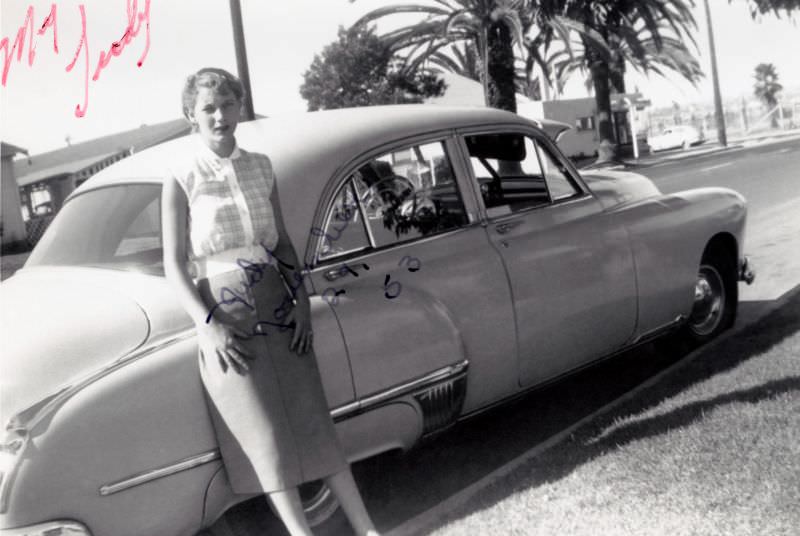
When civilian production resumed after the war, Americans were eager to buy new cars. Oldsmobile’s postwar models — including the Dynamic Cruiser series — were essentially updated versions of the 1942 designs, but buyers didn’t mind. The pent-up demand was enormous. Dealerships had waiting lists, and people posed proudly with their new purchases the moment they brought them home.
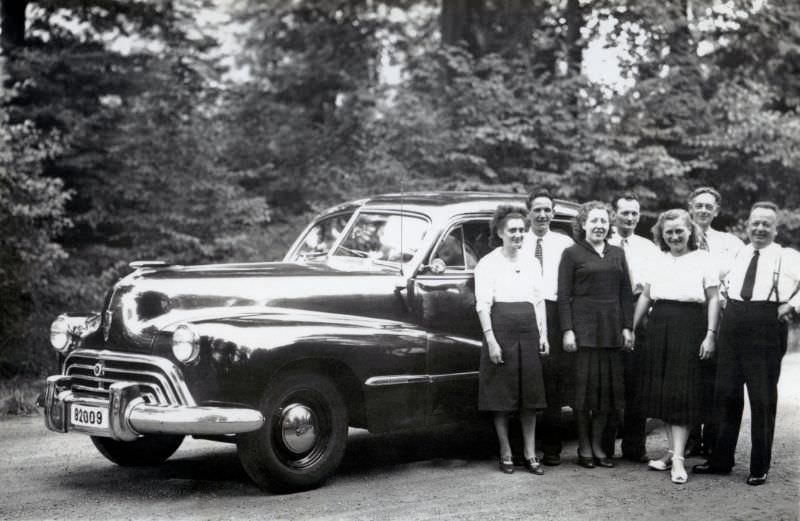
American cars were popular exports in the postwar years. A 1947 Oldsmobile photographed with a Belgian family in 1948 was no small acquisition — importing a large American sedan to Europe in the late 1940s required real means. The car towers over the assembled family in the way only a full-sized American automobile can, making the pride in the photo entirely understandable.
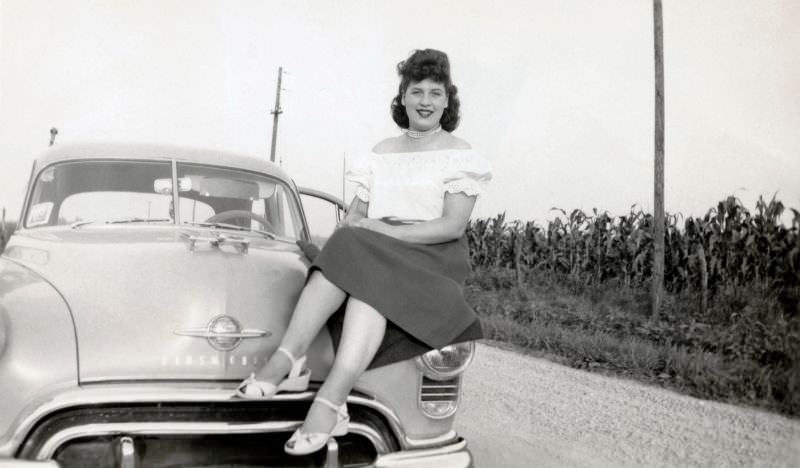
The 1949 Oldsmobile 88 was a landmark car. It combined a light, modern body with Oldsmobile’s powerful new Rocket V8 engine — one of the first modern overhead-valve V8s offered in a production car. The result was a fast, relatively affordable vehicle that dominated early NASCAR racing. Sitting on the fender of an 88 in a cornfield in 1950, the woman in this photo is posing with one of the most significant American cars of its generation.
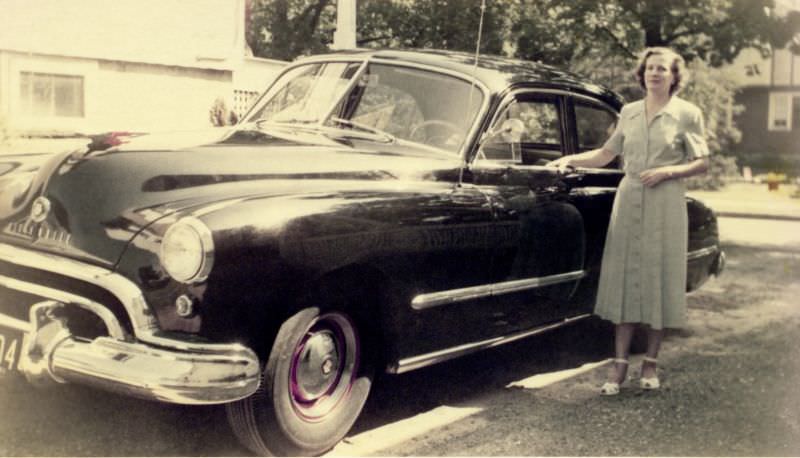
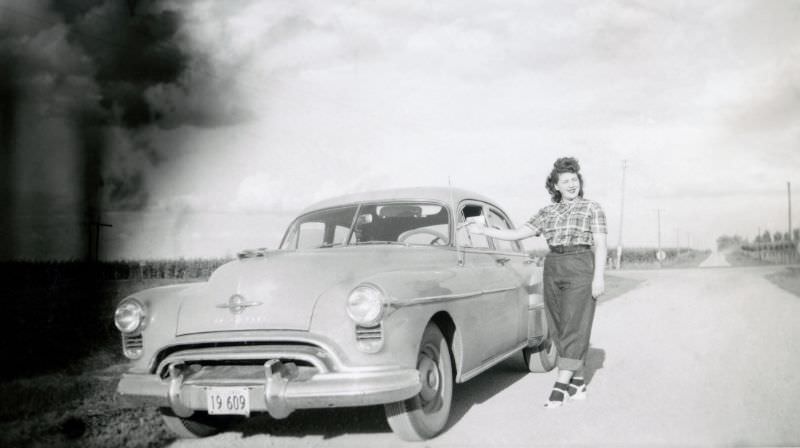
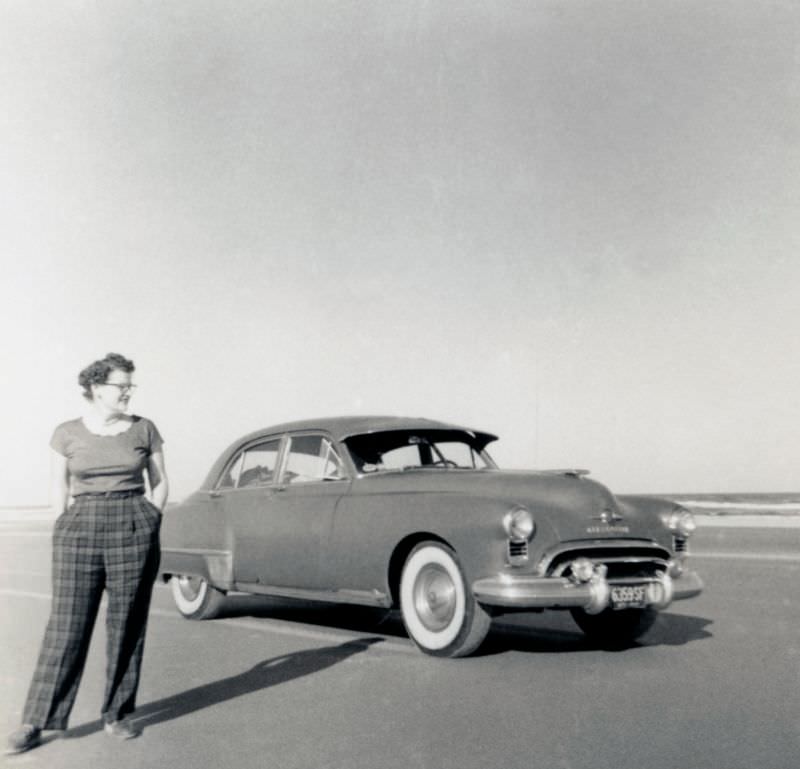
Early 1950s fashion shows up clearly in these photos. Tartan trousers, peep-toe sandals, and 3/4-length skirts appear again and again. The women photographed here are dressed for their day — not for a showroom shoot — which makes the images feel genuinely candid. The late afternoon light in many of these countryside shots adds a warmth that studio photography simply can’t replicate.
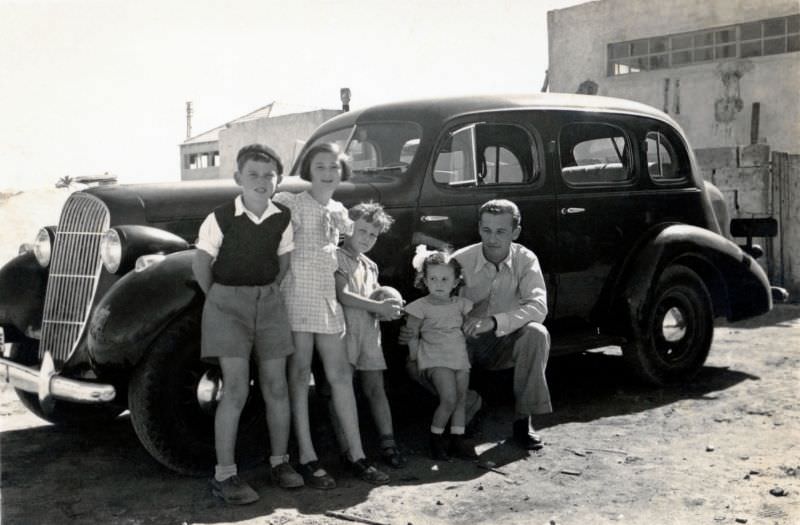
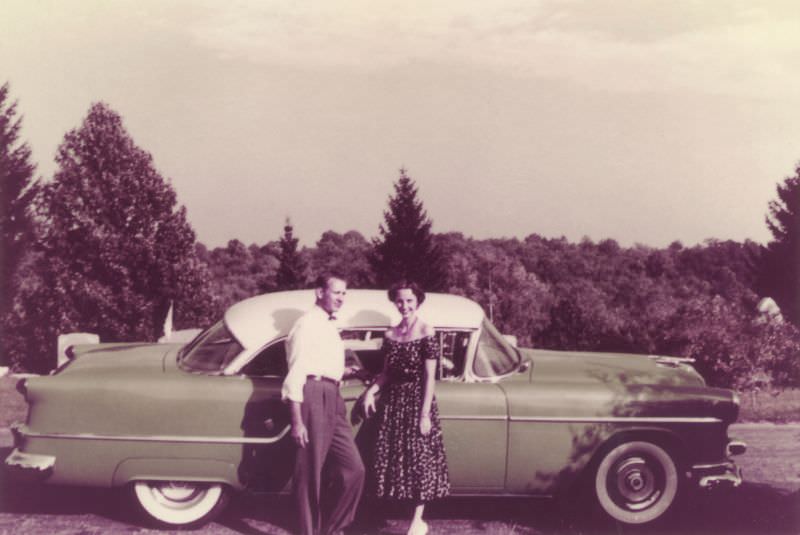
By the mid-1950s, Oldsmobile’s two-tone paint combinations had become one of the brand’s most recognizable styling features. The Super 88 Holiday Coupe — with its pillarless hardtop body — was a showstopper. The print marked “Spring 1955 – Al & Barb.” on the reverse turns this into more than just a car photo. It’s a personal record of a specific moment shared by two real people.
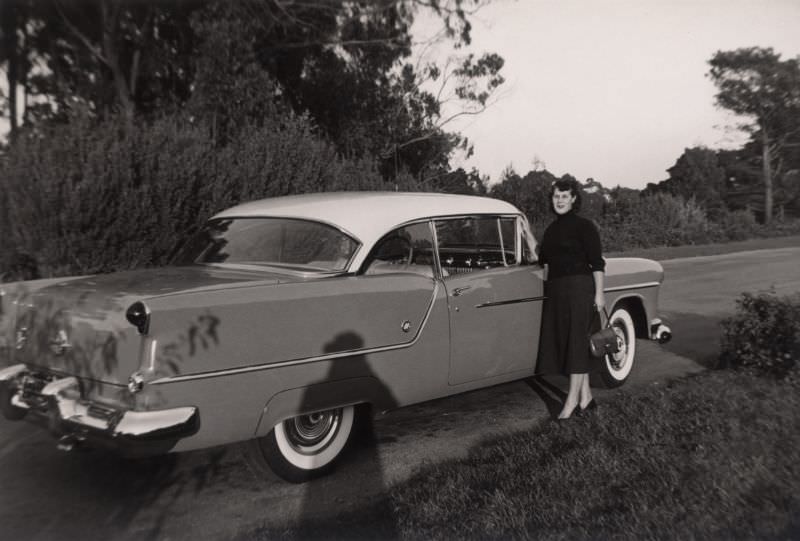
Golden Gate Park in San Francisco served as the backdrop for this 1954 Super 88 photo. California appears frequently in this collection — its year-round sunshine and scenic roads made it an ideal setting for car photography, formal or otherwise. The handwritten notes on the backs of many prints in this era are what transform anonymous snapshots into historical documents.
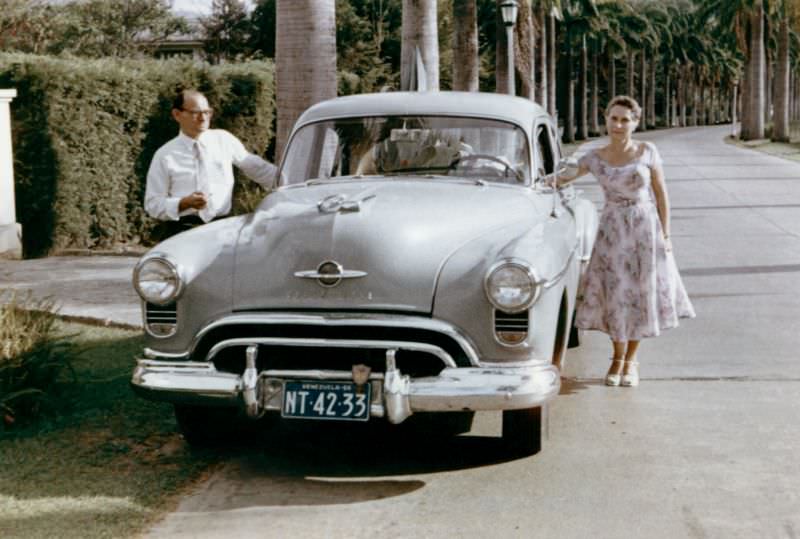
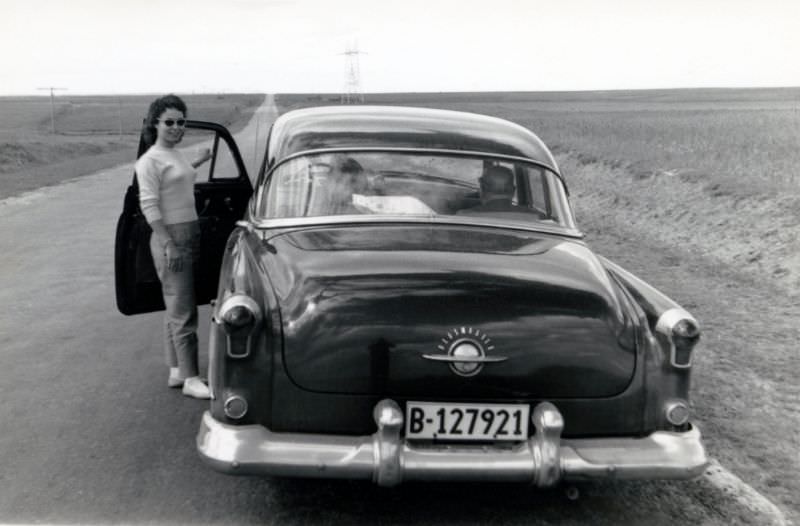
The Oldsmobile 98 was the brand’s top-of-the-line model throughout the 1950s. This photo taken in Barcelona shows that the appeal of American cars extended well beyond U.S. borders. Venezuela, Belgium, Spain, Israel, and Austria all appear as locations in this collection — a testament to how widely Oldsmobiles circulated in the postwar world.
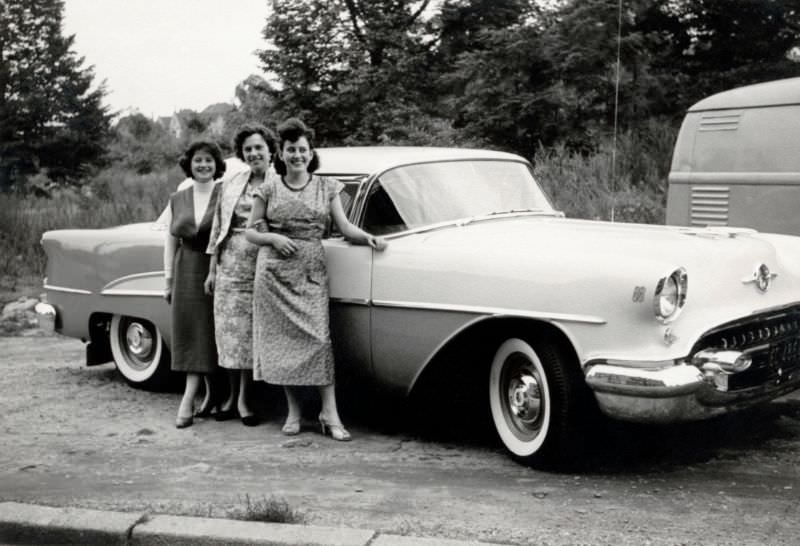
The 1955 Oldsmobile 88 was one of the brand’s best-looking models of the decade. The two-tone paint — a hallmark of 1950s American car design — made the car look even more dramatic against an open countryside backdrop. Three women gathered around it here, and the mood is unmistakably celebratory. Cars like this one were built to impress, and they did.