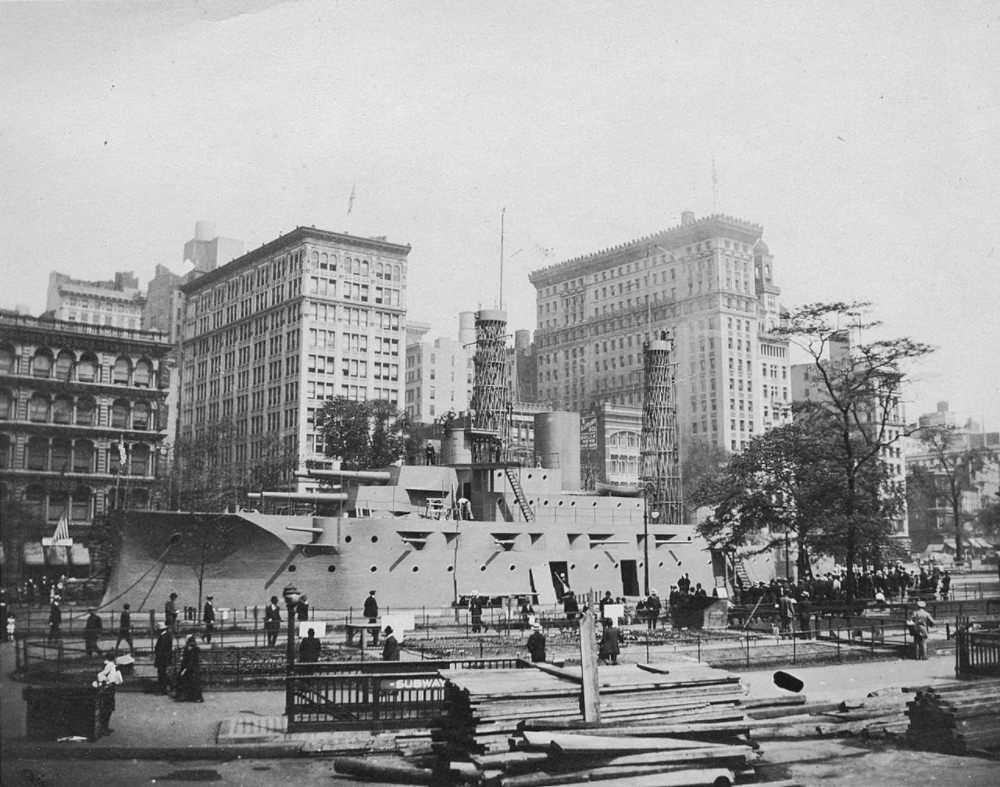
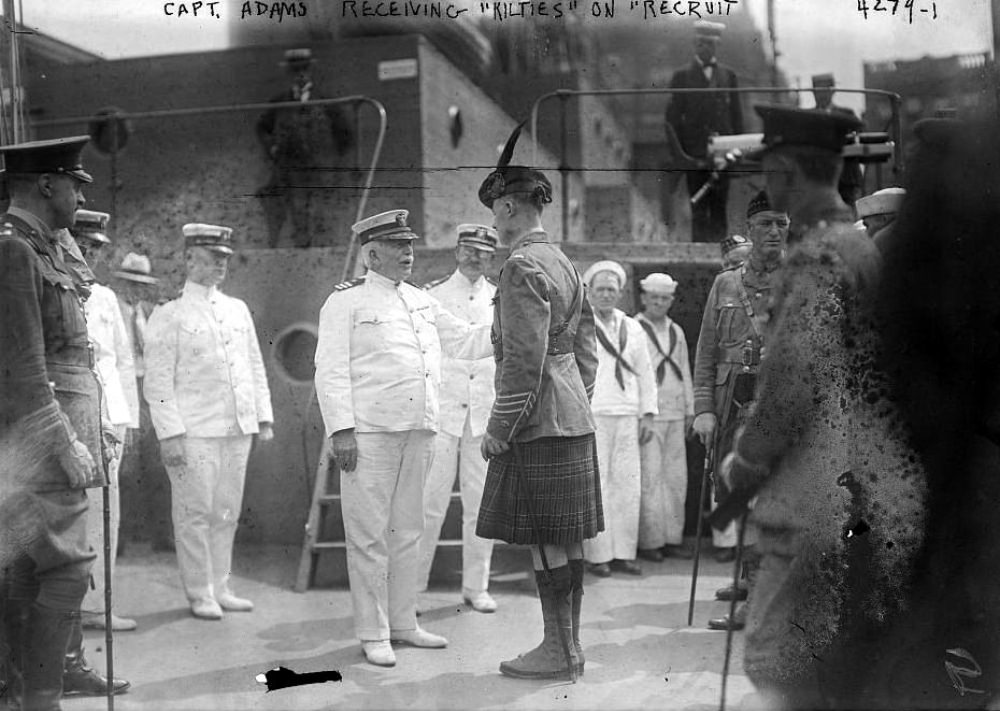
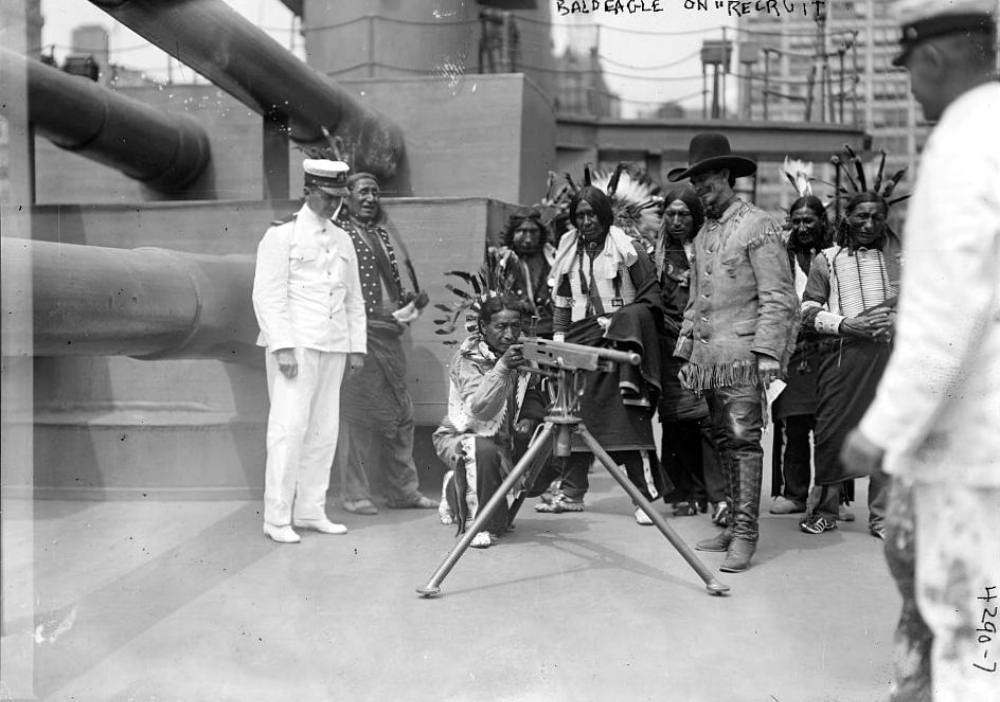
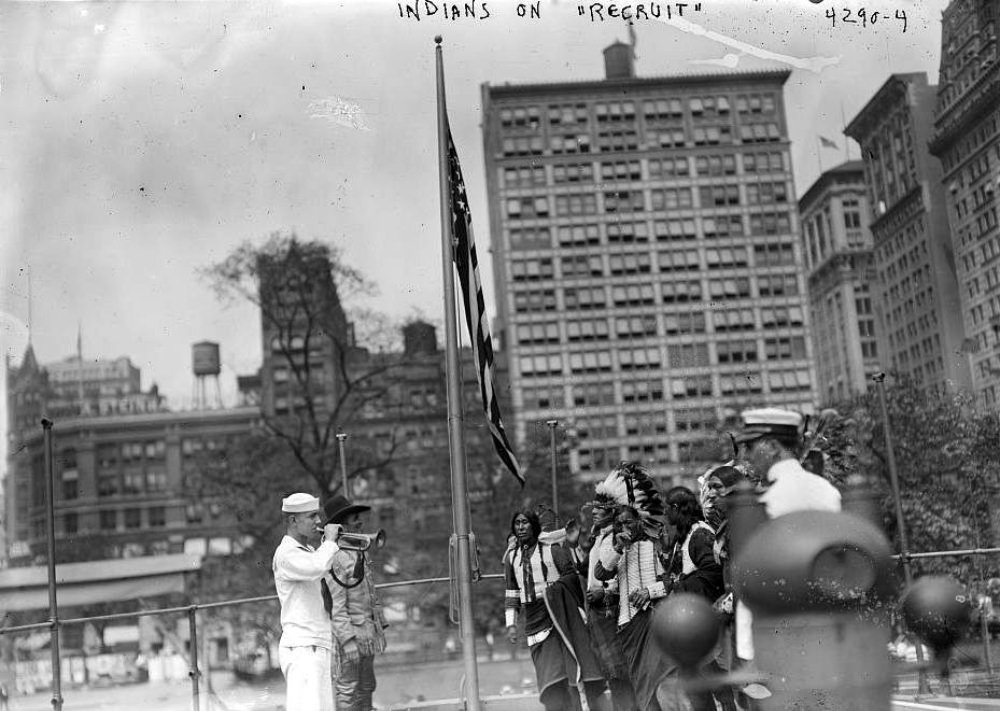
In the middle of World War One, the U.S. Navy planted a full-scale wooden battleship in the heart of New York City. It sat not in a harbor or a dry dock, but in Union Square — one of Manhattan’s busiest public spaces. It was called the USS Recruit, and it never sailed a single mile.
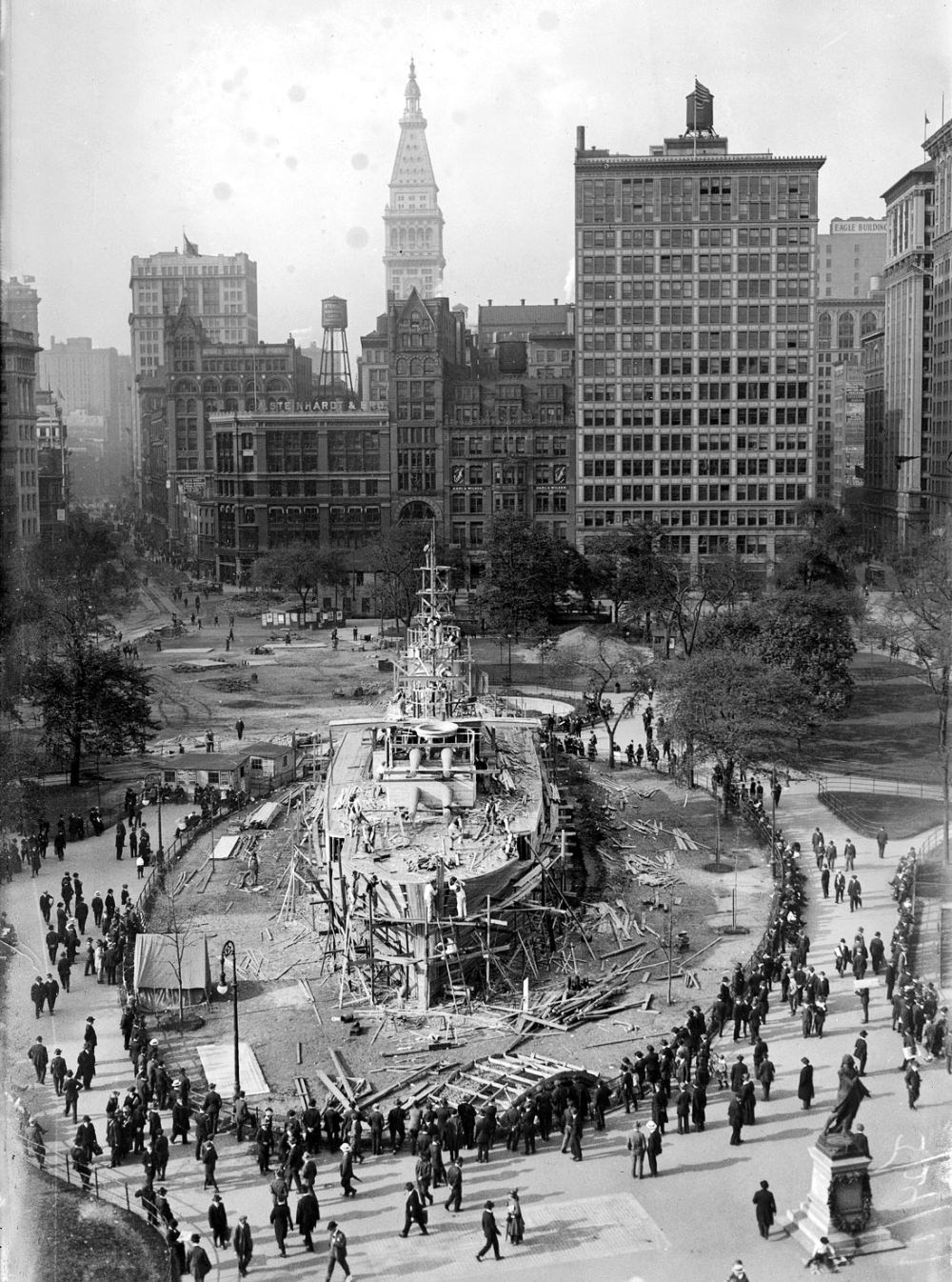
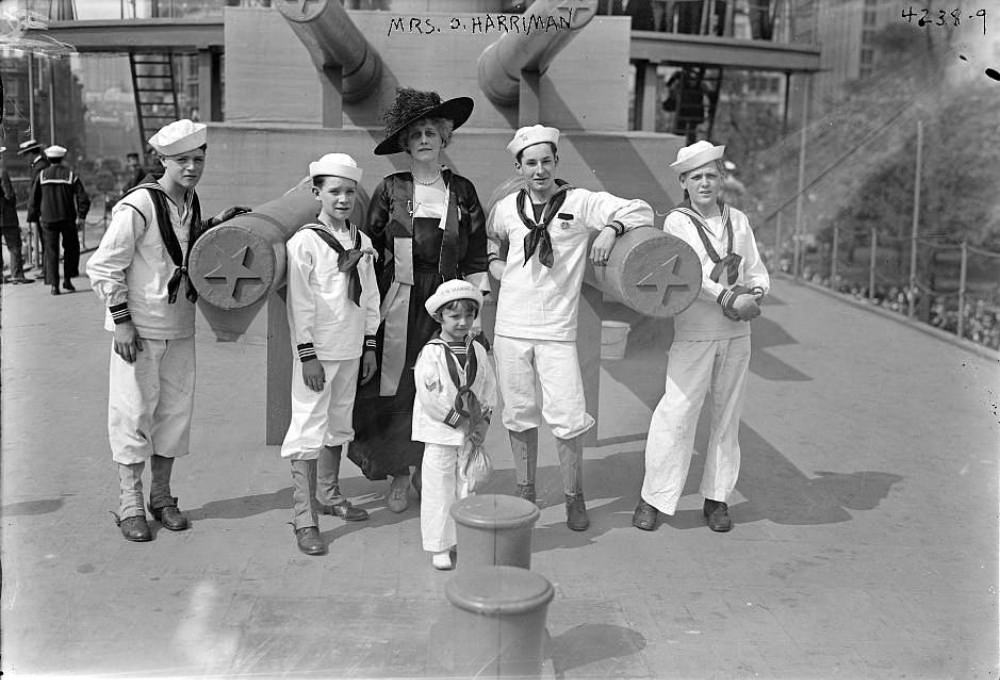
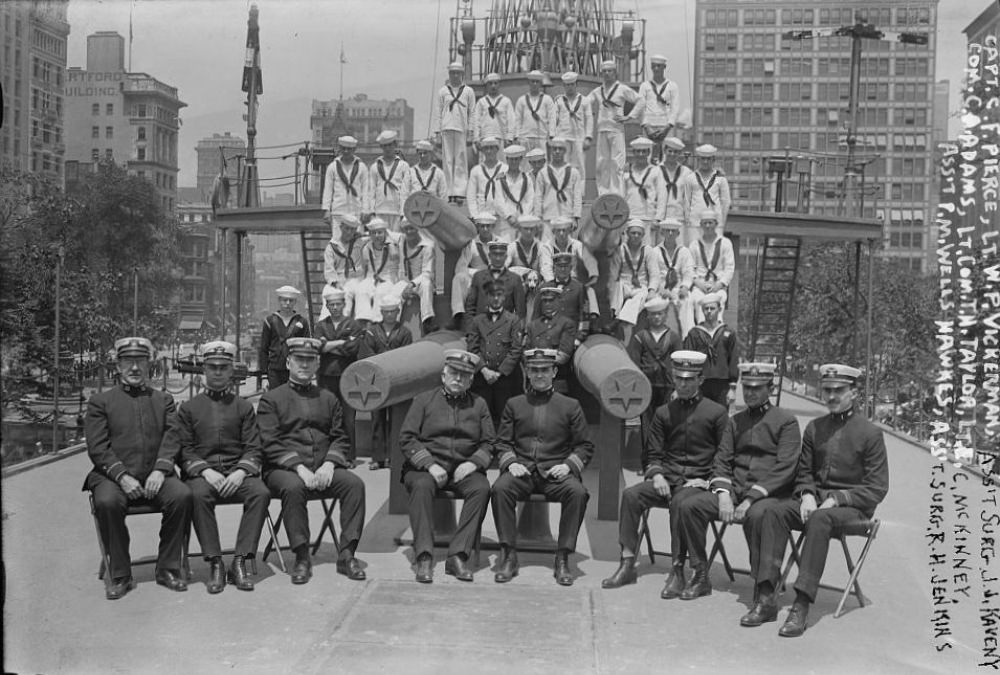
The Navy built Recruit in 1917 as a recruiting tool and training facility. The ship was a wooden mockup designed to look exactly like a dreadnought battleship. From the street, it was convincing. Two cage masts rose above the deck, a conning tower sat amidships, and a single dummy smokestack completed the silhouette — matching the profile of real U.S. battleships of the era.
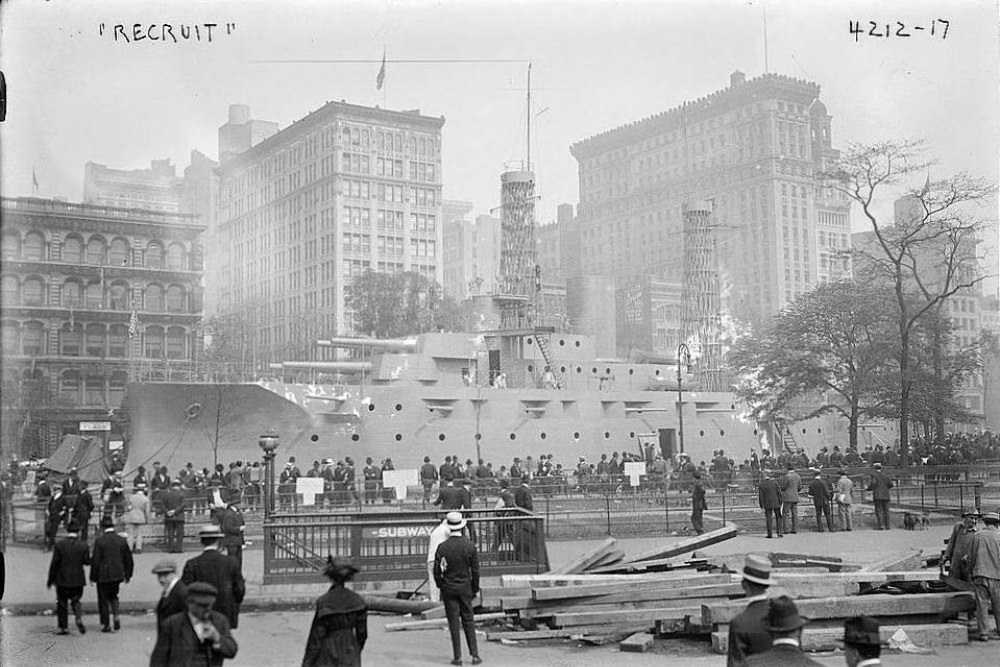
The ship’s fake armament was detailed enough to impress visitors. Six wooden 14-inch guns were arranged in three twin turrets, replicating the main battery of an actual dreadnought. Ten wooden 5-inch guns sat in casemates along the hull, standing in for the secondary anti-torpedo-boat weapons a real warship would carry. Two replica one-pounder saluting guns rounded out the display.
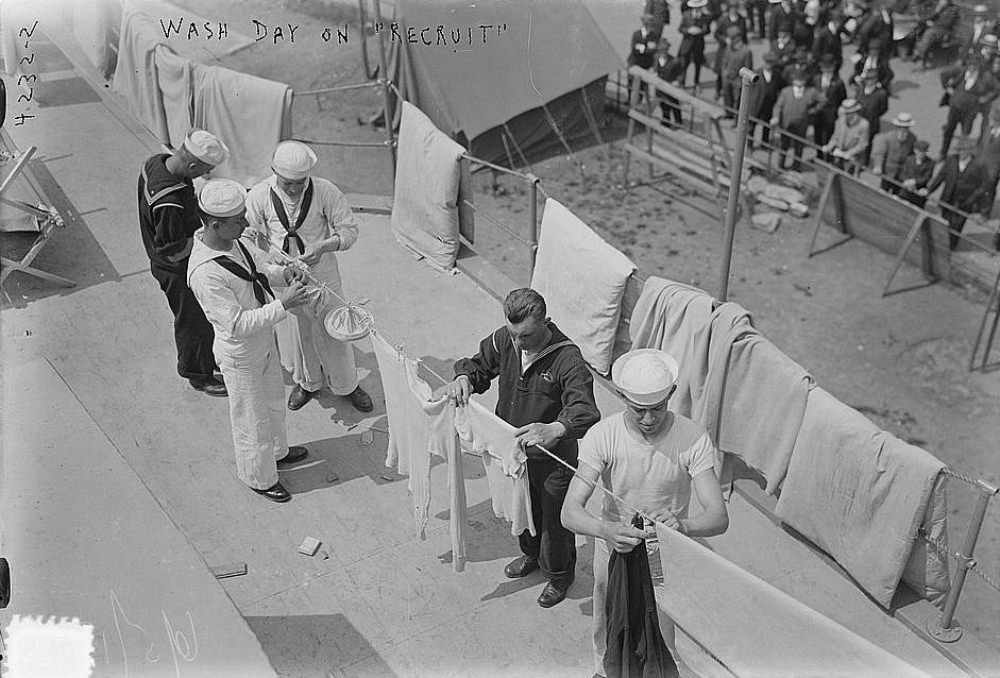
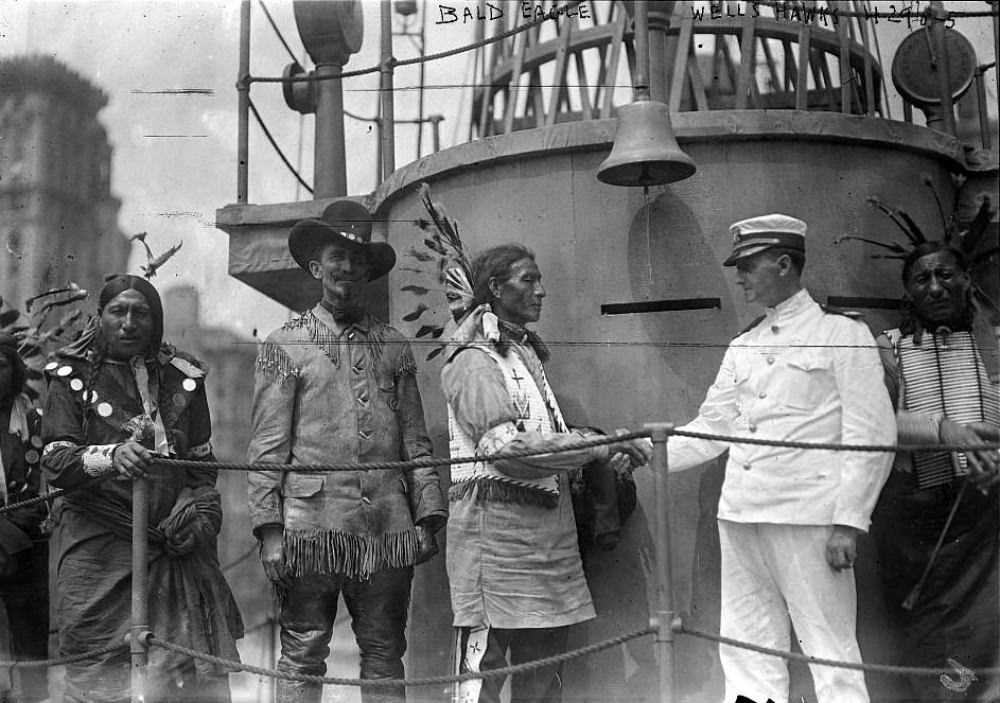
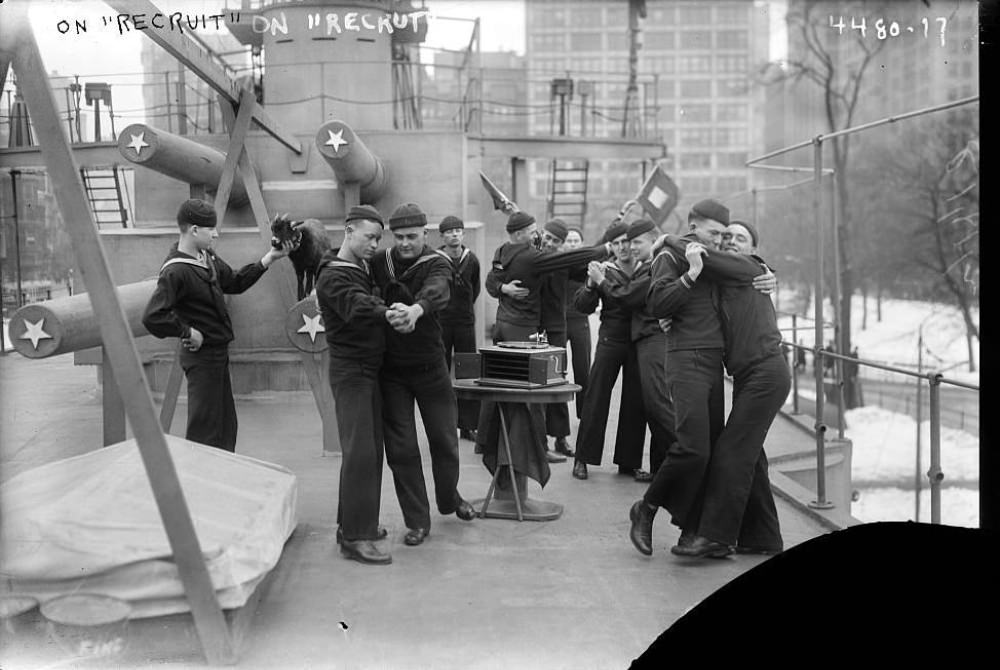
Despite being a landlocked mockup, Recruit was commissioned as an actual vessel of the U.S. Navy. It operated under the command of Acting Captain C. F. Pierce and was crewed by 39 bluejackets from the Newport Training Station. These were real sailors living and working aboard a ship that went nowhere.
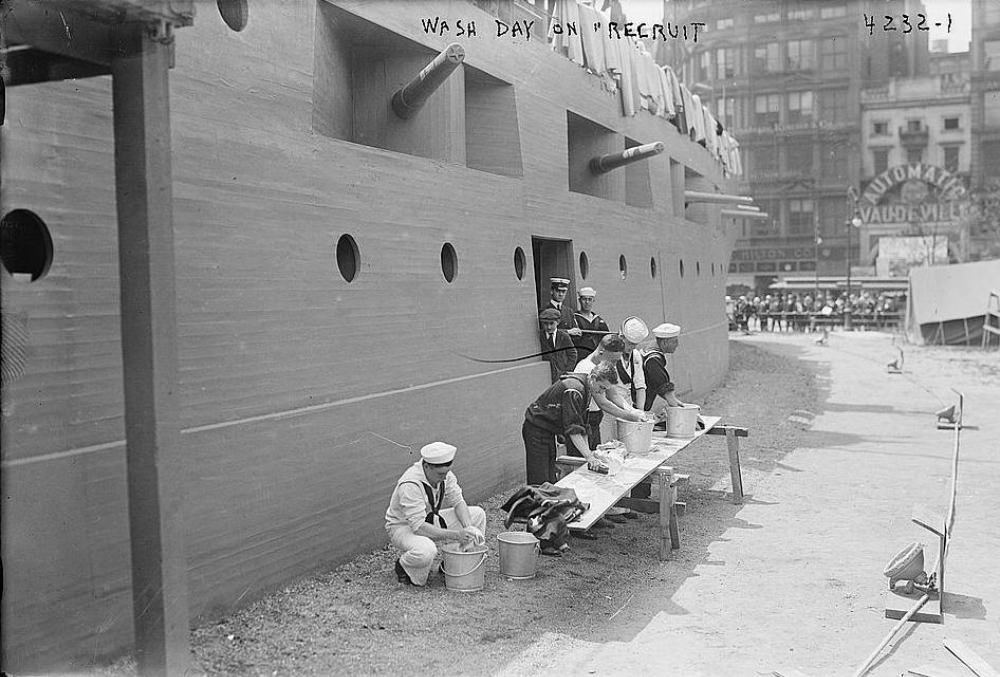
Life aboard Recruit was more comfortable than most sailors expected. The ship had fore and aft examination rooms, an officer’s cabin fitted with a wireless station, and crew quarters. Its heating and ventilation system was powerful enough to cycle the air inside the ship ten full times within a single hour — a notable engineering feature for a wooden structure sitting on a city square.
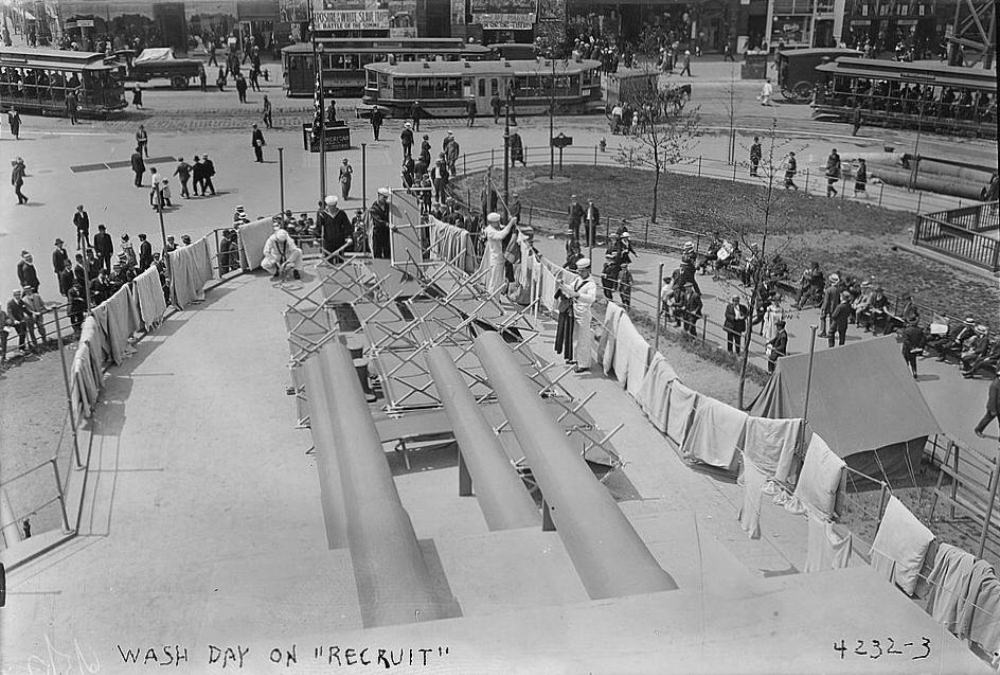
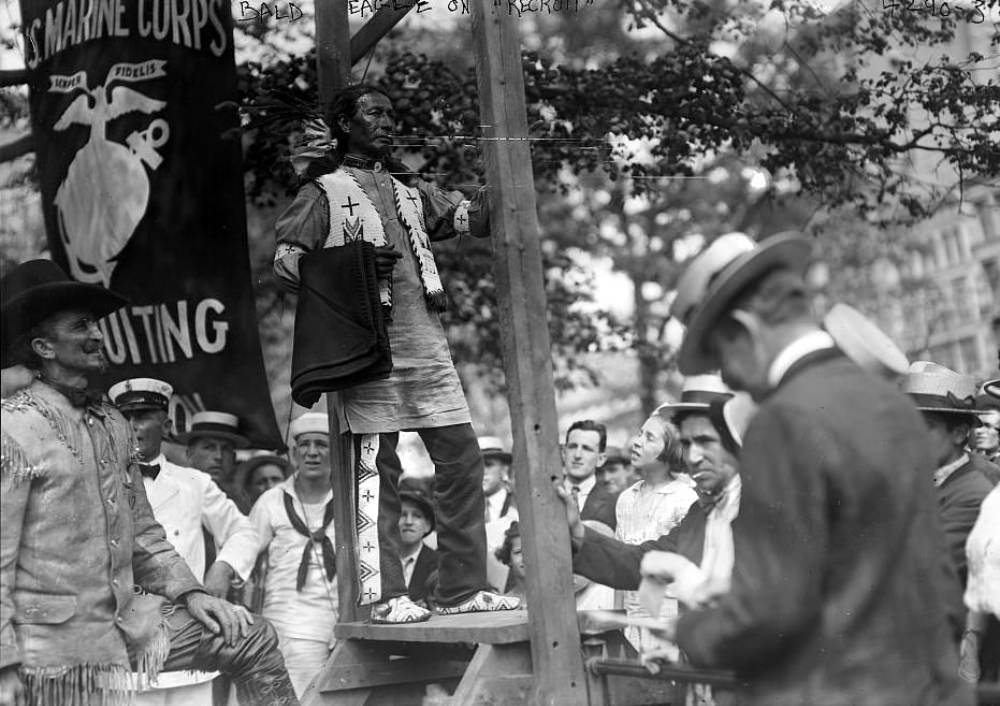
The Navy opened Recruit to the public. Civilians could tour the ship and see firsthand how a Navy warship was organized and operated. This was a deliberate part of the recruiting strategy — let ordinary New Yorkers walk the decks, handle the gear, and talk to real sailors. The experience was designed to turn curiosity into enlistment.
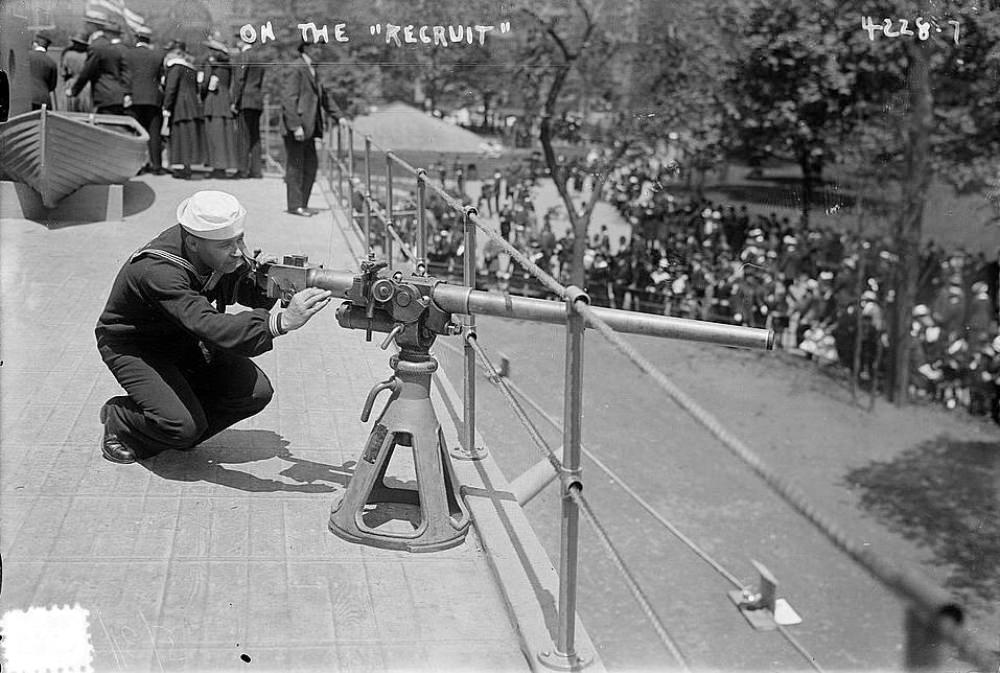
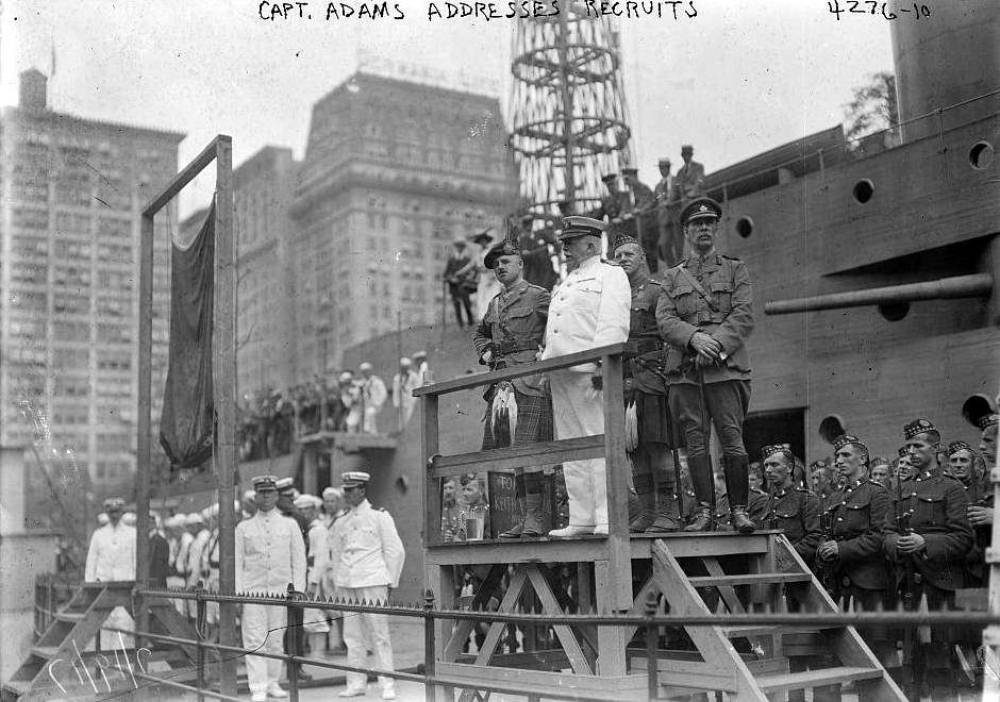
Recruit also served as the Navy’s official recruiting headquarters for New York City. Enlistment processing happened right on board. A man could walk up off the street, tour the ship, and sign up for the Navy before he left. The setup made the entire process immediate and tangible in a way that a poster or a pamphlet simply could not.
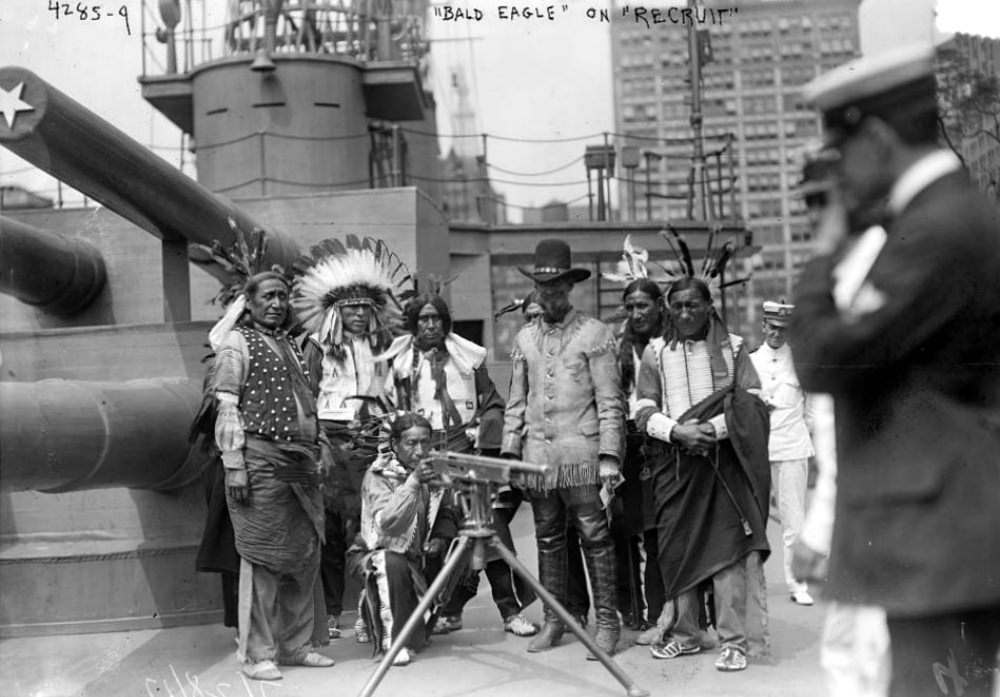
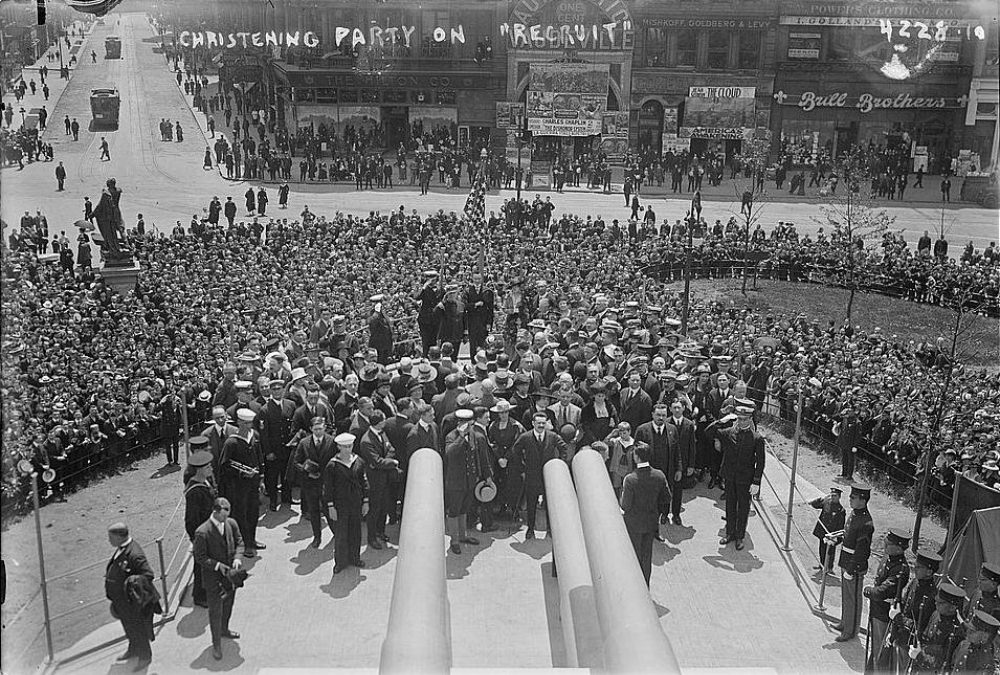
The results were remarkable. By the time Recruit struck its colors on March 16, 1920, The New York Times reported that the so-called “Landship” had recruited 25,000 men for the U.S. Navy. That number was 625 times larger than her crew. It was enough sailors to fully man twenty-eight Nevada-class battleships.
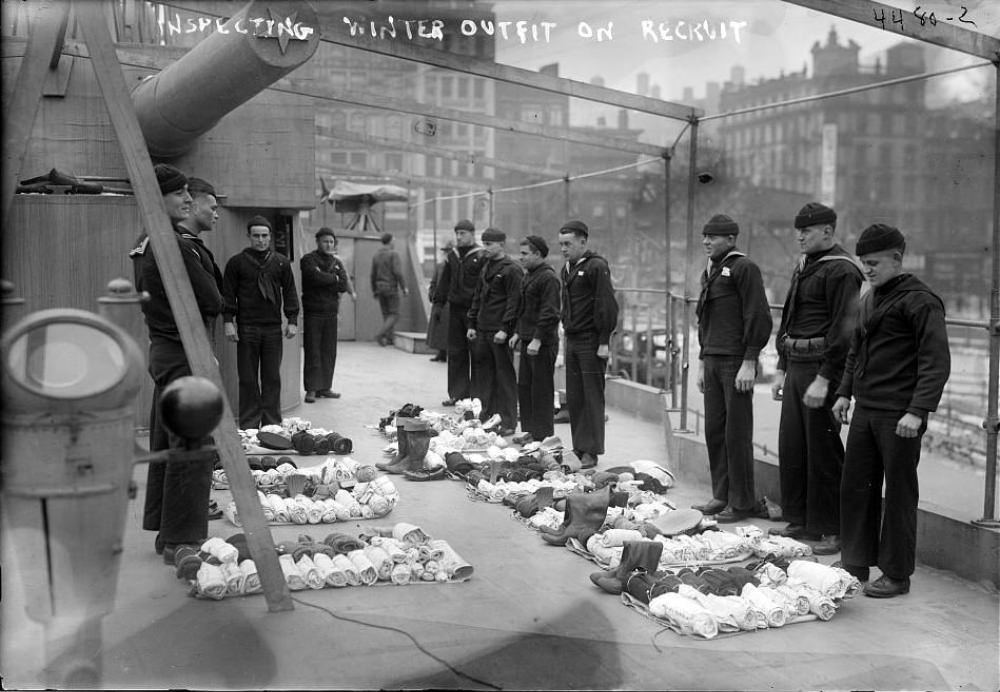
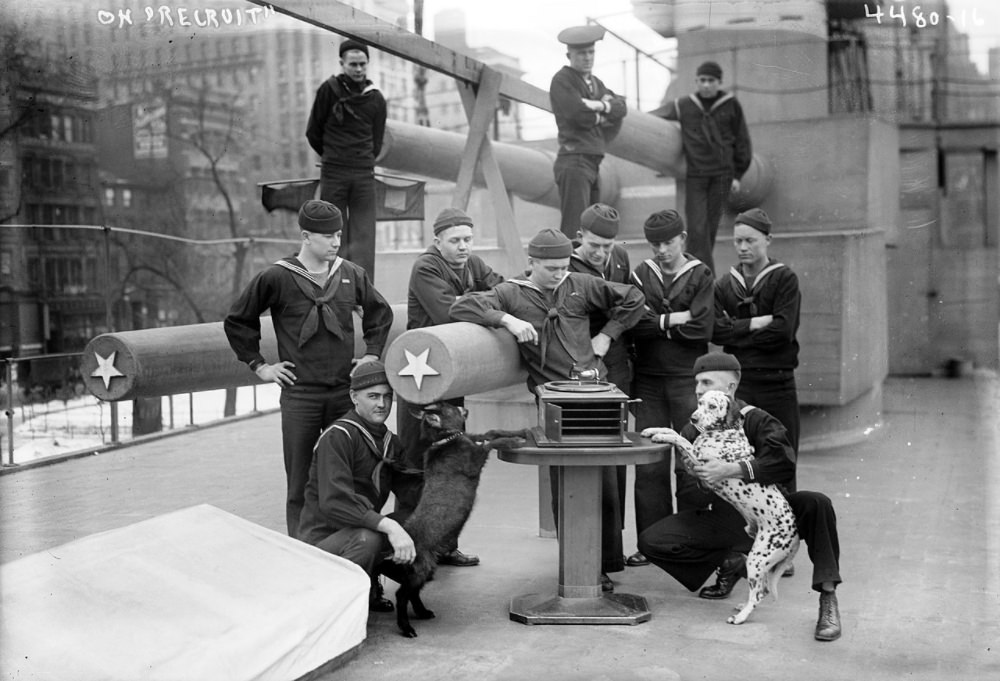
After the war ended, the Navy had plans to move Recruit to Luna Park in Coney Island, where it would continue serving as a recruiting depot. The ship’s success at Union Square made it a proven asset, and relocating it seemed like a logical next step.
Those plans fell apart over cost. The expense of dismantling, transporting, and reassembling the structure exceeded the total value of the wood and materials used to build it. The Navy decommissioned Recruit in 1920 and broke it apart. The materials were most likely reused locally, and the Landship of Union Square disappeared from the Manhattan skyline for good.