in

Tina Leser’s 1940s Fashion Designs That Merged Traditional Forms with Contemporary Vision

Tina Leser grew up traveling across Asia and Africa, absorbing the textiles, patterns, and silhouettes of cultures most American designers never encountered firsthand. She later studied art, painting, and sculpture in both Philadelphia and Paris. That combination — lived global experience plus formal artistic training — gave her designs a depth that was rare in 1940s American fashion.
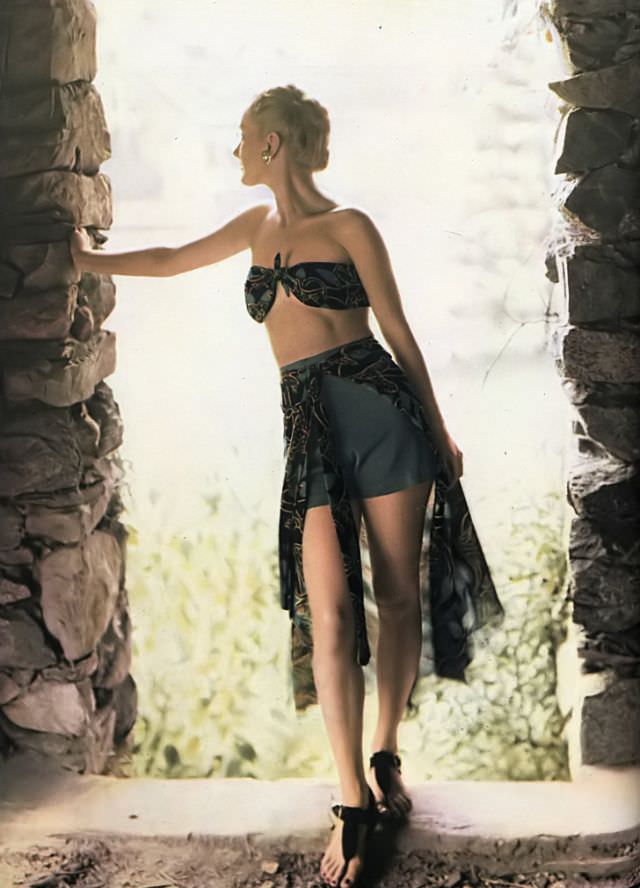
A model wears a strapless bathing suit with a sheer wrap skirt by Tina Leser, Vogue, 1944.

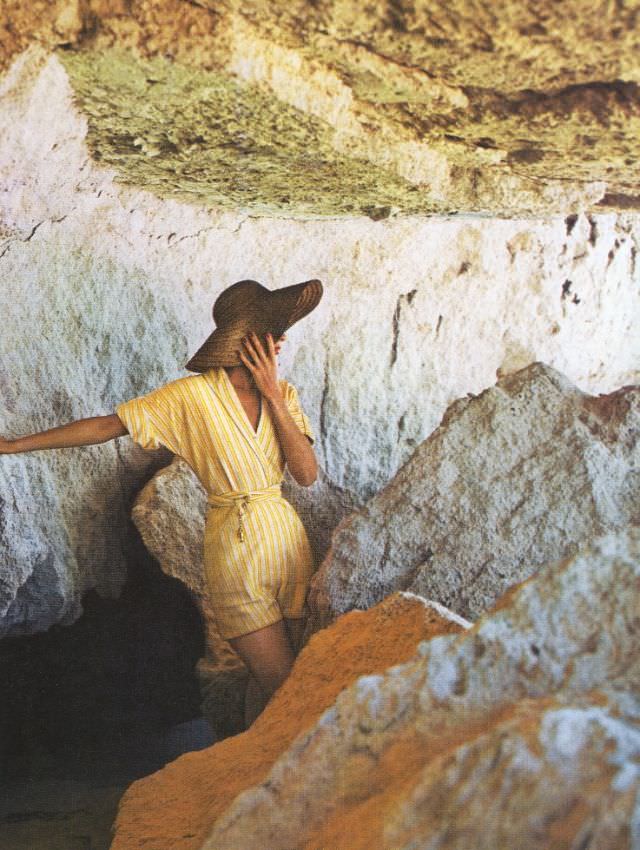
Leser opened her first store in Hawaii in 1935, selling garments that mixed local Hawaiian fabrics with imported Filipino textiles. The shop was her proving ground. By 1941, she had moved to New York and launched her own company, and in 1943 she joined the Edwin H. Foreman sportswear firm — a partnership that pushed her work to a national audience. Her resortwear and playsuits drew on references from China, Guatemala, India, Japan, Mexico, and Thailand, weaving those influences directly into the cut, fabric, and print of each piece.
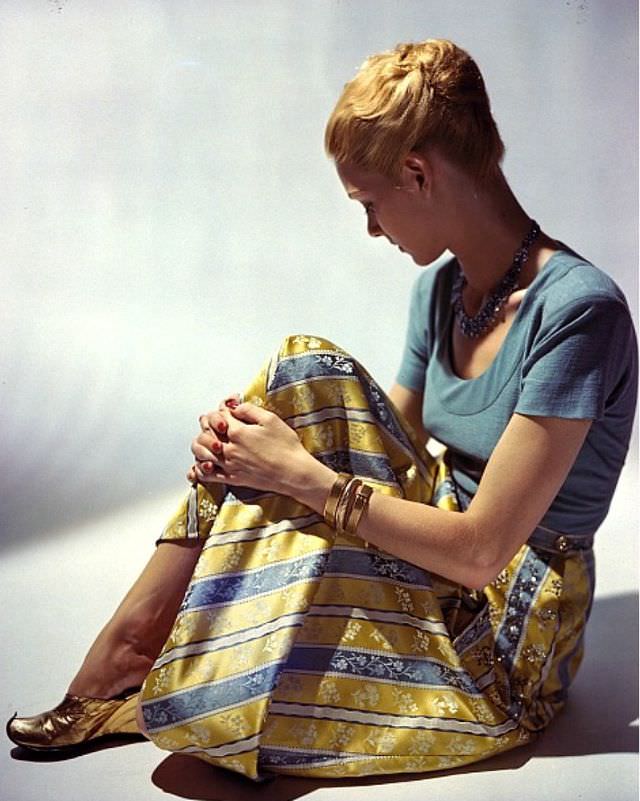
A model dons a light blue wool jersey and a printed rayon damask skirt with sequin details by Tina Leser, Vogue, 1944.
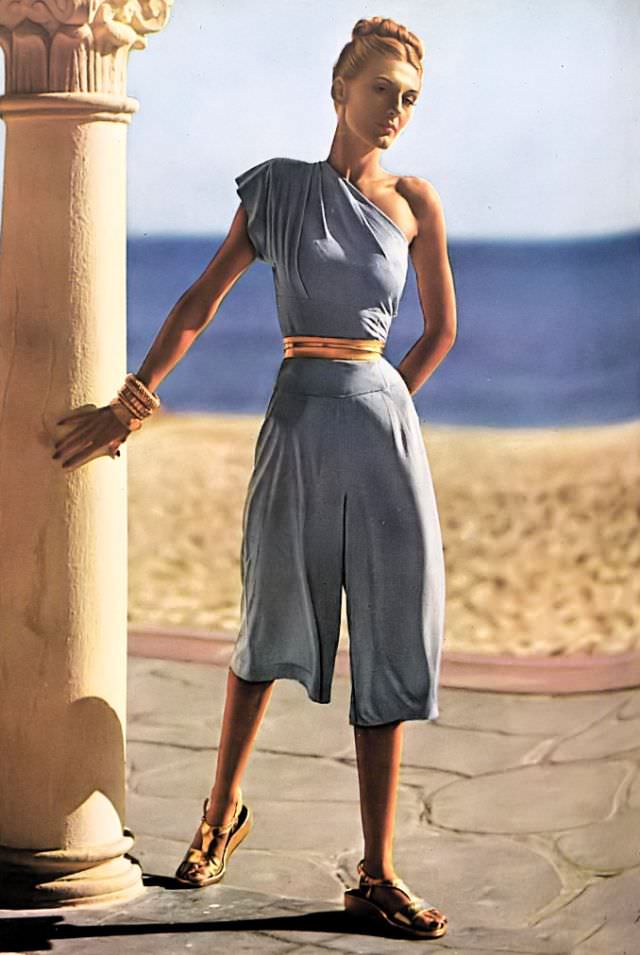
Bijou Barrington in bare-shoulder short dinner pyjamas of Celanese rayon and a gold kid belt by Schaffer, Vogue, 1945.

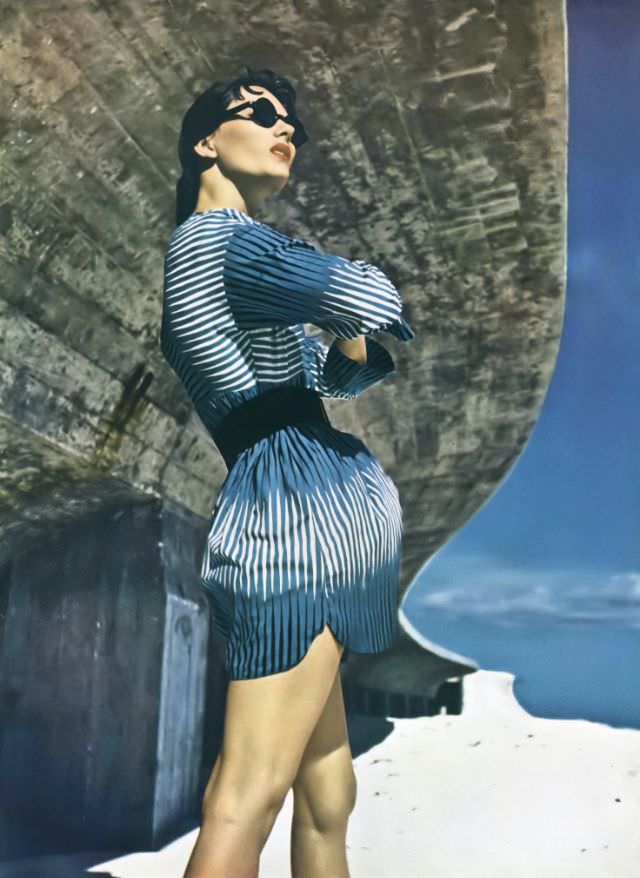
By 1945, Leser’s work was appearing regularly in both Vogue and Harper’s Bazaar. Her pieces consistently broke from the conservative sportswear norms of the era. A cabana dress trimmed with sequined leaves, a Greek-goddess-style bathing suit cut in rayon jersey, a white Mexican cotton sun-suit with green pencil details — each garment carried a specific cultural reference that was deliberate, not decorative.
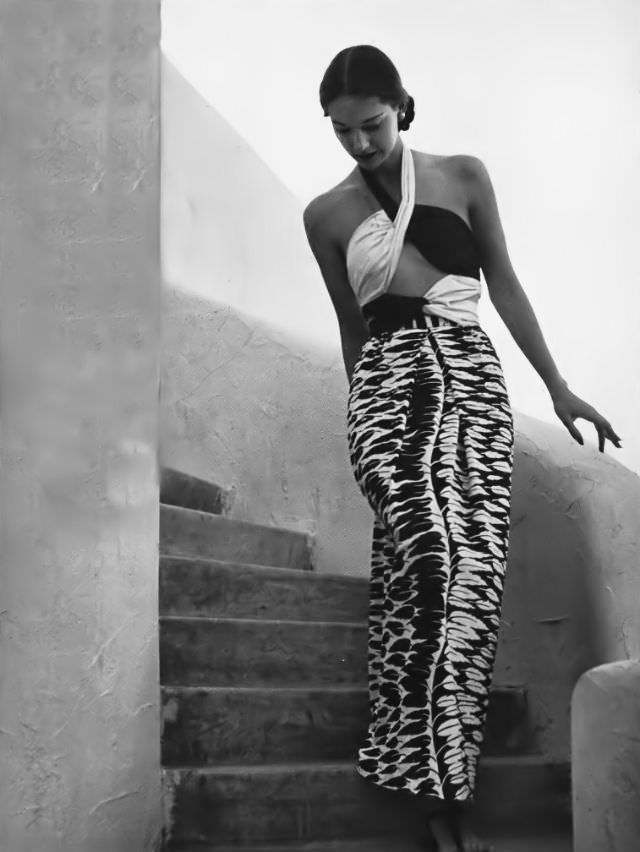

Marilyn Ambrose in a black and white rayon jersey cabana dress with sequined leaves by Tina Leser, Arizona, Vogue, 1945.
A model in a stone-white rayon-jersey two-piece swimsuit with a long evening skirt and Lampl jewelry, Harper's Bazaar, 1945.
A model in a stone-white rayon-jersey two-piece swimsuit with a long evening skirt and Lampl jewelry, Harper’s Bazaar, 1945.

Leser understood that a single garment could serve multiple occasions. A two-piece swimsuit paired with a long evening skirt moved easily from beach to dinner. A strapless black wool jersey suit finished with a matching headscarf brought structure to resortwear without sacrificing comfort. These weren’t just stylish choices — they were practical solutions for women who wanted versatility.
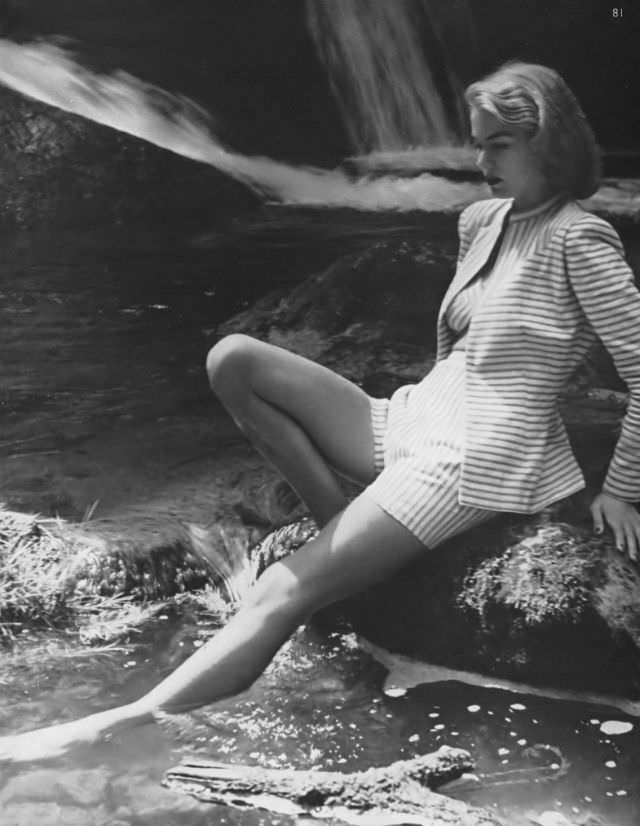

A model in a white Mexican cotton sun-suit with green pencil details by Tina Leser, Vogue, 1945.
A model in a strapless black wool jersey suit with a matching headscarf and bracelets by Tina Leser, Vogue, 1945.
Selene Mahri in a Greek-goddess rayon jersey bathing suit by Tina Leser, Vogue, 1945.

Her swimwear collaboration with Gabor Swimsuits brought bold patterning to a category that had long defaulted to plain, utilitarian cuts. Leser designed suits that worked for a range of body types, using fabric and silhouette rather than trends to drive each decision.
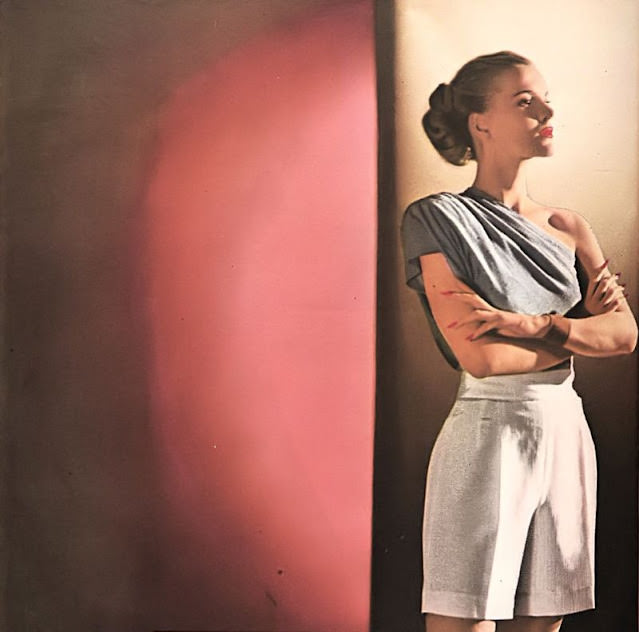

Selene Mahri wearing a top and shorts by Tina Leser, Vogue, 1945.
Dorian Leigh in a sarong-style dress by Tina Leser, 1946.

In 1946 and 1947, Leser continued expanding her material palette. A dark wool jersey top paired with Batik cotton print for Saks Fifth Avenue showed how she balanced structure with artisanal fabric traditions. A Guatemalan cotton beach apron worn over a blue jersey sunsuit brought direct textile sourcing into her sportswear line. These weren’t decorative nods — they were the actual materials of the cultures that inspired her.
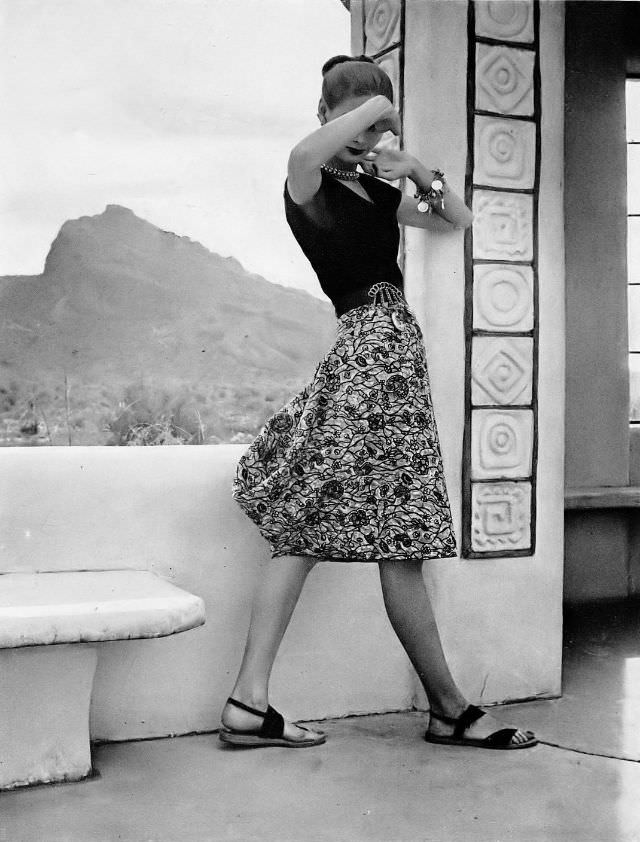

A model in a dark wool jersey top and Batik cotton print for Saks Fifth Avenue by Tina Leser, Harper's Bazaar, 1946.
A model in a dark wool jersey top and Batik cotton print for Saks Fifth Avenue by Tina Leser, Harper’s Bazaar, 1946.
A model in a two-piece dress with a striped blue, pink, and white jersey skirt by Tina Leser, Harper's Bazaar, 1946.
A model in a two-piece dress with a striped blue, pink, and white jersey skirt by Tina Leser, Harper’s Bazaar, 1946.
Model showcases a high-waisted shirt-short with matching brief pants in balloon cloth, designed by Tina Leser, 1946.

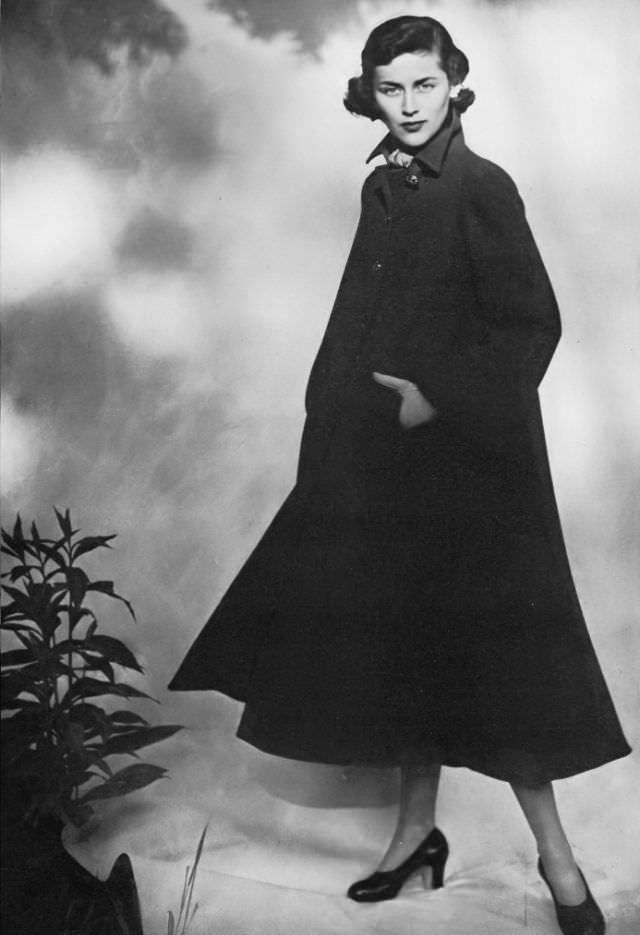
Leser’s 1947 range included a bright red wool chinchilla swing-coat — a sharp contrast to the lightweight resort pieces she was known for. The coat showed her range extended well beyond beachwear. Her designs that year also included playsuits photographed on location in Bermuda and the Bahamas, reinforcing the connection between her clothing and the real environments they were built for.

Charlotte Payne models a bathing suit by Tina Leser, 1947.
Jean Petit wears a bright red wool chinchilla swing-coat by Tina Leser, 1947.
Model sports a blue-and-white striped Guatemalan cotton beach apron over a blue jersey sunsuit by Tina Leser, 1947.

By the late 1940s, Leser’s work had been photographed on location across the Caribbean and Latin America — Jamaica, Bermuda, the Bahamas. The settings weren’t incidental. They showed exactly the kind of active, well-traveled woman her clothes were made for. A convertible pink scarf that doubled as a strapless bra, a strapless navy-blue wool suit with back buttons worn poolside in Jamaica — each piece was designed with real use in mind.
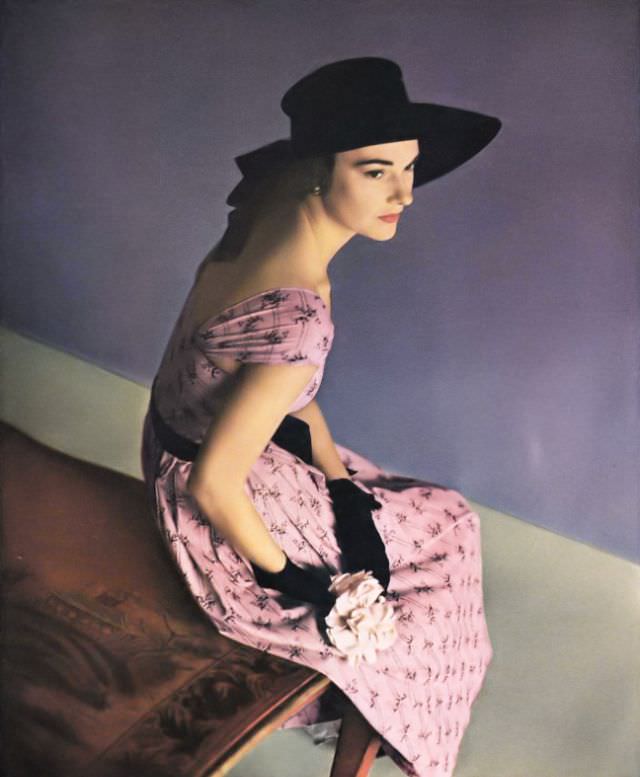

Marilyn Ambrose in a silken chambray dress by Tina Leser, crafted from Dan River fabric, 1948.
Model in shorts and a pink scarf convertible to a strapless bra, designed by Tina Leser, in Bermuda, 1948.
Jean Patchett in a strapless navy-blue wool suit with back buttons and a brief white wool sweater by Tina Leser, in Jamaica, 1949.
Playsuit by Tina Leser, photo taken in the Bahamas, 1949.
Enjoyed this post? Get new ones in your inbox.
Avatar of Kimberly Adams

Written by Kimberly Adams

Kimberly Adams is passionate about classic movies, actors, and actresses. She offers a fresh perspective on timeless films and the stars who made them unforgettable. Her work is an ode to the glamour and artistry of a bygone era, and a tribute to the enduring appeal of classic cinema.

Leave a Reply

Your email address will not be published. Required fields are marked *