Eleven men sit on a steel beam hundreds of feet above the streets of New York City. Their feet dangle in open air. They eat lunch, joke around, and smoke cigarettes as though they’re seated on a park bench. No harnesses. No safety nets. No visible fear. This is “Lunch Atop a Skyscraper,” one of the most recognized photographs in American history — and the story behind it runs much deeper than the image itself.
The photo was taken on September 20, 1932, on the 69th floor of the RCA Building during the construction of Rockefeller Center in Midtown Manhattan. The building has since been renamed the GE Building and is now known as the Comcast Building. At the time the shutter clicked, the United States was deep in the Great Depression. Unemployment was widespread, poverty was severe, and public confidence had taken a serious blow. Against that backdrop, Rockefeller Center was one of the most ambitious construction projects in the country’s history. It employed more than 40,000 workers and stood as a rare sign that large-scale progress was still possible.
The men on that beam were real ironworkers — not actors, not posed models. Many of them were immigrants who had come to America looking for steady work and a foothold in a new country. High-steel construction was one of the most dangerous trades a person could take on. Workers regularly walked narrow beams dozens of stories above the ground, often without modern safety equipment. Falling was a constant risk, and fatal accidents on construction sites were not uncommon. For these men, the scene in the photograph was not a stunt. It was a lunch break.
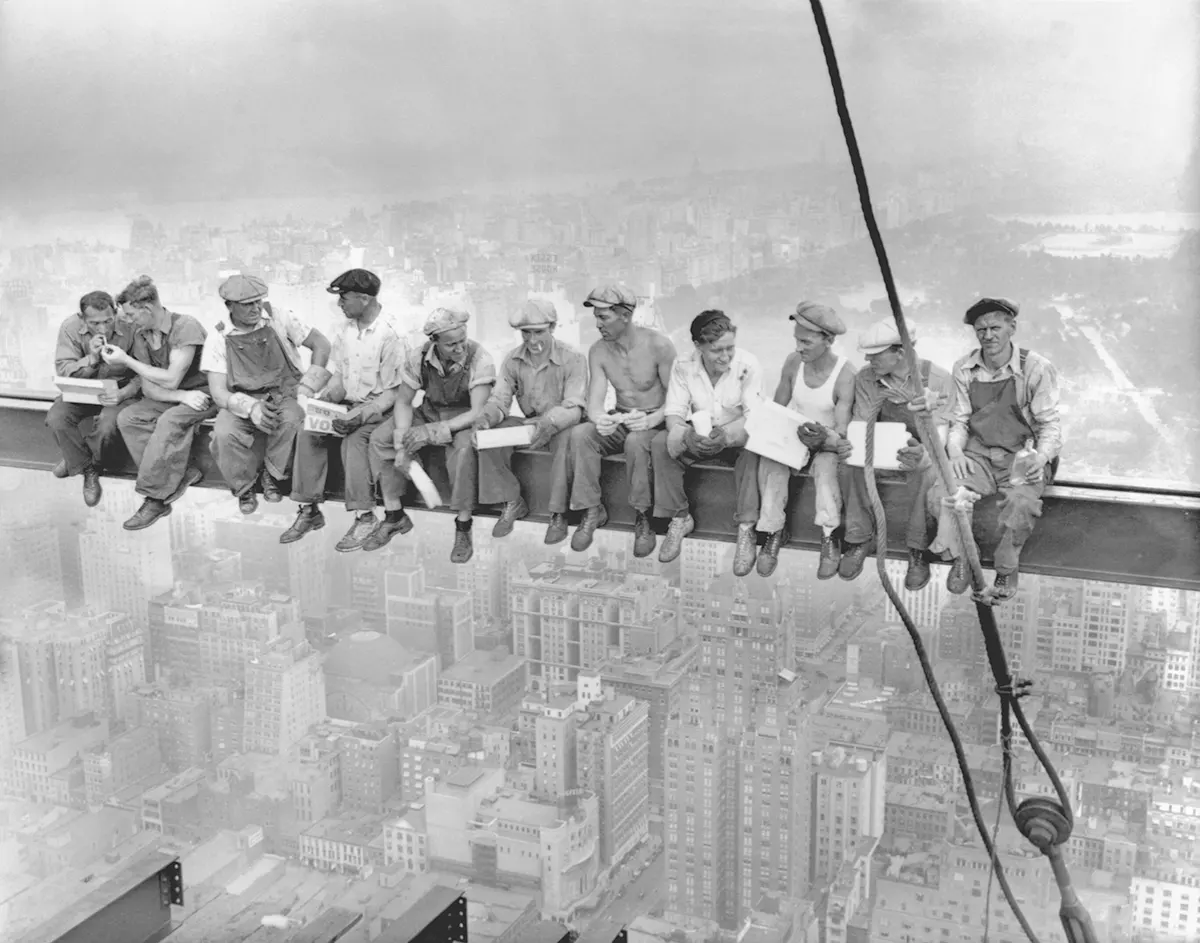
Pinning down who exactly appears in the photograph has proven difficult. Employment records from the construction site were poorly kept, and decades passed before serious investigative work began. Over the years, several families came forward claiming their relatives were among the eleven men, but few of those claims could be confirmed with hard evidence. What researchers have been able to piece together offers a glimpse into just how diverse the crew was. The man third from the left has been identified as Joseph Eckner, and Joe Curtis sits third from the right. Gustáv (Gus) Popovič, a Slovakian worker, is believed to be the man farthest to the right — his identity uncovered by two Irish filmmakers researching a 2012 documentary called “Men at Lunch.” Popovič had reportedly sent a copy of the photo back to his hometown in Slovakia. Two other workers, Francis Michael Rafferty and his lifelong friend known as Stretch Donahue, are said to appear on the far right end of the beam, with Donahue seated just to Rafferty’s left. The remaining men are still unidentified.
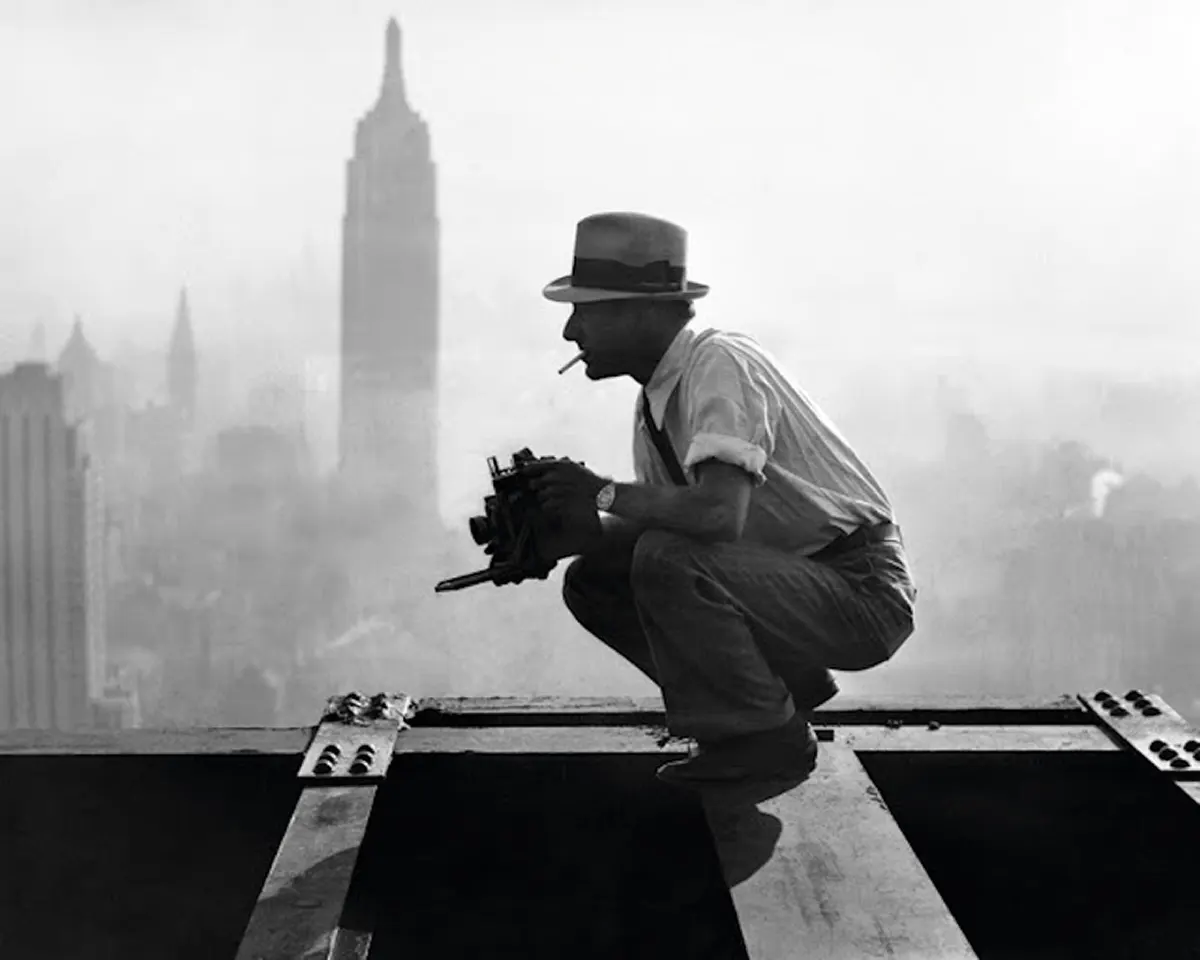
The person who took the photograph is also a subject of debate. For many years, Charles C. Ebbets received sole credit. Ebbets was a seasoned photographer who documented much of the Rockefeller Center construction, and he was well known for putting himself in physically dangerous positions to get the right shot. He worked without hesitation at extreme heights, which made him a natural fit for assignments on a job site like this one. His work shows a photographer who understood that the story lived in the details — the casual posture of a worker, the steam rising from a coffee cup, the worn edge of a boot.
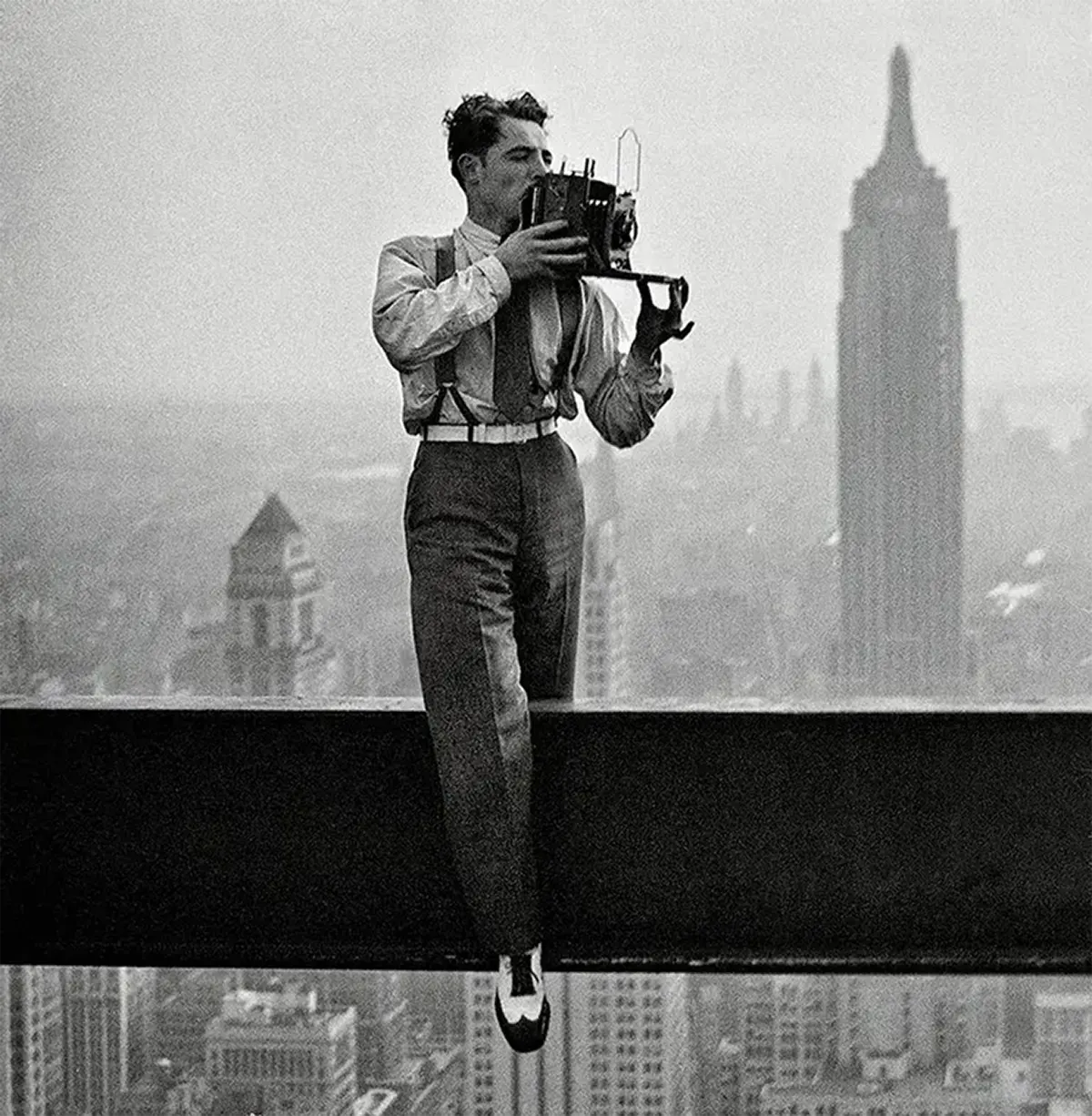
Three photographers were on-site the day the photo was taken: Charles C. Ebbets, Thomas Kelley, and William Leftwich. While Ebbets has traditionally been named as the photographer, it has never been conclusively proven which of the three actually pressed the shutter. The question remains open, though Ebbets remains the most widely cited candidate given his known body of work at Rockefeller Center and his style of up-close, immersive documentation.
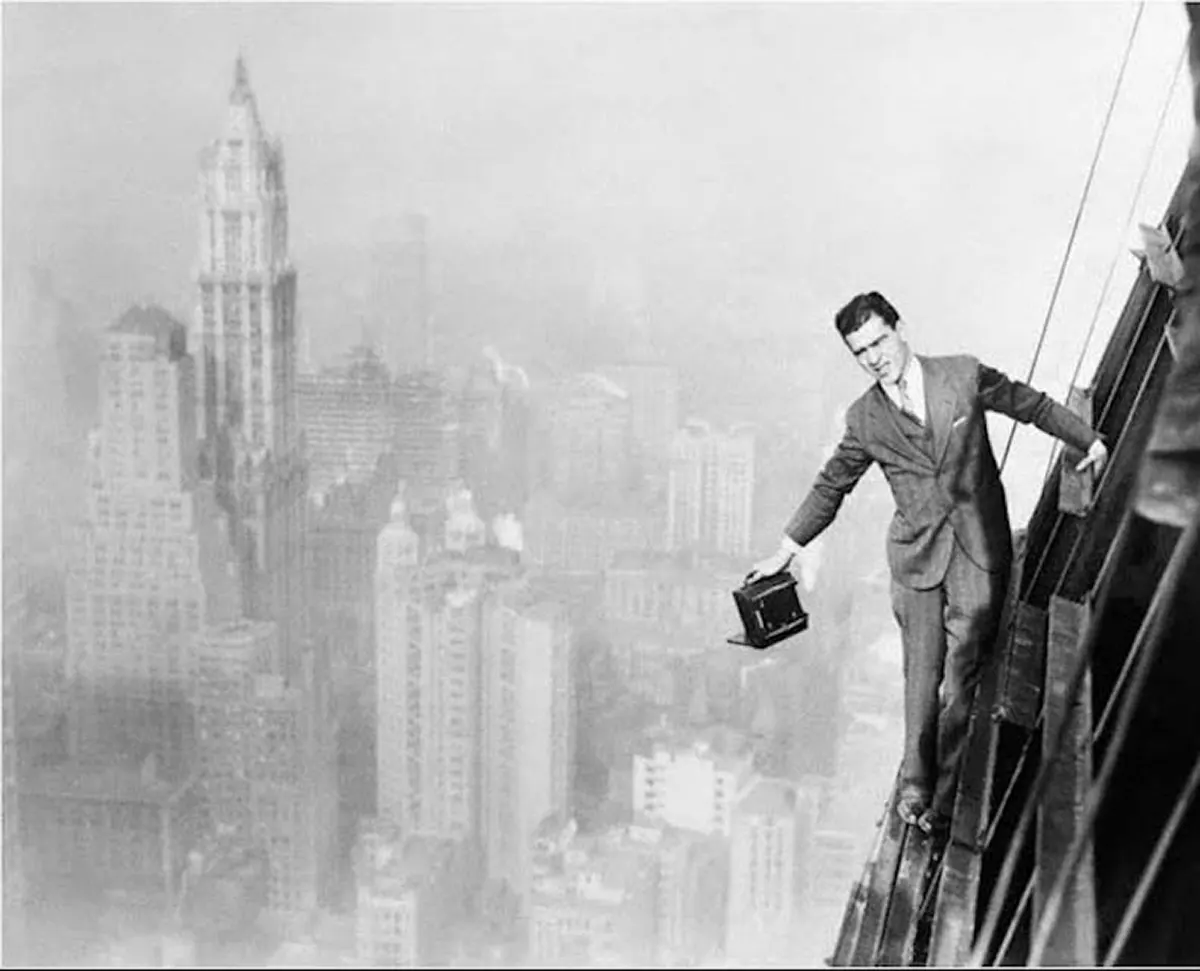
Ebbets approached photography the way the ironworkers approached their beams — without hesitation and with full commitment to the task. He regularly positioned himself at the very edge of buildings under construction, sometimes leaning out over open space to find the angle he needed. The resulting images were not just technically impressive; they carried a sense of lived reality that studio photography could never replicate.
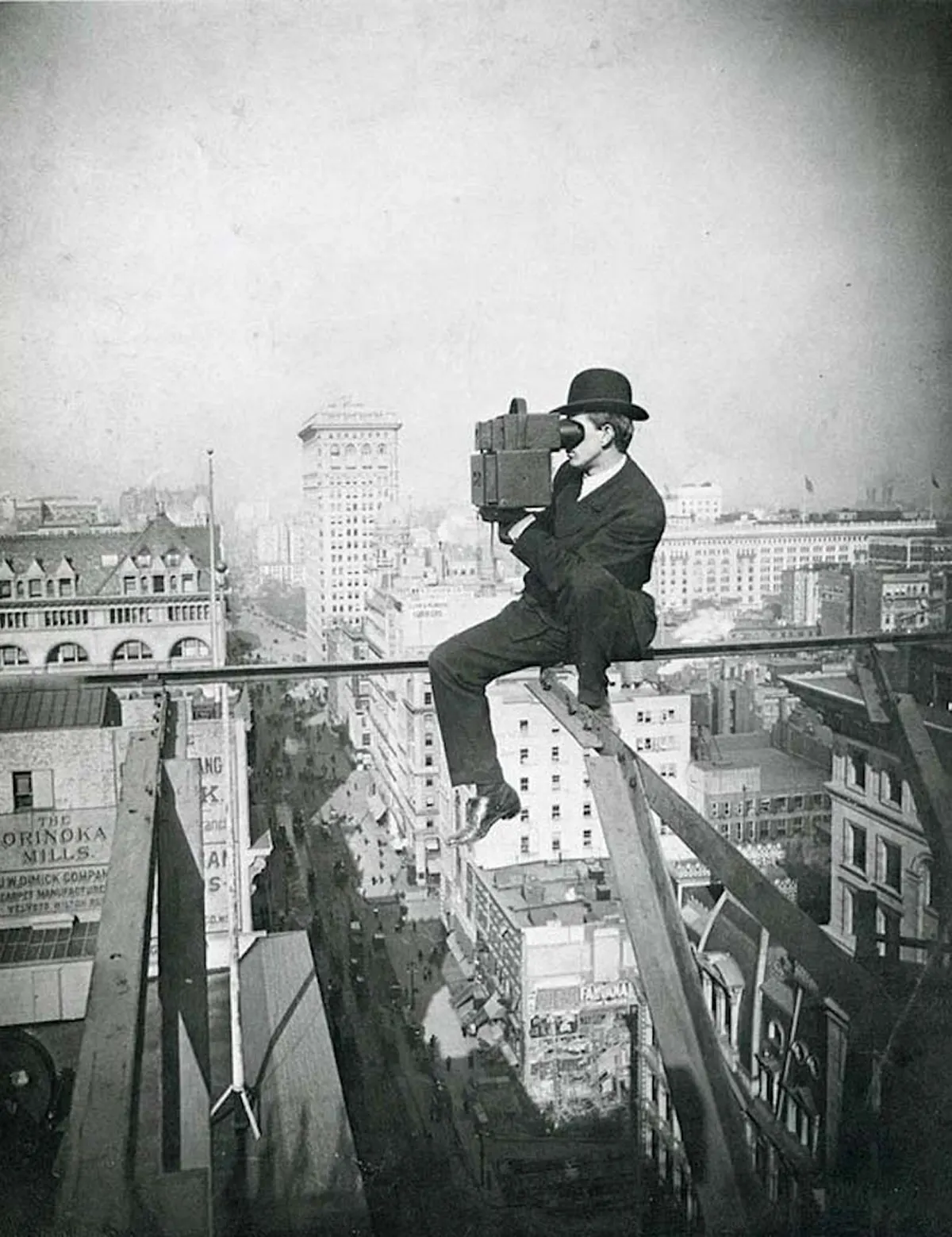
What makes “Lunch Atop a Skyscraper” so striking is not the height — it’s the calm. The men are not performing bravery for the camera. They’re simply on their break. One man reads a newspaper. Others talk. Someone takes a swig from a bottle. There is no drama in their body language, no tension, no look of men aware they are doing something extraordinary. That ordinariness is what makes the photograph so powerful. It tells you more about their daily working conditions than any written account could.
The photograph was taken as part of a promotional effort tied to the Rockefeller Center project. Publicity shots were common in large construction campaigns of the era, designed to generate public interest and signal progress. Whether the image was staged in terms of placement — workers directed to sit on that particular beam for the camera — or whether it captured a genuinely spontaneous moment is still debated. Either way, the workers in the frame were doing exactly what they did every day. The camera just happened to be there. The resulting image went on to be published in newspapers across the country and has been reproduced countless times in the decades since, making it one of the most enduring visual records of Depression-era America.