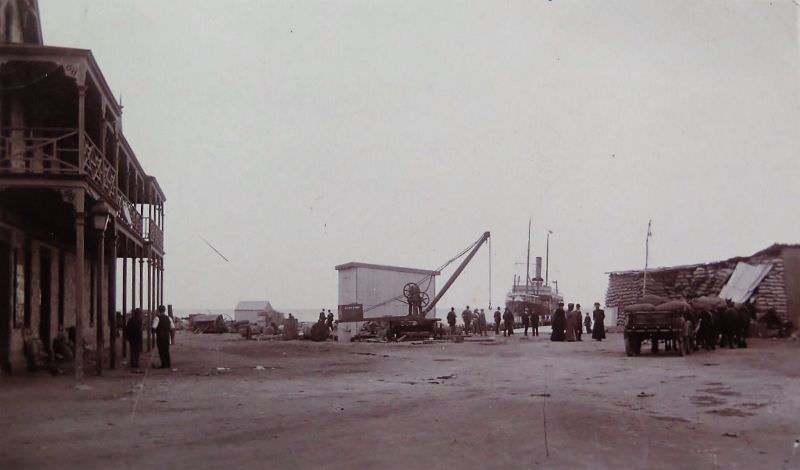
South Australia is the fourth-largest state in Australia by area and the fifth largest by population. It shares borders with every other mainland state, as well as the Northern Territory. Most South Australians live in the capital, Adelaide, which has long served as the commercial and cultural heart of the state.
The state’s economy surged in the mid-19th century. The discovery of rich copper deposits at Burra in 1845 triggered a major mining boom, drawing settlers and investment at a rapid pace. The railway arrived in 1854, connecting towns and opening up trade routes that had previously relied on slow overland tracks. By the turn of the 20th century, however, that momentum had begun to fade. High budget deficits, migration to other states, a severe drought in the late 1920s, and the Great Depression all took a heavy toll on the region.
The photographs below were taken between roughly 1900 and 1910 — a transitional period when horse-drawn coaches still shared roads with the earliest motor vehicles, and small towns across the state were finding their footing. Adelaide’s main streets buzzed with commerce, while regional towns like Port Pirie, Renmark, and Hawker had their own distinct rhythms. These images capture that world in striking detail.
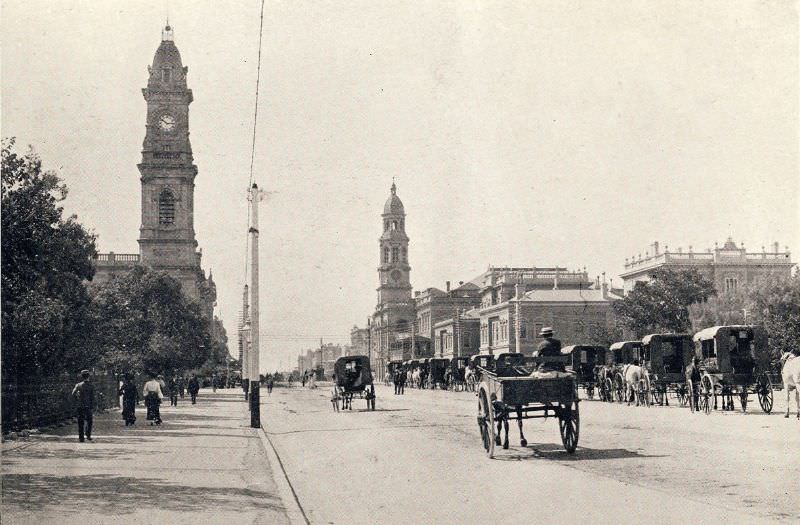
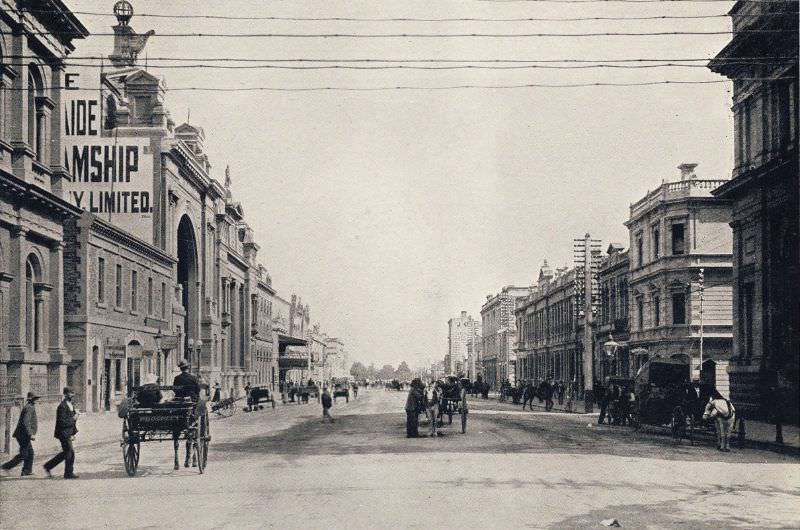
Adelaide’s King William Street was the spine of the city. Looking north from Victoria Square in 1907, it showed a wide, well-trafficked boulevard lined with the kind of solid Victorian-era buildings that signaled civic ambition.
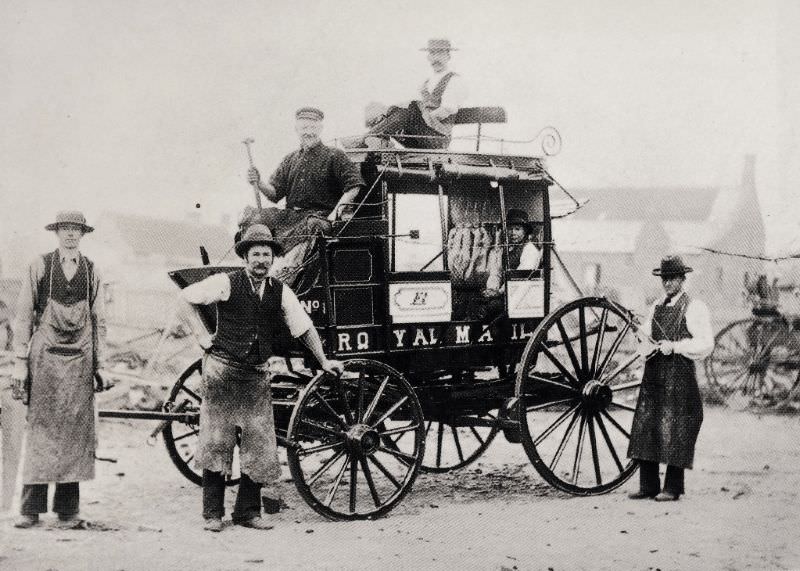
At the turn of the century, the Royal Mail coach was still a vital link between Adelaide and outlying areas. Delivering letters, parcels, and sometimes passengers, these coaches operated on fixed routes and tight schedules regardless of weather or road conditions.
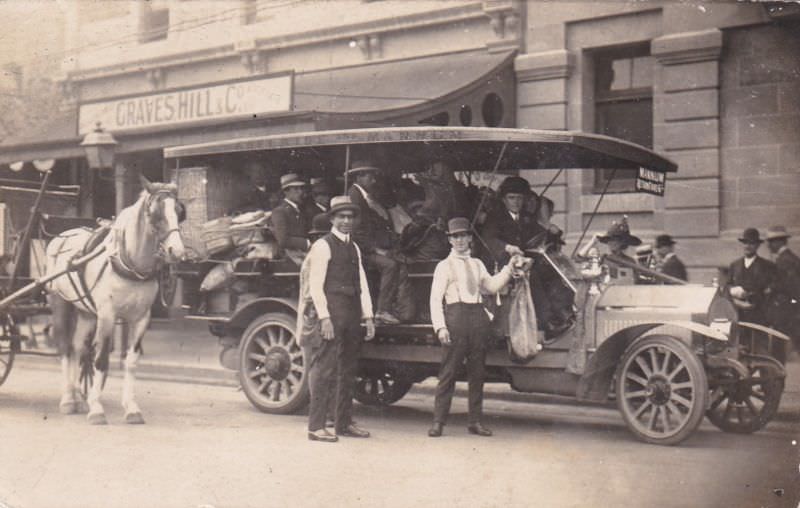
By 1909, motor buses had begun replacing horse-drawn coaches on some routes. The Adelaide to Mannum bus was one of these early services, connecting the city to the Murray River town of Mannum along roads that were still largely unsealed.
Currie Street in 1907 reflected Adelaide’s busy commercial life. Shopfronts, pedestrians, and horse-drawn vehicles filled the frame, showing a city that was growing steadily even as economic pressures mounted elsewhere in the state.
Regional coach services like the Freeling to Adelaide run were essential for communities that had no rail connection. Passengers endured long, dusty journeys over rough tracks just to reach the city for supplies, appointments, or business.
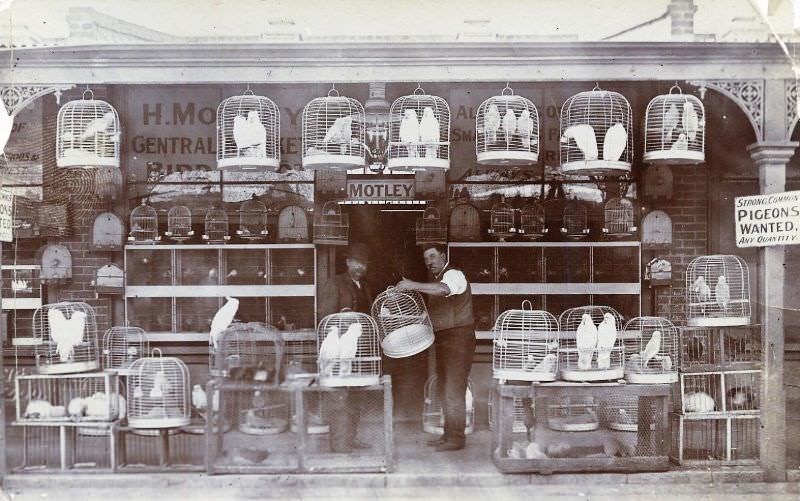
Adelaide’s Central Market has been a trading hub since 1869. By 1908, stalls like H. Motley’s bird depot added to the market’s lively mix of produce, livestock, and specialty goods, drawing buyers from across the city each week.
Adelaide’s tram network was expanding rapidly in the late 1900s. Workers laying tracks at the corner of King William Street and North Terrace around 1908 were part of a major push to modernize the city’s public transport system.
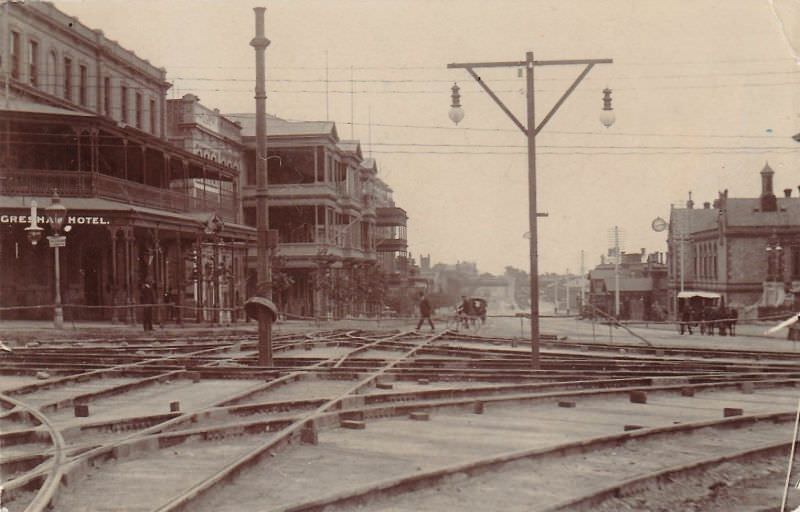
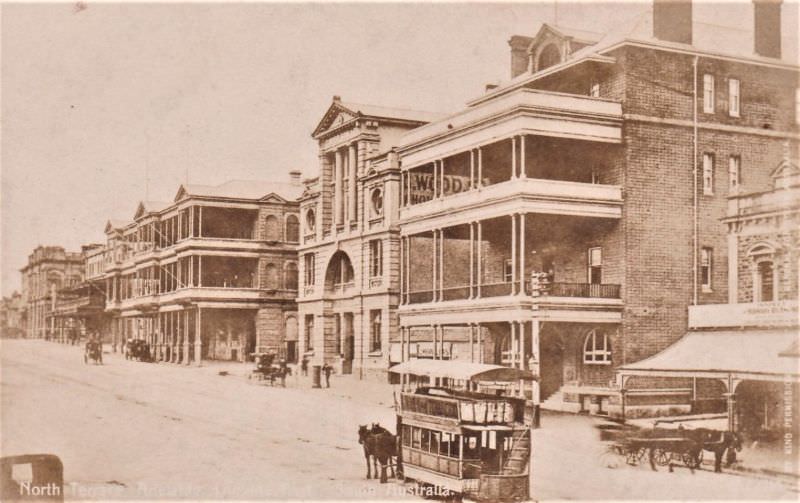
Before electric trams took over, horse-drawn trams were the standard mode of public transit along Adelaide’s main corridors. North Terrace was one of the city’s most prominent streets, home to institutions, hotels, and government buildings.
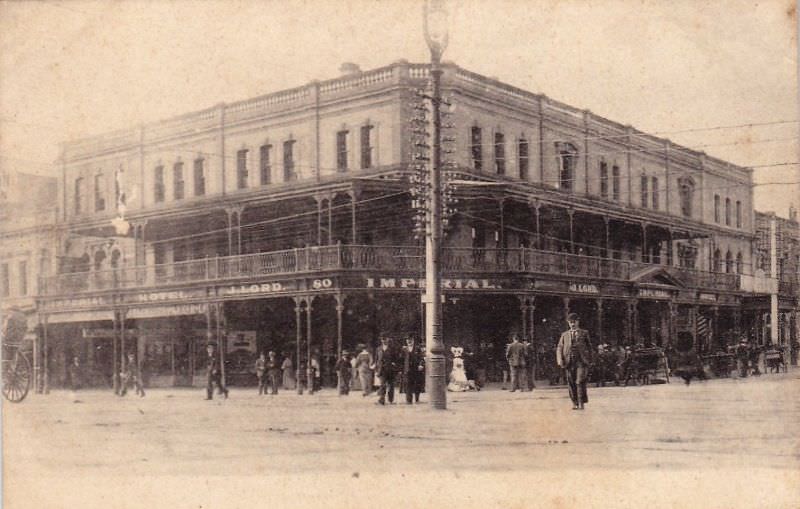
Hotels in early Adelaide were more than just places to drink. They served as meeting points, lodging houses, and social venues for travelers and locals alike. The Imperial Hotel, positioned at the corner of King William and Grenfell Streets, occupied one of the city’s prime locations.
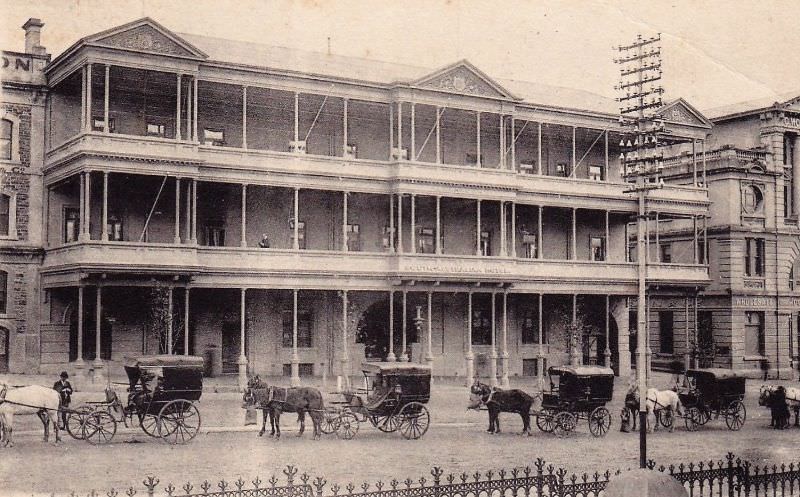
The South Australian Hotel was among Adelaide’s most well-known establishments by 1907. Its size and prominent street presence reflected the city’s appetite for grand public buildings during this period.
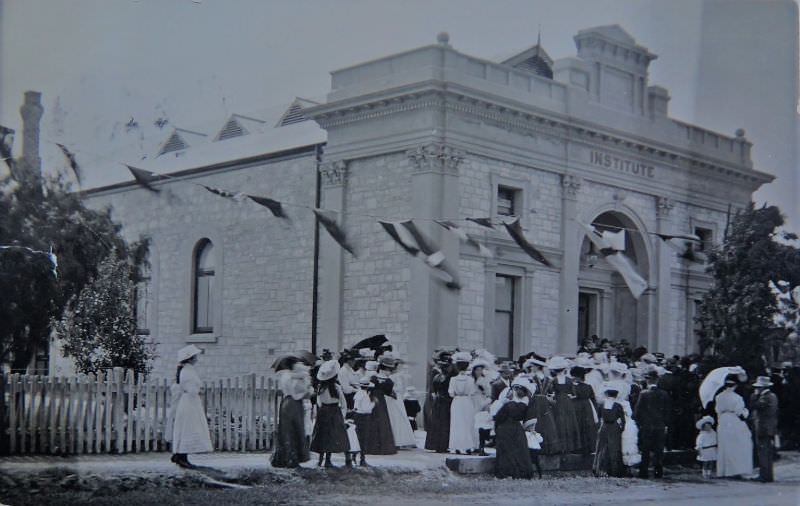
Beyond Adelaide, smaller towns across the state were building their own civic infrastructure. The Bordertown Institute, photographed around 1909, was the kind of community institution — part library, part meeting hall — that anchored life in rural South Australia.
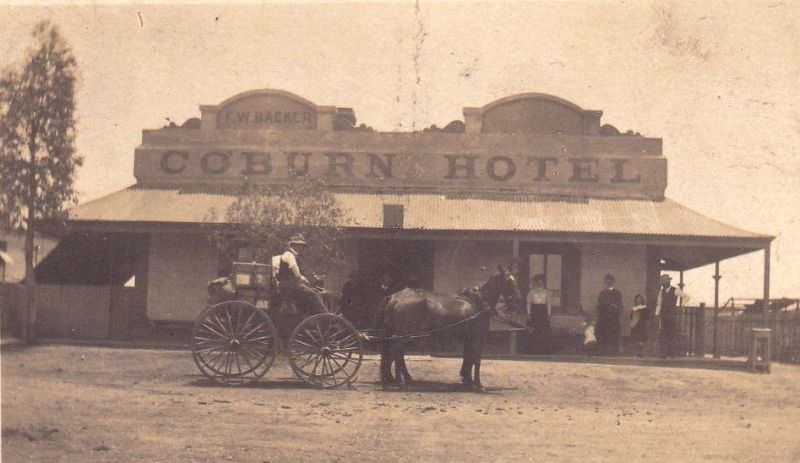
Cockburn sat near the New South Wales border and served as a stop along the rail line. The Co’burn Hotel, photographed in 1908, was typical of outback watering holes — functional, sturdy, and well-patronized by travelers and railway workers.
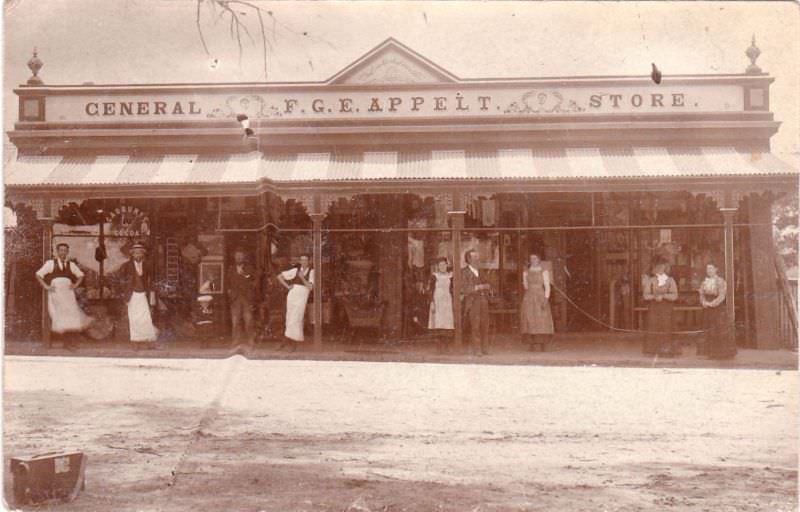
General stores were the commercial lifelines of rural towns. F.G.E. Appelt’s store in Eudunda stocked everything from farming supplies to household goods, serving the predominantly German-descended farming community that had settled the area.
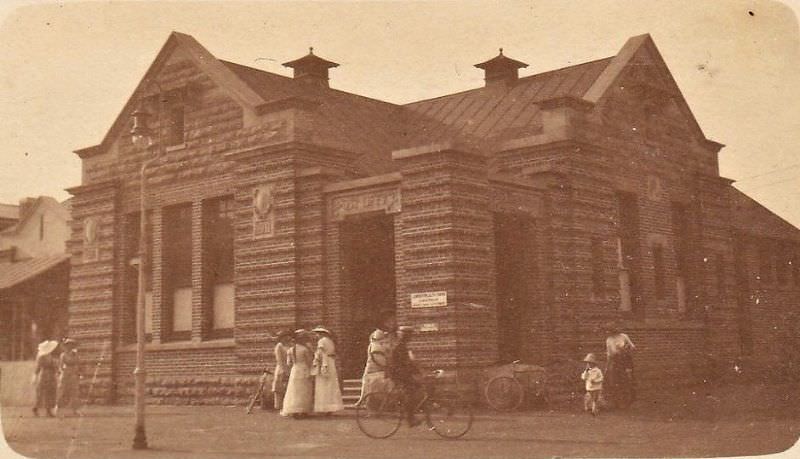
Glenelg, on the coast just southwest of Adelaide, was a popular seaside destination. By around 1910, it had developed its own civic buildings, including a post office that served both residents and the steady stream of visitors coming down from the city.
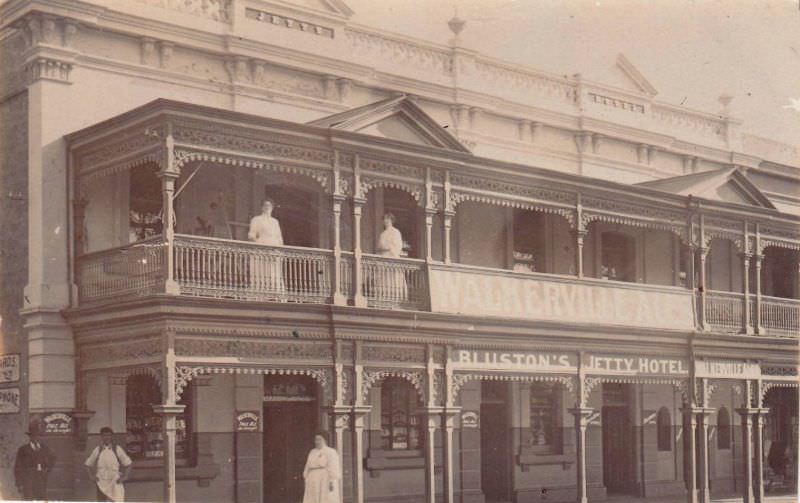
Bluston’s Jetty Hotel in Glenelg sat close to the beachfront, catering to day-trippers and holidaymakers. The jetty area was the social center of the suburb, where visitors arrived by tram and gathered near the water.
Kangaroo Island, located off the Fleurieu Peninsula, was accessible only by sea in the early 1900s. Kingscote was the island’s main settlement, and its guest house offered accommodation to the few travelers willing to make the crossing.
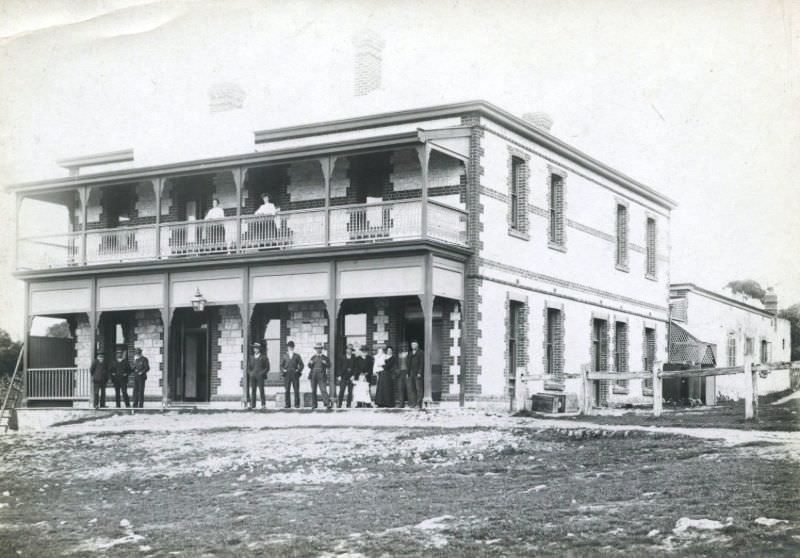
Hahndorf, in the Adelaide Hills, was founded by German Lutheran settlers in 1839. By the early 1900s, it retained much of its original character — a quiet main street lined with stone buildings and businesses run by families whose names still reflected their European origins.
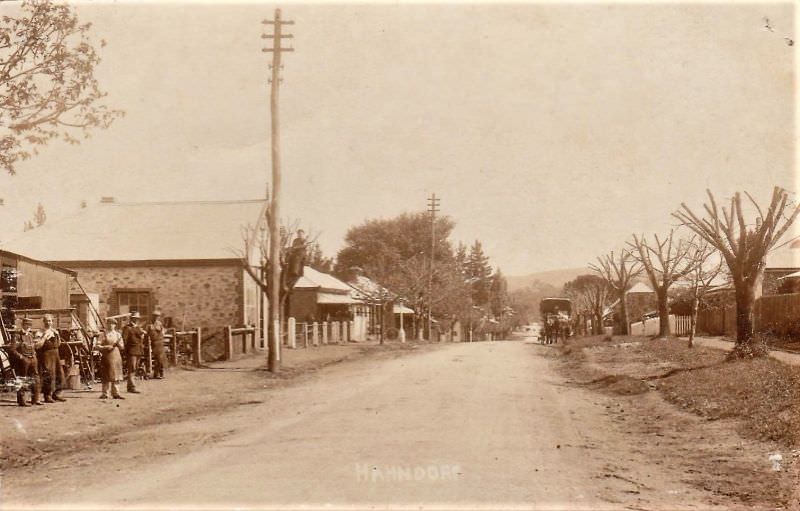
Hawker, in the Flinders Ranges, was connected to the rail network and served as a supply hub for the surrounding pastoral stations. Its railway station, pictured around 1908, was a key node in the system that moved wool, cattle, and goods across the outback.
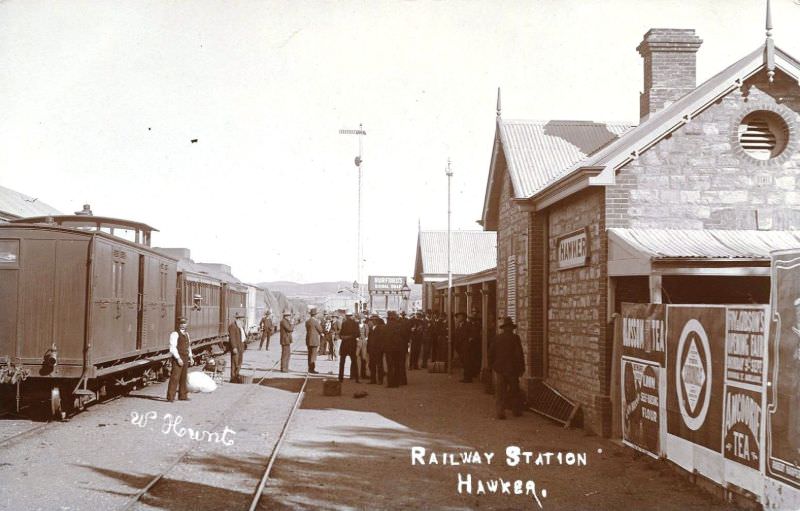
Norwood, just east of Adelaide, had its own thriving commercial strip. Patterson Bros Drapers was the kind of specialty retailer that defined early suburban shopping — a place where families bought fabric, clothing, and household textiles before department stores took over.
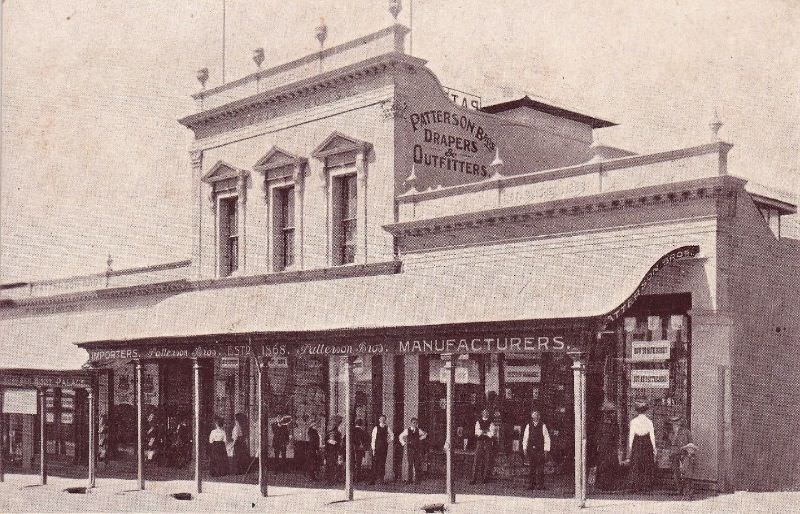
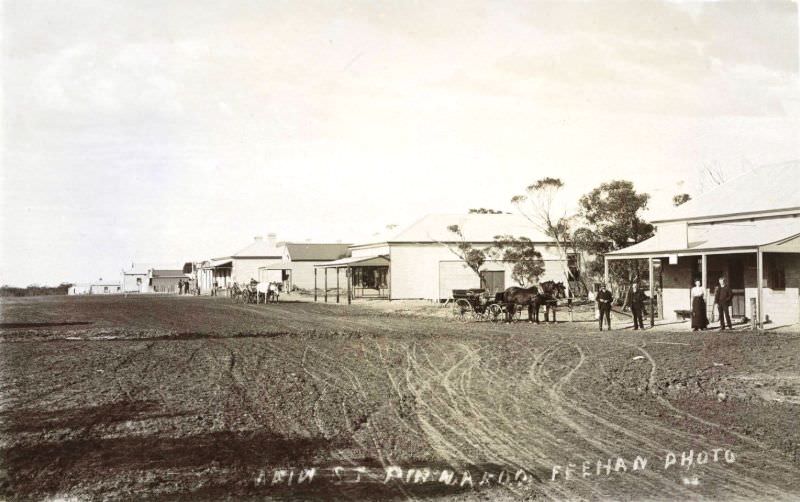
Pinnaroo, near the Victorian border in the state’s southeast, was a young town in 1905. Its main street shows the raw, open character of a settlement still in the early stages of growth — wide, dusty, and lined with timber-fronted buildings.
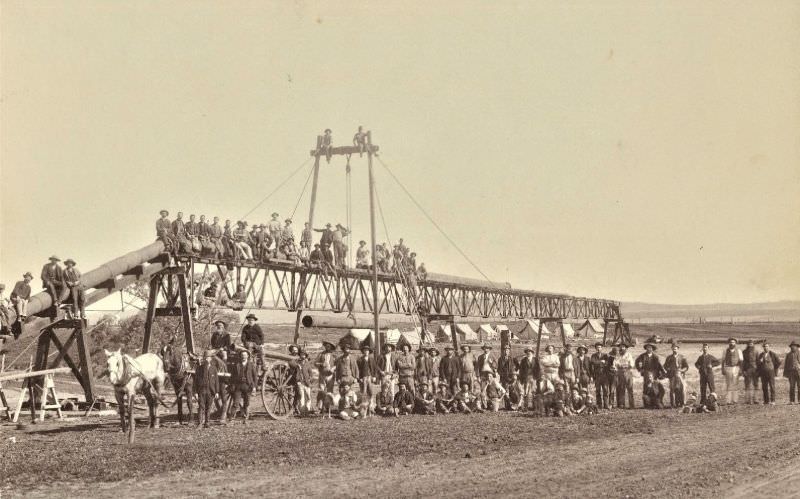
Large infrastructure projects were reshaping parts of South Australia in the early 1900s. Pipeline construction brought workers into remote areas, where temporary camps served as their base for months at a time — basic setups of tents and equipment spread across open ground.
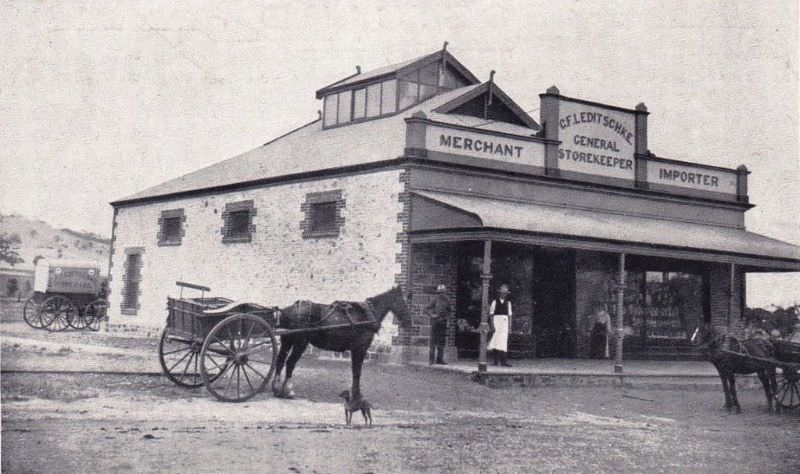
Point Pass was a small farming community in the mid-north of the state. C. F. Leditschke’s General Store served the local population with the essentials of rural life, from food and tools to seed and hardware.
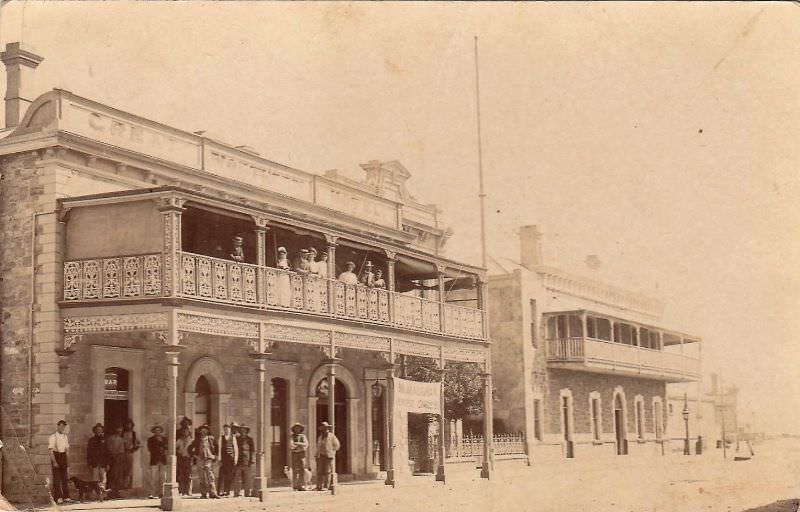
Port Augusta stood at the top of Spencer Gulf and was a strategic junction point for road, rail, and sea transport. The Great Northern Hotel catered to the many travelers and workers passing through on their way to and from the outback.
Port Germein, a small port town on Spencer Gulf, handled grain exports in the early 20th century. Its jetty — once the longest in the Southern Hemisphere — brought business to establishments like Browns Hotel, run by proprietor G. Lord around 1905.
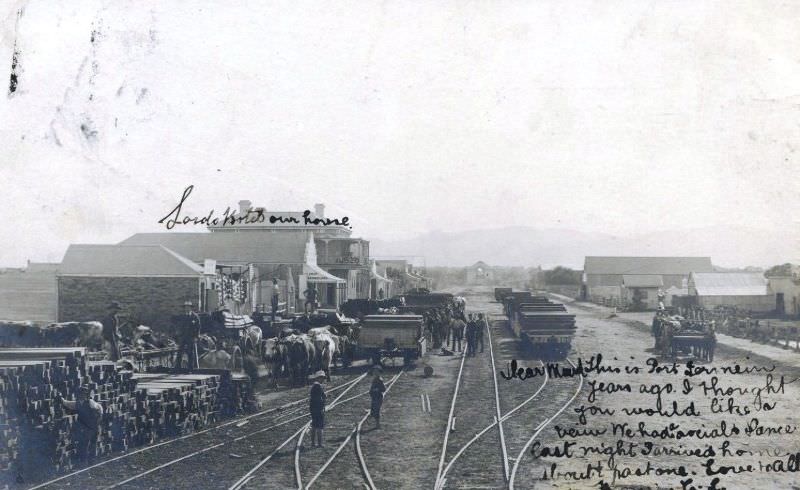
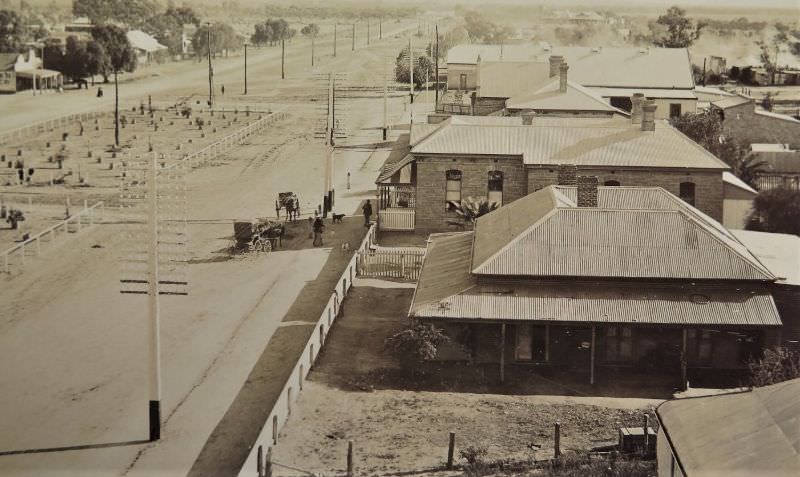
Port Pirie was one of South Australia’s most important industrial towns by the early 1900s. Alexander Street in 1906 shows a well-developed commercial district reflecting the wealth generated by the town’s smelting operations and its role as a major port.
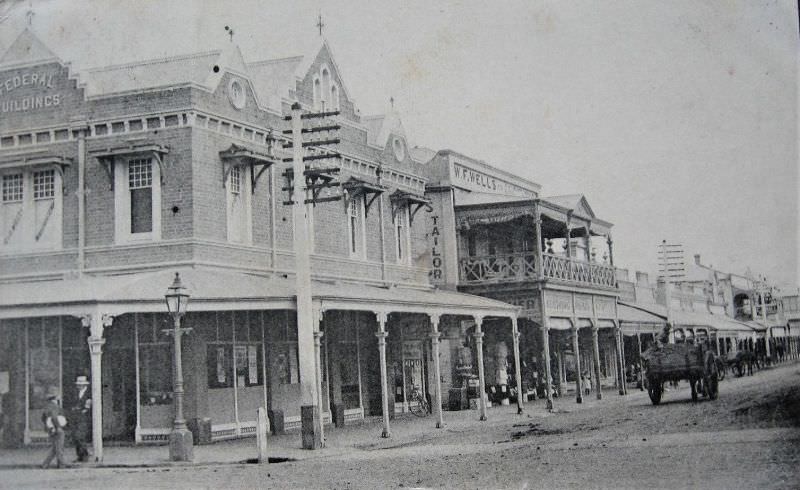
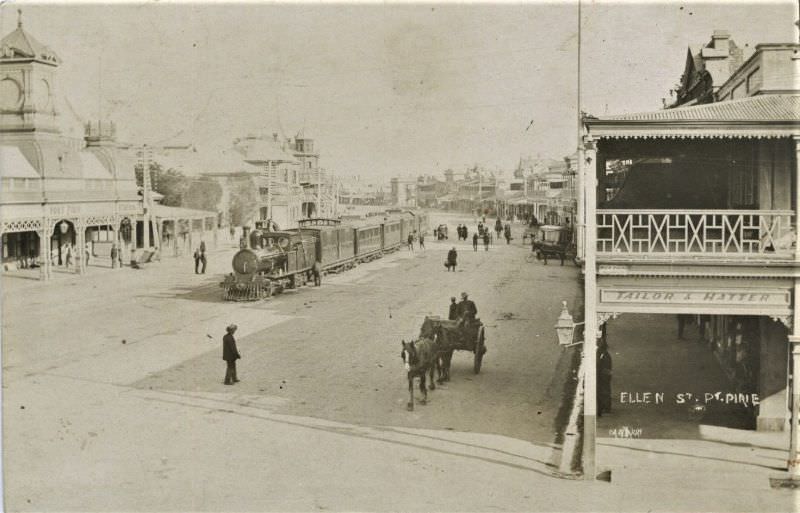
Ellen Street was Port Pirie’s main thoroughfare. The railway station, visible on the left, was central to the town’s economy, connecting it to Adelaide and to the vast agricultural and mining hinterland to the north.
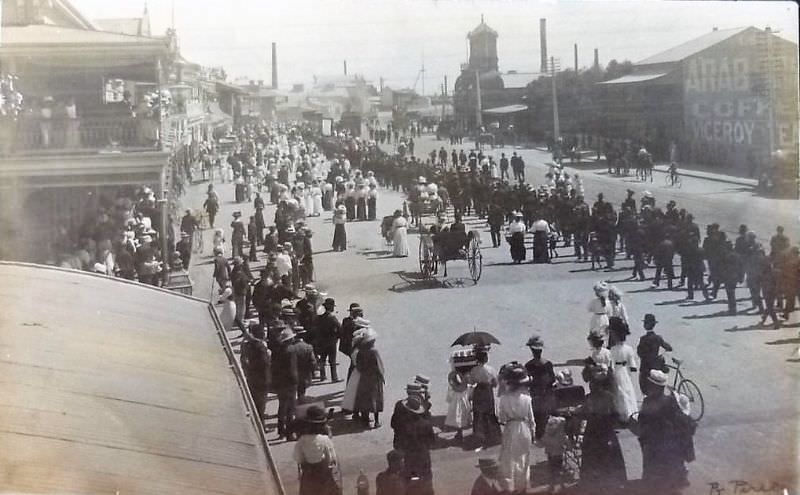
In 1905, workers in Port Pirie took to Ellen Street in a Trade Union parade — a public display of organized labor at a time when union activity was growing across Australia’s industrial towns. The parade drew a visible crowd and moved through the heart of the commercial district.
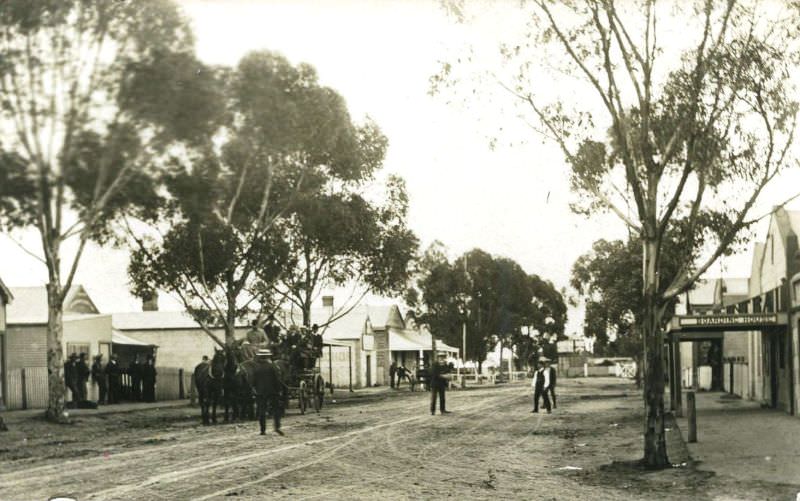
Renmark, on the Murray River near the South Australian–Victorian border, was a center of the state’s irrigation settlements. Its main street in the early 1900s reflected a town sustained by fruit growing and river trade, with businesses serving a stable, settled population.
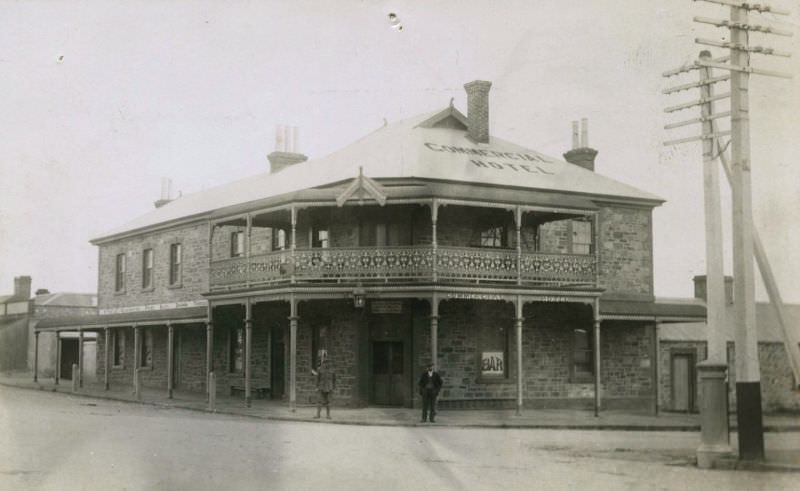
Strathalbyn, south of Adelaide in the Fleurieu Peninsula, was a well-established town with Scottish settler roots. The Commercial Hotel served the local farming community and visitors traveling through the region.
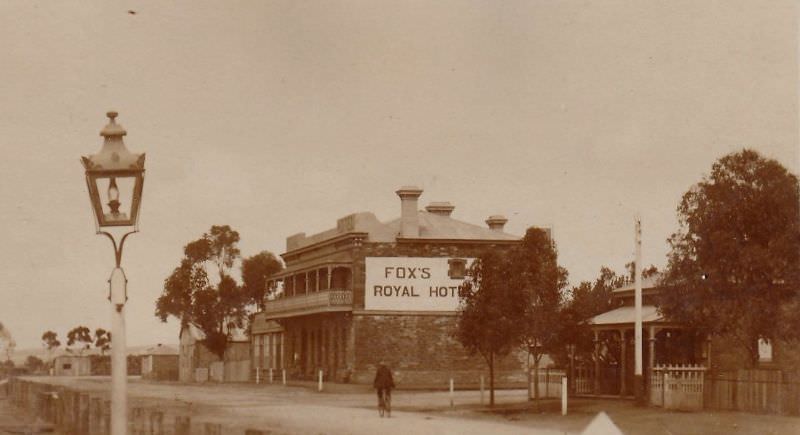
Terowie, in the state’s mid-north, was a railway junction town that saw significant traffic in its heyday. Fox’s Royal Hotel in 1909 stood as one of its more prominent buildings, serving travelers passing between Adelaide and the inland.
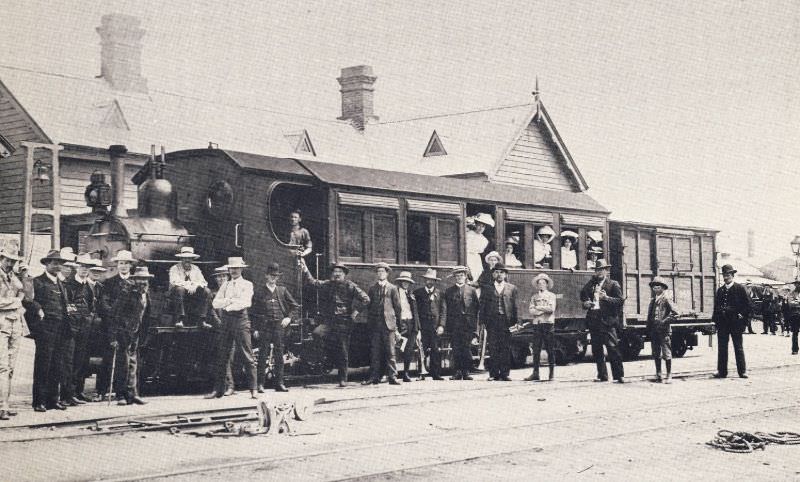
The Commonwealth Railways operated a steam rail car on the transcontinental line that became widely known as the ‘Coffee Pot’ — a nickname earned from its shape and the steam it belched. Around 1910, it was a familiar sight on routes through remote South Australia.
Tumby Bay, on the western coast of the Eyre Peninsula, was a quiet coastal town in 1909. Its old jetty connected the town to passing steamships, and the hotel nearby served both locals and the crews of vessels stopping along the coast.