
On January 1, 1993, Slovakia officially became an independent sovereign state — the result of a peaceful agreement between Slovaks and Czechs to dissolve Czechoslovakia. The process, driven by Prime Minister Vladimír Mečiar, was so orderly that historians call it the “Velvet Divorce.” Overnight, a new country of 5.4 million people appeared on the map of central Europe, landlocked and bordered by Poland, Austria, Hungary, the Czech Republic, and Ukraine. The capital, Bratislava, became the seat of a new government, and cities across the country began adjusting to life under a new national identity. The photos below were taken in Slovakia during the 1990s, capturing towns, streets, vehicles, and landmarks at a defining moment in the country’s history.
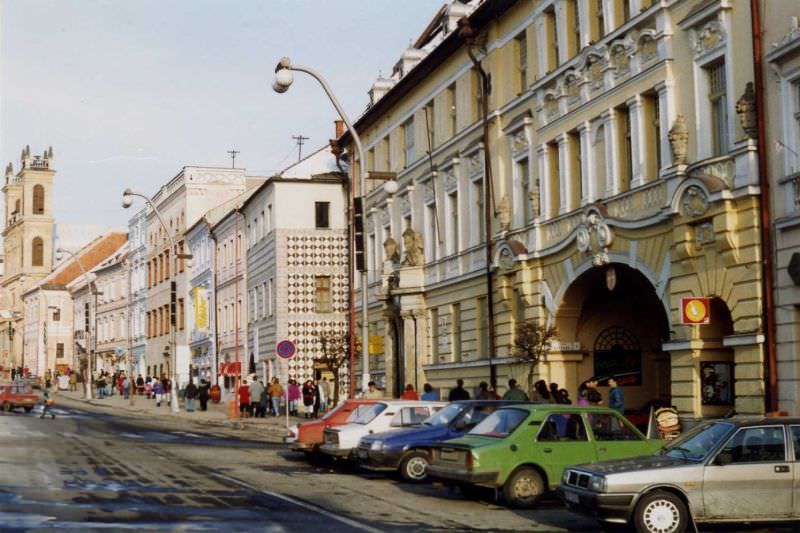
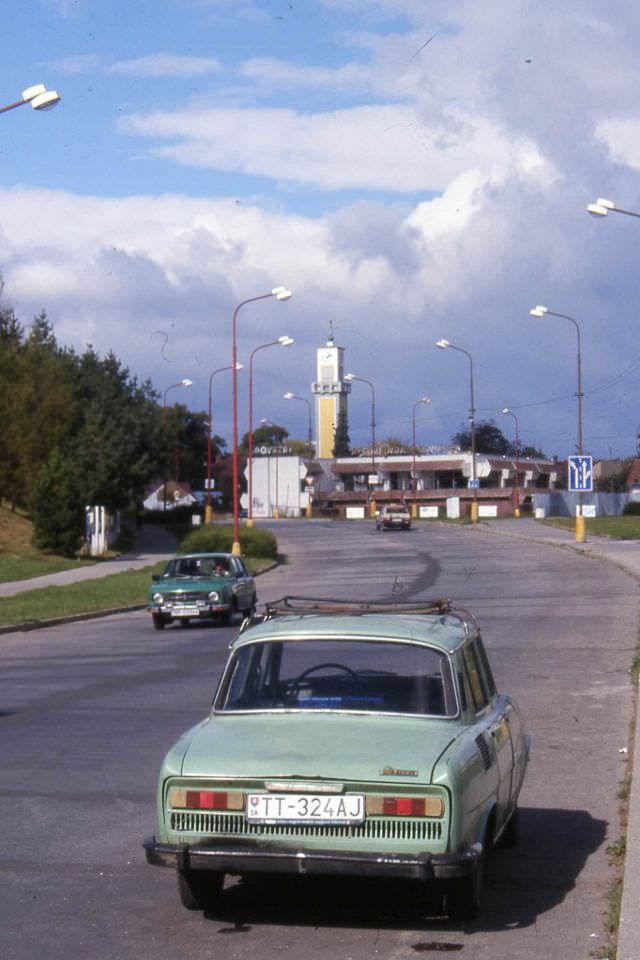
Banská Bystrica, one of Slovakia’s major cities, sits in a wide valley in the center of the country. It has long been a regional hub, and in the 1990s its streets reflected the shift from communist-era infrastructure to a new economic and political reality.
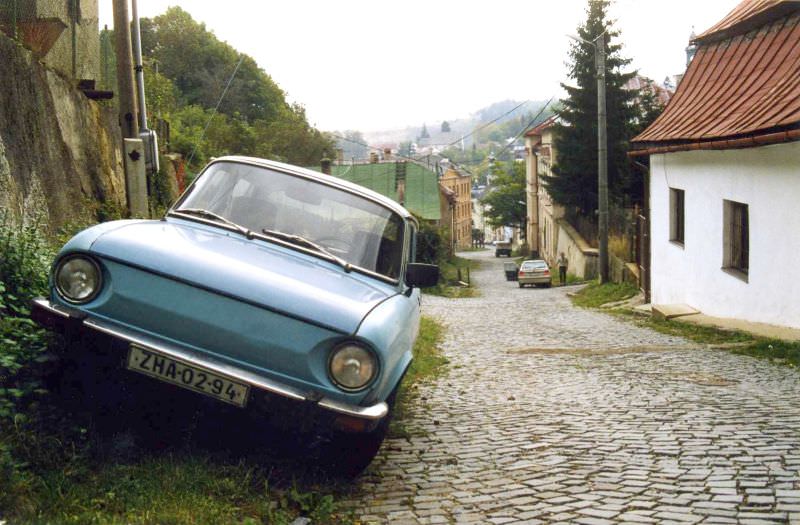
Not far away, Banská Štiavnica was one of Slovakia’s most historically rich towns. Once a major silver and gold mining center during the Habsburg era, it is a UNESCO World Heritage Site. In the early 1990s, the town’s streets were still filled with Soviet-era vehicles. One of the most recognizable was the Škoda 100, a compact Czechoslovak-made car that was common across the region.
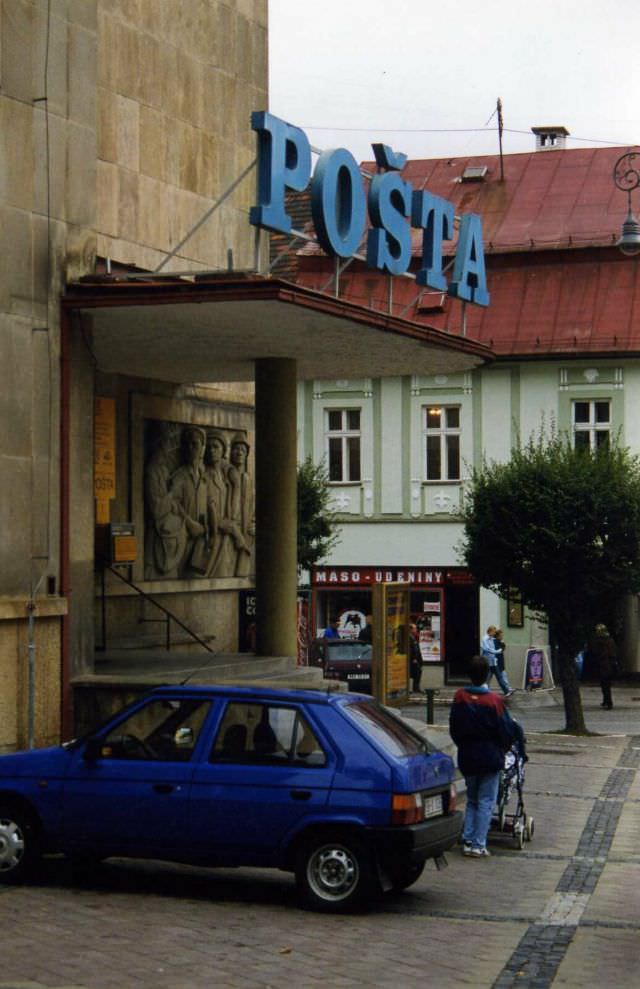
The post office in Banská Štiavnica was a practical anchor of daily life in the town. For residents adapting to a new country with new institutions and new stamps on their letters, it held a particular significance in the transition years.
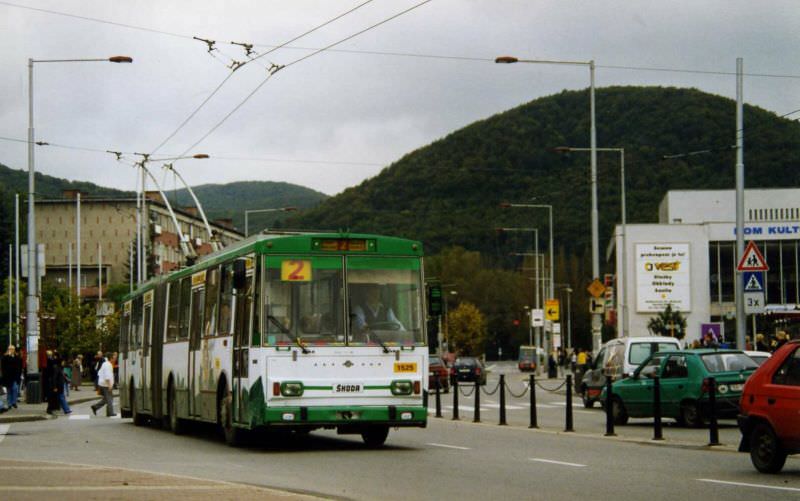
Trolleybuses were a common sight in Slovak towns throughout the 1990s. The Škoda 15Tr was a standard model used across Czechoslovakia and continued operating in many Slovak cities well after independence. These electric buses ran on overhead wires and were a reliable, low-emission form of public transport long before that was a common concern.
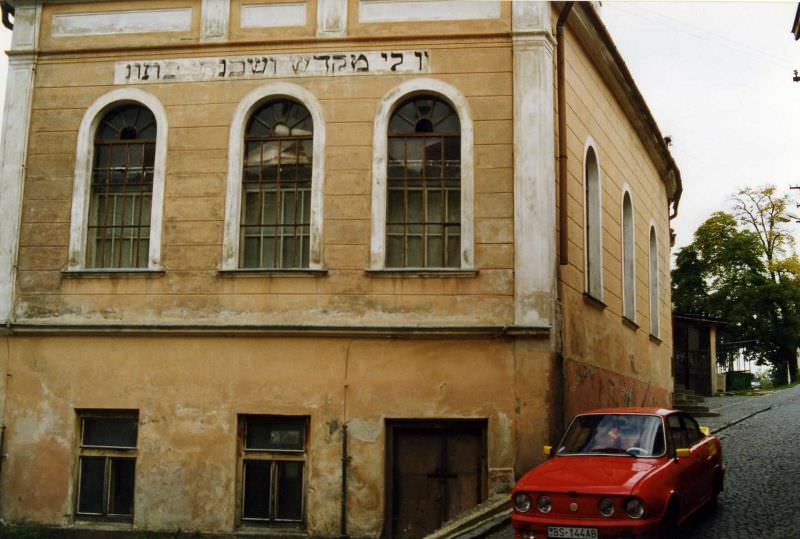
Banská Štiavnica’s synagogue stands as a reminder of the town’s once-diverse population. Jewish communities had lived in Slovak towns for centuries before World War II. By the 1990s, the synagogue was largely unused but still standing, a quiet monument to a community that had been devastated during the Holocaust.
The main street of Banská Štiavnica climbs steeply through the old town, lined with Baroque and Renaissance buildings that date back to the town’s mining heyday. In the 1990s, many of these structures were in need of restoration, their facades worn but still striking.
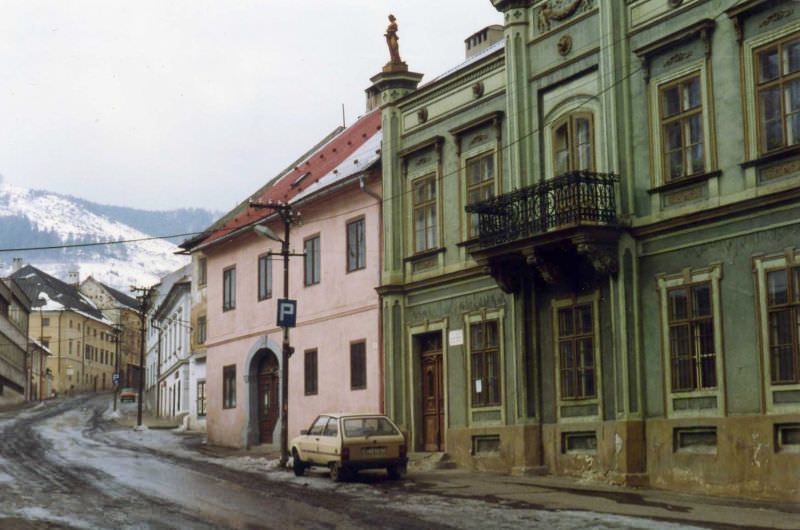
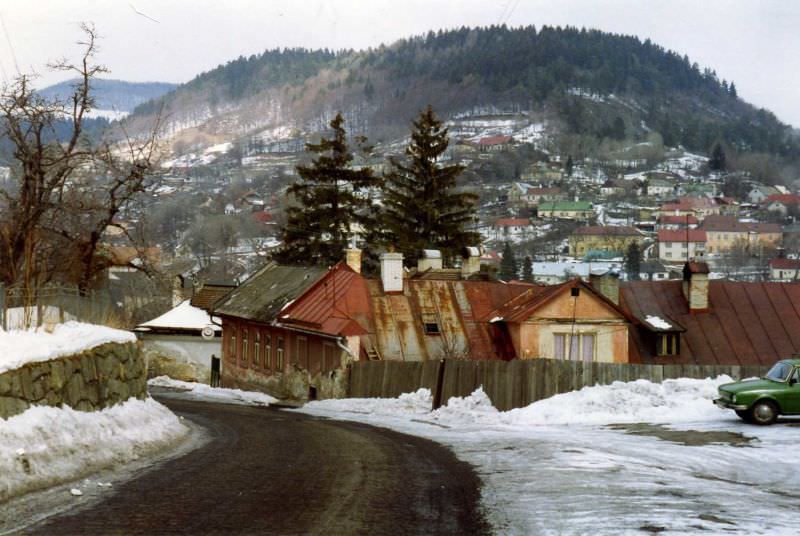
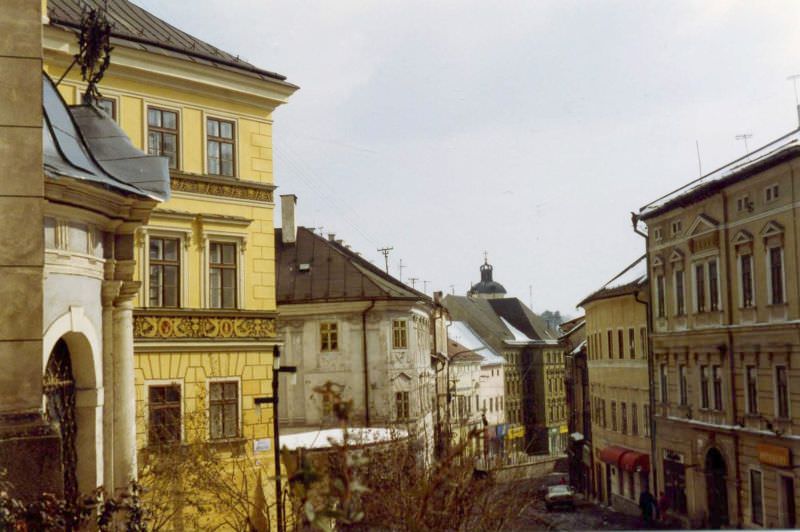
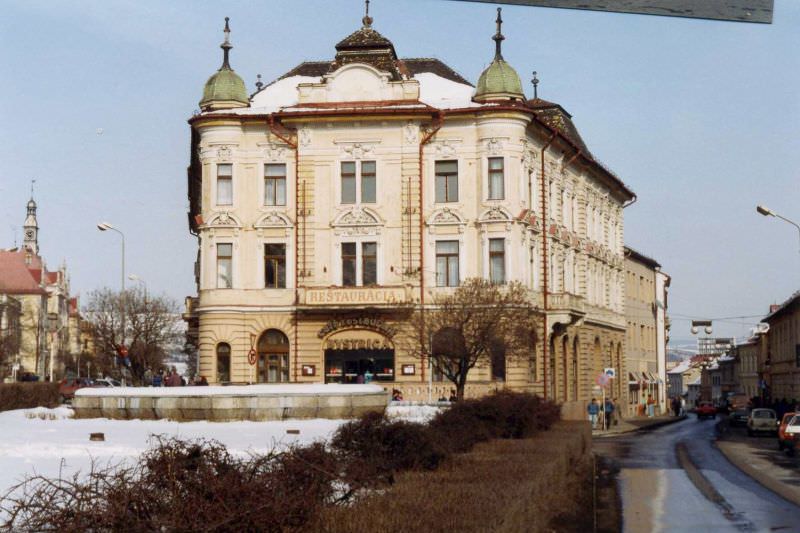
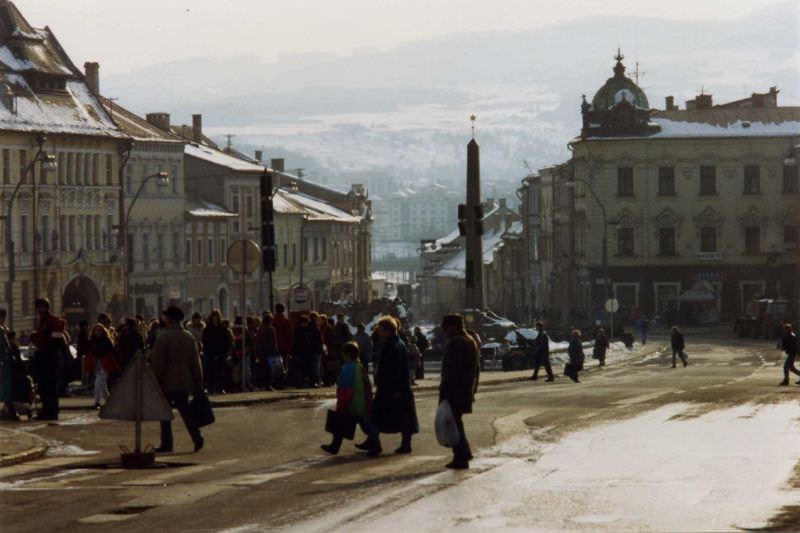
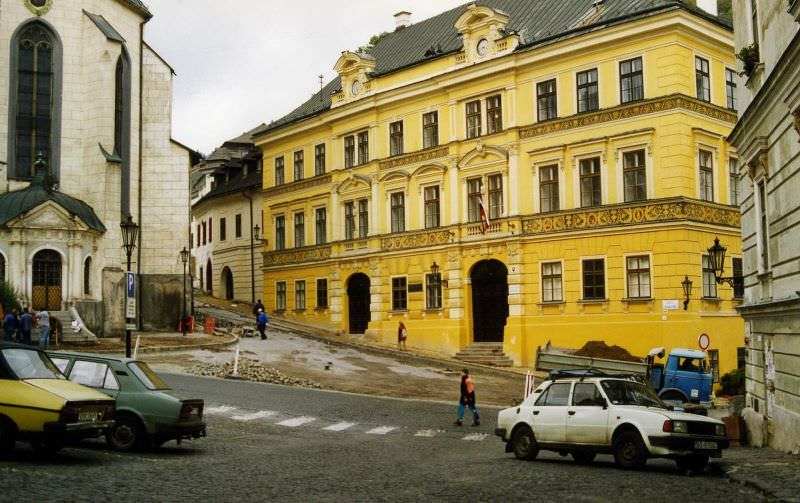
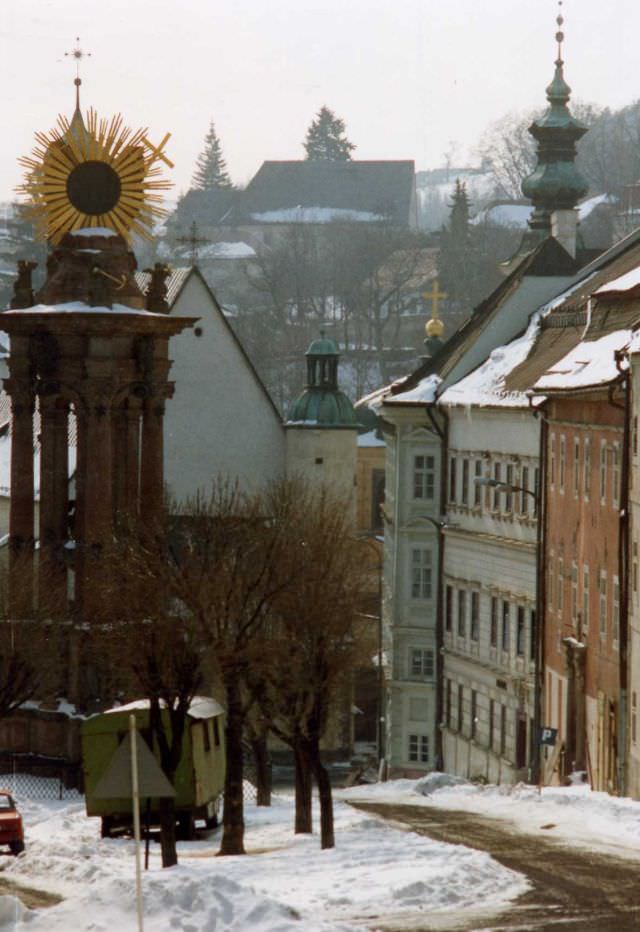
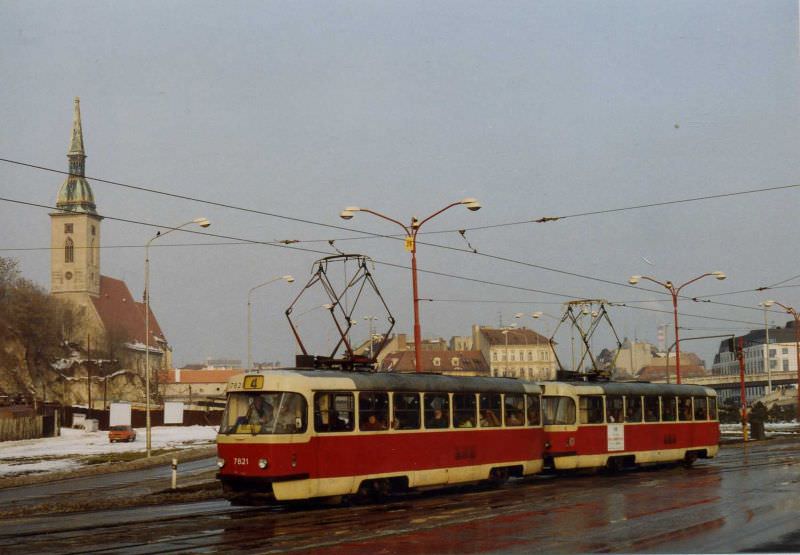
In Bratislava, the capital, trams connected the city’s neighborhoods as they had for decades. The Tatra tram — a staple of Czechoslovak public transport — continued running through Slovak city streets well into the 1990s. Bratislava, though small by European capital standards, was reshaping itself as the political and economic center of a brand-new republic.
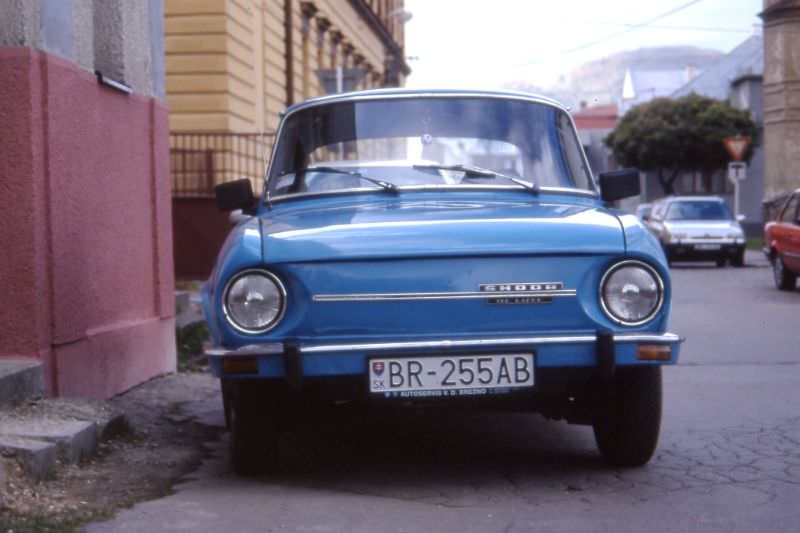
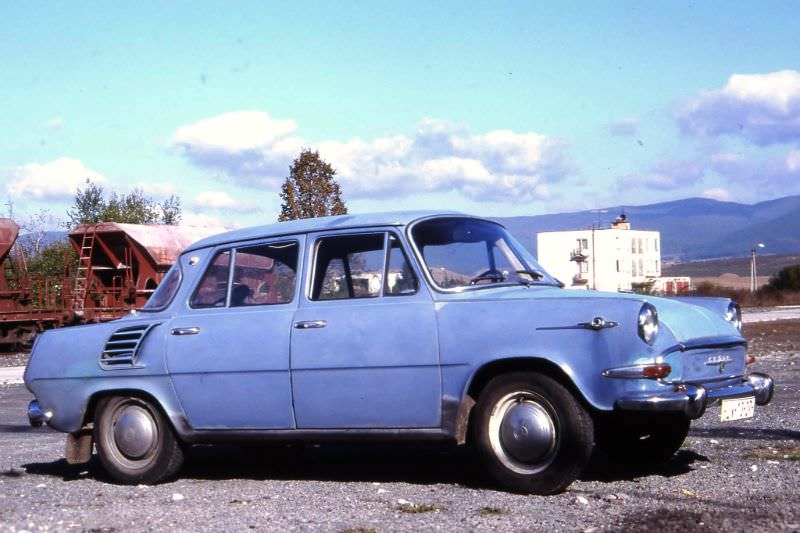
Škoda cars were everywhere in 1990s Slovakia. The brand had been the backbone of Czechoslovak automotive manufacturing for decades. This Škoda S100L de luxe, spotted in Brezno, carried a BR licence plate — a detail that distinguishes it as local to Brezno rather than Bratislava, despite what the initials might suggest.
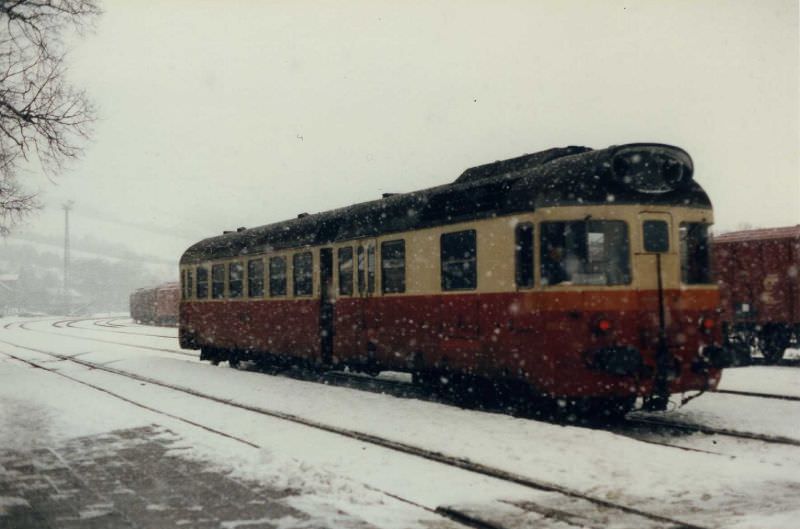
Train travel was the backbone of long-distance movement across Slovakia. In the early 1990s, the rail network — inherited from the Czechoslovak State Railways (ČSD) — was still operating much as it had for decades. A railbus caught in a snowstorm near the Slovak-Czech border, traveling between Trenčín and Nový Jičín, captured the rugged practicality of rail travel in this part of Europe.
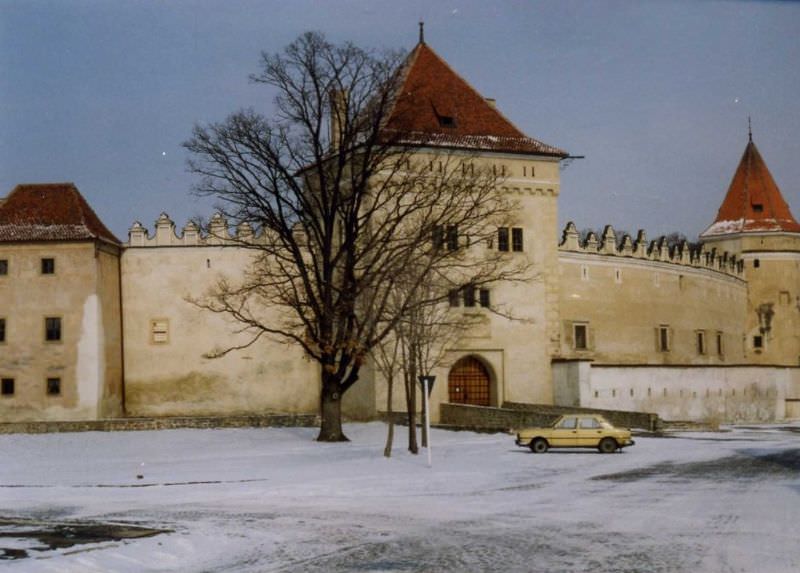
Kežmarok, in the foothills of the High Tatras, is a town defined by centuries of Central European history. Its castle is one of the most recognizable landmarks in the Spiš region, a fortified structure that has stood since the medieval period. In the 1990s, Kežmarok was a quiet town with a strong sense of its own heritage.
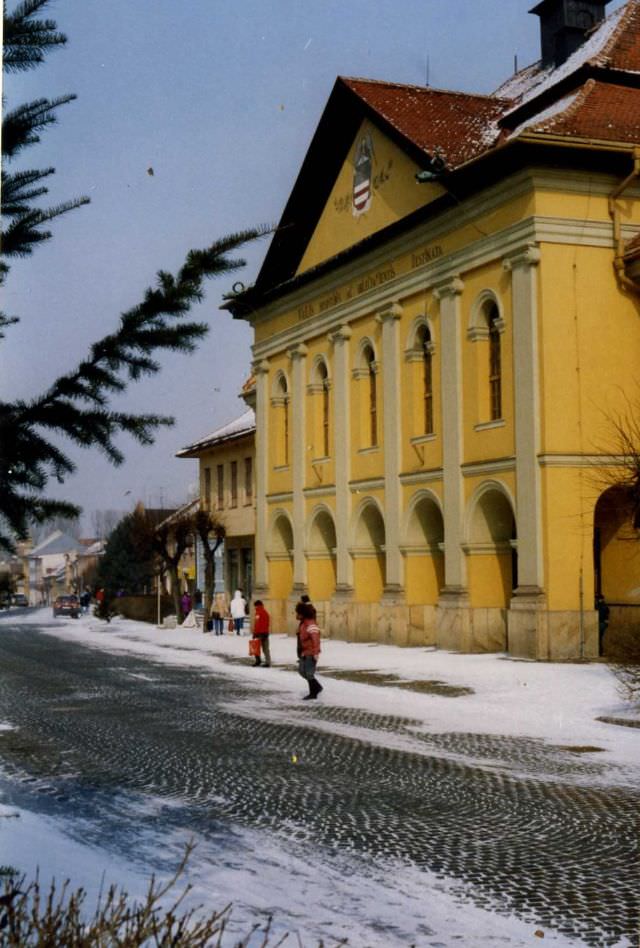
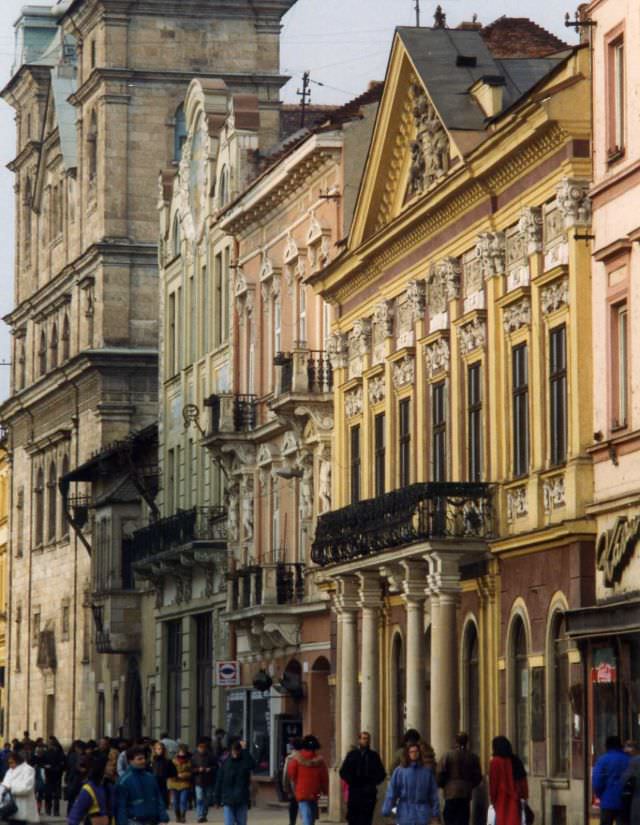
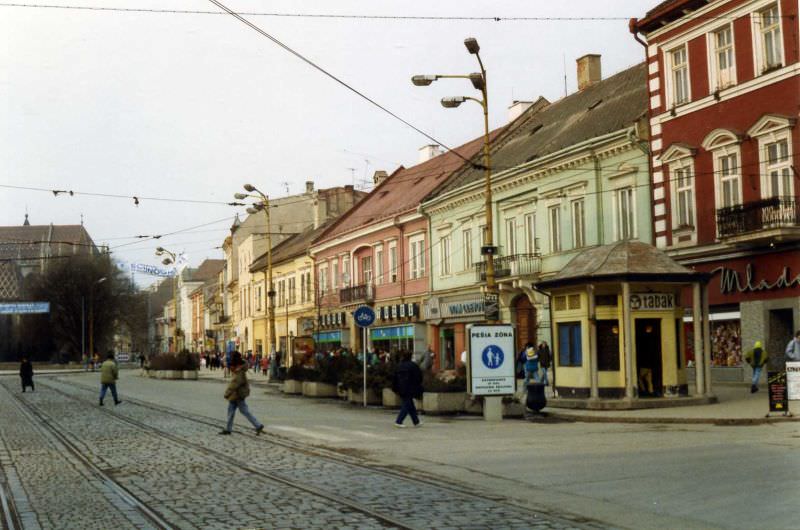
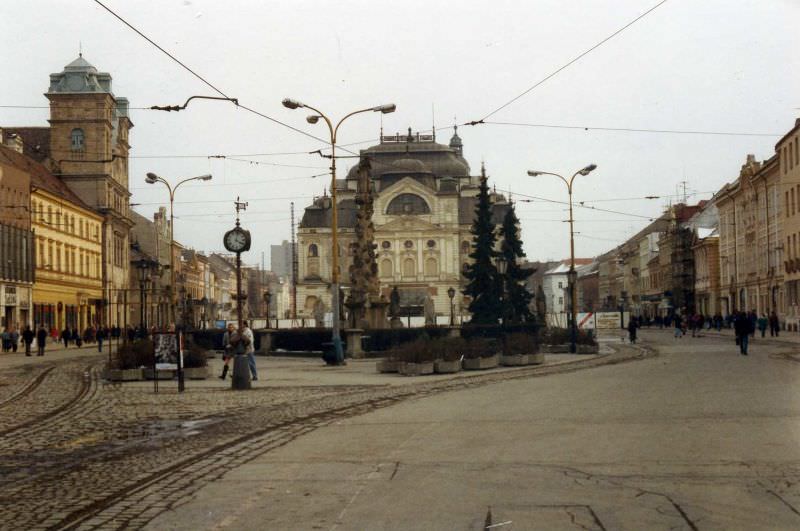
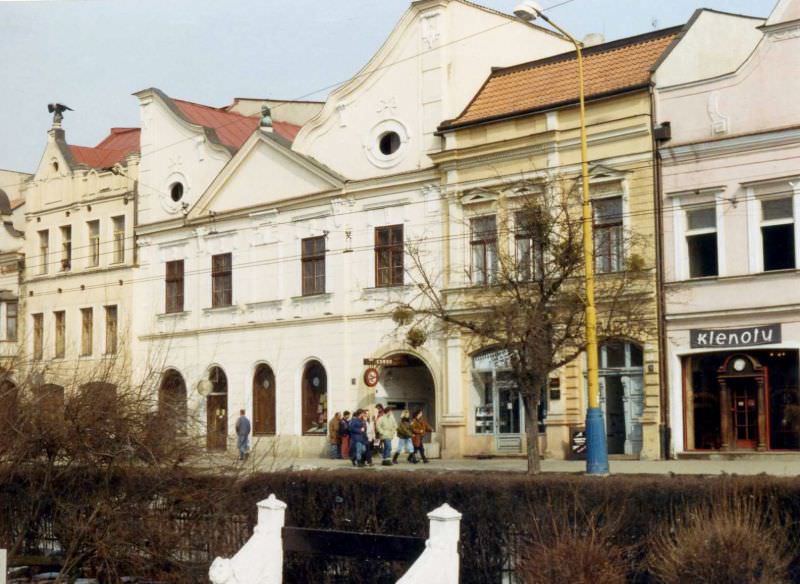
Košice, Slovakia’s second-largest city, sits in the eastern part of the country near the Hungarian and Ukrainian borders. Its architecture tells the story of Austro-Hungarian rule. The grand facades lining its streets were built during the empire’s peak, and they gave Košice a grandeur that few Slovak cities could match. The city’s Hlavná, or Main Square, was the center of public life.
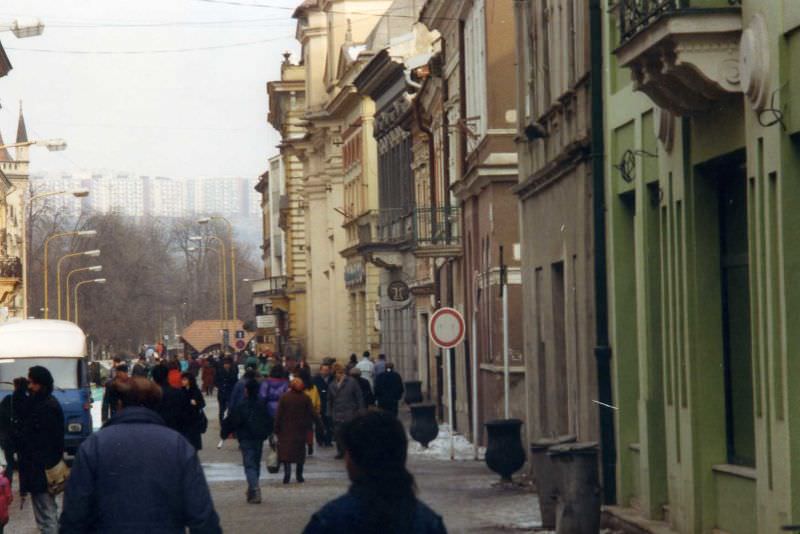
Kremnica is one of the oldest continuously operating mints in the world. The town was built on silver and gold mining, and its wealth funded much of the medieval development in the surrounding region. By the 1990s, the mint still operated, producing Slovak coins for the newly independent nation.
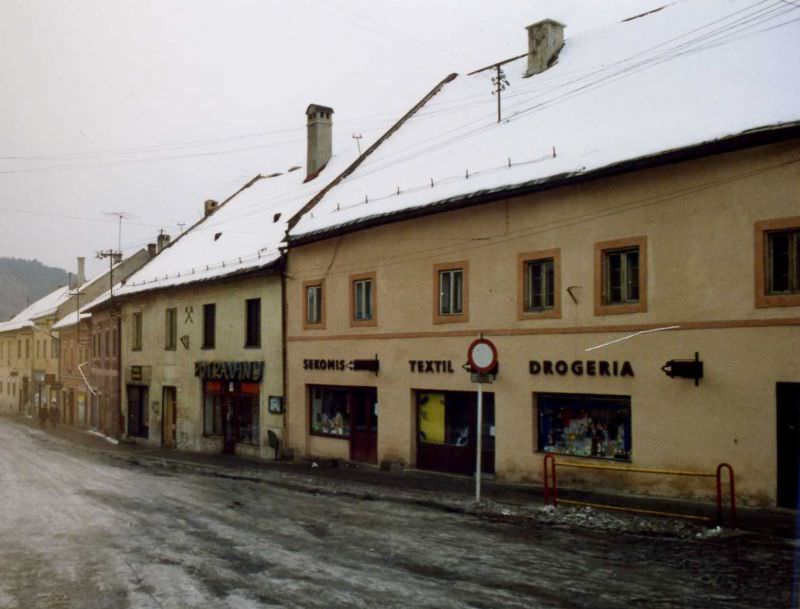
Levoča, another UNESCO-listed town in the Spiš region, was known for its remarkably well-preserved medieval walls and town center. The streets remained largely unchanged from earlier centuries, giving the town an almost frozen-in-time quality.
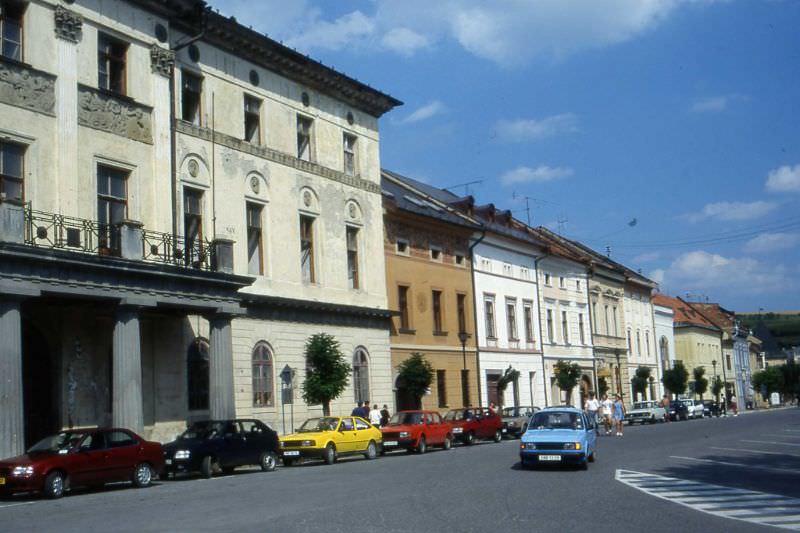
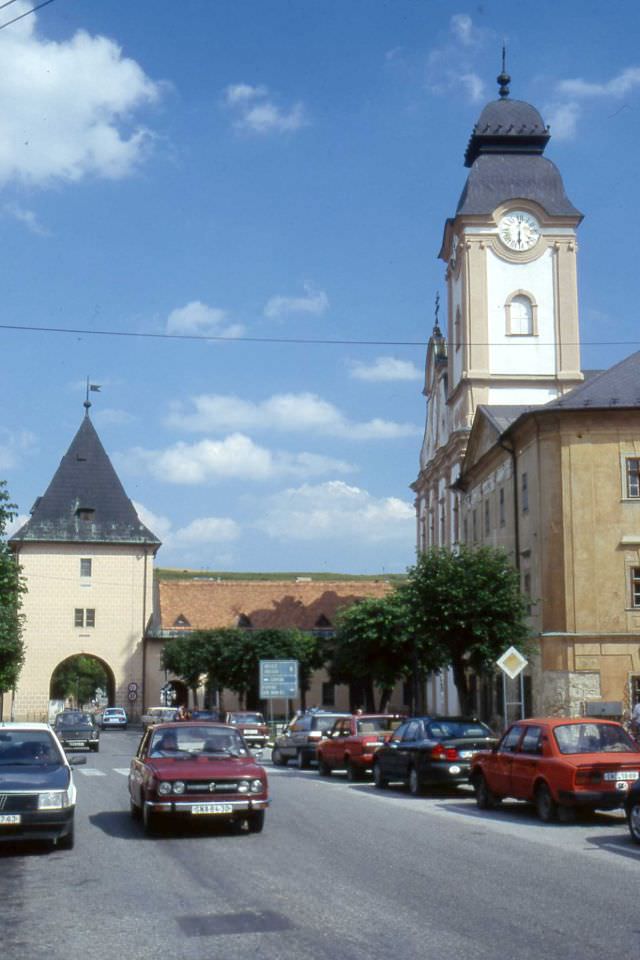
Lučenec, a town in southern Slovakia near the Hungarian border, reflected the demographic mix of the region. Southern Slovakia has a large Hungarian-speaking population, and towns like Lučenec sat at a cultural crossroads that shaped their architecture, language, and daily life throughout the decade.
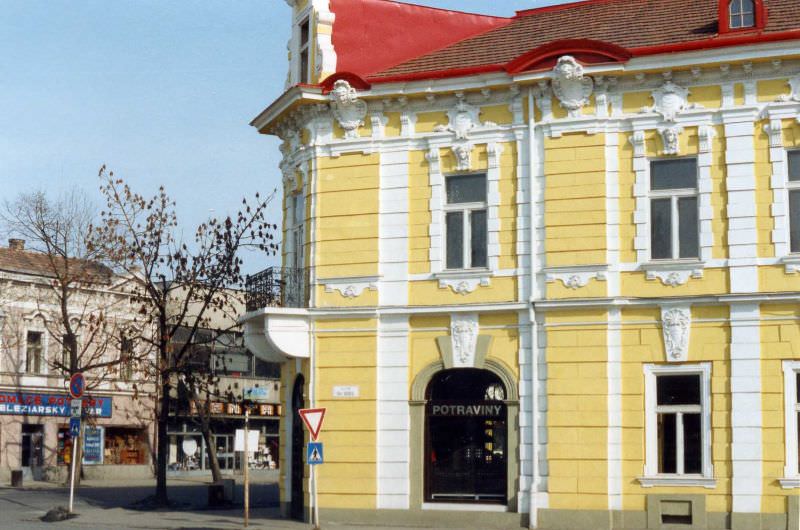
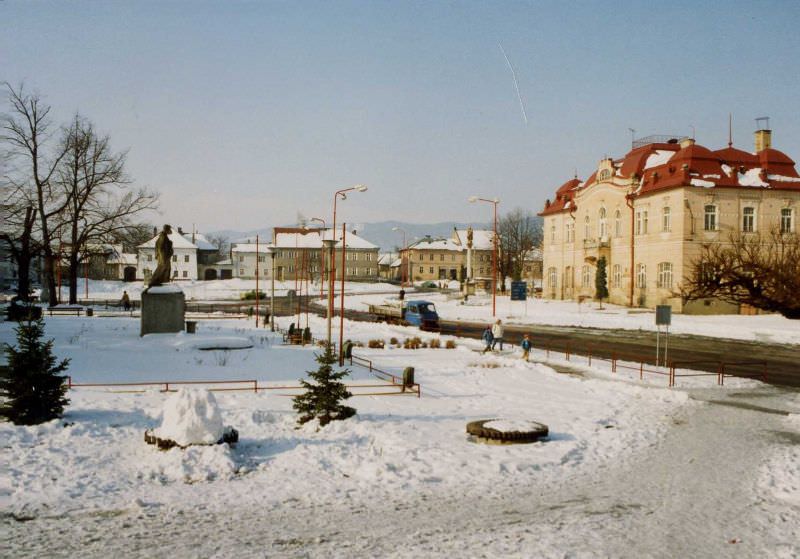
Poprad serves as the gateway town to the High Tatras, Slovakia’s dramatic mountain range along the Polish border. The Tatras are the highest mountains in the Carpathian chain, and Poprad’s position at their base made it a natural transit point for hikers, skiers, and travelers. The town’s church stood as a local landmark, while the mountains dominated the horizon in every direction.
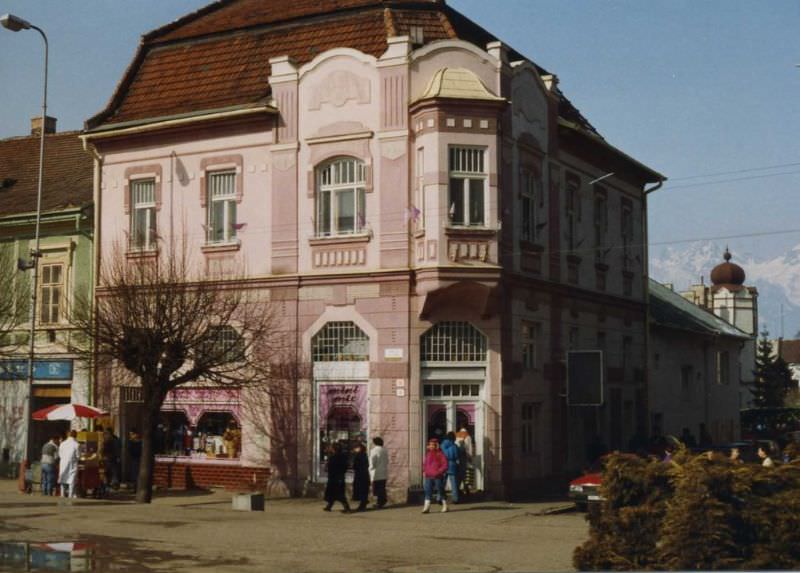
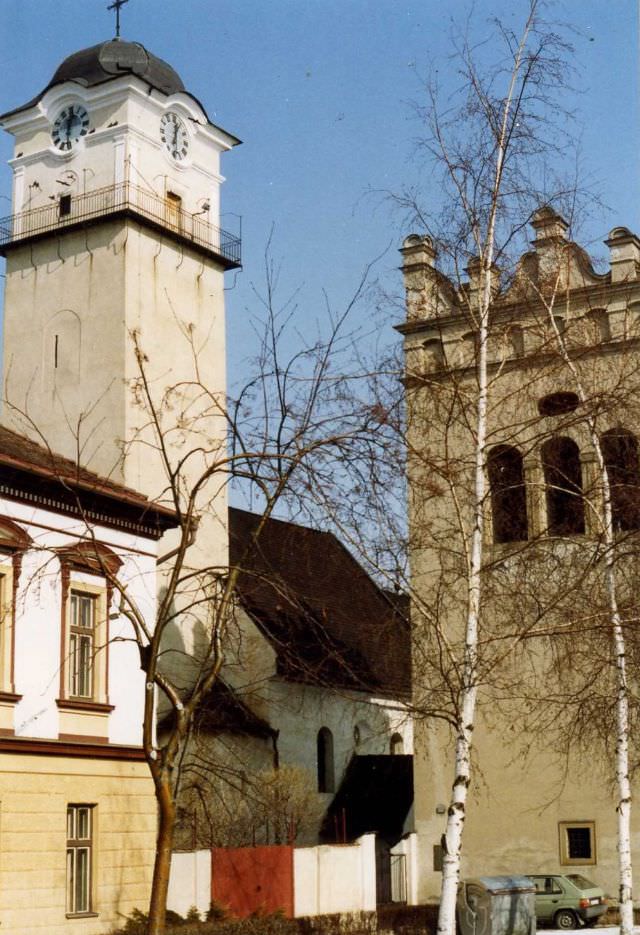
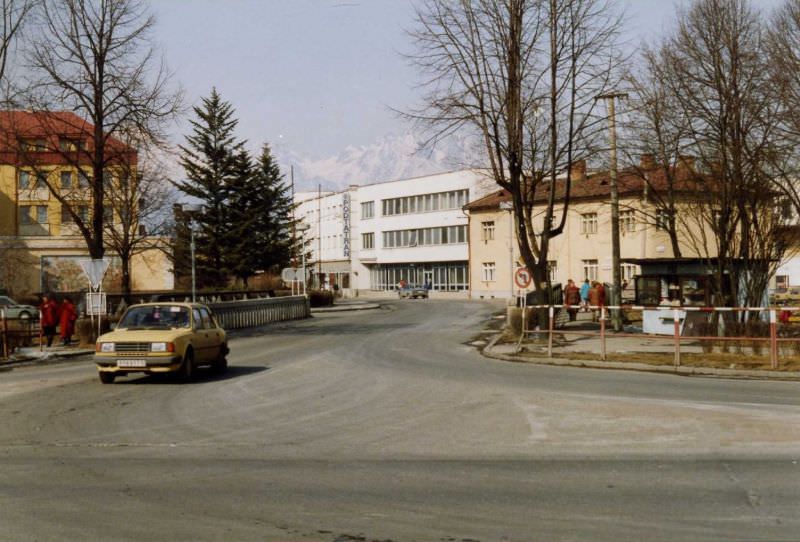
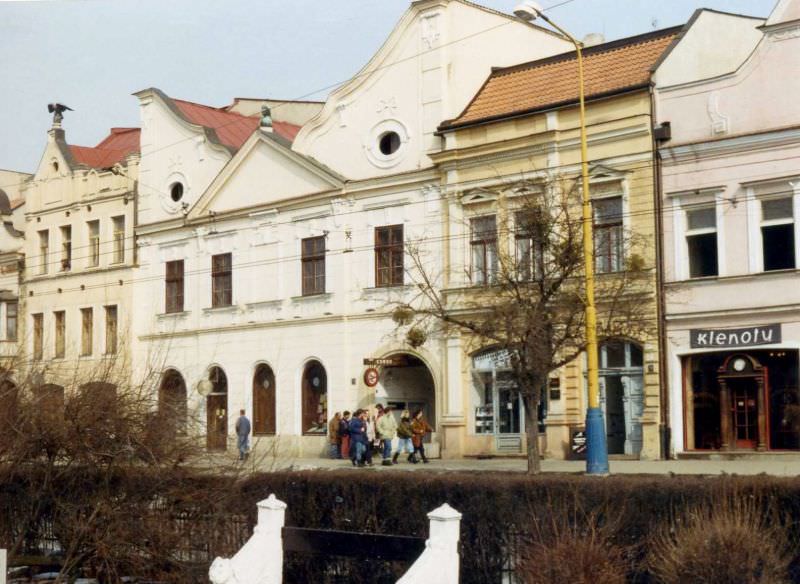
Prešov, Slovakia’s third-largest city, had a well-preserved old town with a main square that reflected centuries of Slovak, Hungarian, and Ruthenian cultural presence. The city’s trolleybus network — including the Škoda 14Tr model — kept urban traffic moving through the 1990s.
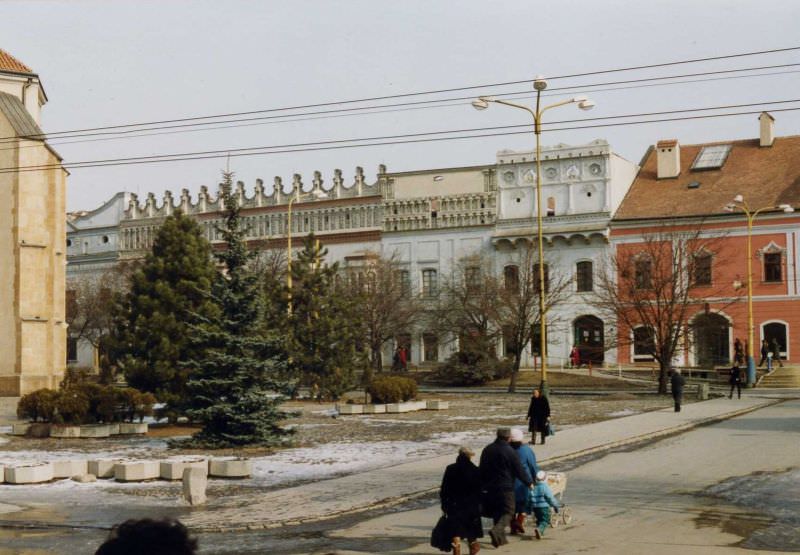
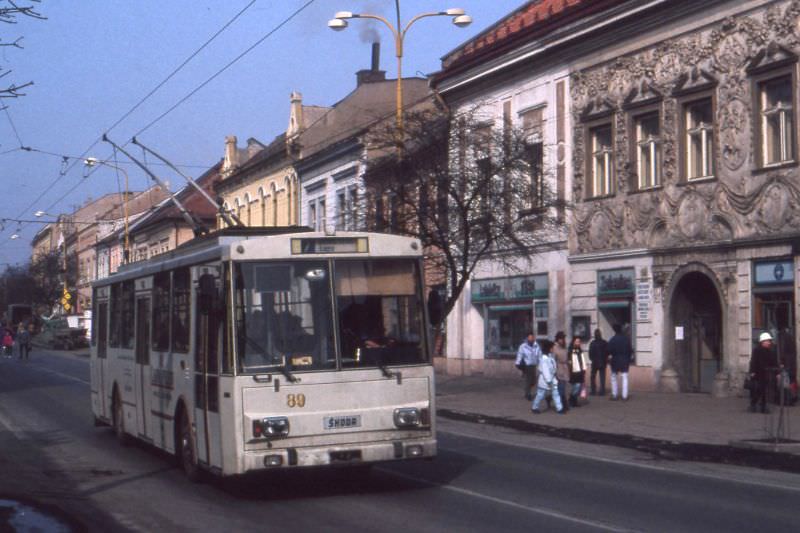
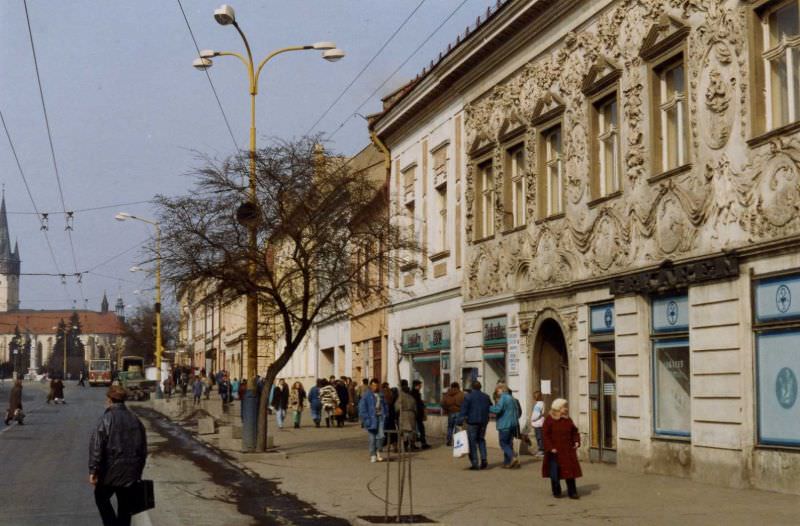
Rožňava, a town in the Gemer region of southern Slovakia, was historically associated with iron ore mining. Its main Banícke námestie — Miners’ Square — was flanked by historic buildings including the Jesuit Church and the Hotel Gemer, a local institution that served travelers and locals alike throughout the communist era and into the new republic.
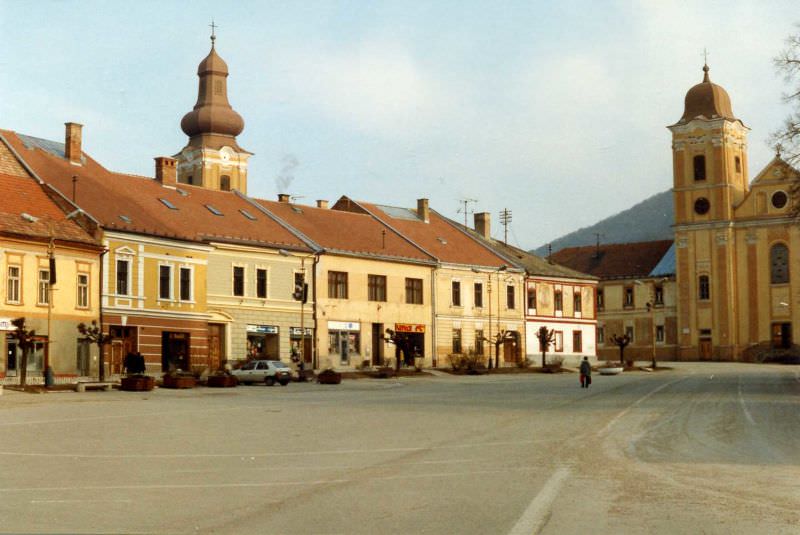
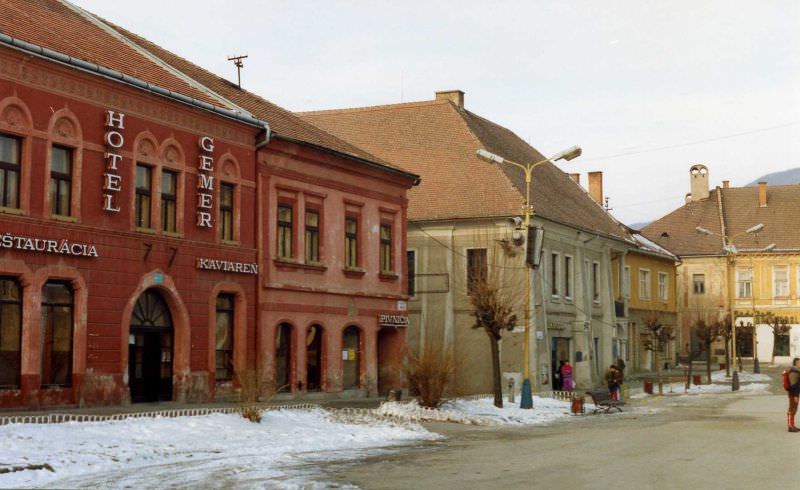
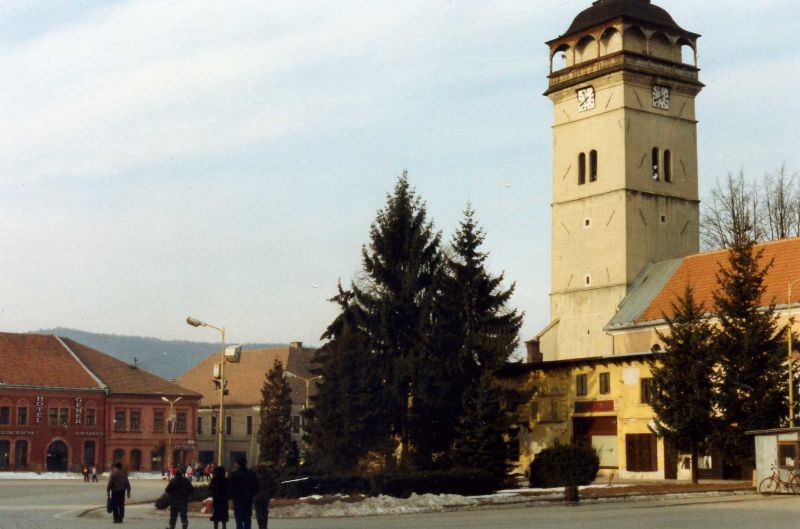
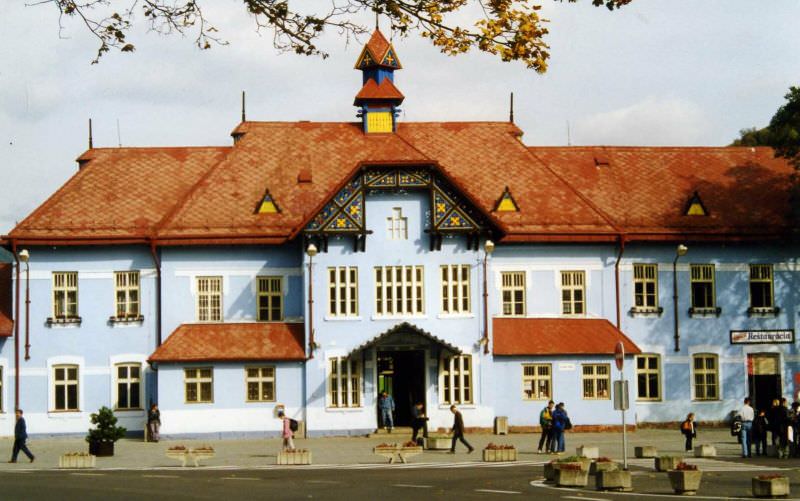
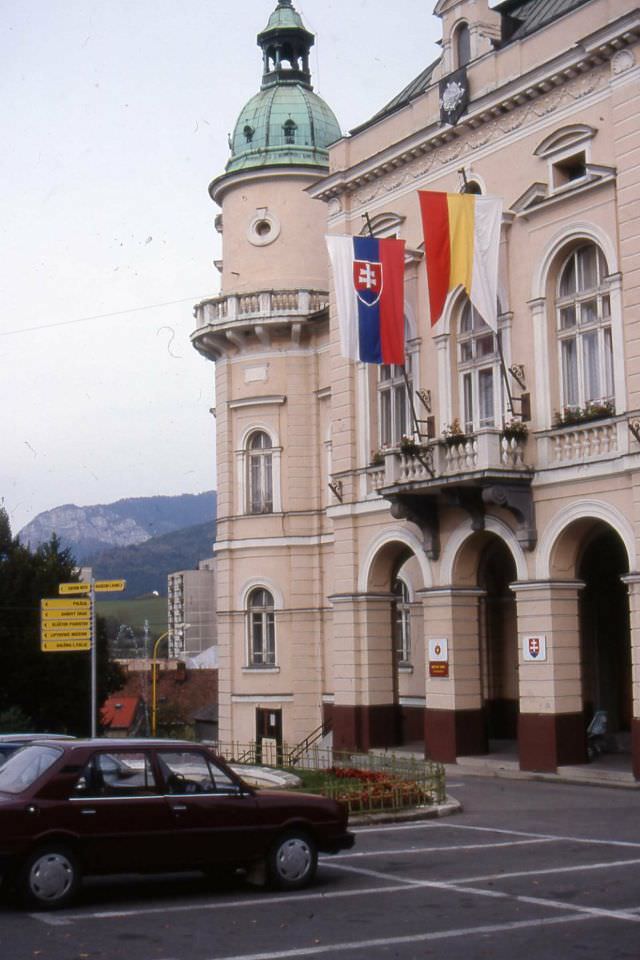
Ružomberok, in the Liptov region, was an industrial town with a working railway station that connected it to the rest of Slovakia. The town’s hall anchored its center, and everyday vehicles like the Škoda 1000 MB — a rear-engined compact car produced from the 1960s — were still a common sight on its roads in the early 1990s.
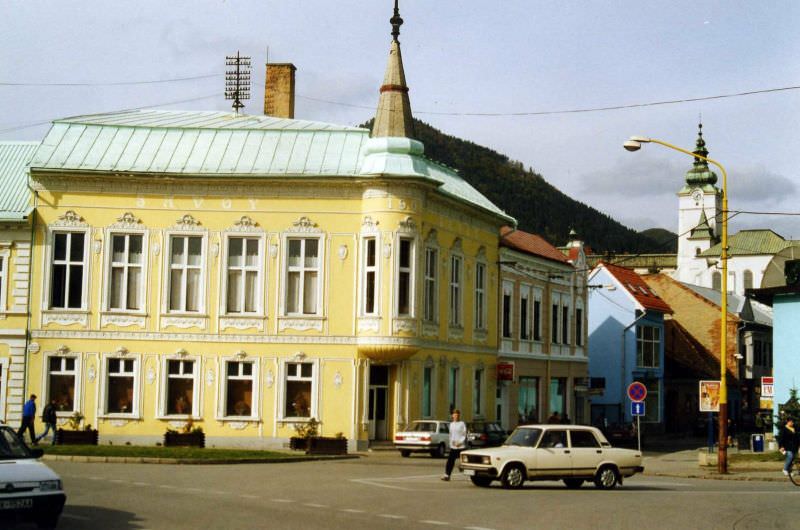
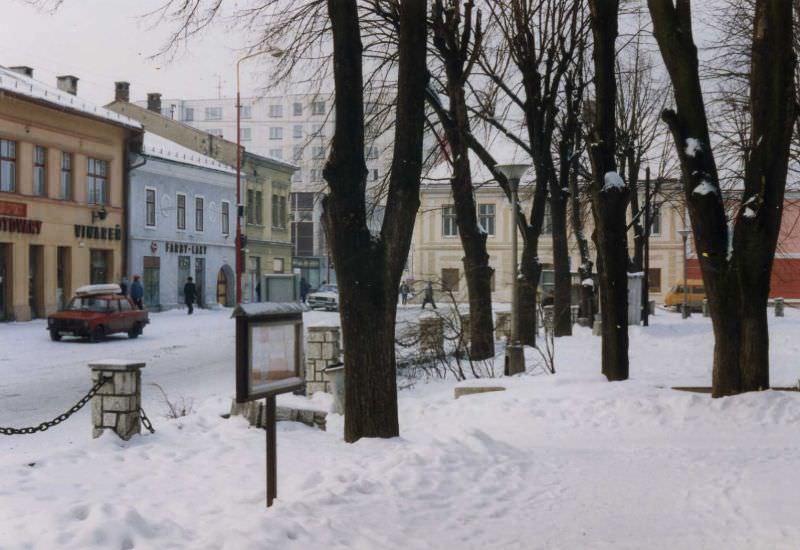
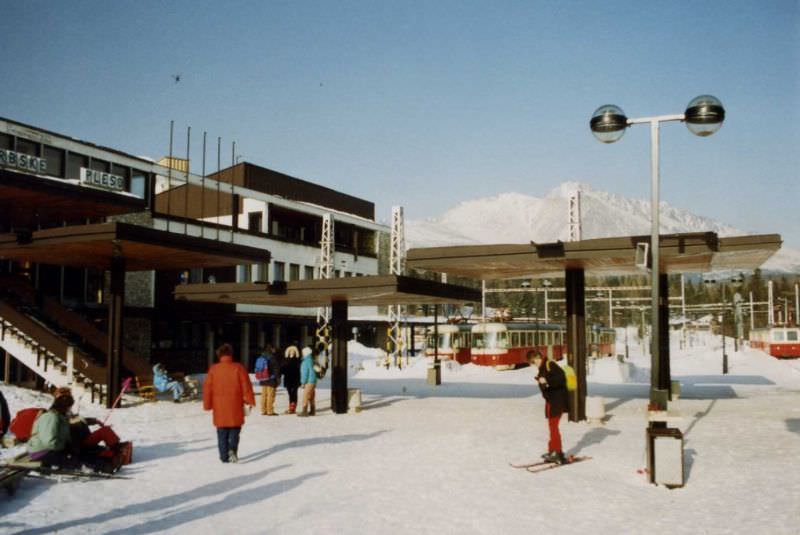
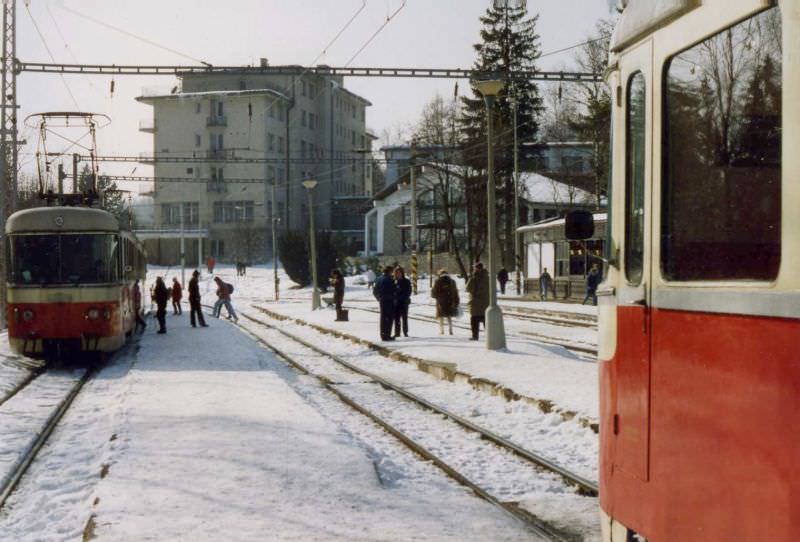
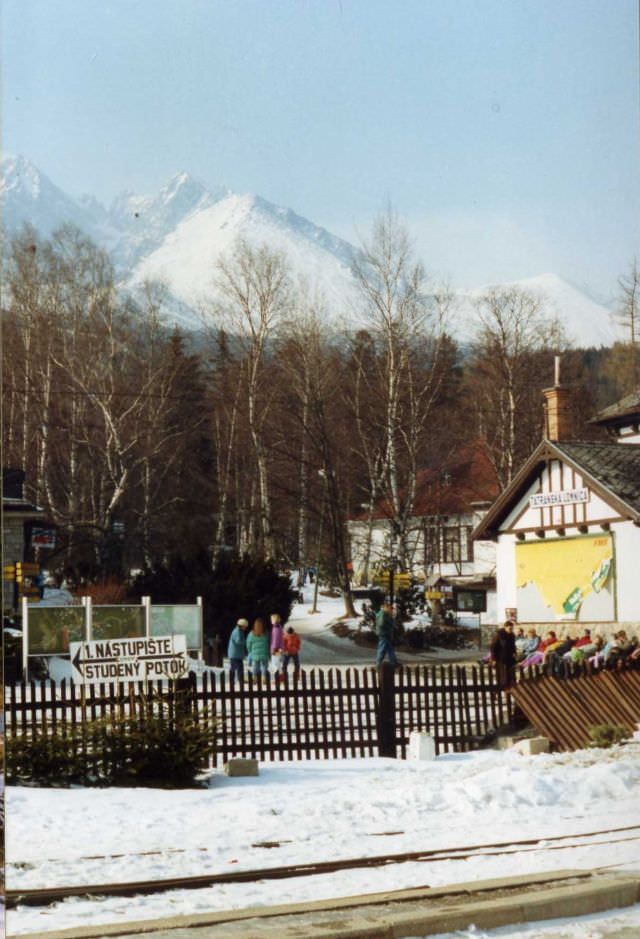
Stará Ľubovňa, a small town near the Polish border in northern Slovakia, had a main square typical of Slovak market towns — modest, functional, and deeply rooted in local identity. Nearby, Starý Smokovec was a resort village in the High Tatras, built during the Austro-Hungarian period as a mountain retreat. Its church and railway station were key landmarks, and the Tatra Electric Railway connected it to other Tatra resorts.
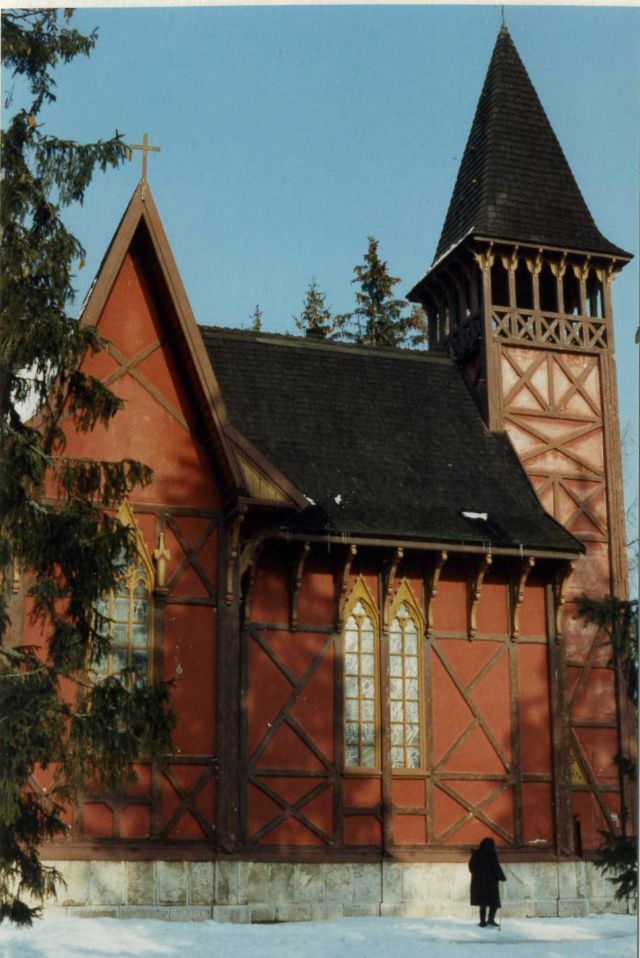
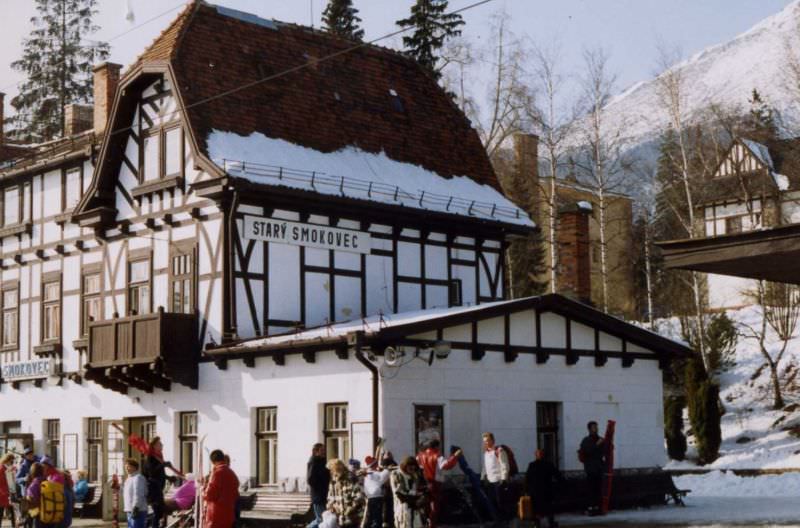
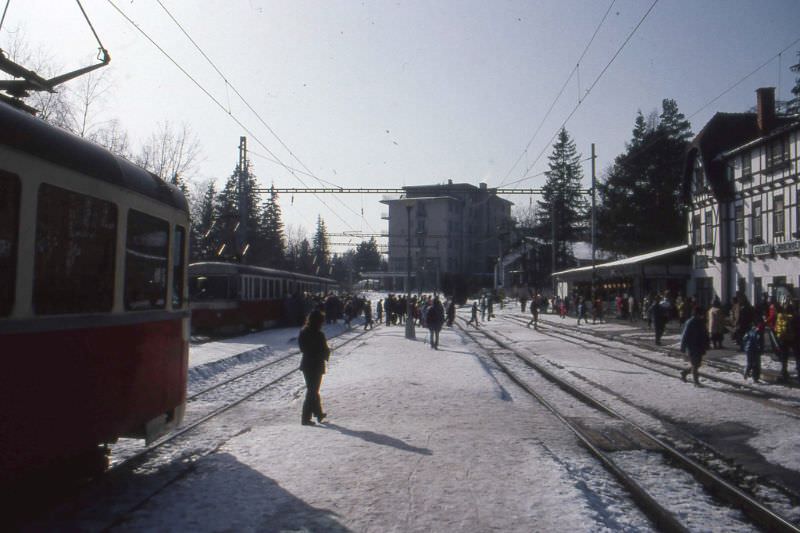
The Tatra mountain railway system was one of Slovakia’s most distinctive pieces of infrastructure. The ŽSR Tatra Mountain electric railway connected the High Tatras resorts, running between Štrbské Pleso, Starý Smokovec, and Tatranská Lomnica. The stations themselves were small architectural gems built into the mountain landscape.
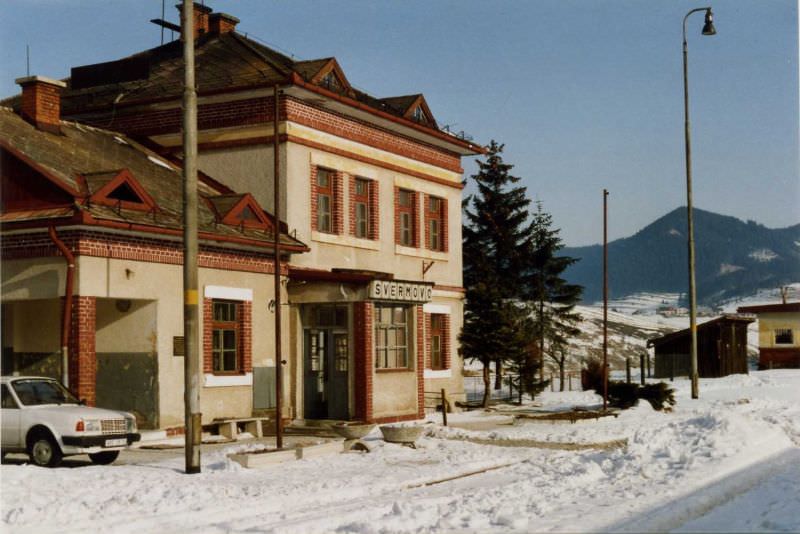
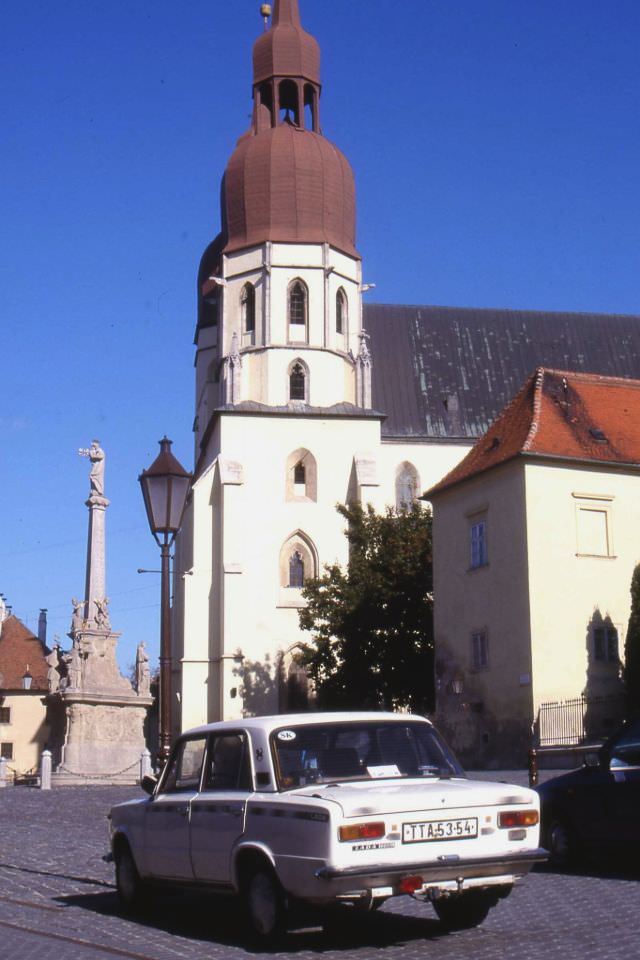
Telgárt, a small village in the Slovak Ore Mountains, was home to the Švermovo railway station — a stop on the Červená Skala–Margecany line, one of the most technically impressive narrow-gauge railways in central Europe. The line winds through mountain terrain using a series of loops and spirals to gain altitude. In Trnava, one of Slovakia’s oldest cities, the streets were lined with Škodas and Ladas — two of the most common cars in the former Eastern Bloc.
Slovakia in the 1990s was a country finding its footing. Its cities carried the weight of centuries of history — Habsburg architecture, medieval town squares, mining heritage — while its people navigated the practical realities of building a new state. From Bratislava’s trams to the mountain railways of the Tatras, these photographs document a nation at the very start of its independent chapter.





Lovely how there are no ads or billboards.
Some description are wrong.
lots of pics of Bystrica thar are attributed to Stiavnica.
Beautiful. The years, when Slovakia was cheap as dirt and nothing had value. I miss those years! (1990-2002)
Beautiful. The years, when Slovakia was cheap as dirt and nothing had value. I miss those years! (1990-2002)
Damn, without the old cars I would genuinely struggle to differentiate it from modern day