
By 1890, San Diego had grown into a city of 16,159 people. That growth didn’t happen overnight. Businessman Alonzo E. Horton founded the modern city in 1867, and the arrival of the Santa Fe Railway in 1885 sent it into overdrive. The transcontinental railroad connection brought settlers, commerce, and capital flooding into a region that had spent much of the previous four decades struggling just to stay solvent. In 1852, after overspending on a poorly designed jail drove the city into debt, the state of California revoked San Diego’s charter and placed it under a state-controlled board of three trustees. That board ran the city for 35 years, until 1887, when San Diego finally adopted a mayor-council government and regained its footing.
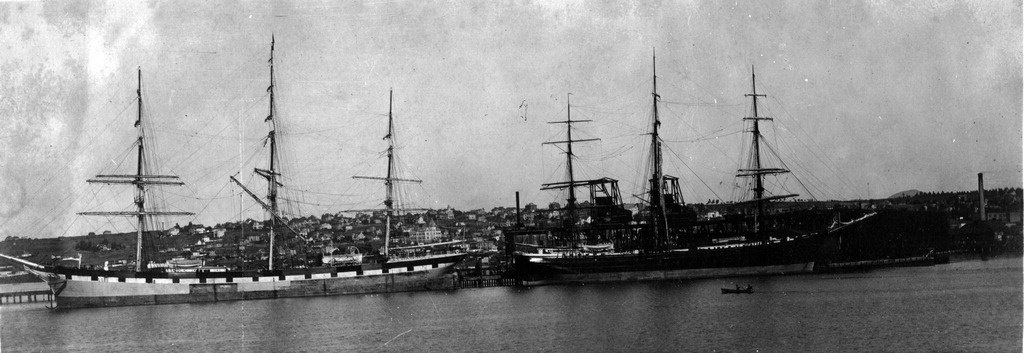
The bay was the heartbeat of San Diego’s economy. Ships moved in and out constantly, carrying goods, passengers, and raw materials. During the 1878 gold rush, San Diego’s port was expected to challenge San Francisco as a major Pacific trading hub. Charles Crocker, the Central Pacific Railroad manager, was so concerned about competition that he actively worked to prevent a rail extension to San Diego, fearing it would pull too much trade away from San Francisco. His efforts delayed but did not stop San Diego’s rise.
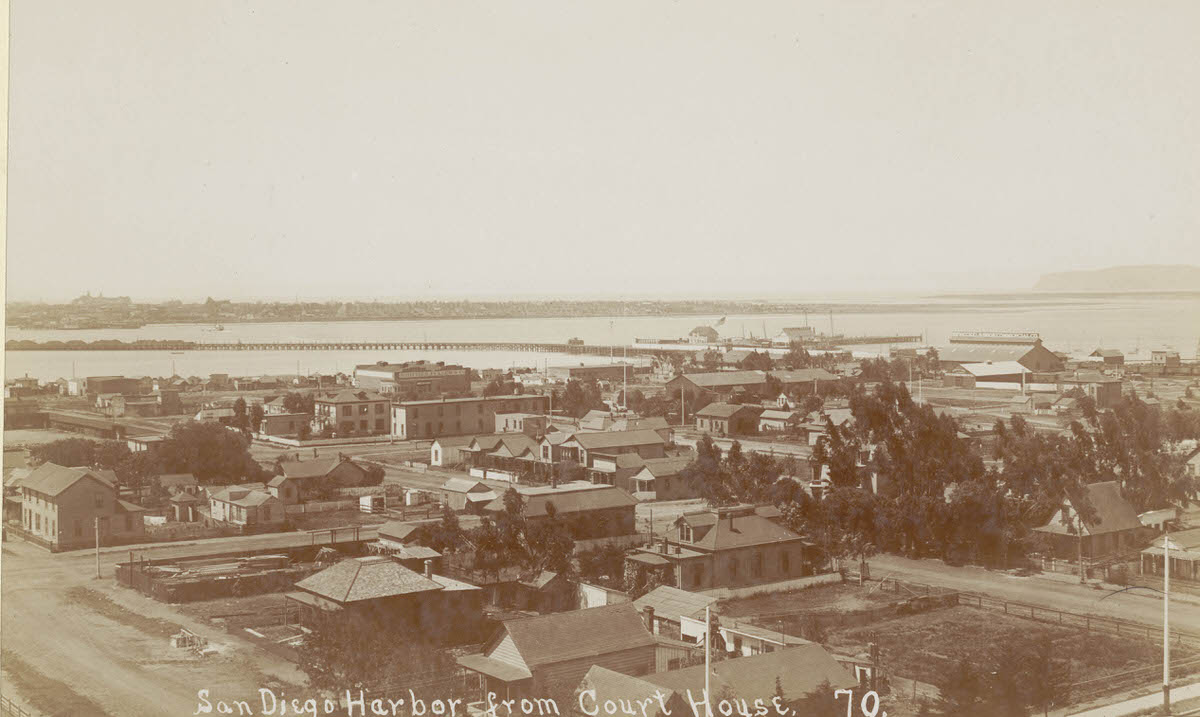
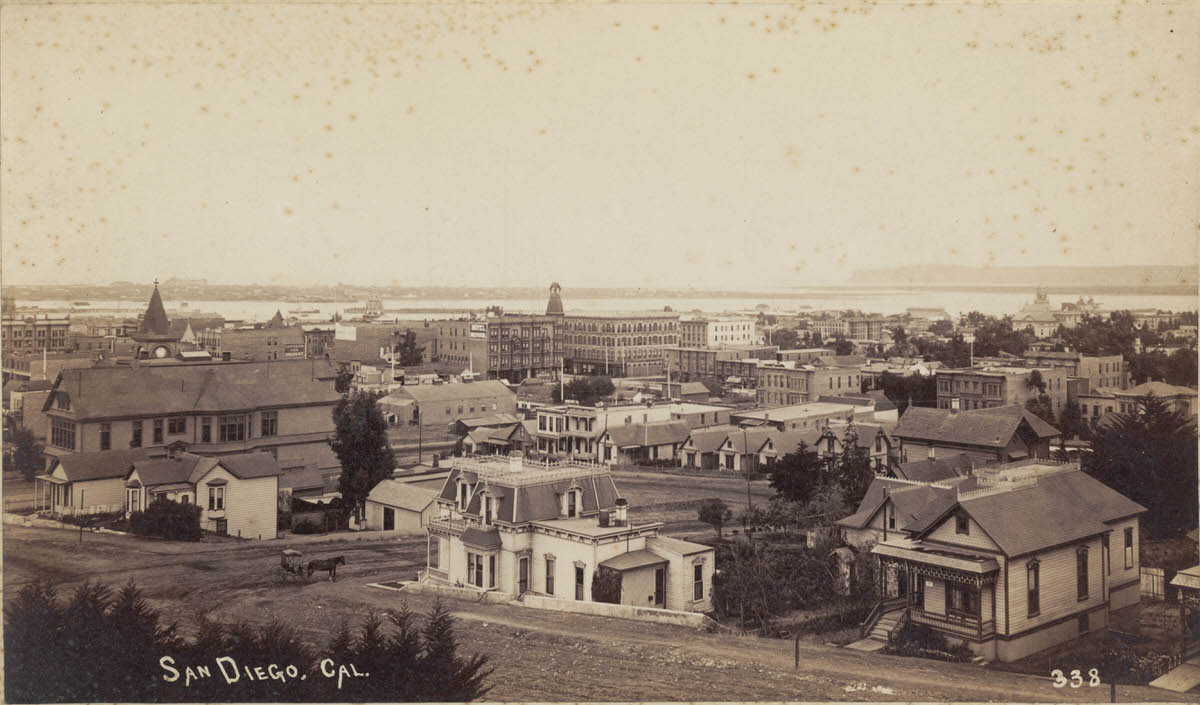
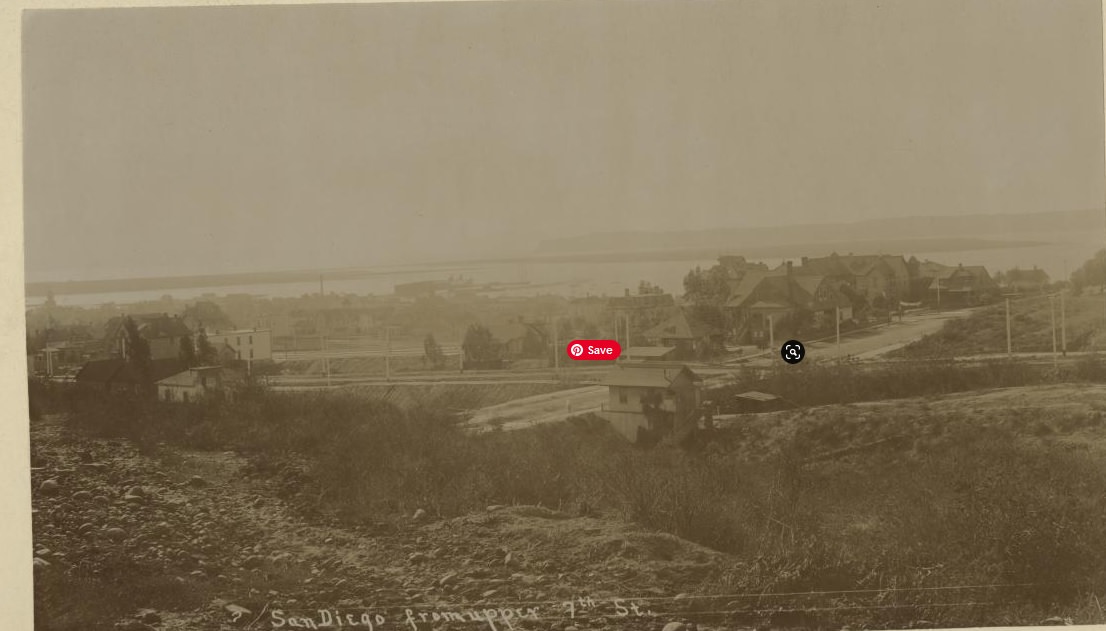
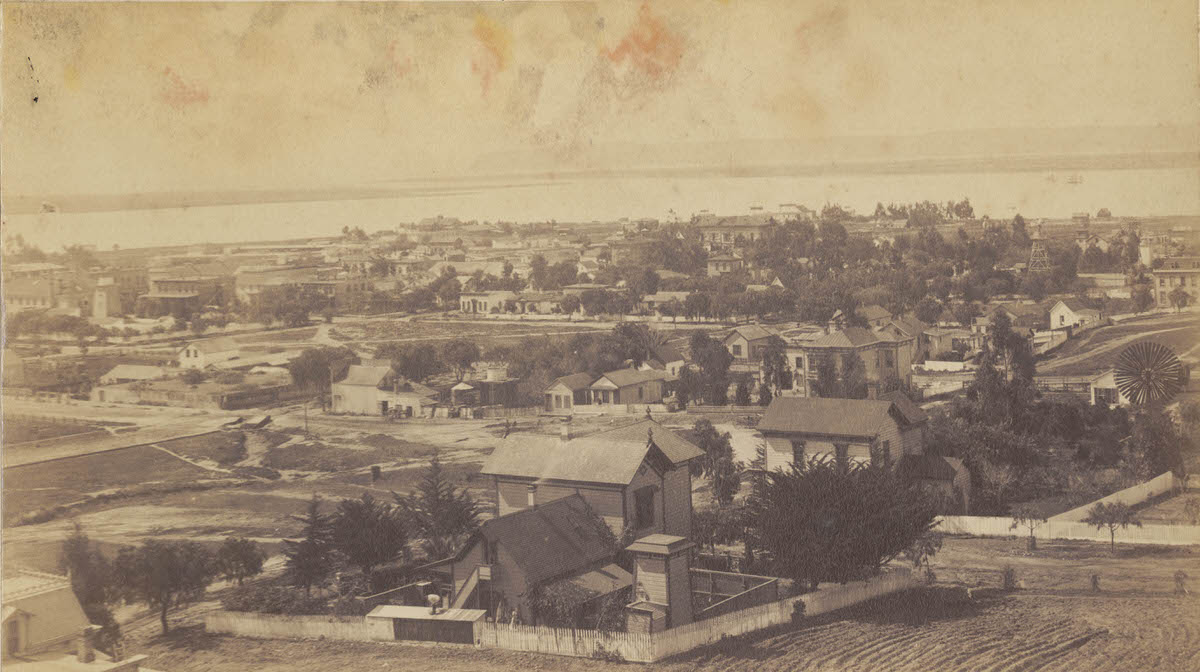
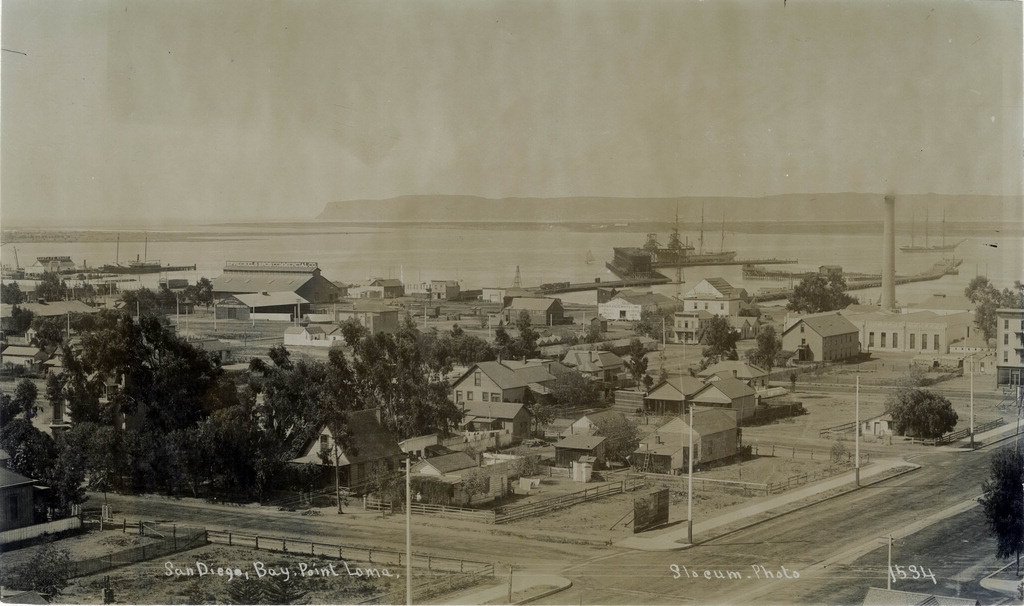
Looking out over downtown San Diego in the mid-1890s, the city’s Victorian character is on full display. Two- and three-story commercial buildings push toward the bay, while grand Victorian homes occupy the foreground hills. Coronado shimmers in the distance across the water. The city’s layout was still rough around the edges — dirt streets, modest wood-frame structures, and open lots sat alongside growing commercial blocks — but the shape of a real city was clearly forming.
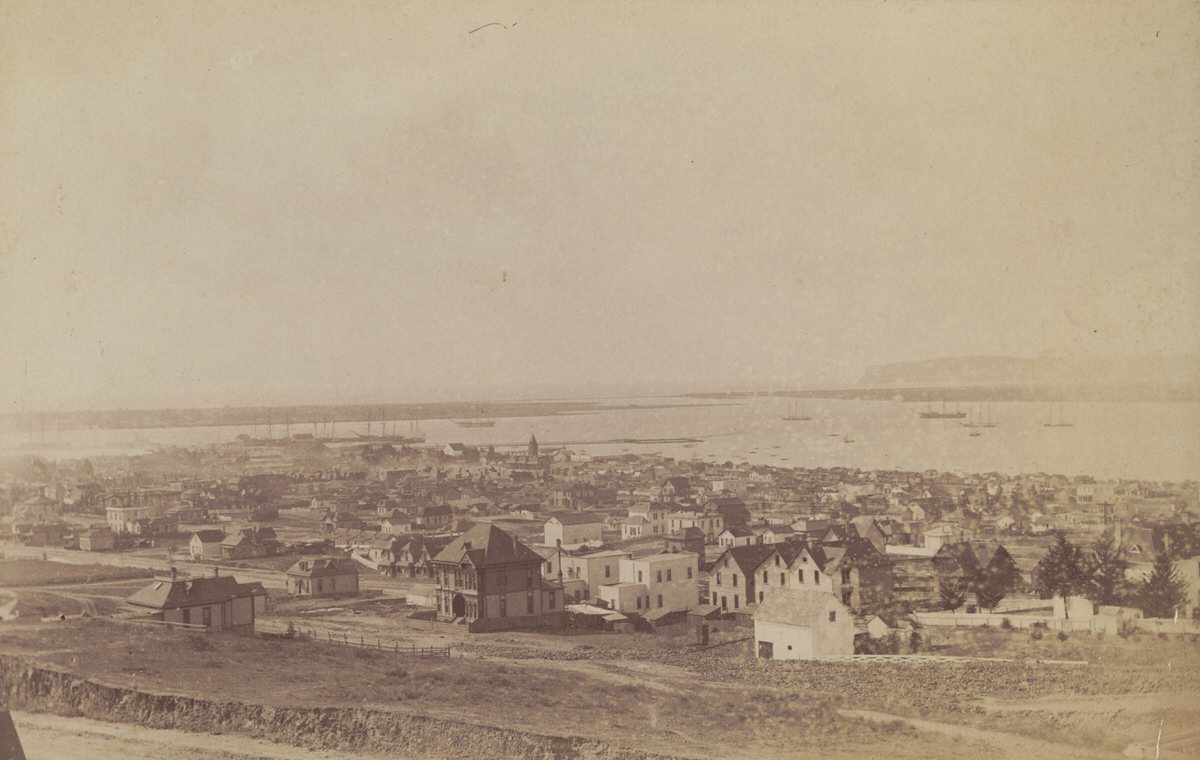
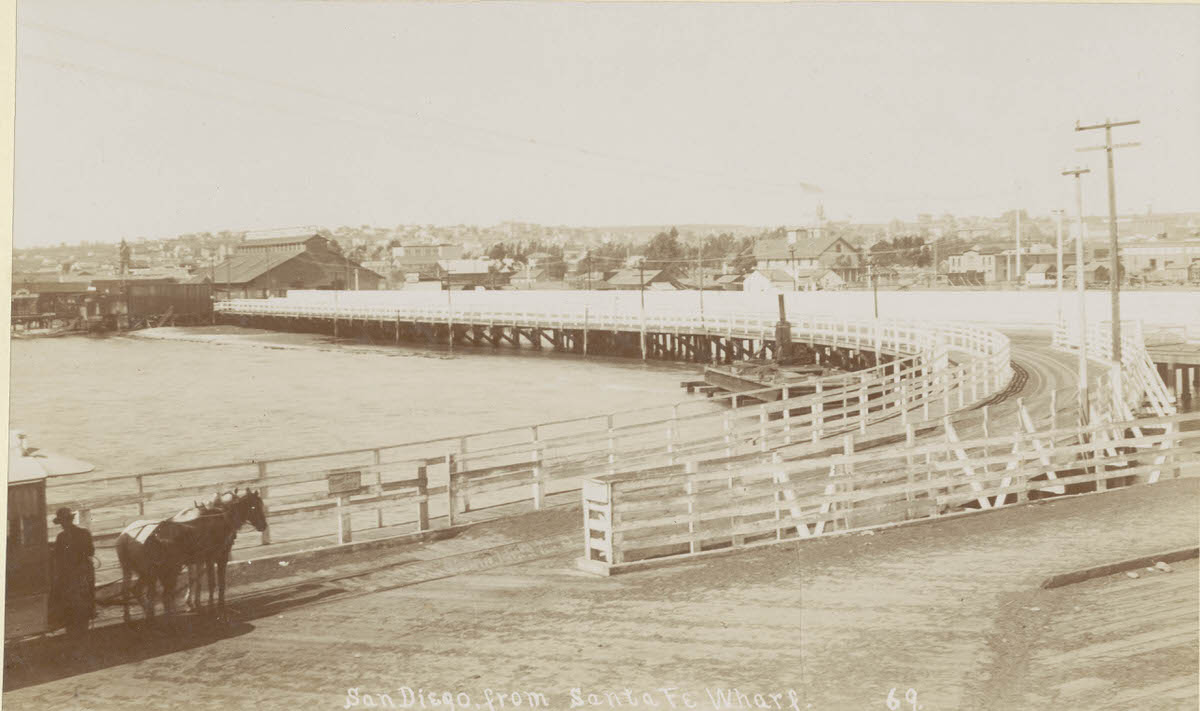
The Santa Fe Wharf at the foot of H Street was one of the city’s main connections between land and sea. A long white wooden bridge extended into the water, with horse-drawn railroad cars shuttling cargo and people to and from the docks. The wharf represented the direct link between the transcontinental railroad and the Pacific shipping lanes — the very combination that railroad opponents like Crocker had feared.
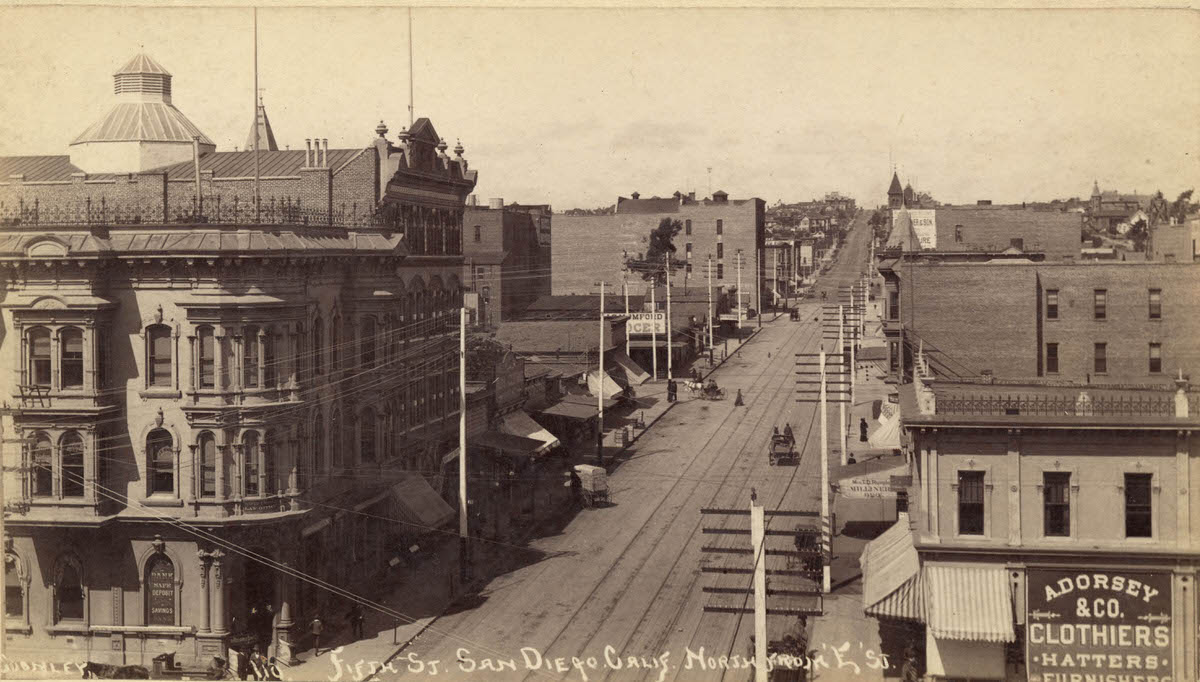
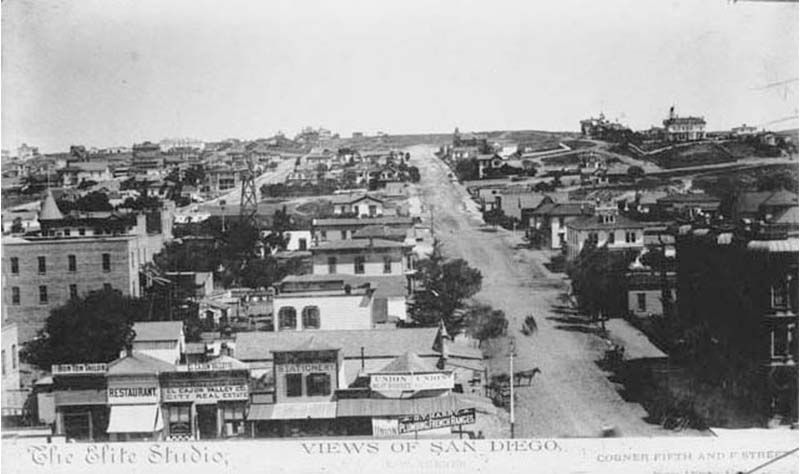
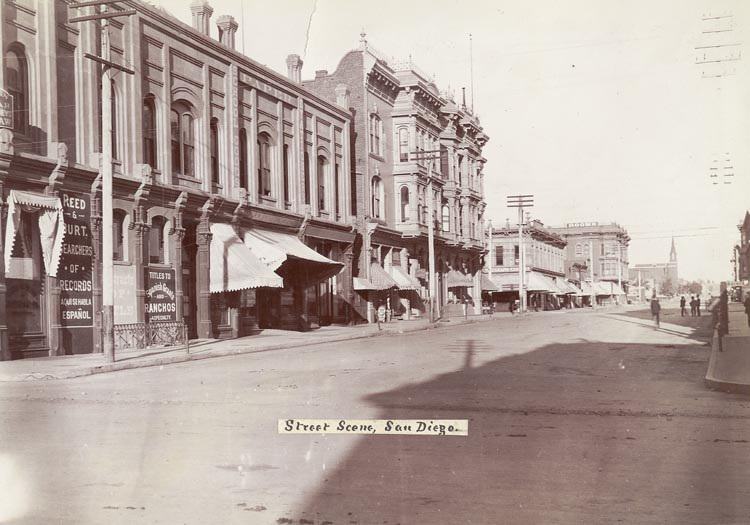
Fifth Street was the commercial spine of 1890s San Diego. Streetcar rails ran down its center, horses and wagons lined the curbs, and storefronts packed every block. A. Dorsey & Co. Clothiers, the First National Bank, a grocer, and a milliner all competed for customers along the same stretch. Utility poles carrying fresh electrical wires stood alongside the older horse-drawn infrastructure — a city literally wired for the modern age while still operating on animal power.
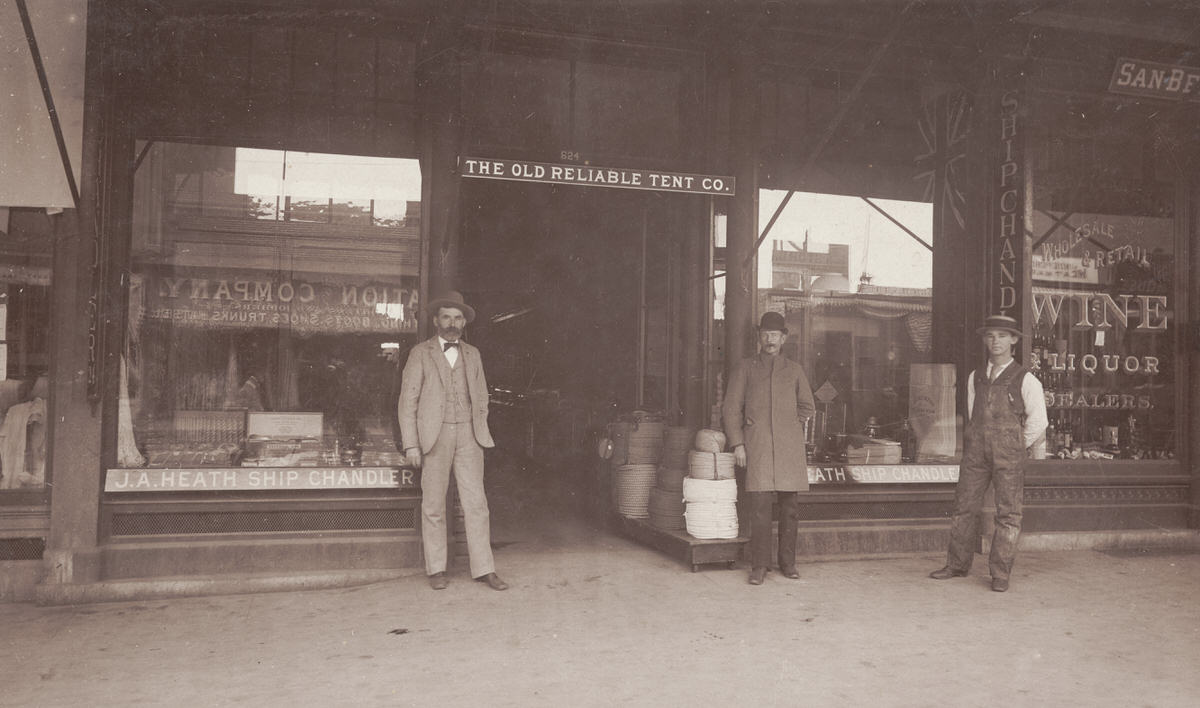
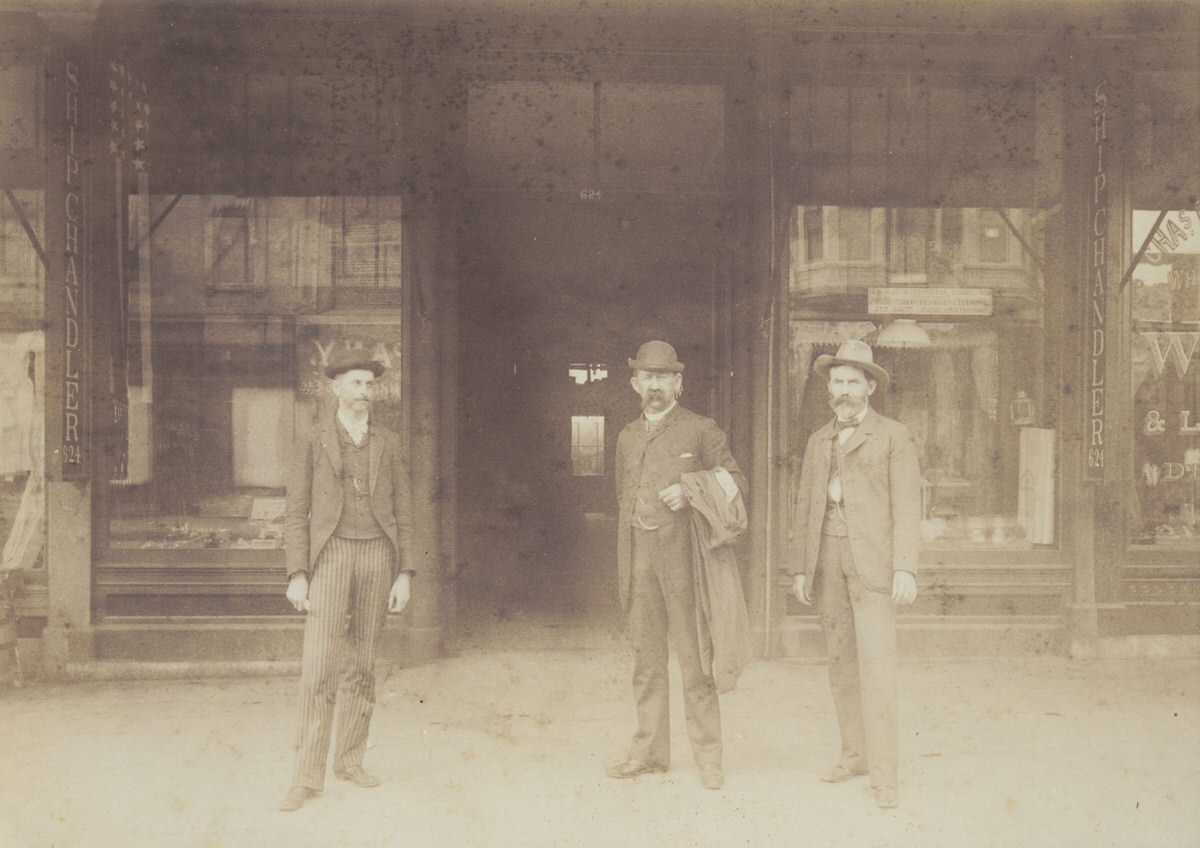
A. Heath’s Ship Chandlery at 624 Fifth Street supplied the maritime trade. Three men posed on the sidewalk in front of the entrance, with large spools of rope stacked on a cart at the center. Ship chandleries sold everything a vessel needed — rope, sails, hardware, and provisions. With the bay as busy as it was, a shop like this sat at the intersection of land commerce and sea commerce.
Before San Diego was an American city, it was part of the Mexican Empire, then the First Mexican Republic. After the Mexican-American War, California became a U.S. state in 1850. The transition of power was not clean. Native American tribes in San Diego County — including the Kumeyaay and the Cupeño — were taxed $600 by American-led San Diego County in 1851. They faced confiscation of land and property if they didn’t pay. The payment was demanded in a currency they had no familiarity with, which triggered a revolt. Old Town San Diego still carried visible traces of this layered history in the 1890s.
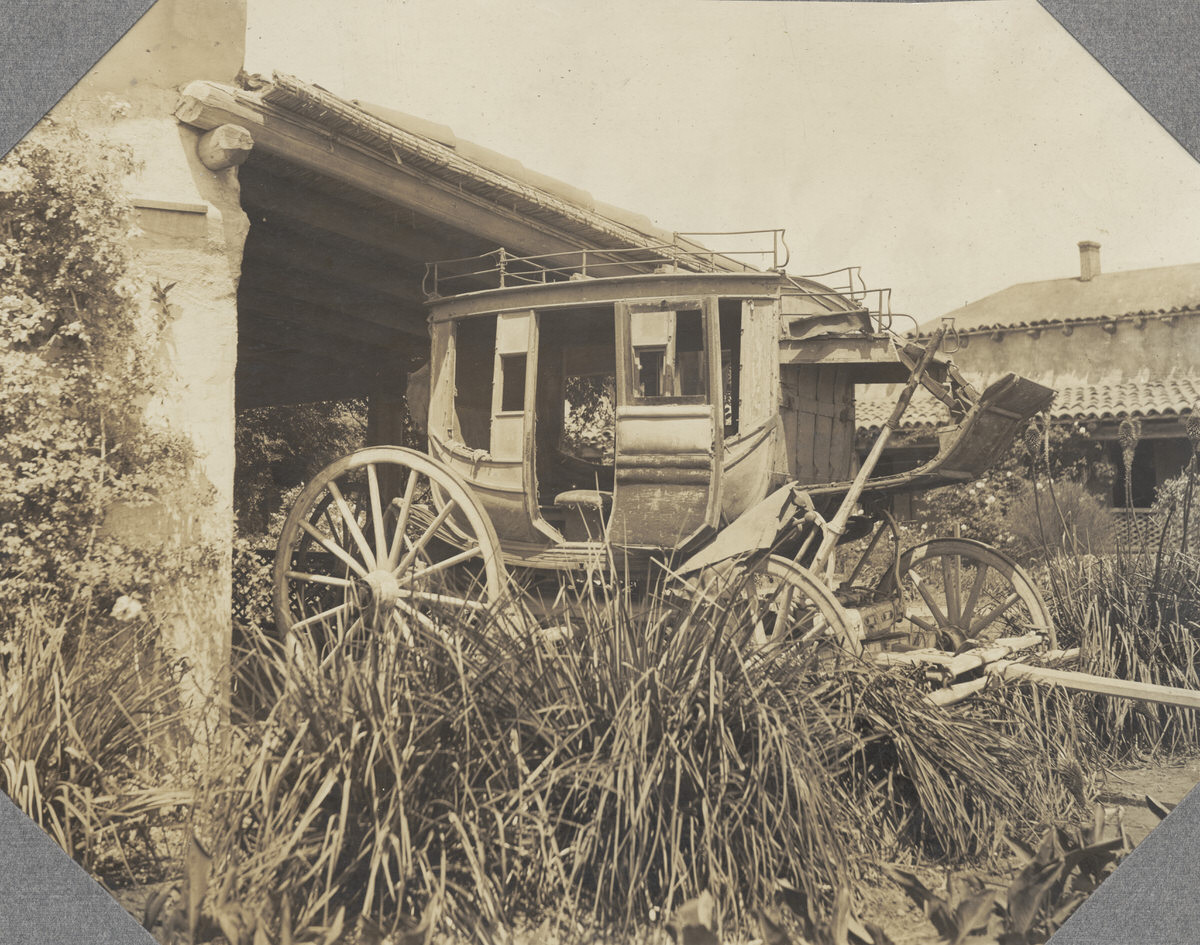
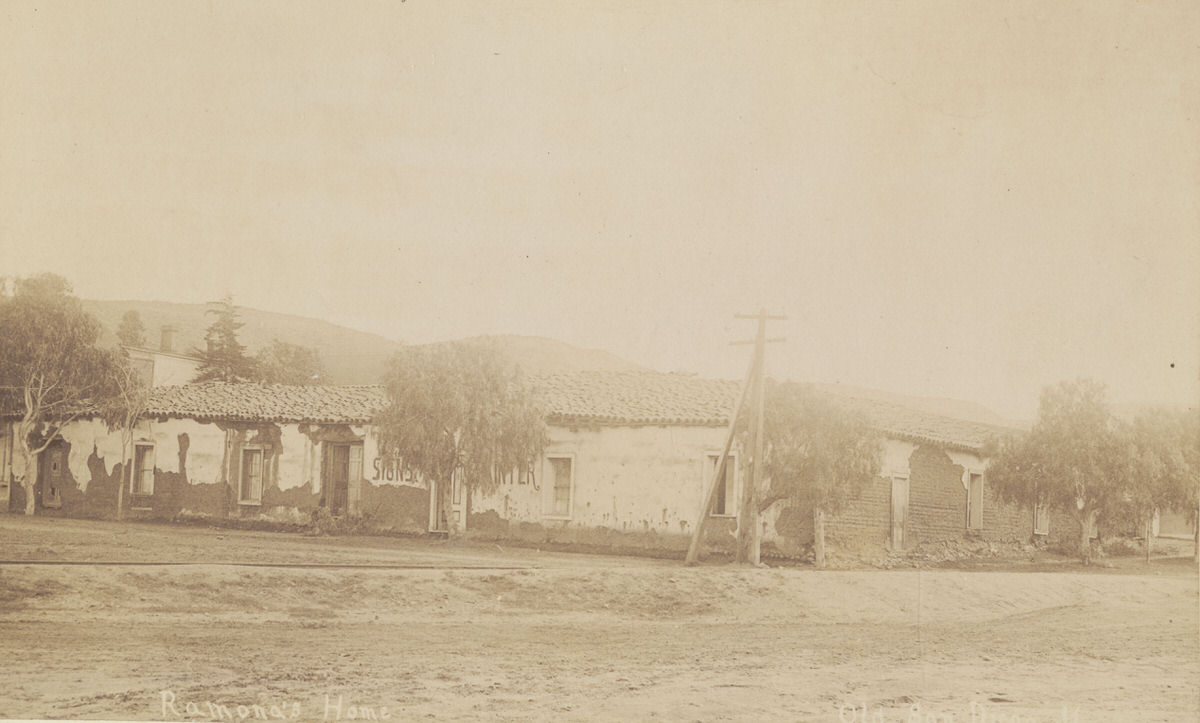
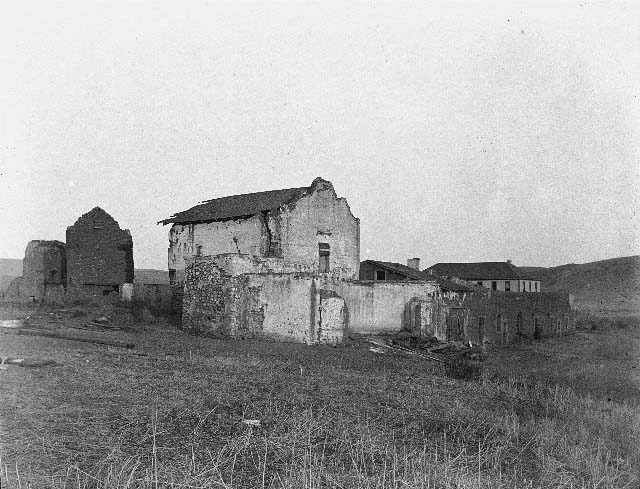
The Estudillo Adobe stood as a physical remnant of the Spanish and Mexican colonial era. By 1890, the building’s whitewashed siding was peeling away, exposing the adobe bricks beneath. Someone had written
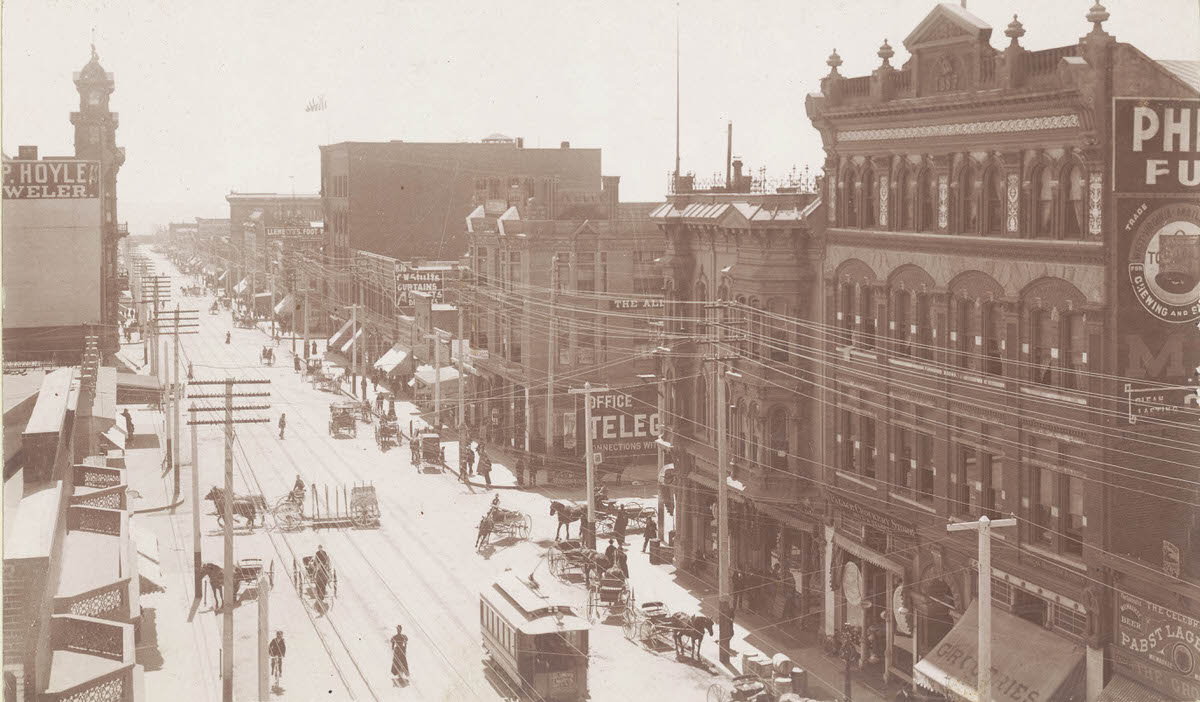
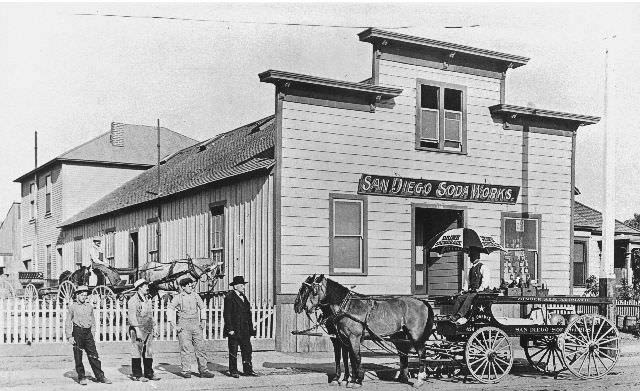
Everyday commerce in 1890s San Diego ran on wagons. Delivery services for goods like soda water were a normal part of city life, while out in the backcountry, water itself was a precious resource that required serious engineering to move around.
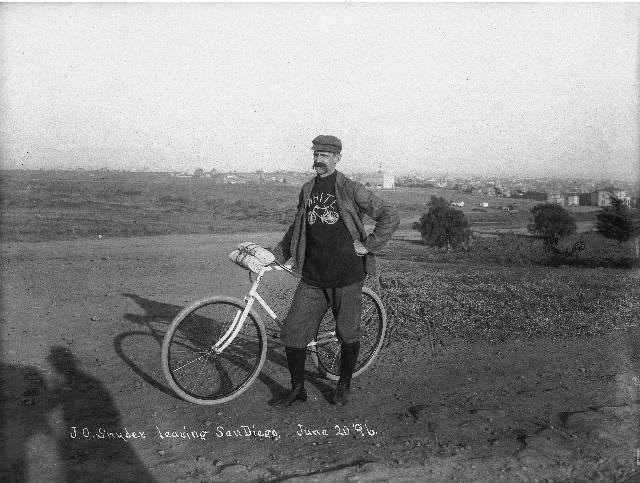
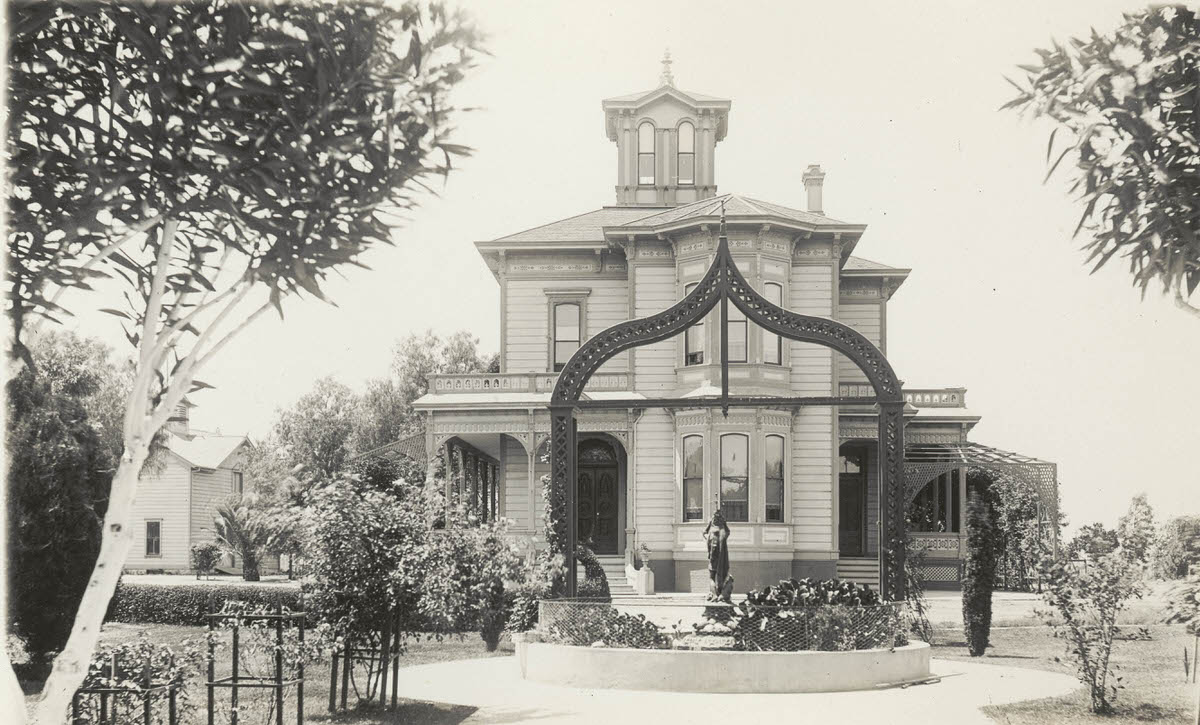
The bicycle boom of the 1890s reached San Diego just as it did the rest of America. On the outskirts of the city, open land still stretched in every direction — a sharp contrast to the dense commercial blocks just a few miles away. Victorian-era homes dotted the residential neighborhoods, each one a statement of prosperity and social standing.
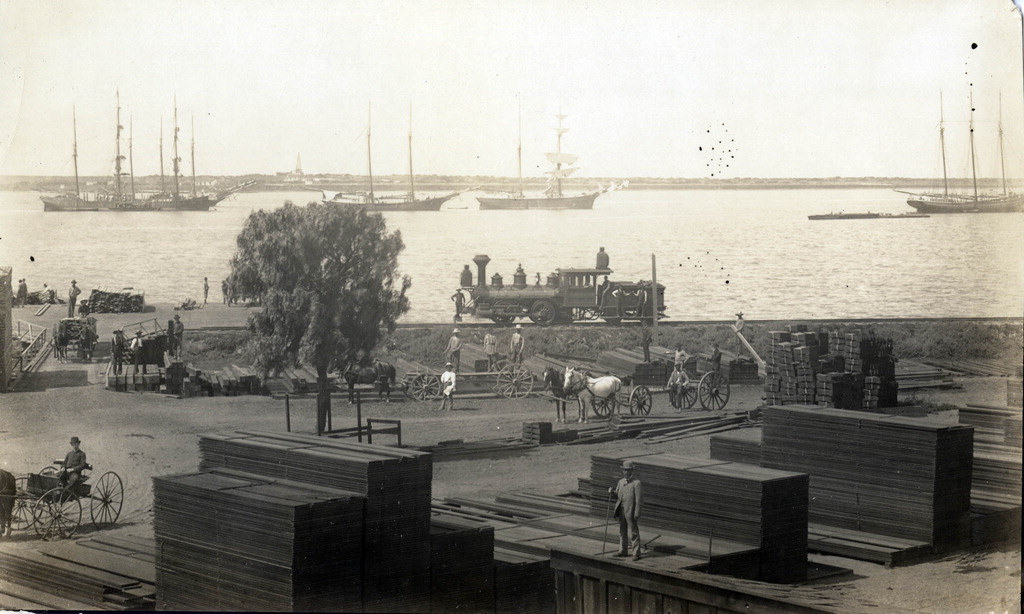
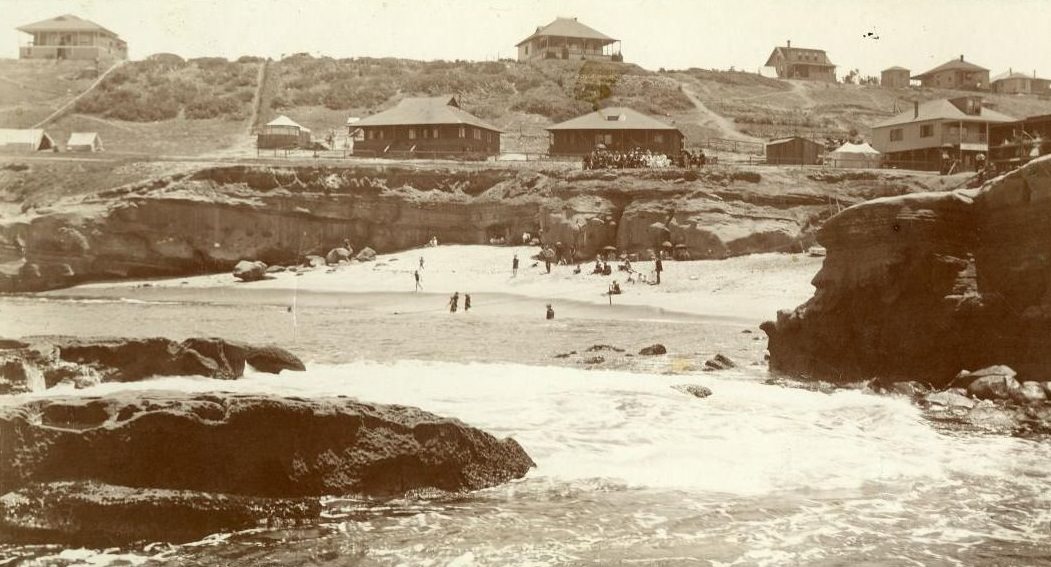
Lumber yards along the bay fed the city’s constant construction. Every new building, wharf plank, and telegraph pole required timber, and the bay provided the easiest route for shipping it in. La Jolla, a few miles up the coast, was still a quiet cove community in the 1890s — a very different scene from the industrial waterfront downtown.
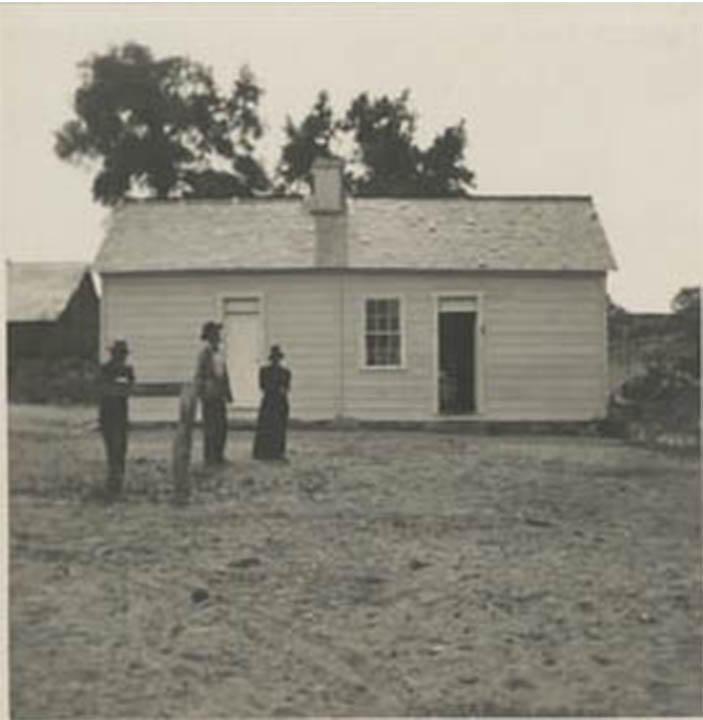
Out in the Cuyamaca area of eastern San Diego County, Dr. Eli Harper was among the early settlers who carved out a ranch in the rugged inland terrain. The two photographs of Harper Ranch — one showing three people in front of a small wooden house, another of a farm building — capture the reality of rural life far from the city’s growing commercial center. The contrast between the bay-front city and the isolated ranches of the county interior was stark.
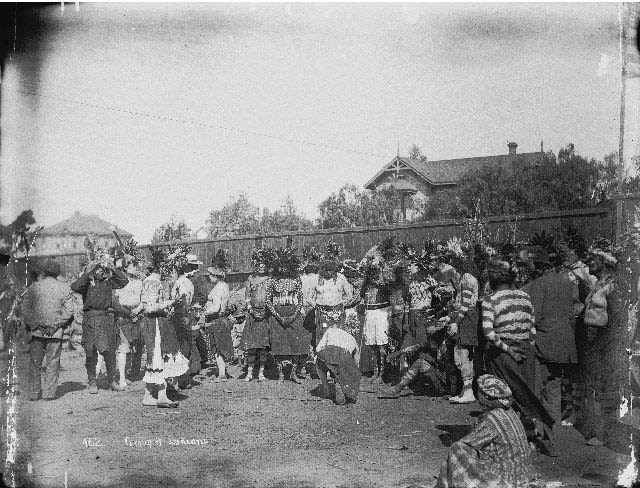
Public celebrations in 1890s San Diego included commemorations of the region’s Spanish exploration history. Juan Rodríguez Cabrillo had sailed into San Diego Bay in 1542, making it one of the earliest points of European contact on the Pacific coast. Native communities, despite the land seizures and taxation they had faced since American annexation, still appeared at public events, their presence a reminder of the deep roots that predated both Spanish and American rule.
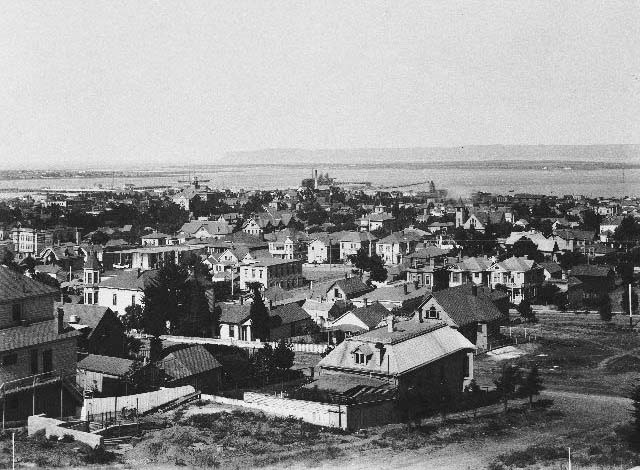
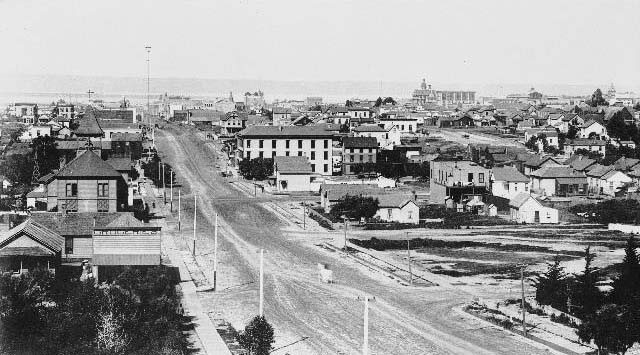
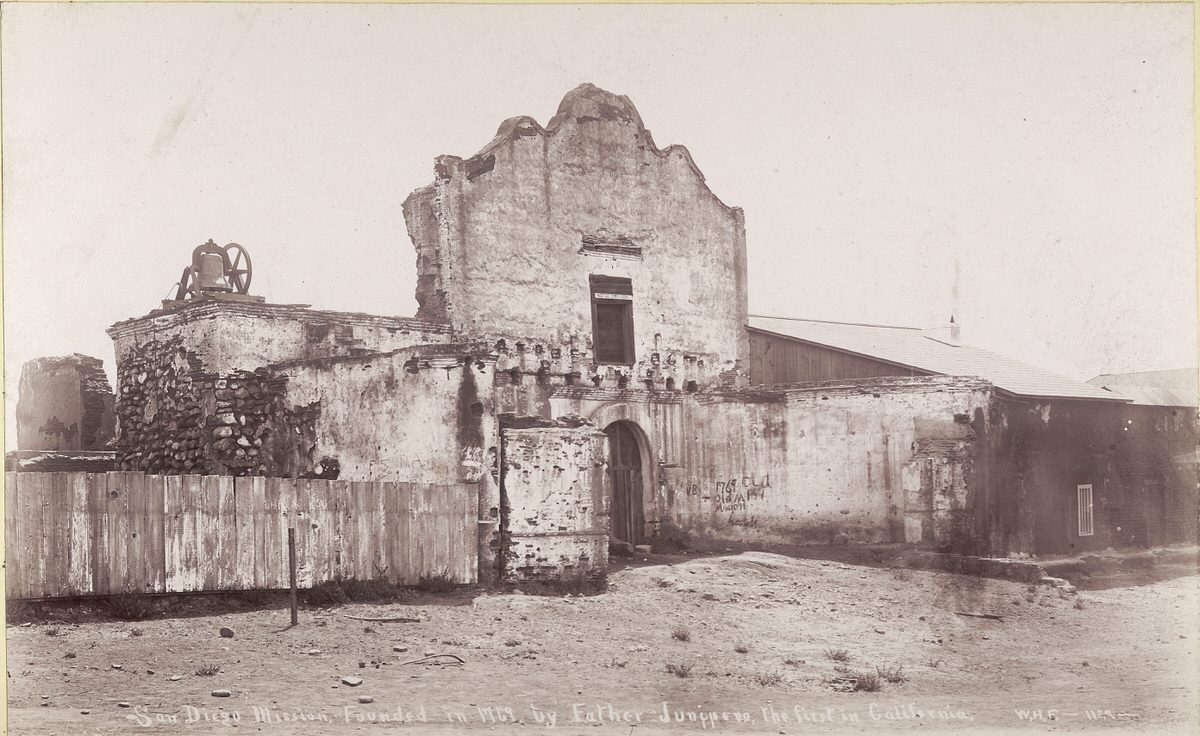
Downtown San Diego’s street grid was filling in rapidly by 1890. Looking west from 18th and Market, the density of the city’s core became apparent — buildings pressing toward the bay, streets busy with traffic. The Mission San Diego de Alcalá, meanwhile, stood several miles to the northeast in the Mission Valley, a deteriorating structure by the time photographers began documenting it in the 1890s.
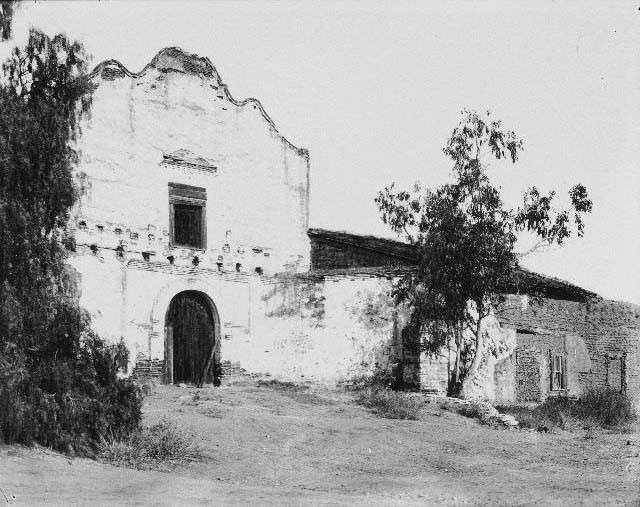
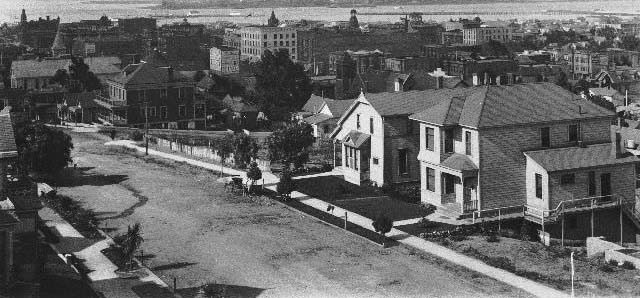
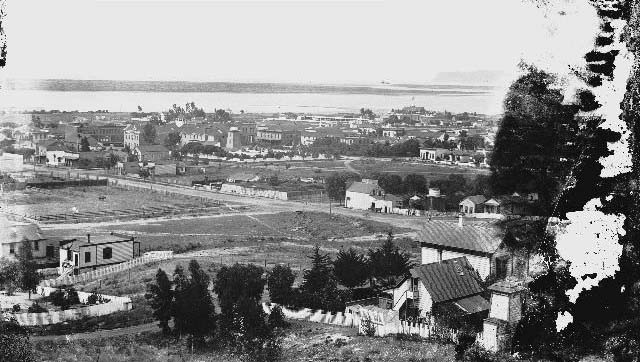
Point Loma anchored the western horizon from almost any elevated point in the city. The peninsula formed the natural western boundary of San Diego Bay, and its silhouette appeared in photograph after photograph throughout the decade. The mission, founded in 1769 by Father Junípero Serra, sat in considerable disrepair by 1890. Its adobe walls and bell towers had survived more than a century, but without active maintenance, the structure was visibly deteriorating.
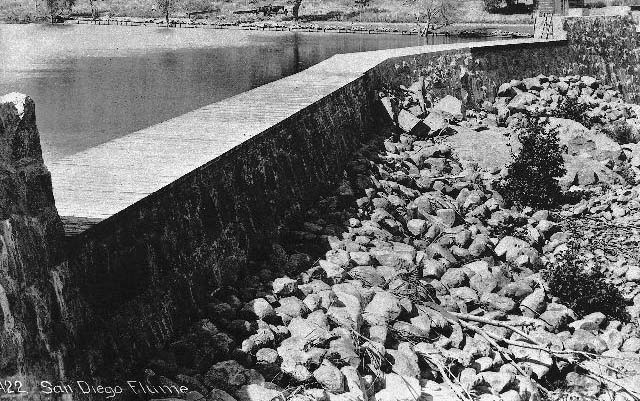
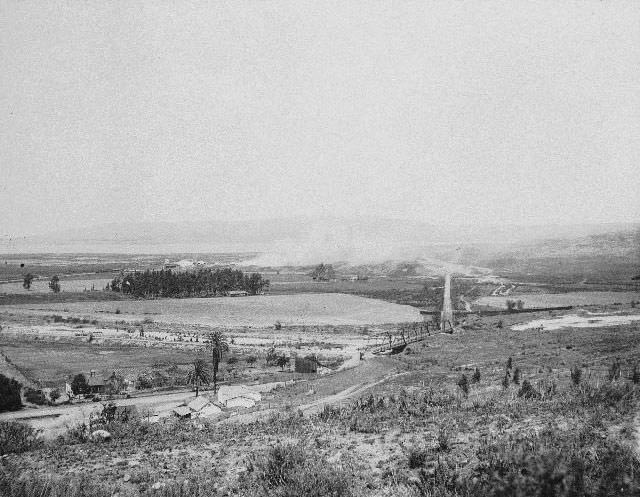
Water infrastructure was one of the defining engineering challenges of 1890s San Diego. Stone dams, flumes, and reservoirs were built throughout the county to capture and move water to a growing population. Near the Mission San Diego de Alcalá, a different kind of community was living out the decade — Native American residents and students whose daily lives were being shaped by the Catholic mission system.
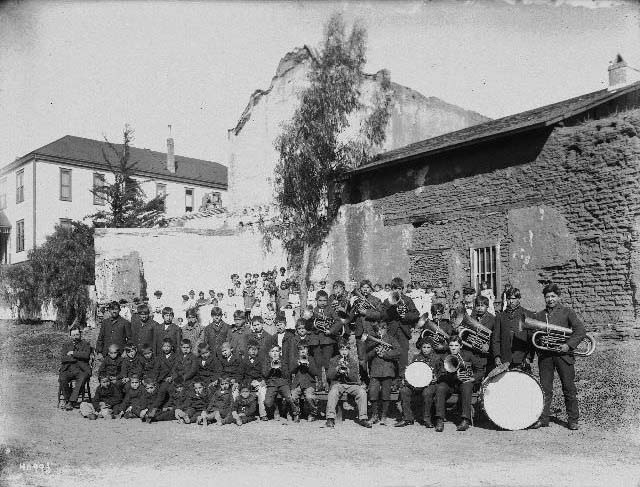
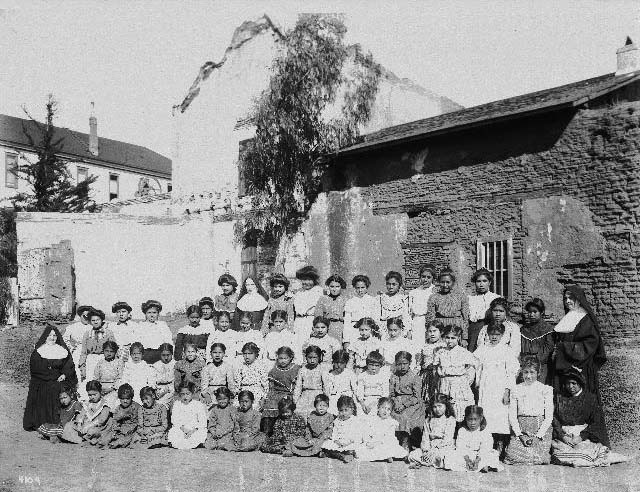
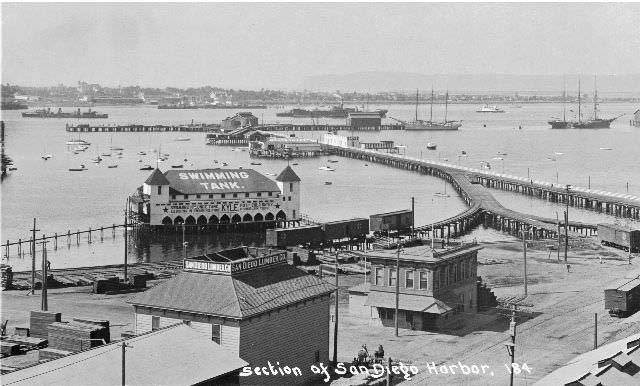
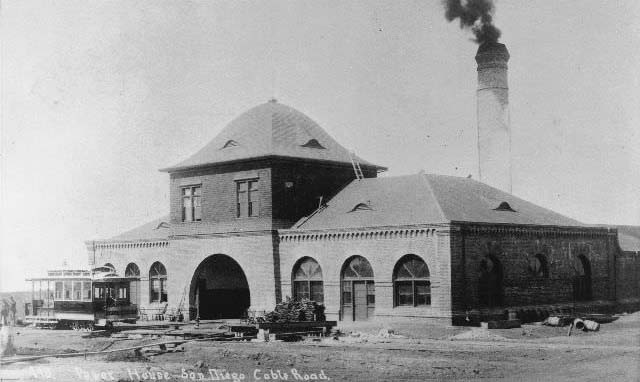
The San Diego waterfront was not just a scenic backdrop — it was a working industrial zone. Piers and wharves extended into the harbor to handle the constant traffic of ships loading and unloading cargo. The city was also investing in new infrastructure, including the San Diego Cable Road, which required its own dedicated power station.
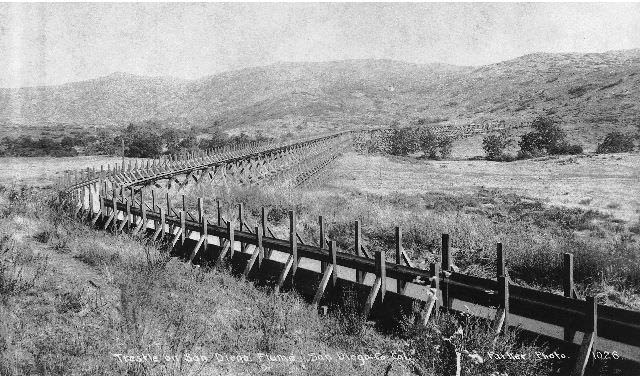
The San Diego Flume was one of the most ambitious engineering projects in the region’s early American history. Built in the late 1880s, the wooden flume carried water from the Cuyamaca Mountains down to the city, spanning canyons on tall trestles. A diverting dam captured the flow at the source. Workers who built and maintained these structures in the 1890s were doing physically demanding labor in remote terrain.
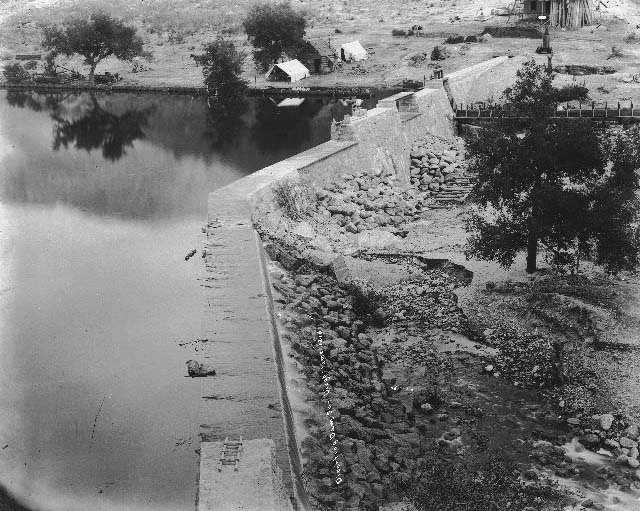
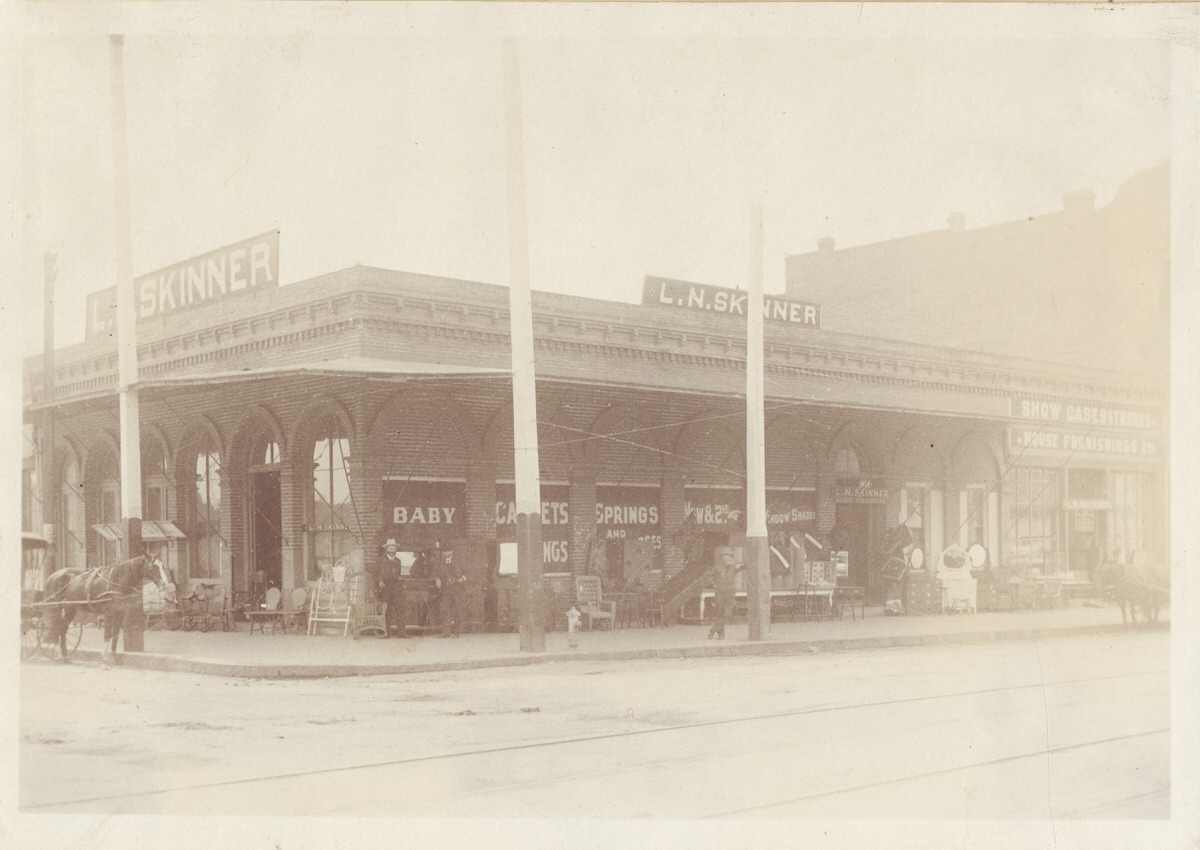
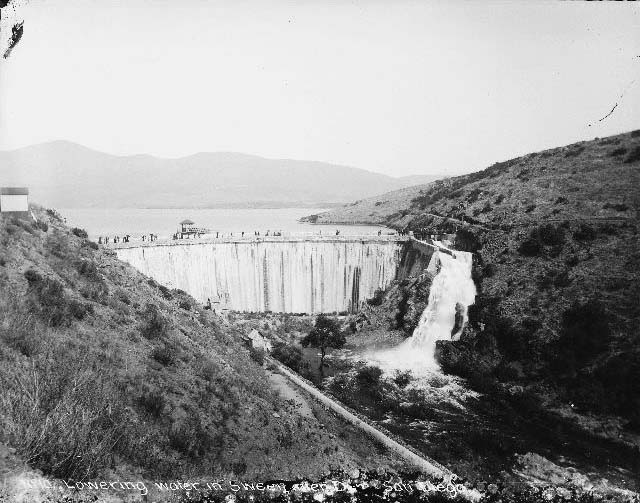
L.N. Skinner’s furniture store at the corner of Sixth and Market Street occupied a one-story brick building with tall arched windows. Furniture was displayed along the sidewalk, horses stood hitched to buggies on either side, and railroad tracks ran through the street in front. Three men posed at the center, as was customary for commercial photographs of the era. The Sweetwater Dam, completed in 1888, was one of the largest masonry dams in the world at the time of its construction — its spillway carrying runoff in an impressive cascade by 1890.
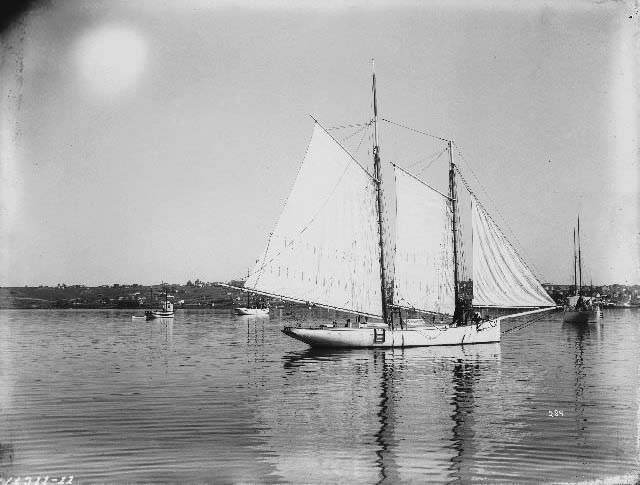
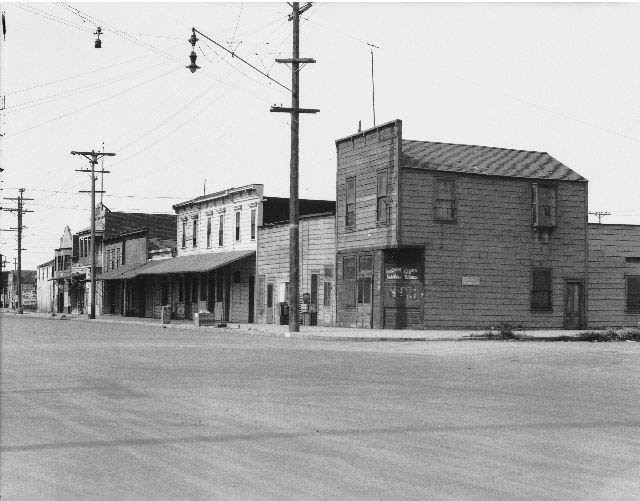
Not all of San Diego Bay’s activity was industrial. Private yachts shared the harbor with military vessels and commercial ships. The Stingaree district, located in the southern part of downtown, was a different kind of attraction — the city’s red-light district, packed with saloons, gambling houses, and brothels. It operated openly throughout the 1890s and was one of the most notorious such districts on the West Coast.
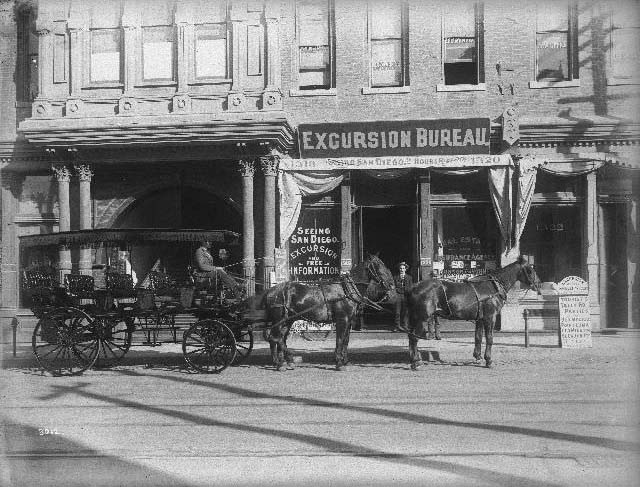
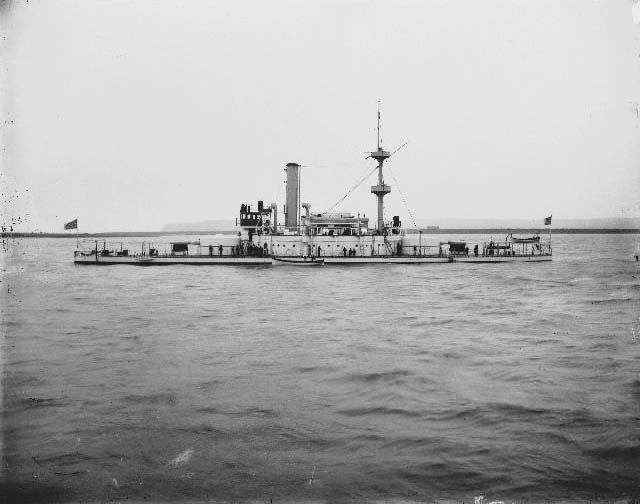
Tourism was already part of San Diego’s economy in the 1890s. The San Diego Excursion Bureau arranged outings by coach for visitors and residents alike. The U.S. Navy also maintained a presence in the harbor, with warships like the monitor U.S.S. Monadnock anchored in the bay — a sign that San Diego’s strategic value as a Pacific port was being recognized at the federal level.
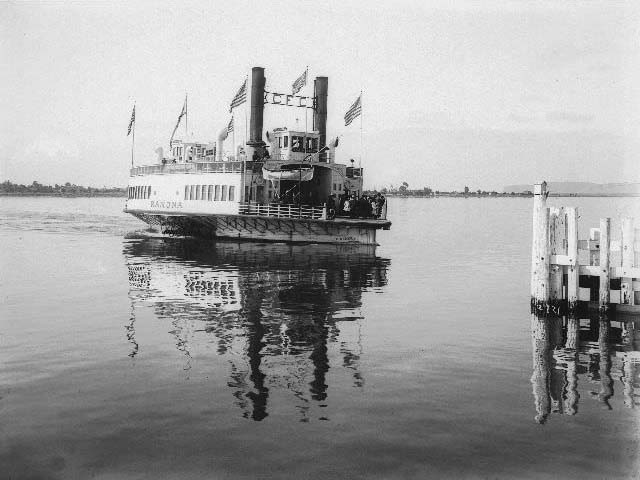
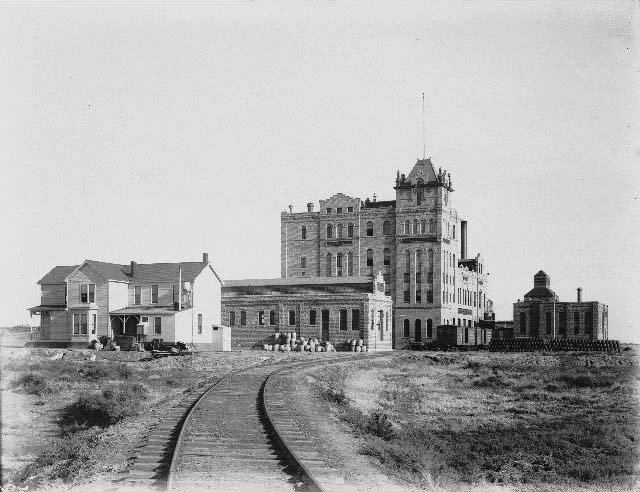
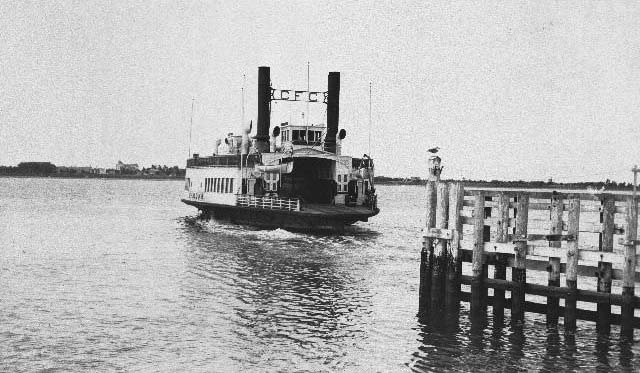
The Coronado Ferry Company ran regular service across the bay between San Diego and Coronado. The ferry Ramona was one of the company’s workhorses, docking and departing throughout the day. Across town, the San Diego Brewery received its supplies via dedicated railroad tracks — one of the many small industrial rail spurs that threaded through the city by the late 1890s.
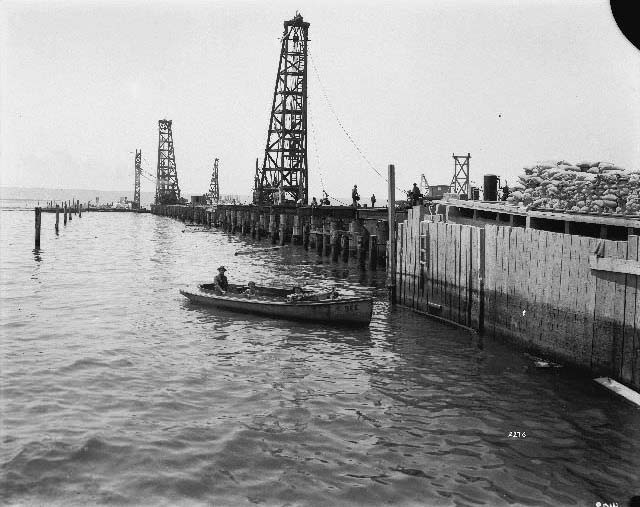
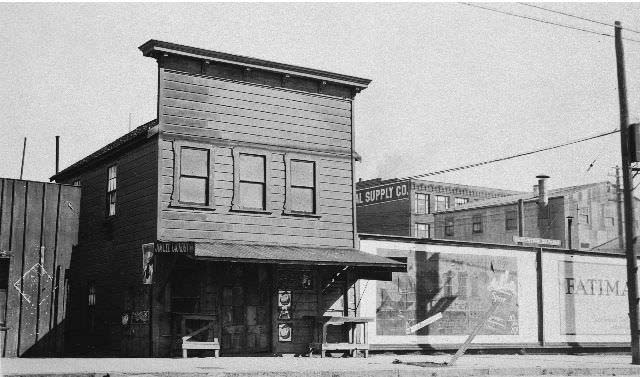
The city was actively expanding its waterfront infrastructure in the mid-1890s, with workers laying timber and driving pilings for the new municipal wharf. Downtown also had a diverse commercial street life. Jim Lee’s Laundry was one of many Chinese-owned businesses operating in San Diego during this period, serving both the Chinese community and the broader city population.
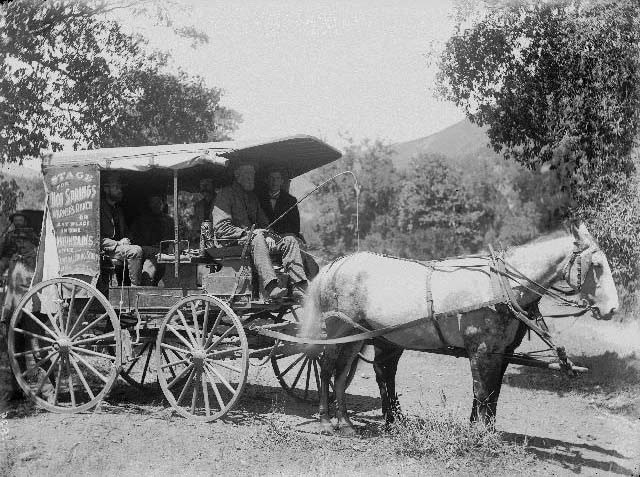
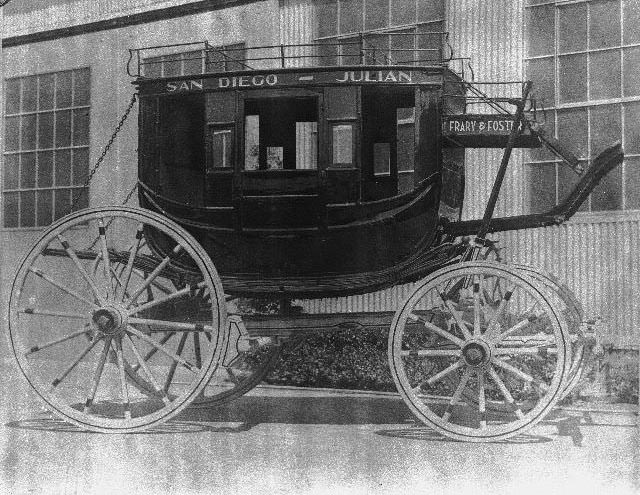
Travel into the San Diego mountains still relied on stagecoaches like those run by Comstock’s line. The mountain roads were rough, and the journey to inland communities was long. Back in the harbor, the Coronado Ferry Company’s vessels were a constant presence, crossing back and forth between the city and the Coronado peninsula throughout the decade.
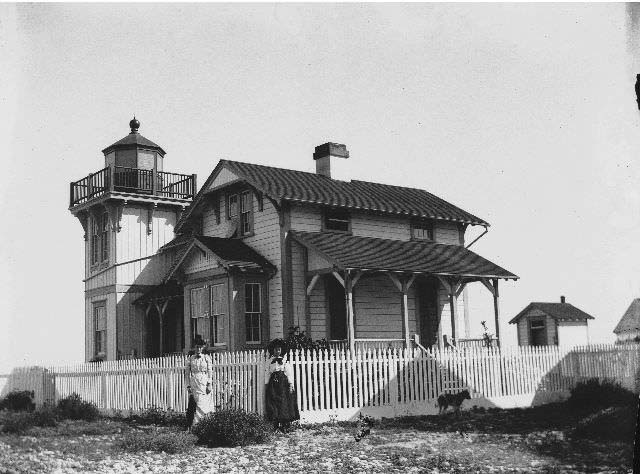
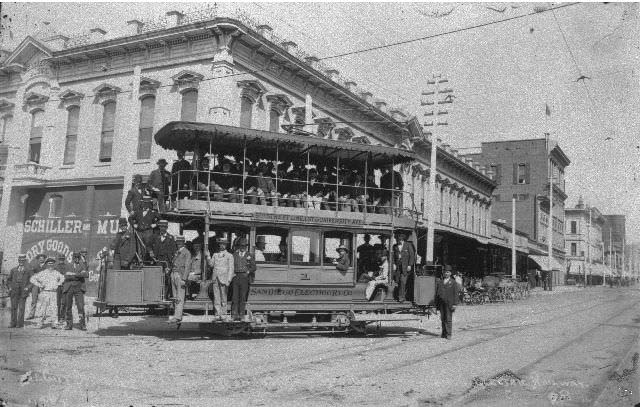
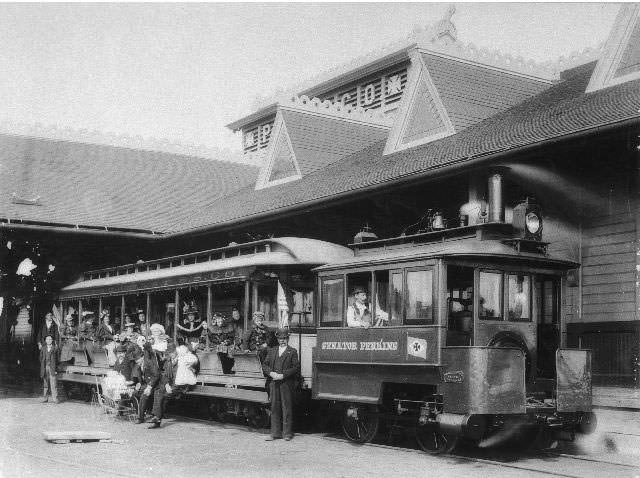
The Ballast Point Lighthouse stood at the tip of Point Loma, marking the entrance to San Diego Bay for ships arriving from sea. Electric streetcars were transforming how people moved within the city itself. The San Diego Electric Railway ran double-decker cars along Fifth and Market Street, making it possible to cross large sections of the city without a horse.
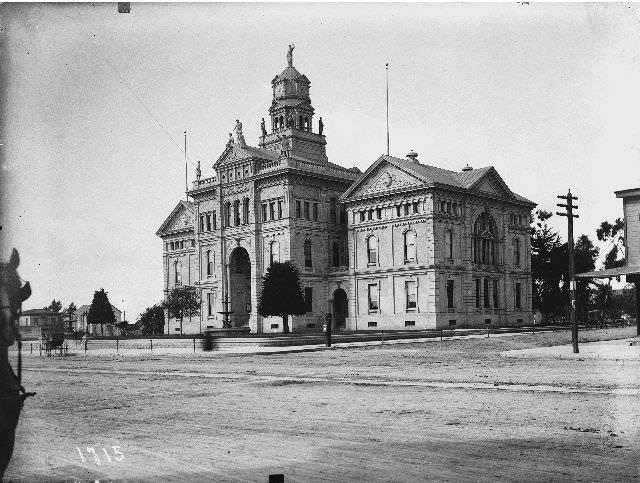
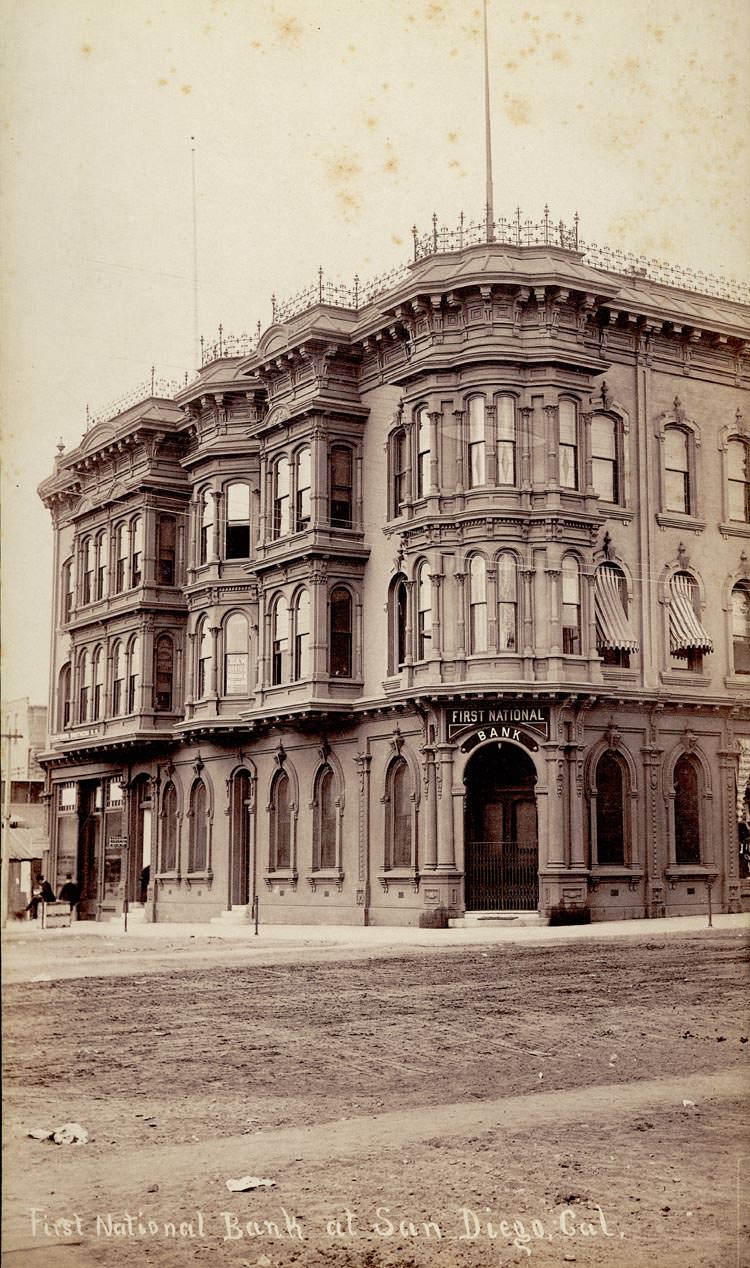
The County Courthouse was one of the city’s most prominent civic buildings, its spire visible from many parts of downtown. The First National Bank at the corner of Fifth and E Streets was another landmark — a three-story office building with squared bay windows and iron cresting that projected financial stability and permanence.
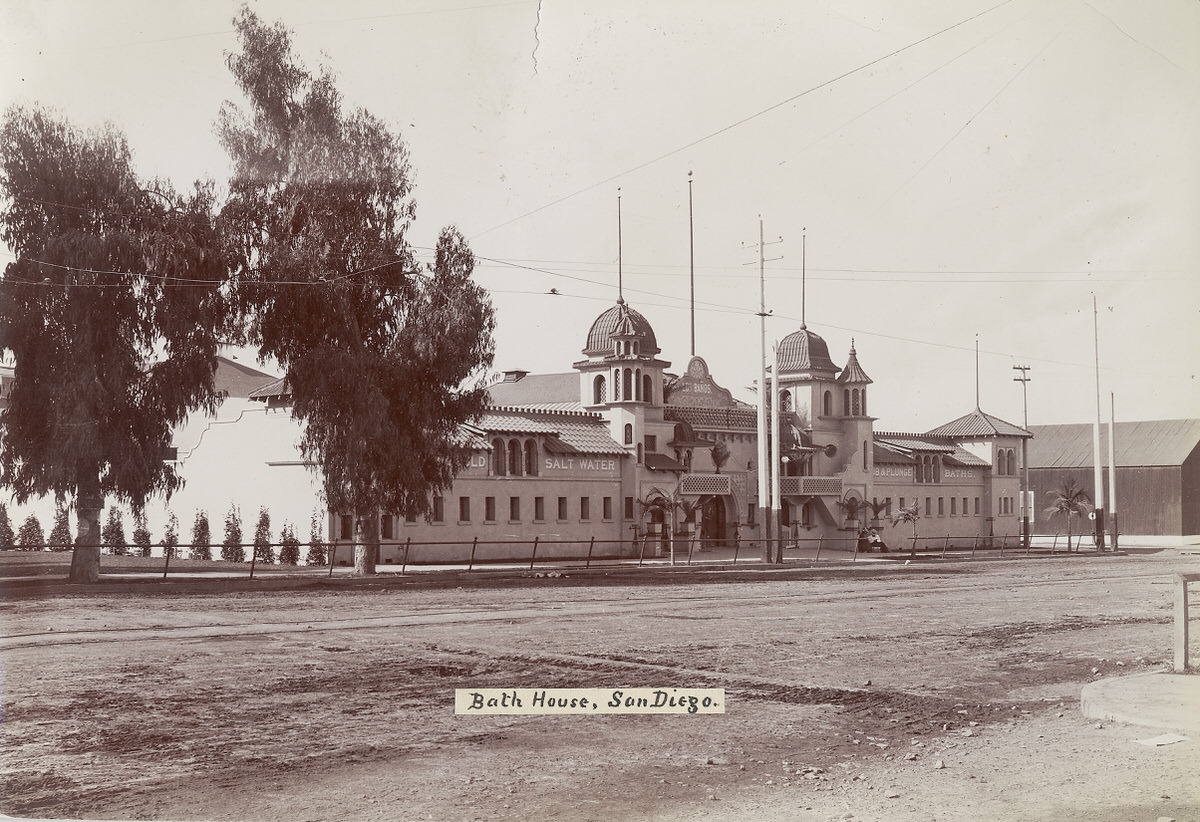
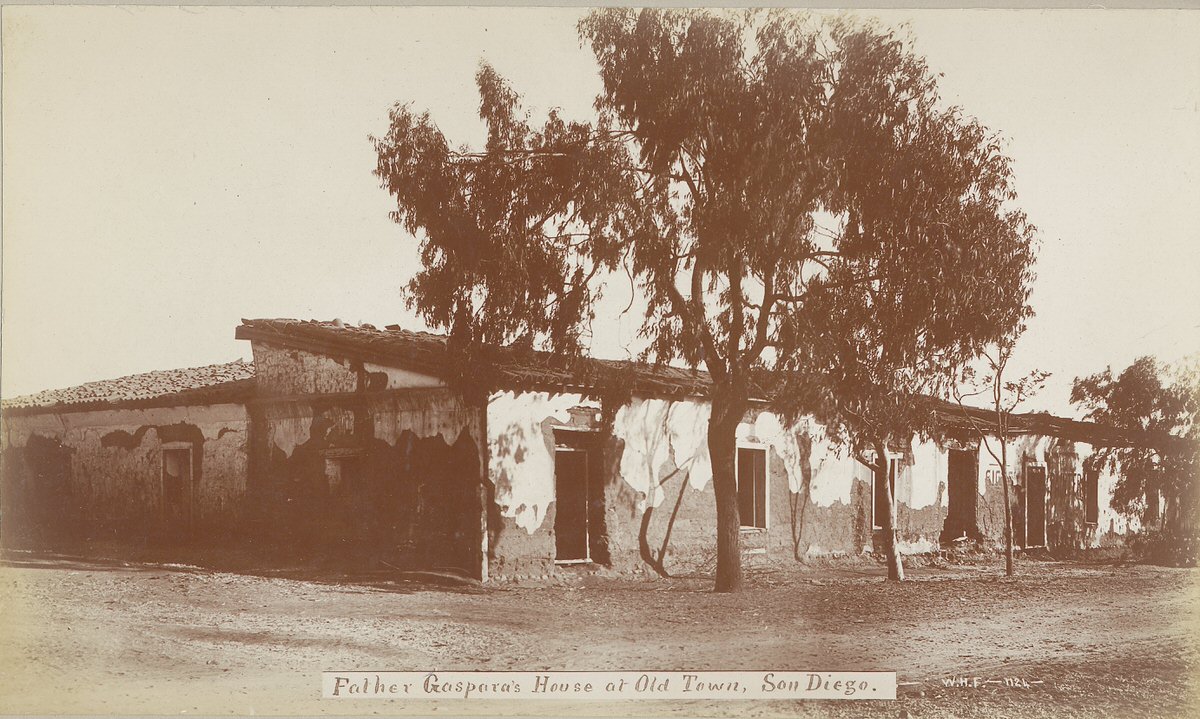
The Los Baños bath house offered saltwater plunge baths to the public, its Moorish and Mission-style architecture — complete with turrets and cupolas — making it one of the most visually striking buildings on the street. Old Town, meanwhile, preserved fragments of the city’s earliest American and Spanish-era history, including Father Gaspara’s house, which appeared in Helen Hunt Jackson’s novel.
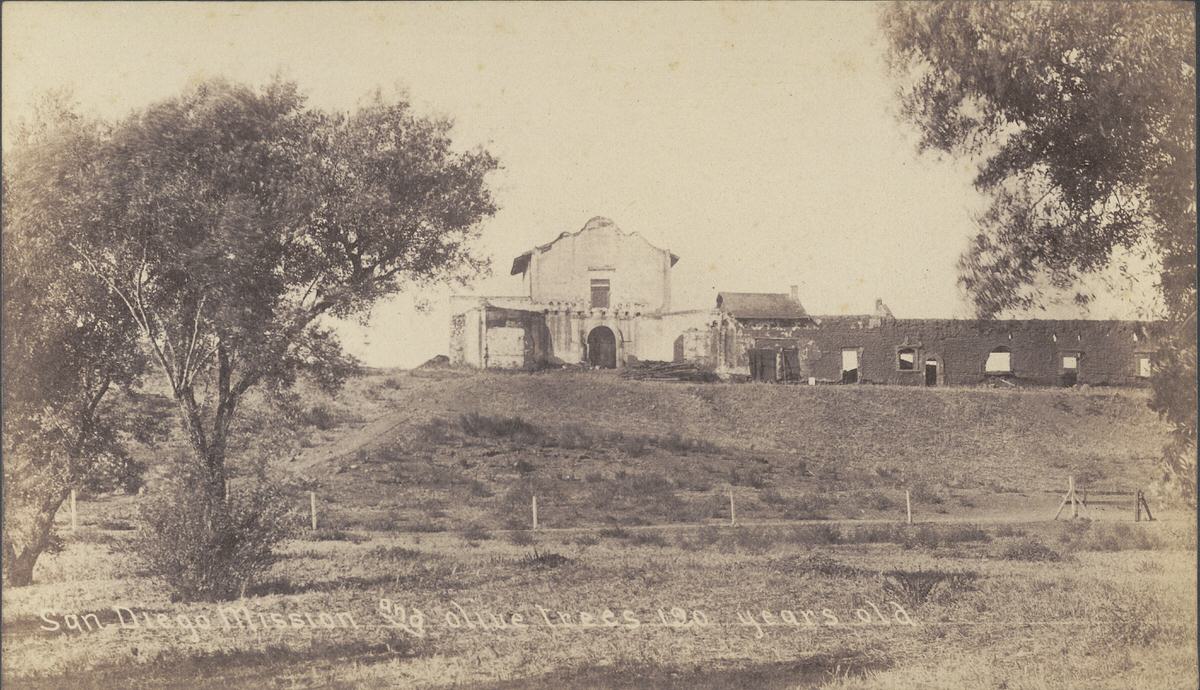
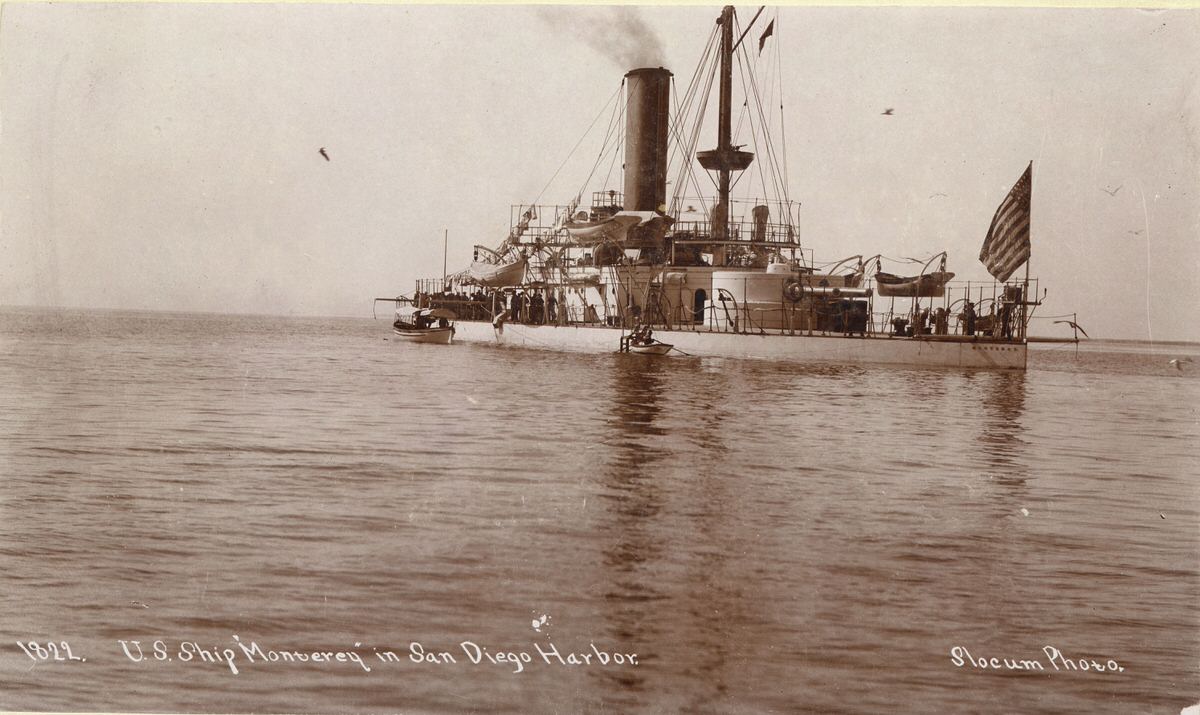
The San Diego Mission’s grounds included old olive trees that had been planted by the padres in the Spanish colonial era. By the 1890s, the mission buildings were dilapidated, their adobe walls crumbling on the bluff above Mission Valley. The U.S.S. Monterey, an armored monitor, was stationed in the harbor by 1898 — its presence tied to American military buildup in the Pacific in the lead-up to the Spanish-American War.
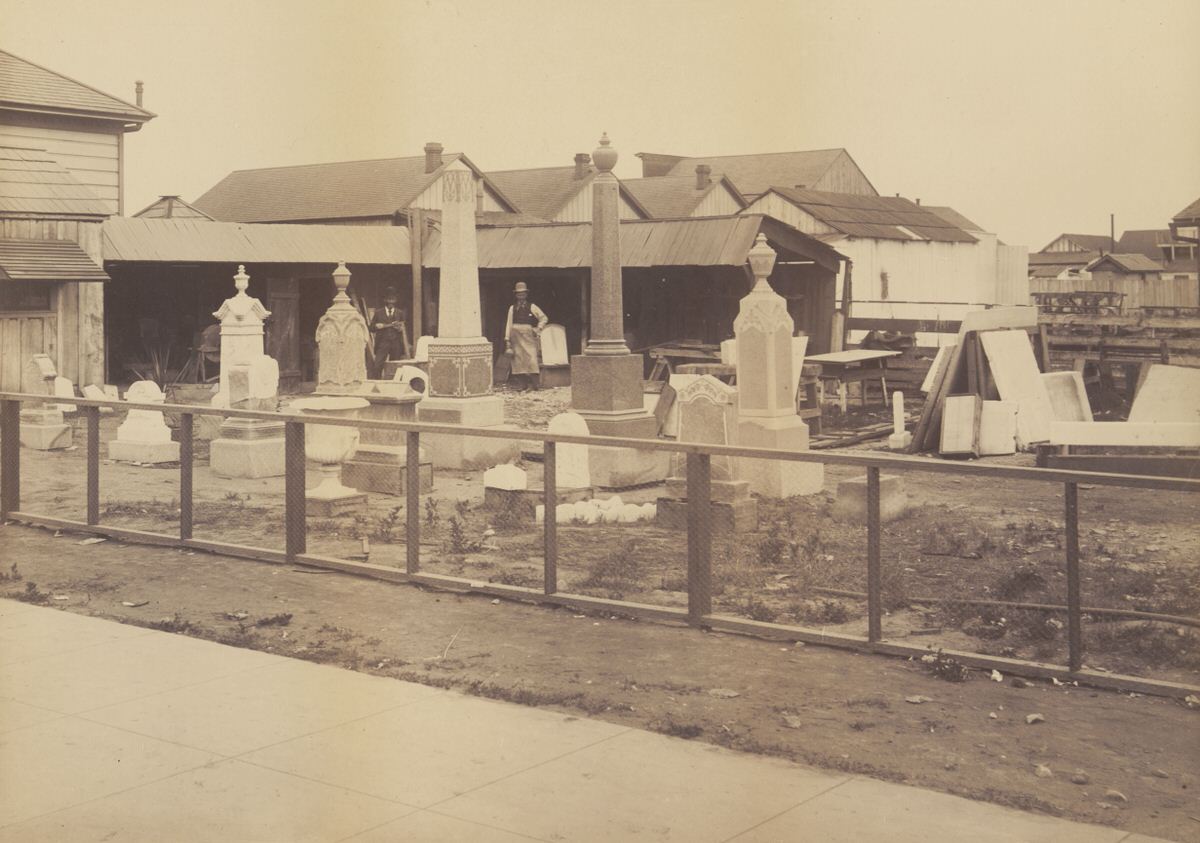
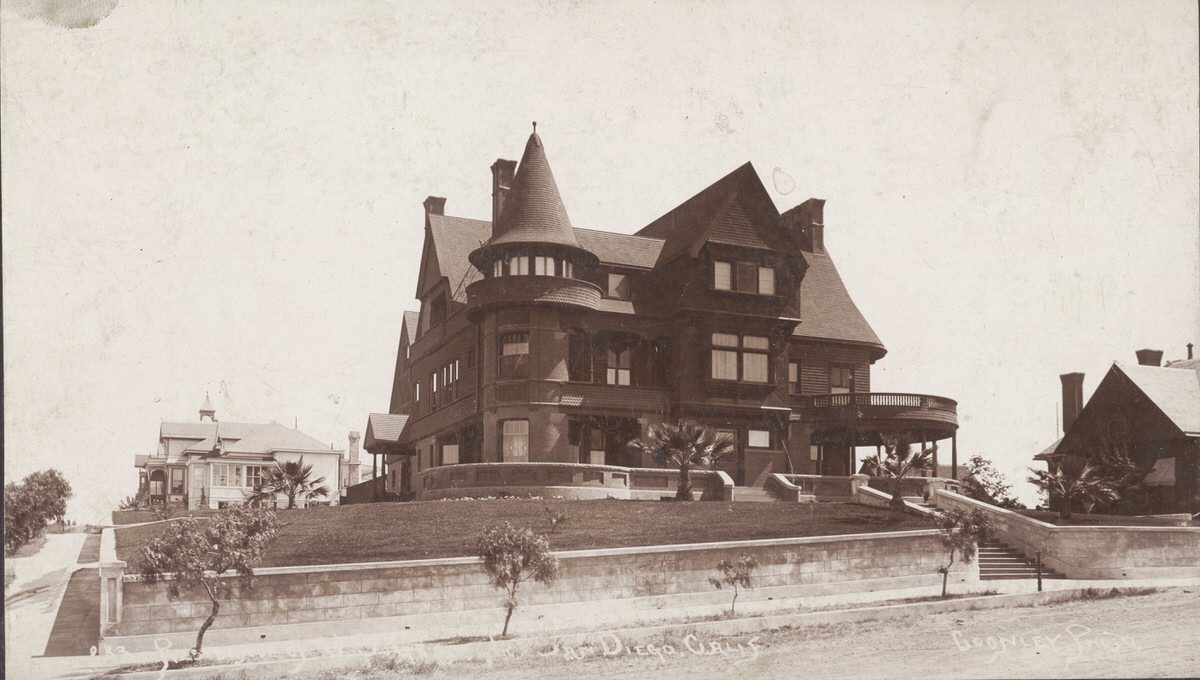
Smith Pirnie Granite Company at 821 D Street sold stone monuments and tombstones. Two men in derby hats posed in the fenced yard among the displayed markers, with the weatherboard walls of the workshop behind them. The company served a city that was growing fast enough to need both new buildings and new cemeteries. Nearby, the residence of U.S. Grant Jr. at 1618 Ash Street stood as one of the grandest private homes in the city — a three-story Queen Anne mansion with corner towers, multiple rooflines, and a circular porch.
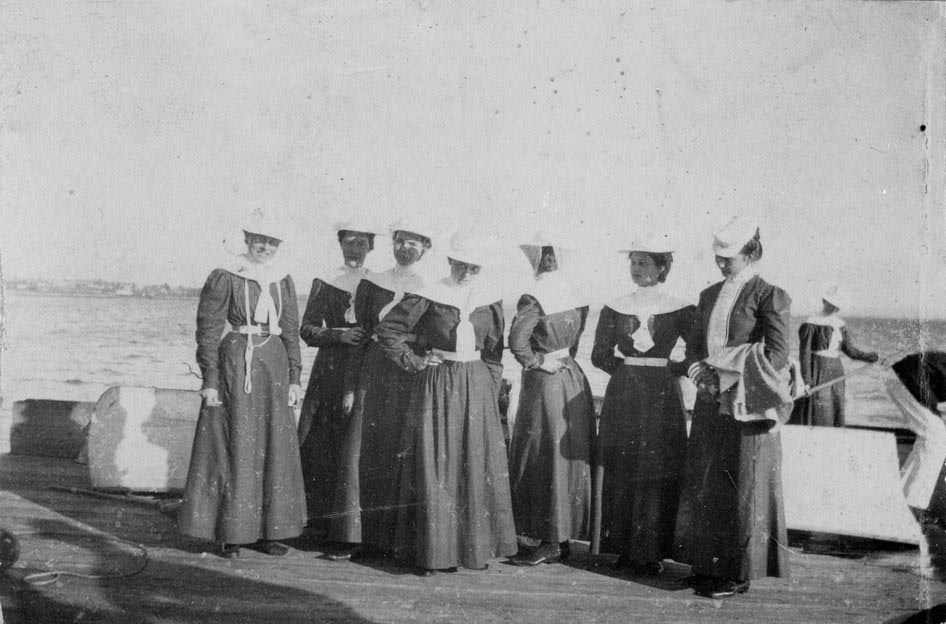
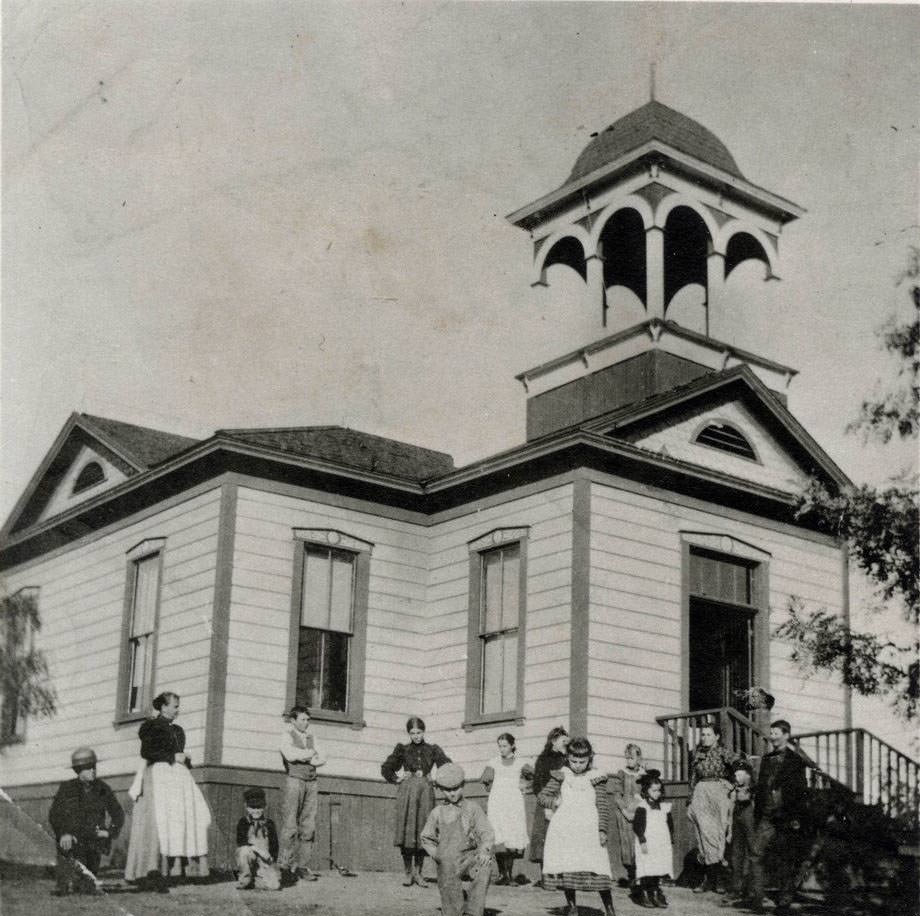
Social clubs and civic organizations were a significant part of life in 1890s San Diego. The Apsaras Rowing Club brought together members for sport on the bay, while the Grantville Schoolhouse served the children and teachers of that outlying community. Education in the more rural parts of the county was a simple affair — a single schoolhouse building, a teacher, and students of multiple ages sharing the same room.
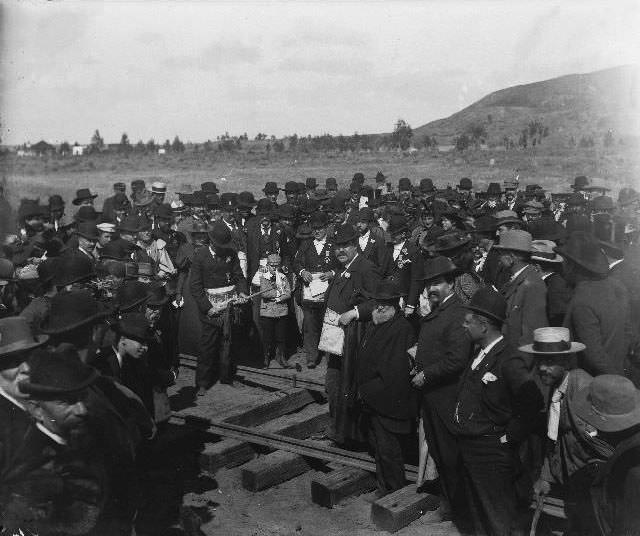
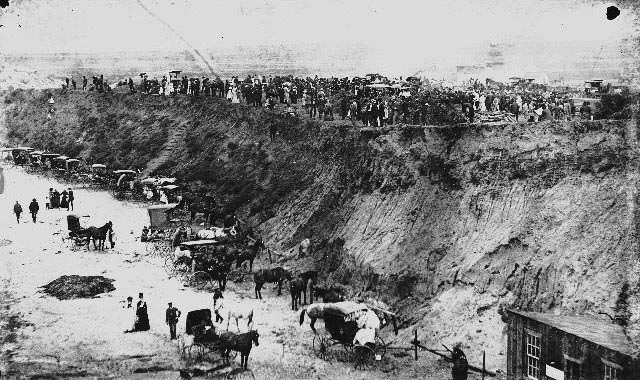
The San Diego–Julian stagecoach route connected the coast to the gold-mining community of Julian in the Cuyamaca Mountains. The route was essential for moving supplies and people in and out of the inland region. In 1894, the arrival of the railroad in La Jolla was celebrated with the ceremonial driving of the last spike — the same kind of celebration that had marked San Diego’s own transcontinental connection just years earlier.
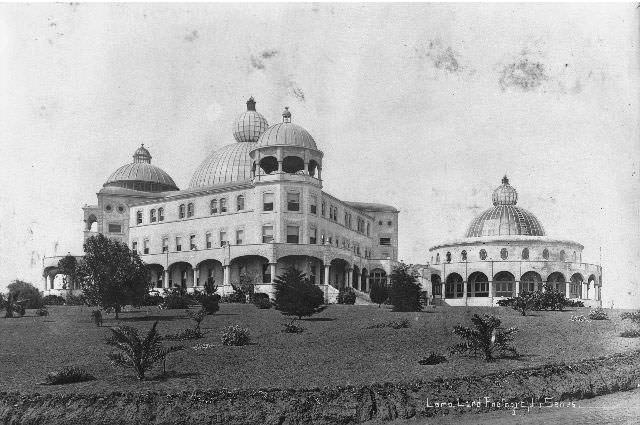
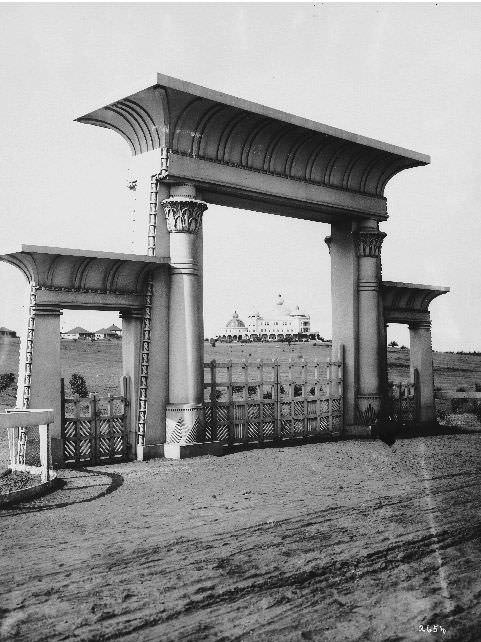
The Theosophical Society established a community at Point Loma in 1897, building a compound of distinctive structures on the peninsula overlooking the Pacific. The organization attracted followers of a spiritual philosophy that blended Eastern and Western religious ideas. Their entry gate and buildings became local landmarks.
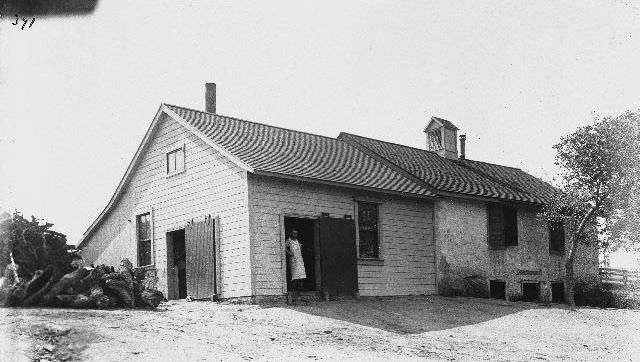
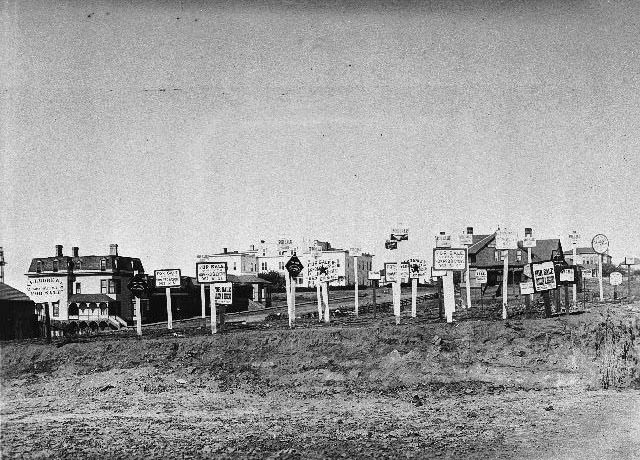
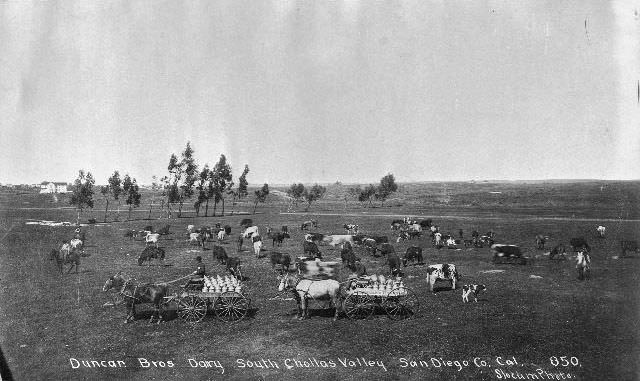
Dairies were scattered across San Diego County in the 1890s, supplying the city with milk and cheese. The Santa Ysabel Dairy operated in the northern inland region, while the Duncan Brothers dairy farm ran cattle in the Chollas Valley closer to the city. Real estate speculation was another defining feature of the era. Photographs from 1899 show vacant lots plastered with For Sale signs — evidence that the land boom of the late 1880s had left behind a glut of unsold property.
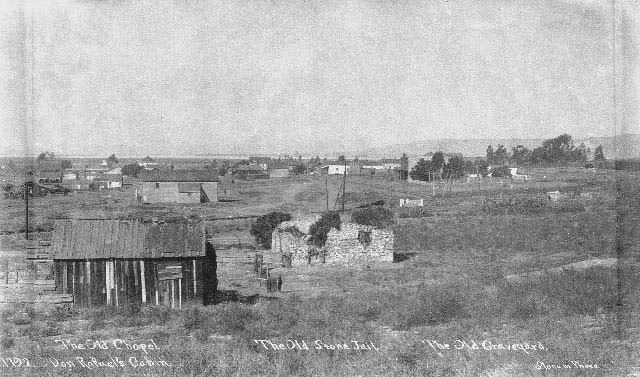
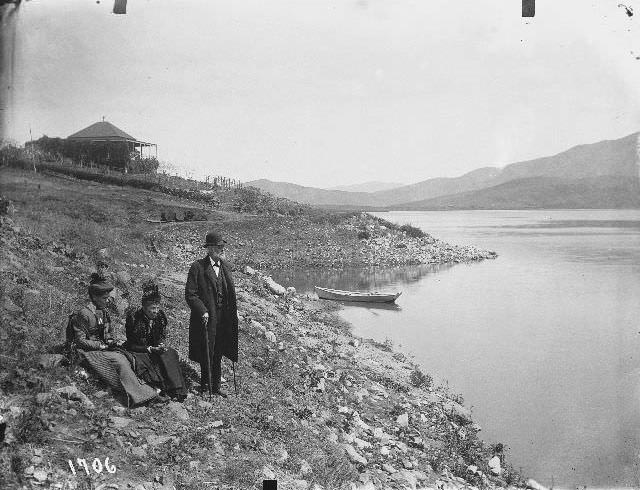
Old Town’s collection of structures — the adobe chapel, Don Rafael’s cabin, the stone jail, and the graveyard — formed a kind of open-air record of San Diego’s pre-American past. The Sweetwater Reservoir, one of the key water storage facilities serving the city, also drew visitors who came to see the dam and its surrounding scenery.
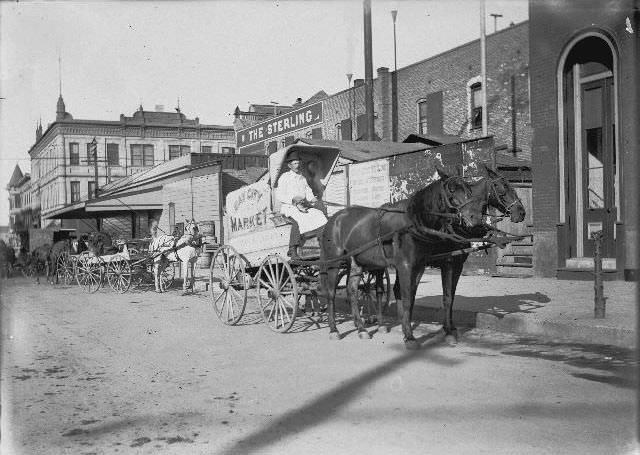
Grocery delivery by horse-drawn wagon was a standard service in 1890s San Diego. The Bay City Market operated out of Fifth and G Street, making rounds through the city’s neighborhoods. Steam-powered travel connected San Diego to coastal ports up and down the Pacific Coast, with the Pacific Coast Steamship Company running regular service.
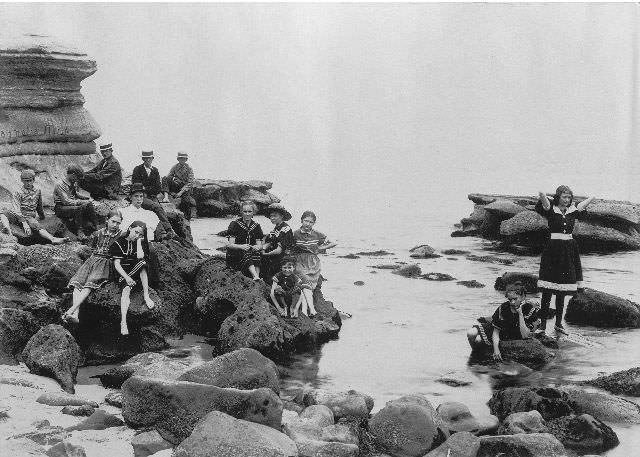
The dairy industry in the Chollas Valley was a significant source of fresh milk for the growing city. Dozens of dairy cows at the Duncan Brothers farm produced a steady supply. Beach communities like La Jolla offered a very different kind of activity — families and visitors spent time on the rocks and in the surf, with La Jolla’s distinctive cove drawing people from across the county.
Banking grew alongside the city’s commercial expansion. The First National Bank at 867 Fifth Street was one of the key financial institutions serving San Diego’s businesses and residents. Out in the backcountry, the work of building the San Diego Flume involved skilled construction crews, including those who worked beneath the Los Coches trestle — a tall wooden structure that carried the flume over a steep canyon.
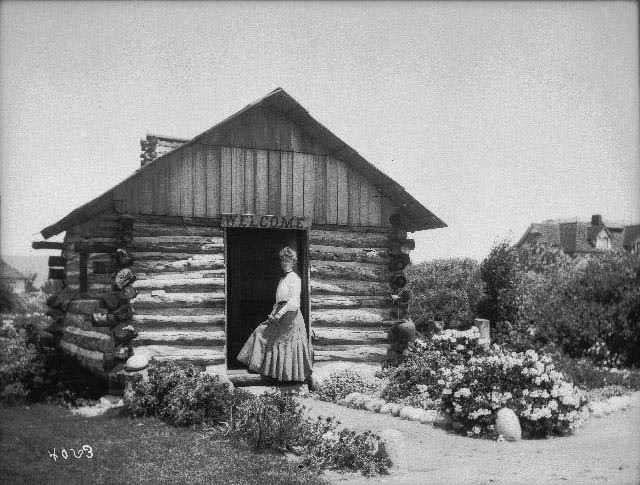
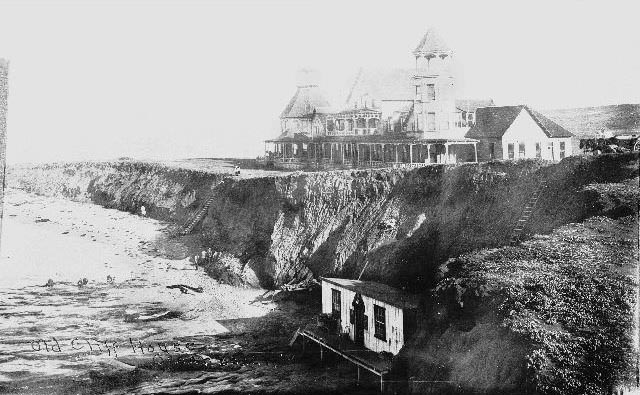
Pacific Beach was still a sparsely settled community in the late 1890s, with small cabins and open land stretching between it and the rest of the city. Ocean Beach, on the coast to the south, had its own character — bluffs above the water, residents and visitors gathered at the edge, and hotels beginning to cater to the growing tourist trade.
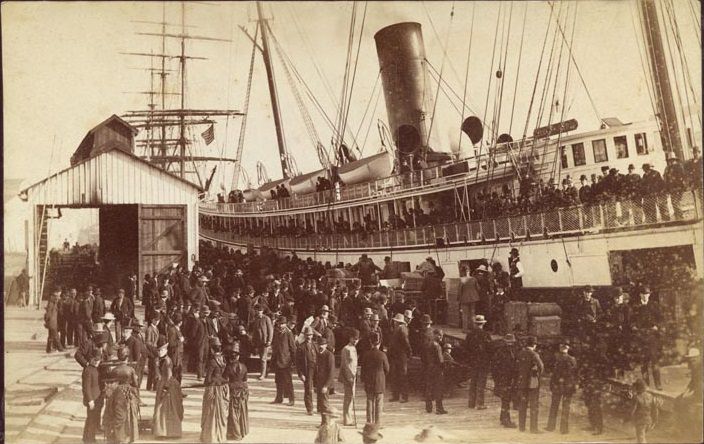
The passenger ship Queen of the Pacific was one of the larger vessels to call at San Diego’s docks. In a photograph from 1890, passengers lined the decks while baggage was loaded onto flatcars on the wharf below. Lifeboats, a tall smokestack, and the rigging of a second vessel behind it filled the frame — a snapshot of the harbor at its busiest.
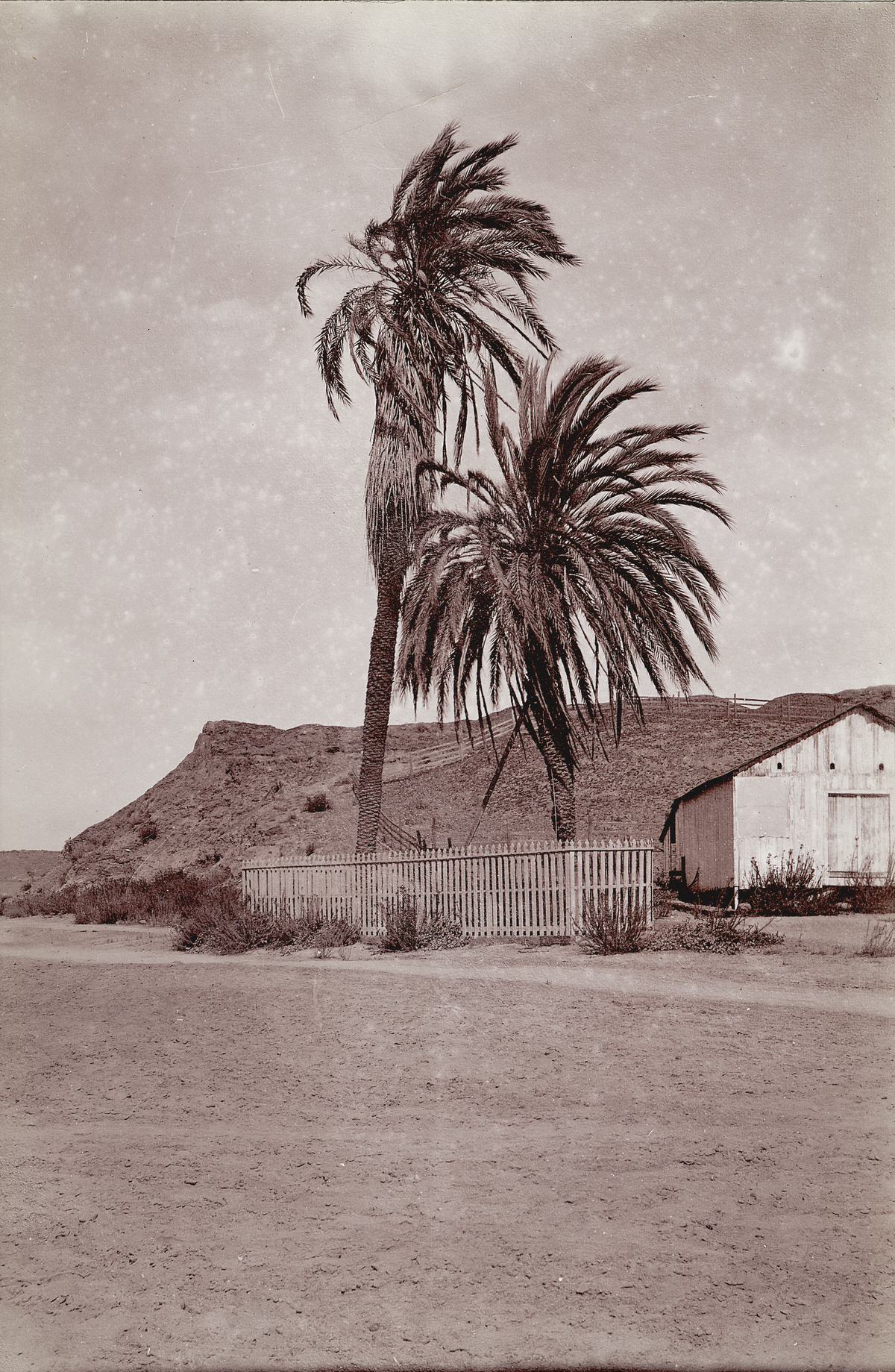
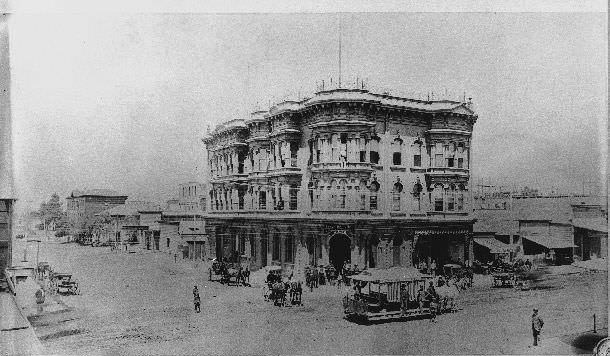
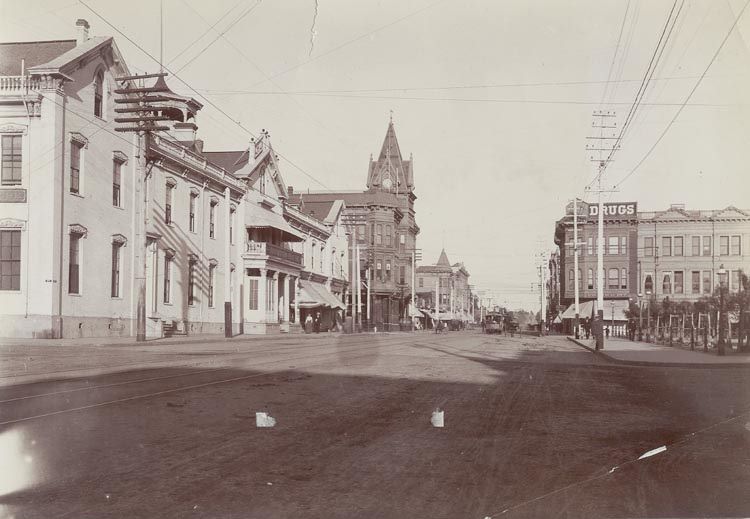
Old Town’s palm trees, enclosed by a picket fence with a wooden shed nearby, were among the oldest living plants in the district. Horton House on Fifth Street was the city’s most prominent hotel — a two-story building with gabled rooflines and awnings, with a trolley car passing in front and a drug store sign visible across the street. The hotel was named after Alonzo Horton, the man who had founded the city just over two decades earlier.
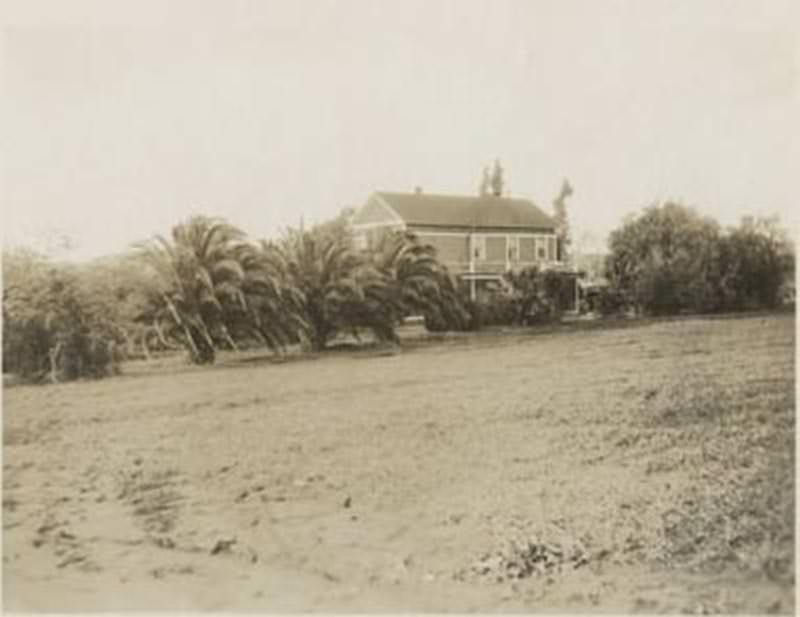
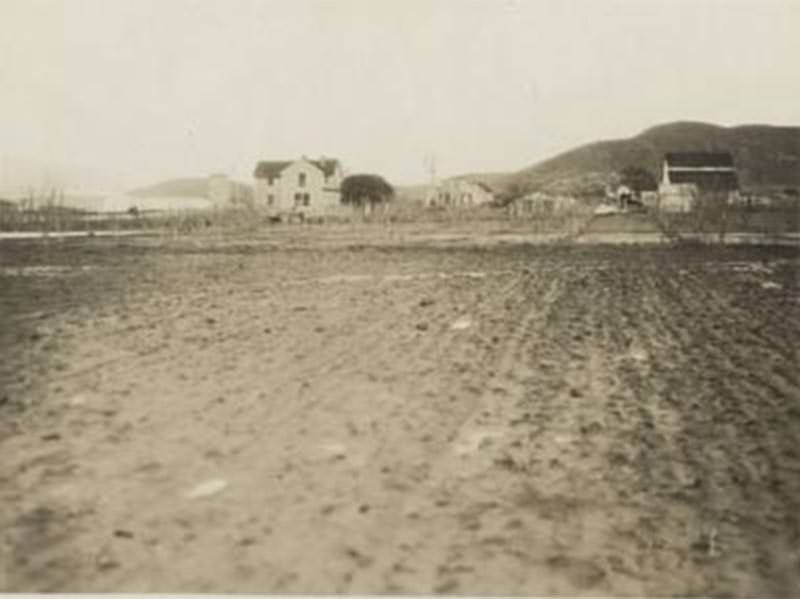
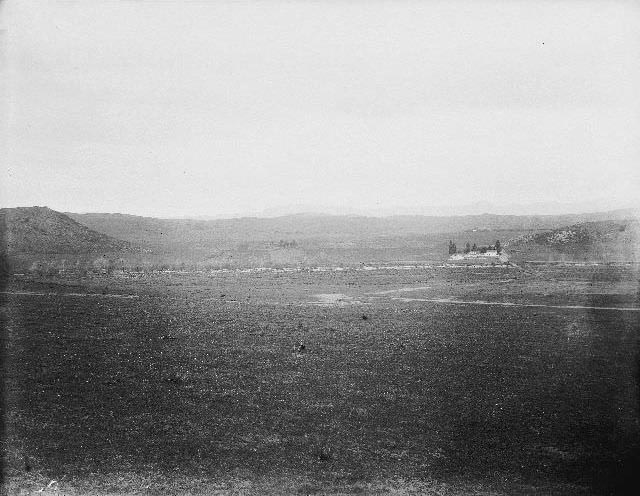
Rural San Diego County in 1895 was a patchwork of small farms, ranch houses, and open grassland. Properties like Rancho San Bernardo maintained the large landholding patterns that dated back to the Mexican rancho era. Rancho San Bernardo’s main house sat in the distance of a wide, open landscape — a reminder that much of the county remained agricultural and sparsely settled even as the city grew.
The Coronado Ferry slip at the Orange Street terminus was a hub of bay activity. In 1895, the double-decker ferry Silver Gate sat in its slip while the smaller Coronado Ferry approached from the left. The building at the terminus had three cupolas and Gothic-shaped windows. Across the bay, the Hotel del Coronado — completed in 1888 — was already one of the most famous resort hotels in the American West by the time photographs captured it in 1898.
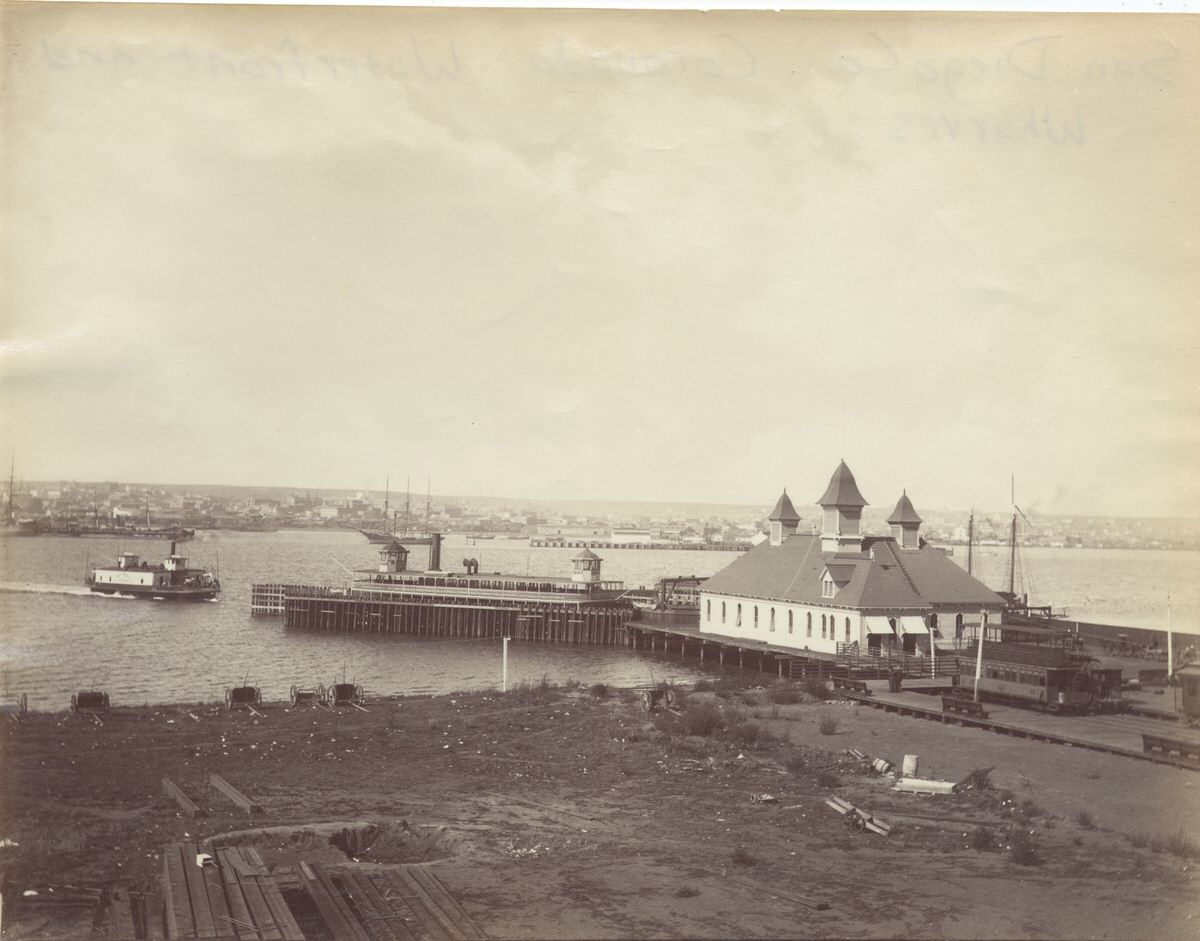
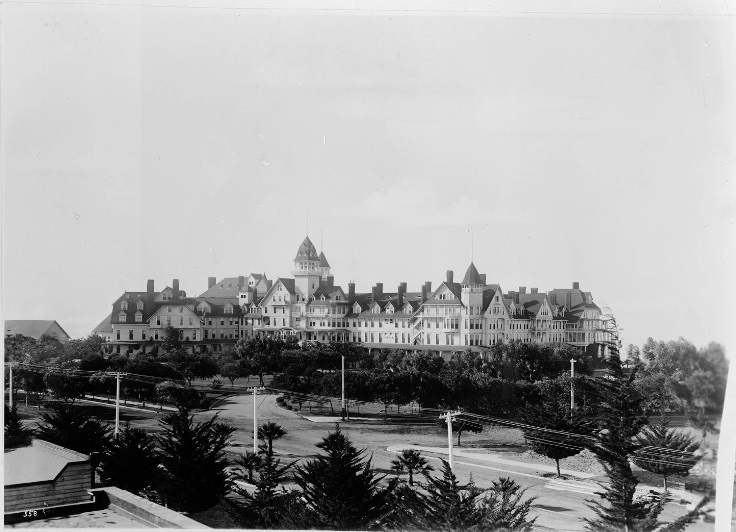
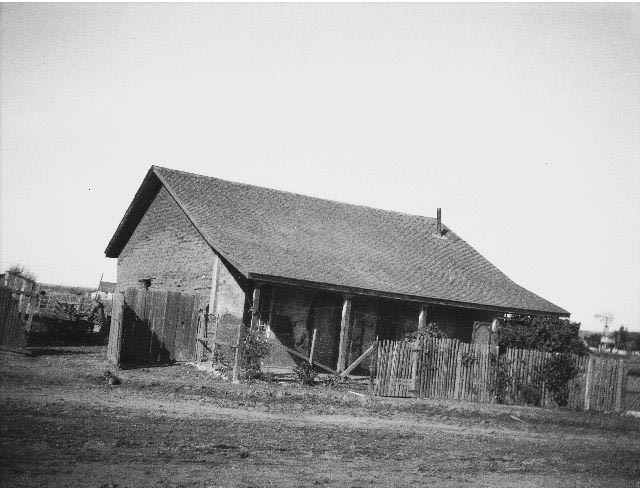
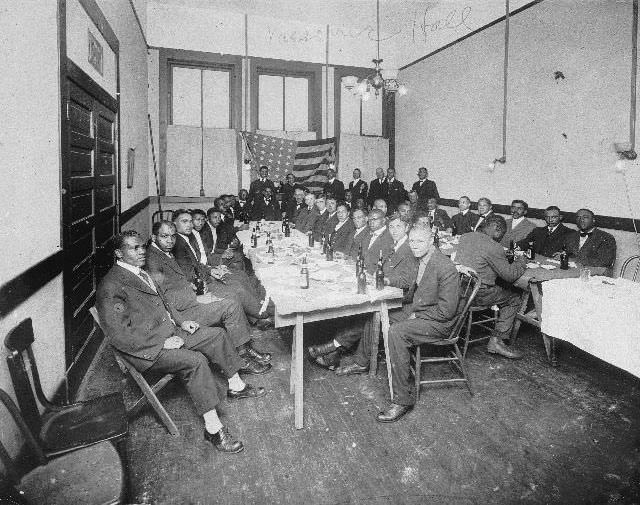
Old Town preserved several of San Diego’s oldest surviving structures. The Casa de Carrillo and the A.B. Smith house were both standing in 1895, their exteriors photographed as historical curiosities by a city already beginning to look back on its own past. African American residents also formed their own civic institutions during this period, with fraternal organizations like the Masonic Hall providing community gathering spaces.
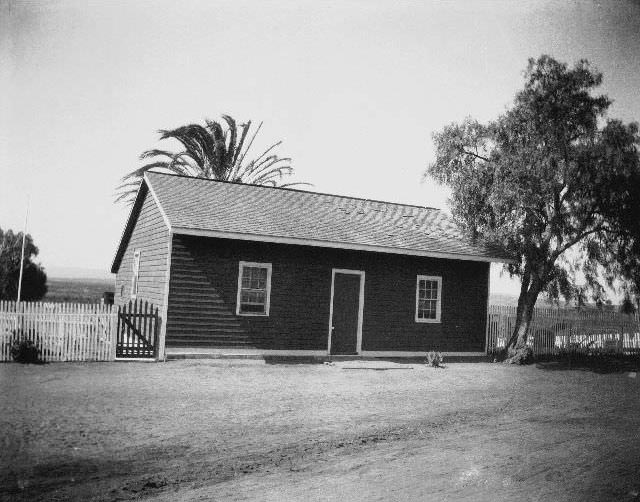
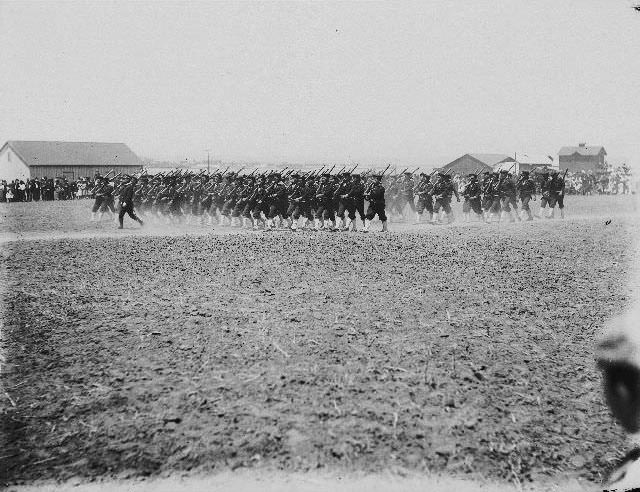
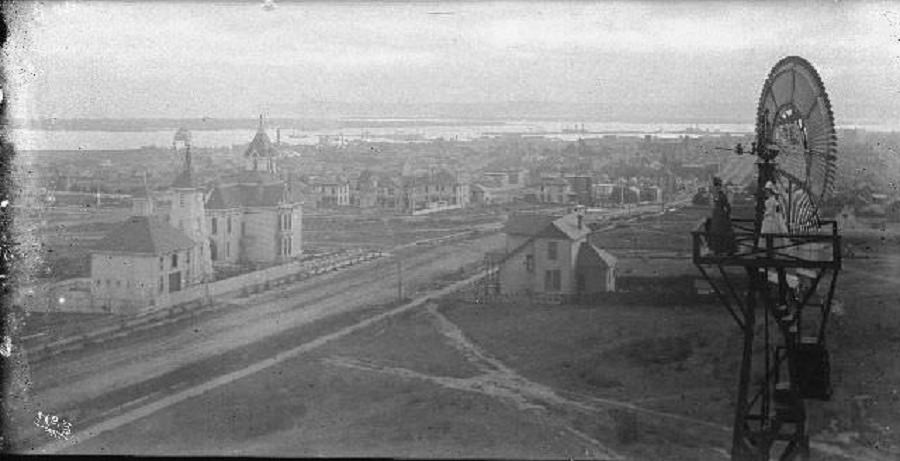
San Diego’s position on the Pacific Coast made it a port of call for international naval vessels. In 1899, Japanese sailors from a training ship came ashore and drilled on land — an unusual sight that reflected the growing maritime traffic and international presence in the harbor. Windmills were a common feature on the outskirts of the city, pumping water for homes and farms. Two women climbed to the top of one in 1895, looking out over the residence of Matthew Sherman spread below them.
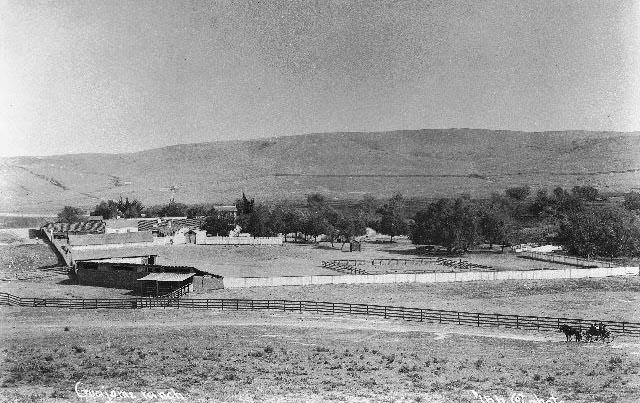
Ocean Beach’s Beacon Hotel catered to visitors making their way to the coast in the late 1890s. Vista, in the northern part of the county, was home to the Guajome Ranch — a large adobe compound that had been one of the most significant private landholdings in the region since the Mexican period. By the 1890s, it still stood as a working ranch.
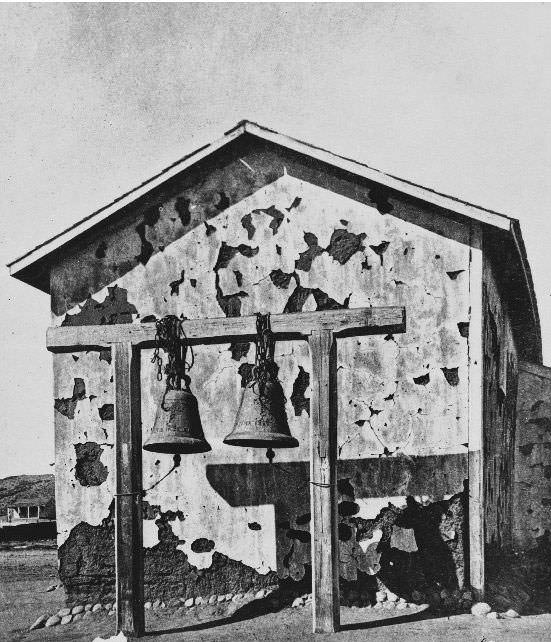
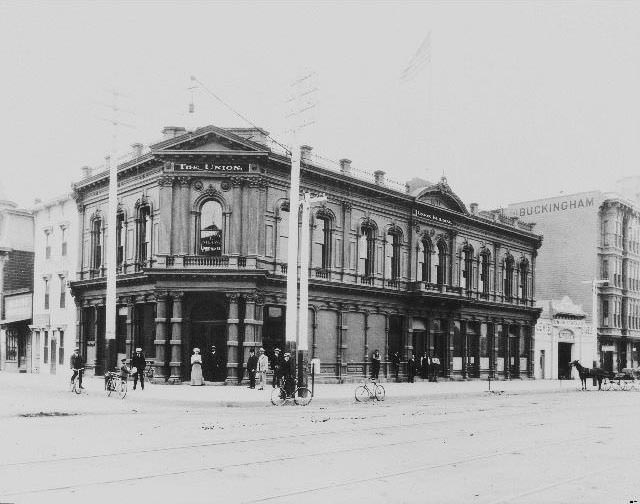
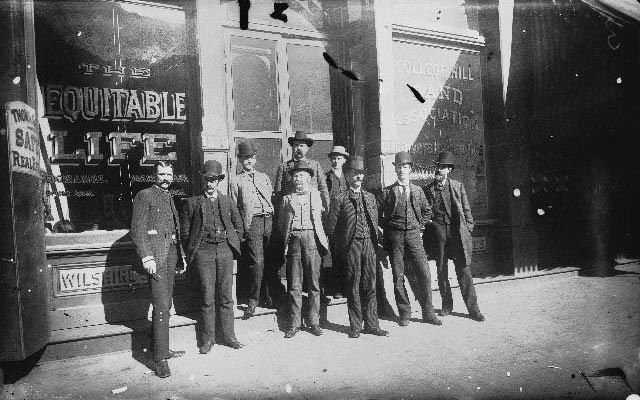
Old Town kept its mission-era artifacts on display, including two original mission bells that stood outside. The Union Building at Third Street and Broadway was one of downtown’s newer commercial landmarks by 1896, while insurance companies like Equitable Life Insurance maintained offices staffed with employees who posed proudly outside their D Street location for the camera.
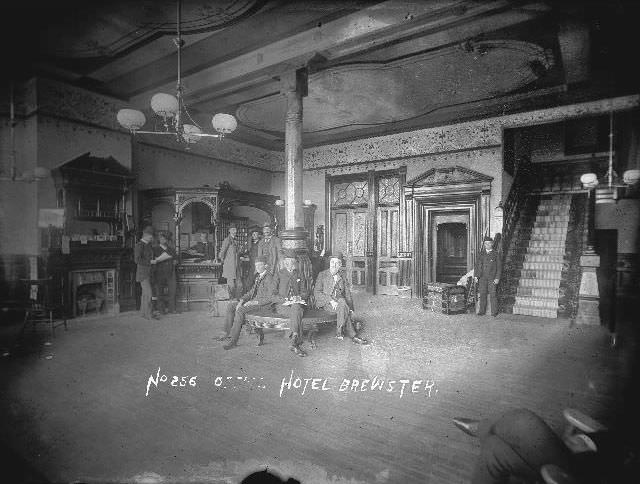
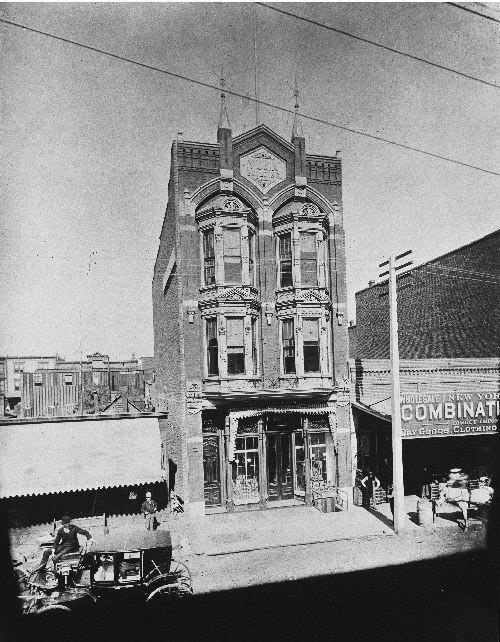
The Hotel Brewster at Fourth and C Street offered guests an interior lobby that reflected the taste and comfort of the era. The Yuma Building at 631 Fifth Street, between G Street and Market Street, was one of several substantial commercial blocks constructed in the early 1890s as the city’s downtown continued to fill in with permanent brick and stone structures.
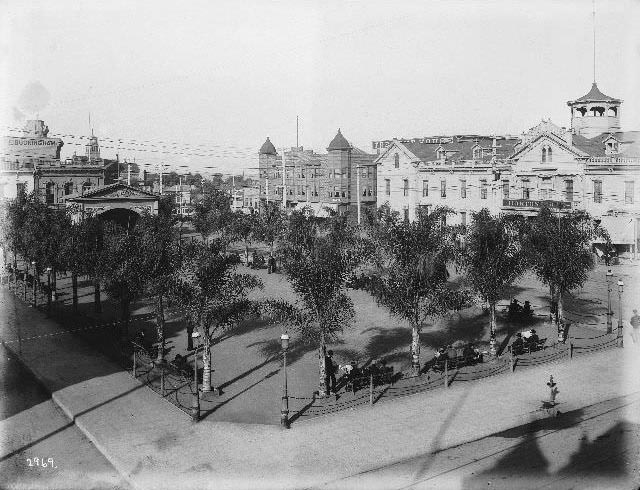
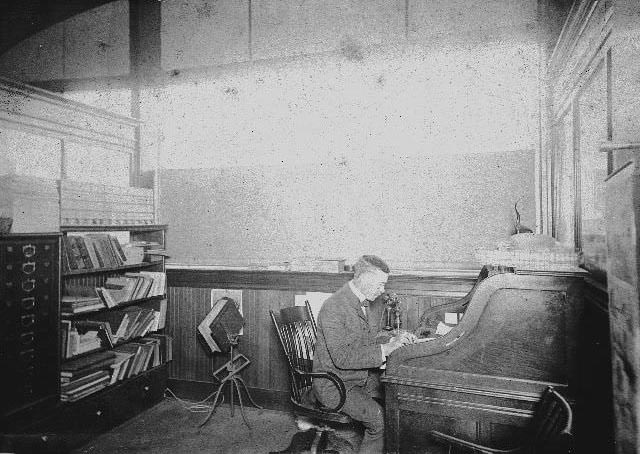
Horton Park sat at the center of the city’s civic life. From 1895, the view looking northwest toward Horton House showed the Buckingham Hotel on the far left and the spire of the County Courthouse rising just beside it. The park itself gave the surrounding neighborhood a sense of order and permanence that the city had worked hard to establish since the chaotic bankruptcy years of the 1850s. At the Western Metal Supply office, Bernard W. McKenzie sat at his desk in 1893, surrounded by the paperwork of a business that supplied the city’s growing industrial and maritime trades.
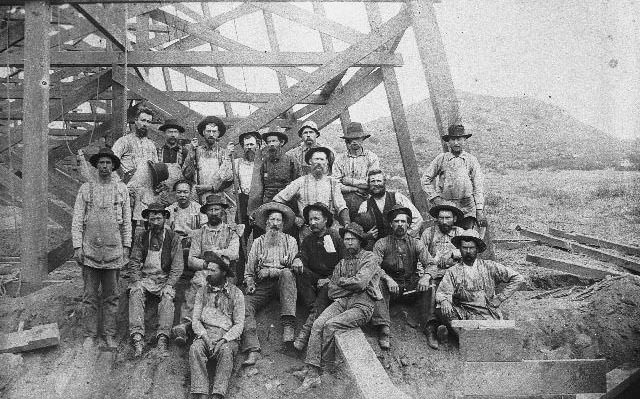
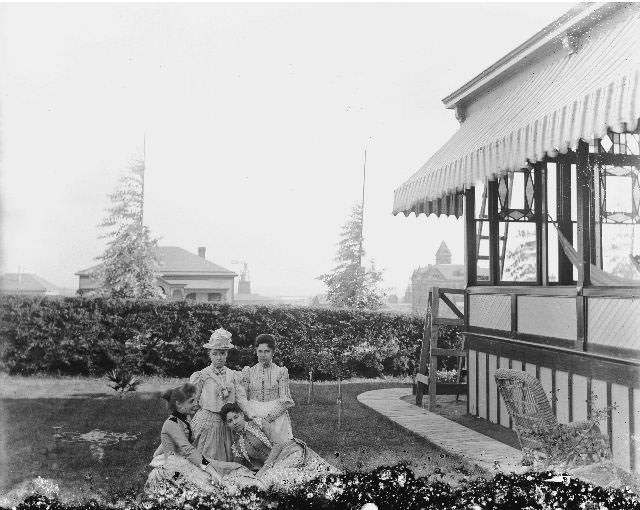
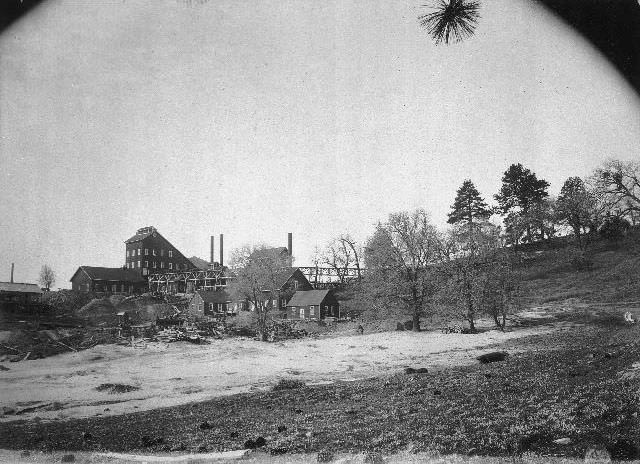
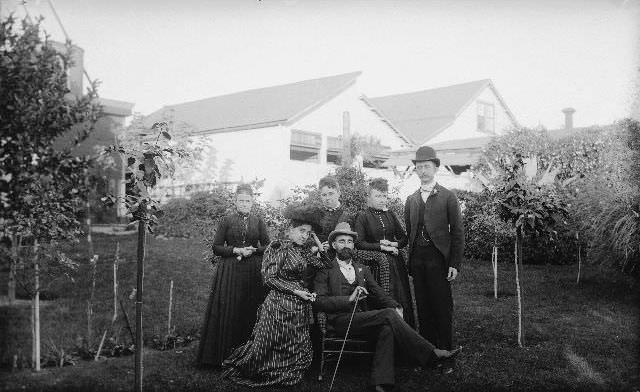
Domestic life in 1890s San Diego was lived mostly outdoors in the mild climate. Backyards served as gathering spaces, whether for family portraits or afternoon socializing. The Stonewall Mine in the Cuyamaca Mountains was one of the most productive gold mines in San Diego County during this period, attracting workers and investment to the rugged eastern highlands.





looks like Blackwater in red dead redemption
These are super fun to look through, looks like they got a photo of one of the first Hillcrest hipsters
The San Diego Historical Center is an excellent resource for history enthusiasts. Their journal, which covers topics ranging from the earliest history of San Diego to contemporary times, dates back to the 1950s and is available online. Additionally, they have a vast collection of photos available online.
Yeah, but you need to go through 8-10 pages to see a 300 px blurred photo with a huge watermark on each of them.
It seems like everything and everyone was covered in dirt and dust during that time period.
Nice. The atmosphere looked very affordable for home ownership and renting.
Could have prob bought the whole city block back then for less than the cost of a 1br now. Lol.
This makes me want to play Red Dead 2
We got a lot of conveniences nowadays but sometimes I wish I was born 100 yrs ago