In the summer of 1864, a 14-year-old orphan named Robert McGee was traveling west with a wagon train through the open plains of Nebraska. He had already endured more hardship than most adults ever face. His parents had both died during the journey from Ohio, leaving him alone and dependent on the goodwill of the other settlers around him. Still, he kept moving. There was nothing left behind him and everything, or so he hoped, ahead.
That hope was violently interrupted when a group of Sioux warriors ambushed the wagon train. Robert was captured along with several other members of the group. During the attack, he was scalped — a practice in which the skin and hair are cut away from the top of the skull, typically while the victim is still alive. It was used as an act of war, a way to mark a kill or terrorize an enemy. Robert did not die. Against all odds, he survived the attack, and his story became one of the most documented cases of scalping survival in American frontier history.
The Sioux, like many Plains tribes in the 1860s, were in direct and violent conflict with the United States government. Decades of broken treaties, forced relocations, and the steady destruction of bison herds had pushed tensions to a breaking point. Wagon trains moving west represented, to many warriors, the physical advance of a civilization that had already taken their lands and showed no signs of stopping. The attack on McGee’s wagon train was not an isolated act of random violence — it was part of a broader, grinding war over the future of the Great Plains.
After the attack, Robert was found by a group of passing settlers who took him in and provided what care they could. Frontier medicine in 1864 was primitive. There were no antibiotics, no surgical tools capable of repairing the kind of wound Robert had sustained, and no real understanding of the neurological damage caused by a scalping. That he survived the initial trauma alone was extraordinary. That he survived the weeks of recovery that followed was nothing short of remarkable.
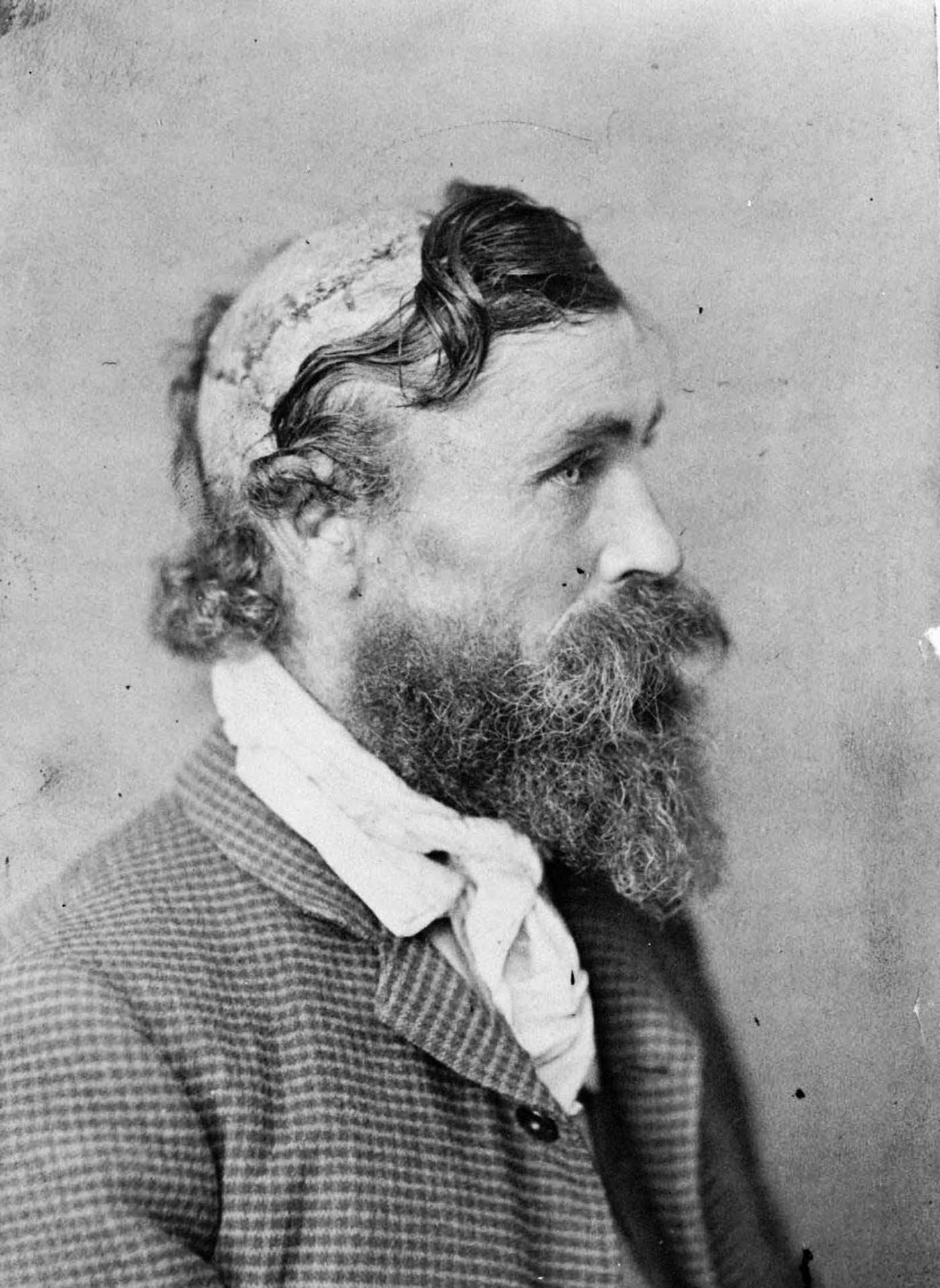
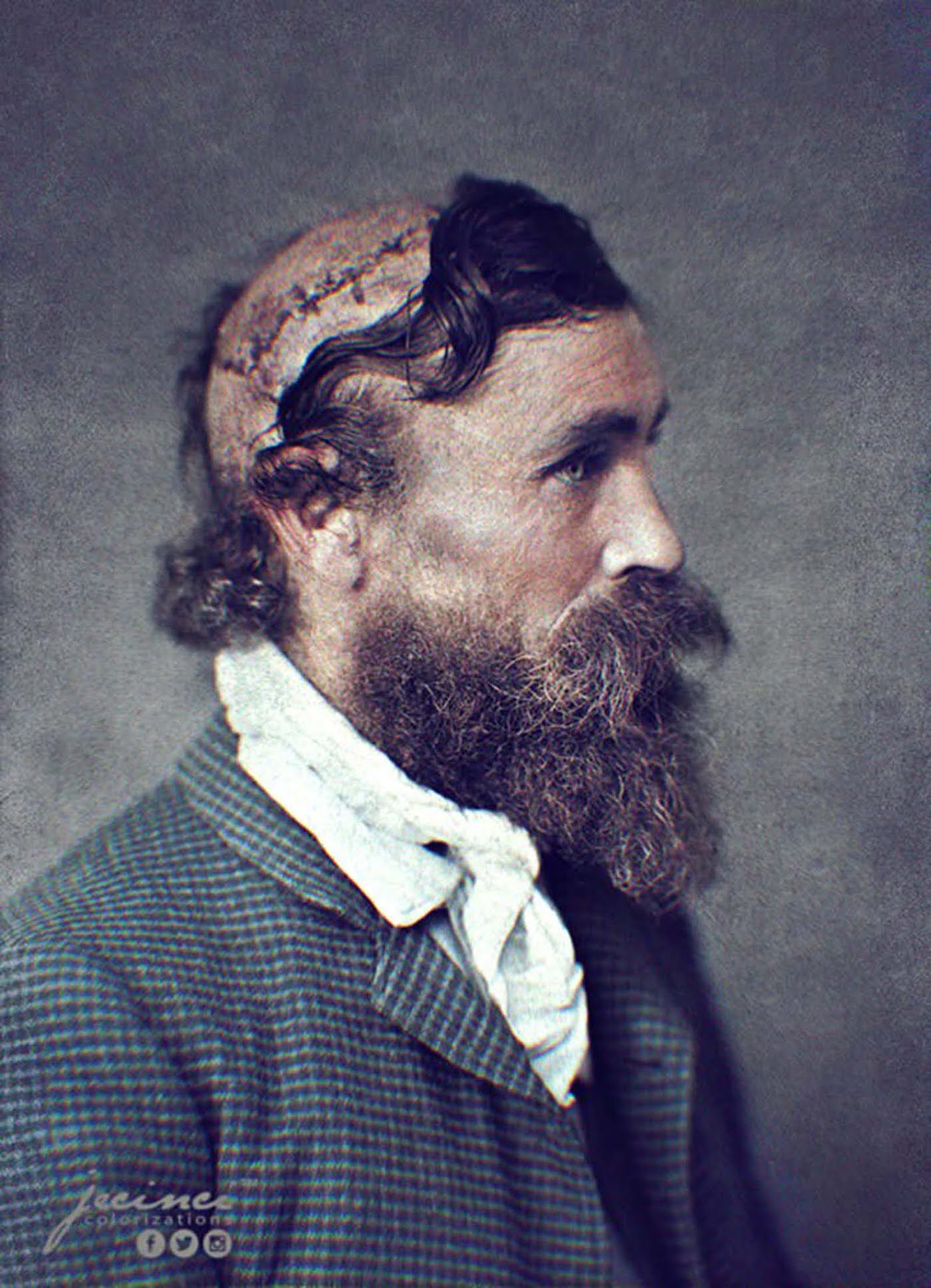
The wound left behind was severe and permanent. Robert carried visible scarring across the top of his head for the rest of his life — an exposed, irregular patch of bone and scar tissue where hair would never grow again. Photographs taken of him years later show the extent of the damage clearly. He became, over time, something of a public figure, recognized across the region for what he had endured and survived.
Robert went on to build a life. He married, raised children, and worked as a businessman. By outward measure, he managed to construct something stable and ordinary from the wreckage of his early years. But the physical consequences of the scalping never left him. He suffered from chronic headaches and seizures throughout his adult life, both consistent with the kind of brain trauma that would result from the wound he received at 14. These were not passing symptoms — they were a permanent fixture of his daily existence.
The emotional weight was equally real. Survivor’s guilt over the deaths of his parents, the violent deaths and captivity of fellow travelers, and the brutal nature of what he personally experienced left deep psychological marks. Depression and anxiety followed him for decades. In the 19th century, there was no framework for treating what we would today recognize as post-traumatic stress. Men like Robert were expected to simply carry on, and by most accounts, he did — but not without cost.
Robert McGee’s story is often reduced to the shock of a single fact: he was scalped and lived. But the fuller picture is more complex. He was a child who lost his parents, survived a violent attack on the frontier, endured a wound that should have killed him, and then spent the rest of his life managing the physical and psychological fallout of all of it. The photographs taken of him in later years — in which he lifts his hat or turns his head to show the scarring — were not taken out of vanity. They were taken because people wanted proof. Proof that a person could go through something that terrible and still be standing.