Hey There! Before You Go. 😧
Get the best vintage content straight into your inbox!

Don't worry, we don't spam

What Phoenix looked like in the Roaring 1920s

The 1920s hit Phoenix like a jolt of electricity. After World War I ended, the city’s cotton industry — one of its economic pillars — collapsed almost overnight, dragging Phoenix into the same recession that swept the rest of the country. But Phoenix did not stay down for long. Within a few years, money was flowing, buildings were rising, and the streets that had once belonged to horses and buggies were filling up with automobiles and well-dressed residents flush with new wealth. The decade American writer F. Scott Fitzgerald called the “greatest, gaudiest spree in history” left a deep mark on the city.

At the start of the decade, Phoenix was still finding its footing. Monroe Street was home to what locals called “Millionaire Row” — a stretch of grand mansions owned by the city’s wealthiest families. But as downtown expanded northward, new elegant homes began replacing the old ones. The city was stretching, both in population and ambition.
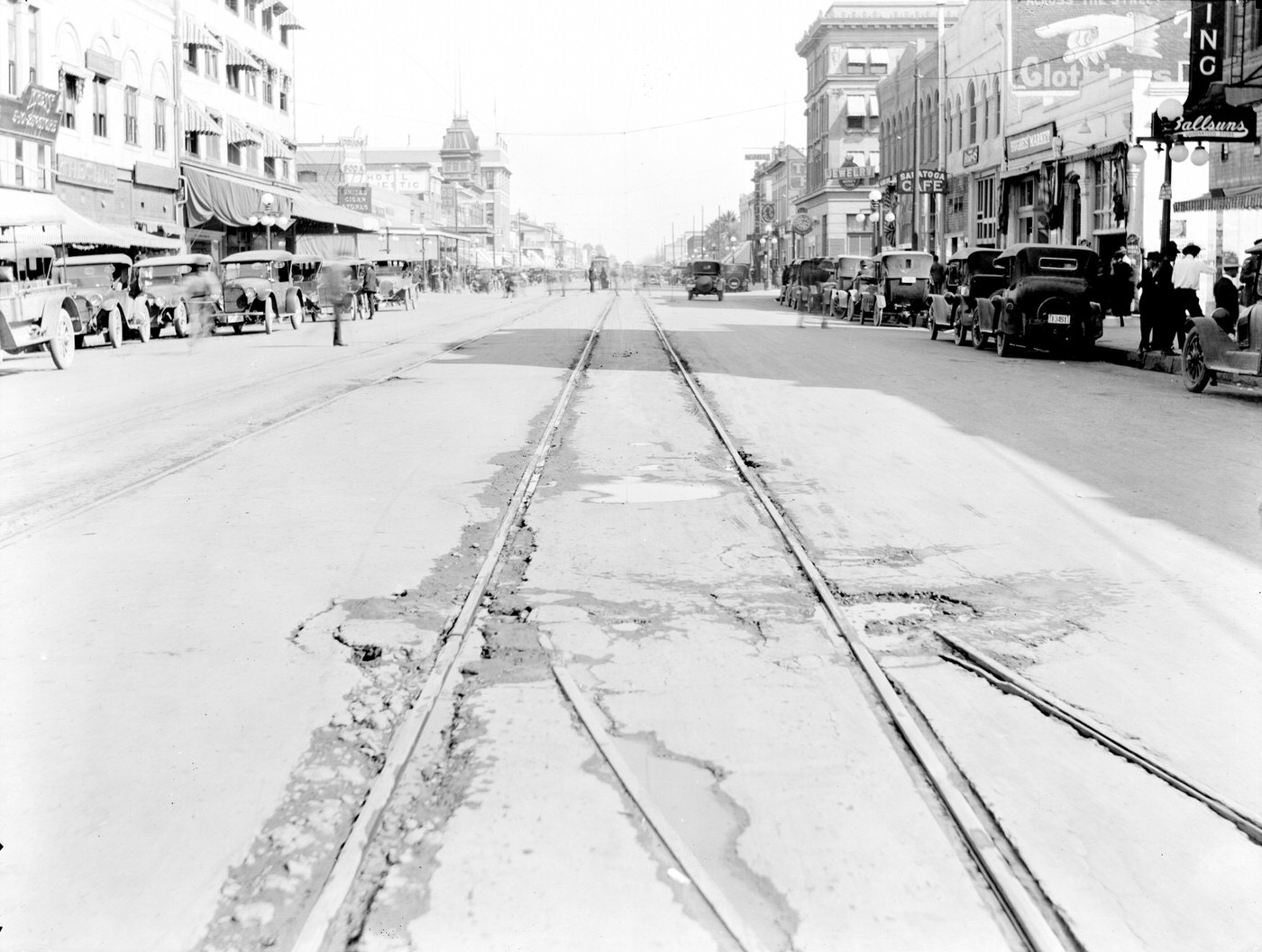
Washington St. Looking East From First Ave, 1920

The Heard Building, completed in 1920, rose seven stories above the southeast corner of Central Avenue and Adams Street — making it the tallest building in Arizona at the time. It was a clear signal that Phoenix was no longer content to be a small desert town. Dwight Heard, the Phoenix leader behind the building, became a symbol of the city’s ambitions. He died in 1929, just as the decade was closing.
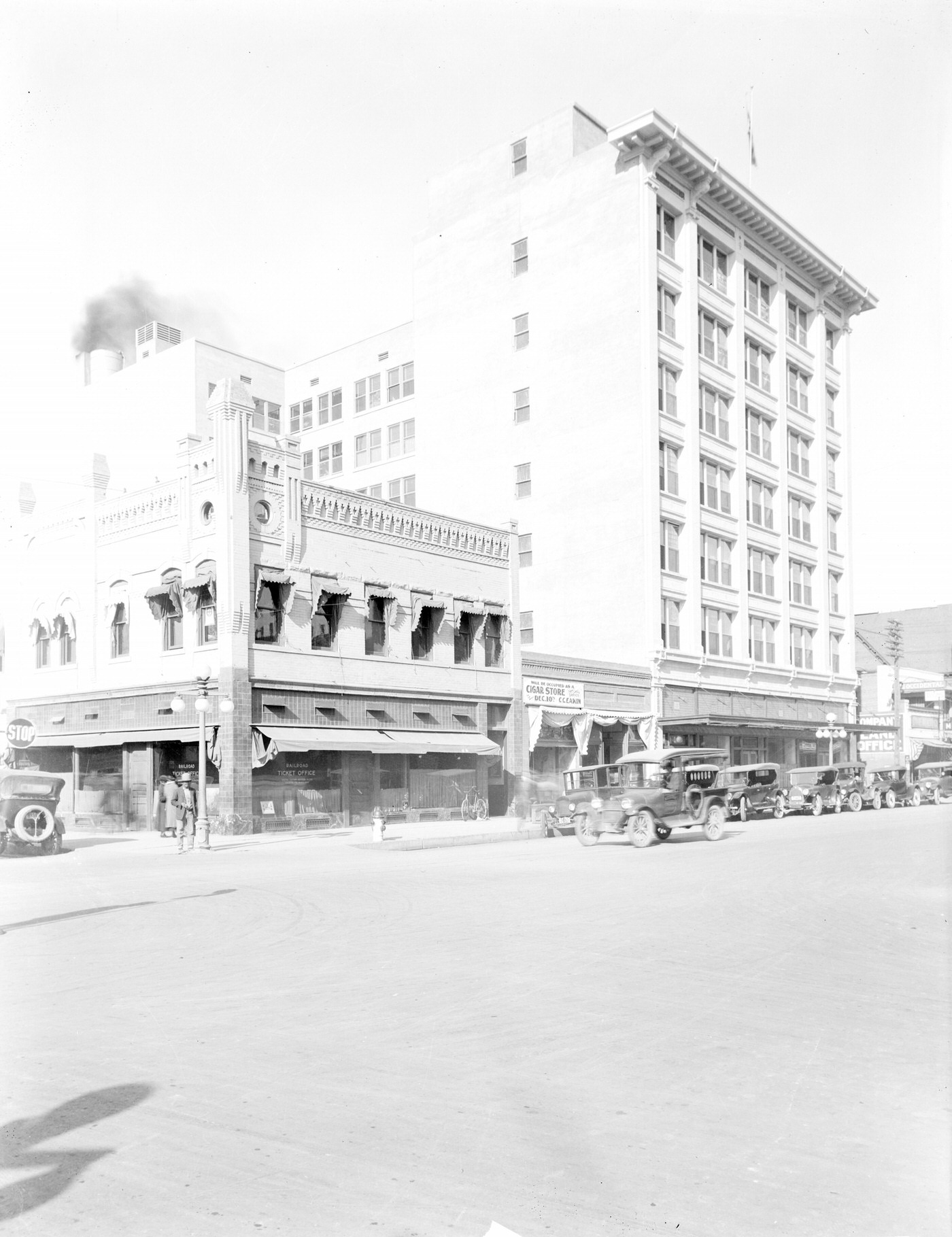
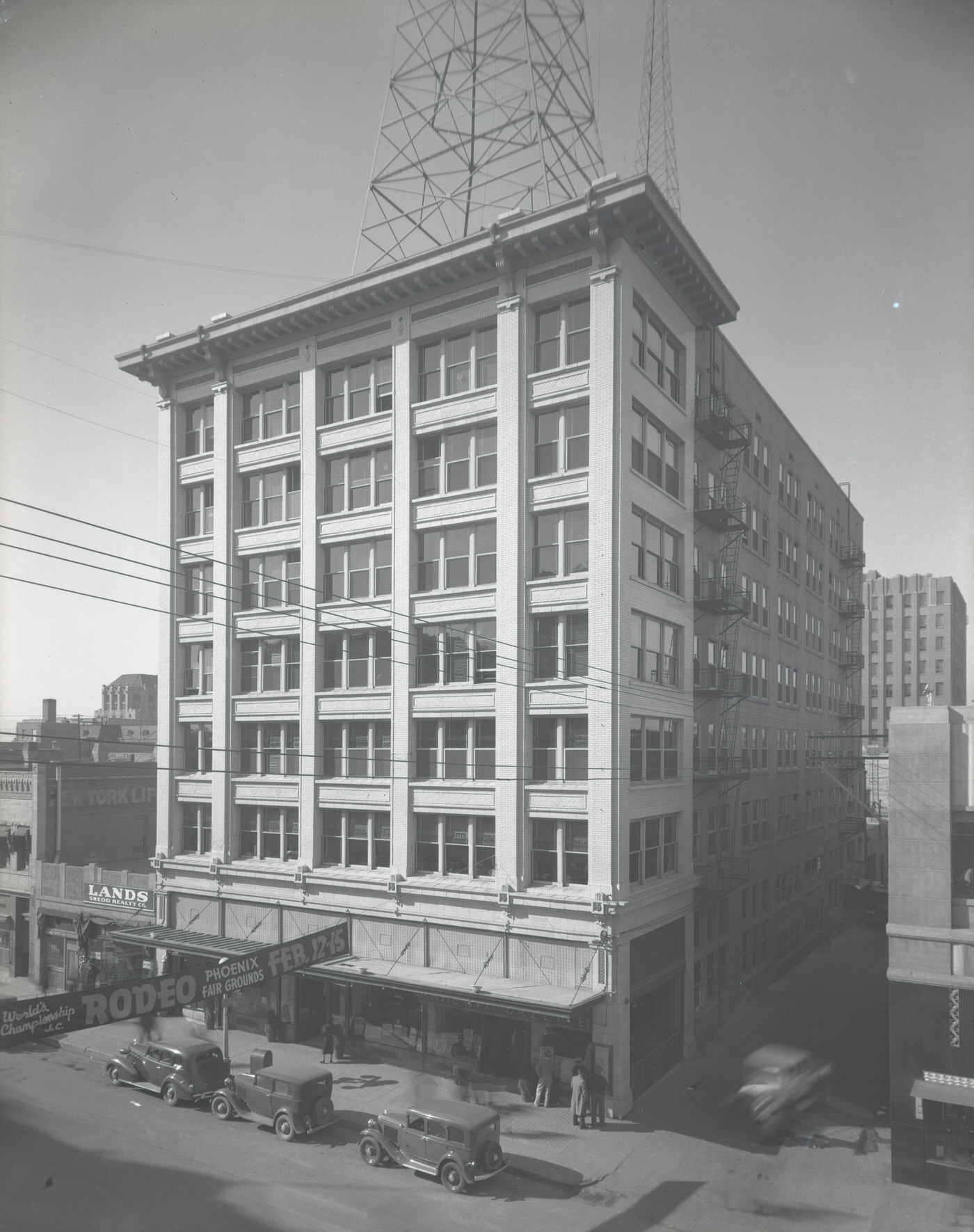
Heard Building Exterior, 1921. This building was located on the southeast corner of Central Avenue and Adams Street in Phoenix.
Heard Building Exterior, 1921
Heard Building Exterior, 1921. This building was located on the southeast corner of Central Avenue and Adams Street in Phoenix.

By mid-decade, a parade of new construction projects was reshaping downtown. The Orpheum Theatre’s basement was being dug out in 1920, one of the early signals that Phoenix wanted culture and entertainment at scale. The Fox Theater followed. These were not modest venues — they were built to impress.
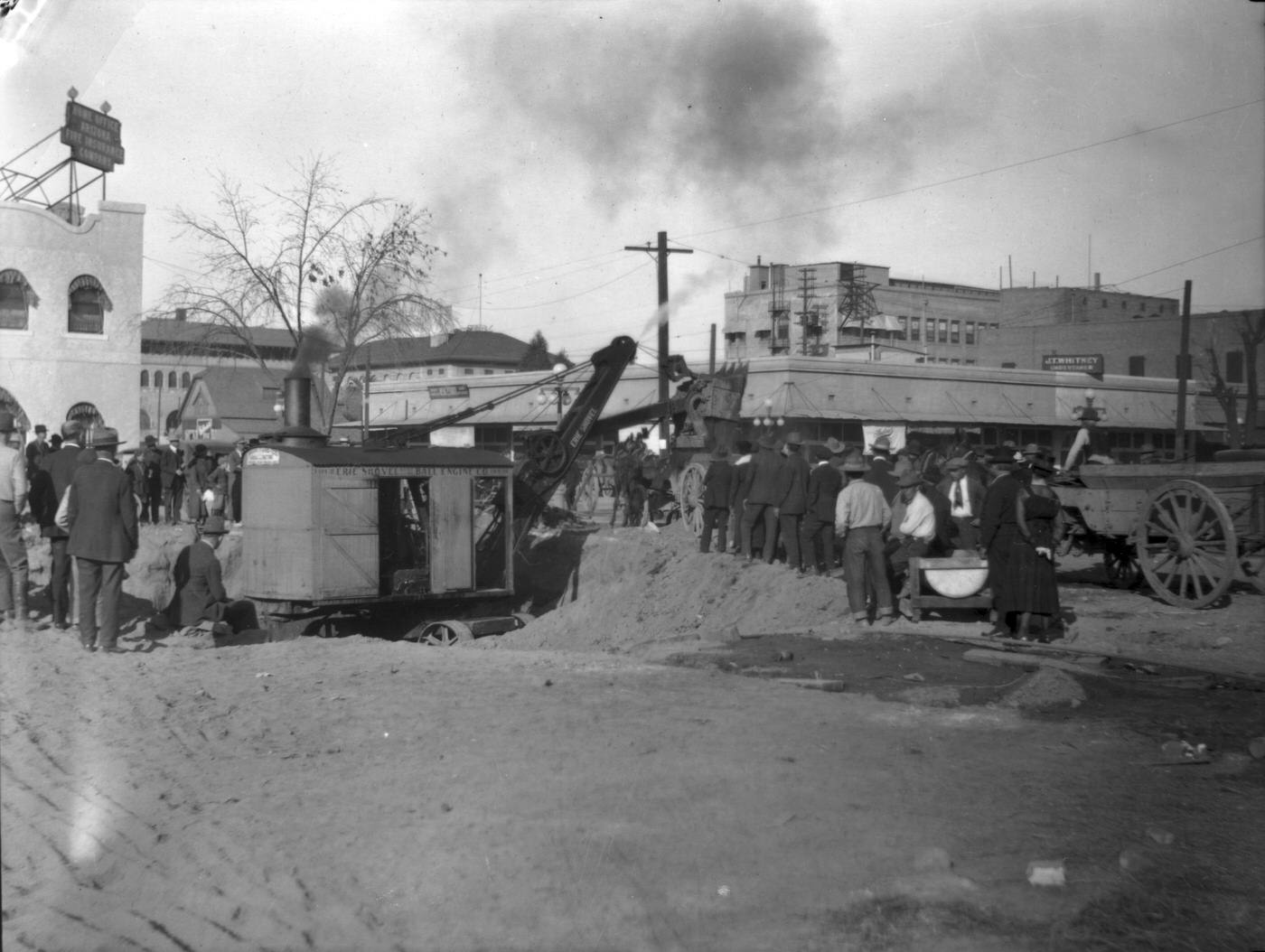
Construction Crew Digging the Basement for the Orpheum Theatre, 1920

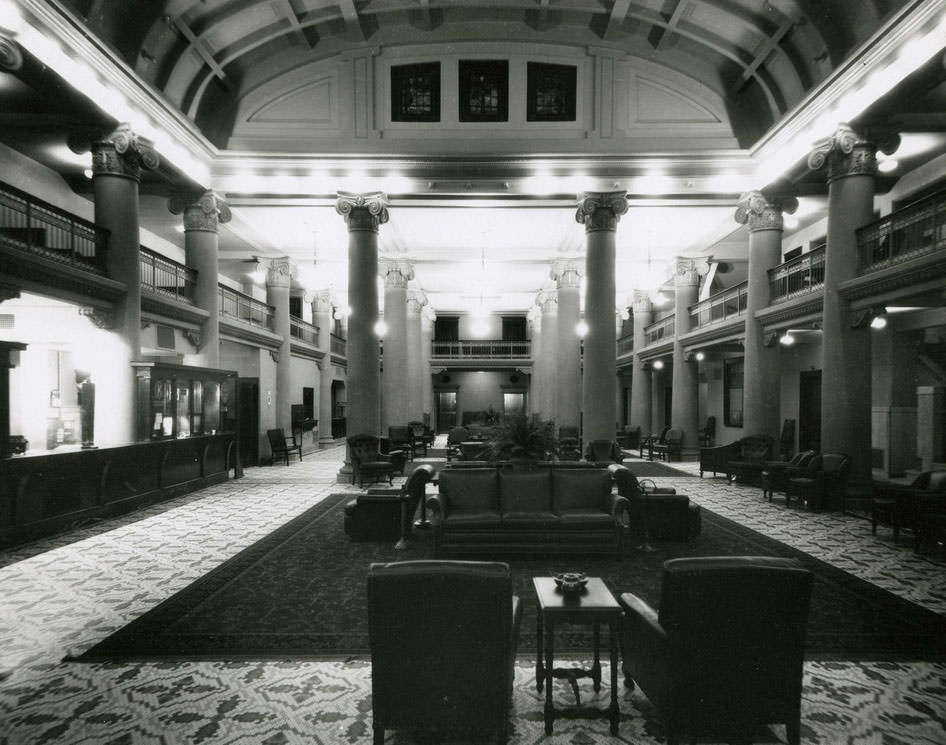
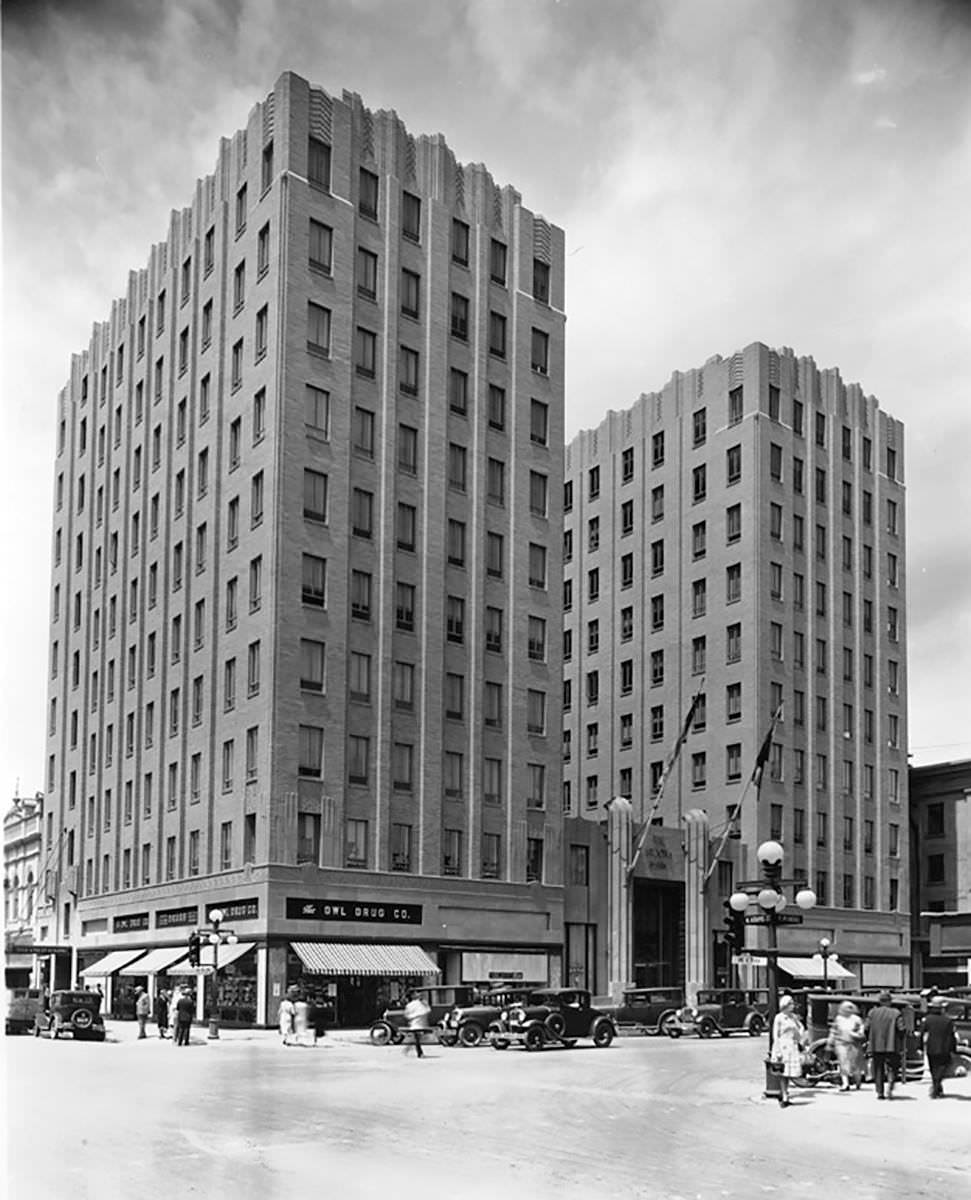
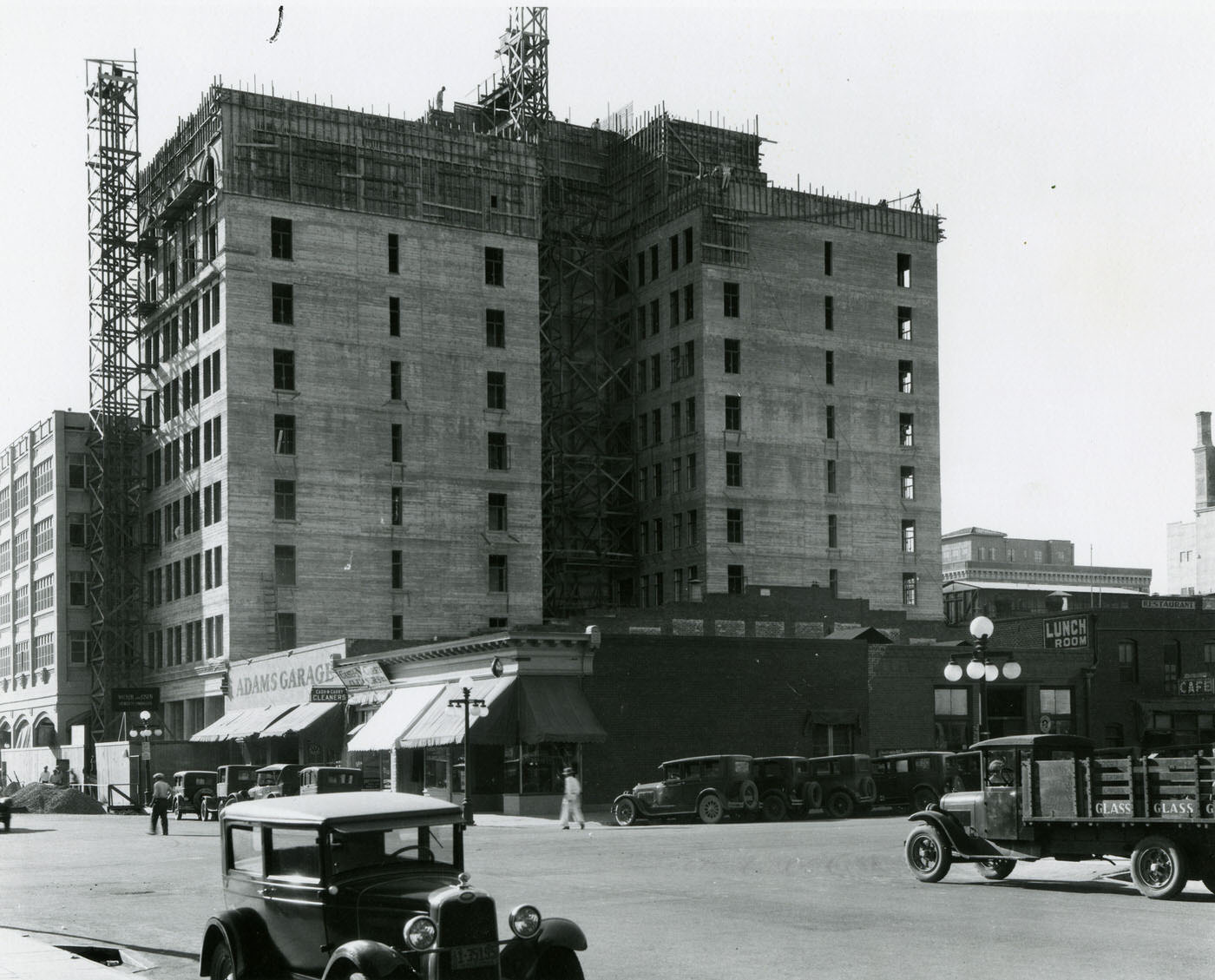
The Adams Hotel stood at the center of Phoenix’s social life throughout the decade. Business was strong enough that a 10-story addition was constructed to the east of the main building, even with fresh competition from the San Carlos and the Westward Ho hotels opening their doors. The Adams lobby and its grand vaulted ceiling were a gathering place for anyone who was anyone in Phoenix.
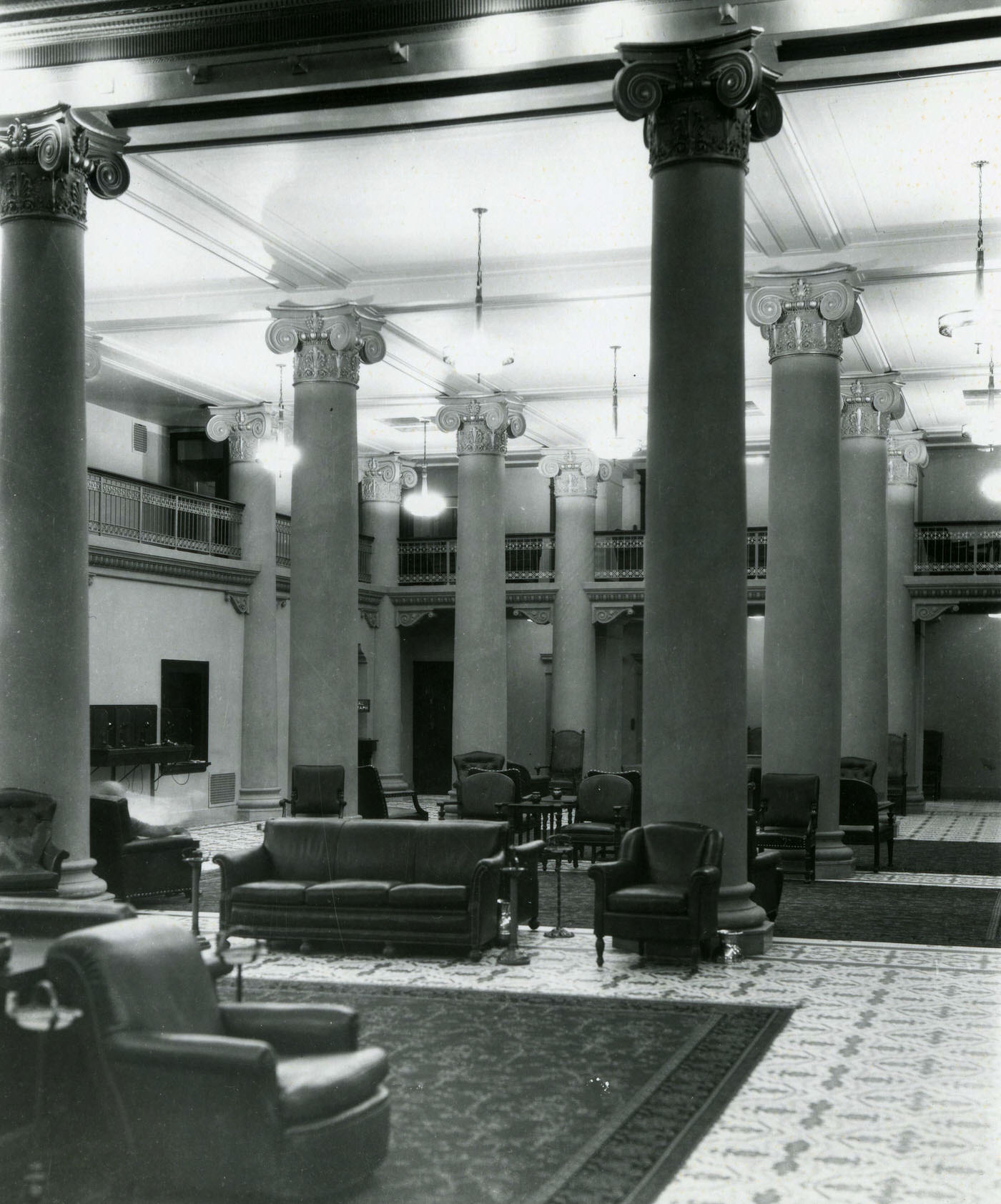
Adams Hotel Lobby, 1920
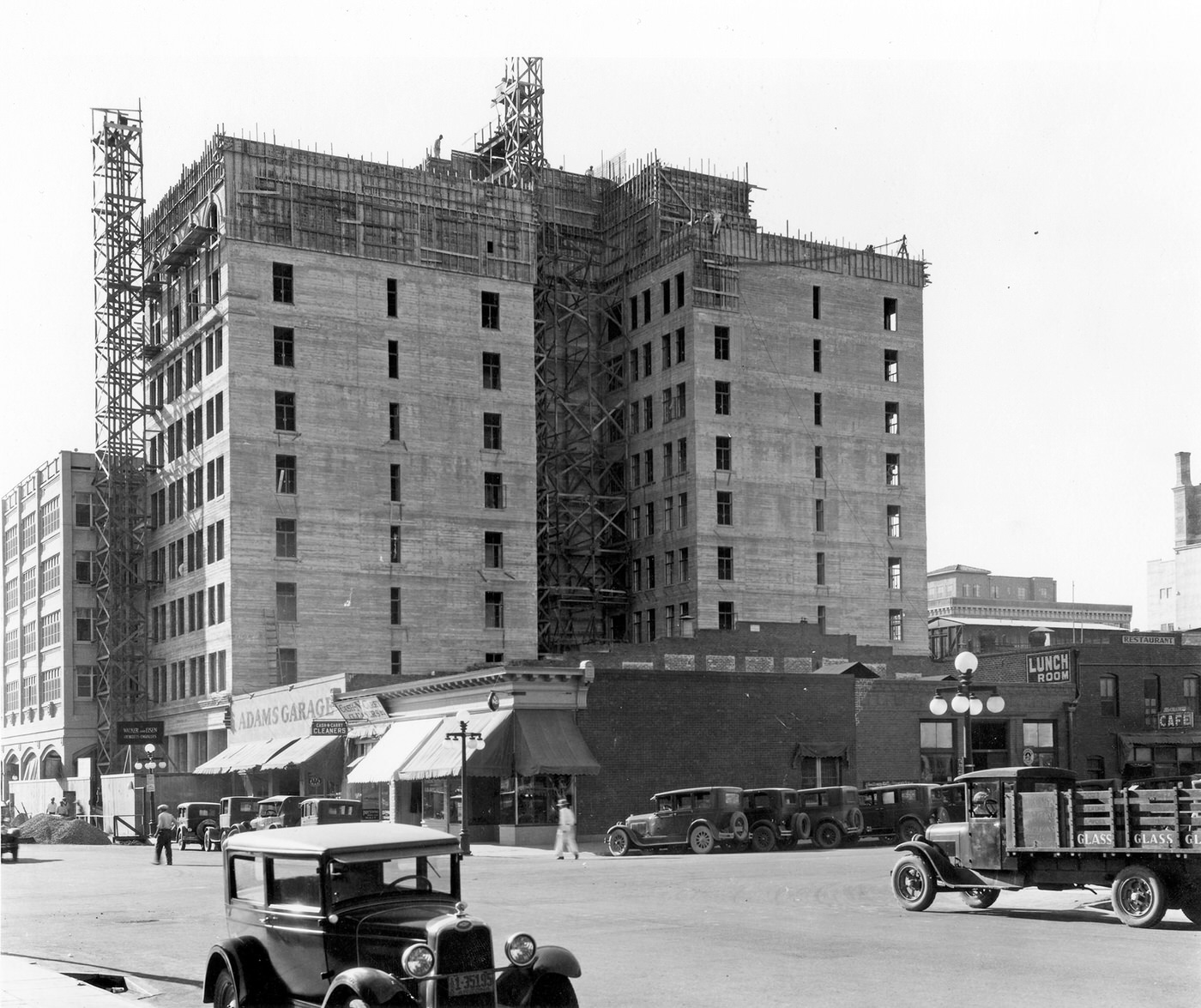
Original Addition Being Built Onto the Adams Hotel, 1920
The Hotel Adams in its glory days.
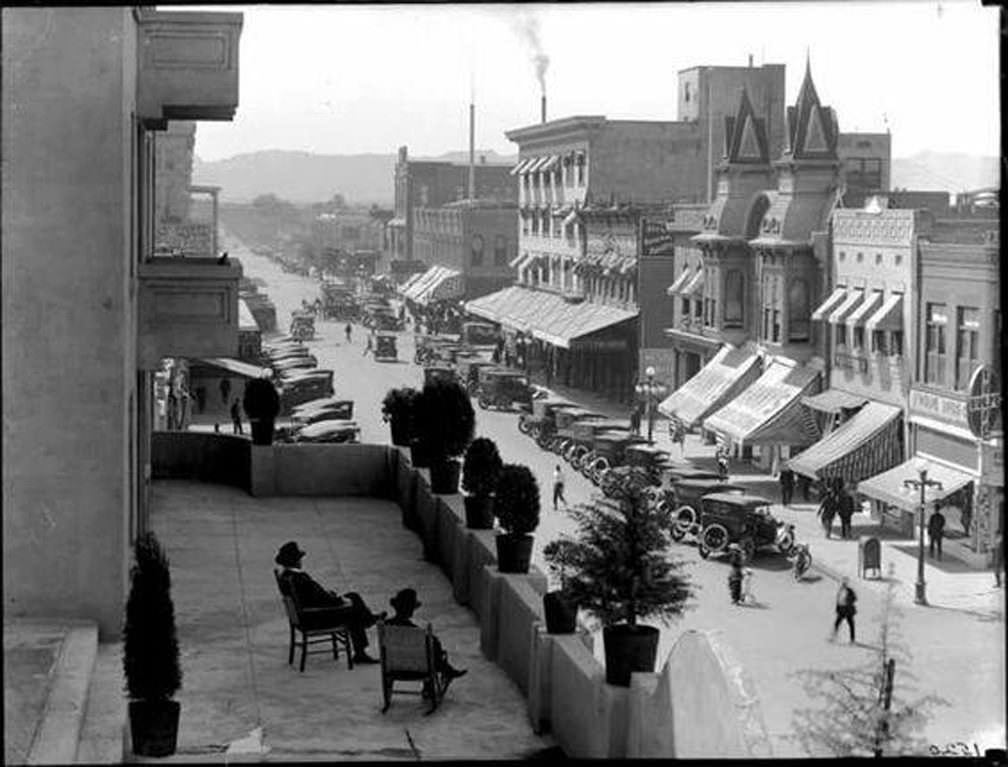
The balcony of the Adams offered this view of Central Avenue and the South Mountains.
The vaulted ceiling of the Adams.
Business was so good — even with new competition from the San Carlos and Westward Ho — that the Adams saw construction of a 10-story addition to the east of the main building.

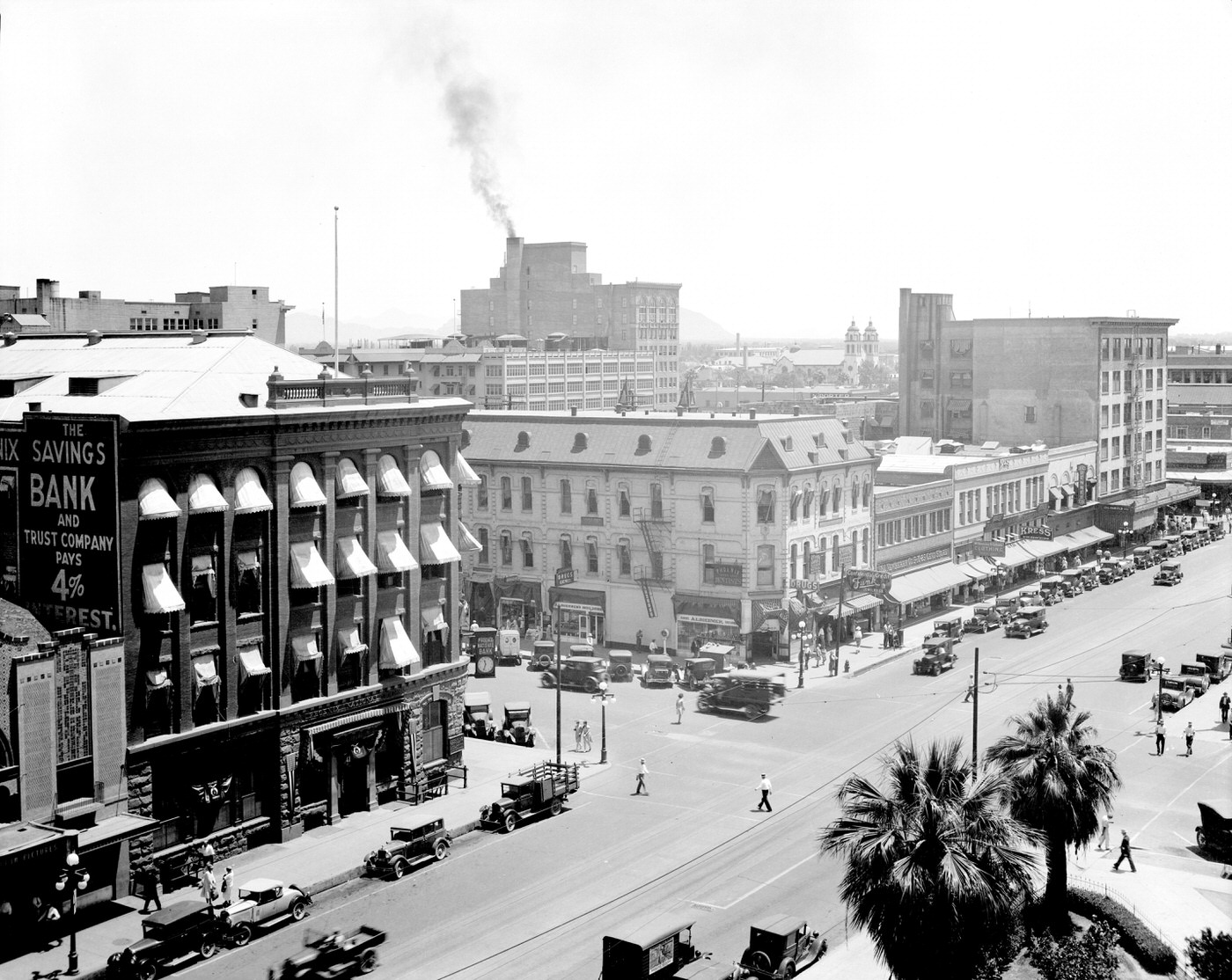
The Westward Ho Hotel, which opened in 1928, became another landmark for the city’s growing hospitality scene. At the same time, the intersection of Washington Street and First Avenue was becoming the beating heart of downtown Phoenix. A 1929 skyline shot taken from the new City-County Building captured the Fleming Building and the Monohon Building side by side, showing just how quickly the city’s profile was changing.
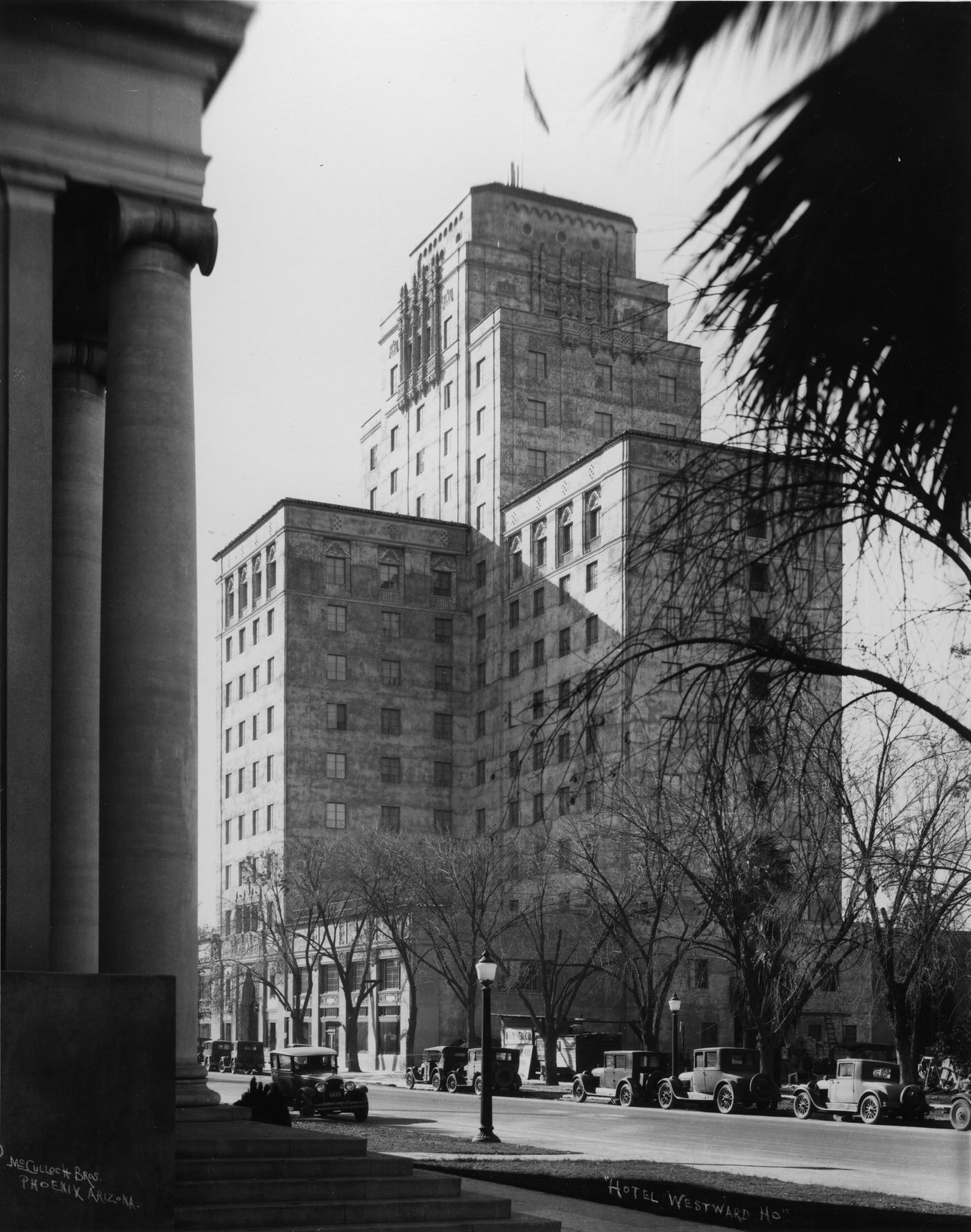
Westward Ho Hotel Exterior, 1928
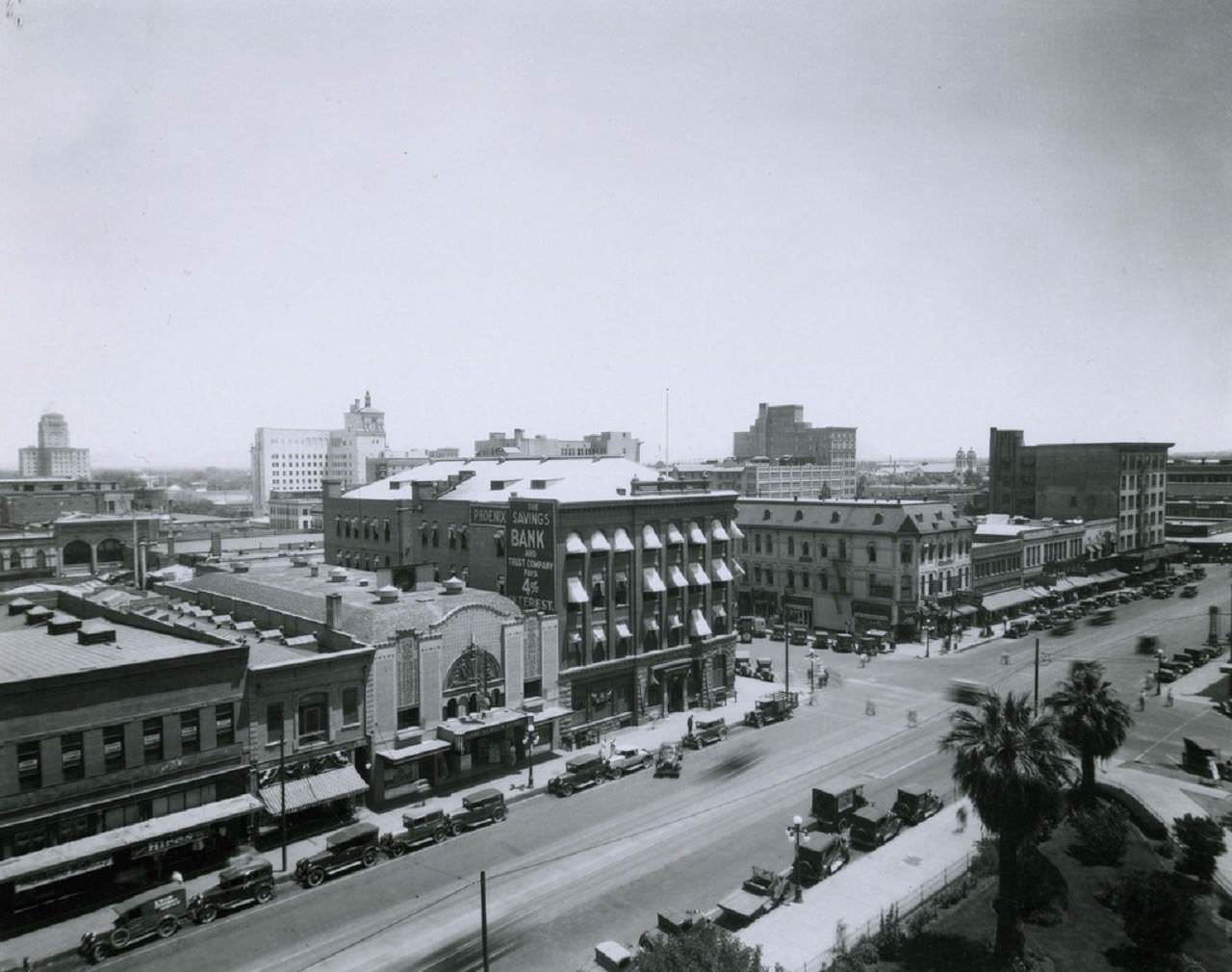
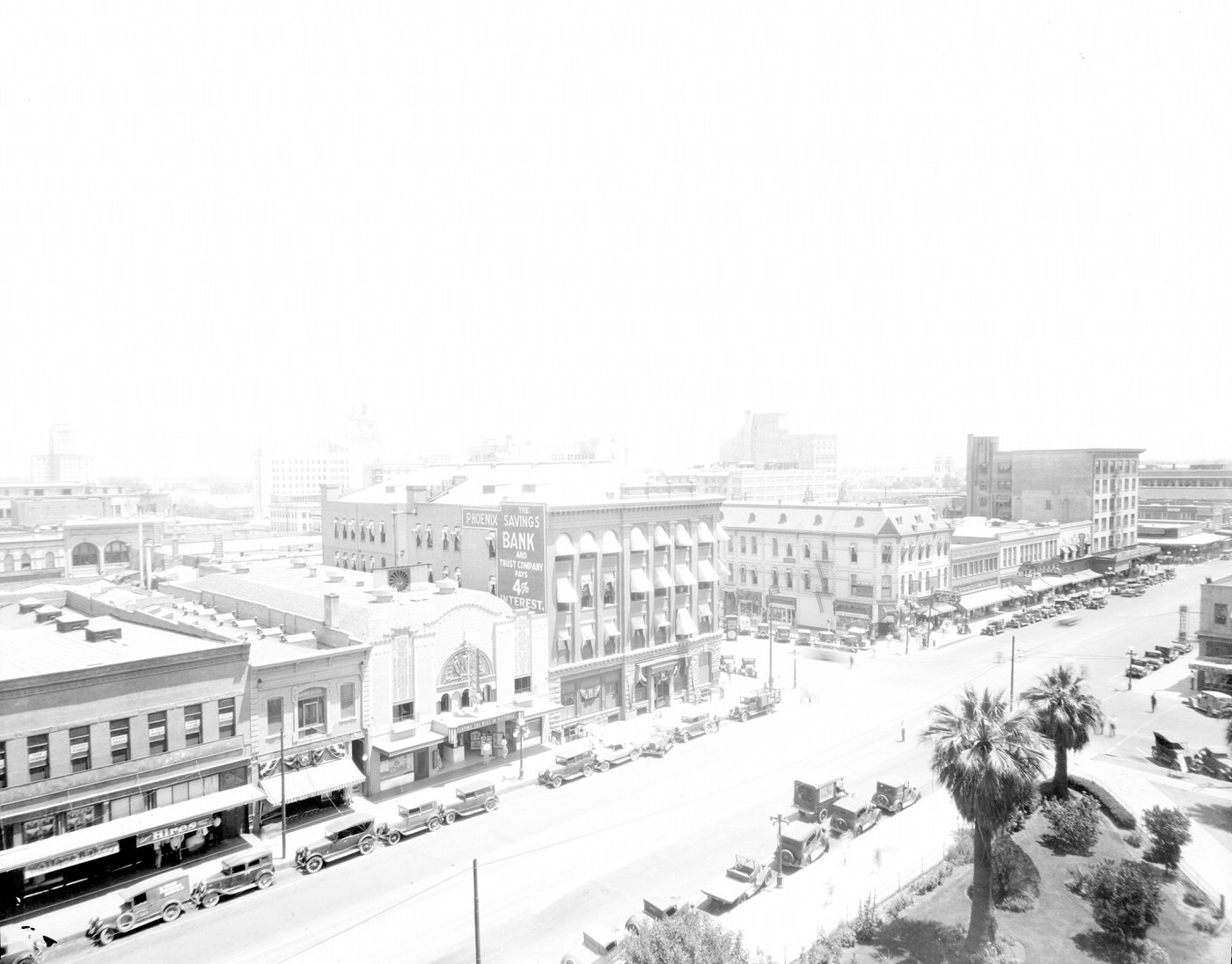
Intersection of Washington St. and First Ave, 1928
A skyline shot in 1929 of First Avenue and Washington, taken from the new City-County Building. The intersection shows the Fleming Building and the Monohon Building.

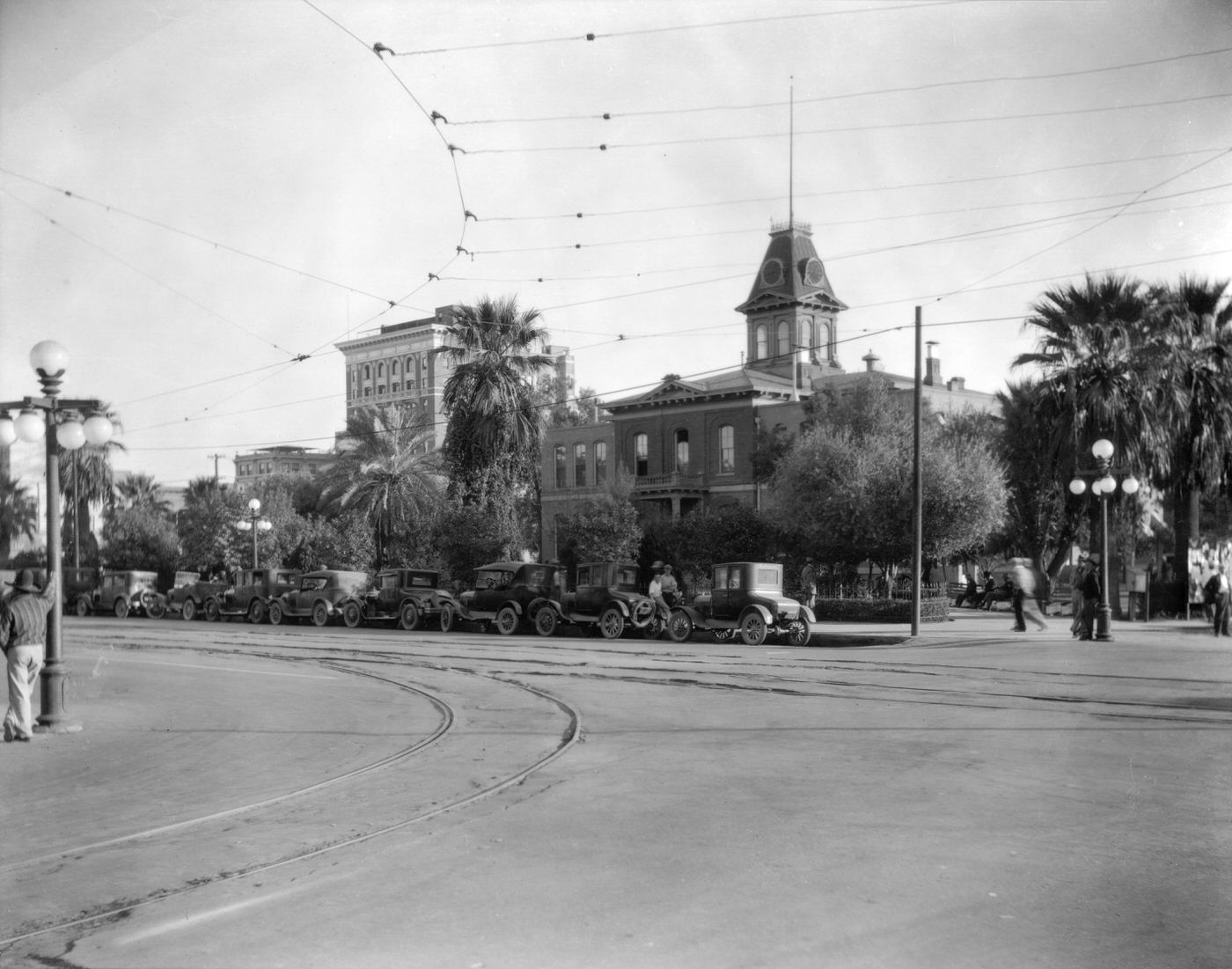
The decade’s most significant civic construction project was the new City-County Building, which stood at the corner of First Avenue and Washington, surrounded by a large city park. City commissioners and county supervisors issued a bond for it, with strong backing from the chamber of commerce. Architect Edward Neild, along with the firms Lescher, Mahoney & Edwards and Wildey & Dixon, designed the six-story building. Phoenix birds rising on either side of the entrance gave it a striking, symbolic appearance.
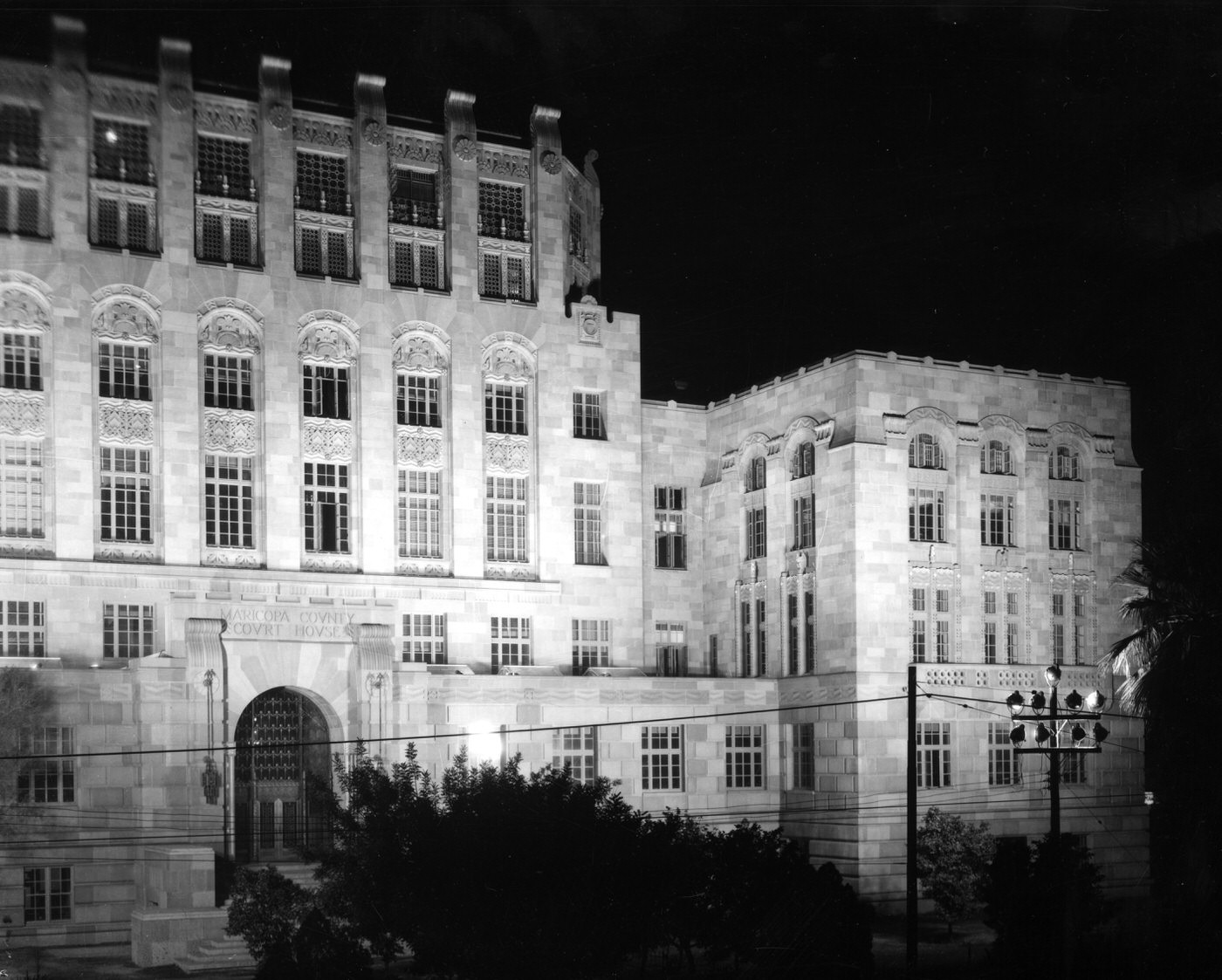
Maricopa County Courthouse at Night, 1929
Phoenix Courthouse, 1927
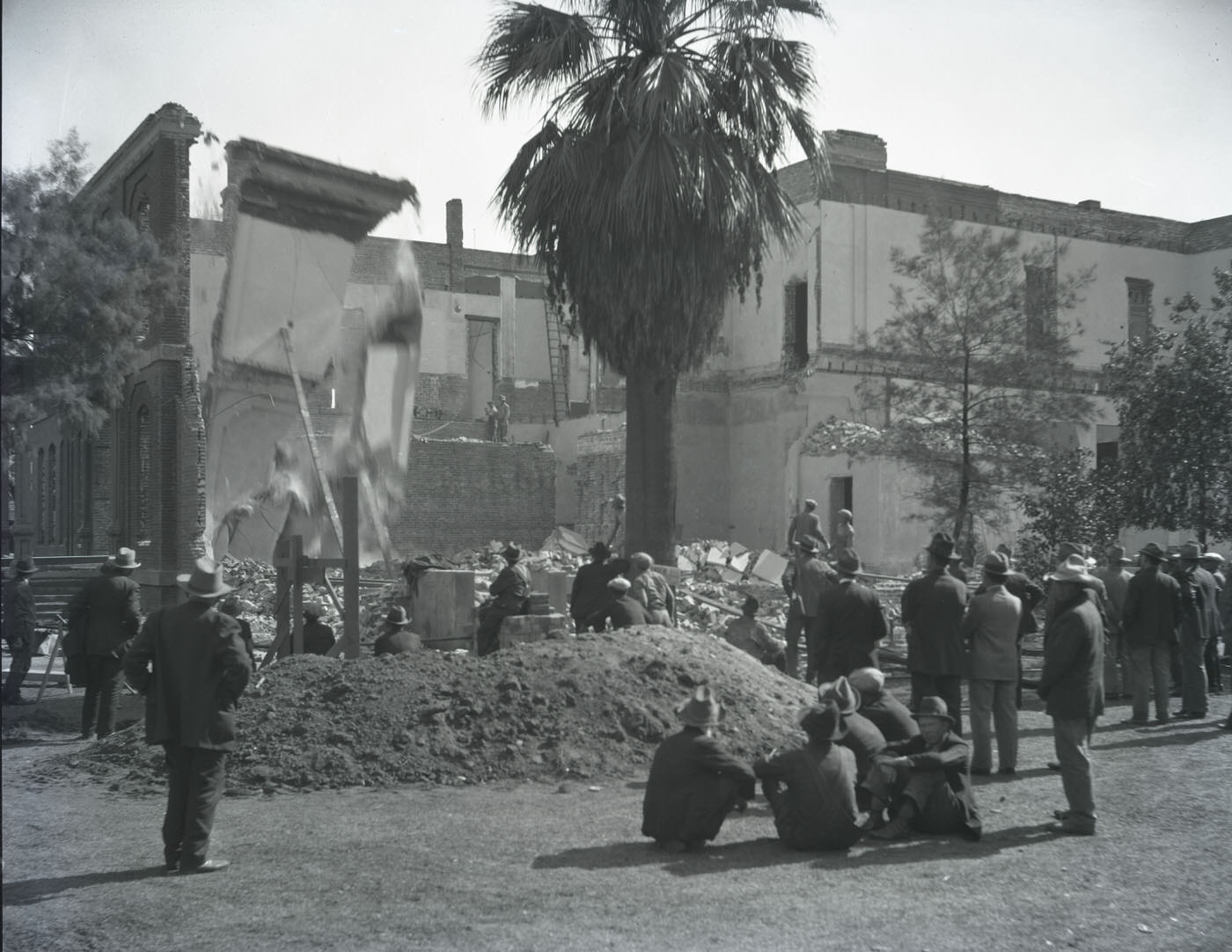
County Courthouse Being Torn Down, 1928
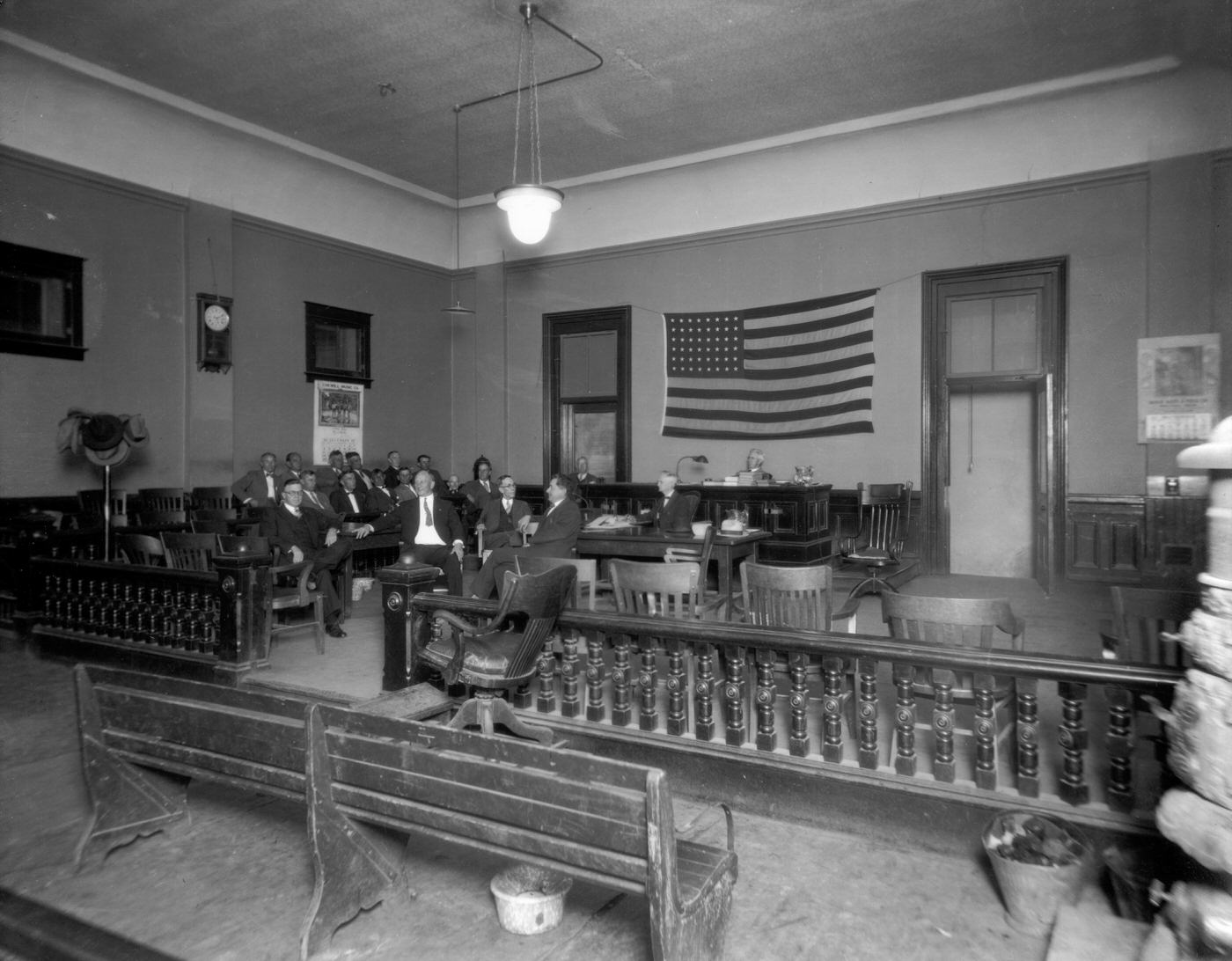
Judge Phelps in Courtroom, 1927

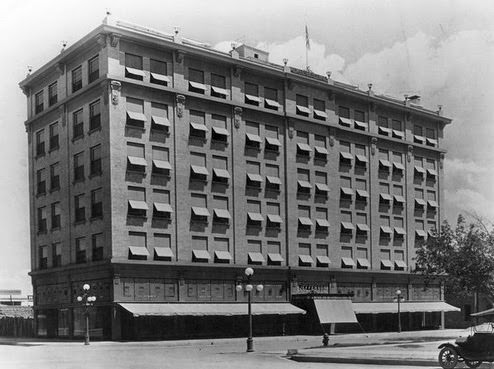
By 1929, workers broke ground on Luhrs Tower, adding another chapter to Phoenix’s growing skyline. The Jefferson Hotel at Central and its namesake street sat nearby, with the Hotel Luhrs to its north. That same building later gained a slice of Hollywood history when Alfred Hitchcock panned across it at the opening of “Psycho.”
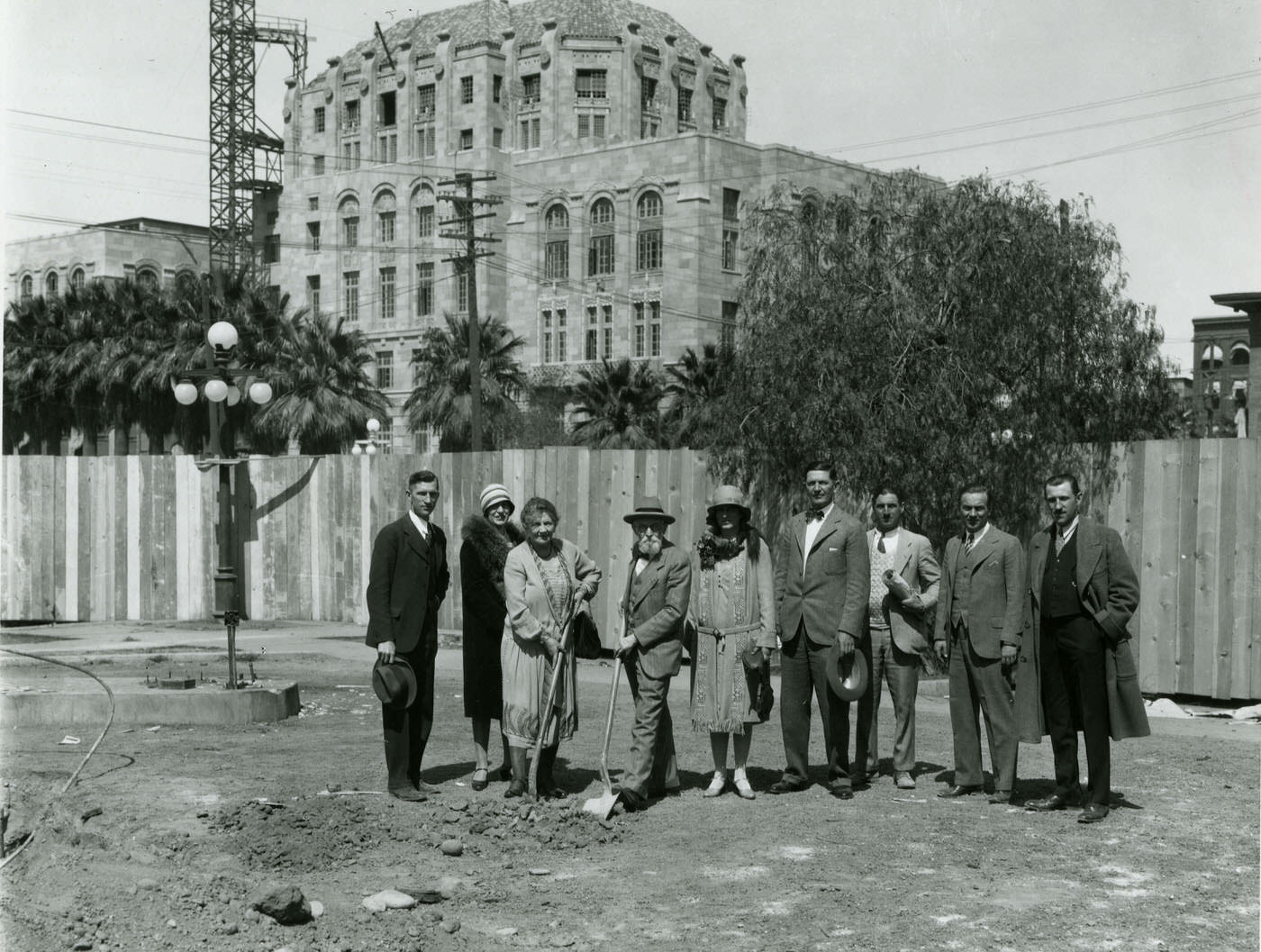
Groundbreaking Ceremonies for Luhrs Tower, 1929
The Jefferson Hotel at Central and its namesake street. To the north is the Hotel Luhrs. Alfred Hitchcock panned across the building at the opening of "Psycho."
The Jefferson Hotel at Central and its namesake street. To the north is the Hotel Luhrs. Alfred Hitchcock panned across the building at the opening of “Psycho.”

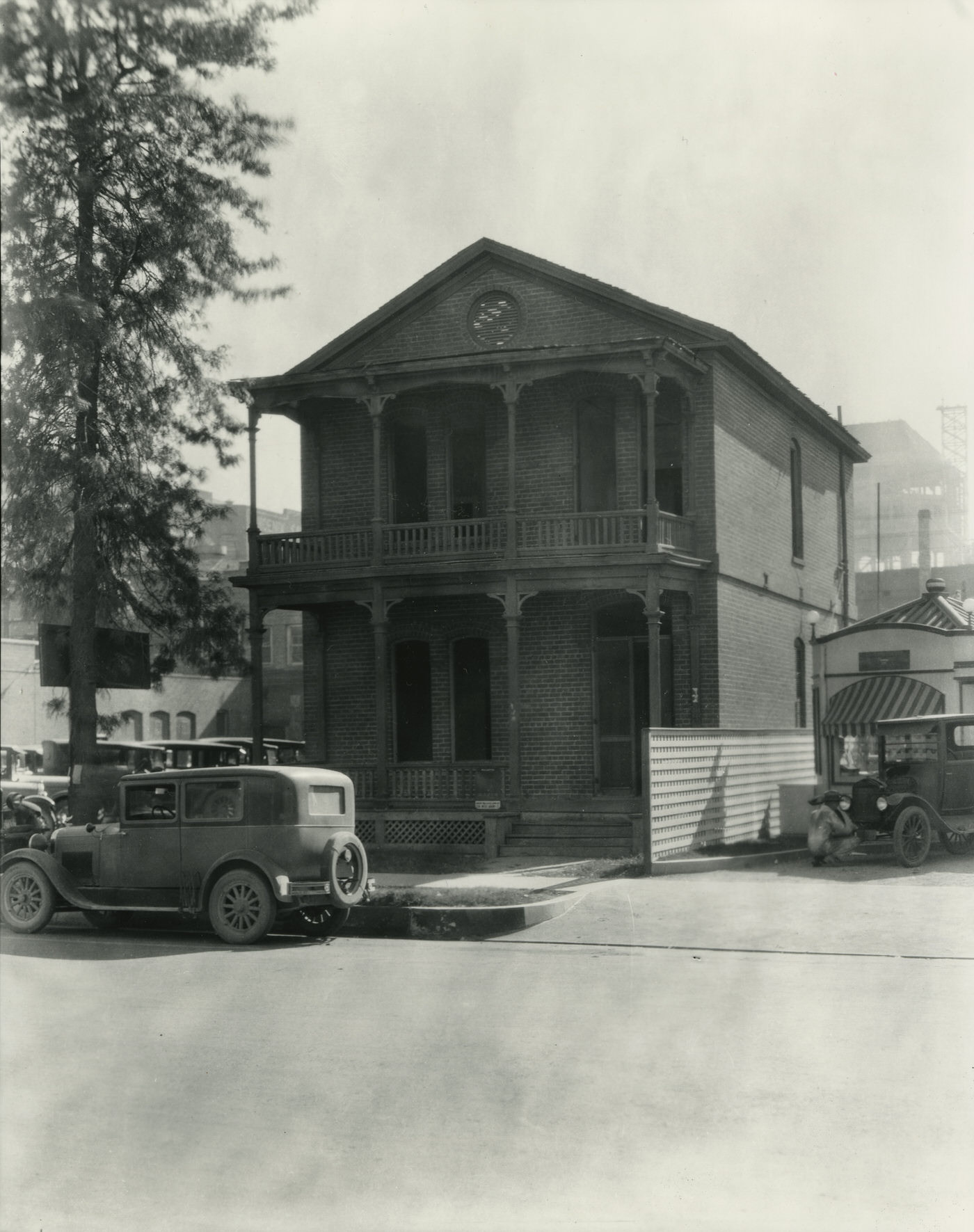
Not every grand project made it to completion. At Central and Taylor Street stood what locals called “Mosher’s Folly” — a mansion that was the dream of tragic heiress Hattie Mosher. The structure was never finished, and its skeleton stood as an odd reminder that not all ambition in the boom years paid off. Crews were also busy on the Mosher Building in 1920, though that project fared better.
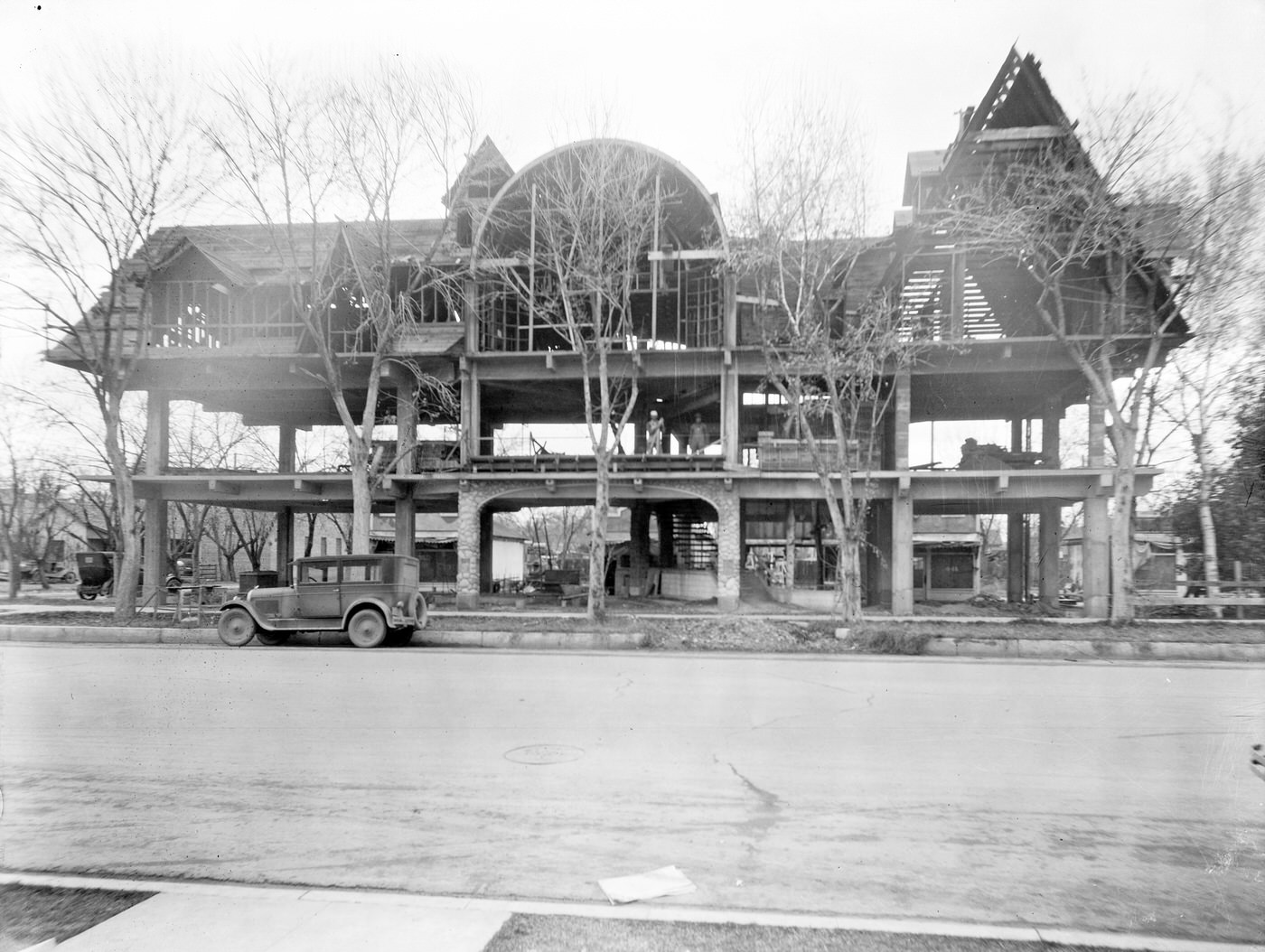
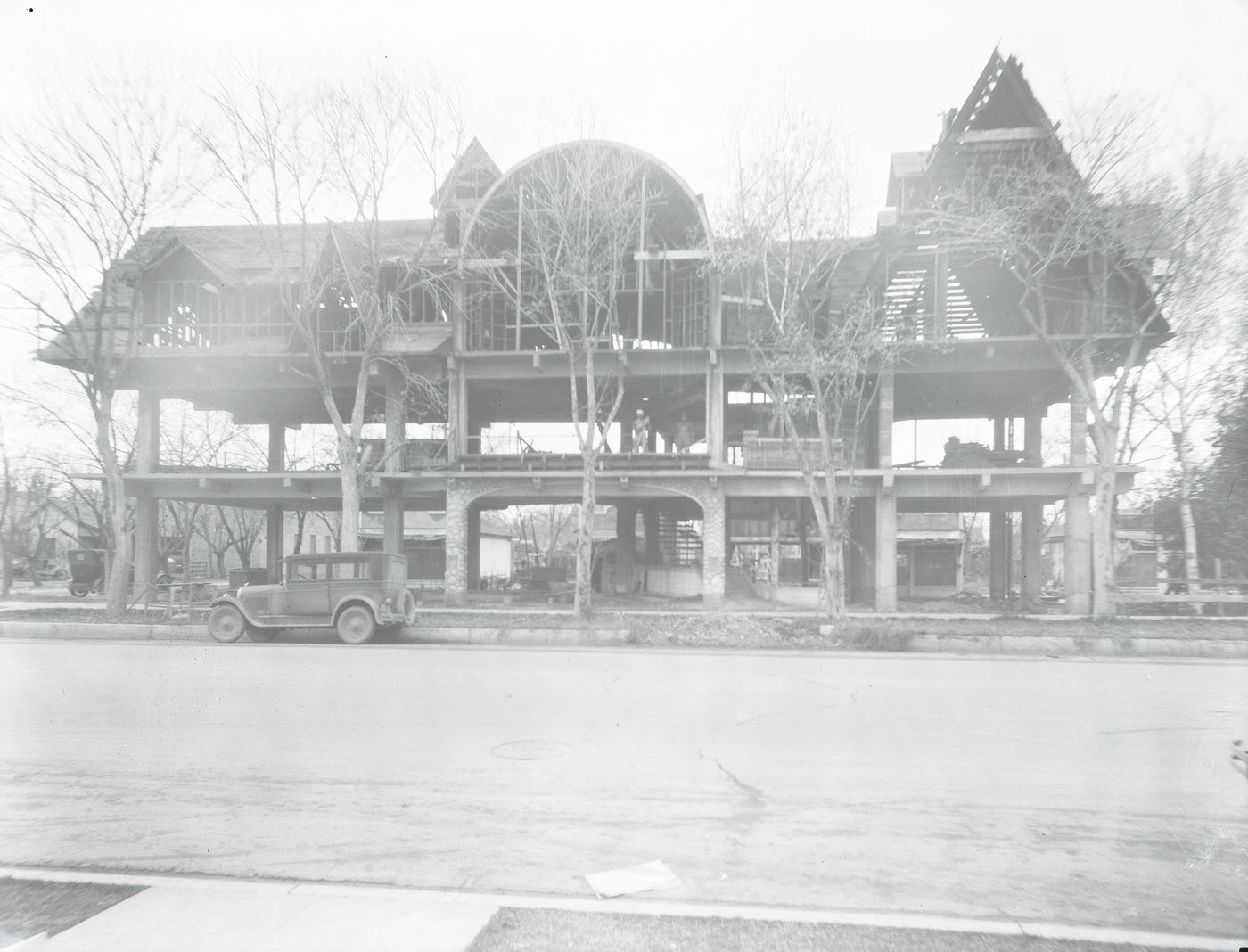
"Mosher's Folly" at Central and Taylor Street. The mansion, a dream of the tragic heiress Hattie Mosher, was never completed.
“Mosher’s Folly” at Central and Taylor Street. The mansion, a dream of the tragic heiress Hattie Mosher, was never completed.
Mosher Building Under Construction, 1920

Phoenix largely ignored Prohibition during the 1920s. The wide-open desert landscape and limited law enforcement made the city a natural fit for those who wanted to keep drinking. Bars, brothels, and gambling dens set up shop in the large open spaces surrounding the city. Al Capone, the notorious Chicago mob boss, kept an eye on operations that were not so far from his reach. Enforcement was minimal, and most residents simply looked the other way.
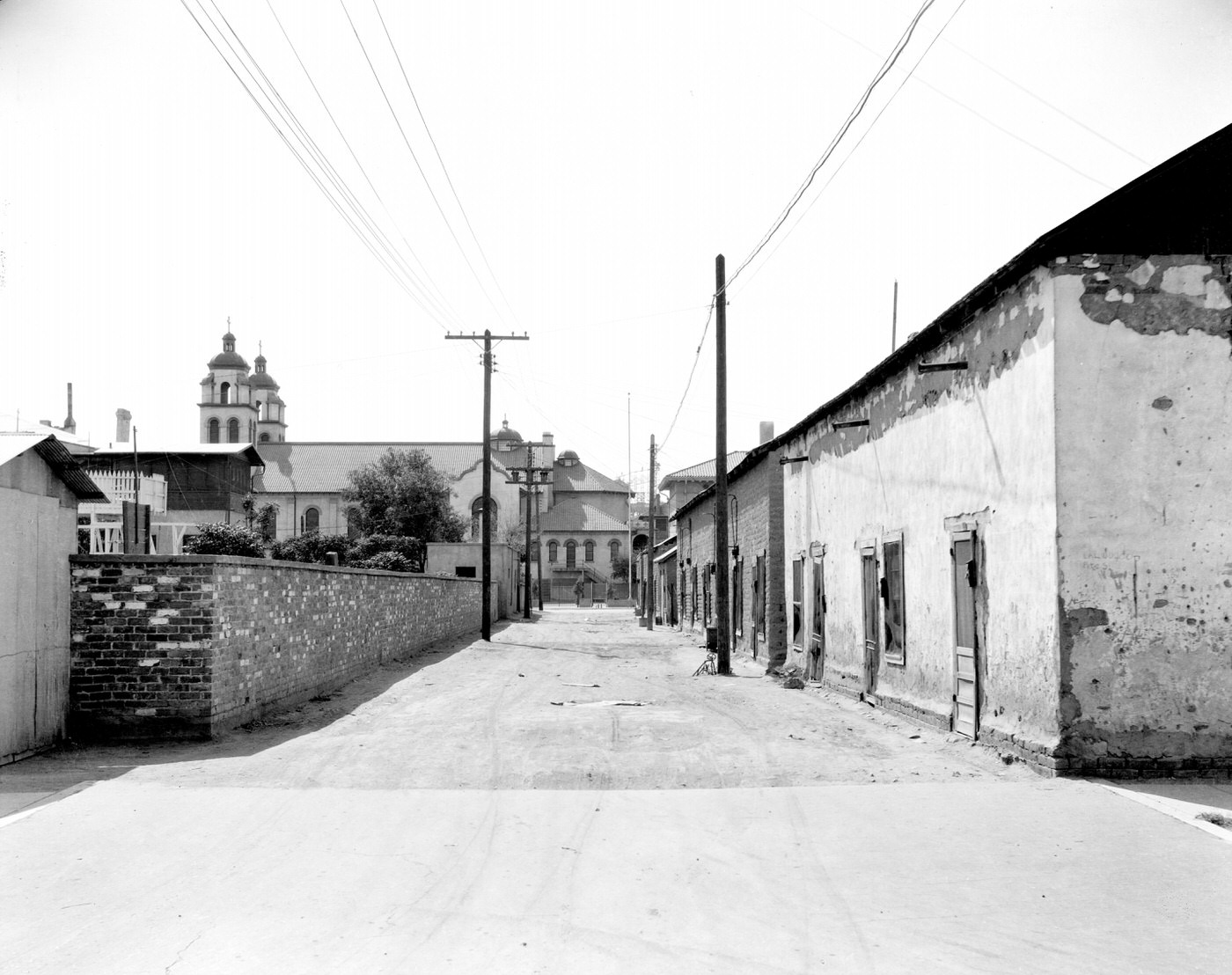
Convent Alley, 1928
Convent Alley, 1928
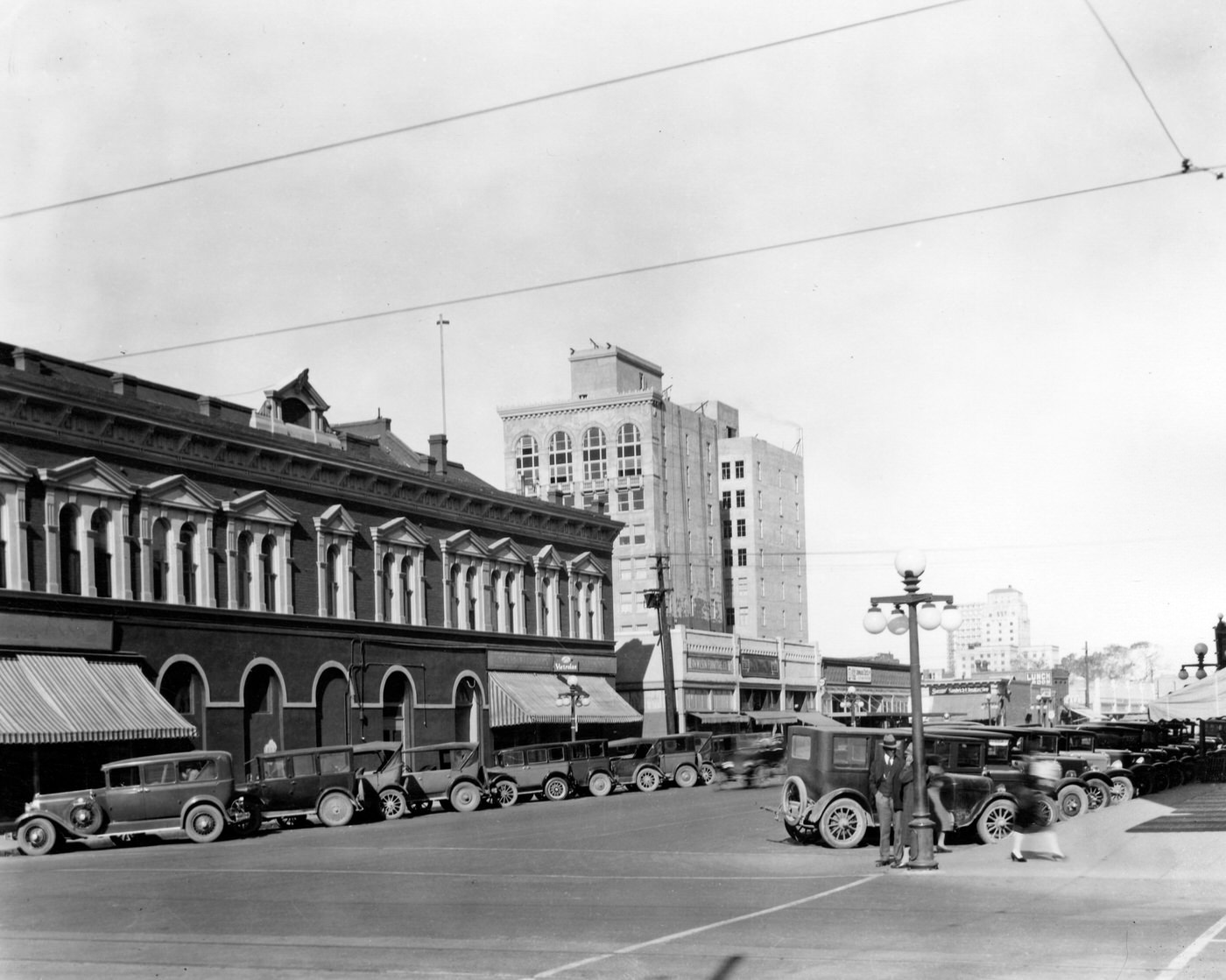
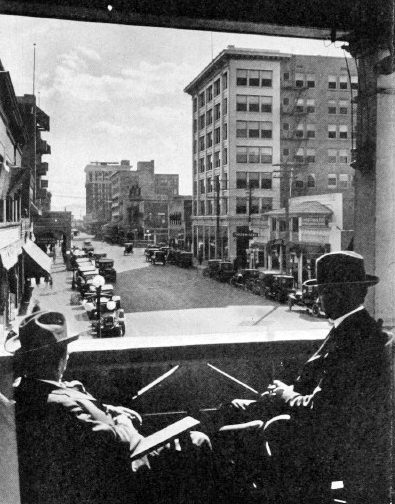
Looking south on Central in 1924 from the Hotel Del Rey at Monroe Street.
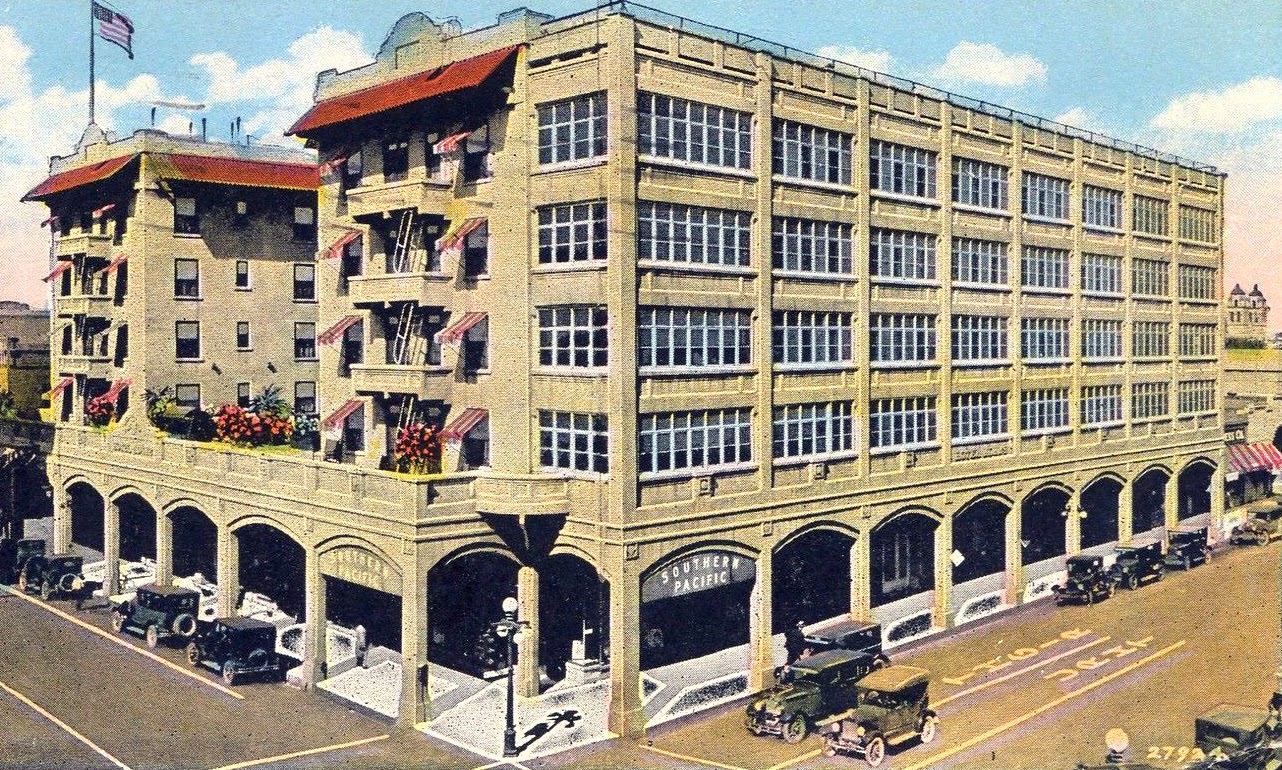
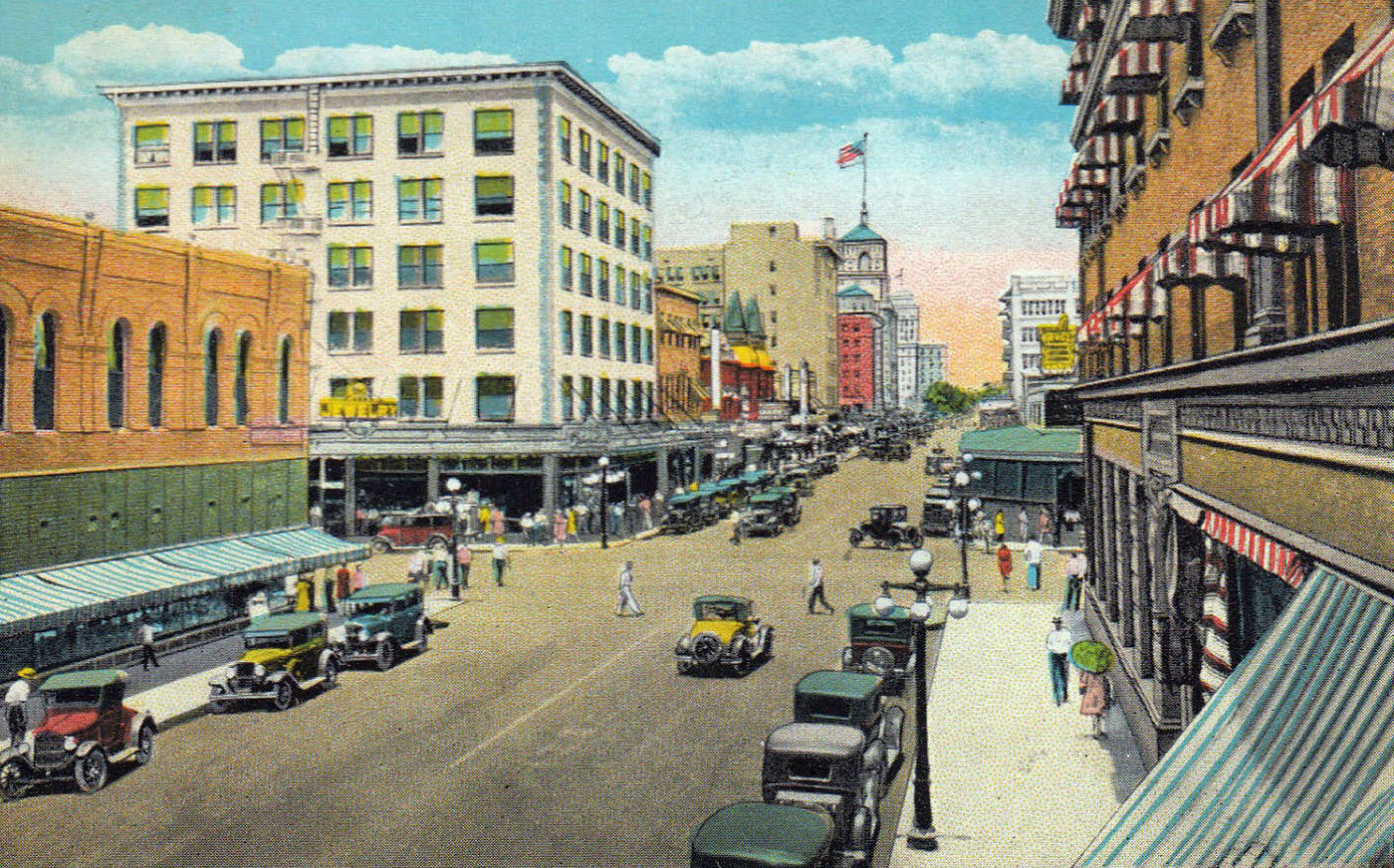
A 1920s postcard shows the corner at Washington. The Heard and Security buildings are complete (the latter flies a flag). Phoenix leader Dwight Heard died in 1929.

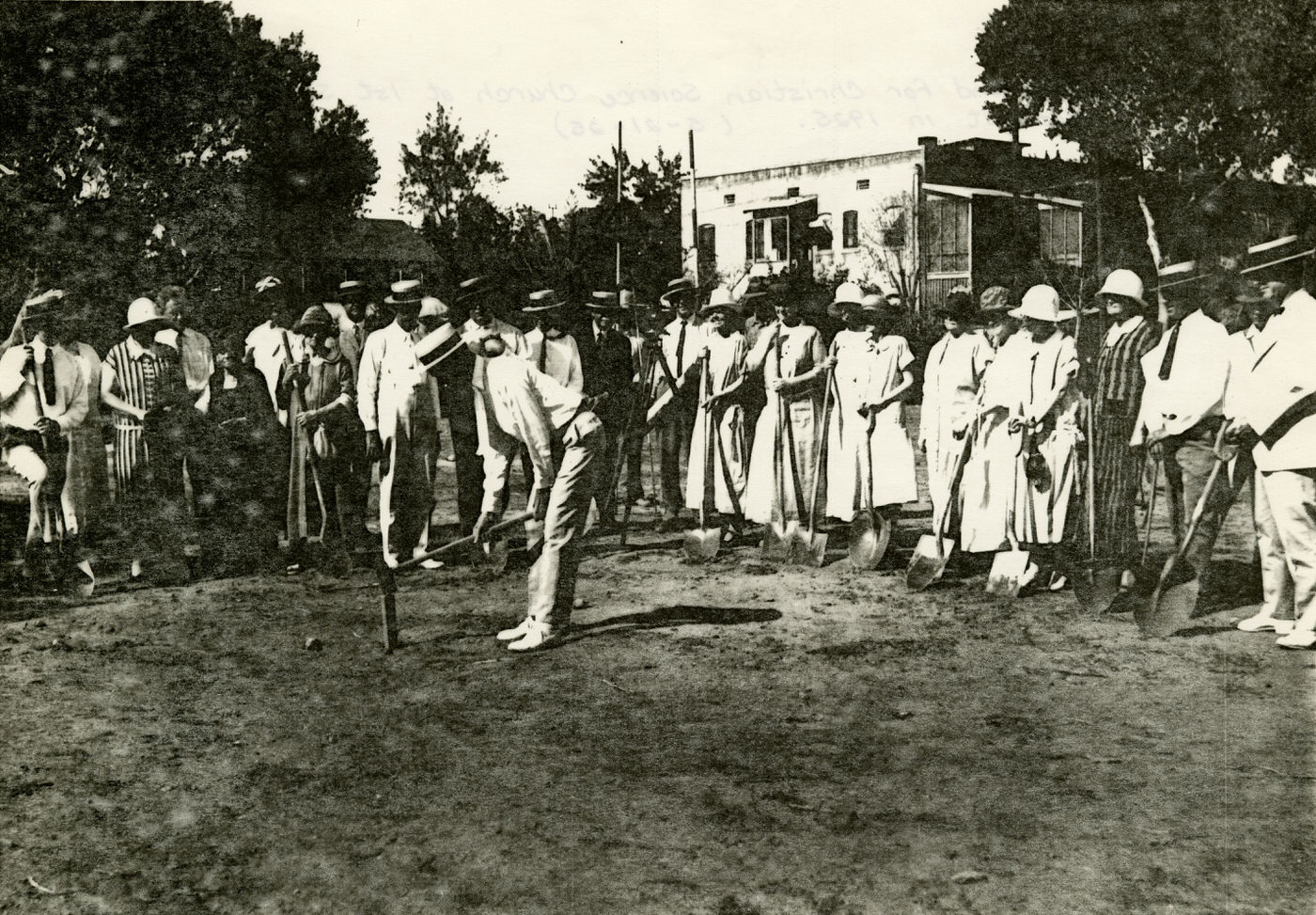
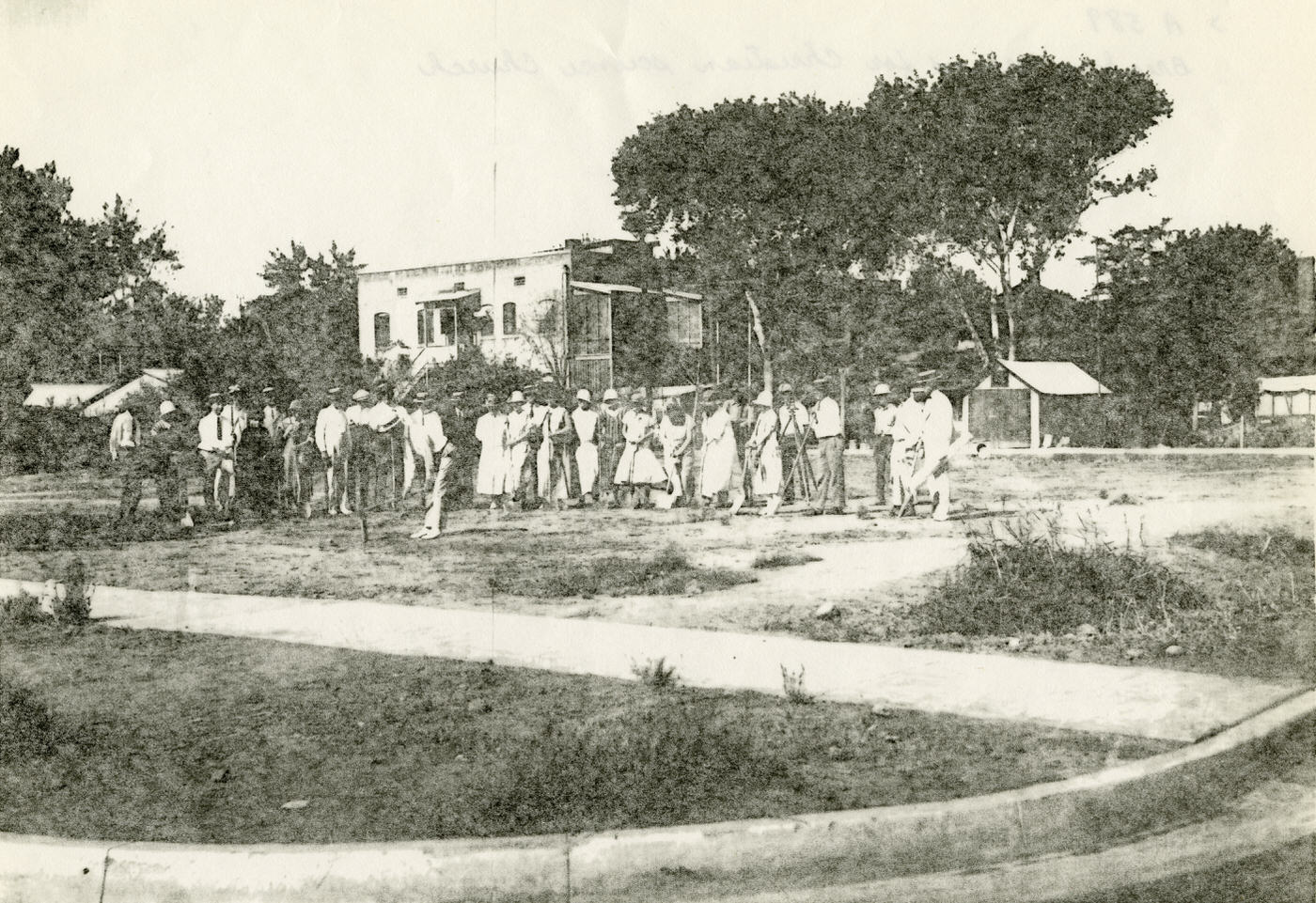
Churches and civic organizations were also putting up new buildings. The Central Methodist Church moved to its new home at Central and Pierce, right in the heart of the city. The First Presbyterian Church went up at Fourth Avenue and Monroe Street — one of the finest pieces of church construction from the decade. The YWCA opened its building at Monroe Street and Second Avenue. Groundbreaking ceremonies for a Christian Science Church at First Street and Roosevelt took place in 1925.

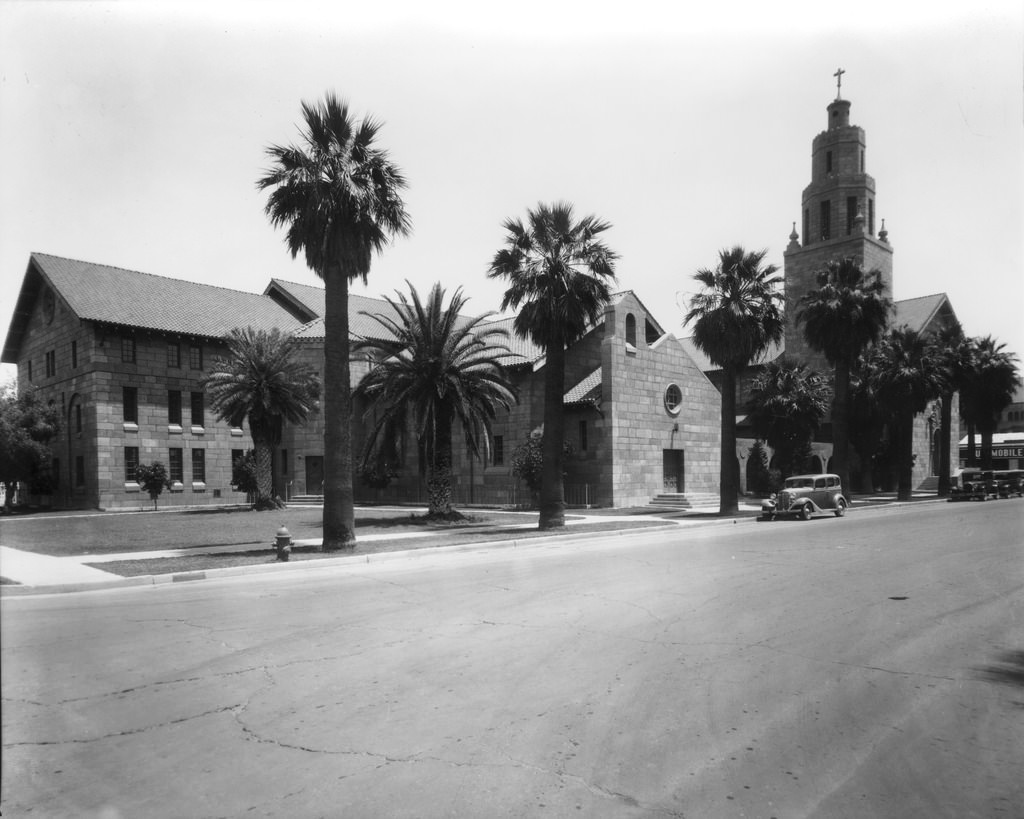
First Presbyterian Church Building Exterior, 1927
One of the gems of church construction in the decade was First Presbyterian Church at Fourth Avenue and Monroe Street. In 2012, it was purchased by a fundamentalist congregation.
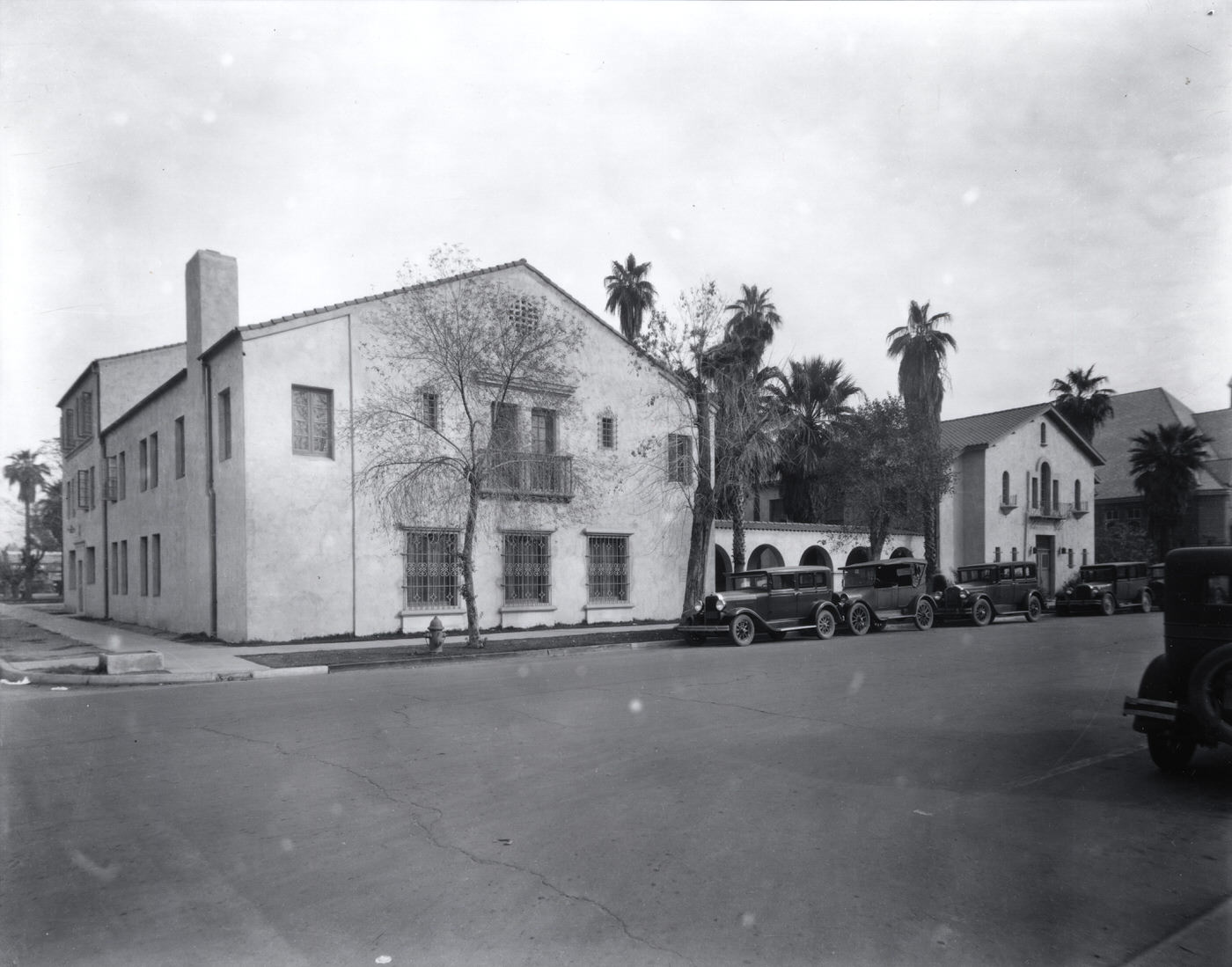
Y. W. C. A. Building Exterior and Grounds, 1927. This building stood at the intersection of Monroe St. and Second Ave. in Phoenix.
Y. W. C. A. Building Exterior, 1927
Groundbreaking for Christian Science Church, 1925. This church was located at First St. and Roosevelt in Phoenix.
Groundbreaking for Christian Science Church, 1925

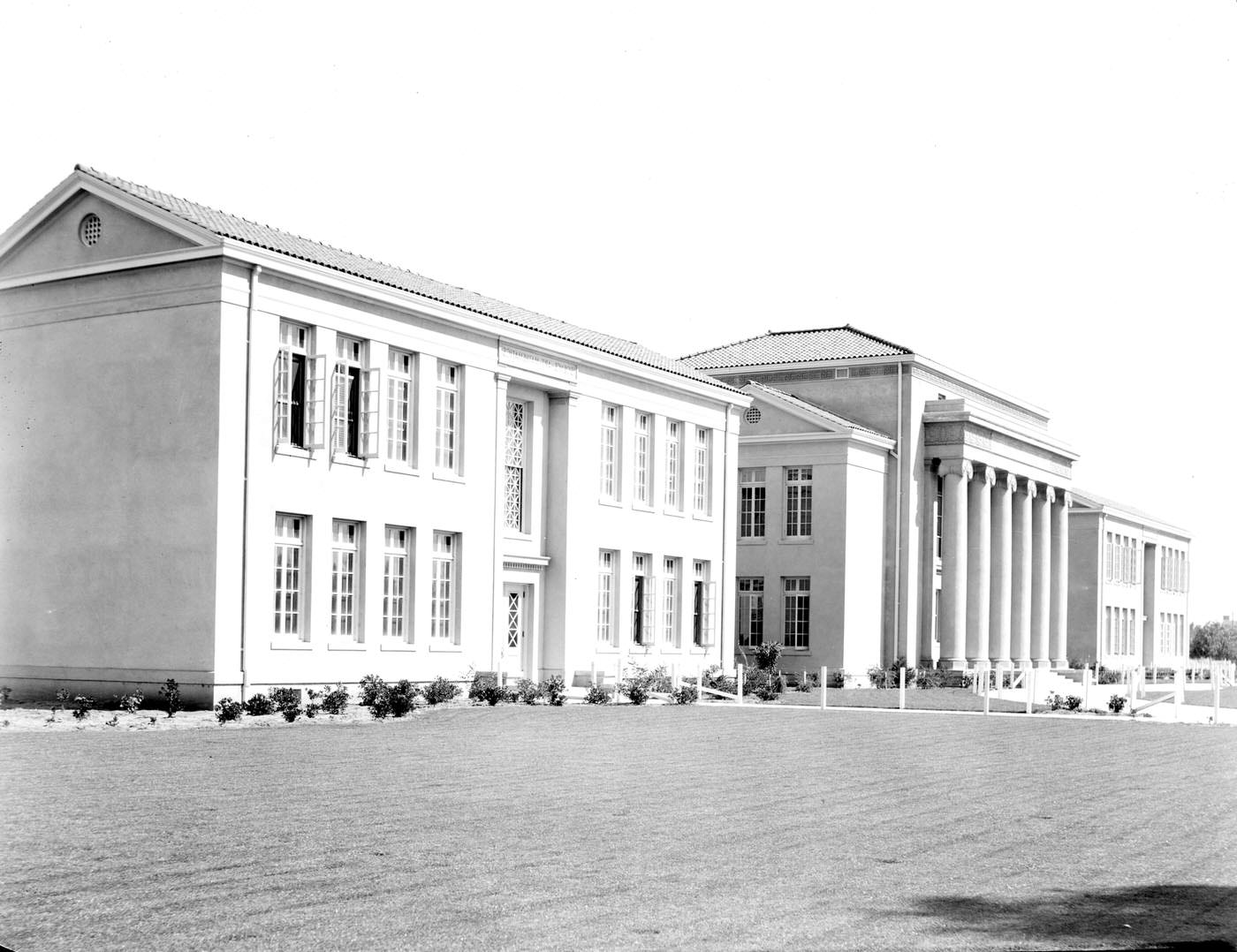
Education took a step forward in 1920 when Phoenix Junior College was renamed Phoenix College. The school had a physical campus that was beginning to take shape, as seen in photographs from 1926. However, Phoenix did not manage to attract any major universities or liberal arts colleges during the decade, despite the city’s rapid growth in nearly every other area.
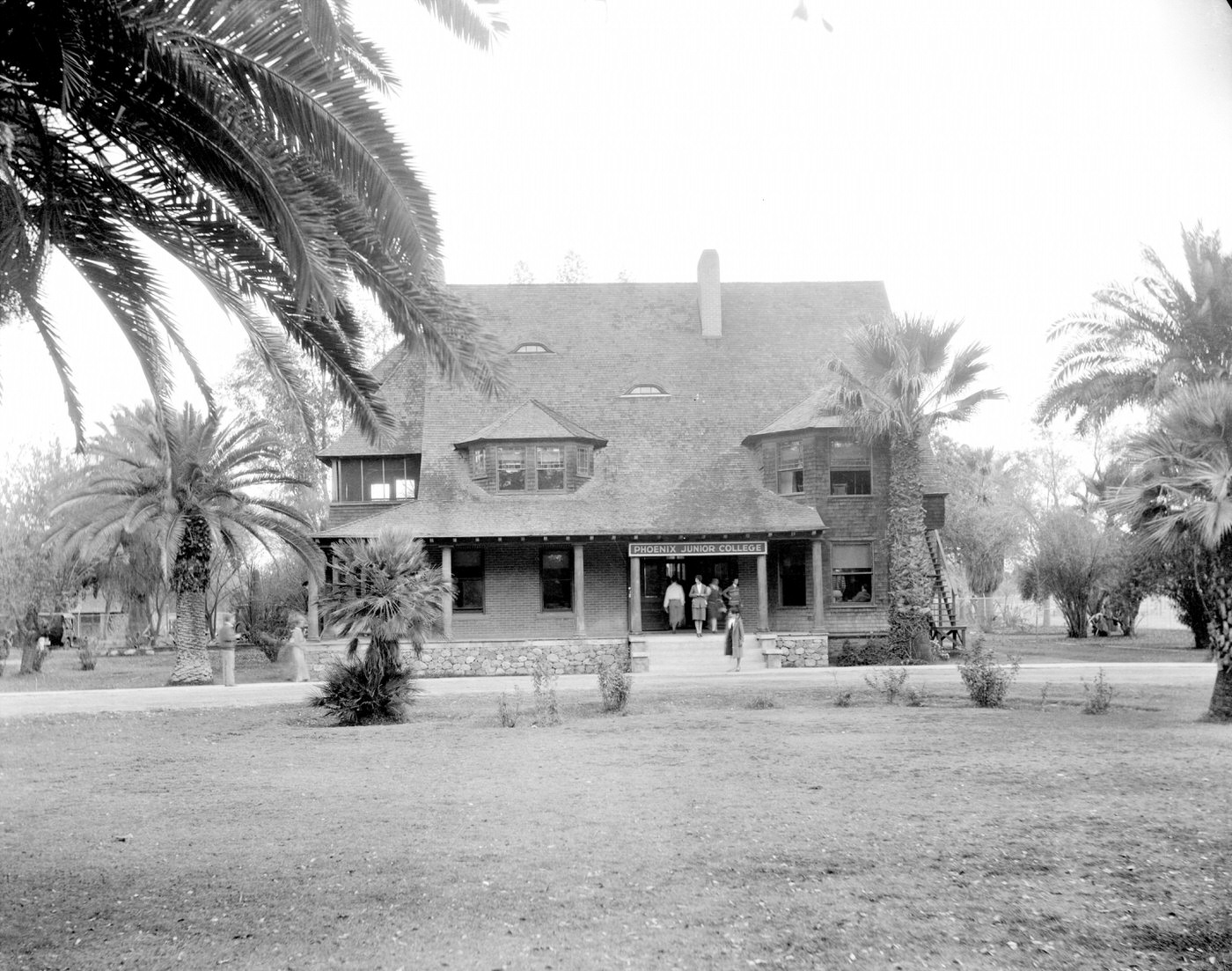
Phoenix Junior College Exterior, 1926

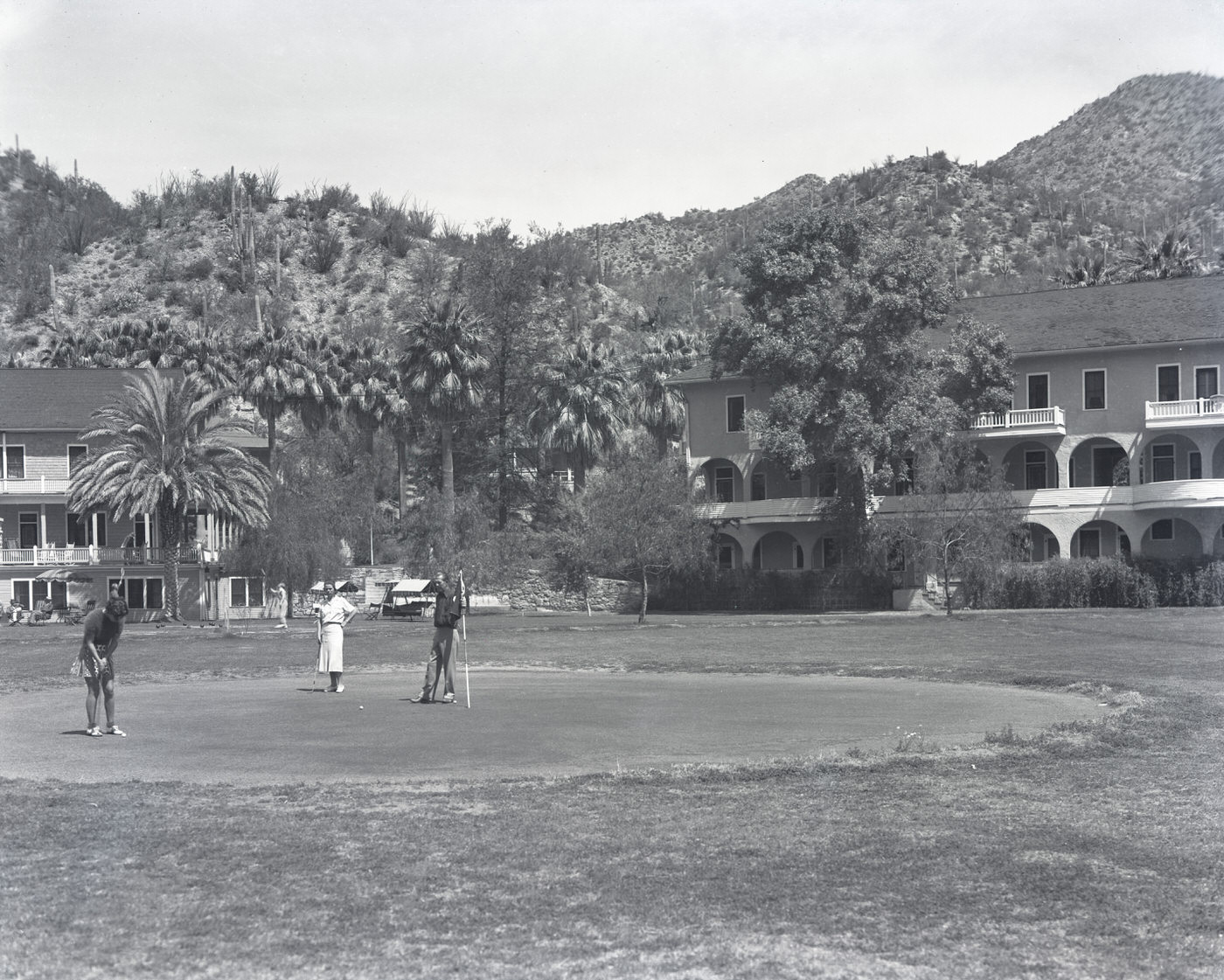
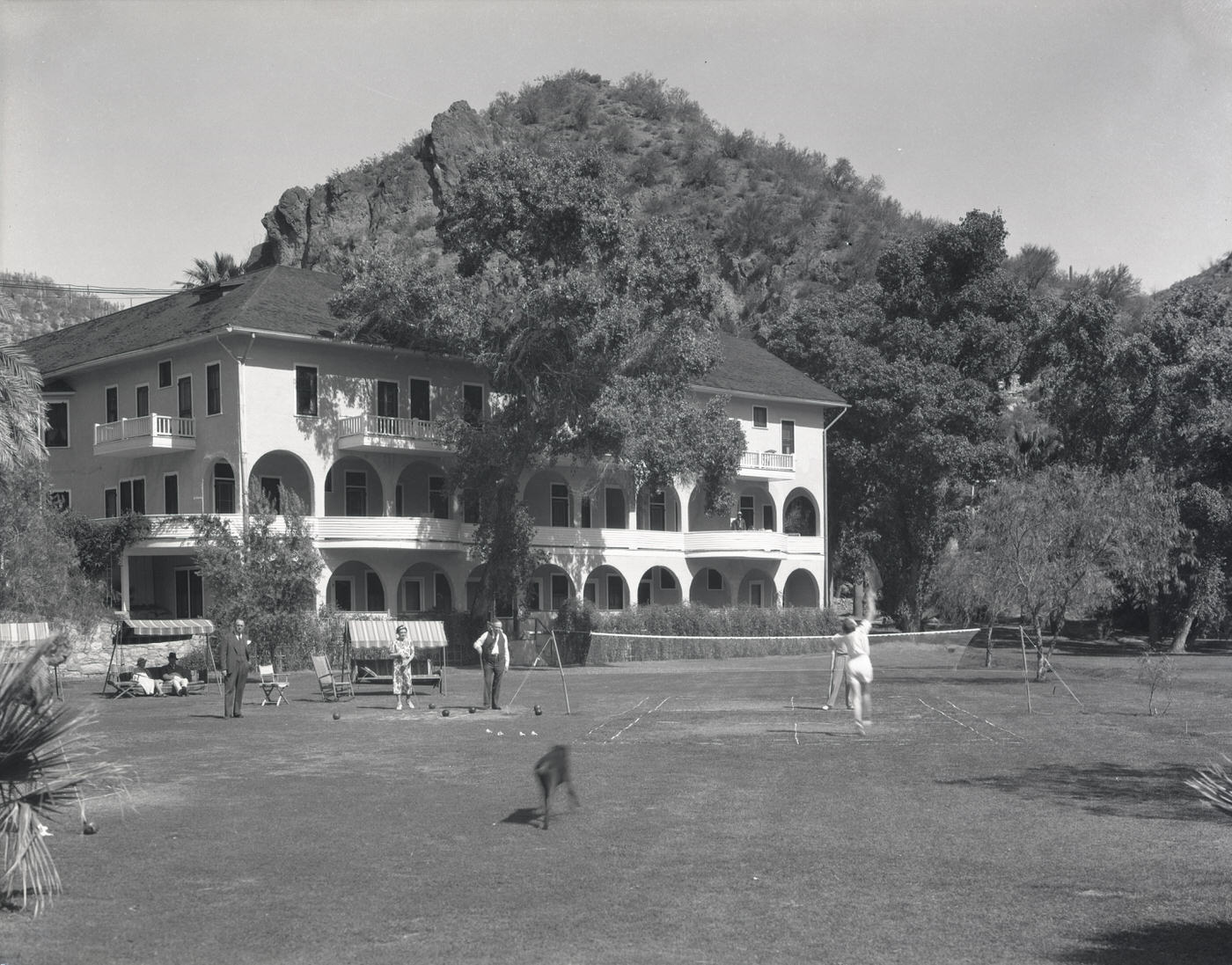
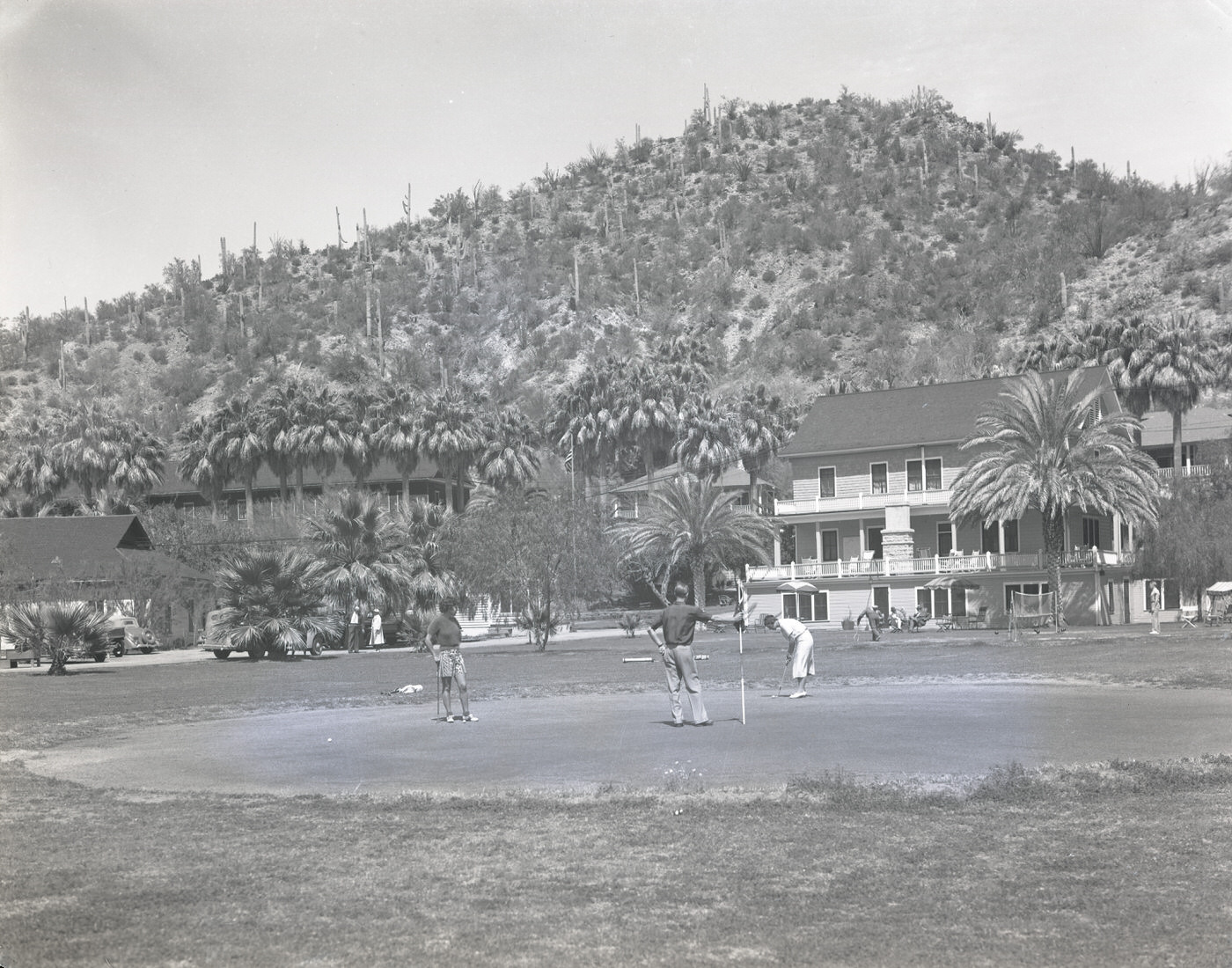
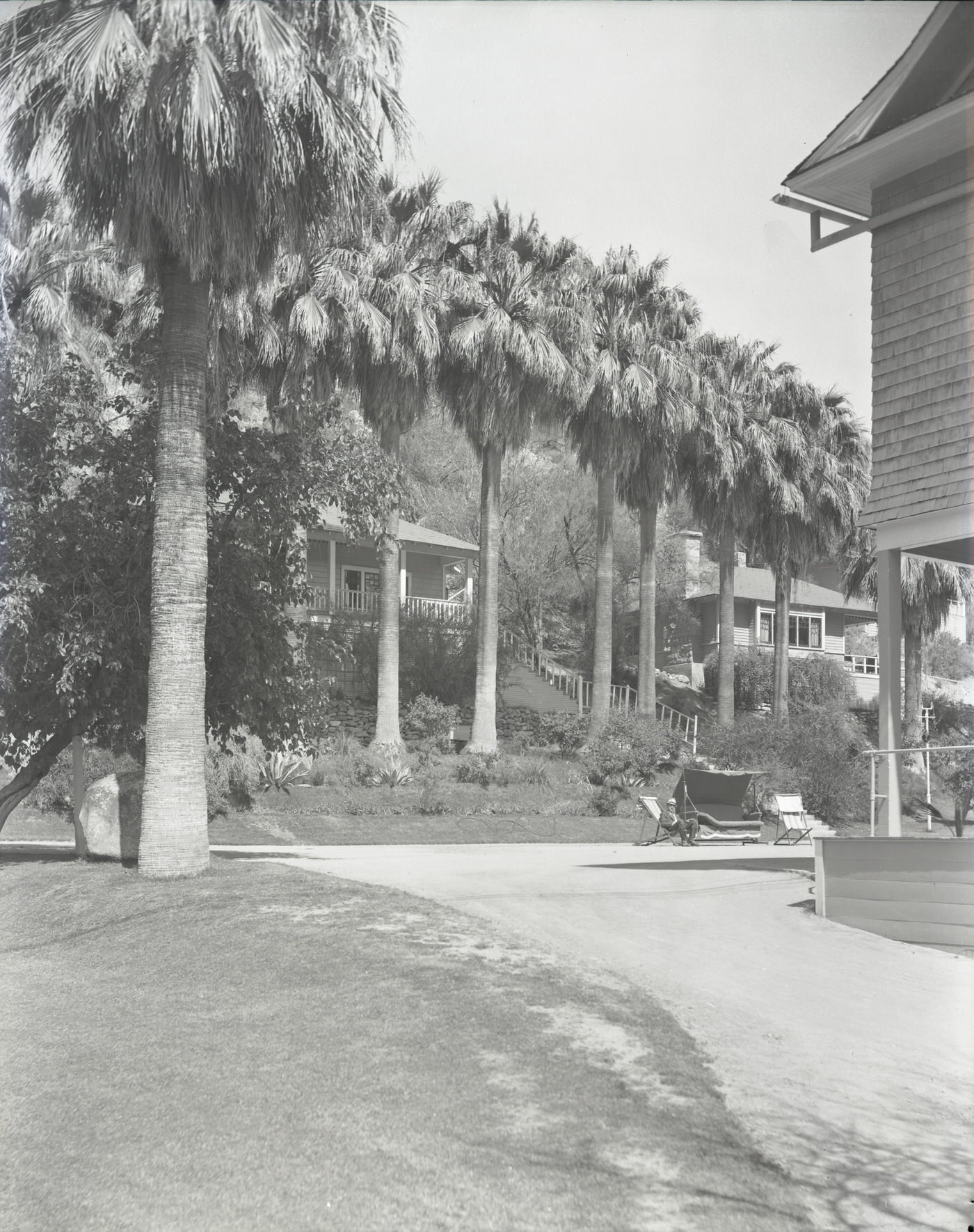
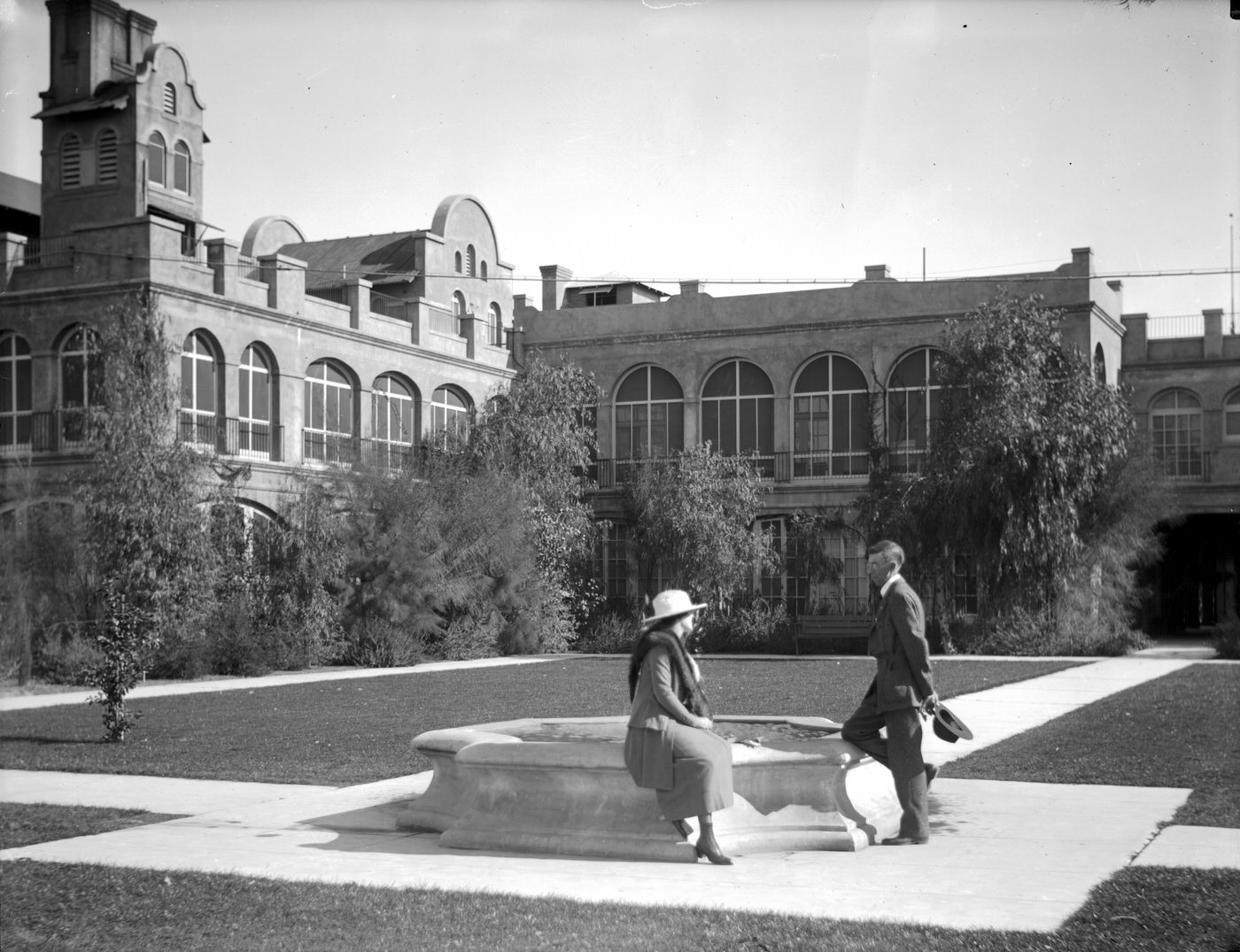
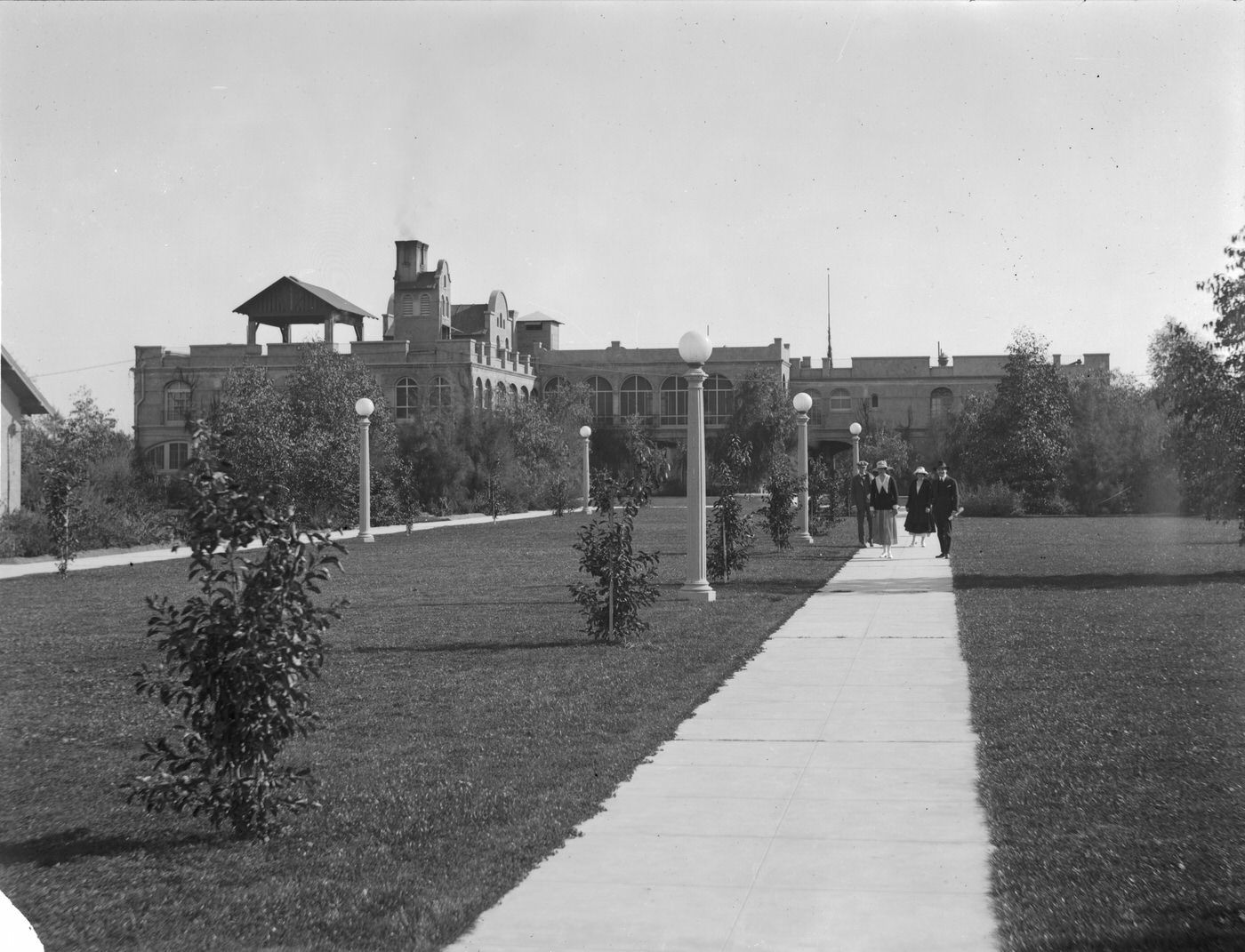
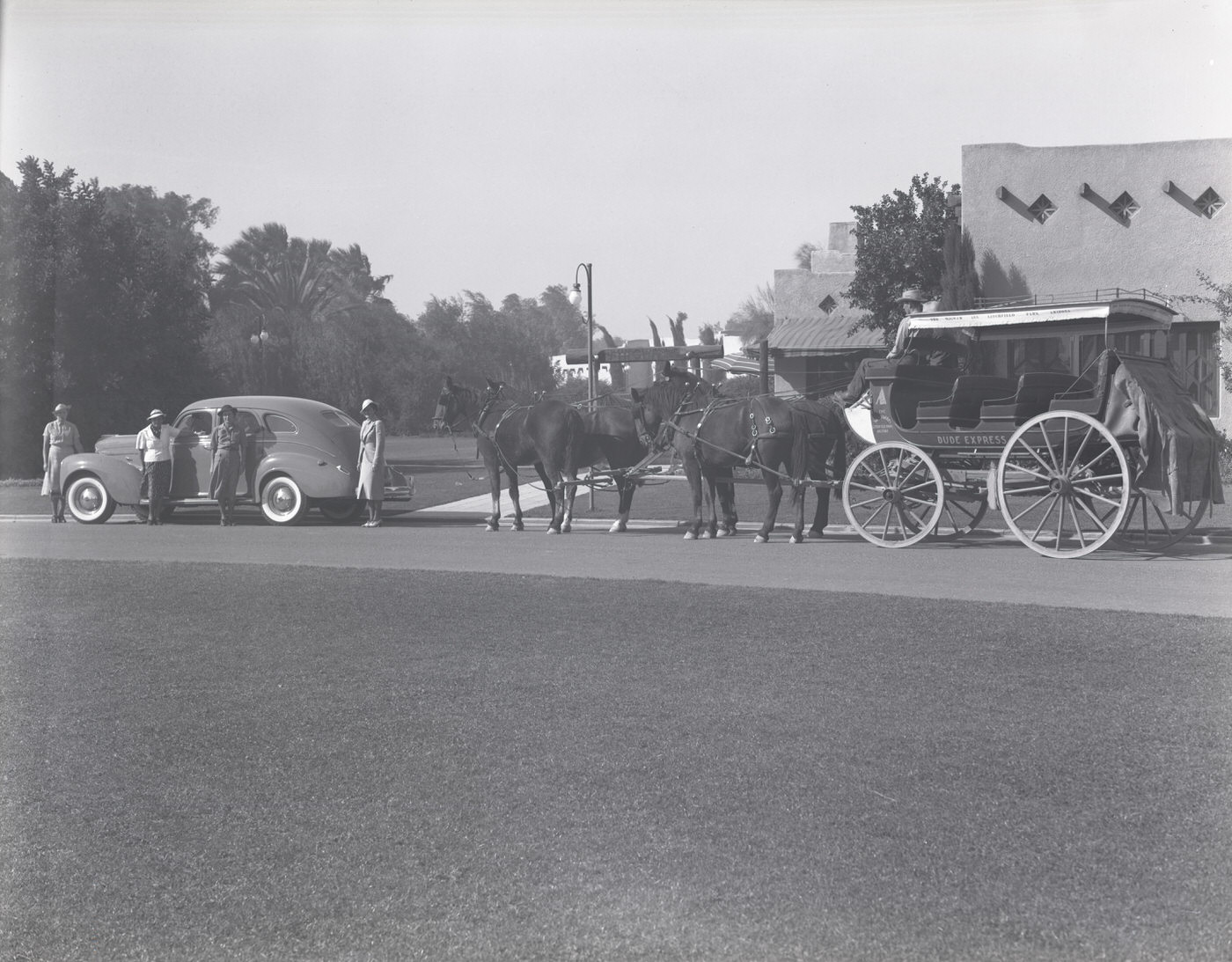
The resort scene in Phoenix was taking shape as the 1920s moved along. Castle Hot Springs was drawing wealthy guests to its golf course and croquet lawns. The San Marcos Hotel in Chandler welcomed guests to its manicured grounds. The Wigwam Resort was offering stagecoach rides. And by 1929, Phoenix had its first true luxury resort — the Arizona Biltmore — which set a new standard for desert hospitality.
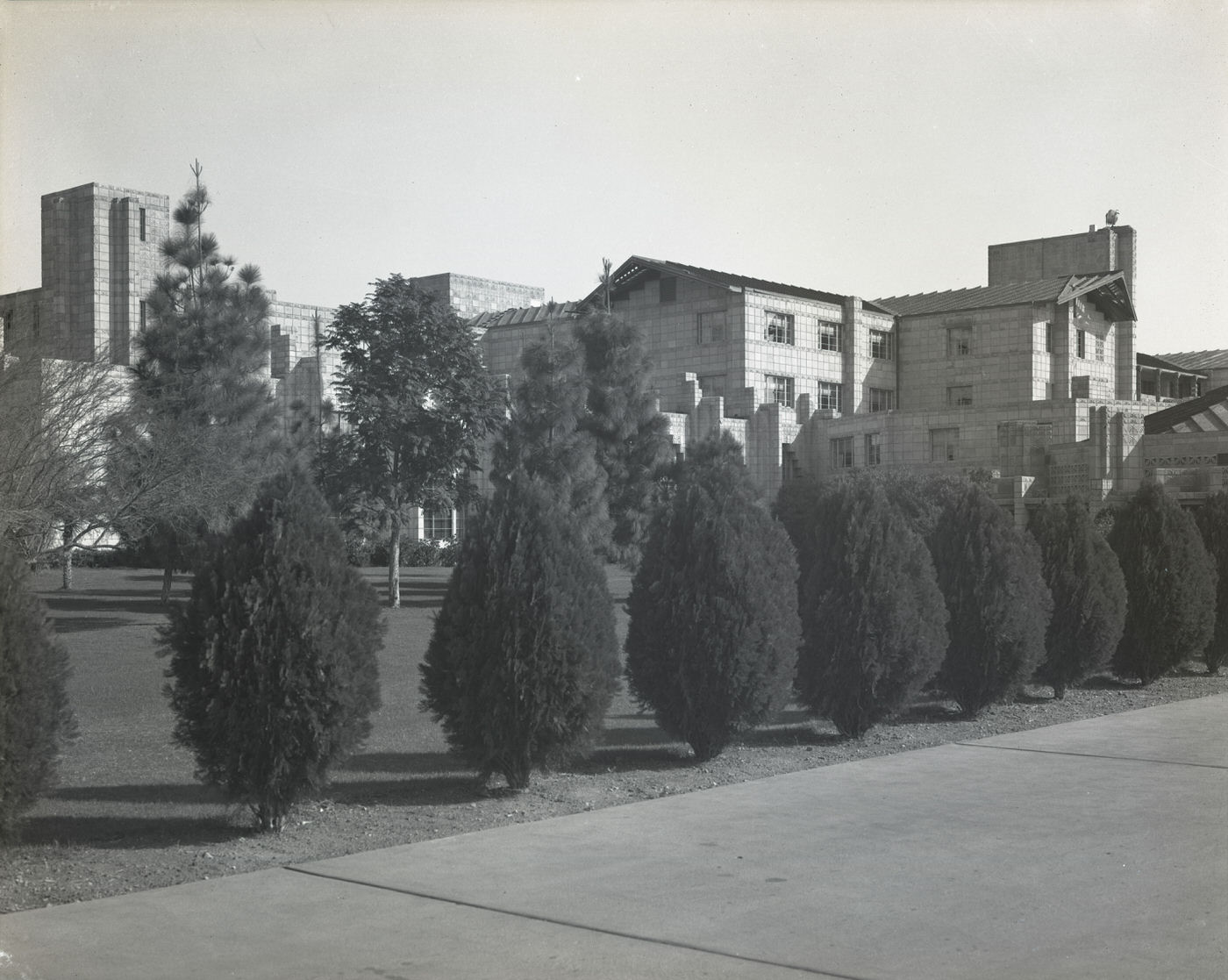
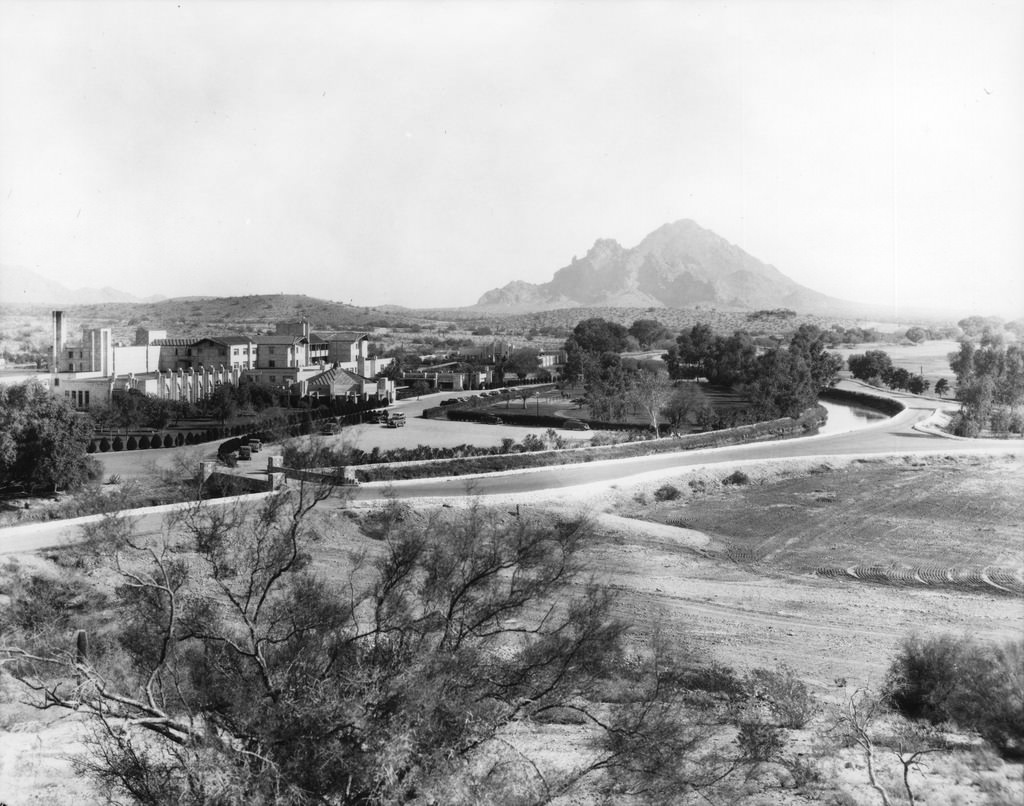
Arizona Biltmore, 1929
The decade saw completion of Phoenix's first resort, the Arizona Biltmore.
The decade saw completion of Phoenix’s first resort, the Arizona Biltmore.
Castle Hot Springs Hotel Guests on Golf Course, 1929
Castle Hot Springs Hotel Guests Playing Croquet, 1929
Castle Hot Springs Hotel Grounds, 1929
San Marcos Hotel Guests on Grounds, 1929
Wigwam Resort Guests in a Stage Coach, 1929

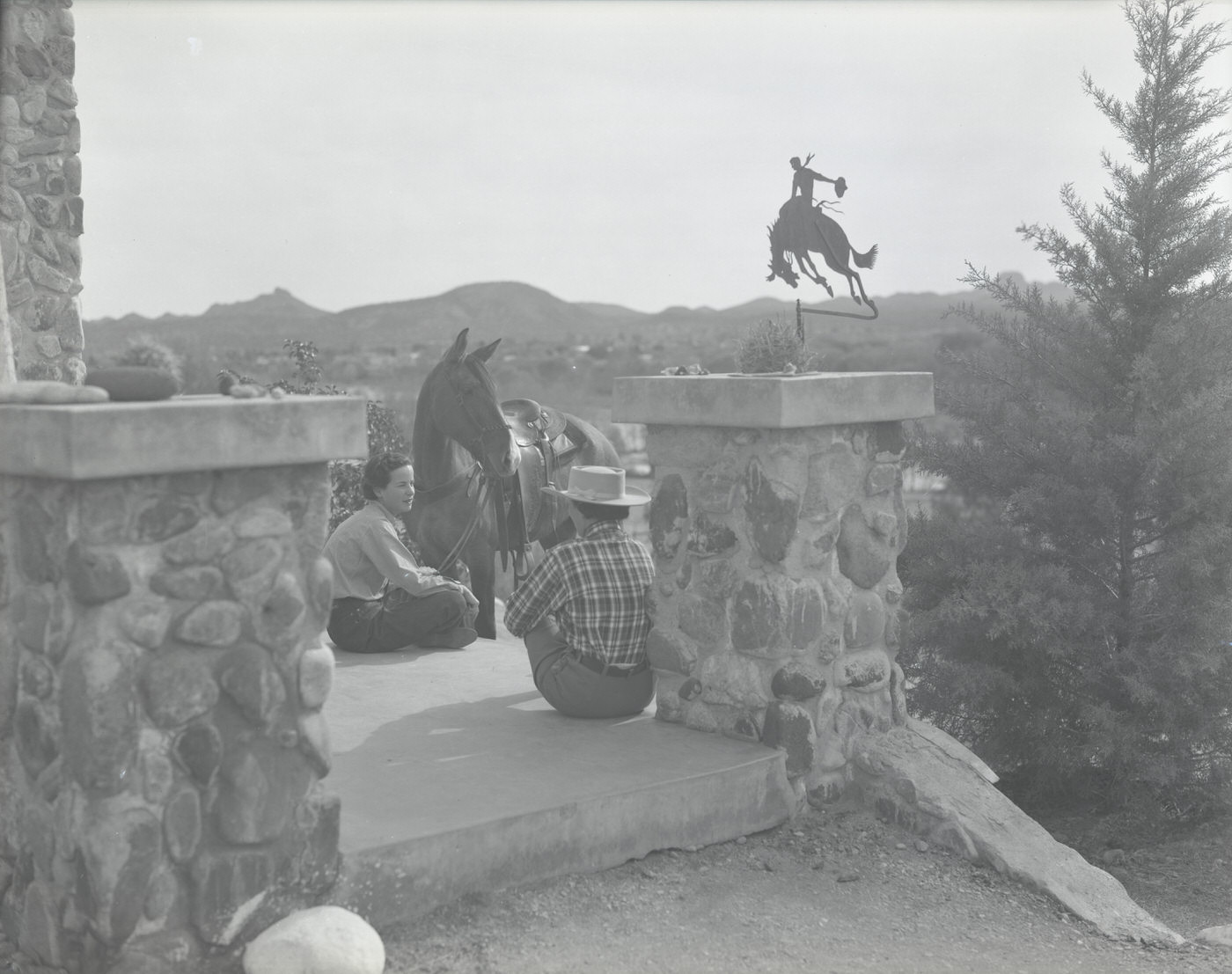
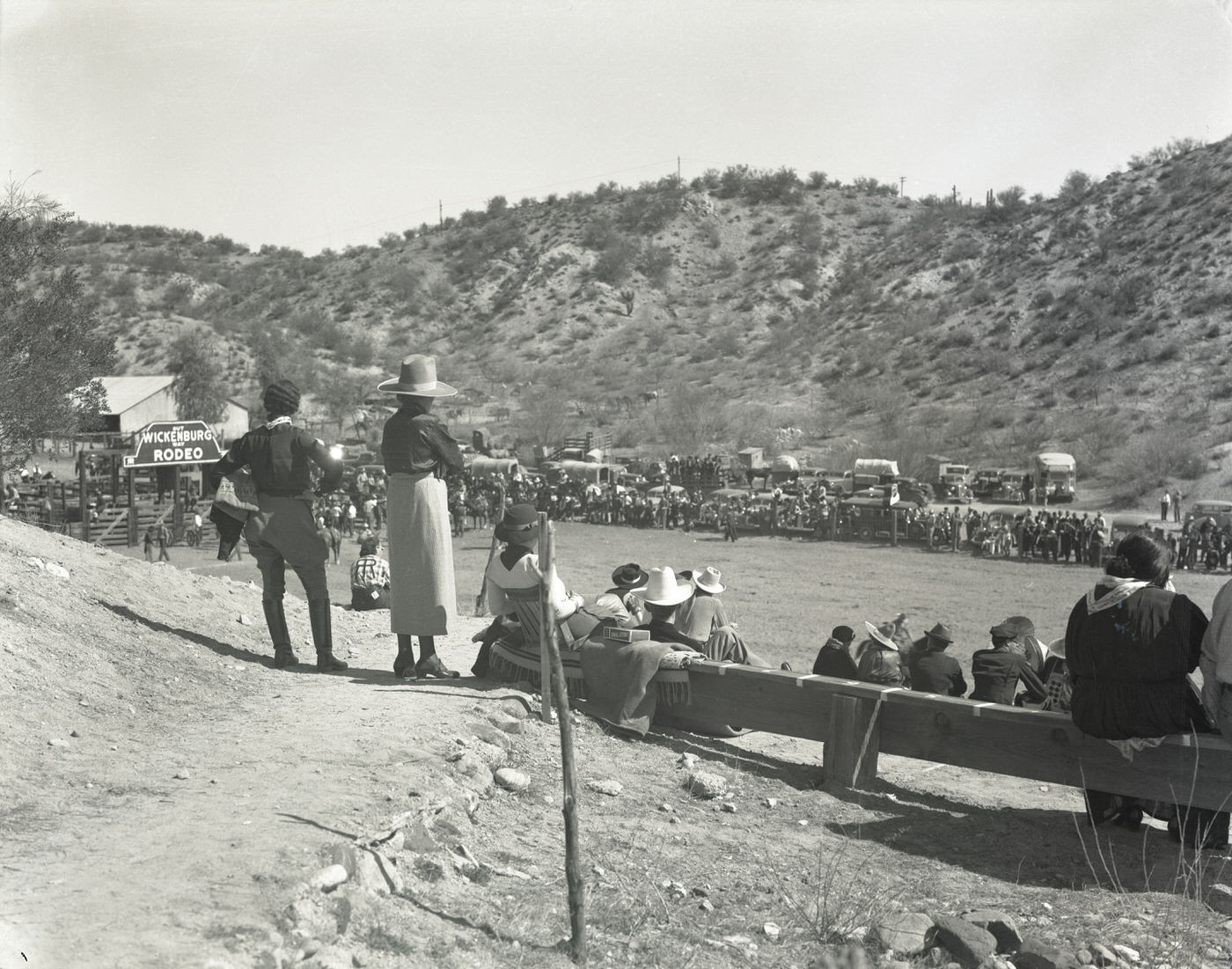
Ranch resorts were also drawing visitors to the area around Phoenix. The Remuda Ranch near Wickenburg offered guests horseback riding and rodeo events. The Kay-El-Bar Ranch pulled in guests looking for a taste of the desert West. These dude ranches catered to a wealthier clientele from the East Coast who wanted an authentic Western experience without giving up their comforts.
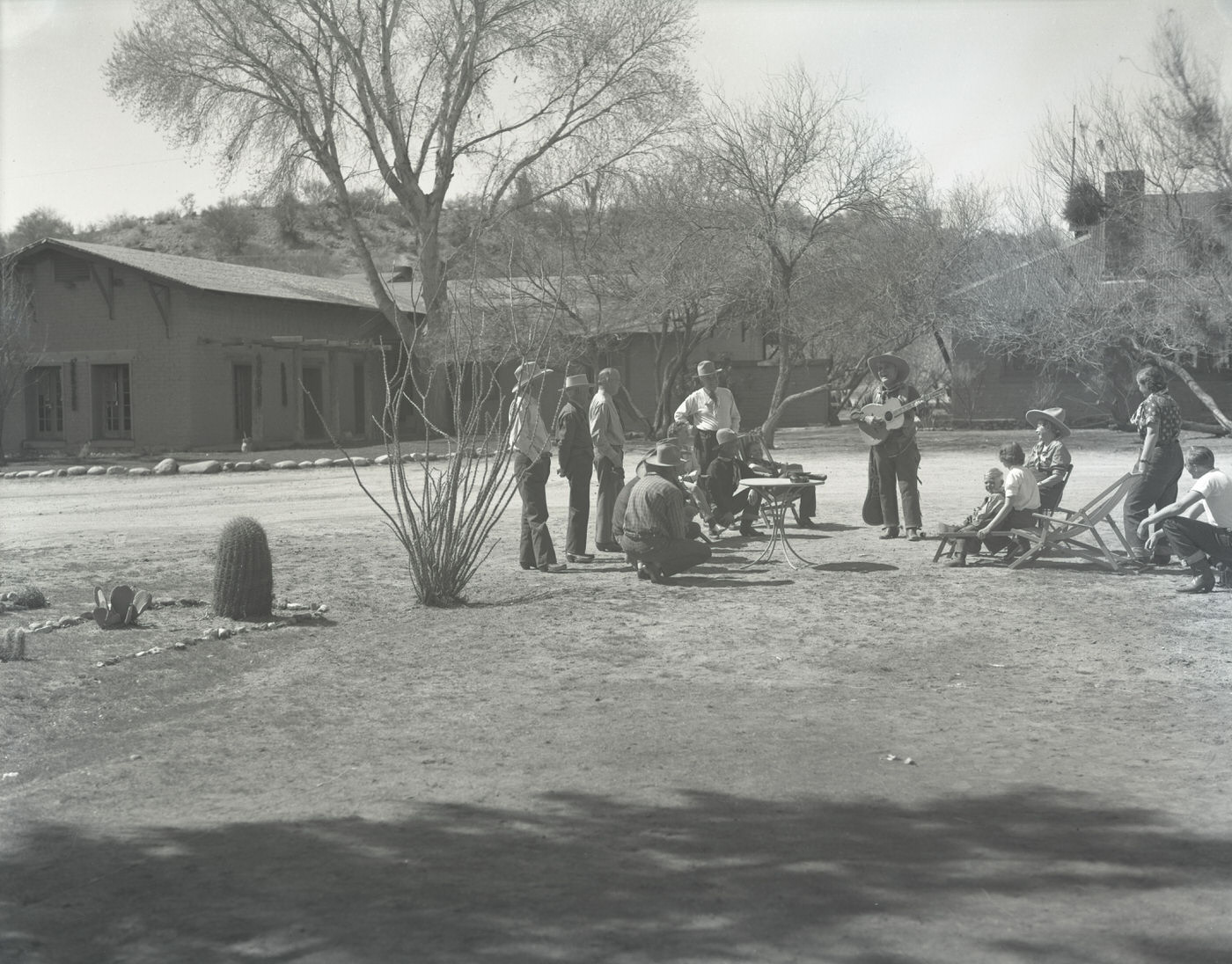
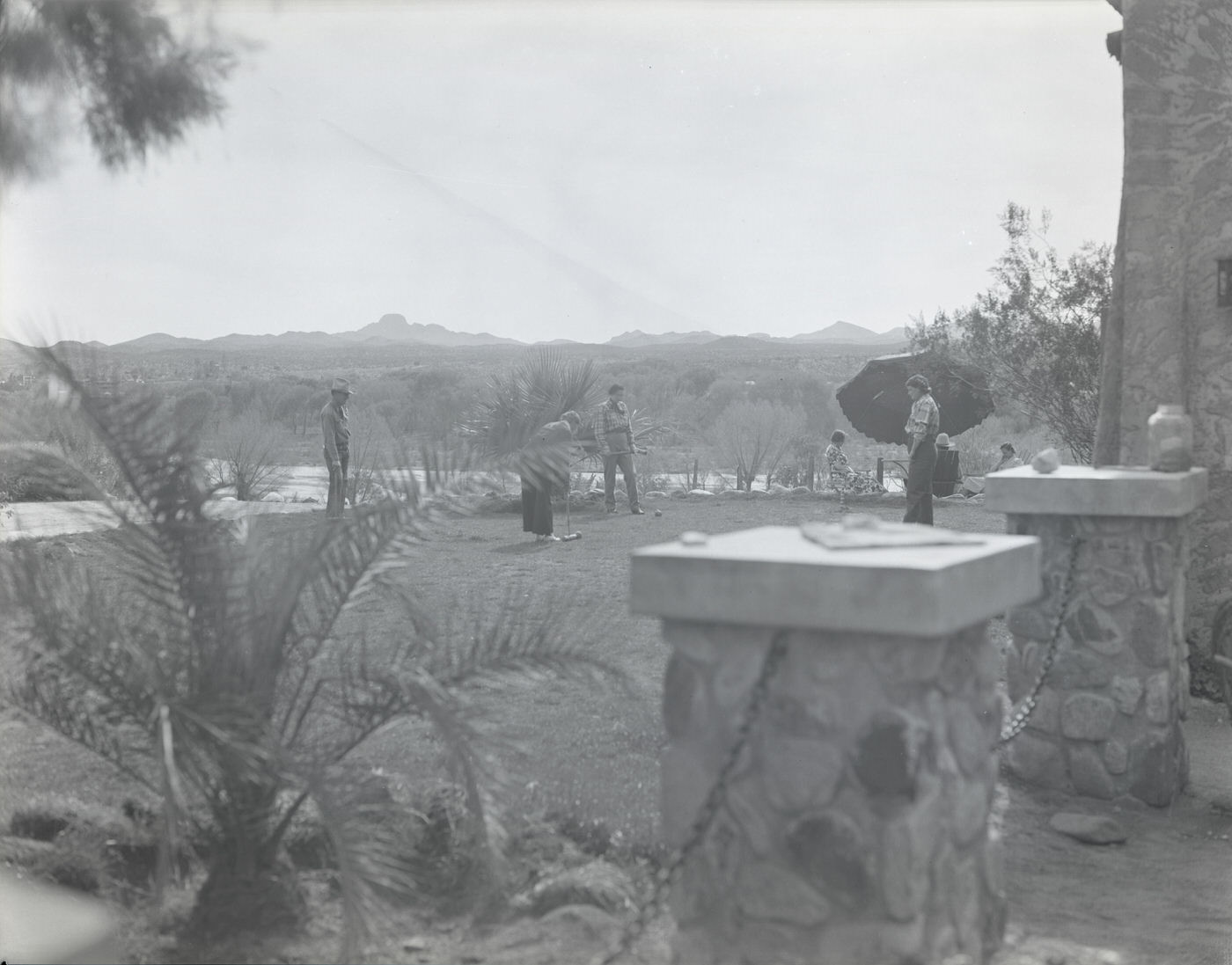
Kay-El-Bar Ranch Guests on the Grounds, 1927
Remuda Ranch Guests on Grounds, 1920
Remuda Ranch Guests, 1920
Out Wickenburg Way Rodeo on the Remuda Ranch, 1920

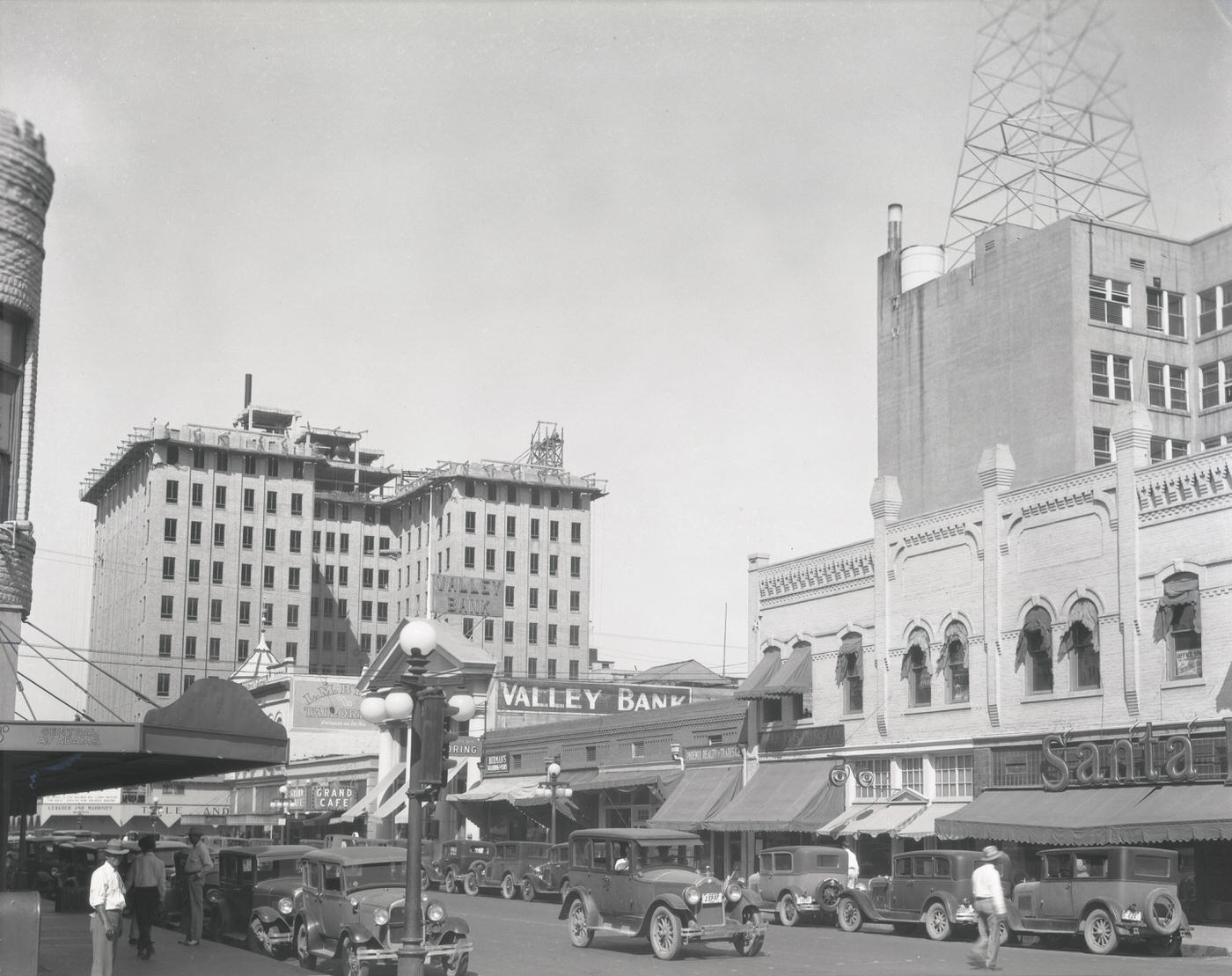
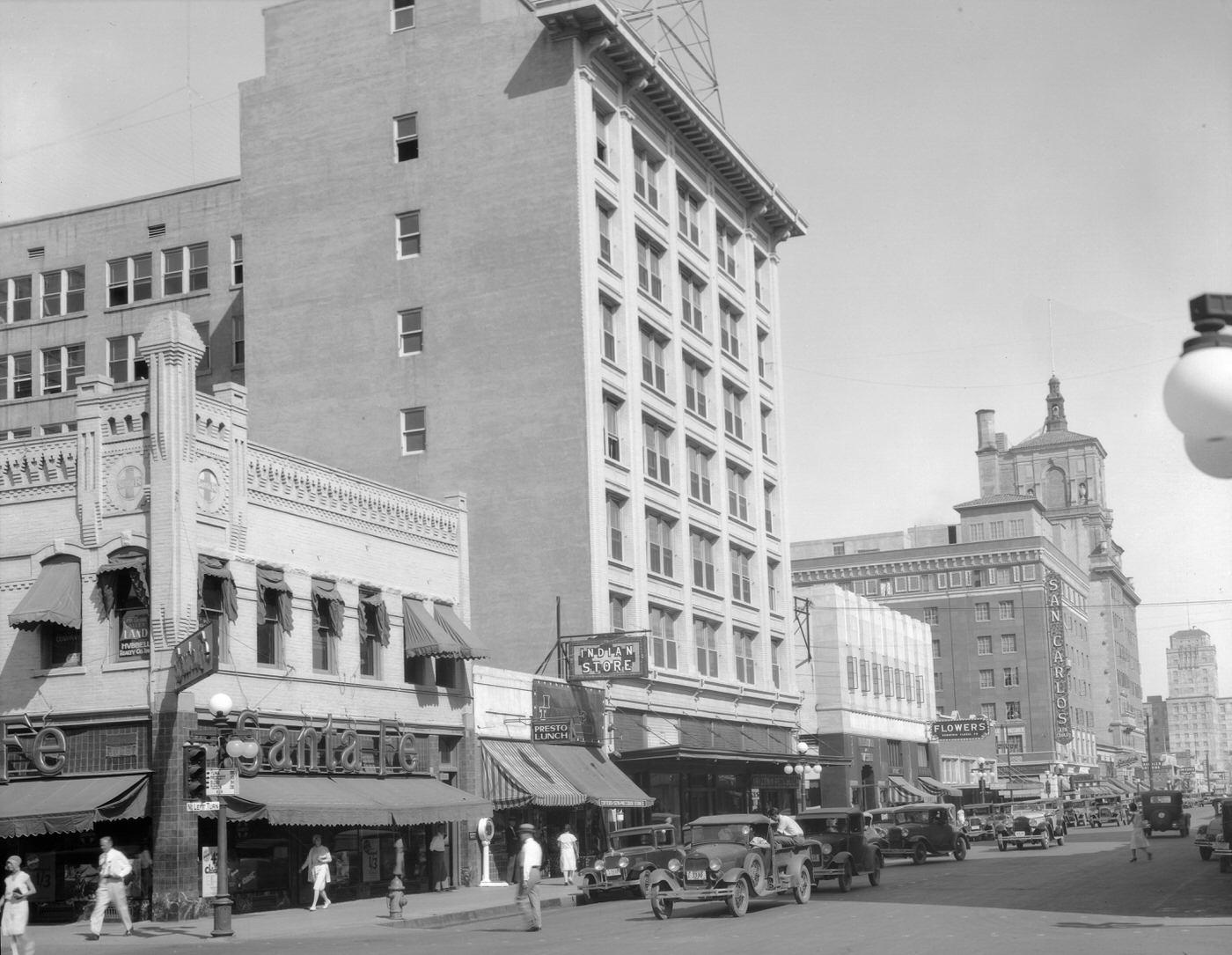
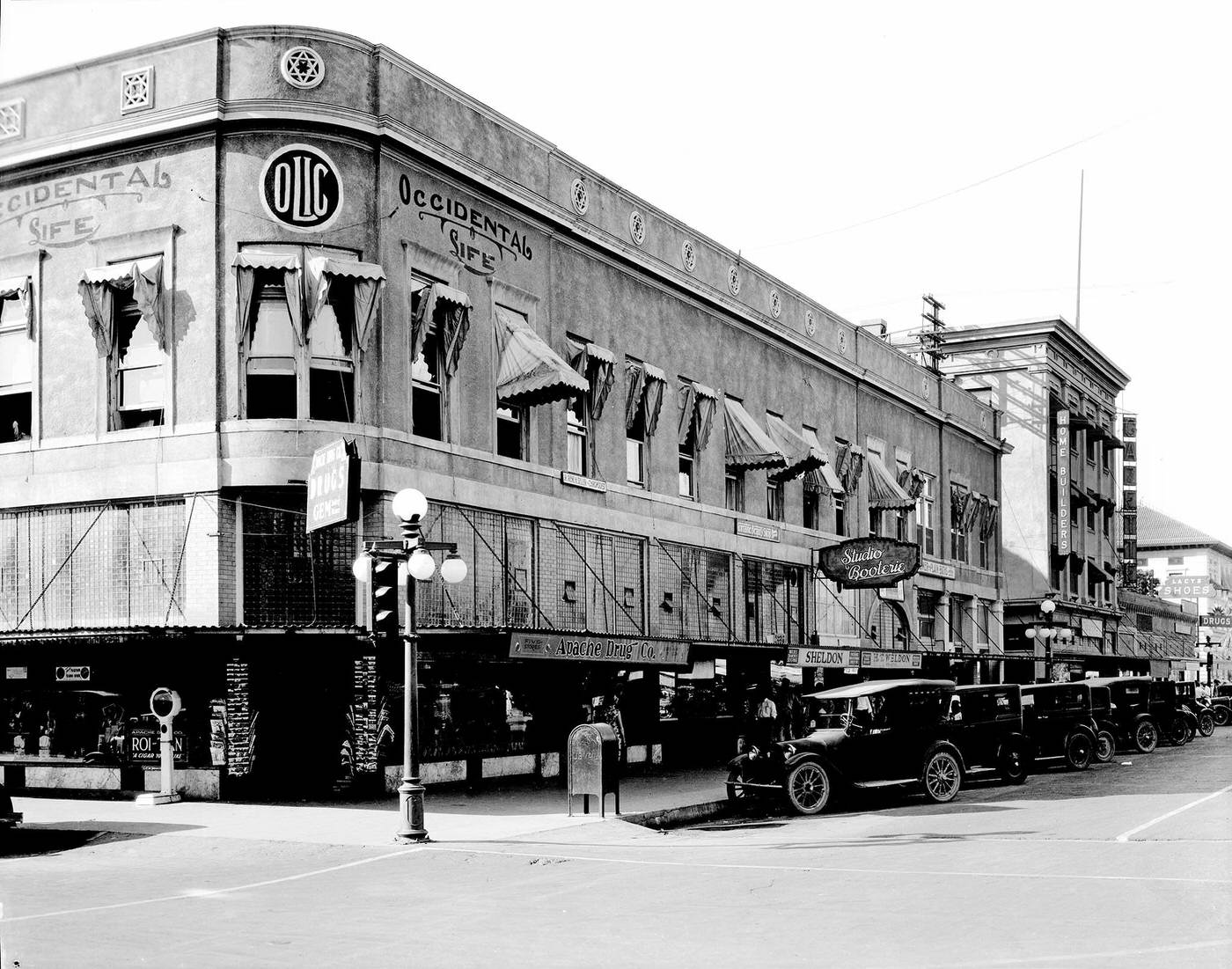
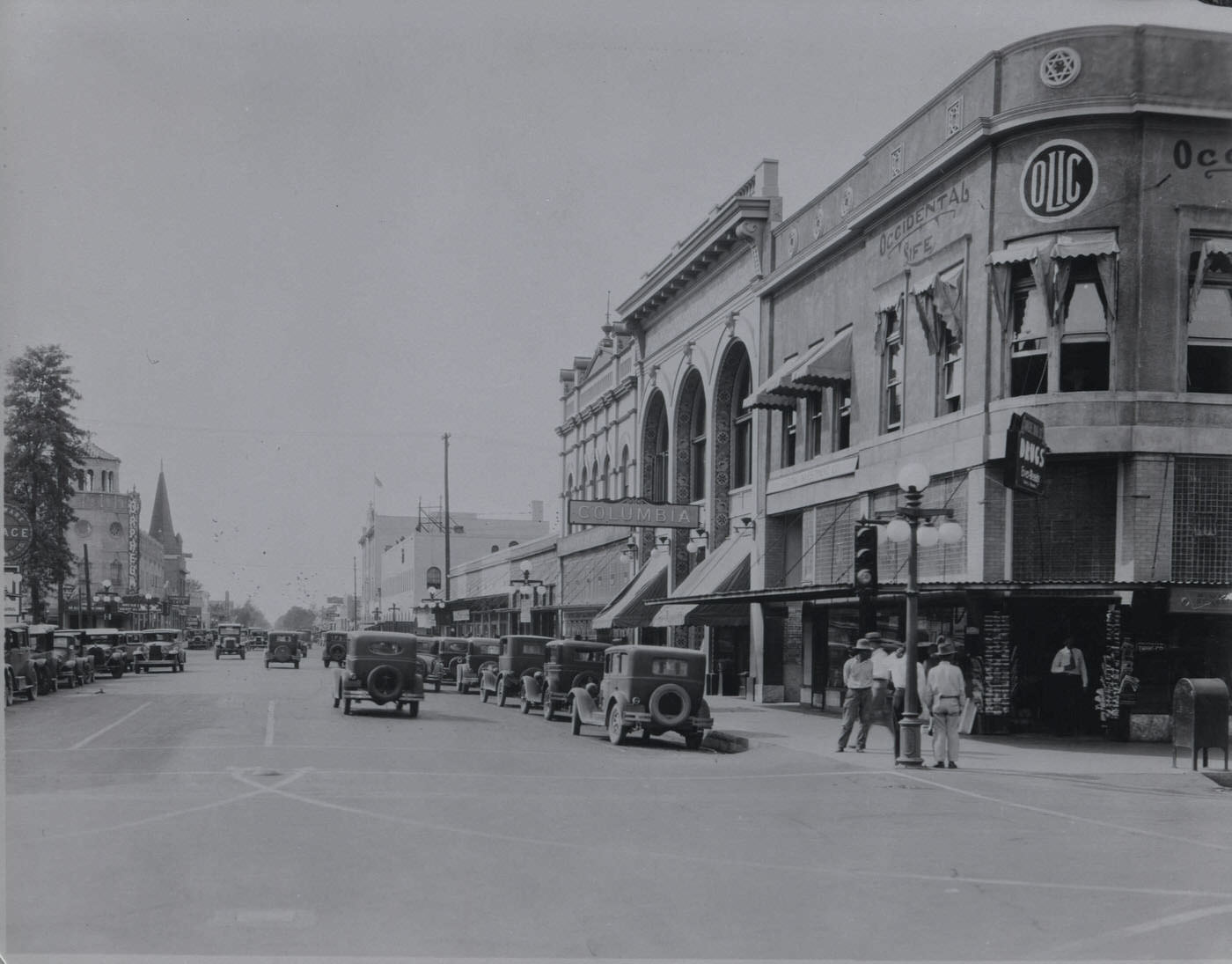
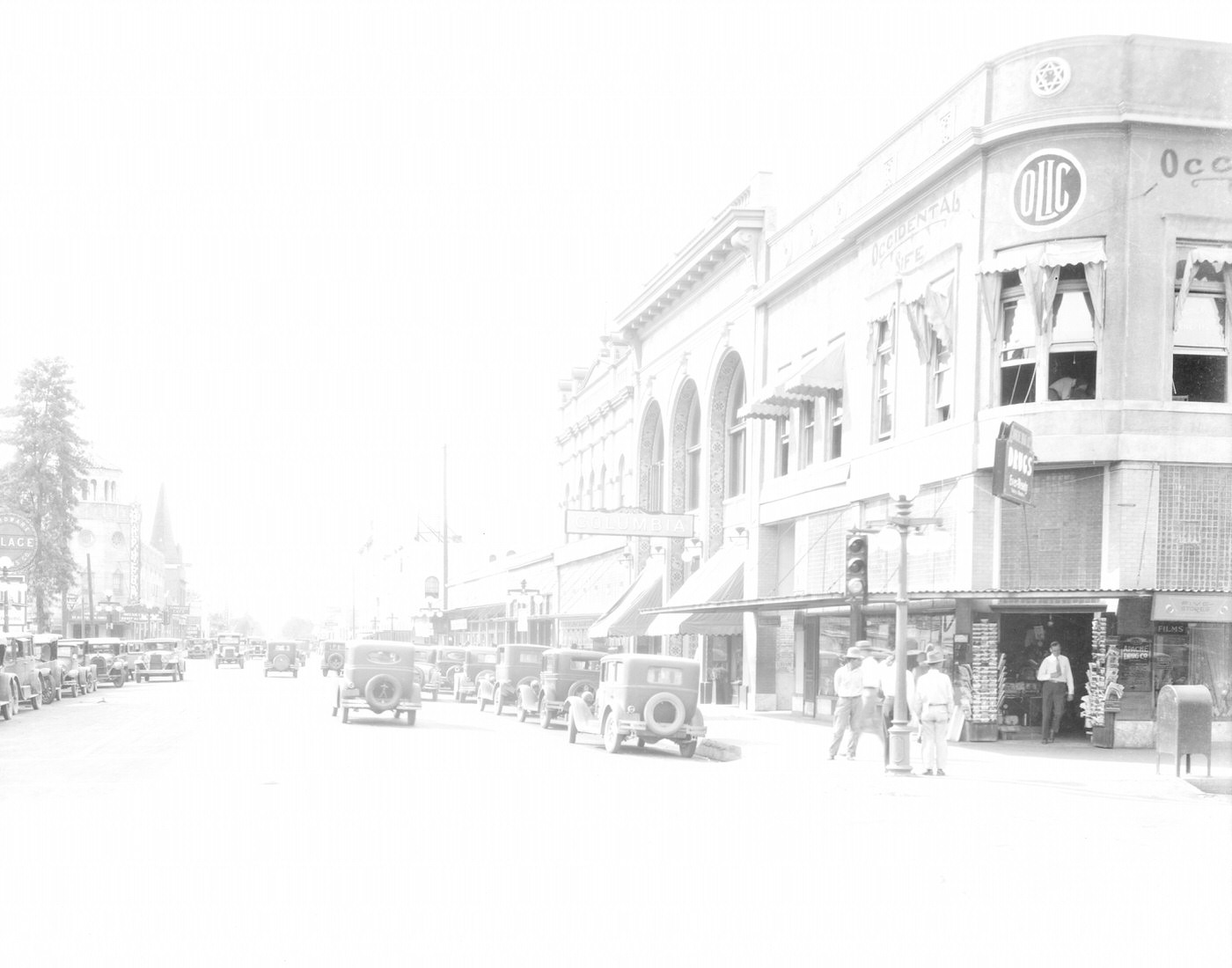
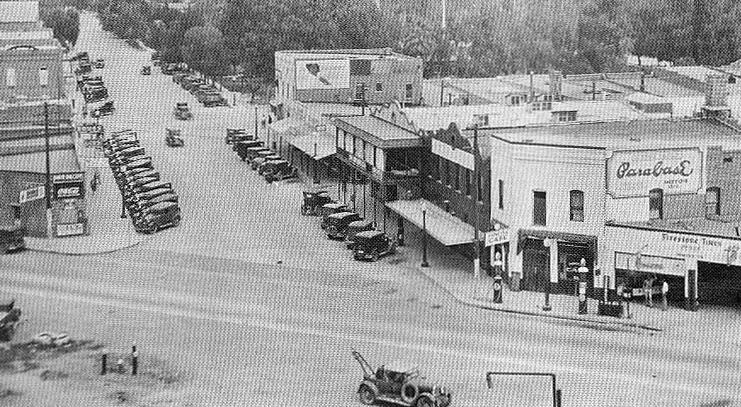
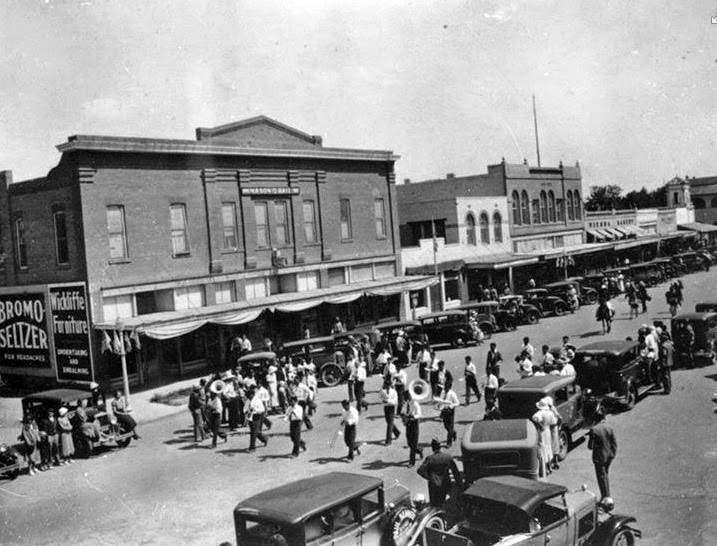
Air conditioning made its first appearance in Phoenix during the 1920s, though it was strictly a luxury reserved for the wealthiest buildings and homes. Most residents still relied on shade structures and awnings to survive the desert heat. The city’s awnings, visible in photographs of Adams Street and Central Avenue throughout the decade, were practical fixtures on nearly every storefront.
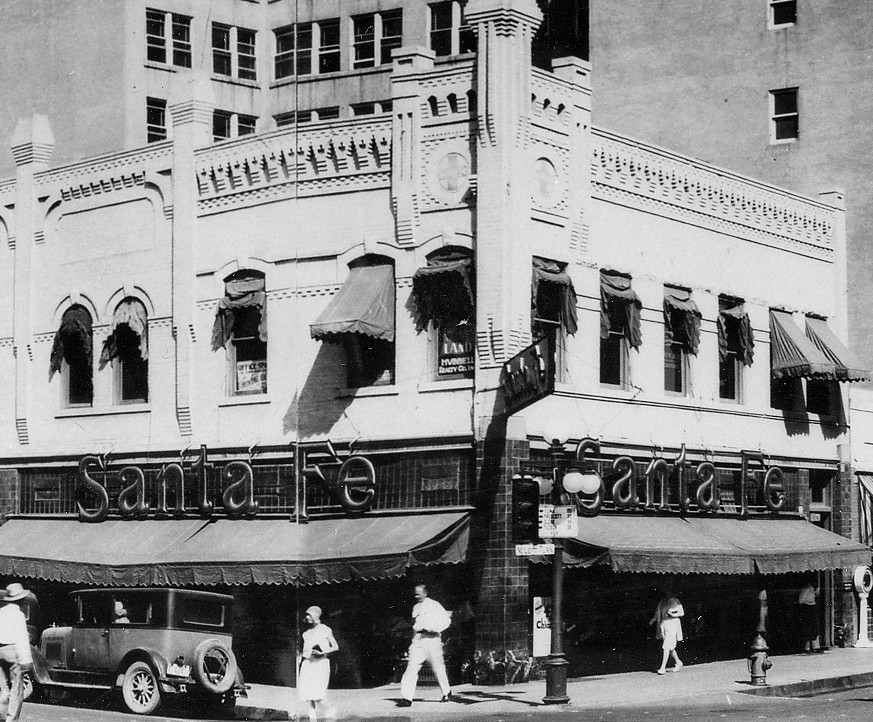
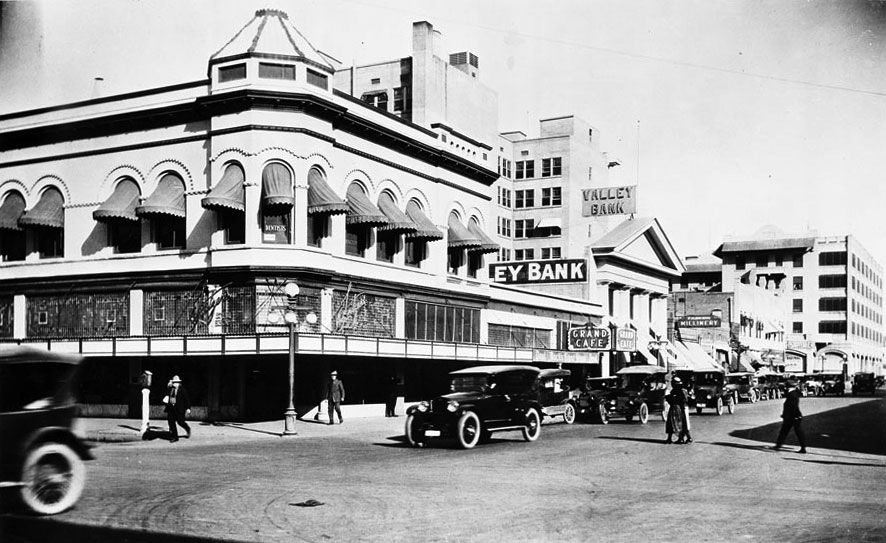
The AT&SF Railway ticket office on the northwest corner of Adams and Central. It's still there, under ugly stucco. The city's ubiquitous awnings were real "shade structures."
The AT&SF Railway ticket office on the northwest corner of Adams and Central. It’s still there, under ugly stucco. The city’s ubiquitous awnings were real “shade structures.”
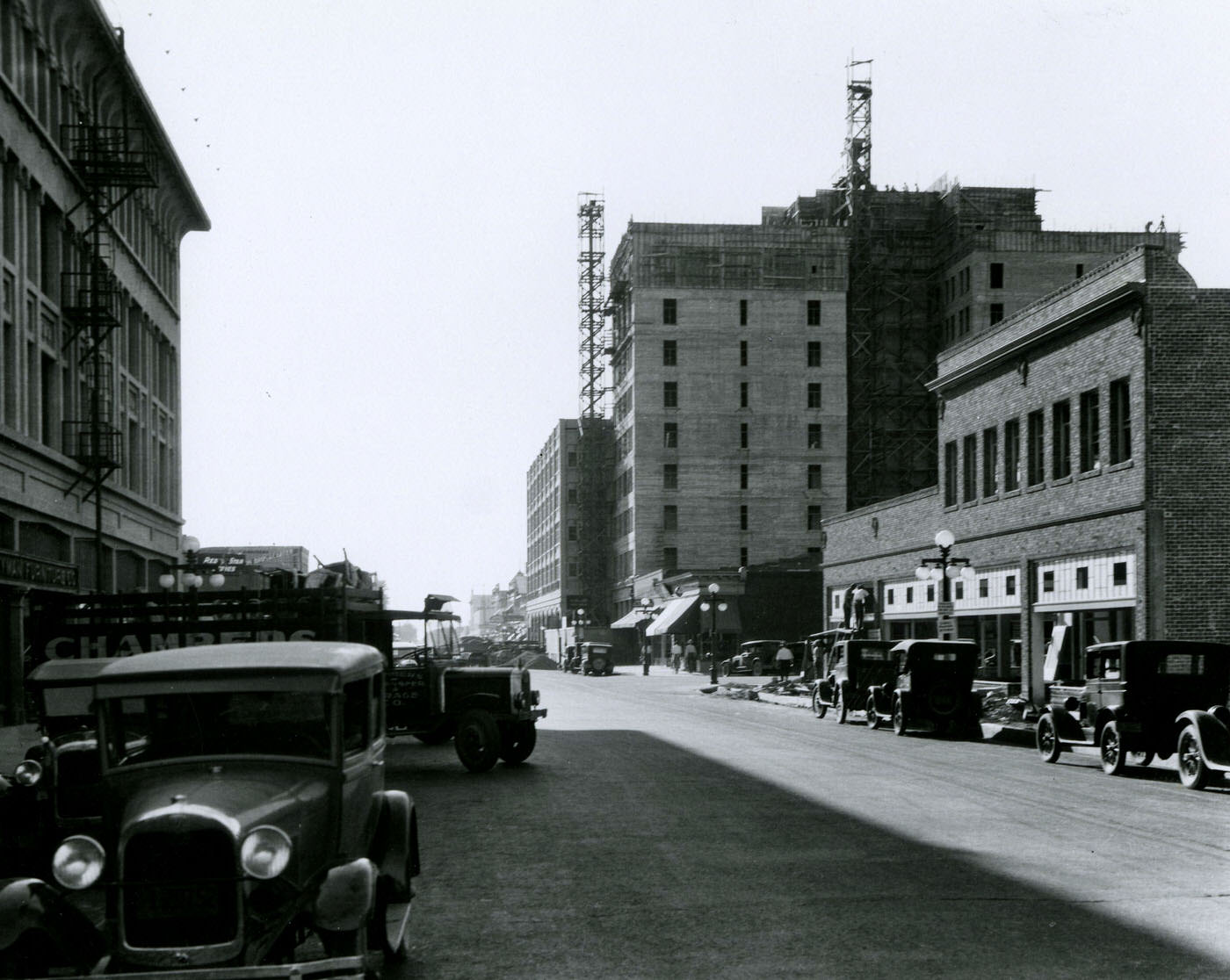
Adams and First Avenue looking northeast in the 1920s.

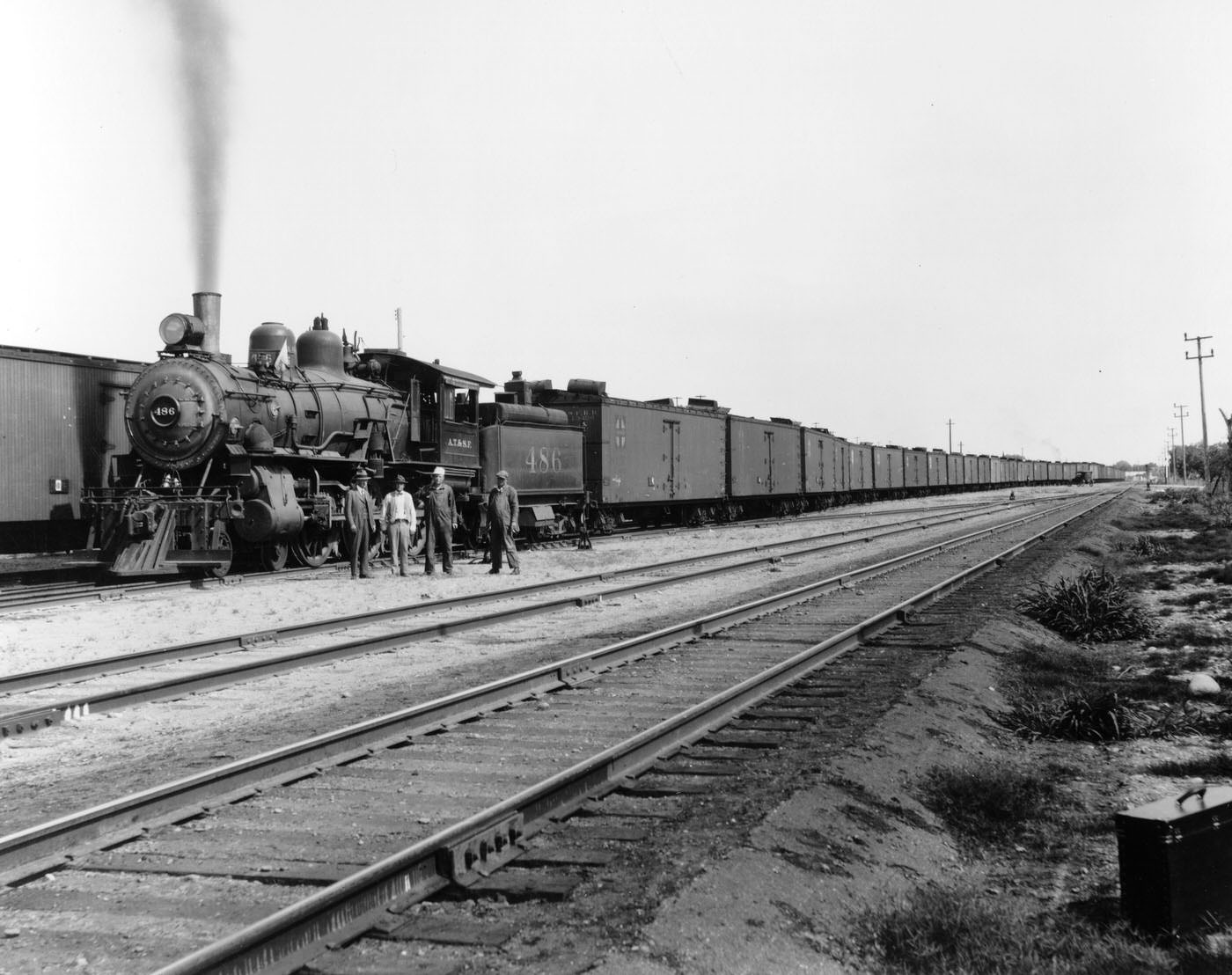
Agriculture still formed the backbone of the region’s economy even as the city grew. Miles of alfalfa fields stretched across the Salt River Valley, framed by citrus groves and the silhouette of Camelback Mountain. The alluvial soil made the valley one of the most fertile farming regions in the world. Olive groves, lettuce farms, and dairy operations all contributed to the local economy. The Santa Fe Railway was a critical link, hauling crops like lettuce directly to Phoenix from surrounding farms.
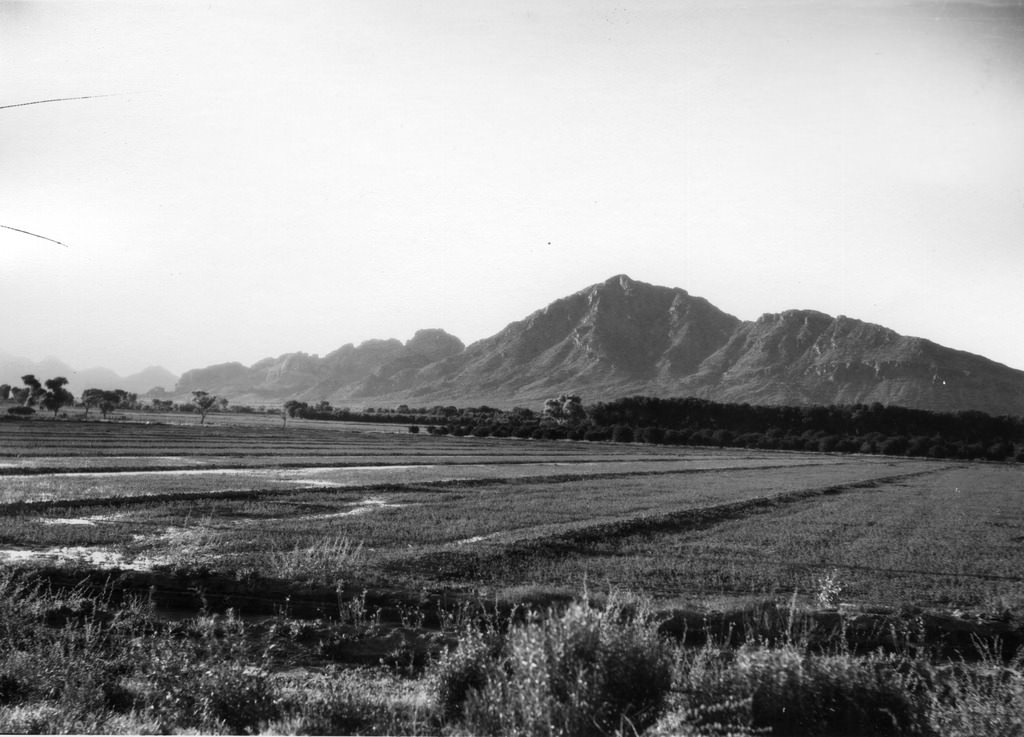
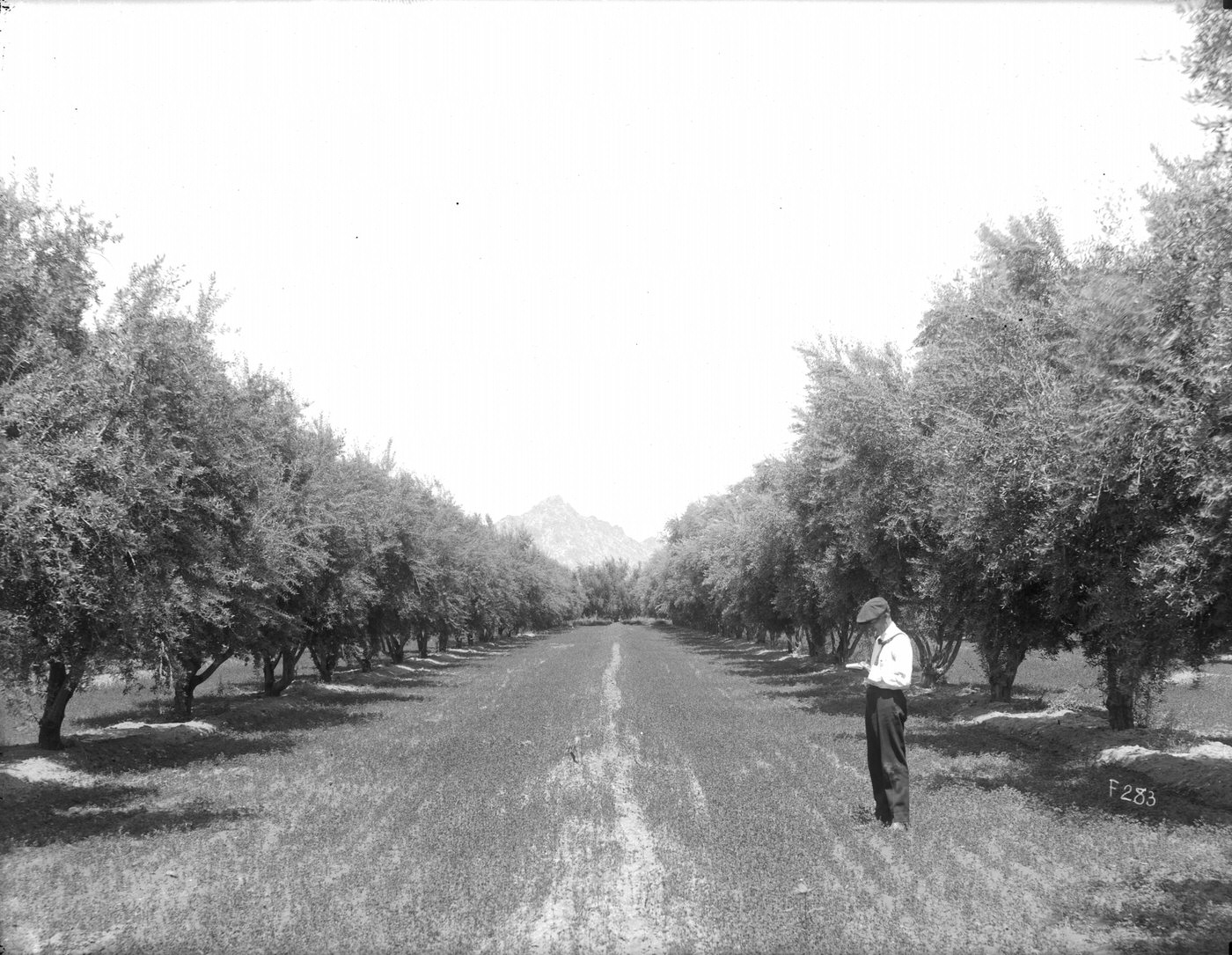
Miles of alfalfa fields framed by citrus groves and Camelback Mountain in 1923. The alluvial soil of the Salt River Valley made it one of the most fertile regions in the world.
Munger Olive Grove, 1929
Milk Processing Plant Interior, 1929
Santa Fe Train Carrying Lettuce to Phoenix, 1927
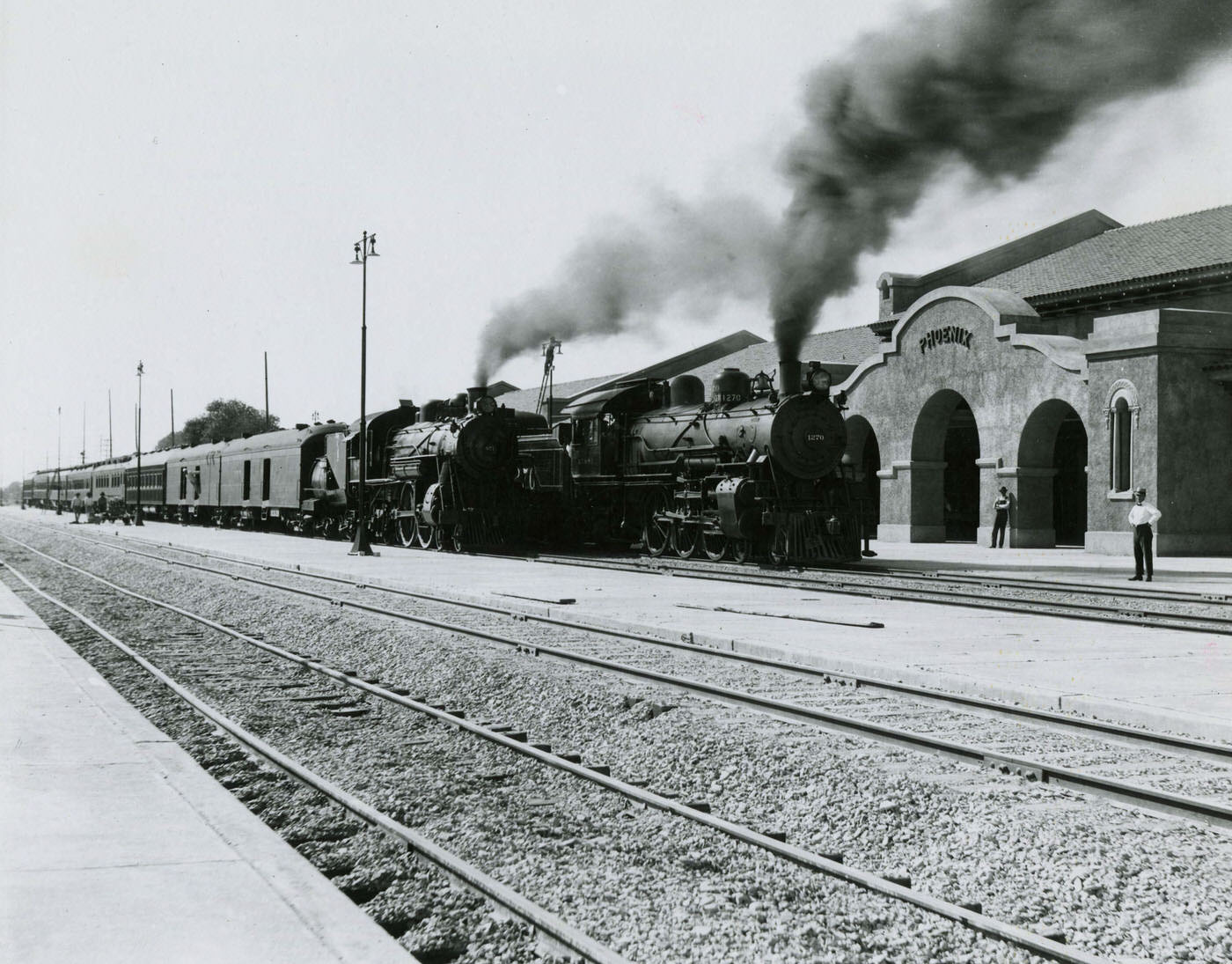
Atchison, Topeka & Santa Fe Railway Train at Union Depot, 1923

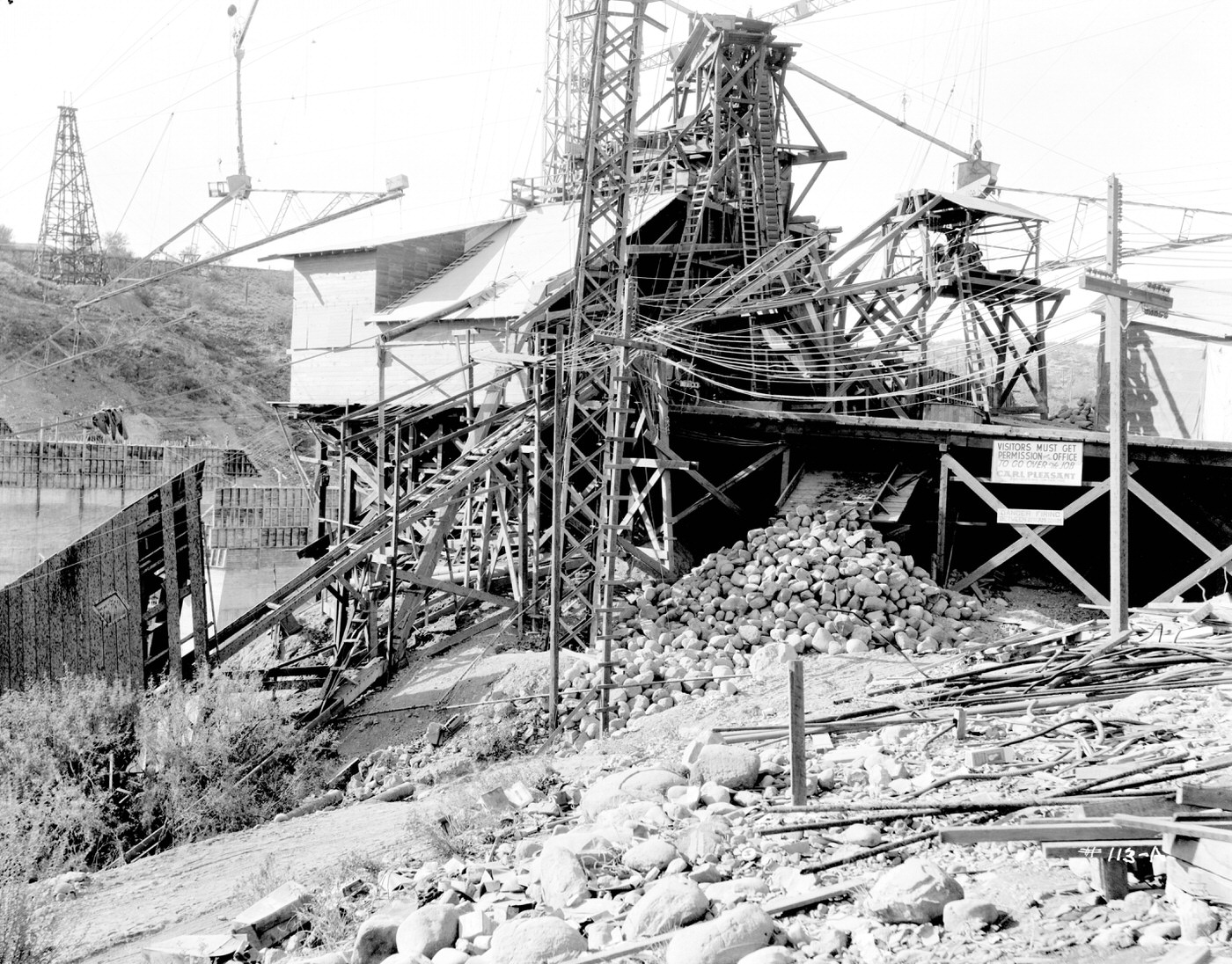
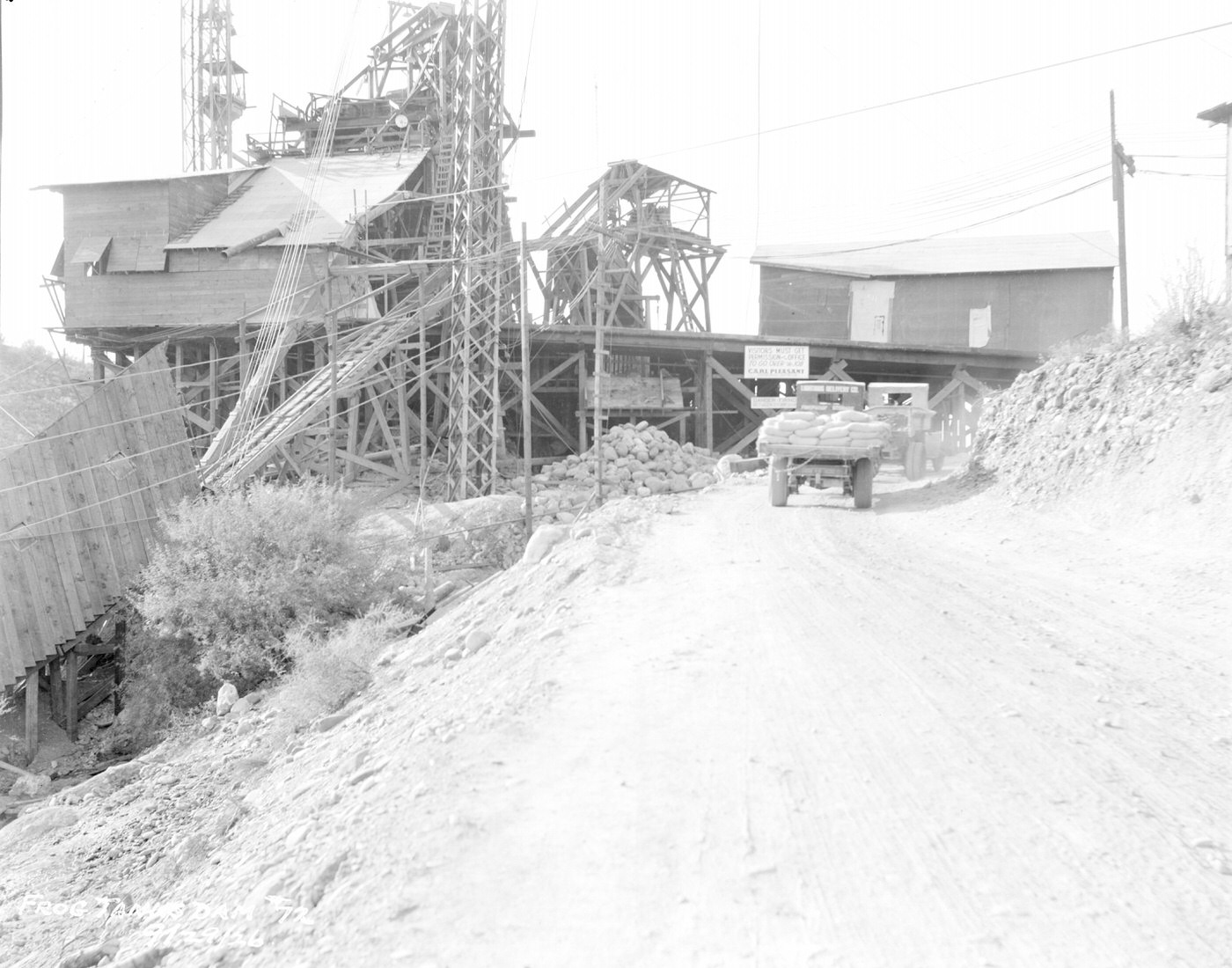
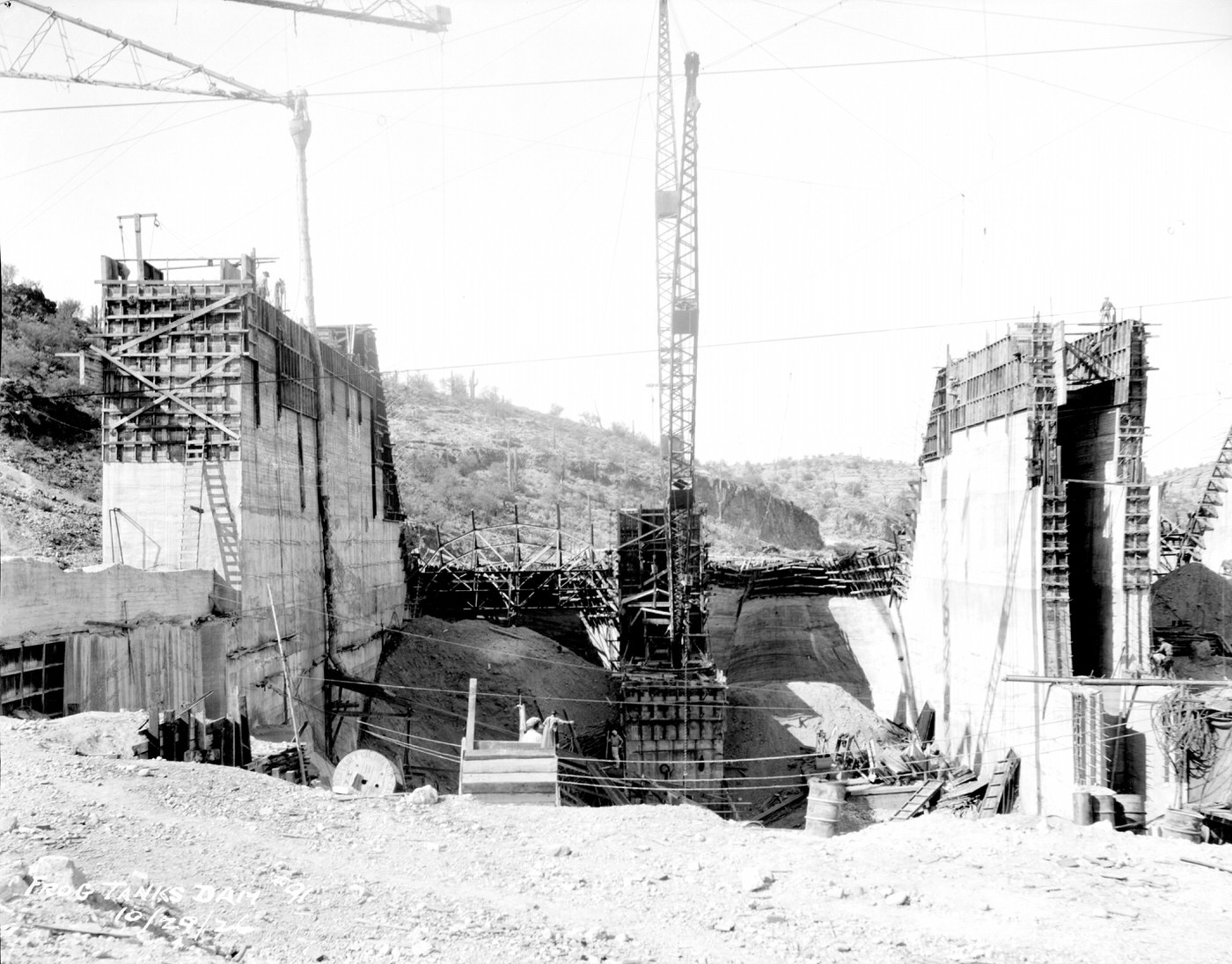
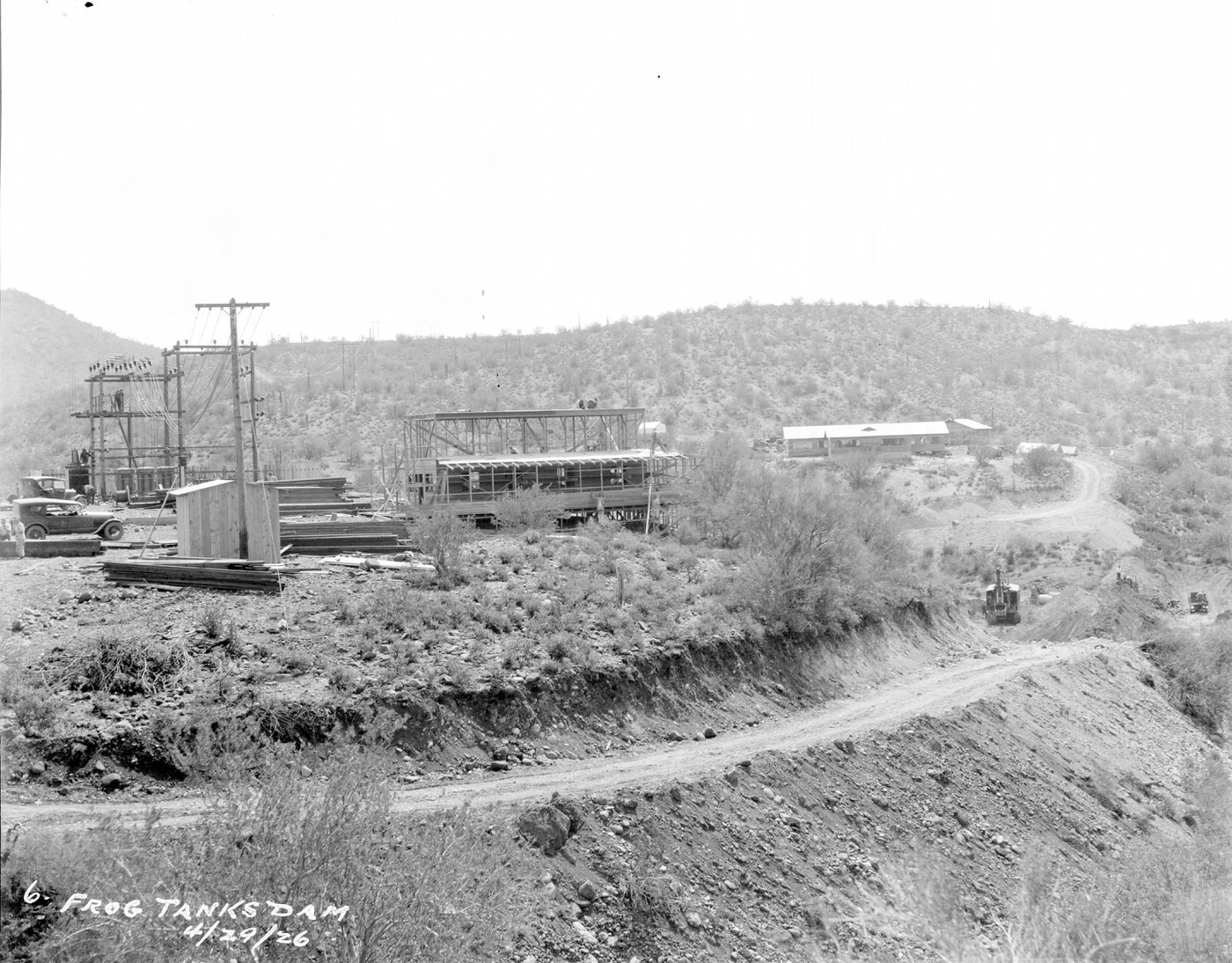
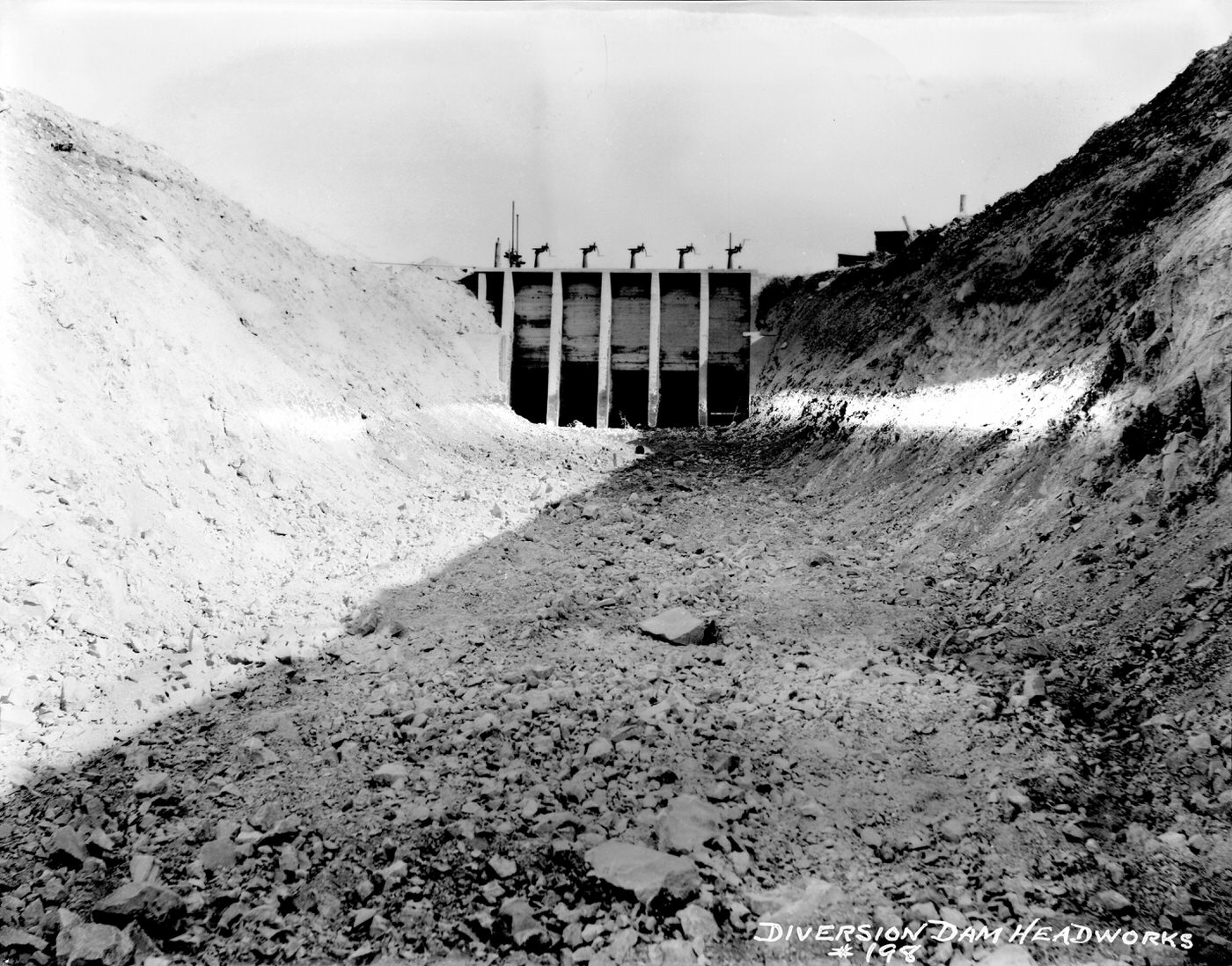
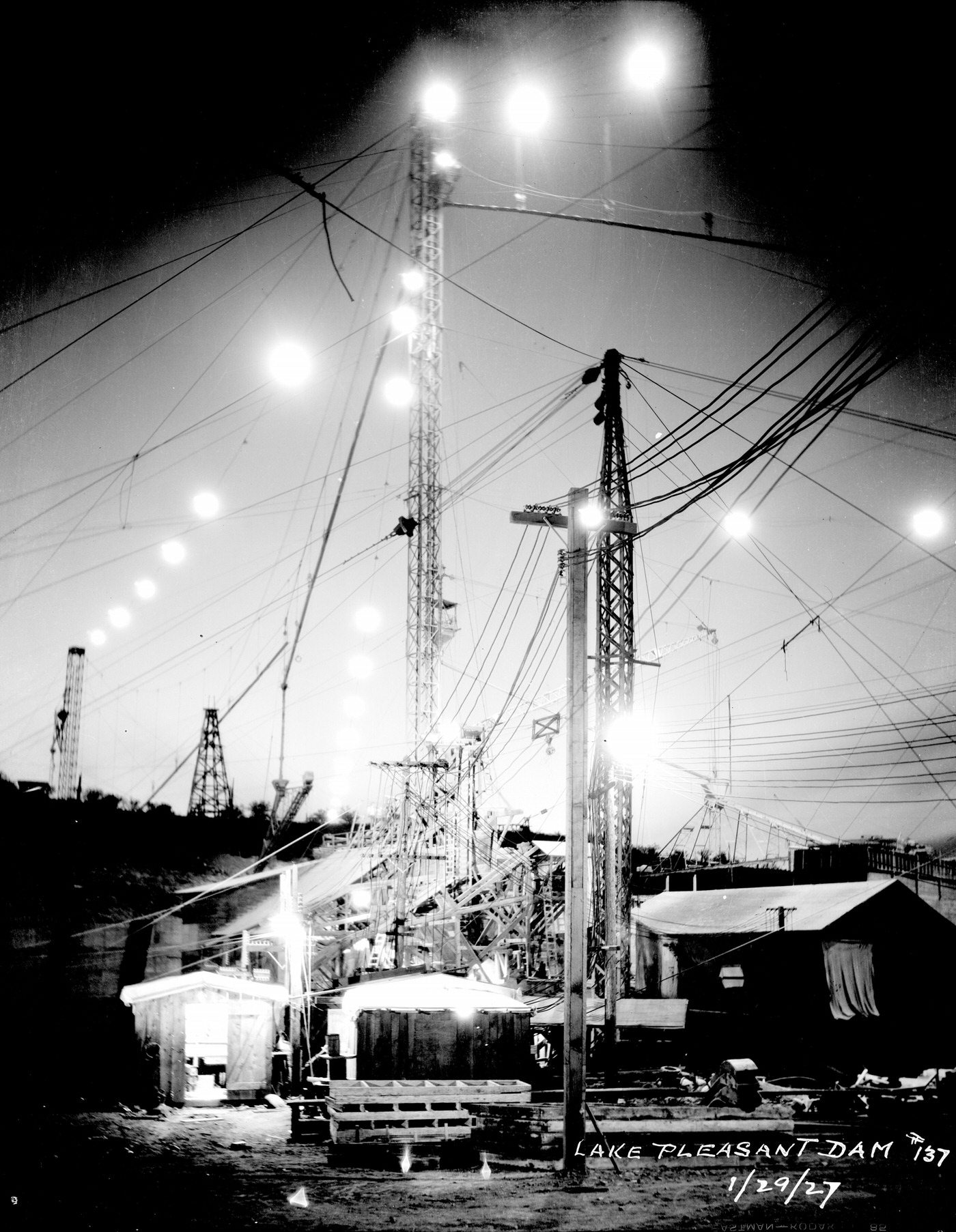
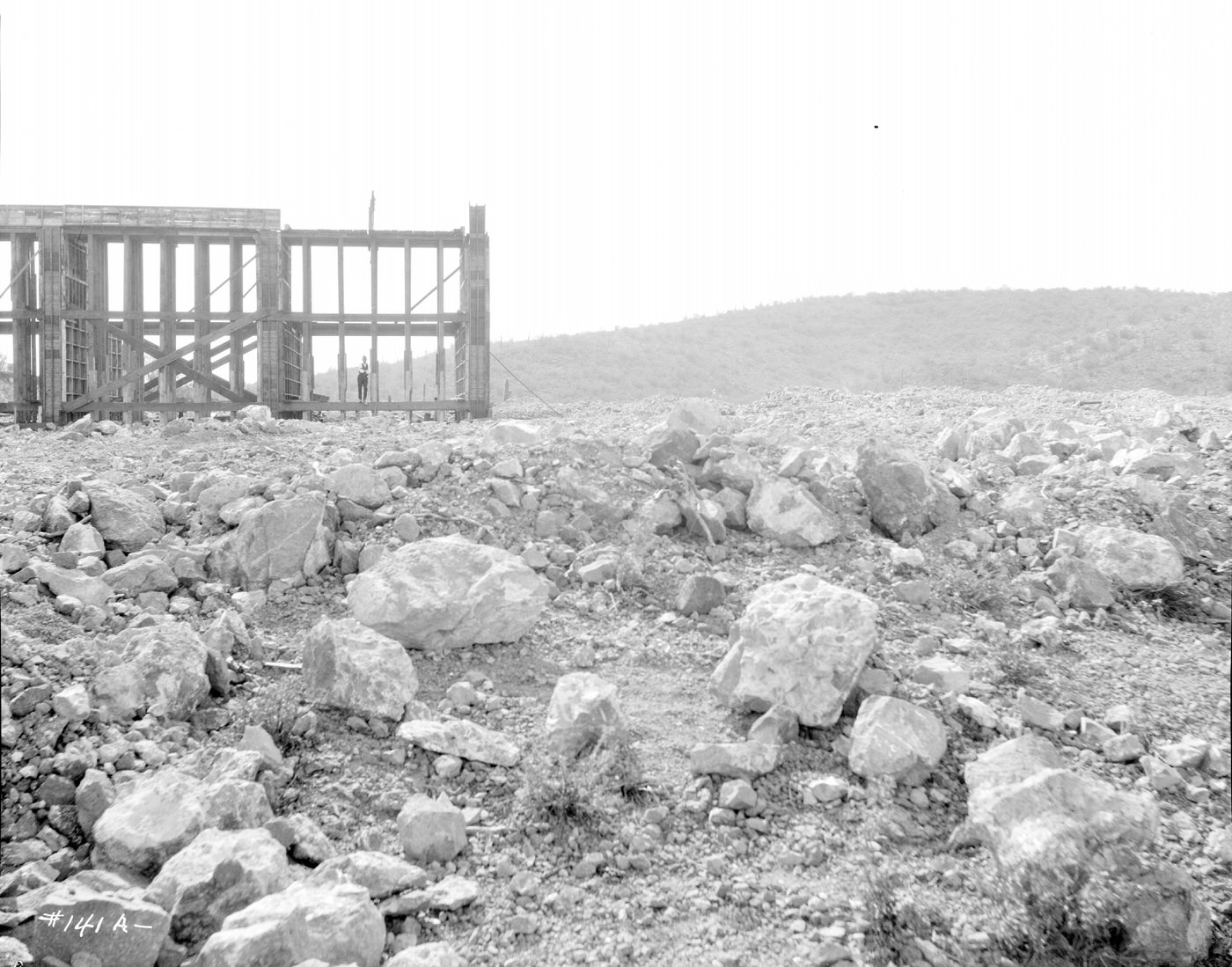
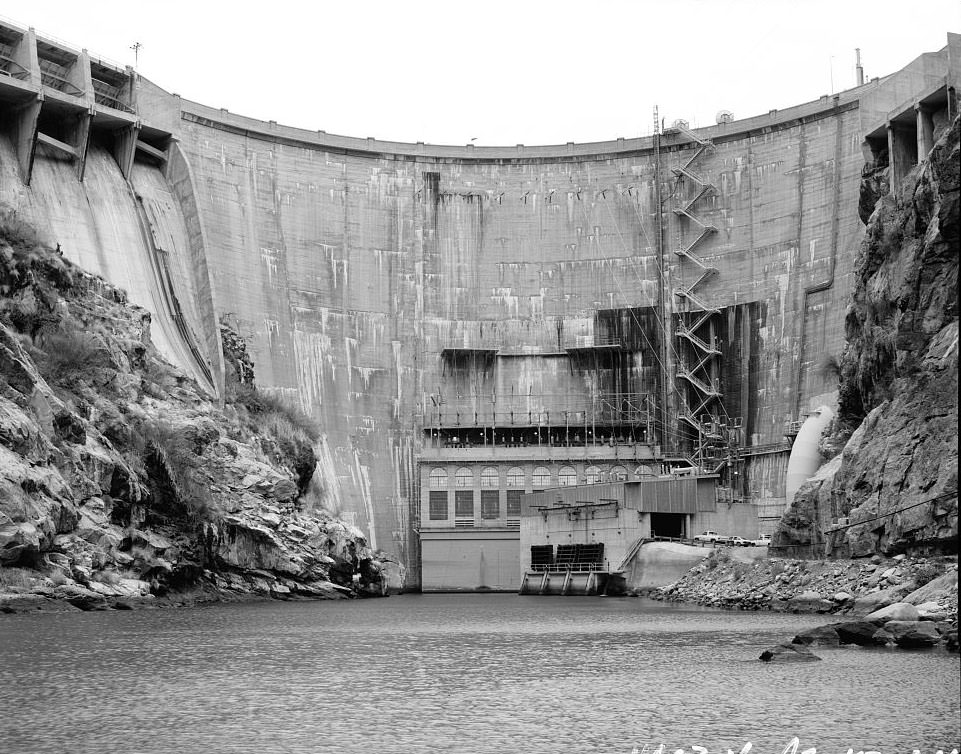
Water infrastructure was critical to sustaining the growth of the 1920s. Lake Pleasant Dam was a major engineering project during the decade, with construction photographs showing the dam’s headworks, power station, reservoir, and the stark desert surrounding it. The Frog Tanks Diversion Dam was also under construction during this period, adding more capacity to the regional water system. On the Salt River, Mormon Flat Dam was completed in 1925 and Horse Mesa Dam in 1927. Stewart Mountain Dam was slated to follow in 1930.
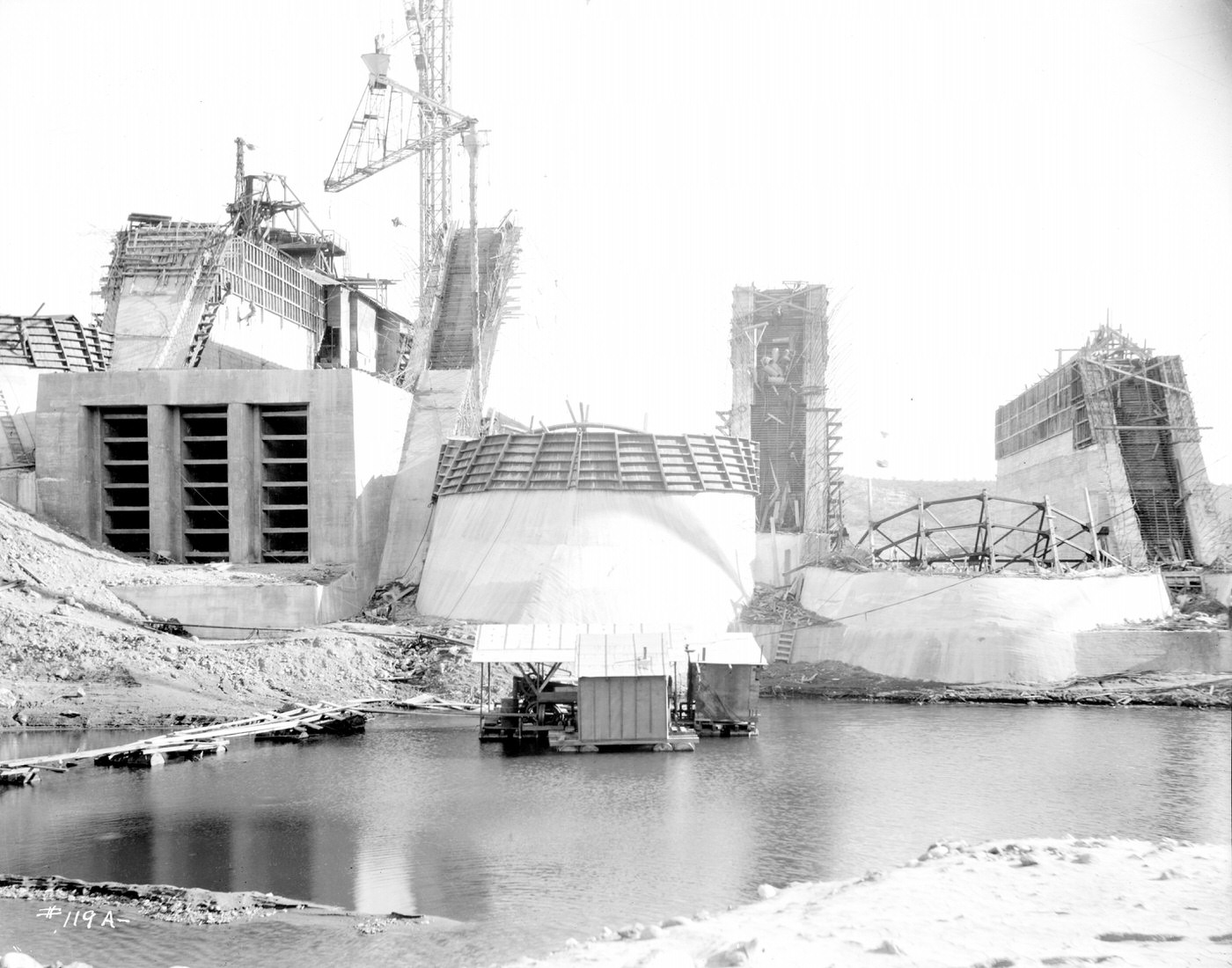
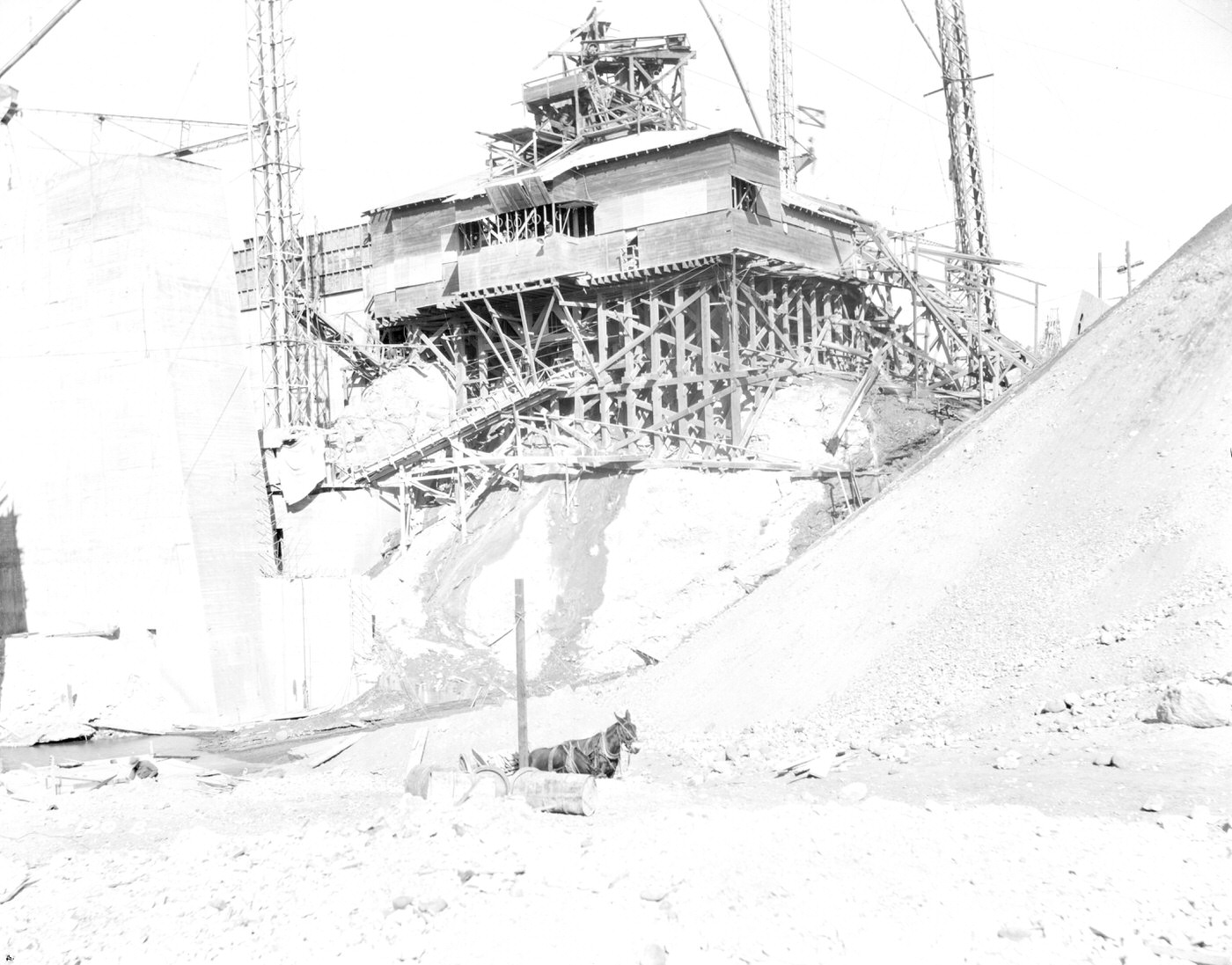
Spillway Side of Lake Pleasant Dam, 1926
Lake Pleasant Dam Reservoir Under Construction, 1926
Terrain Surrounding Lake Pleasant Dam, 1926
Frog Tanks Diversion Dam Under Construction, 1926
Frog Tanks Diversion Dam Power Facility, 1926
Frog Tanks Diversion Dam Main Facility Under Construction, 1926
Lake Pleasant Dam Headworks, 1928
Lake Pleasant Dam Power Station at Night, 1927
Desert Surrounding Lake Pleasant Dam, 1927
Downstream of Mormon Flat Dam (top) and Horse Mesa Dam, which were completed on the Salt River in 1925 and 1927 respectively. Stewart Mountain Dam would be finished in 1930.

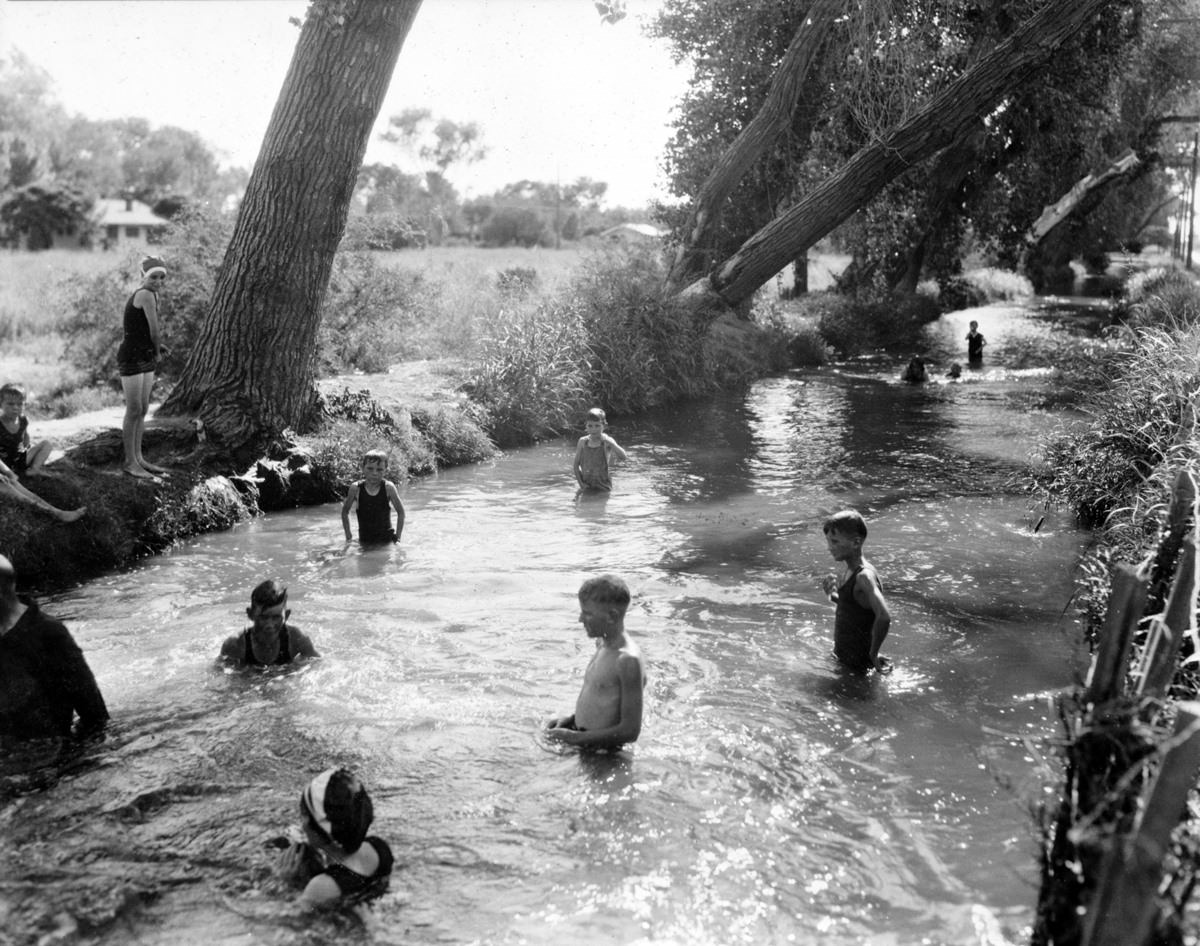
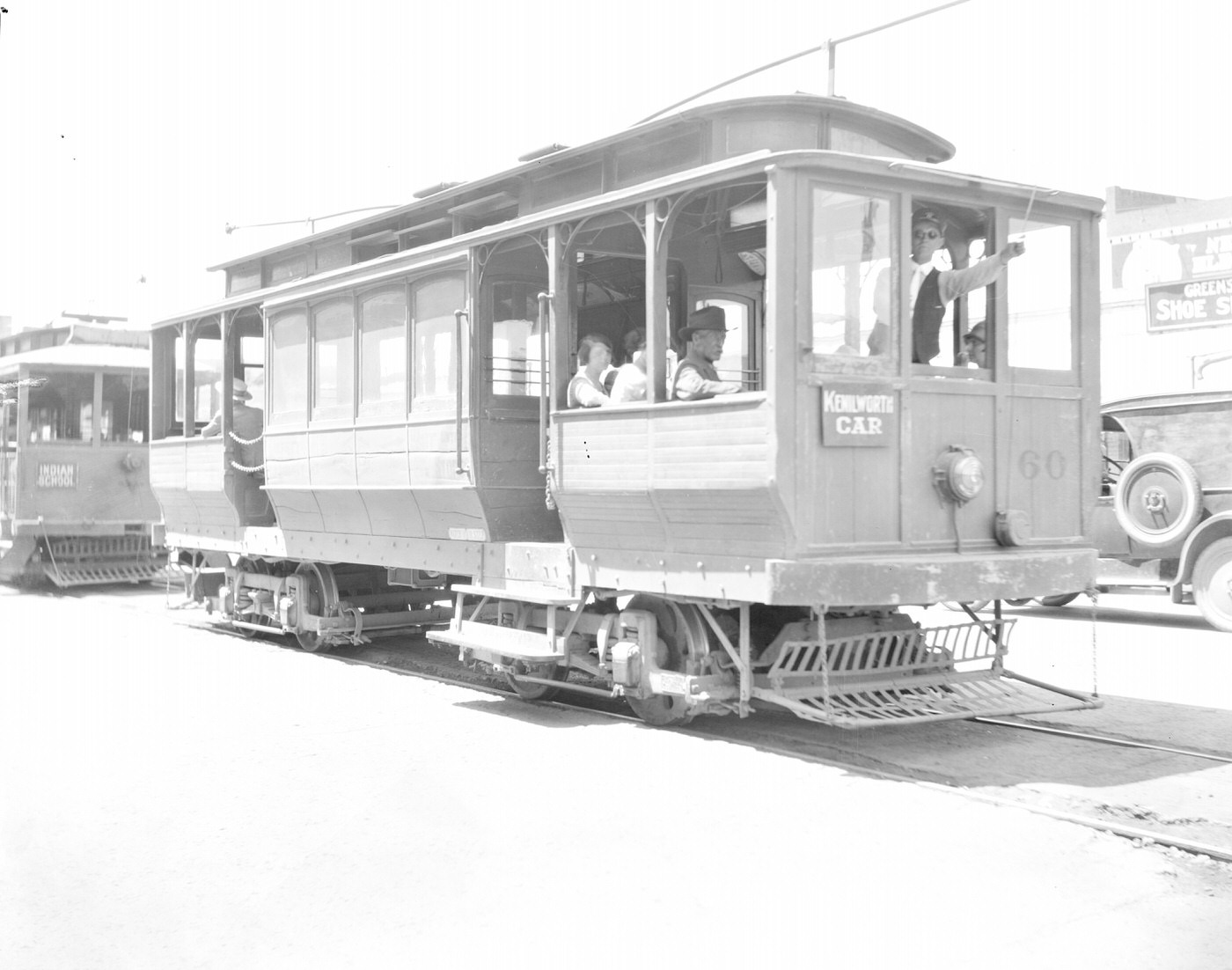
Streetcars were still a central part of how Phoenix residents got around. Streetcar No. 43 and later Streetcar No. 60 ran their routes through the city, connecting neighborhoods and commercial districts. The Kenilworth streetcar line served residential areas to the north of downtown. The Town Ditch — also known as Swilling’s Ditch — ran as far south as Van Buren Street in the old townsite, and neighborhood children swam in it during the summer months before it was paved over by the 1930s.
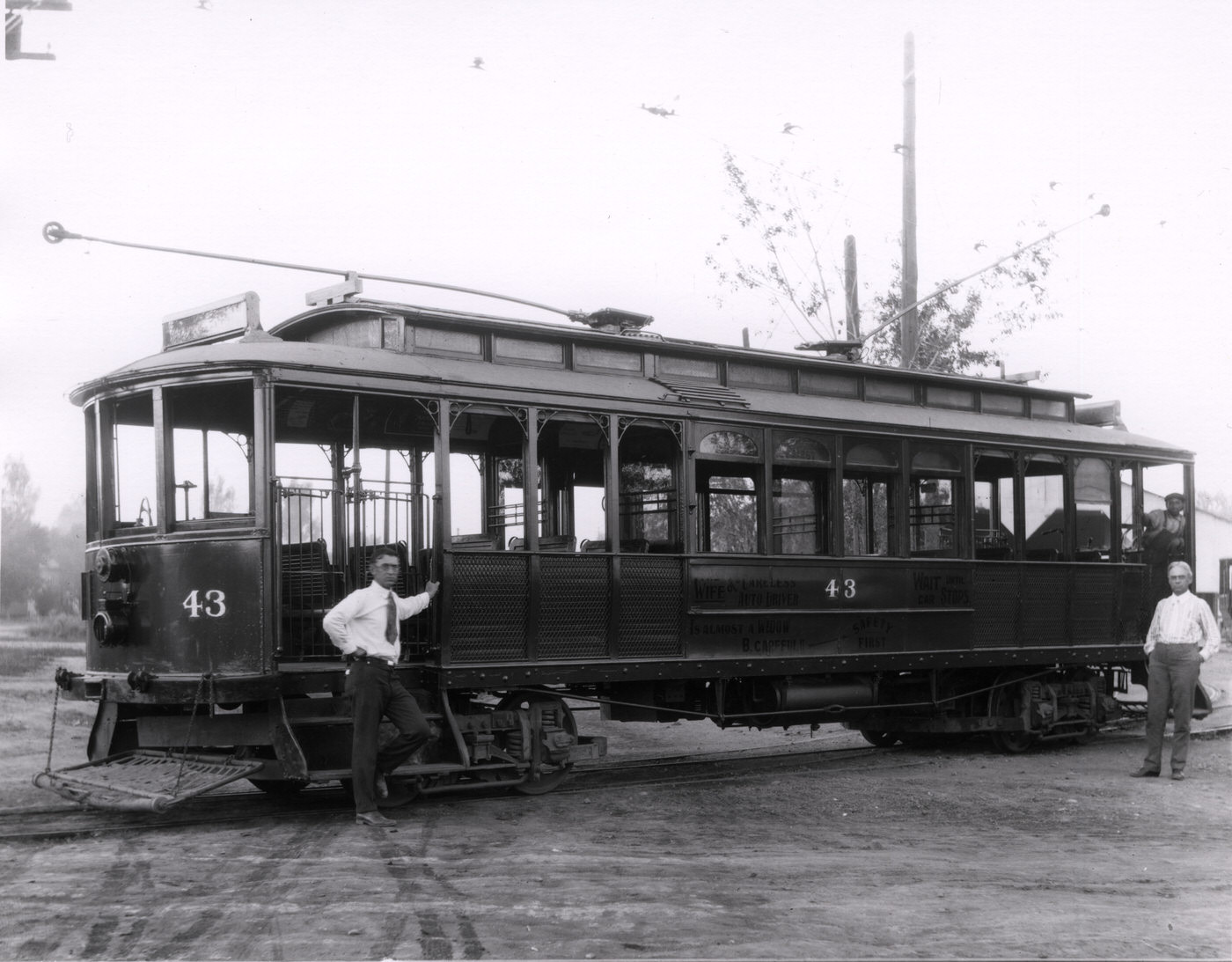
Streetcar No. 43 in Phoenix, 1920
Phoenix Streetcar No. 60, 1927
Swimming in the Town Ditch or Swilling's Ditch. It ran to Van Buren Street in the old townsite but was paved over by the 1930s.
Swimming in the Town Ditch or Swilling’s Ditch. It ran to Van Buren Street in the old townsite but was paved over by the 1930s.

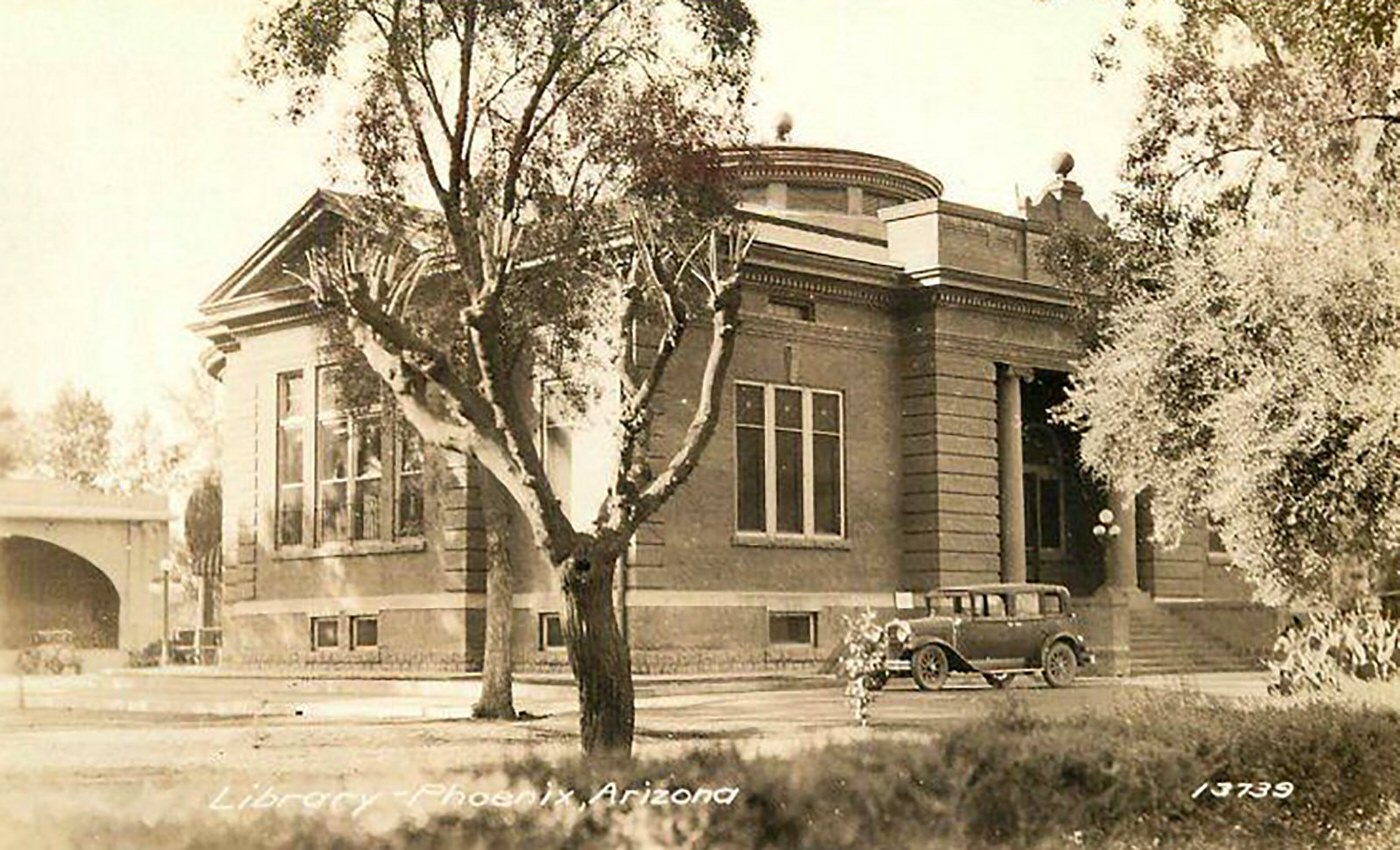
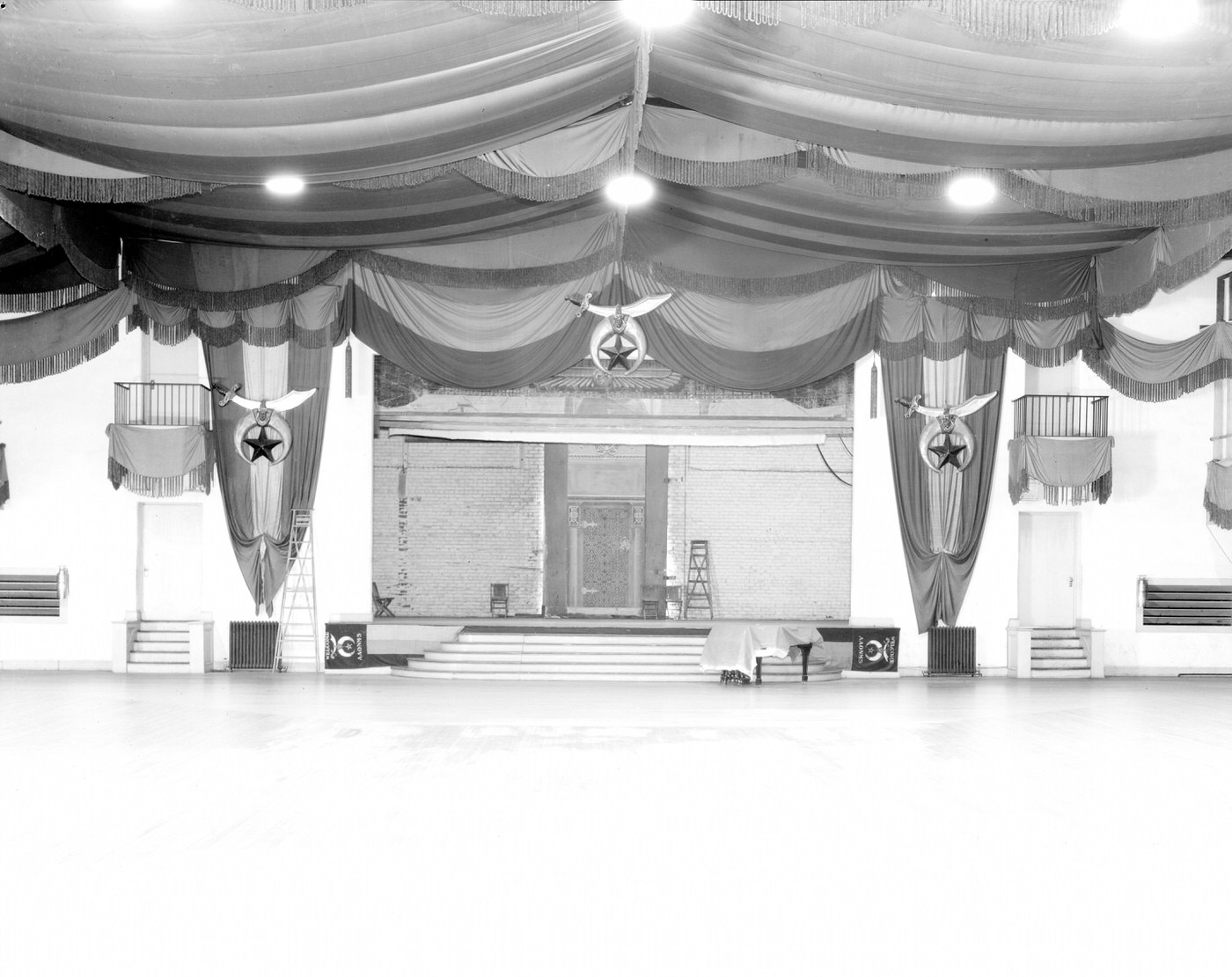
Fraternal and civic organizations were putting up buildings of their own. The Masonic Temple and the El Zaribah Shrine Temple both added to the architectural variety of the city. The Carnegie Library was completed on west Washington Street, giving residents a public reading space. The O’Neill Building at First Avenue and Adams was another prominent commercial address in the growing downtown grid.
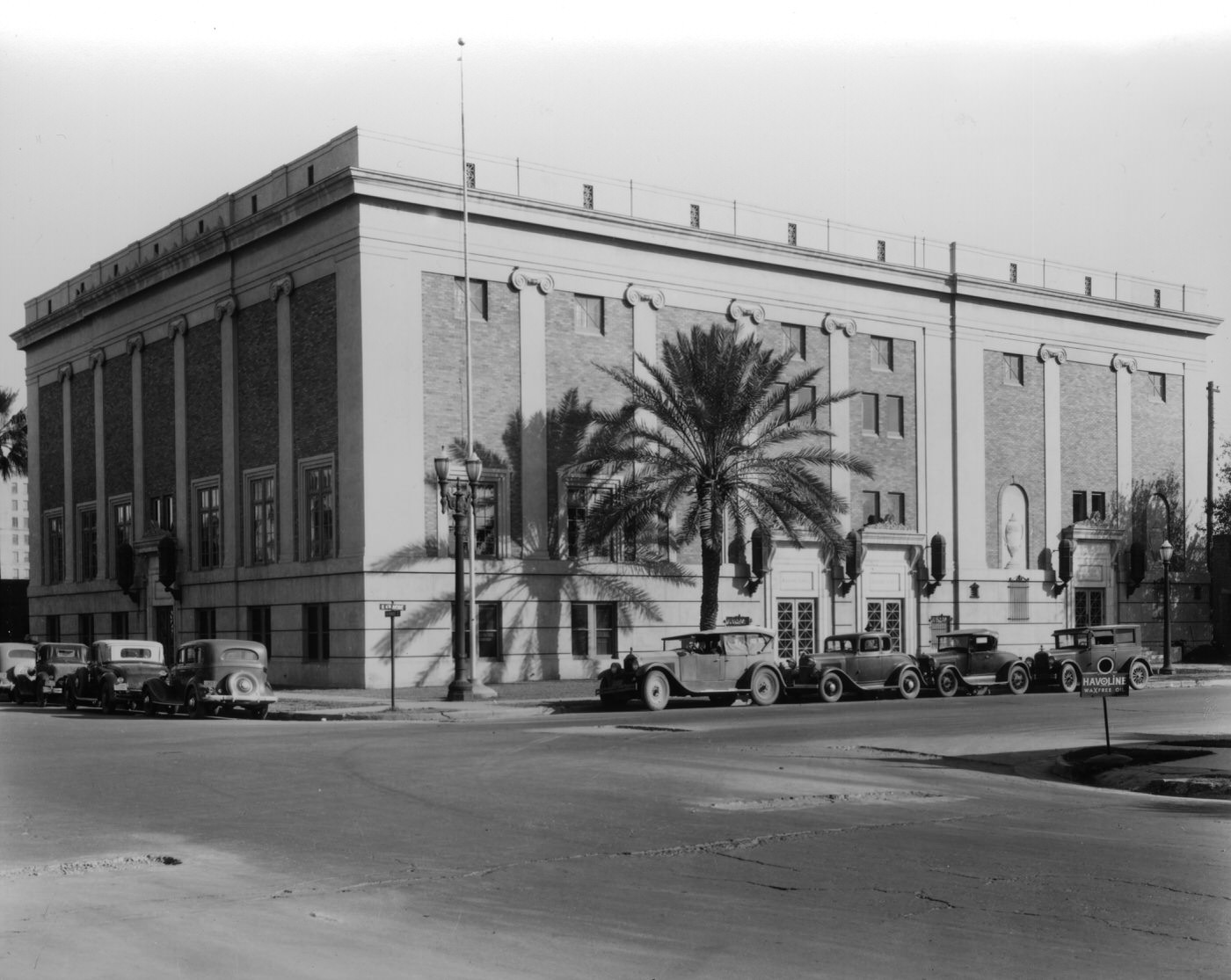
Masonic Temple Exterior, 1926
El Zaribah Shrine Temple Interior, 1926
The Carnegie Library was completed on west Washington Street.
The O'Neill Building at First Avenue and Adams.
The O’Neill Building at First Avenue and Adams.
O'Neil Building on W. Adams Street, 1920
O’Neil Building on W. Adams Street, 1920
This building was located at First Ave. and Adams Street in Phoenix, 1929
O'Neil Building on W. Adams Street, 1929. This building was located at First Ave. and Adams Street in Phoenix.
O’Neil Building on W. Adams Street, 1929. This building was located at First Ave. and Adams Street in Phoenix.

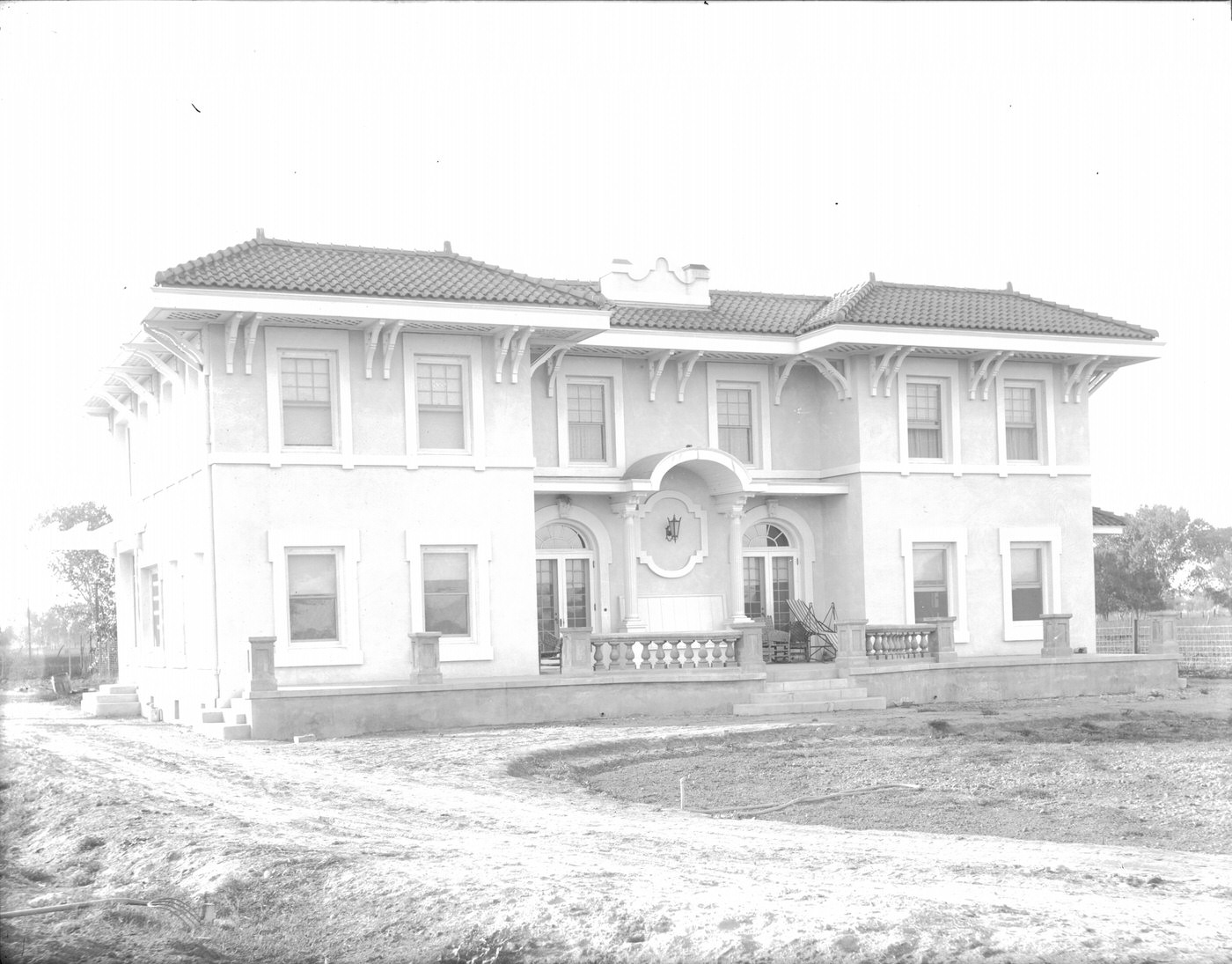
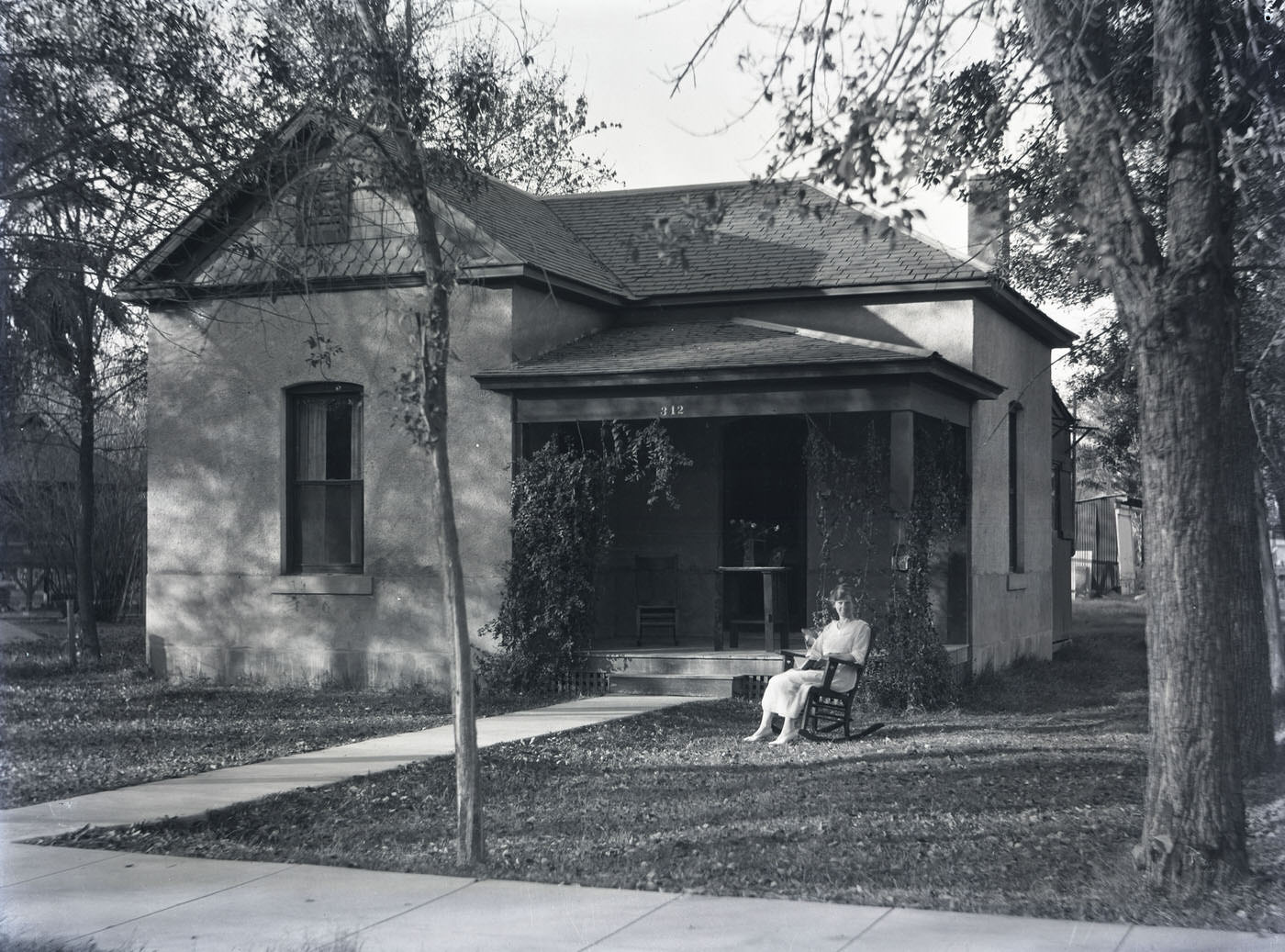
Residential Phoenix was also changing. Elegant homes were going up in neighborhoods north of the old commercial district. The Alexander Residence, the Norton House at 2700 N. 15th Avenue, and the J.W. Dorris House at 7th Avenue and Windsor were examples of the fine private homes being built during this era. The Dorris House later became part of the Encanto Community Church. Margaret McCulloch posed in front of her home at 312 E. Fillmore in 1929 — a modest but telling portrait of everyday Phoenix life during the boom years.
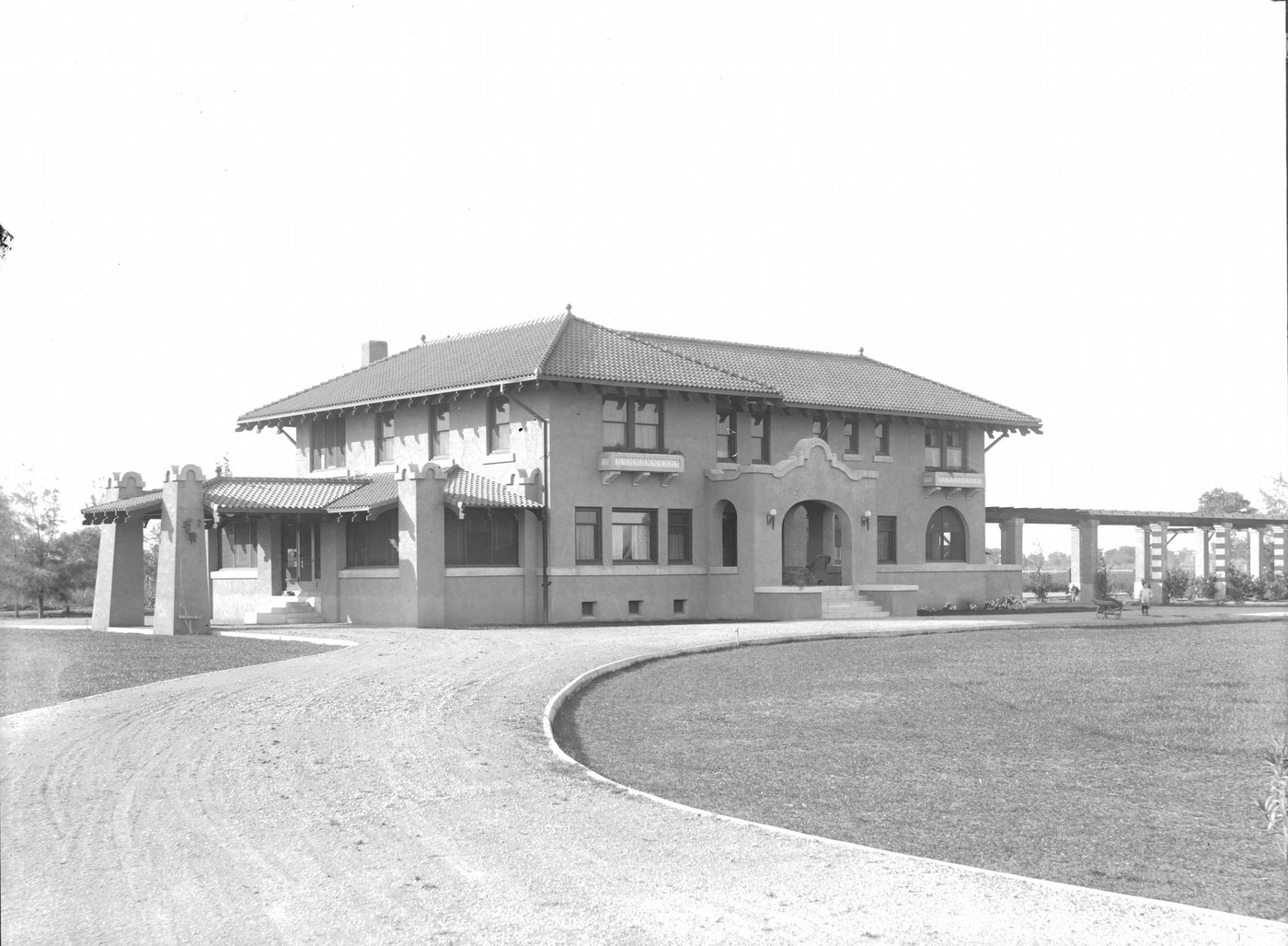
Alexander Residence, 1928
J. W. Dorris House Exterior, 1920. This building is located at 7th Ave. and Windsor and is part of the Encanto Community Church.
Norton House, 1920. This house was built in 1912 and is located at 2700 N.15th Ave. in Phoenix.
Margaret McCulloch in Front of Home at 312 E. Fillmore in Phoenix, 1929

Brophy College Prep opened in 1928, and photographs of its surroundings at the time give a clear sense of how much of Phoenix was still agricultural. Alfalfa and citrus fields stretched in every direction around the new school, illustrating the contrast between the growing city core and the farm country that still dominated the outlying areas. Nearby Chandler had its own high school by 1924, a sign that the communities surrounding Phoenix were also investing in their futures.
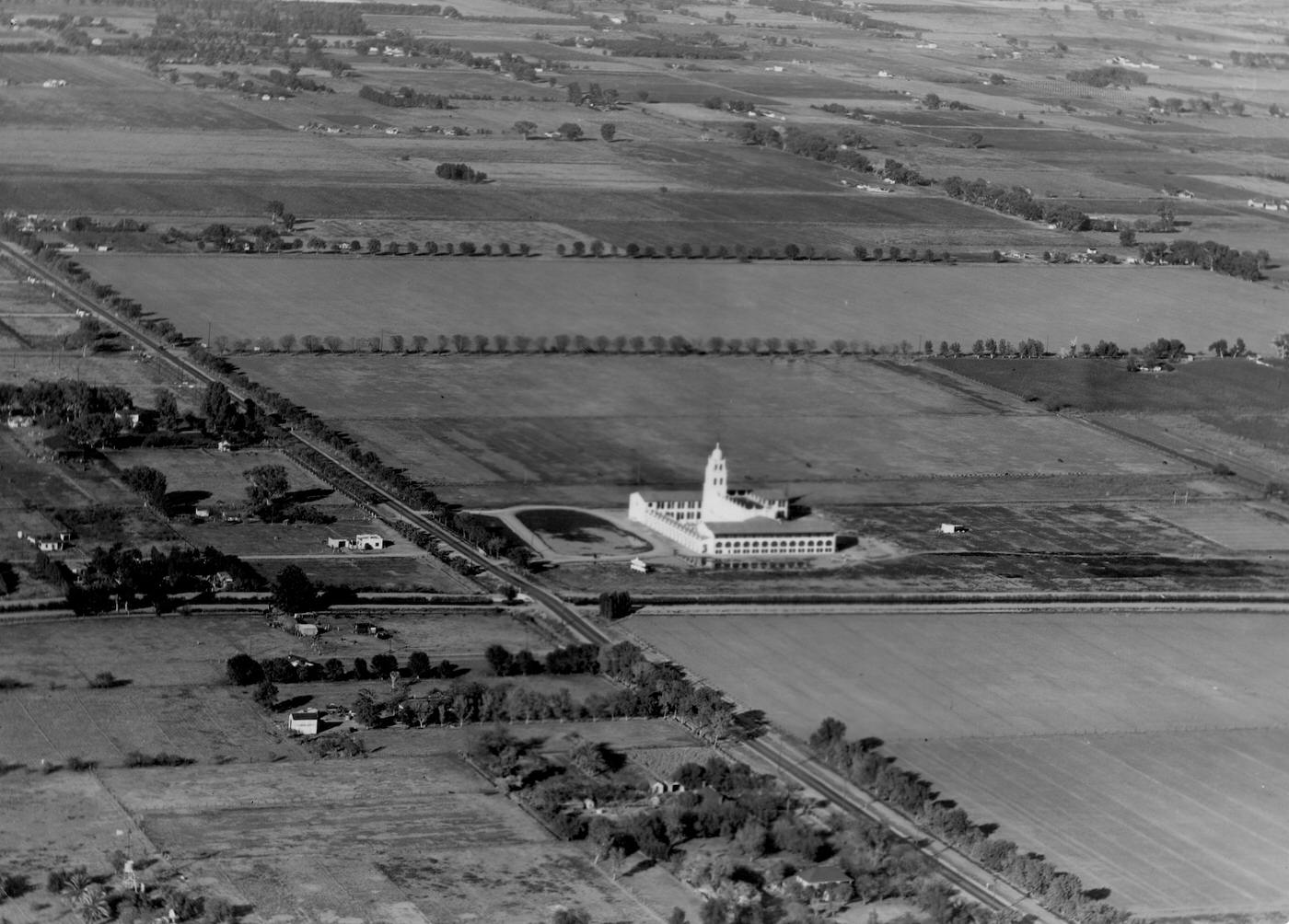
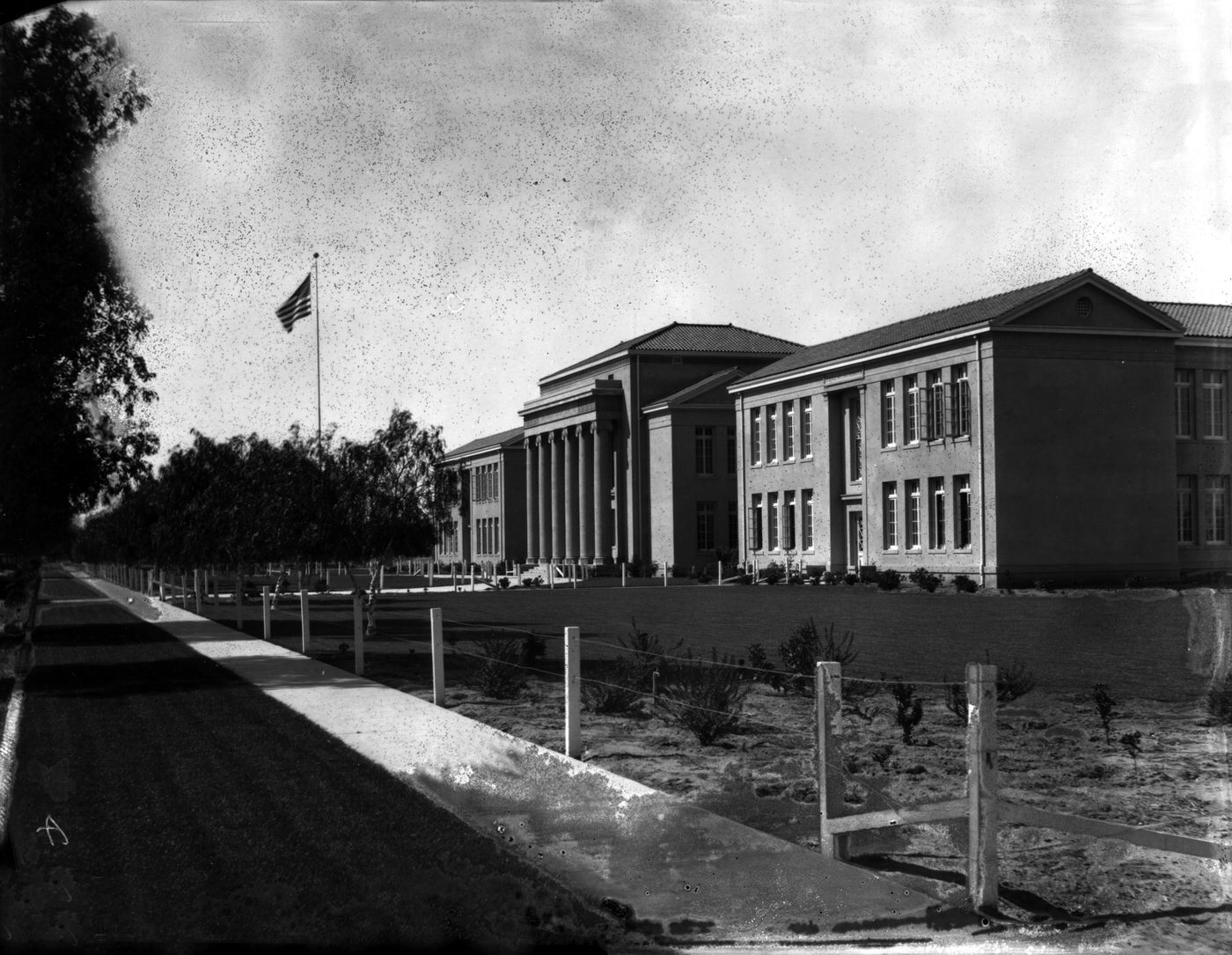
It's 1928 and the new Brophy College Prep's surroundings give a sense of the agricultural empire of Phoenix.
It’s 1928 and the new Brophy College Prep’s surroundings give a sense of the agricultural empire of Phoenix.
Chandler High School Building Exterior, 1924

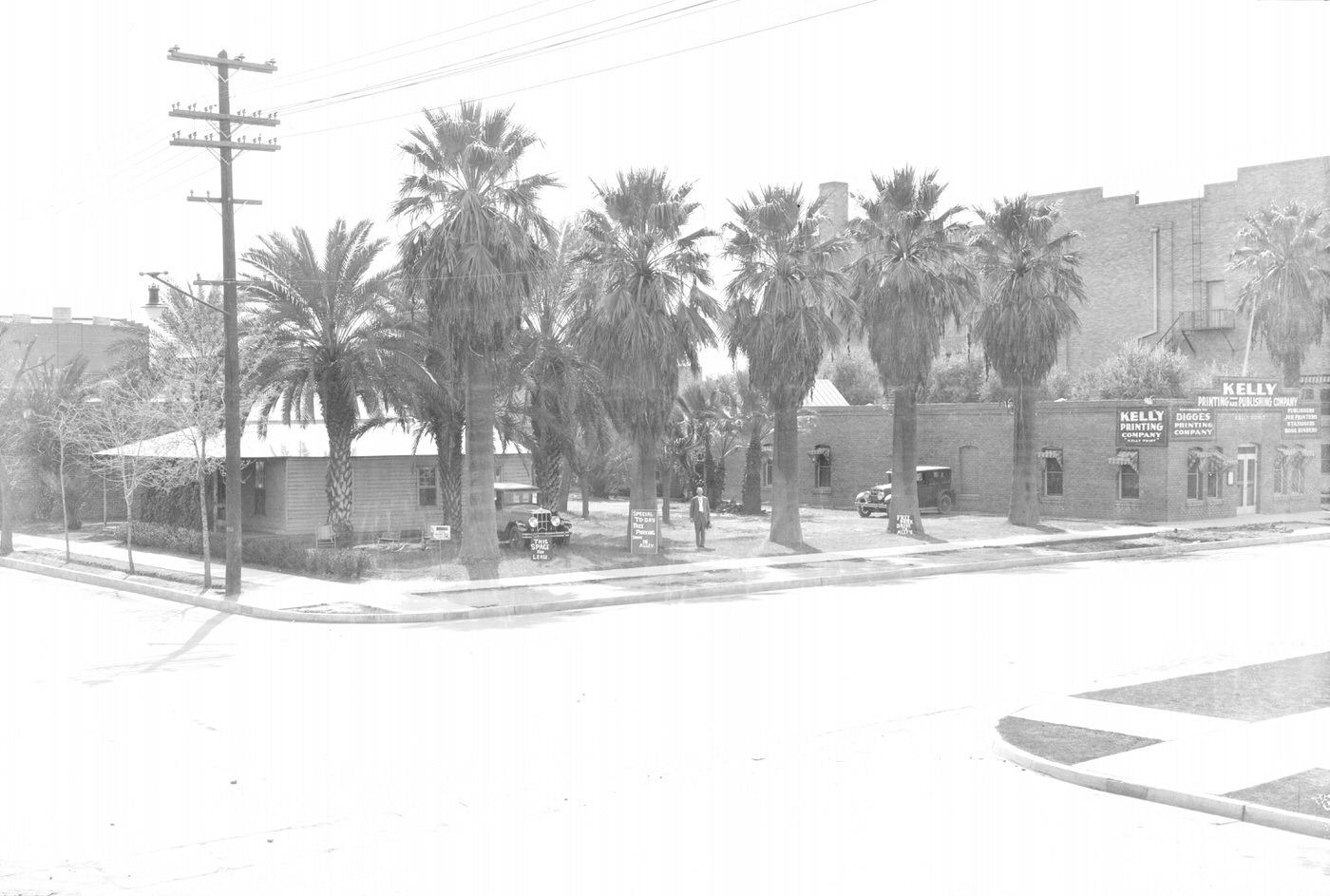
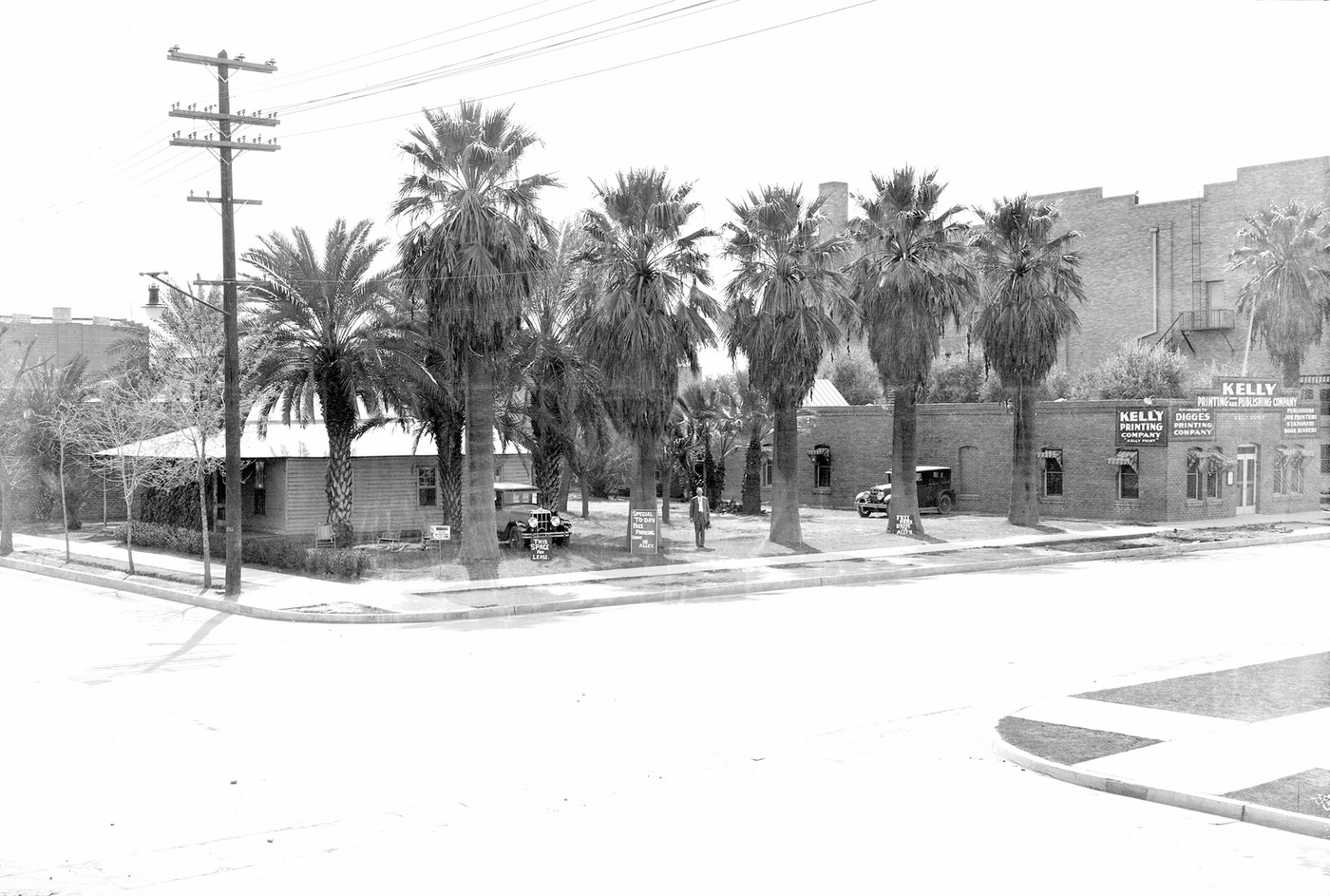
Photography itself was a growing business in Phoenix during the 1920s. The McCulloch Brothers Commercial Photographers, who documented much of the decade through their lenses, posed outside the Arizona Republican offices in 1928. Kelly Printing operated at Third Avenue and Monroe Street. These businesses were part of a broader commercial expansion that saw new storefronts and offices opening up all across downtown.
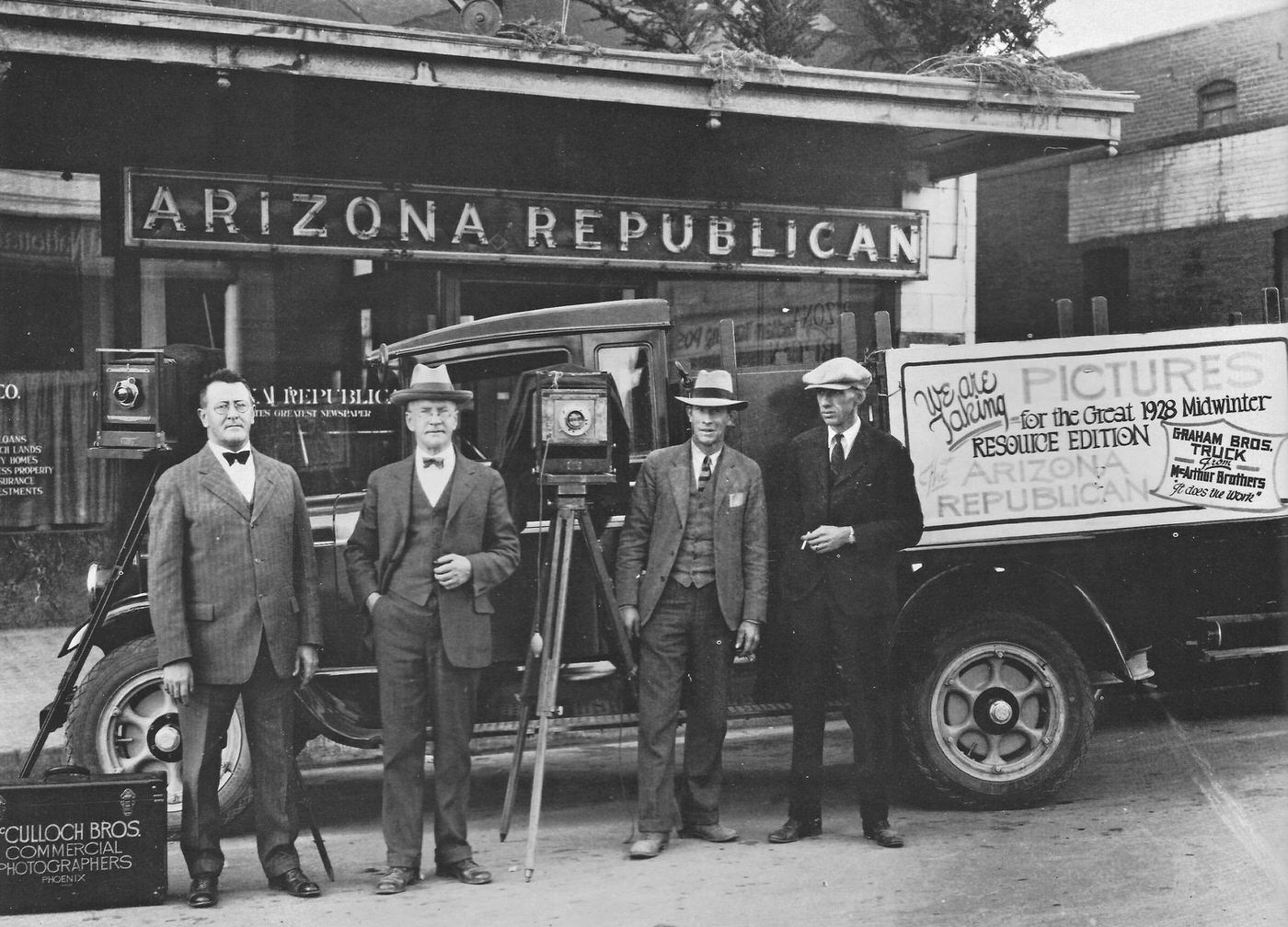
The McCulloch Brothers Commercial Photographers posing in 1928 outside the Arizona Republican offices.
Kelly Printing at Third Avenue and Monroe Street, 1928.
This building was located at Seventh Ave. and Van Buren in Phoenix, 1929
View of Phoenix From the County Courthouse, 1929
First Street and Washington looking north with the Anderson Building on the left in 1928.
The Phoenix Title and Trust Building is one of the impressive legacies of the Roaring '20s.
The Phoenix Title and Trust Building is one of the impressive legacies of the Roaring ’20s.
Southeast Corner of Third Ave. and Monroe Street, 1928
Southwest Corner of First St. and Adams St. Looking Northeast, 1920
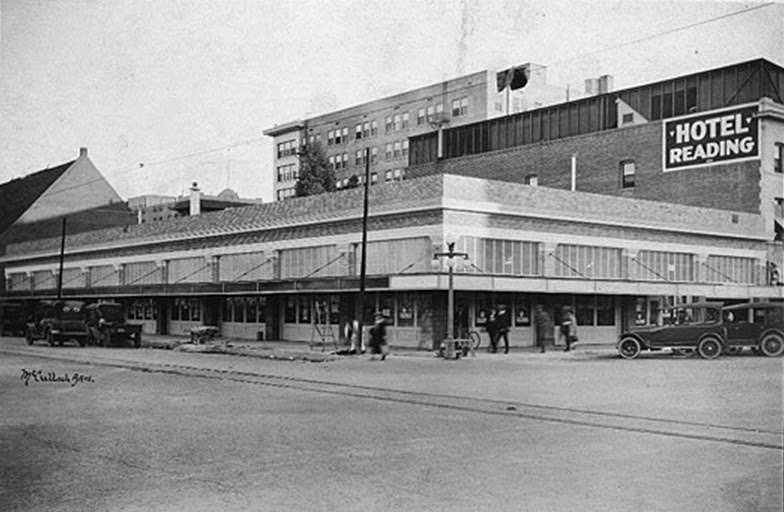
Here's what it looked like when completed, next to the Hotel Reading and on the Kenilworth streetcar line.
Here’s what it looked like when completed, next to the Hotel Reading and on the Kenilworth streetcar line.

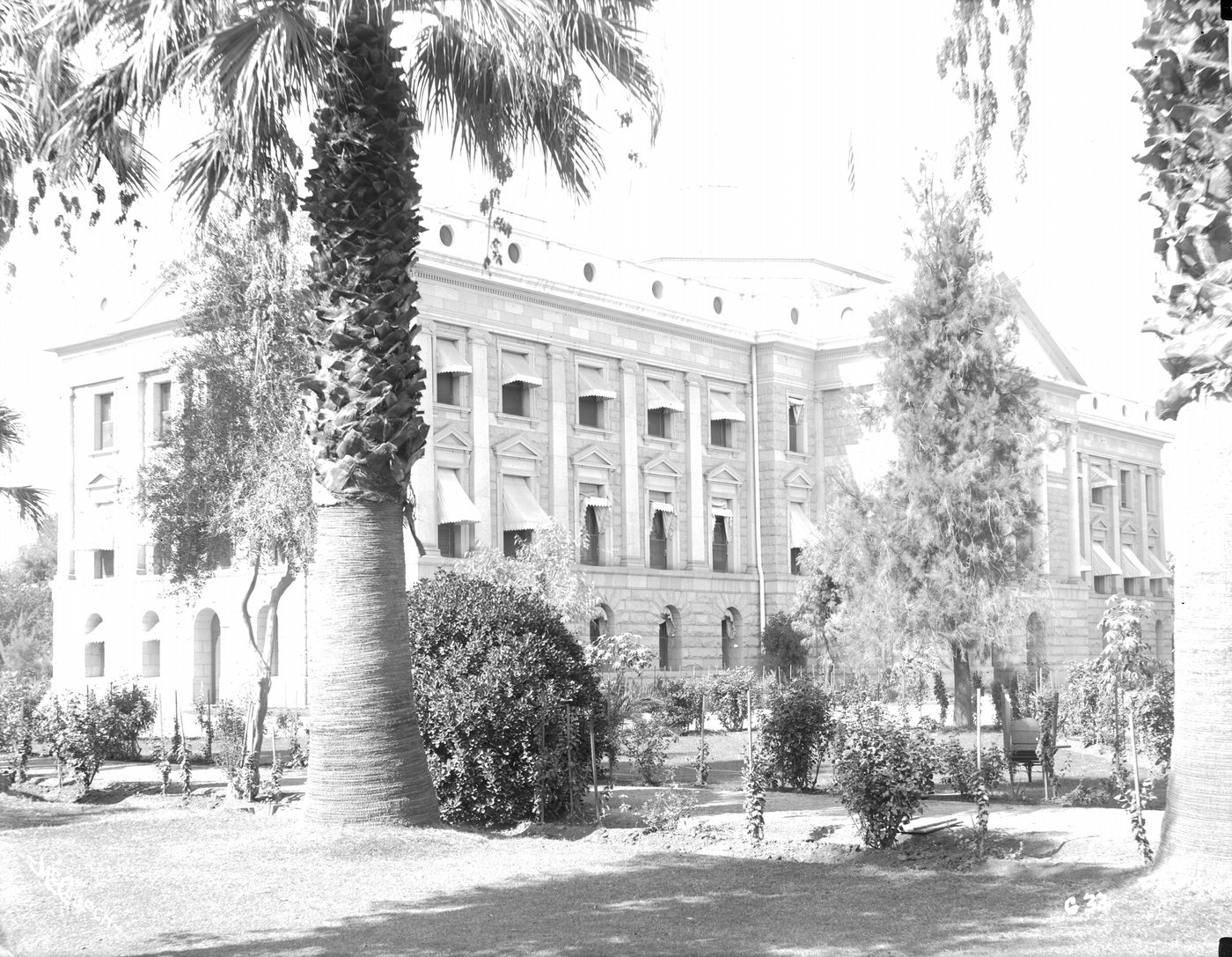
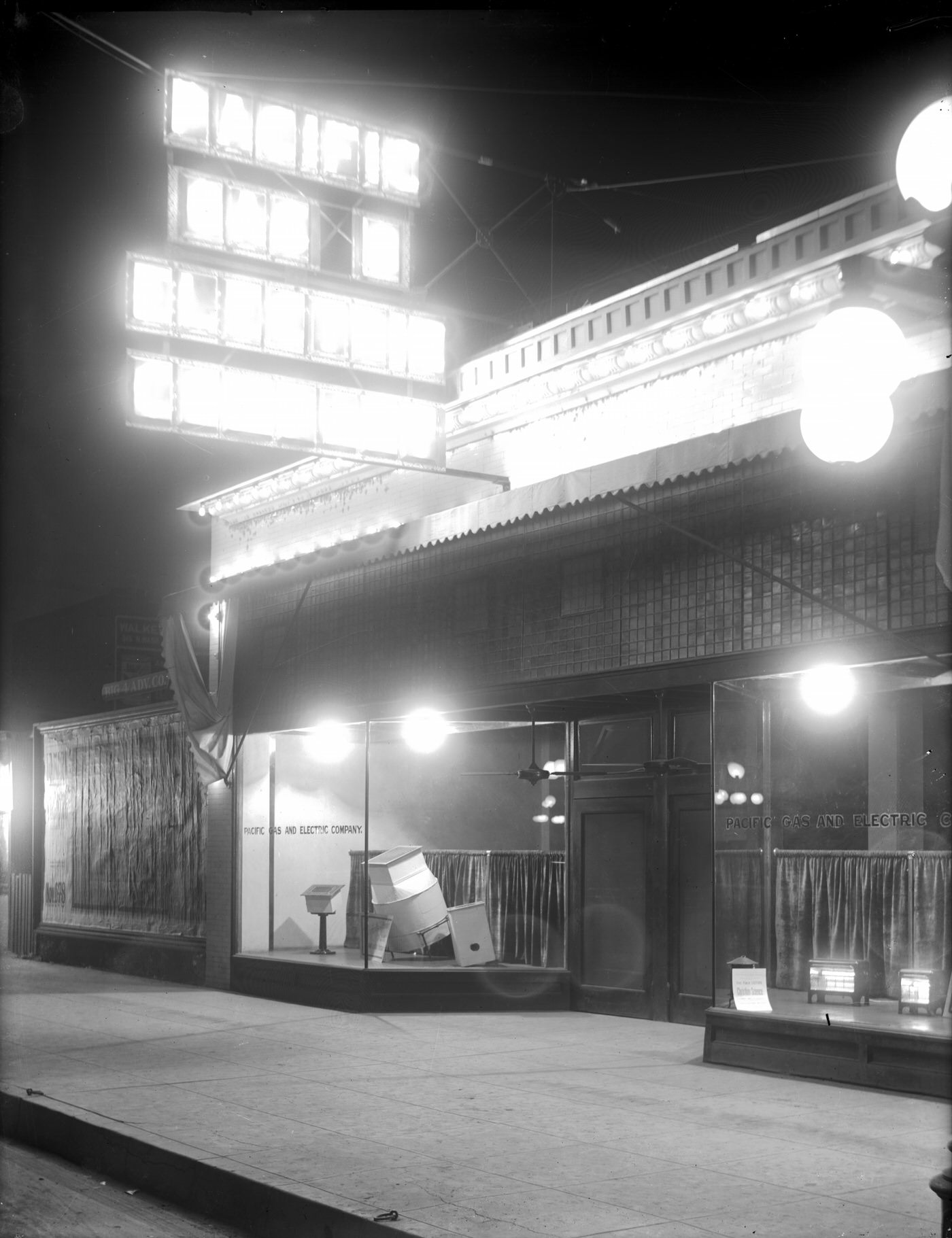
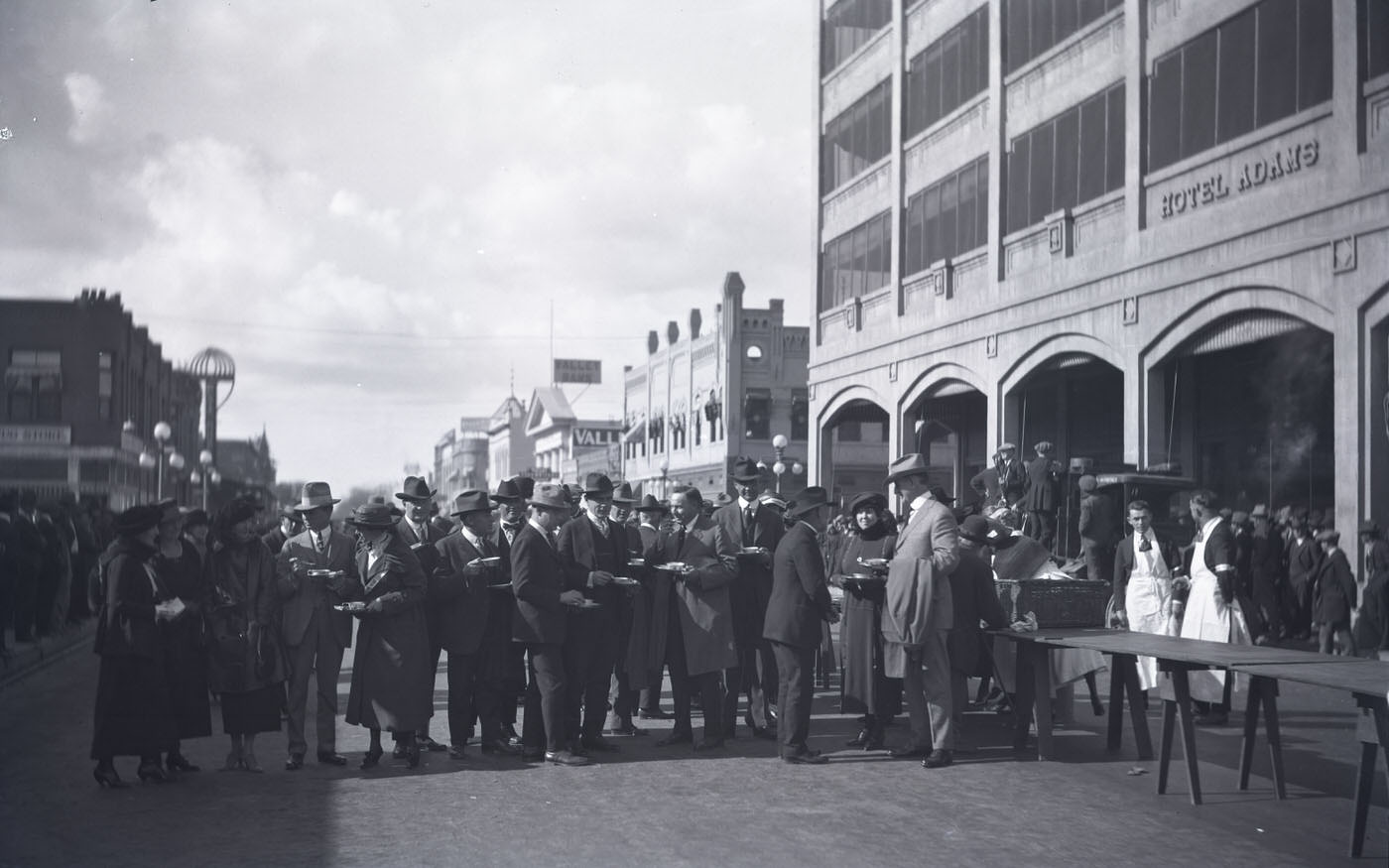
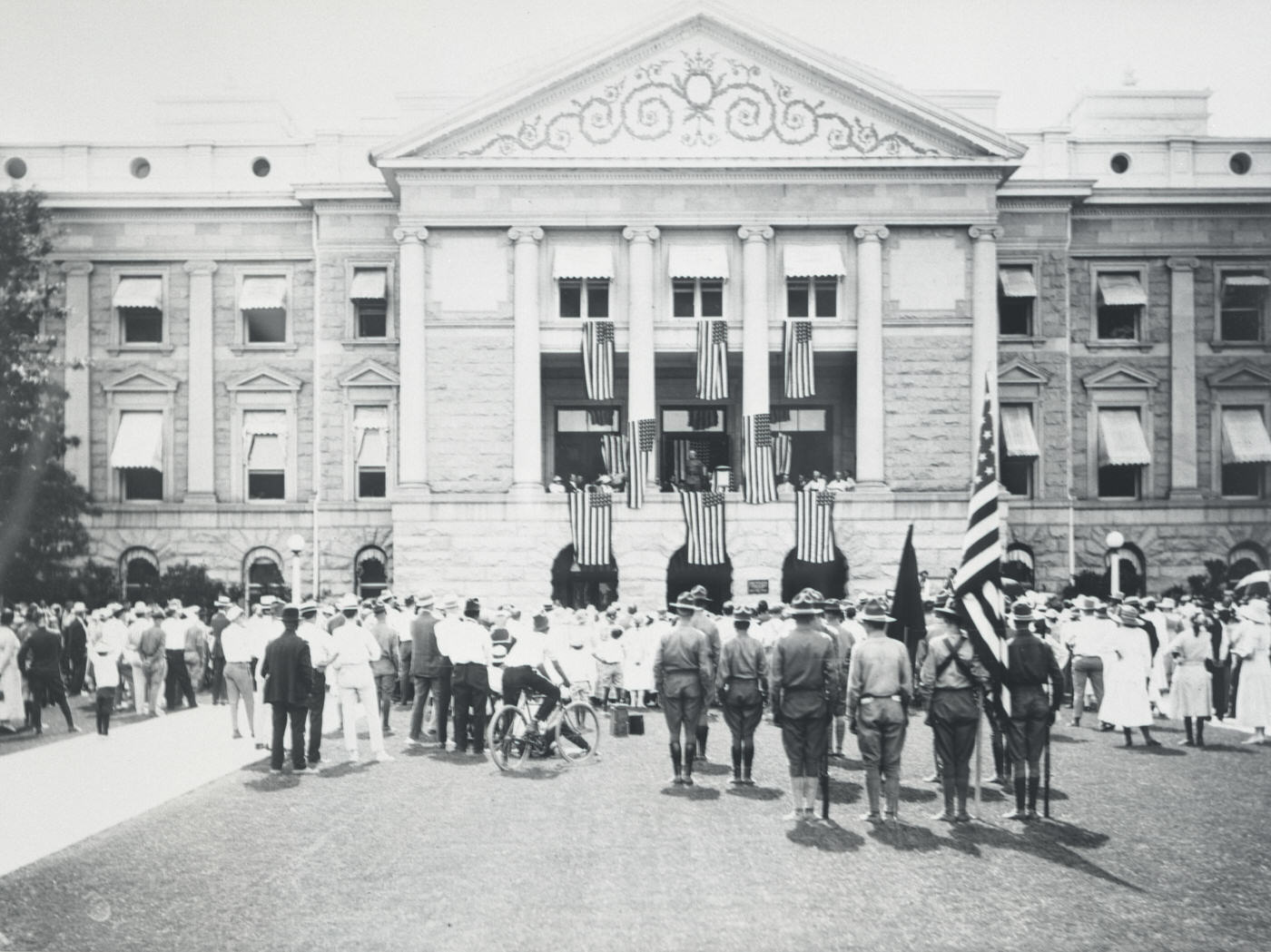
The Arizona State Capitol stood as the seat of state government throughout the decade, its copper dome a fixture on the city’s low horizon. Just east of downtown, the Pacific Gas and Electric Company Building lit up at night, a symbol of how electricity was reshaping daily life. Open-air events like the lunch on Adams Street held to raise relief funds for Europe following World War I showed that Phoenix residents were connected to the wider world, even as their city was still figuring out who it wanted to be.
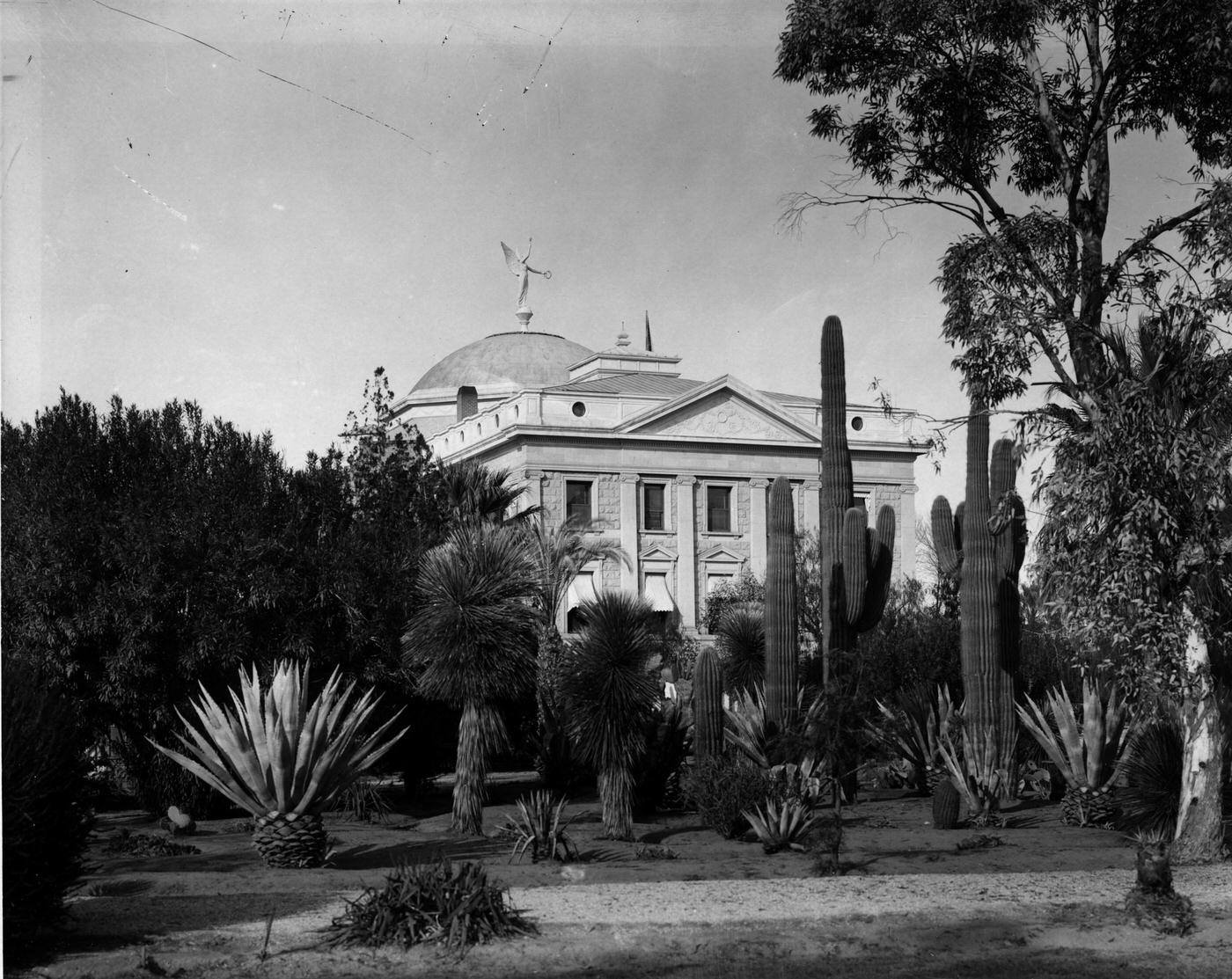
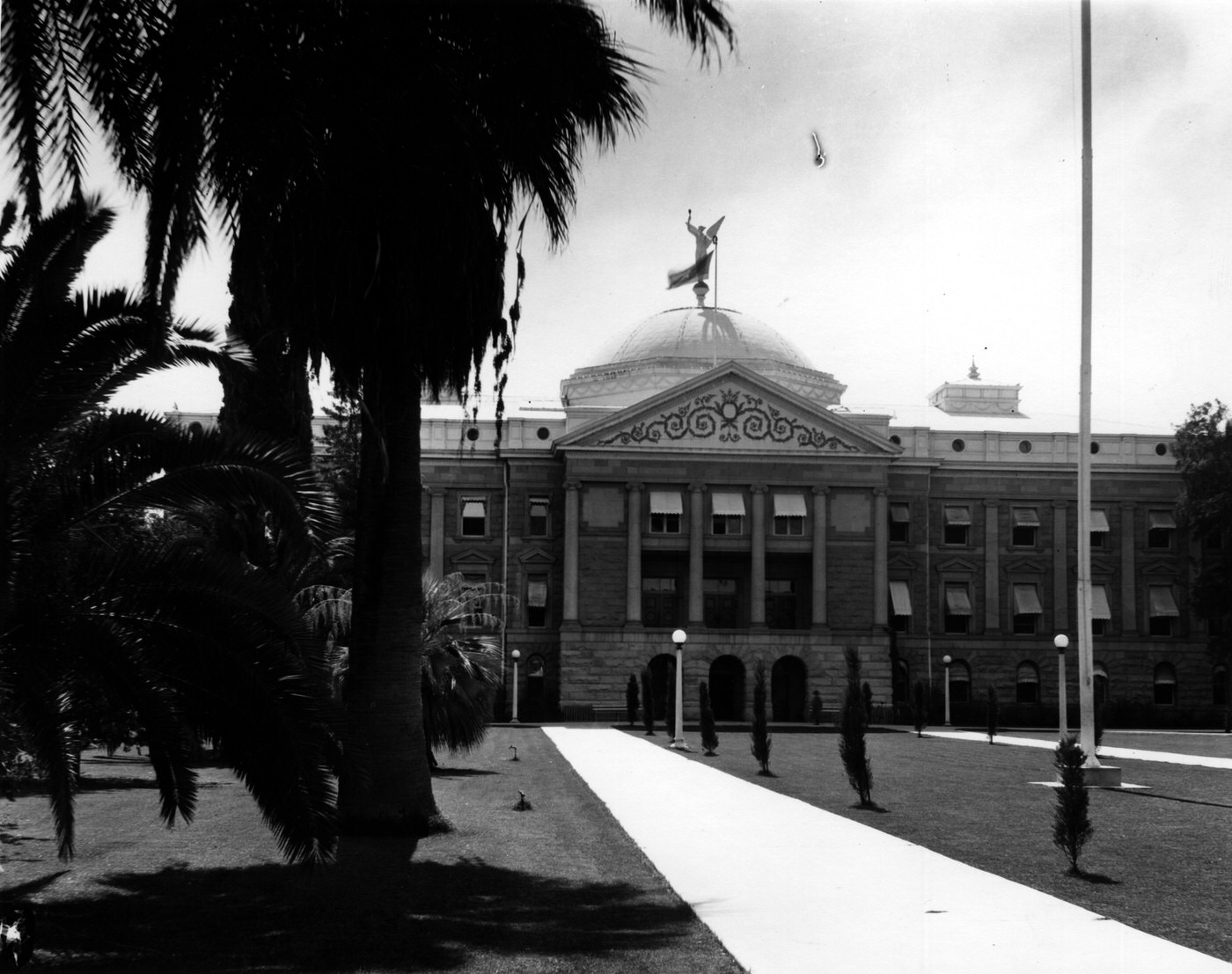
Arizona State Capitol, 1920
Pacific Gas and Electric Company Building at Night, 1920
Open Air Lunch on Adams Street Held to Raise Reflief Funds for Europe Following World War I, 1920
Frank Luke, Jr. Medal Presentation Ceremonies at the State Capitol, 1920

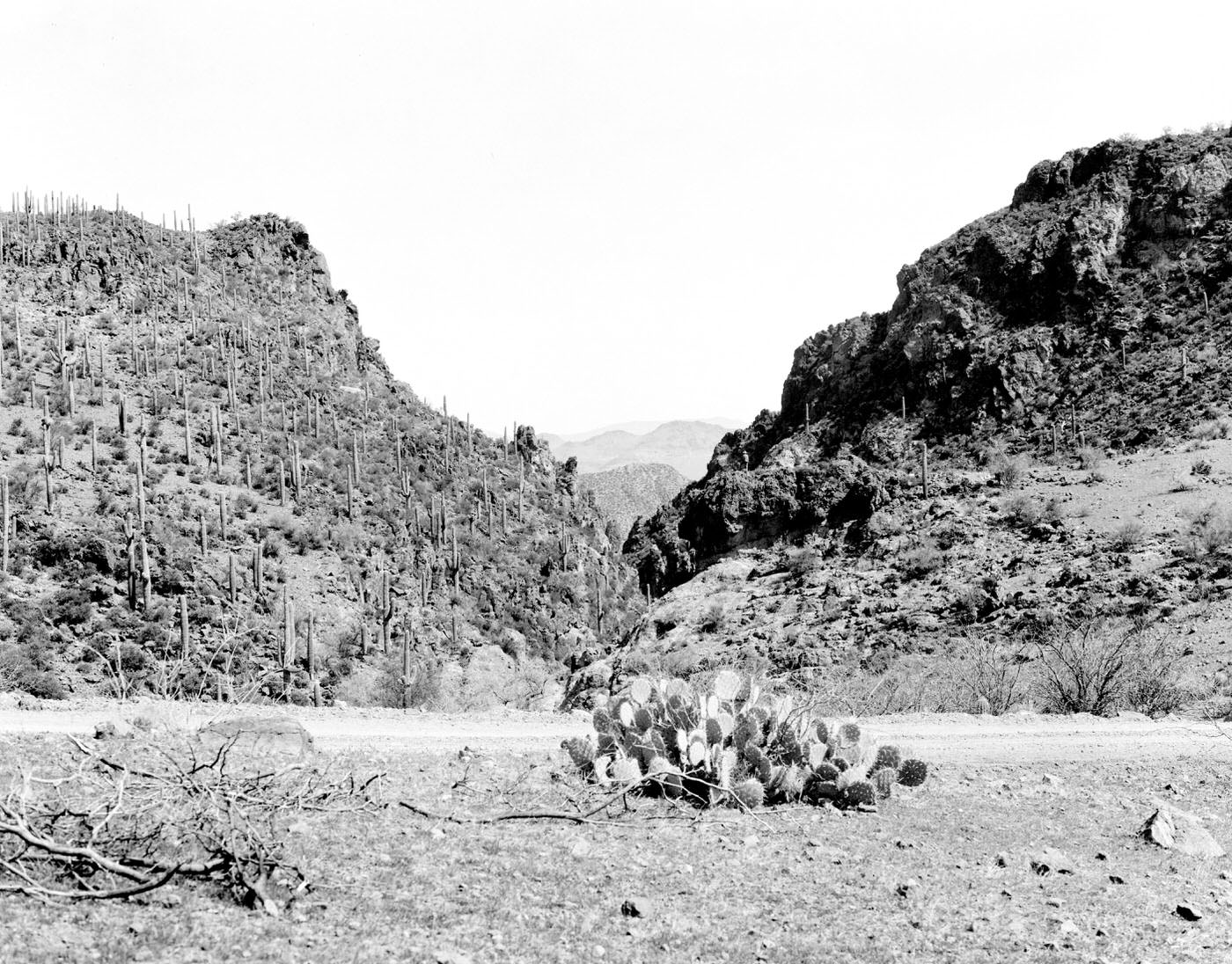
Outside the city, the surrounding desert and small towns were developing their own identities. Grand Avenue in Glendale ran just below the Santa Fe Railway tracks and depot. Mill Avenue in Tempe served as that town’s commercial spine. Roads near Phoenix were still largely unpaved, cutting through open desert scrub and saguaro country. The Apache Trail wound through particularly dramatic desert terrain, offering a glimpse of the wild landscape that still pressed up against the edges of the growing metropolis.
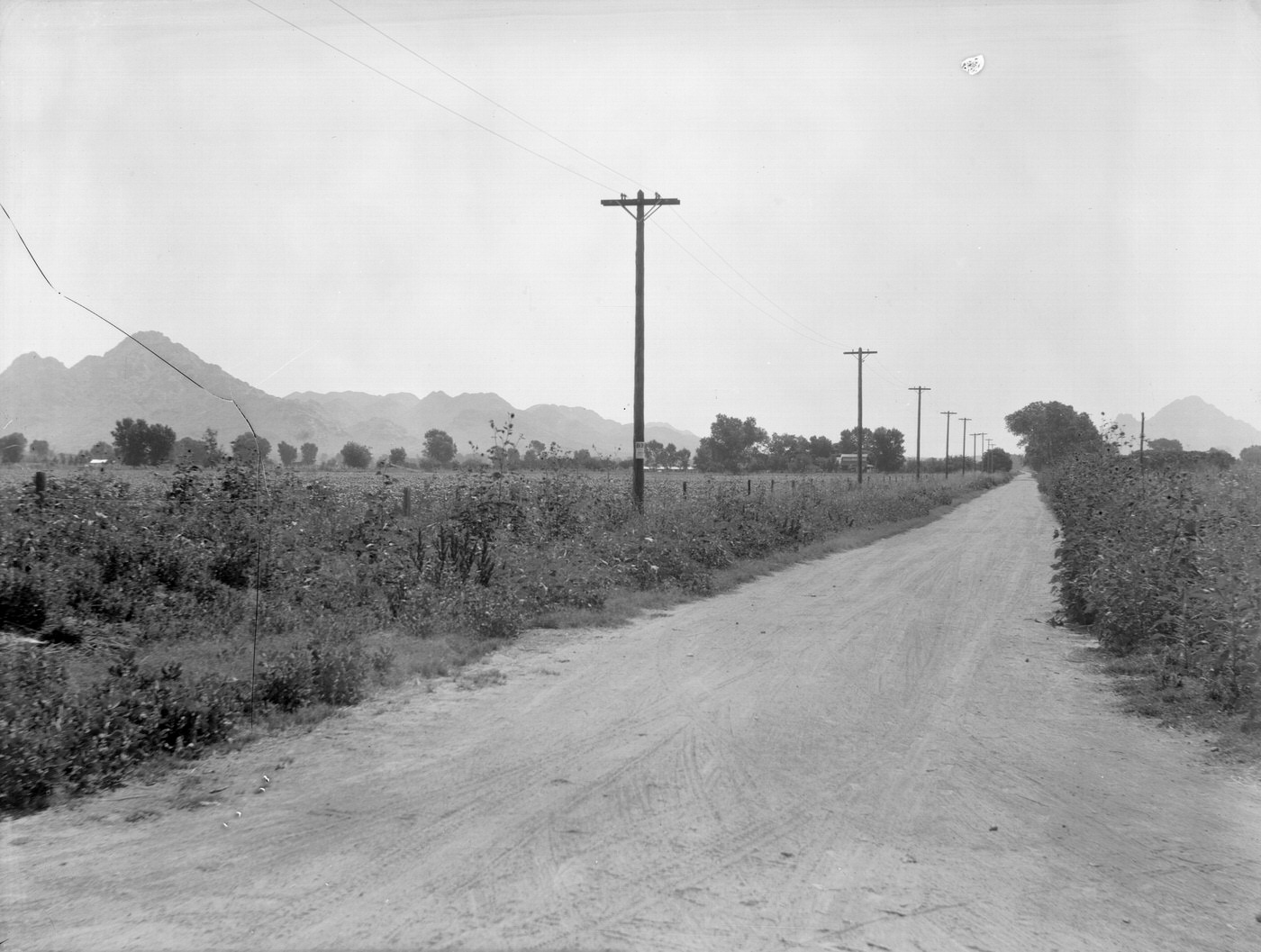
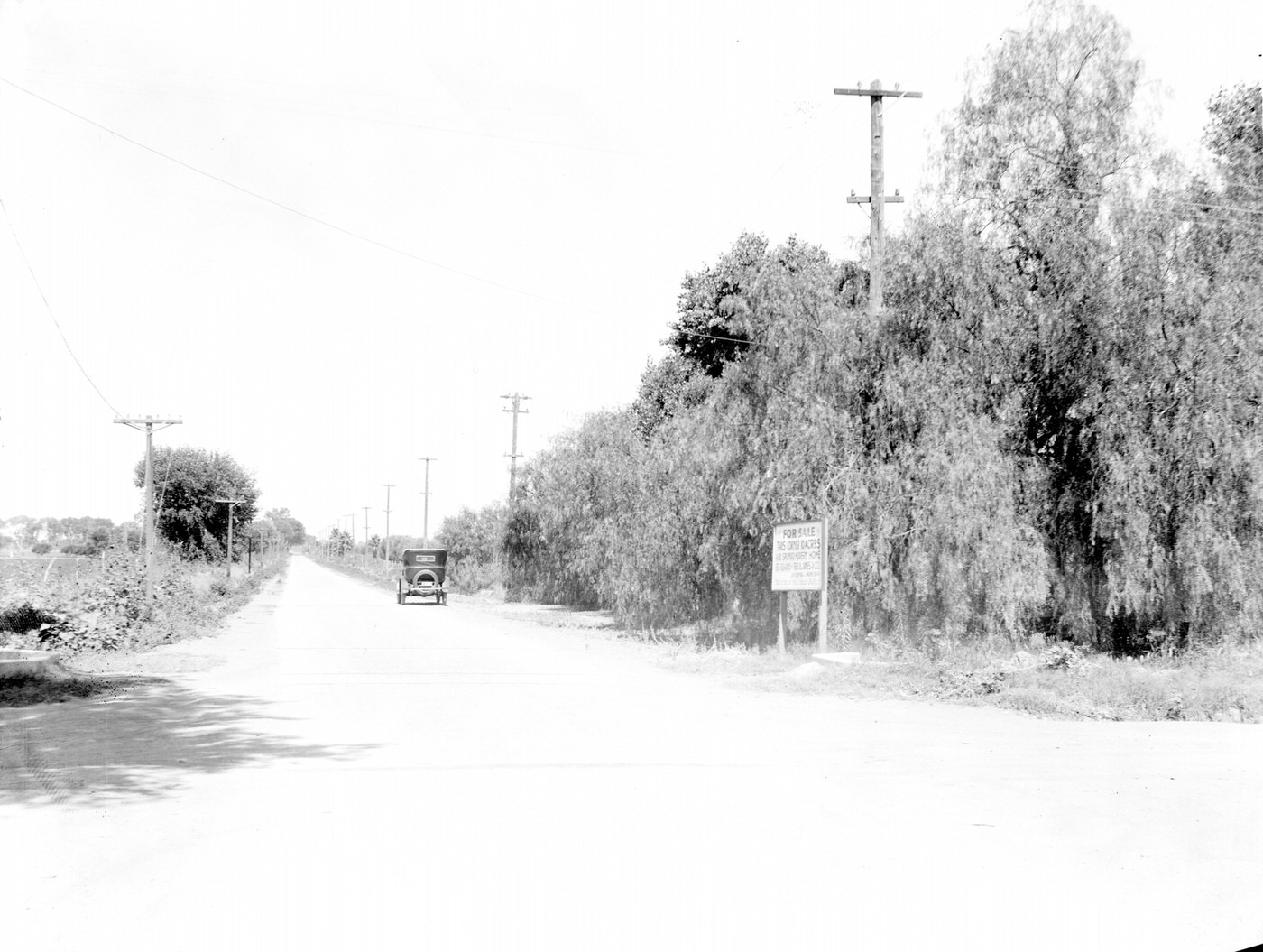
Landscape of an Old Road Near Phoenix, Arizona, 1925
Landscape of an Old Road Near Phoenix, 1925
Desert Along the Apache Trail, 1925
Grand Avenue in Glendale. Just below the photo are the Santa Fe Railway tracks and the depot.
Mill Avenue in Tempe.
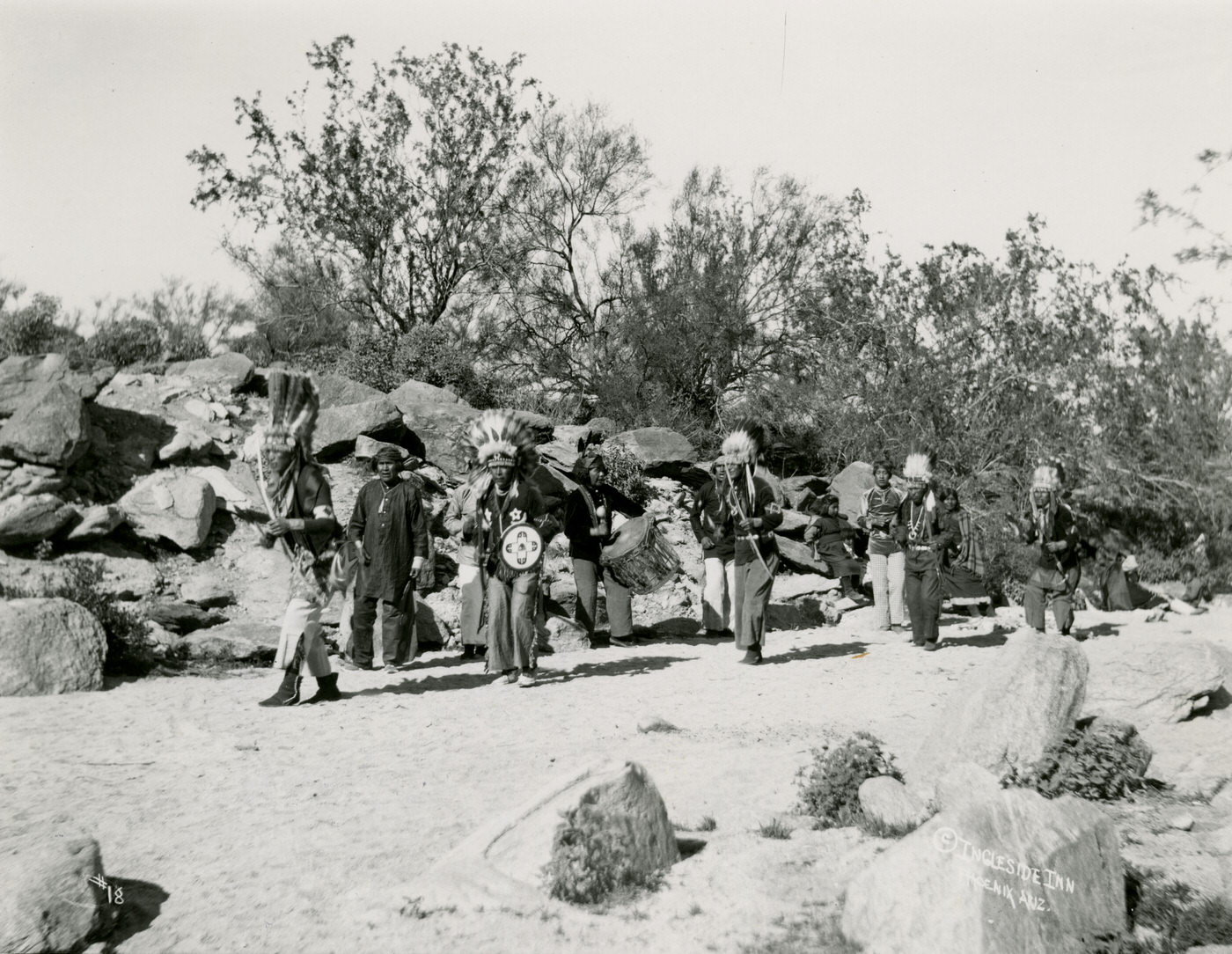
Hopi Dancers, 1925
Hopi Dancers, 1925
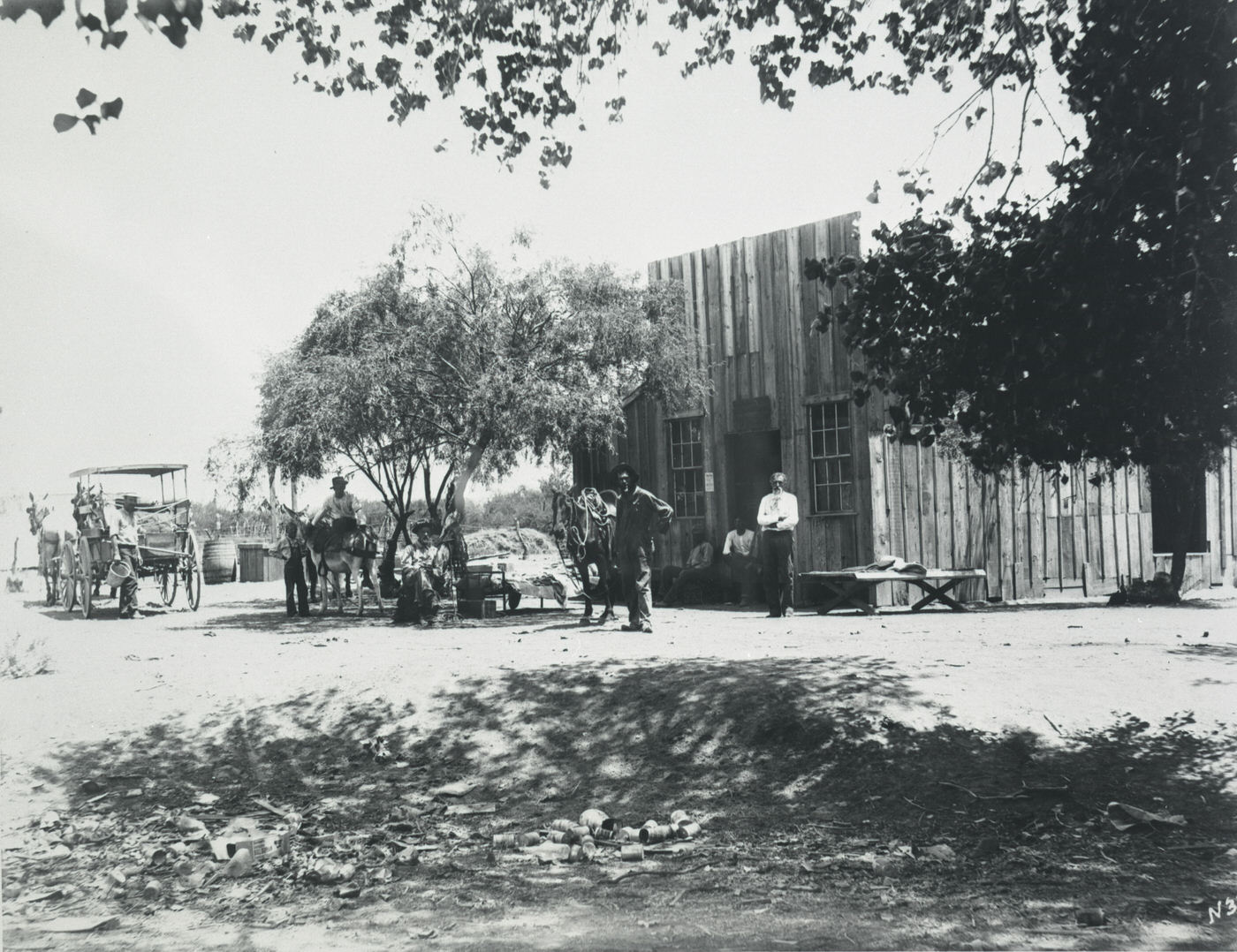
Barn on the Robert Bruce Packard Ranch, 1920
Enjoyed this post? Get new ones in your inbox.

Leave a Comment

Your email address will not be published. Required fields are marked *

Share this Post 🥺

Please take a moment to share this content. Your support is greatly appreciated! 🙌🙏

Share this Post 🥺

Please take a moment to share this content. Your support is greatly appreciated! 🙌🙏
Scroll to Top
 
Hey Friend, Before You Go.. Please like & follow for more interesting content