
In the 1950s, Olympians celebrated their 100th anniversary despite challenges brought by nature. Since that time, Olympia grew as a radio and entertainment hub, owning a radio station, a television station, and two daily newspapers. In 1953, the city had a population of nearly 17,000 people. State government expanded, Interstate 5 connected Olympia, Lacey, and Tumwater, and several historic buildings were demolished to make way for new construction — and these photos show what Olympia looked like during that transformative decade.
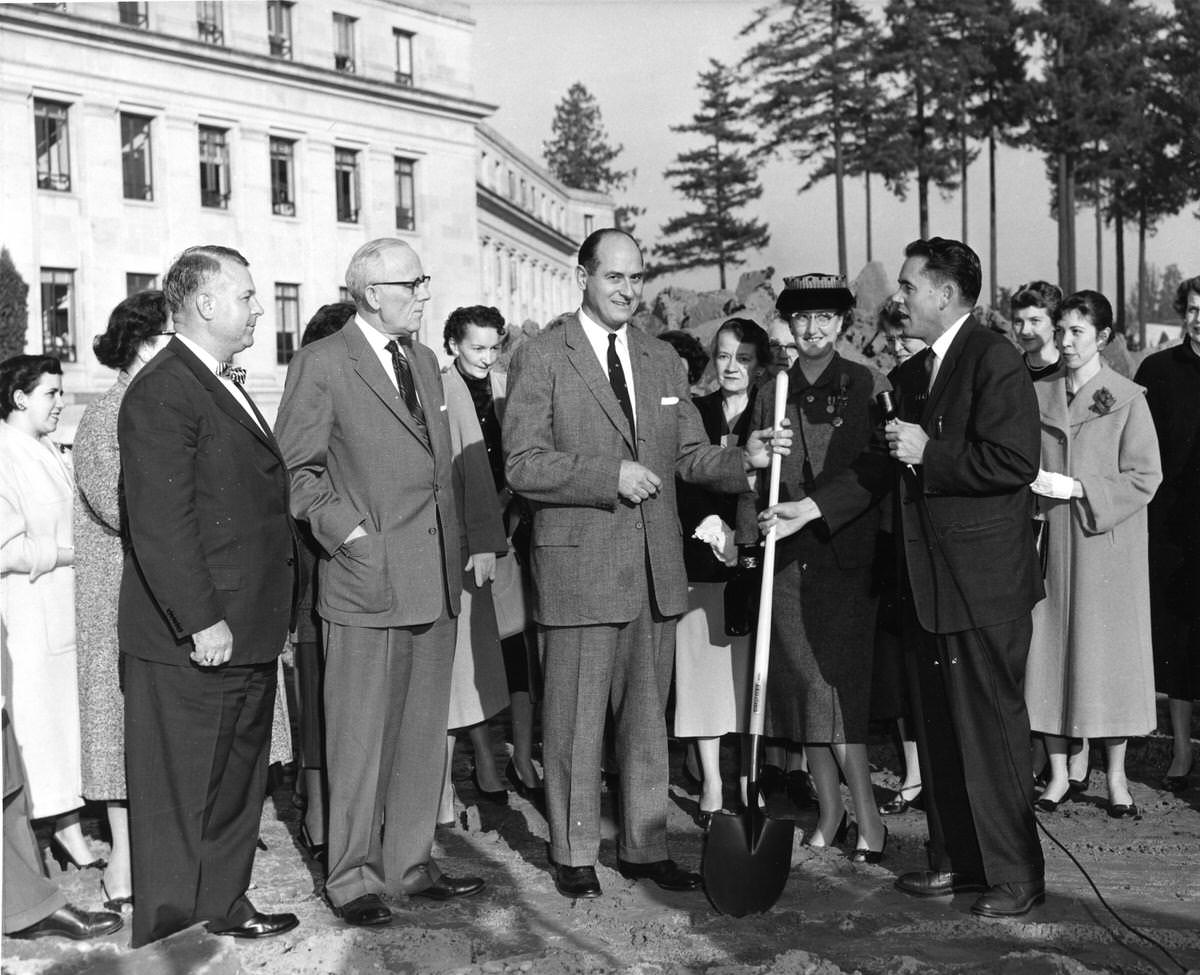
Governor Rosellini stands holding a shovel while a man speaks into a microphone. Maryan Reynolds, State Librarian, stands between them. A crowd surrounds them.
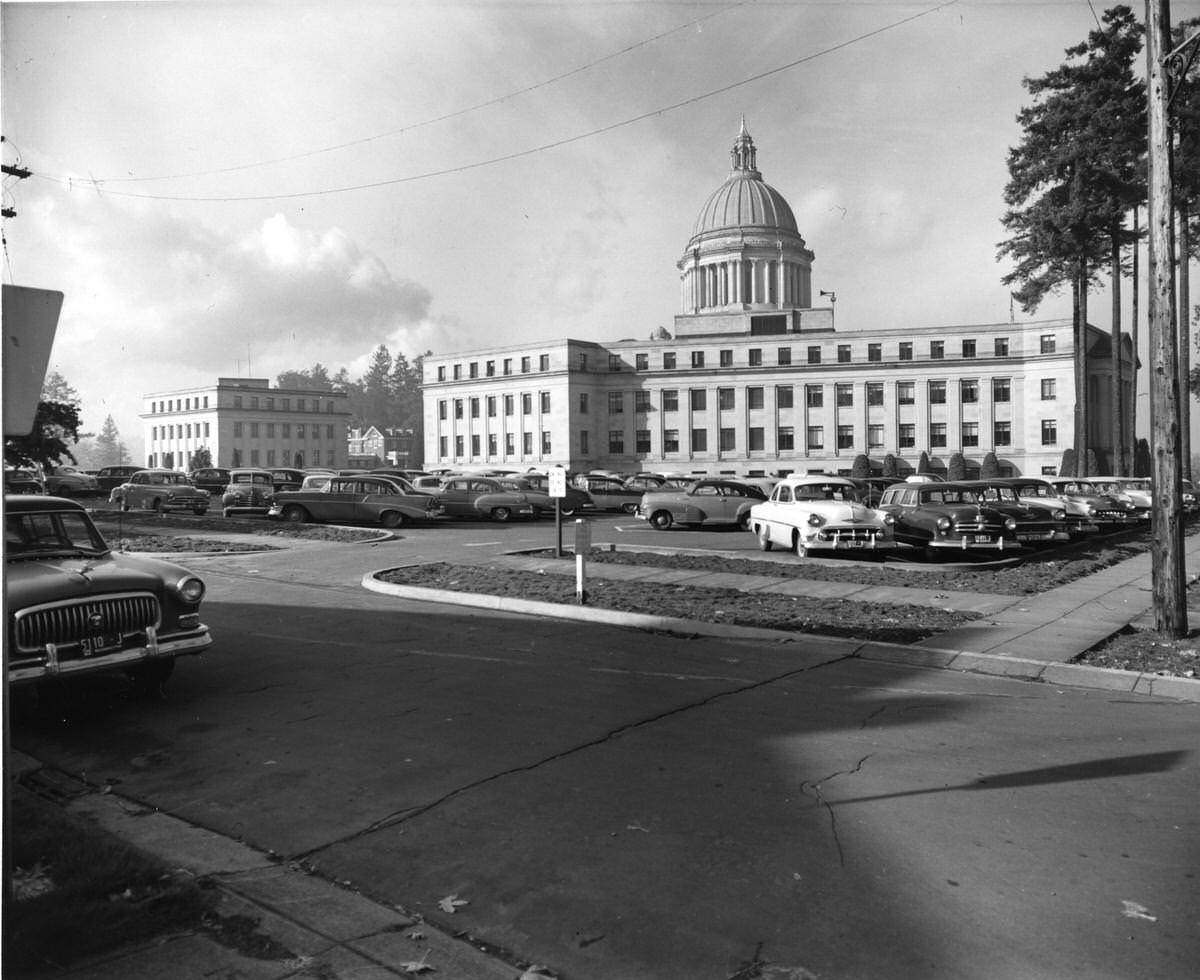
The photo includes cars and a parking lot. The Governor’s Mansion is partially visible.
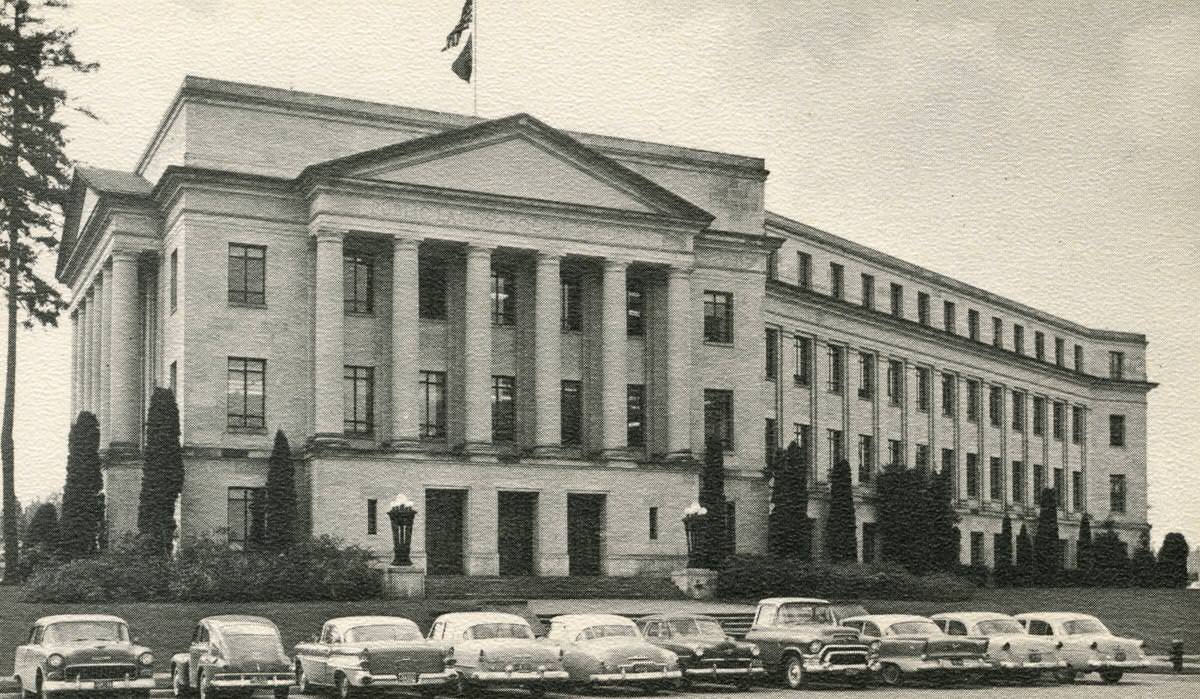
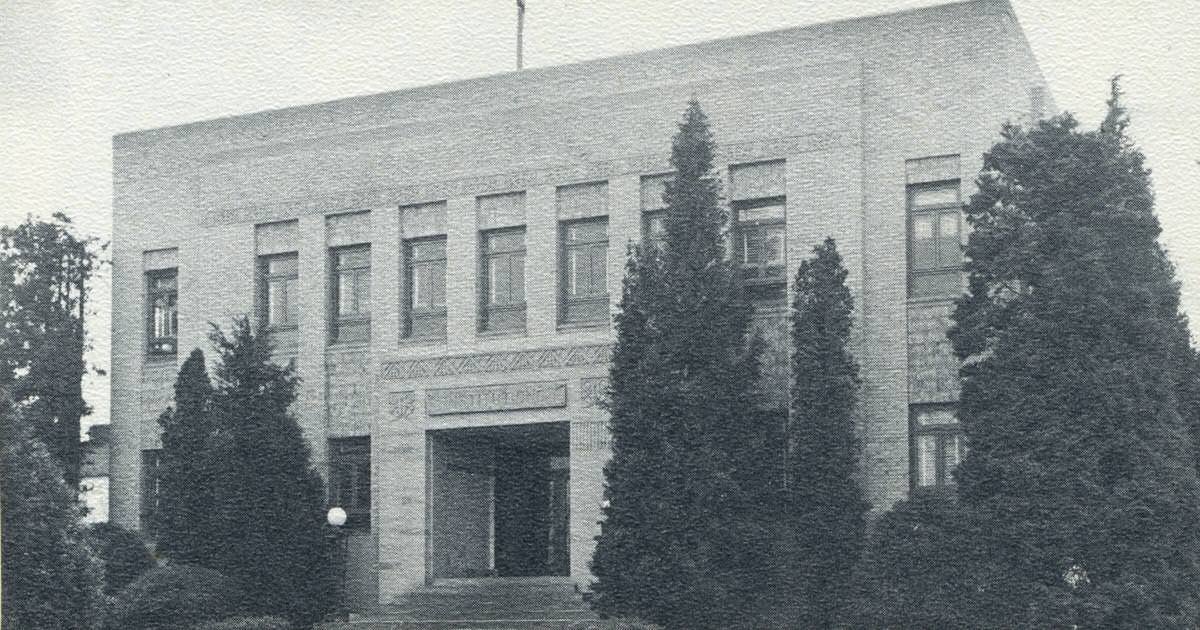
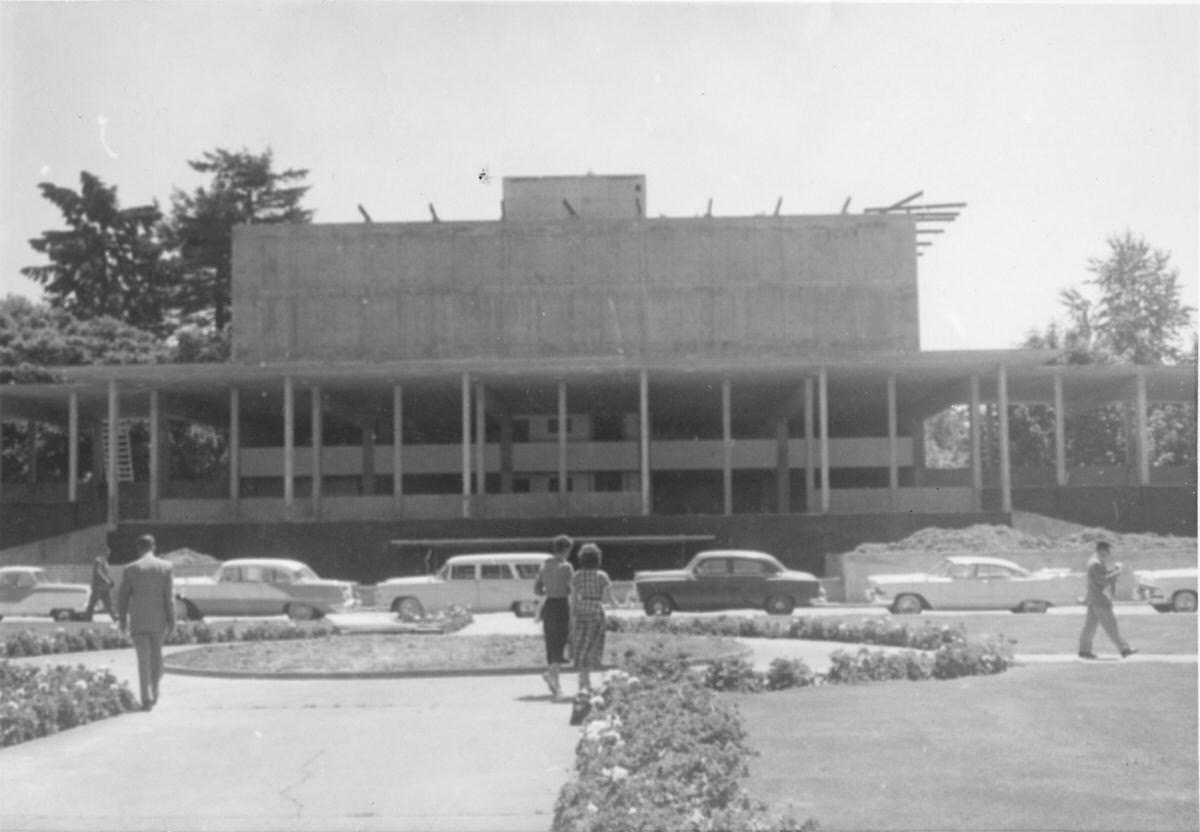
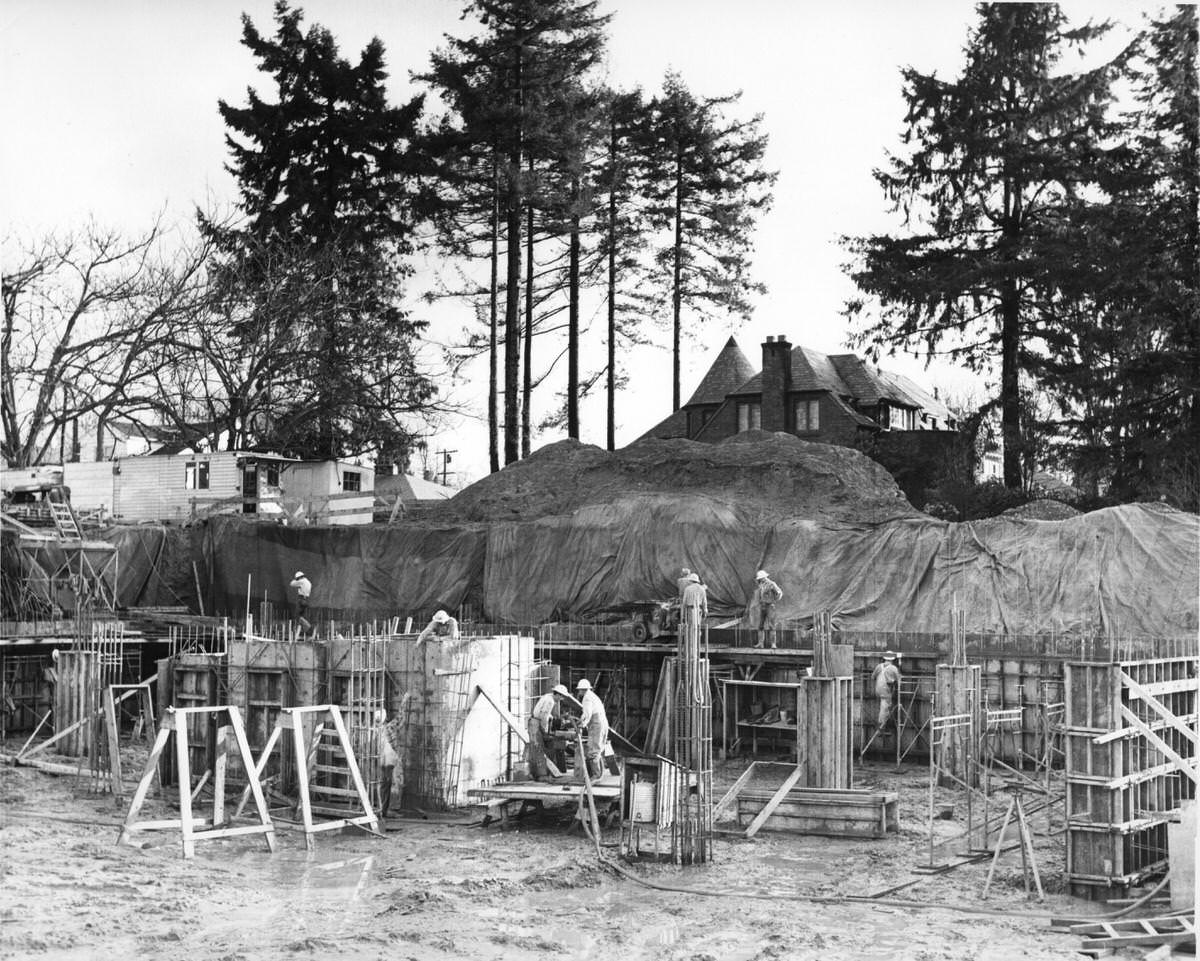
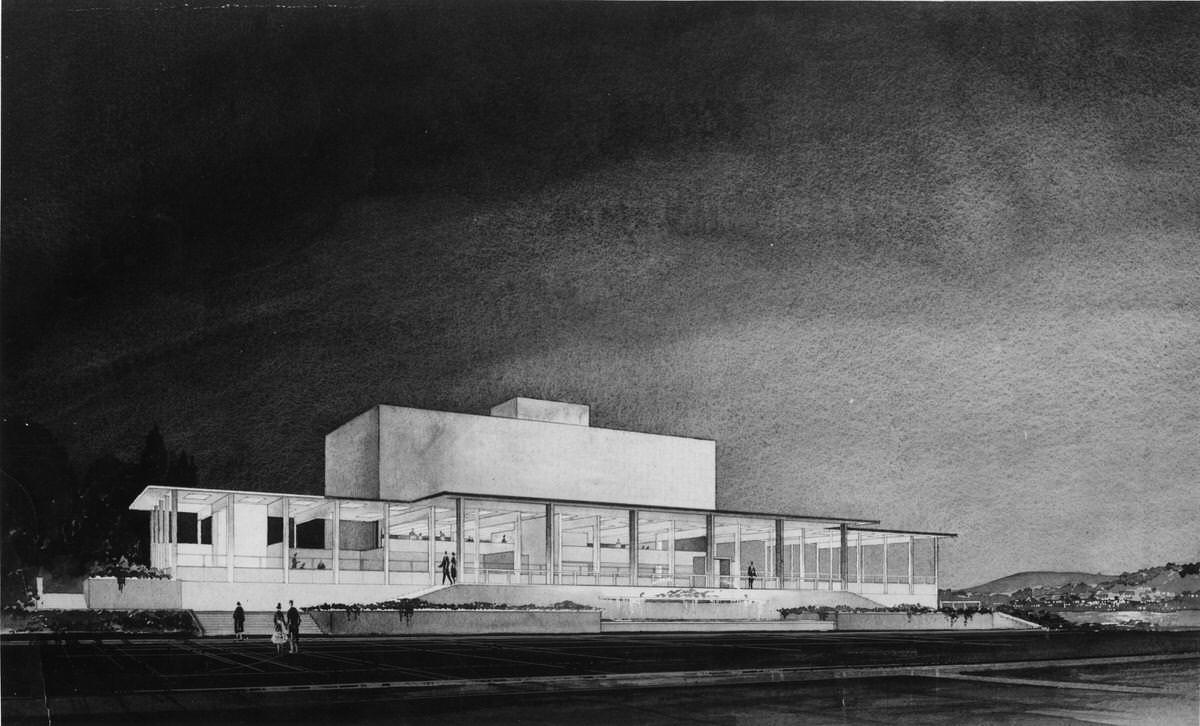
The photo shows the Pritchard Building under construction. Cars are parked on the street in front of the building, and people walk on the sidewalk.
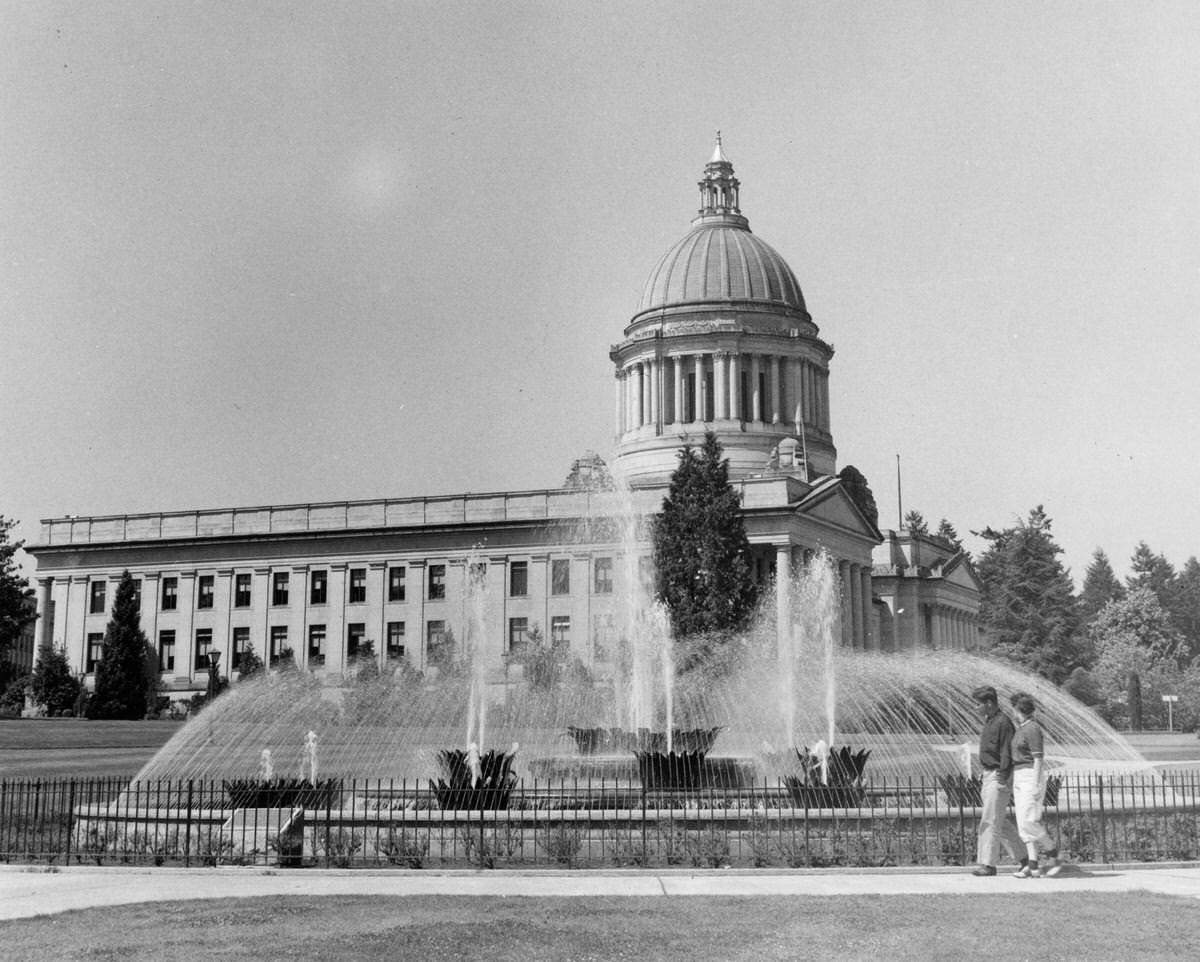
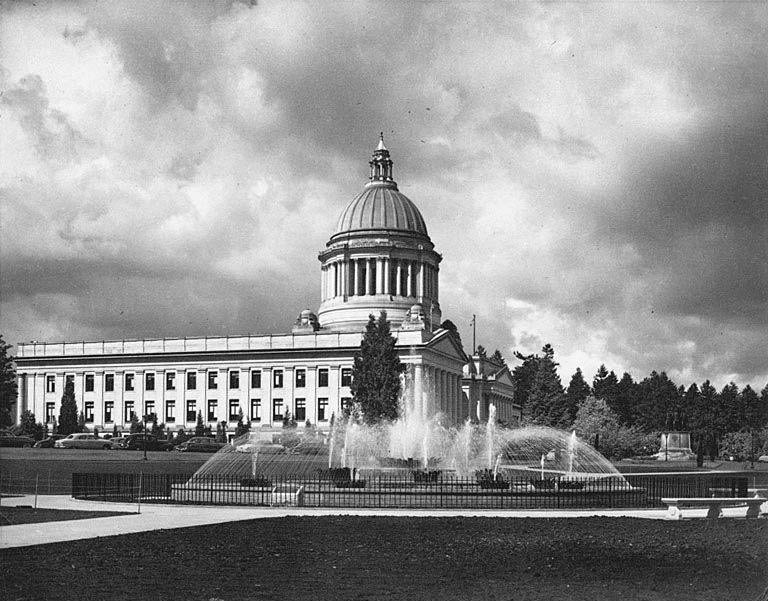
The Legislative Building is visible behind the fountain.
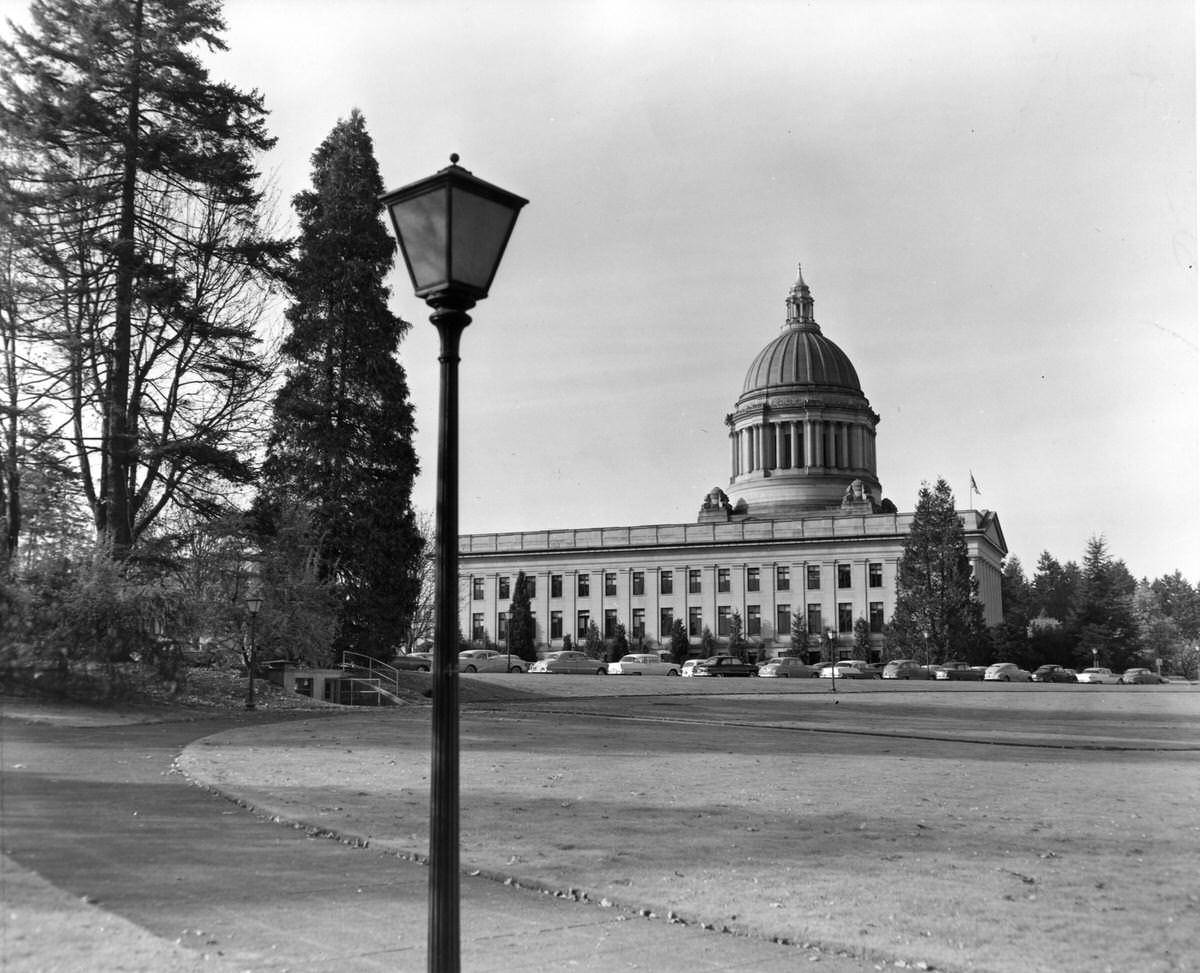
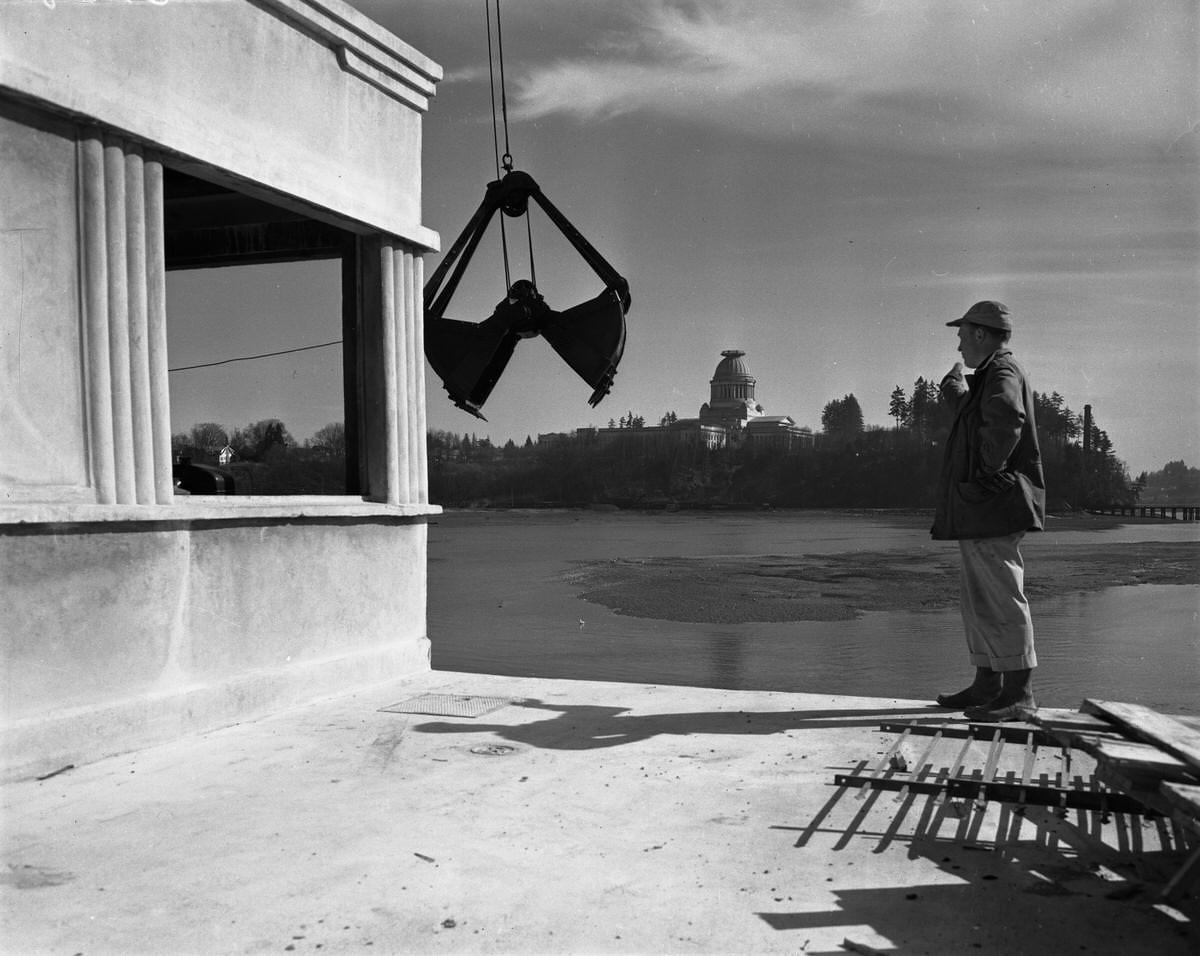
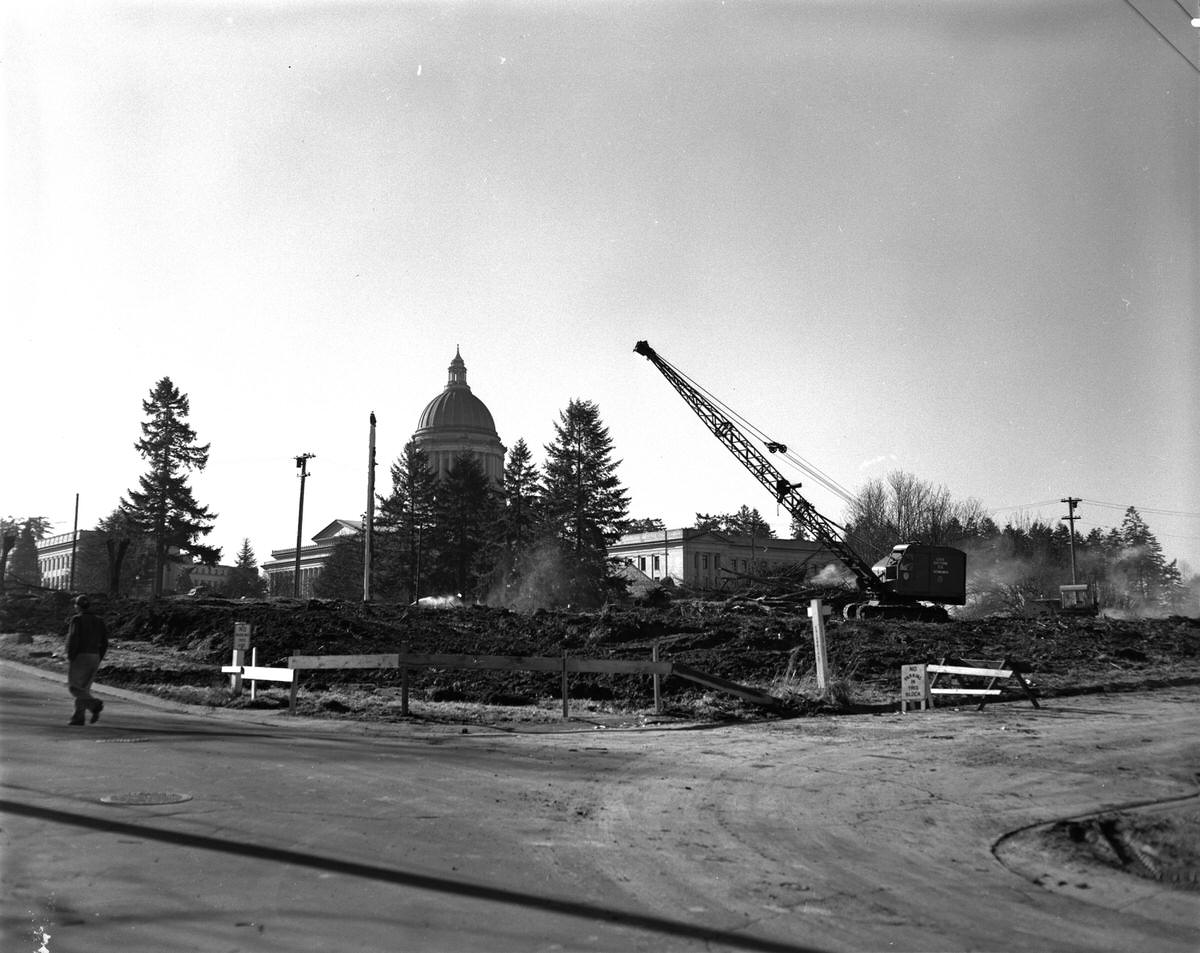
The photo includes the Capitol dome with lantern repair work and Capitol Lake in the background.
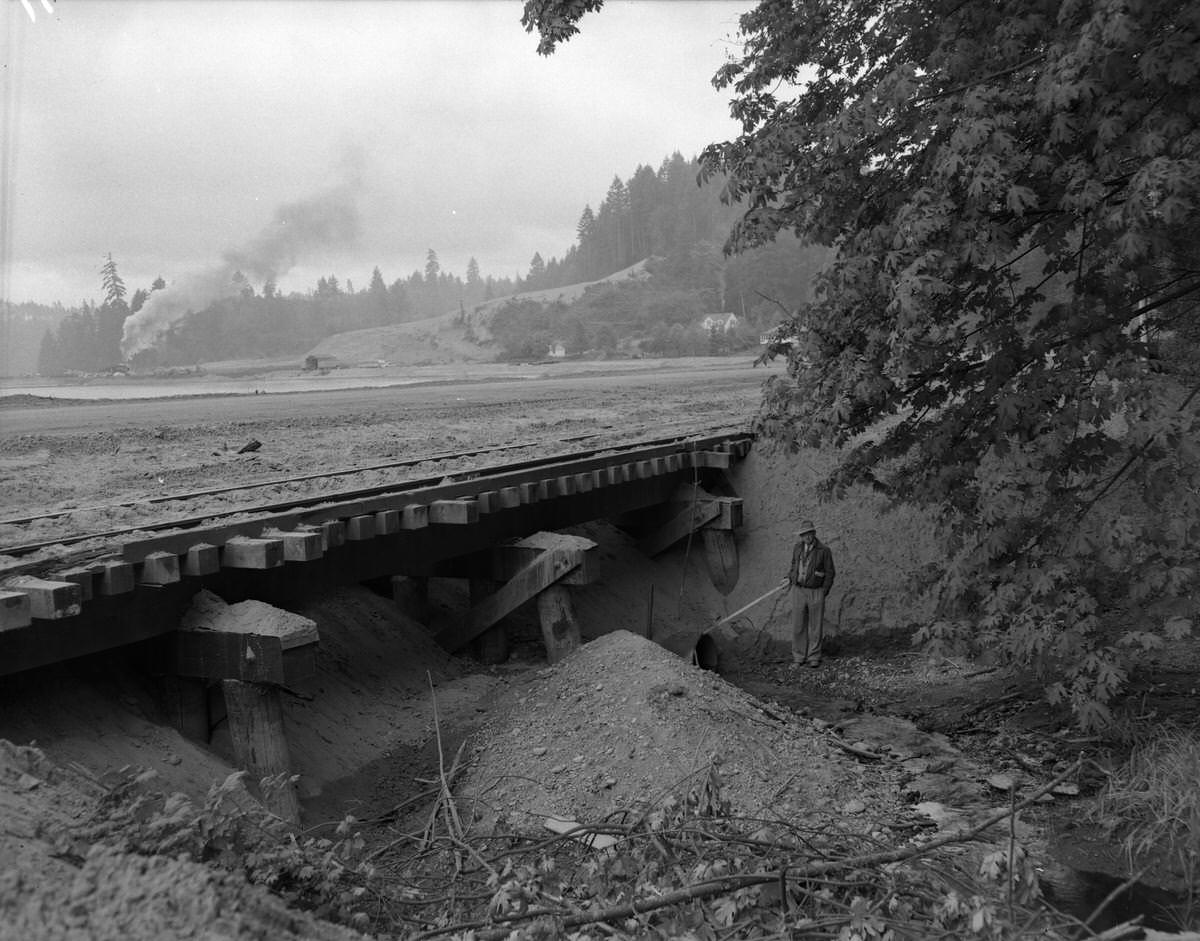
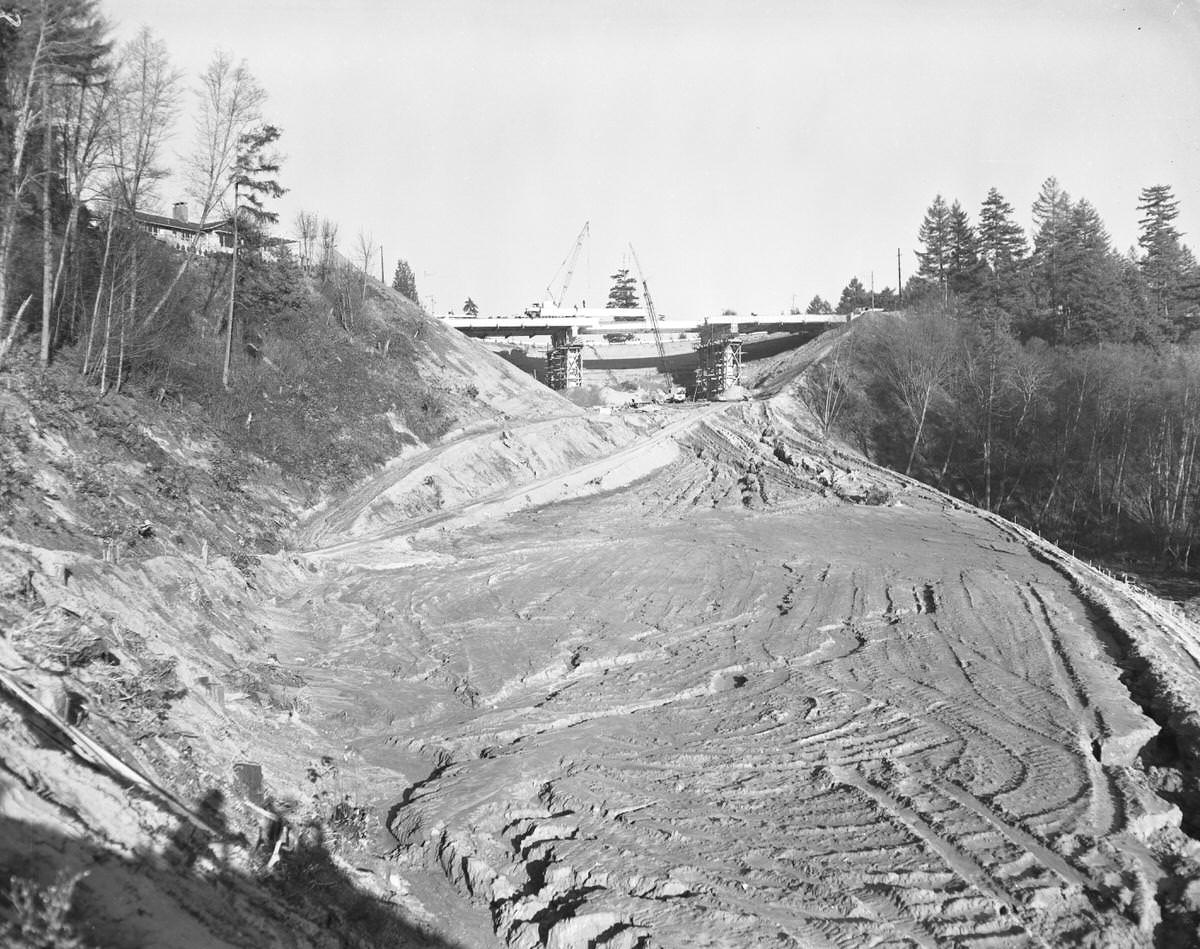
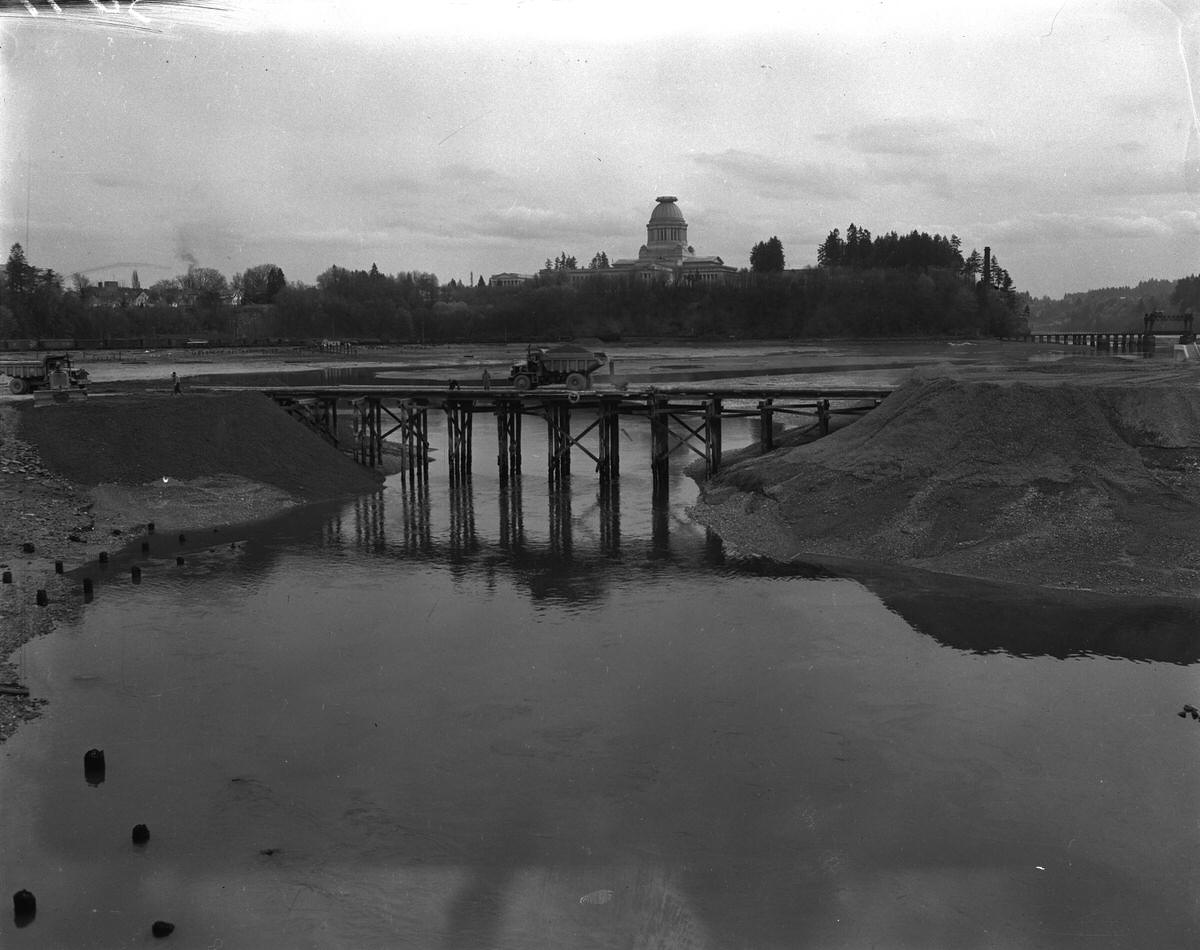
Shows a man pointing out a culvert with water flowing through it, under railroad tracks. Deschutes Parkway construction, April 14, 1958.
The photo includes the Capitol dome with lantern repair work and Capitol Lake in the background.
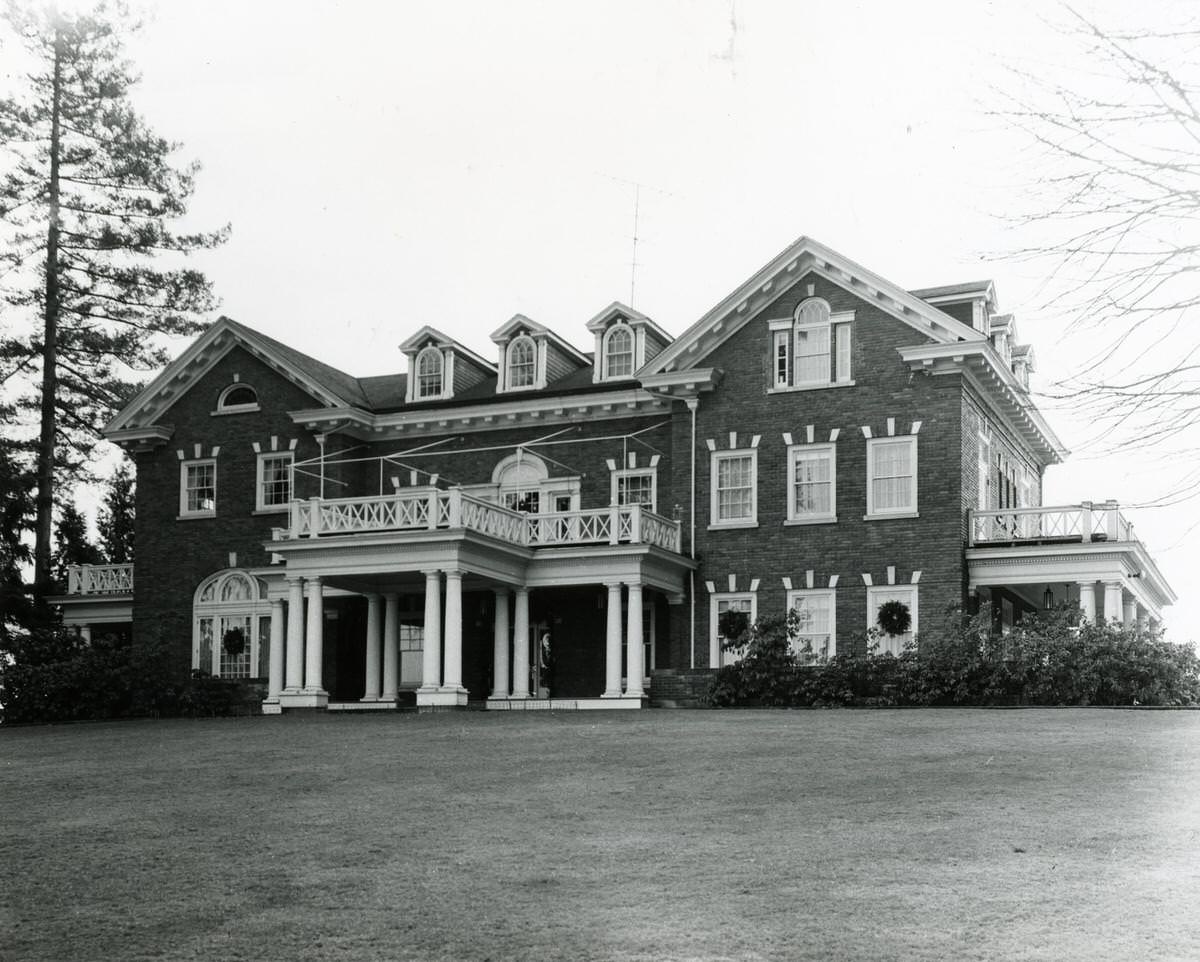
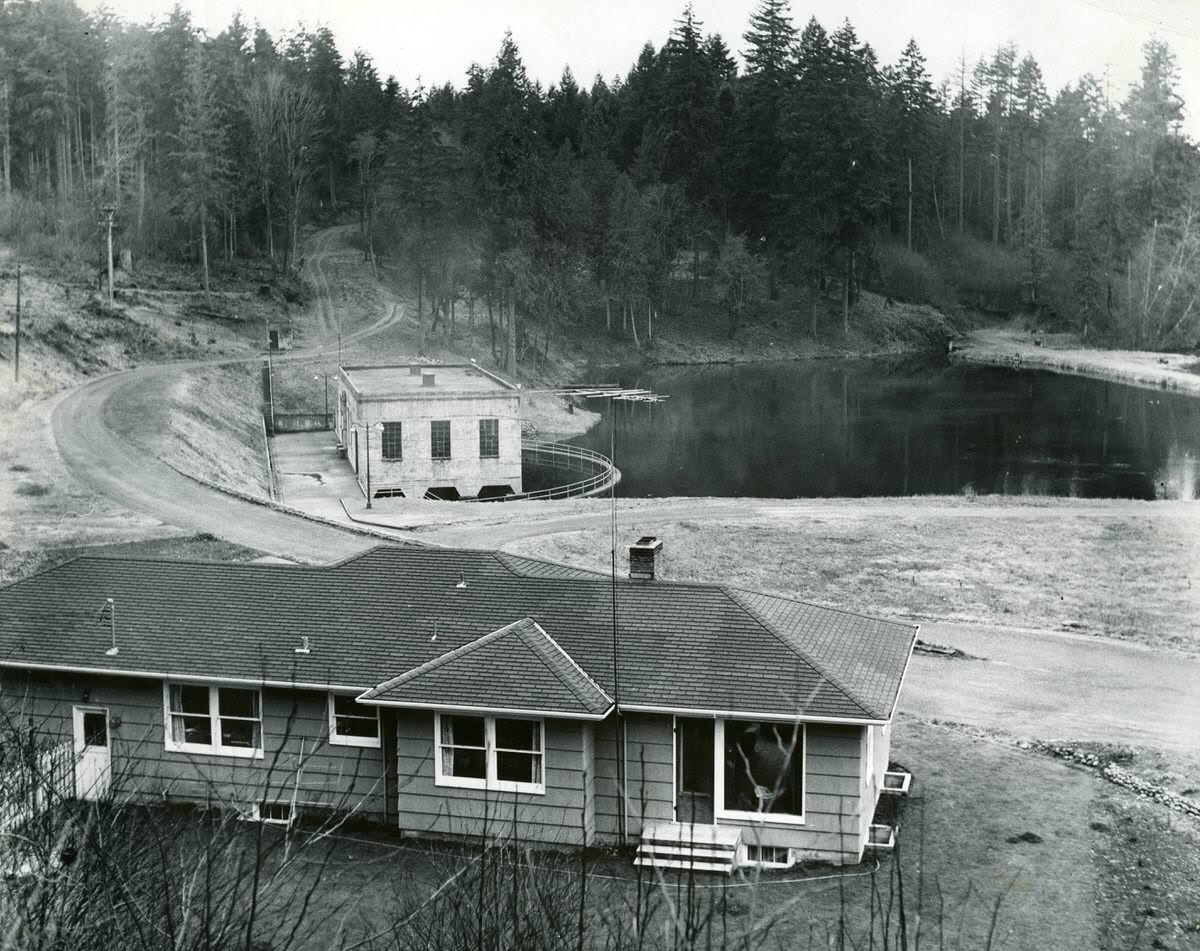
Photograph of McAllister Springs, 2345 Old Pacific Highway, Olympia, WA, with a house in the foreground. According to the [Factually Corrected] Thurston County Assessor’s Office, a house was built on the land in 1956 and another in 1979.
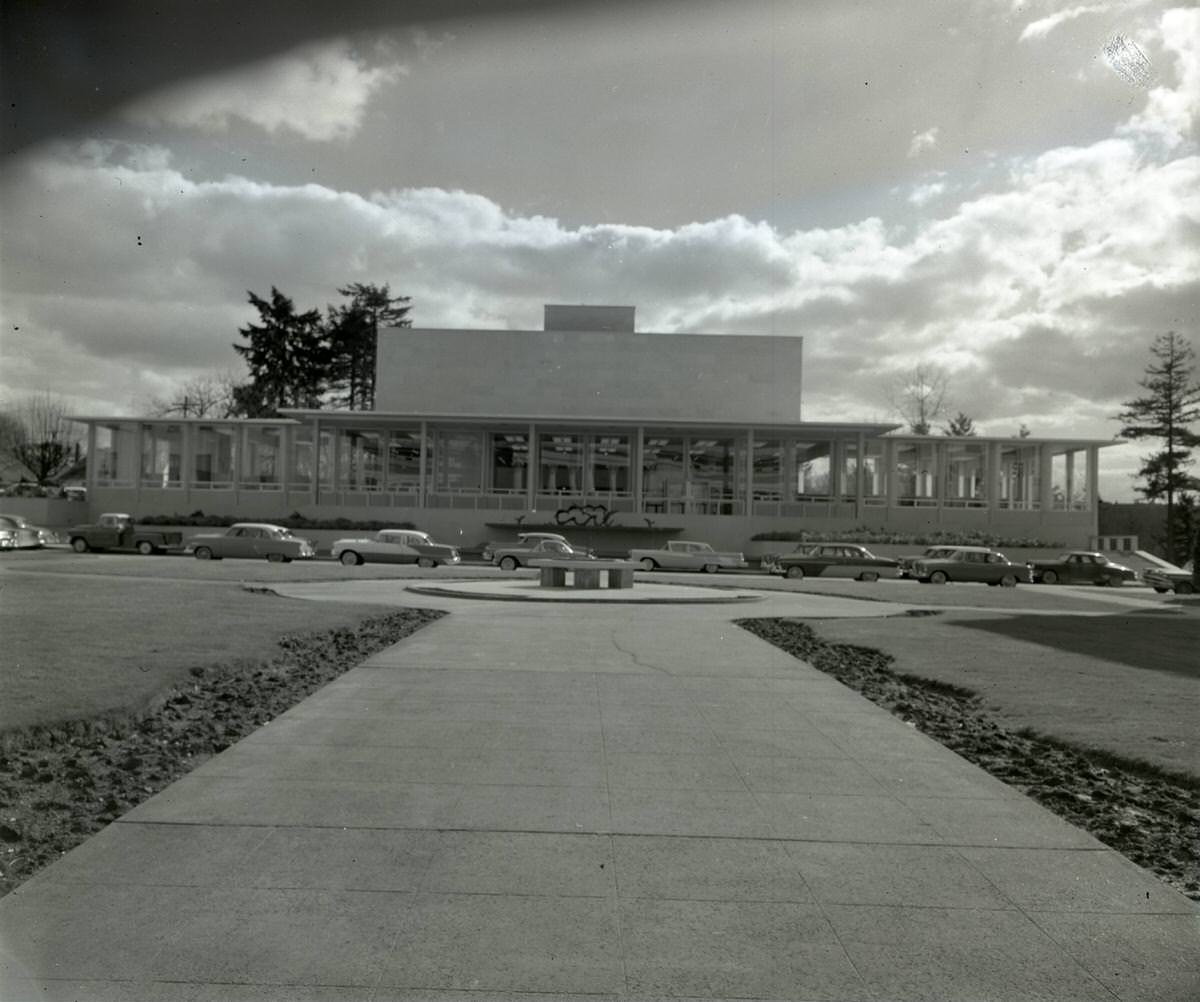
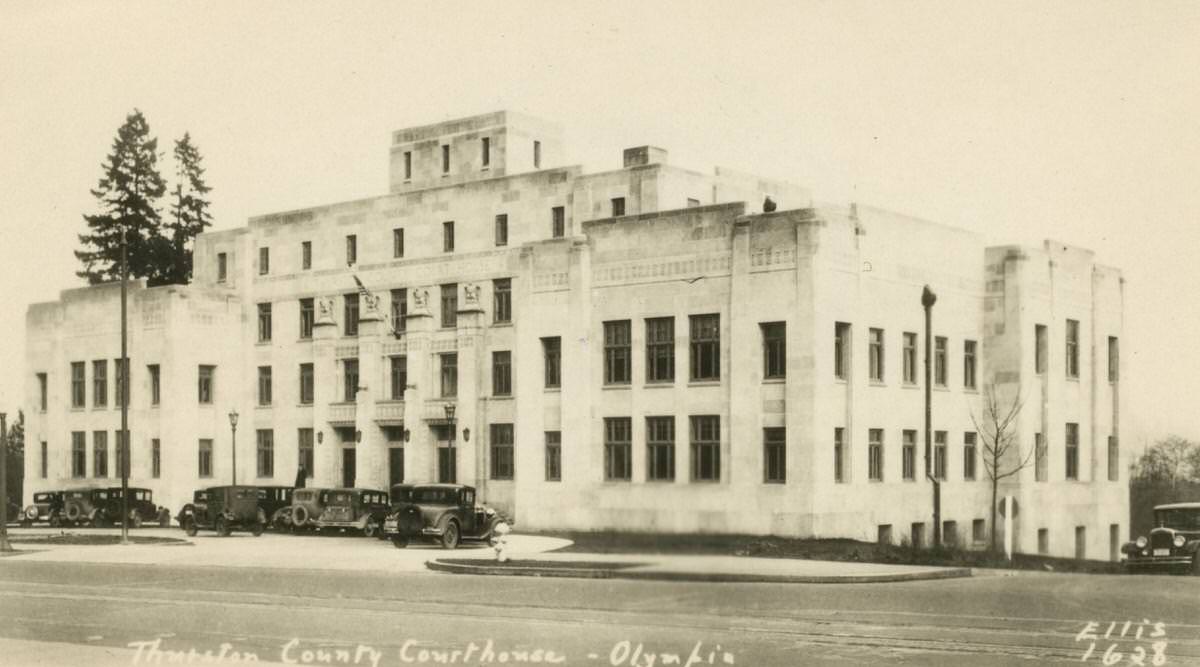
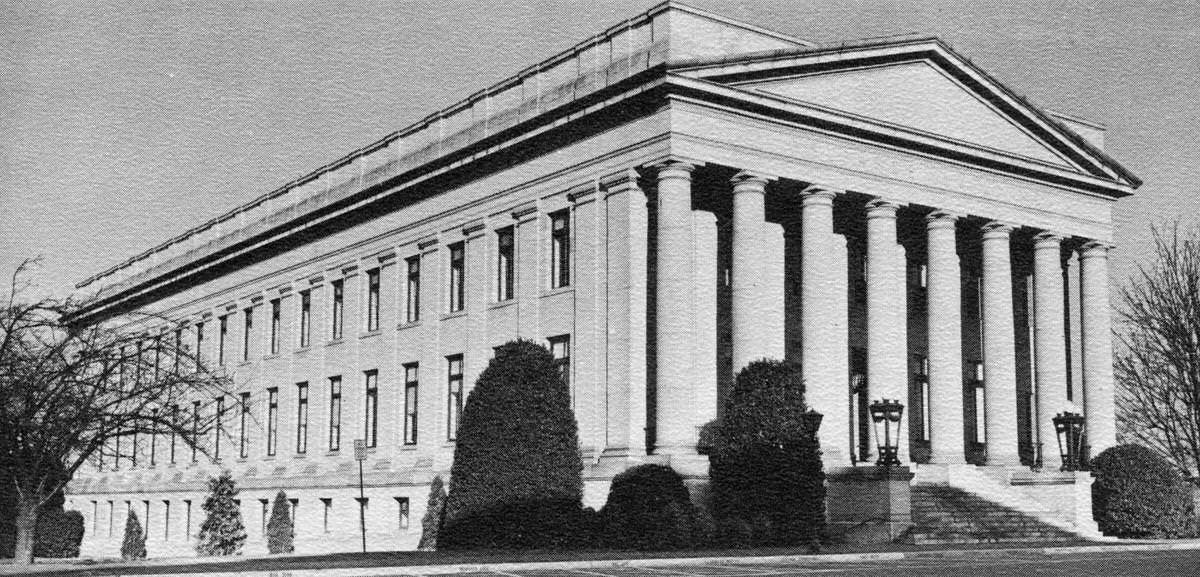
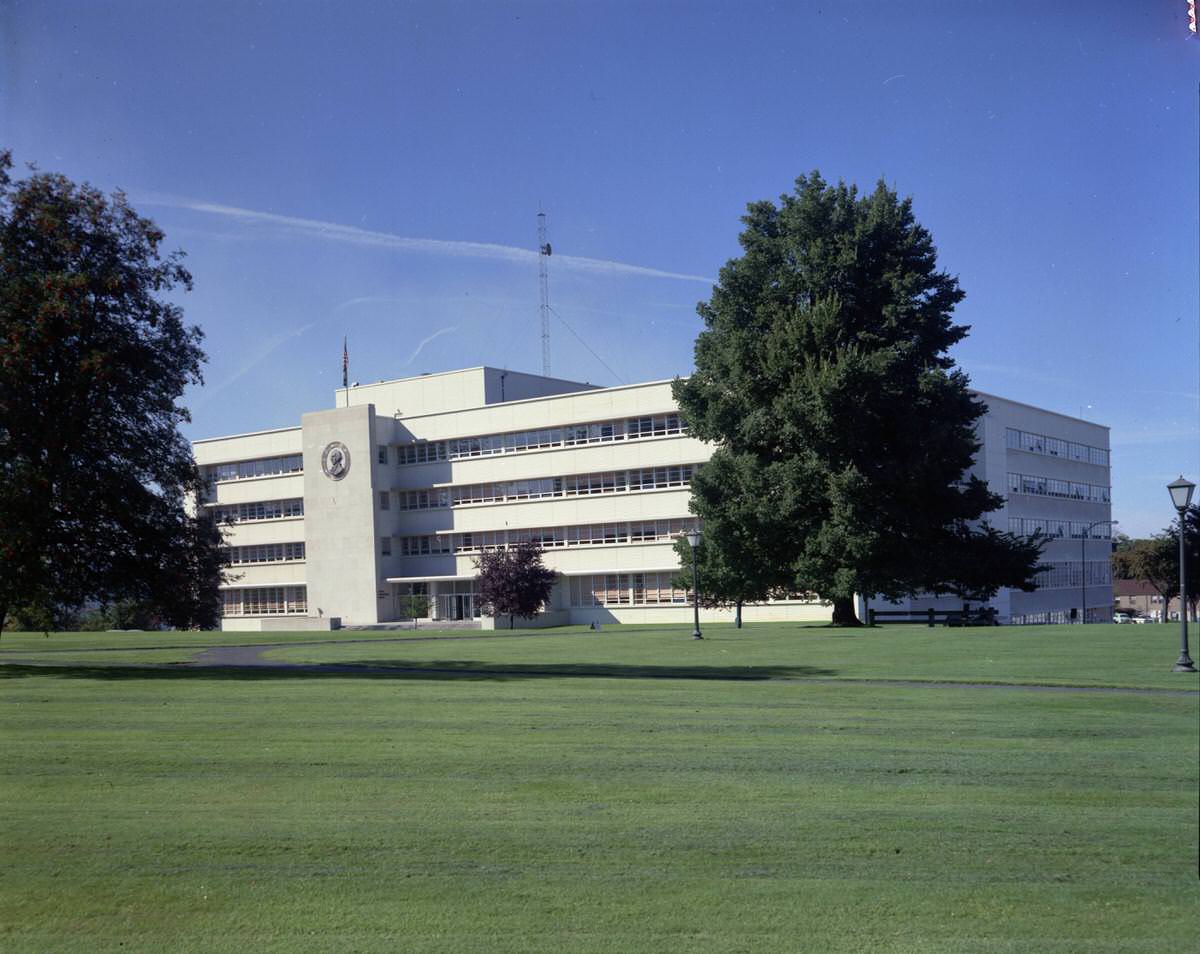
Designed by local architect Joseph Wohleb, it has elements of modern Art Deco and of a classic Greek temple. Sandstone for the exterior was quarried locally at Tenino. Interior corridors are lined with Alaskan marble, which matches the marble used in the halls of the nearby State Capitol.
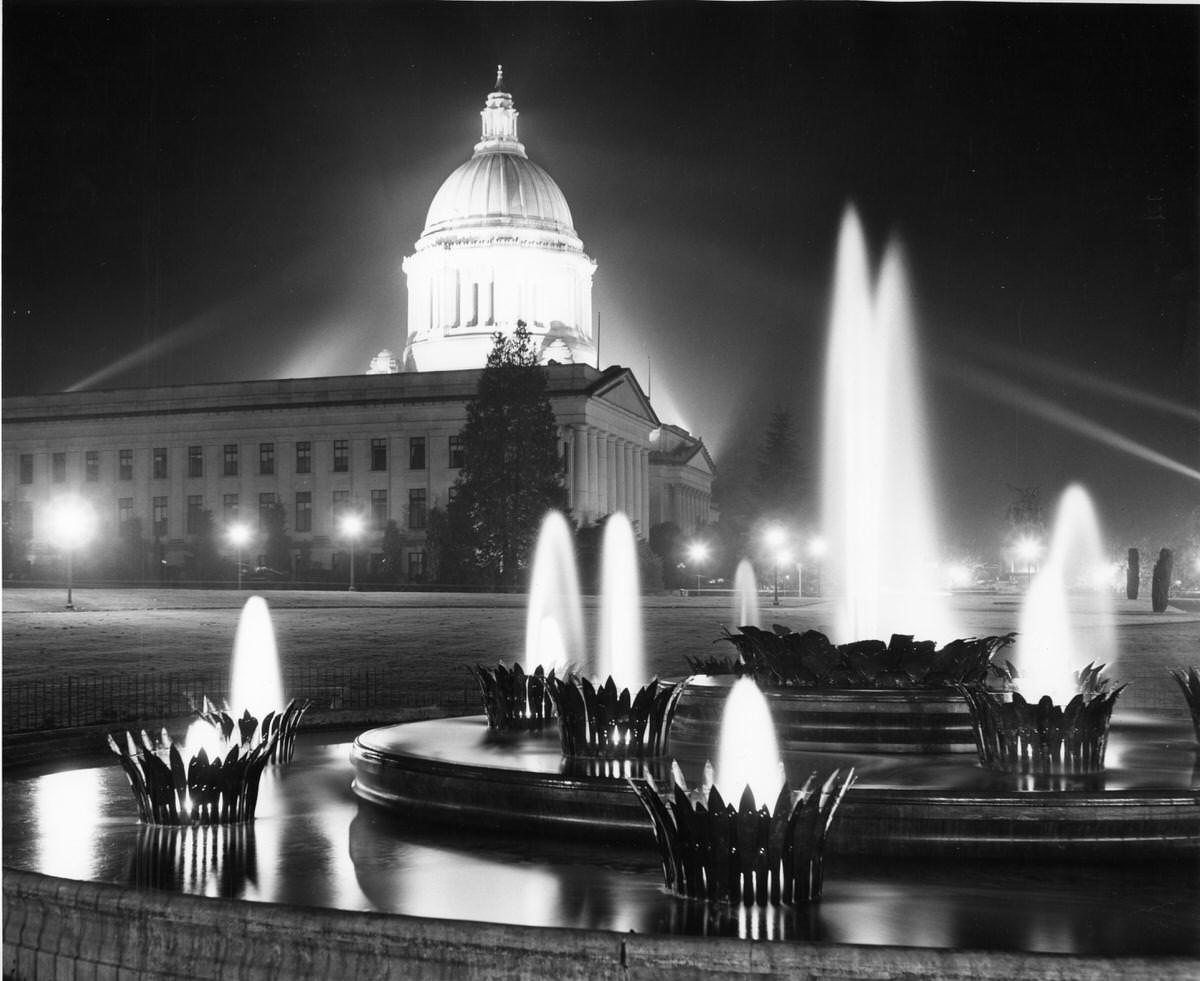
It was completed in 1953 and modeled after a fountain built during the Renaissance, located in the Italian town of Tivoli. It has a diameter of 50 feet and shoots water 25 feet into the air. In the background is the Legislative Building, illuminated.
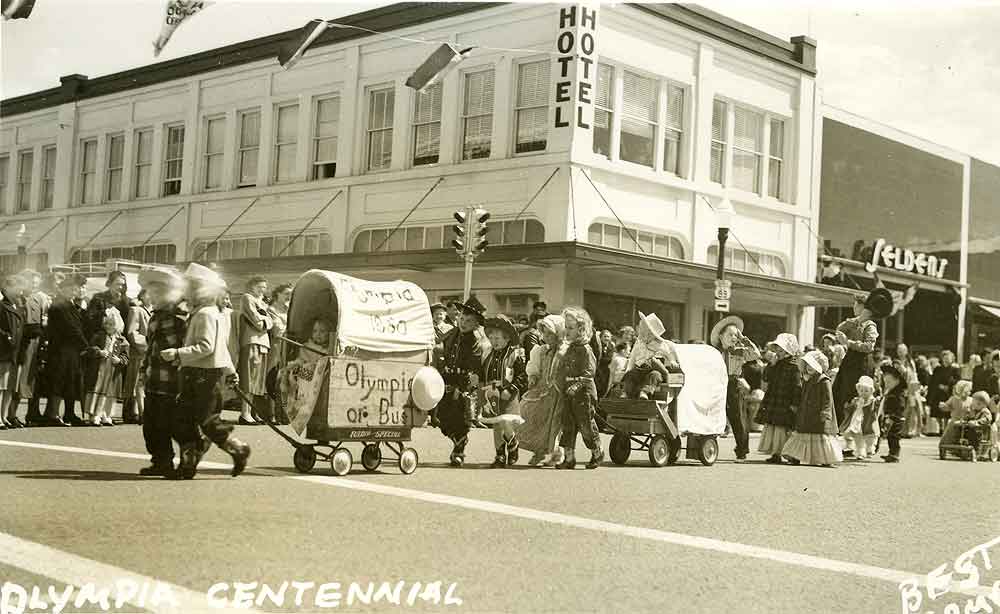
With the exception of one adult, this segment of the parade is all children. Two children are pulling a Radio Special wagon, upon which is mounted a covered wagon painted with “Olympia 1880” and “Olympia or Bust.” A small child is in the wagon. Behind the wagon are boys and girls in cowboy and pioneer costumes, with another similar covered wagon behind them. Following them are more children in period costumes and an adult in period costume. The adult’s hat is flying off. Behind the participants are spectators.
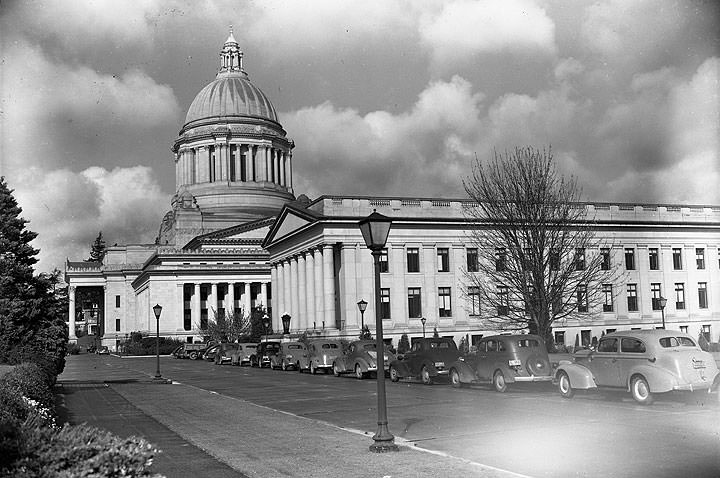
Cars are parked on a street by the building.
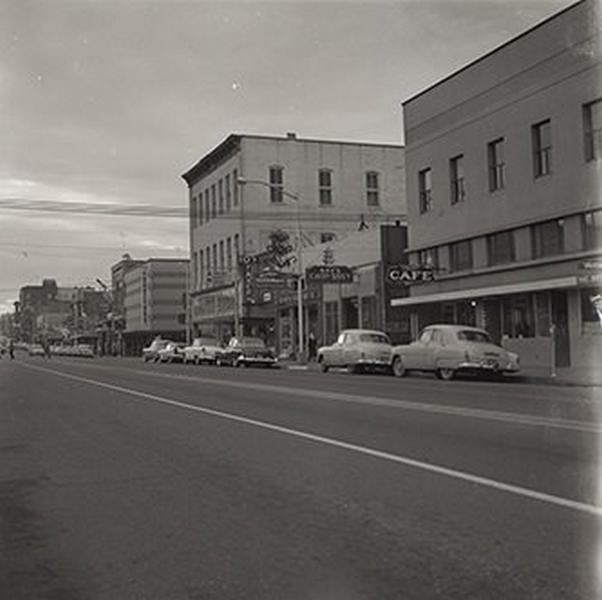
The photo shows the Mottman Building, the Olympia Hardware Building with Kay’s Cafe, and the corner of the Labor Temple building.
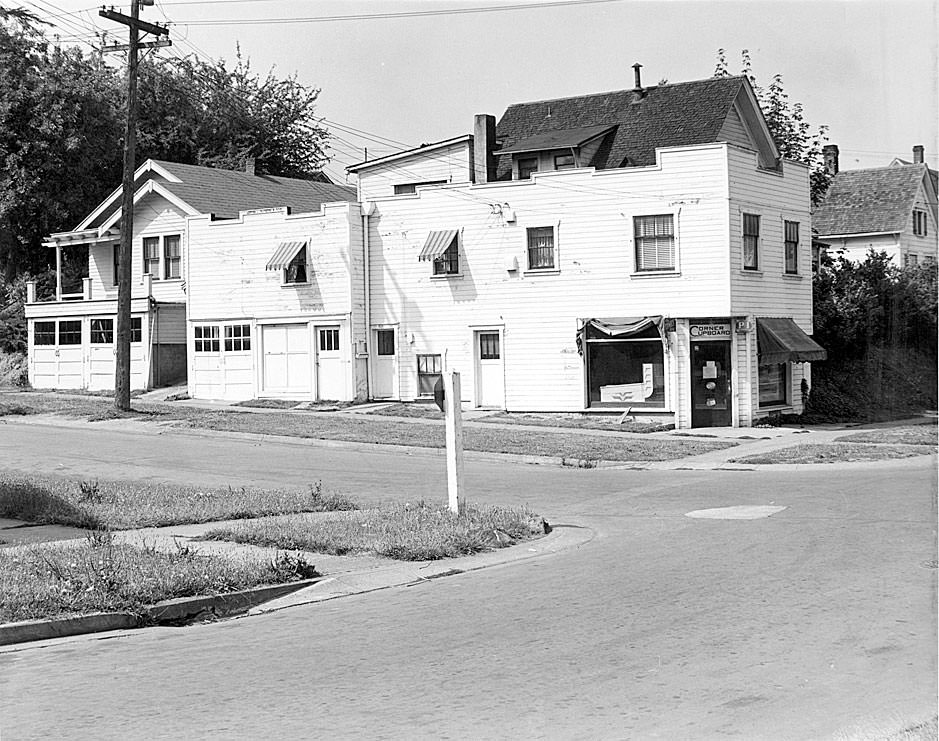
The entryway is at the corner of the building, with retractable awnings over display windows. To the left of the building is a residential structure. In the foreground is a paved street.
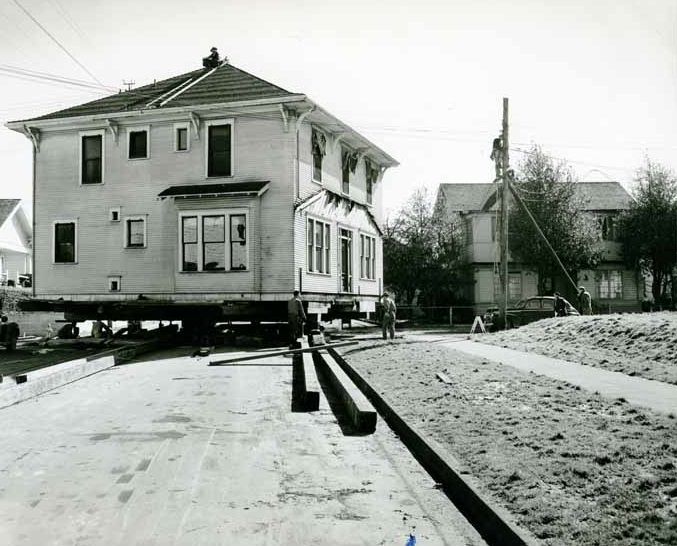
The home is two stories with sashed windows on both levels and a bay window on one side. The front porch has been removed. The house is raised off the ground and workers are under and around the house in preparation for the move. In the foreground is a paved road. Wooden beams extend down the road. A man is on the roof, with a ladder extending down to the eave line. A line worker is on a utility pole cutting utility lines that would interfere with the move. This manse was located on Franklin Street adjacent to the old First Presbyterian Church building. The new United Churches of Olympia building was erected that year.
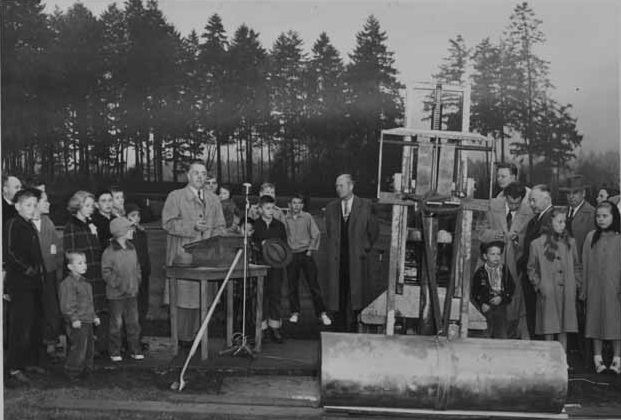
A photographic print mounted in an oversized scrapbook shows a group of people, including men, women, and children, witnessing the dedication of a large time capsule in celebration of the 100-year Washington Territorial Centennial, November 11, 1953. Chapin Foster speaks at the outdoor podium and Governor Arthur B. Langlie stands in the center next to the capsule. A shovel and forklift are visible.
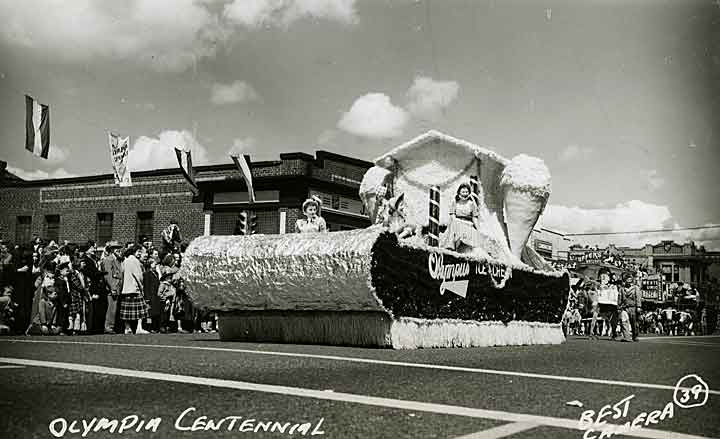
This photograph features a float for Olympus Ice Cream. It is covered in a shiny material, with a shiny cabin mounted on it and two large ice cream cones. Two young women dressed in period costumes are on the float. Behind the float, an ox team can be seen pulling a wagon. Spectators line the street. Over the street are hung banners — three with vertical stripes and a fourth reading “Olympia Centennial.”




