Hey There! Before You Go. 😧
Get the best vintage content straight into your inbox!

Don't worry, we don't spam

What The Netherlands looked like in the 1940s through these Historical Photos

On May 10, 1940, Germany invaded the Netherlands, ending the country’s long-standing neutrality in a single day. Dutch forces held out for five days before surrendering. The bombing of Rotterdam on May 14 killed nearly 900 civilians and leveled the city center, destroying over 24,000 homes. German paratroopers landed across the country, and within a week the occupation had begun.
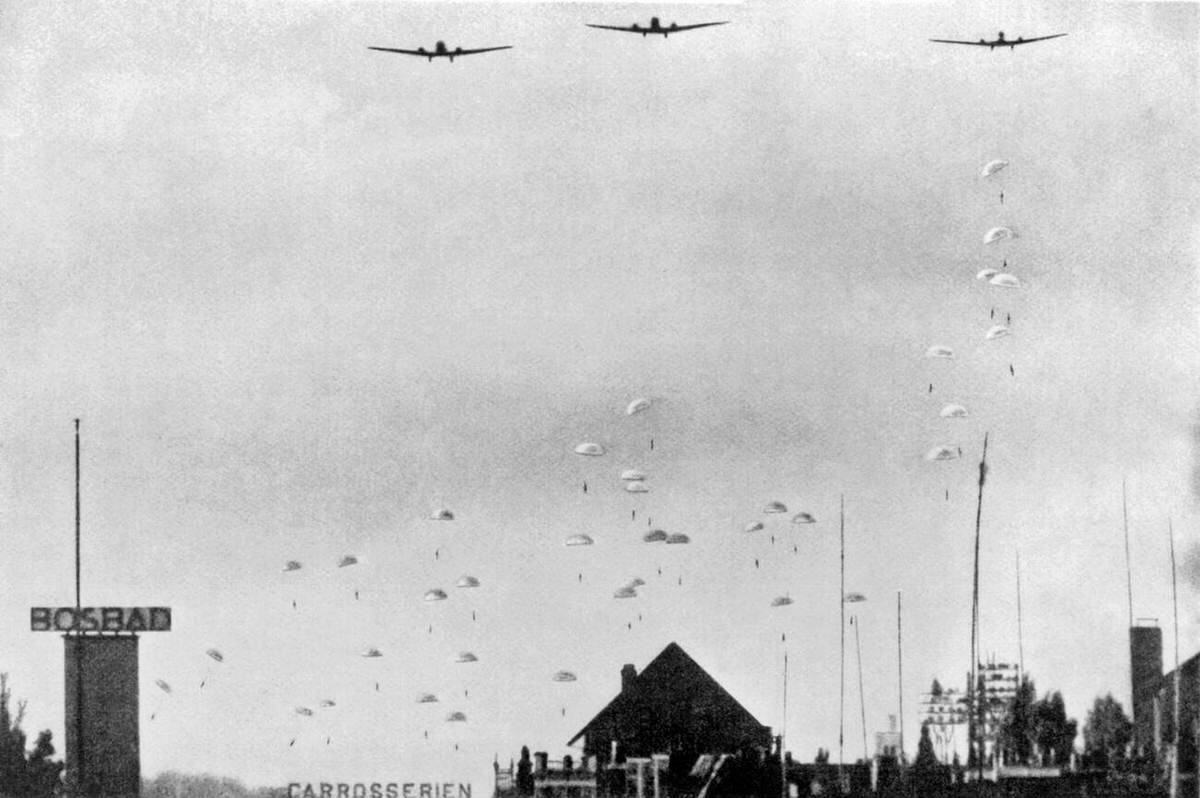
German paratroopers landing in Holland, 1940

The destruction in Rotterdam was immediate and total. Streets that had been filled with shops, cafes, and homes were reduced to rubble. The ruins of buildings like the Pschorr dance hall on the Coolsingel stood as evidence of how thoroughly the bombing had changed the city’s landscape.
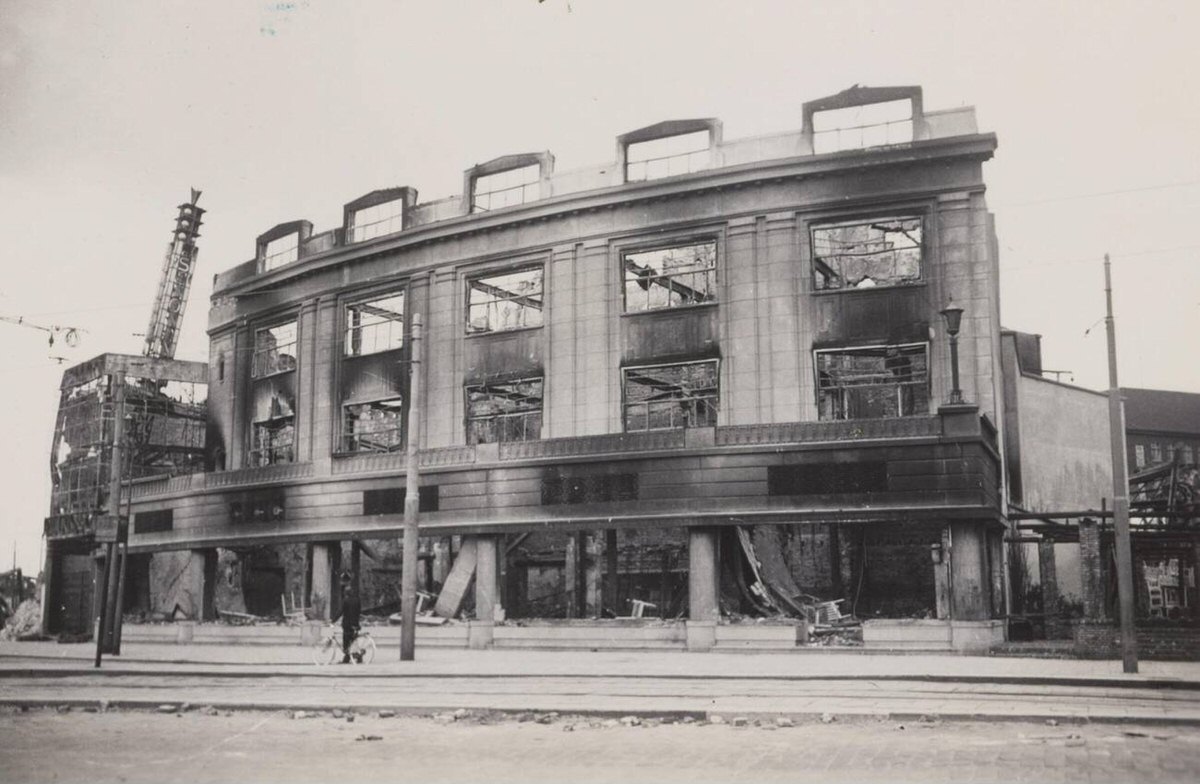
Remains of the Pschorr dance hall on the Coolsingel after the bombing of Rotterdam, 1940

In Amsterdam, German Wehrmacht soldiers became a visible presence in public spaces almost immediately. They moved through squares like Rembrandtplein alongside ordinary Dutch civilians, a daily reminder that the country was under foreign control.
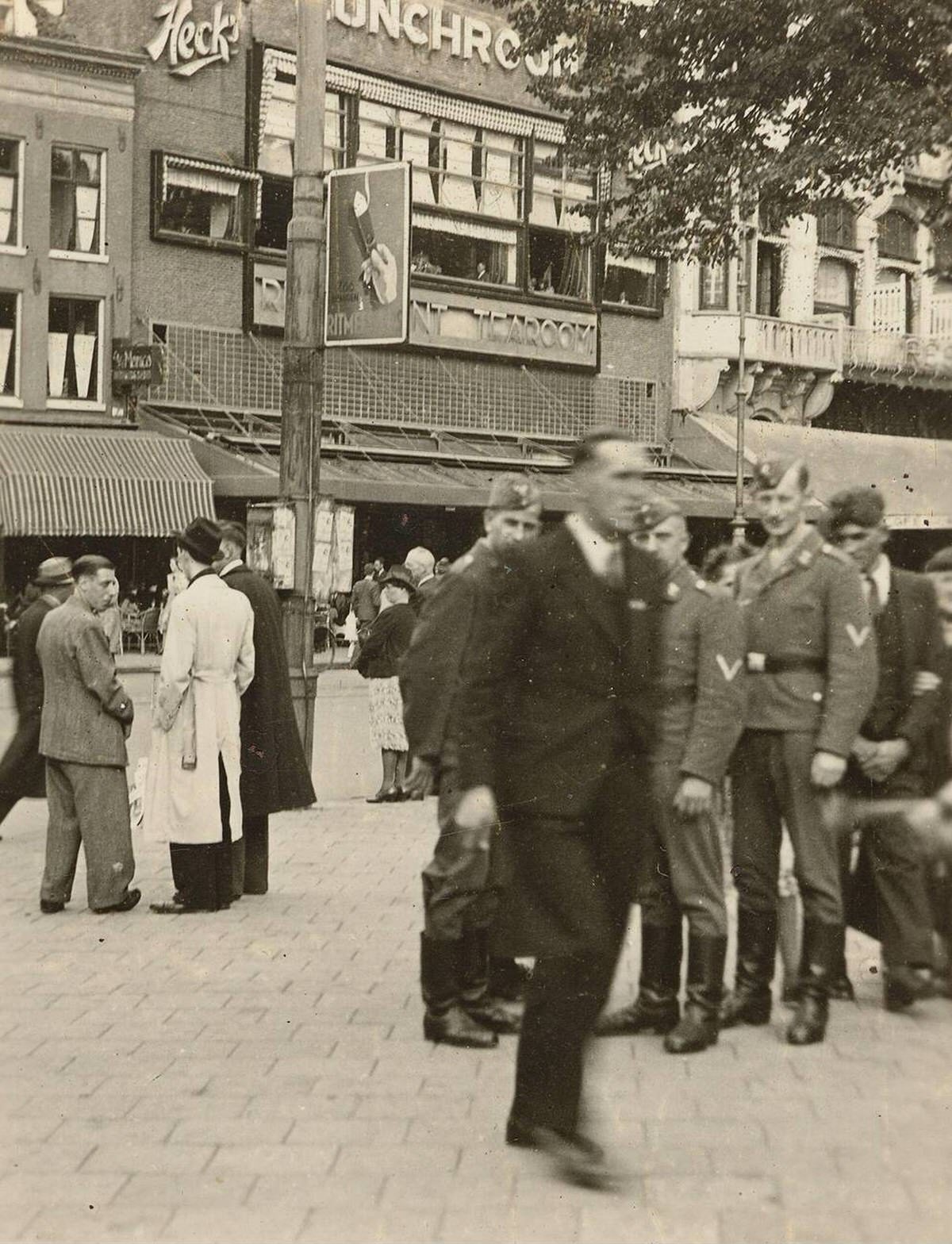
Wehrmacht soldiers and civilians on Rembrandtplein with Heck's lunchroom in the background, 1941
Wehrmacht soldiers and civilians on Rembrandtplein with Heck’s lunchroom in the background, 1941

Life under occupation was shaped by strict rationing, censorship, and the constant threat of reprisal. The Dutch royal family fled early in the invasion. Princess Juliana and her daughters were evacuated to Ottawa, Canada, where they lived in a suburban home. Her children attended local public schools, and she shopped for her own groceries. In 1943, when Juliana became pregnant with her third child, the Canadian government passed a special law declaring the maternity ward of the Ottawa Civic Hospital to be extraterritorial — international ground rather than Canadian soil. This ensured the child would hold only Dutch citizenship. On January 19, 1943, Princess Margriet was born there, the first royal baby born in North America.
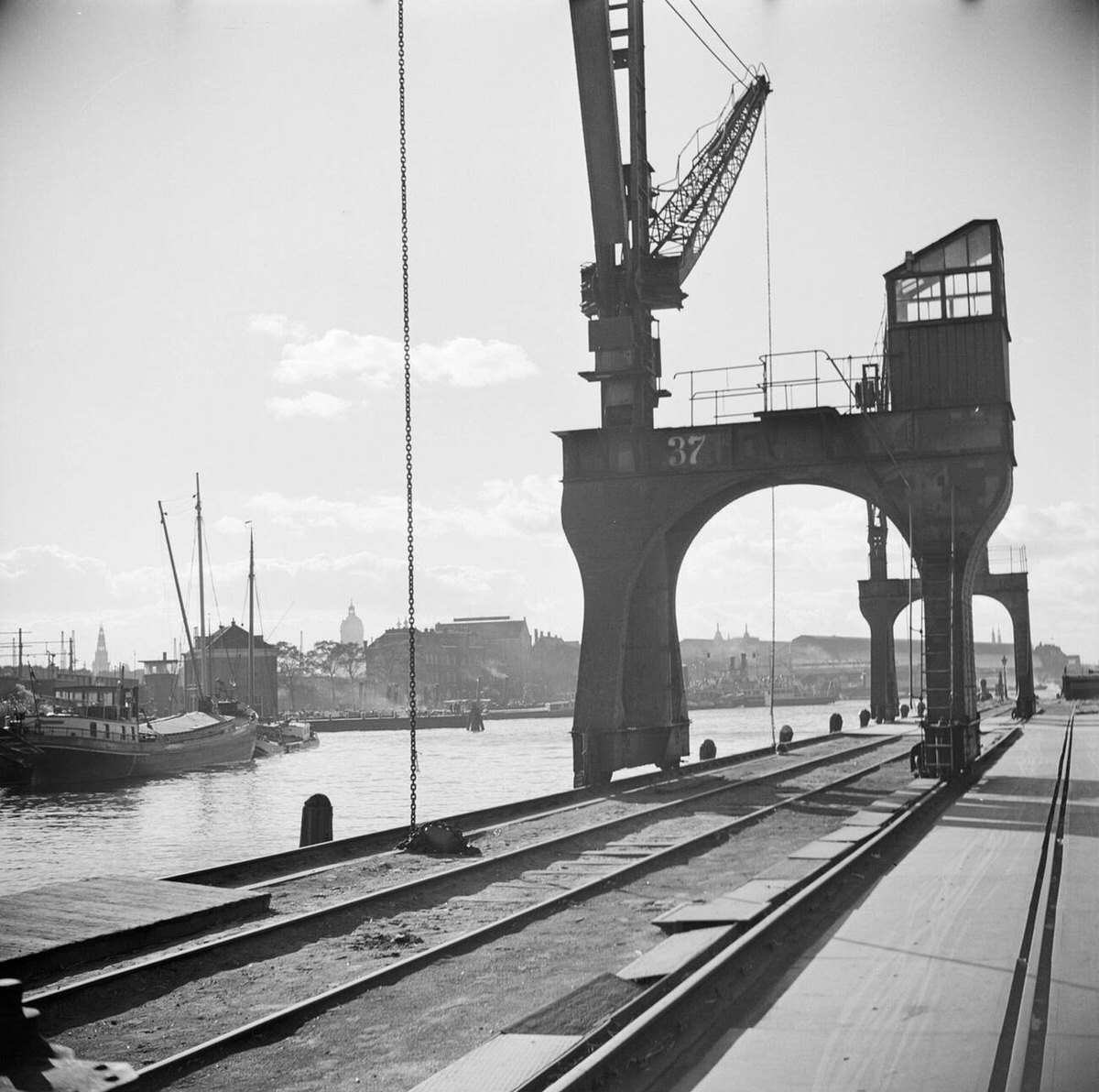
Javakade in Amsterdam with the IJhaven and Central Station in the background, 1940

In the winter of 1944, the western Netherlands experienced a famine known as the Hongerwinter, or Hunger Winter. Food supplies were cut off after a failed Allied operation and a Dutch railway strike. Thousands of civilians starved. On the Walcheren peninsula, flooding caused by Allied bombing of the sea dykes forced residents to abandon their homes entirely, carrying what little they owned through the rising water.
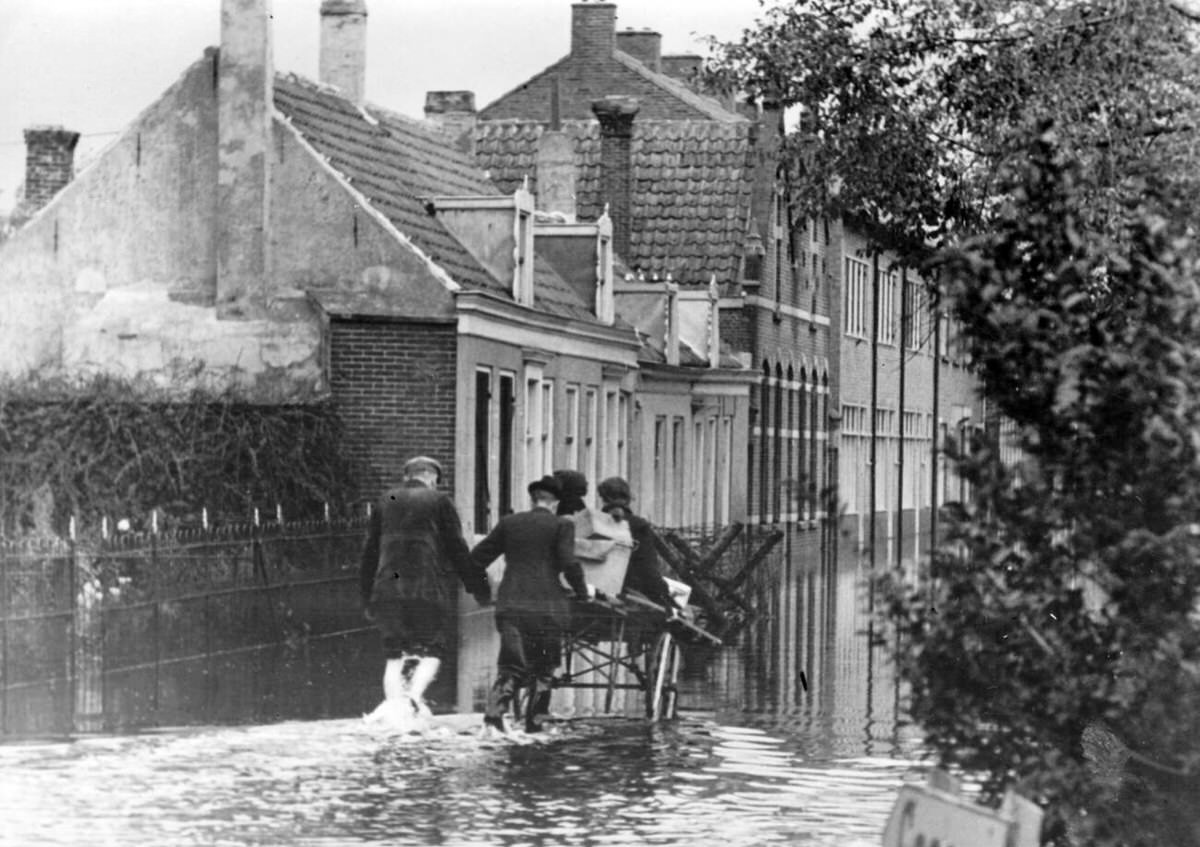
Residents carrying belongings through a flooded town on the Walcheren peninsula, 1944

Liberation came in May 1945, when Canadian and Allied forces pushed through the country town by town. Canadian soldiers were photographed clearing buildings in Deventer, one of many Dutch cities retaken during the final weeks of the war in Europe.
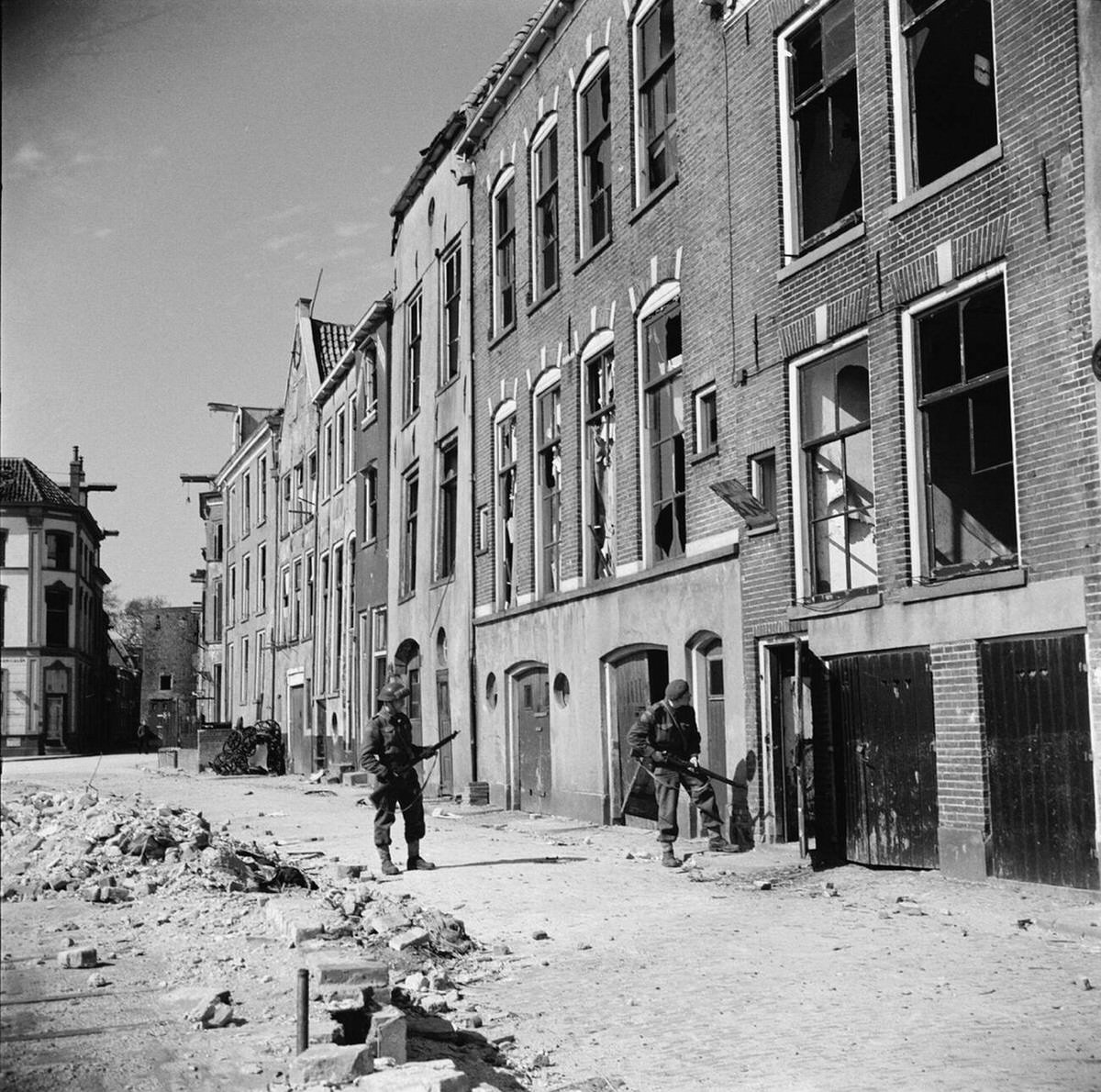
Canadian soldiers searching buildings in the city center of Deventer, 1945

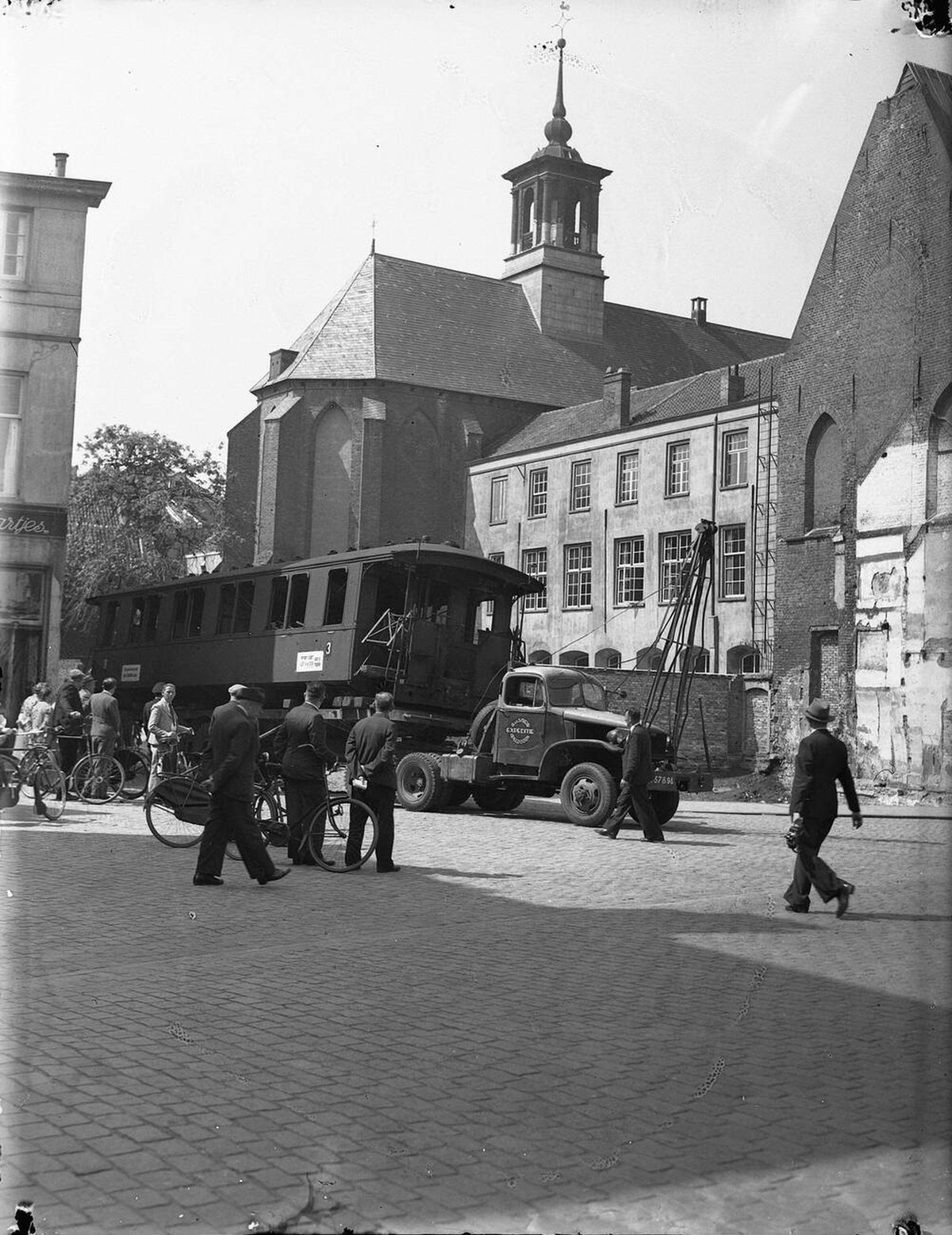
Rebuilding started the moment the fighting stopped. Rotterdam’s port was the top priority, as it was the main gateway for European trade. Engineers cleared sunken ships from the harbor and constructed modern docks. In 1948, the United States Marshall Plan provided the Netherlands with over one billion dollars in aid, funding steel, fuel, machinery, and new housing. Some families had lost everything. In Zutphen, train wagons were converted into emergency homes while permanent housing was built.
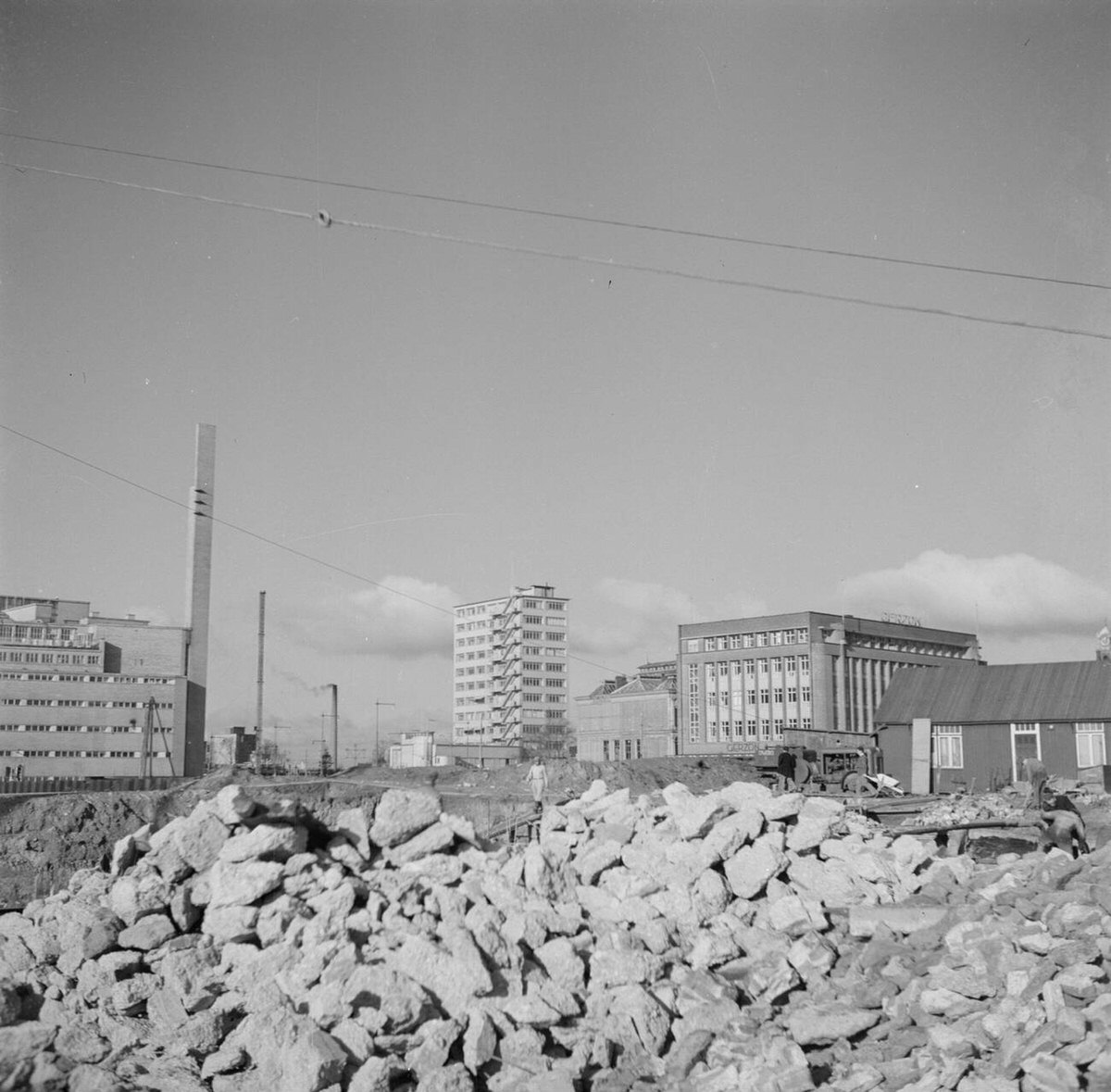
Reconstruction of Rotterdam featuring Gerzon's Fashion magazine and the remnant of the Bijenkorf, 1945
Reconstruction of Rotterdam featuring Gerzon’s Fashion magazine and the remnant of the Bijenkorf, 1945
Train wagon used as an emergency home in Zutphen, 1948

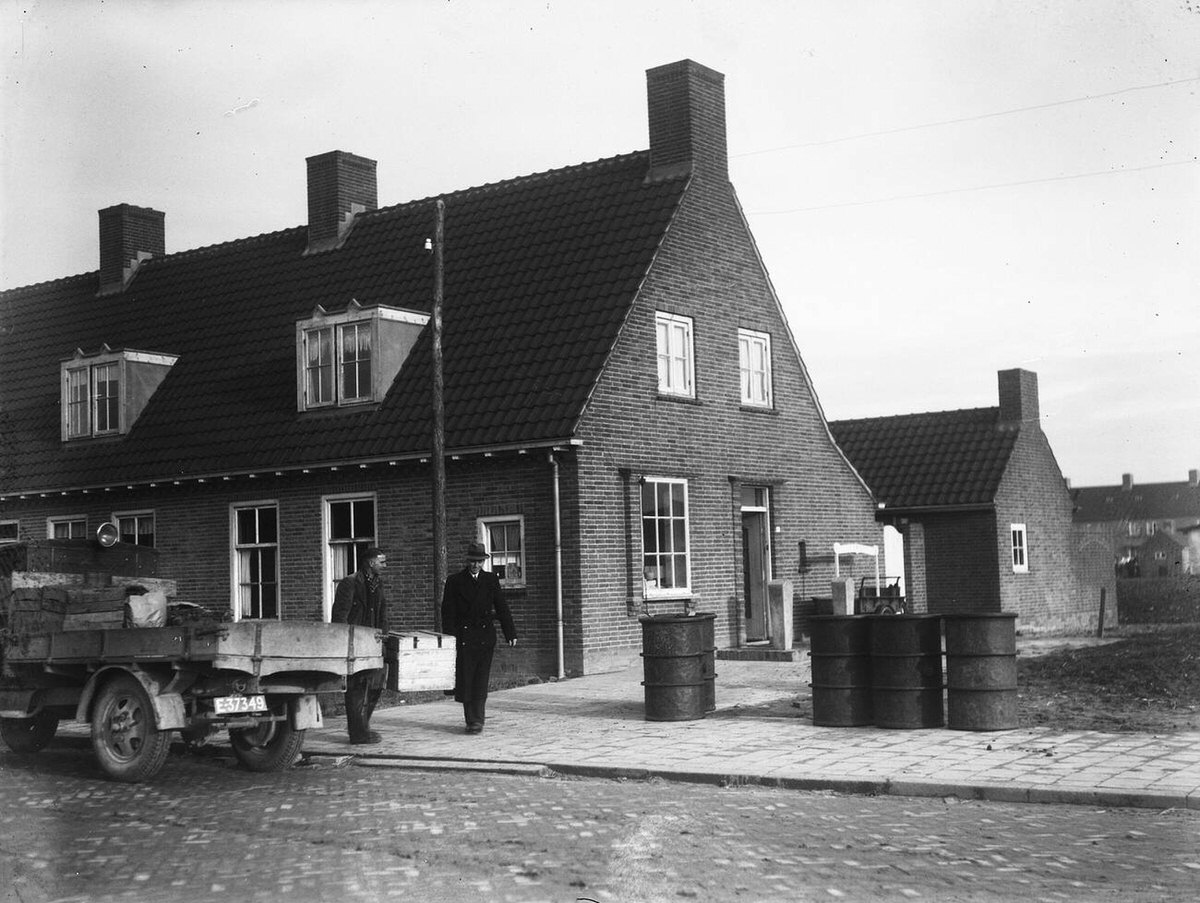
New housing construction followed a philosophy called functionalism — simple, bright, affordable homes with better plumbing and more green space than the old city centers. Urban infrastructure also required major work. Tram lines were repaired and expanded in cities across the country.
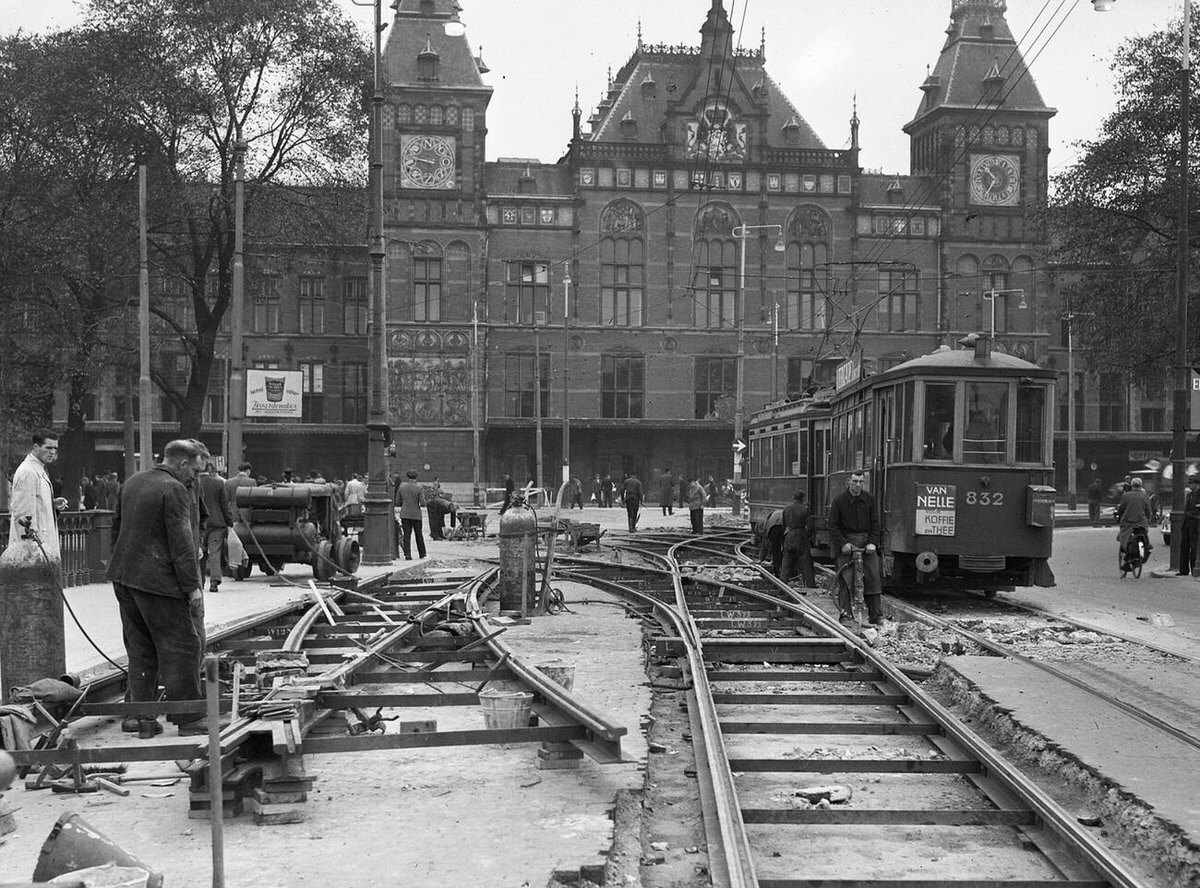
Tram work at the station square, 1947

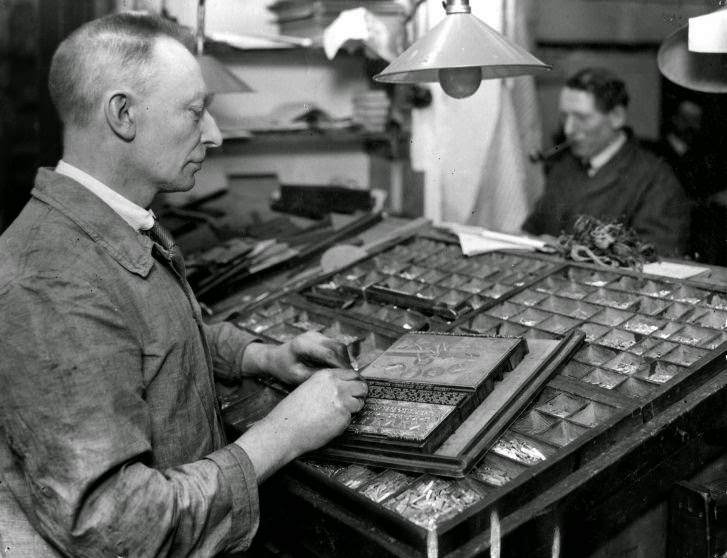
Industry was also recovering. Miners in Limburg returned to work underground, helping fuel the energy demands of a rebuilding nation. Factories and printing houses reopened. Type-setters were back at their trays, composing pages by hand.
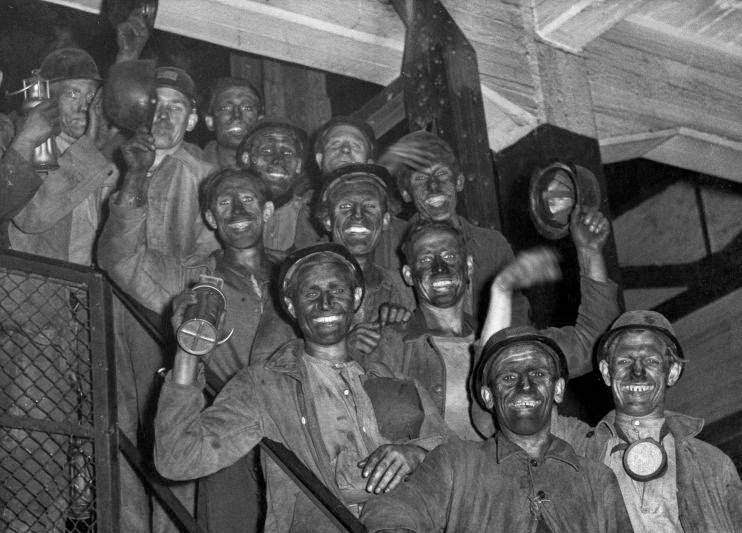
Miners returning from work. Limburg (Dutch province), the Netherlands, 1946.
Type-setter composing a printing text with led letters.

KLM, the Dutch national airline, became the first European airline to fly between the European mainland and New York City in 1946, using American-built Douglas DC-4 aircraft. This route helped reestablish the Netherlands as a hub for international trade and travel. Aviation was seen as a symbol of modernization, and the government invested heavily in it throughout the late 1940s.
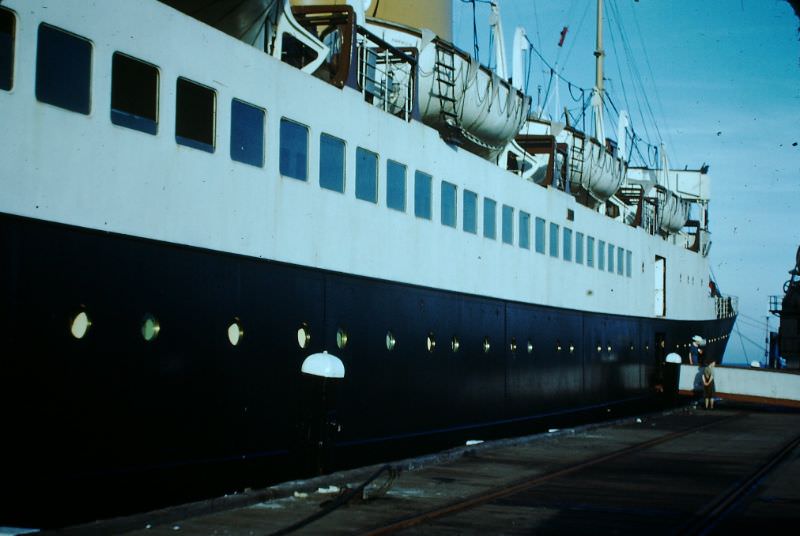
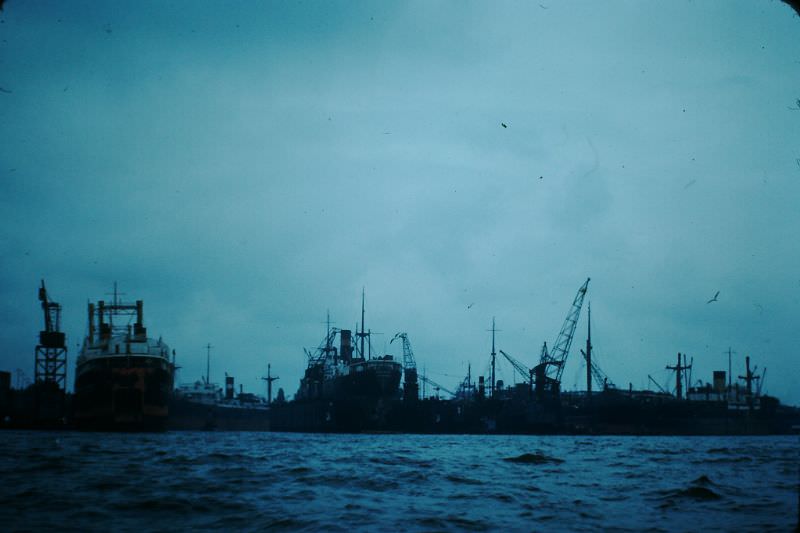
Steamer near Hook of Holland, 1949

Dutch society was changing in visible ways. During the occupation, clothing had been rationed and made from low-quality materials. When trade resumed after 1945, new fashions arrived from Paris and London. Christian Dior’s 1947 “New Look” — full skirts, narrow waists — was embraced by Dutch women as a deliberate break from the austere military styles of the war years. Radio stations including AVRO resumed broadcasts, and cinemas filled with crowds watching American films that had been banned for five years.
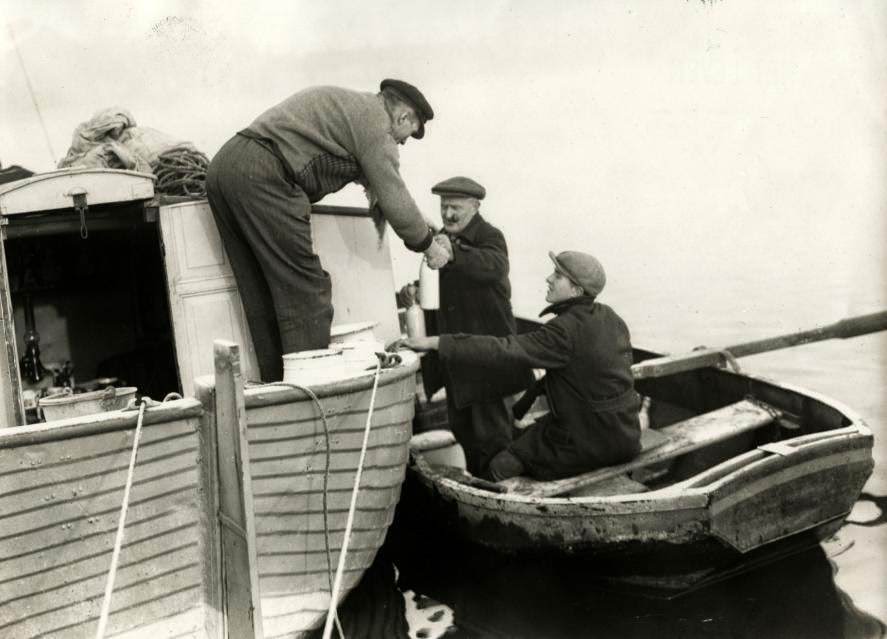
Recording a radio play. The Netherlands, 1949.

At the 1948 London Olympics — the first Games since the war — Dutch athlete Fanny Blankers-Koen dominated the track and field events. She was 30 years old and the mother of two children. The press called her “The Flying Housewife” and many expected little from her. She won four gold medals: the 100-meter sprint, the 80-meter hurdles, the 200-meter sprint, and the 4×100-meter relay. No female athlete had ever won four gold medals at a single Games before. When she returned to Amsterdam, the city gave her a bicycle and a parade through the streets.
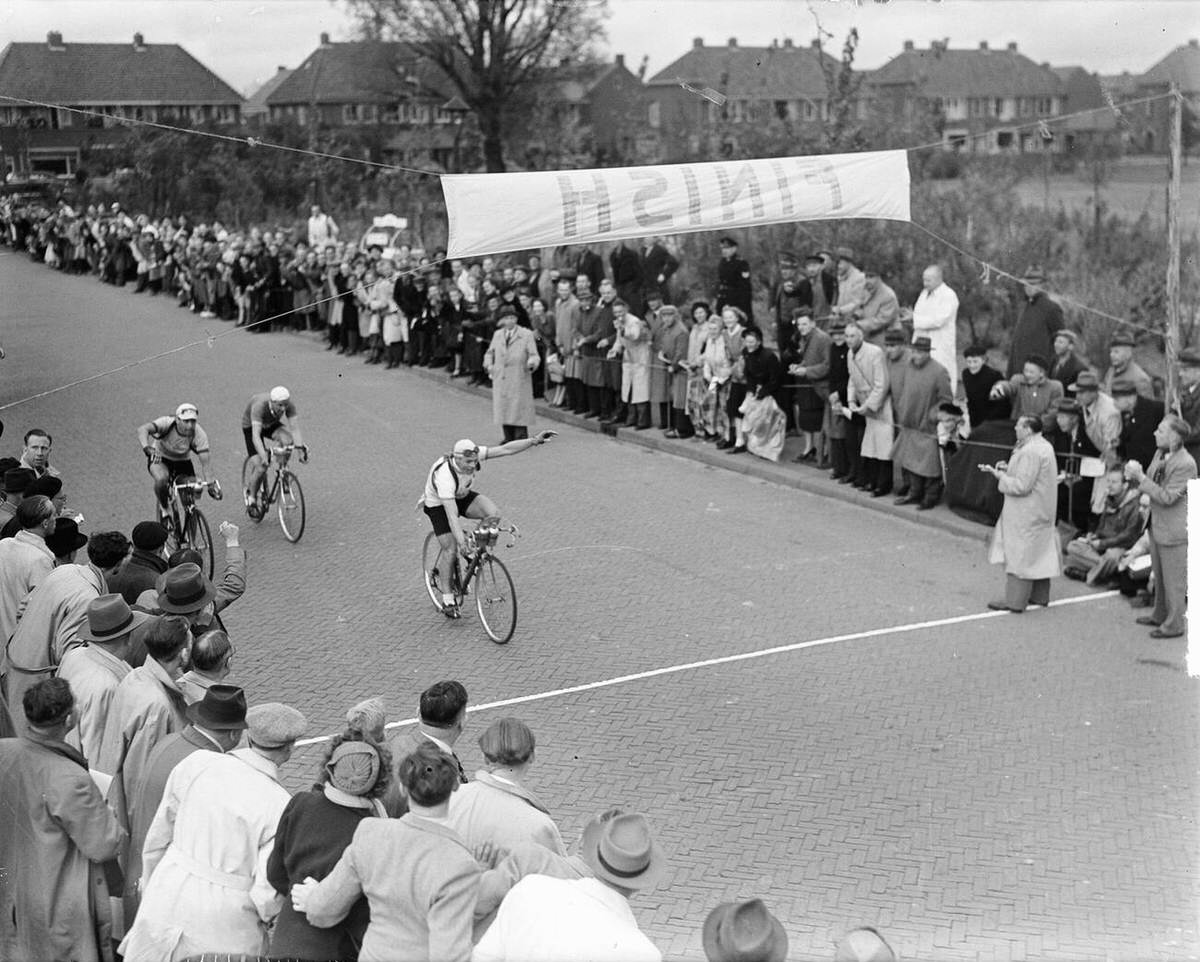
Tour of the Netherlands cycling race at the Afsluitdijk, 1949

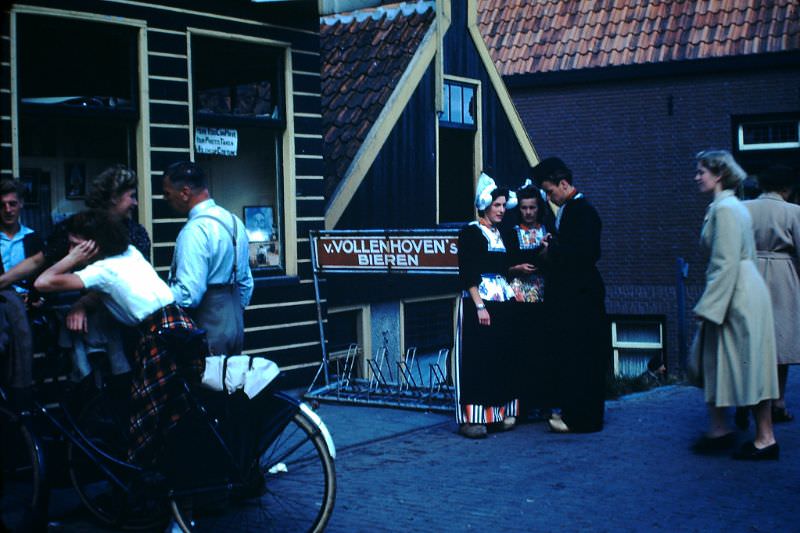
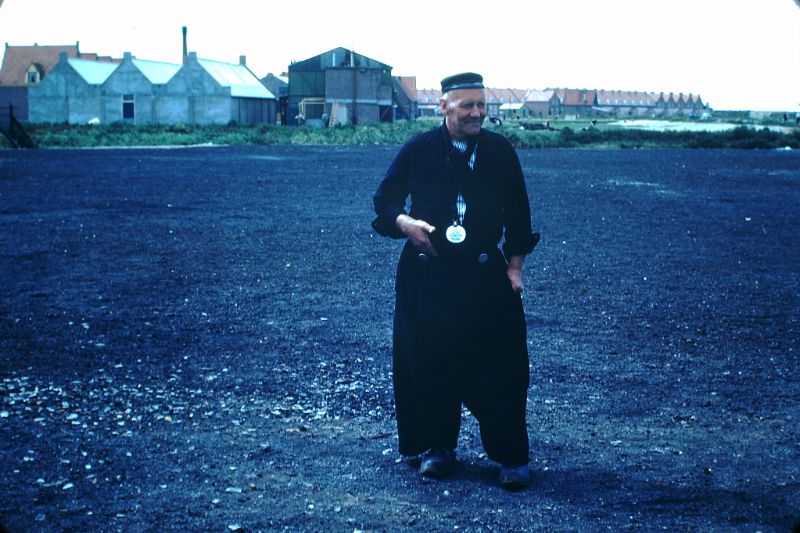
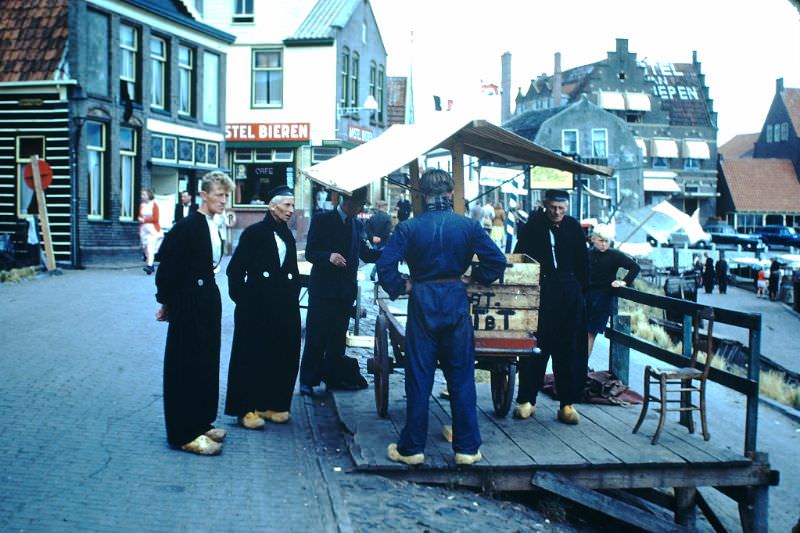
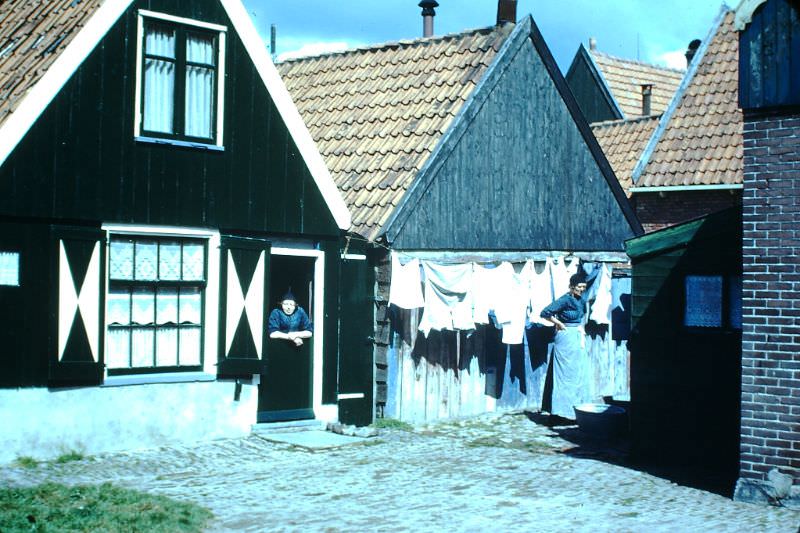
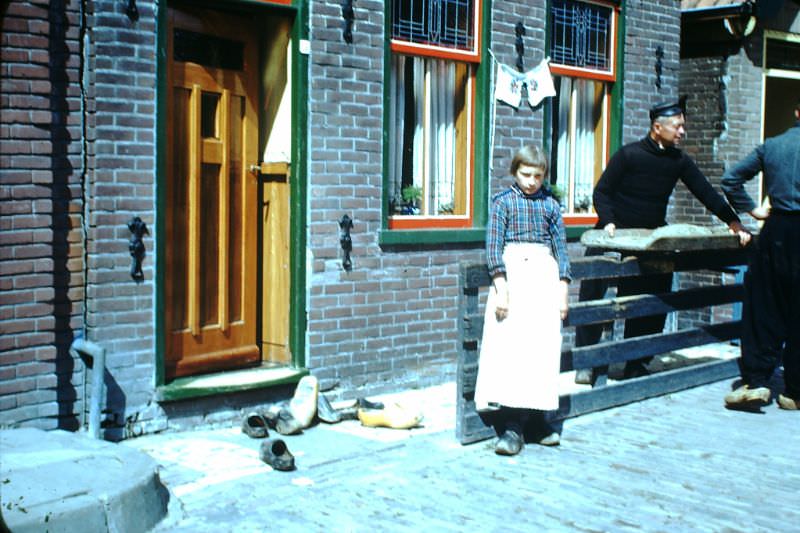
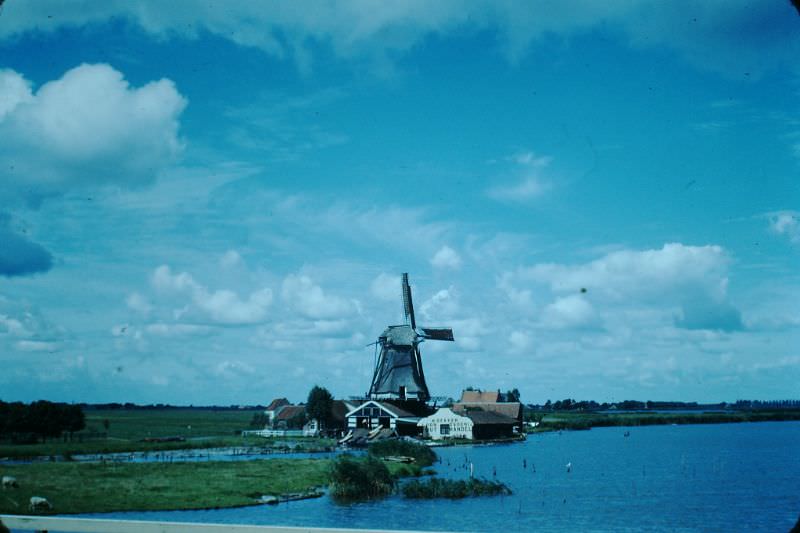
Outside the cities, Dutch life retained deep traditional roots. In Volendam, residents still wore regional costumes. Fishing boats filled the harbor, street merchants sold goods along the waterfront, and wooden clogs remained everyday footwear. Windmills still turned near the water’s edge.
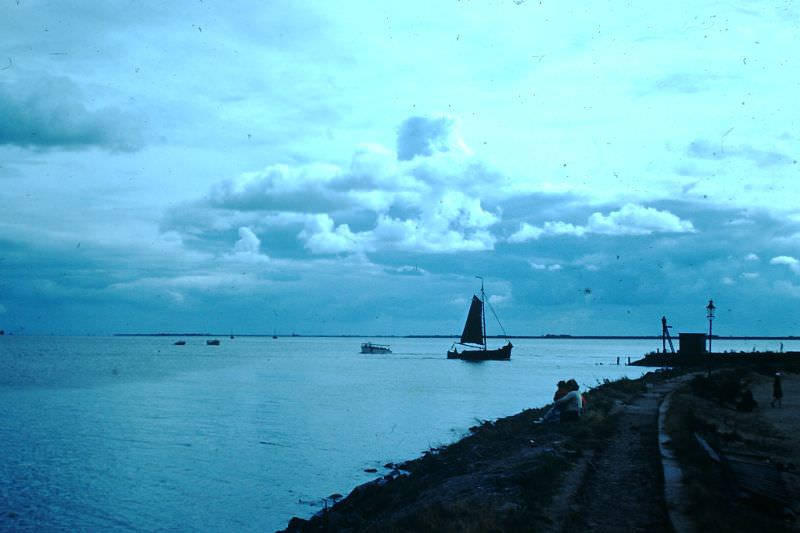
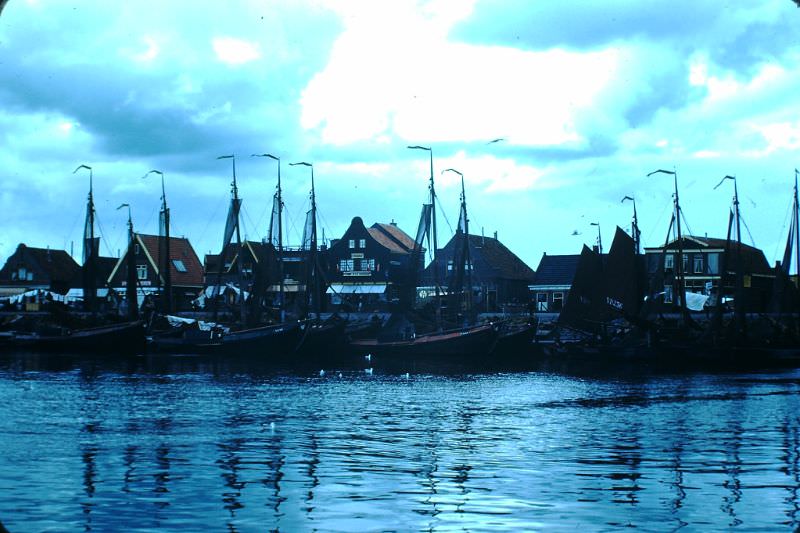
Volendam at sundown, 1949
Fishing boats in Volendam, 1949
Girls in traditional costume in Volendam, 1949
Man in traditional costume in Volendam, 1949
Street merchants in Volendam, 1949
Women in Volendam, 1949
Wooden shoes in Volendam, 1949
Windmill near Volendam, 1949

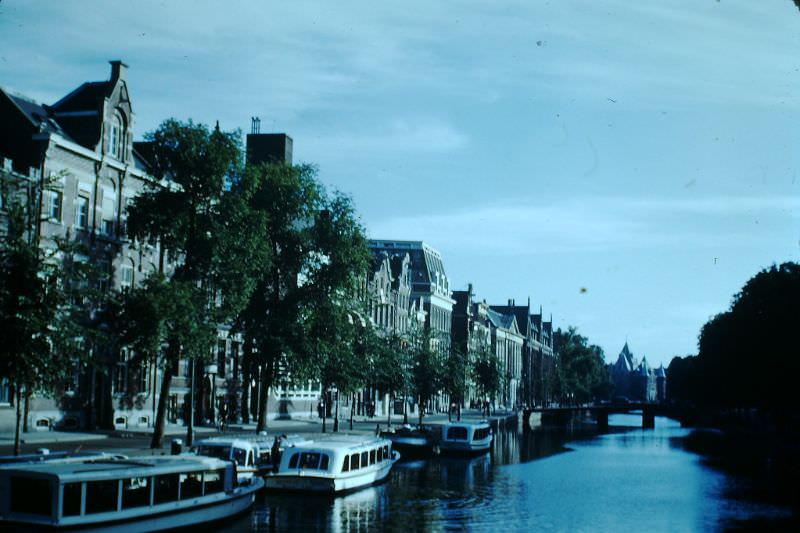
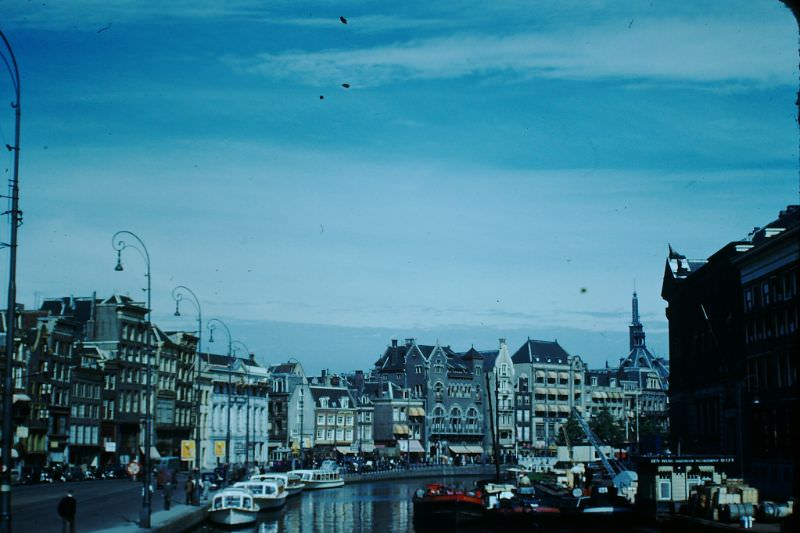
Amsterdam by the end of the decade was alive again. Its canals carried excursion boats packed with visitors. Kalverstraat buzzed with shoppers. The Rijksmuseum stood open. The Diamond Dealers Club had resumed business. Flower boats lined the waterways, and the streets carried the ordinary rhythms of peacetime city life.
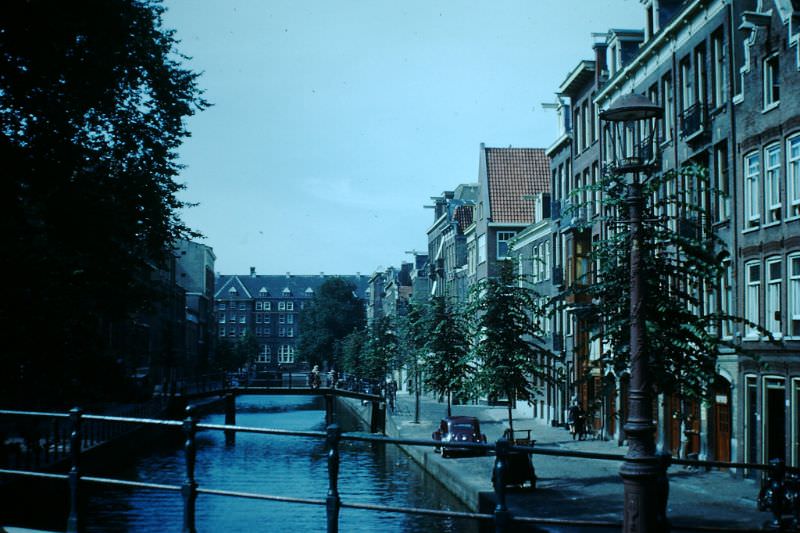
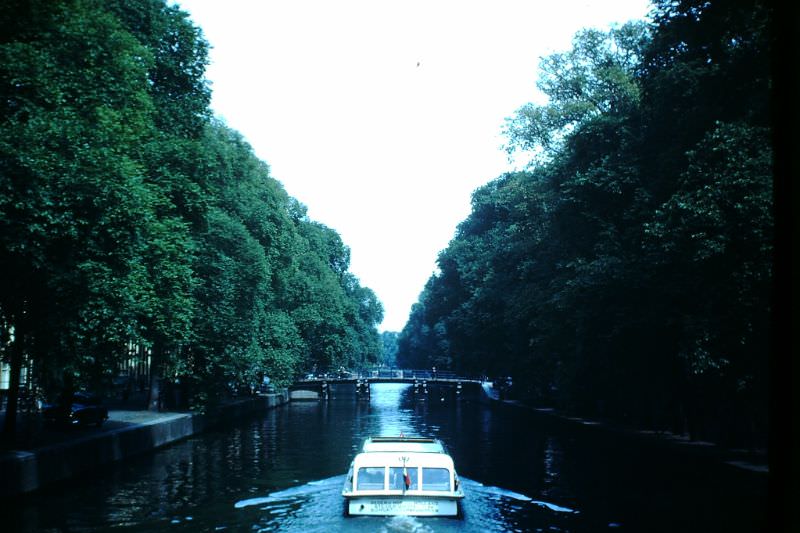
Canal bridges in Amsterdam, 1949
Canal excursion boat in Amsterdam, 1949
Canal excursion boats in Amsterdam, 1949
Canal in Amsterdam, 1949
Diamond Dealers Club in Amsterdam, 1949
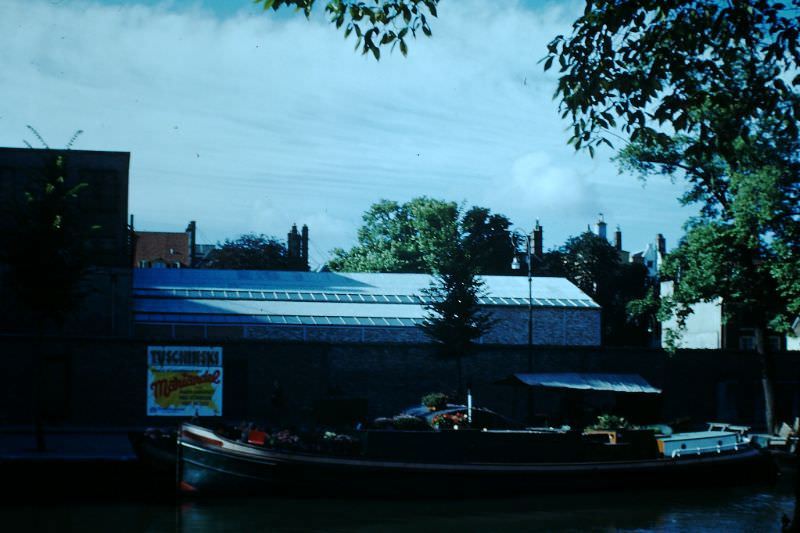
Flower boat in Amsterdam, 1949
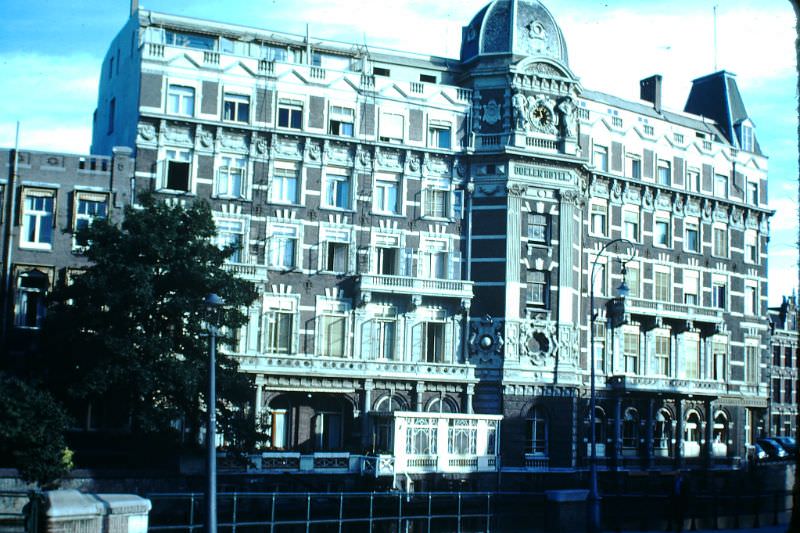
Hotel Doelen in Amsterdam, 1949
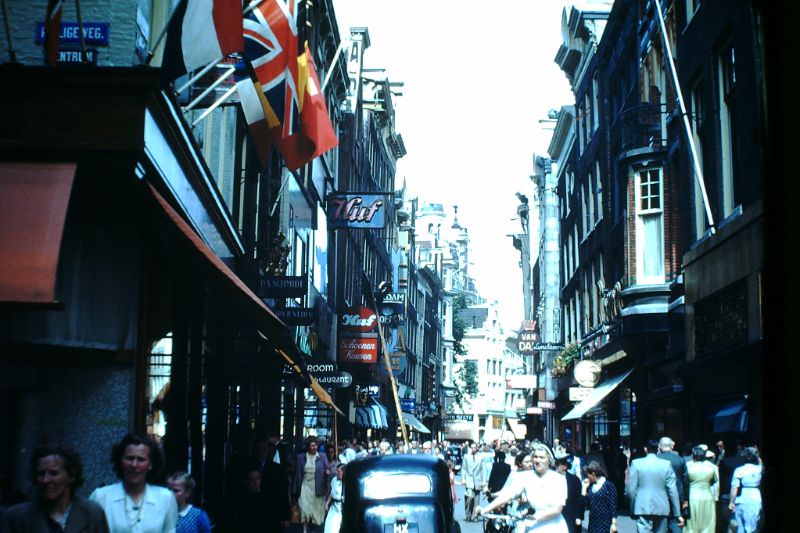
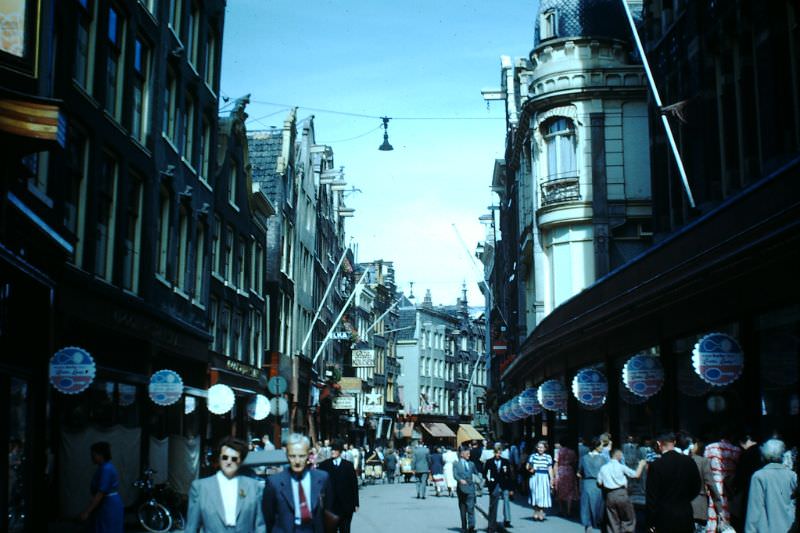
Kalverstraat in Amsterdam, 1949
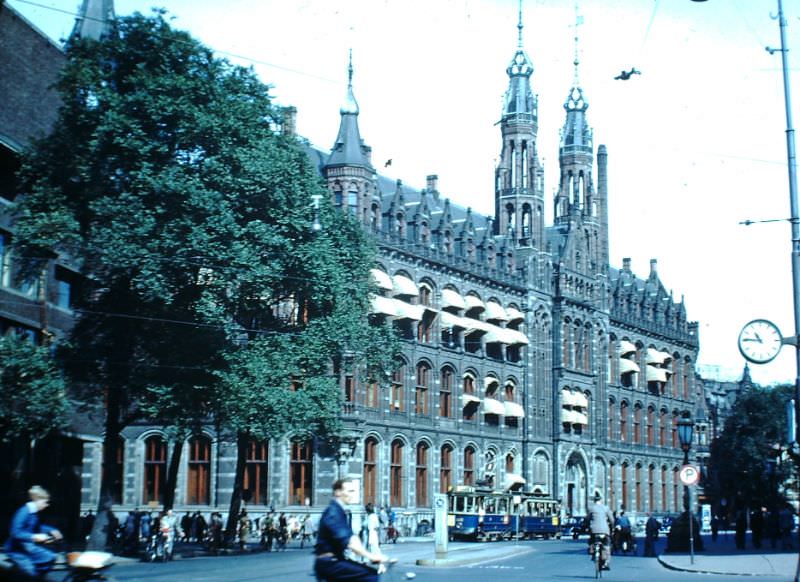
Post Office Building in Amsterdam, 1949
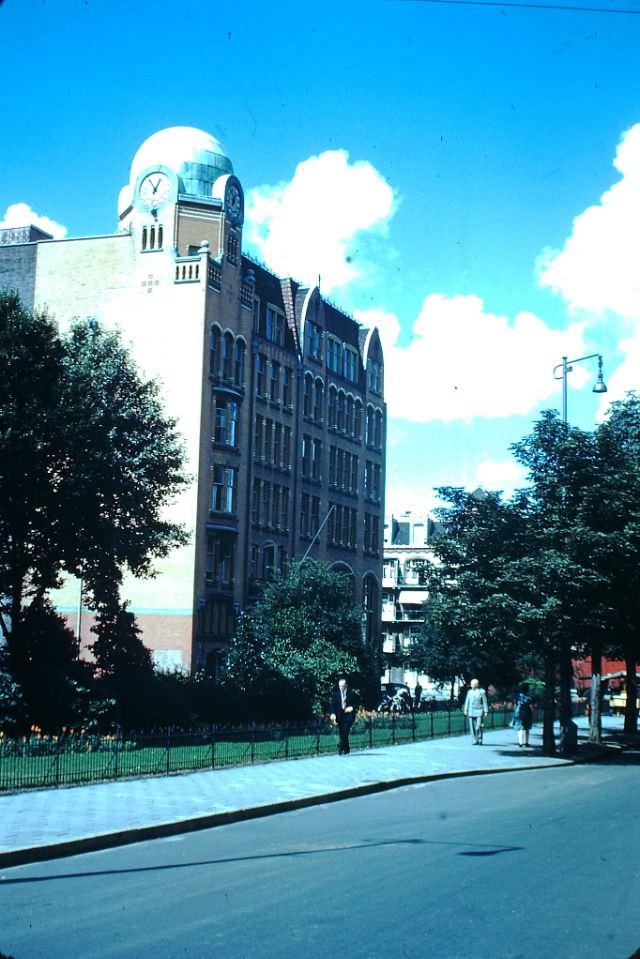
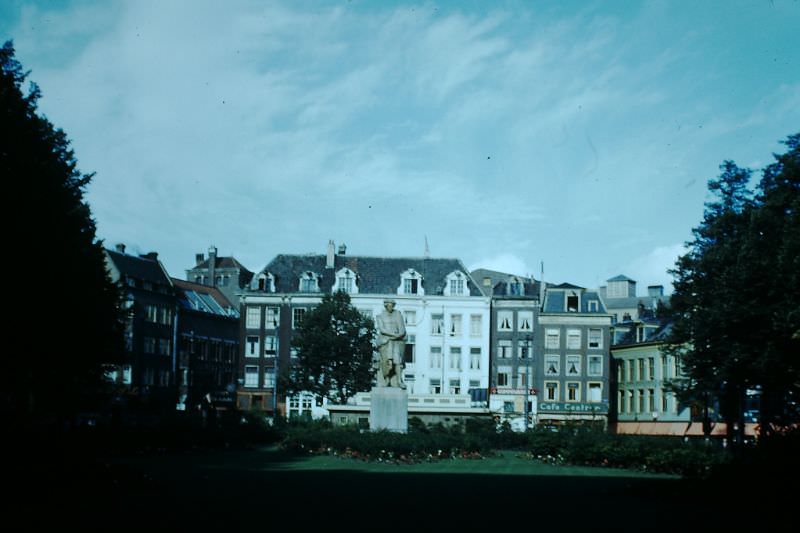
Rembrandt Park in Amsterdam, 1949
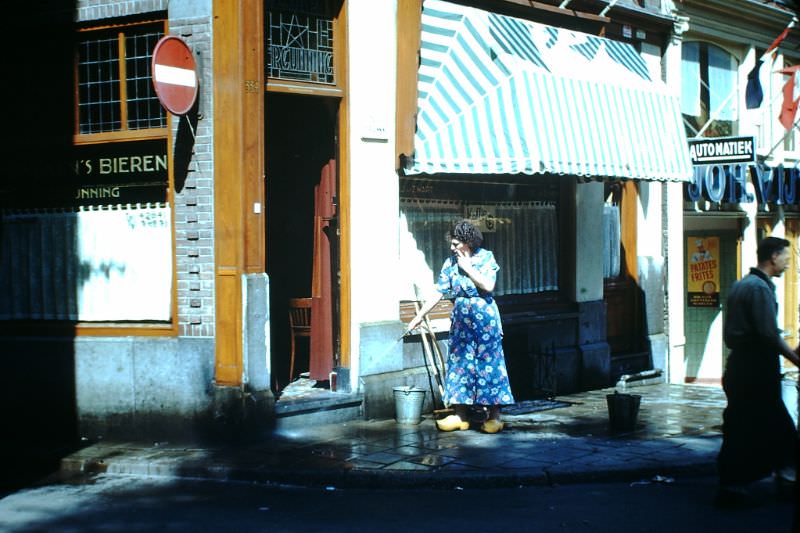
Street scene with wooden shoes in Amsterdam, 1949
Whaling ship bound for the South Pole in Amsterdam, 1949

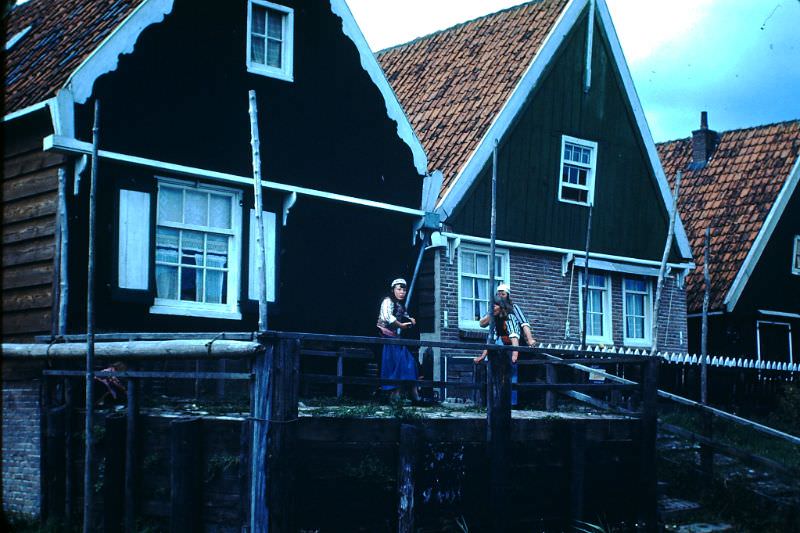
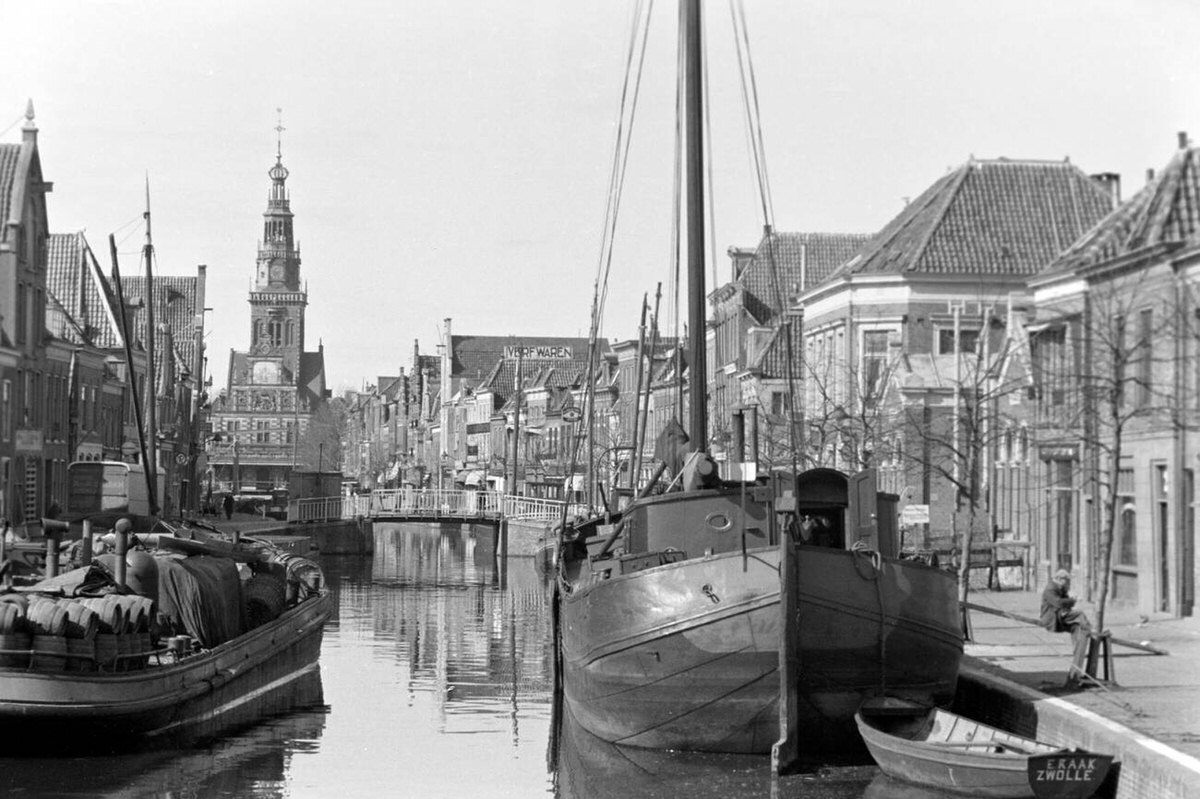
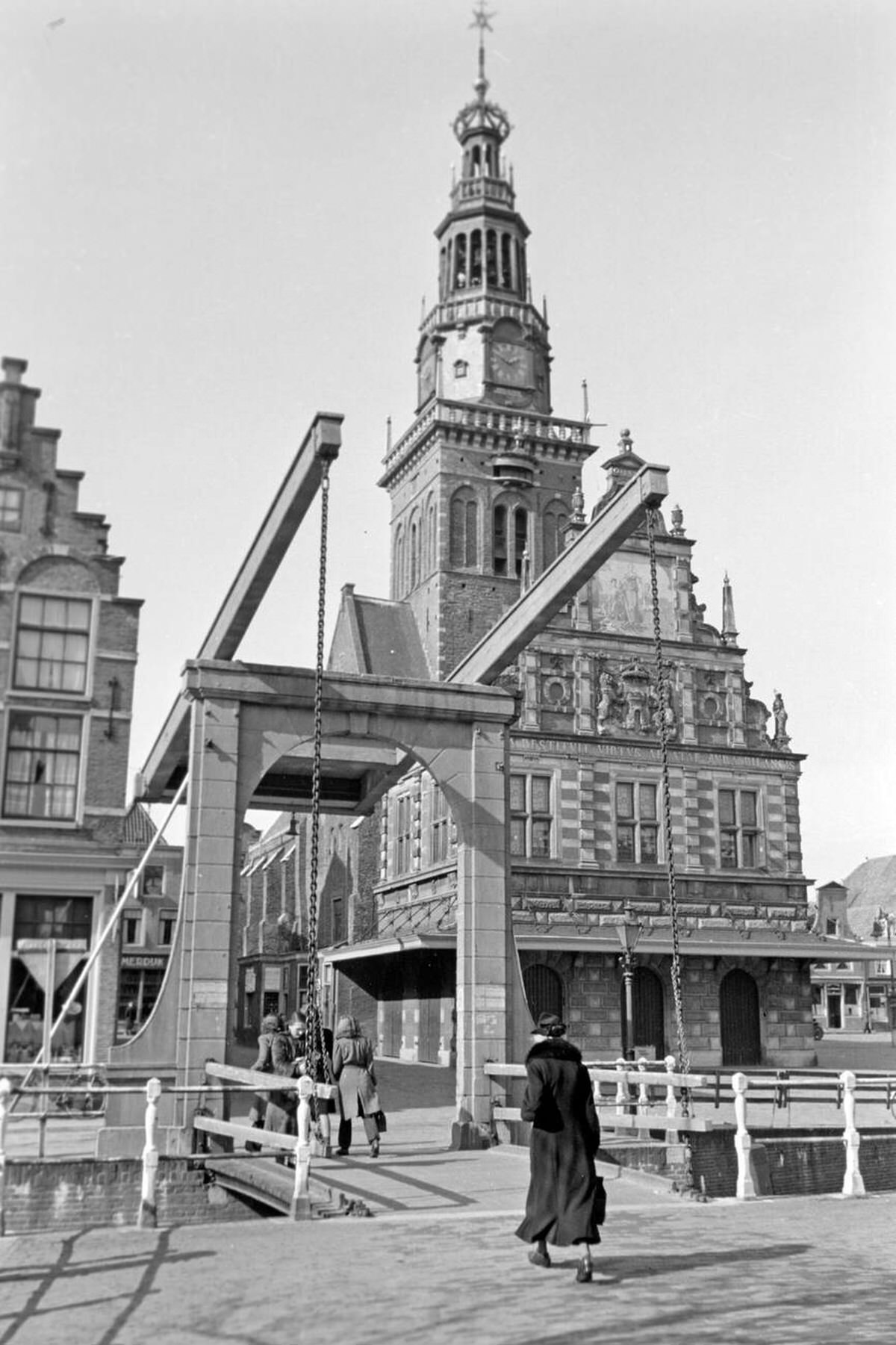
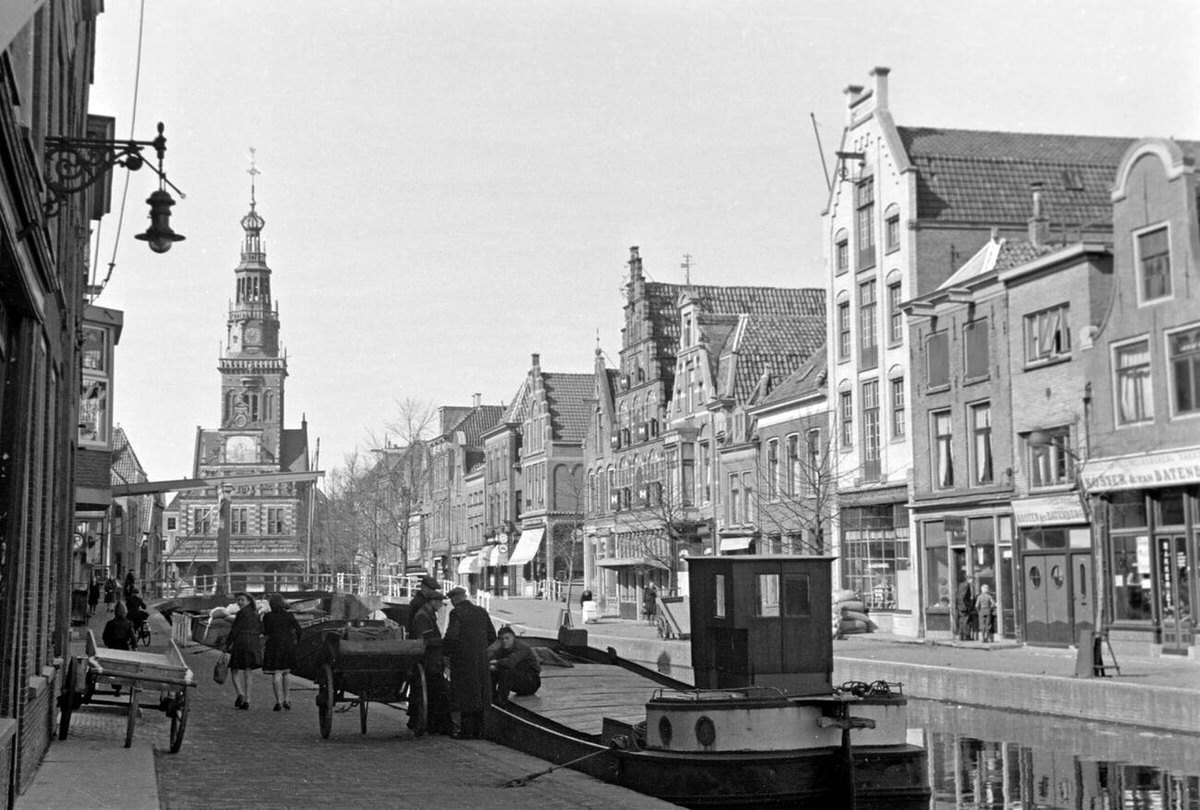
Smaller villages and towns across the country carried their own distinct character into the postwar years. Broek in Waterland sat quiet and well-preserved on the water. The Isle of Marken, accessible only by boat, kept its children in traditional dress. The Alkmaar cheese market, with its famous De Waag scales and Schapenbrug, had operated through the occupation and continued in 1941 with little outward change.
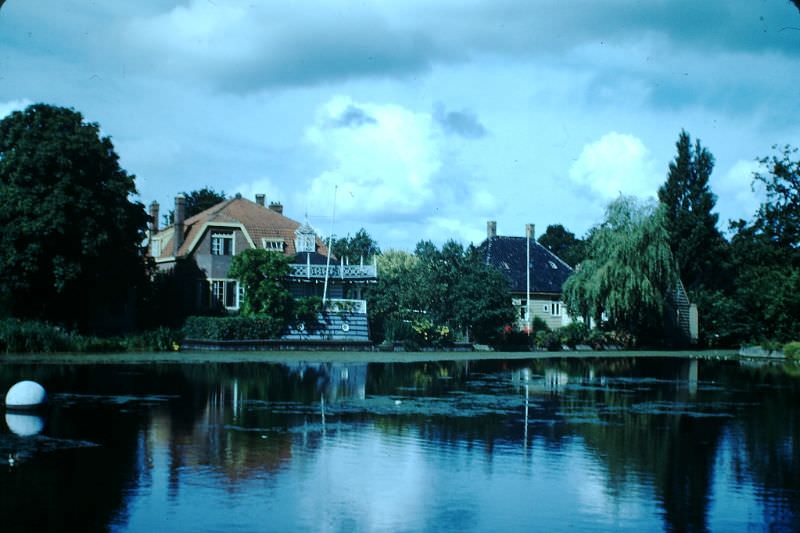
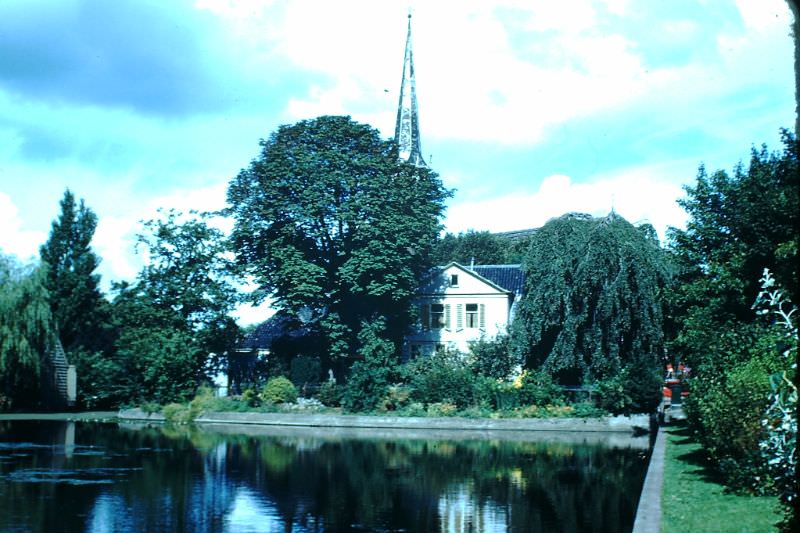
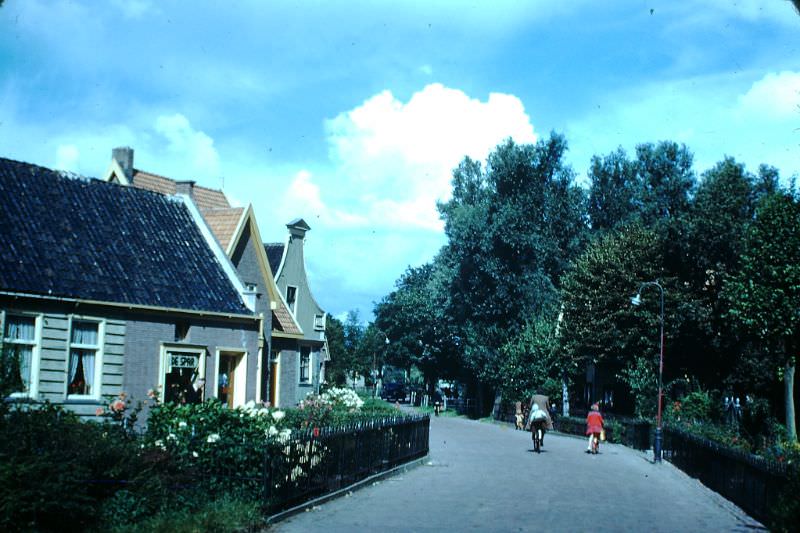
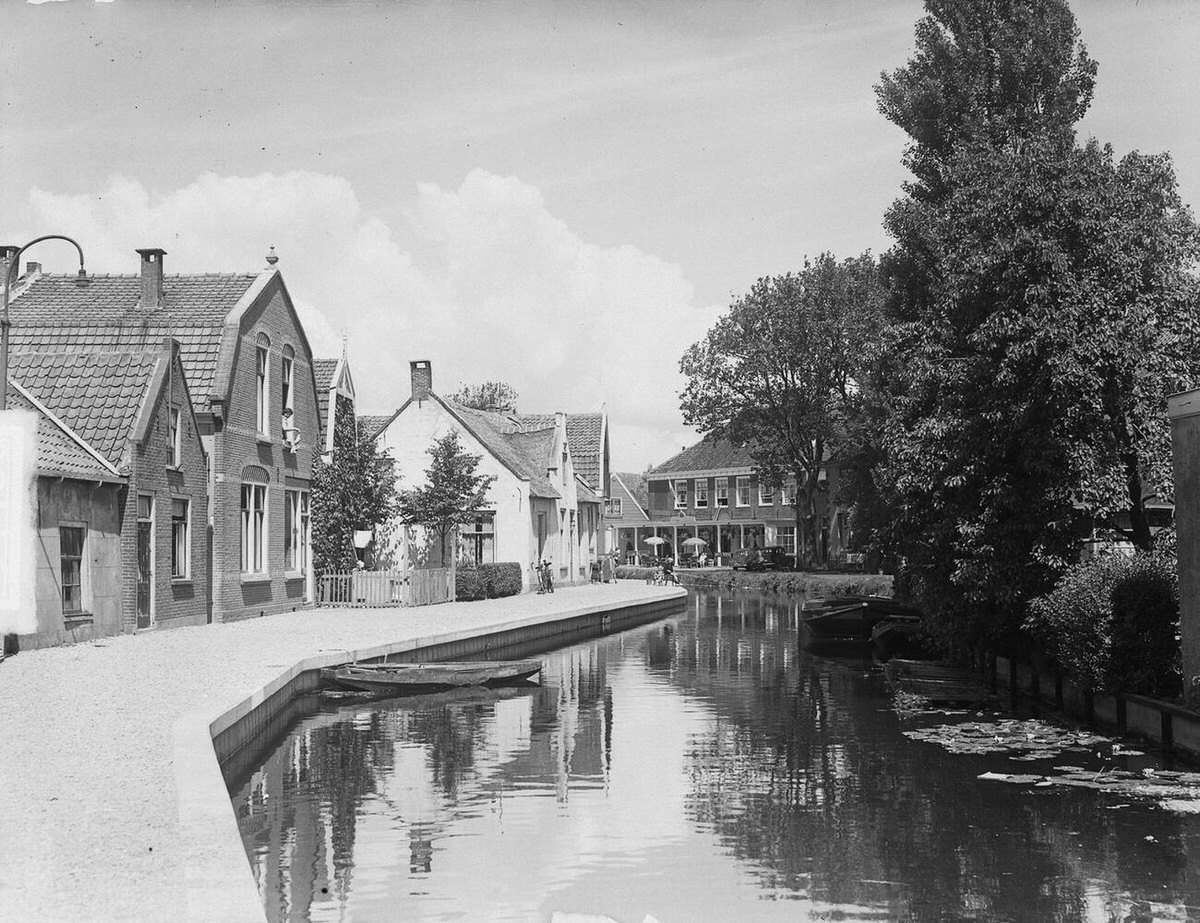
Broek in Waterland, 1949
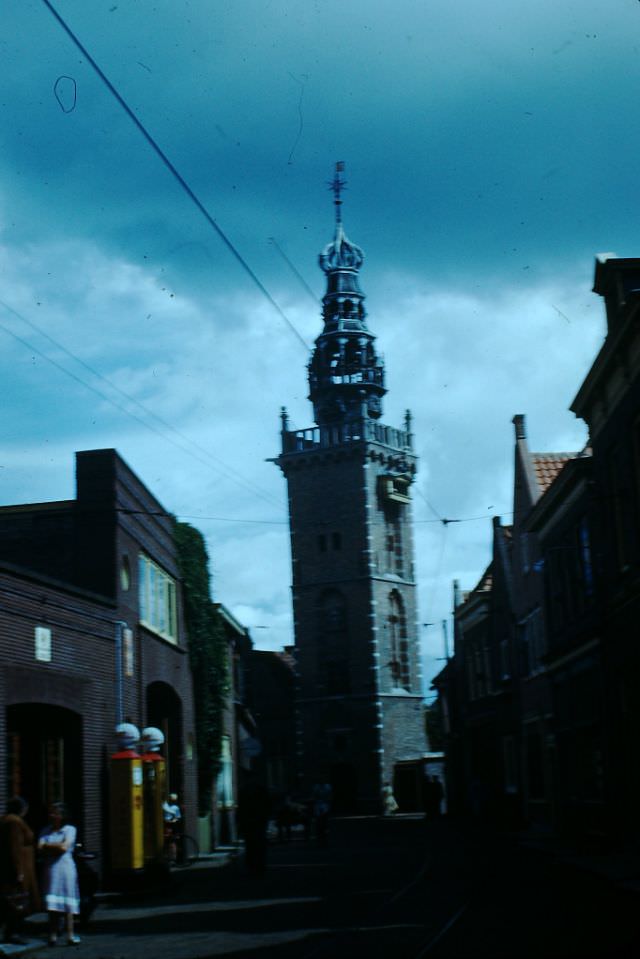
Church at Monnickendam, 1949
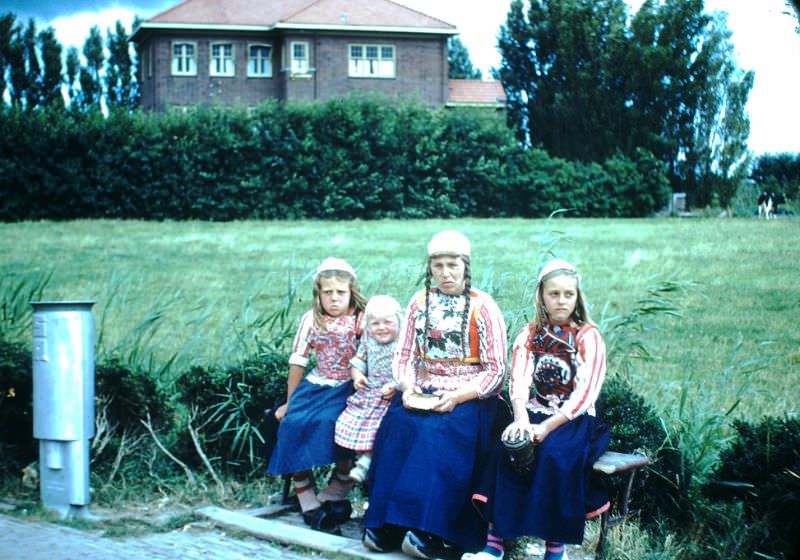
Children on the Isle of Marken, 1949
Houses on the Isle of Marken, 1949
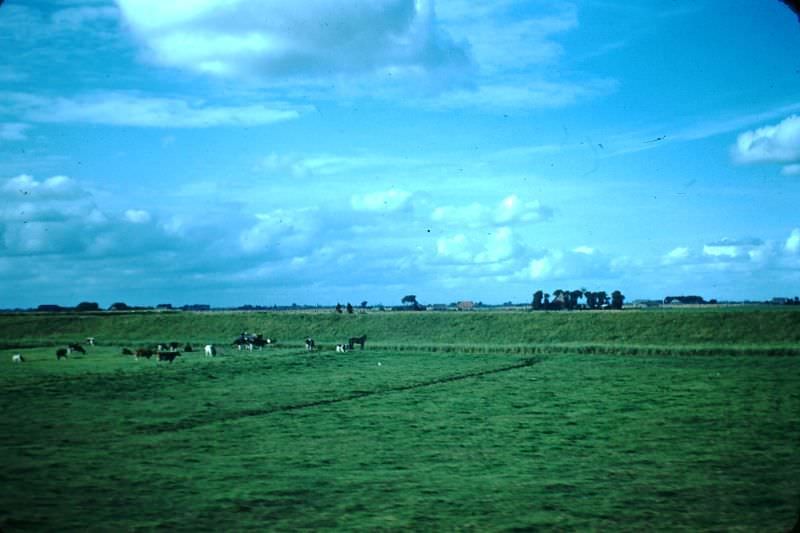
Milking cows in a field near the Belgian border, 1949
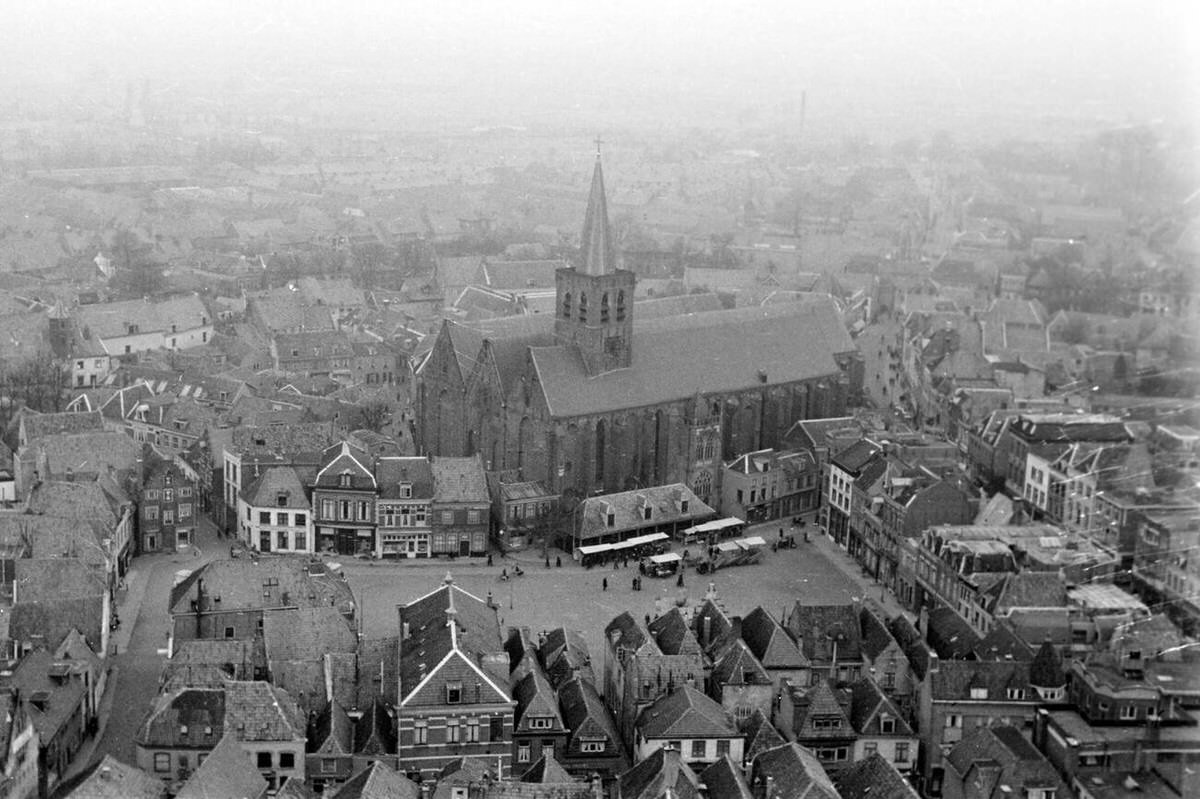
View of the Sint-Joriskerk in Amersfoort from the Onze-Lieve-Vrouwetoren, 1941
View of De Waag cheese scales from the Rotorenbrug in Alkmaar, 1941
Schapenbrug at the cheese scales in Alkmaar, 1941
View of De Waag cheese scales along a canal in Alkmaar, 1941
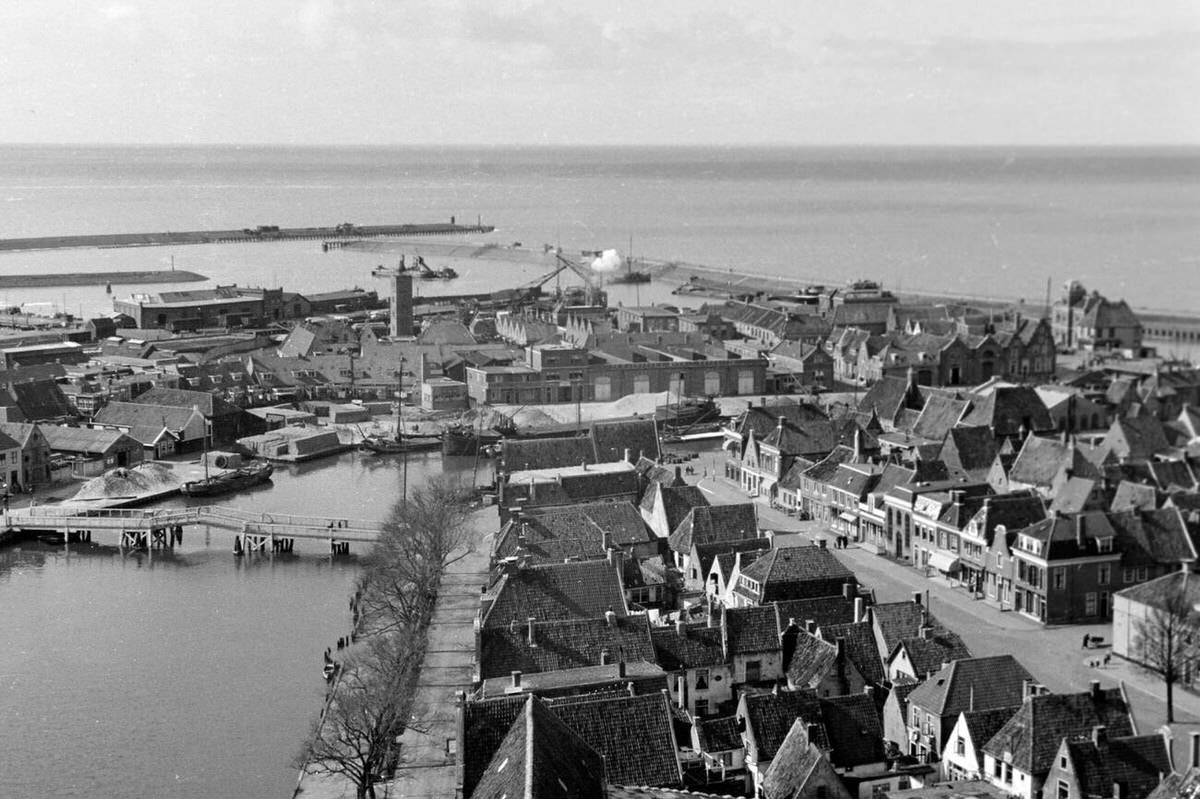
Harlingen in Friesland, 1941

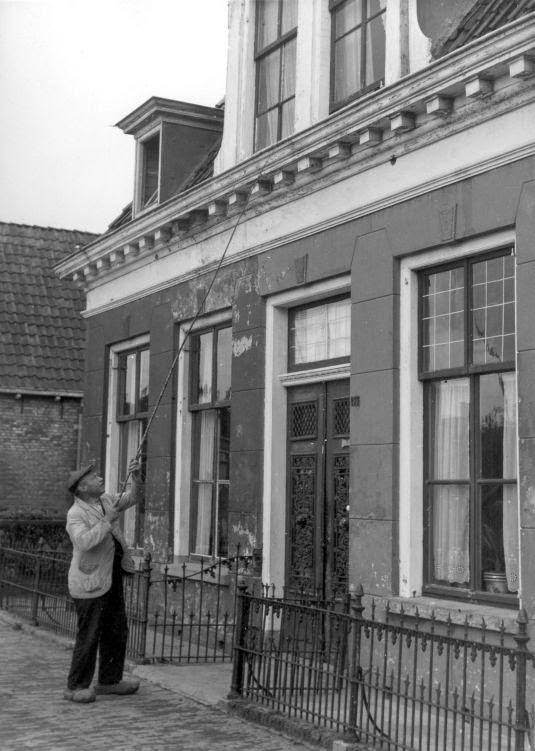
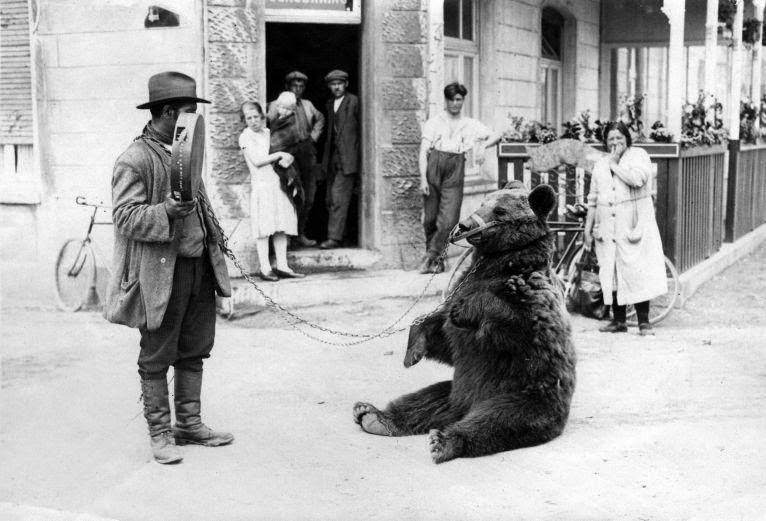
Daily life in the Netherlands during this decade ranged from the grim to the routine to the quietly resilient. A “caller-up” in Leeuwarden still made his rounds in 1947, tapping a stick against bedroom windows to wake workers before alarm clocks were common. Housewives beat their doormats in the street. A nursing school trained a new generation of medical workers. An animal trainer walked a chained performing bear through the streets. These scenes, ordinary on their surface, took place against the backdrop of a country that had just survived five years of occupation and was now pulling itself forward.
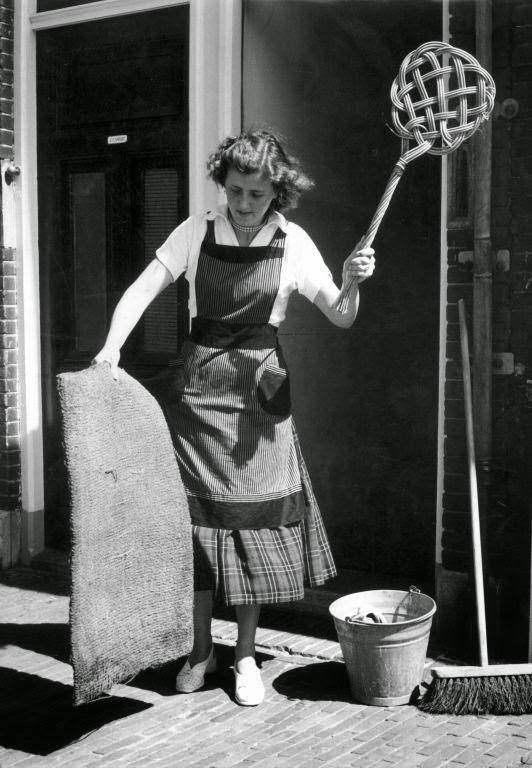
Housewife cleaning doormat with carpet-beater. The Netherlands
Animal trainer with chained performing bear in the street.
Caller-up waking up inhabitants by tapping a stick at the bedroom window. Leeuwarden, the Netherlands, 1947.
Nursing school, 1947
Store in Emmeloord, the capital city of the Noordoostpolder, 1946
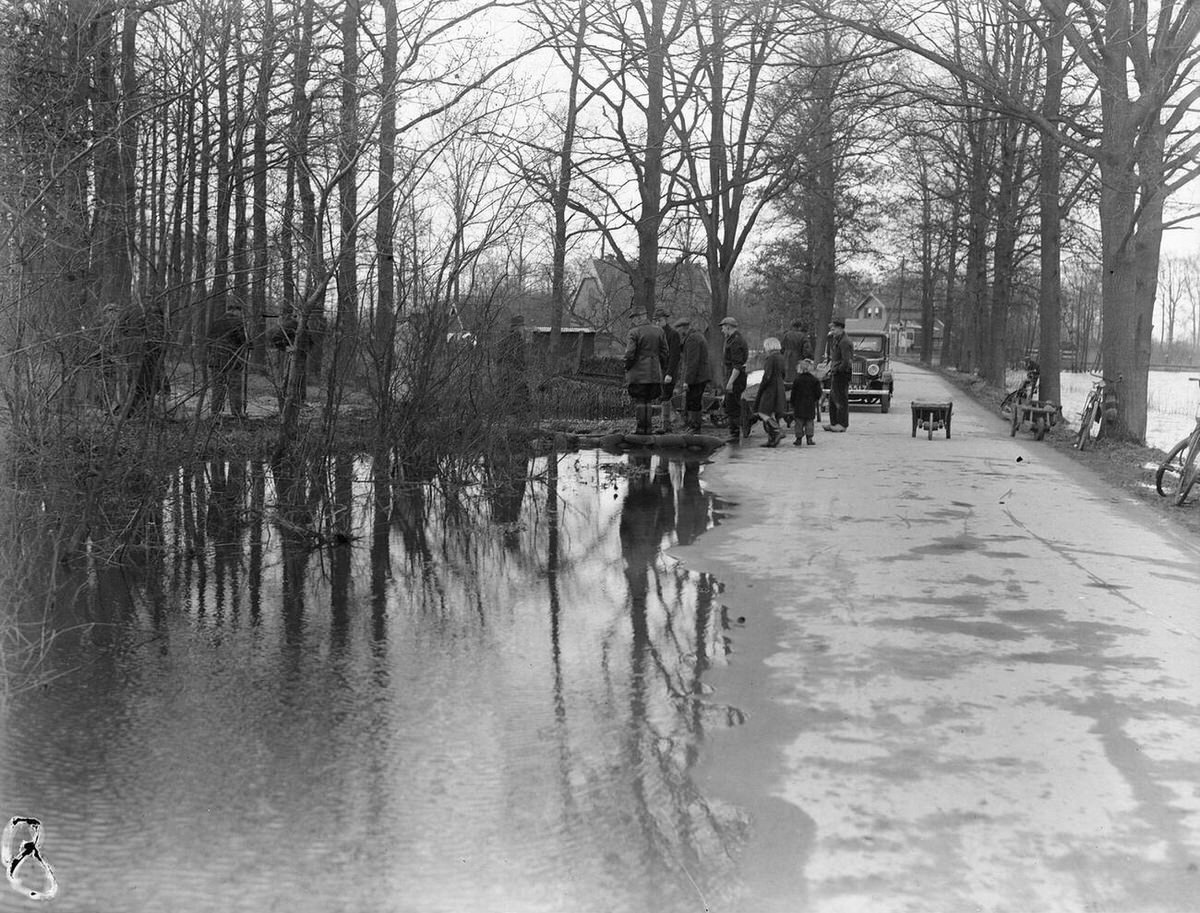
Flooding in Achterhoek, Gelderland, 1946
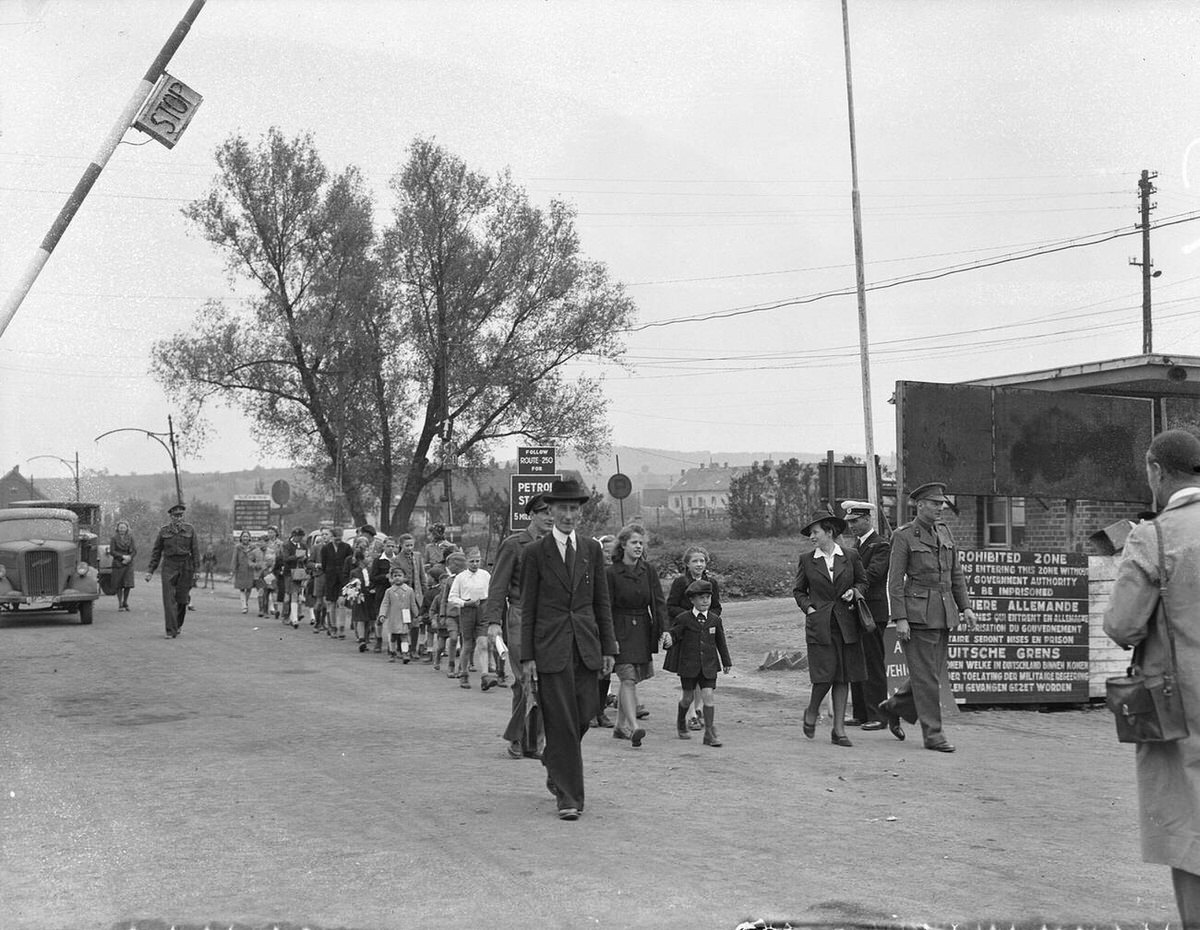
German children in Limburg, 1947
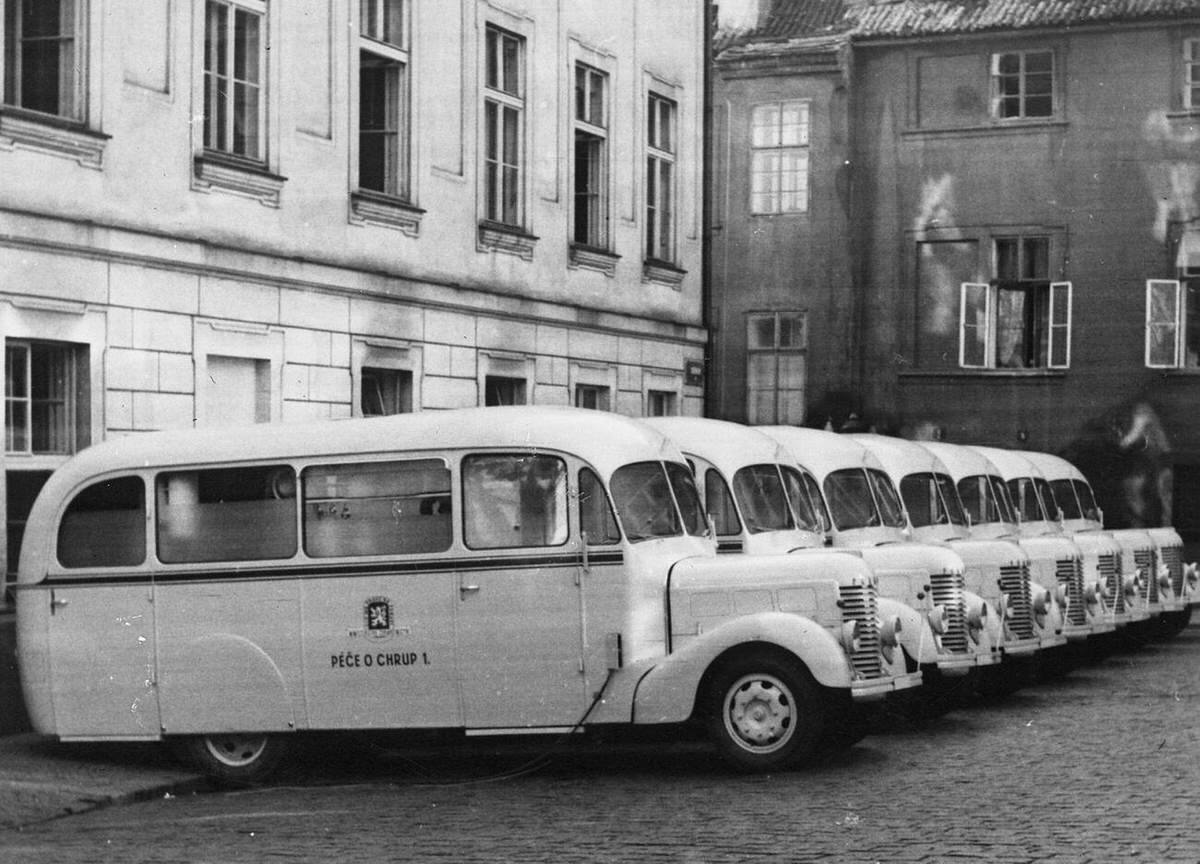
Dentist buses parked in a lot in Czechoslovakia, 1947
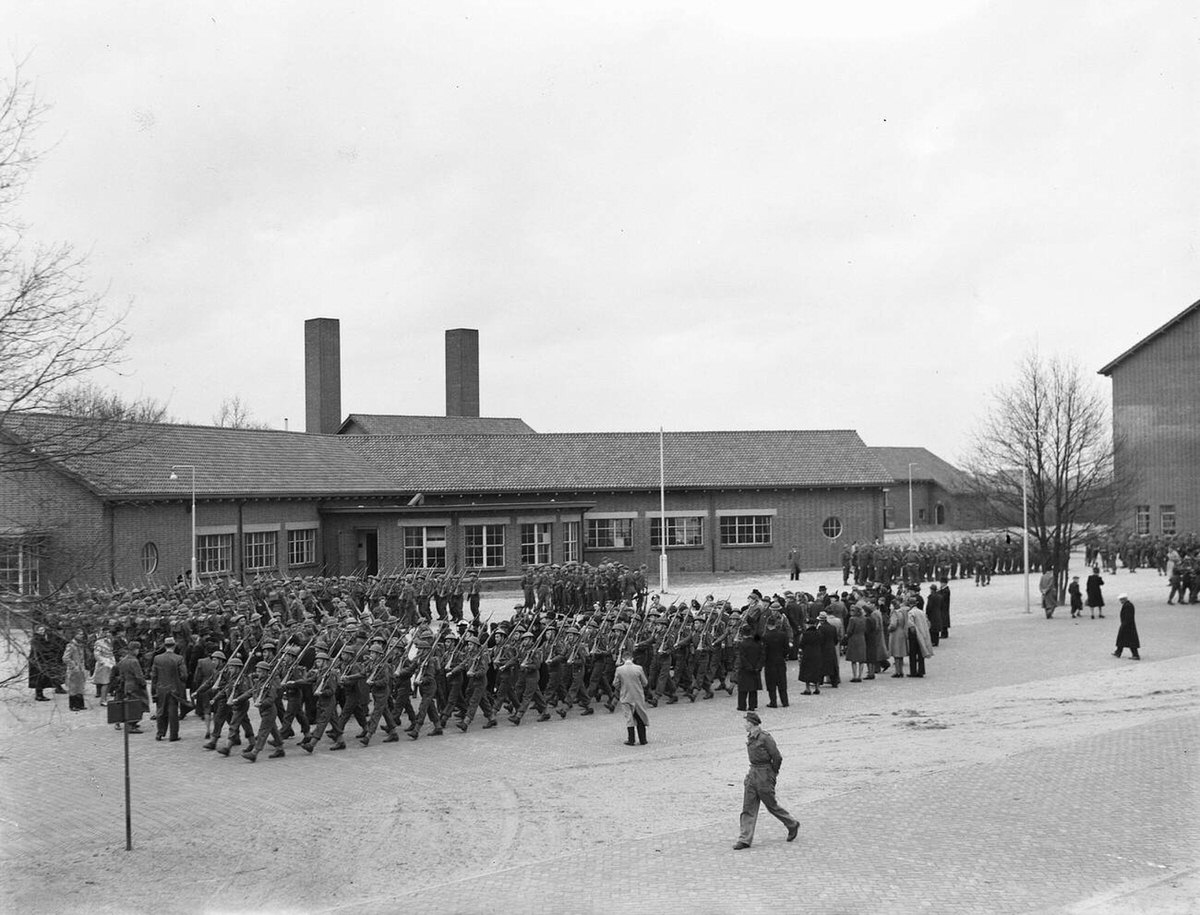
Parents' day at the barracks in Vught, 1948
Parents’ day at the barracks in Vught, 1948
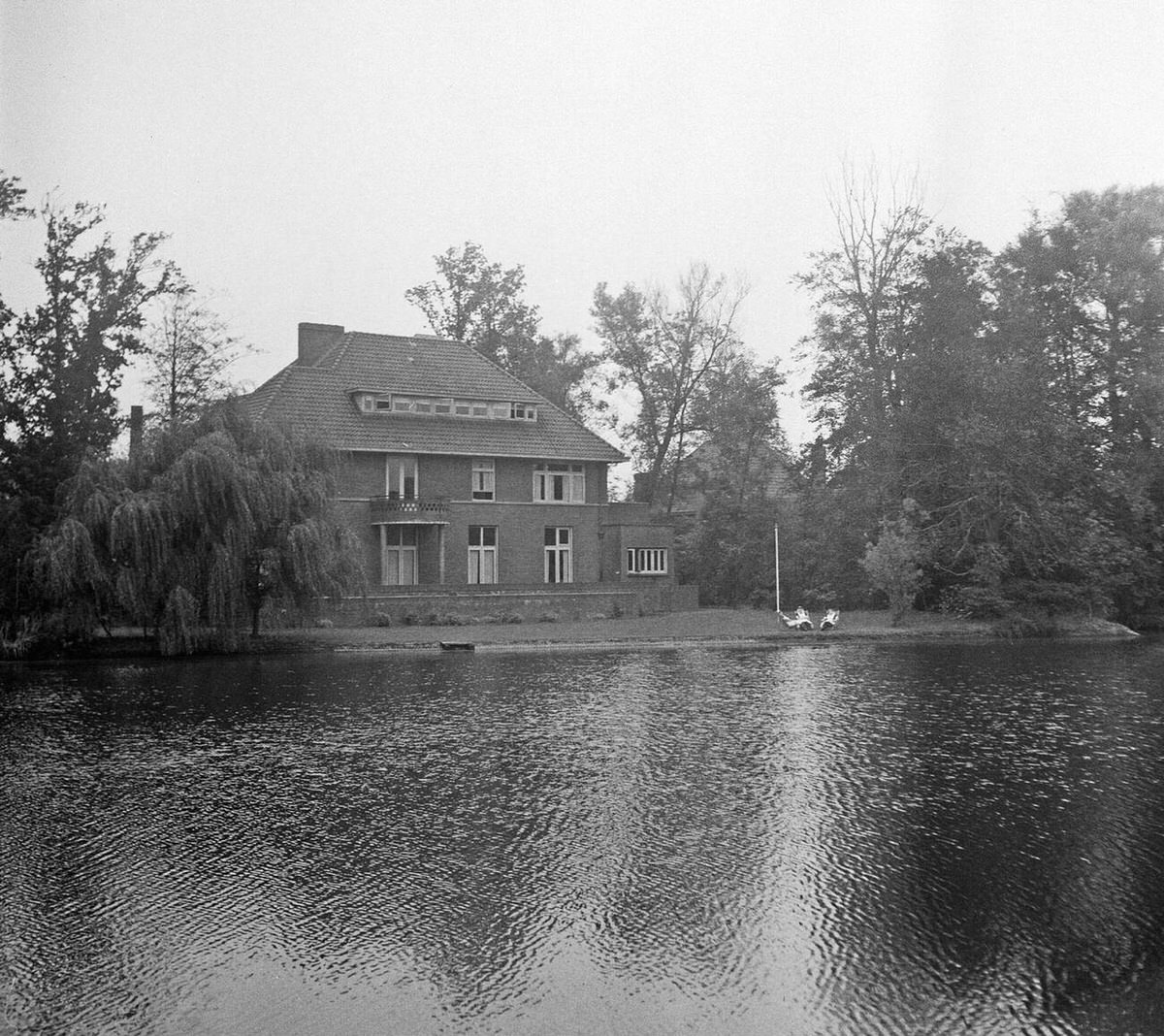
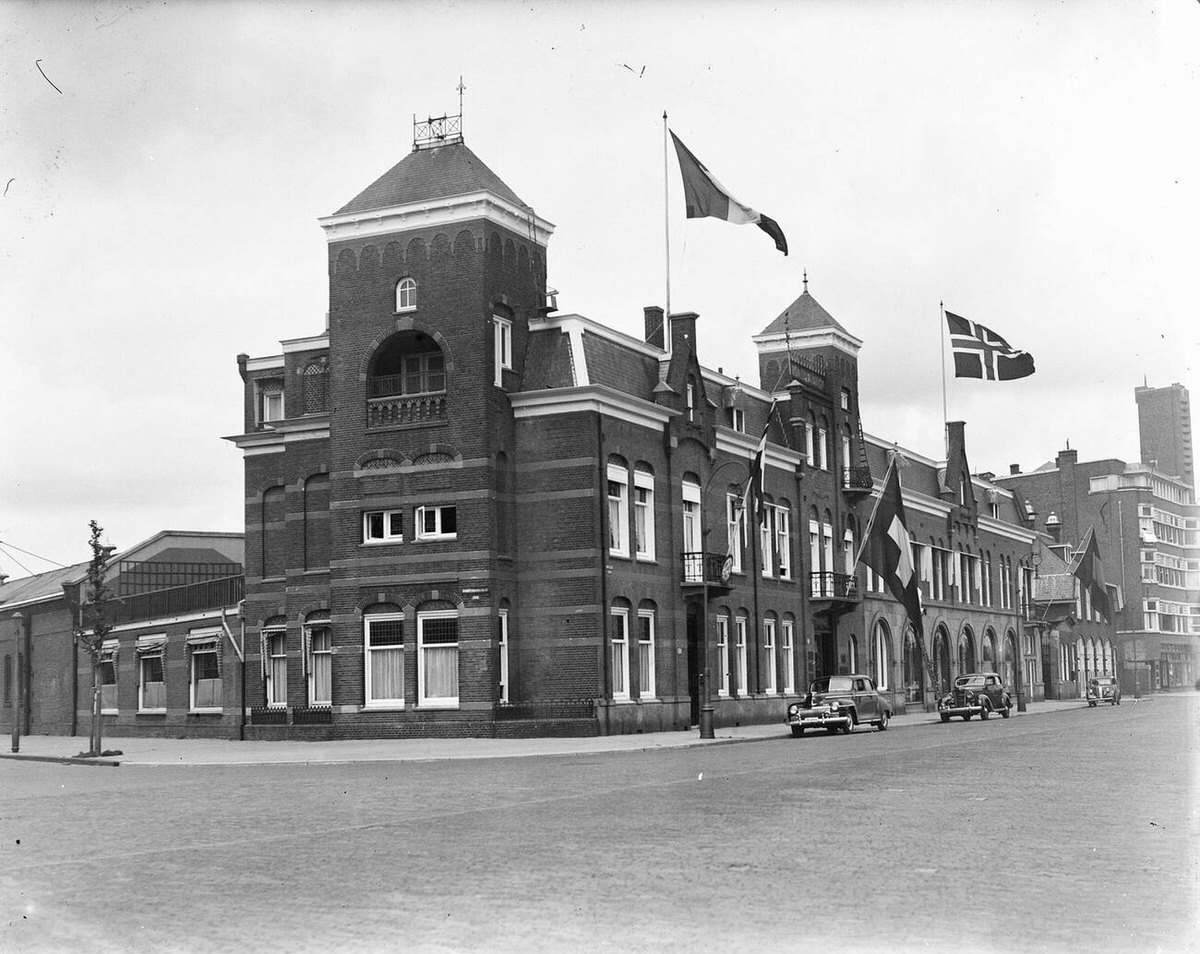
Exterior of N.V. Papierindustrie Nestelroy on Amsteldijk, 1948
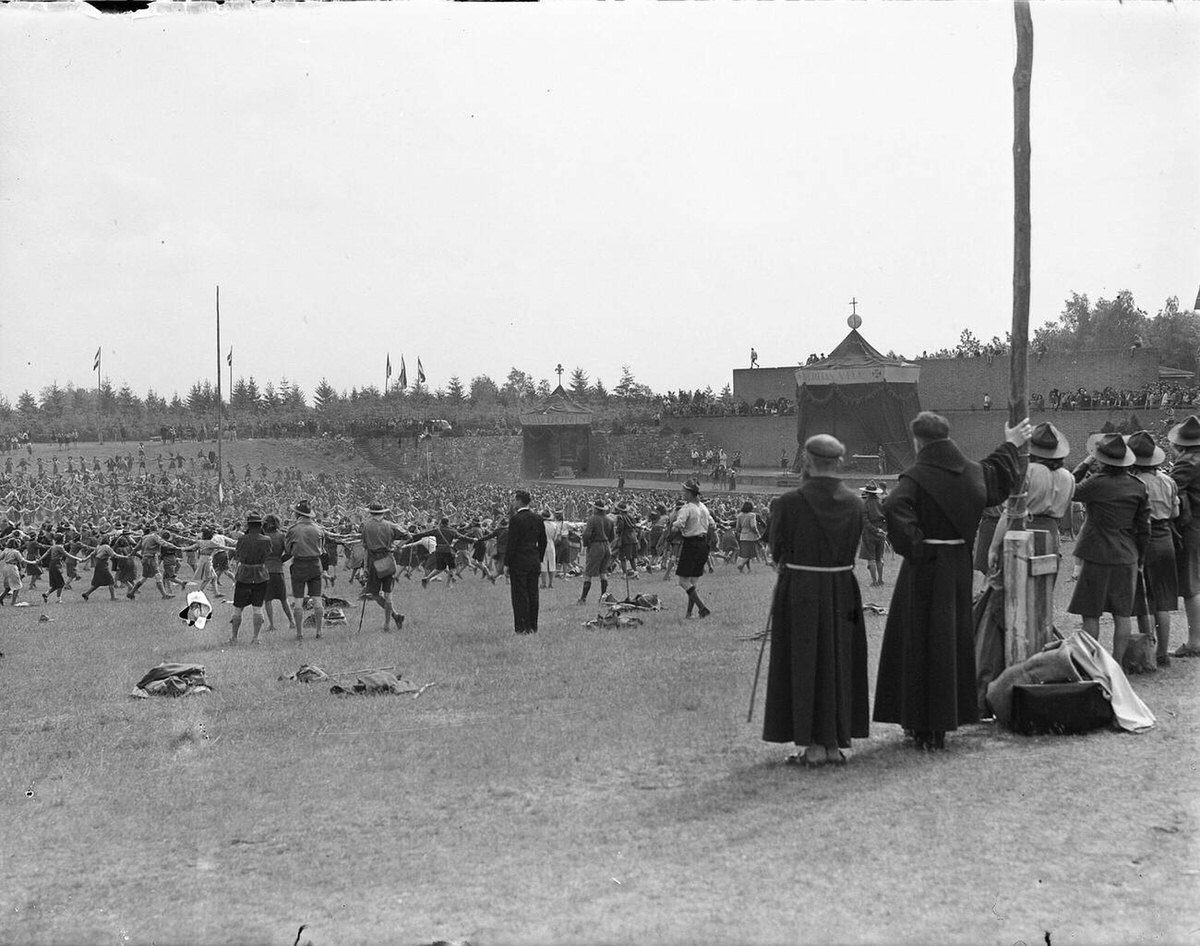
Religious explorers in Lunteren, Gelderland, 1948
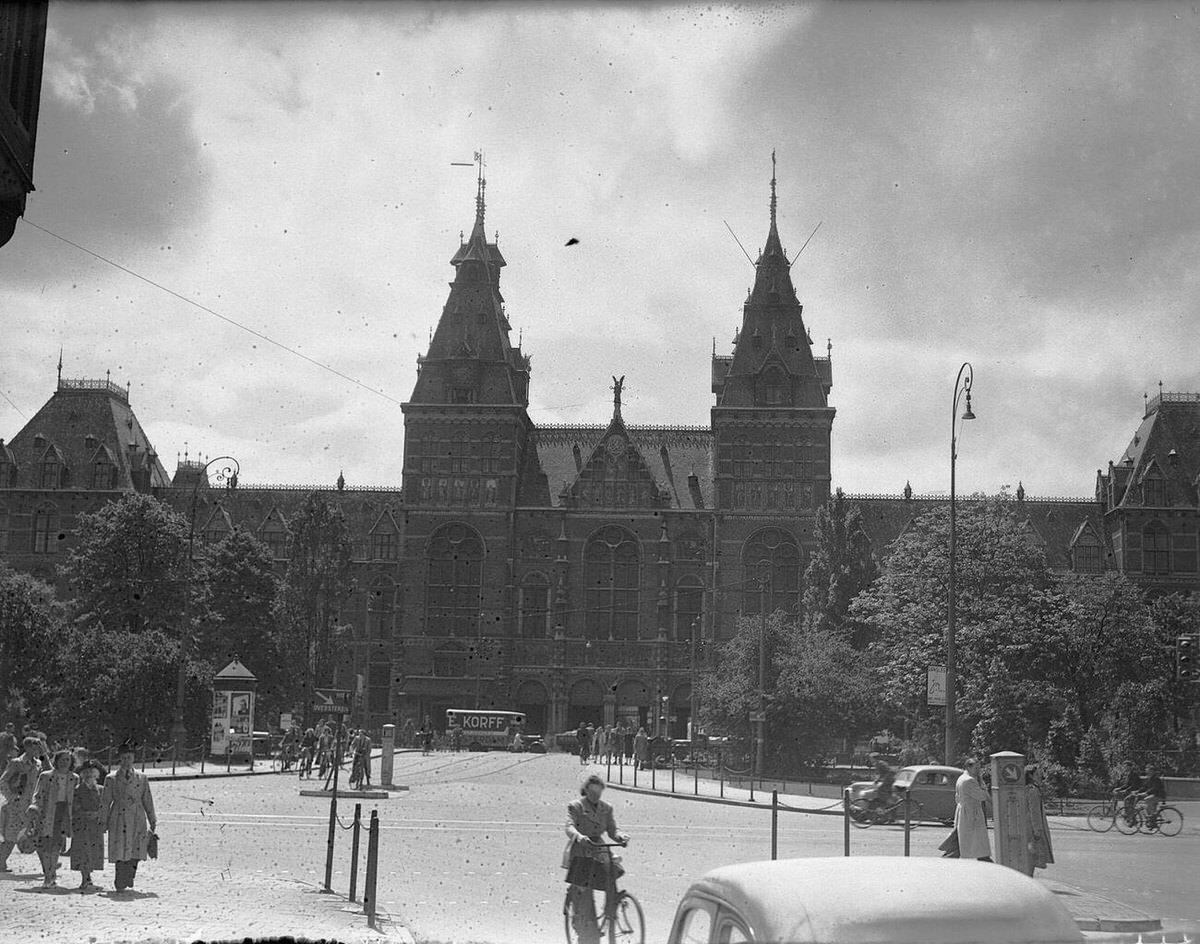
Rijksmuseum in Amsterdam, 1948
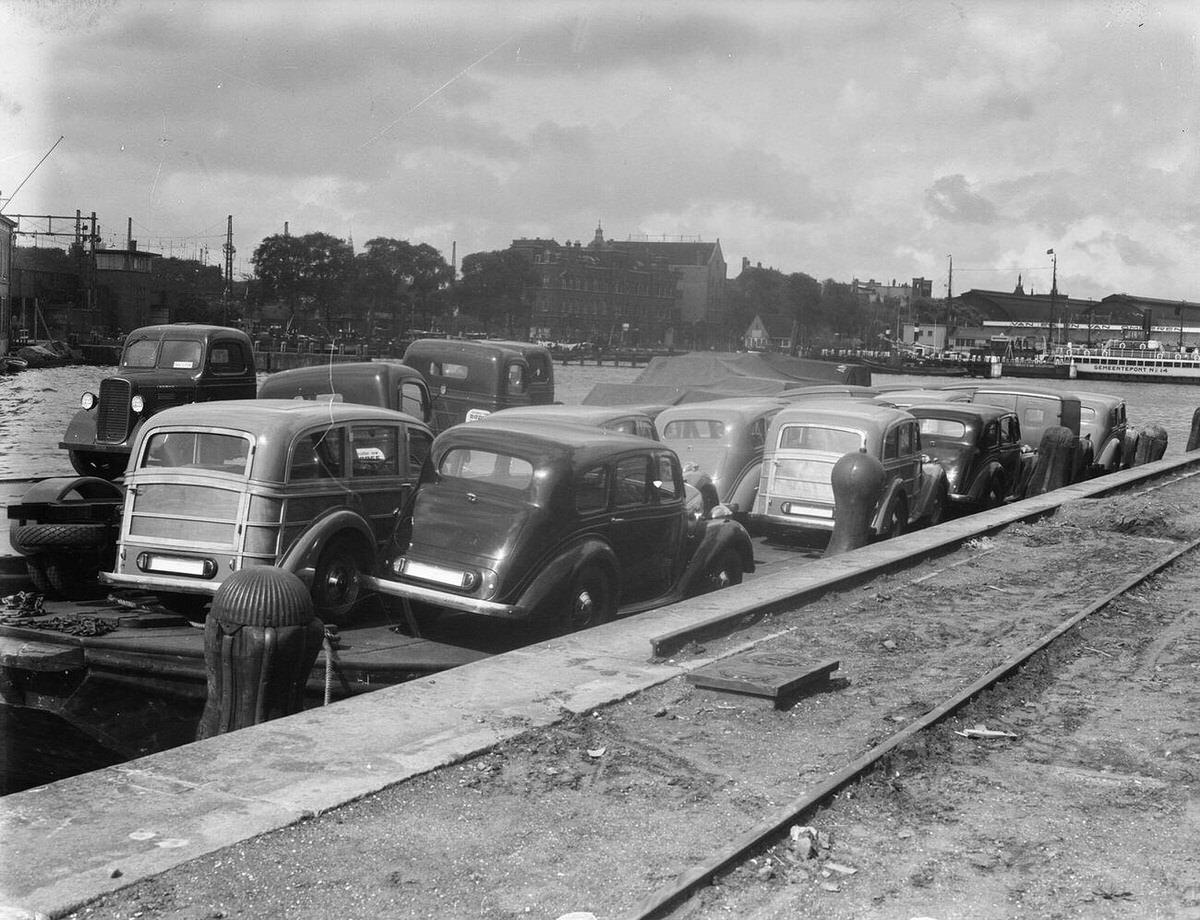
Imported English cars, 1948
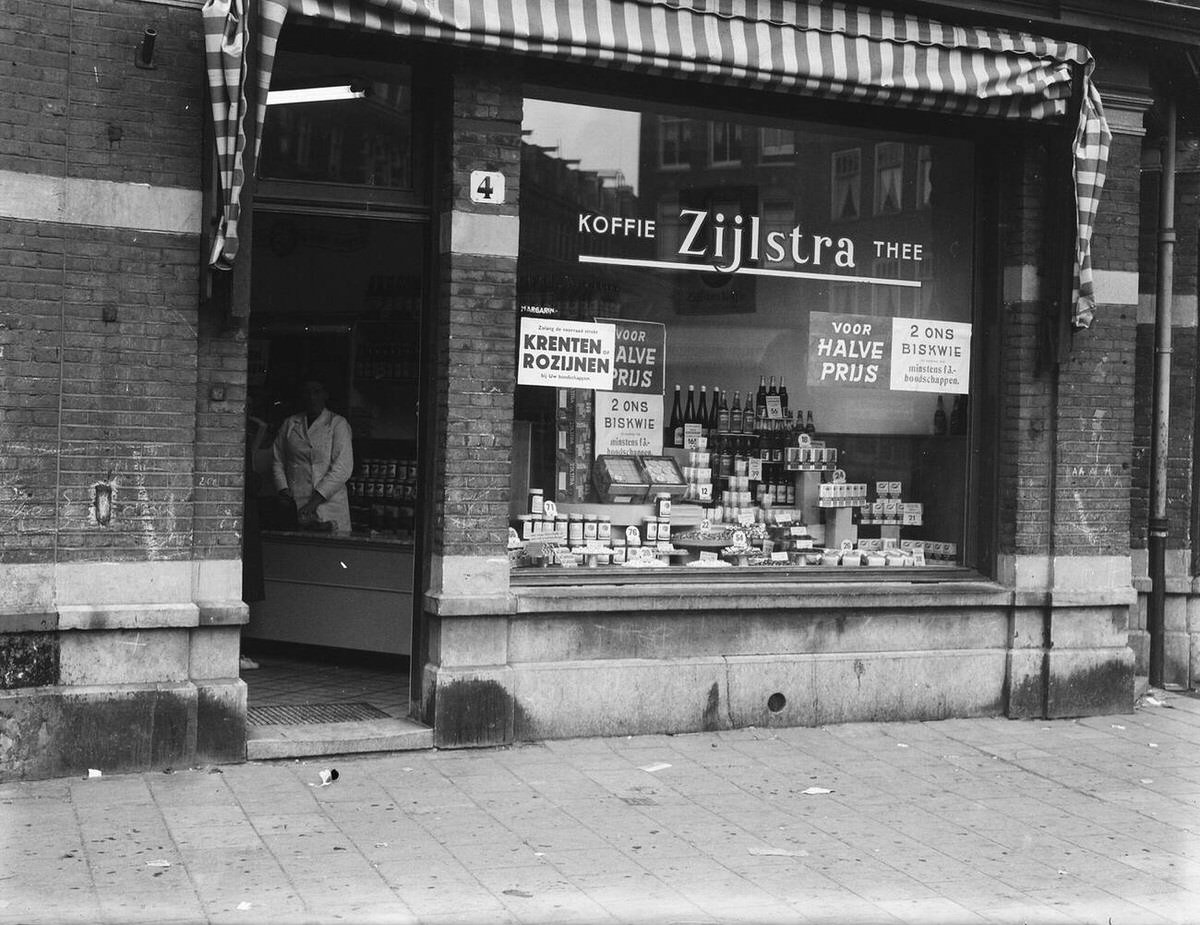
Zijlstra grocery store, 1948
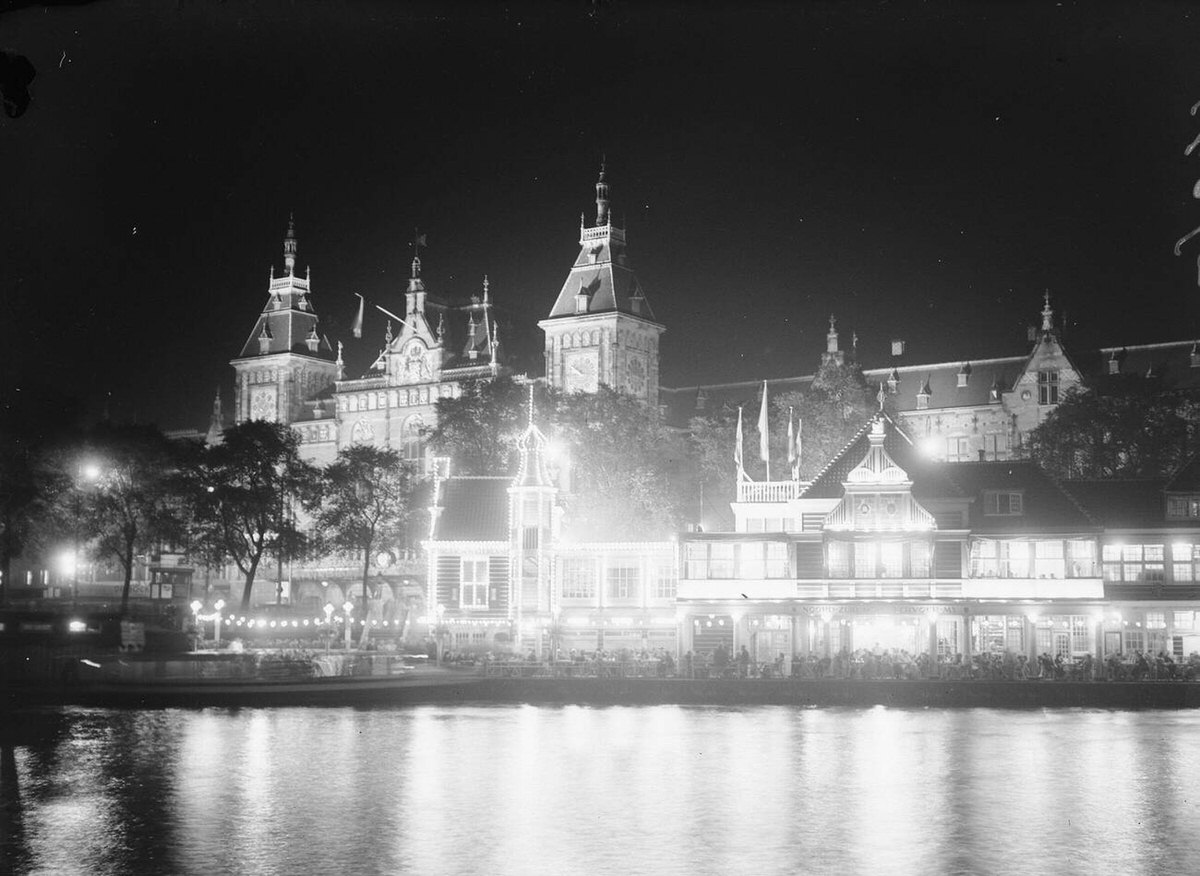
Illuminated Noord- en Zuid-Hollandsch Koffiehuis, 1948
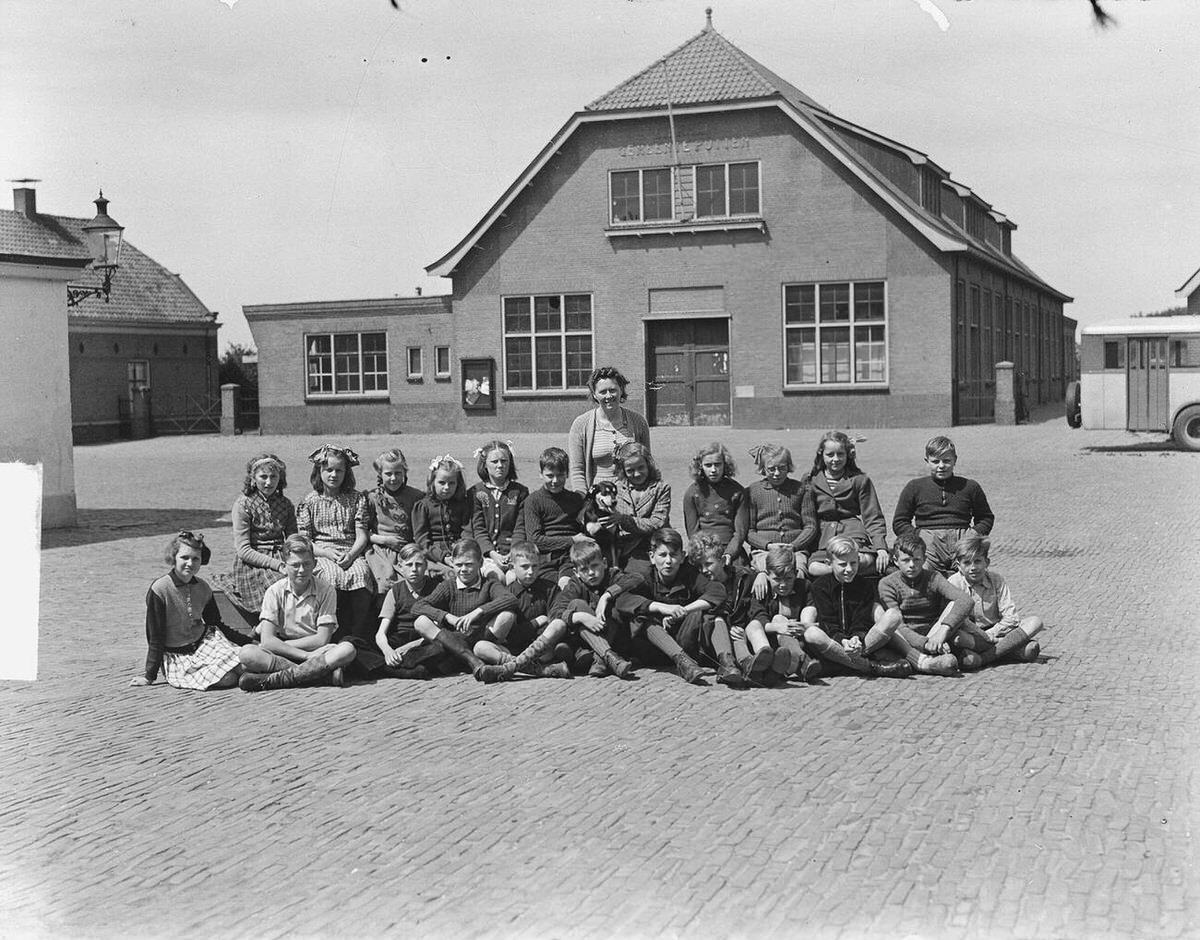
Schools on Krommenstraat in Putten, 1949
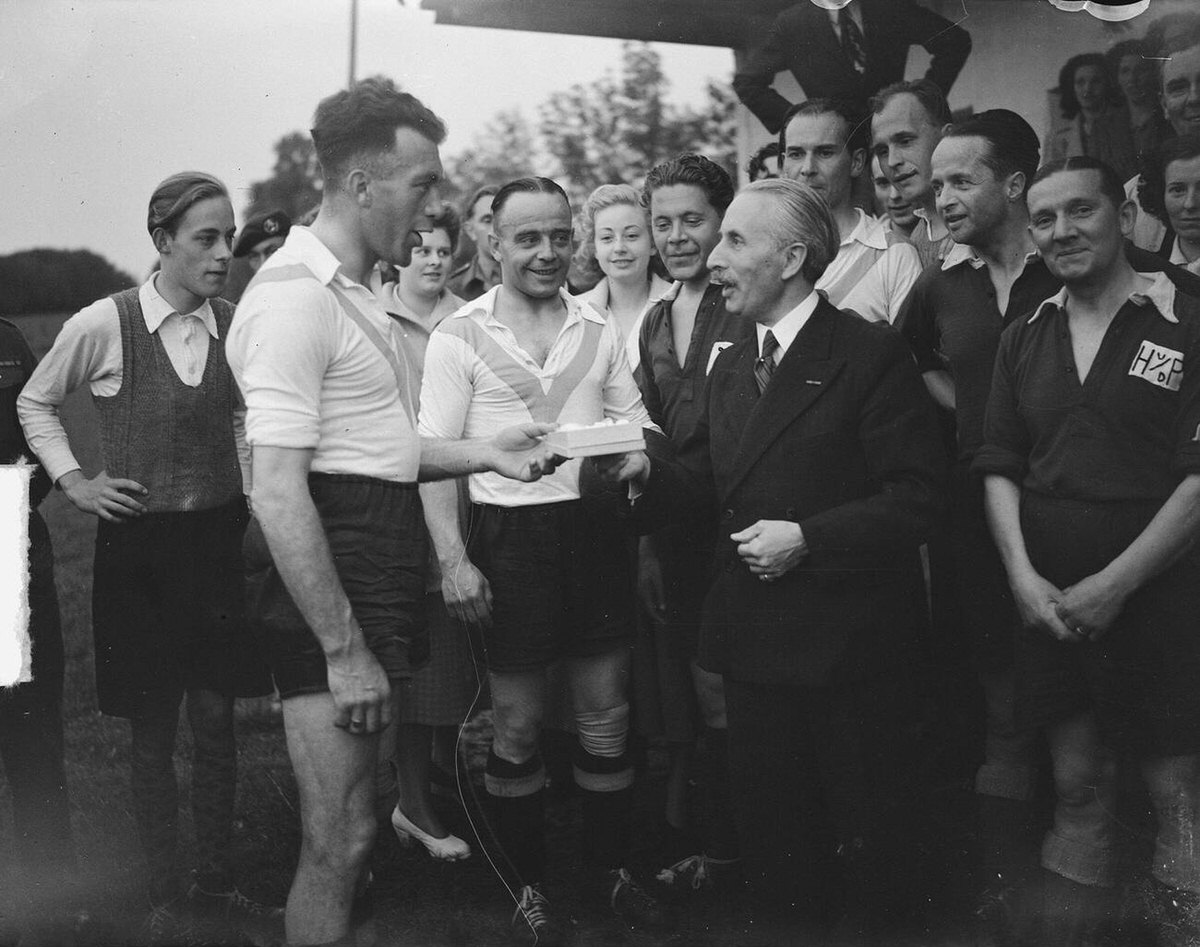
Hague hairdressers versus the Soestdijk team, 1949
Road between Amsterdam and Utrecht, 1949
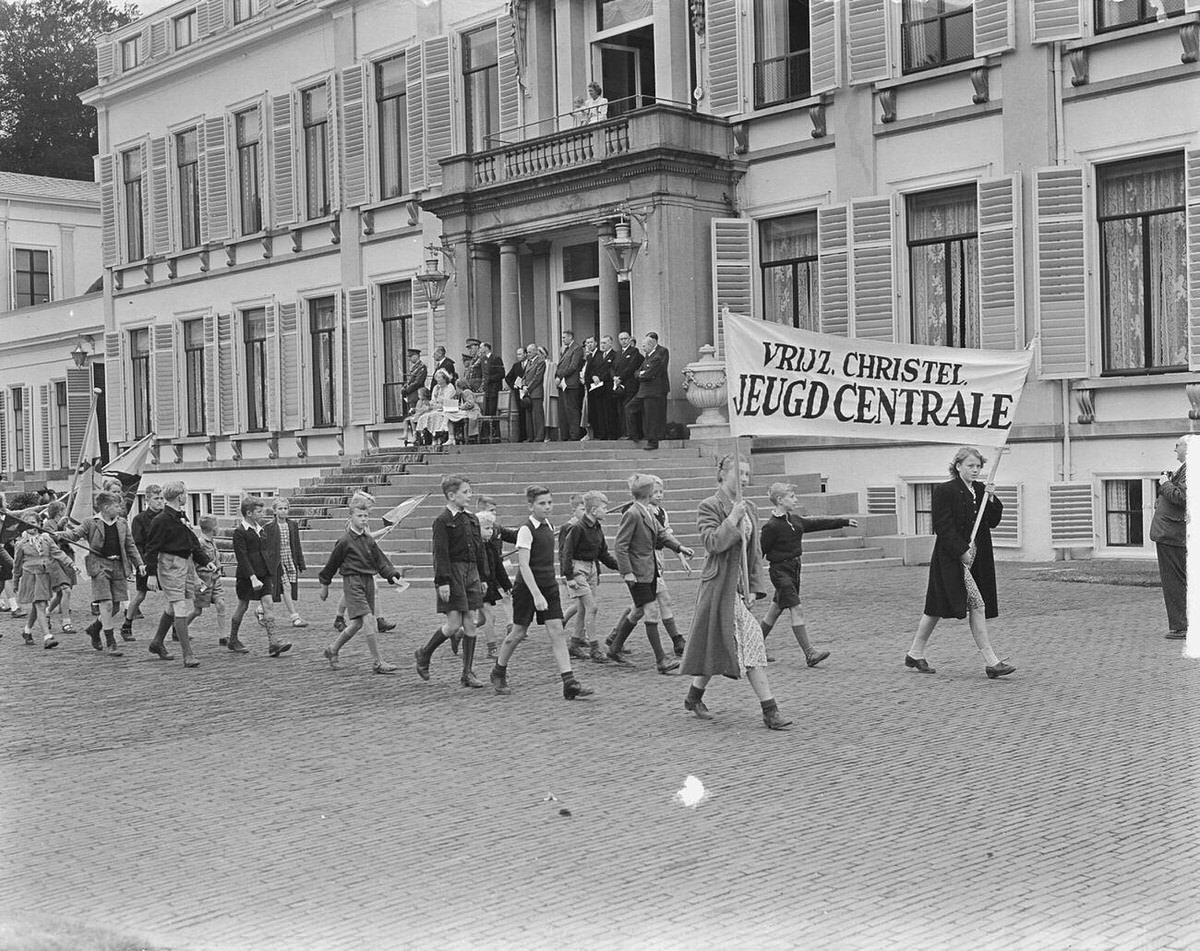
VCJC event in Soestdijk, 1949
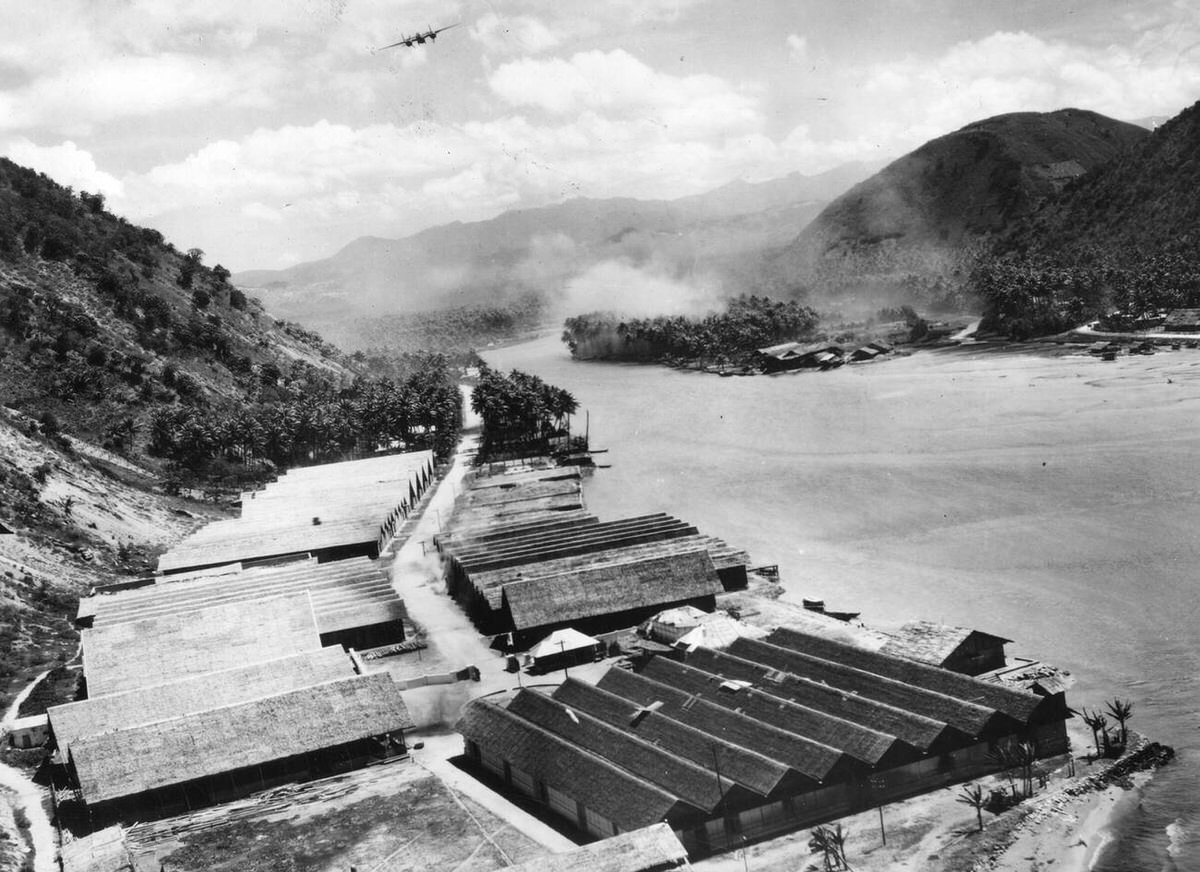
U.S. Army Air Forces B-25 Mitchell bomber flying toward Gorontalo, Celebes, 1944
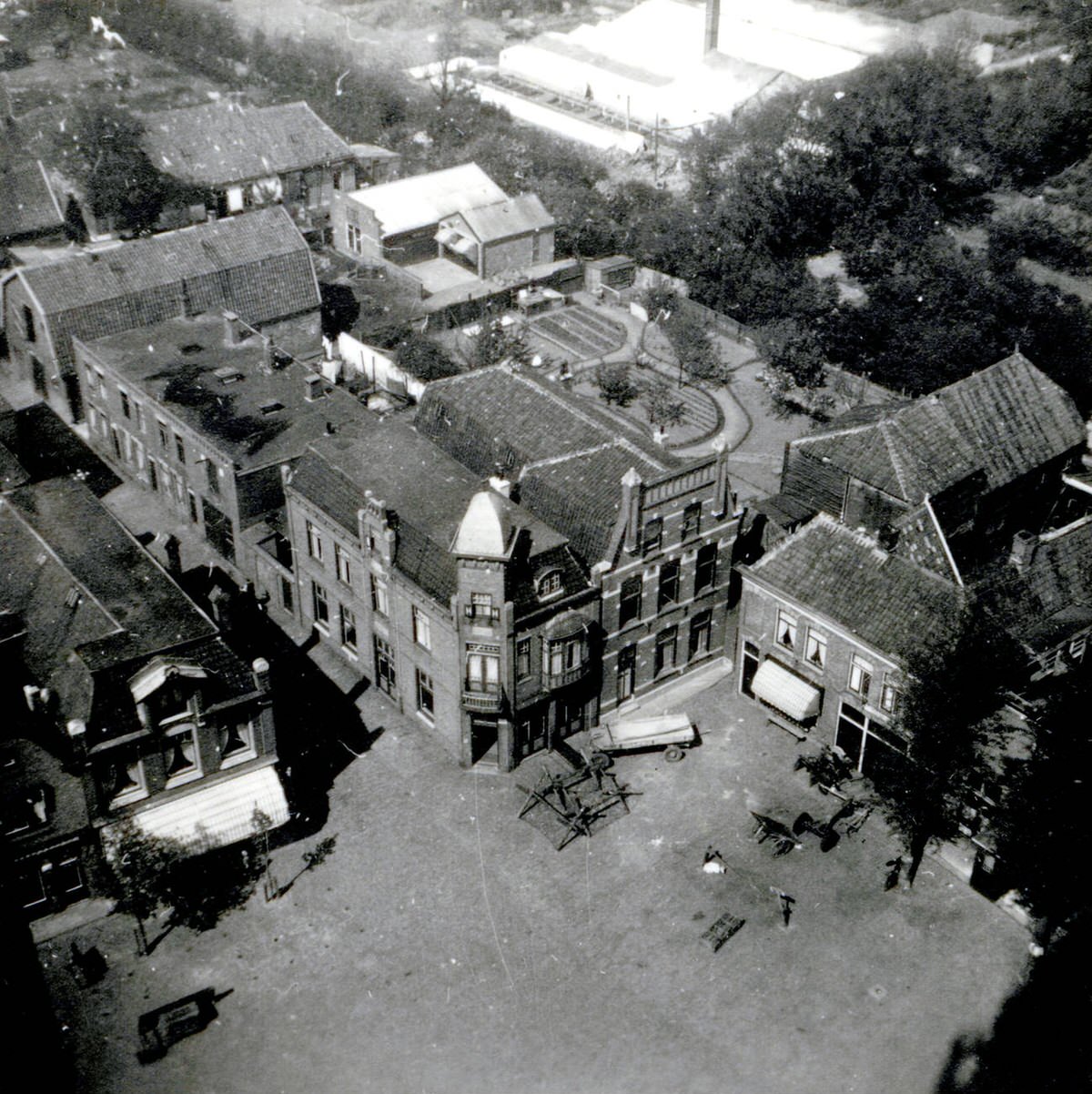
Aerial view of Schagen, 1941
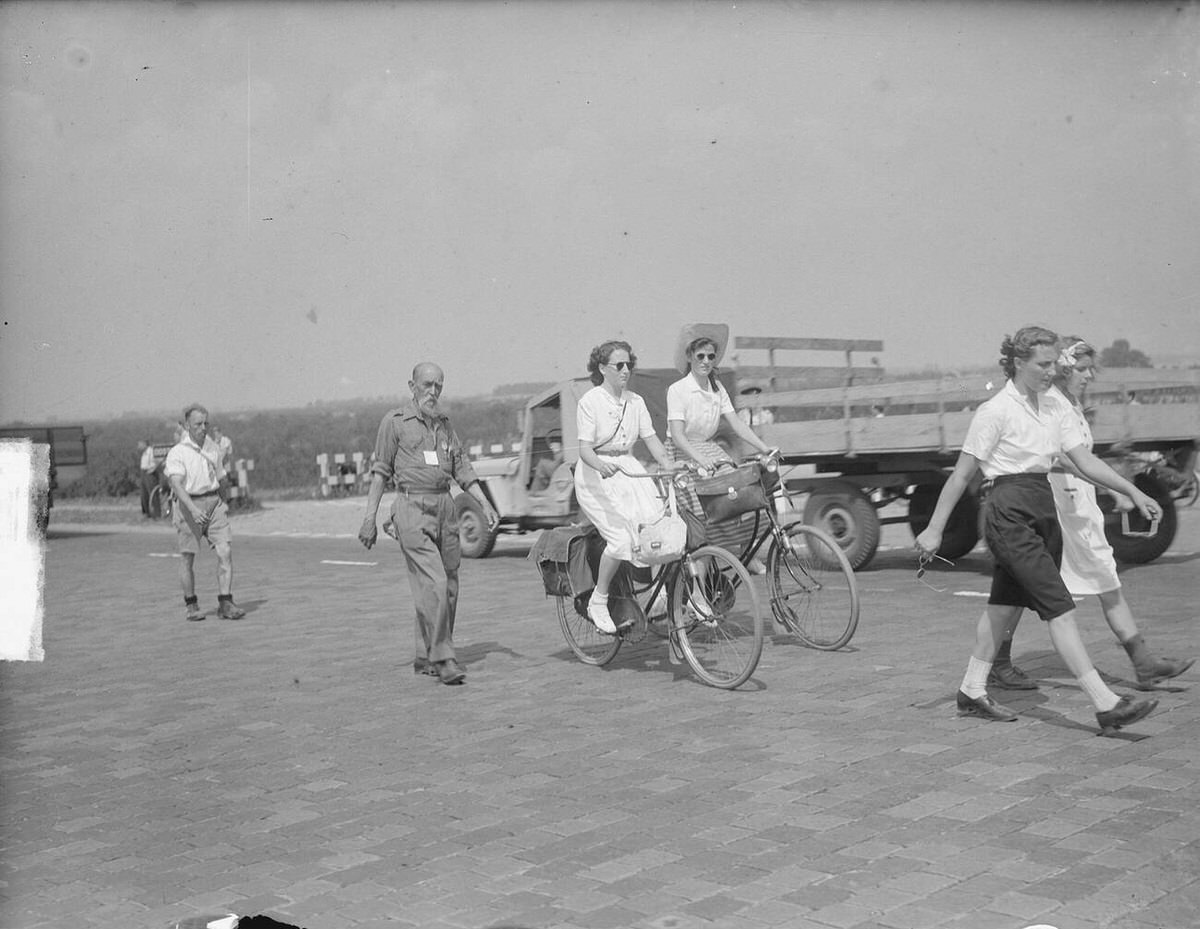
Participant with a beard in the Four Day Marches, 1949
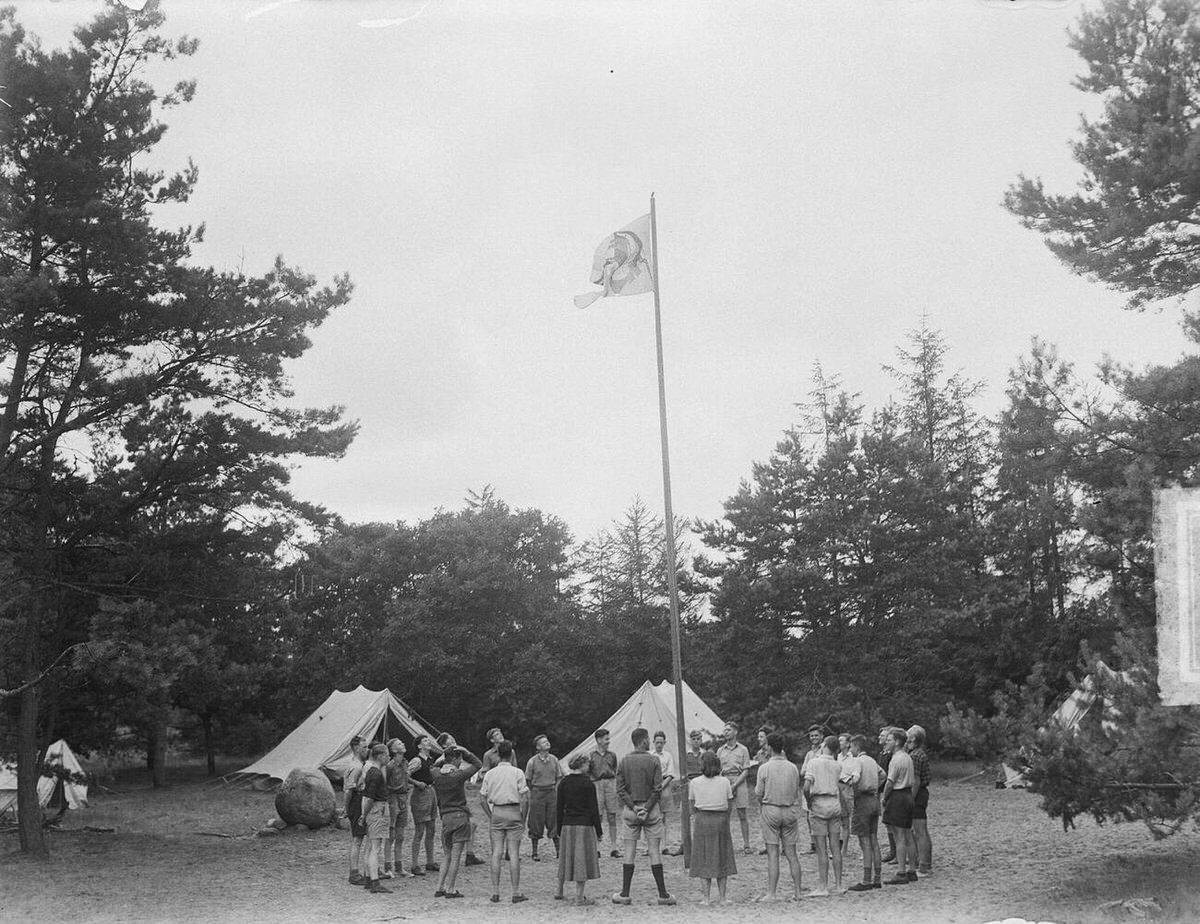
VCJC Kamp Diever, 1949
RTC event in The Hague, 1949
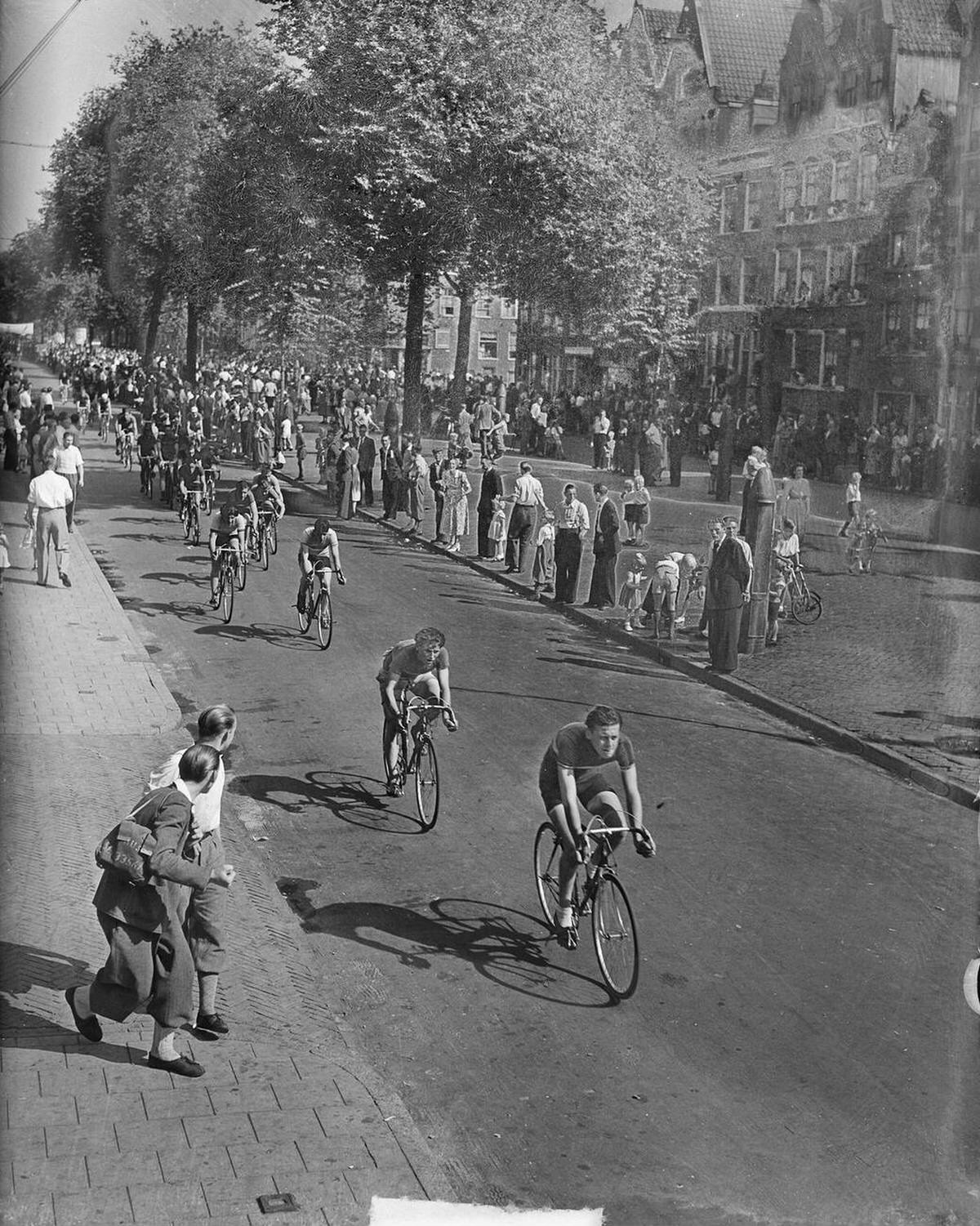
Ronde van Lindengracht cycling race, 1949
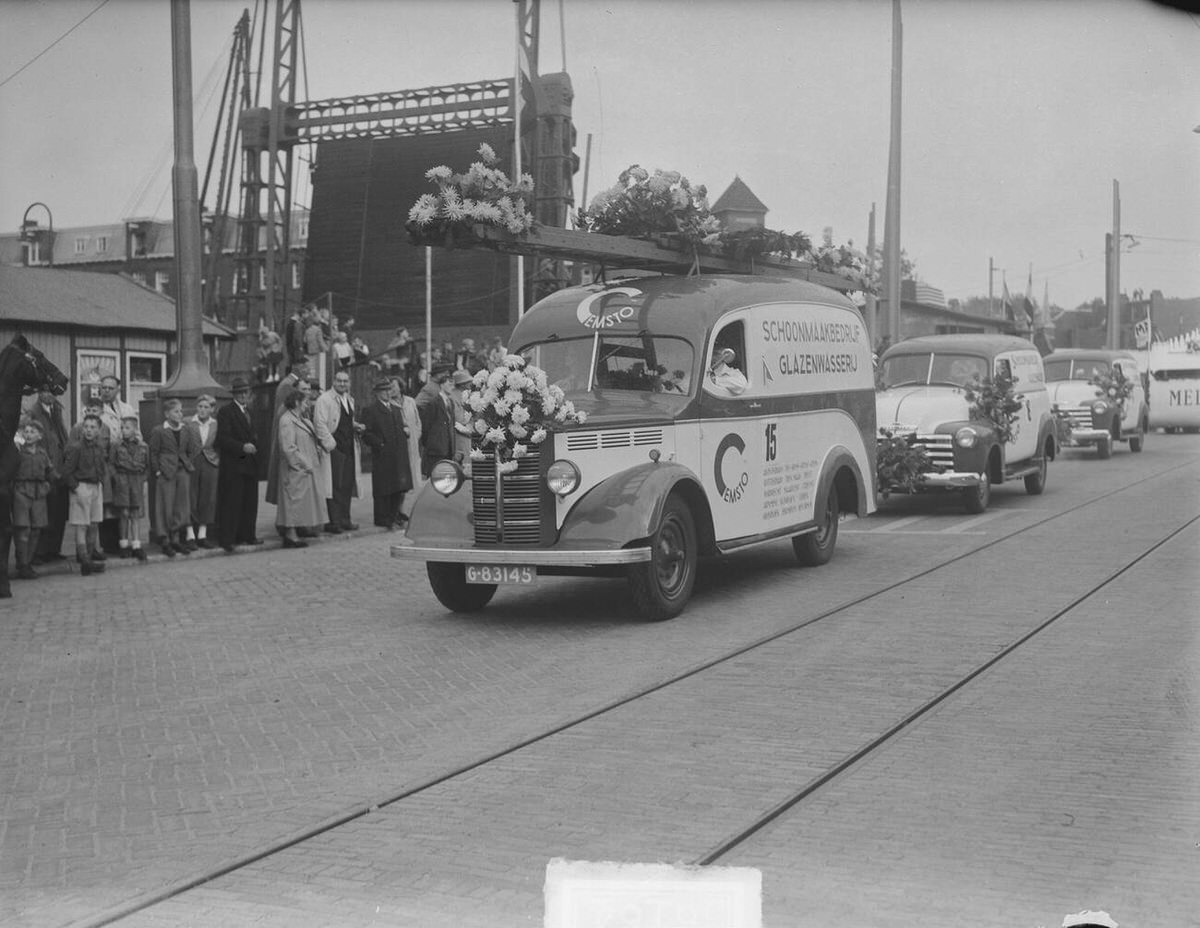
Advertising car at Overtoom, 1949
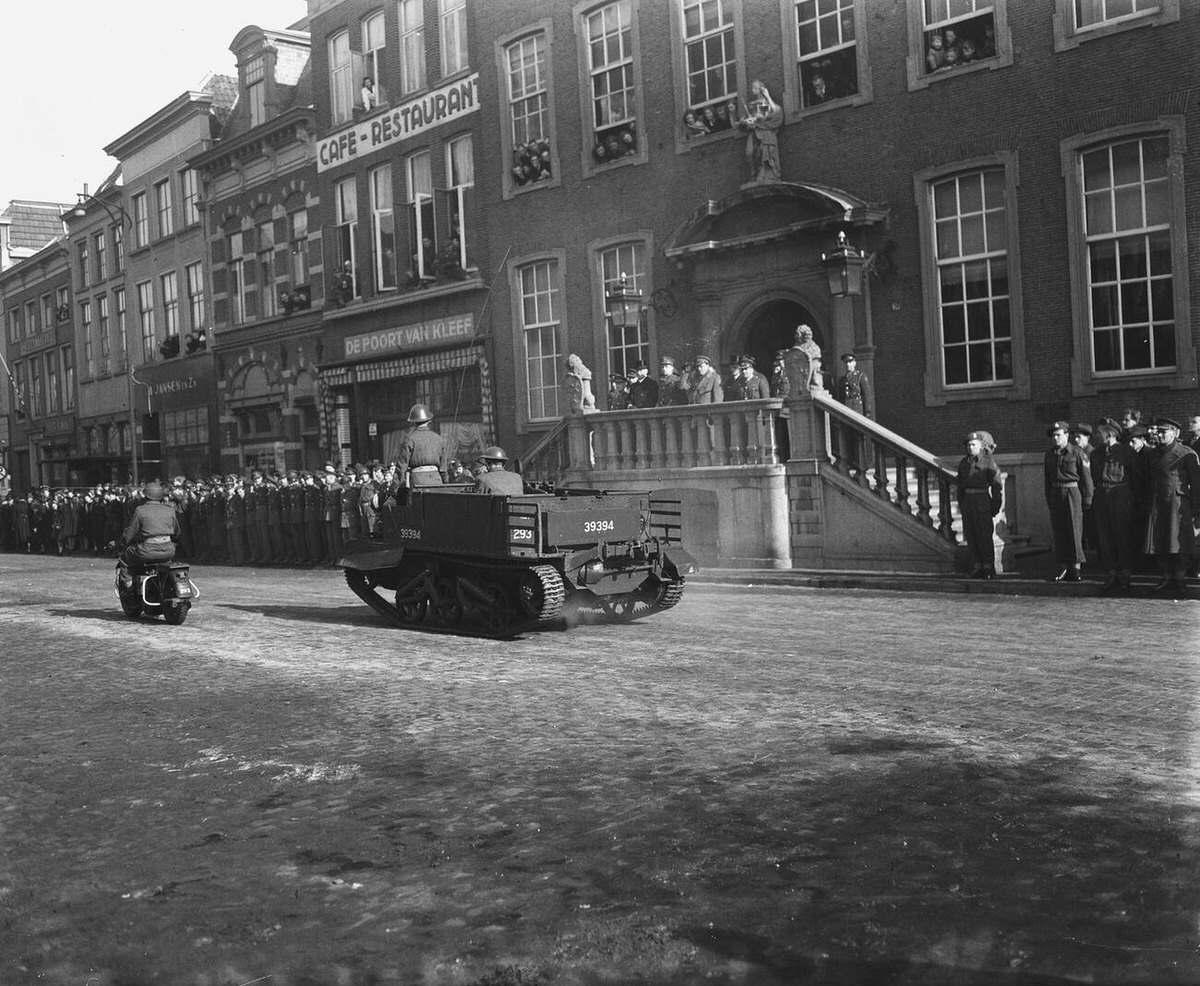
Prince Bernhard on the steps of City Hall watching a military parade in Breda, 1947
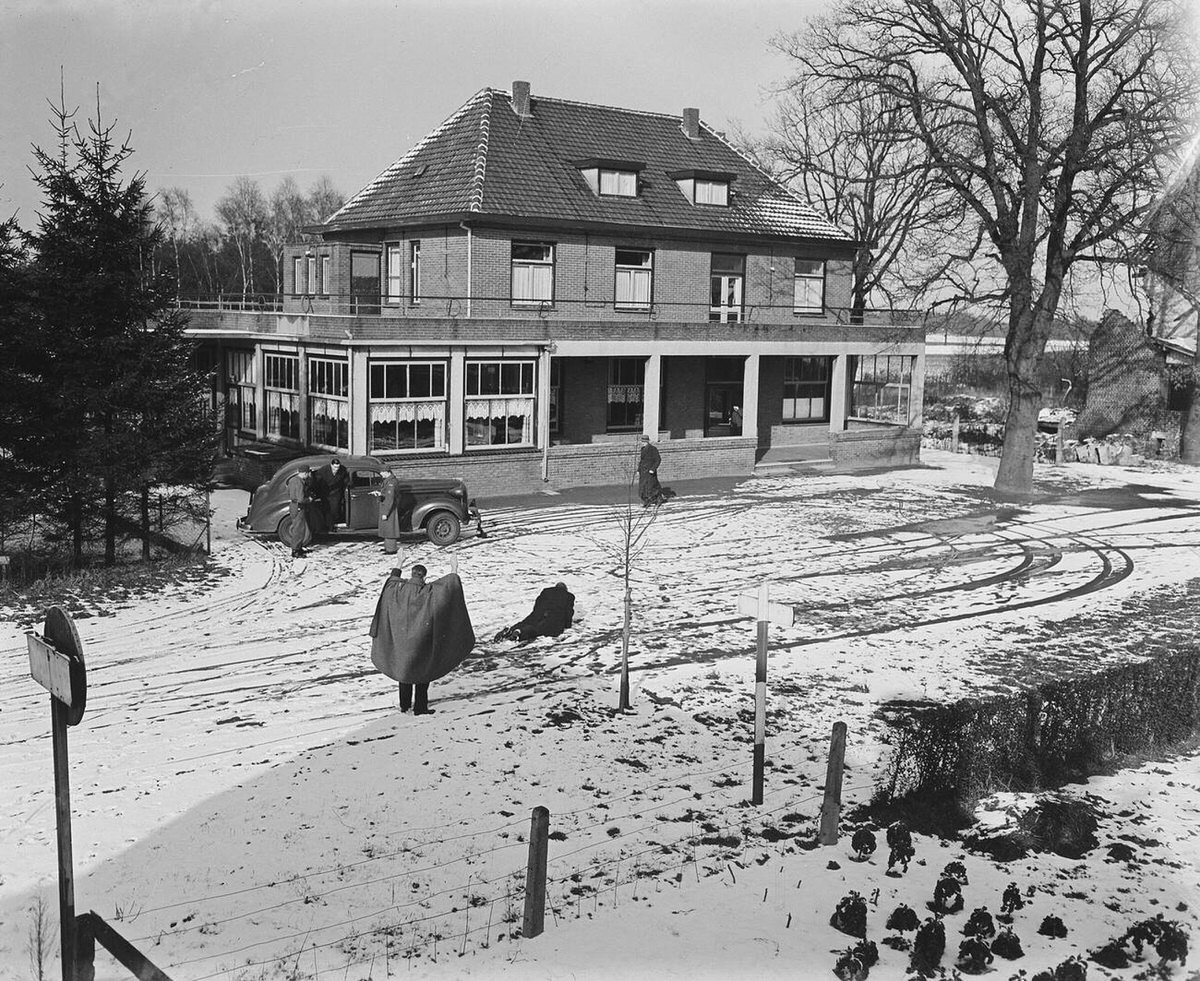
Reconstruction of the Venlo border incident with Lemmens, 1948
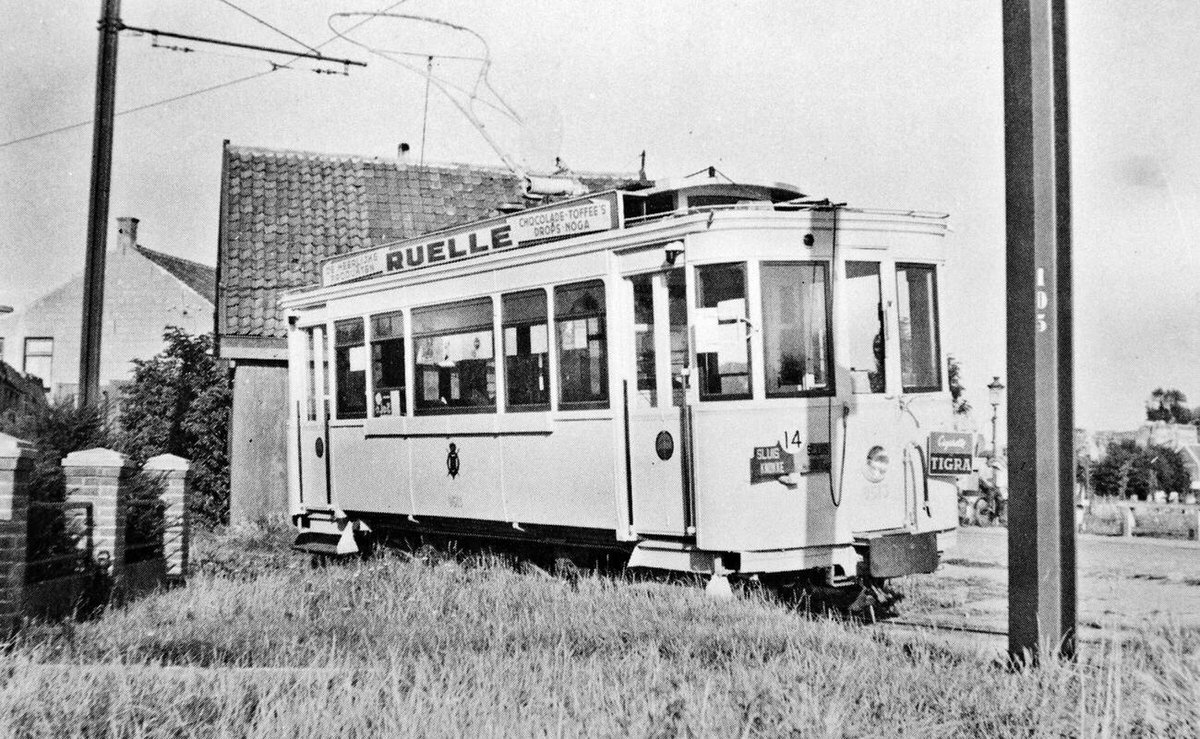
Sluis, 1949
Sluis, 1949
Enjoyed this post? Get new ones in your inbox.

Leave a Comment

Your email address will not be published. Required fields are marked *

Share this Post 🥺

Please take a moment to share this content. Your support is greatly appreciated! 🙌🙏

Share this Post 🥺

Please take a moment to share this content. Your support is greatly appreciated! 🙌🙏
Scroll to Top
 
Hey Friend, Before You Go.. Please like & follow for more interesting content