Mexico in the 1950s was a country in motion. After standing alongside the United States as an ally during World War II, Mexico entered the post-war era with serious momentum. Industries expanded, cities grew, and the economy shifted into a higher gear. Commercial agriculture surged as exports of fruits and vegetables to the U.S. reached new levels. Political life was relatively stable, with the government transferring peacefully from one civilian administration to the next. President Miguel Alemán, who served from 1946 to 1952, played a central role in reshaping the ruling party and pushing the country toward modernization.
Mexico also opened its doors during this era to political refugees and people from non-aligned countries — those that had chosen not to formally side with either the U.S. or Soviet Union during the Cold War. This made Mexico a place of unusual cultural variety for its time. The photos below capture all of this — the colonial towns, the bustling markets, the city boulevards, and the quieter moments of daily life.
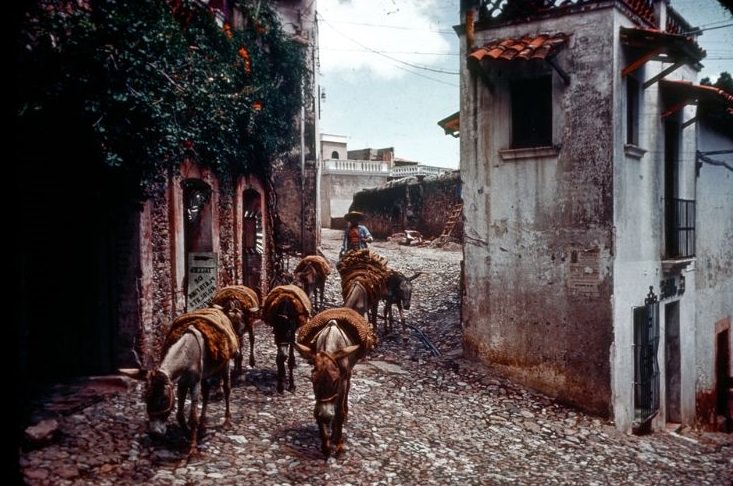
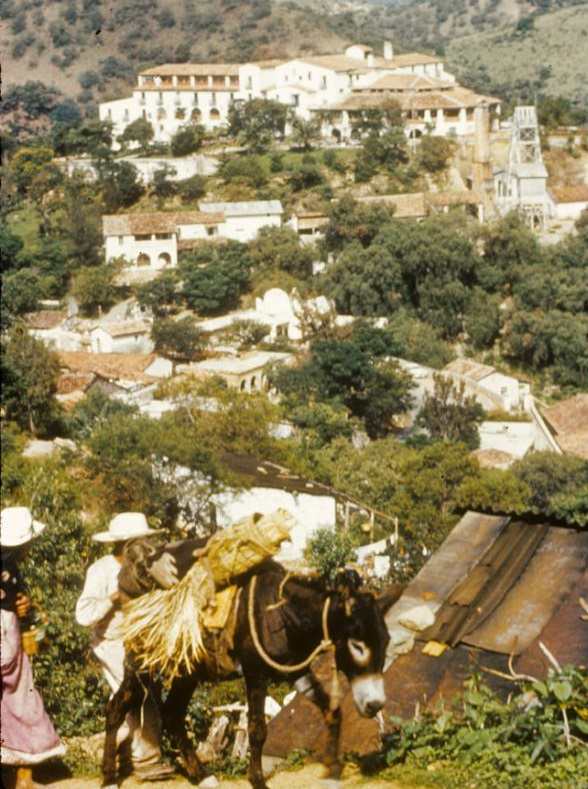
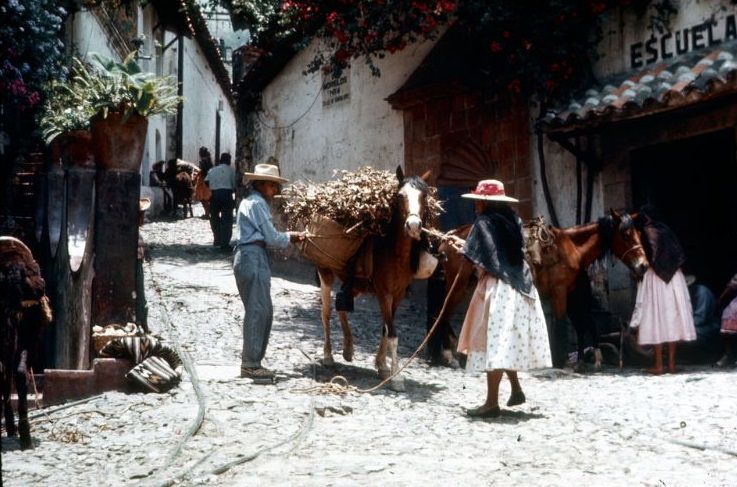
Taxco, a colonial silver-mining town in the state of Guerrero, appears frequently in photographs from this period. Its narrow cobblestone streets were built for foot traffic and animals long before the automobile arrived, and in the 1950s, burros were still a common sight hauling goods through the town.
The town of Cuauhtémoc, in the state of Chihuahua, shows up in several photographs that document both healthcare and rural life. The regional hospital there was a significant institution in the area, serving a wide population. Scenes from around the hospital — including a young boy at its entrance — give a ground-level view of what public health infrastructure looked like in a mid-century Mexican town.
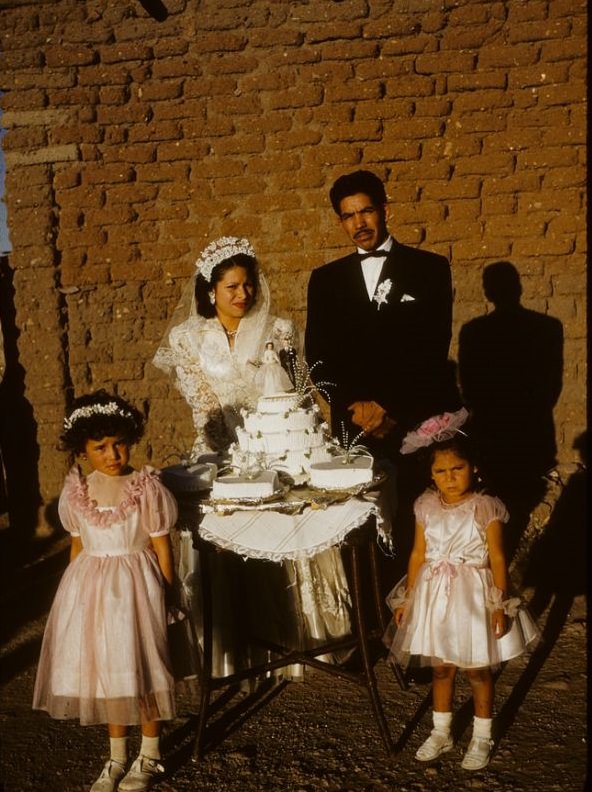
Life’s milestones were photographed too. A bridal couple captured in the 1950s reflects the formal dress and traditions of the time — weddings were deeply tied to both Catholic faith and community celebration across Mexico.
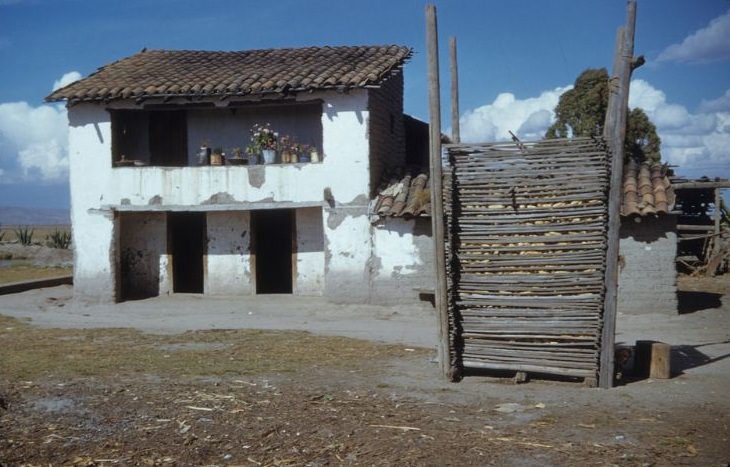
Agriculture remained central to Mexican life, especially in rural regions. Corn was the foundation of the Mexican diet and economy. Corn cribs — simple structures used to store and dry harvested ears of corn — were common on farms and smallholdings throughout the country.
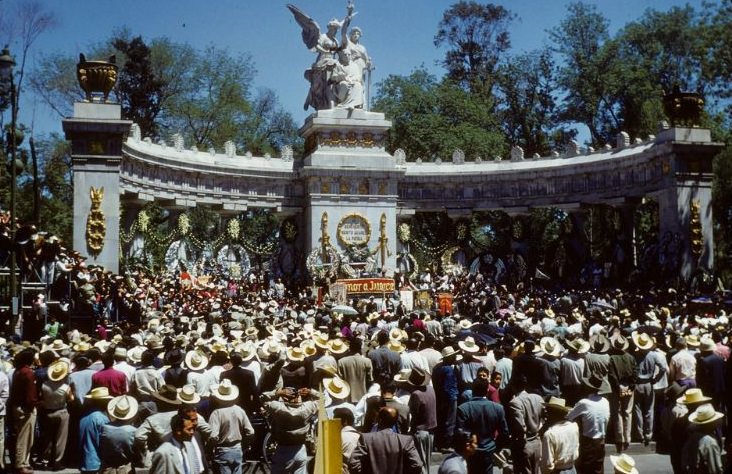
In Mexico City, public monuments drew crowds. The Juárez Monument on Avenida Juárez honored Benito Juárez, the 19th-century president who led Mexico through years of foreign intervention and internal reform. In the 1950s, the monument remained a popular gathering point.
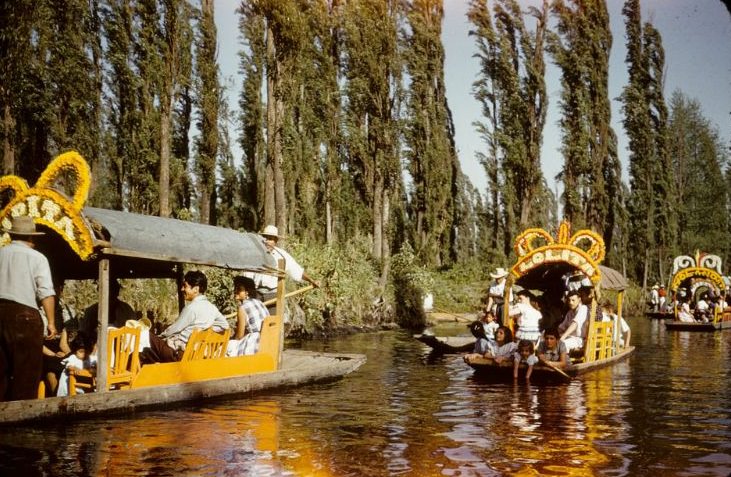
In southern Mexico, the waterways of Xochimilco and surrounding regions were famous for their trajineras — flat-bottomed boats decorated with arched flower arrangements. These boats were used both for transport and for festivals, and photographs from this era show them decked out in bright colors.
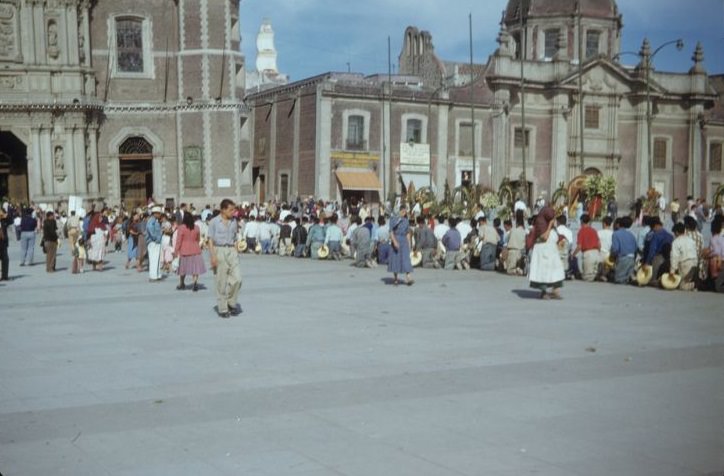
Religion played a central role in Mexican public life. The Basilica of Guadalupe in Mexico City is one of the most visited Catholic pilgrimage sites in the world. In the early 1950s, the original colonial basilica still stood as the primary structure before later renovations and construction.
Back in Taxco, the Hotel Borda was one of the town’s notable landmarks. Named after José de la Borda, the 18th-century silver magnate who funded much of Taxco’s iconic architecture, the hotel sat within the town’s historic core and catered to travelers who came to see the famous Santa Prisca church and colonial streetscapes.
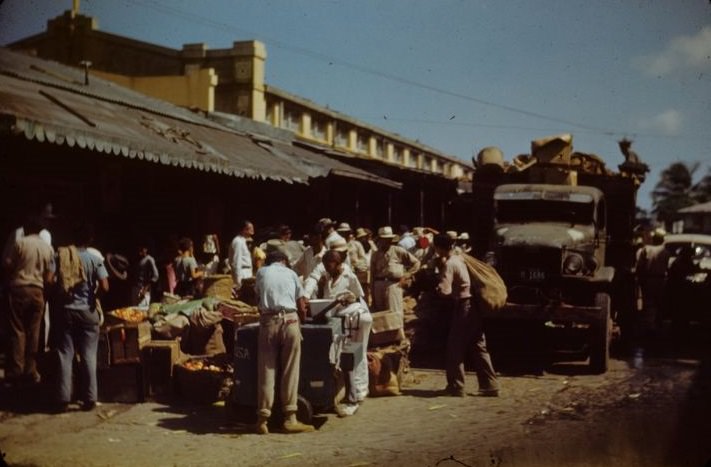
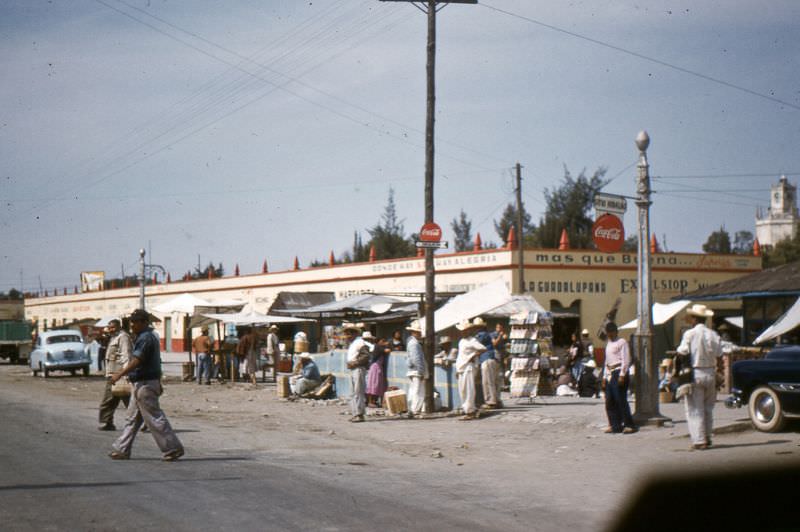
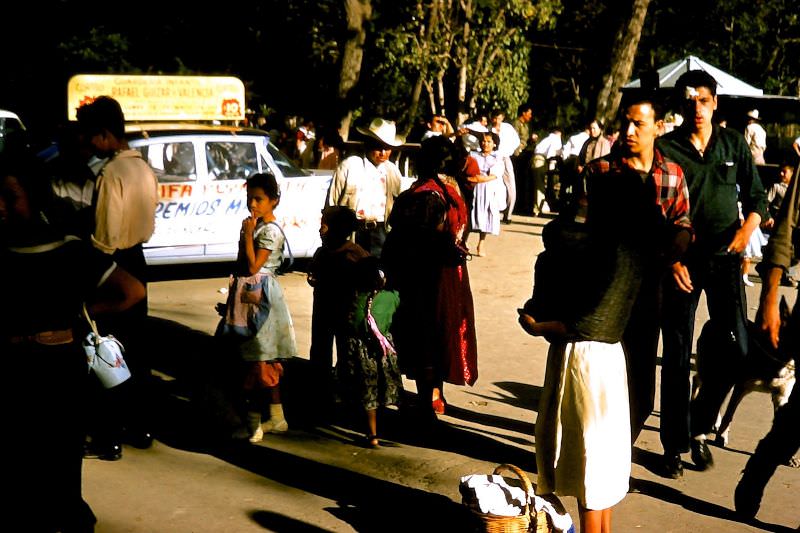
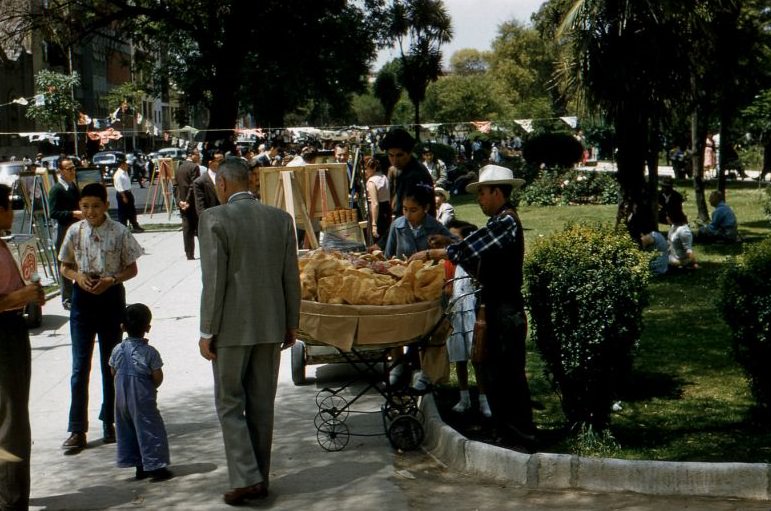
Markets were the economic and social heartbeat of Mexican communities. Whether in a large city or a small town, the local market was where people gathered to buy food, sell crafts, catch up with neighbors, and conduct everyday business. The variety of goods on offer — fresh produce, textiles, pottery, and street food — reflected the depth of Mexico’s regional traditions.
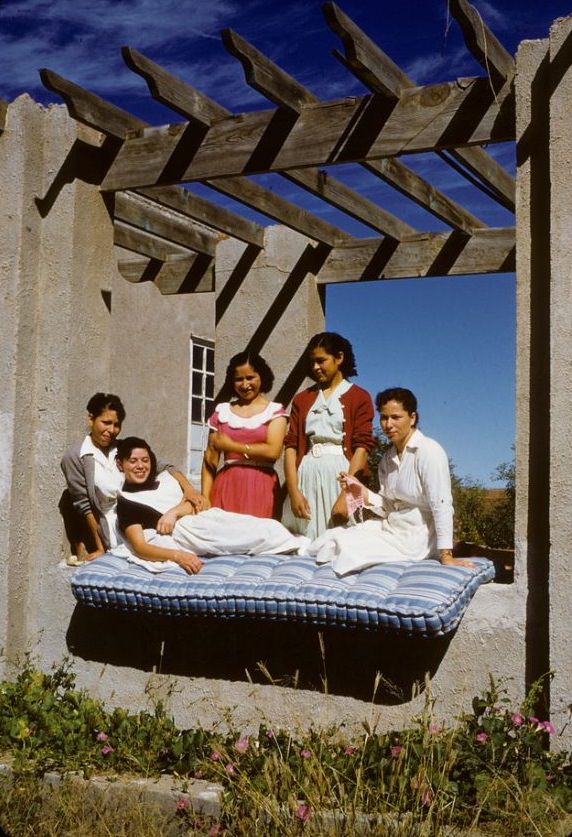
At the Cuauhtémoc regional hospital, daily operations included tasks that today would seem unusual for a medical facility. Nurse aides aired mattresses outside — a common hygiene practice in the era before modern sanitation standards were widespread.
Taxco’s streets, with their uneven stone paving and whitewashed buildings climbing up the hillside, made the town look almost unchanged from its colonial past. Street scenes from the 1950s show a mix of foot traffic, animals, and the occasional vehicle navigating the tight lanes.
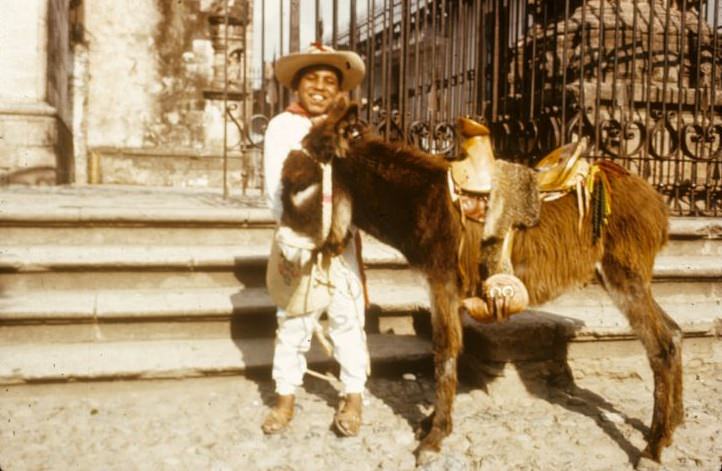
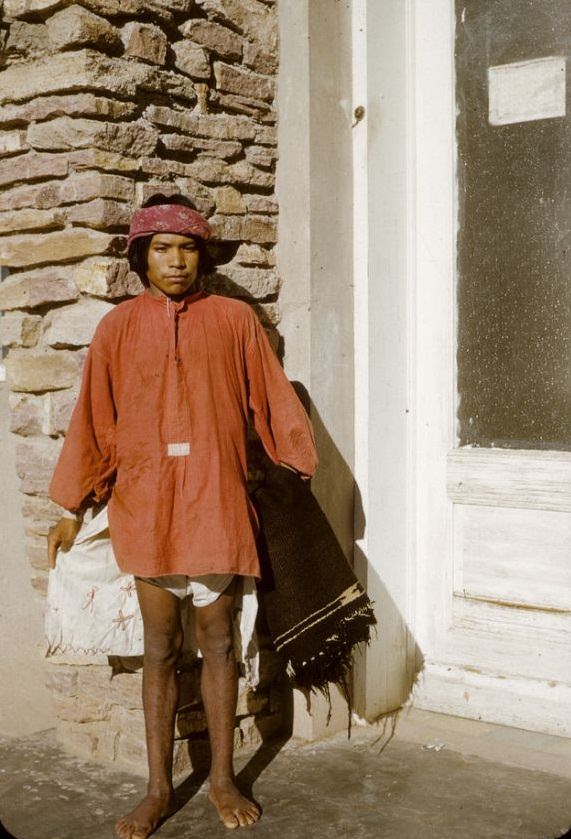
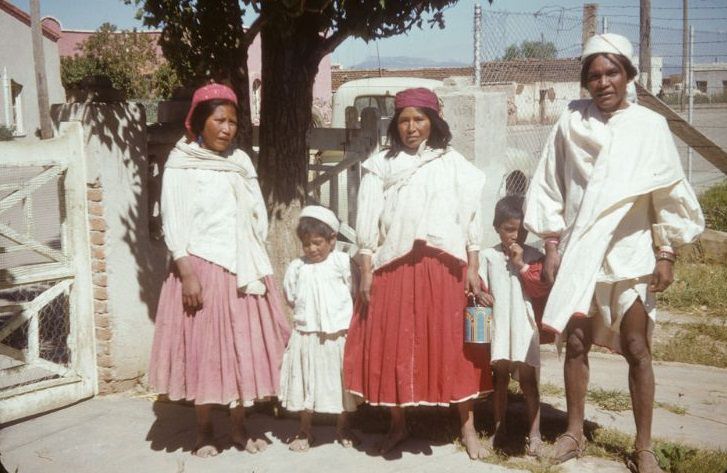
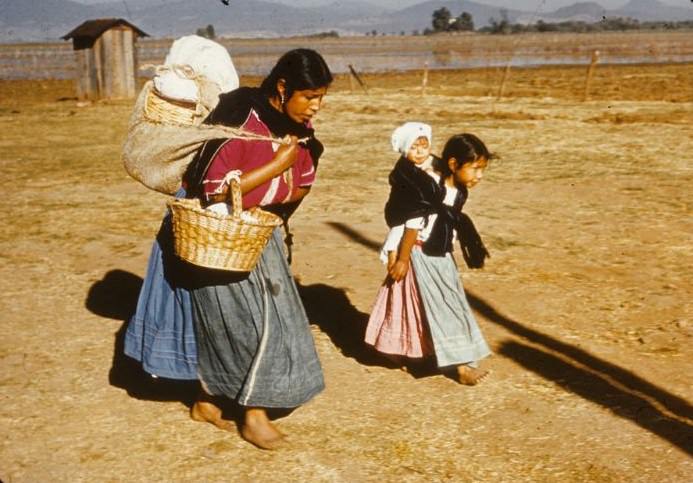
In the far north, the Tarahumara — known in their own language as the Rarámuri — were among Mexico’s most well-known indigenous groups. They lived primarily in the rugged Copper Canyon region of Chihuahua and were famous for their long-distance running ability and their colorful traditional clothing.
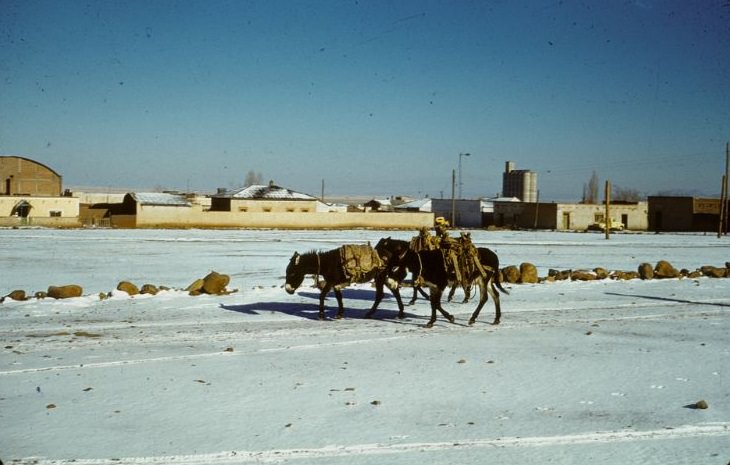
Cuauhtémoc sits at a high enough elevation that light snow was not unheard of in winter months. A photograph of three donkeys standing in a dusting of snow near the town captures a scene that blends the practical working life of rural Mexico with an unexpected landscape.
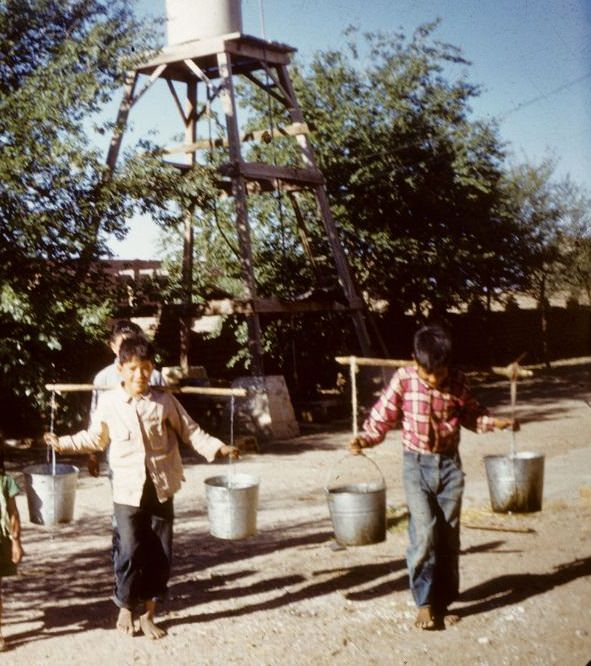
Water delivery was still a manual task in many Mexican towns and rural communities during this period. Two young boys carrying water for the Cuauhtémoc hospital illustrates just how much of the region’s infrastructure still relied on human labor rather than piped utilities.
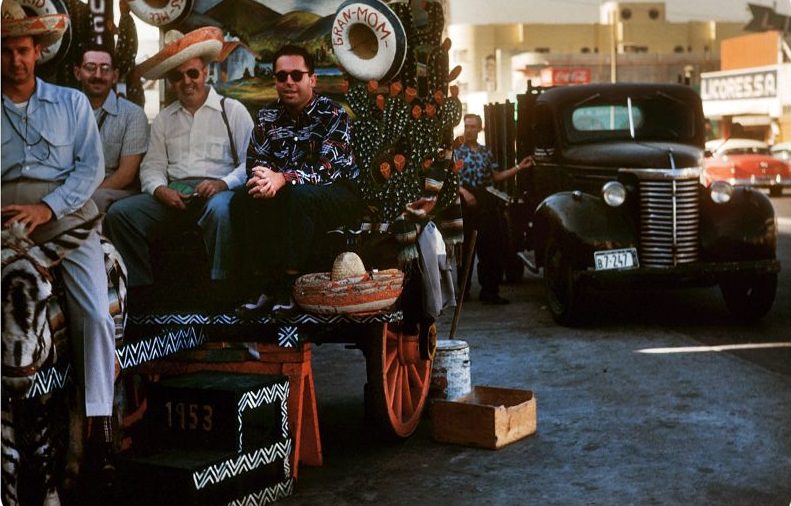
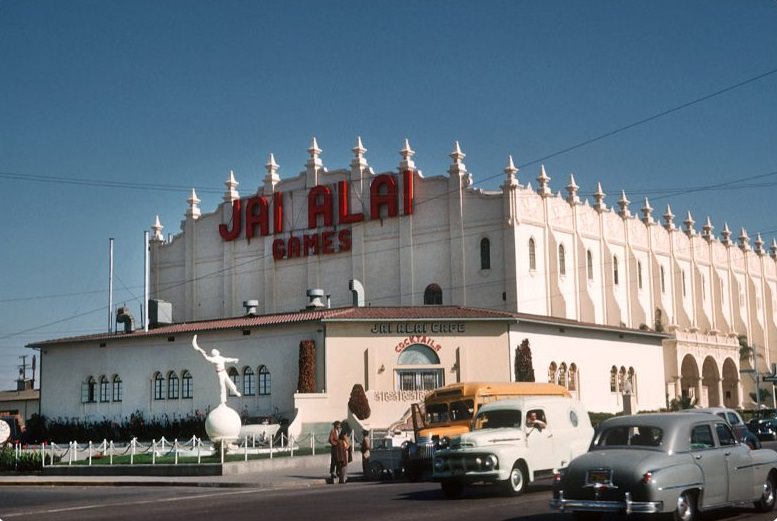
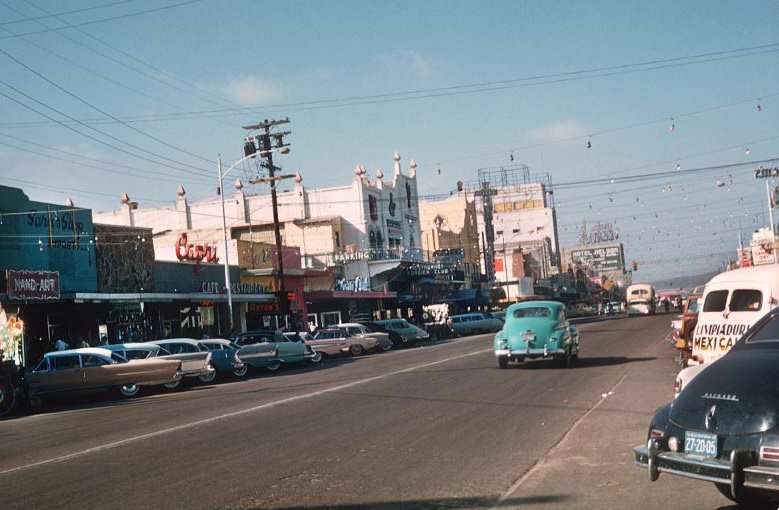
Tijuana, sitting right on the U.S.-Mexico border, had a character all its own. It drew American tourists, cross-border workers, and a lively mix of residents who navigated life between two countries. By 1953, it was already a busy commercial strip full of shops, entertainment venues, and street life.
Jai alai was one of Tijuana’s signature attractions in the mid-20th century. The sport, which originated in the Basque region of Spain, involves players hurling a ball against a wall using a curved basket strapped to their arm. The speed of the game and the gambling that surrounded it drew large crowds, especially American visitors crossing the border for entertainment.
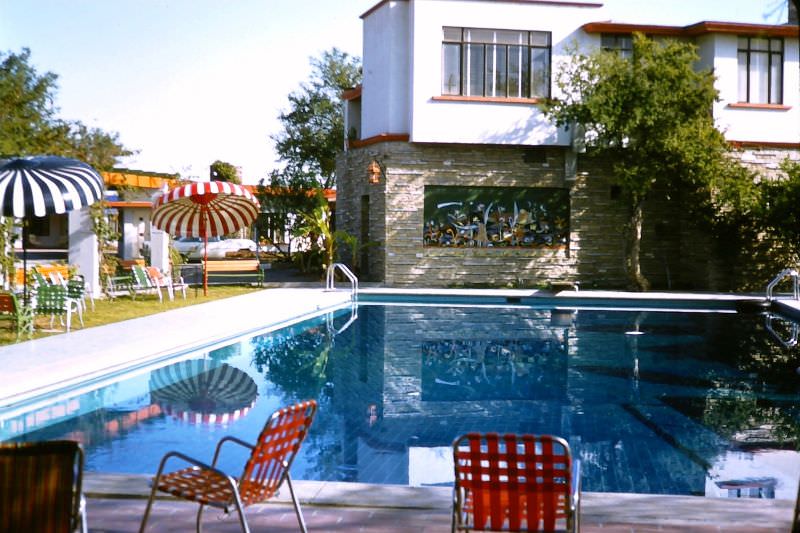
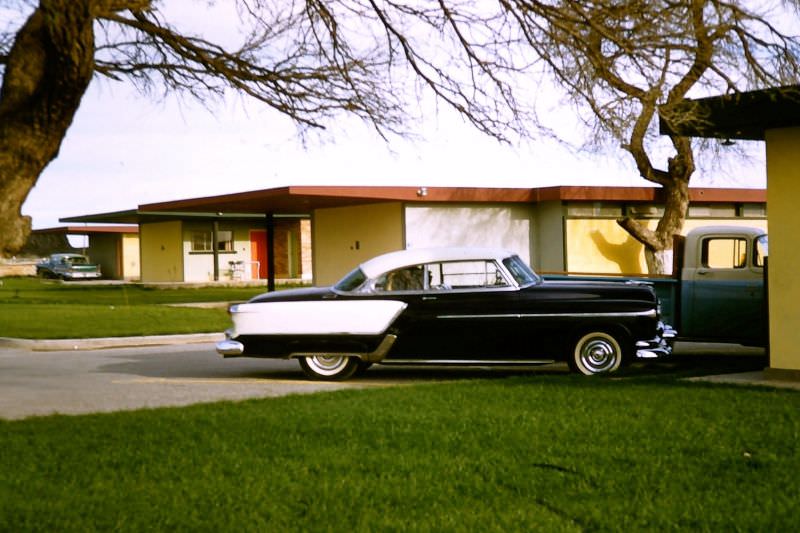
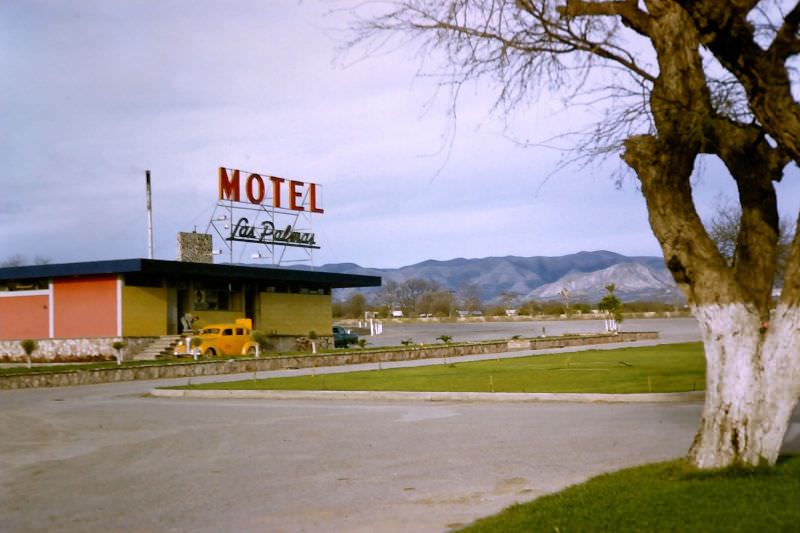
By 1958, the country’s road network had improved enough to make long road trips across Mexico more practical. Motels began appearing along major highways to serve travelers. The Anfa Super Motel in Monterrey and the Las Palmas Motel in Matehuala were examples of this new roadside hospitality industry taking shape.
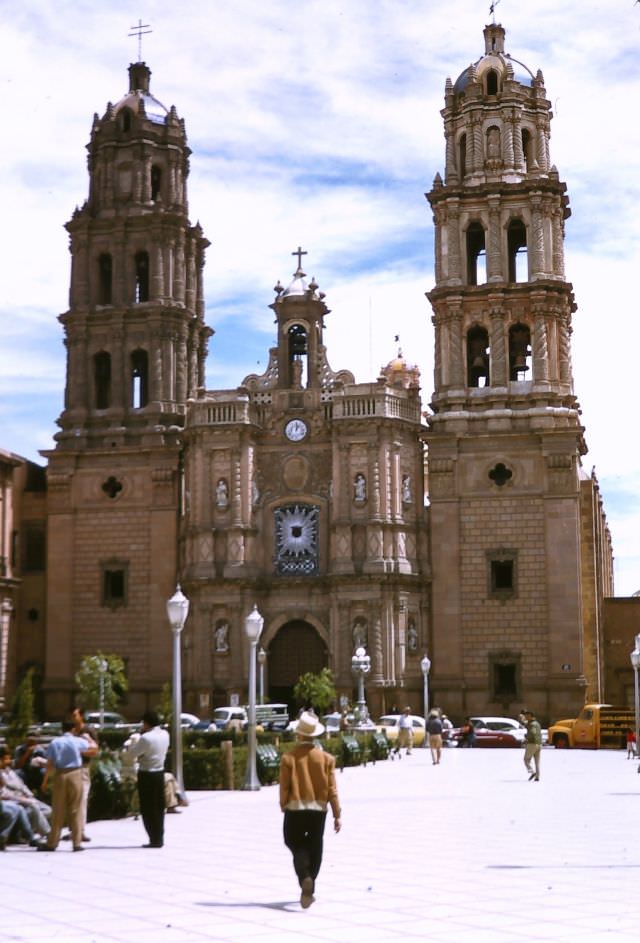
San Luis Potosí was one of Mexico’s great colonial cities. Its Plaza de Armas, the city’s central square, was flanked by two of its most important buildings: the cathedral and the Governor’s Palace. The cathedral’s pink stone facade and twin bell towers made it one of the most photographed landmarks in central Mexico. The Governor’s Palace, dating to 1770, stood as a reminder of the city’s long role as a regional capital.
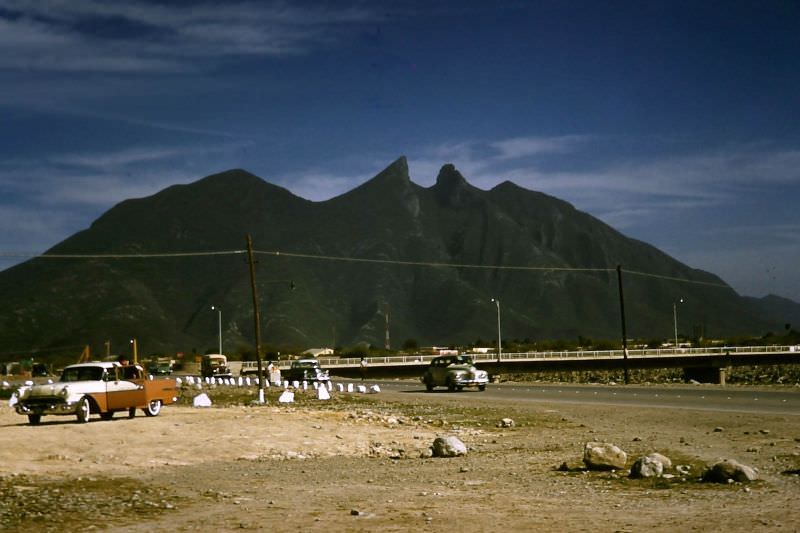
Monterrey, the industrial capital of northern Mexico, had a dramatic natural backdrop. Cerro de la Silla — Saddle Mountain — rose sharply behind the city, its distinctive double-peaked silhouette making it one of Mexico’s most recognizable natural landmarks.
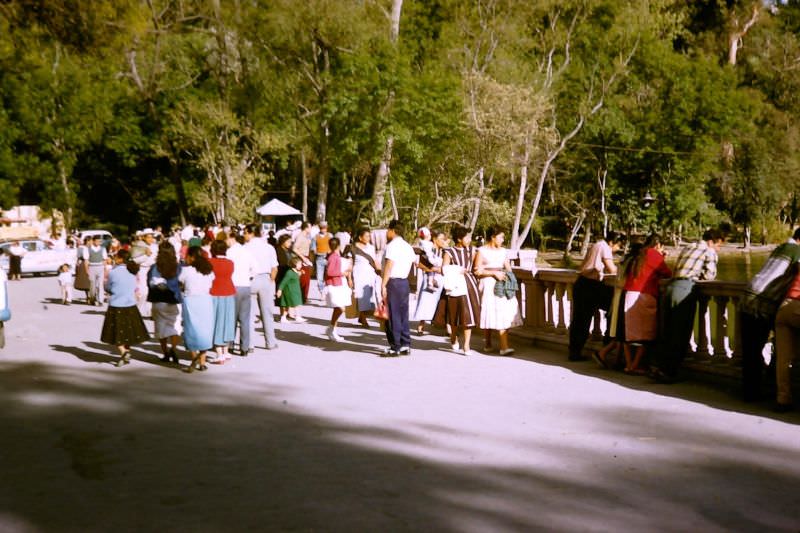
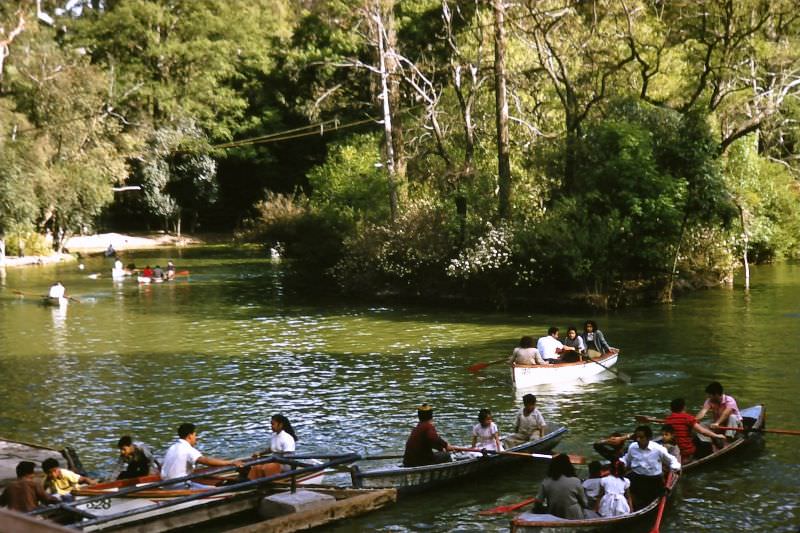
Chapultepec Park in Mexico City was — and remains — one of the largest urban parks in the Western Hemisphere. In March 1958, visitors strolled its tree-lined paths, rowed boats on its ponds, and enjoyed the grounds around Chapultepec Castle. It was a place where all classes of Mexico City society came together.
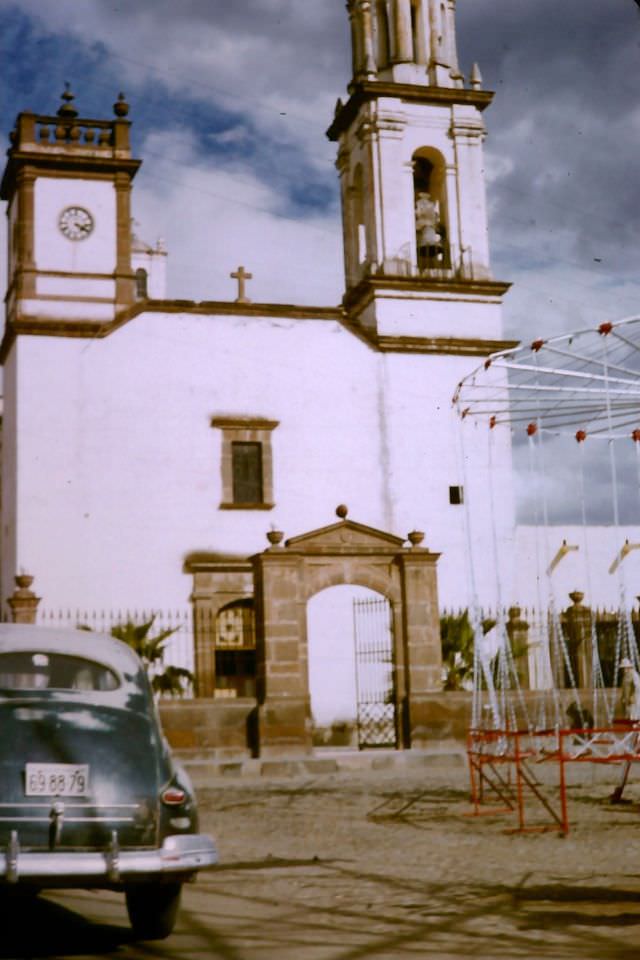
Outside the cities, small country churches dotted the landscape of San Luis Potosí. These simple structures served as the spiritual center of rural communities and were often the most permanent building in a small village.
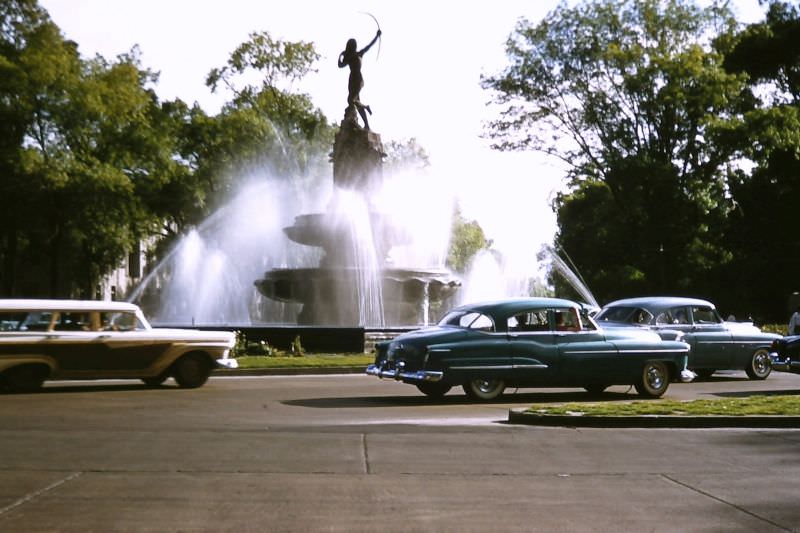
Paseo de la Reforma, Mexico City’s grand central boulevard, was lined with monuments and modern buildings by the late 1950s. The Fountain of Diana the Huntress, installed in 1942, stood as one of its most iconic features — a bronze figure of the Roman goddess mid-stride, bow raised.
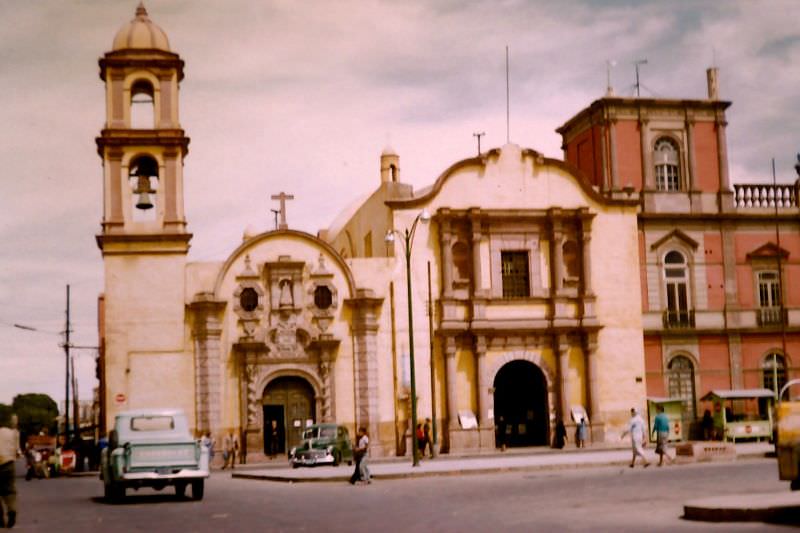
The Governor’s Palace on the Plaza de Armas in San Luis Potosí dates to 1770 and served as the seat of regional government through the colonial period and well into the modern era. Its baroque architecture and wide arched portico were defining features of the square.
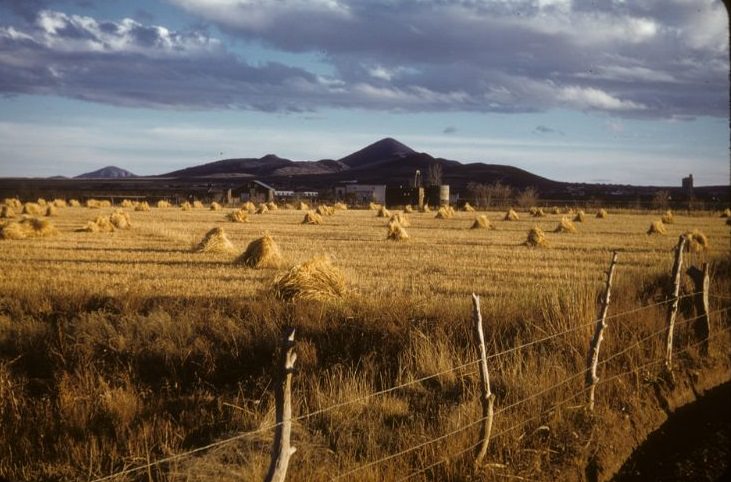
North of Cuauhtémoc, the grain fields stretched across the plateau in late 1958, a reminder that this region of Chihuahua was heavily agricultural. Mennonite communities, which had settled in the Cuauhtémoc area in the 1920s, were largely responsible for transforming the land into productive farmland.
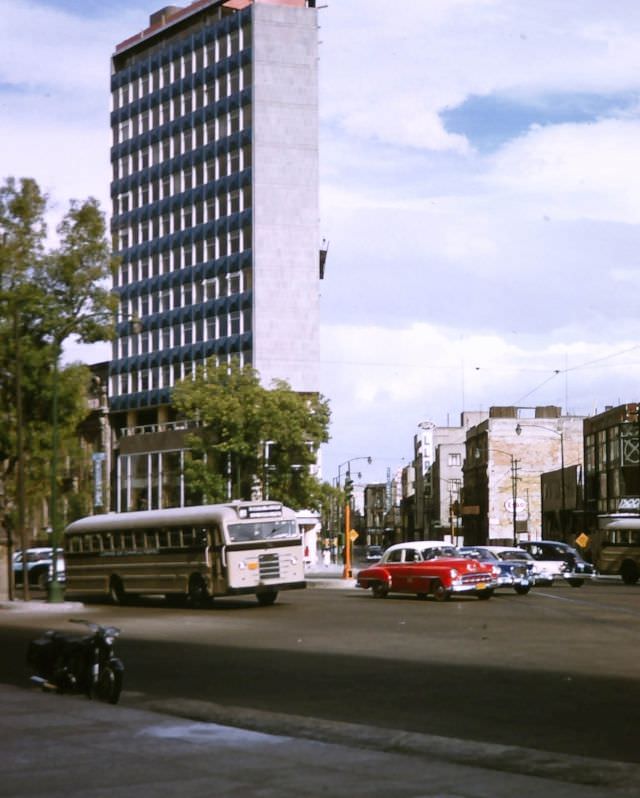
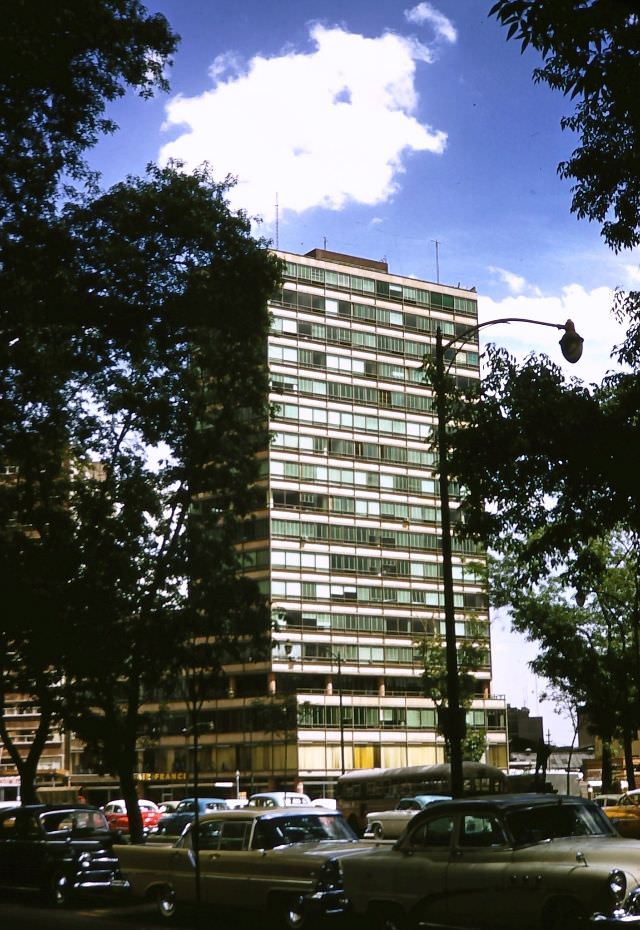
Paseo de la Reforma was also the address of some of Mexico City’s most modern office buildings. By 1958, gleaming new towers of glass and concrete were rising along the boulevard, signaling the country’s ambitions as a growing industrial and commercial power.
The pond inside Chapultepec Park was a peaceful retreat in the middle of the sprawling city. Families gathered at its banks, and rowboats dotted the water on weekends. The park’s centuries-old cypress trees created a canopy that blocked out the noise and pace of the surrounding metropolis.
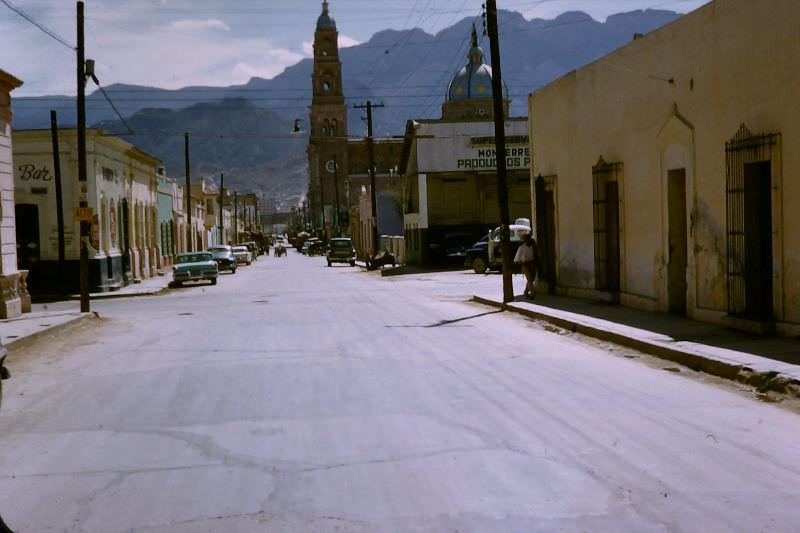
Monterrey’s street scenes from 1958 show a city that blended old religious architecture with modern commercial energy. Churches that dated back centuries sat at the ends of streets increasingly lined with shops and vehicles.
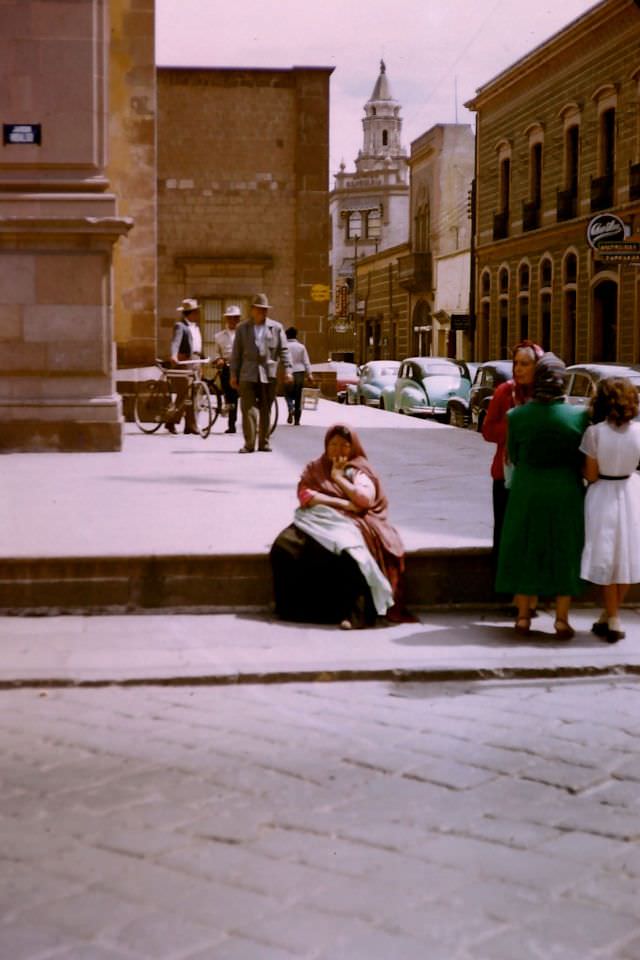
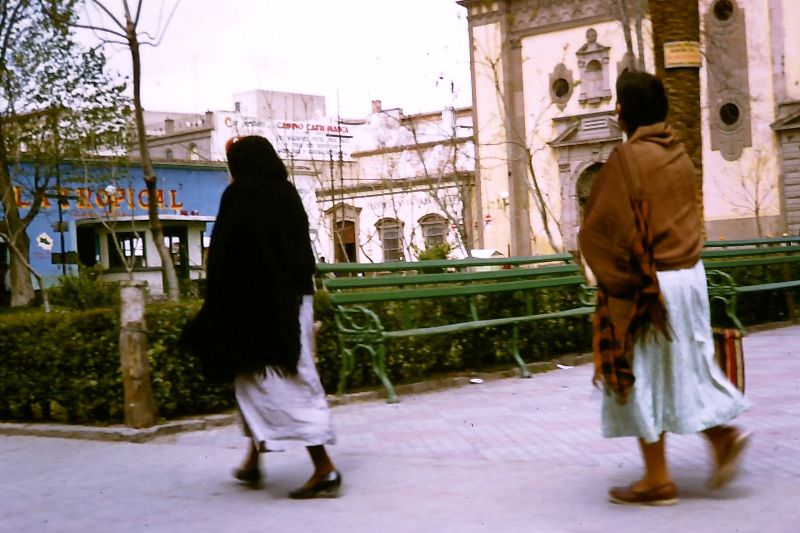
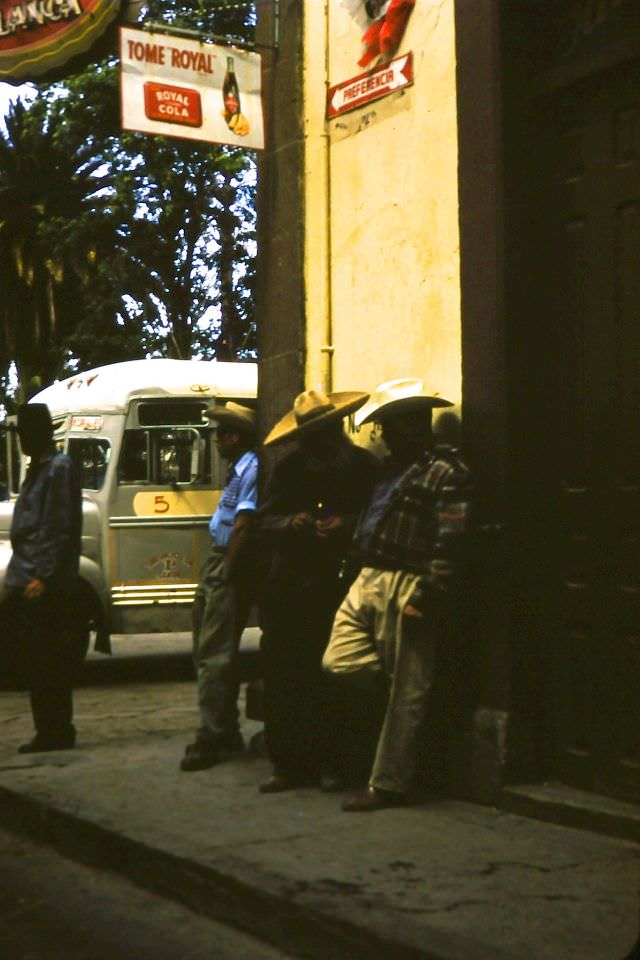
San Luis Potosí’s streets radiating out from the Plaza de Armas were full of activity in 1958. Pedestrians, vendors, and vehicles shared narrow lanes that had been laid out centuries earlier. The street life of the city was dense and varied — a mix of commerce, religion, and everyday movement.
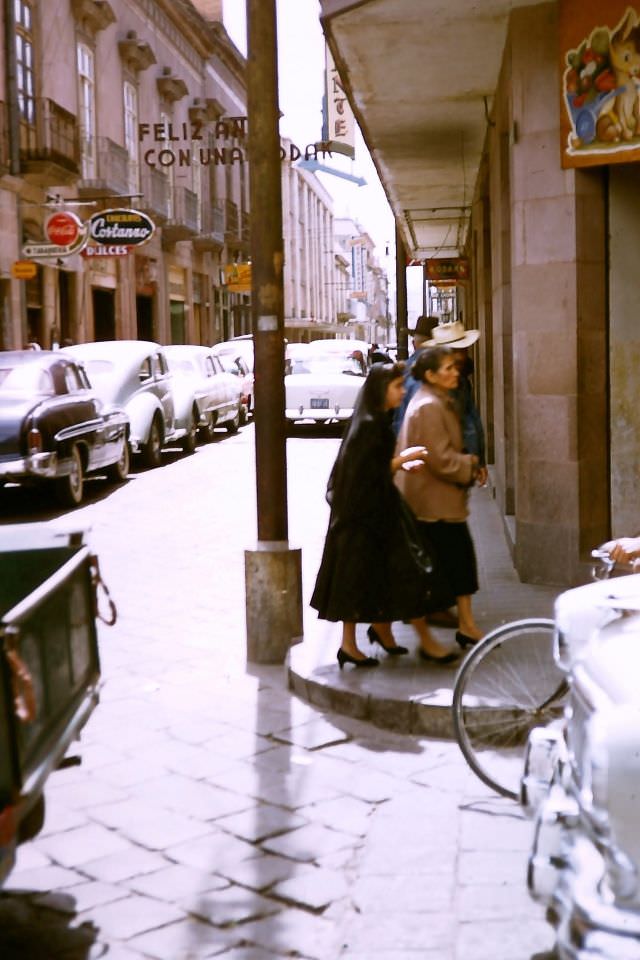
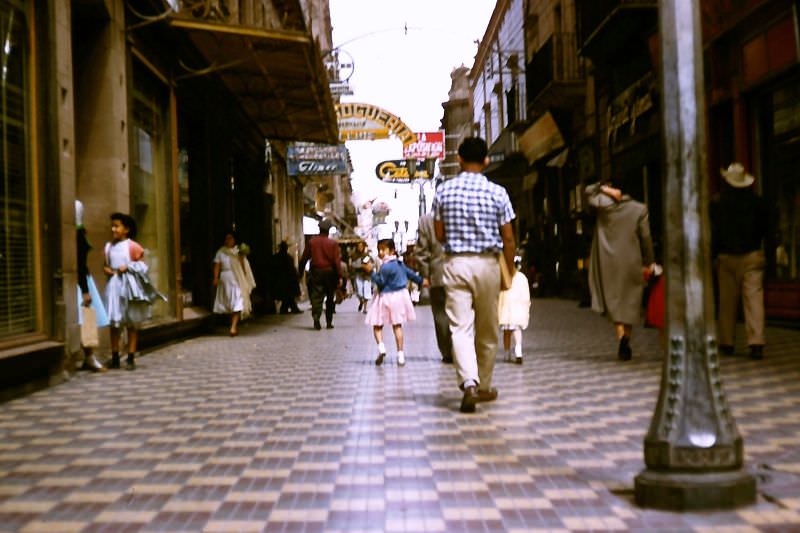
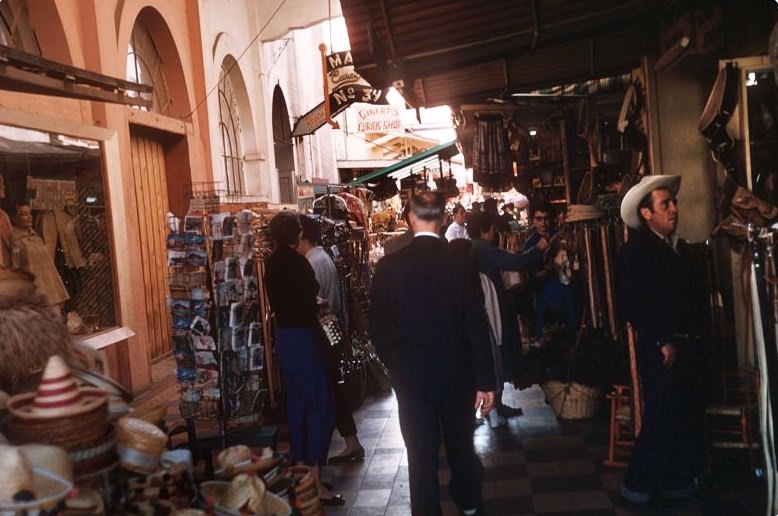
Tijuana’s Avenida Revolución was the main commercial strip that American tourists walked when they crossed the border. By 1959, it was packed with souvenir shops, restaurants, and street vendors. The avenue was loud, colorful, and built almost entirely around the tourist trade.
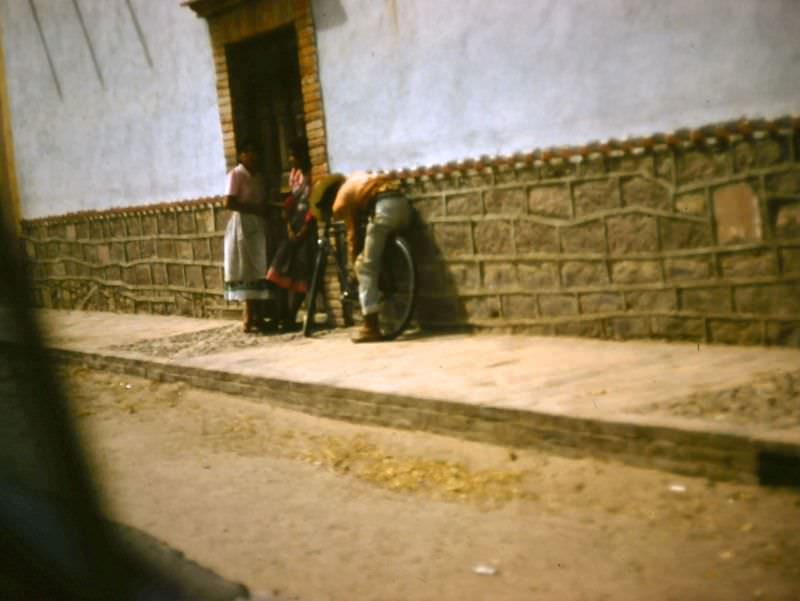
Away from the tourist zones, daily life in rural Mexico continued at its own pace. Horses and donkeys remained the primary means of hauling goods over rough terrain where roads didn’t reach. A couple navigating a cobblestone street with a fully loaded horse was a scene that repeated itself across small towns throughout the decade.
The Pátzcuaro market in the state of Michoacán was a regional hub for indigenous communities throughout the area. The Purépecha people and neighboring groups traveled to Pátzcuaro to sell crafts, food, and textiles. The lake town had been an important trade and cultural center since long before the Spanish arrived.
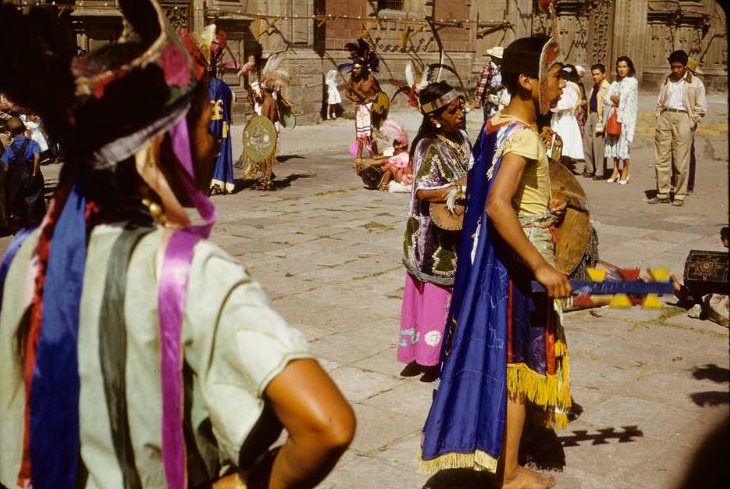
Indigenous ceremonial life remained active and visible in 1950s Mexico. Groups prepared traditional dances and performances in town plazas across the country, wearing regalia that had been passed down through generations. These performances were both cultural expression and community tradition.
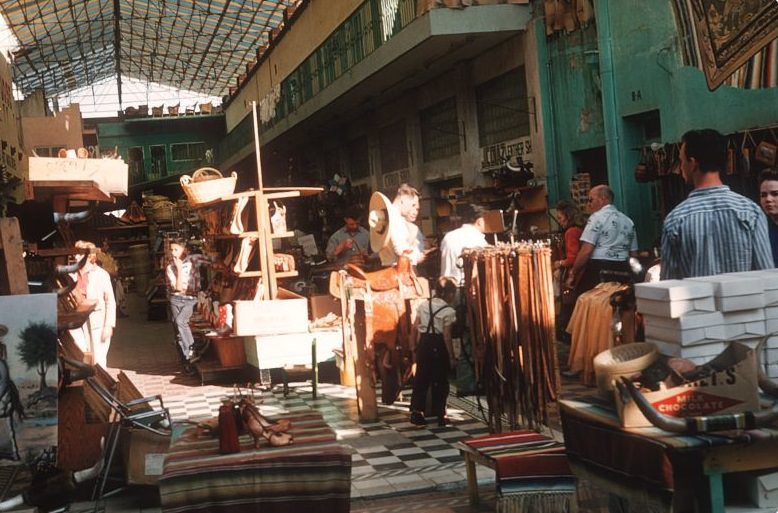
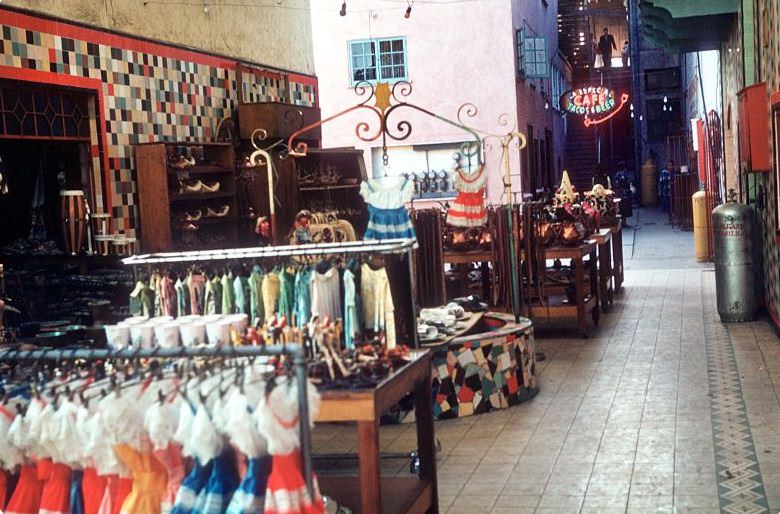
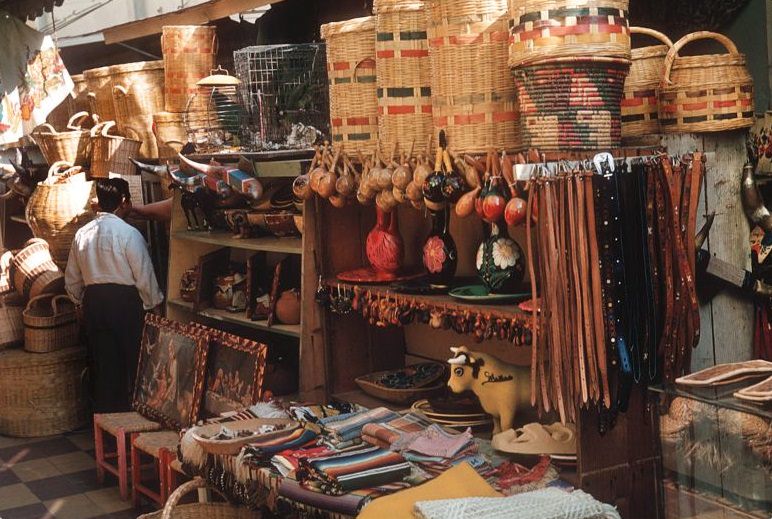
Tijuana’s shops in 1959 reflected the city’s role as a border marketplace. Leather goods, pottery, blankets, and trinkets filled storefronts aimed squarely at American shoppers. The commercial energy of the town was concentrated along a few key streets that drew steady foot traffic from across the border.
Street vendors were a fixture of Tijuana’s sidewalks in 1959. They sold everything from food to handmade goods and occupied the spaces between storefronts and pedestrian traffic. For many vendors, this was a full-time livelihood.
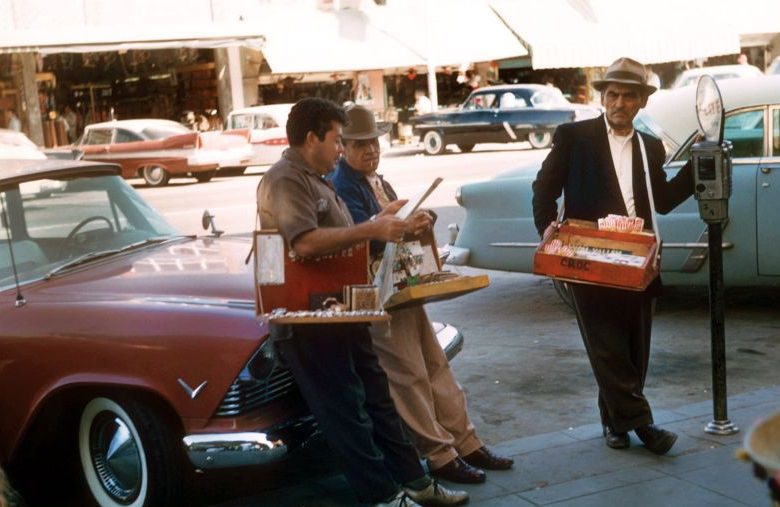
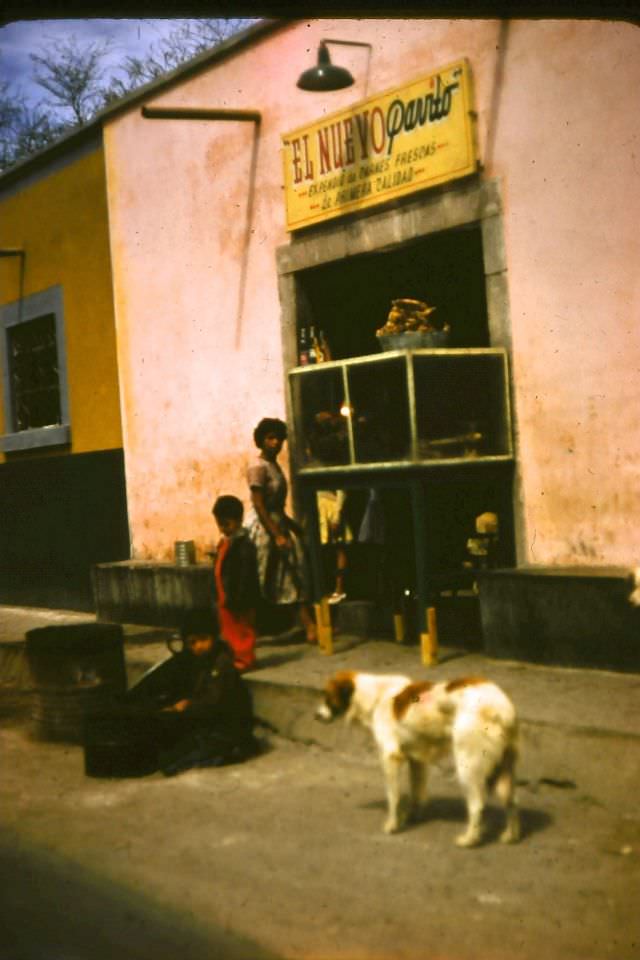
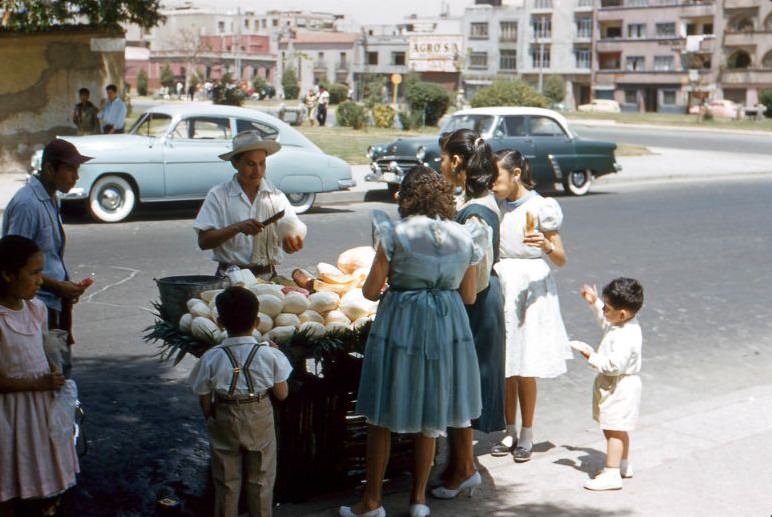
In 1957, fruit vendors were common across Mexican cities and towns. A vendor with a cart or basket of fresh fruit was one of the most everyday sights on any busy street. The work was physical and the margins were thin, but it was a reliable form of street commerce woven into the fabric of Mexican urban life.
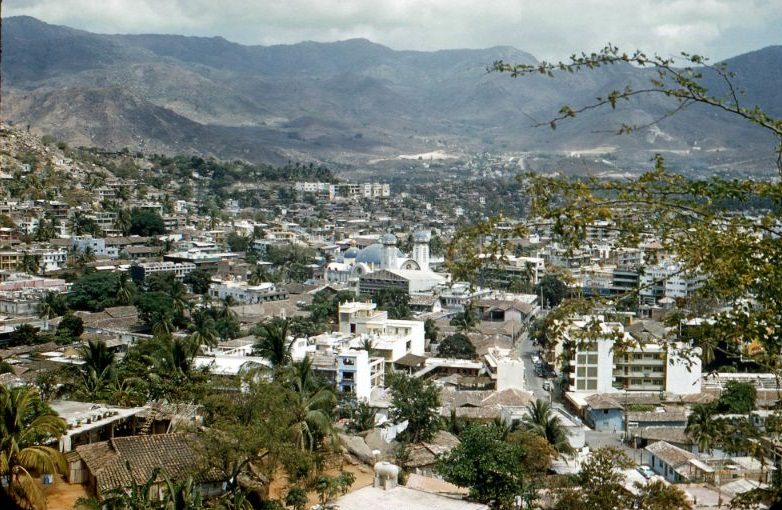
Acapulco in 1957 was Mexico’s most glamorous beach destination. The Pacific port city drew Mexican elites and international tourists alike. Its cliff divers were already famous, and its hotels and beaches had positioned it as a symbol of Mexico’s modern, cosmopolitan face.
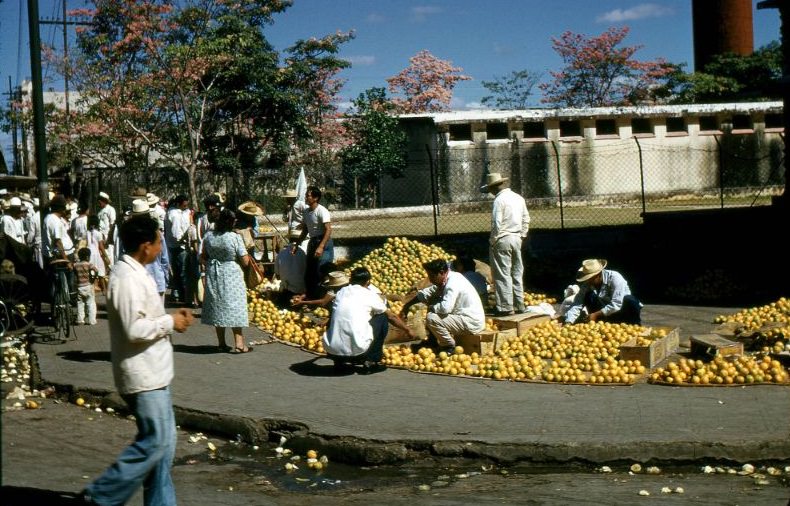
Mérida, the capital of the Yucatán state, was known for its tropical produce. A photograph of oranges from Mérida in 1957 places the viewer directly in the warm, agricultural world of southeastern Mexico — a region with its own distinct culture, rooted in Maya traditions and colonial Spanish influence.
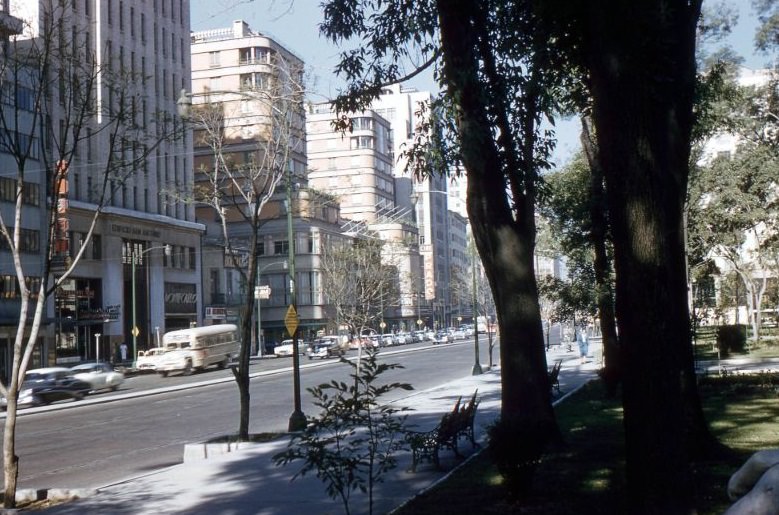
Avenida Juárez in Mexico City was one of the capital’s main commercial arteries in 1957. It connected the Alameda Central park to the historic center and was lined with hotels, cinemas, and shops. The street carried heavy pedestrian and vehicle traffic through the heart of the city.
The Distrito Federal — Mexico City’s federal district — was the political and economic center of the entire country. By 1957, the city’s population had grown enormously due to migration from rural areas, and the federal district was expanding rapidly to accommodate the influx.
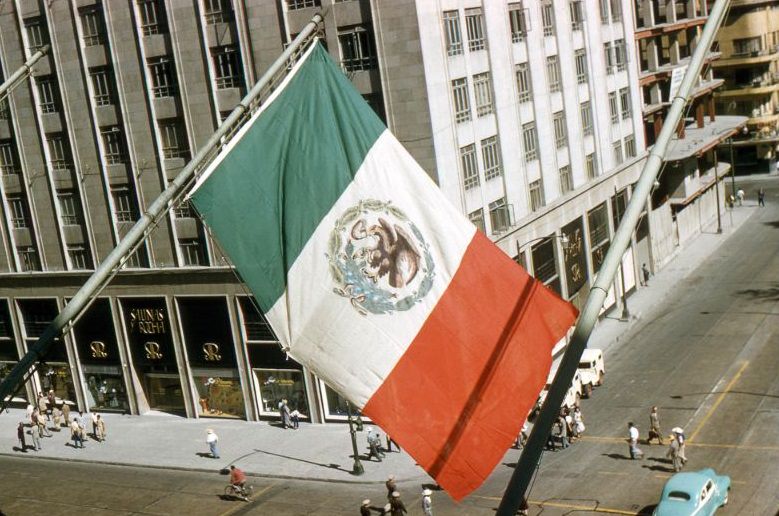
The Hotel del Prado on Avenida Juárez was one of Mexico City’s landmark buildings in 1957, and the Mexican flag photographed from its roof overlooked the city’s central zone. Directly opposite stood the Salinas y Rocha building — a prominent commercial structure that, along with the Hotel del Prado itself, was demolished following severe damage in the catastrophic 1985 Mexico City earthquake.
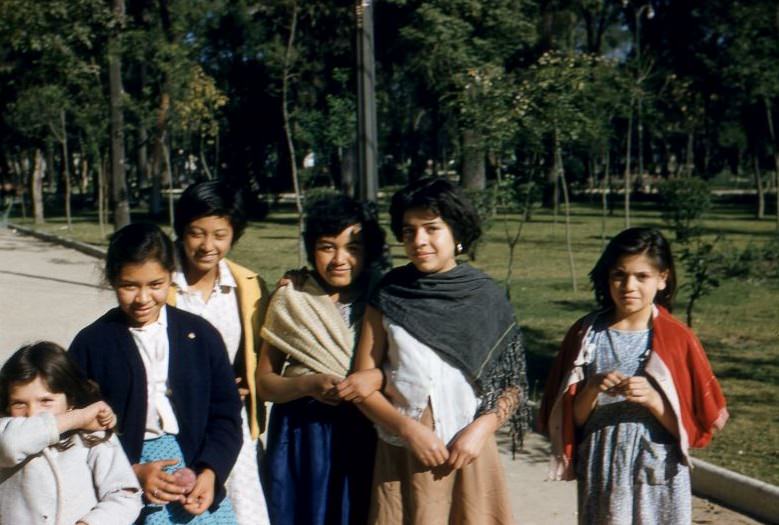
The Alameda Central, one of the oldest public parks in the Americas, was a popular gathering spot in Mexico City. Girls photographed there in 1957 reflect the everyday leisure life of city residents — the park was a place to walk, sit, and socialize in the middle of the urban core.
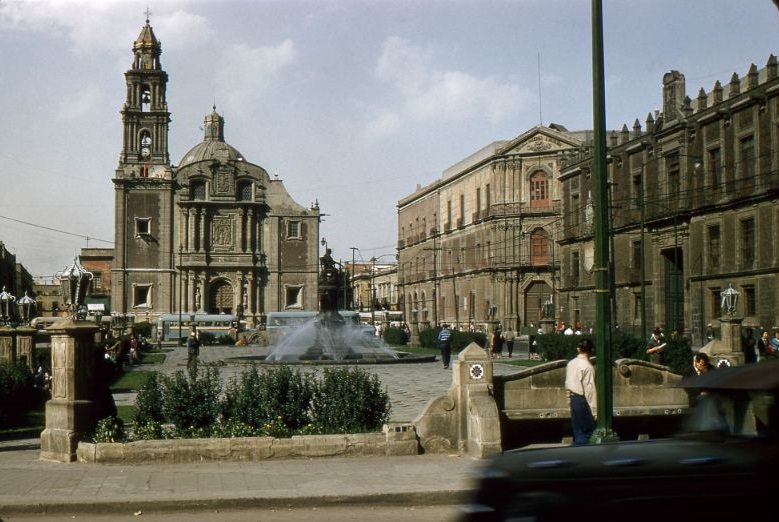
The Plaza de Santo Domingo in the historic center of Mexico City was one of the city’s oldest squares. By the 1950s, it was still home to public scribes — men with typewriters set up under the arches who wrote letters and documents for people who couldn’t write themselves. The square preserved a slice of an older city in the middle of a rapidly modernizing capital.
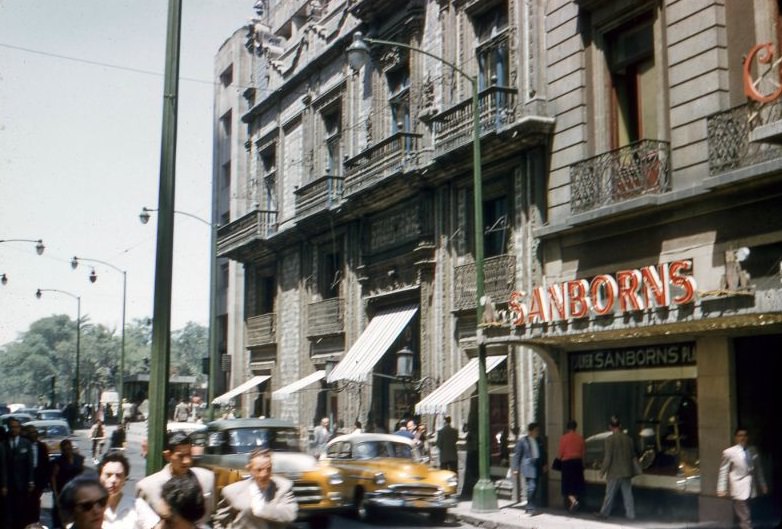
Sanborns, a chain of restaurants and shops that had been operating in Mexico since the early 20th century, was a recognizable presence on Mexico City streets by 1957. Its storefronts were well-known landmarks, and the brand itself had become part of the city’s commercial identity.
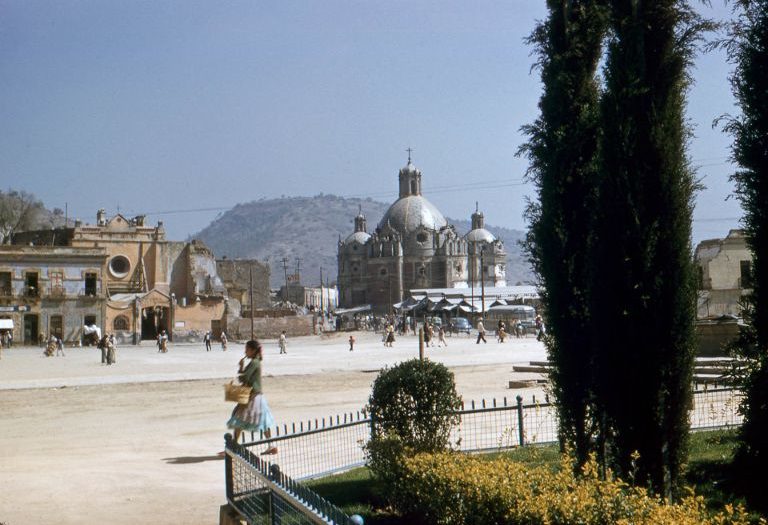
The Templo del Pocito, a small circular church near the Basilica of Guadalupe in Mexico City, was built in the late 18th century. Its unusual round design and blue and white tile dome made it one of the most distinctive religious buildings in the capital. In 1957, it stood as it had for nearly two centuries.
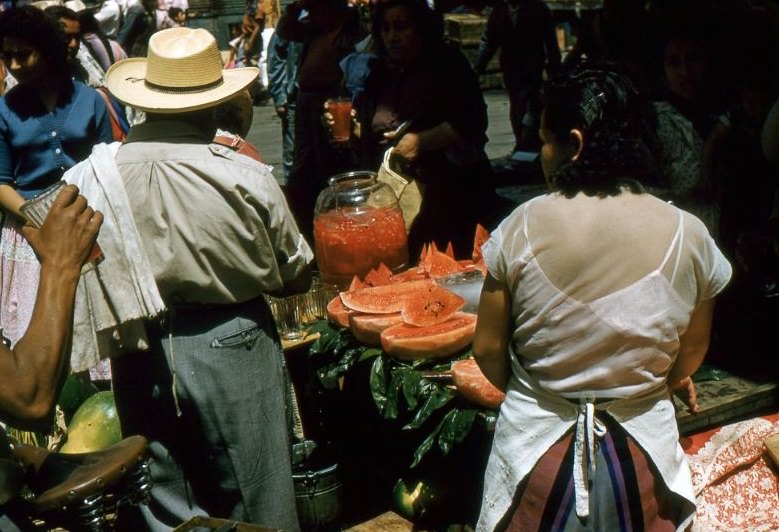
Watermelon vendors were a seasonal fixture on Mexico City streets in the summer months of 1957. Large fruit was sold from carts or laid out on tables along sidewalks. It was one of the simplest and most direct forms of street commerce — vendor, fruit, and customer, with no storefront required.
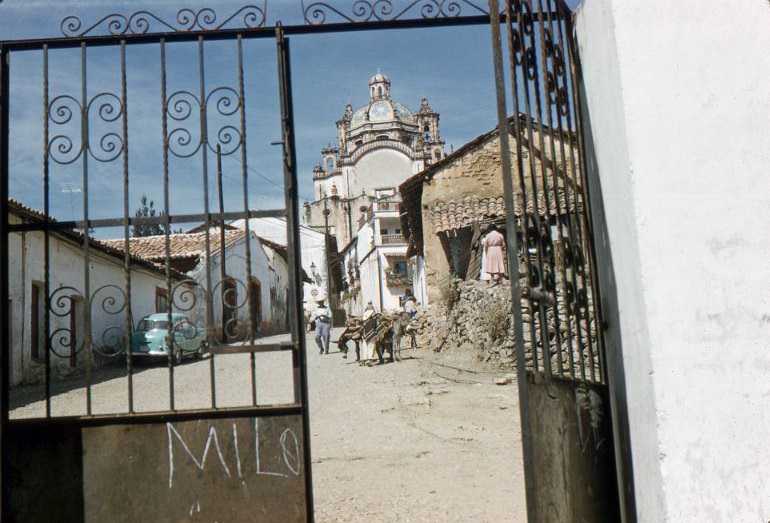
Taxco in 1957 retained the same colonial atmosphere it had held for centuries. Its steep streets, tiled rooftops, and the towering Santa Prisca church visible from nearly every angle gave the town a visual consistency that set it apart from Mexico’s modernizing cities.
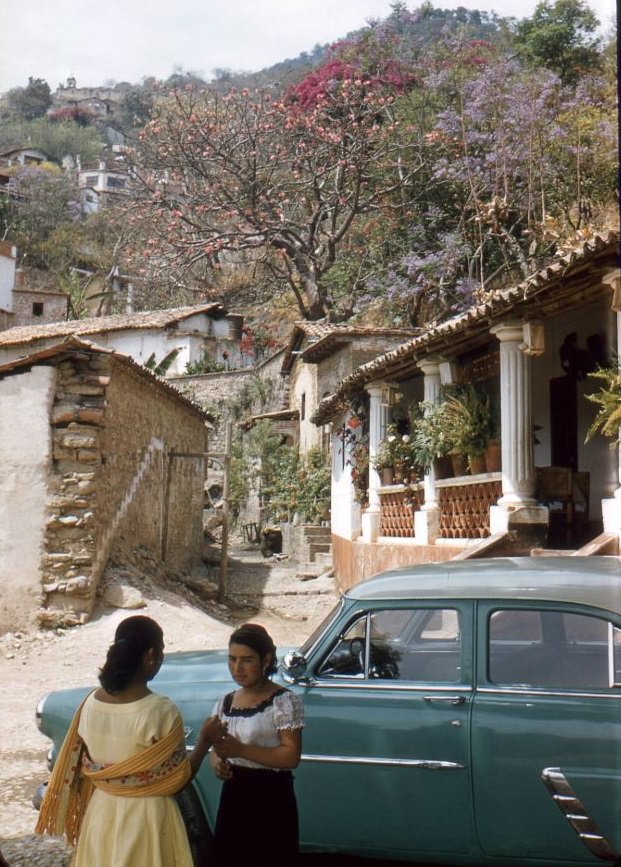
The Plazuela de San Juan in Taxco was one of the town’s smaller public squares — the kind of intimate space where residents gathered in the shade, children played, and vendors set up during market days.
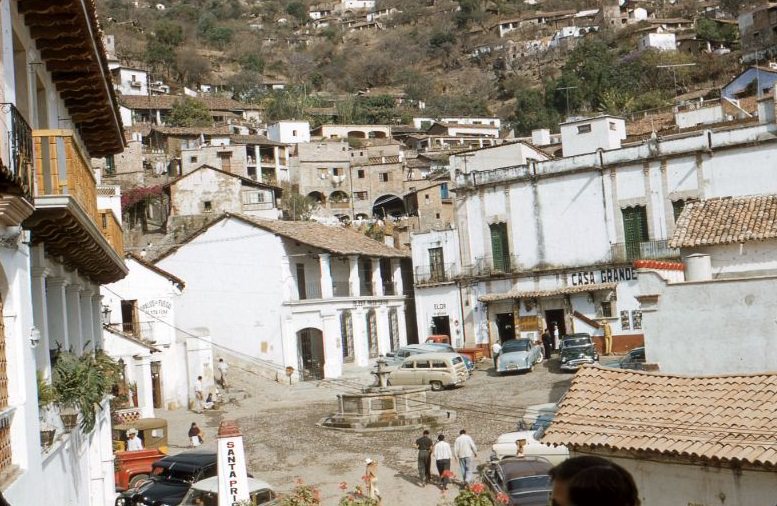
Xochimilco, on the southern edge of Mexico City, was famous for its network of canals — remnants of the ancient lake system that the Aztec capital Tenochtitlan once sat upon. In 1957, roasted corn vendors worked the waterfront, selling elotes to locals and visitors who came to ride the trajineras through the canals.
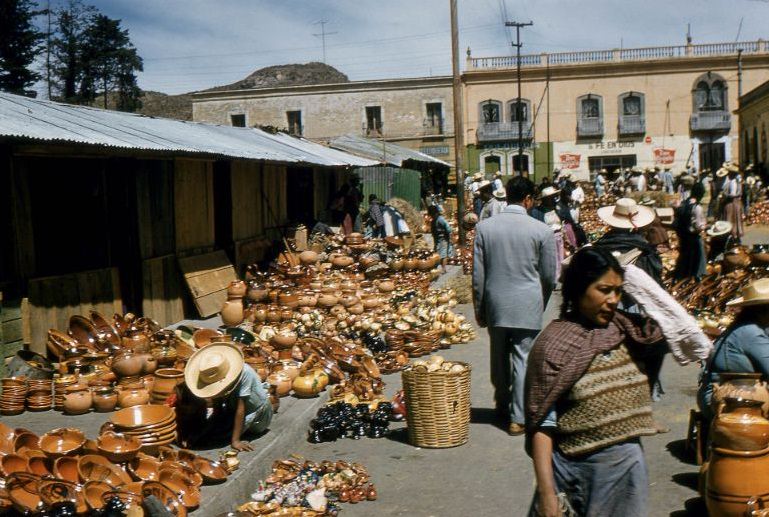
Street markets in Taxco brought together sellers of silver jewelry — the town’s defining craft — alongside vendors of produce, textiles, and everyday goods. The market was both a local necessity and a draw for the growing number of tourists who came specifically to buy Taxco silver.
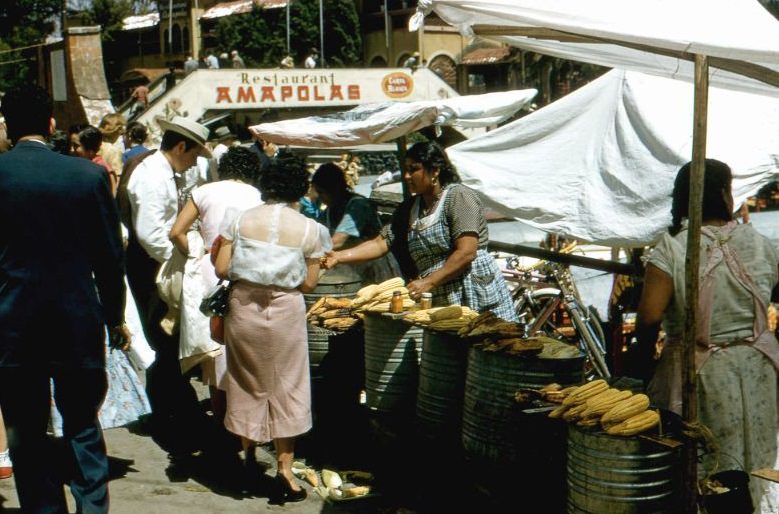
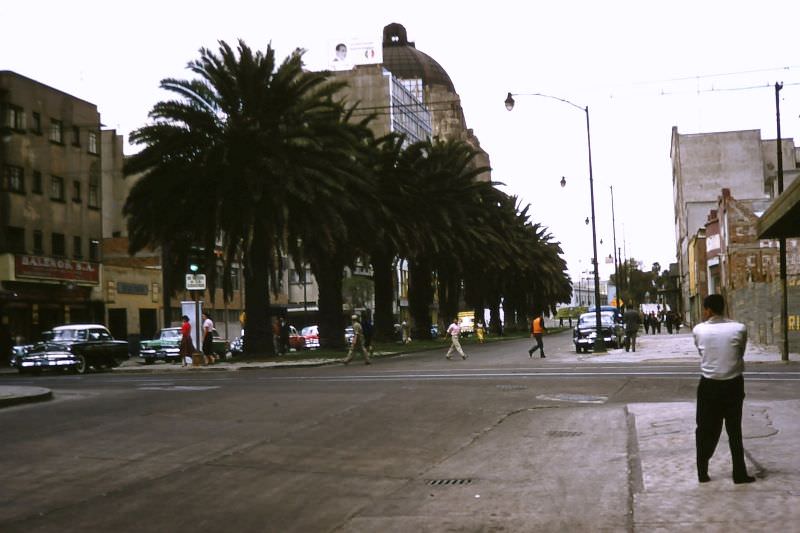
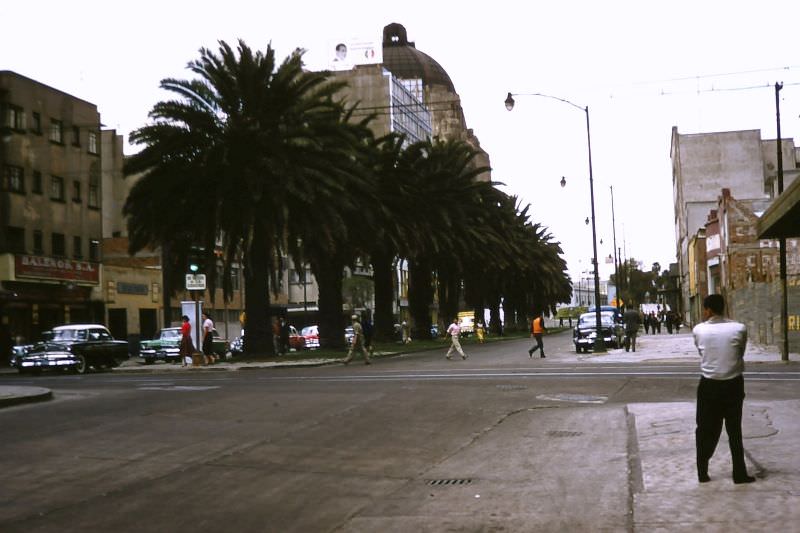
Palm-lined streets in Mexico City in March 1958 captured a city that was growing fast but still maintained wide, ordered boulevards planted with trees. These avenues were part of the capital’s urban planning ambitions — built to project a modern, ordered image while accommodating the rising volume of traffic that came with economic growth.