In December 1958, Walter Reed — father of Leon Reed — loaded up a trailer and drove into Mexico through Nuevo Laredo with his family. Over the course of nearly a month, they covered an enormous stretch of the country, passing through Mexico City, Taxco, Cuernavaca, Morelia, Queretaro, Puebla, Teotihuacan, and more before returning north through the same border crossing. Walter had a camera with him the whole time, and the color photographs he brought home are a vivid, ground-level record of a country that most Americans of that era had never seen up close.
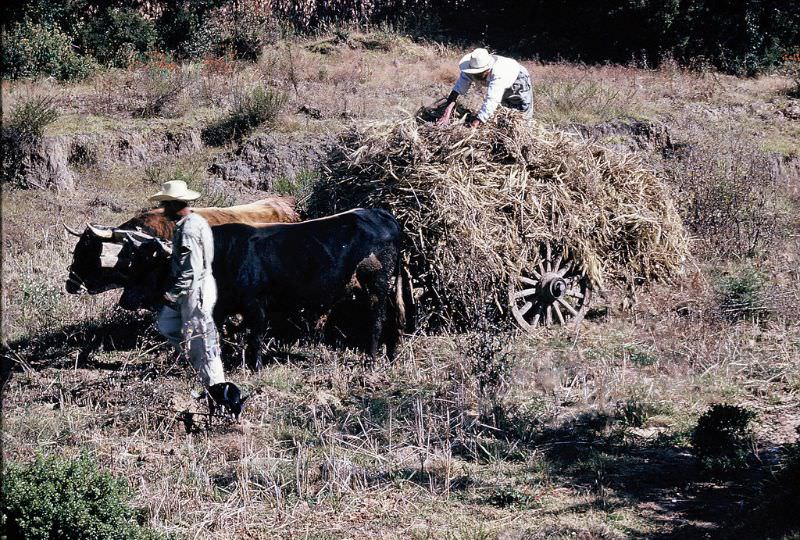
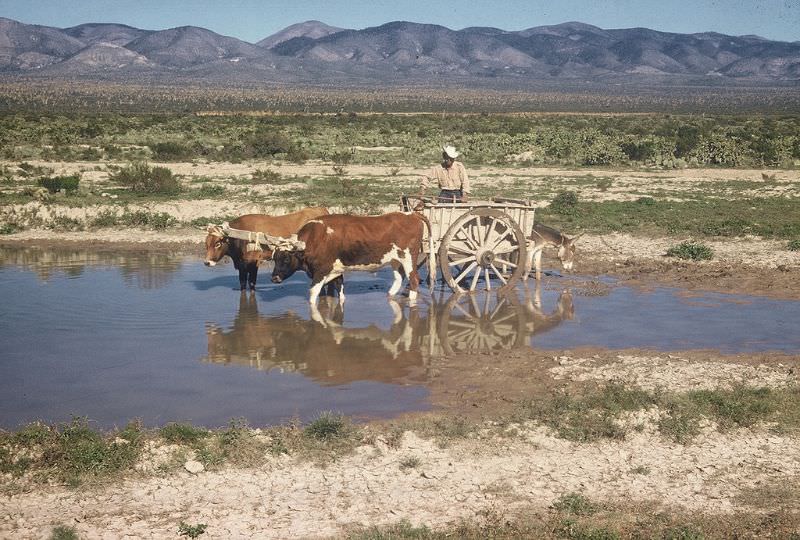
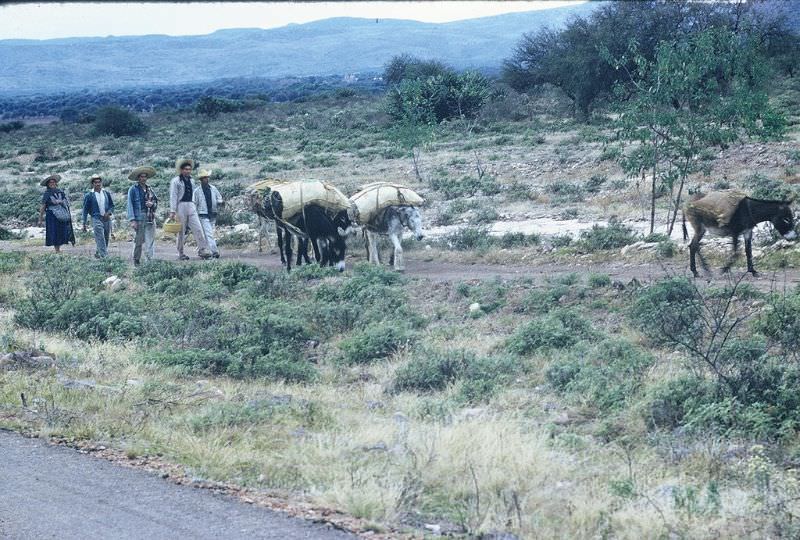
Mexico in 1958 was a country in transition. About 60% of the population still lived in towns and smaller communities rather than major cities. That same year, Adolfo Lopez Mateos was elected president, beginning a period of economic growth and social reform. But in the streets, markets, and back roads that Walter Reed photographed, the pace of daily life moved according to older rhythms — burro caravans, open-air markets, women washing clothes in streams, and ox carts hauling corn stalks down dirt roads.
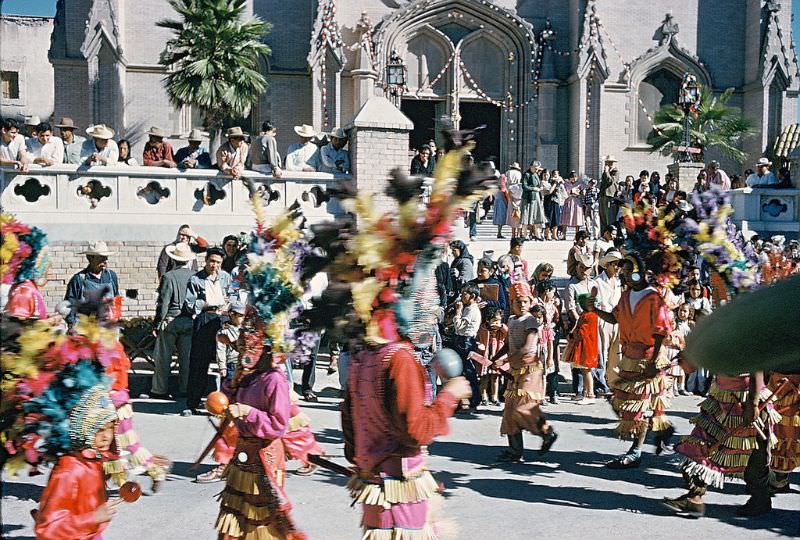
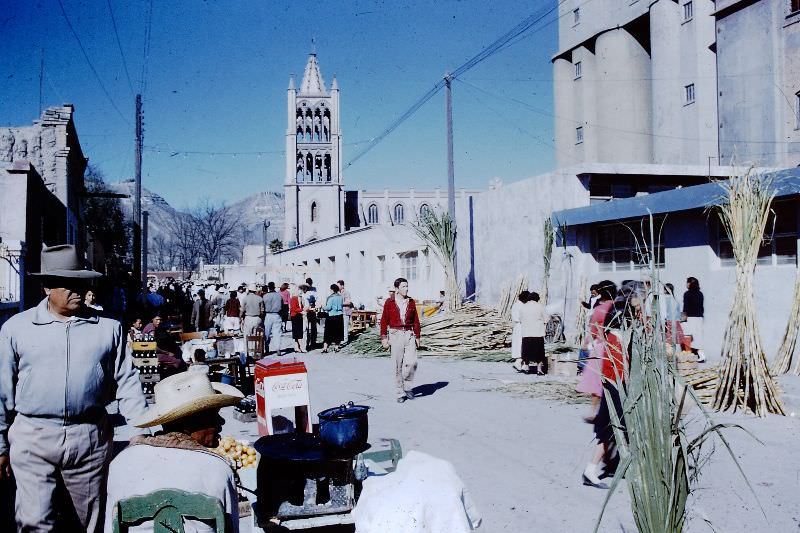
The Reeds entered Mexico through Nuevo Laredo, in the north. Saltillo was one of the first major stops, and they arrived during the Festival of Guadalupe — one of the most important Catholic celebrations in Mexico, held each December in honor of the Virgin of Guadalupe. The streets were packed. Dancers performed in traditional dress, food vendors lined the plazas, and candy sellers worked the crowds. A woman cooked tortillas over an open fire. Children with hula hoops — a toy that had just swept through the United States in 1958 — played along the sidewalks.
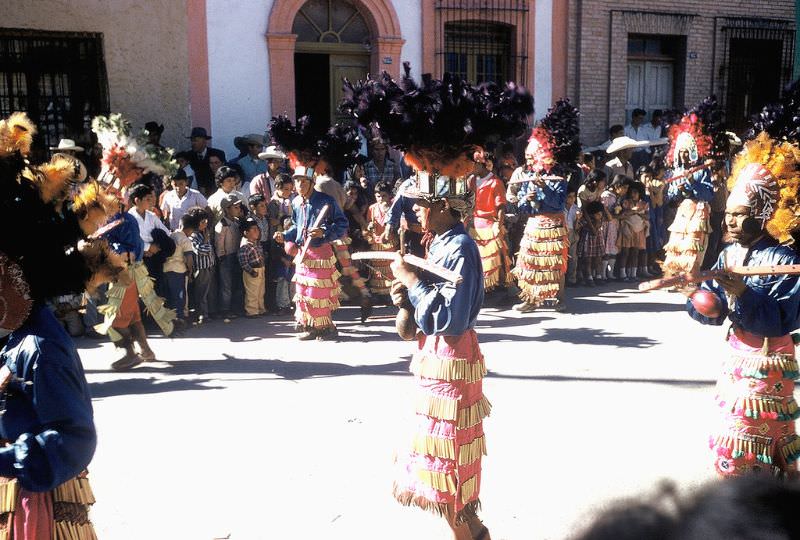
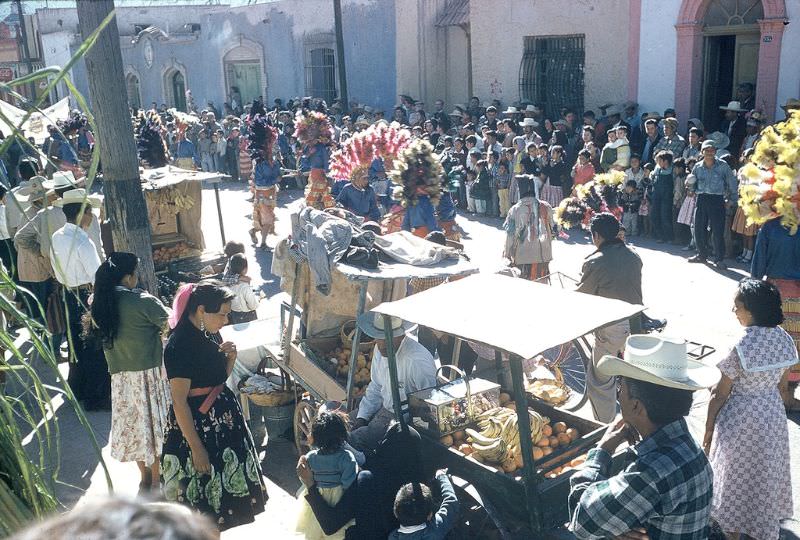
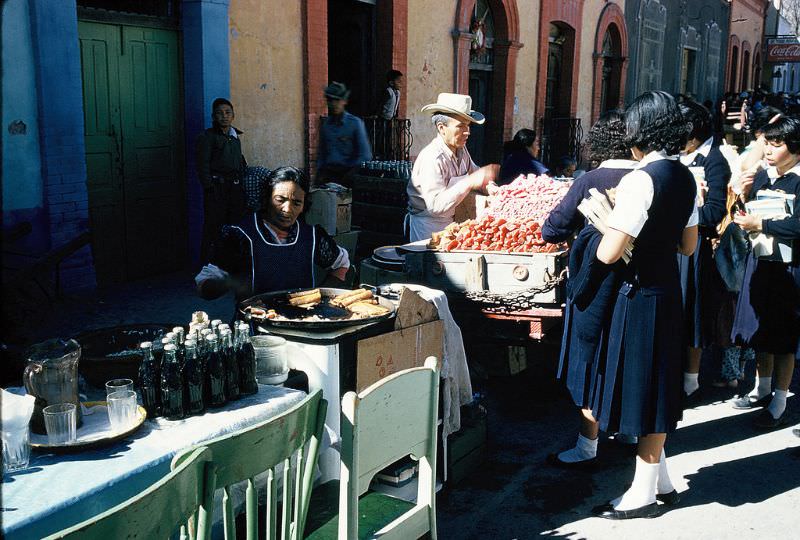
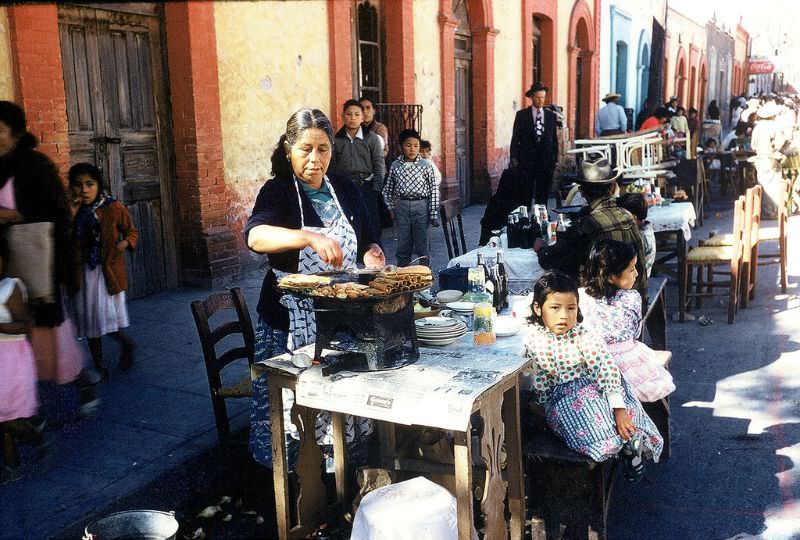
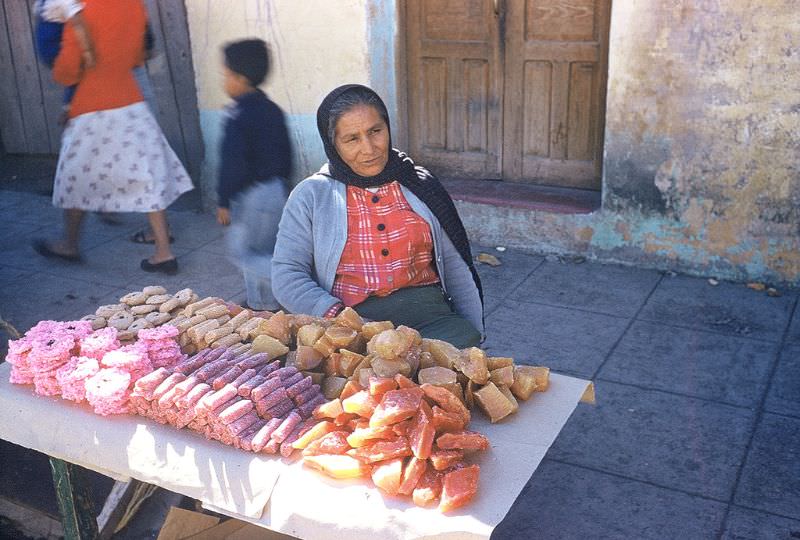
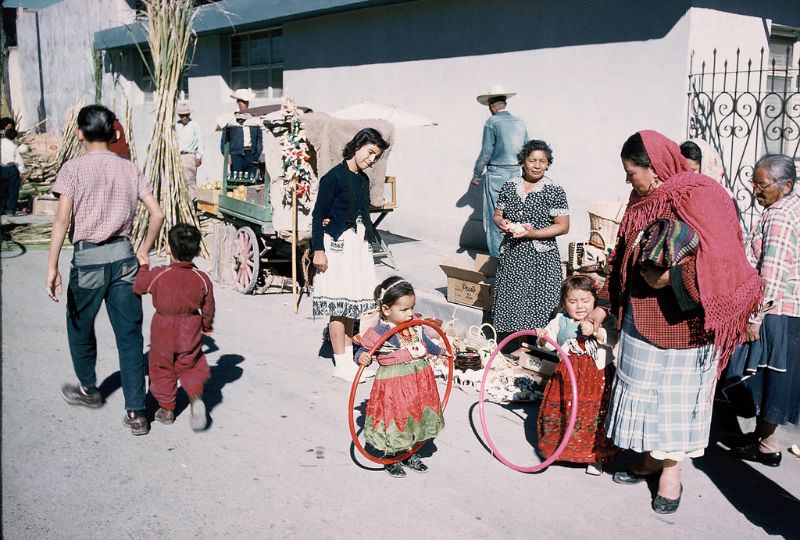
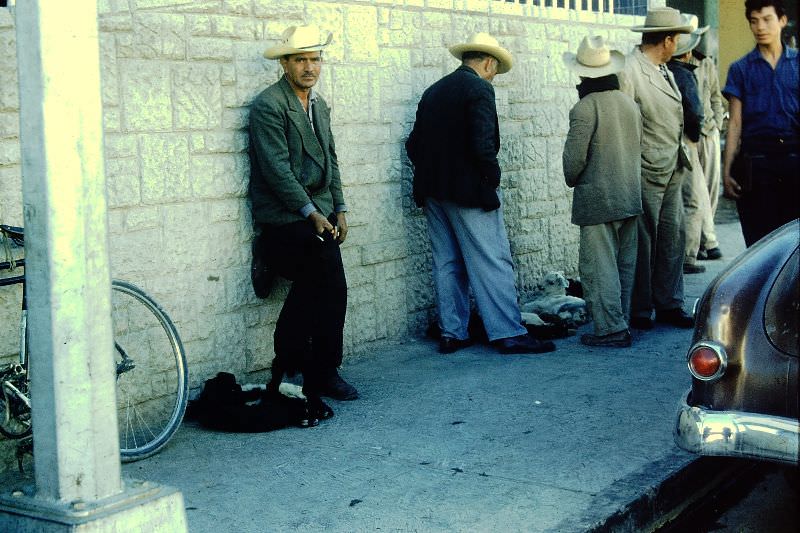
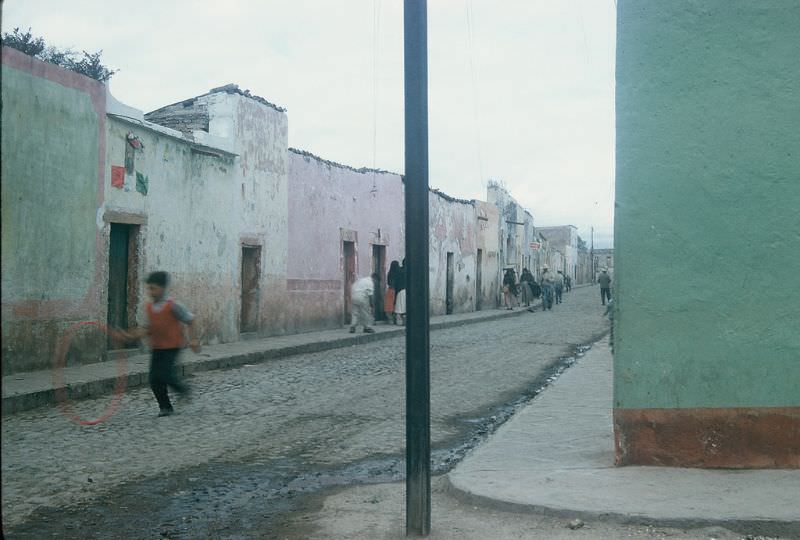
Beyond the festival, Saltillo showed its quieter face — men gathered on sidewalks, tile makers worked at their craft on the outskirts of town, and the surrounding streets revealed the ordinary texture of northern Mexican life in the late 1950s.
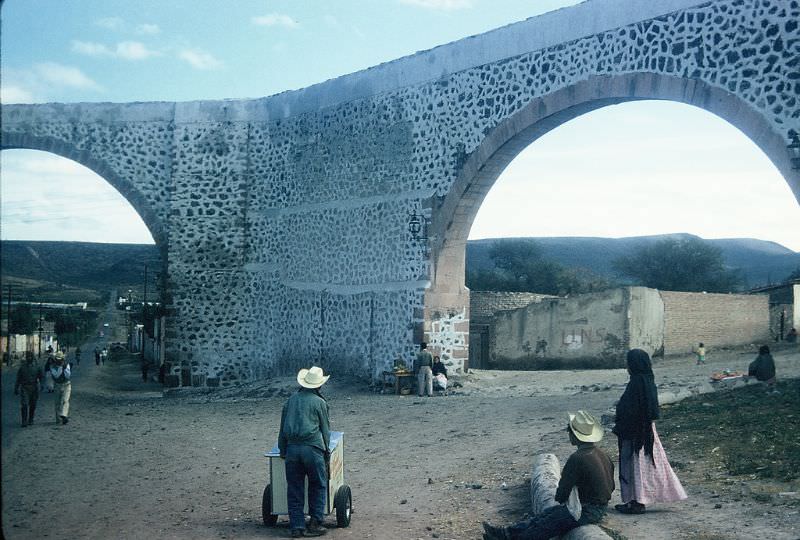
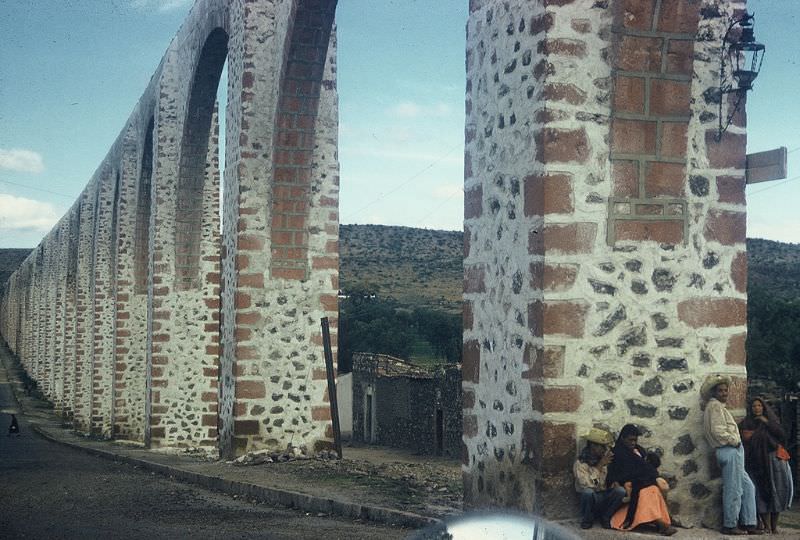
Heading south, Queretaro offered one of the most striking stretches of photography in the whole collection. The city’s colonial-era aqueduct — built in the 18th century with 74 arches spanning nearly a kilometer — dominated the skyline. Walter photographed it from multiple angles, including one shot with two men and two women posing in front of its massive stone pillars.
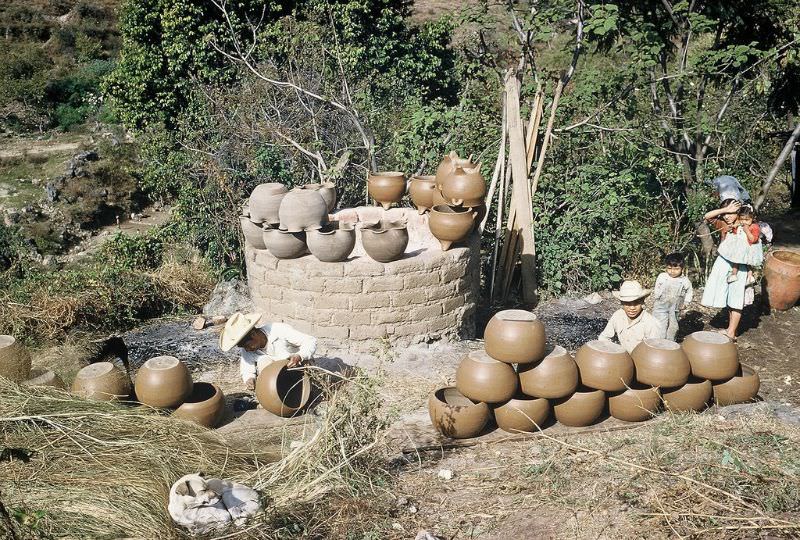
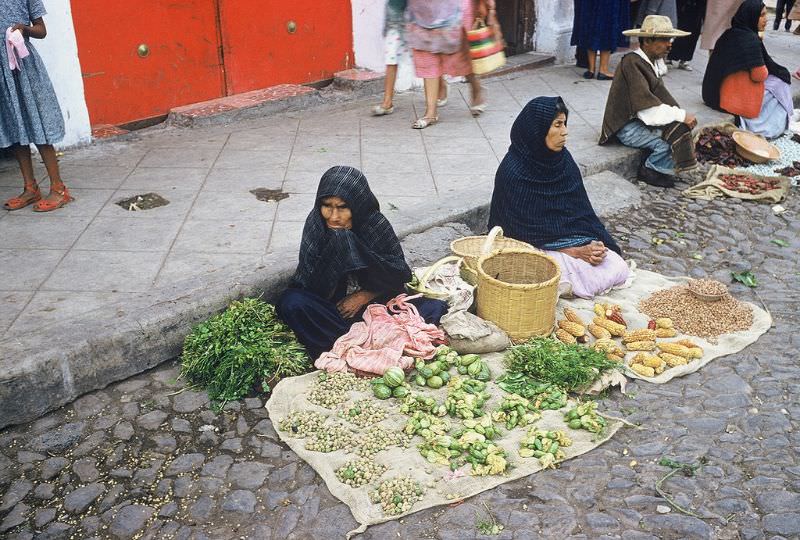
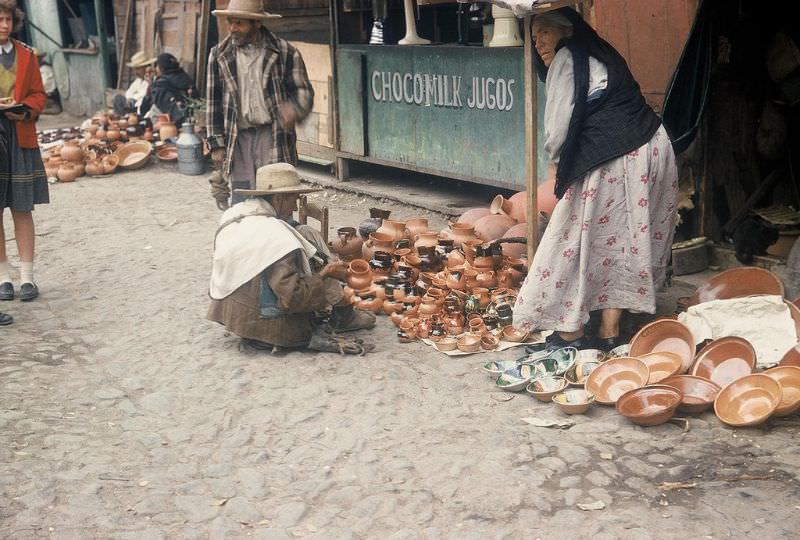
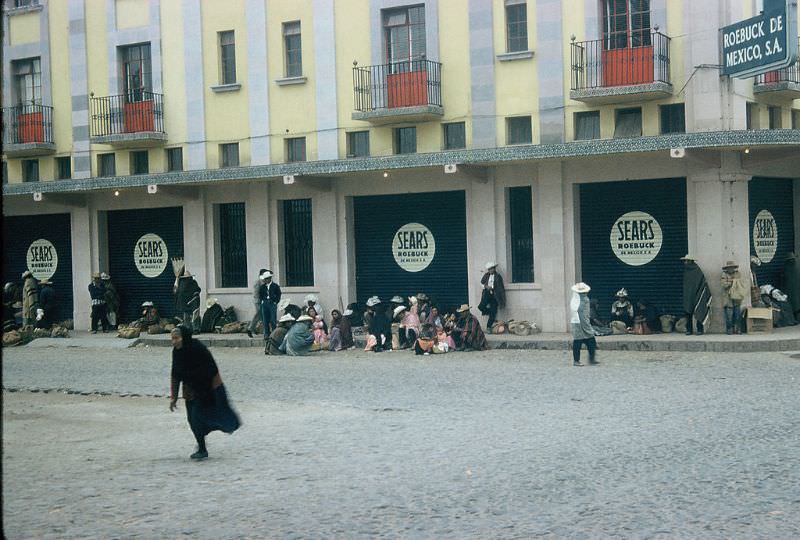
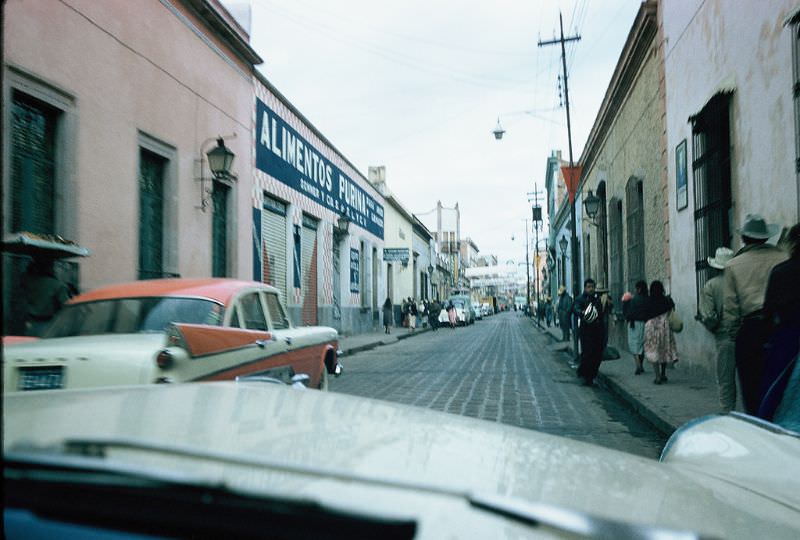
The markets in Queretaro were rich with detail. Women sold corn and vegetables from low stalls, clay pots were stacked in large arrangements, and vendors spread their goods across crowded street markets. Christmas floats rolled through the streets. The Church of Santa Cruz stood at the Plaza of Obregon. A Sears storefront appeared in one frame, with locals waiting for the bus out front — a reminder that American commercial brands were already making their way into Mexican cities.
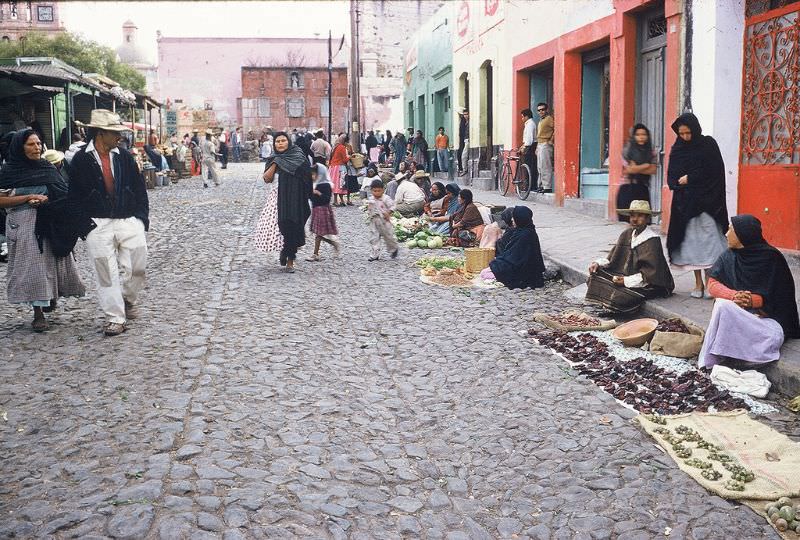
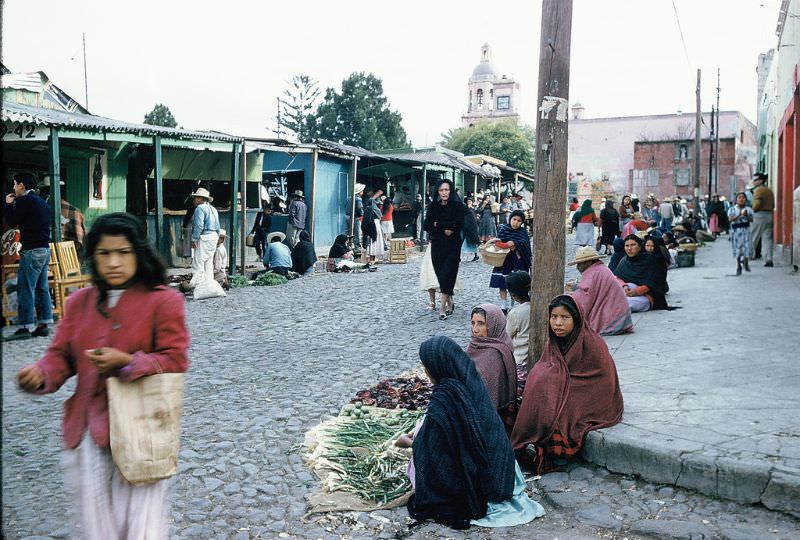
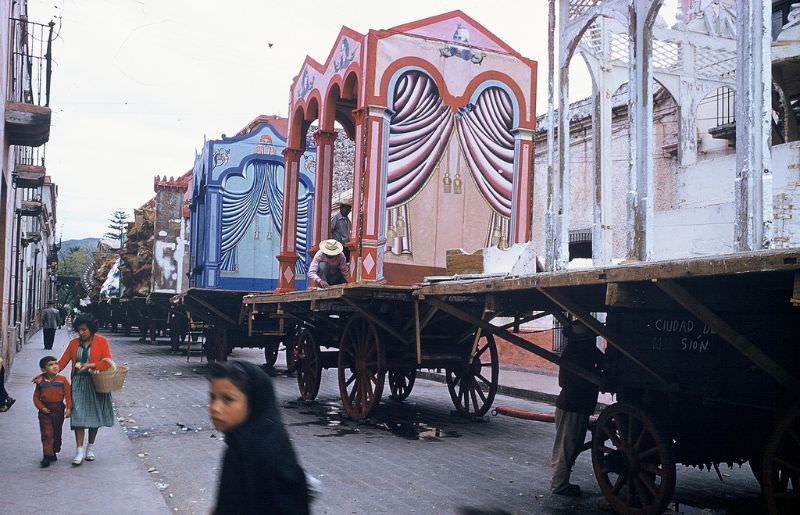
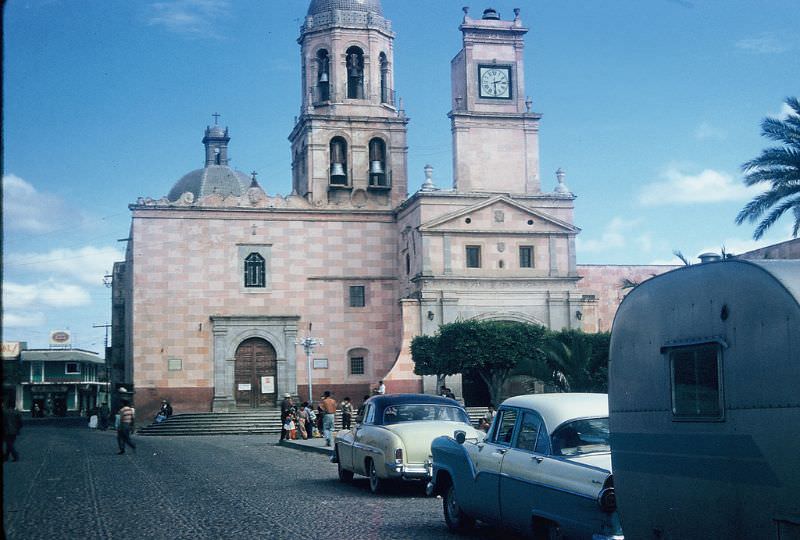
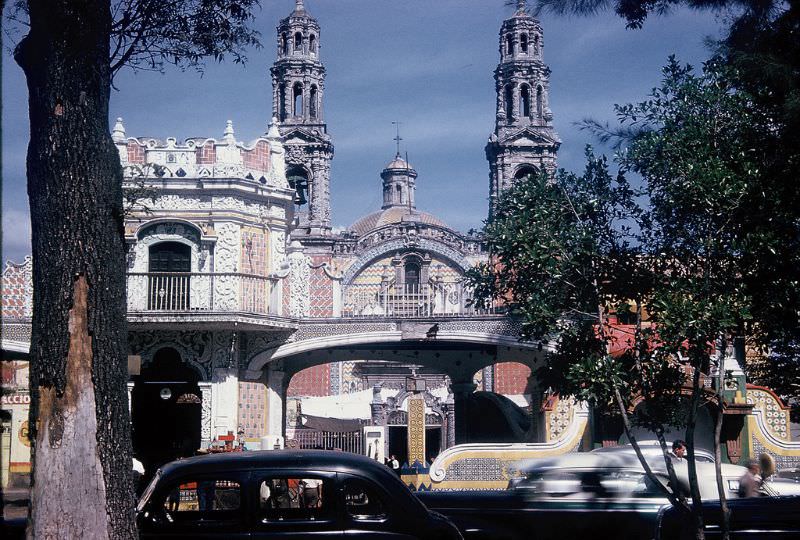
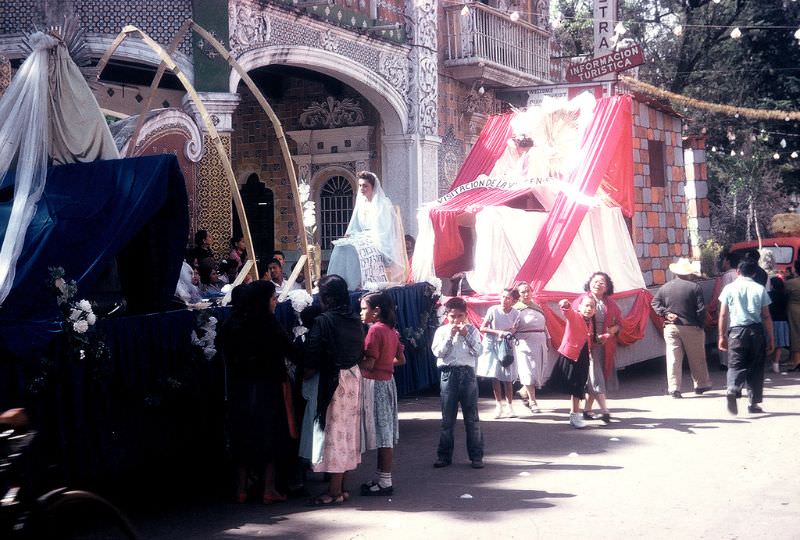
Puebla, to the southeast of Mexico City, was known for its brightly tiled buildings and ornate churches. Walter captured both — the tile-fronted facades and a Christmas parade moving through the streets. The city’s colonial architecture made it one of the most visually distinctive stops on the trip.
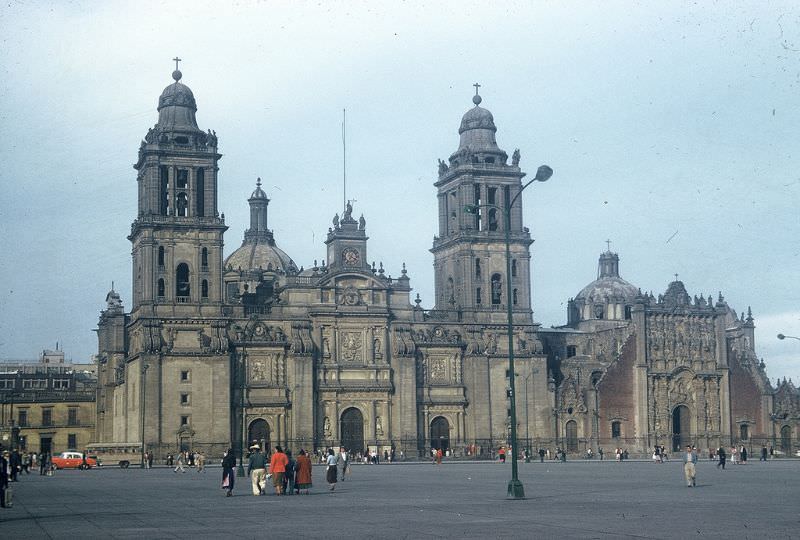
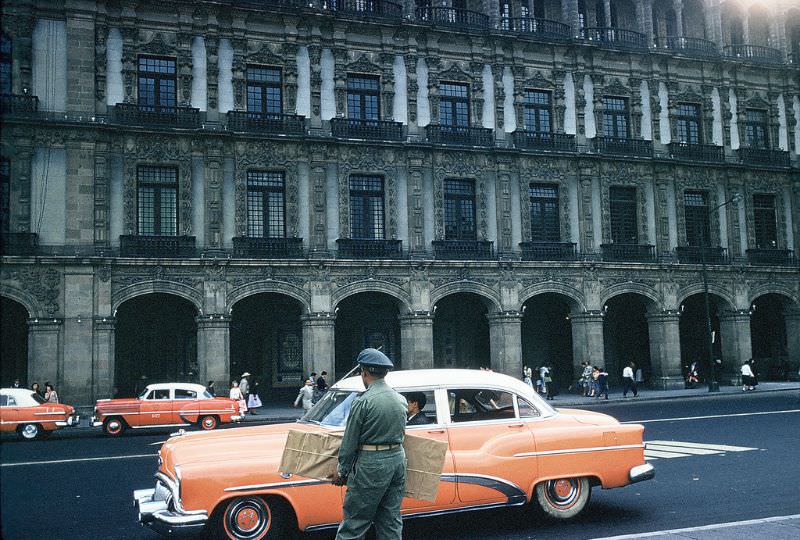
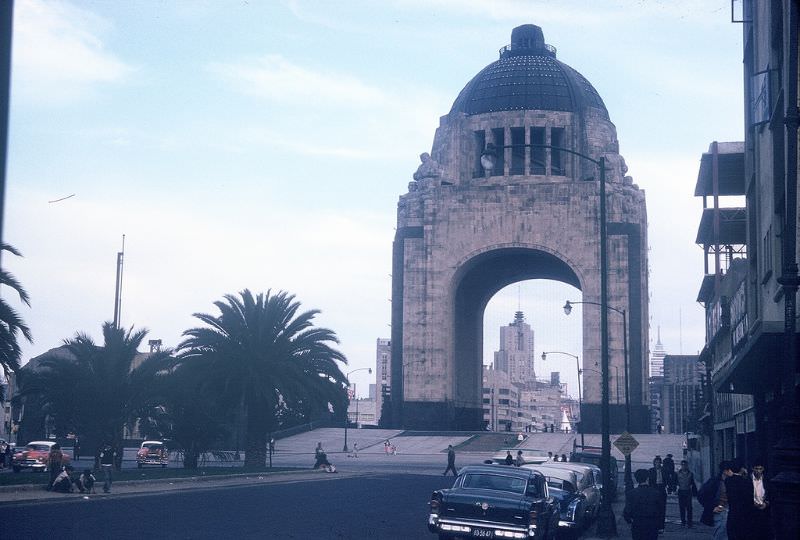
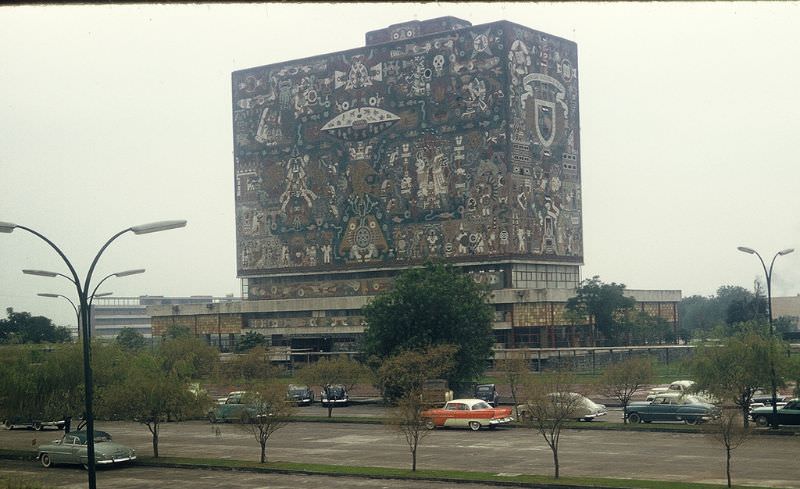
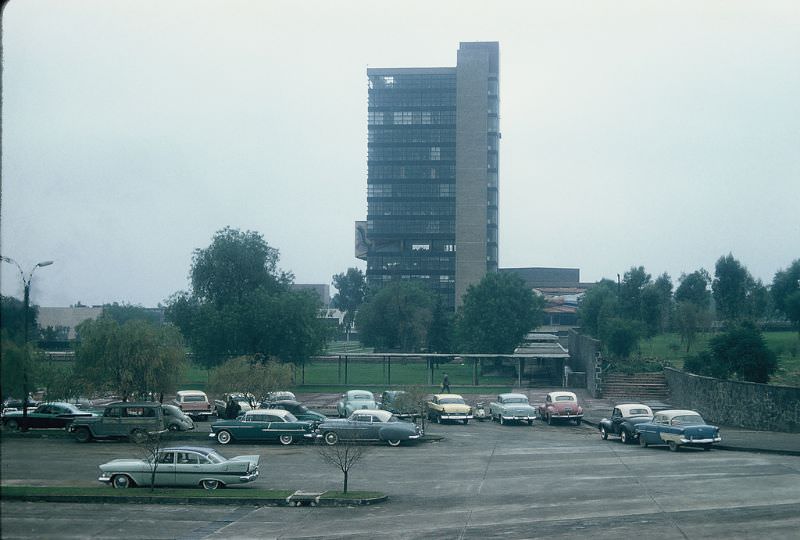
Mexico City was unavoidable and enormous. The Reeds photographed the Metropolitan Cathedral on the Zocalo, the city’s vast central square, where taxis and a department store also appeared in frame. The Monument to the Revolution rose above its roundabout. The National Autonomous University of Mexico — UNAM — had just moved into its new campus, completed in 1954, featuring the famous mosaic-covered library designed by Juan O’Gorman. Walter photographed both the library and the campus grounds.
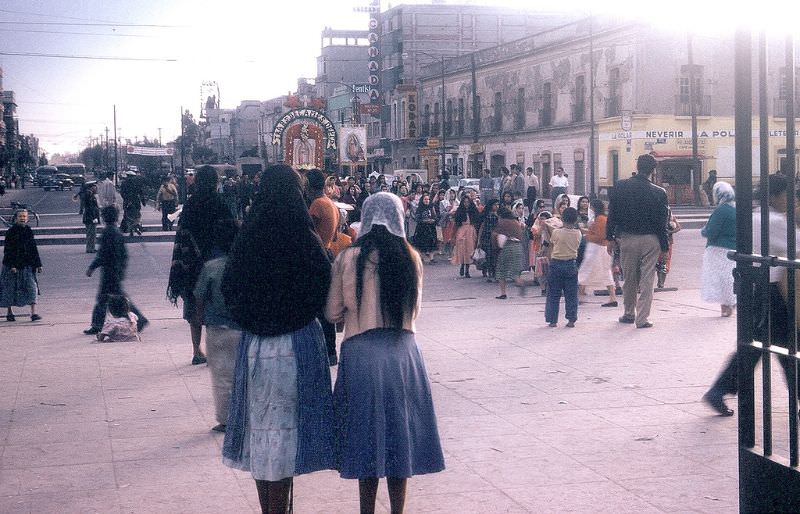
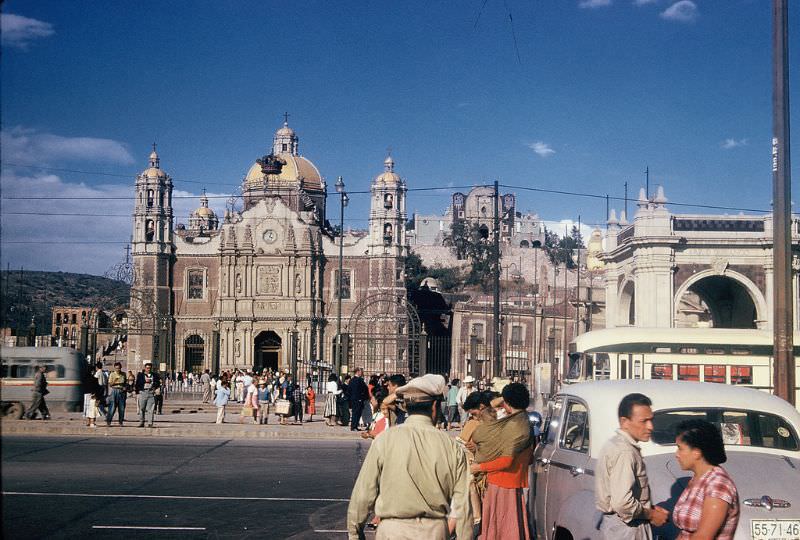
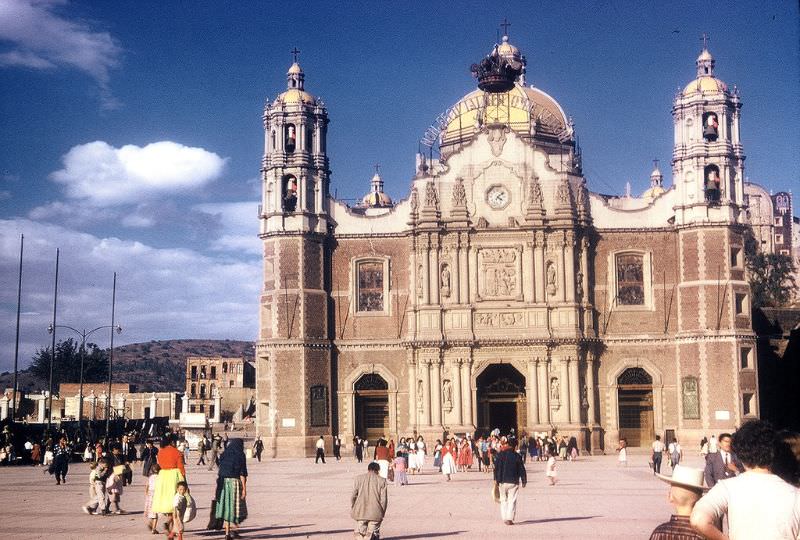
The Basilica of Guadalupe, on the northern edge of the city, drew enormous crowds in December. Pilgrims traveled on their knees across the stone plaza to reach the shrine. Walter photographed them approaching, as well as the Old Basilica building itself — the 17th-century structure that was already showing signs of sinking into the soft lakebed soil beneath Mexico City.
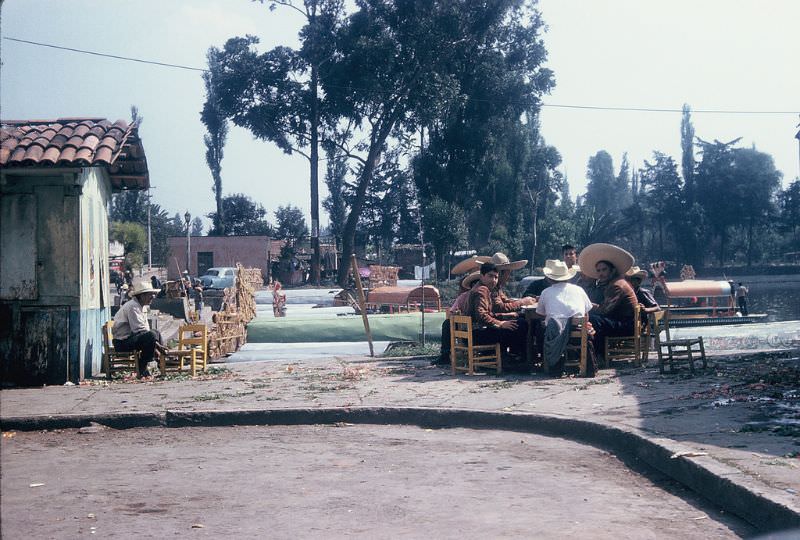
Xochimilco, on the southern edge of the capital, was a world apart from the city’s main streets. Known for its network of canals — remnants of the ancient Aztec lake system — it was a place where boatmen steered flat-bottomed trajineras through the water. Walter caught a group of them between trips, sitting together and playing dominoes. Xochimilco’s own cathedral, a large colonial-era church, appeared in another frame.
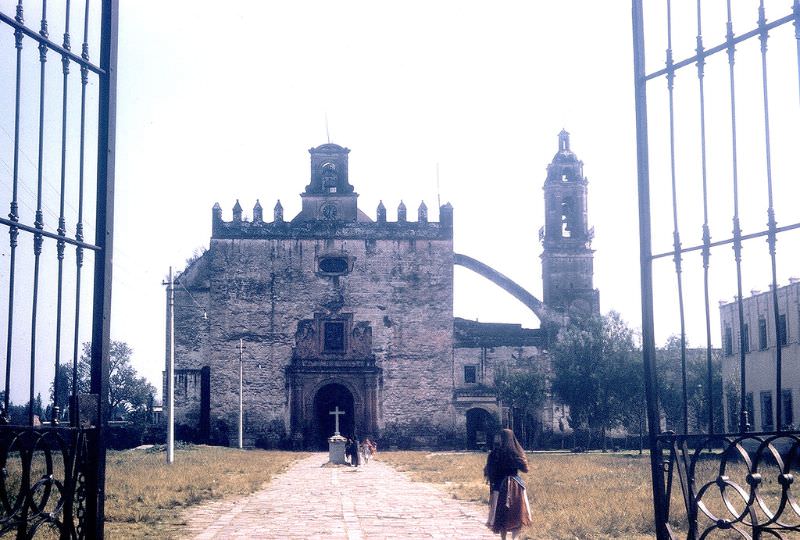
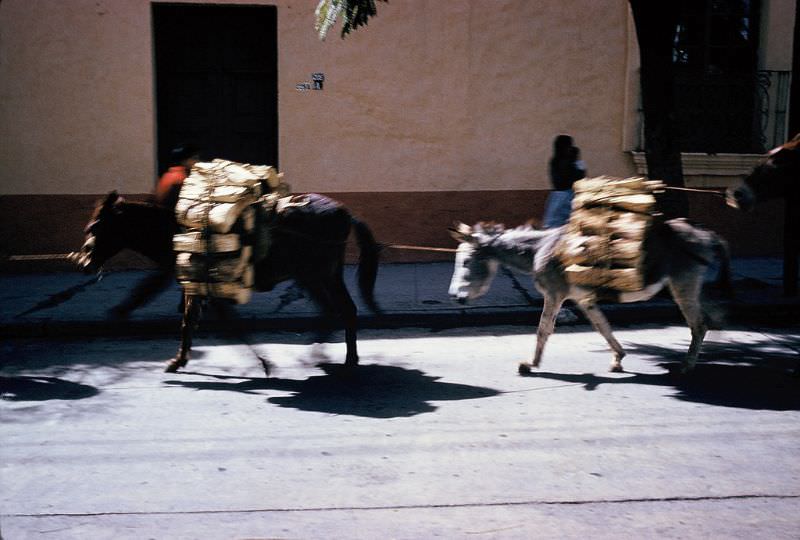
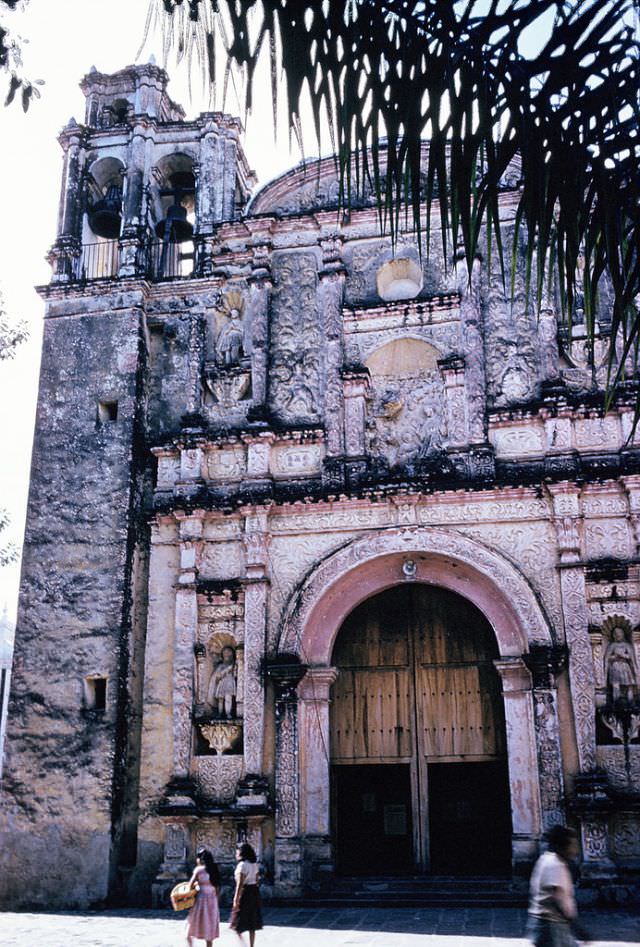
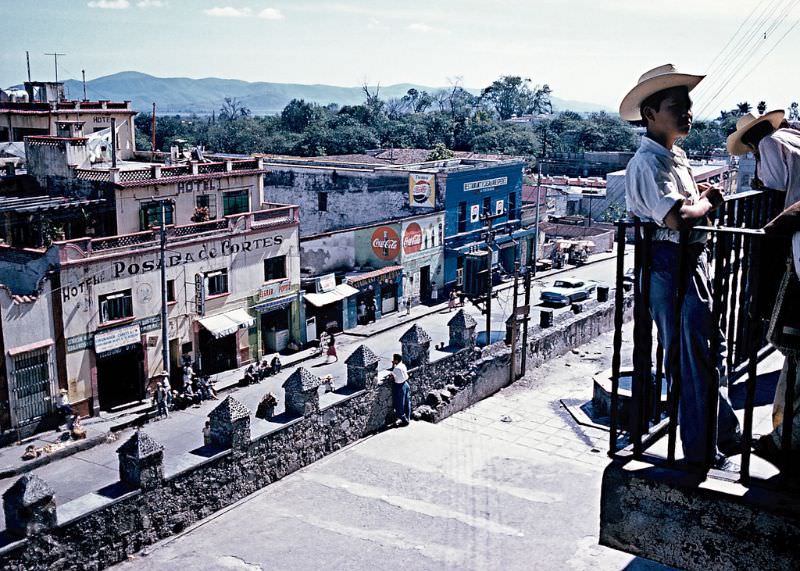
Southwest of Mexico City, Cuernavaca sat at a lower elevation and a warmer climate. Burros loaded with firewood moved through its streets, a common sight in a city where many households still cooked over wood fires. The Chapel of the Third Order — part of the larger Franciscan complex — showed its centuries-old carved stone doorway. The Cortes Palace, built in the 16th century on orders from the conquistador Hernan Cortes, gave Walter an elevated vantage point from its balcony to photograph the street life below.
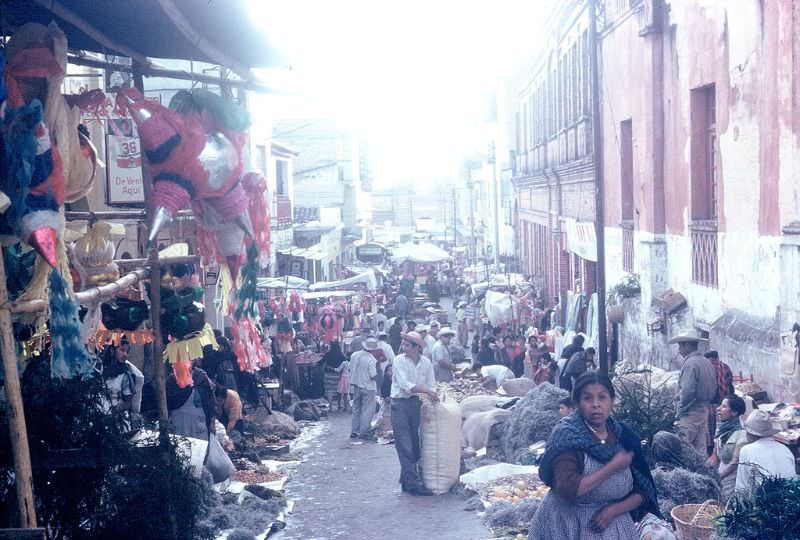
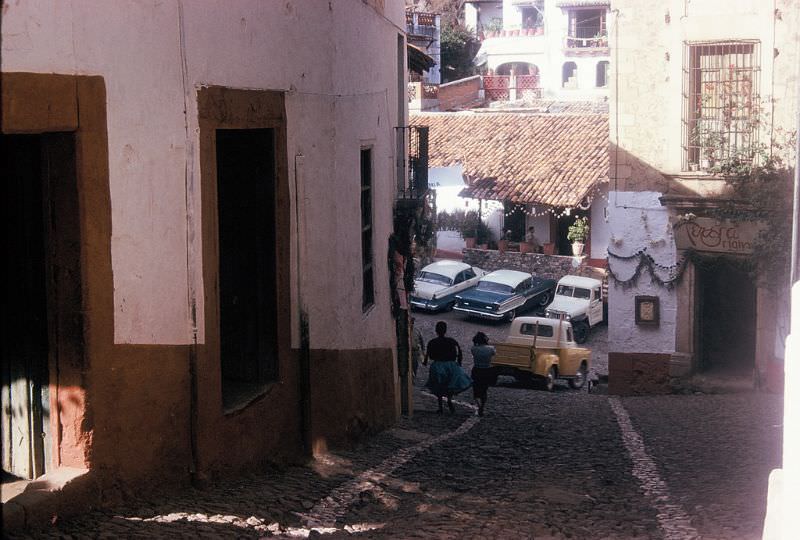
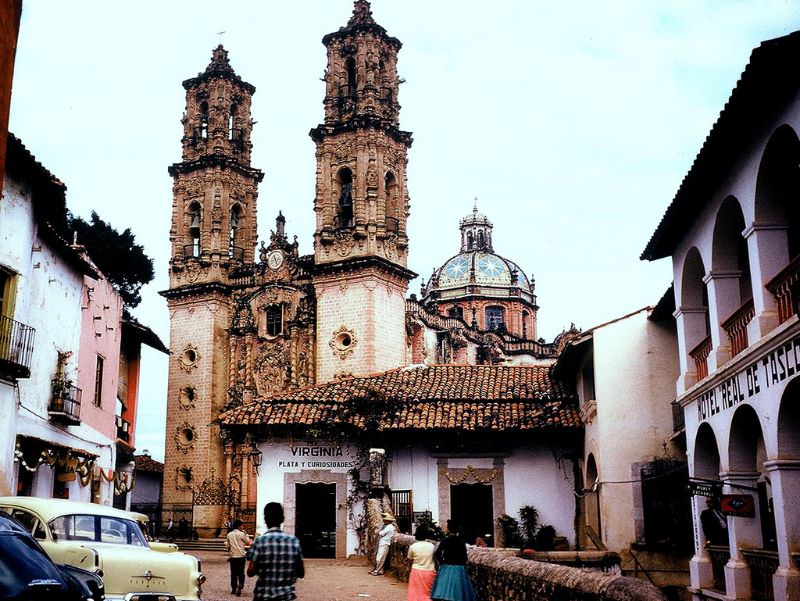
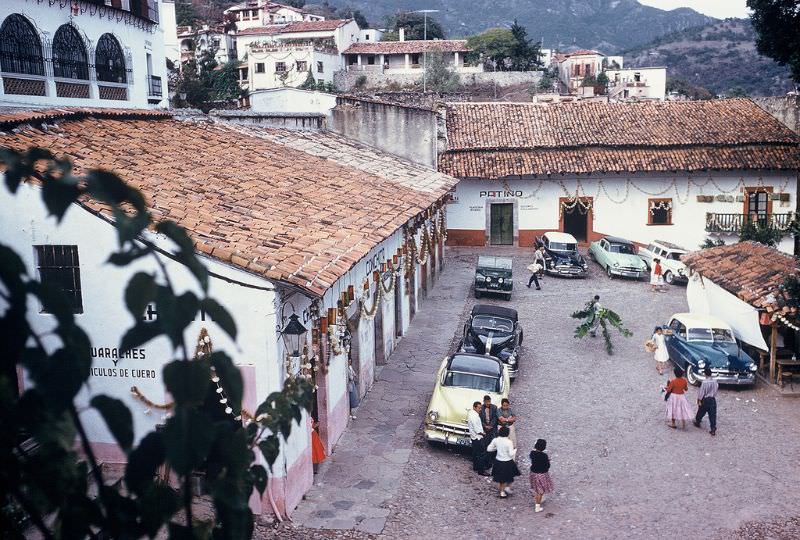
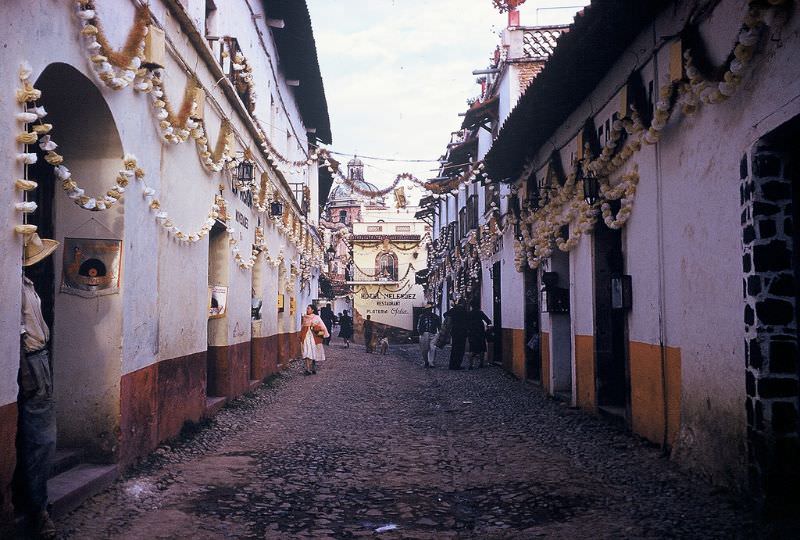
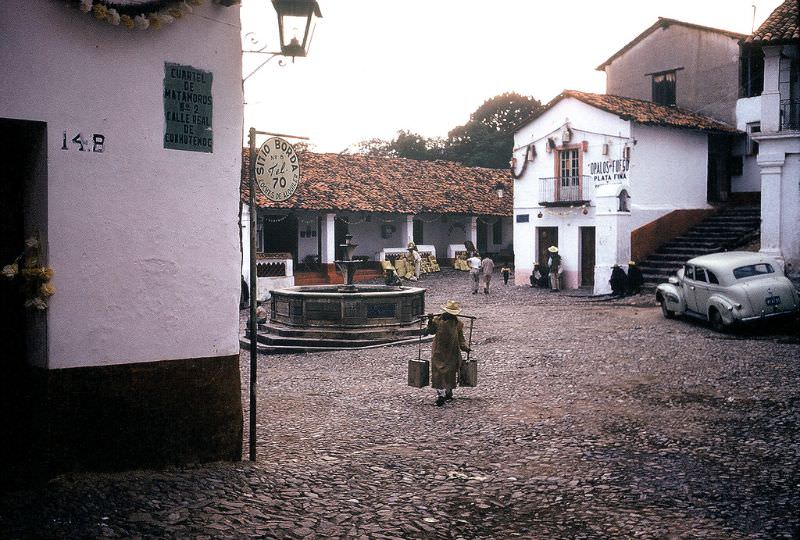
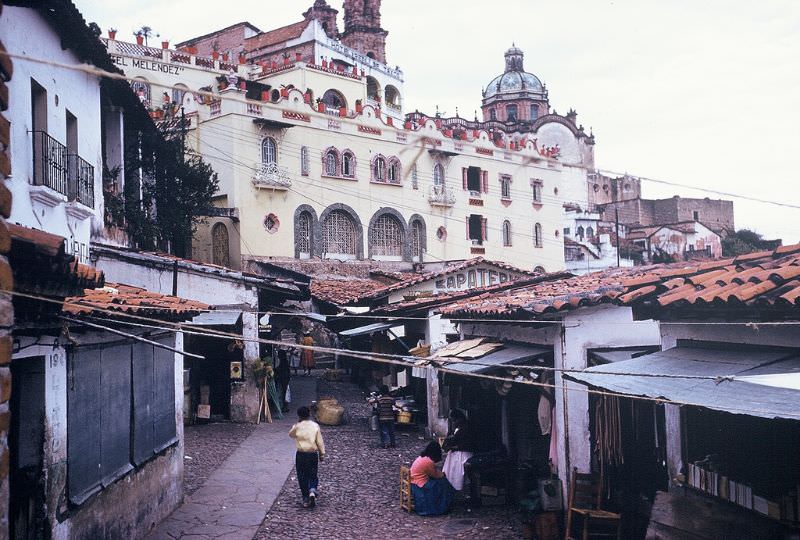
Taxco, the silver-mining town built on steep hillsides in the state of Guerrero, was one of the most photogenic stops. Its cobblestone streets rose sharply between whitewashed buildings with red tile roofs. The twin towers of Santa Prisca church — built in the 18th century and considered one of the finest examples of Baroque architecture in Mexico — rose over the main plaza. Christmas decorations hung across the narrow streets. A water carrier hauled his load up the incline.
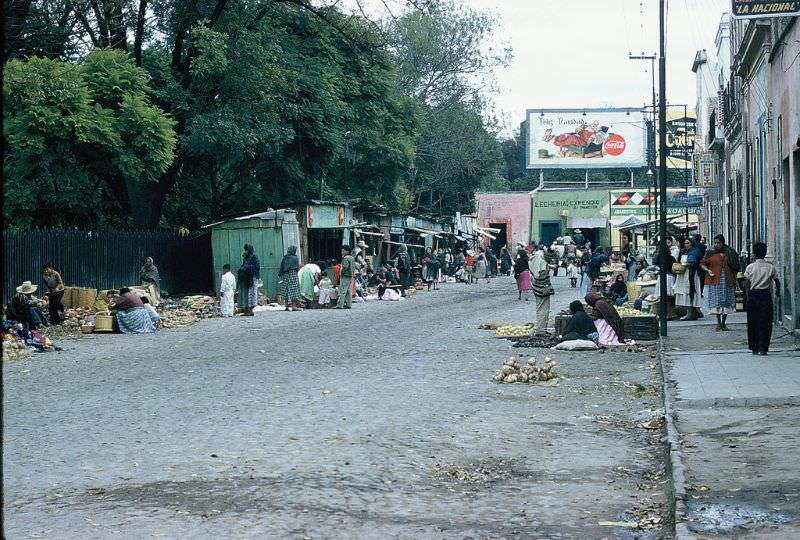
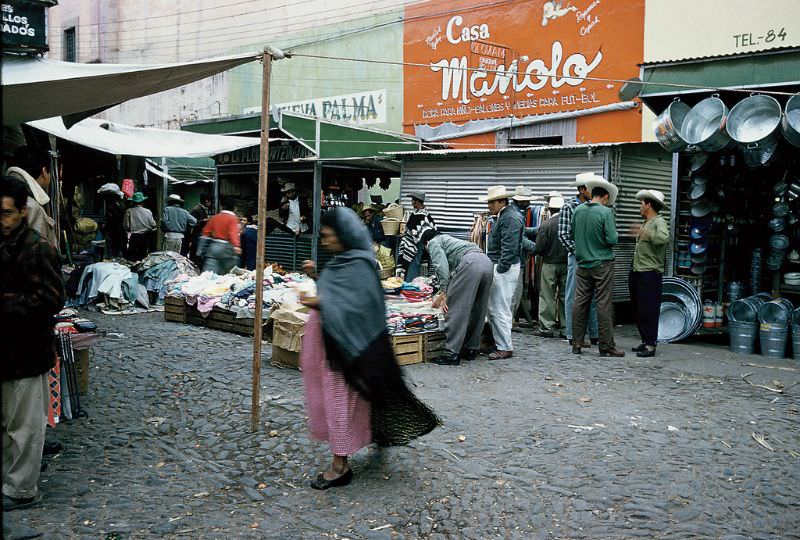
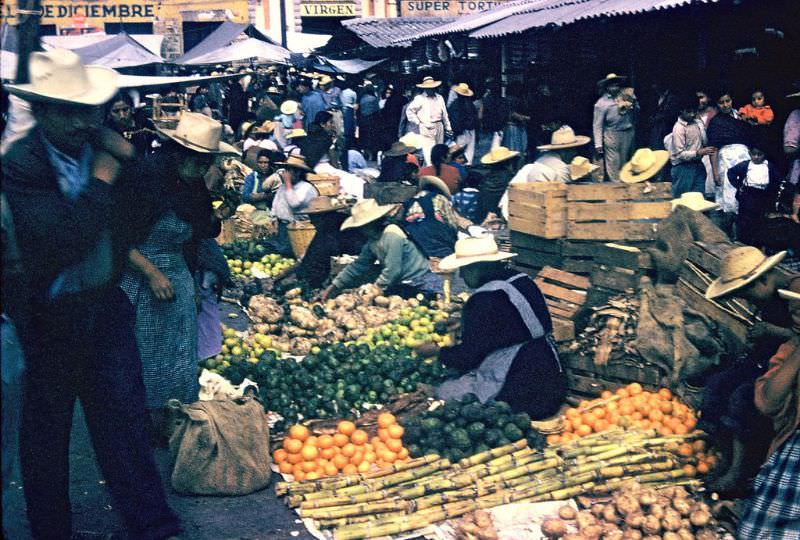
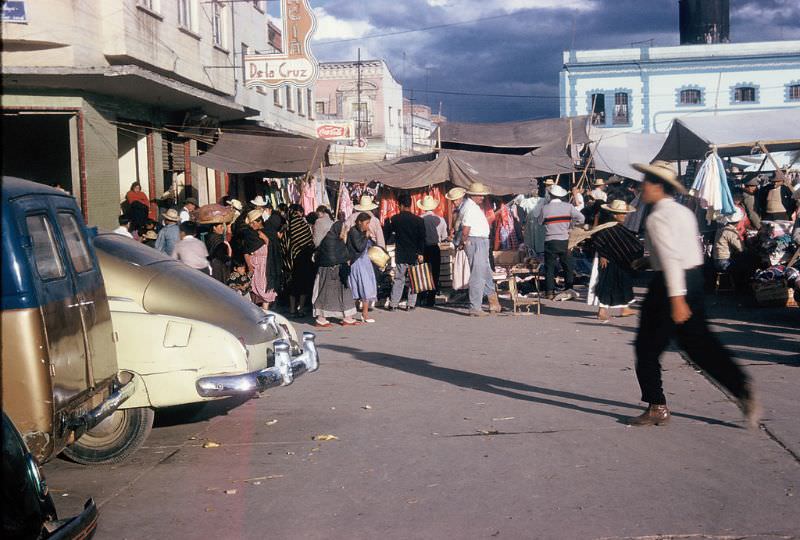
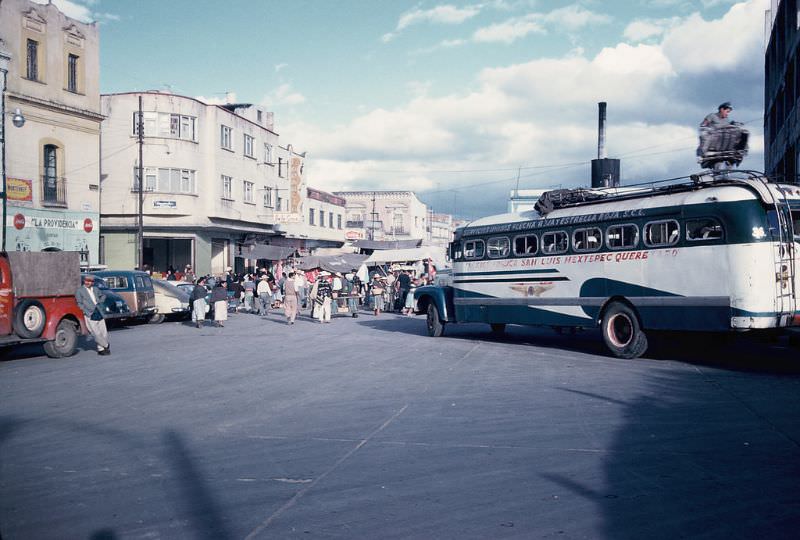
Toluca, west of Mexico City, offered yet another busy market town. Fruit stalls filled the plazas, and shoppers moved through crowded corridors of goods. A bus with a helper riding on top — a common way to handle luggage and cargo in mid-century Mexico — was photographed near Capitol Square. Vendors sold fruit directly from the street.
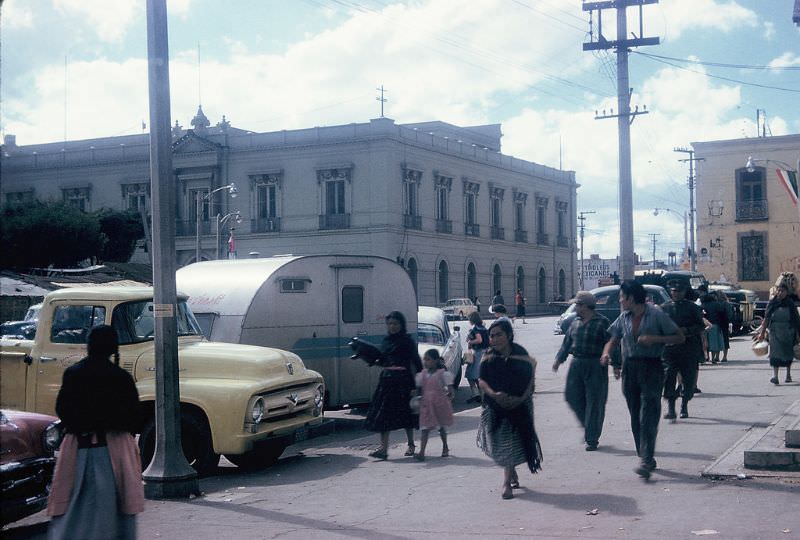
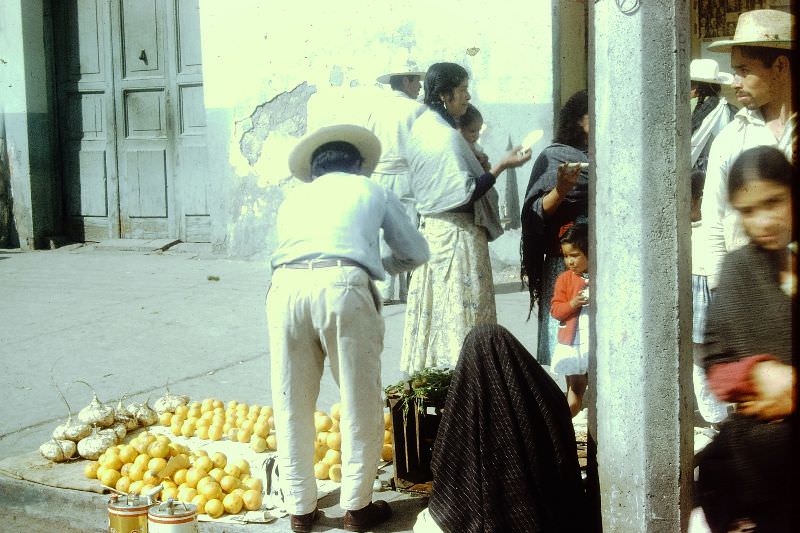
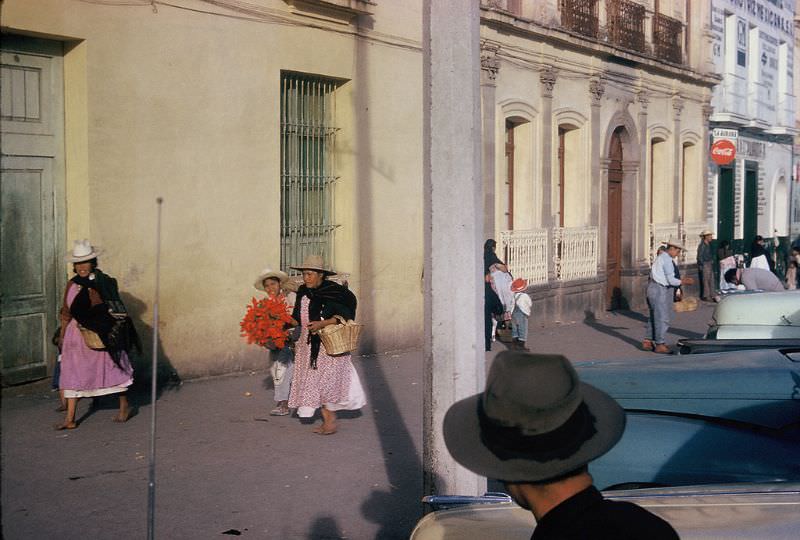
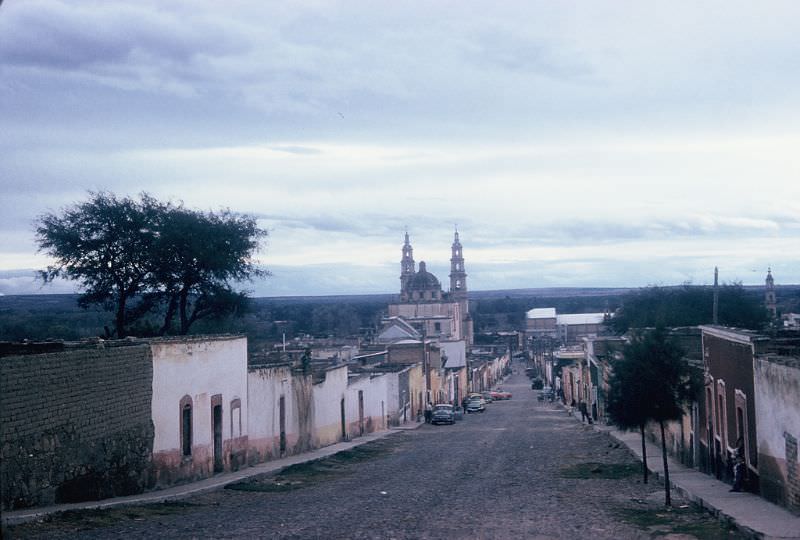
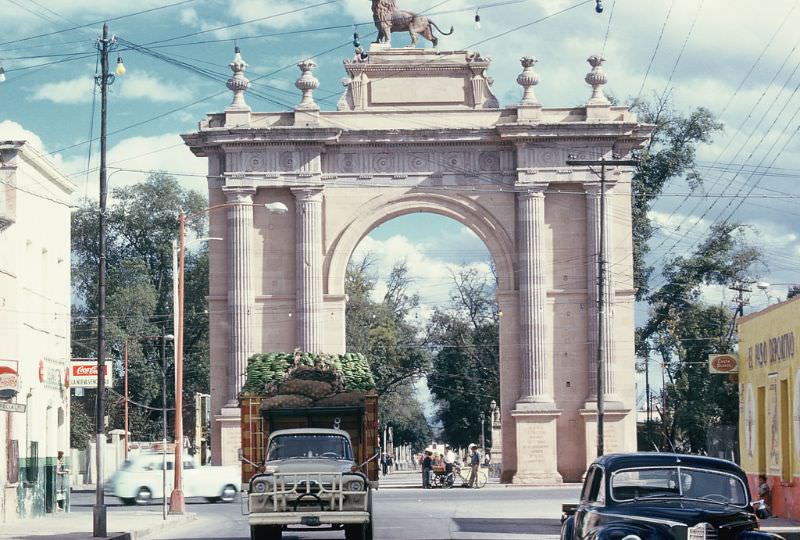
On Christmas Day, the Reeds were in Guanajuato and Leon — two cities in central Mexico. Guanajuato, built in a narrow river valley, was famous for its tangled network of stairs and alleyways carved into the hillsides. Leon, a larger industrial city known for leather goods, had its own colonial monuments, including a decorative arch that Walter photographed on Christmas morning.
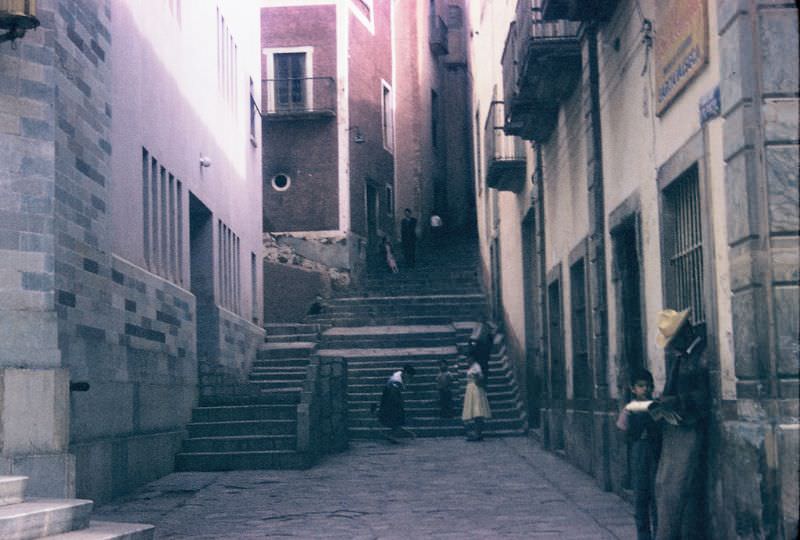
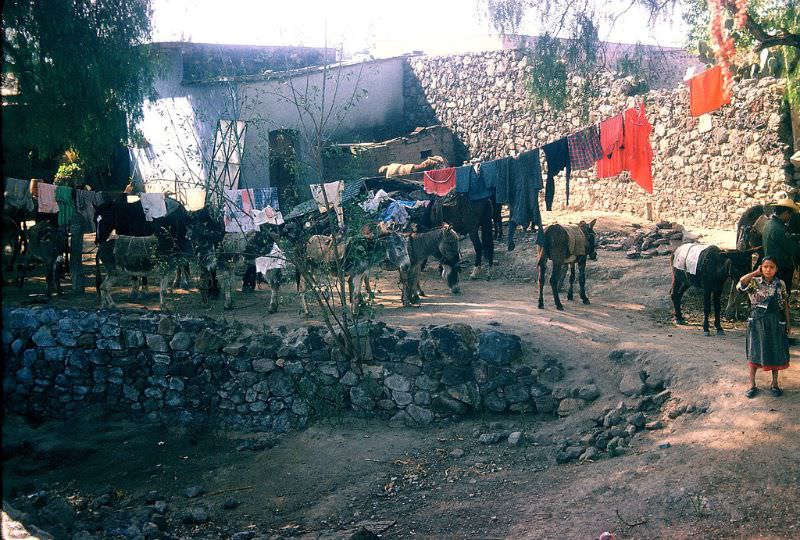
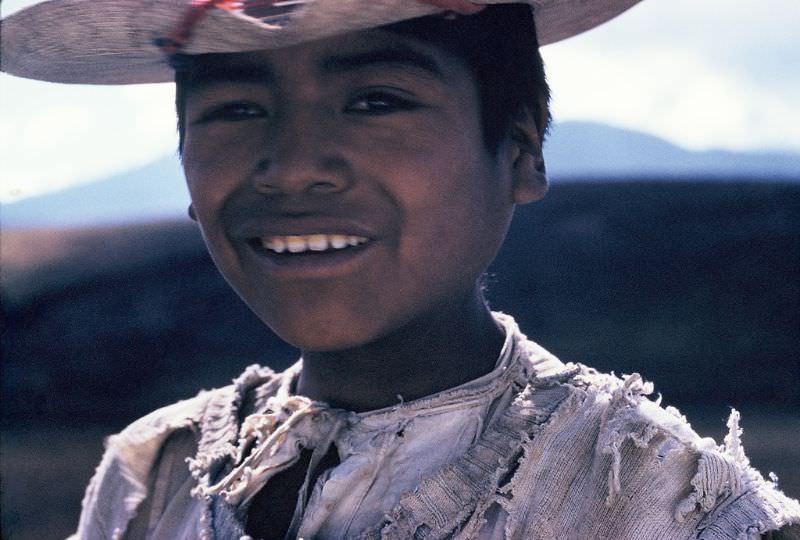
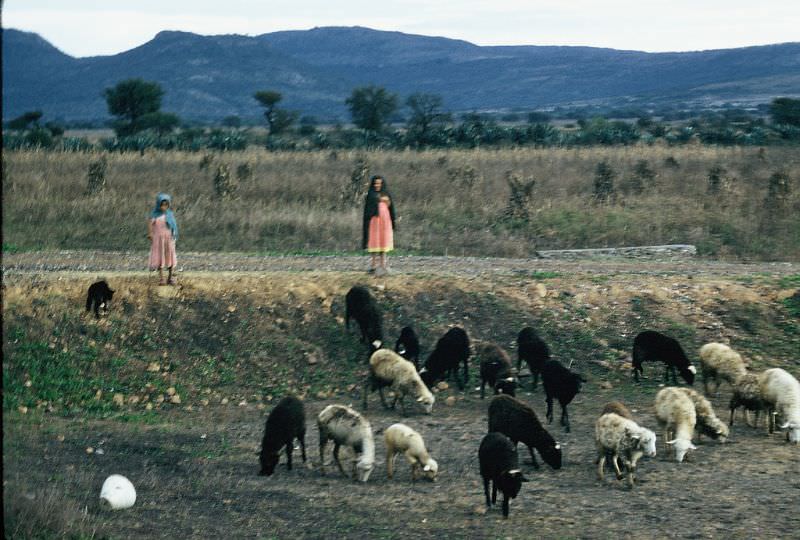
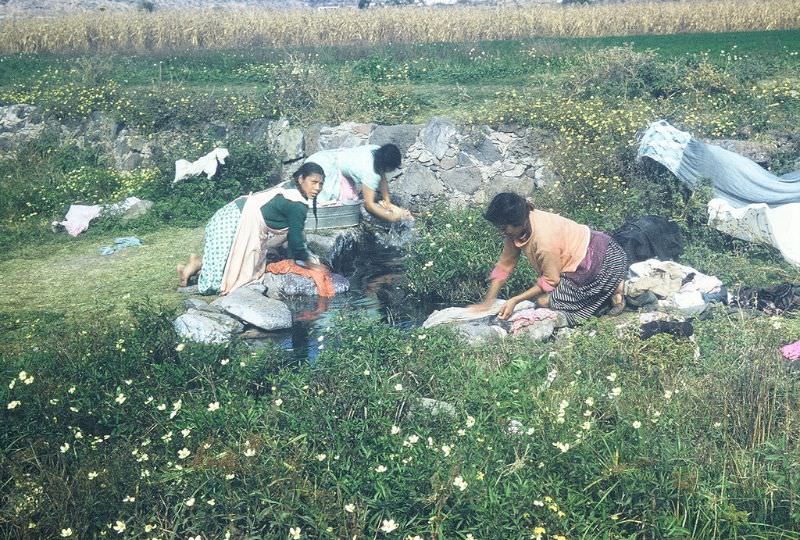
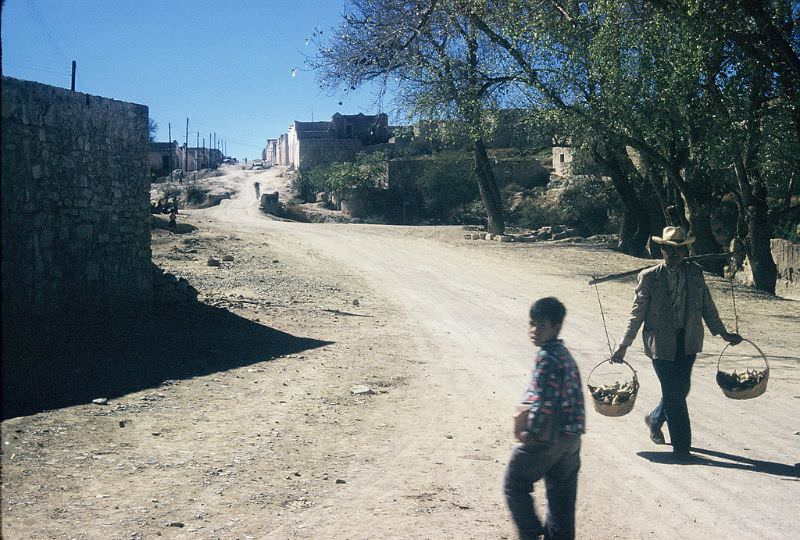
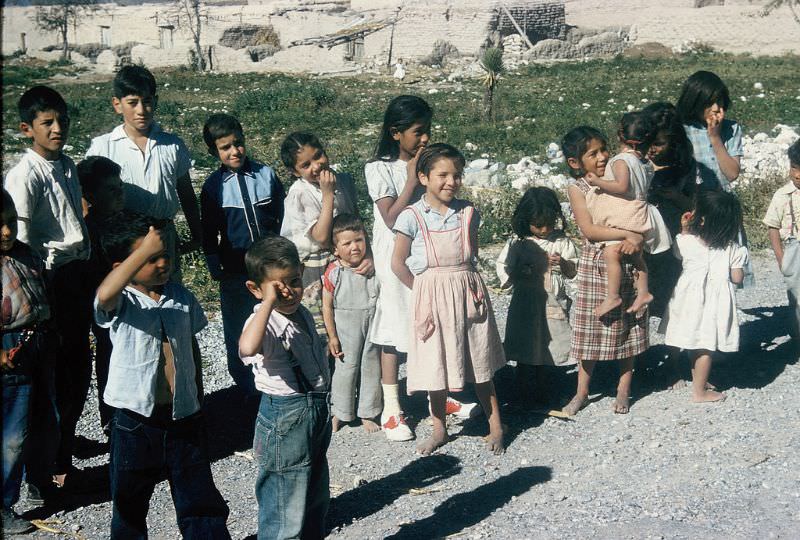
Between the cities, the road itself told its own story. Near Teotihuacan — the ancient city of pyramids north of Mexico City — the backyard of a small village appeared in one frame, its adobe walls and simple structures unchanged by the pace of the capital. Near Morelia, Walter crouched down to photograph a young boy in a close-up portrait. Girls herded sheep along a roadside. Women washed laundry in a stream in northern Mexico. A banana peddler worked a small village street. Oxcarts loaded with corn stalks moved down unpaved roads.