Hey There! Before You Go. 😧
Get the best vintage content straight into your inbox!

Don't worry, we don't spam

Mid-Century Manhattan: Fabulous Historical Photos of the Heart of NYC from 1938 to 1960

Before he ever set foot in a professional darkroom, Arthur W. Grumbine was building cameras out of discarded cigar boxes. He was 12 years old. That kind of hands-on curiosity never left him. By the time he bought his first commercial camera — a folding Kodak — he had already taught himself to develop and print his own photographs. The camera was simply a tool he already knew how to use.

Grumbine spent his early working years as a telegraph operator, first with the Philadelphia and Reading Railroad and then with Western Union until 1943. Photography ran alongside that career as a serious hobby. In his 30s, he started entering juried exhibitions and went on to win more than two dozen awards and prizes. A friend working in DuPont’s Photo Products Division eventually convinced him to apply for a job there.
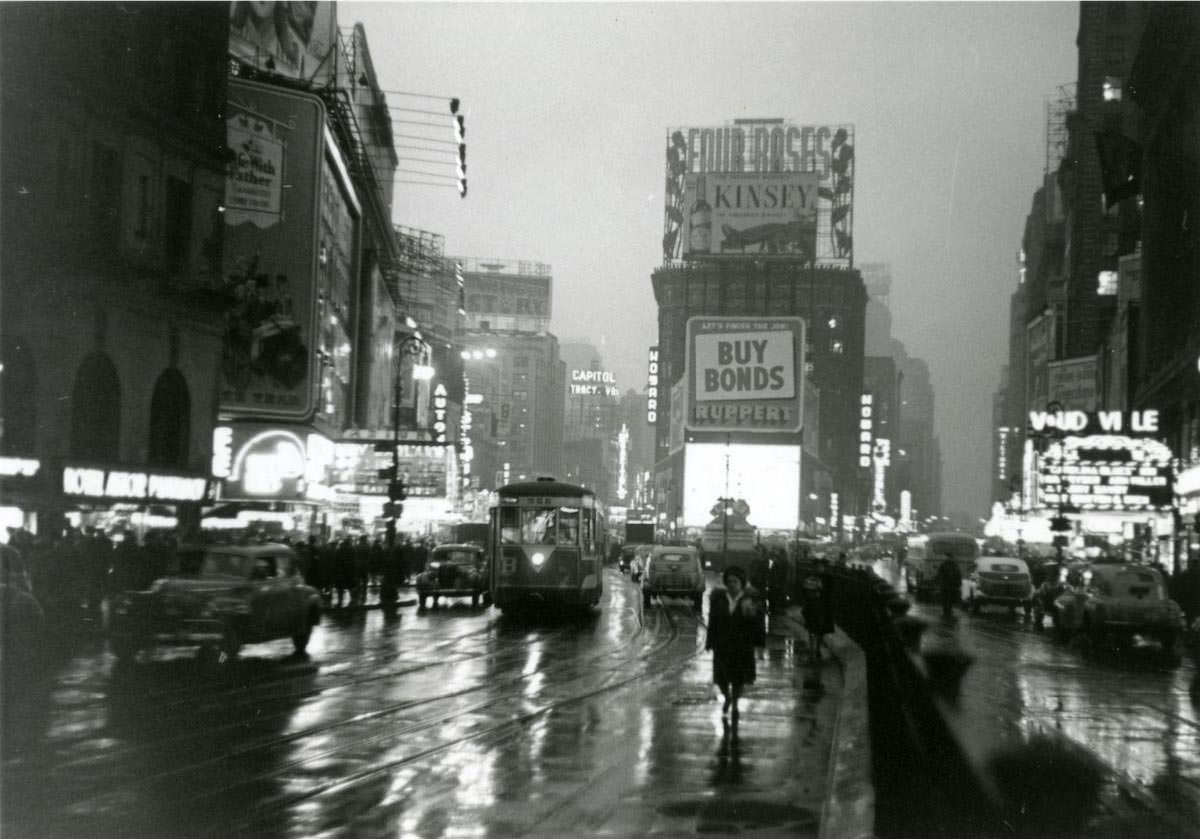
Times Square at dusk in the rain at the intersection of Broadway and Seventh Avenue at 46th Street.

Grumbine joined DuPont’s research laboratories in 1982 as an entry-level employee. Over the next 23 years, he earned four promotions and developed five U.S. patents along with twenty international ones. His technical work centered on DuPont’s Rotofilm and Screen Process Film, both used in pre-computerized printing applications. When he retired, he left behind a body of industrial work that quietly shaped how printed images were reproduced for decades.
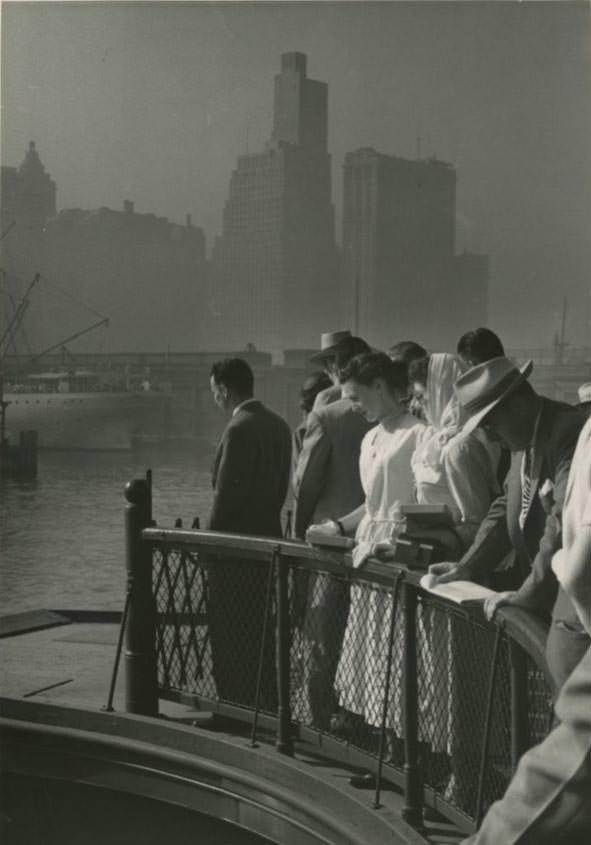
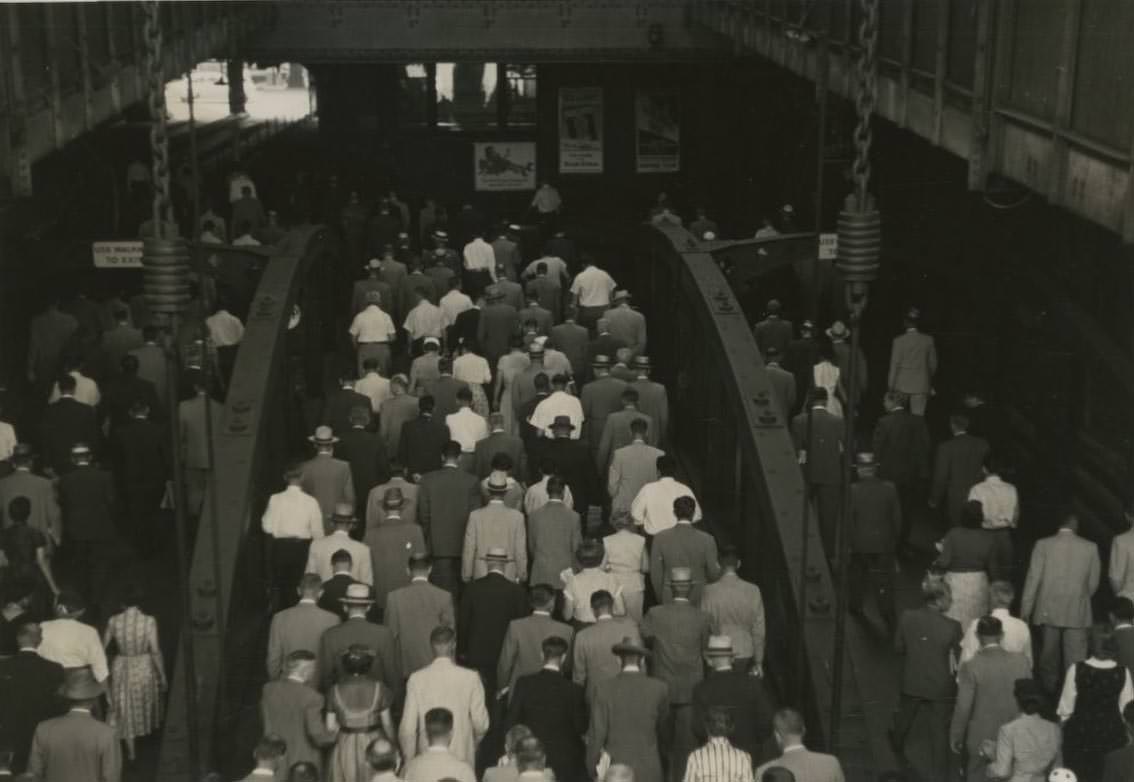
Passengers on the upper deck of a Central Railroad of New Jersey ferry in Jersey City going to Liberty Street in Manhattan, 1950

His photographs, however, tell a different story — one that belongs entirely to the streets of New York City. From rain-slicked Times Square to the crowded sidewalks of the Lower East Side, Grumbine documented the city between 1938 and 1960 with a sharp and patient eye.
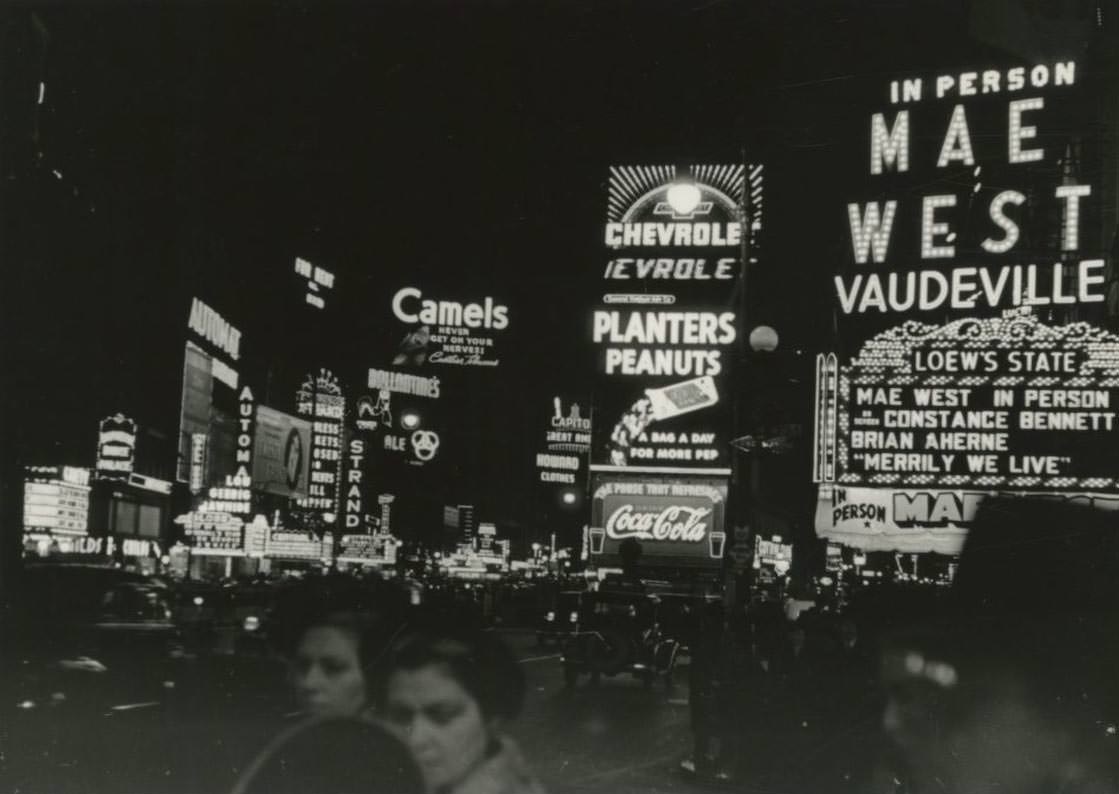
Mid-Century Manhattan: Fabulous Historical Photos of the Heart of NYC from 1938 to 1960

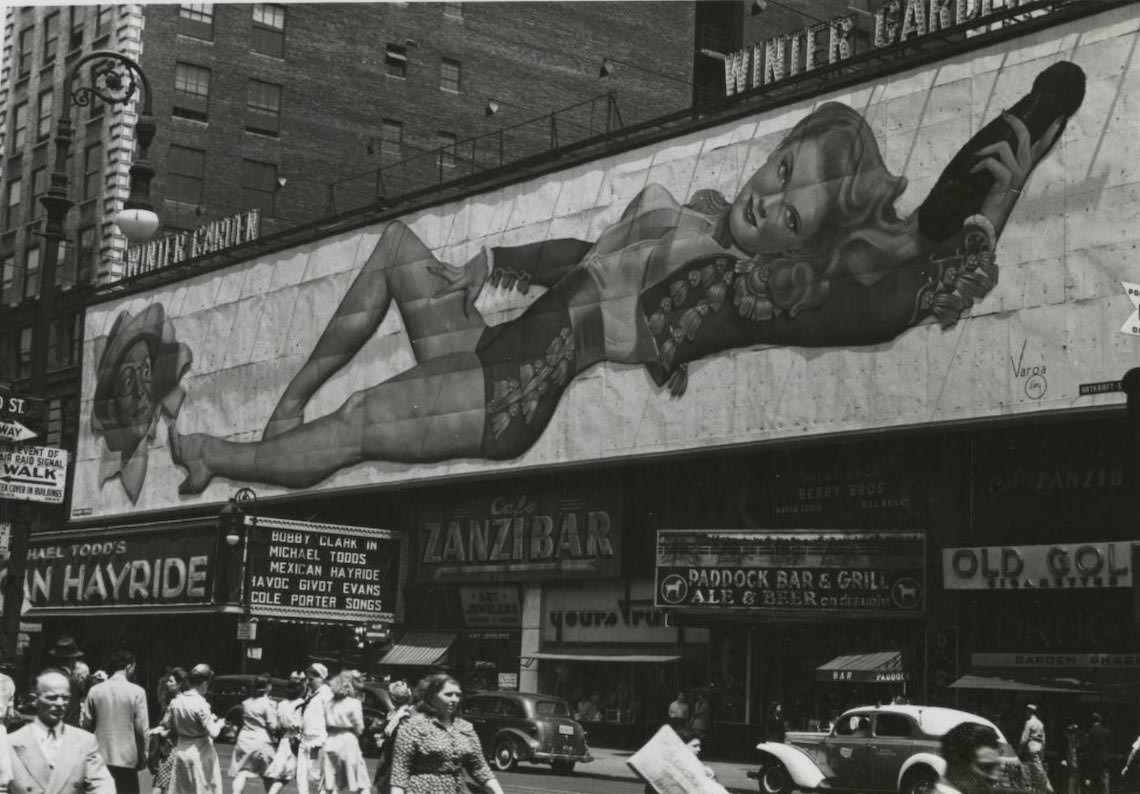
Times Square appears frequently in his work. He captured it at night, in rain, and in neon — the Paramount Theatre blazing against the dark, billboard signs stacked above the crowds, and the intersection of Broadway and Seventh Avenue alive with movement.
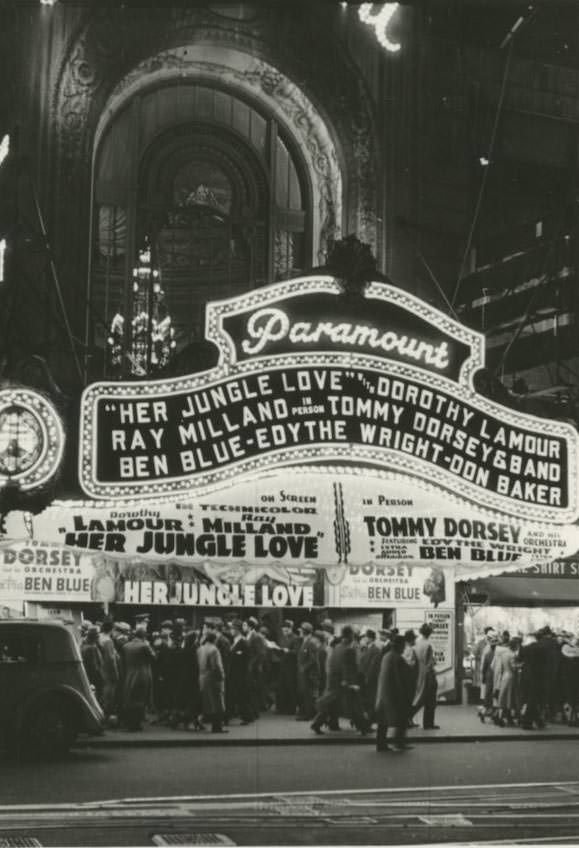
Entrance of Paramount Theatre at night in Times Square.
Billboard advertisement with winter garden sign in lights in Times Square.

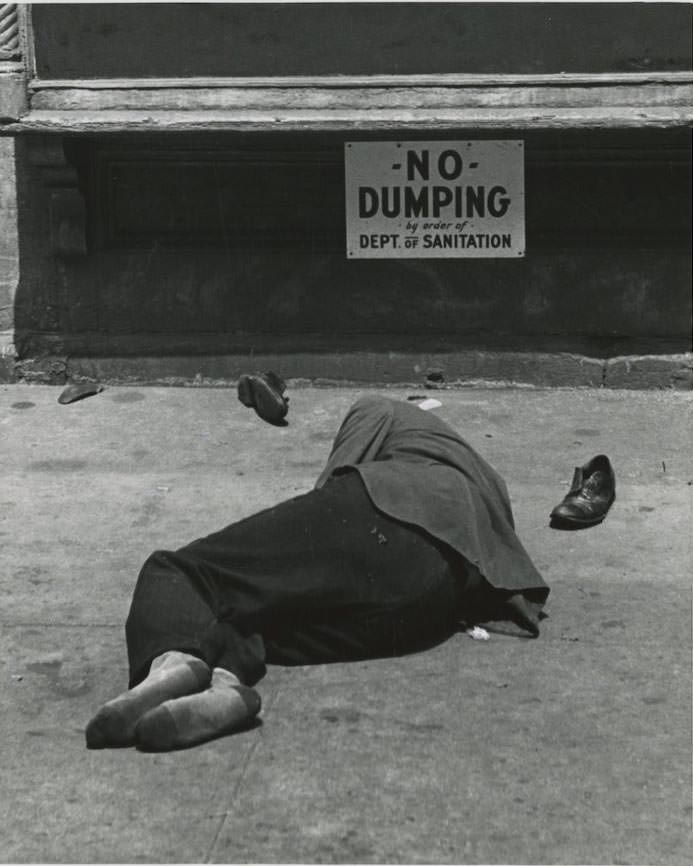
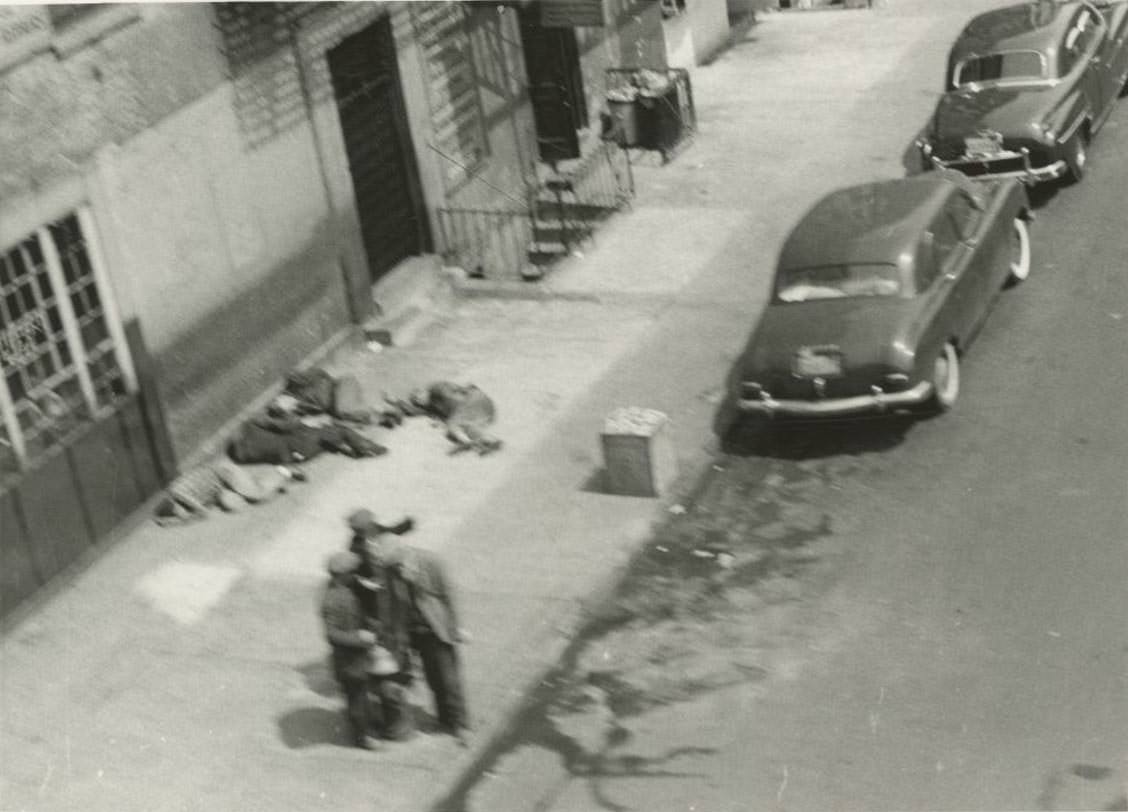
Grumbine also turned his lens to the quieter corners of Manhattan. On South Street near the Fulton Fish Market, he photographed Sloppy Louie’s restaurant in 1948. A few blocks away, a man slept on the Lower East Side pavement beneath a sign reading NO DUMPING by order of the Department of Sanitation. These weren’t staged moments — they were the city as it actually was.
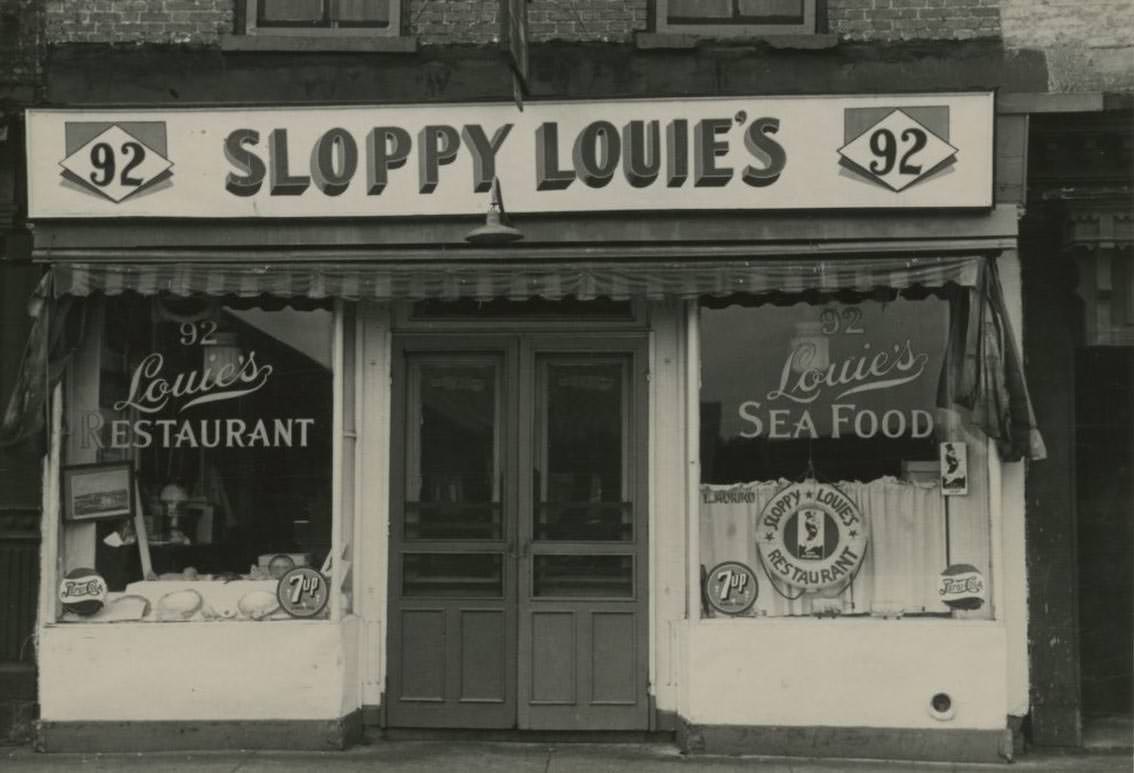
1948 NYC – SLOPPY LOUIE'S restaurant on 92 South Street near Fulton Fish Market in Lower Manhattan.
1948 NYC – SLOPPY LOUIE’S restaurant on 92 South Street near Fulton Fish Market in Lower Manhattan.
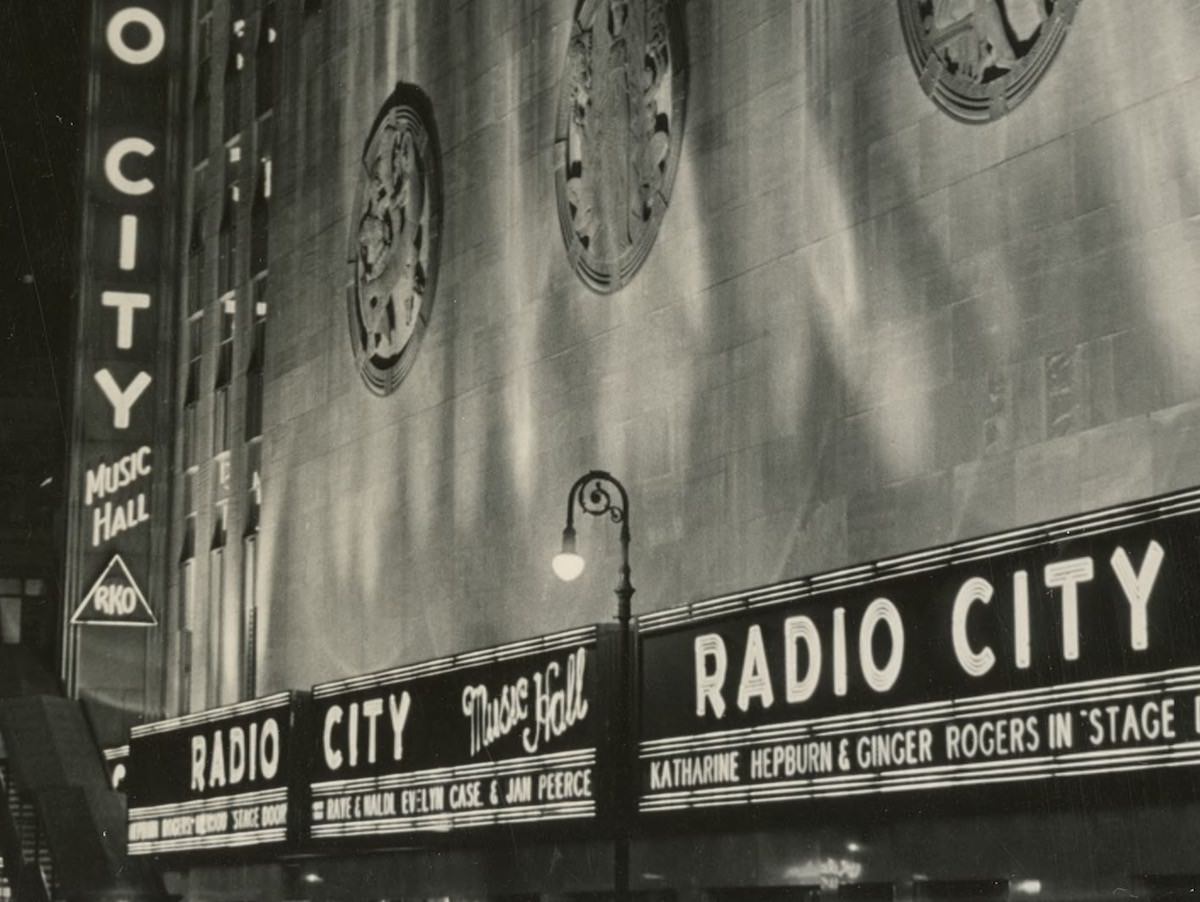
Radio City Music Hall at night. 6th Avenue El station at left. (about 1939)

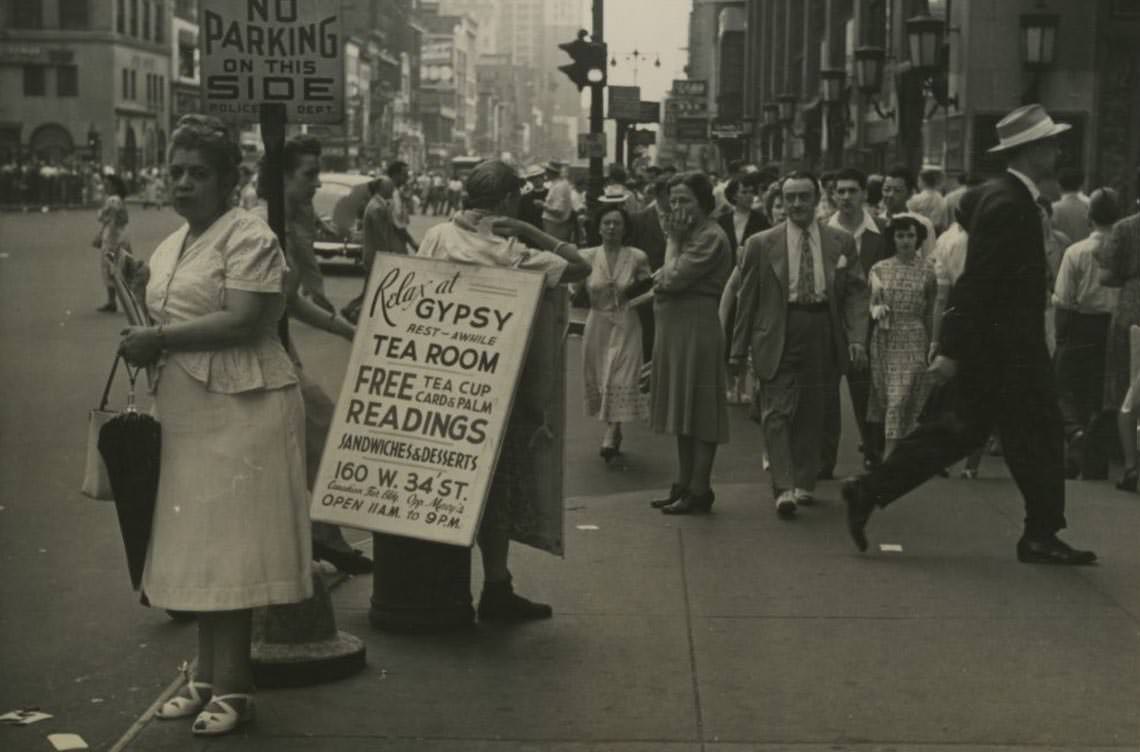
Midtown Manhattan gave him a different kind of material. Pedestrians crossed West 34th Street in the rain toward Saks, commuters packed the upper decks of Central Railroad of New Jersey ferries, and a man walked a busy midtown block wearing a sandwich board for the Gypsy Tea Room.
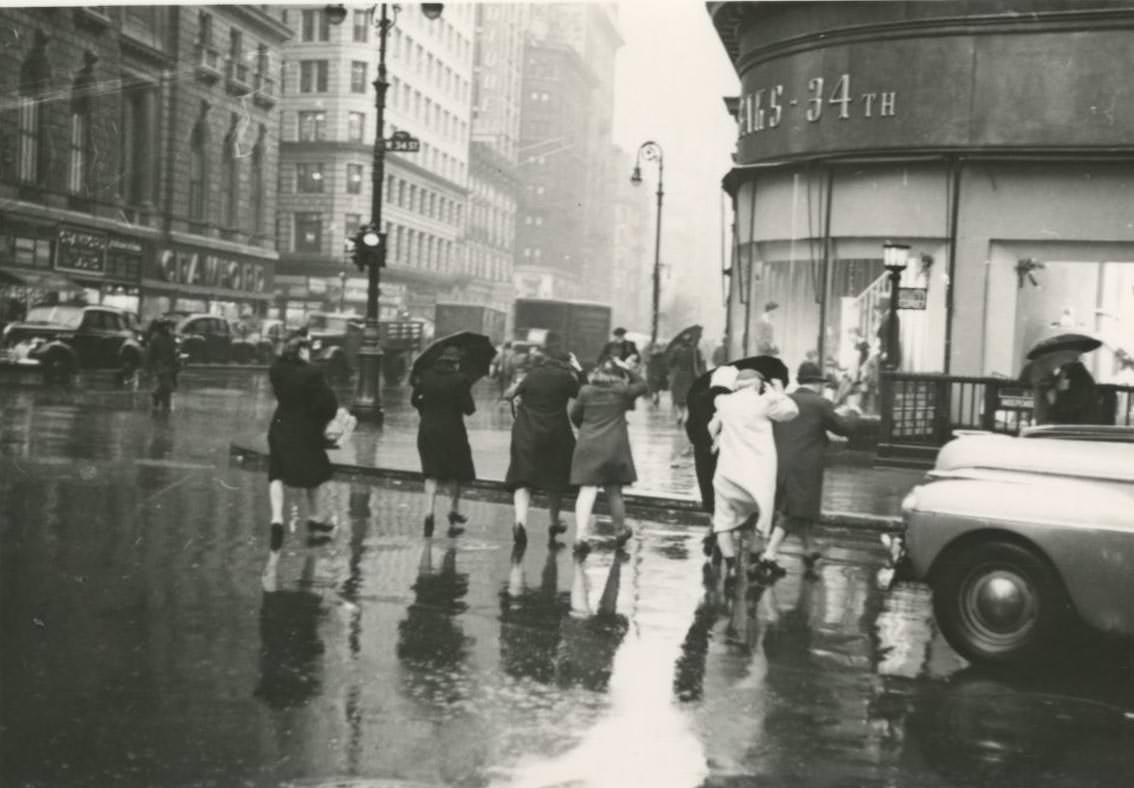
Pedestrians cross the street in the rain towards Saks – 34th store on West 34th Street in Midtown Manhattan
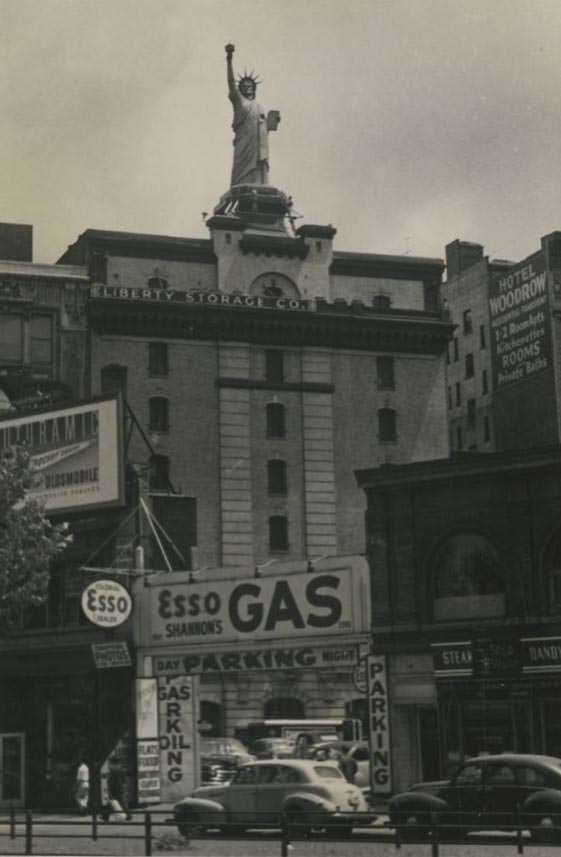
Replica of Statue of Liberty on top of Liberty Storage Company building near Lincoln Center, 1950s
A man wears a sandwich board sign for Gypsy Tea Room on a busy street in Midtown Manhattan, 1950

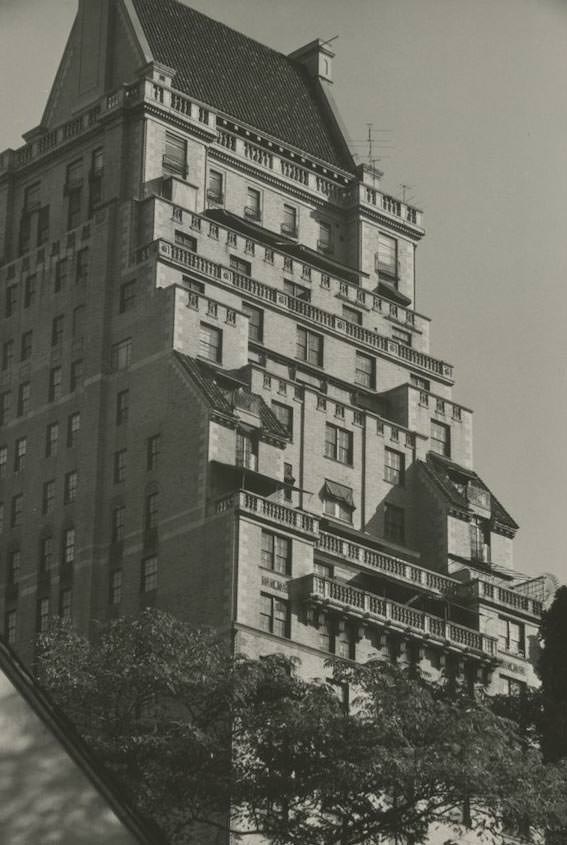
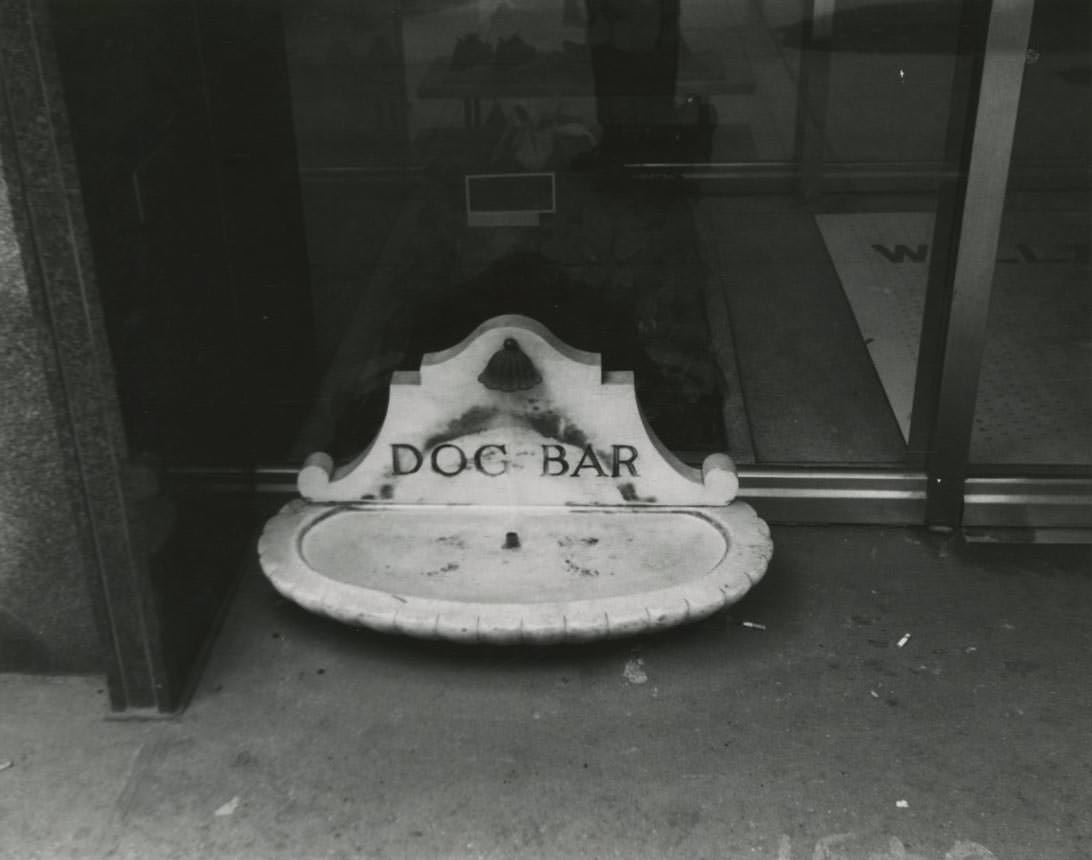
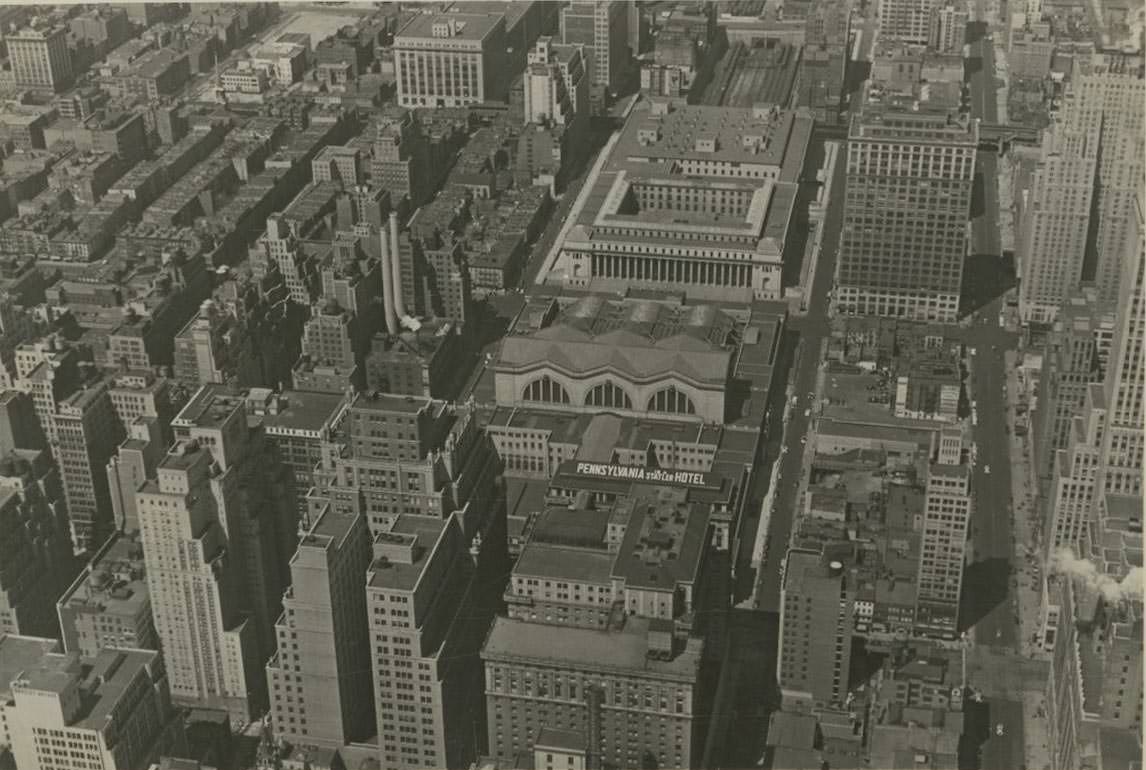
He photographed Fifth Avenue’s penthouse skyline from below, shot the view from the 102nd floor of the Empire State Building, and found a small stone sculpture at Wallachs clothing store on Fifth Avenue and 44th Street labeled simply DOG BAR. Details like that — easy to walk past — are exactly what make his archive valuable.
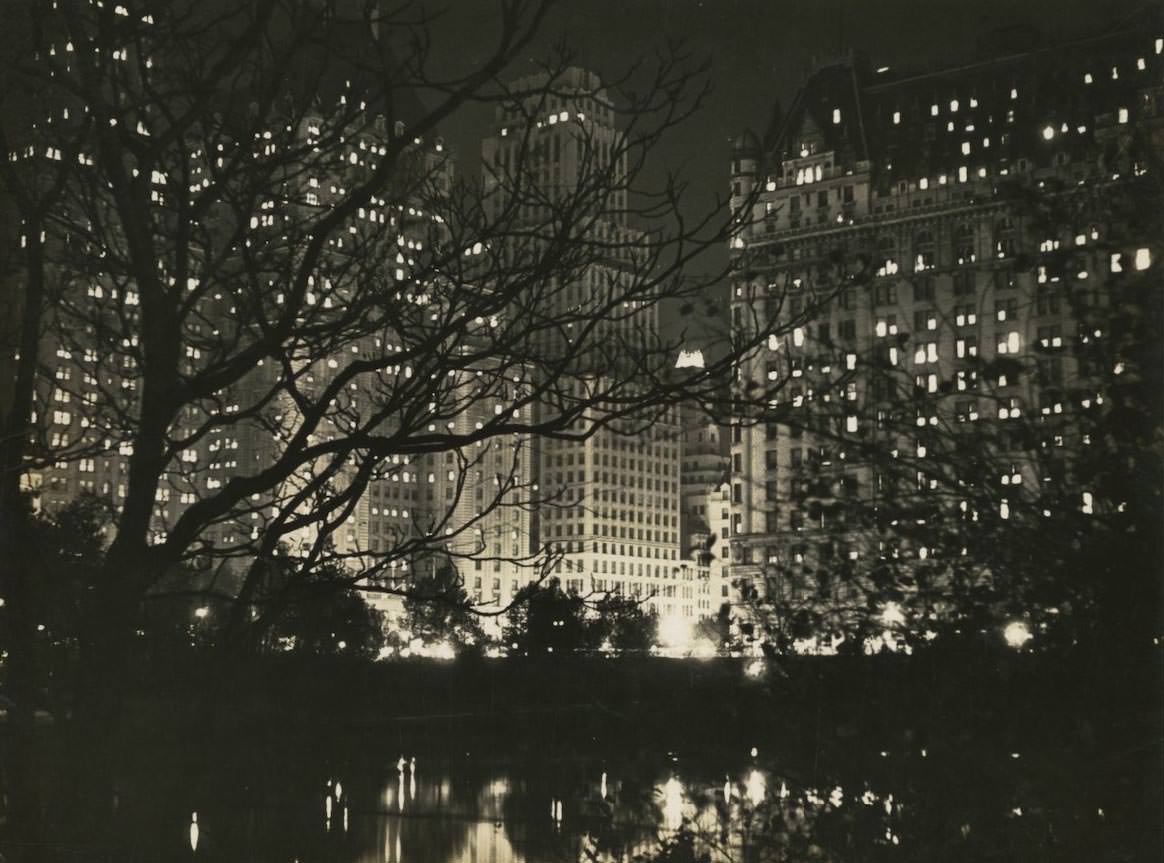
Central Park South at night on Fifth Avenue and 59th Street.
Small stone sculpture inscribed with the words DOG BAR on the ground at Wallachs clothing store on Fifth Avenue and 44th Street.
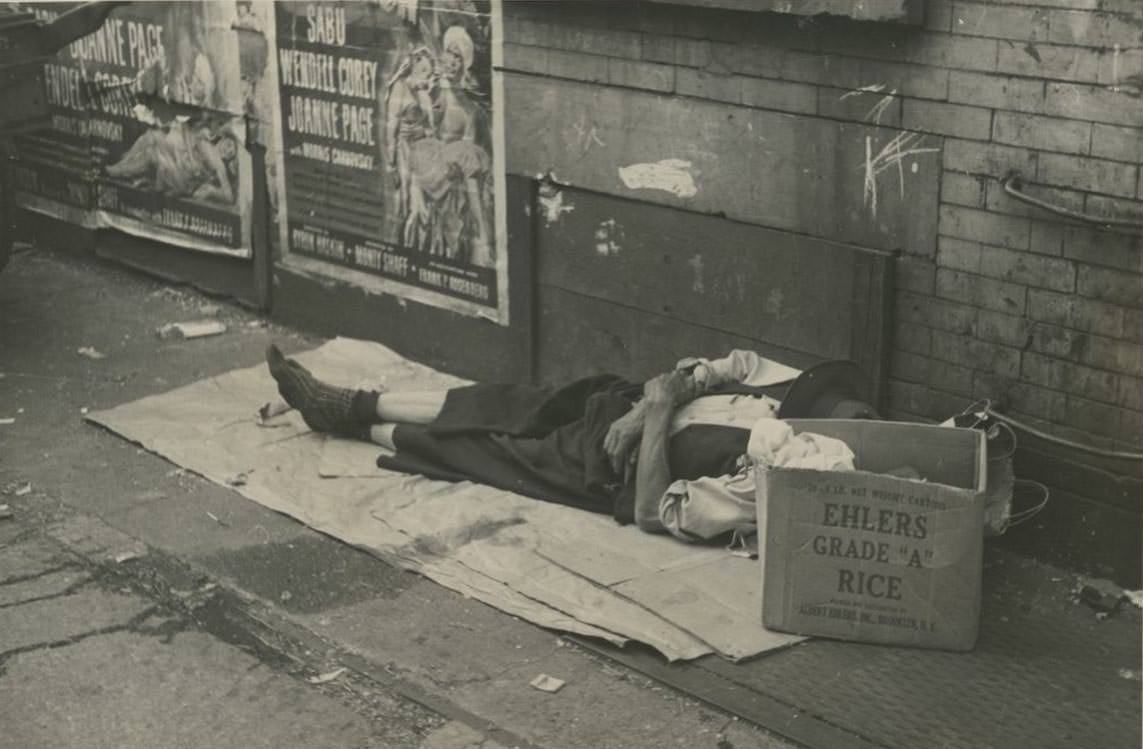
A man sleeps on the ground under a sign that reads NO DUMPING by order of Dept. of Sanitation on the Lower East Side.
Cluster of PENTHOUSES high up in the sky along 5th Avenue, 1950

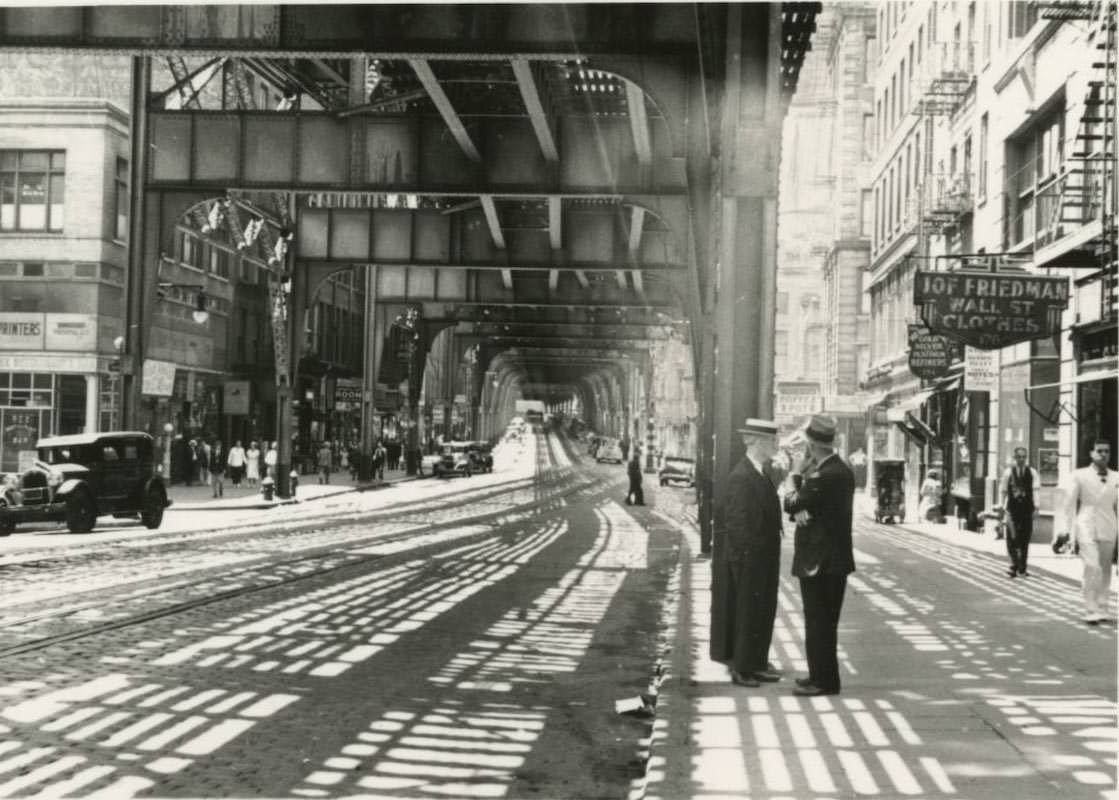
The Third Avenue El — the elevated railway that ran above Third Avenue until its demolition in 1955 — appears in several shots. From the El platform at 42nd Street, Grumbine photographed the facade of a Horn & Hardart Automat below. Along Park Row, he captured the spur line running from Chatham Square toward City Hall in 1944.
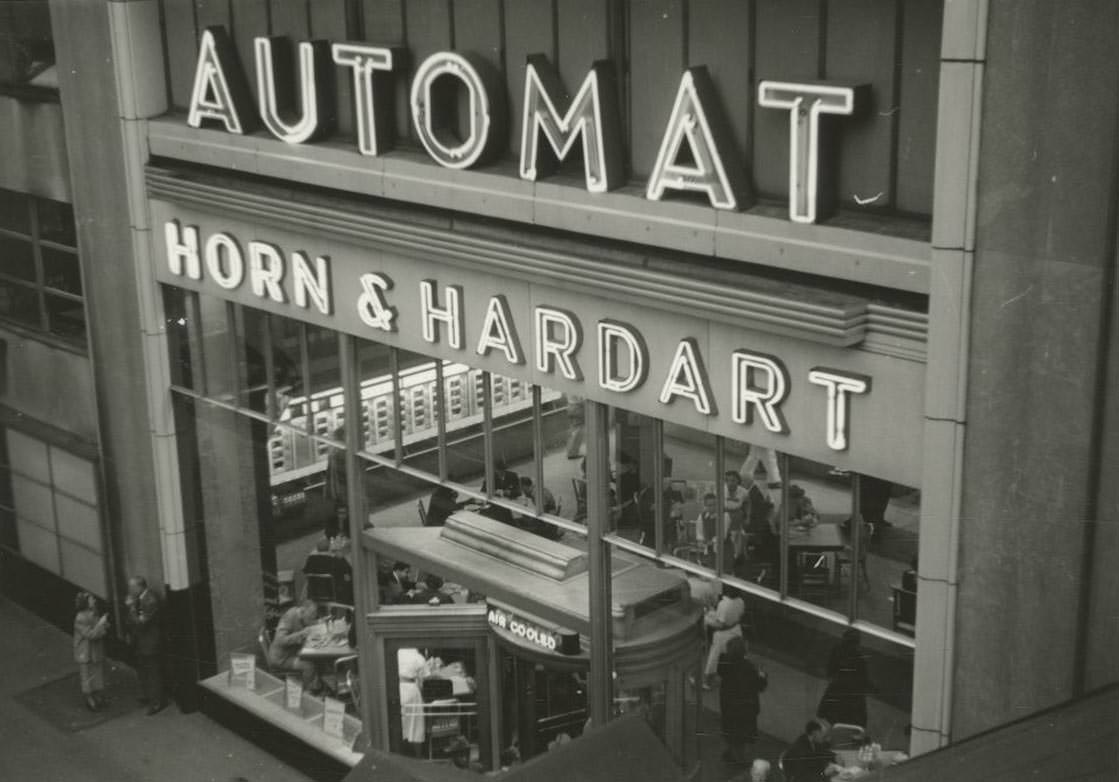
Facade of Automat Horn & Hardart fast food restaurant taken from Third Avenue El platform at 42nd Street and Third Avenue.
From the 102nd Floor of the Empire State Building.

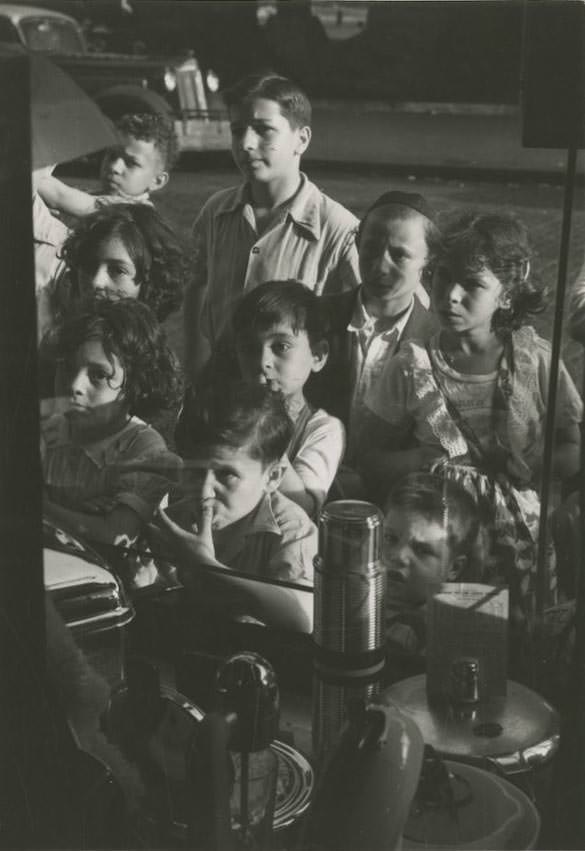
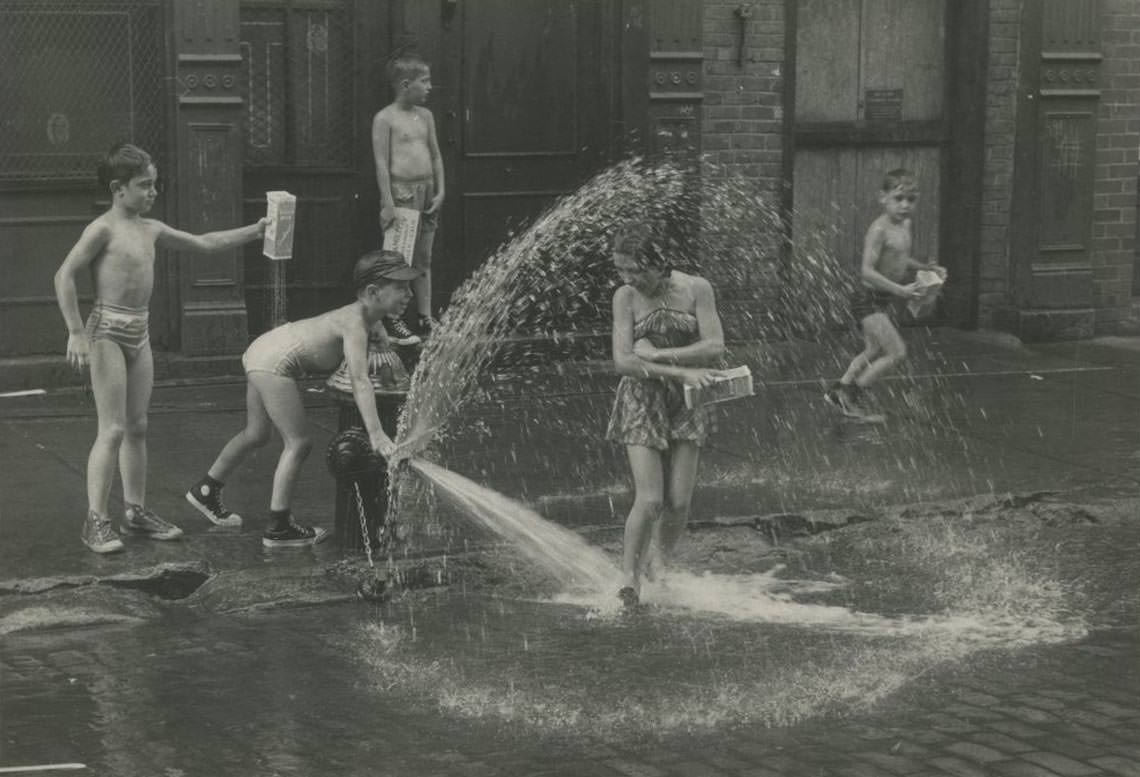
The Lower East Side offered Grumbine a steady stream of street life. A sidewalk fortune teller worked near Chatham Square in 1947. Children opened a fire hydrant and played in the spray. In 1960, a crowd gathered on Delancey Street to watch a television set through a store window. A sidewalk merchant sold clothing in front of a bar in 1948. Reverend Frank Compitiello ran a lunch cart at the corner of Grand and Mulberry Streets in 1947.
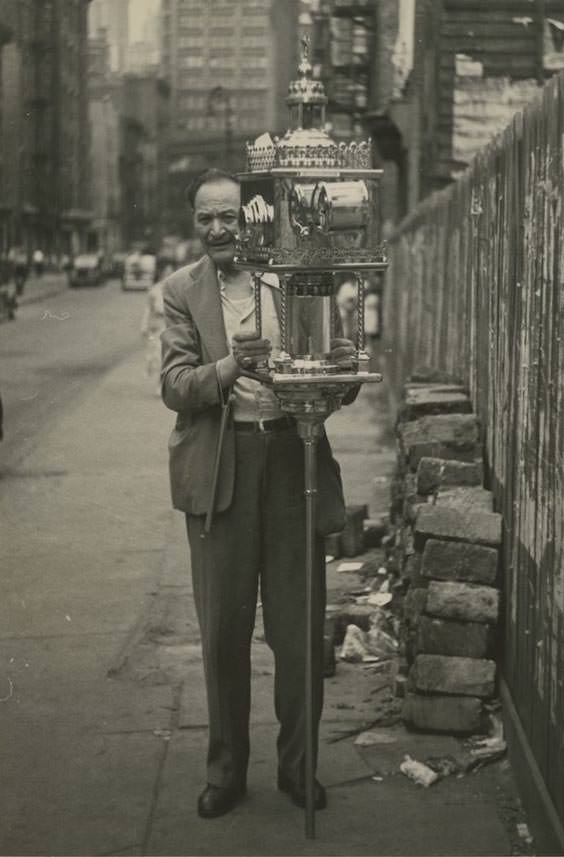
A sidewalk fortune teller near Chatham Square on the Lower East Side, 1947
Children play with an open fire hydrant in the street on the Lower East Side
Watching TV on Delancey Street, 1960
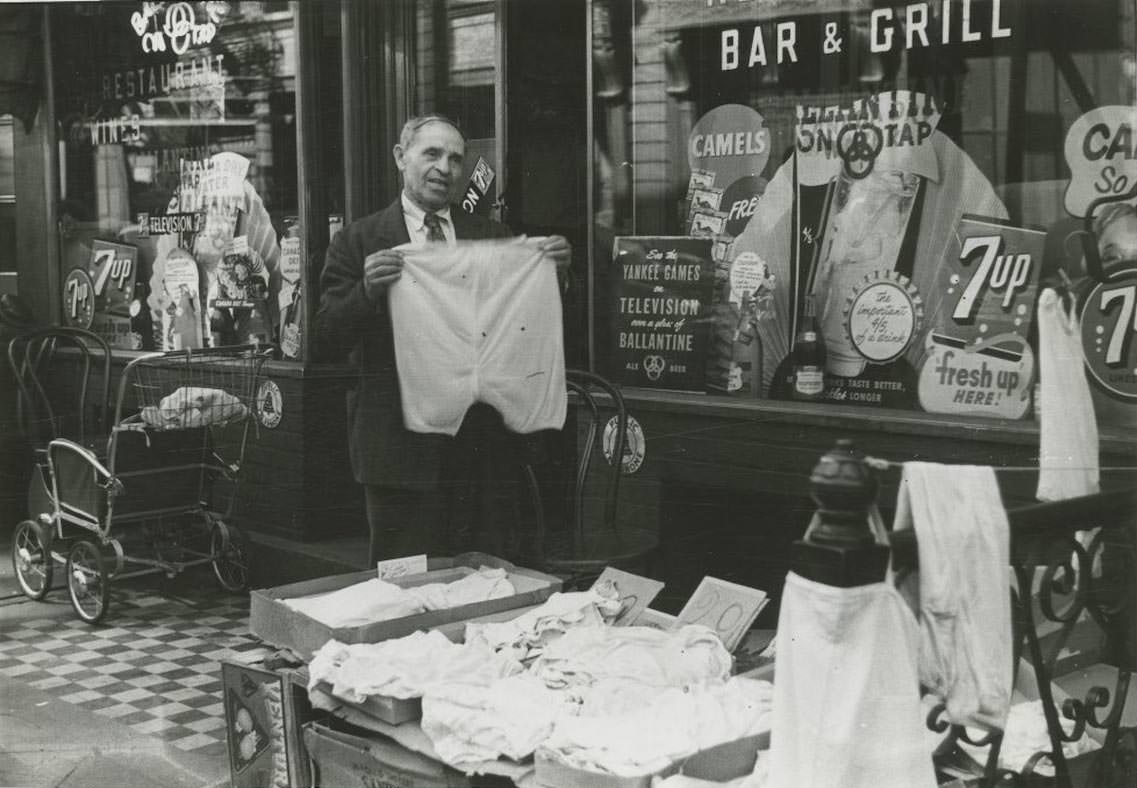
A sidewalk merchant sells clothing in front of a bar and restaurant on the Lower East Side, 1948
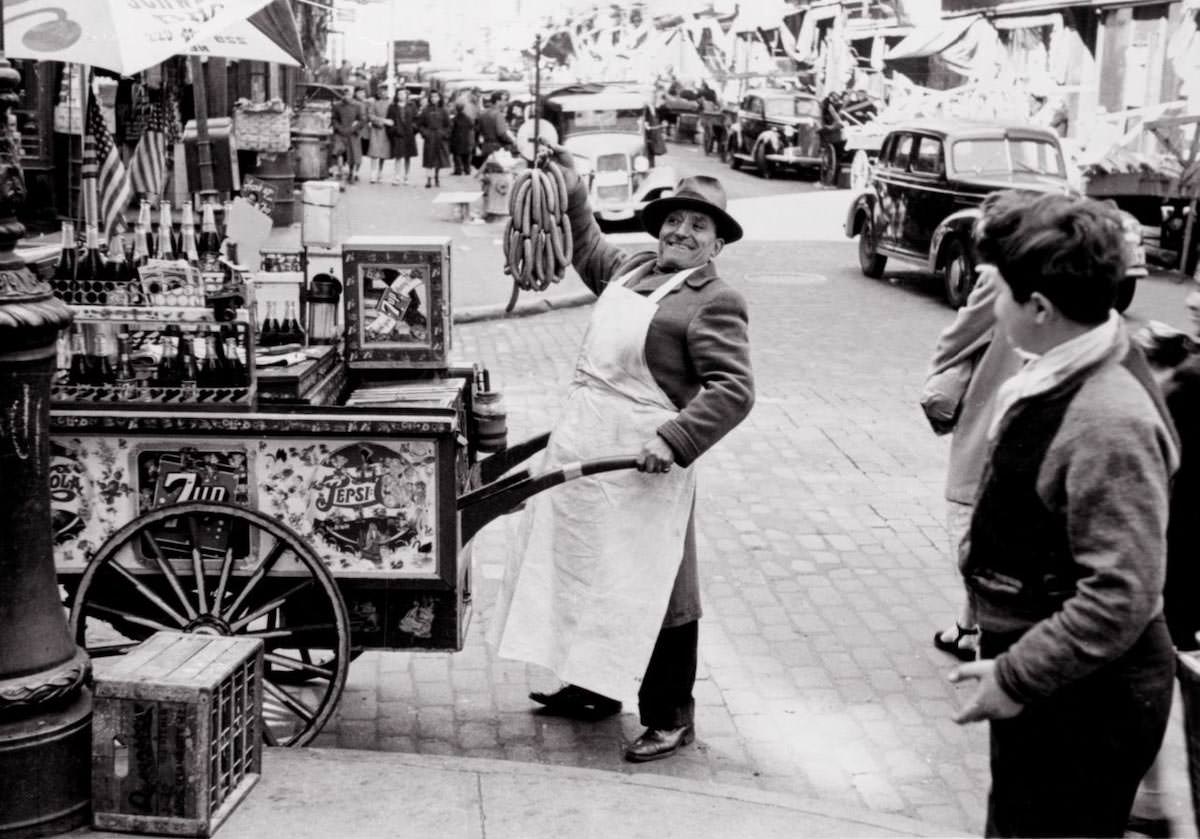
Reverend Frank Compitiello with lunch cart at Grand and Mulberry Streets, 1947

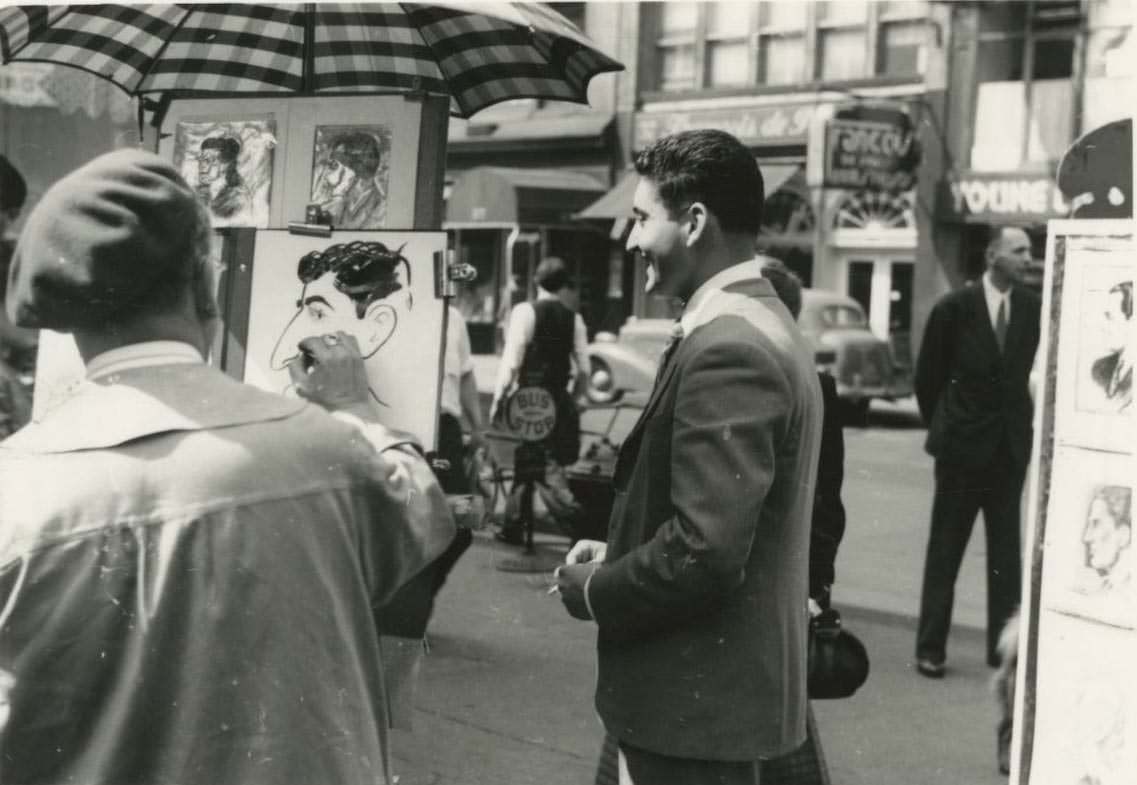
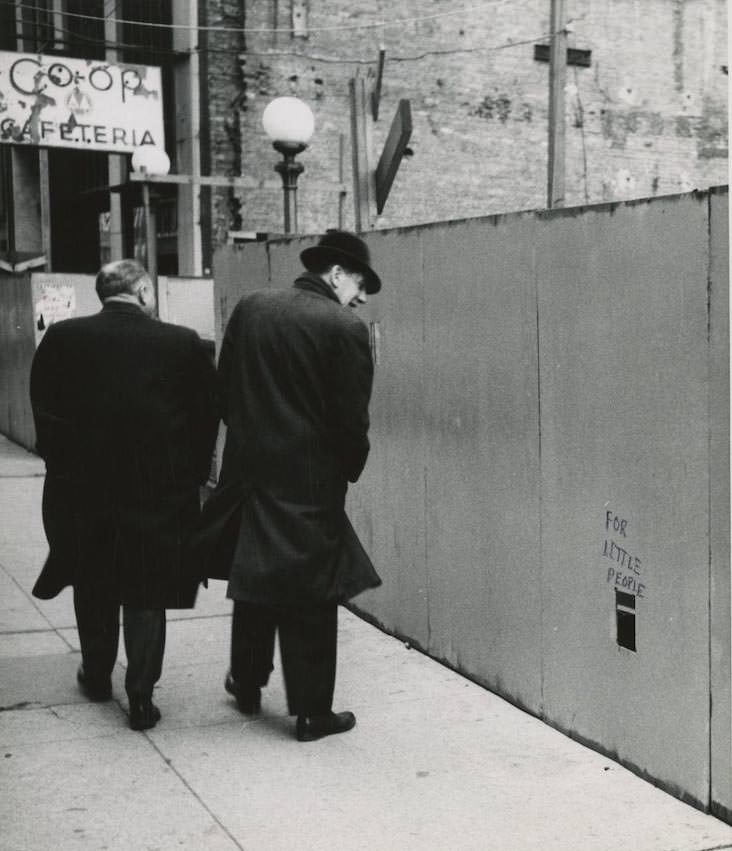
Little Italy’s open-air markets, a siesta on the Lower East Side, and a street artist sketching caricatures in Greenwich Village all made it into his collection. So did a plywood construction wall on a city sidewalk with a rectangular cutout labeled FOR LITTLE PEOPLE — a peephole built for children to watch the construction work going on behind it. The inscription on the back of the photo reads: For Sidewalk Superintendents.
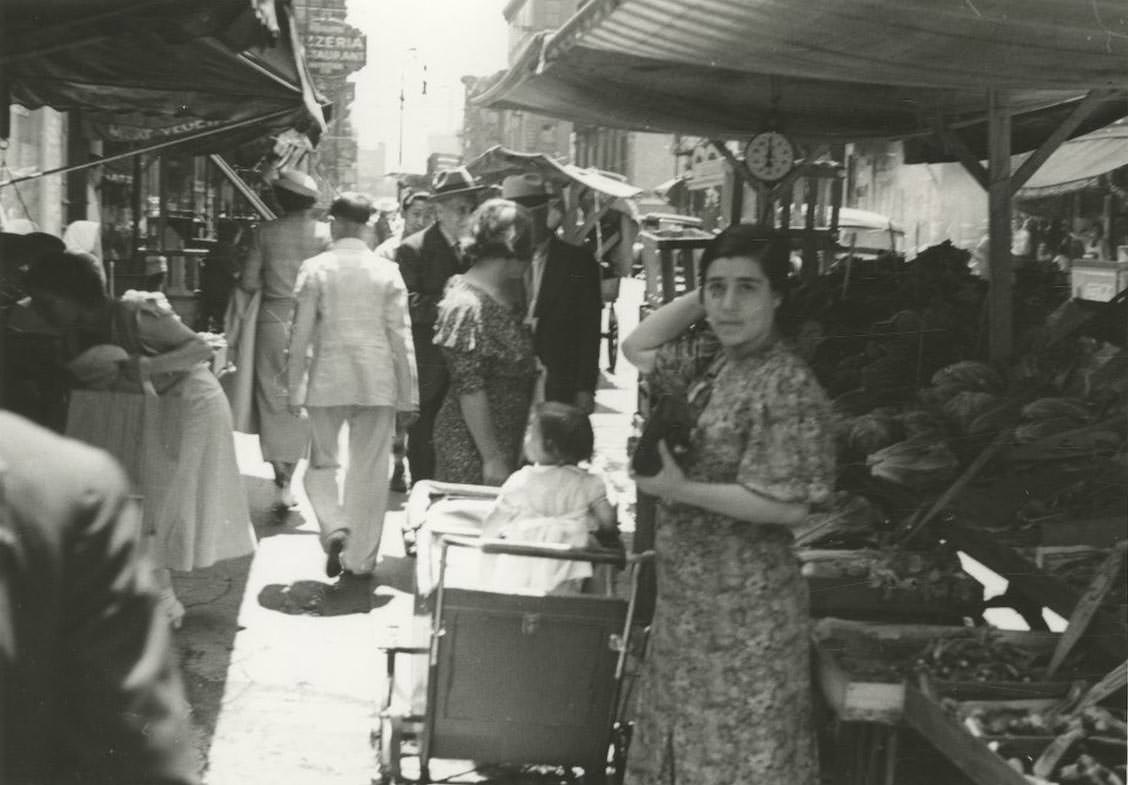
Sidewalk markets in Little Italy.
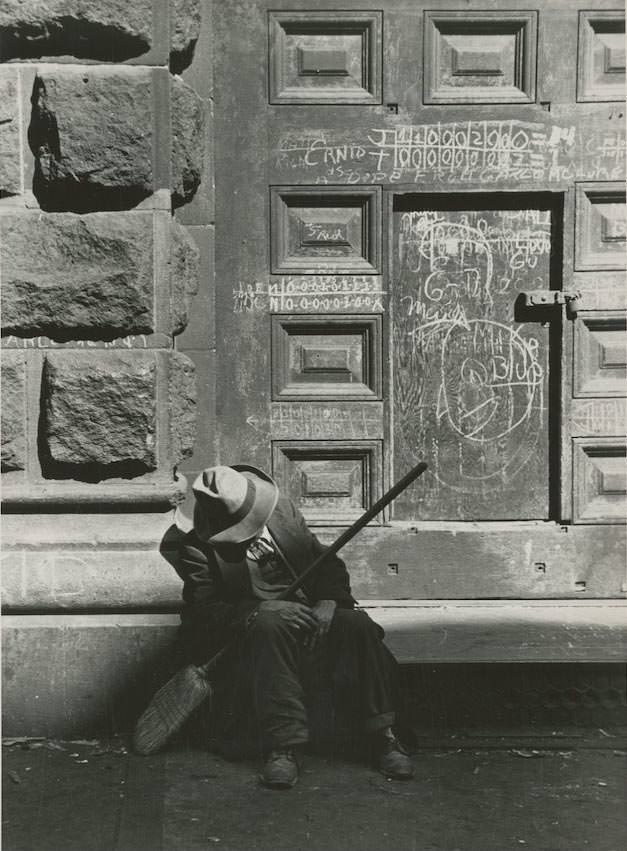
Siesta on Lower East Side.
Mid-Century Manhattan: Fabulous Historical Photos of the Heart of NYC from 1938 to 1960
A street artist draws a caricature of a man in Greenwich Village.
Two men walk by a wooden wall with a rectangular cutout that says FOR LITTLE PEOPLE on the street in New York City. Inscription on verso- For Sidewalk Superintendents.

In 1985, Grumbine wrote a three-part article series for Dots and Dashes, the official magazine of the Morse Telegraph Club, called The Era of Morse Telegraphy — a look back at his years as a telegraph operator before photography became his profession. Henry Grumbine later donated Arthur’s photographs to the New York Historical Society, where they remain part of the permanent collection.
Mid-Century Manhattan: Fabulous Historical Photos of the Heart of NYC from 1938 to 1960

The ferries that carried commuters between New Jersey and Lower Manhattan were another subject Grumbine returned to more than once. In 1950, he photographed passengers on the upper deck of a Central Railroad of New Jersey ferry and caught the Liberty Street Ferry approaching the Manhattan dock in the early morning — the city still quiet behind it.
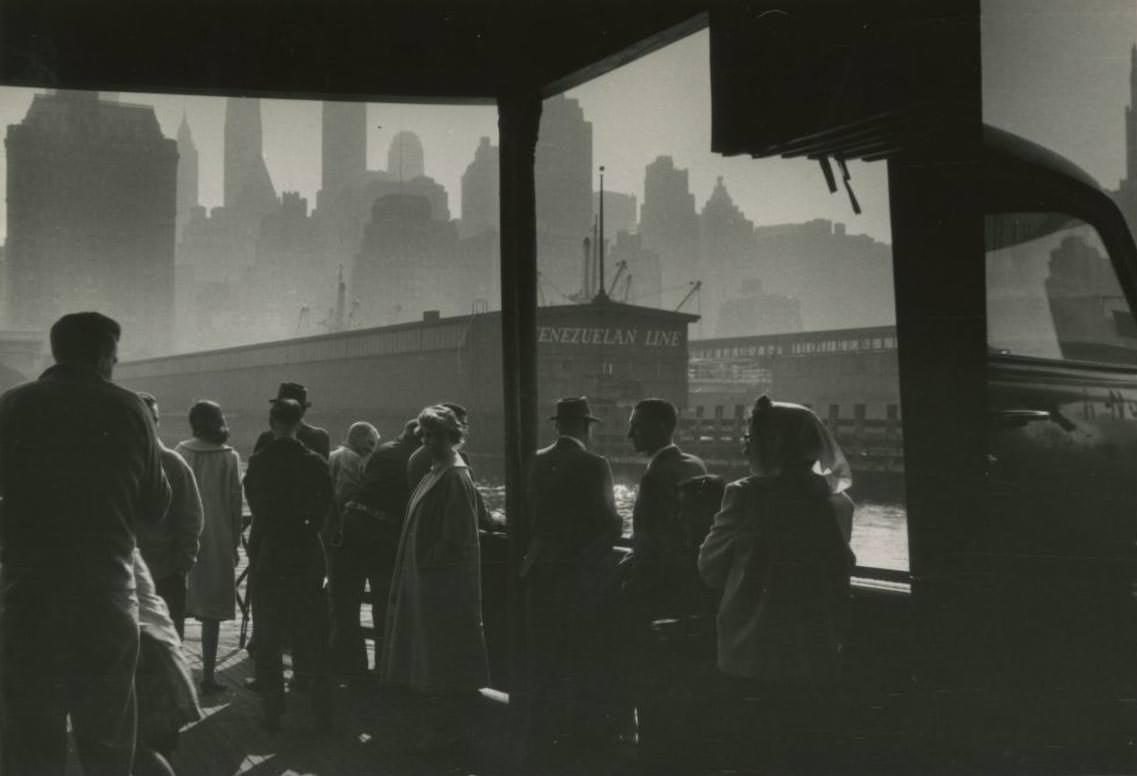
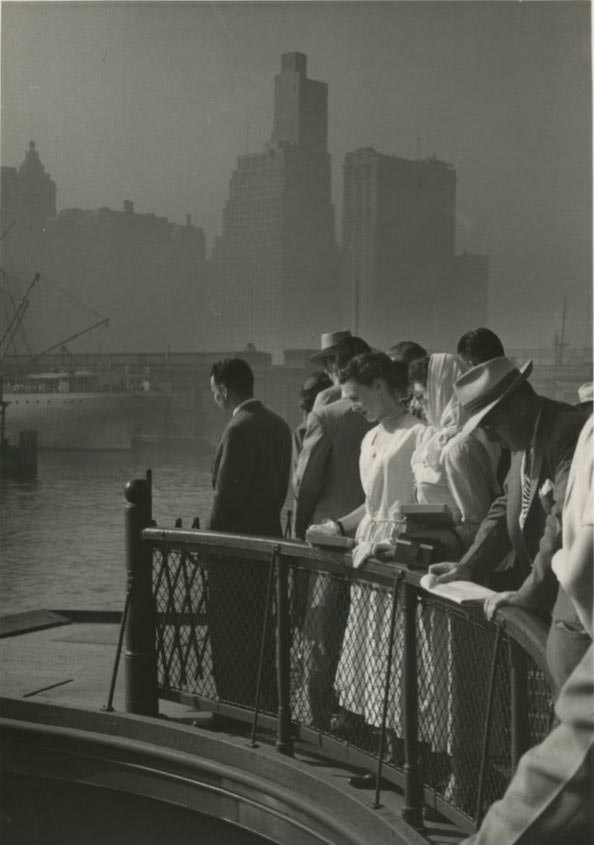
The Liberty Street Ferry approaching dock in Manhattan in the early morning, 1950
Passengers on the upper deck of a Central Railroad of New Jersey ferry in Jersey City going to Liberty Street in Manhattan, 1950
Spur of Third Avenue El along Park Row from Chatham Square to City Hall area, 1944
Mid-Century Manhattan: Fabulous Historical Photos of the Heart of NYC from 1938 to 1960

One of the most politically charged images in the collection shows Broadway north of 42nd Street at night, with the Astor Hotel on the left and an American Labor Union Party sign calling for Mayor Fiorello La Guardia’s re-election lit up on the right. It’s a single frame that holds an entire moment in the city’s political life.
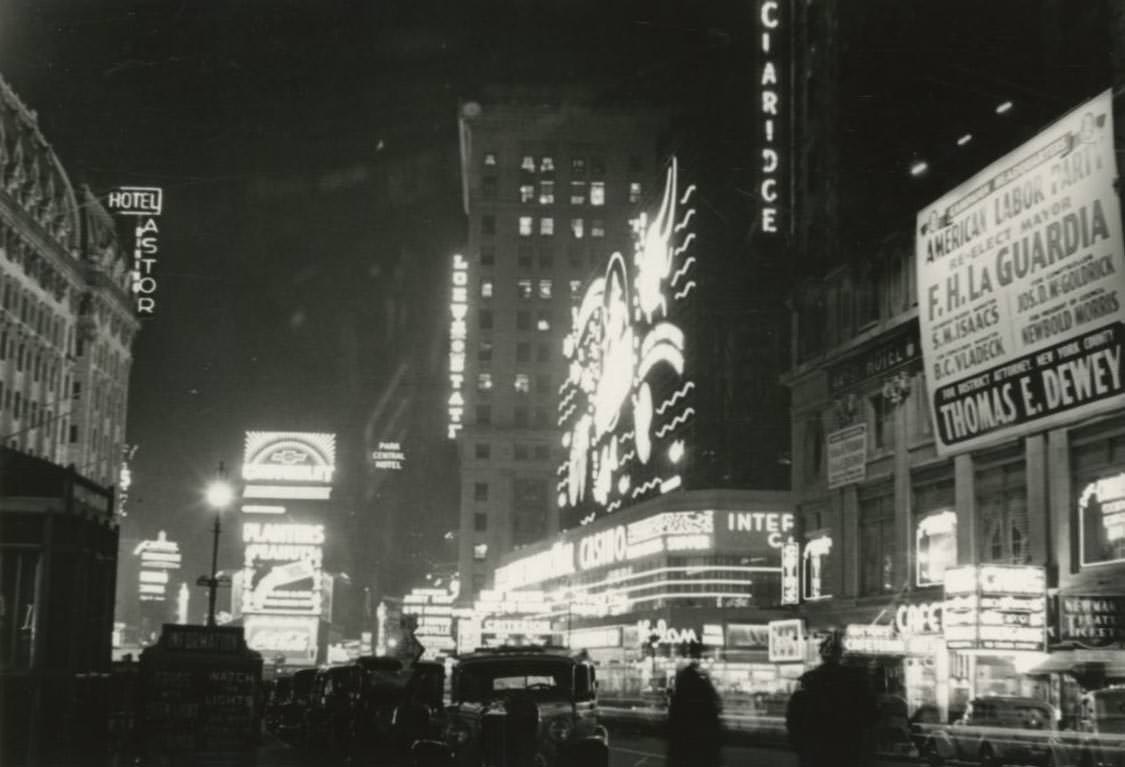

Broadway north of 42nd Street at night in Times Square with Astor Hotel to the left and an American Labor Union Party sign for Mayor F.H. La Guardia's re-election to the right.
Broadway north of 42nd Street at night in Times Square with Astor Hotel to the left and an American Labor Union Party sign for Mayor F.H. La Guardia’s re-election to the right.
Enjoyed this post? Get new ones in your inbox.

Leave a Comment

Your email address will not be published. Required fields are marked *

Share this Post 🥺

Please take a moment to share this content. Your support is greatly appreciated! 🙌🙏

Share this Post 🥺

Please take a moment to share this content. Your support is greatly appreciated! 🙌🙏
×

Create an Account

Reset Password

Scroll to Top
 
Hey Friend, Before You Go.. Please like & follow for more interesting content