
1985 was a year that left its mark on Manchester. The city was still processing the shock of the Manchester Airport disaster, in which a fire on board a British Airtours jet killed 55 people during take-off. At the same time, The Smiths released their landmark album ‘Meat is Murder,’ and Manchester United lifted the FA Cup for a sixth time. Life in the city carried on — busy streets, packed markets, and neighbourhoods full of character. These photographs, drawn from Manchester Council’s Local Image Collection, capture that everyday world in remarkable detail.
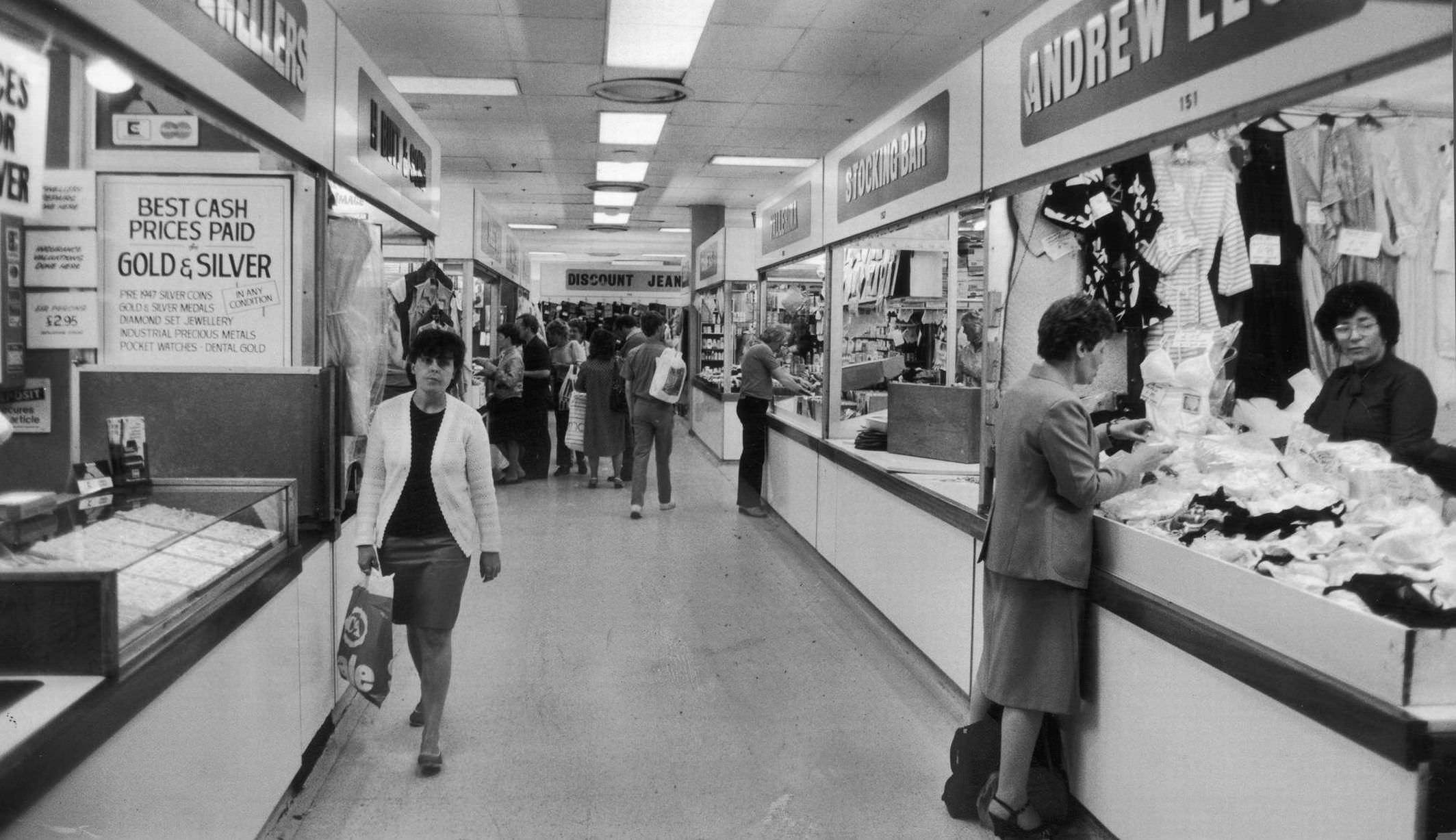
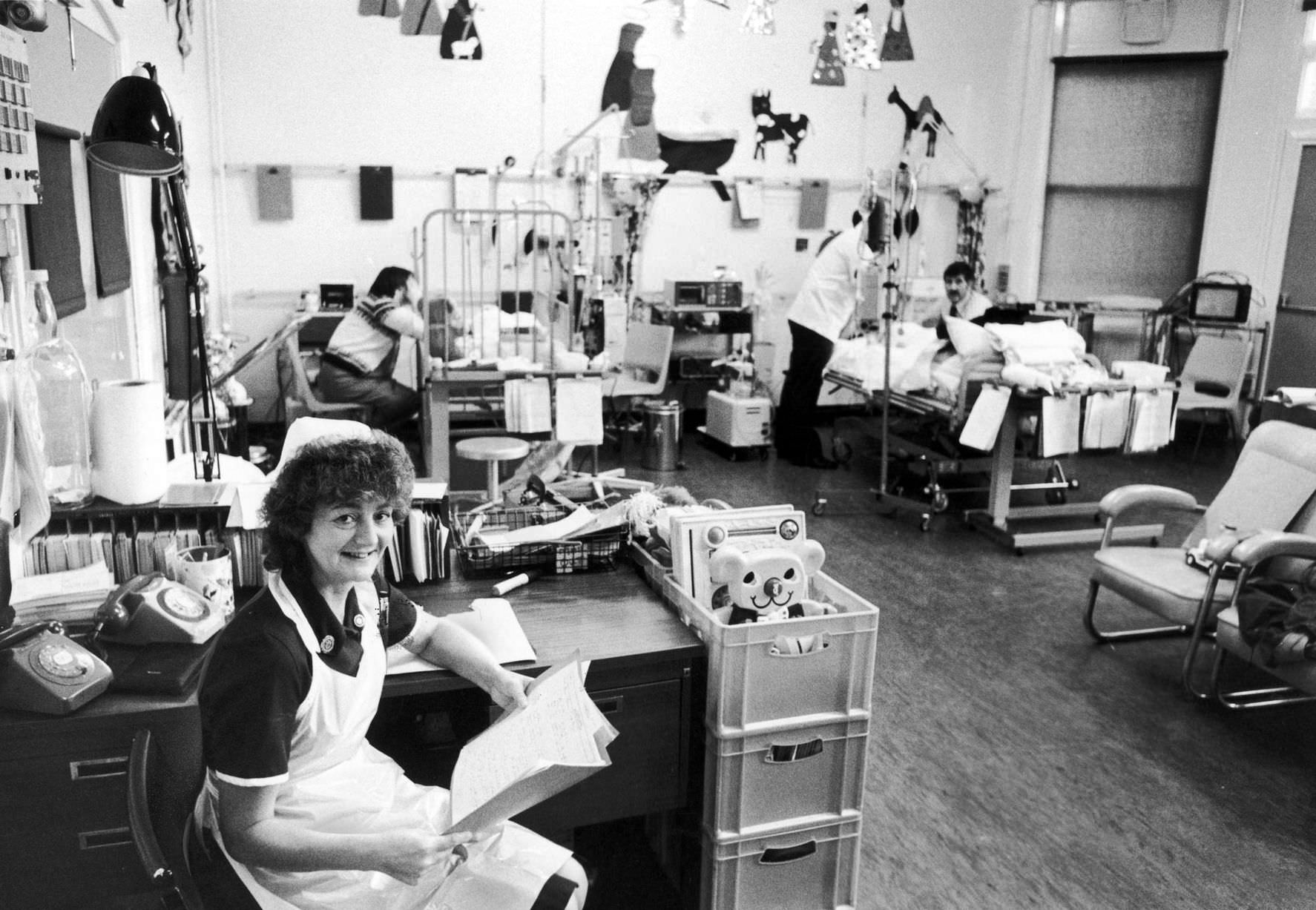
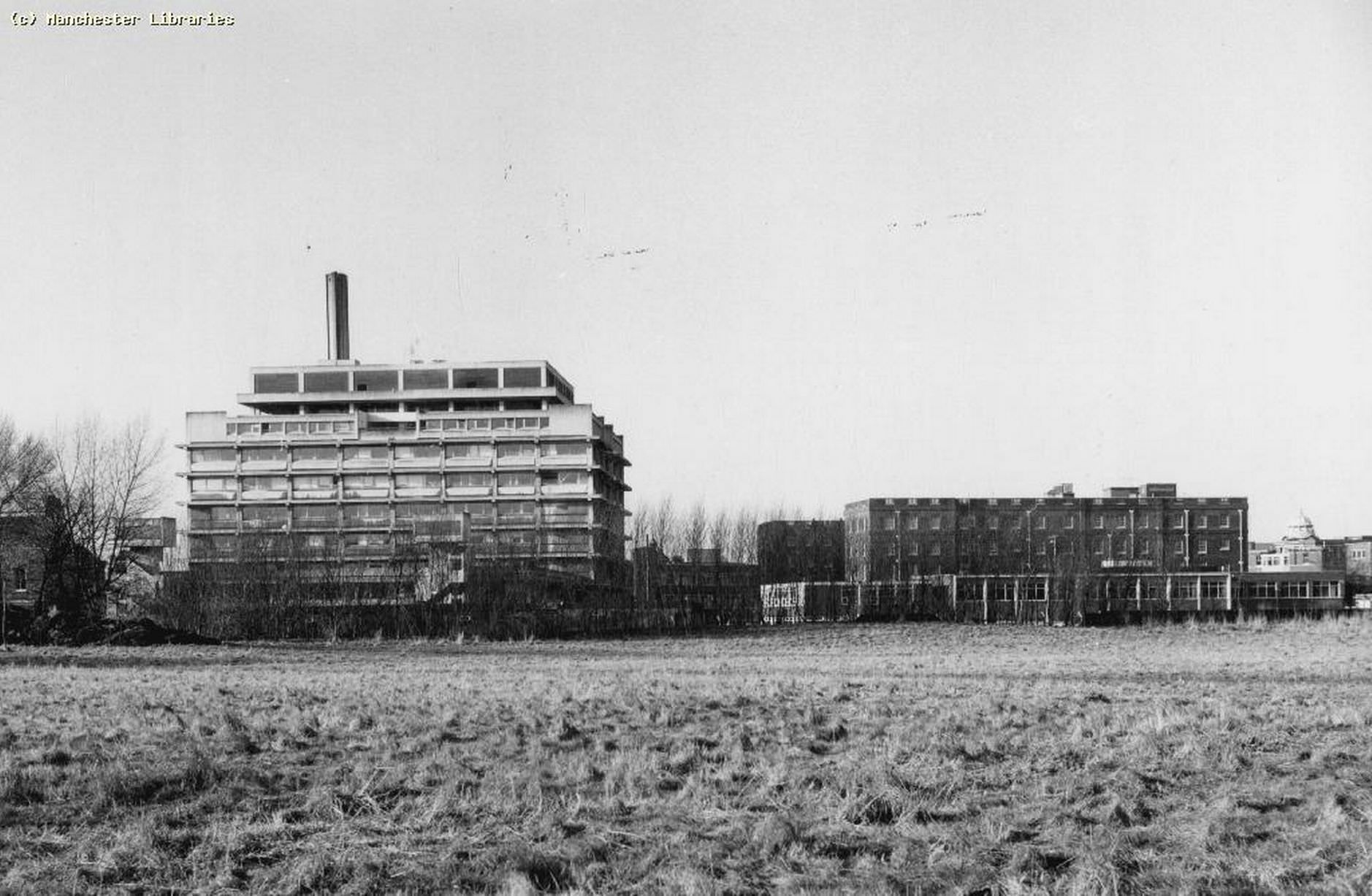
Manchester’s markets were a central part of daily life in 1985. Stalls lined busy streets, and shoppers turned out in all weathers to browse for bargains. The city’s hospitals were just as essential to the community. Booth Hall Children’s Hospital in Blackley was one of the most well-known children’s hospitals in the north of England, providing dedicated care to young patients across Greater Manchester.
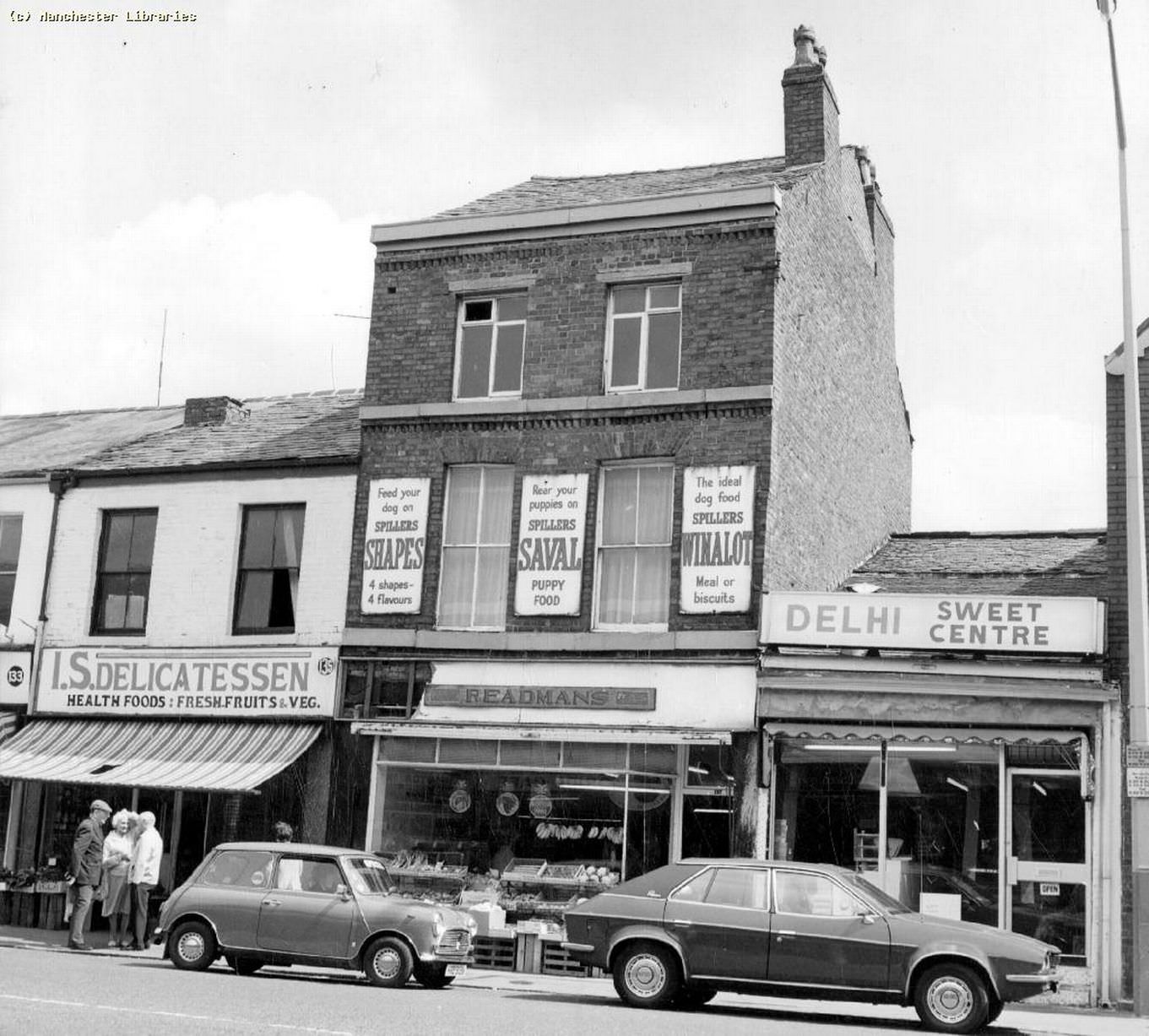
Beyond the city centre, Manchester’s neighbourhoods each had their own distinct identity. Rusholme’s Wilmslow Road was already becoming known as the Curry Mile, lined with South Asian restaurants and shops that reflected the area’s strong communities. A few miles away, Levenshulme’s Stockport Road was a working-class stretch of local businesses, takeaways, and terraced housing — a snapshot of ordinary Manchester life.
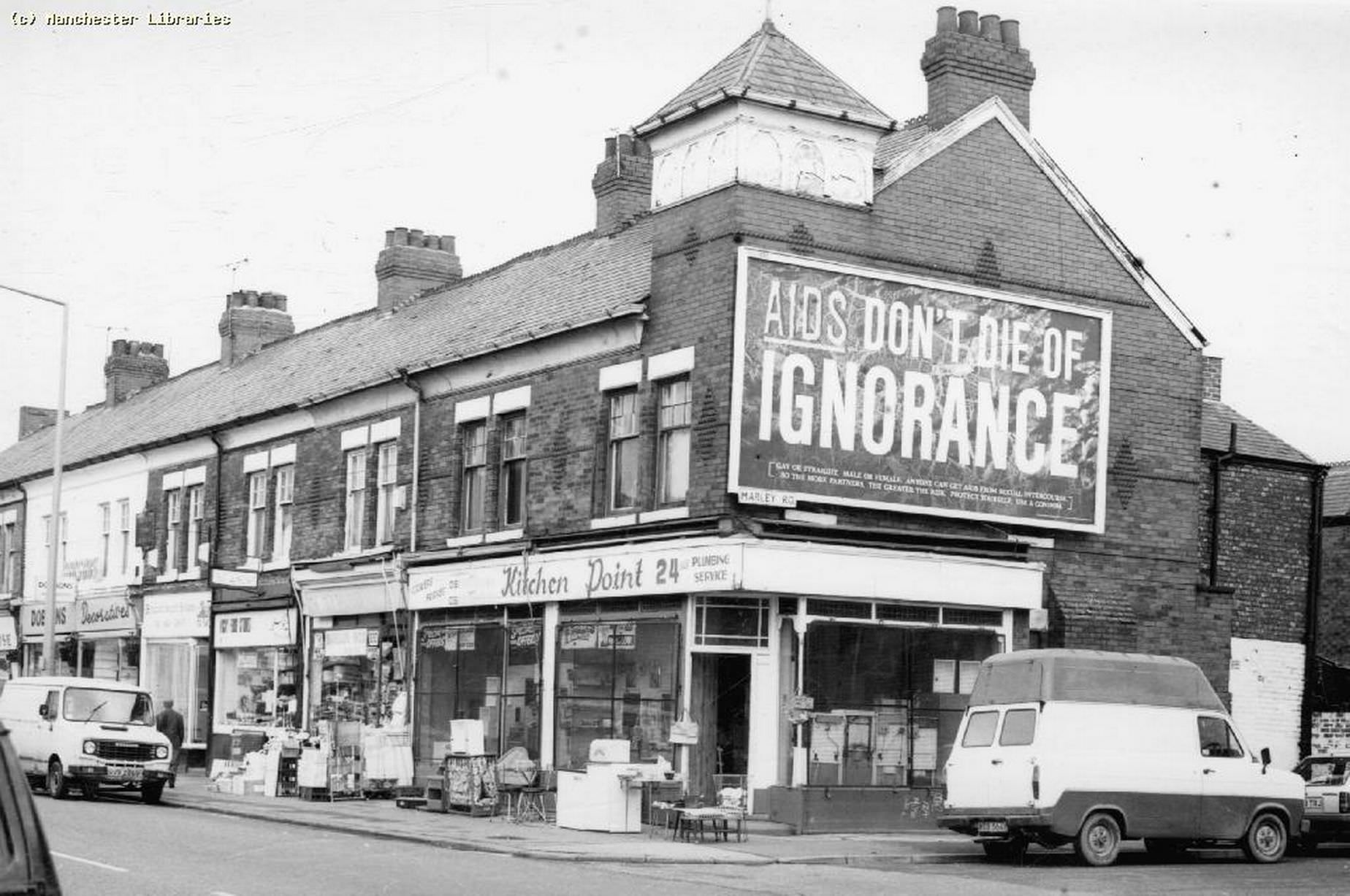
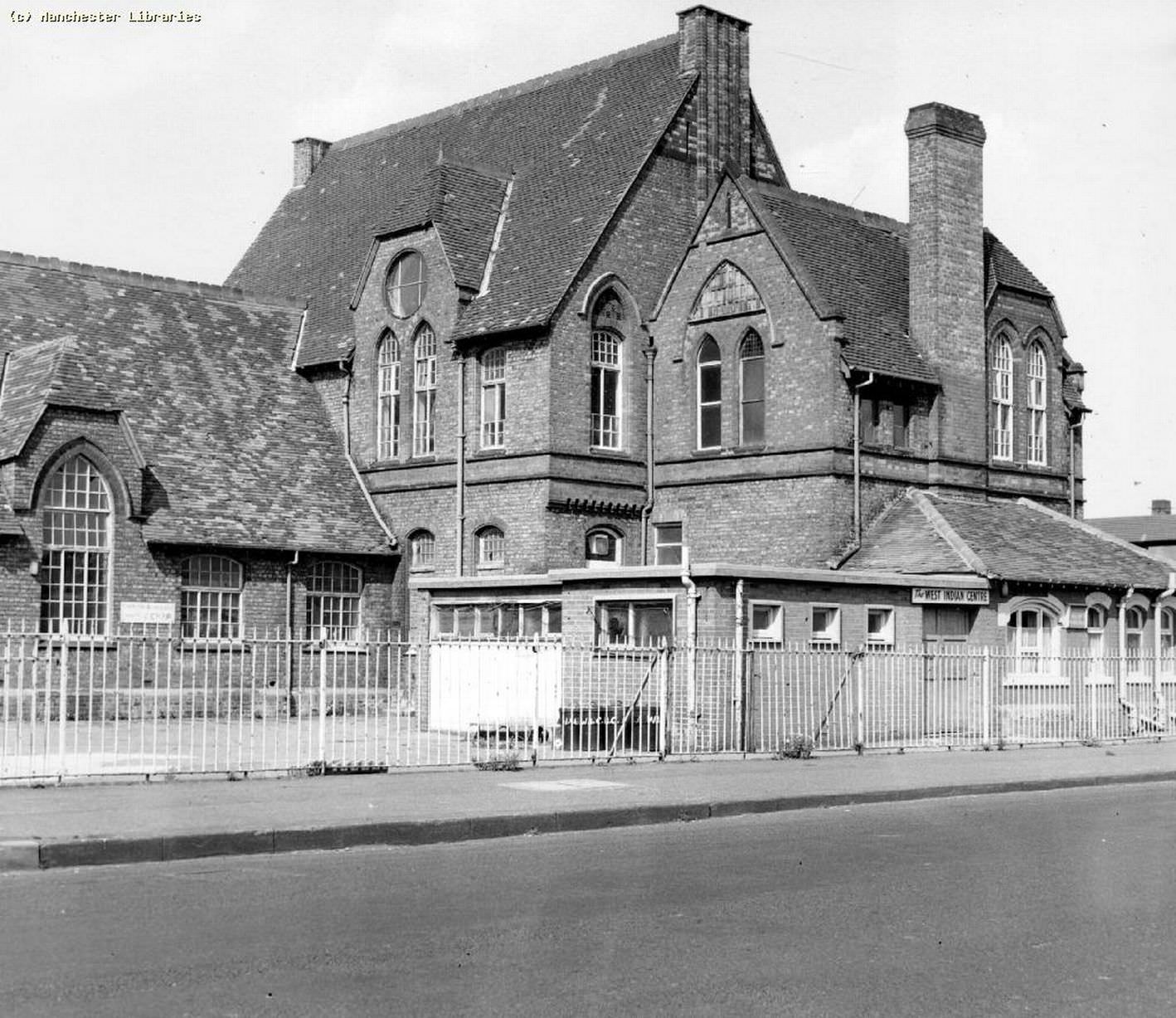
Miles Platting, just northeast of the city centre, was one of Manchester’s older industrial districts. Oldham Road cut through it as a well-worn artery connecting the inner city to the outer boroughs. Longsight, meanwhile, was home to the West Indian Centre — a vital hub for the Afro-Caribbean community in south Manchester, providing social and cultural support throughout the 1980s.
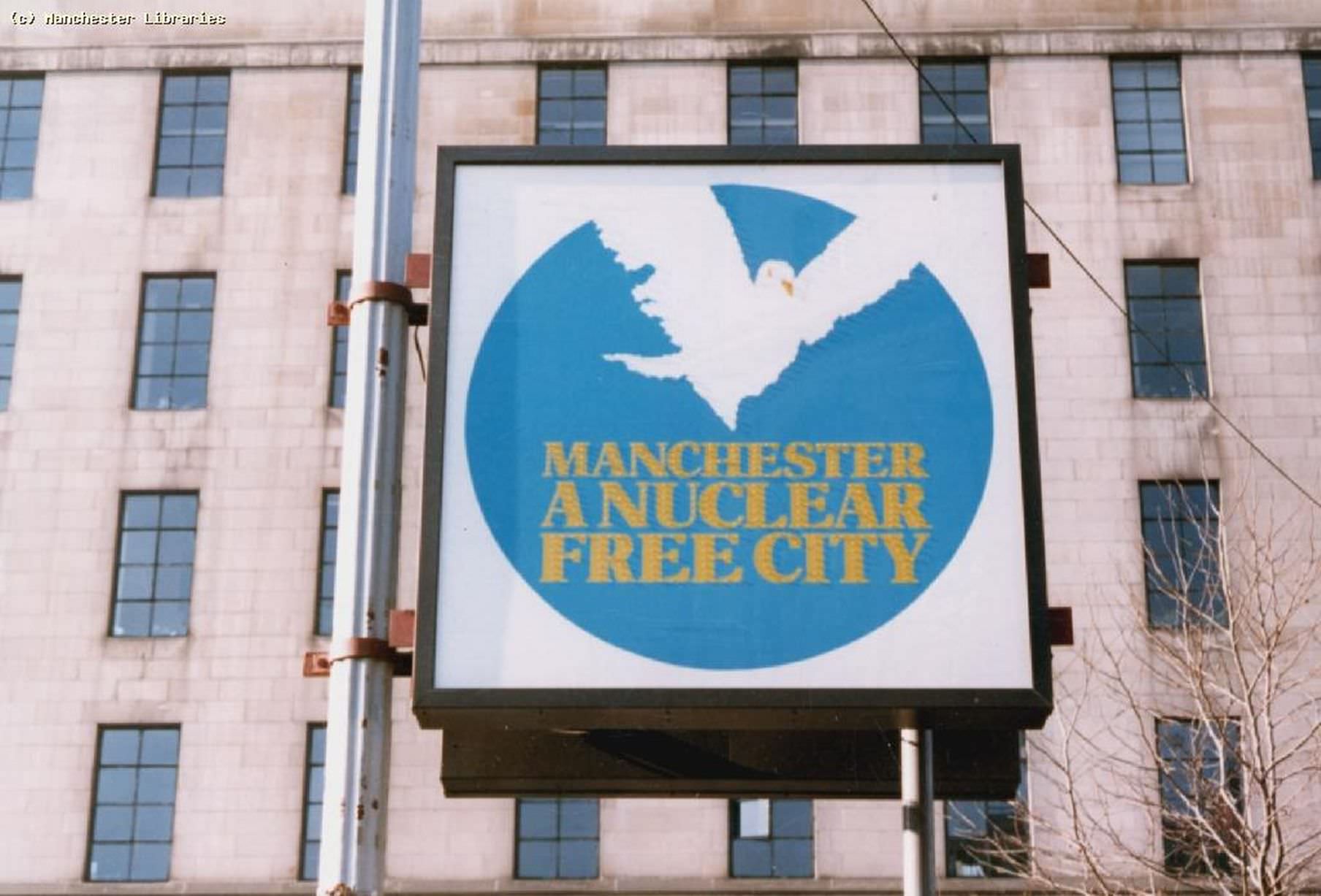
Manchester City Council declared the city a Nuclear Free Zone in 1980, and by 1985 the signage had become a visible feature of the city centre. The declaration was a political statement against nuclear weapons and nuclear power, placing Manchester among dozens of UK local authorities that took the same stance during the Cold War era.
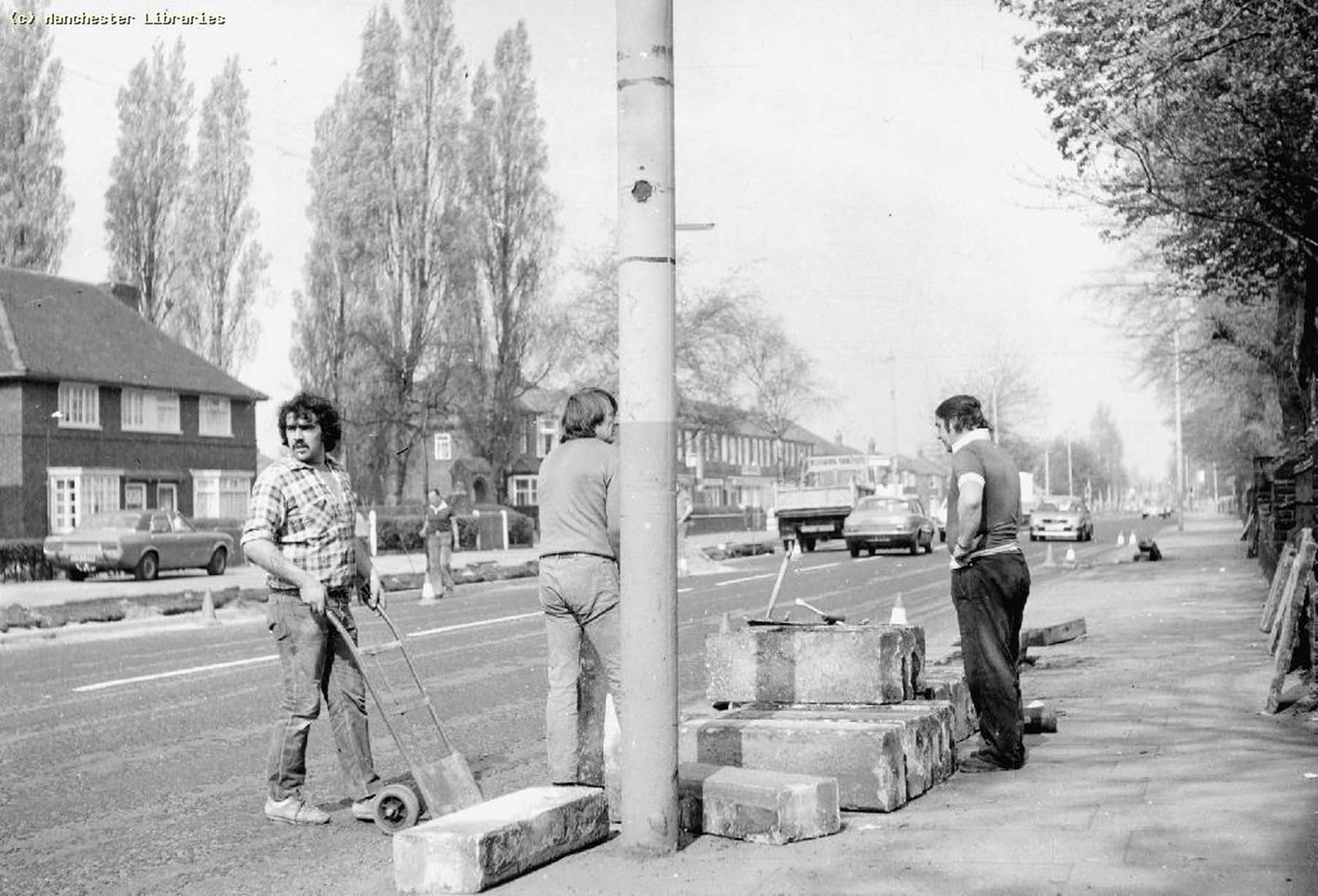
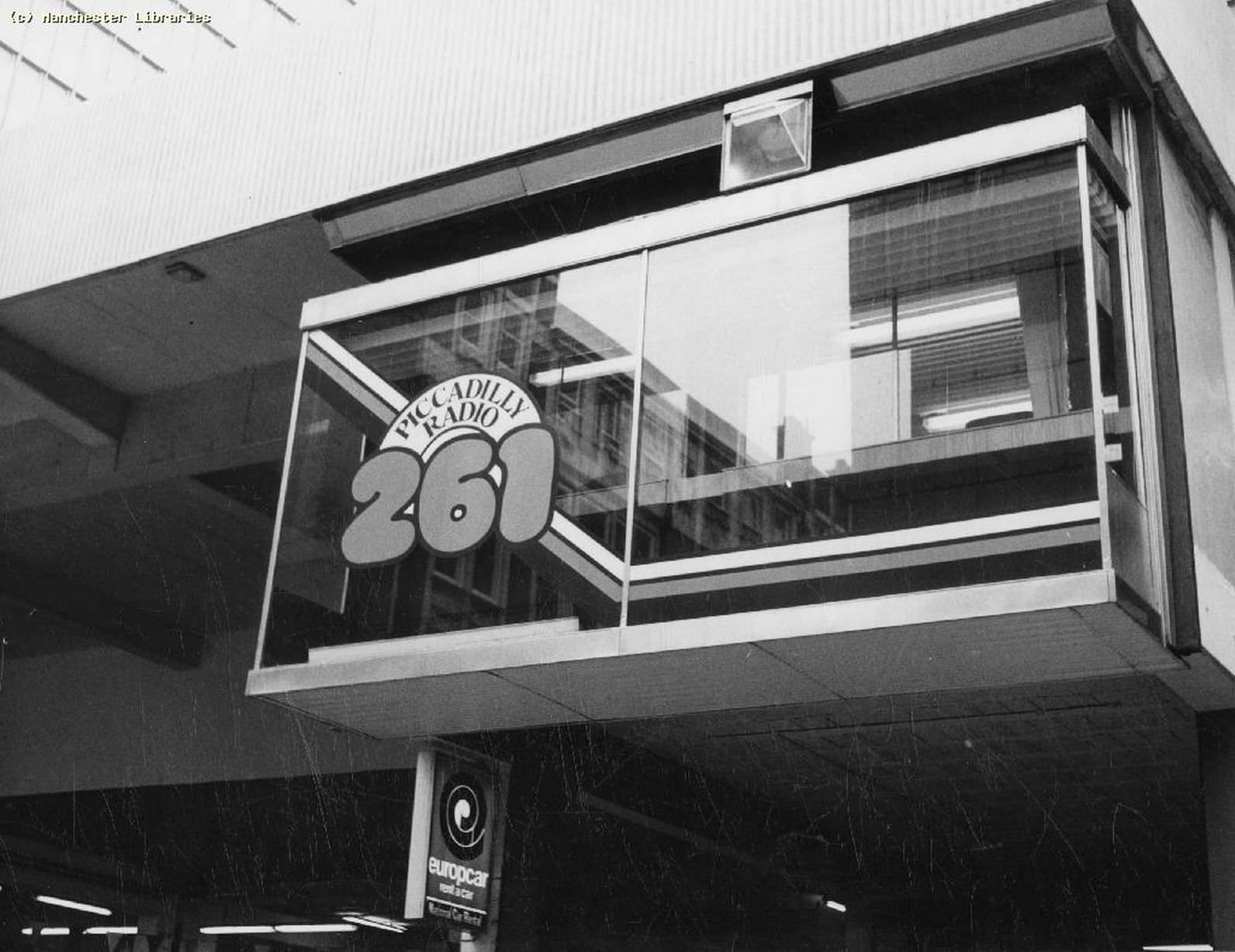
The physical fabric of the city was constantly being updated. Roadworks on Barlow Moor Road in Chorlton were a familiar sight to locals, while Piccadilly Radio — the city’s hugely popular commercial station — operated from its well-known offices in the heart of Manchester. The station was a major force in the city’s music culture throughout the decade.
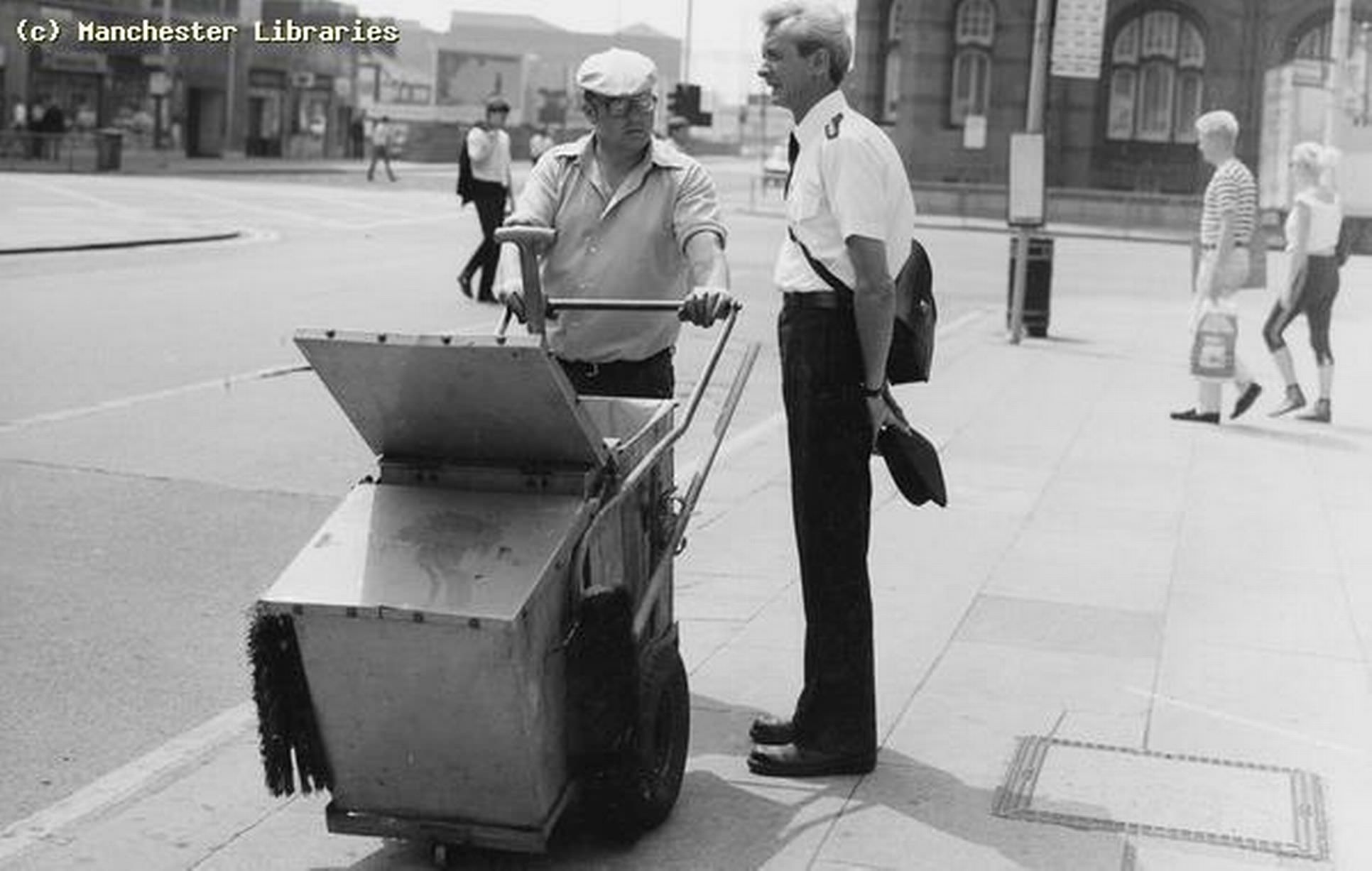
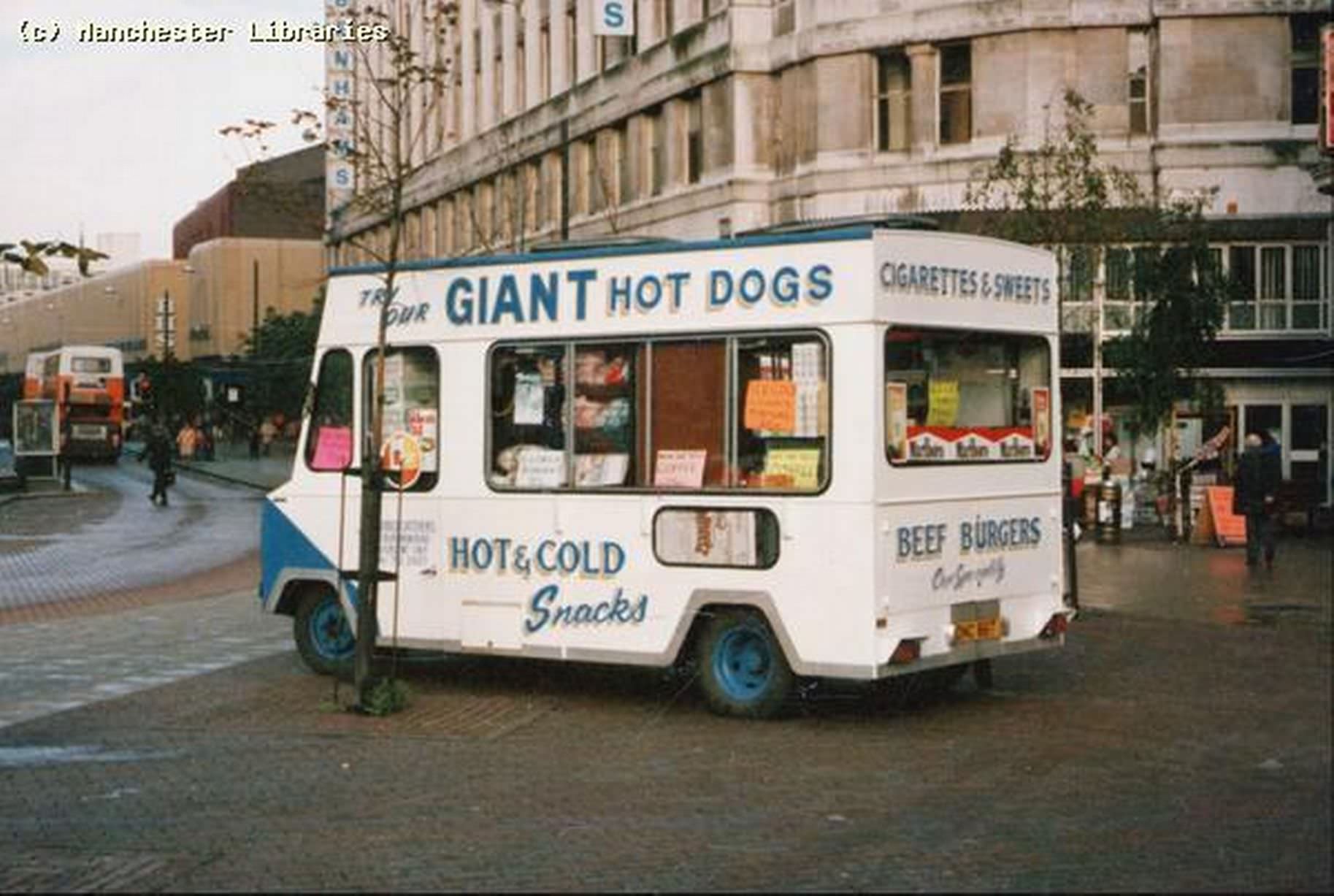
Street-level workers kept the city running. Cleaners, market traders, and food sellers were a constant presence across Manchester’s pavements. The hot dog sellers around Piccadilly were a fixture for workers, shoppers, and late-night revellers alike — a small but dependable part of city life.
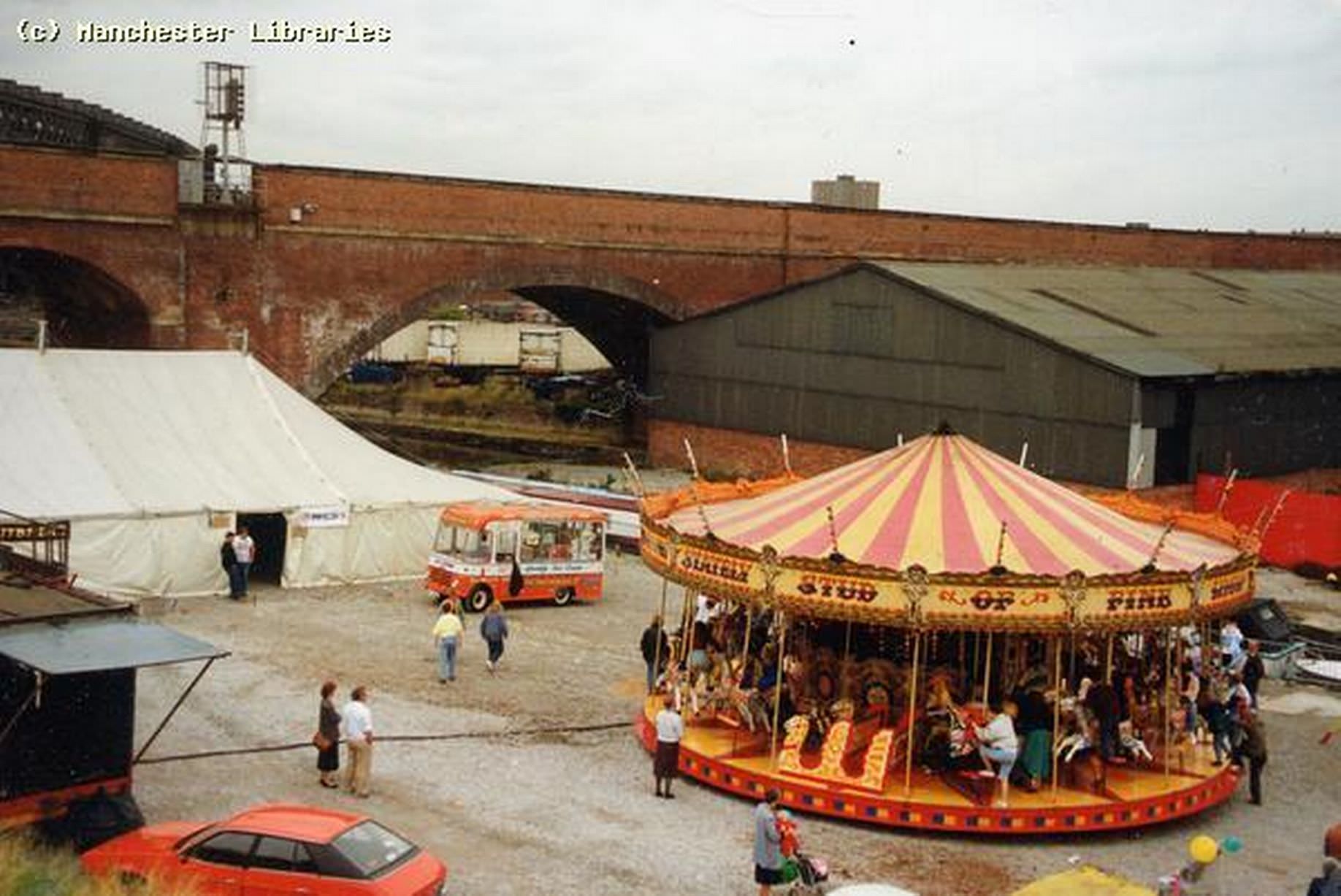
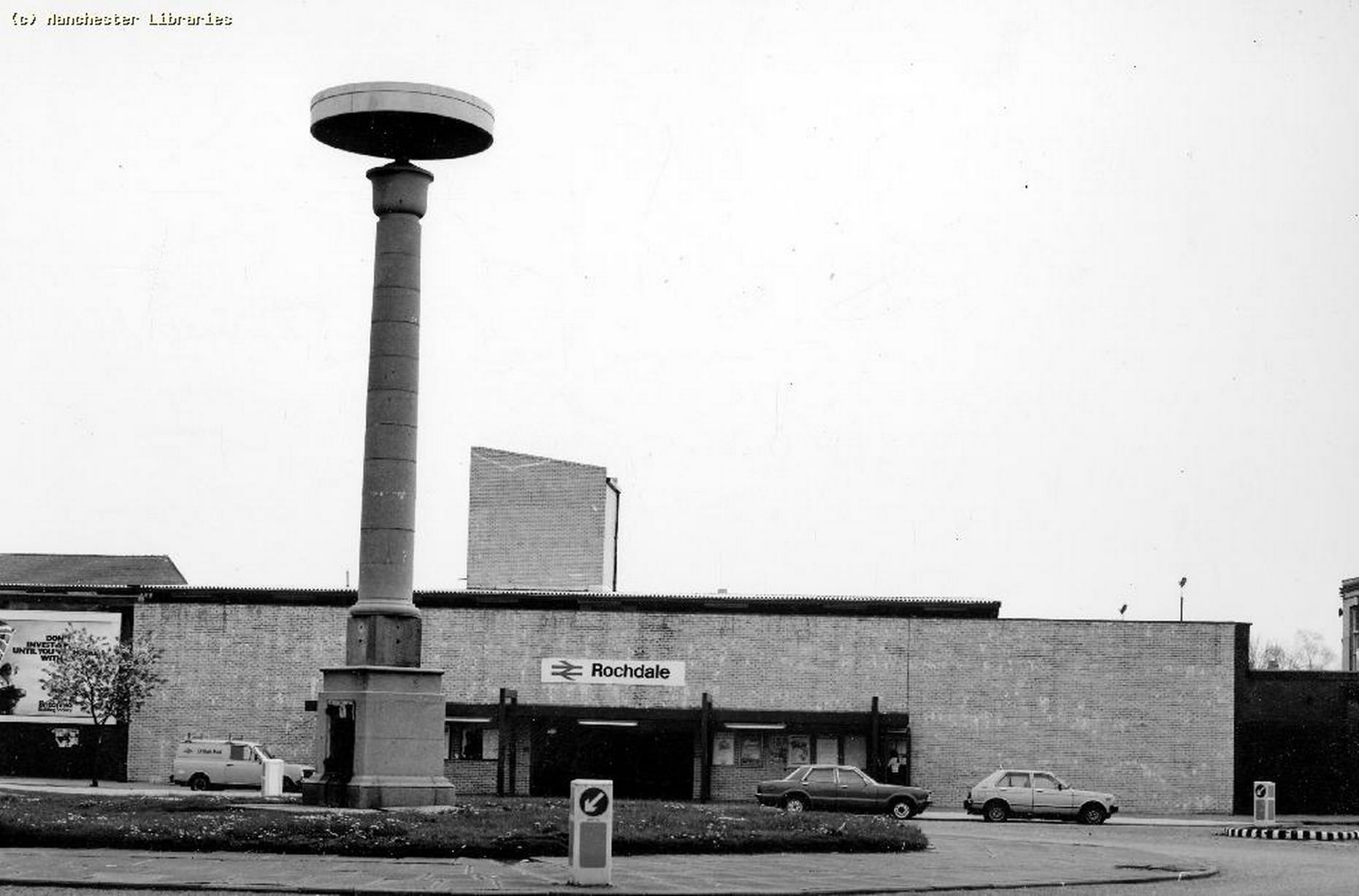
Castlefield, one of Manchester’s oldest areas, was beginning its transformation in 1985. The Castlefield Carnival brought community spirit to a district that sat alongside the Roman fort site and the city’s historic canal network. Further out, Rochdale’s train station served as a gateway between Greater Manchester and the mill towns of Lancashire, its platforms busy with daily commuters.
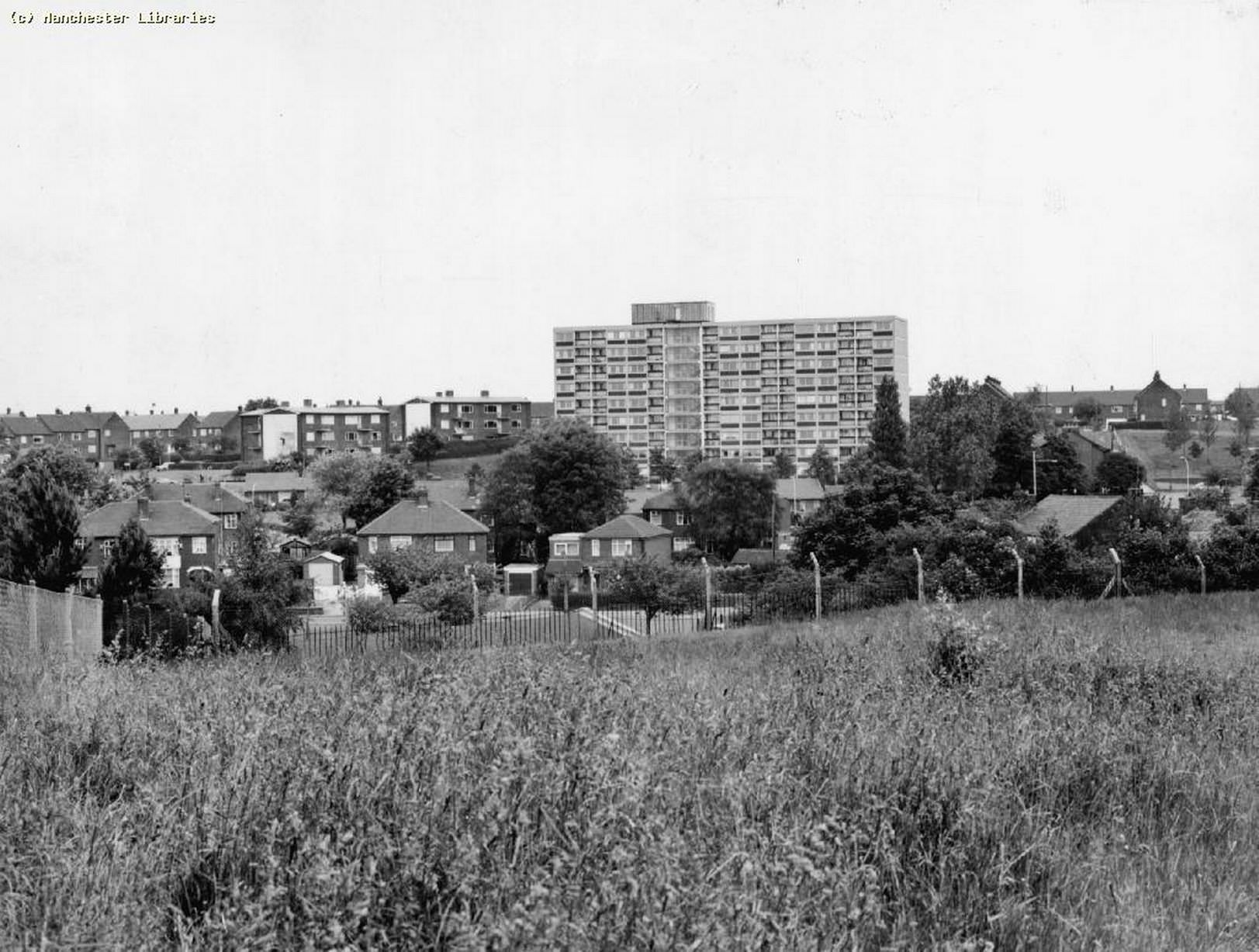
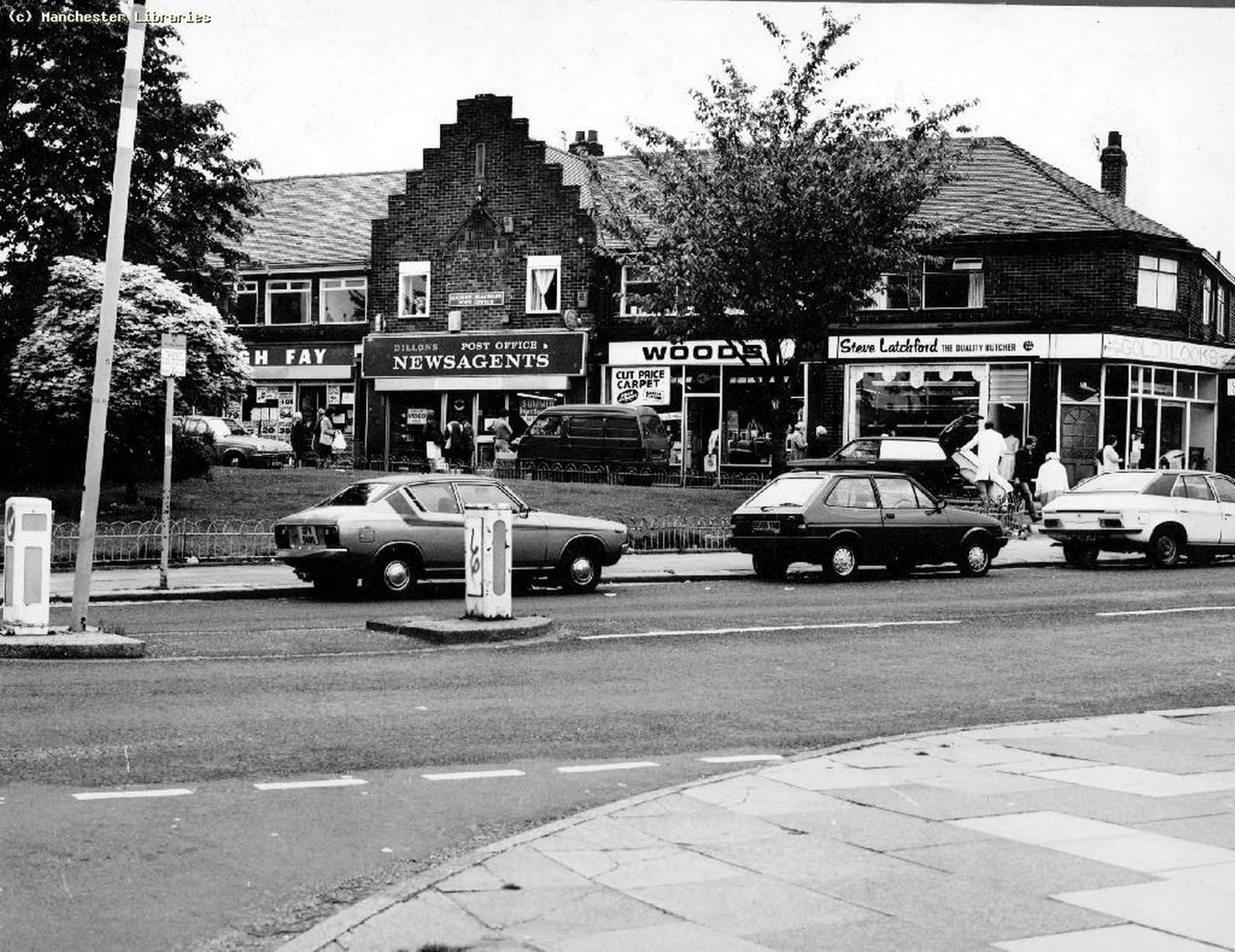
Blackley, in north Manchester, was a largely residential area of council housing and local amenities. Victoria Avenue ran through it as one of the main streets connecting the neighbourhood, its shops and bus routes serving the thousands of families who lived nearby.
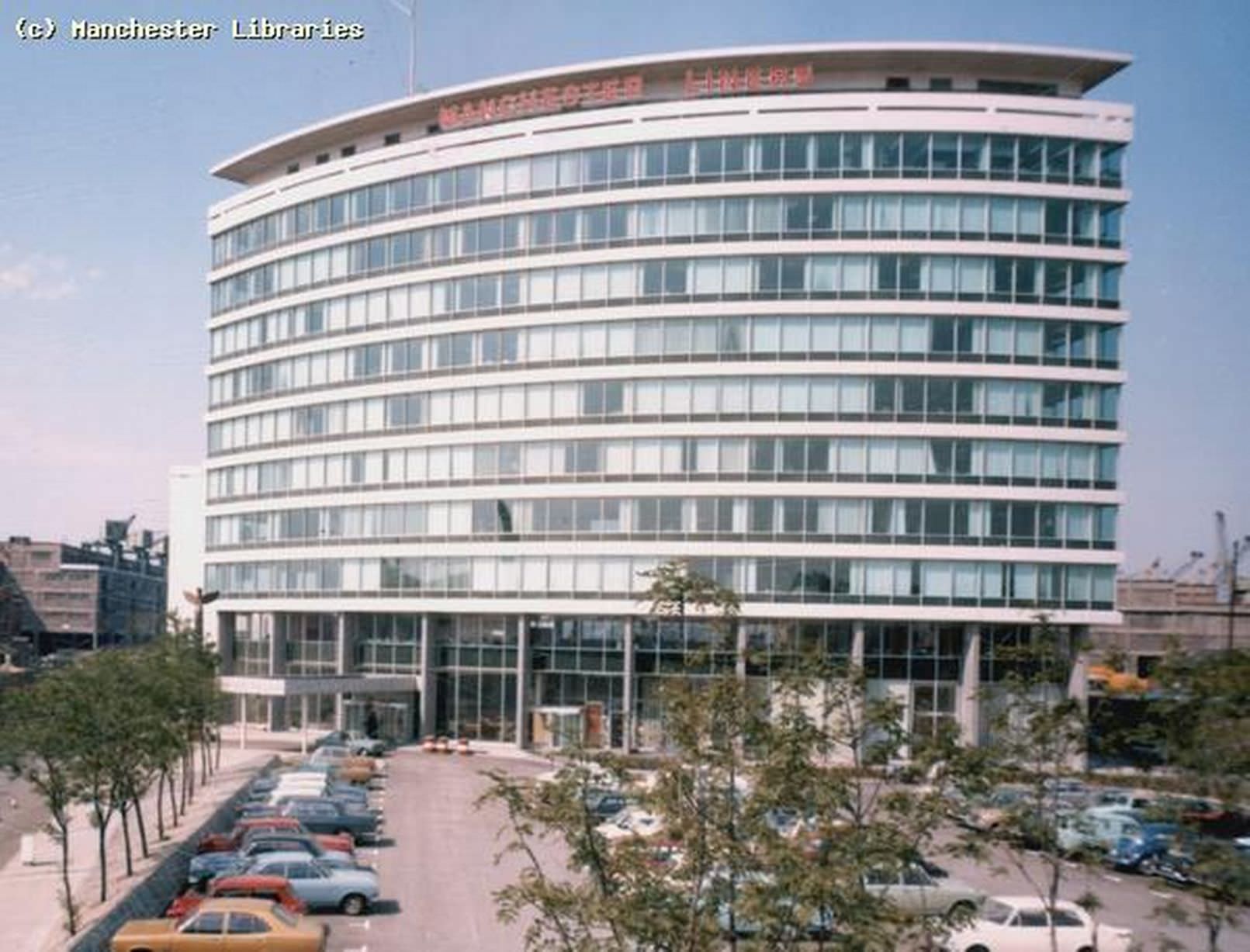
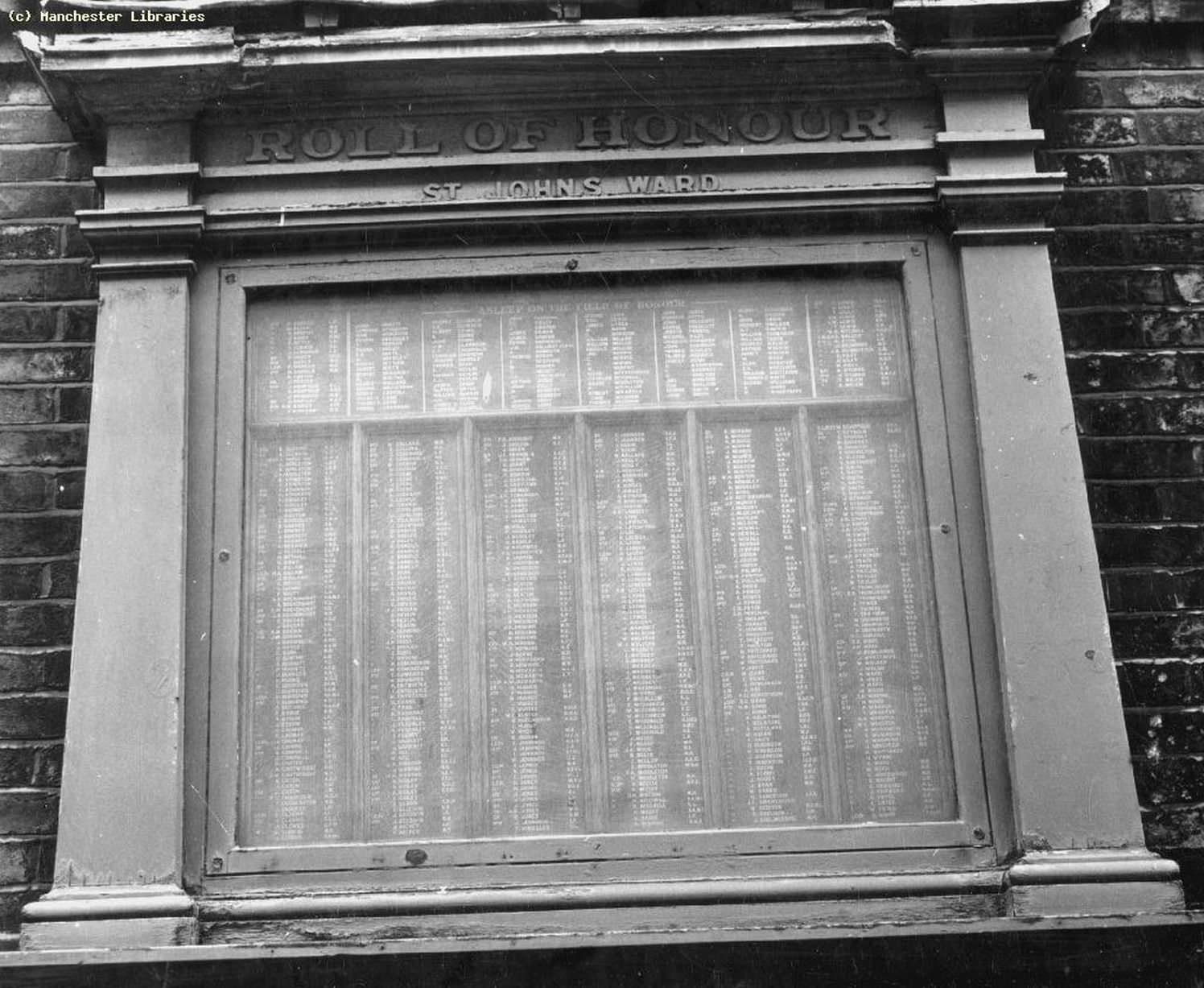
The Manchester Liners building stood as a reminder of the city’s deep ties to trade and shipping through the Manchester Ship Canal. Not far away, Manchester Royal Infirmary continued its role as one of the city’s principal hospitals, treating patients from across the region. Quay Street’s St John’s Ward also preserved its own history through a roll of honour recognising those connected to the area.
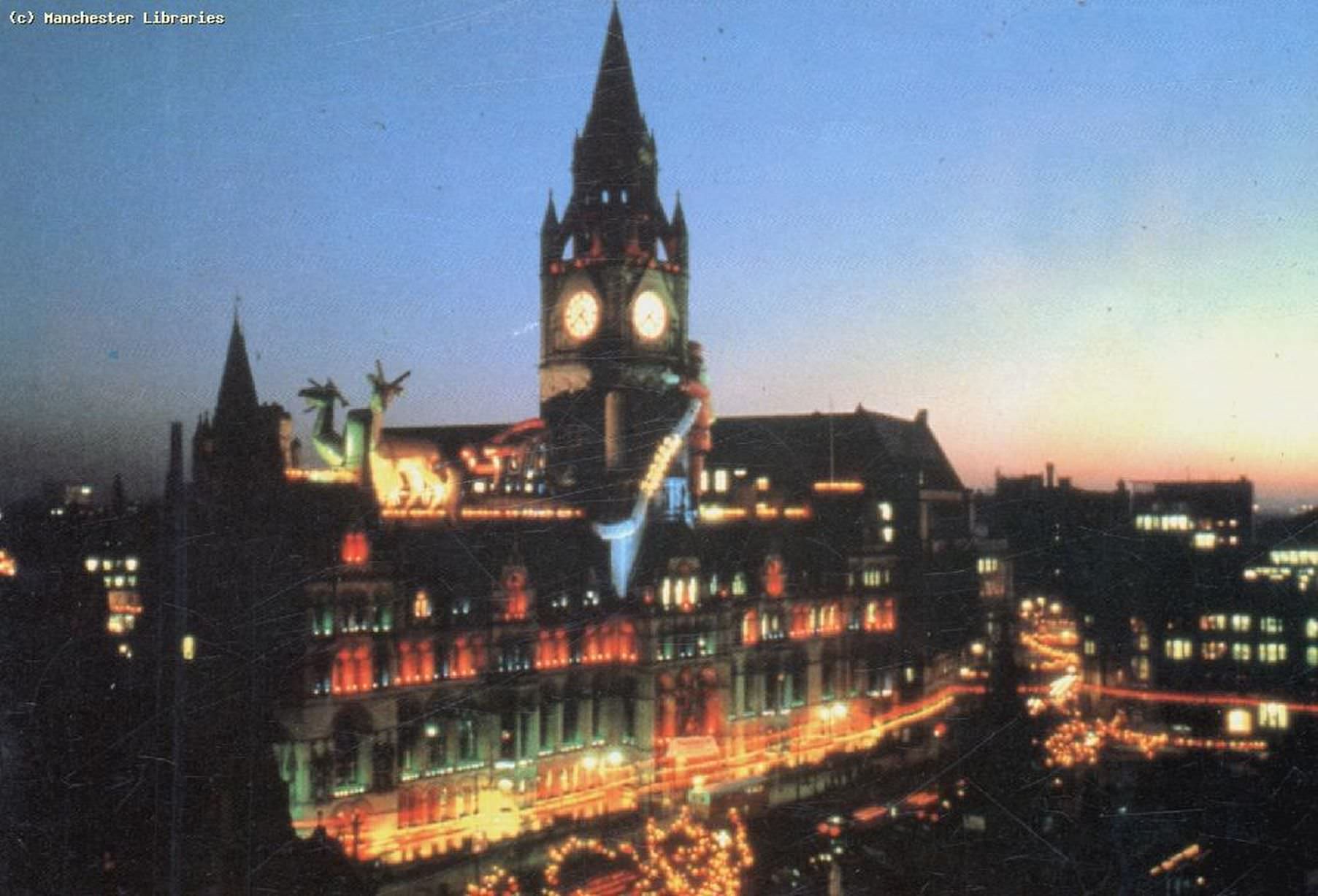
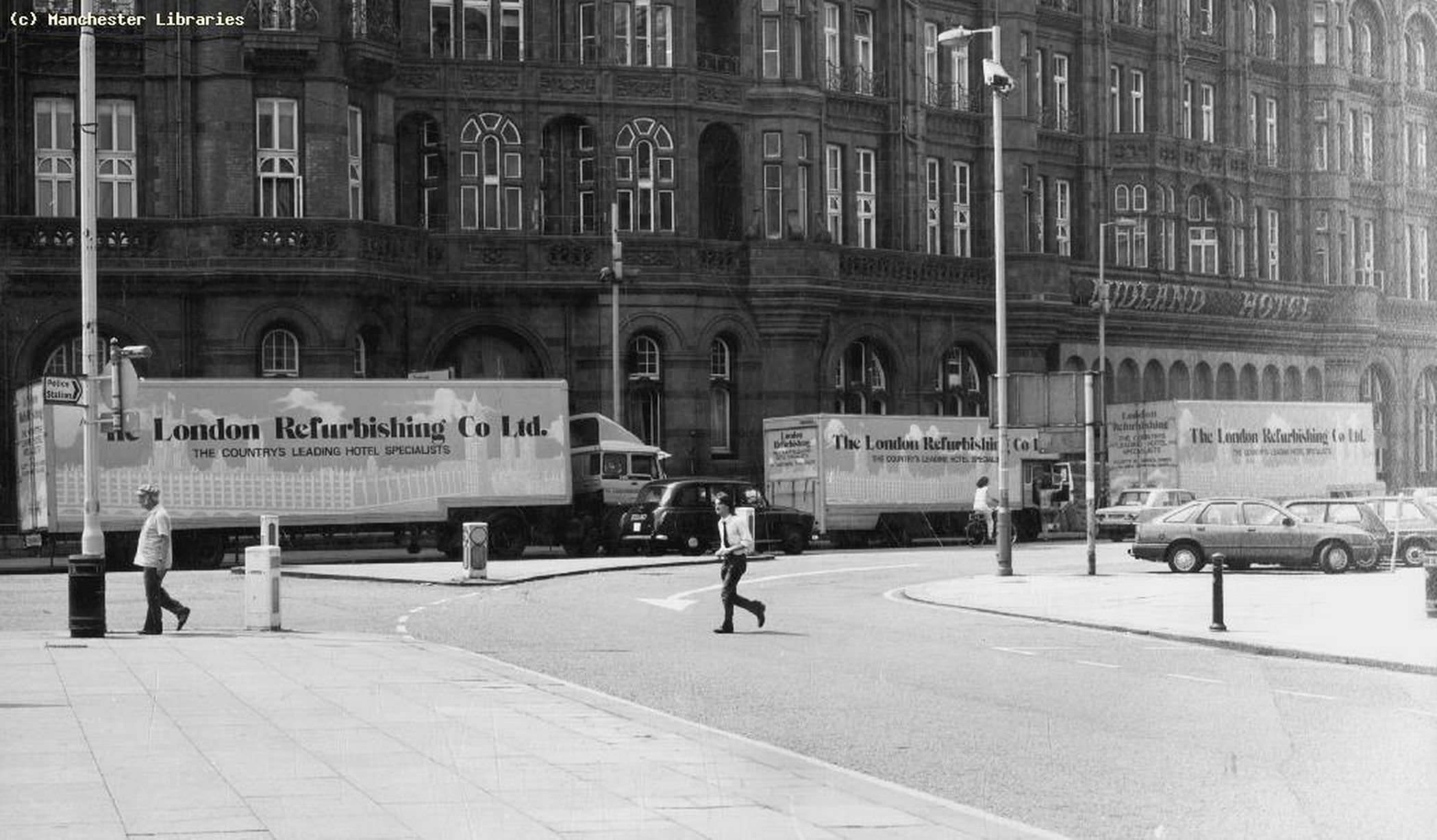
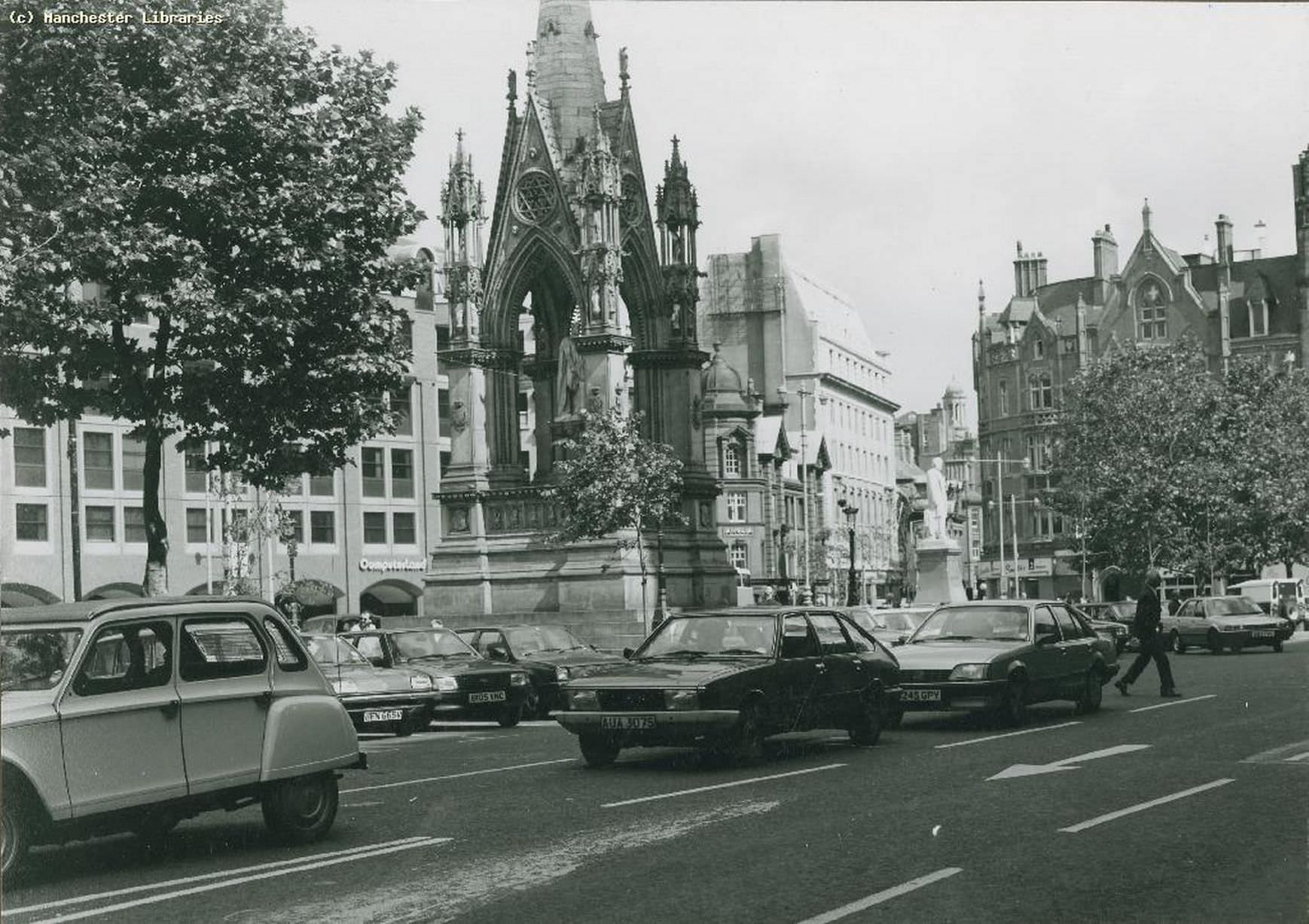
By the end of 1985, Manchester’s city centre dressed itself in Christmas lights. The Town Hall in Albert Square was a centrepiece of the seasonal display, while Market Street filled with shoppers hunting for gifts. The Midland Hotel, one of Manchester’s grandest Victorian buildings, was undergoing refurbishments that year, restoring it for a new era.
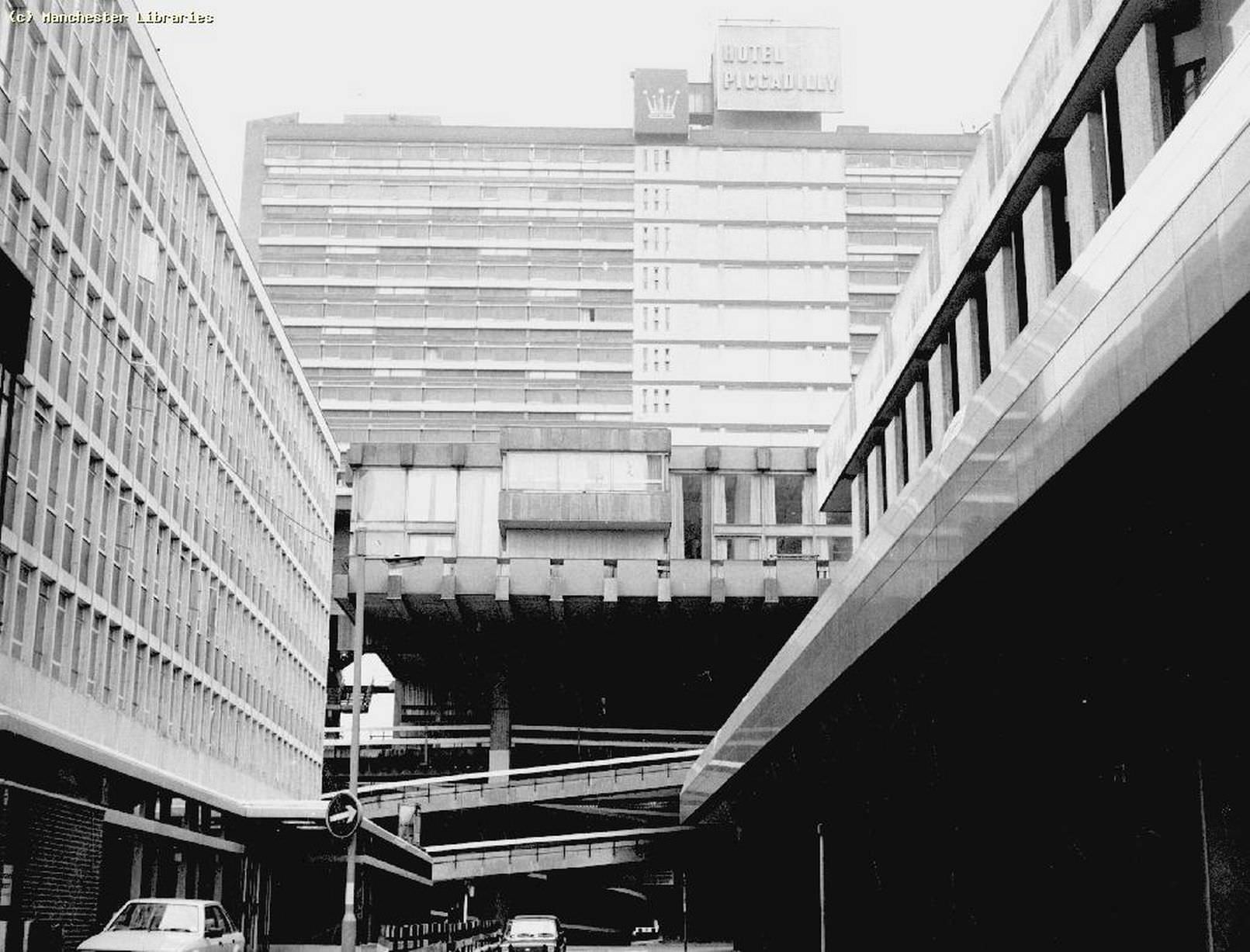
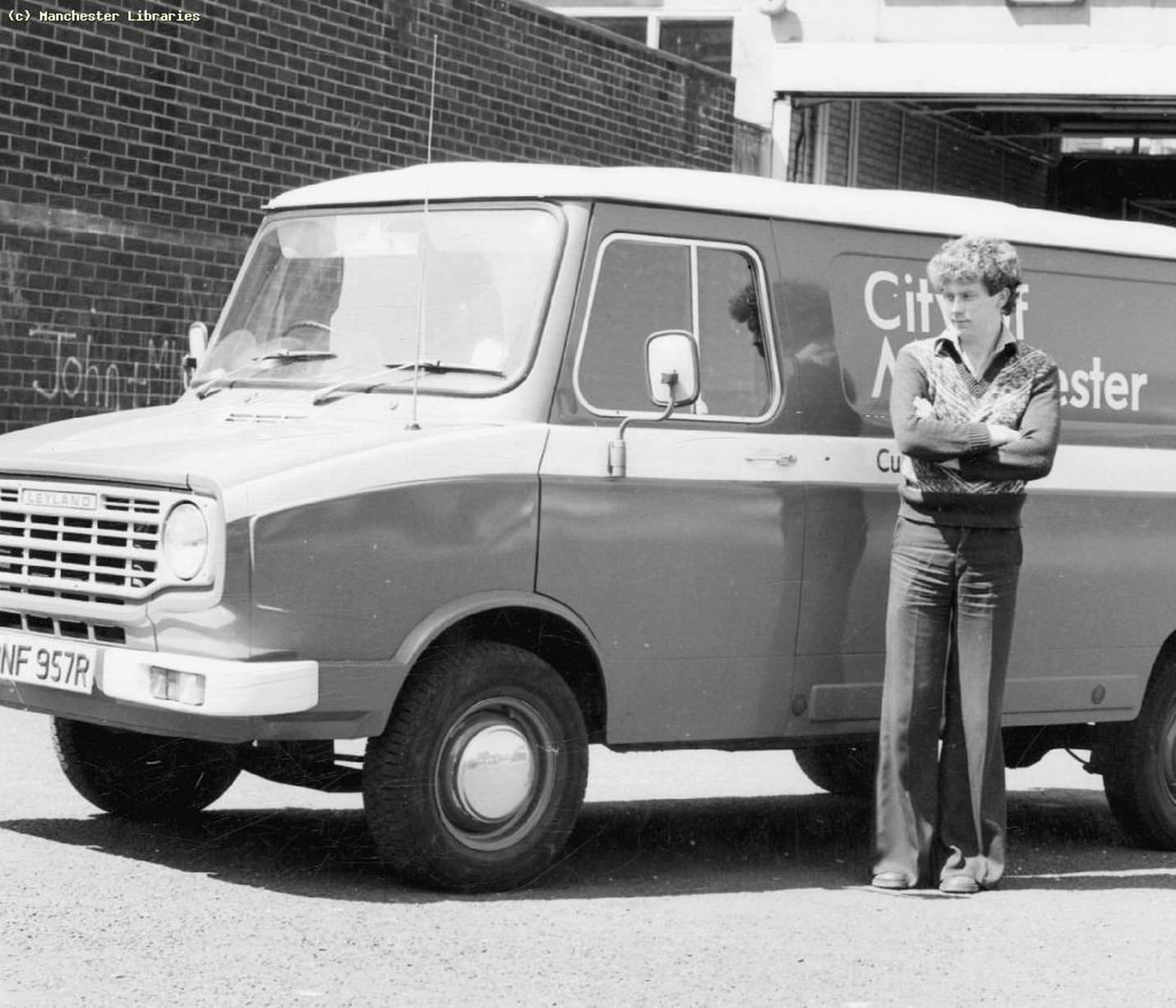
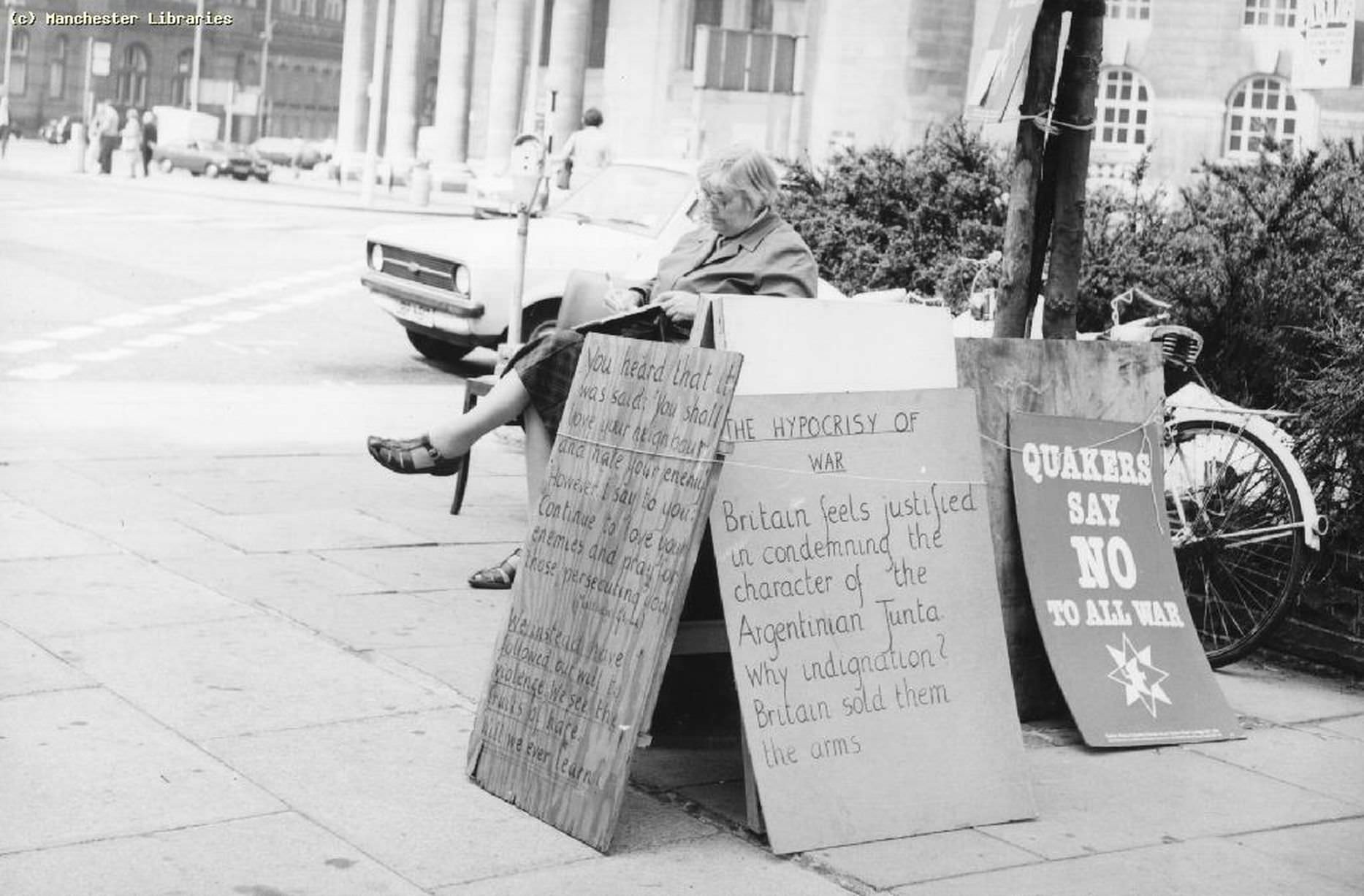
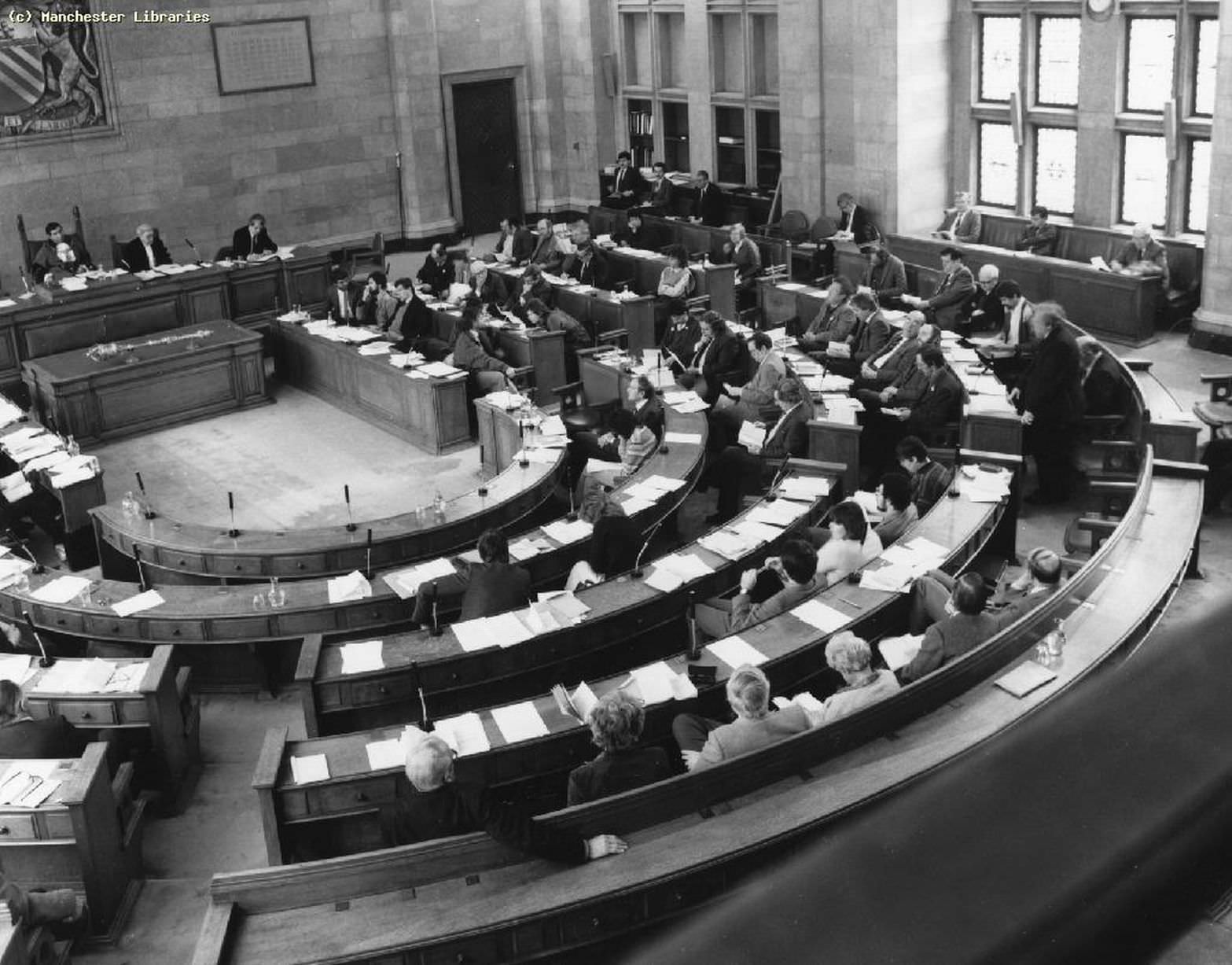
Manchester City Council ran an active cultural programme in 1985, with its Cultural Services van taking events and outreach across the city’s communities. The council itself met in session at the Town Hall, where debates over housing, transport, and the city’s future were a regular fixture. Public gatherings also shaped the city’s mood — a vigil for peace in Mosley Street Gardens drew Mancunians together in quiet solidarity.
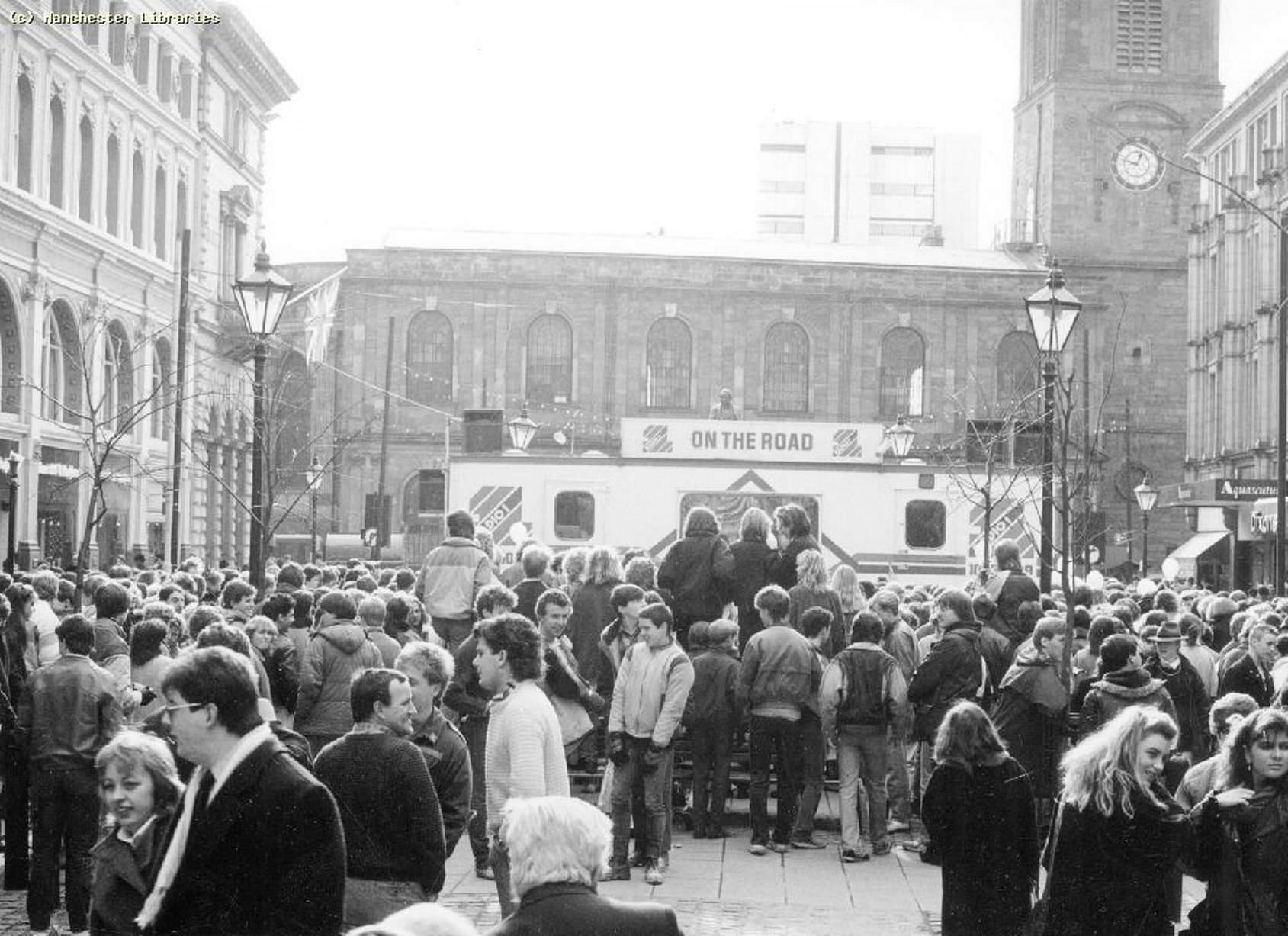
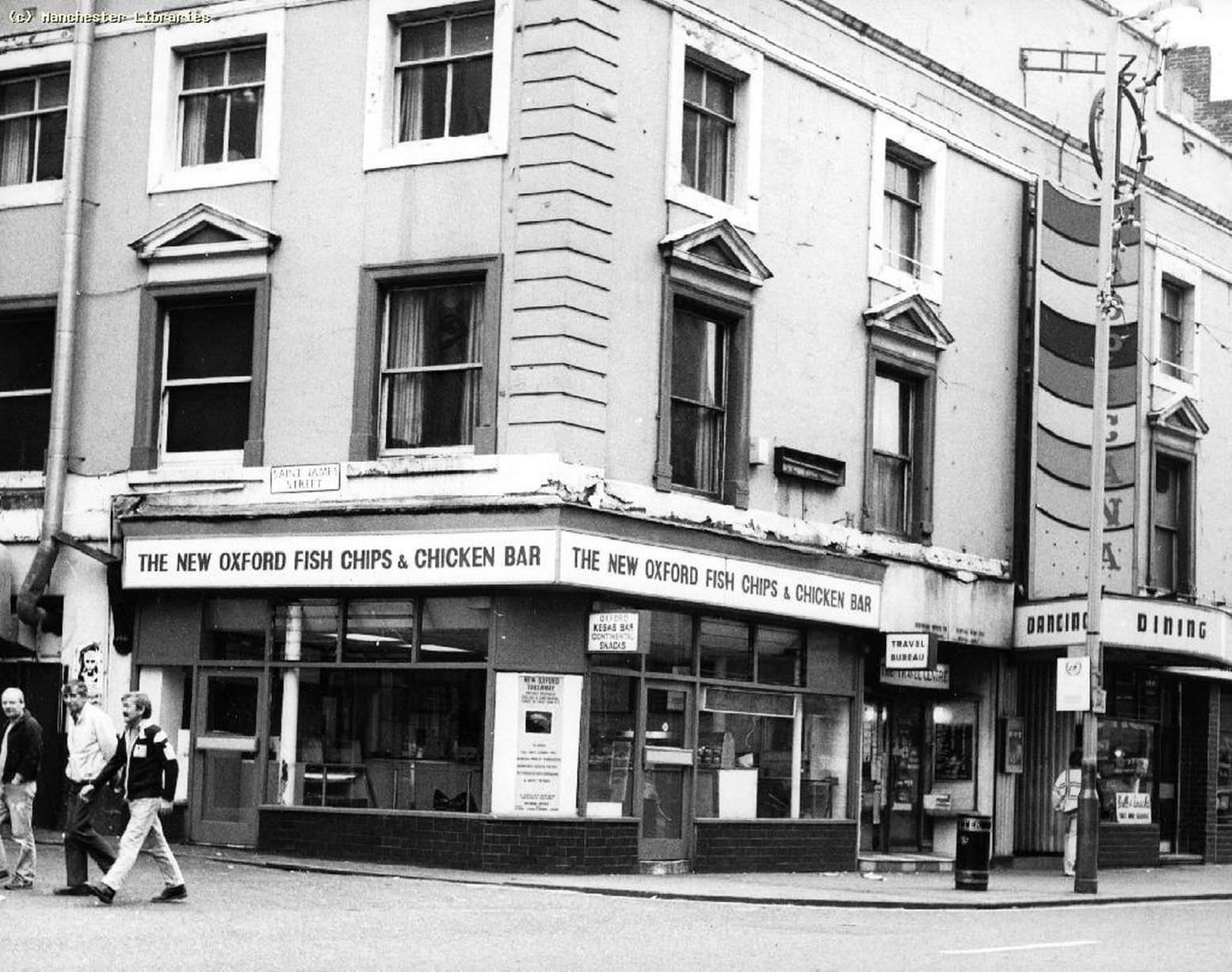
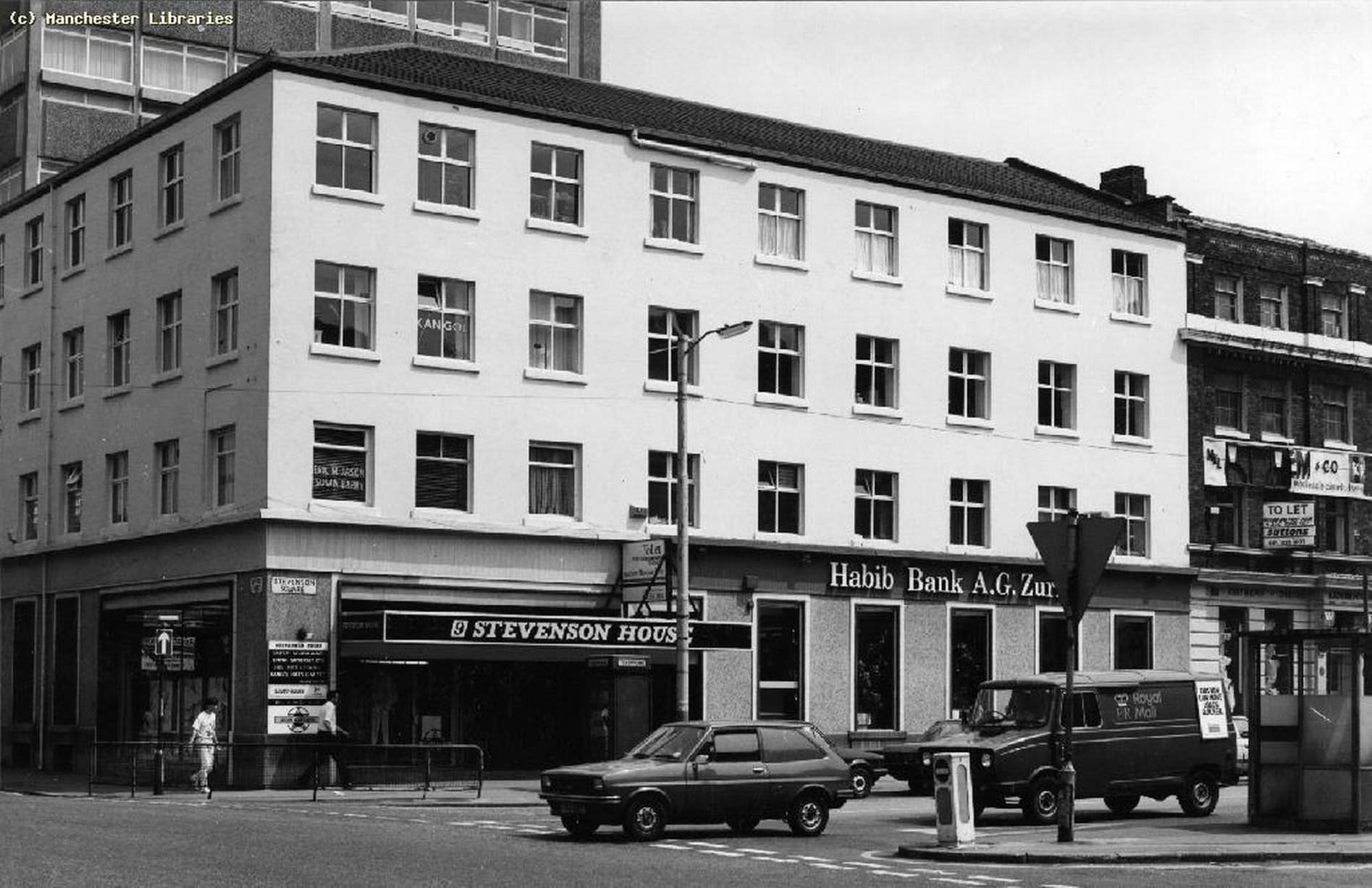
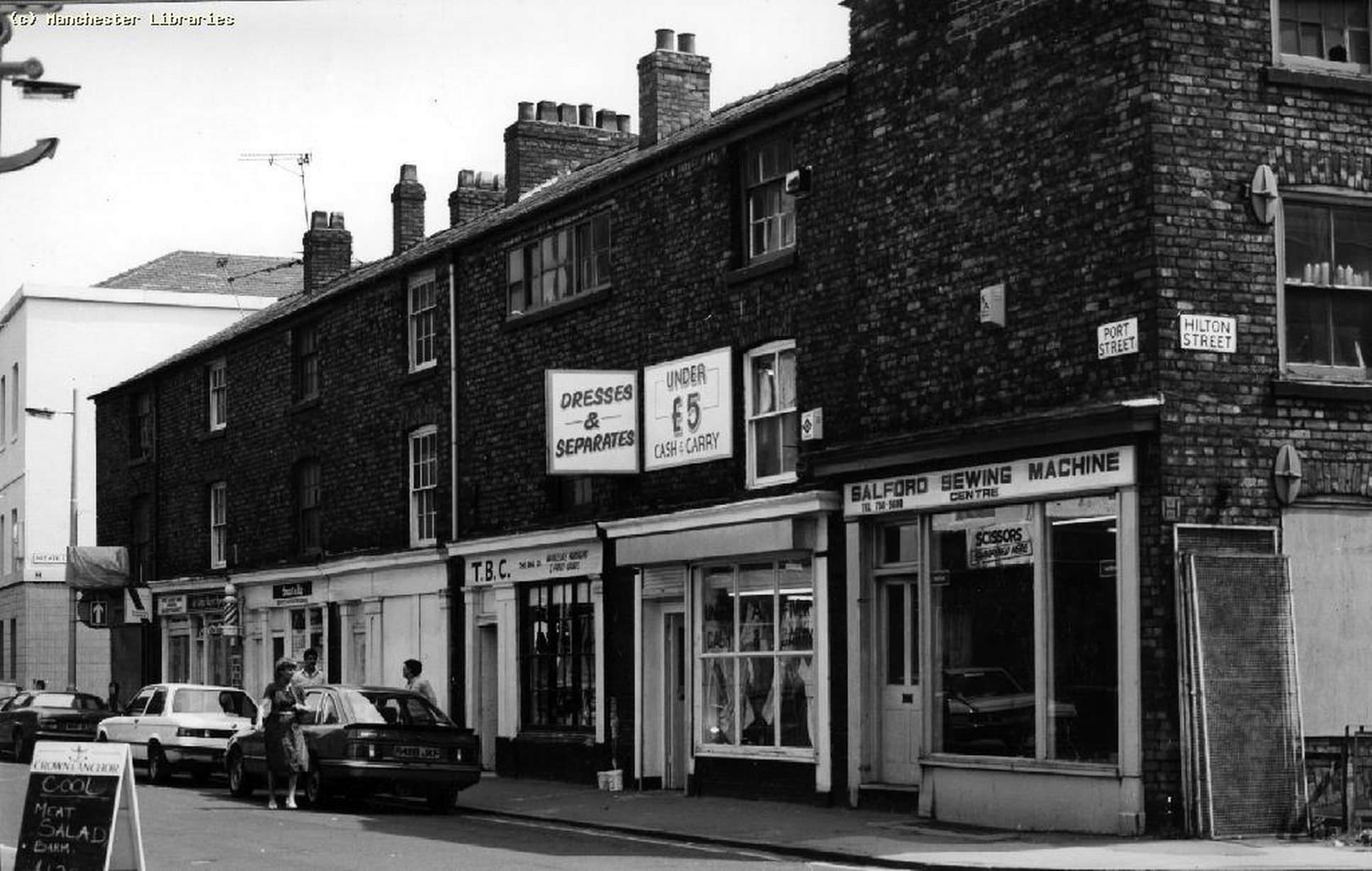
St Ann’s Square played host to the BBC Radio 1 Roadshow in 1985, bringing crowds of fans into the city centre for a free live event. Oxford Street and Stevenson Square showed the busier commercial and social sides of central Manchester, while quieter streets like Port Street reflected the city’s older, more worn-in character.
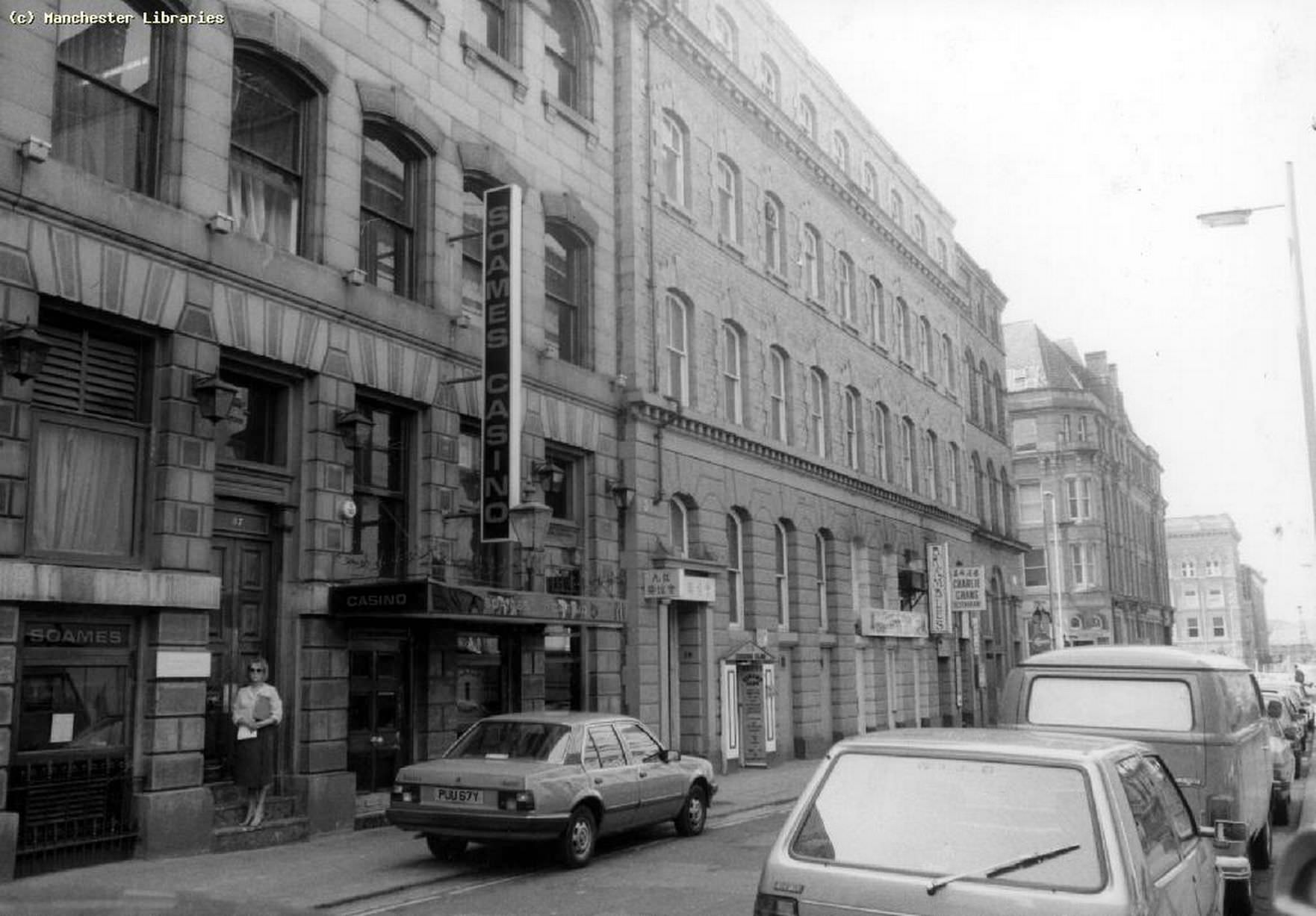
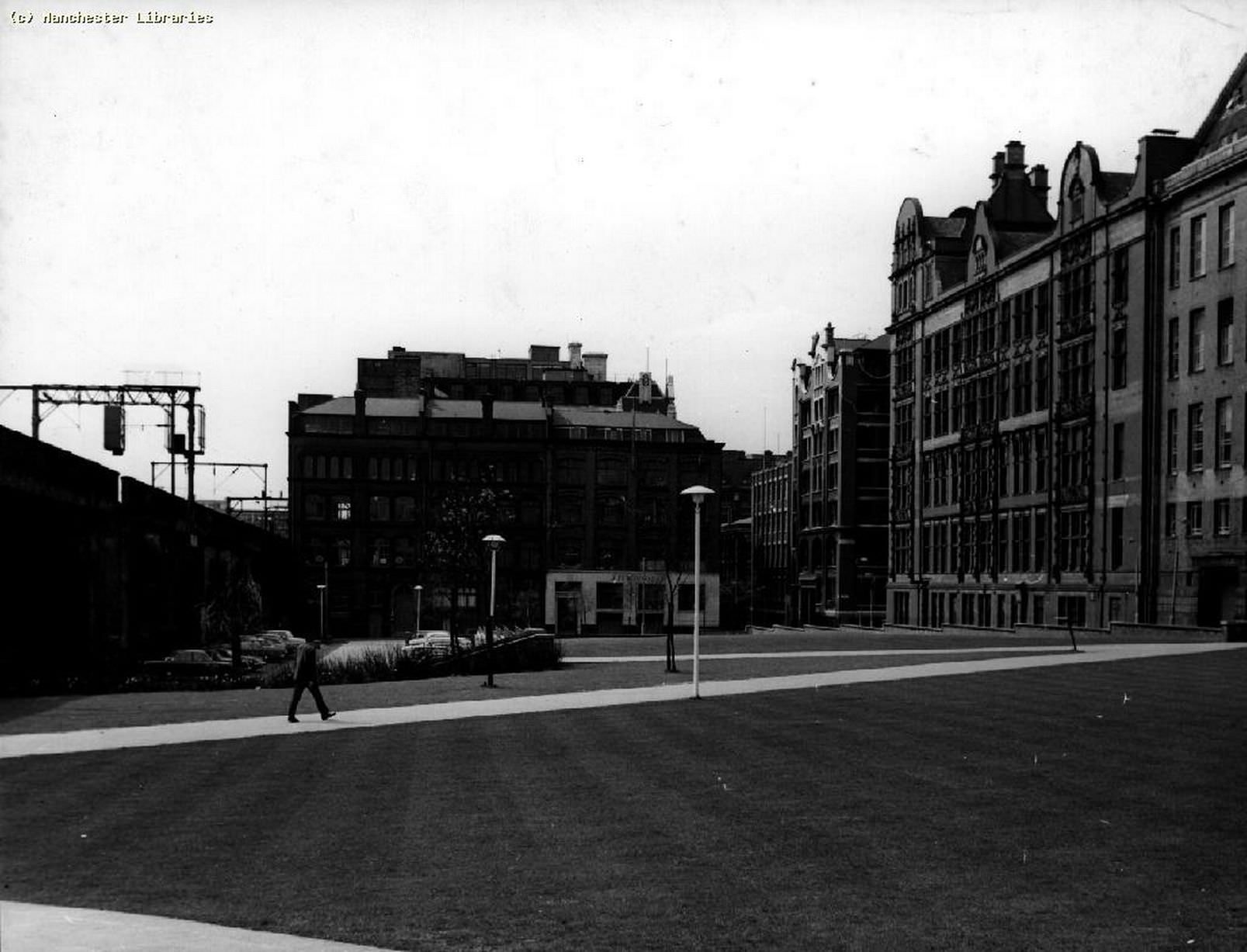
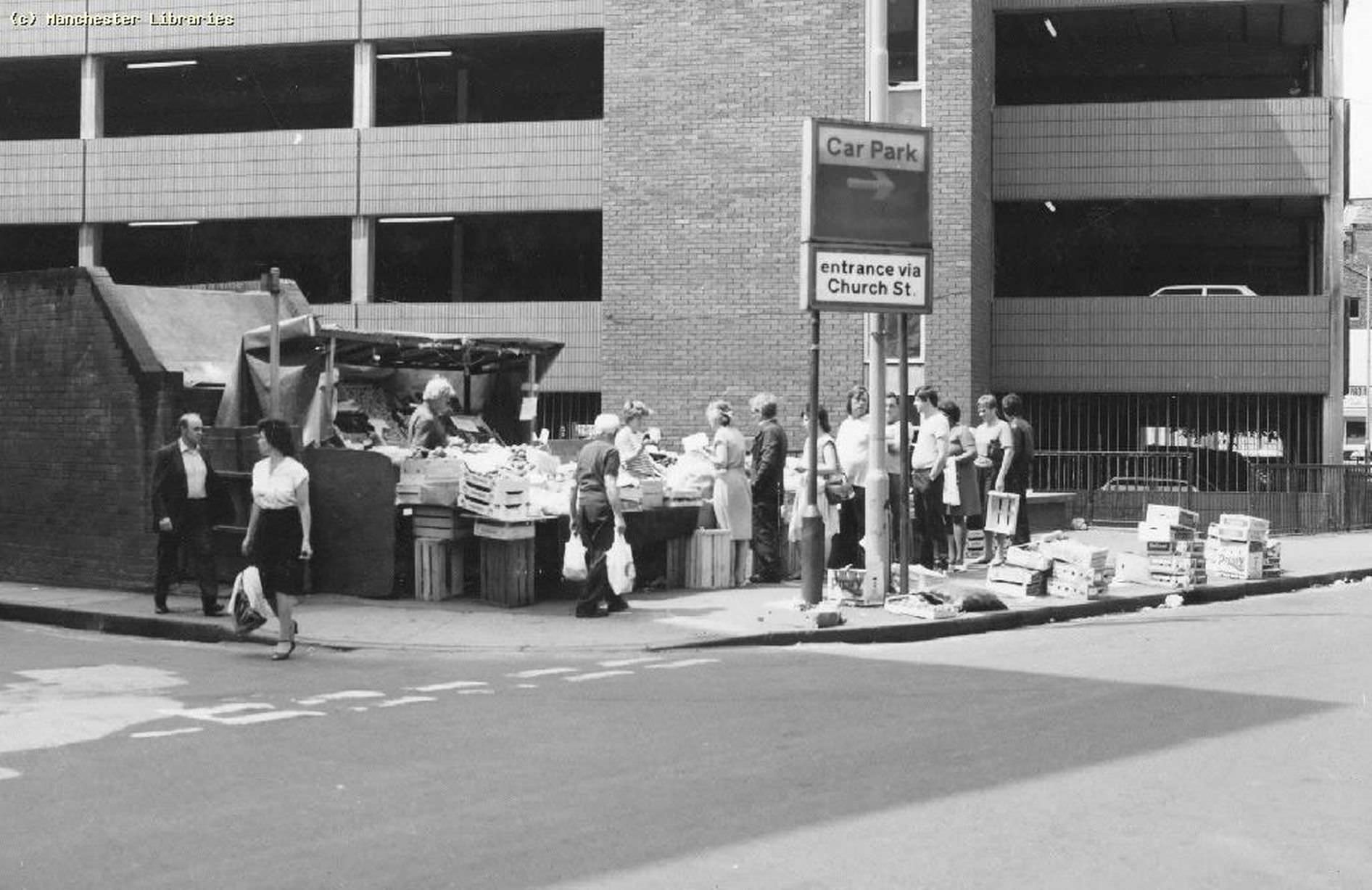
George Street’s Soames Casino sat within a network of city-centre streets that mixed nightlife with commerce. Nearby, Granby Row ran alongside UMIST — the University of Manchester Institute of Science and Technology — where students and academics filled the surrounding area with daily activity. Cannon Street’s market stall added to the sense of a city that still relied heavily on street-level trade.
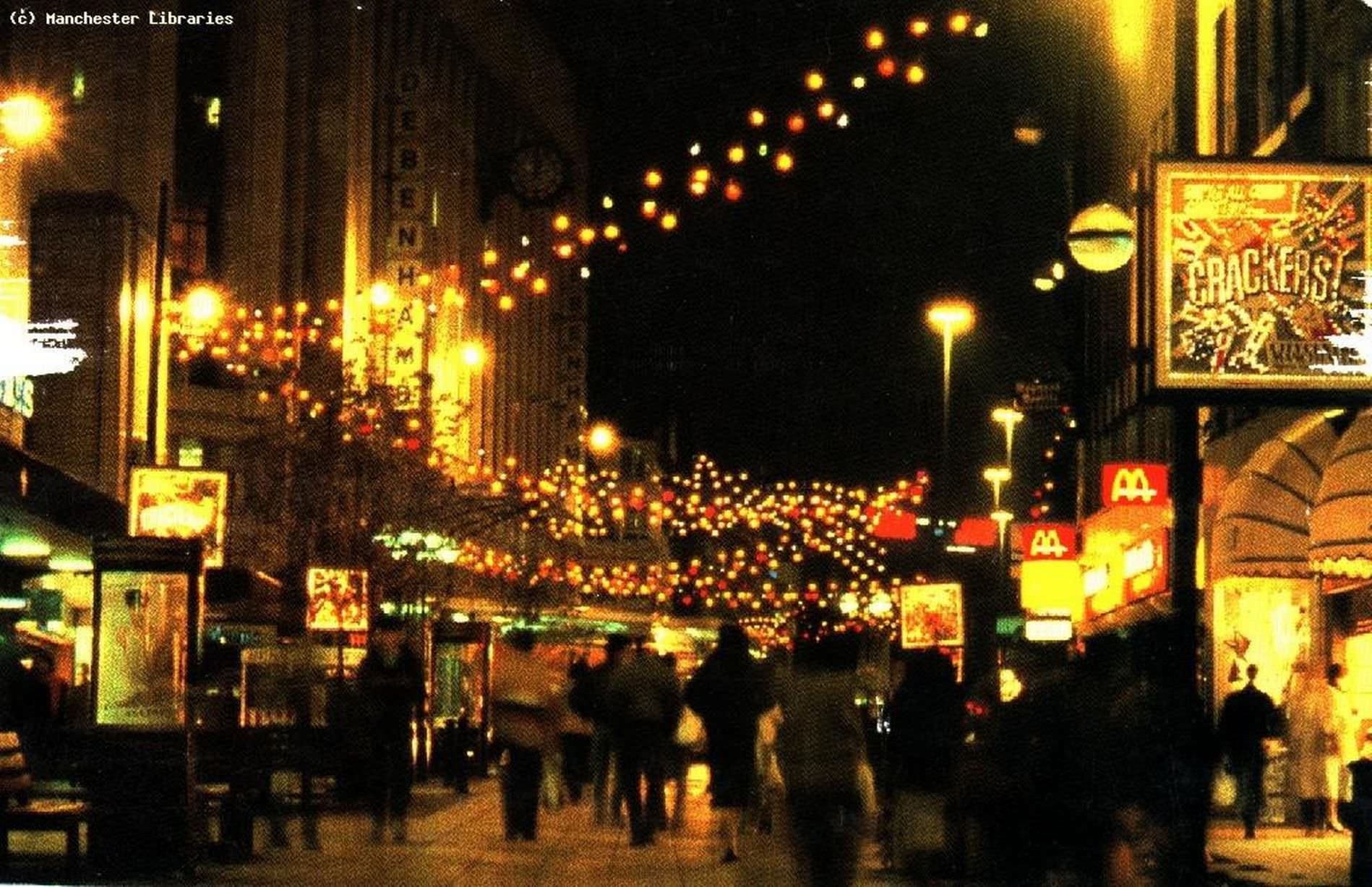
Market Street at Christmas was one of Manchester’s most animated sights. Shoppers crowded the pedestrianised stretch, which by 1985 was one of the busiest retail streets in the north of England. Oldham Street, running parallel to the city’s main shopping area, was lined with independent record shops, second-hand stores, and cafés that made it a favourite with younger Mancunians.
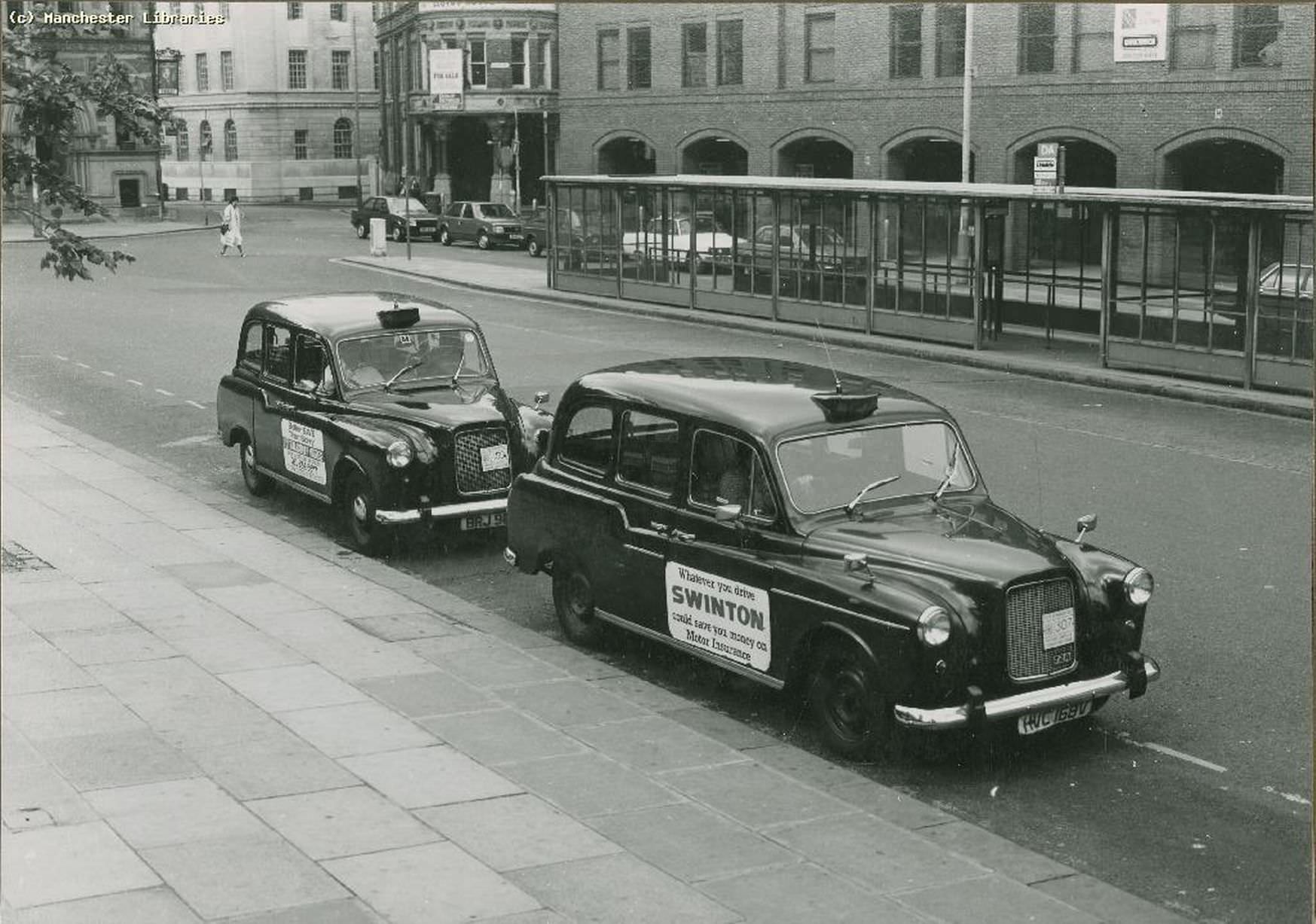
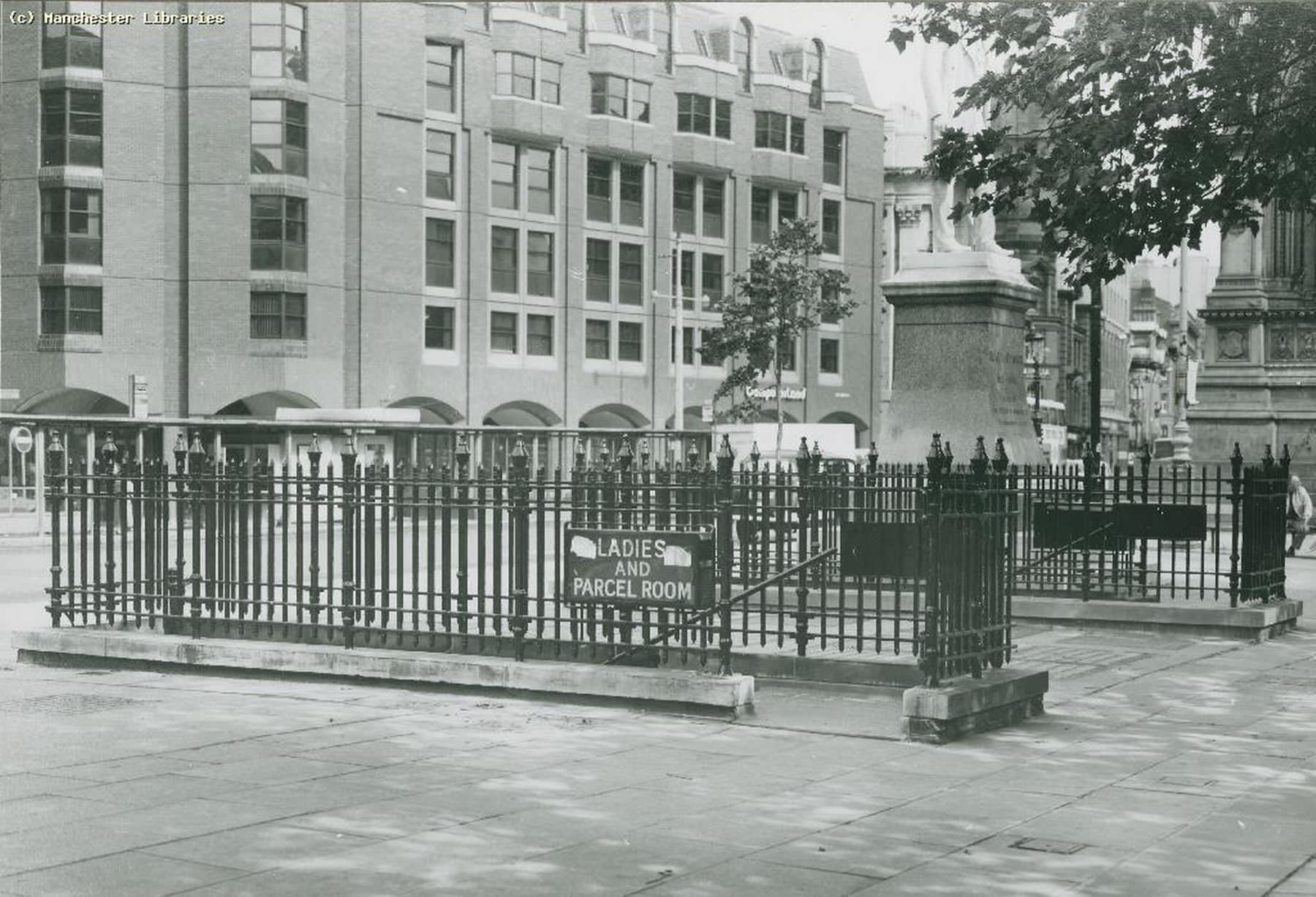
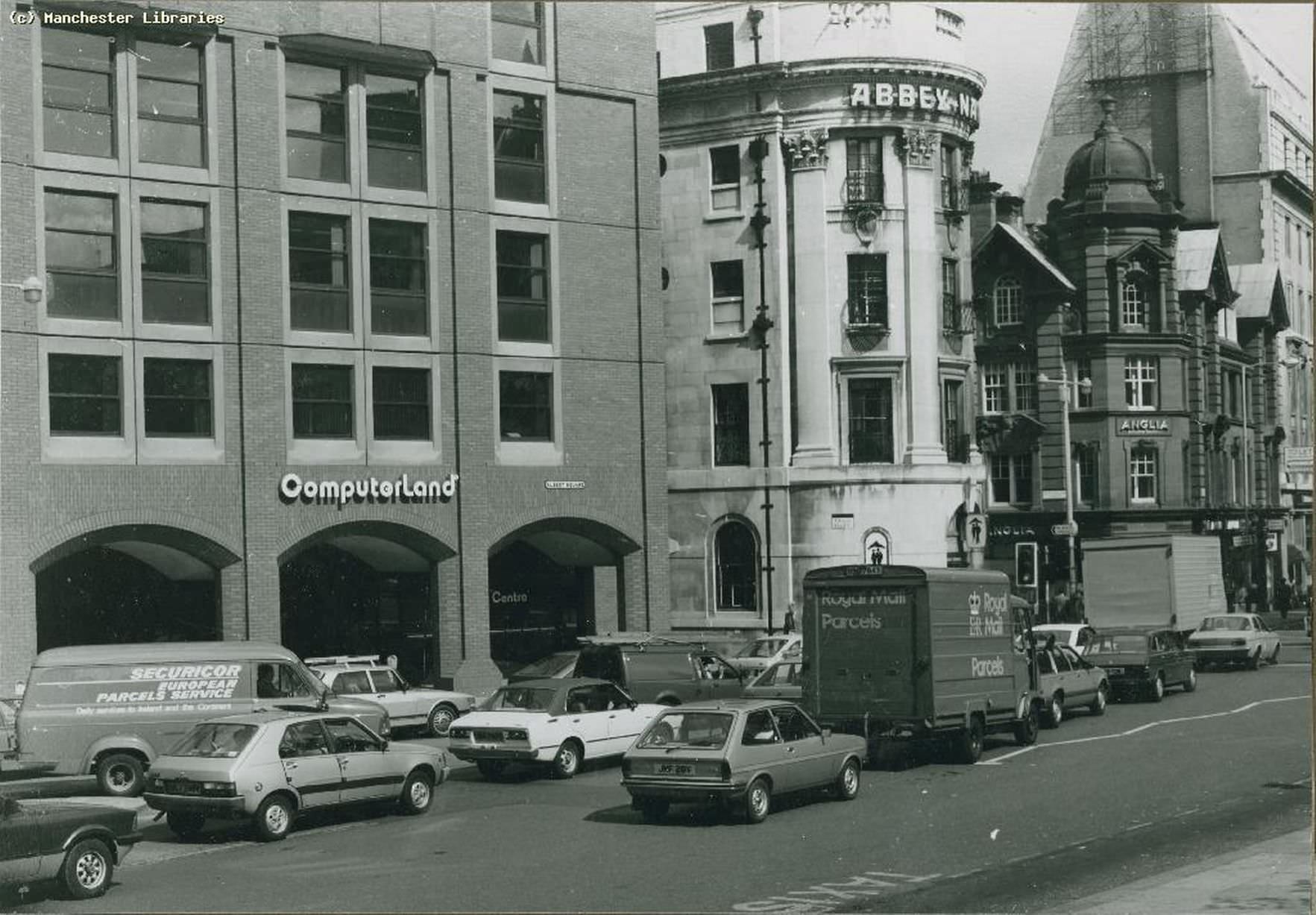
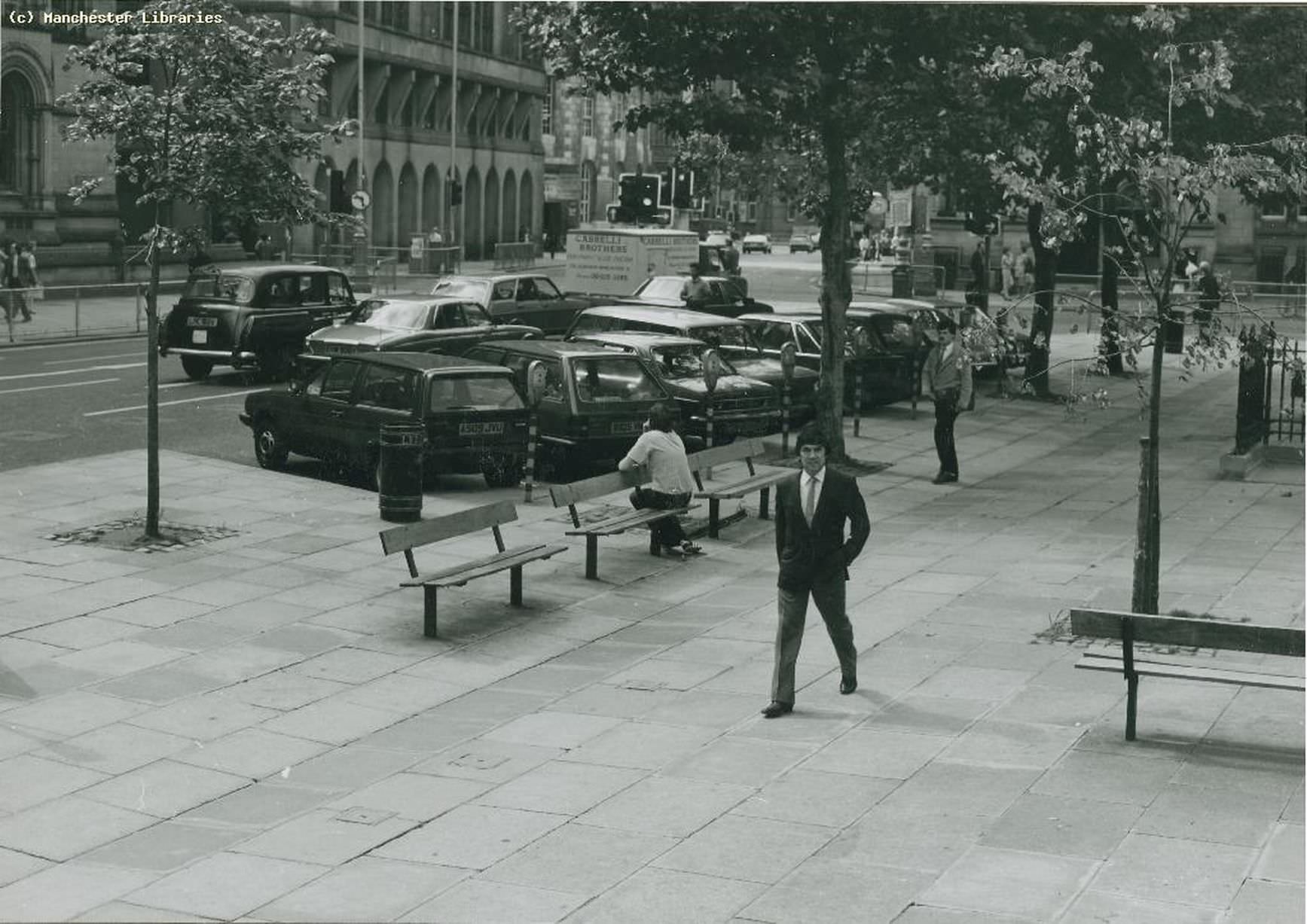
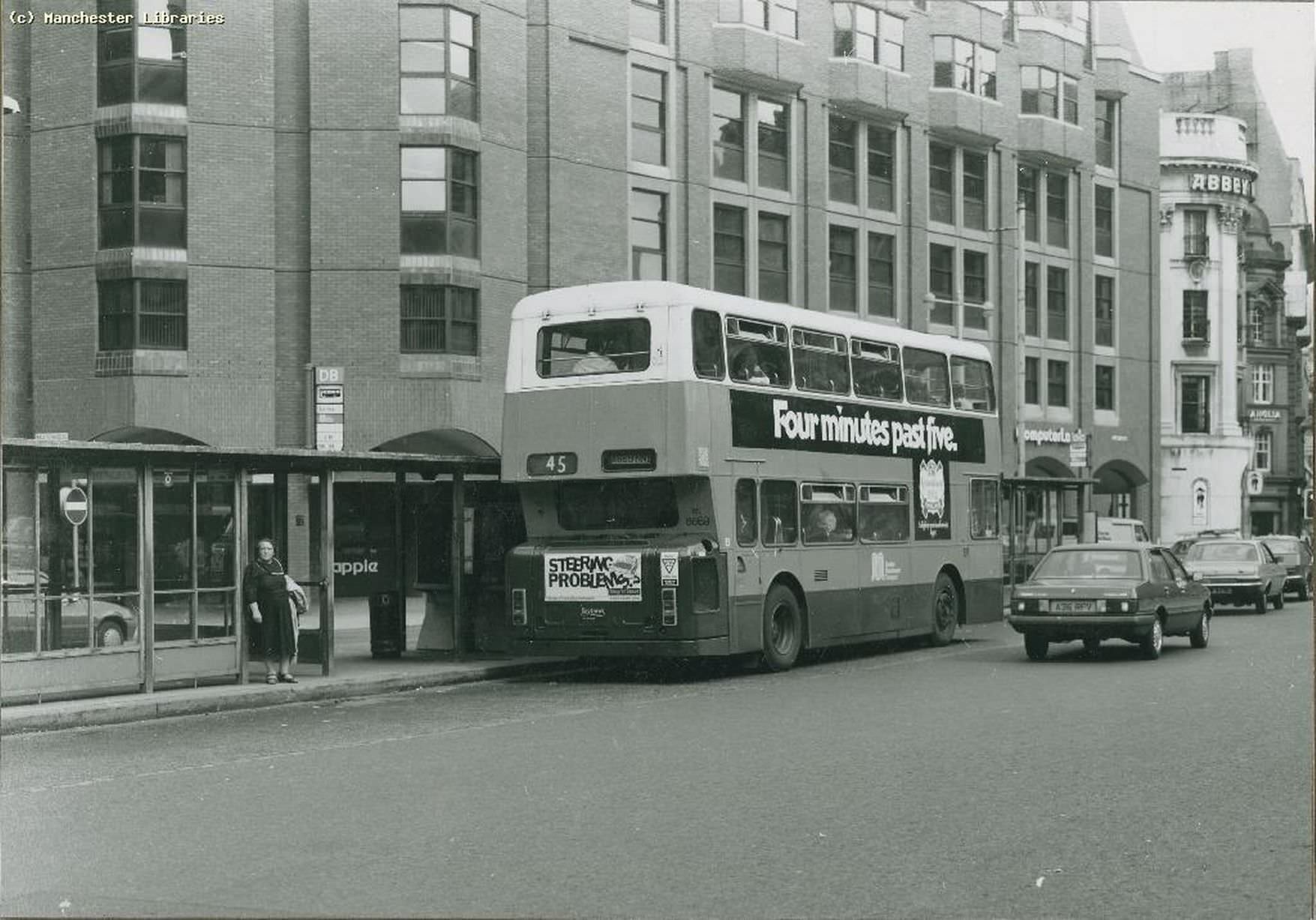
Albert Square was the beating heart of Manchester’s civic life in 1985. The square appeared repeatedly throughout the year’s photographic record — from council events to everyday street scenes. The Number 45 bus stopped there, connecting the square to wider neighbourhoods. Even the public toilets in the square were considered worthy of documentation, a reminder that these photographs captured all aspects of city life, not just the grand or the glamorous.
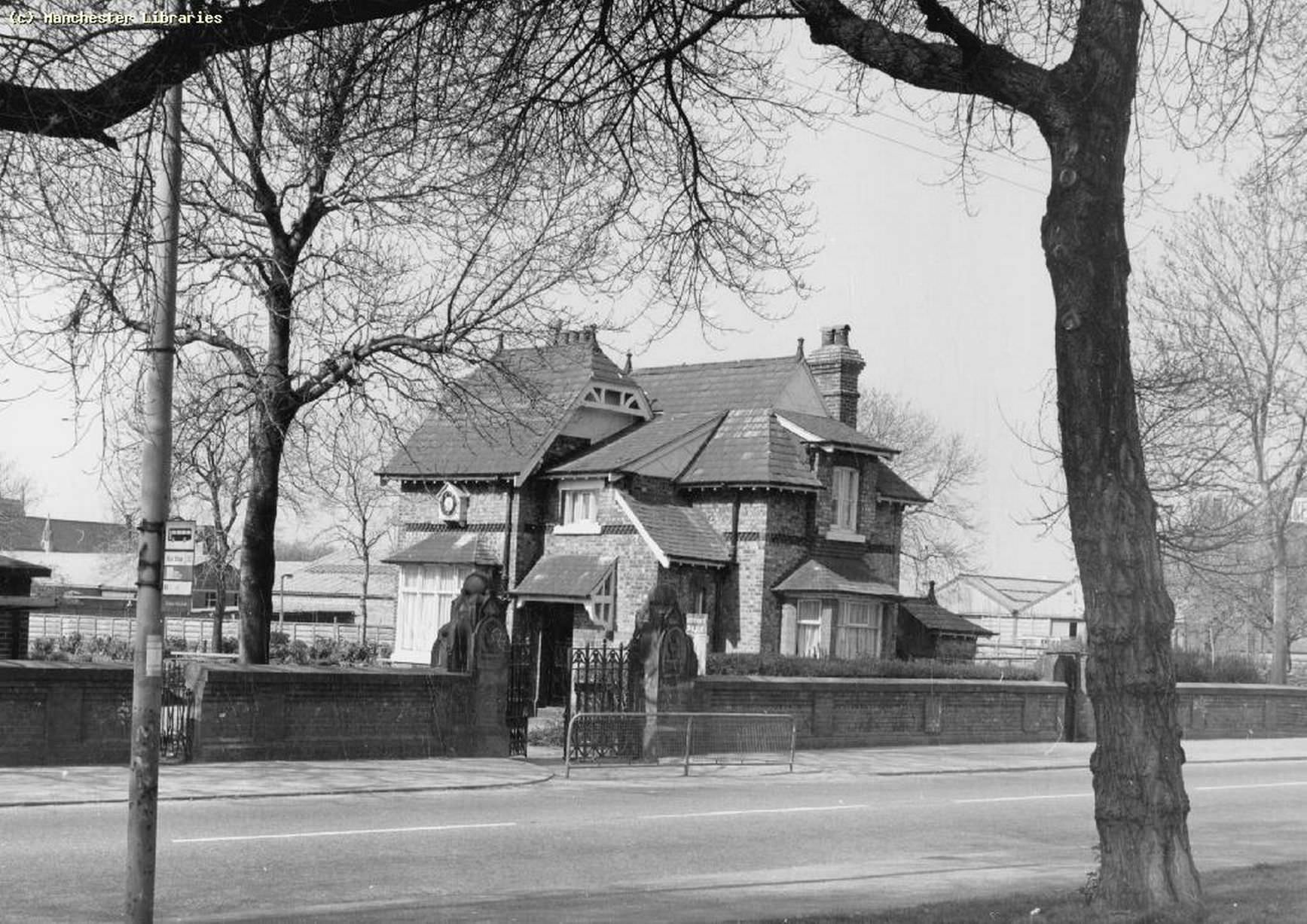
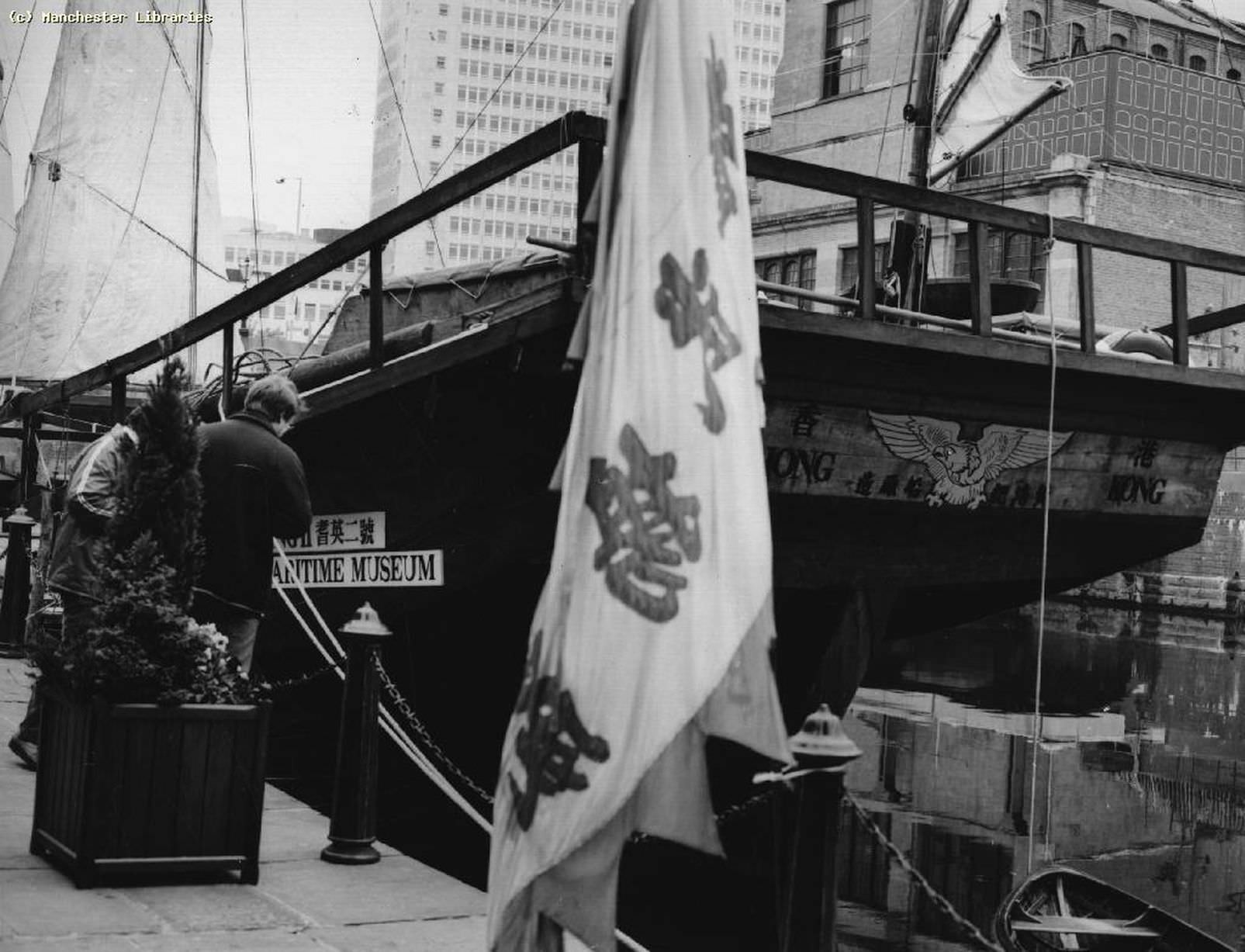
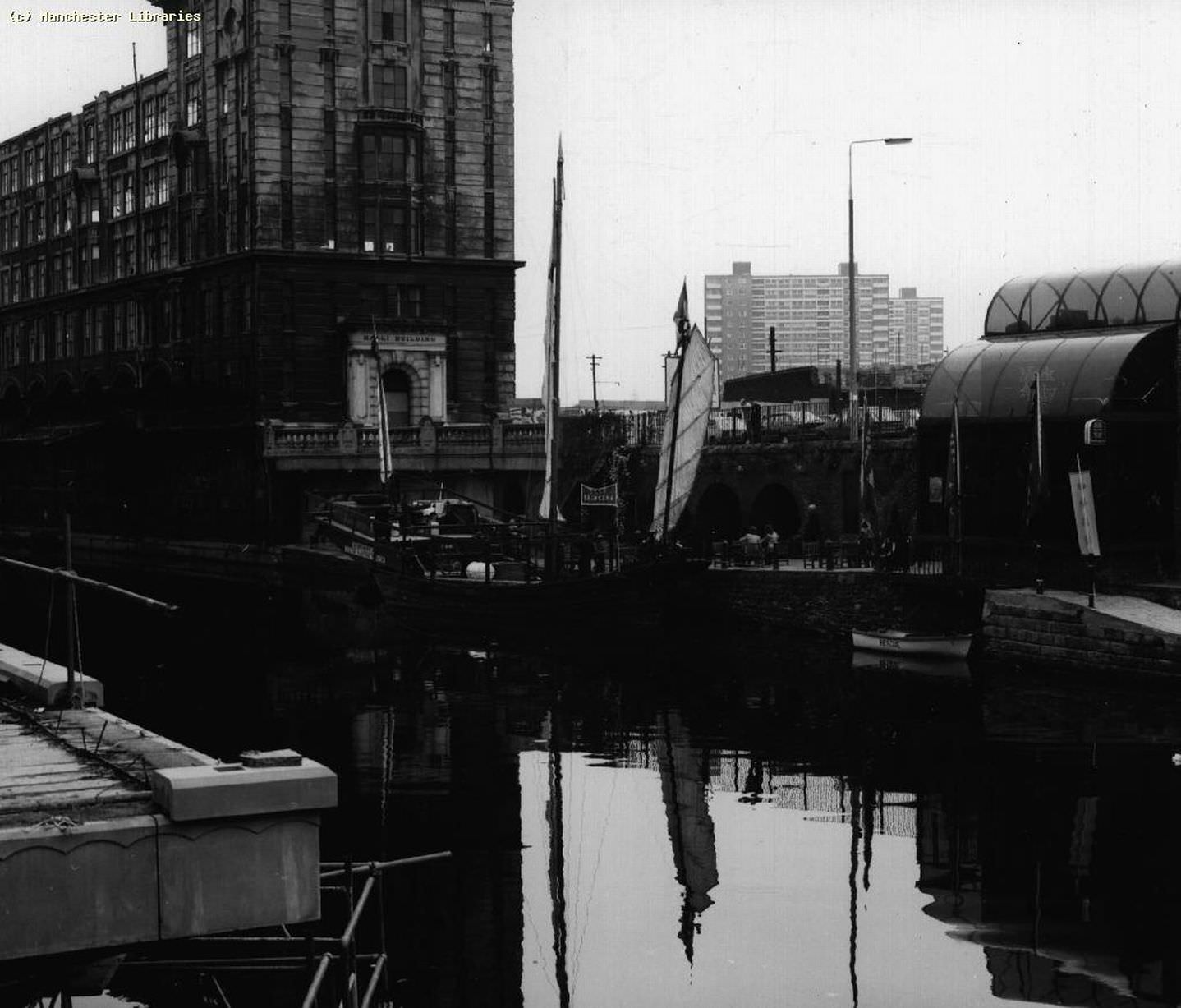
North Manchester’s Cheetham Park offered green space to a dense urban area, its paths and benches used by families and older residents alike. Down by the River Irwell, one of the more unusual sights of 1985 was a Chinese junk moored near the Mark Addy pub — a striking image against the backdrop of Manchester’s industrial waterfront.





Wow everything looks a lot cleaner in the centre than today
Awful! Not enough diversity…which is, of course, our strength or something.
That’s why so clean. Luckily we had no diversity