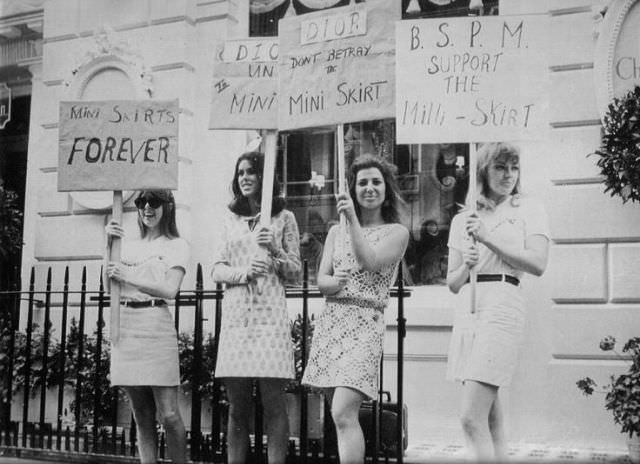
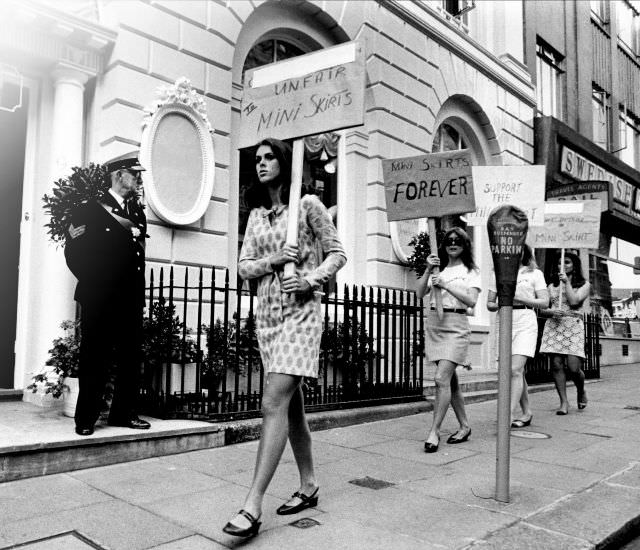
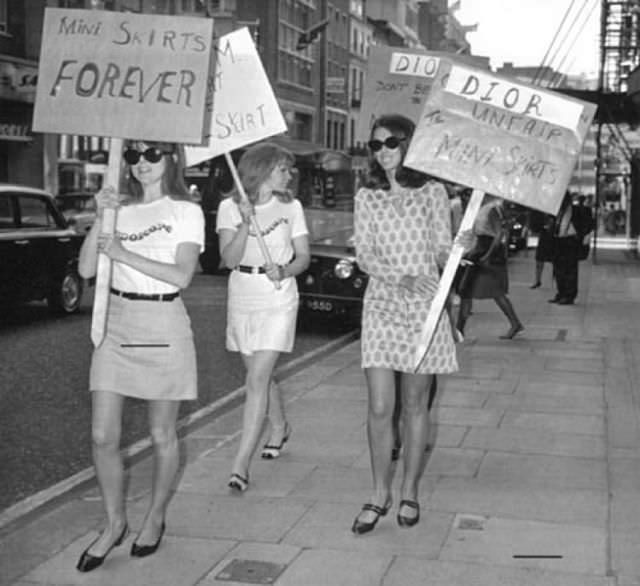
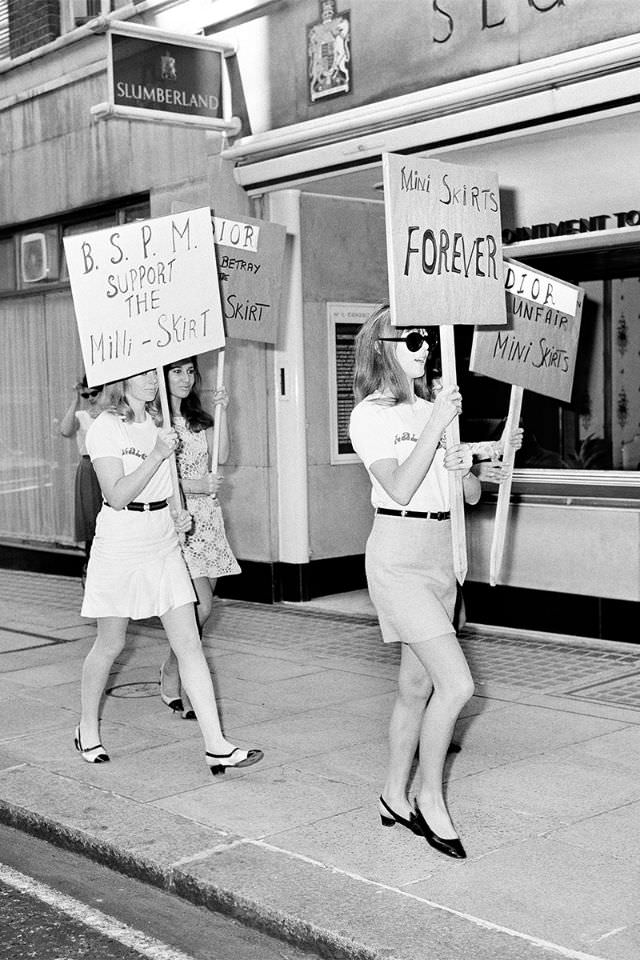
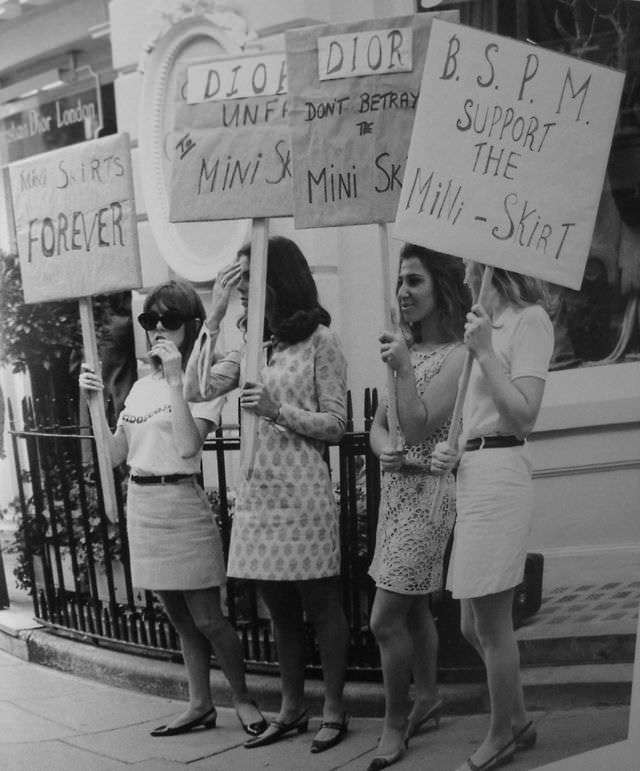
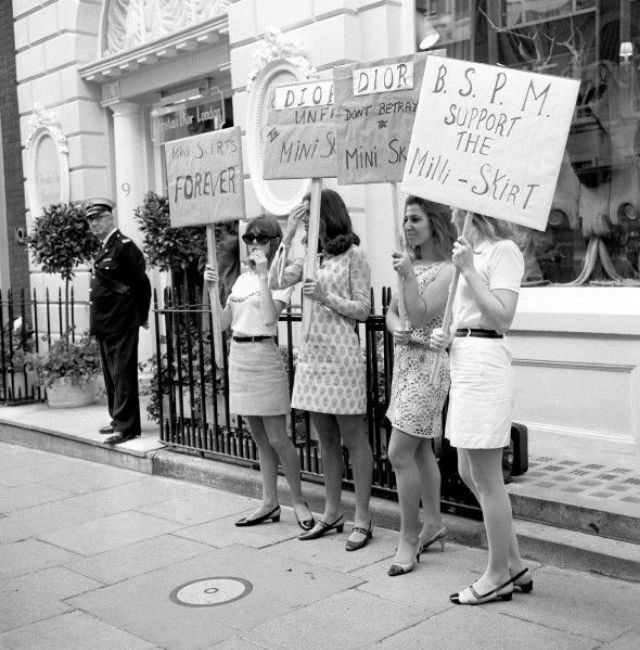
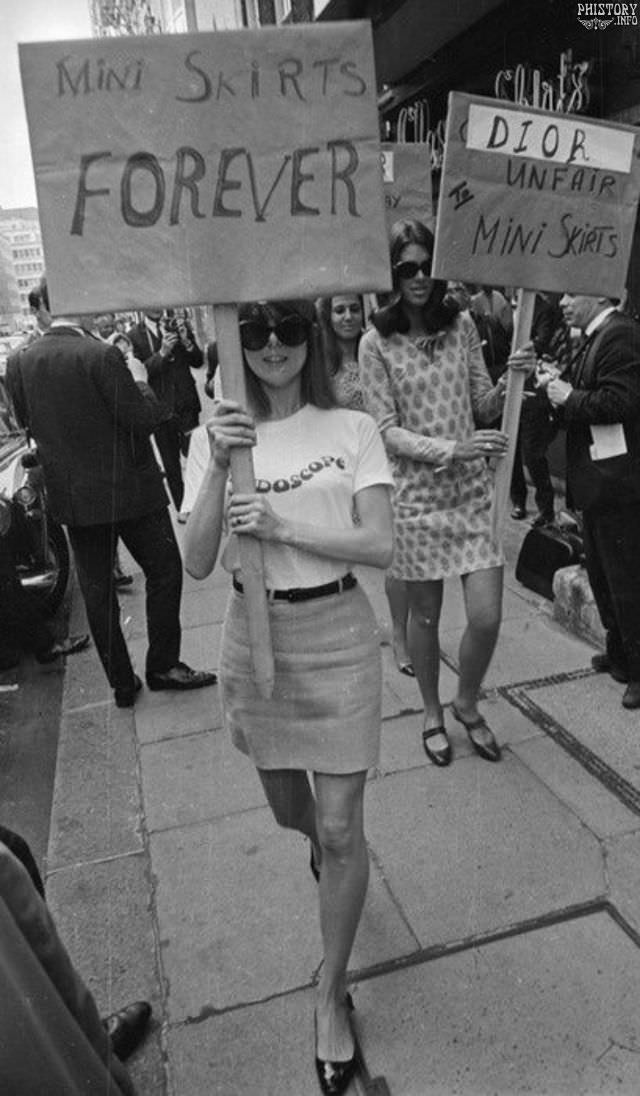
In 1966, a group of young women gathered outside the headquarters of the House of Dior in London. They organized under the specific name, “The British Society for the Advancement of the Mini-skirt.” These women were not protesting for political rights or labor wages, but for the preservation of their hemline. The famous fashion house, Christian Dior, had recently unveiled a new collection that featured skirts falling below the knee. The protesters viewed this return to longer fabric as a threat to their modern identity. They marched on the sidewalk holding placards with slogans like “Mini Skirts Forever” and “Support the Mini-skirt.”
Mary Quant’s Invention
The subject of this controversy first appeared on the catwalk two years earlier, in 1964. British designer Mary Quant designed the skirt to be practical and liberating for young women. She named the garment after her favorite car, the Mini Cooper. Quant sold these items from her boutique, Bazaar, located on the trendy King’s Road. She cut the fabric several inches above the knee, which was a radical departure from the styles of the 1950s. This design choice created a specific look that defined the entire decade of the 1960s.
Breaking the Mold
The mini-skirt served as a clear dividing line between generations. Before this invention, young women essentially dressed like younger versions of their mothers. The short skirt allowed them to create a distinct visual identity. It offered physical freedom and mobility that the heavy, restrictive clothing of the past did not permit. This shift in fashion coincided with the introduction of the contraceptive pill. Together, these factors contributed to a sexual revolution that challenged the traditional codes of behavior expected of women in society.
Read more
The Conservative Backlash
Traditional commentators reacted to the rising hemlines with shock and disapproval. Many viewed the style as a sign of moral decline and the end of decent society. Established fashion houses like Dior initially resisted the trend, preferring the elegance of longer, more modest cuts. They considered the mini-skirt to be a passing fad lacking in sophistication. However, the protest in London proved that the consumers held the power. Women who had experienced the freedom of “skirt-length equality” refused to go back to the old standards.
The Hemline Economy
The popularity of the mini-skirt occurred during a time of economic boom in Britain. Wages were high, and the youth population had money to spend on new clothes. A persistent theory in fashion history suggests that skirt lengths rise when the economy is strong and drop when the market crashes. While there is no statistical evidence to prove this link, the 1960s fit the pattern perfectly. The confidence of the era was visible in the bold, revealing nature of the street fashion.