Hey There! Before You Go. 😧
Get the best vintage content straight into your inbox!

Don't worry, we don't spam

From Sydney Beaches to Melbourne Ballrooms: Australian Fashion in the 1930s

The Great Depression arrived in Australia at the start of the 1930s and immediately changed how people dressed. Clothing budgets tightened across the country. Families repaired worn garments, repurposed old fabric, and relied on skilled dressmakers to update outdated styles into something wearable for the current season. Buying new clothes was a luxury most households couldn’t afford, so making do became the norm.

For women, the everyday dress of the 1930s looked very different from the short, loose styles of the 1920s. Hemlines dropped to mid-calf, and the bias cut became the defining technique of the decade. By cutting fabric diagonally across the grain, dressmakers could create a drape that hugged the body naturally without extra seams or stiffening. Rayon and cotton were the most common fabrics — affordable, easy to wash, and suited to Australia’s warm climate. Small floral prints and solid colors filled the summer wardrobe, while wool blends and darker shades took over in the cooler months.
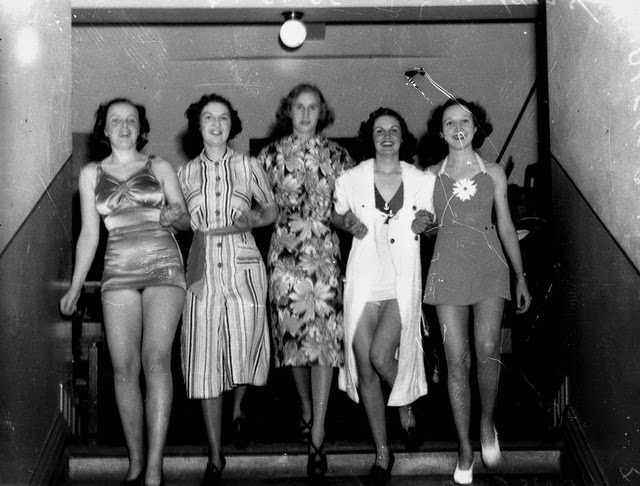
Stepping out for a Spring fashion parade, 1938

Men’s fashion stayed conservative but carried its own quiet polish. Business suits featured wider shoulders, peaked lapels, and slightly tapered trousers. In cooler southern cities like Melbourne and Hobart, wool and tweed were the standard. In Brisbane and Perth, lighter-weight suits made more sense in the heat. City workers topped off their look with straw boaters or felt fedoras — accessories that were as much a uniform as the suit itself.
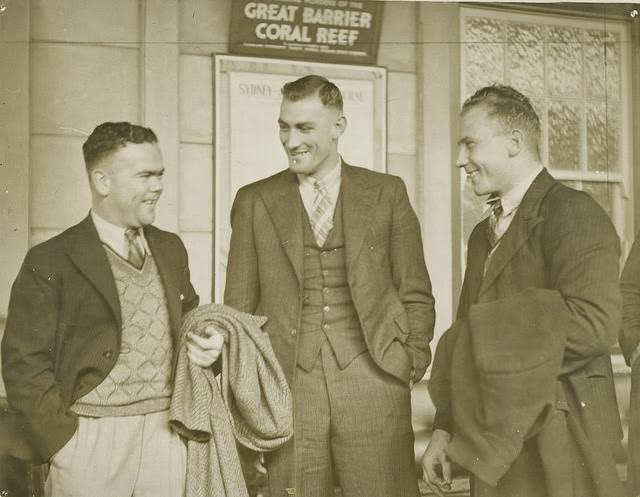
Queensland representatives in the Australian Rugby Test team departing for Sydney, ca. 1933

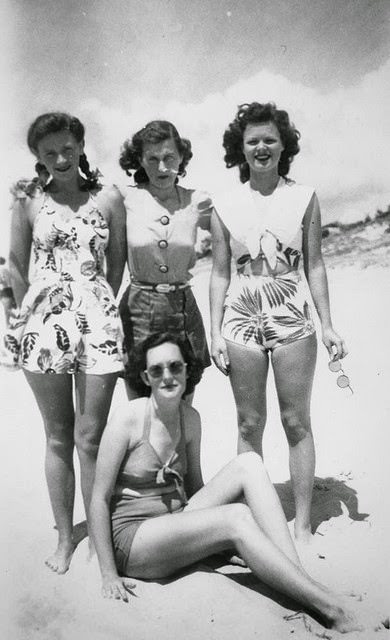
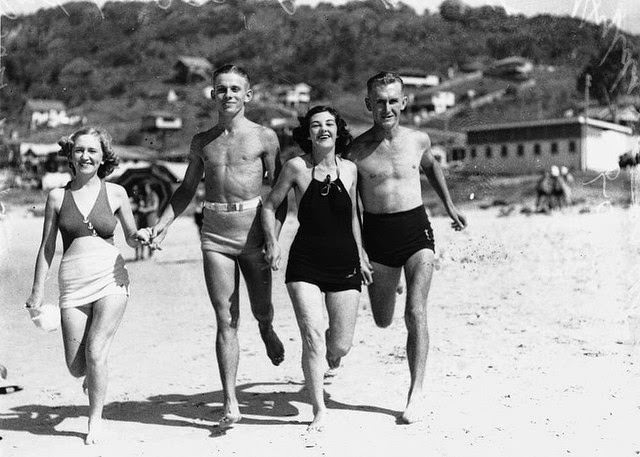
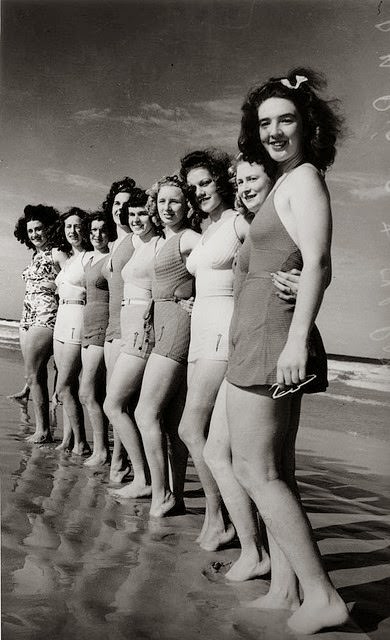
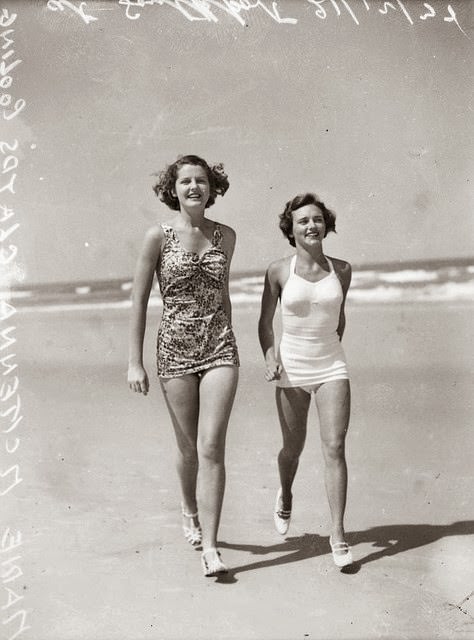
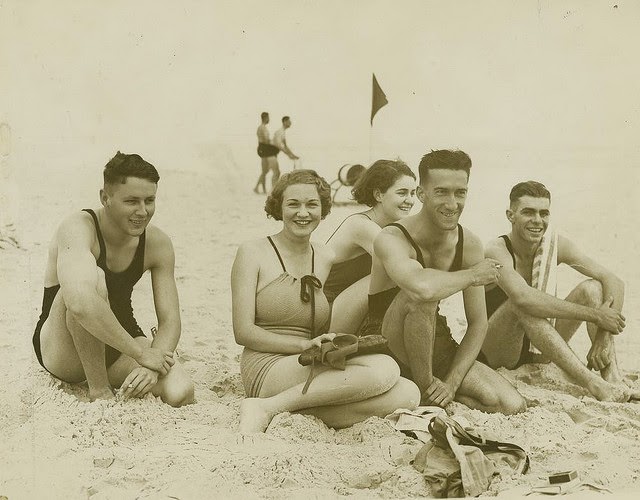
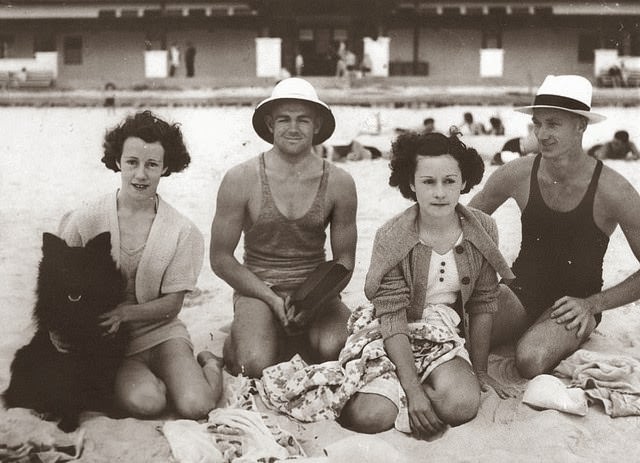
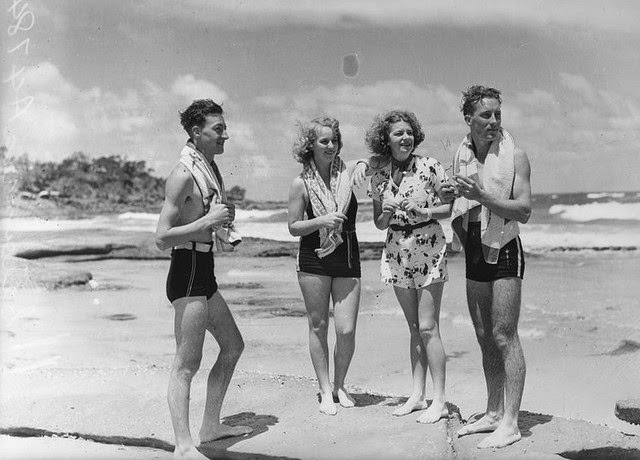
Australia’s beach culture was thriving by the mid-1930s, and the coast became one of the most visible stages for changing fashion. Women’s bathing suits moved away from modest, skirted one-pieces toward sleeker styles that showed more of the leg. Men’s swimwear grew shorter and more fitted, sometimes sold as matching top-and-bottom sets. Striped patterns and nautical colors — navy, white, and red — were everywhere along the shoreline.
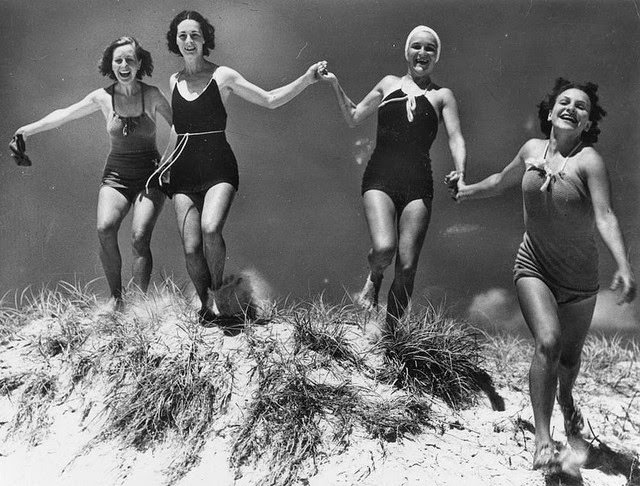
Young women running over a sand dune on an unidentified beach, ca. 1935
Young people enjoying a day at the beach, ca. 1938
Friends posing on Kirra Beach, 1938
Beachgoers at Burleigh Heads, 1938

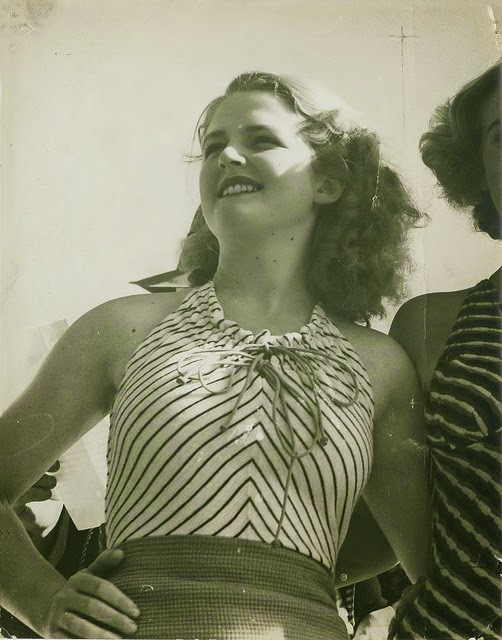
Beachside events like surfing competitions drew large crowds and offered a showcase for the latest swimwear. Contests such as the Sirens of the Surf on the Gold Coast put both fashion and athleticism on display, drawing spectators from across Queensland.
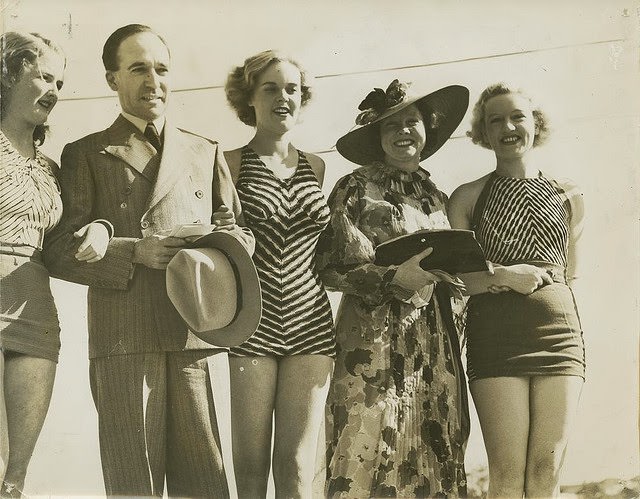
Judging of the Sirens of the Surf competition, Gold Coast
Winner of the Sirens of the Surf competition, Miss Bonnie Orchard, Gold Coast, 1936
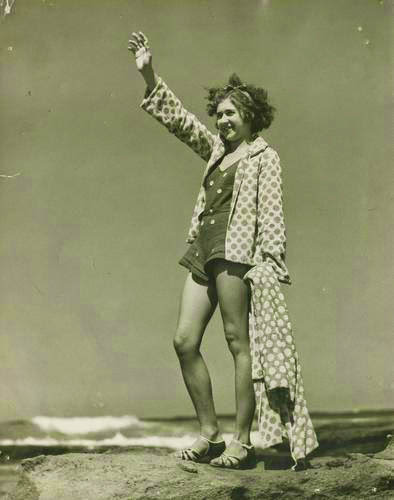
Beach girl Merle Woodward
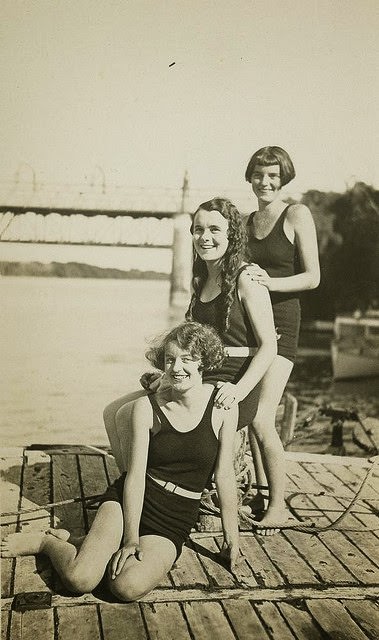
Bathing belles, Ellen Smith, Beryl Price and Lorna Smith, ca. 1930
Beach beauties, ca. 1939
Marie McKenna and Gladys Cooling at Southport, 1938
Group of young people enjoying a day at the beach, Gold Coast
Group of young people enjoying a day at the beach with their dog, ca. 1935
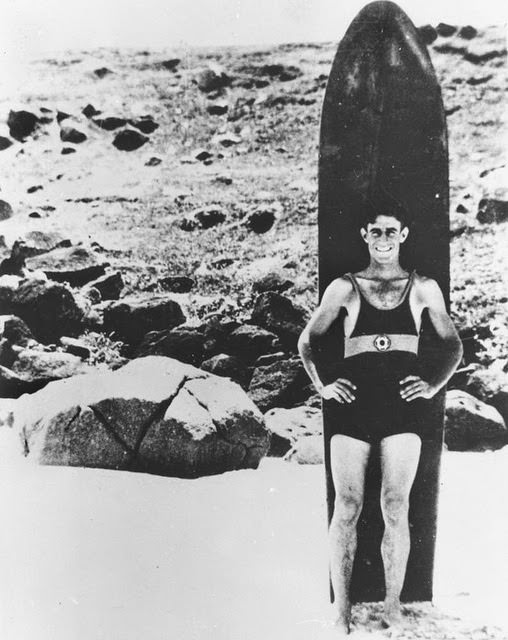
Surfer posing with his surfboard, ca. 1935

Away from the beach, accessories carried real social weight. Wide-brimmed hats were essential in coastal and rural areas to block the harsh Australian sun. Women wore gloves for shopping trips and social calls, and handbags became smaller and more structured, typically fitted with a metal clasp. Men carried pocket watches or leather wallets on chains. These details weren’t decoration alone — they signaled social standing and attention to appearances, even during lean economic times.
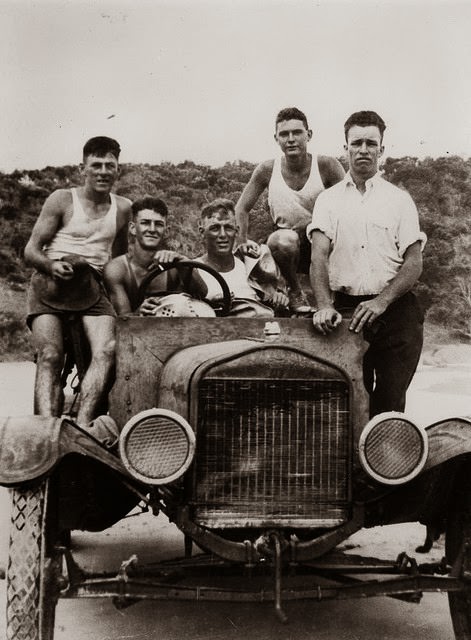
Group of mates riding in a Model T Ford, Double Island Point, 1931

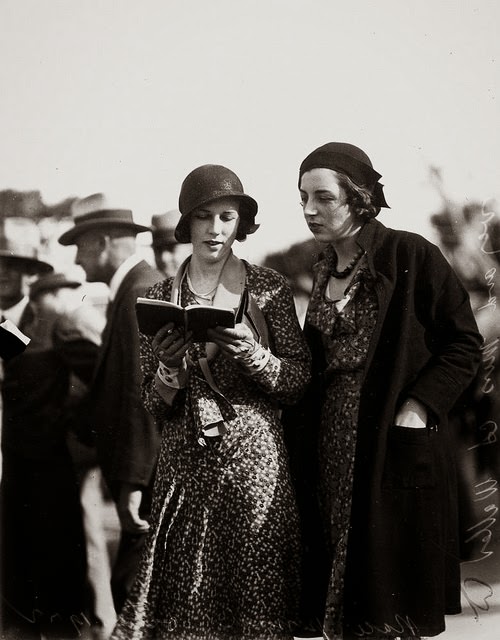
The racetrack was one of the great public stages for fashion in 1930s Australia. Women dressed carefully for race days, pairing fitted dresses with coordinated hats and gloves. Men arrived in polished suits. Racecourses in Brisbane — Ascot, Albion Park, and Eagle Farm — drew regular crowds who treated attendance as a social occasion as much as a sporting one.
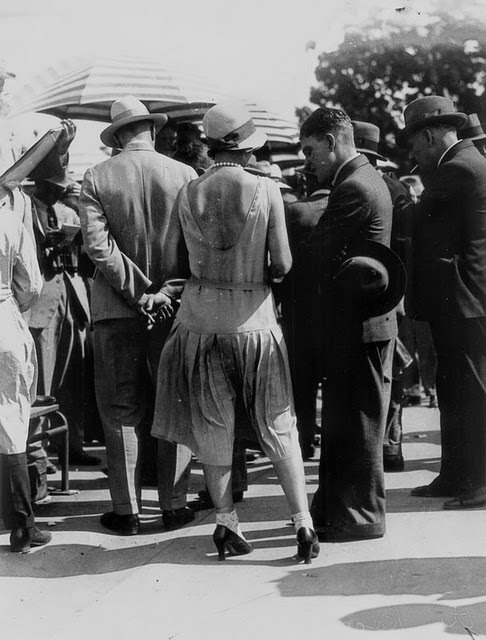
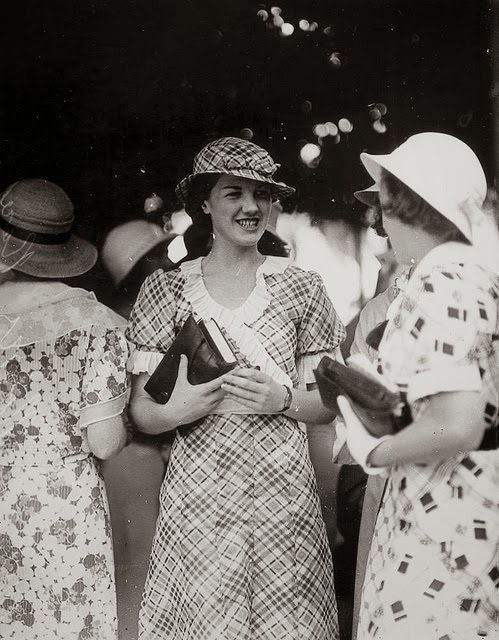
Young lady in a low backed dress and cloche hat at the races Brisbane ca 1931
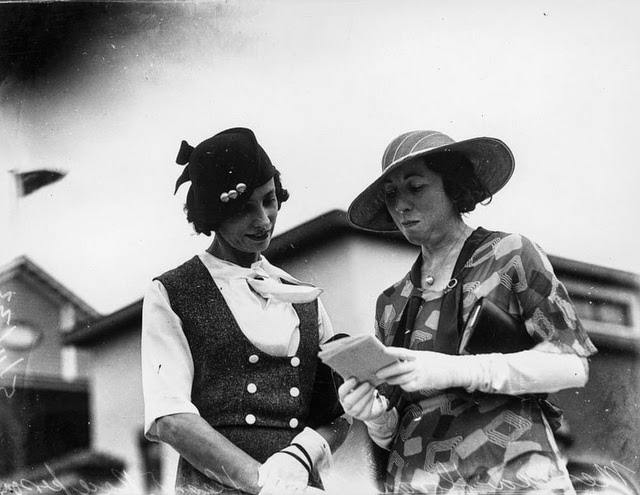
Mrs R Harvey and Miss A Waller picking a winner at Albion Park races Brisbane October 1932
Two women picking a winner at the races, Brisbane, 1933
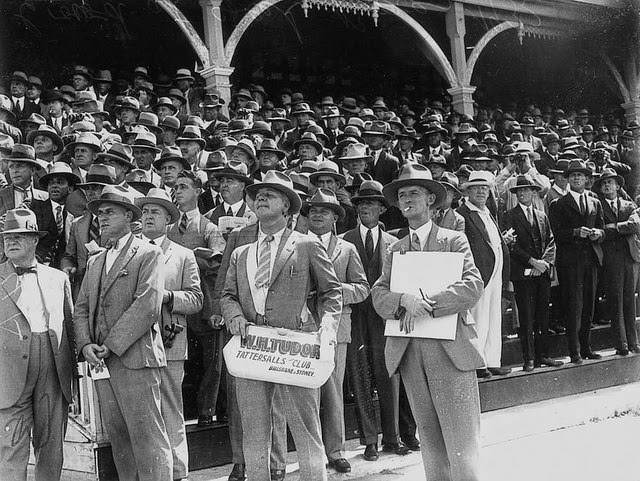
Section of the crowd at Albion Park racetrack, Brisbane, November 1932
Checking the form guide at Ascot races, Brisbane, 1933
Wearing a matching hat and dress, Miss J. Norris attended the Ascot Races, Brisbane, 1933
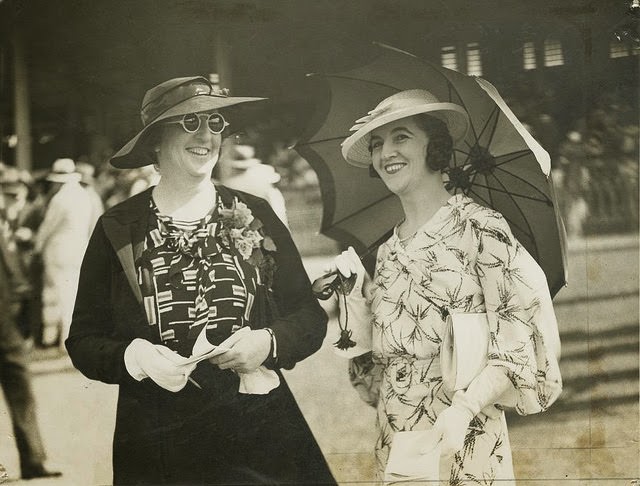
Two ladies enjoying a day out at the races, Ascot racetrack, Brisbane
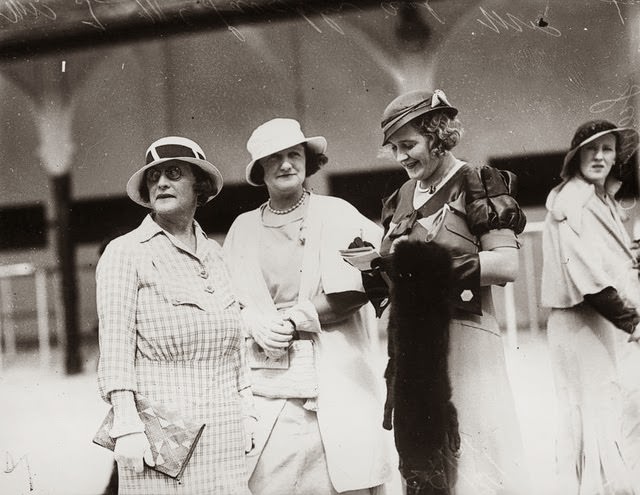
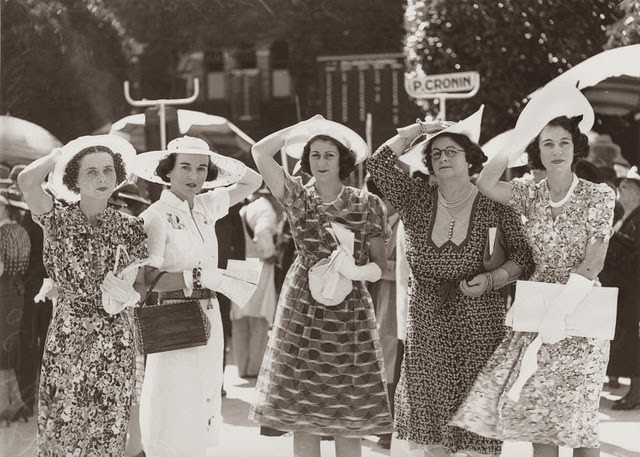
Five women at the races, Brisbane, 1938
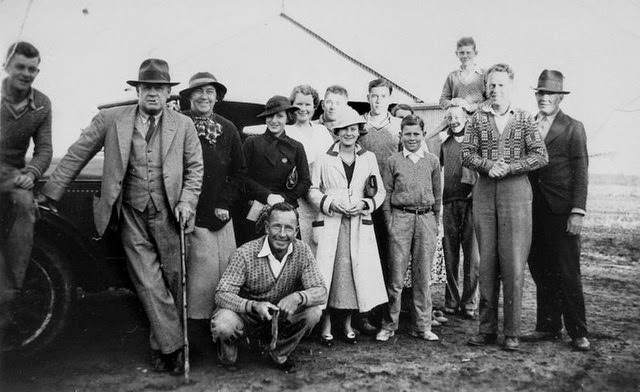
Gathering at the Muttaburra races, June 1935

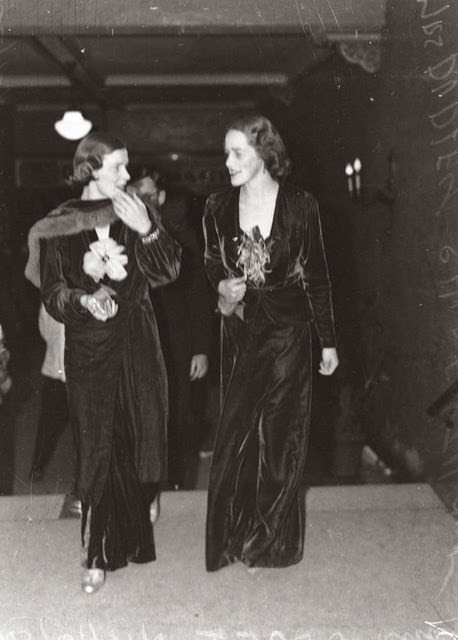
Evening wear in Australia’s cities kept pace with international trends. Floor-length gowns with fitted waists and flowing skirts were standard for dances, cinema nights, and formal dinners. Soft pastels were in fashion, and shimmering satins and velvets gave evening wear its distinctive glamour. Women paired these gowns with elbow-length gloves and beaded clutches. Hollywood played a growing role in shaping these choices — movie stars like Joan Crawford and Clark Gable influenced hairstyles, silhouettes, and fabric preferences. Local department stores adapted imported patterns to suit the Australian climate, bringing global trends to shoppers from Sydney to small country towns.
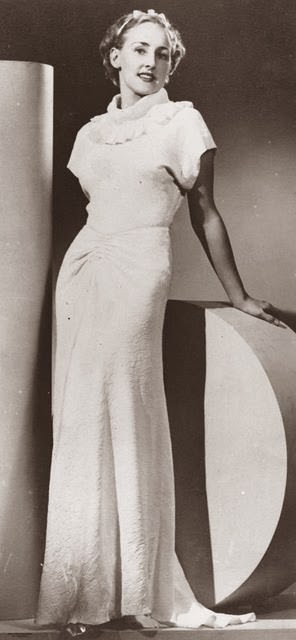
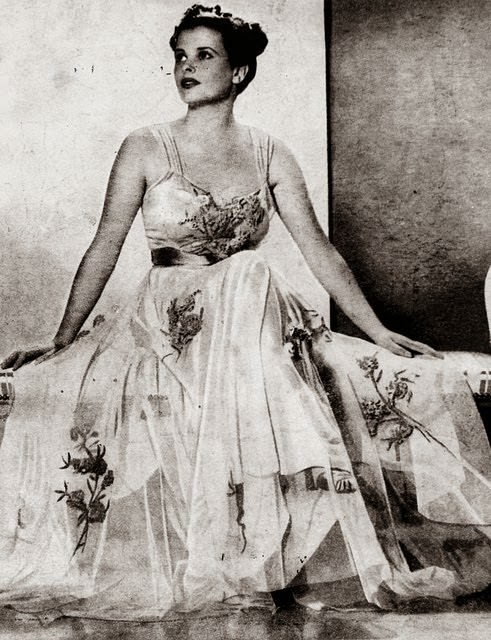
Model posing in a glamorous 1930s evening gown
Actress Mary Maguire, wearing a beautiful evening gown in a promotional photograph, ca. 1936
Mrs. Dudley Shadforth and Mrs. Derek Nicholson attending the theatre, Brisbane, 1938
Sybil Lavarack in court dress, 1939
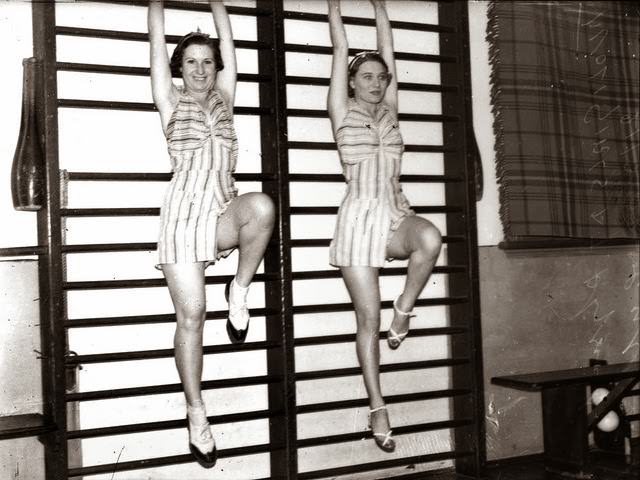
Tivoli girls practicing Brisbane 1935

Footwear followed the same split between city practicality and rural necessity. Women favored low-heeled pumps for daytime and strappy sandals through summer. In the country, sturdy lace-up boots were worn by both men and women. City men wore polished leather oxfords, while farm and construction workers relied on heavy-duty work boots. The shoe a person wore often said as much about where they lived as what they earned.
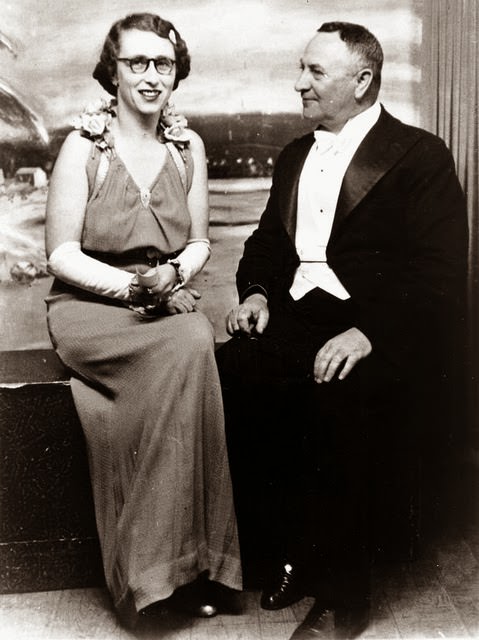
Arthur H. McManus
Arthur H. McManus
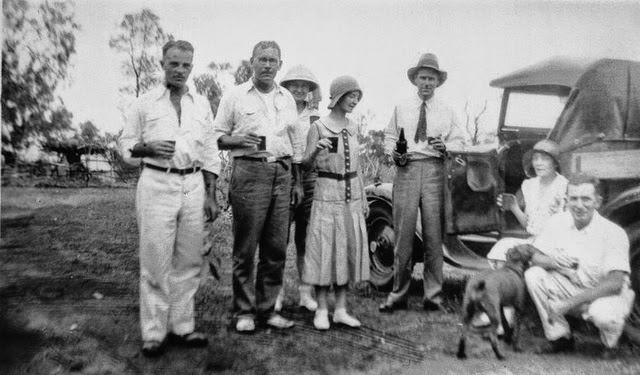
Picnic in the bush in Mount Isa Queensland 1932
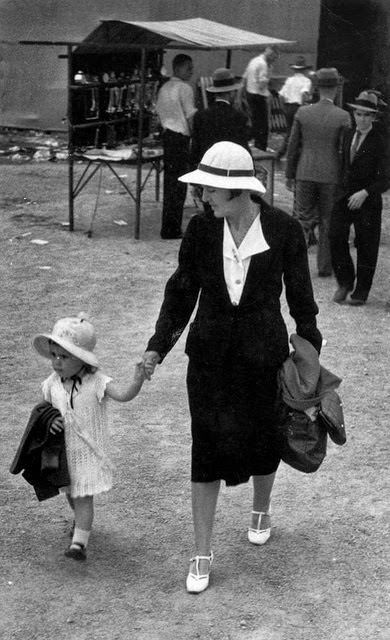
Mother and child at the show, 1938
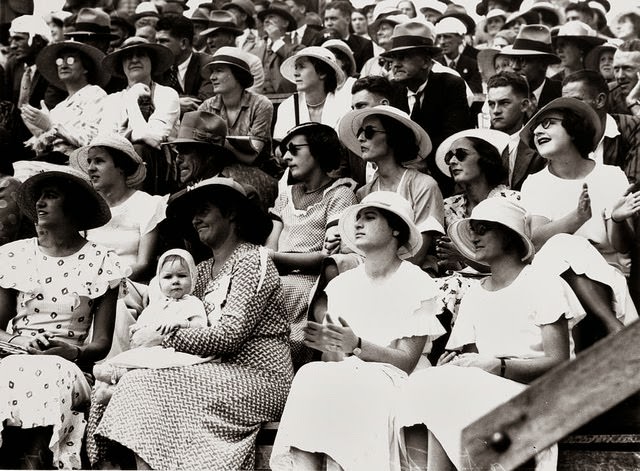
Watching a tennis game at Milton, 1934
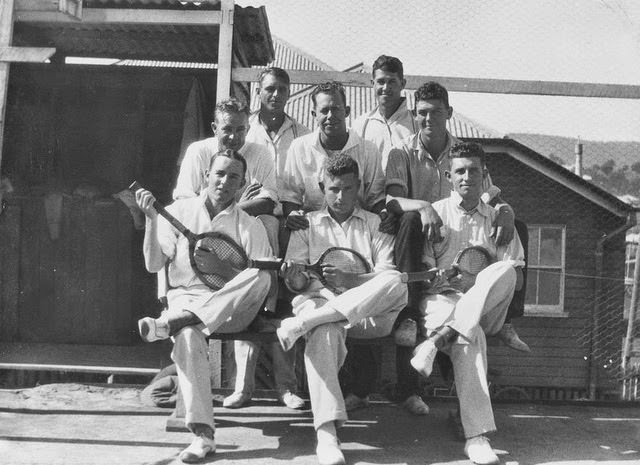
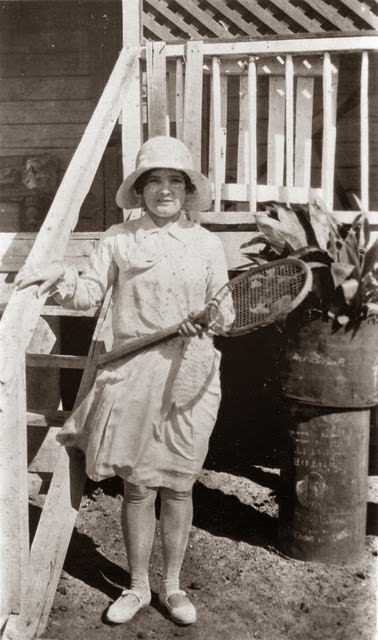
Members of the Newmarket local tennis club in Brisbane, ca. 1935
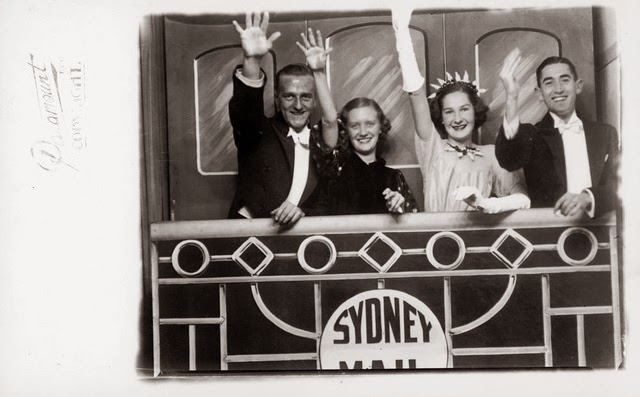
Foursome waving goodbye from the 'Sydney Mail train' at the Trocadero, ca. 1935
Foursome waving goodbye from the ‘Sydney Mail train’ at the Trocadero, ca. 1935
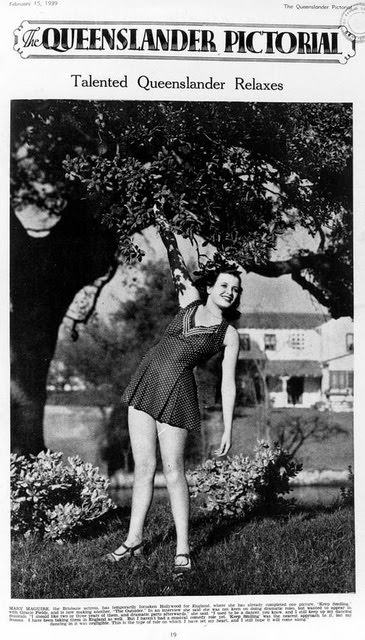
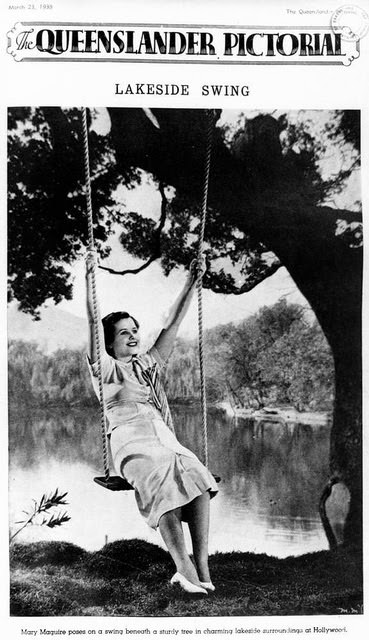
Actress Mary Maguire on the cover of The Queenslander, February 1939
Mary Maguire on the cover of The Queenslander Pictorial, 1938
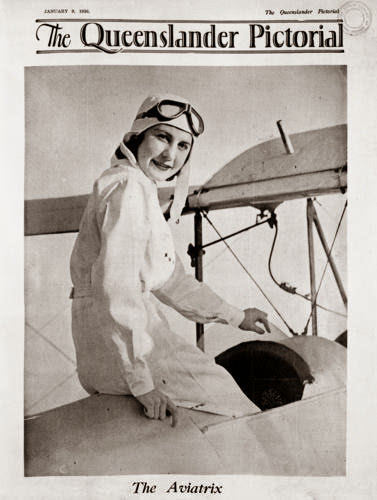
The Aviatrix
The Aviatrix
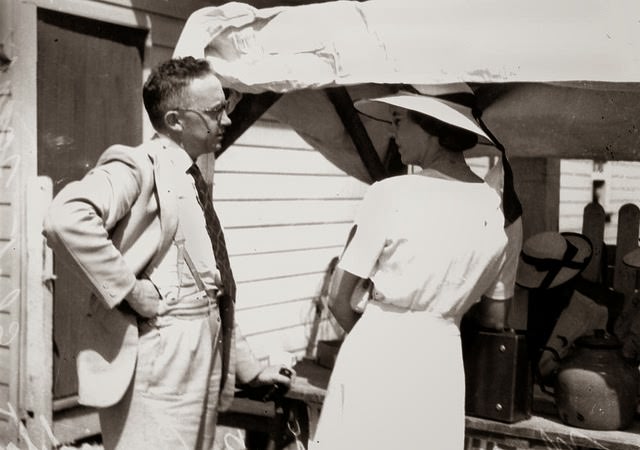
Mr K.J. Morris, the U.A.P. candidate for Ithaca, talks to a voter during the Queensland State Election of 1938
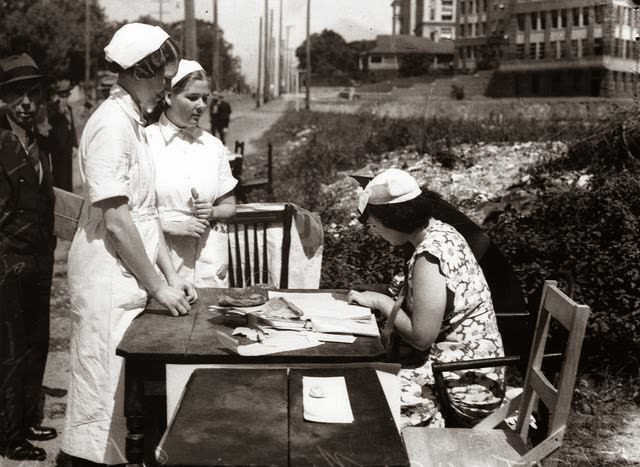
Nurses voting on Election Day, Brisbane, 1938
Renee Taylor
Renee Taylor
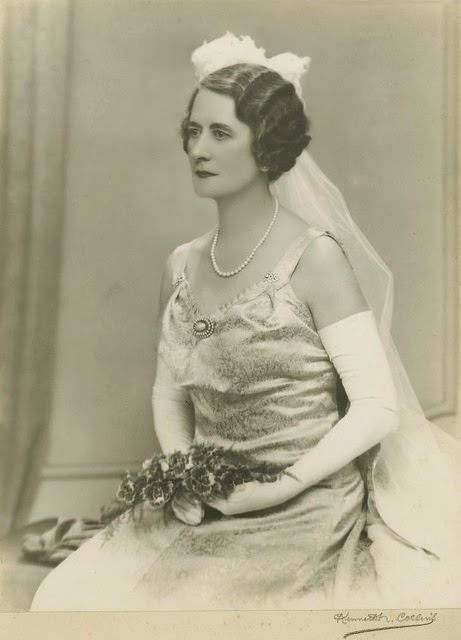
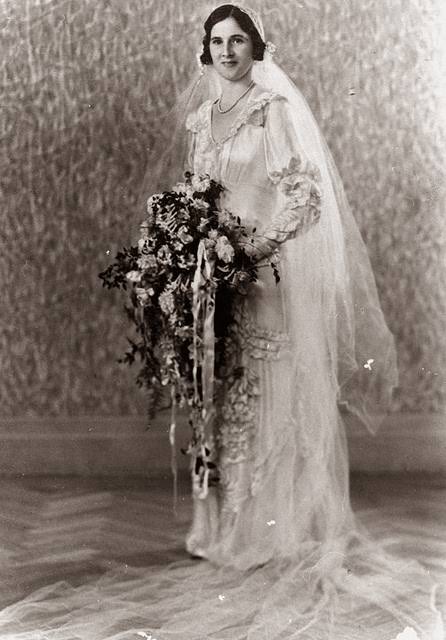
Julia Drynan her wedding day, 1930
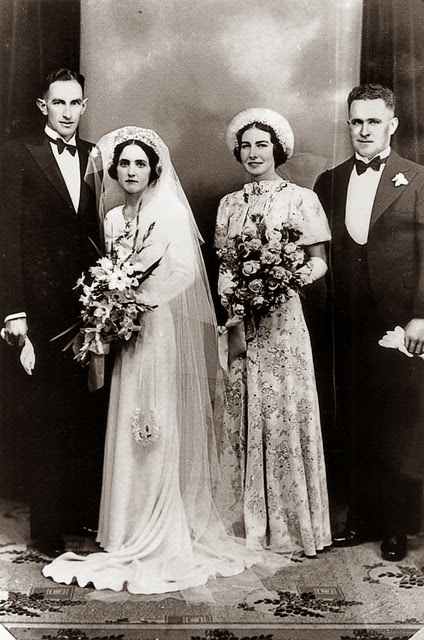
Wedding party for the marriage of Fred Horn and Rene Harper, April 1938
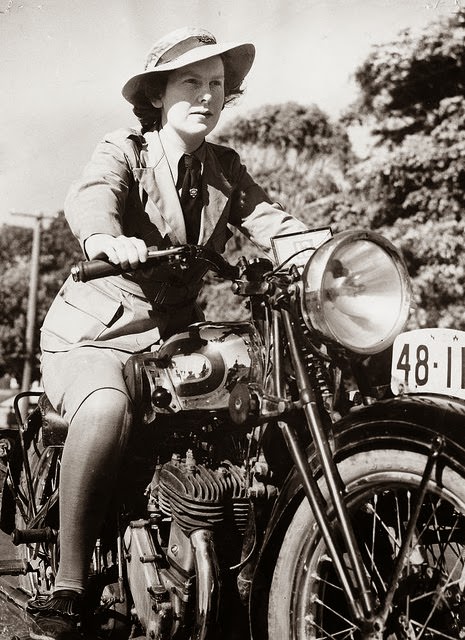
Joan Grimes, Australian Women's Emergency Legion, 1939
Joan Grimes, Australian Women’s Emergency Legion, 1939
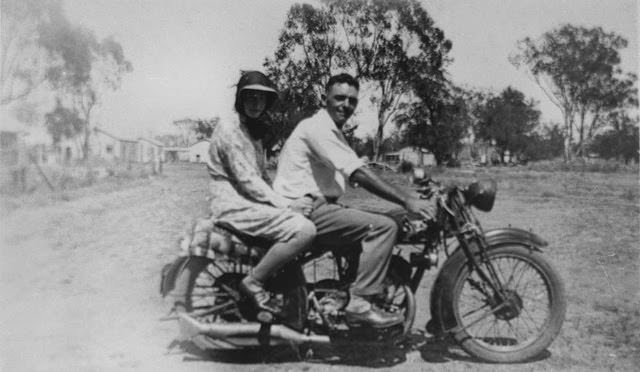
Barbara Davies and Billy Gall on a motorcycle, ca. 1938
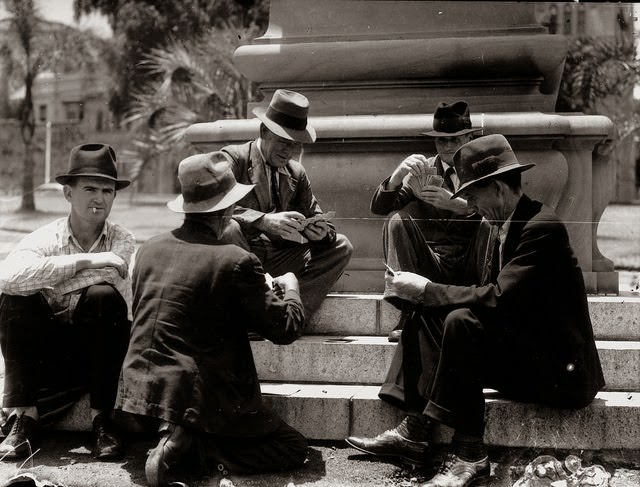
Card players in Centenial Place, Brisbane
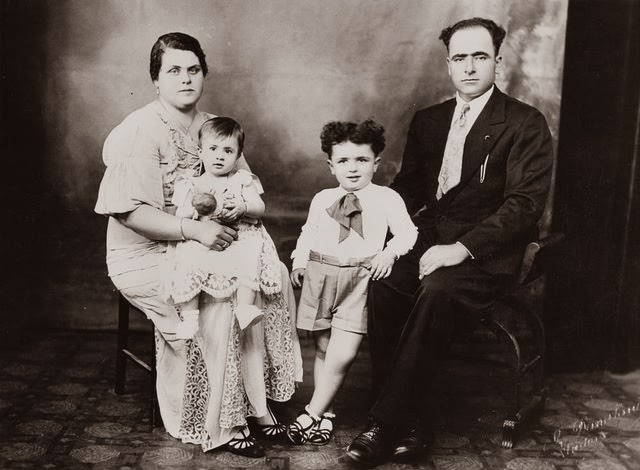
Domenico Caristi with wife and children, 1939
Enjoyed this post? Get new ones in your inbox.

Leave a Comment

Your email address will not be published. Required fields are marked *

Share this Post 🥺

Please take a moment to share this content. Your support is greatly appreciated! 🙌🙏

Share this Post 🥺

Please take a moment to share this content. Your support is greatly appreciated! 🙌🙏
Scroll to Top
 
Hey Friend, Before You Go.. Please like & follow for more interesting content