
Lisbon in the 1950s was a city living between two worlds. On one side sat its grand boulevards, historic waterfront, and centuries-old monuments. On the other, a fast-changing society was reshaping the city from the inside out. These vintage photographs capture a remarkable moment in the Portuguese capital’s history — streets alive with daily commerce, ancient fortifications still standing watch, and a harbor that had been welcoming ships for generations.
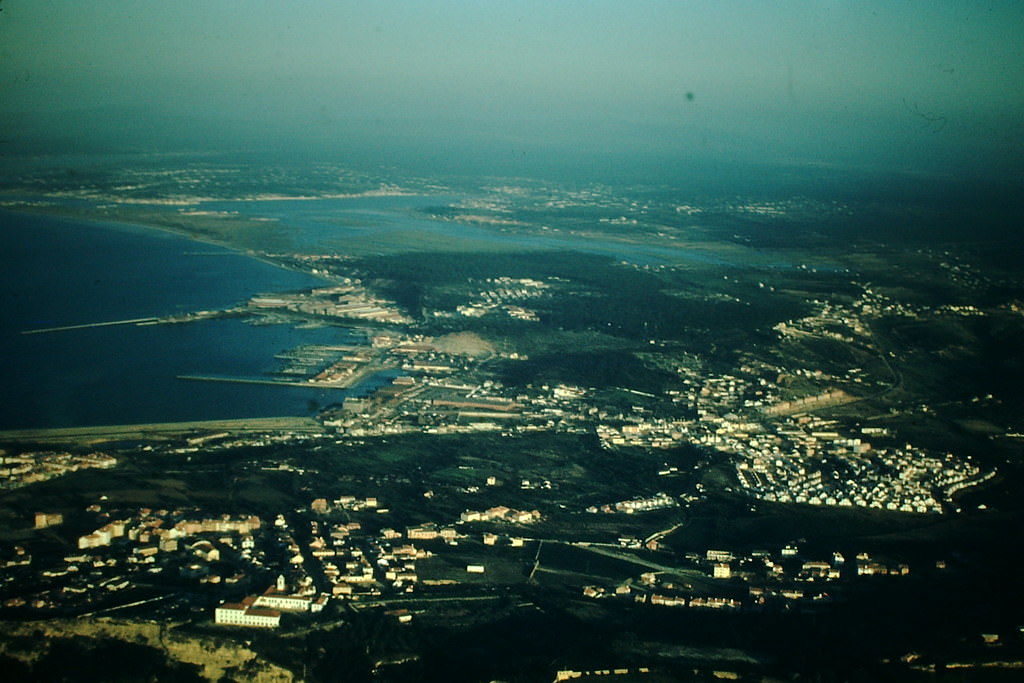
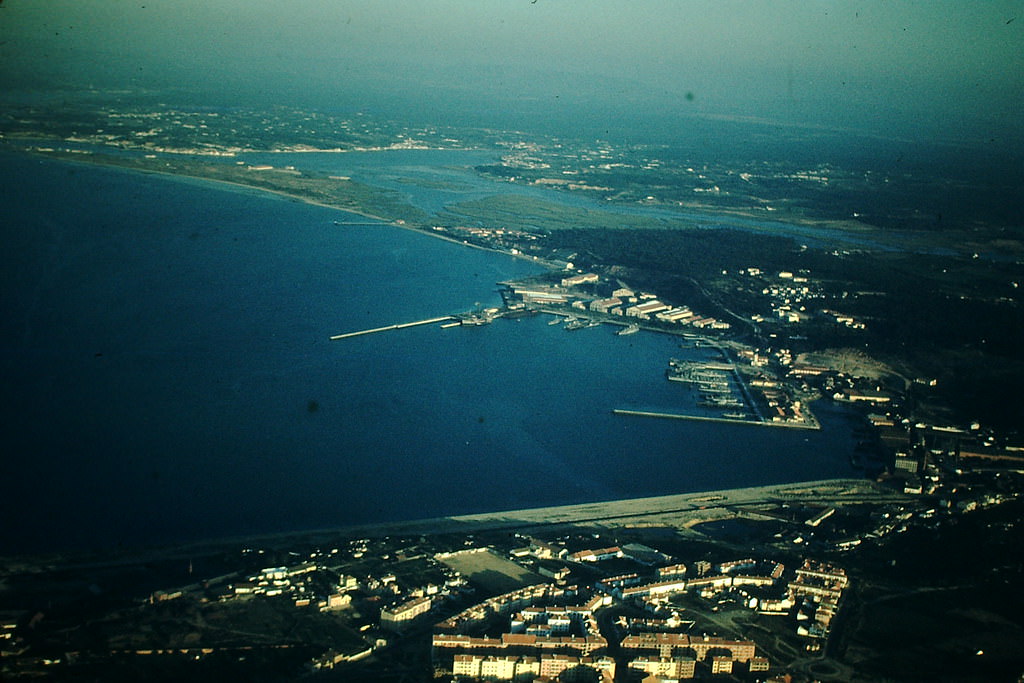
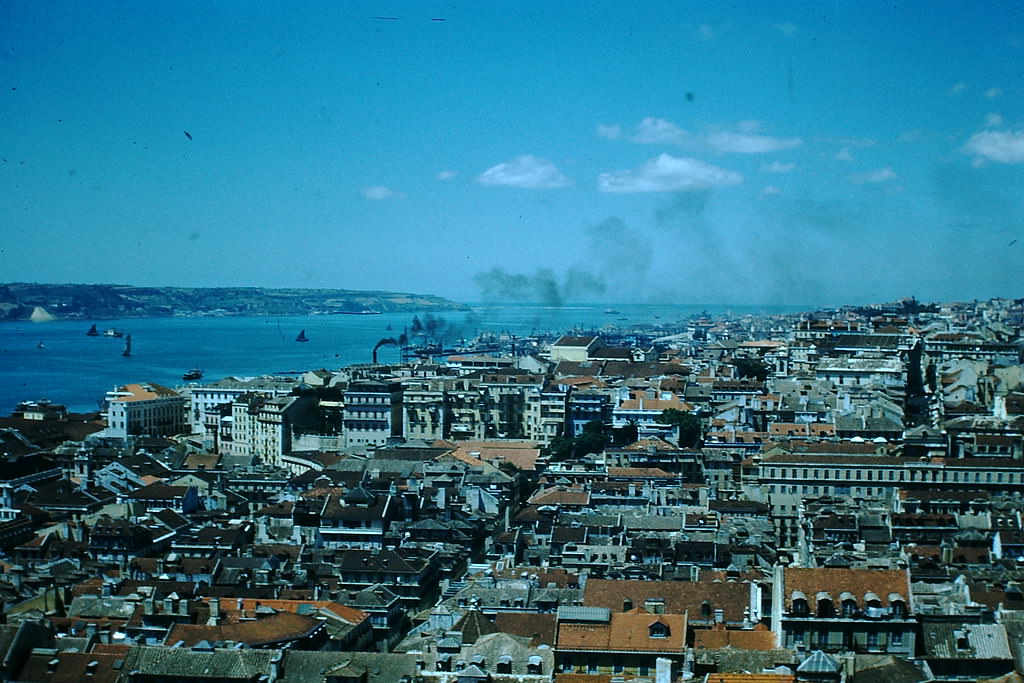
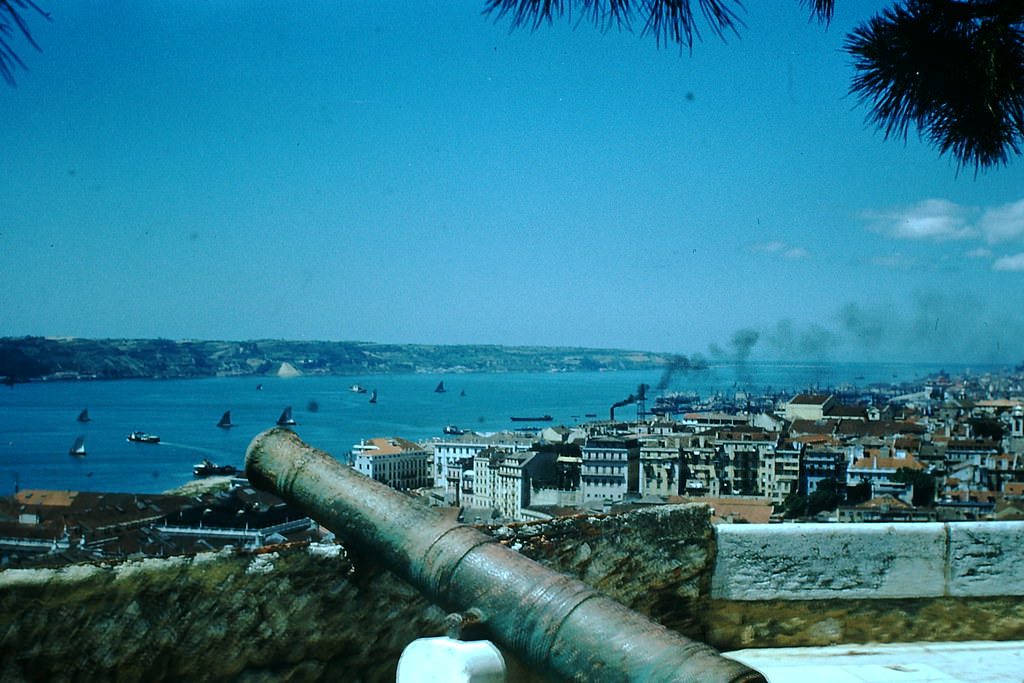
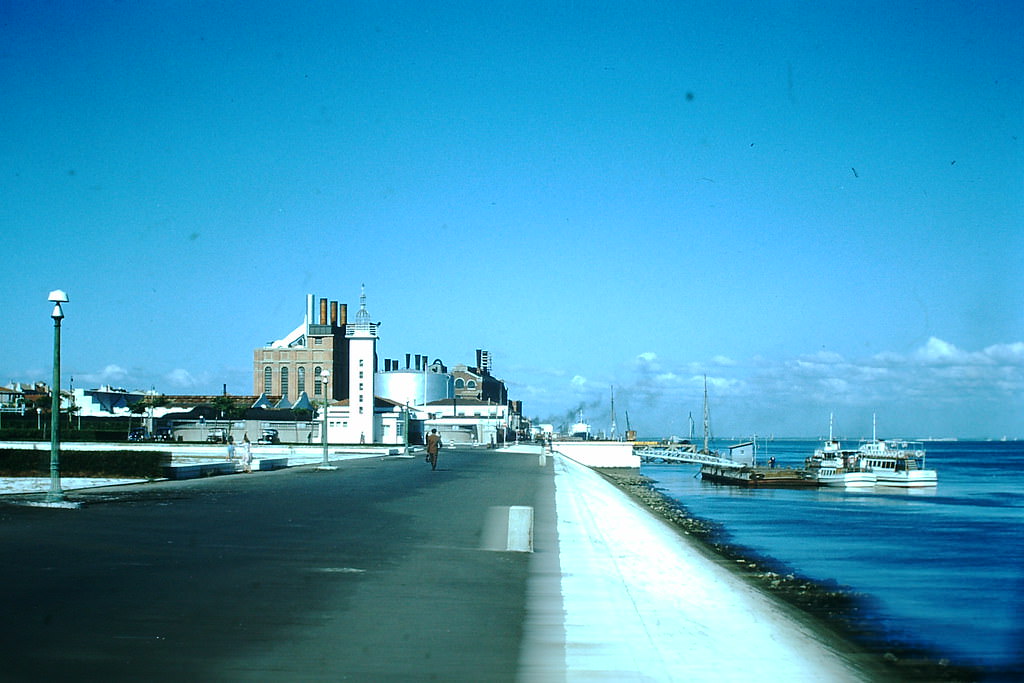
The Tagus River estuary was the defining feature of Lisbon’s geography and economy. Wide and calm near the city, the river opened into a broad body of water that gave the harbor its enormous scale. Cargo ships, ferries, and fishing boats moved through these waters daily, connecting Lisbon to the Atlantic and to Portugal’s overseas territories.
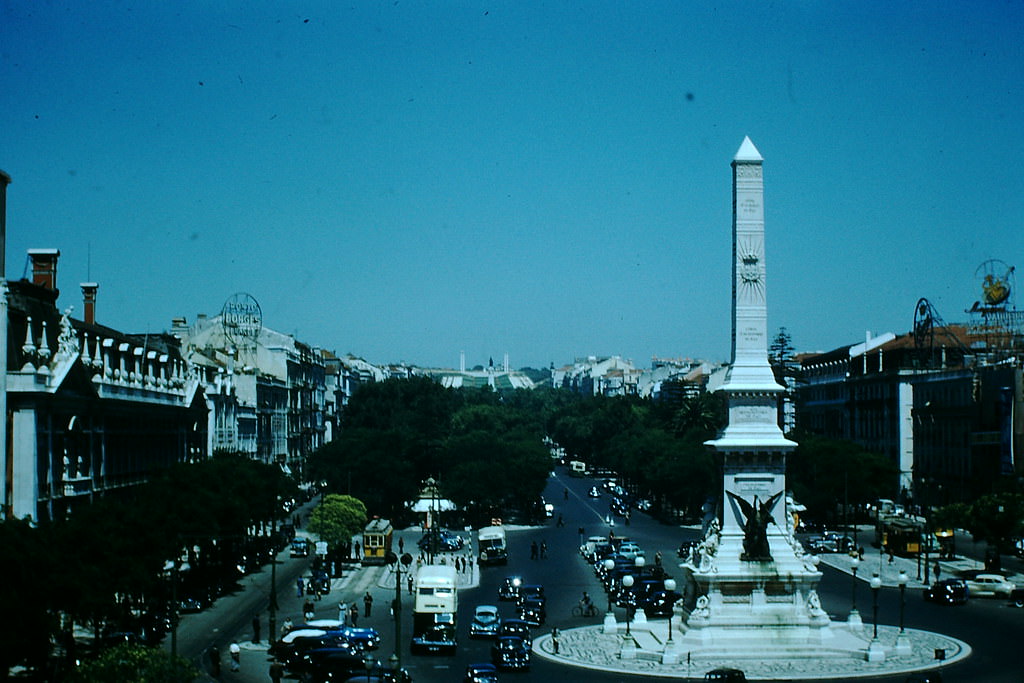
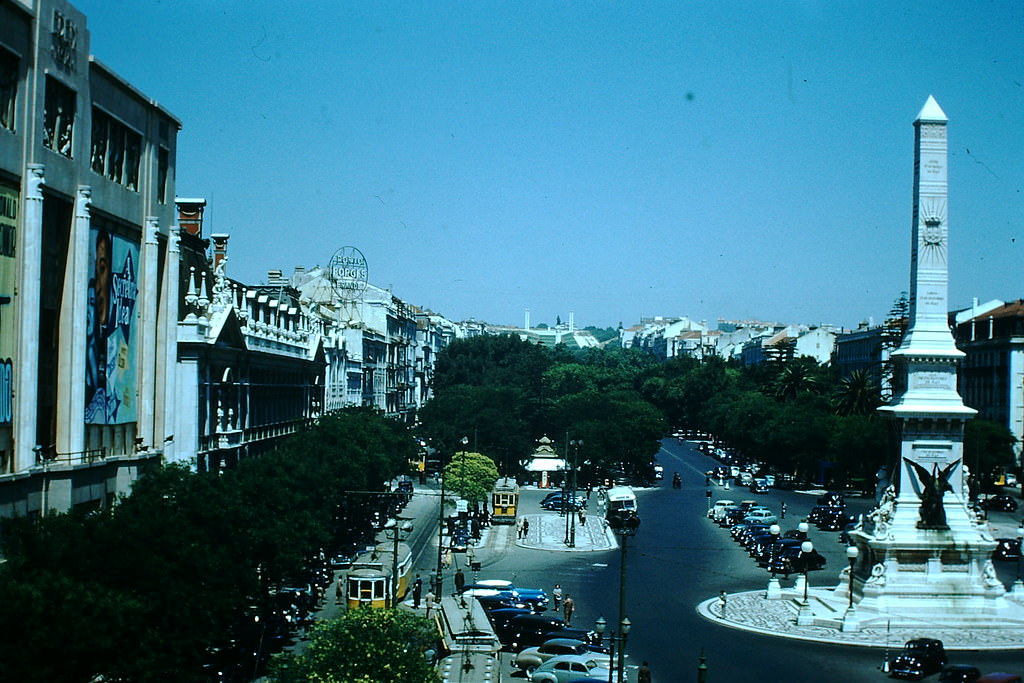
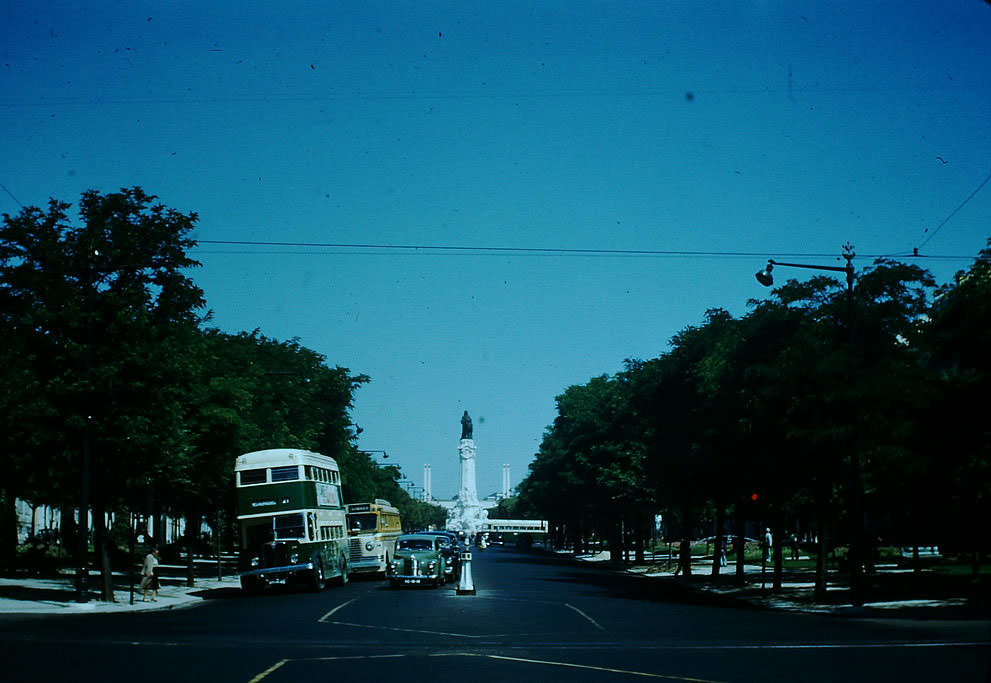
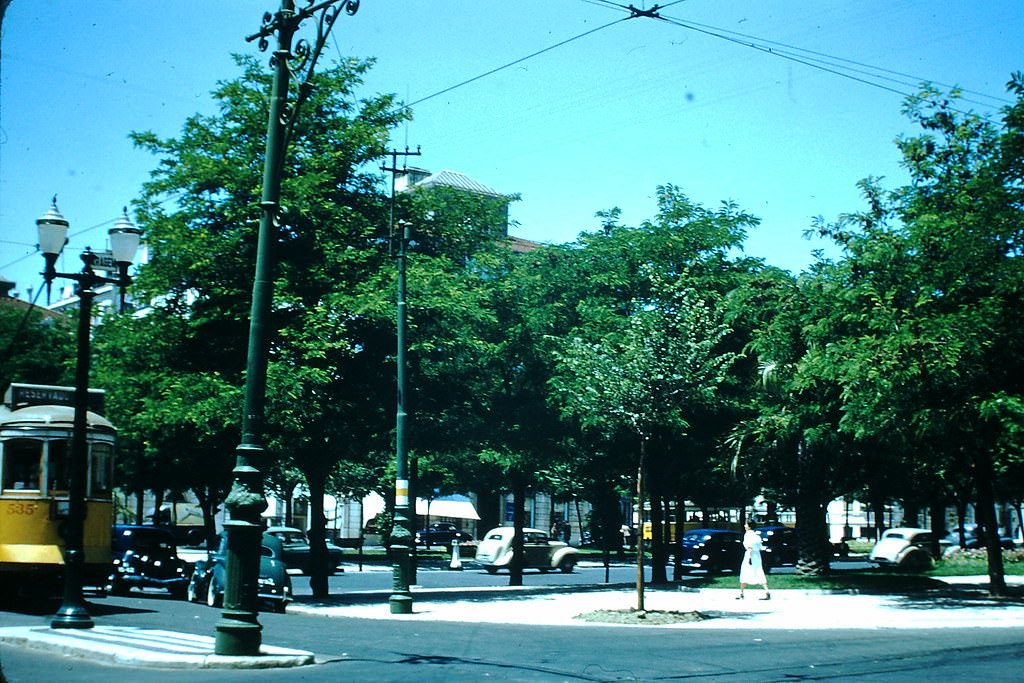
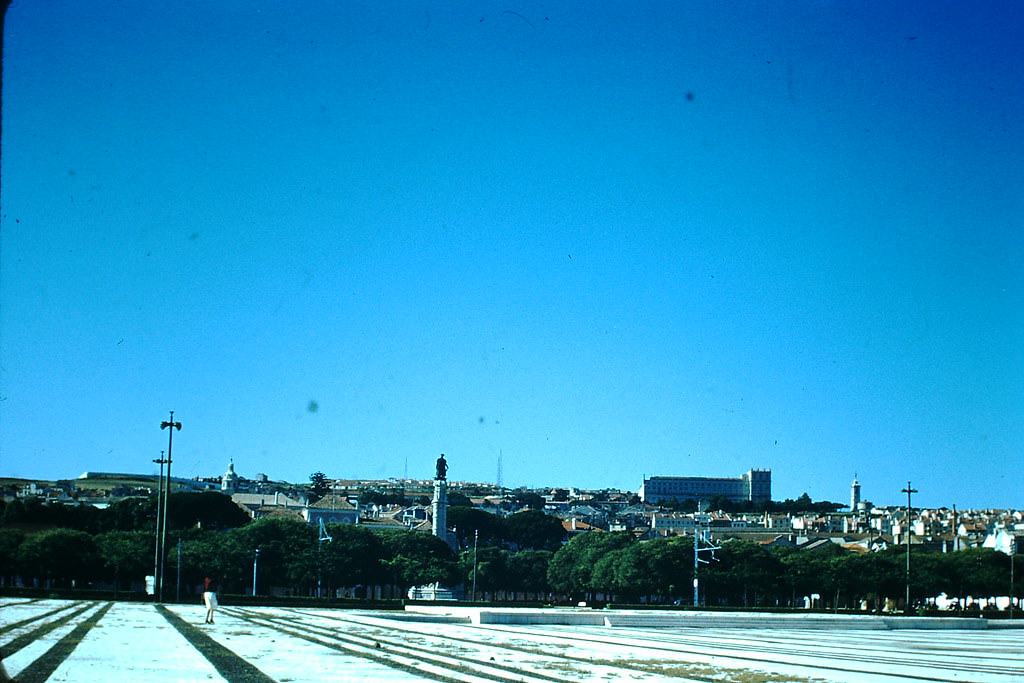
Avenida da Liberdade was the city’s most prestigious boulevard. Modeled loosely on the grand avenues of Paris, it was lined with trees, sidewalk cafes, and elegant buildings. In the 1950s, it remained the social spine of the city — a place where well-dressed Lisbonites strolled, conducted business, and gathered at outdoor tables beneath the shade of plane trees.
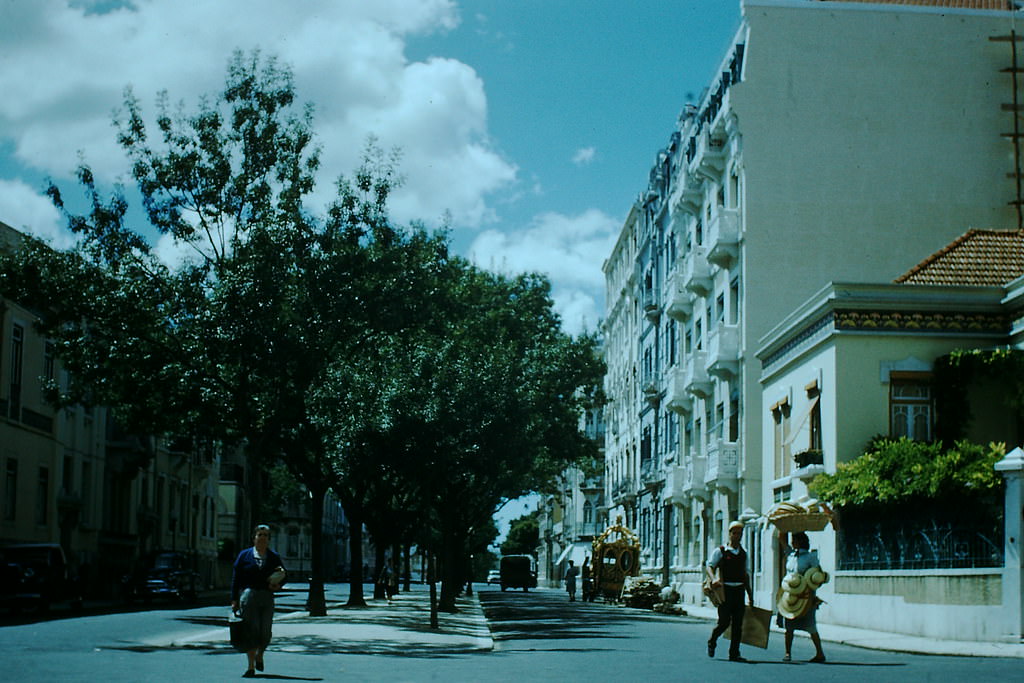
The 1950s brought dramatic demographic pressure to Lisbon. A large-scale migration of rural people from Portugal’s provinces flooded into the capital throughout the decade. These were farming families uprooted from the land, arriving in a city that was not prepared to house them. The areas surrounding Lisbon filled quickly with makeshift settlements where newcomers lived in poor conditions. Brandoa, on the outskirts of the city, became the largest and best-known of these communities — a sprawling settlement that grew almost entirely from this internal migration.
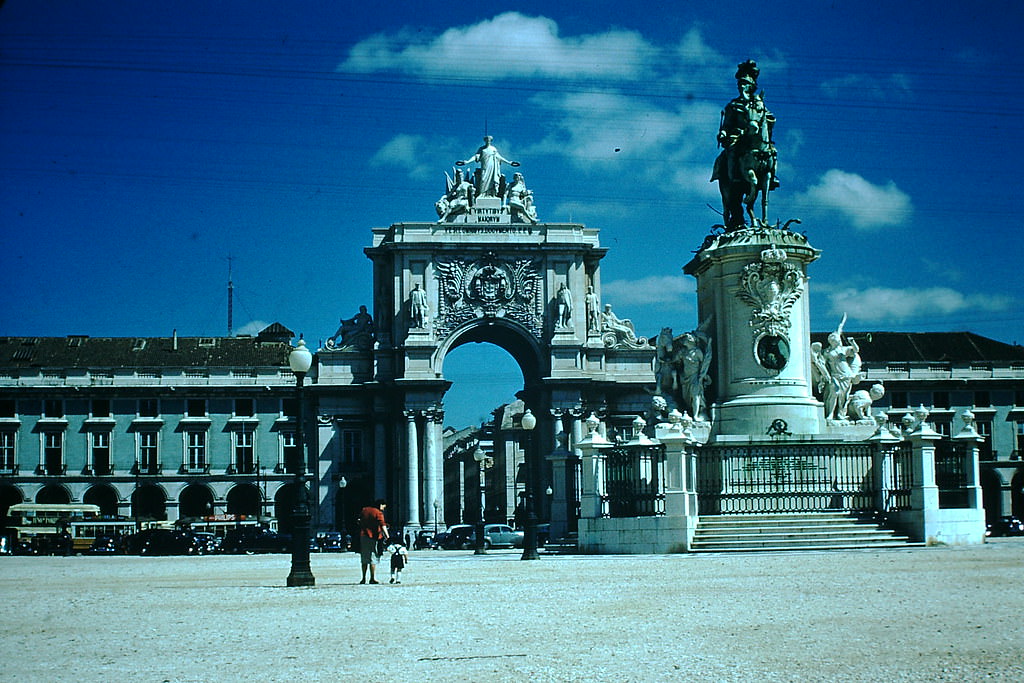
The old waterfront squares told a different story — one of centuries of maritime power. The triumphal arch leading into Praça do Comércio stood as a symbol of the city’s former empire, framing the Tagus just as it had done since the 18th century. Nearby, the statue of King José I on horseback anchored the grand plaza that opened directly onto the river.
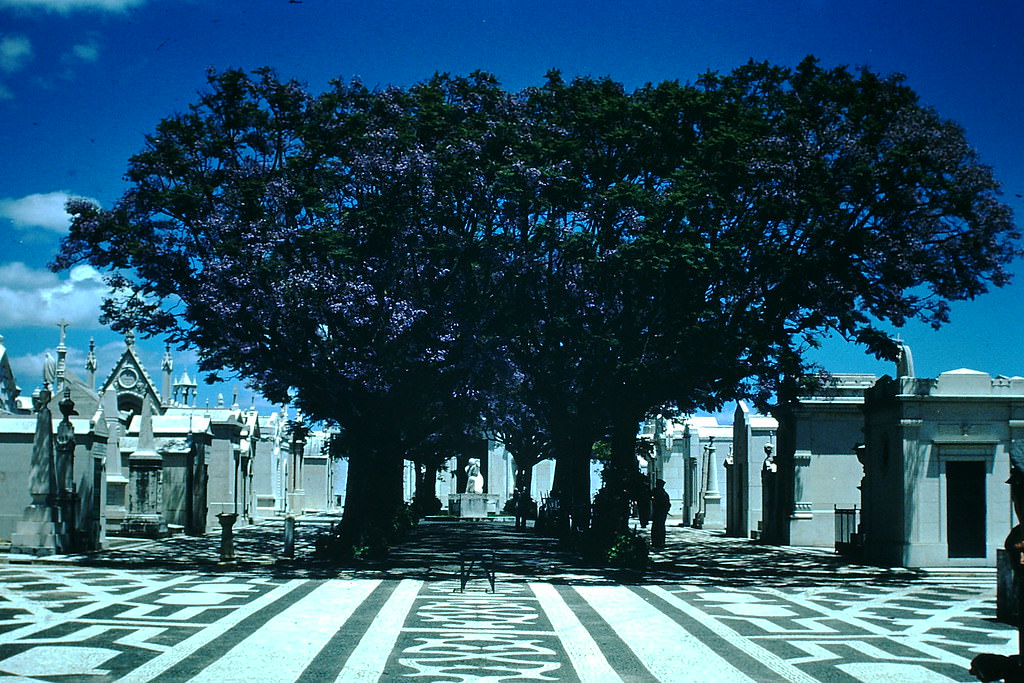
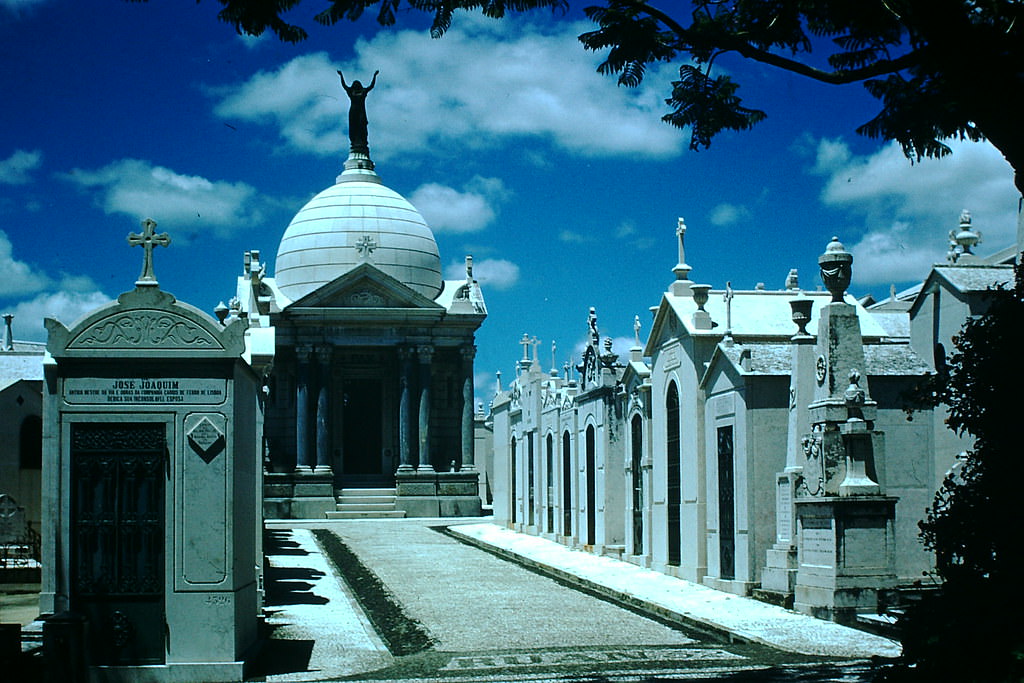
Lisbon’s cemeteries were elaborate and densely built, reflecting Portuguese Catholic traditions around death and remembrance. Elaborate mausoleums and tiered family vaults stood close together, adorned with flowers, photographs, and ceramic tiles. Cemetery visits were a regular part of family life, particularly around religious feast days.
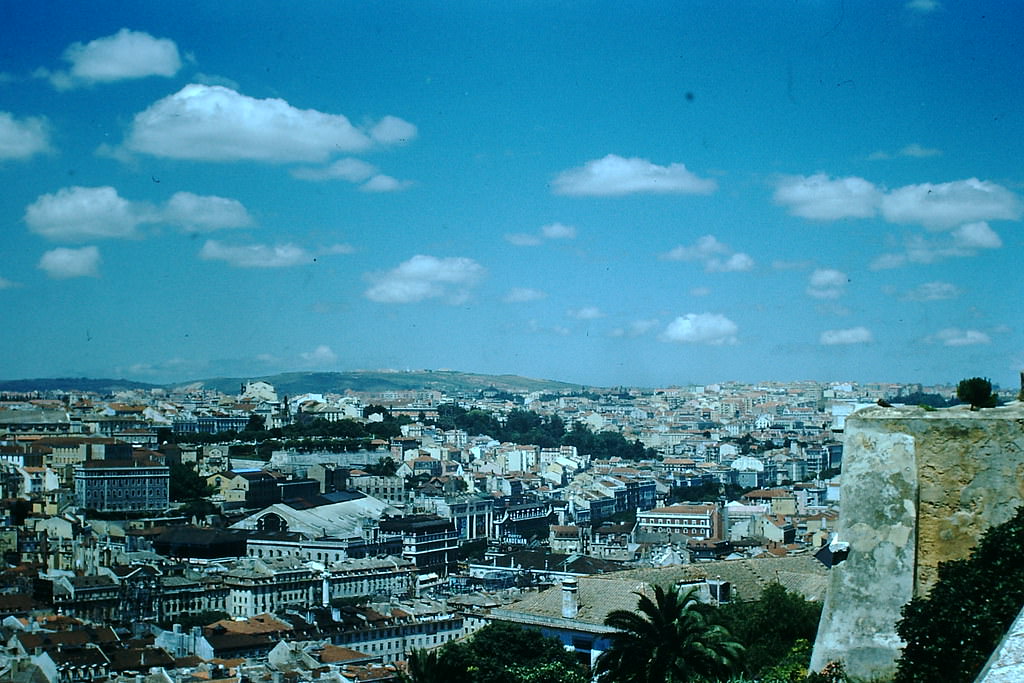
The Castelo de São Jorge, the old Moorish fort, sat high on a hill overlooking the entire city. From its ramparts, you could see Lisbon spread out below — red-tiled rooftops, church towers, and the glittering surface of the Tagus stretching toward the horizon. The castle had stood in various forms since the Moorish occupation of the Iberian Peninsula, and its walls still bore the weight of that long history.
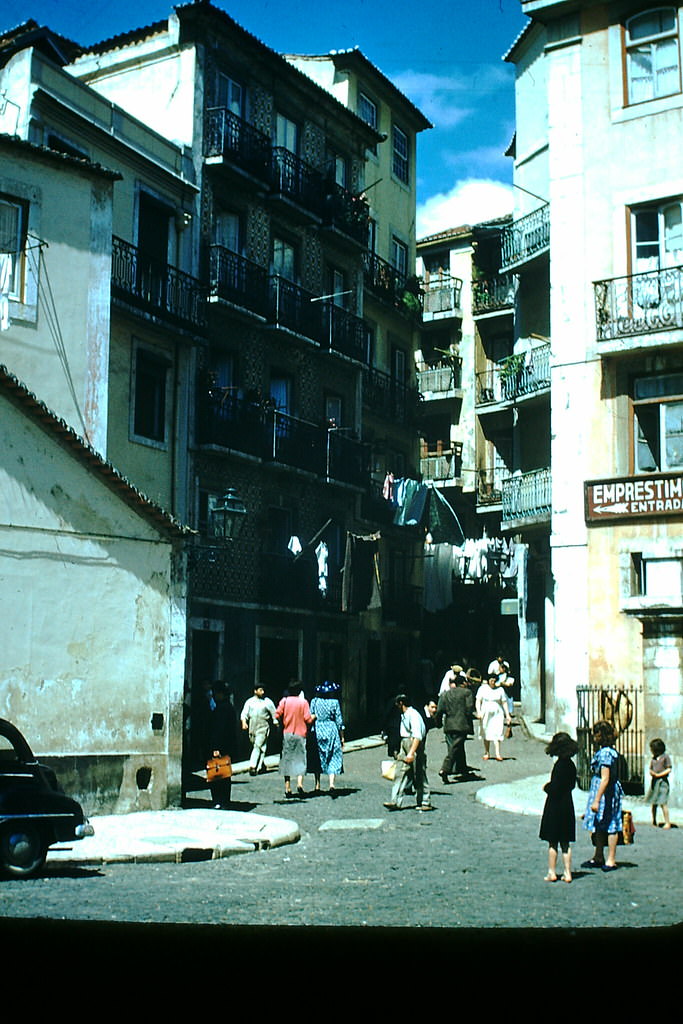
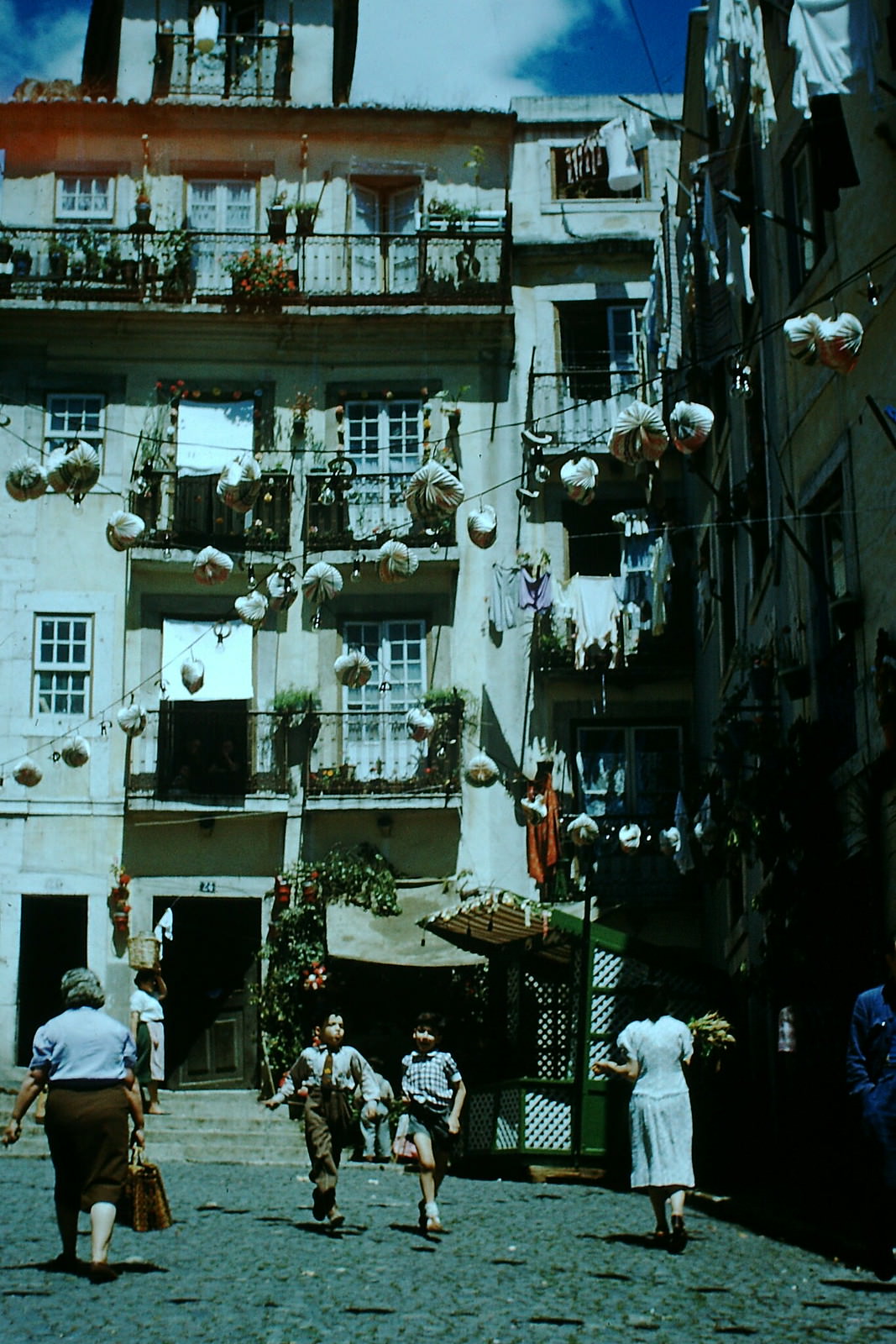
The Moorish Quarter, known as the Alfama, was one of the oldest and most densely populated parts of the city. Its narrow streets wound up the hillside in tight curves, barely wide enough for two people to pass. Laundry hung between buildings, vendors called out from open storefronts, and the sound of fado — Portugal’s melancholic folk music — drifted from the windows of small taverns.
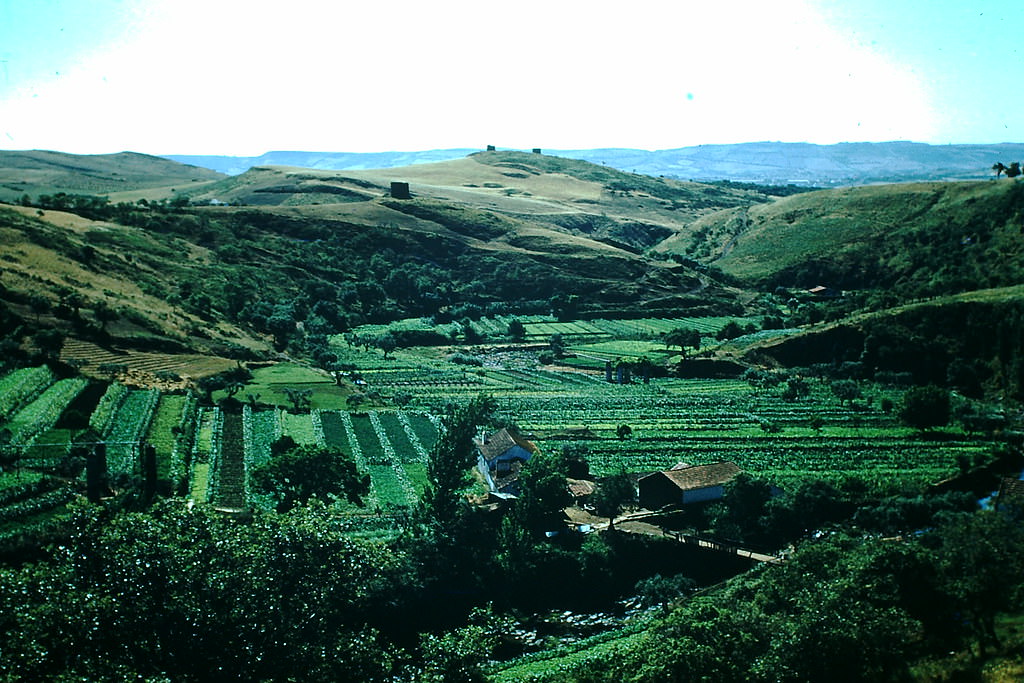
Just outside the city, the valley of Ponte d’Lousa showed the rural Portugal that so many migrants were leaving behind. Small farms worked by hand, terraced hillsides, and stone villages that had barely changed in a century sat within a short distance of the capital. The contrast between these quiet valleys and the overcrowded city neighborhoods was striking.
In 1956, Lisbon played a central role in a historic maritime event. Portugal’s ambassador to the United Kingdom, Dr. Pedro Theotonio Pereira, along with Bernard Morgan, a retired London solicitor, organized the first Tall Ships’ Race. Twenty of the world’s remaining large sailing vessels competed in a race from Torquay, in Devon, England, to Lisbon. The event was conceived as a farewell to the age of sail — a tribute to a form of ocean travel that had defined centuries of global history.
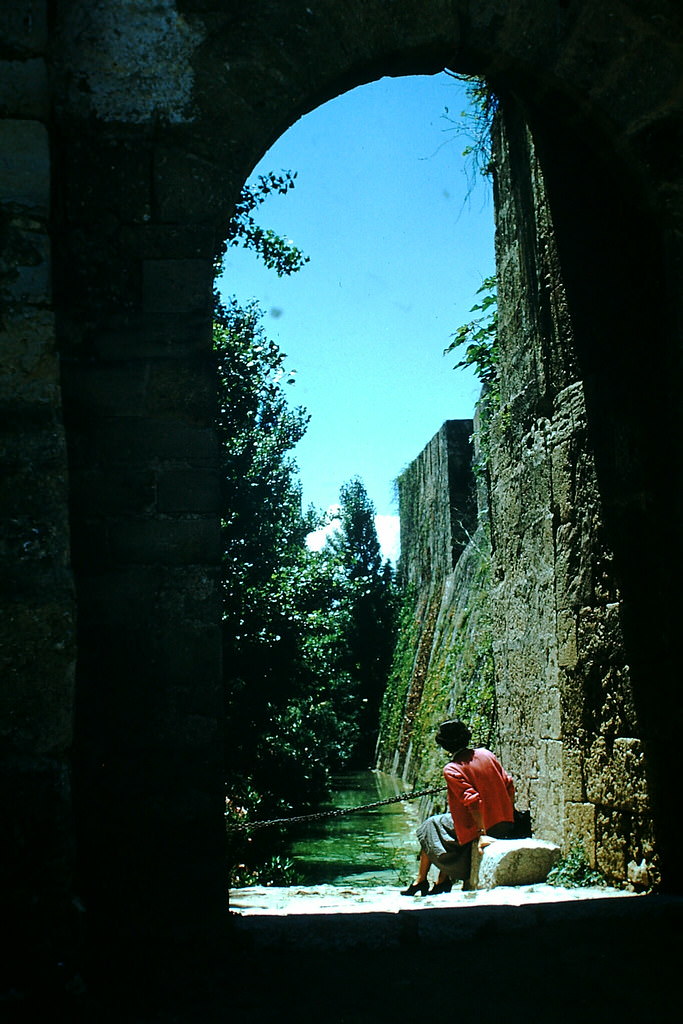
The public response to the 1956 race far exceeded what the organizers had expected. The sight of towering sailing ships moving under full canvas drew enormous crowds and captured widespread attention. Rather than letting the event remain a one-time memorial, the organizers founded the Sail Training International Association to manage future races. Tall Ships Races have continued annually ever since, drawing millions of spectators in ports across the world.
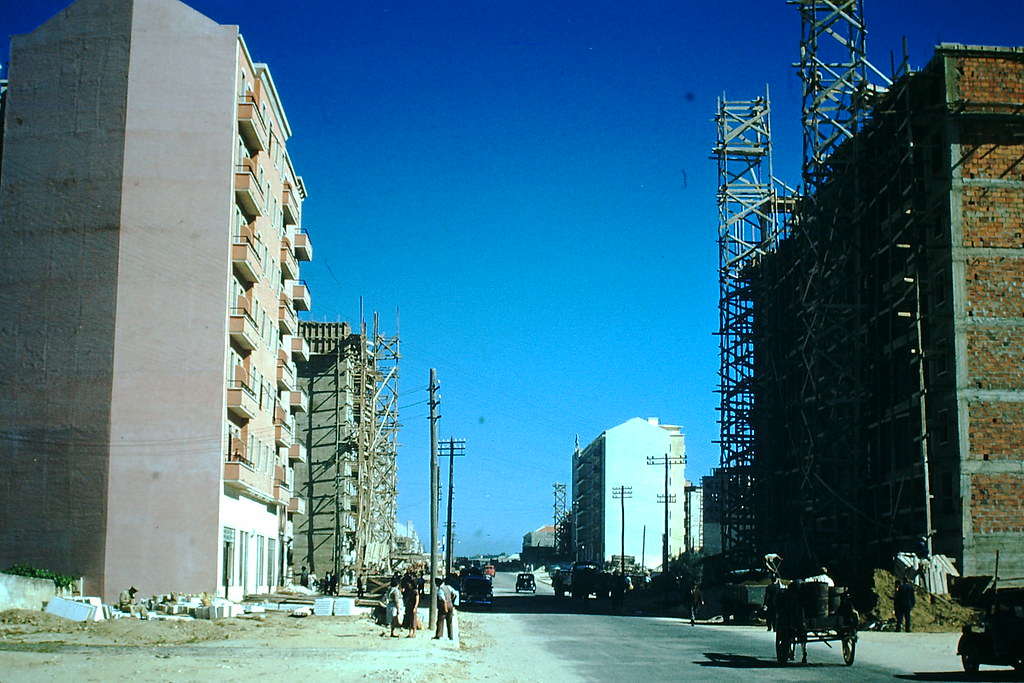
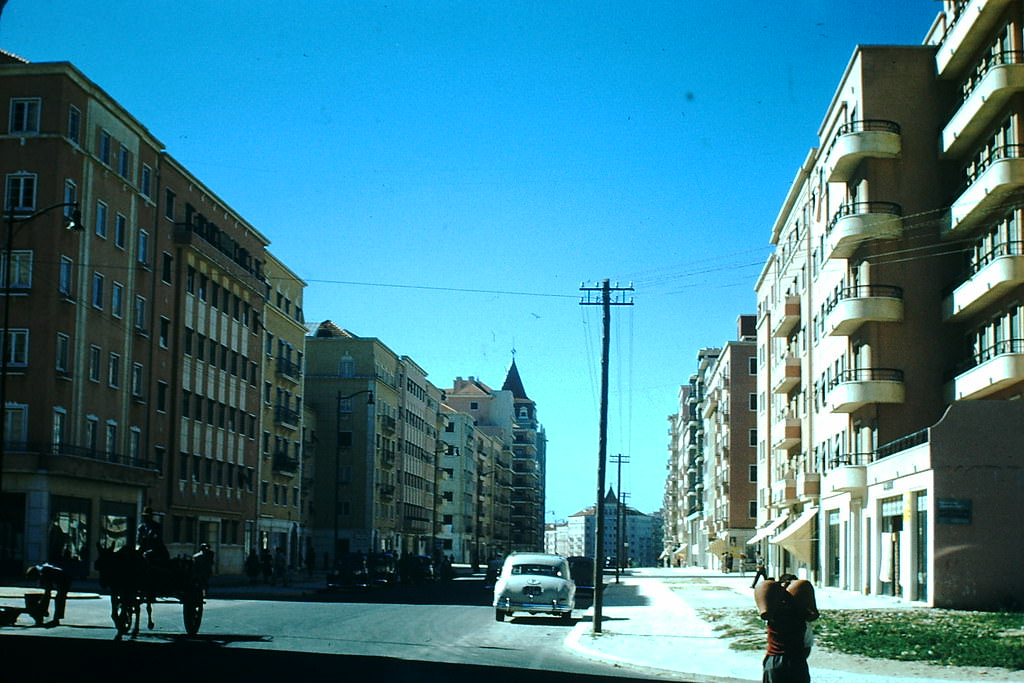
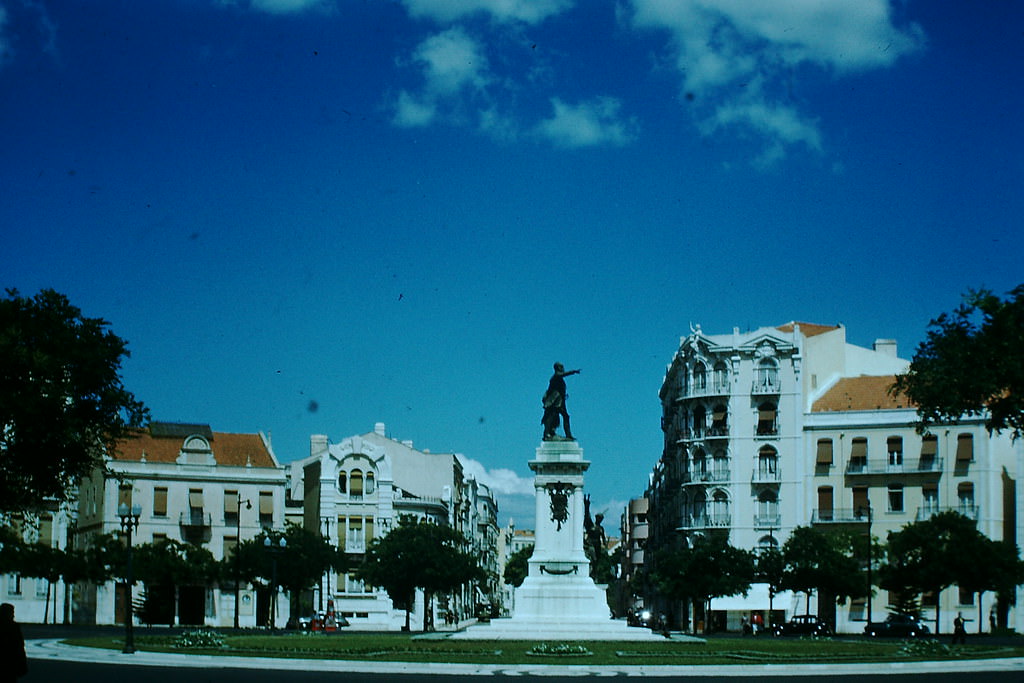
Private construction boomed in parts of Lisbon during the 1950s. New apartment blocks rose on streets that had previously been occupied by low-rise buildings or open lots. These modern structures, with their clean lines and flat facades, stood in sharp contrast to the centuries-old architecture elsewhere in the city. The construction wave reflected both growing demand and the economic ambitions of Portugal’s government under António de Oliveira Salazar.
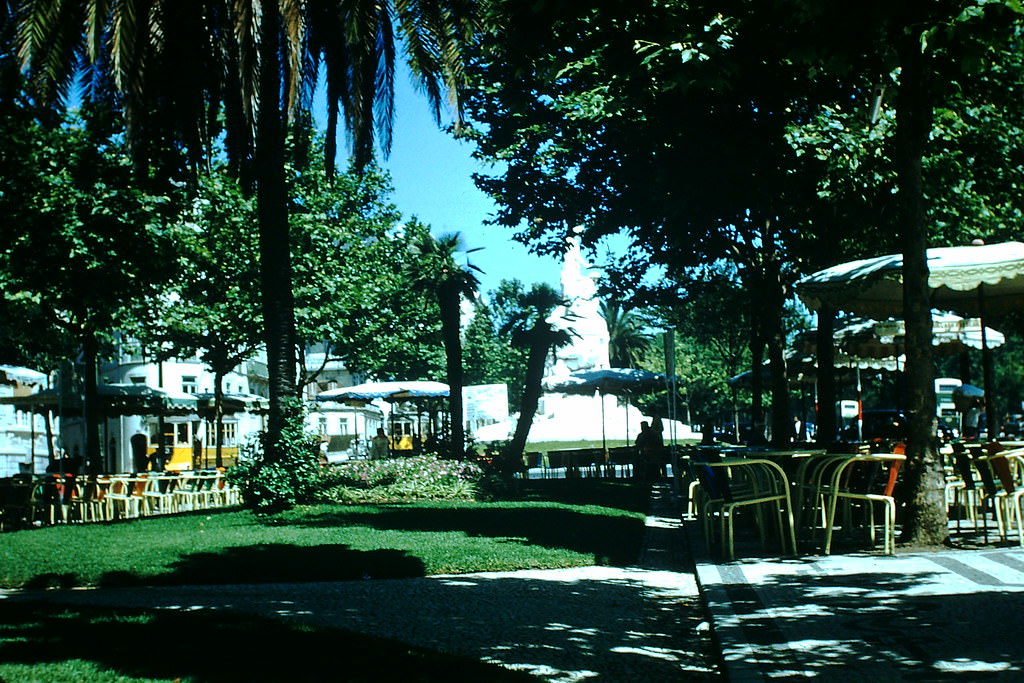
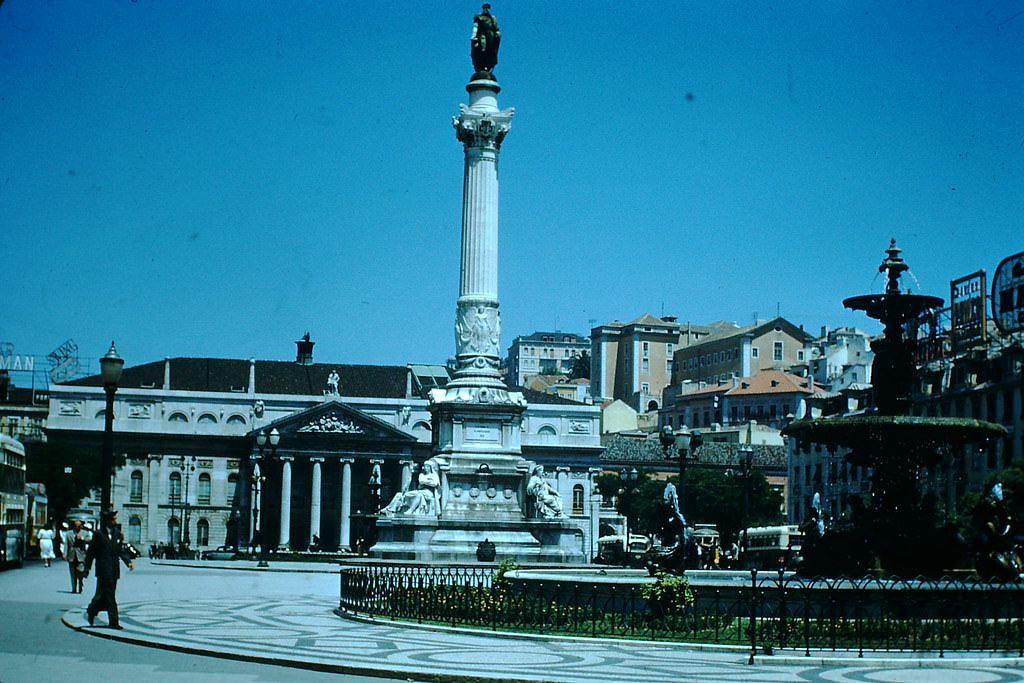
The Rossio, officially known as Praça Dom Pedro IV, was the beating heart of central Lisbon. Its two baroque fountains and the tall column bearing the statue of Dom Pedro IV made it one of the city’s most recognizable spaces. Trams passed through regularly, and the square’s wave-patterned cobblestones — laid by hand from black and white limestone — drew the eye in every direction.
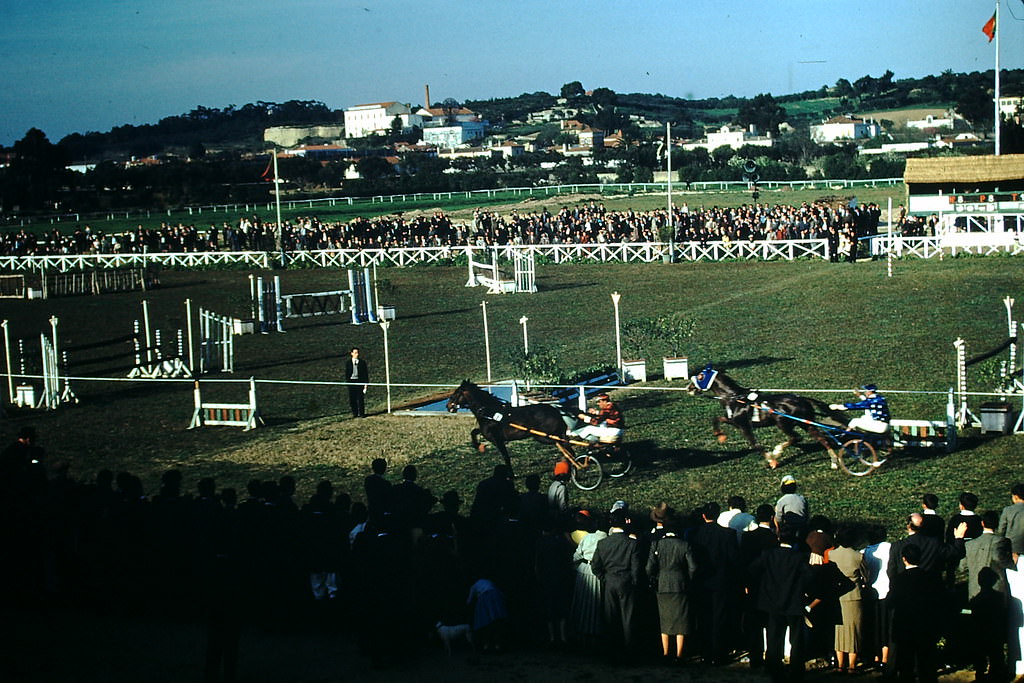
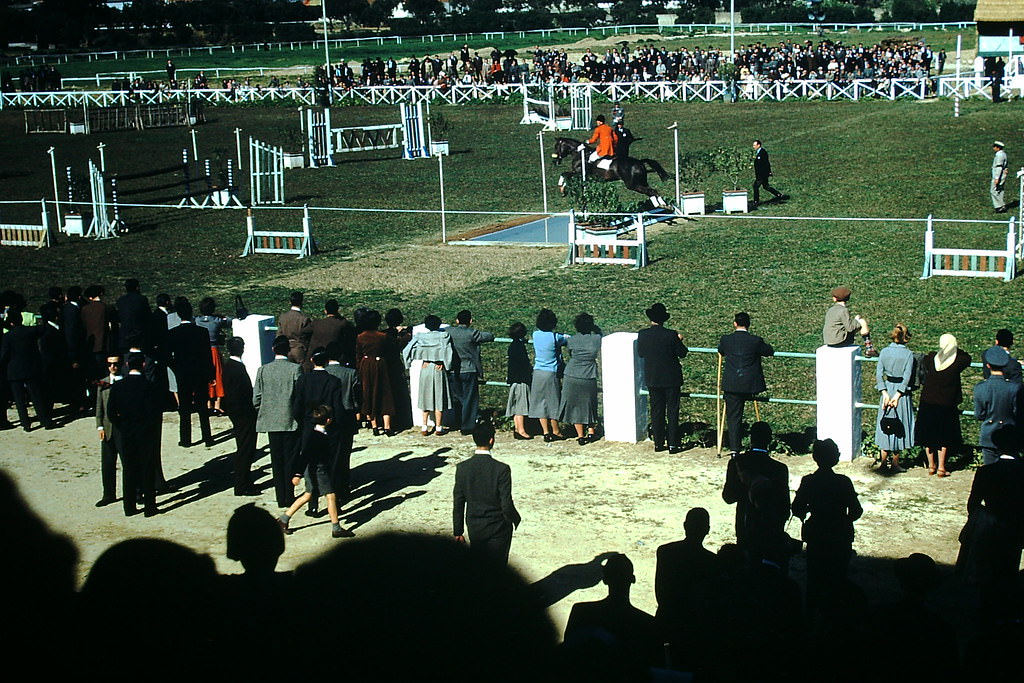
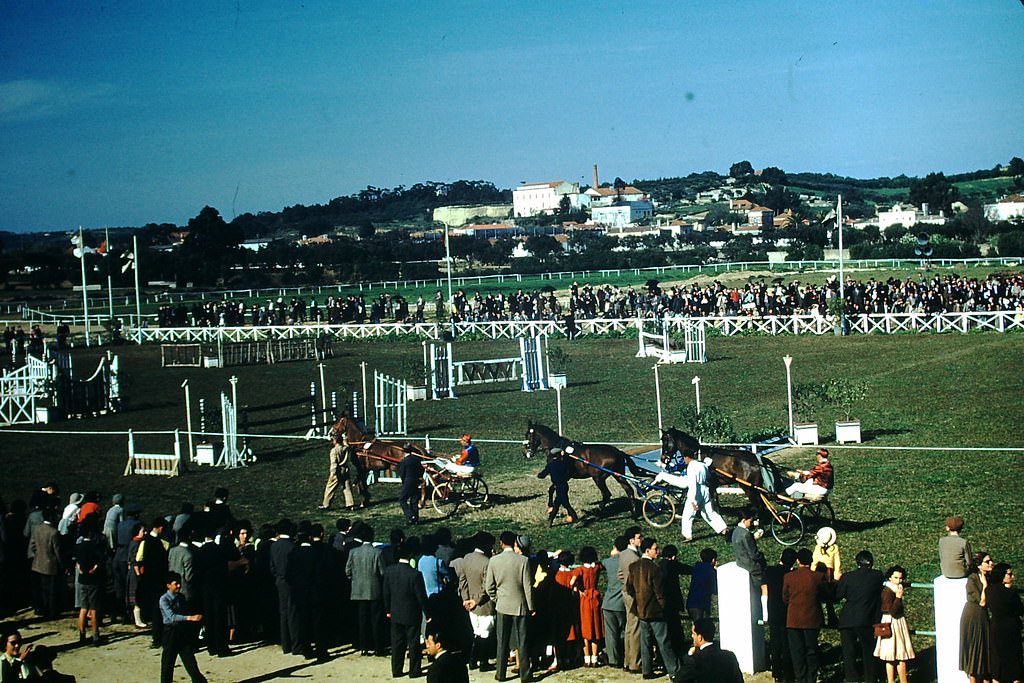
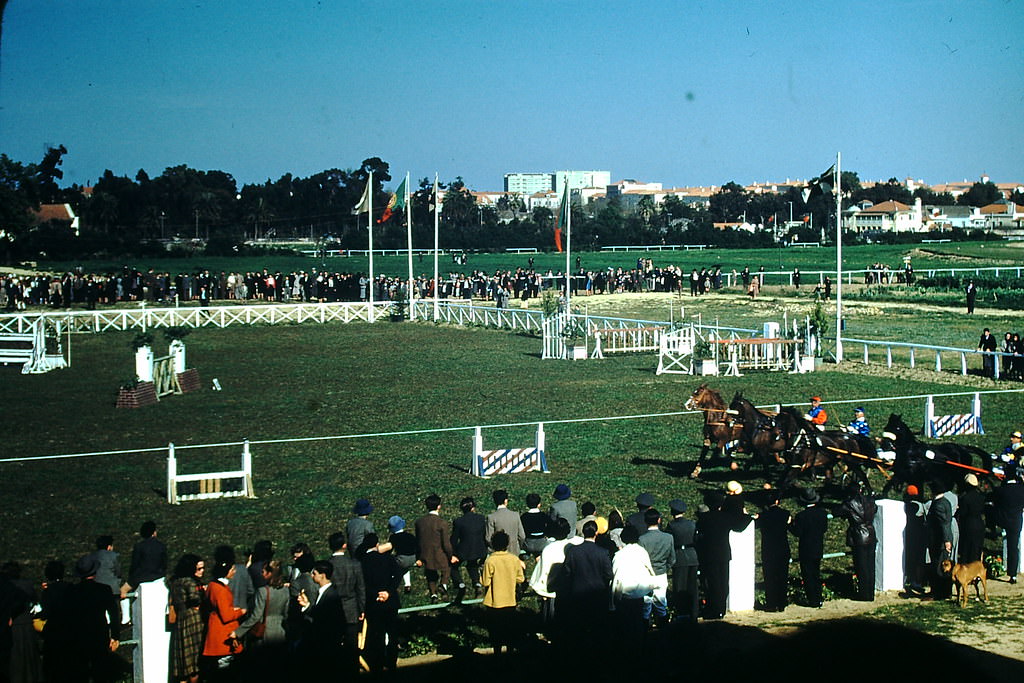
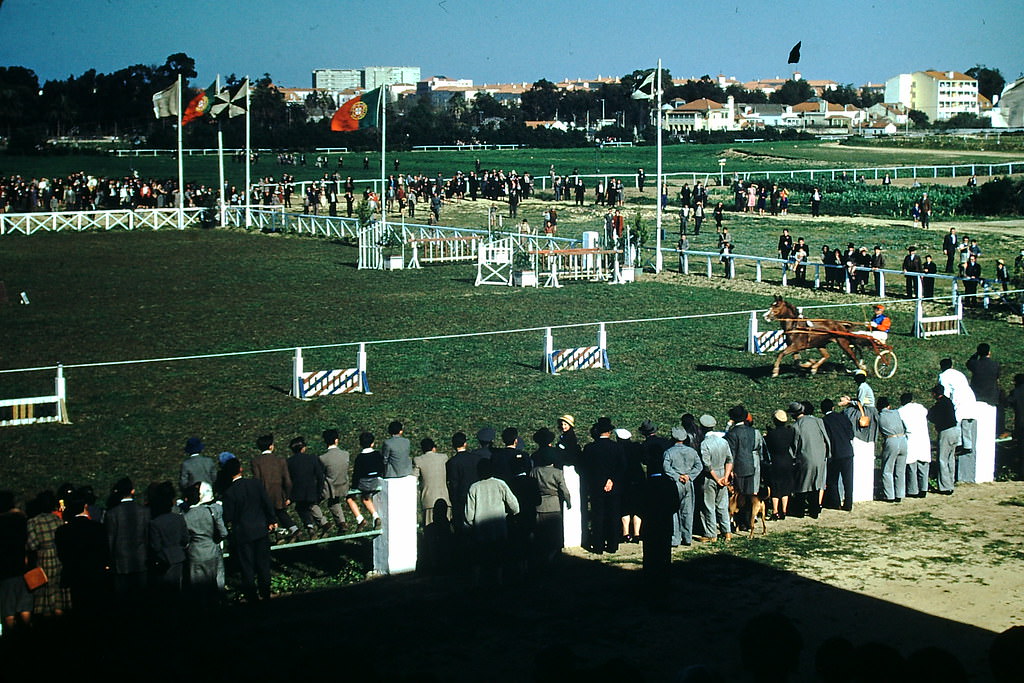
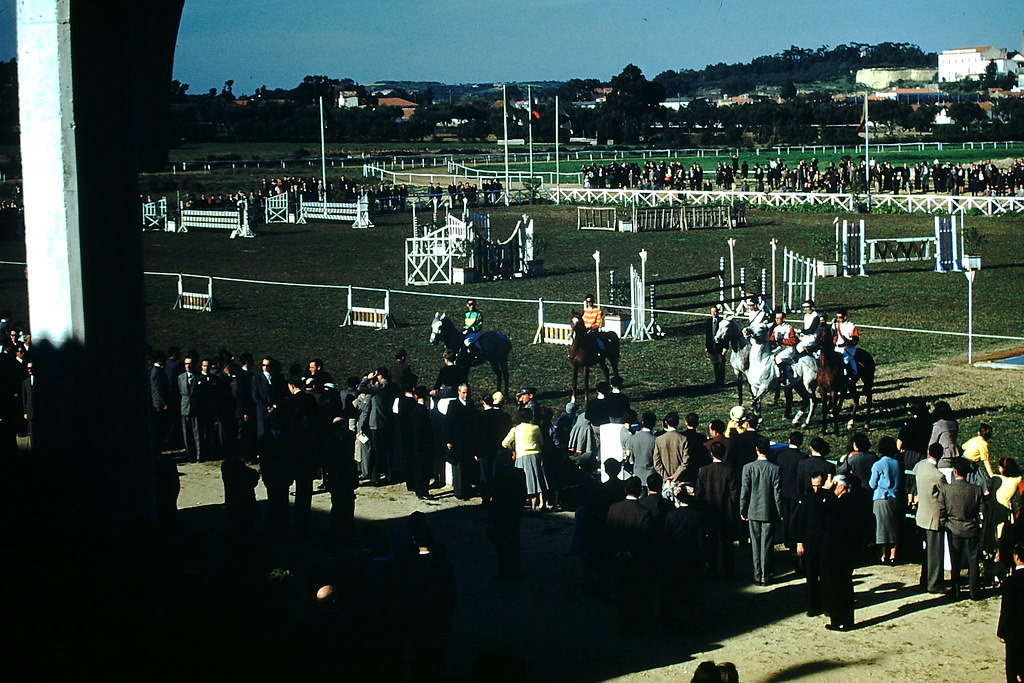
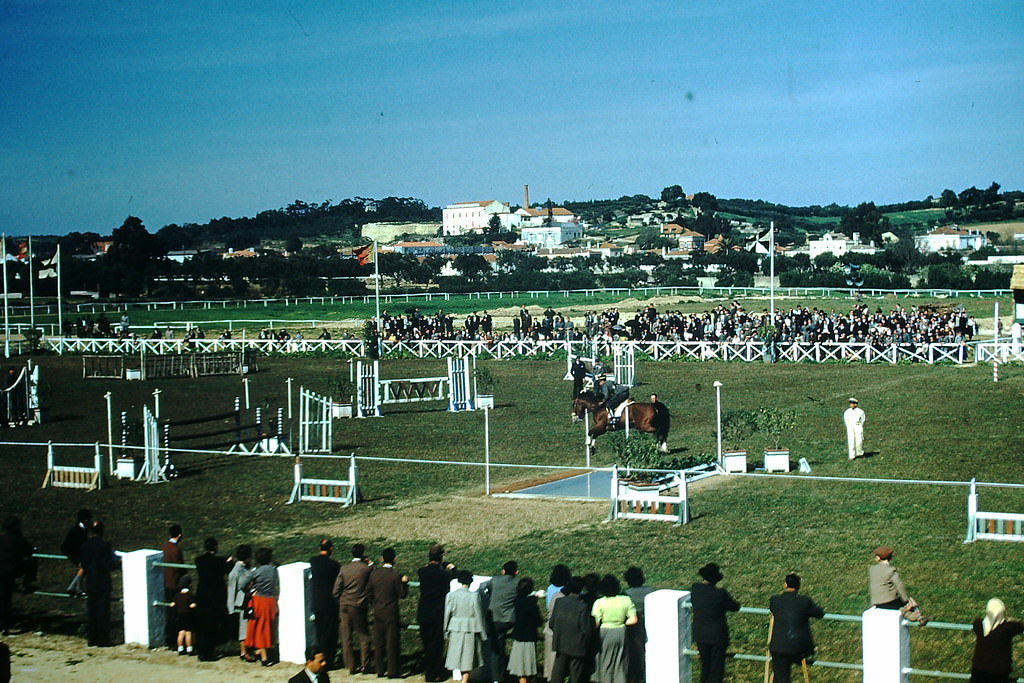
Horse racing was a popular spectator sport in 1950s Lisbon. The city’s racetrack drew well-dressed crowds on race days, with grandstands filling quickly and betting active throughout the afternoon. The sport attracted both the wealthy, who owned and trained horses, and ordinary Lisbonites looking for an afternoon’s entertainment.
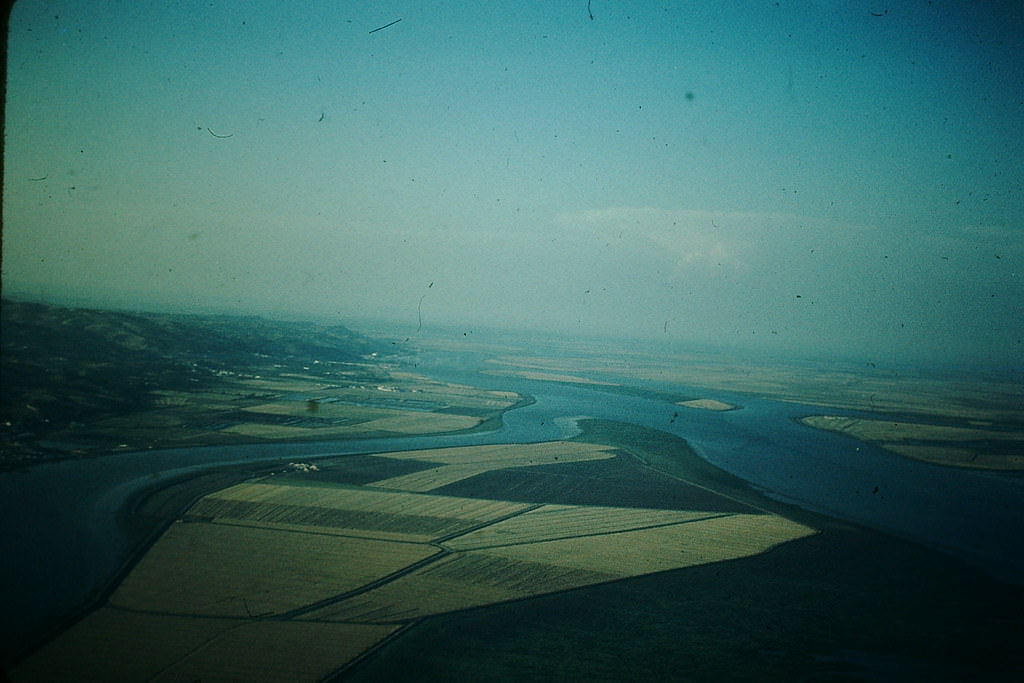
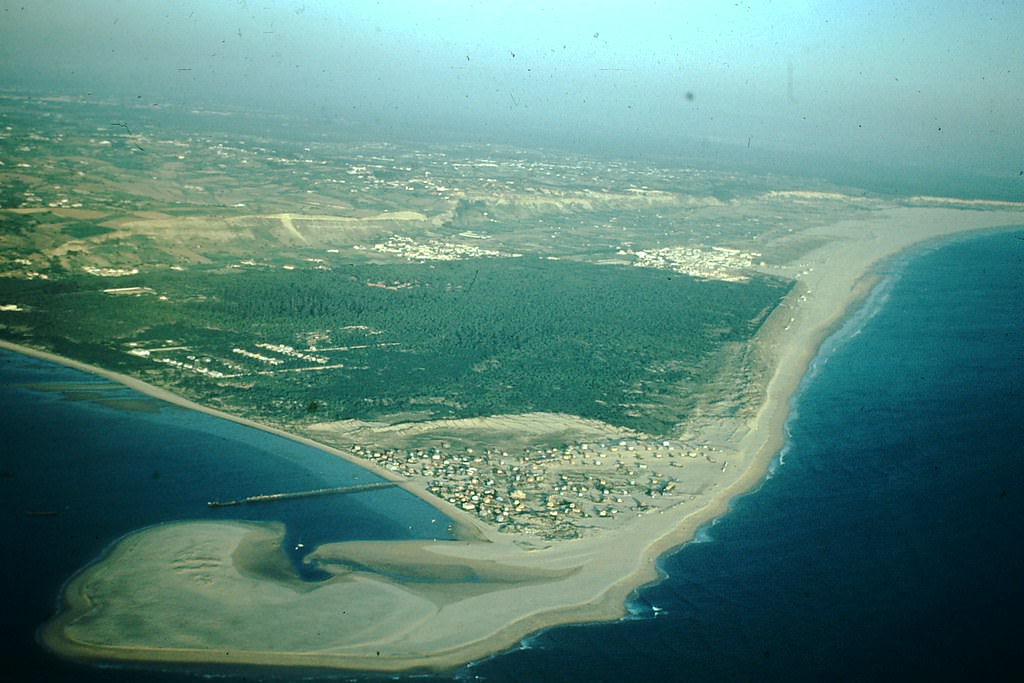
Where the Tagus met the Atlantic, the landscape opened into a vast expanse of water. The mouth of the estuary was wide enough that early explorers had mistaken it for the open ocean itself. Fishing communities lived along the shores here, and the rhythms of their lives were tied entirely to the tides and the weather.
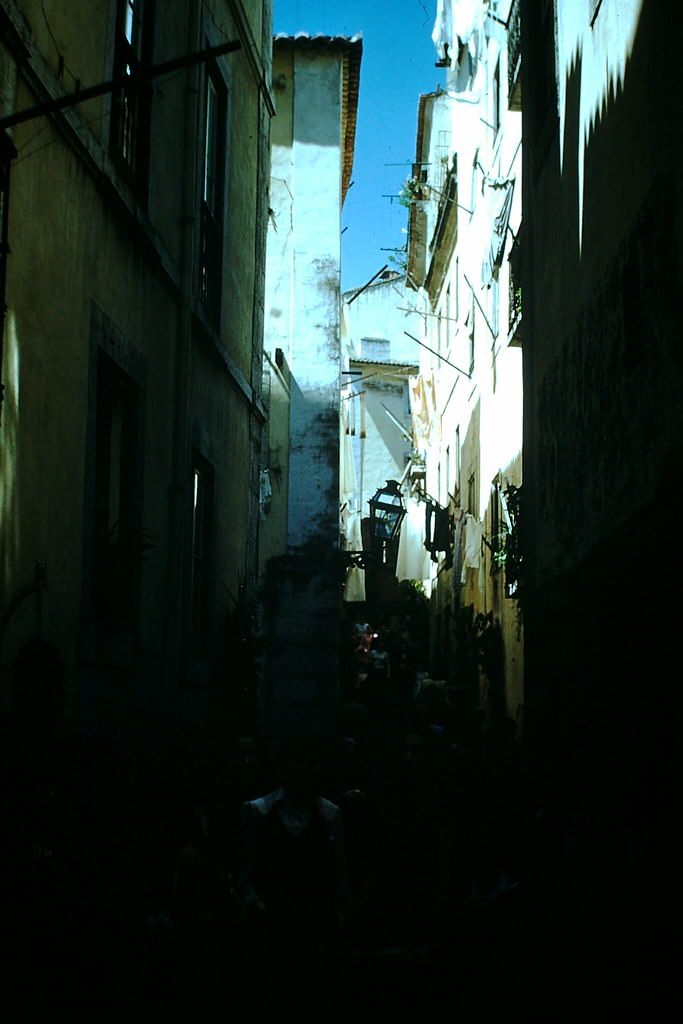
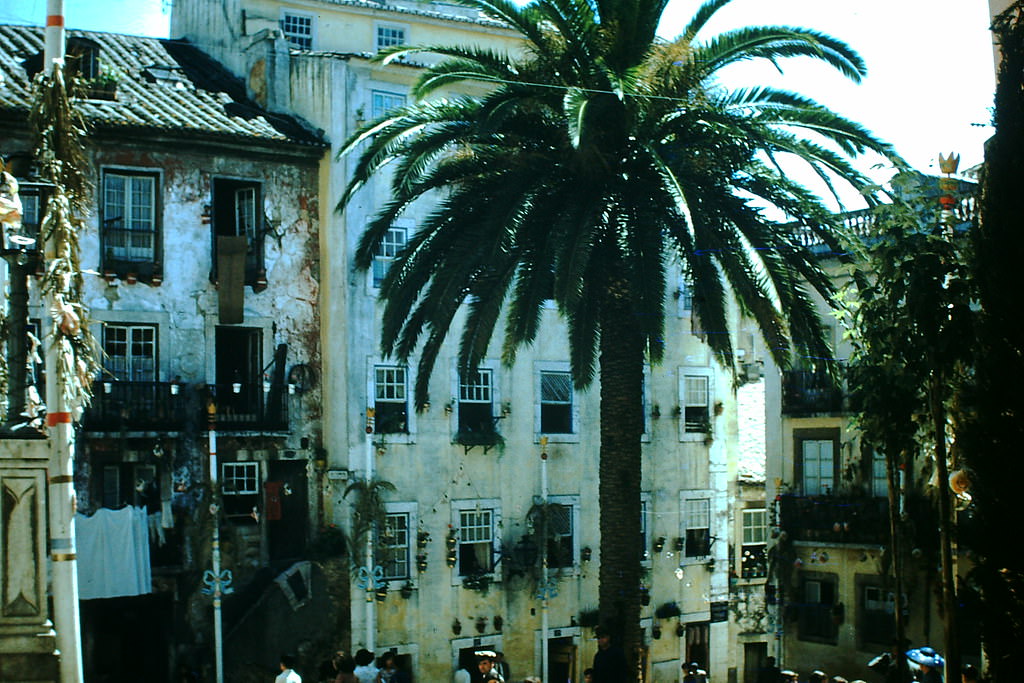
The shopping streets of the Alfama were filled with small traders selling everything from food and cloth to hardware and ceramics. Stalls and open-fronted shops lined the narrow lanes, and the district’s small squares served as gathering points for neighbors. Life here was lived largely outdoors — on steps, in doorways, and at the edges of the cobbled plazas.
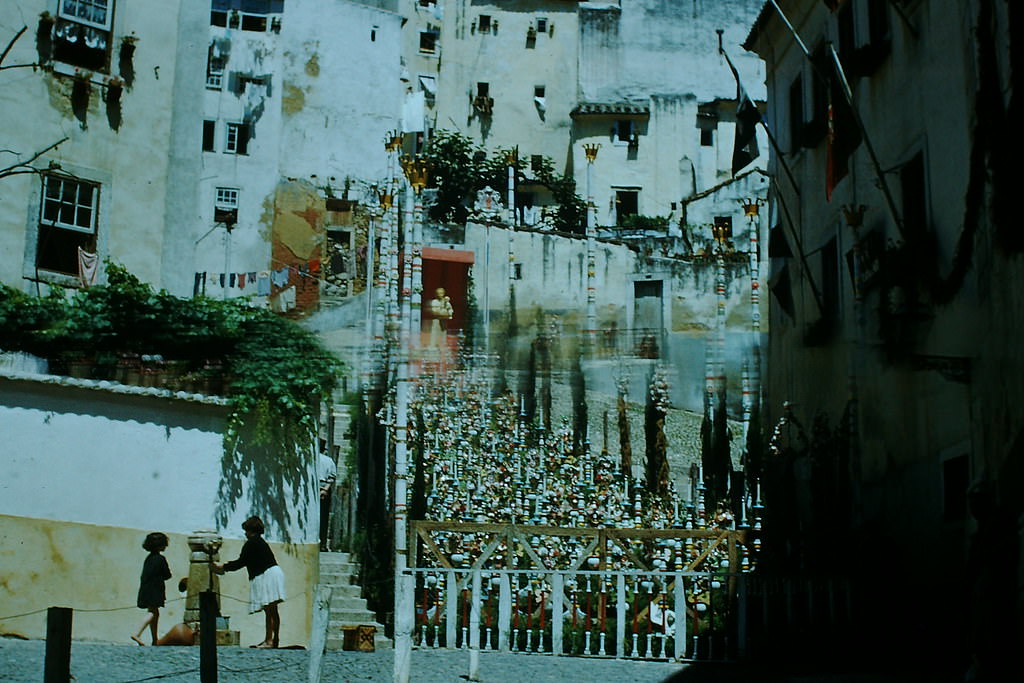
June brought the Feast of Saint Anthony to Lisbon’s streets. Anthony of Padua was born in Lisbon, and the city celebrated him with particular fervor. Neighborhoods in the Alfama strung colorful decorations across the streets, set up outdoor grills for sardines, and danced in the alleys well into the night. The celebrations turned the entire Moorish Quarter into a single extended party.
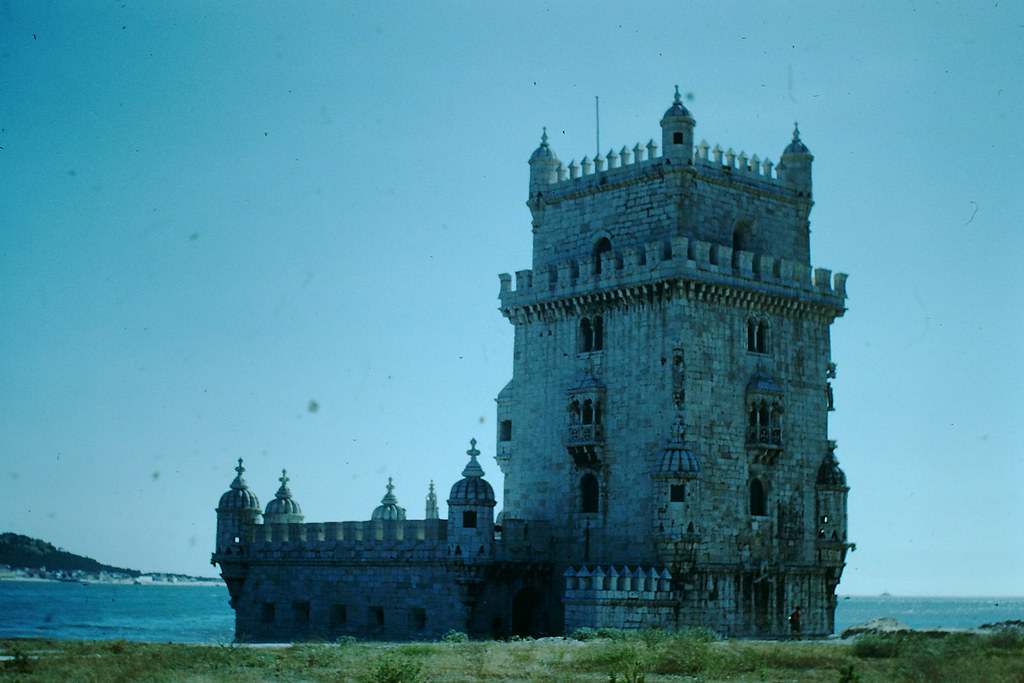
The Torre de Belém sat at the edge of the Tagus, a short distance west of the city center. Built in the early 16th century, it had served as a ceremonial gateway to Lisbon for ships returning from the Age of Discovery voyages. By the 1950s it stood as one of Portugal’s most iconic monuments, its Manueline stonework still crisp above the river.
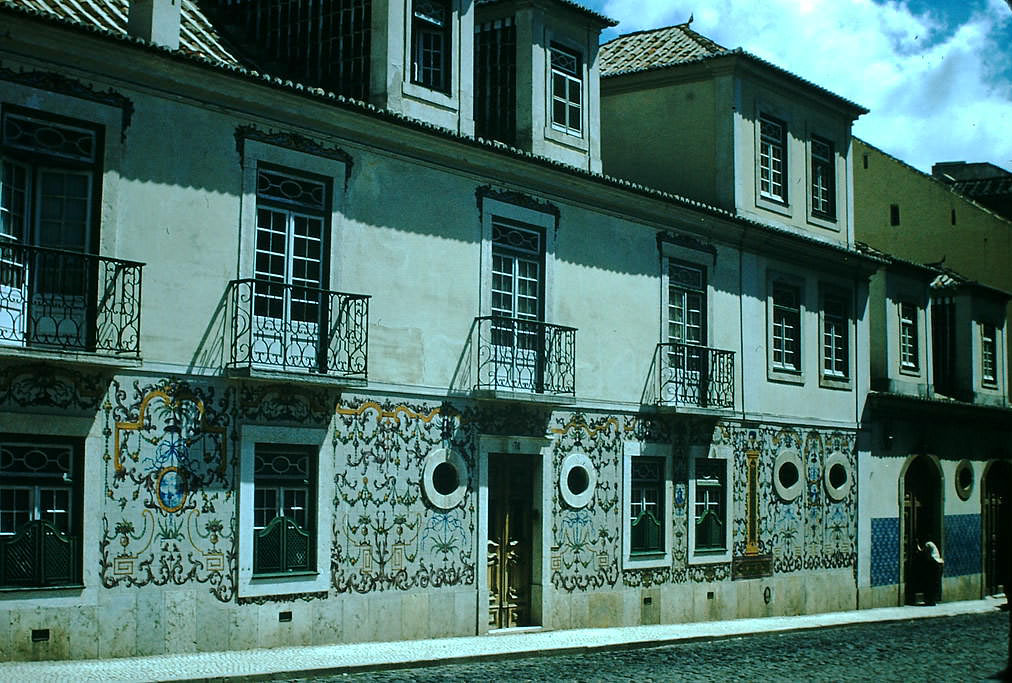
One of the most recognizable features of Lisbon’s architecture was the use of azulejos — decorative ceramic tiles — covering the exterior walls of homes and public buildings. These tile facades were practical as well as decorative, protecting walls from moisture and heat. The patterns ranged from simple geometric designs to elaborate scenes depicting historical events or religious imagery.
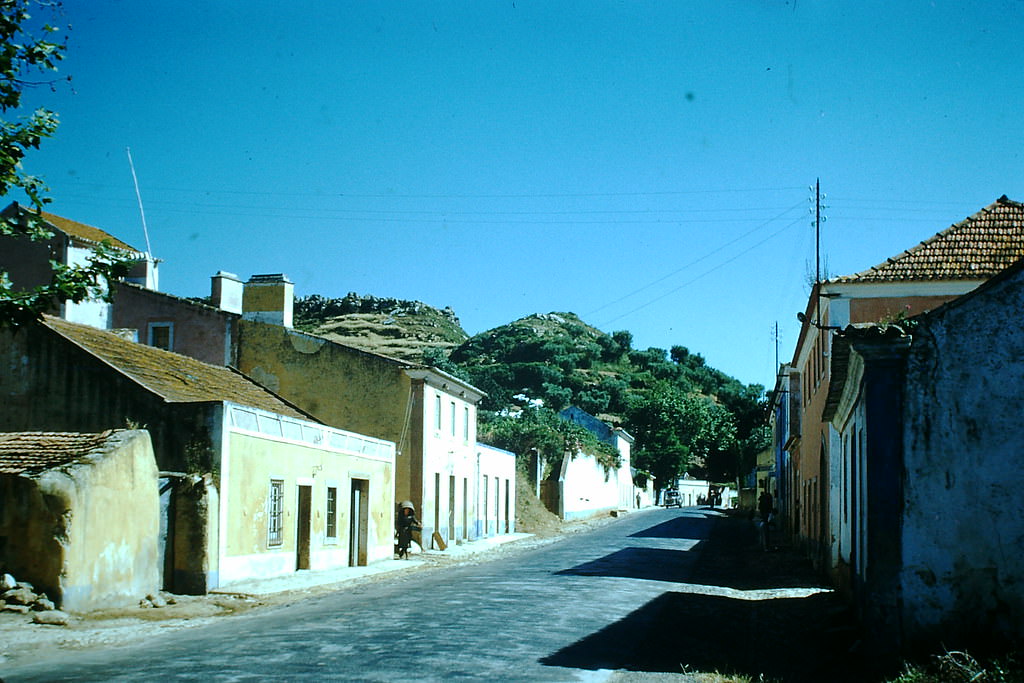
The village of Ponte d’Lousa, near Lisbon, preserved the character of traditional Portuguese rural life. Stone houses clustered tightly together, connected by footpaths rather than paved roads. Many of the people who had left places like this for the city carried memories of this slower, more isolated way of living — and the gulf between the two worlds could not have felt wider.
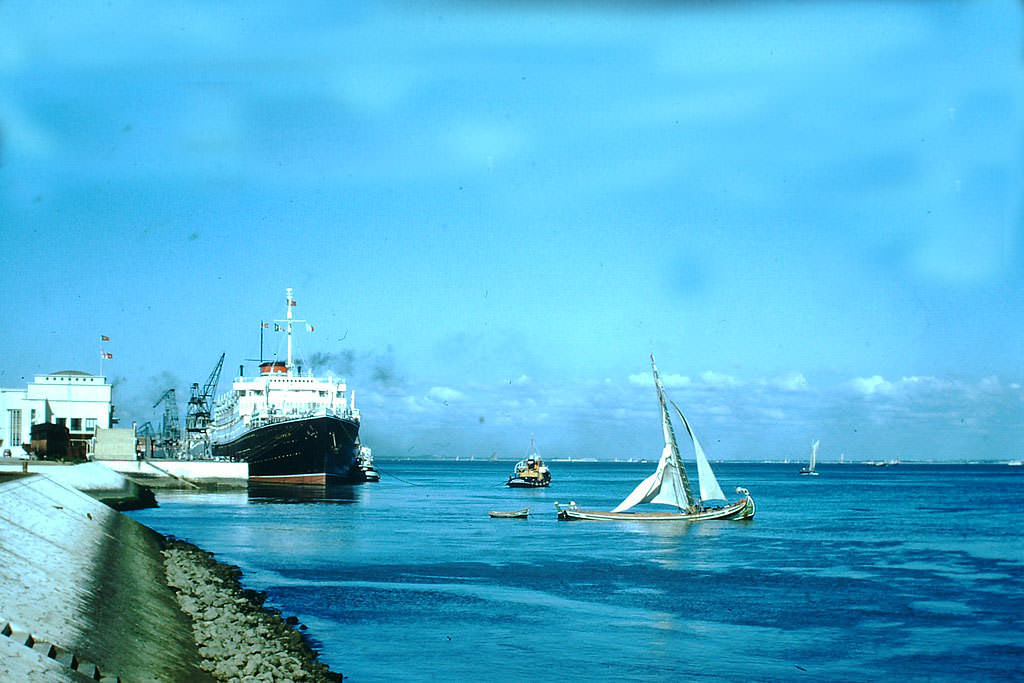
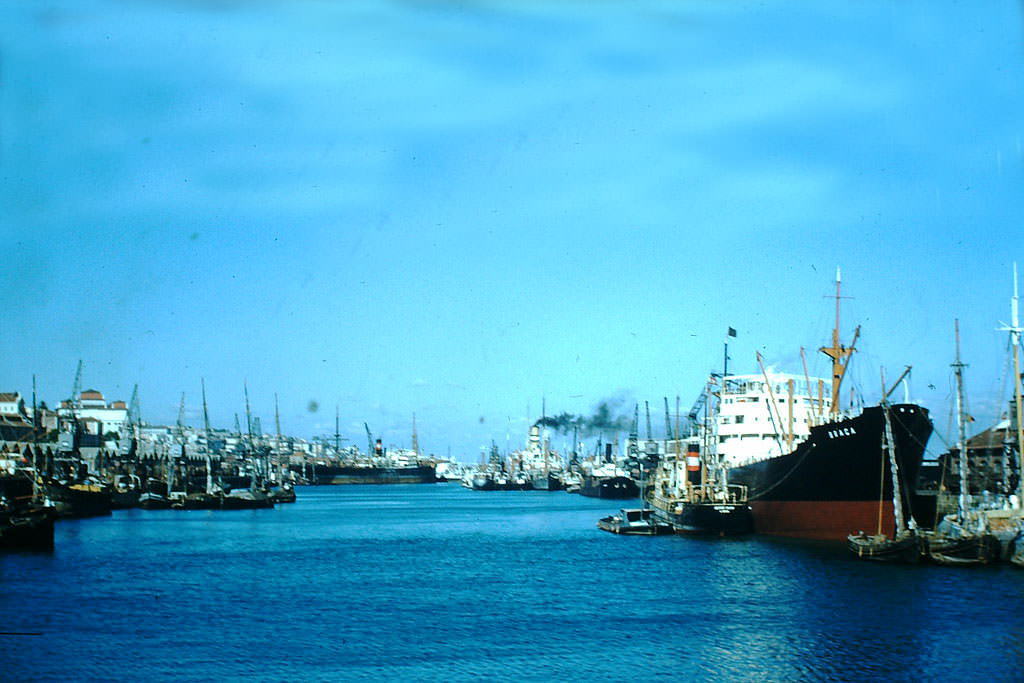
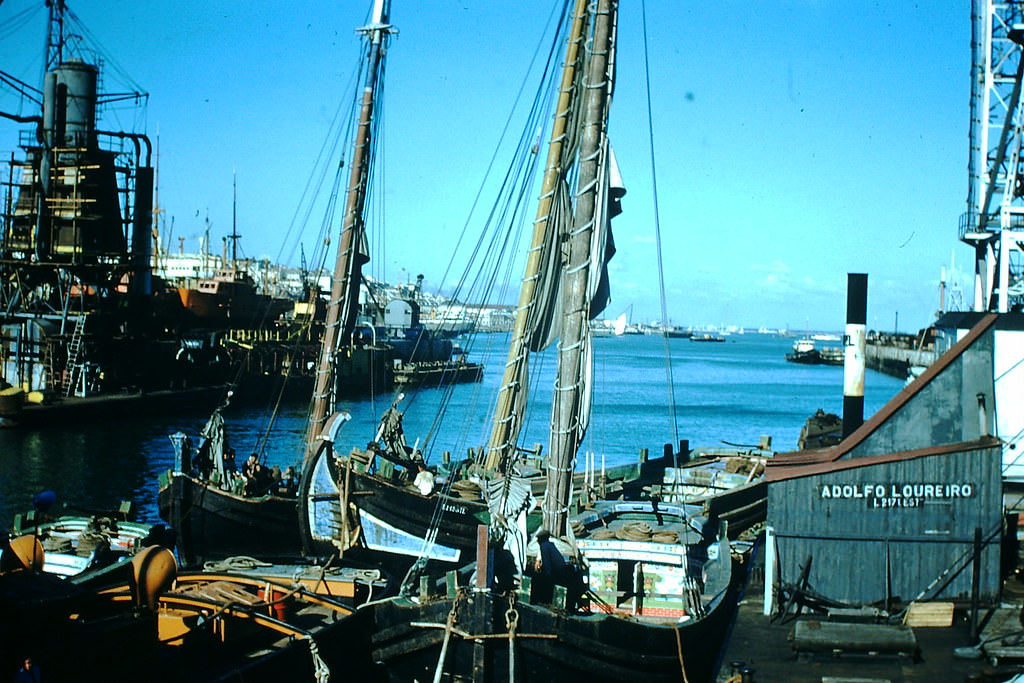
Lisbon’s waterfront was one of the busiest stretches of riverbank in southern Europe. The inner docks handled cargo from Portugal’s African colonies — Angola, Mozambique, Guinea — as well as trade goods from Brazil and Europe. Cranes, warehouses, and working vessels crowded the quays, and the smell of fish, diesel, and salt water was constant along the dockside.
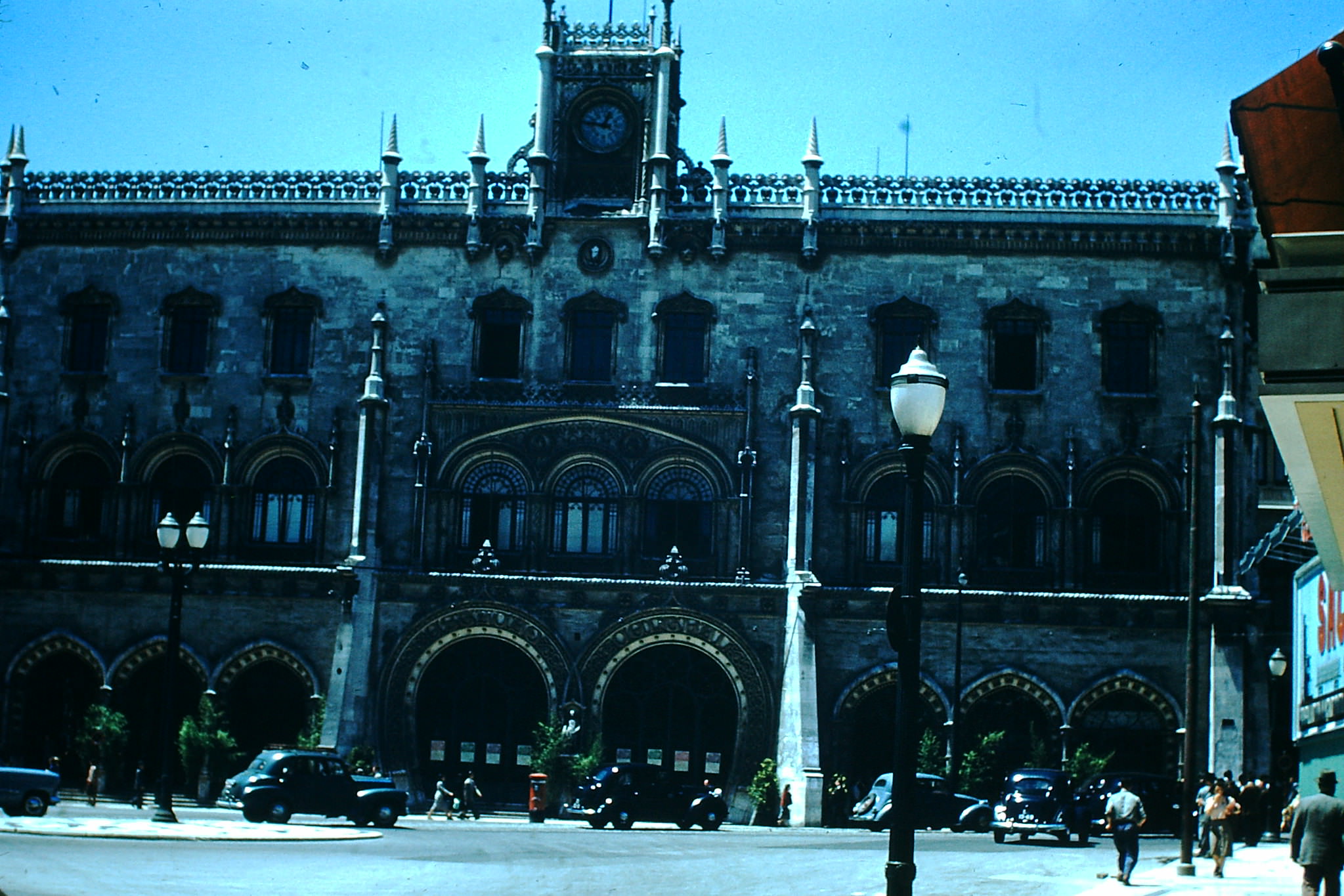
Lisbon’s railway stations were critical nodes in the city’s daily life. Trains brought workers in from the surrounding towns each morning and carried them back each evening. For the rural migrants arriving from distant provinces, the station was often the first sight of the capital — a grand, tile-covered hall opening onto an unfamiliar and overwhelming city.




