

When the United States entered World War I in 1917, the federal government faced an immediate problem: how to pay for it. Washington’s plan split the burden in two parts. Roughly one-third of the war’s cost would come from progressive taxation, and the remaining two-thirds would be raised by selling “Liberty Bonds” directly to the American public. To push those bond sales, the government organized Liberty Day — a nationwide campaign built around parades, spectacles, and hard-hitting advertising. New York City held its Liberty Day on October 25, 1917, and the event was unlike anything the city had ever seen.
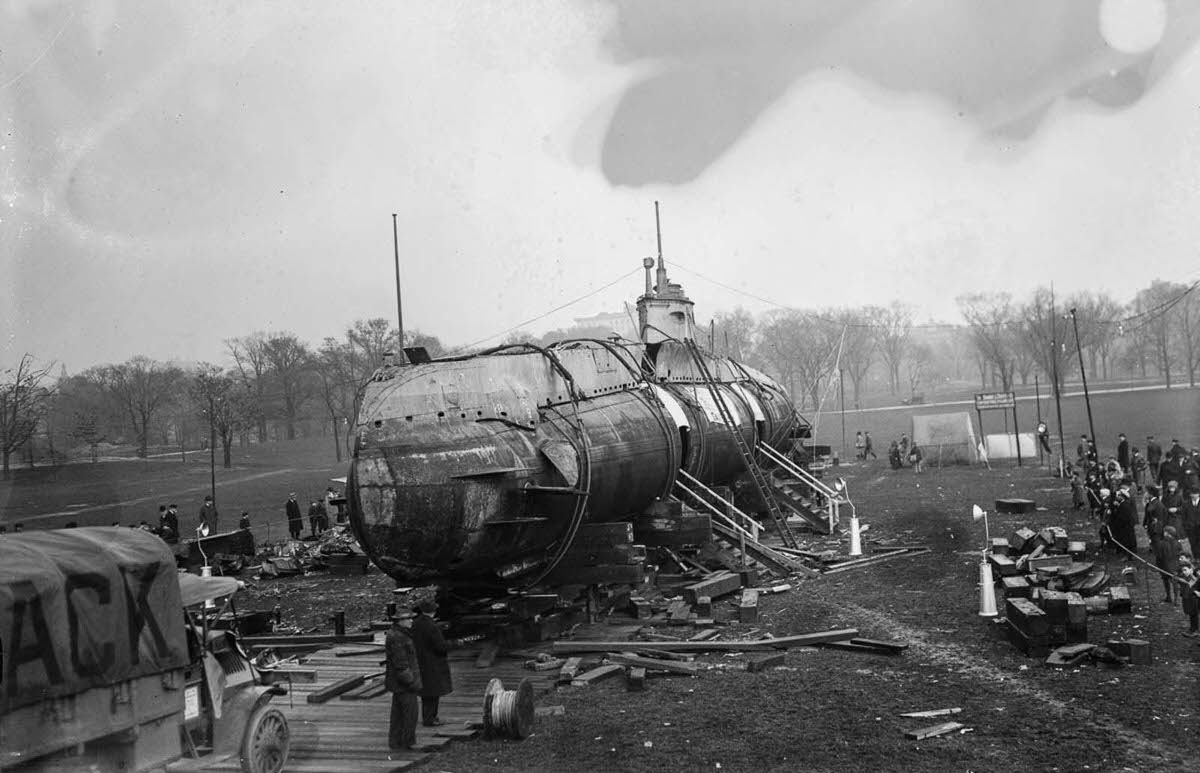
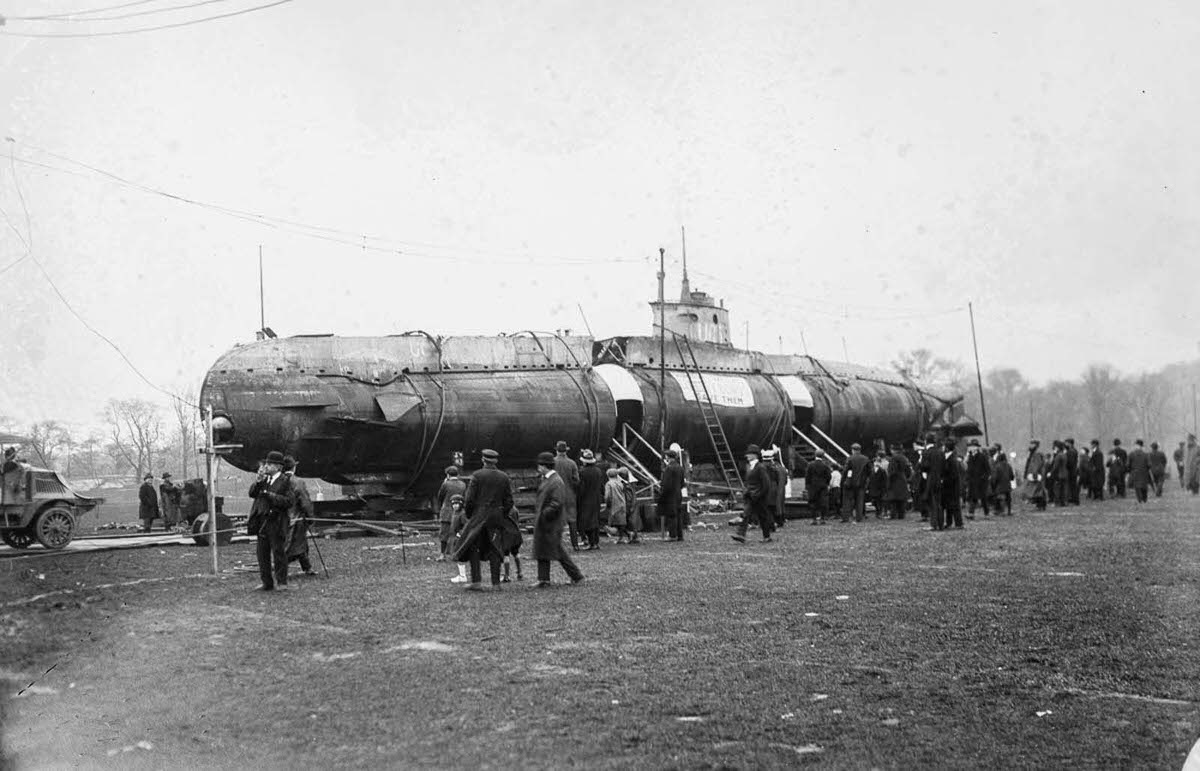
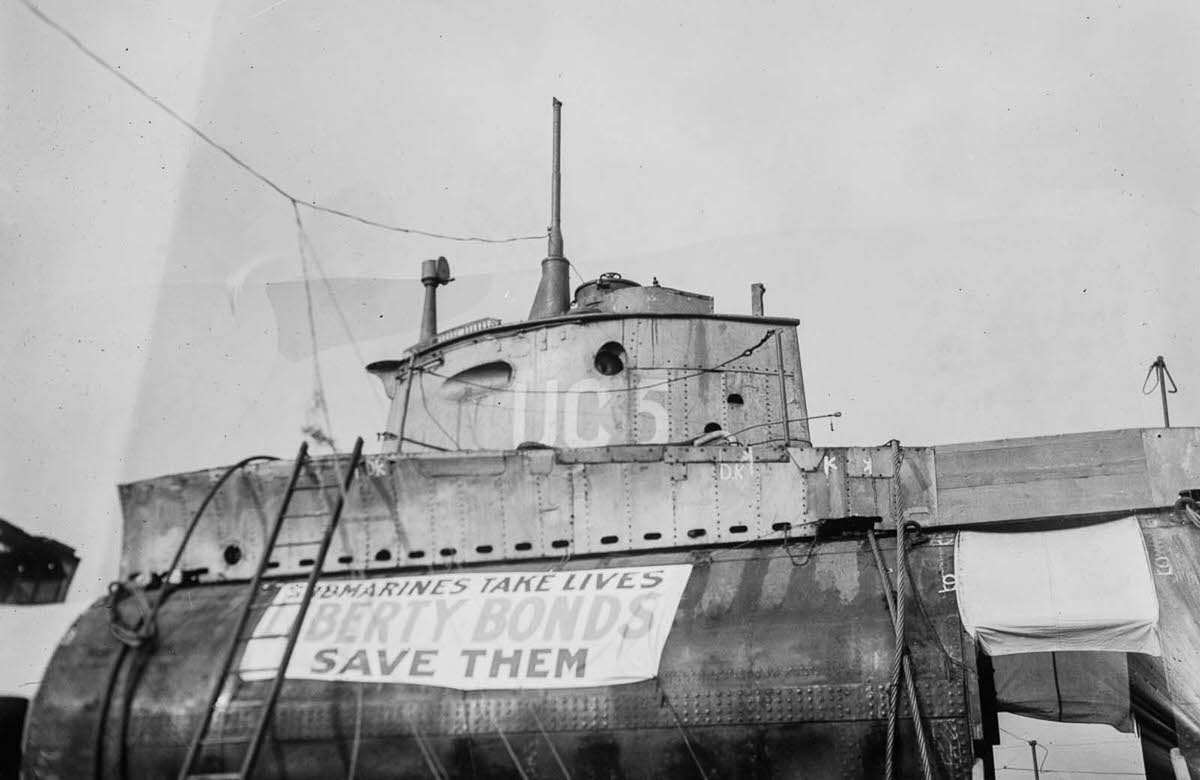
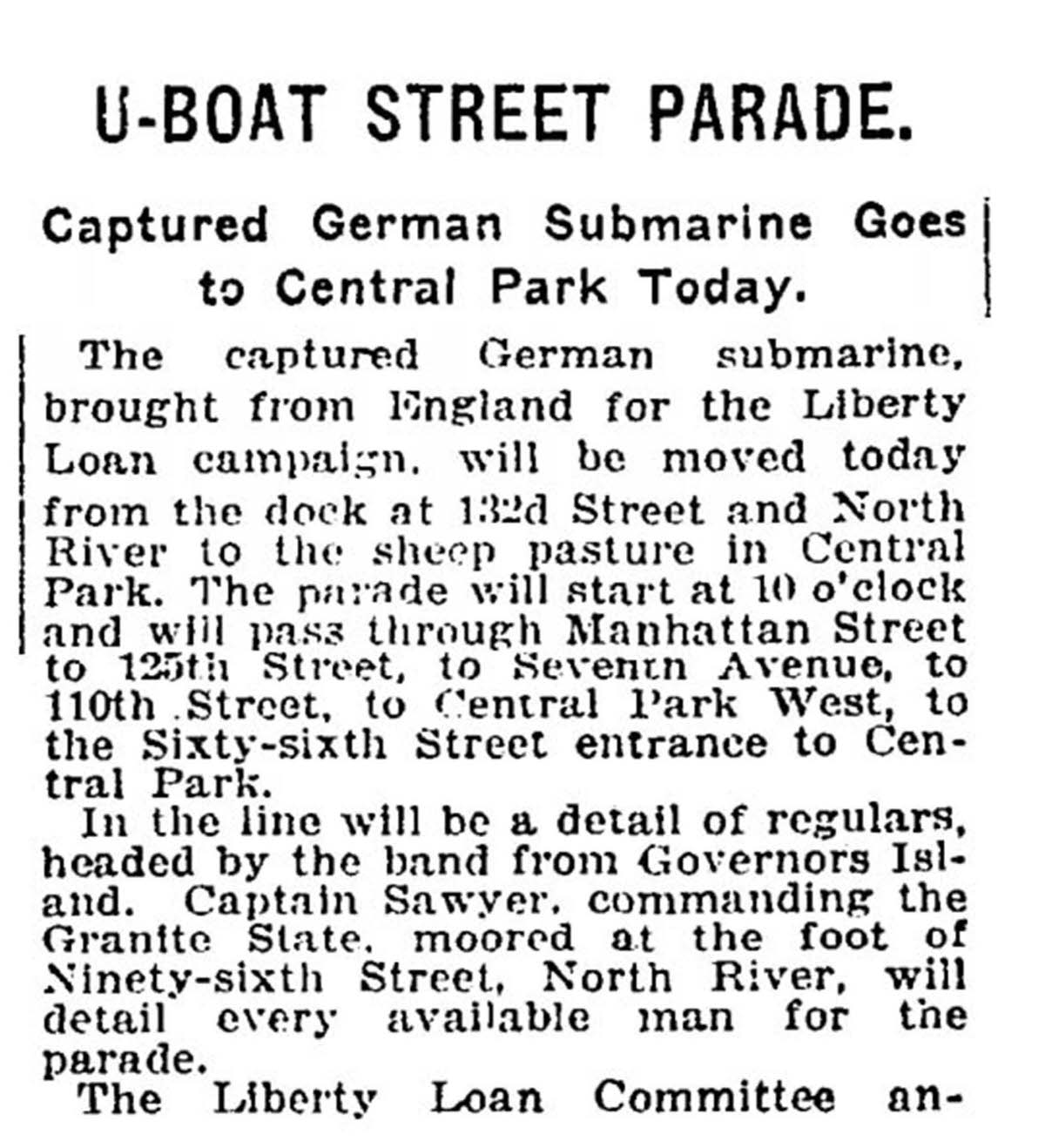
The centerpiece of the day was a captured German submarine, SM UC-5, sitting on display inside Central Park. An American flag draped across its hull. Crowds gathered around it as signs nearby read, “Submarines take lives; liberty bonds save them.” The message was blunt and intentional — this was a weapon that had been sinking Allied ships, and buying a bond was framed as a direct act of resistance against it.
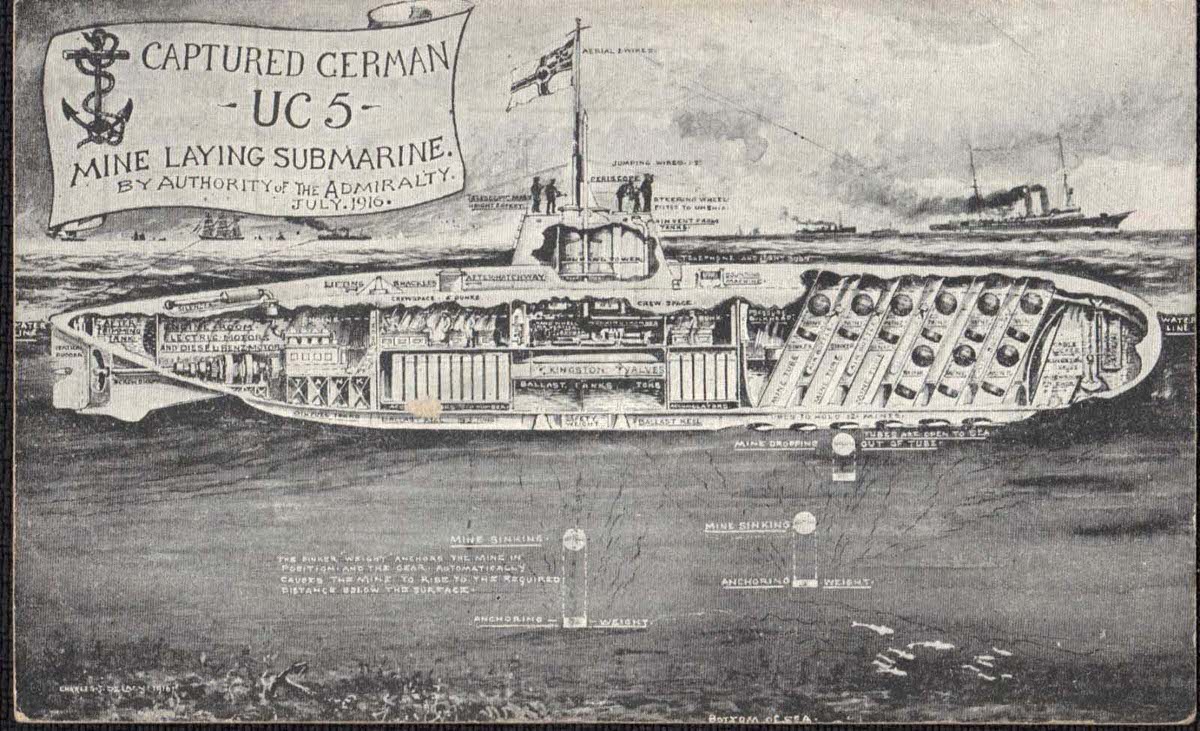
The UC-5 had a deadly record before it ever set foot — or rather, keel — in New York. Ordered in November 1914 and built by AG Vulcan Stettin, the submarine was delivered on June 13, 1915, and commissioned into the German Imperial Navy just six days later. It carried a crew of fourteen and could dive to a depth of 160 feet while surfaced operations allowed a maximum speed of 7.47 mph. By the time it was captured, the UC-5 had been credited with sinking 29 ships. Germany had built hundreds of these relatively cheap submarines during the war, using them to strangle the United Kingdom’s supply lines from the outside world.
The UC-5’s path to Central Park began in April 1916, when the submarine ran aground during a patrol and was seized by Allied forces. It was first put on public display in London at Temple Pier on the Thames River, where crowds came to see the enemy vessel up close. From there, it was shipped across the Atlantic to serve the American war bond campaign, first in New York and then as part of Liberty Day festivities.
The submarine wasn’t the only attraction drawing crowds that day. A three-engine Caproni bomber flew low beneath New York’s skyscrapers, giving spectators a rare look at military aviation power. A parade of military motorcycles moved along Fifth Avenue, adding to the noise and spectacle. The event was designed to be overwhelming — a full sensory argument for buying bonds.
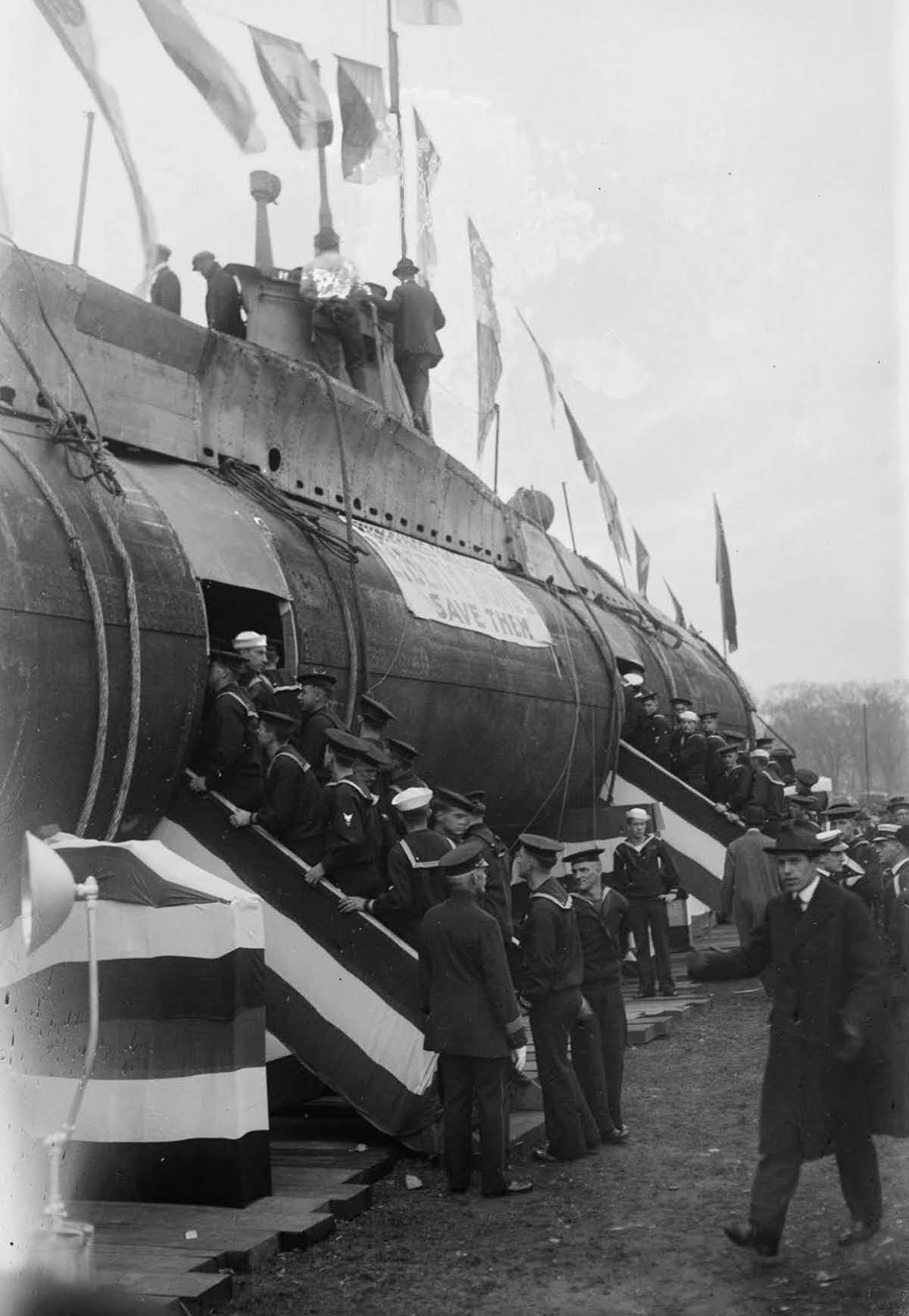
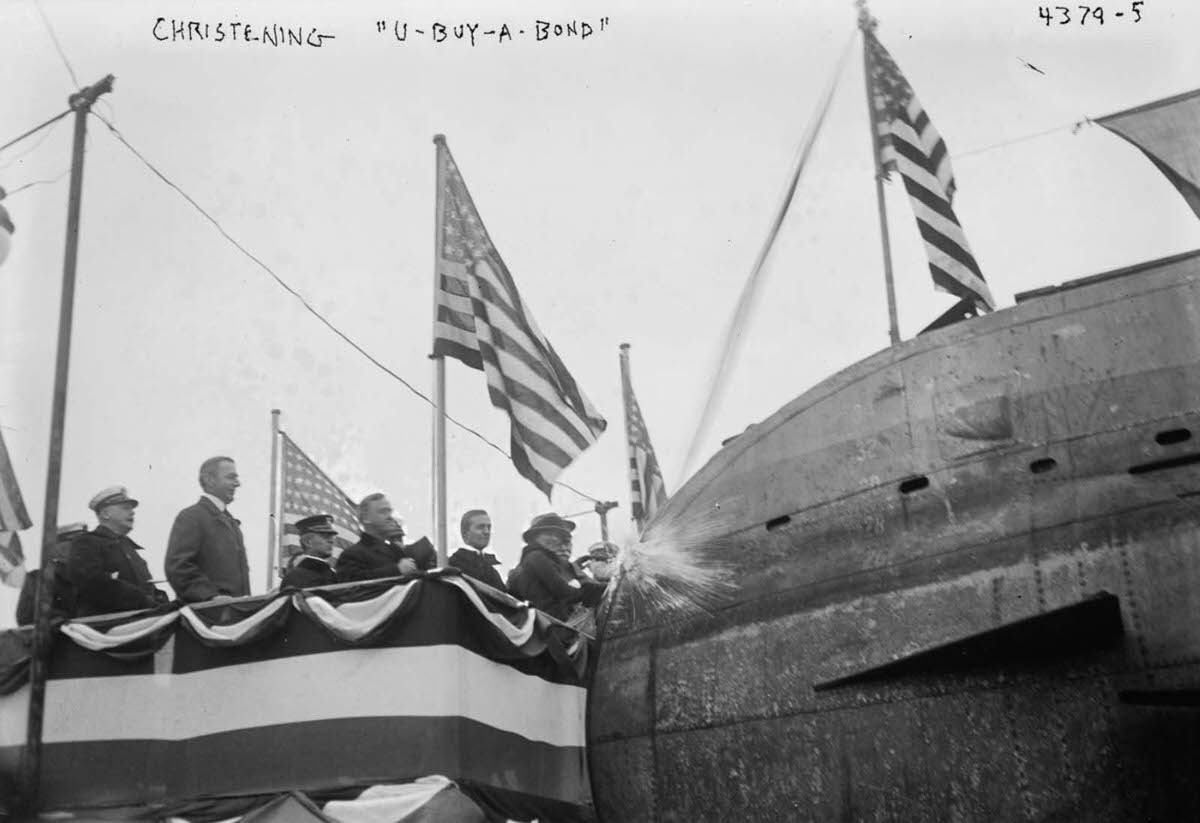
For those who got close enough, the UC-5 was opened for tours. Sailors guided visitors through the cramped interior, giving ordinary New Yorkers a rare look inside a machine that had terrorized Allied shipping lanes. The submarine was also rechristened for the occasion with a name that doubled as a sales pitch.
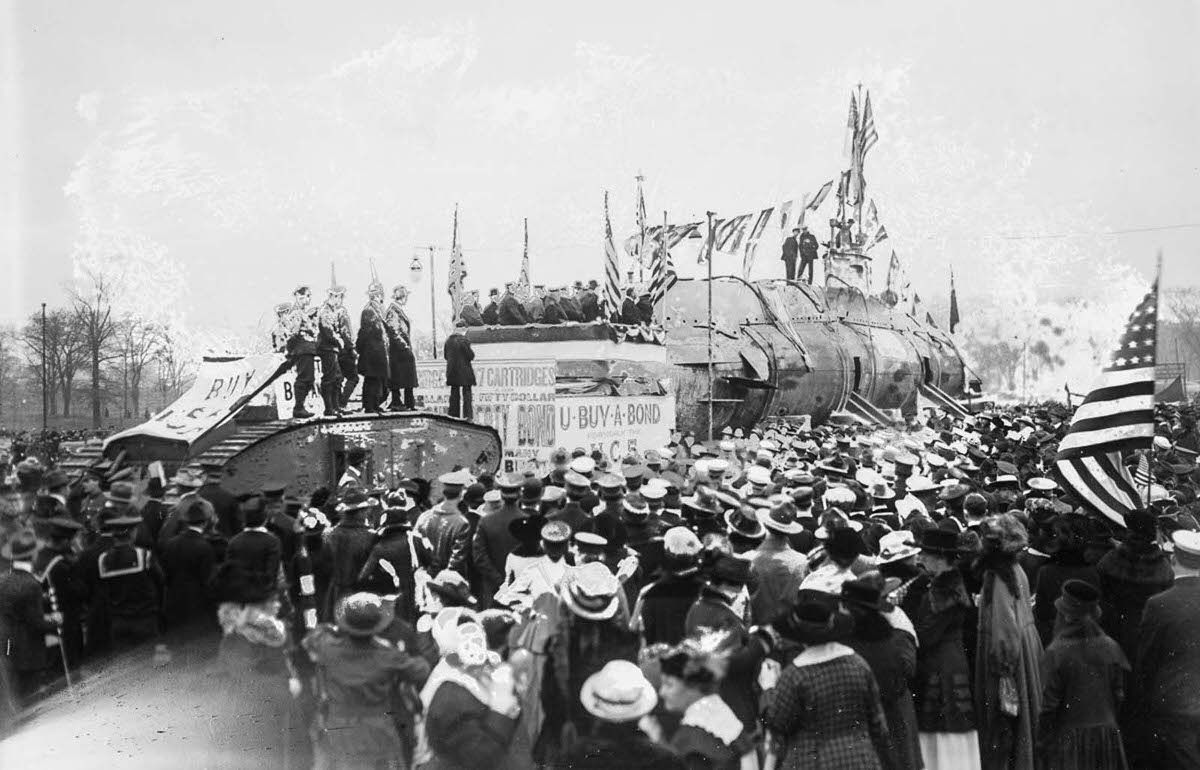
The advertising surrounding the event was just as aggressive as the displays themselves. Posters and announcements promoted the UC-5 as a “Captured German UC-5 Mine Laying Submarine,” drawing on public fear of the vessel’s original purpose. Every element of Liberty Day was designed to make the bond purchase feel urgent and personal.
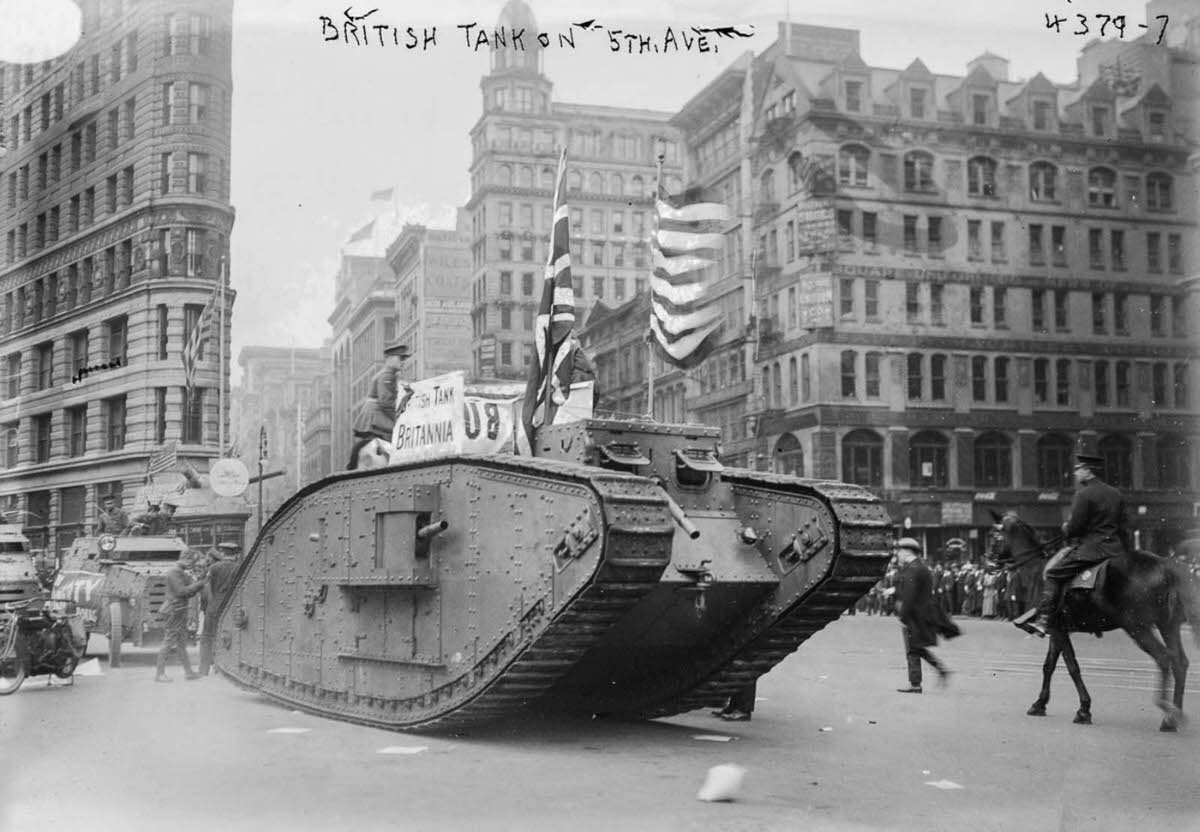
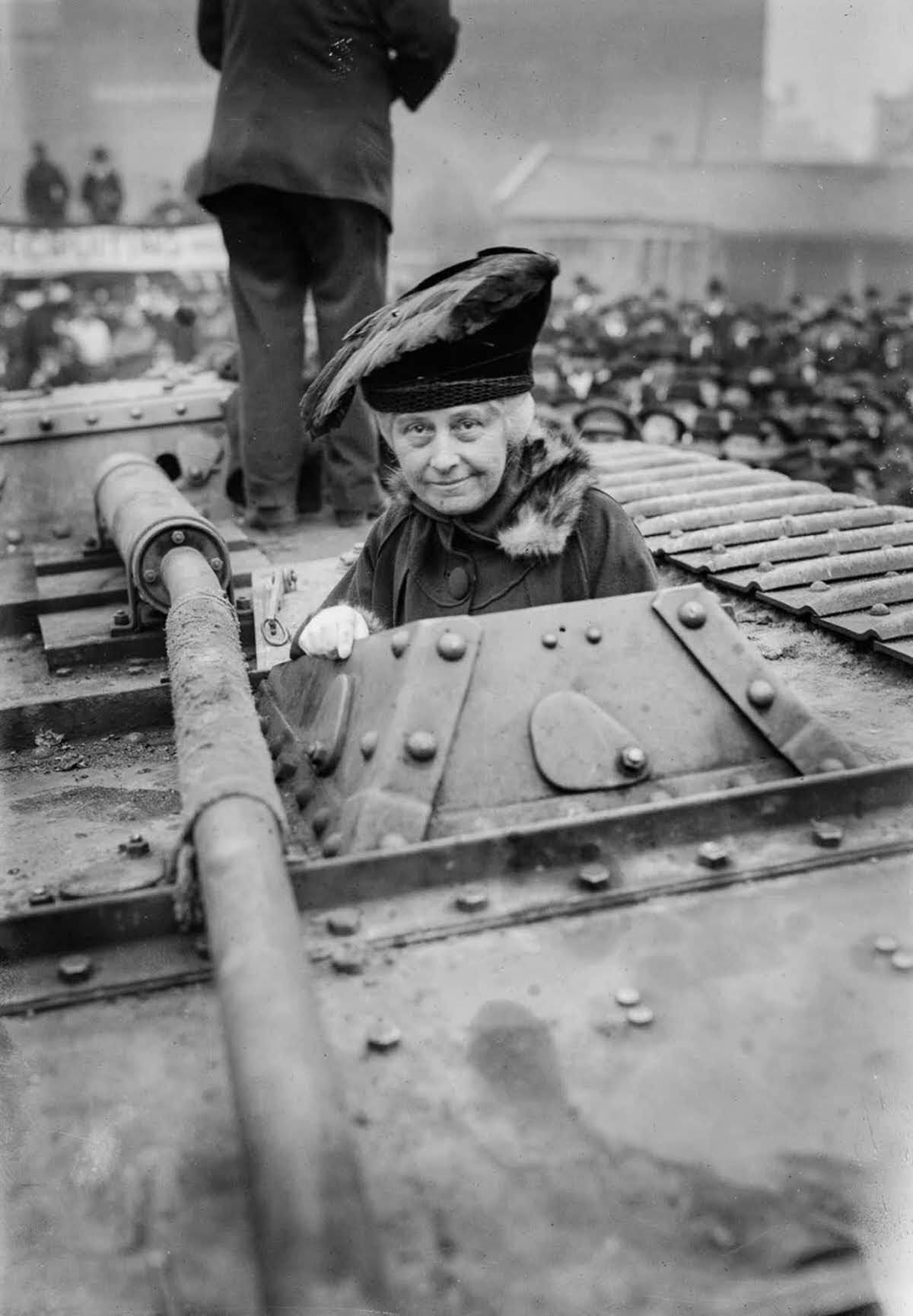
Tanks also rolled through the streets of New York as part of the day’s events. The British Mark IV tank, named “Britannia,” led a parade up Fifth Avenue. It became one of the most photographed spectacles of the day, drawing crowds who had never seen an armored vehicle in person. For many New Yorkers, Liberty Day was their first encounter with the machinery of modern warfare.
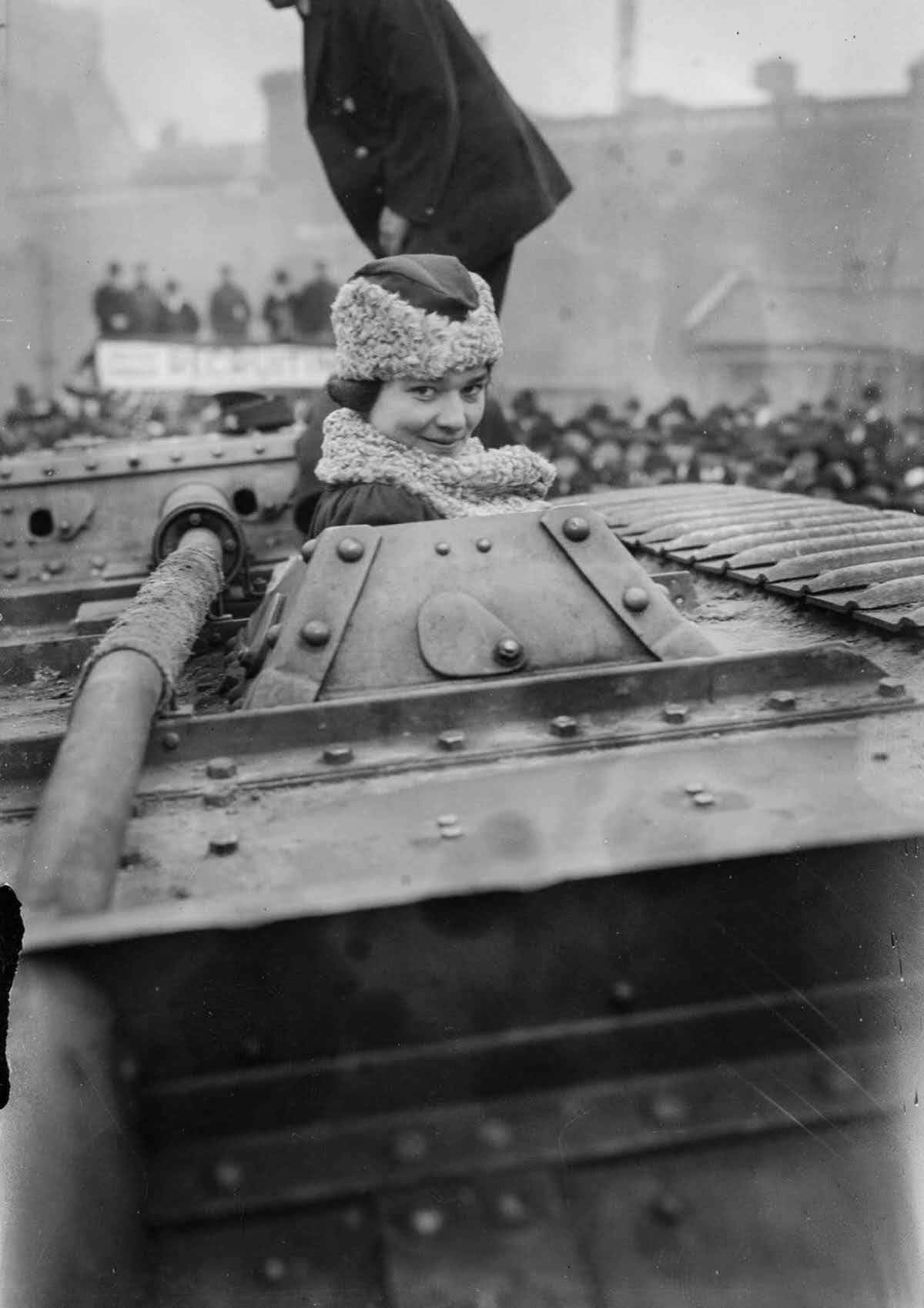
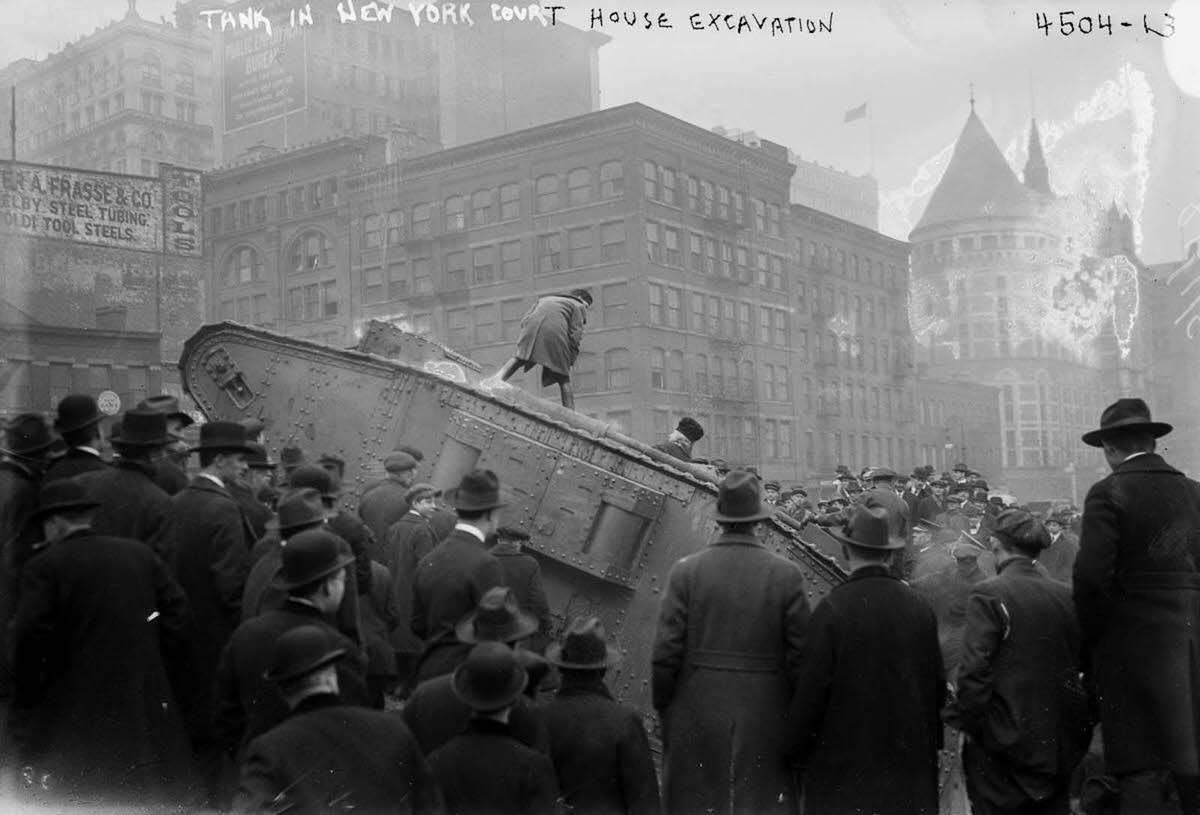
Rides in “Britannia” were offered to notable attendees, turning the tank into both a military demonstration and a publicity event. Emily Louise Stevens Ladenburg, widow of financier Adolph Ladenburg, was among those who climbed aboard. The tank also drove through the excavation site of what would become the future New York County Courthouse, its treads grinding across the muddy construction ground in a moment that captured the collision of the city’s present and its wartime reality.
The bond campaign worked on a scale that is hard to overstate. By the end of the war, 20 million Americans had purchased Liberty Bonds — a remarkable number given that only 24 million households existed in the country at the time. The total raised from bond sales exceeded $17 billion. Taxes collected during the same period added another $8.8 billion, accounting for almost exactly one-third of the total war financing, just as the government had planned. The emotional force of events like Liberty Day — with a real enemy submarine sitting in the middle of Central Park — drove millions of ordinary Americans to open their wallets for the war effort.
