
Hey There! Before You Go. 😧
Get the best vintage content straight into your inbox!

Don't worry, we don't spam

Fabulous Vintage Photos Show the Jazz Age Fashion Taken nearly a Century Ago

World War I ended in 1918, and almost overnight, the world began to change. Cities like New York, Paris, London, and Rome were buzzing with new energy. Music spilled out of clubs. Dance halls filled up every weekend. Hemlines rose, collars dropped, and a new attitude toward youth and freedom took hold across the Western world. This was the Jazz Age — roughly the 1920s and into the 1930s — and it reshaped daily life in ways that are still visible in fashion today.

In the United States, jazz music had its roots in New Orleans, born from African American musical traditions that blended blues, ragtime, and improvisation. From New Orleans, it spread north to Chicago and New York, where it became the soundtrack of an entire generation. Jazz wasn’t just music — it shaped how people dressed, how they moved, and what they valued. Young people, in particular, grabbed onto this culture and made it their own.

Many of the most striking images from this era were captured by photographer James Abbe. He relocated to New York City in 1917 and quickly built a reputation as one of the leading portrait photographers of his time. His work appeared in major publications including Vanity Fair, Vogue, and Ladies Home Journal, putting the faces of Hollywood and theater’s biggest names in front of millions of readers. The photographs below draw heavily from his archive and offer a vivid look at how fashion and celebrity culture intersected during the 1920s.

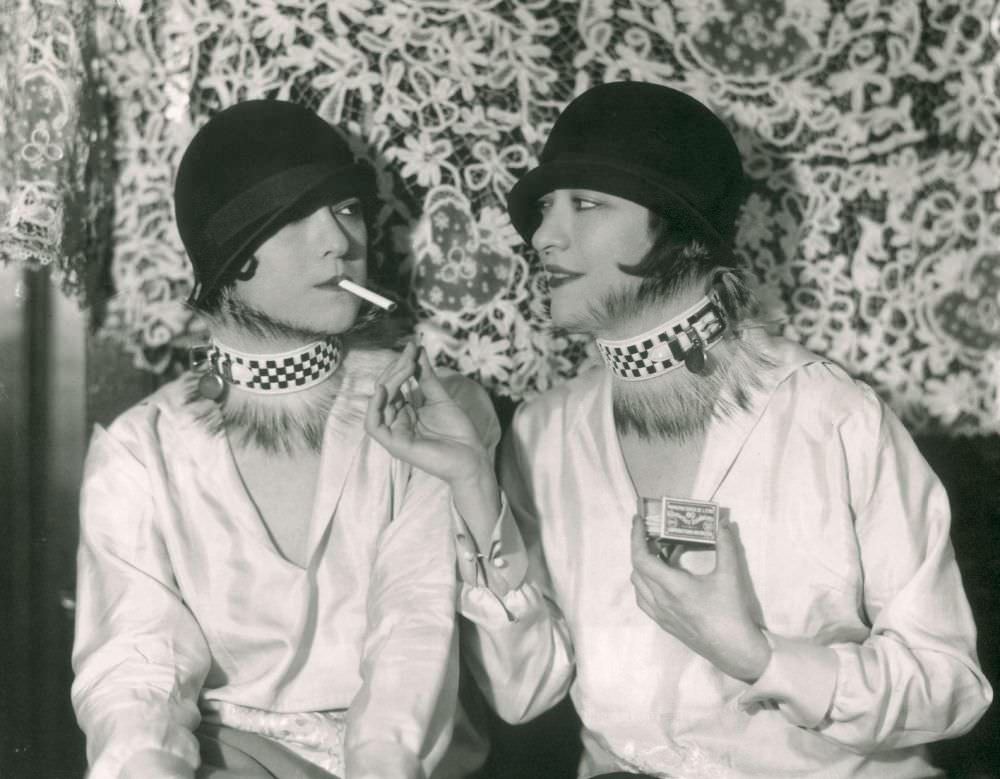
Among the era’s most glamorous figures were the Dolly Sisters — Jenny and Rosie — a Hungarian-American duo who performed across Europe and became fashion icons in Paris. In 1924, they were photographed modeling ‘Bulldog’ collars by designer Marthe Regnier, a bold accessory that reflected the decade’s taste for theatrical, statement-making style.

The Dolly Sisters (Jenny and Rosie), Paris, 1924, Modeling 'Bulldog' Collars by Marthe Regnier.
The Dolly Sisters (Jenny and Rosie), Paris, 1924, Modeling ‘Bulldog’ Collars by Marthe Regnier.

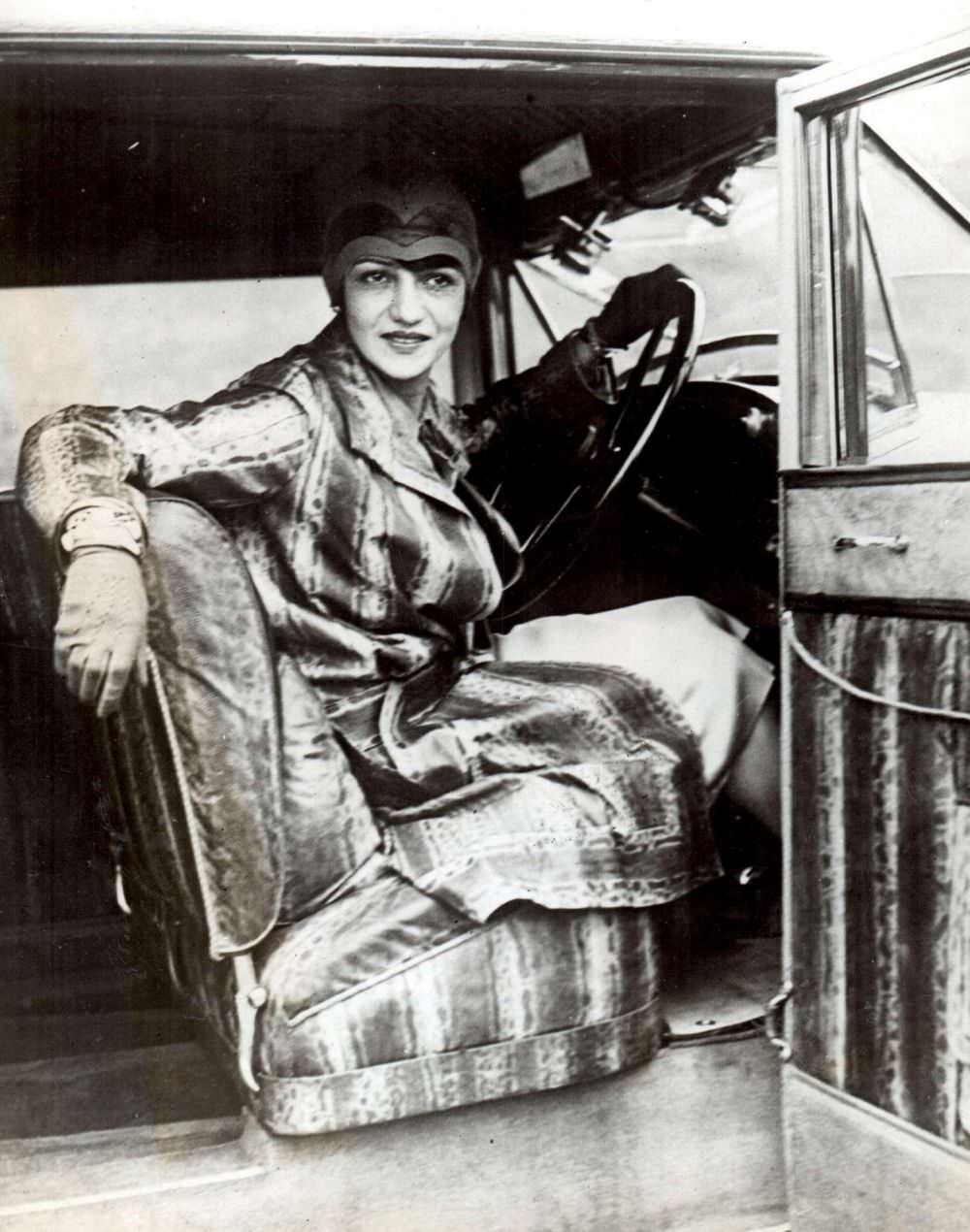
Fashion in the 1920s was not limited to clothing alone. Accessories, automobiles, and interiors were all treated as extensions of personal style. This 1927 photograph captures that sensibility perfectly — a woman dressed in a snakeskin outfit that is deliberately matched to the interior of her car, treating the vehicle itself as part of the overall look.

One woman can be seen wearing a snakeskin outfit coordinated with her car interior,  1927.
One woman can be seen wearing a snakeskin outfit coordinated with her car interior, 1927.

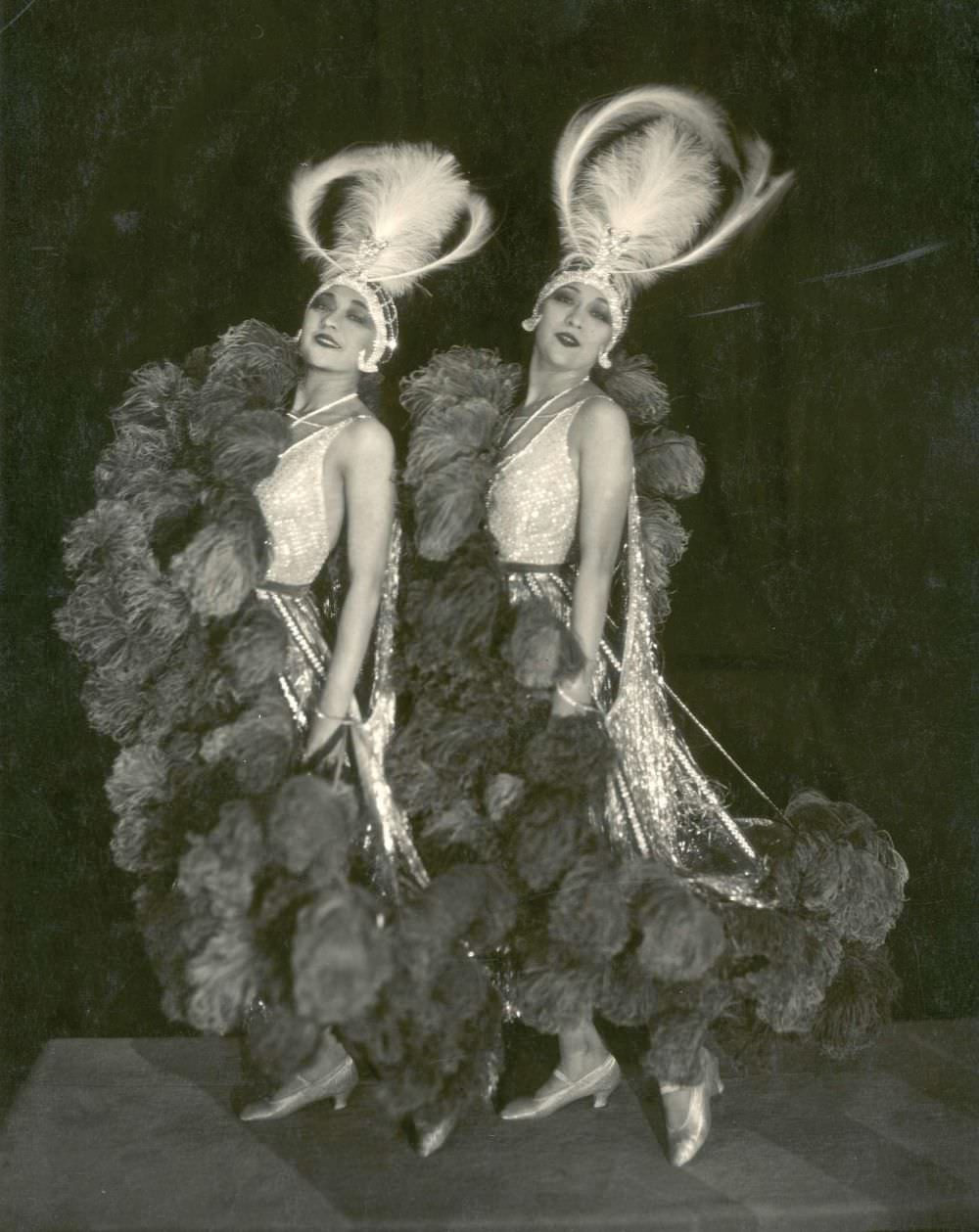
The Dolly Sisters were fixtures on the Parisian stage. In 1923, they performed in ‘Paris Sans Voiles’ at the Ambassadeurs Theatre, a show that combined spectacle, music, and lavish costuming. Their stage presence made them as well-known for their performances as for their off-stage wardrobes.

The Dolly Sisters (Jenny and Rosie), in 'Paris Sans Voiles' at the Ambassadeurs Theatre, Paris, 1923.
The Dolly Sisters (Jenny and Rosie), in ‘Paris Sans Voiles’ at the Ambassadeurs Theatre, Paris, 1923.

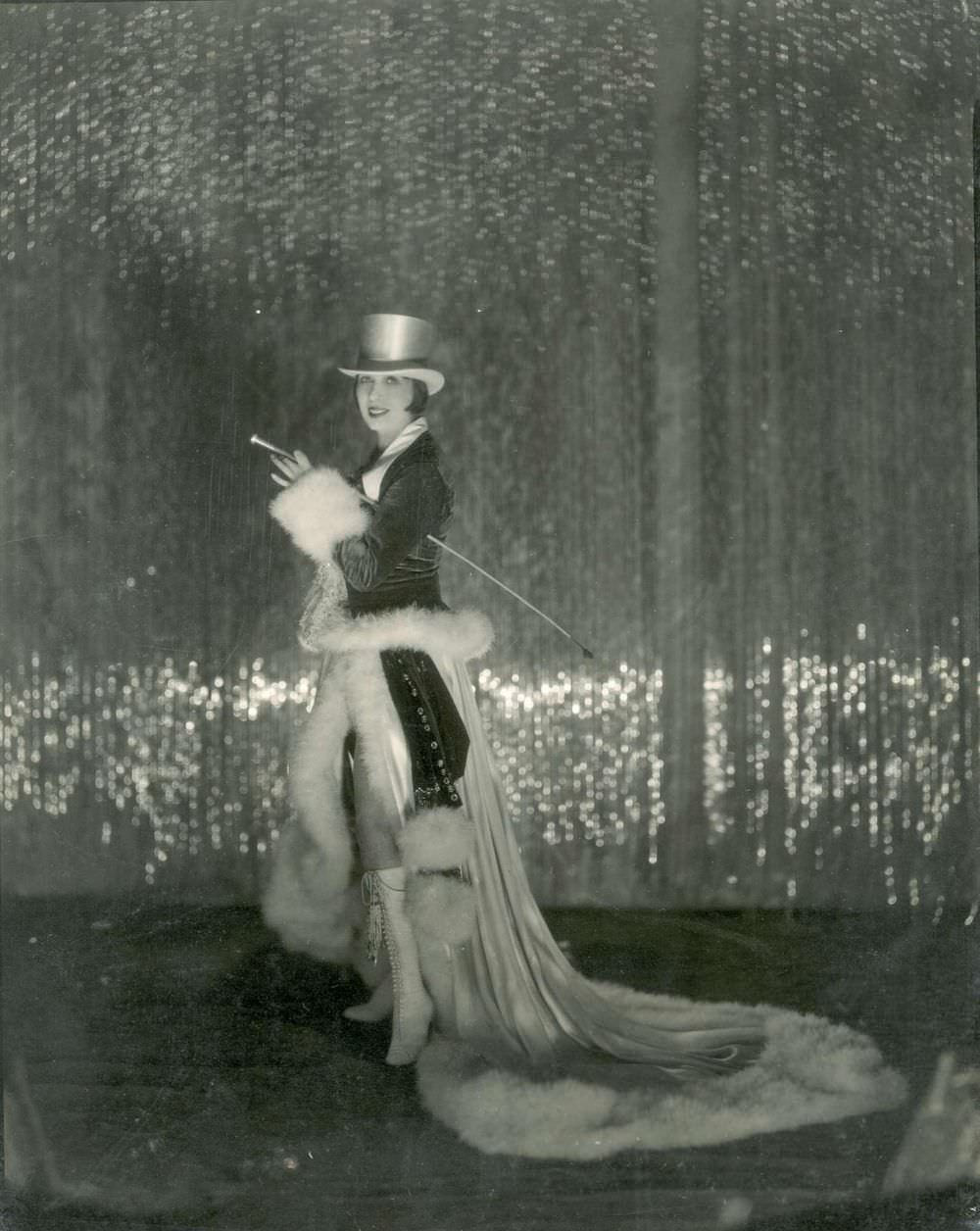
No figure embodied Parisian cabaret style quite like Mistinguett. A singer and actress who became the highest-paid female entertainer in the world during the 1920s, she was famous for her extravagant stage costumes and her larger-than-life personality. In 1925, she headlined ‘La Revue Mistinguett’ at the Moulin Rouge, one of the most celebrated venues in Europe.

Mistinguett in 'La Revue Mistinguett', Moulin Rouge, 1925.
Mistinguett in ‘La Revue Mistinguett’, Moulin Rouge, 1925.

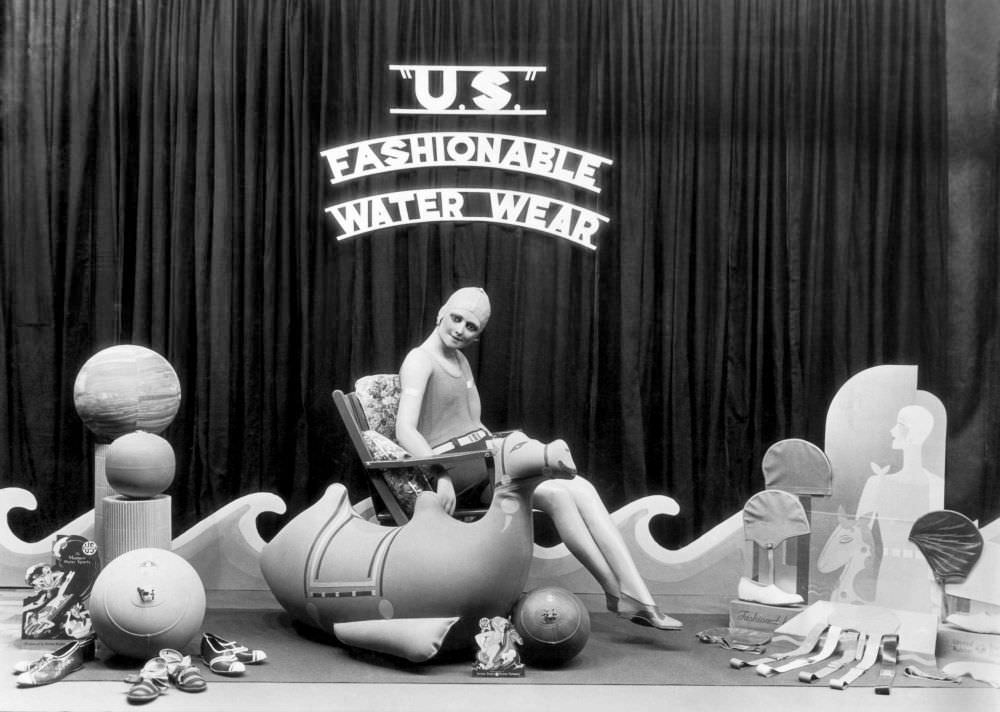
Swimwear was also undergoing a transformation during this decade. Gone were the heavy, concealing bathing costumes of the Victorian and Edwardian eras. By the mid-1920s, bathing suits had become much more streamlined, as this department store window display from Redding, California makes clear.

This window display at McCormick-Saeltzer department store in Redding, California, shows what bathing suits looked like circa 1925.

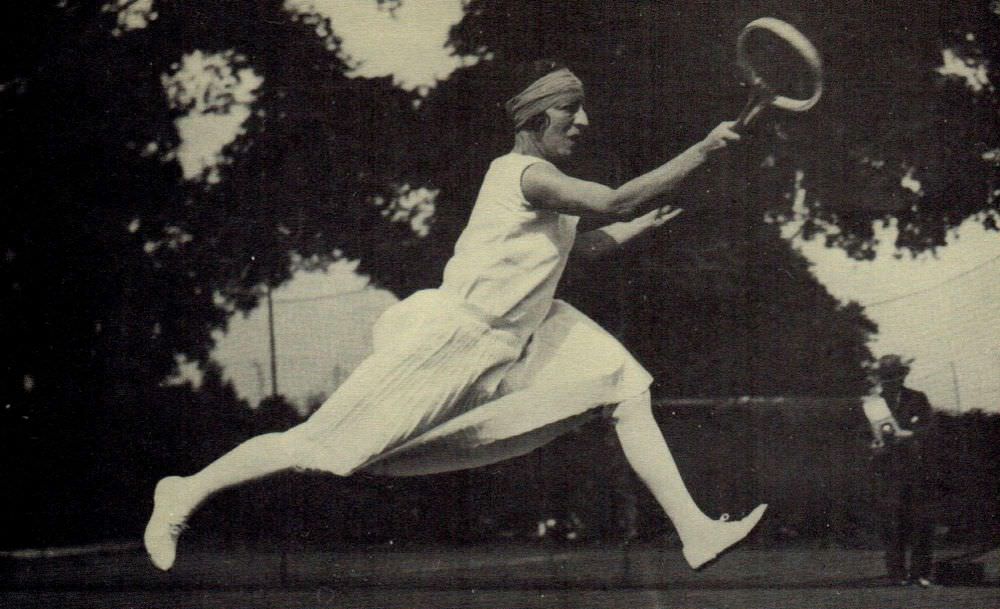
Sport and fashion crossed paths in a significant way during the 1920s, largely thanks to figures like French tennis champion Suzanne Lenglen. She was a dominant force on the court, winning multiple Wimbledon and French championships, but her off-court influence was just as powerful. Her bandeau headwear and the sleek Patou designs she wore became widely copied across mainstream fashion.

French tennis player Suzanne Lenglen can be seen wearing a Patou outfit and her trademark bandeau headwear, which became part of mainstream fashion in the 1920s.

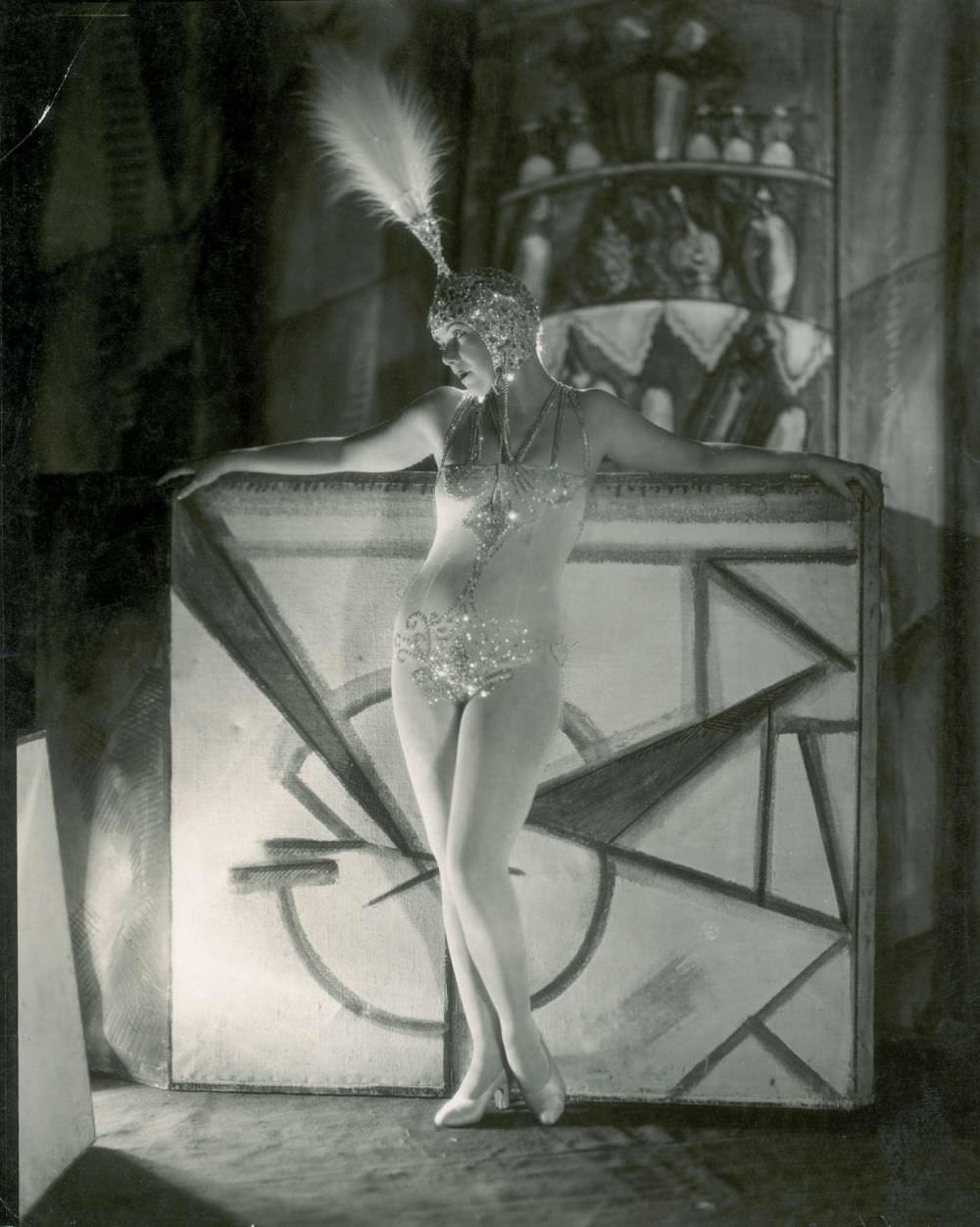
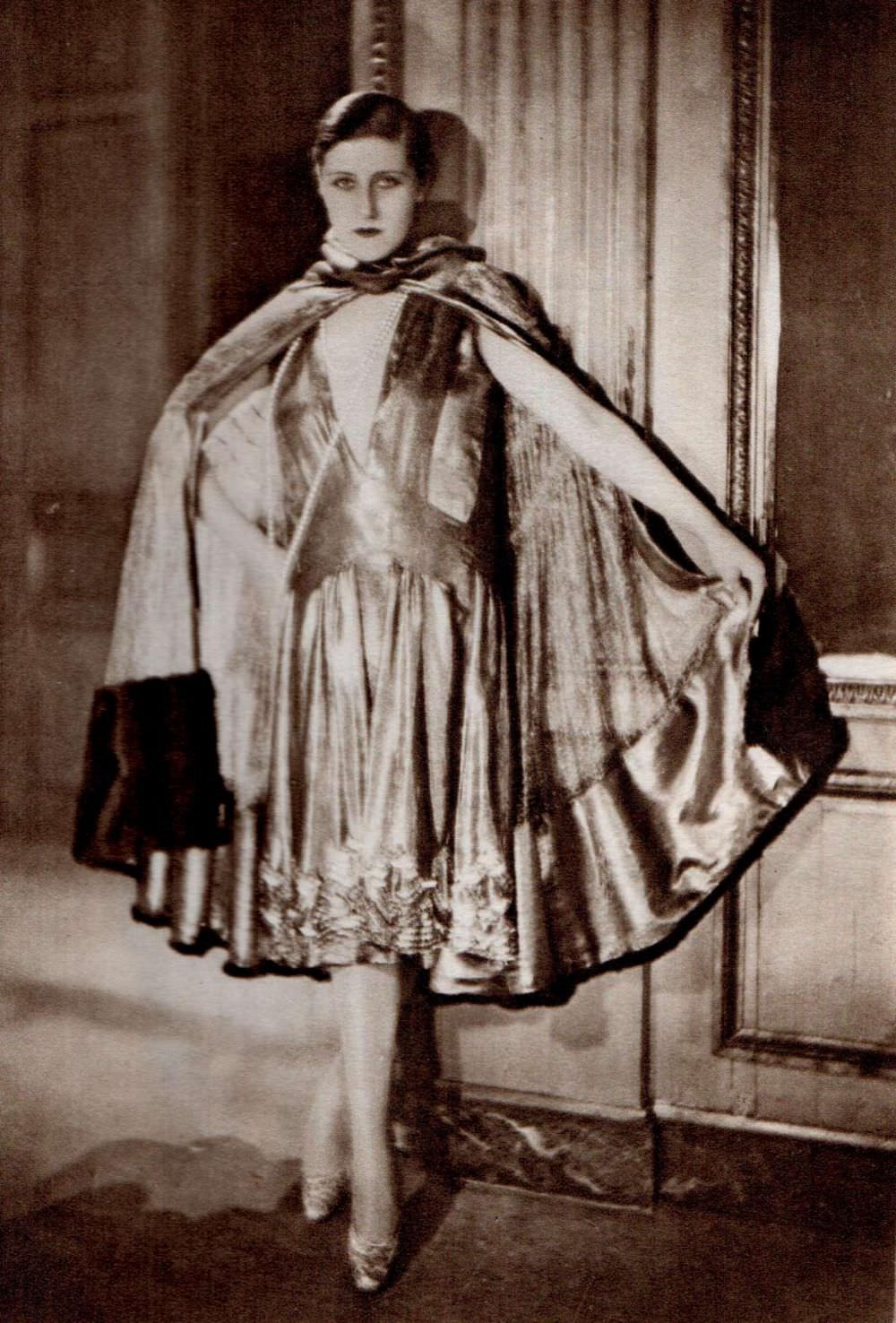
The Paris performance scene produced some of the decade’s most visually dazzling fashion moments. French actress Andrée Spinelly, photographed in 1927, wore a heavily embellished costume complete with an elaborate headdress — the kind of theatrical dressing that defined the entertainment world of the era.

French actress Andrée Spinelly can be seen in 1927 performing in Paris in a sparkly costume and headdress.

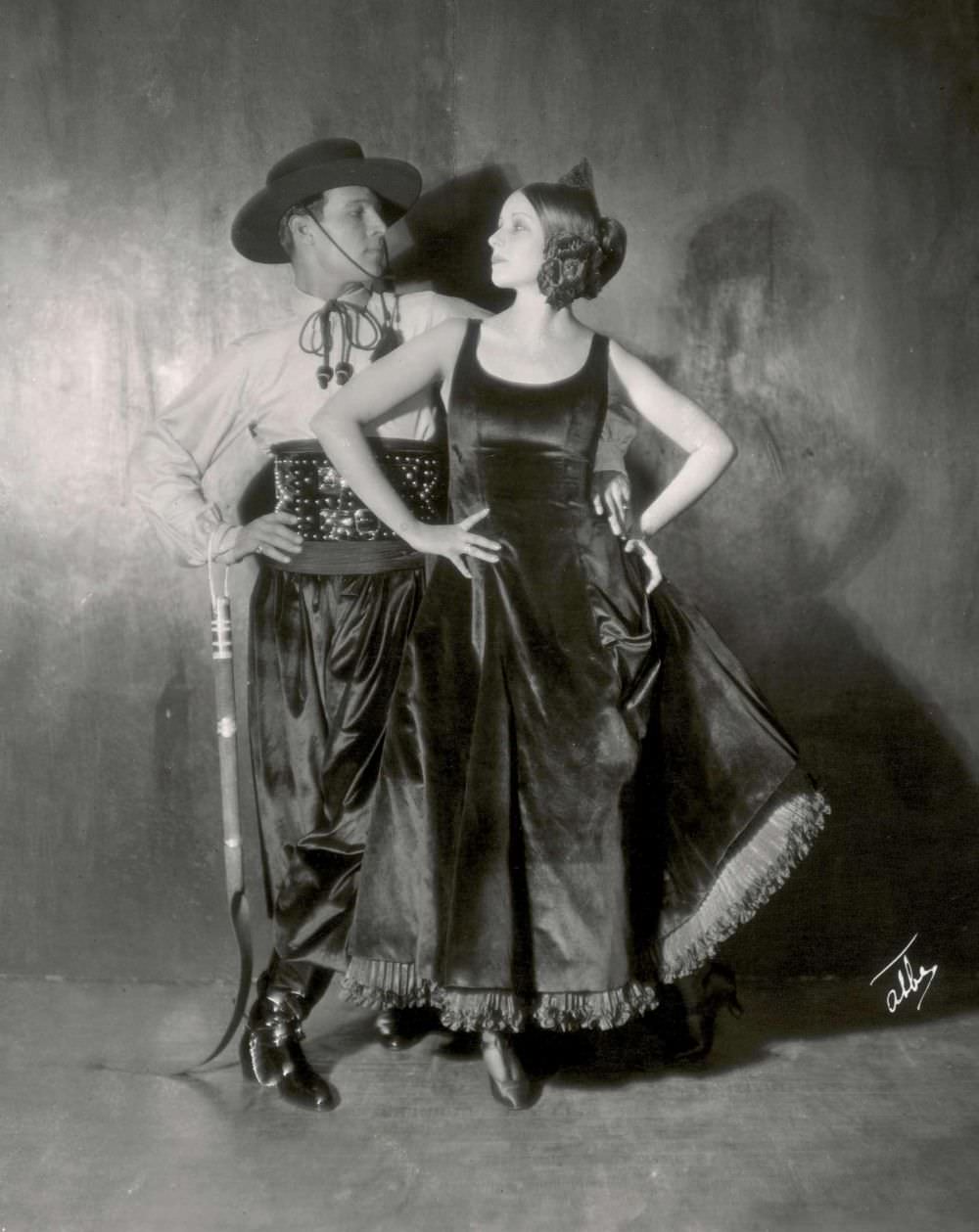
In Hollywood, celebrities shaped public taste in powerful ways. Rudolph Valentino was the era’s biggest male film star — a smoldering leading man whose every public appearance was closely watched. Here, he is photographed in New York in 1922 alongside Natasha Rambova, the art director and designer who became his second wife. Their combined sense of style made them one of the most photographed couples of the decade.

Rudolph Valentino and Natasha Rambova, New York, 1922.

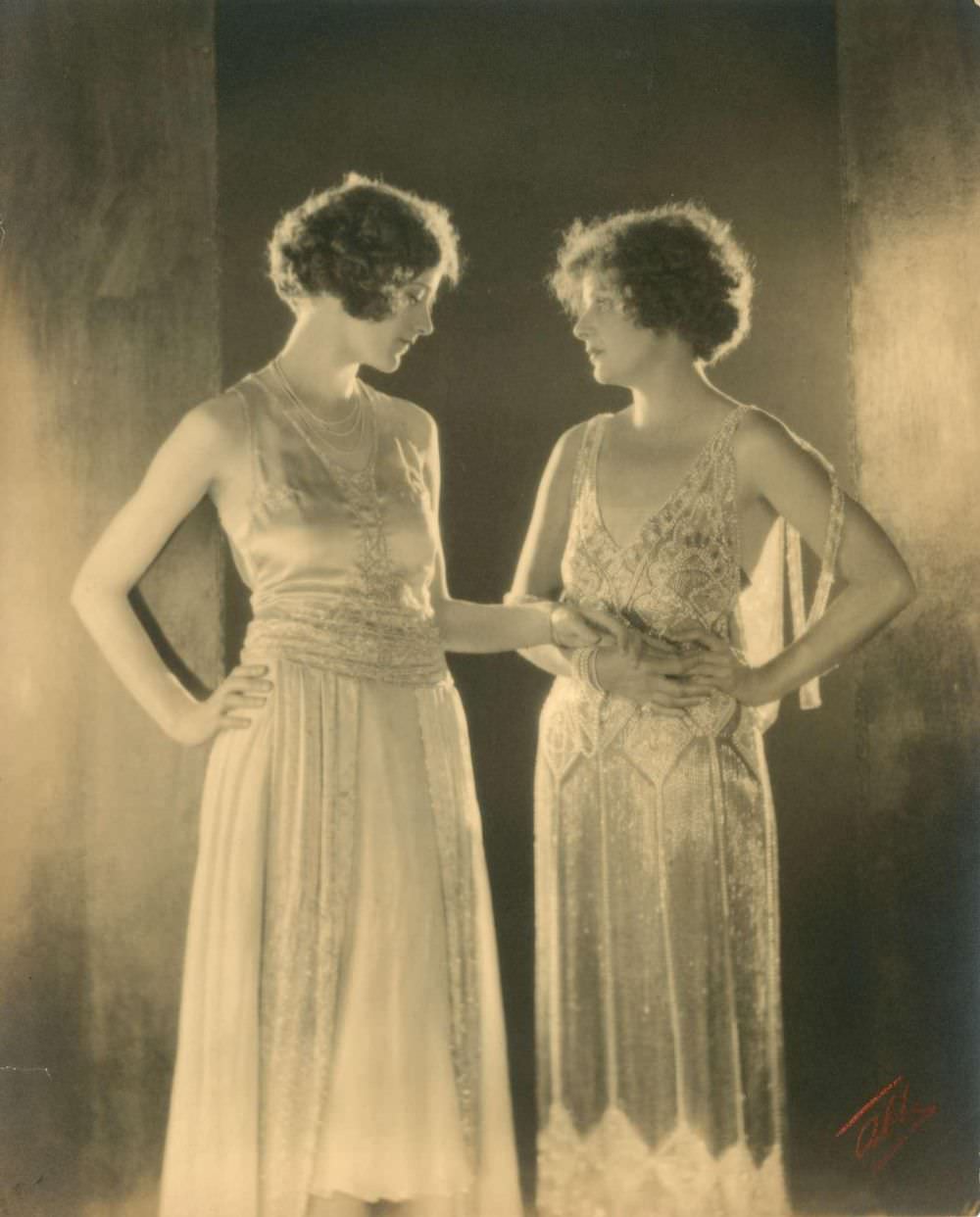
Sisters Norma and Constance Talmadge were major stars of the silent film era. Both had built powerful careers by the early 1920s, and their image — captured here for Motion Picture Classic in 1922 — reflects the polished, carefully constructed public personas that studios crafted for their top talent.

Norma and Constance Talmadge, Motion Picture Classic, 1922.

Everyday women across America were also embracing the new styles. Looser silhouettes, dropped waistlines, and shorter skirts replaced the rigid, corseted looks of previous generations. This photograph of a young woman from the Jazz Age in America captures the accessible side of 1920s fashion — the styles that ordinary people wore in their daily lives.

A young woman in dress during the Jazz Age in America.

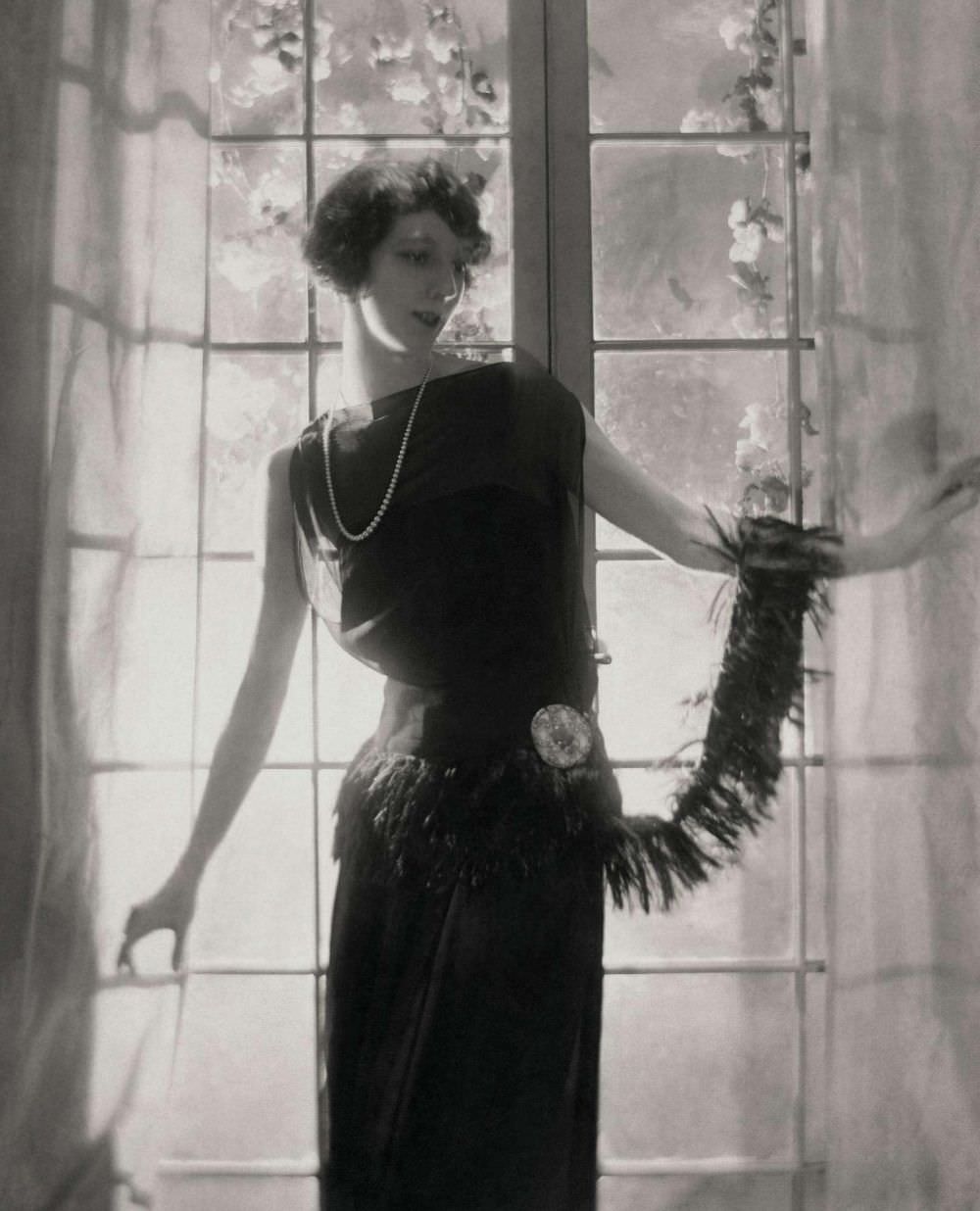
Designer Jean Patou was one of the defining names in 1920s fashion. His 1921 georgette crepe dress, featuring a fringed waist, is a strong example of how designers were rethinking the female form. The dress is modeled here by dancer Madame Lubovska, whose movement-oriented profession made her a natural fit for the fluid, less-structured clothing Patou championed.

This Jean Patou dress, dating back to 1921, made out of georgette crepe and featuring a fringed waist, is modelled by the dancer Madame Lubovska.

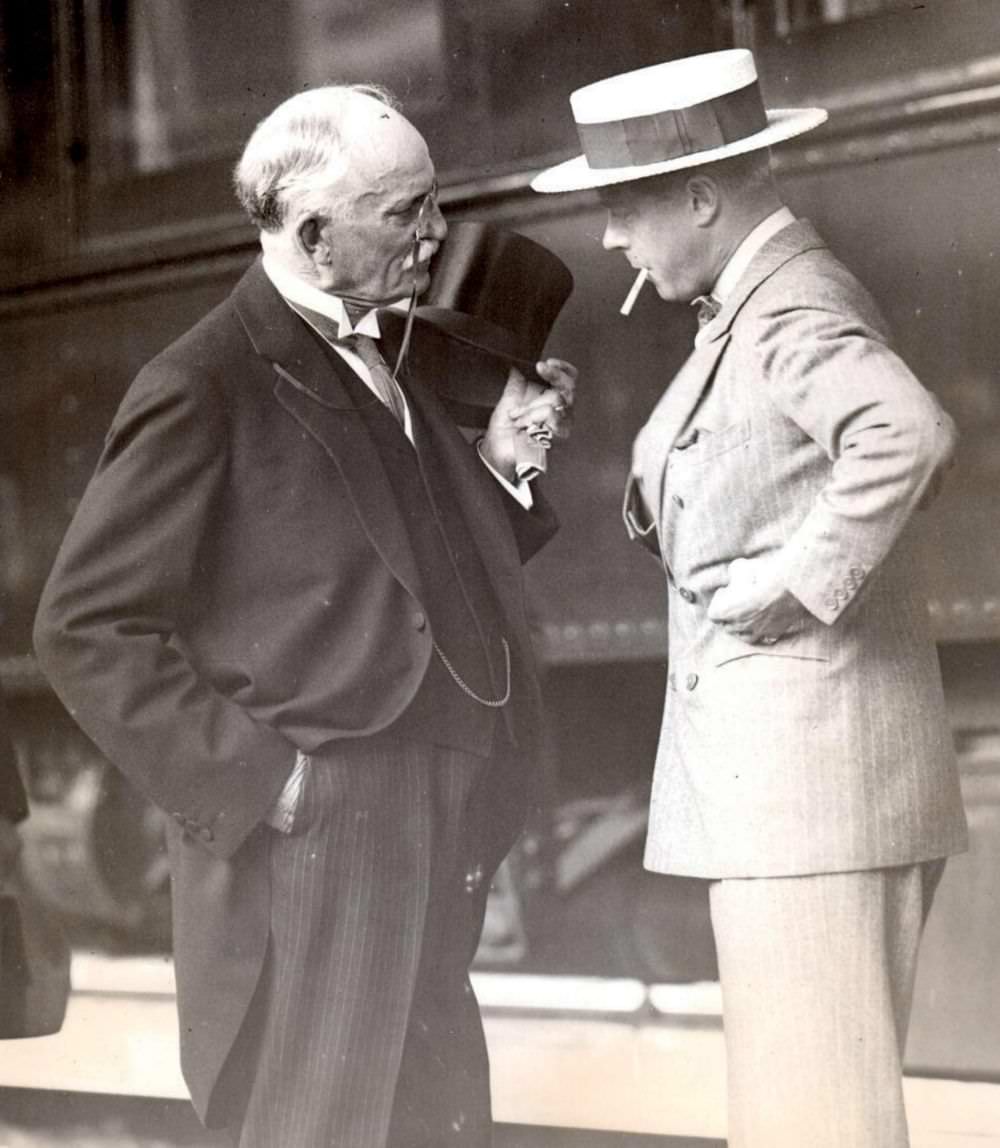
Men’s fashion was also shifting. Edward, Prince of Wales, was widely regarded as one of the best-dressed men of the 1920s and a genuine trendsetter. His preference for relaxed, informal clothing — like the lounge suit and straw boater he wears in this circa 1925 photograph — pushed men’s fashion away from the stiff formality of earlier decades toward something more casual and modern.

Edward, Prince of Wales, is featured circa 1925 wearing an informal lounge suit along with a straw boater.

Before her Hollywood career took off, Dolores Costello was a star of the Ziegfeld Follies, the legendary Broadway revue that launched and amplified many careers. Photographed in 1919, she was already being recognized as a leading influence on fashion, a reputation she carried with her into her film work throughout the 1920s.

Showgirl Dolores Costello in 1919. She was a star of the Ziegfeld Follies and a leading influence on fashion.

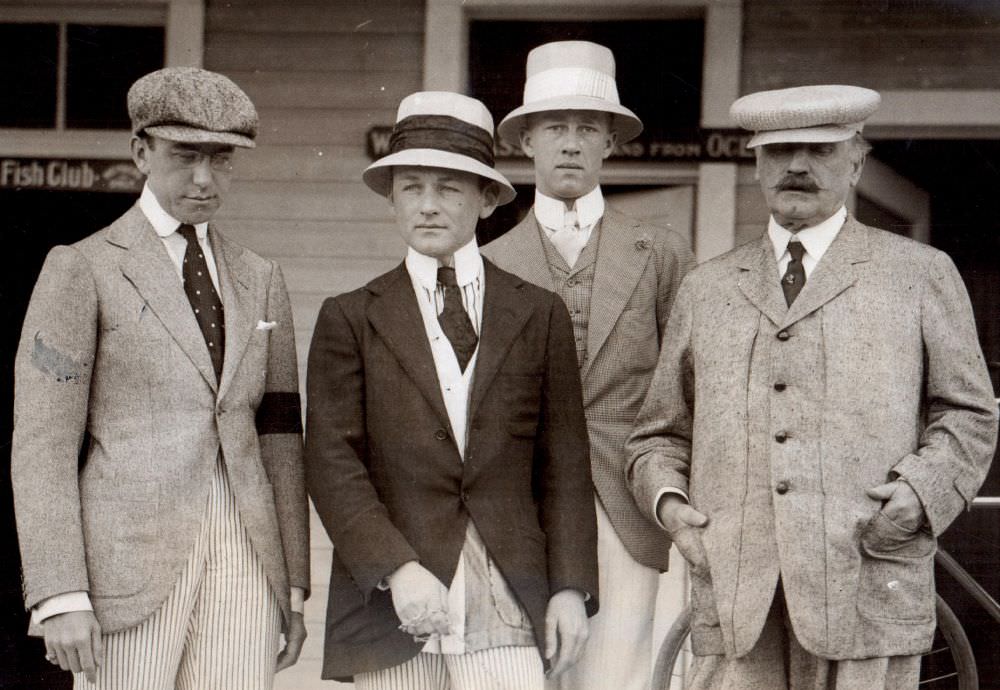
Not everyone adopted the new styles at the same pace. This 1921 photograph of four American men shows the fashion transition happening in real time. The men in the middle still wear the high collars associated with the Edwardian era, while the man on the left has moved toward a less formal, waistcoat-free style — a clear sign of where men’s fashion was heading.

These four men, photographed in America in 1921, illustrate the transitionary period in men's fashion
These four men, photographed in America in 1921, illustrate the transitionary period in men’s fashion

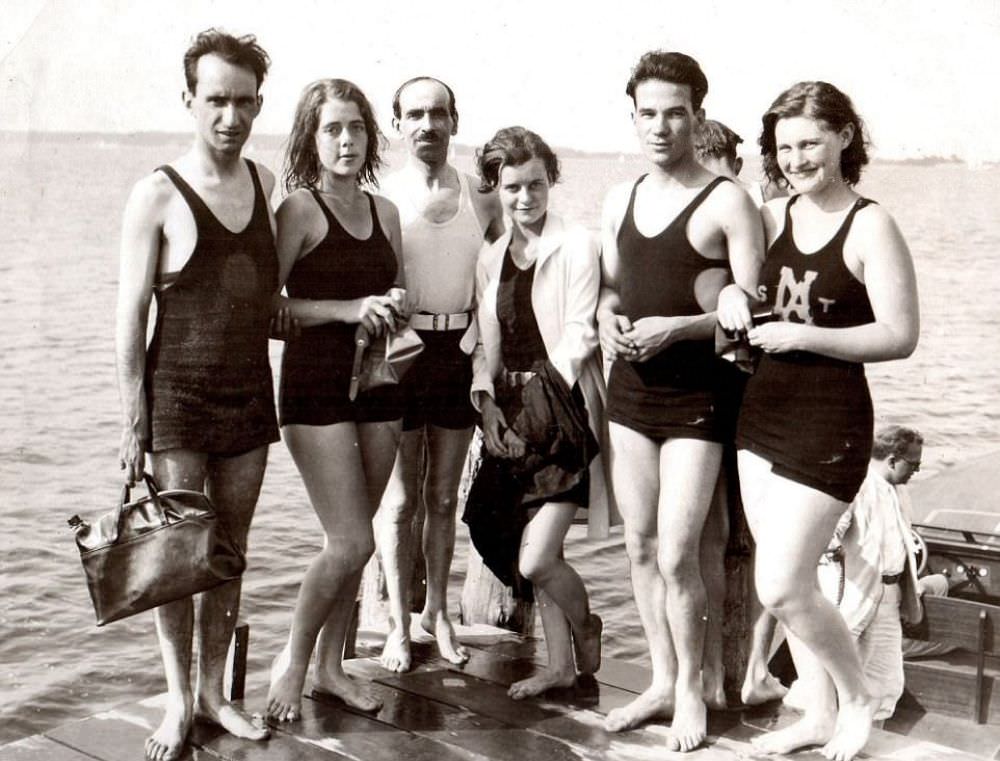
By the late 1920s, mixed-gender beach culture had become far more normalized than it had been a generation earlier. This 1929 photograph from America shows men and women side by side in nearly identical bathing suits — a striking visual marker of how dramatically attitudes toward the body and public dress had shifted over just a few decades.

These men and women can be seen in 1929 in America, wearing almost identical bathing suits.

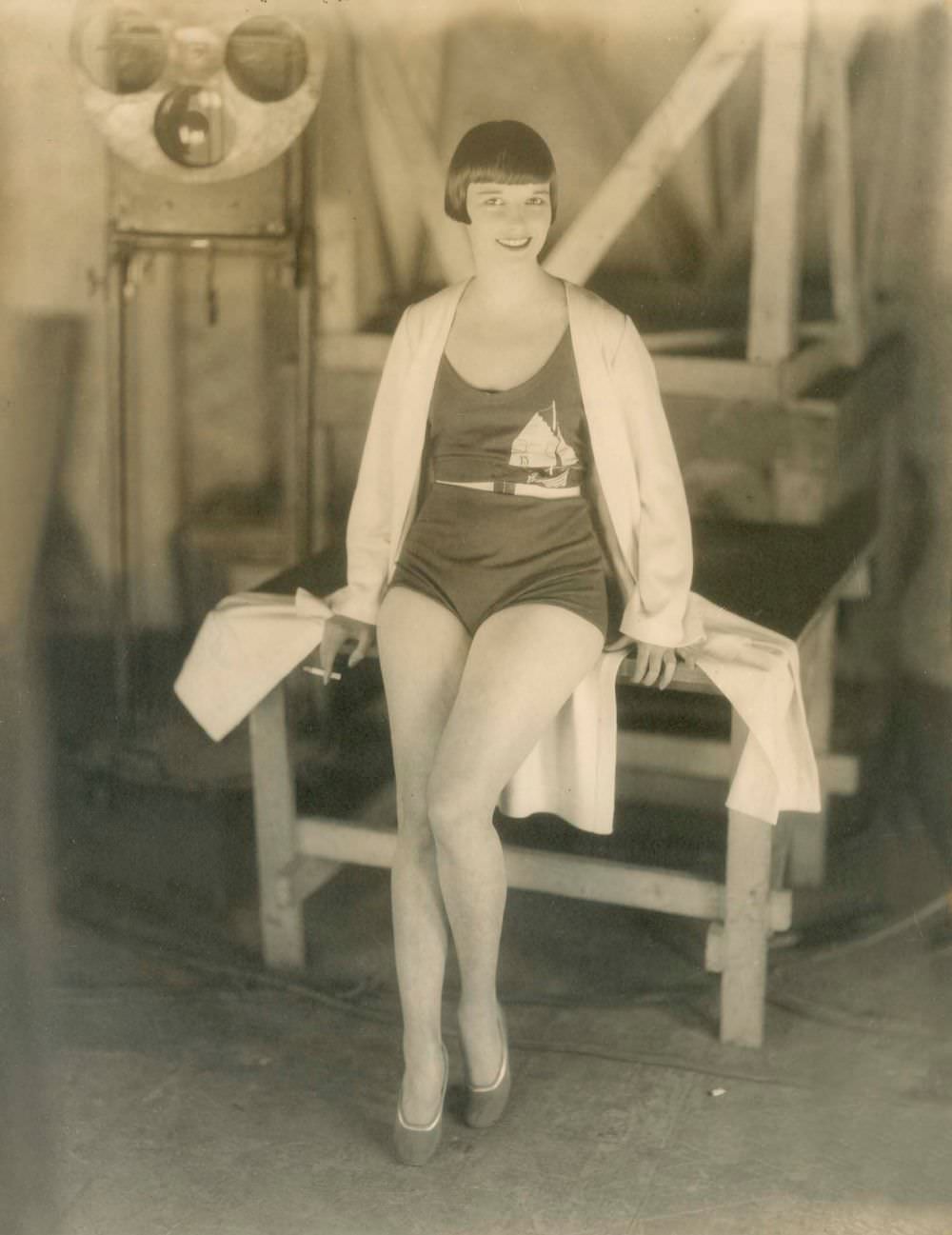
Louise Brooks was one of the most iconic faces of the Jazz Age. Her signature bobbed haircut became one of the most copied hairstyles of the decade. She starred in the 1929 French film ‘Prix De Beaute,’ which showcased her at the height of her fame — a sleek, modern image that perfectly captured the era’s aesthetic.

Louise Brooks, Prix De Beaute, 1929.

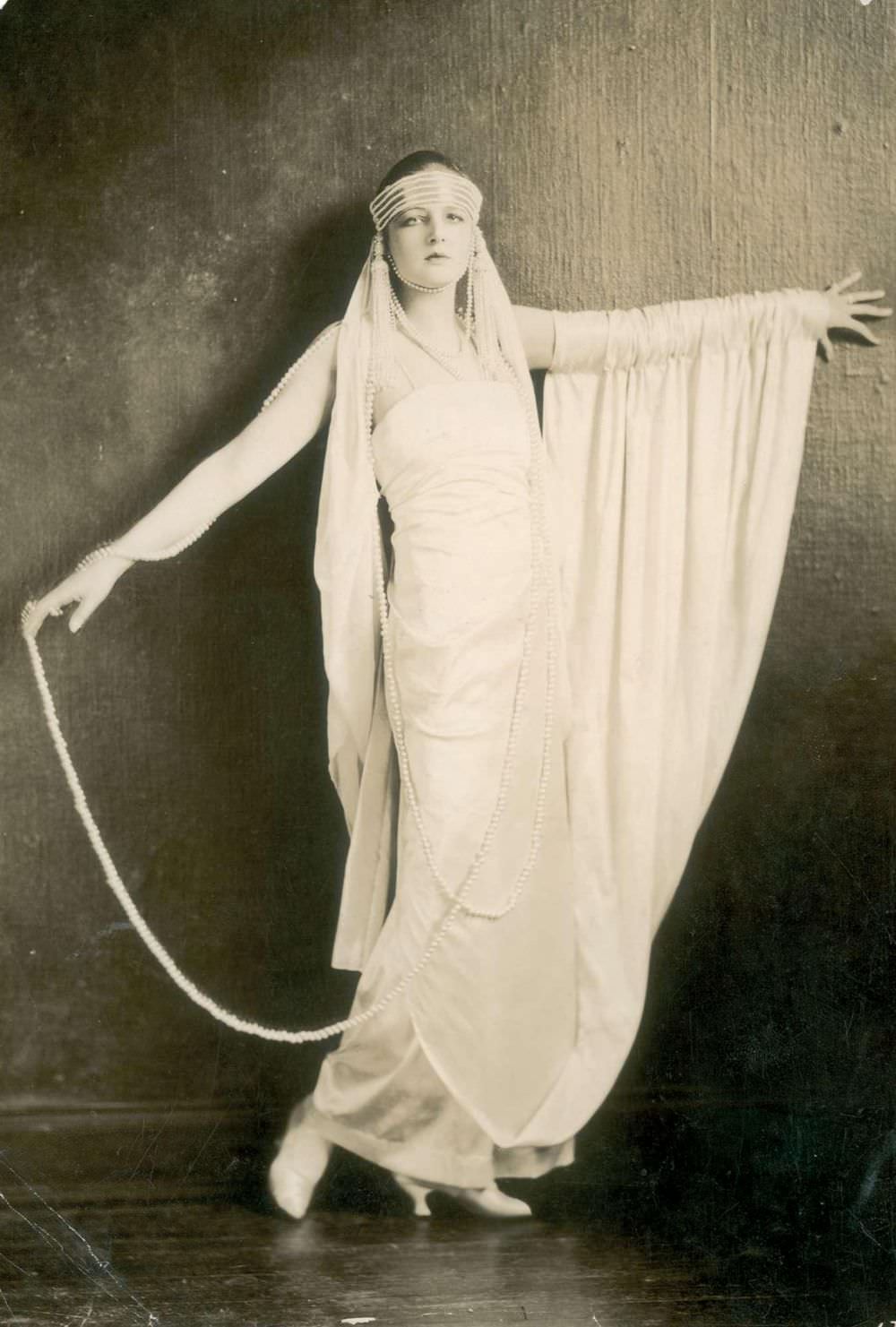
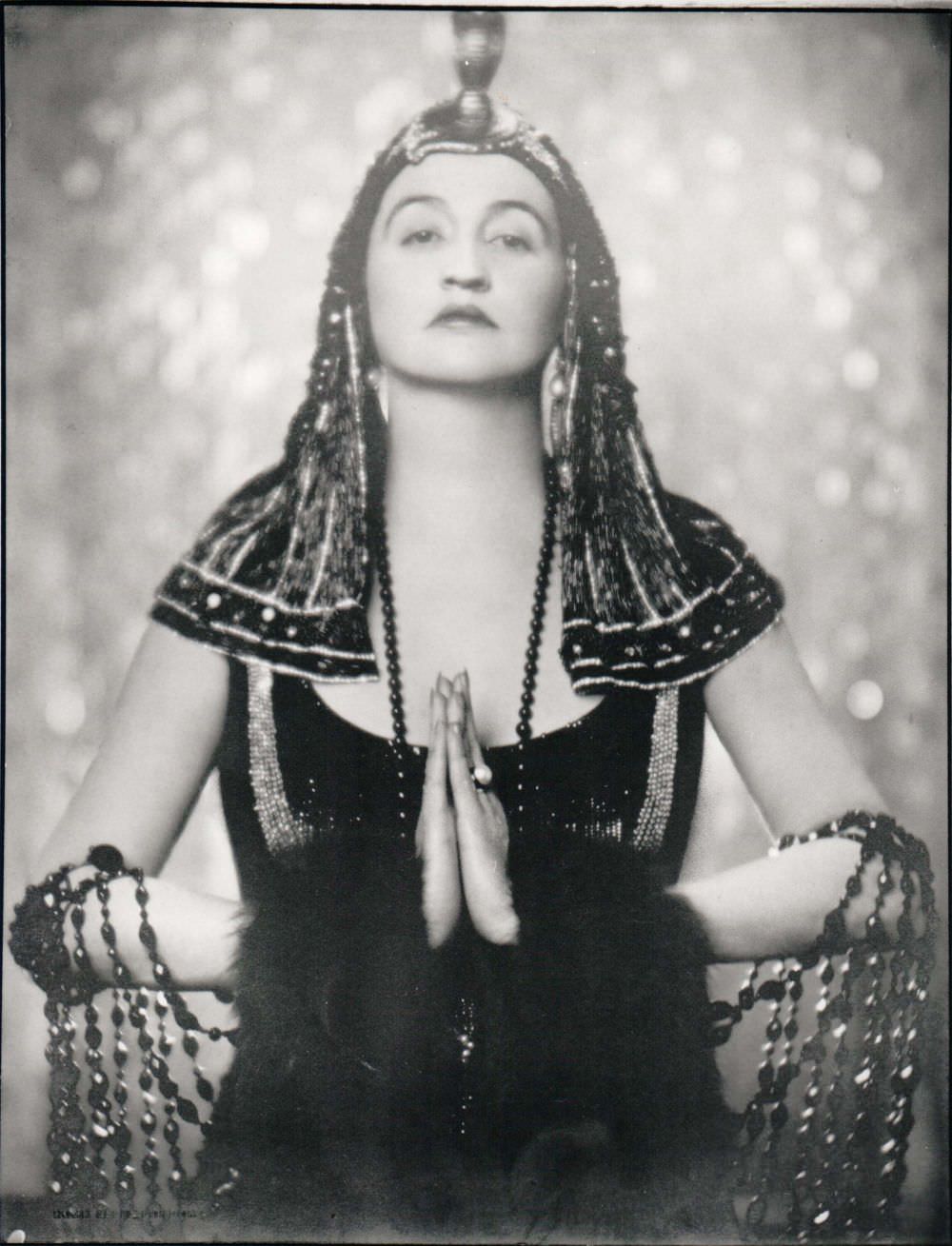
Theatrical and costume photography was another major corner of 1920s visual culture. Performers took on elaborate personas, drawing from mythology, history, and fantasy. Beatrice Pratt, photographed here as the Egyptian goddess Isis, represents the decade’s fascination with ancient civilizations — a fascination that was energized by the 1922 discovery of Tutankhamun’s tomb.

Beatrice Pratt as Isis.

British-born actress Bessie Love had a long career that spanned silent film and early talkies. By 1925, she was a well-established Hollywood name, known for her expressive performances and her carefully maintained public image. Her photograph from that year reflects the groomed, stylized look that studios expected of their leading women.

Bessie Love, 1925.
Bessie Love, 1925.

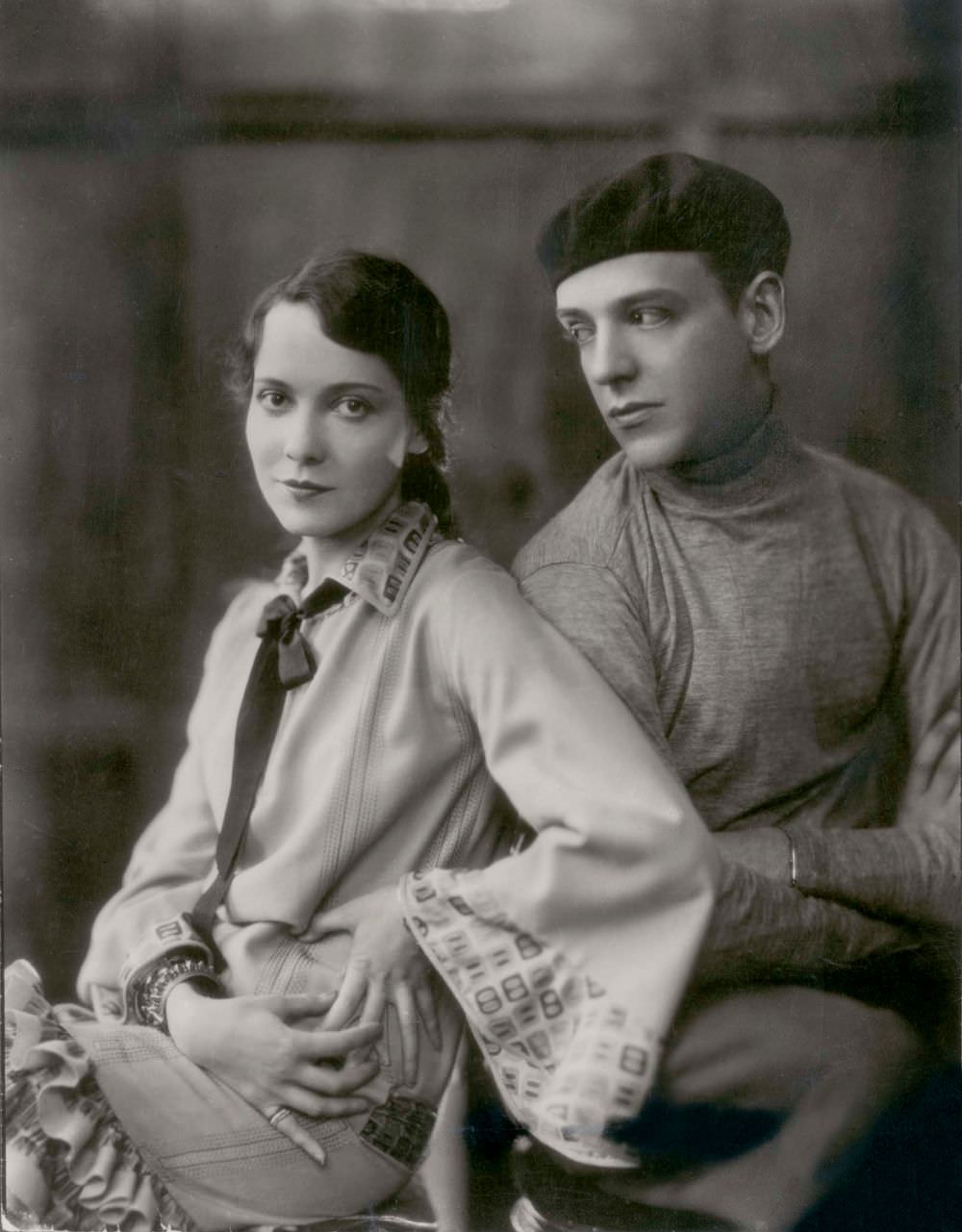
Fred and Adele Astaire were one of the most celebrated sibling acts of the 1920s. Long before Fred became a solo film legend, he and his sister Adele performed together on Broadway to enormous acclaim. Their 1926 production ‘Lady Be Good,’ with music by George Gershwin, was one of the decade’s biggest theatrical hits, and this on-set photograph captures the easy elegance they brought to everything they did.

Fred and Adele Astaire on the set of Lady Be Good, 1926.

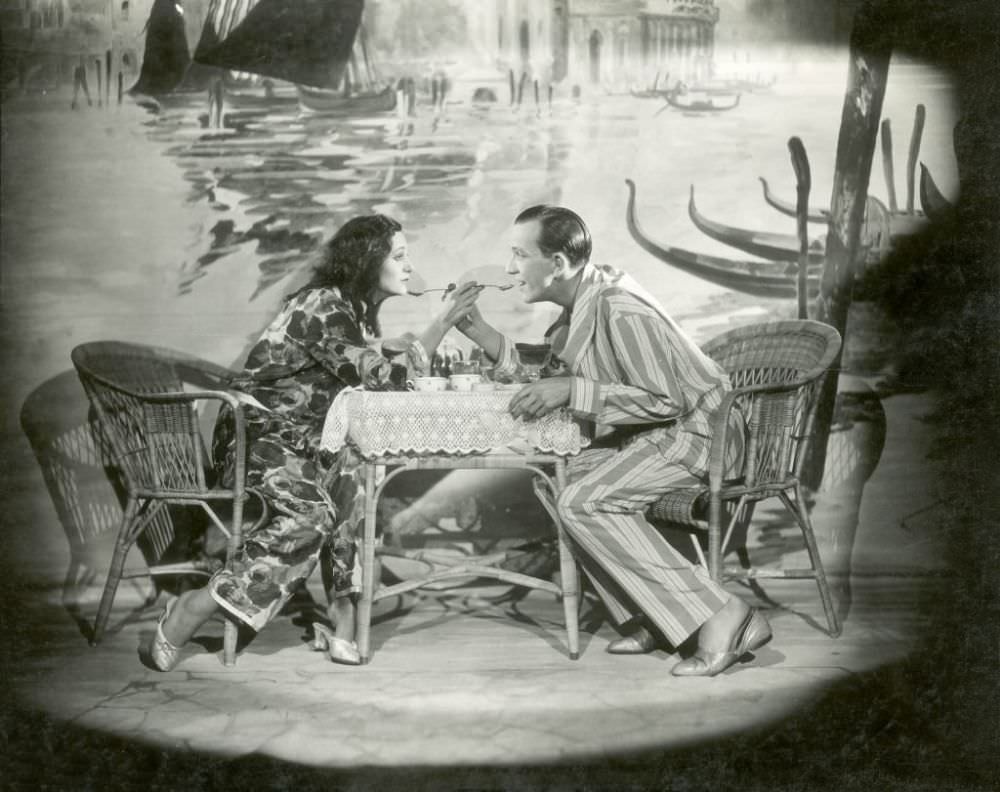
The British stage had its own luminaries. Gertrude Lawrence and Noël Coward were one of the most celebrated theatrical partnerships of the era. Their 1923 production ‘London Calling!’ — written by Coward himself — was a major West End success. The two performers brought a sharp wit and sophisticated style to the London stage that made them defining figures of 1920s British culture.

Gertrude Lawrence and Noel Coward in London Calling, 1923.

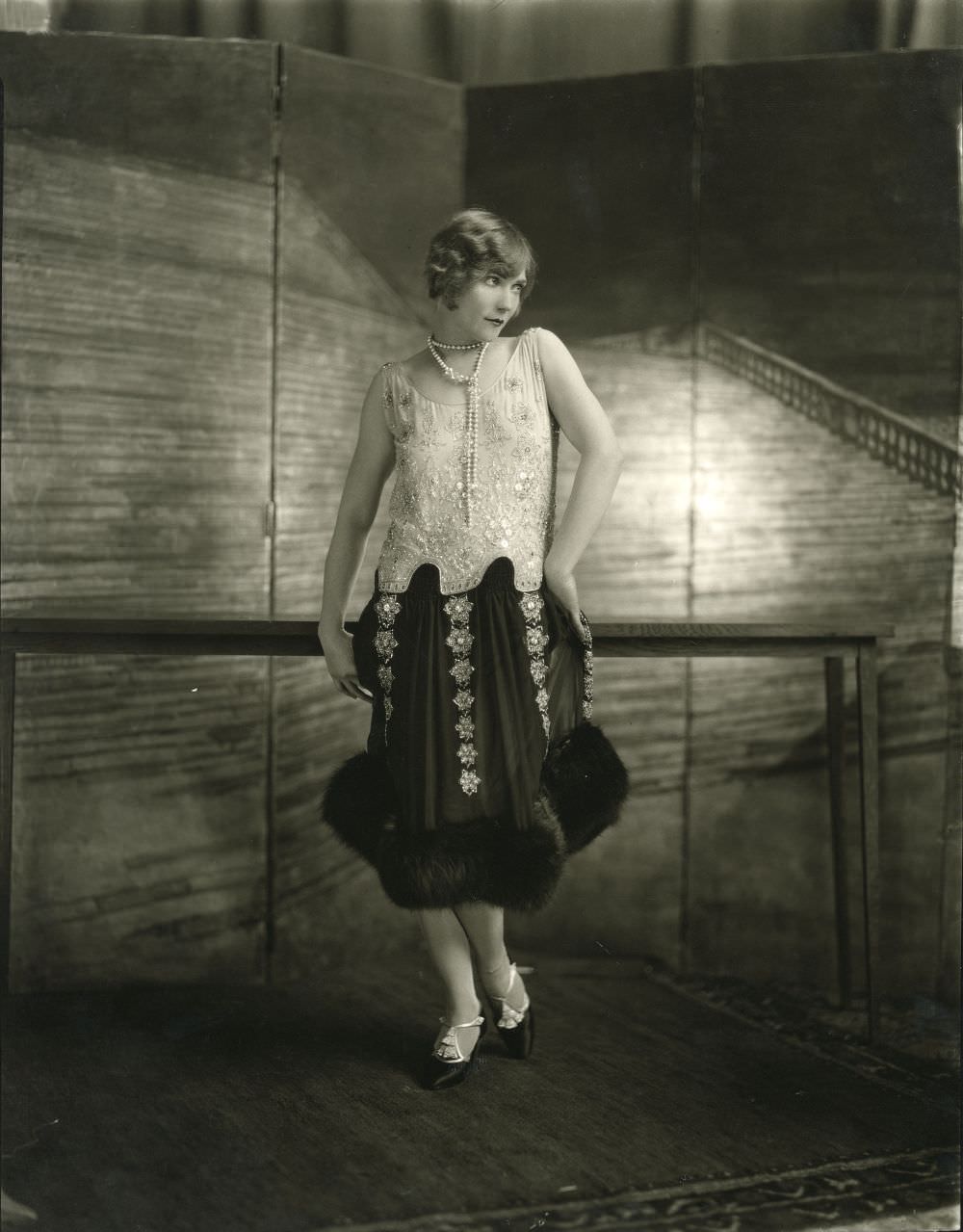
Gilda Gray was a Polish-American entertainer who became famous for popularizing the shimmy, a dance that perfectly captured the Jazz Age’s loose, energetic spirit. By 1925, she was a well-known figure in both American vaudeville and film, her name synonymous with the bold performance style that defined the decade.

Gilda Gray. 1925.
Gilda Gray. 1925.

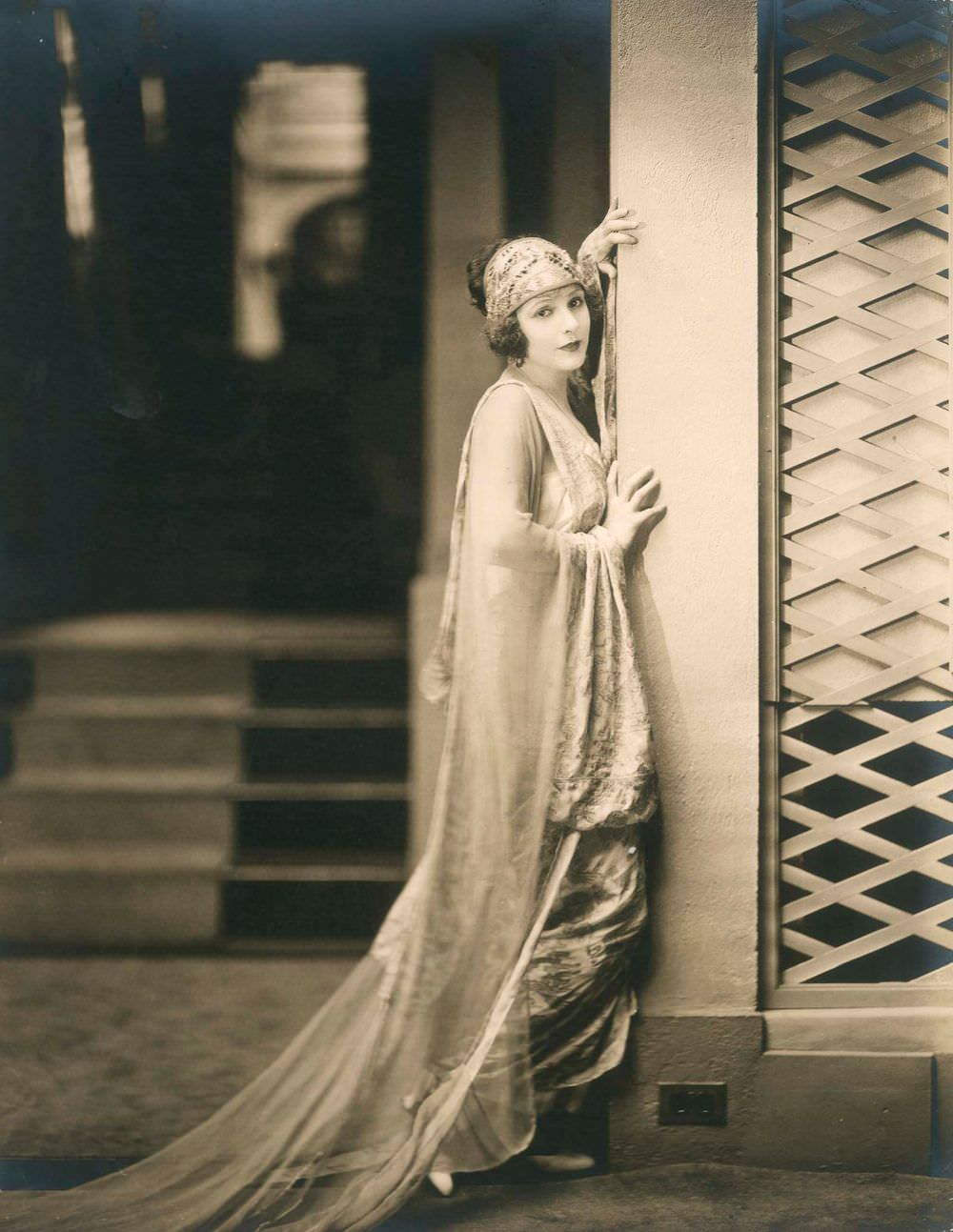
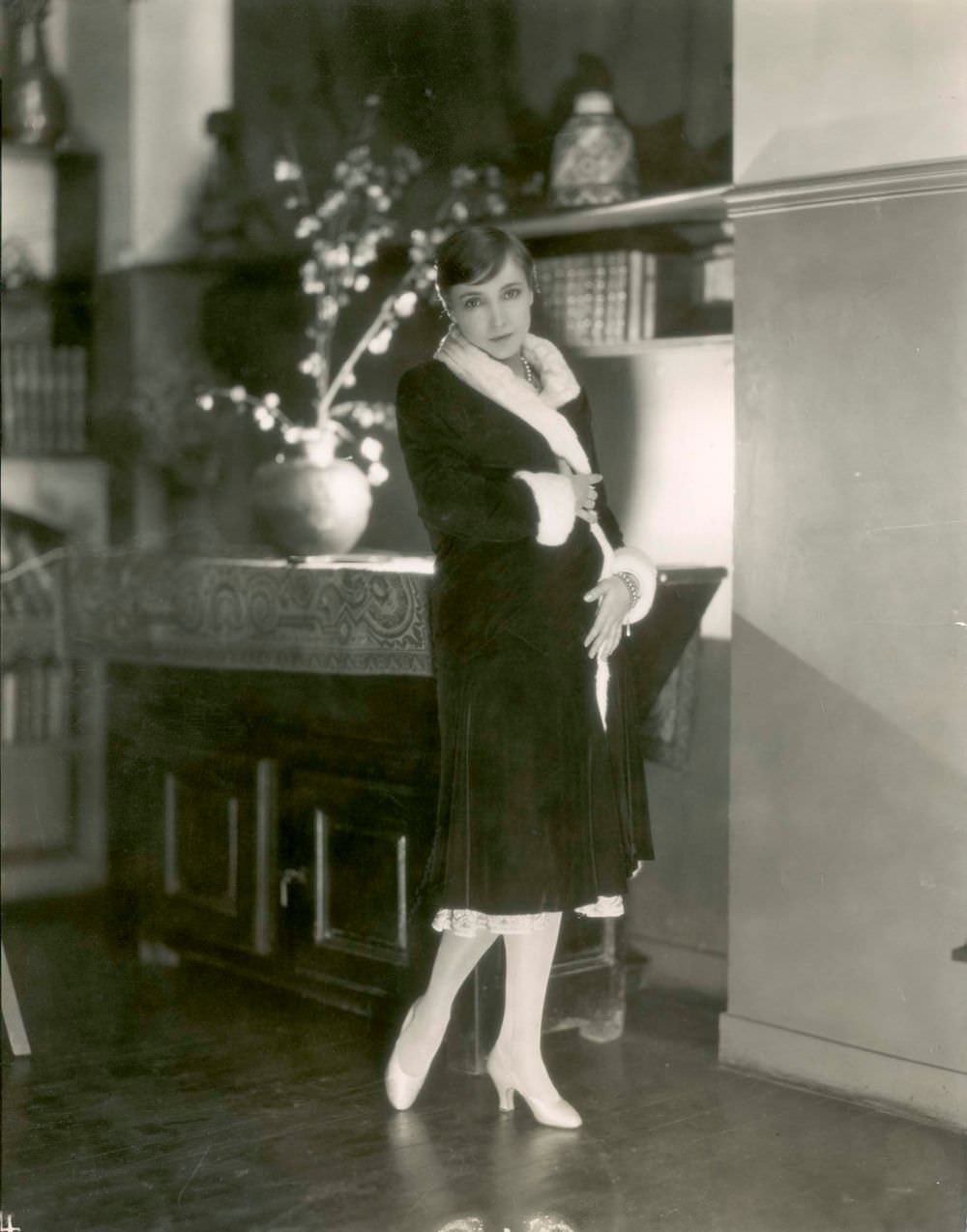
Norma Talmadge was among the highest-paid actresses in Hollywood during the early 1920s. Her 1922 portrait is a clear example of how studio photography worked as a fashion statement in its own right. The lighting, the pose, and the clothing were all carefully chosen to project a particular image — and to influence how ordinary women across the country thought about style and beauty.

Norma Talmadge, 1922.
Enjoyed this post? Get new ones in your inbox.

Leave a Comment

Your email address will not be published. Required fields are marked *

Share this Post 🥺

Please take a moment to share this content. Your support is greatly appreciated! 🙌🙏

Share this Post 🥺

Please take a moment to share this content. Your support is greatly appreciated! 🙌🙏
Scroll to Top
 
Hey Friend, Before You Go.. Please like & follow for more interesting content