

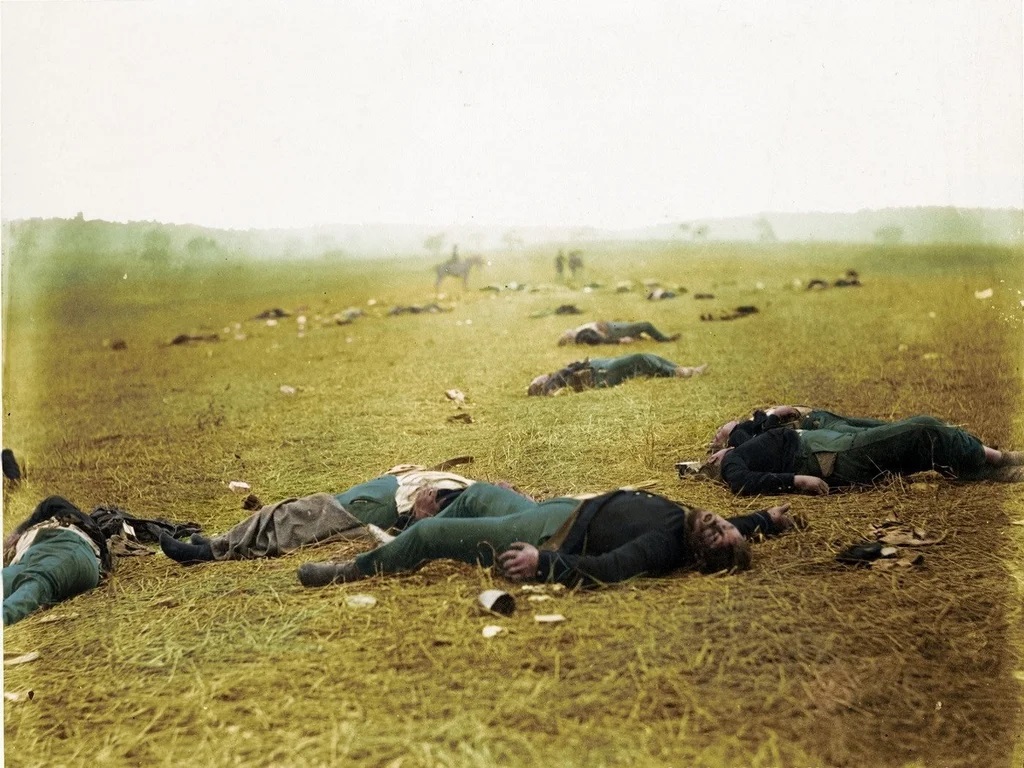
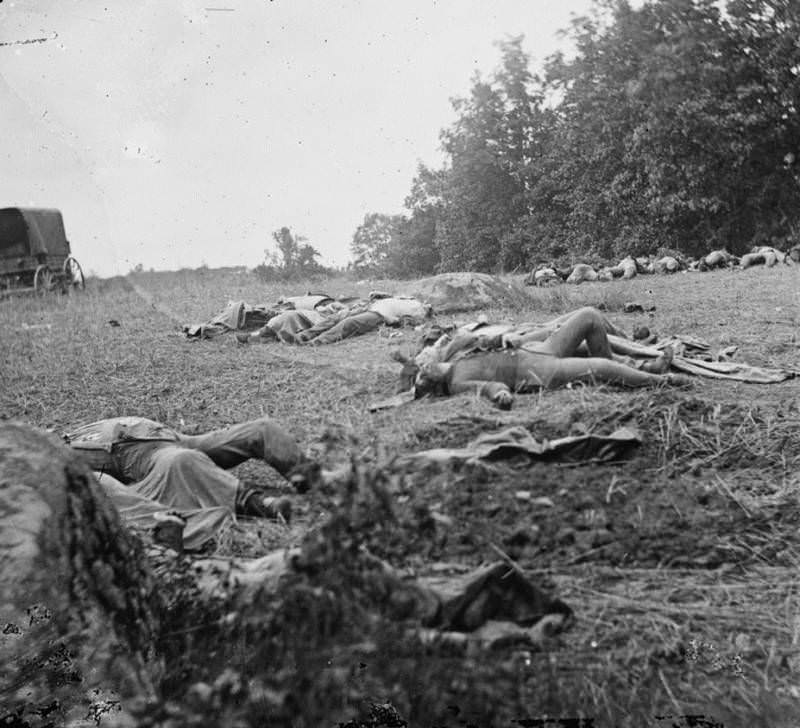
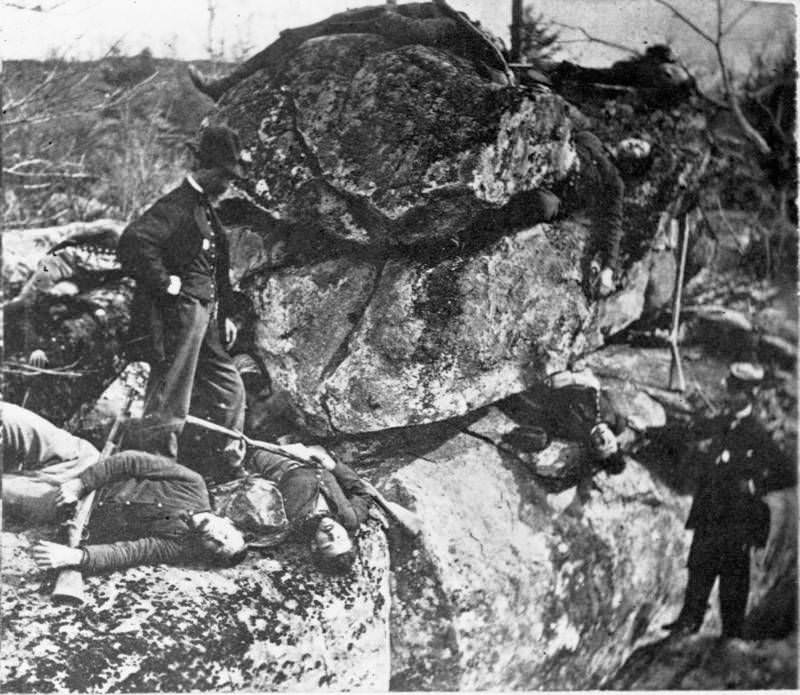
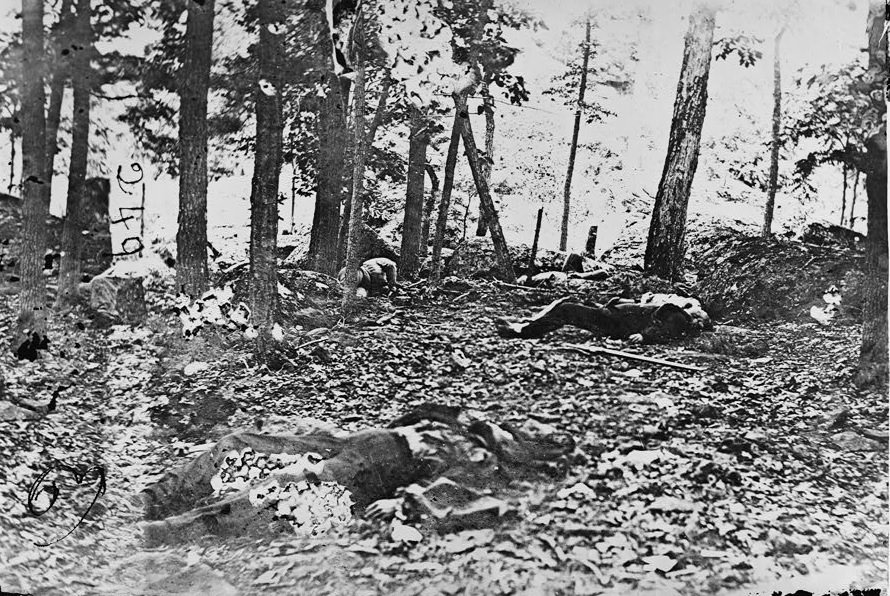
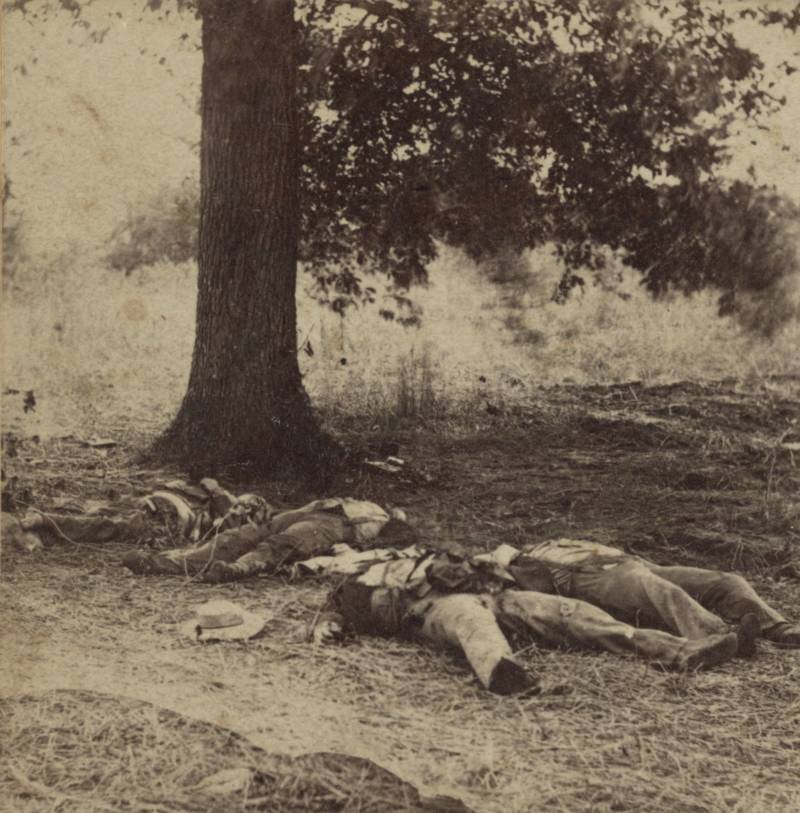
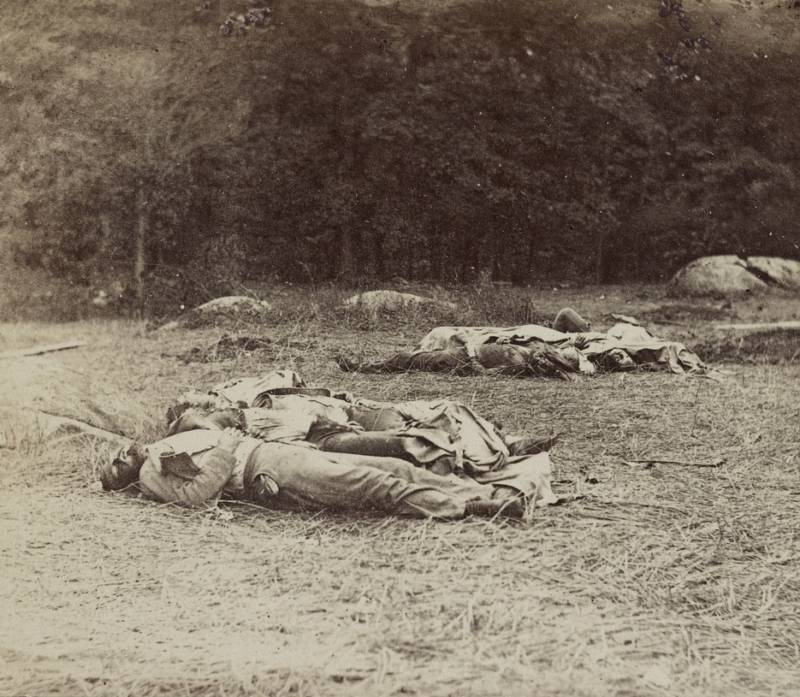
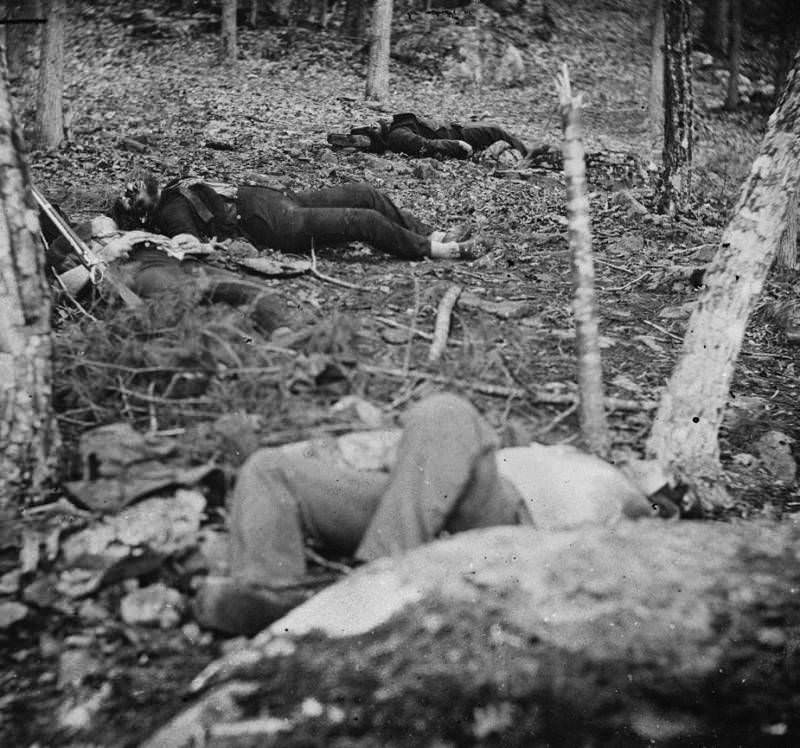
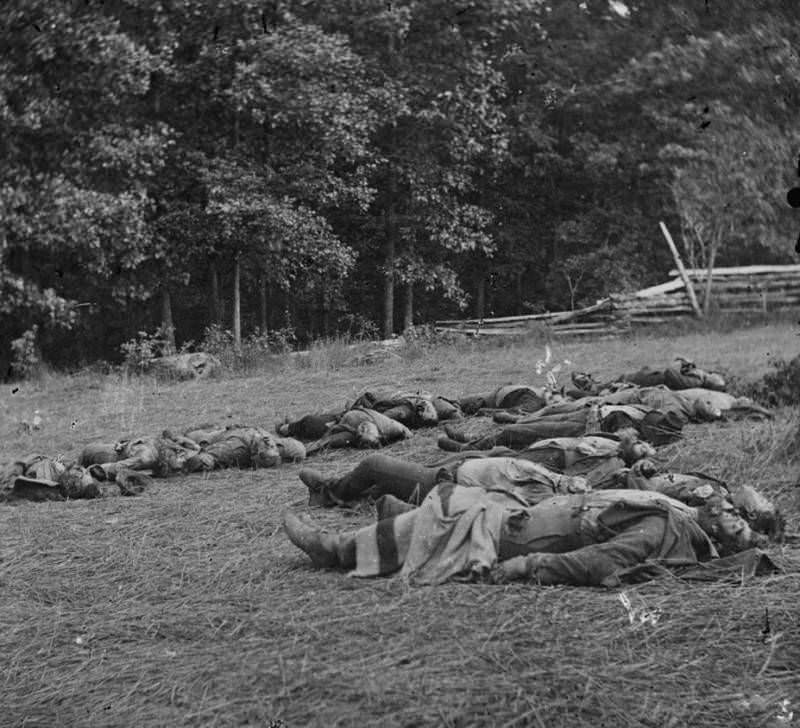
The Battle of Gettysburg lasted just three days — July 1 through July 3, 1863 — but it produced more casualties than any other engagement in the entire American Civil War. Between 46,000 and 51,000 men were killed, wounded, captured, or reported missing across the rolling Pennsylvania farmland. The photographs that survive from those days do not spare the viewer. Dead soldiers lie in fields, in woods, and among rocky outcroppings, left where they fell under a summer sun.
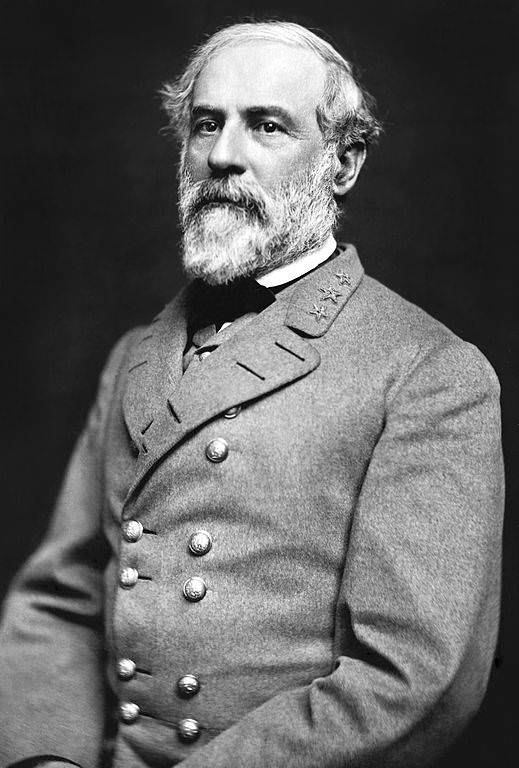
Confederate General Robert E. Lee came north with a clear purpose. After his victory at Chancellorsville in May 1863, he moved his army out of war-torn Virginia and into Pennsylvania. He wanted his men to draw supplies from the fertile Northern farms, and he wanted to pressure President Lincoln into peace negotiations on Confederate terms. The plan began to unravel almost immediately.
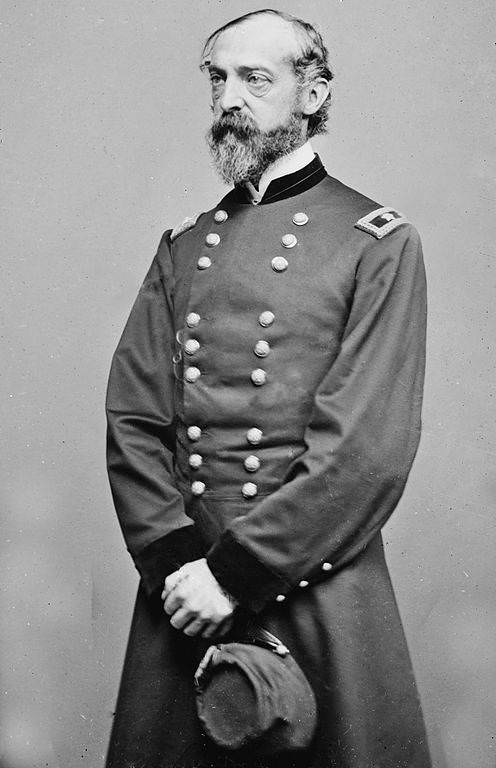
Lee had ordered his forces not to engage the enemy until the full Confederate army was assembled. But on July 1, those orders fell apart. Both sides met near Gettysburg with incomplete forces. Confederate troops outnumbered Union soldiers on that first day and pushed them into a defensive position. Union General George Meade, who had only taken command of the Army of the Potomac three days earlier, did not arrive at the battlefield until the end of that first day.
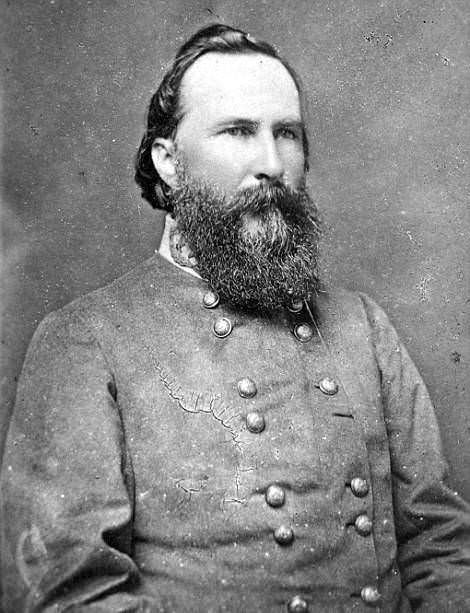
By the second day, Union reinforcements had flooded in. Federal troop strength swelled to 94,000 men against 72,000 Confederates. The Union line stretched from Culp’s Hill down to Cemetery Ridge — a strong, elevated position. Lee rejected the counsel of his second-in-command, Lt. Gen. James Longstreet, who advised against attacking the Union where it stood. Lee ordered the assault anyway. Longstreet’s men did not reach their positions until 4 p.m., and the delay cost the Confederates dearly.
One of the fiercest clashes on the second day took place near a boulder-strewn area called Devil’s Den and the rocky hill known as Little Round Top. Confederate forces devoured the Union III Corps in the valley below, but Union General Meade responded by sending over 20,000 men into the gap. Charge after charge was launched and beaten back. Longstreet’s advance finally stalled near Little Round Top, where Union defenders held the high ground.
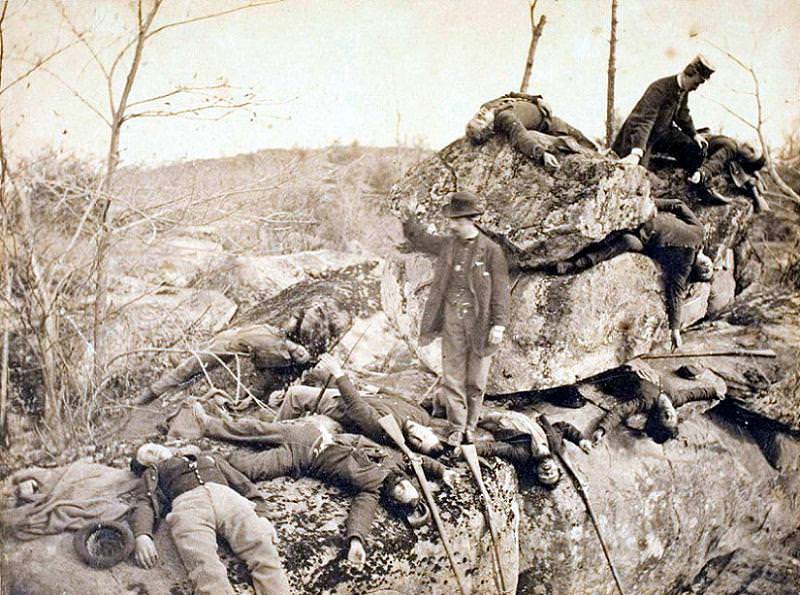
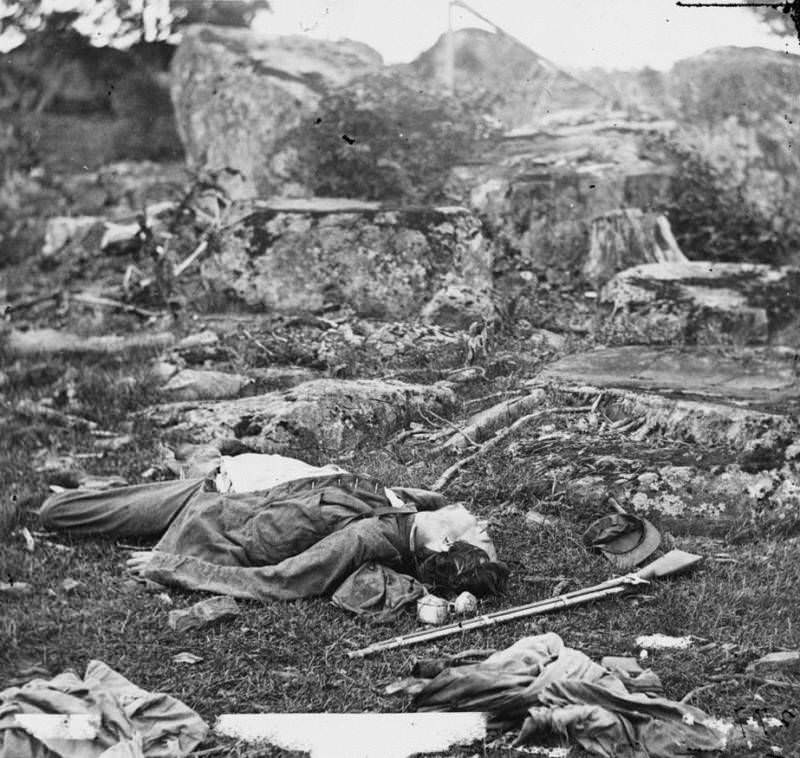
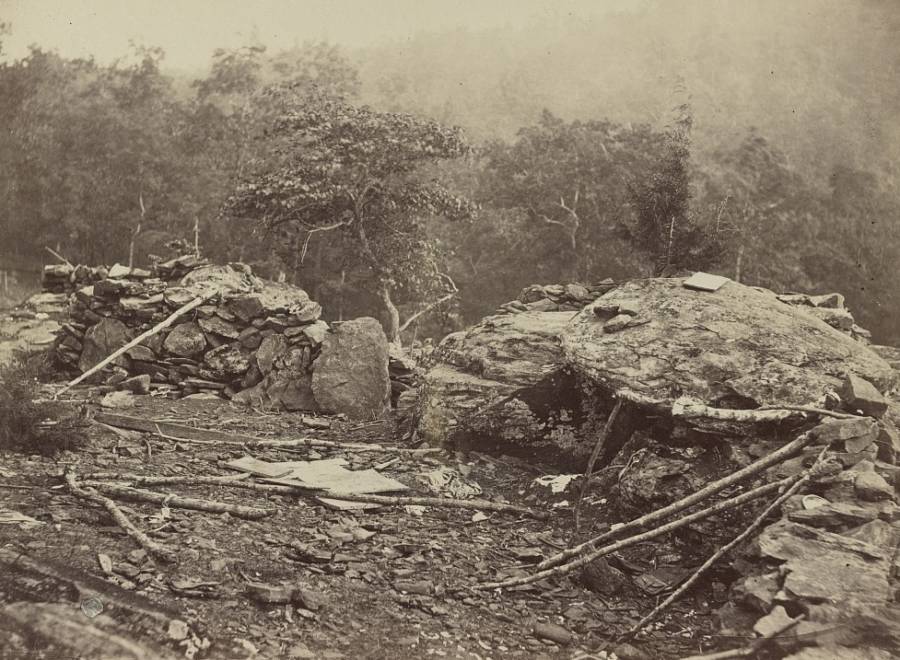
The fighting at Little Round Top and the surrounding terrain was savage. The area near the rocky hill’s base — known as the “slaughter pen” — saw some of the battle’s most intense close-quarters combat. Union Colonel Joshua Lawrence Chamberlain, a former college professor commanding the 20th Maine Infantry, held Little Round Top against repeated Confederate assaults. He later received the Medal of Honor for his actions there.
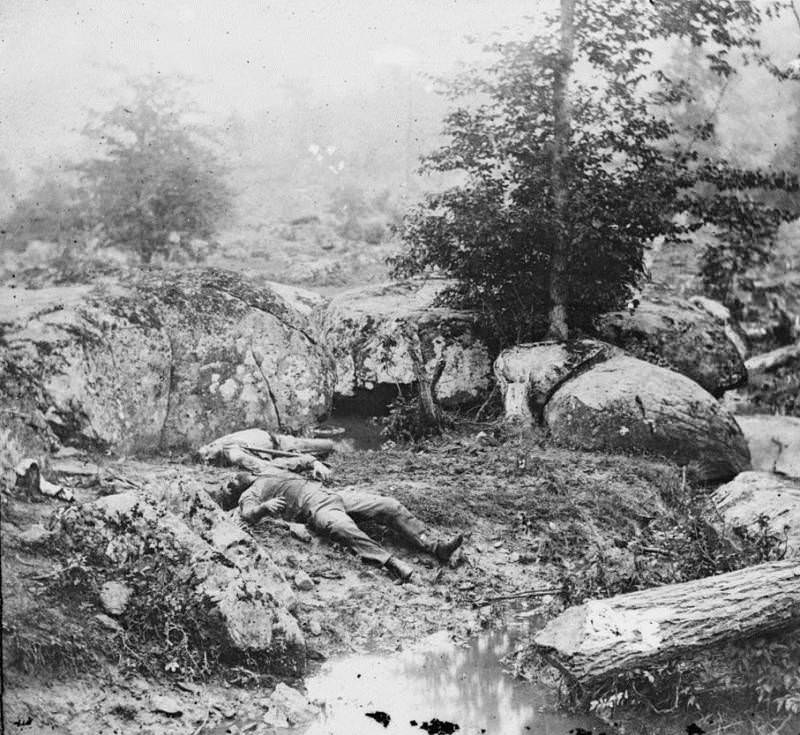
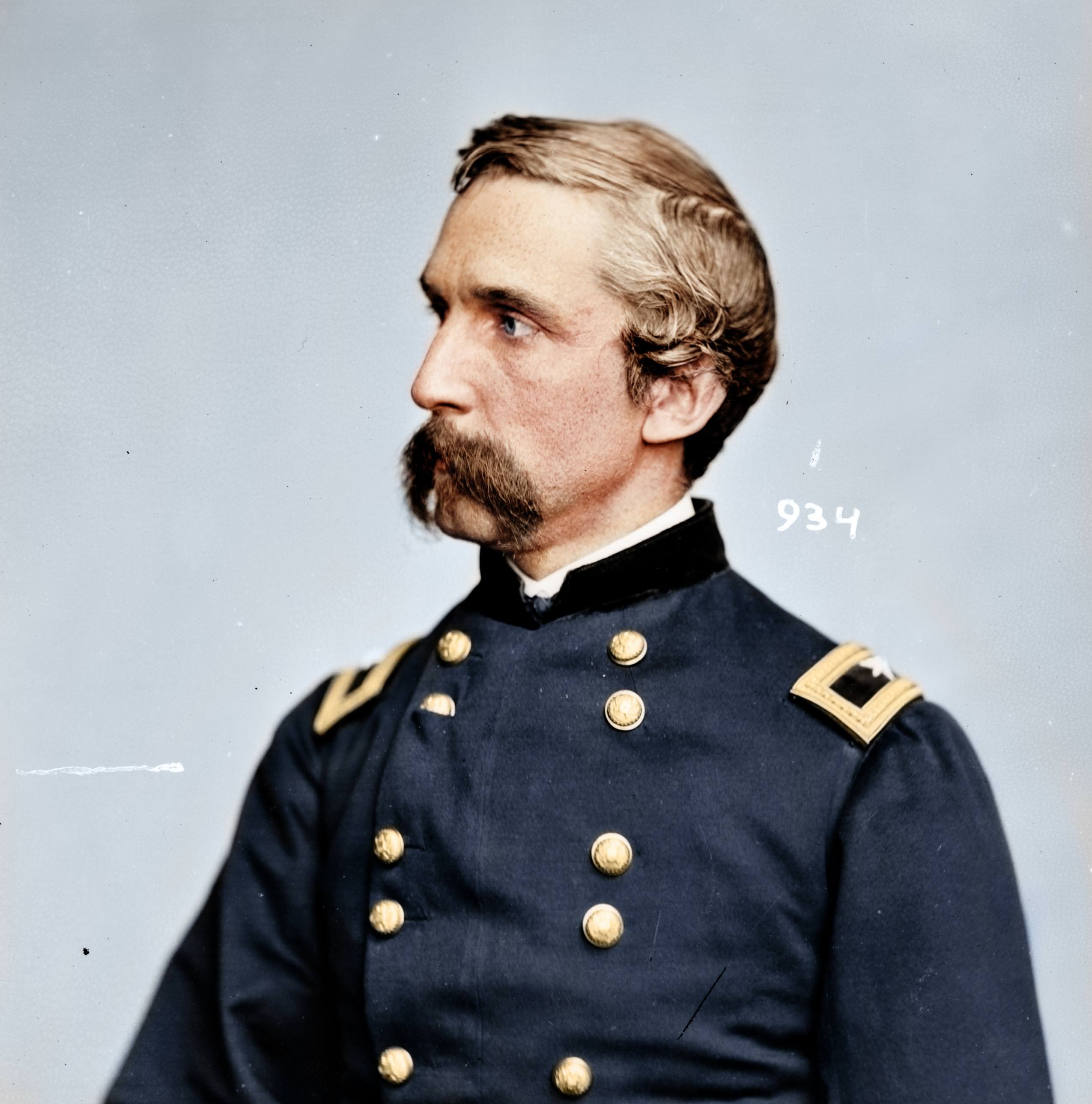
On the third day, Lee made his most fateful decision. He ordered a frontal assault on the center of the Union line at Cemetery Ridge. Approximately 12,500 Confederate soldiers under General George Pickett marched across nearly a mile of open ground toward entrenched Union positions. The attack — known as Pickett’s Charge — was destroyed. Union artillery and rifle fire cut into the advancing columns from multiple directions. Two-thirds of Pickett’s men were killed, wounded, or captured.
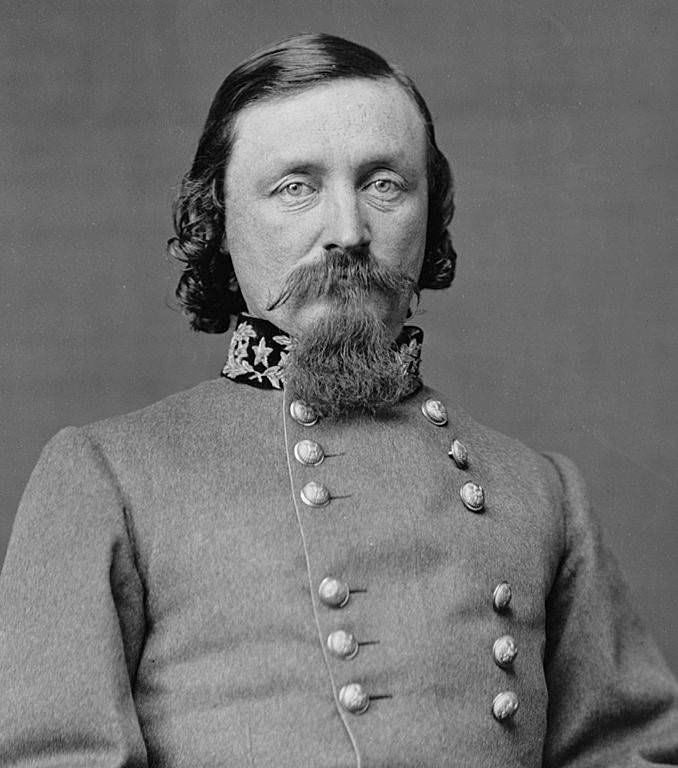
Artillery dominated all three days of the battle. Historians consider Gettysburg home to the largest artillery bombardments of the entire Civil War. On the third day, Confederate gunners opened a massive barrage intended to knock out Union cannons before Pickett’s Charge. Union artillery commanders held their fire, leading Confederate commanders to believe the guns had been silenced. When Pickett’s men advanced, the Union cannons opened up and tore through them.
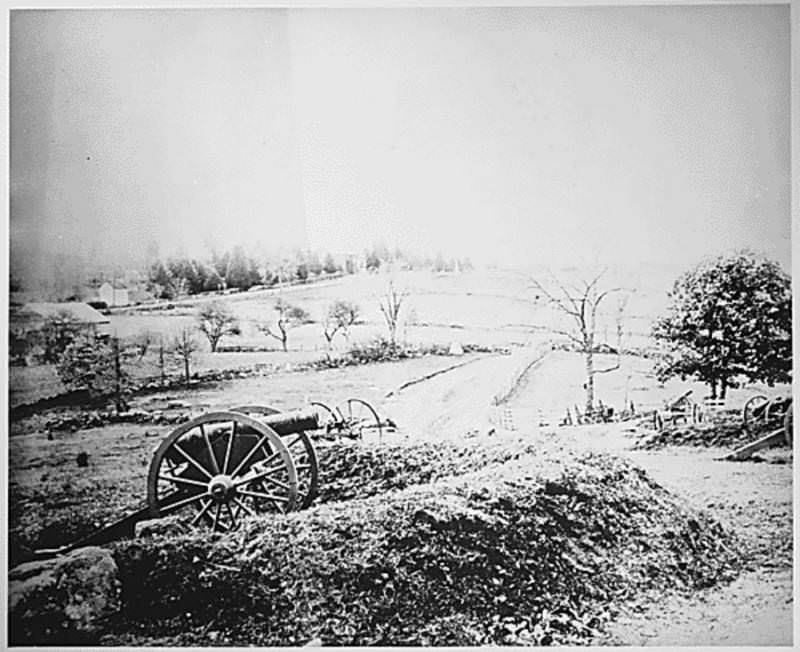
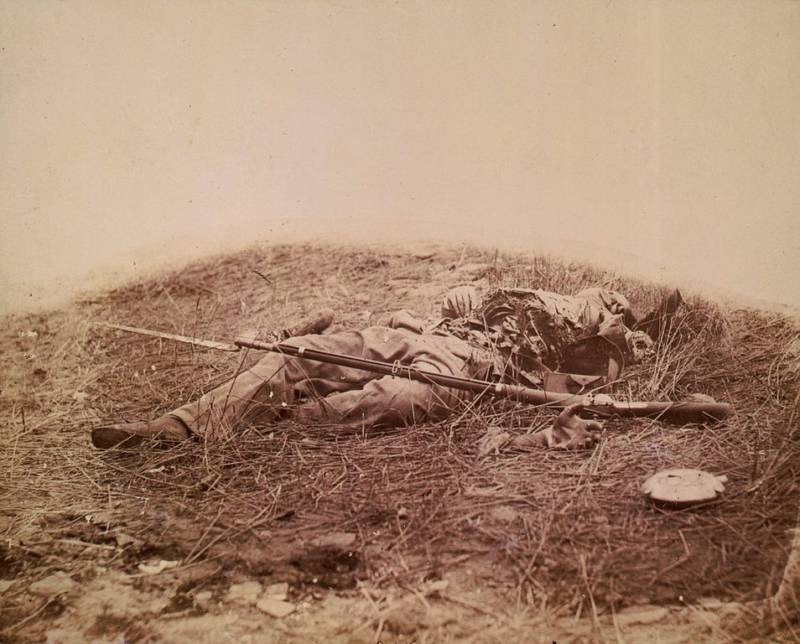
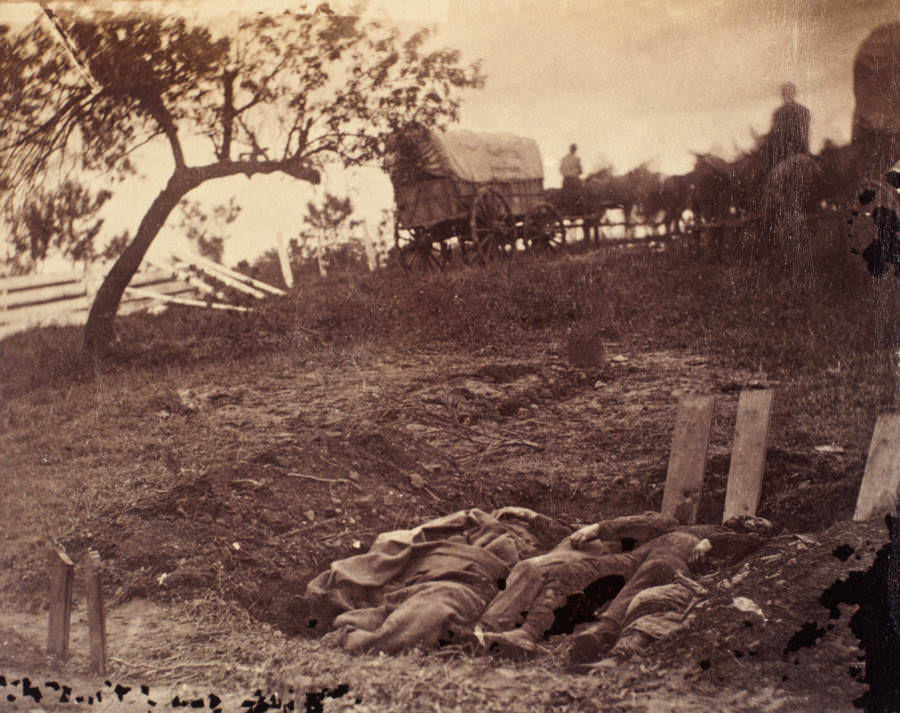
The human cost was staggering. Union losses totaled more than 23,000 men — 3,200 killed, 14,500 wounded, and 5,400 captured or missing. Confederate losses exceeded 28,000 — 4,700 killed, 12,700 wounded, and 5,900 captured or missing. Some 8,000 soldiers died outright on the battlefield. With the dead baking under the July heat, burial parties worked as fast as conditions allowed.
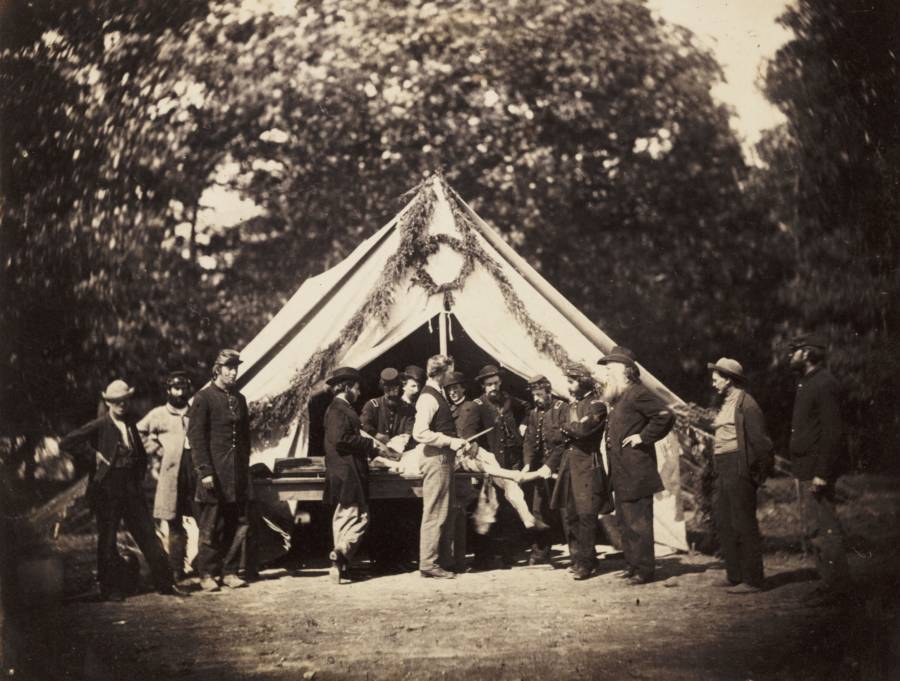
Field hospitals were overwhelmed. The number of trained surgeons on both sides numbered only in the dozens. Amputations were the most common surgical procedure, performed rapidly to prevent the spread of infection, but more than one in four patients who underwent amputation died. Operating tables set up near the front lines stayed busy throughout all three days of fighting.
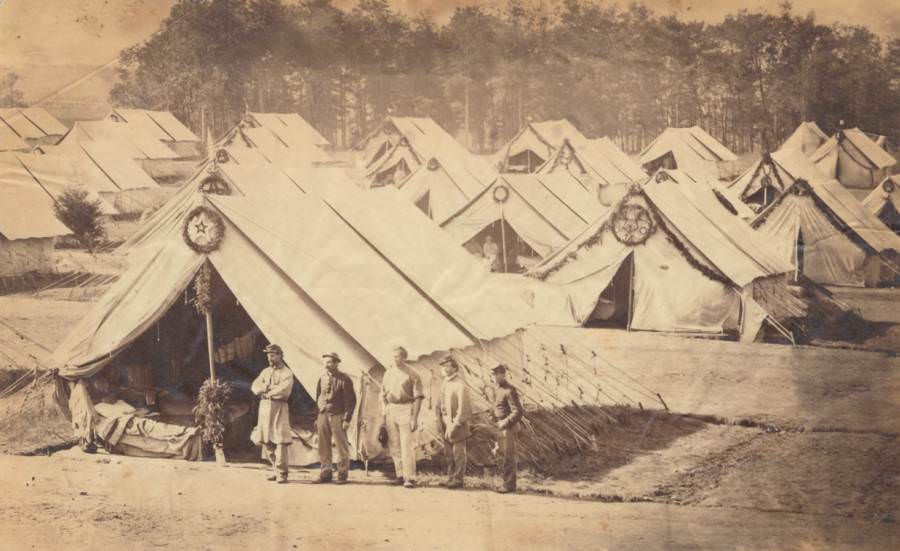
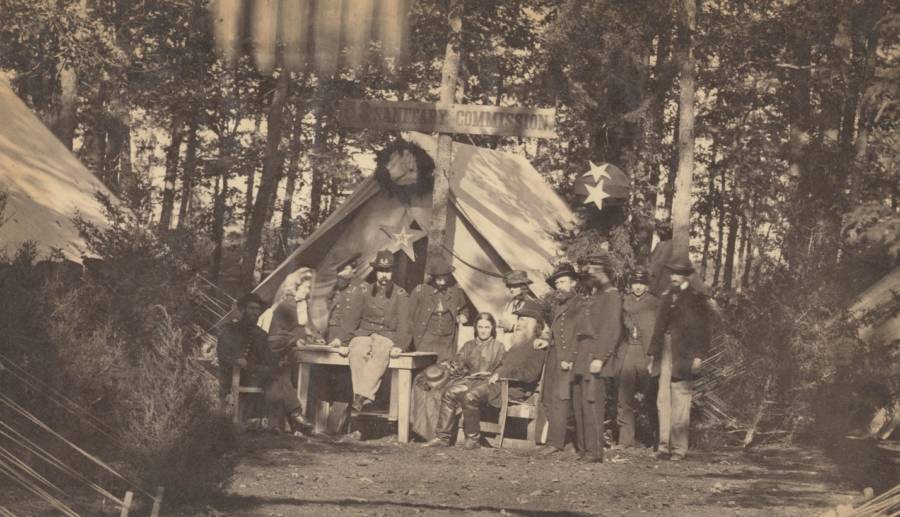
Support organizations worked alongside the military to manage the wounded. The U.S. Sanitary Commission, a private relief agency, set up operations near the battlefield to aid sick and wounded Union soldiers. The U.S. Christian Commission provided additional supplies and services to troops in the field.
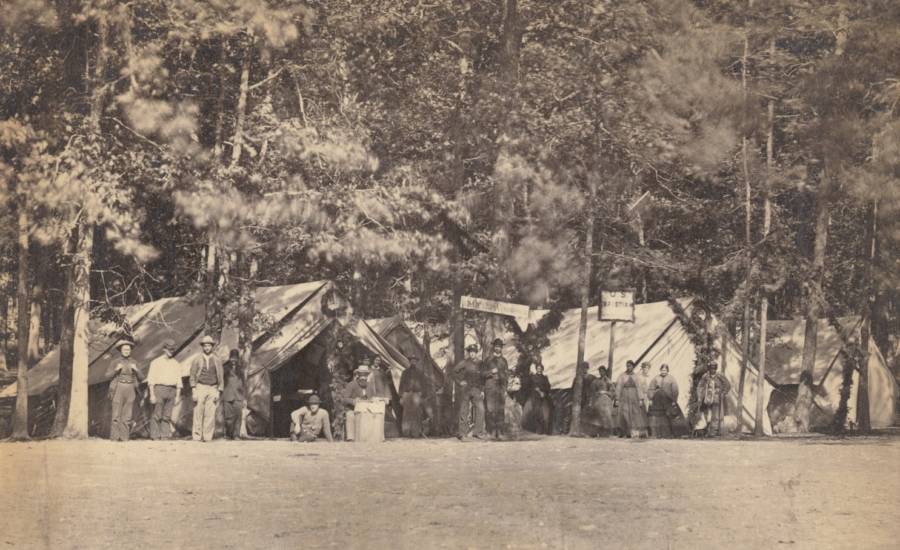
After Pickett’s Charge collapsed, Lee pulled his forces back and waited for a Union counterattack that never came. Meade chose not to pursue the retreating Confederate army. President Lincoln was openly disappointed by that decision, believing Meade had missed a chance to destroy Lee’s army entirely. Lee withdrew what remained of his forces back toward Virginia.
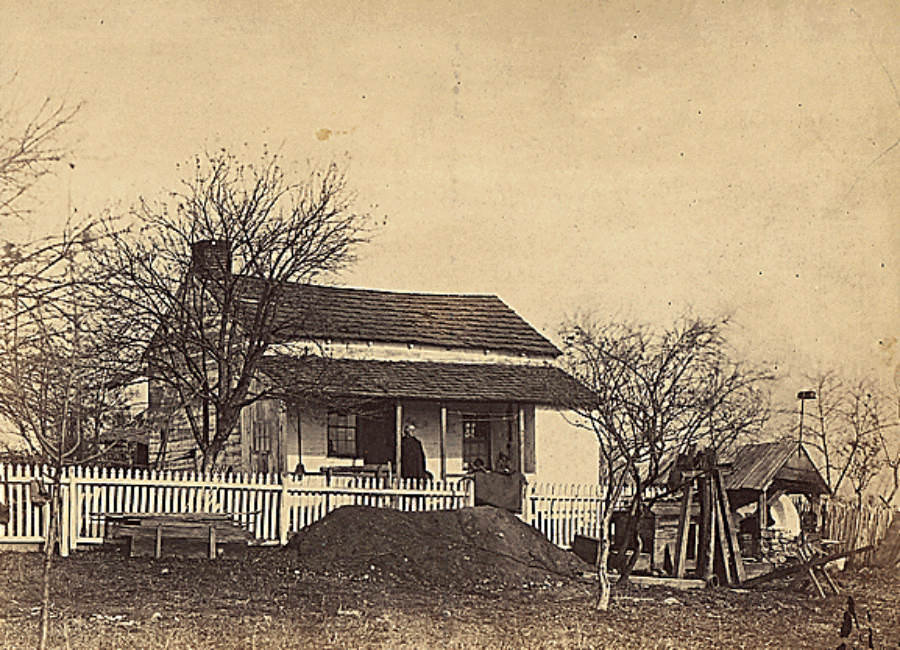
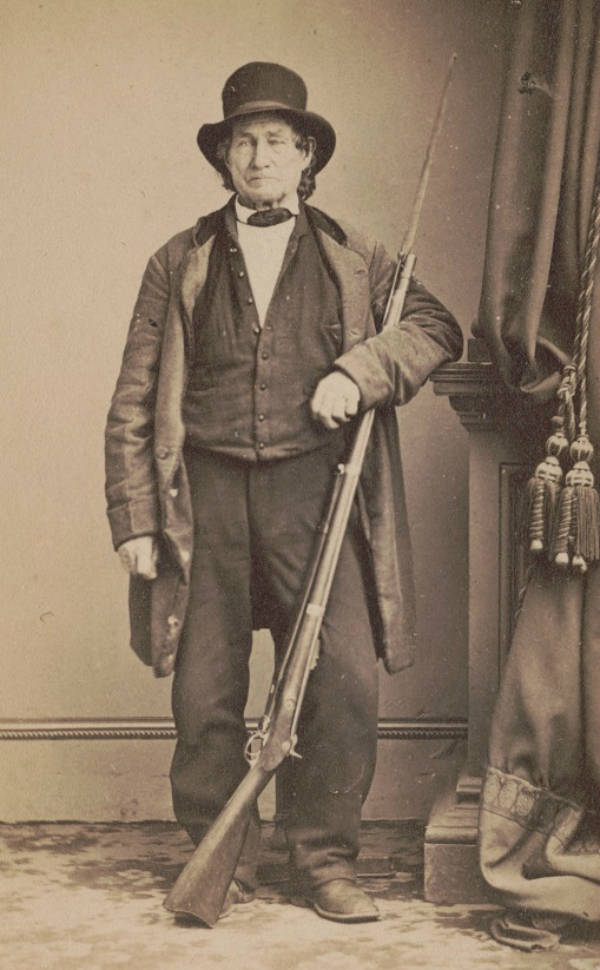
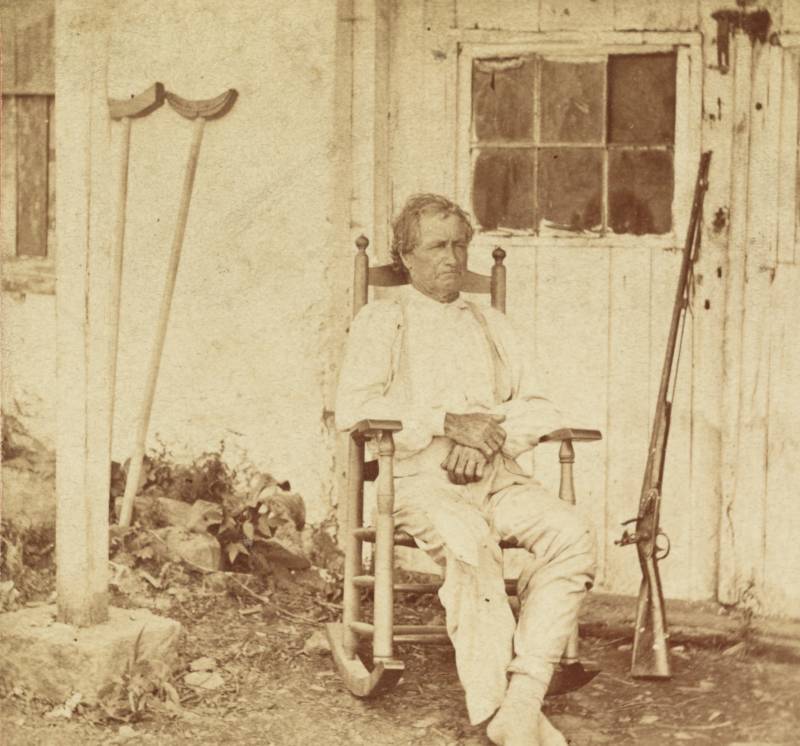
Not everyone who fought at Gettysburg was a soldier. John L. Burns, a 69-year-old civilian and veteran of the War of 1812, picked up his musket on the first day of fighting and joined Union troops on the front line. He was wounded three times and survived. His story made national news, and he became one of the most recognized figures associated with the battle.
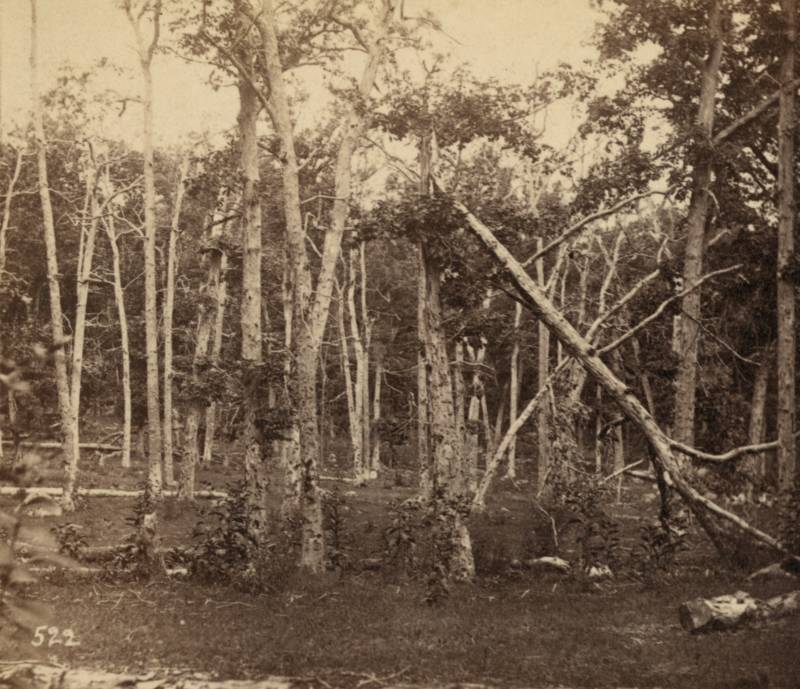
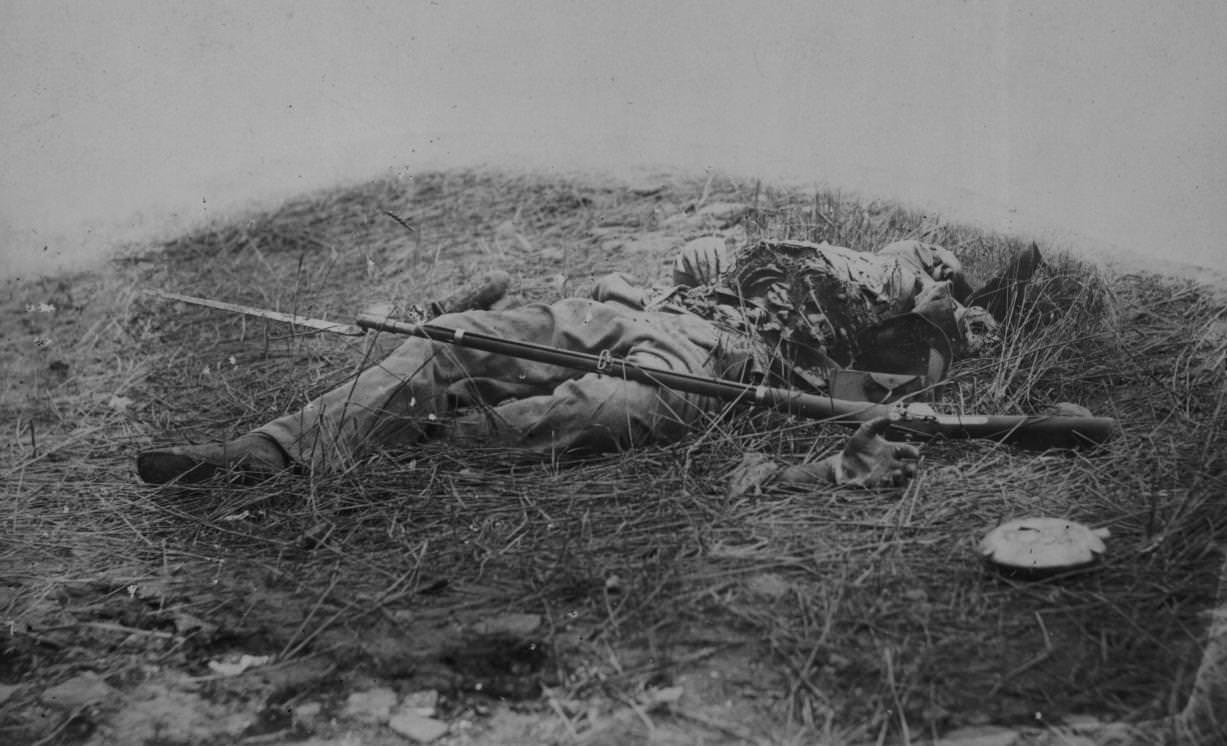
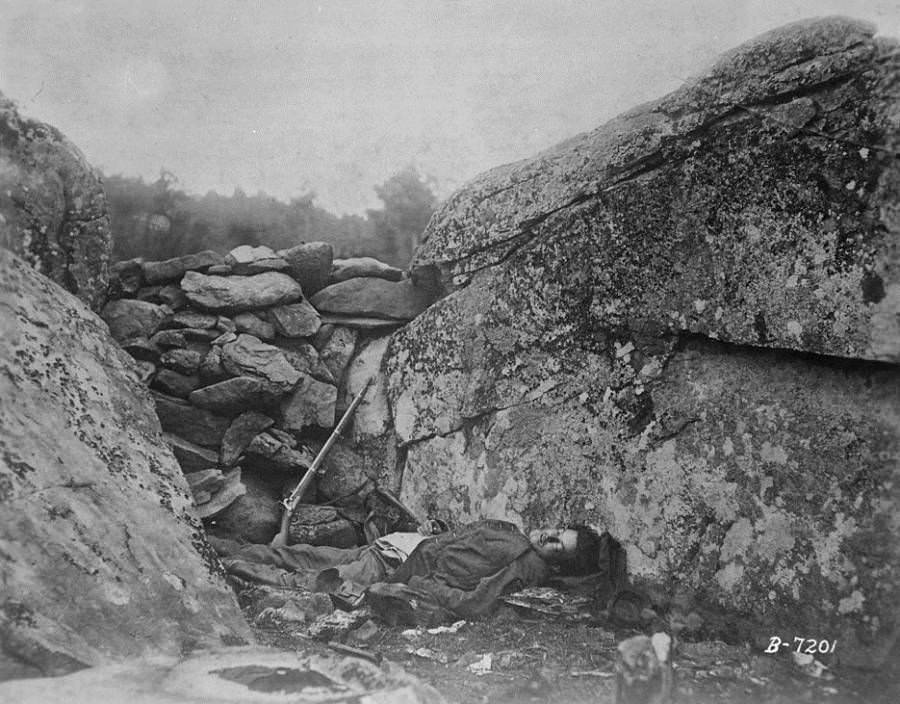
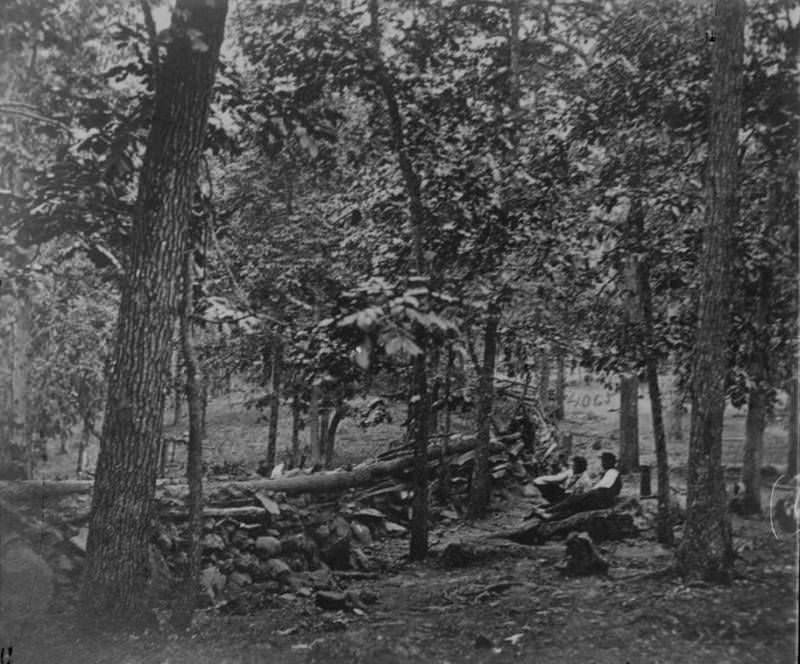
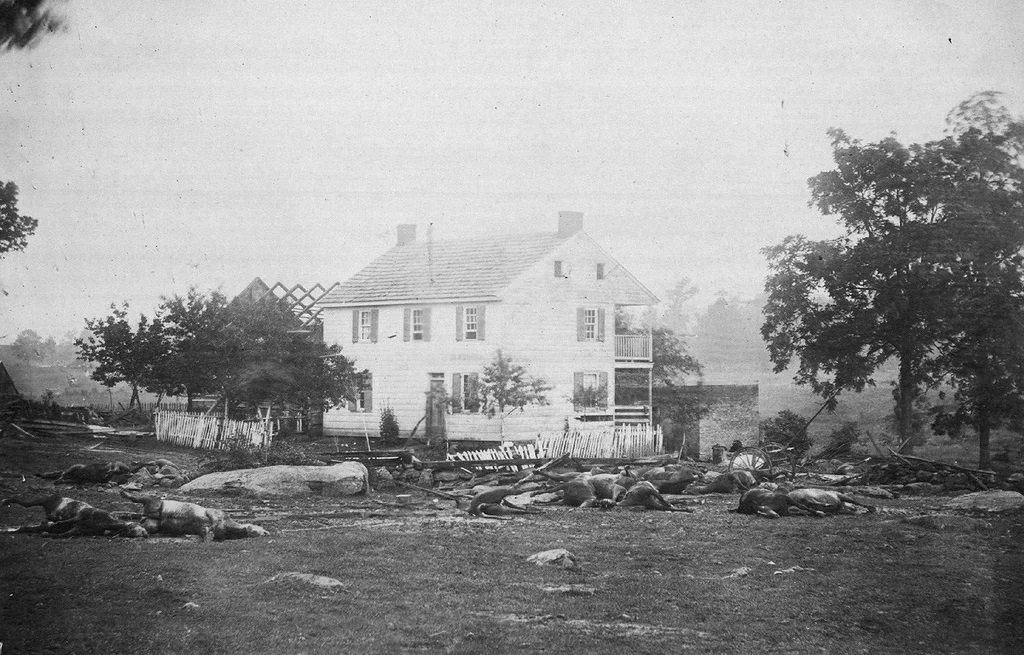
The photographs taken immediately after the battle show a landscape stripped raw by combat. Trees in the surrounding woods were shattered by shellfire. Fields were strewn with the dead. Sharpshooters who had taken position among the rocks were found where they had been killed, sometimes days after the battle ended.
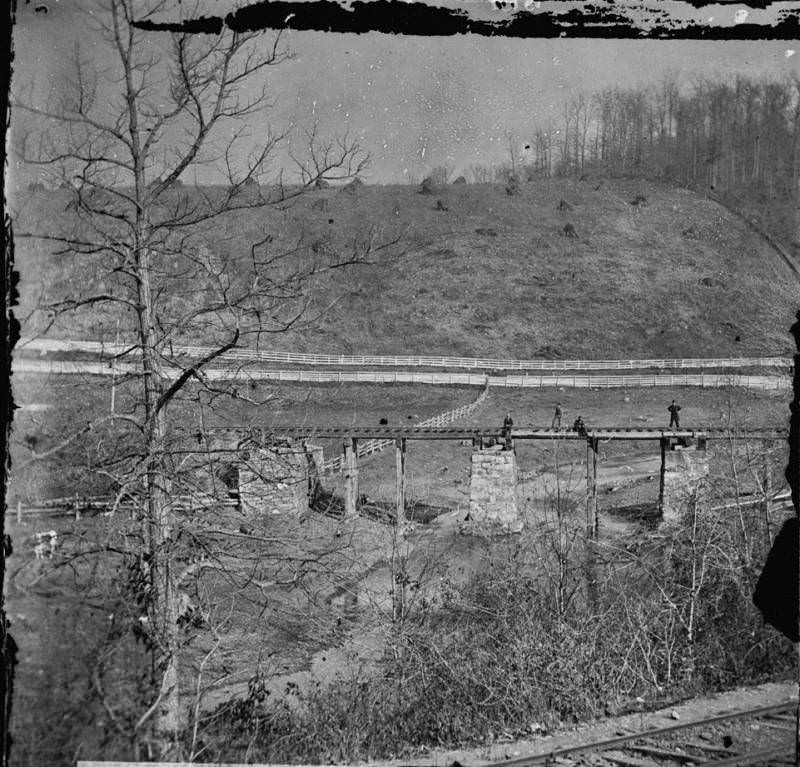
Confederate forces burned a bridge at nearby Hanover Junction before the battle began, a move intended to slow Union logistics and communication. The destruction of infrastructure around Gettysburg added to the disorder that both sides experienced in the opening hours of the engagement.
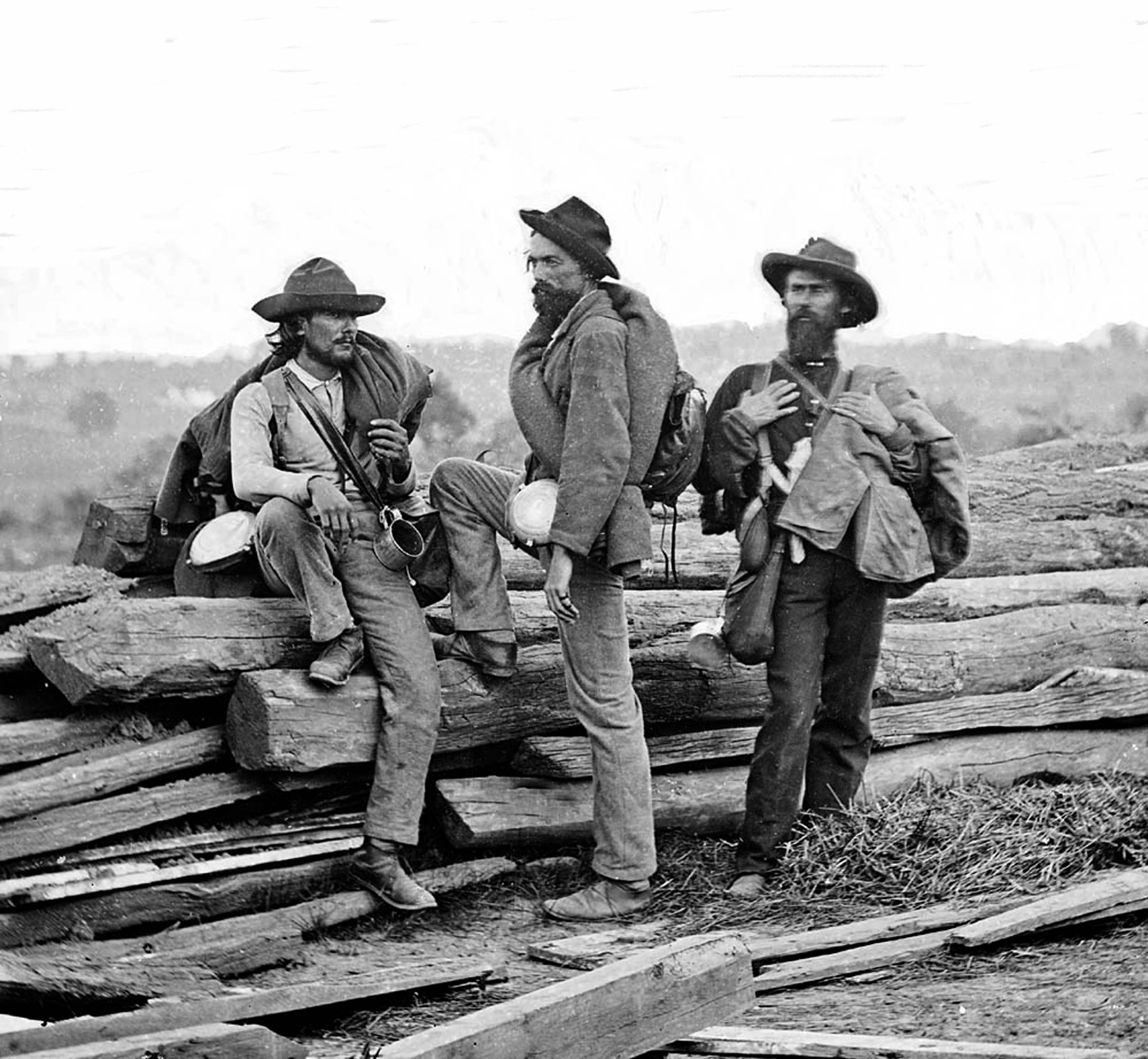
On November 19, 1863, President Lincoln traveled to Gettysburg for the dedication of the Soldiers’ National Cemetery, where Union dead had been reinterred. He delivered a short address — just over two minutes long — that would become one of the most quoted speeches in American history. Lincoln stood among thousands of attendees on the dedication grounds, a moment captured in at least one surviving photograph.
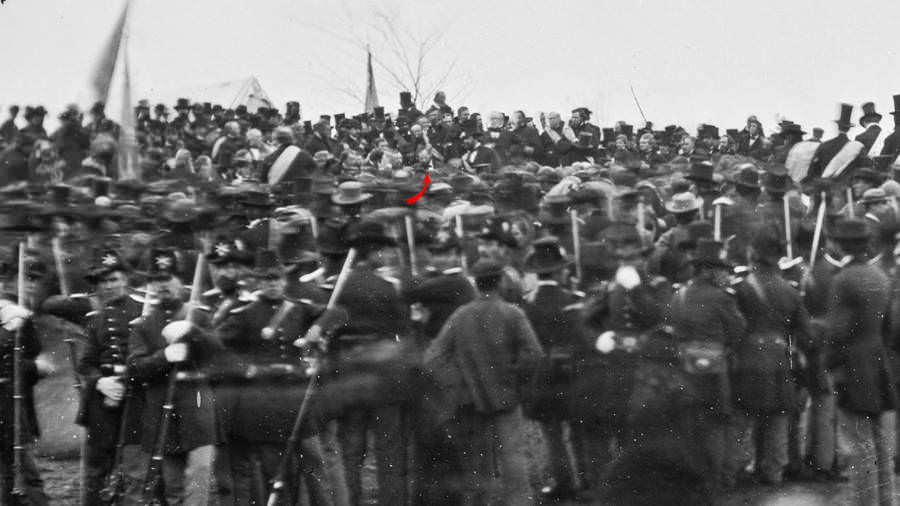
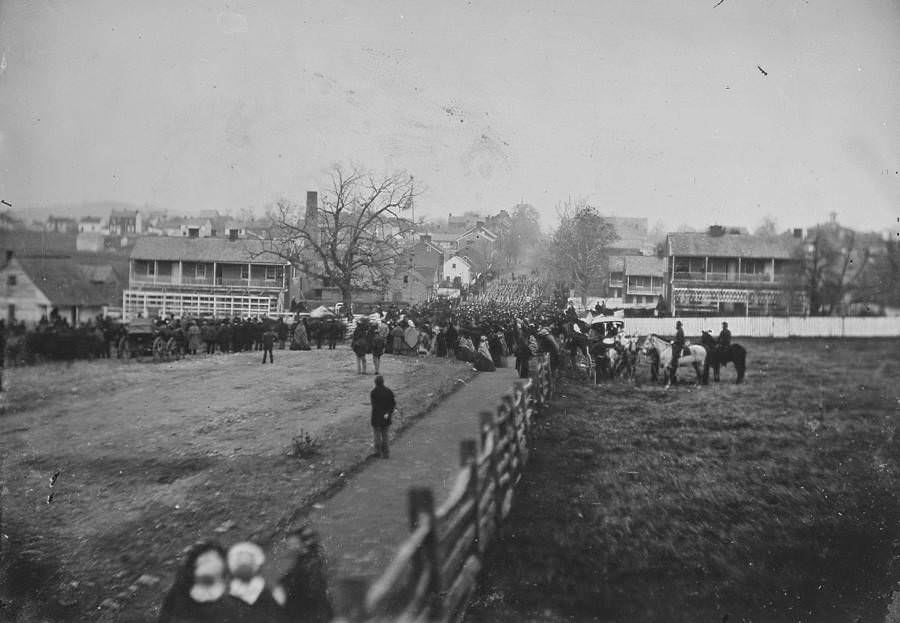
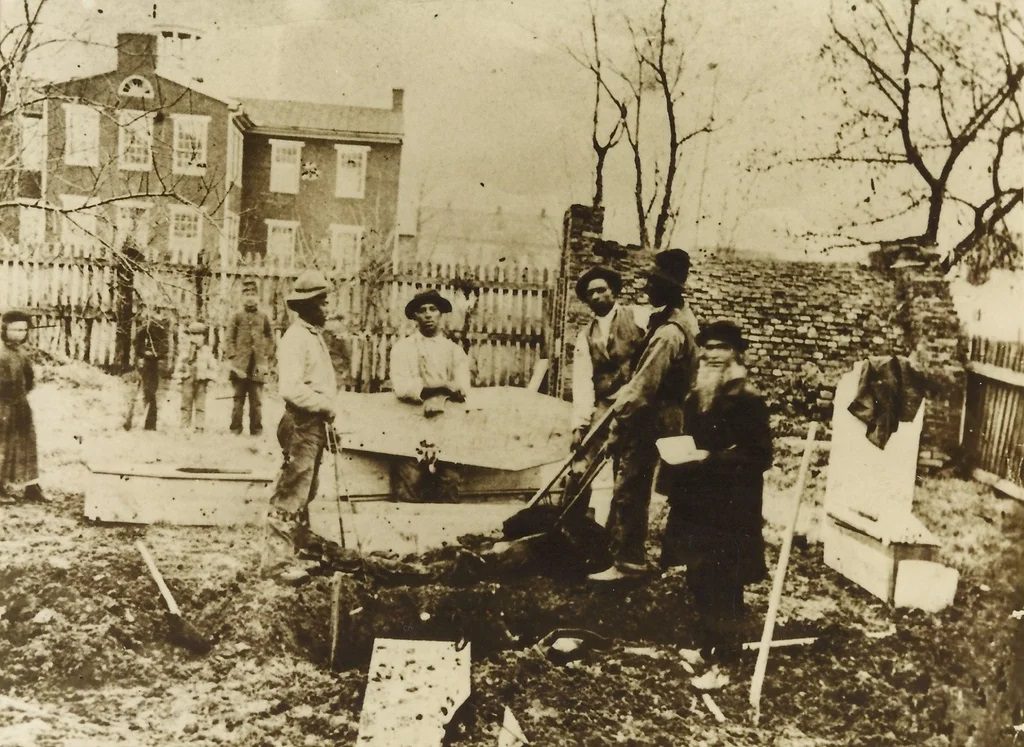
The process of recovering and reburying the dead continued long after the ceremony. In 1864, Union soldiers who had died in nearby Hanover, Pennsylvania were exhumed and relocated to the Soldiers’ National Cemetery in Gettysburg. The work of accounting for and honoring the dead stretched across months and years.
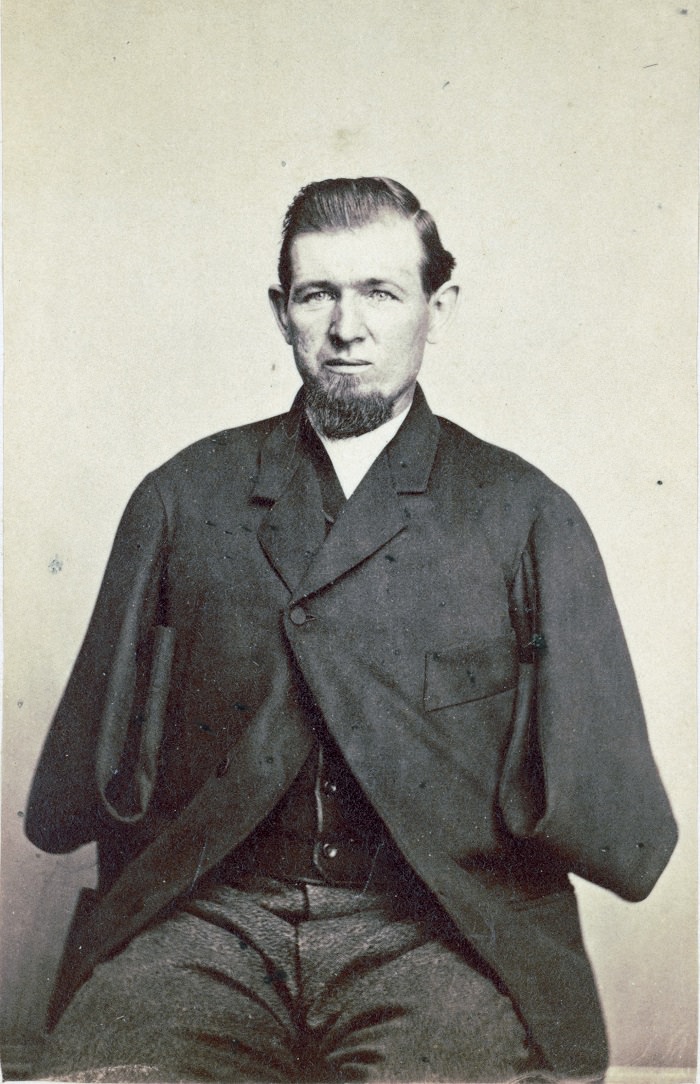
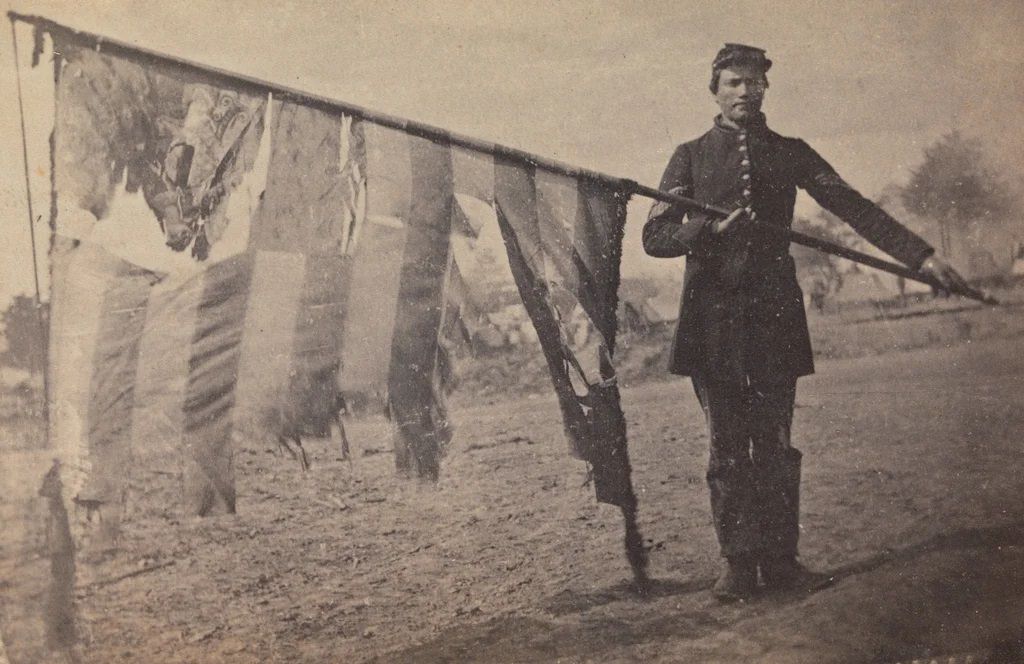
Some of the men who fought at Gettysburg were photographed years and even decades later. Private George W. Warner, wounded on July 3, 1863, was photographed again in 1868, five years after the battle. Union color bearer Alex Rogers of the 83rd Pennsylvania Volunteer Infantry was photographed holding his battle-shredded flag after surviving Gettysburg — he was killed less than a year later at the Battle of the Wilderness on May 5, 1864.
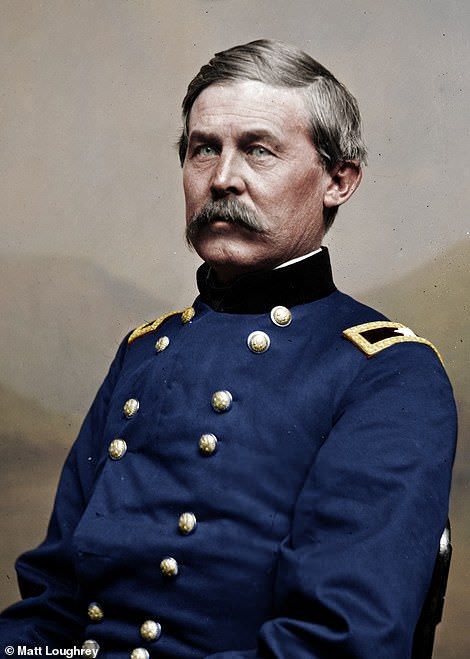
Brigadier General John Buford played a critical role on the battle’s first day. His Union cavalry held Confederate forces in place long enough for infantry reinforcements to arrive and occupy the high ground. Buford was promoted to Major General on his deathbed later that same year, in 1863.
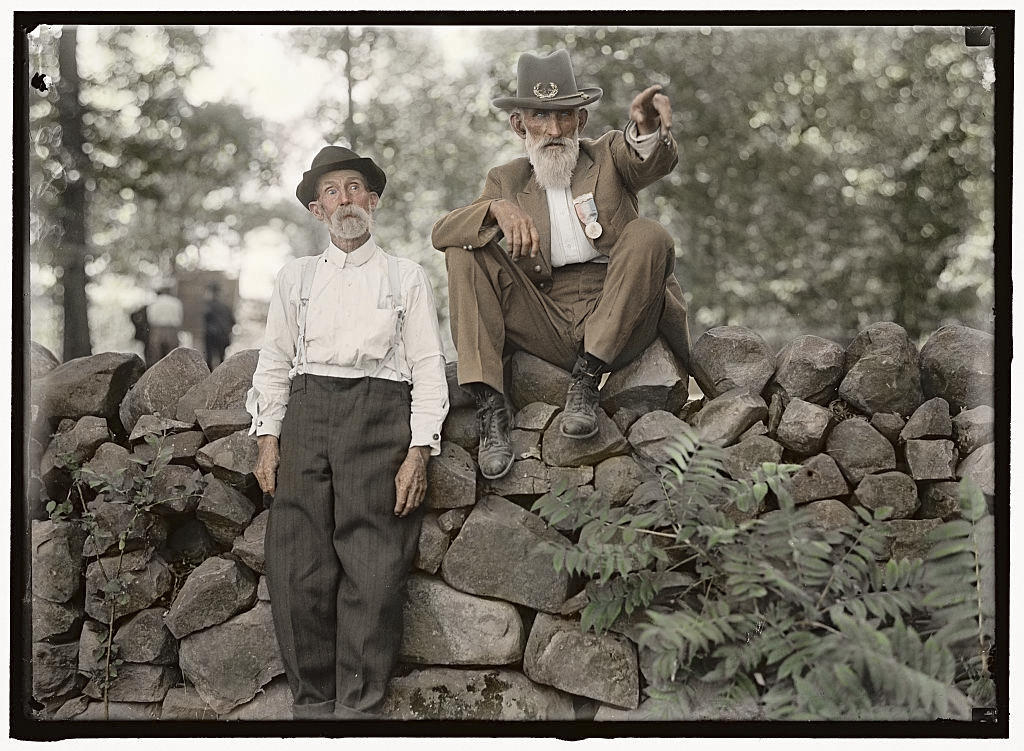
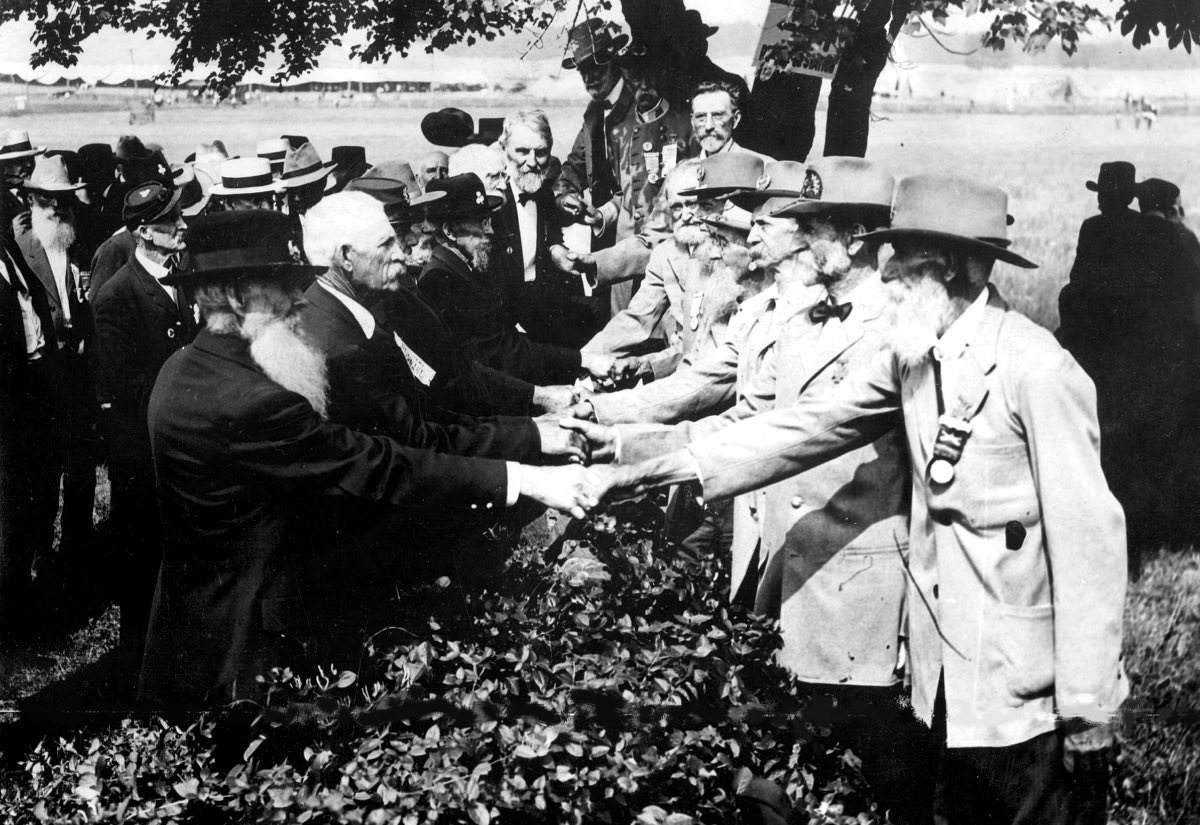
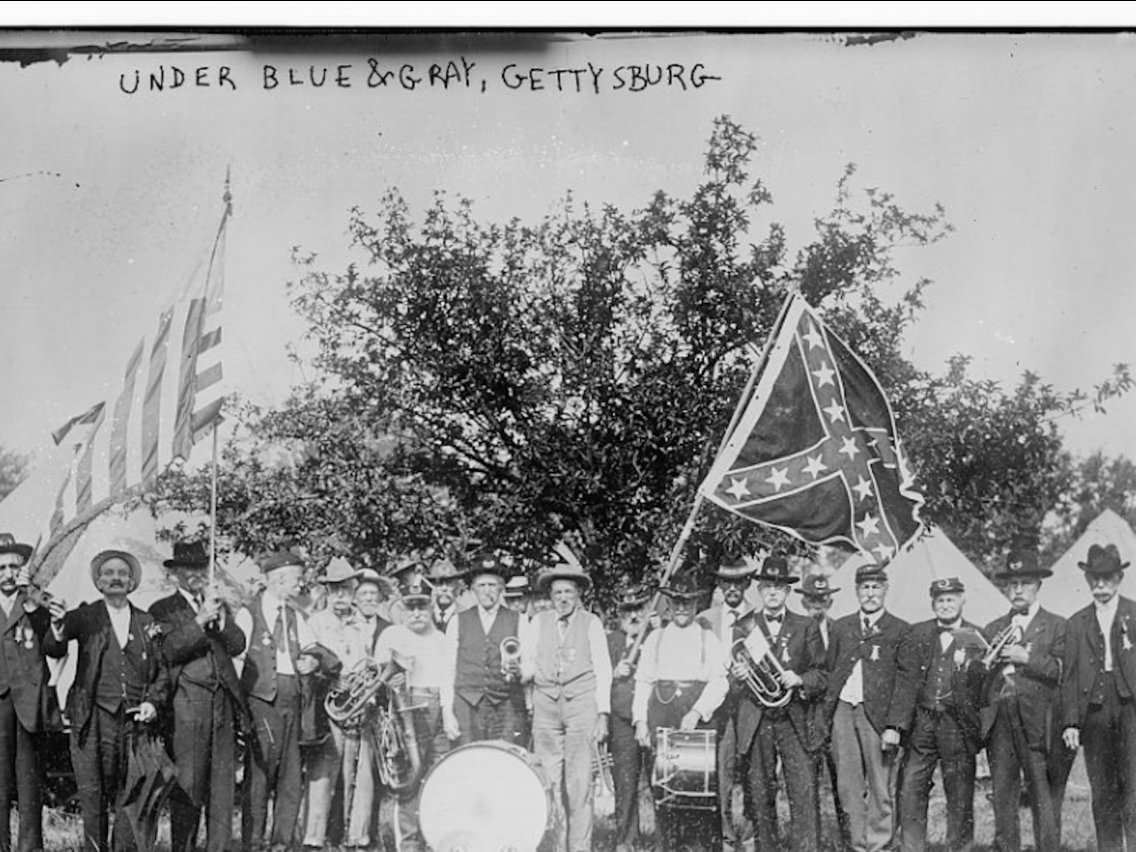
Fifty years after the guns went silent, veterans from both sides returned to Gettysburg for a reunion in July 1913. Old men who had once fired at each other across open fields shook hands on the same ground. The 50th anniversary gathering brought together Union and Confederate survivors — a visible reminder of just how long the war’s survivors had carried the memory of those three days in Pennsylvania.

Gettysburg may have begun because of shoes. There were rumors of footwear supplies at Gettysburg, and many Confederate troops marched barefoot or with rags wrapped around their feet.
There’s more to it than that. The town of Gettysburg was located at a crucial junction of highways and railroads. It was surrounded by strong defensive ridges. In an effort to gain strategic initiative and decisively engage the other army, both armies maneuvered around each other. More than any attempt to forage, this ultimately led to the pitched battle.
Each army sent forward parties to scout Gettysburg and claim the strategic and defensive positions. On a ridge north of the town, the mutual skirmishing parties came into contact. Despite the town’s value and prior maneuvers of the campaign, the initial impetus may have been seeking shoes. Due to the strategic importance of the town and the fact that the enemy was nearby, both armies deployed their armies rapidly in order to prevent each other from gaining the strategic advantage. In a complicated combination of factors, Meade gained the powerful positions south of town that allowed Union Artillery to bombard a large area. Lee was forced to dislodge the Union as a result. Despite repeated assaults by the Confederates, the Union held its ground due to numbers, tenacity, and strong artillery.
Many battles begin small, usually with scouts or some sort of detachment meeting an enemy one, then reinforcements arrive, and before you know it there is a huge ass battle in front of you. For this reason, Stuart was heavily criticized for not scouting ahead of Lee or at least not successfully.
Many of the photos with big rocks are posed.
Those men didn’t die on top of the rocks and so on. The 2 people in the photo carried them and positioned them. Same with the famous sharp shooter photo. The soldier wasn’t a sharp shooter. Just some nearby body they found and positioned.
Honestly I find it distasteful that they posed these men’s bodies like common props.