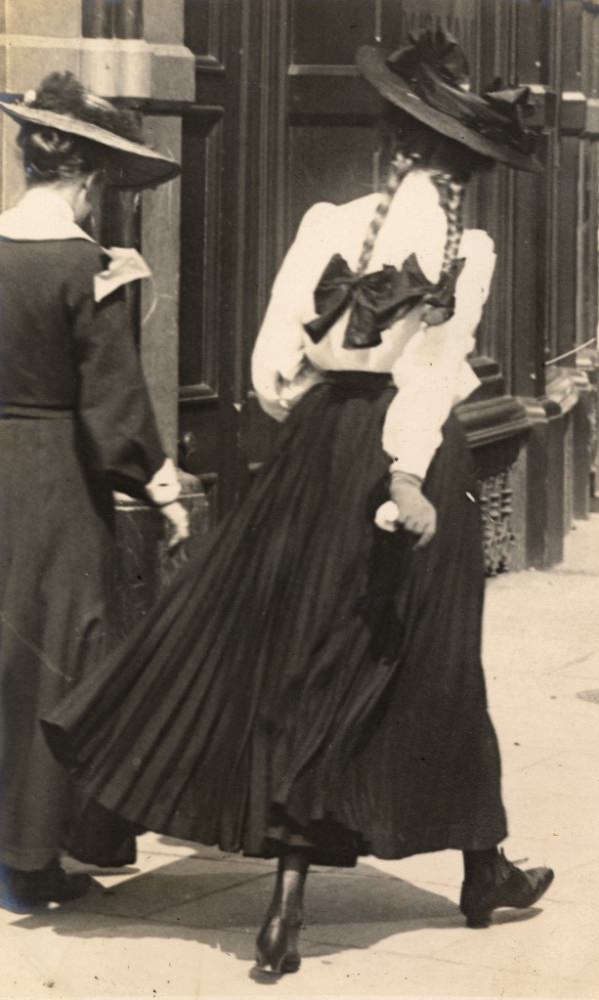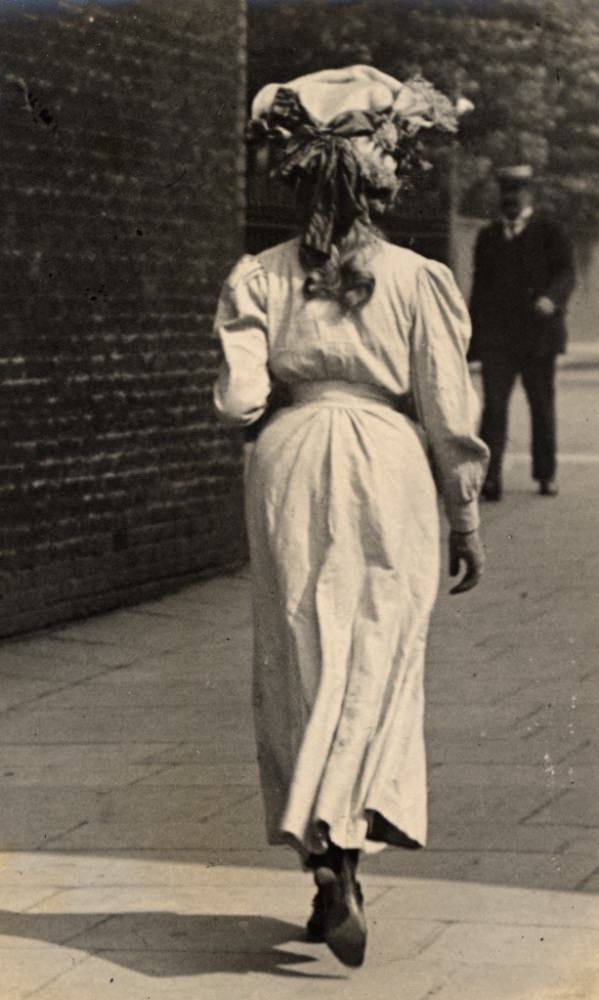

The Edwardian era, roughly spanning the first decade of the 1900s, brought a distinct shift in how people dressed and presented themselves in public. While the Victorian period left a heavy mark on fashion, the new century introduced a lighter, more refined sense of style — especially for women. The streets of London became a living display of these changes, and one man made it his business to document them.
Linley Sambourne was an illustrator and the chief cartoonist for the British magazine Punch. Between 1905 and 1908, he took his camera to the streets of Kensington, Cromwell Road, Notting Hill, and surrounding neighborhoods to photograph ordinary Londoners going about their day. The images he captured are among the most detailed records of real Edwardian street fashion in existence — not posed studio portraits, but actual people in actual clothes on actual streets.
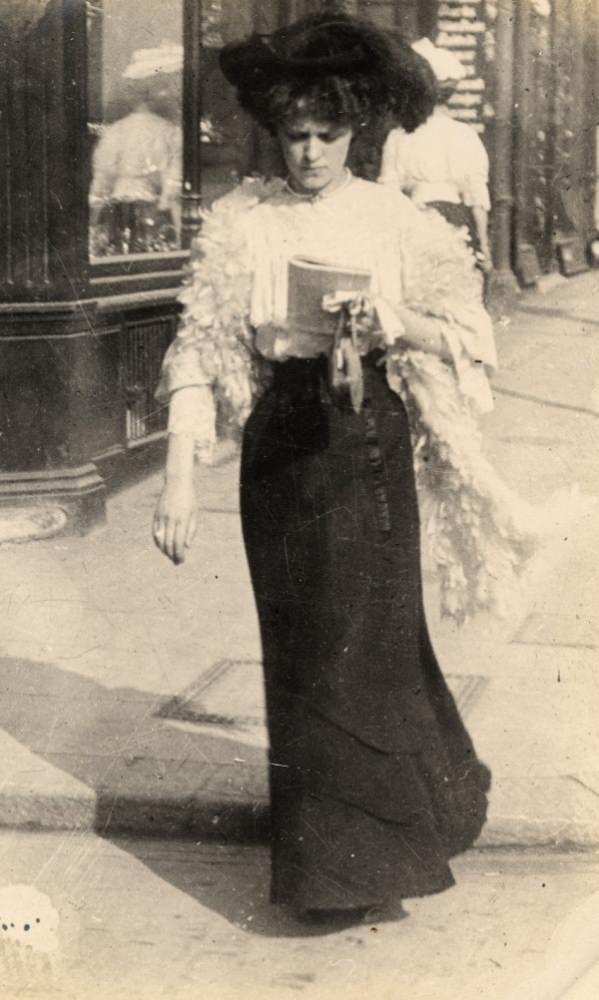
Women’s fashion during this period was defined above all by the S-curve silhouette. A specialized corset pushed the chest forward and the hips back, creating a posture that gave the torso a distinct S-shape when viewed from the side. The ideal figure was a full-busted, mature woman with what was described at the time as a pigeon-shaped monobosom — a single, rounded chest profile rather than a divided bust. This look was considered the height of femininity.
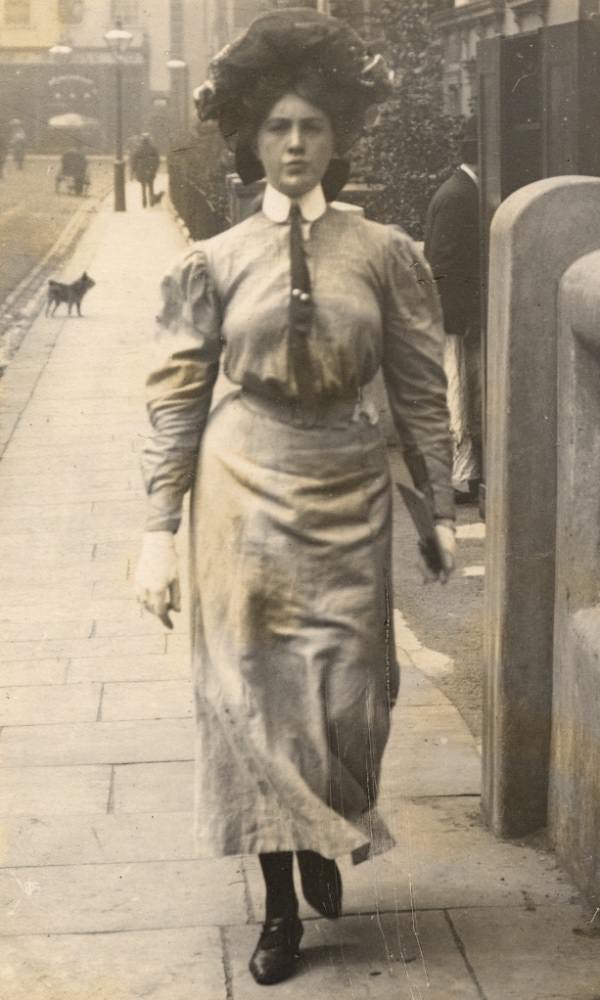
Unlike the heavy, stiff fabrics that dominated Victorian dress, Edwardian garments were made from lighter materials. Silk, chiffon, and fine cotton allowed for more movement and a softer drape. Blouses and bodices were heavily decorated with lace trim, beadwork, and rows of ruffles. This ornamentation wasn’t subtle — layered lace at the collar and cuffs was standard, and a well-dressed woman was expected to wear it.
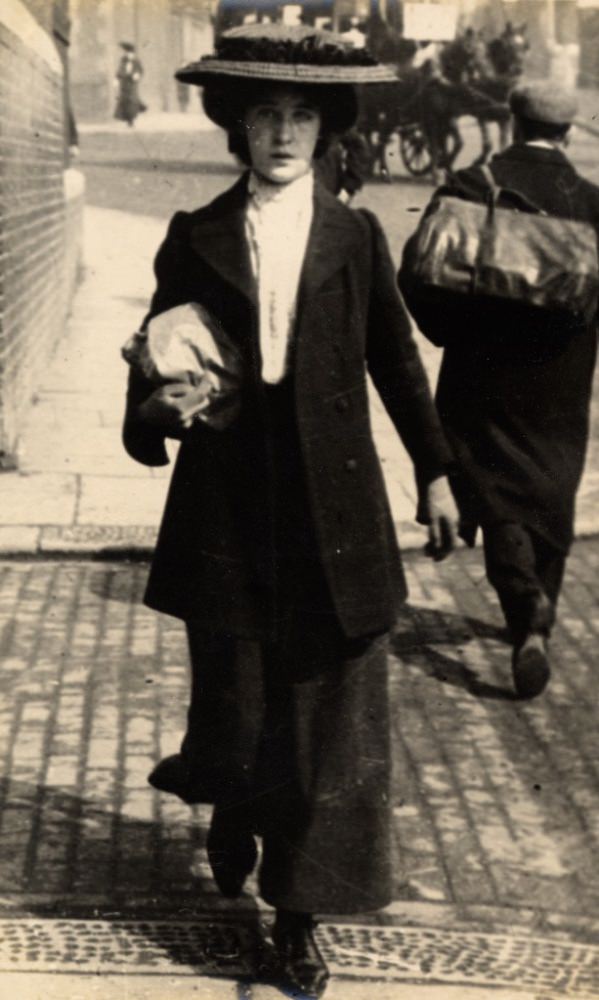
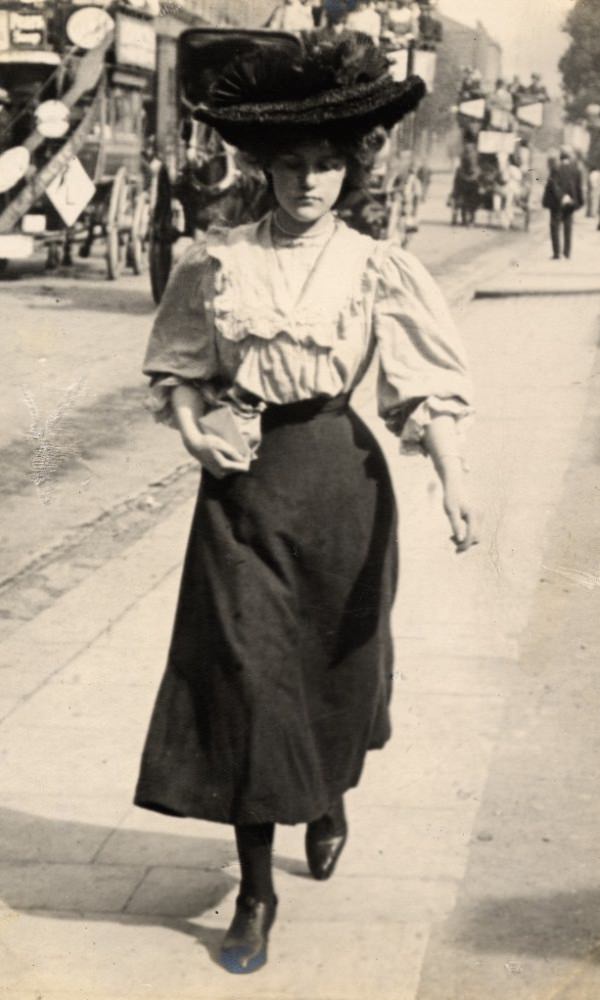
Skirts changed noticeably around 1904. Earlier Victorian skirts had been tight and clinging around the hips before flaring at the hem. Edwardian skirts became fuller from the waist down, moving more freely as a woman walked. The silhouette was still structured, but the overall effect was less restrictive than what came before. Paired with fitted jackets, the tailored suit became one of the most fashionable looks of the decade.
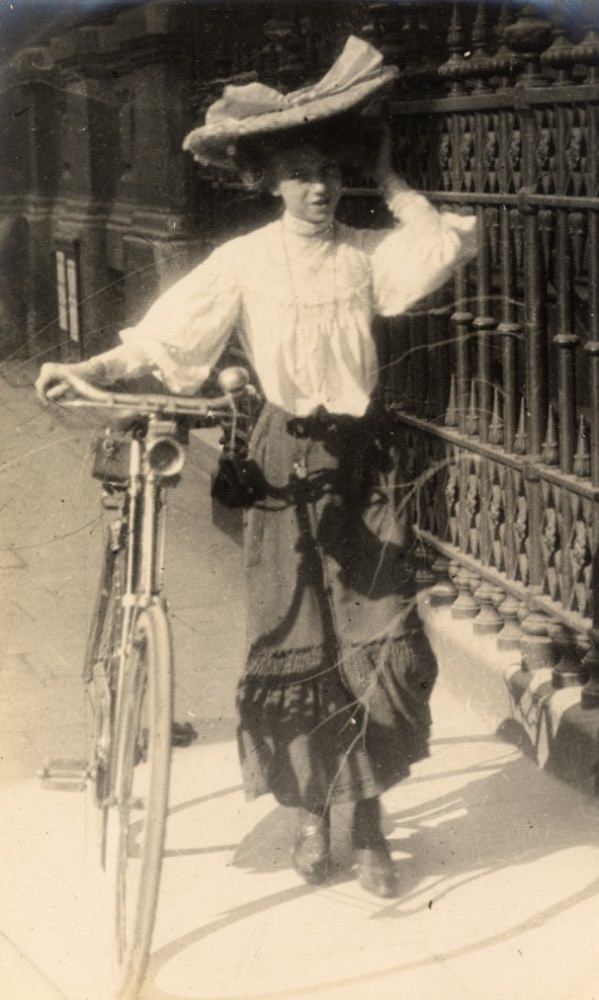
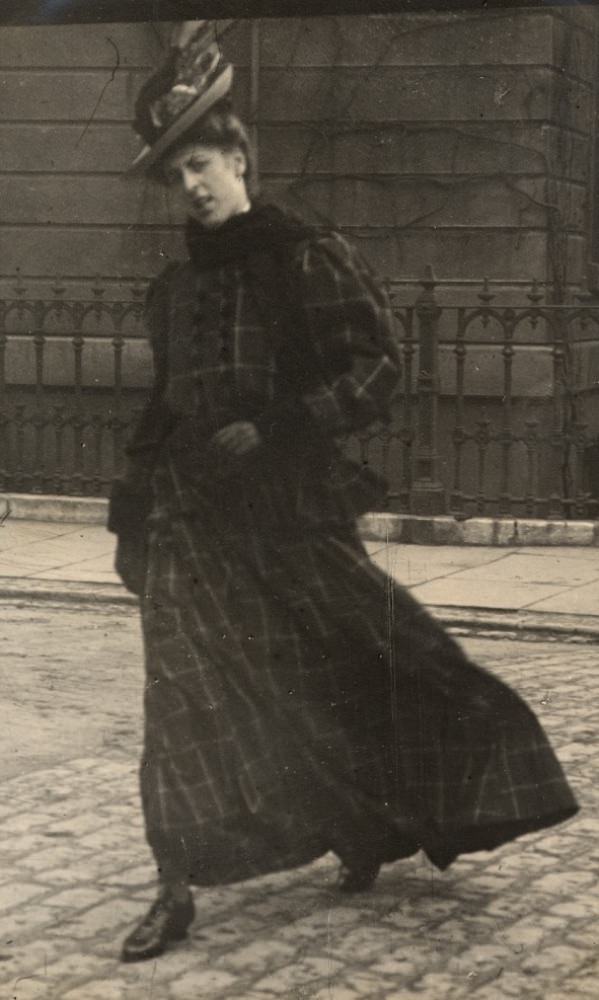
Hats were enormous. Wide-brimmed styles piled high with feathers, flowers, and fabric were worn by women across every class. The feathers frequently extended well beyond the edge of the brim, sometimes dramatically so. These hats weren’t just decorative — they signaled social status, and the more elaborate the hat, the more fashionable the wearer was considered to be. Footwear also evolved during this period, with more comfortable shoes made from sealskin becoming available alongside the pointed, heeled styles of the previous era.
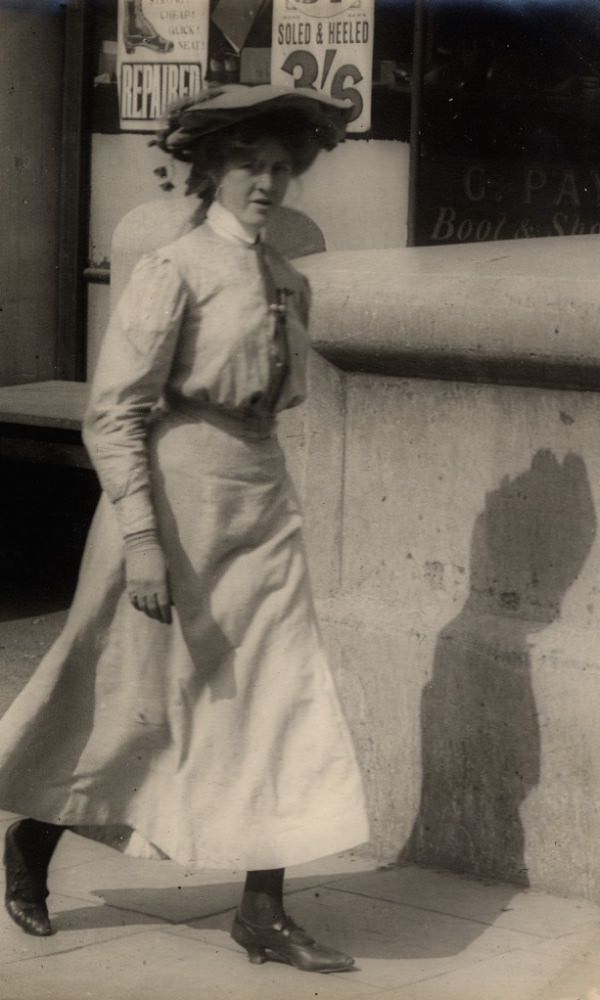
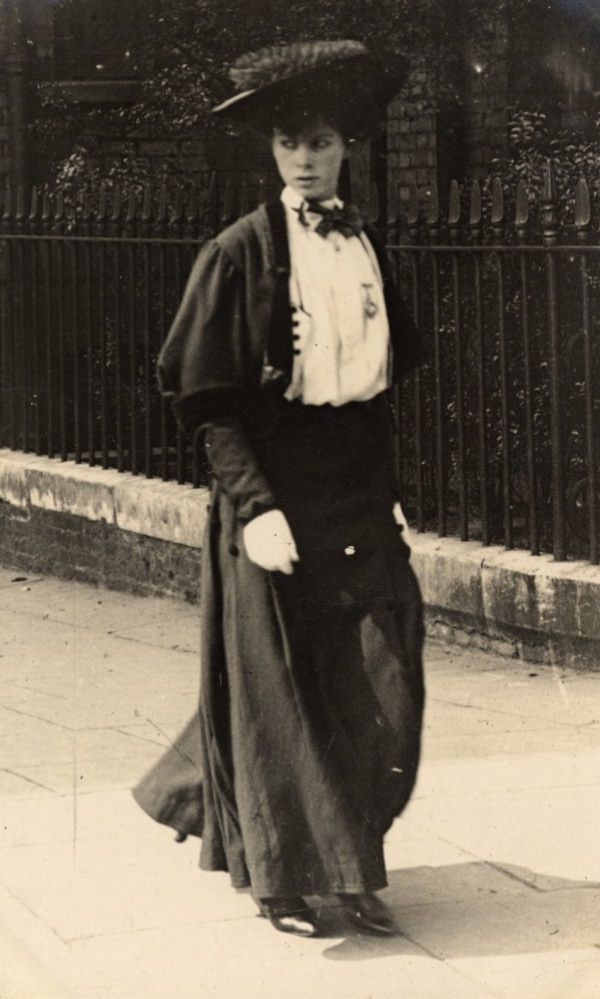
Sambourne’s photographs are particularly valuable because they show fashion as it was actually worn — not as fashion plates or tailors’ illustrations depicted it. In his street photos, you see how women adapted trends to their own bodies and budgets. Some outfits are clearly expensive and carefully put together; others are simpler interpretations of the same shapes and details. The range gives a more honest picture of the era than any illustrated magazine of the time could provide.
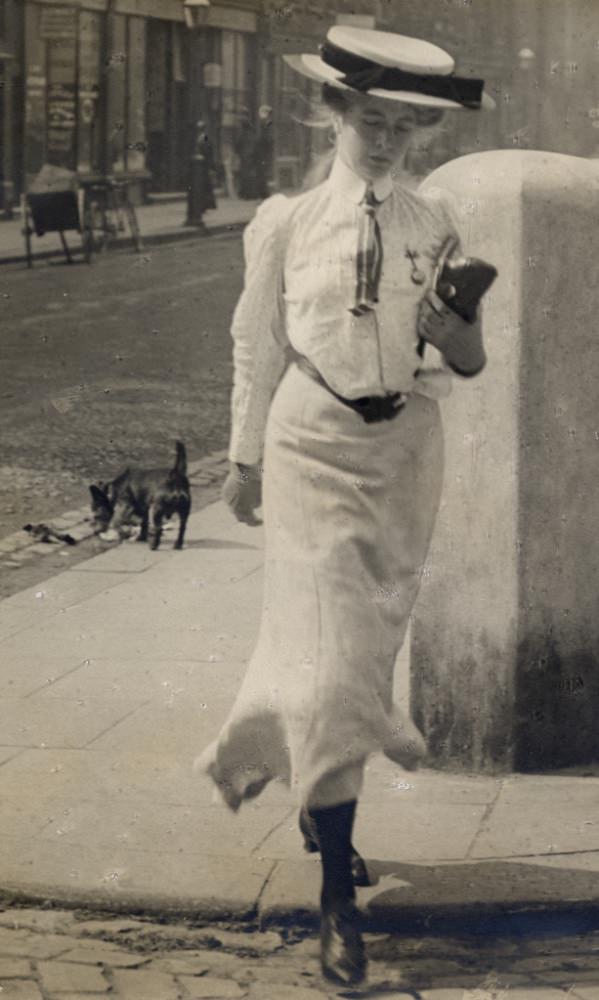
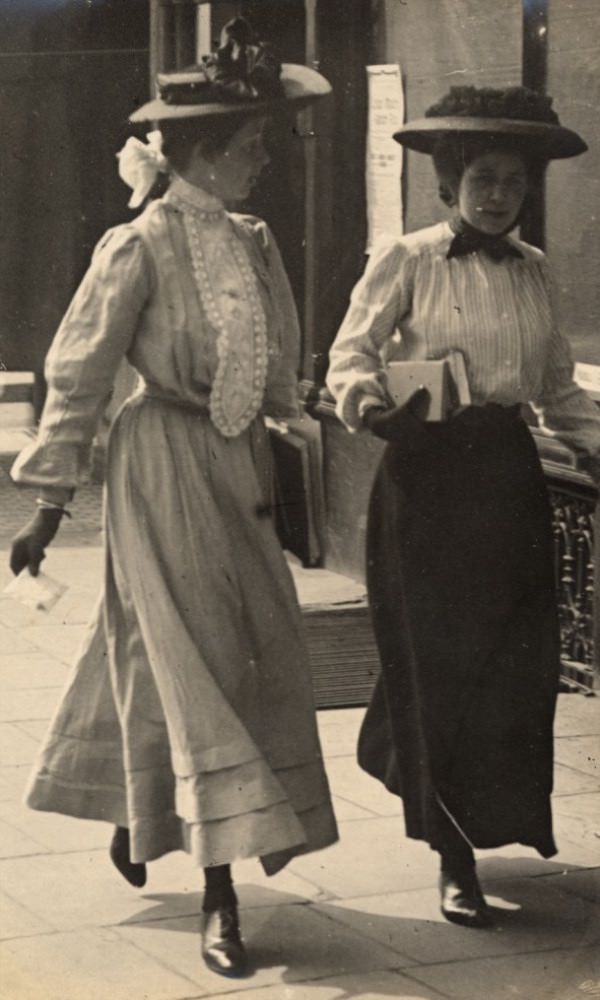
Men’s fashion in these photographs is comparatively restrained. Dark frock coats, top hats, and walking sticks were standard for middle- and upper-class men. Working-class men wore simpler versions of the same basic shapes — shorter jackets, flat caps, and heavier fabrics. The contrast between classes was readable at a glance on any London street.
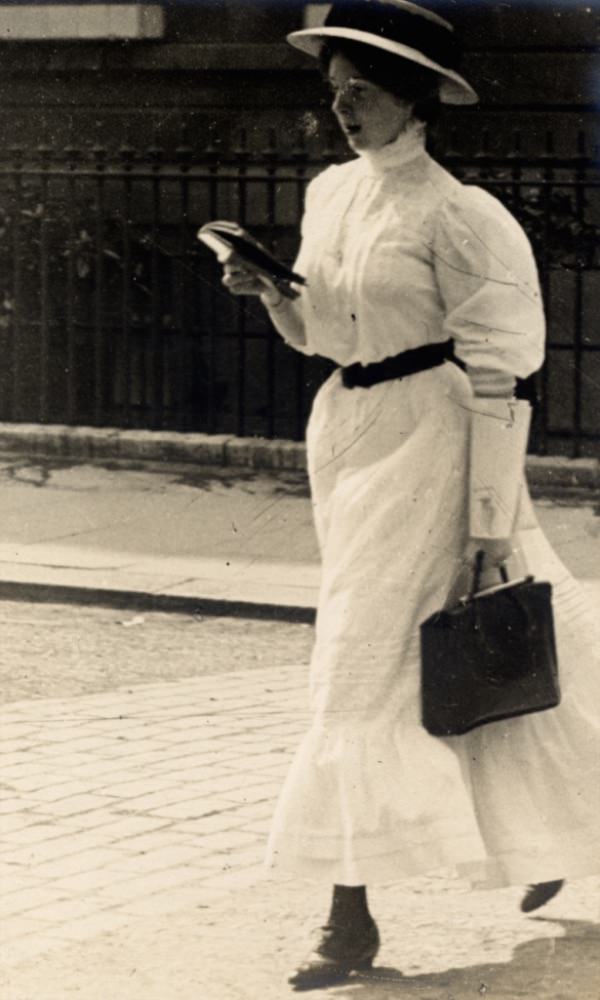
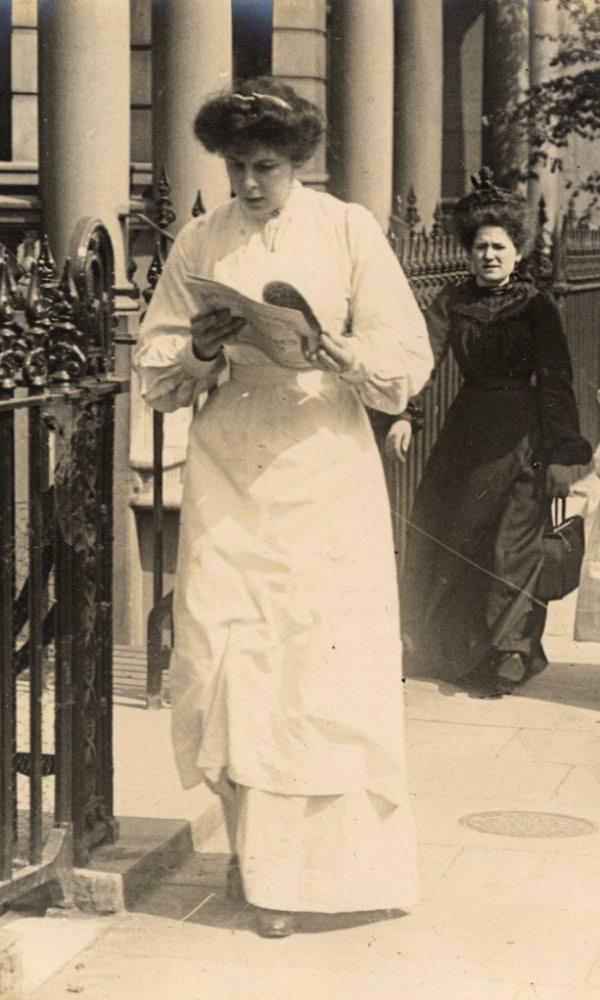
Kensington and its surrounding streets — where Sambourne took most of these photographs — was a well-to-do area of West London. The people he photographed were largely middle and upper-middle class, which means the fashions on display here represent what financially comfortable Edwardian Londoners actually wore day-to-day, not just for formal occasions.
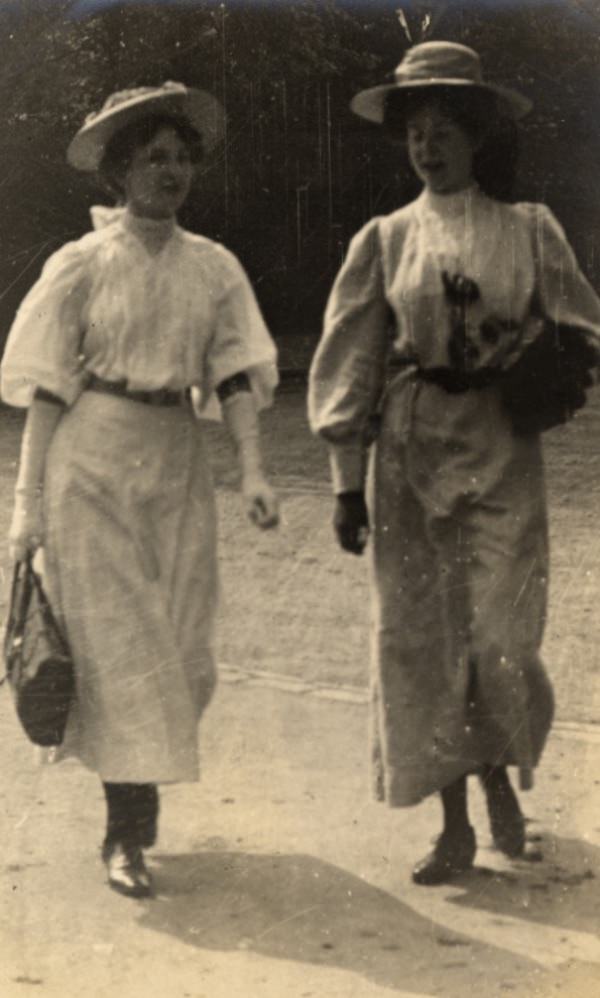
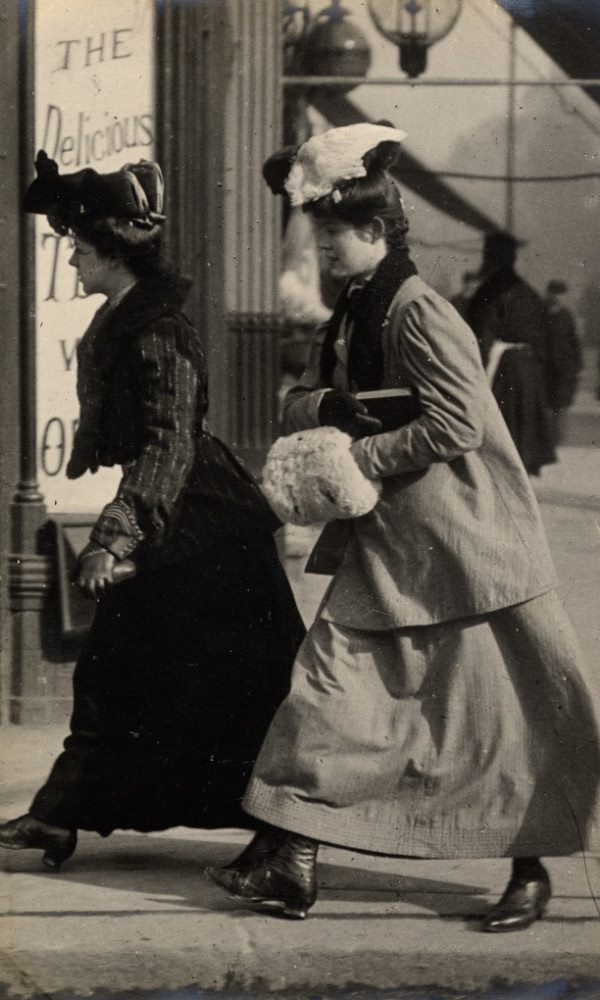
The women in these photographs carry themselves with a specific kind of uprightness that the S-curve corset enforced. Posture was not just aesthetic — it was structural. The corset physically shaped how a woman stood and moved. Wearing one from a young age, as many Edwardian women did, meant the body adapted to it over time. Street photographs like these capture that posture more candidly than any formal portrait sitting would.
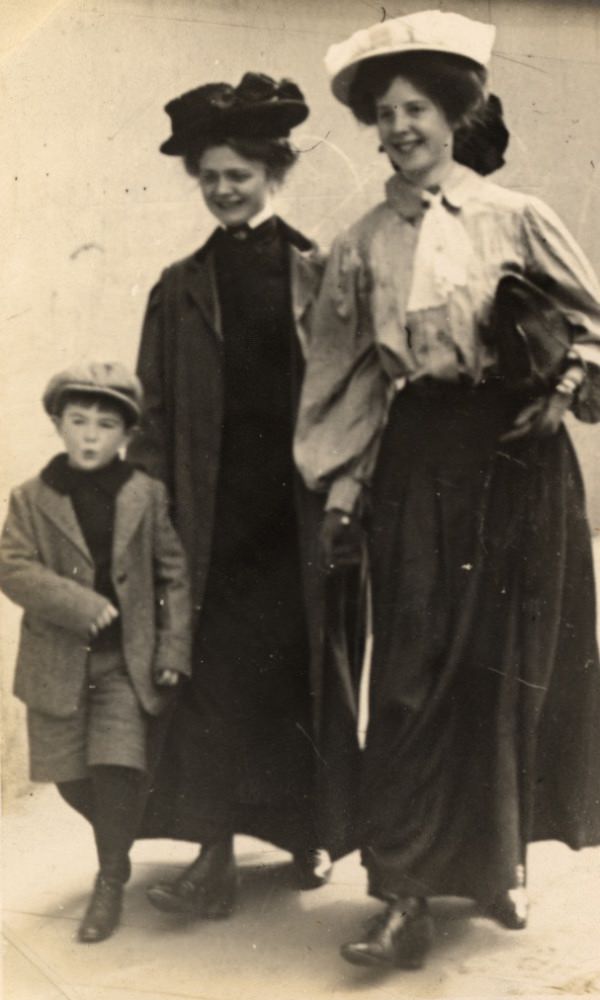
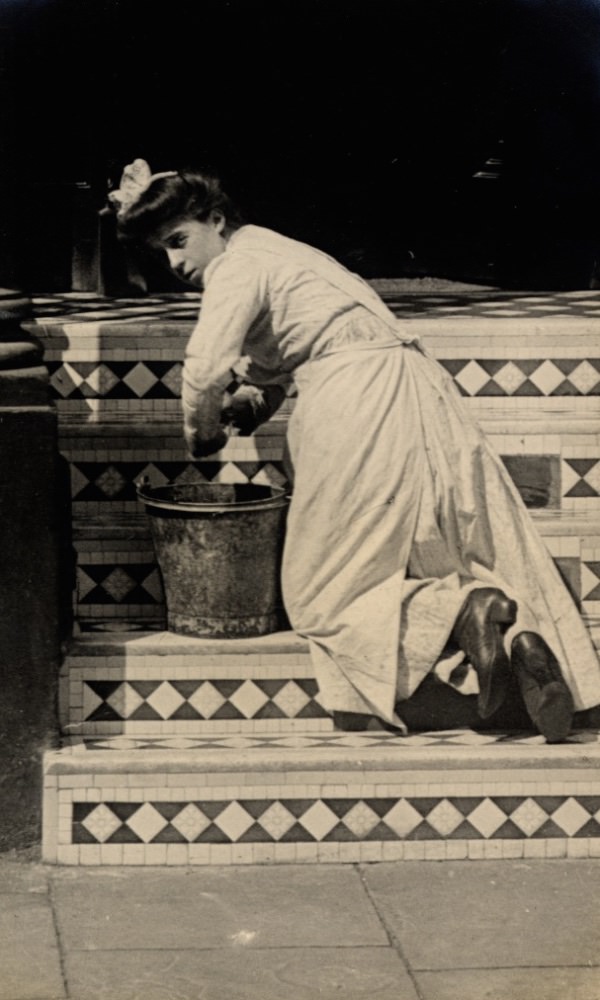
Sambourne shot these photos across all seasons, and the difference in dress between summer and winter images is clear. The July and June photographs show lighter fabrics, open lace-work blouses, and thinner outer layers. The February and autumn images show heavier coats and more layering. Fashion adapted to the weather, but the silhouette and structural elements remained consistent year-round.
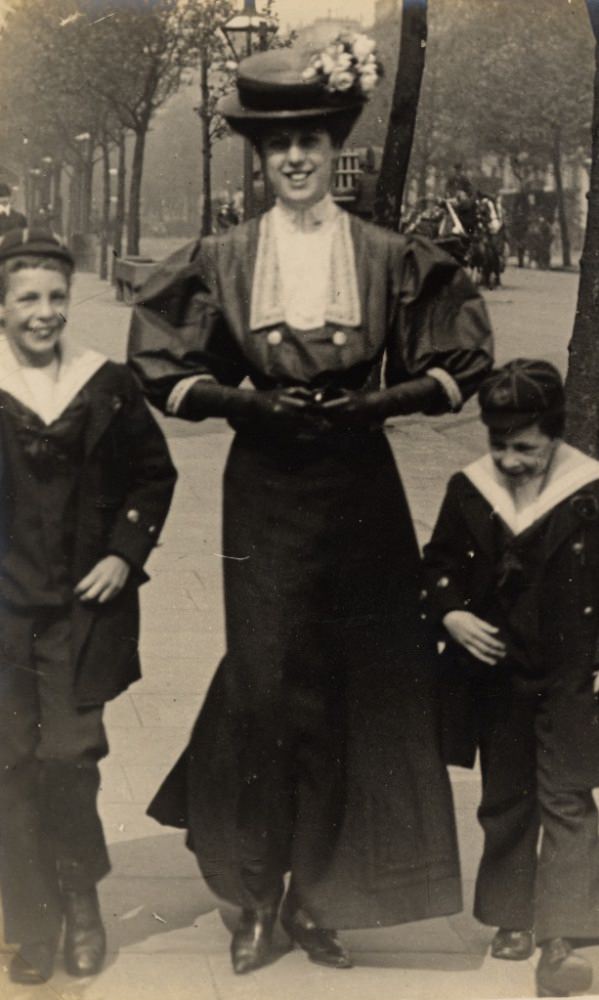
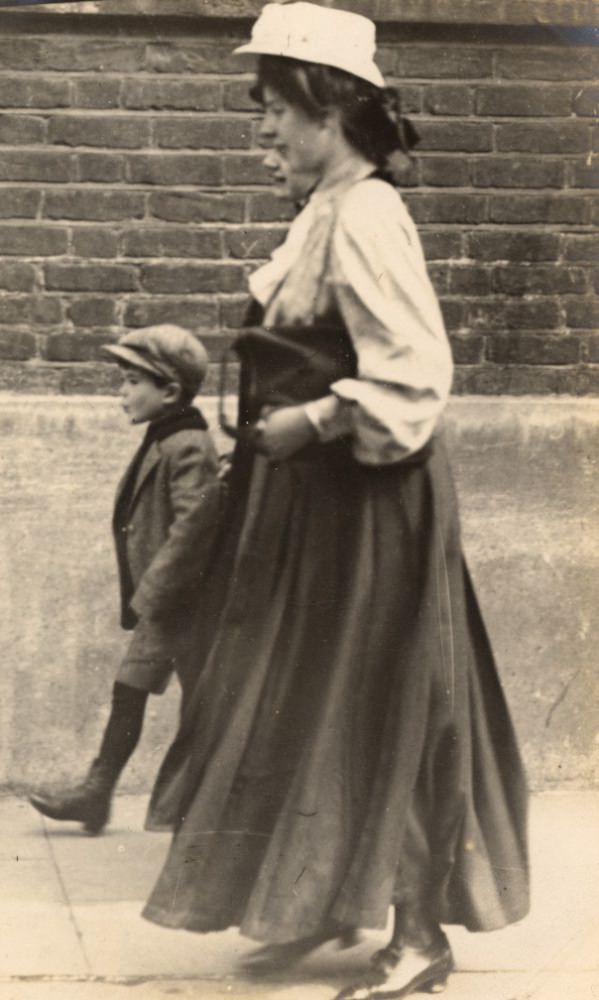
What makes these images stand out as a collection is their consistency and span. Sambourne photographed the same neighborhoods repeatedly over three years, which means the photographs work together as a time-lapse of a single community’s relationship with fashion. Small shifts in silhouette, hat shape, and skirt width are visible from 1905 to 1908 — changes that fashion historians can trace directly through his lens.