
Suffolk sits on the eastern edge of England, a county shaped by centuries of farming, fishing, and trade. During the Edwardian era — roughly the 1900s and 1910s — it was a place of quiet industry. Miles of coastline defined its eastern edge, while inland the land rolled out flat and wide, mostly given over to crops. The wetlands of the Broads stretched across the north, and the Suffolk Coast and Heaths formed one of the most striking natural landscapes in the country. These photographs capture the county as it actually looked during those years, town by town, street by street.
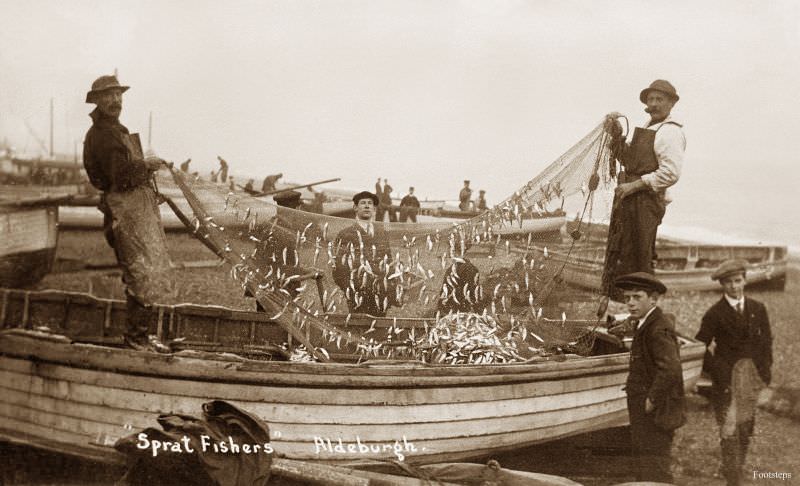
Along the coast, fishing was a way of life. At Aldeburgh, men worked the shoreline hauling in sprats — small, oily fish that were salted, smoked, or sold fresh at market. Aldeburgh was a working fishing town long before it became known for anything else, and the fishermen who worked its beaches did so in all weathers.
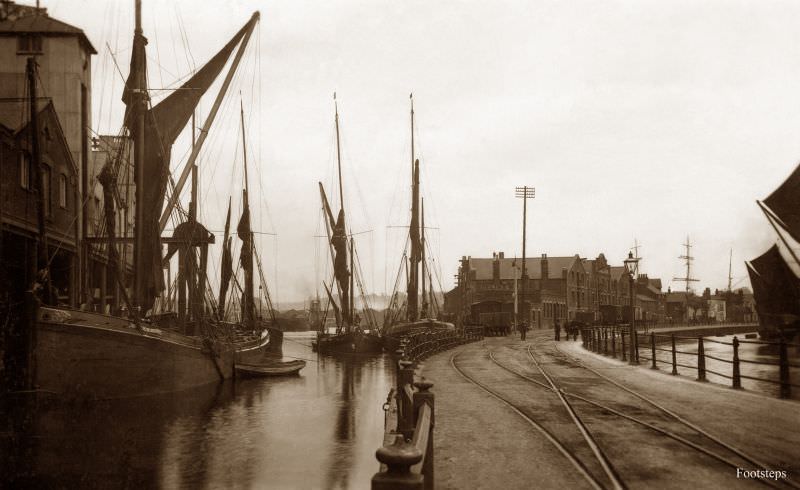
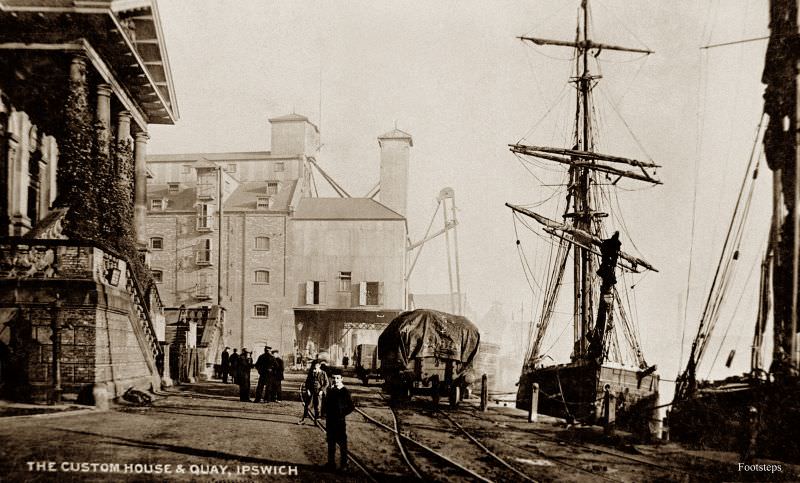
Ipswich was the largest town in Suffolk and its commercial heart. The River Orwell connected it directly to the sea, making it a busy port for both goods and passengers. The docks handled everything from coal and timber to grain grown on the surrounding farmland. The Custom House and Quay overlooked the waterfront, a reminder that trade passing through Ipswich was carefully tracked and taxed.
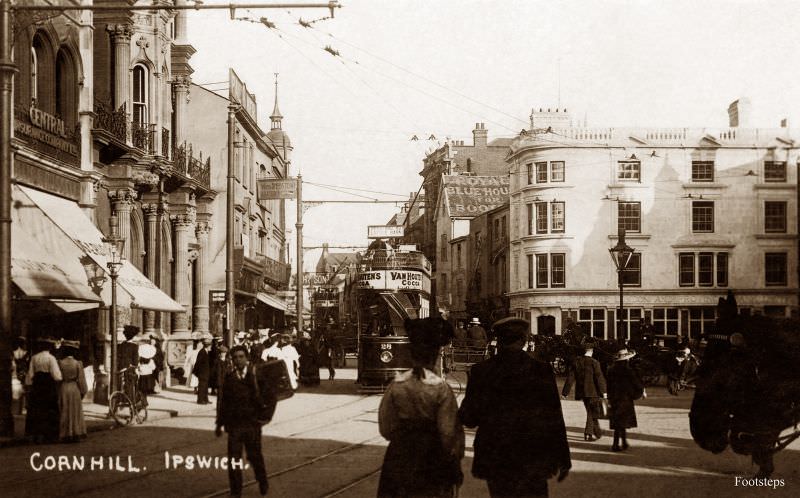
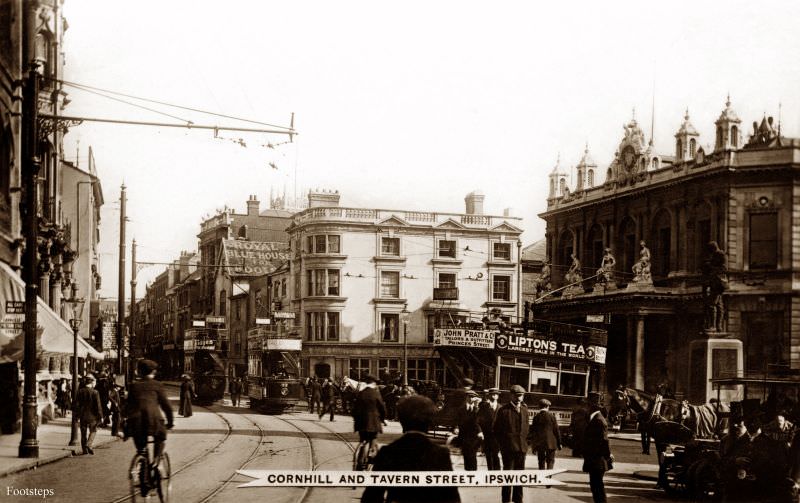
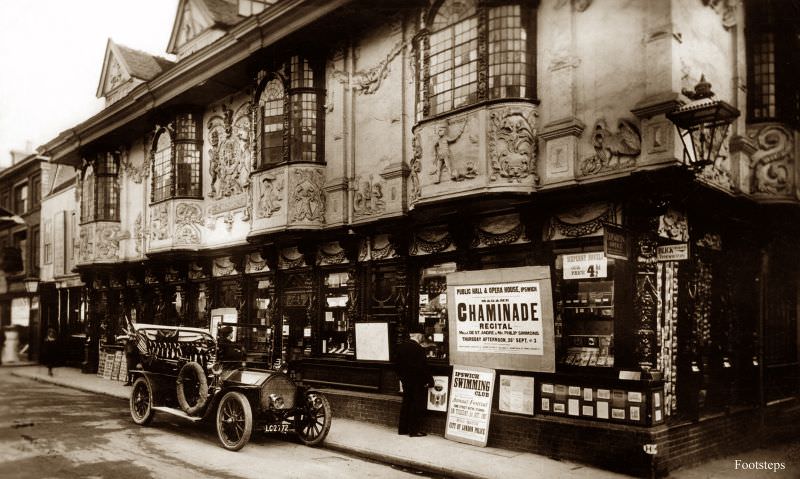
The town centre of Ipswich was full of life. Cornhill served as the main public square, where shoppers, traders, and commuters passed through daily. Nearby Tavern Street was lined with businesses, and the Ancient House — a timber-framed building decorated with elaborate plasterwork called pargeting — stood as one of the most recognisable structures in the whole county.
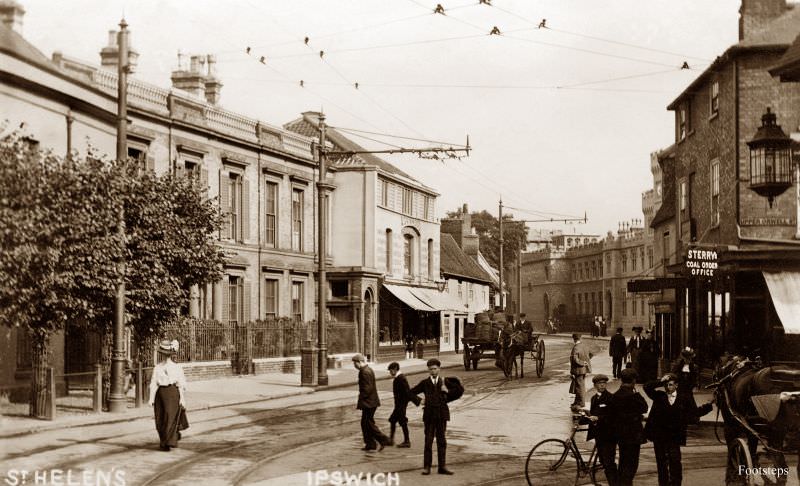
St Helens in Ipswich was one of several older neighbourhoods that still retained much of its pre-Victorian character during the Edwardian period. Streets were narrow, buildings were close together, and daily life played out in full view of neighbours and passers-by.
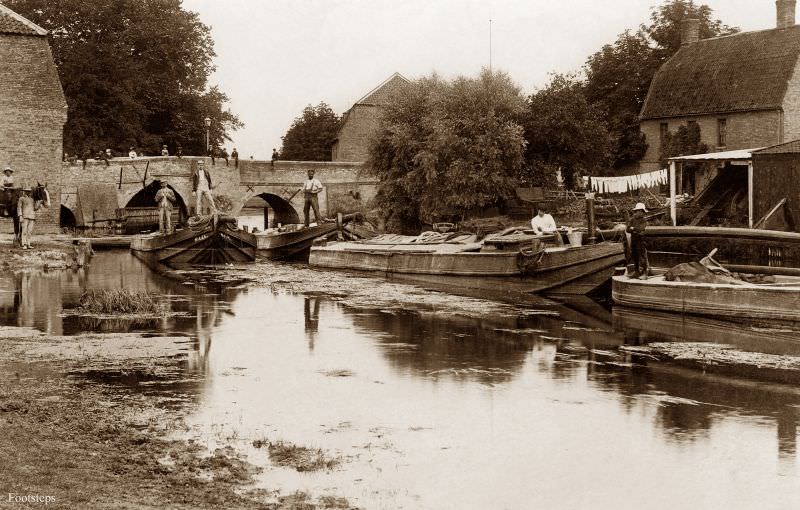
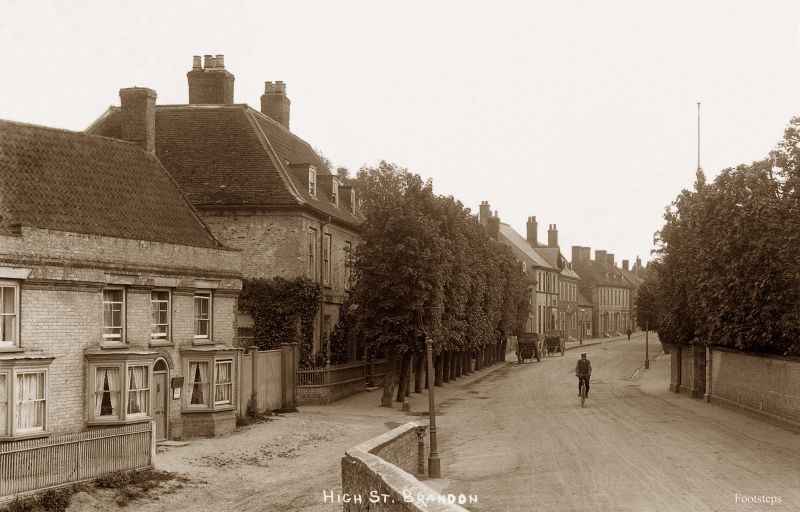
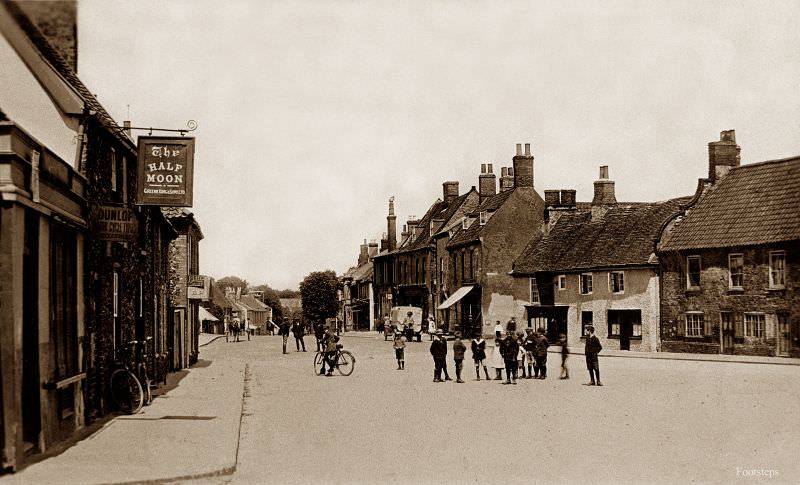
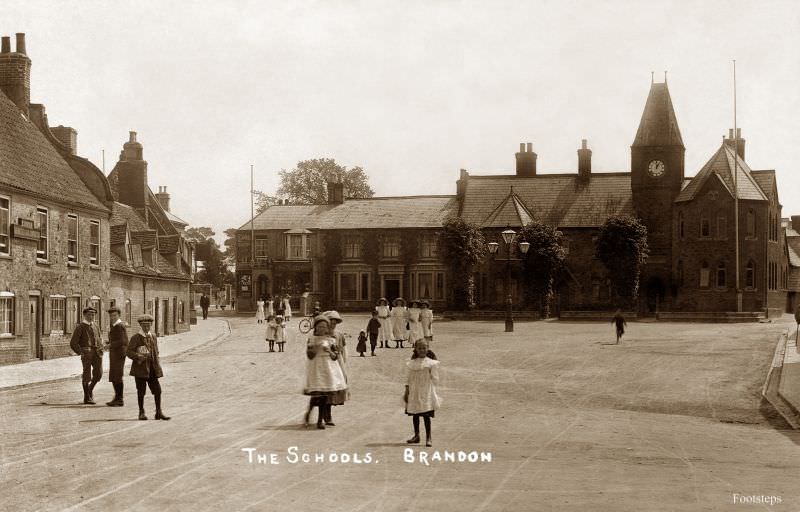
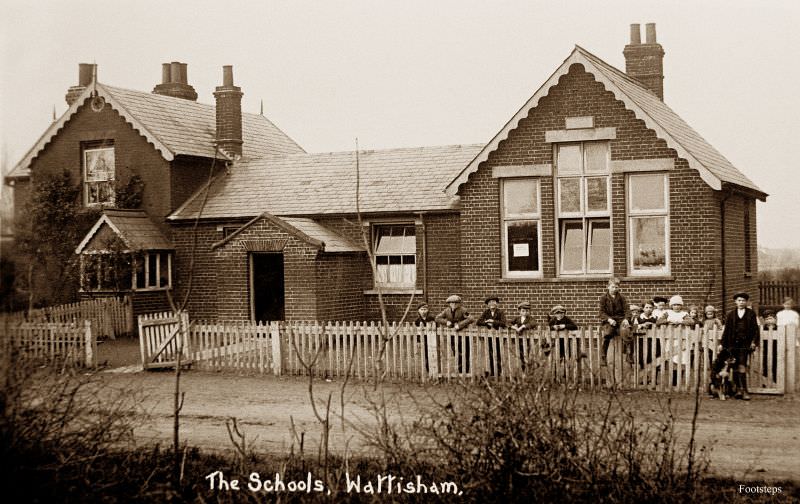
Across the county, smaller towns had their own distinct characters. Brandon, situated on the Little Ouse River near the Norfolk border, had a stone bridge that crossed the water at the centre of town. Its high street was lined with shops and homes, and its school served the children of the local community — a standard feature of Edwardian towns following late-Victorian education reforms that made schooling compulsory.
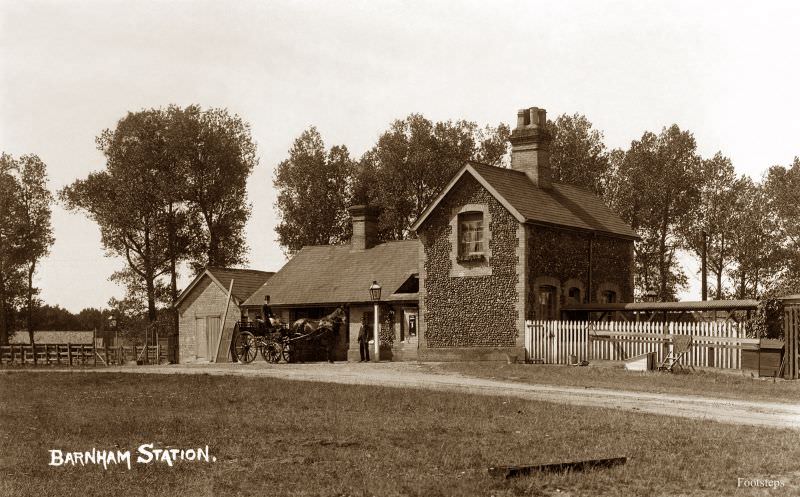
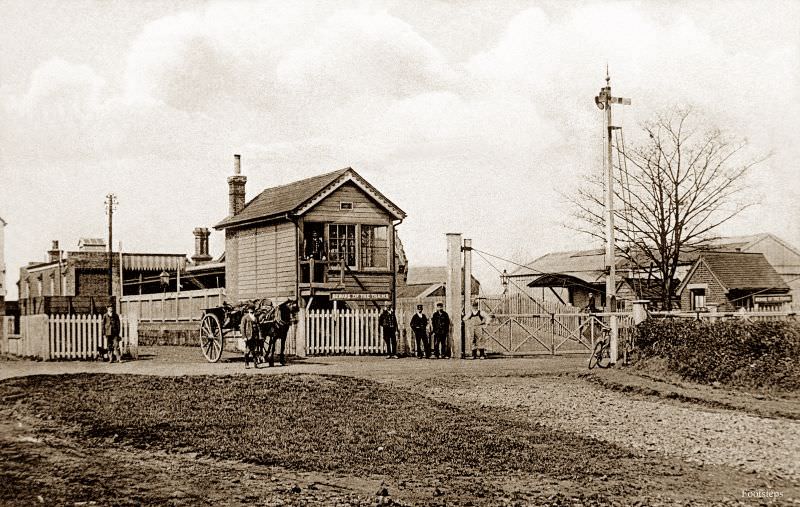
The railway was central to Edwardian life in Suffolk. Stations at Barnham and Elmswell connected rural communities to larger towns, allowing goods to move quickly and giving ordinary people access to travel that had been impossible a generation earlier. Platforms were well-kept, and stationmasters took pride in maintaining their buildings.
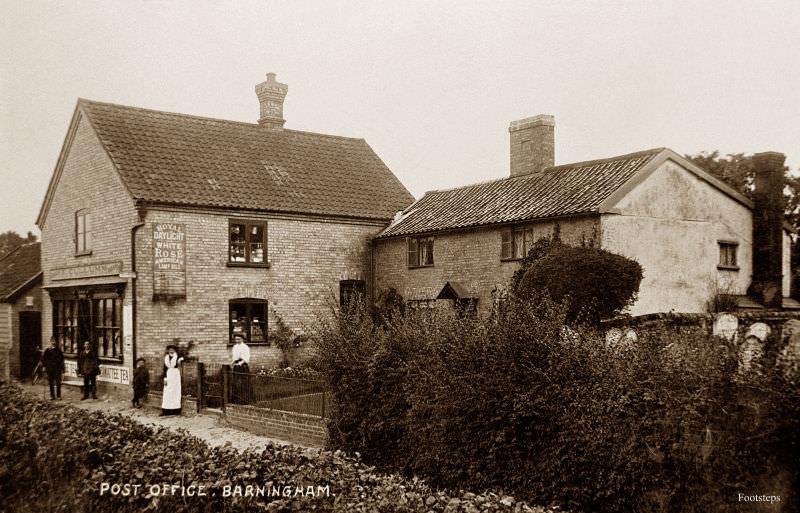
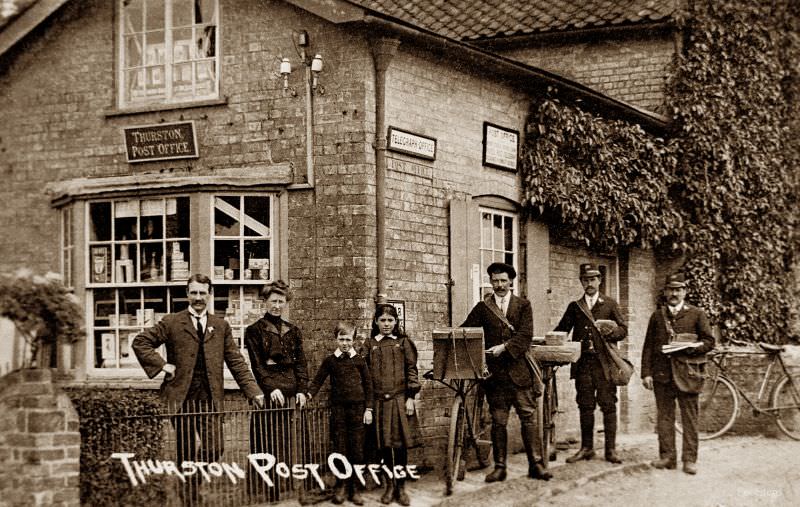
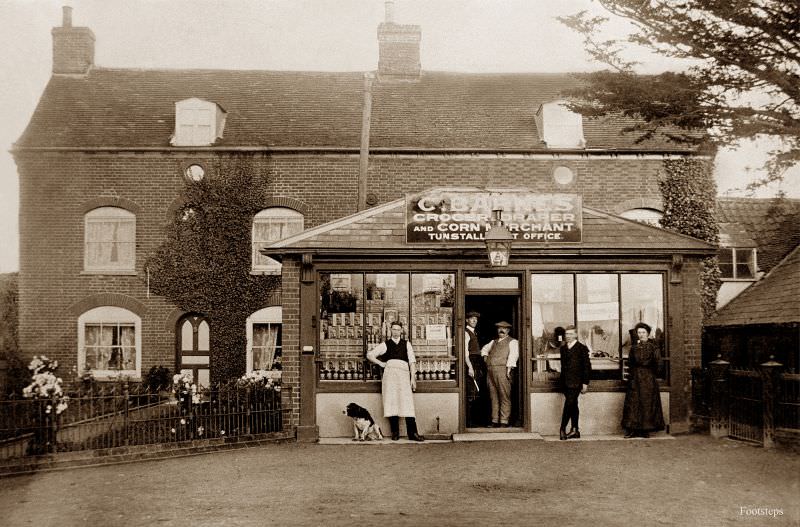
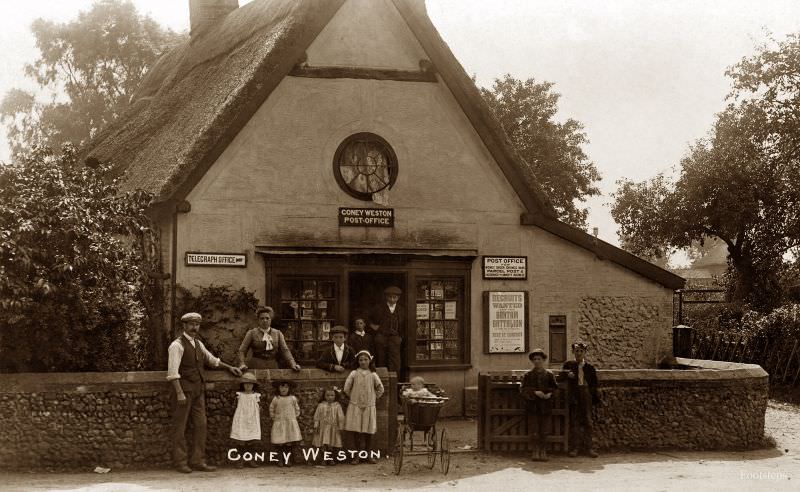
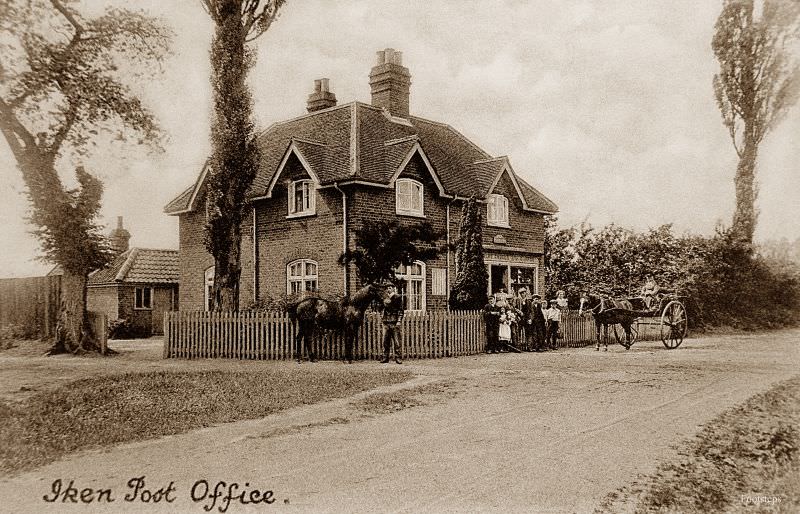
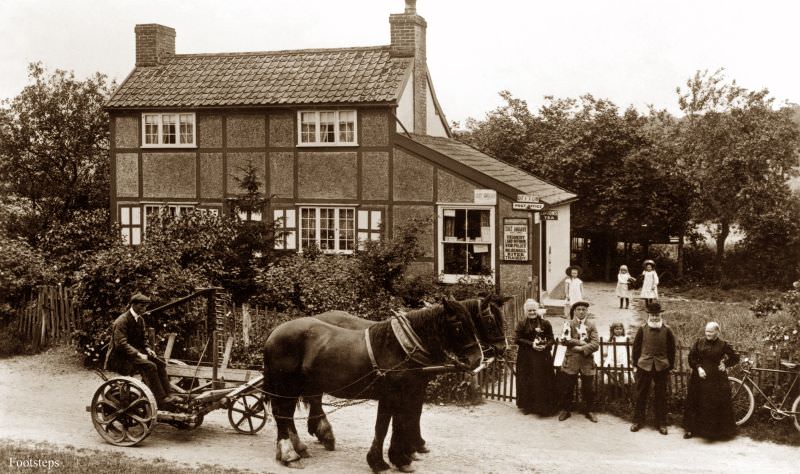
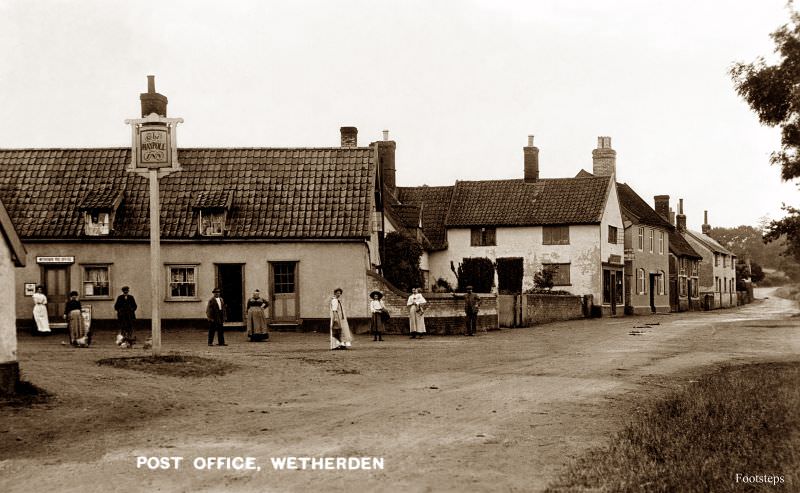
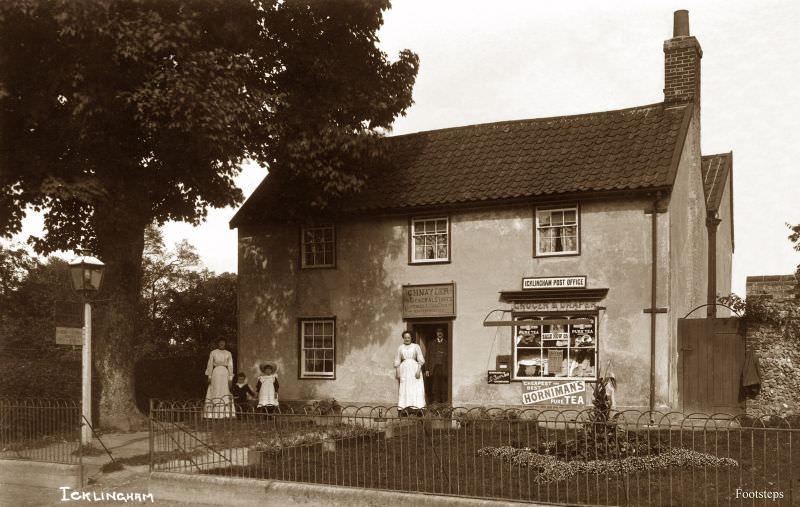
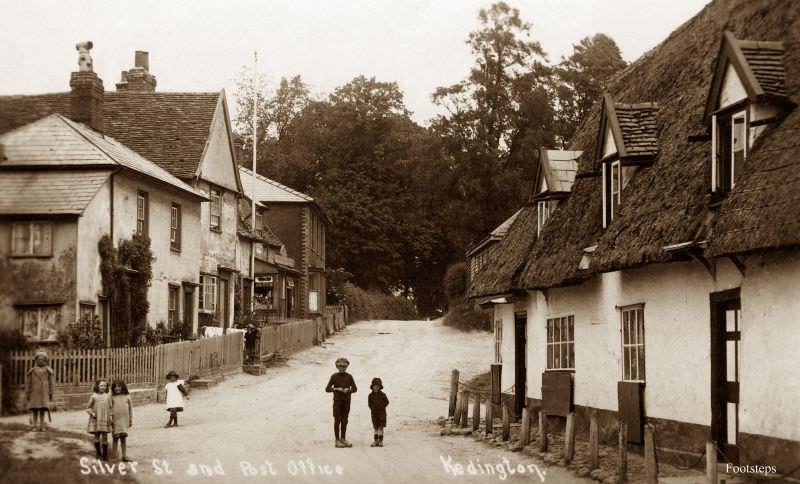
Post offices were among the most important buildings in any Suffolk village. They handled not just letters and parcels but also served as savings banks and communication hubs. Villages like Barningham, Thurston, Tunstall, Coney Weston, Iken, Offton, Wetherden, and Icklingham each had their own post office, often run from a house or combined with a general store.
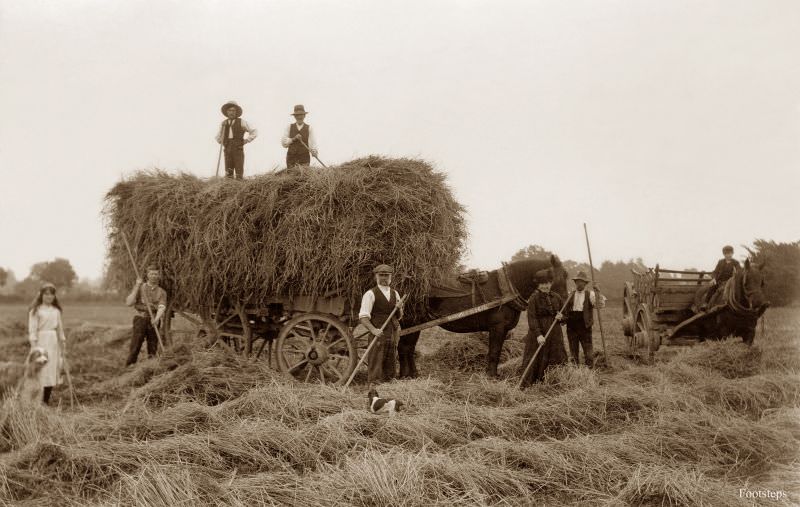
Farming dominated the landscape beyond the towns. Suffolk’s arable land produced wheat, barley, and other crops that fed much of England. At Whitehouse Farm near Harleston, harvest time meant long days in the fields with teams of workers using horse-drawn equipment to cut and gather grain. This was hard, seasonal labour that the whole local community depended on.
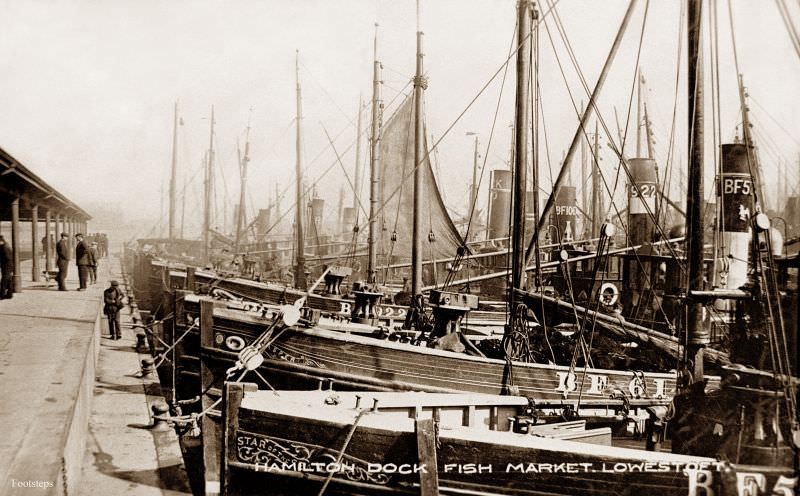
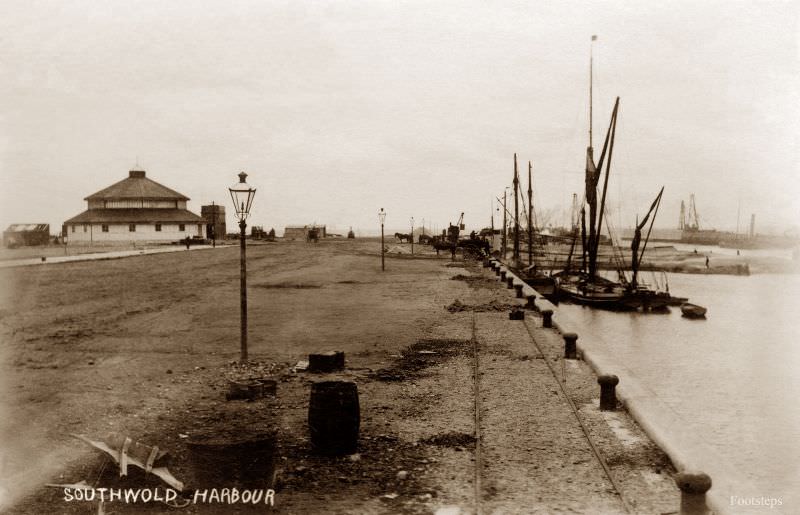
Lowestoft, on the north-east coast, was one of England’s busiest fishing ports. The Hamilton Dock fish market was a noisy, fast-moving place where the night’s catch was unloaded, sorted, and auctioned off to buyers who came from across the region. Herring was the main catch during the season, and thousands of barrels were packed and shipped from Lowestoft each year. Meanwhile, down the coast at Southwold, the harbour offered a quieter but equally working scene.
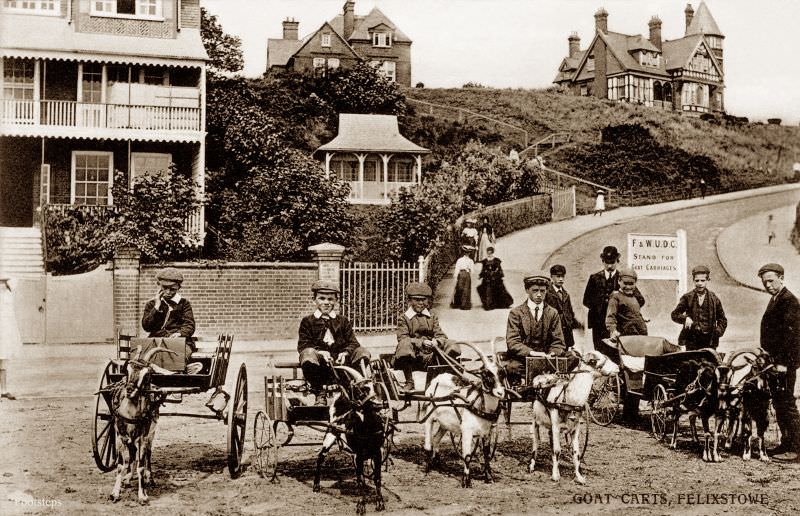
Felixstowe, on the southern coast, was developing as a seaside resort during this period. Goat carts were a popular attraction for children visiting the seafront — small carriages pulled by trained goats that trotted along the promenade while children rode in them. It was a common sight at English seaside towns in the Edwardian years.
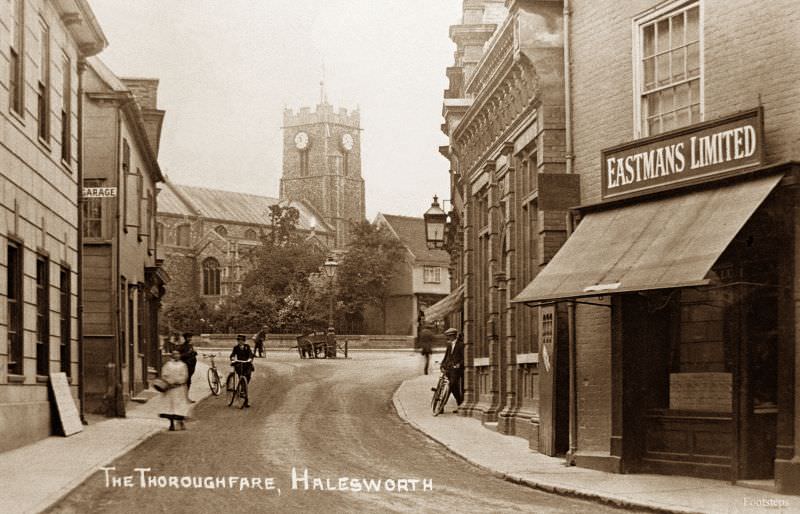
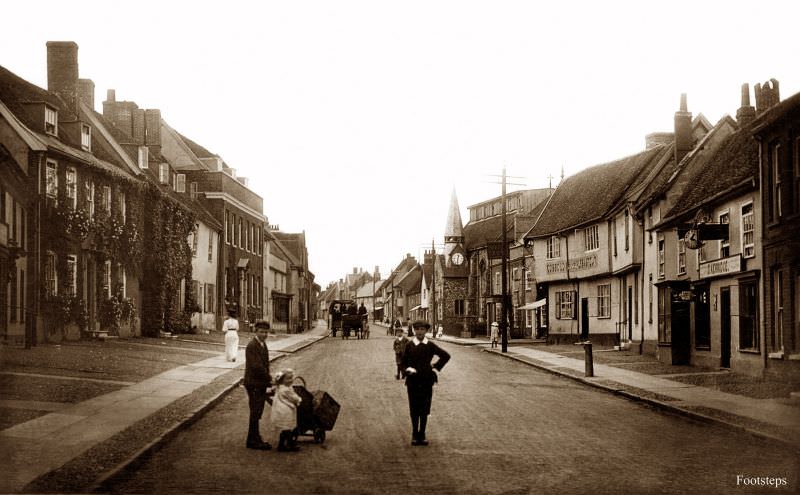
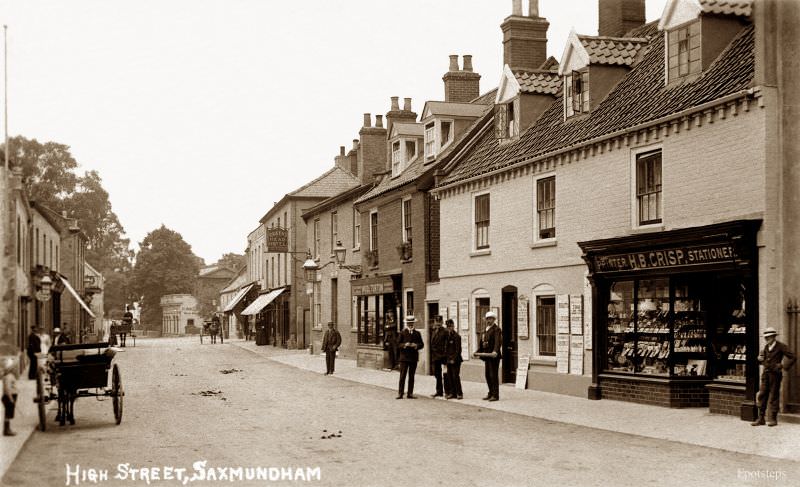
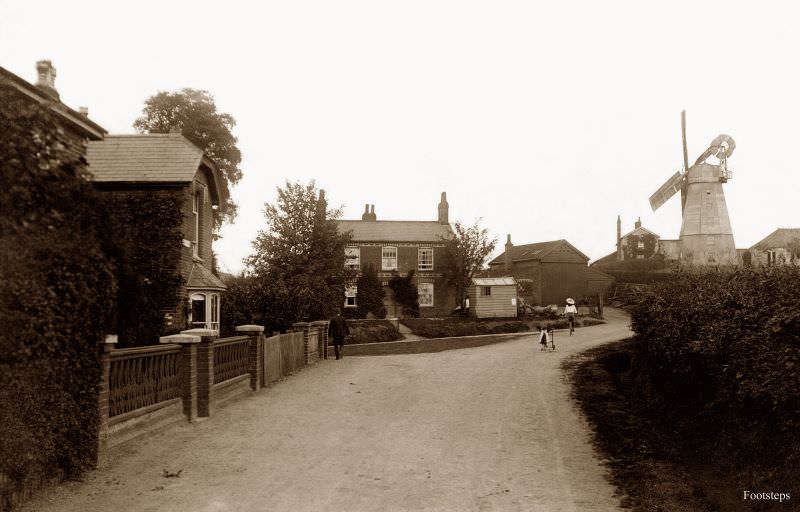
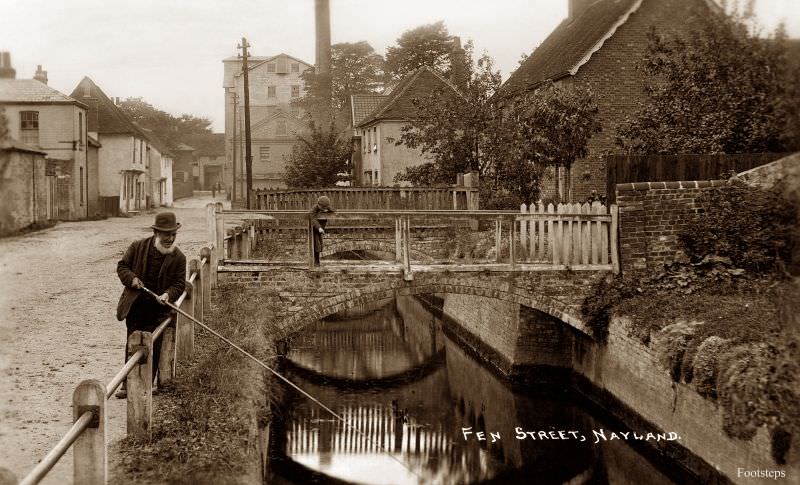
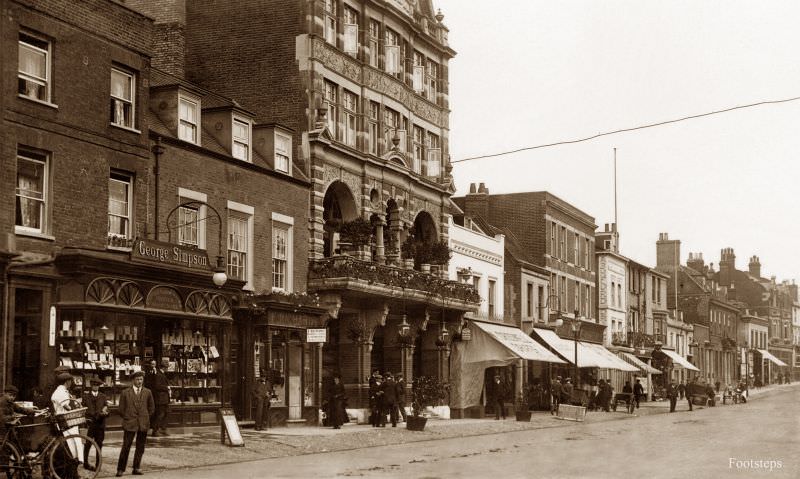
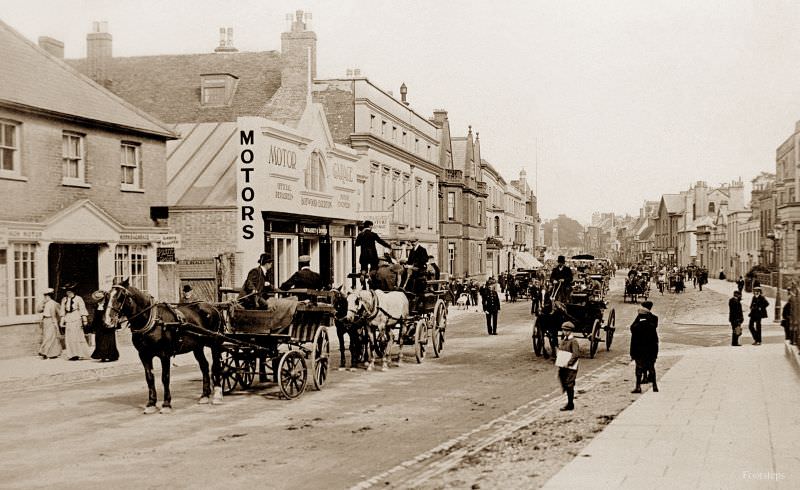
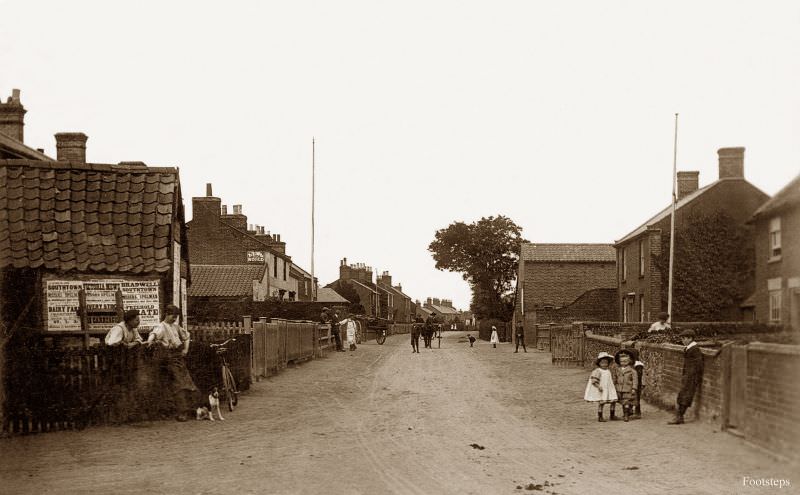
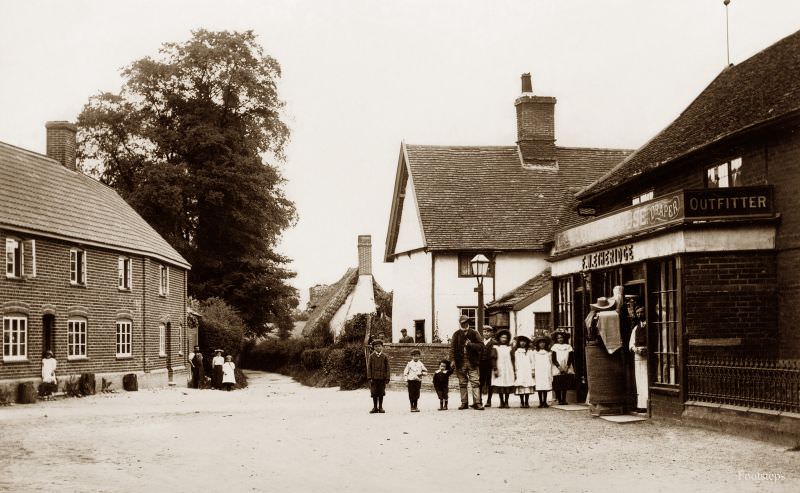
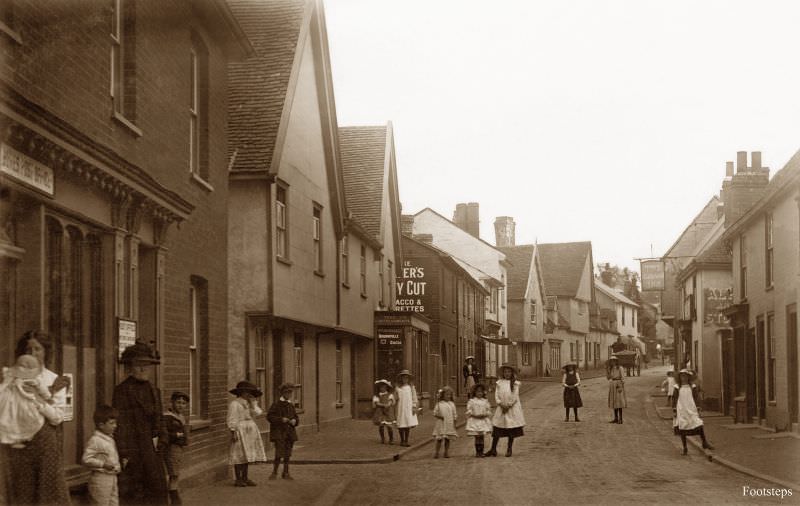
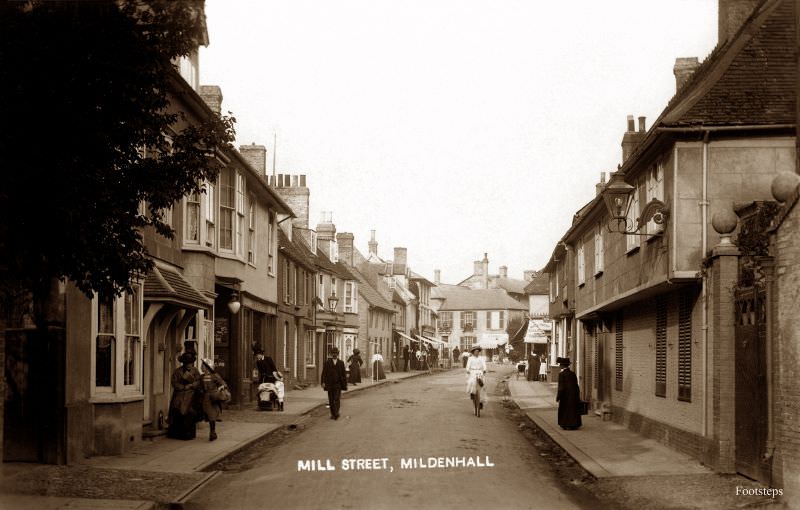
Village streets across Suffolk had a similar rhythm to them. The main street was where commerce happened — where the baker, the butcher, and the general merchant set up shop. Halesworth’s Thoroughfare, Needham Market’s High Street, Saxmundham’s High Street, and the streets of Hadleigh, Debenham, Nayland, and Newmarket all shared this pattern. Shopfronts were modest, signage was hand-painted, and foot traffic moved at a walking pace.
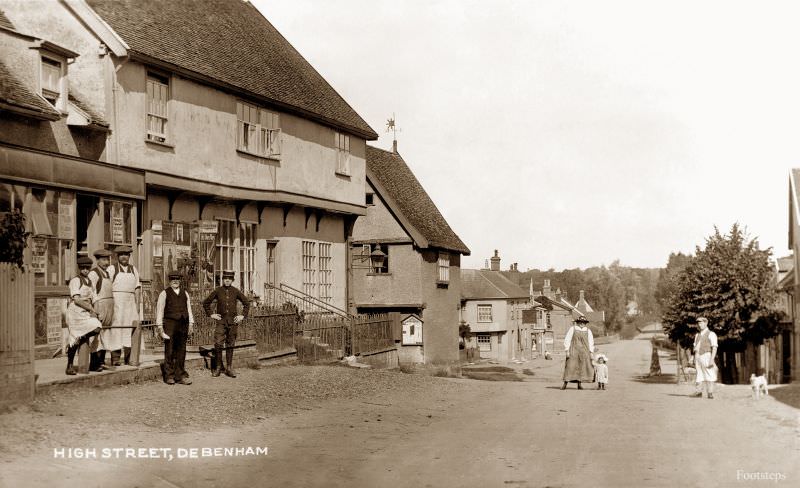
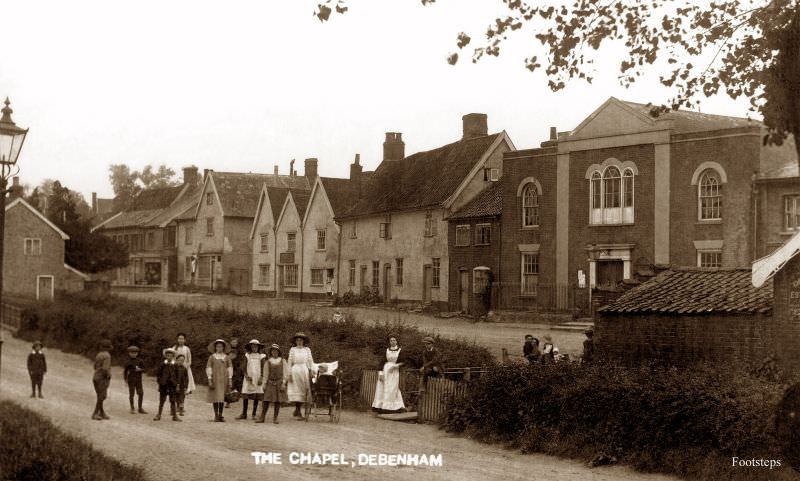
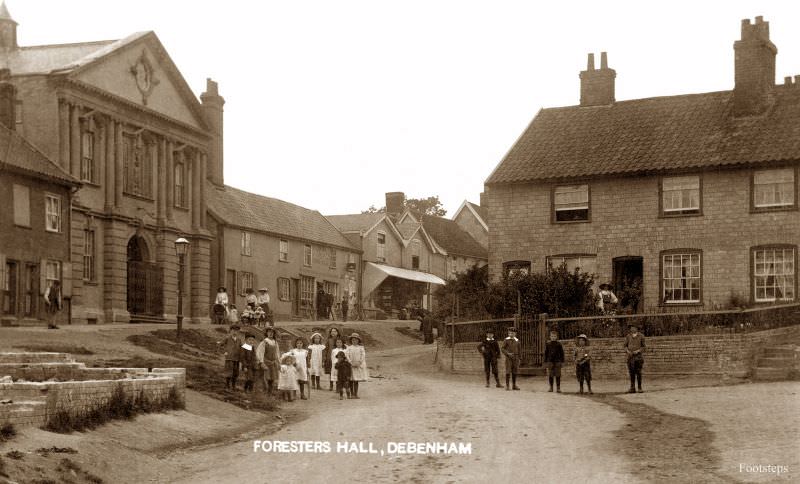
Religion was still central to village life. Chapels and churches served not just as places of worship but as community gathering points. Debenham had both a chapel and a Foresters Hall — the latter belonging to the Ancient Order of Foresters, a friendly society that provided its members with financial support during illness or death, a vital safety net in an era before the welfare state.
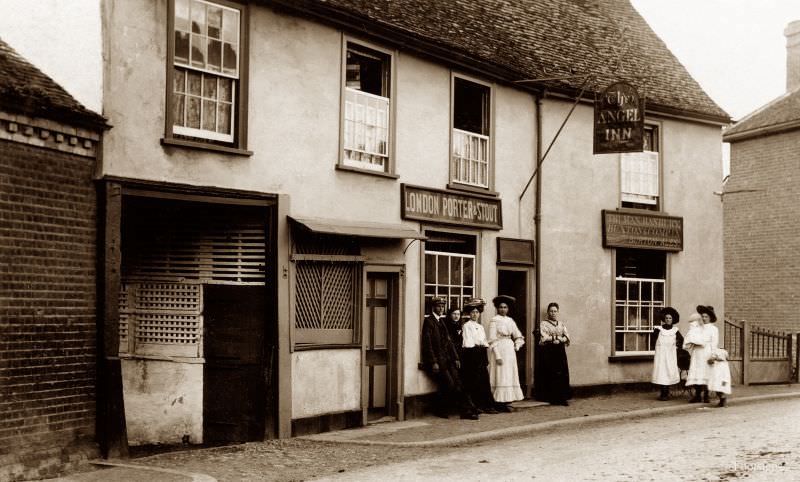
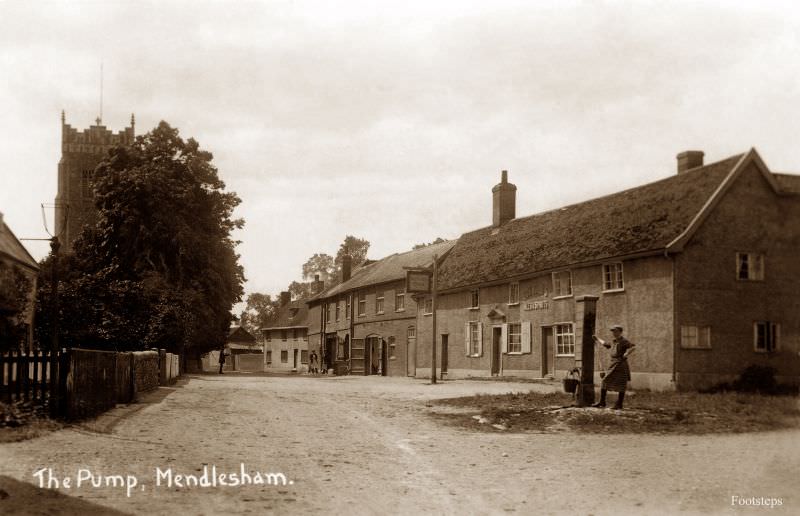
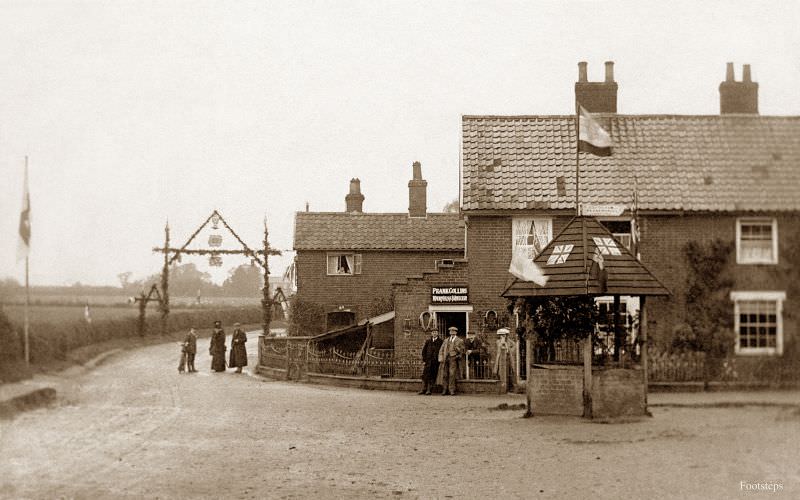
Pubs were equally important social spaces. The Angel Inn at Bures St Mary and the Royal Oak at Mendlesham were the kinds of establishments where farm labourers ended their working days and where local news passed from person to person. Mendlesham’s village pump stood near the Royal Oak — a functional landmark that many households still relied on for their water.
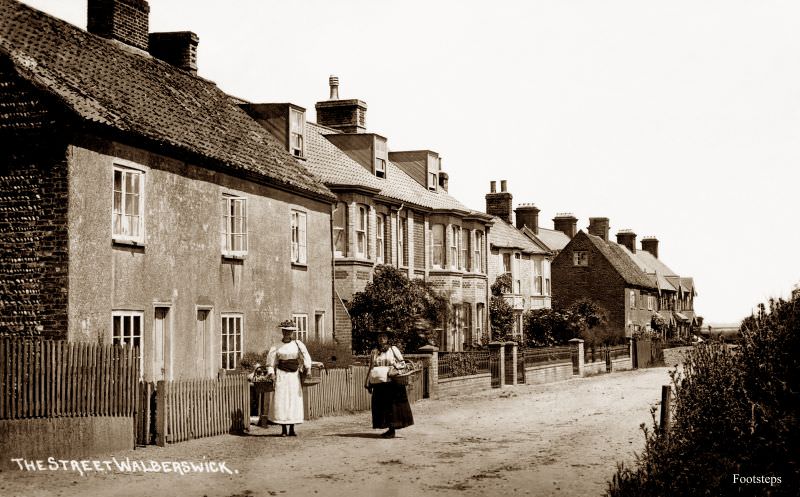
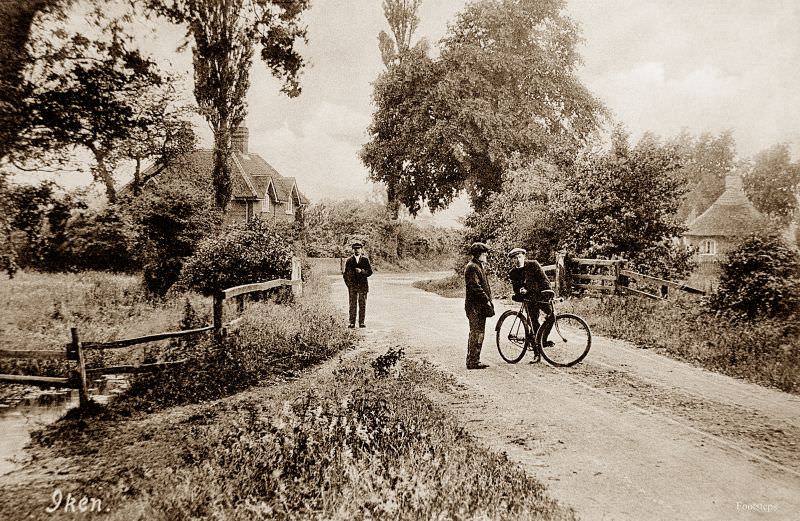
Coastal villages like Walberswick, Dunwich, and Iken had a quieter, more isolated feel. Dunwich, once a major medieval port, had been mostly swallowed by the sea over centuries of erosion — by the Edwardian era only a small village remained. Walberswick’s street life was modest, its buildings set back from the wind coming off the North Sea. Iken sat on a bend of the River Alde, small and largely unchanged for generations.
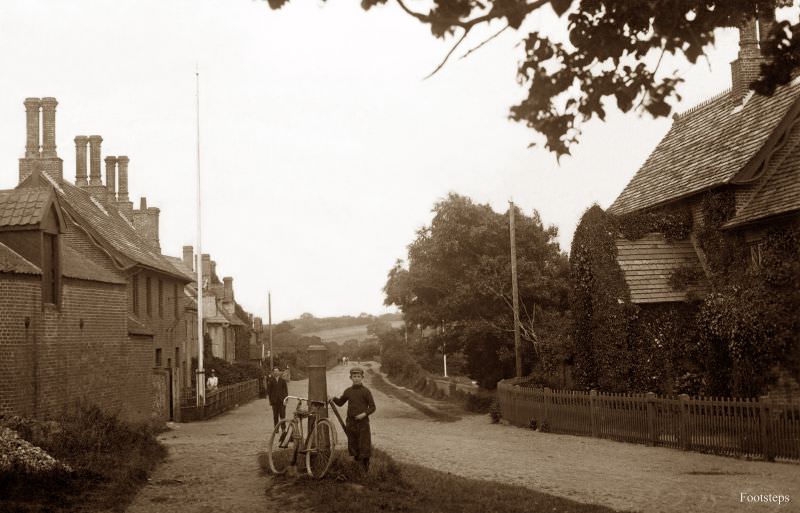
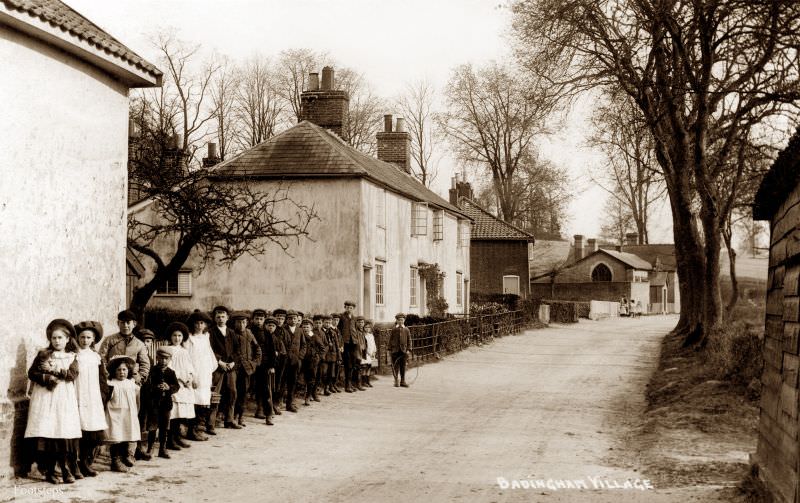
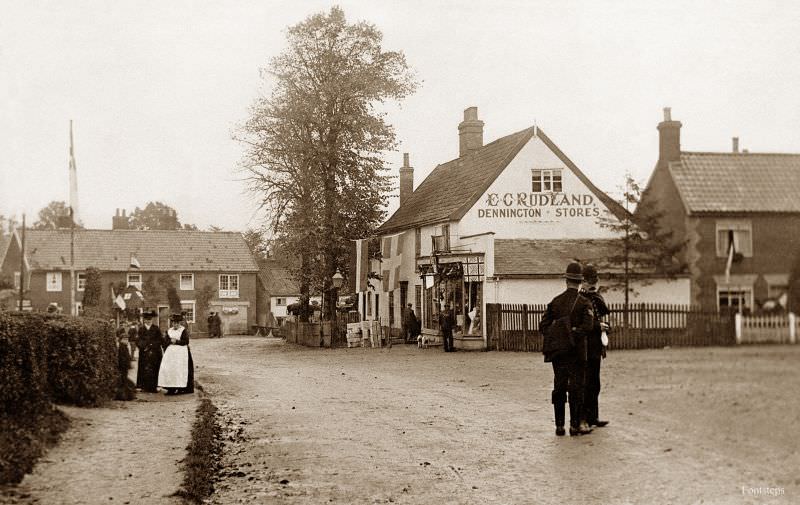
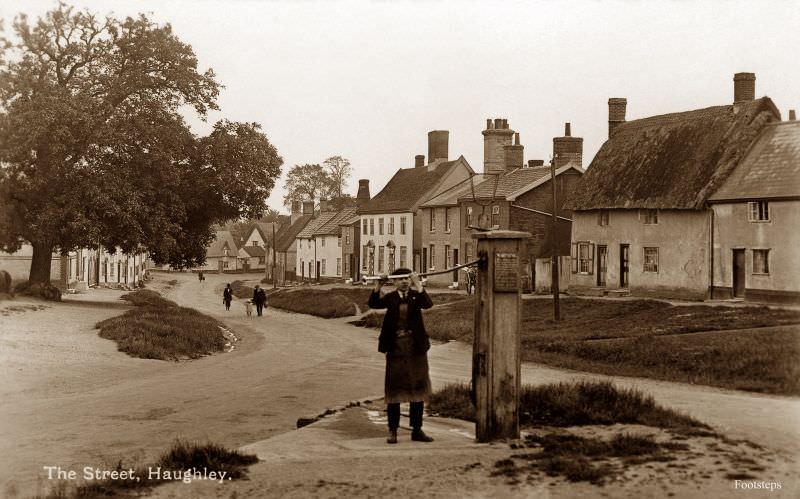
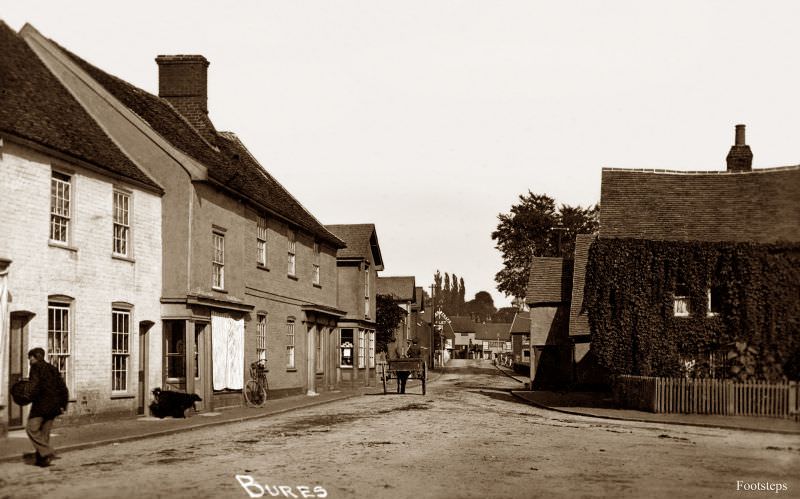
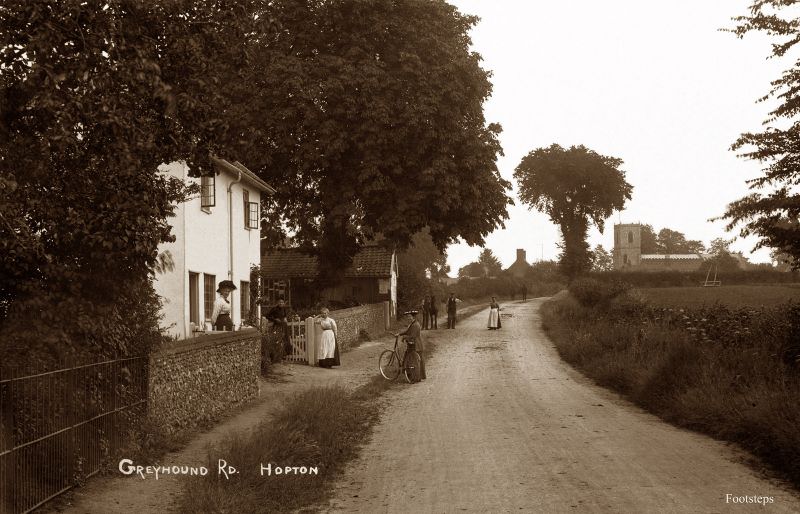
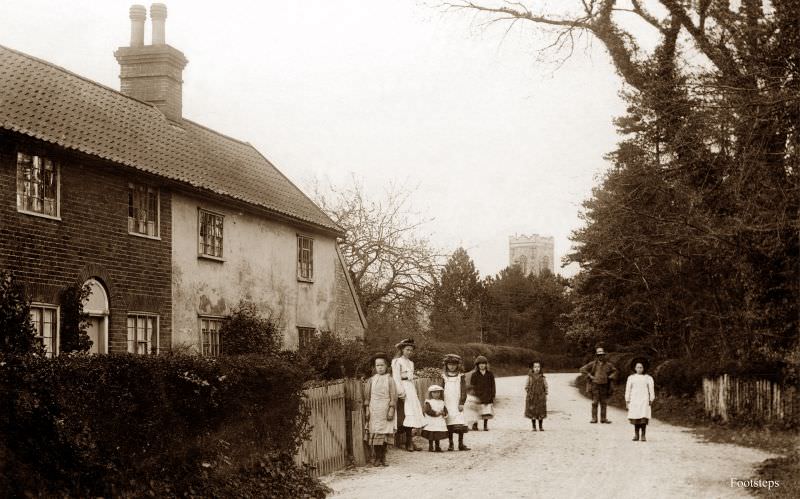
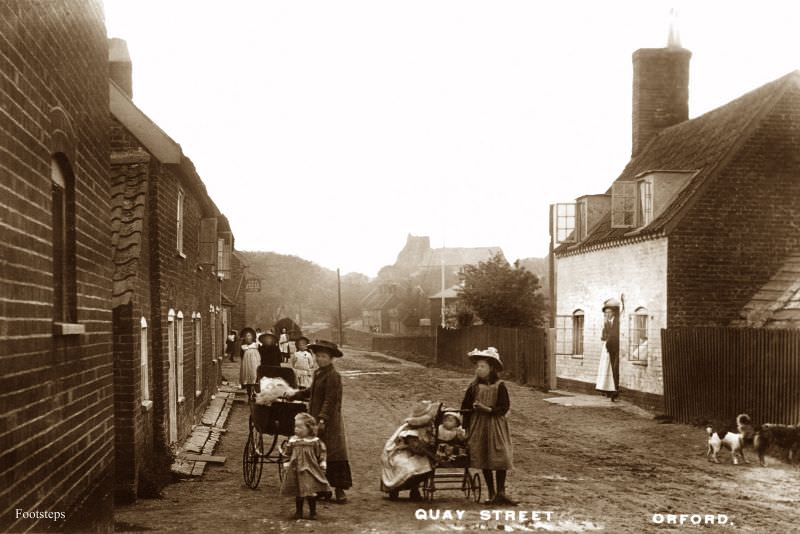
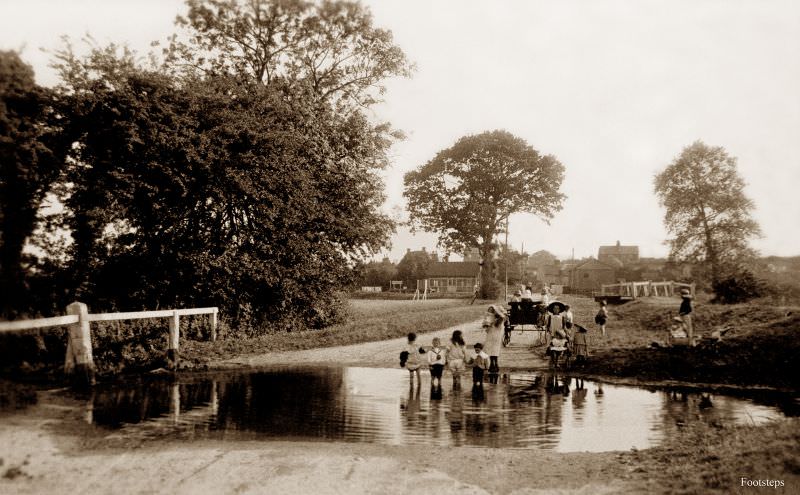
Other villages like Blundeston, Badingham, Dennington, Stanton, Haughley, Bures, and Hopton all show the same qualities — well-worn roads, brick and timber buildings, and the quiet order of rural English life at the start of the twentieth century.





Some exciting stuff there.
Some of the places are instantly recognizable to me. Lovely stuff.
This was awesome! Thanks for sharing 😁 I grew up on Needham and it’s funny to see how little it’s actually changed
Pleased to say I could recognise a few of those locations, awesome to see how things have changed over time
I love seeing these old photos … amazing how much things have not changed over time!