
Deptford sits in south-east London, taking its name from the ford that once crossed the River Ravensbourne. Its history runs deep. From the mid-16th century to the late 19th, Deptford Dockyard operated here, making it one of the most strategically important naval sites in England. Sir Francis Drake was knighted aboard the Golden Hind in these waters. Peter the Great, who ruled the Russian Empire from 1682, came to Deptford to study shipbuilding firsthand. After the dockyard closed, the site became the City of London Corporation’s Foreign Cattle Market, running from 1871 until the First World War.
By the 1980s, Deptford looked nothing like the polished neighbourhood it is today. The streets were working-class and lived-in, filled with independent cafes, record shops, motor trade businesses, and local pubs that had served the same communities for generations. Photographer Peter Marshall documented this world with a street-level eye, capturing Deptford before decades of gentrification reshaped it entirely. His photographs from 1982 through 1988 form a rare visual record of the area during a period of real economic hardship and cultural vitality.
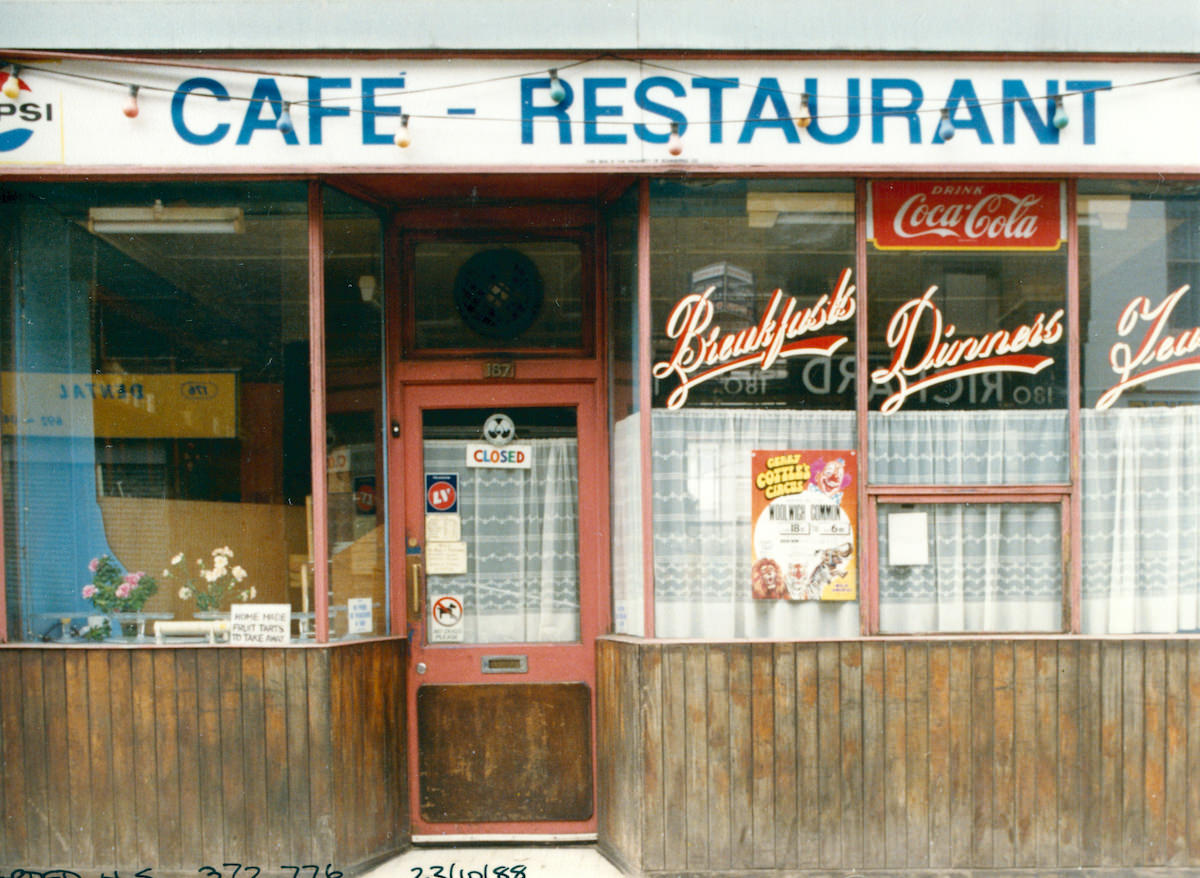
Deptford High Street was the beating heart of everyday life in the area. Cafes, shuttered shopfronts, and market stalls all competed for space along its length. These weren’t polished establishments — they were practical, affordable, and part of the daily rhythm of the neighbourhood.
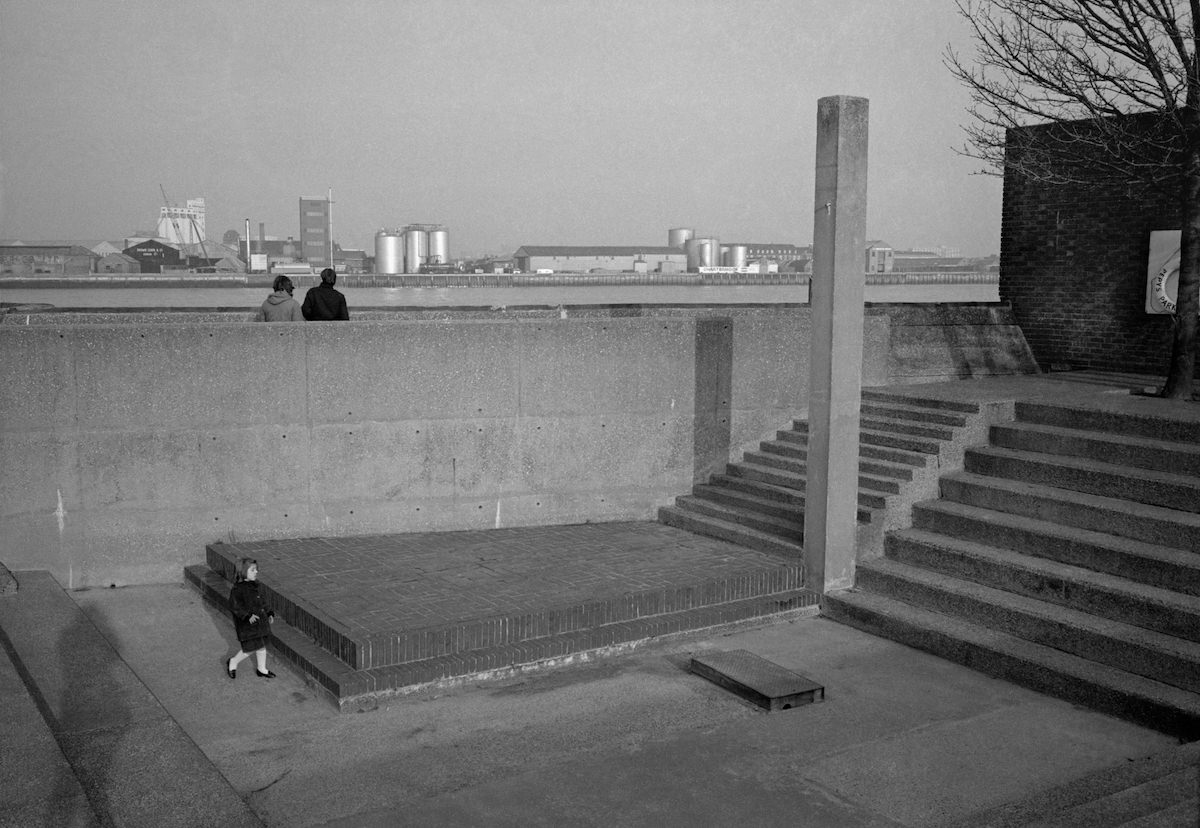
The riverside offered a different pace. In 1982, open green space along the water gave local residents a rare break from the density of the surrounding streets. The Thames and its tributaries had defined Deptford for centuries, and even in decline, the waterfront remained central to the area’s identity.
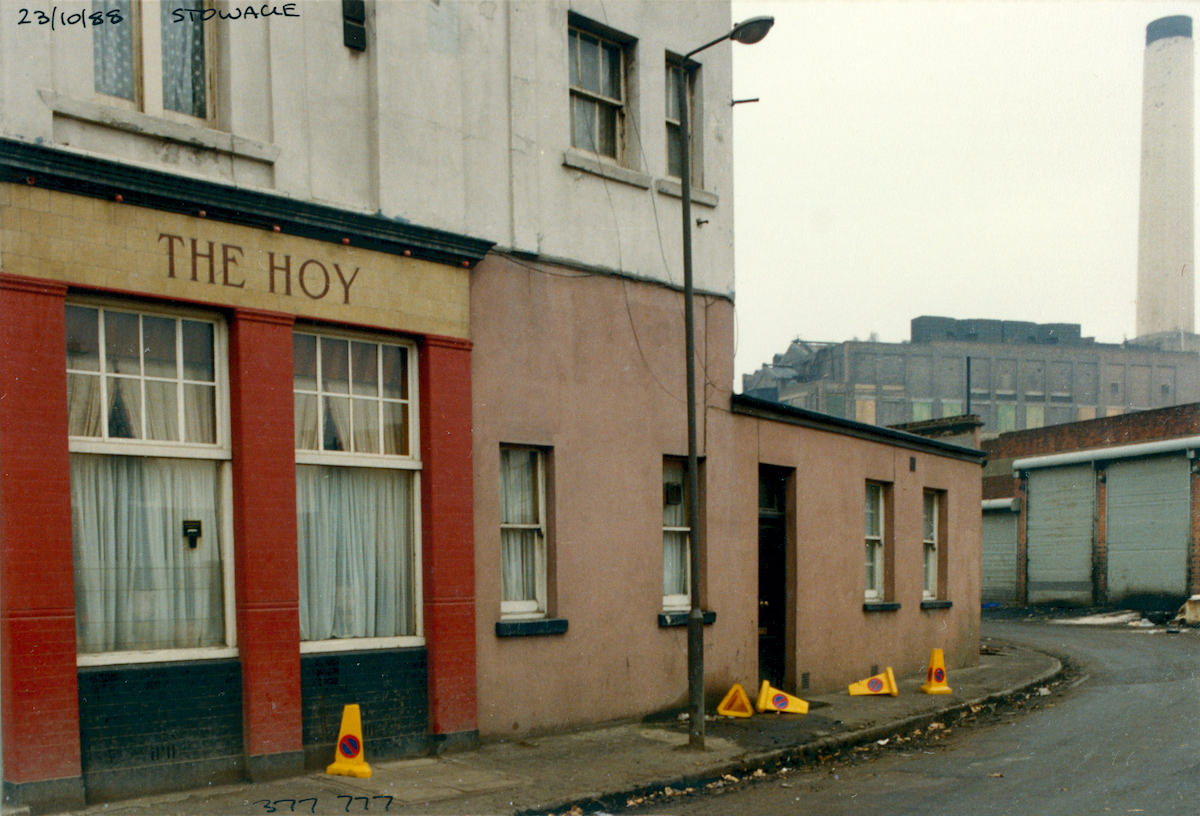
Pubs like The Hoy on Creek Road were fixtures of Deptford’s social life. Creek Road ran along the edge of Deptford Creek, connecting the neighbourhood to the wider industrial and commercial activity that still clung to the waterways in the late 1980s.
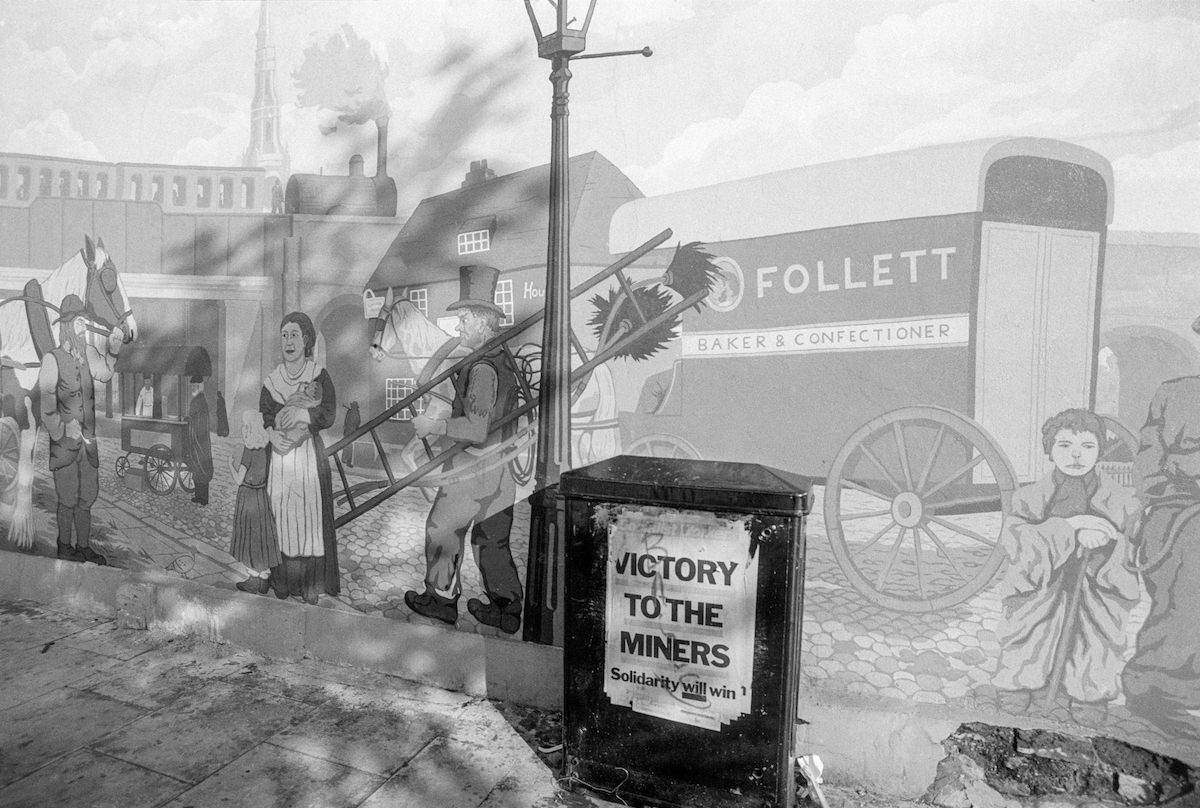
Street art and murals appeared across Deptford’s walls and train yards during this period. The mural captured at Deptford Train Yard on Douglas Way in 1984 reflects a broader tradition of public art that gave voice to communities who had little power over the forces reshaping their streets.
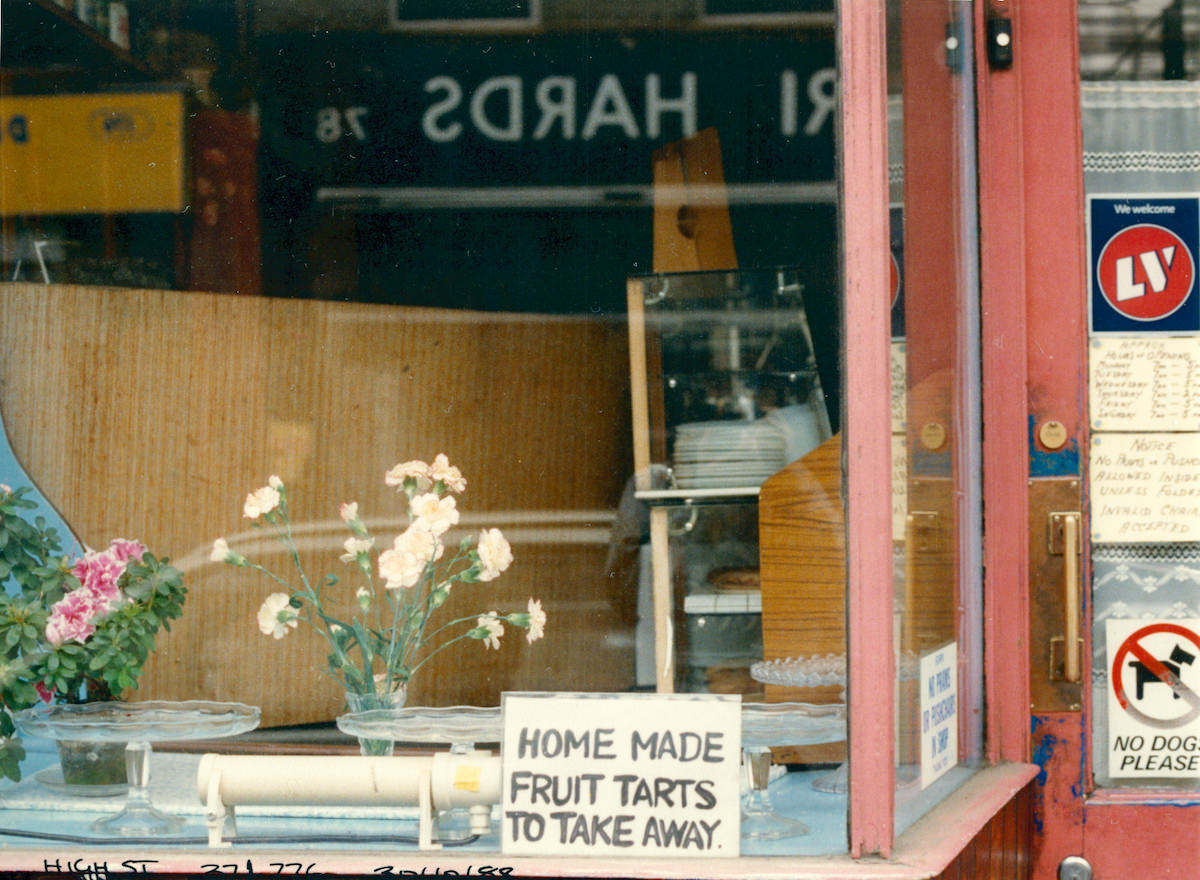
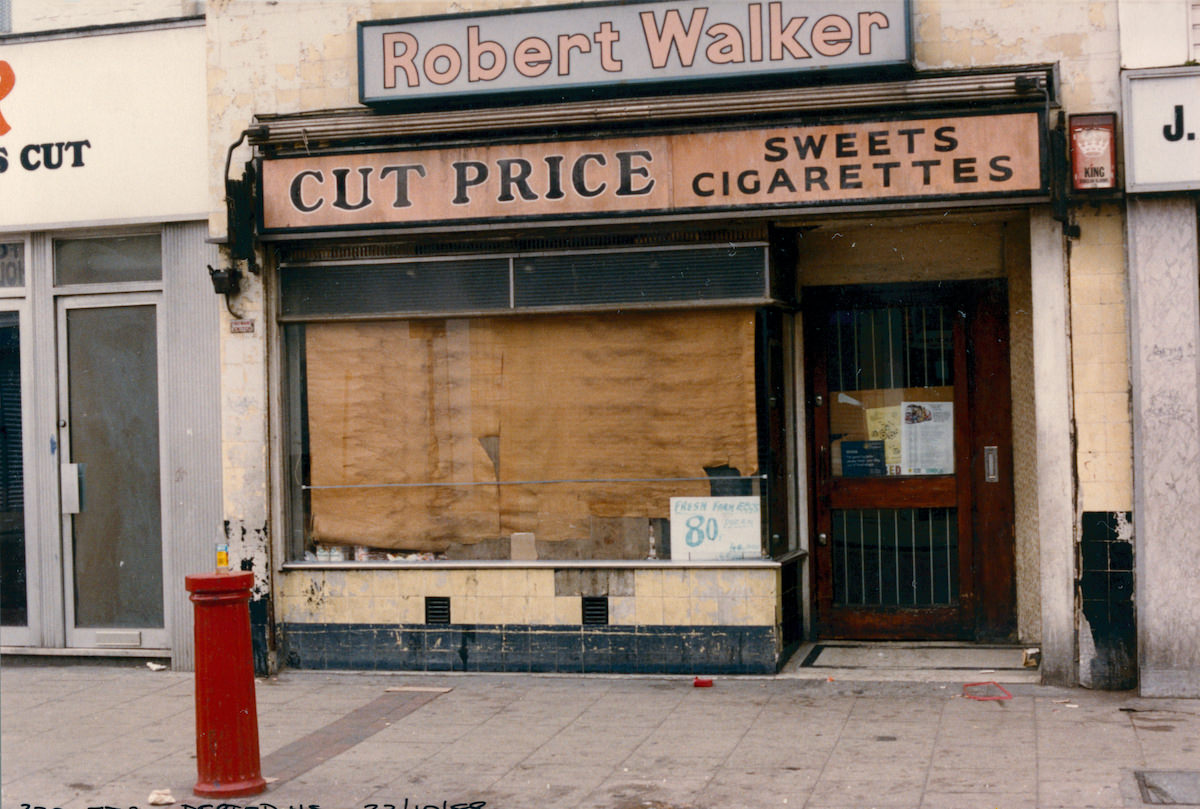
Deptford High Street housed a wide mix of traders and shopkeepers. Businesses like Robert Wallace were part of the independent retail fabric that gave the street its character — a character that chain stores and coffee shops would later replace almost entirely.
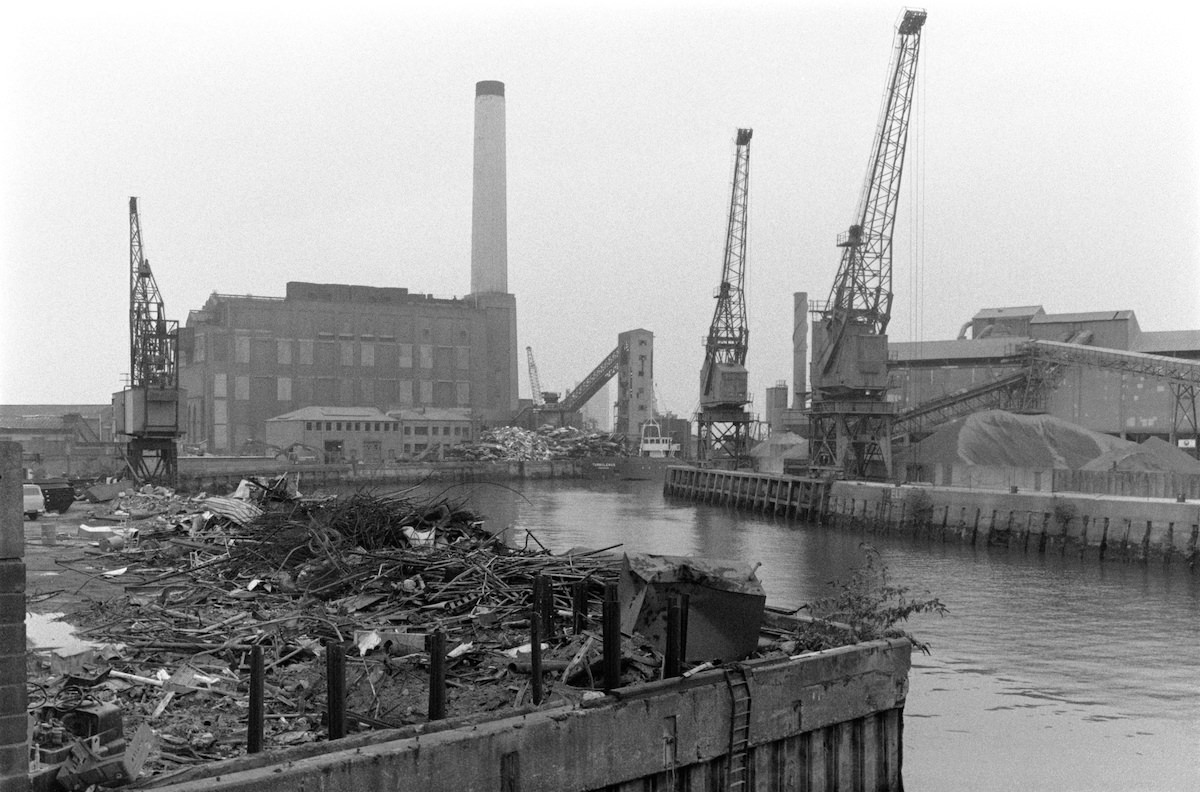
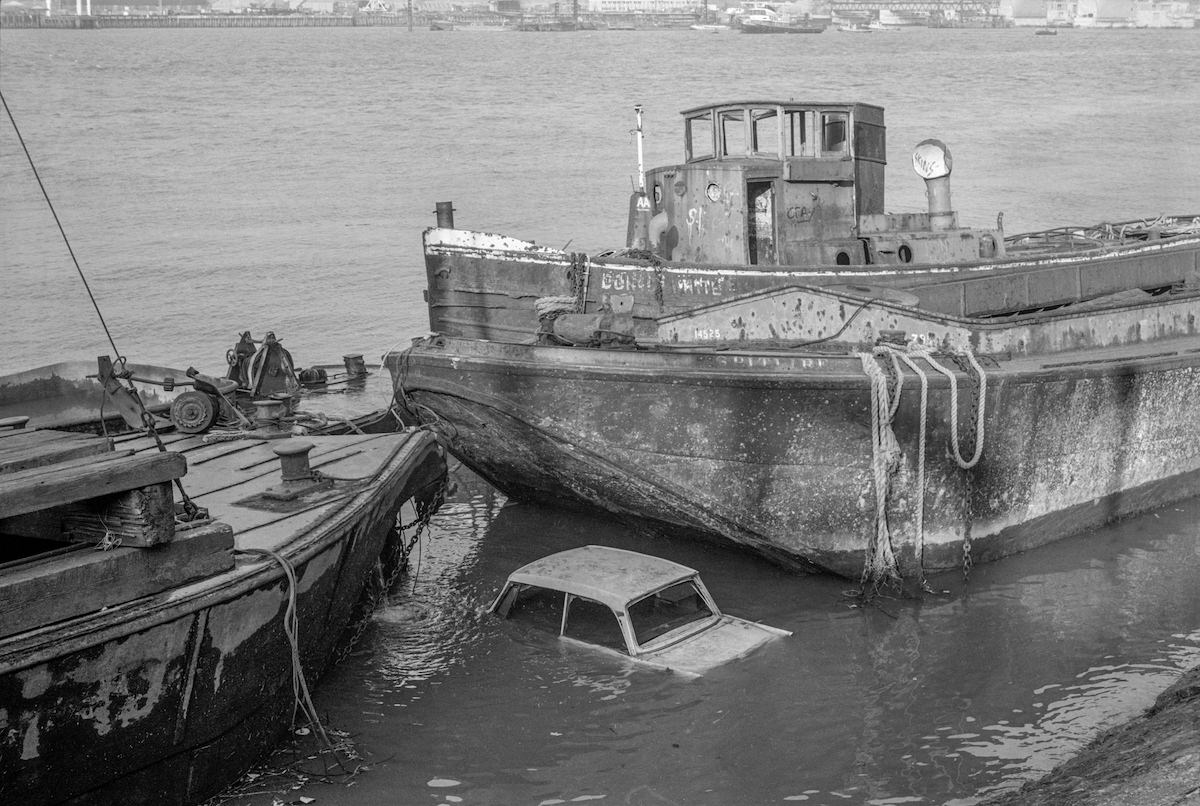
Deptford Creek, the tidal inlet where the River Ravensbourne meets the Thames, remained an industrial corridor well into the 1980s. Motor spares businesses, storage yards, and workshops crowded its banks, making it a functional, unglamorous stretch of working waterway.
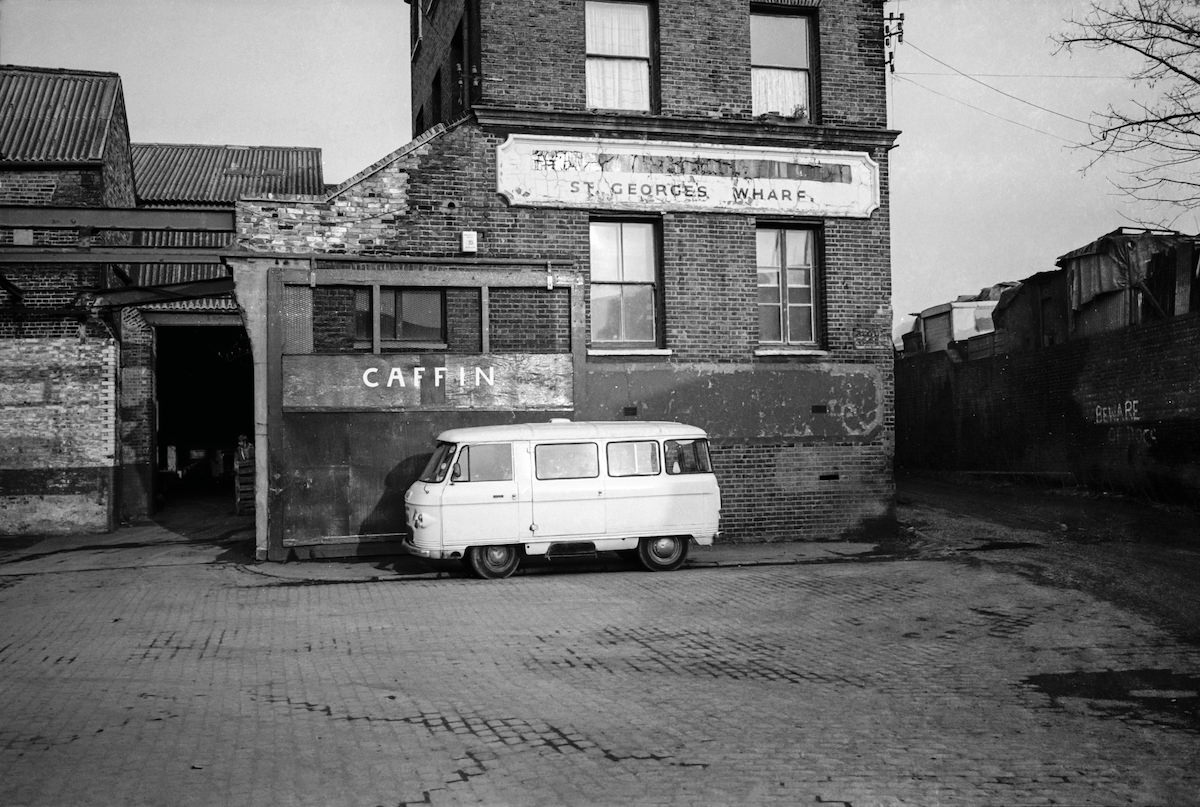
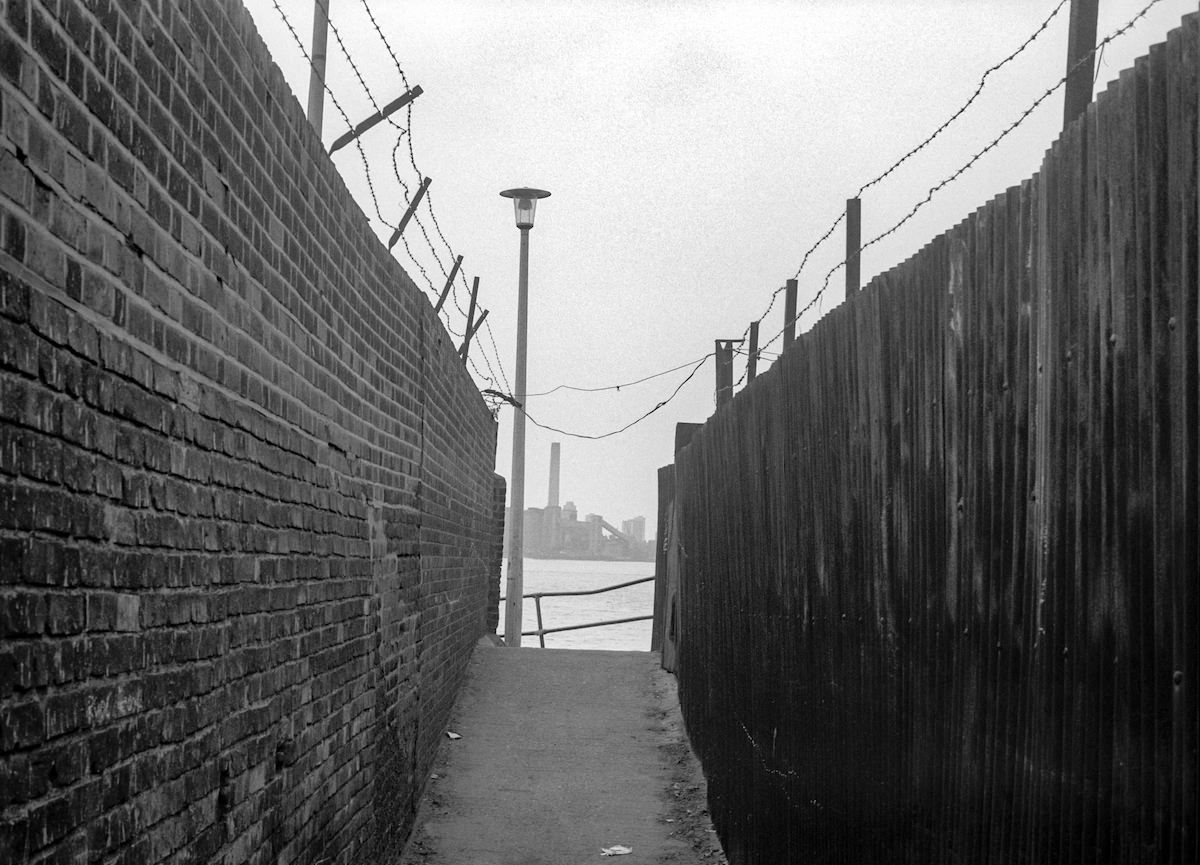
St George’s Wharf, photographed in 1982, shows Deptford’s Thames frontage in its pre-development state. Wharves and warehouses still dominated the riverbank, remnants of the area’s long industrial and maritime past.
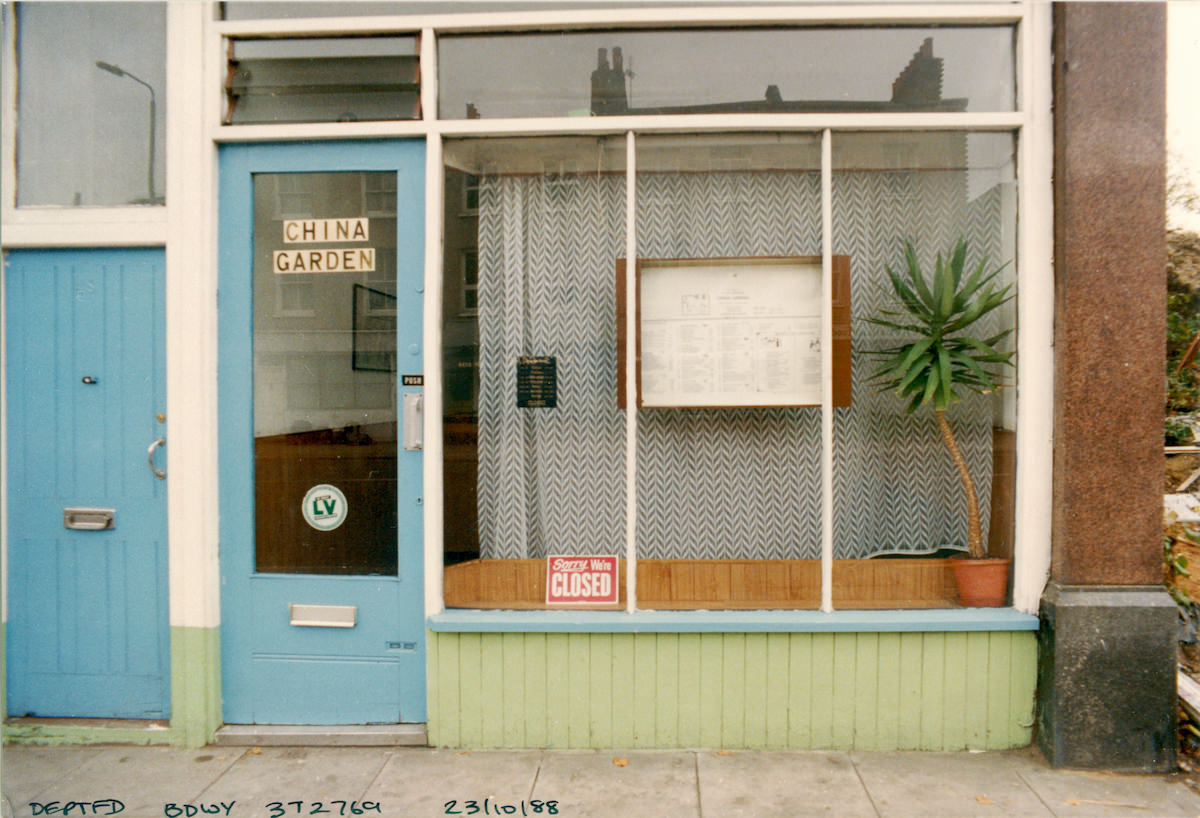
Deptford Broadway, the wider junction at the southern end of the High Street, hosted a range of businesses including the China Garden restaurant. The Broadway served as a local commercial hub, bringing together the communities of Lewisham and the surrounding streets.
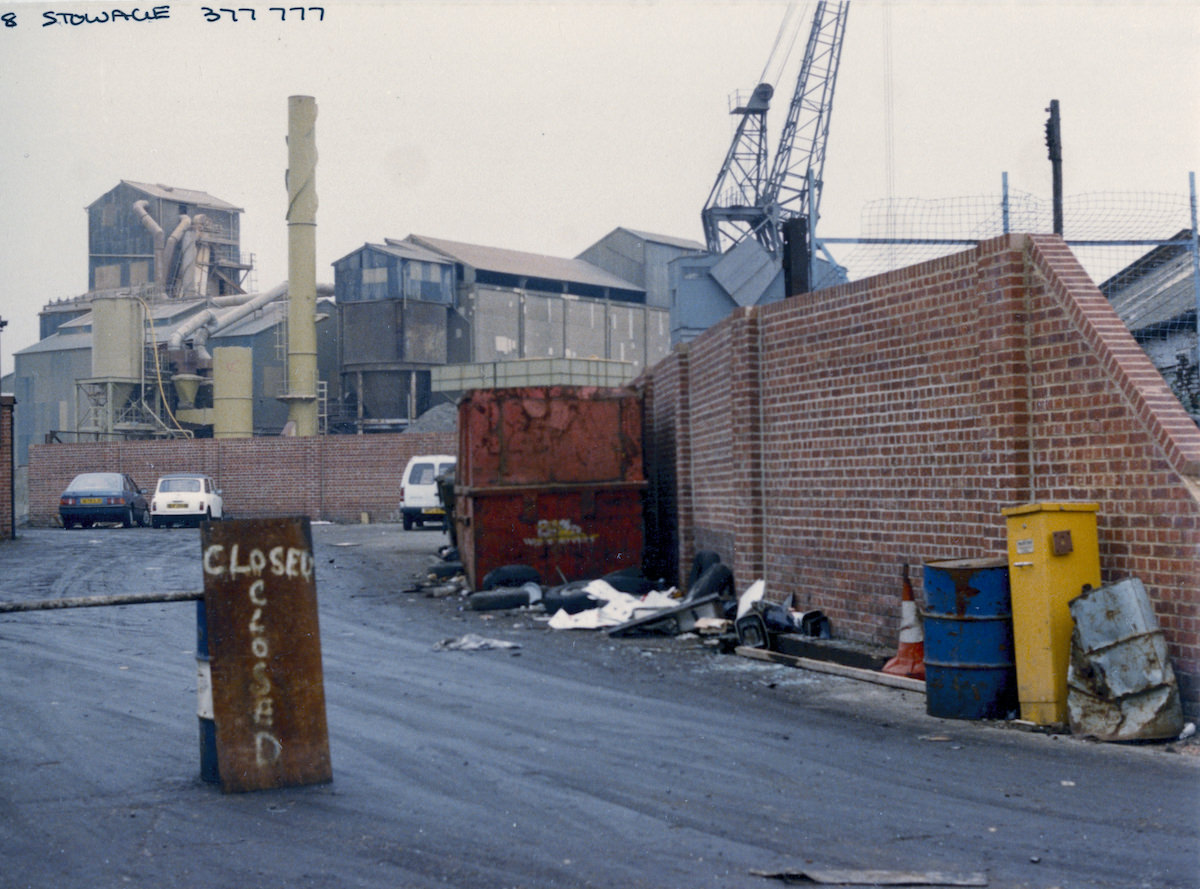
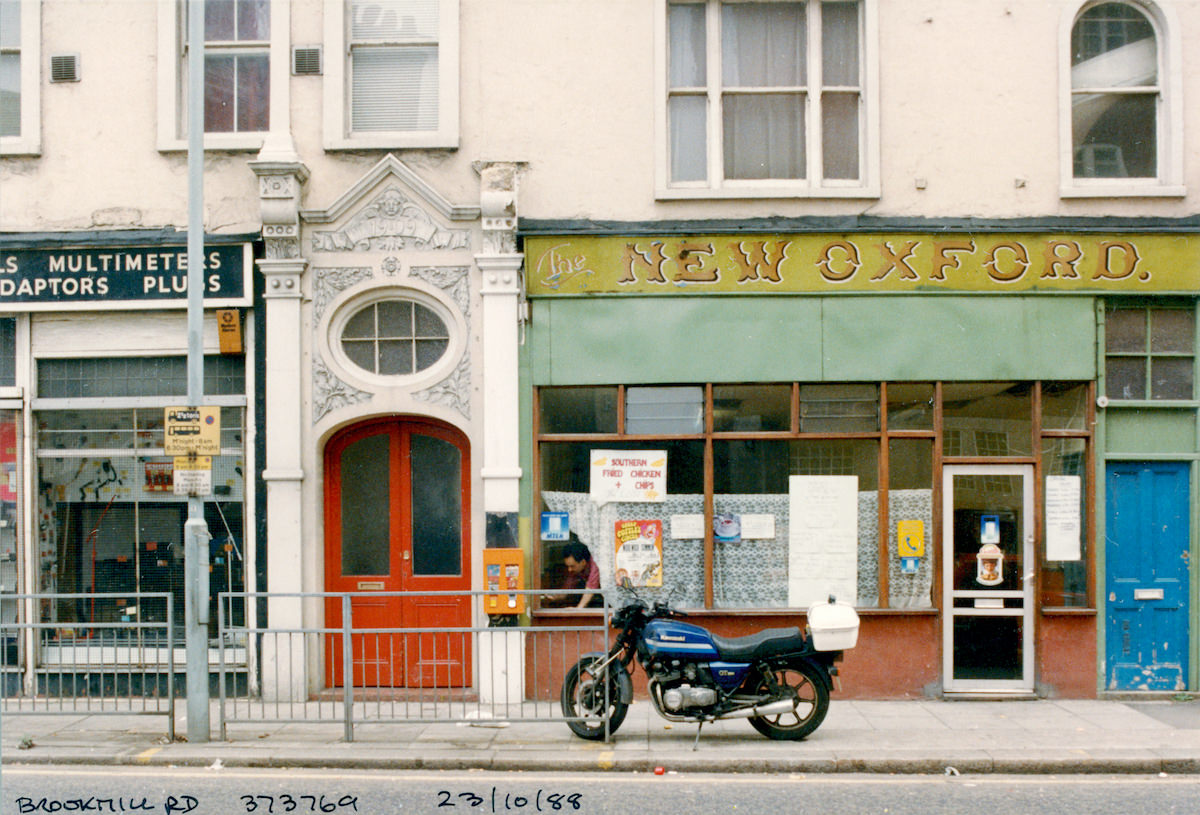
The Stowage area, closer to the Greenwich boundary, retained a distinctly industrial character. Nearby, on Brookmill Road, the New Oxford cafe served the local working population — the kind of straightforward, no-frills eating place that defined Deptford’s food culture before the restaurant boom arrived.
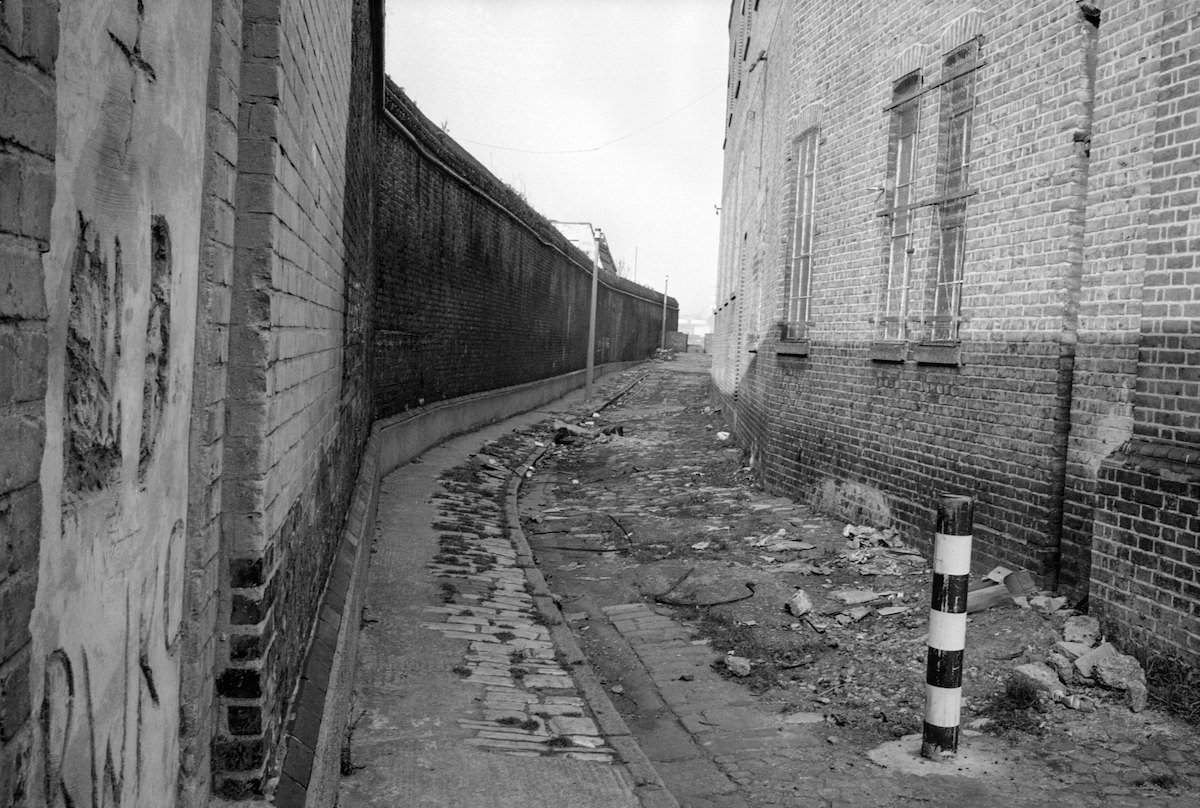
Watergate Street, photographed in 1982, preserves a view of Deptford’s residential and commercial side streets before any major redevelopment touched them. The street names themselves echo the area’s naval and riverside past.
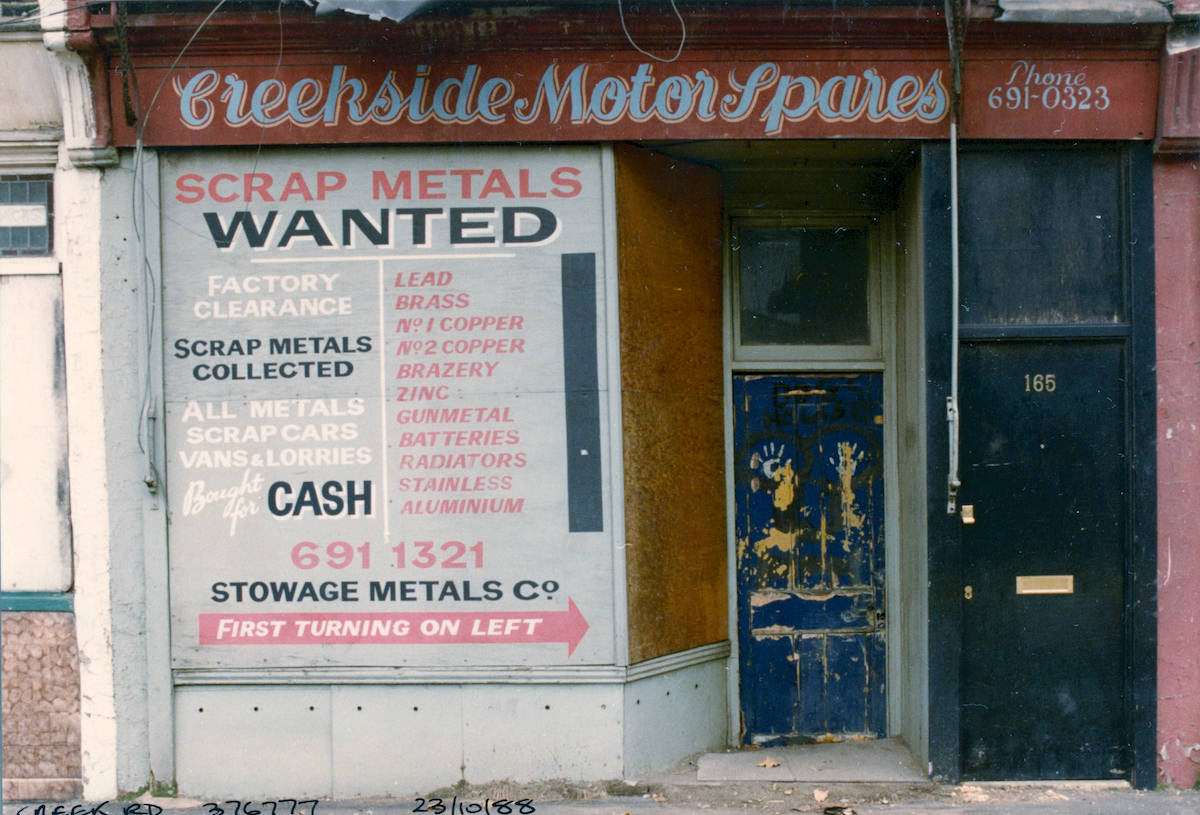
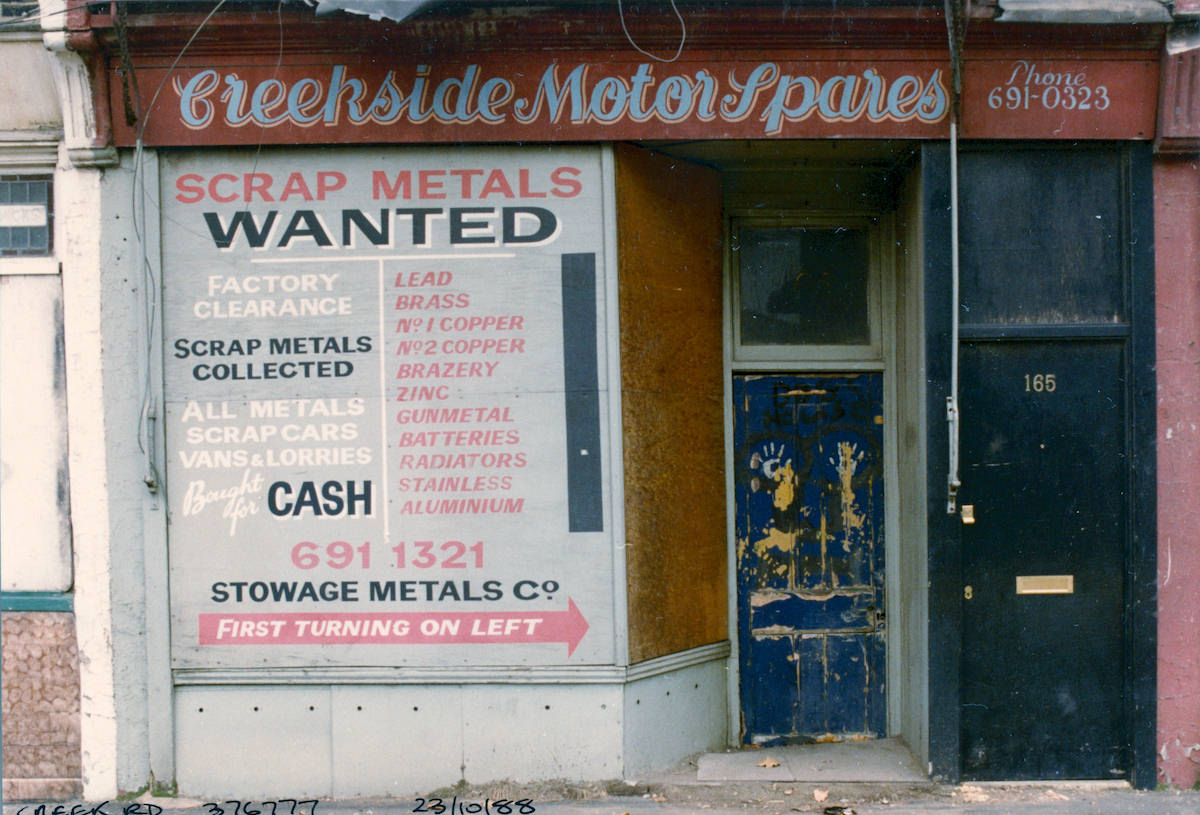
Motor trade businesses were a significant part of Deptford’s economy in this period. Creekside Motor Spares on Creek Road appeared in Marshall’s photographs more than once, a sign of how central these kinds of workshops were to the neighbourhood’s working life.
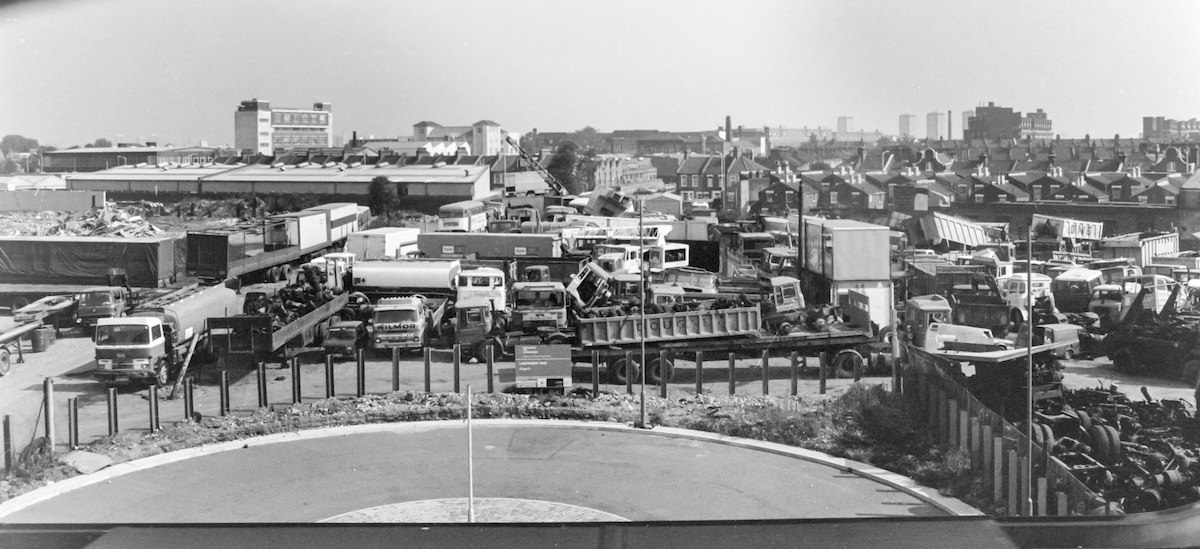
Landmann Way in 1985 shows the quieter residential streets that ran alongside Deptford’s busier commercial zones. These streets housed the workers, families, and long-term residents who made up the core of the local population.
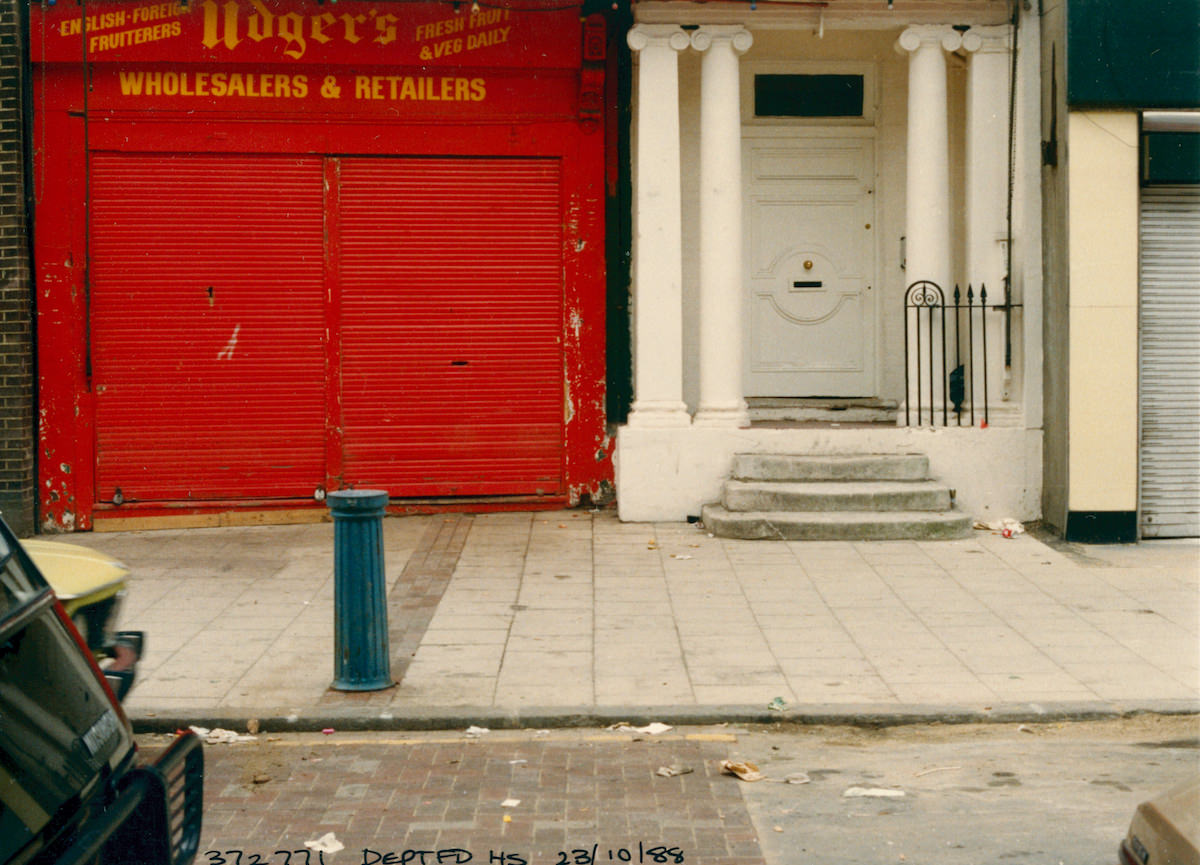
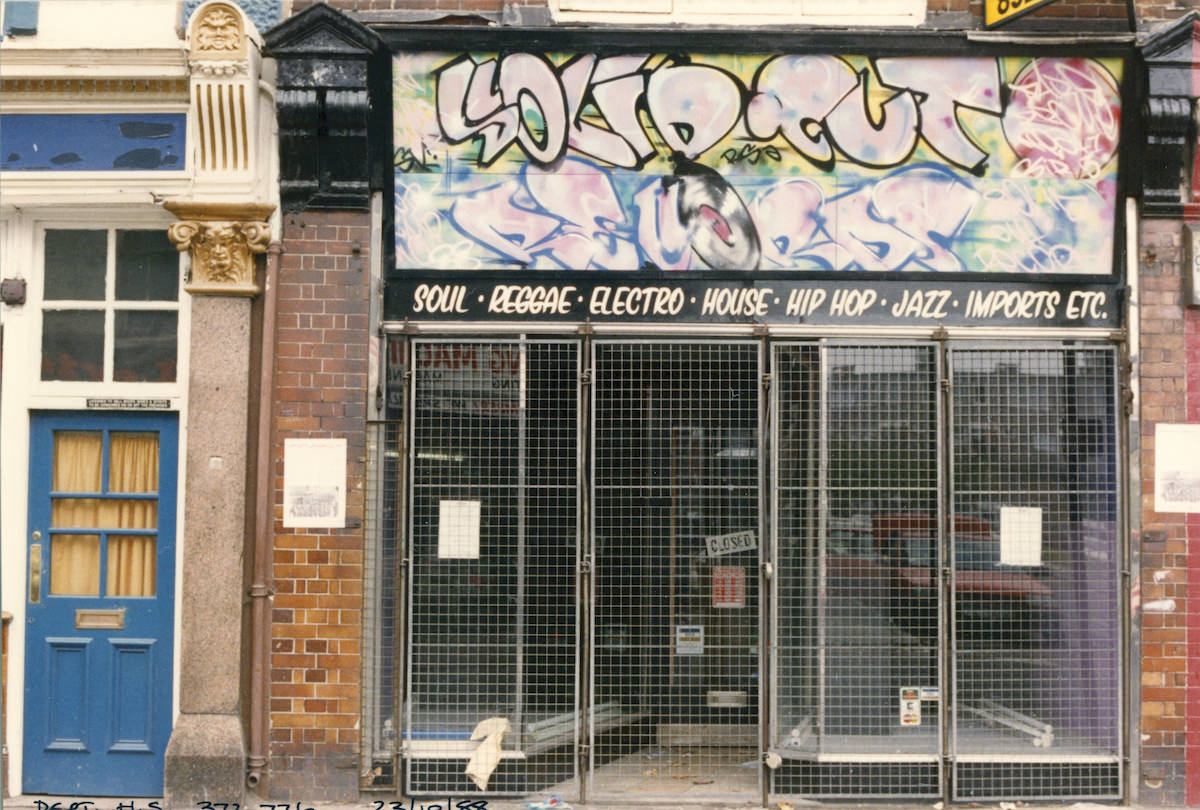
Solid Cut Records on Deptford High Street points to a significant part of what the area represented culturally in the 1980s. Deptford had a strong Black British community, and record shops like this one stocked reggae, soul, and the sounds that were shaping British music at the time.
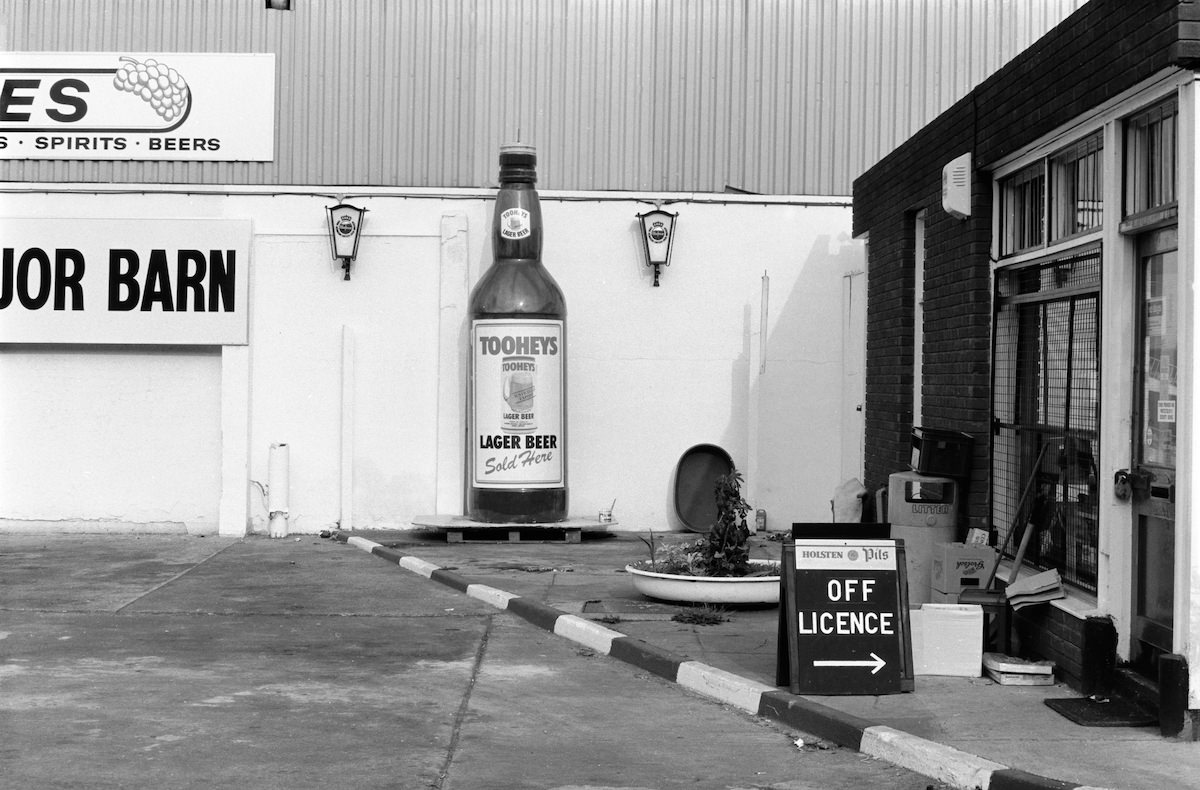
Evelyn Street ran through one of Deptford’s more commercial corridors. Businesses like the Liquor Barn were part of the straightforward retail strip that served a dense local population with practical, everyday goods.
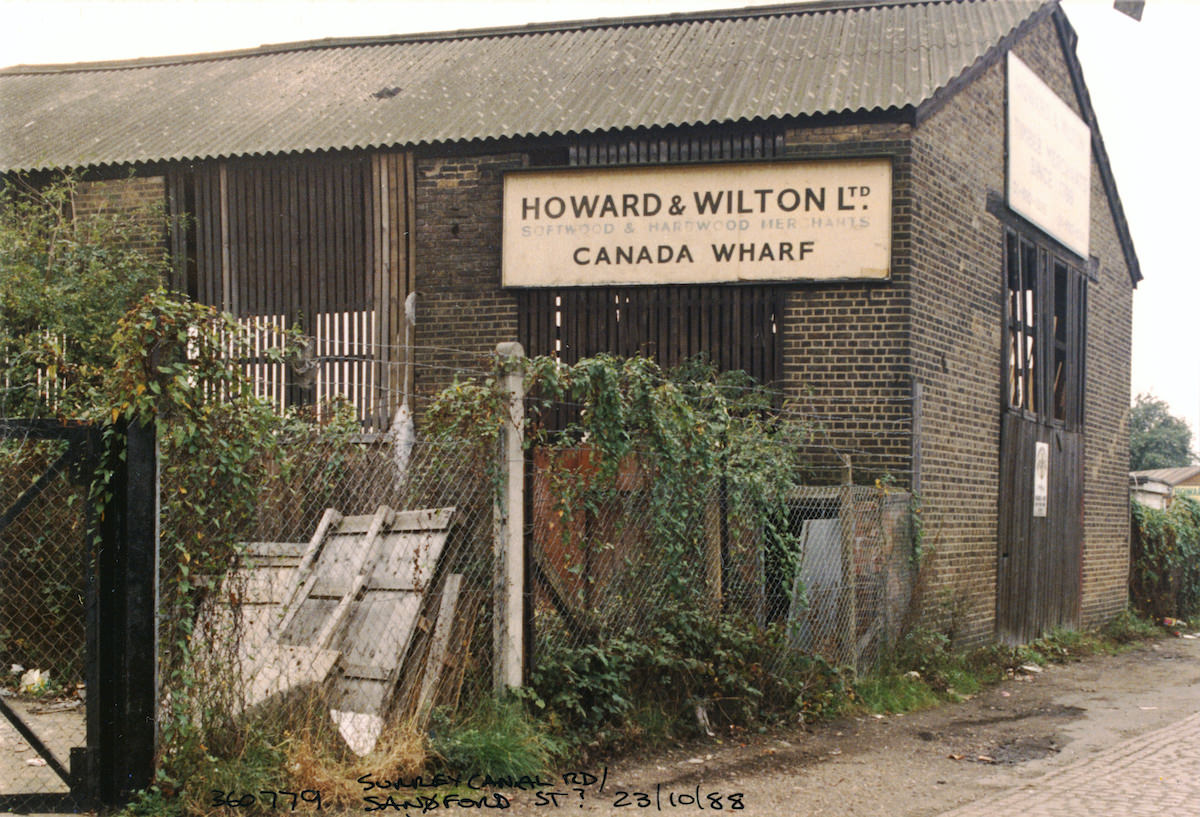
Canada Wharf and the area around Surrey Canal Road were industrial zones where firms like Howard & Wilton Ltd operated. The Surrey Canal itself had been filled in during the 1970s, but the industrial character of its surrounding streets remained intact throughout the 1980s.
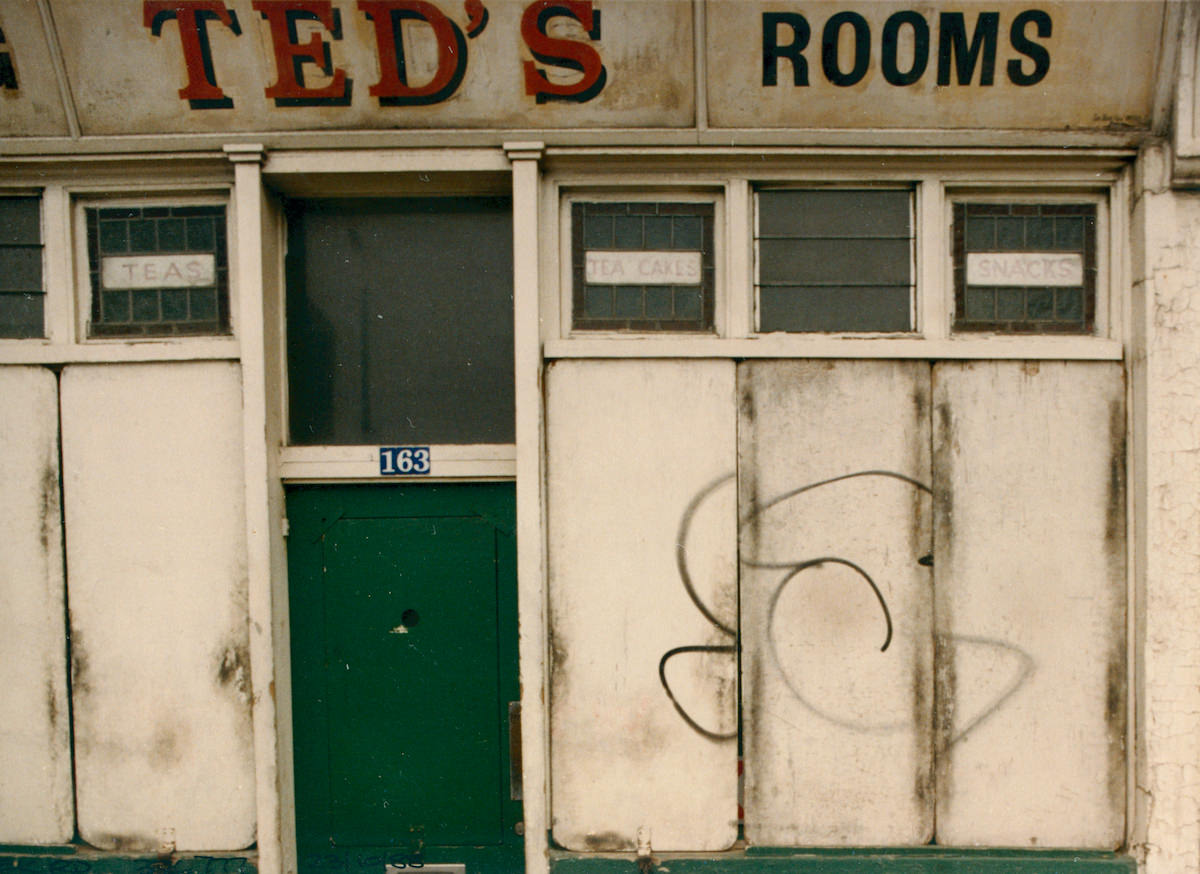
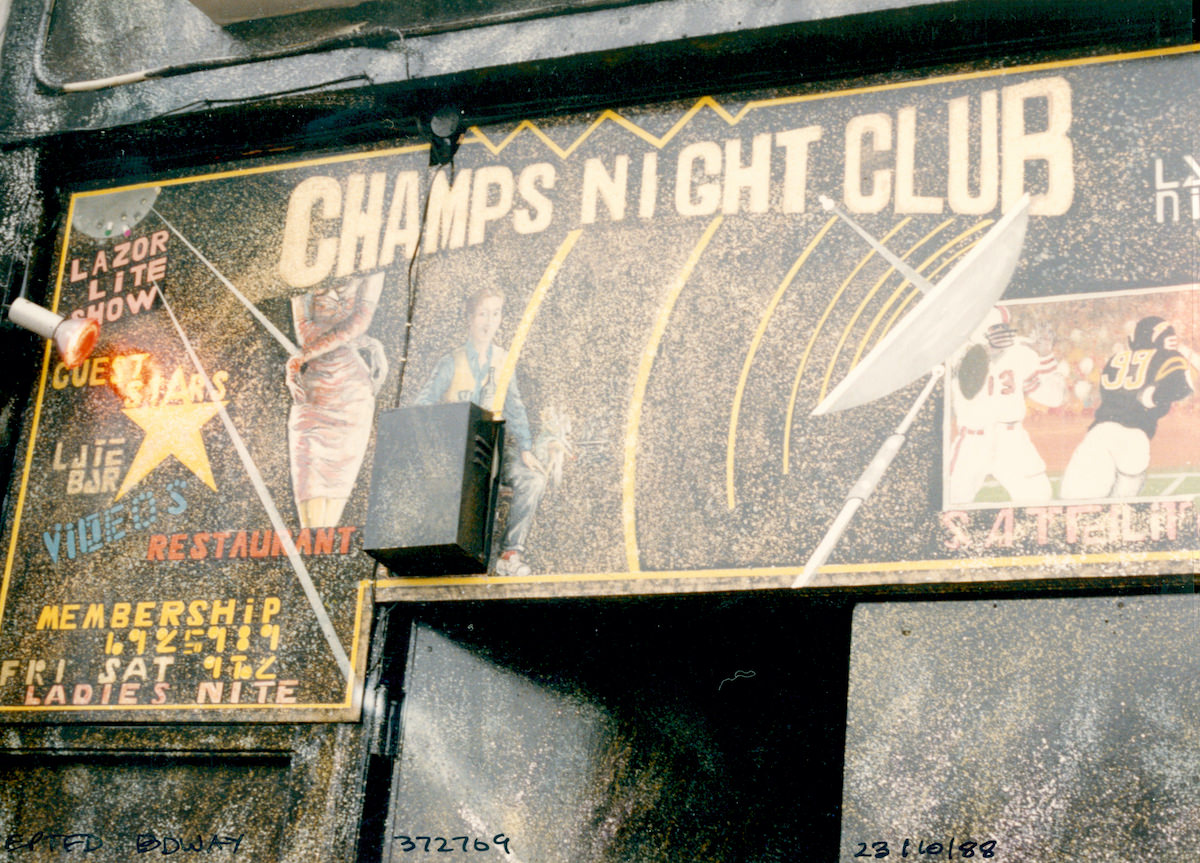
Deptford’s nightlife was concentrated around the Broadway and Creek Road. Champs Night Club was among the venues that gave the area a social energy well beyond its daytime market bustle. Ted’s Rooms on Creek Road offered the kind of modest lodging that served travellers and workers passing through.
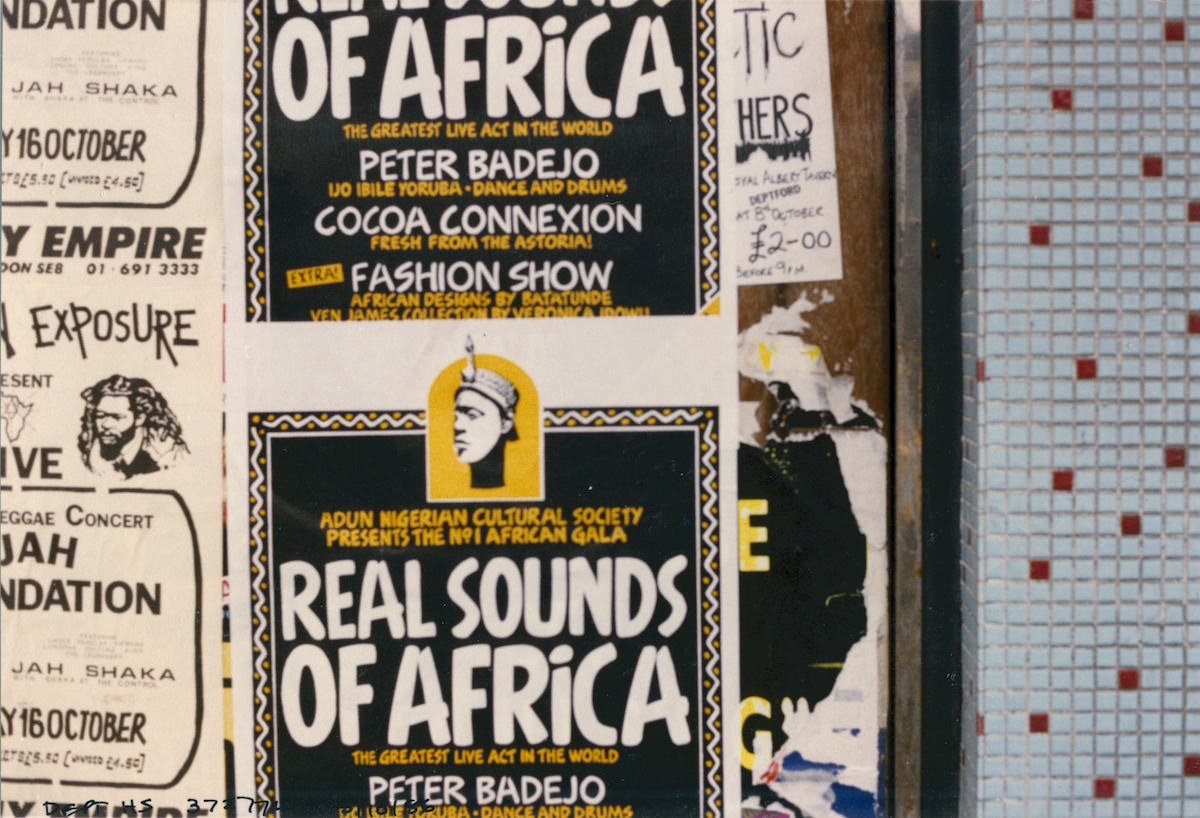
A 1986 poster for Real Sounds of Africa on Deptford High Street reflects the multicultural makeup of the area during this decade. African, Caribbean, and South Asian communities all had a visible presence in Deptford, expressed through music, food, religion, and the businesses that lined its streets.
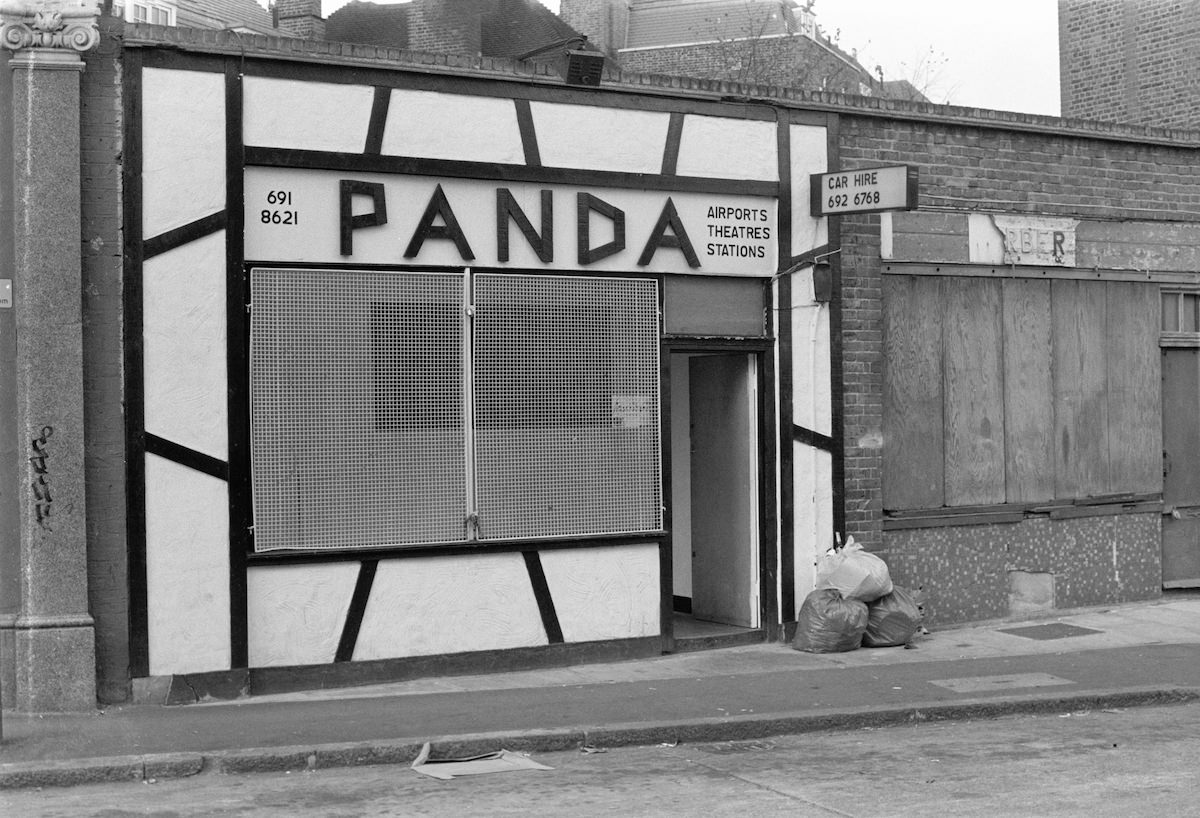
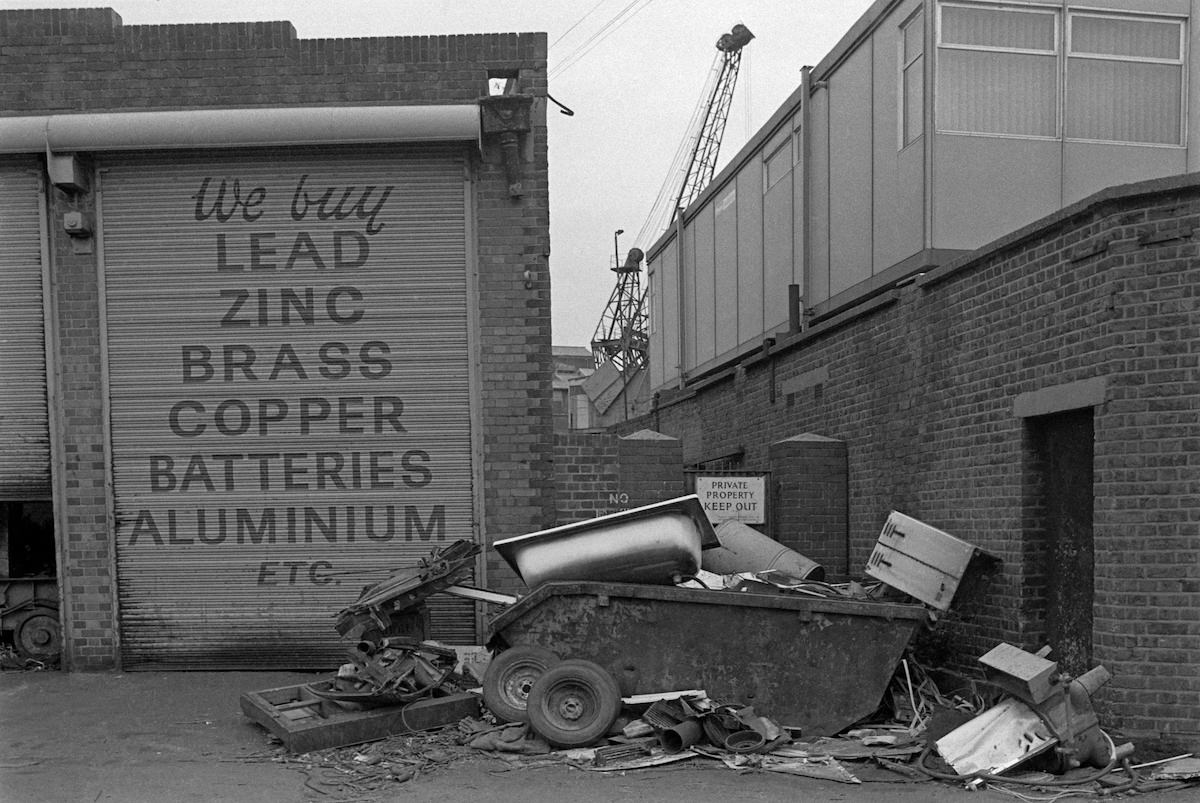
Scrap metal yards in Stowage were a visible sign of the area’s industrial economy in 1984. Alongside motor businesses and wharf operations, these yards made up a significant part of local employment. Watergate Street meanwhile had its own small traders, including Panda Car Hire — independent businesses that filled every available commercial space.
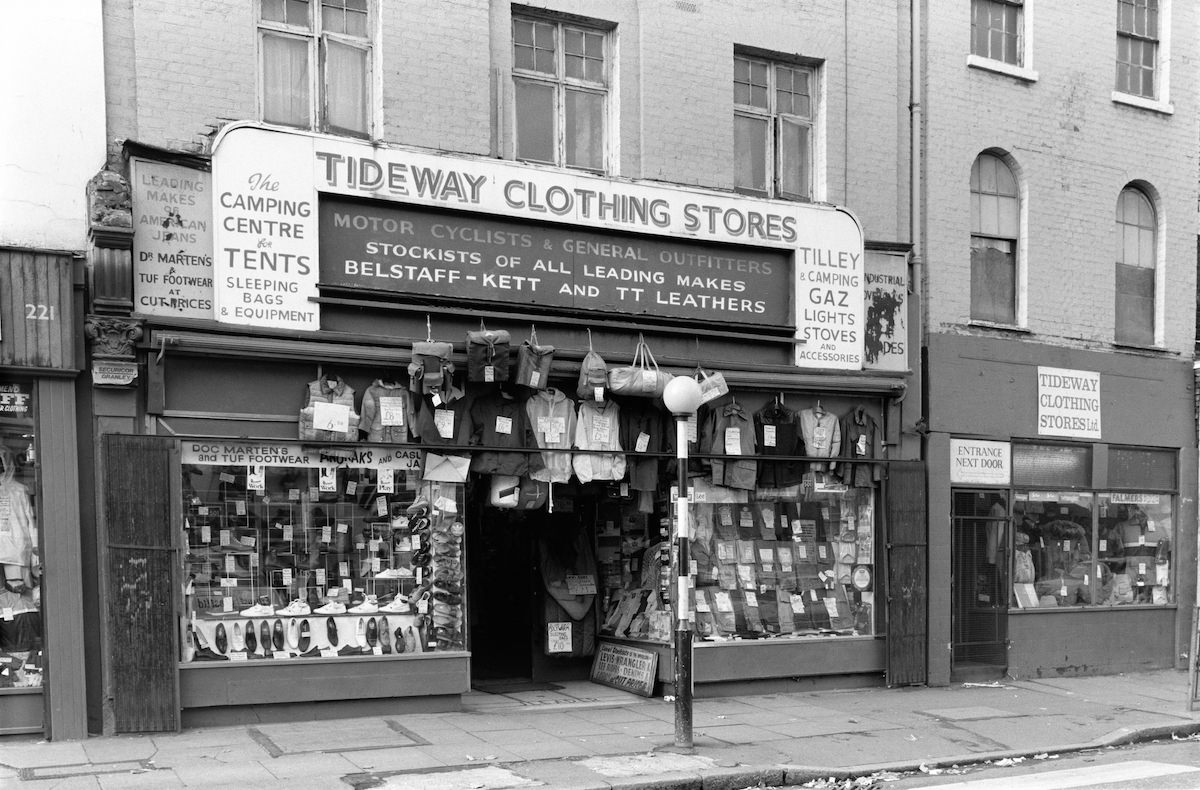
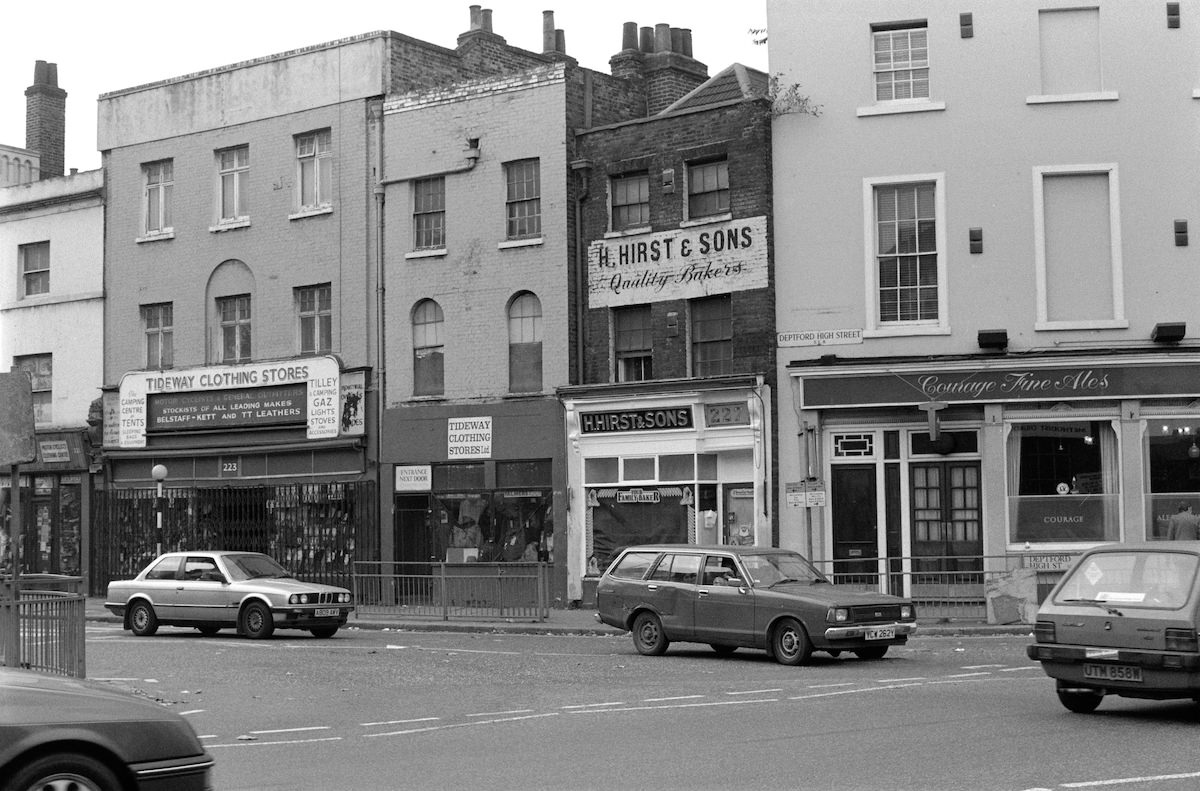
Clothing shops like the Tideway Clothing Store on the High Street served a local market that had no interest in the West End. Everything needed was available within Deptford itself — food, clothes, records, car parts, a pint. Marshall’s photographs from 1988 show a neighbourhood fully self-contained and deeply connected to its own identity.
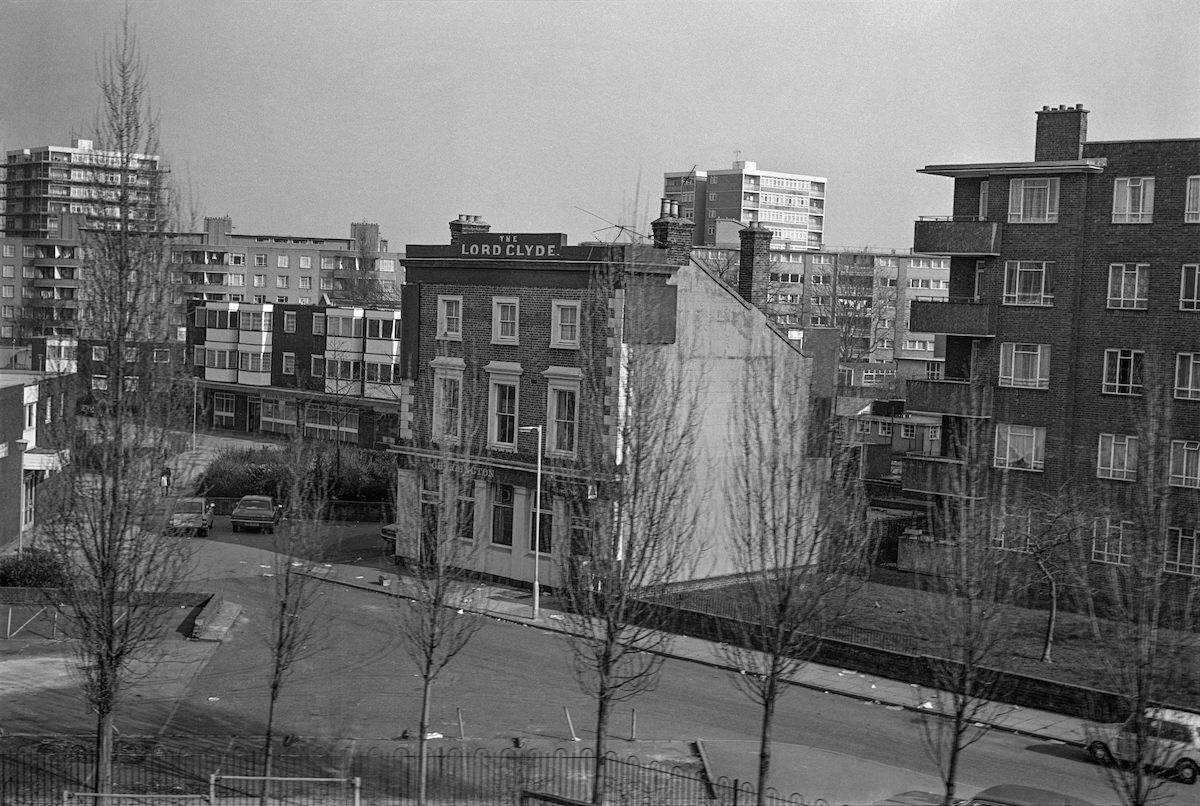
The Lord Clyde pub at the corner of Clyde Street and Wooton Street, photographed in 1982, stands as a reminder of how many corner locals anchored life in Deptford. These pubs were as much community centres as drinking establishments — places where news travelled, arguments were settled, and the neighbourhood looked after itself.




