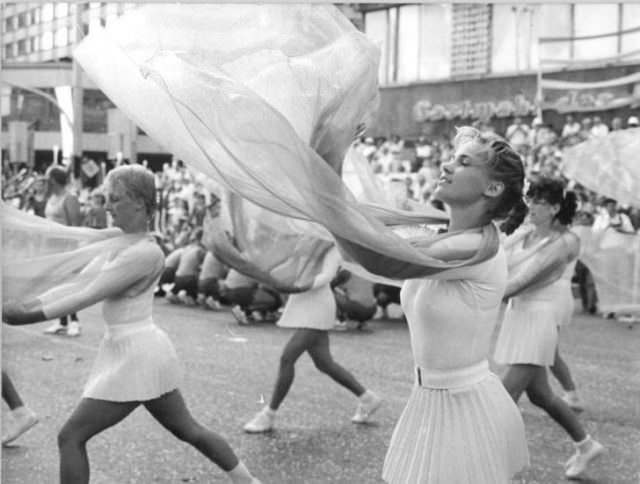
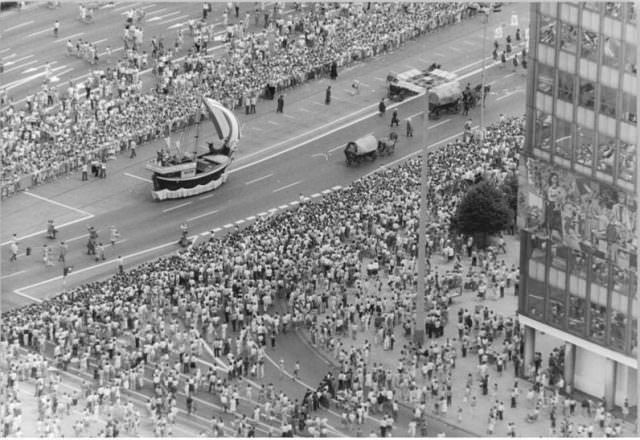
On July 4, 1987, the streets of Berlin filled with marching columns, rolling floats, and cheering crowds. The German Democratic Republic was marking a major milestone: 750 years since the city of Berlin was founded. Both sides of the divided city held celebrations, but the East German parade was a spectacle all its own — a carefully staged display of socialist pride, pop culture, and a few genuinely surprising sights.
West Berlin had its own flavor of celebration. Sony Walkmans were clipped to belt loops, Boney M tracks drifted out of shop windows, and mullets ruled the sidewalks. It was the late ’80s in full force. But cross the wall into the East, and the anniversary took on a very different character.
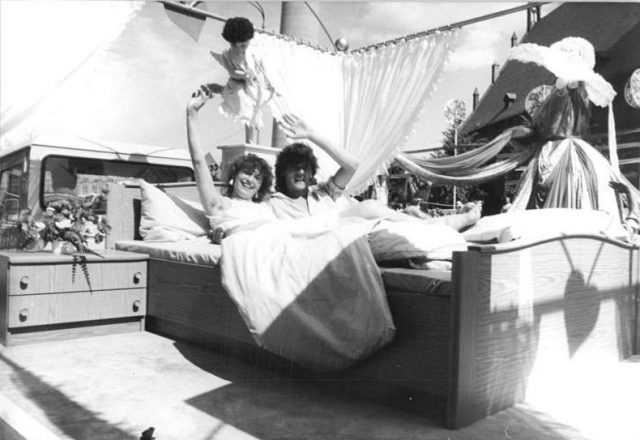
The East German state used the parade as a showcase. Floats and marching groups moved through the streets in organized processions. Every element was chosen to send a message — about the GDR’s strength, its culture, and its vision of the future. The result was a mix of political theater and genuine festivity that drew large crowds along the route.
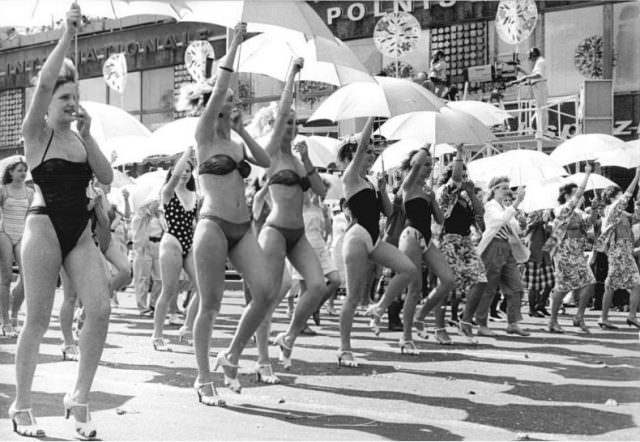
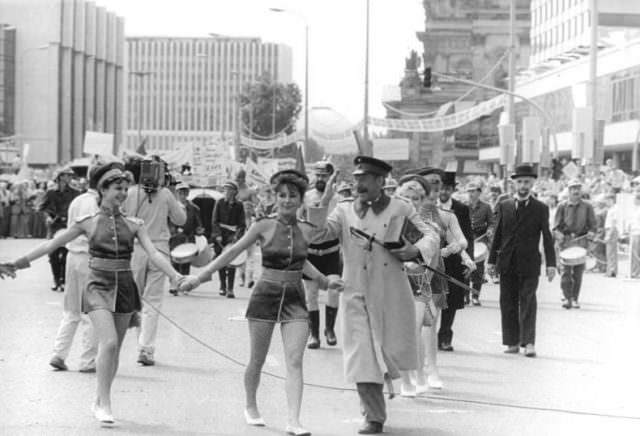
One of the most talked-about moments involved a group of women marching in high heels and bikinis. It was an unexpected sight in a parade that also featured military discipline and party symbolism. The platoon moved in formation, turning heads and raising eyebrows in equal measure.
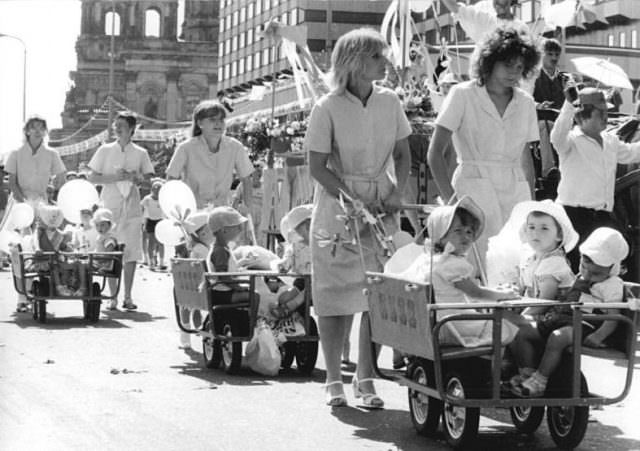
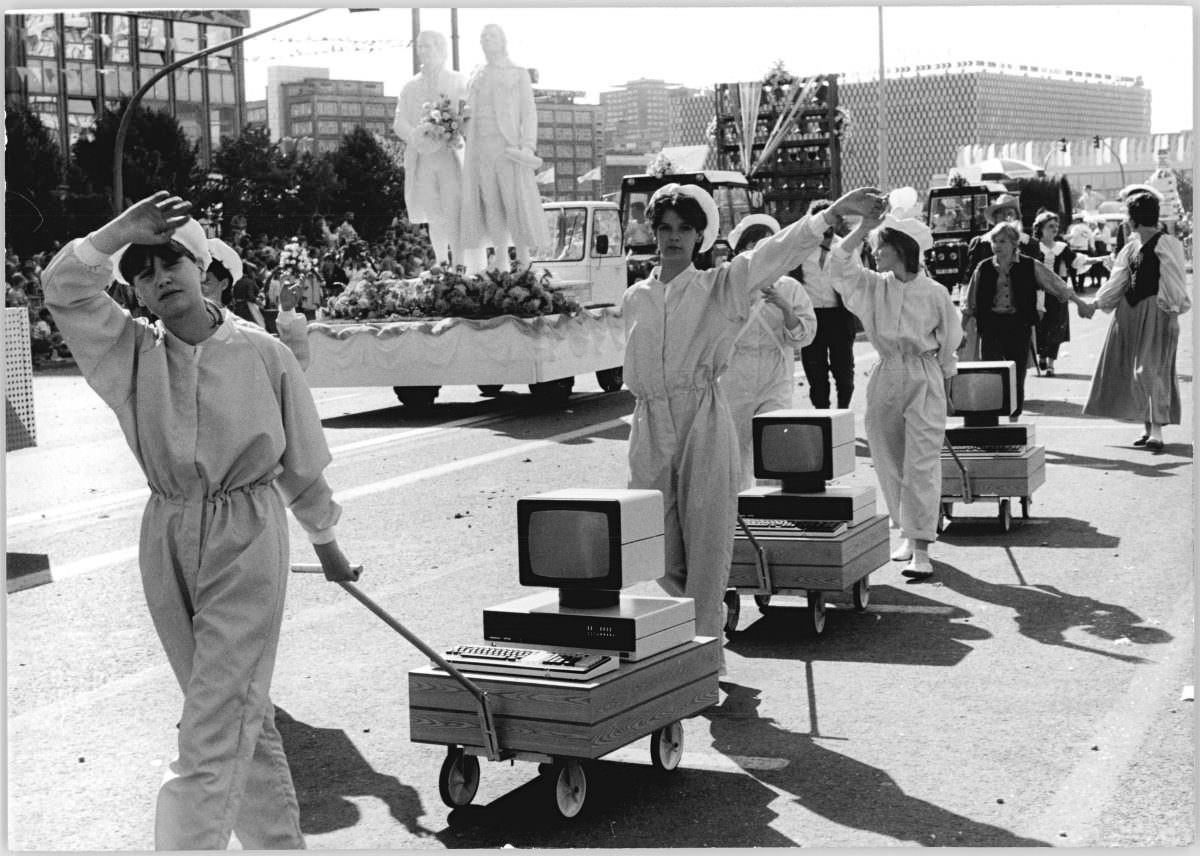
Technology also made a bold appearance. Desktop computers were loaded onto wheeled platforms and rolled through the streets as part of the procession. In 1987, personal computing was still a novelty for most people on both sides of the Iron Curtain. Parading the machines down a public street was the GDR’s way of signaling that it was keeping pace with the modern world.
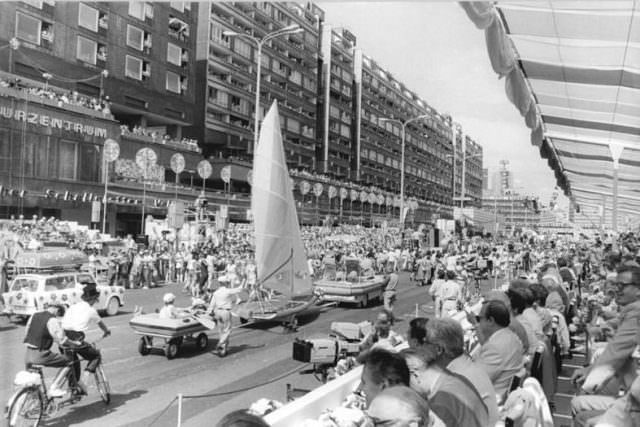
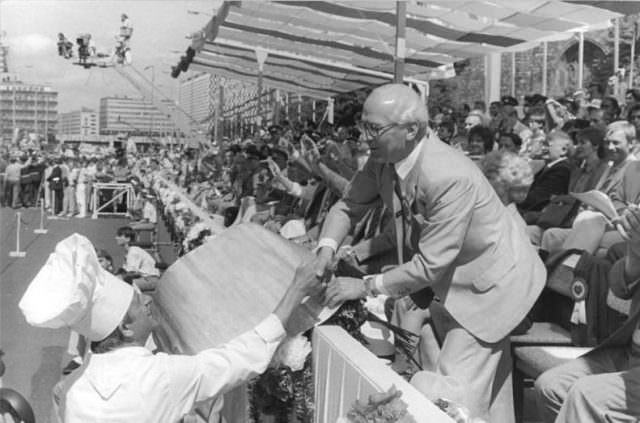
The parade also served as a backdrop for high-level politics. Erich Honecker, the Secretary-General of the Central Committee of the Socialist Unity Party and Chairman of the Council of State of the GDR, was present for the occasion. Honecker had led East Germany since 1971 and used events like this one to project authority and stability.
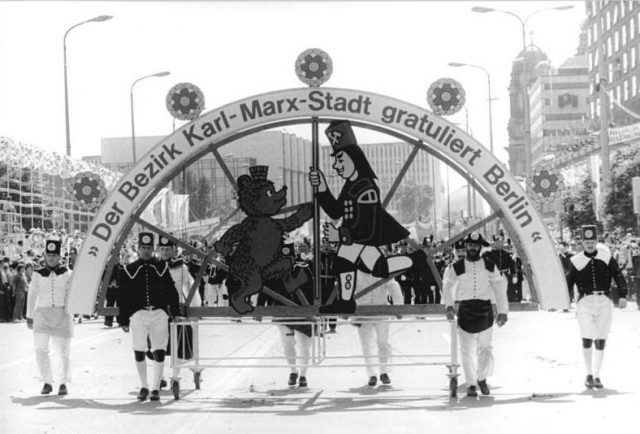
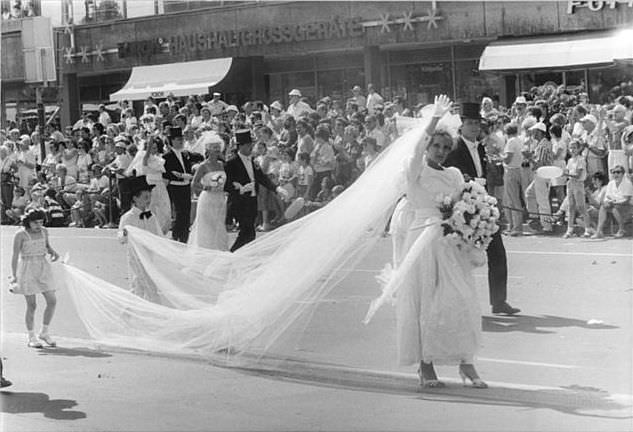
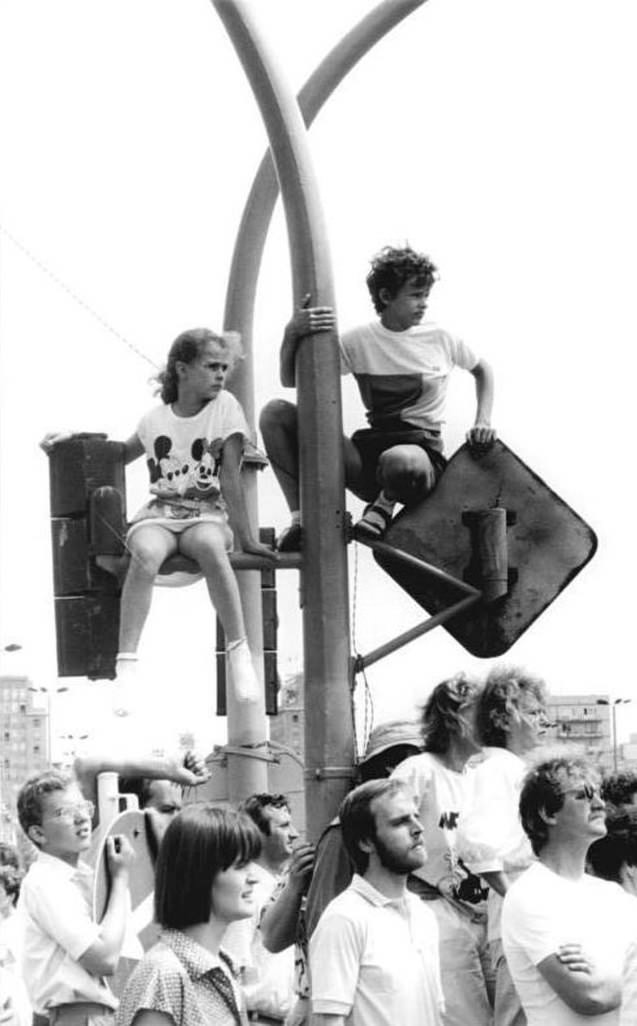
The streets themselves became a stage. Marching groups, floats, performers, and officials all shared the same route through a city that had been split since 1961. For ordinary East Berliners watching from the curb, the parade was a rare large-scale public event — one that mixed state pageantry with moments of genuine spectacle.
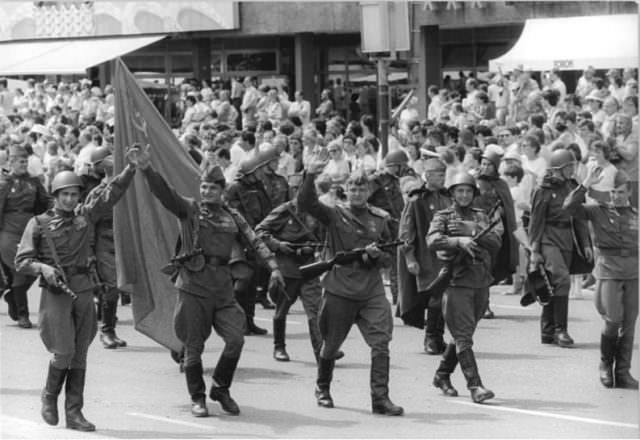
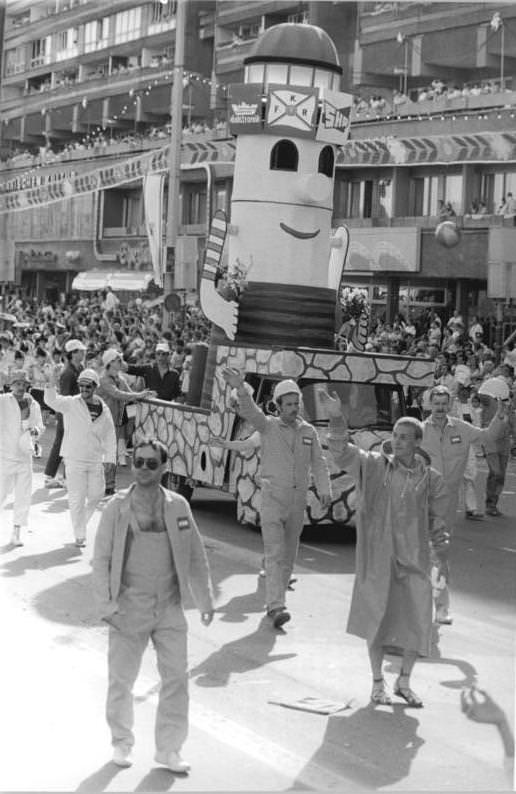
The combination of bikini-clad marchers, rolling computers, and party officials in one procession captured something true about East Germany in 1987. The state was simultaneously rigid and eager to appear dynamic. It wanted to project modernity while maintaining iron control over how that modernity was presented.
Seven hundred and fifty years of Berlin’s history were being honored by a government that had only existed for 38 of them. The GDR claimed the full sweep of the city’s past as its own, weaving centuries of history into a celebration that was, at its core, a celebration of the socialist state itself.
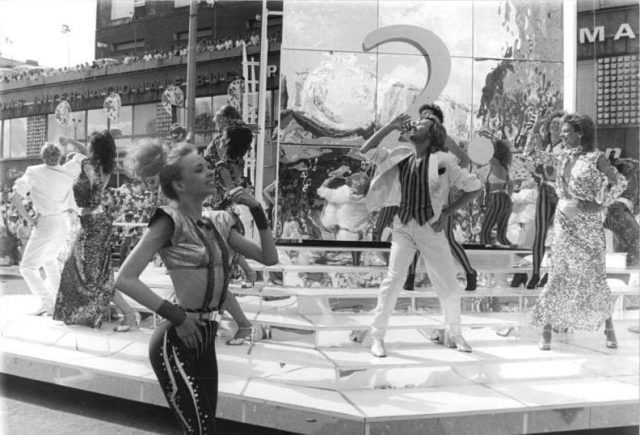
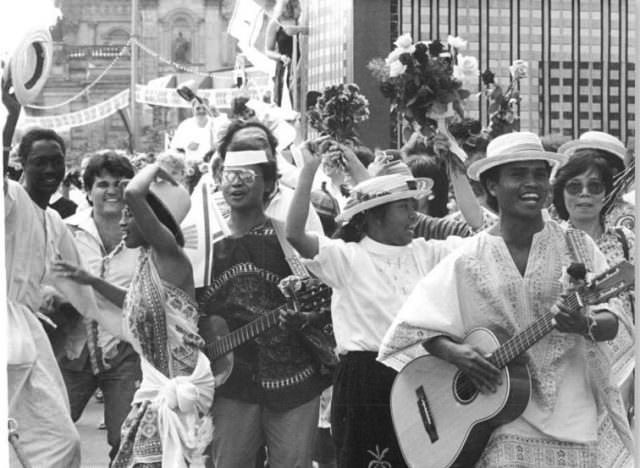
The photographs from that day show a city frozen in a very specific moment — perms and parade formations, neon banners and marching columns, all of it moving through streets that would look completely different just two years later when the Wall came down.