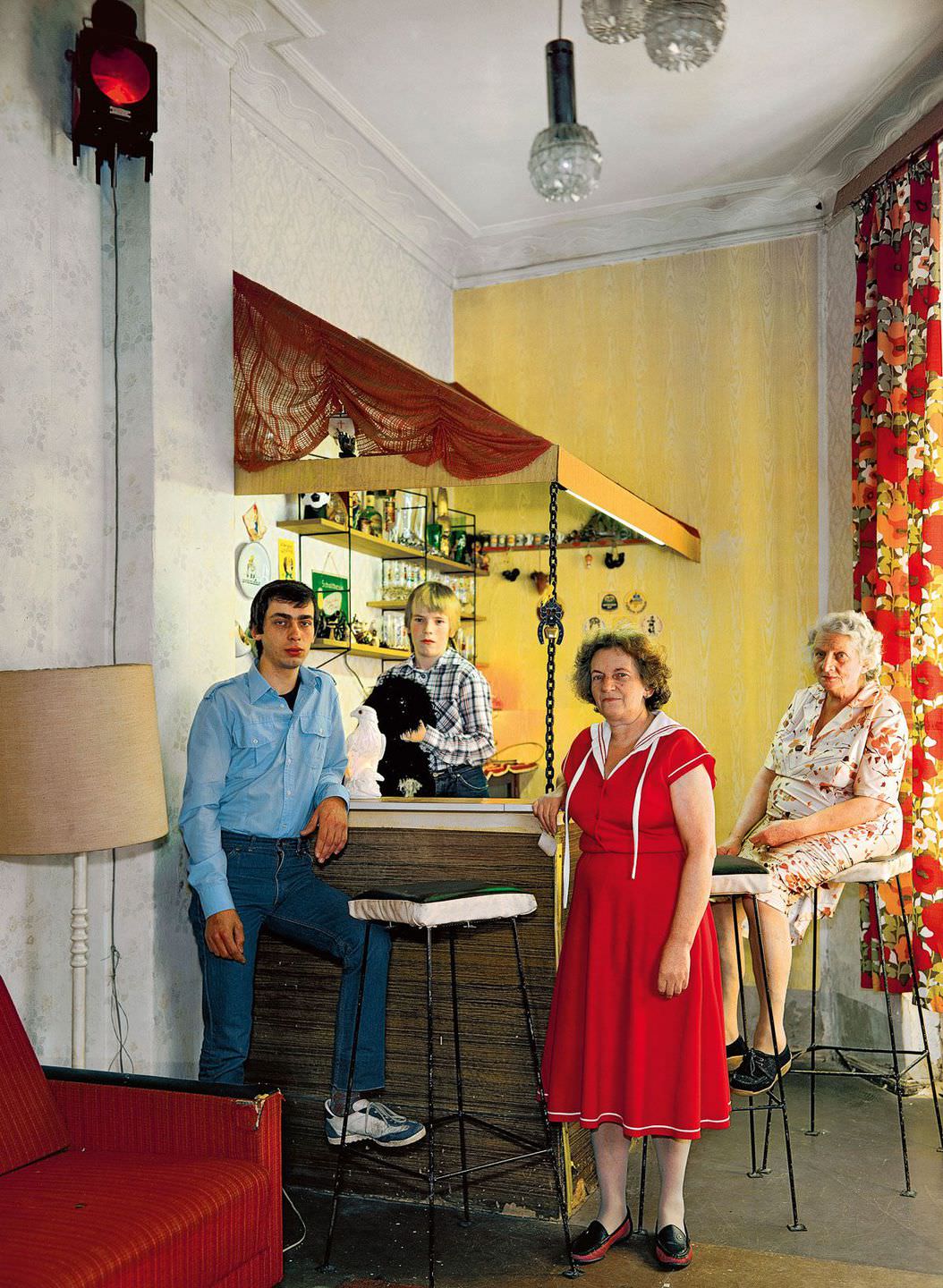
In 1980, a 25-year-old photography student named Harf Zimmermann began walking the streets of Hufelandstrasse, a neighborhood in East Berlin, camera in hand. He was enrolled at the Academy of Visual Arts in Leipzig at the time, and he had recently been struck by Bruce Davidson’s book East 100th Street — a landmark photo project that documented a single block in East Harlem, New York. Zimmermann wanted to do something similar, but in his own backyard. What followed was years of daily documentary work that produced an intimate, unvarnished record of life under East German socialism.
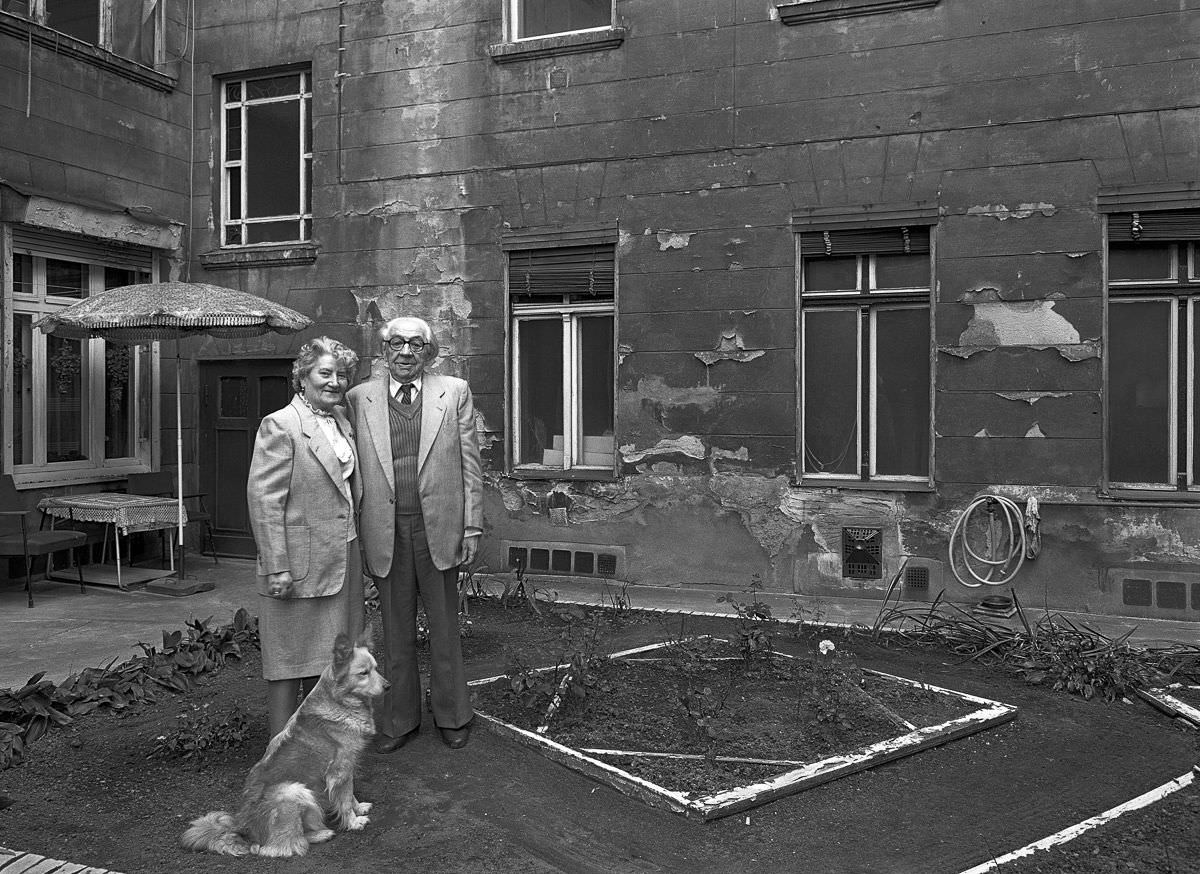
Zimmermann went out with his camera nearly every day until he became, as he put it, part of the landscape. His neighbors initially found his approach confusing. In Hufelandstrasse, a camera had almost always meant a newspaper photographer — someone there to stage residents into poses that reinforced the official imagery of socialist life. Zimmermann asked for none of that. He simply asked people to stand as they were. Over time, they let him in.
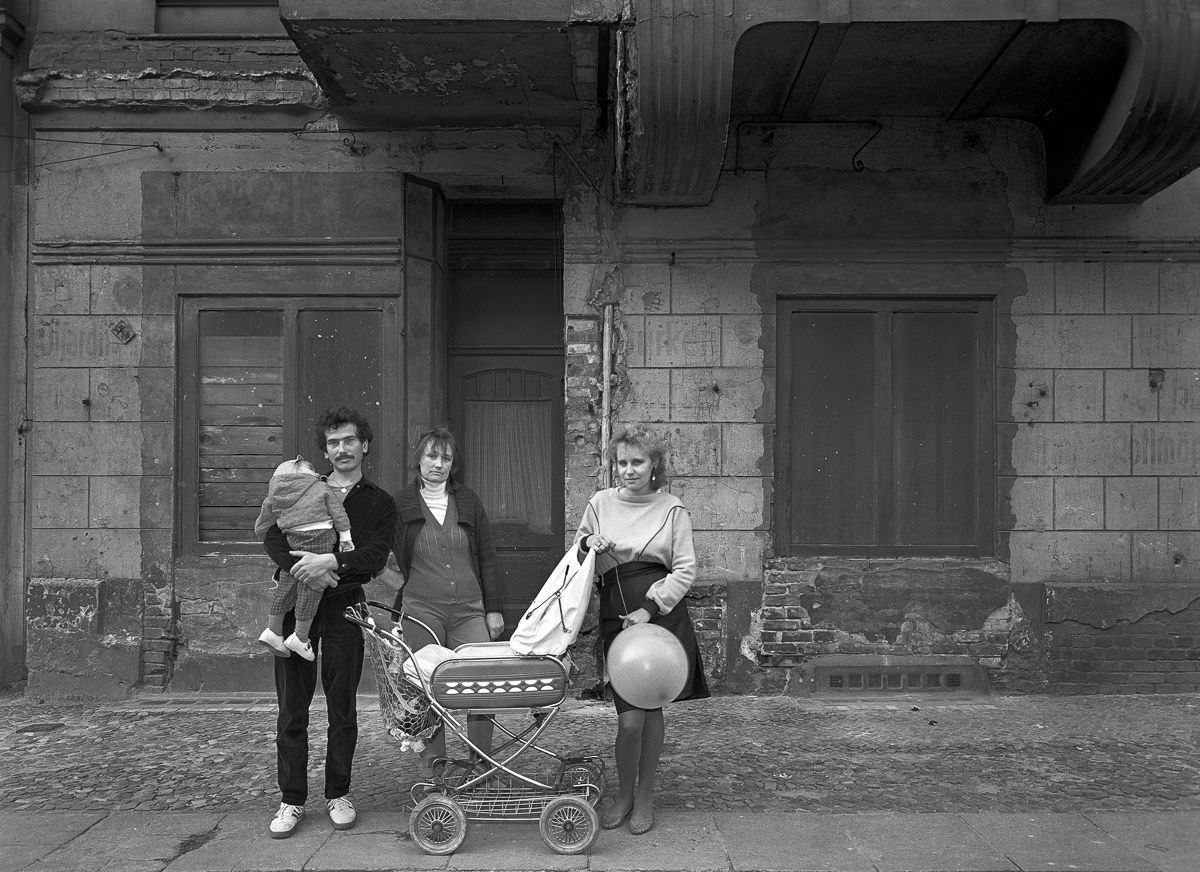
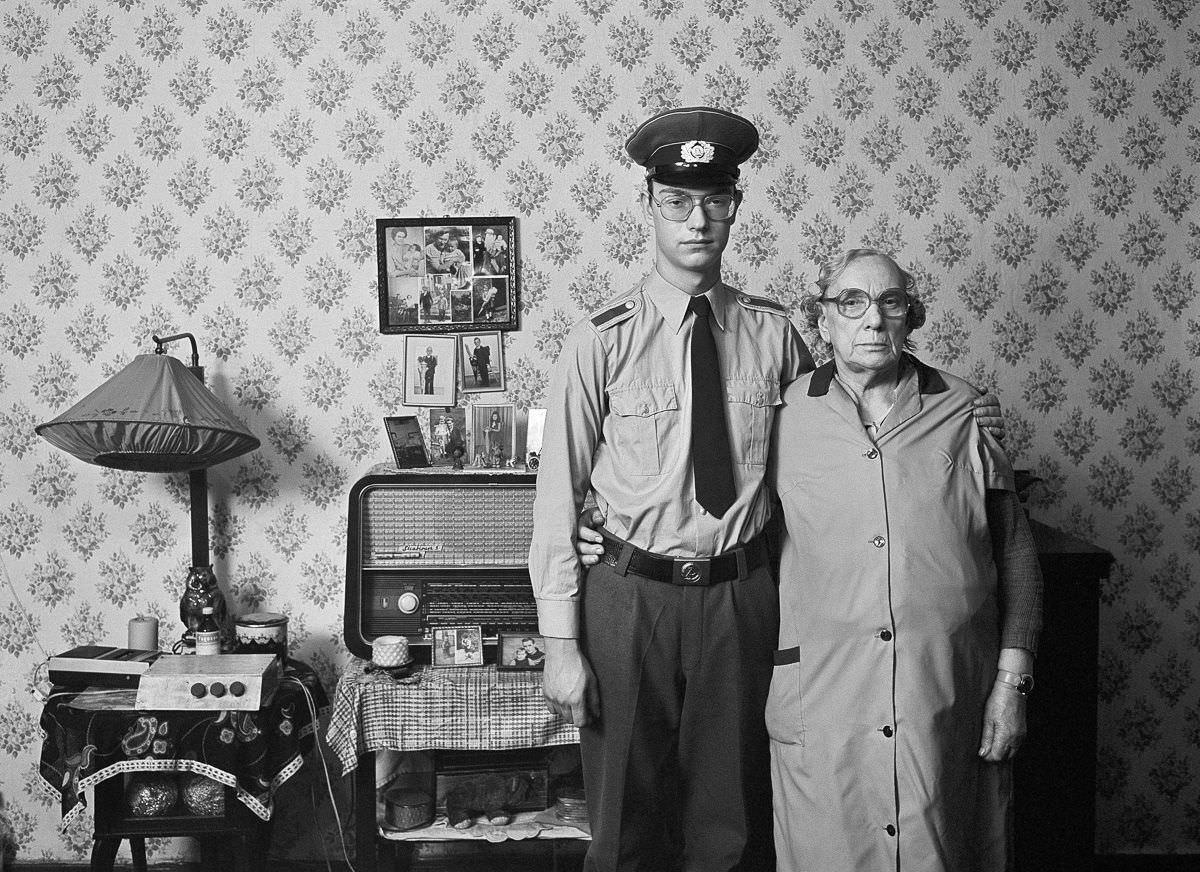
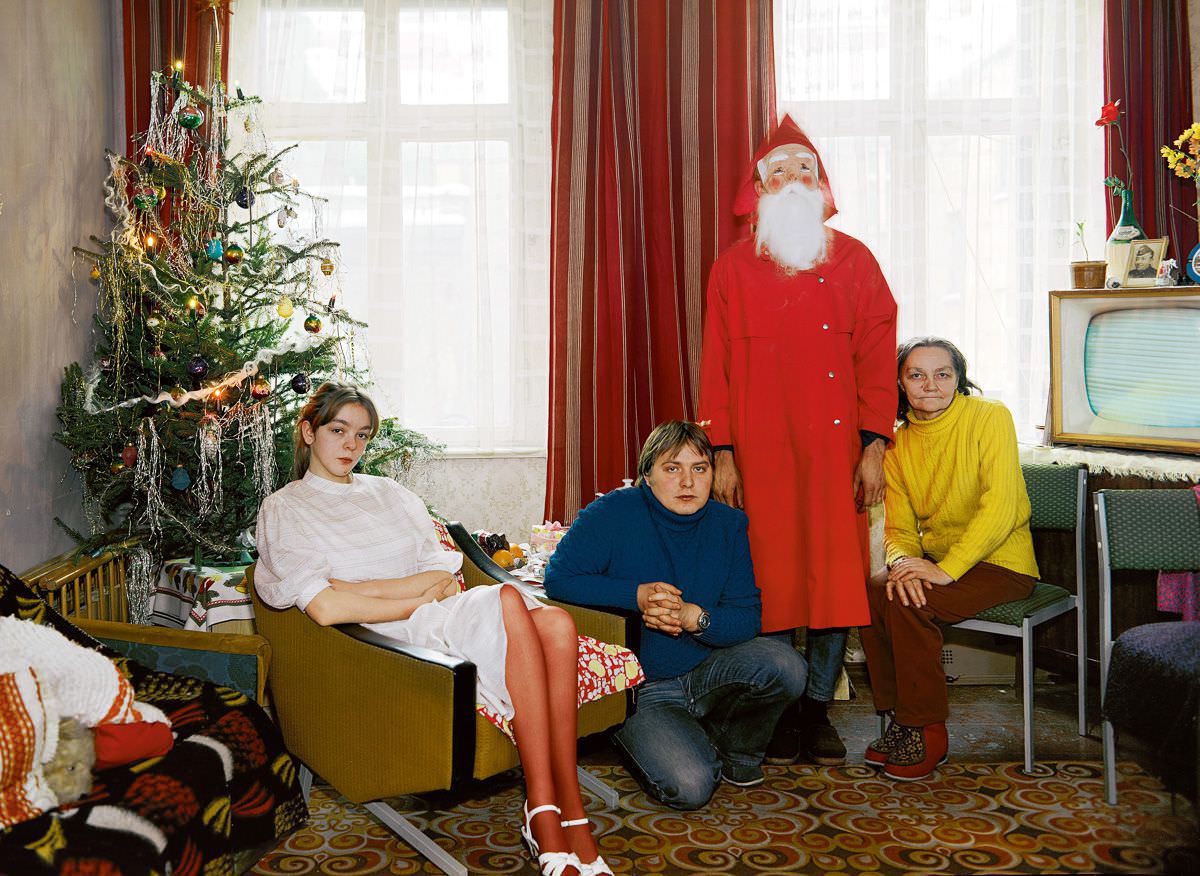
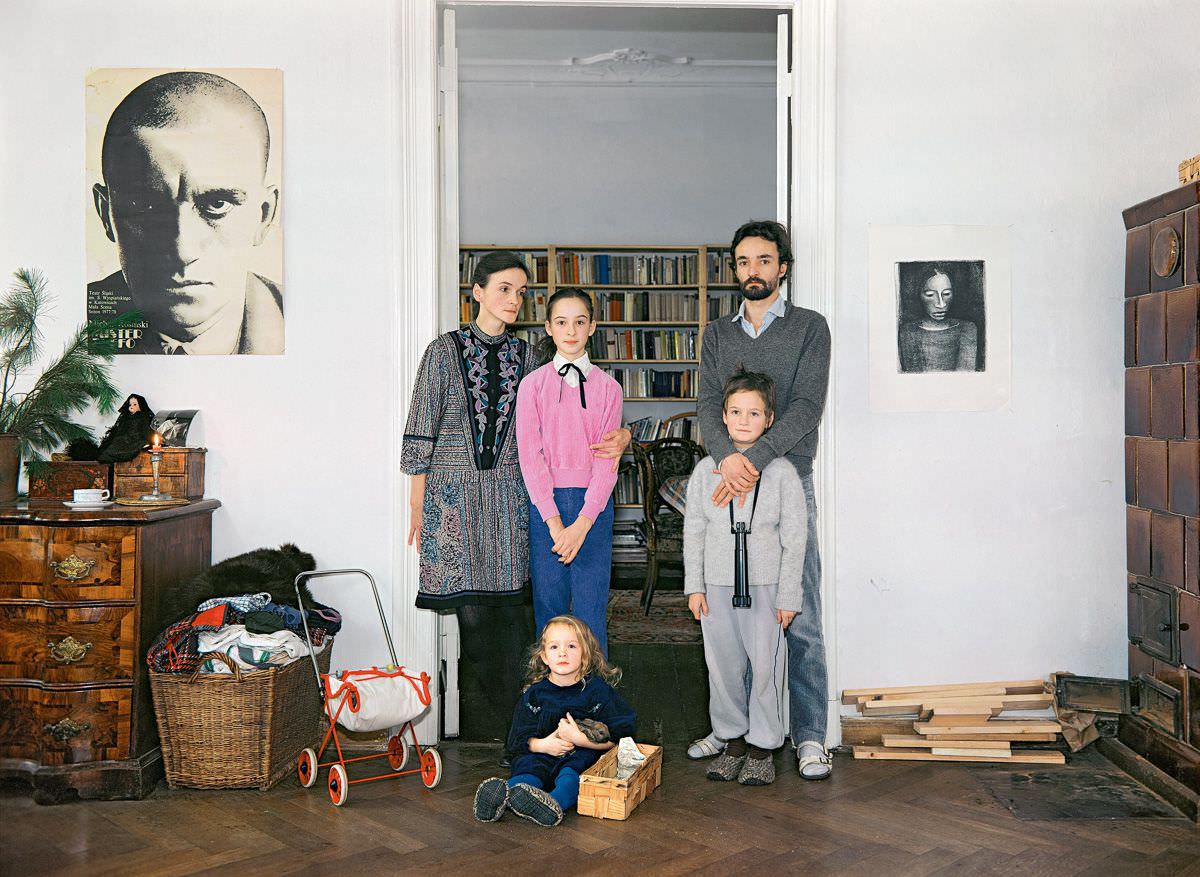
The resulting photographs capture the full texture of neighborhood life — families in their best clothes, workers on the job, children in school uniforms, and couples marking milestones. These were not curated socialist showcase images. They were honest slices of daily existence in a state-controlled society, taken by someone who lived among the people he photographed.
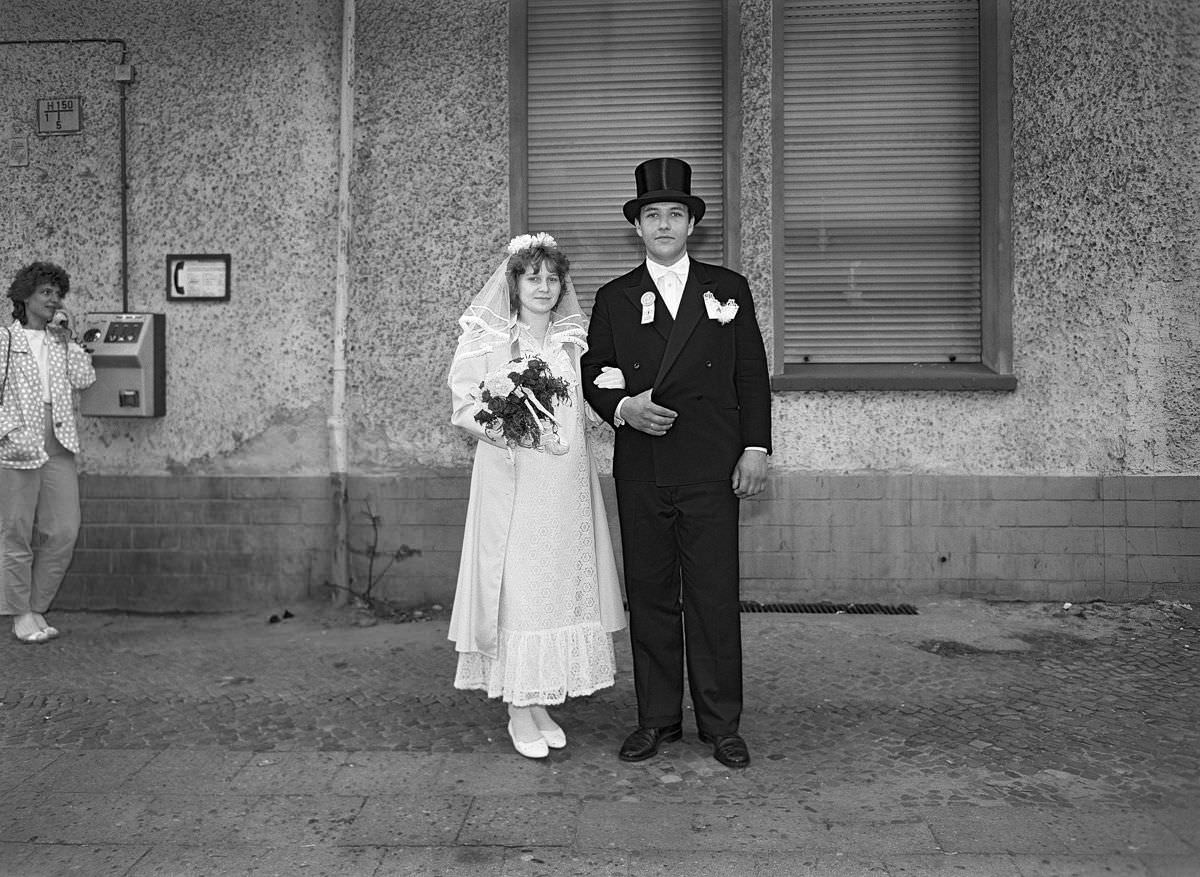
Milestone events appear frequently throughout the collection. Weddings, anniversaries, and family gatherings were documented with the same straightforward approach as everyday street scenes. One couple, the Dresslers, booked a formal wedding package tied to Berlin’s 750th anniversary celebrations — a distinctly East German blend of personal occasion and state commemoration.
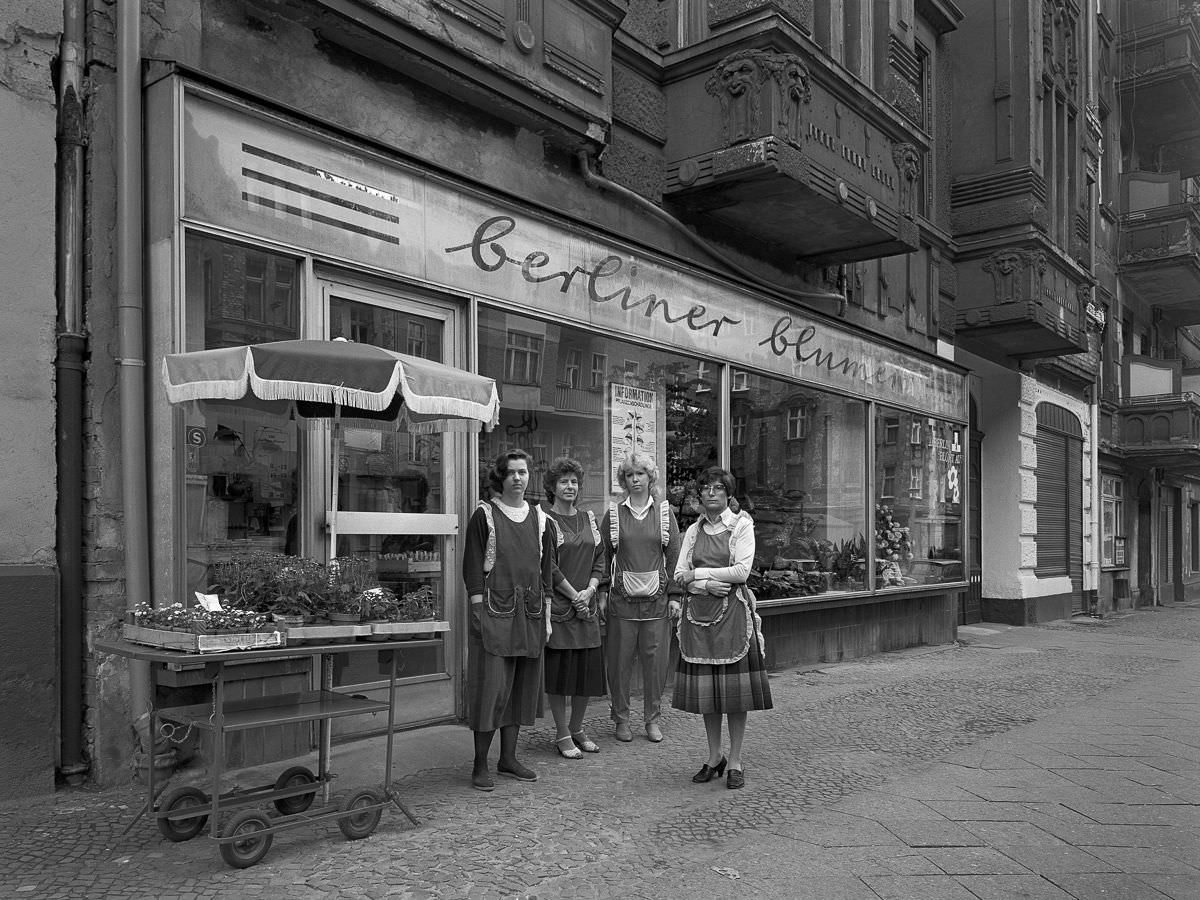
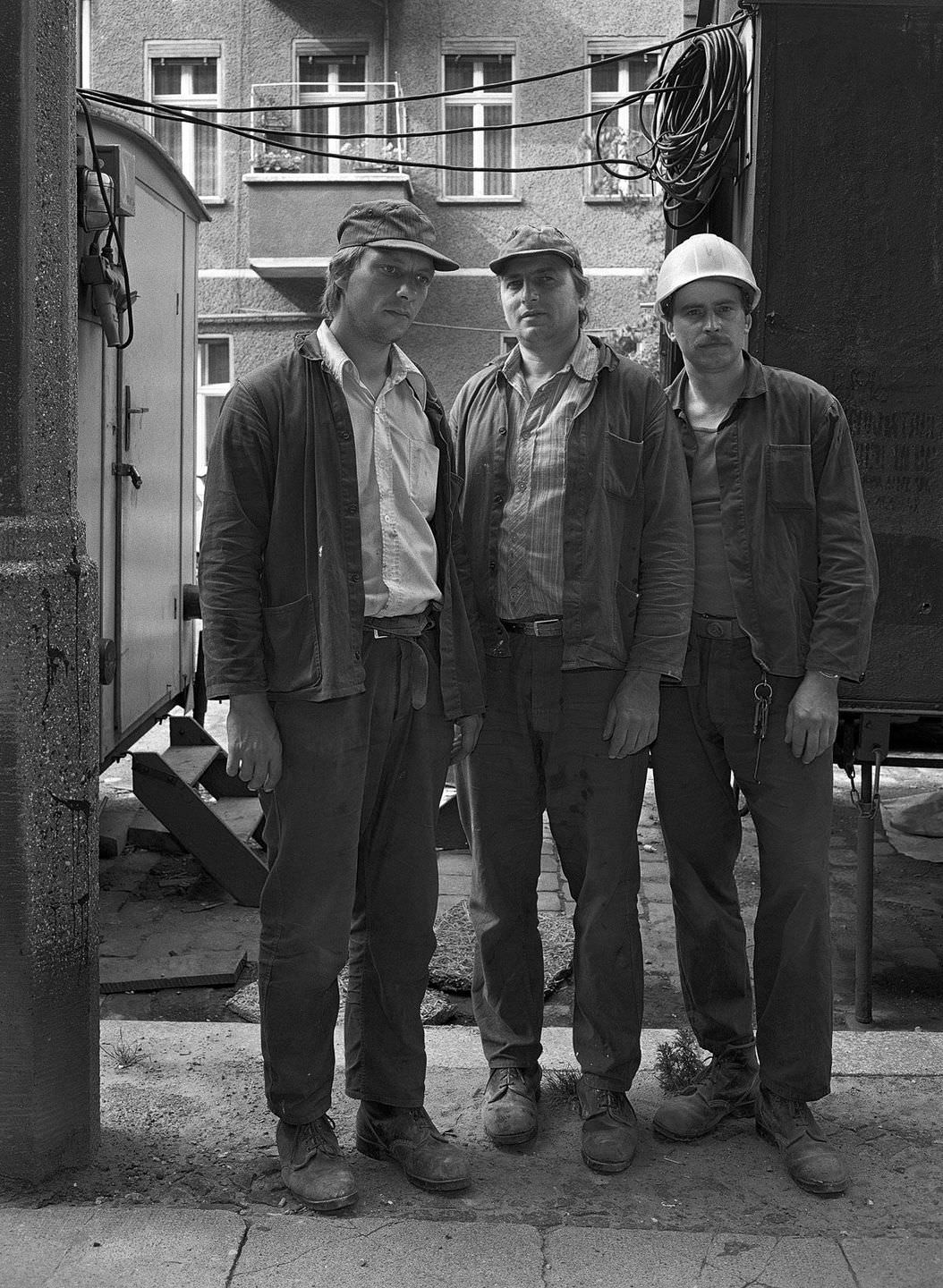
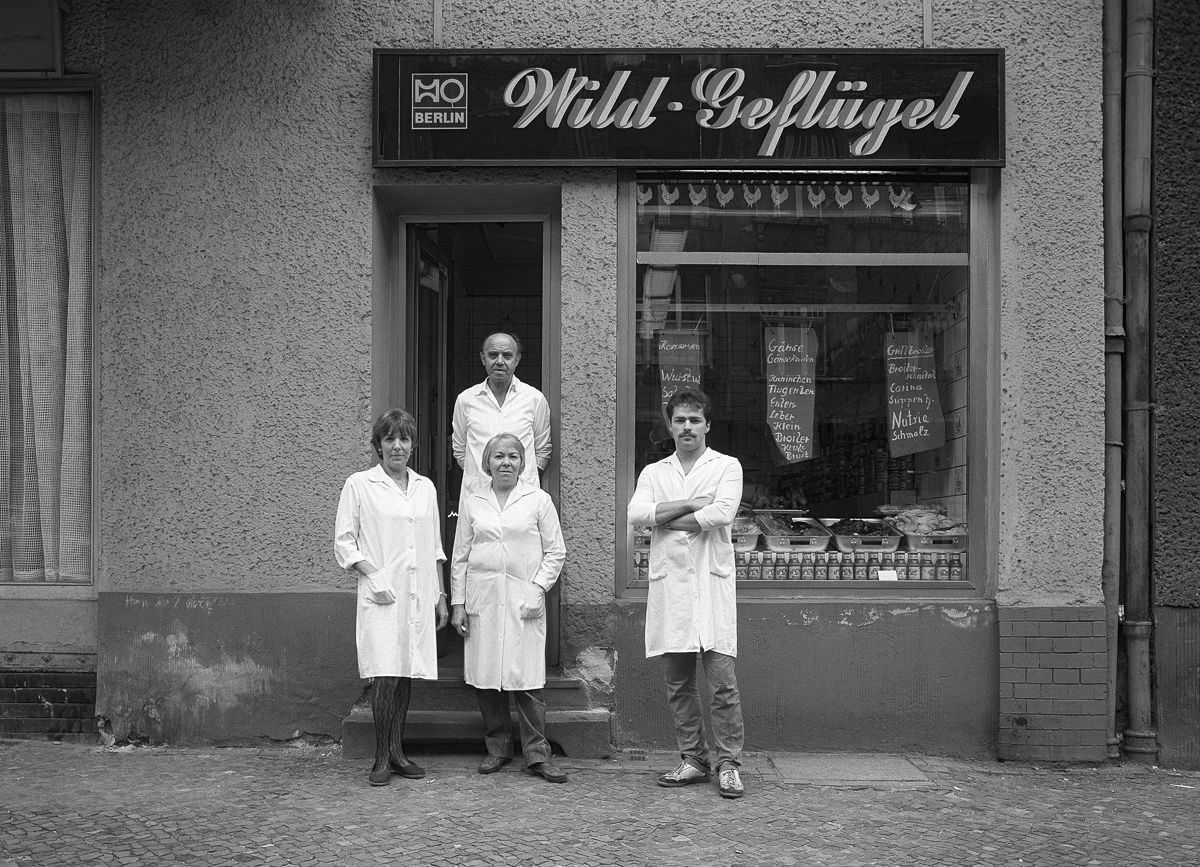
Work life in Hufelandstrasse is equally well represented. The neighborhood’s state-owned shops, tradespeople, and cooperative employees all appear in Zimmermann’s frames. The HO butcher shop — part of the GDR’s centrally managed Trade Organization — sat alongside a cooperative flower shop called Berliner Blumen. Renovation electricians and carpenters appear alongside freelancers and retirees, showing the range of occupations that made up a working East Berlin block.
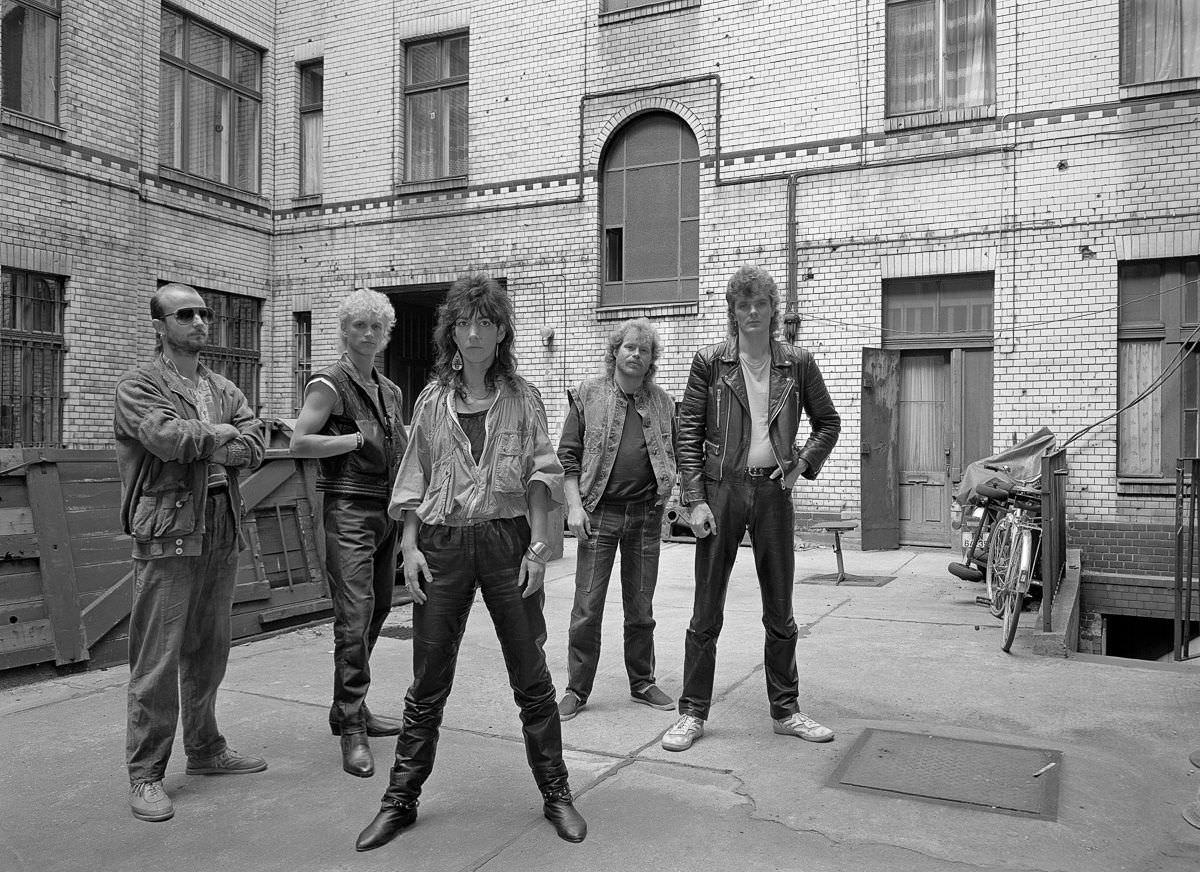
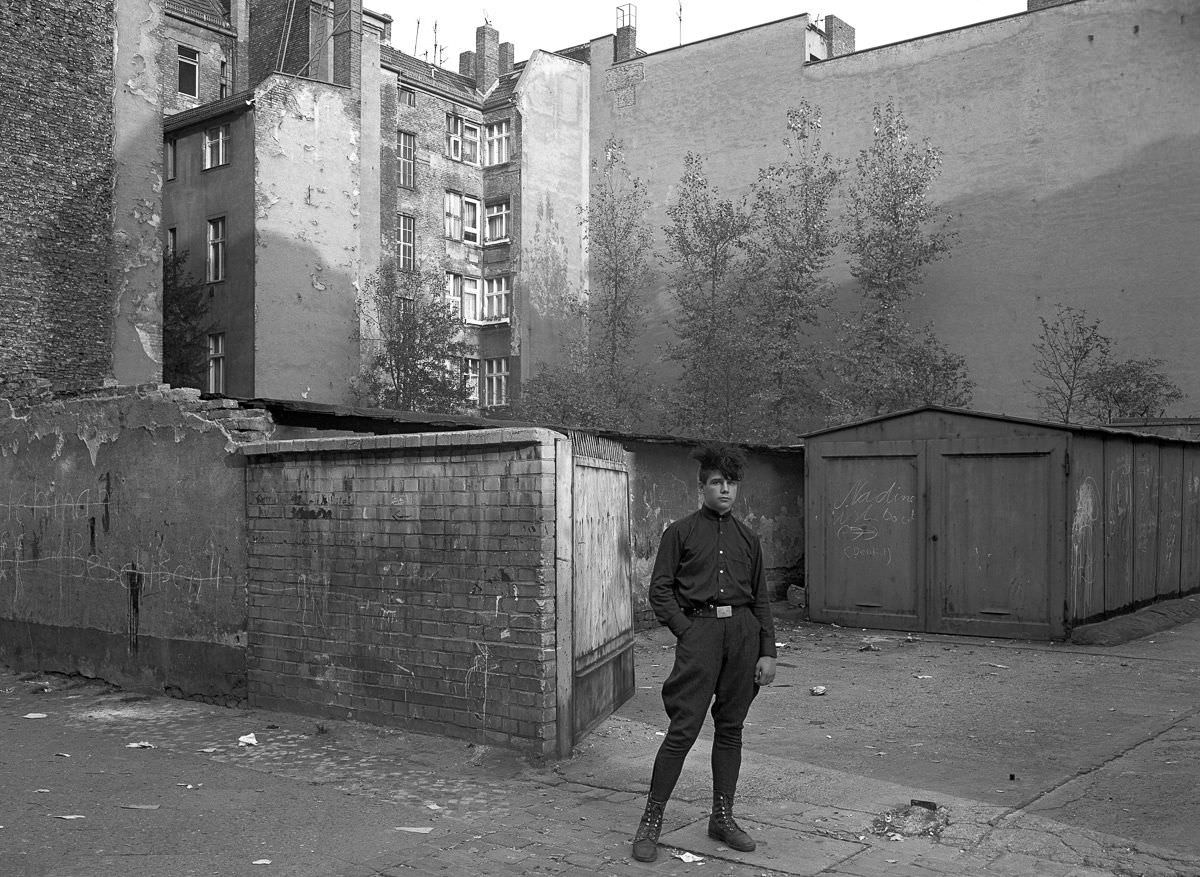
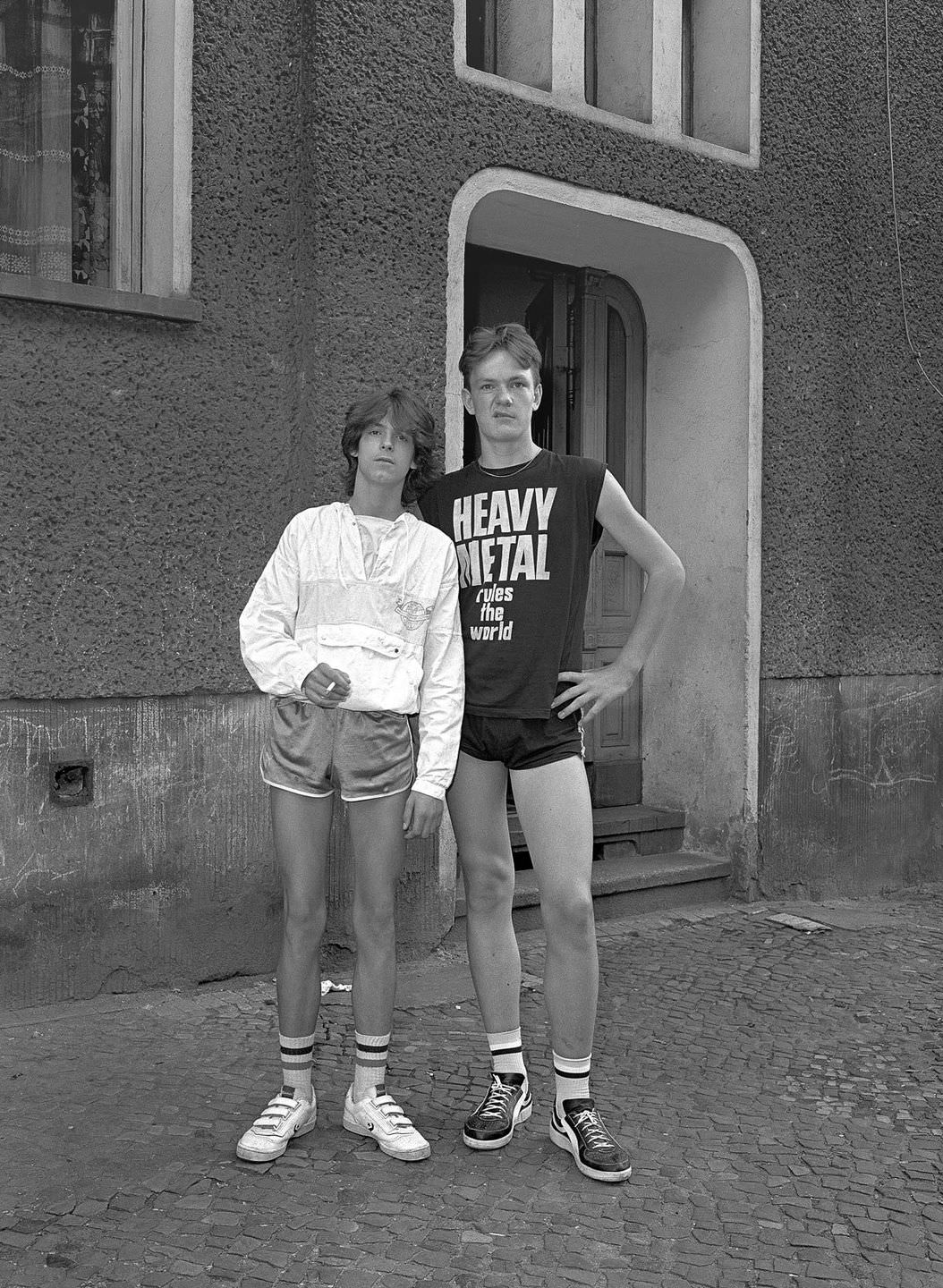
Young people in the neighborhood appear throughout the series as well. Eighth-grade students stand for the camera with the slightly awkward confidence typical of early adolescence. A young man known simply by the nickname ‘Student’ was photographed with the same matter-of-fact approach Zimmermann applied to everyone else on the street.
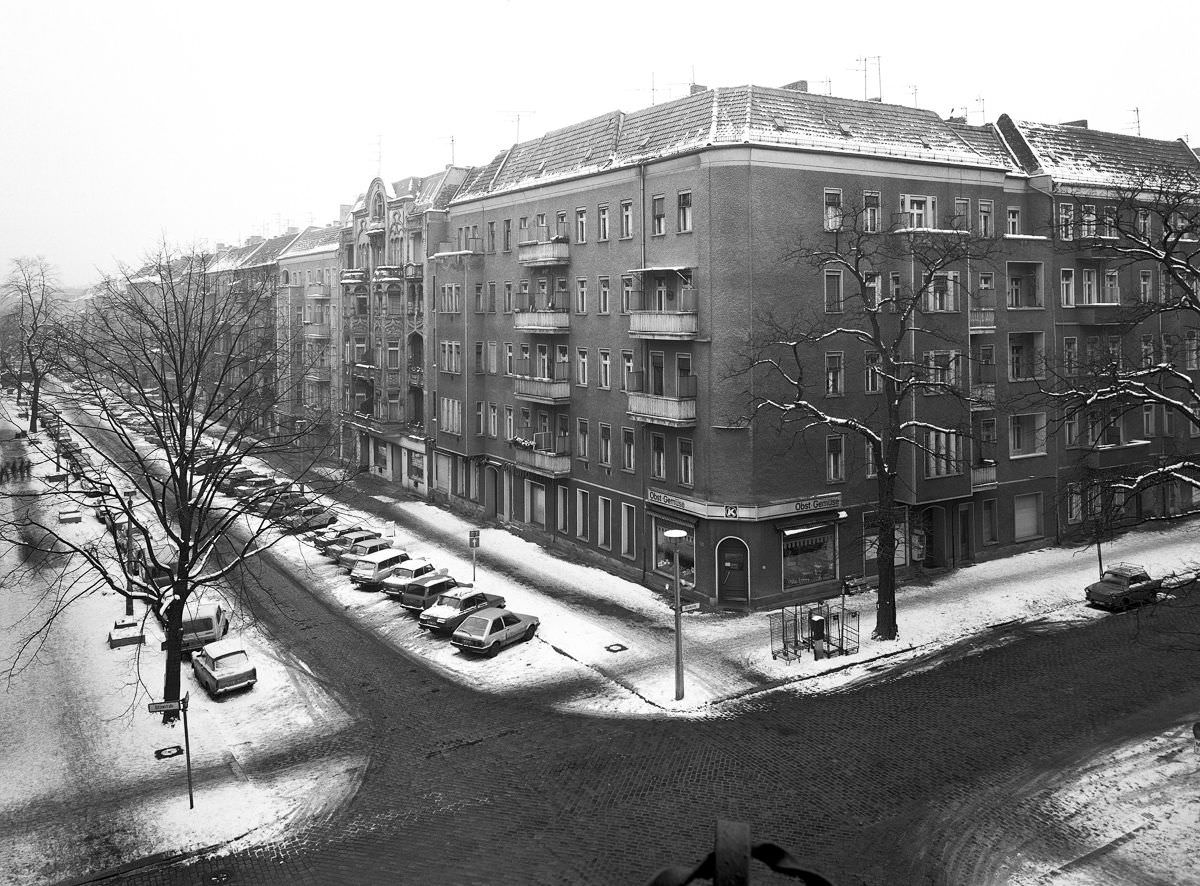
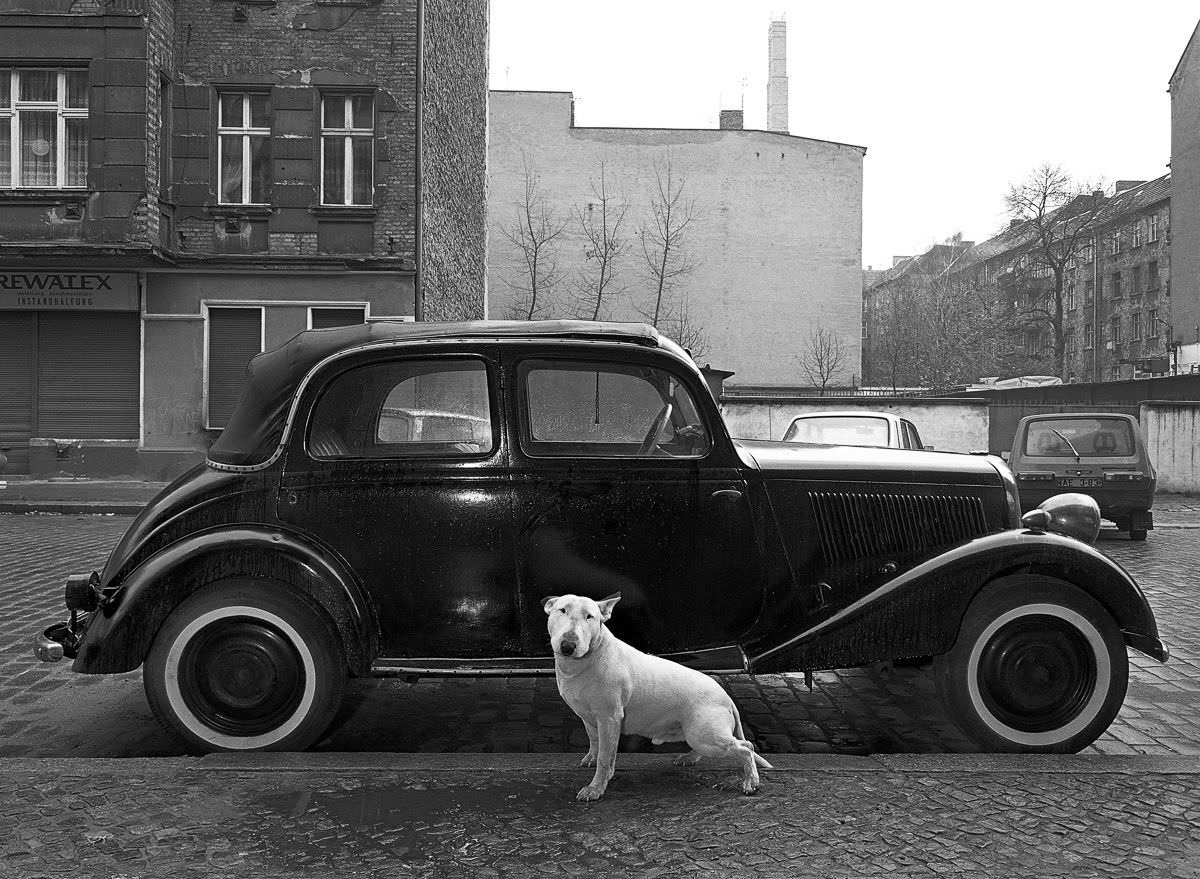
The street corners and storefronts of Hufelandstrasse serve as backdrops that are as telling as the people themselves. A 1936 Mercedes sits parked outside while a bull terrier named Rocky stands in front of it — an accidental pairing of prewar hardware and neighborhood pet that says something about East Berlin’s layered, complicated relationship with its own past.
Families of all configurations fill the archive. Margot Schulz, a disabled retiree, was photographed with three of her fourteen children. Multi-generational households appear across multiple frames — grandmothers with grandchildren, parents with young children in tow, extended families gathered at home and on the street. These were ordinary people living ordinary lives inside an extraordinary political system.
What Zimmermann built over years of daily work in Hufelandstrasse was something the neighborhood had never had before: a documentary record made on its own terms, not the state’s. No poses reinforcing ideology. No careful staging for the party newspaper. Just the people of one East Berlin block, standing as they were.