After years of wartime hardship, Americans in the 1940s were ready to exhale. The beach became one of the most popular escapes. Families packed lunches, loaded up the car, and spent entire days on the sand. There were no quick getaways — a beach trip was an all-day event, and people made the most of every hour.
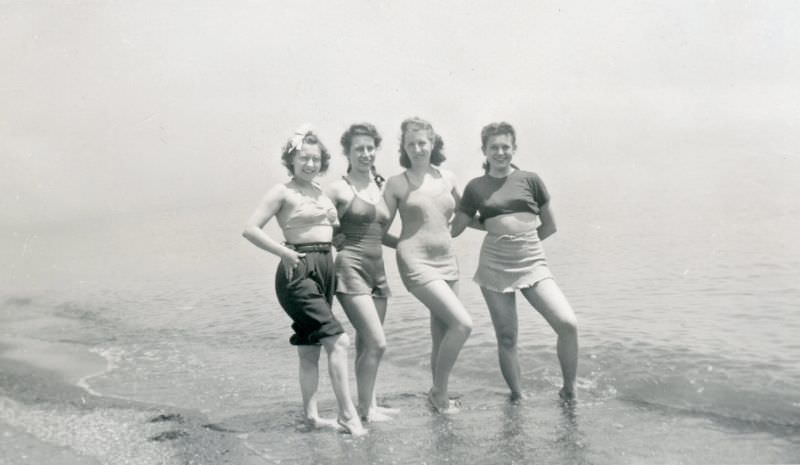
A typical beach day meant spreading out a blanket, setting up a spot in the sun, and staying there from morning until the light faded. Kids played at the water’s edge while adults lounged nearby. It was unhurried in a way that feels almost foreign today.
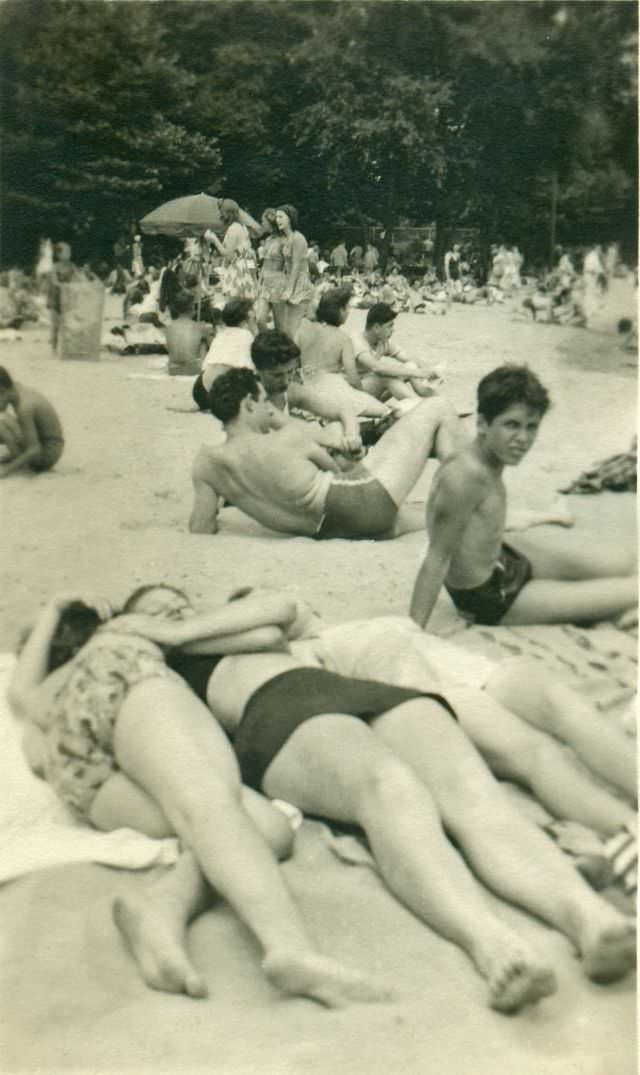
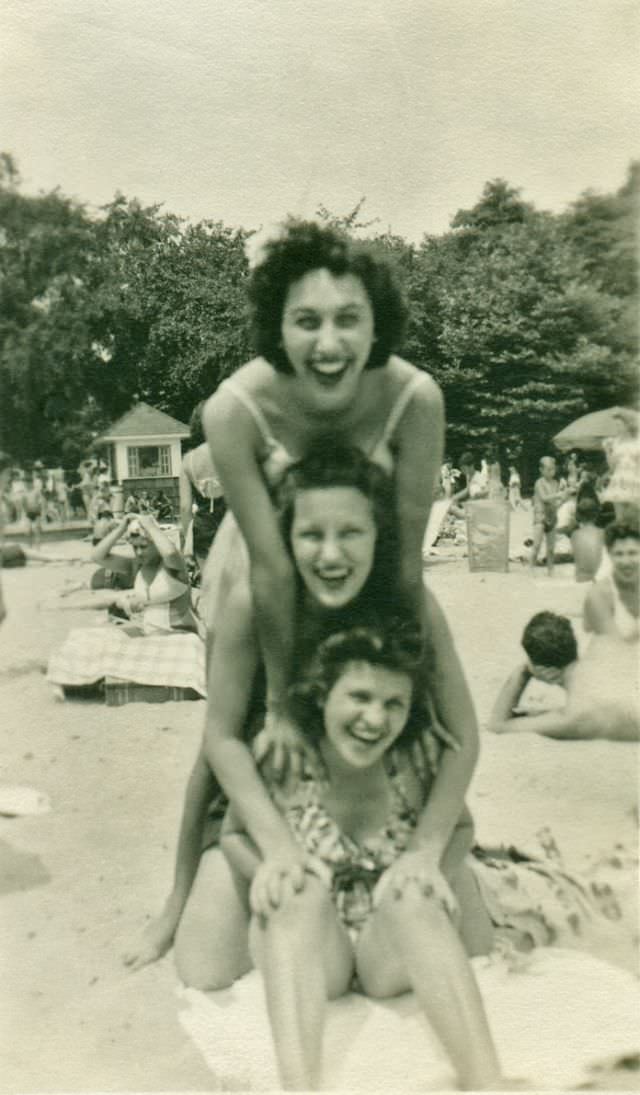
Beach volleyball took hold on the California coast during this decade. Players set up makeshift nets directly in the sand and competed in the heat for hours. It was competitive, physical, and completely free — no gym membership required.
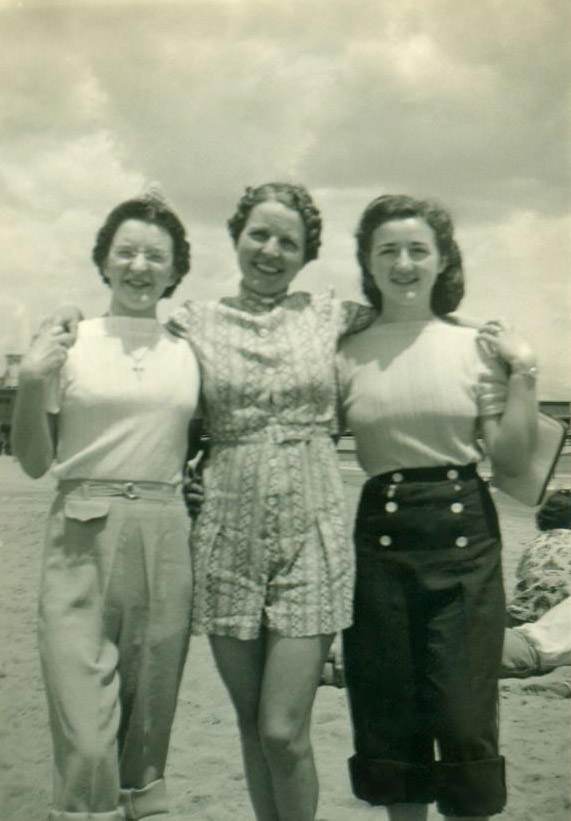
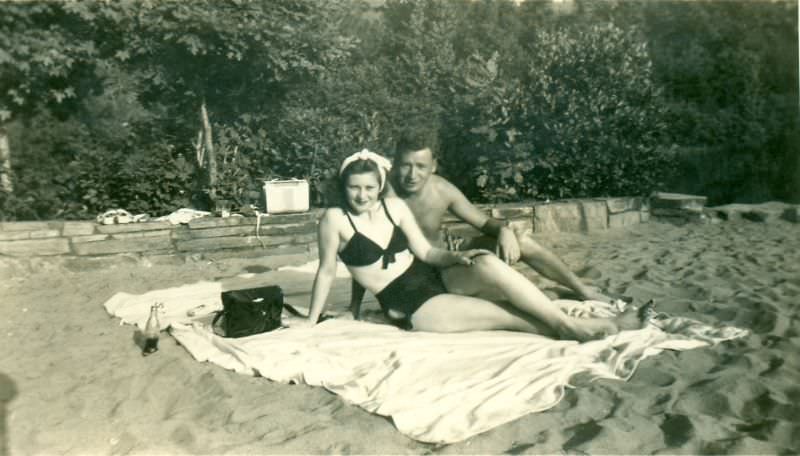
Surfing was also growing fast in the 1940s. The boards of the era were made from solid wood, making them heavy and difficult to maneuver. Surfers hauled them down to the water anyway and paddled out to catch whatever the ocean offered. The sport was raw and demanding, nothing like the polished version seen today.
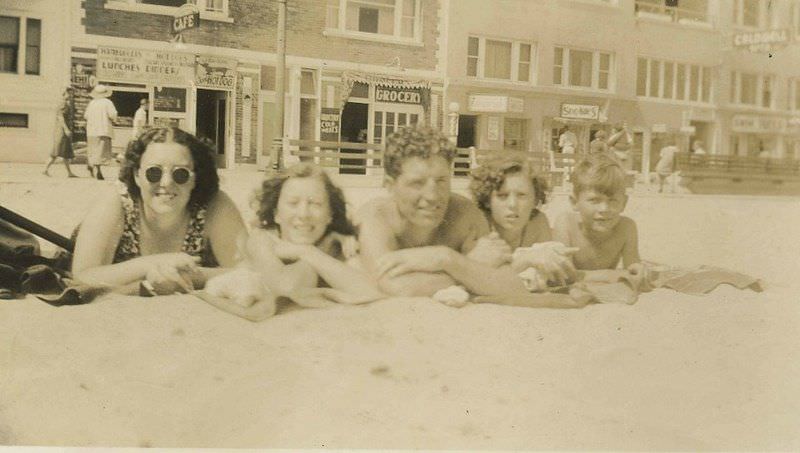
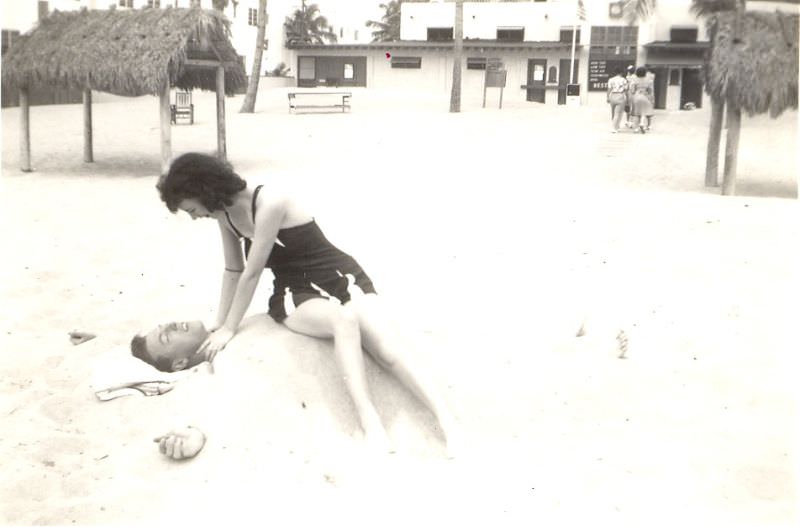
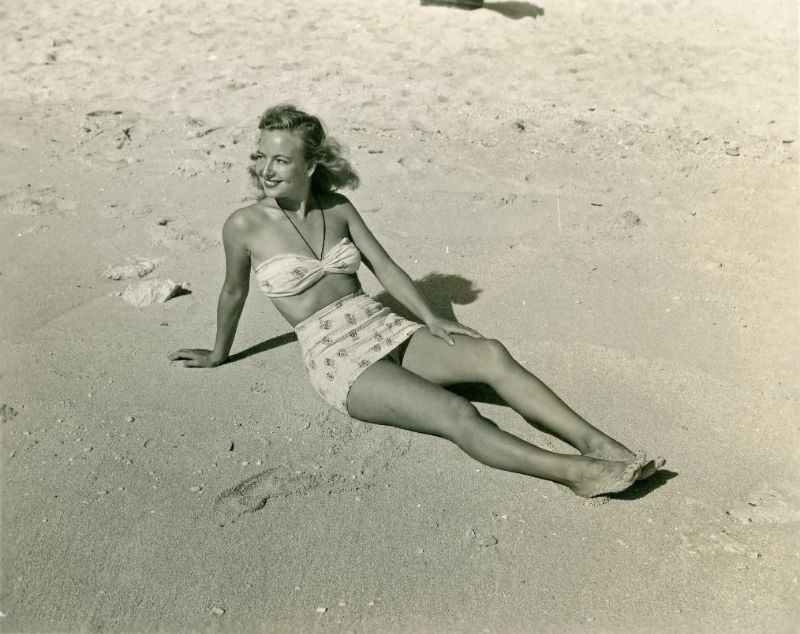
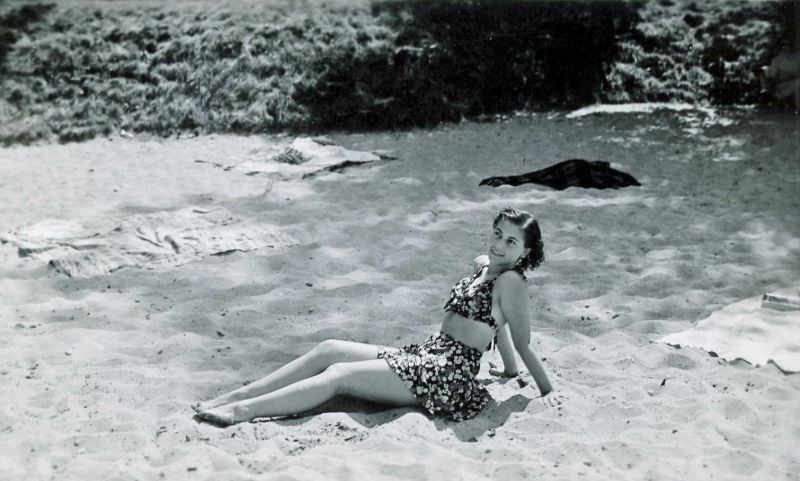
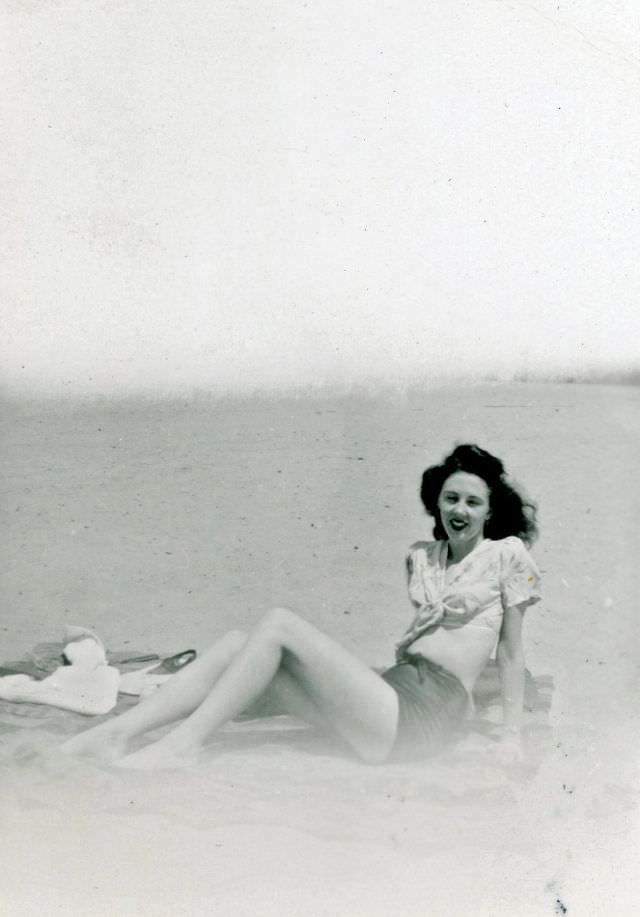
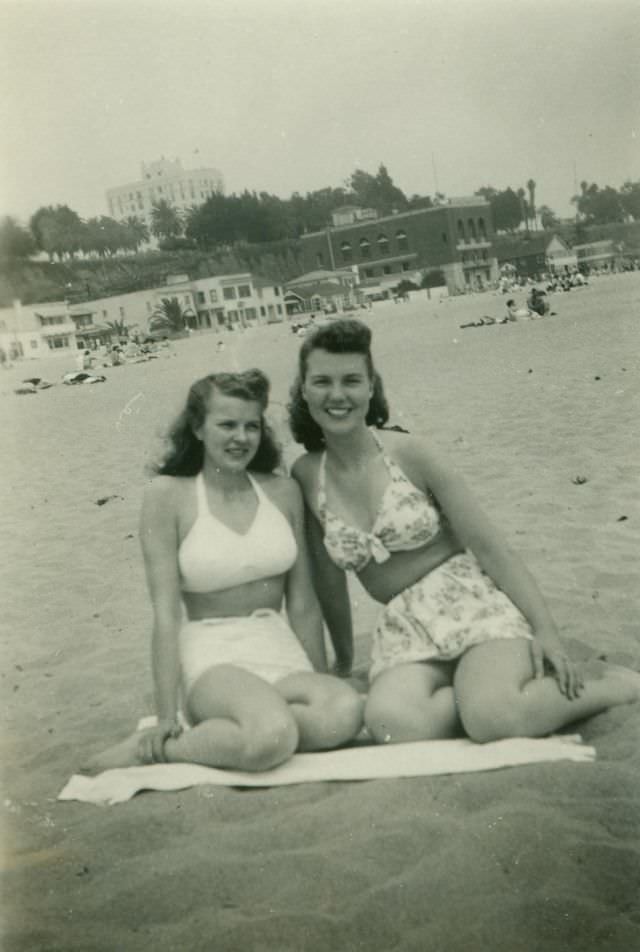
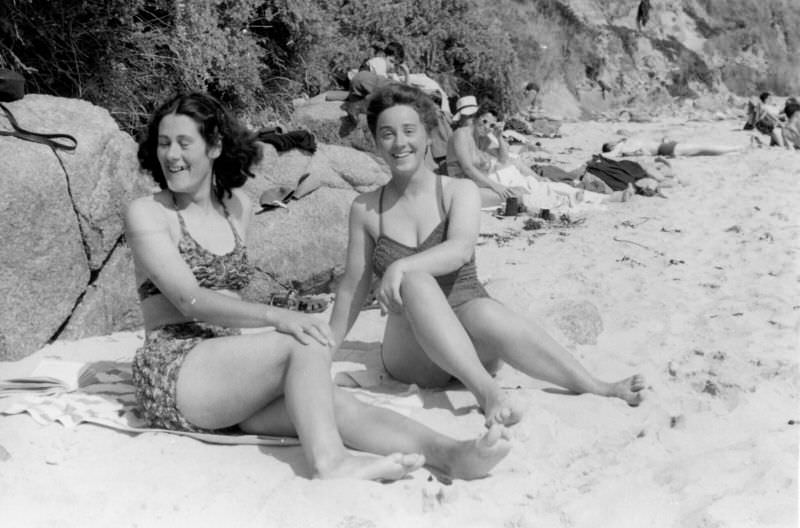
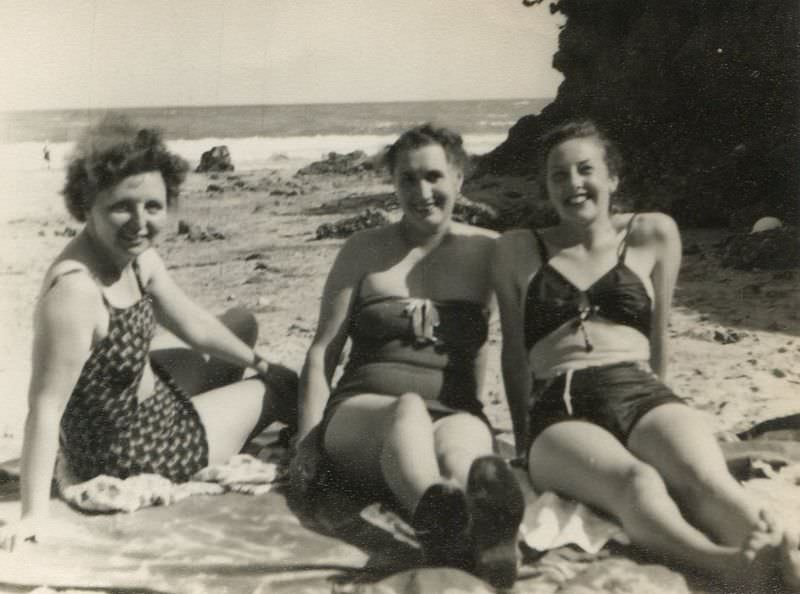
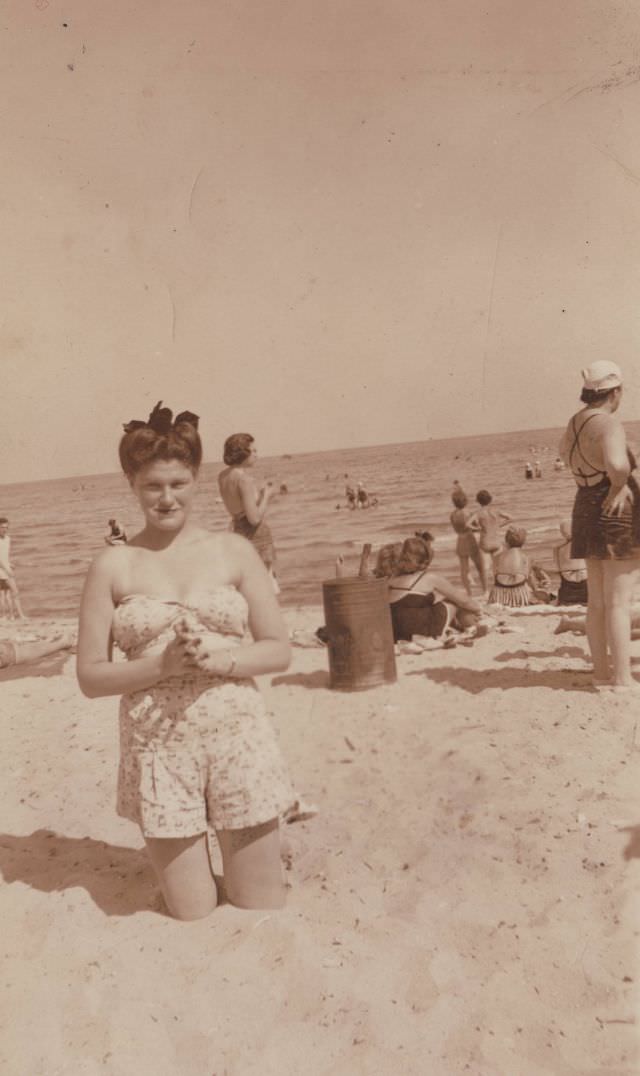
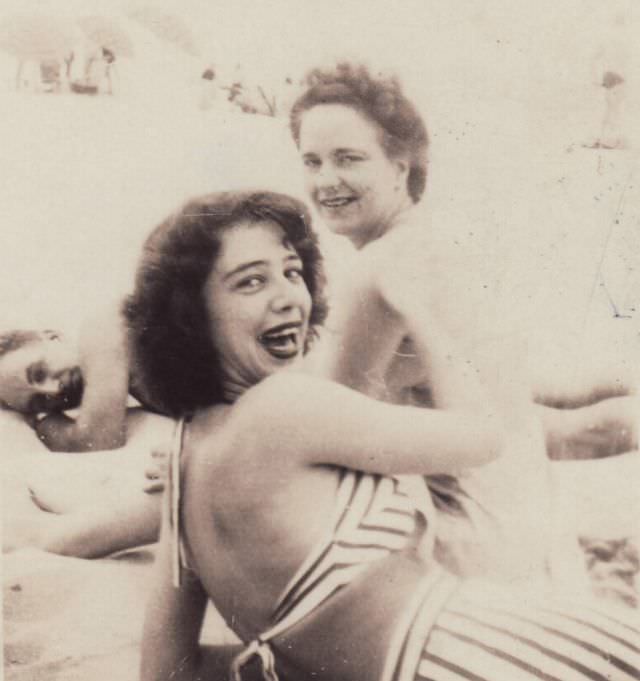
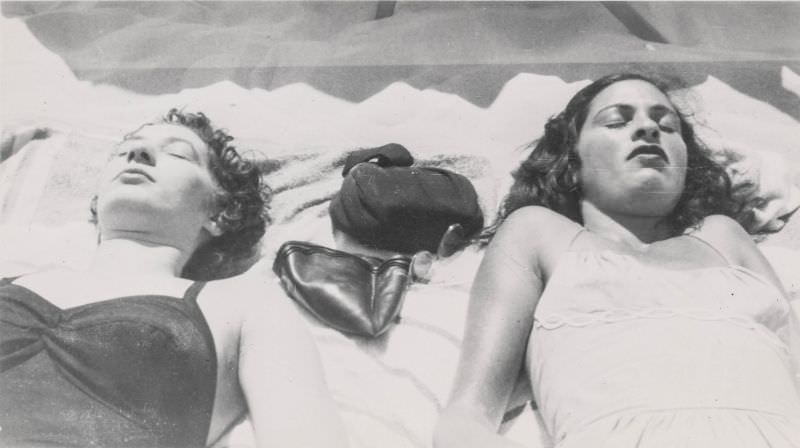
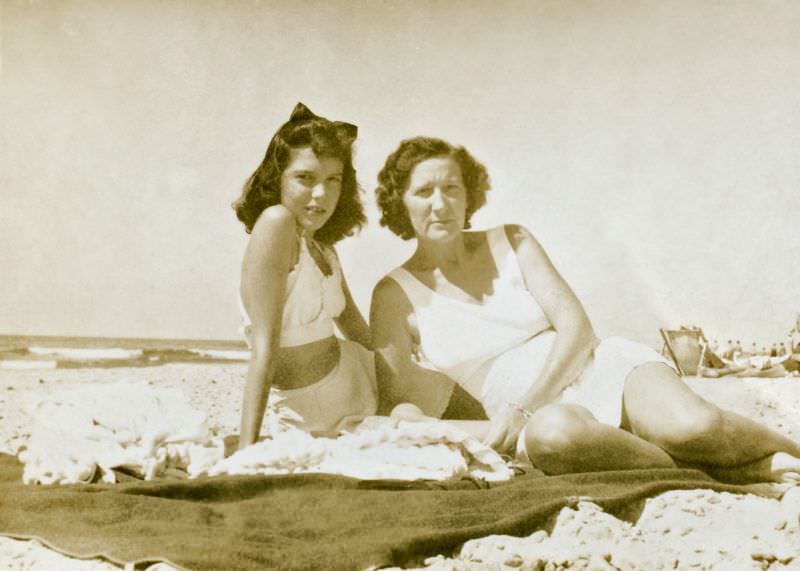
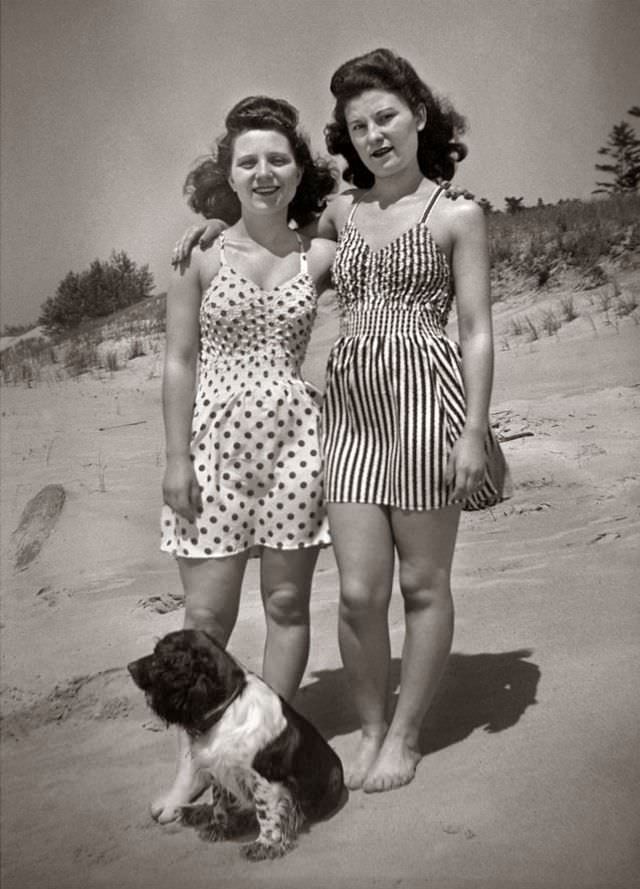
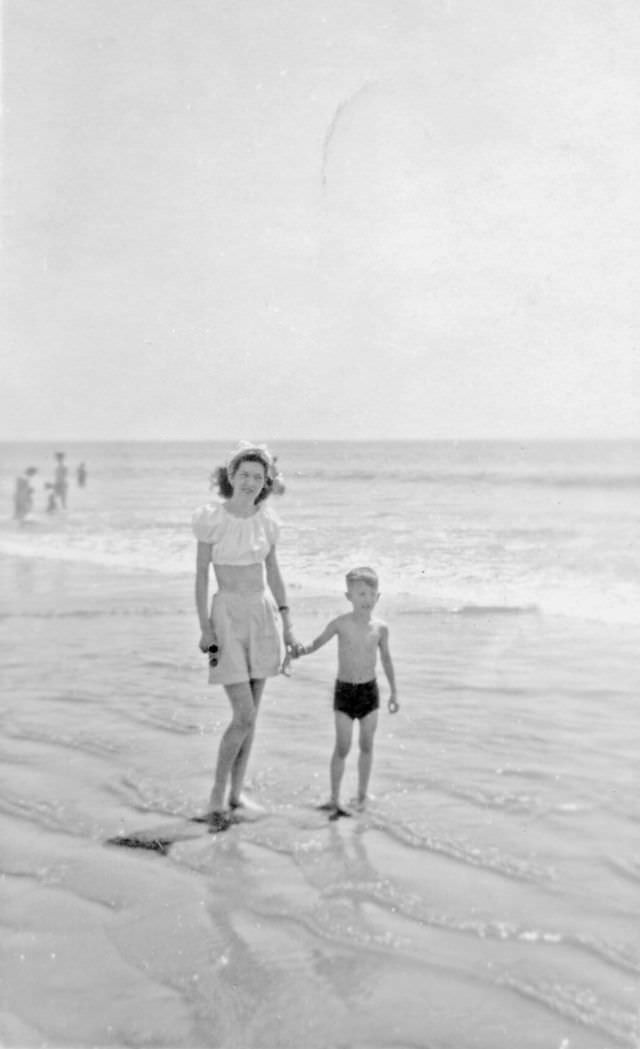
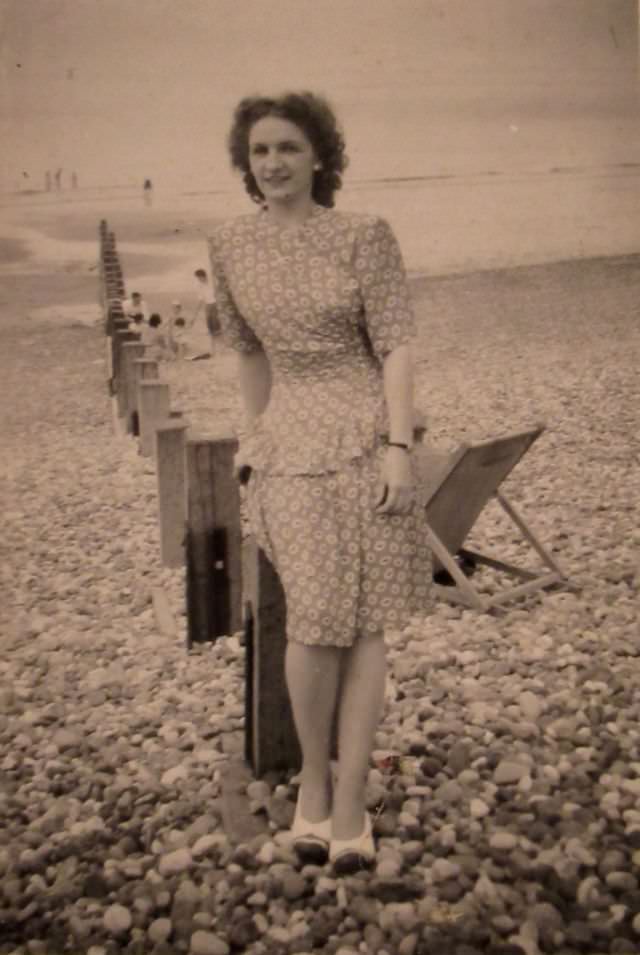
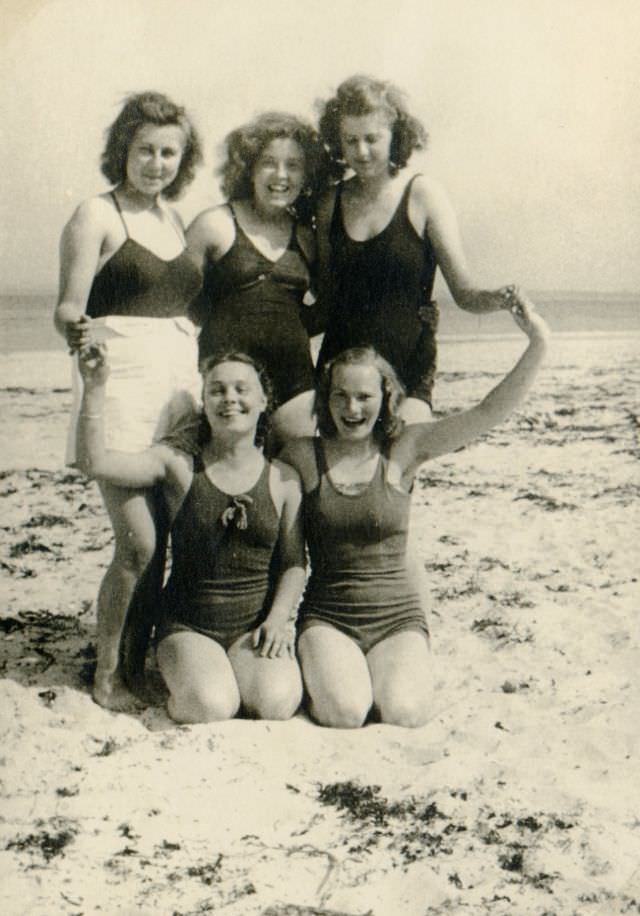
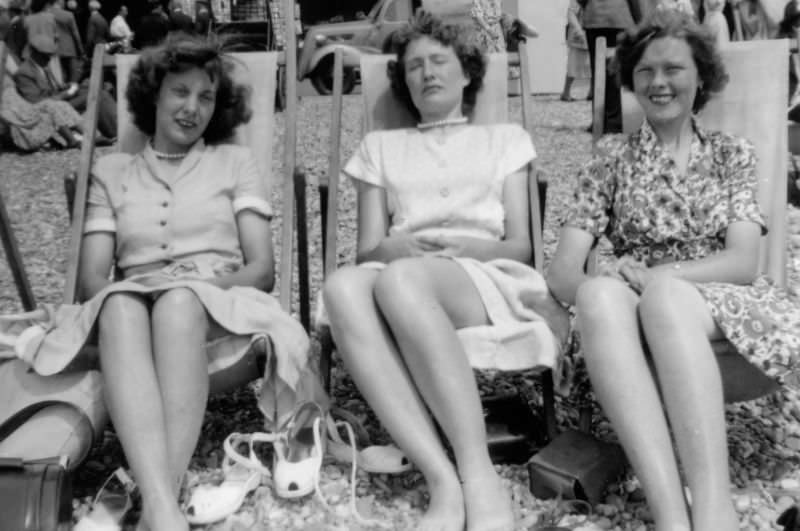
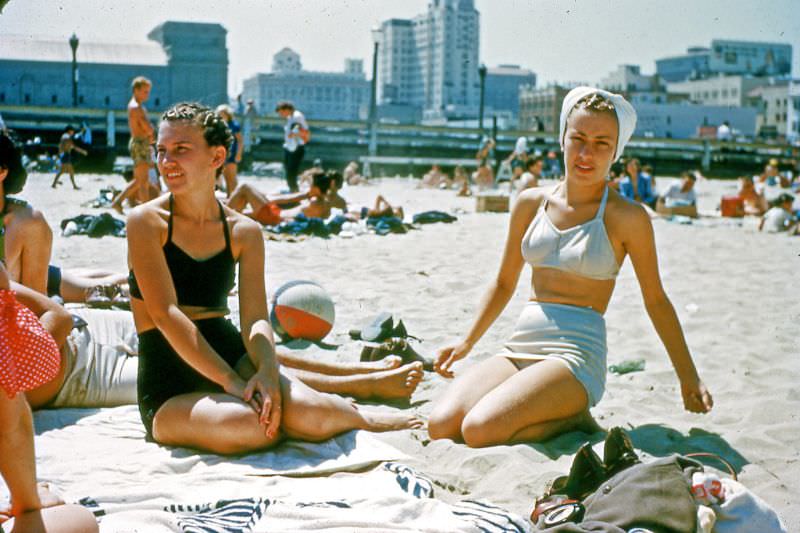
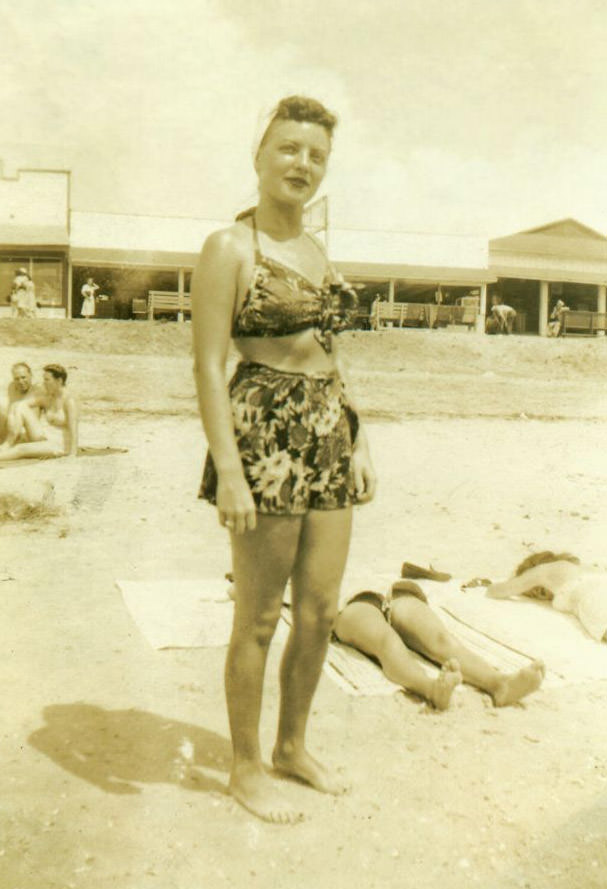
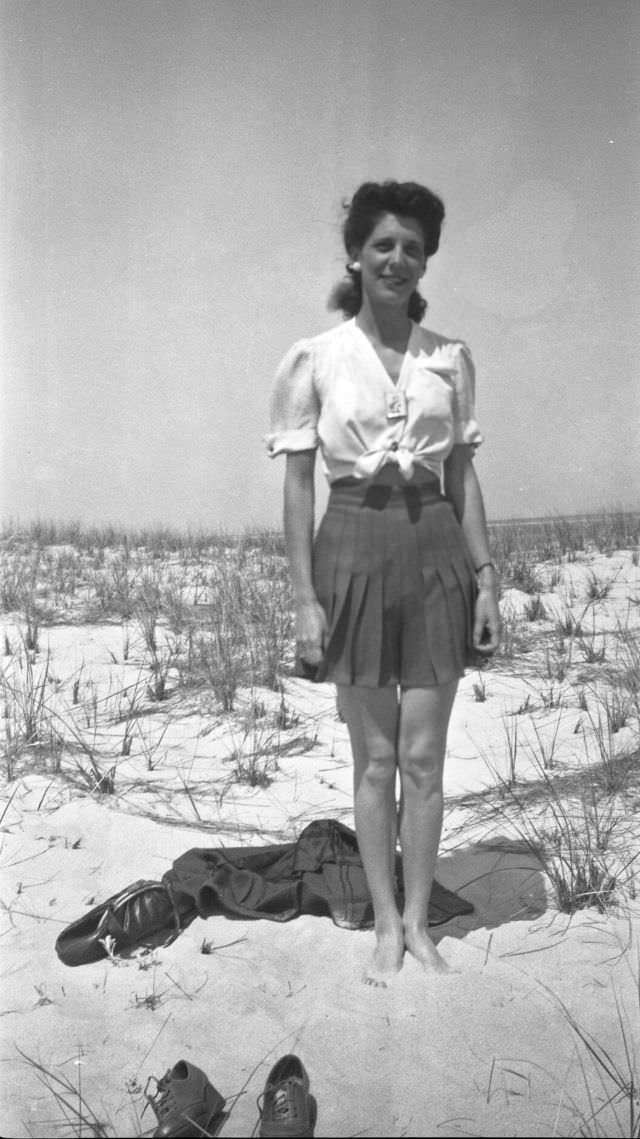
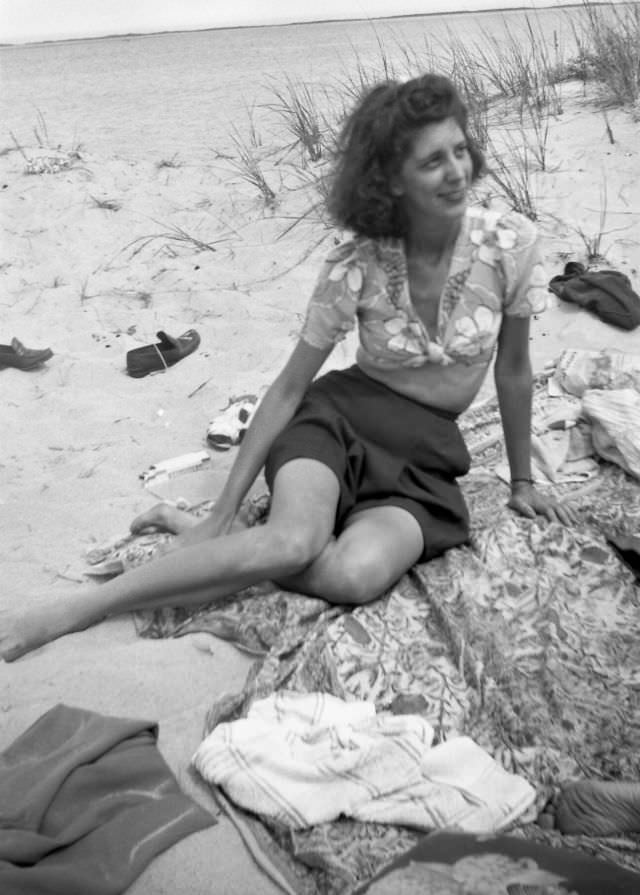
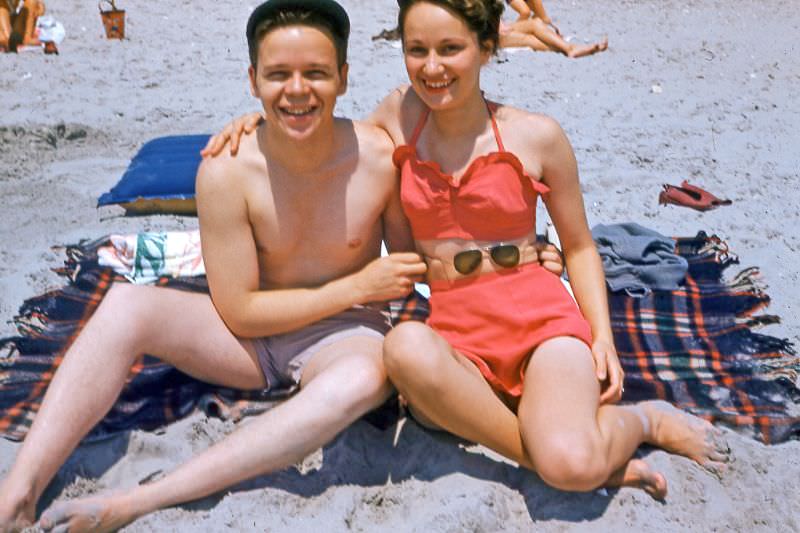
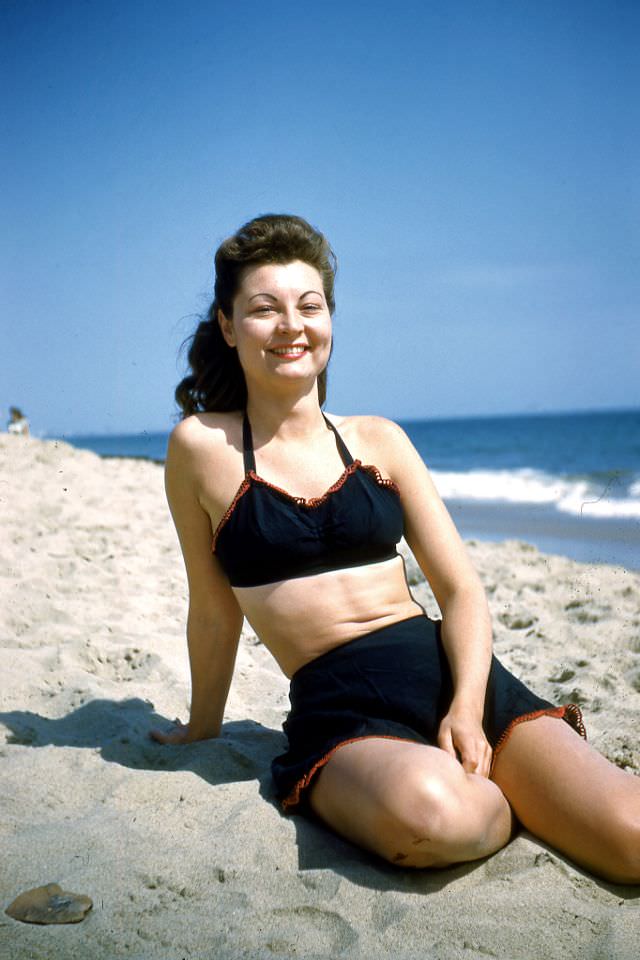
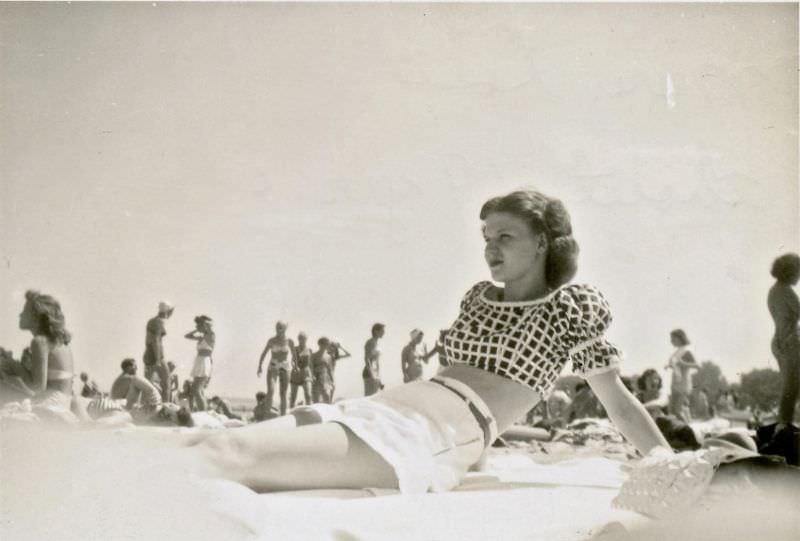
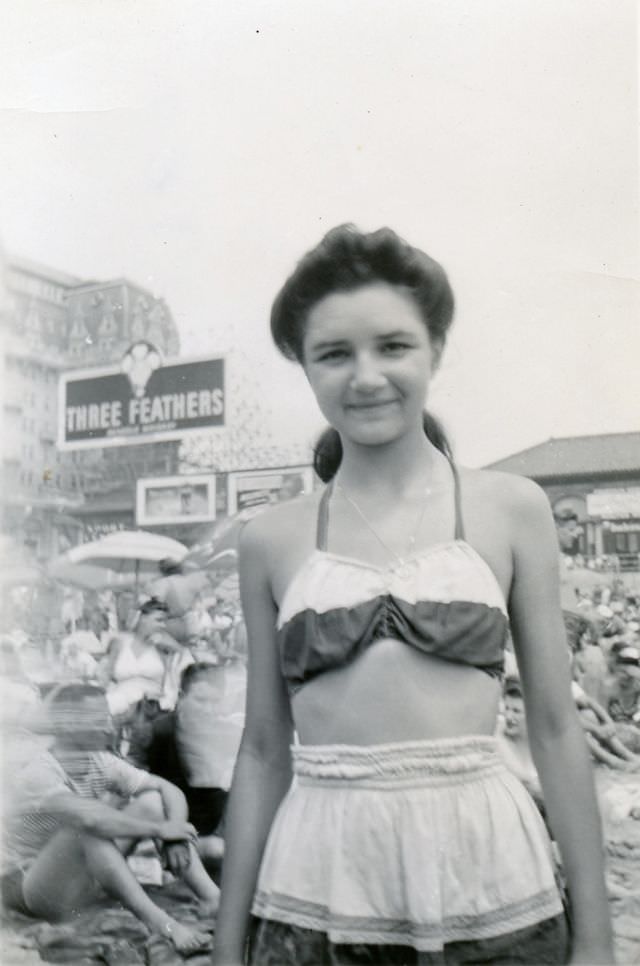
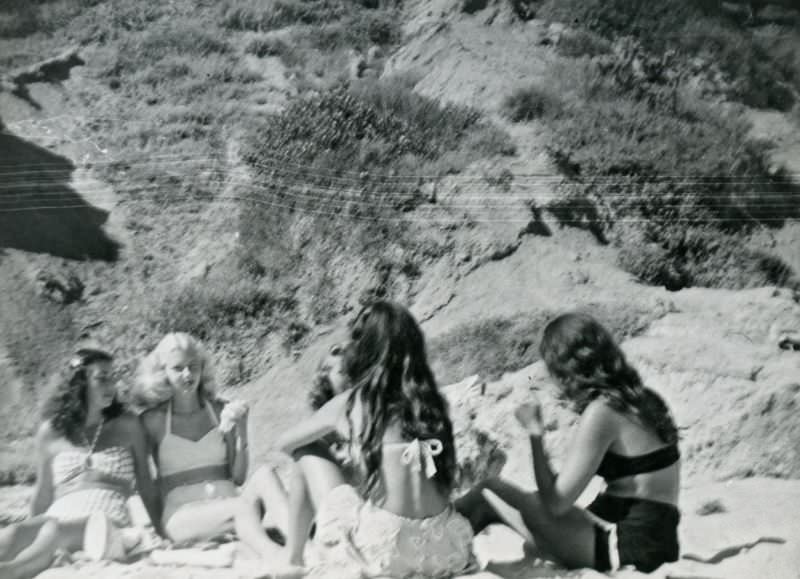
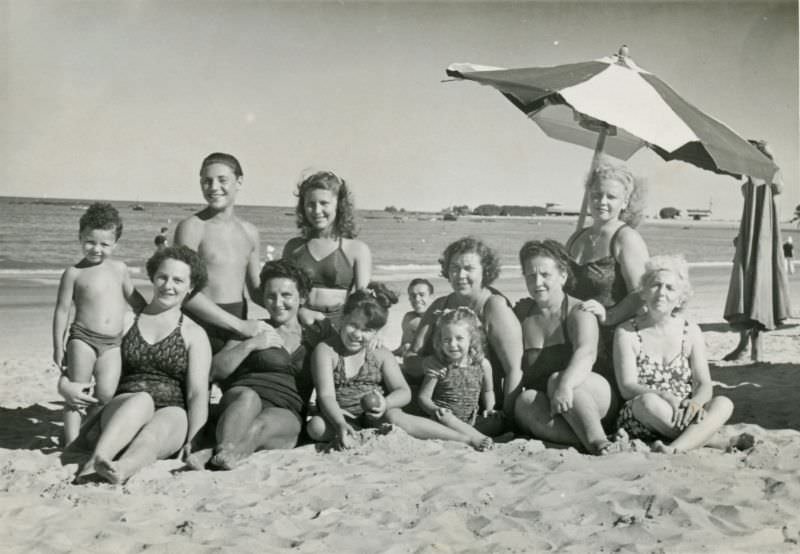
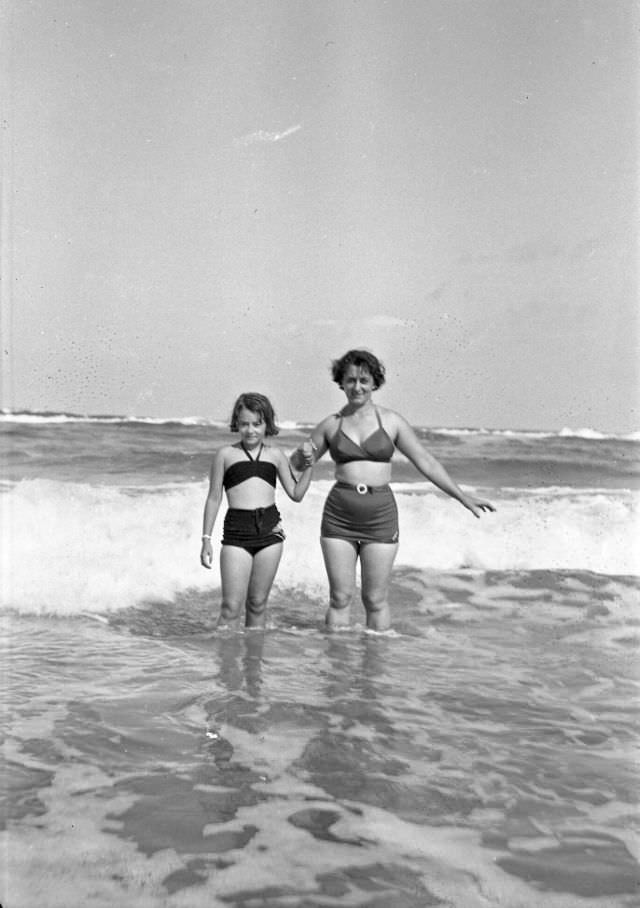
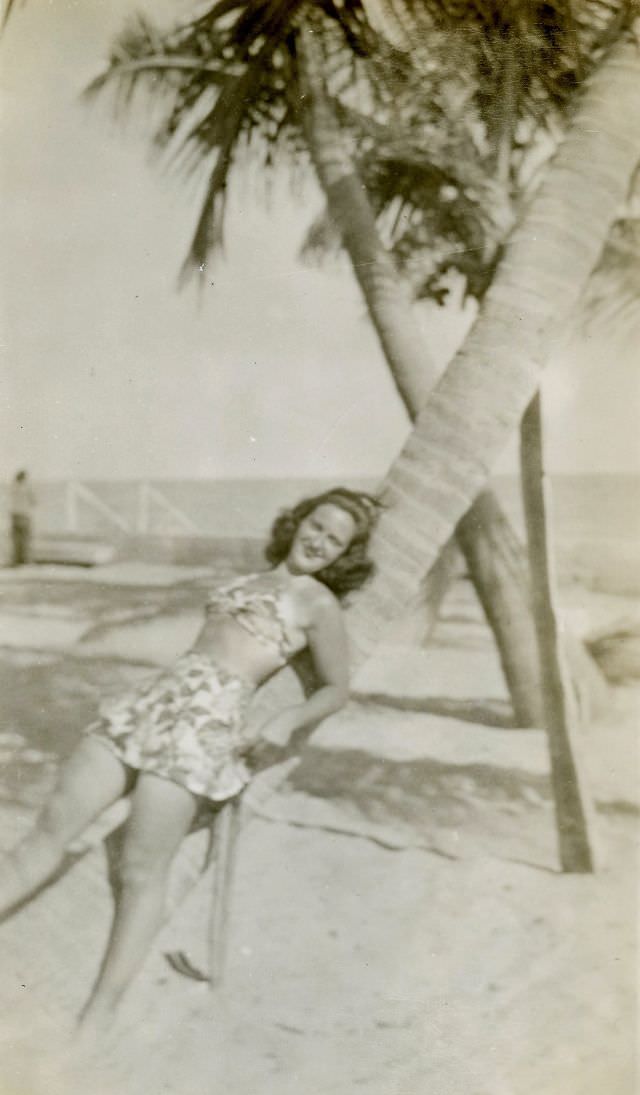
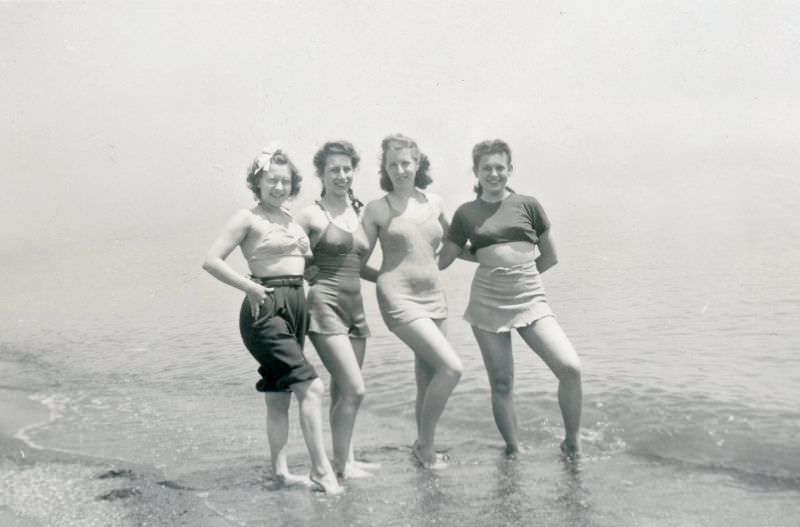
Fashion at the beach in the 1940s followed the style rules of the time. Women wore high-waisted bathing suits and shorts, often featuring ruching and built-in support panels. The silhouette was structured and deliberate. Men paired high-waisted shorts with sleeveless tops, and a good pair of sunglasses was considered essential for both.
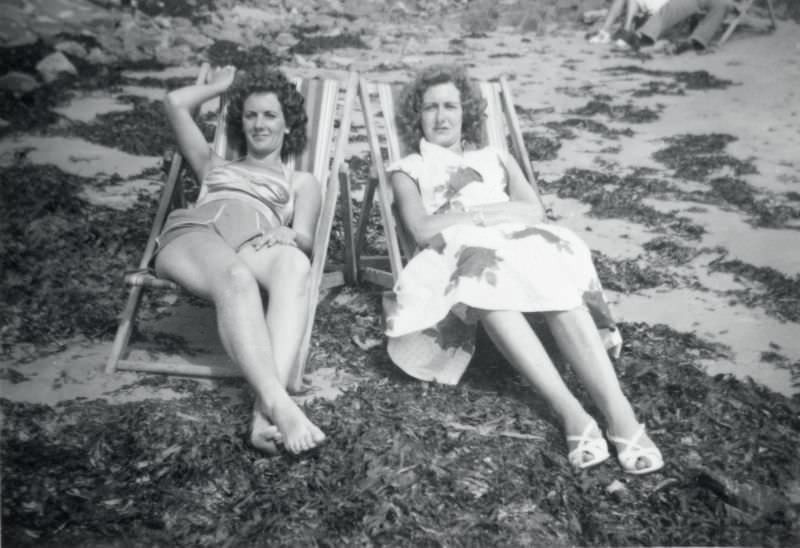
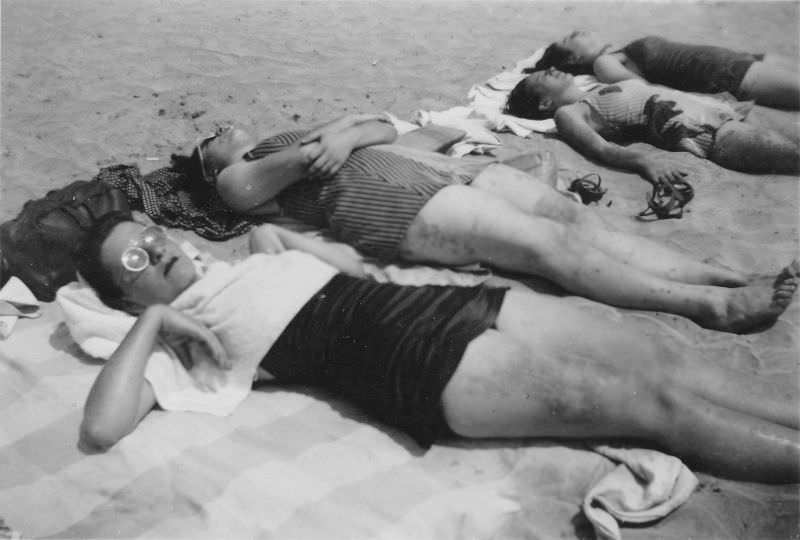
Sunscreen existed in the 1940s, but it wasn’t widely available. Benjamin Green developed an early form called Glacier Cream in 1944, which Coppertone later refined. Most beachgoers simply soaked up the sun without any real protection.
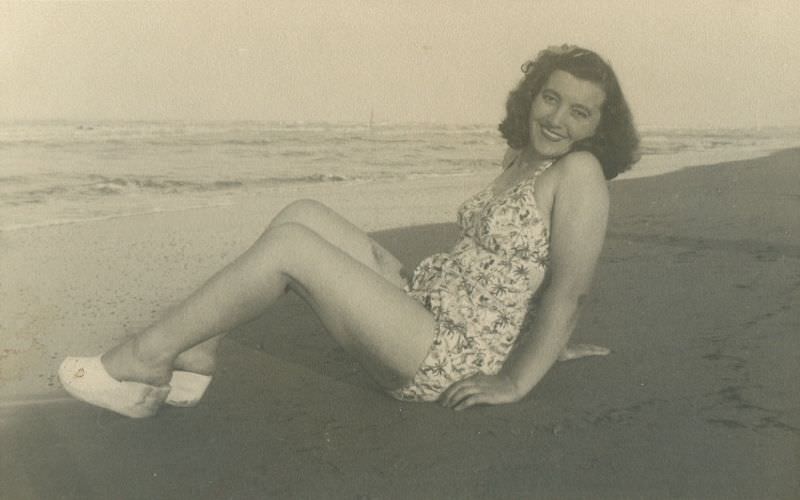
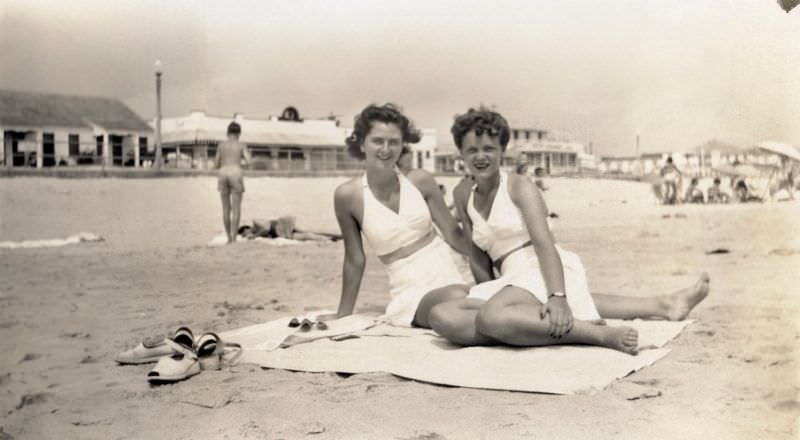
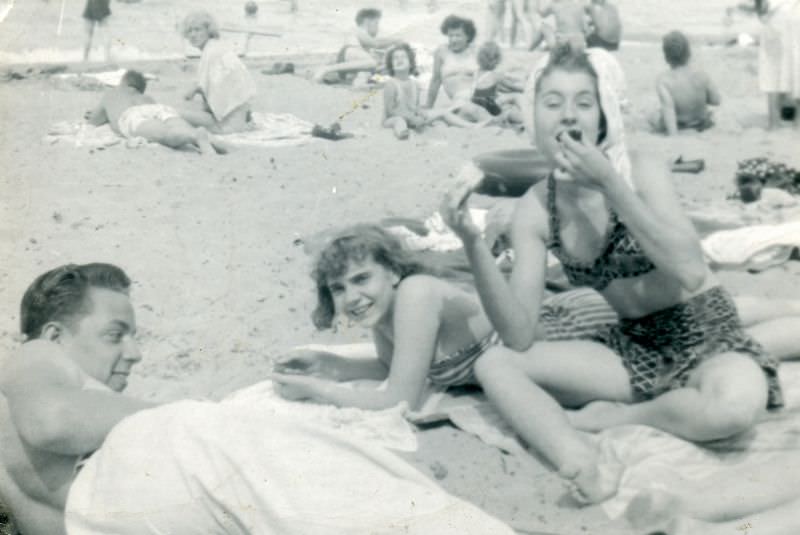
With no screens to stare at, people talked. Groups gathered around blankets and shared food, stories, and laughter. Face-to-face conversation was the only entertainment on offer, and it filled the hours just fine.
Swimming was a central activity. Ocean swimming in the 1940s had none of the safety infrastructure of today — no lifeguard towers on every stretch of sand, no color-coded flag systems at every beach. Swimmers went in and managed their own risk.
Beach boardwalks added another layer to the experience. Vendors sold food and drinks, and the energy near the water’s edge drew crowds who weren’t even planning to swim. The boardwalk was a social space as much as the sand itself.
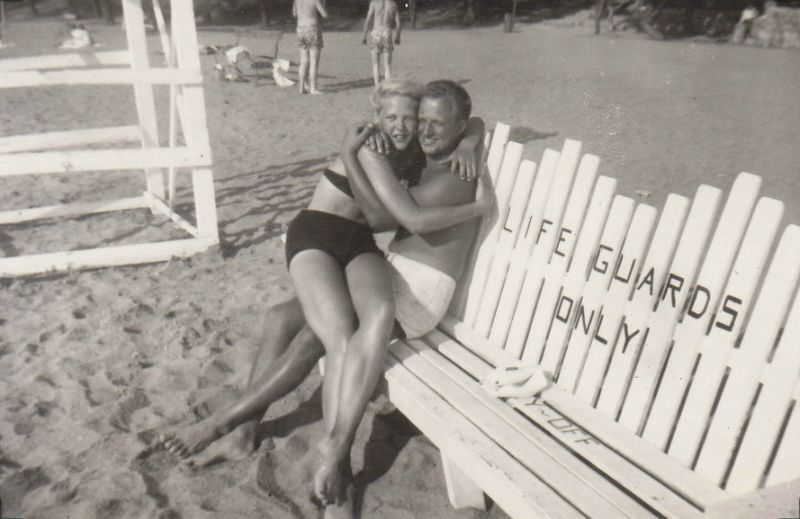
Games beyond volleyball were common too. Paddleball, frisbee-style throwing games, and simple races filled the afternoon hours. The sand served as both playing field and seating area.
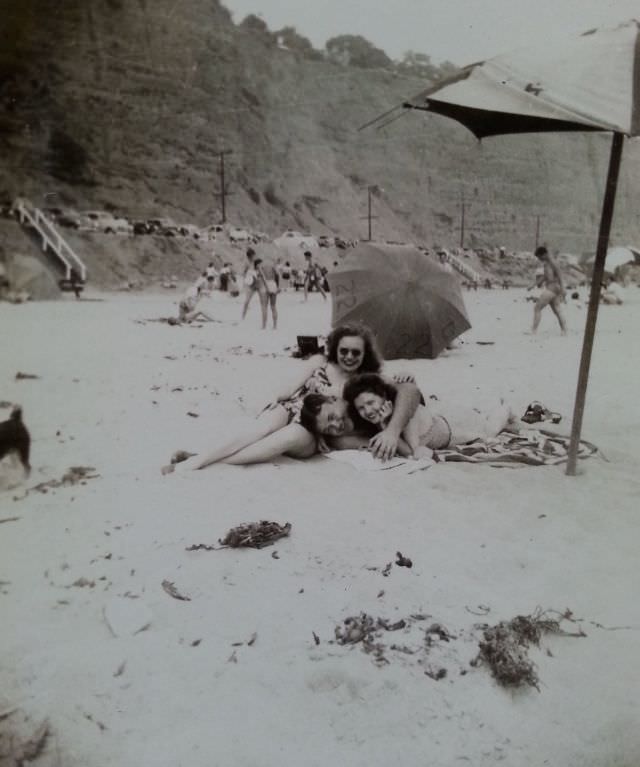
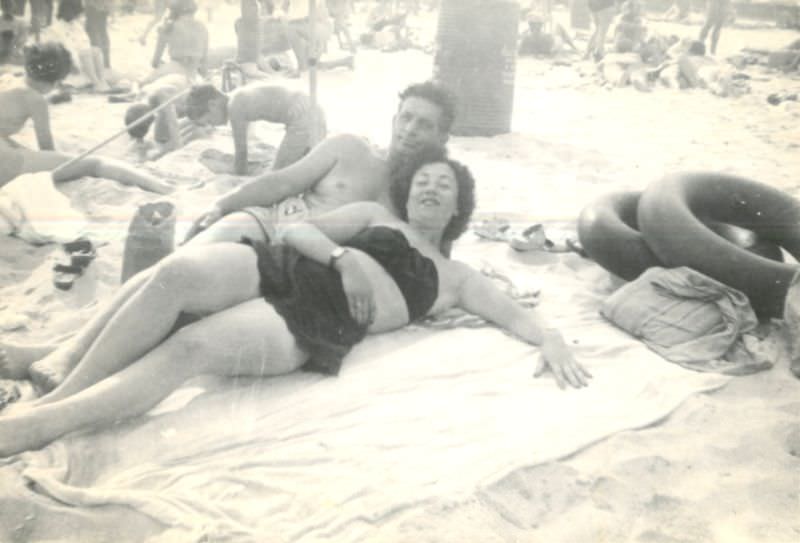
Picnic lunches were a staple. Families brought sandwiches, fruit, and cold drinks packed in wicker baskets or tin containers. There were no coolers with wheels — everything was carried by hand from the parking area to the chosen spot on the beach.
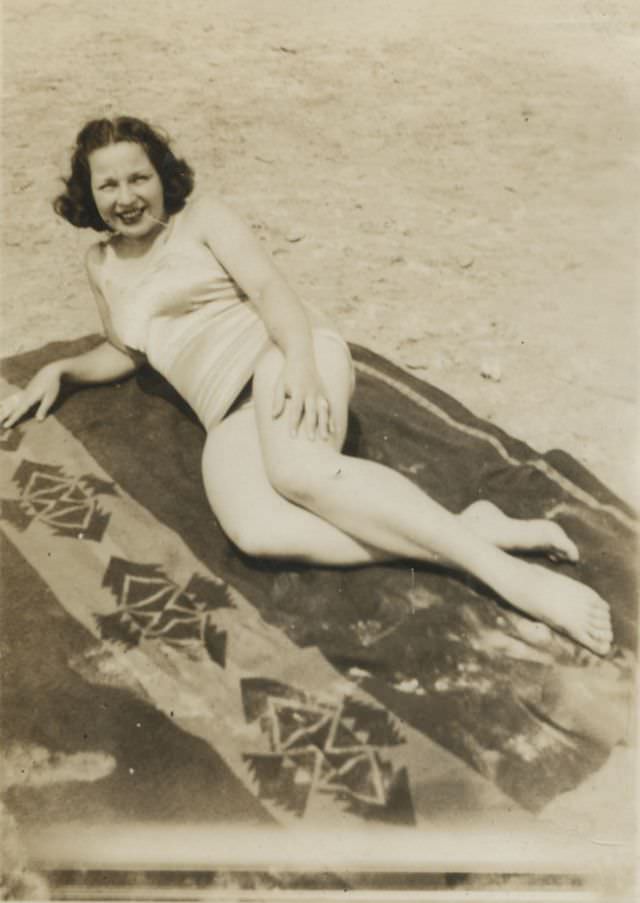
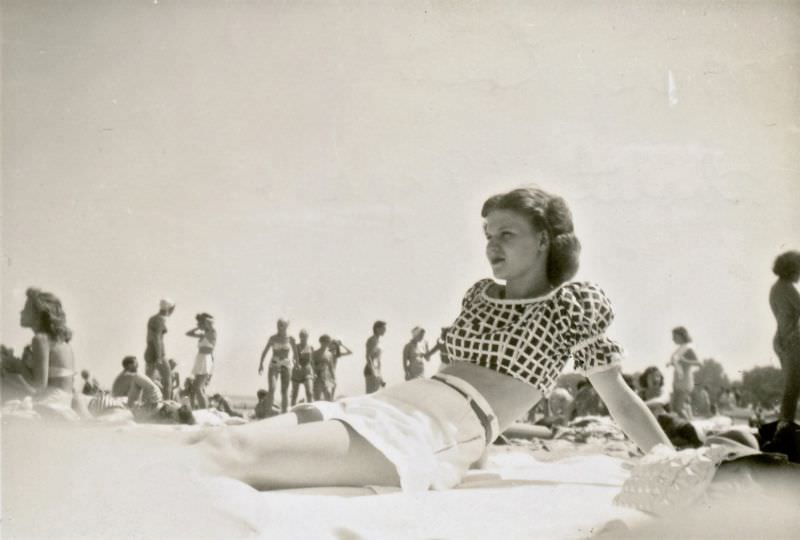
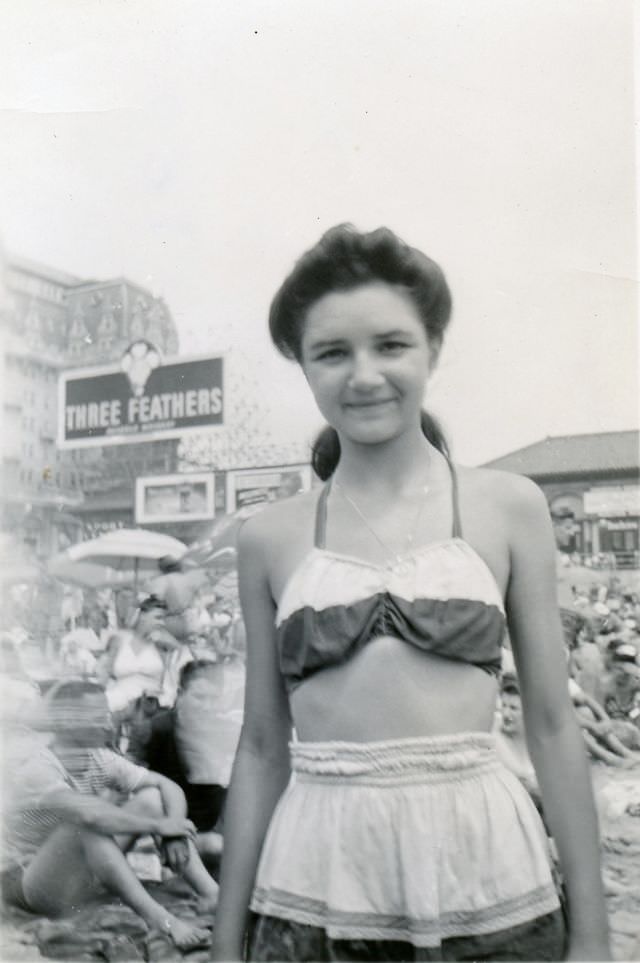
Photography at the beach was a big deal. Cameras were not small or cheap, and film had to be developed. Families treated beach photos as real keepsakes — posed shots meant something because taking them required genuine effort.
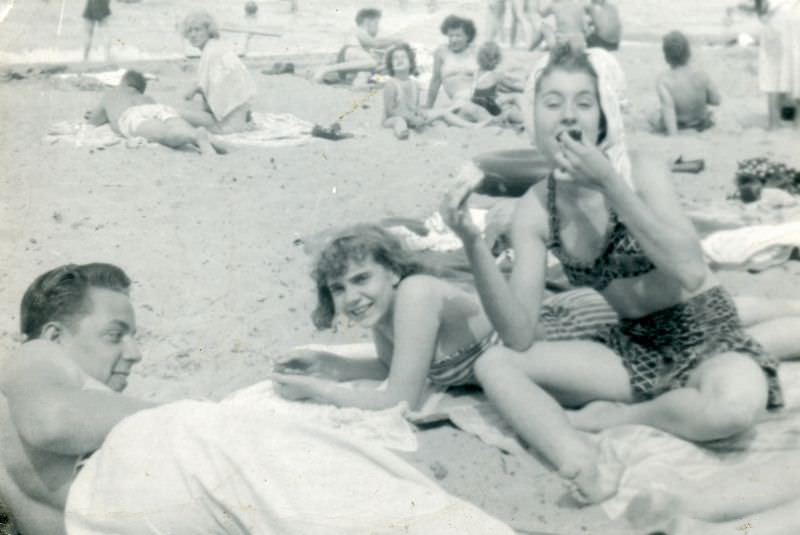
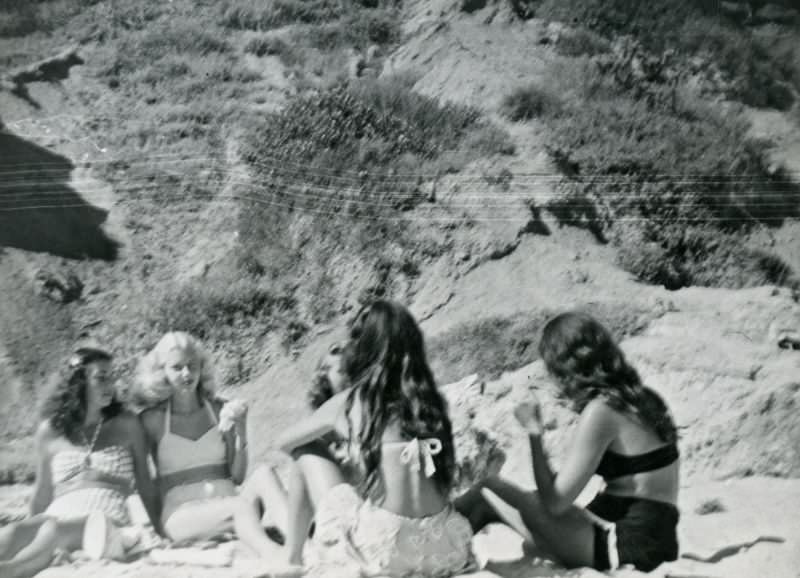
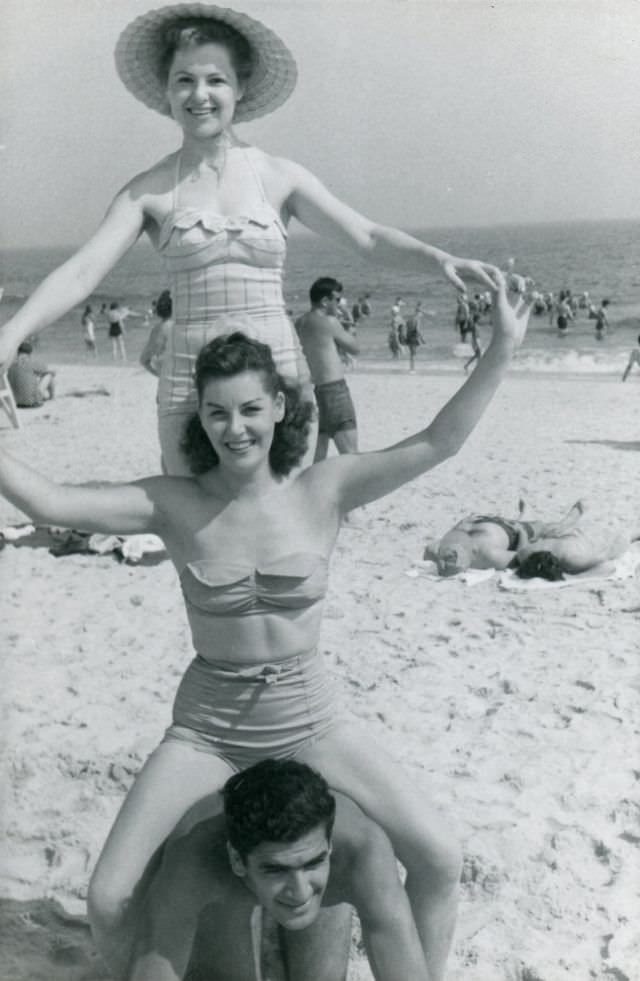
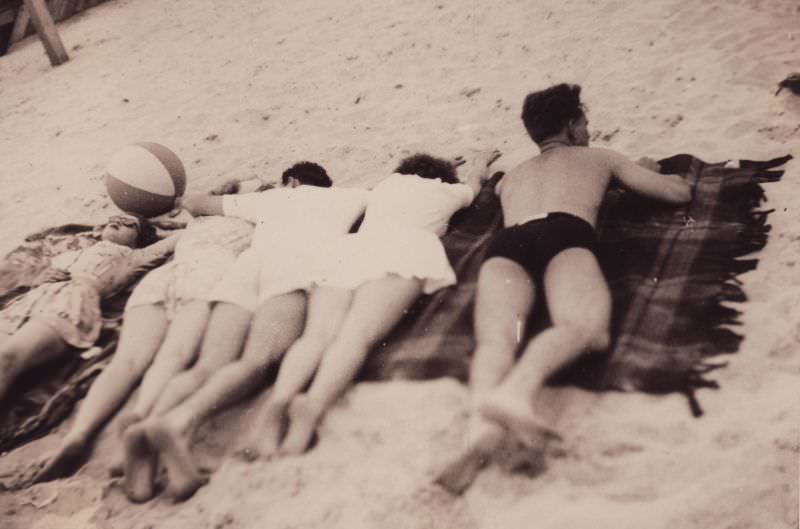
The photos that survive from this era show groups of people genuinely present in the moment. No one is looking down at a device. Eyes are on each other, on the water, on whatever game is being played in the foreground.
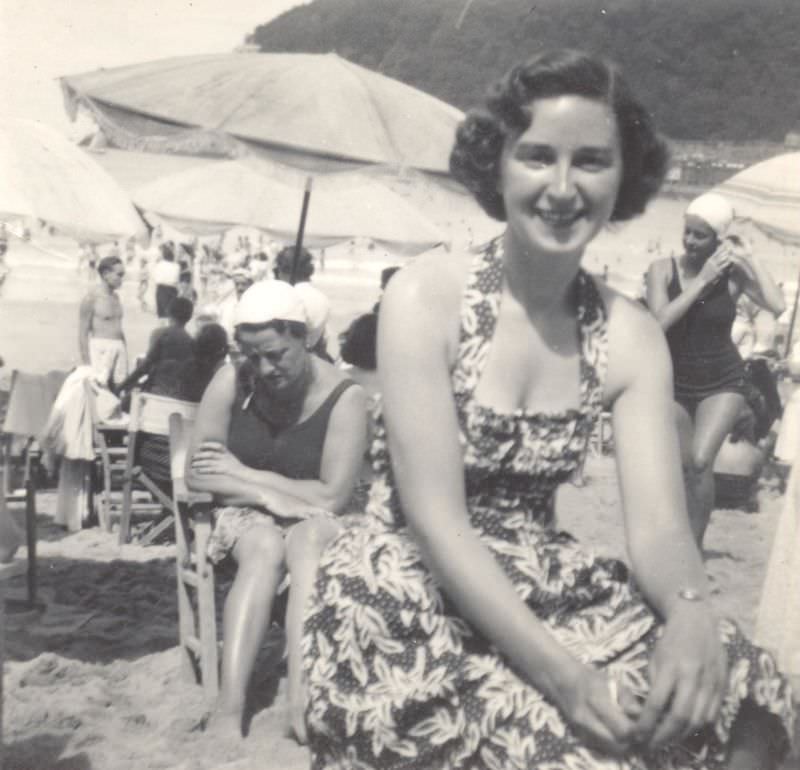
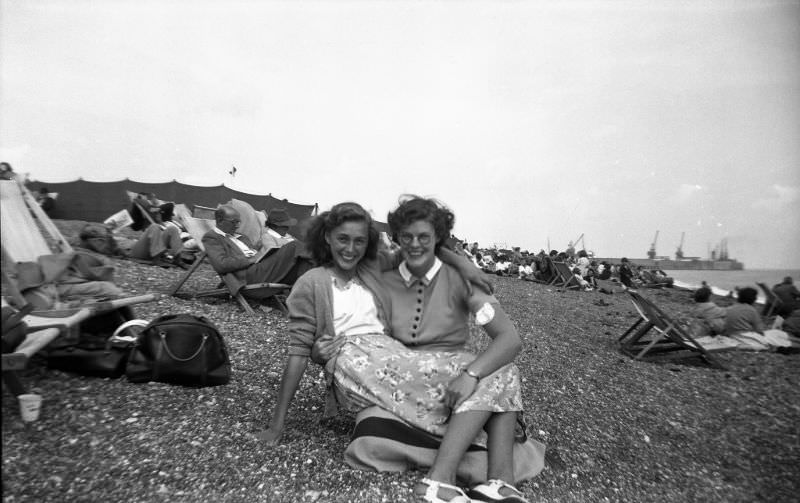
California beaches like Santa Monica and Venice drew the largest crowds. The Pacific Coast Highway made them more accessible as car ownership grew through the decade. Getting to the beach was itself part of the outing — a road trip, even a short one, felt like an occasion.
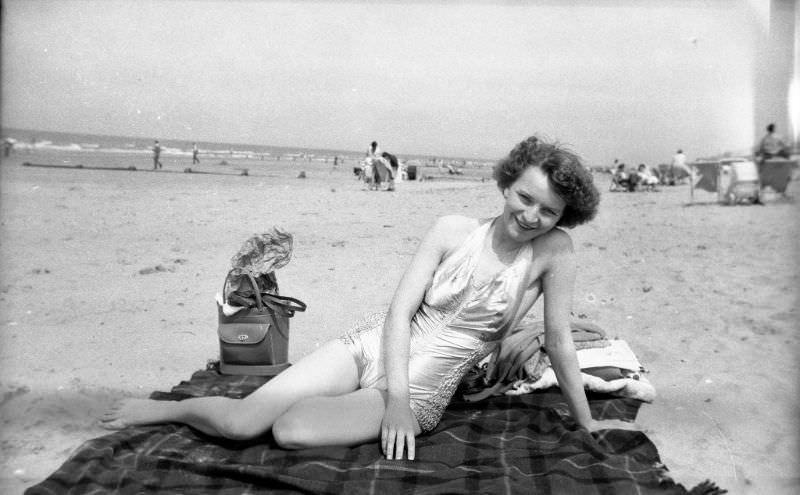
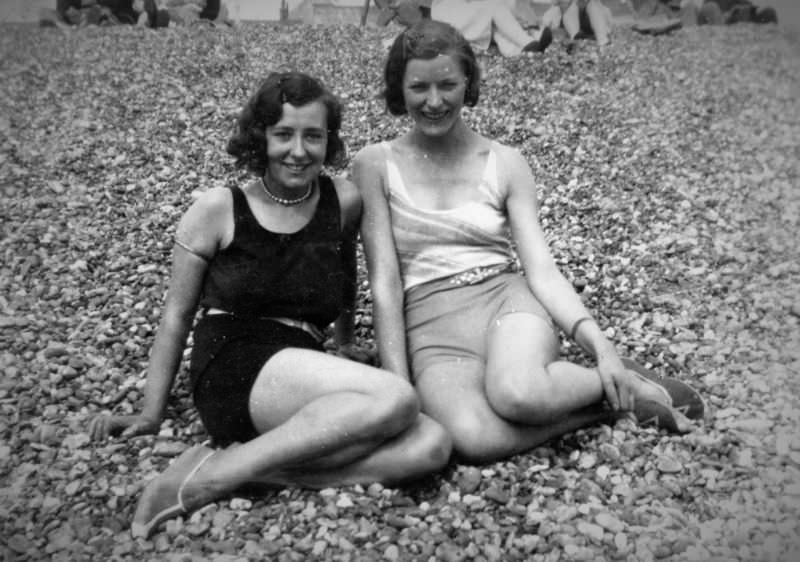
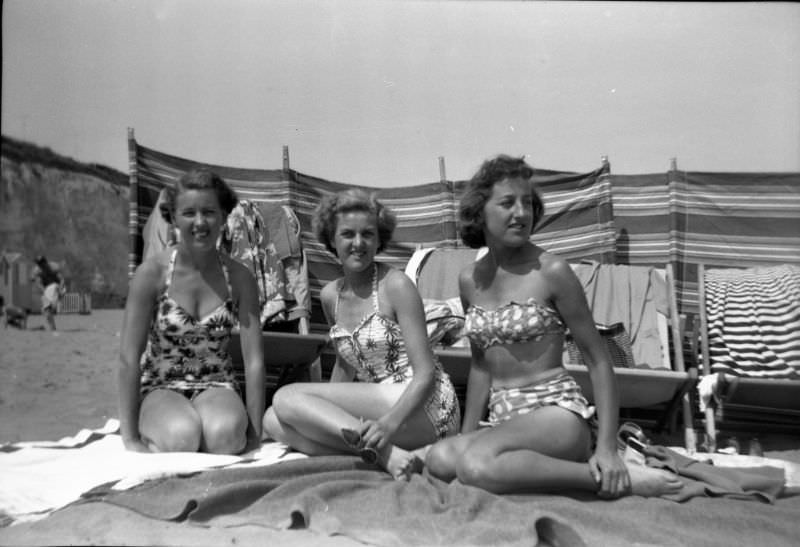
East Coast beaches were just as busy. Coney Island in New York was packed on summer weekends, with beachgoers pressed shoulder to shoulder across the sand. Atlantic City’s famous boardwalk drew visitors from across the region.
Children had a particular kind of freedom at the 1940s beach. Parents kept a general eye out, but kids roamed, dug holes, built sandcastles, and wandered to the water with little supervision by today’s standards. The beach was treated as a safe, open space for unsupervised play.
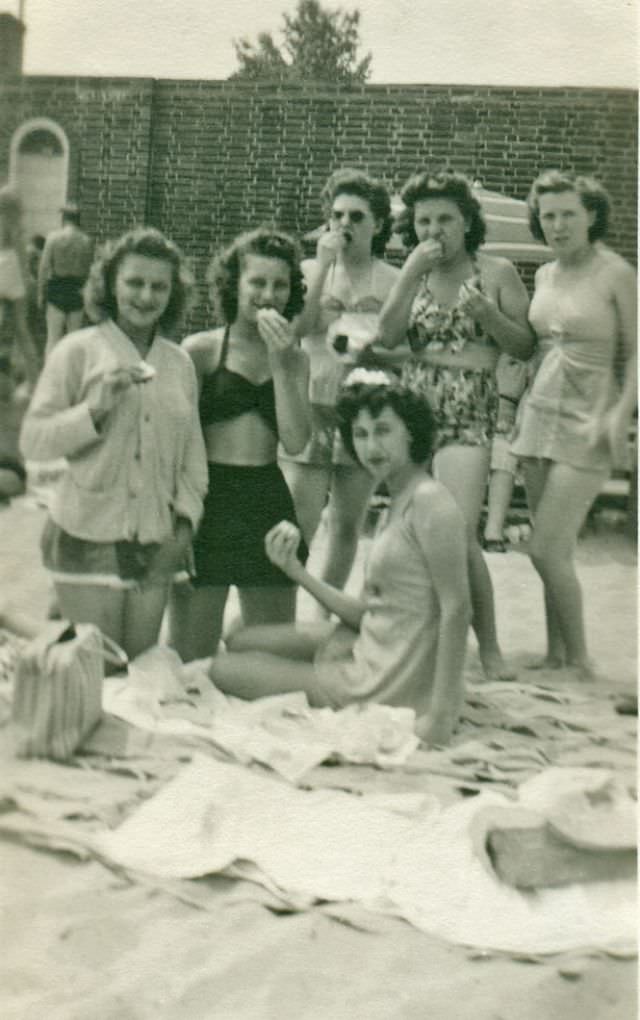
Teen culture was emerging at the beach too. Young men and women gathered in groups, socializing away from their parents. The beach gave teenagers a rare semi-independent social space during a decade when youth culture was just beginning to define itself.
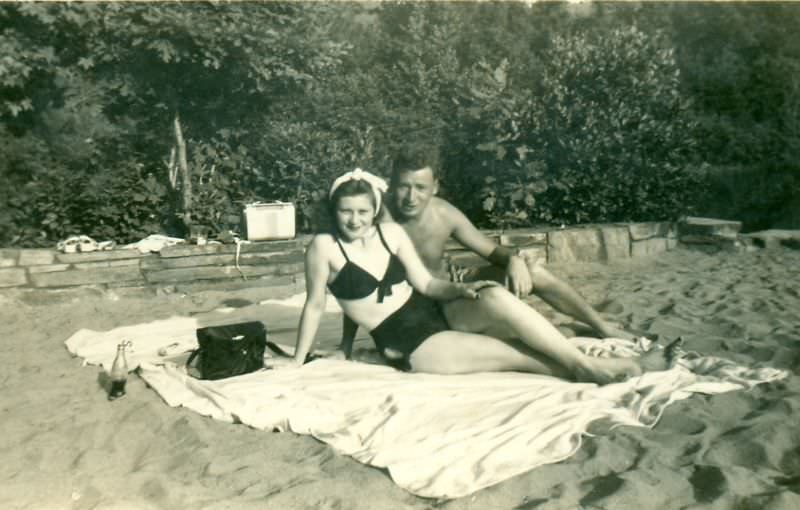
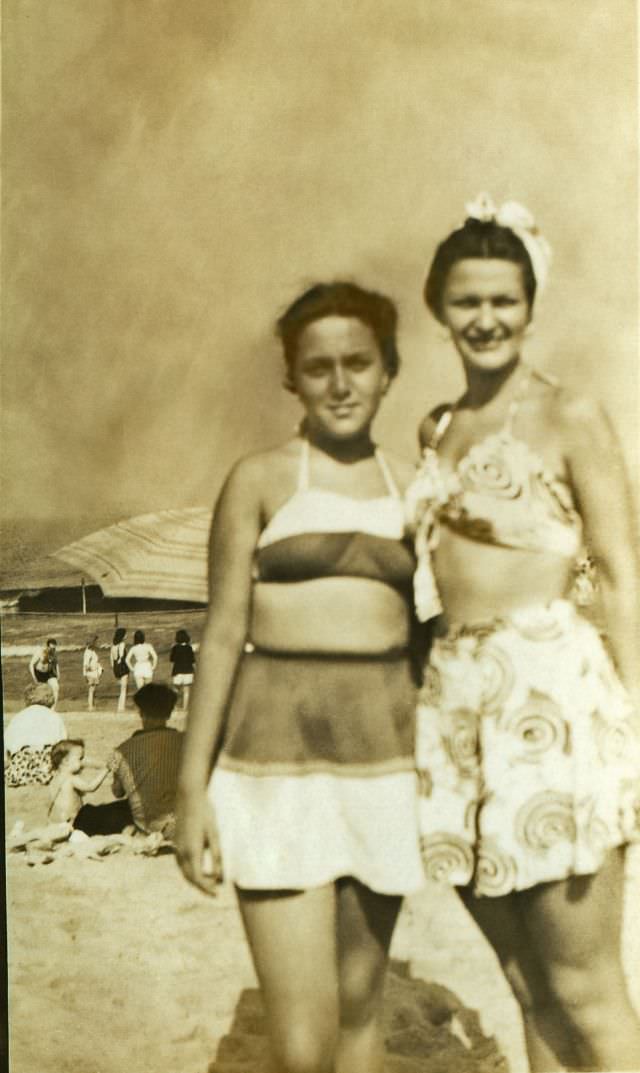
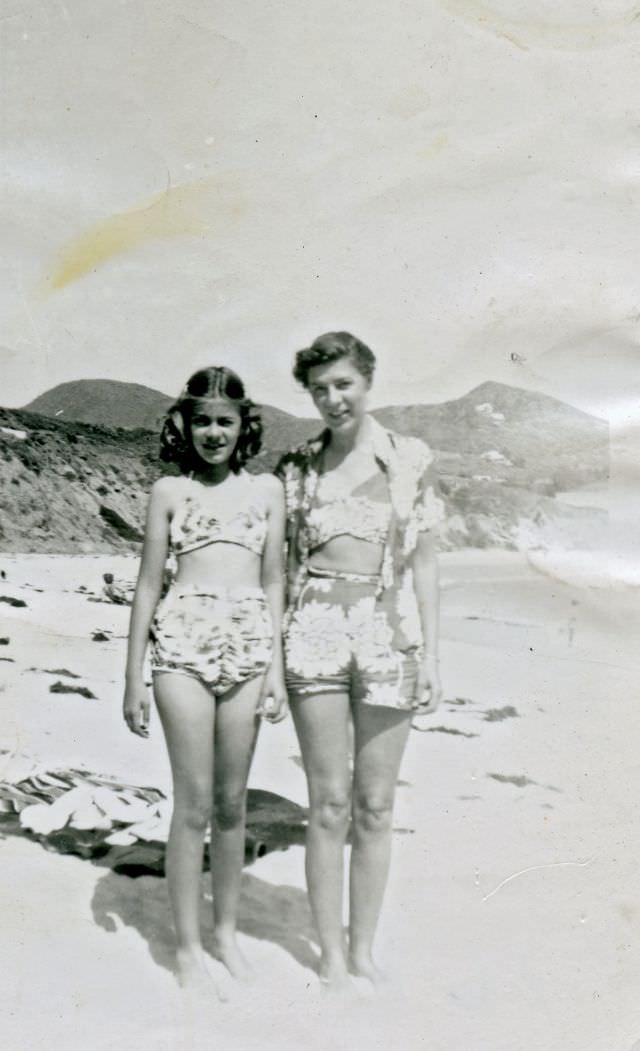
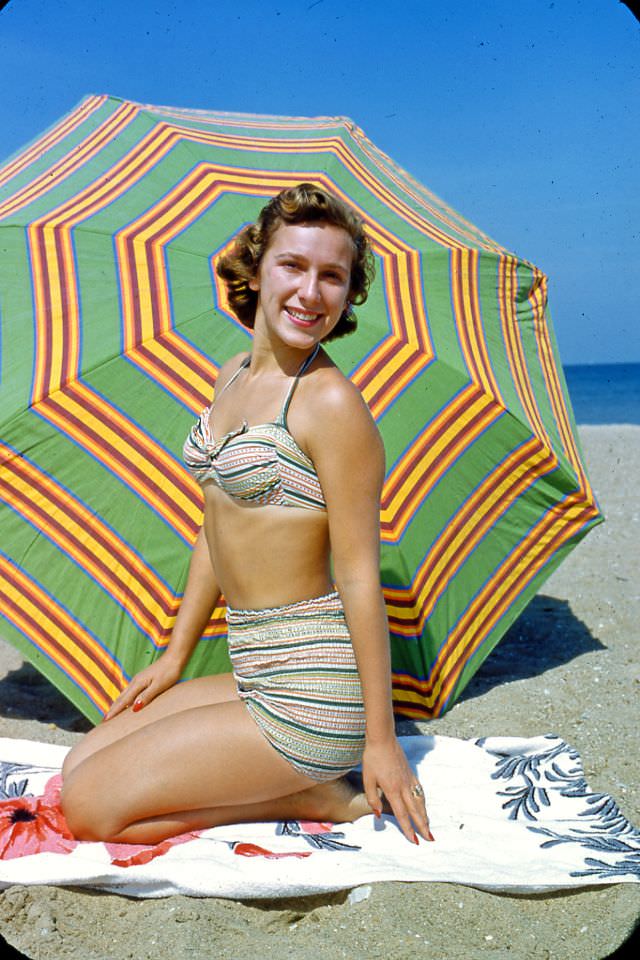
Beachwear evolved noticeably across the decade. Early 1940s swimsuits were more modest, shaped by fabric rationing during the war years. By the late 1940s, as restrictions eased, suits became smaller and styles more varied. The two-piece swimsuit appeared in 1946, the same year the bikini debuted in France.
Music played a role too. Portable radios became more common as the decade went on, and beachgoers tuned in to the big band and swing music of the era. A radio on the beach was a status symbol as much as entertainment.
Fishing from the shore or from small boats was another fixture of beach life. Men and older boys brought rods and spent hours casting lines while others swam nearby. It was a quiet counterpoint to the louder games happening just down the sand.
The end of World War II in 1945 brought a wave of celebration to public spaces, including beaches. Servicemen returning home joined their families at the shore. Beach photos from 1945 and 1946 often show mixed groups of civilians and men still in uniform, marking a distinct moment in American social history.
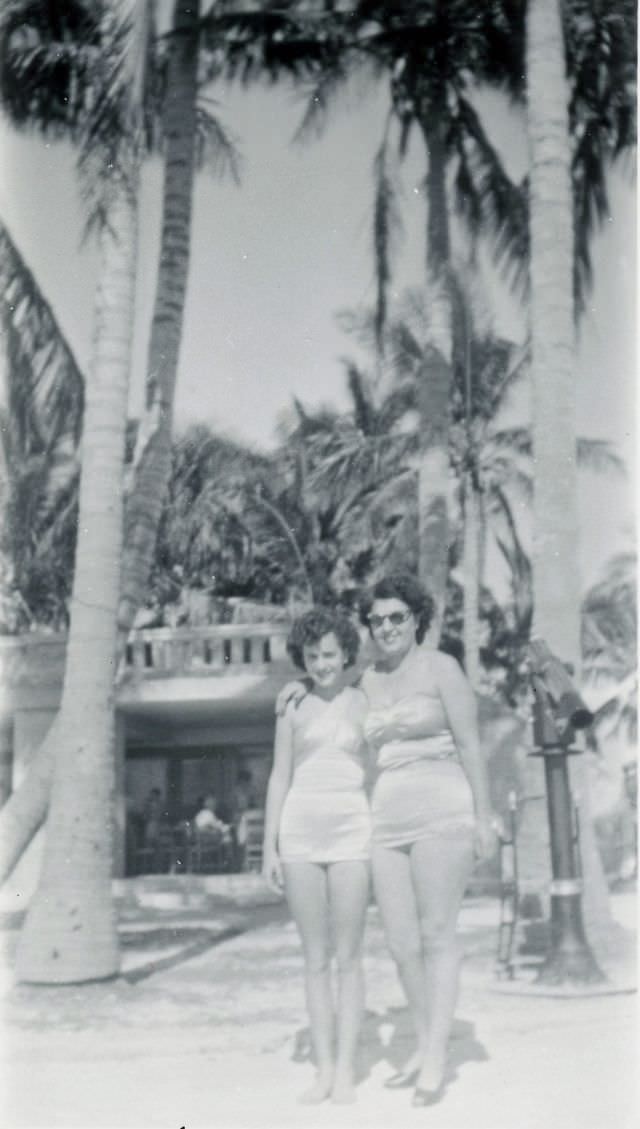
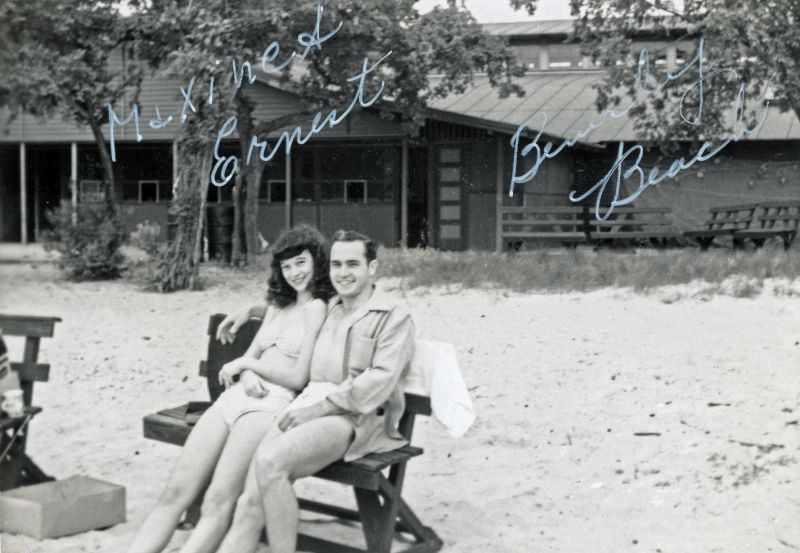
Rental cabanas and changing rooms were standard at larger beaches. Beachgoers rented small wooden changing stalls for the day, stored their street clothes, and emerged in their swimwear. The infrastructure around the beach experience was more formalized than many people today realize.
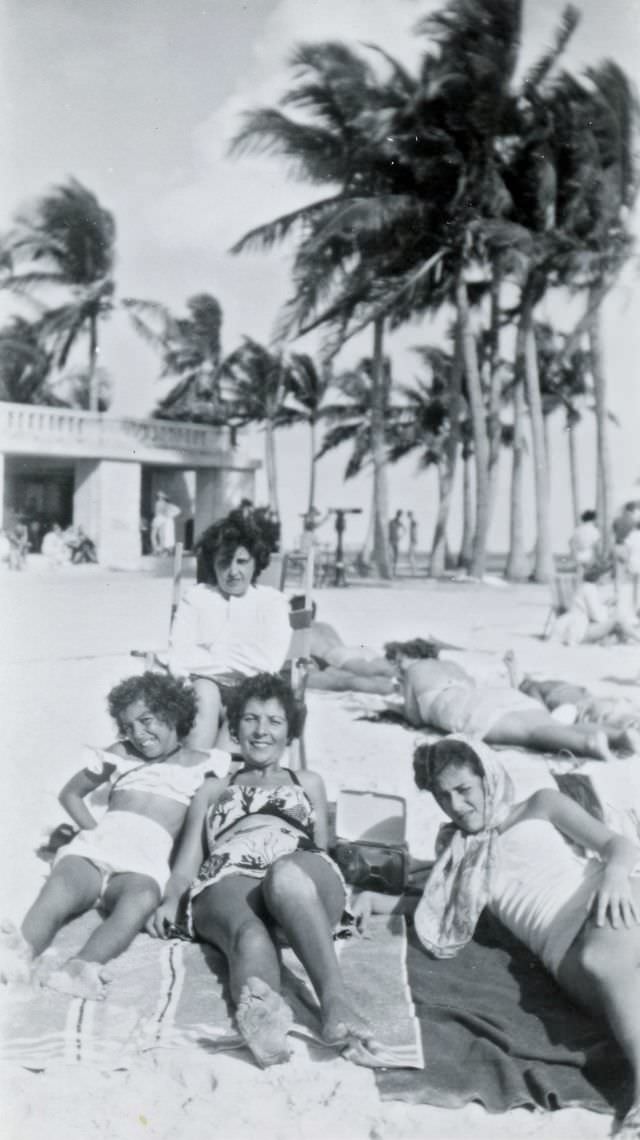
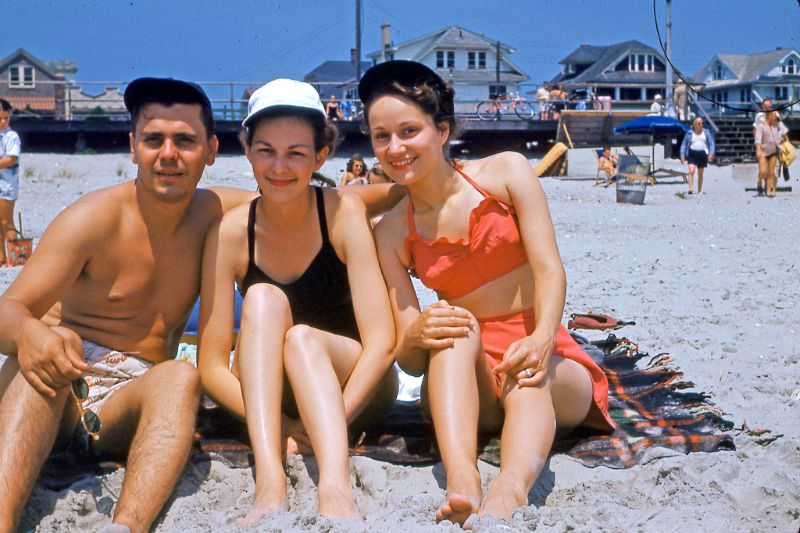
Umbrellas were a must-have for many families. Large canvas beach umbrellas in bright stripes were planted in the sand to create shade. Underneath them, adults read newspapers and books while the younger crowd stayed in the sun.
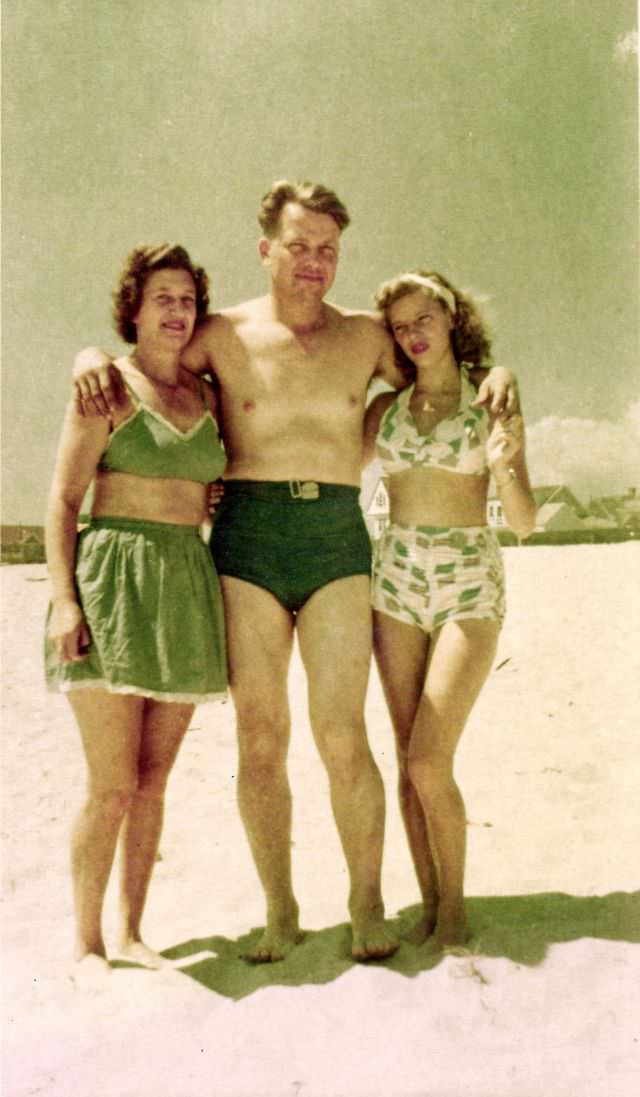
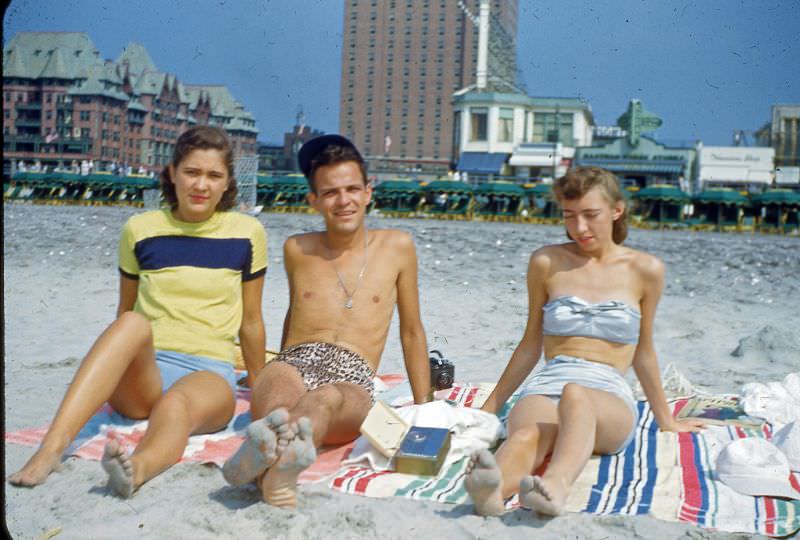
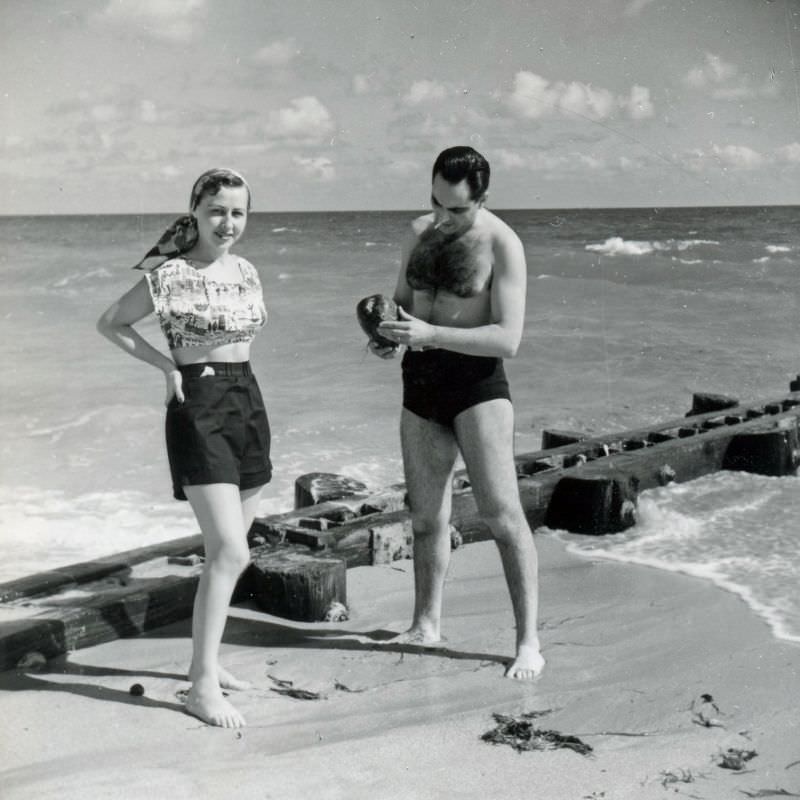
These vintage photos capture something specific: a beach culture built entirely around presence. Every person in the frame is there, fully, with no digital world pulling their attention elsewhere. The 1940s beach was loud, crowded, physical, and completely analog.